SEVERAL TIMES we pulled off the highway, onto a gravel road or into a driveway, searching for the elusive studio of pastel and oil artist Frederick D. Somers of rural Northfield.
My husband, second daughter and I were on the South Central Minnesota October Studio arTour and we had selected a handful of studios to visit on Sunday afternoon. I knew we would all like Somers’ work, which features nature scenes.
And we did, once we got there. Our mistake came in thinking that a roadside arTour sign meant his studio was right there, near the signage. It wasn’t and I finally ended up phoning for directions after we had all but given up.
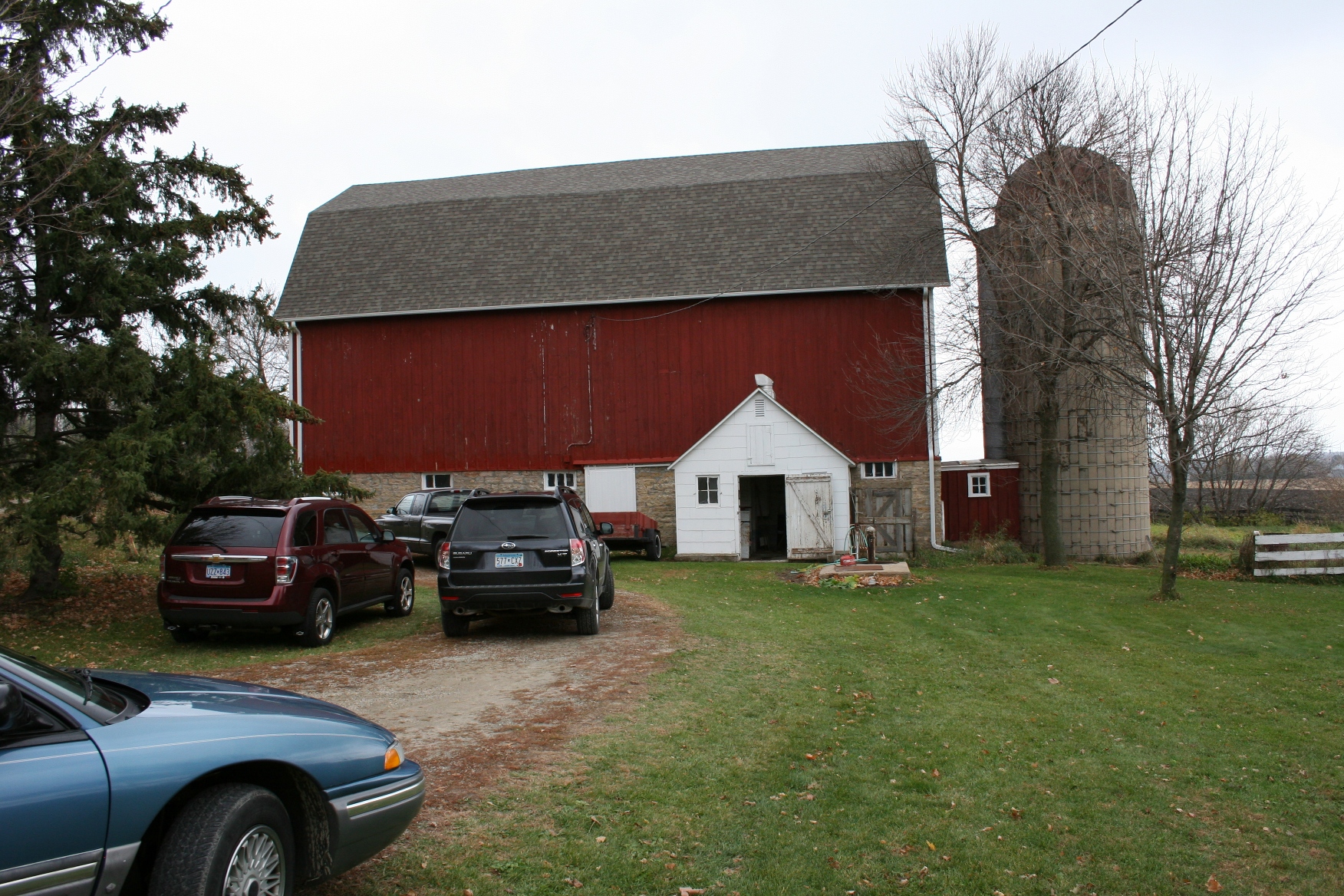
When we finally pulled into Somers’ quaint farm site and I saw the red-plank granary turned gallery/studio and the old red barn flanked by a silo, the former farm girl in me was already endeared to this place.
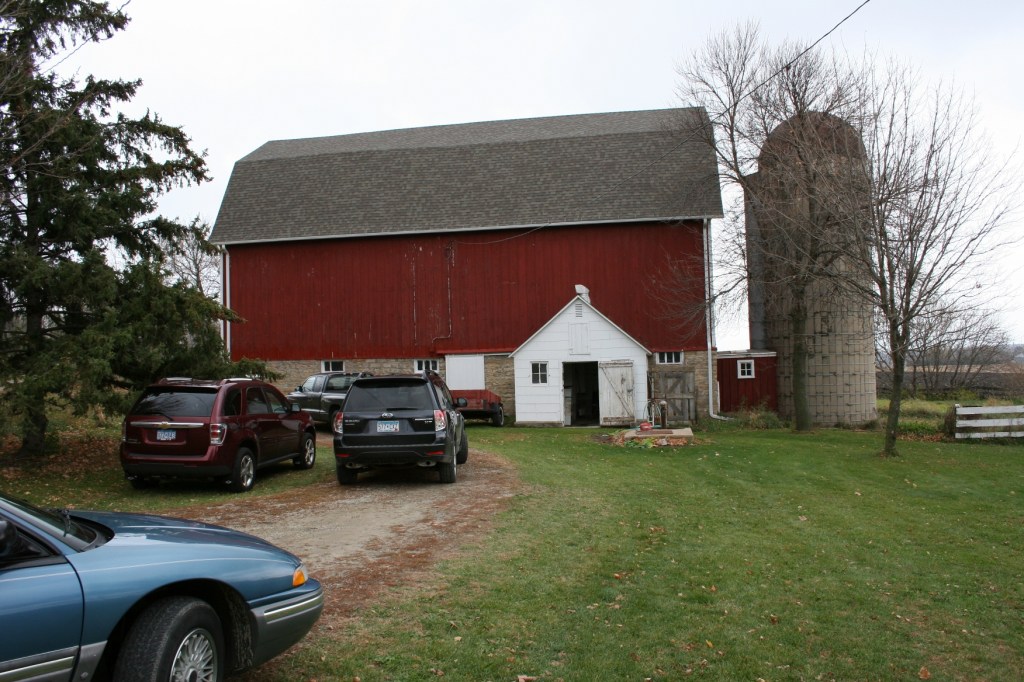
Visitors pulled into the farmyard, defined by an old red barn and silo.
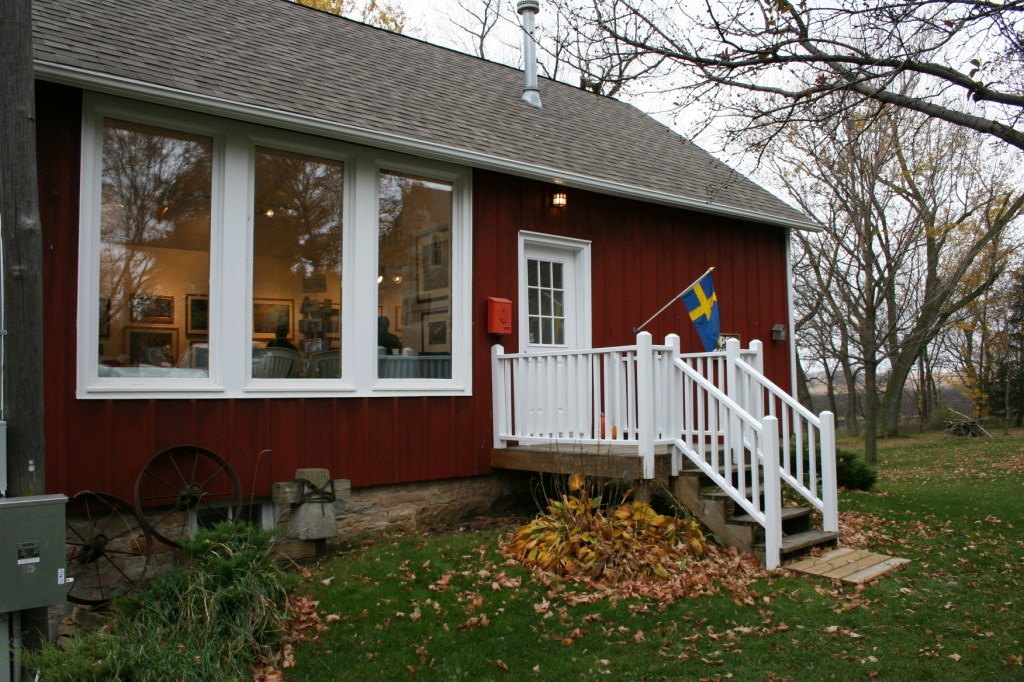
Fred Somers' gallery is housed on the main floor of this former granary. His studio is on the lower level.
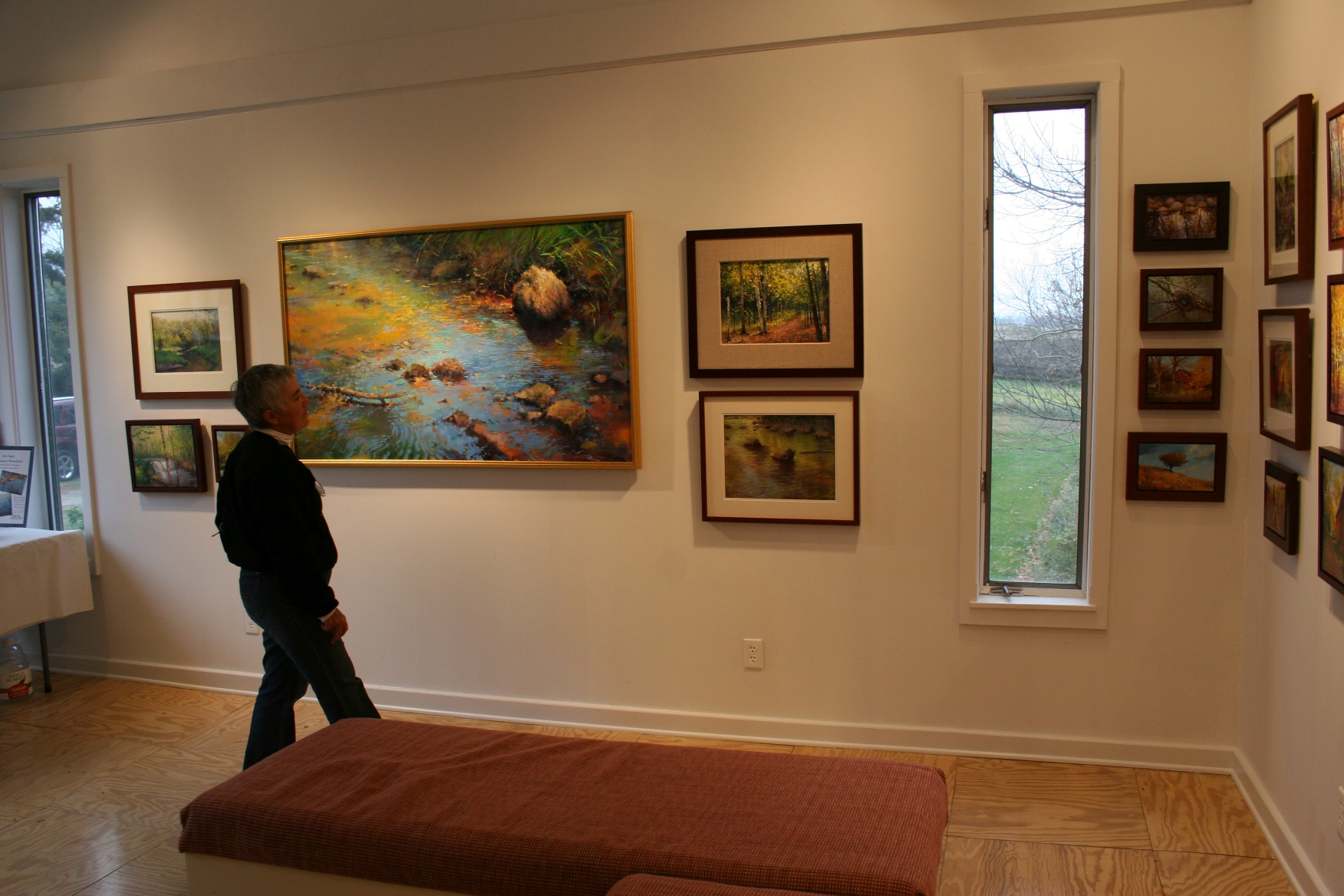
But then, to step inside his gallery, ah, I felt like I hadn’t even walked indoors. Somers paints with his eyes on nature—the trees, the water, birds, flowers…
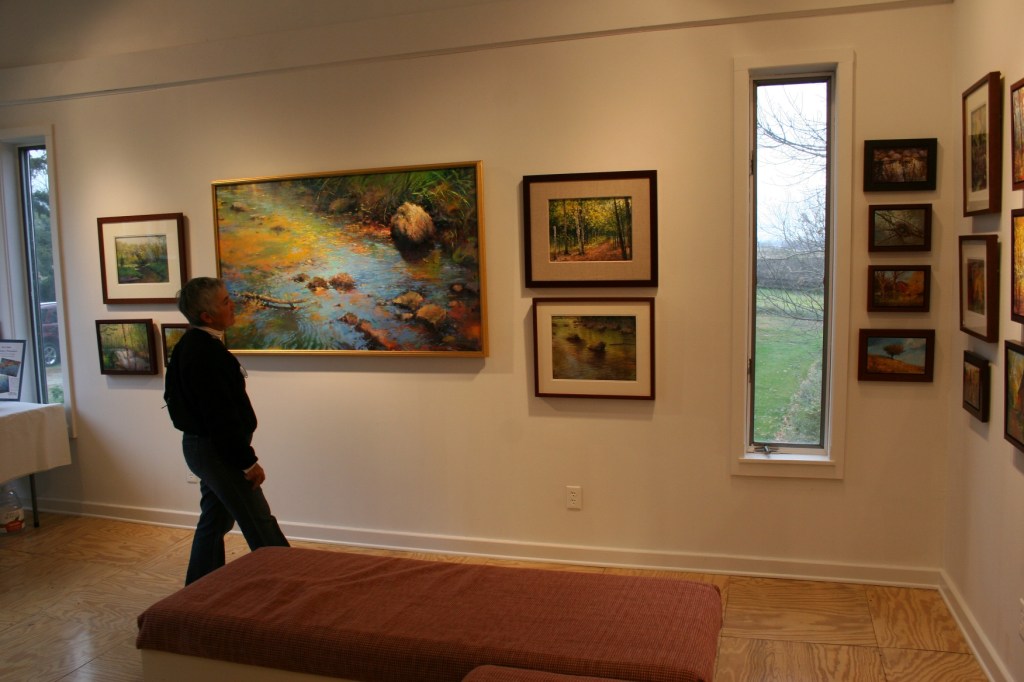
An arTour visitor peruses Somers' art in his gallery.
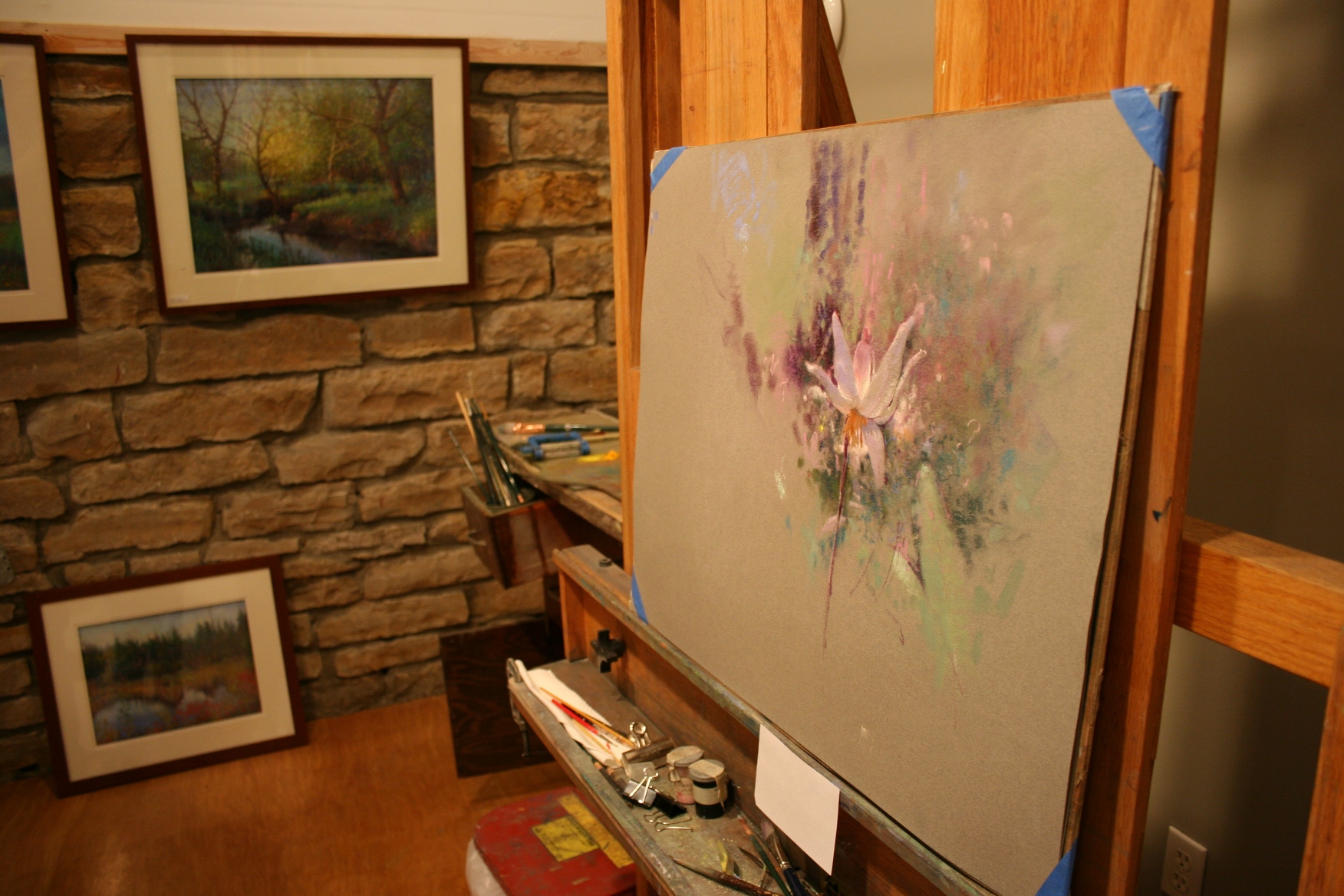
“I paint what I love,” Somers tells me as he stands next to his easel and an in-process pastel painting of a flower in muted shades of plum and moss green balanced by white. Light bathes his airy lower level artist’s retreat that is complemented by wood and stone. Paintings are stacked and hung, cameras at the ready to photograph subjects for his art.

Somers is working on a floral pastel in his studio.
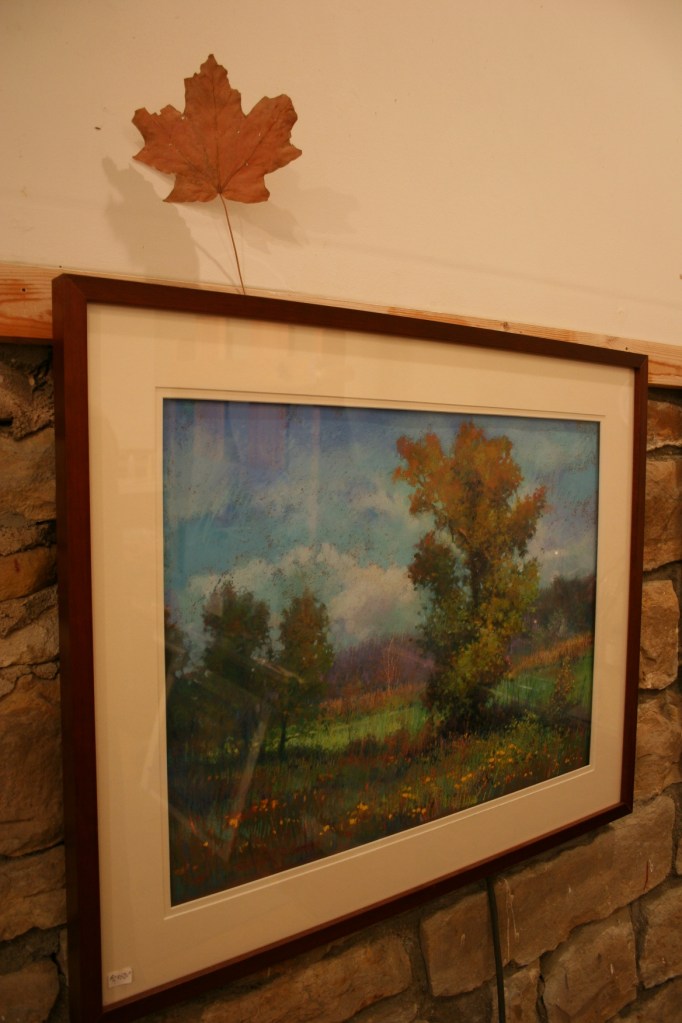
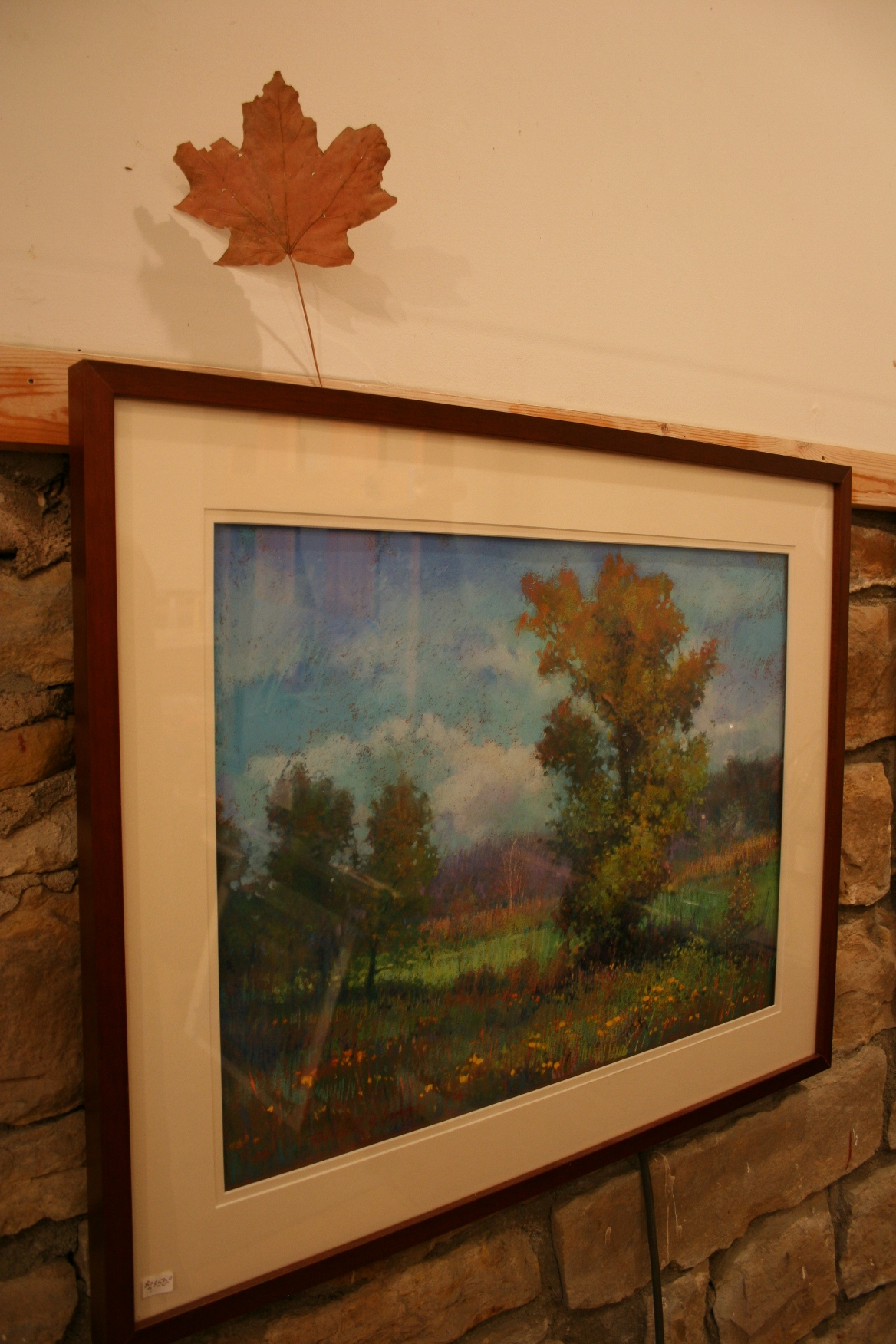
In Somers' studio, I noticed this maple leaf stuck above a painting.
I find while viewing Somers’ paintings that I can easily mistake them for photographs, until I move in close to see the details he’s stroked into his distinct creations.
A brochure that I’m handed describes his art as “explosions of light, water and leaves in wonderful pastel and oil paintings.”
Somers says he prefers to paint with pastels because “you’re closer to your work.” He demonstrates that closeness by picking up a pastel. Then he selects a brush, which tipped in green paint, smears paint across his hand. No matter his choice, Somers’ work is outstanding and he has a lengthy list of artistic credits to prove that.
As I am about to head upstairs to the gallery, Somers says he’s painting some portraits now, including one of Rice County’s most-decorated soldier. He shows me a small copy of the portrait, of the veteran who was awarded three bronze stars and a Purple Heart and who fought at the Battle of the Bulge during WW II. The two became friends after Somers set up his easel and painted in the old soldier’s yard.
Even though portraits veer from Somers’ typical subject, you can see the light in his eyes, hear the enthusiasm in his voice as he speaks of this venture. Here, clearly, is a man passionate about his life’s work of celebrating life and light through his art.
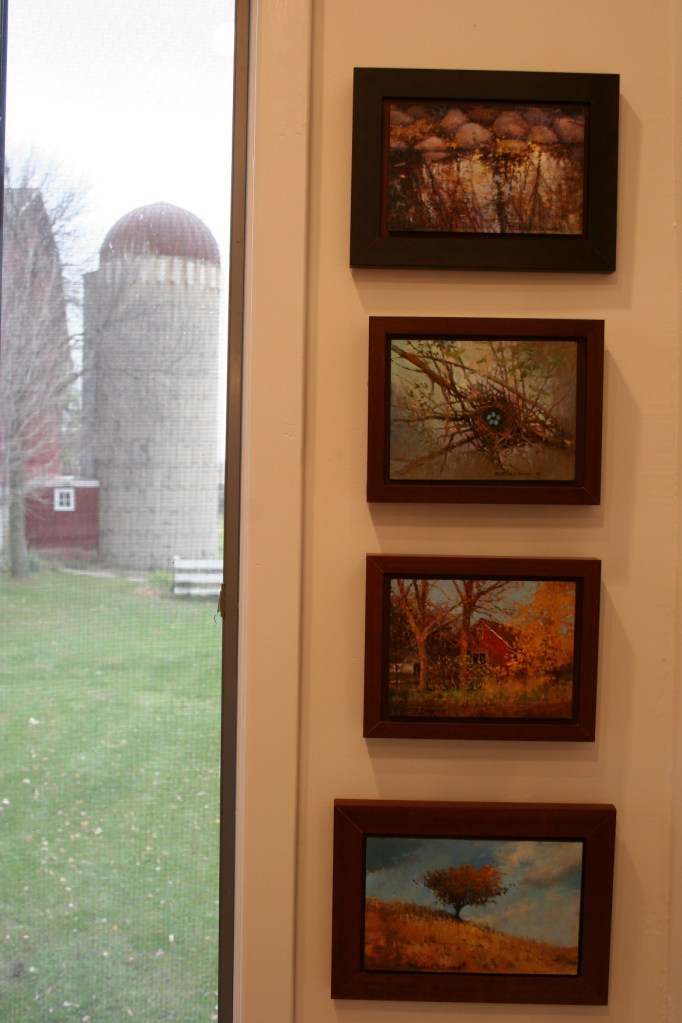
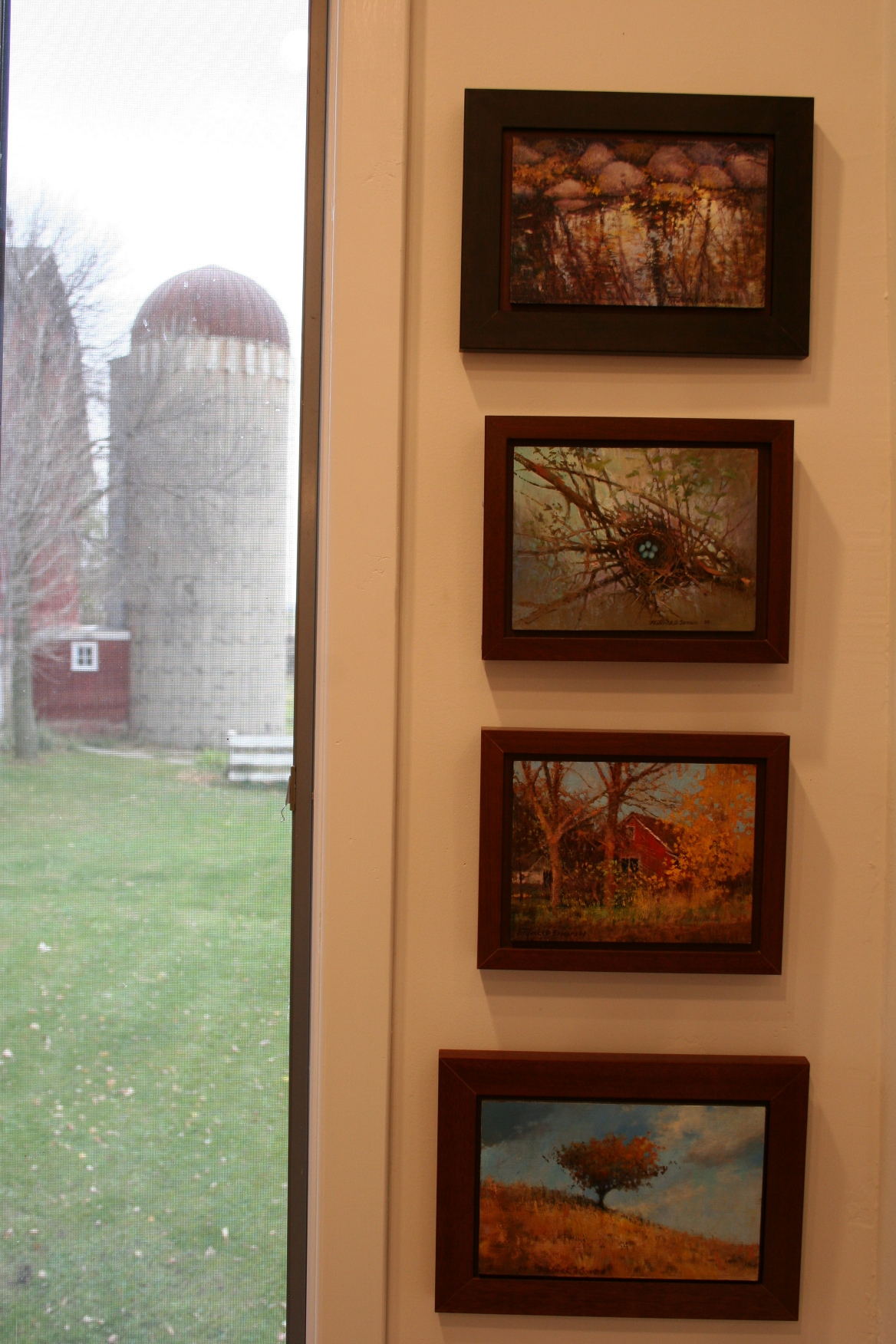
A gallery window, flanked by Somers' paintings, frames the silo and a portion of the old red barn.
FYI: Somers Studio and Gallery lies southeast of Northfield on State Highway 246. If you are traveling from the west and reach the turn-off to Nerstrand Big Woods State Park, you’ve gone too far. His gallery is marked by a sign and is located on the south side of the road at 9775 Highway 246/Dennison Boulevard South.
Copyright 2010 Audrey Kletscher Helbling



















Recent Comments