Minnesota Prairie Roots

Writing and photography by Audrey Kletscher Helbling

Meet 52 South Central Minnesota artists during weekend ArTour October 19, 2012

Faribault artist Julie Fakler’s paintings will be displayed in her JMF Studio at 1212 First Ave. N.W., Faribault, along with the textile art of Deb Johnson. Fakler specializes in animal portraits. Her cow painting graces promotional materials for this year’s South Central Minnesota Studio ArTour.

FIFTY-TWO ARTISTS. Twenty-four studios. And all showcased right here in the Faribault-Northfield-Cannon Falls area this weekend during the eighth annual South Central Minnesota Studio ArTour.

If you’ve never taken this studio tour, I’d encourage you to do so as a) You’ll meet a broad spectrum of talented local artists. b) You’ll view incredible art in wood, glass, photography, textiles, painting, ceramics, jewelry and more. c) It’s free, unless you purchase art, which, of course, you should consider doing. d) You’ll visit three charming communities.

I can’t attend this year’s tour. But I have in the past and here are the photos to prove it.

Just look at the talent we have, right here, in Greater Minnesota.

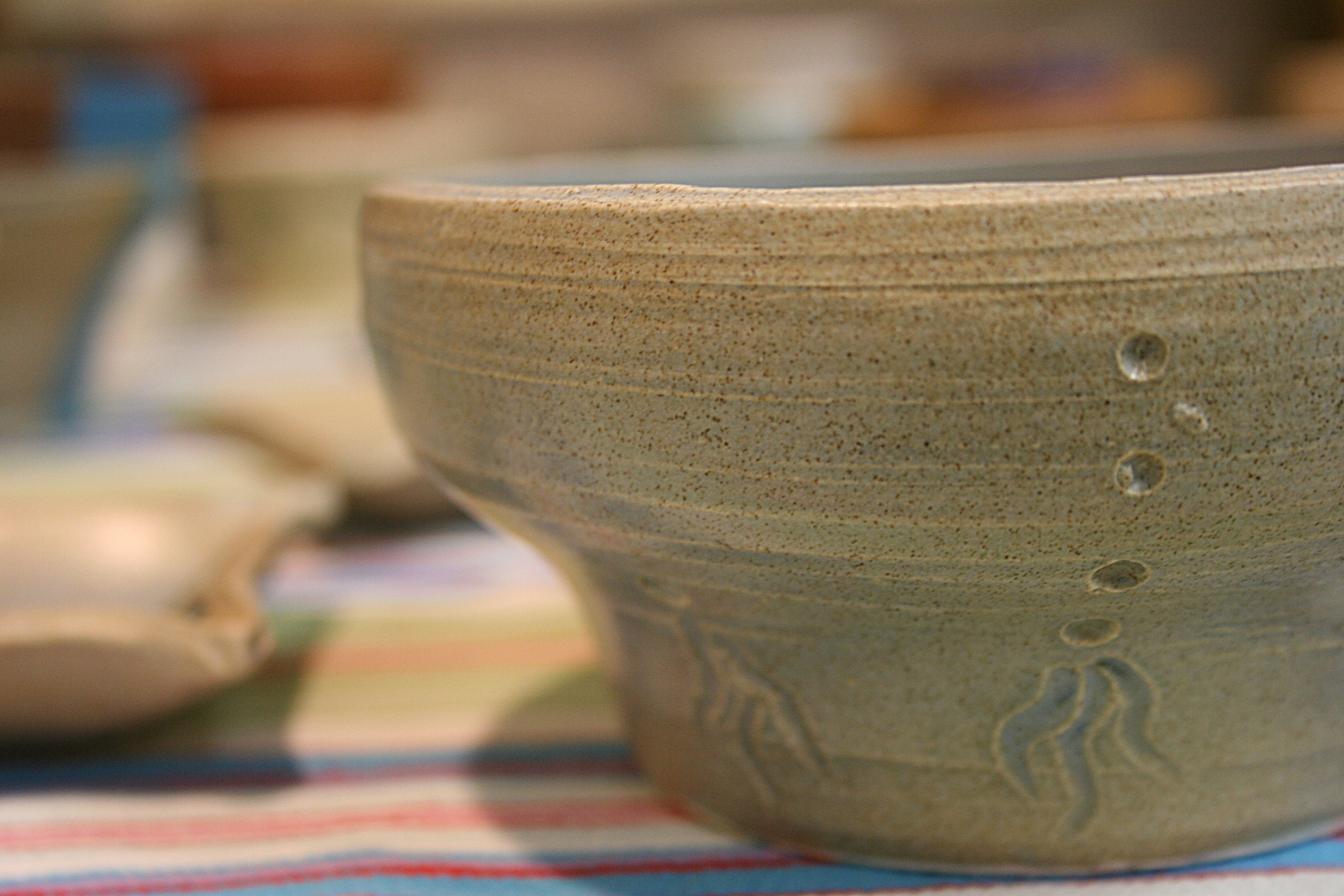
Meg Jensen Witt will showcase her ceramics at Lillart, 101 E. Fifth St., #209, Northfield, along with the paintings of Lilla Johnson. I photographed this example of Witt’s art in 2011.

At Holmquist Pottery, 11780 90th St. E., Northfield, you will find Lucky Rimpila’s glass art, like this photographed last year. Chris and Sue Holmquist will also display their ceramics and Marsha Kitchel will showcase her paintings.

Last year at Sunset Studio, 10754 Farrel Avenue, Northfield, I photographed the ceramics created by Tom Willis. You will find the work of six other artists at Sunset Studio.

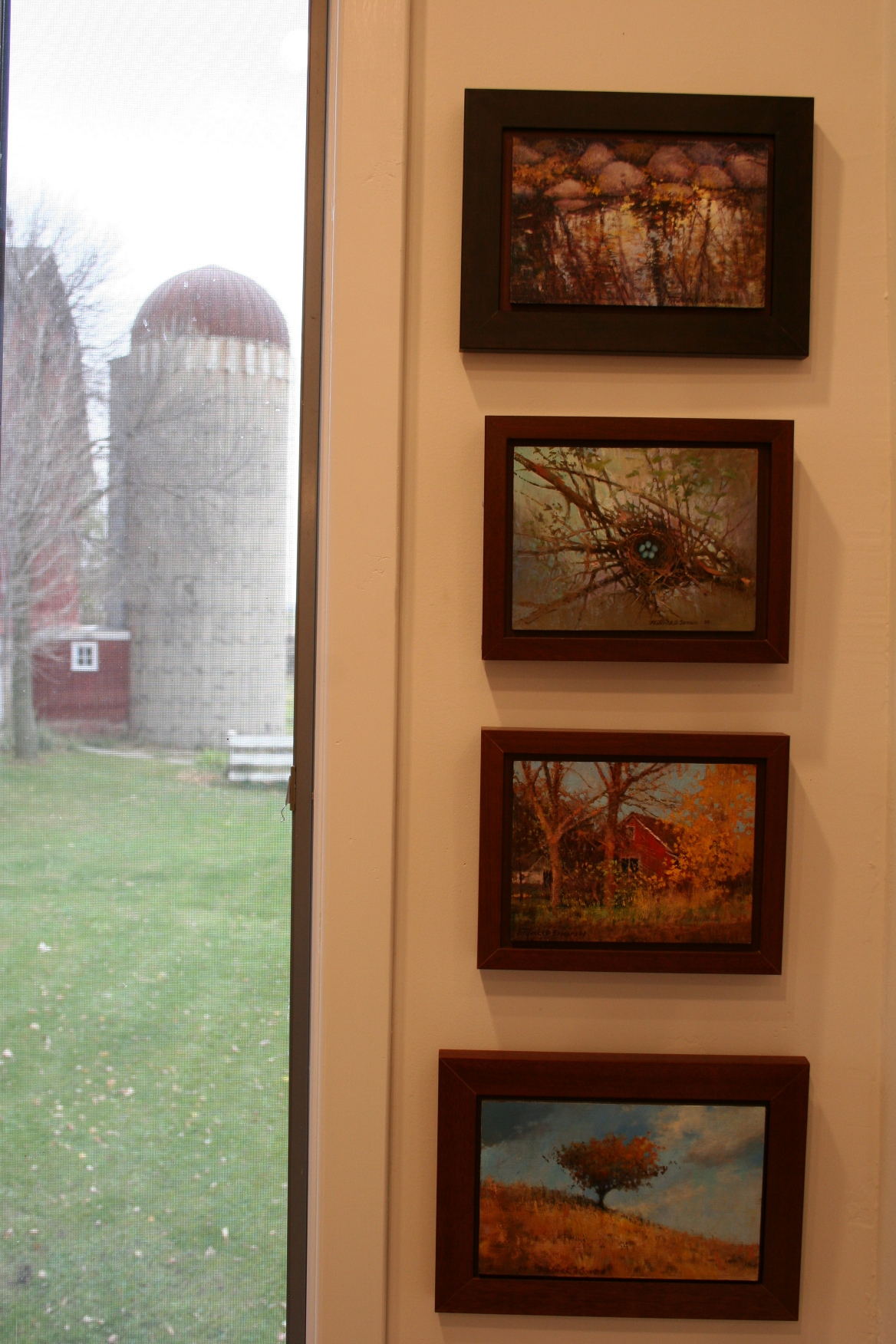
During the 2010 ArTour, I visited Somers’ Studio & Gallery, 9775 Dennison Blvd. S., Northfield, where Fred Somers paints on his rural acreage.

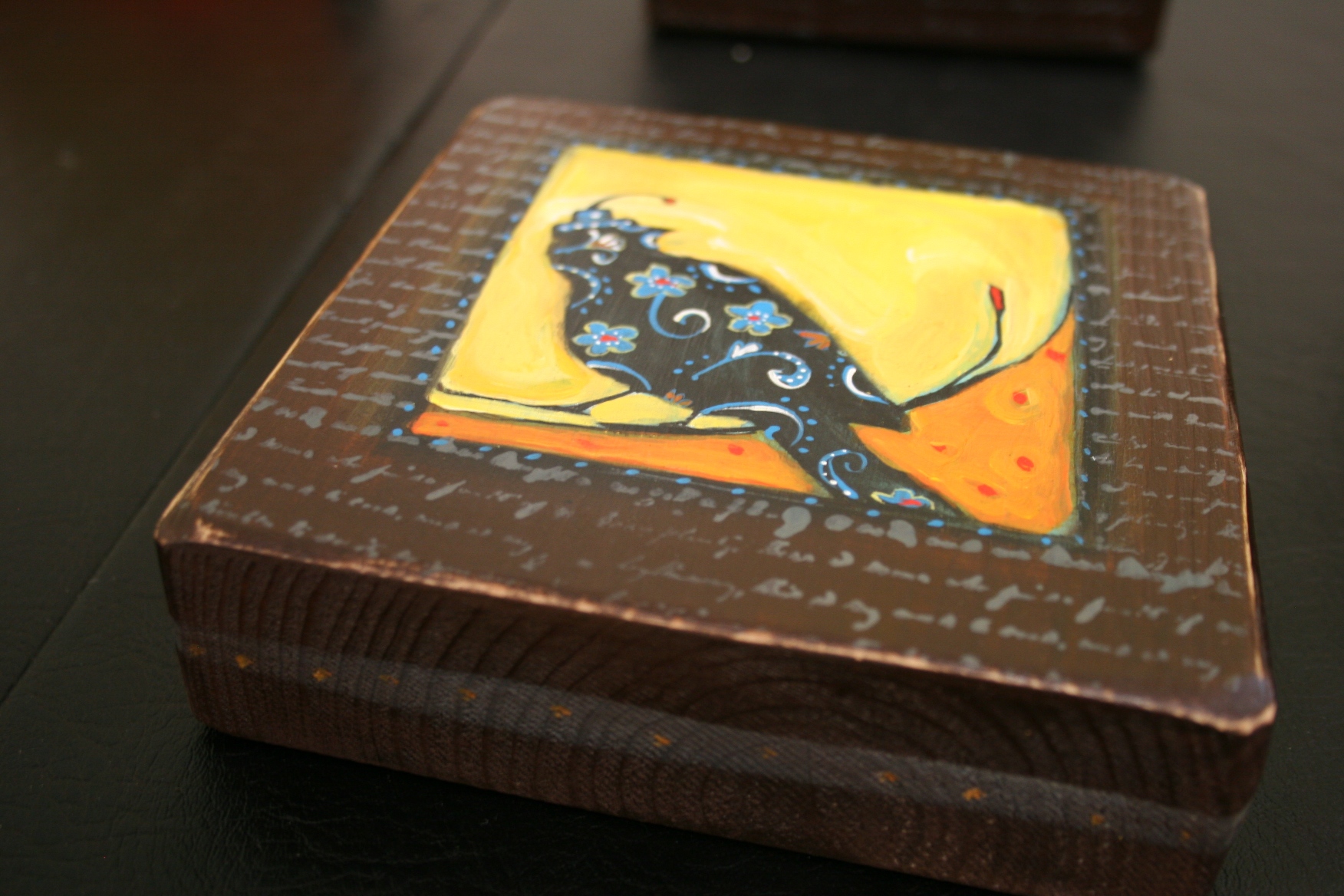
In 2010 I photographed this wood block art created by Carla Thompson. This year she will exhibit her painting, along with Julie Free Heart, at Revisions, 101 E. Fifth St., #302, Northfield.

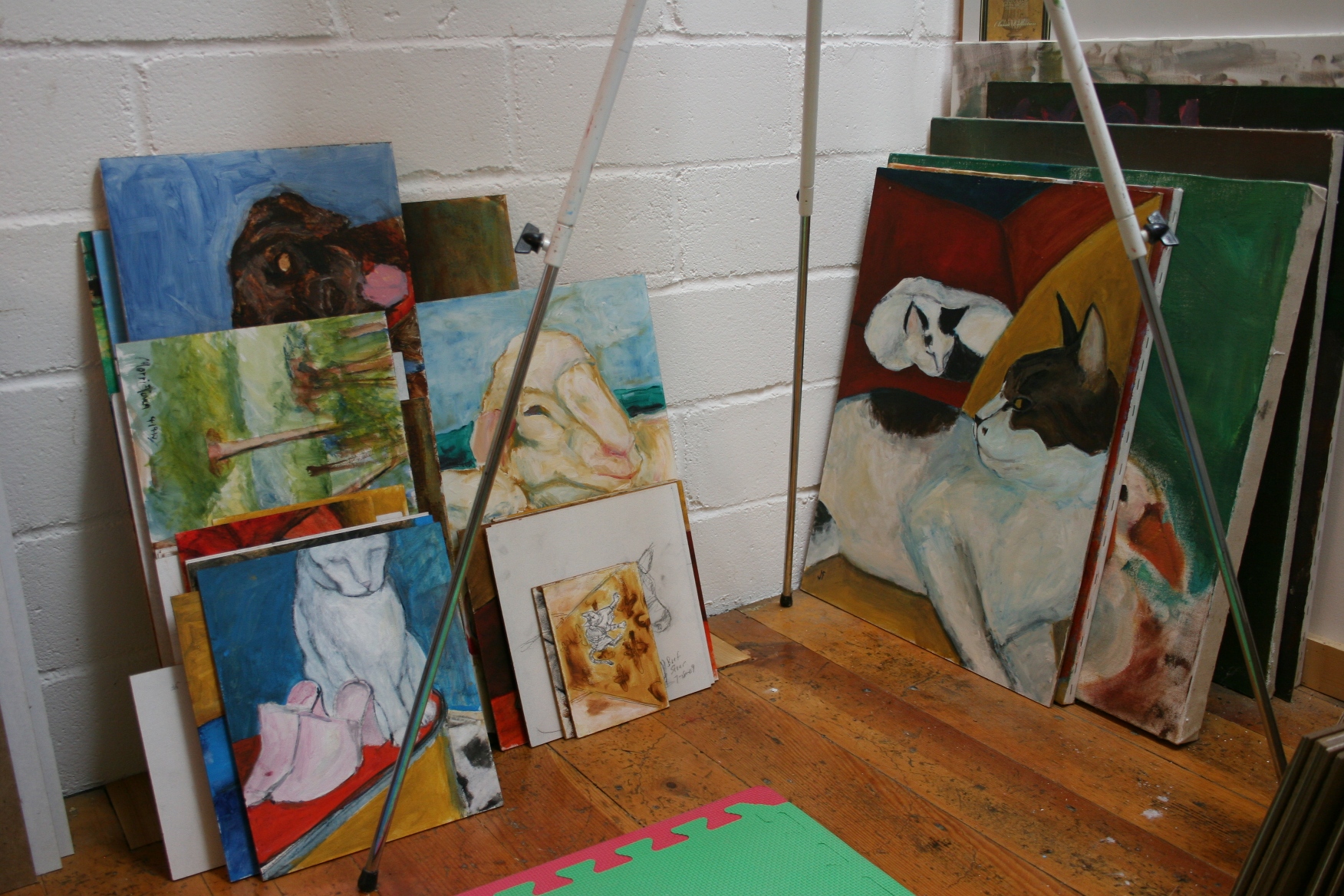
Animal paintings propped on the floor of Julie Fakler’s JMF Studio during the 2010 ArTour.

FYI: The South Central Minnesota Studio ArTour runs from 10 a.m. – 6 p.m. on Saturday, October 20, and Sunday, October 21. Select studios will also be open from 4-8 p.m. today.

For details, including studio locations and participating artists, click here to reach the ArTour website.

I photographed this scene from the 2010 ArTour marking a Northfield studio.

Click here to read about my visit to Fred Somers’ gallery/studio during the 2010 tour.

Click here to see Faribault artist Julie Fakler’s studio, one of my stops on the 2010 tour.

© Copyright 2012 Audrey Kletscher Helbling
Cow image courtesy of Julie Fakler


In which I learn a lot about the James-Younger Gang bank raid in Northfield September 3, 2012

CHRISTIAN HAKALA WEAVES the story of the bank robbery with the skills of a seasoned storyteller, his voice rising as the tension mounts, his hands gesturing, his eyes locking with those of a rapt audience.
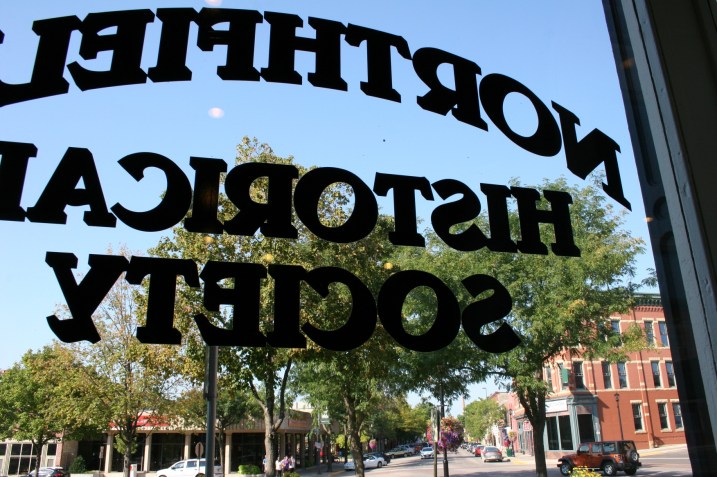
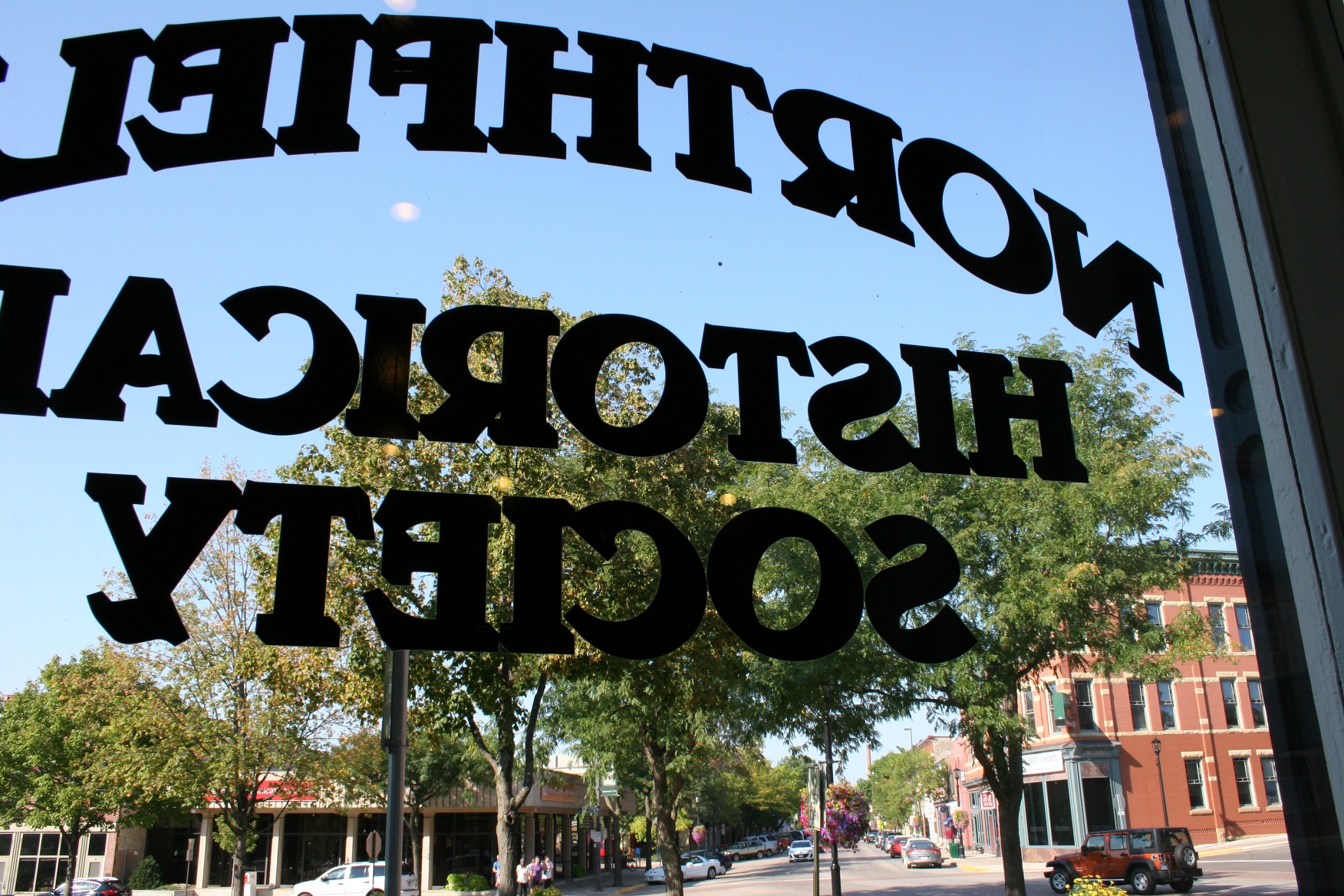
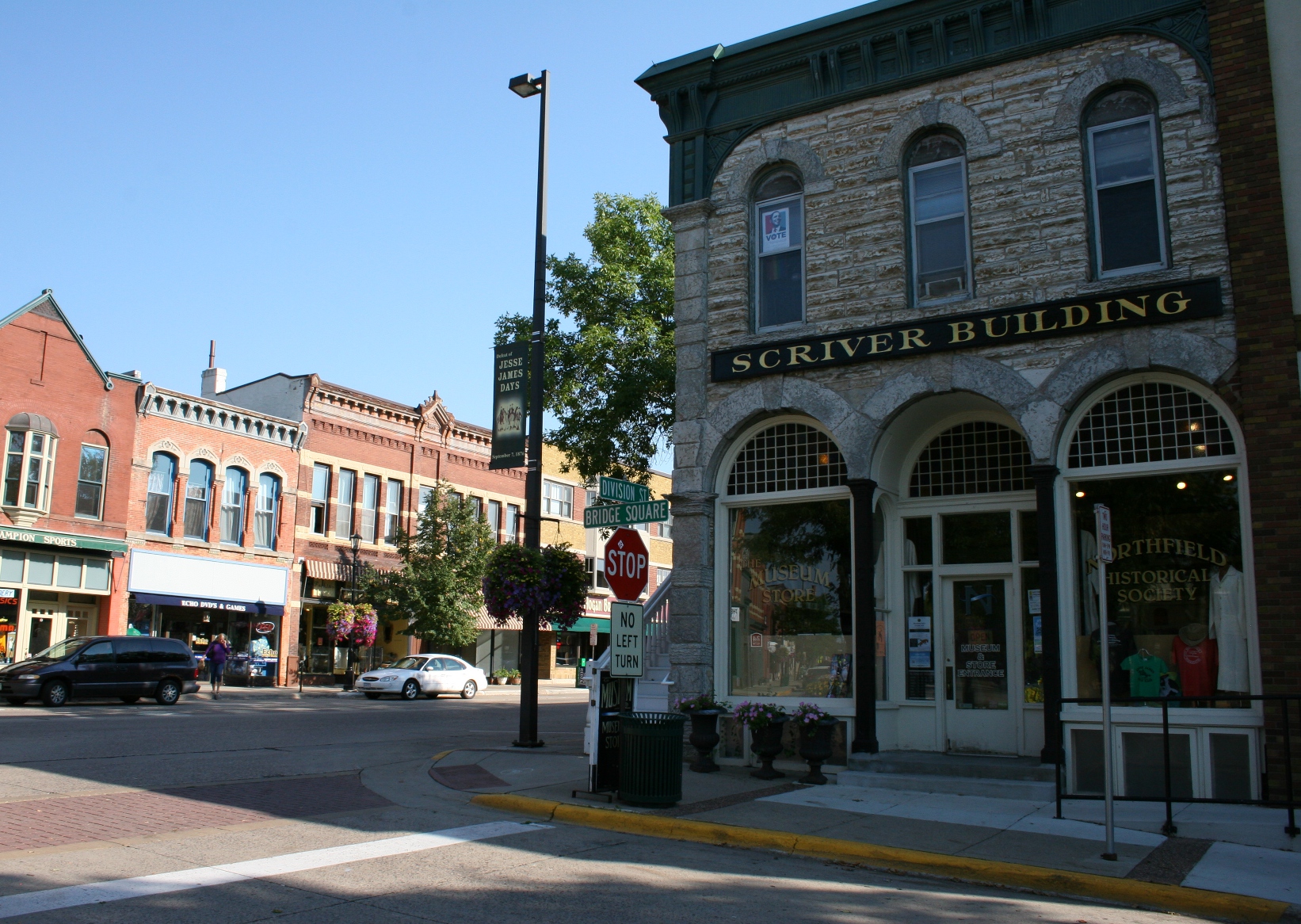
Looking through a front window of the Northfield Historical Society museum toward Division Street.

It is Sunday afternoon and I am with a small group touring the Northfield Historical Society. I have come here with my husband to view the temporary U.S.-Dakota War of 1862 exhibit as it relates to Rice County.
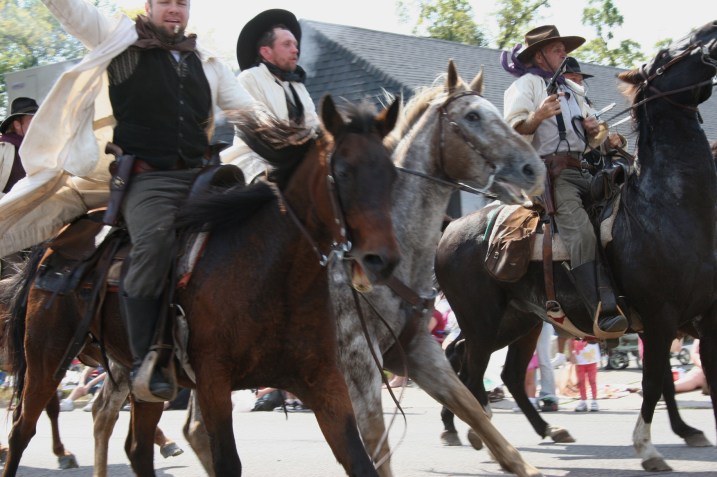
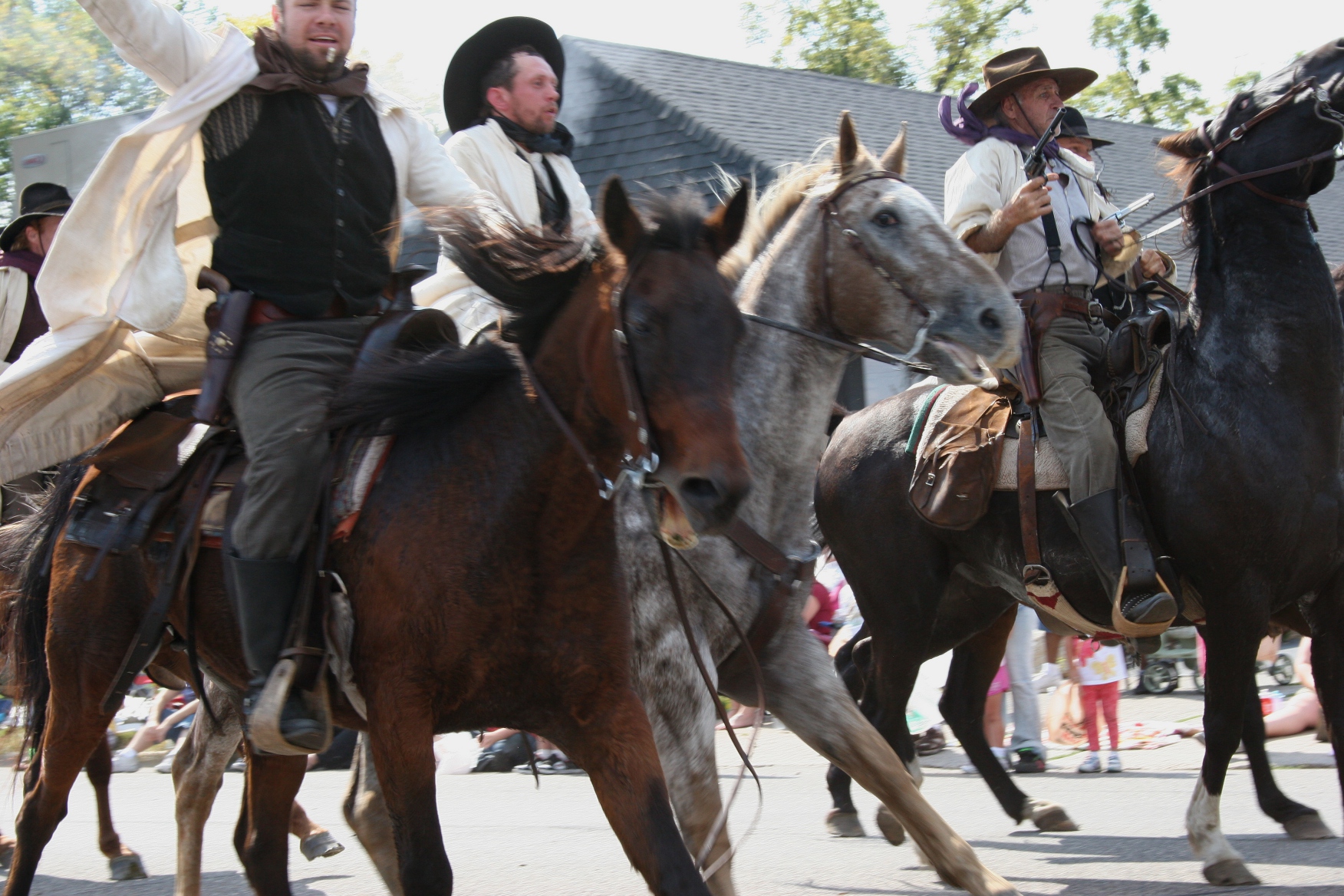
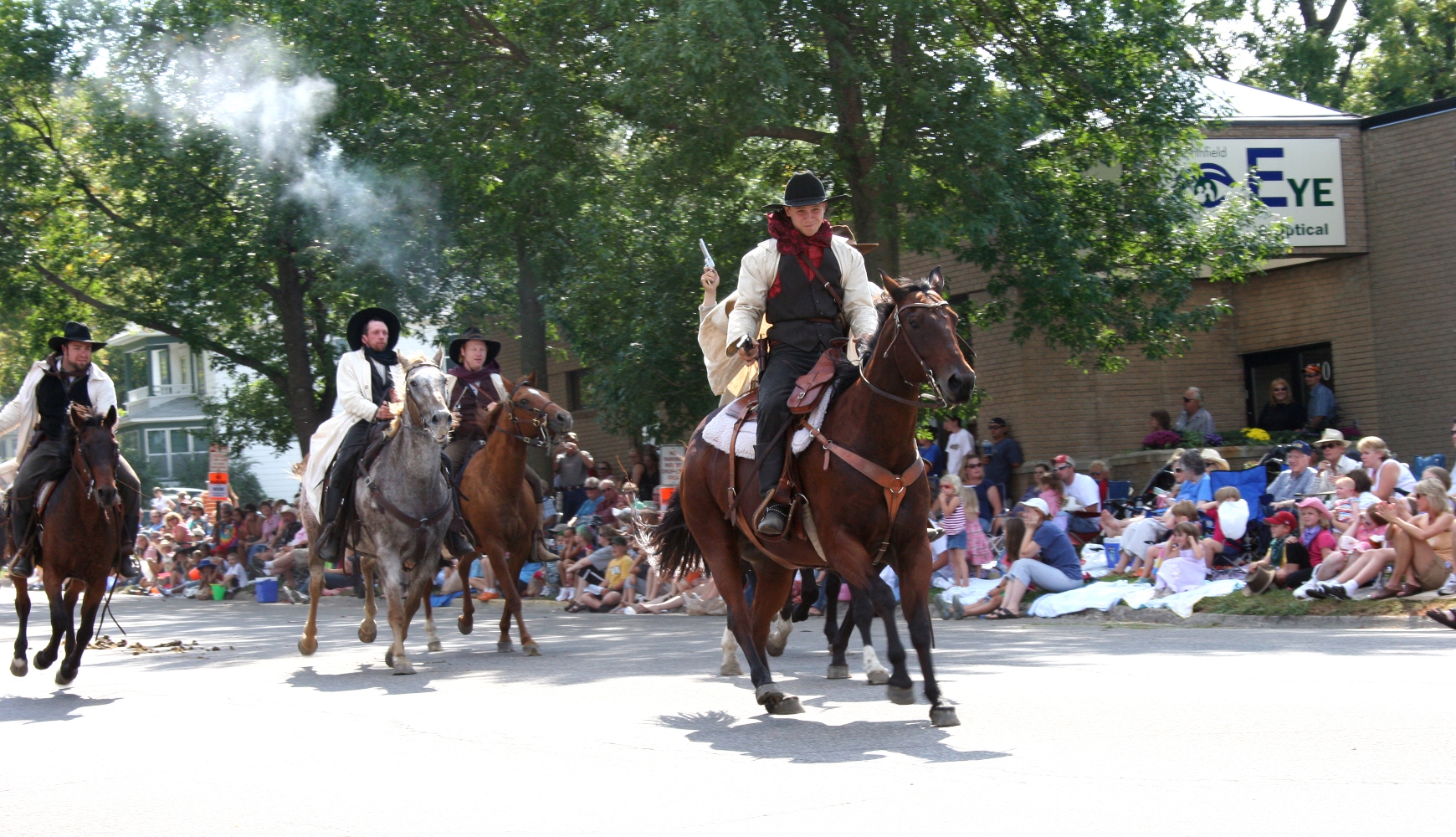
The James-Younger Gang re-enactors riding in The Defeat of Jesse James Days parade perhaps five years ago.

But I find myself, instead, captivated by Hakala’s intriguing play-by-play account of the James-Younger Gang bank robbery of September 7, 1876, as he leads us through the historical society and into the bank. I am embarrassed to admit that I’ve never visited this museum, site of perhaps the most historic bank robbery in U.S. history, even though I live only 15 miles away and once worked briefly as a newspaper reporter in this town.

This week some 100,000 visitors, according to Hakala, are expected in Northfield for the annual Defeat of Jesse James Days celebration September 5-9.
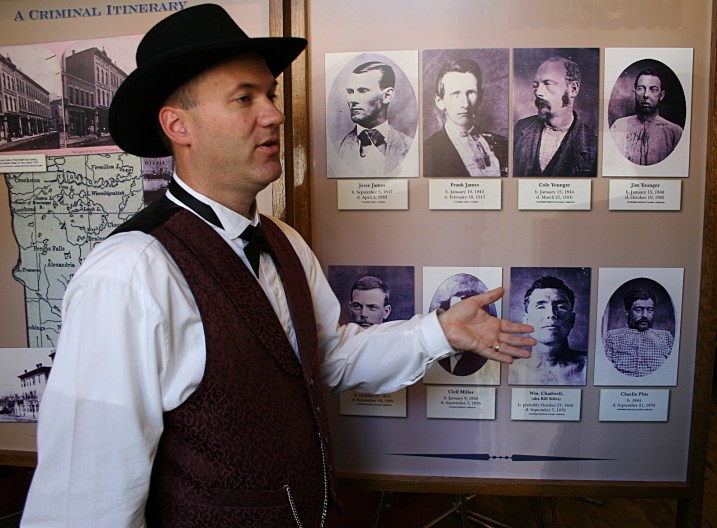
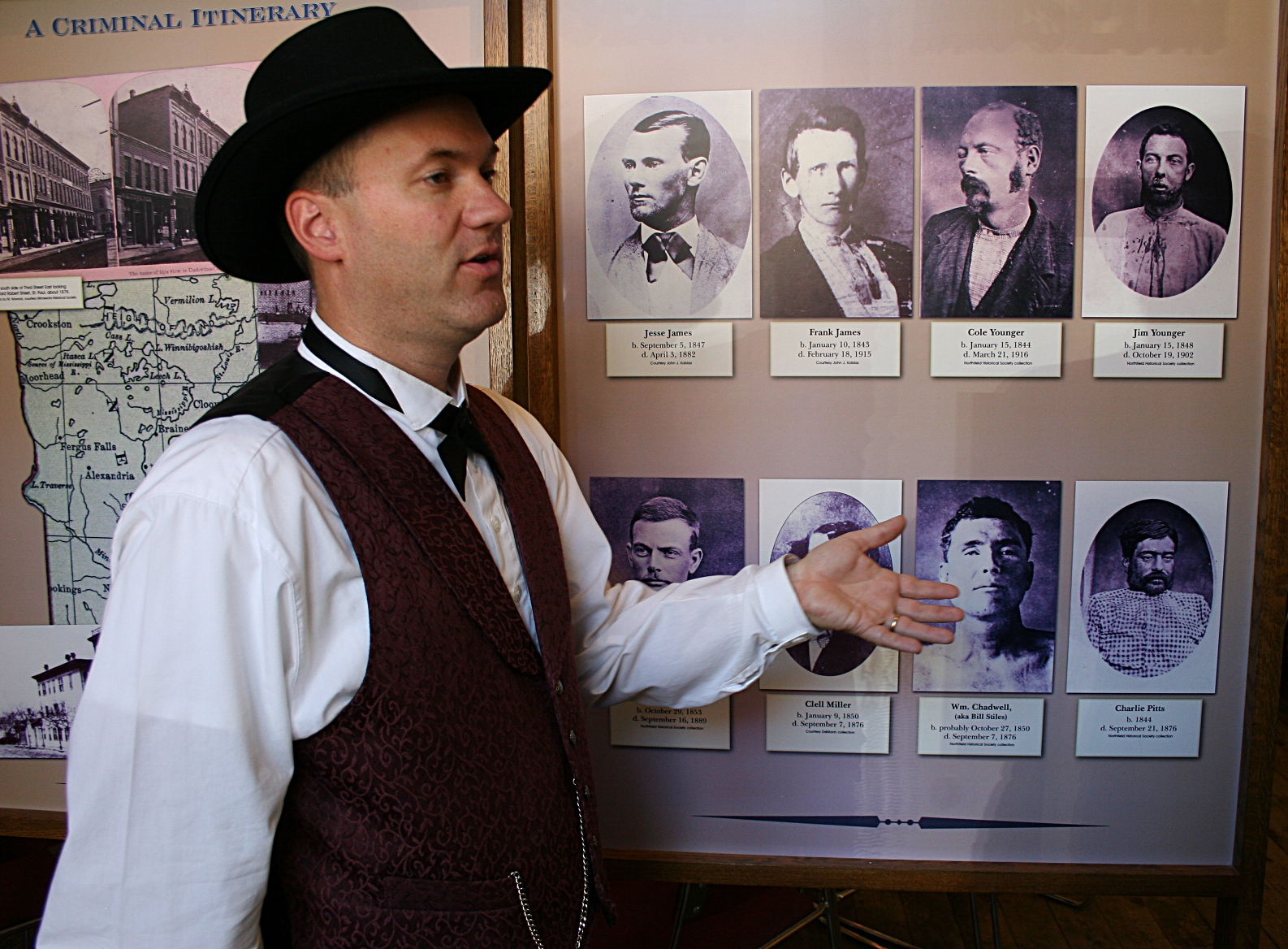
Christian Hakala talks about gang members involved in the Northfield bank raid, pictured to his left: Frank and Jesse James; Cole, Bob and Jim Younger; Clell Miller; William Chadwell; and Charlie Pitts.

The former history teacher, and now a fund raiser at Carleton College in Northfield, serves on the historical society board, volunteers as a tour guide and role plays a townsperson in the annual re-enactments of the bank robbery. His knowledge of the crime is precise, right down to the minute on the original bank clock, stopped at 1:50 p.m., the time of the deadly and unsuccessful robbery.
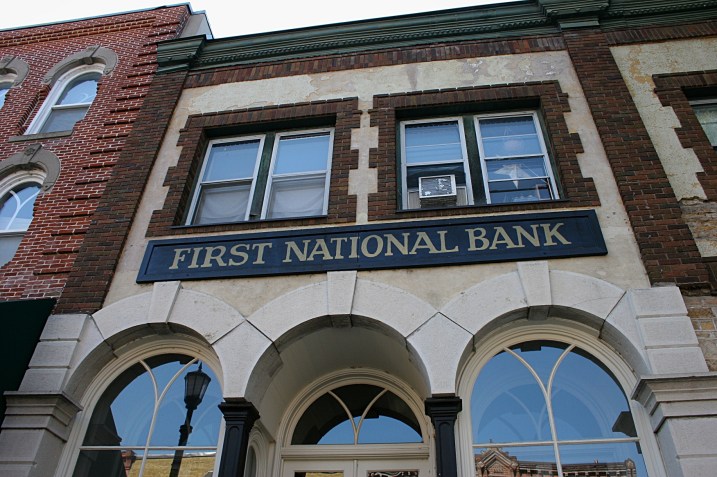
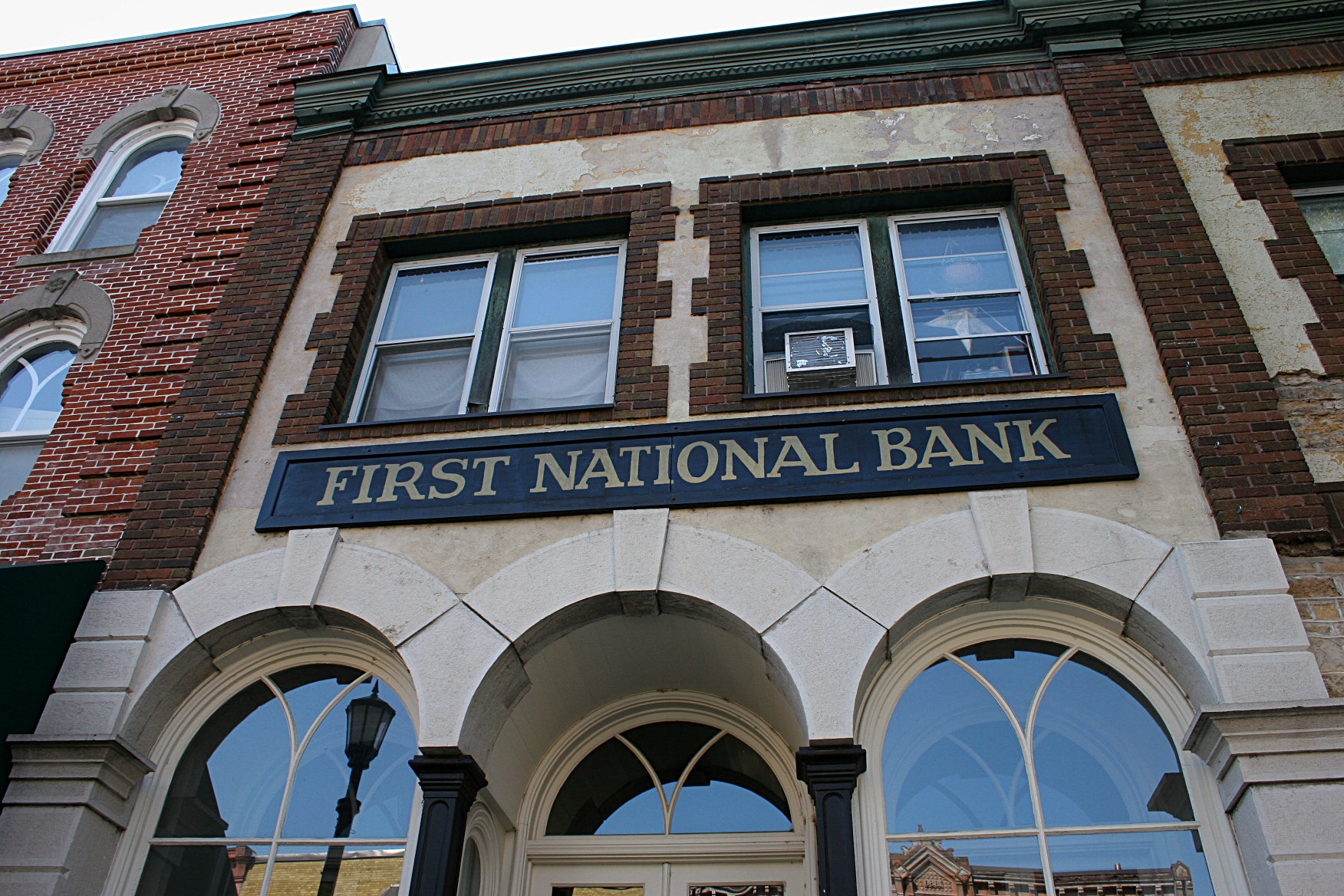
The front of the original First National Bank of Northfield. I didn’t photograph the entire building as the sidewalk in front of the bank was torn up and blocked for installation of sidewalk poetry.

It was all over in seven minutes with four shot dead, including acting cashier Joseph Lee Heywood who refused to allow the robbers into the vault; Swedish immigrant Nicolaus Gustafson; and outlaws Clell Miller and William Chadwell.
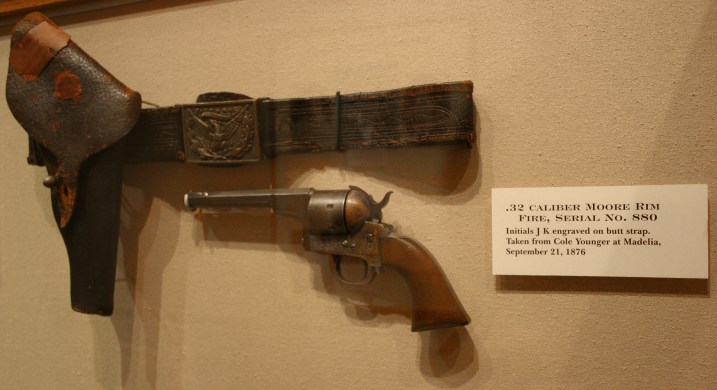
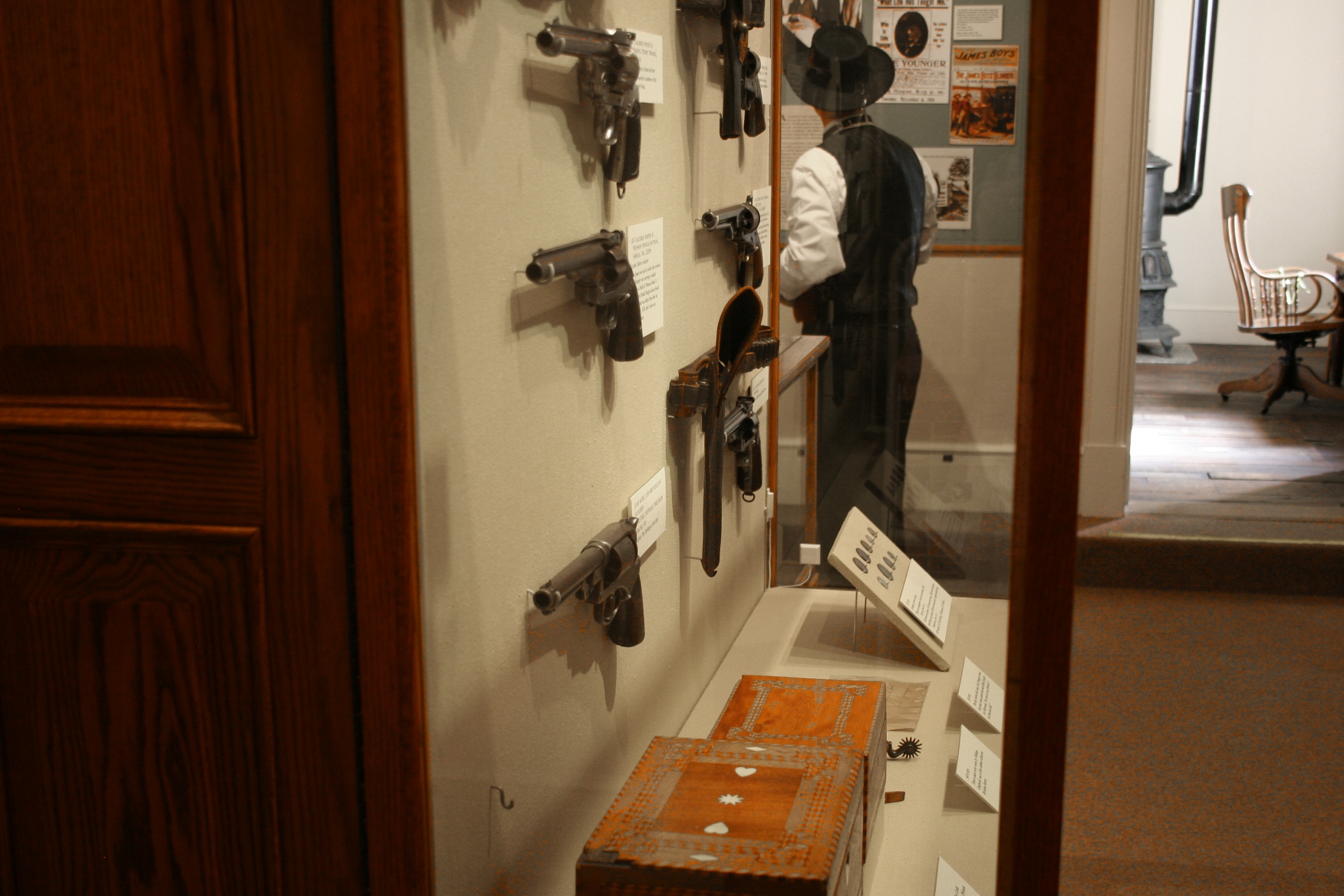
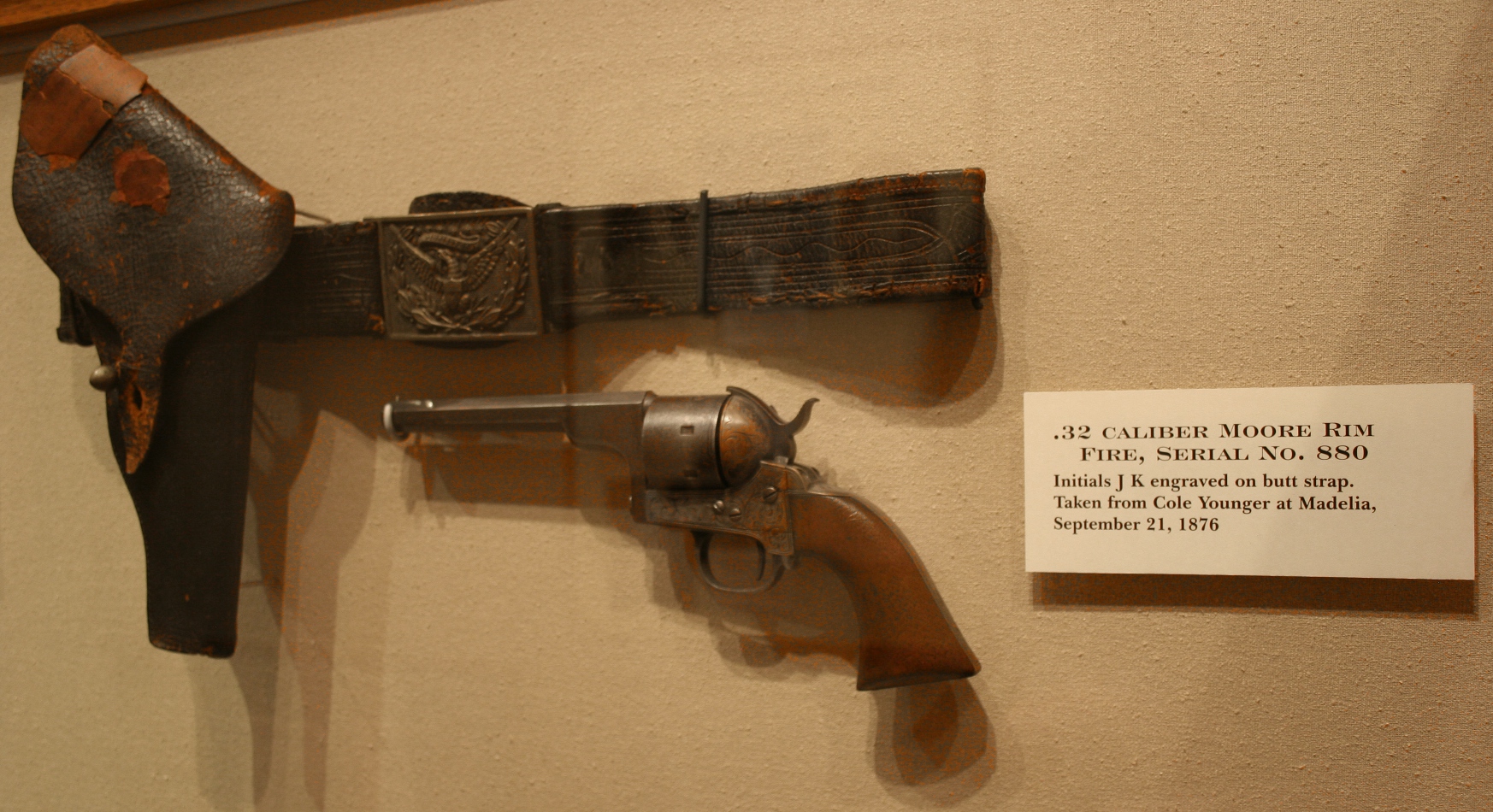
The gun confiscated from Cole Younger when he was captured two weeks later near Madelia. I shot this glass-encased weapon in available light, without a tripod and without flash, meaning quality is not there in this image.

Not until the end of the tour does Hakala reveal that efforts are currently underway to exhume and determine if the presumed body of gangster Miller, buried in his home state of Missouri, truly is Miller.

Hakala explains: Then-medical student Henry Wheeler, who shot Miller from an upper story level of a building across the street from the bank, dug Miller from his grave and shipped the body from Northfield to his Michigan medical school for dissection and study. Later, Wheeler would return the supposed body of Miller to his family in Missouri. But, as the story goes, Wheeler kept a skeleton, purported to possibly be Miller, in a closet of his Grand Forks, N.D., medical practice office. That skeleton is today owned by a private collector.

The Miller family, Hakala says, is cooperating in proposed plans to positively identify the body buried in Missouri via forensic testing. The body was badly decomposed and thus not identifiable by the time it was received by the Miller family for burial.

Wheeler’s actions, Hakala further says, would not have been all that unusual for the time period with a likely attitude of “I killed the guy. He’s mine.”

This recent development simply adds to the mystery and drama and varying versions of events and details which have long accompanied the James-Younger bank raid in Northfield. Hakala, a northeastern Minnesota native who has also lived and taught in Missouri, knows how perspectives and stories differ based on source locations.

Yet, Hakala assures that the minute-by-minute account he relates of the actual bank robbery is based on the eyewitness testimony of a bookkeeper, collaborated by a teller who also witnessed part of the hold-up.

The only portion of the original bank you’ll see in this post is to the right in the background, caught when I was photographing this display case in the adjoining museum space which is in a separate building.

I can’t possibly share with you here the entire scenario Hakala presented in his tour on Sunday. Nor can I show you images, because photography is not allowed inside the original First National Bank of Northfield. But I can tell you that walking upon the very same rough floor boards trod by outlaws with a 10-year history of successful raids on trains and in banks, eying the massive black vault (closed, but unlocked at the time of the crime) and seeing blood stains on the bank ledger makes an impression.
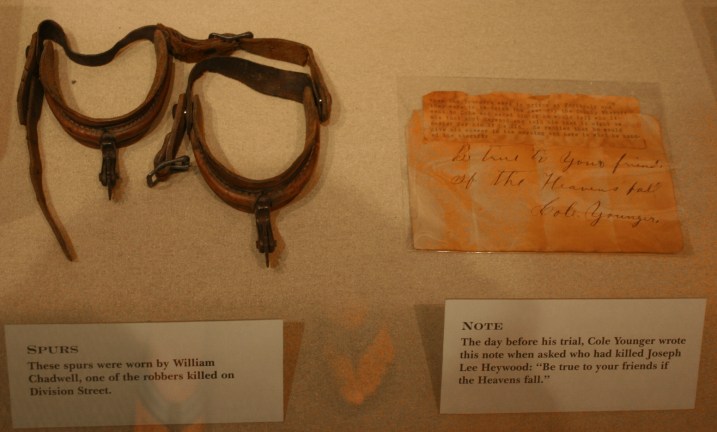
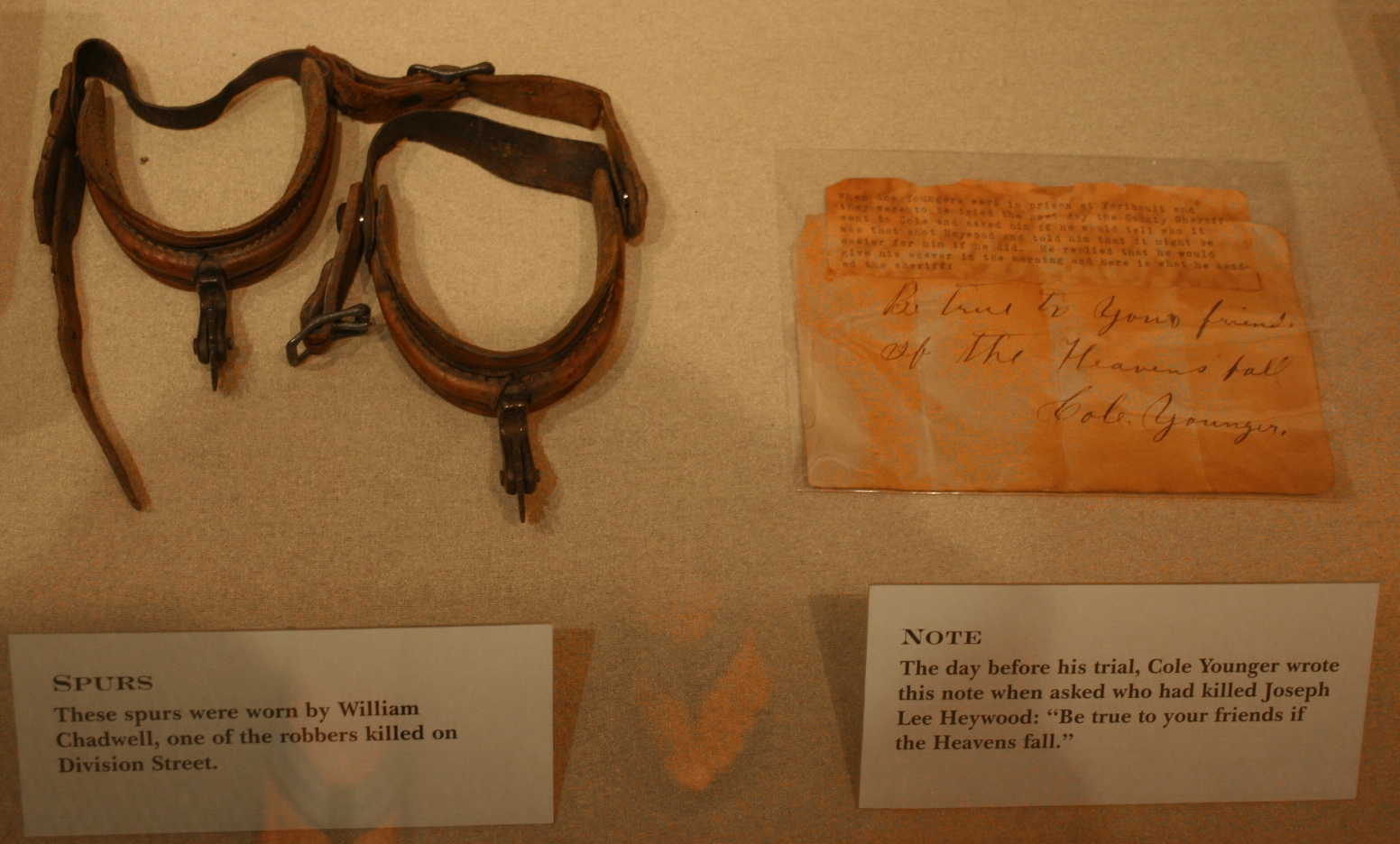
These two items in a display case caught my attention. On the right is a note written by Cole Younger the day before his trial. When asked who killed Joseph Lee Heywood, he answered. “Be true to your friends if the Heavens fall.” In other words, he wasn’t telling. To the left are spurs worn by outlaw William Chadwell, who was shot and killed on Division Street during the raid.

However, here are some select pieces of information presented by Hakala which I find particularly interesting:

  • Jesse and Frank James’ father was a Baptist minister.
  • The James-Younger Gang invented the “stick ’em up” bank hold-up, conducting the first bank raid during daylight business hours, in which no war was going on, in Northfield.
  • One theory surmises that the James-Younger Gang was trying to get back at the Union by robbing banks.
  • In following with that anti-Union theory, Hakala notes that Union General and post Civil War provisional governor of Mississippi Adelbert Ames was a member of the Northfield family—coincidentally Jesse Ames and sons—which owned the local Ames (flour) Mill. Adelbert’s father-in-law was Benjamin Butler, a Union general much-despised by Southerners. This could explain why the gang targeted Northfield since the Ames’ family had money in the First National Bank.
  • While there was $15,000 in the Northfield bank vault, the outlaws made off with only $26.70 in cash, and not from the vault, which was protected by hero/cashier Heywood.
  • The unarmed Heywood was shot out of frustration and “cold-blooded meanness” (Hakala’s words, not mine). He was also slit across the throat, just enough to scare him, and pistol-whipped.
  • Northfield townspeople were throwing cast iron skillets, tossing bricks and aiming birdshot at the trapped gang members as they tried to ride away from the narrow canyon-like street setting in Northfield.
  • A posse of some 1,000 people formed to track down the gang.  The three Younger brothers were shot and captured in a gun battle at Hanska Slough near Madelia. Charlie Pitts was killed there. Frank and Jesse James escaped to Missouri.
  • Jesse James was killed by a friend and fellow gang member, Robert Ford, in 1882 for the reward money.
  • Postcards featuring photos of the dead outlaws, Clell Miller and William Chadwell, were sold to the public after their bodies were taken to a professional photography studio in Northfield and photographed.
  • It is written into a lease on an apartment across the street from the original First National Bank that re-enactors can use the apartment each year for bank raid re-enactments. An actor is stationed in the upper level room to portray medical student Henry Wheeler shooting, and killing, Clell Miller.
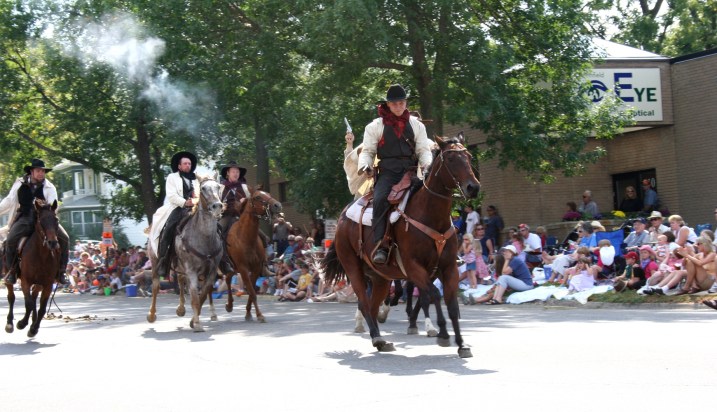
Another shot of the James-Younger Gang re-enactors riding in The Defeat of Jesse James Days parade several years ago.

If you wish to witness the seven-minute bank raid re-enactment, this is the week to do so. Performers will shrug into their long linen dusters, tuck their sidearms in place, saddle up and shoot it out at the Northfield Historical Society Bank Site & Museum, 408 Division Street in downtown Northfield.

Re-enactments are set for 6 and 7 p.m. Friday, September 7—the actual date of the robbery—and at 11 a.m. and 1, 3 and 5 p.m. on Saturday and at 11 a.m. and 12:30 p.m. on Sunday.
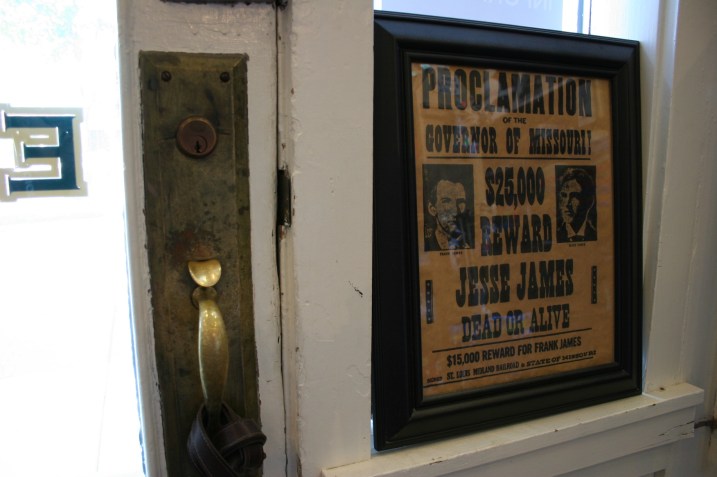
A copy of a wanted poster posted next to the front door of the museum.

For a complete listing of The Defeat of Jesse James Days activities, click here.

For more information about the bank site and museum, click here.
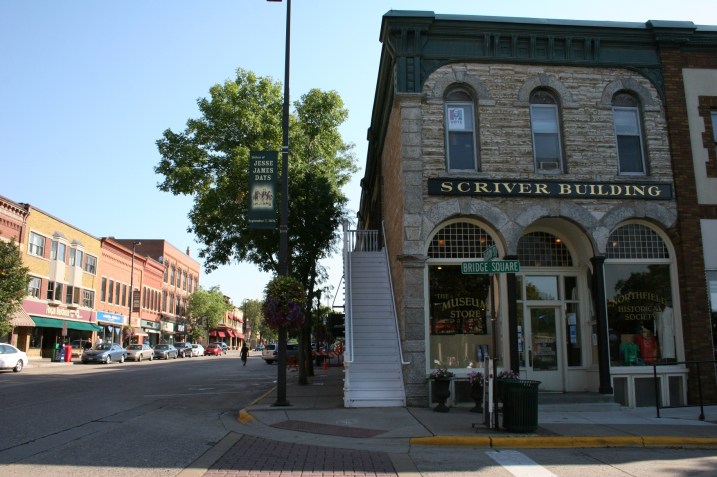
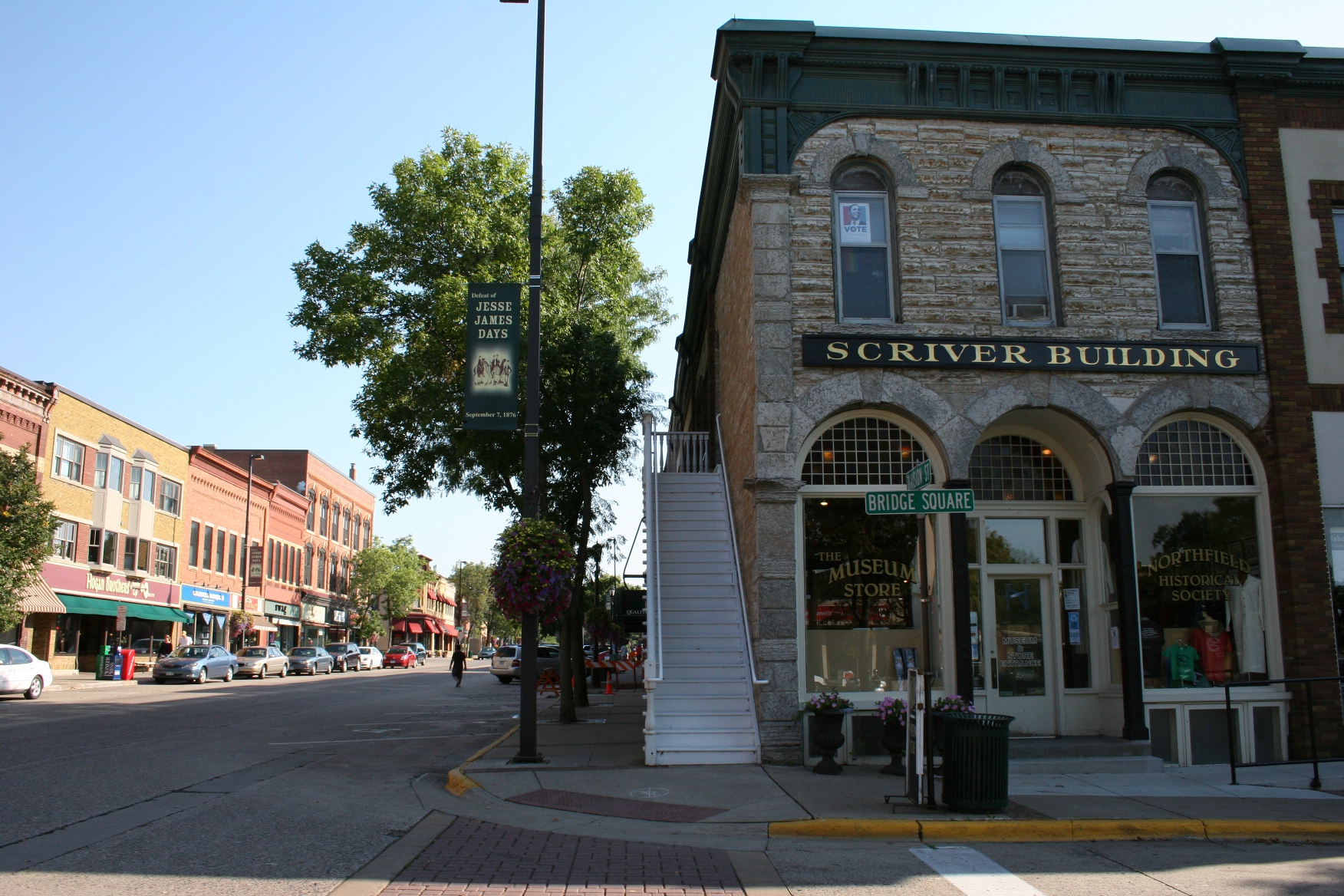
The front of the museum. If you look underneath the white steps, you’ll find three holes ringed in black, supposedly bullet holes made during the raid. It’s conjecture with nothing proven, according to Christian Hakala, who has his doubts about the holes being made by bullets. That’s Division Street on the left.
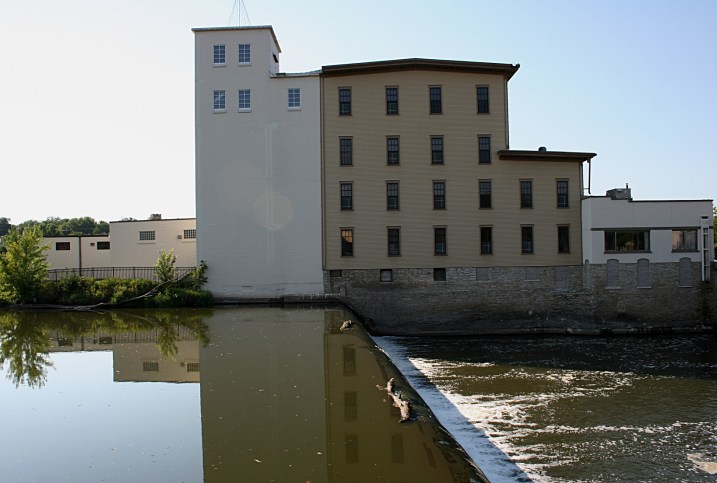
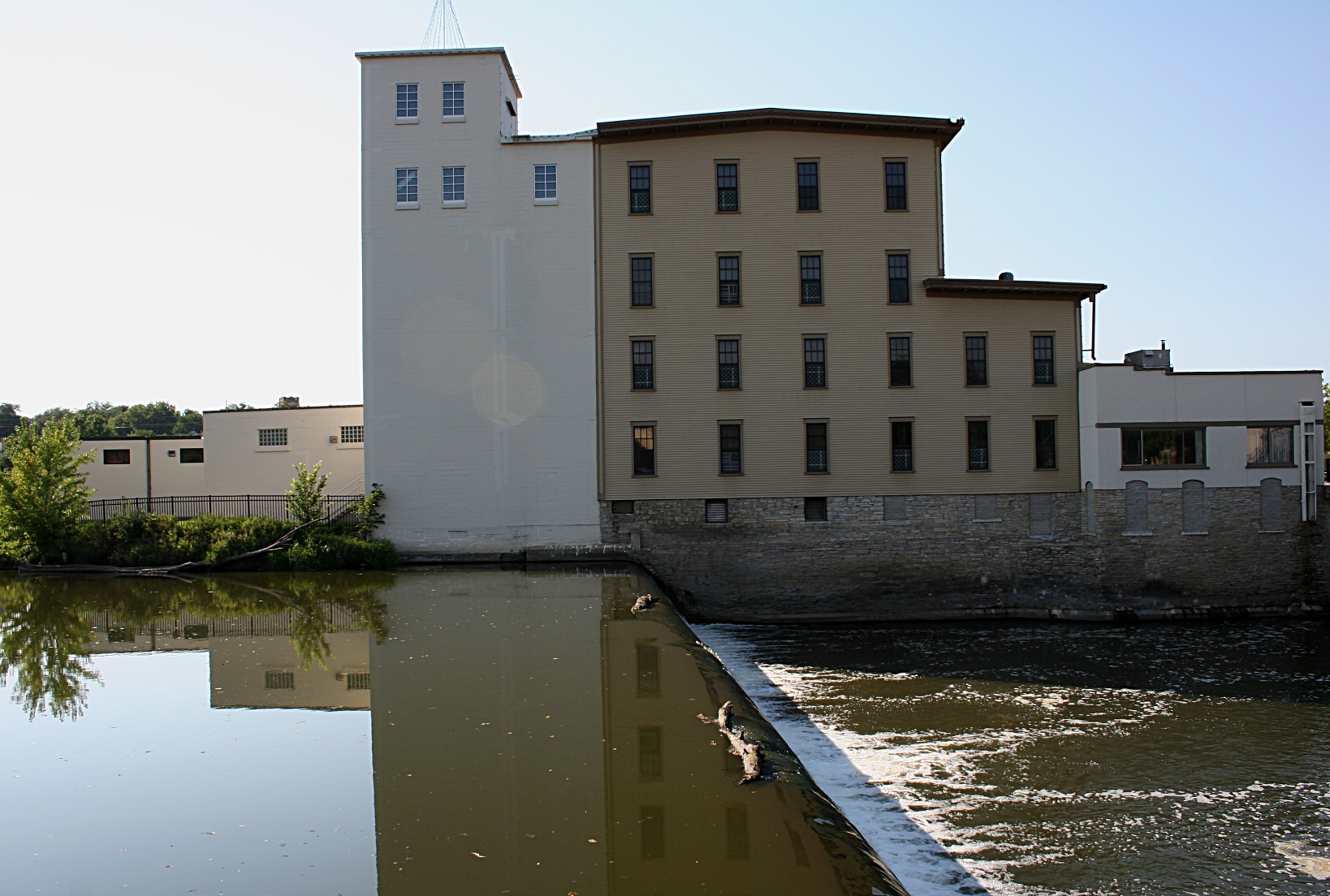
The original Ames Mill, once owned by Jesse Ames and sons, and today owned by Malt-O-Meal. It’s located around the corner and across the river from the bank. The company’s hot cereal is made here in the old flour mill.

© Copyright 2012 Audrey Kletscher Helbling


New exhibit highlights Rice County in the U.S.-Dakota War of 1862 September 2, 2012

IT IS EASY TO FORGET SOMETIMES, because I grew up in the region of Minnesota where the U.S.-Dakota War of 1862 was centered, that residents of the county in which I now live also played an integral role in the conflict.

Specifically, Rice County residents Bishop Henry Whipple and Alexander Faribault, after whom my community of Faribault is named, are key persons often noted in historical information written about the war.

I am always surprised that relatively few people from outside of southwestern and central Minnesota know so little about the bloody, six-week war between the Dakota and the white settlers and soldiers given it is a major, defining event in Minnesota history.

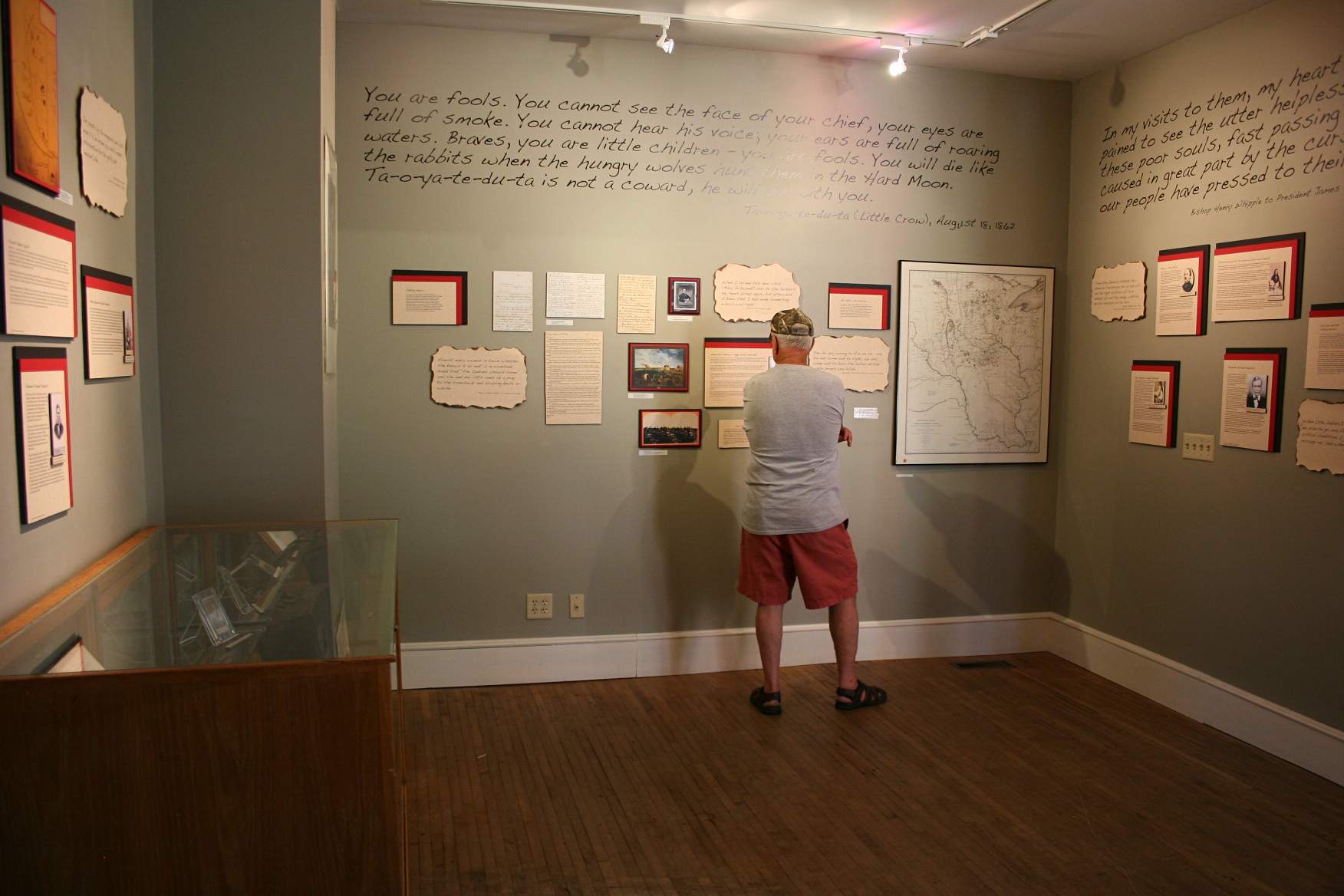
An overview of 1862, Through Rice County’s Eyes, which opened August 22 in Northfield.

However, awareness has grown considerably this year on the 150th anniversary of the war, including right here in Rice County. The Northfield Historical Society, partnering with the Rice County Historical Society, is currently showcasing an exhibit, 1862, Through Rice County’s Eyes.

I recently checked out the Northfield exhibit, which features mostly memorable quotes, volumes of summarized information and copies of photos. It’s a lot of reading.

But if you’re interested in educating yourself, it’s worth the time and concentration needed to absorb the information presented in this exhibit. And I’ll admit to occasionally skimming the postings because I am more of a visual, multi media, show-and-tell kind of history learner. I also had a pretty good background of knowledge going into the exhibit.

This sculpture of Alexander Faribault trading with a Dakota trading partner stands in Faribault’s Heritage Park near the Straight River and site of Faribault’s trading post. Faribault artist Ivan Whillock created this sculpture which sits atop a fountain known as the Bea Duncan Memorial Fountain.

I knew, for example, that fur trader Alexander Faribault was one-quarter Dakota and married to Mary Elizabeth Graham, whose mother was a family member of a Dakota chief. I knew, too, that Faribault was involved in the negotiating and translating of land treaties between the government and the Dakota before the war and that he benefited financially.

I was aware that Alexander Faribault sheltered the Dakota.

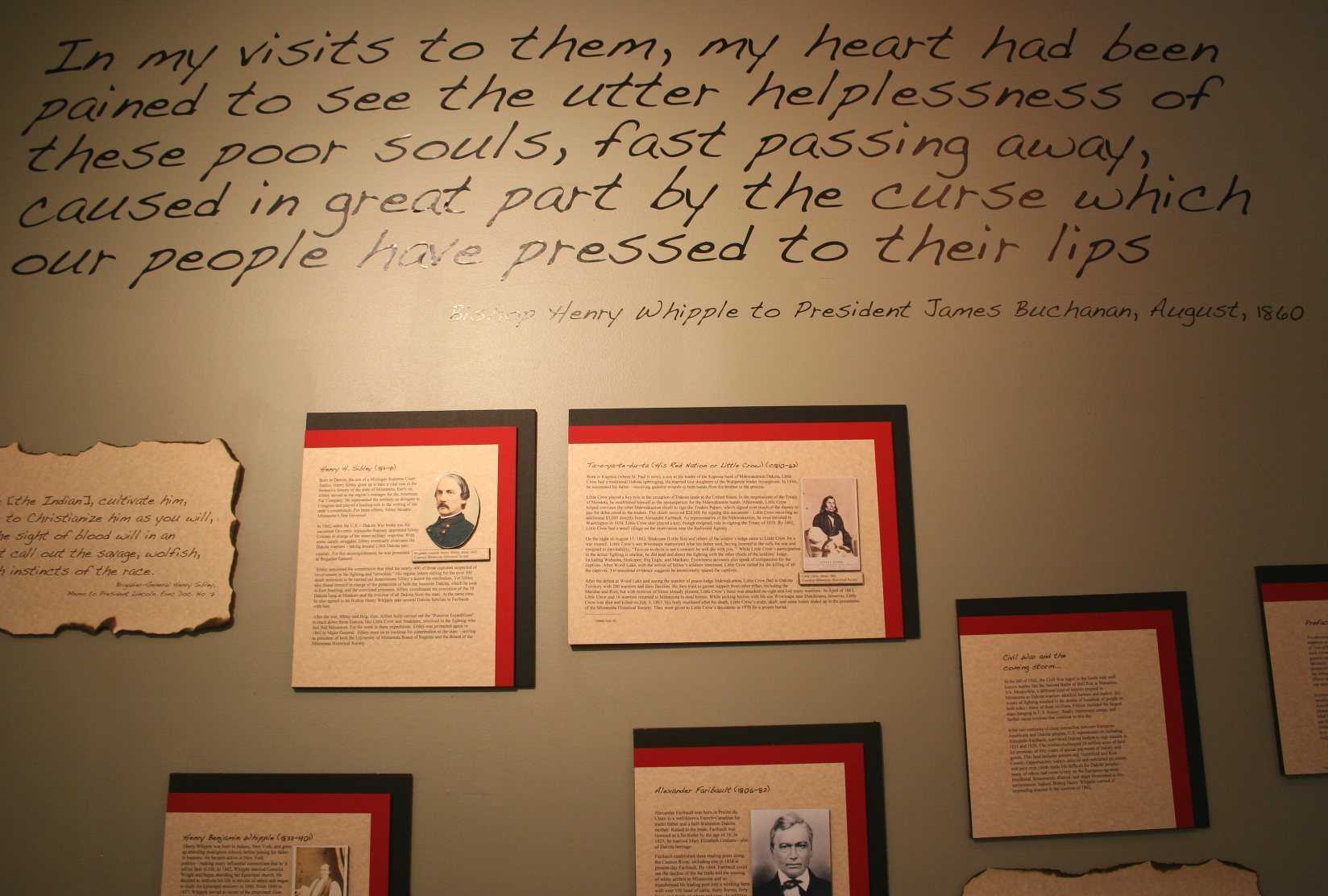
Above the photos and info is this quote by Bishop Henry Whipple to President Buchanan in August 1860: “In my visits to them, my heart had been pained to see the utter helplessness of these poor souls, fast passing away, caused in great part by the curse which our people have pressed to their lips.”

But I had forgotten that Bishop Henry Whipple, a long-time advocate for the rights of the Dakota and known to them as “Straight Tongue,” worked to find a safe refuge for them in the city of Faribault.

Alexander Faribault opened his land to the Dakota. Information in the exhibit states:

This land was the only safe-haven of its kind in a state now prejudiced in fear and anger against anyone with Dakota blood.

According to info in the exhibit, Alexander Faribault, whom you recall was one-fourth Dakota, also experienced prejudice against him. By 1869, this once successful fur trader, flour mill owner and politician had to sell his land and assets, including the land occupied by the Dakota.

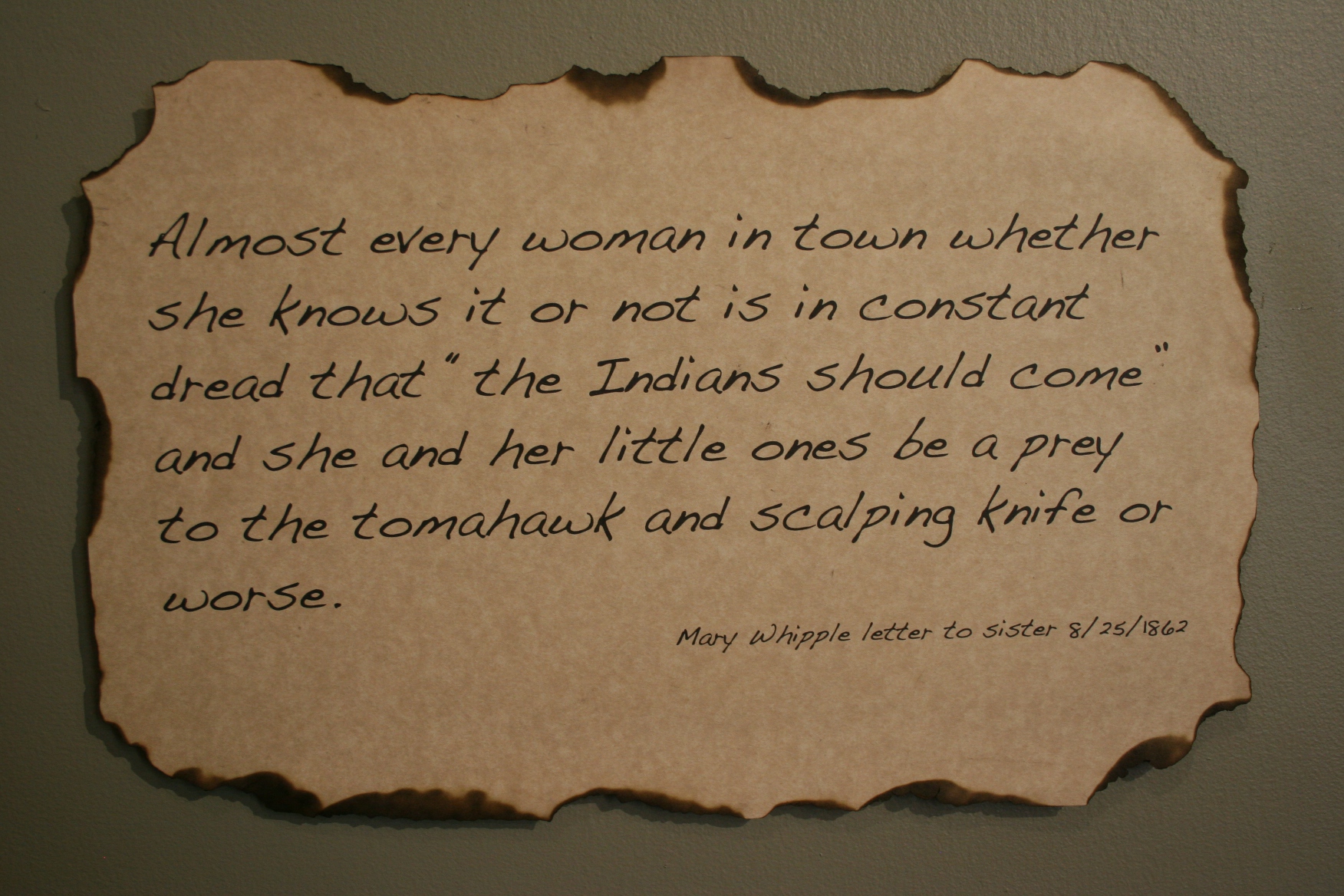
Equally interesting is the quote, below, attributed to Mary Whipple. Even though her husband, the bishop, worked tirelessly to help the Dakota, fear still existed in his home community.

A quote from a letter written by Mary Whipple to her sister during the U.S.-Dakota War.

Perhaps the most interesting fact I learned relates to that of Lt. Rollin Olin, a decade-long resident of Northfield. He was second in command of the Third Minnesota Regiment at the Battle of Wood Lake—the final battle of the war—and a member of a five-man military tribunal which tried the Dakota following the war. He signed more than 300 death sentences for nearly 400 Dakota charged with murder, rape and/or robbery.

For me, that raises the obvious question: How could someone who fought against the Dakota judge them without bias? All members of the tribunal, in fact, had fought the Dakota. The answer, of course, is that Lt. Olin and the other four could not.

Likewise, the Northfield Historical Society is wisely careful to indicate that its new, temporary exhibit may not please everyone or include everything on the topic of Rice County’s connection to the war. On the NHS website, you’ll read this disclaimer:

As varied as these and other local perspectives may be, any exploration of the U.S.-Dakota War of 1862 suffers from the inevitable limitations facing every historical examination—limitations such as scope and biases, past and present, which impact the telling and perception of the stories and data. In presenting the exhibit 1862, Through Rice County’s Eyes this fall, NHS endeavors to draw visitors into thoughtful interest and discussion of this momentous event and its aftermath by sharing local connections. Come and critically examine this exhibit.

The exterior of the Northfield Historical Society, 408 Division Street, Northfield.

FYI: To learn more about 1862—Through Rice County’s Eyes, click here to the NHS website.

To learn more about the Minnesota counties, county by county, involved in the U.S.-Dakota War of 1862, click here.

© Copyright 2012 Audrey Kletscher Helbling

 

Not exactly kick the can June 29, 2012

Filed under: Uncategorized — Audrey Kletscher Helbling @ 7:15 AM
Tags: , , , , ,

HOT, HUMID WEATHER can cause all sorts of issues. Frizzy hair. Over-taxed air conditioners. Crabby kids, and adults. Buckling pavement.

And sometimes…sticky doors.

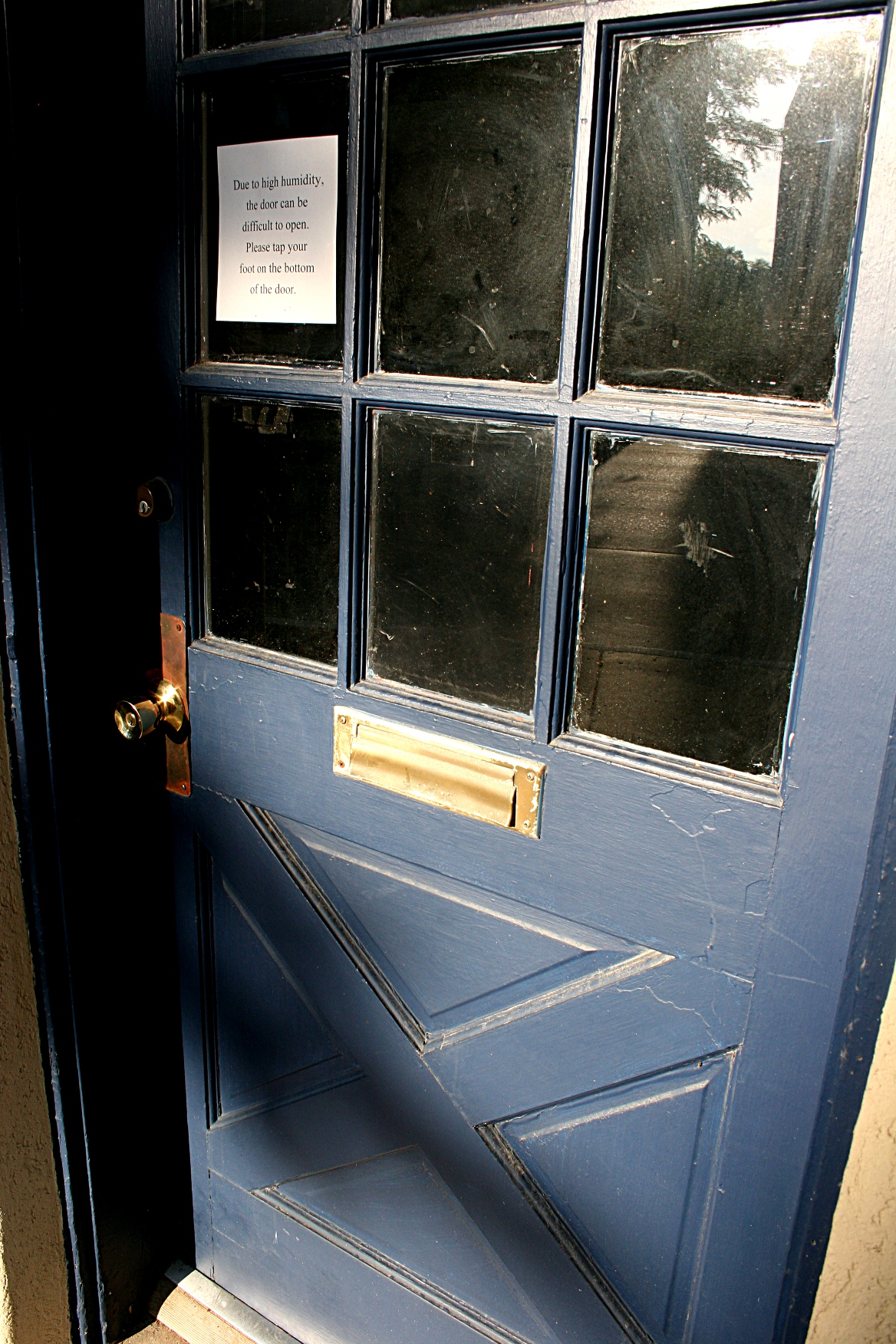
The door to Personal Touch Office Services.

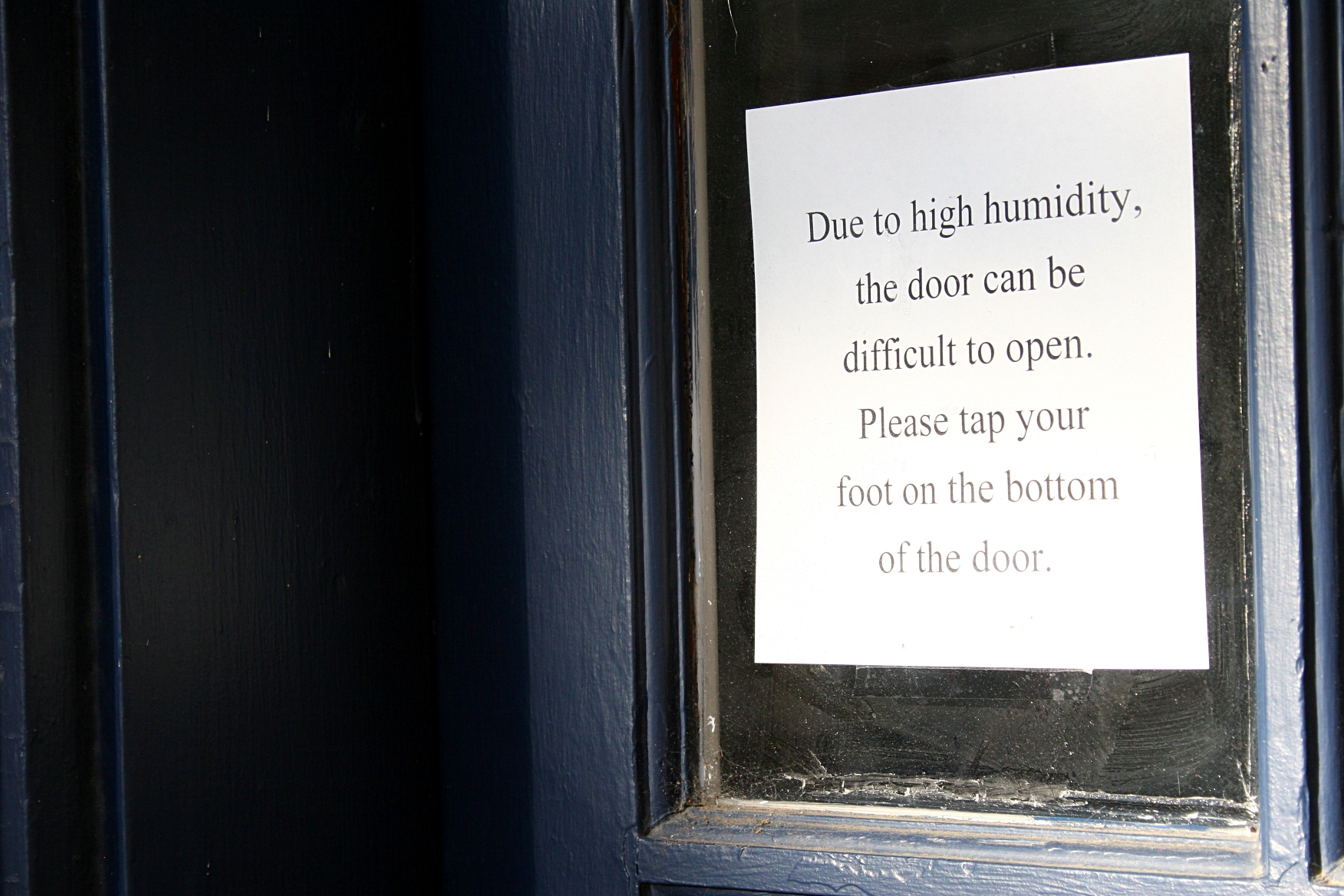
But Patti, at Personal Touch Office Services, 307 Division Street in historic downtown Northfield, offers a solution to the sticky door problem at her place of business. Simply follow her instructions:

Follow the instructions to get the door open during humid weather.

Please note that Patti instructs you to “tap,” not kick, the door. Got that?

I expect door tapping kicking has been a popular sport in Minnesota this week.

FYI: I do not know Patti nor have I ever done business with her. I simply found her note amusing and wanted to share it with you.

© Copyright 2012 Audrey Kletscher Helbling
 

Embracing everyday & public art, plus a new sculpture in Northfield June 28, 2012

GROWING UP, I DIDN’T have all that much formal exposure to the arts. Not at home. Not in school. Not outside of either.

Life was different back then, in the 1960s and early 1970s, with families in my southwestern Minnesota farming community simply working long, hard hours to survive. We didn’t, for the most part, have art galleries and live theatre, concerts or art shows or any of those cultural centers and events that today are an assumed aspect of life, even in the most rural of areas.

Despite that absence of organized art opportunities, I was not deprived of art. Rather, its presence was subtle—found in the flower gardens of Great Aunt Dora, in the dance of corn tassels on a breezy summer afternoon, in the patchwork symphony of quilts my Grandma Ida stitched, in the blazing orange of a prairie sunset painted across the wide sky, in the distinguishable cadence of a John Deere tractor, in the stones my great uncle rockhounds collected, sculpted and polished to shiny perfection.

Those exposures to art were so much a natural part of my life that I never realized their significance as artful influences.

Today I can find organized art anywhere, including right here in my community of Faribault. I embrace (most of) it with exuberance.

And to the north, in neighboring Northfield, the arts scene is even more vibrant.

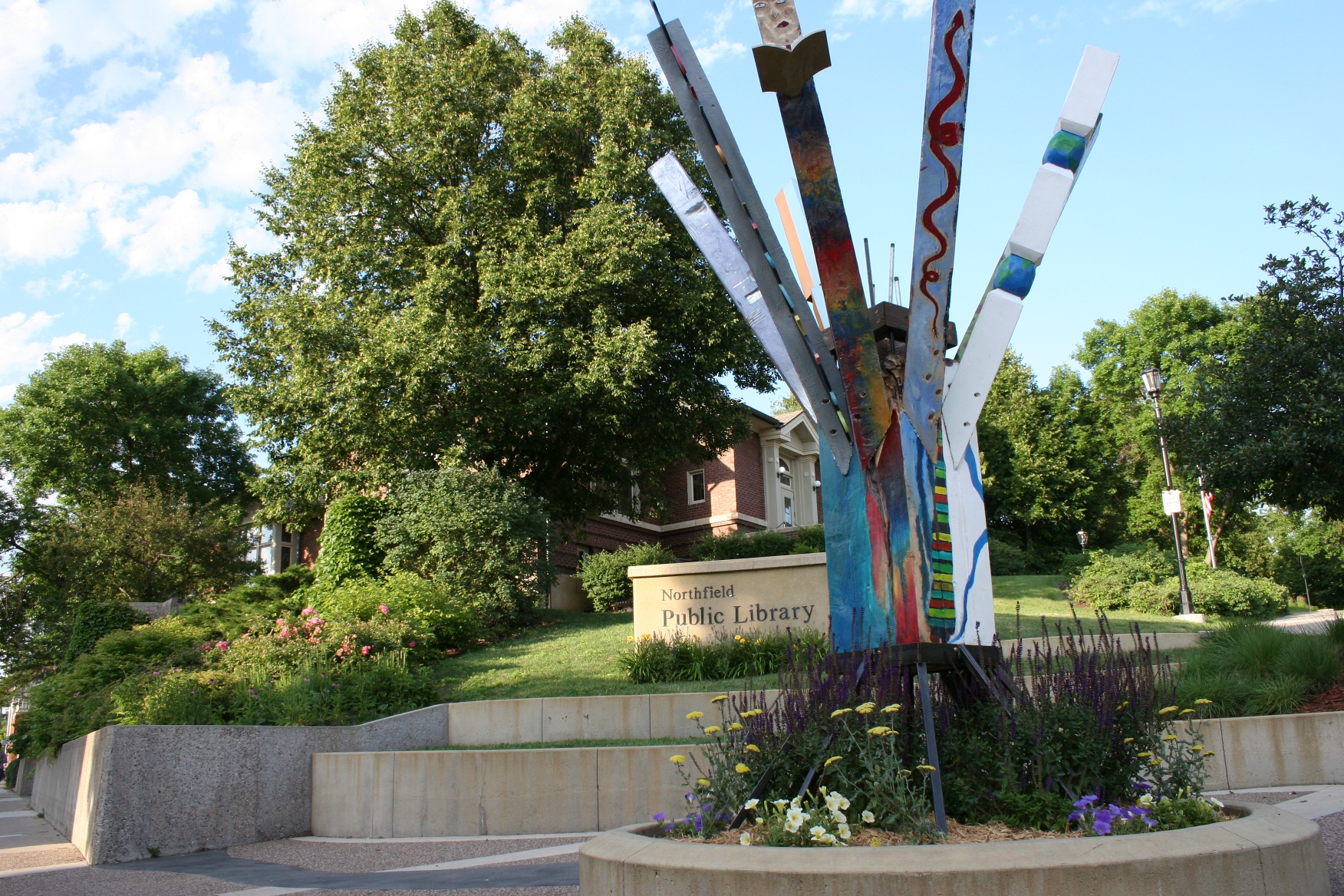
The recently-installed “Tree of Knowledge and Delight” at the Northfield Public Library.

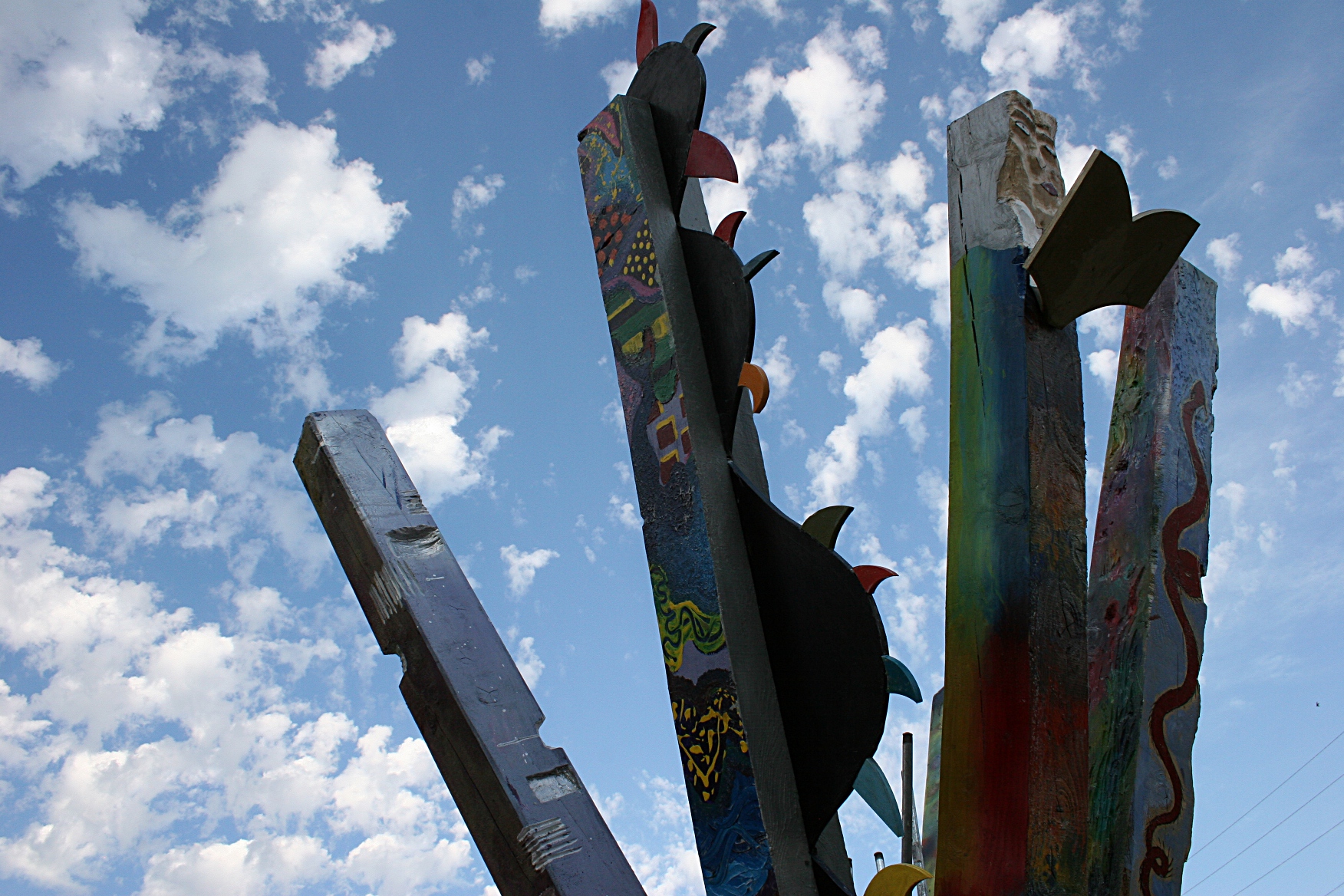
At 4:30 p.m. this Friday, June 29, Northfield celebrates its latest addition to downtown art at the official unveiling of the “Tree of Knowledge and Delight,” a sculpture created by 10 Northfield High School students and installed in the Northfield Public Library plaza.

A St. Olaf College emeritus professor of art and a St. Olaf art apprentice guided the students in their non-credit, extra-curricular public art course which resulted in the sculpture. Funding for the Northfield Young Sculptors Project came via a $4,150 Legacy grant approved by the Southeastern Minnesota Arts Council.

I viewed the sculpture for the first time Sunday evening. I’ll admit that I didn’t study the sculpture like I should have. But oftentimes it takes me awhile to warm up to abstract art.

Eight branches comprise the tree sculpture.

But if you take the time to examine the tree, you will see the visual themes related to learning and individual artistic expressions—the book, the faces, the snake, the harmony of colors and more.

That students would have this opportunity to create such a sizable piece of public art seems exceptional. What an encouragement to them as young artists.

The “Tree of Knowledge and Delight” will remain at the library plaza for a year before relocating to a permanent home at Northfield High School. Plans call for a public sculpture to become an annual project for NHS students and their professional mentors. And that is good.

Yet, aside from this organized project, I hope students will not overlook the art in their everyday lives. For that is the art which, as I see it, defines the artistic world in its simplest, purest, most grassroots form.

FYI: This project was also supported by the Northfield Arts and Culture Commission, the Northfield Public Library, Northfield High School and the City of Northfield.

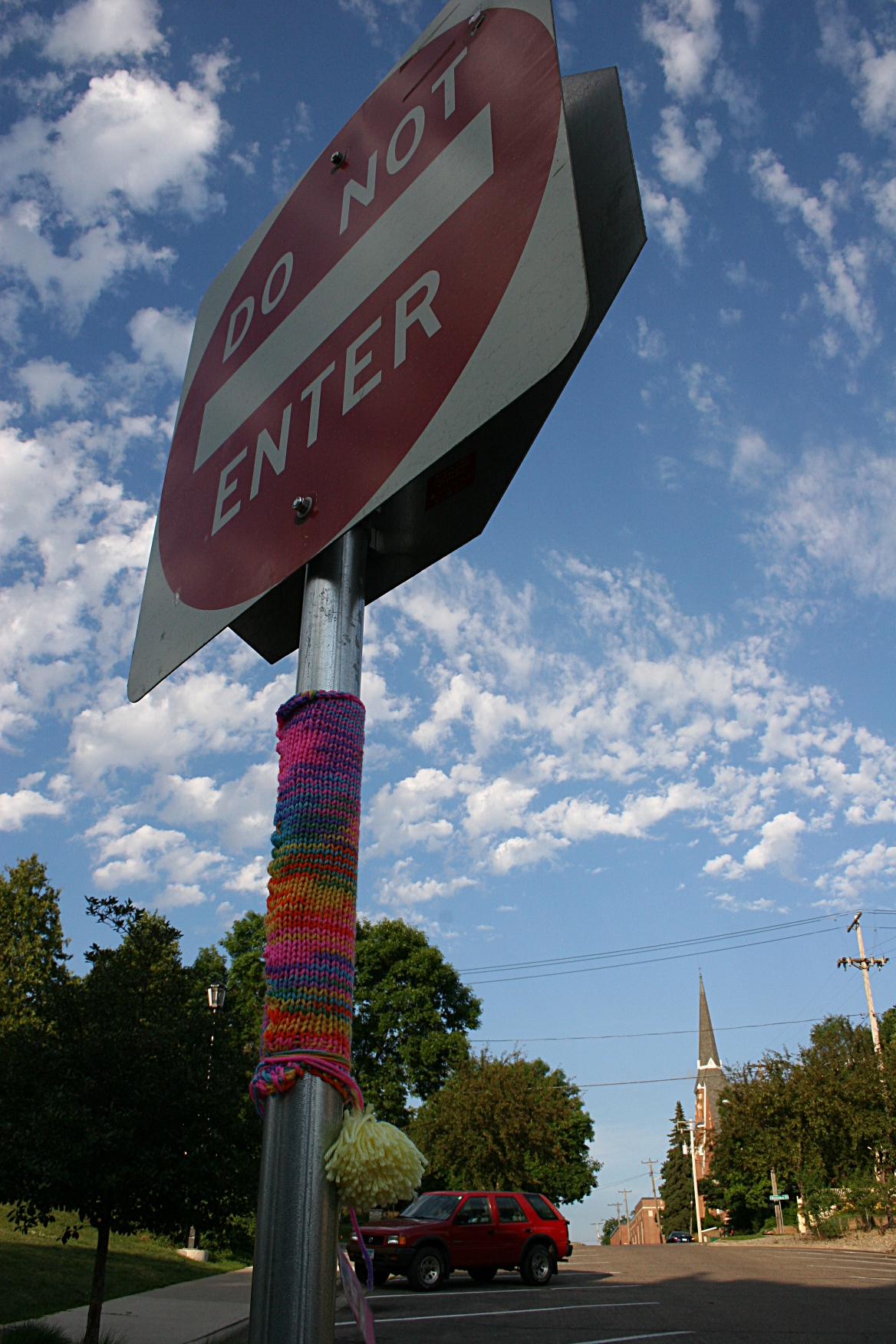
Right next to the Northfield Young Sculptors Project you’ll see this knit art wrapped around a “Do not enter” sign post. An attached tag, which includes a photo of a young woman, reads: “It’s immortality, my darlings.– Alison.” This is apparently a memorable line by character Alison DiLaurentis from the teen drama television series, “Pretty Little Liars.” Never heard of it. Any idea who placed this quote and knit art on the Northfield street sign? And what does that message mean anyway?

© Copyright 2012 Audrey Kletscher Helbling


A close-up look at a Midsommar celebration June 25, 2012

Filed under: Uncategorized — Audrey Kletscher Helbling @ 11:50 AM
Tags: , , , , , , ,

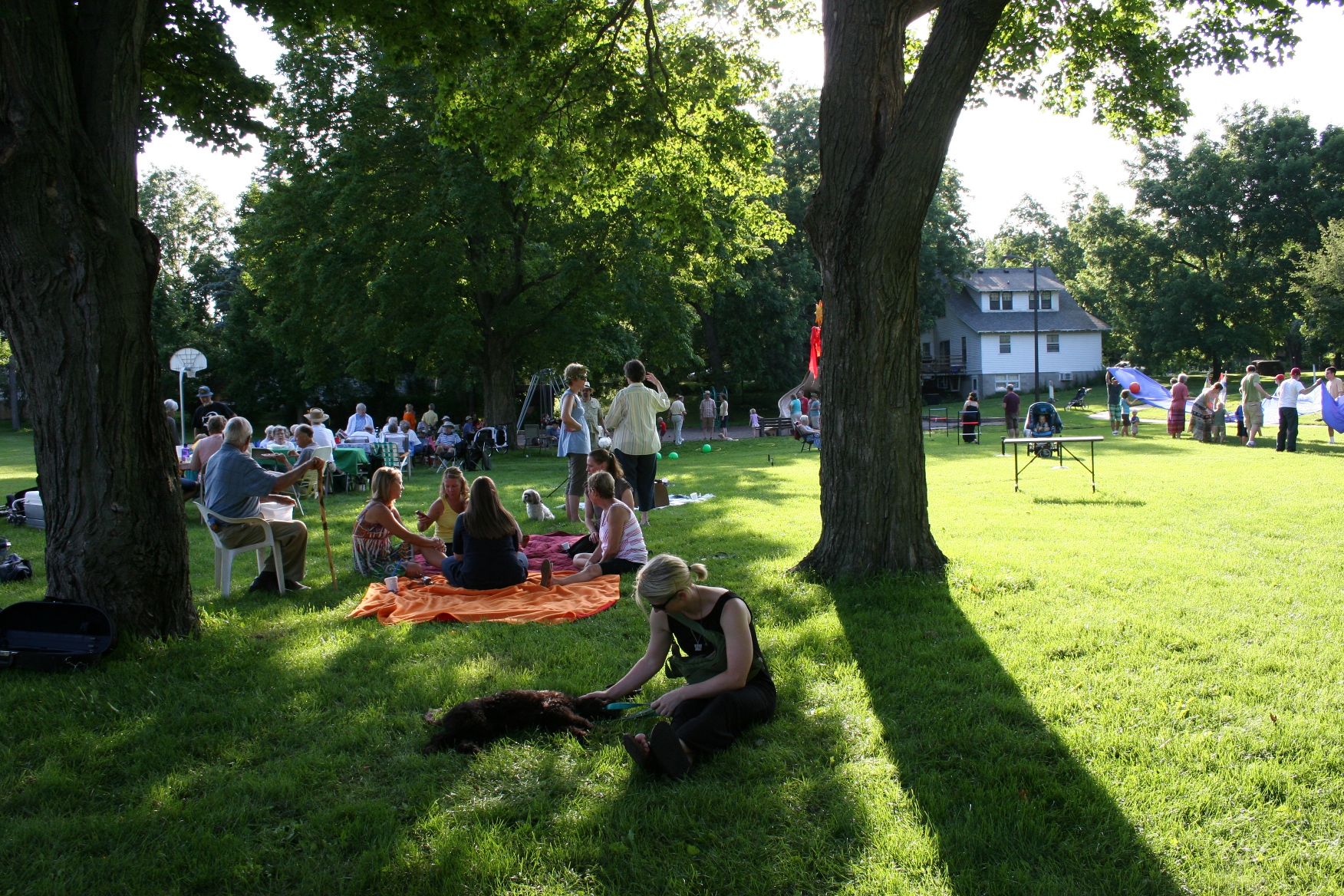
Picnicking, playing and celebrating in Way Park, Northfield, Minnesota, on Sunday evening.

WHEN YOU VIEW THIS SCENE, what do you see?

A bunch of people in a park on a summer evening, right?

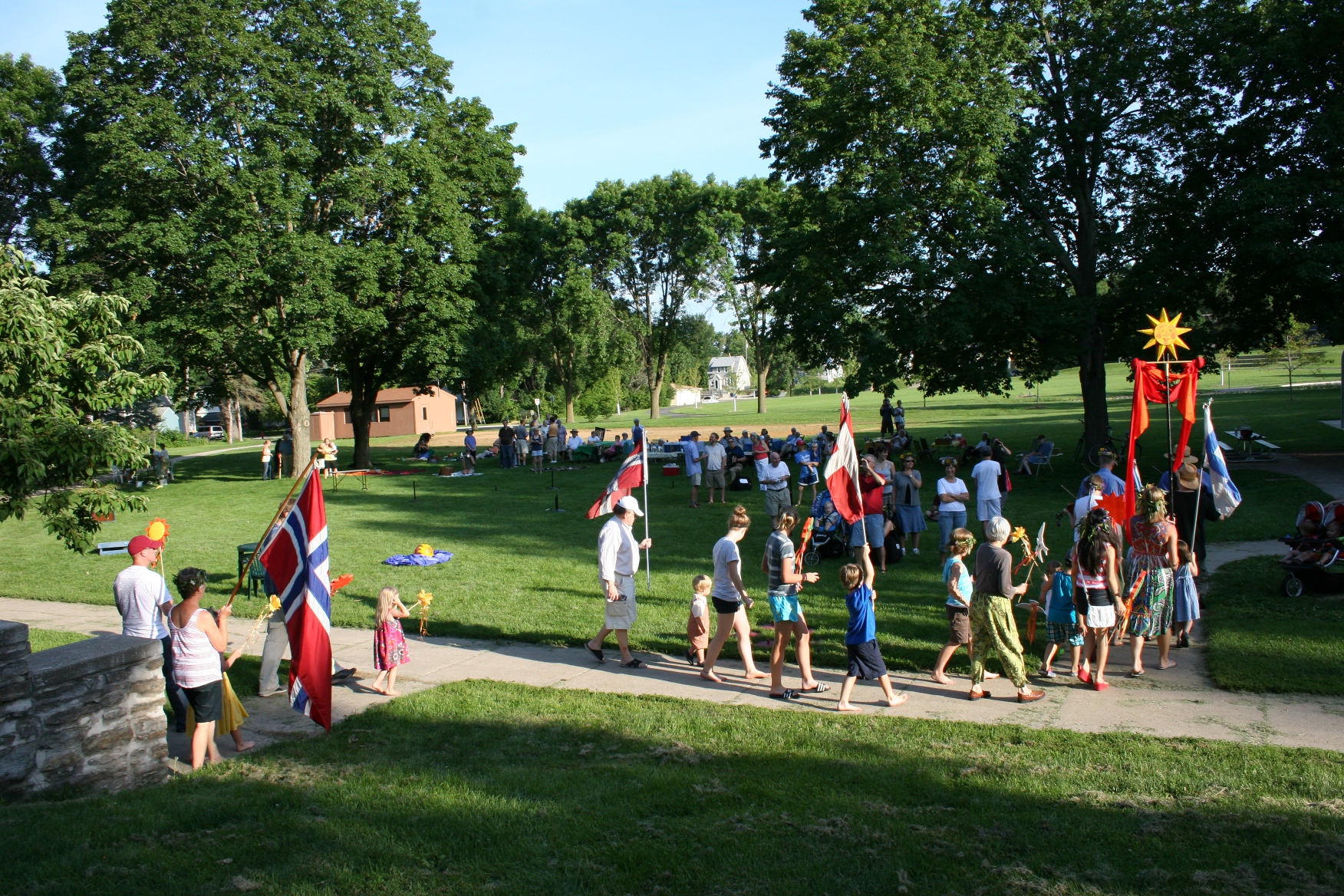
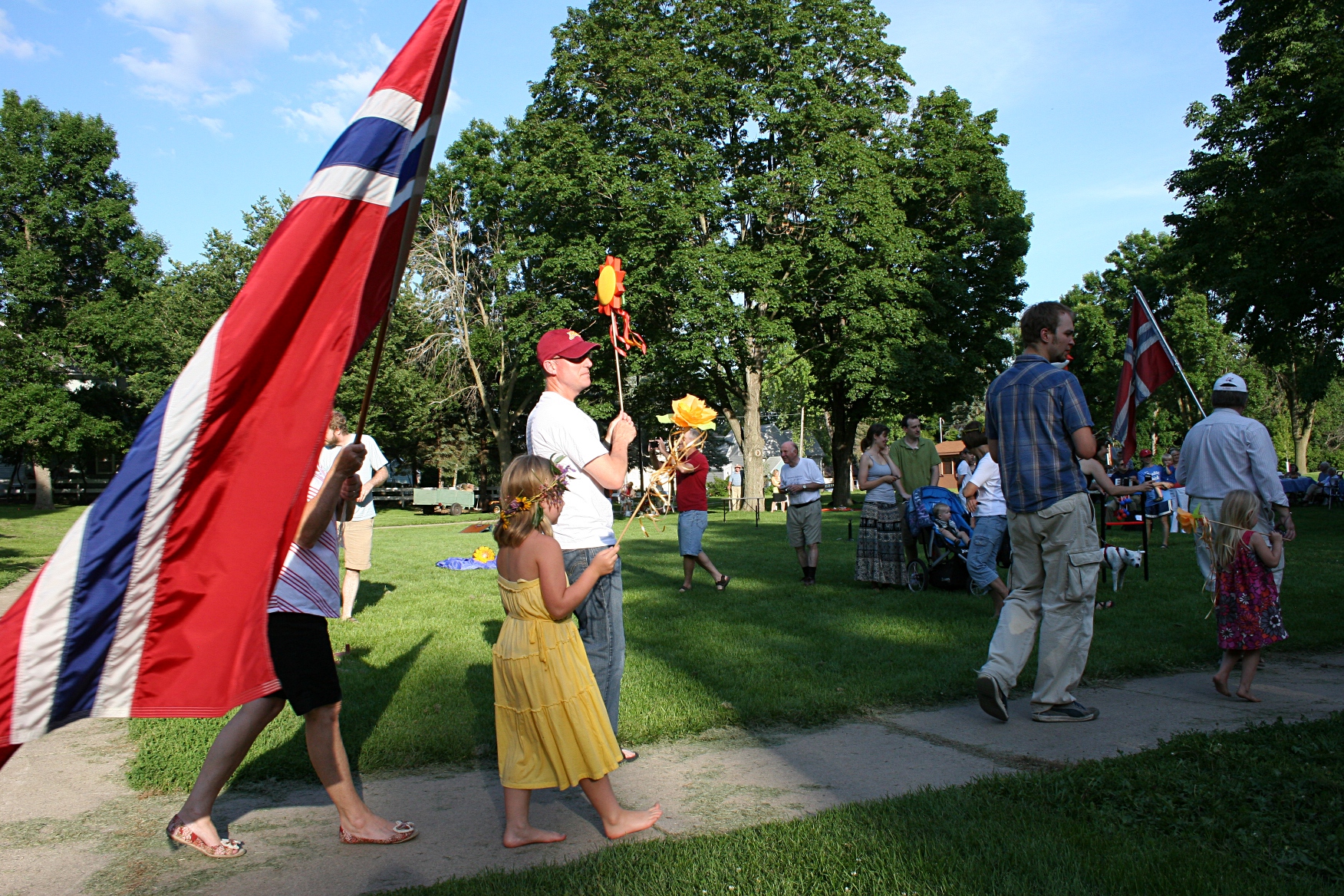
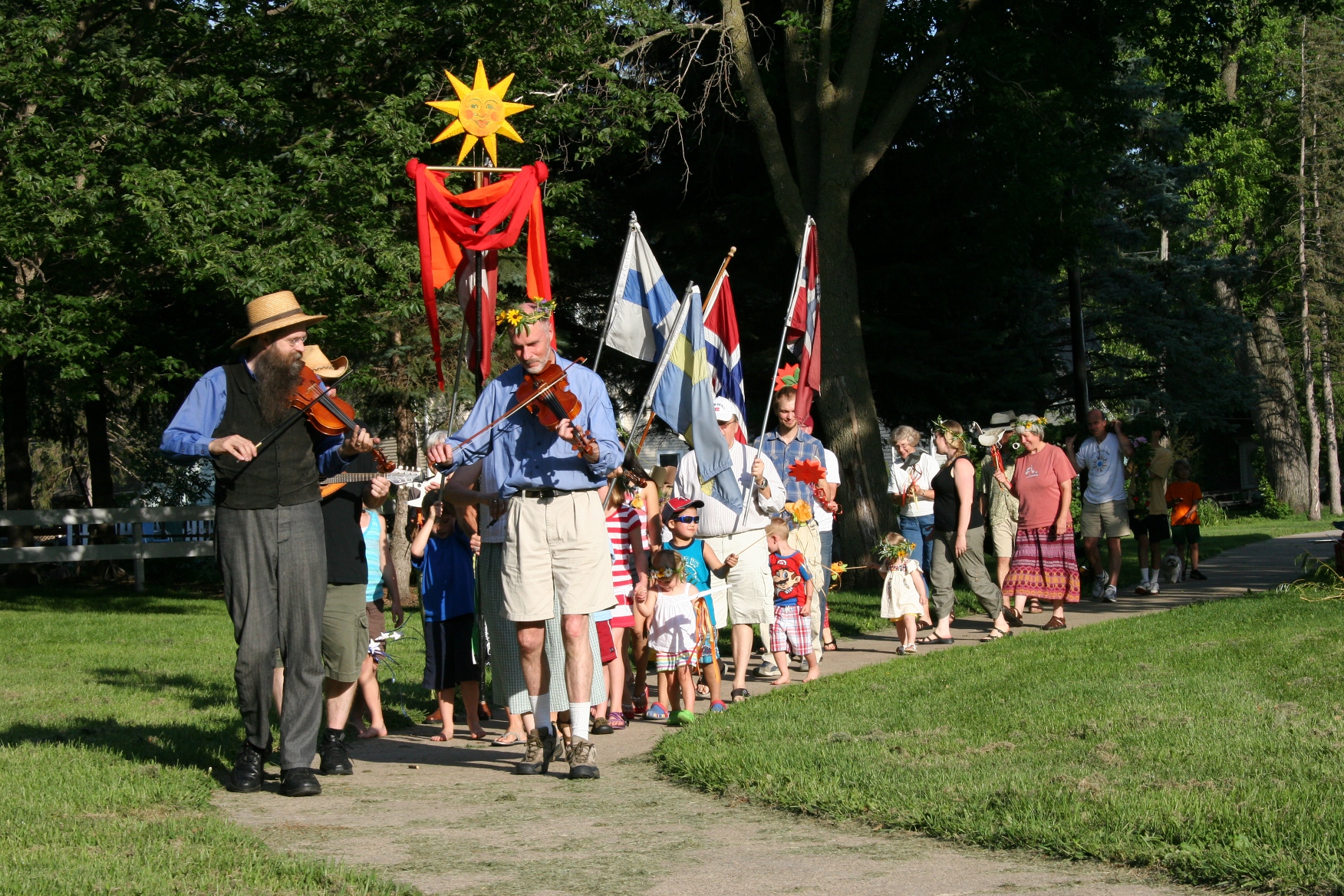
A procession of celebrants parade toward a center area where a maypole will be placed and dancing will follow.

Here’s another photo from the same park, same June Sunday evening. But this is different. You notice flags and other festive details in what appears to be an organized parade.

And you would be right. Both photos were taken at the annual Scandinavian Midsommar celebration at Way Park in Northfield and hosted by Friends of Way Park, the Northfield Swedish Club and Sons of Norway. That second image shows a parade leading up to dancing around a maypole.

It’s easy, when a mass of people gather like this, to miss the details. But it is the details which define our lives, our personalities, our days, or celebrations.

I looked for those details at Northfield’s Midsommar fest and, as always, delight in sharing my photographic observations with you.

I’d encourage you, always, to see and appreciate the details in life whether you’re Scandinavian, German, Latino or any heritage in between.

The Norwegian flag had a prominent place in the parade.

It took several good men to carry the maypole to the center of the festivities.

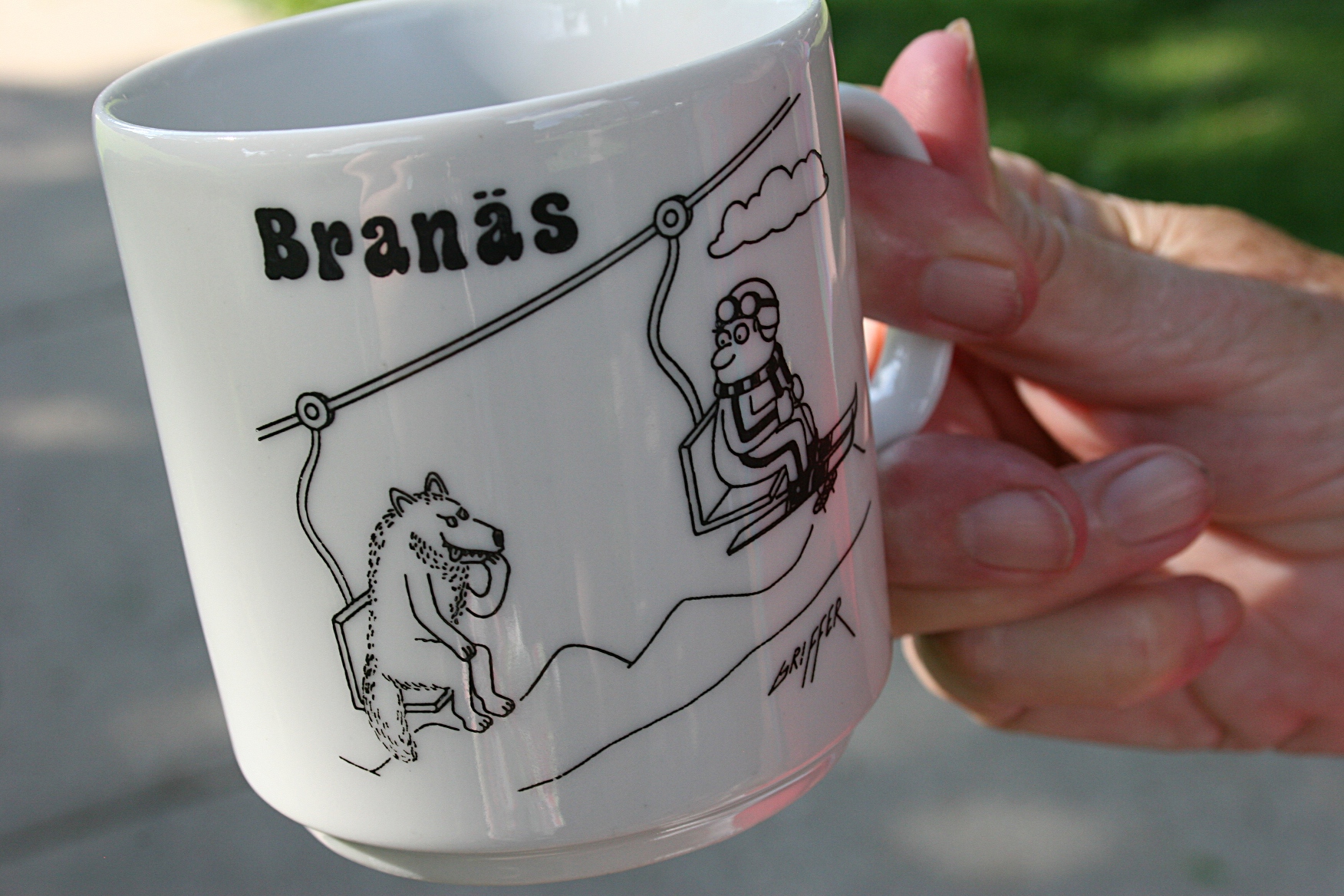
Lola, who is 100 percent Swedish, brought a mug from her ancestral home of Branas, filled it with coffee and munched on Krumkake (a Swedish sweet treat). Branas is a well-known ski area.

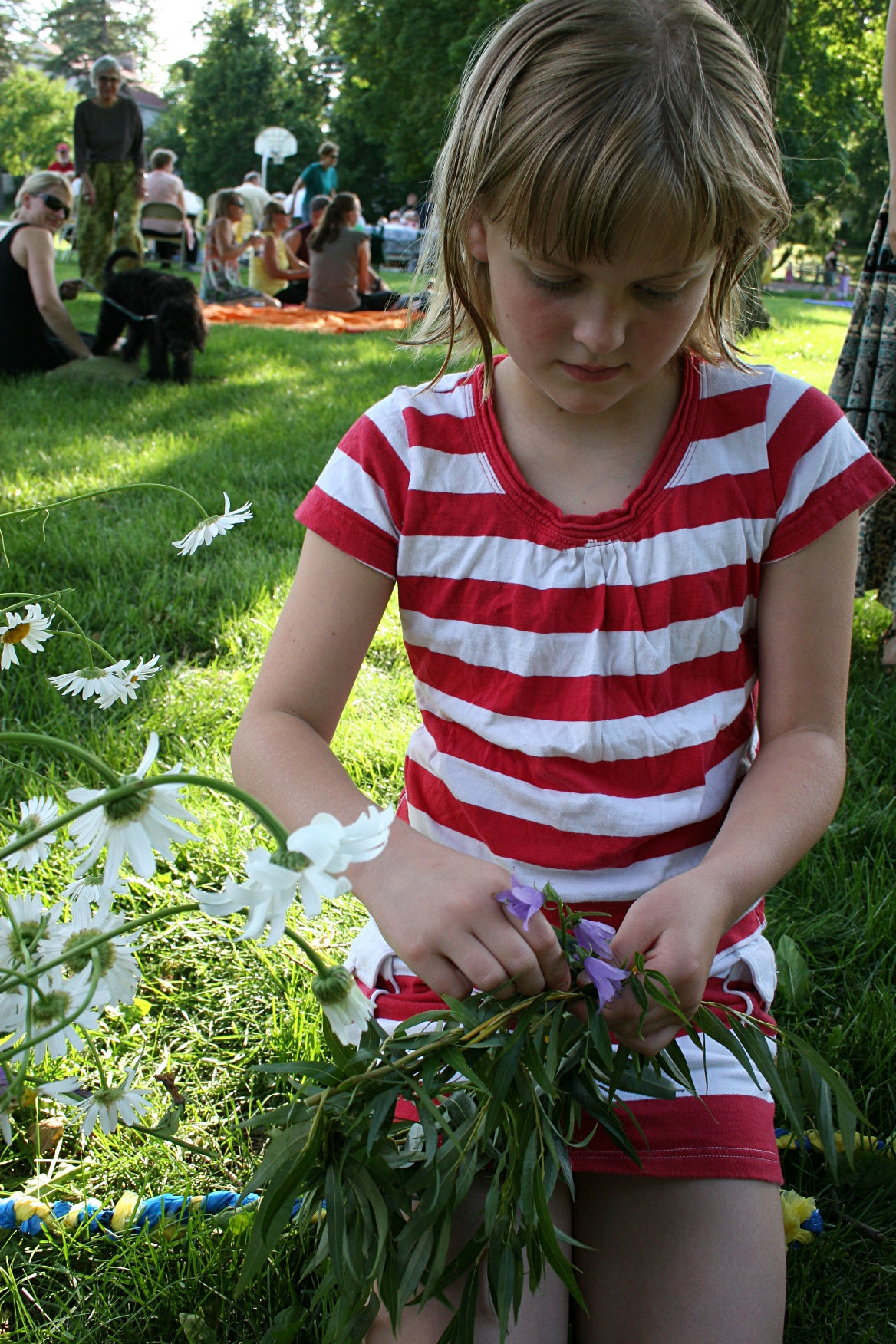
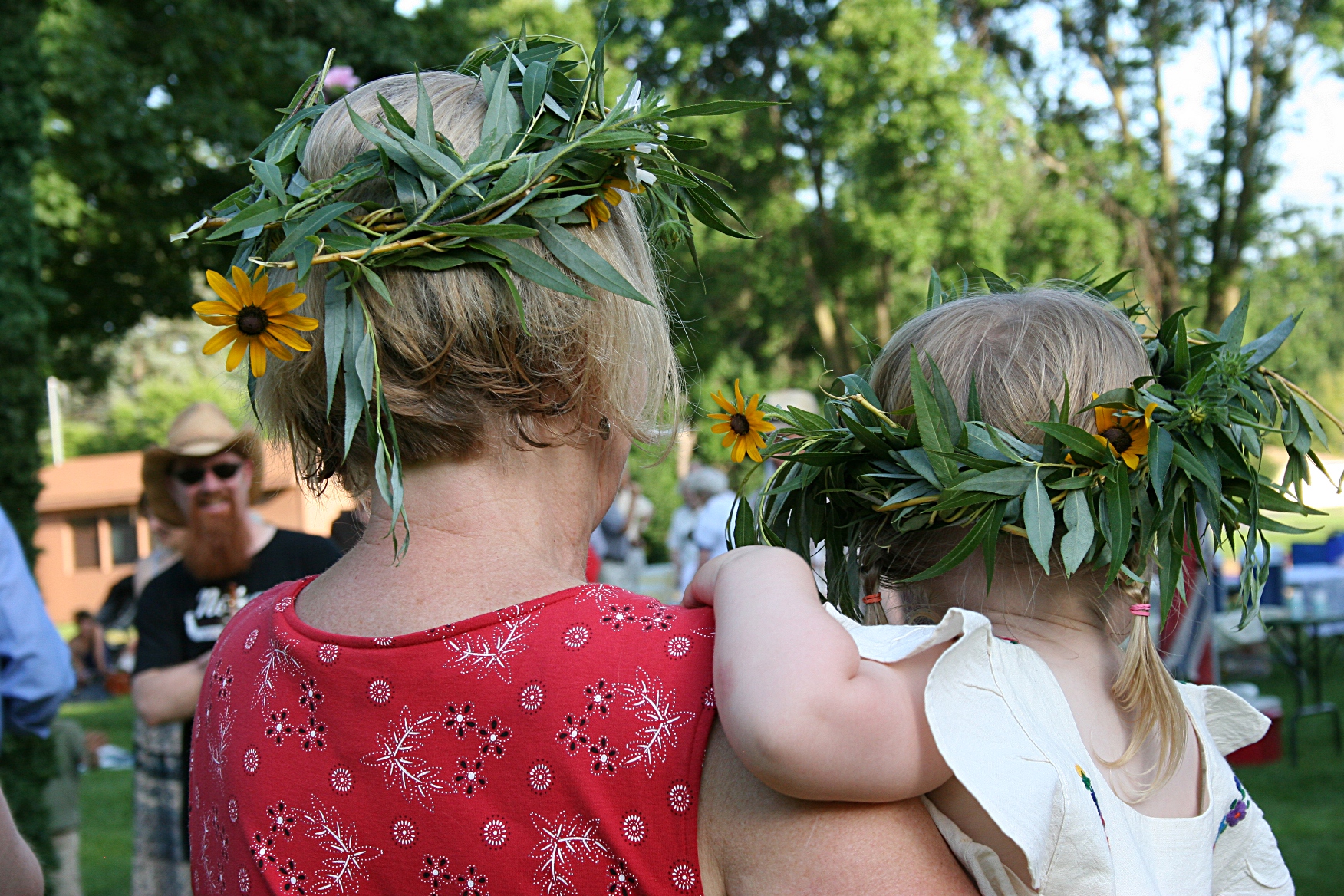
Weaving wreaths from willow and flowers proved a popular activity.

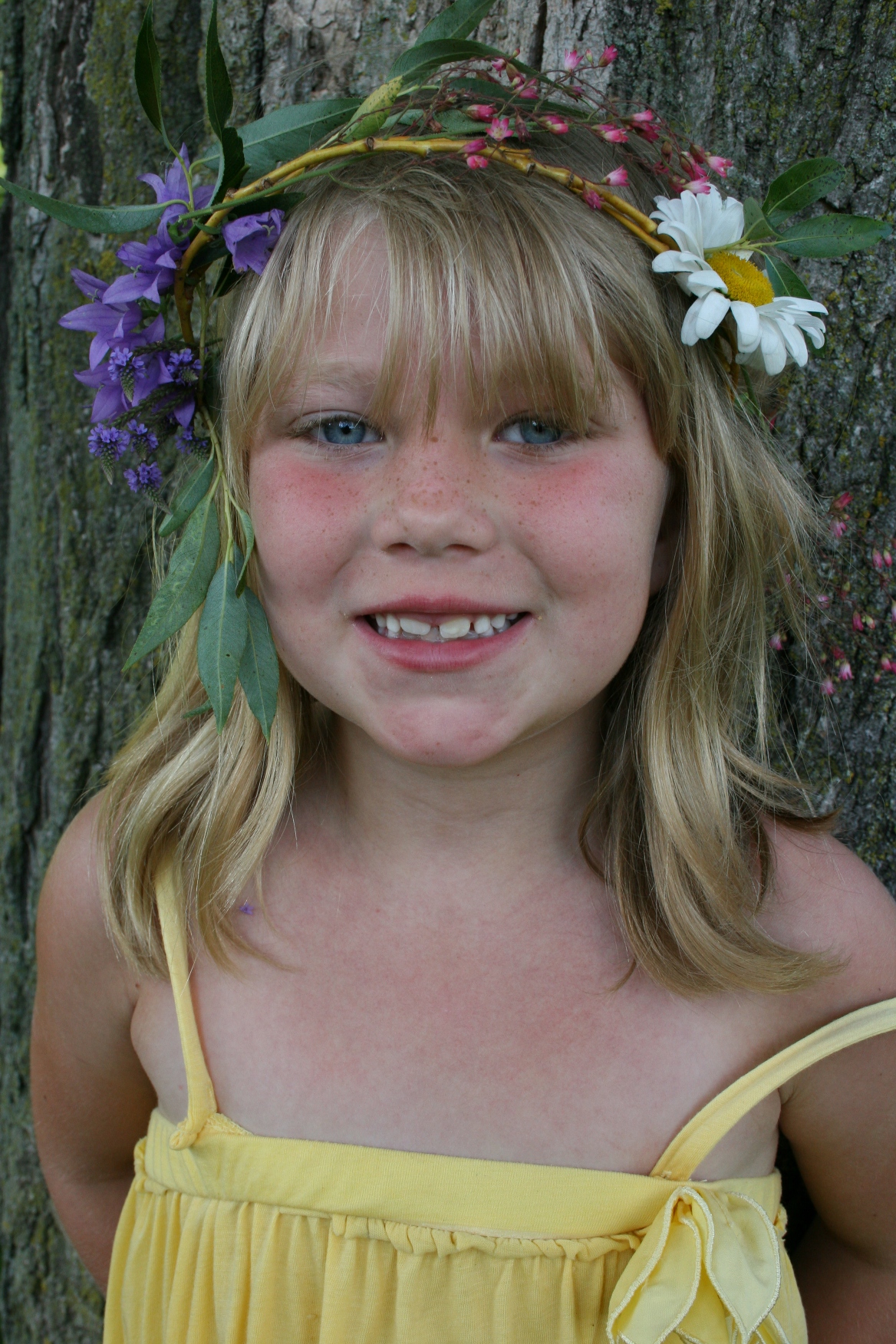
Seven-year-old Jordyn, who is part Scandinavian, part German, posed for photos after finishing her floral wreath.

Bella, 10, tries on the wreath she just crafted.

Grace, 9, creates a celebratory head wreath.

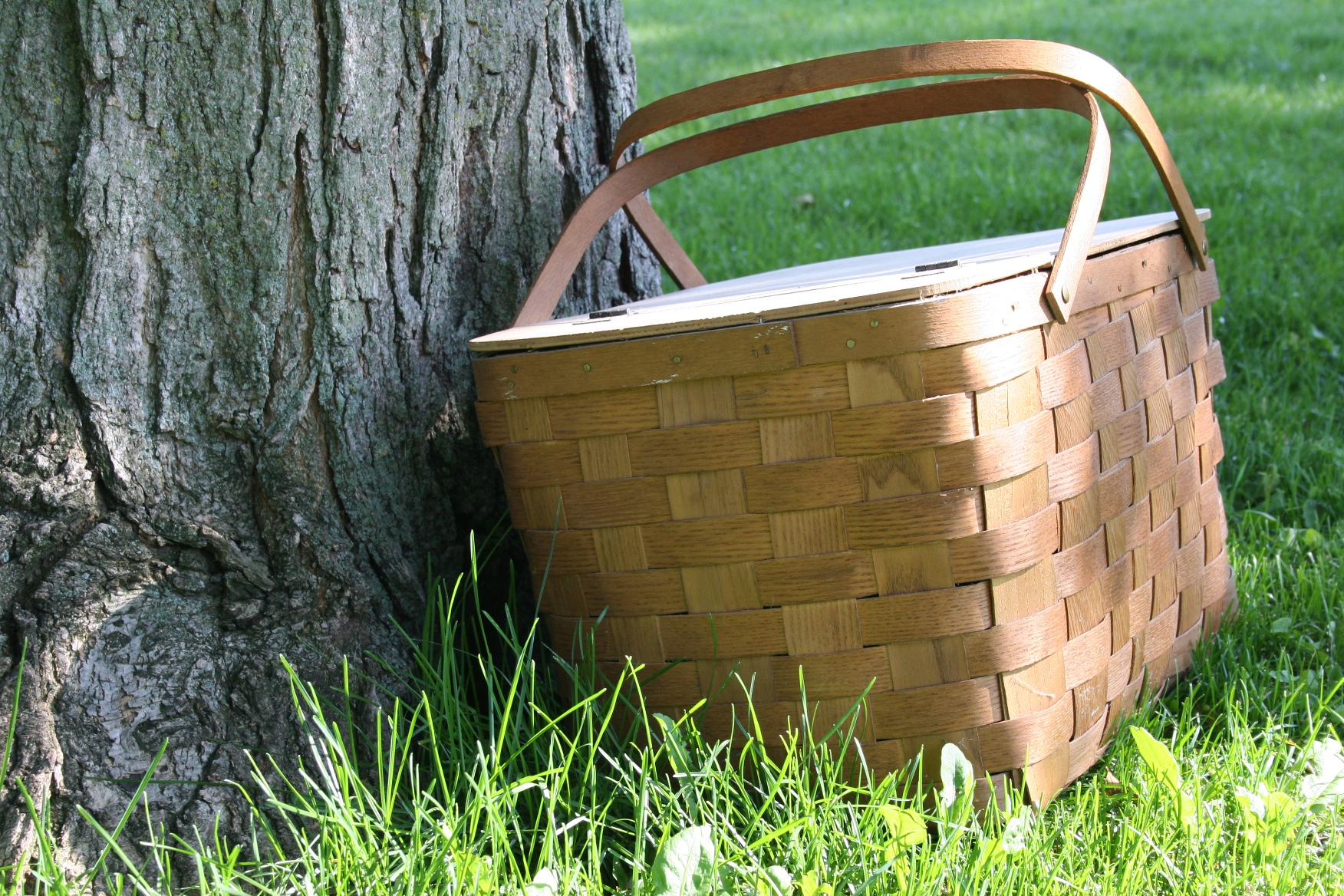
Midsommar celebrants arrived at Way Park with picnic baskets.

They arrived by bike and foot and in vehicles, proud of their heritage, as noted by this Norwegian flag on a bike trailer.

Even the old-fashioned wooden folding chairs had a Scandinavian connection. They were, I was informed, the chairs upon which attendees of the early St. Olaf College (a Northfiled college with a Norwegian heritage) Christmas concerts sat.

Wreaths and Midsommar, for all ages.

CLICK HERE to read an earlier blog post about Midsommar in Northfield.

© Copyright 2012 Audrey Kletscher Helbling
 

Welcoming summer at the Scandinavian Midsommar celebration in Northfield June 24, 2012

Filed under: Uncategorized — Audrey Kletscher Helbling @ 10:38 PM
Tags: , , , , , , ,

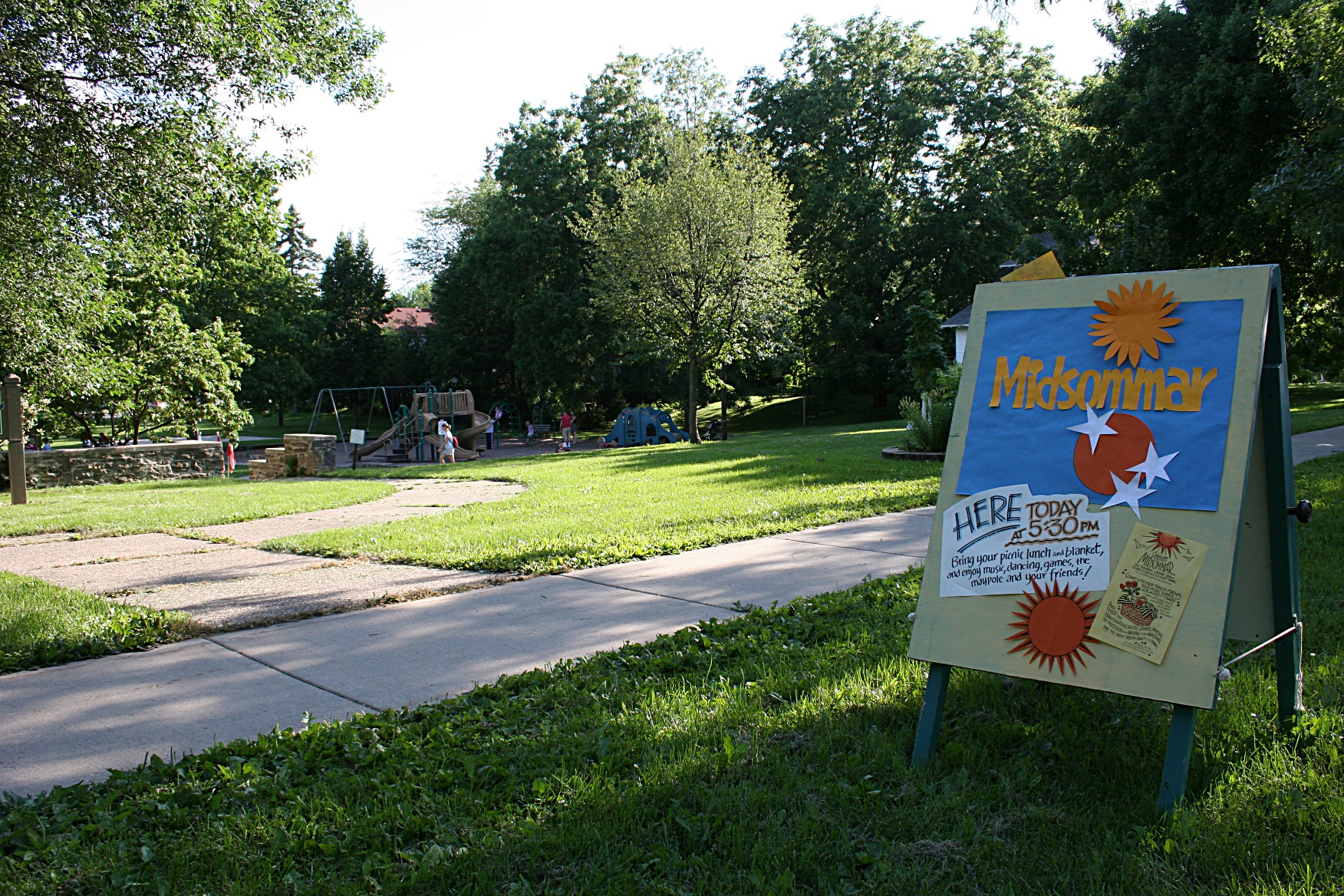
A sign welcomes visitors to the annual Scandinavian Midsommar celebration at Way Park on Northfield’s west side. The event has been going on here for about 20 years, following the Scandinavian tradition of celebrating the end of a long winter and the beginning of summer, typically on the day of the summer solstice.

THE SCANDINAVIANS (and non-Scandinavians) of Northfield (and elsewhere) welcomed summer to this southeastern Minnesota city with music and dance, games and picnic dinners on a perfect Sunday summer evening in Way Park.

Being 100 percent German and all, I’d never witnessed the tradition of celebrating the summer solstice.

Perhaps you haven’t either.

So join me for the festivities via this photo essay. Feel the hint of a summer breeze. Listen to the music singing from violins and accordions. Weave wisps of willows into wreaths accented by blossoms of daisies and clover, bee balm and coral bells.

Bite into a slice of juicy watermelon or a traditional Scandinavian open-faced sandwich.

Feel the anticipation of young and old alike as they line up to parade around the park, up and down the steps to cluster around the maypole.

Pick up your feet and dance. Dance away the memories of winter as you welcome summer.

The Midsommar parade, led by musicians, begins around the north end of Way Park.

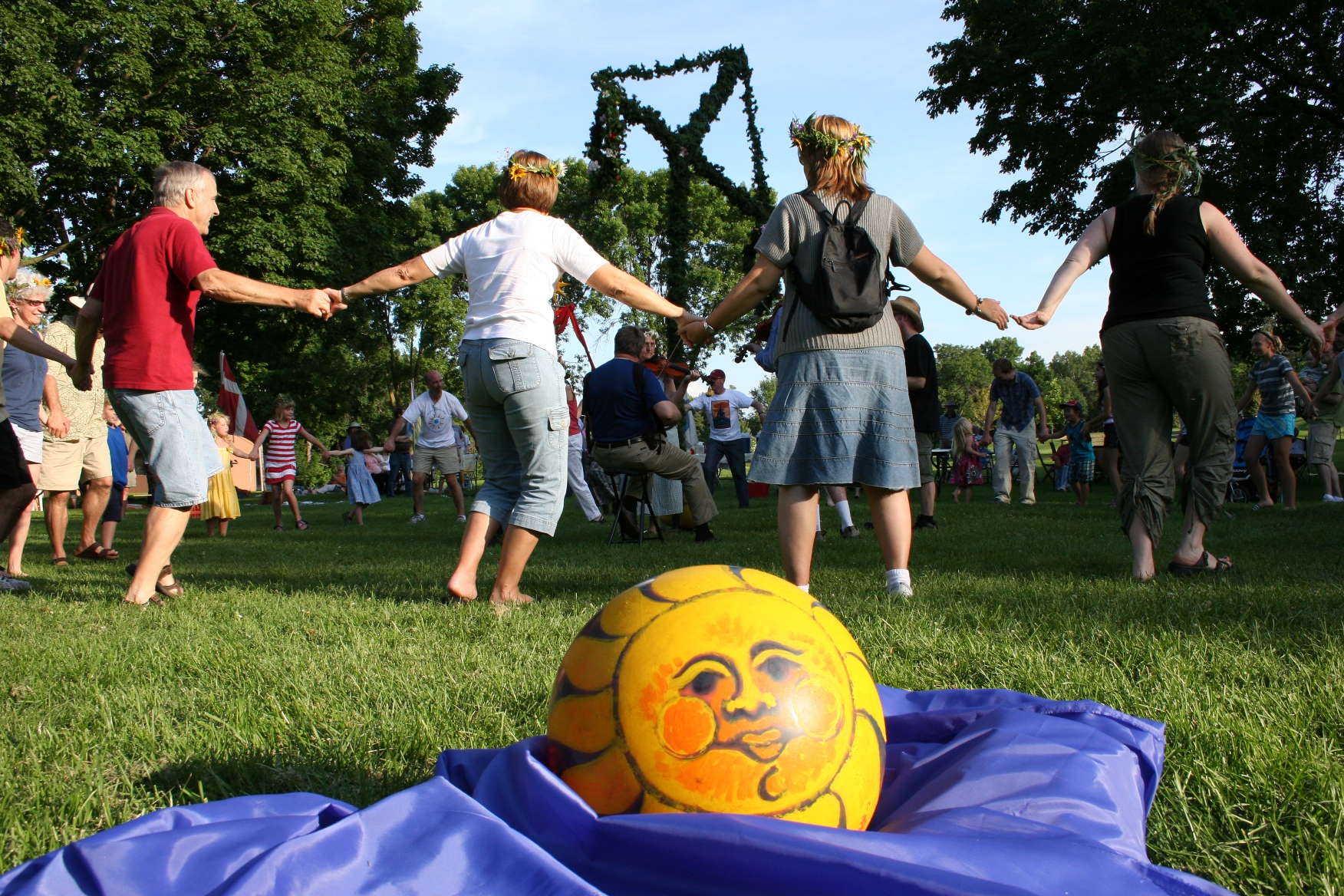
Dancing around the maypole with a sun ball, from an earlier game, resting nearby.

For those who didn’t know the dances, instructions were printed on poster board.

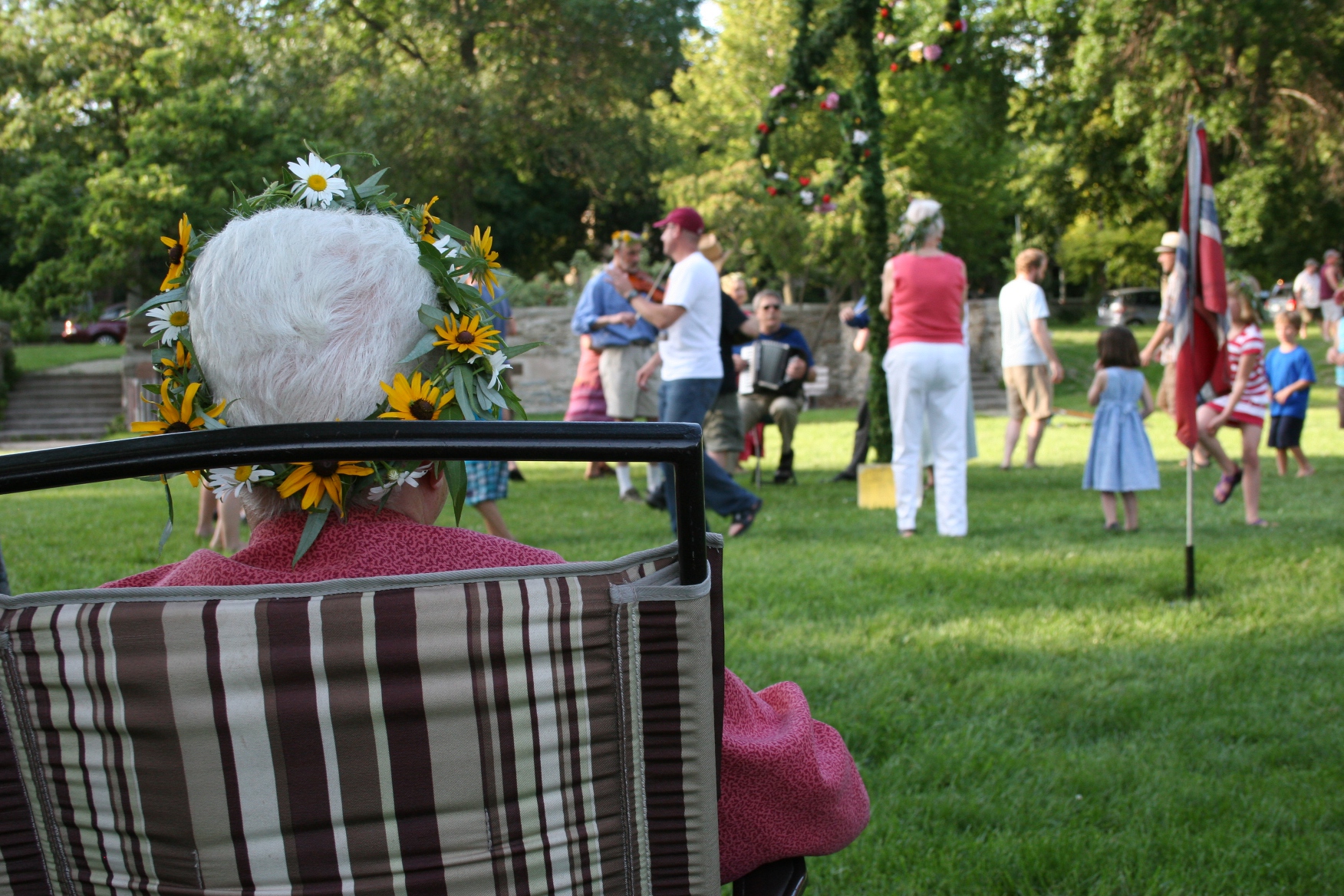
Those who can no longer dance simply watched and enjoyed.

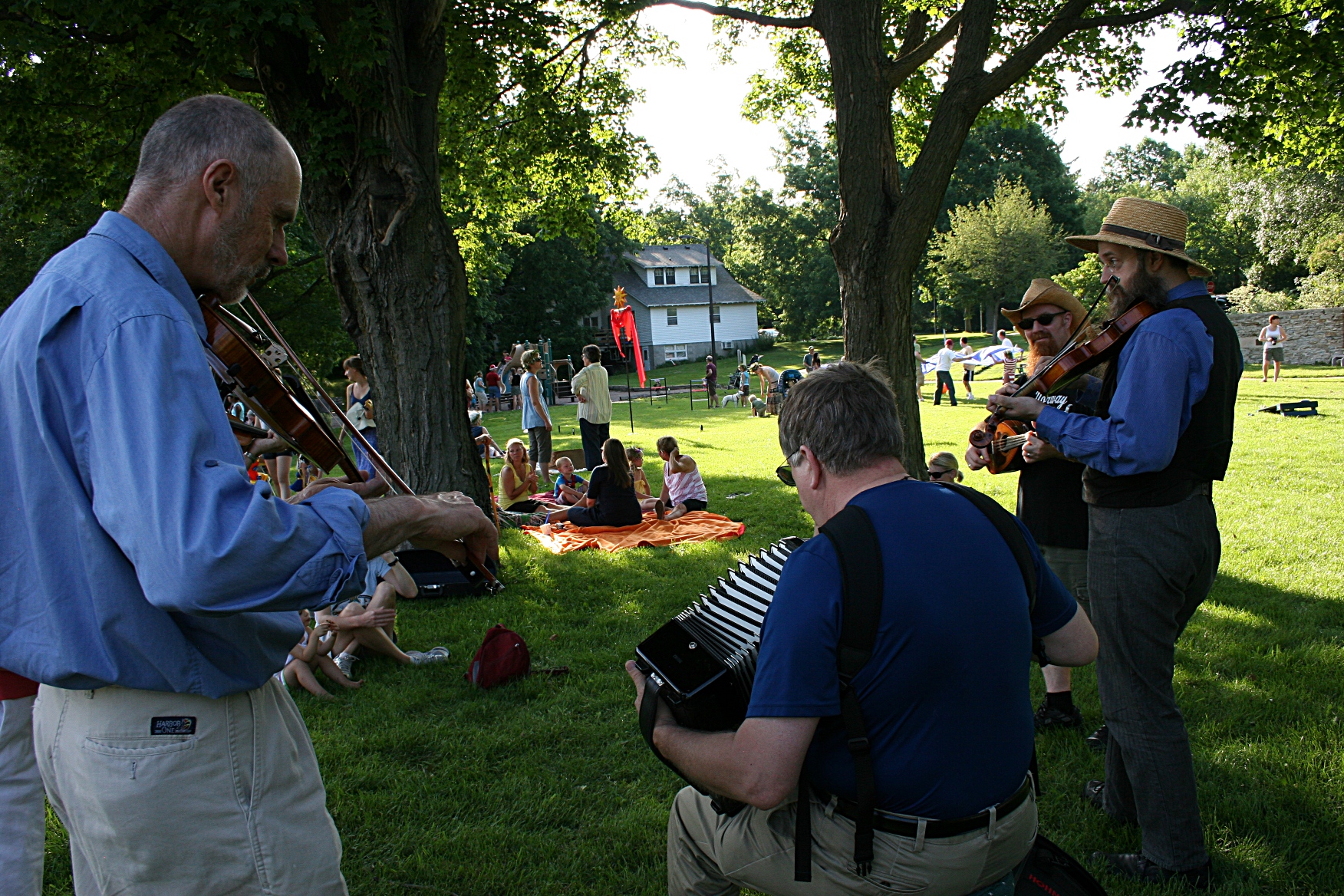
Before the dancing, the musicians gathered under shade trees to entertain the crowd that dined and made wreaths, visited…

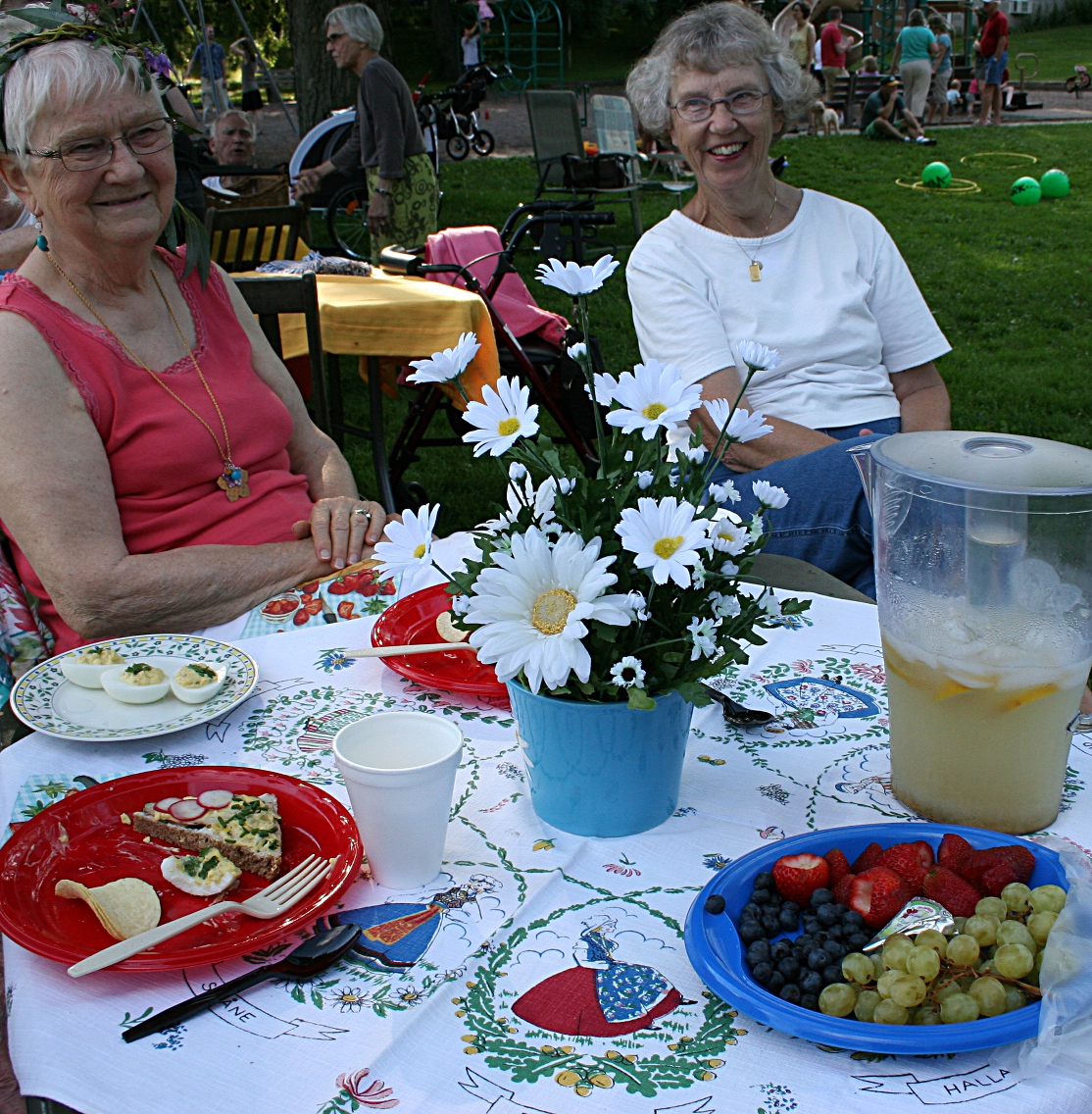
Eleanor Croone, left, and her husband, Al, brought a picnic lunch and spread it out on an authentic Swedish tablecloth accented by a daisy bouquet. They are, says, Al, 127 percent Swedish. The Swedes, he says, just pull off the road for picnics. Eleanor has an authentic Swedish costume but, since it’s made of wool, can’t wear it on a warm summer evening.

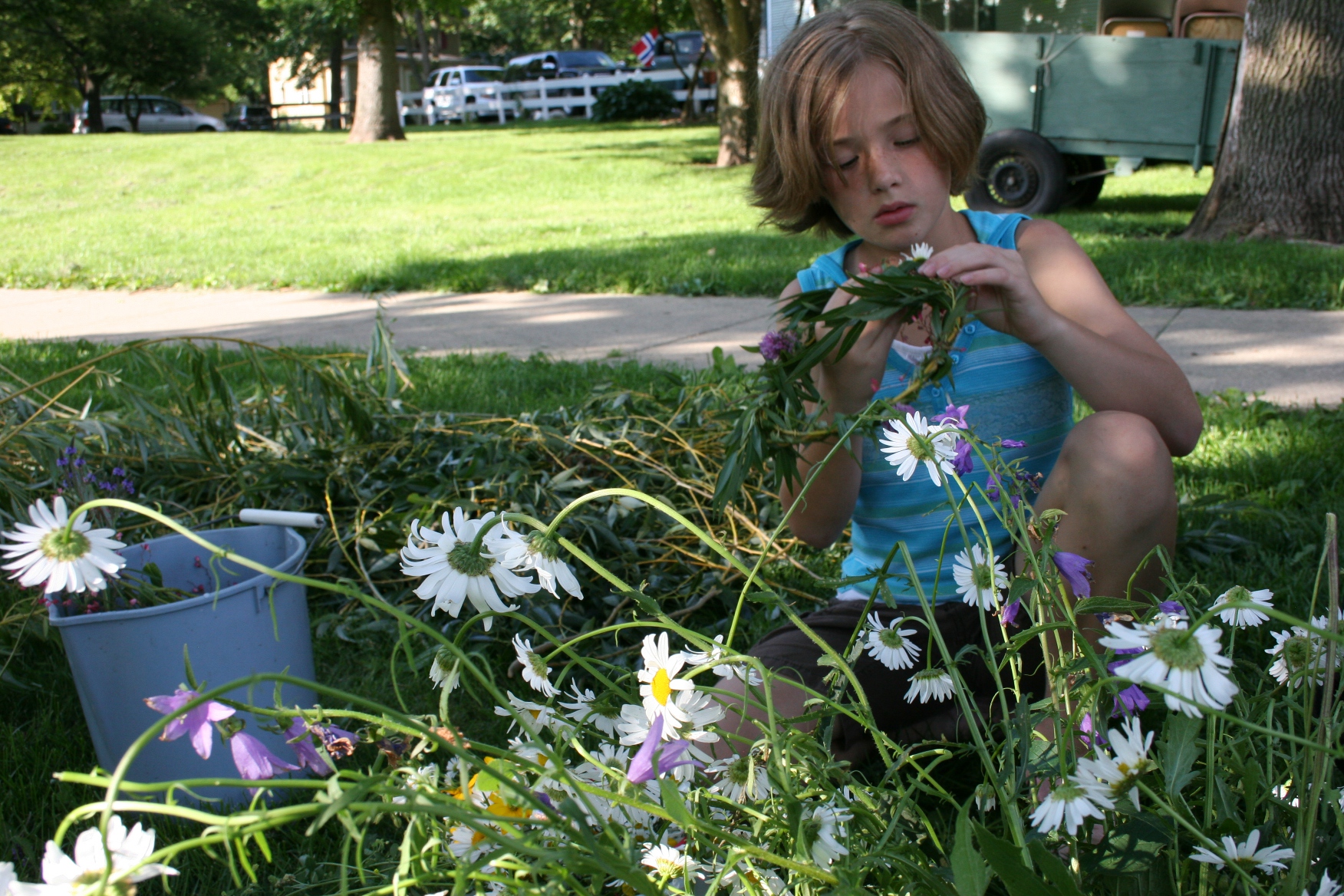
Ten-year-old Bella weaves a wreath for her head with willows and flowers.

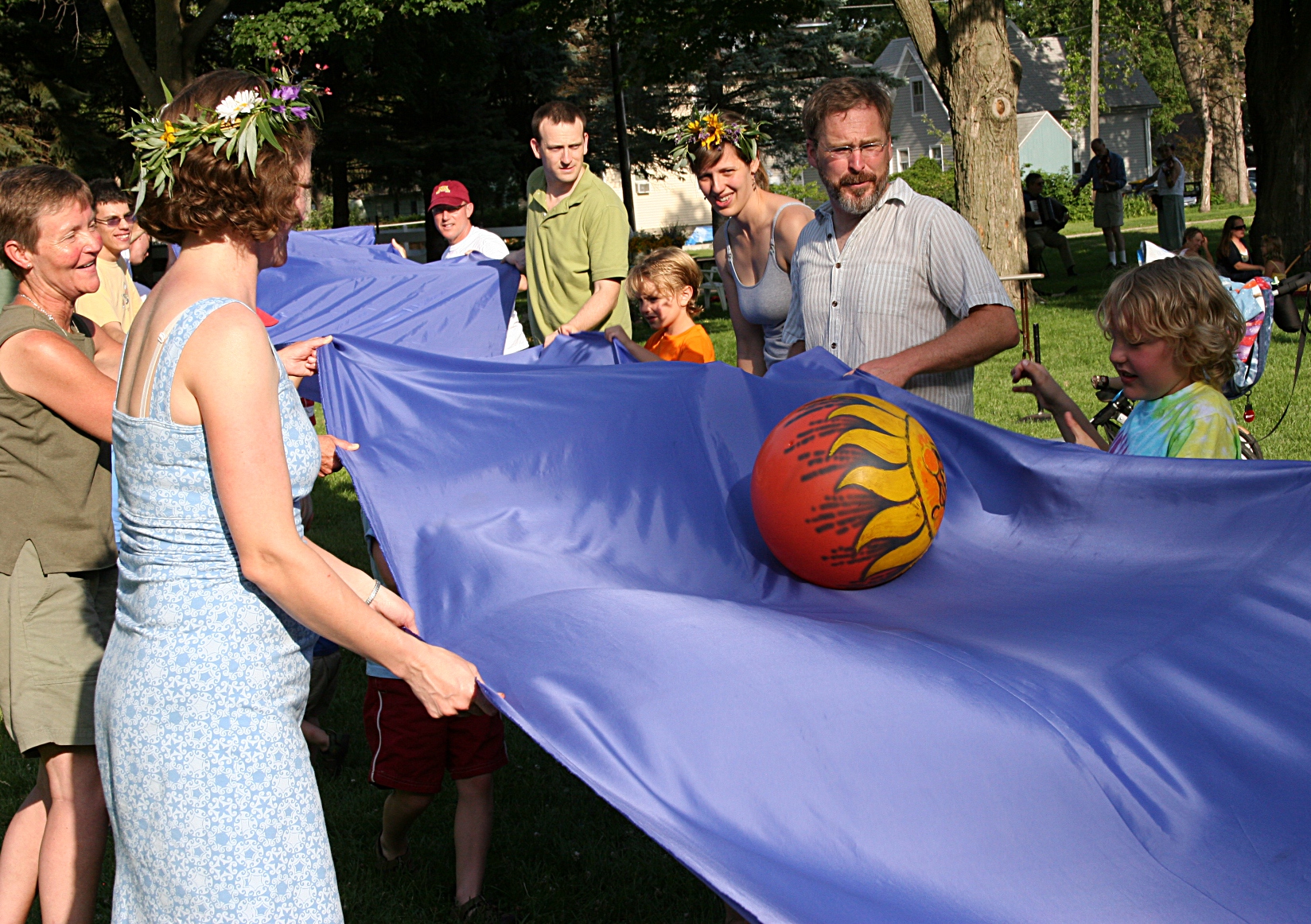
Adults and kids try to keep “the sun” in the sky as they celebrate the summer solstice, several days after the fact.

CHECK BACK for more photos of the annual Scandinavian Midsommar celebration in Northfield.

© Copyright 2012 Audrey Kletscher Helbling
 

Hop into church on Easter April 6, 2012

Filed under: Uncategorized — Audrey Kletscher Helbling @ 6:57 AM
Tags: , , , , ,

TYPICALLY, JUNK MAIL I receive goes directly from my mailbox into the recycling bin without even a read-through.

But the message and graphic on this piece of mail paused me to stop, read the words and actually flip the oversized postcard to the other side.

Now why did this mass mailing capture my momentary attention?

The short, off-the-wall powerful message popped right out at me. And, the image, well, who doesn’t savor a chocolate Easter bunny?

Connecting the bitten-off-tail bunny with the chosen message seems creative genius to me, the perfect pairing of art and words.

Now I don’t know who, specifically, is the creative mind behind this postcard. But the mailing comes from CANVAS Church in Northfield.

I won’t be attending or joining CANVAS Church. I already have a church home. But I applaud this congregation for reaching out to the masses with an impressionable message that might just bring people in the doors for Easter morning worship.

As an added Easter worship incentive, CANVAS is offering free individual or family photos by a professional photographer.

There you go. Creative marketing and gimmicks to draw in worshipers. Not a new concept. But certainly one that made me stop to read a piece of junk mail before tossing it into the recycling bin.

© Text copyright 2012 Audrey Kletscher Helbling
 

Black Friday shopping my way & a shooting November 25, 2011

Filed under: Uncategorized — Audrey Kletscher Helbling @ 6:10 PM
Tags: , , , , , , , ,

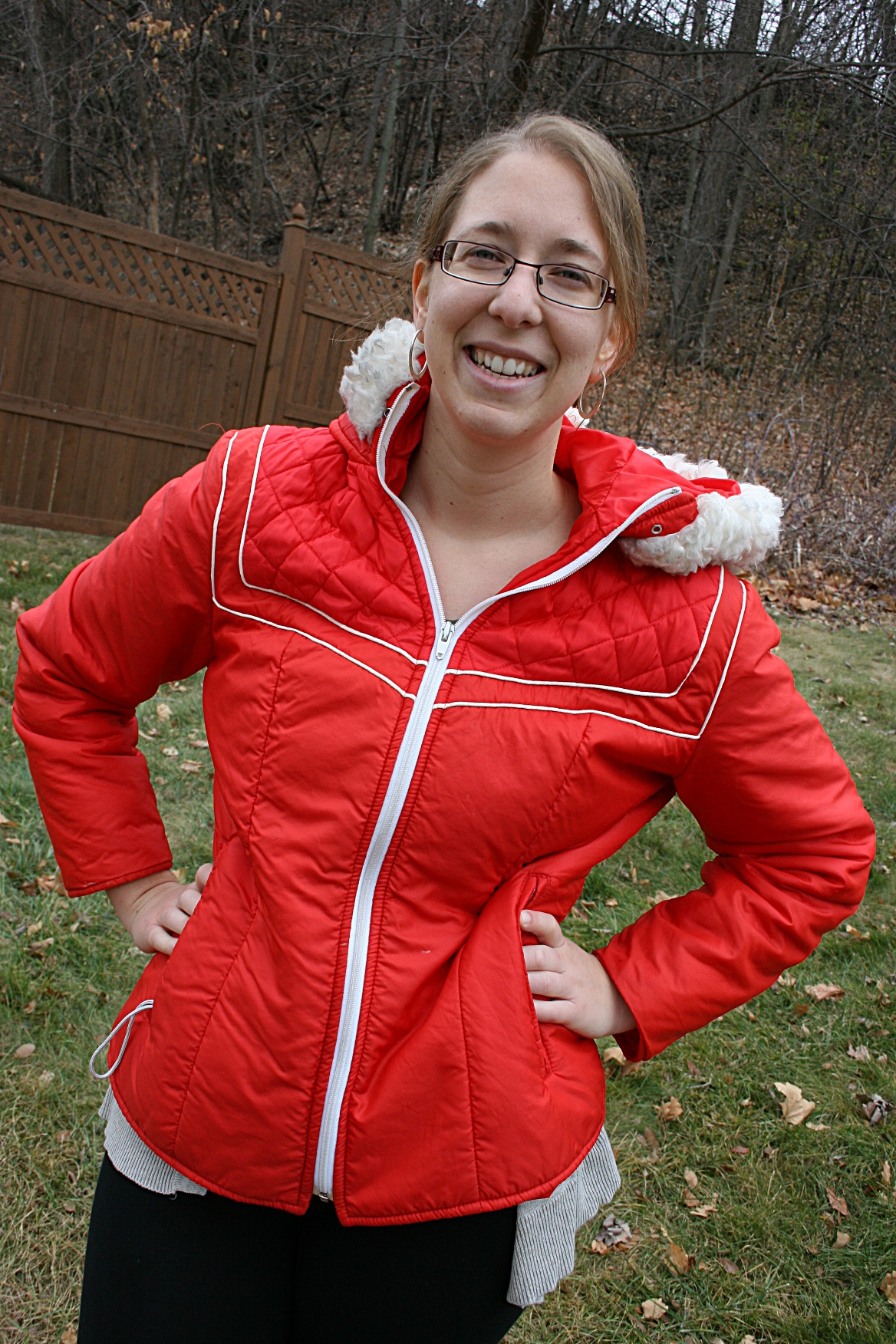
Amber's $10 vintage coat.

SO, DEAR READERS, did you shop today, on Black Friday?

I hadn’t intended to, but then my oldest daughter ran downtown to the bank and I decided to tag along. We, along with my other daughter, perused merchandise at The Clothes Closet, a used clothing store operated by the Faribault Senior Center.

Amber, the oldest, walked out with what she termed a “vintage” jacket. Price: $10. You can judge whether this qualifies as “vintage.” She’s happy, even though her brother claims she looks like Santa in the coat. (Brothers!)

As a bonus, the clerk threw in a free pair of $2 earrings on a “buy one, get one half price” special.

After lunch, during which my husband called from work in Northfield to tell me about a shooting last night near the Target store, Amber left to return to her Minneapolis home and Miranda and I headed to the Salvation Army Store. (Click here to read about the Target area shooting, which began with an armed robbery and reported shooting in Faribault.)

Yes, I realize that now you could care less about any purchases I made and you would rather hear details of that shooting. But, alas, I have nothing more to tell you about the crime or the waiting-in-line Target shoppers who heard the gun shots and saw the cop cars and helicopter.

At the Salvation Army Store in Faribault, signs of an earlier crime remained in a boarded up front window. Several weeks ago a man allegedly drove into the building then fled the scene. Why is it taking so long to replace that window?

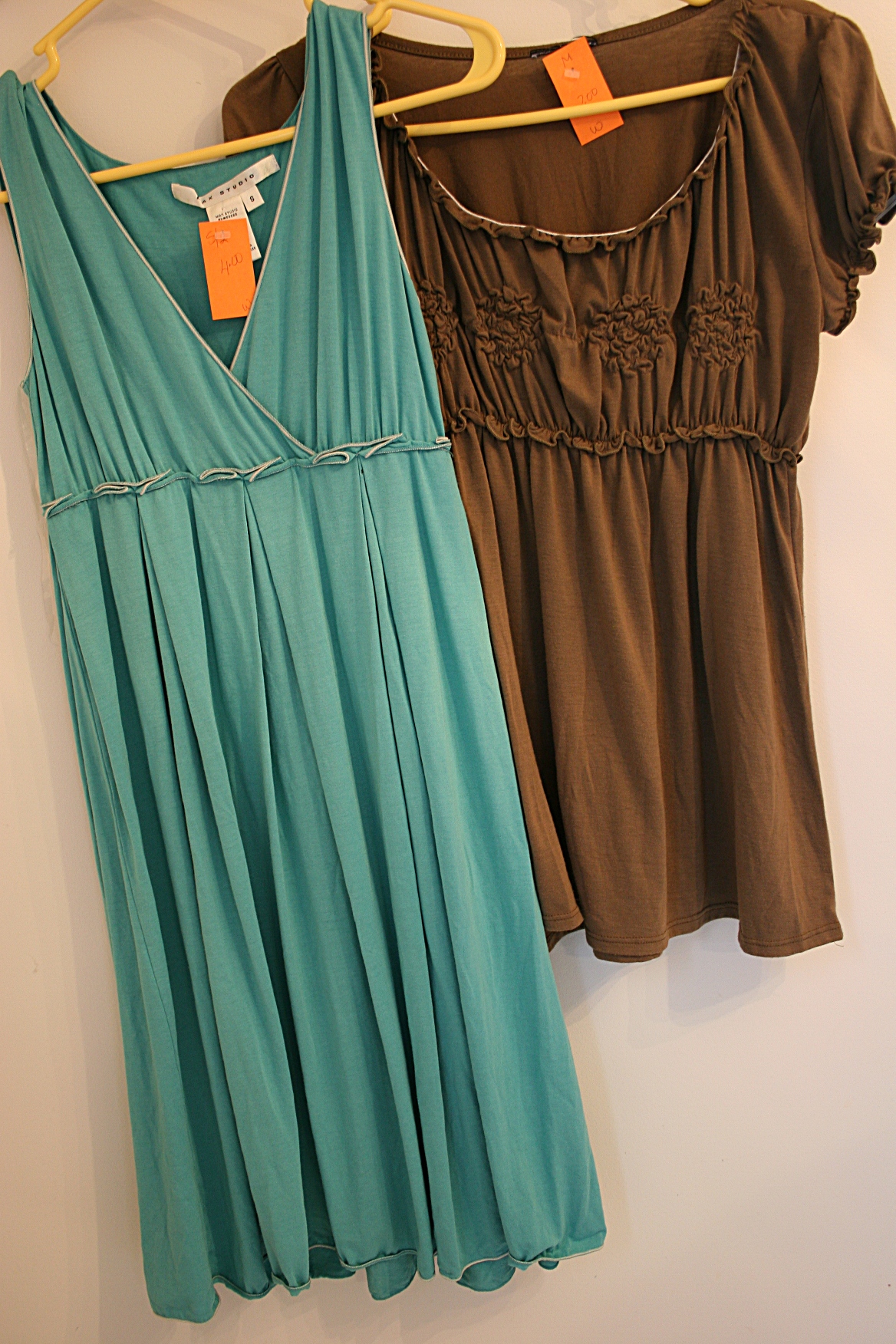
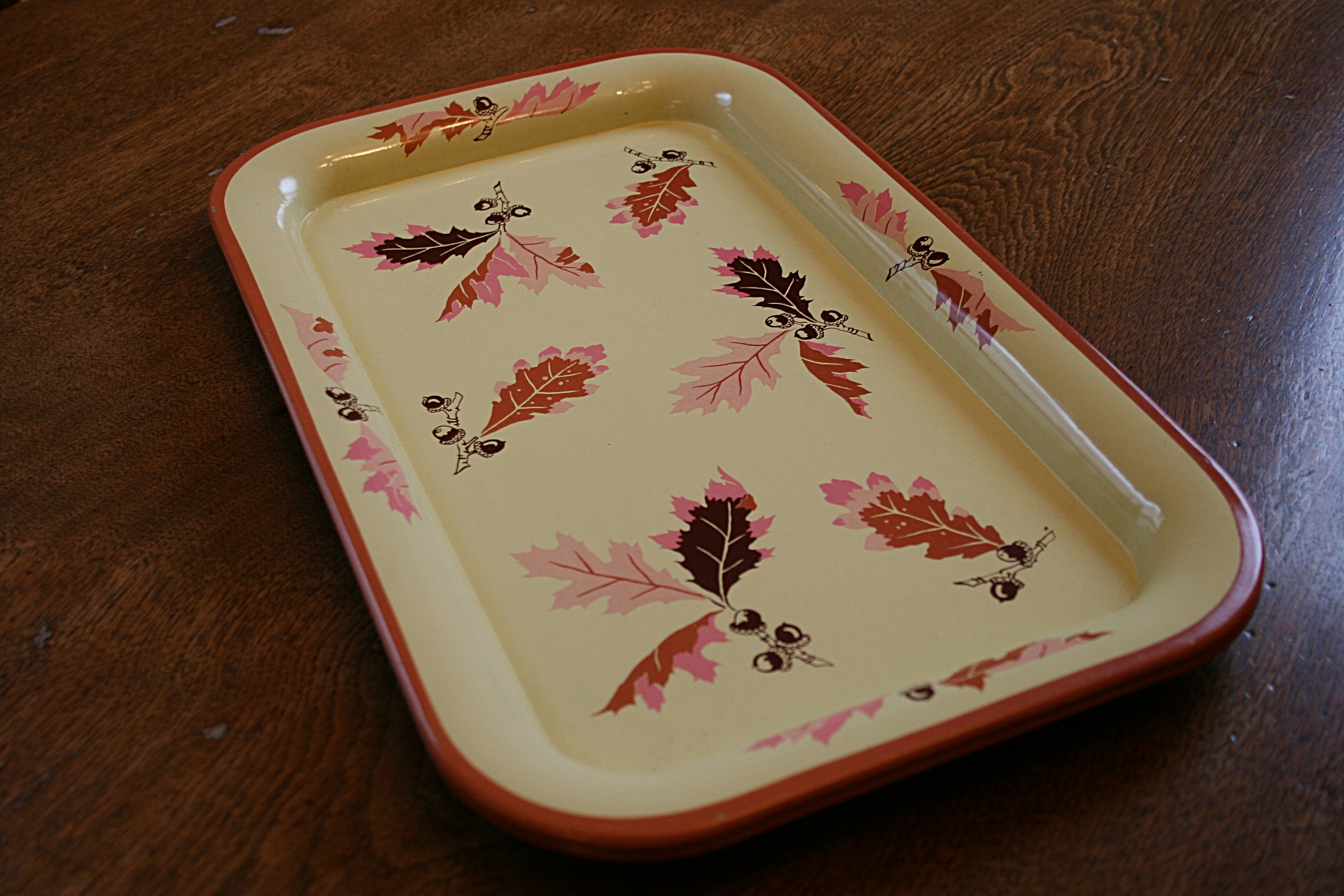
All this crime aside—and honestly, we typically do not have shootings in Rice County or cars driving into buildings—the second daughter and I spent $9.21 at the Salvation Army. Miranda got a shirt and a dress. I got two vintage trays and an original painting.

No crowds. No rush. No shootings. No worries. Just bargains with the money going to a good cause to boot.

HOW WAS YOUR Black Friday? What did you do? If you went shopping, tell me about your experiences and deals.

A $4 dress and a $2 shirt from the Salvation Army.

I purchased two vintage trays for $1.

© Copyright 2011 Audrey Kletscher Helbling
 

A cool door and some cool art in Northfield October 29, 2010

NOW, HONESTLY, tell me. If you were walking down the sidewalk, saw this sign, these stairs clinging to this brick building and this wide-open welcoming door, wouldn’t you race up the steps?


This stairway leads to Nancy Carlson's art studio in downtown Northfield.


I didn’t race, but I hurried, after I’d snapped a few photos of this appealing scene in downtown Northfield. Never mind that my husband and second daughter thought me somewhat crazy. But, unlike them, I typically carry a camera on my hip and see photo ops in places most people wouldn’t.
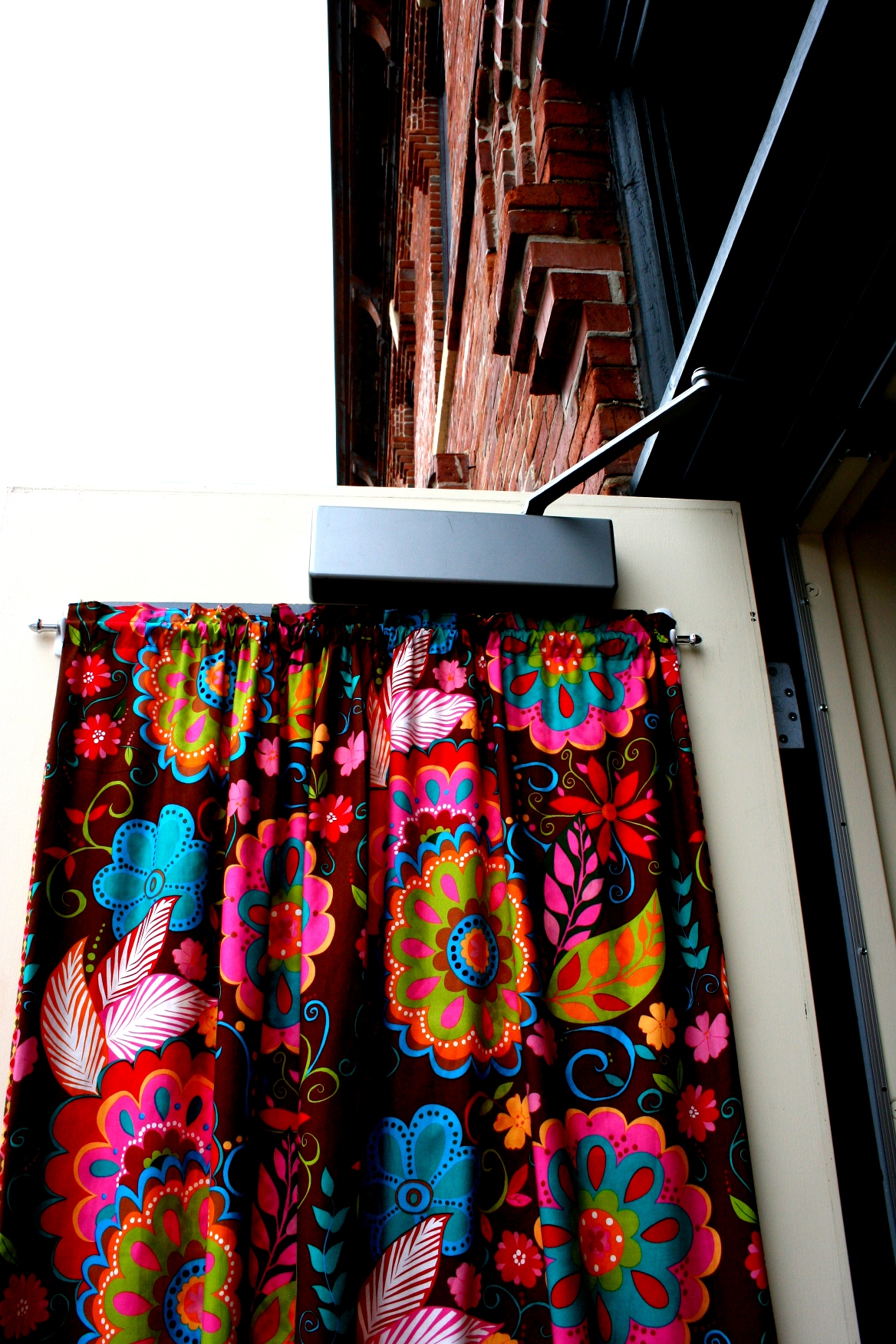
Besides, the cloth on this door reminded me of the 70s, my era, and all the years I stitched clothing from psychedelic fabrics.


This fabric on the studio door takes me back to the 70s.


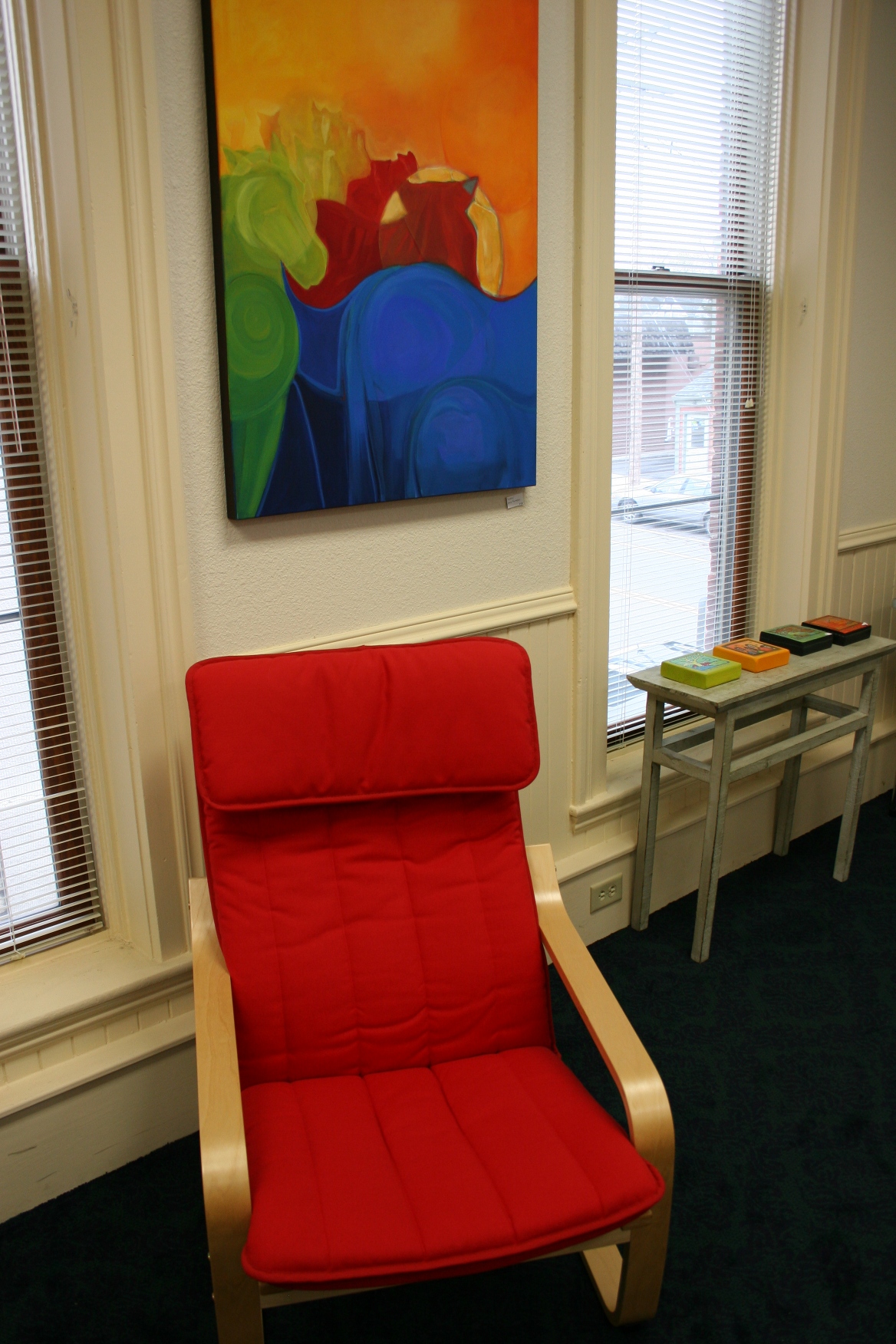
Inside, more bright colors awaited me. Just look at this bold chair and equally bold artwork. Freelance painter and mixed media artist Carla Thompson of Barefoot Studio created the vivid horse painting.


A perfect pairing of bold art and a bold chair inside the studio.
 

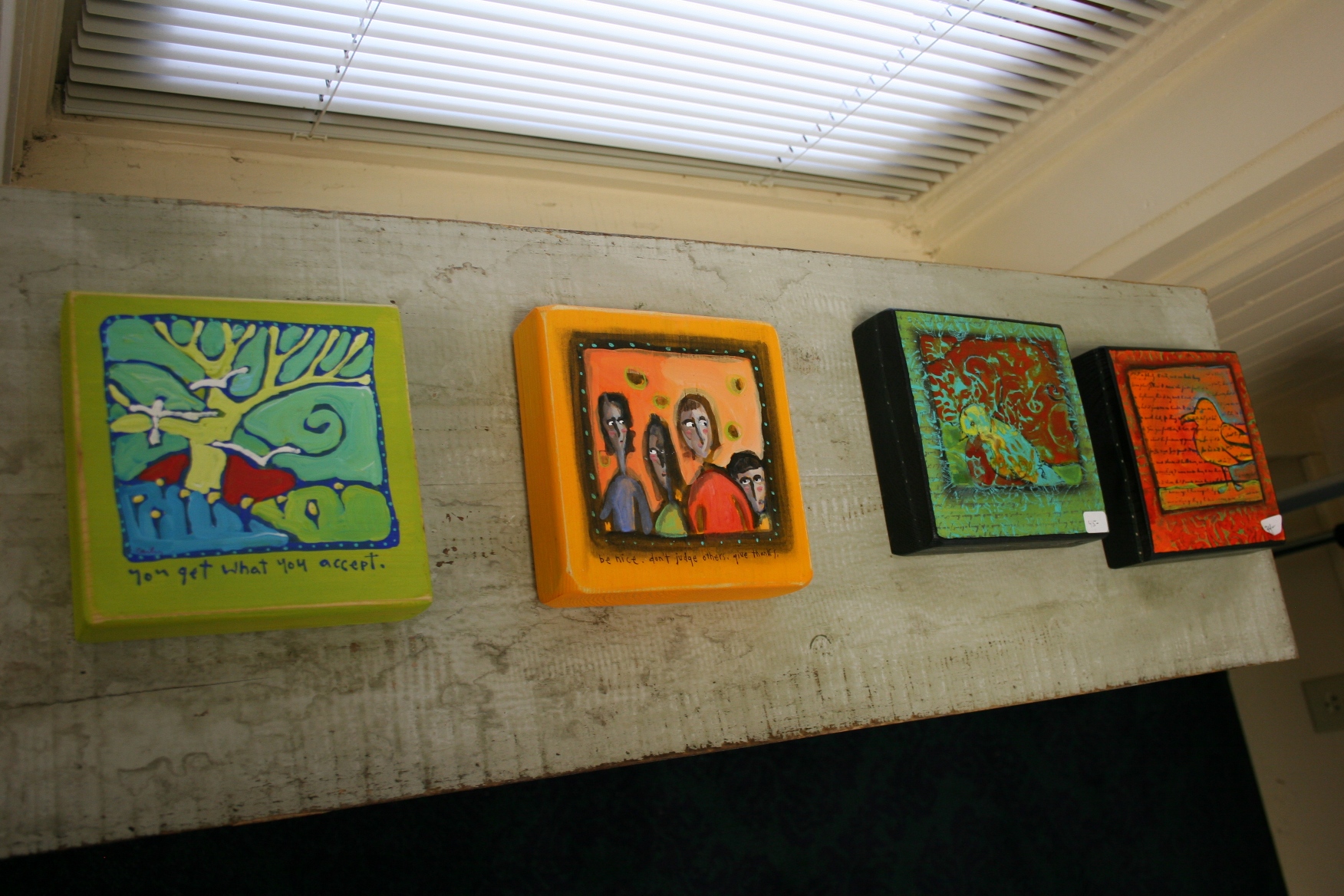
She’s in to bright colors and whimsy and I took a fancy to her wood block paintings. Visual art paired with words—humor and simple thoughts on life, according to information from her Web site.


Whimsical designs painted on wood blocks by Carla Thompson and photographed, by me, at a weird, artsy angle.


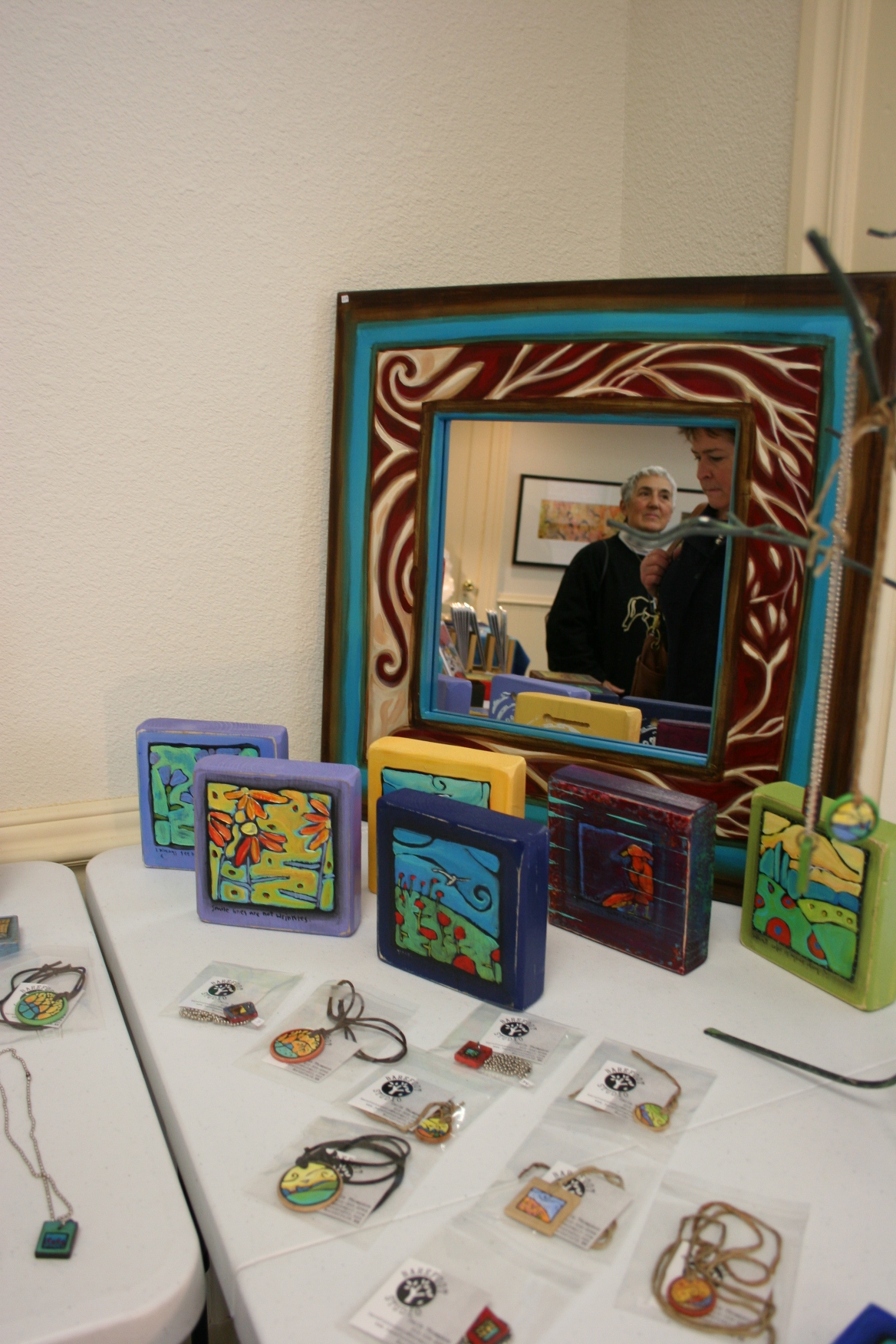
Wood block art by Carla Thompson


Mirror art by Carla Thompson frames visitors perusing her art during last weekend's Studio arTour.


Artists Meg Jensen Witt and Nancy Carlson joined Thompson in displaying their art in Carlson’s studio during last weekend’s South Central Minnesota October Studio arTour and Sale. Carlson, in my opinion, has a pretty cool place, in the McClaughry Building, 101 E. Fifth Street, to hang out and create her watercolor and India ink pieces.


An overview of Nancy Carlson's art studio in the McClaughry Building, 101 E. Fifth Street, Suite 211, Northfield, during the arTour last weekend.


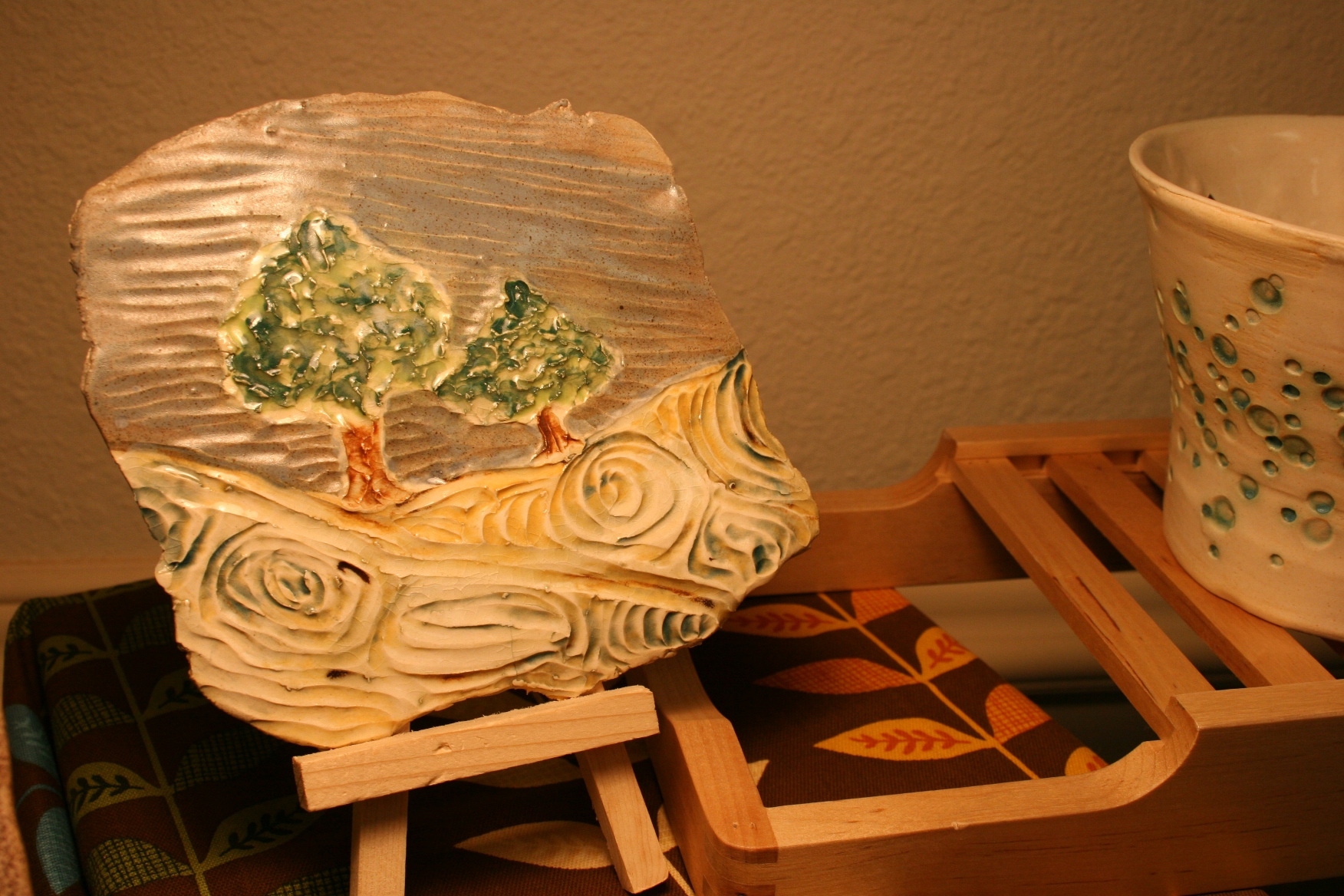
Witt’s ceramic wall hangings and table top pottery, in mostly subdued, muted tones, contrasted sharply with the bolder art of her friends.


Examples of Meg Jensen Witt's nature-themed art.


But that’s the great thing about art. We all have different tastes. Exactly what we like depends on many factors—for me, my rural upbringing and that 70s influence.

© Copyright 2010 Audrey Kletscher Helbling