Minnesota Prairie Roots

Writing and photography by Audrey Kletscher Helbling

Learning about the Wahpekute in Faribault September 2, 2022

Signage marks an entry to Wapacuta Park near my Faribault home. (Minnesota Prairie Roots copyrighted photo September 2022)

FOR 38 YEARS I’VE LIVED in the same house, “the Swanson house,” along Willow Street in Faribault. Just below Wapacuta Park, blocks from the home of town founder Alexander Faribault. Wednesday evening I learned information about the park up the hill, about my neighborhood, which left me feeling unsettled and troubled, but newly-informed.
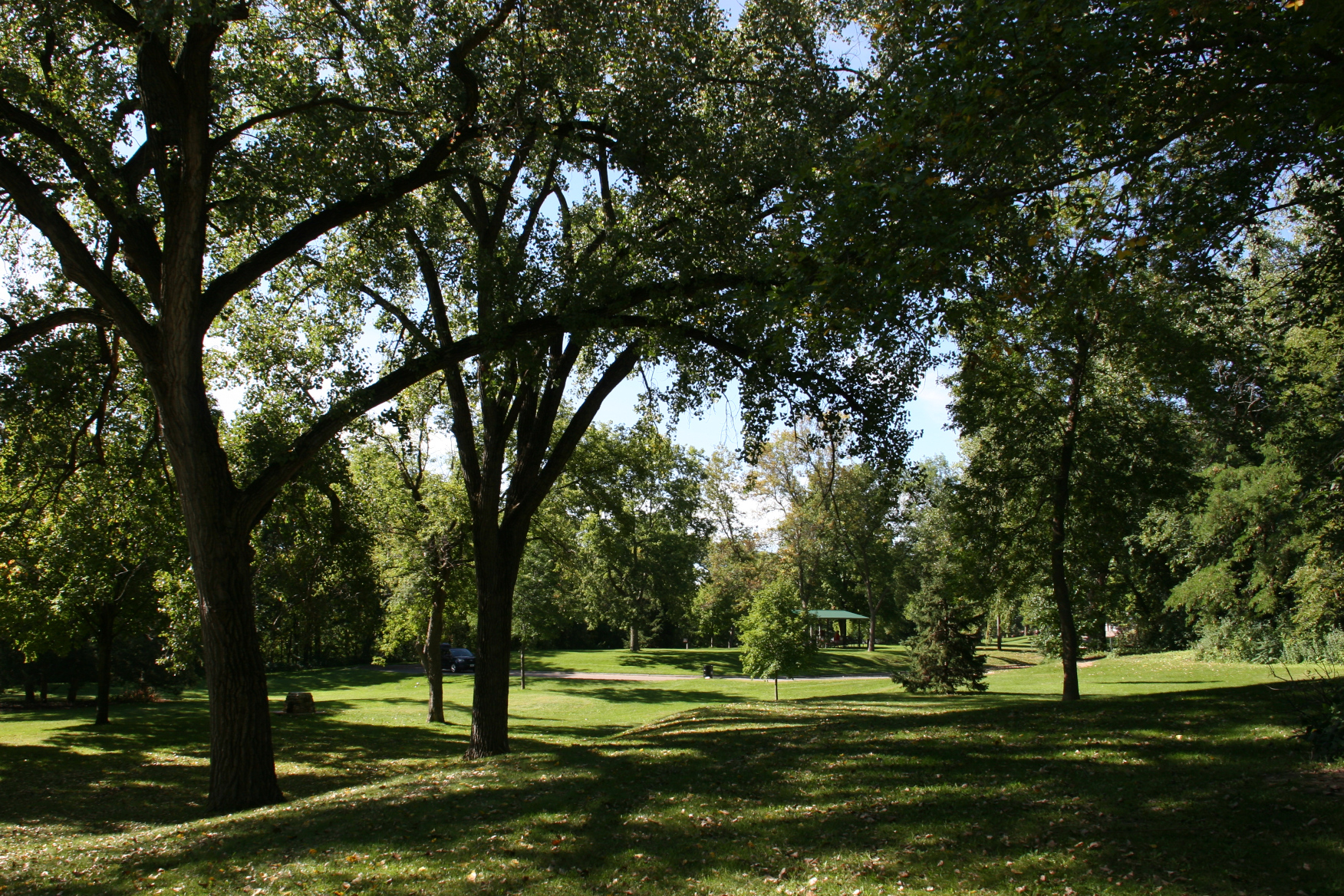
This shows just a small section of Wapacuta Park, shelter in the distance. (Minnesota Prairie Roots copyrighted photo September 2022)

The park atop the hill, according to Susan Garwood, executive director of the Rice County Historical Society, was used by the Wahpekute, one of the seven “Council Fires” of the Dakota Nation, for honoring their dead. Not for final burial of their loved ones in this place which now houses a picnic shelter, playground, disc golf course and basketball courts, but rather for the construction of scaffolding to temporarily hold the deceased. Letters and other documents verify the placement of the scaffolding in Wapacuta (incorrectly spelled) Park.

I had no idea. No idea at all that this hilltop land held such importance in the lives, and deaths, of these Indigenous Peoples who called Rice County home long before French Canadians and others settled here.
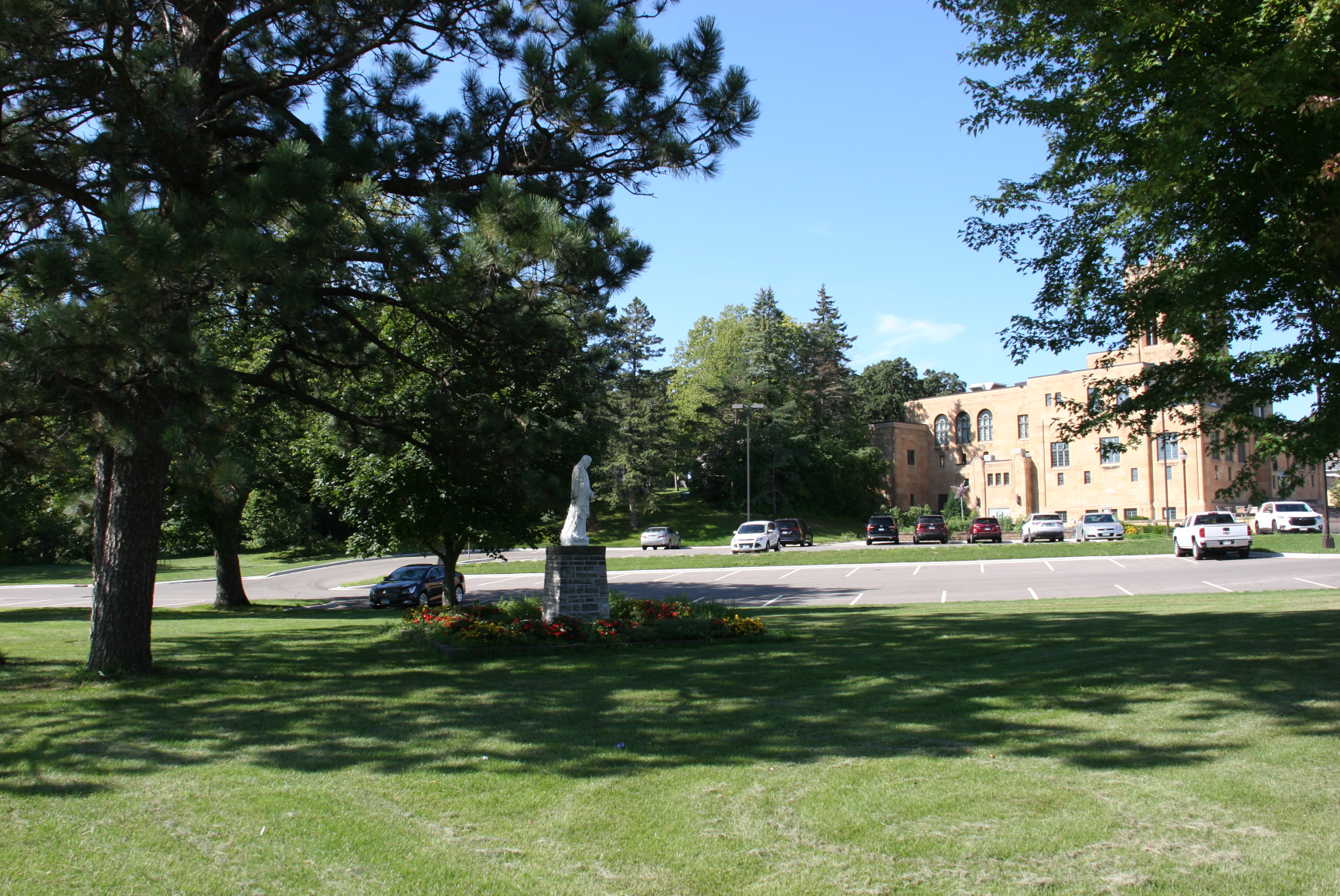
Peace Park, where Wahpekute were buried, is located near Buckham Memorial Library in the background. (Minnesota Prairie Roots copyrighted photo September 2022)

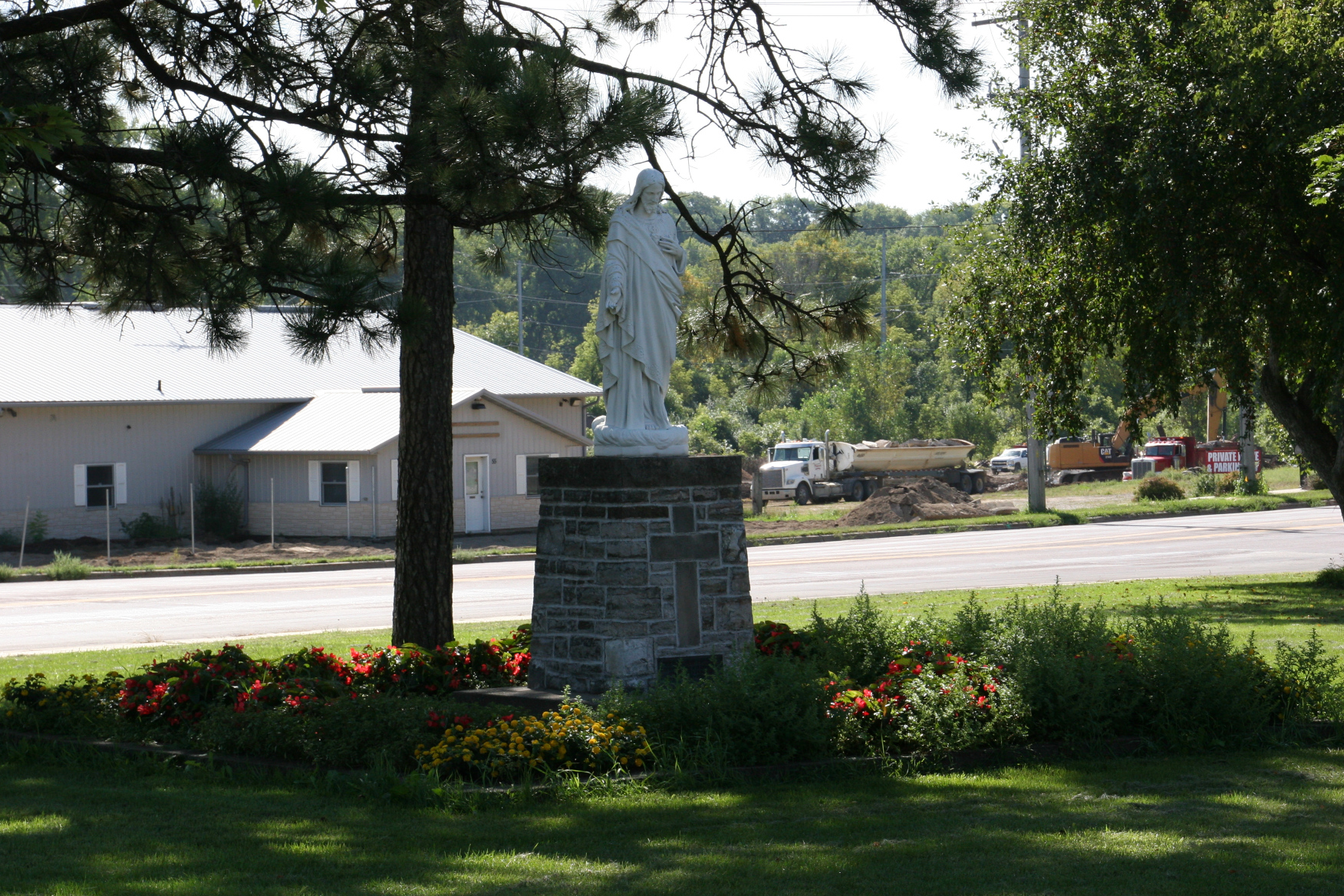
The monument in Peace Park honors those who served in WW II. There is no mention that this slice of land is a Wahpekute burial site. (Minnesota Prairie Roots copyrighted photo September 2022)
The WW II monument at Peace Park. That’s Willow Street running aside the park. The area across the road is being cleared for apartments and senior housing. (Minnesota Prairie Roots copyrighted photo September 2022)

But Garwood shared even more unknown-to-me information. After a year, the bodies of the Wahpekute were removed from the scaffolding to a nearby burial spot. That’s the current day Peace Park, located near the intersection of Minnesota State Highway 60, Division Street and Willow Street by Buckham Memorial Library. The site, she said, is considered a cemetery, confirmed many decades ago by the discovery of bones wrapped in bark and hide. There were 14 burial mounds and sacred sites in the county, according to Garwood, who said this is closely-guarded information known to historians.

To learn all of this proved enlightening and left me wondering how many others are unaware. And what can be done to raise awareness and respect? Garwood asked the same question during her public presentation on “The Indigenous History of the land that is now Rice County, Minnesota.” She was the first presenter in a new endeavor, the Faribault Diversity Coalition Speaker Series, which will introduce those who call/called Faribault home through these monthly speaking events at the Paradise Center for the Arts.

This was part of an outdoor art installment at Bridge Square during Northfield’s Earth Day celebration. (Minnesota Prairie Roots copyrighted file photo April 2022)

Near the end of her hour-plus-long talk followed by questions and comments, Garwood encouraged attendees to remember and acknowledge the Wahpekute, who are still here. She referenced a Land Acknowledgment Statement and “Eagle Relatives” sculpture now in place in neighboring Northfield. She also mentioned efforts underway to honor the culture, history and places of the Wahpekute in Faribault. She encouraged all of us to become informed, to educate ourselves, to listen to the stories of Indigenous Peoples.

These first peoples lived in harmony with nature, with the land, Garwood noted. Life changed when fur traders came to the area and a dependency grew as the Wahpekute traded for goods that would make their lives easier. The US-Dakota War of 1862, centered to the west in Redwood, Renville and Brown counties, brought more change, including the loss of life, land and relocation for Indigenous Peoples. That aspect of Garwood’s talk was familiar to me given I grew up in Redwood County.

This sculpture of Alexander Faribault with a Dakota trading partner stands in Faribault’s Heritage Park near the Straight River. Faribault artist Ivan Whillock created this artwork gracing the Bea Duncan Memorial Fountain. (Minnesota Prairie Roots copyrighted file photo)

She talked, too, about Alexander Faribault and Bishop Henry Whipple and how they befriended and helped the Dakota. Faribault, after the 1862 war, offered land he owned (today River Bend Nature Center and the Minnesota State Academy for the Blind) as an “Indian Camp,” Garwood said. Sixty-five Wahpekute from 12 families lived there.
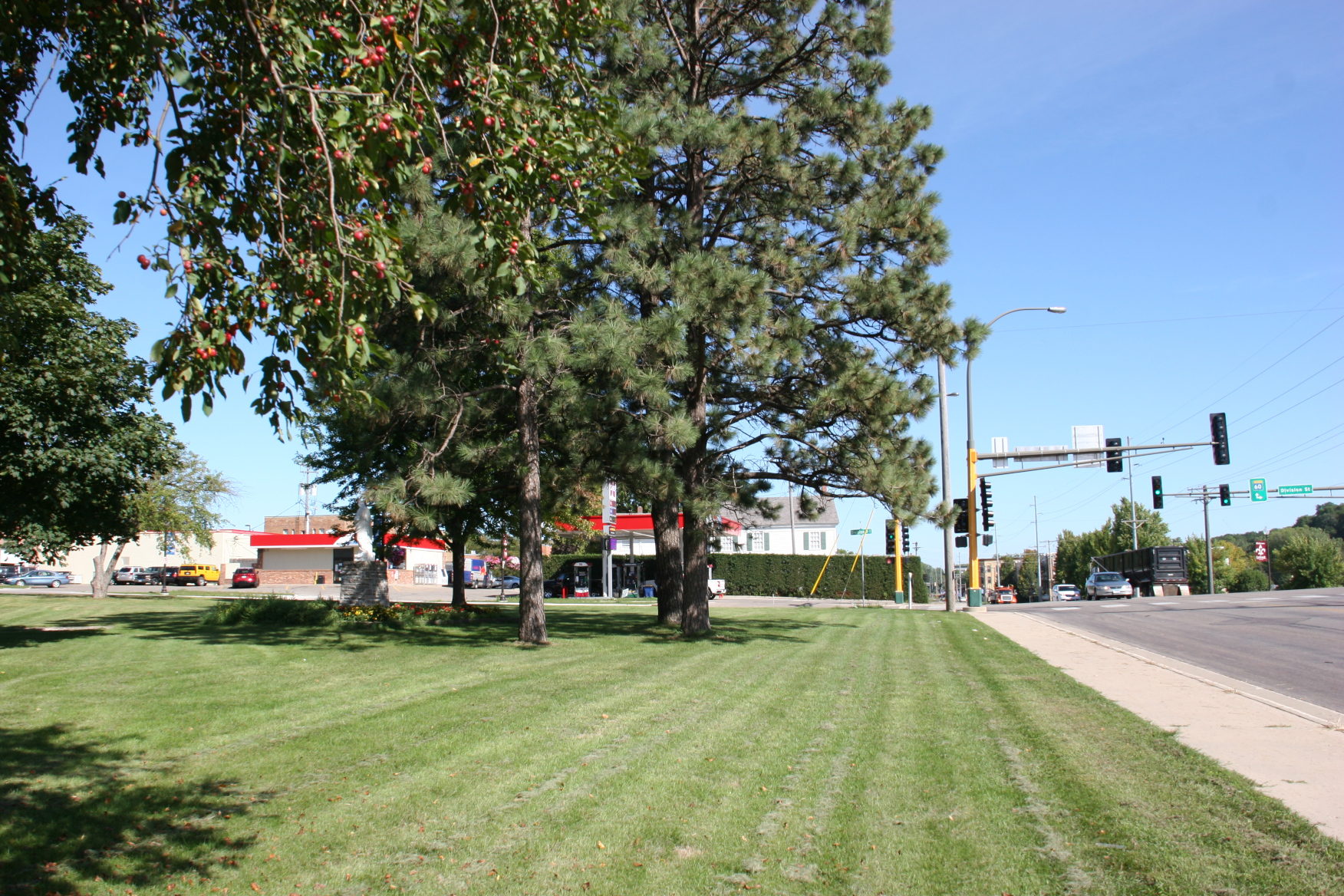
Peace Park is located at a major Faribault intersection. The Alexander Faribault house can be seen in the background, just to the right of the red-roofed gas canopies at the local co-op and behind the hedge row. (Minnesota Prairie Roots copyrighted photo September 2022)

Garwood focused primarily on the Wahpekute, the first people of Rice County, the “Shooters Among the Leaves.” They were, she said, hunters and gatherers who did not work the land but rather moved from place to place to find food, to sustain themselves. Every lake in the county was home to a Wahpekute village, she said. Rivers, too. Teepee Tonka Park along the banks of the Straight River in Faribault was among their riverside homes. Not far from Peace Park. Not far from Wapacuta Park. Near my home.

© Copyright 2022 Audrey Kletscher Helbling


Lyon County exhibit receives state history award April 30, 2021

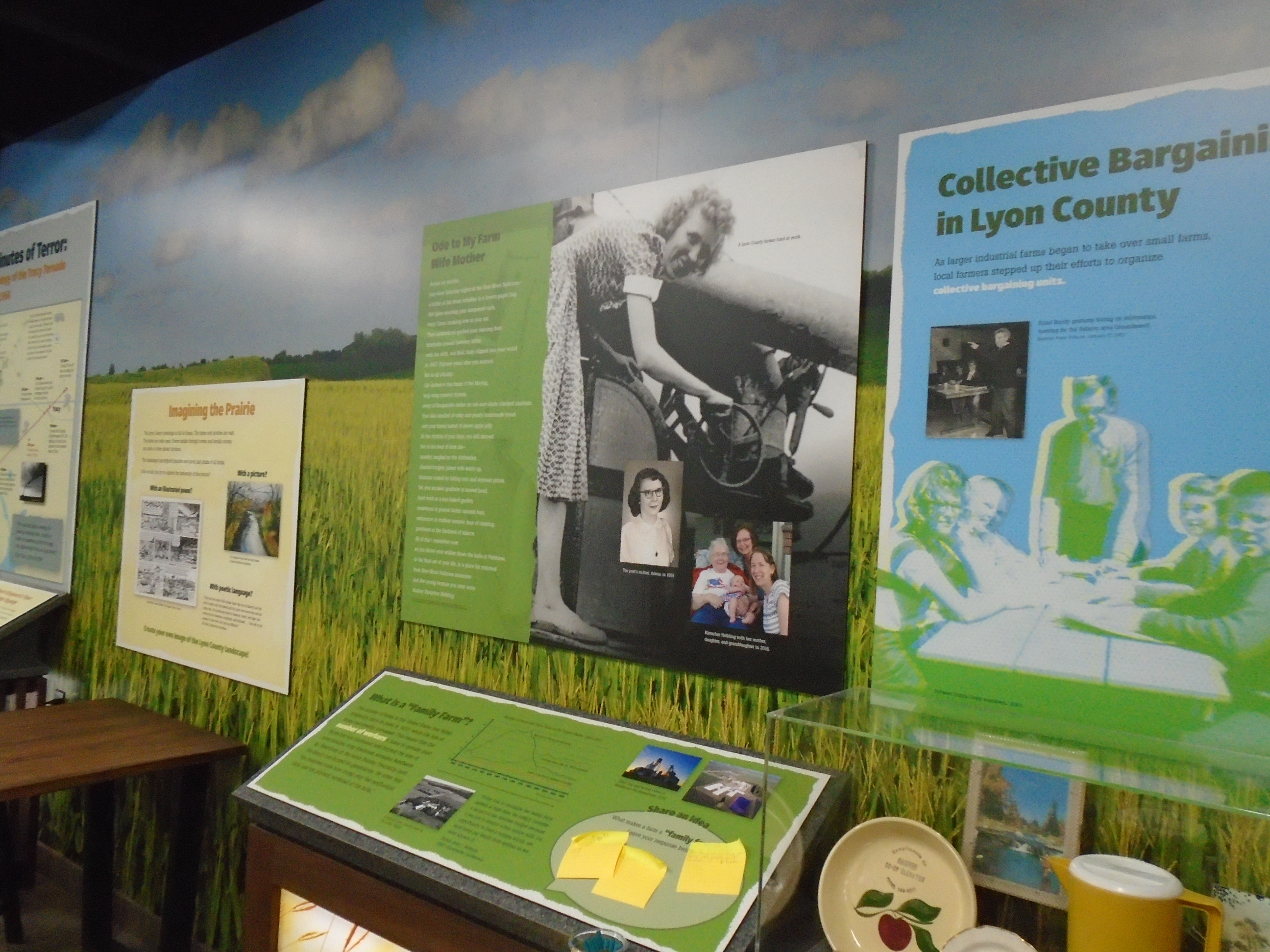
My poem with accompanying photos in the Lyon County exhibit. Photo courtesy of the LCHS.

ONLY A FEW DAYS AGO, I wrote about the inclusion of my poem, “Ode to My Farm Wife Mother,” in the “Making Lyon County Home” exhibit at a county museum in Marshall.

Now the Minnesota Alliance of Local History Museums (MALHM) has named the Lyon County Historical Society (LCHS) a recipient of a 2021 Minnesota History Award for that exhibit. That honor is a credit to LCHS Executive Director Jennifer Andries, staff, board, volunteers and, yes, also locals who contributed stories, artifacts and more in the crafting of this exhibit.

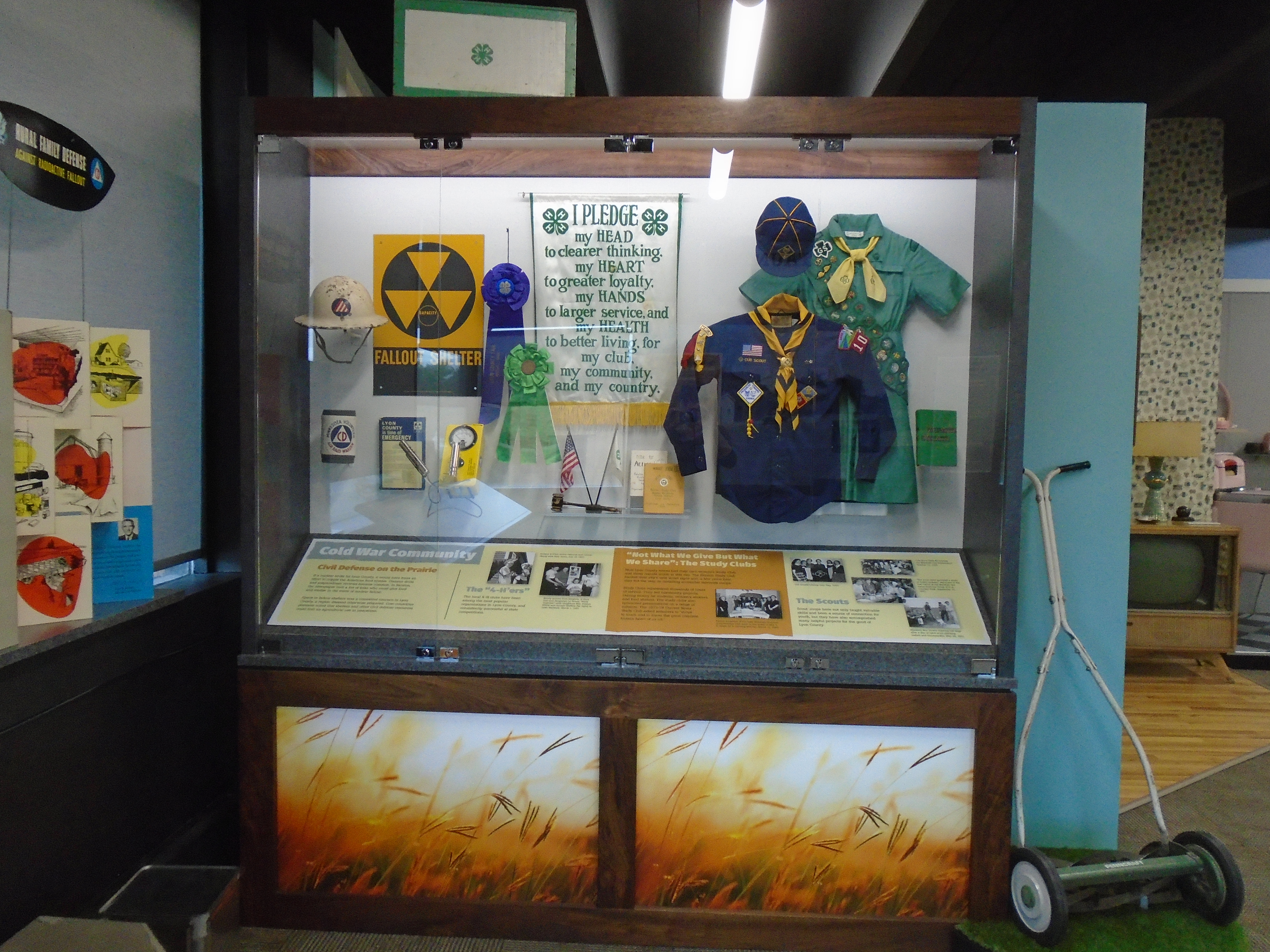
A portion of the “Making Lyon County Home” exhibit focuses on 4-H and more. Photo courtesy of the LCHS.

Museology Museum Services of Minneapolis also deserves recognition as lead contractor for the project. I was first contacted by Museology in January 2020 about inclusion of my rural-themed poem in this exhibit focusing on Lyon County and also reflective of the surrounding area in southwestern Minnesota. I feel incredibly honored to be part of an award-winning exhibit that connects people to the history of this rural region.

MALHM awards were also given to historical societies in Anoka, Carver and St. Louis counties and to the Minnesota African American Heritage Museum and Gallery. Susan Garwood, director of the Rice County Historical Society in Faribault (RCHS), earned the 2020 Lifetime Achievement Award for 30-plus years of service to organizations across Minnesota, including the RCHS, Northfield Historical Society and the MALHM. The award recognizes individuals who have made outstanding contributions and demonstrated leadership to Minnesota’s history community on a broad scale.

The state-wide Alliance serves some 500-plus local history groups throughout Minnesota with a basic mission “of connecting people to nearby history.” It also provides peer-to-peer support and aims “to raise the quality of work in the local history field in Minnesota.”

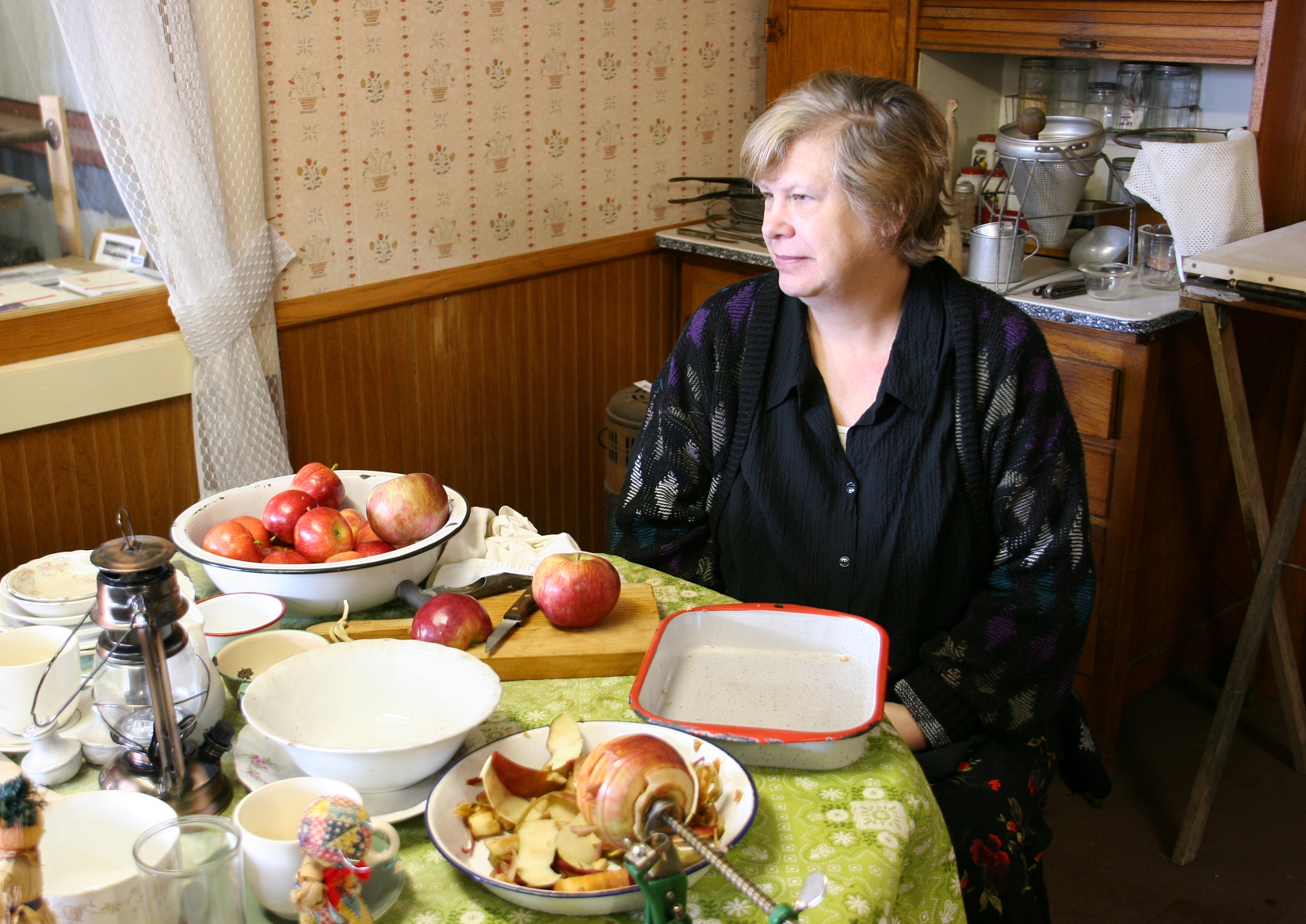
Mrs. Morris takes a break from making applesauce during A Night at the Museum at the Rice County Historical Society. This is an example of local living history. Minnesota Prairie Roots file photo October 2015.

A time existed when I didn’t appreciate history or history centers like I do now. My shift in appreciating history came when museum exhibits changed. When they became more personal and interactive. When an artifact was not just something encased in glass, but an object with meaning, purpose, depth. When living history became a standard. When stories became part of the story.

I photographed this abandoned farmhouse along Minnesota State Highway 19 east of Vesta (my hometown) on the southwestern Minnesota prairie in 2012. The house is no longer there. But it looks similar to the one in which I lived during the first 10-plus years of my life. This is the landscape of my upbringing and the place which shaped me. Minnesota Prairie Roots file photo.

That brings me back to my “Ode to My Farm Wife Mother.” After I posted on Tuesday about the poem’s inclusion in the Lyon County exhibit, my cousin Diane emailed a 1958 photo of my parents. And while I’m not sharing that image here, I will tell you that I was overjoyed to see a different side of my parents other than as, well, simply parents. They were young and clearly blissfully, joyfully in love. Diane also shared that her parents and mine would often attend dances together, leaving the kids with Grandma. As one of the oldest, Diane helped look after the babies, including me. I’d never heard that story or seen that black-and-white snapshot. To receive both now—with my dad long gone and my mom in failing health—was a gift. Such a gift.

I hope my poem, inspired by my mom, yet representative of all the hardworking farm women of the 1950s and 1960s, is also a gift to those who read it. I hope those who read my words, who view the accompanying photos, will reflect and feel gratitude for these strong rural women.

I shall forever feel grateful to my mom and to the rural region which shaped me and continues to inspire me today in my writing and photography.

FYI: If you didn’t see my back story on “Ode to My Farm Wife Mother,” please click here to read that initial post. The post includes my poem and more info about the new Lyon County exhibit.

© Copyright 2021 Audrey Kletscher Helbling