
UNLESS YOU’RE A LOCAL or a native, you likely bypass the small towns which sit off county roads, tucked away from trafficked highways that take time-pressed travelers from destination to destination.
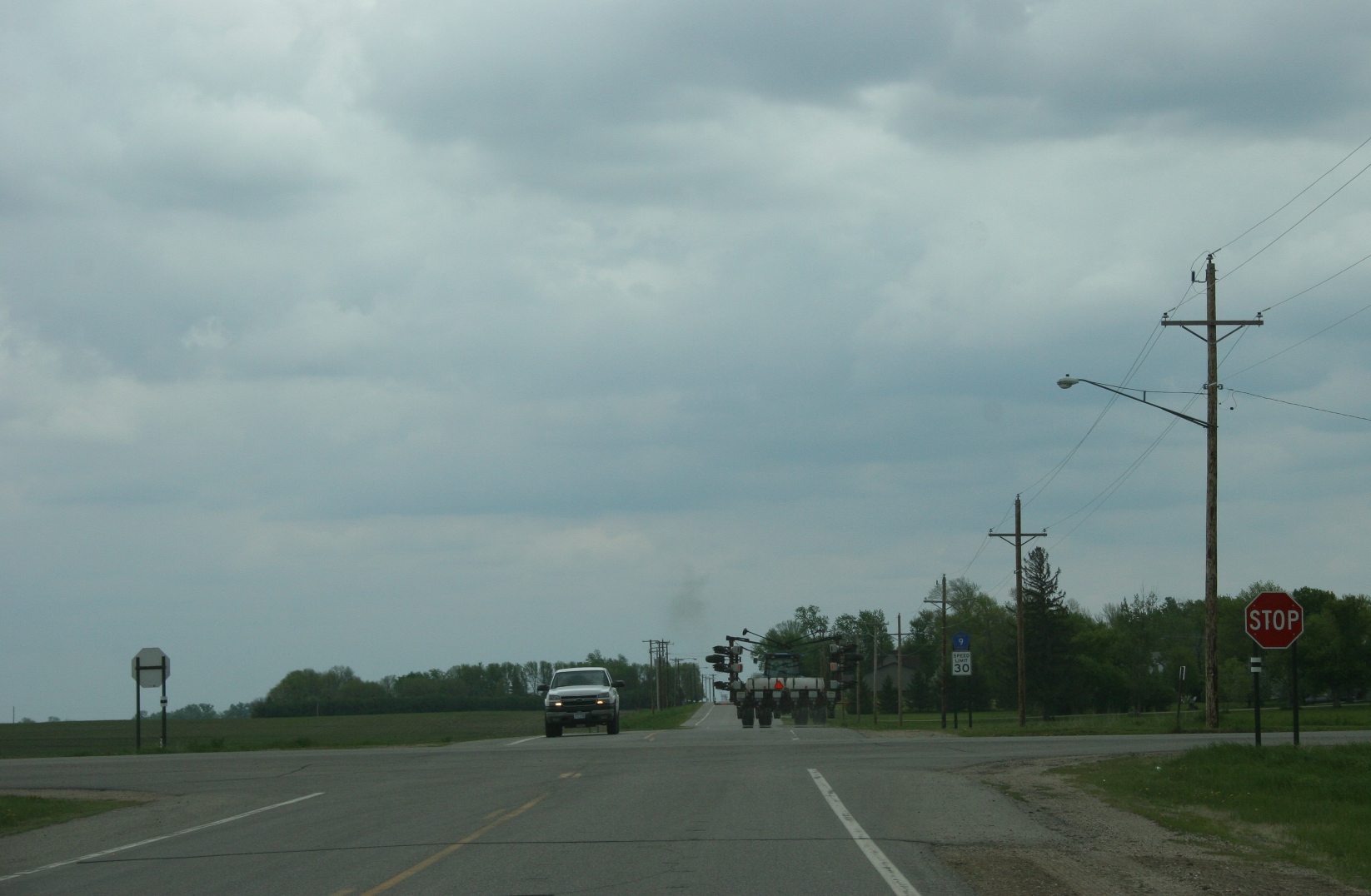
Nearing Delhi at the intersections of Redwood County Road 9 and 6.
On a recent trip back to my native southwestern Minnesota prairie, my husband and I sidetracked off our usual route along State Highway 19 between Belview and Redwood Falls to follow Redwood County Road 9 to Delhi.
Decades have passed since I visited Delhi, at the intersection of county roads 9 and 6.
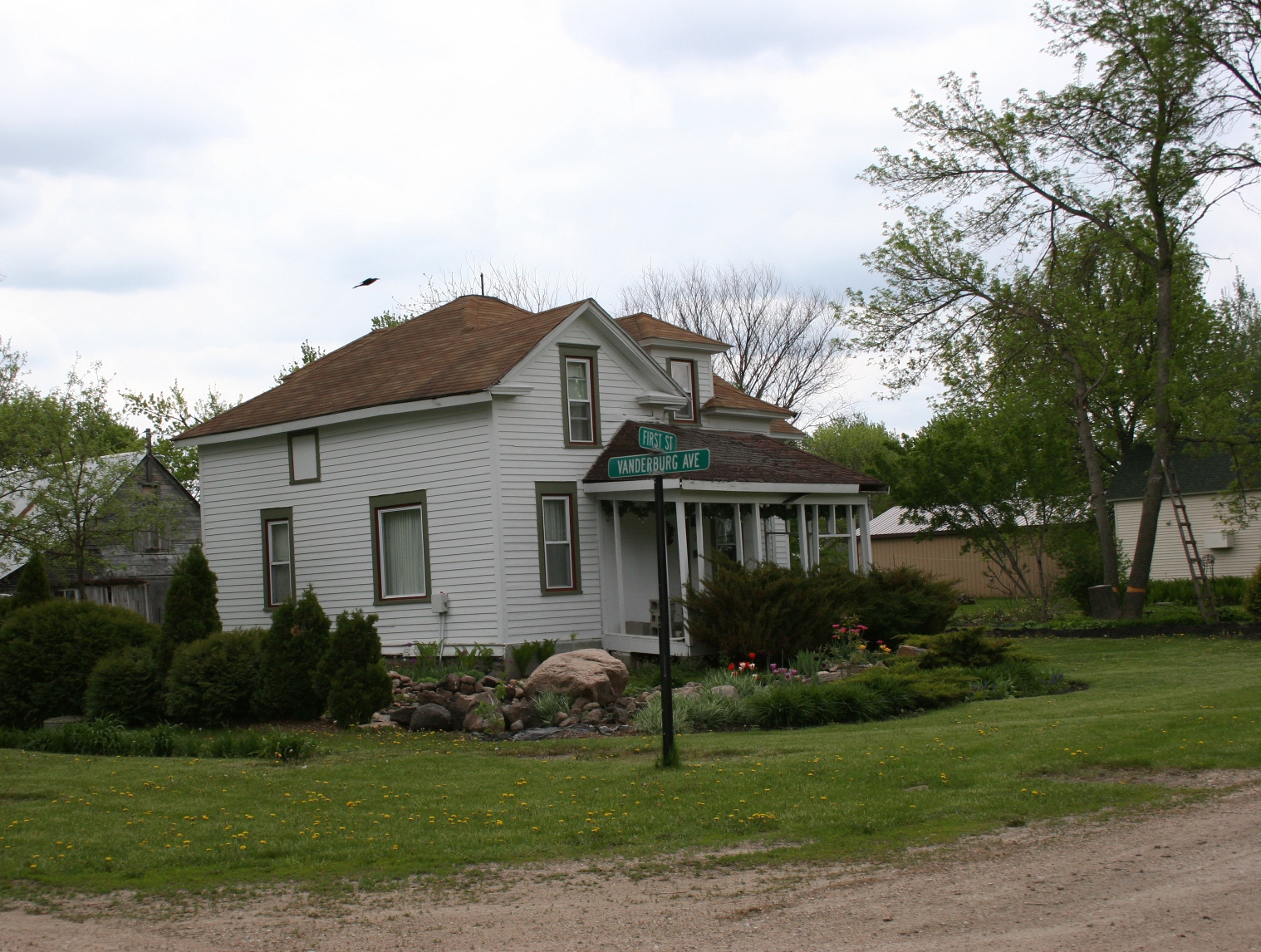
A sweet, well-cared for home in Delhi.
Most would surmise there’s not much in Delhi. That is until you look and consider that some 70 folks call this rural farming community home.
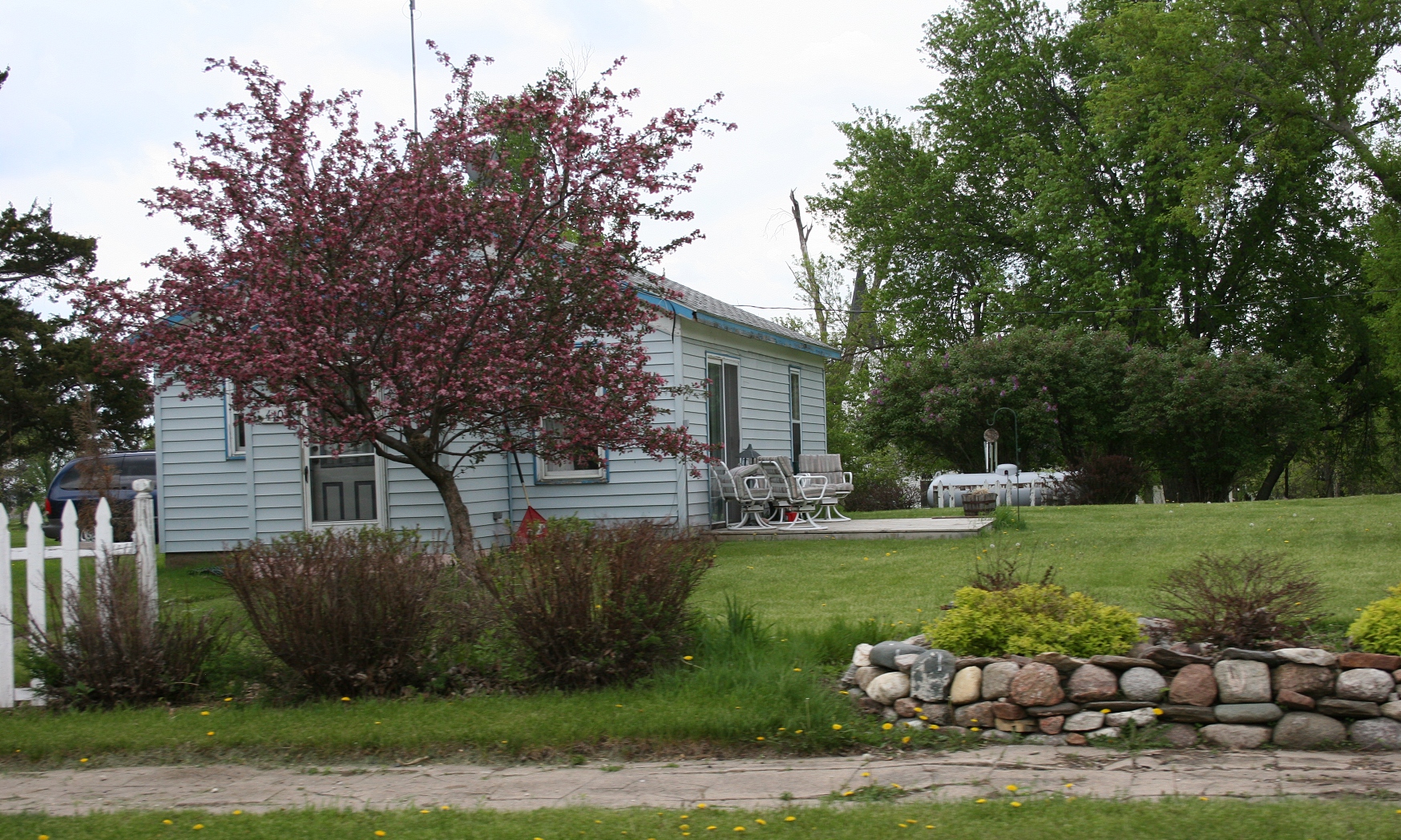
Another cute home with lovely landscaping that includes field rocks.
Home.
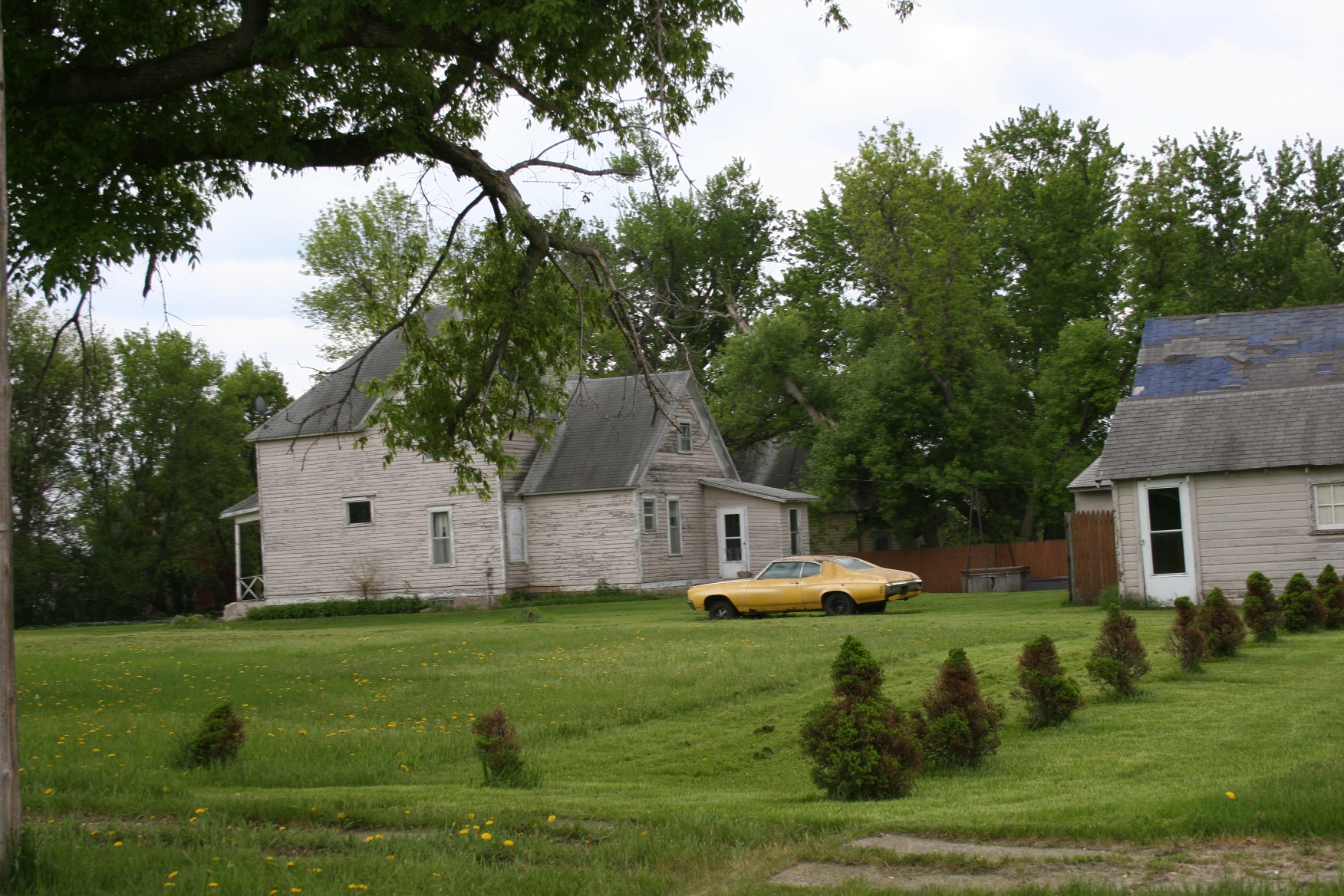
In need of a little TLC, both home and car.
While some residents care about their properties with well-tended houses, others show less interest in maintenance. That is not uncommon in small towns. Or perhaps such neglect is more noticeable with fewer houses.
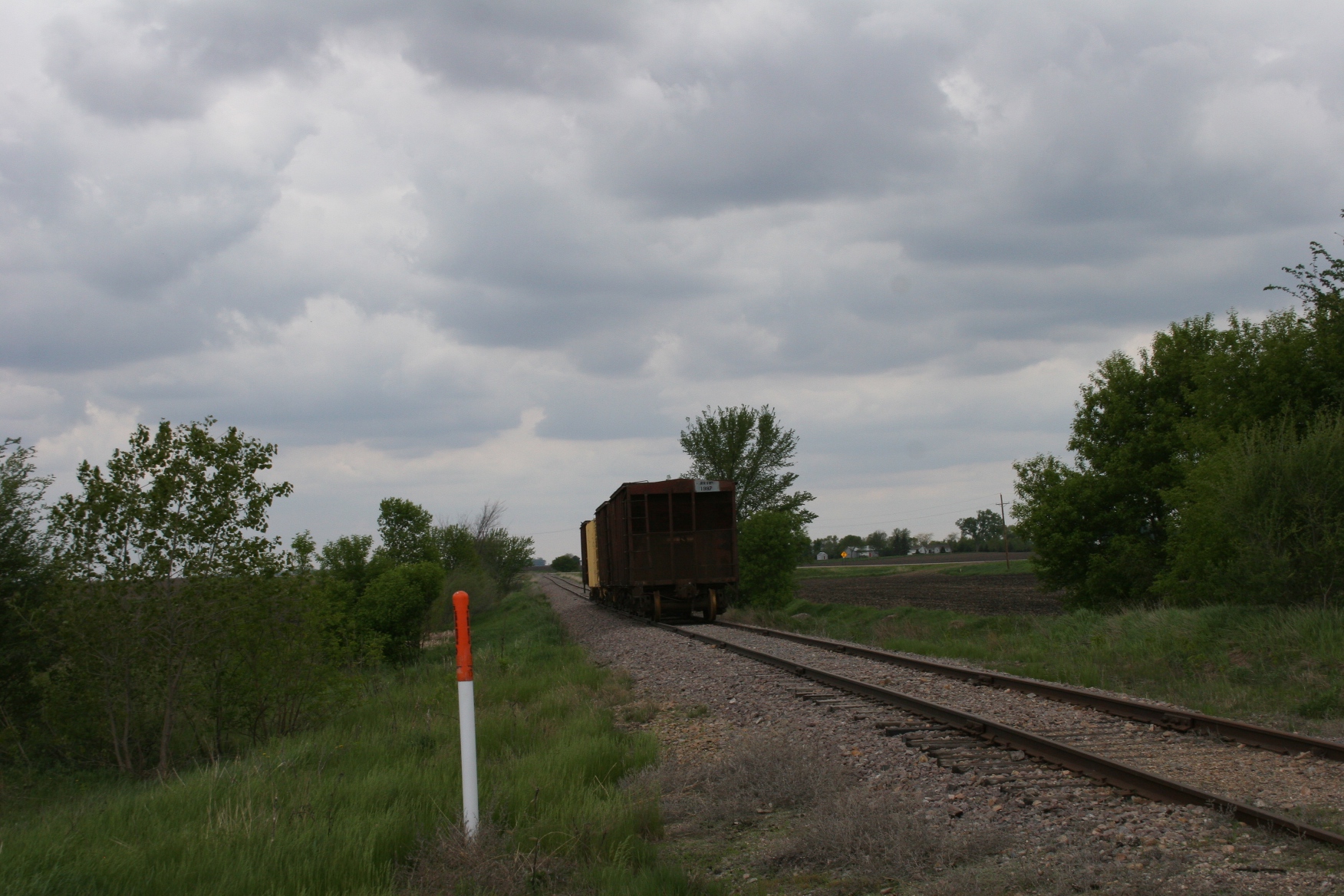
Parked along the tracks just off Redwood County Road 6 west of Delhi.
Like so many small towns along the railroad line, this settlement once boomed. Information published in The History of Redwood County, Volume 1, states that Delhi was platted in 1884, shortly after the railroad came through the area. Alfred M. Cook, a builder and owner of a flour mill in neighboring Redwood Falls, named Delhi, according to Minnesota place name info on the Minnesota Historical Society website. He came to the area from Delhi, Ohio.
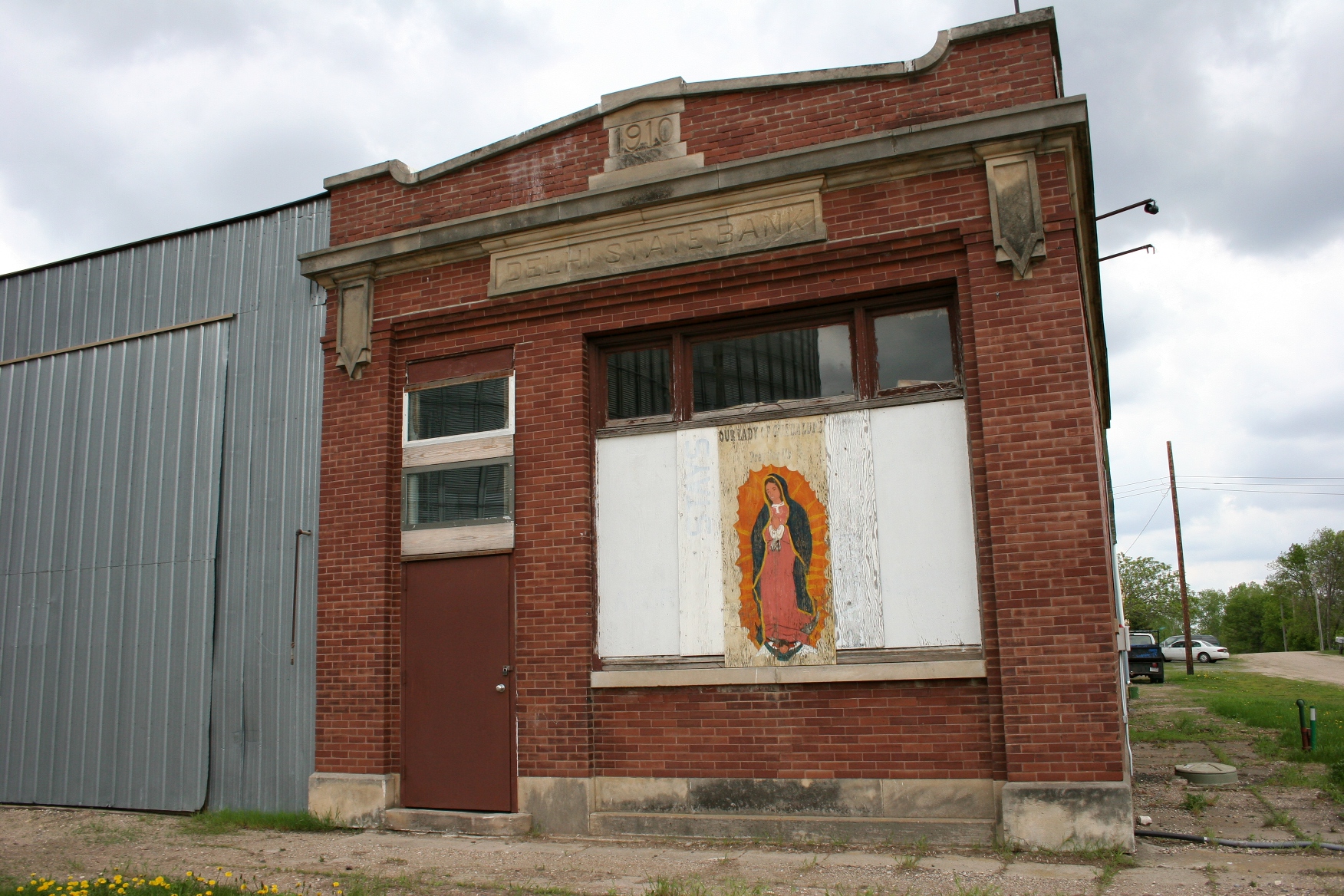
The front window of the 1910 Delhi State Bank is now mostly boarded with a painting of Our Lady of Guadalupe.
The Delhi State Bank, built of brick in 1910, and now abandoned and apparently last used as a church, shows me that folks once believed in this place.
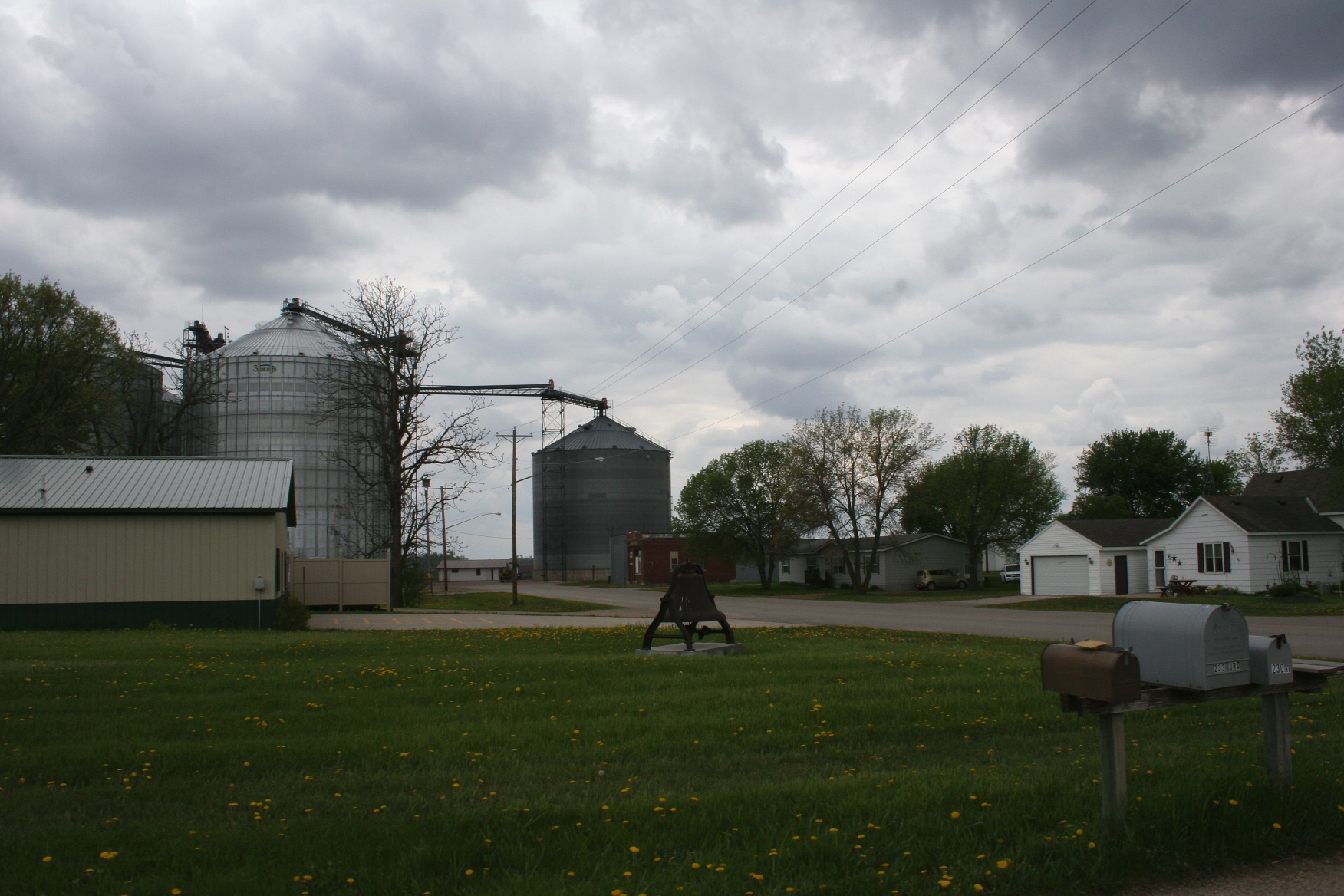
Driving toward downtown.
Not that they don’t anymore. But like all too many prairie communities, Delhi has mostly withered away.
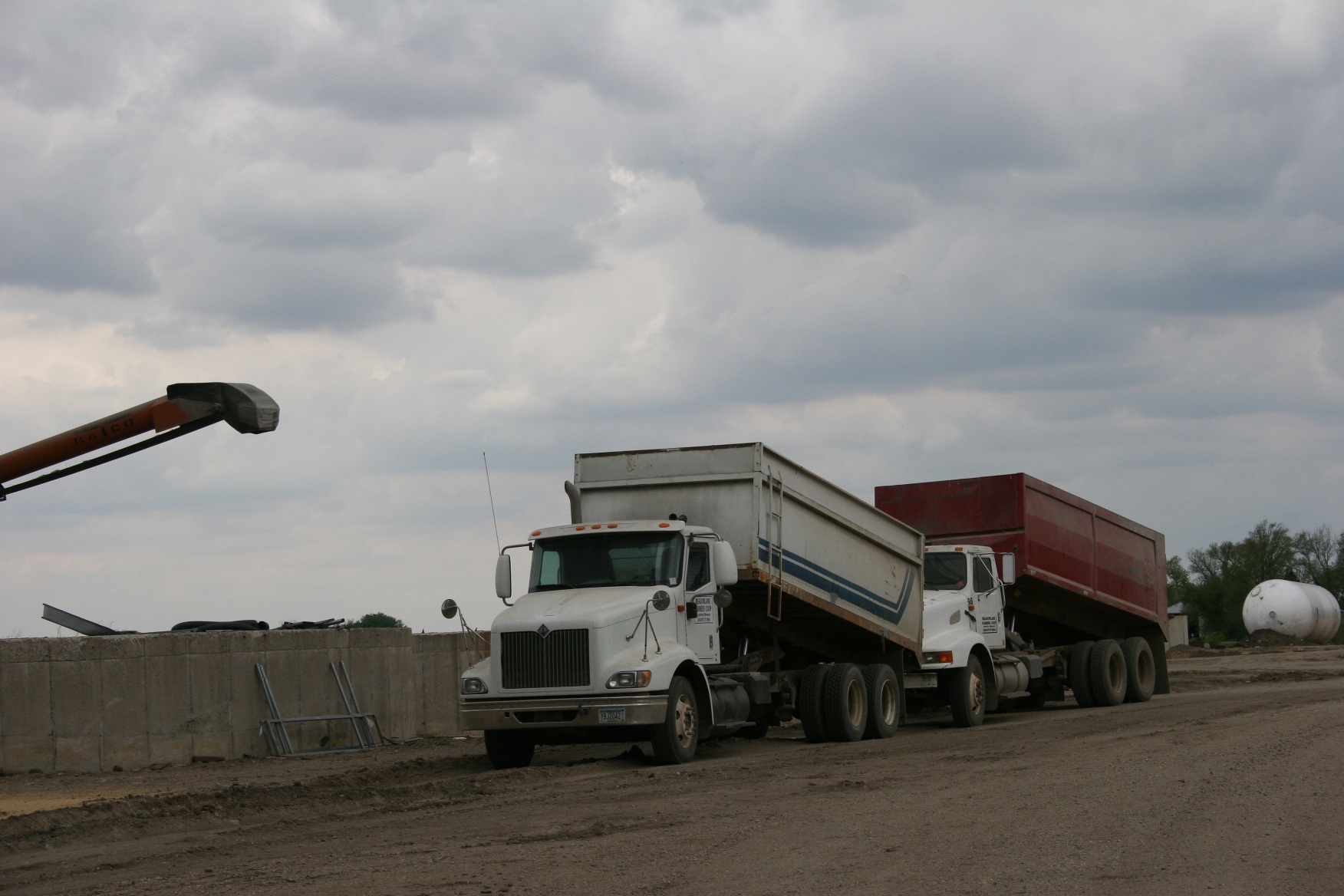
Grain trucks parked near the grain bins.
Many other businesses once operated here, but they are no more, with the noticeable exception of a grain business. Delhi, in the late 1800s, housed general, drug, hardware and lumber stores, a hotel, a railroad and telegraph agent, a feed mill, a blacksmith shop, a farm implement business and more.
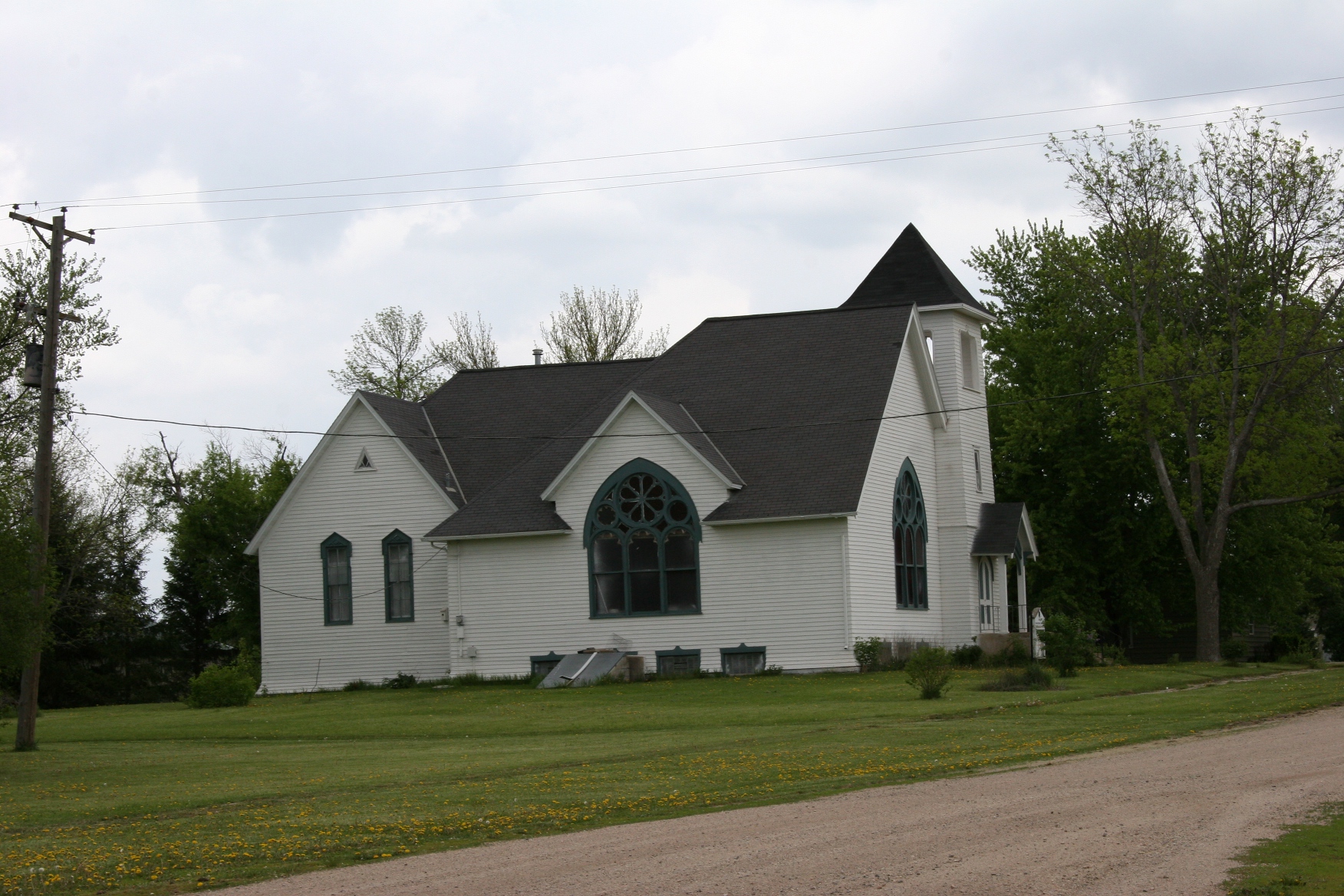
What a lovely church this must be (or once was) inside as evidenced from the exterior.
The Presbyterian church today appears shuttered.
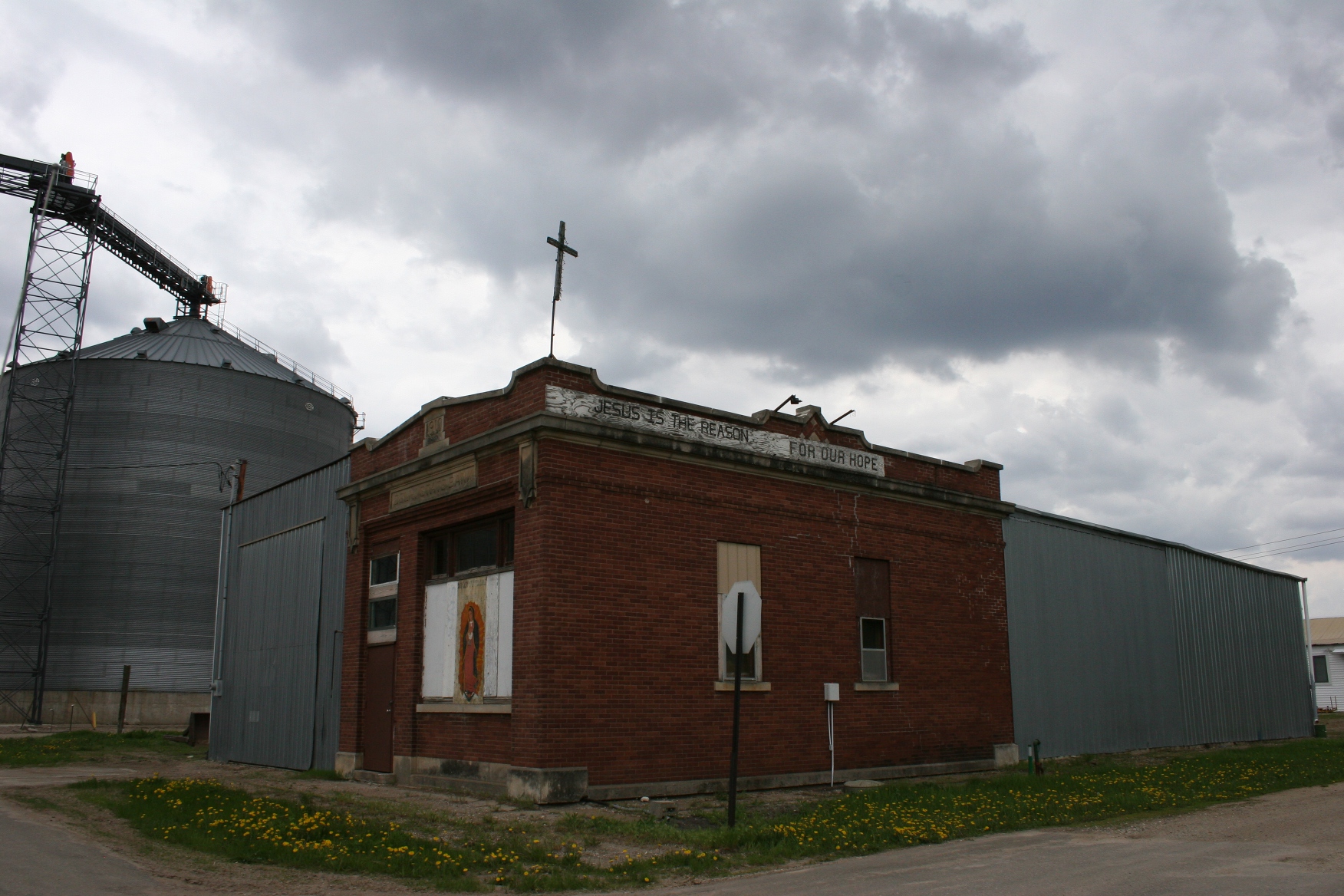
Evidence of faith in former bank and bin.
Despite all of this and the inclination to despair, I cannot help but admire the determination of Delhi to cling to the land. Prairie roots run deep.
© Copyright 2014 Audrey Kletscher Helbling


 Minnesota Prairie Roots
Recent Comments