Minnesota Prairie Roots

Writing and photography by Audrey Kletscher Helbling

Vesta, the prairie place from whence I came July 14, 2026

Once the Vesta Municipal Liquor Store, the business is now privately-owned. This has always been my favorite building downtown because of the unique tile front. (Minnesota Prairie Roots copyrighted photo May 2026)

WHENEVER SOMEONE ASKS if I’m from Faribault, I respond, “Well, I’ve lived here for 44 years, but I’m new.” I say that half-jokingly, half-truthfully. I’ll never be “from” here. And I am “new” because I haven’t lived here my entire life, like many have. And I’m not related to half the town (semi-exaggerating), like many are.

The City of Vesta maintenance building. (Minnesota Prairie Roots copyrighted photo May 2026)

Then I attempt to explain from whence I came. I start with Mankato, the nearest large city to the west, then work my way westward to New Ulm and Redwood Falls, eventually landing on my hometown of Vesta in northwestern Redwood County. Most have never heard of this southwestern Minnesota small town, but a few have.

The old St. John’s Lutheran Church, where I was baptized and confirmed before a new church was built and the building sold and converted into apartments. (Minnesota Prairie Roots copyrighted photo May 2026)
Looking north on Vesta’s main street, once filled with buildings and businesses. (Minnesota Prairie Roots copyrighted photo May 2026)
A building seemingly no longer in use, left, the now painted brick bank with a drive-up, right, and a complex of grain bins in the background. (Minnesota Prairie Roots copyrighted photo May 2026)

Recently I returned to this farming community of some 300 for an aunt’s funeral. After the church service, burial service and a luncheon at St. John’s Lutheran Church, and before the 120-mile return trip to Faribault, I stopped downtown. By downtown, I mean a single block, today defined primarily by vacant lots and abandoned buildings.

A former gas station and garage at the north end of Vesta’s main street. (Minnesota Prairie Roots copyrighted photo May 2026)

Vesta, like so many small towns, once had a thriving core business community. That declined as society became more mobile, as young people graduated and left the area, as shopping habits changed. I could see that already when I left my hometown in 1974. My mom shopped for groceries once a month or so in neighboring Redwood Falls. That city and Marshall, 20 miles to the west, centered regional shopping then.

Looking south along Vesta’s main street, only a few businesses remain. The Vesta Cafe sits on the right. And in the distance, the liquor store and bank are at the end of the block. Parking is diagonal on the sides and parallel in the middle. (Minnesota Prairie Roots copyrighted photo May 2026)
A Grain Belt beer sign hangs from the liquor store, which once also had a vintage Schells sign. (Minnesota Prairie Roots copyrighted photo May 2026)
This is a farming community as seen in these grain bins and the enclosed space where corn is often heaped after fall harvest. (Minnesota Prairie Roots copyrighted photo May 2026)

Back to Vesta today. The former municipal liquor store, now privately-owned, and the bank anchor the south corners of the downtown block, with the post office and grain elevator complex just across the street. Long gone is the towering grain elevator where farmers, including my dad, once delivered corn and soybeans. Clusters of grain bins now hold harvested crops.

The old Kletscher family farmhouse, left, with the “new house” in the background. I grew up in these two houses. (Minnesota Prairie Roots Kletscher family photo)

Also long gone is the feed mill and the lumberyard across the street. I remember going to the dusty feed mill with my dad. And I remember my mom gathering booklets of house floor plans from the lumberyard. After years of hoping and planning, my parents built a new house on our farm just south of town in 1967 to accommodate their growing family. We were all happy to move from our aged, cramped farmhouse into a spacious home with more bedrooms and a bathroom.

The city ice skating pond is apparently downtown now on this vacant lot as noted by the sign. (Minnesota Prairie Roots copyrighted photo May 2026)

Downtown Vesta today bears little resemblance to the teeming town of my youth—the place where I was baptized, married, attended elementary school (long closed), ice skated in the shadow of the grain elevator, visited my grandparents… The place where I bought caps for my cap gun at Joe Engel’s Hardware Store, Bazooka bubblegum at Rasmussen’s grocery, a set of amber drinking glasses at Marquardt’s Hardware for my mom on Mother’s Day. The place where Dad occasionally treated me to a candy bar at Wiegers’ or the muni or to a bottle of pop at my Uncle Harold’s service station.

Grain bins dwarf the former Vesta Community Center, which centered community life. There we gathered for Memorial Day and Santa Day. There I celebrated my 1982 wedding with a reception and dance. (Minnesota Prairie Roots copyrighted photo May 2026)

This is the place where I sold poppies on Poppy Day and read “In Flanders Fields” during the annual Memorial Day program. The place where I boarded a Greyhound bus as a kid and rode alone all the way to Minneapolis to visit an aunt and uncle. The memories go on and on.

This building may have been Don’s Cafe at one time, but I’m not sure. It’s changed too much for me to know that for certain. (Minnesota Prairie Roots copyrighted photo May 2026)

I knew I would eventually leave Vesta for good with no opportunities to keep me in my hometown. But that doesn’t diminish how much I still appreciate this prairie place which shaped me. I need to revisit Vesta occasionally to remind me of its importance in my life. I will be forever connected to this small town and its people.

The Vesta Cafe, built by the community. (Minnesota Prairie Roots copyrighted photo May 2026)
This bread truck had just left the cafe and was driving by the post office when I photographed it. (Minnesota Prairie Roots copyrighted photo May 2026)
The Vesta Post Office on the south end of the main street replaced an older one. (Minnesota Prairie Roots copyrighted photo May 2026)

Toward the north end of the downtown block stands the Vesta Cafe, new since I left, although Don’s Cafe was open when I was a kid. Locals gather here for morning coffee and cards, catching up on the latest. And when the town whistle blows at noon, as I heard it recently while standing at my aunt’s graveside, customers arrive at the cafe for dinner. And, yes, the noon meal is “dinner,” the evening meal, “supper,” in this rural area. Menu items and specials like hamburger corn hotdish, liver and onions, and a beef commercial draw diners. My Dad, on the rare occasion he dined out, would always order a beef commercial—roast beef piled onto white bread, topped with gravy, then a scoop of mashed potatoes smothered with more gravy. That’s the ultimate in old school rural dining.

Vesta is decidedly rural as shown in this truck parked along the main street. (Minnesota Prairie Roots copyrighted photo May 2026)
The liquor store and a former leather works business. (Minnesota Prairie Roots copyrighted photo May 2026)
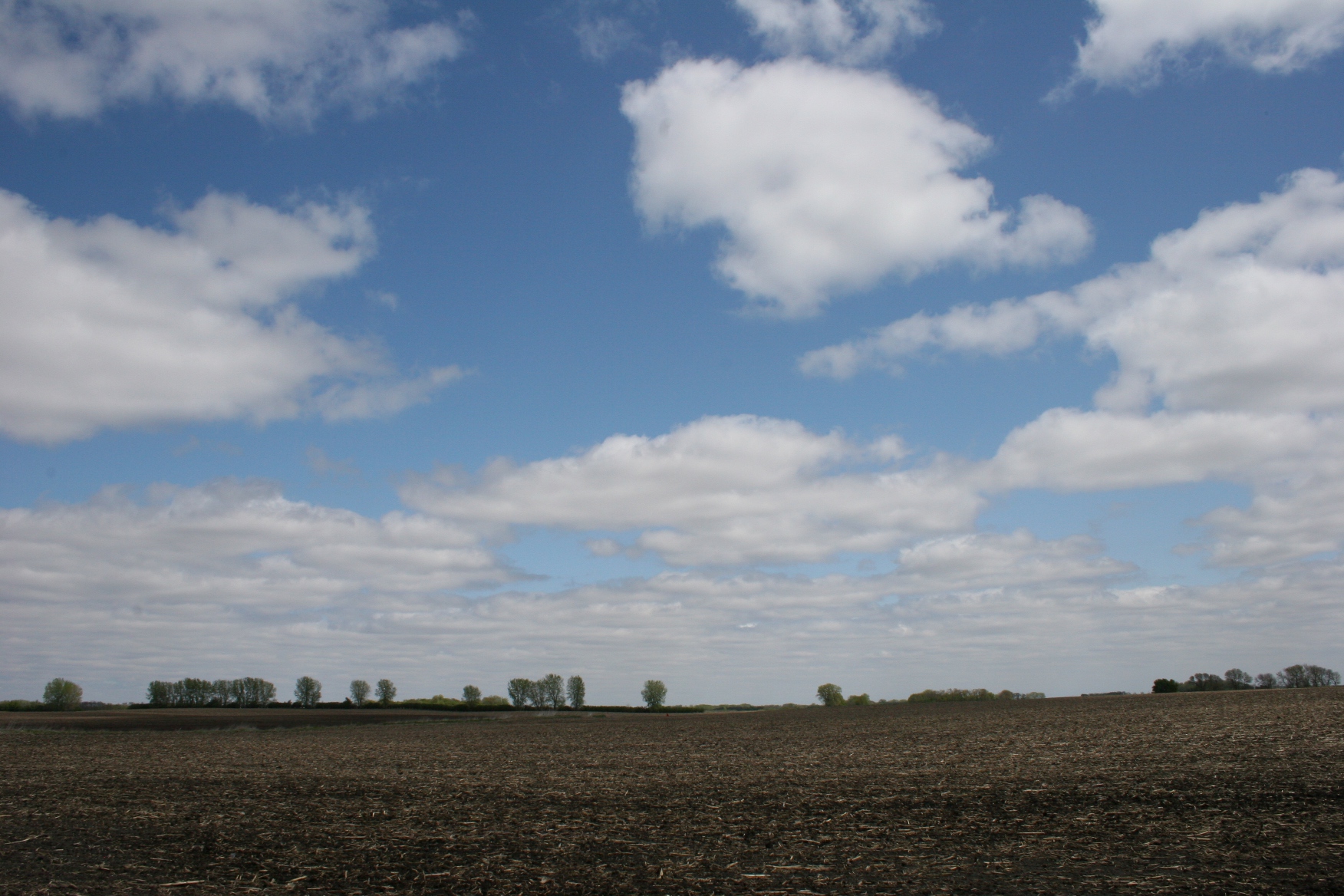
A snippet of the land my father farmed, my middle brother after him. The farm has since been sold. (Minnesota Prairie Roots copyrighted file photo)

Rural rooted and grew me. From the once-flourishing community of Vesta to the crop and dairy farm across the Redwood River a mile south of town on the county road to Lucan, this prairie place shaped me as a person, a writer and a photographer. I am still “from” here, even though gone for more than 50 years now.

© Copyright 2026 Audrey Kletscher Helbling


Delhi: Little town on the Minnesota prairie June 4, 2014

UNLESS YOU’RE A LOCAL or a native, you likely bypass the small towns which sit off county roads, tucked away from trafficked highways that take time-pressed travelers from destination to destination.

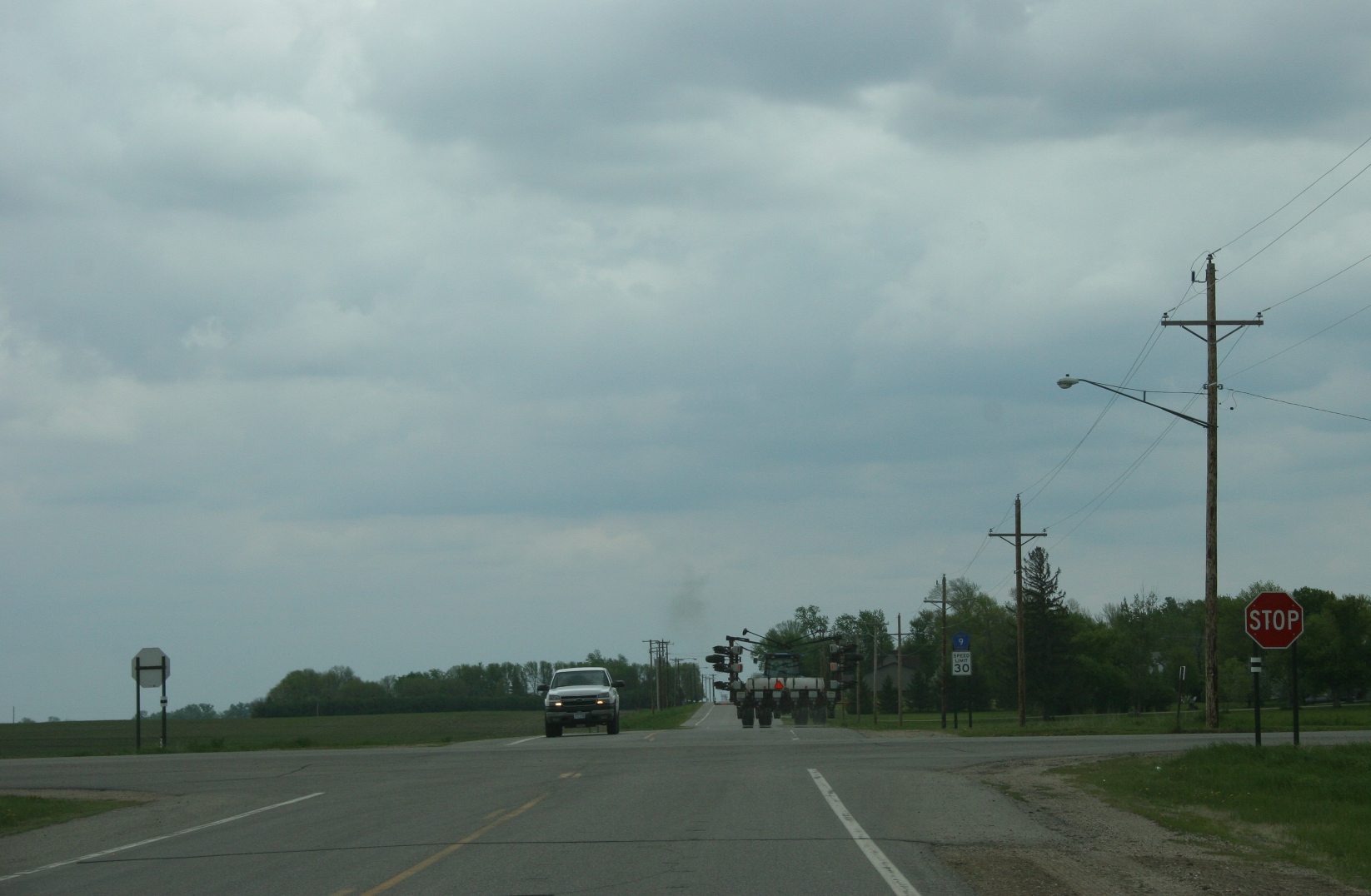
Nearing Delhi at the intersections of Redwood County Road 9 and 6.

Nearing Delhi at the intersections of Redwood County Road 9 and 6.

On a recent trip back to my native southwestern Minnesota prairie, my husband and I sidetracked off our usual route along State Highway 19 between Belview and Redwood Falls to follow Redwood County Road 9 to Delhi.

Decades have passed since I visited Delhi, at the intersection of county roads 9 and 6.

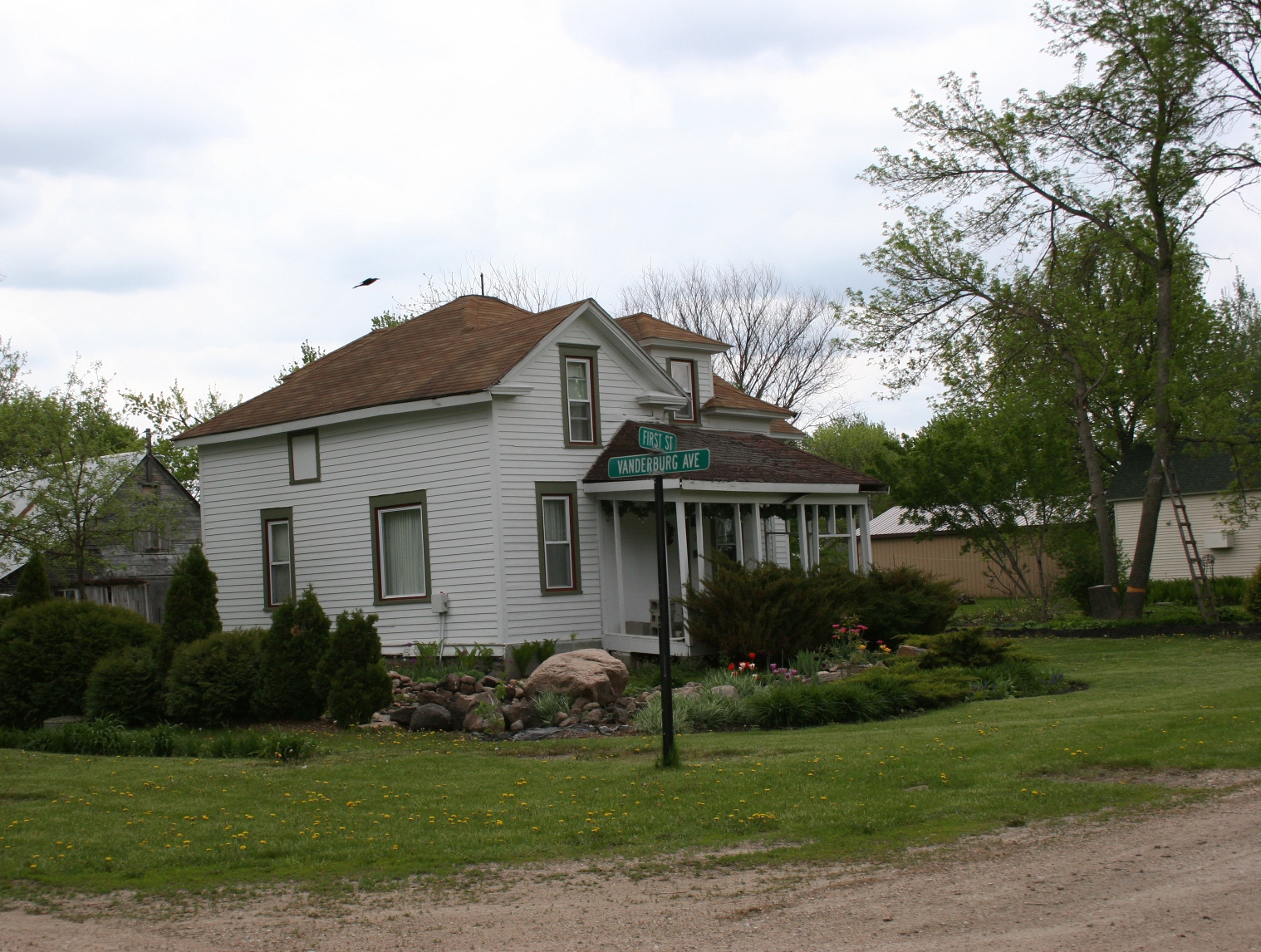
A sweet, well-cared for home in Delhi.

A sweet, well-cared for home in Delhi.

Most would surmise there’s not much in Delhi. That is until you look and consider that some 70 folks call this rural farming community home.

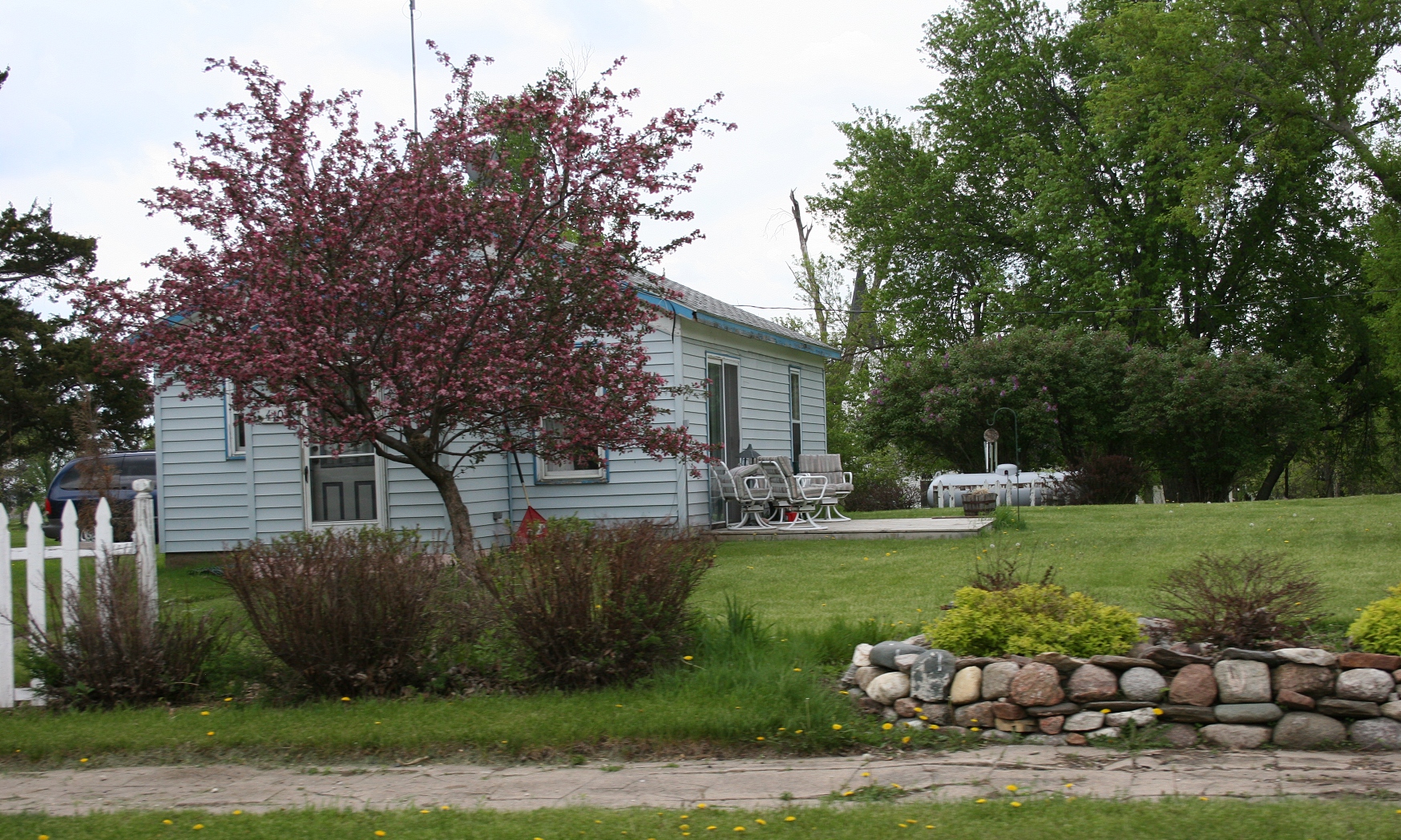
Another beautiful home with a lovely landscaping that includes field rocks.

Another cute home with lovely landscaping that includes field rocks.

Home.

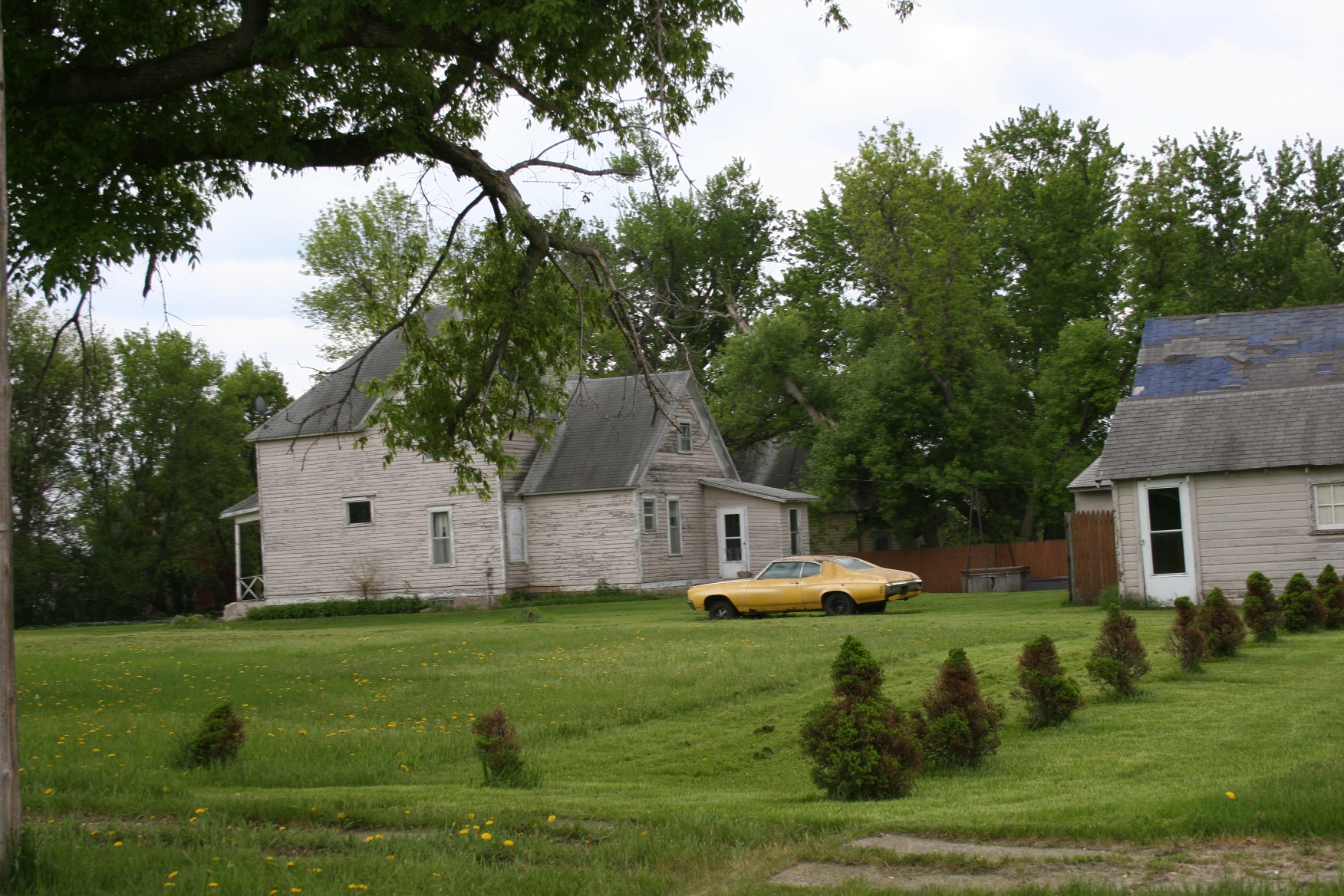
In need of a little TLC, both home and car.

In need of a little TLC, both home and car.

While some residents care about their properties with well-tended houses, others show less interest in maintenance. That is not uncommon in small towns. Or perhaps such neglect is more noticeable with fewer houses.

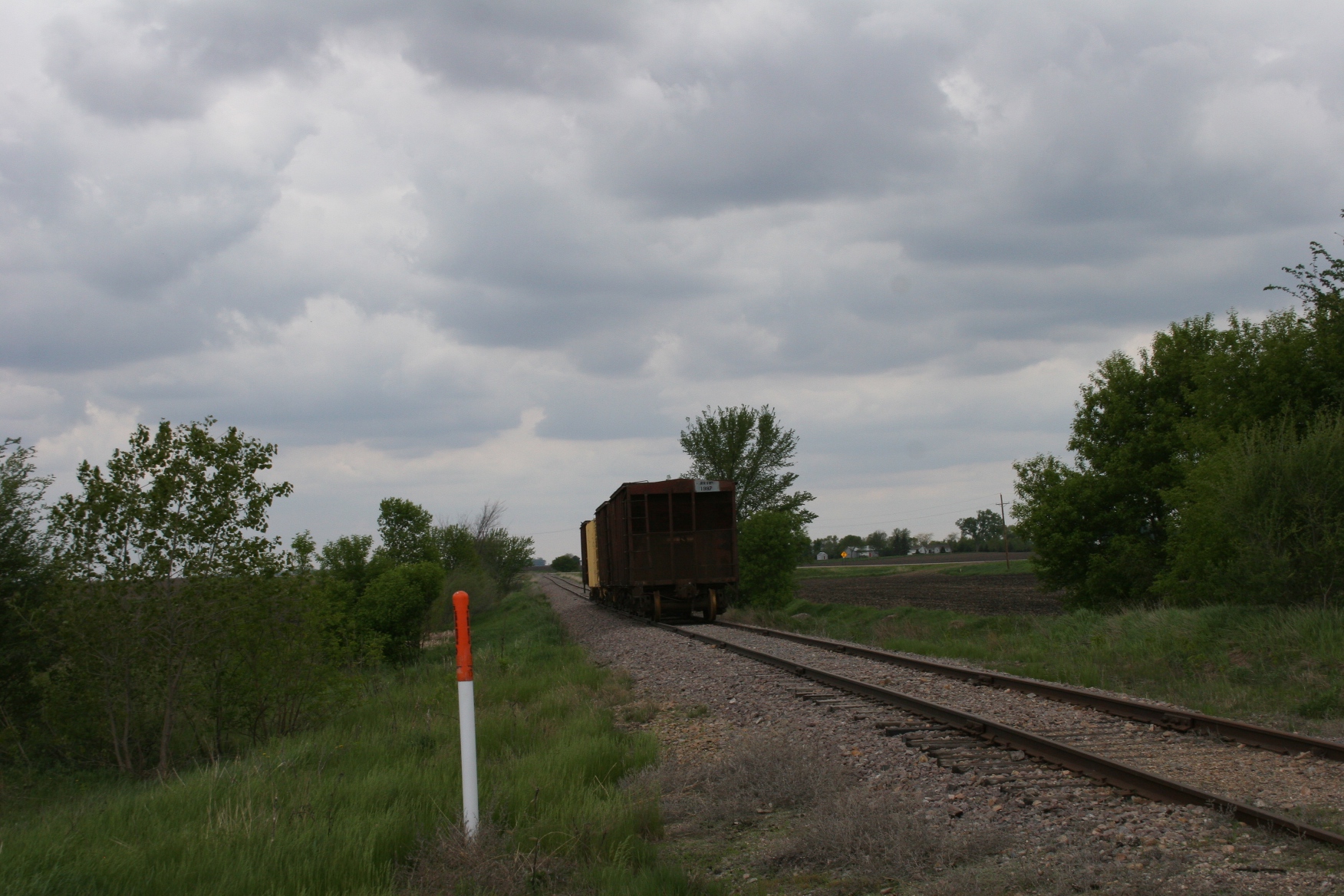
Parked along the tracks just off Redwood County Road 6 west of Delhi.

Parked along the tracks just off Redwood County Road 6 west of Delhi.

Like so many small towns along the railroad line, this settlement once boomed. Information published in The History of Redwood County, Volume 1, states that Delhi was platted in 1884, shortly after the railroad came through the area. Alfred M. Cook, a builder and owner of a flour mill in neighboring Redwood Falls, named Delhi, according to Minnesota place name info on the Minnesota Historical Society website.  He came to the area from Delhi, Ohio.

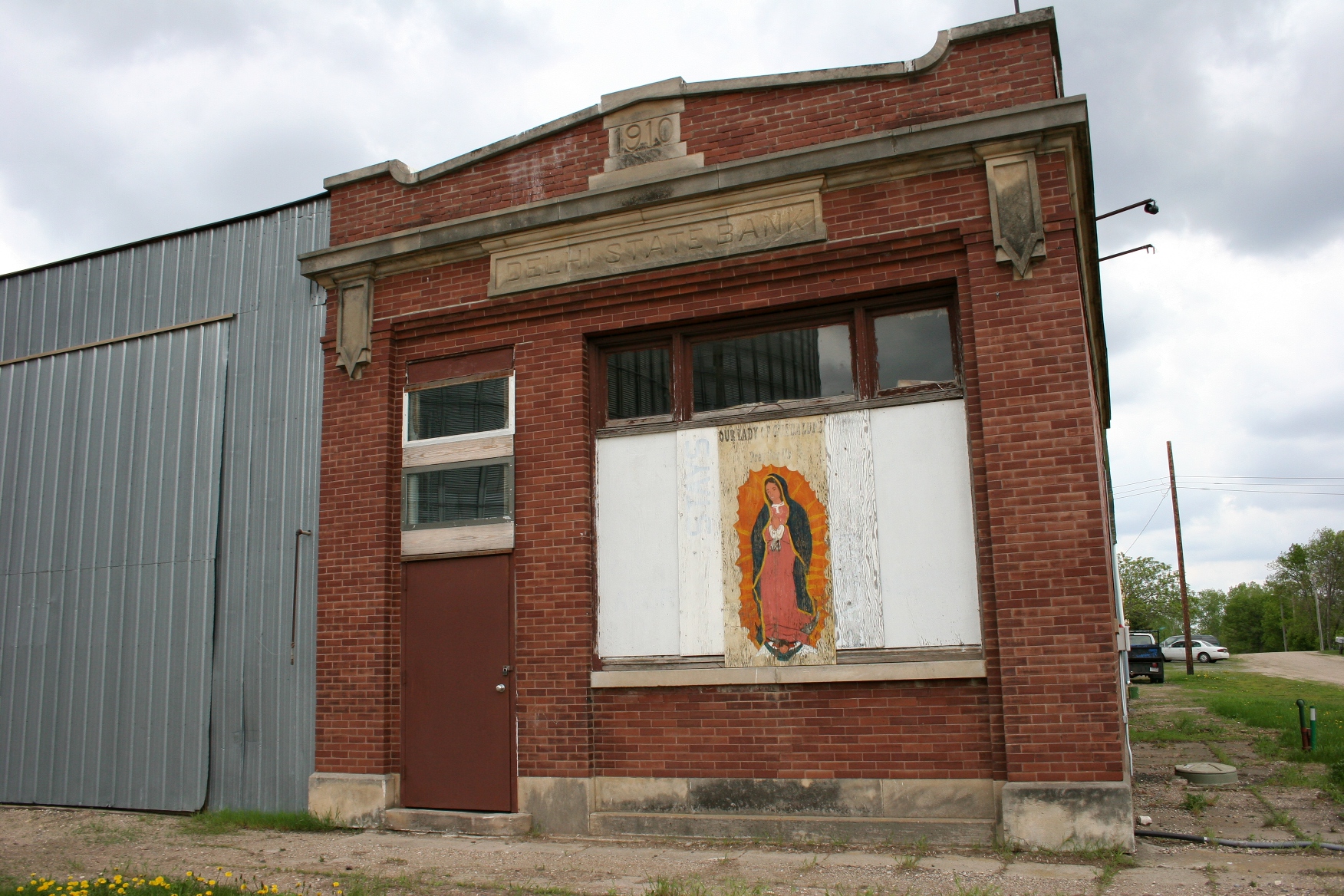
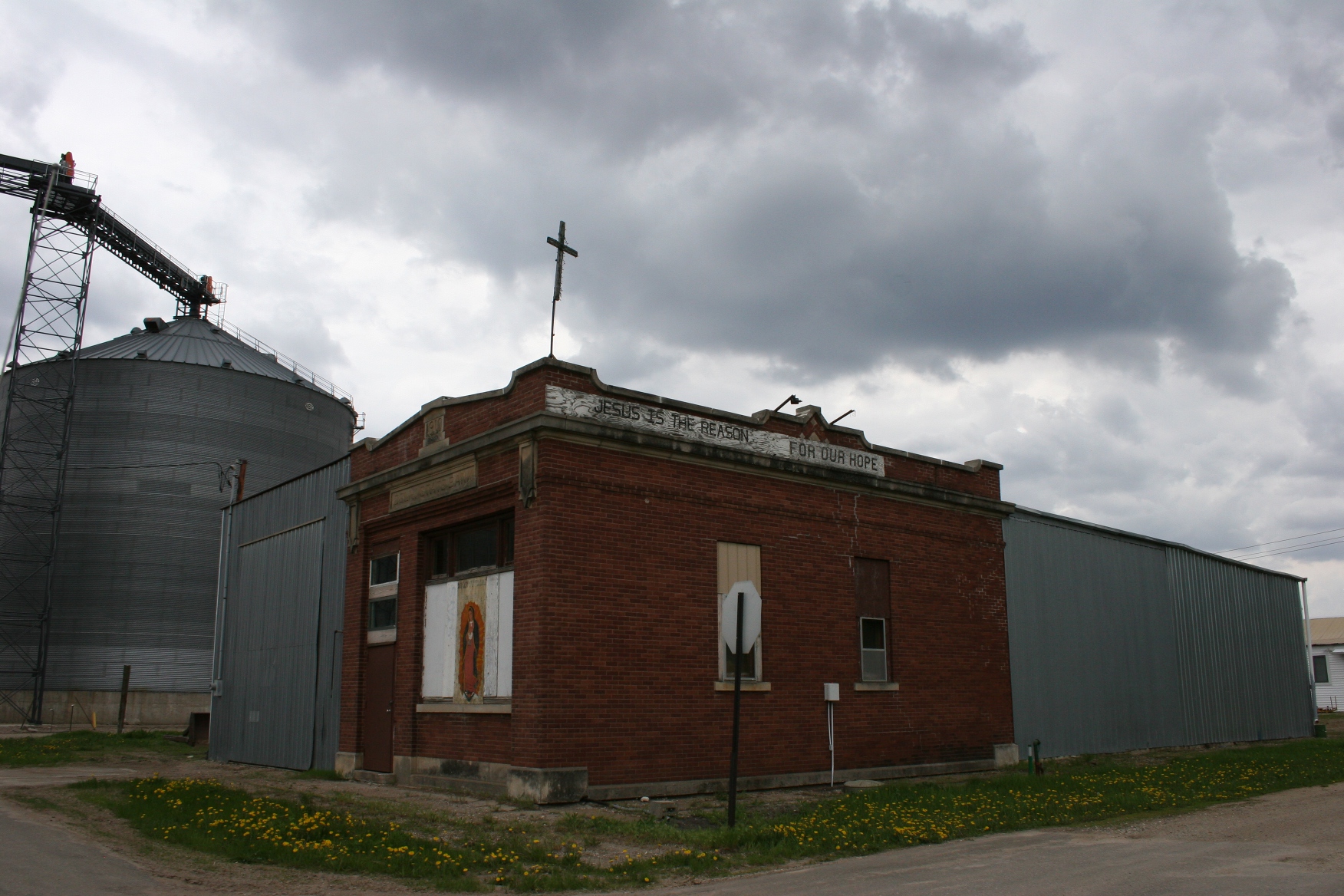
The front window of the 1910 Delhi State Bank is now mostly boarded with a painting of Our Lady of Guadalupe.

The front window of the 1910 Delhi State Bank is now mostly boarded with a painting of Our Lady of Guadalupe.

The Delhi State Bank, built of brick in 1910, and now abandoned and apparently last used as a church, shows me that folks once believed in this place.

Driving toward downtown.

Driving toward downtown.

Not that they don’t anymore. But like all too many prairie communities, Delhi has mostly withered away.

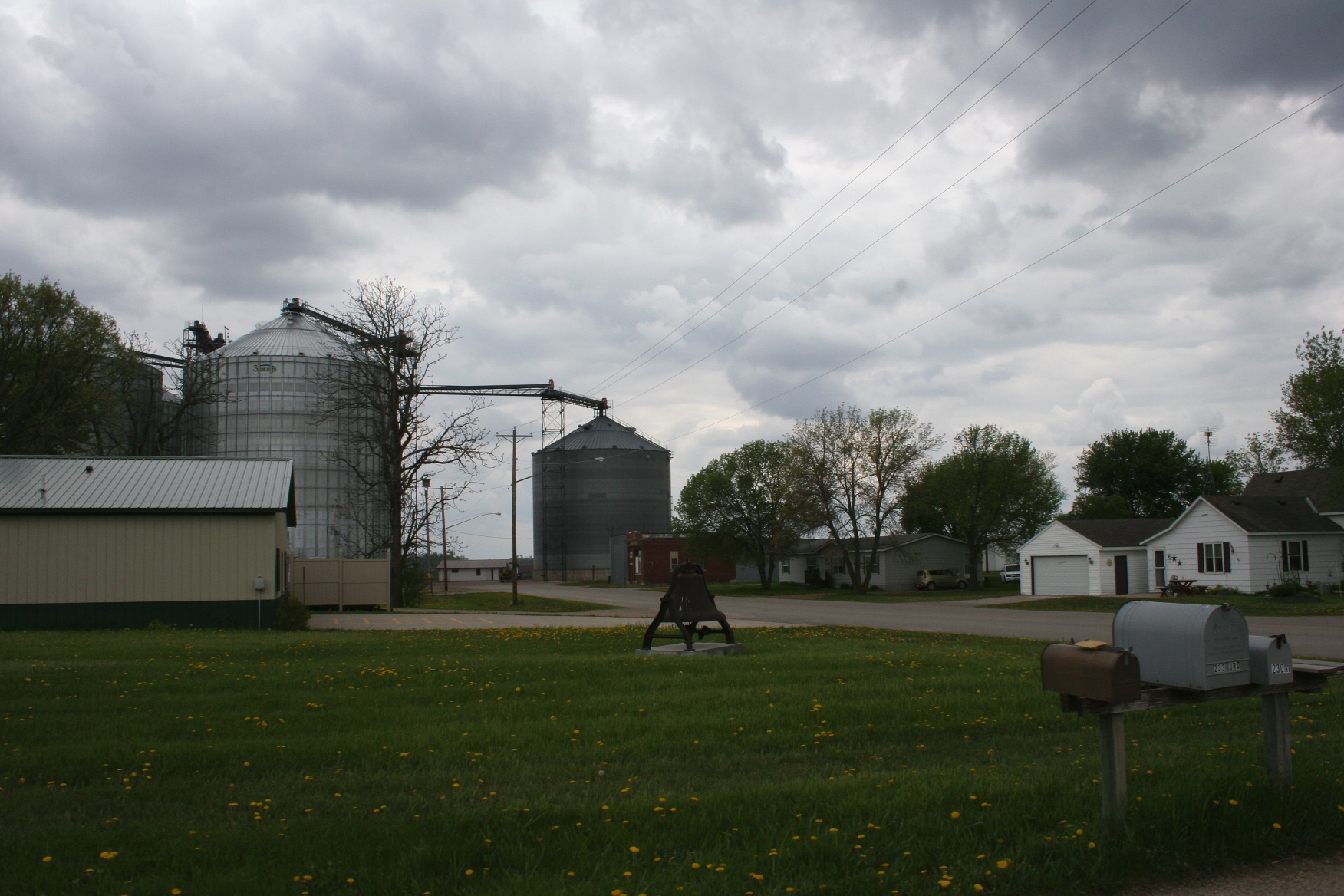
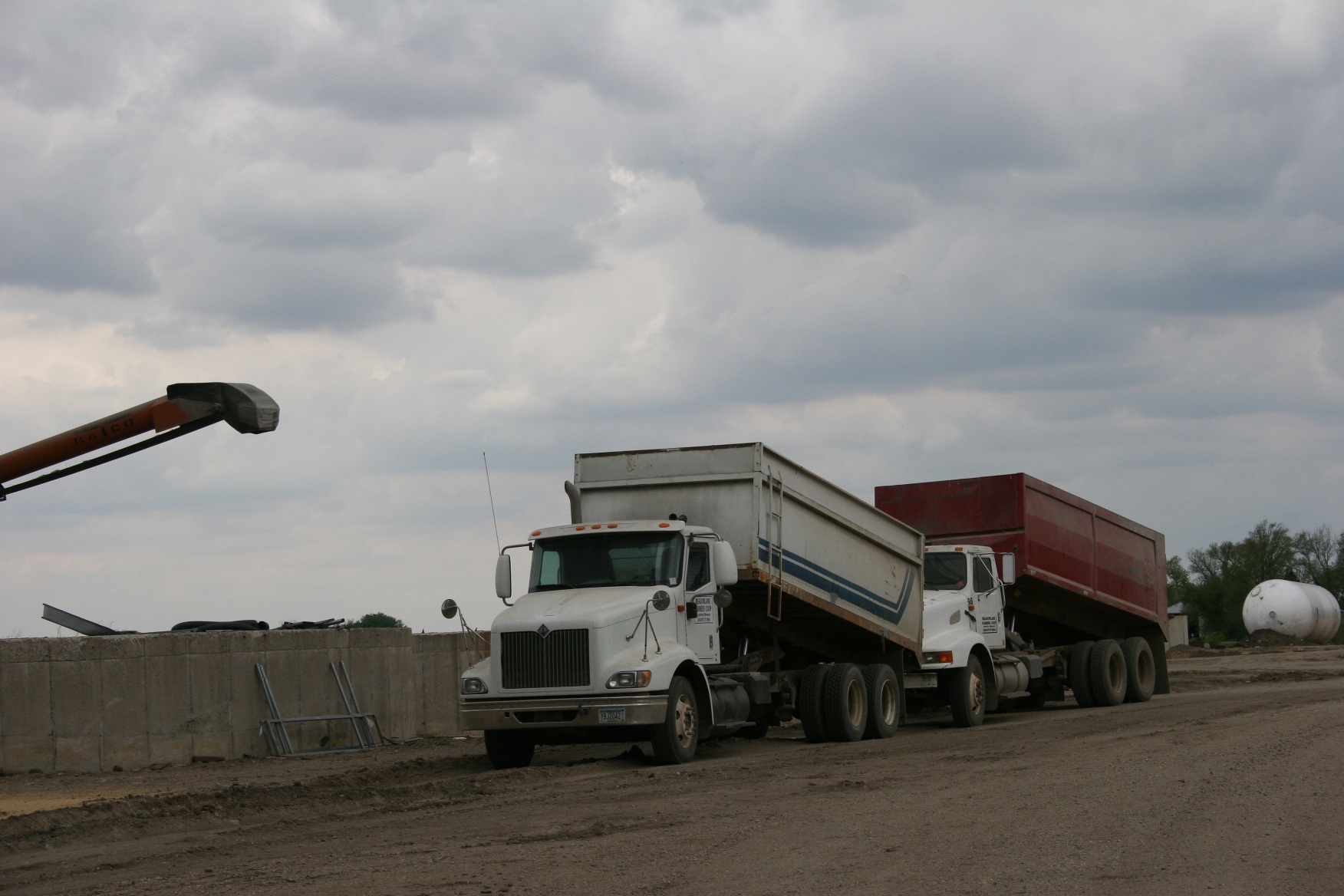
Grain trucks parked near the grain bins.

Grain trucks parked near the grain bins.

Many other businesses once operated here, but they are no more, with the noticeable exception of a grain business. Delhi, in the late 1800s, housed general, drug, hardware and lumber stores, a hotel, a railroad and telegraph agent, a feed mill, a blacksmith shop, a farm implement business and more.

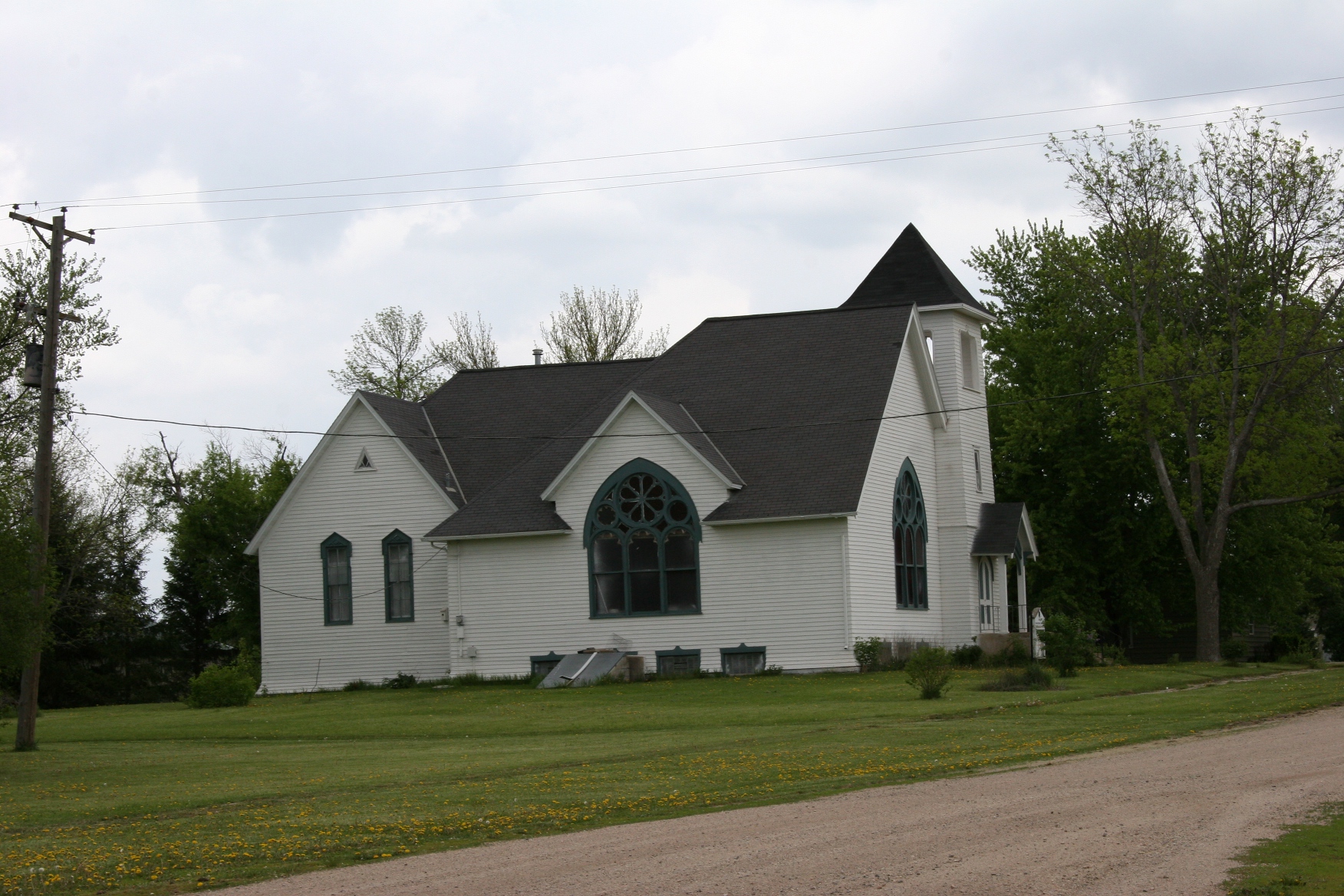
What a lovely church this must be inside as evidenced from the exterior.

What a lovely church this must be (or once was) inside as evidenced from the exterior.

The Presbyterian church today appears shuttered.

Evidence of faith in bank and bin.

Evidence of faith in former bank and bin.

Despite all of this and the inclination to despair, I cannot help but admire the determination of Delhi to cling to the land. Prairie roots run deep.

© Copyright 2014 Audrey Kletscher Helbling
 

Sign, sign, everywhere a sign in Pemberton September 22, 2010

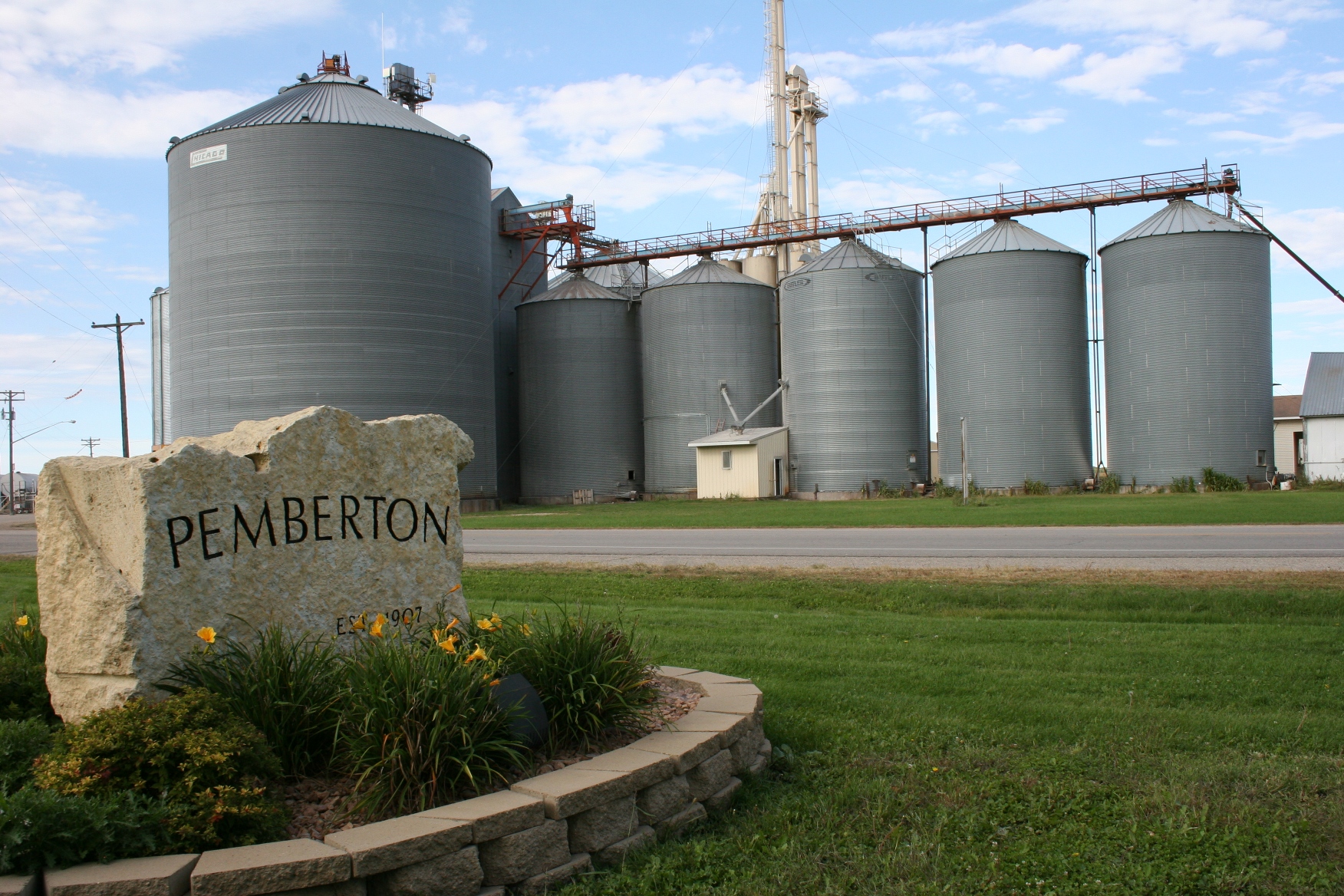
A welcome to Pemberton sign along State Highway 83.

PEM-BER-TON. The word rolls off my tongue in three syllables, a cadence of sound that names a southern Minnesota town.

I’d never been to this community southeast of Mankato on Minnesota Highway 83, only heard of it tacked onto the end of Janesville-Waldorf-Pemberton Public Schools.

But Saturday evening I was in Pemberton for a wedding reception and dance. I arrived early, wanting to explore this town of about 250 before heading over to the former school turned community center.

My quick tour revealed the usual run-down, boarded-up old buildings balanced by a well-groomed park and newer homes. Mostly, though, I was intrigued by the signs on downtown buildings.

Pemberton's main street was quiet on Saturday except for wedding guests driving through downtown.

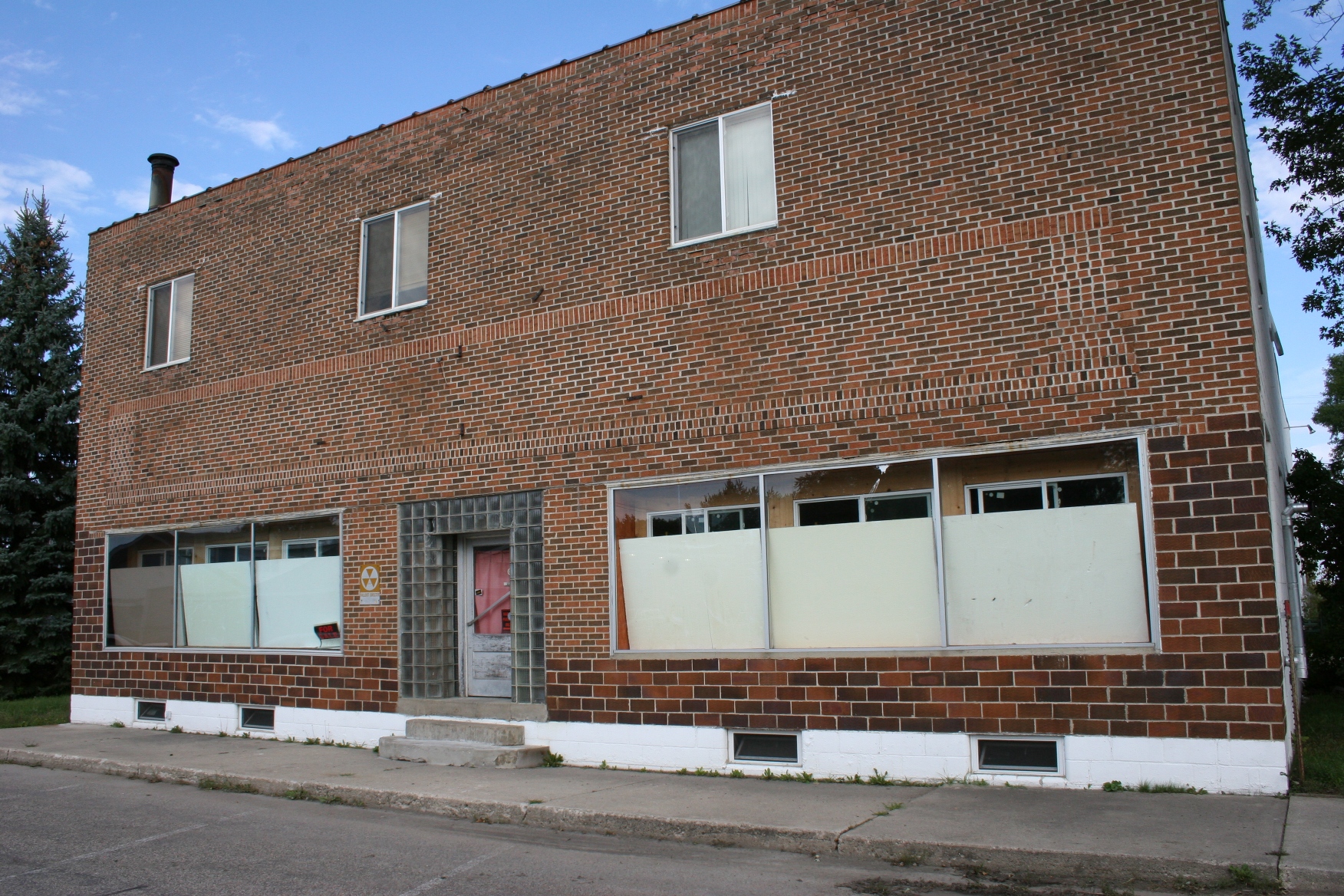
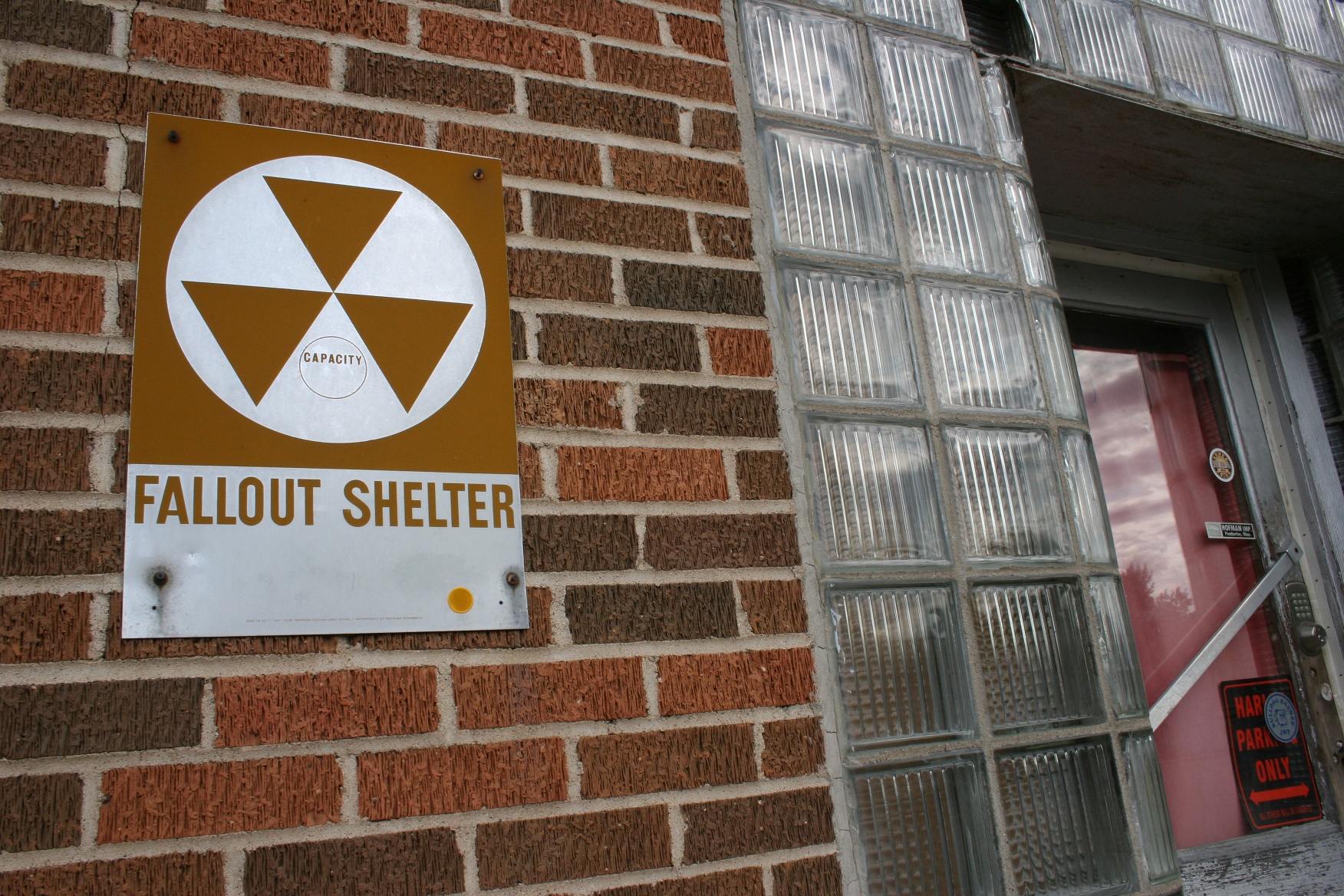
When was the last time you saw a FALLOUT SHELTER sign? I found one tacked onto the front of a boarded brick building whose original purpose I wouldn’t even want to guess. The faint writing at the bottom of the sign warned: NOT TO BE REPRODUCED OR USED WITHOUT DEFENSE DEPARTMENT PERMISSION.

For those of you who grew up during the 1960s, during the Cold War, like me, a FALLOUT SHELTER sign brings back memories of teachers instructing students to duck under desks and protect their heads, as if that was going to do any good in the event of a nuclear attack.

My husband recalls the particular concern about Communist attacks given his central Minnesota school’s “close” proximity to North Dakota missile silos.

Thankfully those Cold War days of hysteria are behind us and many, many years have passed since I’ve seen a FALLOUT SHELTER sign.

A Fallout Shelter sign on a downtown brick building. Another sign, on the door, warns: Harley Parking Only: All Others Will be Crushed.

The brick building upon which the Fallout Shelter sign is posted.

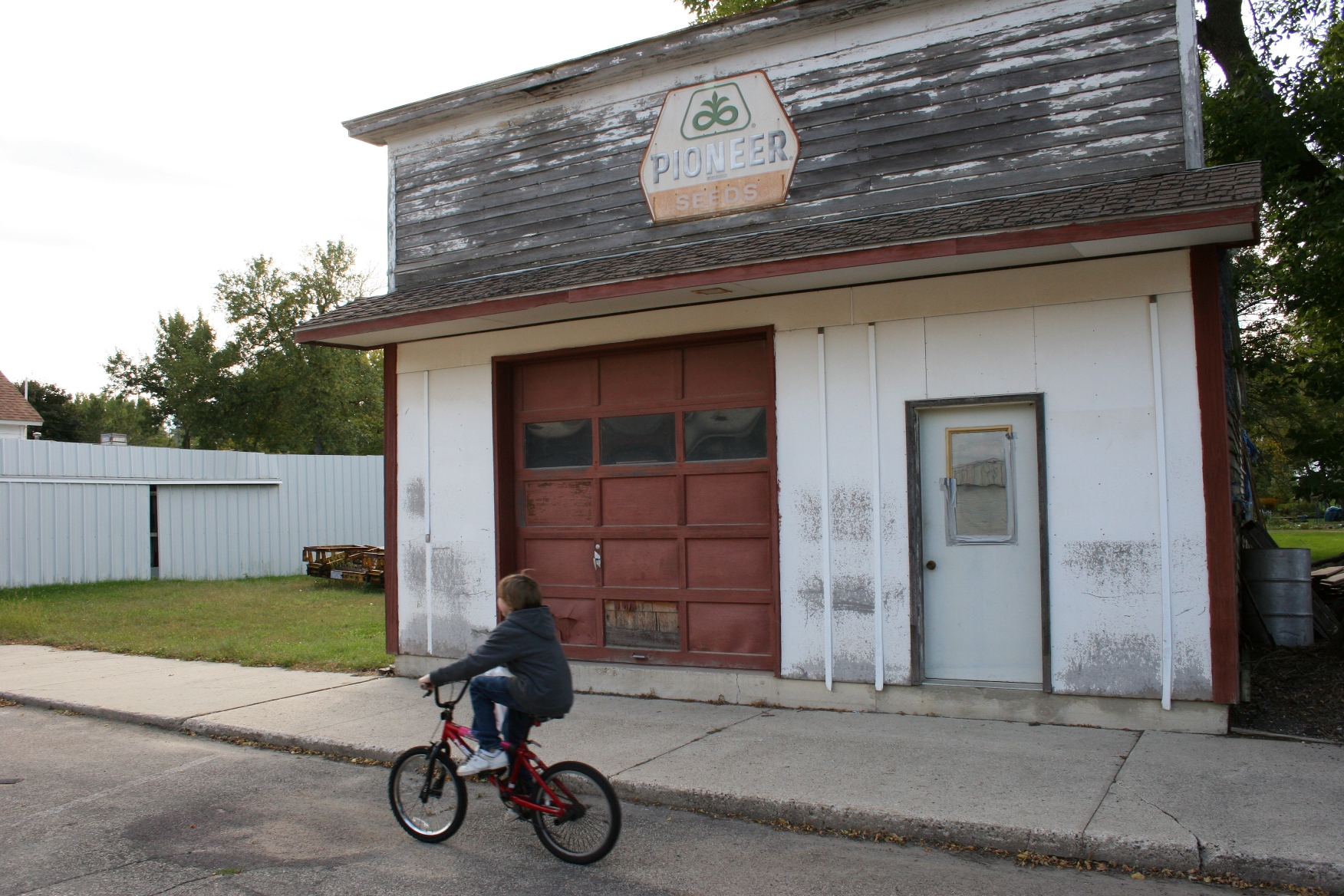
Across the street, I spotted a weathered PIONEER SEEDS sign on an old garage and, as a boy pedaled past on his bicycle, considered how carefree small-town life can sometimes be. I never allowed my children, when they were elementary-aged, to ride their bikes solo in Faribault. But that’s the difference between small towns and mid-sized cities like mine.

An old Pioneer Seeds sign drew my eye to this building.

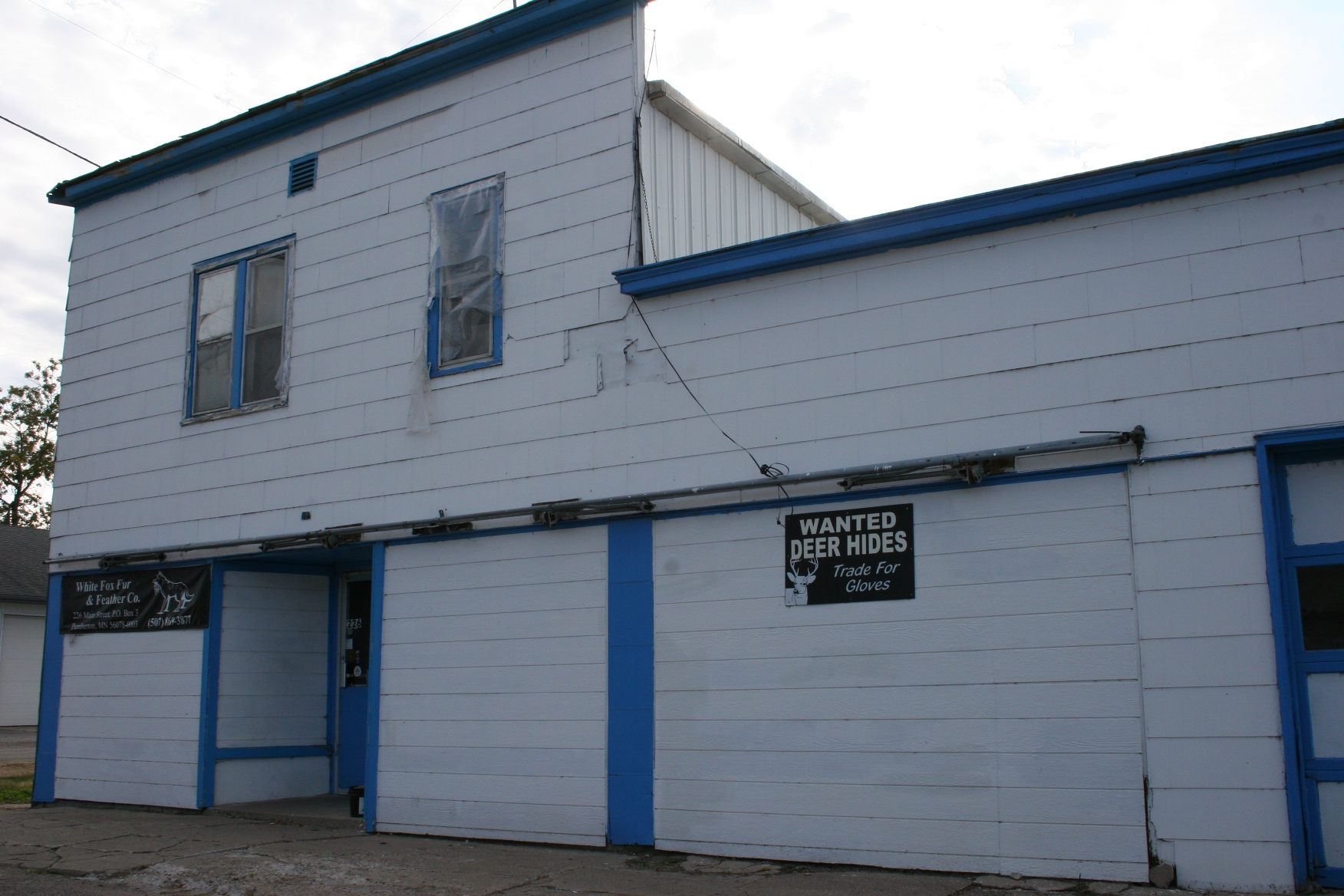
And you won’t see a sign like this in most towns: WANTED DEER HIDES—Trade For Gloves. Another sign identified a corner white wood frame building with gaudy blue paint trim as White Fox Fur & Feather Company, supplier of natural materials for the fly fishing industry, according to the company Web site.

Turn your deer hides in here, at White Fox Fur & Feather Company, in exchange for gloves.

I wondered if any of the other wedding reception attendees noticed the downtown signs that tell the story of Pemberton, past and present.

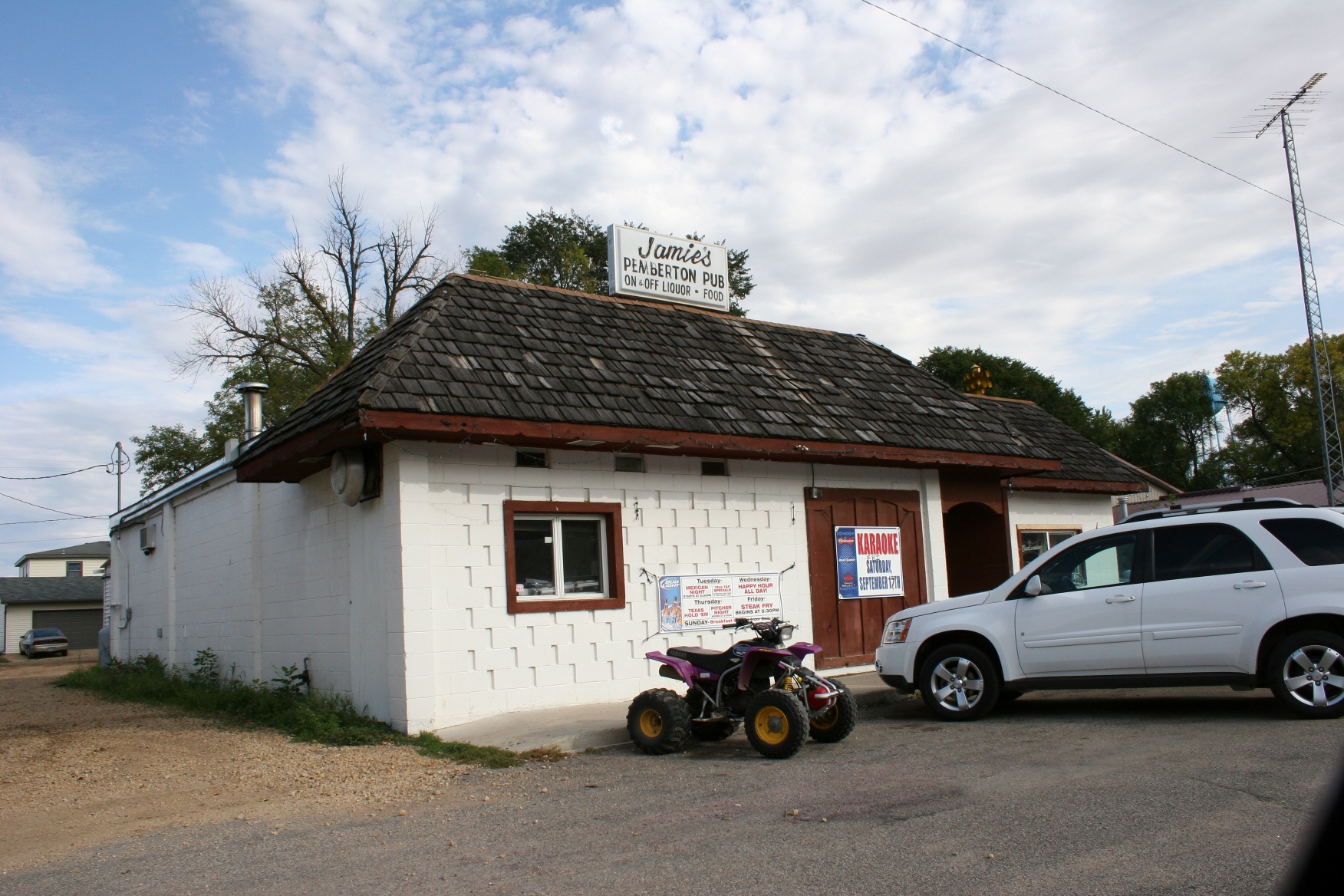
At Jamie’s Pemberton Pub, a pit stop for the wedding party, signs informed me of Mexican Night, Texas Hold ‘Em, Pitcher Night, All day Happy Hour, a Steak Fry and the small-town bar standby, karaoke. Obviously, this is “the place” in Pemberton.

Jamie's Pemberton Pub seems to be the happening place in Pemberton.

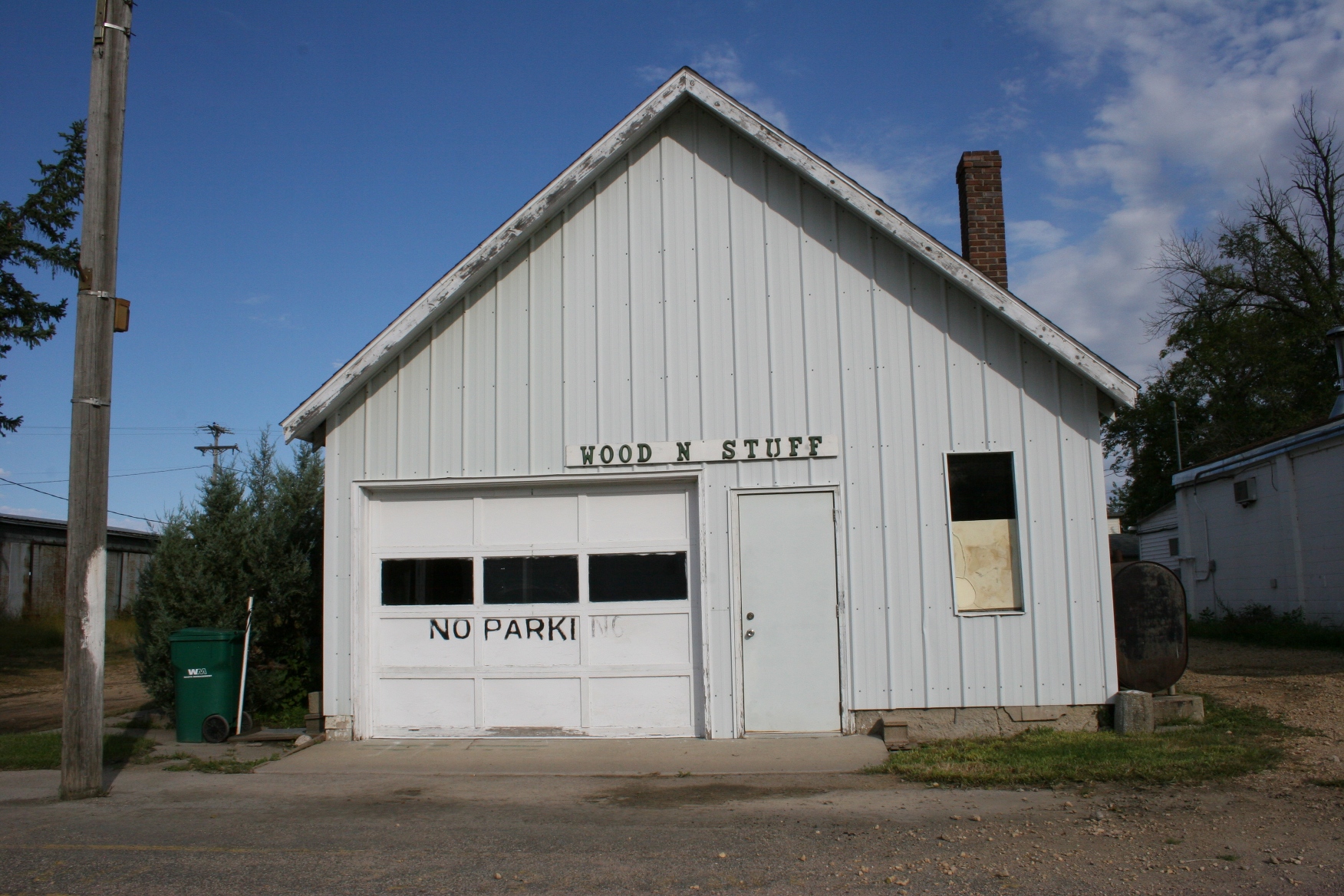
I wondered about WOOD N STUFF, about the wood stuff built inside the non-descript building with the overhead garage door. The building could use a bit of polishing, maybe some decorative wood work, to draw customers. Or maybe the place is closed.

What types of products are made at Wood N Stuff?

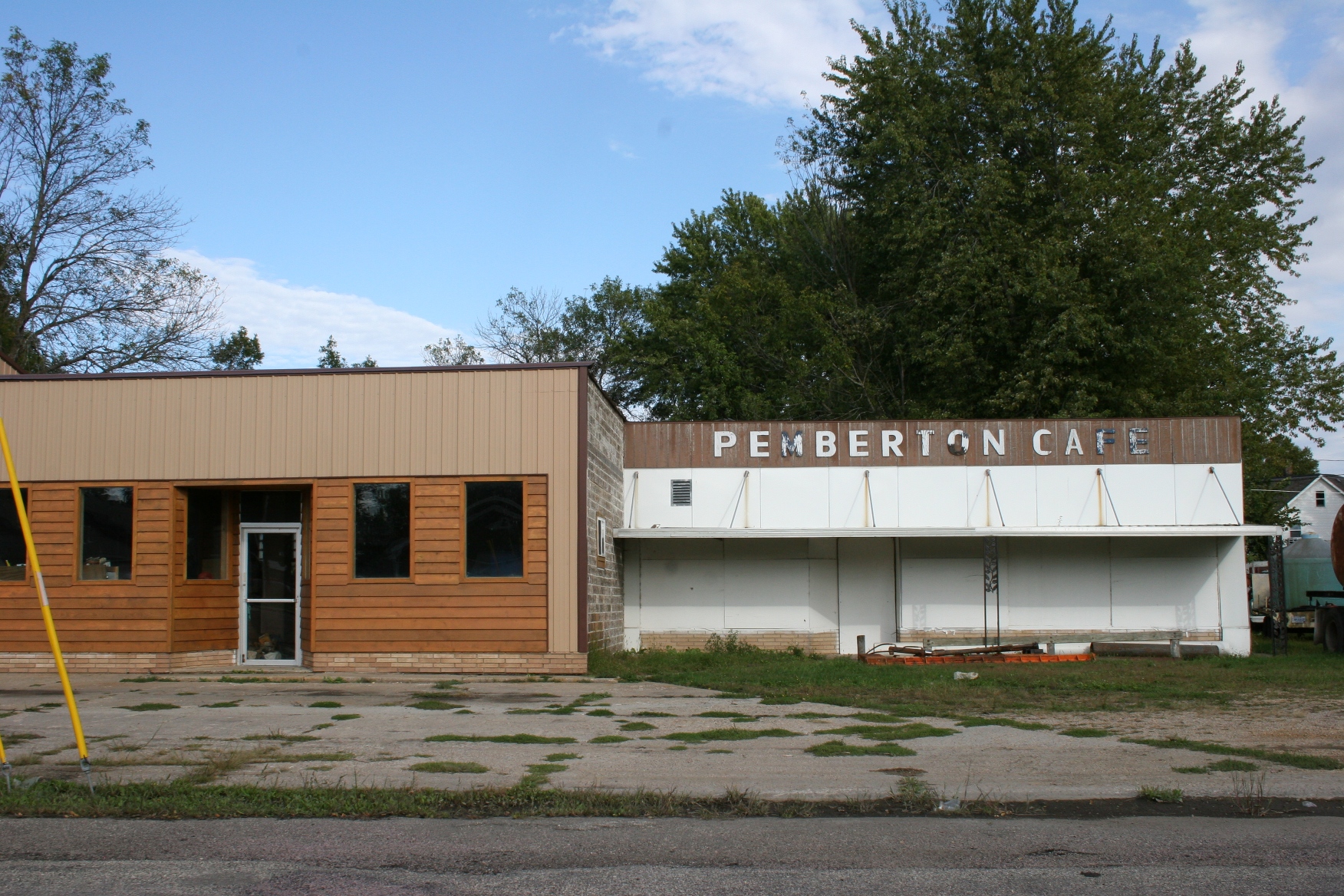
Closed. The Pemberton Café, likely once the local hot spot for coffee and cards, sits forlorn, windows shuttered, grass sneaking through the cracks in the sidewalk, in a scene all too common in rural Minnesota.

The abandoned Pemberton Cafe on the town's main street.

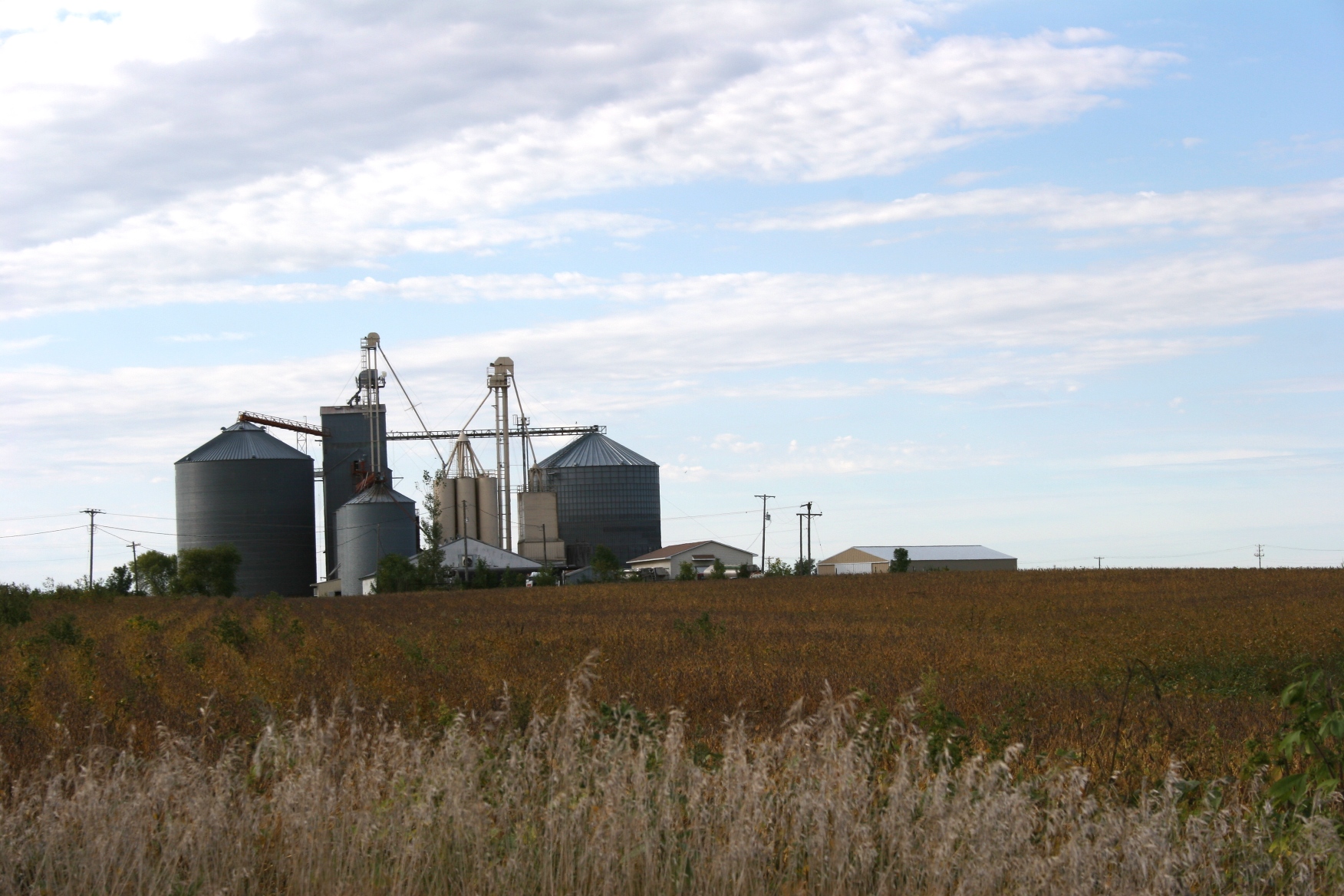
Yet, despite the abandoned buildings, the closed school, Pemberton survives, anchored like all farming communities by the grain elevator. This is home, a town with a busy convenience store, a post office, a beautiful community center, a park for the kids and a FALLOUT SHELTER.

Approaching Pemberton from the east, the grain elevator and bins mark the skyline.

© Copyright 2010 Audrey Kletscher Helbling