
EARLY ON A RECENT WEEKDAY MORNING, my husband was pulled over by a deputy sheriff while driving to work. Randy had no idea why he was being stopped on the edge of Faribault. The officer who approached the passenger side of our rusty 2005 white van and rapped on the window did not immediately tell Randy why he pulled him over.
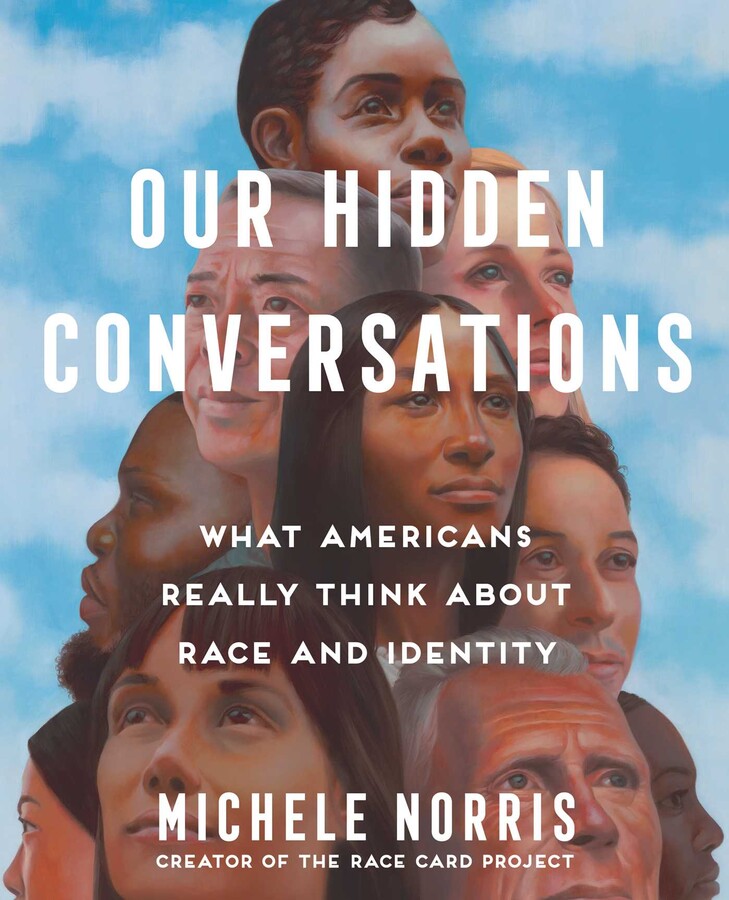
But the questions and actions that followed left me unsettled and thinking about what could have unfolded. You see, I was in the middle of reading Our Hidden Conversations—What Americans Really Think About Race and Identity by Michele Norris, creator of The Race Card Project. That partially prompted my adverse reaction.
As I listened to Randy’s retelling of the traffic stop, I felt thankful that he is a past-middle-aged White guy. I felt a bit guilty for thinking that. But…
“DO YOU HAVE A WEAPON?”
After requesting the usual identifying documents, the officer asked Randy where he was going, where he worked, whether his address was current and how long he’s lived there. All seemed odd questions. But the next question proved even more unusual. The officer, peering into the van, asked Randy if he had a weapon. Thinking he was referring to an item on the floor between the seats, Randy leaned down and said, “No, it’s a snow brush.”
My immediate reaction to this part of the story was this: “You did what? You could have been shot!”
The deputy wasn’t referencing the brush on the floor, but what he thought was a weapon lying on the passenger seat. He reached inside the van and moved a pair of gloves aside to reveal the case for Randy’s glasses. The supposed gun.
I wasn’t there. I don’t know what was going through the deputy’s mind before and during the traffic stop. But I do recognize what could have happened had the cop felt threatened.
Only after all of this and after the deputy ran a license check did he tell Randy why he’d been stopped—because the brake light in the middle of the tailgate door was not working. Randy has since replaced the bulb.
THE “WHAT IFS?”
Why am I sharing this story? It’s not because I’m anti-law enforcement. I appreciate and respect our police and the important work they do in serving our communities and keeping us safe. Yet, had Randy been a person of color in the wrong place on the wrong day with an officer who perceived his actions as a threat, this traffic stop may have ended differently. Again, I’m not criticizing this specific cop or law enforcement in general.
Admittedly, Randy should not have reached toward that snow brush. But it is not ingrained in his mind to limit his movements, to think about how his actions may be perceived. Black men, especially, cannot risk such behavior. That I understand based on conversations with my son-in-law, who is biracial; on traffic stop shootings of Black men; and on the stories shared in Our Hidden Conversations—What Americans Really Think About Race and Identity.
READ OUR HIDDEN CONVERSATIONS
If you read one book in 2025, I encourage you to read this one. The author, who grew up in Minneapolis, is a well-respected, award-winning journalist and former host on National Public Radio. For 14 years, Michele Norris has collected responses to this prompt: Race. Your story. 6 words. Please send. Those responses, submitted on specially-printed postcards and online, shape Our Hidden Conversations. This ranks as one of the most powerful books I’ve ever read on race and identity and should be required reading for every American.
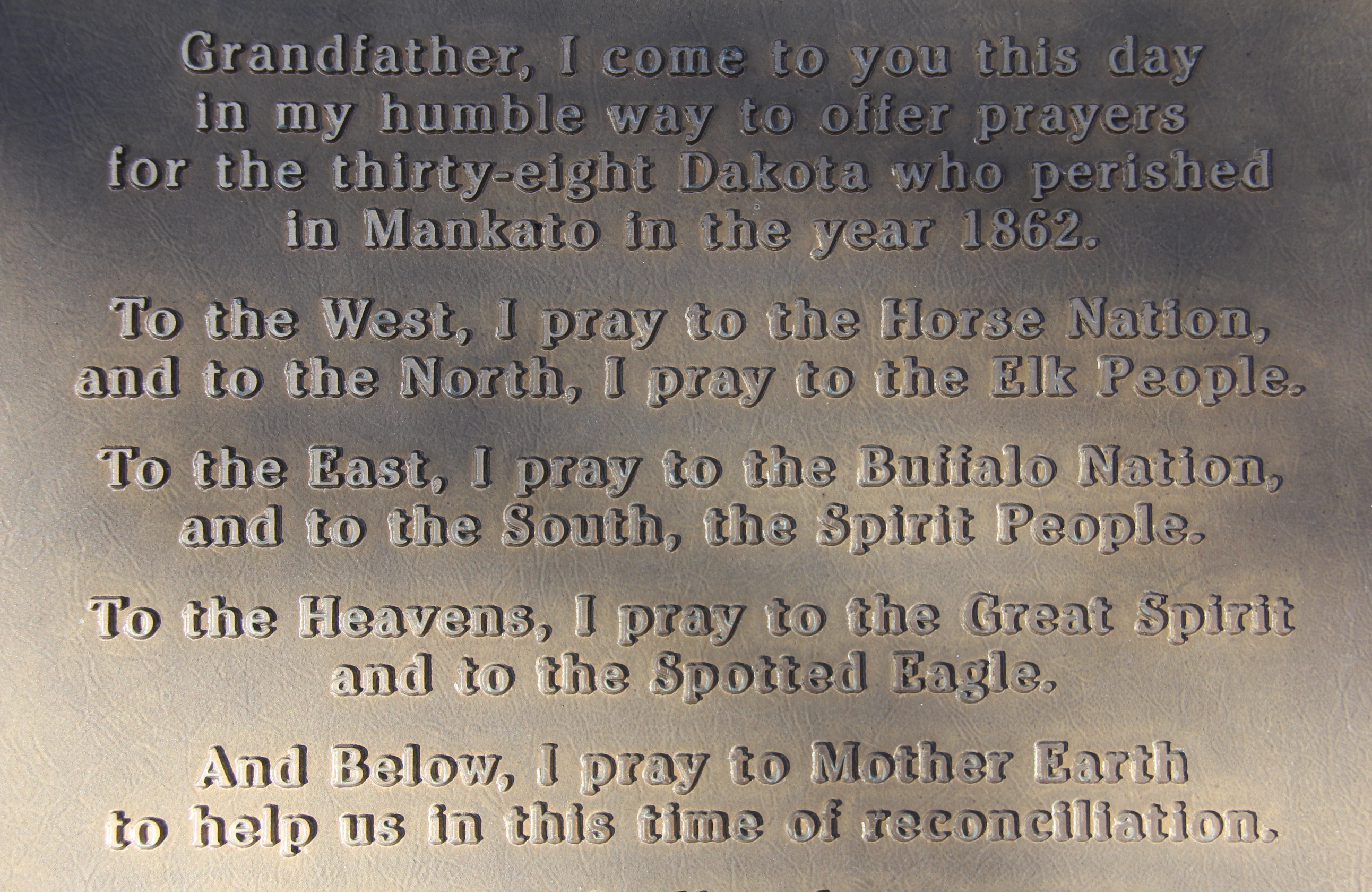
Norris does not focus solely on Blacks in her collection of stories shared by thousands. She also writes about the discrimination, the prejudices, the challenges faced by many others. One entire section, for example, is devoted to Indigenous Peoples. That includes information about long ago Indian boarding schools (specifically the one in Morris, Minnesota) and about the 38 Dakota men who were hung in Mankato, Minnesota following the U.S.-Dakota War of 1862. She writes about Japanese internment camps in America during WWII. She writes about challenges faced by people with disabilities. This is hard stuff. But so necessary to read, to understand the backstory, the history and how things have, and have not, changed. The author writes about lynching, about adopting Black babies, about Blackness perceived as a threat…
The lengthier sections penned by Norris are interspersed with shorter stories from those responding to The Race Card Project prompt. The six word responses are scattered throughout the pages, printed exactly as submitted. One mother wishes her Black son was a girl.
PAINFUL & REVEALING
I cannot even begin to tell you how painful it was at times to read the heartbreaking words printed in this book. It seems unfathomable that we as human beings can treat others with such inhumanity simply because of skin color or other differences. Yet, I saw myself in some of those words, specifically in the subtle (and sometimes not so subtle) racially-charged words that I heard and repeated as a child. I didn’t understand then that the rhyme I was reciting or the term my dad used for Brazil nuts were offensive. I recognize that now.
Like many others quoted in this book, I am determined to grow my knowledge, listen, treat others with respect and compassion, recognizing that we can all do better. I want that for my soon-to-be-born grandson, whose father is biracial, whose mother is White. I want him to grow up in a world where color matters not, where he is appreciated and valued for who he is (and not judged by his skin color), where he doesn’t have to think about what could happen if he is someday pulled over during a traffic stop.
© Copyrighted 2025 Audrey Kletscher Helbling


 Minnesota Prairie Roots
thank you for reading and sharing this very important post, Audrey. you are so right, and I intend to read this book. one of my sons in law, is African American and we talk about things like this openly.
We are all more worried about my grandson than my granddaughter, though she will no doubt experience acts of racism in her lifetime, (as she already has), she will not be at the same level of potential danger as her brother. my sil has put it in perspective for me with examples, ‘I can’t just go out jogging in a dark hoodie without worrying about someone worrying about me, even though I’m a coach, a person, just trying to be healthy everyone else.’ and he and I both have had an experience where we got pulled over heading out of his neighborhood and been pulled over for the same traffic move, (legal by the way, having to cut across lanes to get to a turnaround), but our levels of fear were different. I worried about getting a ticket and paying a fine, and he was worried about his safety. he and my daughter have talked to the kids about safely since they were young, not to scare them, but to be aware. it makes me so sad that this a reality in a parent’s life that they have to warn their child to consider.
Beth, I expected I would hear from you. Thank you for sharing your family’s experiences. I’m sorry for all your son-in-law and his children have had to endure simply because of their skin color. This is heartbreaking to read, but so necessary to share. Unfortunately, this is reality for way too many. I think you will find the book difficult , yet vitally important, to read. I look forward to your take on it. Finally, thank you for being the loving, kind and compassionate person you are.
❤
An officer has just a split second to decide if you’re a threat or not. Thus “Keep your hands on the steering wheel until directed otherwise” has always been my approach. In addition to race, tragic results have also happened when officers misinterpret the behavior of neurodivergent individuals or those with mental health issues as threatening.
I so appreciate your commenting and stressing three important points of 1) keep your hands on the steering wheel 2) officers have a split second to decide and 3) the behavior of individuals who are neurodivergent or struggling with mental health issues can also be seen as threatening. Point three concerns me greatly because of deadly shootings involving those in a mental health crisis. I think some advances are being made in that area with increased awareness, better training and crisis intervention teams. Still, we can do better. I also wonder, when a person in a mental health crisis is involved in some sort of incident requiring police response, why is the specific mental illness often named. That only stigmatizes the disorder/illness and increases fear among the public. Why not simply state, “mental health crisis?” Why don’t HIPAA laws apply?
You make many great points here. I worry about my Ojibwe grandbabies and their futures. So little has changed since I was a kid. I do not understand why progress towards awareness and equality is so slow.
Thank you, Rose. I hear, and feel, your pain. I have the same questions also. But we must keep trying, pressing on, doing what we can as mothers and grandmothers to make a difference.
I so understand this dilemma, having a biracial grandson. It will not be easy for them. Keeps us on our knees!
I knew you would “get it,” Valerie. And, yes, this keeps us grandmas of biracial grandchildren on our knees.
Ouch! Rarely am I as moved by a short essay as I was by your tale of Randy’s experience with the police. When a failed light bulb can lead to a life-threatening interaction, things are not right. Thank you again for sharing. Ken
I don’t think Randy fully realized the “what ifs” until I started talking to him about what transpired during that traffic stop. This story was meant to prompt thoughts and reactions. Thank you for appreciating what I wrote today, Ken. And please read Our Hidden Conversations by Michele Norris.
As a white woman it is difficult for me to imagine what it is like to be suspicious just because of my skin color. I can’t pretend to be able to understand completely but I am 100% aware that it is an issue. I have become more aware since I have a Chinese daughter in law and a Chinese American grandson. Discrimination is very real and prevalent and while I hopefully have embraced diversity I am not naive enough to think it is the norm. So glad Randy came out of that experience ok. Scary.
It was a frightening experience for Randy. Thankfully he’s not easily rattled. And, yes, I expect you are fully aware of discrimination.
wow I really have no words but I will have to add this book to my reading list.
Our Hidden Conversations is definitely a must-read book for everyone.
Audrey, I hope this is the right info for this posting: When you are in a Traffic Stop by Police. My suggestion is that you get a concealed handgun instructor to at least give you (any driver) a class on specific does and don’ts by the driver and passengers. Always keep you car insurance and vehicle registration in a (anything else too) in a specially marked envelope in the glove box.
Since I do travel armed, when stopped, I roll ALL WINDOWS DOWN (unless these are manual) even if it is a 100 or more degrees or minus 40 outside. Inside lights are all turned on when night approaches. Car will be shut off, lights or flashers on (no headlights) – My hand will be Open with thumbs hooked at 10 and 2 on the steering wheel. Passengers – palms up and hand open in laps. When officer asks for driver’s license, I tell him where I have to reach before I reach and wait for his or her approval. When I pull out my license (plus my concealed carry license) I give these to the officer and tell him “In answer to your question” I tell him “Yes” or “No”. When asked for the other paper’s (Insurance and registration) I will tell him I have to or the passenger needs to reach in the glove box and pull out the marked envelope. Do NOT move without his approval!
WARNING: Do NOT MOVE without telling the officer what you have to do to comply with his/her request.
This is especially true IF a firearm is legally in the car. If a firearm is on or in a console (or anywhere – DO NOT REACH FOR IT or pass your hand over it! Secondly, be VERY aware that anything black may draw an officers attention to a possible threat. Black handles of anything, black cell phones (so you should have NOTHING in your hands)! Window scrapers or wipers (Squeegees) should be kept in the open – basically on a back seat in the open – not stuffed under a seat. Back pocket of a front seat may be OK.
And yes, I have been stopped for some pretty stupid and petty reasons (but I and the Police Officer KNOW the real reason – but that is another story).
All good advice, Gunny.
BOOKS: Audrey – I read historical books. I rarely read fictional books based on historical facts – save in rare cases. I like personal history or biographies. Currently just started reading True to the Old Flag by G. A, Henty. This musty, dusty book doesn’t even have a date it was published! This book is about the American Revolution – from a view of an Englishman of the day.
You and Randy read the same then. He exclusively reads nonfiction. Enjoy that musty, dusty book.