Minnesota Prairie Roots

Writing and photography by Audrey Kletscher Helbling

Up close on the Straight River during a drought September 13, 2023

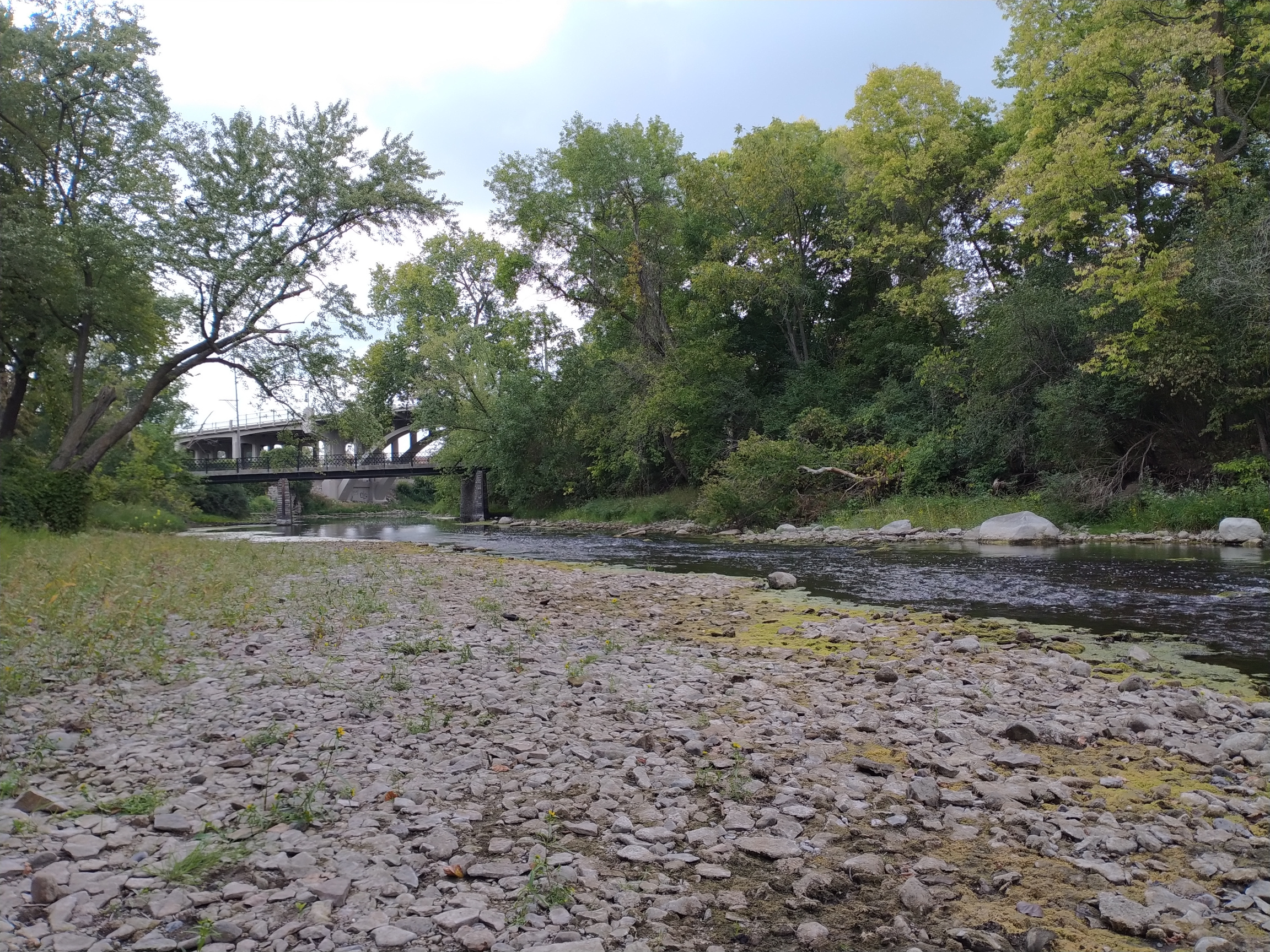
The river bottom revealed, weeds and flowers growing where once water flowed in the Straight River at Faribault’s Teepee Tonka Park. (Minnesota Prairie Roots copyrighted photo September 2023)

CAUTIOUSLY I SIDLED down the silty river bank, hand clasping Randy’s to steady myself. “This isn’t one of the smartest things we’ve done recently,” I said. I held no desire to slip on the unstable ground, to tumble and break a bone. I’ve twice done that. The doctor who recently diagnosed me with osteopenia likely would remind me of my bone density scan results and of my age, which is much closer to 70 than sixty.

But risk outweighed fear. I wanted to reach the dry river bottom, to stand upon the rocky bed, soles touching a place where water once flowed strong and steady.

In this summer of abnormally high temps and little rainfall, the water level in the Straight River, like so many other waterways in Minnesota, is low. The Minnesota Department of Natural Resources, which monitors river depths, terms the level of the Straight near Faribault as “scrapable.” Defined, that’s “so low that paddlers may have to get out of their watercraft to avoid rocks.” At the Straight River West Bridge Street location in Owatonna, the river level measures only slightly better at “low.” The Cannon River, into which the Straight flows, rates as “scrapable” in Morristown, near Faribault, in Northfield and in Welch.

The effects of the ongoing statewide drought are evident. My county of Rice, like 39 percent of Minnesota, is in a severe drought. And much of southeastern Minnesota, including more than half of Steele County to the south through which the Straight River twists and turns, is in an extreme drought.
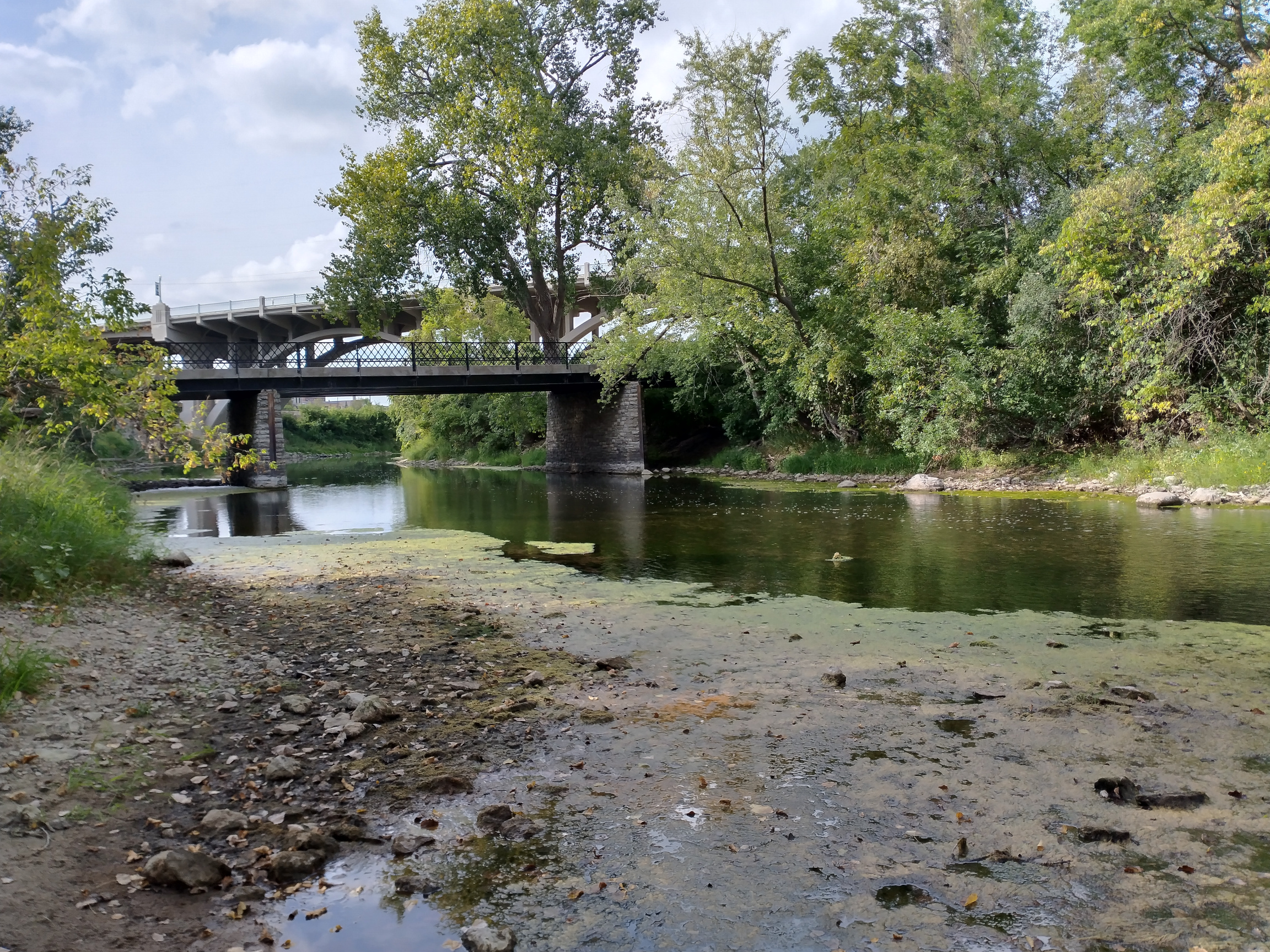
Stagnant water ponds near the bridge leading into Teepee Tonka Park with the viaduct in the distance. (Minnesota Prairie Roots copyrighted photo September 2023)

It’s no wonder that on this afternoon in mid-September, I can walk upon a rocky river bottom where water once flowed, even flooded this spring into Teepee Tonka Park near Faribault’s historic viaduct. Earlier this summer, a Faribault teen discovered a cephalopod fossil in an area of a local river typically under water. He refused to identify the specific waterway, but I guessed, perhaps incorrectly, that it was the Straight.
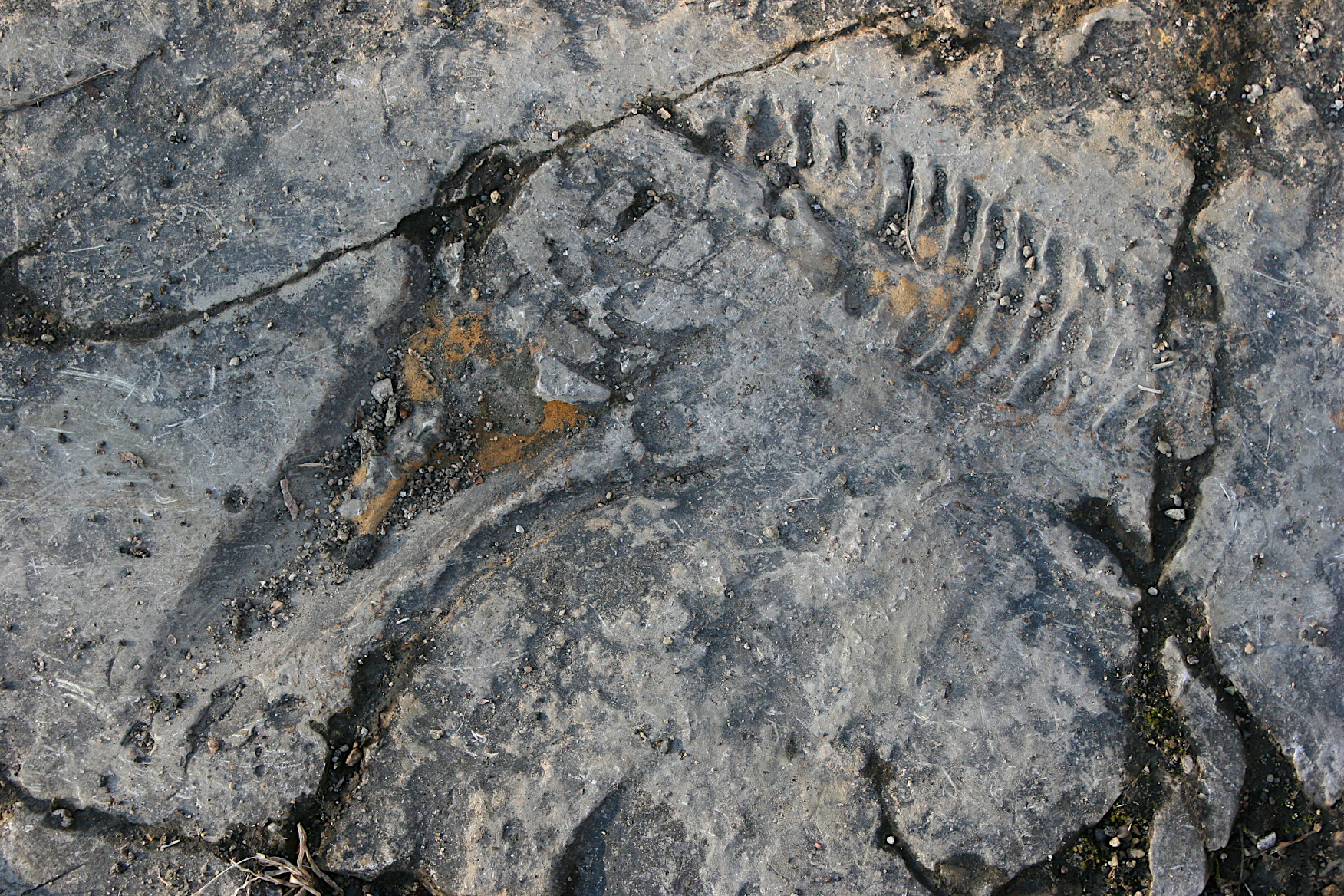
A fossil along a trail near the Straight River overlook in Faribault’s River Bend Nature Center, which connects to Teepee Tonka Park. (Minnesota Prairie Roots copyrighted file photo)

That fossil discovery was also part of my reason for descending the river bank near the east-side Faribault park entrance. I had great uncles who were rock hounds, inspiring in me a childhood fascination with agates and shells and interesting finds revealed only at ground level. That’s carried through into adulthood.
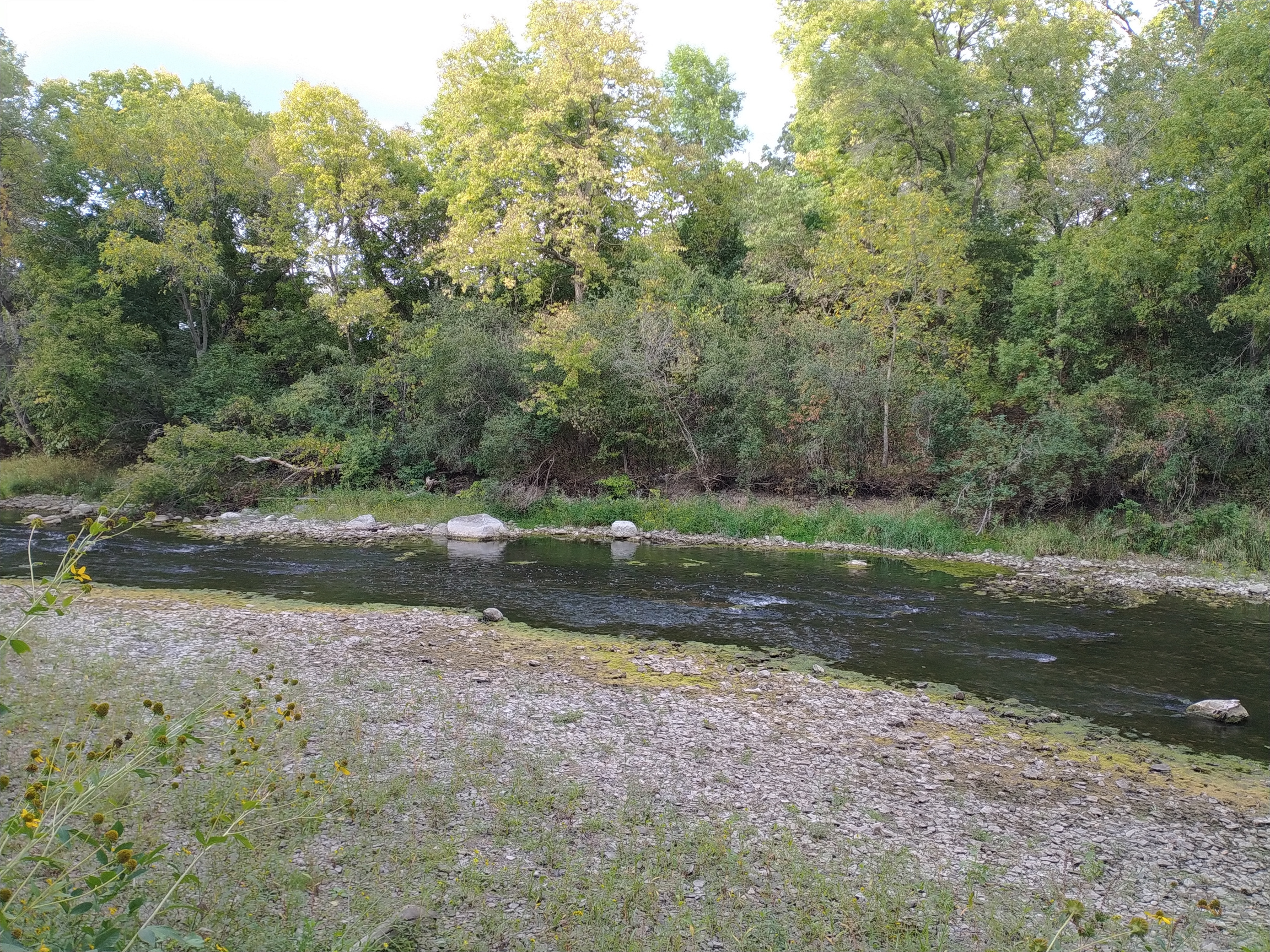
Wildflowers bend toward the narrowed river of exposed river bottom and rocks. (Minnesota Prairie Roots copyrighted photo September 2023)

But on this day I found nothing of interest, only weeds and wildflowers sprouting between stones aside the drought-narrowed river. Correction: I spotted a bra atop a rock, just out of reach in the river, and wondered about the story behind that.

Outdoor enthusiasts intending to paddle the Straight or Cannon rivers now would assuredly have their own disappointing stories to tell about abandoned plans. I observed ankle deep water in parts of the Straight, making water recreation impossible, any recreational outings scrapable.
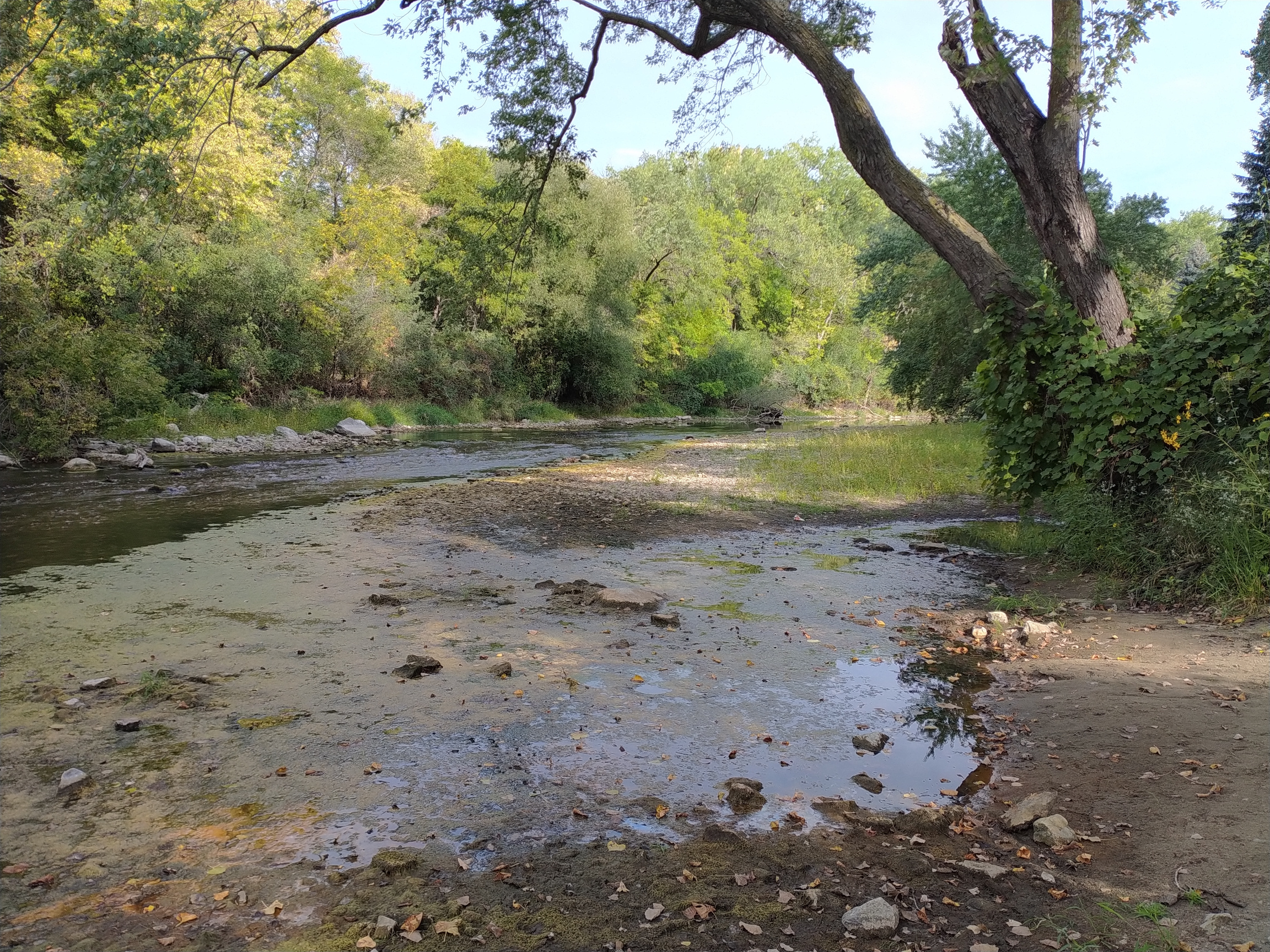
Around this bend in the river, to the right, the water deepens a bit and flows freely. (Minnesota Prairie Roots copyrighted photo September 2023)

Only a pair of hunting dogs let loose by their owner in Teepee Tonka Park enjoyed the low river level on the day I eased down the river bank. They scrambled down the bank, surefooted, racing along river’s edge, shallow water splashing. Then back up they dashed, sprinting along the grassy bank before returning to the river. I delighted in their antics while simultaneously concerned they might come near me. I never quite trust strange dogs not under the control of their owner. A large muddy-pawed dog once jumped on me while I walked at a city park.

Mud. We’ve seen little of that in most parts of Minnesota this summer. There are exceptions, of course, including flash floods in Duluth on Monday, not something any of us want. Light rain fell in Faribault early on this week, enough to dampen the pavement. But I yearn to hear the steady thrum of rain upon the earth. Rain that will ease this drought, replenish our rivers, revive our waterways, restore the land.

© Copyright 2023 Audrey Kletscher Helbling

NOTE: DNR info referenced in this story is from September 5 on drought conditions and September 12 on river levels.

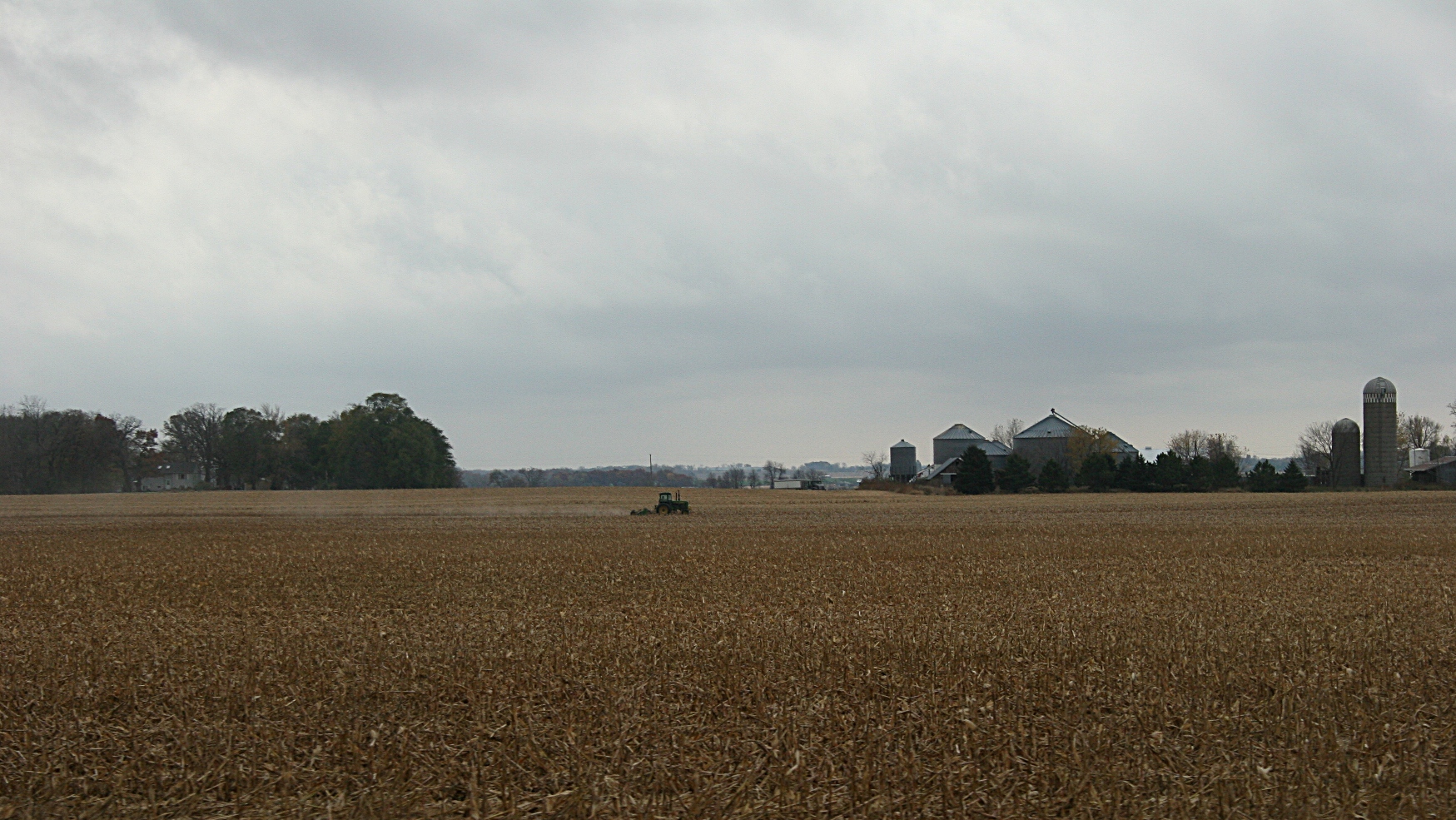
 

Tough tilling in Minnesota farm fields November 9, 2011

A farmer works the field recently in this scene shot in southeastern Minnesota.

HAVE YOU TRIED DIGGING into the ground lately? Takes some effort, doesn’t it? This soil in Minnesota rates as rock hard right now given the lack of moisture.

I’m hesitant to admit it, but I don’t think about soil conditions and moisture nearly as much as I once did, when I was not so long-removed from the farm.

But last week when a carpenter, who is also a farmer, was working on a project at my house, we chatted briefly about crops, soil conditions and weather.

Kenny shared how fall tillage has been especially trying this year. Farmers in his area around Owatonna in southeastern Minnesota have been breaking implement parts with all-too-often frequency in the dry, hard earth. He mentioned shanks, which he claims never break.

Some parts are in short supply, Kenny says, meaning farmers sometimes need to wait. That’s not a good thing when you’re trying to finish fall tillage before the snow flies.

Friends of mine who farm near Dundas finally halted all tillage work for the season, leaving some 300 acres, of 700, untilled. The rock hard dry soil proved too difficult to work and too tough on their equipment.

IN SOUTHWESTERN MINNESOTA, my brother Doug Kletscher, the parts manager at Westbrook Ag Power in Westbrook, confirms that tillage is tough there, too, and farmers are going through the parts. “We ran out of ripper points and they have been back-ordered for a good month. I have heard of a few farmers that have pulled their rippers in half,” Doug says. “We have sold at least five years’ worth of chisel plow spikes in one year. Bolts have also been in very high demand.”

On the flip, positive side, farmers haven’t had to deal with mud, Doug reports, and the corn has been very dry with 14 percent or less moisture content (a significant cost savings on corn drying).

However, farmers are facing another issue related to moisture-depleted conditions. “The fertilizer companies are not putting on any anhydrous as it is too dry to hold the anhydrous in the ground,” my brother continues. “Anhydrous needs moisture to adhere to keep it in the ground; also it (the soil) is pulling so hard that they would break their anhydrous bars.”

Doug reports the last rain over a half inch fell on July 14 with .78 inch. Since then any rainfall has been .10 inch or less. That makes for extremely dry soil conditions for farmers trying to prep the soil for next spring’s planting season.

LIKEWISE, IF YOU’RE a gardener, digging vegetables has been anything but easy this autumn. Take my friend Virgil Luehrs, who lives along Cedar Lake west of Faribault. Unearthing potatoes proved tough, he says. But then he got to the carrots:

“First I tried the garden spade, then a round-point shovel and then a tiling shovel. I had to dig a trench beside the rows to loosen the soil around the carrots to get them loose enough to pull out.  Finally I resorted to a pick to loosen the soil and that was easier but still a lot more work than normal.”

Tilling the garden, even with a powerful Troybuilt rear tine tiller, proved equally challenging. “I could not get down deep enough,” Virgil reports. “Hopefully next spring.”

When Virgil talks soil and weather, I listen. He’s not just your average Minnesota gardener. He’s also a retired high school science teacher with a Masters in biology, a former interim and assistant director at River Bend Nature Center in Faribault, and a volunteer rain gauge reader for the Rice County Soil Water Conservation District (SWCD) and the state Climatology Lab.

In other words, he’s a knowledgeable resource.

So then, exactly how much rainfall has Virgil recorded at his Cedar Lake home (where the lake water level is the lowest in 20 years, but not as low as in the drought years of 1988- 1990). Thus far since April, Virgil has taken these rain gauge readings:

April:  3.14”

May:  4.63”

June:  5.26”

August:  1.38”

September:  1.00”

October:  .58”

TOTAL during the past six months: 15.99”

Says Virgil: “This year we had a much wetter spring and that probably helped to carry us through the dry fall. Recall that last fall we had record rainfalls.”

His 2010 readings were as follows:

April:  1.35”

May:  2.75”

June:  4.76”

July:  5.49”

August:  3.91”

September:  9.13”

October:  1.91”

TOTAL during those six months: 29.3”

According to information Virgil passed along from State Climatologist James Zandlo and University of Minnesota Climatology/Meteorology Professor Dr. Mark Seeley, 2010 was the wettest year in Minnesota modern climate record. The 34.10-inch state average precipitation total was roughly 8 inches more than the historical average.

But here we are in November 2011, desperately short of moisture.

What will winter bring here in Minnesota? A continued shortage of precipitation? Or more snow than we care to shovel?

WHAT’S YOUR PREDICITON for snowfall in Minnesota this season? Submit a comment with a forecast and the reasoning behind your prediction.

IF YOU’RE A FARMER, an implement dealer or a gardener, have you faced any special challenges this year due to dry (or other) weather conditions? Submit a comment. I’d like to hear, whether you live in Minnesota or elsewhere.

CLICK HERE to link to climate.umn.edu for detailed statistics and information about Minnesota weather.

© Copyright 2011 Audrey Kletscher Helbling