Minnesota Prairie Roots

Writing and photography by Audrey Kletscher Helbling

A traffic stop & conversations about race & identity January 7, 2025

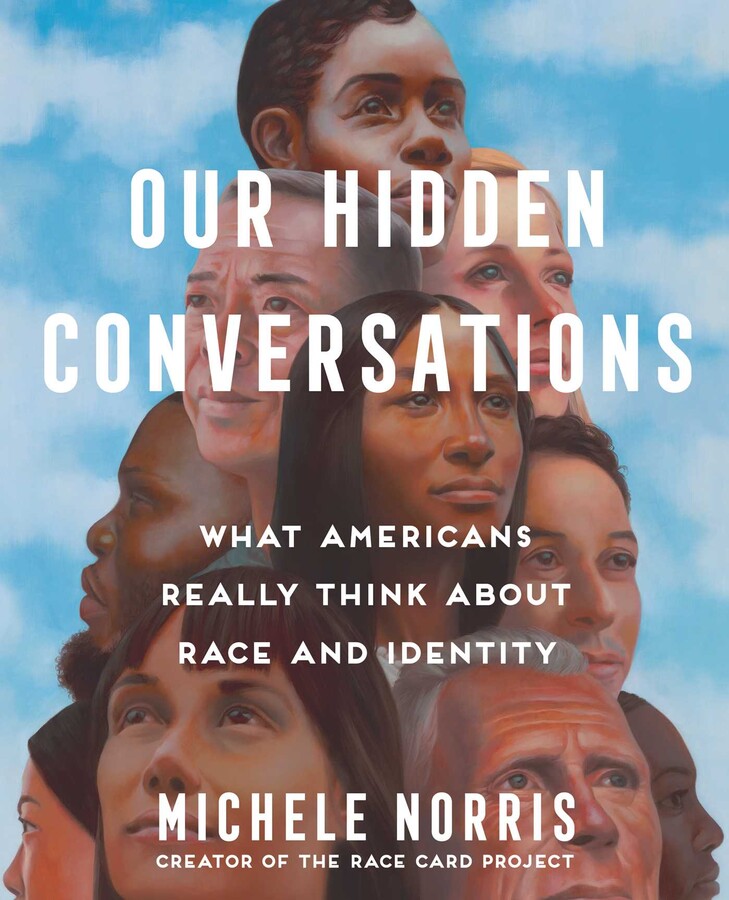
Book cover sourced online

EARLY ON A RECENT WEEKDAY MORNING, my husband was pulled over by a deputy sheriff while driving to work. Randy had no idea why he was being stopped on the edge of Faribault. The officer who approached the passenger side of our rusty 2005 white van and rapped on the window did not immediately tell Randy why he pulled him over.

But the questions and actions that followed left me unsettled and thinking about what could have unfolded. You see, I was in the middle of reading Our Hidden Conversations—What Americans Really Think About Race and Identity by Michele Norris, creator of The Race Card Project. That partially prompted my adverse reaction.

As I listened to Randy’s retelling of the traffic stop, I felt thankful that he is a past-middle-aged White guy. I felt a bit guilty for thinking that. But…
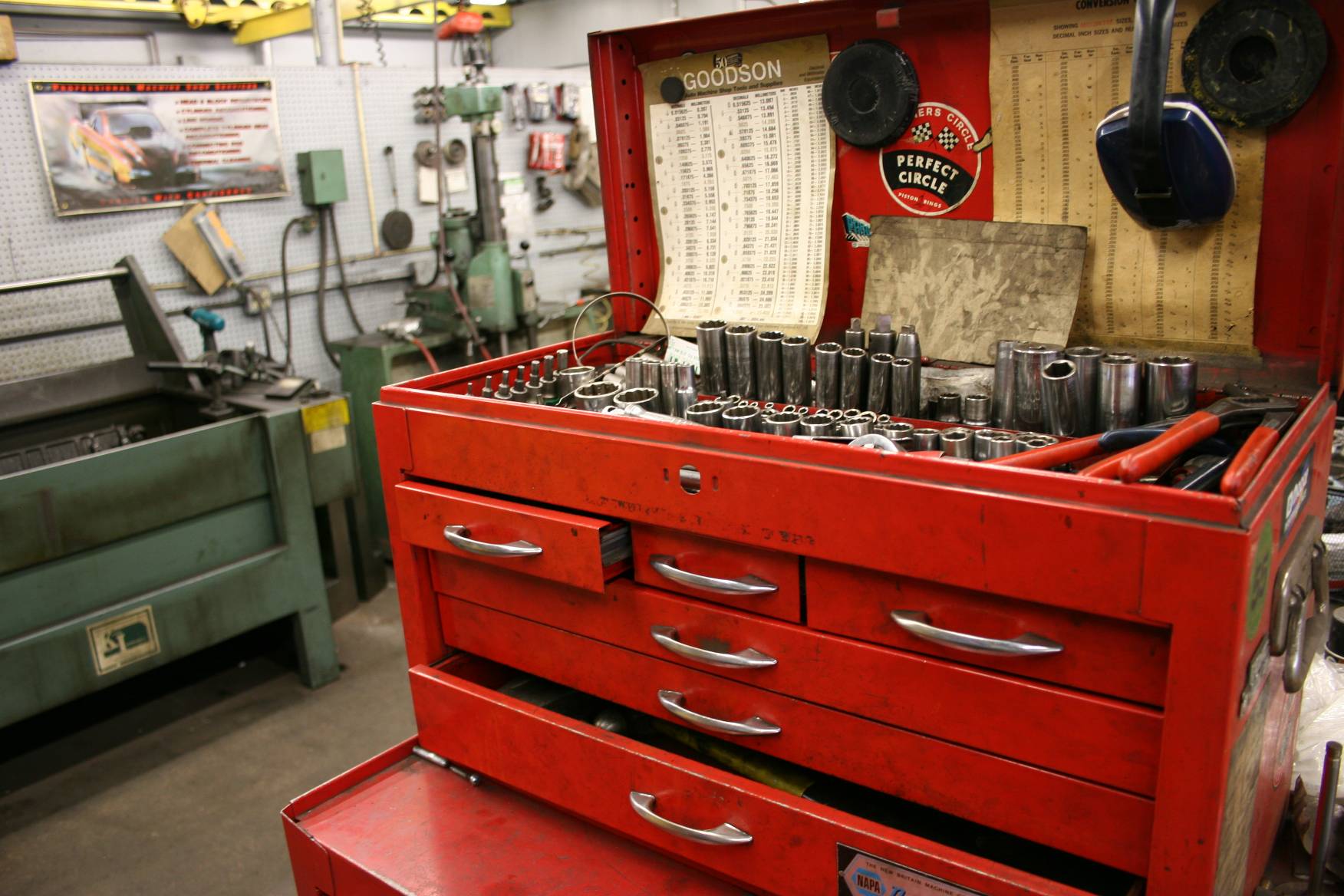
Randy, in his work jacket and uniform, was just driving to work at his job as an automotive machinist when he was pulled over and questioned. (Minnesota Prairie Roots copyrighted file photo)

DO YOU HAVE A WEAPON?”

After requesting the usual identifying documents, the officer asked Randy where he was going, where he worked, whether his address was current and how long he’s lived there. All seemed odd questions. But the next question proved even more unusual. The officer, peering into the van, asked Randy if he had a weapon. Thinking he was referring to an item on the floor between the seats, Randy leaned down and said, “No, it’s a snow brush.”

My immediate reaction to this part of the story was this: “You did what? You could have been shot!”

The deputy wasn’t referencing the brush on the floor, but what he thought was a weapon lying on the passenger seat. He reached inside the van and moved a pair of gloves aside to reveal the case for Randy’s glasses. The supposed gun.

I wasn’t there. I don’t know what was going through the deputy’s mind before and during the traffic stop. But I do recognize what could have happened had the cop felt threatened.

Only after all of this and after the deputy ran a license check did he tell Randy why he’d been stopped—because the brake light in the middle of the tailgate door was not working. Randy has since replaced the bulb.
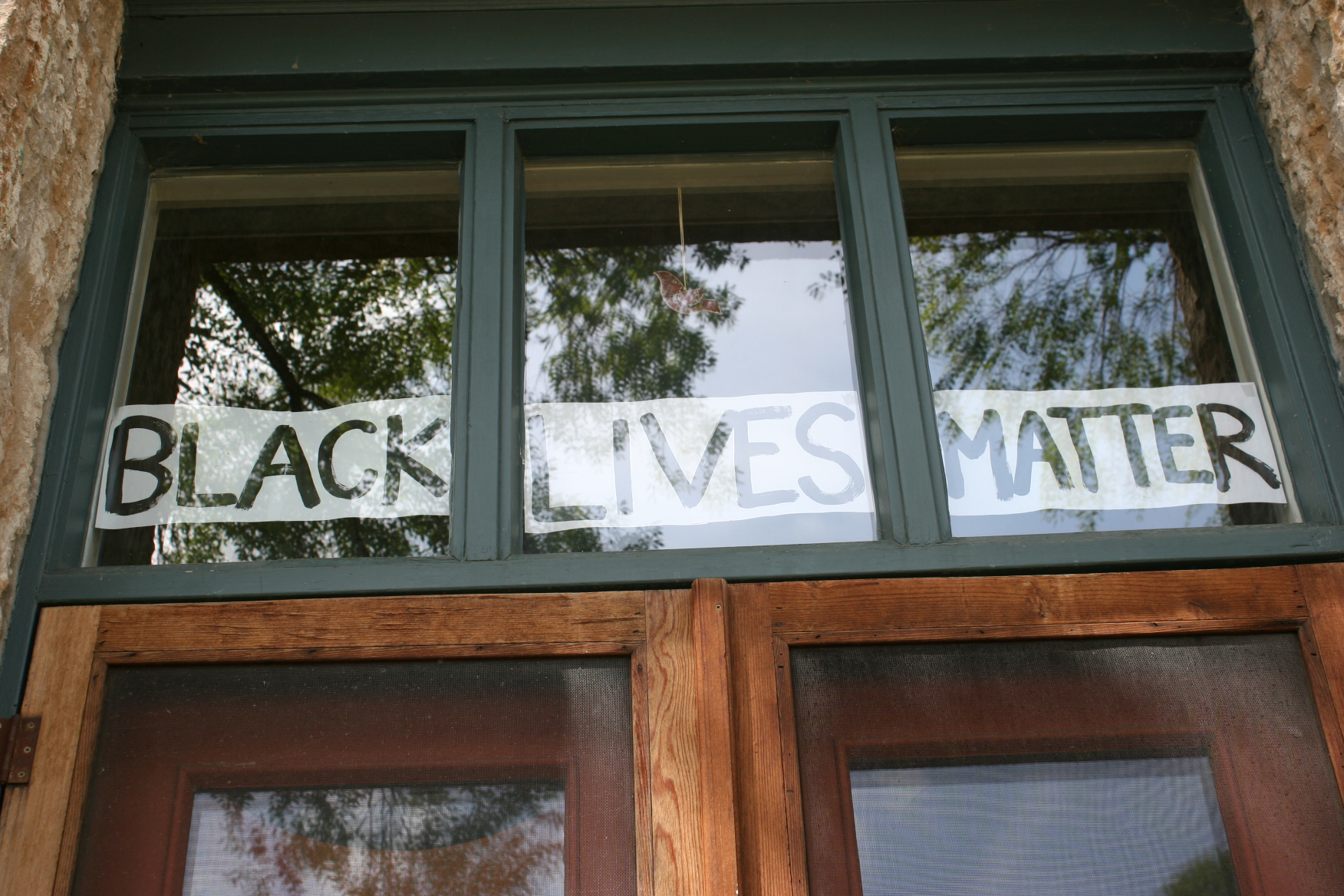
Posted on a house in small town Dundas. (Minnesota Prairie Roots copyrighted file photo 2020)

THE “WHAT IFS?”

Why am I sharing this story? It’s not because I’m anti-law enforcement. I appreciate and respect our police and the important work they do in serving our communities and keeping us safe. Yet, had Randy been a person of color in the wrong place on the wrong day with an officer who perceived his actions as a threat, this traffic stop may have ended differently. Again, I’m not criticizing this specific cop or law enforcement in general.

Admittedly, Randy should not have reached toward that snow brush. But it is not ingrained in his mind to limit his movements, to think about how his actions may be perceived. Black men, especially, cannot risk such behavior. That I understand based on conversations with my son-in-law, who is biracial; on traffic stop shootings of Black men; and on the stories shared in Our Hidden Conversations—What Americans Really Think About Race and Identity.
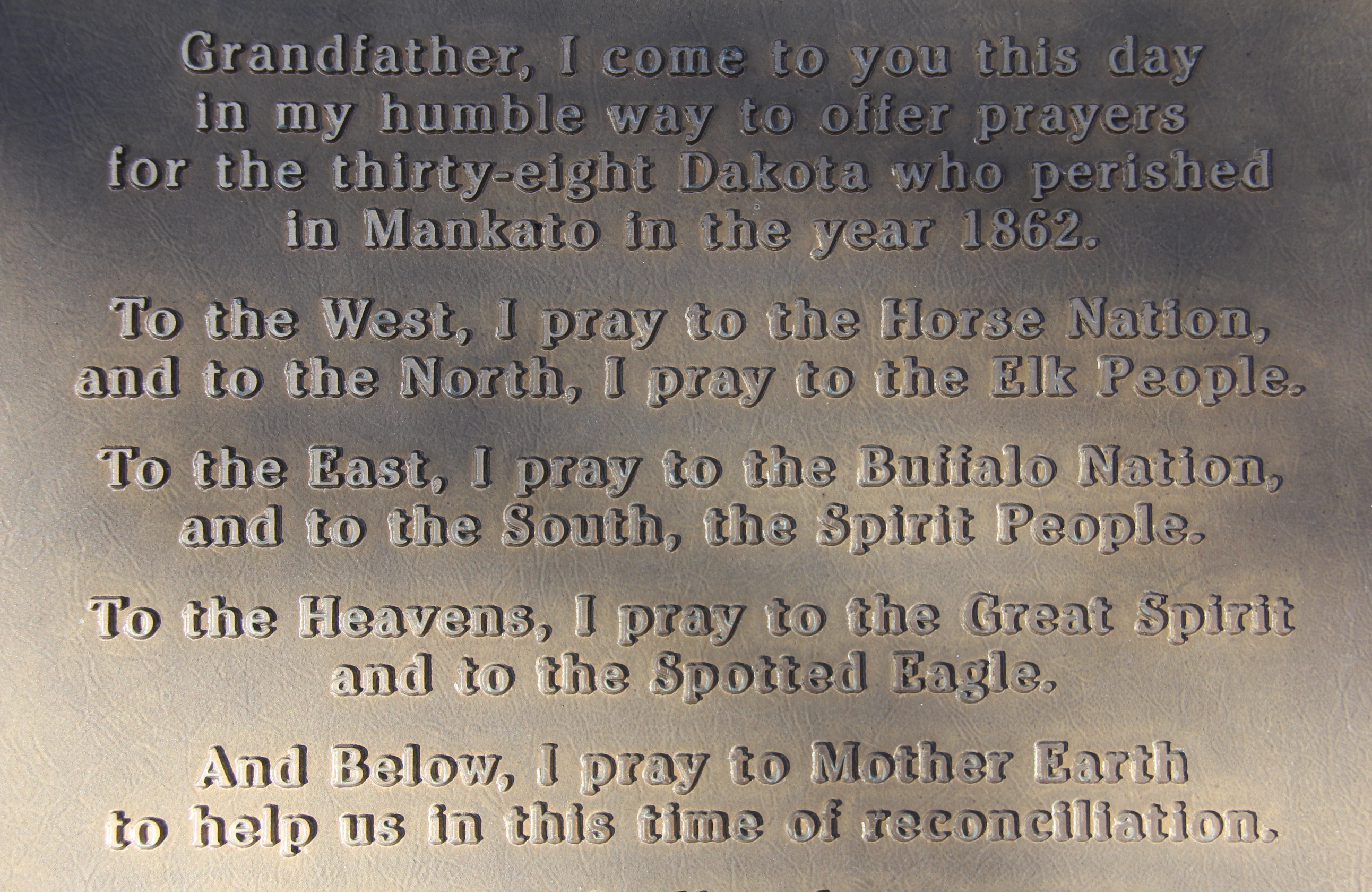
A Dakota prayer focuses on reconciliation at the Dakota 38 Memorial in Reconciliation Park, Mankato. (Minnesota Prairie Roots copyrighted file photo November 2023)

READ OUR HIDDEN CONVERSATIONS

If you read one book in 2025, I encourage you to read this one. The author, who grew up in Minneapolis, is a well-respected, award-winning journalist and former host on National Public Radio. For 14 years, Michele Norris has collected responses to this prompt: Race. Your story. 6 words. Please send. Those responses, submitted on specially-printed postcards and online, shape Our Hidden Conversations. This ranks as one of the most powerful books I’ve ever read on race and identity and should be required reading for every American.

Norris does not focus solely on Blacks in her collection of stories shared by thousands. She also writes about the discrimination, the prejudices, the challenges faced by many others. One entire section, for example, is devoted to Indigenous Peoples. That includes information about long ago Indian boarding schools (specifically the one in Morris, Minnesota) and about the 38 Dakota men who were hung in Mankato, Minnesota following the U.S.-Dakota War of 1862. She writes about Japanese internment camps in America during WWII. She writes about challenges faced by people with disabilities. This is hard stuff. But so necessary to read, to understand the backstory, the history and how things have, and have not, changed. The author writes about lynching, about adopting Black babies, about Blackness perceived as a threat…

The lengthier sections penned by Norris are interspersed with shorter stories from those responding to The Race Card Project prompt. The six word responses are scattered throughout the pages, printed exactly as submitted. One mother wishes her Black son was a girl.
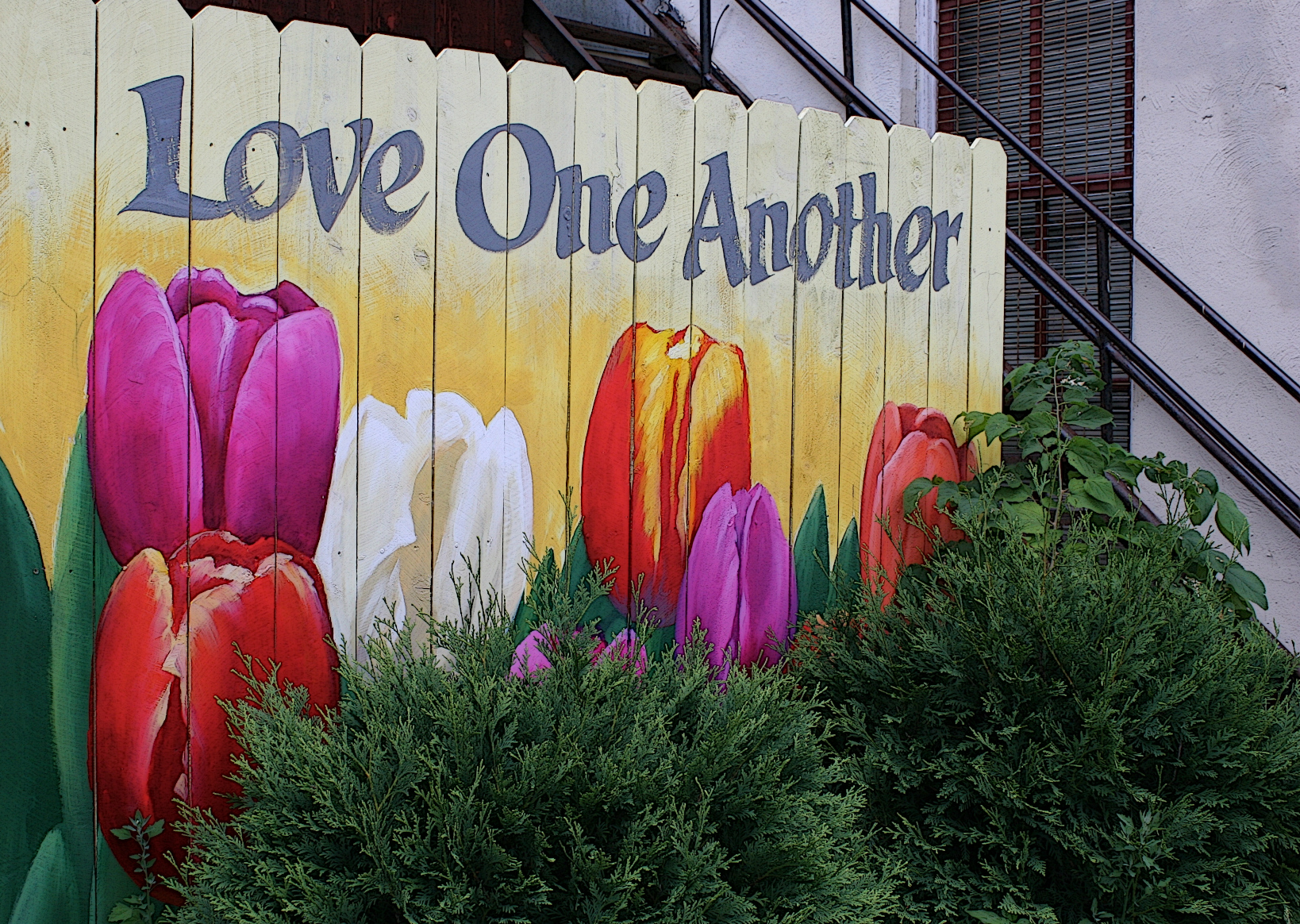
An especially bright spot with an uplifting message in a downtown Faribault pocket park. (Minnesota Prairie Roots copyrighted file photo 2019)

PAINFUL & REVEALING

I cannot even begin to tell you how painful it was at times to read the heartbreaking words printed in this book. It seems unfathomable that we as human beings can treat others with such inhumanity simply because of skin color or other differences. Yet, I saw myself in some of those words, specifically in the subtle (and sometimes not so subtle) racially-charged words that I heard and repeated as a child. I didn’t understand then that the rhyme I was reciting or the term my dad used for Brazil nuts were offensive. I recognize that now.

Like many others quoted in this book, I am determined to grow my knowledge, listen, treat others with respect and compassion, recognizing that we can all do better. I want that for my soon-to-be-born grandson, whose father is biracial, whose mother is White. I want him to grow up in a world where color matters not, where he is appreciated and valued for who he is (and not judged by his skin color), where he doesn’t have to think about what could happen if he is someday pulled over during a traffic stop.

© Copyrighted 2025 Audrey Kletscher Helbling


In which I meet Adolfo, Jose & little Milan October 17, 2024

Filed under: Uncategorized — Audrey Kletscher Helbling @ 5:00 AM
Tags: , , , , , , , , , ,
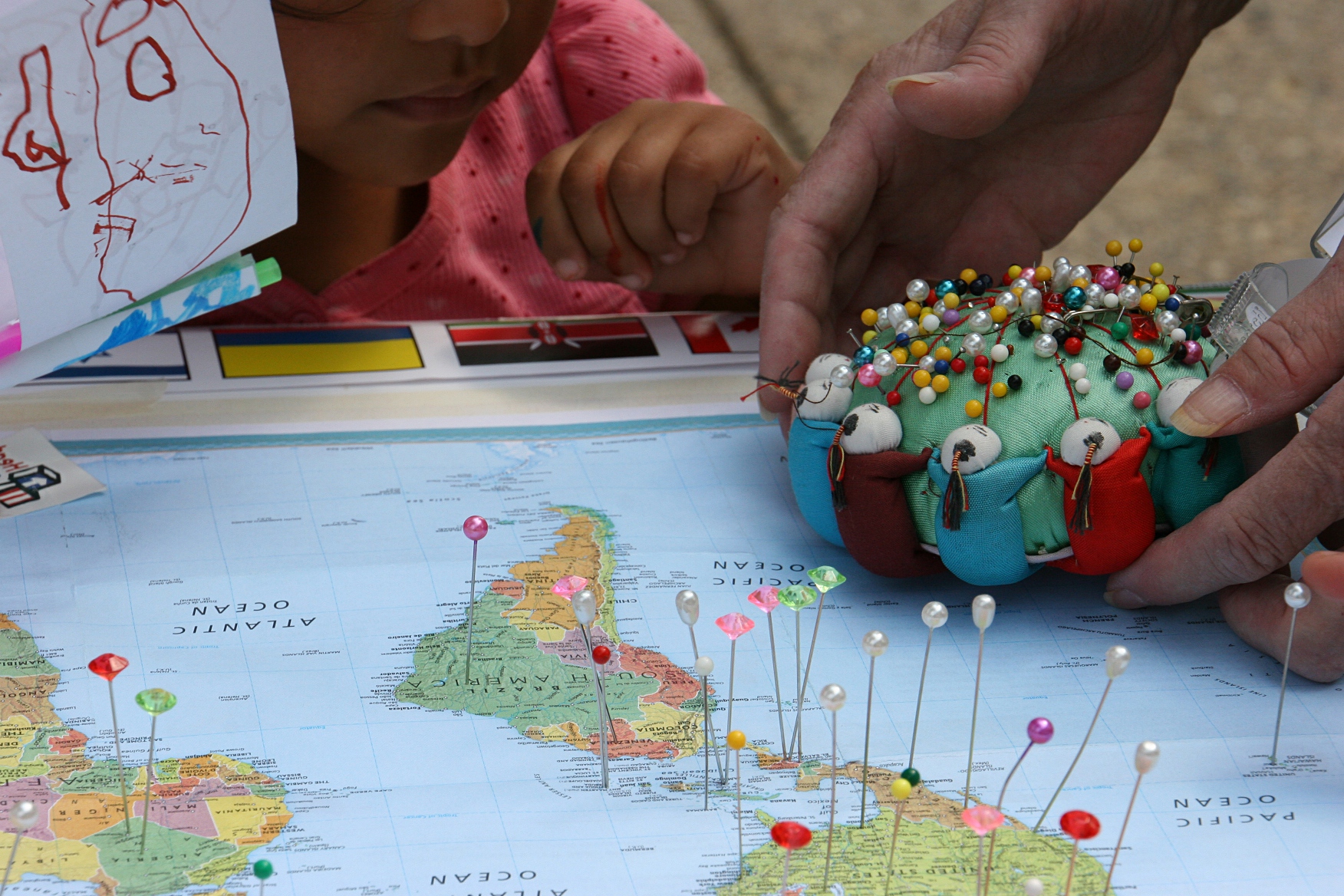
Faribault is home to people from many countries as noted on this interactive map at a past International Festival in Faribault. (Minnesota Prairie Roots copyrighted file photo)

TWO DAYS. TWO CONVERSATIONS. And I am the richer for meeting Adolfo and Jose and hearing their stories.

I should backtrack a bit and state that for me to strike up conversations with people I don’t know is not unusual. Such interactions widen my world, broaden my understanding and simply help me learn more about others.

It was little Milan, Adolfo’s one-year-old grandson, who initially drew me to pause during a morning walk through Faribault’s Central Park. Adolfo was pushing Milan in an umbrella stroller when Randy and I crossed paths with them. Milan, with his big brown eyes, black hair and radiant smile, is the essence of cuteness. Cute babies and kids are always a reason to stop and chat.

The pair walk through the park every morning as Adolfo cares for Milan while his mom is at work. I don’t recall whether Mom is Adolfo’s daughter or daughter-in-law. Doesn’t matter. What matters is the deep love Adolfo has for family and his willingness to care for his grandson before heading to work in the afternoon.

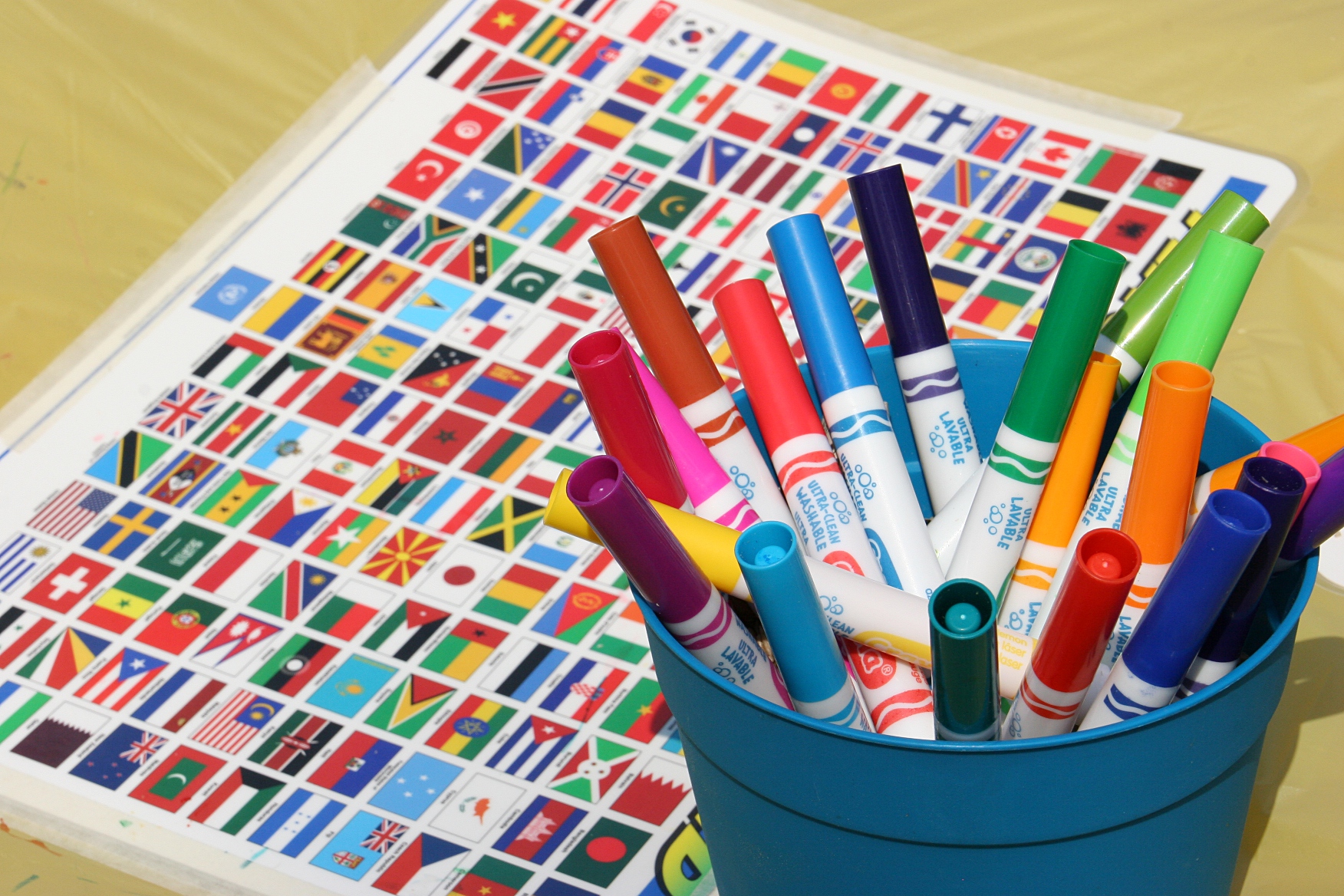
Kids used markers to create flags from their native countries while attending the local International Festival. (Minnesota Prairie Roots copyrighted file photo)

ESCAPING COMMUNIST VENEZUELA

I asked Adolfo about his background, what brought him to Faribault. He moved here from Orlando to be with family. But he’s originally from Venezuela. His home country, he said, is not a good place to live. The reason: Communism and violence. He left family behind and desperately wants them here, safe in America.

By that time, little Milan was out of his stroller, pushing it, then dropping to the ground, his pants covered in bits of dried leaves, his tiny hands clasping two Matchbox cars. He is close to walking alone. Milan proved a distraction from the deep pain Adolfo obviously feels separated from his family still in Venezuela.

“We’re so happy to have you here,” I told my new friend. And I genuinely meant that as my heart hurt for this man who has endured so much already.

“God bless you,” Adolfo said, as he made the sign of the cross, held his hands to his heart.

Adolfo repeated our names several times, clearly an effort on his part to remember them. I repeated his, too, and Milan’s, and wished I knew Spanish. Adolfo spoke Spanish to Milan, who is being raised bilingual. What a gift to that little boy with the big brown eyes, with the loving family, with the Grandpa whom I consider kind, caring, loving and brave.

Children gather at Faribault’s Central Park to break a pinata during an International Festival. This photo placed first in a local photo contest and remains one of my favorite. I love that it reflects the diversity of Faribault and shows kids simply being kids with no thought of ethnicity. (Minnesota Prairie Roots copyrighted file photo)

FINDING A WELCOMING NEW HOME IN RURAL MINNESOTA

A day later I met Jose, a young man taking his lunch break at a park near Montgomery. He was working there for the Le Sueur County park system. Jose moved to nearby Le Center 15 years ago, having lived in California, Texas and Mexico. Like Adolfo, Jose is grateful to be here, with family. I told him how happy I am to have him living in Minnesota.

It didn’t take long before he opened up about how much he feels welcomed here, how he’s learned to love our four seasons, even winter. Jose shared about learning to drive in winter. And then he recounted being “baptized by black ice.” He walked onto the unseen ice and found himself flailing backwards. This part of Jose’s story included theatrical actions that left all of us laughing.

What a delightful young man. He’s hardworking, loves his family and likes living in a rural area. To hear that he’s found Minnesotans to be friendly pleases me. The reality is that not everyone welcomes individuals like Jose and Adolfo. I do.

I am the richer for having met these two men, whose life experiences and stories are vastly different than mine. Yet, we are the same. We have families and heartaches and hopes and dreams. That commonality connects us. And so does our humanity.

© Copyright 2024 Audrey Kletscher Helbling


In loving memory of Milton “Mickey” Nelson May 24, 2024

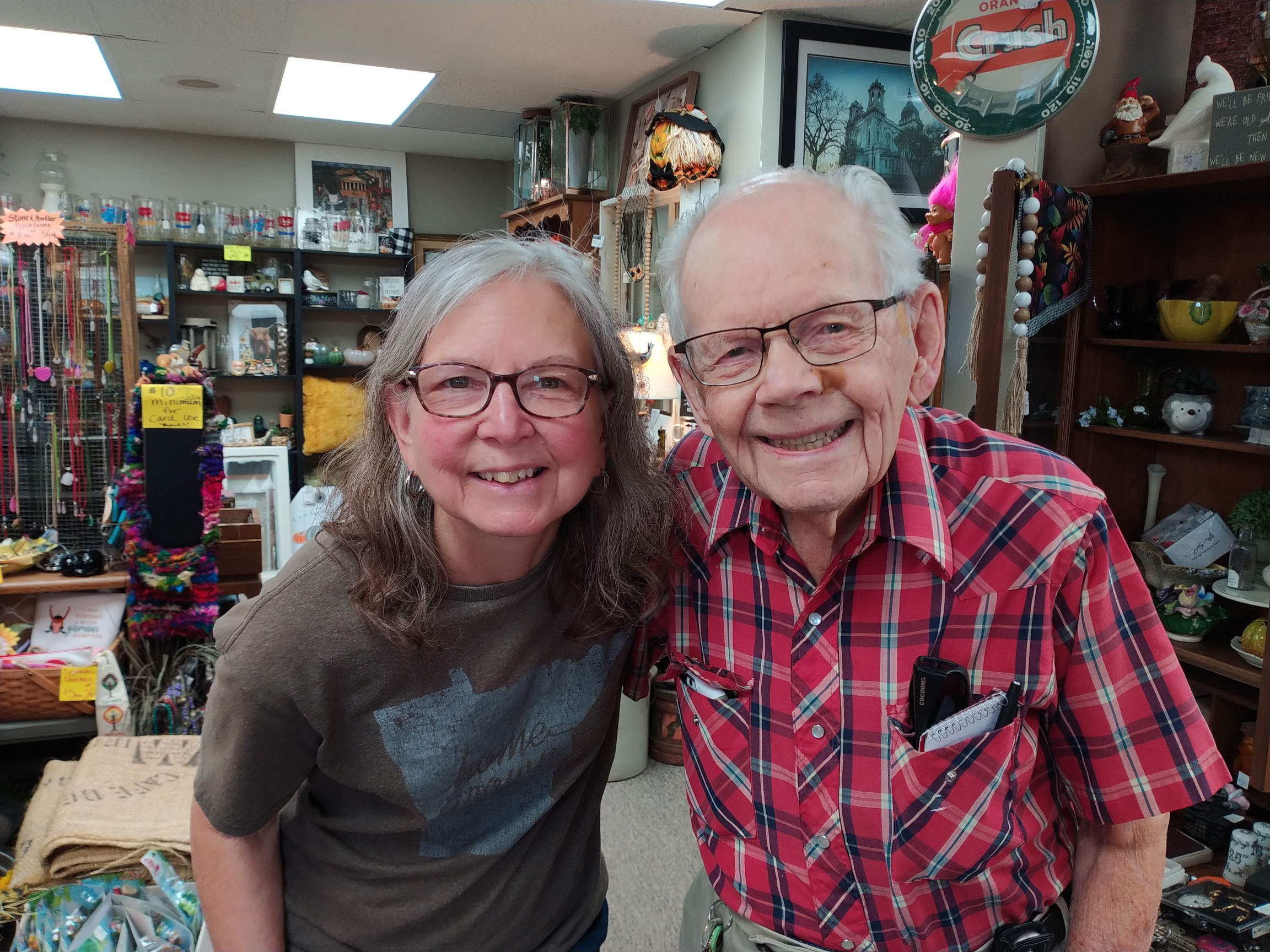
Audrey Kletscher Helbling and Mickey Nelson inside The Junk Monkey. (Minnesota Prairie Roots copyrighted file photo by Randy Helbling, September 2023)

SOMETIMES IN LIFE we meet a person only once. But they make such an impression upon us that we always remember them.

Milton “Mickey” Nelson of Clarks Grove was that person to me. I met Mickey in September 2023 while shopping at a vintage, collectibles and treasures shop in Faribault. After overhearing a conversation between him and shop owner Theresa, I initiated a conversation with Mickey and his daughter Michelle.

Eight months later, on May 14, 2024, this amazing man died, about a month short of his 104th birthday.

Mickey was a remarkable man, not only because of his longevity, but because of his generosity. At age 99, he decided to walk 100 miles by his 100th birthday. That in itself is an accomplishment for a centenarian. But Mickey took his goal the extra mile by raising $115,000 for Salvation Army food assistance during the COVID-19 pandemic via his daily half to mile-long walks in Clarks Grove. He remembered the bread lines of the Great Depression.

That’s the thing about Mickey, a World War II veteran. He cared. I felt that immediately upon meeting him. His smile stretched wide, to the corners of his eyes. He was sharp and engaged and the type of person anyone would be happy to meet, to call “friend.”

In that brief interaction with Mickey, I felt such a connection, as if I’d known this delightful man for years. Michelle confirmed that her dad, too, “valued those (unexpected/everyday) connections.” He had a way about him that made me feel cherished, even though we’d just met.

Today his loved ones and friends are left to cherish his memory, as are those who heard or read his story, shared locally and nationally, perhaps even internationally. I doubt Mickey ever expected that his plan to walk 100 miles by his 100th birthday to raise money for one of his favorite charities would captivate such media attention. But it did, inspiring many.

Mickey’s funeral service is planned for June 27 at First Baptist Church in Clarks Grove, on what would have been his 104th birthday. I think he would have liked that and I hope birthday cake is served. Up until nearly the end, this man of a strong and unwavering faith remained mentally sharp, his daughter Michelle shared. I’m not surprised. Michelle and I kept in touch after our chance meeting at The Junk Monkey eight months ago. I knew her dad had begun failing in late December and soon thereafter entered hospice.

Even through the emotional challenges that come with watching a parent moving toward death, Michelle remained grateful for the remaining time she had with her much-loved father. The bond between father and daughter was strong, loving, caring. That, too, is something to be cherished.

Mickey was remarkable. I feel blessed to have met this man of generous spirit, of kind heart, of compassion and care and love unending. I feel grateful for my time with him. Even if brief, Mickey made such an impression upon me that I will always, always remember him.

© Copyright 2024 Audrey Kletscher Helbling


The centenarian, the seamstress & the tortoise September 27, 2023

Audrey Kletscher Helbling and Mickey Nelson inside The Junk Monkey. (Copyrighted photo by Randy Helbling, September 2023)

IN THE EVERYDAY MOMENTS of life, I often strike up conversations with strangers given my innate desire to hear their stories, to connect, to learn, or simply to show I care. Through such encounters, I’ve met the most delightful individuals.

THE CENTENARIAN

Take Mickey Nelson, 103, of Clarks Grove.

“You’re 103?” I overheard the question, edged with disbelief, while recently browsing a local vintage, collectibles and treasures shop. That was enough for me to pause and head to the front of the store to meet this centenarian engaged in conversation with shopkeeper Theresa.

When I spotted Mickey, I understood why Theresa sounded so incredulous. Mickey looked not a day over 80. His smile, which reached his eyes, exuded positivity, joy. And then I heard his story, realizing I’d heard it three years earlier.

Mickey is, in every way, extraordinary. In 2020, he walked 100 miles in his small southern Minnesota community to celebrate his 100th birthday. He didn’t walk just to walk. Mickey walked for a purpose, to raise money for the Salvation Army. And he raised a whole lot—$115,000, his daughter Michelle said.

I was beyond impressed by this WW II veteran and his generosity. Mickey remembered the bread lines during the Great Depression. That sparked his 100-mile mission to gather monies for Salvation Army food assistance during COVID-19. A similar effort by an aged veteran in England, who walked 100 laps in his garden during the pandemic and raised $30 million for Britain’s healthcare system, also proved motivating for Mickey.

On this day, I felt honored to meet Mickey, whose story was broadly shared in the media in 2020, the reason it was familiar to me. I decided right then and there that I wanted my photo taken with this celebrity, a remarkable man not only for his generosity of spirit, but also for the spirit of joyfulness he exudes.

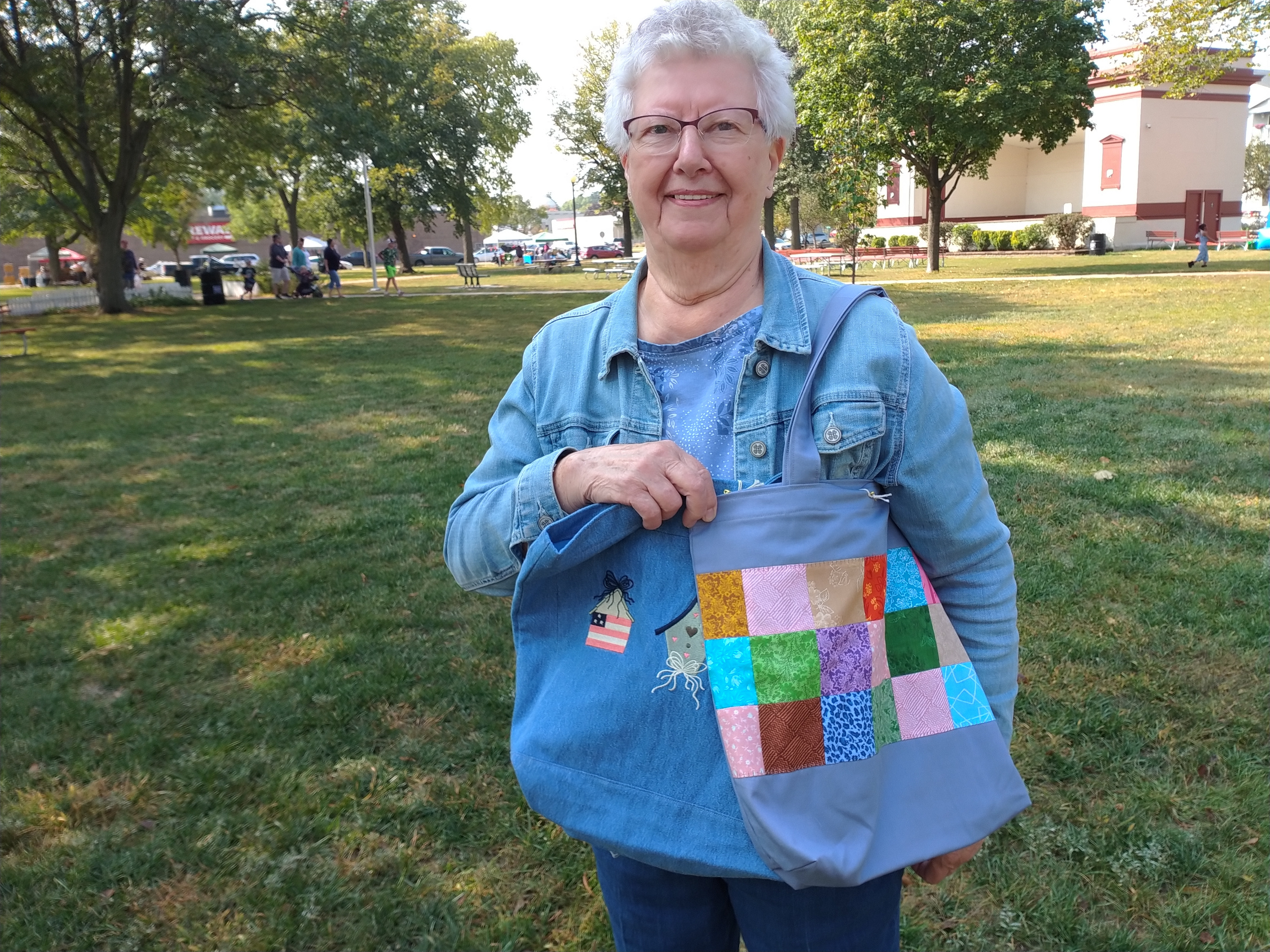
Virginia Malecha displays two of her tote bags, among creations she was vending at the Faribault Farmers’ Market. (Minnesota Prairie Roots copyrighted photo September 2023)

THE SEAMSTRESS

The same can be said for Virginia Malecha of Millersburg, whom I met while enjoying a pork burger during a recent event at the local co-op. She, like Mickey, exudes joy. And she, like Mickey, is generous. Virginia has sewn 200 cloth bags for patrons to use at the Northfield Public Library. As we talked, I learned that this seamstress has been sewing since age nine. She clearly enjoys the craft, stitching totes from recycled materials (such as clothing and duvets) and from her fabric stash collected through the decades.

Virginia invited me to stop at the Faribault Farmers’ Market to view more of her creations, including dish towels she machine embroiders, scrubbies and more. Two days later, I did just that. I was impressed by this kind, generous and friendly woman. She not only sews, but also taught herself to play the concertina and raised her family on a dairy farm (another connection given I grew up on a dairy farm). I asked to take her photo. I wanted to remember her beautiful smile and how she, like Mickey, inspired me. And it all started with a conversation over burgers in a co-op parking lot.

Not a tortoise, but a turtle, which is nearly as slow as a tortoise. (Minnesota Prairie Roots copyrighted file photo June 2020)

THE TORTOISE

And then there was the recent afternoon I met Paul (whose last name I never got) in the same park where Virginia vended her wares. He was walking, just like my husband and me. Randy and I were, however, going at a much faster pace. That led to a humorous moment, when Paul called us the hares, himself a tortoise. But, I reminded him, the tortoise wins the race.

On this day, though, I truly was the winner given the conversation that followed. We chatted a bit about retirement and other topics. But even before Paul mentioned that he was a retired Lutheran pastor from New Richland now relocated and living across the street from the park, I recognized his compassion. He listened as I shared about my neurological health issues caused by a virus in early January. His wife, he said, suffered a traumatic brain injury. Her challenges in many ways mimic mine. I felt, in that moment, understood, uplifted and incredibly thankful for this caring man.

Like Mickey and Virginia, we connected in an everyday moment of life. And I am the better for having met the three of them—the centenarian, the seamstress and the tortoise.

© Copyright 2023 Audrey Kletscher Helbling


Connecting via “human books” in Owatonna September 12, 2023

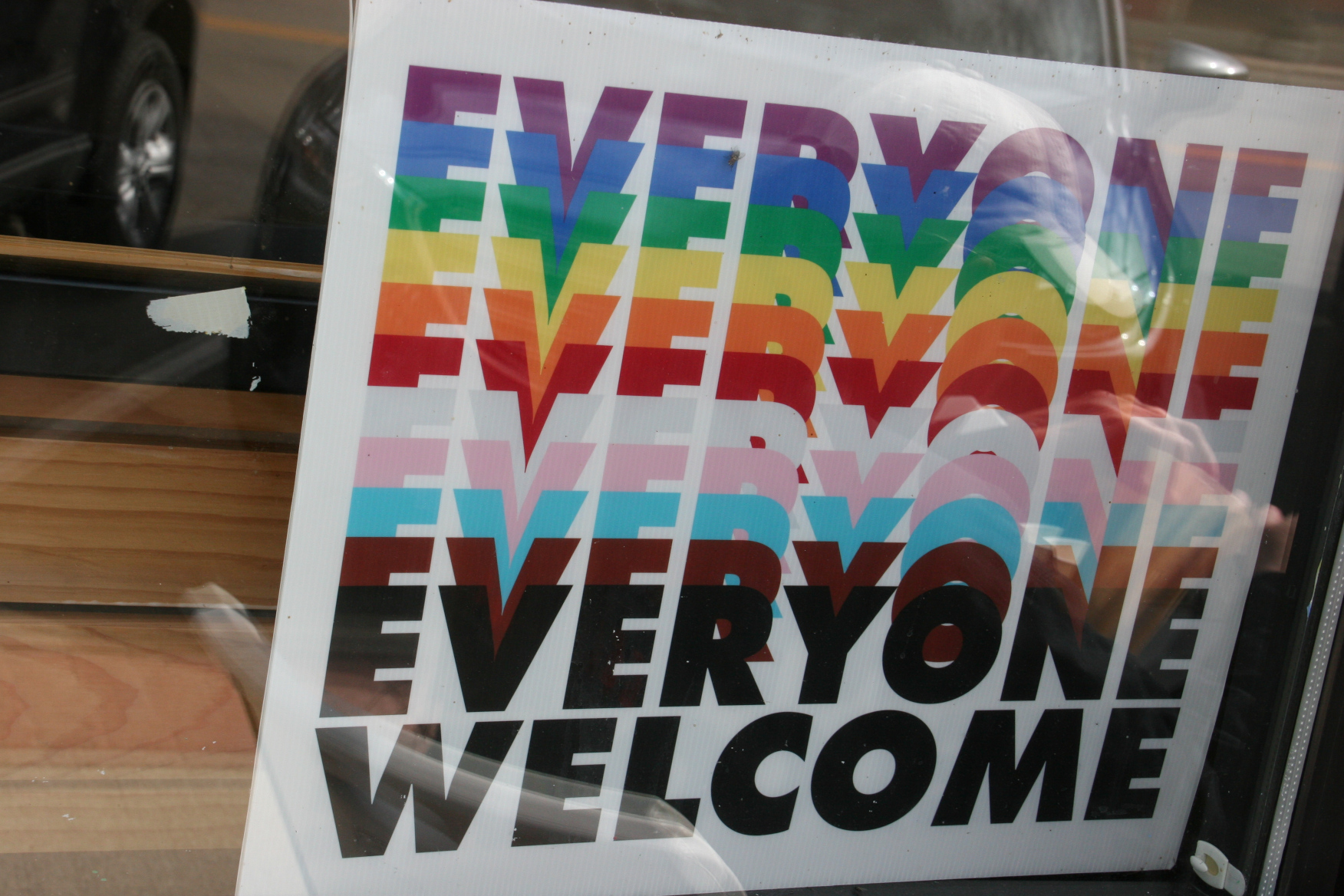
Photographed in the front window of a downtown Faribault business. (Minnesota Prairie Roots copyrighted file photo October 2022)

LISTENING TO AN AREA RADIO STATION Tuesday morning, I learned about a project which seems pure genius. It’s the Human Library®. Developed 23 years ago in Copenhagen and now spread internationally, the library “hosts personal conversations designed to challenge stigma and stereotypes.” And it’s coming to Owatonna this week.

From 4-7 pm Thursday, September 14, the Owatonna Human Rights Commission is hosting a Human Library® in the Gainey room at the public library. The goal is “to foster conversations that can challenge stereotypes and prejudices.”

Kids of varied ethnicities and skin tones gather as one to break a pinata at a past International Festival Faribault. (Minnesota Prairie Roots copyrighted, award-winning photo, 2012)

I love this concept of one-on-one conversations among community members who might not otherwise connect. If we’re honest, most of us tend to stick with others who are most like us. Those in our circles. But this, oh, this opens the doors to meeting new people, to understanding, to friendships and much more. And we can only be the better for it by talking with one another, learning, growing our knowledge and compassion.

The idea is simple. Check out a “human book” for 15 minutes by meeting with community members who’ve agreed to participate in the project. Ask questions. Share. Simply chat, get to know one another. Break down barriers. Find common ground. Embrace differences. “Read” as many “human books” as time and availability allow.

We are a diverse country, as represented at a past International Festival in Faribault. (Minnesota Prairie Roots copyrighted file photo 2015)

The list of 20 participating individuals in Owatonna is lengthy and diverse, exactly as intended: Somali Americans, African Americans, senior citizens, business owners, religious leaders, Hispanic, LGBTQ+, educators, veterans, handicapped individuals, law enforcement officers, nonprofit leaders, recovered addicts and healthcare workers.

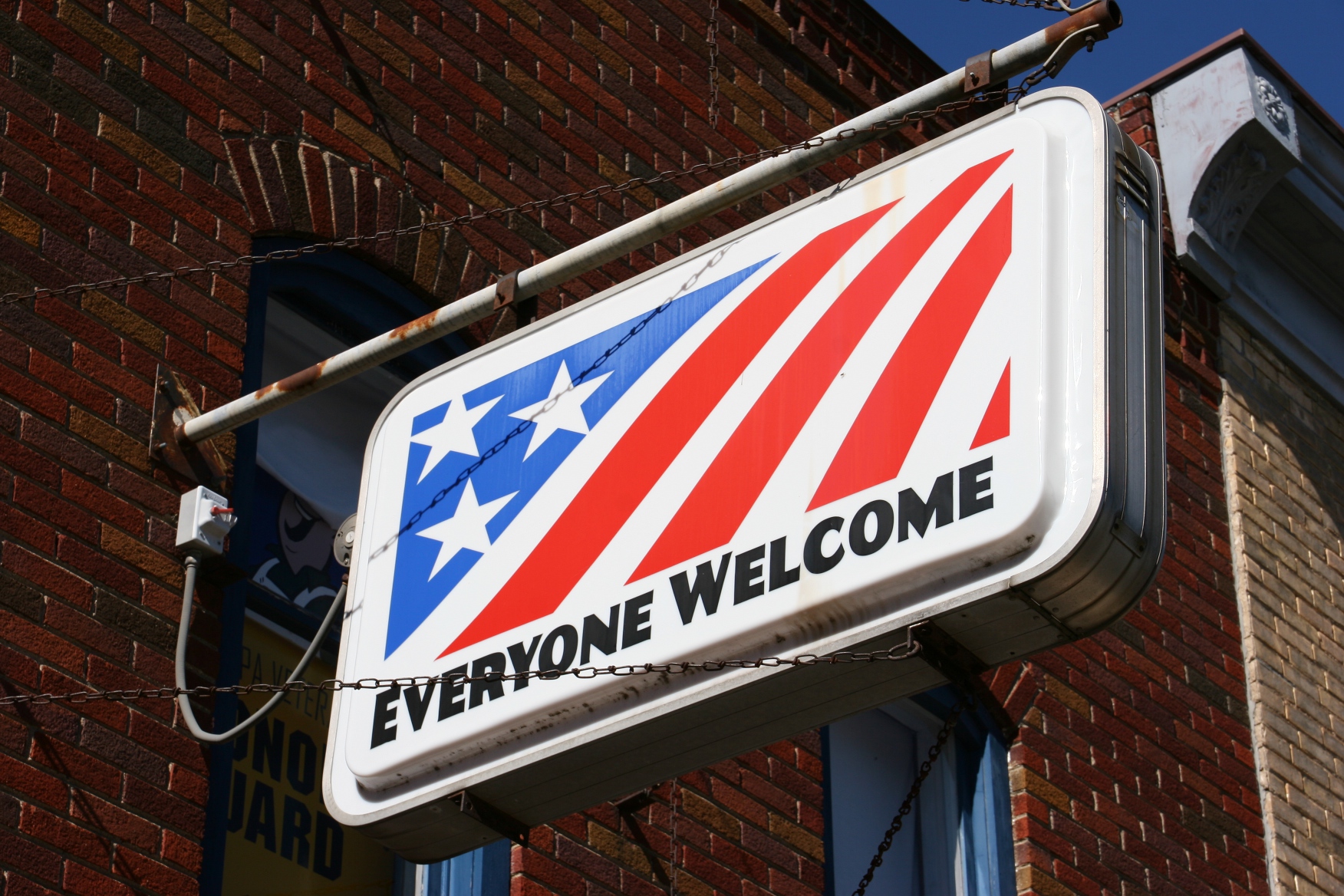
A welcoming sign hangs on the American Legion building in small town Mazeppa. (Minnesota Prairie Roots copyrighted photo March 2018)

Owatonna, like many communities in southern Minnesota and throughout the state, nation and world for that matter, has faced tough issues such as racism, prejudice, discrimination and hatred. Sometimes those issues are right there, publicly visible in ways that make me wonder how humans can treat each other with such disrespect and meanness. But just as dangerous are the insidious comments and behaviors that creep under the radar into communities. We all know they are there—the slights, the whispers, the off-the-cuff hurtful remarks, the intentional exclusion…

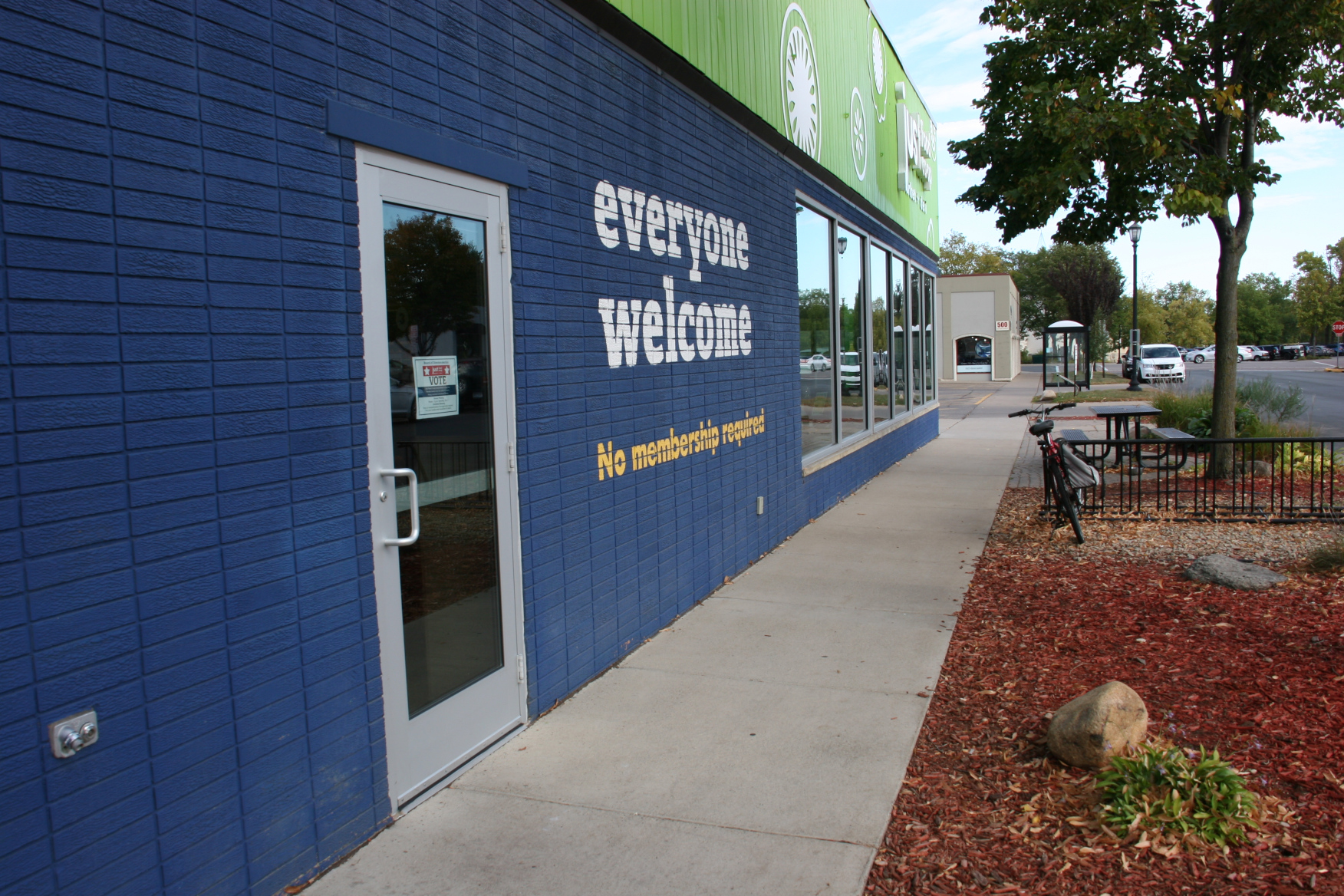
A welcoming message at Just Food Co-op in downtown Northfield. (Minnesota Prairie Roots copyrighted file photo September 2022)

I hold hope that projects like the Human Library® can effectively make a difference in enlightening, in changing attitudes, in helping each of realize that we are all human, more alike than we are different.

© Copyright 2023 Audrey Kletscher Helbling


Connecting in life’s everyday moments August 30, 2023

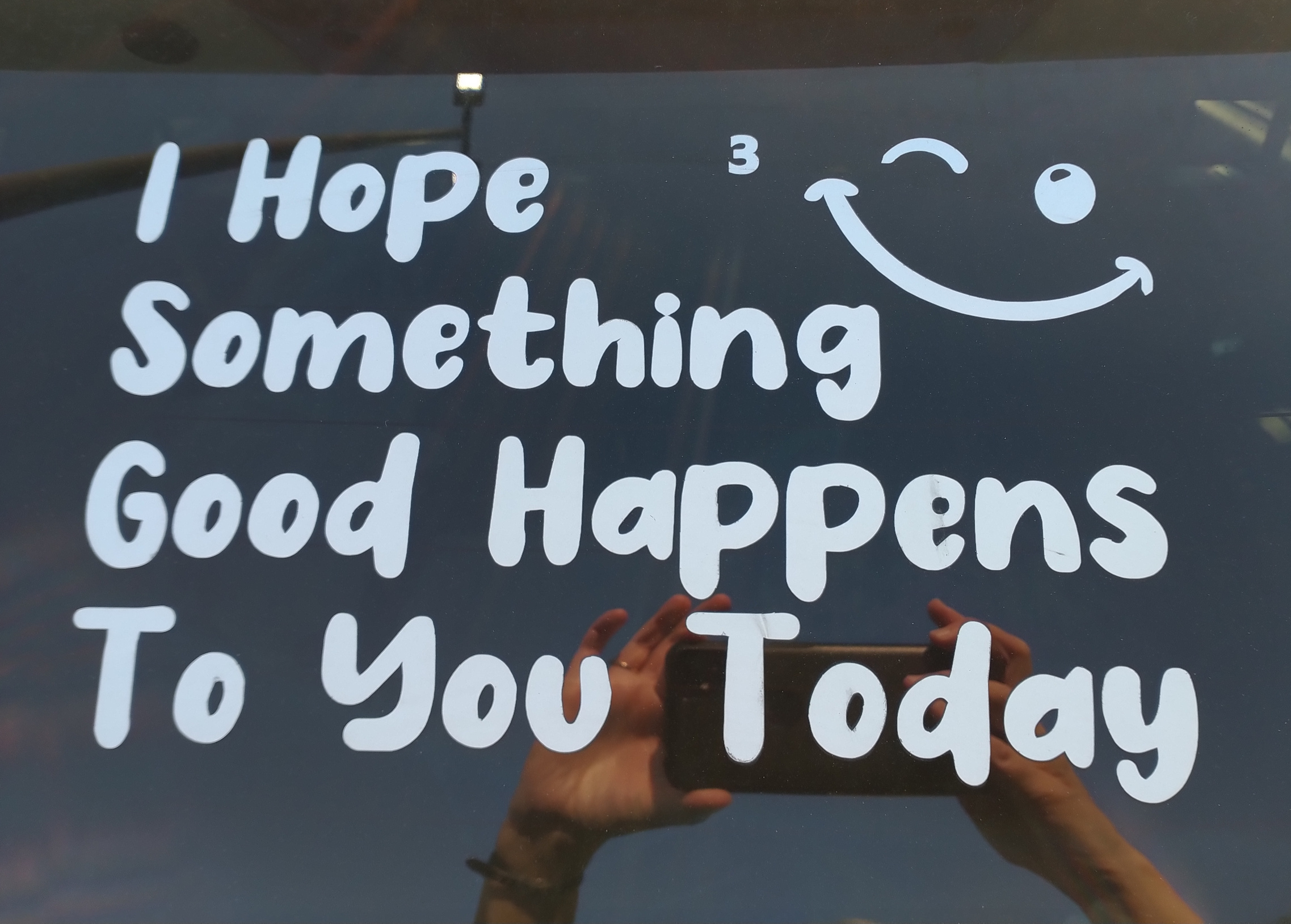
I love this positive message posted on a rear vehicle window. (Minnesota Prairie Roots copyrighted photo August 2023)

WE STOOD OUTSIDE the local library, minutes before the 9 am weekday opening, waiting for staff to unlock the front door and let us inside. Rather than wait silently, I struck up a conversation with the elderly man next to me. I’ll always choose talking to a stranger over saying nothing. That’s my nature.

Via conversations, I have met many interesting individuals, listened to their stories, sometimes shared mine. It’s all about pausing, about truly taking the time to engage others in meaningful ways, if even for a minute or ten.

On this morning, I learned that I was talking to a 94-year-old Korean War veteran. We had an instant connection as my dad also served in the “Forgotten War.” I sensed immediately that my new acquaintance did not want to talk about anything war-related and I respected that. My dad had been the same.

Instead I veered to a safe topic, this veteran’s early appearance at the library. “I have nothing else to do,” he said. My heart hurt at his words as I imagined how long his days stretch before him. He comes to the library to read newspapers. Not books. He struggled to read books in high school and never attempted since.

As we walked through the now open library doors, he ahead of me, I had one more thing to say. “I challenge you to read a book.” I doubt he will. But that’s OK. He reads newspapers, watches sports on TV. And on this day, he shared just a bit of his life story with me. And I felt honored to hear it.

Vintage dresses for sale at Antiques Plus in New Ulm. (Minnesota Prairie Roots copyrighted file photo March 2021 used for illustration only)

AT THE ANTIQUE SHOP

Weeks prior, I found myself unexpectedly assisting a bride-to-be as she tried on vintage dresses at a local antique shop. Tall and slender with a thick braid falling to the side of her left shoulder, Angela radiated beauty inside and out. I offered to zip the zipper-back dresses she was considering for her October rehearsal dinner. She slipped into a flared pink dress that, even on her slight frame, fit too tightly. Next Angela donned a sleeveless chocolate brown wool dress that seemed custom-made for her. But I wanted to be honest. “Wool can be itchy,” I warned. She agreed that the heavy, textured fabric did feel a bit uncomfortable. Finally, I zipped the last dress—a long white sleeveless dress in a nubby fabric. When Angela expressed doubts about wearing white, I advised she’s the bride and can wear whatever she desires.

I left before Angela made a decision on the vintage dresses. But I didn’t leave before I learned that she works as an engineer at a medical device company in the metro and that she loves her job. What a joy to meet a young woman so devoted and passionate about her profession. That gives me such hope. We also shared a faith-filled moment, one which I will keep private between me and Angela. I consider her an angel in every sense of the word and felt blessed to have met her.

Roxy of Owatonna sent me a clutch of uplifting mini cards which I can give to others. She has been such an encourager to me during my recent health struggles. (Minnesota Prairie Roots copyrighted photo August 2023)

IN A GROCERY STORE PARKING LOT

Last Saturday, I experienced another uplifting moment, this time in a grocery store parking lot. The auburn-haired teen wheeling my cart full of groceries to the van asked about my plans for the rest of the day. I had none, I said, then asked about hers. She was meeting friends after work. As we parted, I told her to have fun with her friends. And she wished me a good day. Again, I felt such hope. This young woman could have simply pushed the cart, unloaded the groceries and said nothing. But she chose to engage. That says a lot about her character, her humanity.

It is everyday encounters like this which fill my spirit. Life offers so many opportunities to connect, to be there for one another. Whether to converse, to encourage or to zip the backs of vintage dresses for a bride-to-be, opportunities await us. We need only pause, listen, care.

© Copyright 2023 Audrey Kletscher Helbling