Minnesota Prairie Roots

Writing and photography by Audrey Kletscher Helbling

Reflecting on Earth Day April 21, 2023

A retro tray I purchased at a second-hand shop. (Minnesota Prairie Roots copyrighted file photo)

I AM OF THAT AGE, not quite old enough to have once considered myself a hippie, an anti-war activist or a rebellious, anti-establishment young person coming of age. But I did embrace the peace symbol and embroider flowers on my home-sewn gauzy shirts accenting lime green bell bottoms. I wore a prisoner of war bracelet and Earth Shoes, a marketing gimmick more than anything.

Golden light slices across the sky above Mother Earth at King Mill Dam in Faribault. (Minnesota Prairie Roots copyrighted file photo September 2018)

I was on the edge of a generation that no longer accepted the status quo. The generation that latched onto causes, the generation weary of war and wanting to effect change. That applied also to the early 1970s growing awareness of environmental issues and an earth which needed, still needs, protecting, nurturing, care.
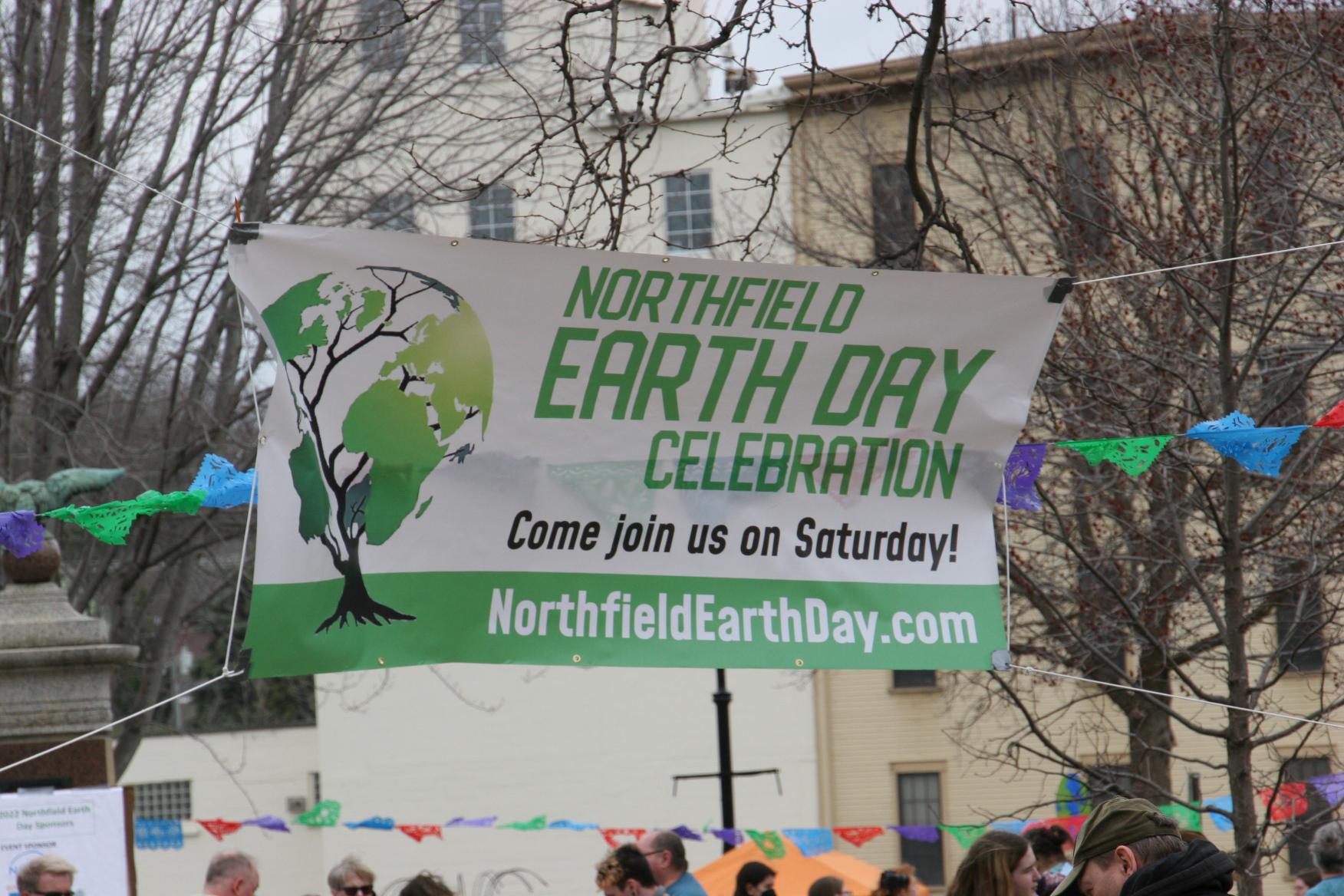
A banner marks the 2022 Earth Day Celebration at Bridge Square in Northfield. This year’s event has been moved indoors to First United Church of Christ. For a complete listing of 2023 events, click here. (Minnesota Prairie Roots copyrighted file photo April 2022)

In 1970, the first celebration of Earth Day happened. Now here we are 53 years later and still trying to deal with issues affecting our planet. A lot of good has happened in those five decades, especially in creating awareness. Sometimes that has led to action. But a lot has also deteriorated.

I thought about that, specifically, “What do I do in my everyday life that reflects care for the world in which I live?”

Topping my list is buying used rather than new. It helps that I really don’t like to shop and that I don’t even care about stuff all that much. No one will ever view me as fashion conscious. I simply don’t care.

This peace-themed art painted on burlap by Jose Maria de Servin, is one of my favorite artworks. I purchased it at a recycled art sale at the Paradise Center for the Arts in Faribault. (Minnesota Prairie Roots copyrighted file photo)

Nearly all of the furniture in my house has come from family, garage sales or thrift shops. The same for art. I love art. It is admittedly my one indulgence. But the art I own—and it’s a lot, enough so that I rotate it off and on my walls—has come from second-hand sources. The dishes in my cupboard were my mom’s. Drinking glasses are vintage. Serving pieces and bowls were passed down or purchased second-hand.
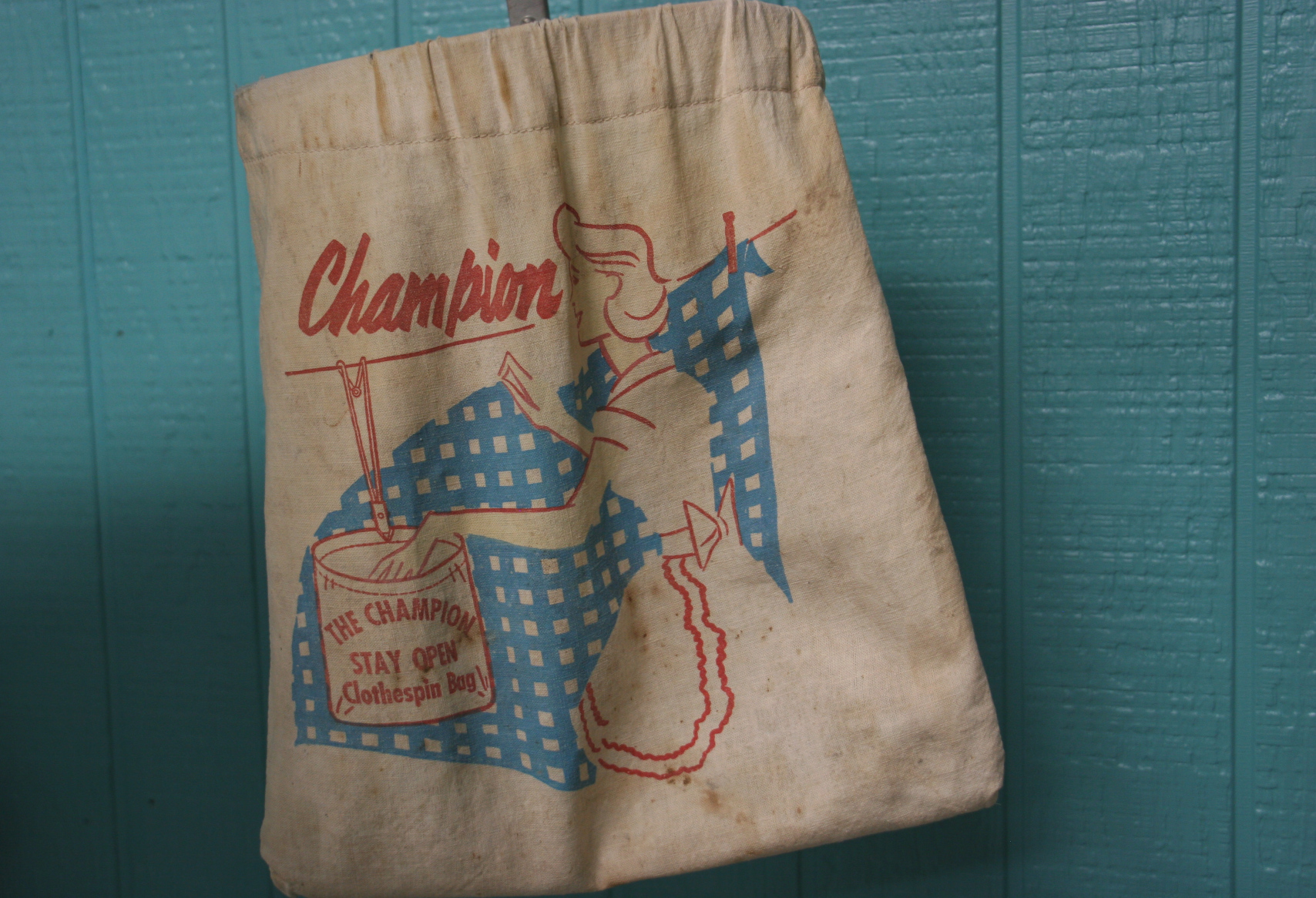
Hanging laundry on the line has been around forever. I photographed this clothespin bag in an exhibit, “Making Lyon County Home,” at the Lyon County Historical Society Museum in Marshall. And, yes, I have a clothespin bag. (Minnesota Prairie Roots copyrighted file photo September 2022)

Then there’s laundry. For decades I’ve dried laundry outside on a clothesline. I love the task of rhythmically clipping clothing to line. It’s therapeutic in connecting me with nature. I feel the sun, if it’s shining. Or I feel the nip of frosty weather numbing my fingers. I feel the wind, hear the birds, notice the shift of seasons. I am attune to Earth.

In the winter, I layer laundry over a drying rack. Seldom do I use my electric dryer. I’m trying to conserve energy, do my part.
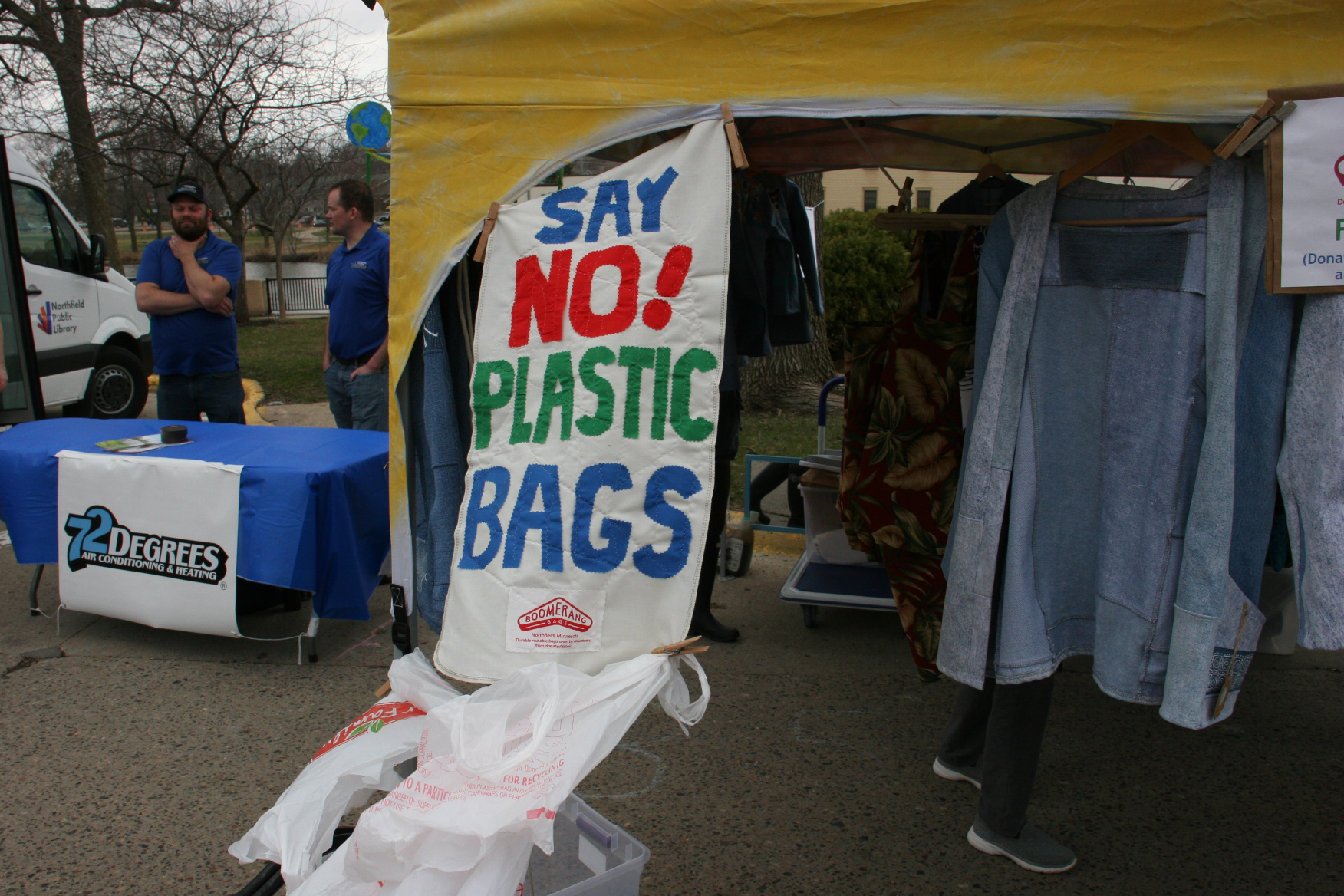
A reminder at last year’s Northfield Earth Day to stop using plastic bags. (Minnesota Prairie Roots copyrighted file photo April 2022)

I also use cloth bags. But only sometimes. I take my boomer-rang cloth bag to bag books at the library. At least I’m consistent with that. But I need to use cloth all the time at all the grocery stores I shop, not just the one that requires bringing your own bags.

I recycle wrapping paper, tissue paper, ribbon, bows and gift bags to the point that my extended family ridicules me for that behavior. I learned this from my mom, who did the same, but for economic reasons. I don’t care if my siblings laugh. I’m doing what’s environmentally right.

Admittedly, I can do more. But it’s a start. Every single effort, big or small, matters. We only have one Earth and we all need to care, and do our part.
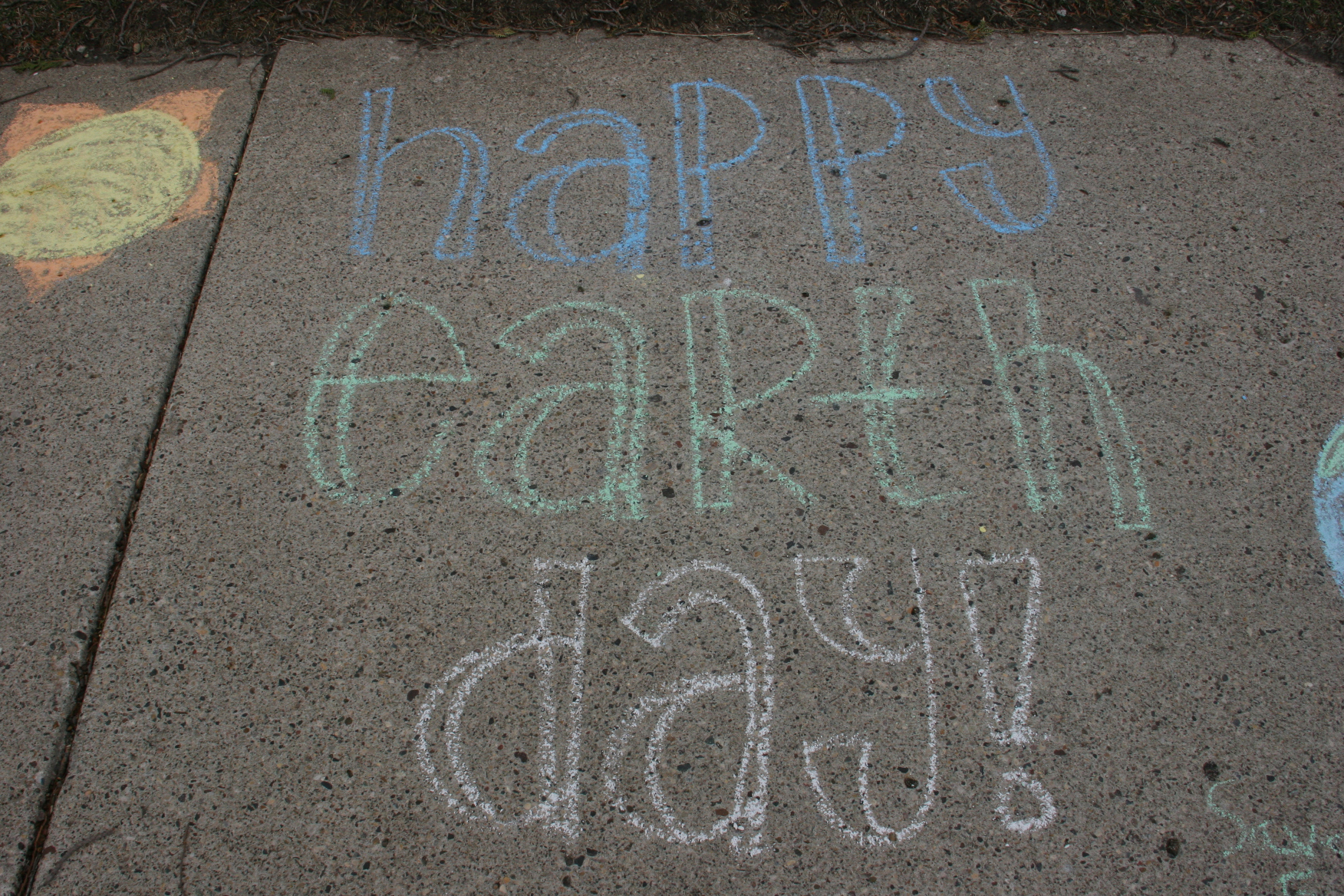
Chalked onto the sidewalk at Northfield’s Bridge Square during the 2022 Earth Day Celebration. (Minnesota Prairie Roots copyrighted file photo April 2022)

TELL ME: What are you doing in an effort to protect and care for our planet?

FYI: Saturday, April 22, is Earth Day. Celebrations are planned locally in Northfield and also at River Bend Nature Center in Faribault.

© Copyright 2023 Audrey Kletscher Helbling


From the 70s to today, caring about Earth September 12, 2022

A massive wind turbine at Faribault Energy Park dwarfs my husband, Randy, walking near it. (Minnesota Prairie Roots copyrighted photo July 2022)

COMING OF AGE in the early 1970s, I held a general awareness of environmental concerns. A respect for the earth and the environment was beginning to emerge as young people and others raised their voices.

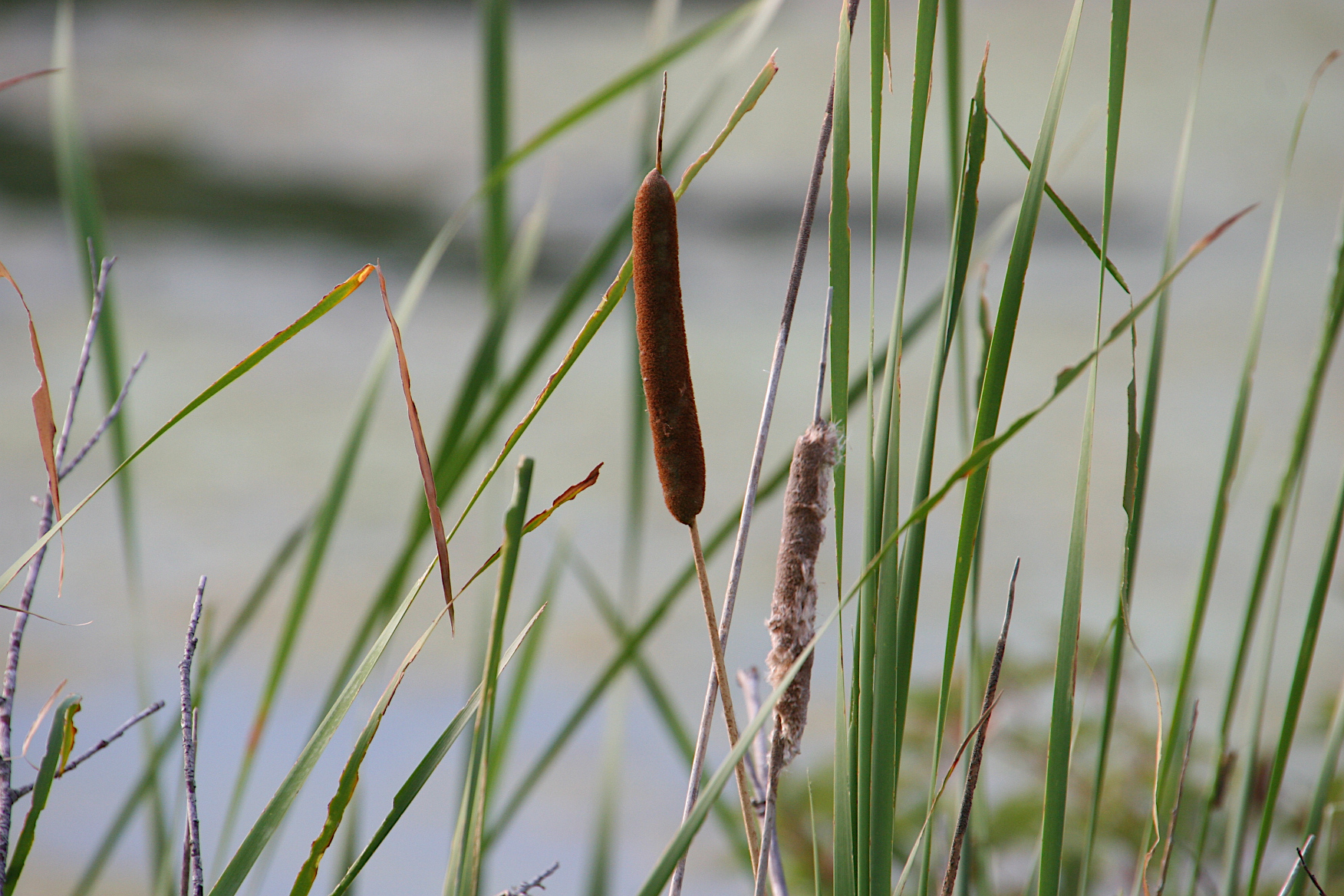
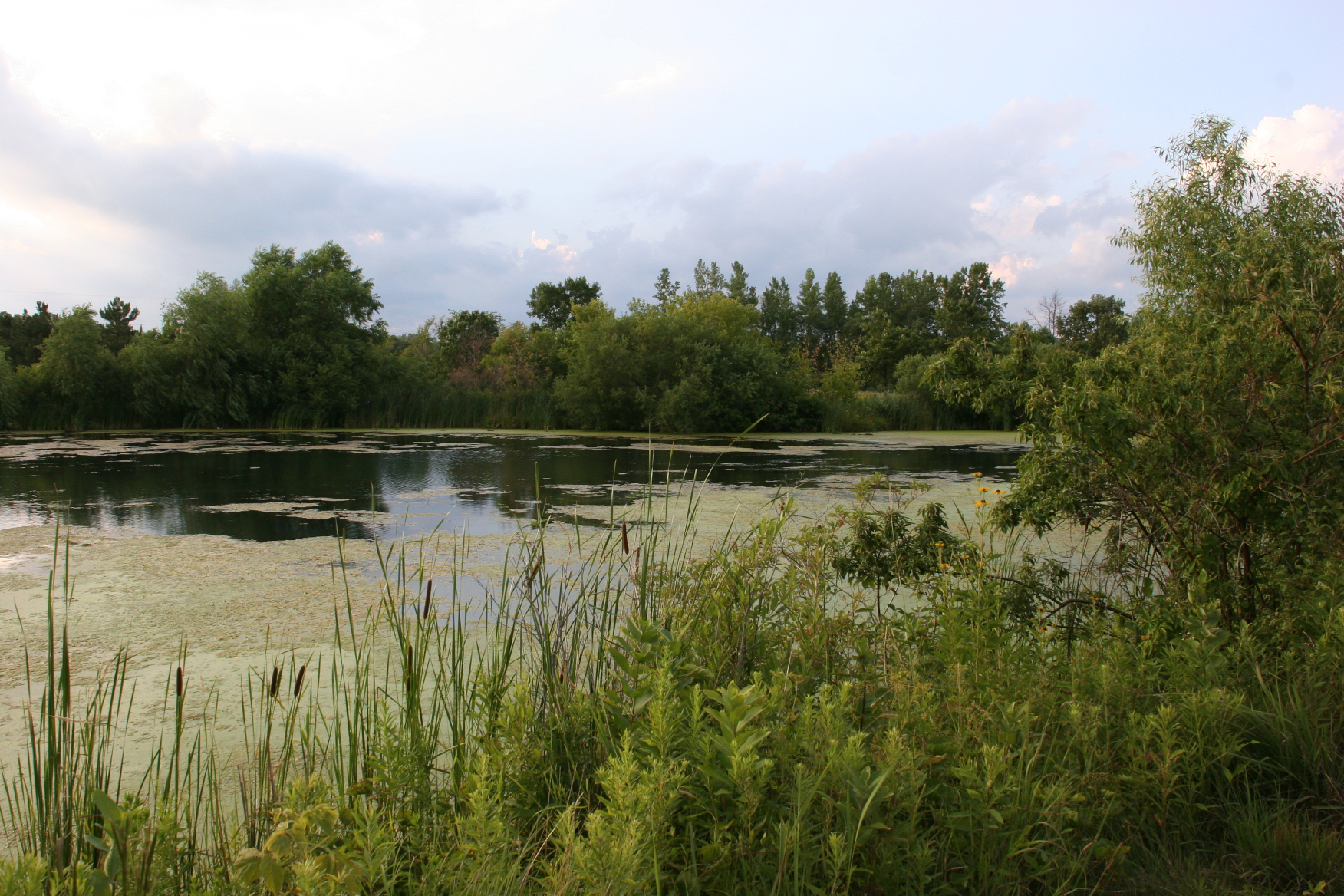
Cattails flourish in the park wetlands. Restoration, rather than draining, of wetlands is the norm today. (Minnesota Prairie Roots copyrighted photo July 2022)

I remember the anti-littering campaigns. The concerns about water and air pollution. The efforts to limit billboards. I recall, too, Earth Shoes, although I’m uncertain what that footwear had to do with anything environmental.

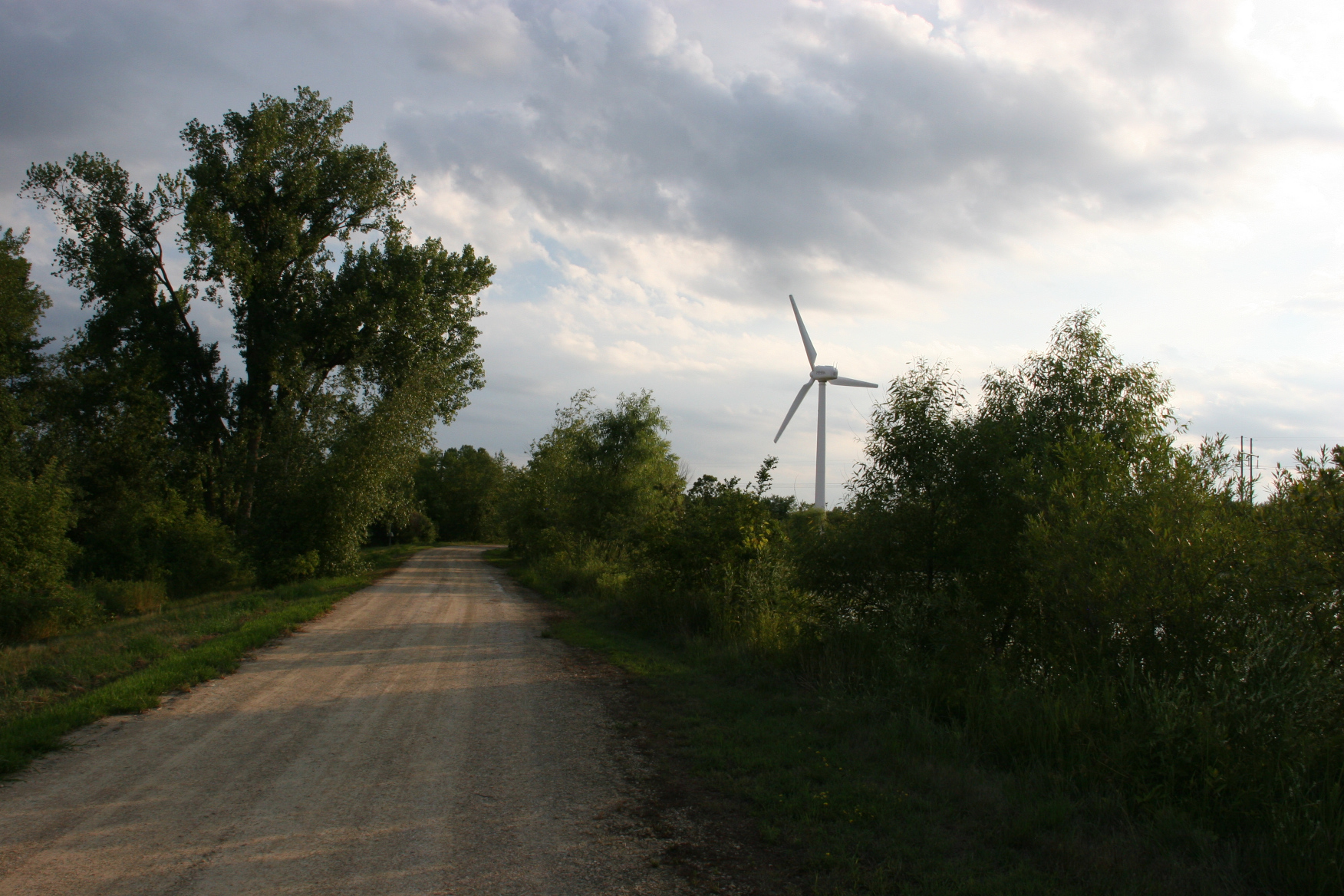
This trail leads to the wind turbine, a teaching tool inside Faribault Energy Park. (Minnesota Prairie Roots copyrighted photo July 2022)

Perhaps previous generations cared, too, but it seems the young people of the 70s started a new environmental movement that pushed personal and societal responsibilities in caring for our planet. Those efforts continue today, but with additional focuses: climate change, alternative energy, electric-powered vehicles and more. Today’s young adults are among those leading the way in discussions and effective change.

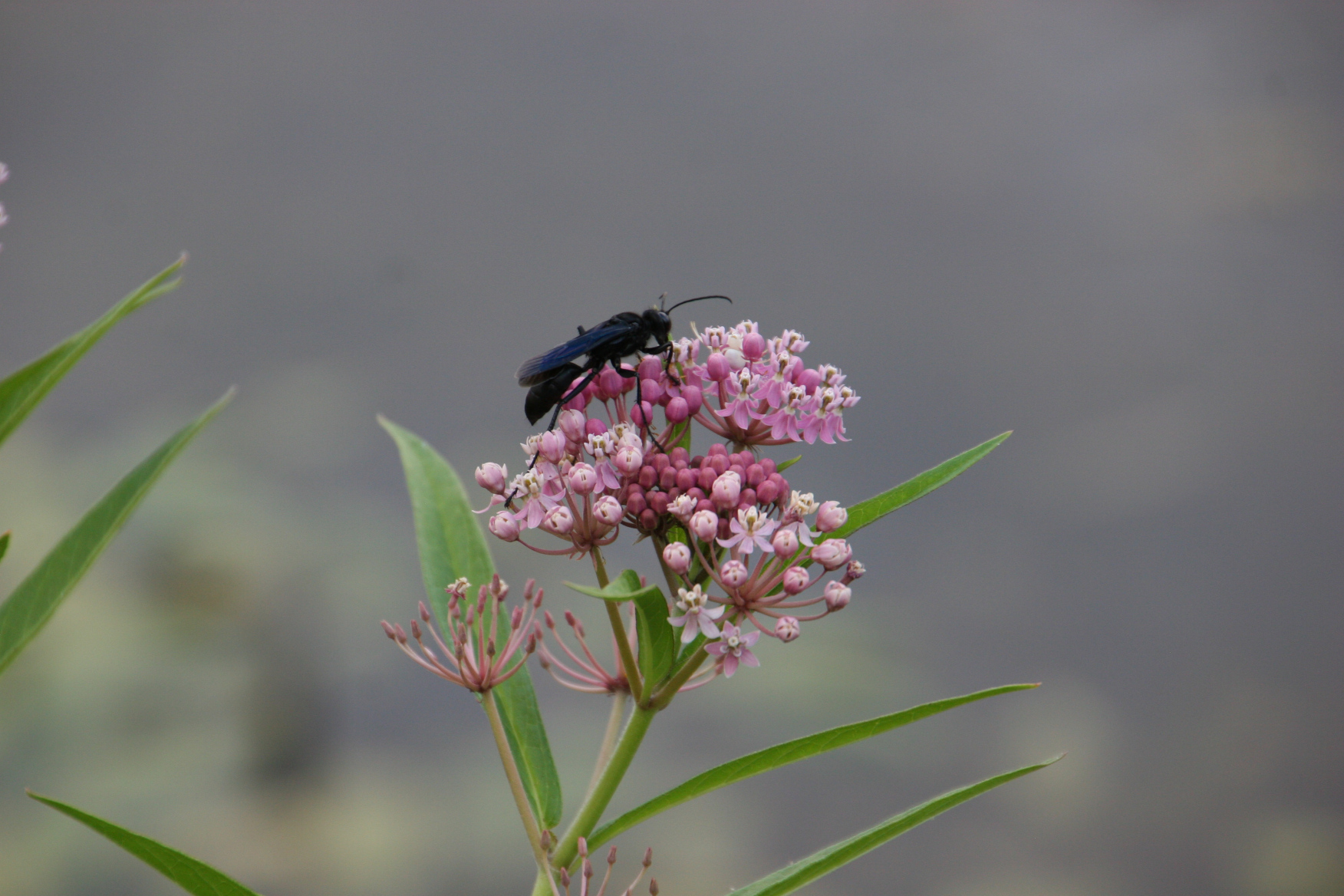
I grow milkweeds in my Faribault yard. I photographed this milkweed flower with an unknown insect atop at the energy park. (Minnesota Prairie Roots copyrighted photo July 2022)

I feel such hope. Within my own family circle, my eldest daughter and son-in-law compost food and bio-degradable paper products. My son owns an e-bike, not a car, his primary mode of transportation between his Indiana apartment and Purdue University. We recycle, donate or give away items we no longer need. Every little bit helps. My young granddaughter wears hand-me-downs from her cousins. Just like her mother before her, whom I outfitted primarily via rummage sale purchases.

Unlike this dead frog flattened on a road at the energy park, thrifting/recycling/upcycling is very much alive. (Minnesota Prairie Roots copyrighted photo July 2022)

Thrifting is in vogue. I recently spoke with a shop owner in Northfield who said local college students flock to her antiques and collectibles store to buy vintage clothing from one particular vendor.

Solar panels inside the park focus on alternative energy. (Minnesota Prairie Roots copyrighted photo July 2022)

Across the Minnesota countryside, solar fields are replacing crop fields. Wind turbines are popping up, too, adding to those that have been around for decades.

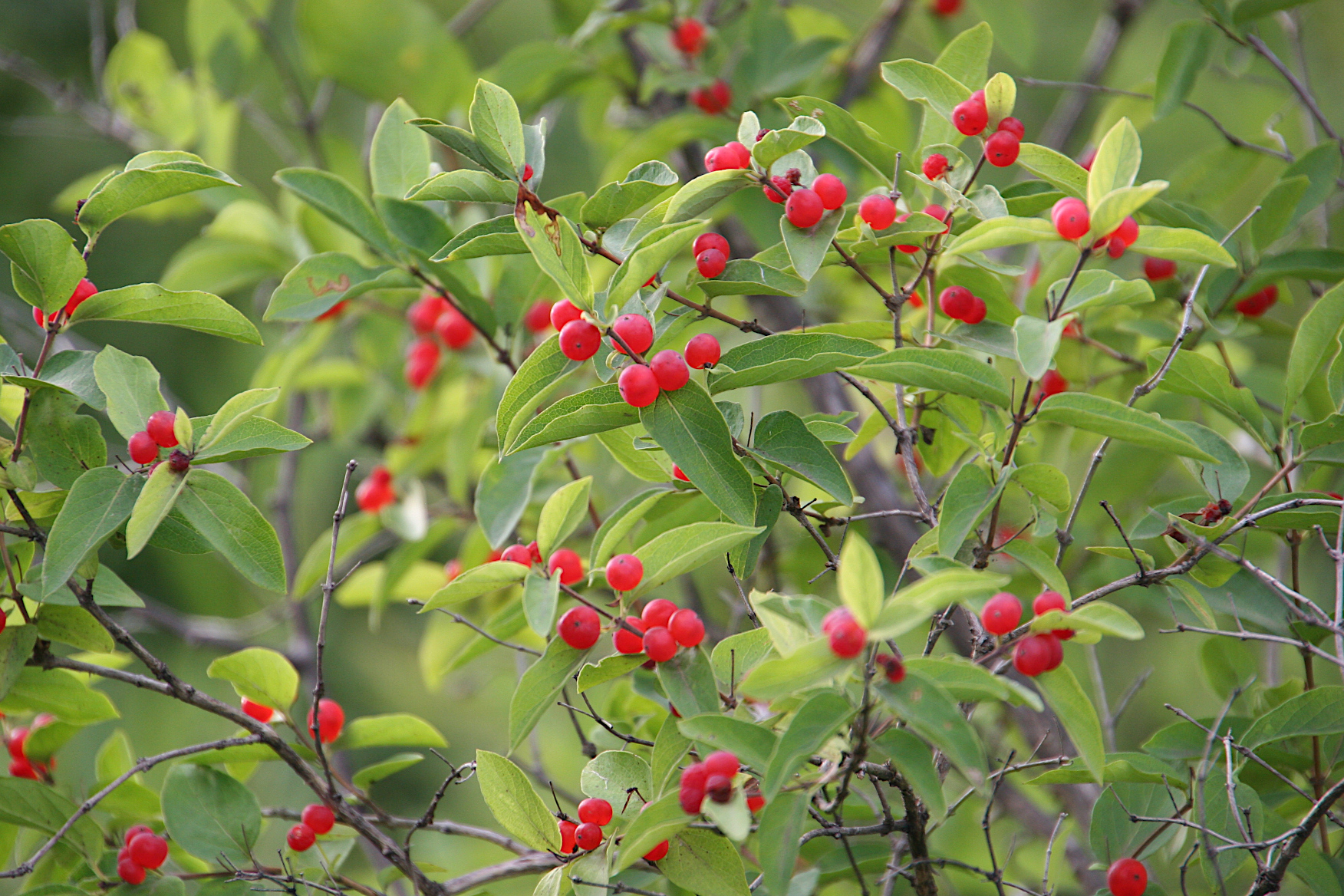
Bold red berries burst color into the park’s landscape. (Minnesota Prairie Roots copyrighted photo July 2022)

It makes a difference—these seemingly small and big changes. A shift in attitudes with a new-found appreciation for our natural world can preserve, and hopefully, improve this place we call home.

A sign posted inside Faribault Energy Park lays out the rules. (Minnesota Prairie Roots copyrighted photo July 2022)

Faribault Energy Park, owned and managed by the Minnesota Municipal Power Agency, aims to model environmental responsibility and innovation, according to its website. The power plant is a dual-fuel (natural gas and fuel oil) facility which runs only during periods of high demand for electricity.

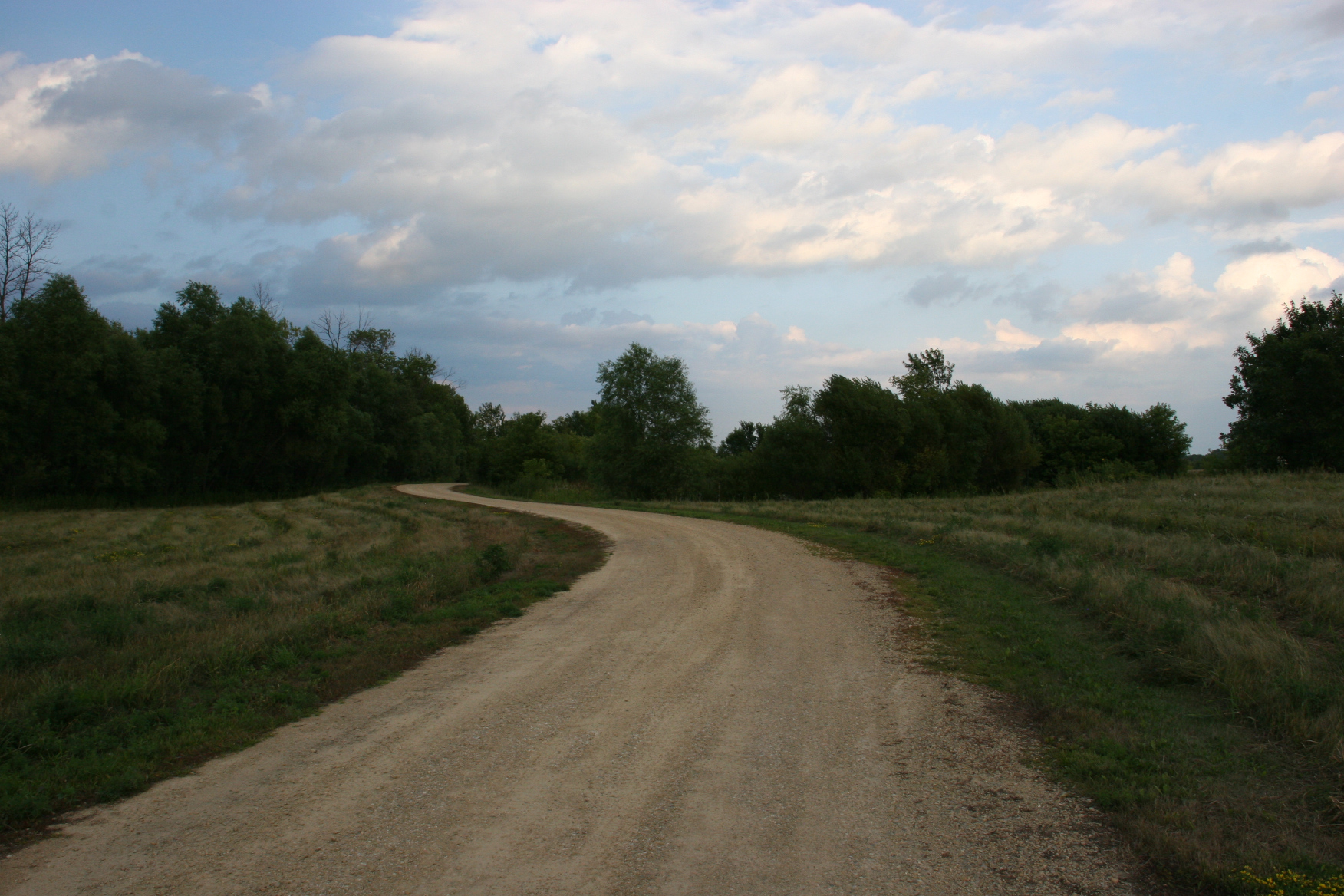
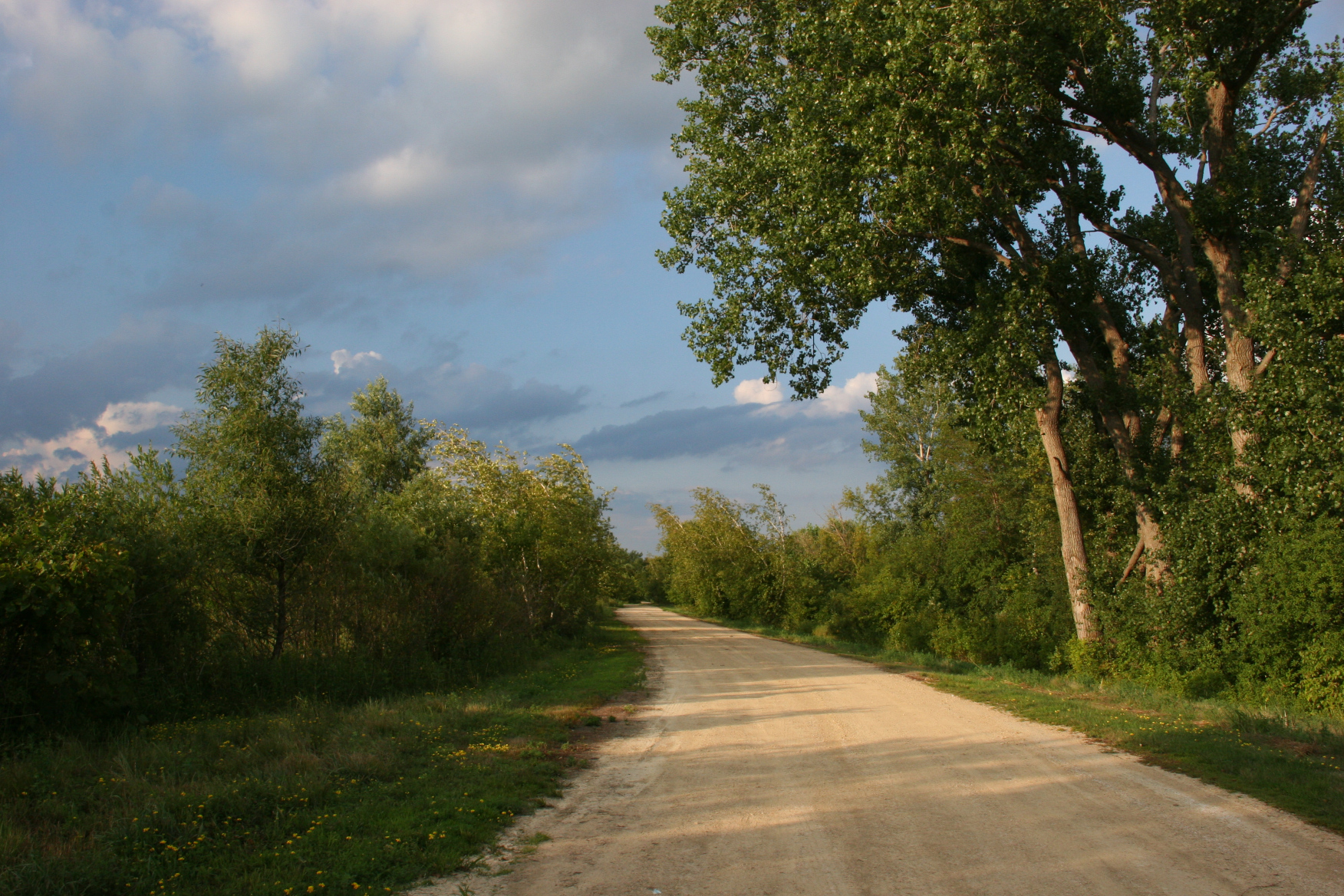
Dirt roads wind around two ponds. (Minnesota Prairie Roots copyrighted photo July 2022)

Although I’ve never been inside this power plant (tours are offered, primarily to schools), I’ve walked the grounds many times. The MMPA created a public park here on its 35 acres of wetlands. I love following the dirt roads that wind around ponds. And while it’s not the most peaceful place given the location along busy Interstate 35, the park still holds an appeal for me.

Beauty even in a thistle growing along pond’s edge. (Minnesota Prairie Roots copyrighted photo July 2022)

On this particular visit, I didn’t see any waterfowl, unusual, but perhaps not due to avian influenza. (Minnesota Prairie Roots copyrighted photo July 2022)

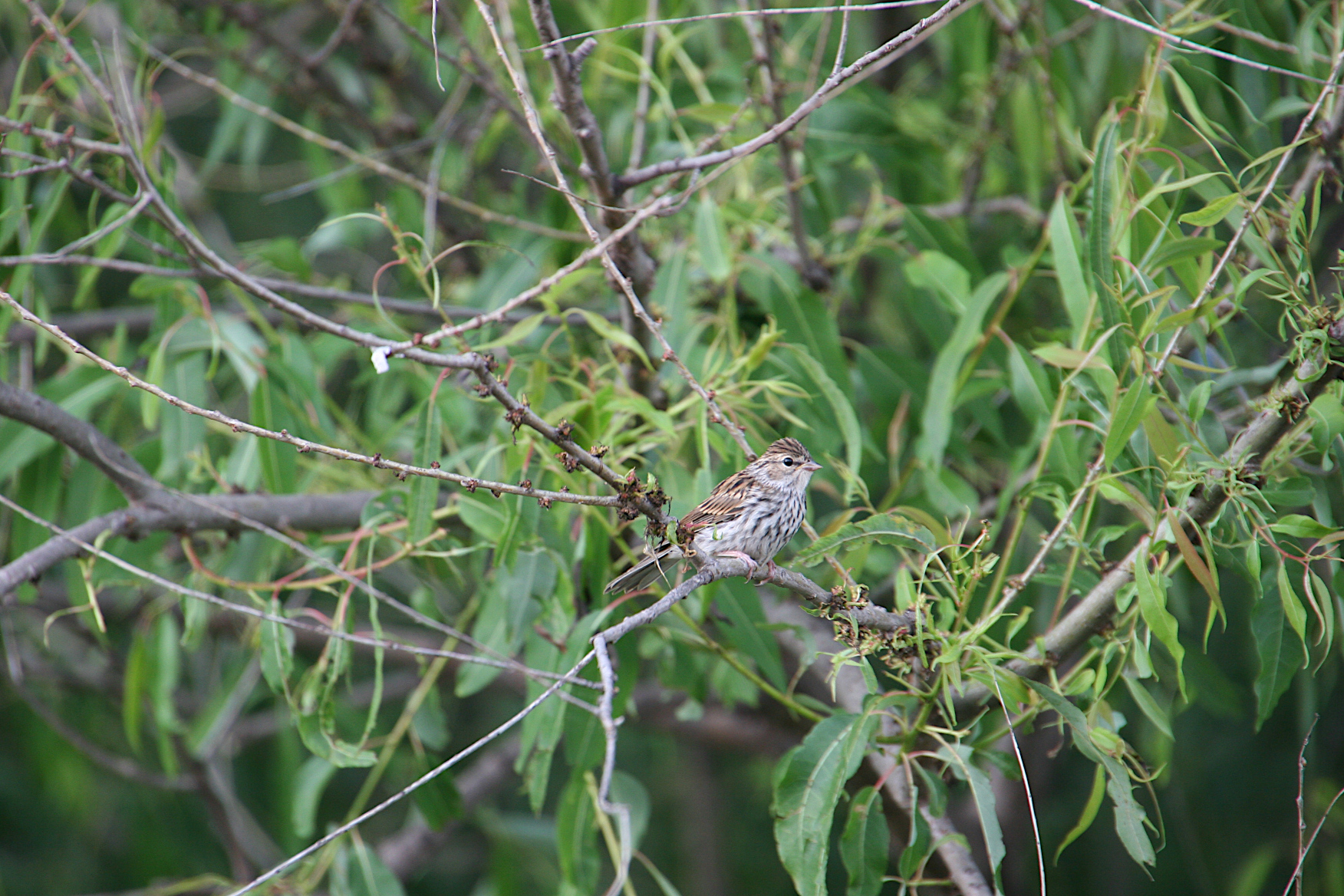
One of many birds observed inside the park. (Minnesota Prairie Roots copyrighted photo July 2022)

That enjoyment comes in vegetation—cattails, flowers, trees, grasses—and in the birds, including waterfowl.

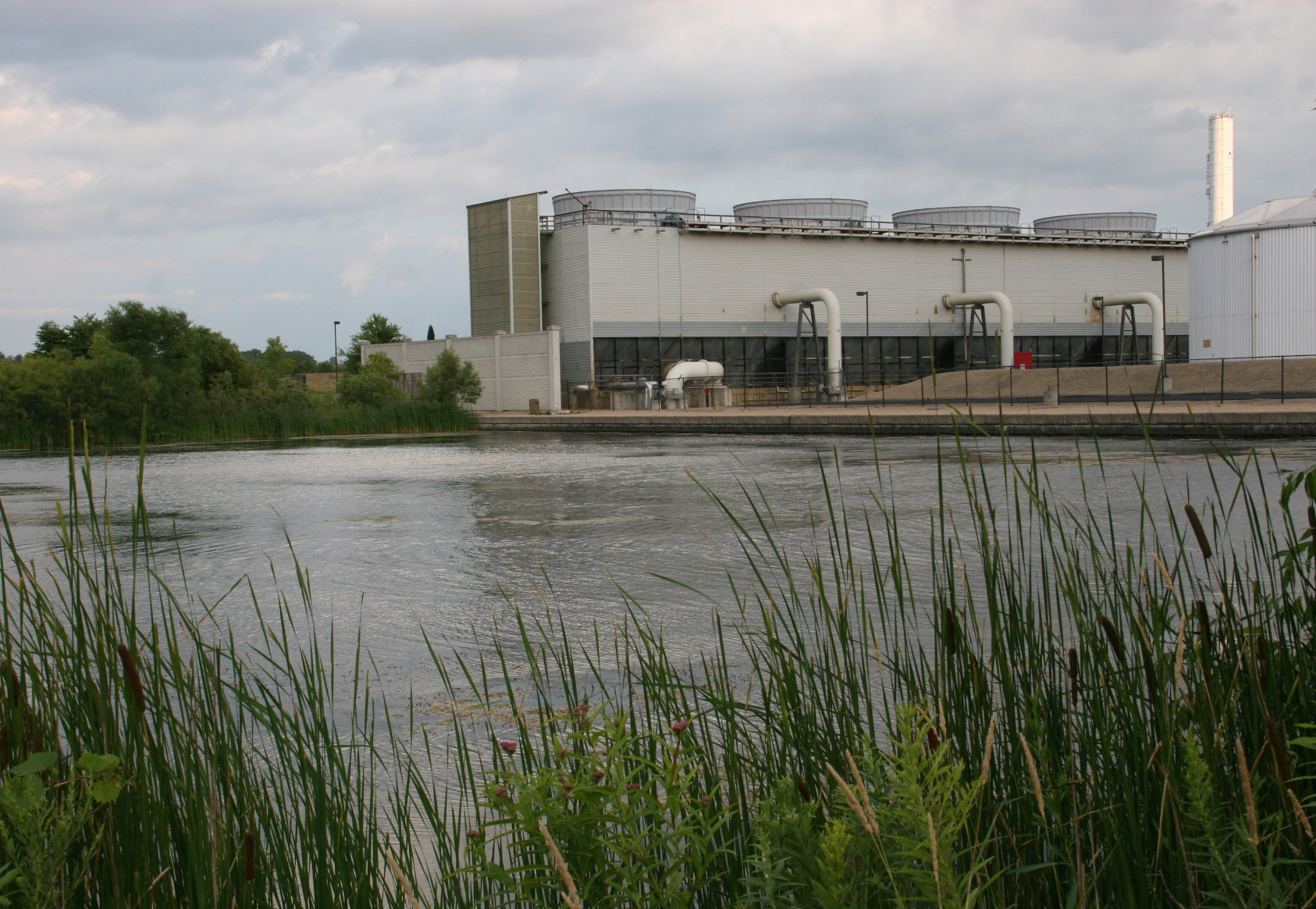
Anglers fish this pond next to the Faribault Energy Park power plant. (Minnesota Prairie Roots copyrighted photo July 2022)

Other visitors fish here, in the large pond next to the power plant. This is also an educational grounds with a massive wind turbine and a stand of solar panels in place.

I especially like walking this park around sunset. (Minnesota Prairie Roots copyrighted photo July 2022)

Combined, these elements remind me that I cannot take the natural world for granted, that I need to be environmentally-aware, that I need to do my part to protect and preserve Earth. I continue to learn, some 50 years after an awareness sparked within me that I really ought to care about this planet on a personal level.

© Copyright 2022 Audrey Kletscher Helbling
 

Pass the salt, please, or not February 20, 2020

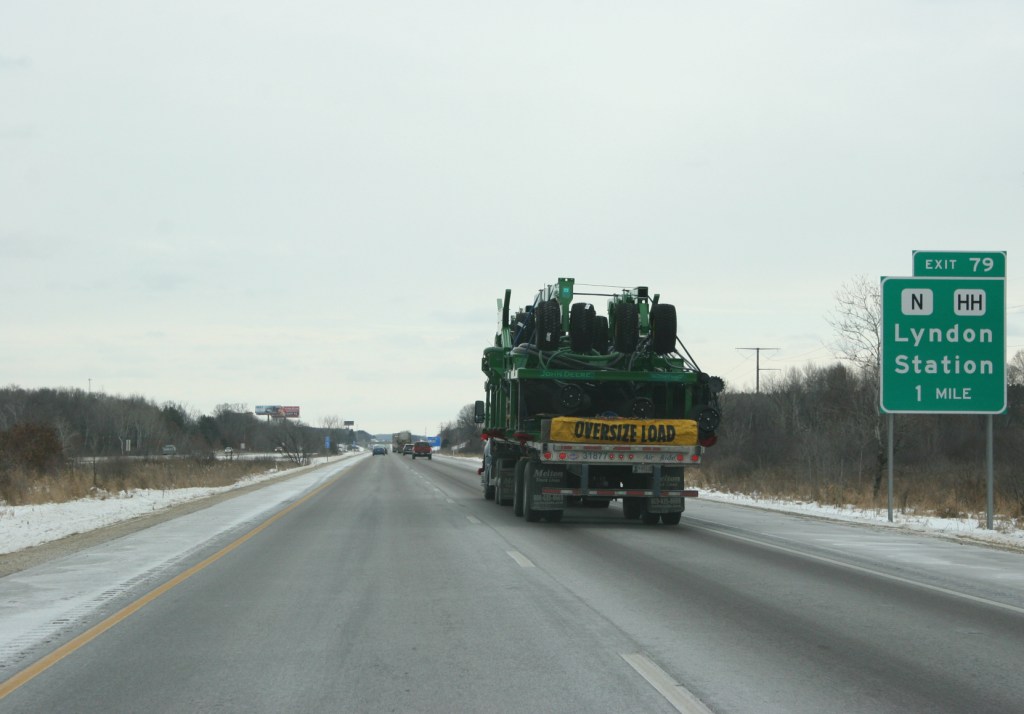
Interstate 90 in Wisconsin is noticeably white from road salt. It was like this all the way from La Crosse to Madison last weekend.


WHEN YOU’RE ON THE INTERSTATE for nearly four hours, you start to notice things. Like the semi drivers seemingly nodding behind the wheel as their rigs hit the rumble strip or drift toward your lane. Or the guy driving with his window open on a cold February afternoon because maybe, just maybe, he’s trying to stay awake. Or the driver who can’t wait even a second as he tailgates, then swoops around on the right before cutting in front of you.

All of this happened on a recent trip to and from Madison, Wisconsin, along Interstate 90. In addition to the questionable, and often frightening behavior (especially by four professional truck drivers), I noticed something else—a heavily-salted interstate. I-90 in Wisconsin stretched before Randy and me like ribbons of white.


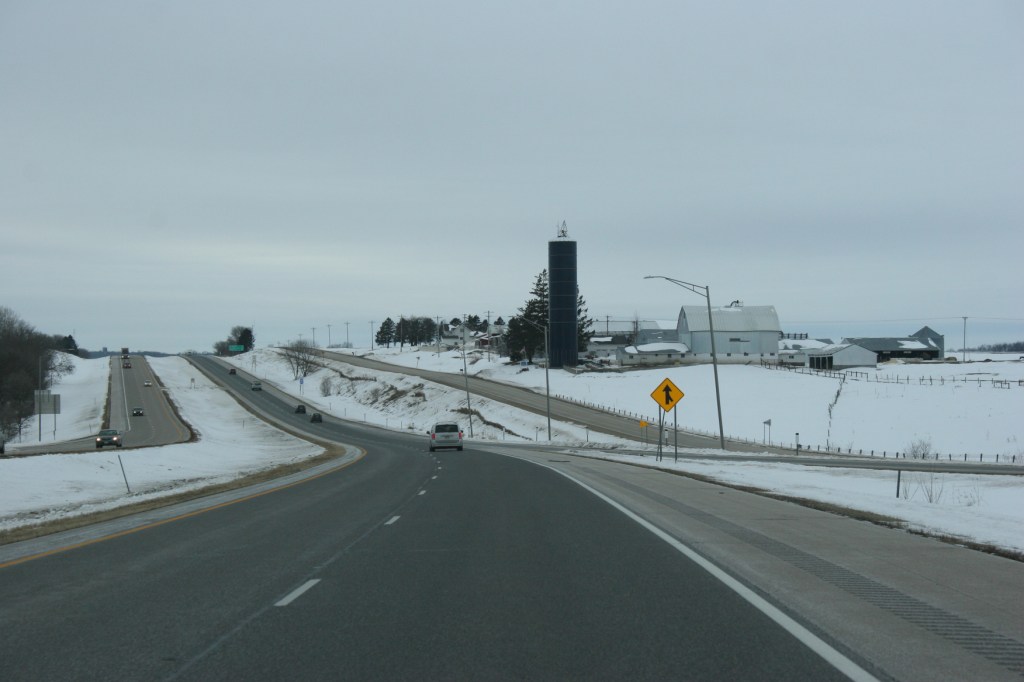
There was much less salt, if any, on I-90 in southeastern Minnesota.


By contrast, I-90 in Minnesota appeared mostly clear of road salt. Why the difference in bordering states? I don’t know the stance Wisconsin takes on salting to cut snow and ice. But I do know that the Minnesota Department of Transportation is shifting toward a more conservative use of salt due to concerns about salt entering our waterways. We are, after all, The Land of 10,000 Lakes.


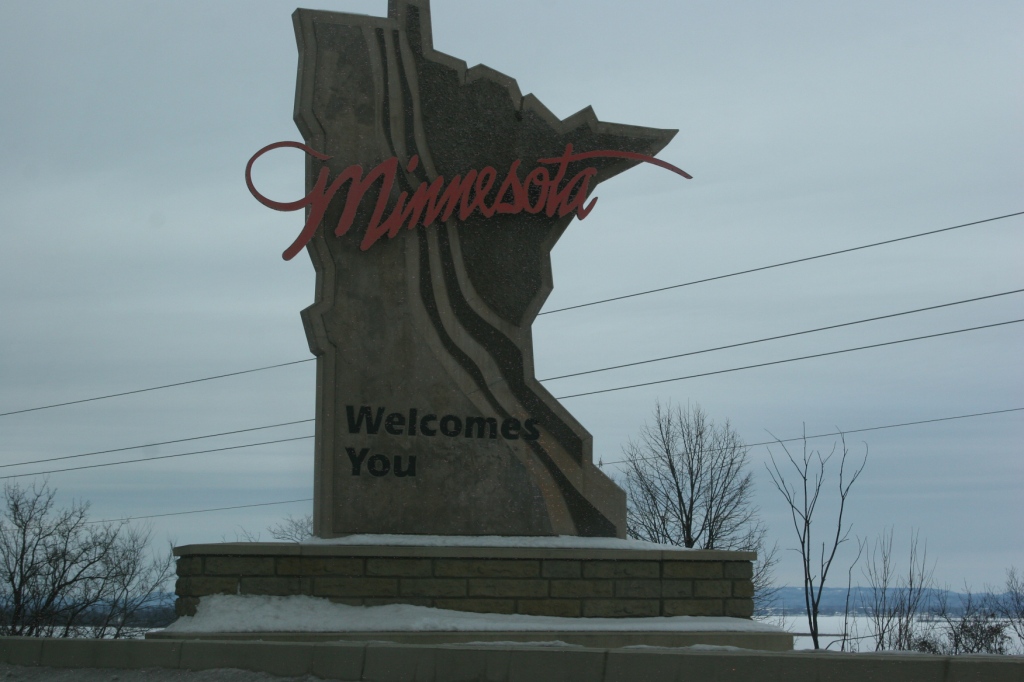
This sign along I-90 welcomes travelers to Minnesota along the Mississippi River by La Crosse, Wisconsin.


In media reports I’ve heard and read, MnDOT is taking a technological and scientific approach to treating roads in an effort to reduce salt usage. That includes pre-treating roads before storms (which uses less salt), relying on calibrations, factoring in temperature and other data to determine how roadways should be treated. It’s no longer simply a load up the trucks with salt and sand and chemicals and get out there mindset.

I appreciate this respect for our natural resources, this shift in thinking. Just remind me of that the next time I complain of icy roads or sidewalks. Or the next time Randy and I throw salt down on our icy driveway or sidewalk.

© Copyright 2020 Audrey Kletscher Helbling