Minnesota Prairie Roots

Writing and photography by Audrey Kletscher Helbling

An unbelievable 83,451 still missing March 23, 2012

Filed under: Uncategorized — Audrey Kletscher Helbling @ 7:21 AM
Tags: , , , , ,

A tribute to POWs and MIAs at the veterans' memorial in Northfield.

United States suspends recovery of troop remains in North Korea

I nearly skipped over the AP article on page A5 of my local daily newspaper. But then I paused, allowed my eyes to linger on the headline before reading the heartbreaking story.

Just as efforts to find American service members missing during the Korean War were set to resume, that mission has been suspended. The action comes on the heels of North Korea’s plans to rocket-launch a satellite in apparent violation of United Nations’ sanctions.

That’s the situation in a nutshell. Hopeful families who have been waiting for the return of their loved ones for more than 60 years still wait.

I cannot imagine. The wait. The not knowing. The pain in losing a child to war. How many mothers and fathers of Korean War veterans have died without bringing their soldier boys back home for proper burial? Many.

The statistics shocked me. I had no idea that 7,960 Americans are unaccounted for from the Korean War, according to the Defense Prisoner of War-Missing Personnel Office, U.S. Department of Defense. Among the missing/unaccounted for are 146 Minnesotans. Click here to read that list.

But the numbers are even more staggering when you consider the totals for wars from World War II through the 1991 Gulf War. There are 83,451 Americans missing. That’s almost the entire population of Duluth. Most of the unaccounted for, 73,690, served during WW II.

Yet, until you begin thinking of the missing in terms of names, the totals seem merely overwhelming statistics that cannot be comprehended. So I went to the DPMO website and clicked on news releases. There I found what I was seeking—the names of soldiers gone missing in Korea and who, all these years later, have been identified through the use of modern-day forensics.

Just to explain, North Korea gave the U.S. 208 boxes of remains believed to be those of 200-400 U.S. servicemen, according to the DPMO.

Among the recently-identified remains are those of Army Cpl. William R. Sluss, 21, of Nickelsville, Va. He was captured by the Chinese and died as a result of malnutrition in the spring of 1951 while a POW in North Phyongan Province, North Korea.

The remains of Army Pfc. George A. Porter, 21, of Philadelphia, were also recently-identified. He was among more than 100 men taken prisoner by the Chinese during what became known as the “Hoengsong Massacre.”

And then there’s Sgt. Willie D. Hill, 20, of Catawba, N.C., whose infantry division was encircled by Chinese forces in November 1950 resulting in heavy losses, including that of Hill.

William. George. Willie.

They were young men lost to war, in a very literal sense.

I have never lost a loved one to death by war. But I have lost a loved one to war. My father fought as an infantryman on the front lines during the Korean War. He was wounded on Heartbreak Ridge and decades later, in May of 2000, was awarded a Purple Heart. He returned to Minnesota a changed man, unable to bury the horrific memories of buddies blown apart before his eyes, of enemies he’d killed.

Today he would have been identified as suffering from Post Traumatic Stress Syndrome. But back then, upon his military discharge in 1953, my dad was simply expected to return to civilian life as if nothing had changed for him personally.

April 3 marks nine years since my dad died at the age of 72. I am convinced that he would have lived longer had any type of counseling been available to him upon his return  to the farm fields of southwestern Minnesota.

Yet, despite my wish that he could have gotten help, I am thankful that he came home. In one piece. Alive.

Thousands of other American families do not have the comfort that is mine—to visit a cemetery knowing their loved one is buried here, on American soil.

© Copyright 2012 Audrey Kletscher Helbling


Remembering Ray November 11, 2011

My dad carried home a July 31, 1953, memorial service bulletin from Sucham-dong, Korea.

THEY DIED IN SERVICE to their country—Frankie L. Davis, Eugene Jones, Charles Musgrove, Raymond W. Scheibe…

Names. Of soldiers. Men who were remembered during a July 31, 1953, memorial service in Sucham-dong, Korea.

Names, typed onto a service folder that my dad, Elvern Kletscher, carefully folded and carried home to southwestern Minnesota from the killing fields of Korea.

One name—Ray Scheibe—that meant so much to him. A soldier-brother. His 22-year-old friend. His buddy who died, blown apart by a mortar the day before he was to leave Korea and return home to his wife and 6-week-old daughter in Wolbach, Nebraska.

My father witnessed Ray’s horrific death. He never forgot Ray.

Neither have I.

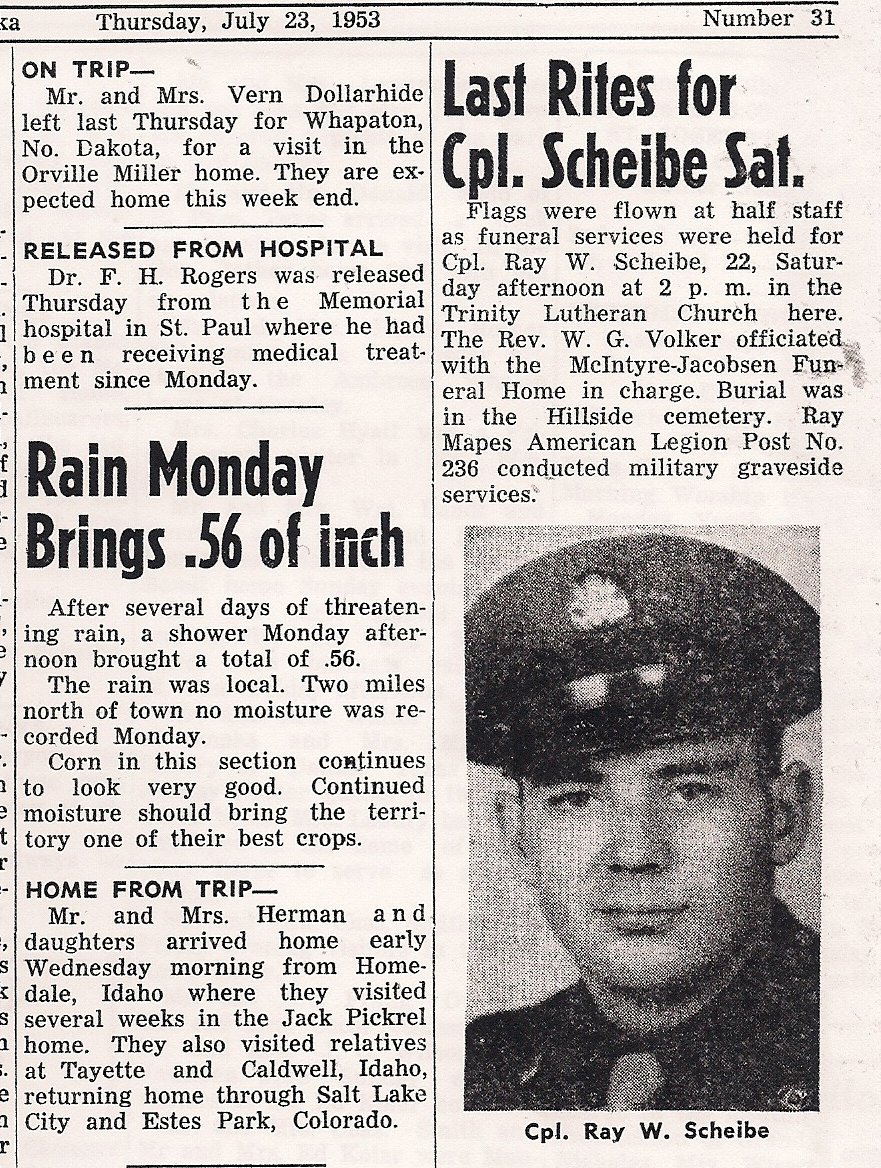
A story about Cpl. Ray W. Scheibe, published in the July 23, 1953, issue of The Wollbach Messenger.

My dad’s been gone since 2003; his buddy since that fateful day during the Korean War on June 2, 1953.

Yet their intertwined lives as soldier-brothers remain forever preserved in black-and-white photos and that service bulletin tucked inside a shoebox stored in my office. Memories of war and of lives lost confined to a box measuring 13 x 6.5 x 4 inches.

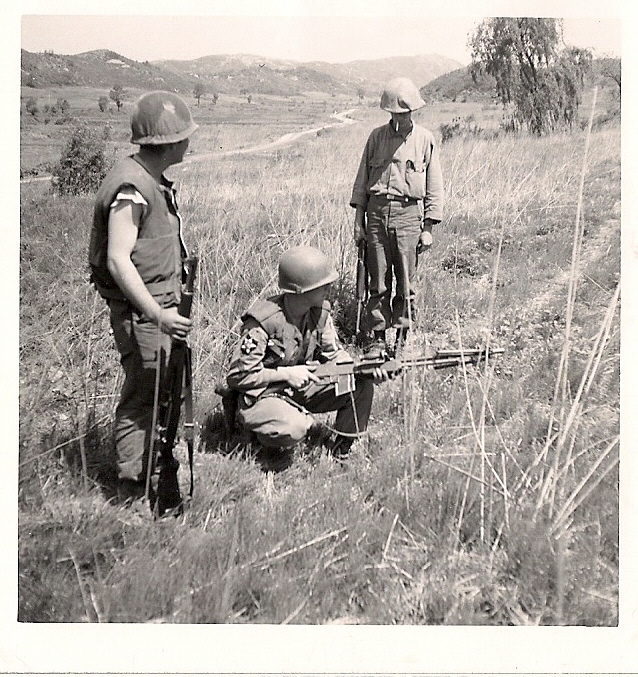
This photo, taken by my dad, shows Ray on the left. The photo is dated May 1953. On the back my dad had written: "Sgt. Shibe, June 2, 1953."

It doesn’t seem right, that I should keep these photos and scraps of war in a non-descript box, pushed into the back of a dresser drawer. But that is how my dad kept his war memories, stashed in that shoebox, shoved out of sight, away from family, away from emotions that could easily overwhelm him.

Two years after my dad’s death, I became interested in the contents of that shoebox and began wondering about that baby girl back in Nebraska—Ray’s daughter. I decided to look for her.

After a short search, I found Terri living in Harlan in southwestern Iowa, about five hours from my Faribault home. (Click here to read a previous blog post about finding Terri.) We’ve talked, although not recently, by phone, exchanged e-mails, letters and Christmas cards.

Yet, we’ve never met.

Every Veterans Day, every Memorial Day, every June 2, I think of Terri and her dad and how her dad never came home. And mine did.

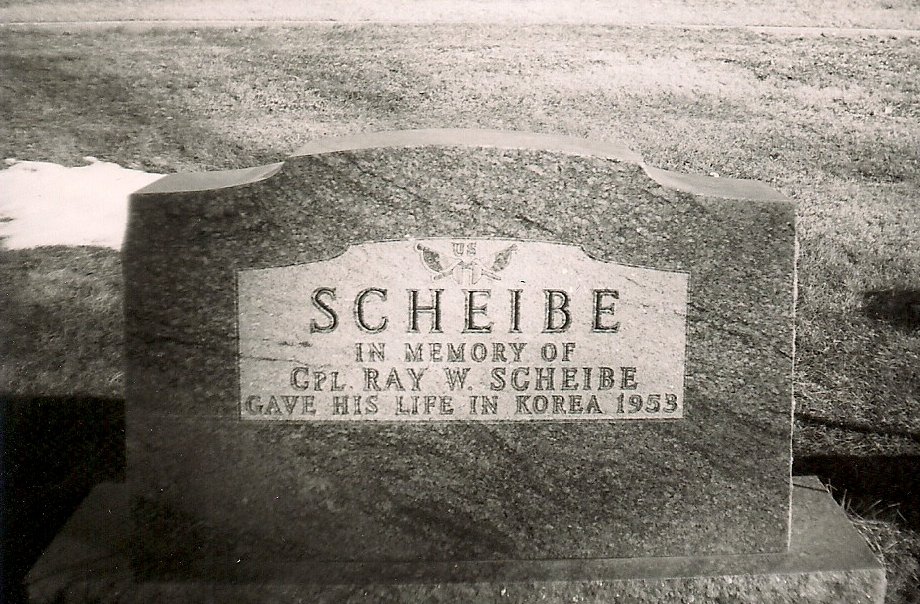
Sonny Nealon, Ray's best friend in high school, sent me this photo he took of Ray's gravestone.

© Copyright 2011 Audrey Kletscher Helbling
 

Thoughts on the latest conflict in Korea November 23, 2010

Filed under: Uncategorized — Audrey Kletscher Helbling @ 8:38 PM
Tags: , , , , , , ,

WHEN I HEARD this morning of the North Korean attack on South Korea over contested waters, I thought instantly of my dad. He fought on the front lines during the Korean War and was wounded at Heartbreak Ridge.

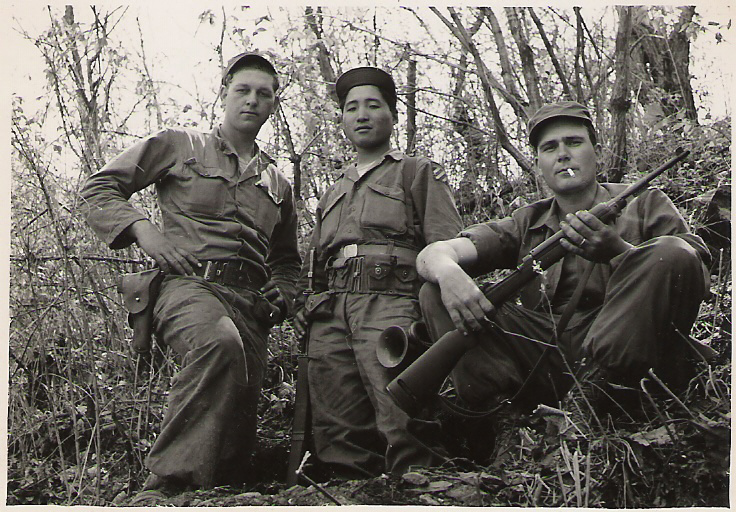
My father, Elvern Kletscher, left, with two of his soldier-buddies in Korea.

He, like so many other Americans, gave of themselves in Korea and, still, 60 years later, the conflict between the north and the south remains. Were the Americans’ efforts six decades ago worth the personal losses given nothing was ever truly resolved?

I know what my dad sacrificed for his country. He gave up a certain sense of inner peace. He was forever haunted by the horrors of war. That affected many facets of his life and impacted his family too. Me. My mom. My siblings. Life was sometimes a struggle for him.

But my dad was lucky. He survived. He did not die, like his buddy Ray, who was blown apart the day before he was to leave Korea. My father saw his friend die. You never forget something like that. I heard the horrible, wrenching story many times.

All of these thoughts passed through my mind today. I miss my dad, who died in 2003. I wonder how different he may have been had he never been called upon to defend South Korea, to kill North Koreans, to see his friends die upon the mountains of Korea.

I wonder. And, yes, today, with the news of the escalating tension, my heart breaks.

© Copyright 2010 Audrey Kletscher Helbling


Reflecting at a veterans’ memorial November 12, 2010

Filed under: Uncategorized — Audrey Kletscher Helbling @ 12:10 PM
Tags: , , , , , , , , , , ,

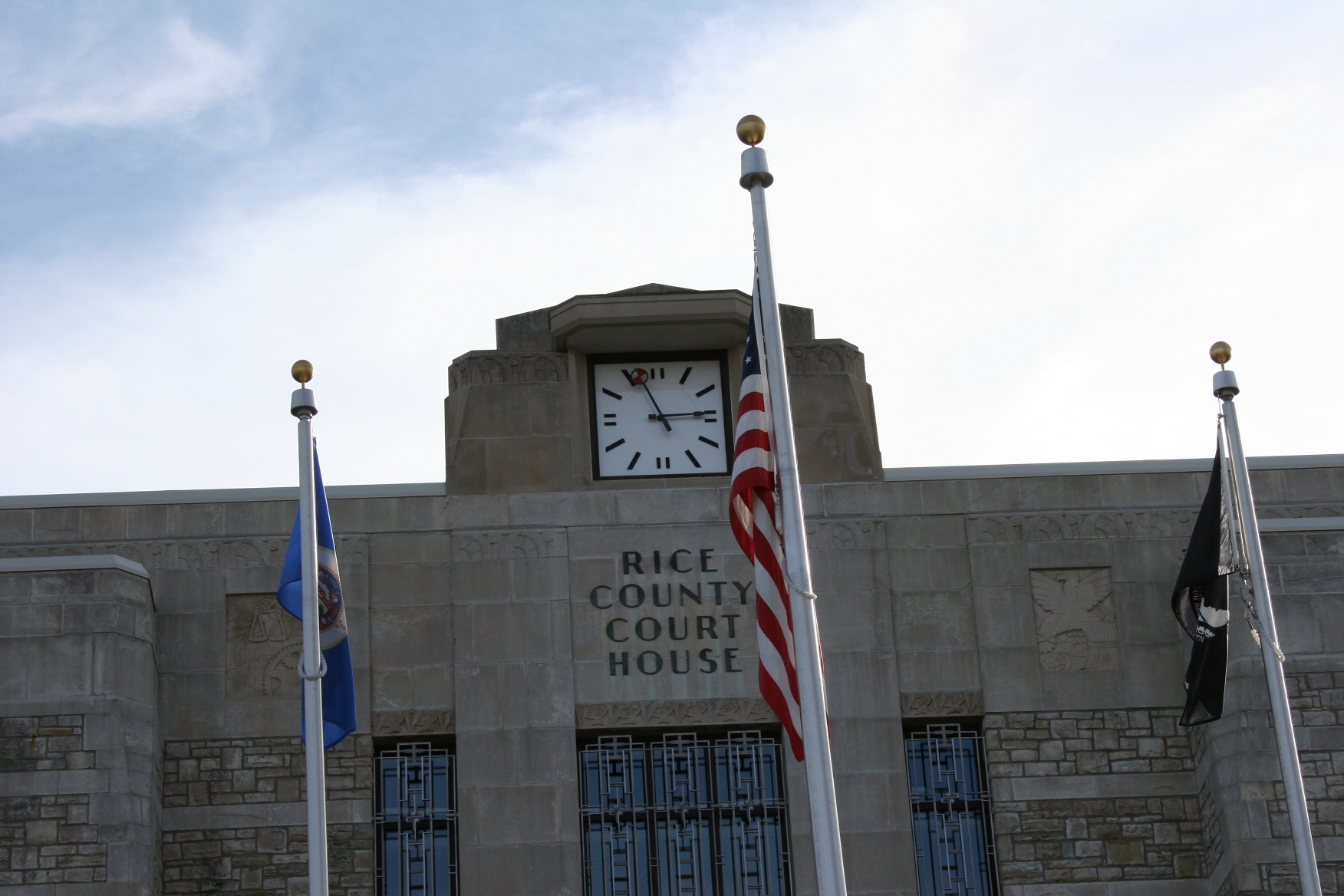
Rice County Courthouse, Faribault

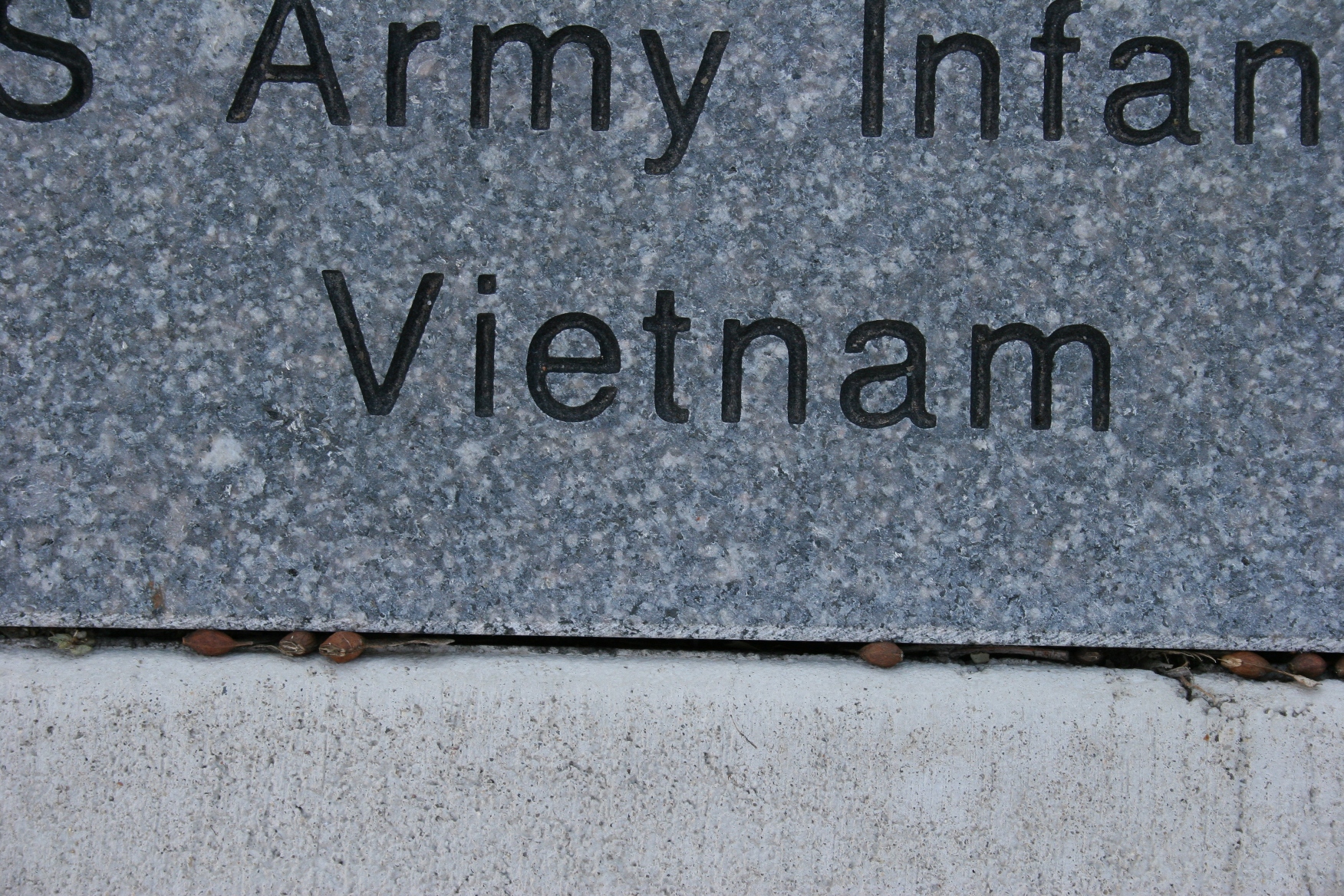
I DIDN’T ATTEND any Veterans Day ceremonies yesterday, and perhaps I should have. But several days earlier, I paid my own quiet tribute by walking the grounds of the Rice County courthouse where a veterans’ memorial expansion project is underway. For years a lone Civil War statue has stood there honoring those who served.

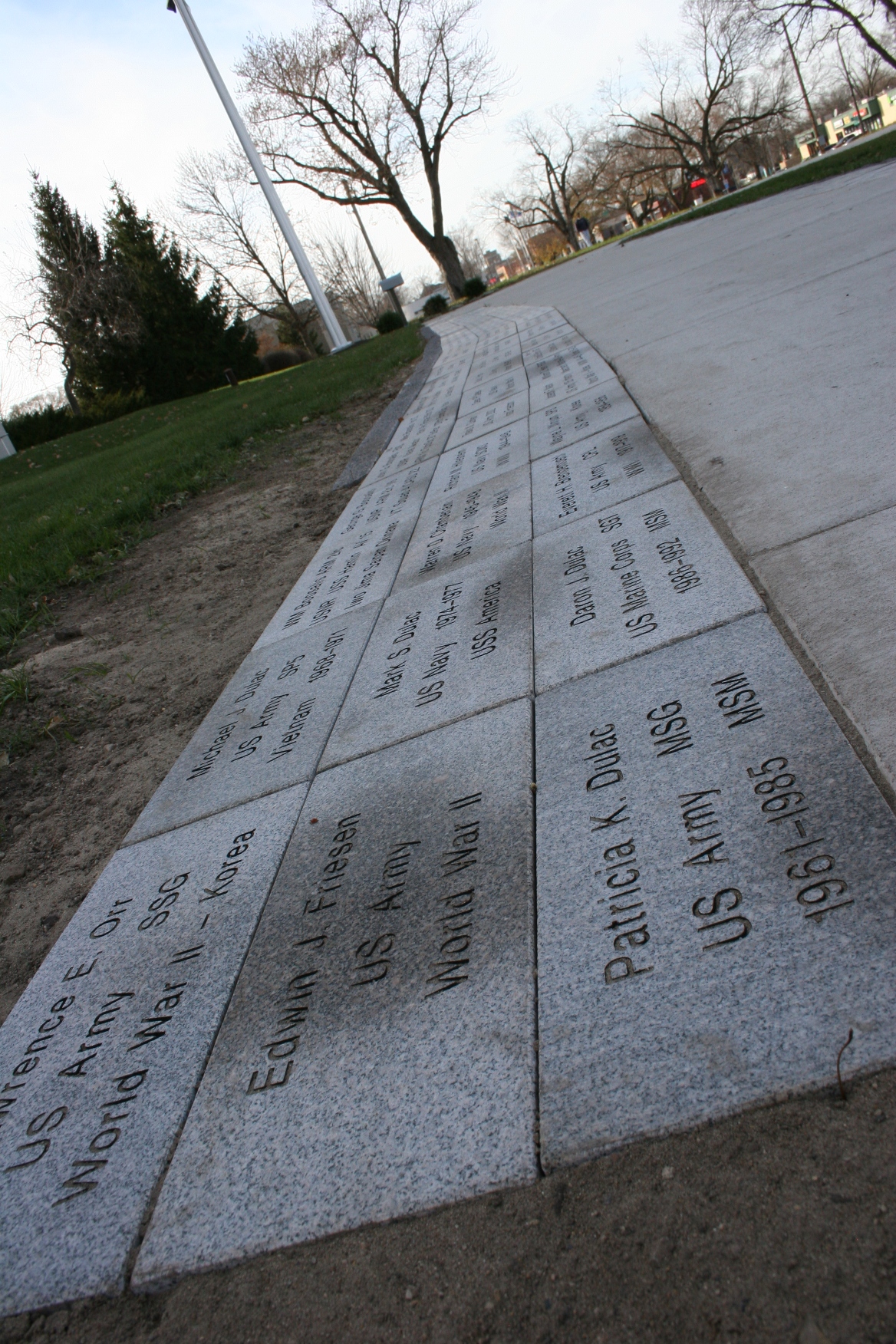
Today new sidewalks edged by honorary pavers lead to the memorial plaza which will eventually feature that Civil War statue, a torch, bronze eagle, dove, granite columns, flags, benches and gardens. I expect a place for quiet reflection, a place of honor, a place to cry.

Honorary pavers line sidewalks leading to the center of the Rice County veterans' memorial on the courthouse lawn in Faribault.

Veterans’ memorials often move me to tears because they always, always, bring thoughts of my dad, a Korean War veteran. I remember how, months after his 2003 death, my emotions overcame me while viewing the veterans’ memorial in Winona. With grief still gripping my soul, I simply wept.

Such strong emotions did not pervade my thoughts at the site of the new Rice County Veterans Memorial in Faribault. Yet, words and images triggered memories in a quiet, deeply personal way of honoring those who have served our country.

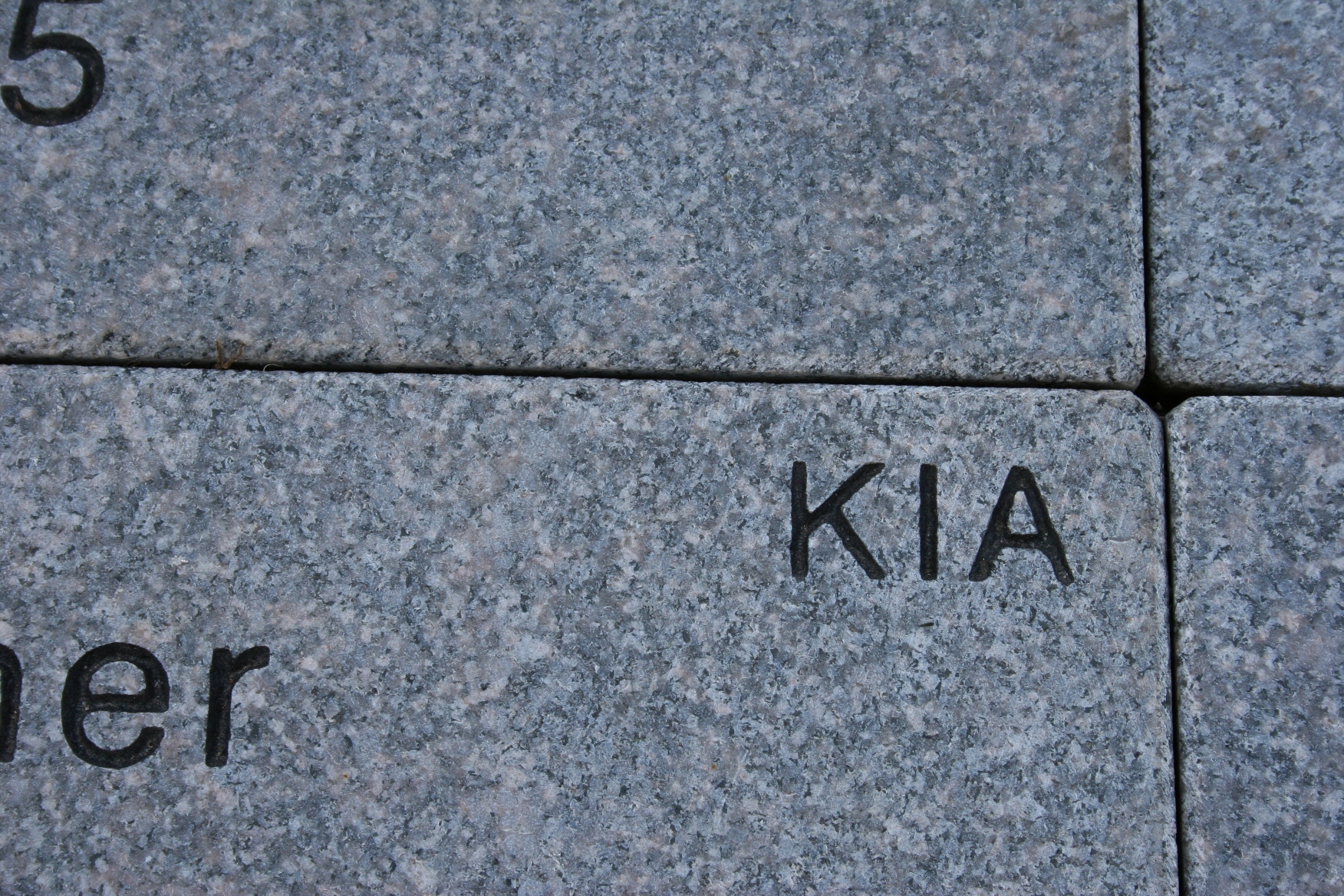
Three letters, KIA, imprinted upon a paver signify the ultimate sacrifice. Killed in action. I thought of my dad's soldier-buddy, Ray Scheibe, who was blown apart by an incoming shell on the day before he was to leave Korea. My dad never got over this loss and was forever haunted by the horrible image of Ray's death.

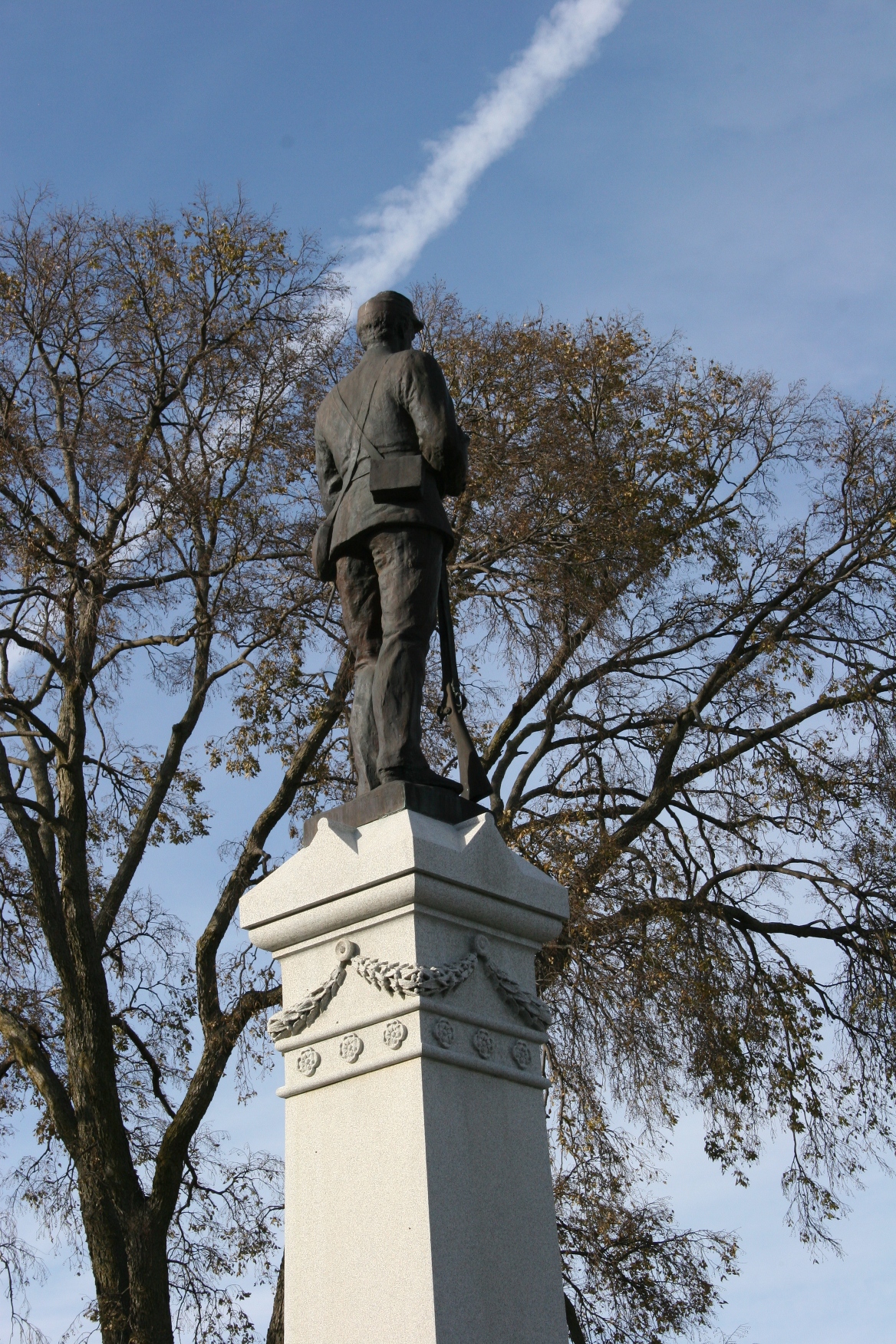
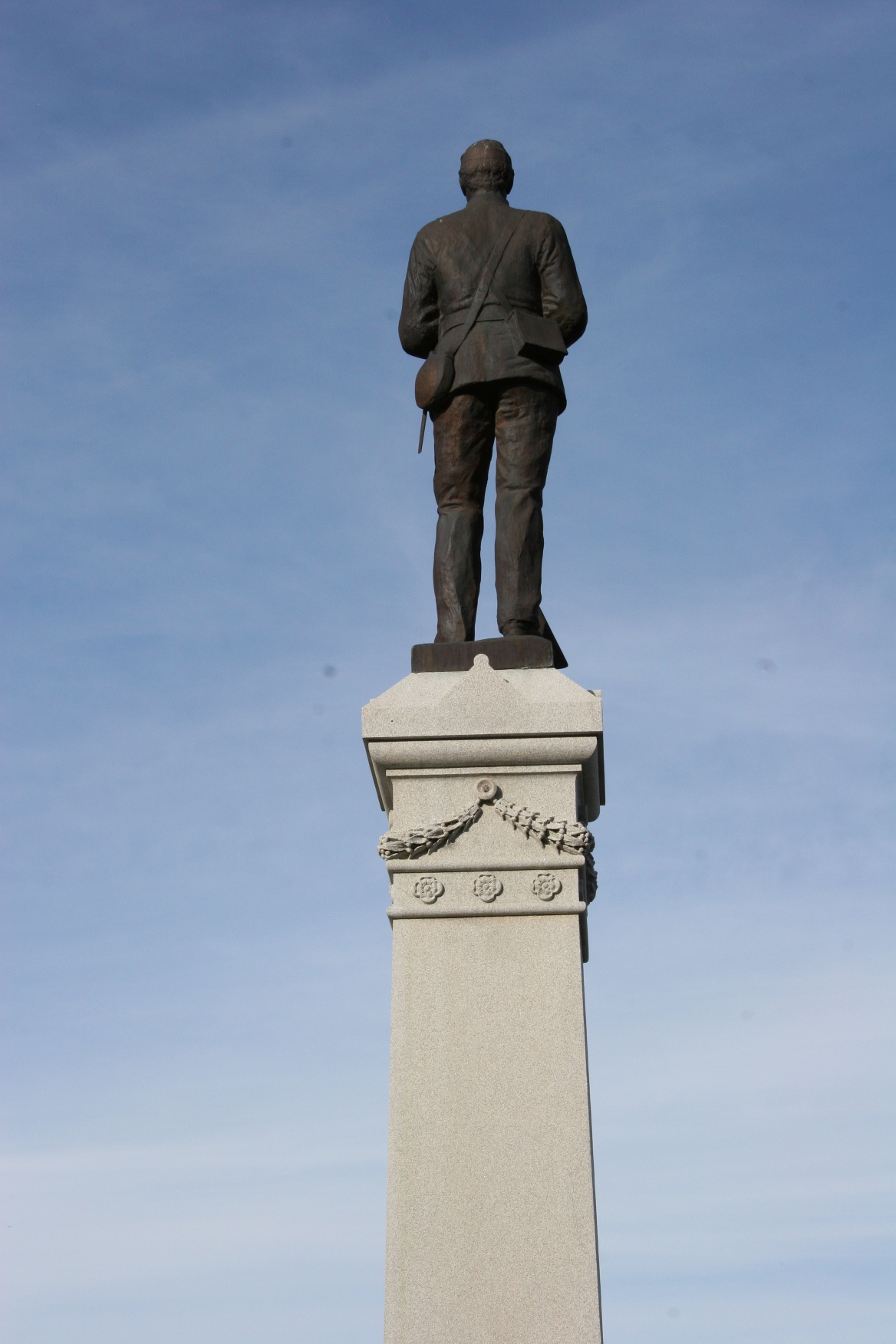
Even though I knew the trail of white in the sky came from an airliner, I imagined this to be the smoke of gunfire or of bombs or of shells as I took this image of the Civil War statue in Faribault.

I was coming of age during the Vietnam War. I remember the protests, the anger, the peace signs, all of it...

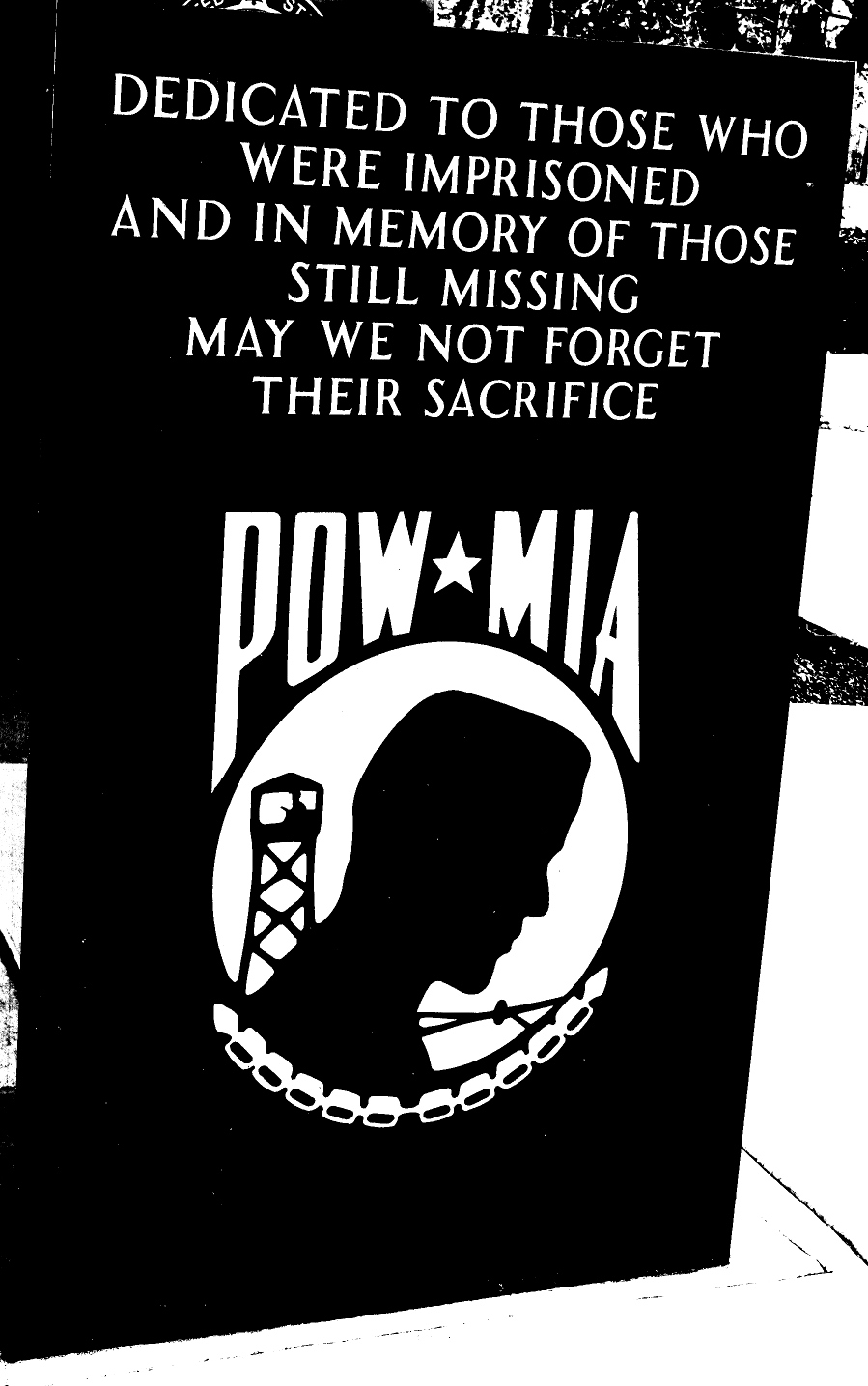
When I look at the MIA/POW flag, I recall the metal bracelet I wore in high school, the bracelet engraved with the name of a soldier held as a prisoner of war during the Vietnam War. Sadly, I don't remember his name or even know if I still have that bracelet tucked away somewhere in a cardboard box.

When I composed this image, the back of the Civil War statue, I thought about how a soldier must sometimes feel so alone, so vulnerable.

© Copyright 2010 Audrey Kletscher Helbling


Remembering my dad, a Korean War veteran November 11, 2010


Elvern Kletscher, my dad


I’VE JUST PULLED TWO FILES from a cabinet in my office. One’s labeled “Elvern K. (obit, death certificate).” The other is simply labeled “KOREA.”

Then I turn toward a chest of drawers, also in my office, and remove a shoebox from the bottom drawer. It’s tagged “Elvern Kletscher’s Korean pix, etc. Important stuff.” I’ve underlined “Important stuff” twice.

The contents of that shoebox connect to the contents of the files. All encompass my dad’s time serving with the U.S. Army during the Korean Conflict.


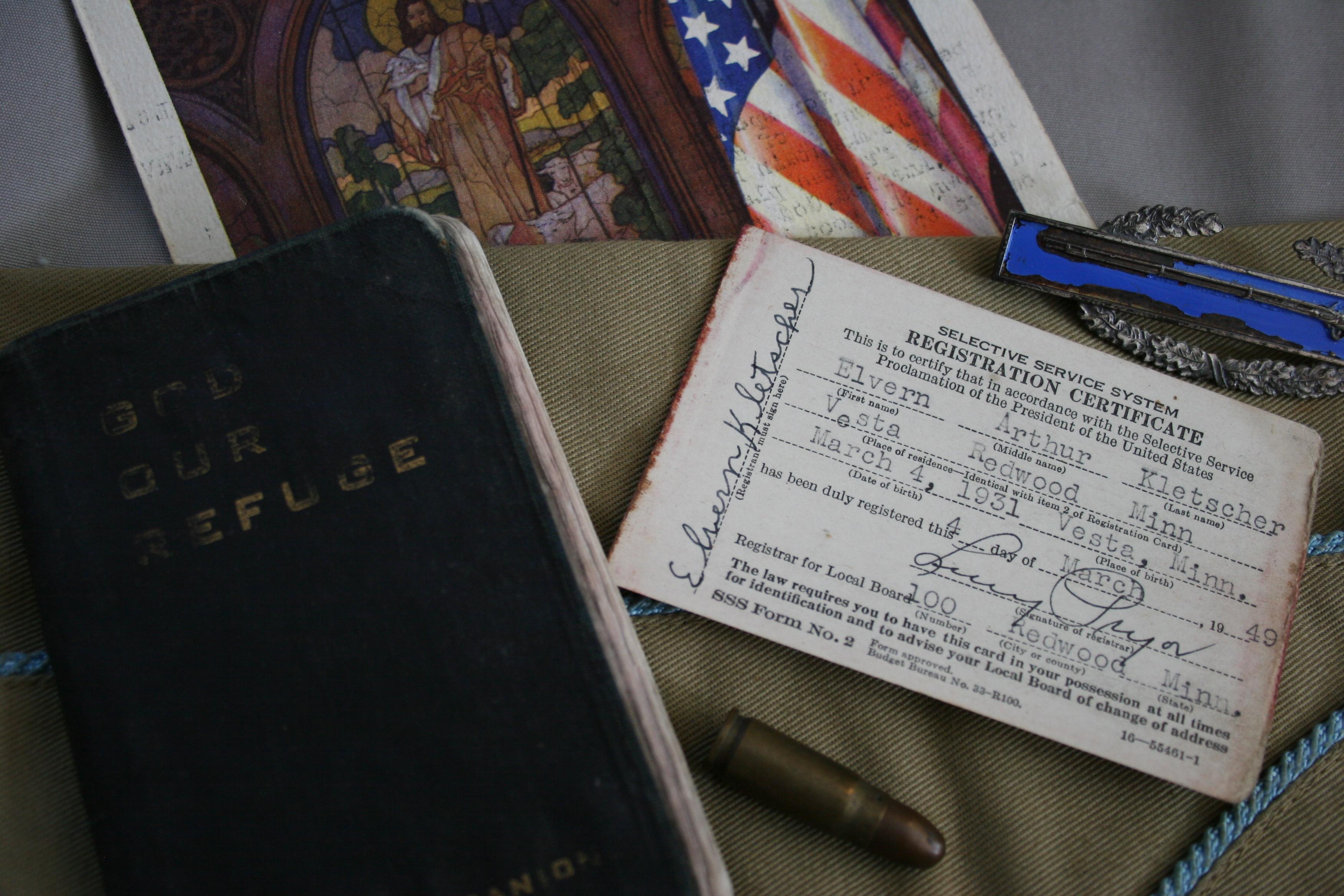
Some of the items from my dad's time in the military, stored in a shoebox.


Sifting through the files and shoebox brings me to tears as I remember my dad, who fought on the front lines, was wounded on February 26, 1953, at Heartbreak Ridge and received a Purple Heart medal 47 years later. He died in 2003.

My father talked very little of his time in Korea. So other than generalities and a few shared stories, only his black-and-white photos and letters offer me a glimpse of the young man who was drafted and sent into combat.

In letters written to his family, my dad vents his frustrations and concerns. I’ll share snippets of a letter from Korea dated March 4, 1953, his 22nd birthday, and written days after he was wounded.

Dear Mother, Dad & all

Guess you’s have been snowbound for awhile. “Huh” Just got your letter today. Well I’m 22 now. Birthday is past by a couple hours. Sure isn’t much of a birthday. But guess I can’t expect much over here.

Then he proceeds to blast the draft board and politicians after learning that his younger brother, Harold, may be called to duty. I can’t quote everything he wrote, but let me tell you, my father is fuming. He writes, in part:

Do they know what this is like over here? Hell no. Why the heck don’t some of them come over here and look this over. They’d probably come to their senses…

In the third page of his letter, my father-soldier continues:

I didn’t get your package yet, but they will be here soon mail is awful poor in coming through. Nobody is getting any mail. I’ve got 17 points now I think. They pile up fast. Sure wish I had the 36 of them though. I still think I’ll leave Korea in August. So it isn’t too long anymore. I sure hope I get out 3 months prior to my discharge. That’s almost all we talk about in the day time is how many points each other has got and when we think we will leave this hell hole.

Those are two strong words: hell hole.

But the few war stories that my father shared were nothing short of hellish. He told of digging foxholes and praying that God would save him from death, of a buddy blown up before his eyes, of a sniper picking off members of his platoon until my dad picked off the sniper, of being pinned down for days in trenches under constant enemy shelling…


My dad brought this 7-inch by 9-inch cloth "RETURNED FROM HELL" patch home with him after serving for nearly a year in Korea.


Through the attacks, the combat, the deaths of buddies, all through his year in Korea, my dad held strong to his faith. He wrote:

Sure was good to go to church. I had communion. I always try and make every church service they got over here. Once a week the chaplain comes up here on the hill. It’s always good to go. Always makes a guy know he isn’t alone.

In concluding his 3 ½-page letter, my father tells his parents:

I’m feeling fine and don’t worry about me. I’ll write again. Love Vern

Not once in his 87-line letter does my dad mention that just nine days earlier he was struck on the right side of his neck by shrapnel from a mortar round.


Elvern Kletscher, left, with two of his buddies in Korea.


TODAY, VETERANS DAY, please take time to honor a veteran, remembering all they have sacrificed for their country.

In conclusion, I wish to quote a few lines from a news release issued by former Second District Congressman David Minge on May 12, 2000, the year my dad received his Purple Heart for those wounds suffered on Heartbreak Ridge in Korea.

These two men are a prime example of sacrifice and service to our nation. For fifty years, Norman Kalk and Elvern Kletscher knew the truth that they had earned these medals. I am gratified that we could finally recognize their contributions and acknowledge the debt we can never repay.

#

A STORY WHICH I WROTE about my Dad’s service in Korea was published in 2005 in the book God Answers Prayers Military Edition, True Stories from People Who Serve and Those Who Love Them, edited by Allison Bottke. To read that story, “Faith and Hope in a Land of Heartbreak,” click onto the Harvest House Publishers website.

© Copyright 2010 Audrey Kletscher Helbling


Remembering Cpl. Ray W. Scheibe, my dad’s Army buddy, killed in Korea on June 2, 1953 June 2, 2010

Filed under: Uncategorized — Audrey Kletscher Helbling @ 7:37 AM
Tags: , ,

A portion of the story about Cpl. Ray W. Scheibe, published on the front page of the July 23, 1953, issue of The Wolbach (Nebraska) Messenger.

HER VOICE IS HESITANT, strained, edged with 50 years of grief.

I sit at my dining room table, phone clasped tightly to my ear, listening, jotting notes. In the quiet reserve of her voice, in the words she speaks, I hear her pain.

On June 2, 1953, our lives became forever linked. That day, on the battlefields of Korea, two young American soldiers forged into combat. One of them was blown apart by a mortar while the other watched in horror. My father came home; hers didn’t.

Today, after a two-month search, I am speaking to the daughter of Cpl. Ray W. Scheibe, my dad’s army buddy. I have anticipated this day, prayed for this day, wondered if this day would come. In recent months, I made it my mission to find Ray’s daughter, who was only six weeks old when he died in Korea.

My desire to find Teri Rae was spurred by the tragic story of her dad’s death. Just before he was killed, Ray told his comrades, my dad among them, that he was leaving Korea the next morning. Back home his wife and infant awaited his safe return. The new father was excited about seeing his child for the first time and his buddies shared his joy. That jubilation, however, was short-lived as minutes later the 22-year-old was hit by a deadly mortar.

Ray’s death impacted my dad more than any single wartime tragedy, for it is one of the few war memories he ever shared. He mourned for his buddy who would never see his child and for the child who would never know her father. While my dad always referred to the baby as a 9-month-old son, I learned during my search that the infant was really a 6-week-old daughter. My dad’s memory had failed him, but the memory of Ray’s horrific death never left him.

Now this grown daughter, today a grandmother, is on the phone, speaking to me from her home in southwestern Iowa. Only a week earlier I mailed a two-page letter to Teri, a letter which would change both of our lives. I wrote about our fathers’ friendship, about her dad’s death and about my search.

Teri tells me that she cried for two days after receiving my letter.

My quest for Teri began nearly two years after my dad’s 2003 death. While looking through a shoebox filled with my father’s military belongings, I found clues leading to the identity of Ray Scheibe.

I share with Teri in our phone conversation that I discovered a photo of her dad taken in May 1953. My dad had written “Sgt. Shibe, June 2, 1953” on the back of the photo and drawn a box around it. I recognized the surname, although misspelled, as the one my dad had once spoken when talking about his deceased buddy.

This May 1953 photo, taken by my dad in Korea, helped me track down Ray Scheibe's daughter, Teri Rae. Cpl. Scheibe is on the left.

It is that picture; the discovery of a memorial service bulletin from Korea with Ray’s name listed inside; military documents; internet research into military records; and a phone conversation with Ray’s best friend from high school that confirm the identity of the young soldier from Wolbach, Nebraska.

I compose a letter to Teri and include copies of documents related to her dad, then drop it in the mail, fully expecting I may never hear from her.

But she quickly responds, hers the words of a daughter grieving for her father. “This letter has made him a real person with feelings and personality, before I just knew he existed,” Teri writes in her first correspondence to me. She continues with details about her life and family, about the loss of her beloved husband, Lee, the love of her life, two years earlier.

“My pain has been going on for years it seems like, since I have been born. I have learned to be strong I guess,” Teri continues.

She first learned of her father after starting school in Omaha, Nebraska. Teri’s mom Marilyn had remarried and, as was customary in that time period, death was not openly discussed. But when her teachers called her “Teri Scheibe” instead of “Teri Todd,” her new name, the youngster began to ask questions. For the first time, Marilyn told her daughter about her birth father who died in Korea.

“I know very little about him as no one ever spoke of him,” Teri writes to me. “And I was afraid to ask because they said my mom didn’t take it very well, and I know I was always a reminder. Even his family never spoke of him.”

Now we are on the phone, talking about this man who has been described to me by Robert “Sonny” Nealon as fun-loving, outgoing and a friend to all. Sonny and Ray were best friends who hunted, fished and played sports together while growing up in Wolbach.

The two entered the service on the same day, Ray to the Army and Sonny to the Navy. Sonny, who had been my final contact in finding Teri, was completing his naval tour in California when he learned of Ray’s death. “It was a heart rendering time when we read of Ray’s death in Korea,” Sonny recalls in a letter to me.

He tells of a man nicknamed Pee Wee because Ray stood only five feet seven inches tall. “…recalling the days with Pee Wee brought nothing but smiles and near laughter,” Sonny continues.

It is Sonny’s description of a real, living, breathing person that I wish to share with Teri.  In the depths of 50-plus years of unresolved grief, I hope Teri will see her father through the eyes of his best friend.

I too yearn to know this man who meant so much to my dad. My father never made peace with Ray’s death and in the depths of my heart I carry my dad’s burden of unresolved grief.

As I speak with Teri, sorrow surfaces and I experience a deep sense of relief and of letting go. I sense that Teri, too, as we talk about her dad, his death and the tragedies in her life, is beginning to feel that same peace.

“You gave me a person to cry and grieve for. Thank you!” Teri says.

That first phone conversation is just the beginning of an ongoing correspondence with Teri and Sonny. We exchange photos and personal information. I view photos of Ray as a young man, read newspaper accounts of his death and cry over a snapshot of his tombstone, which reads in part, “Gave his life in Korea, 1953.”

Sonny Nealon sent me this photo he took of his friend Ray's gravestone in Wolbach's Hillside Cemetery.

While Terri struggles with the details of her father’s death, she is comforted by my father’s remembrance of him. “It made me proud that your father thought so highly of him (Ray) and had never forgotten him and liked him,” Teri writes. “I now can imagine a man so excited to be coming home to his family, and he did know about me, because all the letters did not reach him, and he was proud of me and he did love us.”

My father’s memories comfort Teri. Sonny’s memories lift her spirits. “He (Sonny) has made me smile and laugh, which is rare here,” Teri says.

I couldn’t have asked for a better outcome. I can only imagine two fathers smiling down from heaven, delighted that their daughters have connected. A friendship which began on the battlefields of Korea has now come full circle more than half a century later.

#

I wrote this story in 2005 and am publishing it today for the first time in honor of Cpl. Ray W. Scheibe who died in Korea on June 2, 1953. His wife Marilyn died, also on June 2, many decades later. Some day I hope to meet Teri and embrace the woman to whom I am forever linked through the friendship of our soldier fathers.

My dad, Elvern Kletscher, carried home a carefully folded July 31, 1953, memorial service bulletin from Sucham-dong, Korea. In the right column is listed the name of his fallen buddy, Raymond W. Scheibe.

© Copyright 2010 Audrey Kletscher Helbling