Minnesota Prairie Roots

Writing and photography by Audrey Kletscher Helbling

“The Viaduct,” an enduring Faribault landmark August 23, 2023

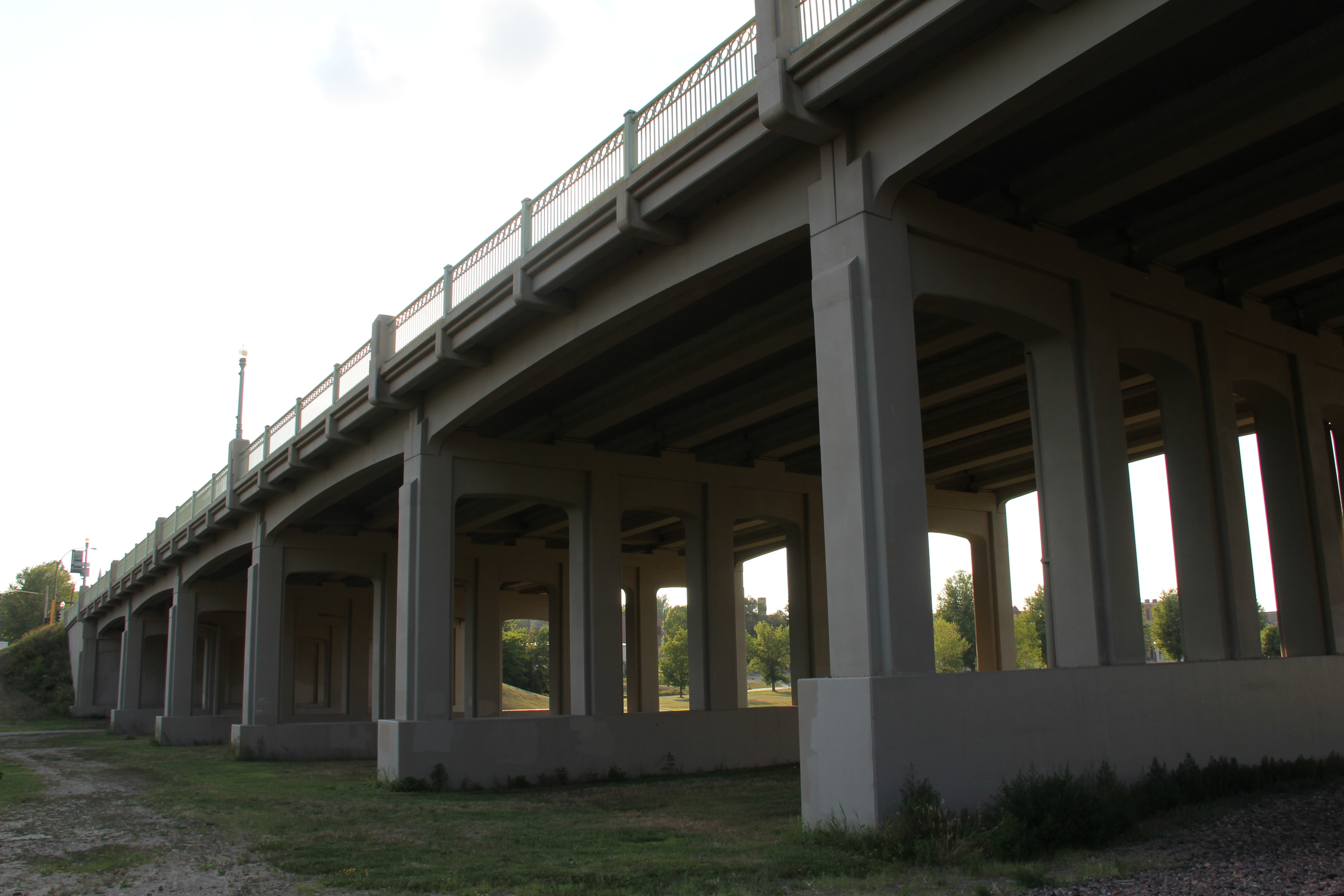
A side view of a section of Faribault’s historic viaduct. (Minnesota Prairie Roots copyrighted photo August 2023)

ARCHITECTURE, ART AND HISTORY meld on an expansive structure connecting Faribault’s east and west sides.
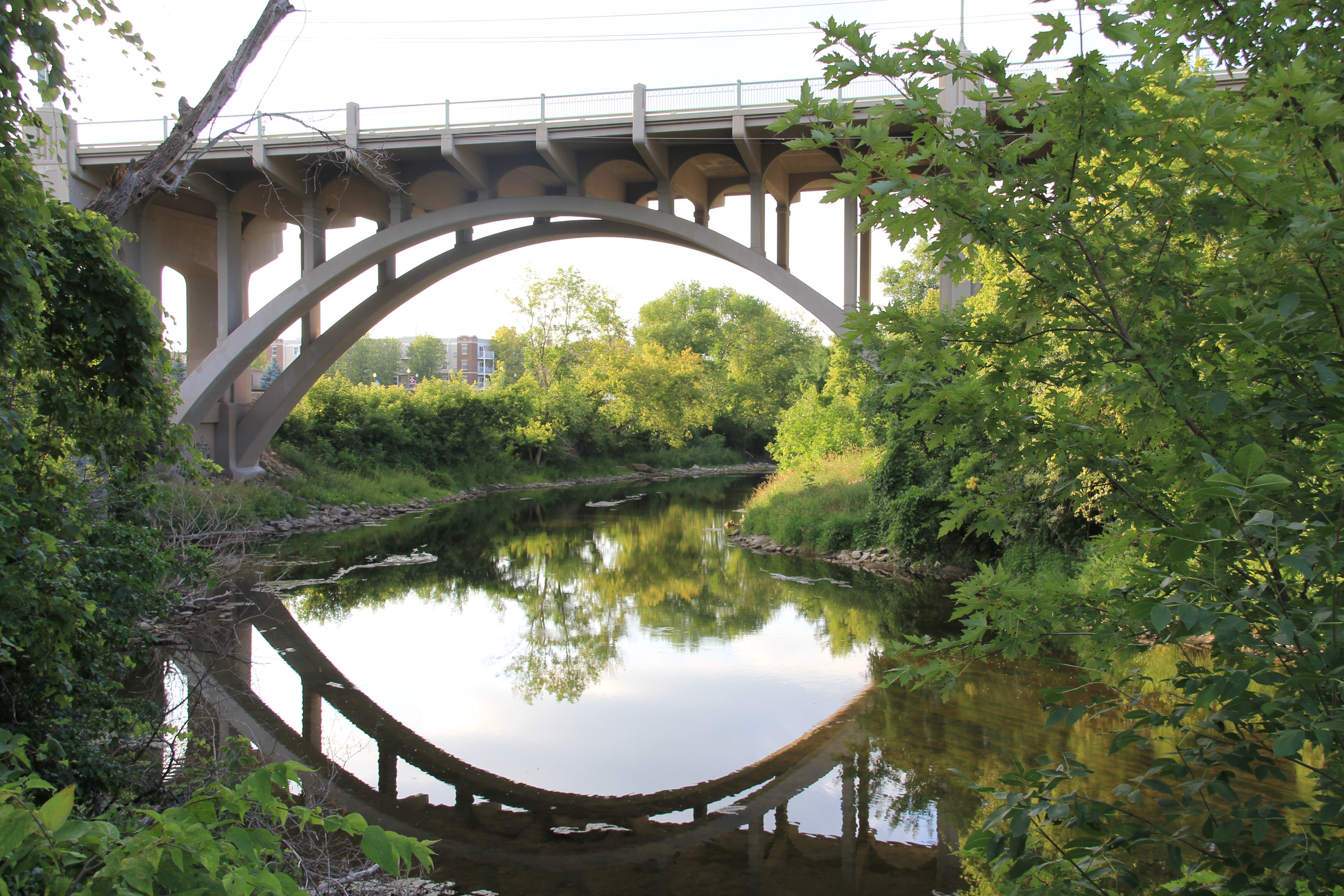
The viaduct reflects in the Straight River in the early evening light. (Minnesota Prairie Roots copyrighted photo August 2023)

Locally referred to as “The Viaduct,” the continuous concrete rib arch bridge routes pedestrians and traffic along Minnesota State Highway 60 over railroad tracks and the Straight River far below. Three massive reinforced arches distinguish this as a viaduct rather than a bridge.
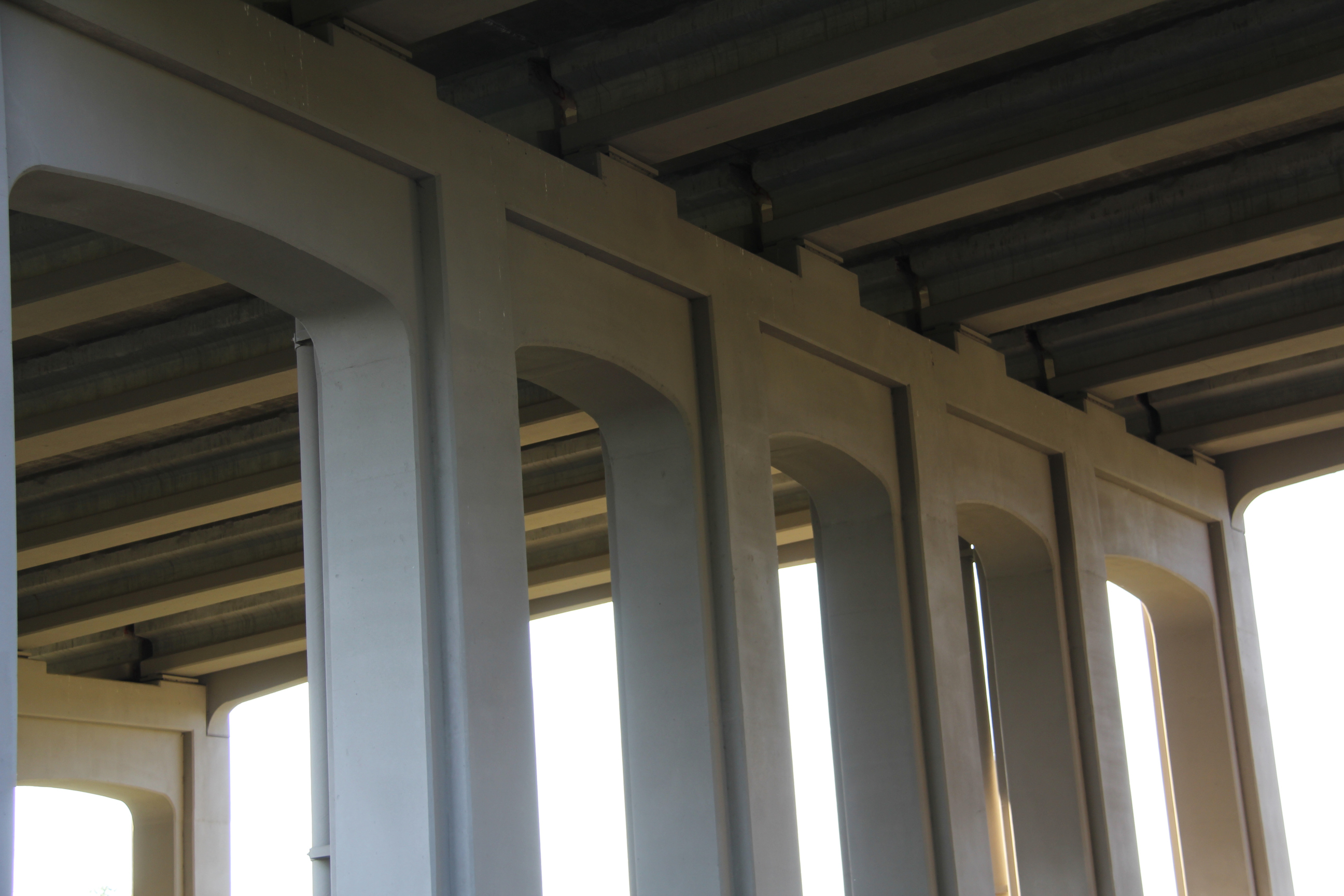
Piers and under the roadway up close. (Minnesota Prairie Roots copyrighted photo August 2023)

Thousands of times I’ve crossed the viaduct via vehicle in my 41 years living here. But not until recently did I pause to really study the underbelly of this 1937 Works Progress Administration project which is on the National Register of Historic Places. Only via a close-up look from ground level did I fully appreciate this engineering feat.
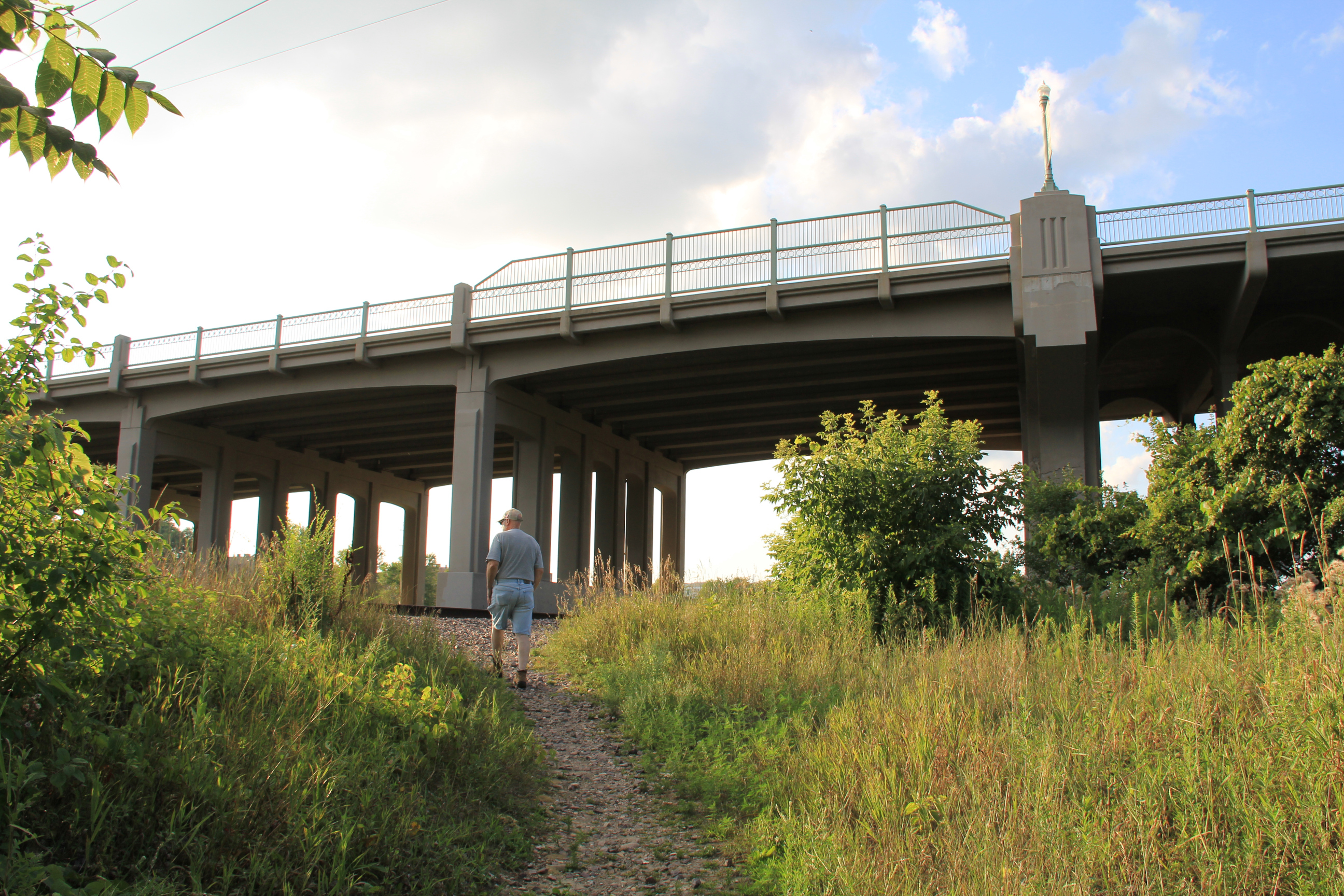
I followed Randy along this path leading to the tracks. (Minnesota Prairie Roots copyrighted photo August 2023)

I followed a narrow dirt trail through trees and underbrush in Teepee Tonka Park to reach a good viewing spot of the viaduct underside. From that perspective next to the train tracks, I observed the way patterns and lines repeat to build a strong structure that has withstood the test of traffic and of time. The bridge was rehabilitated, the roadway widened in 2008-2009.
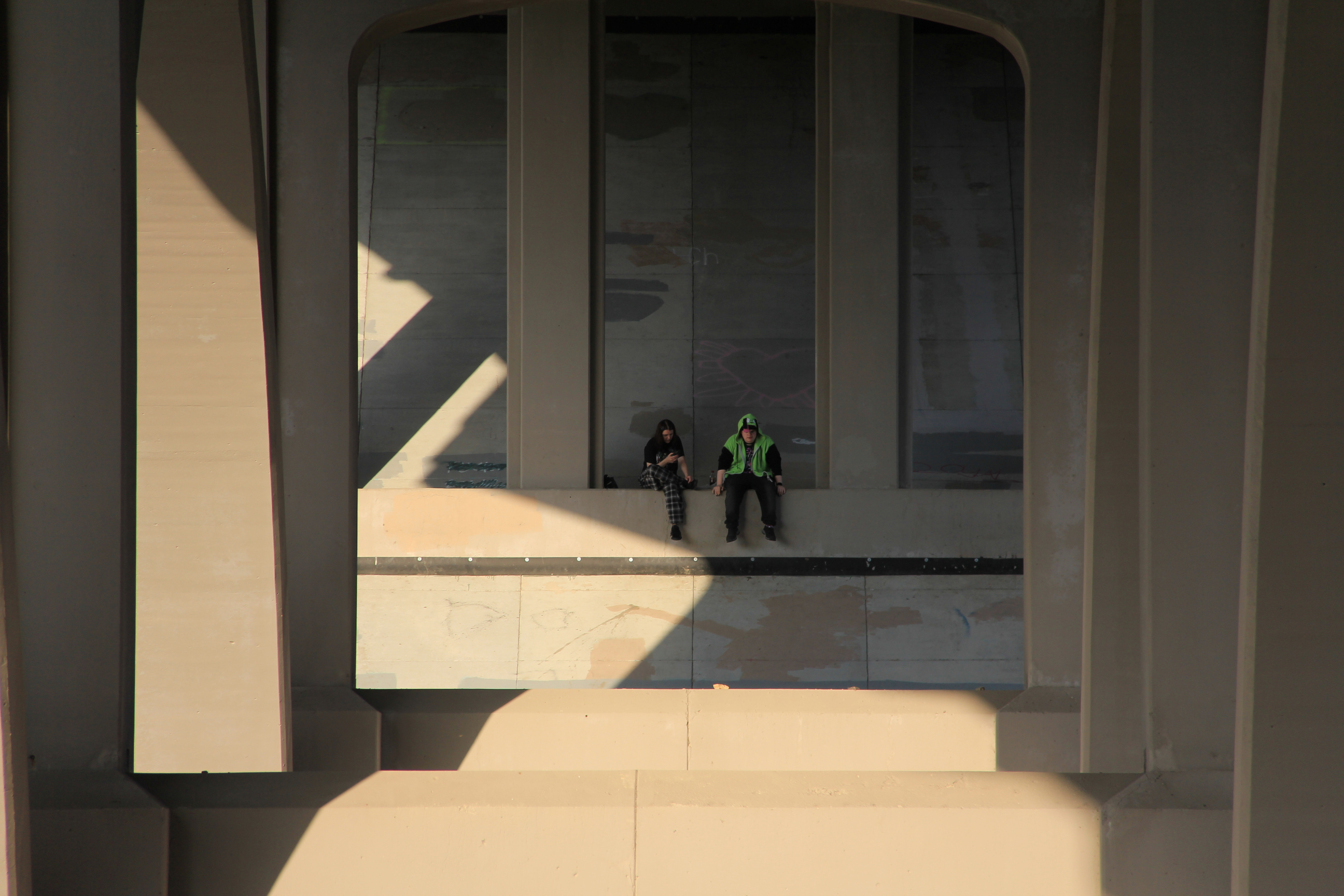
Hanging out under the viaduct. (Minnesota Prairie Roots copyrighted photo August 2023)

The viaduct impresses in design and size. I felt dwarfed by its massiveness, even more noticeable when I spotted a couple sitting on the far end. They appeared small in comparison to the concrete piers rising above and around them. I felt overpowered, too. I wondered how WPA workers managed to build this wonder in the late 1930s without the modern equipment of today.
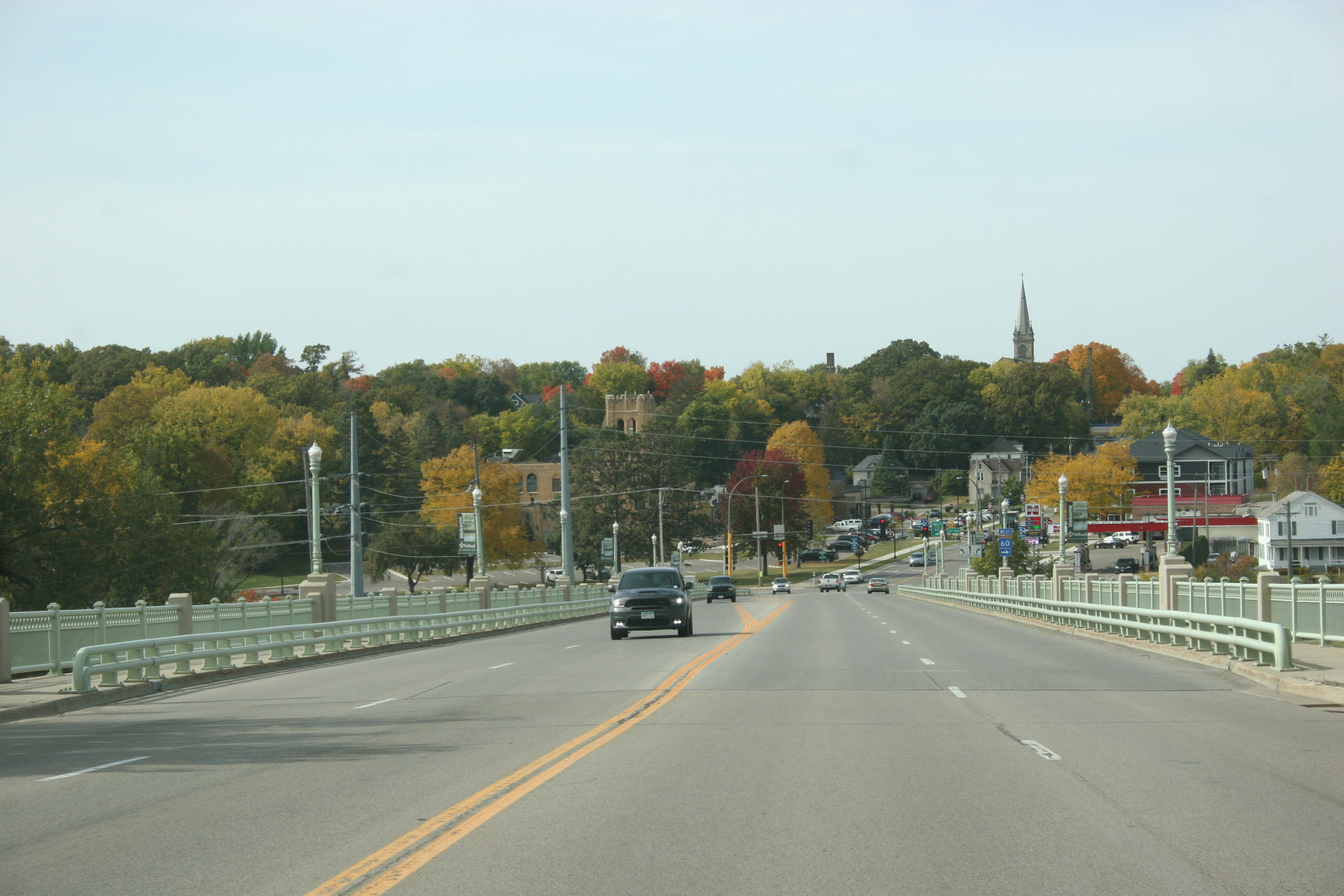
Westbound on the viaduct, Buckham Memorial Library is to the left and the Immaculate Conception Church steeple in the distance. (Minnesota Prairie Roots copyrighted file photo October 2022)

But it is more than utilitarian construction that marks this viaduct as noteworthy. The viaduct is a work of public art—an interactive sculpture which provides a sweeping view of historic downtown Faribault and the surrounding area when heading westbound. To view the bridge from below is to truly see its artsy side, its Art Deco/Classical Revival style. That style carries through in the concrete piers and, on road level, in the decorative railings and lights, replicas of the originals.
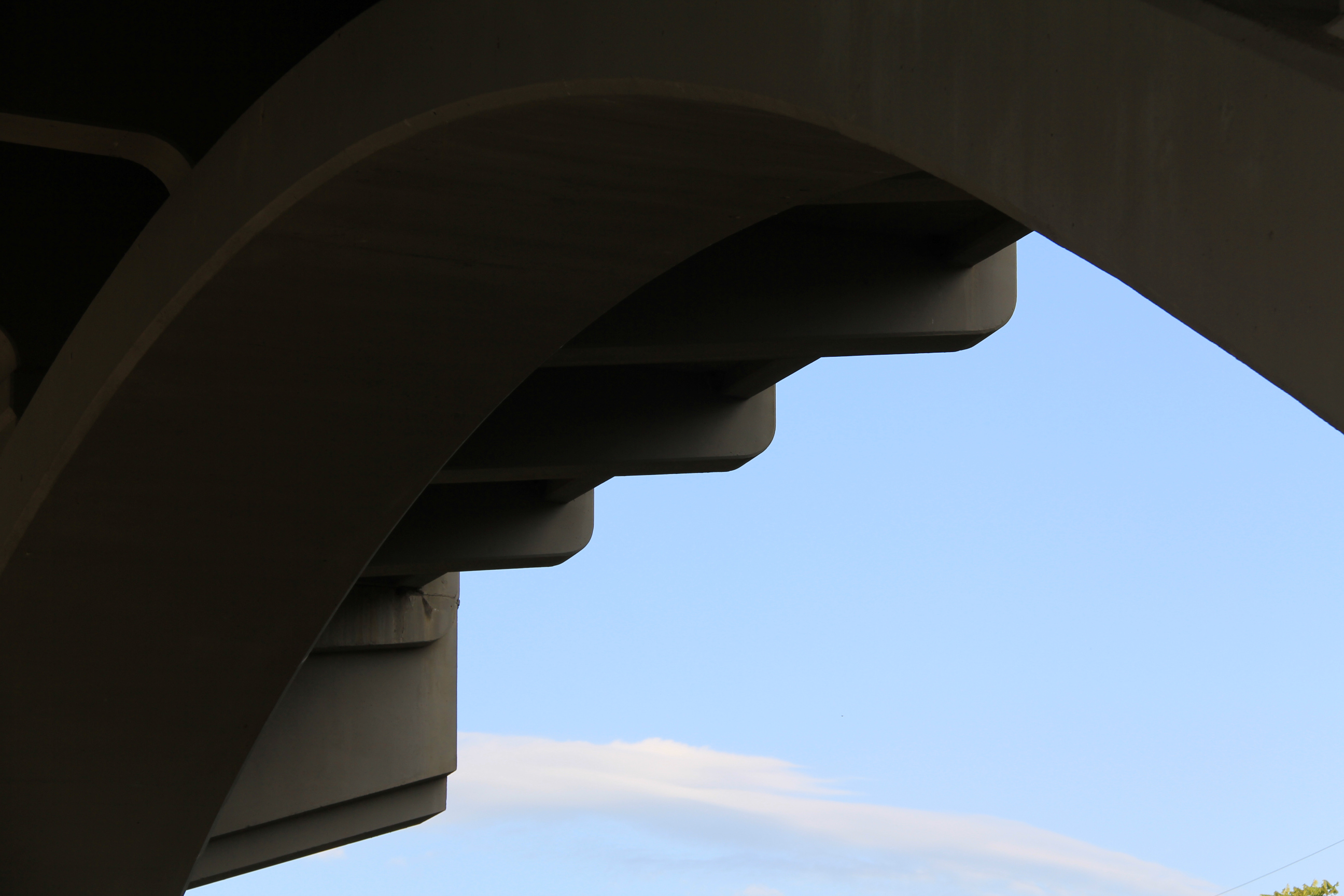
The viaduct is a marvelous work of architecture, art and engineering. (Minnesota Prairie Roots copyrighted photo August 2023)

As I stood under the viaduct studying its design, artsy arches, curves and lines, I considered the many people who have traversed this bridge. If only this concrete could speak, oh, the stories it would tell. Stories of construction workers who labored for 1½ years to complete this project. Stories of Ford Model As, among the first to drive across this linkage between east and west. Stories of students arriving at the Minnesota State Academies for the Deaf and Blind. Stories of athletes heading to hockey camp at Shattuck-St. Mary’s School. Stories of prisoners transported to the Minnesota State Correctional Facility, Faribault. Stories of ambulances racing across the viaduct toward the hospital. Stories of expectant parents headed there, too. Stories of families and students on their way to River Bend Nature Center. Stories of travelers simply passing through Faribault.
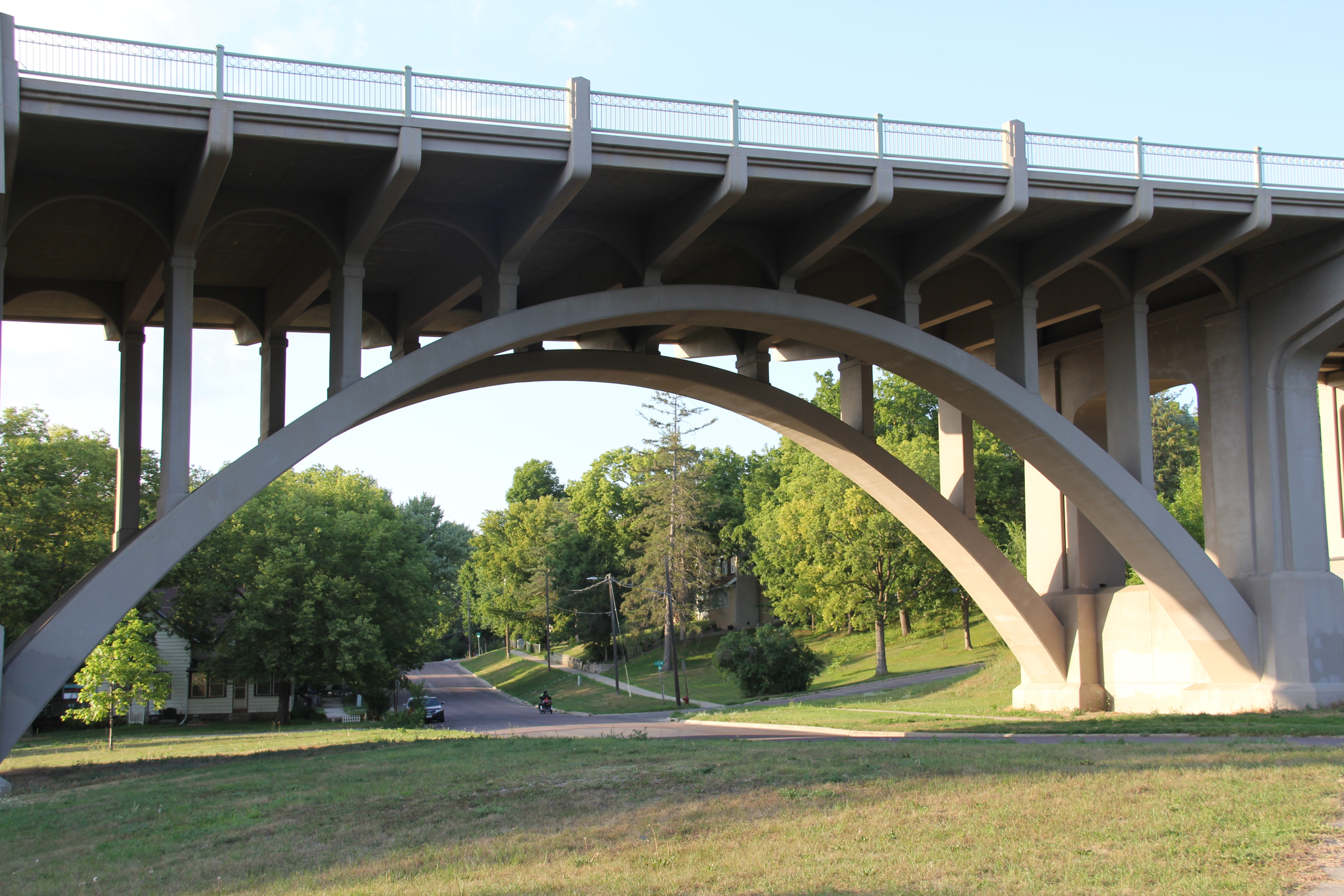
On the east side of the river, a road passes the viaduct and leads to Teepee Tonka Park. (Minnesota Prairie Roots copyrighted photo August 2023)

For 86 years, The Viaduct has gathered stories atop graceful arches, upon a roadway that is more than a route. This is a local landmark, an architectural and artistic marvel which visually and historically defines Faribault.

© Copyright 2023 Audrey Kletscher Helbling


Part VI From La Crosse: Atop Grandad Bluff March 30, 2017

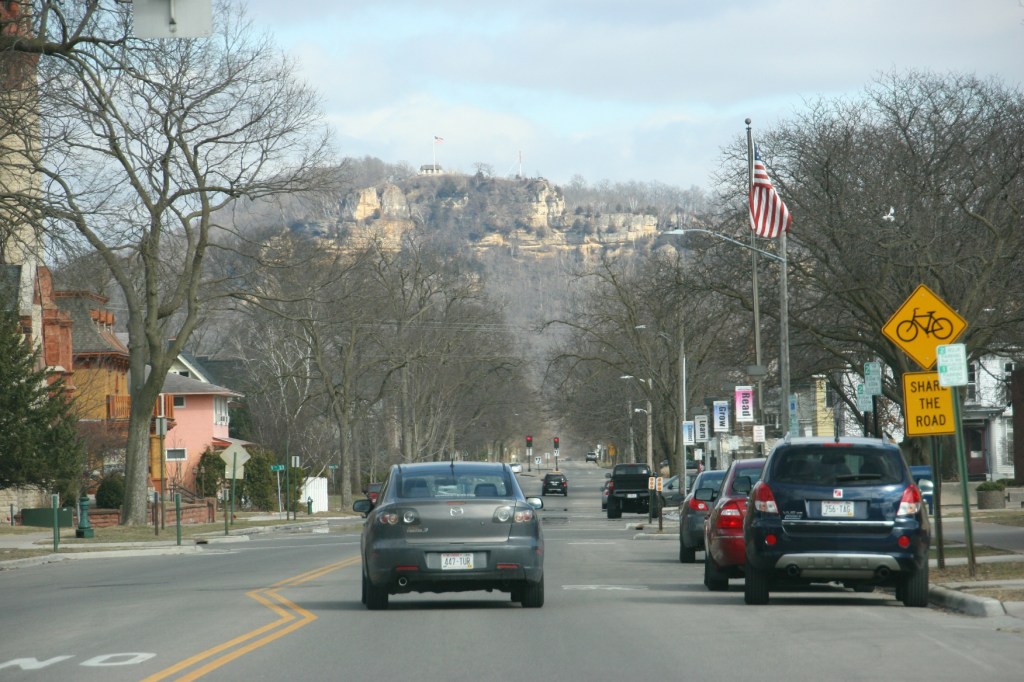
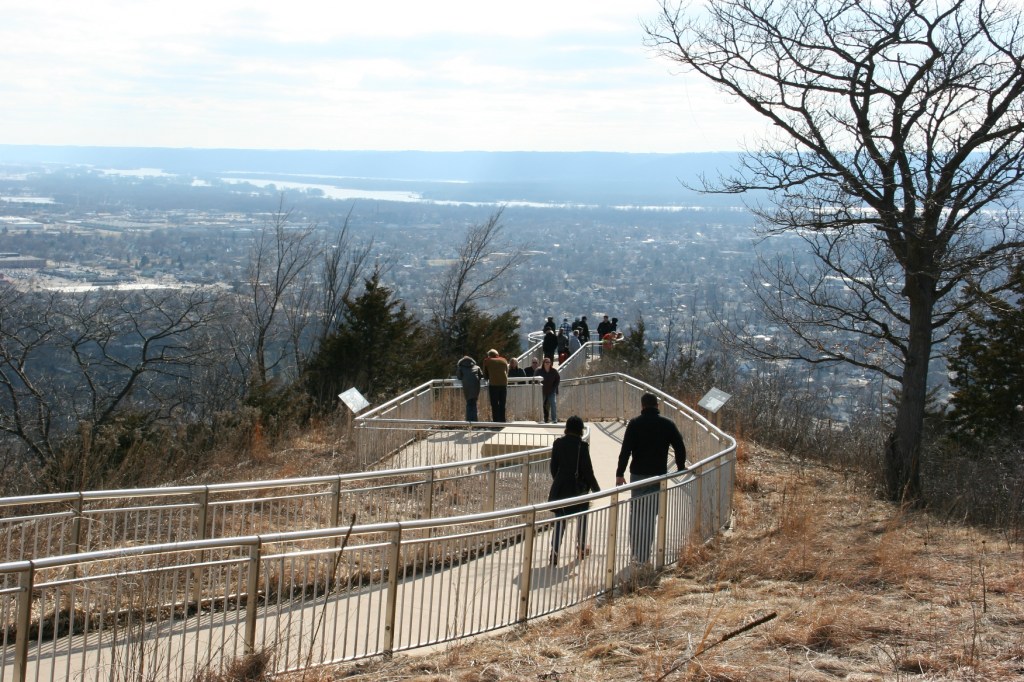
Driving toward the landmark Grandad Bluff from downtown La Crosse, Wisconsin. The 600-foot high bluff towers in the distance.


THE BRISK MARCH AFTERNOON WIND did not lend itself to standing atop a bluff. So I thought. I pulled on my hand-knit stocking cap, buttoned my wool coat, wrapped a plaid scarf around my neck and tucked my hands inside gloves. I was ready to face the fierce winter wind of Wisconsin.


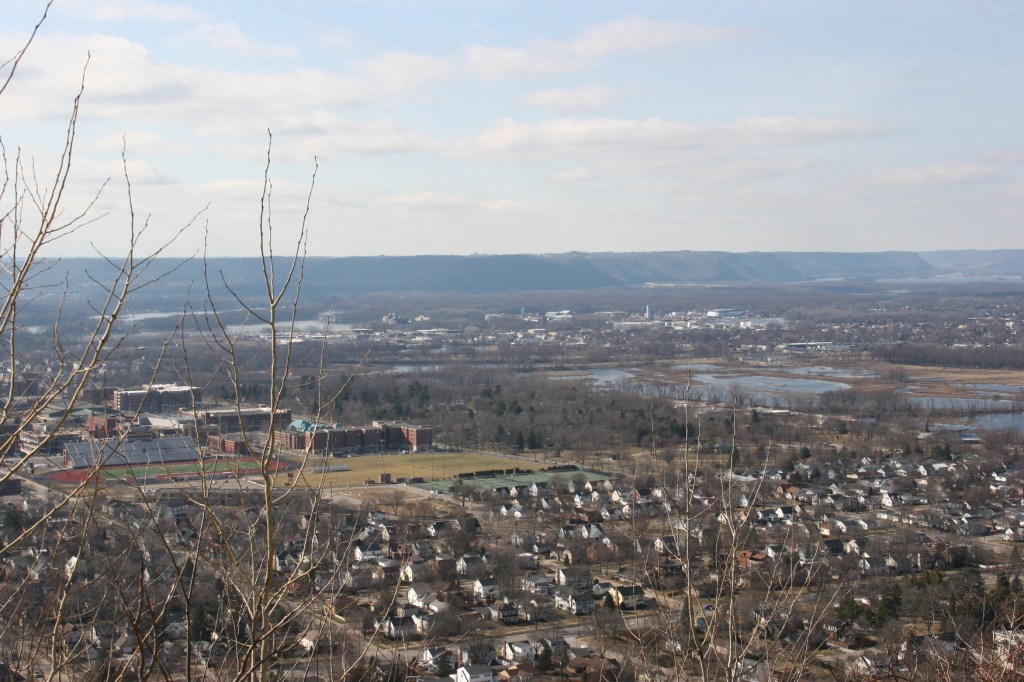
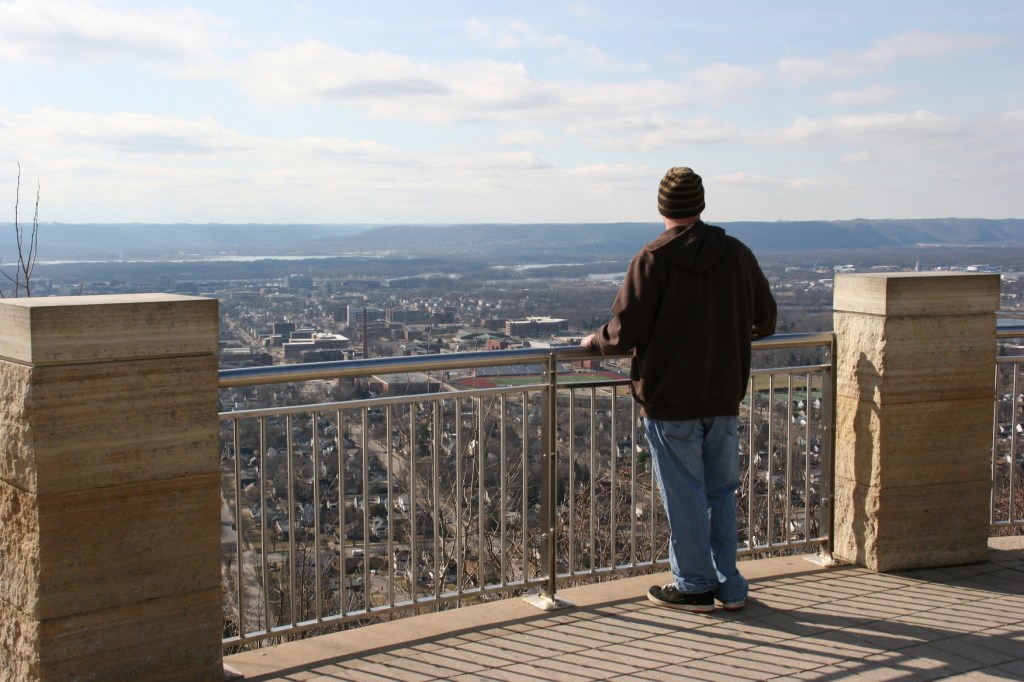
The view of La Crosse from this bluff is stunning.


But I needn’t have concerned myself about the cold. Exiting the van in Grandad Bluff Park, I found the air still, no brutal wind slapping my skin as it had along the Mississippi River in downtown La Crosse. We—my husband, second daughter and her husband—were all surprised. We expected uncomfortable temps that would send us scurrying back to the van shortly. Rather, we found this spot 600 feet above the city to be calm. How could that be? I still have not figured it out.


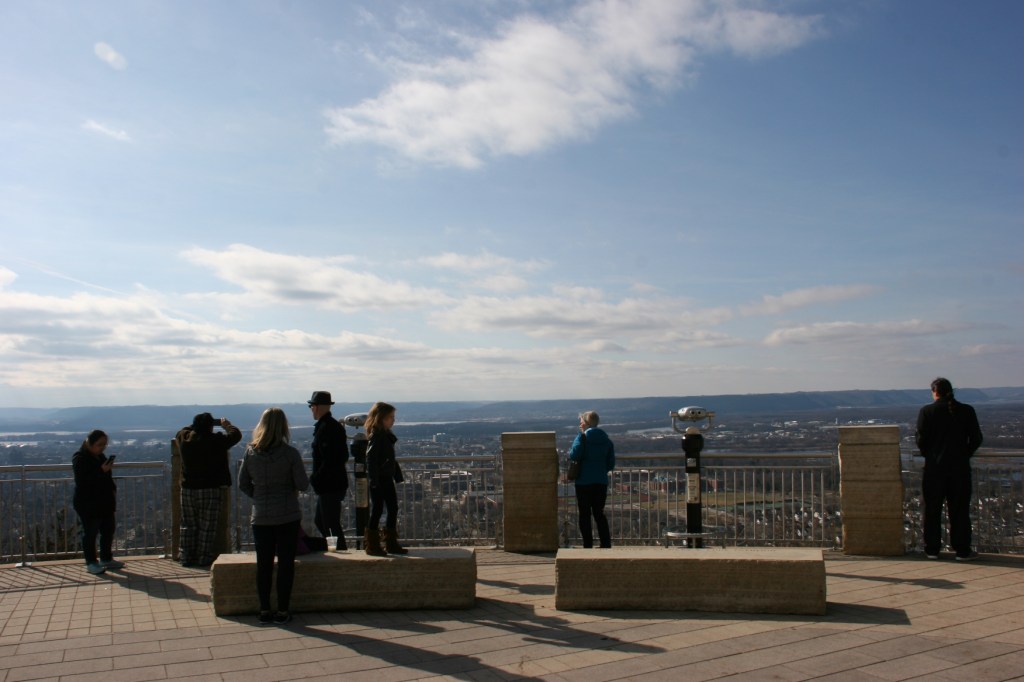
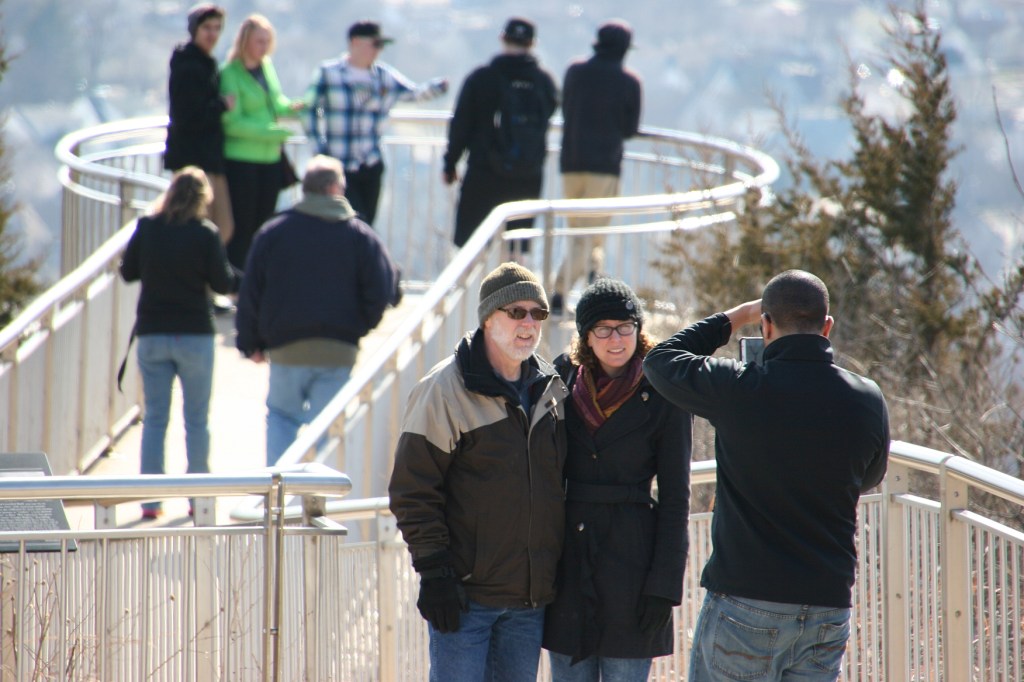
The city’s landmark Grandad Bluff—the highest bluff in the La Crosse area with views of Wisconsin, Minnesota and Iowa—teemed with visitors.


My son-in-law John photographs my husband, Randy, and daughter Miranda.


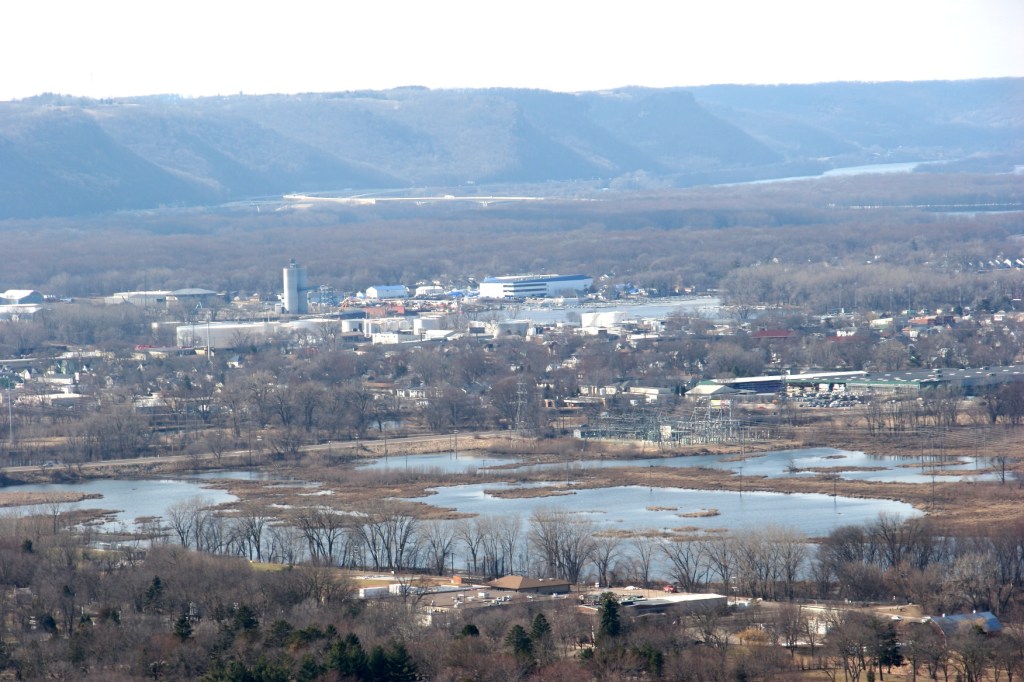
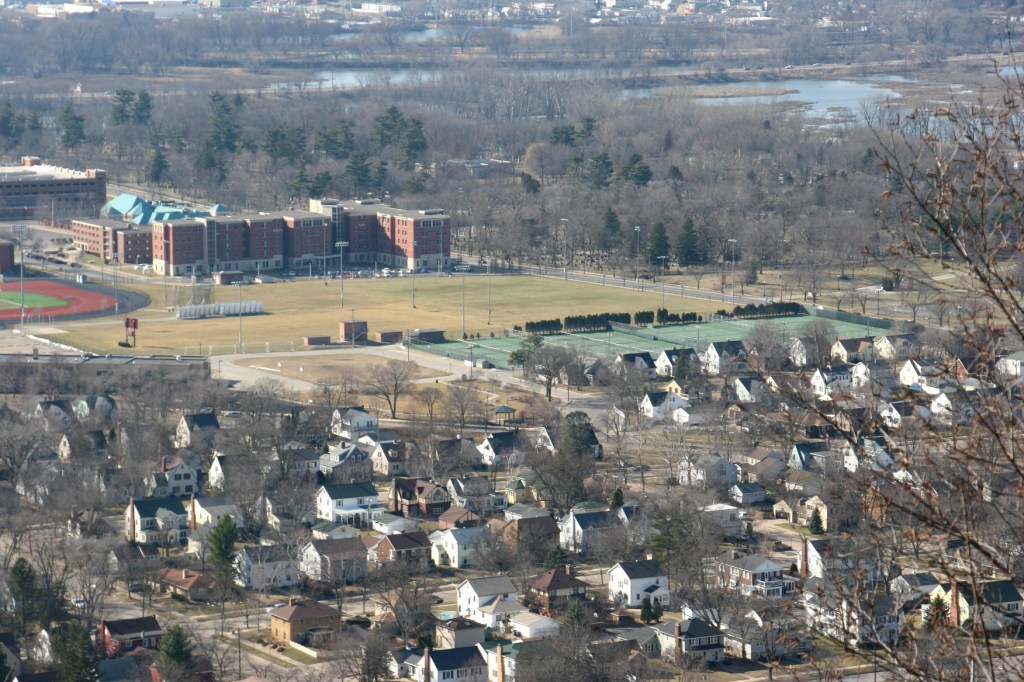
A haze hung over the distant landscape as I surveyed the scene of gridded streets, buildings exposed by naked trees, slips of water tracing through the land, distant river valley bluffs rising.


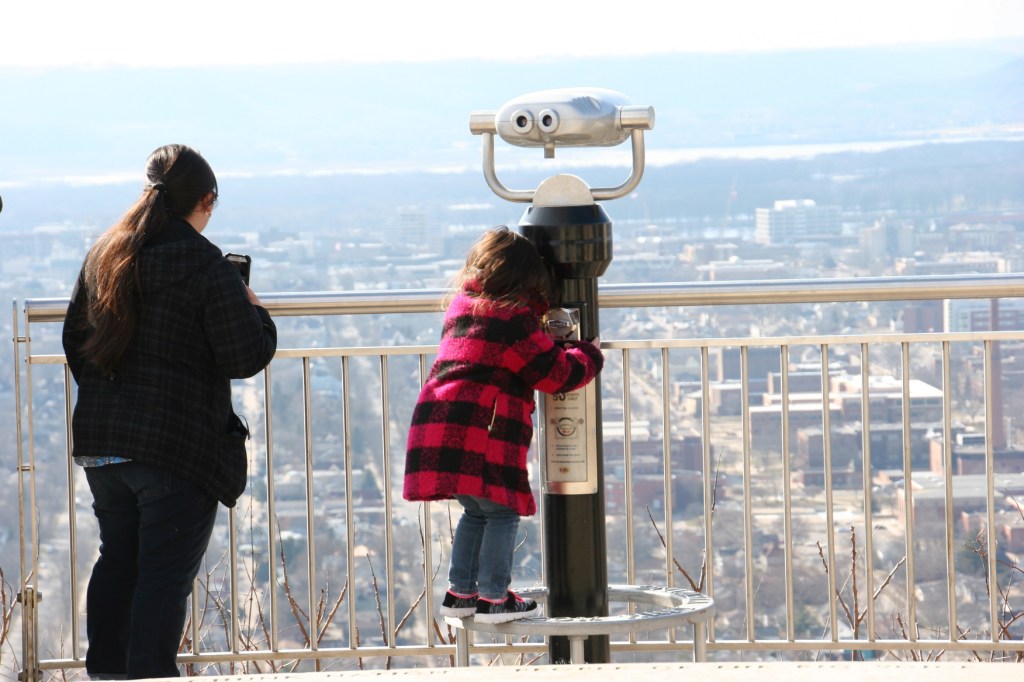
Peering through binoculars at the scene below.


It took me awhile to assimilate, to edge near the solid fencing overlooking the city. I am a flatlander, an embracer of prairie and horizontal lines, not at all a fan of heights.


I walked part way to the second scenic outlook point before turning back.


But with my camera for comfort, I could view the scene far below. For awhile.


BONUS PHOTOS:

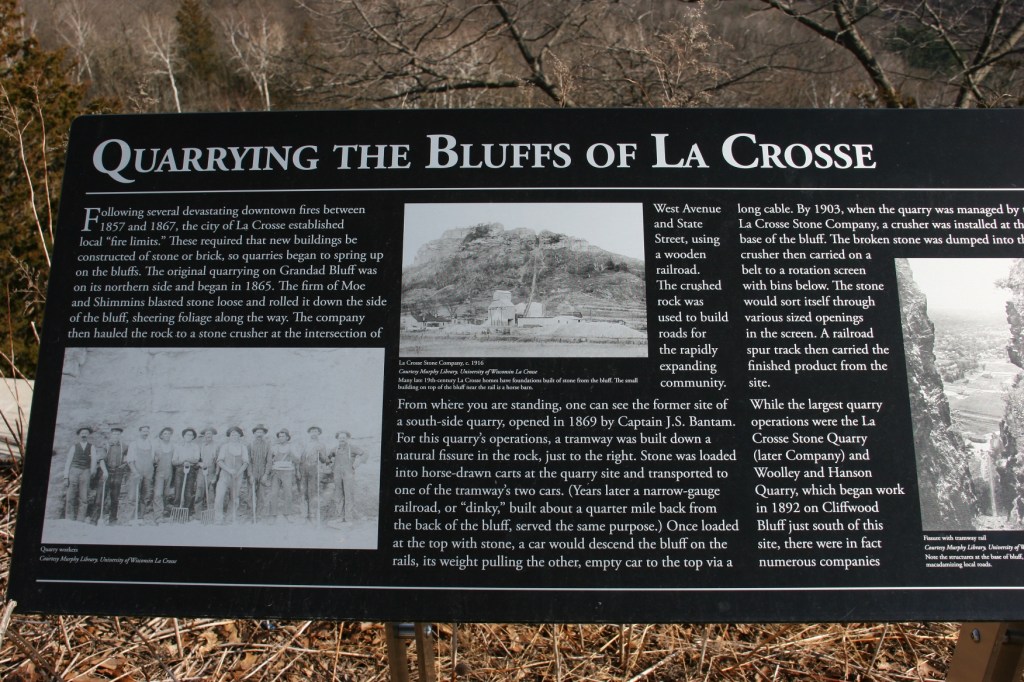
Several signs provide background history on the bluff and surrounding area.


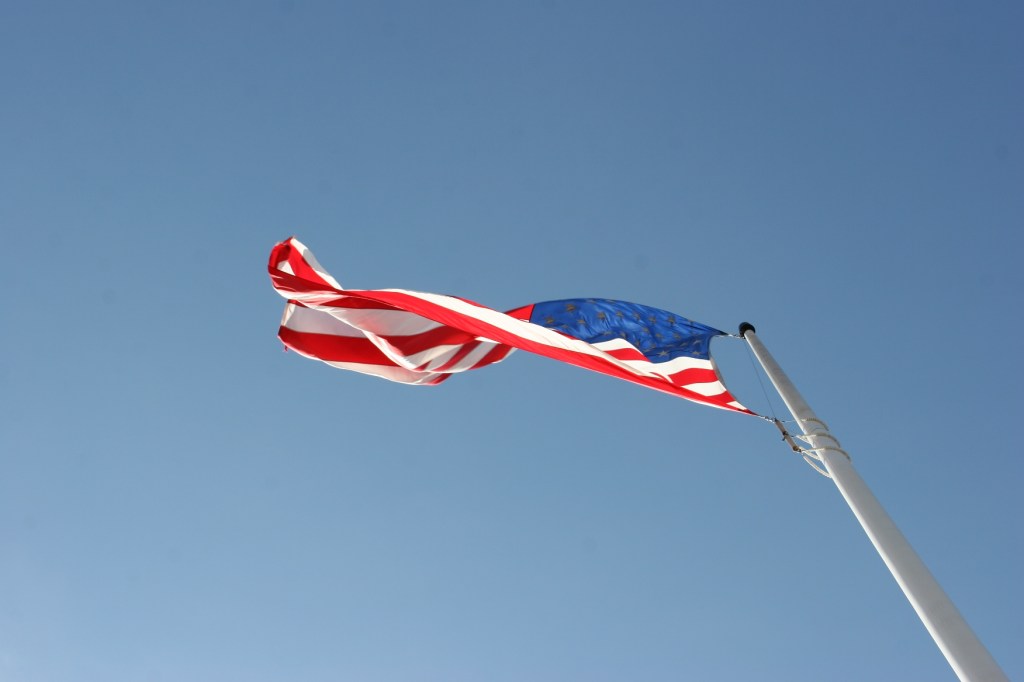
A flag flies atop the bluff.


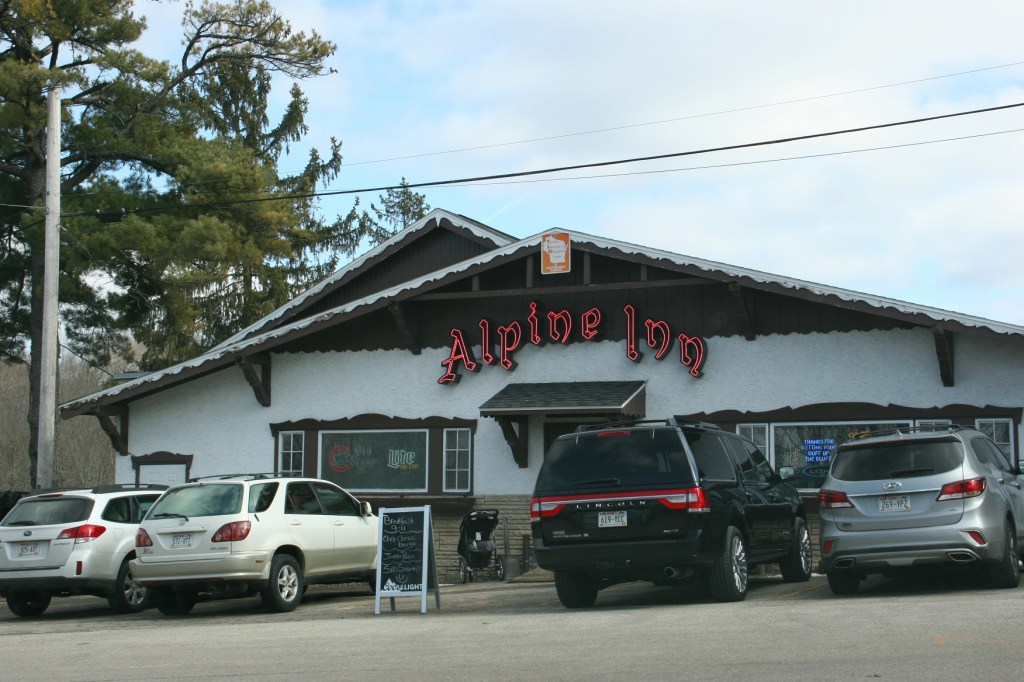
Nearing the top of the bluff, you’ll pass by the Apline Inn Bar & Grill, a long-time La Crosse establishment. I need to check this out.


FYI: This concludes my six-part “From La Crosse” series.

Click here to view a story and photos from an October 2015 visit to Grandad Bluff. Autumn is an absolutely beautiful time to view the river valley from this scenic overlook.

© Copyright 2017 Audrey Kletscher Helbling
 

Feeling blue about the iconic Sugardale barn along Interstate 35 July 14, 2015

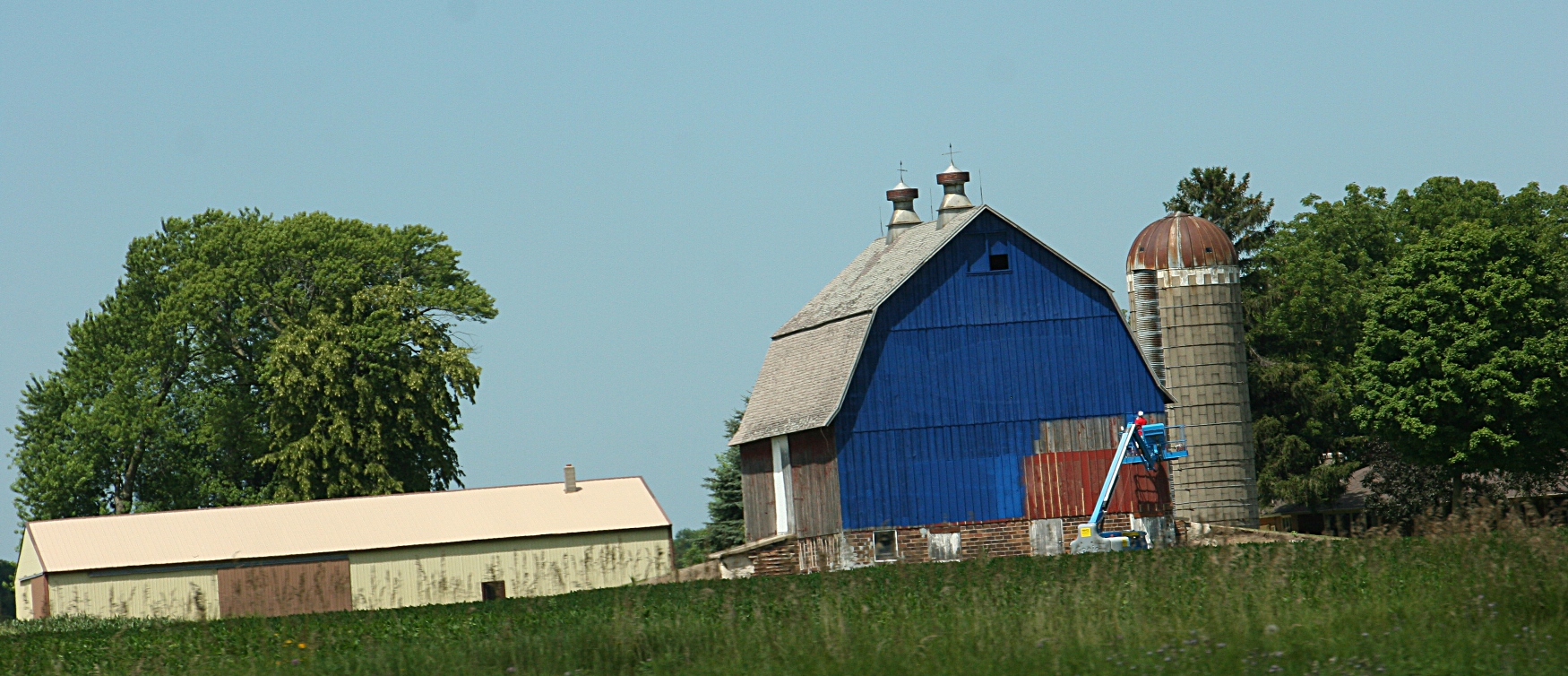
The front section of the barn was being painted as we drove along Interstate 35 Monday morning.

The front section of the barn was being painted as we drove along Interstate 35 Monday morning. In the center section, you can see a faint oval shape wherein Sugardale was painted.

“THEY’RE PAINTING THE BARN BLUE!” I gasped as I swung my camera lens toward the front passenger side window. So surprised was I by the in-process flashy hue application to the Sugardale barn along Interstate 35 north of the Northfield exit that I could barely compose a photo.

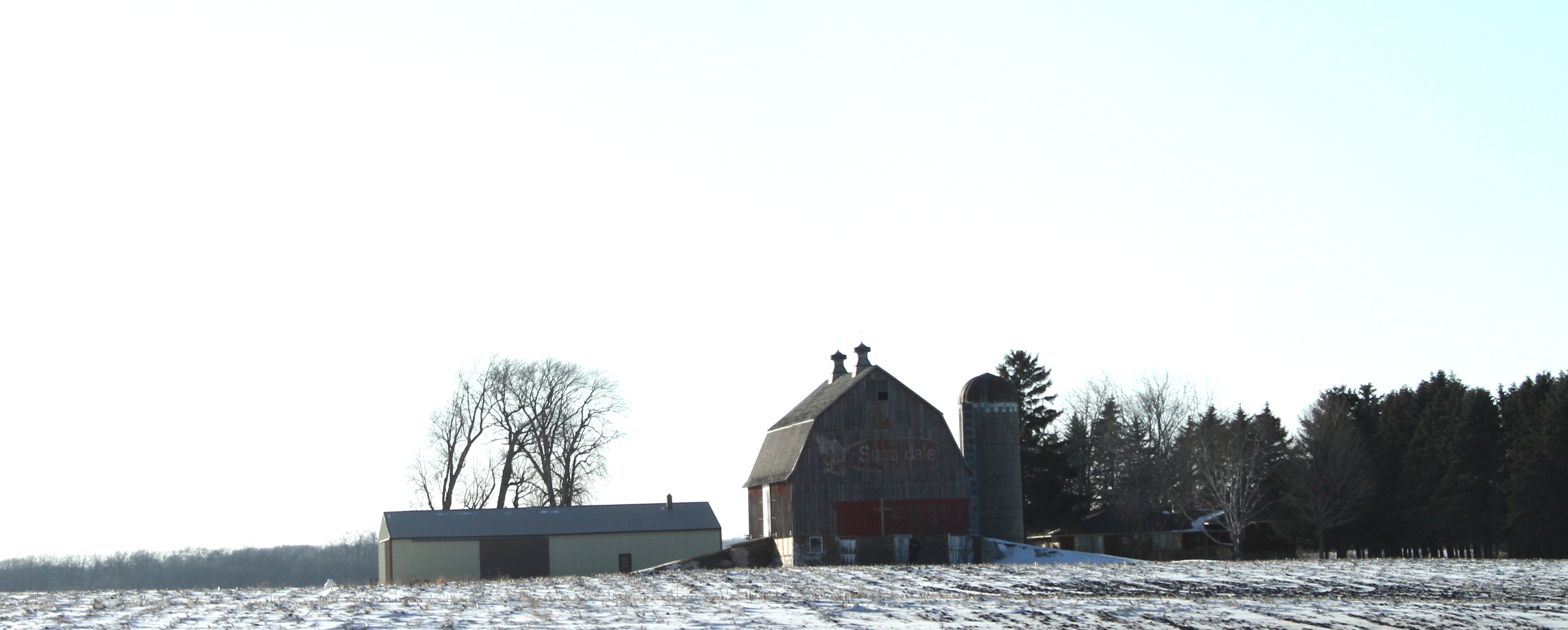
You can see how the barn looked before it was painted blue.

On the left side of the barn, you can see the as yet unpainted section. The barn needed paint. But blue?

“It’s NAPA blue,” I hissed to my driver husband, who works as an automotive machinist at the NAPA store in Northfield. He knows how much I dislike the shade of blue that represents this automotive business.

I continued to rant. “Why would anyone paint a barn blue? And they’re covering up that sugar sign.”

All of this I spewed as I shot several quick frames while our car traveled at 70 mph along the interstate.

How the barn looked when I photographed it in February.

How the barn looked when I photographed it in February. (This was before I had a telephoto lens.) Click on the image to enlarge.

I don’t understand why blue, rather than red, was selected for this landmark barn. Before the blue, you could see the fading advertisement for Ohio-based Sugardale Foods, “a leading provider of quality meats and premium foods.” The lettering has been there for years and has made this barn iconic to I-35 travelers in southern Minnesota.

Now the Sugardale sign has been obliterated by that, that, blue. Why?

In February 2011, I published a winter image of the barn. That fall, reader Sara G. commented on the post:

This is my grandparents’ barn. Grandpa, a retired NW Orient pilot, purchased the land in about 65, moved out there in about 74. The barn is post and beam and was built by a guy who would walk around the land and point to trees to chop down for the various posts and beams. Most still have remnants of bark on them. It is an amazing structure. We played in there every chance we got as kids.

Sadly, it will most likely hit the market in the next few years. I cannot imagine driving down 35w and having someone else live there. Or Christmas anywhere else for that matter. Thanks for the pics. You need to go back and shoot it now before the corn comes down while the color is so strong.

I expect Sara’s grandparents no longer own this property. I understand that the current owner can choose any color he/she wishes for the barn. But a vivid blue? And why destroy the memorable Sugardale signage? I feel just plain blue about this piece of rural barn history vanishing under a coat of blue paint.

#

UPDATE 1:30 PM: Bob Collins, who pens an online column, NewsCut, at Minnesota Public Radio, followed up on my post after a reader (Faith, Farming & Cowboy Boots) tipped me off that the blue barn might be a project of the Midwestern restaurant chain, Culver’s. Bob contacted Culvers and learned that the I-35 Sugardale barn is, indeed, part of the company’s campaign to thank farmers and financially assist young people going into agriculture. You can read Bob’s post at this link:  http://blogs.mprnews.org/newscut/2015/07/a-barn-turns-blue/

Also, be sure to scroll through the comments section on my post to read an explanation from Paul Pitas, Director of Public Relations and Communications for Culver’s.

#
© Copyright 2015 Audrey Kletscher Helbling