Minnesota Prairie Roots

Writing and photography by Audrey Kletscher Helbling

Minnesota Faces: Historical reenactors “Katie” and “Jim” plus more October 2, 2015

Portrait #42  : Siblings Kaylee and William
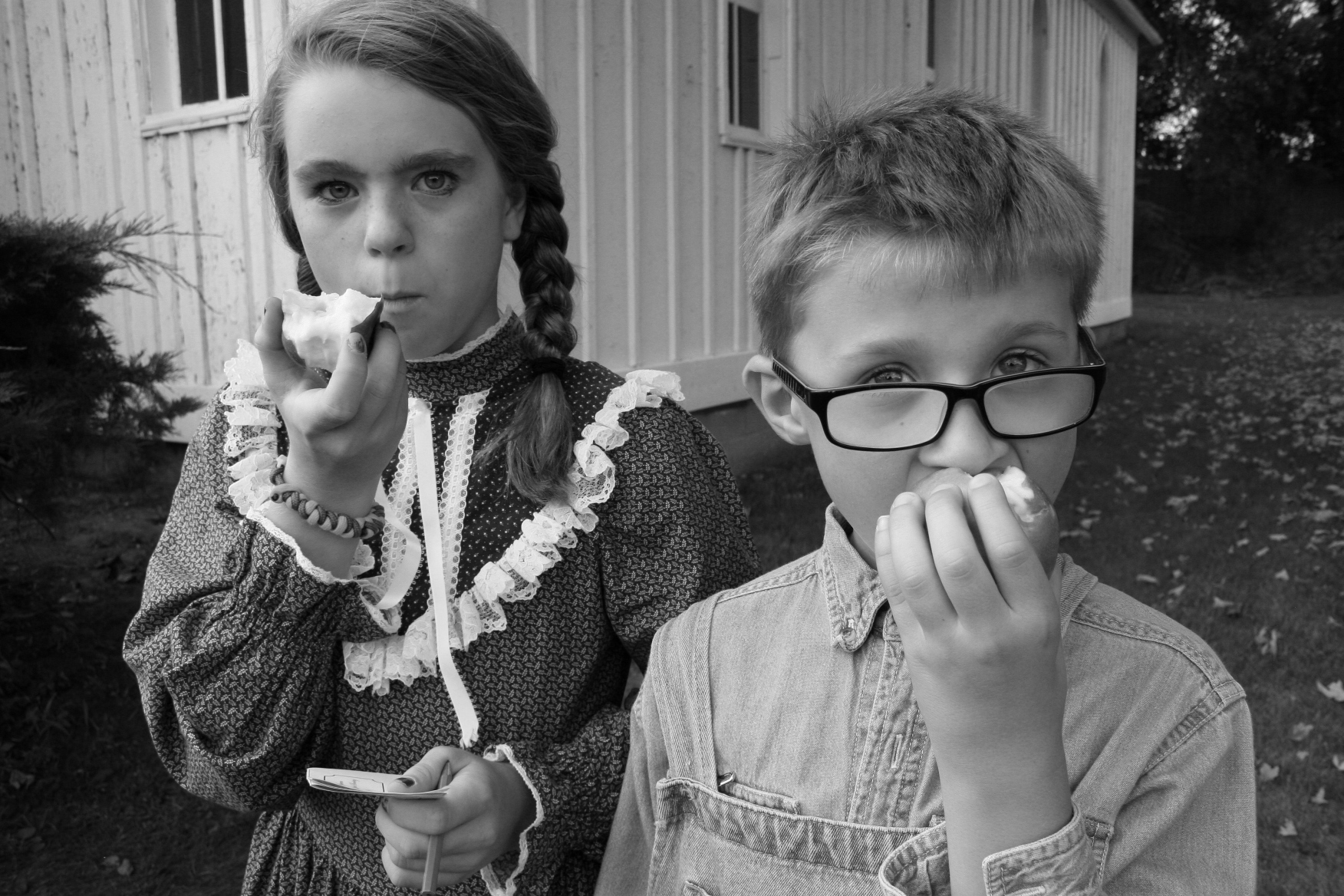
 

Portrait 42, Night at the Museum actors


Back in the day when I studied history, it was dull and boring and printed mostly as straight factual information in books. Dates and events and important people. Page after page after page with the occasional illustration or photo to break up the blocks of copy. Since I’m good at memorizing, I passed history classes with ease, but not with interest.

I haven’t cracked a history textbook in decades. But I presume they are a bit more interesting, perhaps in a storytelling, personalized way.

Today, thankfully, living history conveys the past in a personal and relatable way that a textbook never will. When I met siblings Kaylee and William last September, they were role-playing pioneer children during the Rice County Historical Society’s second annual “A Night at the Museum.

Lots of kids were running around the grounds in period attire or attending class inside the historic Pleasant Valley School. I was learning, too, as I wandered the museum grounds and observed reenactors portraying historical characters. I suspect I’m like most people who find this much more educational and entertaining than simply peering at historical items on display inside museum walls. Not that that doesn’t have value, too. It certainly does. I just prefer living history and am grateful our local historical society started this annual “A Night at the Museum.”

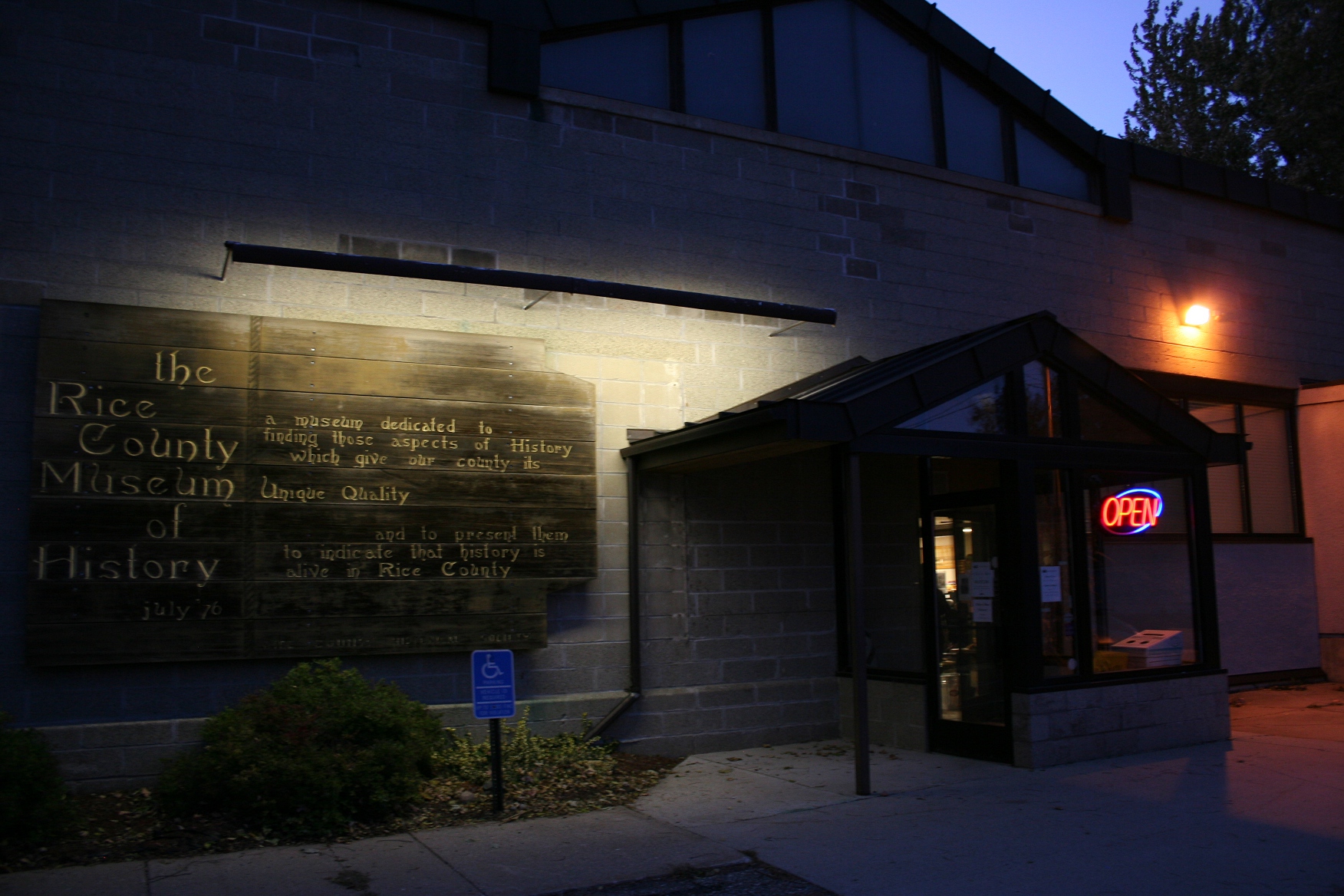
From 4 p.m. – 7 p.m. this Saturday, October 3, attendees can interact with costumed characters from Rice County’s past on the museum grounds at 1814 Northwest Second Avenue in Faribault, right next to the fairgrounds. New this year is a Flashlight Tour of Harvest and Heritage Halls at 6 p.m. There will also be horse-drawn wagon rides and food available around the fire pit. Click here for more information.

Maybe you’ll spot Kaylee and William there, pretending to be Katie and Jim.

#
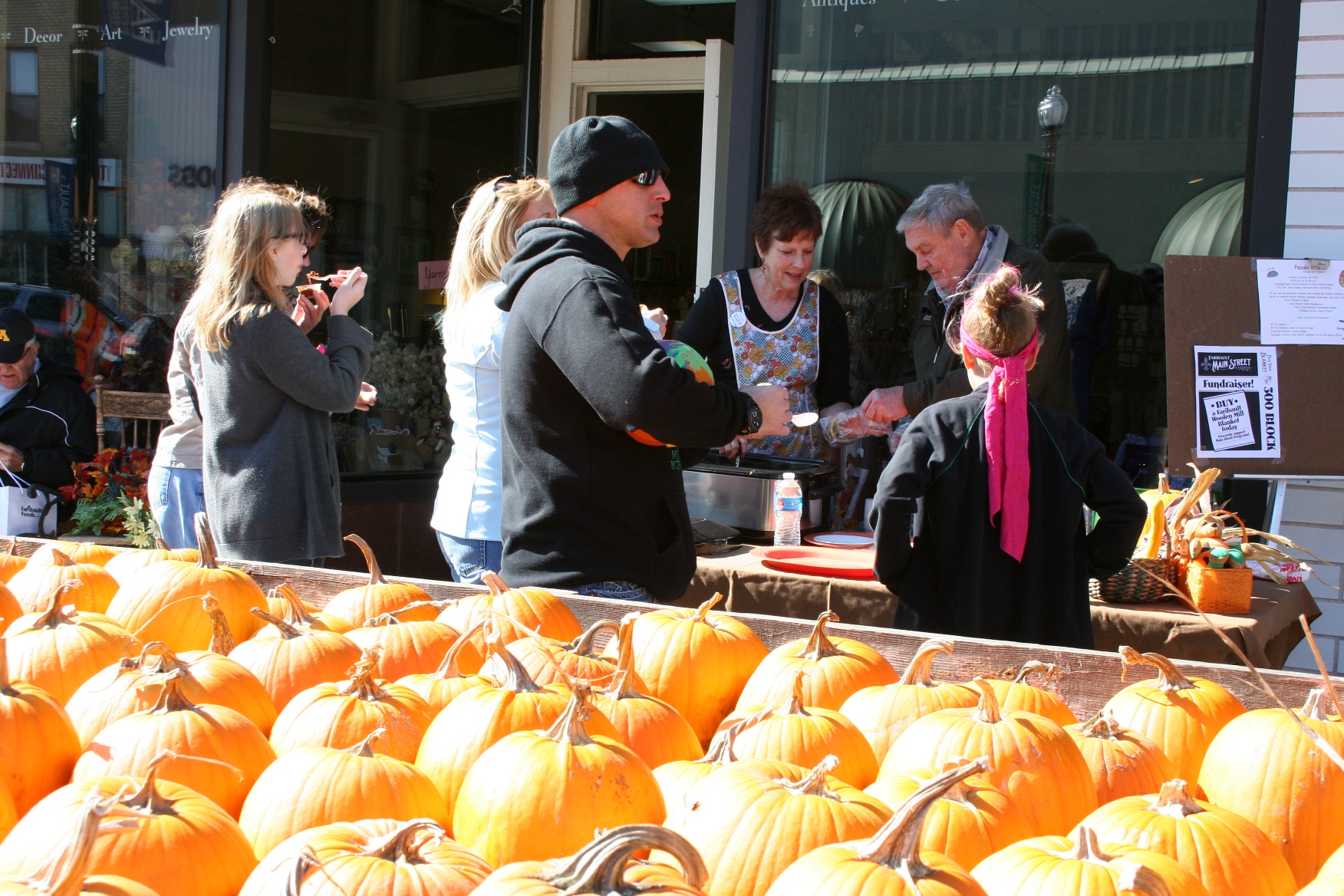
Participants in last year's Chili Contest dish up chili at a business along Central Avenue during the Fall Festival.

Attendees sample chili at a business along Central Avenue during the 2011 Fall Festival. Minnesota Prairie Roots file photo.

IF YOU WANT TO MAKE a full day of it in Faribault, arrive earlier for the annual downtown Fall Festival and Oktoberfest. Most events begin at noon. However, starting at 9:30, until noon, local artists will gather outside the Paradise Center for the Arts to create en plein air.

At noon there’s a kiddie parade and a Chili Contest with businesses and others offering chili samples (for a fee) until 2 p.m. From 12:30 p.m. – 4:30 p.m., those interested can take the Spooky Basement Tour, a free event at the Paradise Center for the Arts. The PCA is also holding a costume sale.  Kids can go trick-or-treating downtown from 1 – 3 p.m. Games for kids, pumpkin painting and a unicycle show are also among fest activities.

New to the downtown festival this year is Oktoberfest, celebrated from noon to 11 p.m. at Faribault’s new brewery, F-Town Brewing Company, just off Central Avenue. The event features food trucks, yard games, live music and, of course, beer.

© Copyright 2015 Audrey Kletscher Helbling


History comes to life at Rice County museum September 30, 2014

THE SCENES COULD HAVE AIRED on Little House on the Prairie:

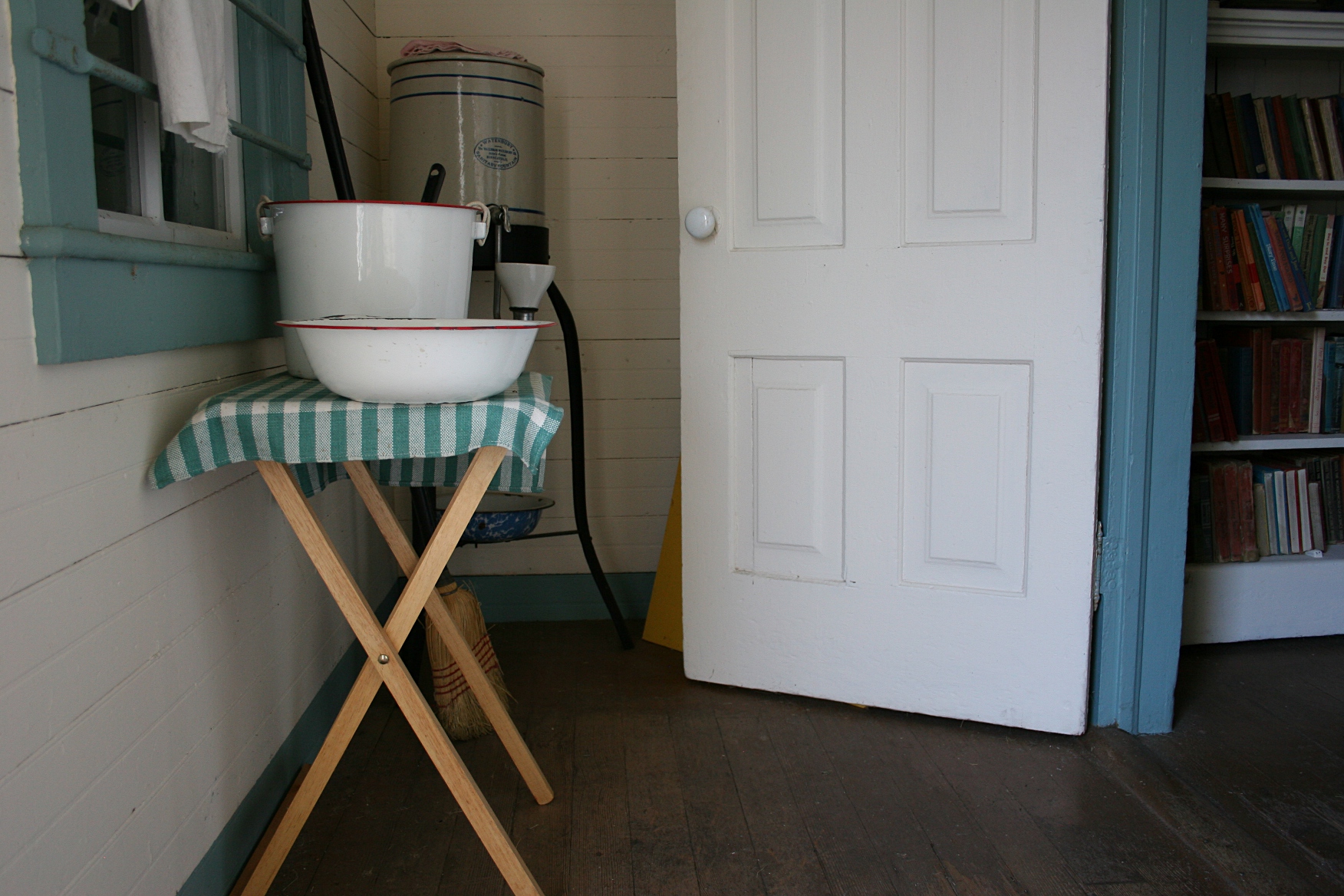
Wash basin and water cooler inside the schoolhouse entry.

Wash basin and water cooler inside the schoolhouse entry.

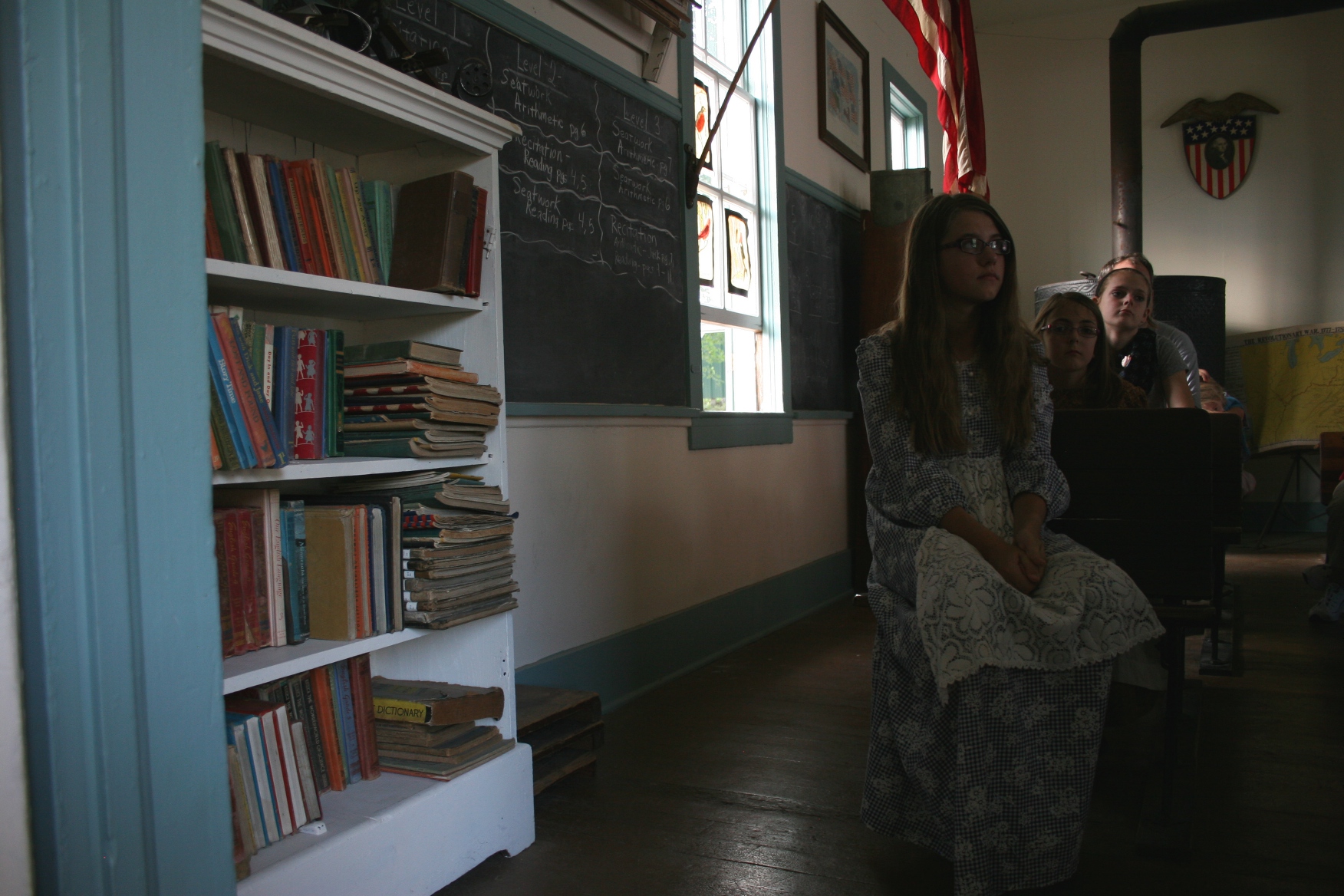
Harsh clang of the bell summons students inside the one-room Pleasant Valley School—girls to the left, boys to the right.

Youth role-playing Pleasant Valley School students.

Youth role-play Pleasant Valley School students.

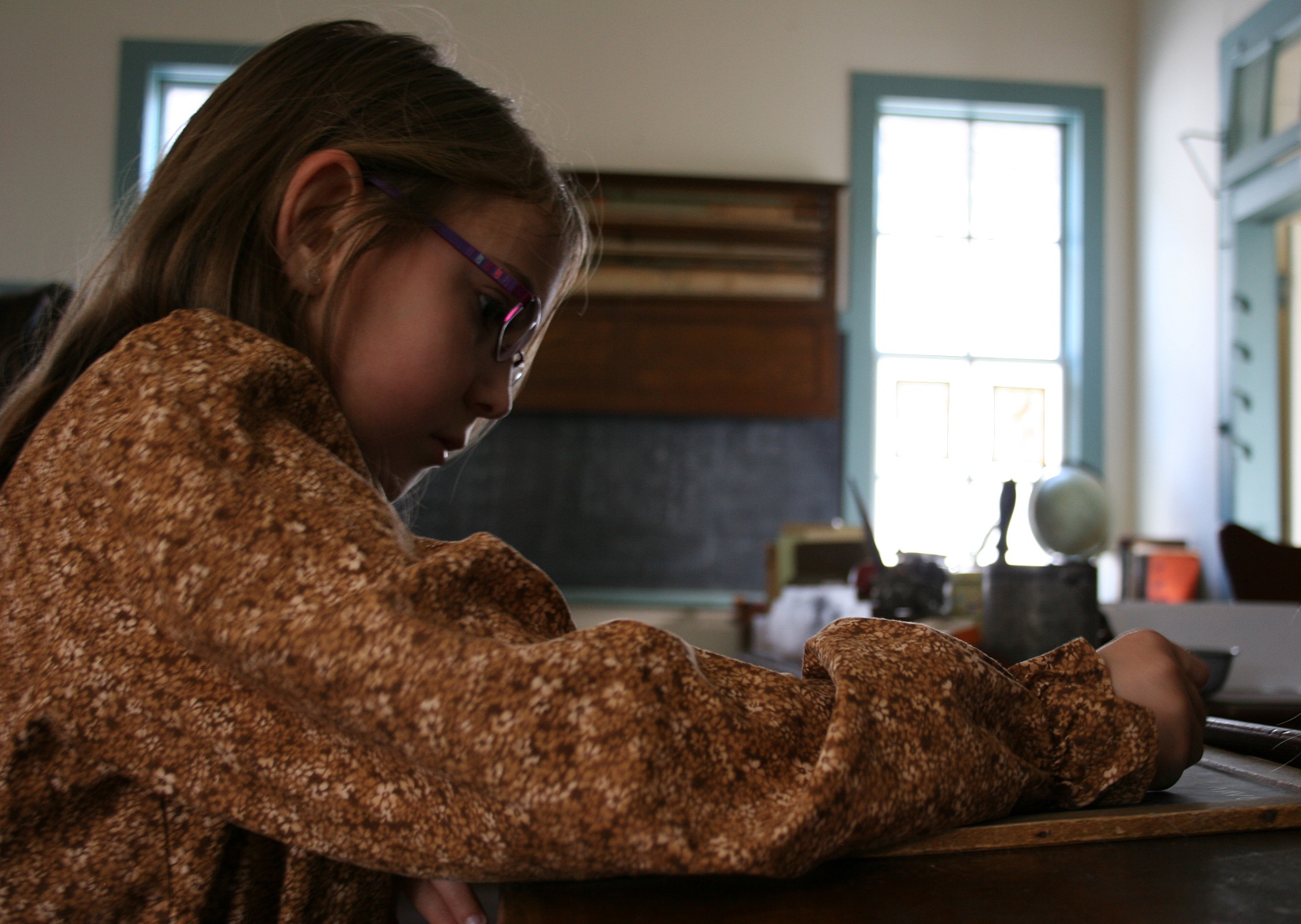
Lessons written on slate.

Lessons written on slate.

Girls in prairie dresses scratch chalk across slate.

Attendees and participants in A Night at the Museum filled the one-room school.

Inside the one-room school.

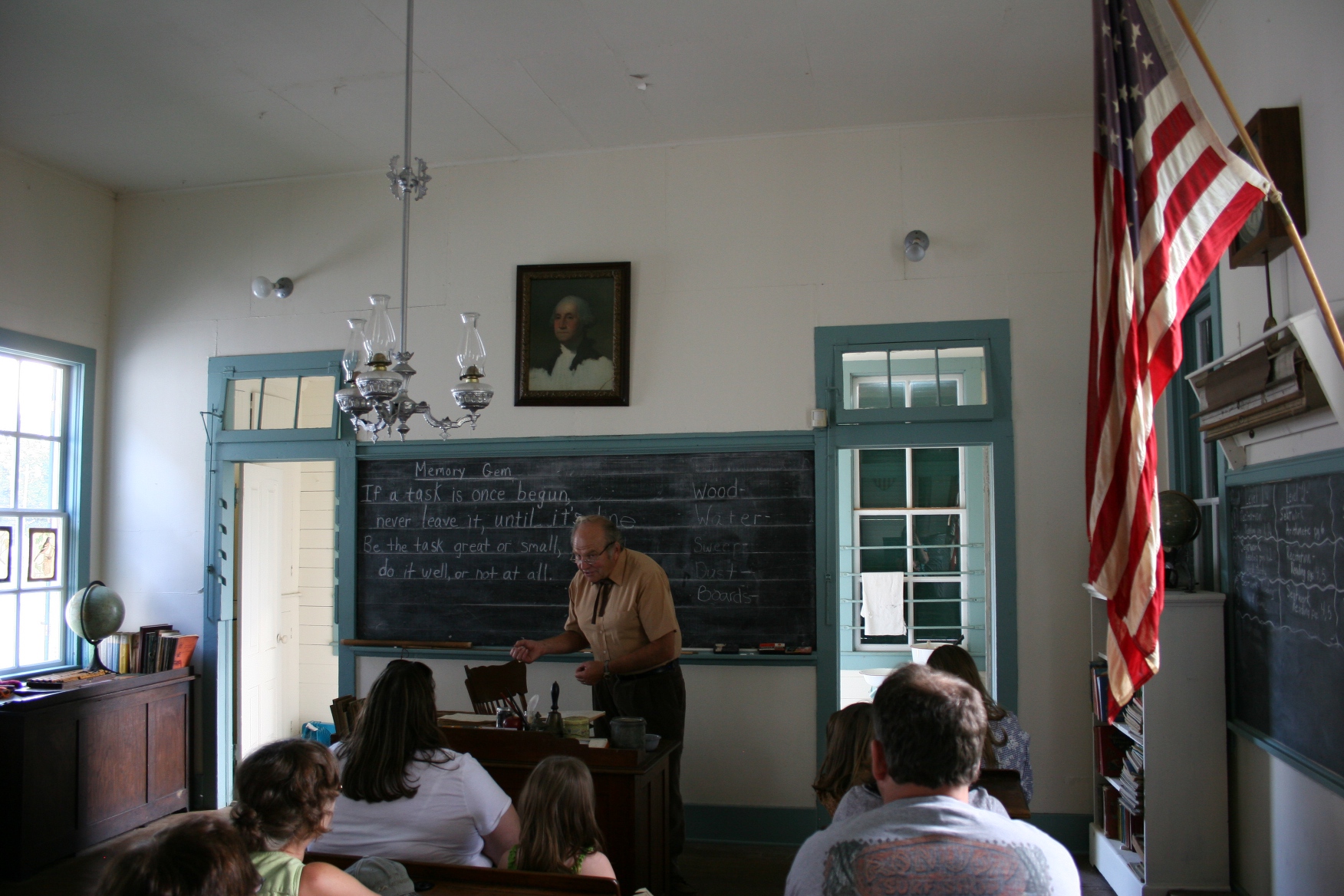
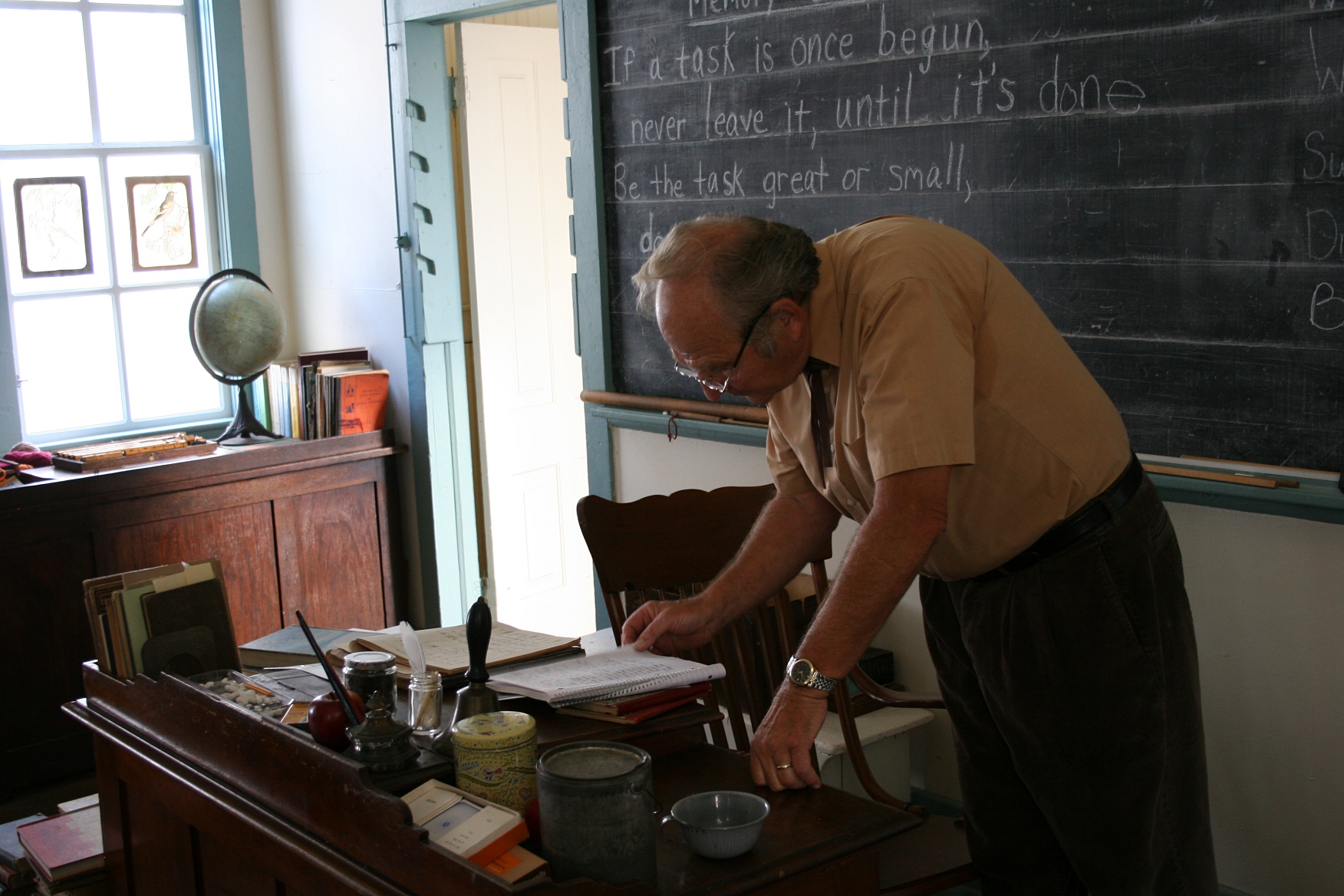
My friend Duane role-plays the Pleasant Valley teacher.

My friend Duane role-plays the Pleasant Valley teacher.

Teacher praises his students with “Good, very good.”

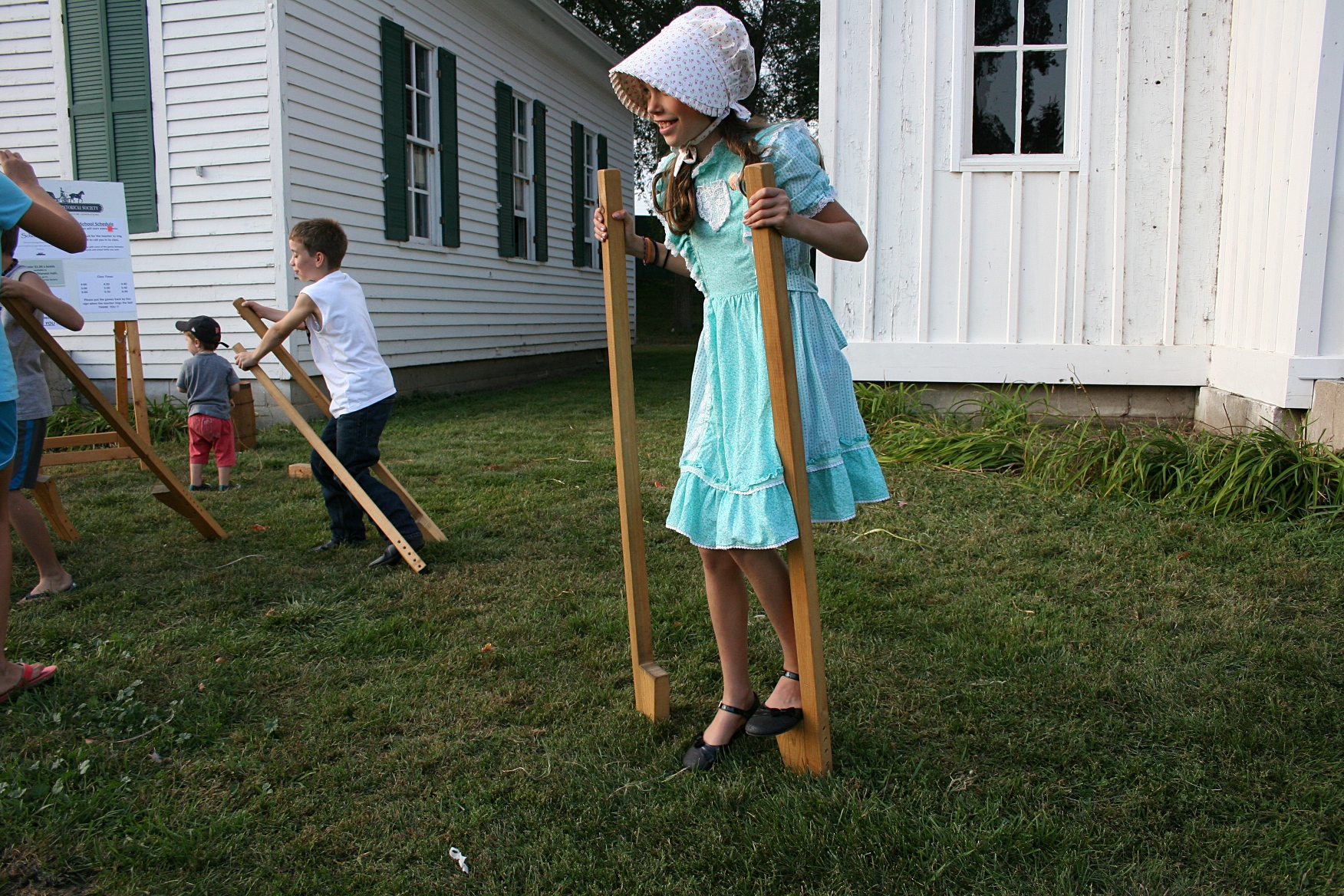
Kids loved trying to walk on stilts.

Kids loved trying to walk on stilts.

Outside, during recess, legs fly in a game of tag while others flail in attempts to walk on stilts.

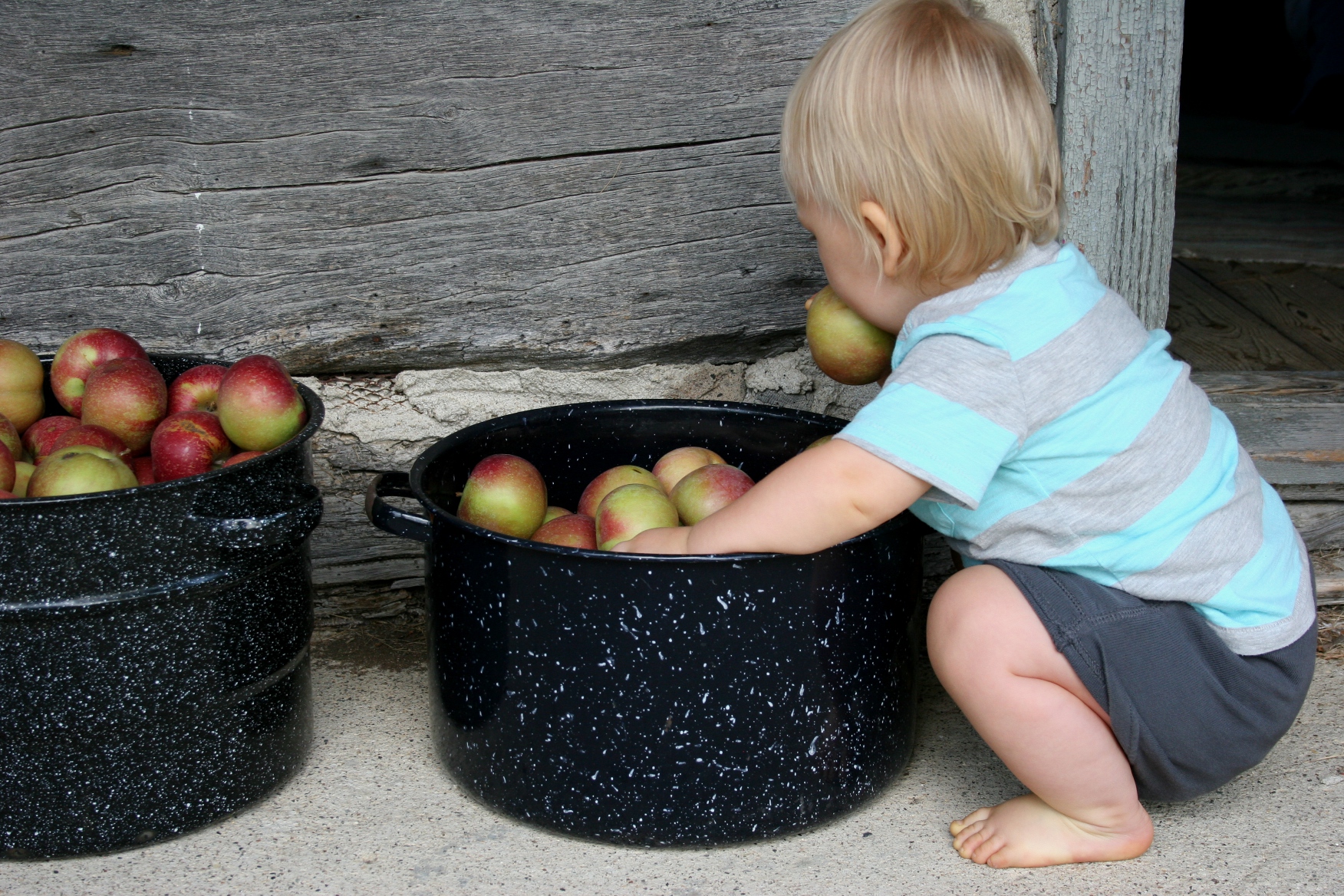
Luke, 13 months, finds an apple outside the log cabin.

Luke, 13 months, finds an apple outside the log cabin.

Across the way, in an 1856 log cabin, the scent of baking bread lingers while a steady hand cranks a butter churn.

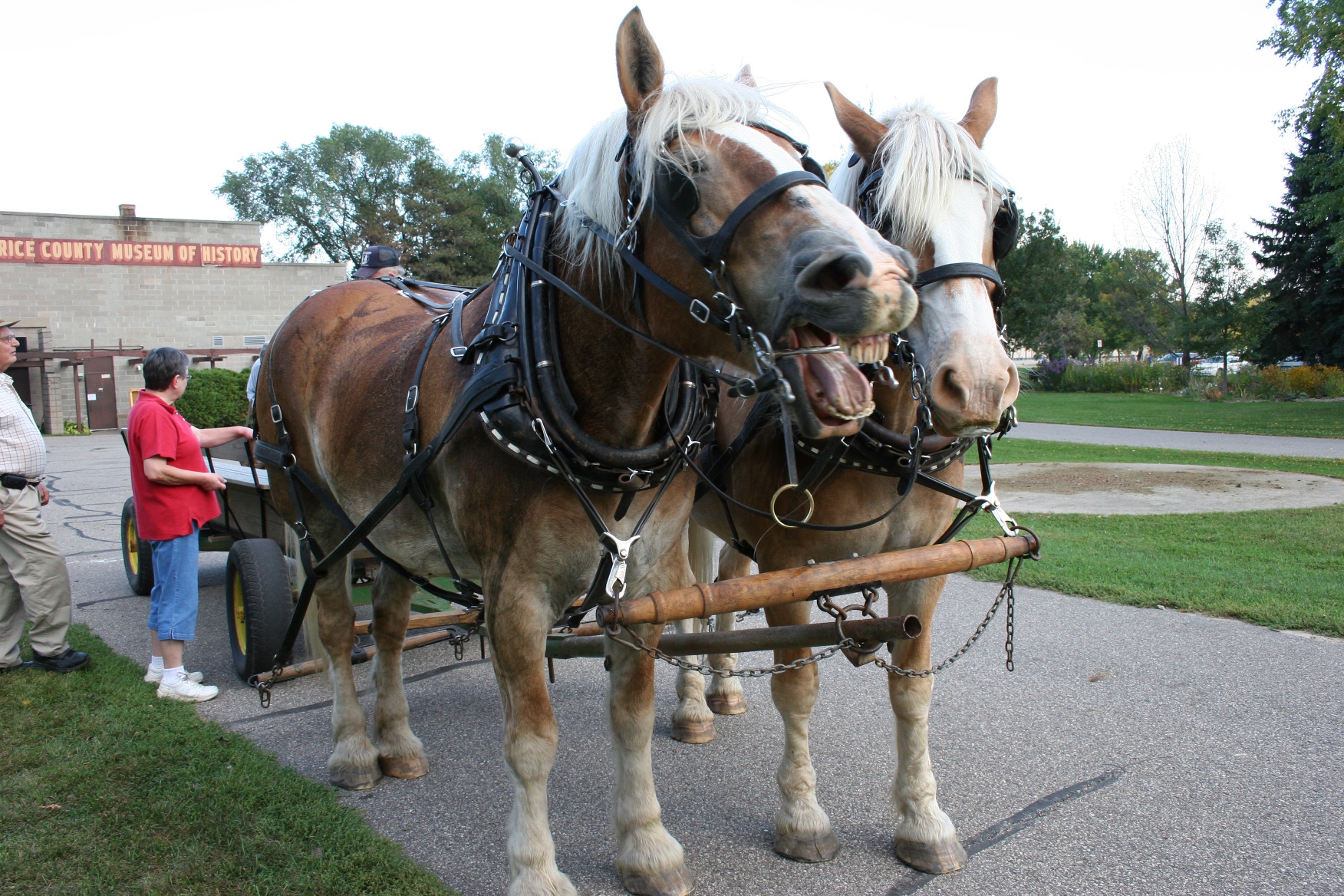
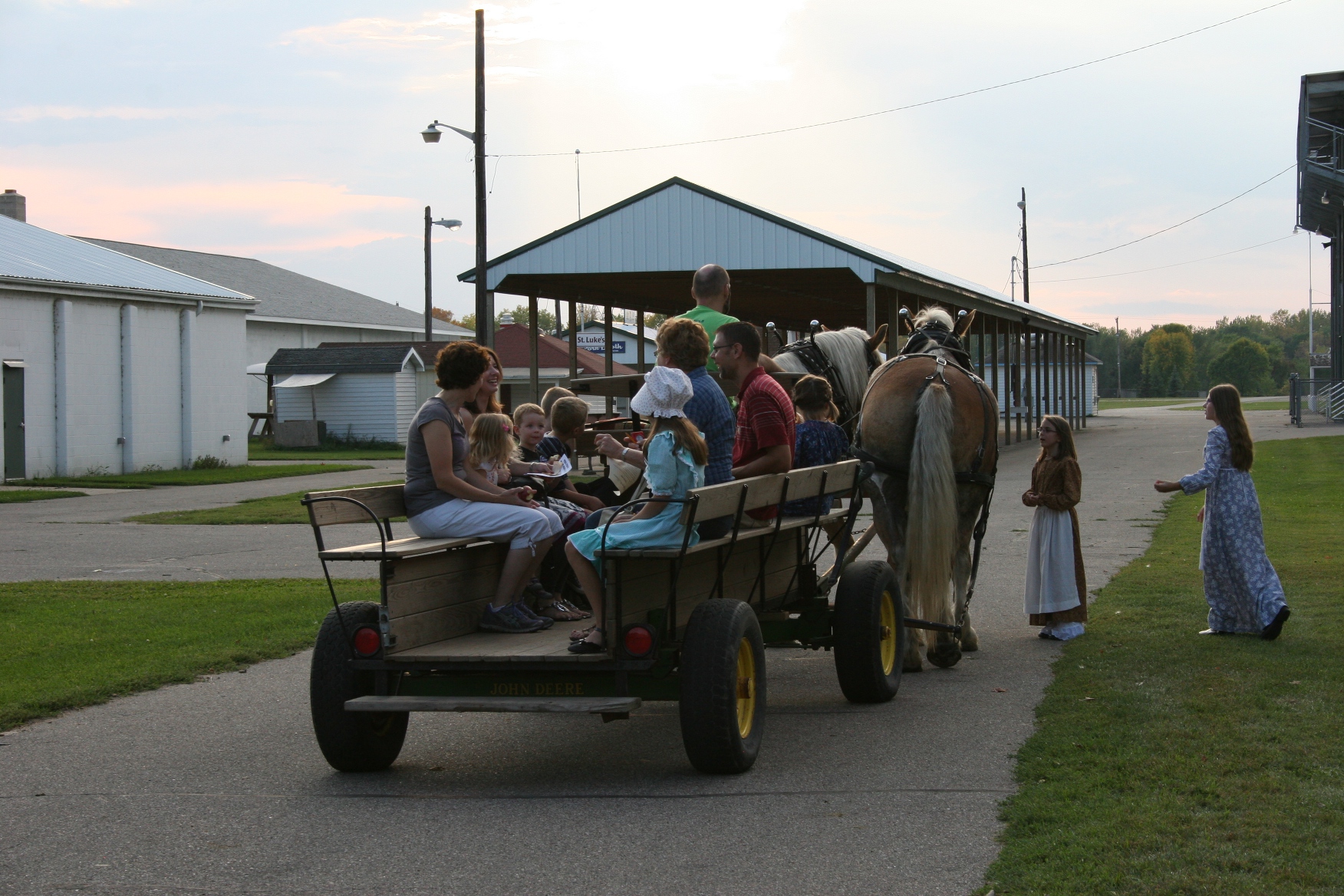
Mike and Pat bring their horses and wagon to many area events.

Mike and Pat bring their horses and wagon to many area events.

Wagon rides around the Rice County Fairgrounds proved popular.

Wagon rides around the Rice County Fairgrounds proved popular.

A team of Belgian horses pulls a wagon, not a covered wagon like Pa Ingalls’, but still, a welcome mode of transportation on a stunning autumn afternoon and evening in southeastern Minnesota.

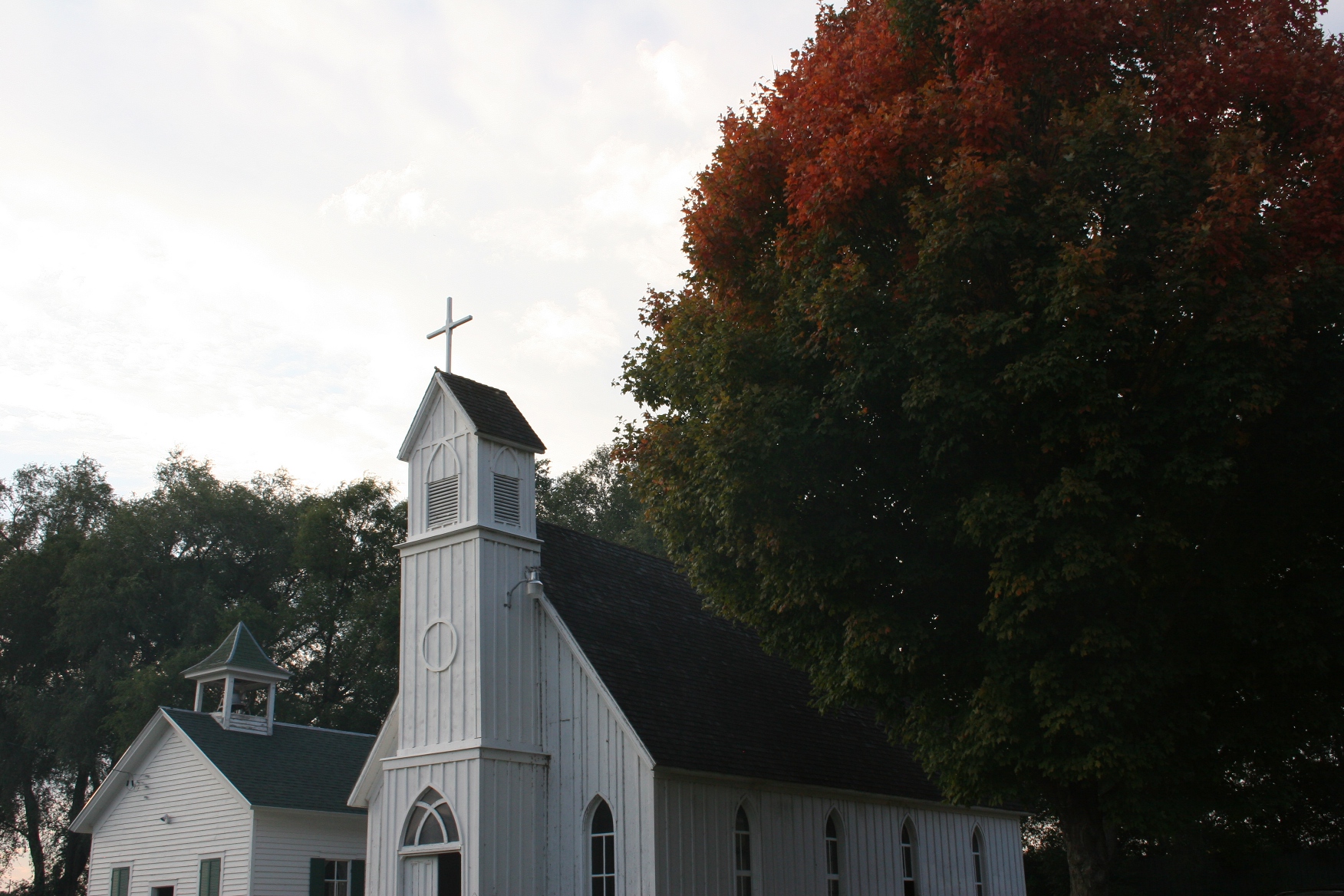
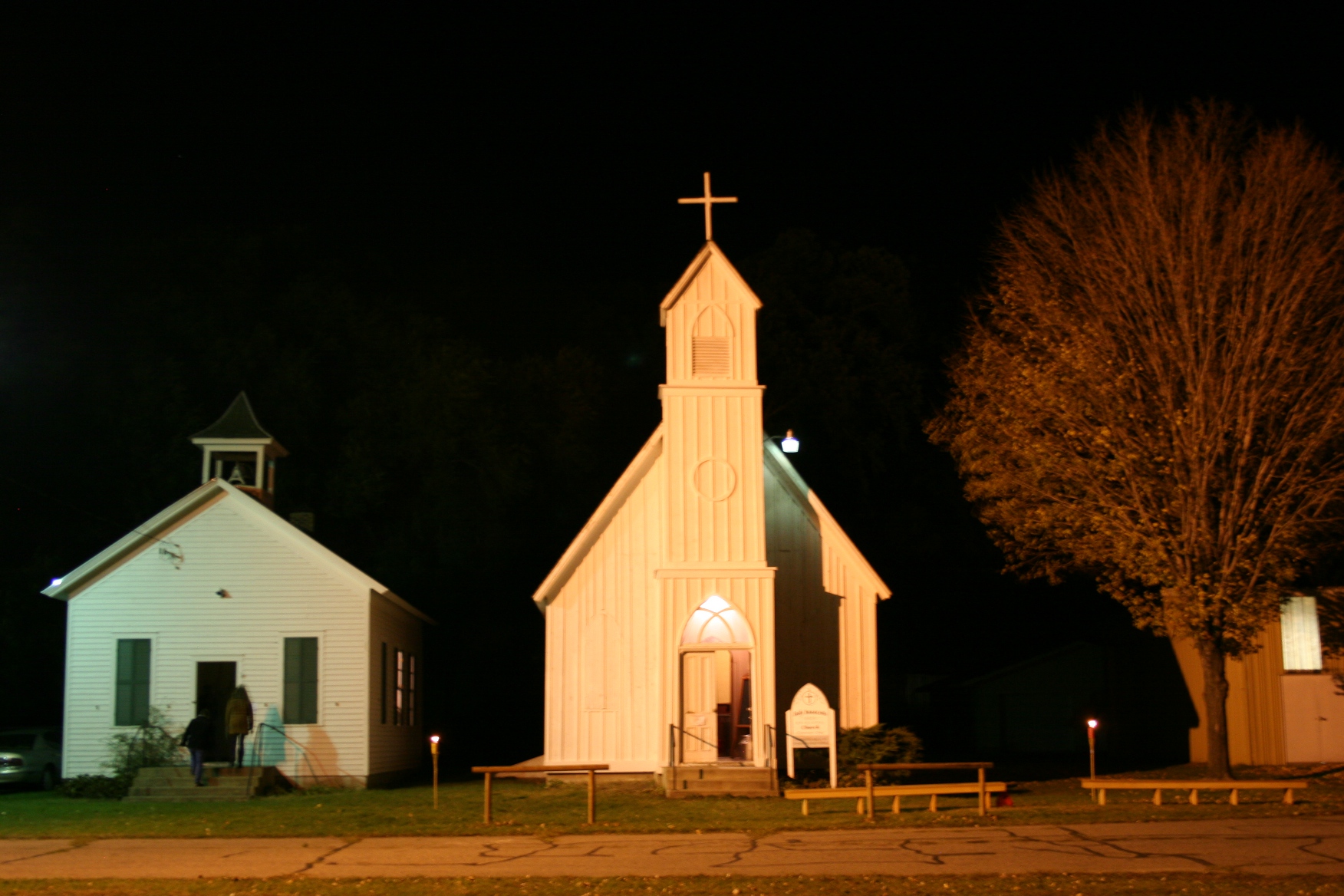
Pleasant Valley School, left, and Holy Innocents Episcopal Church.

Pleasant Valley School, left, and Holy Innocents Episcopal Church at the Rice County Historical Society, Faribault, Minnesota.

Fast forward to July 15, 1944, and Helen Greenville walks the worn floorboards of Holy Innocents Episcopal Church as she prepares for her daughter, Lilas’, wedding. “Oh the Deep, Deep Love” slides from bow to violin strings.

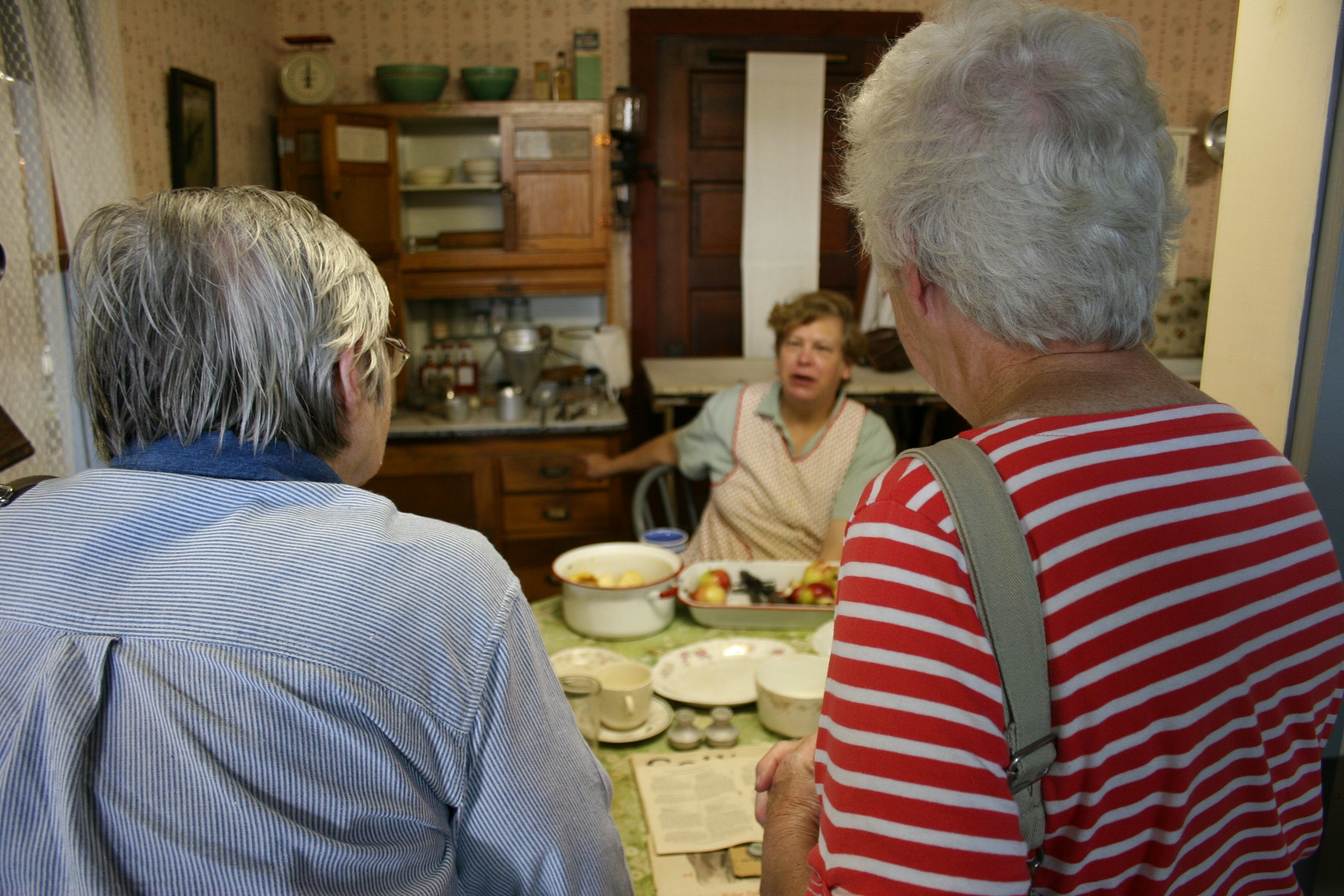
A Night at the Museum attendees visit with Mrs. Morris, who was peeling apples in her kitchen.

Visitors chat with Mrs. Morris, who is peeling apples in her kitchen.

Next door, Mrs. Morris peels apples for applesauce.

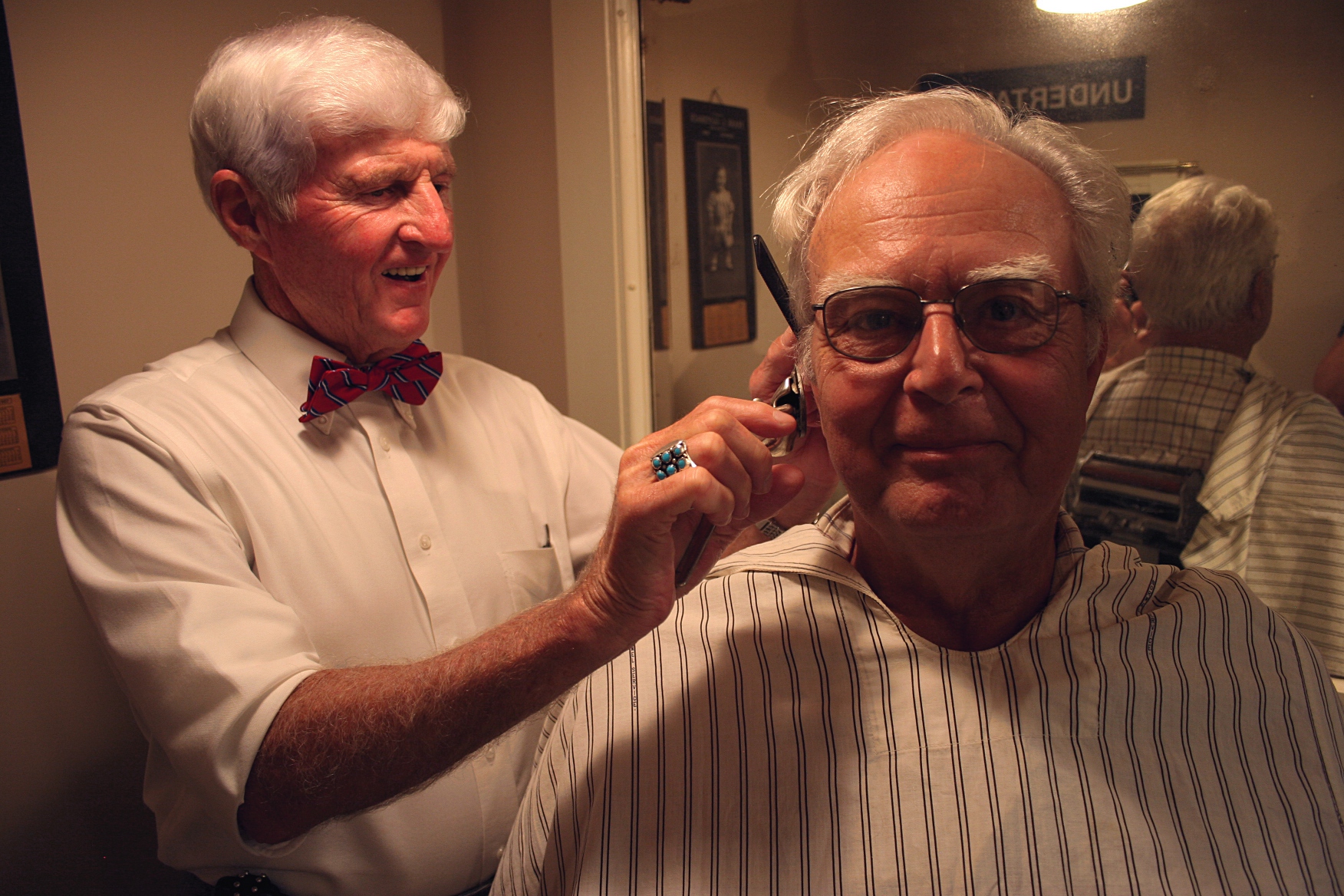
Barber Tom with customer LeRoy inside the museum barbershop.

Barber Tom with customer LeRoy inside the museum barbershop.

In another building, Hopalong Tenacity taps out Morse Code and the barber razors hair and Civil War veteran and businessman John Hutchinson greets guests, all dapper in top hat and tails.

Friends.

Friends.

These scenes and more were part of the Rice County Historical Society’s second annual Night at the Museum, an event which brings history to life inside and outside museum buildings.

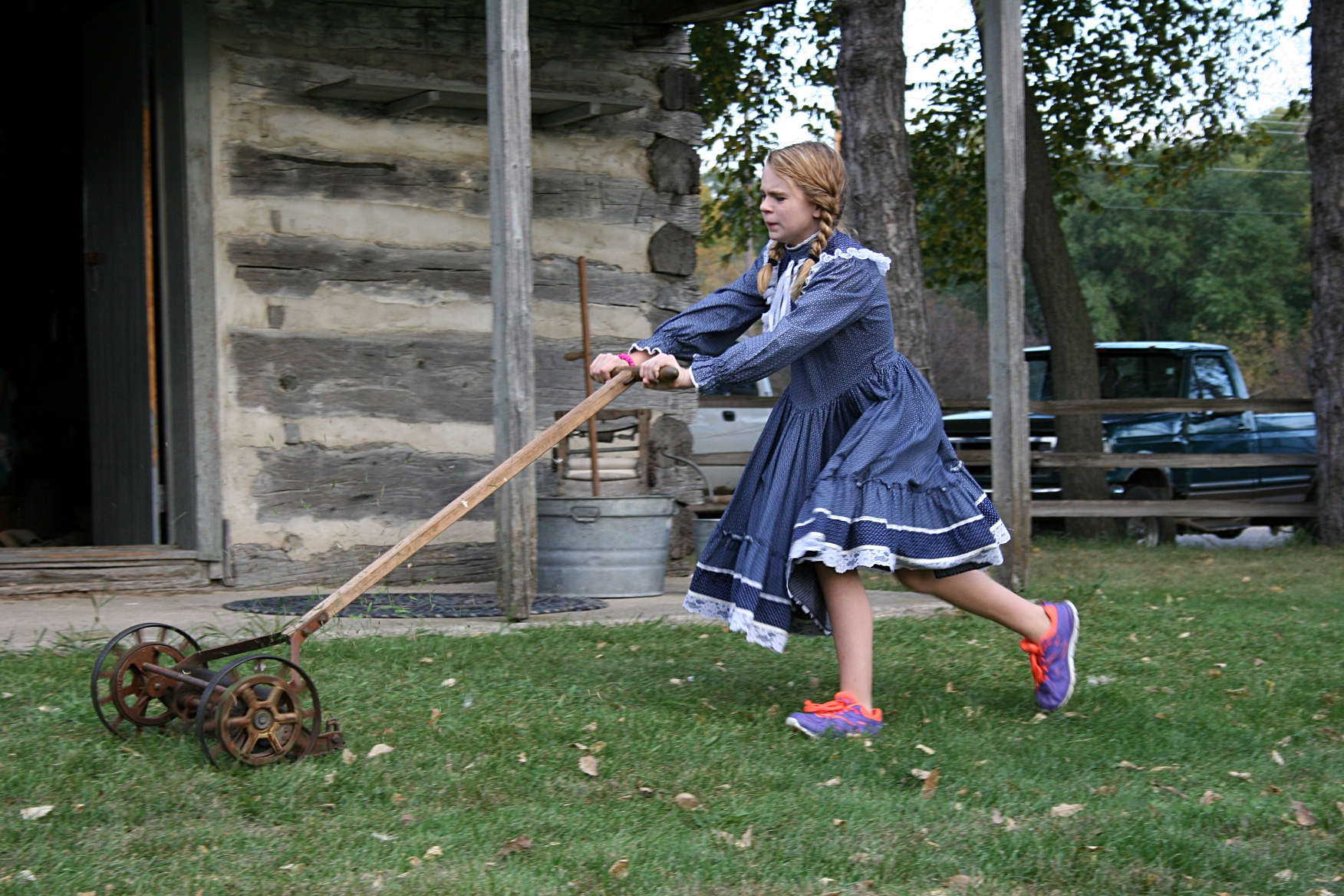
Kaylee, role-playing Katie, struggles to push an old-fashioned lawnmower across the lawn outside the log cabin.

Kaylee, role-playing Katie, struggles to push an old-fashioned lawnmower across the lawn outside the log cabin.

I loved it. This is how I learn history best—through voices and stories and action.

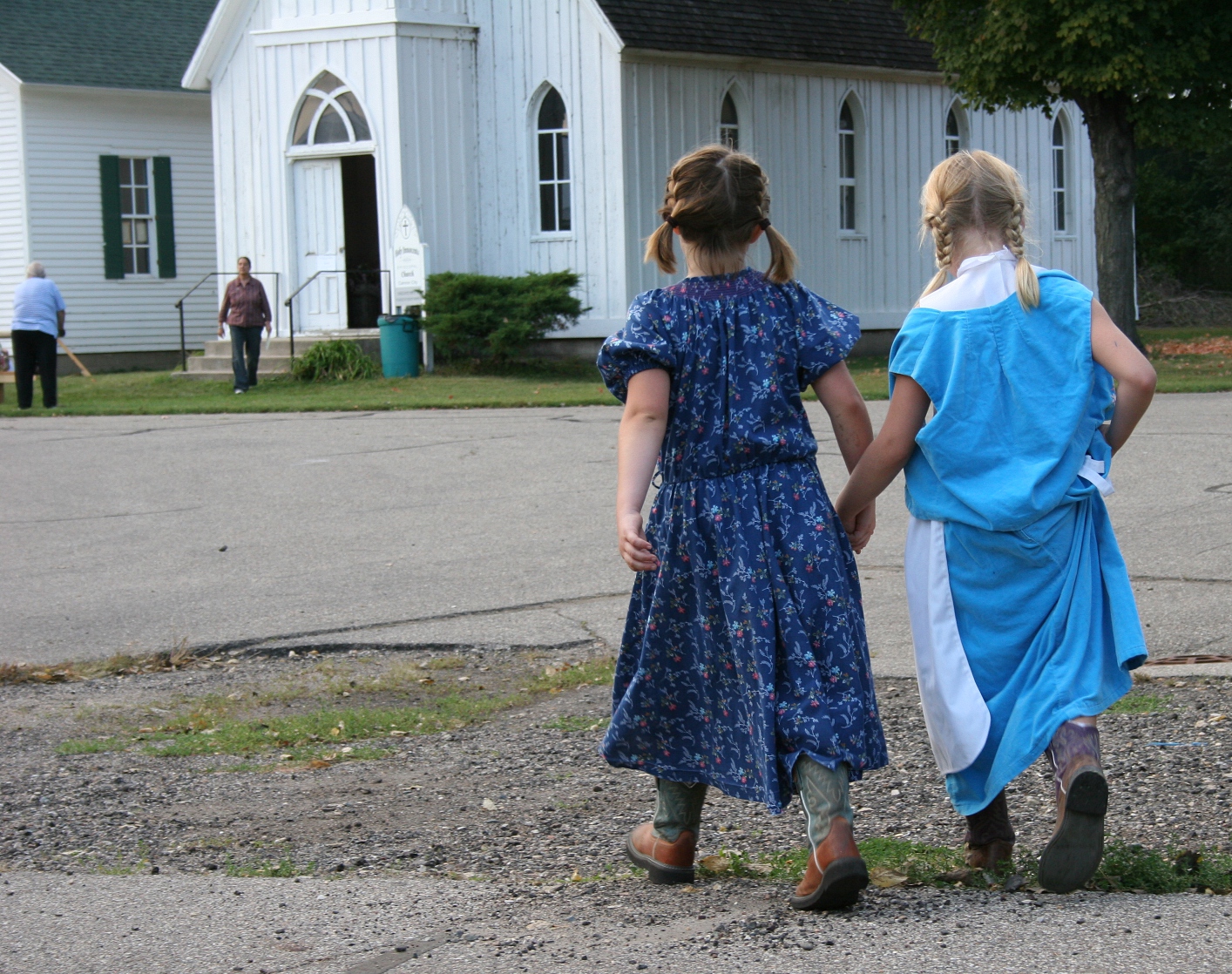
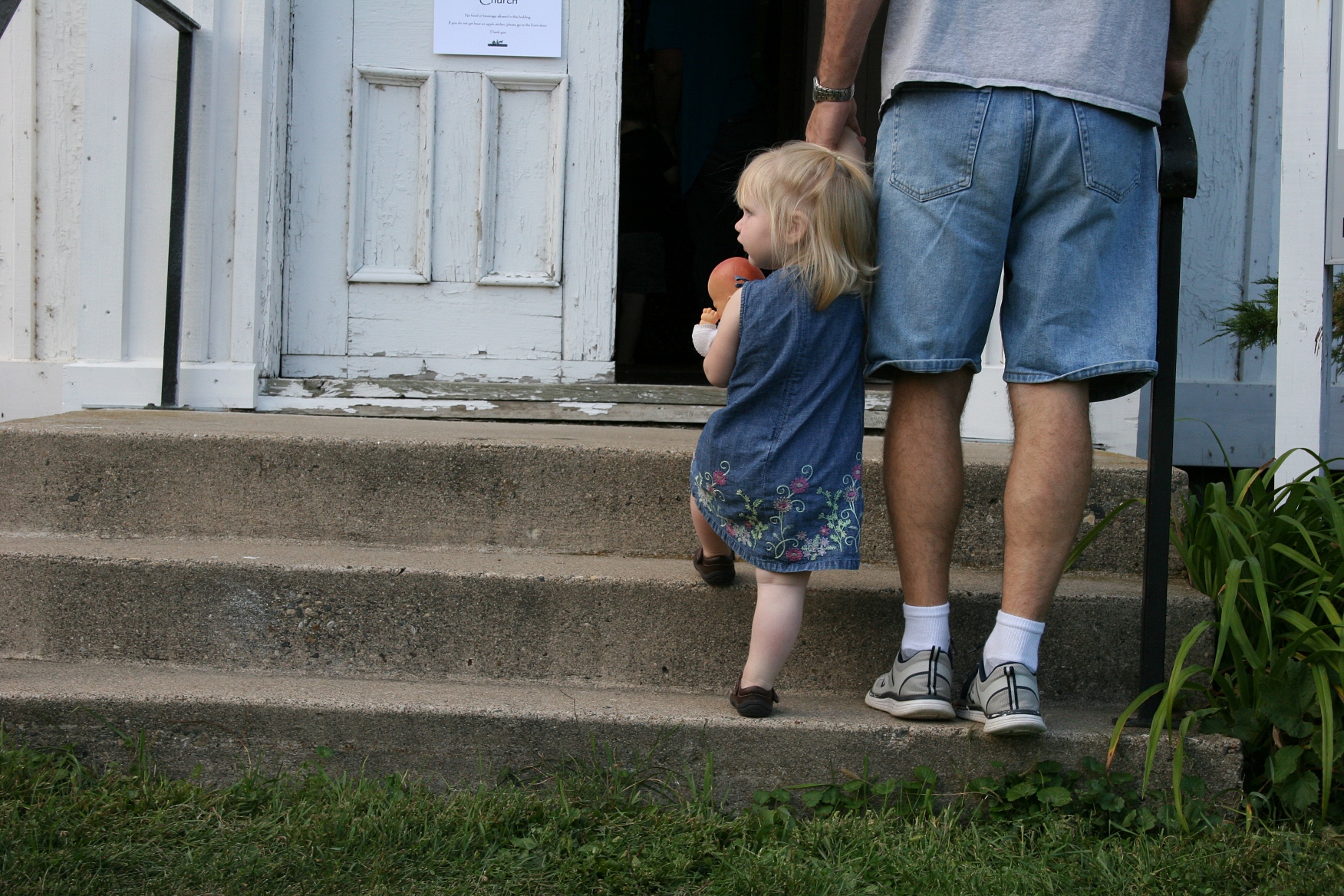
Dad and daughter enter the historic church.

Dad and daughter enter the historic church. A Night at the Museum is definitely a family-oriented event.

And, based on my observations, adults and kids attending and participating likewise embrace this style of sharing history.

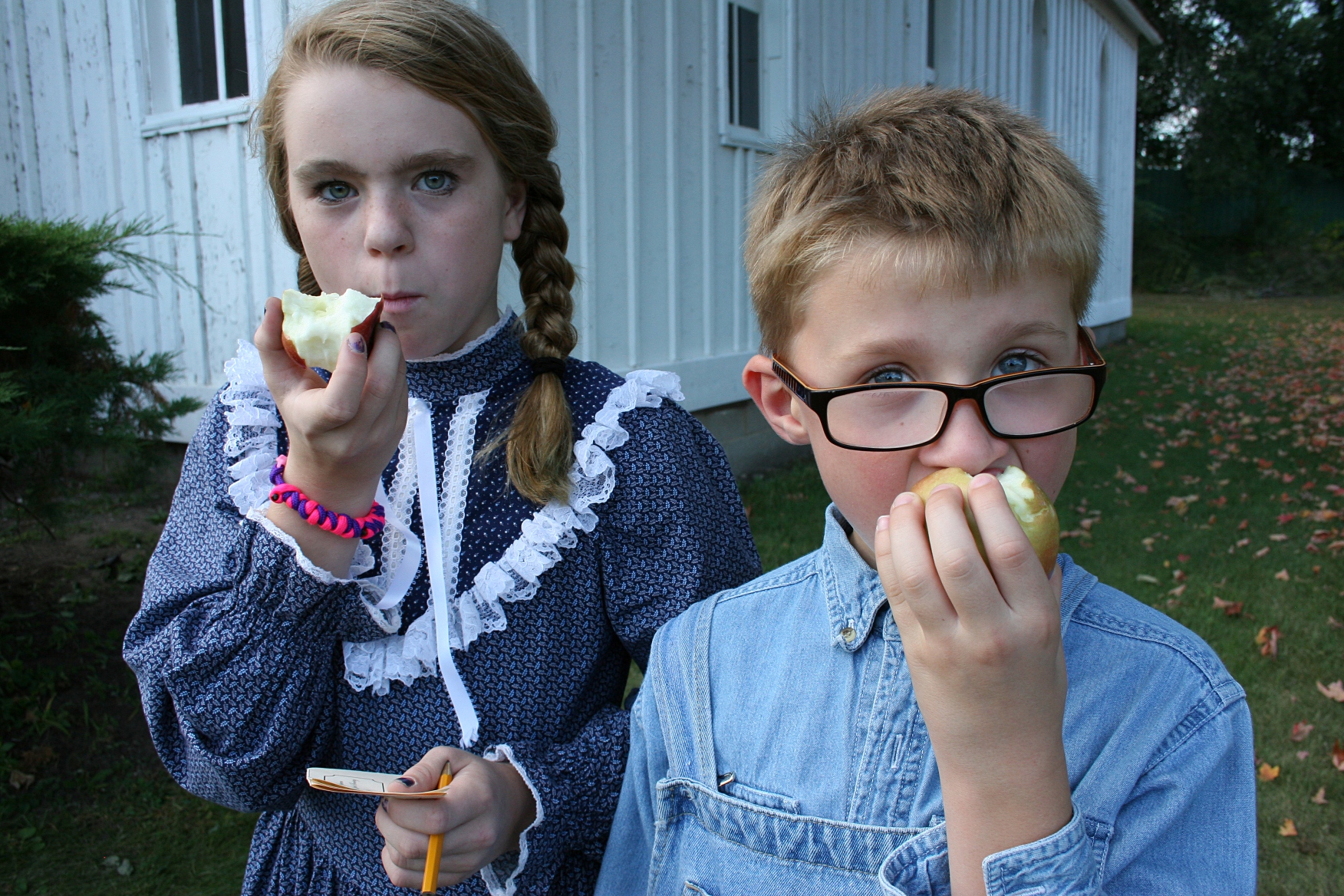
Kaylee and William (AKA Katie and Jim for the evening) raved about the apples.

Siblings Kaylee and William (AKA Katie and Jim for the evening) raved about the apples.

I’d like to see more of these living history events in my community of Faribault, one of Minnesota’s oldest cities founded in 1852 by fur trader Alexander Faribault. Our historic downtown would provide an ideal stage as would the historic Cathedral of Our Merciful Saviour and so many other aged buildings in and around town.

HOW DO YOU BEST learn history? How does your community share its local history?

© Copyright 2014 Audrey Kletscher Helbling
 

My Night at the Museum October 28, 2013

HISTORY BROUGHT TO LIFE pleases me, for I am an interactive learning history type of person.

I often get overwhelmed and impatient reading information in traditional museum displays.

Arriving around 6:30 p.m. Friday for A Night at the Museum at the Rice County Historical Society in Faribault.

Arriving around 6:30 p.m. Friday for A Night at the Museum at the Rice County Historical Society in Faribault.

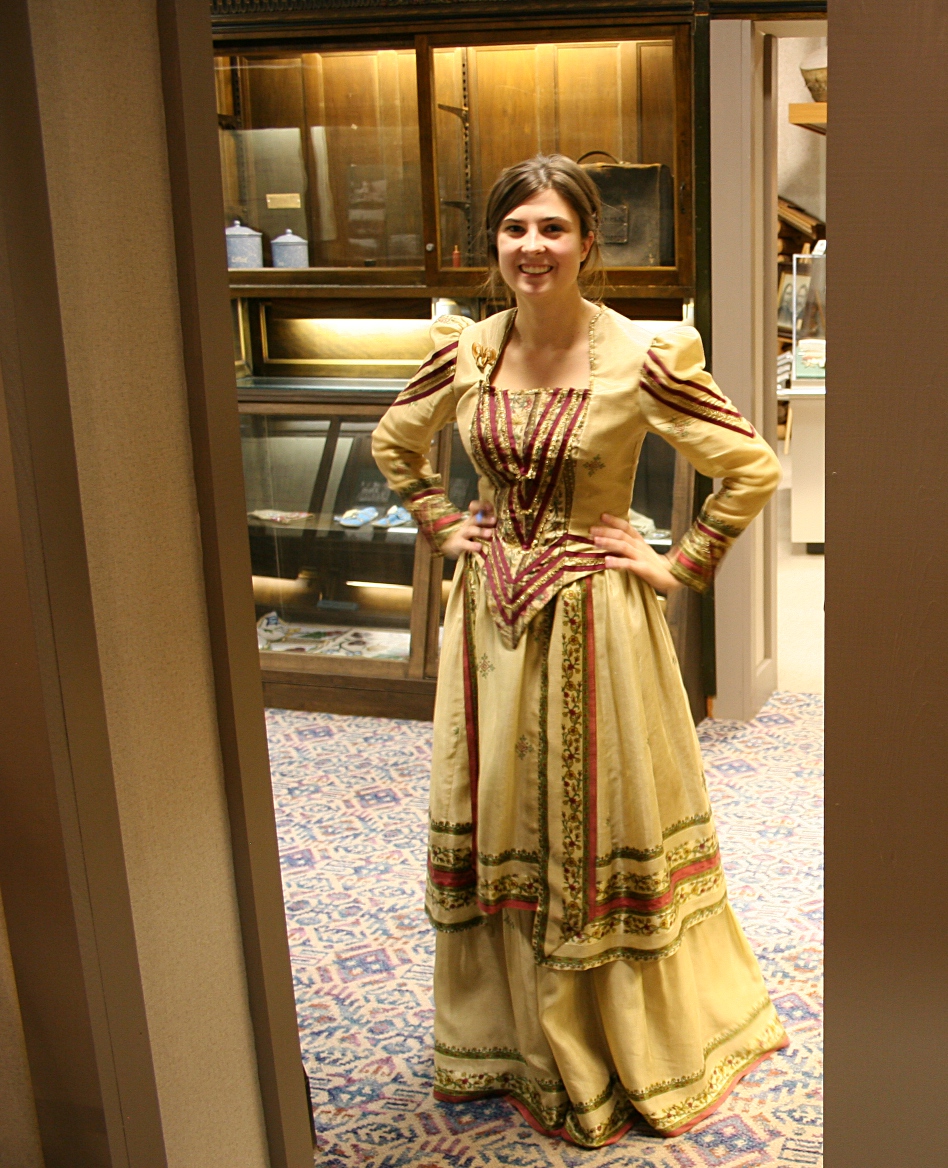
So I was excited Friday evening to attend the Rice County Historical Society’s first ever A Night at the Museum in which costumed men, women and children played the roles of historical figures. Like Evangeline Whipple, second wife of Bishop Henry Whipple, and Ordinance Sargent Jones, stationed at Ft. Ridgely during the U.S. – Dakota Conflict of 1862:

Role-playing Evangeline Whipple.

Role-playing Evangeline Whipple.

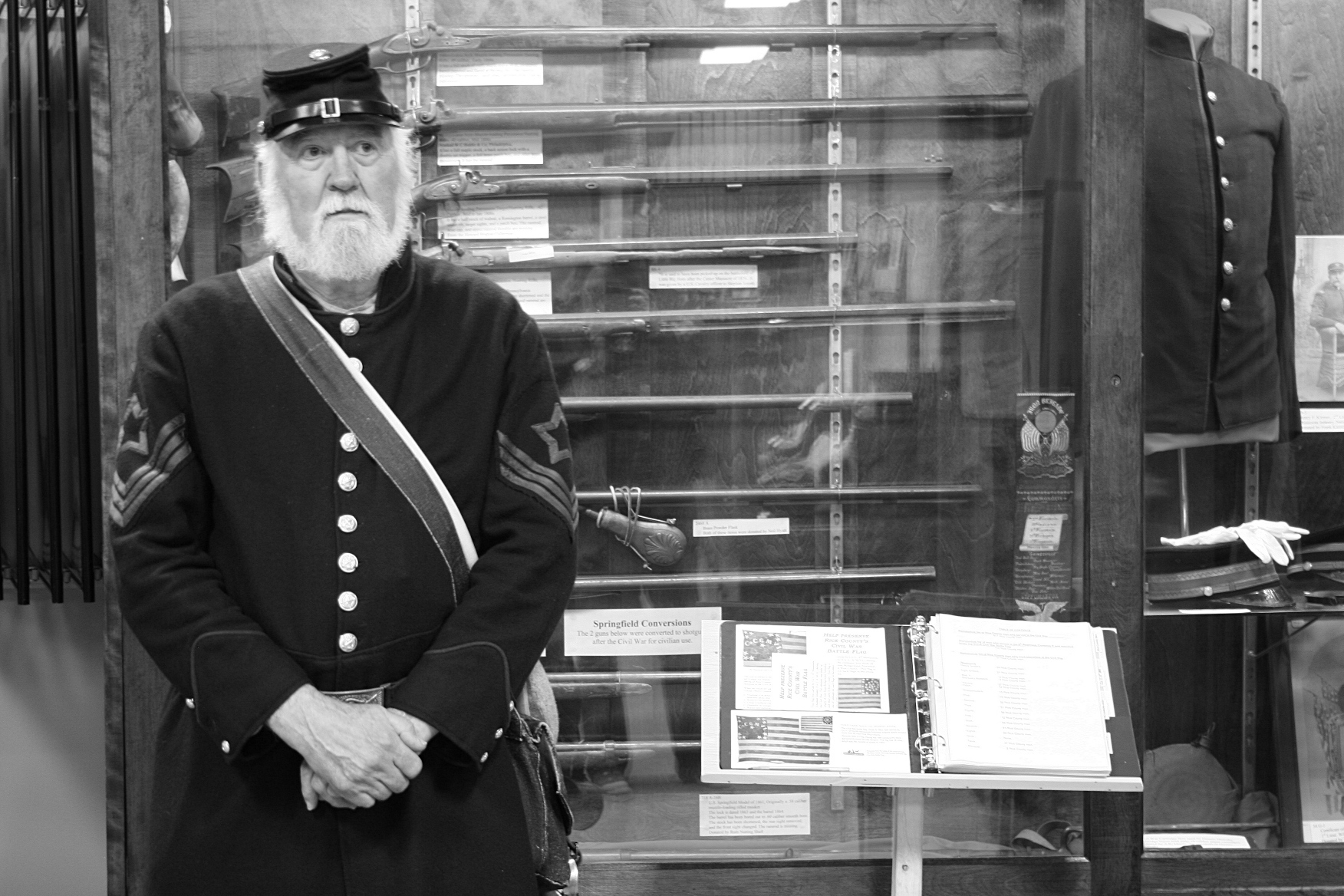
Playing the role of Ordinance Sgt. Jones.

Playing the role of Ordinance Sgt. Jones.

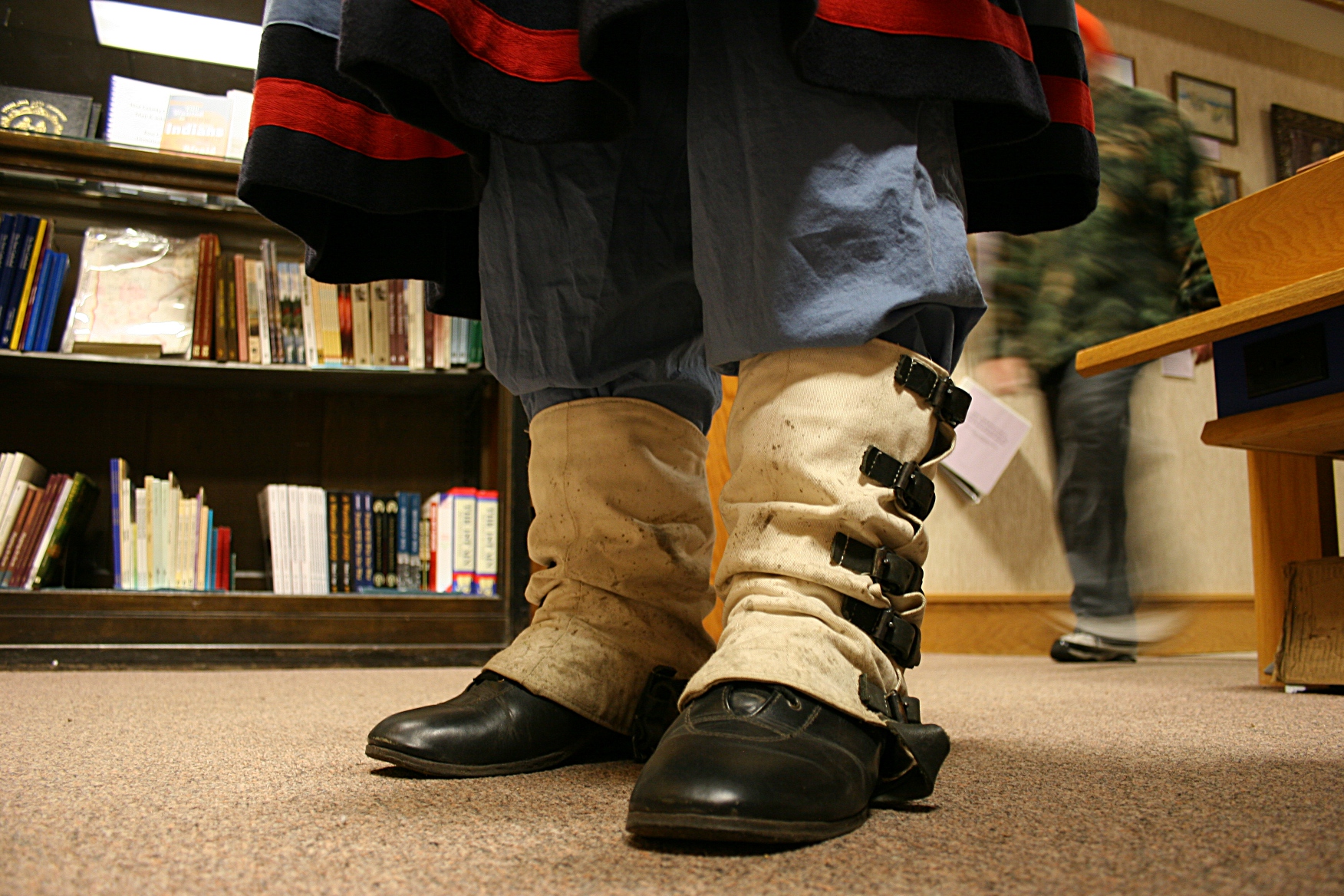
The buckled cloth covering worn by French Mary keeps mud from boots.

The buckled cloth covering worn by French Mary keeps mud from boots.

I spoke with “French Mary” Tepe about her role as a vivandiere with Pennsylvania volunteers in the Civil War. Vivandieres carried a canteen of spirits and more and attended to the sick and wounded. I’d never heard of vivandieres prior to meeting French Mary.

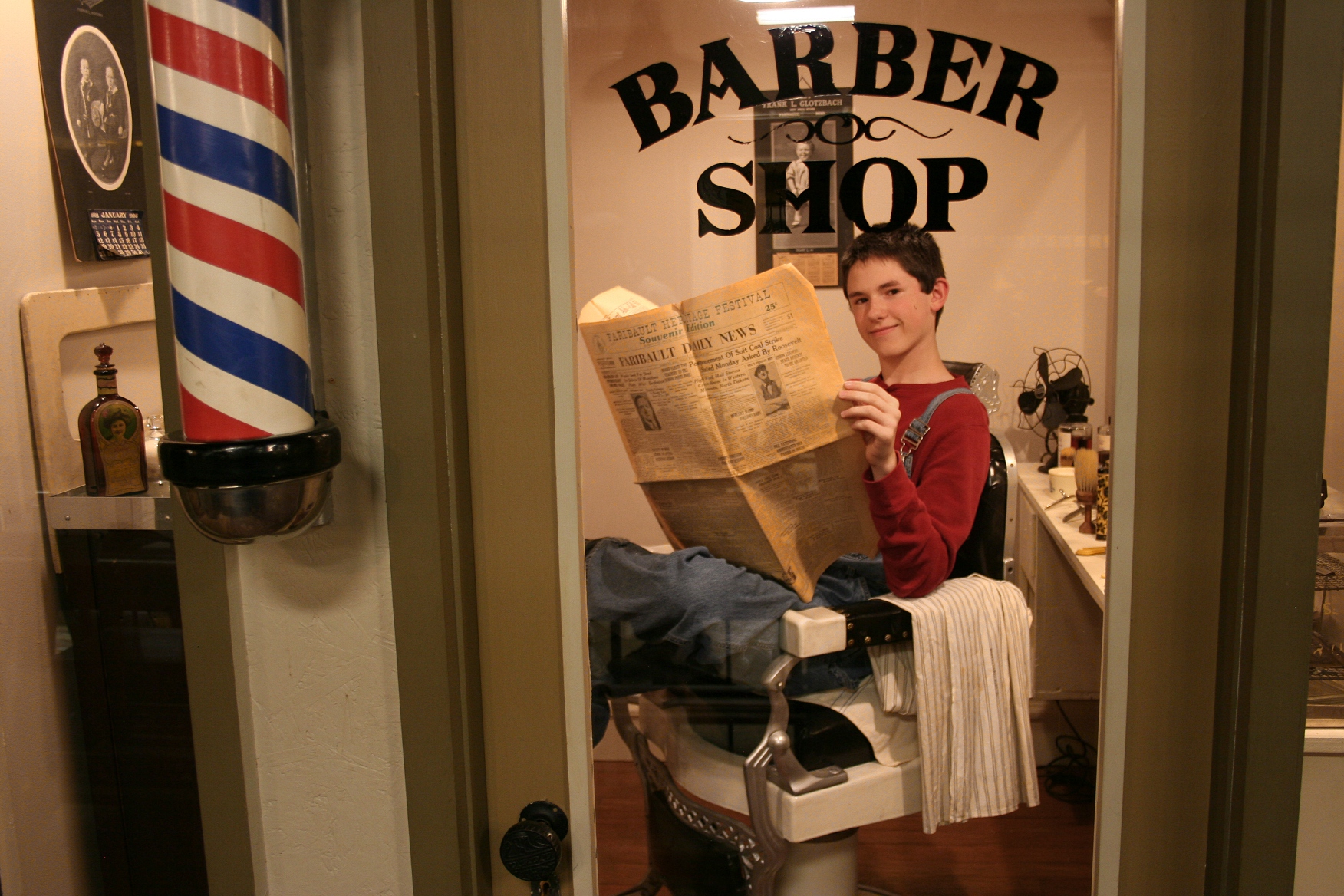
Noah, who volunteers at the library through its youth program, sat in the museum's barbershop chair during A Night at the Museum. in the museum barbershop.

Noah, who volunteers at the library through its youth program, sat in the museum’s barbershop chair.

Noah read a souvenir edition of the Faribault Daily News in an old-time barbershop while Leroy bathed in a second story room above.

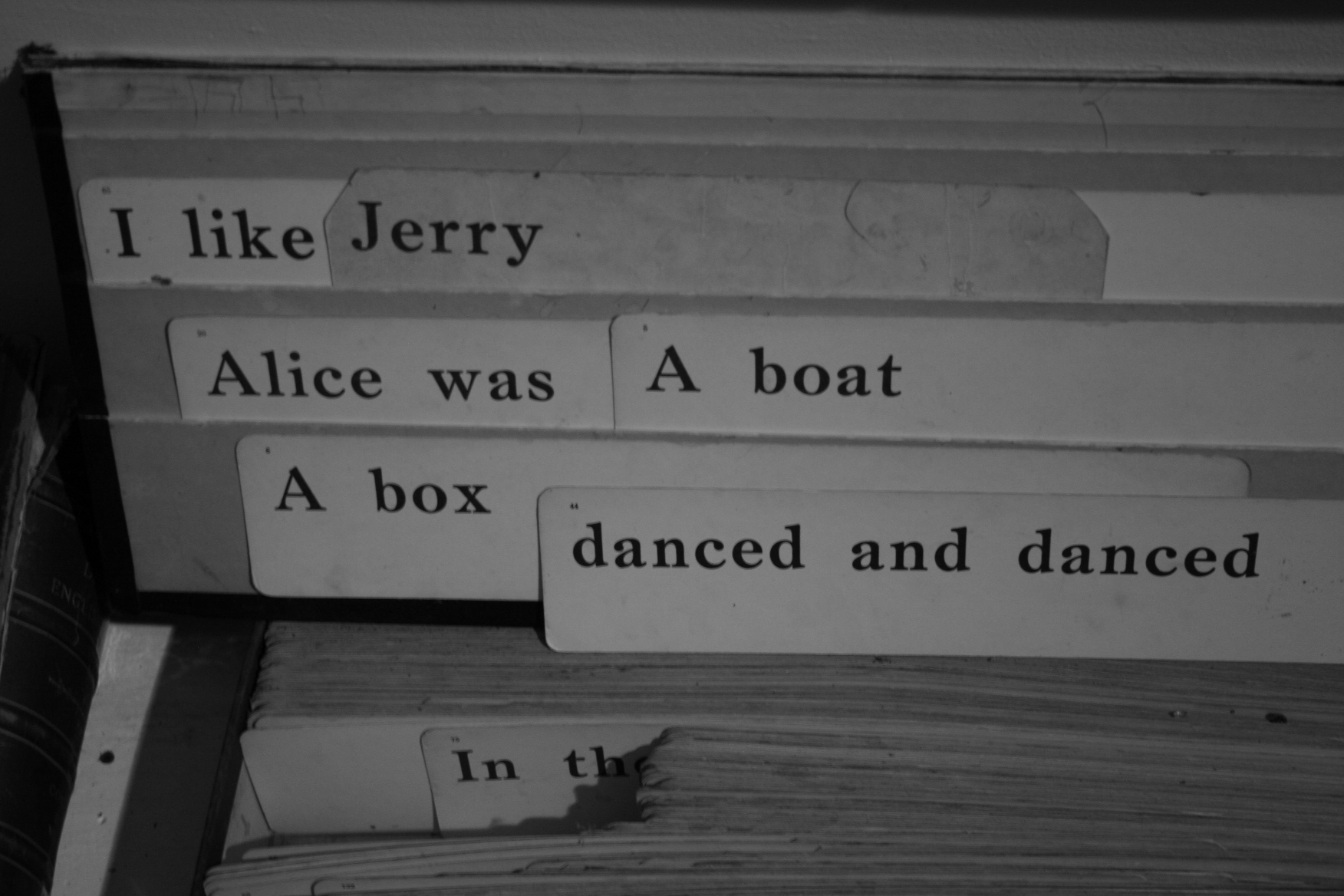
Flash cards in the one-room school.

Flash cards in the one-room school.

Mrs. Sweet taught arithmetic in the late 1850s one-room Pleasant Valley School where Noah’s sister, Hannah, along with others, assumed the roles of students.

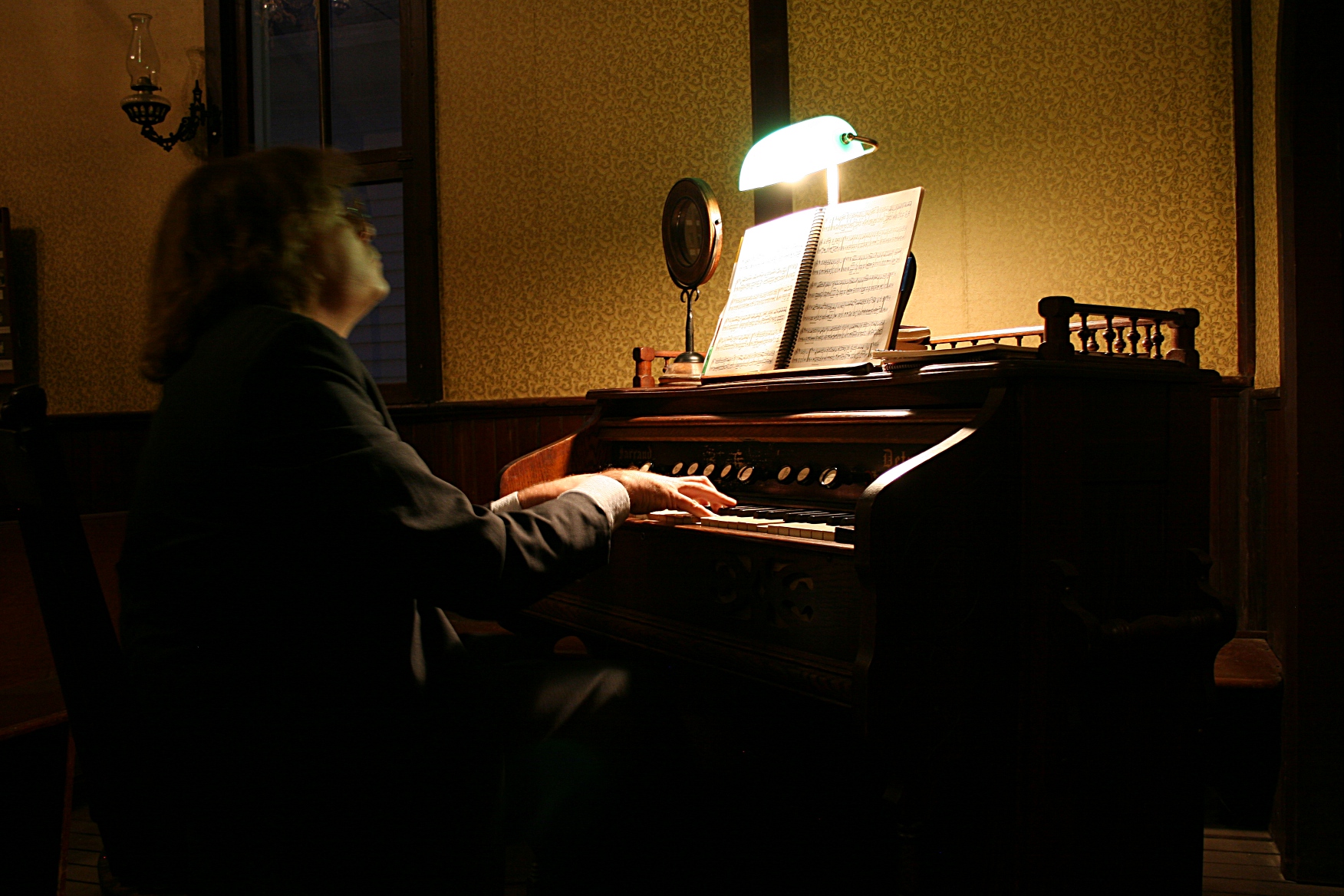
Playing the old pump organ.

Playing the old pump organ.

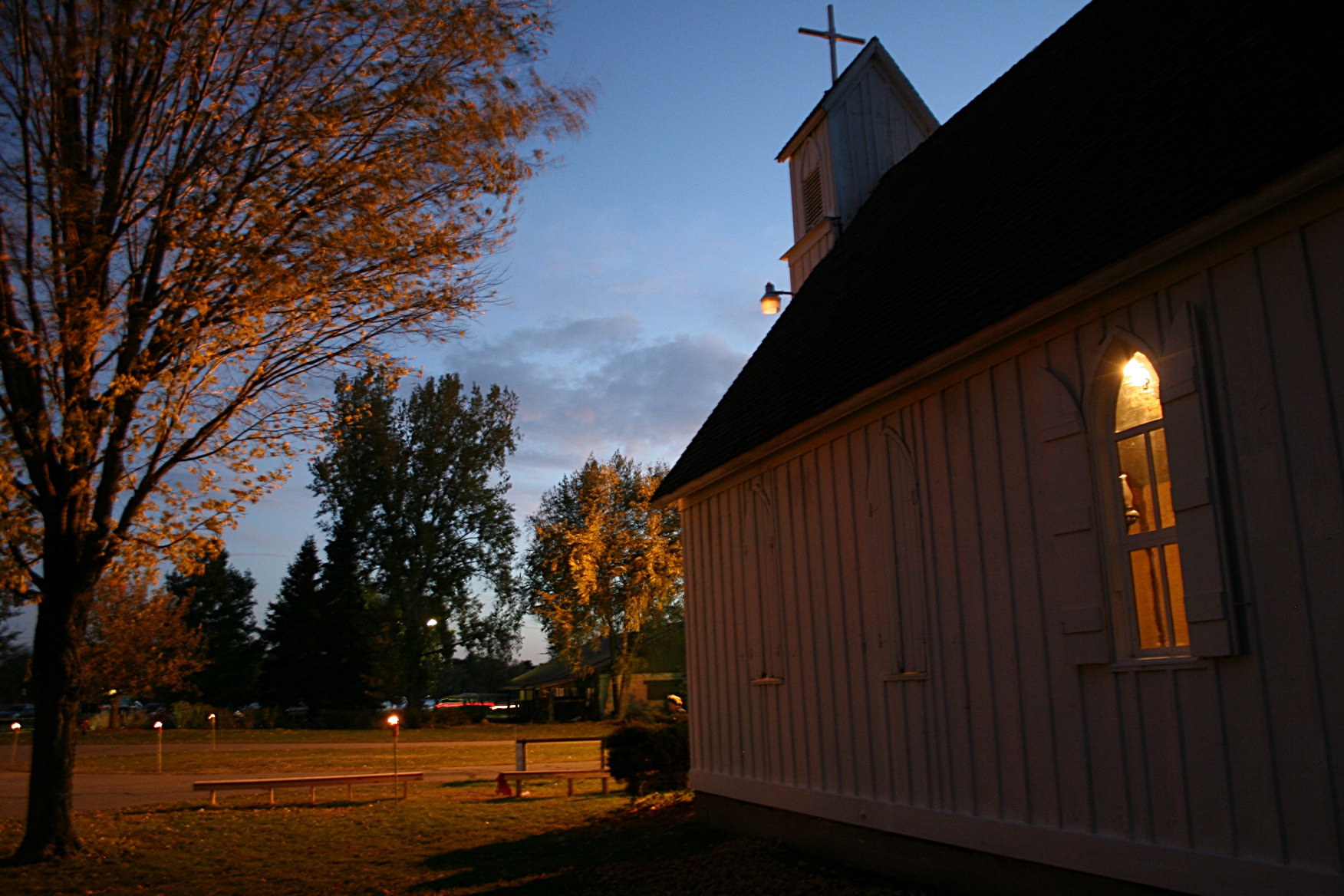
Holy Innocents, from the side.

Holy Innocents.

I listened to music played on the pump organ in Holy Innocents Episcopal Church built in 1869 in Cannon City and consecrated by Bishop Whipple.

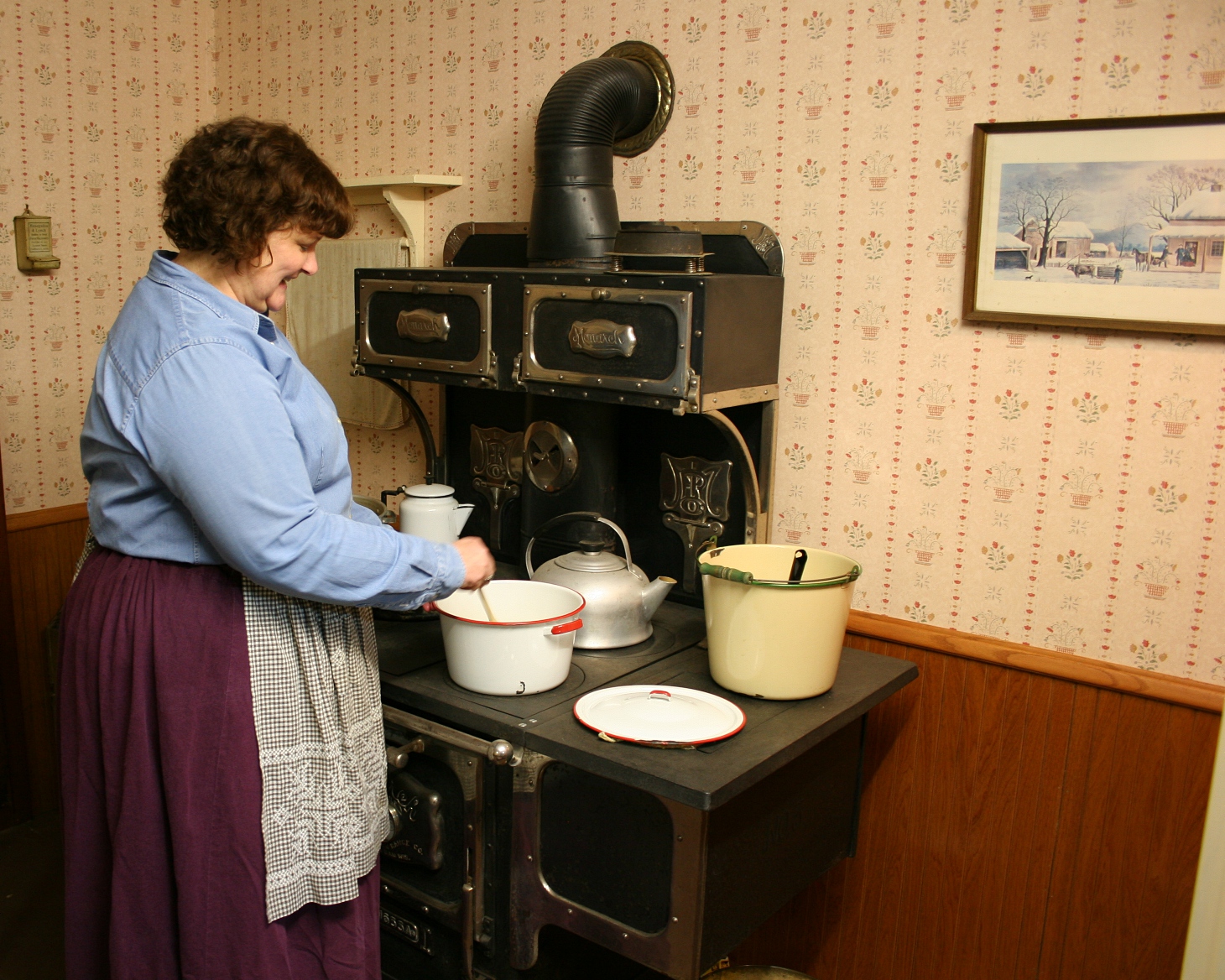
Mrs. Morris supposedly cooking applesauce.

Mrs. Morris “cooking” applesauce.

Next door I spoke with Mrs. Morris who was “cooking” applesauce in her 1920s kitchen. Except she wasn’t really using the old cookstove. The inviting scent of apples wafted, instead, from apple slices heating in a kettle on a mostly out of sight hotplate. Ingenious.

This multiple engaging of the senses added to the experience. In the old log cabin, built in the mid 1800s by a Scandinavian immigrant in the Nerstrand Big Woods, I savored the yeasty aroma of bread baking—not in the old stove—but rather in a bread machine hidden away. Ingenious.

The setting for A Night at the Museum.

The setting for A Night at the Museum.

Outside, several tiki torches flickered, many snuffed out by the strong early evening breeze. Nearby, visitors gathered around a small campfire to sip apple cider, eat hot dogs and/or munch on cookies.

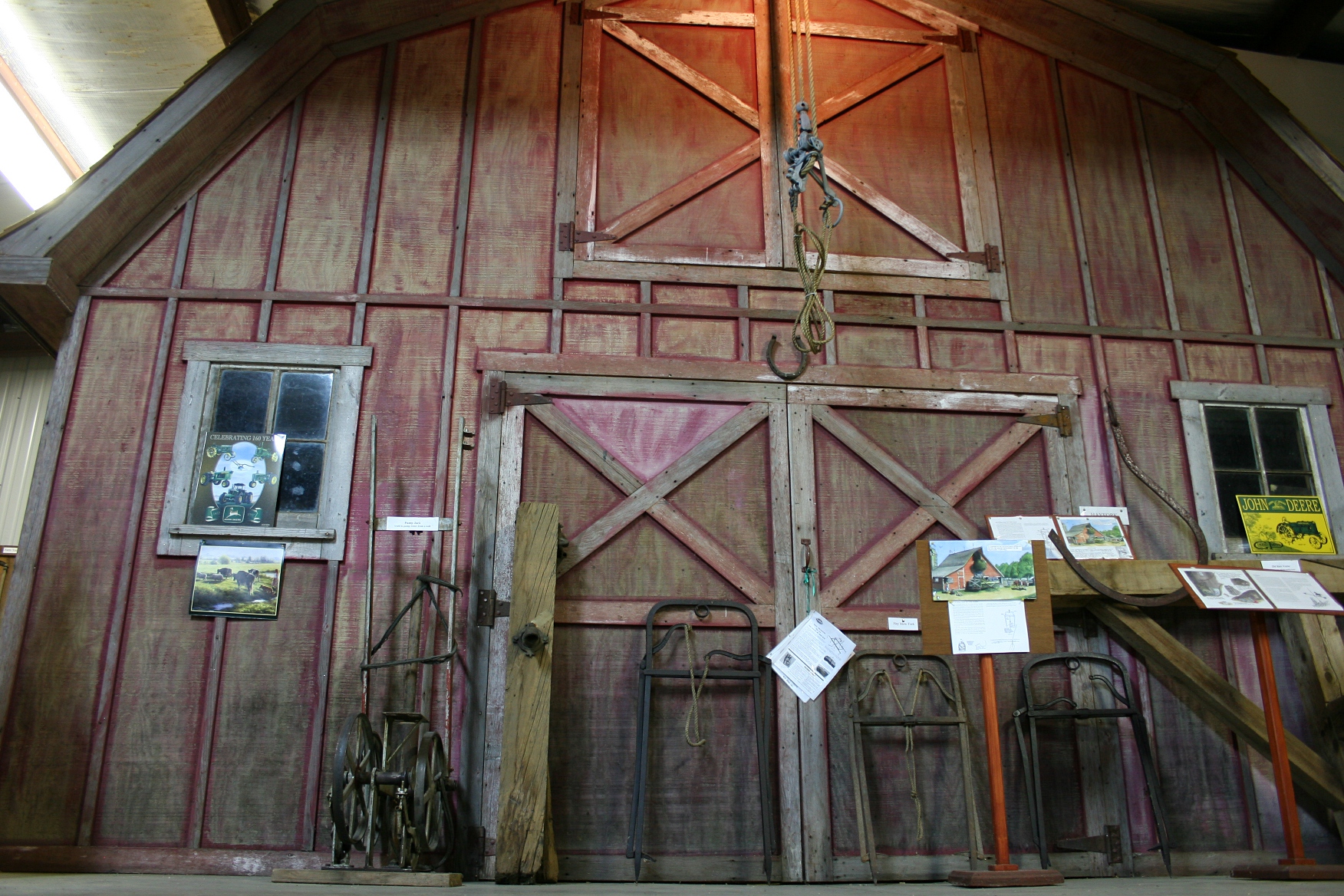
A barn front forms a backdrop in Harvest Hall, where visitors can learn about the area's agricultural heritage.

A barn front forms a backdrop in Harvest Hall, where visitors can learn about the area’s agricultural heritage.

Horses hooves clopped on the pavement as visitors were treated to a wagon ride around the adjoining county fairgrounds.

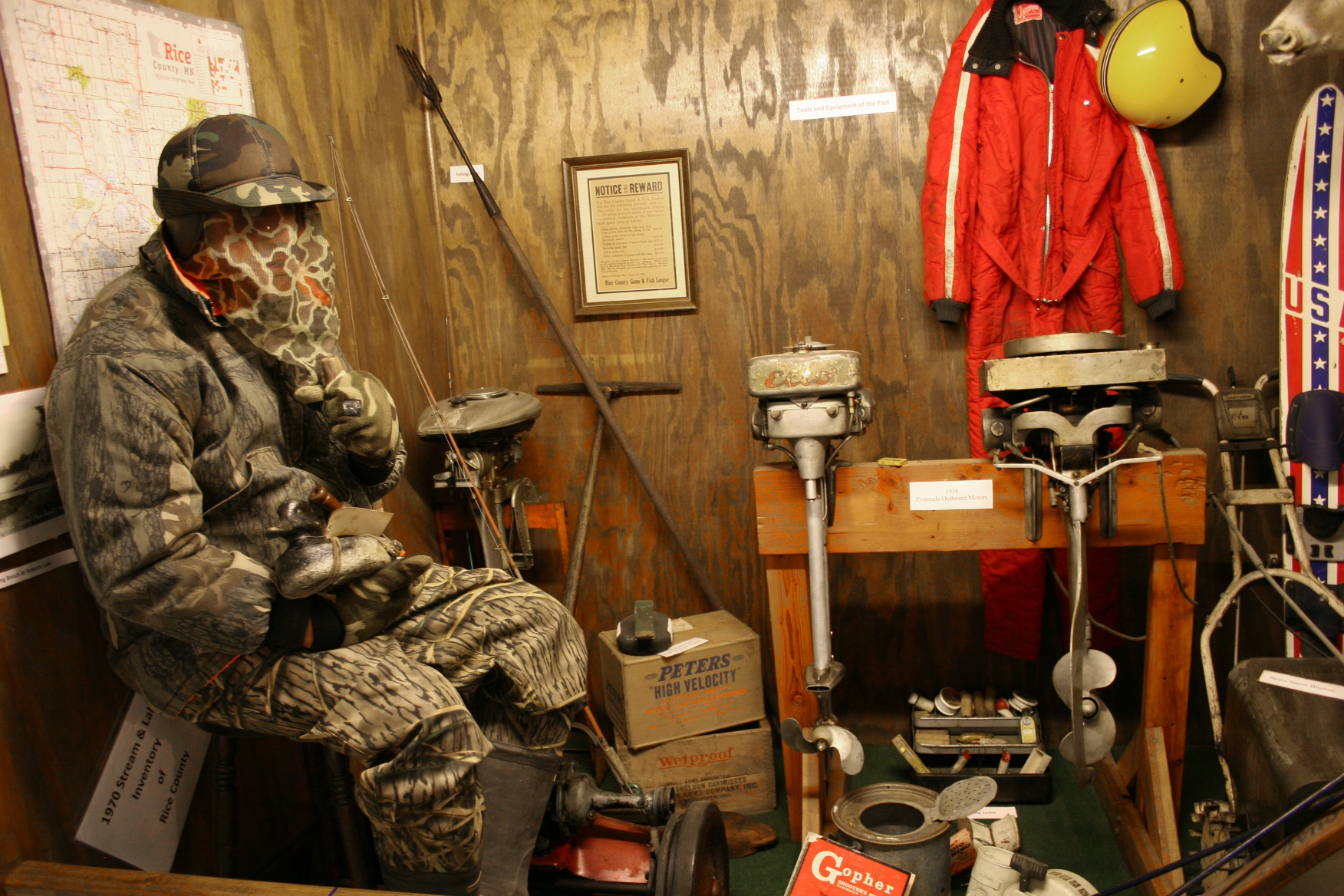
Brian Schmidt dressed as a hunter, not to be confused with a mannequin.

Not a scene from Duck Dynasty.

But the most memorable event of the evening for me, and likely Brian Schmidt who serves on the historical society board, occurred inside Heritage Hall. I stopped briefly at a display on outdoor recreational activities in the county and noticed what I assumed to be a camouflaged duck hunter mannequin in a corner. Except he wasn’t. As I walked away, a duck call sounded. Startled, I turned back, peered more closely at the masked face and realized I’d been fooled. By Brian.

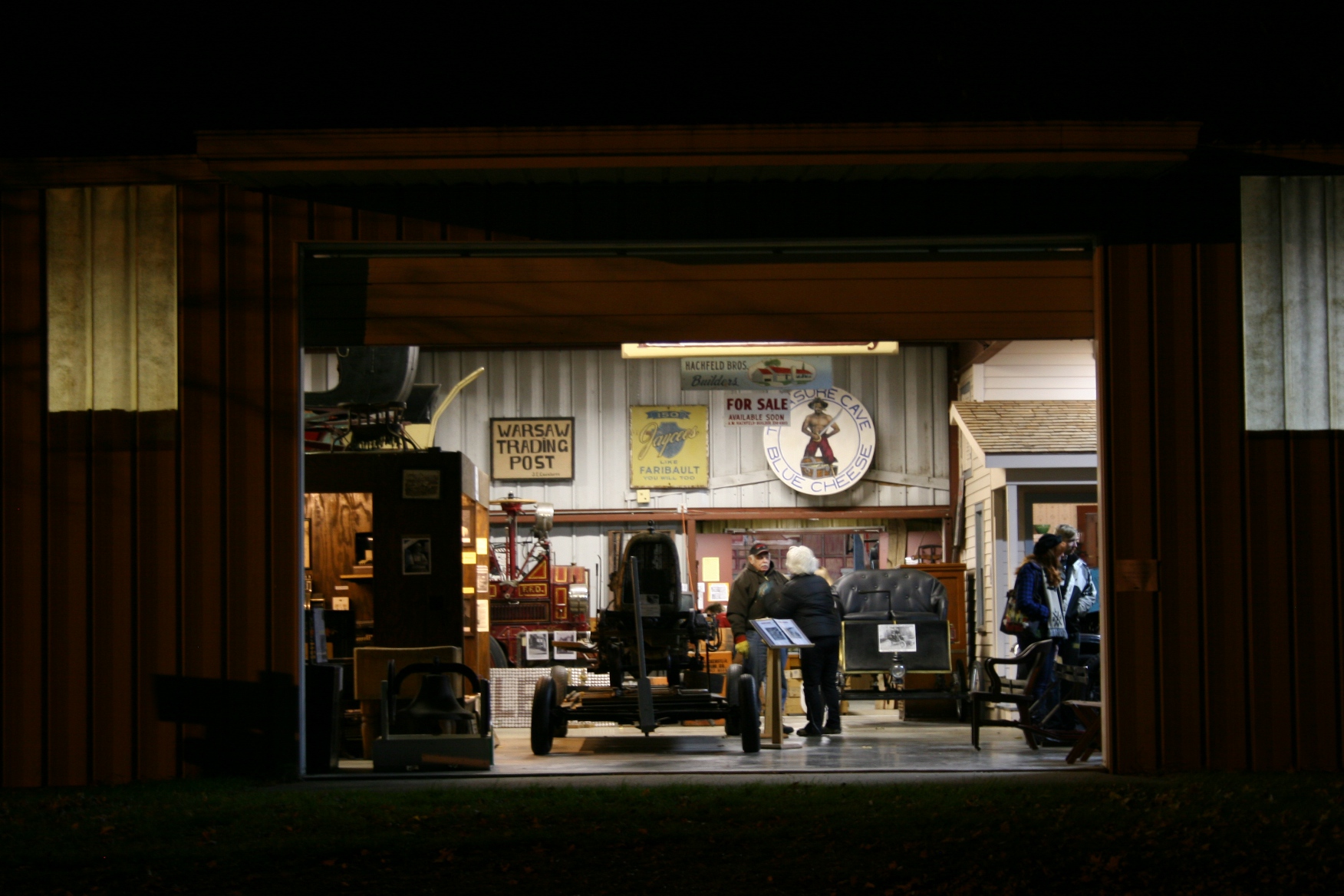
A peek at Heritage Hall.

A peek at Heritage Hall.

Excellent. This Night at the Museum was not billed as a Halloween event. But in that moment, for me, it was.

© Copyright 2013 Audrey Kletscher Helbling
 

Threshing oats at the Rice County Steam & Gas Engine Show September 4, 2012

Filed under: Uncategorized — Audrey Kletscher Helbling @ 6:42 AM
Tags: , , , , , , , ,

Grayden Moorhouse of Randolph holds freshly-threshed oats.

GRAYDEN MOORHOUSE unfurls his palm, revealing some two dozen oat kernels before dropping several into my hand.

He wants me to try them, to separate the meat from the hull with my teeth and spit the shell onto the ground.

I try, without success, and then he hands me a single kernel already hulled.

All the while I am thinking this:

I shoveled plenty of oats in my day growing up on a dairy and crop farm. And why would I want to eat raw oats, which I associate with cattle feed?

But Grayden is one of those guys who seems convincing and I like the strong sound of his name and, heck, what’s life without trying something new occasionally?

So I eat the single oat kernel and that is enough for me. I’d rather eat my oats in oatmeal.

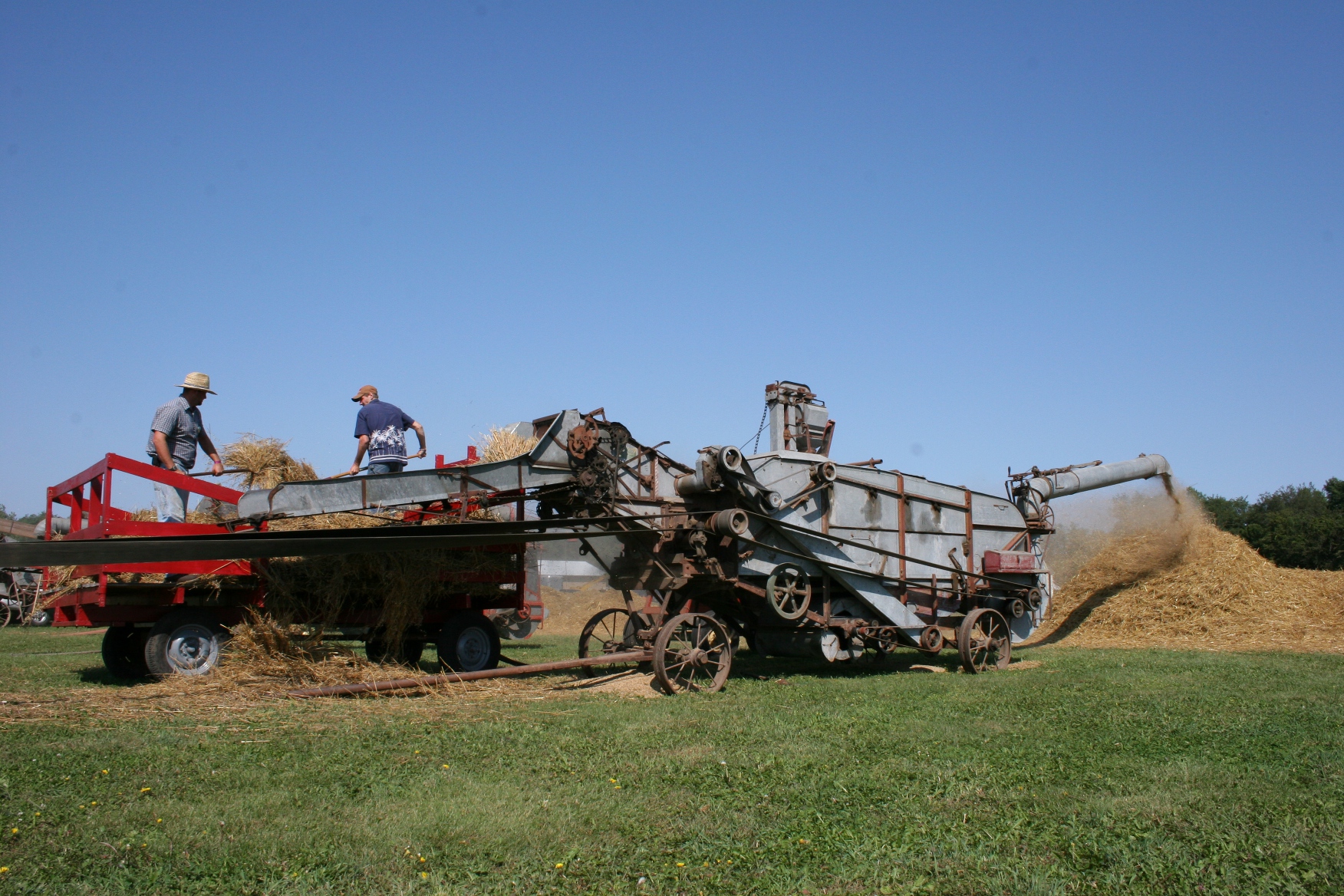
Now that I’ve ended that introductory narrative, let’s follow the path of how those oat kernels ended up in Grayden’s hand via this photo essay from the Rice County Steam and Gas Engine Show this past weekend in rural Dundas.

Shoveling the raw oats into the conveyor system.

An overview of the threshing equipment and process of separating the oats kernels from the stem.

Bill Becker of rural Northfield mans the Minneapolis Moline which powers the threshing operation.

More shoveling of oat bundles, a dusty, dirty job.

The dust flies as men and machine work.

Plenty of farmers and retired farmers watch, remembering…

While horses plow a nearby field (left), the threshing crew continues working.

And the straw pile grows.

Finally, meet Grayden Moorhouse, whose strong name, it seems to me, belongs in a western.

FYI: Please check back for more posts from the steam and gas engine show. You’ll meet one interesting character and an incredible teen, plus ride along with me on the back of a truck.

© Copyright 2012 Audrey Kletscher Helbling
 

The old blacksmith is watching, just ask John July 20, 2012

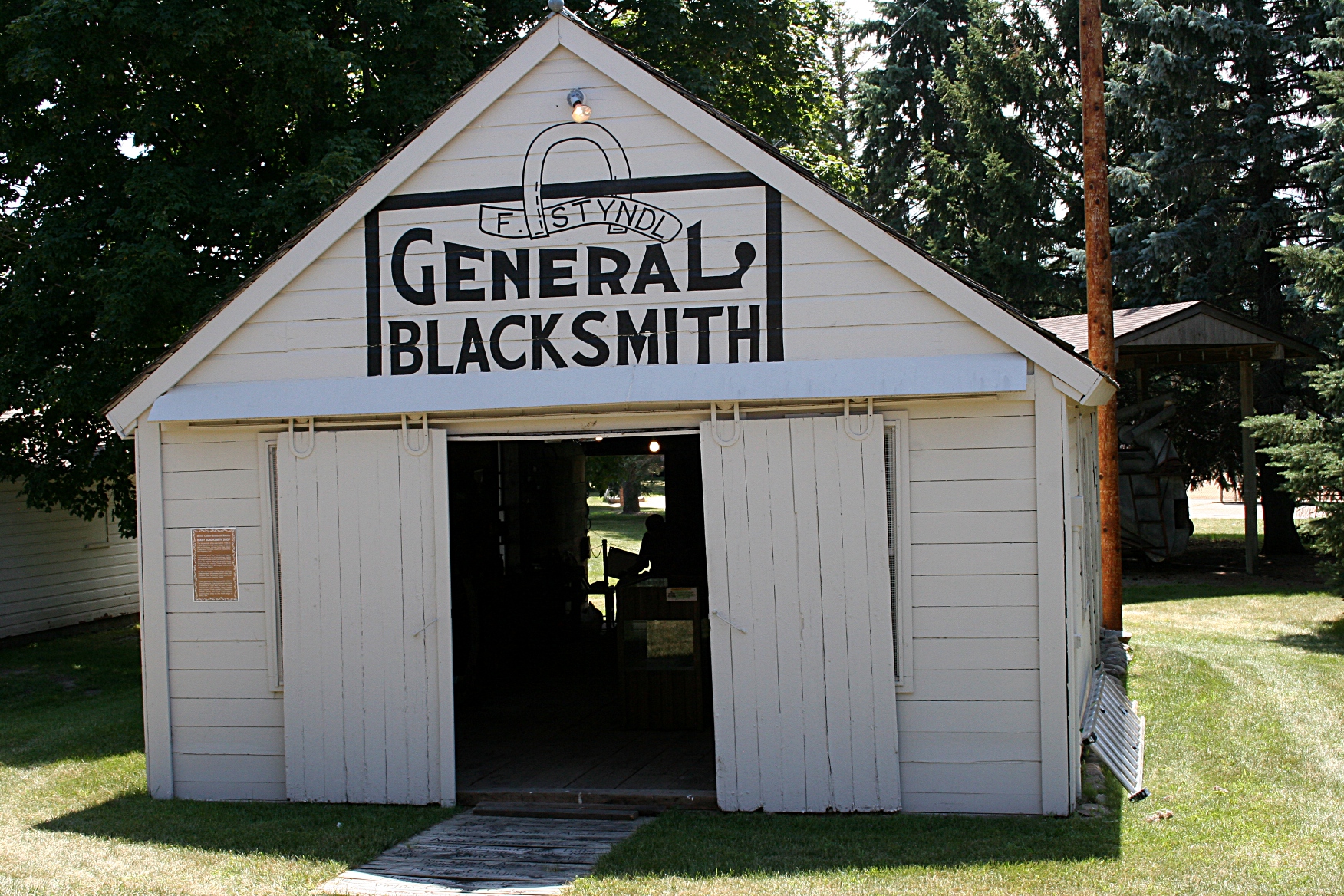
A sign tacked onto the blacksmith shop at the Village of Yesteryear in Owatonna reads: It reminds us of the “horse and buggy” days gone by. A lot of horseshoes, buggy and wagon wheels came in and out of the Bixby shop, as well as other blacksmith shops throughout the county. These shops were an essential part of all villages, towns and cities in the 1800’s.

INSIDE THE OLD BLACKSMITH SHOP, John Styndl is reading the newspaper on a lazy summer Sunday afternoon. He has no intention of firing up the forge or picking up the tools to demonstrate how his great great grandfather, Frank Styndl, once pounded hot metal into useful equipment or shaped shoes for horses.

Instead, he takes pride in telling visitors about the blacksmith shop Frank built on his farm east of Bixby in 1896, ten years after the Styndl family immigrated to the U.S. from the Czech Republic. Frank worked as a blacksmith in the Old Country and then in his own shop in Steele County, Minnesota, until his death in 1931.

Today that blacksmith shop sits on the grounds of the Steele County Historical Society’s Village of Yesteryear in Owatonna which, on a recent Sunday, hosted an historical extravaganza. John was volunteering in the blacksmith shop when I entered through double sliding doors into a dark room illuminated by the blinding glare of a bare light bulb and sunlight filtering through doors.

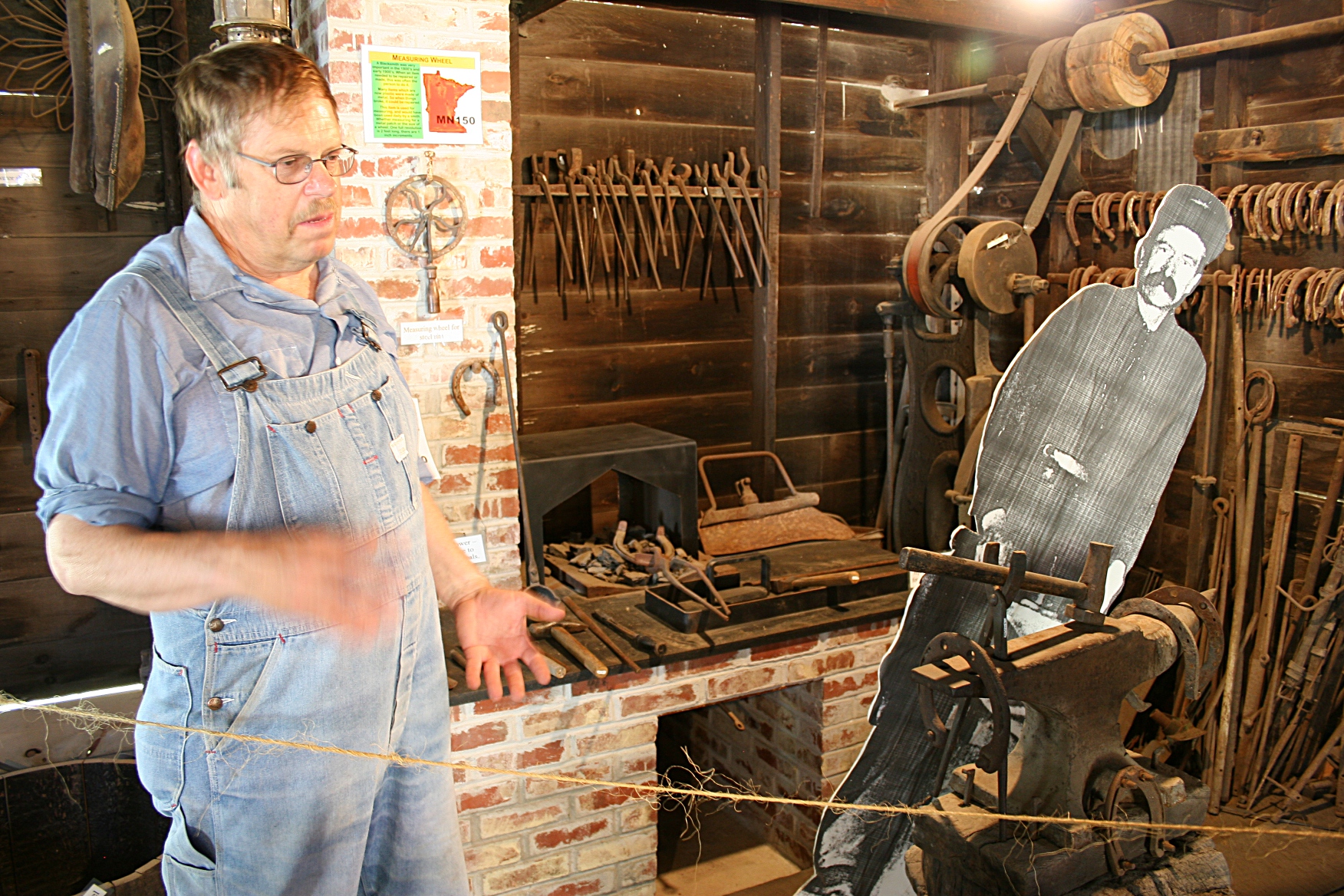
John in Frank’s blacksmith shop where, “all the equipment in the shop such as wheelbenders, drill presses, bench vises, foot grinders, files, hammers, tongs and other equipment were used by Frank.”

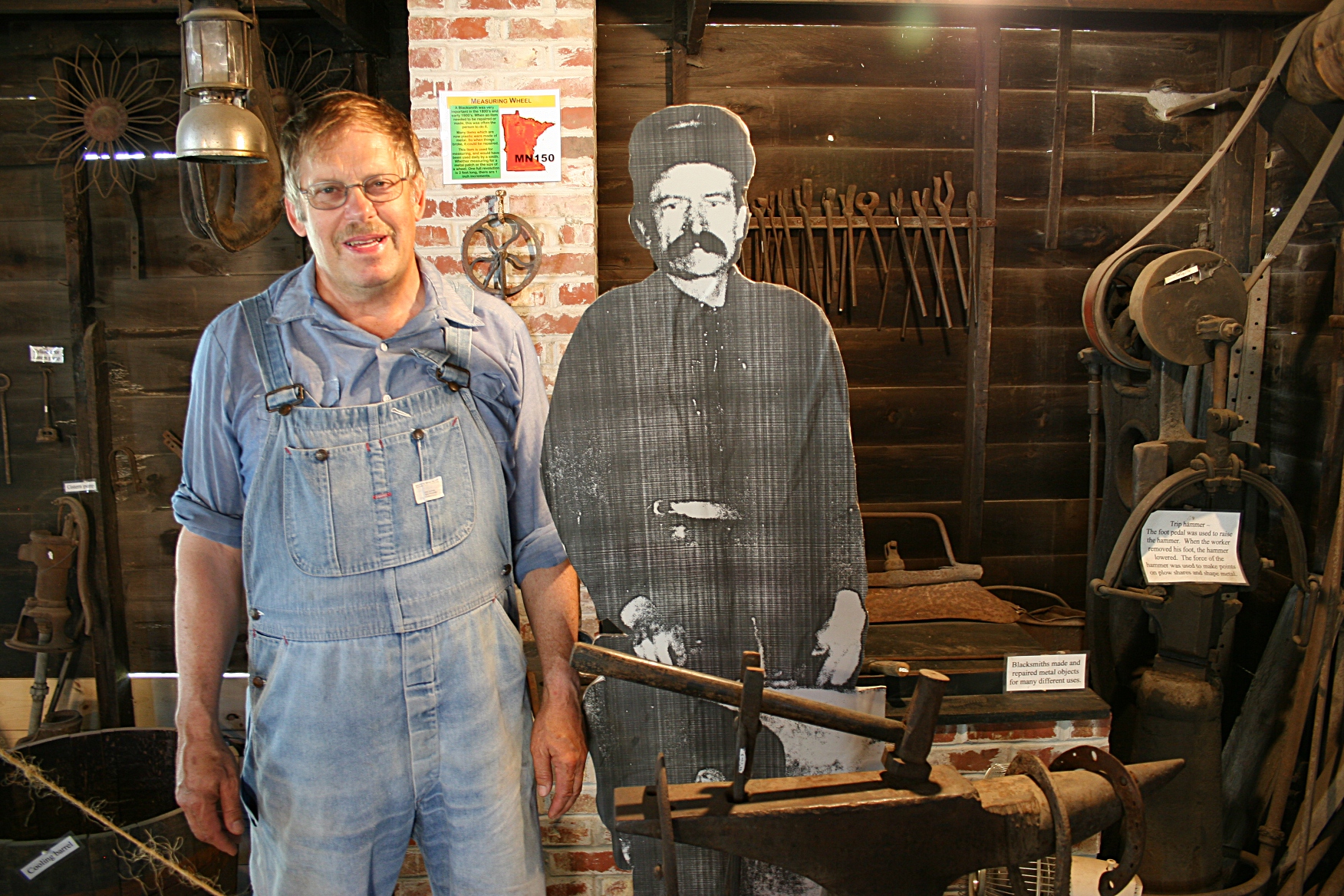
Rusty tools and horseshoes cling to the walls and a cut out, near life-sized photo of Frank leans next to an anvil draped with horseshoes as great great grandson John speaks about his interest and work in preserving the blacksmith shop.

He remembers biking past the abandoned blacksmith shop as a kid, asking his father about the faded signage on the building. His father and a great uncle did occasional blacksmithing, but nothing like that of three generations of the Styndls prior who earned their livelihoods as blacksmiths.

John dreamed of someday moving Frank’s shop to the Village of Yesteryear. Eventually that became a reality and, from 1991 – 1996, his family and neighbors worked to restore the building. He even found an old house chimney from the appropriate time period, knocked off the mortar and rebuilt the 240 bricks into a new chimney.

Family photo of John and Frank Styndl.

“I’m glad to be able to preserve it,” John says of F. Styndl’s blacksmith shop. He’ll tell you, though, that he gets a bit uneasy with Great Great Grandpa Frank’s likeness watching his every move.

About that time in our conversation, another visitor steps into the blacksmith shop and shares how he remembers, years ago, observing his local blacksmith, bent over, toiling in the heat of his shop. “He was always cranky,” he notes.

The three of us laugh and figure we’d be crabby, too, in such uncomfortable working conditions.

It is stories and remembrances like this which make a building like the old blacksmith shop more than just a structure occupying space at a site such as the Village of Yesteryear.

Stories connect buildings to people and to the past.

You need only take the time to pause and ask, to listen and to observe, if you are to understand the history that has molded lives and communities and is still shaping the future.

CLICK HERE TO READ a previous blog post about the Steele County Historical Society’s Extravaganza at the Village of Yesteryear. Then click here to read a second post on the event.

© Copyright 2012 Audrey Kletscher Helbling
 

Always obey Rule 99 & other historic reflections July 12, 2012

VISIT A PLACE like the Village of Yesteryear in Owatonna, especially during a celebration such as last weekend’s Steele County Historical Society Extravaganza, and you get an in-depth glimpse of life back in the day.

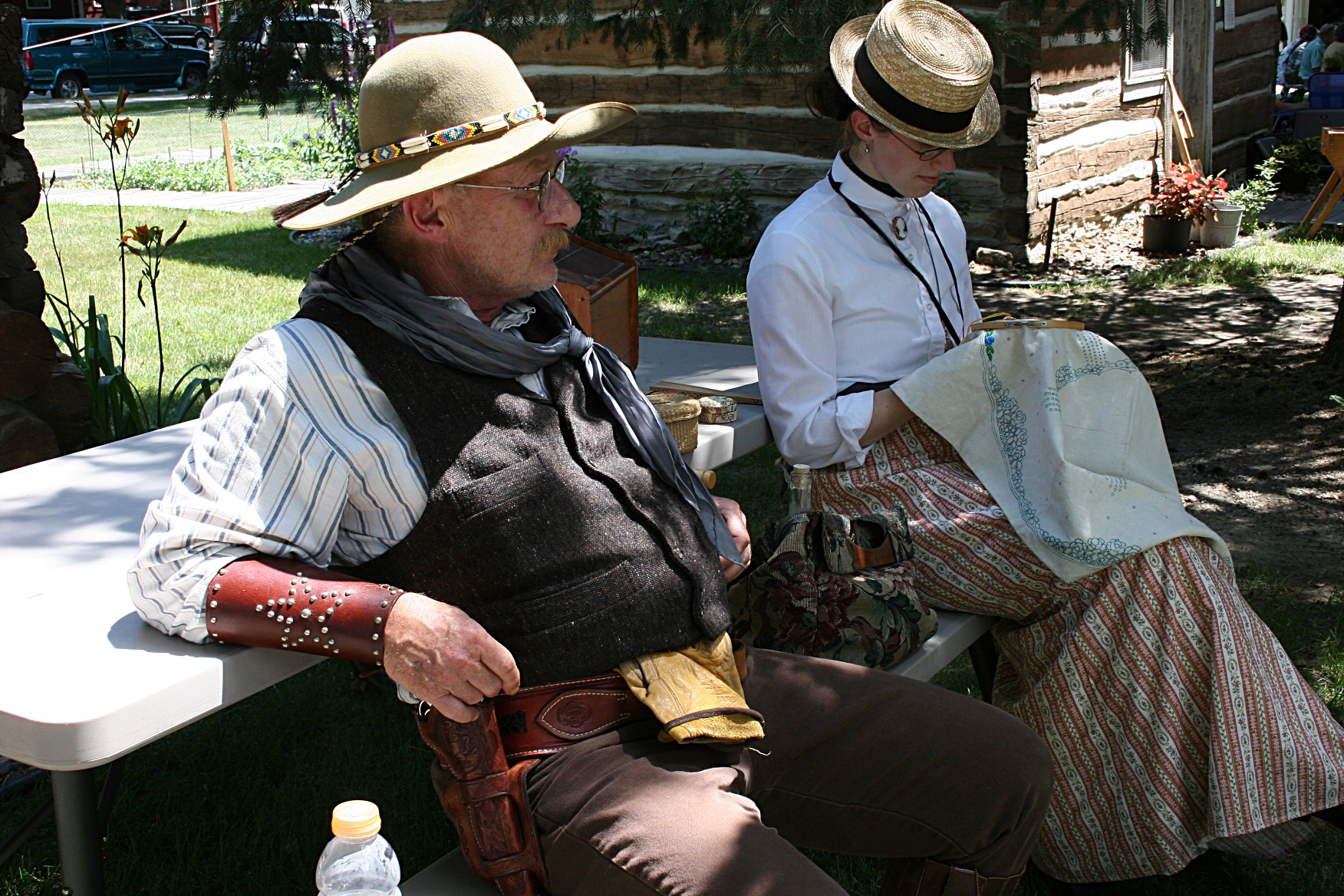
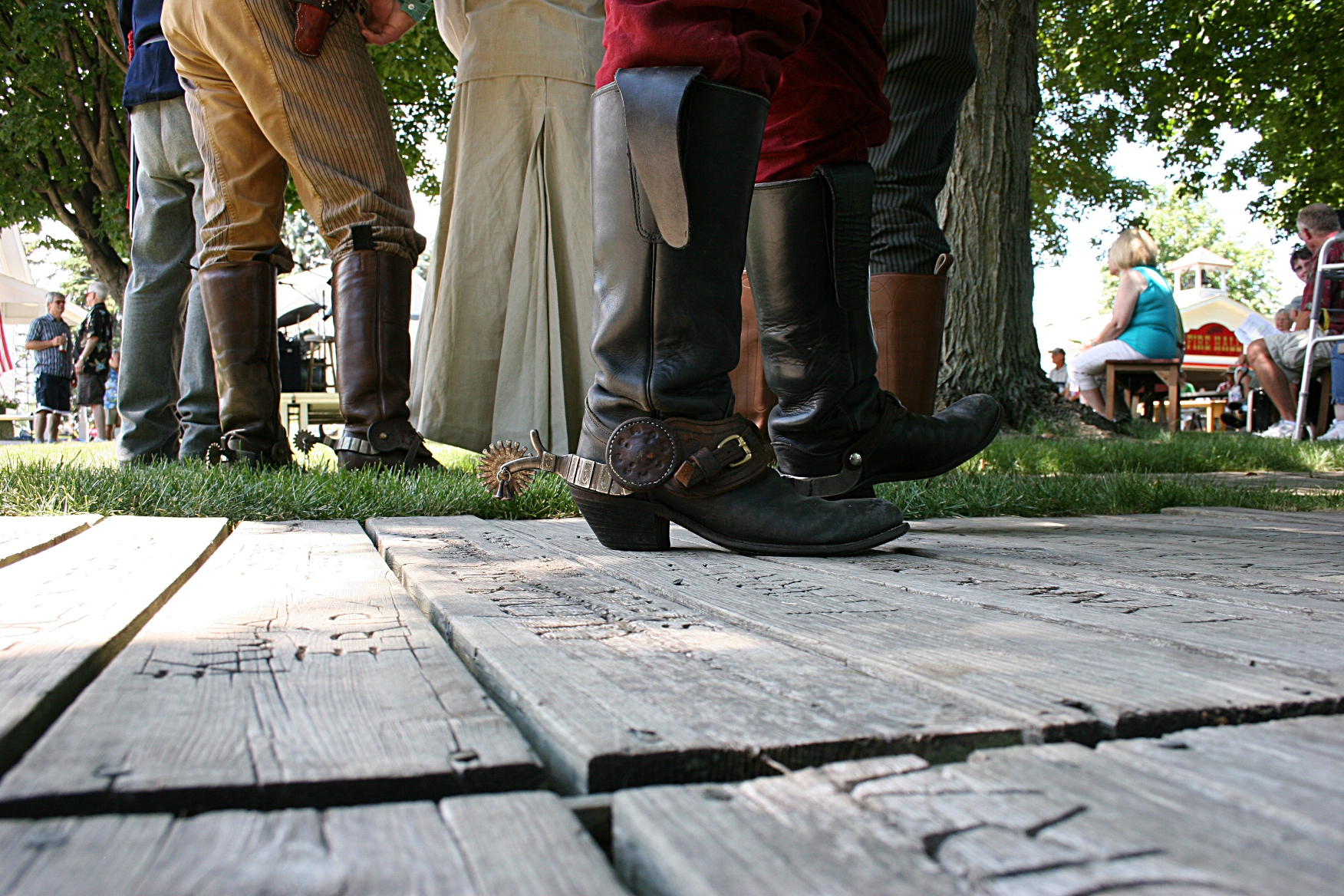
Dressed in period costumes, members of the Old West Regulators added a real-life element to the Extravaganza.

Guides, costumed reenactors and others, with their extensive historical knowledge, most assuredly add to the educational and entertainment value.

But, because it is impossible to speak with every one of them or to observe every activity or to read every informational sign, one must sometimes rely on simple observations to consider the historic stories and realities which define life years ago.

I therefore present these Extravaganza photos with basic information. Much more lies open to your interpretation, influenced perhaps by your experiences or the stories passed down from generation to generation within your family. That is your personal history. Take it. Remember it. Own it. Pass it along.

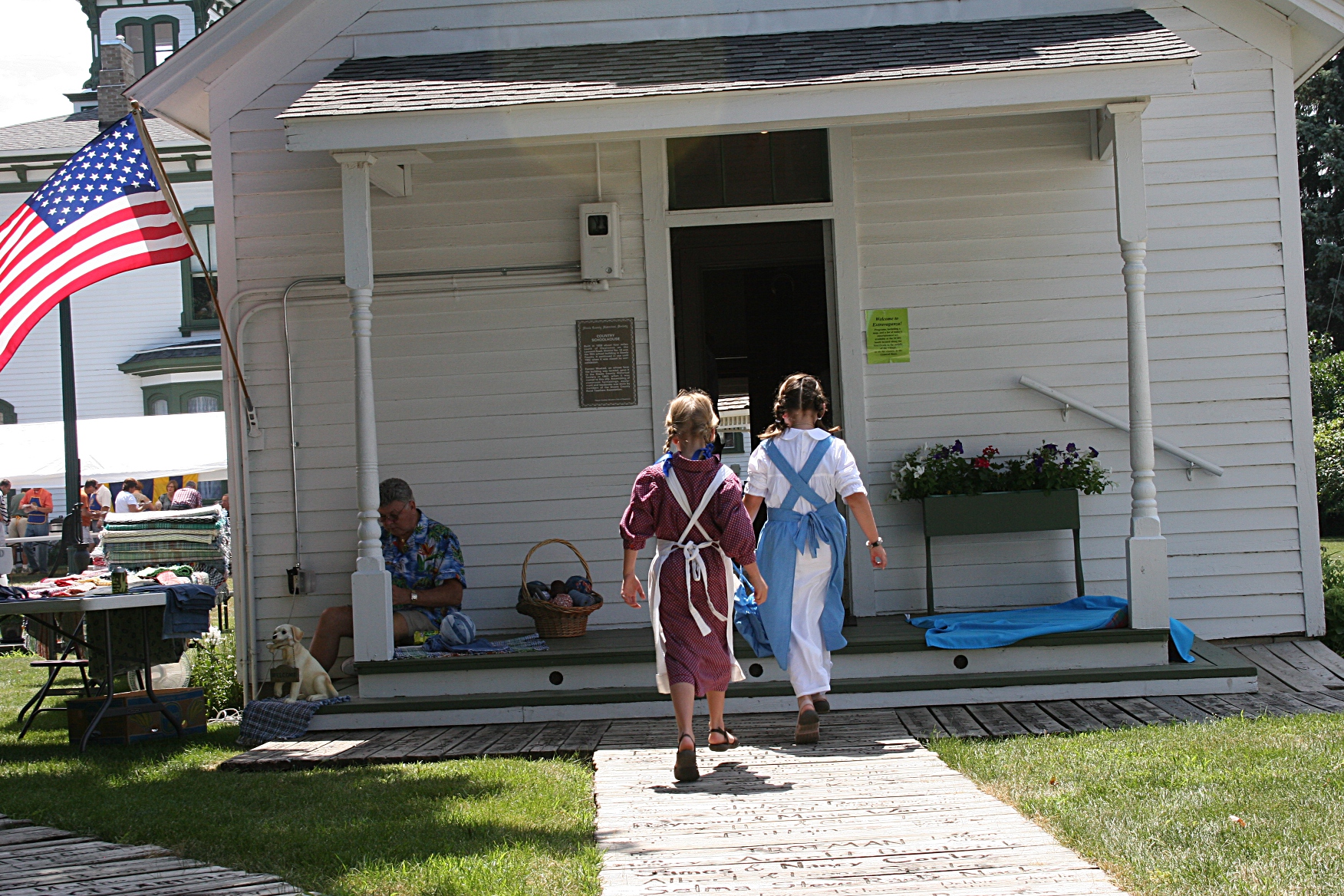
Memories of attending a one-room country school remain for many, including my 55-year-old husband. He attended Chimney Butte School in rural North Dakota and recalls the day students were kept indoors during recess because of coyotes roaming the schoolyard.

What memories does the District 14 country schoolhouse, pictured above, hold for those who were taught in this 1856 building four miles south of Owatonna until the school closed in 1962 due to consolidation?

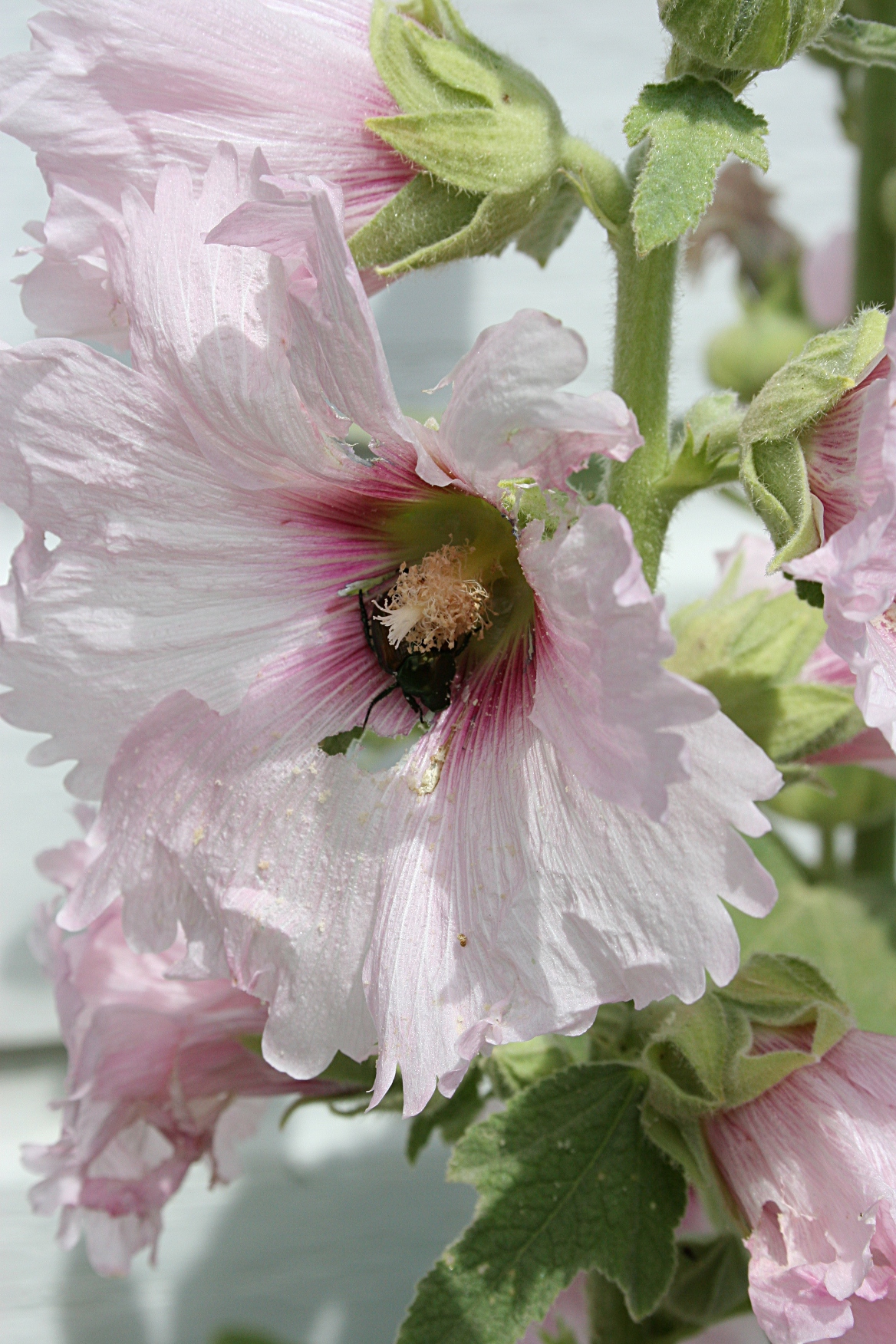
Hollyhocks stand strong and sturdy outside that same schoolhouse at the Village of Yesteryear.

But for me, hollyhocks belong next to the milkhouse, an odd place for flowers, it would seem. Yet, on the southwestern Minnesota dairy and crop farm where I grew up, that was their spot, a splash of beauty perhaps more for my mother than for her farmer husband.

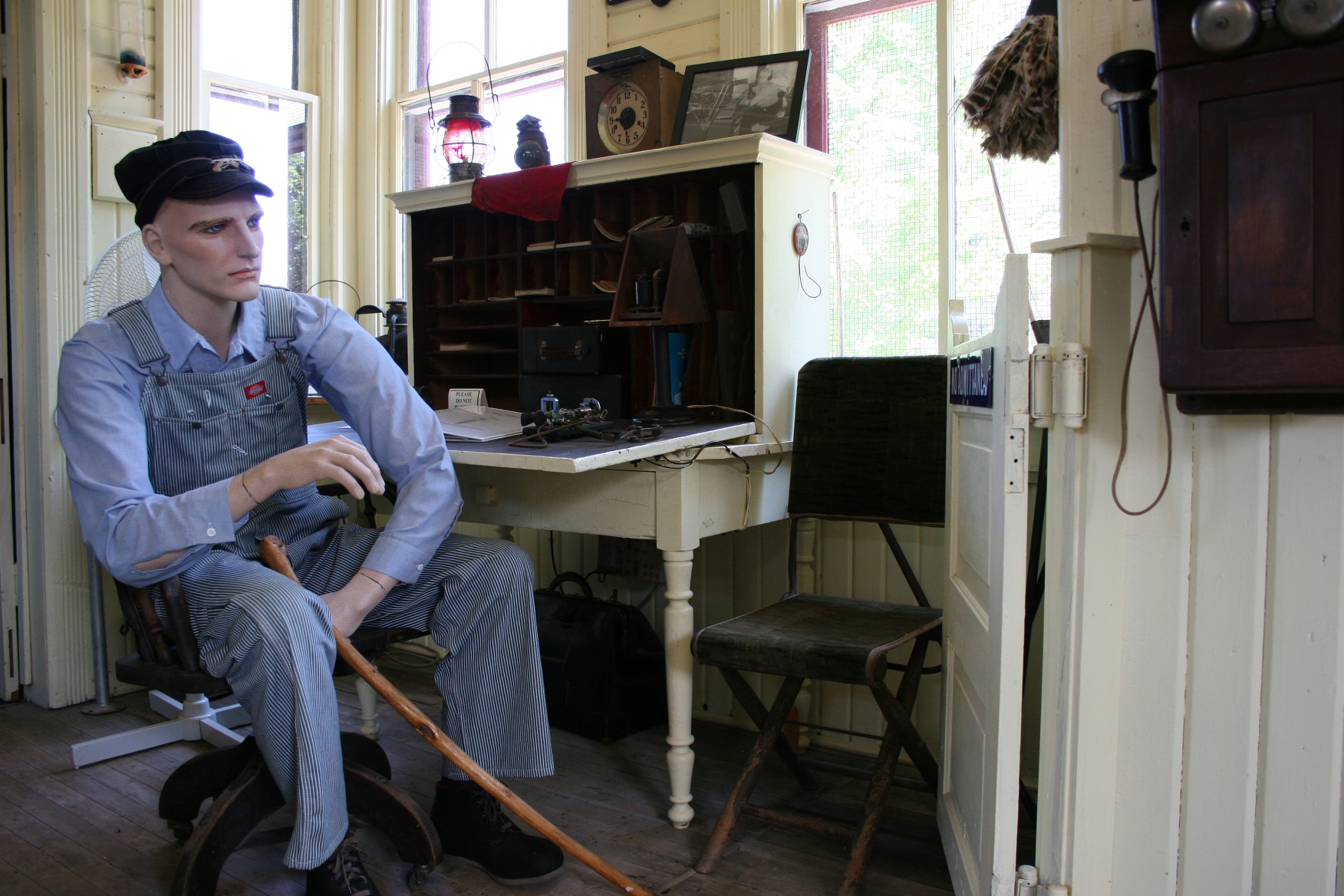
 A scene recreated in the 1866 Bixby railroad depot leaves you wondering about the railroad crew and passengers who waited here to board trains. Where were they going? And, for the passengers, why?

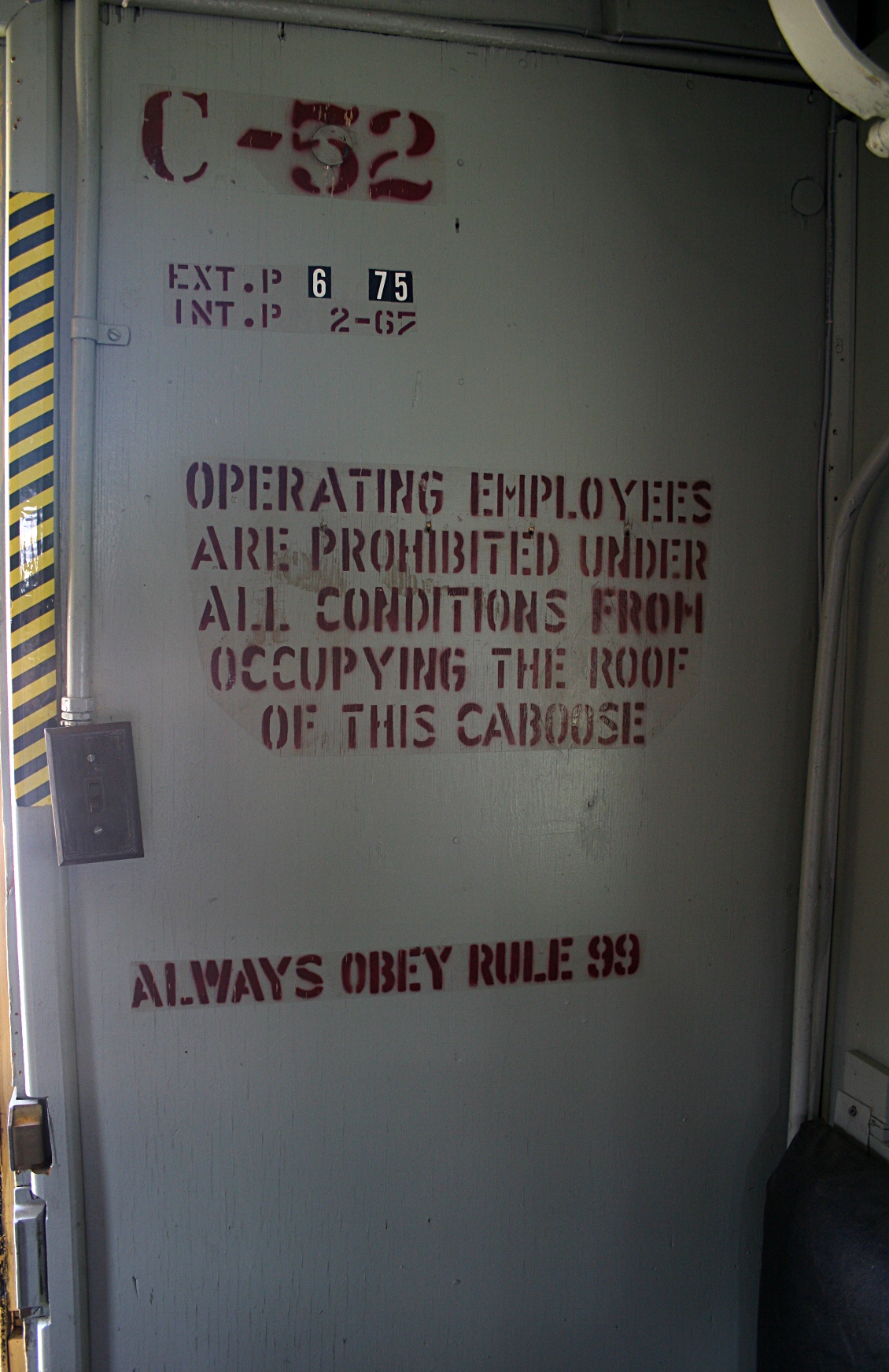
And then you see this sign inside an old caboose and completely forget about those passengers and question why the railroad employees climbed onto the roof of the caboose because they certainly must have or there would be no Rule 99.

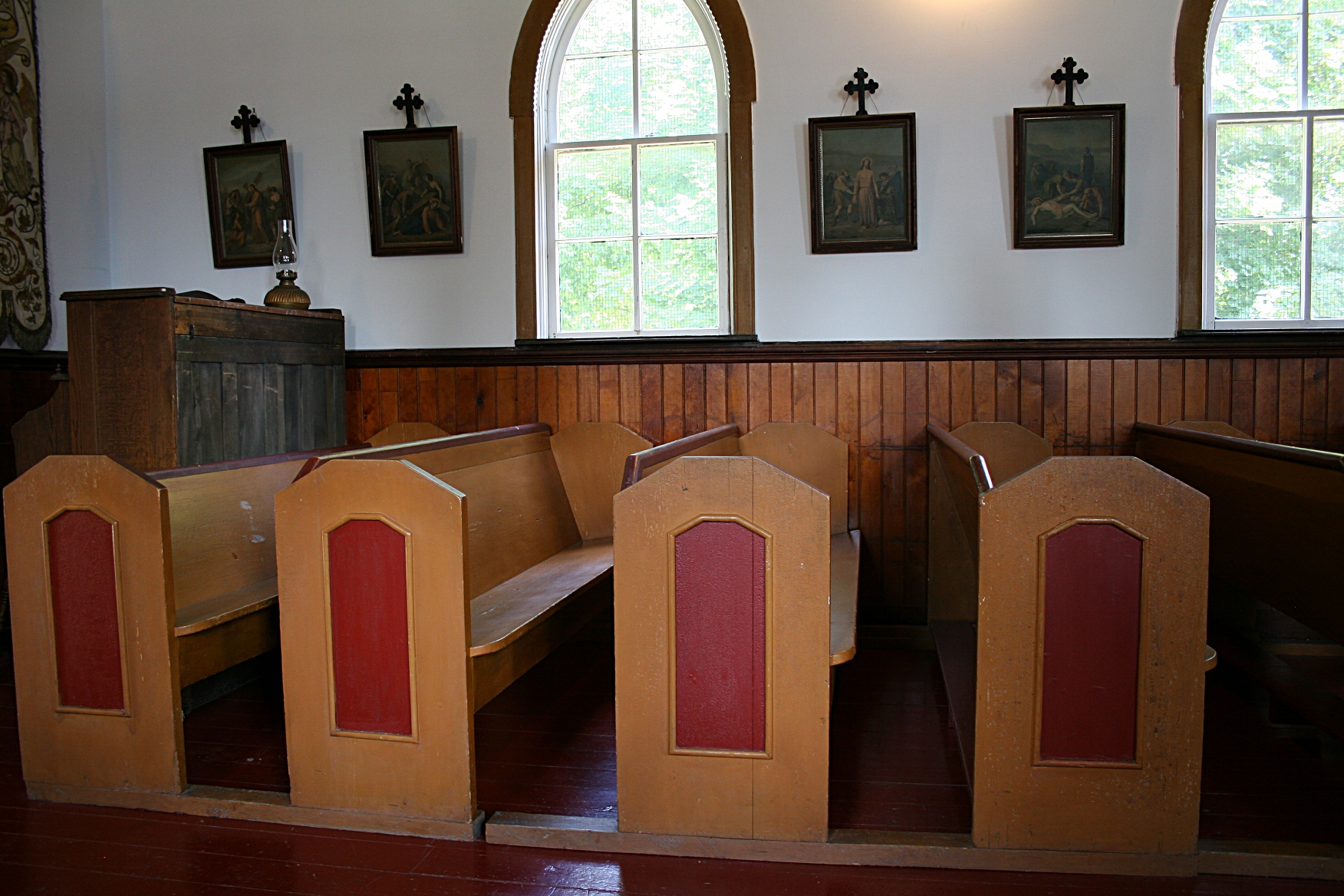
How many tears were shed, in joy and in sorrow, by those occupying these pews in the 1891 St. Wenceslaus Mission in Moravia Church built in 1891 in Moravia seven miles south of Owatonna? Who crafted these pews? And how did parishioners feel when their church closed in 1952?

Perhaps you could ask Tony Seykora, whose mother, Mary Meixner, attended St. Wenceslaus and whose daughter, Susan, was married here. He wasn’t sharing any stories on Sunday while touring his ancestral church at the Village of Yesteryear.

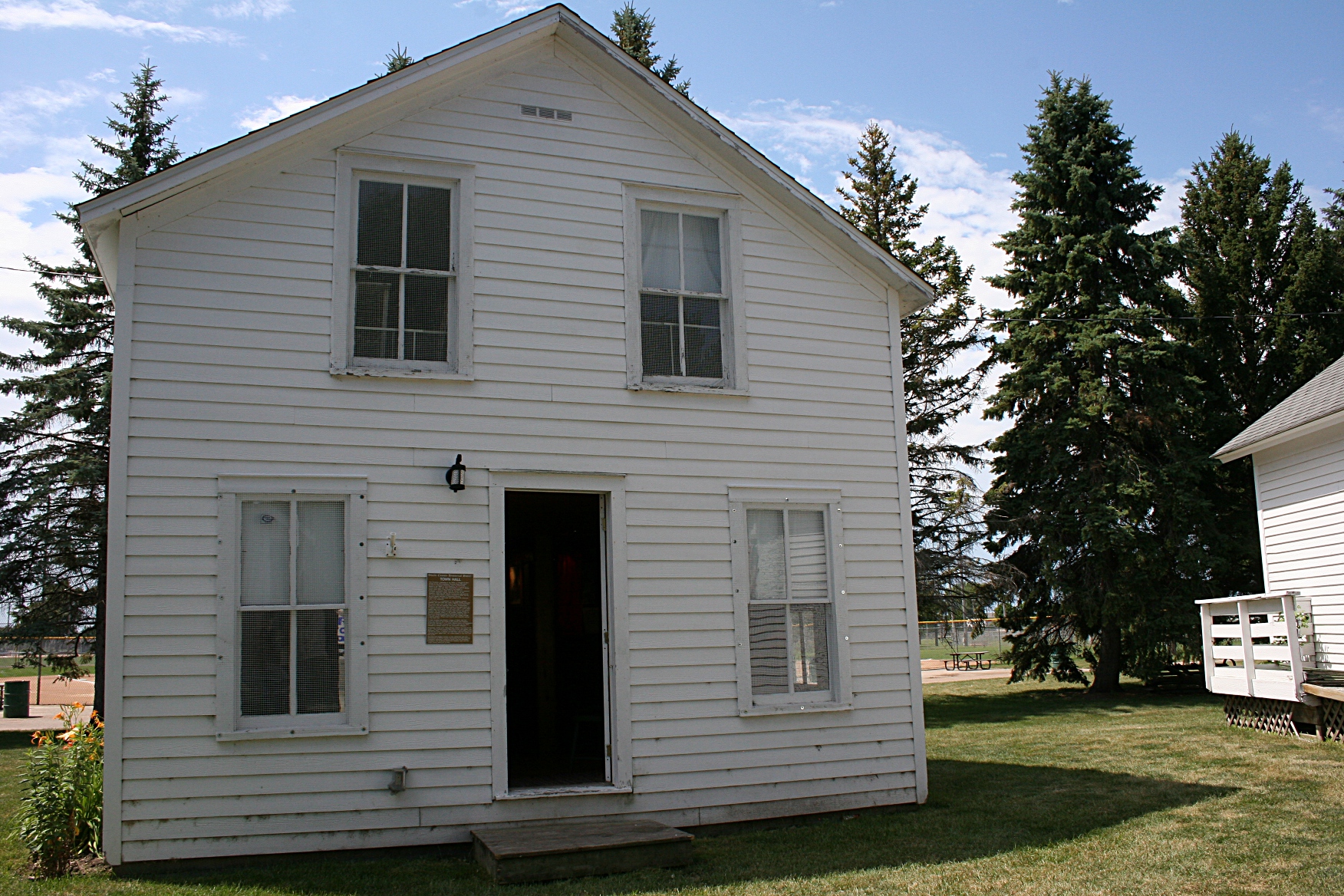
 Oh, the stories this old town hall, the Owatonna Town Hall built in the late 1850s, could tell about those who met here and shaped the future of the city.

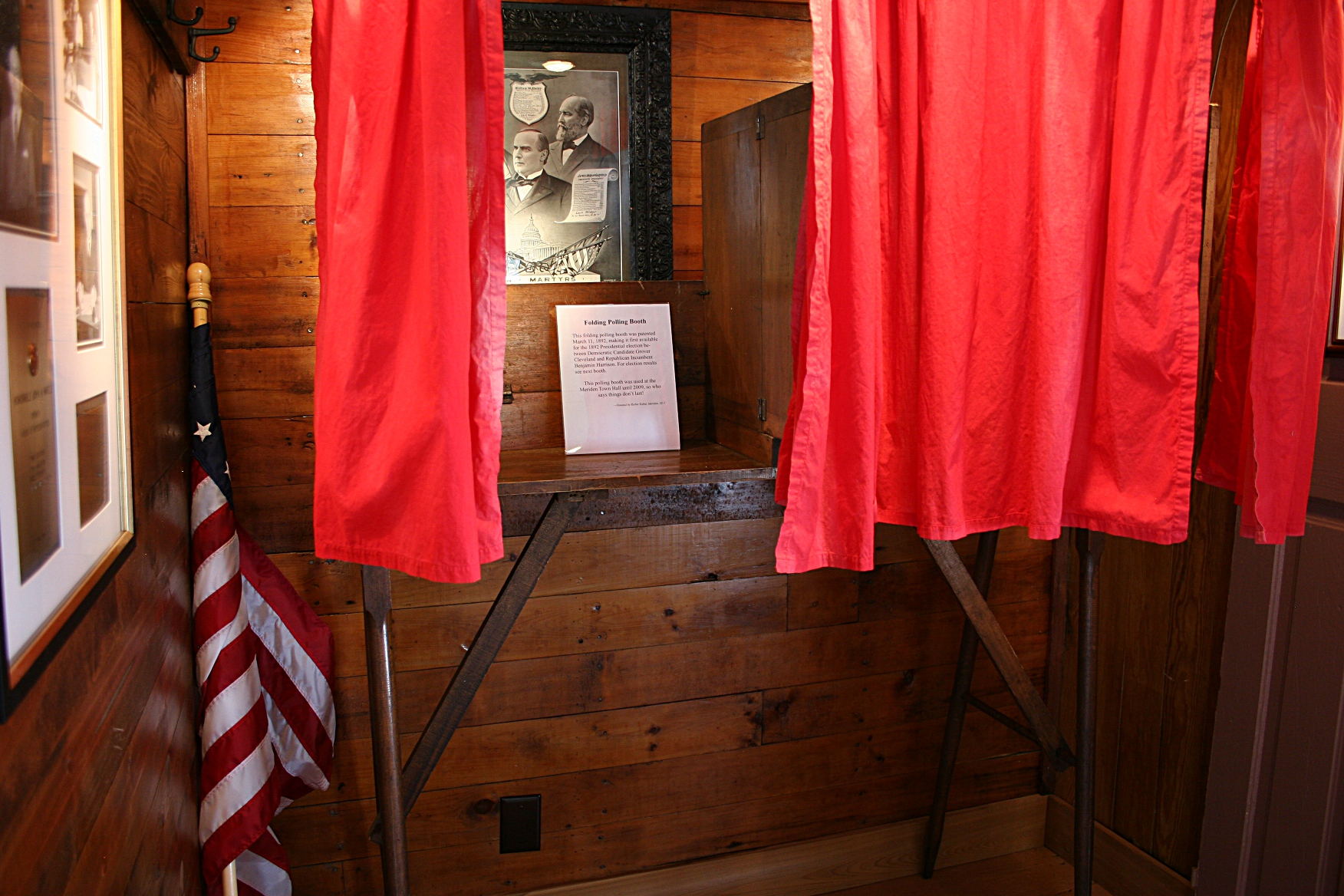
And if you could peek over their shoulders, would you to see how those in the Meriden area voted? This folding polling booth was patented in March of 1892 making it first available for the Presidential election that same year. The polling booth was used at the Meriden Town Hall until 2009. Until 2009, people.

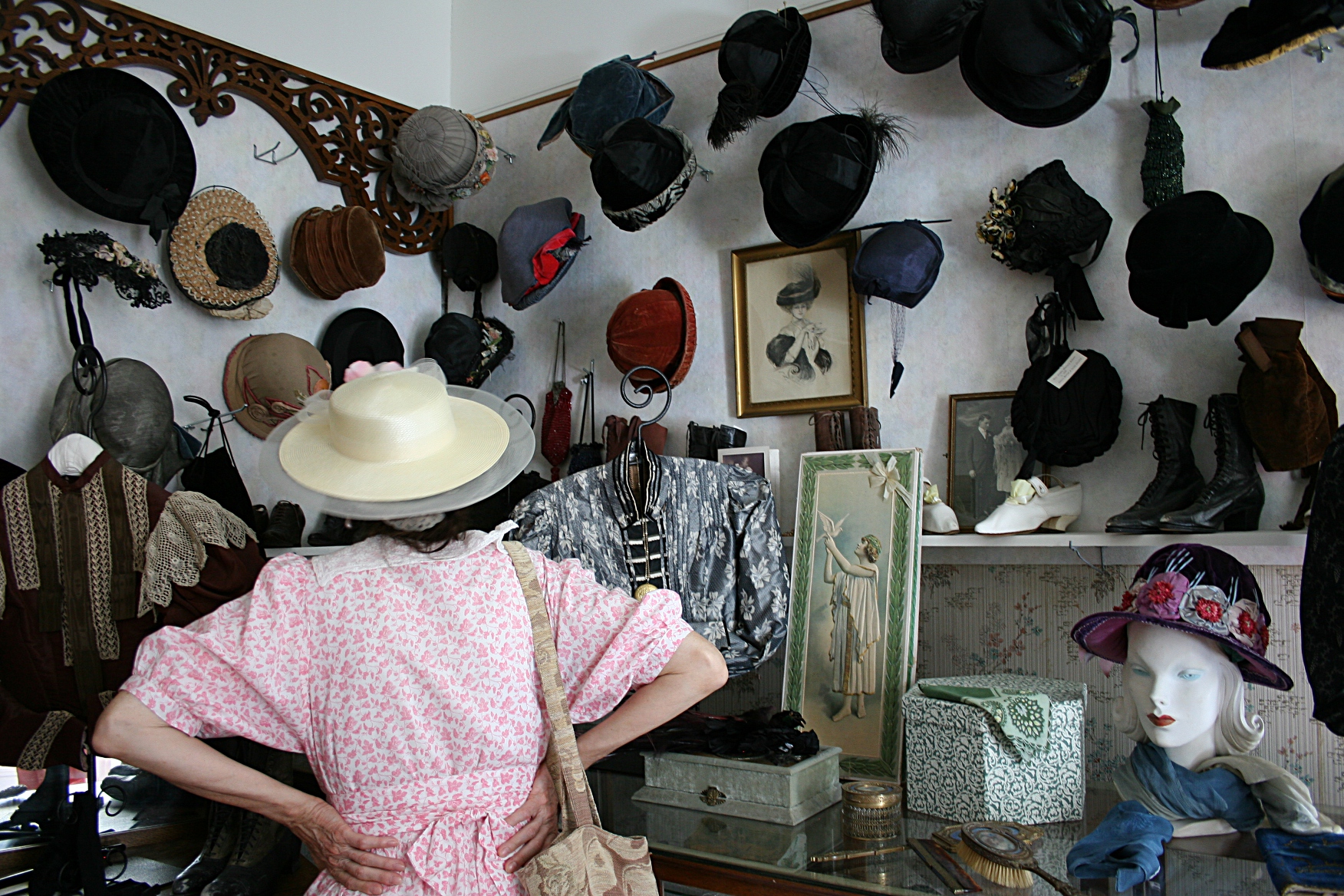
Who wore these hats displayed inside the historic 1868 Dunnell House, home of Minnesota legal scholar, educator and Congressman Mark Hill? Were they hats of mourning, hats of celebration, practical hats…?

A volunteer who works with the Blue Earth County Historical Society and the Betsy-Tacy Society in Mankato in decorating vintage hats studies the collection for ideas.

Also in the Dunnell House, a nook in the parlor offers a place for quiet conversation. Oh, to have been there, eavesdropping…the stories and secrets you may have heard about/from Congressman Hill and other legislators.

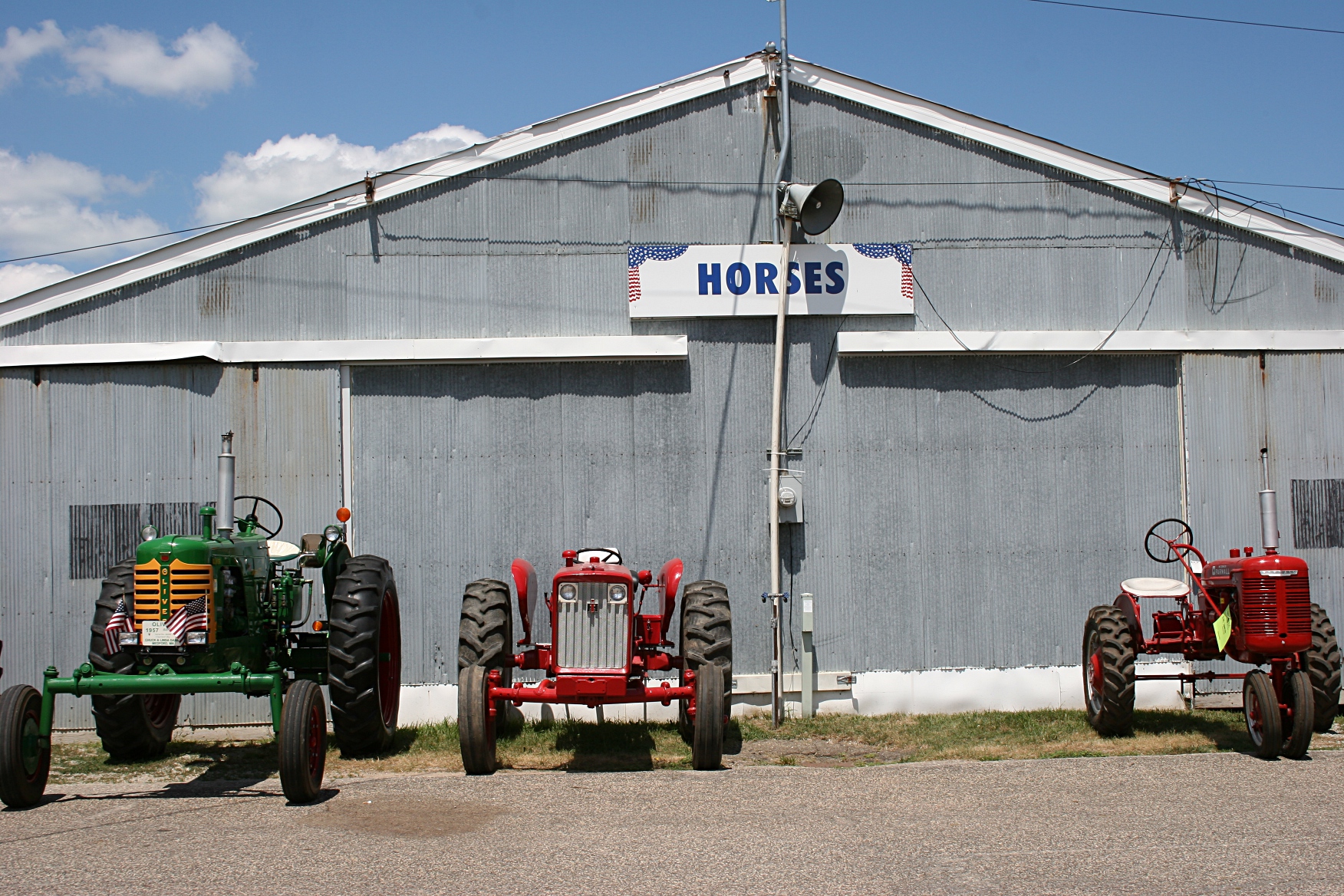
Horse power, but certainly not horses…these vintage tractors were parked next to the horse barn at the Steele County Fairgrounds. Surely they would speak of long, hard days on the farm, their wheels weighed down by the burdens of a farmer’s worries and the uncertainties that have always been a part of farming from the early days of Minnesota to current day Minnesota.

What is that saying? You haven’t walked a mile until you’ve walked in my shoes. Consider that, how challenging it would have been to walk in the boots/shoes of your ancestors for whom life presented so many daily challenges simply to survive.

FYI: To learn more about the Steele County Historical Society, click here.

CLICK HERE to read my first blog post about the Steele County Historical Society Extravaganza. Watch for one final, upcoming post.

© Copyright 2012 Audrey Kletscher Helbling
 

Take me out to the (vintage) ball game in Faribault August 20, 2011

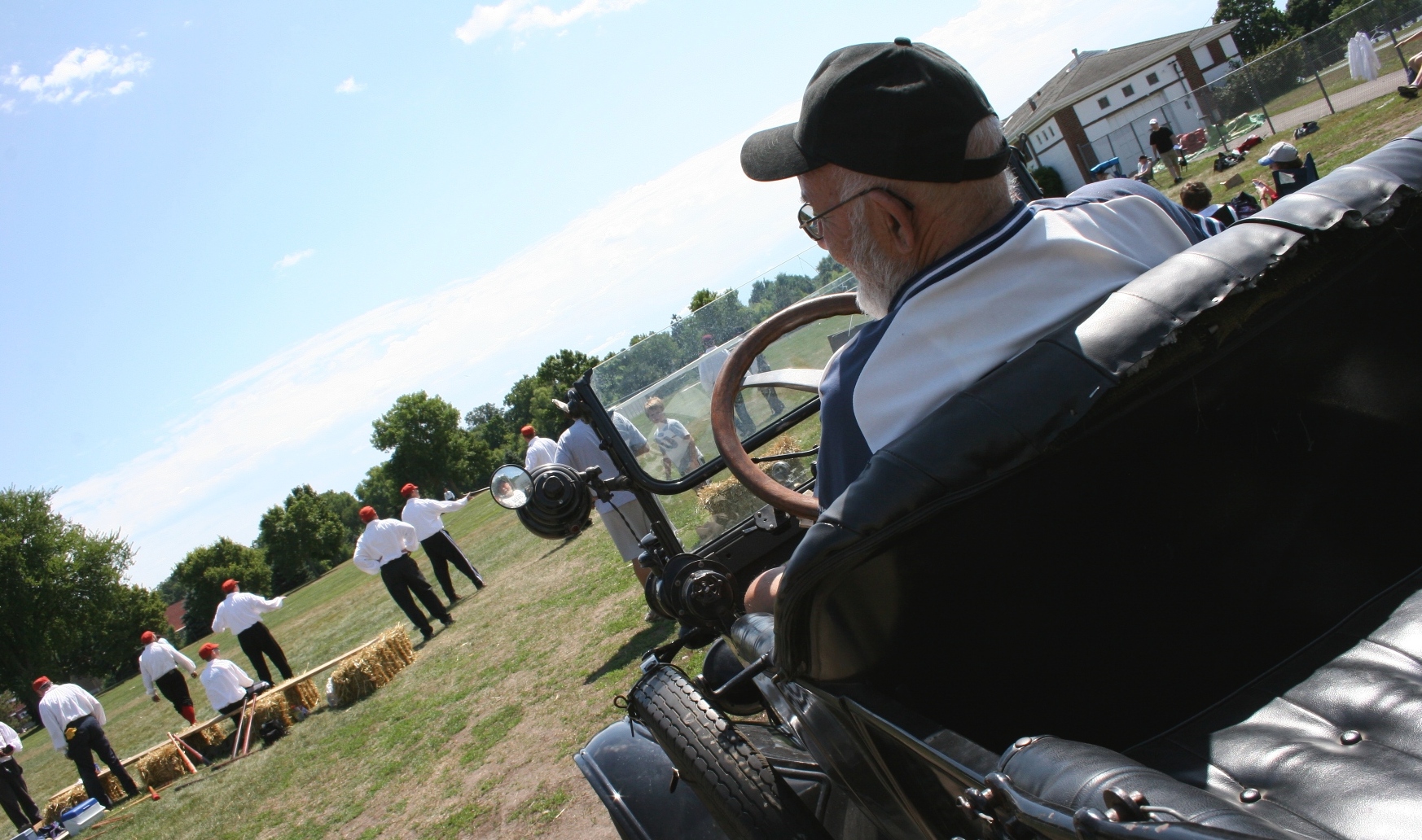
Curly Schreckenberg watches the vintage baseball match from his Model T Ford.

FRANK “CURLY” SCHRECKENBERG pulled into the Rice County Fairgrounds in his 1918 Model T Ford, a fitting mode of transportation Saturday afternoon for a vintage baseball game between the Northfield Silver Stars and the Rochester Roosters.

“There’s nothing like old-fashioned,” Schreckenberg said as he sat behind the wheel of his Model T, occasionally glancing over at the competition played with 1860 rules. No gloves. No called balls and strikes. No sliding. No spitting. No swearing…

Striker (batter) up!

Schreckenberg’s a fan of ball games. He played church league softball from age 38 – 71, mostly as a pitcher. “I loved playing ball,” he said. “I loved the fellowship.” He was dressed in the uniform of First English, his team for most of his 33 church league years.

His antique car drew lots of attention from the players and from the crowd gathered Saturday for the vintage match. The Silver Stars whooped the Roosters by a score of 6 to 1. Afterward, the players posed for a team photo by the Model T.

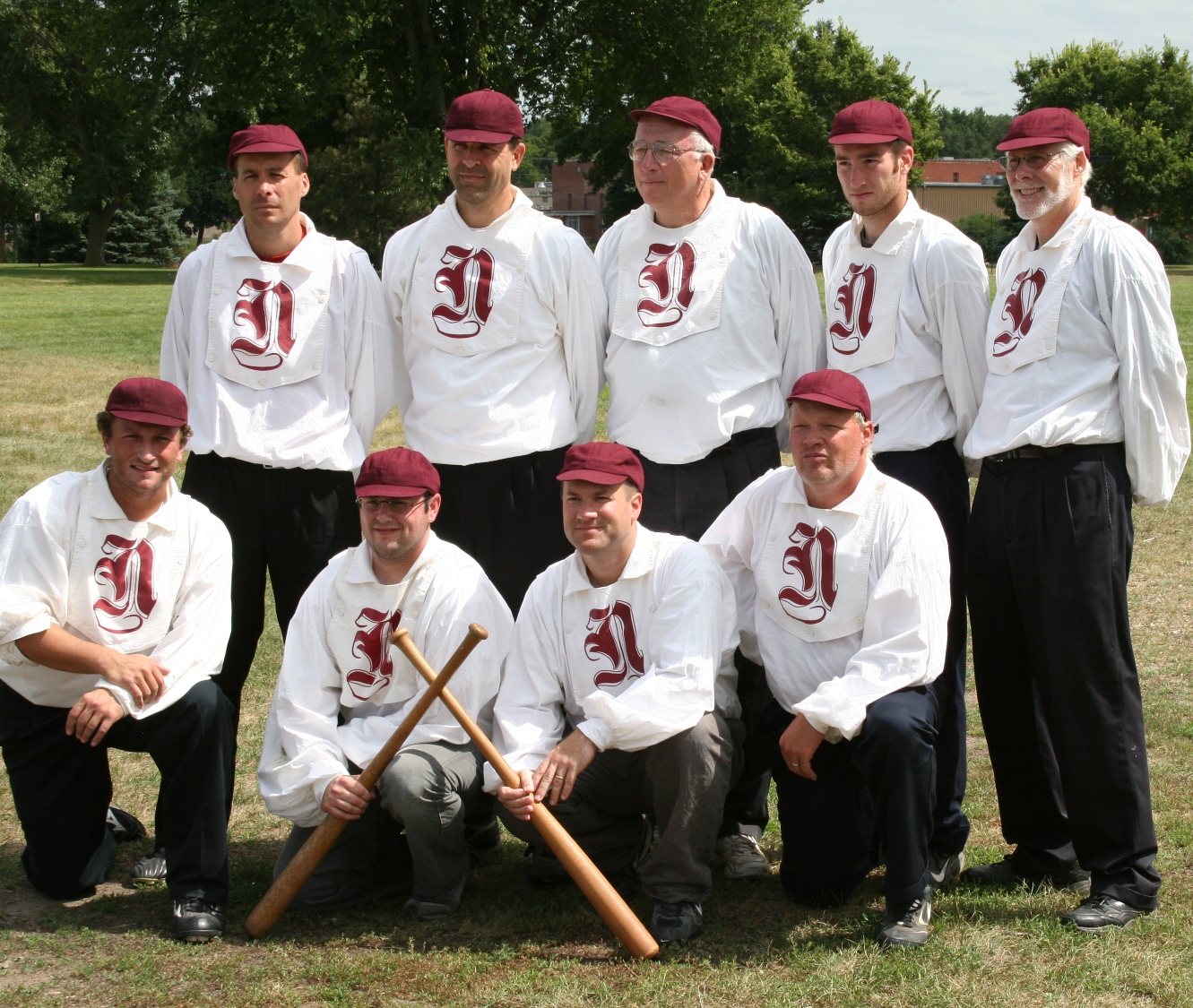
With team members sporting names like Cow Pie, Rabbit, Goose, Woodchuck, Bean Field and Admiral, no one seemed to take the event too seriously. Rather, the match focused more on bringing history to life.

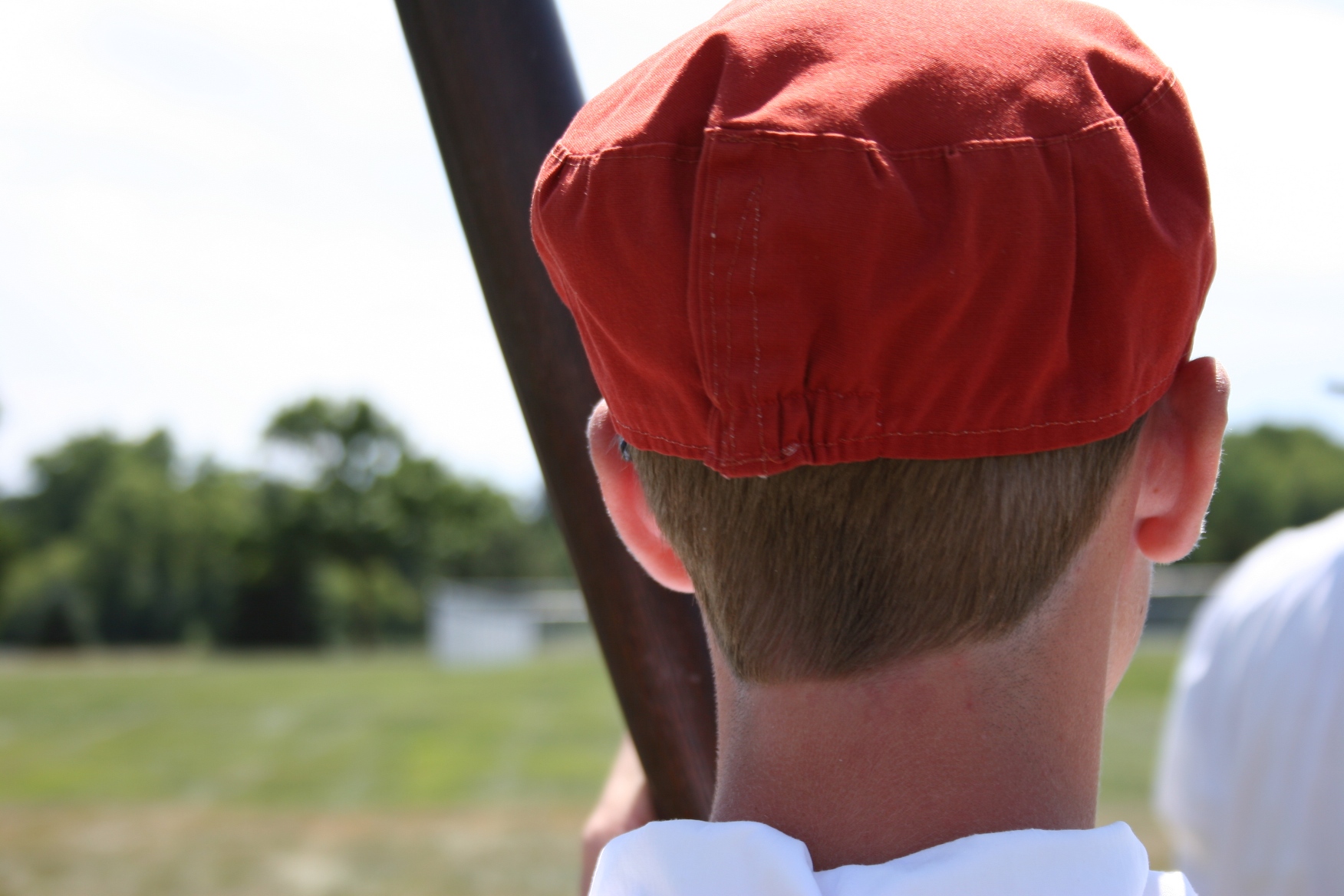
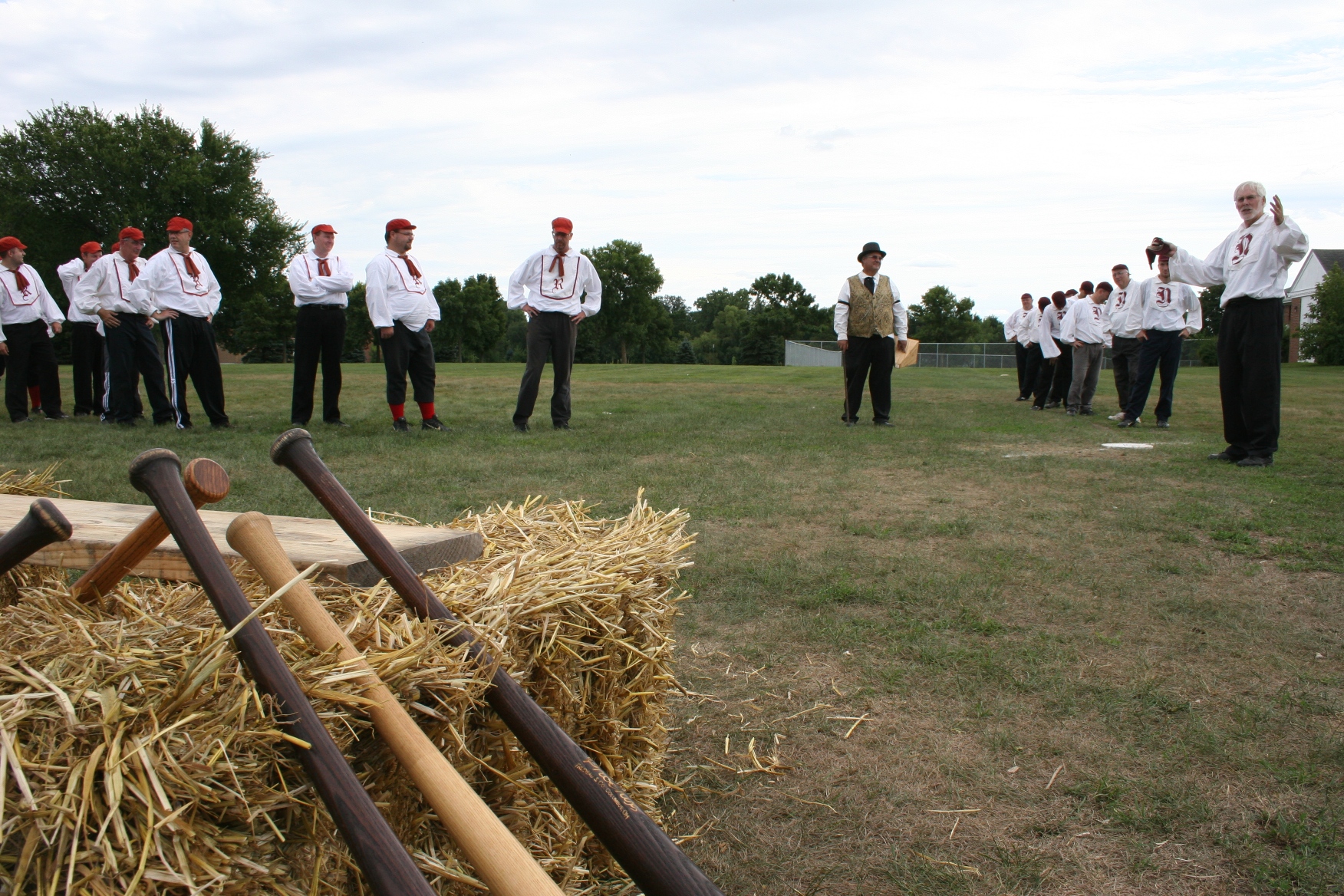
Out on the ball field, the players, dressed in vintage uniforms, tried to stay true to the mid-19th century time period.

The Rochester Roosters, the scorekeeper and the umpire posed for a photo after the match.

Likewise, the Silver Stars from Northfield gathered for a team photo.

“Watch the daisy cutters (sharp grounders),” Rabbit, aka Scott Richardson, from the Silver Stars advised.

“Don’t run me over, Tar Cutter,” another player warned.

“I think the whole team ought to be fined.”

“Way to hustle, Bryan,” a teammate said, slipping up on a name.

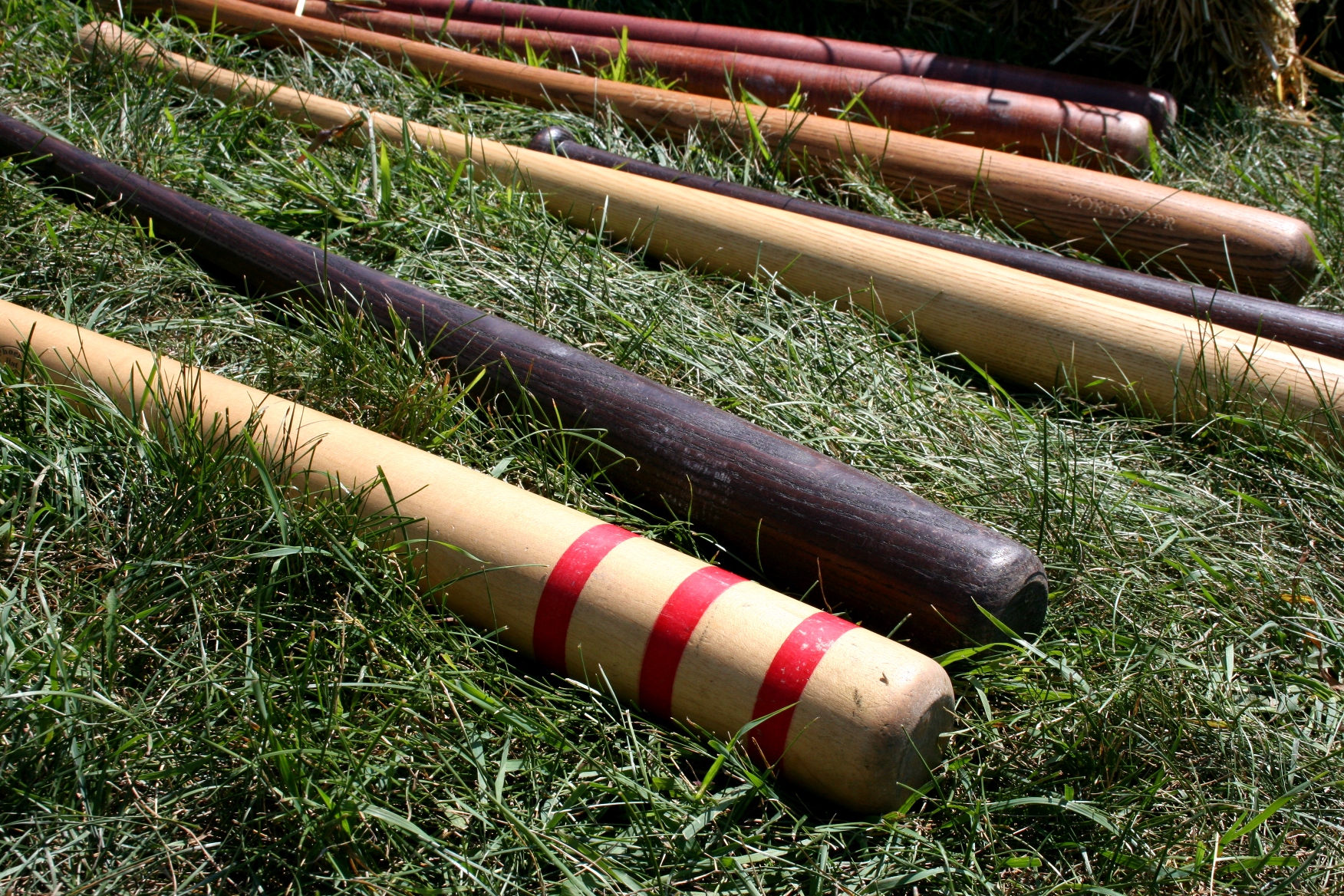
Wooden bats clustered on the grass behind the players' bench before the match.

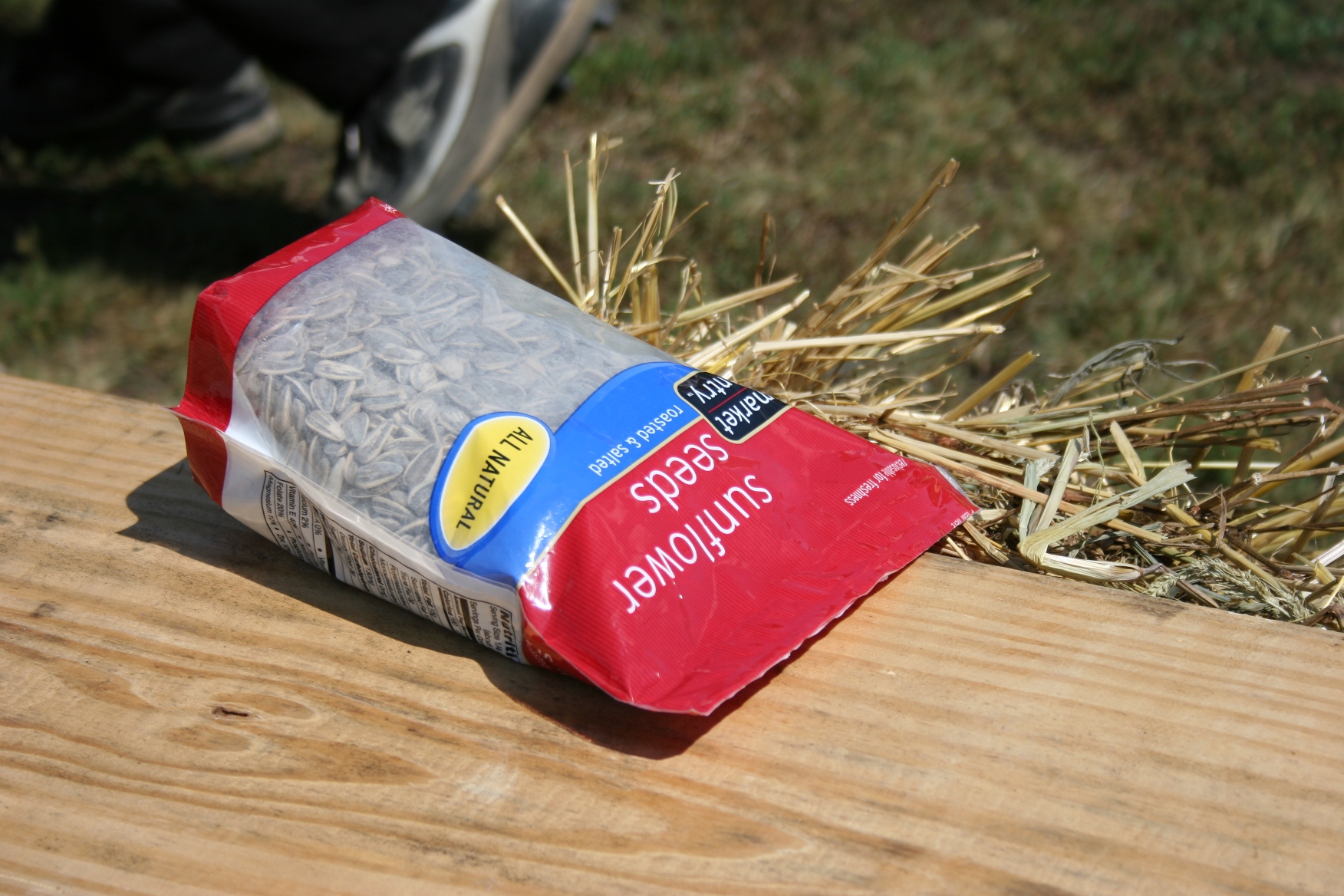
Players munched on sunflower seeds on the Silver Stars bench.

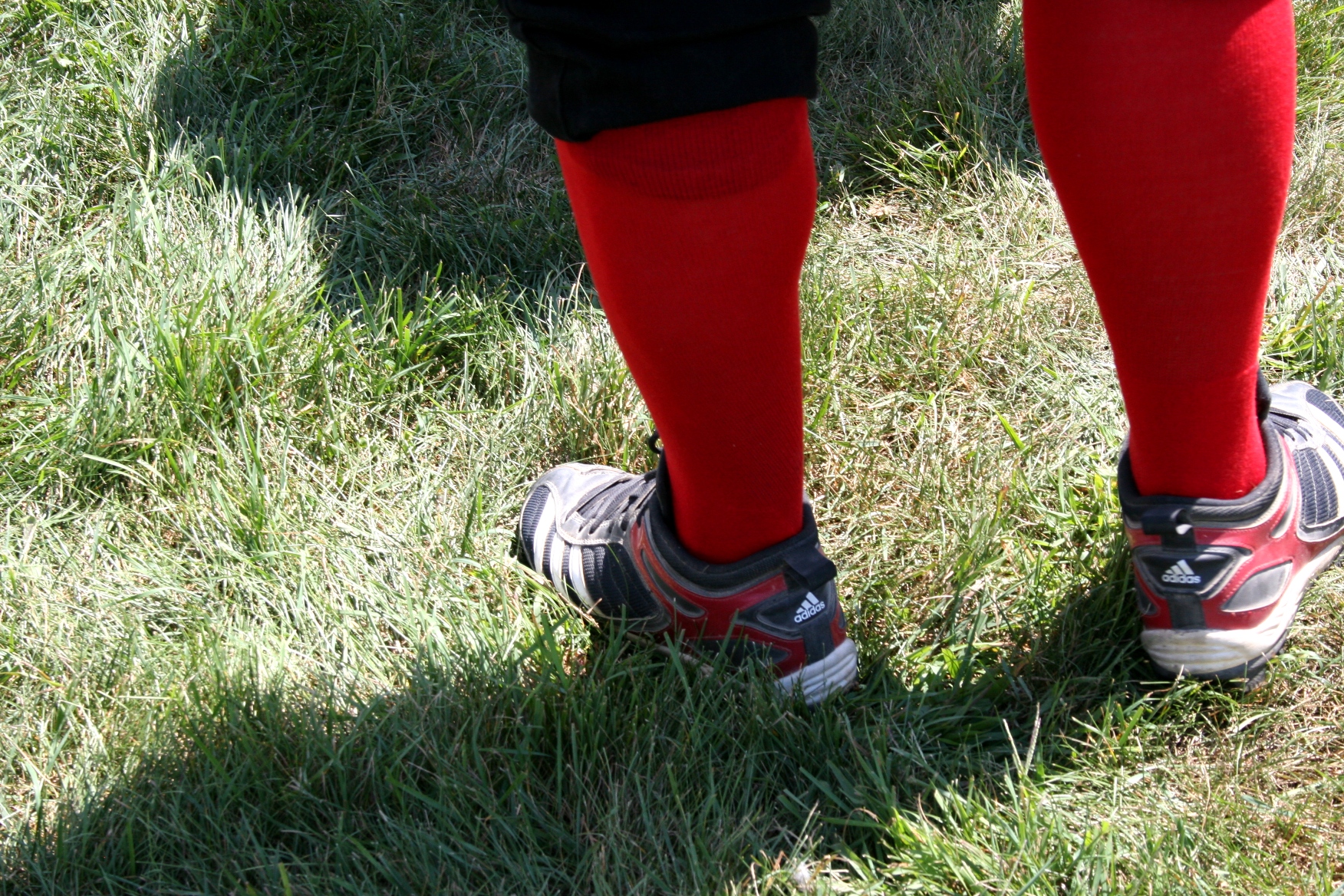
At least one Rochester Rooster player sported period style stockings.

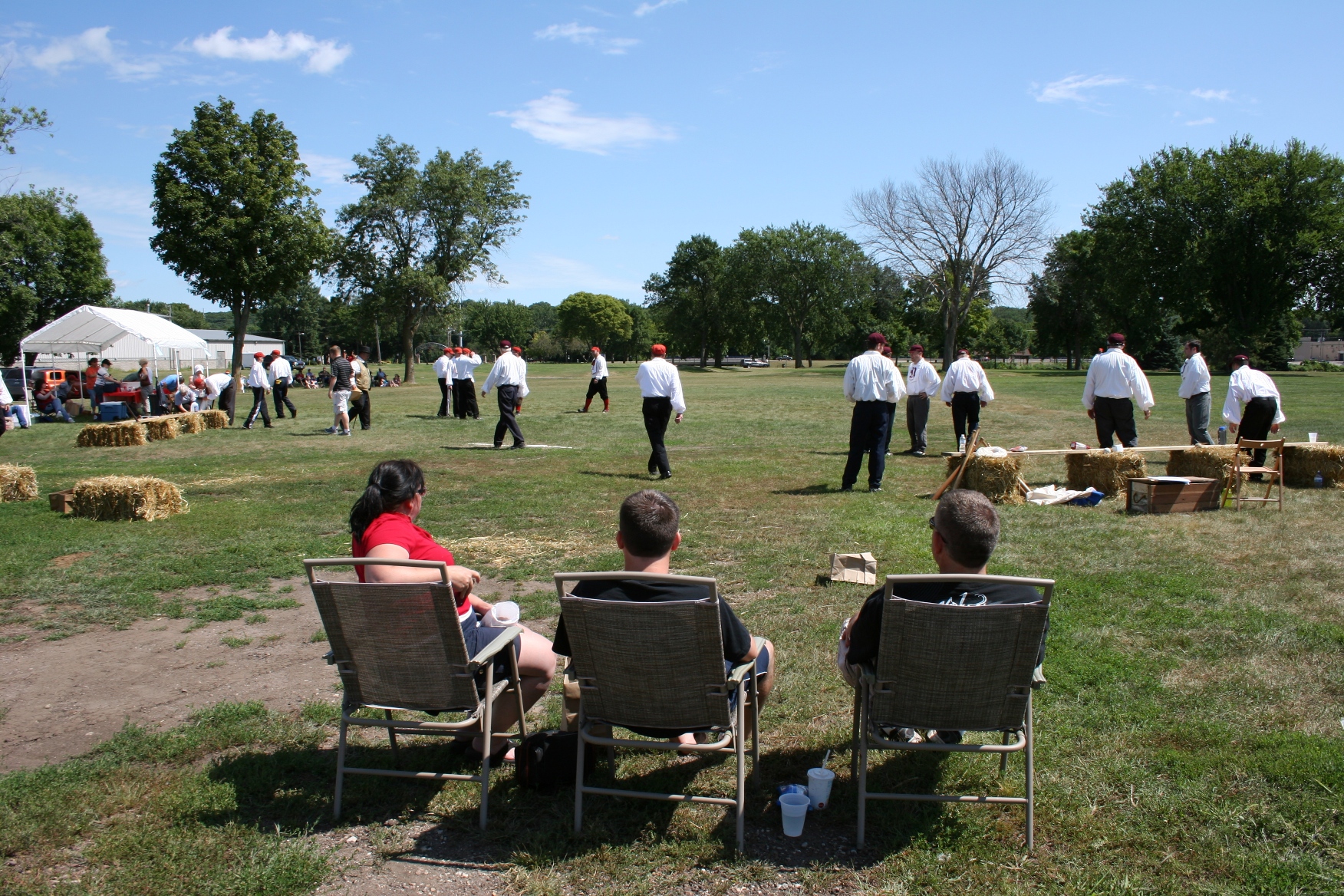
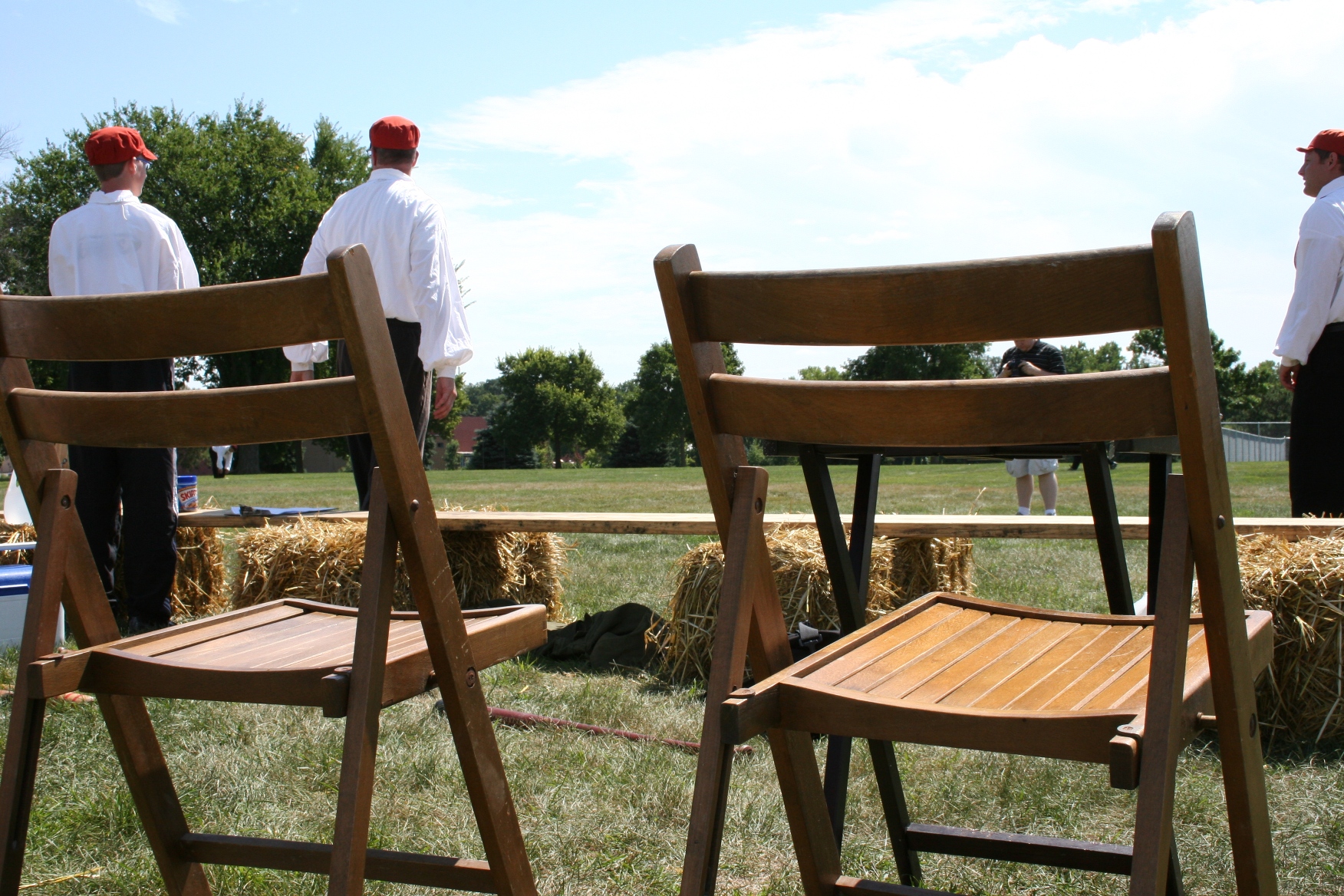
Wooden bats and gloveless hands. Bags of sunflower seeds and peanuts. Wood planks balanced between straw bales. Root beer floats. Bell-ringing when an ace (run) was scored. Good-natured bantering. All set a period mood for the 1 ½-hour match (game) between the two teams.

Occasionally a player pulled a cell phone from a pocket, sipped on Gatorade, clicked a digital camera. Ethnic music from a Hispanic celebration across the fairgrounds carried to the ball field, adding to the relaxed setting.

“It’s a beautiful day for a baseball game,” at least one fan was overhead saying.

Indeed, it was a perfect August afternoon for a vintage baseball match in Faribault, even for someone like me who doesn’t get into baseball, but can appreciate living history.

Fans sat in the sun, but most sat under shade trees for the match hosted by the Rice County Historical Society.

Some attendees even brought vintage style wooden folding chairs.

Roosters' bench time and one dirt and grass-stained white uniform.

A young player for the Rochester Roosters.

The end of the match with the victorious Silver Stars on the right and the Roosters on the left.

FYI: Minnesota has some eight vintage baseball teams, I was told on Saturday by the game’s umpire. Most of those are in the eastern part of the state and include teams like the Apple Jacks from La Crescent, the Afton Red Sox and the St. Croixs. The Minnesota teams also compete with Wisconsin teams like the Osceola Onions and the Milwaukee Cream Citys.

© Copyright 2011 Audrey Kletscher Helbling