Minnesota Prairie Roots

Writing and photography by Audrey Kletscher Helbling

Inside the Old Stone Church, rural Kenyon, Minnesota June 27, 2010

Filed under: Uncategorized — Audrey Kletscher Helbling @ 7:35 PM
Tags: , , ,

“DIRECTIONS: At the west end of the Boulevard of Roses, take Goodhue County 12 south for 1.3 miles and go west on Monkey Valley road for one mile.”

“Let’s go,” I tell my husband Saturday evening after reading an open invitation in the local newspaper to attend worship services at the Old Stone Church. Pair the adjectives “old” and “stone” with church and I already have one foot in the door. Add “Monkey Valley Road,” and you’ve really piqued my interest.

So Sunday morning Randy and I are on our way to Kenyon, where we turn right at the west end of the narrow boulevard lined with roses. We follow the published directions, turning right onto Monkey Valley Road, a gravel road that soon leads us to the Old Stone Church.

Once a year a worship service is held at the Old Stone Church, built by Norwegian immigrants near Kenyon.

I am expecting a church defined, as most country churches are, by a steeple. But, instead, I see before me a simple limestone building that could pass for a schoolhouse. Yet, the plain exterior, minus a steeple, seems perfect for this spot embraced by trees and rolling valleys on two sides and by flat open farm fields on the opposite sides.

Welcome to Monkey Valley.

“How did this place get its name?” I ask a group of men clustered outside the Old Stone Church.

They offer two theories. The first story goes that monkeys escaped from a traveling circus and fled into the wooded valley. The second story goes that a threshing crew arrived here and pronounced: “We’re just going to the valley and monkey around.”

Randy and I buy the monkey story, which seems probable given traveling circuses once roamed the countryside.

“I have to go,” I say, abruptly ending this monkey business. I hear the strains of my favorite hymn, Beautiful Savior, drifting through the open doors and windows. I don’t want to miss this and I am anxious to get inside the small country church.

I’ll later learn that Norwegian immigrants built this structure, beginning in 1872, with limestone cut from a nearby quarry. A historical marker dates the building, which is on the National Register of Historic Places, as 1875. And that steeple I wondered about—apparently the church founders discussed a steeple, but never had the money to erect one.

Eventually, those early members moved out of Monkey Valley and, in 1902, Hauge Lutheran congregation built a new church in Kenyon. For years the Old Stone Church stood abandoned. In 1947 restoration began, a process that continues today.

All of this written and memorized history interests me, but only to a point. I prefer, instead, to wander, to notice the details, to take in my surroundings, to appreciate for myself the beauty that this church holds.

During a service filled with music, the choir and congregation sing in Norwegian, "Ja, vi elsker." The wire rods you see anchored to the walls (running horizontally across the top of the photo) provide structural stability.

Rugged pews and rustic wood floors remind worshipers of bygone years. Copies of The Concordia Hymnal, piled on a pew, date to 1967. The hymn books are stashed in covered plastic containers after the service.

I lean forward and photograph the hands of an elderly woman in quiet meditation. This image, more than any photo I take, captures the essence of the Old Stone Church. For in these folded hands and in the back of the roughly-hewn pew, history and faithfulness meld, encompassing the importance of preserving historic churches.

Sitting near the back of the church, I study these words, thinking in German until I remember I am inside a Norwegian church. After the service, I talk with historian and preservationist Bob Dyrdahl. The scriptural quote comes from John 3:16, he tells me. "For God so loved the world that He gave His only begotten Son..." Sure enough, upon closer examination I determine that Bob knows his Norwegian.

I run my fingers across the flowers on the pulpit and imagine the rough hands of a Norwegian immigrant shaping this wood into a beautiful work of art. In the background is the top of the altar, defined by tablets, signifying the 10 Commandments and centered by a cross and a painting of The Last Supper.

In the balcony, historian Bob Dyrdahl shows me this treasure, the dated (October 30, 1894) signature of A. P. Lindgren who painted stars upon the ceiling and edged it with this stenciled border. His work also graces other sections of the sanctuary, along the stairway, for example.

A rear view of the Old Stone Church, a simple structure with three shuttered windows on each side of the building.

A stone's throw from the Old Stone Church, a view of Monkey Valley.

#

THIS IS JUST A SAMPLING of the photos I shot at the Old Stone Church. Please check back for additional images to be posted this week on Minnesota Prairie Roots.

Copyright 2010 Audrey Kletscher Helbling


Terrifying tornado tales from Minnesota June 24, 2010

Filed under: Uncategorized — Audrey Kletscher Helbling @ 9:22 AM
Tags: , , ,

ONE WEEK AGO TODAY, numerous tornadoes ravaged Minnesota, killing three, destroying hundreds of homes and injuring many.

This morning, thankfully, weather conditions are calm with low humidity and no indications that more storms could develop.

Even so, we Minnesotans remain unsettled, still reeling from the destruction wreaked upon this land, and upon our psyches, only seven days ago.

Memories of such devastation linger for years, if not decades. Just last night, while working on a trivia contest for an upcoming reunion, I am paging through a family history book when I come upon a story written by my Uncle Merlin, the family historian.

He writes of an F5 tornado (the most powerful) which decimated the small southwestern Minnesota farming community of Tracy on June 13, 1968, killing nine. At the time, Merlin, his wife and their two young children lived about 20 miles away just outside of Lamberton three towns directly east of Tracy along U.S. Highway 14.

My uncle had just returned home from work when the weather turned ominous. “We were watching for tornadoes as the conditions were right,” he writes. “Then to the southwest we saw it—a huge tornado. As we watched, we saw large amounts of debris lifted into the sky—we thought it hit Revere and about that time Iylene (his wife) took one-year-old Janelle and I took Ronda down into the basement. About an hour later we found out that this tornado hit Tracy causing a large amount of destruction and costing several lives.”

Reading my uncle’s story, I feel his anxiety as he rushes his young family to safety, fearing the twister is within miles of his home.

Then I flip the page of the history booklet and read of Merlin’s first tornado encounter, on today’s date—June 24—in1953 or 1954. Although only about 10 years old when a twister struck his childhood farm south of Vesta, he clearly remembers the details and that day, his sister Elvira’s wedding anniversary.

“The sky turned all kinds of colors and we kids were really scared,” my uncle remembers. “My dad and brothers were out doing the chores and milking the cows. Harold (his brother) got caught in the hog barn as it hit and my dad and one of my brothers had to hold the double doors of the barn closed on one end and two of my other brothers did the same on the other end.”

His words draw me in, placing me there in the barn with my grandfather and uncles as they hunker down, struggling against the fierce winds to hold the barn doors in place.

“There was one loud crash and then stillness,” Merlin continues. “My sister Jeanette looked out the north window of the house and shouted, ‘Mom, the whole grove is gone.’ That was really close.”

The tornado spared the house and farm buildings, but destroyed the stand of trees sheltering the farm site on the flat, open prairie of southwestern Minnesota.

Almost three decades later a twister struck nearby, on the farm where I grew up, taking down a silo, tossing wagons about in the field, ripping a railing from the house… Even though I was grown then and no longer living at home, the psychological impact of that storm still remains.

I fear tornadoes, a fear imprinted upon me after viewing the devastation wreaked upon Tracy in 1968 and then reinforced all those years later on my home farm. I sometimes dream about tornadoes.

Yet, I know my dreams, my feelings, are nothing compared to those Minnesotans who experienced the destructive tornadoes of a week ago. For them, nightmares are reality.

#

IF YOU HAVE A TORNADO story you would like to share, please submit a comment to this post.

© Copyright 2010 Audrey Kletscher Helbling
 

The sweet taste of summer in Minnesota June 23, 2010

Filed under: Uncategorized — Audrey Kletscher Helbling @ 8:16 AM
Tags: , , ,

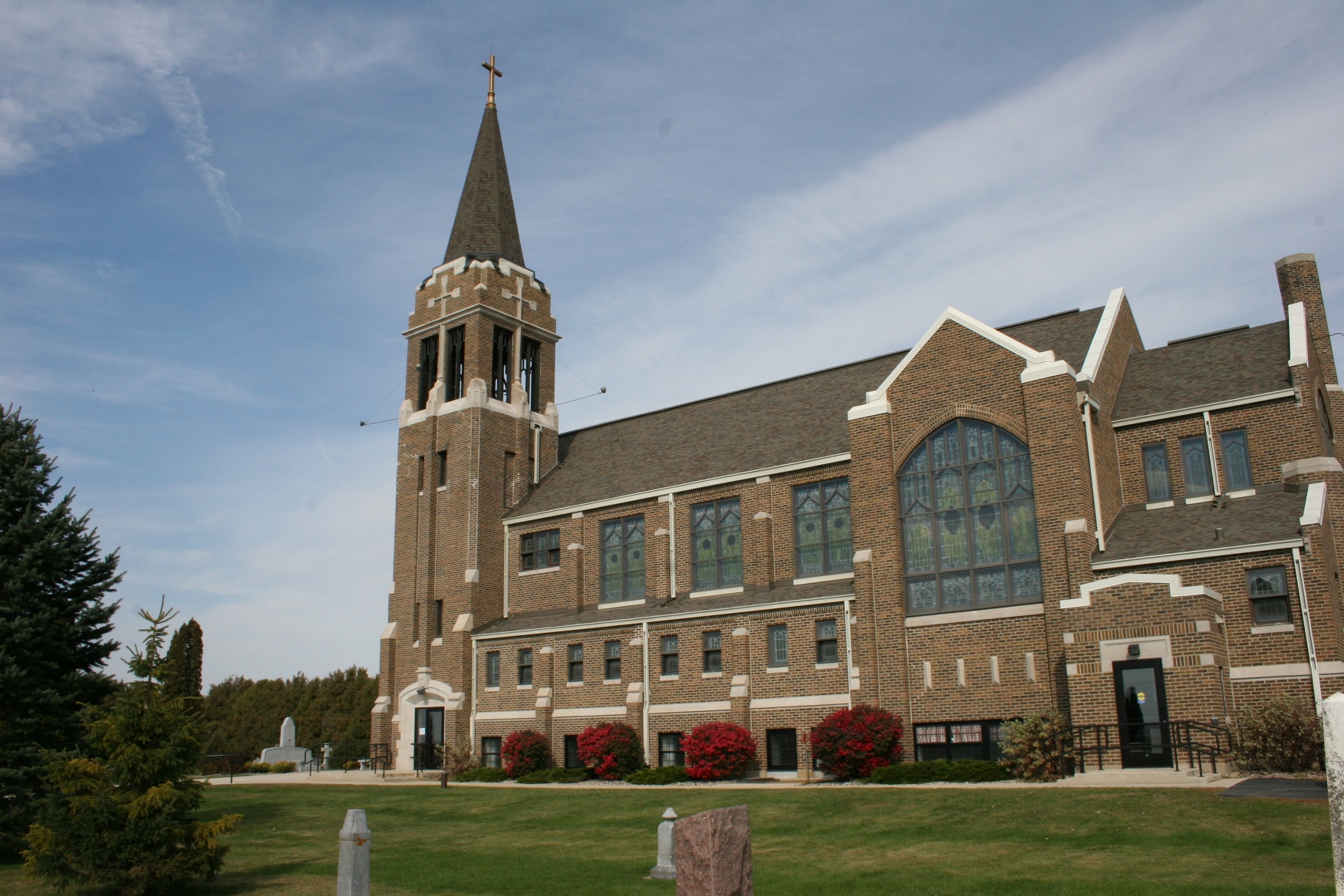
Black raspberries ripen on vines in my Faribault, Minnesota backyard.

ALREADY, SPLOTCHES OF PURPLE stain my fingertips. Thorns scratch across my forearms as I ferret for more fruit. My skin itches. Mosquitoes swarm. I pick a hair-thin, squiggling worm from a tiny berry.

Yet, I continue to reach and pluck, reach and pluck, occasionally popping a juicy black raspberry into my mouth. As the seeds crunch against my teeth, as the slightly-tart berries burst upon my tongue, I relish this first taste of summer.

After a long Minnesota winter, these berries tempt my senses. I admire their deep purple, near-black, color. I caress their daintiness, savor their sweetness.

Daily I pick enough berries to fill a small bowl.

Soon I’ve filled a small bowl with the wild morsels that grow on thorny vines tumbling out of the woods next to my backyard.

Later, I’ll toss handfuls onto romaine lettuce I’ve grown. More go into the blender, combined with ice cream and milk for a deep purple shake that bursts with flavor. I mix other berries with vanilla yogurt, bananas and milk to create a healthy smoothie.

But mostly, I grab berries now and then from the bowl that sits on the kitchen counter. Sometimes I wash the raspberries, most often not.

Tomorrow I’ll be back in the berry patch, braving the brambles as I gather this fruit of the earth, these wild black raspberries that taste of sweet summertime in Minnesota.

Wild black raspberries have overtaken a corner of my backyard and I'm just fine with that.

© Copyright 2010 Audrey Kletscher Helbling
 

Tornado terror in Minnesota on June 17, 2010 June 18, 2010

Filed under: Uncategorized — Audrey Kletscher Helbling @ 8:55 AM
Tags: , ,

Ominous clouds roil above Faribault shortly after 9 p.m. Thursday. I shot this through my dining room window.

“WERE THOSE THE SIRENS?” I ask, inching down the car window, uncertain whether I’ve heard the sirens that warn of an approaching storm.

“I think it was a truck,” my husband says as he continues driving west along Minnesota Highway 60 in Faribault toward the Eagles Club.

Then I hear the sound again, and this time we recognize the shrill whistle warning us to take cover.

“I want to go home. Now,” I command.

I can tell simply by my husband’s lack of response that he thinks I’m crazy. The skies don’t appear all that threatening.

“They’re not going to take our blood anyway,” I state, arguing my case. “I’m sure they have protocol in situations like this.”

He won’t concur that I am right, seeming to hesitate at the intersection that will take us to the Eagles and the Red Cross Bloodmobile. But on this June evening, the Red Cross will get none of our blood. We are heading back home, across town, to safety.

My husband switches on the car radio. The announcer is advising people to take shelter as near as Waterville about 15 miles away. The area lies in the path of a tornado.

Back home I nearly leap from the car and rush inside the house where we left our 16-year-old son finishing his homework for a night-time astronomy class. Before leaving, I instructed him to seek shelter if he heard the sirens. Clearly, he has listened to me this time. The door to the basement is flung open, the lights blazing.

I yell for my boy, but get no response. Soon he pounds down the stairs from the second story. “I checked on the internet and it’s only a thunderstorm warning,” he says.

“Uh, no,” I say, explaining that we are under a tornado warning.

Given that, none of us are fleeing to the basement even though I fear tornadoes. Witnessing the destruction of the June 13, 1968, Tracy tornado (see my June 13 blog post) that claimed nine lives and, decades later, seeing the damage a twister caused to the southwestern Minnesota farm where I grew up instilled in me a life-long healthy respect for these powerful storms.

And yesterday, in Minnesota, that respect likely grew among residents. Two people in the Wadena area and one near Albert Lea were killed when tornadoes struck. The state may have broken its record for the biggest tornado outbreak in a single day. That record stood at 27 on June 16, 1992, when an F5 tornado devastated Chandler and killed one person.

On Thursday, multiple twisters ravage many regions of Minnesota. At one time, a weatherman reports that a tornado seems to be moving straight north along Interstate 35 toward Owatonna, just to the south of Faribault.

I worry about my sister and her husband who are traveling on I-35 to Des Moines sometime after she gets off work Thursday afternoon. That route would take them directly through the storm-struck area. The interstate has been closed due to the storm, one reporter says.

Here in Faribault, round 9 p.m. on Thursday, the skies turn an eerie green to the west. To the east, ominous steel-gray clouds weigh heavy upon the earth. My anxiety level rises as I recall something about green skies and tornadoes, true or not. But no new warning sirens blare.

When I climb into bed at 11:15 p.m., many Minnesota counties, including my home county of Rice, remain under a tornado watch until 1 a.m.

This morning I awake to cloudy skies, edged out now by bright sunshine. I expect for many in our state, daylight brings a new appreciation for the power of tornadoes and a profound thankfulness for surviving their rage.

© Copyright 2010 Audrey Kletscher Helbling


A car vomits along the road June 16, 2010

Filed under: Uncategorized — Audrey Kletscher Helbling @ 10:10 AM
Tags: ,

WITH NEWSPAPER STORIES that tell of budget cuts and lay-offs, oil spills and natural disasters, crime and tragedies, items published in the “Cops & Courts” report can sometimes provide comic relief.

Let me clarify lest you misunderstand. I am not amused by motor vehicle accidents, by vandalism, by assaults or similar occurrences reported to law enforcement. Rather, I am amused by the occasional comic element or in the wording of information in published public records.

For example, a recent “Cops & Courts” item printed in the Faribault Daily News states: “3:28 p.m., caller wants to report a theft that occurred eight years ago by his step-daughter…” This isn’t exactly clear to me. Is the stepdaughter the victim or the accused? More importantly, why did this stepfather wait eight years to contact the sheriff’s department about this supposed crime?

Ditto for another report filed on the same day. A complainant alleges that “his neighbor has been coming to his location and stealing motorcycle parts and tools, has been happening a lot, first time reported…”  If my neighbor was stealing from me, I wouldn’t wait to call the cops.

Finally, this published report gives me pause to chuckle a bit and to formulate numerous questions: “11:41 p.m., someone glued doors shut in the 200 block of Third Street Northwest.”  Who would think of doing this? How do you commit this type of crime without anyone noticing? Which doors were glued shut? What type of glue was used and exactly how strong is that glue? How did the victim open the glued doors? Was the victim glued in or out of his/her house? Why would anyone do this?

Finally, the most amusing of recent reports: “2:06 a.m., vehicle with hazards on, vomiting on the side of the road, Warsaw Township 118 at Cannon Lake Trail and Echo Court.” When was the last time you saw a car vomiting on the side of the road?

Just for the record, I once owned a 1976 canary yellow Mercury Comet appropriately nicknamed “The Vomit.”

© Copyright 2010 Audrey Kletscher Helbling
 

Remembering the Tracy, Minnesota tornado of June 13, 1968 June 13, 2010

Filed under: Uncategorized — Audrey Kletscher Helbling @ 6:33 AM
Tags: , , ,

“YOU COULD SEE THINGS FLYING in the air…big chunks of wood from houses…everything was circling.”

Forty-two years ago today, then18-year-old Al Koch watched as a tornado, which would soon turn deadly, aimed for his family’s Custer Township farm one mile east of Garvin in southwestern Minnesota.

“It looked like it was coming toward us, then it took a jog,” he remembers. “It was real wide and real black.”

The twister had changed direction, heading at an angle straight toward Tracy four miles to the northeast. When the Koch family—Melvin and Delpha and sons, Bruce and Al—realized that, they sounded the alarm. Delpha phoned the Tracy Police Department dispatcher at about 6:50 p.m., warning of the approaching tornado.

Civil defense sirens sounded five minutes later. And at 7:04 p.m., the twister struck the southwestern edge of this farming community.

The F5 tornado, the most powerful with winds of 261 – 318 mph, ravaged the small town, leaving nine people dead and 150 injured.

If not for that warning from the Kochs, more people likely would have died. The family was honored for their efforts, and drew much media attention.

Today, at age 60, Al recalls how his family nearly immediately drove to the Tracy hospital, where Delpha worked as a nurse. They knew she would be needed. According to news reports, even local veterinarians were called upon to treat the injured.

The Kochs dropped Delpha off and then left Tracy right away. Al remembers, especially, the people he saw walking among the destruction. “They were kind of black, covered with dirt.”

Details like that and his fear that the tornado would hit his family’s farm, even after more than four decades, stick with this Garvin farmer who had just graduated from Tracy High School in 1968. Years later, he would marry Janette, one of my best friends from Wabasso High School.

Earlier this spring while researching the Tracy tornado, I learned of Delpha Koch’s early warning to the community. I e-mailed Janette and asked if Delpha was related to her husband. Of course, she was and that’s how I ended up with a thick packet of newspaper clippings about the deadly twister. These were stories I had never heard.

I was only 11 ½ when the storm struck. On that deadly evening, my dad watched the tornado through an open barn door on our farm near Vesta. He thought the twister was much closer than Tracy 25 miles to the southwest. My family eventually drove to Tracy to see first-hand the destruction. What I witnessed left me with a life-long respect for—even fear of—the powerful strength of a tornado.

Now, 42 years later, as I paged through these first-person accounts, I sensed the horror of those who experienced the June 13, 1968, tornado.

I read, for the first time, the names of those who died: Nancy Vlahos, 2; Walter Swanson, 47; Ella Haney, 84; Mildred Harden, 75; Ellen Morgan, 75; Otelia Werner, 75; Fred Pilatus, 71; Paul Swanson, 60; and Barbara Holbrook, 50.

I read of bodies laid out for identification in the hospital laundry room. I read of the father who struggled to hold onto his 12-year-old daughter as tornadic winds tried to suck her from his grasp. I read of the 50-year-old woman who came out of her basement too early and died. I read about one victim, who had a big, long piece of wood driven through his legs. I read about the woman found lying dead near her couch, presumably unaware of the tornado because she wore a hearing aid and did not hear the storm coming.

I read. I cried.

Today, please take a moment to honor the memories of those who lost their lives in the Tracy tornado of June 13, 1968.

© Copyright 2010 Audrey Kletscher Helbling
 

Reflections, in words and photos, upon graduation June 10, 2010

Filed under: Uncategorized — Audrey Kletscher Helbling @ 8:41 AM
Tags: , , , ,

A soon-to-be graduate walks down the hallway of Westbrook Walnut Grove High School one last time.

ALL ACROSS THIS COUNTRY, family, friends and faculty gather in hot, stuffy gymnasiums or auditoriums to celebrate high school and college graduations.

The honored students perch on hard folding chairs, fidgeting, sweating in their caps and gowns, some crying, others smiling, most simply wishing the ceremony over.

Speakers speak of friendships and memories, of lessons learned and lessons yet to be learned, of the past and of the future.

Mothers wipe away tears. Cameras flash. Applause rings out and choirs sing.

And then the graduates march, down the aisle, tassels swaying, smiles wide, into the waiting arms of those who love them enough to let them go.

My niece, Carlyn, left, and a classmate prior to graduation from Westbrook Walnut Grove High School.

Graduation gowns await graduates at WWG High School.

The guys hang out one last time before graduation ceremonies at WWG High School.

Family, friends and faculty gather in the WWG gym for graduation ceremonies.

A family member videotapes the WWG High School graduation ceremony Sunday afternoon in Westbrook.

WWG students await their diplomas.

A long line of family and friends forms to greet WWG graduates with flowers and hugs.

© Copyright 2010 Audrey Kletscher Helbling
 

Poetic Strokes, Volume Four, publishes June 8, 2010

Filed under: Uncategorized — Audrey Kletscher Helbling @ 9:41 AM
Tags: ,

Poetic Strokes, Volume Four, just published and on sale for $5.

FOR EVERY WRITER, publication brings a certain thrill, a validation that the words they’ve written hold meaning for a publisher, an editor, and, most importantly, for the reader.

That’s especially true for poets. In poetry, every word counts. Poets understand that. In perhaps no other writing genre is word choice so important.

Of all the writing I’ve done through the years—newspaper, magazine, essay, devotionals, greeting card verses and poetry—poetry and greeting card verse writing have proved the most challenging.

When I nail a line, and then a whole verse or an entire poem, I know it. And, apparently, editors also realize that. I’ve attained success in both publishing of my greeting card verses and my poetry.

Last week a copy of Poetic Strokes, A Regional Anthology of Poetry from Southeastern Minnesota, arrived at my house. The slim volume published by Southeastern Libraries Cooperating includes my poems, A school without a library and Saturday night baths.

Mine are the first two poems in the book. Forty-two poems were selected for publication from 280 submitted by 118 poets in Dodge, Fillmore, Freeborn, Goodhue, Houston, Mower, Olmsted, Rice, Steele, Wabasha and Winona counties.

Of the 30 poets whose poems were selected for publication, 11 of us have multiple poems in the Legacy Amendment-funded anthology.

Within the pages of this volume, you’ll find poems that speak of libraries and veterans’ memorials, of personal pain and spoiled Americans, of wind and harvest and so much more. Among my favorites are Woman of the Earth and Final Harvest by Delores Daggett and The Garden by Ronda Anderson-Sand.

It’s no secret to me why I especially like these poems. They are similar to mine—rooted to the land and vivid with descriptive words that allow me to picture the place, the people, of which the poet writes. They also touch me emotionally.

Whenever I write a poem, I immerse myself in the subject, transitioning to the place or time that is the subject of my writing. I tap into my memory bank, remembering details that appeal to the senses. In Saturday night baths, I recall the red-and-white-checked linoleum, the slippery bar of soap, the oven door tilted open for warmth. Details like that make for a good poem.

Often, I write of my childhood experiences growing up on the southwestern Minnesota prairie. Those seem to resonate with readers.

You can read my latest published poetry by checking out Poetic Strokes, Volume 4, from any SELCO library. If you’re outside the system, request an inter-library loan.

Or, consider adding this anthology to your personal collection. In Faribault, Friends of Buckham Memorial Library are selling a limited number of Poetic Strokes for $5 at the circulation desk.

#

Friends and family, if you want a copy, let me know. For $5 and shipping costs (if you need the volume mailed), I’m willing to get a book for you.

© Copyright 2010 Audrey Kletscher Helbling
 

Embracing diversity in small-town Minnesota June 7, 2010

Filed under: Uncategorized — Audrey Kletscher Helbling @ 3:21 PM
Tags: , , , , ,

THREE DECADES AGO, maybe even two decades ago, you never would have seen this in rural southwestern Minnesota.

But of the 54 seniors graduating from Westbrook Walnut Grove High School on Sunday afternoon, 15 students were Asian. That’s remarkable in an area originally settled by primarily Scandinavians and Germans.

Seeing those dark-haired, dark-eyed graduates with olive-toned skin among students with fairer complexions struck me more than any single aspect of the WWG high school graduation ceremony.

Hearing surnames like Yang and Vang among Jensen, Erickson and Schweim, simply put, pleased my ears.

Demographics on the Minnesota prairie certainly have changed in the 36 years since I graduated from nearby Wabasso High School. In my class of 89, all of us were Caucasian. Our only cultural exposure came through the foreign exchange students who attended our school.

Thankfully, that has changed, at least in some rural Minnesota communities like Walnut Grove and Westbrook. Walnut Grove, childhood home of author Laura Ingalls Wilder, is home to many Hmong families and boasts a Hmong grocery store. Jobs, primarily in nearby Marshall, and affordable housing apparently drew these immigrants to this rural area.

For young people like my blonde German-Norwegian niece, who graduated with the WWG class of 2010, cultural diversity has always been a natural part of life.

As I sat in the WWG gymnasium Sunday afternoon contemplating this, I watched a Hmong man across the aisle from me videotaping the ceremony. I wondered about his background. Had he fled a war-torn country? What had he endured? Did he feel accepted here? Was this the first generation of his family to graduate from high school? Did he miss his homeland?

A Hmong man videotapes the Westbrook Walnut Grove High School graduation ceremony Sunday afternoo.

Later, when slides of the graduates flashed upon a big screen at the front of the auditorium, I noticed several photos of students in traditional Hmong attire. They are a people proud of their heritage.

When I listened to the WWG High School Choir sing “We Are the World,” I appreciated the appropriateness of the song and pondered how this mixed ethnic group really is the future of our world.

I don’t know how the folks of Westbrook and Walnut Grove welcomed the Hmong. I expect initial adjustments were not always easy for long-time residents or for the newcomers. I expect there are still occasional clashes.

In Faribault, where I live, we still have much to learn as Somali, Sudanese and Hispanic people integrate into the community. Certainly, strides have been taken to bridge differences through efforts like those of the Faribault Diversity Coalition.

But I’ve heard all too many derogatory remarks about minority populations—about the Somali men who hang out on downtown sidewalks, about the Hispanics involved in drug crimes, about the gangs, even about the bright green color painted on a Mexican bakery (which, at the urging of some local businessmen, has since been repainted a subtler green to better fit the historic downtown).

Perhaps if we had, like the WWG class of 2010, grown up together, we would be more accepting of each other.

© Copyright 2010 Audrey Kletscher Helbling
 

Remembering Cpl. Ray W. Scheibe, my dad’s Army buddy, killed in Korea on June 2, 1953 June 2, 2010

Filed under: Uncategorized — Audrey Kletscher Helbling @ 7:37 AM
Tags: , ,

A portion of the story about Cpl. Ray W. Scheibe, published on the front page of the July 23, 1953, issue of The Wolbach (Nebraska) Messenger.

HER VOICE IS HESITANT, strained, edged with 50 years of grief.

I sit at my dining room table, phone clasped tightly to my ear, listening, jotting notes. In the quiet reserve of her voice, in the words she speaks, I hear her pain.

On June 2, 1953, our lives became forever linked. That day, on the battlefields of Korea, two young American soldiers forged into combat. One of them was blown apart by a mortar while the other watched in horror. My father came home; hers didn’t.

Today, after a two-month search, I am speaking to the daughter of Cpl. Ray W. Scheibe, my dad’s army buddy. I have anticipated this day, prayed for this day, wondered if this day would come. In recent months, I made it my mission to find Ray’s daughter, who was only six weeks old when he died in Korea.

My desire to find Teri Rae was spurred by the tragic story of her dad’s death. Just before he was killed, Ray told his comrades, my dad among them, that he was leaving Korea the next morning. Back home his wife and infant awaited his safe return. The new father was excited about seeing his child for the first time and his buddies shared his joy. That jubilation, however, was short-lived as minutes later the 22-year-old was hit by a deadly mortar.

Ray’s death impacted my dad more than any single wartime tragedy, for it is one of the few war memories he ever shared. He mourned for his buddy who would never see his child and for the child who would never know her father. While my dad always referred to the baby as a 9-month-old son, I learned during my search that the infant was really a 6-week-old daughter. My dad’s memory had failed him, but the memory of Ray’s horrific death never left him.

Now this grown daughter, today a grandmother, is on the phone, speaking to me from her home in southwestern Iowa. Only a week earlier I mailed a two-page letter to Teri, a letter which would change both of our lives. I wrote about our fathers’ friendship, about her dad’s death and about my search.

Teri tells me that she cried for two days after receiving my letter.

My quest for Teri began nearly two years after my dad’s 2003 death. While looking through a shoebox filled with my father’s military belongings, I found clues leading to the identity of Ray Scheibe.

I share with Teri in our phone conversation that I discovered a photo of her dad taken in May 1953. My dad had written “Sgt. Shibe, June 2, 1953” on the back of the photo and drawn a box around it. I recognized the surname, although misspelled, as the one my dad had once spoken when talking about his deceased buddy.

This May 1953 photo, taken by my dad in Korea, helped me track down Ray Scheibe's daughter, Teri Rae. Cpl. Scheibe is on the left.

It is that picture; the discovery of a memorial service bulletin from Korea with Ray’s name listed inside; military documents; internet research into military records; and a phone conversation with Ray’s best friend from high school that confirm the identity of the young soldier from Wolbach, Nebraska.

I compose a letter to Teri and include copies of documents related to her dad, then drop it in the mail, fully expecting I may never hear from her.

But she quickly responds, hers the words of a daughter grieving for her father. “This letter has made him a real person with feelings and personality, before I just knew he existed,” Teri writes in her first correspondence to me. She continues with details about her life and family, about the loss of her beloved husband, Lee, the love of her life, two years earlier.

“My pain has been going on for years it seems like, since I have been born. I have learned to be strong I guess,” Teri continues.

She first learned of her father after starting school in Omaha, Nebraska. Teri’s mom Marilyn had remarried and, as was customary in that time period, death was not openly discussed. But when her teachers called her “Teri Scheibe” instead of “Teri Todd,” her new name, the youngster began to ask questions. For the first time, Marilyn told her daughter about her birth father who died in Korea.

“I know very little about him as no one ever spoke of him,” Teri writes to me. “And I was afraid to ask because they said my mom didn’t take it very well, and I know I was always a reminder. Even his family never spoke of him.”

Now we are on the phone, talking about this man who has been described to me by Robert “Sonny” Nealon as fun-loving, outgoing and a friend to all. Sonny and Ray were best friends who hunted, fished and played sports together while growing up in Wolbach.

The two entered the service on the same day, Ray to the Army and Sonny to the Navy. Sonny, who had been my final contact in finding Teri, was completing his naval tour in California when he learned of Ray’s death. “It was a heart rendering time when we read of Ray’s death in Korea,” Sonny recalls in a letter to me.

He tells of a man nicknamed Pee Wee because Ray stood only five feet seven inches tall. “…recalling the days with Pee Wee brought nothing but smiles and near laughter,” Sonny continues.
It is Sonny’s description of a real, living, breathing person that I wish to share with Teri.  In the depths of 50-plus years of unresolved grief, I hope Teri will see her father through the eyes of his best friend.
I too yearn to know this man who meant so much to my dad. My father never made peace with Ray’s death and in the depths of my heart I carry my dad’s burden of unresolved grief.

As I speak with Teri, sorrow surfaces and I experience a deep sense of relief and of letting go. I sense that Teri, too, as we talk about her dad, his death and the tragedies in her life, is beginning to feel that same peace.

“You gave me a person to cry and grieve for. Thank you!” Teri says.

That first phone conversation is just the beginning of an ongoing correspondence with Teri and Sonny. We exchange photos and personal information. I view photos of Ray as a young man, read newspaper accounts of his death and cry over a snapshot of his tombstone, which reads in part, “Gave his life in Korea, 1953.”

Sonny Nealon sent me this photo he took of his friend Ray's gravestone in Wolbach's Hillside Cemetery.

While Terri struggles with the details of her father’s death, she is comforted by my father’s remembrance of him. “It made me proud that your father thought so highly of him (Ray) and had never forgotten him and liked him,” Teri writes. “I now can imagine a man so excited to be coming home to his family, and he did know about me, because all the letters did not reach him, and he was proud of me and he did love us.”

My father’s memories comfort Teri. Sonny’s memories lift her spirits. “He (Sonny) has made me smile and laugh, which is rare here,” Teri says.

I couldn’t have asked for a better outcome. I can only imagine two fathers smiling down from heaven, delighted that their daughters have connected. A friendship which began on the battlefields of Korea has now come full circle more than half a century later.

#

I wrote this story in 2005 and am publishing it today for the first time in honor of Cpl. Ray W. Scheibe who died in Korea on June 2, 1953. His wife Marilyn died, also on June 2, many decades later. Some day I hope to meet Teri and embrace the woman to whom I am forever linked through the friendship of our soldier fathers.

My dad, Elvern Kletscher, carried home a carefully folded July 31, 1953, memorial service bulletin from Sucham-dong, Korea. In the right column is listed the name of his fallen buddy, Raymond W. Scheibe.

© Copyright 2010 Audrey Kletscher Helbling