Minnesota Prairie Roots

Writing and photography by Audrey Kletscher Helbling

A plant sale & more at the Merton Town Hall May 26, 2026

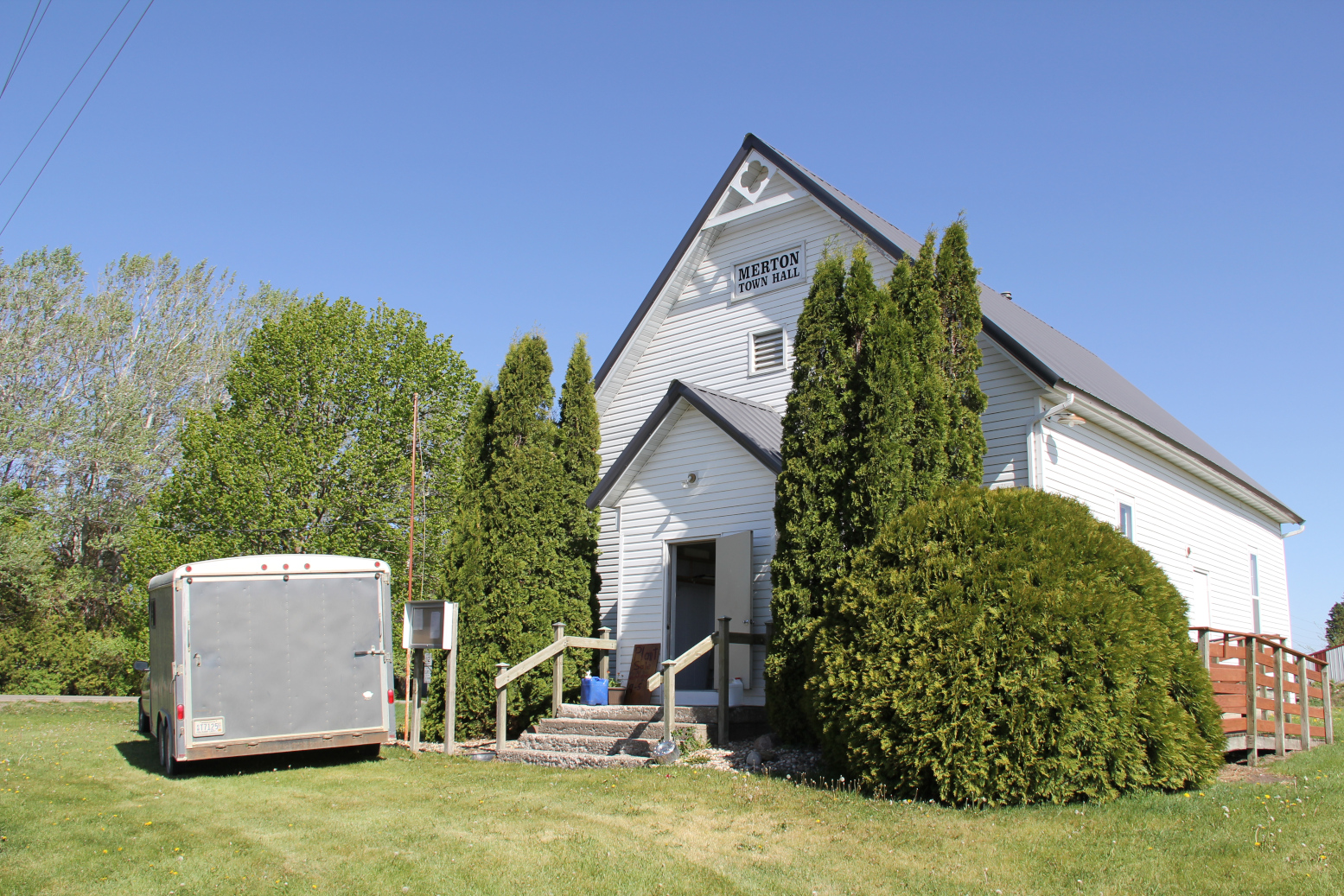
The Merton Town Hall, rural Medford. (Minnesota Prairie Roots copyrighted photo May 2026)

INSIDE THE MERTON TOWN HALL, Audrey Klukas, who lives a few miles away in rural Owatonna, is hosting a May plant sale. She’s hauled plants and canned goods, homemade apple pies and woven rugs from her trailer, up the steps into this aged building.
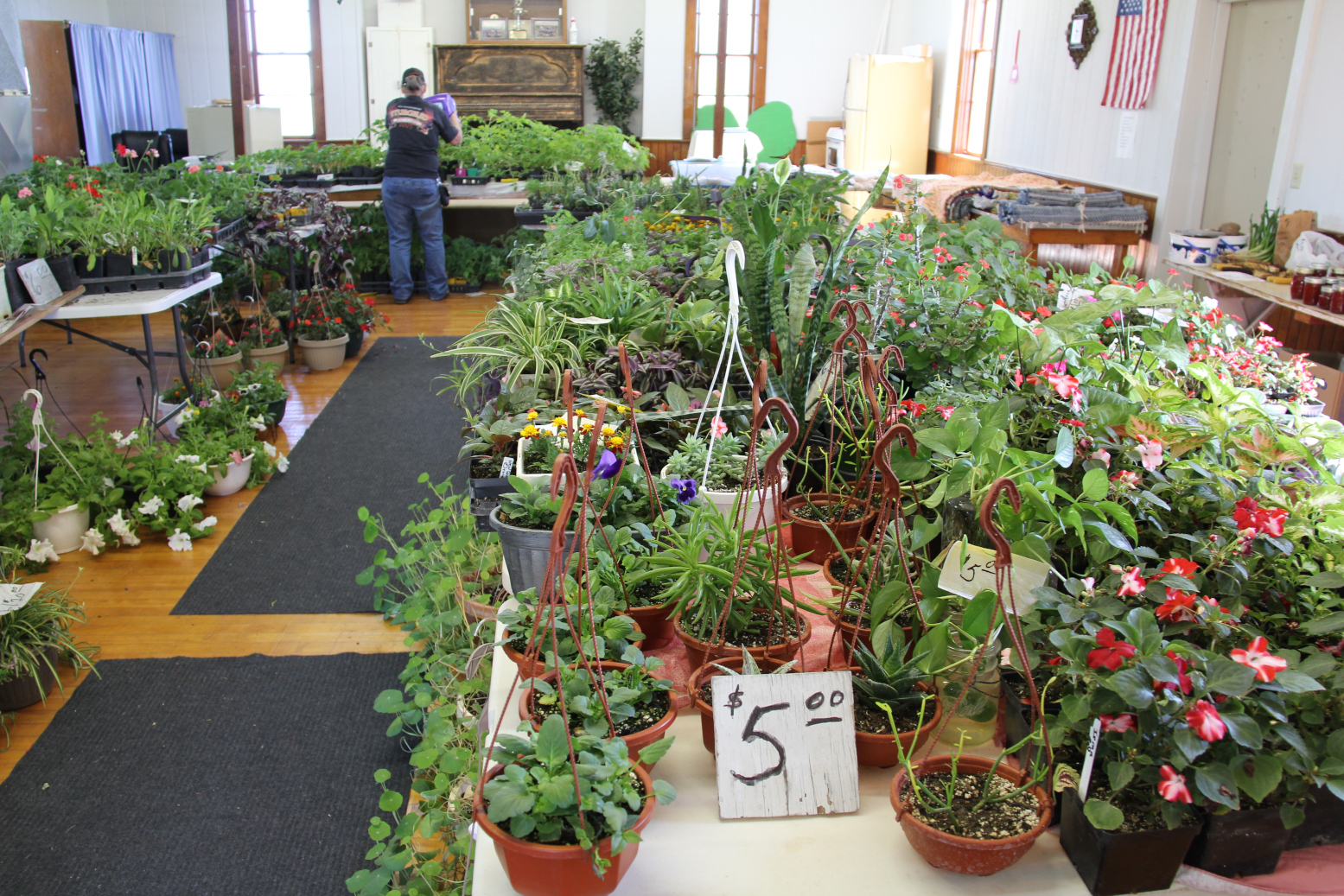
Audrey Klukas, in the background, arranges plants for sale. (Minnesota Prairie Roots copyrighted photo May 2026)

Marigolds, geraniums, petunias, tomatoes, succulents, peppers, hostas, sedum, coneflowers and more cover tables and sections of the old wooden floor. Tree seedlings sit on a painted church pew.
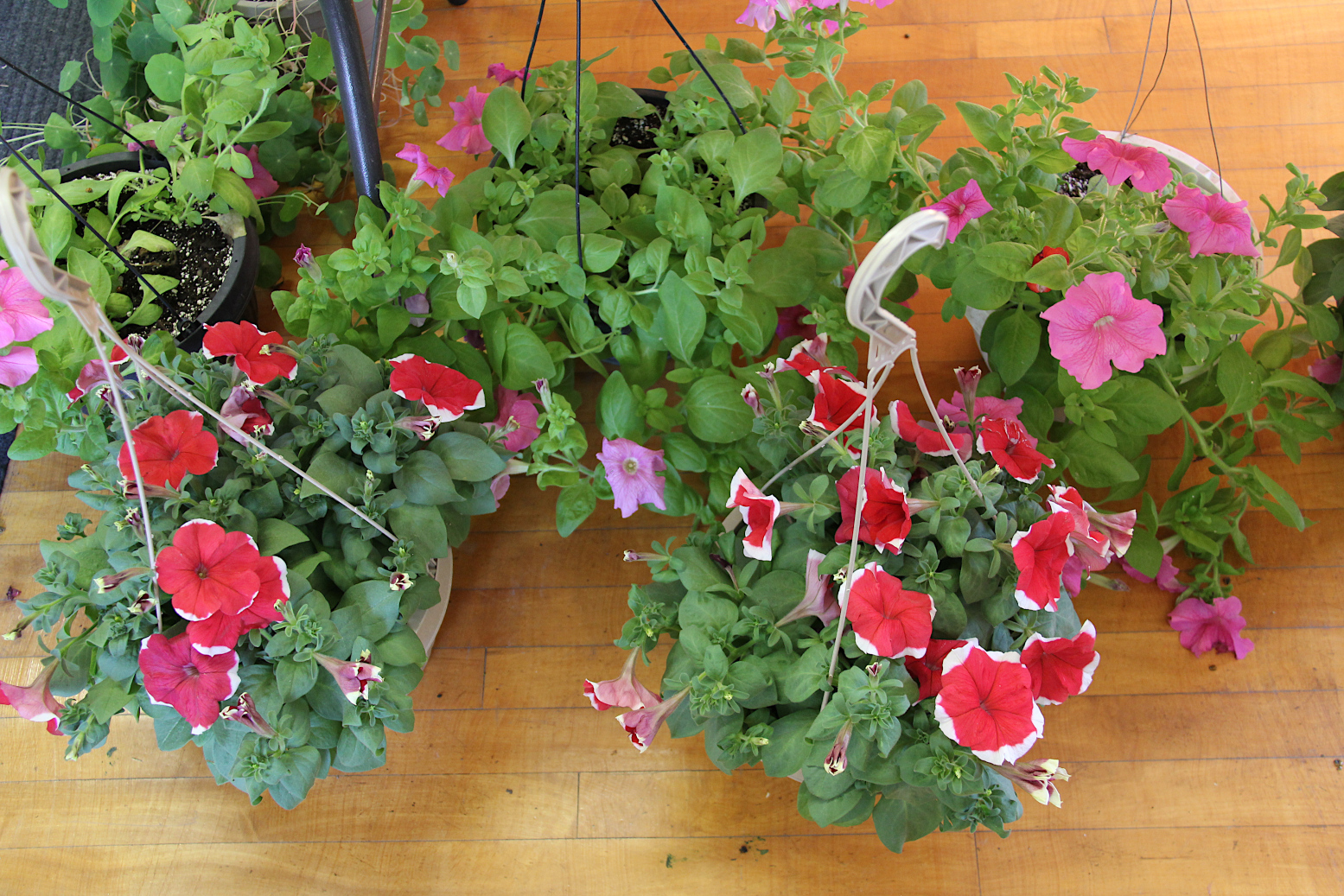
Hanging baskets of petunias. (Minnesota Prairie Roots copyrighted photo May 2026)

Klukas has grown most of the plants in her rural greenhouse. She’s a woman of many talents, an entrepreneur, a student of horticulture. In 1973, she graduated with the first class of horticulture students completing their two-year degree at the University of Minnesota, Waseca. That technical college closed in 1992.
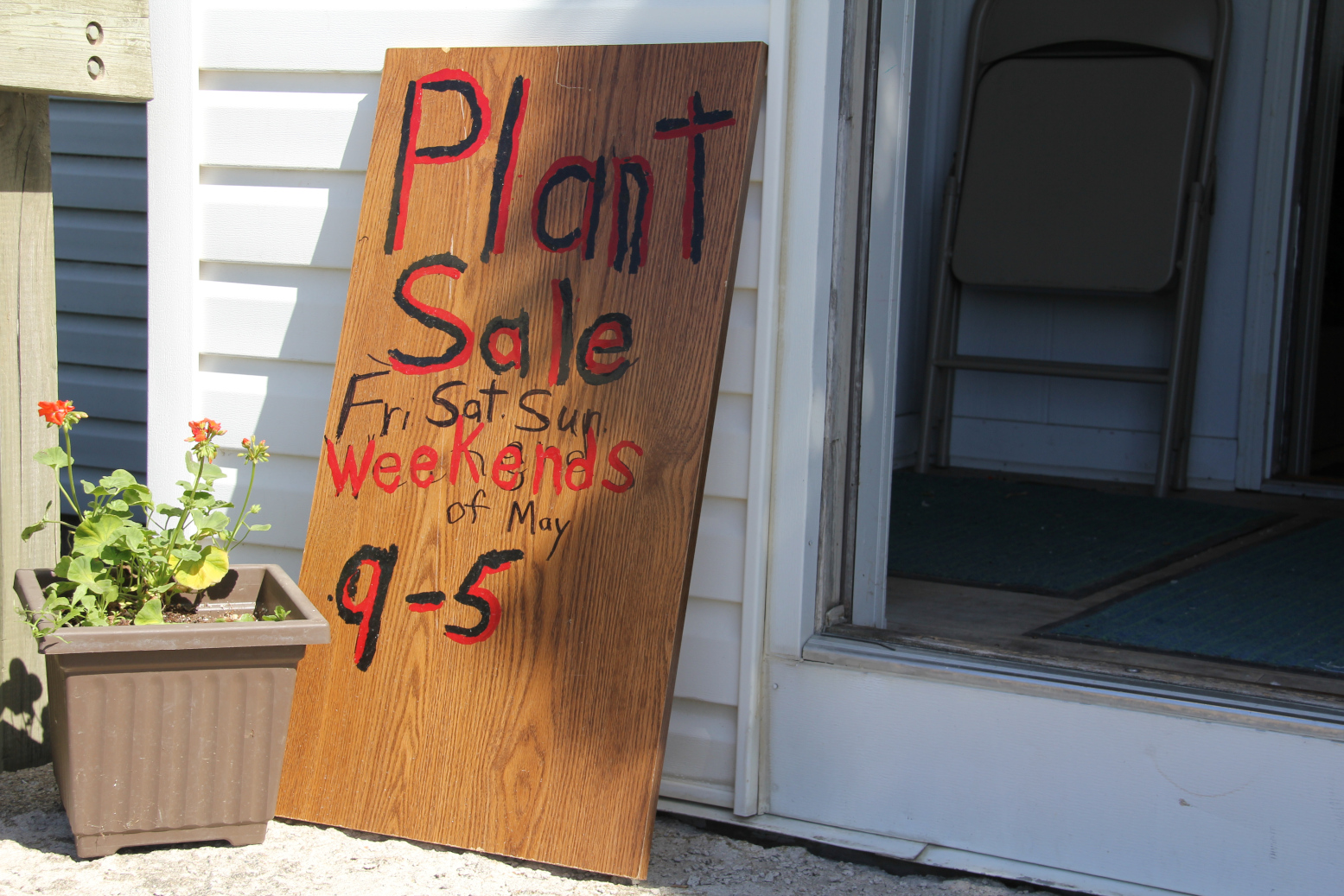
A sign is propped outside the town hall entry. (Minnesota Prairie Roots copyrighted photo May 2026)

It’s clear that Klukas put her education to good use—planting seeds, then watering and nurturing the growing plants. She’s shared the fruits of her labors in this month-long sale, held every Friday through Sunday in May. The final weekend sale is from 9 a.m.-5 p.m. May 29-31.
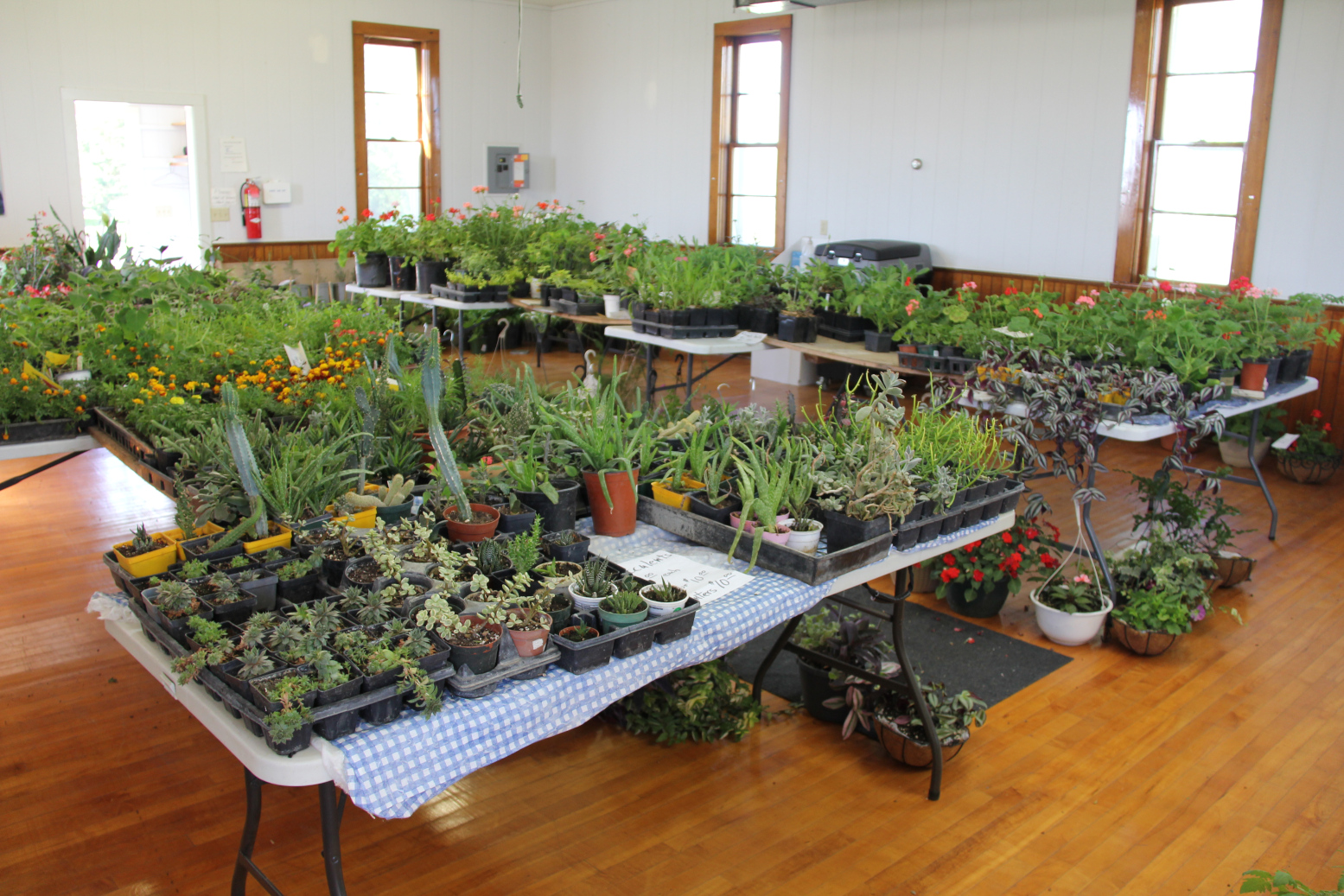
Looking toward the entrance to the town hall, a view of many plants for sale. (Minnesota Prairie Roots copyrighted photo May 2026)

As I wandered among the plant-filled tables, bright sunshine streamed through the windows, Asian beetles clinging to the warm glass.
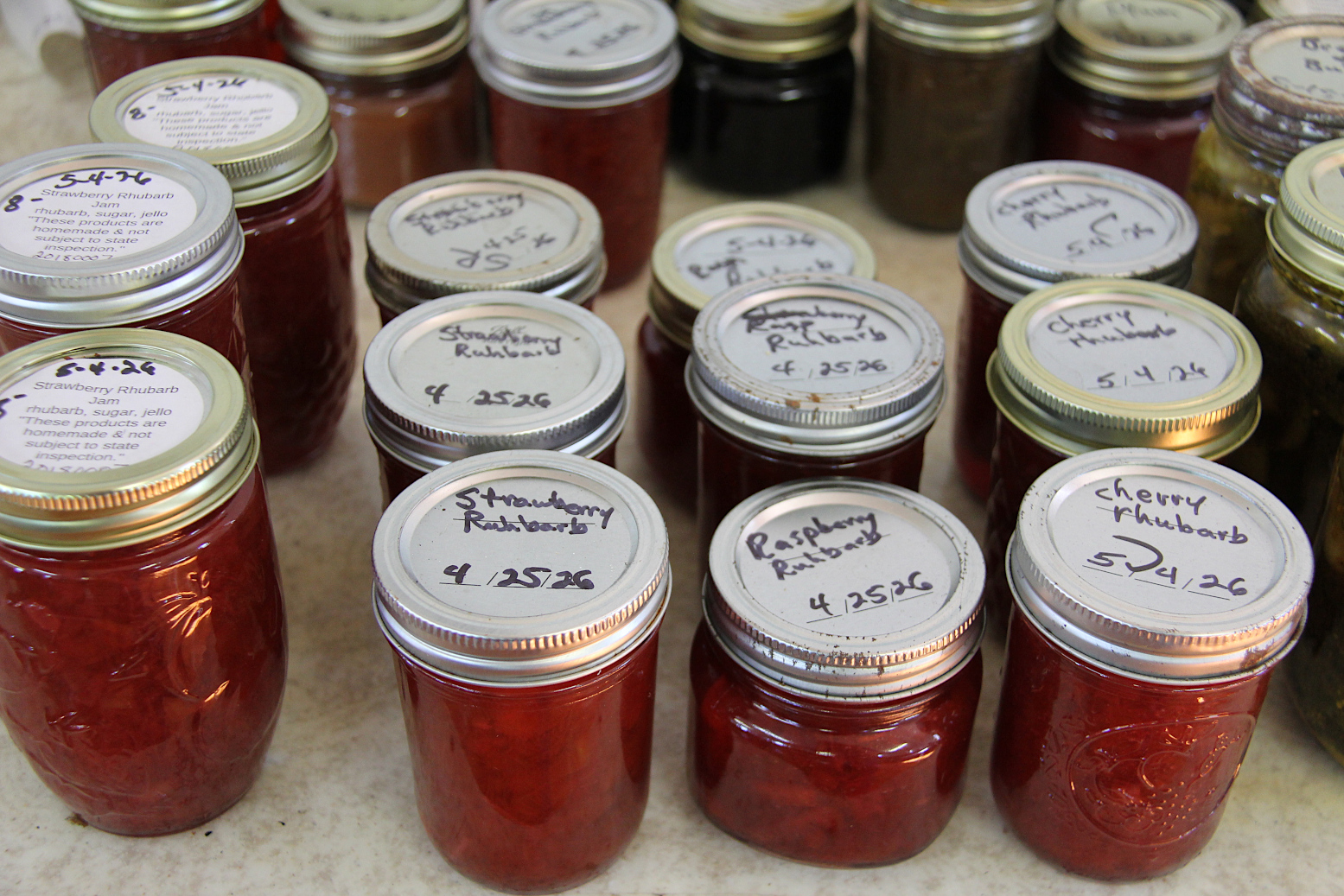
Assorted varieties of rhubarb jam. (Minnesota Prairie Roots copyrighted photo May 2026)

I admired the jars of canned goods. The pickles. Jam in assorted varieties like rhubarb with strawberry, raspberry and cherry. And then something I’d never seen, pickled kohlrabi and kohlrabi with pepper flakes and jalapeno. I should have bought a jar.
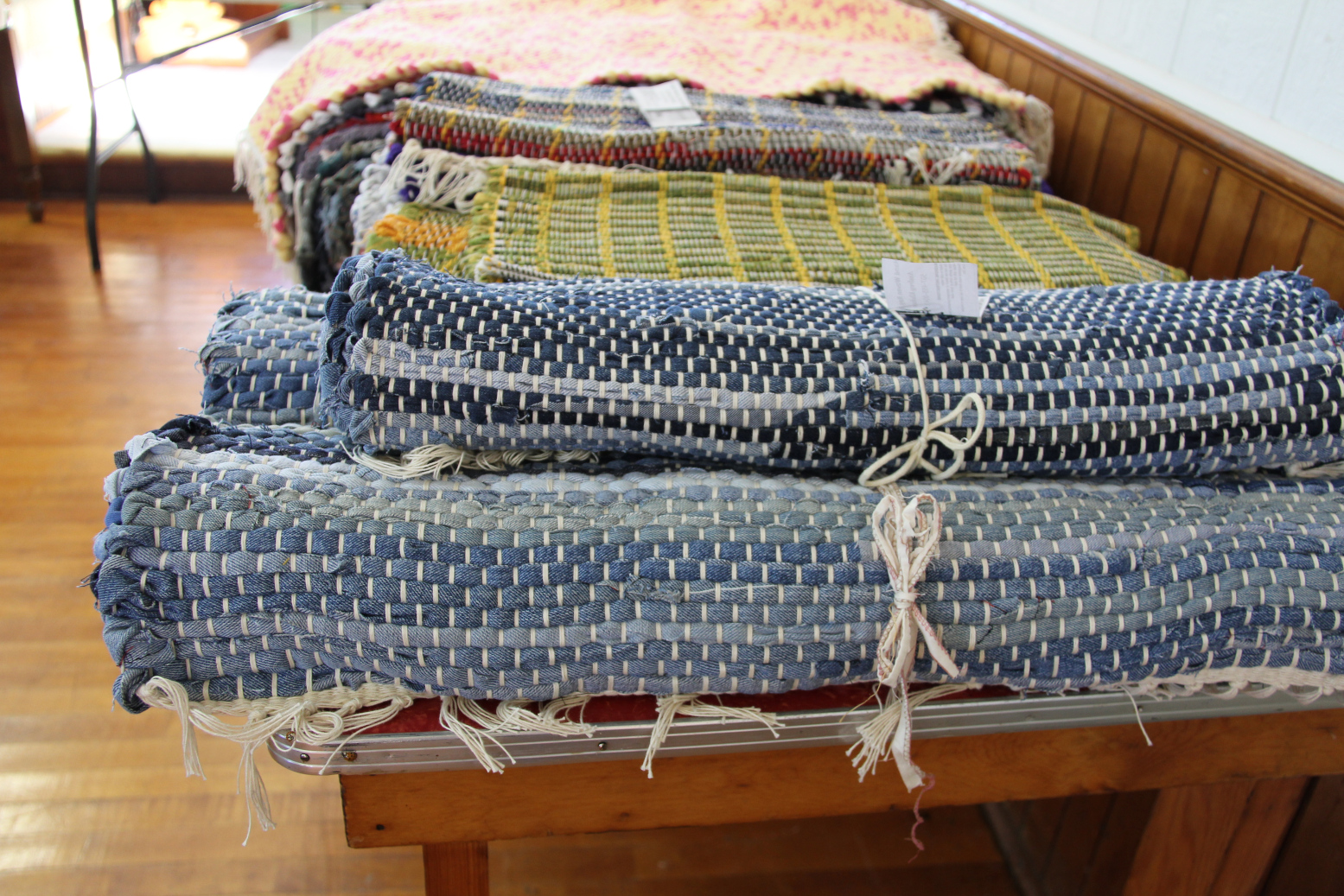
Blue jean rugs in the foreground woven by Audrey Klukas. (Minnesota Prairie Roots copyrighted photo May 2026)

Instead, I meandered, taking it all in. I stopped to run my hands across the woven rugs crafted by Klukas and displayed on a table below a flyswatter, a clock and an American flag bannered on the wall above a printed copy of “The Pledge of Allegiance.” I noticed a handprinted sign: Needed old jeans for rugs. It takes a lot of jeans to make a rug, Klukas told me.
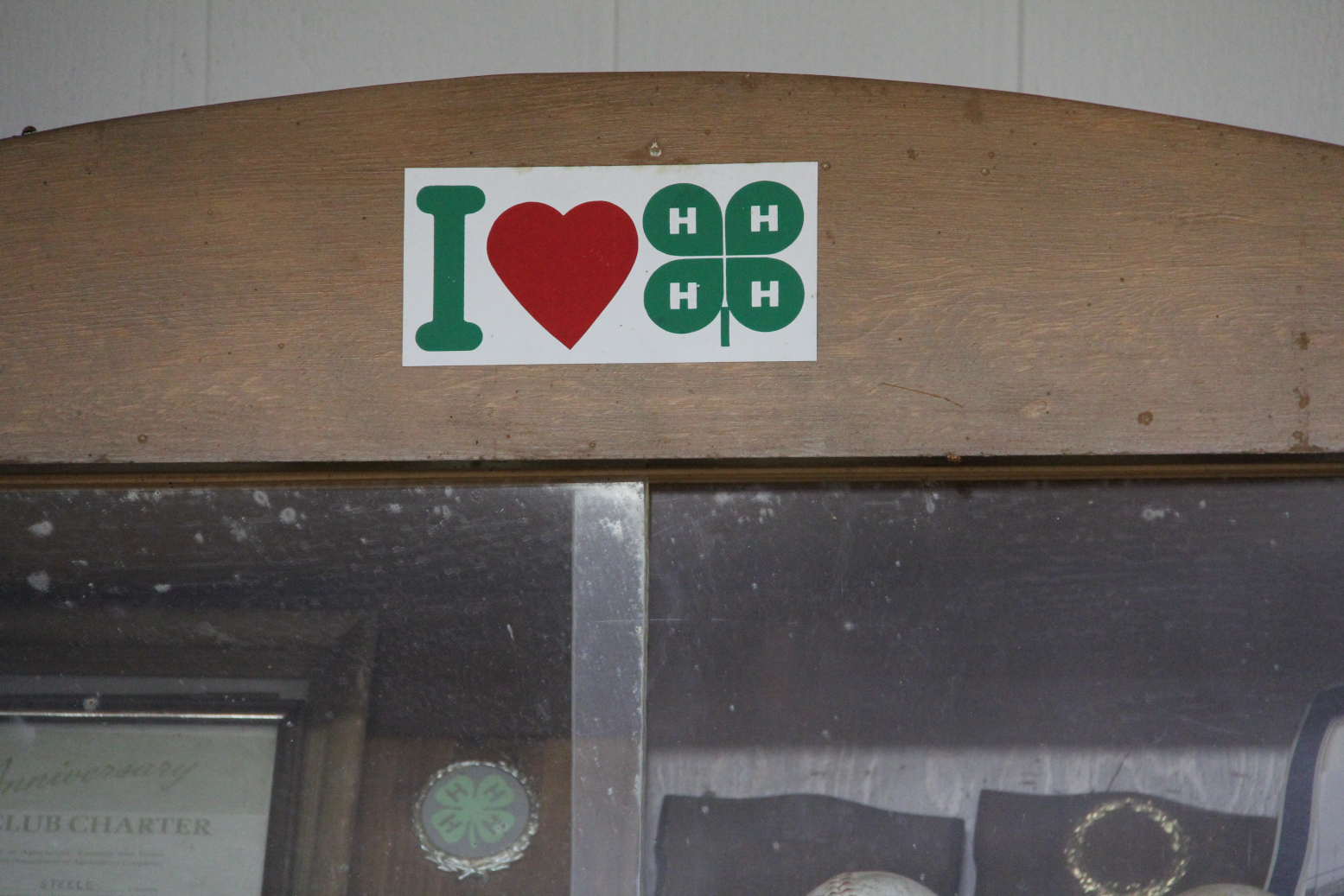
4-H memorabilia above and in a trophy case. (Minnesota Prairie Roots copyrighted photo May 2026)

I asked some questions about the building, which she probably uses more than anyone, Klukas said. A 4-H club once met here. And when I looked closer, I saw that verified in an over-sized green clover, a discarded banner and more in and above a trophy case.

A trophy awarded to 4-Hers in 1973. (Minnesota Prairie Roots copyrighted photo May 2026)

A trophy caught my eye. Klukas stepped around her plant tables and onto a stage to remove the trophy from the cabinet. A silver horse topped the Steele County 4-H Club Herdsman Award sponsored by the Sheriff’s Mounted Posse and Auxiliary of Steele County, 1975. I admired the 51-year-old trophy, as much a piece of history as a piece of art.

A sign inside a voting booth. (Minnesota Prairie Roots copyrighted photo May 2026)
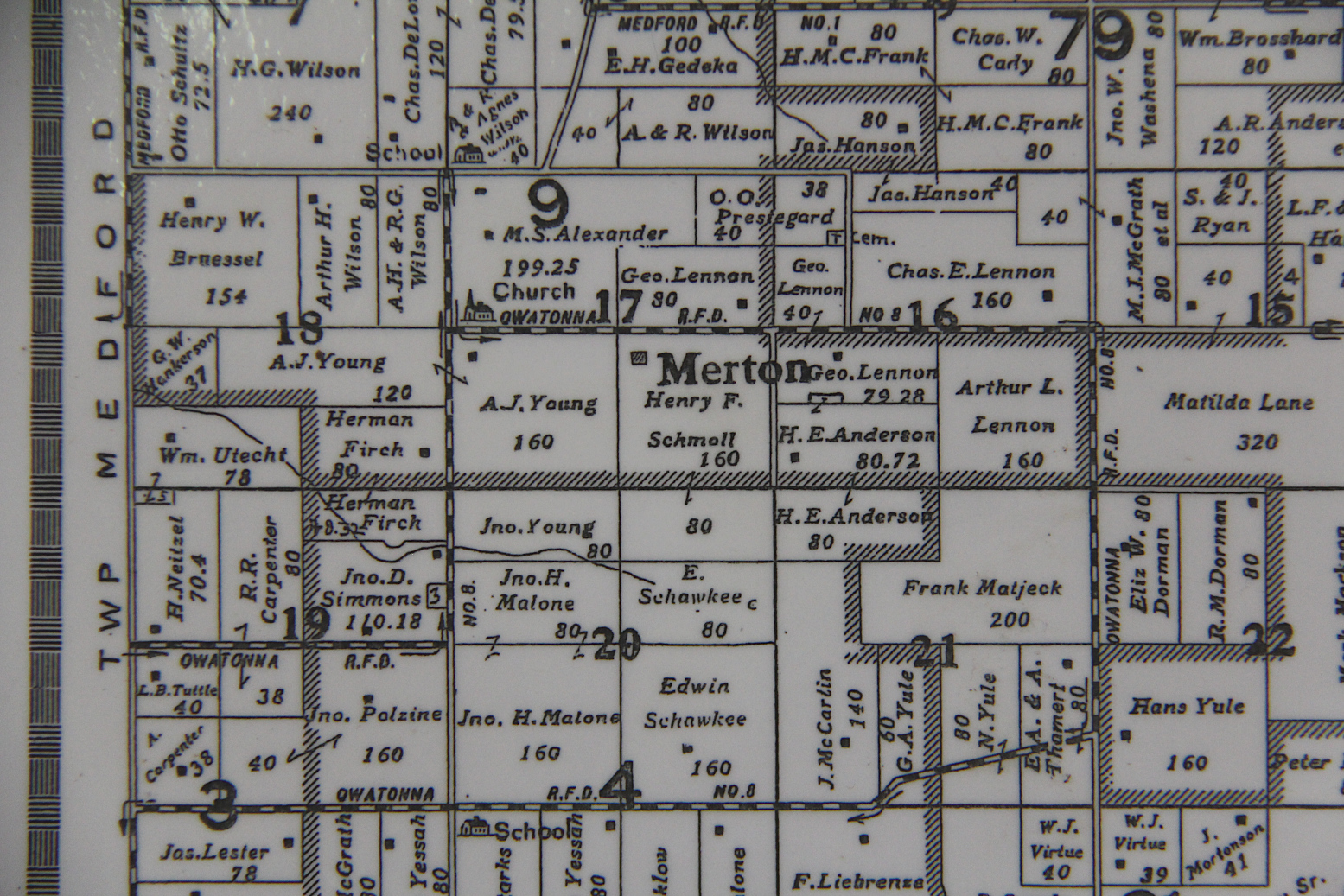
A township plat shows Merton near the top center. (Minnesota Prairie Roots copyrighted photo May 2026)

Since this is the Merton Town Hall, the center of township government, this is also a meeting and polling place. I wiggled my way to the voting booths, divided and cordoned off with blue fabric for privacy. Here locals exercise their right to vote. This is about as grassroots as it gets in a democracy.
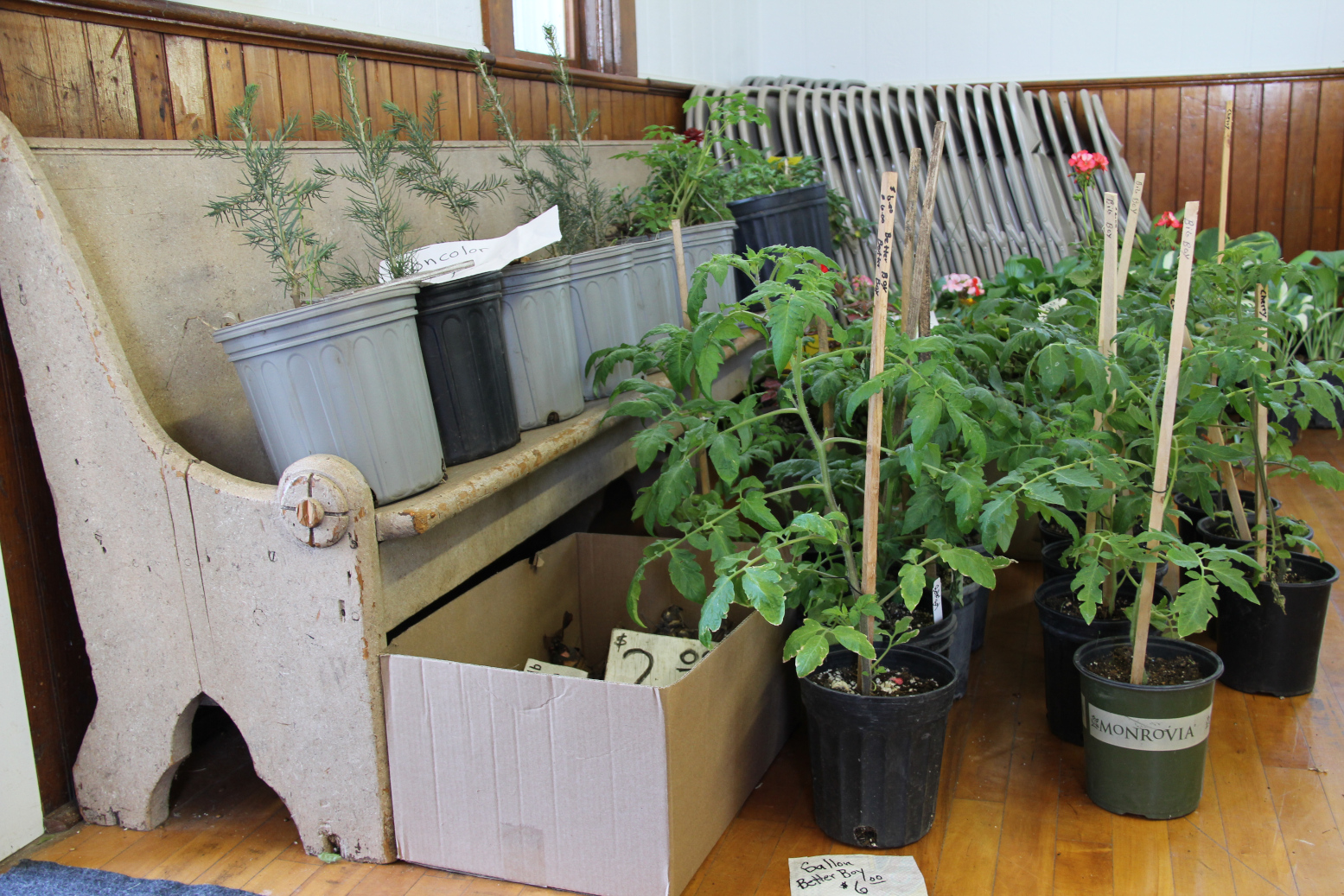
A church pew at the back of the town hall holds tree seedlings. (Minnesota Prairie Roots copyrighted photo May 2026)
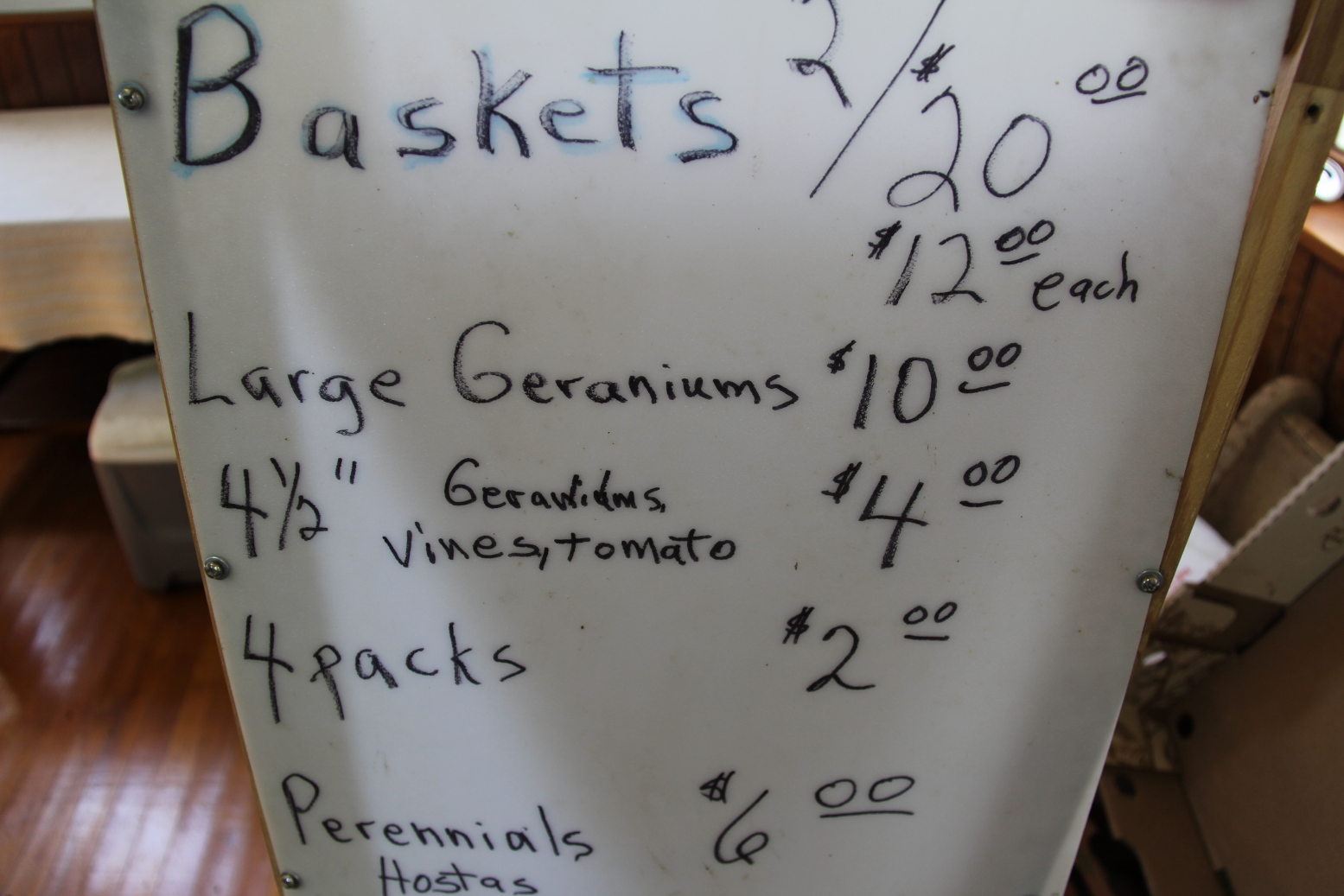
A partial listing of the plant inventory and prices. (Minnesota Prairie Roots copyrighted photo May 2026)

Klukas and I didn’t talk much. But she shared that a church once used this building, too, which was originally a school. No more details known. School, church, town hall, 4-H club meeting place and now, in the month of May, this simple structure in the middle of farm fields is a space to sell plants, rugs, homemade preserves, pies…the fruits of Klukas’ labors.
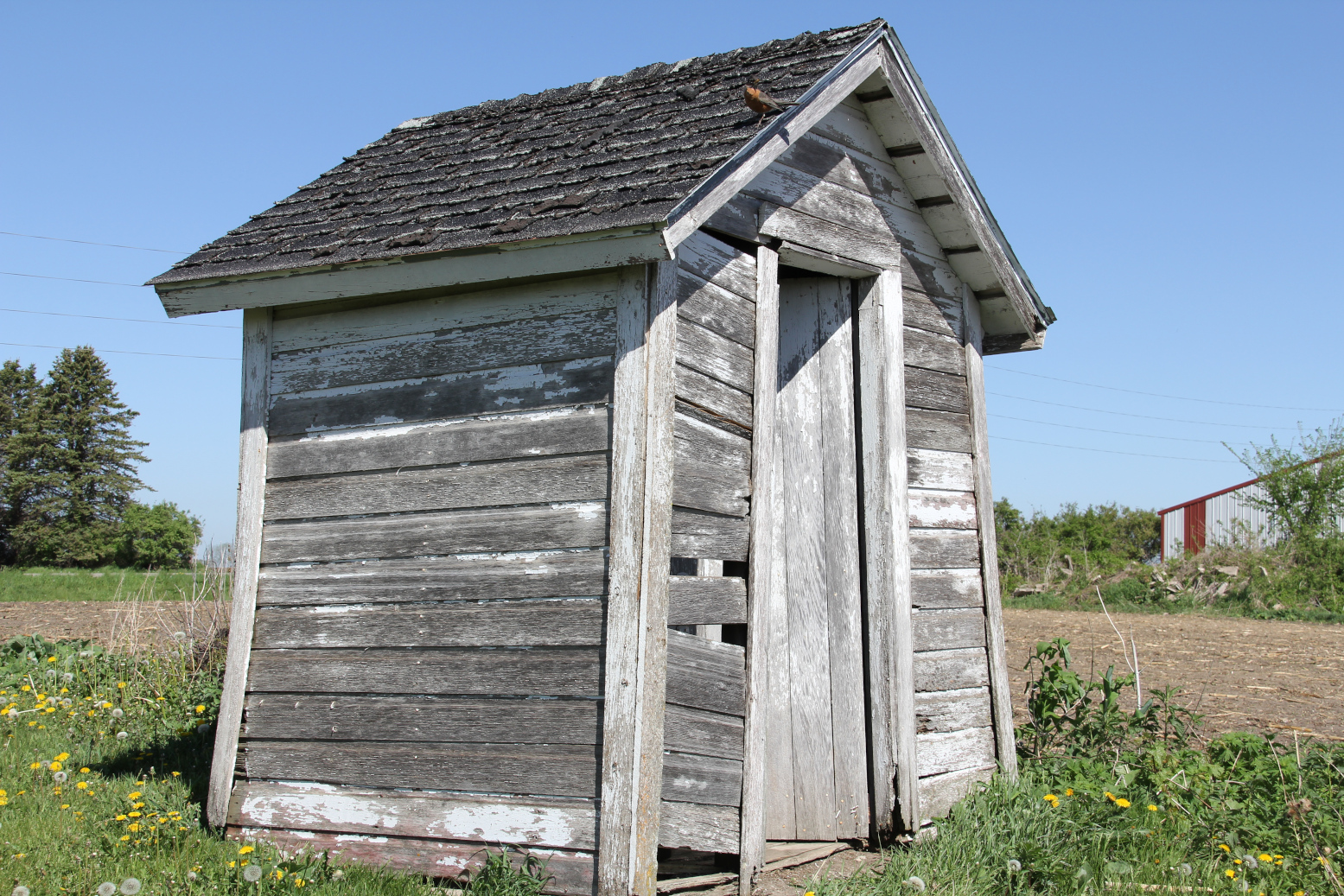
An old outhouse sits near the town hall. (Minnesota Prairie Roots copyrighted photo May 2026)

When I stepped outside the town hall, I considered the feet that have climbed the front steps into this building. To learn. To worship. To discuss township governance. To vote. To commit to the 4 tenets of 4-H: head, heart, hands and health. To gather. And on this May day to shop as farm fields green, as robins tend their young inside an on-site weathered gray outhouse that leans into the land.

© Copyright 2026 Audrey Kletscher Helbling


In search of genuine pearls in Sciota Township April 10, 2012

Filed under: Uncategorized — Audrey Kletscher Helbling @ 7:25 AM
Tags: , , , , , , ,

IT IS THE ROAD less traveled that often leads to the best discoveries even, if at first, the journey doesn’t appear all that promising.

Recently, my husband and I followed back gravel roads from Randolph to Northfield. We were expecting bucolic farm sites complete with grand red barns and white wood-frame farmhouses wrapped in inviting country porches. Instead, we found mostly ramblers and split levels and other modern homes that, if clumped along a cul-de-sac, could have been in suburbia.

It was disappointing to find all these houses strung, like so many imitation pearls, along the smooth neckline of a wide gravel road. I wanted the real thing—pearls spilling across grandma’s bosom.

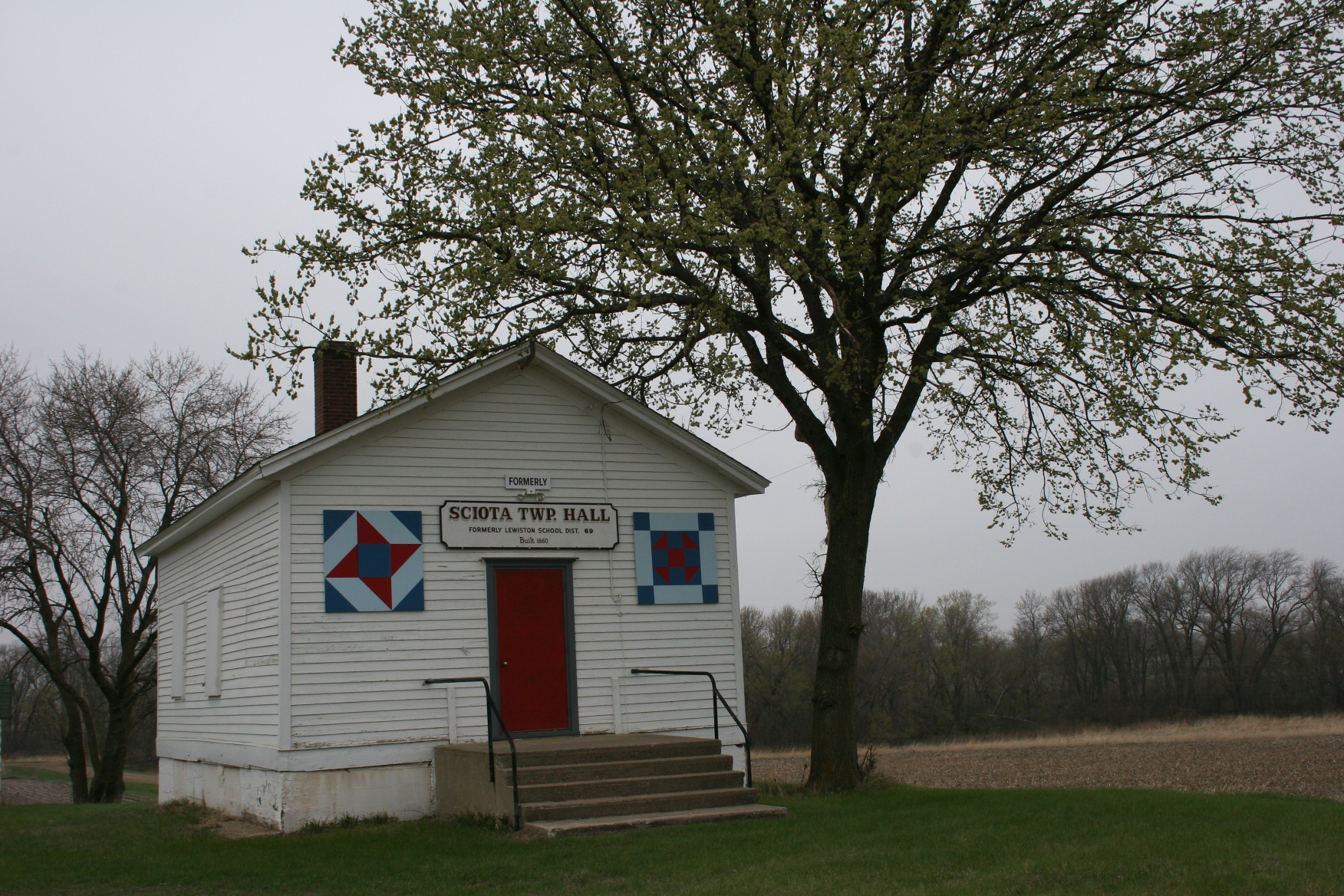
But then, when I’d nearly given up hope of finding anything genuine, we came across the old Sciota Town Hall at the corner of Alta Avenue and Sciota Trail/310th Street East in the southeastern hem of Dakota County.

The former Sciota Town Hall and, before, that, the Lewiston School, built in 1860

I couldn’t tumble from the van fast enough to photograph this former hall, originally the Lewiston School District 69 schoolhouse built in 1860. It is one of Dakota County’s oldest remaining schoolhouses and originally sat on the north side of the Cannon River in Lewiston, a town long gone (not to be confused with the still-existing Lewiston in Winona County).

In the fall of 1879—and I don’t know the reason—the 18-foot by 30-foot school building was moved to the south side of the Cannon, to its current site atop a hill at the intersection of two gravel roads.

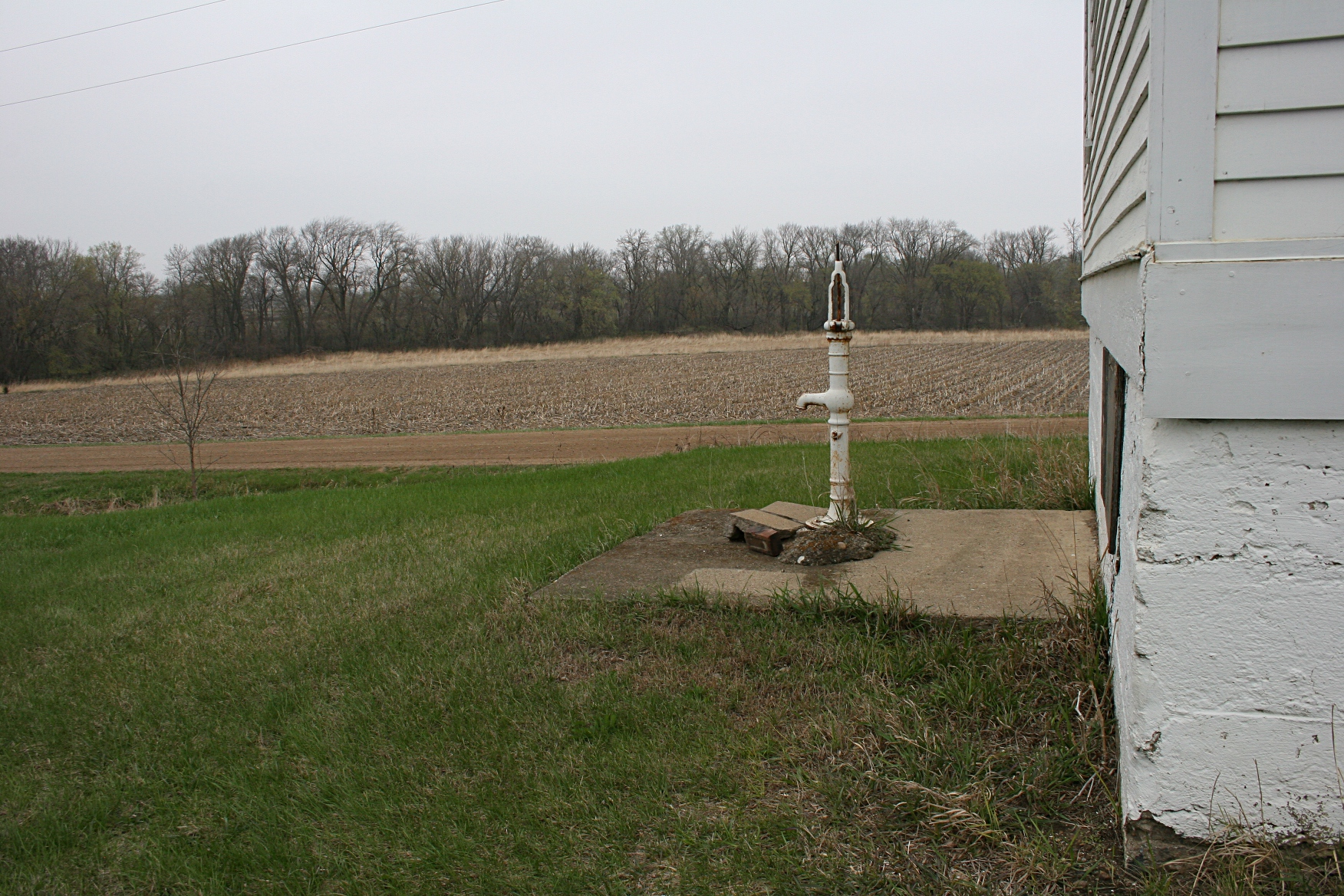
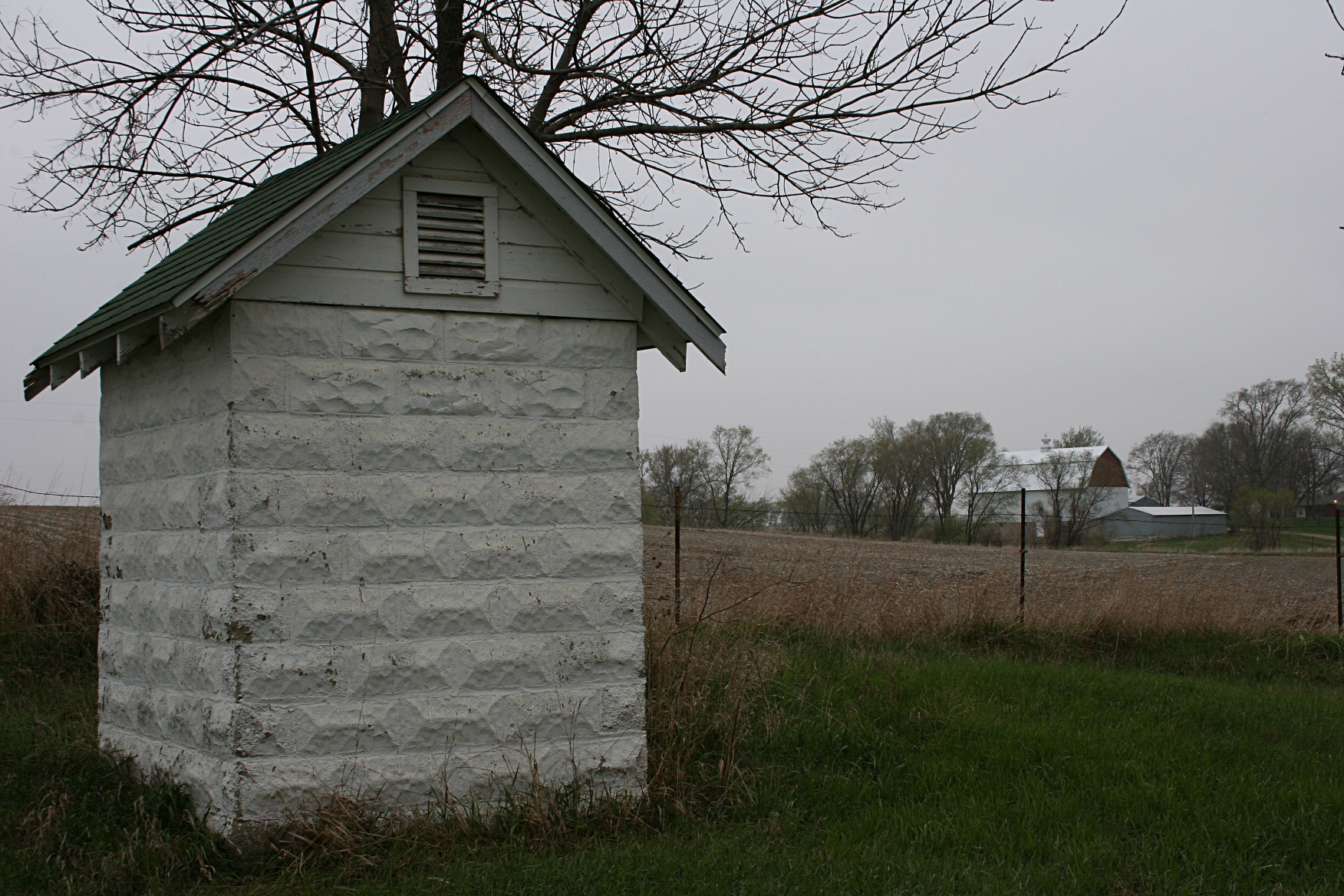
Two stout block outhouses still buffet the school as does an aged water pump minus its handle.

A water pump behind the old schoolhouse.

One of two outhouses on the property. Over the barbed wire fence, in the distance, a farm site, not all that common anymore in Sciota Township.

It’s easy to imagine this place once teeming with children from neighboring farms as they pushed out the schoolhouse doors, legs flailing, into the schoolyard.

It’s easy to imagine, too, the rhythmic thrust of the pump gushing cold well water into their cupped hands, droplets splashing upon their worn leather shoes.

Had the doors of this former schoolhouse been unlocked, I could have imagined more, much more.

FYI: The Sciota Town Hall is no longer housed in the historic building, but in a modern pole shed style structure. Click here to see a photo of the 2005 town hall and to learn more about Sciota Township. Does anyone know whether the former town hall/school ever is opened for any type of historic celebrations or other events?

© Copyright 2012 Audrey Kletscher Helbling