Minnesota Prairie Roots

Writing and photography by Audrey Kletscher Helbling

Roadblock inside my brain May 8, 2023

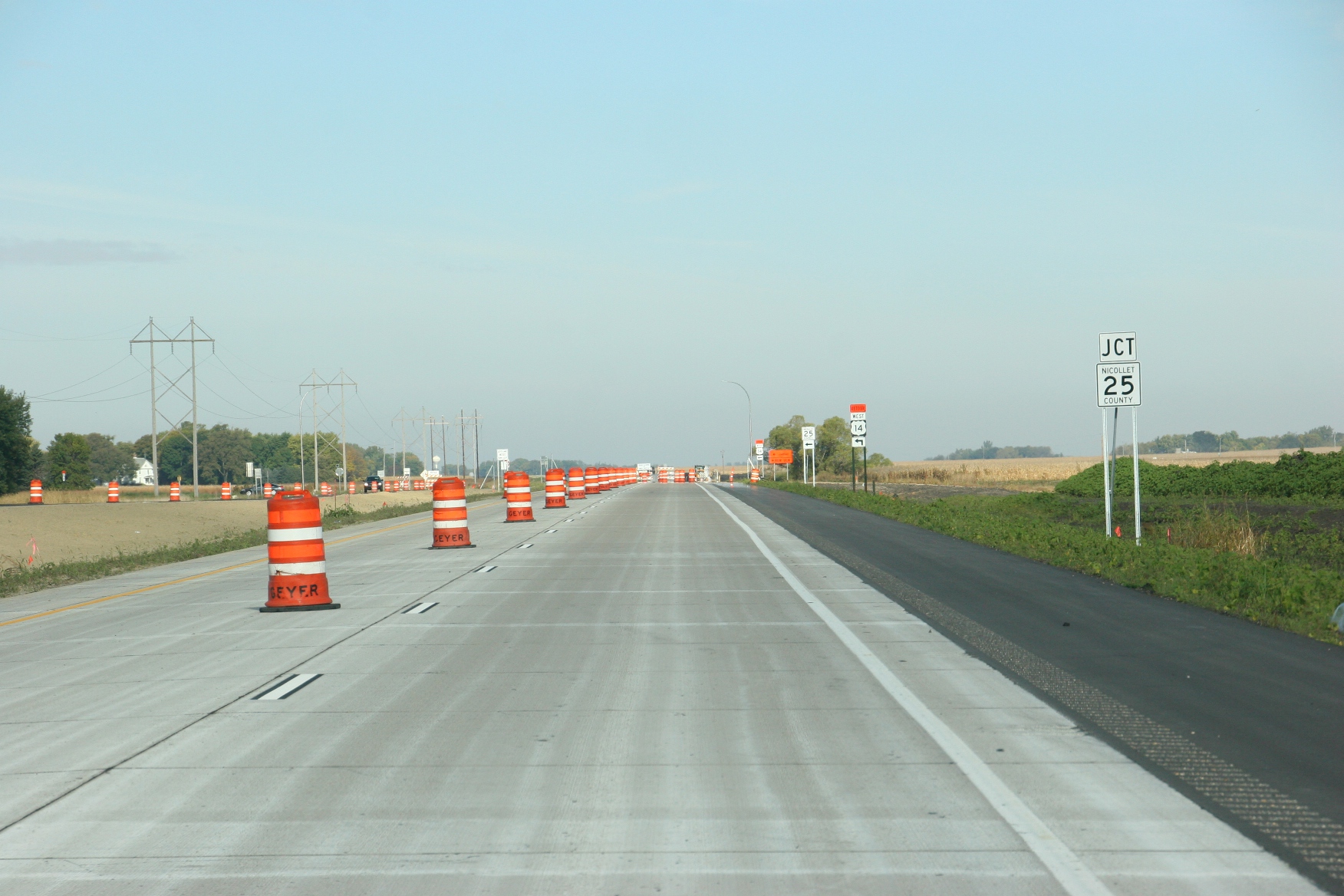
Just like along US Highway 14 in southern Minnesota, I’m dealing with a closed road in my brain. (Minnesota Prairie Roots copyrighted file photo)

IMAGINE YOU’RE ON THE ROAD, when, unexpectedly, you encounter a Road Closed Ahead sign. Now you must take an alternate route to reach your destination. You follow the detour signs, which lead you along twists and turns of back country roads. You are in a hurry and frustrated. But eventually you are back on your mapped route, arriving much later than planned.

That scenario is familiar. We’ve all experienced such travel detours. But not many have experienced vestibular neuronitis, a health issue I am currently facing. The road closed/detour analogy is the best way I can explain what’s happening inside my brain.
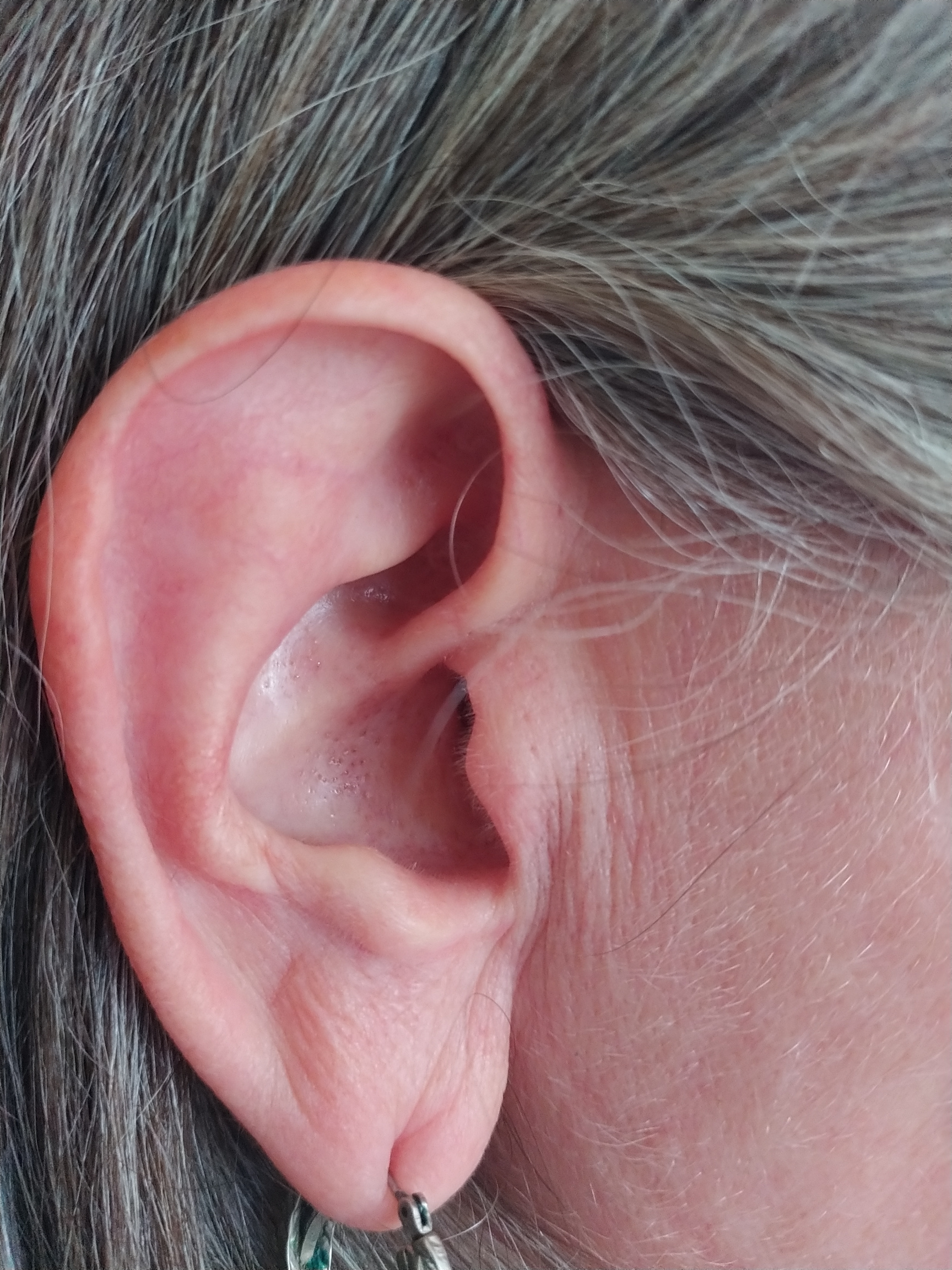
My problematic right ear… (Photo credit: Randy Helbling)

MULTI-LAYERED & COMPLEX

Mine is a complex diagnosis, a neurological condition resulting from an inflammation of the nerve(s) in the inner ear, in my case the right ear. The apparent cause, a viral infection. In 2011, a virus caused me to lose nearly all of the hearing in my right ear during an episode of sudden sensory hearing loss. This most recent virus affected the balance in my right ear. My initial symptom of feeling off-balance followed a really bad cold in early January. (Not COVID; I self-tested negative for that, twice.) I didn’t think too much of the off-kilter feeling, hoping it would pass. It didn’t.

My symptoms progressed: fullness, ringing, clicking and minor pain in my right ear; hyper-sensitivity to sound; double vision; awakening with headaches; feeling like someone slapped me on the right side of the head; unexplained anxiety; rosacea; fatigue; vertigo (only while sitting up from a supine position or rolling onto my right side in bed) and more I’m probably forgetting. I felt like my brain was working really hard to manage auditory and visual input, processing conversations, and balance. I still feel that way.

Kind of how my brain feels right now. Artwork by Bill Nagel, exhibited at the Paradise Center for the Arts earlier this year. (Minnesota Prairie Roots copyrighted file photo March 2023)

BRAIN FATIGUED

Back to that road closed analogy. The nerves/pathways in our brains are all interconnected, one leading to the other. Kind of like the system of roadways we follow to get from Point A to Point B. Now there’s a blocked road inside my head and my brain is struggling. It’s taxing to determine how to make this all work. Vision. Hearing. Maintaining my balance. I’m feeling brain fatigue.

One day I may feel fairly normal, the next, not so much. Or even through the course of the day, how I feel is affected by input into my brain. If I’m out and about, which I mostly am not, I quickly feel overwhelmed. Even by something as simple as a one-on-one conversation.
A tablet of Prednisone, a med which I took for two weeks. (Minnesota Prairie Roots copyrighted file photo)

SYMPTOMS LESSENING

Yet, today I see a lessening of my symptoms. The anti-inflammatory steroid Prednisone, as much as I disliked the insomnia, heart palpitations and anxiety side effects, reduced the nerve inflammation. My symptoms are less severe, but still linger under or at the surface and sometimes flare.

I am in vestibular rehab therapy, working with a skilled, knowledgeable and compassionate physical therapist who is determined to help me retrain my brain, to get me back on the right route. Ryan tells me I’m improving, even if I don’t always see that. I appreciate his encouragement and specialized training in the exact therapy I need. I listen. I ask questions. I do my exercise homework. Already I’ve seen improvements in my balance.

My vision has improved, too, although I still must work hard to focus and not see double. I can now tolerate my computer screen for more than 10 minutes. Headaches are mostly gone as is the feeling of being slapped on the side of my head. And I no longer need to close my eyes during a conversation because I can’t handle simultaneous visual and auditory input. That said, I will occasionally close my eyes when I feel overwhelmed and need to concentrate solely on hearing.

No big road trips for me as I navigate through vestibular neuronitis. (Minnesota Prairie Roots copyrighted file photo)

LIMITATIONS, FRUSTRATION, DISAPPOINTMENT

I have my moments when I feel depressed and frustrated and wish I was “all better.” I don’t know if I will ever be “all better” or whether this is something I will have to learn to live with and manage. There are moments when I feel overwhelmed. This whole vestibular neuronitis is difficult to explain and you can’t see it, so people don’t necessarily get it.

I’m sad because a long-planned trip to Indiana this coming week to attend my son’s graduation from Purdue University with his master’s in computer science will not happen for me. I am disappointed that I can’t be there in person to celebrate, to hug him, to congratulate him on his accomplishment. But I recognize my limits. I can’t handle a long road trip and attending commencement with the masses. It would be too much for my brain. I’m not even attending church yet because I can’t tolerate the organ. I’m not even grocery shopping because of the sensory overload. Mostly, my interaction with others is limited because my brain can’t handle much.

But onward I go, navigating away from the closed road in my brain to alternative routes that will allow me to reclaim my life. Soon. I hope.

#

NOTE: By writing this post, I hope to encourage others who are on a similar journey or who are supporting loved ones. I also aim to provide info on this unfamiliar-to most condition.

© Copyright 2023 Audrey Kletscher Helbling


I’ve graduated August 28, 2017

Filed under: Uncategorized — Audrey Kletscher Helbling @ 5:00 AM
Tags: , , , , , , ,

LYING WITH MY HANDS behind my head, elbows bent, I studied the photo of rock climbers strategically positioned at the end of the therapy table to offer motivation. Funny thing, I’d never noticed the over-sized image on prior visits, 11 total. But on this, my last day of physical therapy, I did.


This is a photo of an x-ray of my broken shoulder. Minnesota Prairie Roots file photo May 2017.


And my thoughts were this: I’ll never climb a rock wall. I couldn’t before the May 22 fall that left me with a broken right shoulder and I have no intention of ever doing so. But I feel as if I’ve scaled a precipice to get to where I am today. I once again have a nearly fully functional right arm that for too long hugged my body in a sling as it healed. Muscle strength and range of motion vanish quickly in a constricted appendage.


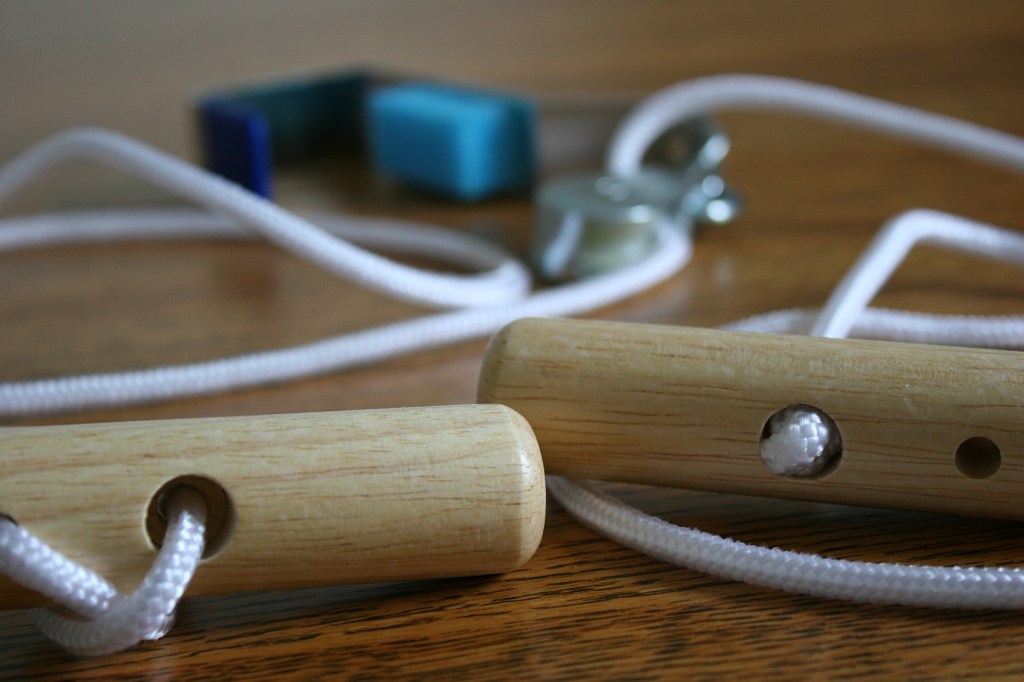
I’m using this shoulder pulley at home twice a day for three minutes each time to stretch my muscles.


But you do what you must to heal and then recover. It takes a certain amount of discipline, fortitude and willpower to work through the pain, to push yourself, to move forward. I couldn’t have done it alone. My physical therapist, John, provided the tools, the know how and the extra spark of motivation. I didn’t want to let him, or myself, down. When I would grimace in pain, John would look at me and ask, “Who’s in charge?” I wanted to say, “you are,” but that answer would have been wrong. I was always in charge of my body.


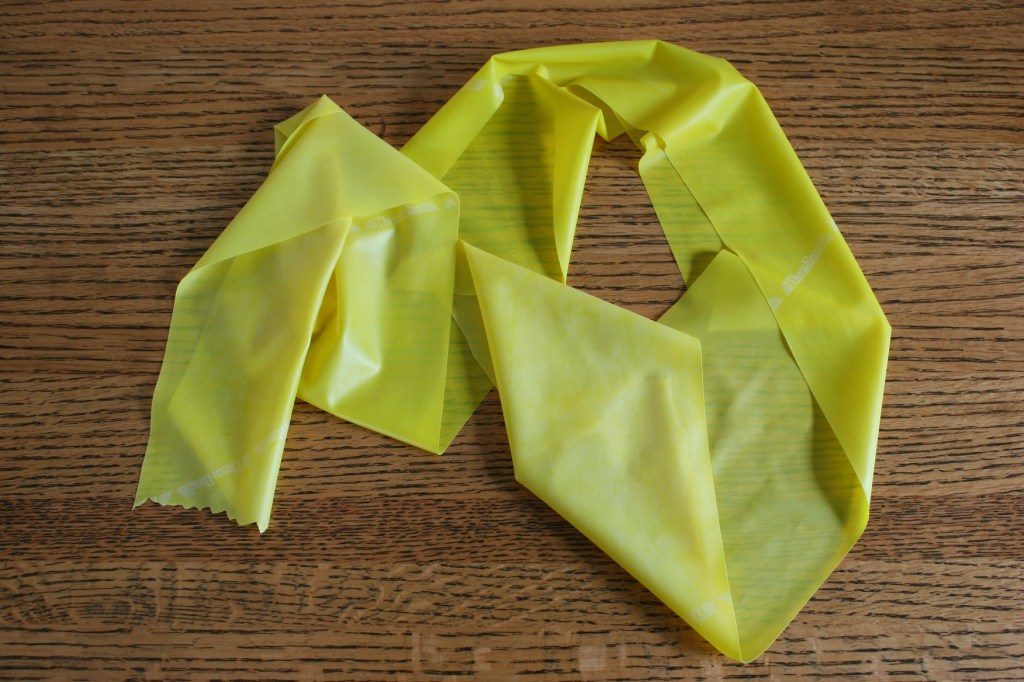
I hold this elastic band in my hands and pull opposite directions to stretch and strengthen my muscles.


When I walked into therapy on August 24, I looked at John and asked if I could graduate. I was so ready to be done. Not that I didn’t like John or therapy. I simply felt as if I had reached my potential in supervised therapy and the rest would come naturally with increased activity. John agreed.


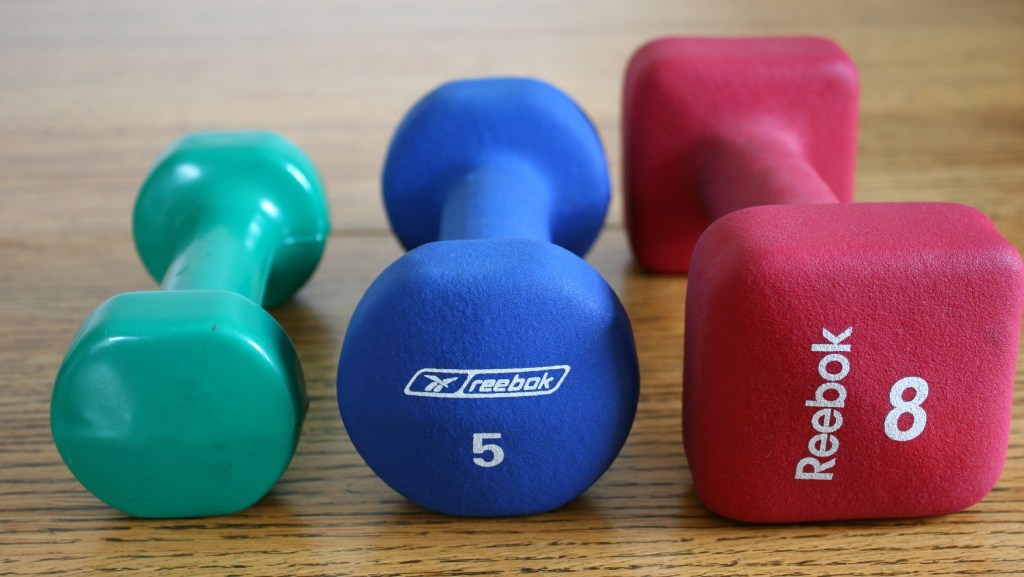
The weight of the dumbbells I could lift started at 1.5 pounds, then advanced to the 3, 5 and 8 pound weights shown here. The eight-pounder is still a challenge.


And so, as I passed my final tests and rated my pain at one, I felt a sense of relief that I’d come this far. Just weeks ago I couldn’t lift five pounds, couldn’t reach to slide a plate into the cupboard, couldn’t hook my bra. I had even attempted to mow the lawn the evening before my final therapy session, but found that still too difficult especially given the too tall grass and the too heavy lawnmower. John typed “no mowing lawn” into my records, but gave me permission to lift my 21-pound granddaughter if I rely primarily on my left arm. Then I shared that I’d already picked her up the day prior. He smiled.


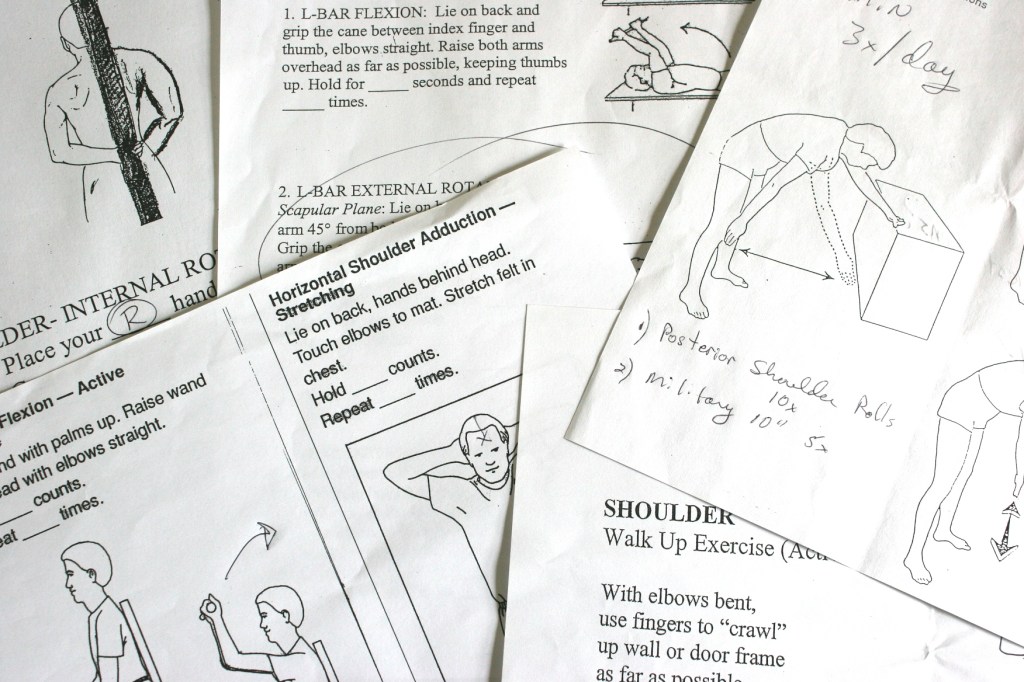
During the past six weeks or so, I’ve done the exercises shown here and more to first regain range of motion and then to rebuild muscle strength.


As I lay on the therapy table waiting for John’s final instructions, I focused on that photo of the rock climber. I had scaled a steep and sometimes rocky wall to regain use of my right arm. I felt good and thankful for the grace of healing.

Now if only John had programmed the theme song to Rocky or perhaps Pomp and Circumstance into the sound system to mark my graduation day, a goal I had been striving toward for three months and two days. That would have marked the pinnacle of reaching the recovery summit.

© Copyright 2017 Audrey Kletscher Helbling


How a woman of leisure moves toward healing July 28, 2017

Filed under: Uncategorized — Audrey Kletscher Helbling @ 5:00 AM
Tags: , , , , , ,

The exercise my therapist terms “Woman of Leisure.” Pretend that’s a woman in the drawing.


HOW CAN I BE a woman of leisure when he expects me to wash windows and throw dirt over my head? It’s tough. But I’m up to the challenges issued by my physical therapist.

John has tagged several of my exercises to help me remember them and probably also to make me laugh. Humor helps when you’re stretching and strengthening muscles after a right shoulder break. It takes the edge off the pain.

This recovery takes time, effort and grit. I certainly don’t feel like a woman of leisure as I recline, hands behind head with elbows bent stretching muscles. That right elbow won’t flex down like my left. And I feel pain.

But I’m getting there. After days of washing windows—placing my hands on a hand towel and sliding them up a wall—and other exercises, John noted that I was “significantly better” than at our previous visit. Three sessions into physical therapy, that encouraged me.


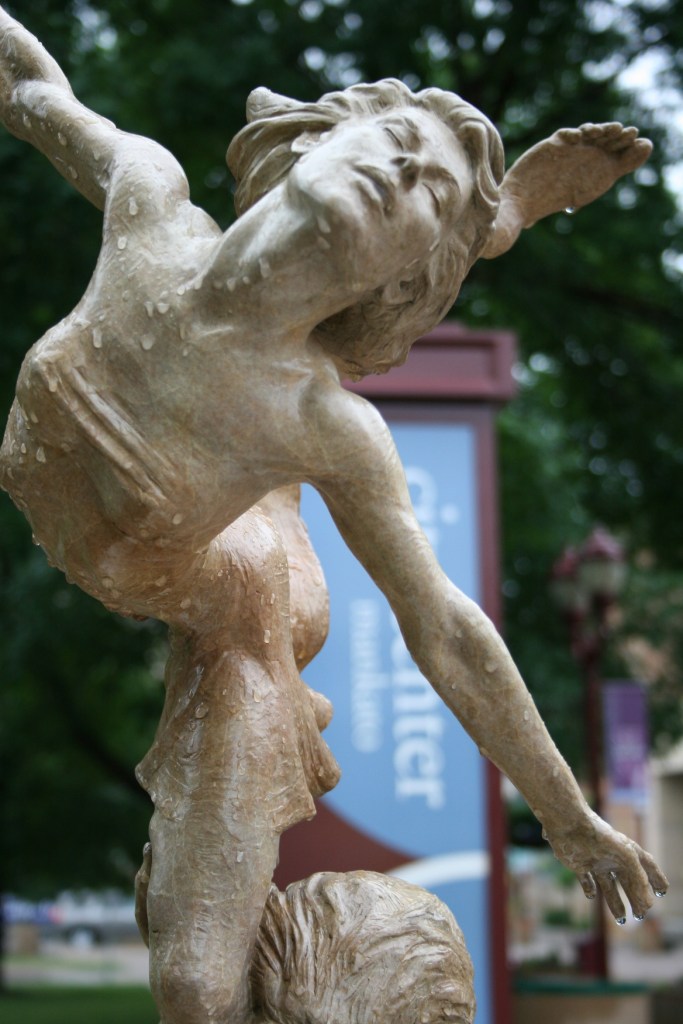
Daily I am stretching and strengthening my right arm and shoulder muscles. Martin Eichinger of Portland, Oregon, created this graceful “Bird in the Hand” bronze sculpture valued at $14,500 and posed near the Mankato Civic Center. Minnesota Prairie Roots file photo 2014.


So I’ll stick to my regiment of arm lifting and stretching. Not too little. Not too much. Just as John ordered.

I’m consciously also choosing to use my right appendage, even though my mind and body rebel. After nine weeks of guarding my injured right arm and shoulder, I am retraining my once dominant side. I instinctively do everything with my left hand/arm to avoid pain. I know now that if I am to fully recover, I have to push through the muscle soreness and use my right hand/arm/shoulder. So I am brushing my teeth, combing my hair, opening cupboard doors, washing countertops, closing curtains and more all with my right hand.

This week I caught myself pulling on a t-shirt just as I did pre-May 22 injury with head in neck hole first followed by arms in sleeves. To realize I had just done that boosted my confidence. I am healing.


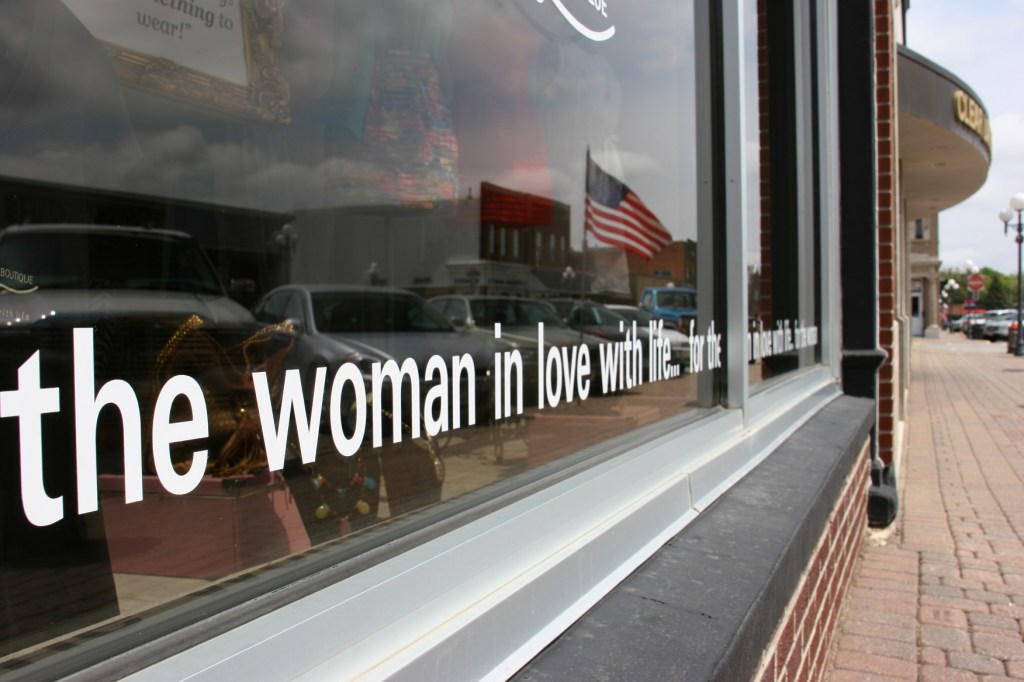
This message on the window of a business in downtown Clear Lake, Iowa, resounds with me as I work toward healing. Minnesota Prairie Roots file photo May 2015.


I am a woman determined. I have a granddaughter to lift, a camera to use, a life to live.

TELL ME: If you’ve ever had to recover from an illness or an injury, who and/or what motivated you?

© Copyright 2017 Audrey Kletscher Helbling