Minnesota Prairie Roots

Writing and photography by Audrey Kletscher Helbling

Celebrating poetry in southern Minnesota during National Poetry Month April 17, 2024

Sidewalk poetry in downtown Northfield, Minnesota. (Minnesota Prairie Roots copyrighted file photo 2014)

Mention poetry and many people likely stop listening. In a way, I understand. To their ears, they hear the stuffy, rhyming, difficult poems of yesteryear. The poems that made no sense to many of us. The poems that had to be read as part of a high school English class.
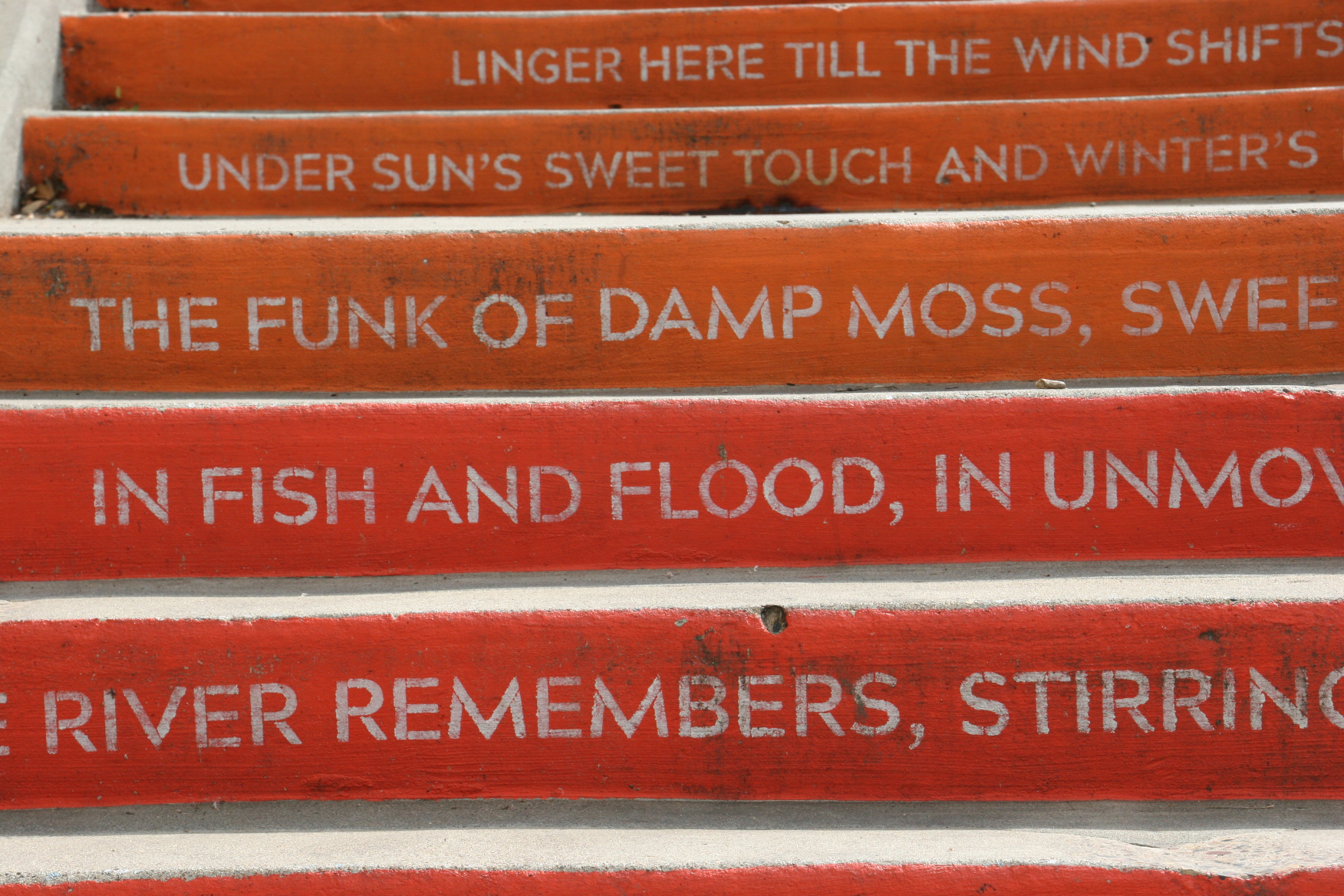
A close-up of lines in the poem steps along the River Walk in downtown Northfield. (Minnesota Prairie Roots copyrighted file photo 2022)

While I’m not privy to how poetry is taught today, I do recognize that it’s, overall, much more approachable, at least in Minnesota. We are home to a talented array of poets with their writing published not only in anthologies and literary journals, but also presented in widely-accessible, public ways.
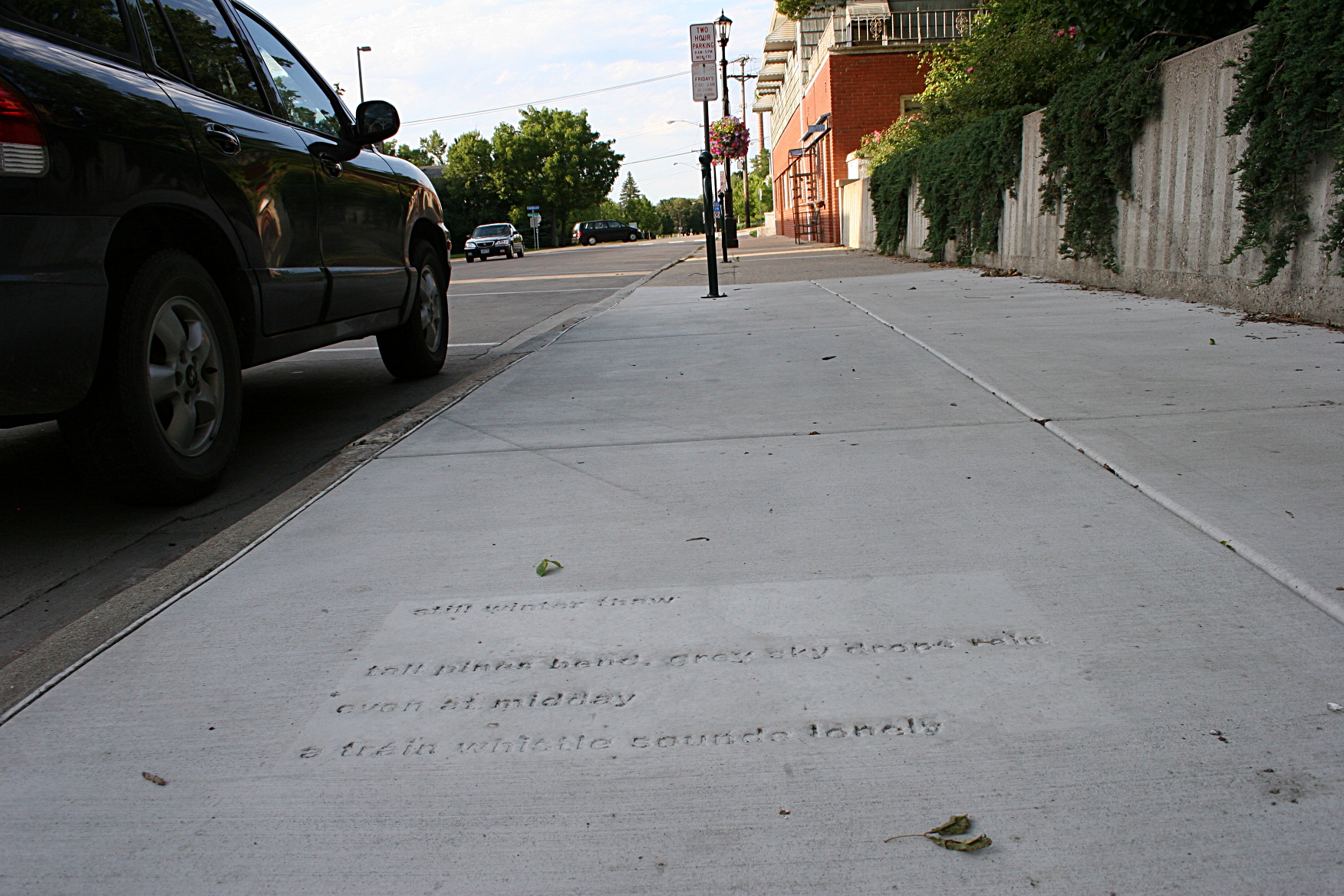
A poem by Patrick Ganey is stamped into the sidewalk near the Northfield Public Library: still winter thaw/tall pines bend, grey sky drops rain/even at midday/a train whistle sounds lonely (Minnesota Prairie Roots copyrighted file photo)

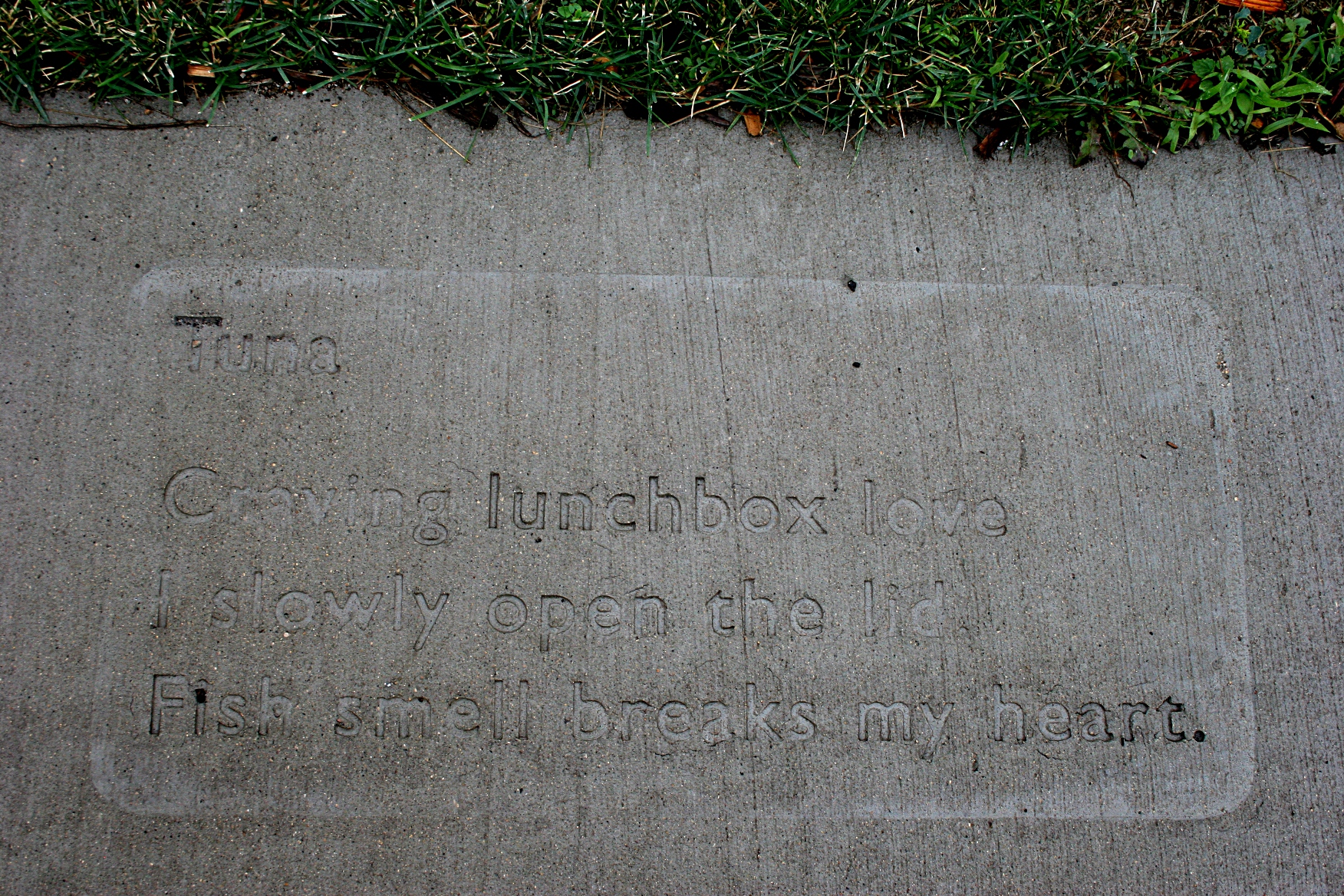
Nearby Northfield, for example, prints poetry into sidewalks. In 2011, the Arts and Culture Commission launched Sidewalk Poetry. Through that annual competition, selected poems are stamped into sidewalks in the historic downtown, along routes to schools and in residential neighborhoods. I always enjoy walking in downtown Northfield and pausing to read poetry. As a poet myself, I appreciate how much this community values this literary art.

This month, National Poetry Month, and into May, Northfield-based nonprofit Rice County Neighbors United is offering “Poem in a Bag.” Submitted original and favorite poems were printed, rolled and placed in poetry boxes (not bags) set out at select Northfield businesses and at the Northfield Public Library. Poems are printed in both English and Spanish and paired with original art by local artists. What a fun idea, to give away poems, perhaps reaching people who would not otherwise read poetry. I’ve submitted several poems for this project.
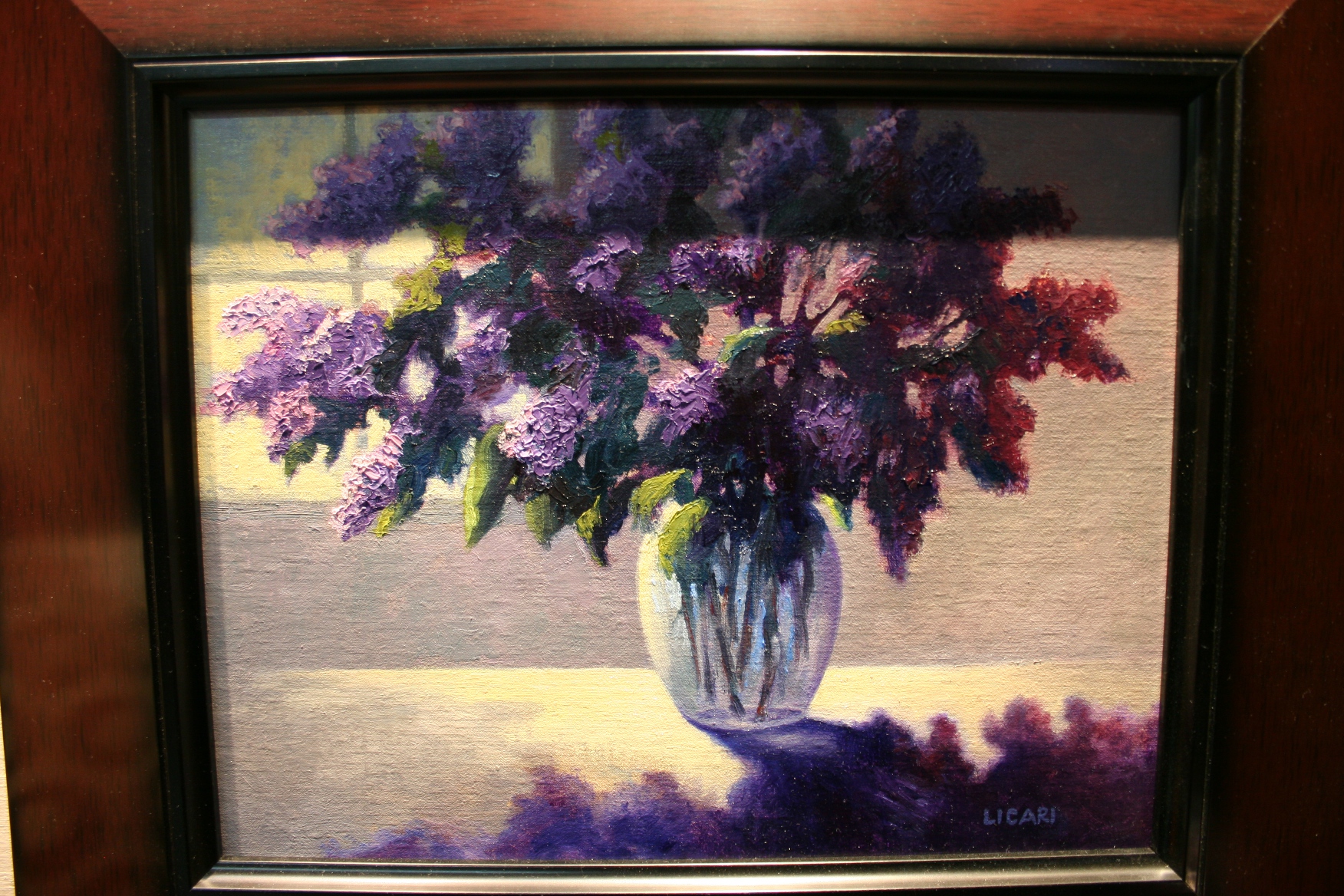
My poem, “Lilacs,” inspired “Lilacs on a Table,” an oil on linen painting by Jeanne Licari. This was part of an poet-artist collaborative exhibit at Crossings at Carnegie in Zumbrota ten years ago. Today my poem is part of Northfield’s “Poem in a Bag.” (Minnesota Prairie Roots copyrighted file photo April 2014)

For the first time this year, FiftyNorth, Northfield’s center for active aging, is featuring a poet-artist collaboration, “Echoes & Shadows,” in its gallery. The event runs until May 3. Artists created art inspired by original poems. I’ve participated in collabs like this in Zumbrota and found them to be particularly interesting—to see how poems are visually interpreted.
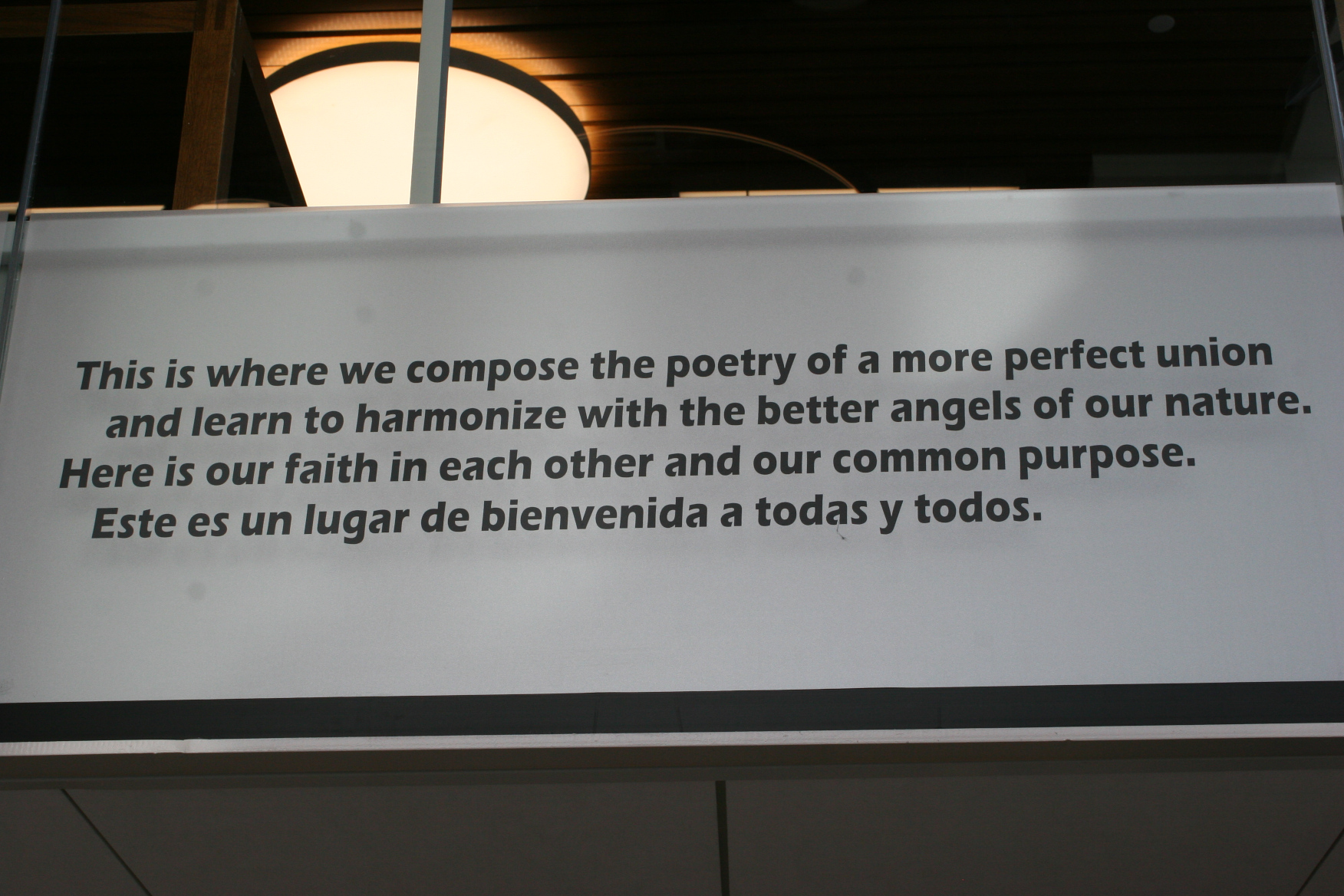
A portion of a poem by Rob Hardy, former Northfield Poet laureate, in the Northfield Library atrium. (Minnesota Prairie Roots copyrighted file photo)

At the Northfield Public Library, Open Mic Poetry is held monthly in the atrium for poets to share their writing with an appreciative audience. The next event is at 6:30 pm Wednesday, May 8.
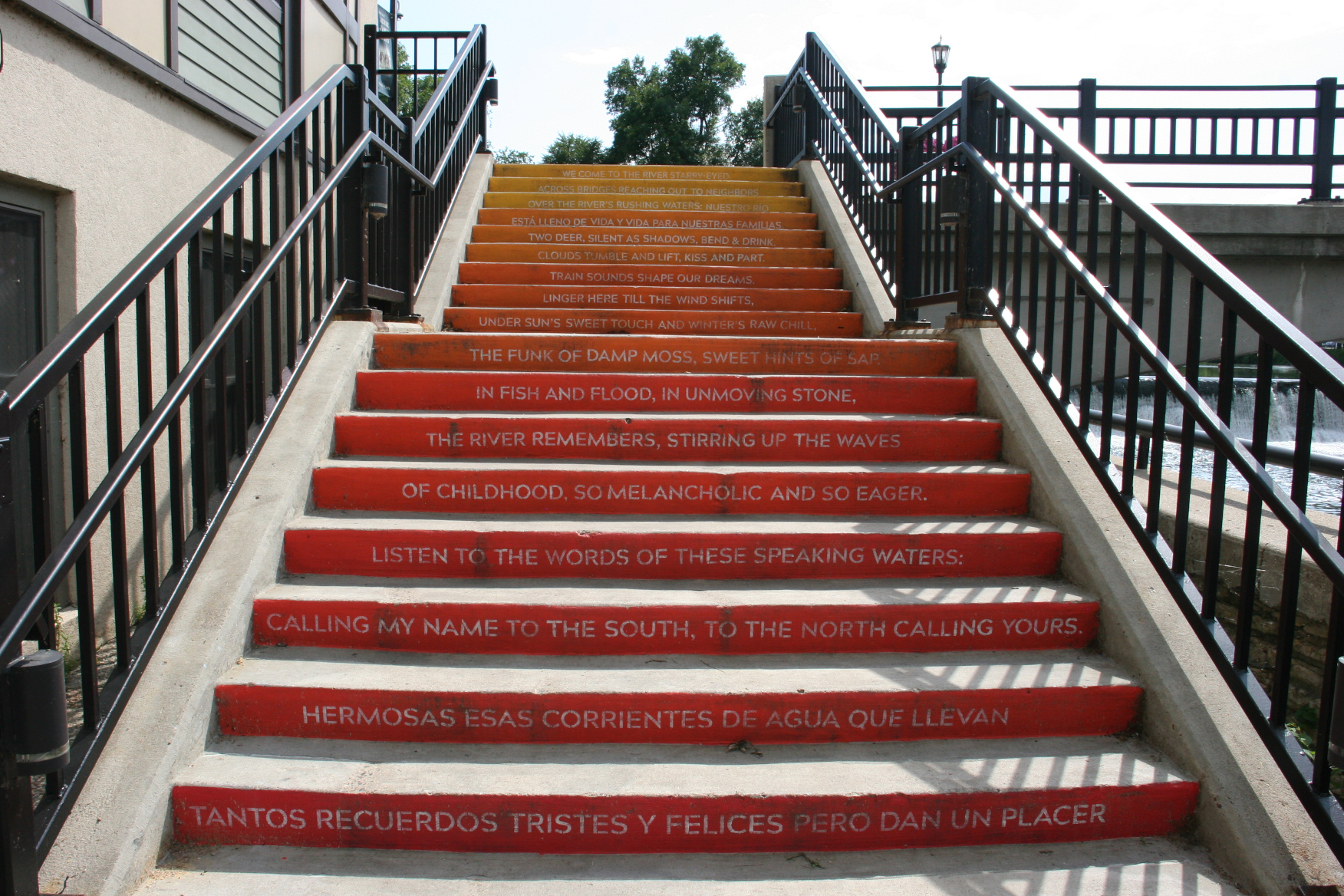
Poem steps in Northfield along the River Walk. (Minnesota Prairie Roots copyrighted file photo 2022)

Northfield also has a poet laureate actively promoting poetry and poetry events within the community. A new laureate will soon be named to replace past laureate Rob Hardy and current interim co-poet laureates Becky Boling and D.E. Green.
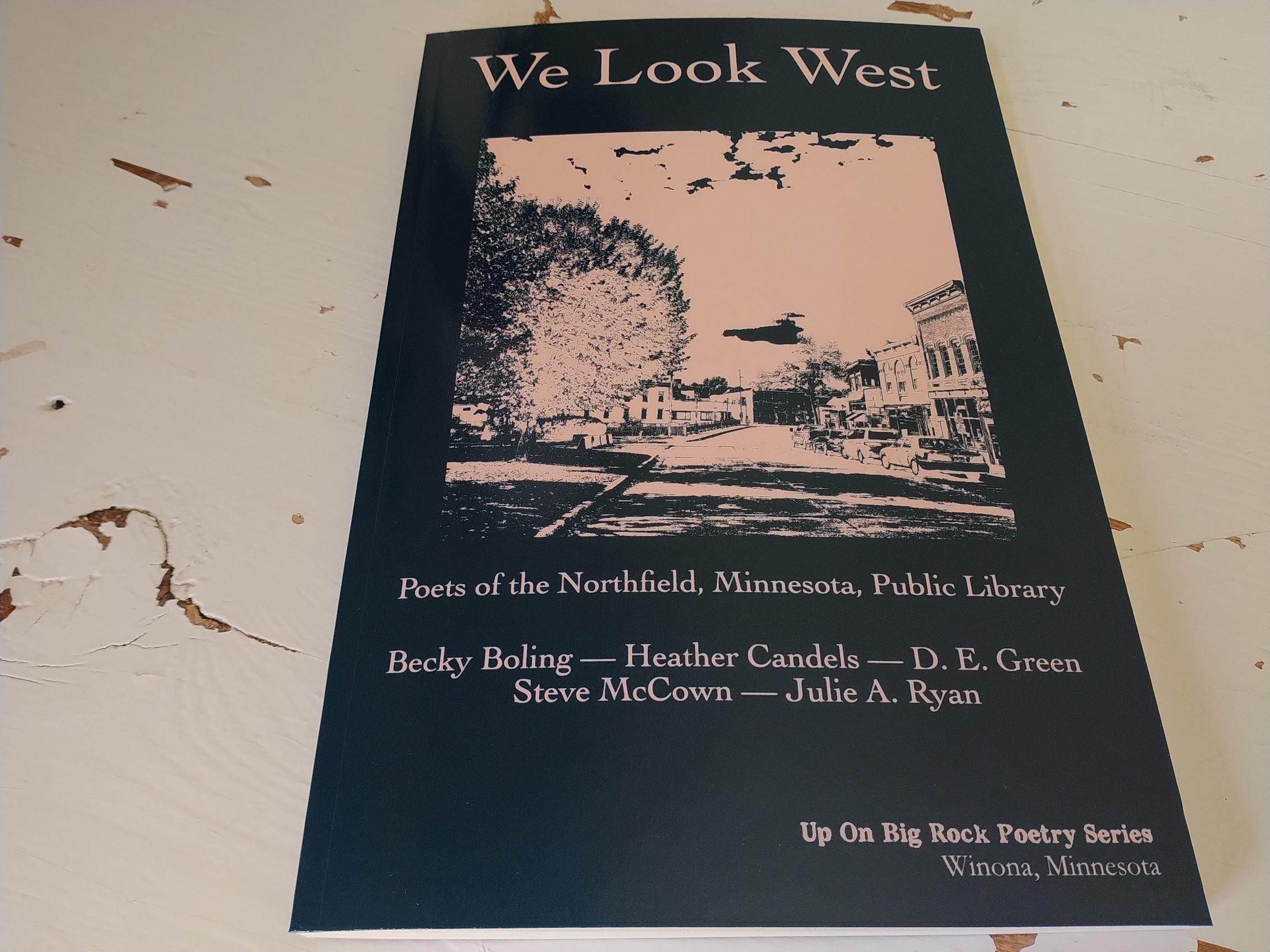
This new anthology features the poetry of five Northfield poets. (Minnesota Prairie Roots copyrighted photo April 2024)

Next month the Northfield library hosts two poetry readings. Local poets Scott Lowery and Leslie Schultz will read at 6:30 pm Tuesday, May 7. And at 7 pm on Thursday, May 16, the Poets of the Northfield, Minnesota, Public Library, will read from and sign We Look West. The just-published 116-page anthology is part of the Up On Big Rock Poetry Series from Winona-based Shipwreckt Books Publishing Company.
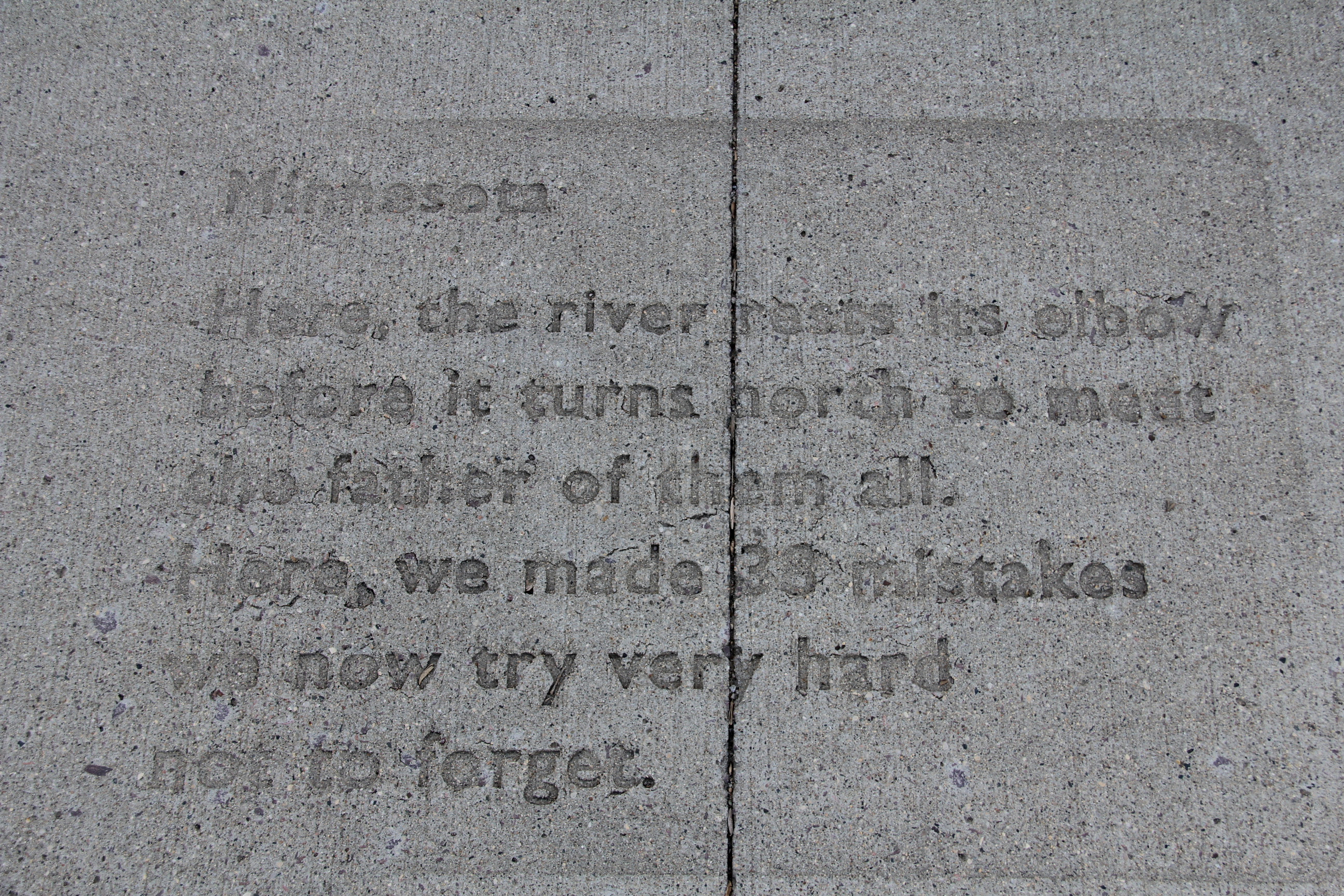
This sidewalk poem in Mankato’s Riverfront Park references the mass hanging of 38 Dakota (plus two) in December 1862 in Mankato. (Minnesota Prairie Roots copyrighted file photo November 2023)

I also have two other recently-released poetry books to read: Broad Wings, Long Legs, A Rookery of Heron Poems in which Minnesota writers (including Larry Gavin of Faribault and many other recognizable poets) contemplate a regional icon, and Songs, Blood Deep by Poet Laureate of Minnesota, Gwen Nell Westerman of Mankato. Westerman is Minnesota’s first Native poet laureate and teaches English, humanities and creative writing at Minnesota State University, Mankato, my alma mater.
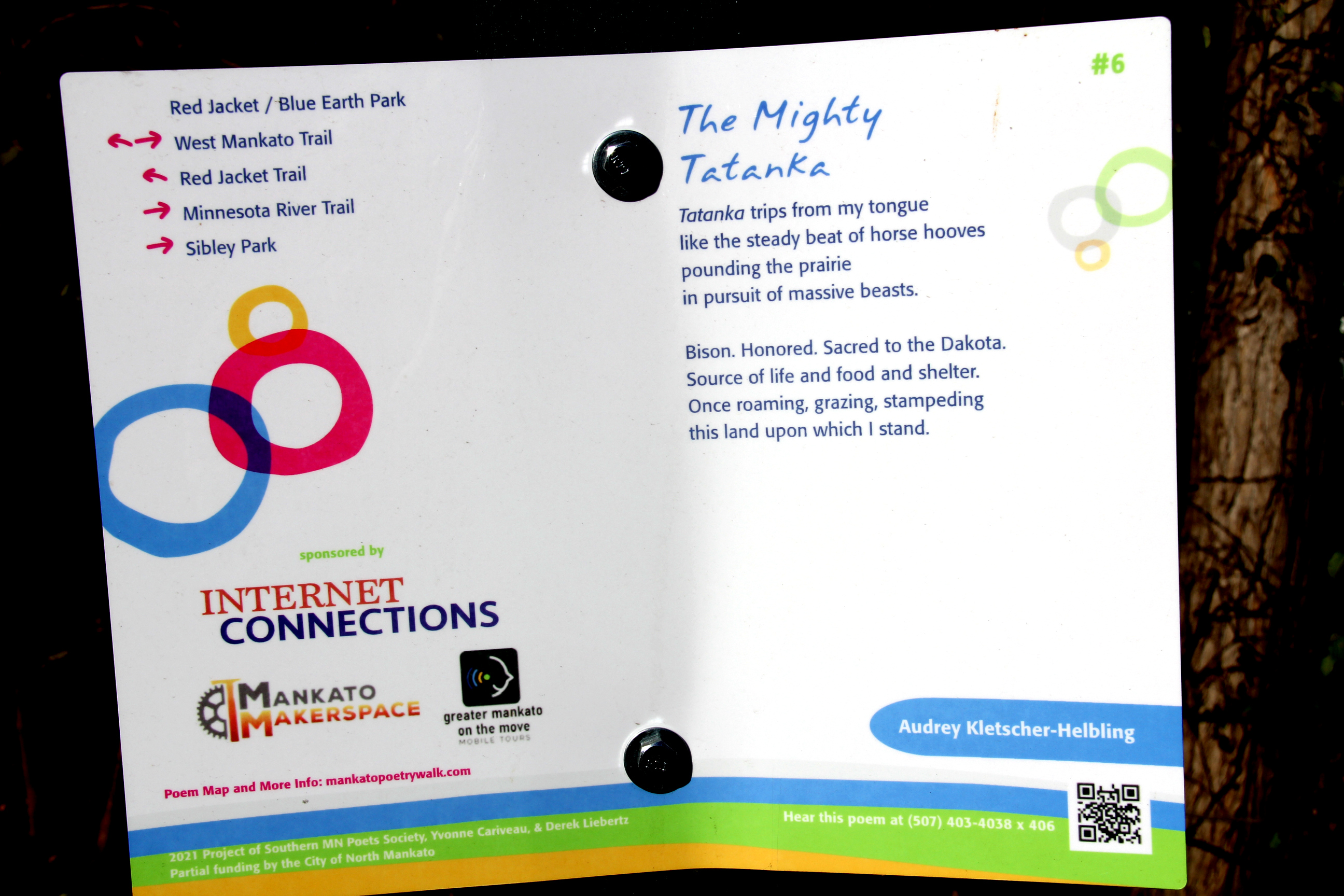
My poem, posted along the West Mankato Trail. (Minnesota Prairie Roots edited & copyrighted photo November 2023)

Mankato is a community rich in poetry. I’ve found poems stamped into concrete at Riverfront Park as part of WordWalk. But it’s a project of the Southern MN Poets Society which really puts poetry out in the community. Through the Mankato Poetry Walk & Ride, winning poems are printed on signs and posted along walking and biking trails in Mankato and North Mankato. My poems have been included perhaps half a dozen times—I’ve lost count—with one, “The Mighty Tatanka,” a poem about bison, currently displayed along a trail in West Mankato.
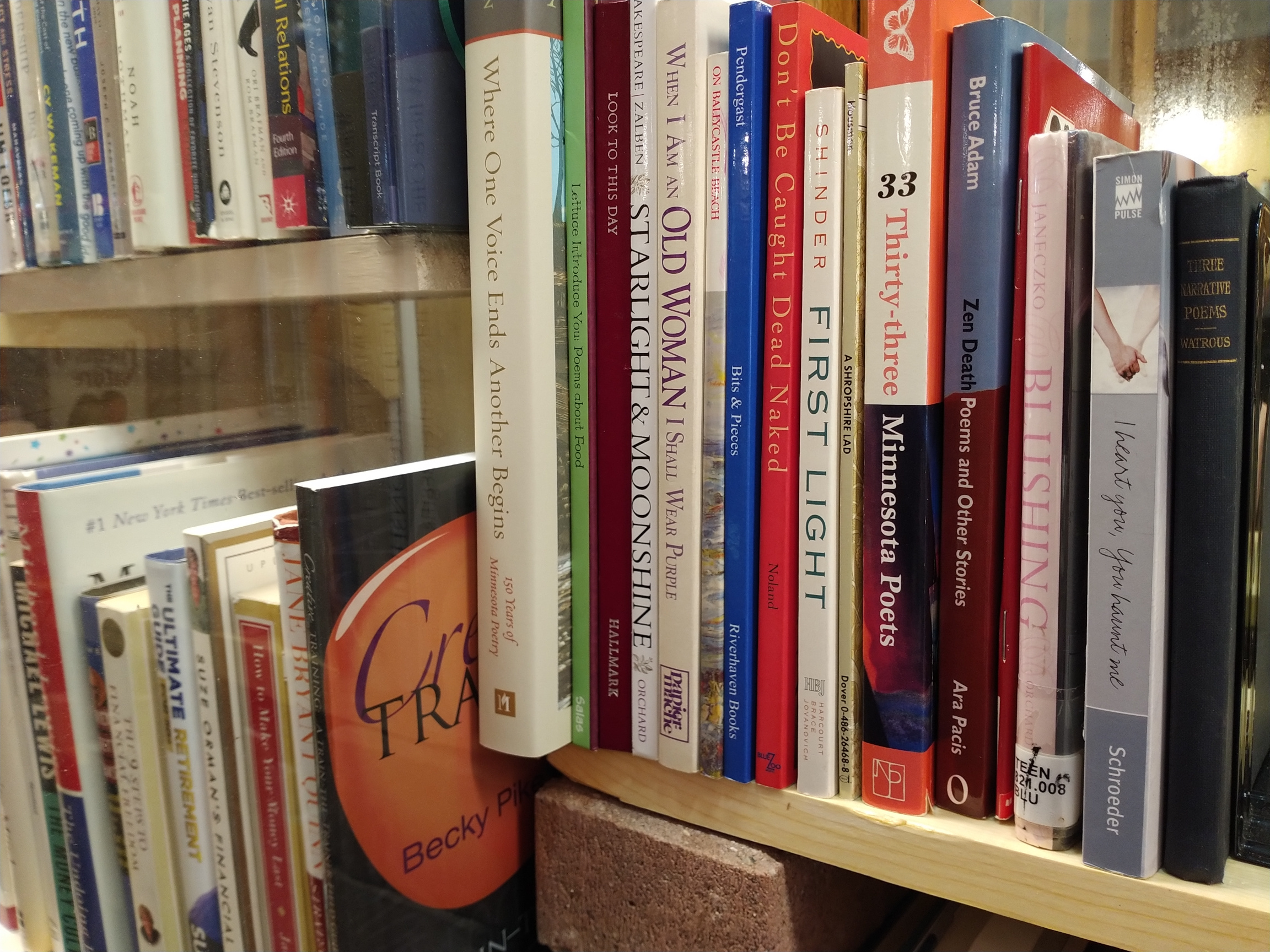
A sampling of poetry books, right, for sale at Books on Central in Faribault. (Minnesota Prairie Roots copyrighted photo April 2024)

Poetry is seemingly everywhere these days, unconfined to the space between book covers. Yet poems printed upon paper remain the primary place to find poetry. I recently picked up a stash of poetry books from my local library. I also perused poetry offerings at Books on Central, a Rice County Area United Way bookshop selling used books in downtown Faribault. In Northfield, independent bookseller Content Bookstore not only sells poetry books, but regularly hosts book signing events with writers, including poets.
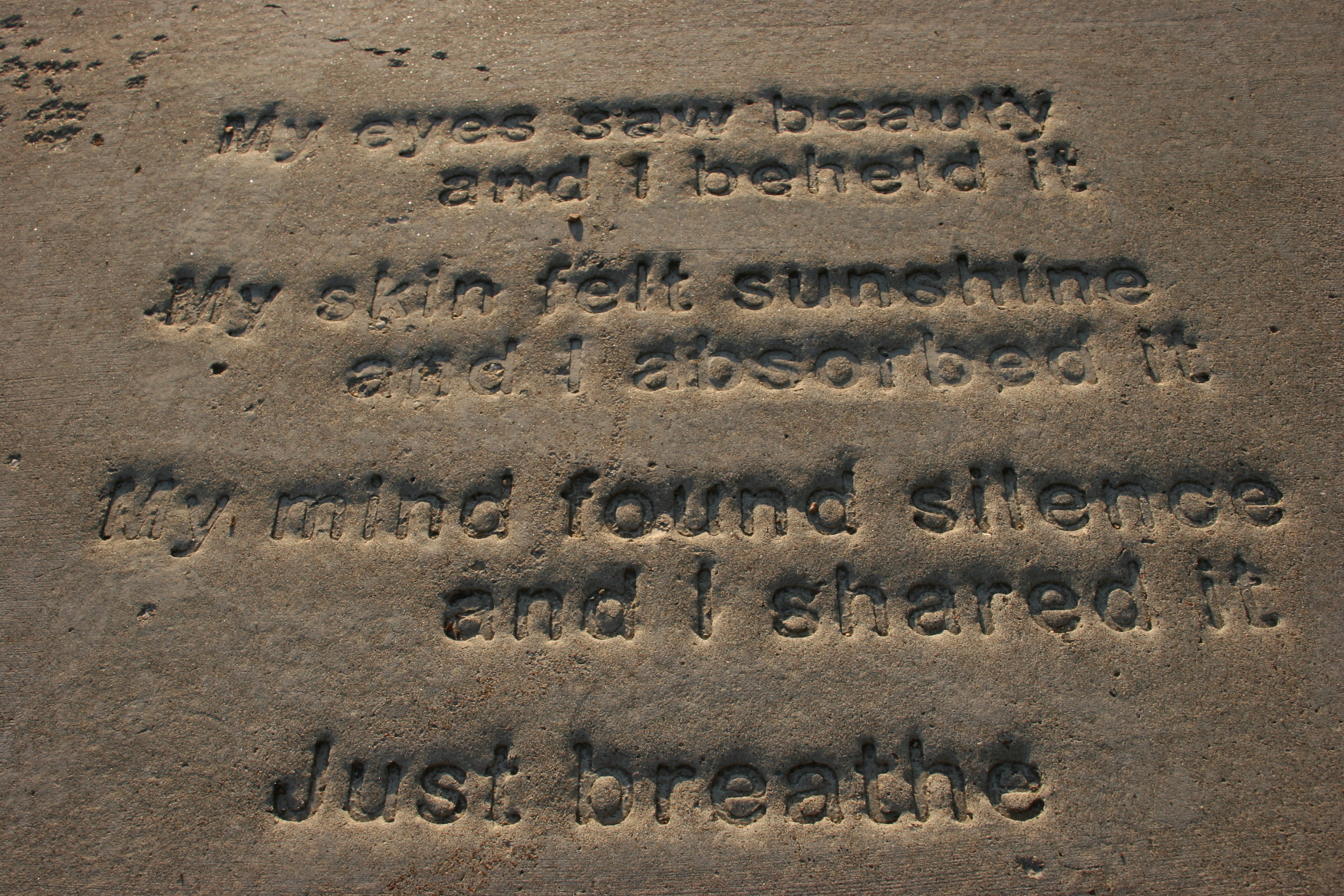
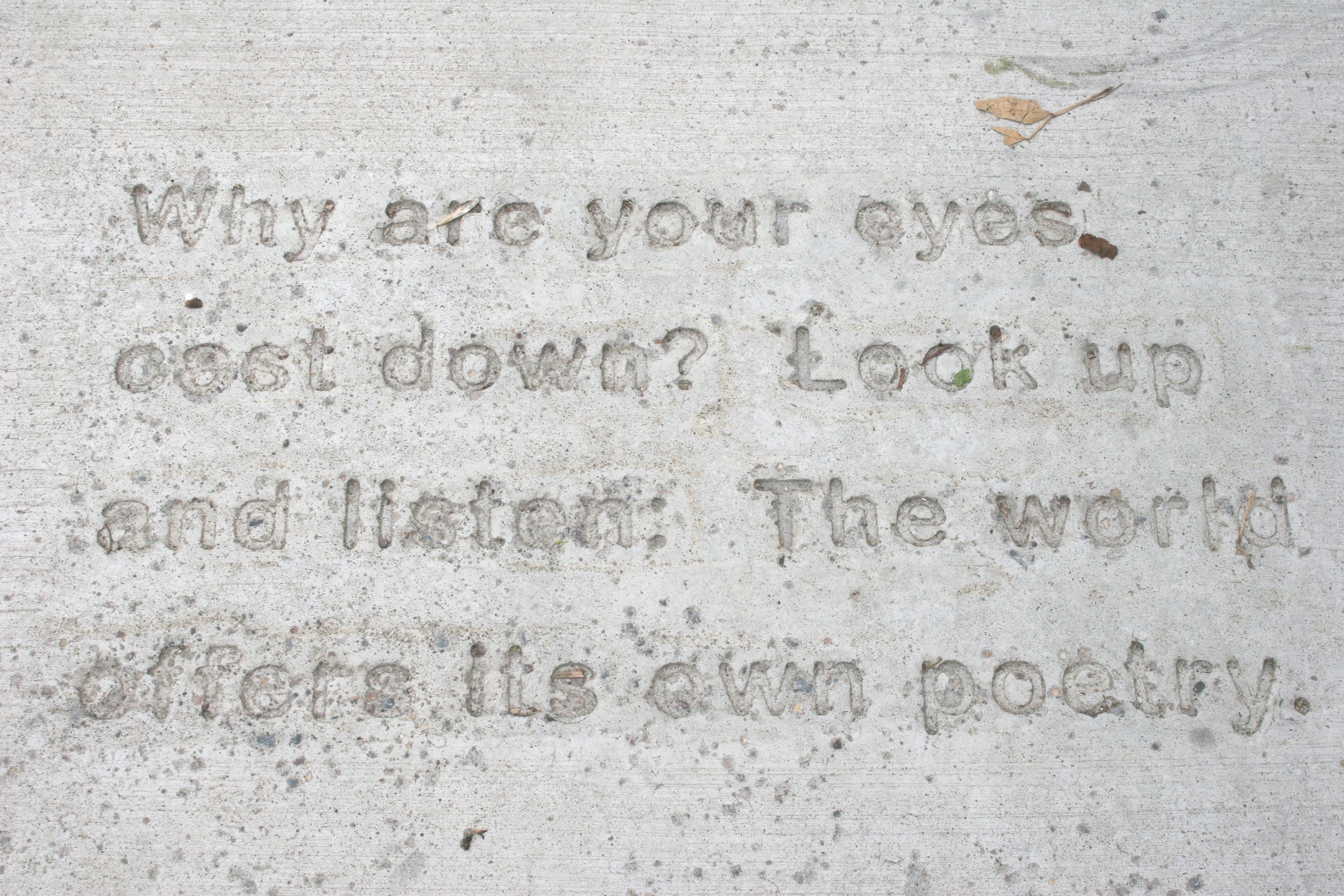
An especially thought-provoking poem in Northfield’s Sidewalk Poetry project. (Minnesota Prairie Roots copyrighted file photo August 2020)

How we access poetry has certainly changed over the years. It is my hope that, even if you think you don’t like poetry, you open your mind to this creative art form. There’s much to be learned about nature, about ourselves, about life through the carefully-selected, sparse words of gifted poets, many of whom call Minnesota home.

FYI: Please check back for a more in-depth look at “Poem in a Bag” and reviews of poetry anthologies referenced in this post. Now, tell me, do you read poetry, have a favorite poem?

© Copyright 2024 Audrey Kletscher Helbling


The evolution of poetry January 15, 2013

EXCEPT FOR THE POETRY of Robert Frost and Emily Dickinson, the poetry I studied in my youth seemed mostly complicated and unapproachable.

I expect you may have felt the same about any poetry you read, studied and critiqued as part of a high school and/or college English class. You could not wait to get through the required course and put poetry behind you.

Today, though, poetry has become much more approachable, even understandable. Would you agree?

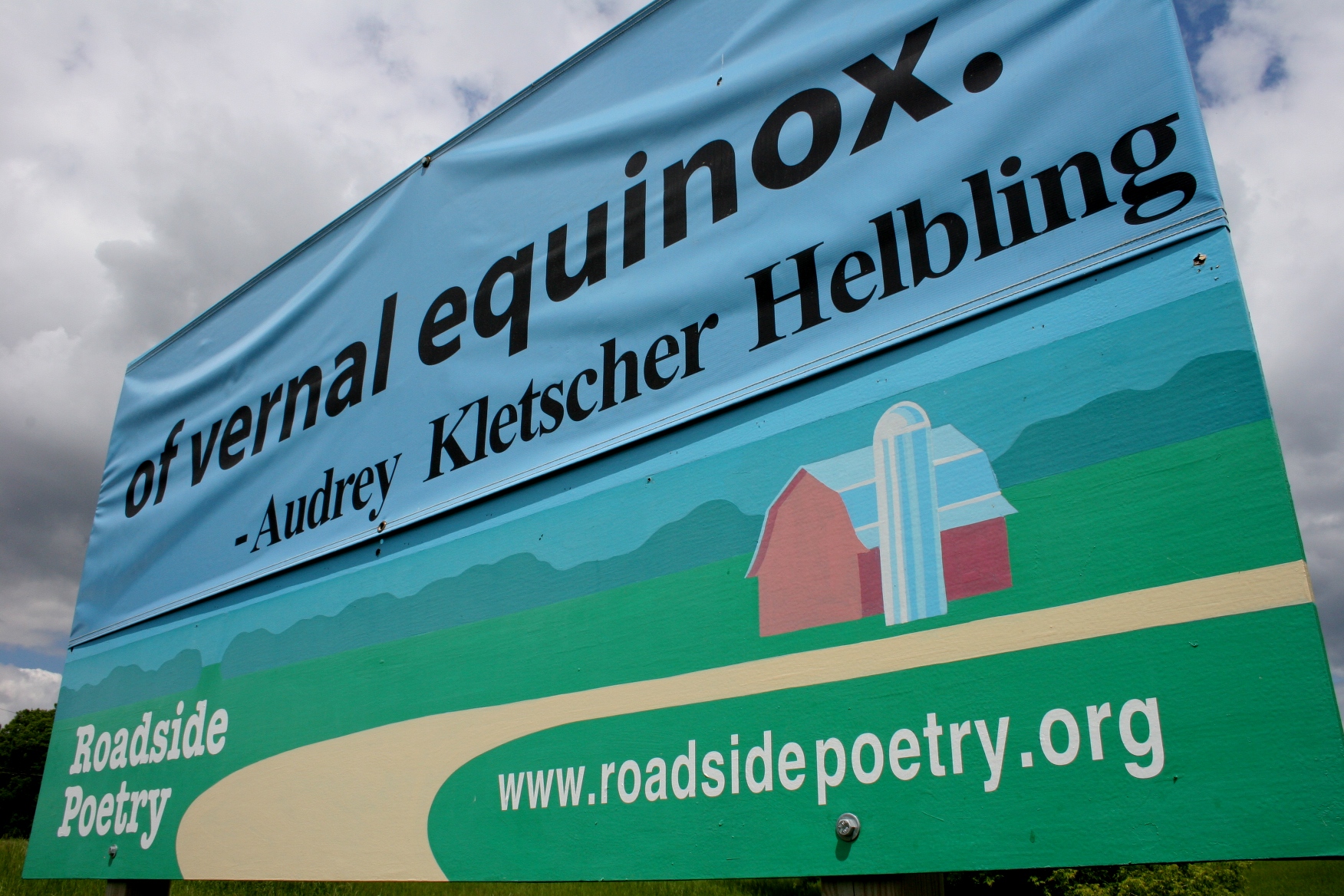
I write poetry. Seventeen of my poems have been published in places ranging from the pages of a newspaper, magazine and anthologies to billboards. Yes, billboards. Recently, the Roadside Poetry Project, which began in Fergus Falls, Minnesota, in 2008 and featured seasonally-changing poetry billboards, ended.

The last of four billboards featuring my Roadside Poetry spring poem.

The last of four billboards featuring my Roadside Poetry spring poem. Minnesota Prairie Roots file photo.

Venues like this expose poetry to the masses in an unassuming and everyday way. When a poem is limited to four lines, a maximum of 20 characters per line, every word, every letter, counts and thus the poem is penned with great care. Take my poem, winner in the spring 2011 Roadside Poetry competition:

Cold earth warmed
by the budding sun
sprouts the seeds
of vernal equinox.

Sidewalk poetry, which graces Minnesota sidewalks in St. Paul, Mankato, Northfield and St. Cloud, also holds similar word limitations and a certain everyday appeal. Those who long ago dismissed poetry for its complexity and arrogance may develop a renewed interest in verse upon reading sidewalk poetry. That would be my hope.

A poem by Mankato resident Yvonne Cariveau imprinted  in the sidewalk at Riverfront Park, Mankato, as part of the WordWalk project.

A poem by Mankato resident Yvonne Cariveau imprinted in the sidewalk at Riverfront Park, Mankato, as part of the WordWalk project. Minnesota Prairie Roots file photo.

I’ve viewed some of the sidewalk poems in Mankato (WordWalk) and Northfield (Sidewalk Poetry). While these poems may be limited in words, they certainly are not limited in depth. Sometimes less is more. Writing a short poem with word limitations can be more of a challenge than penning a lengthy poem. Ask any poet.

A poem by Patrick Ganey is stamped into the sidewalk near the Northfield Public Library. It reads: still winter thaw  tall pines bend, grey sky drops rain  even at midday  a train whistle sounds lonely

A poem by Patrick Ganey is stamped into the sidewalk near the Northfield Public Library. It reads: still winter thaw/ tall pines bend, grey sky drops/ rain even at midday/ a train whistle sounds lonely. Minnesota Prairie Roots file photo.

This whole concept of stamping poems into concrete, putting poetry out there to the public, appeals to me as a truly creative way to bring verse to the people, to those who might not pick up a poetry book.

Even more creative is Motionpoems, a nonprofit poetry film initiative developed under the guidance of Twin Cities animator/producer Angella Kassube and St. Paul poet Todd Boss. The pair co-founded Motionpoems in 2009. The process “turns contemporary poems into (animated) short films.”

Among my favorite Motionpoems is an adaptation of Boss’ poem titled “The God of Our Farm Had Blades,” a poem about a windmill. While some would argue that visuals detract from the words and the reader’s interpretation of a poem, I would argue that visuals and listening to verse read aloud enhance the poetry experience.

Northern Community Radio, based in Grand Rapids and Bemidji, recently embraced poetry via “The Beat,” which each weekday features a poem by a poet with a Minnesota connection. How lovely is that to listen to a poem read on the air?

For those who still prefer the old-fashioned book-in-hand method of reading poetry, as I also enjoy, plenty of excellent collections exist out there, including Boss’ two books, Yellowrocket and Pitch.

Minnetonka poet Carol Allis also recently published a particularly understandable poetry collection appropriately titled Poems for Ordinary People. Her no-frills style of writing and the content of her verse allow readers to easily connect with her words.

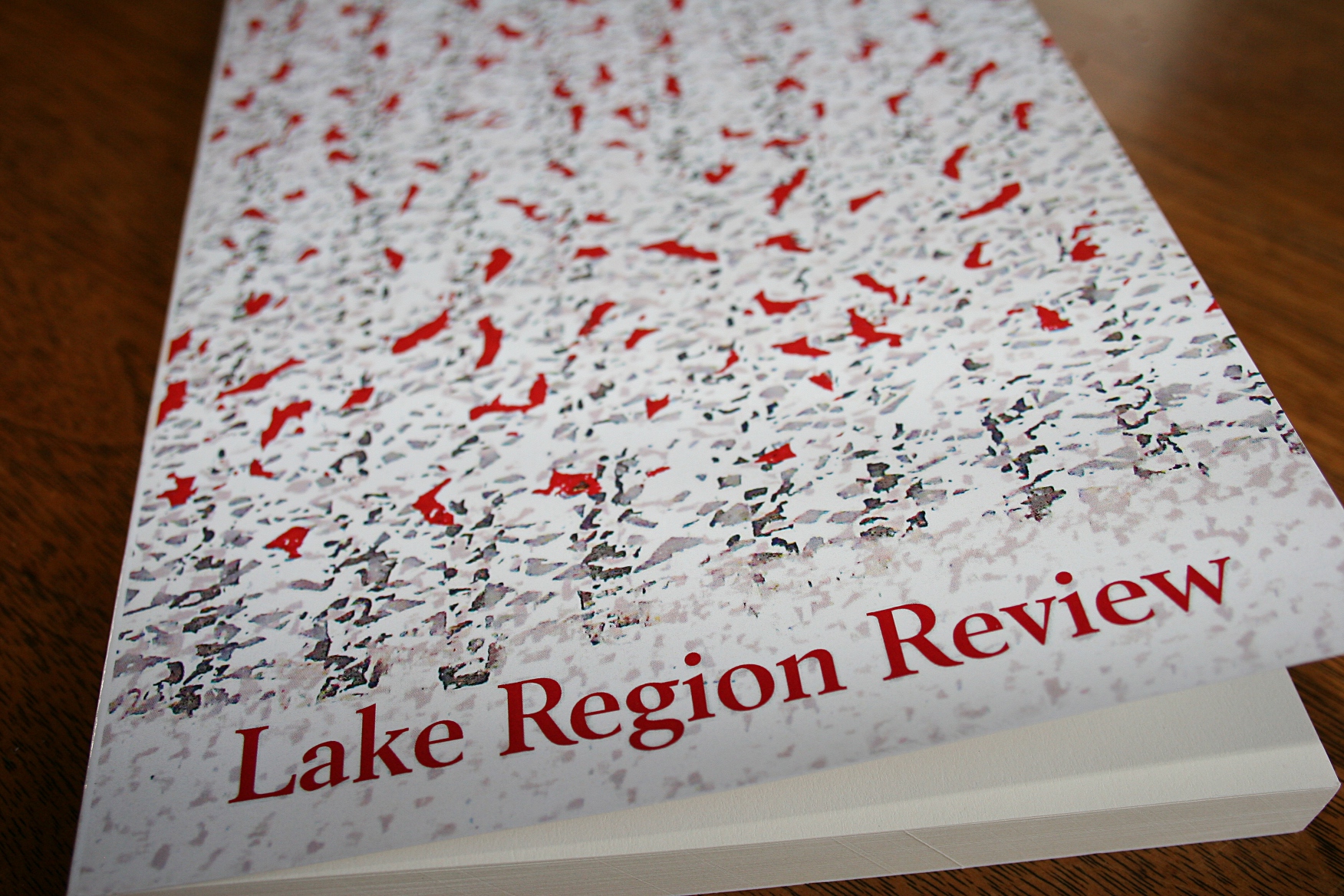
Lake Region Review, volume two, with cover art by  Charles Beck

Lake Region Review, volume two, with cover art by Charles Beck

I can’t end this post without recommending two outstanding Minnesota-based collections of regional writing (including poetry) in the long-standing The Talking Stick published by The Jackpine Writers’ Bloc and Lake Region Review, in its second year of publication by the Lake Region Writers Network. Both feature a diversity of fine, fine regional writing. (And just to clarify, my work has been published in both.)

NOW IT’S YOUR TURN. Tell me how you experience, or don’t experience, poetry. Do you write, edit, listen to, read poetry?

What are your thoughts on creative poetry venues like billboards, sidewalks and film?

What are your thoughts on poetry in general?

Let’s talk poetry.

© Copyright 2013 Audrey Kletscher Helbling