
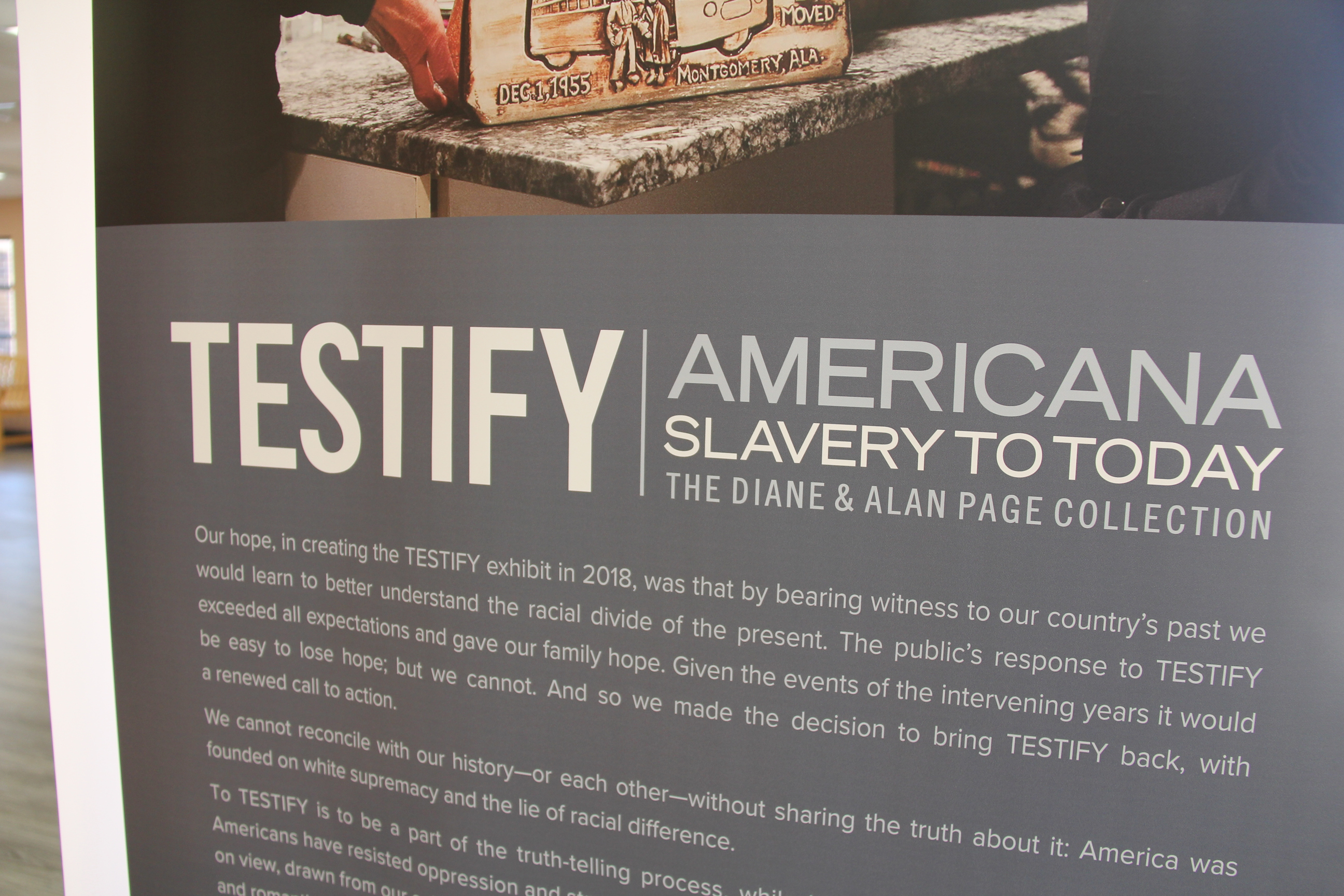
THE IMAGES AND WORDS left me feeling simultaneously unsettled, uncomfortable, disturbed, enlightened, impressed, angry and incredibly sad. My emotional reaction is not surprising after viewing the traveling exhibit, “Testify—Americana Slavery to Today,” at my local public library.
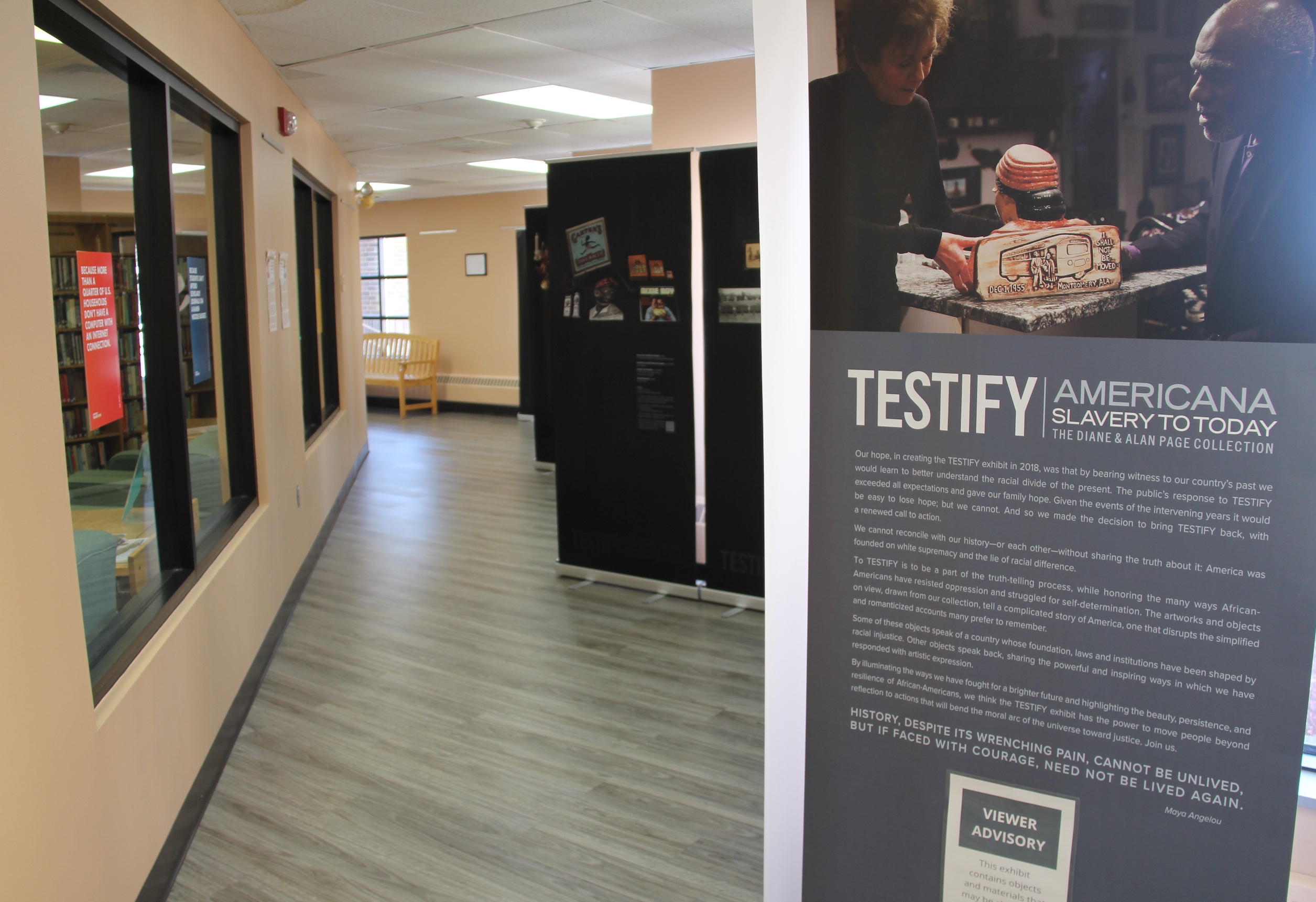
The exhibit features photos of select African American art and artifacts from The Diane and Alan Page Collection. Alan Page, who is Black, was a Minnesota Supreme Court justice and, in the 1970s, a defensive lineman for the Minnesota Vikings. He’s in the NFL Hall of Fame. Diane, who was White, worked in marketing and was a businesswoman and notable philanthropist. She led the way in securing the art and artifacts in the couple’s collection.
I’m grateful Buckham Memorial Library (through SELCO, the regional library system) brought this exhibit to Faribault for the public to see. We can all learn from history, deepening our understanding. We begin to recognize perspectives and biases and can then move toward change and healing.
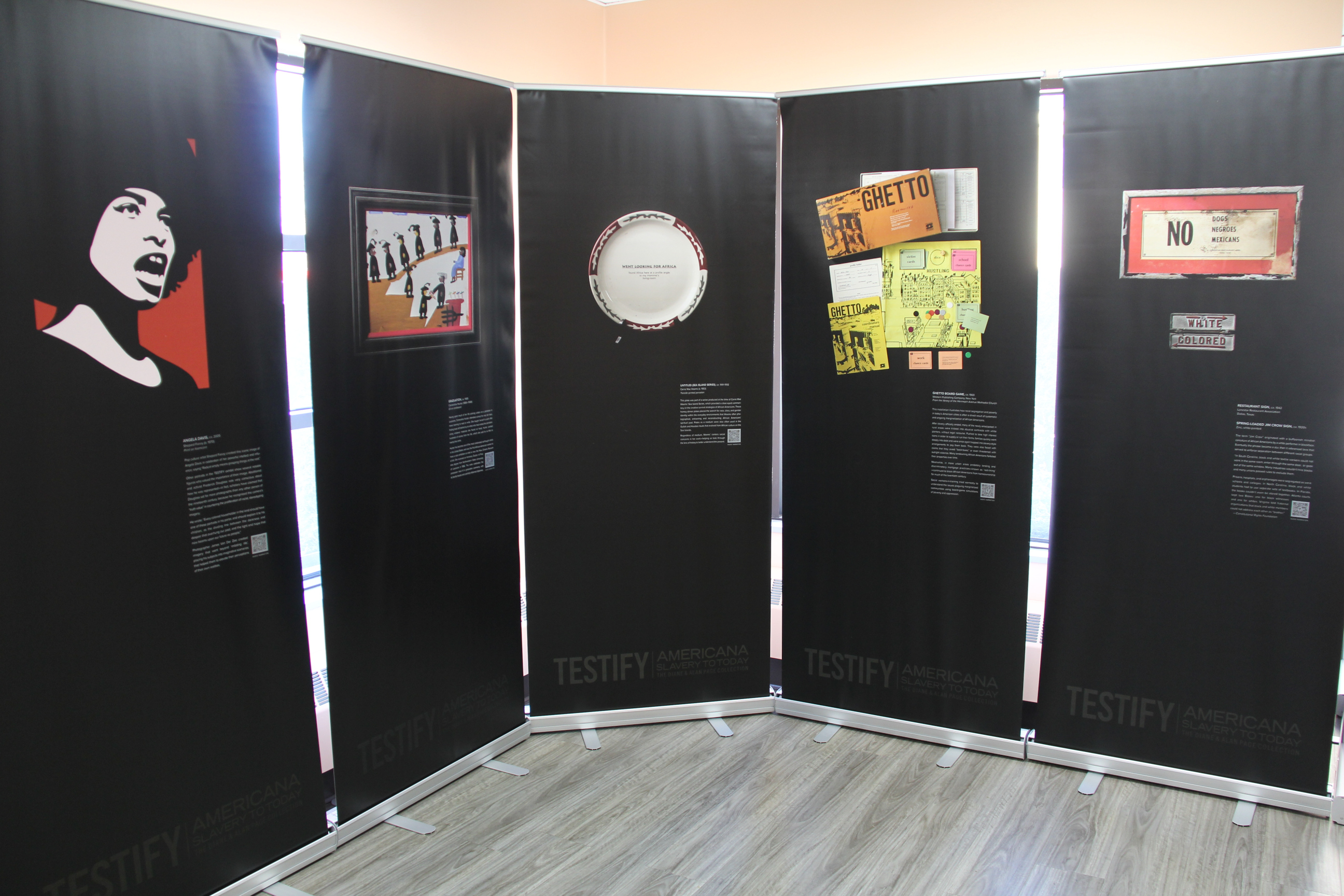
As I walked my way along the 16 towering photo panels paired with text, I began to more fully appreciate the suffering, the abuse, but also the fortitude, of African Americans. Despite everything, they retained strength and resilience.
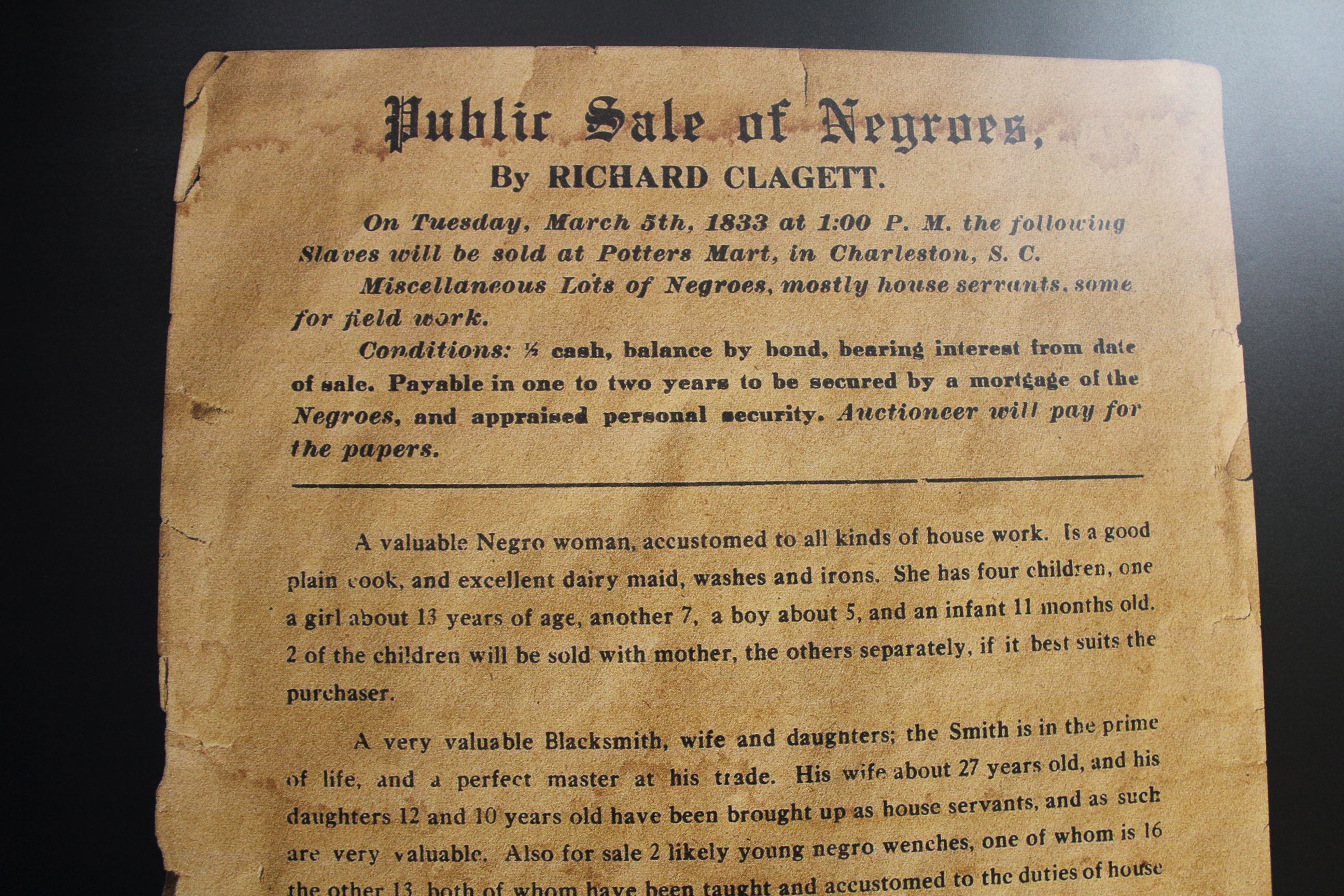
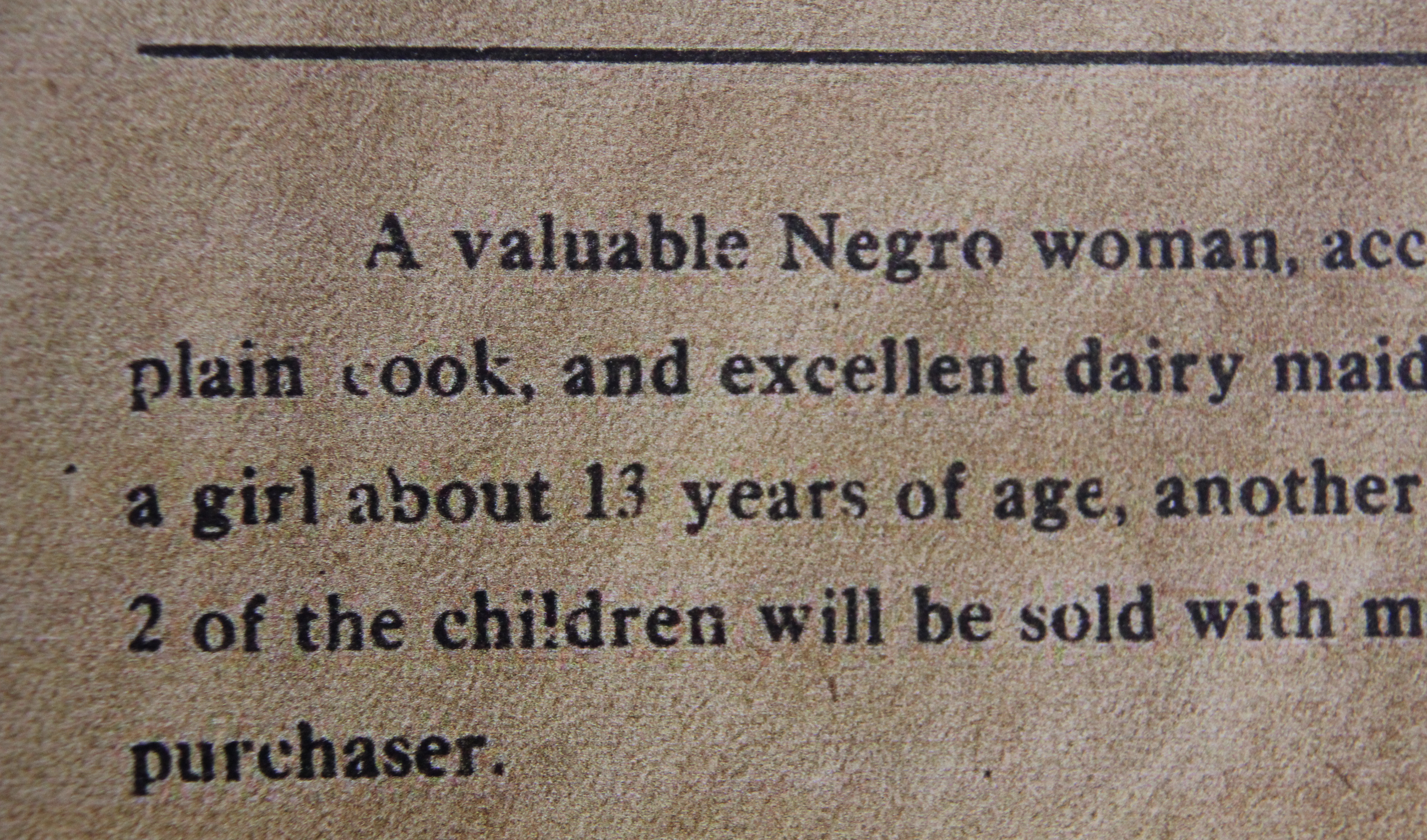
Yet, how hard it must have been at times to hold hope, especially from slavery to the time of Jim Crow laws. When I read a Public Sale of Negroes notice from 1833, I read words of degradation. I cannot imagine being that “valuable Negro woman,” that “very valuable blacksmith,” the slaves in “miscellaneous lots of Negroes” who were auctioned off like so much property. What humanity does to one another seems unimaginable, unfathomable. Yet, it still happens today, just in different ways.
As disturbing as that slave bill of sale was, a group photo of nine unclothed Black toddlers in a professional studio portrait titled “Alligator Bait” proved profoundly disturbing to me. So much so that I can’t bear to show this 1897 image to you. The accompanying text states that historians researched whether hunters actually used African American children as alligator bait. Results were inconclusive, which is telling.


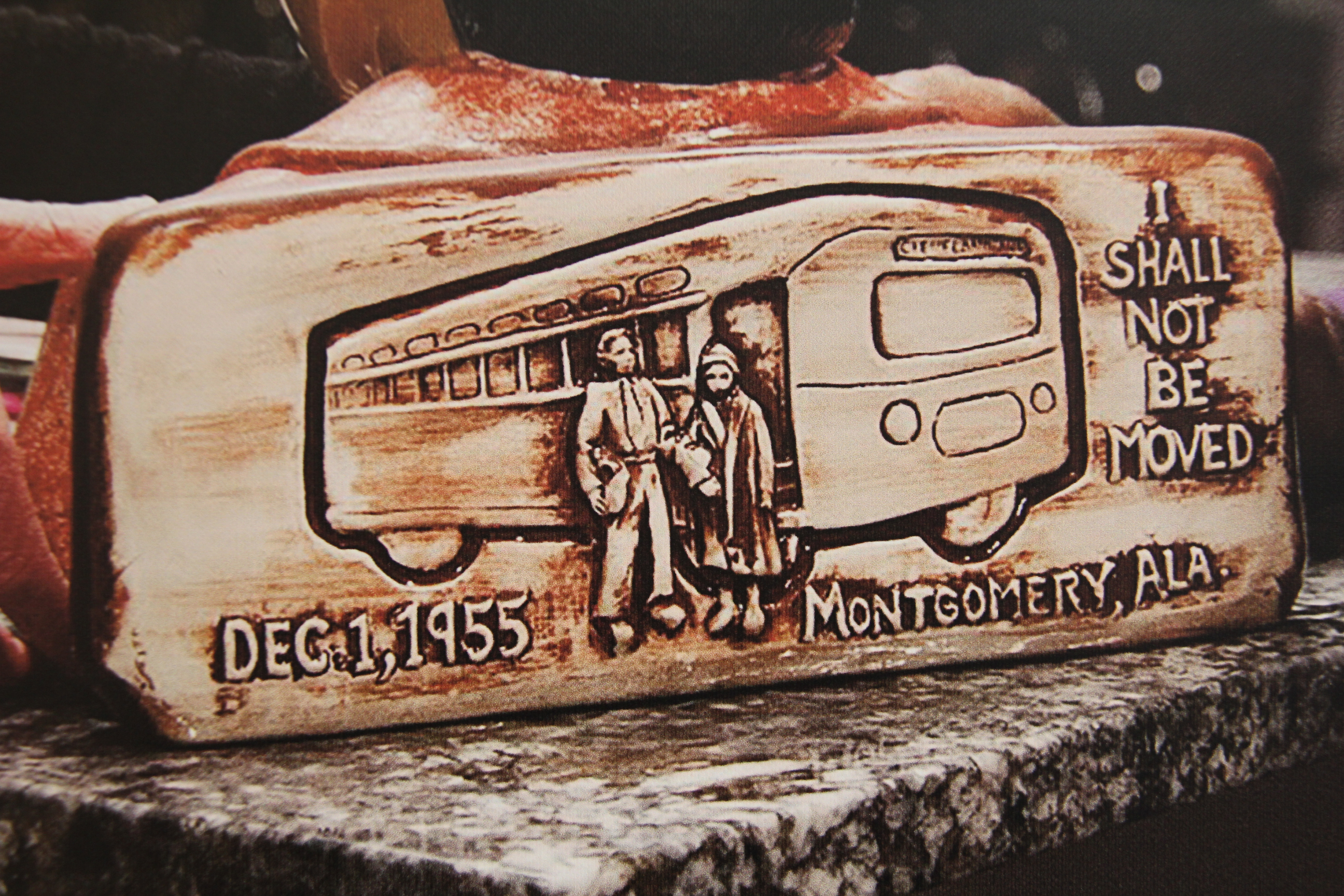
A sign banning “dogs, Negroes and Mexicans” and another pointing Whites one way and “Colored” people the other prompted thoughts of, well, things have not changed all that much. Of course, they have, but not really if you dig deep or, conversely, read today’s headlines.
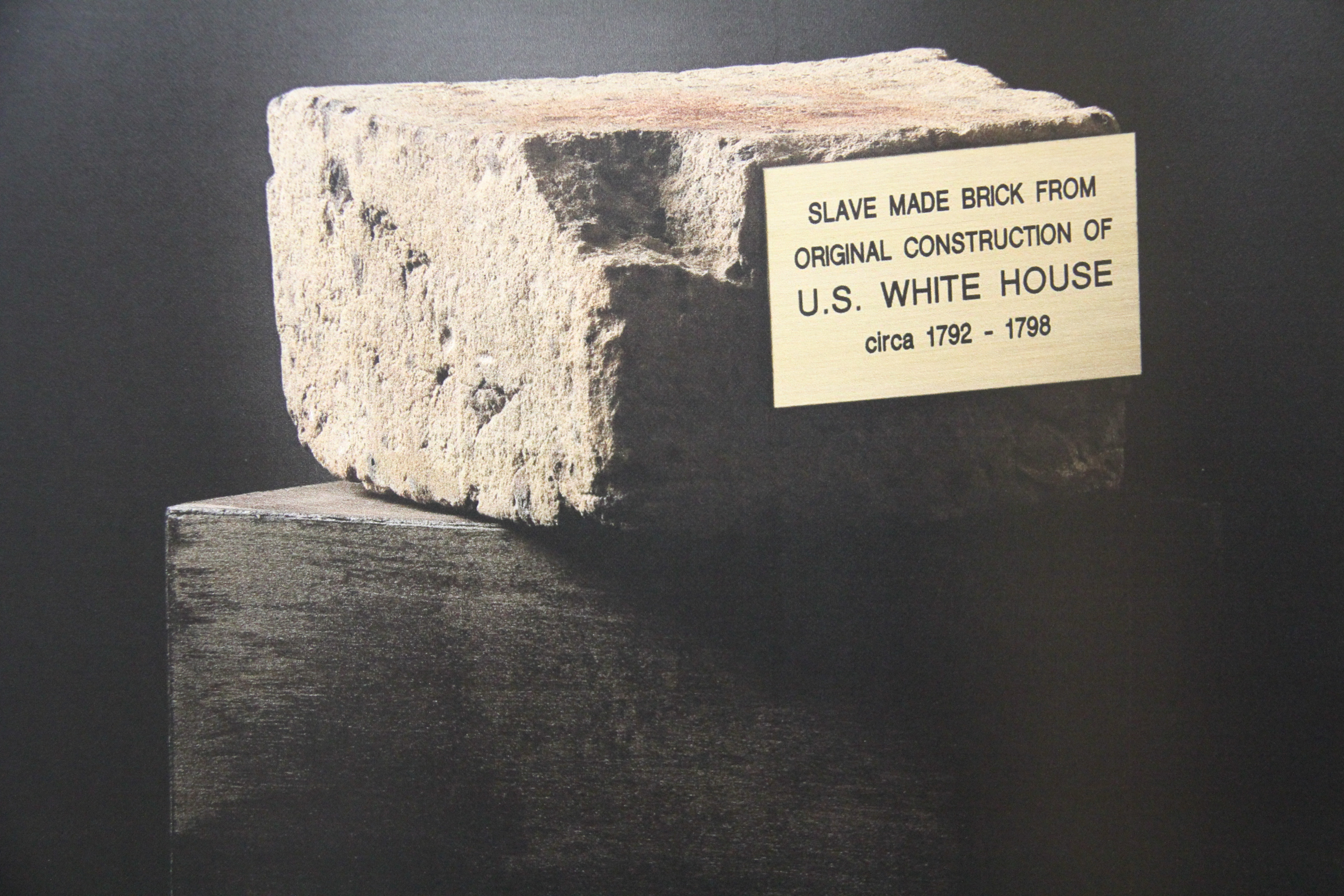
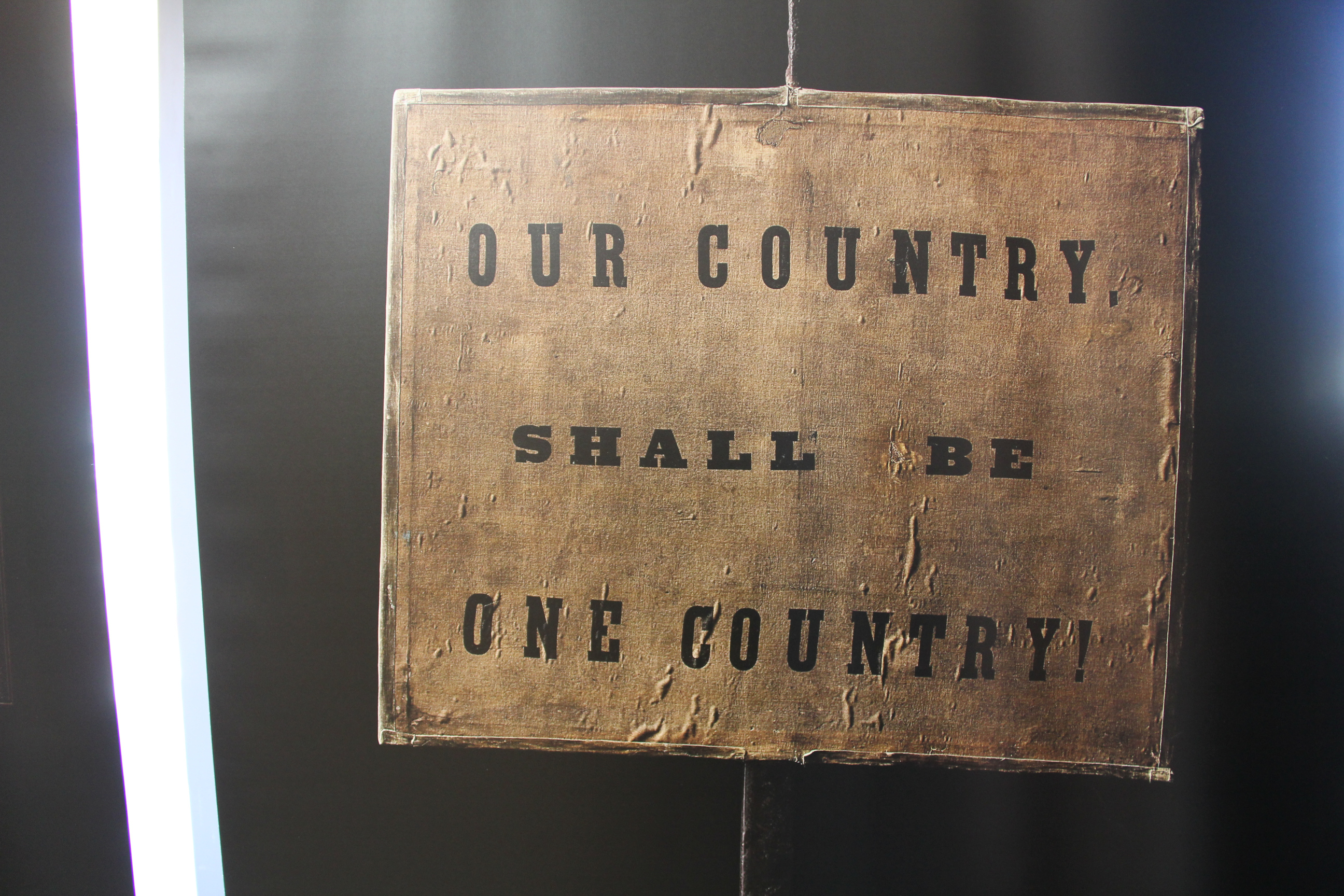
I want to backtrack for a minute to the first photo I saw in the exhibit. It was of a single brick, circa 1792-1798. This singular object drove home the point that this country was built on the backs of slaves, like those who molded and laid the bricks for government buildings in Washington DC. That includes the White House and many U.S. Capitol buildings, according to the exhibit text. Unpaid slave labor. Think about that for a minute or ten.
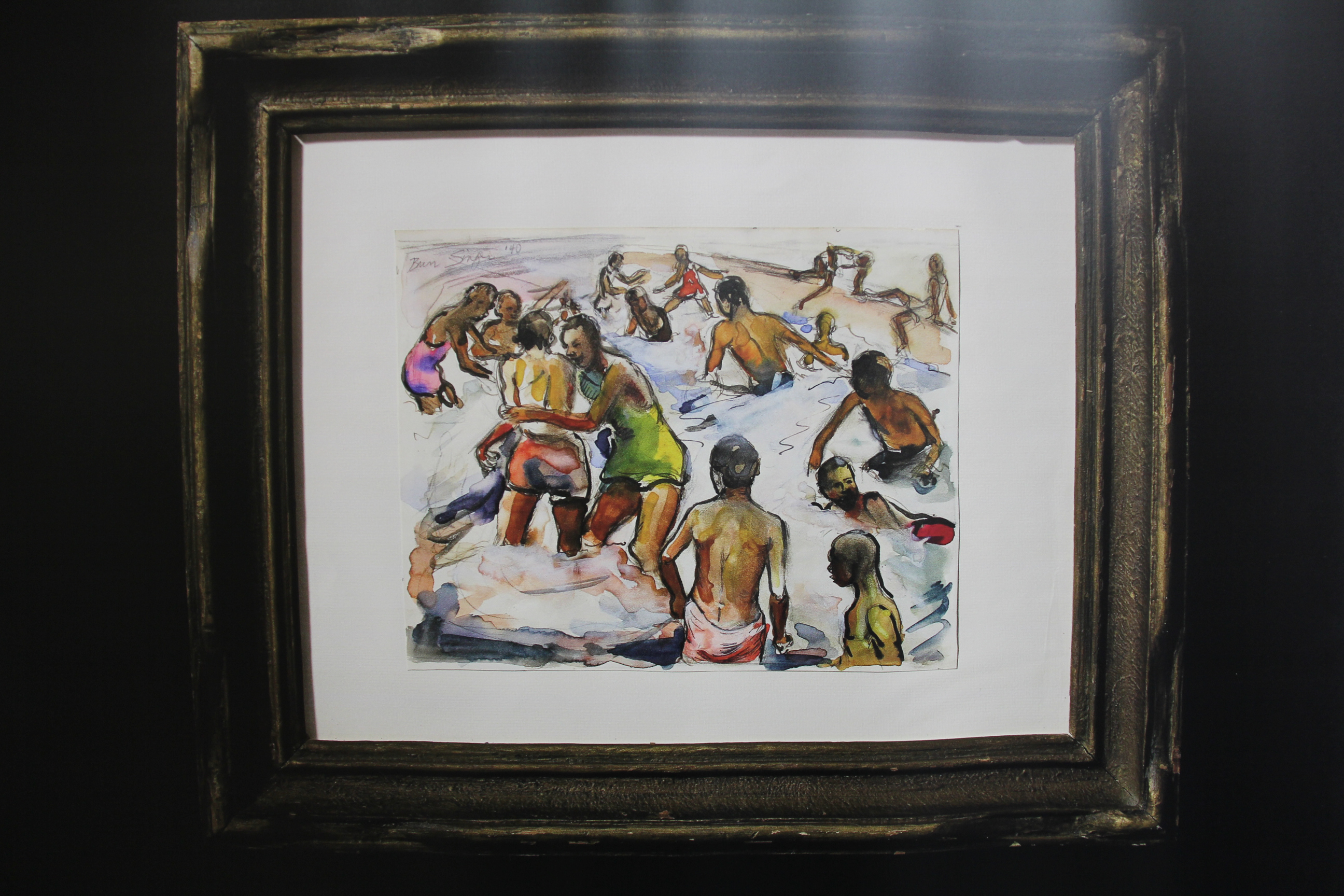
There’s lots to contemplate in the “Testify” exhibit. That includes the watercolor art of Burr Singer titled “Only on Thursdays.” If you just looked at the art without the title and context, you might think it was simply a depiction of African Americans swimming. But it’s not. Thursday was the only day Blacks could use the Pasadena public pool. This painting makes a statement.
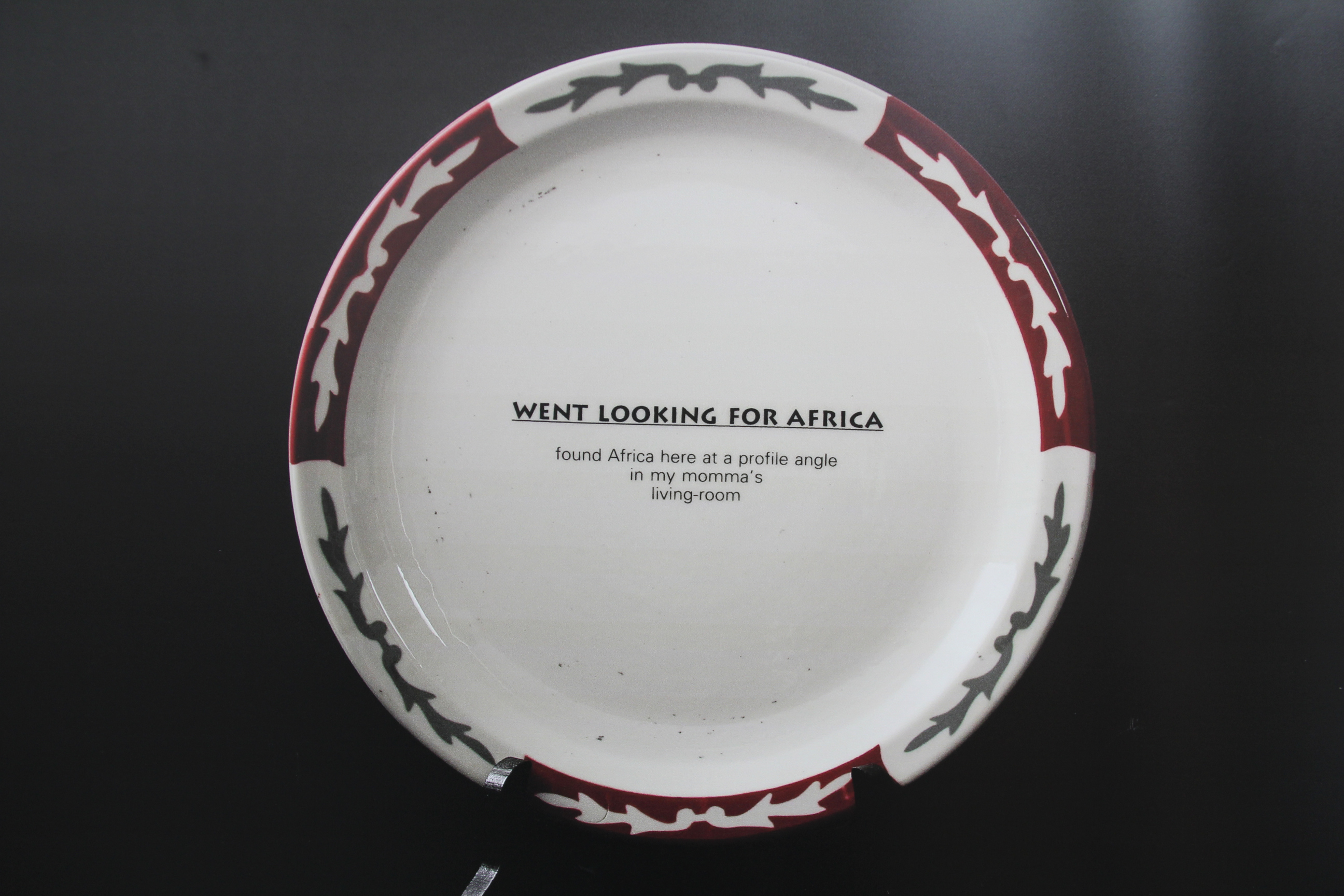
This exhibit makes a statement. Through images and words, it shines a light on the past, on Black history, on the atrocities of slavery and segregation and racism (both subtle and overt). Through “Testify,” truth-telling emerges for all to view and contemplate.
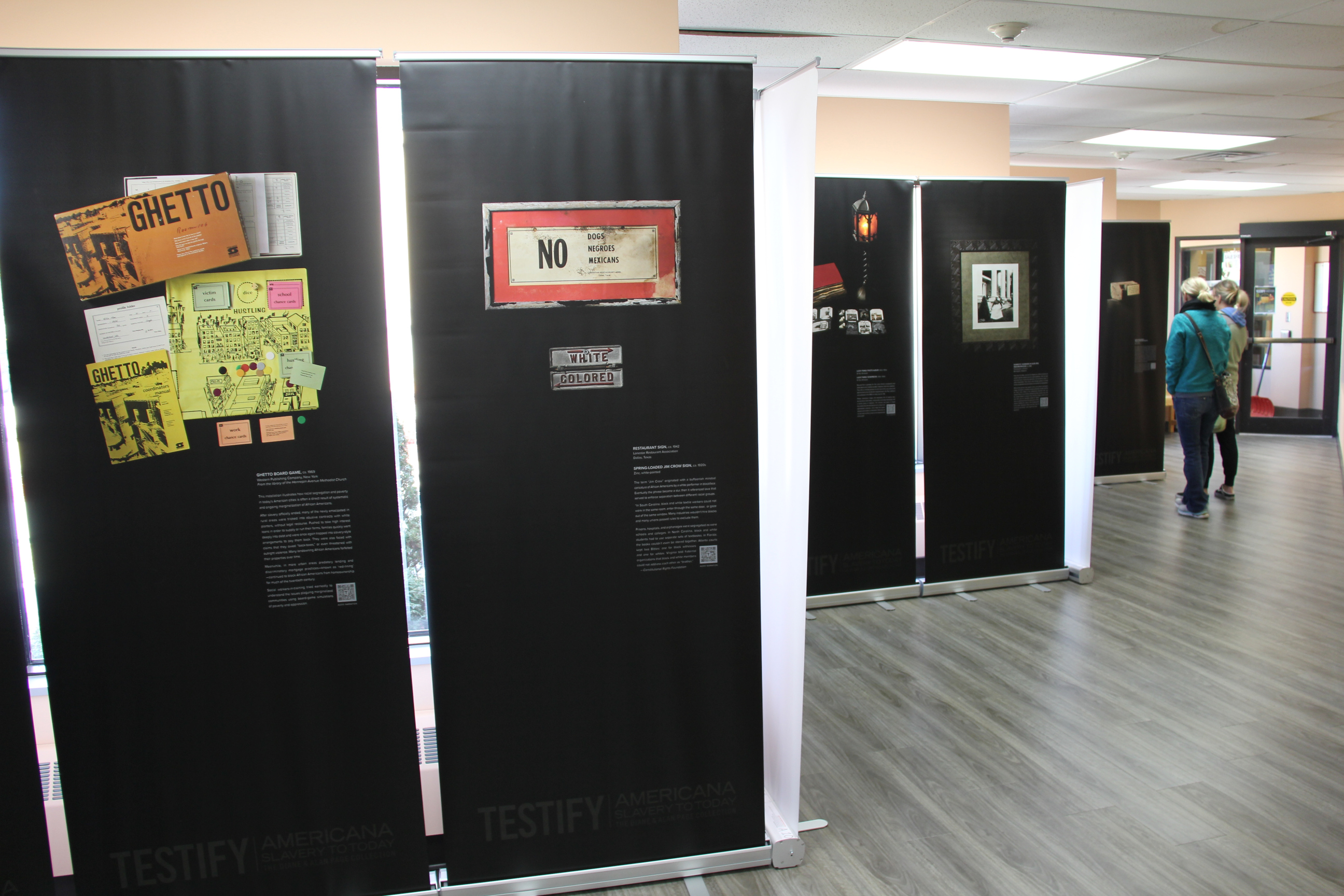
FYI: “Testify—Americana Slavery to Today” is on display until April 23 in the corridor linking Buckham Memorial Library to the Faribault Community Center. The photos and information included in this story are only a sampling of what you will see in the exhibit. The Mabel Public Library hosts the exhibit from April 25-May 7.
© Copyright 2025 Audrey Kletscher Helbling


 Minnesota Prairie Roots
Commentary: Floods, alligators & an email July 7, 2025
Tags: "Alligator Alcatraz", "Testify: Americana Slavery to Today, African Americans, America, commentary, communication, natural disaster, opinion, Texas flooding
I HAVE SEVERAL THINGS on my mind today which are roiling my emotions. Not on a personal level. But on a broader, national scale.
First, I feel heartbroken over the loss of lives in Texas following flash flooding. The latest death count I’ve read is eighty-five, 27 of those children. Dozens remain missing. Most heart-rending are the deaths of the young campers at a summer camp. I think many parents, myself included, can relate to dropping a child off at camp with the full expectation that they will be there when we come to pick them up at camp’s end. For too many, a parent’s absolute worst nightmare—that of losing a child—is now reality. I feel for anyone who has lost a loved one in these floods, no matter their age. I am thankful for the 850 rescued thus far.
ALLIGATORS
Secondly, I’m deeply-troubled by the gloating and hype about “Alligator Alcatraz,” a deportation detention facility in Florida. Those in power have been flaunting the name, stating quite clearly what will happen to anyone who tries to escape. There’s nothing remotely “funny” about alligators attacking and devouring human beings. There’s nothing “funny” either about placing people in cages. But neither seems to bother those who are vocally promoting this facility in such a vile way.
As soon as I heard the words “Alligator Alcatraz,” I was reminded of a traveling exhibit, “Testify—Americana Slavery to Today,” that I saw at my local library in April. Within that exhibit was a studio portrait of nine unclothed Black babies and toddlers sitting or standing in one long line. The circa 1897 image by a photography studio was simply titled “ALLIGATOR BAIT.” I remember standing there, my jaw dropping in disbelief. The photo was right above another image, that one of the African-American 9th Calvary Regiment, ca. 1939.
Then I read the text below the two photos: The juxtaposition of photos heightens the irony of being hawked as unwanted, or “alligator bait,” while at the same time being drafted into a calvary regiment to serve in the name of the United States’ highest ideals. Historians have actually investigated to determine if African-American children were indeed used by hunters to lure alligators. The results were somewhat inconclusive, but the fact that research was needed is telling.
I wondered when I saw the “ALLIGATOR BAIT” photo how humans can be so cruel? I wonder the same today.
A TROUBLING EMAIL
Lastly, a few days ago I received an email from the Social Security Administration, which I initially thought to be phishing given the title, “Social Security Applauds Passage of Legislation Providing Historic Tax Relief for Seniors.” Turns out this was legit. I’m sure many of you got the same email.
As I read on, I couldn’t quite believe what I was reading—a clearly partisan piece of propaganda from an agency I thought was non-partisan. Not only that, the content was not complete or accurate.
Whoever crafted this email and thought it was OK to mass-send, it is not OK.
LET’S DO BETTER
There you go. This is what’s on my mind today, just days after celebrating the Fourth of July in a country I love, even with all its faults, atrocities, injustices and troubles. But we can, and must, do better. I believe we can.
© Copyright 2025 Audrey Kletscher Helbling