Minnesota Prairie Roots

Writing and photography by Audrey Kletscher Helbling

Carleton art exhibit zeroes in on guns, nuclear disarmament & nonviolence November 11, 2025

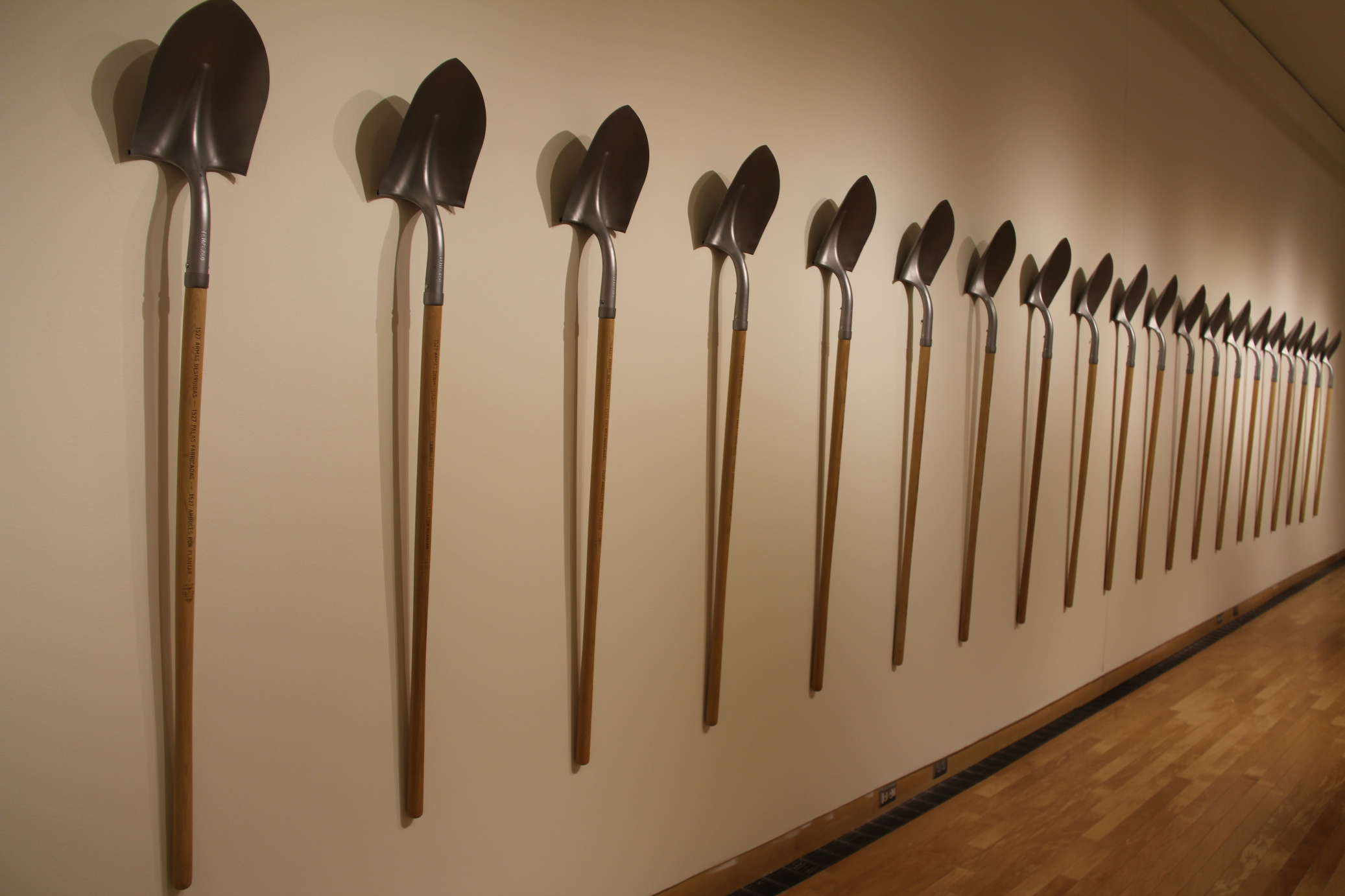
These shovels were crafted from melted guns and are part of an exhibit, “Ahimsa,” at Carleton College. (Minnesota Prairie Roots copyrighted photo October 2025)

INSIDE A GALLERY at a noted liberal arts college in a small southern Minnesota city, 20 identical shovels hang, evenly-spaced, along a beige wall. That may not seem impressive, until you read the story behind these tools.
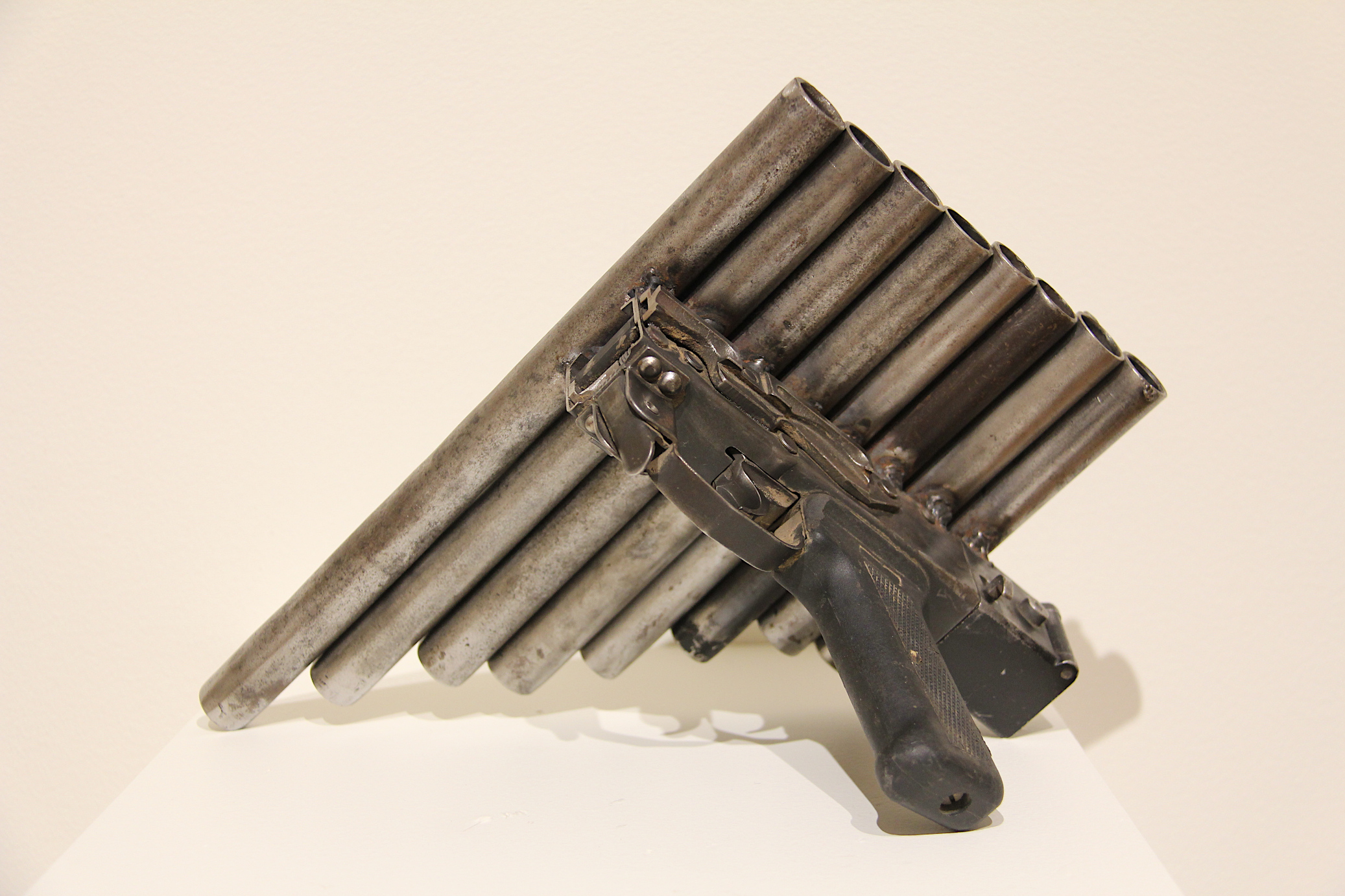
Pedro Reyes used surrendered and melted guns to create not only shovels, but also this “Disarm Pan Flute,” a playable instrument. (Minnesota Prairie Roots copyrighted photo October 2025)

These shovels were crafted from 1,527 guns surrendered in Culiacán, Mexico. Guns that were melted and made into 1,527 shovels used to plant 1,527 trees, including one at the corner of Union Street and Fourth Street East on the campus of Carleton College in Northfield.
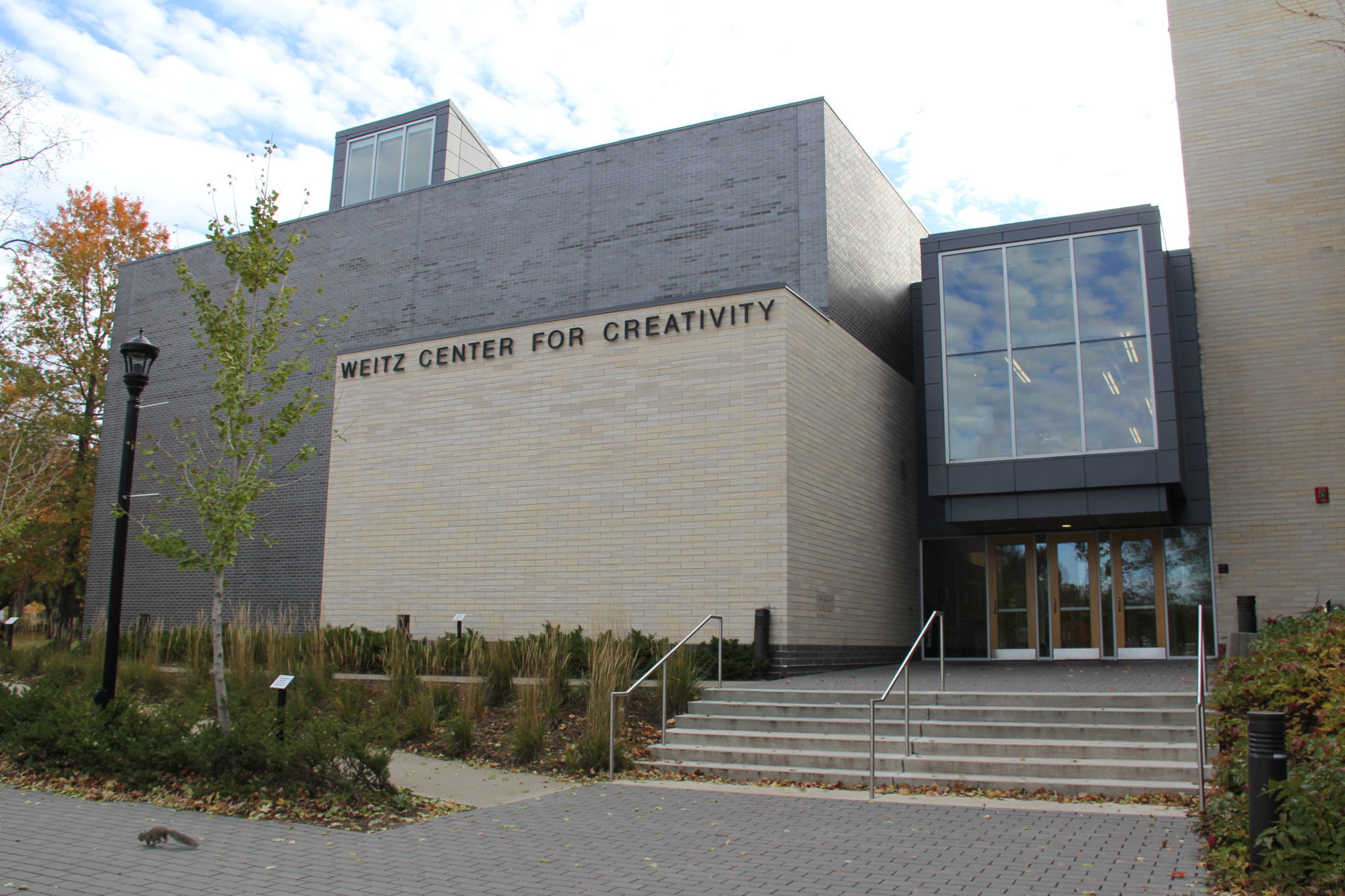
The exhibit is showcased in two galleries inside the Weitz Center for Creativity. (Minnesota Prairie Roots copyrighted photo October 2025)

Recently I stopped at this college campus to tour “Ahimsa,” an exhibition by Mexican artist Pedro Reyes in the galleries at The Perlman Teaching Museum inside the Weitz Center for Creativity. “Ahimsa” is a Sankritt word meaning “nonviolence.” That focuses this thought-provoking exhibit filling two gallery spaces.
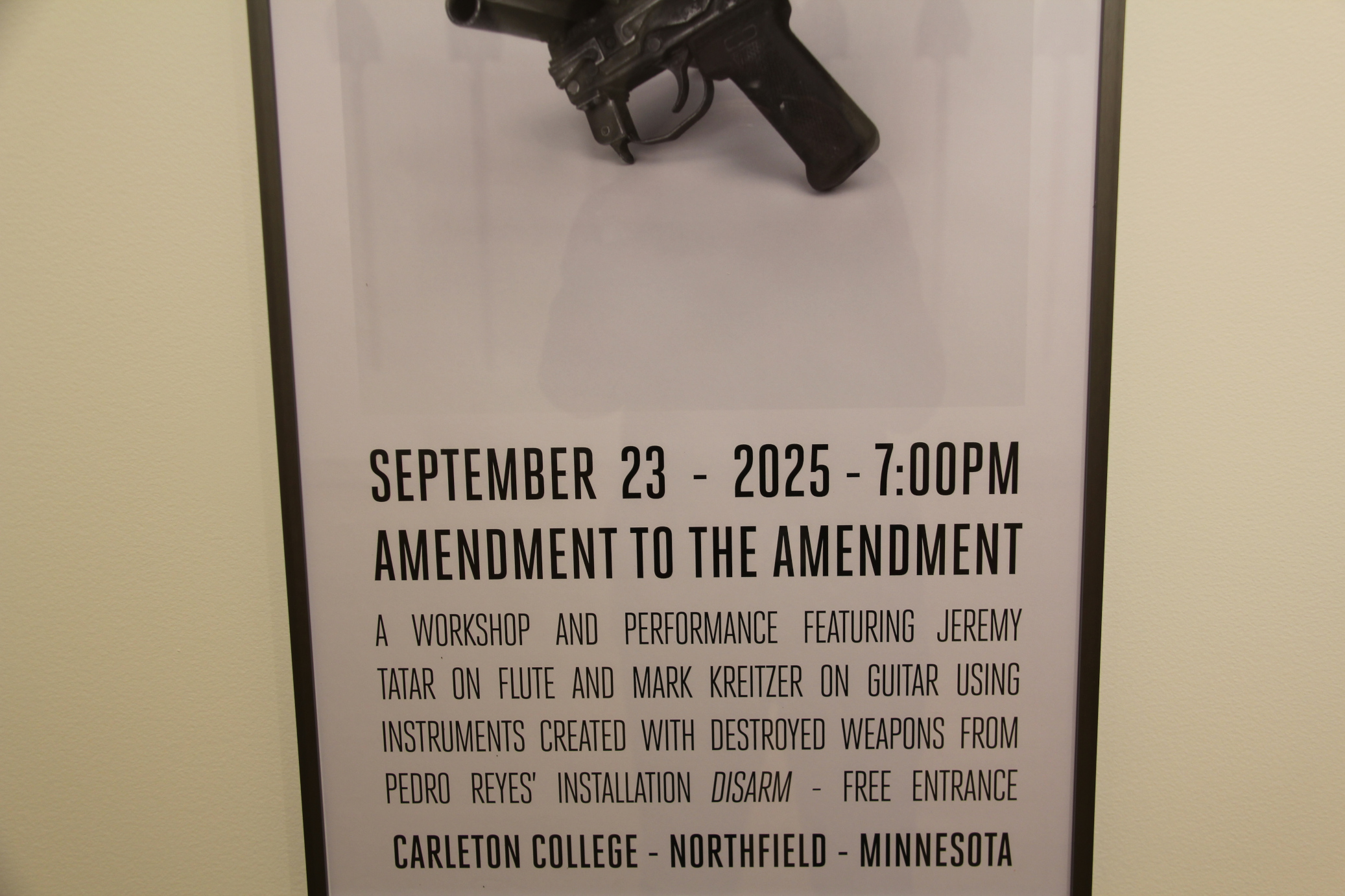
A wall of posters promoting Pedro Reyes’ exhibition shown around the world include this one from Northfield. His shows feature engaging events. (Minnesota Prairie Roots copyrighted photo October 2025)

With gun violence so prevalent in America, including right here in Minnesota with the political assassination of Minnesota House Speaker Emerita Melissa Hortman and her husband, Mark, in June and the deadly August mass shooting at Annunciation Catholic Church in south Minneapolis, I found Reyes’ exhibit profoundly relevant. I couldn’t help but think of the two Annunciation School children who were killed and the 27 other students and adults who were injured during morning Mass. Since then, voices have risen, loud and vocal, against gun violence. But thus far, nothing has changed, although discussion is ongoing with Minnesota Governor Tim Walz hosting town halls around the state on the topic.
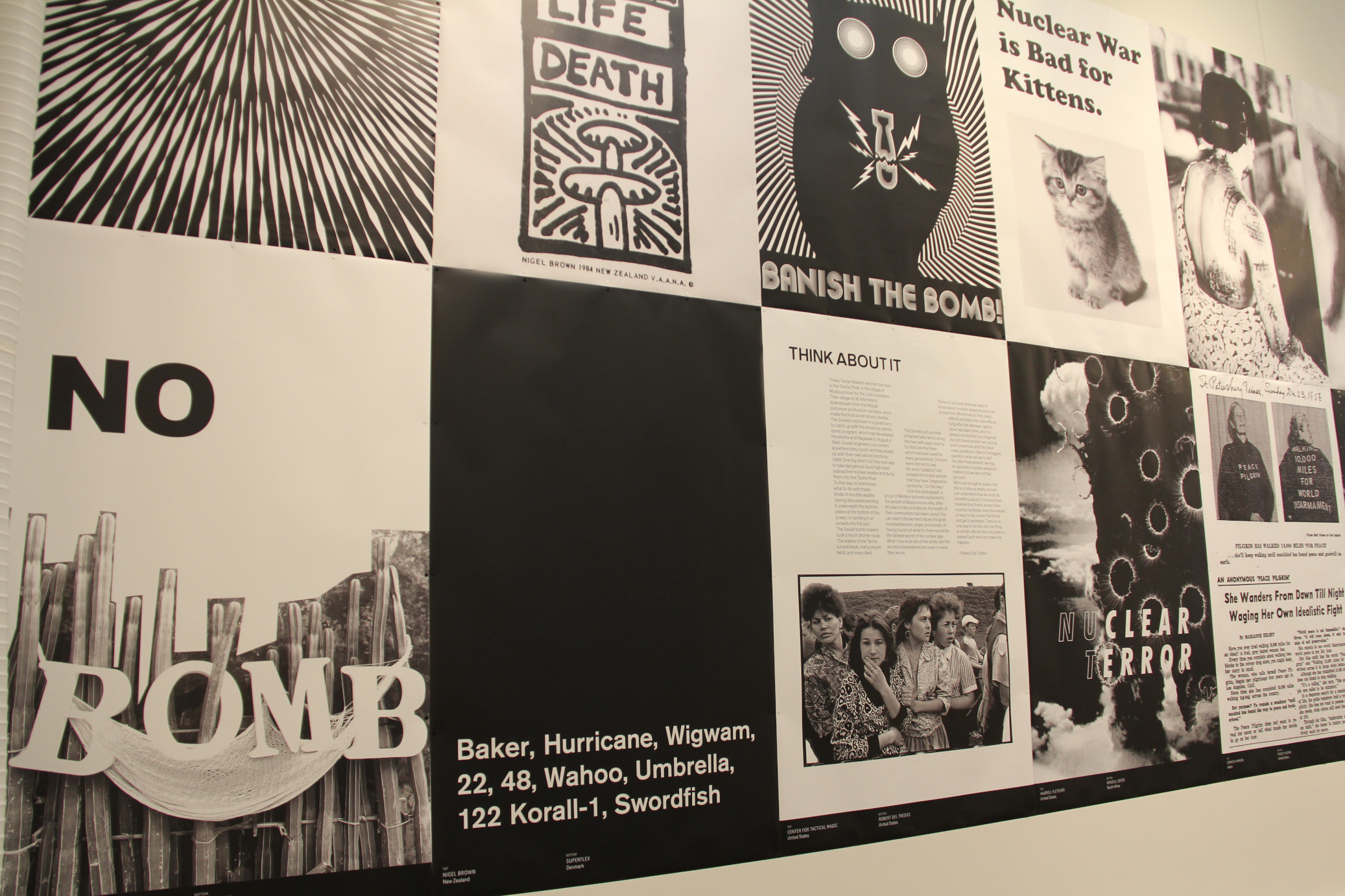
One gallery wall features posters created for “Artists Against the Bomb” by artists from around the world. (Minnesota Prairie Roots copyrighted photo October 2025)

The voice of this Mexican artist is among those rising. Upon entering the gallery, I read this: …Ahimsa reminds us that silence is complicity…
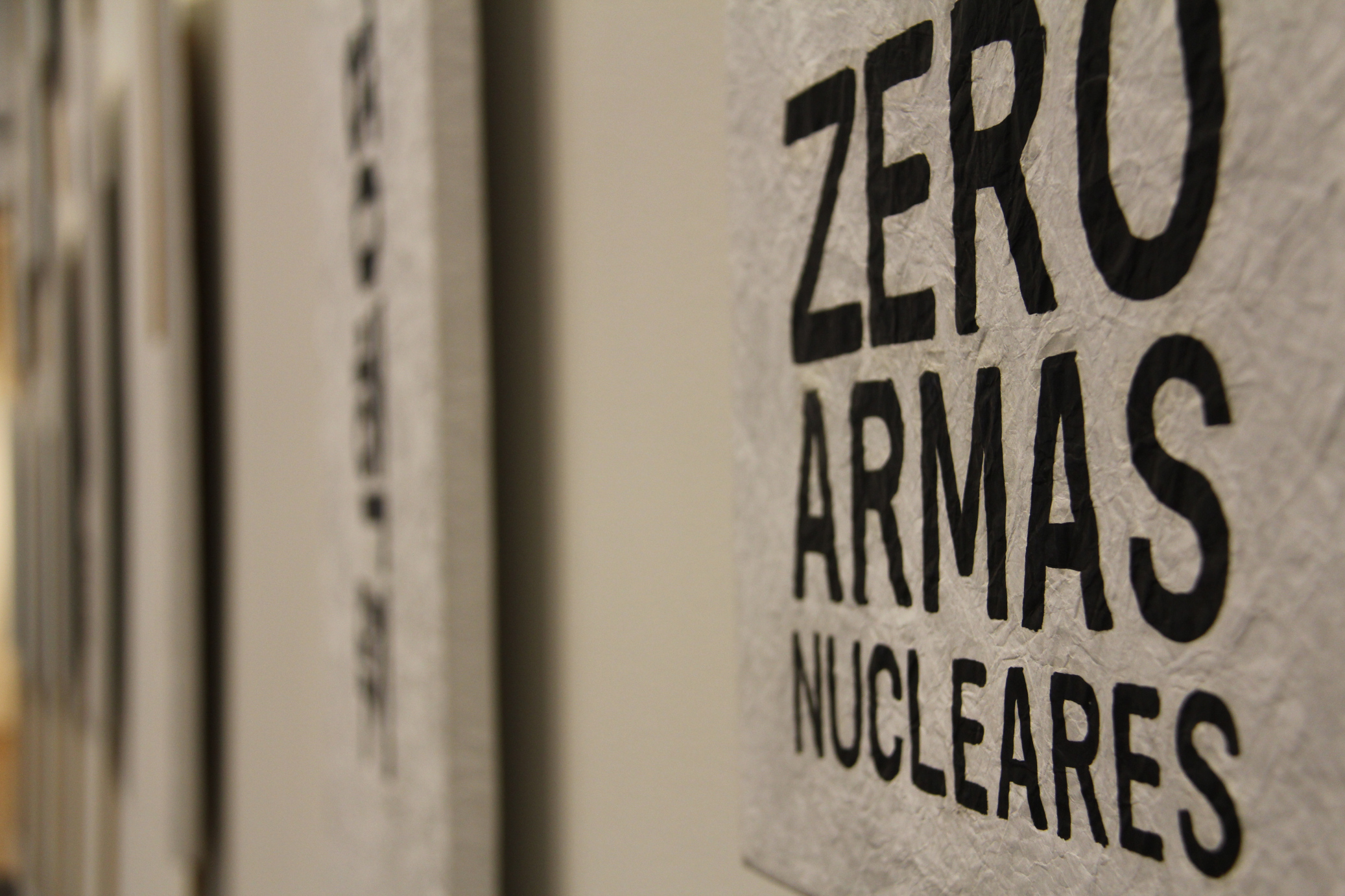
A closeup of a protest banner. A wall is covered with these signs in multiple languages with graphic symbols inspired by the conceptual element of zero. These are done in oil painting on Tyvek. (Minnesota Prairie Roots copyrighted photo October 2025)

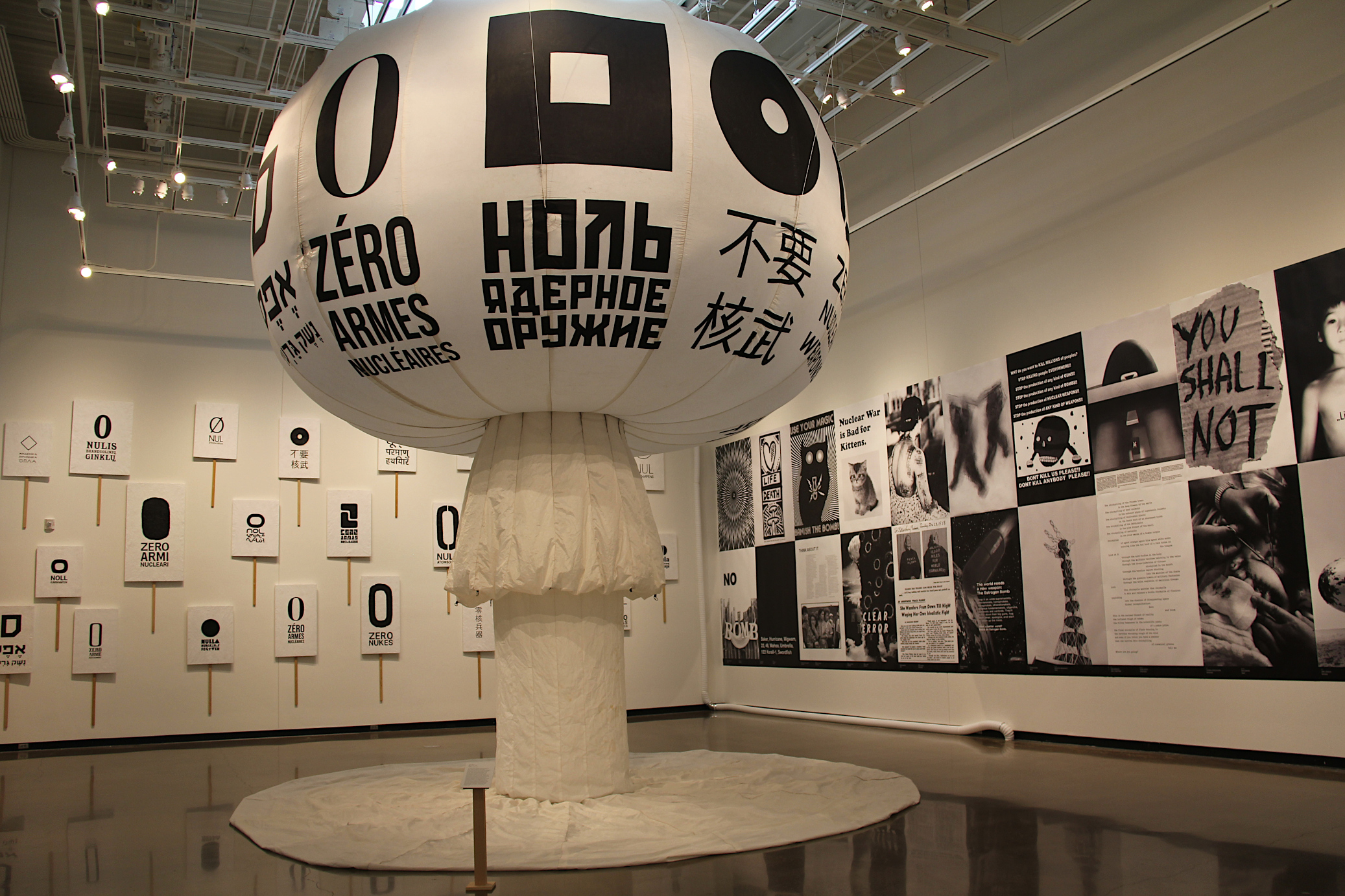
Reyes speaks out against more than gun violence in his exhibition. He also advocates for nuclear disarmament, another timely topic. And he does that in an artistically-mammoth way via a towering inflatable that overwhelms the high-ceilinged Braucher Gallery. Exactly the effect Reyes wants to make in his piece titled “Zero Nukes.”
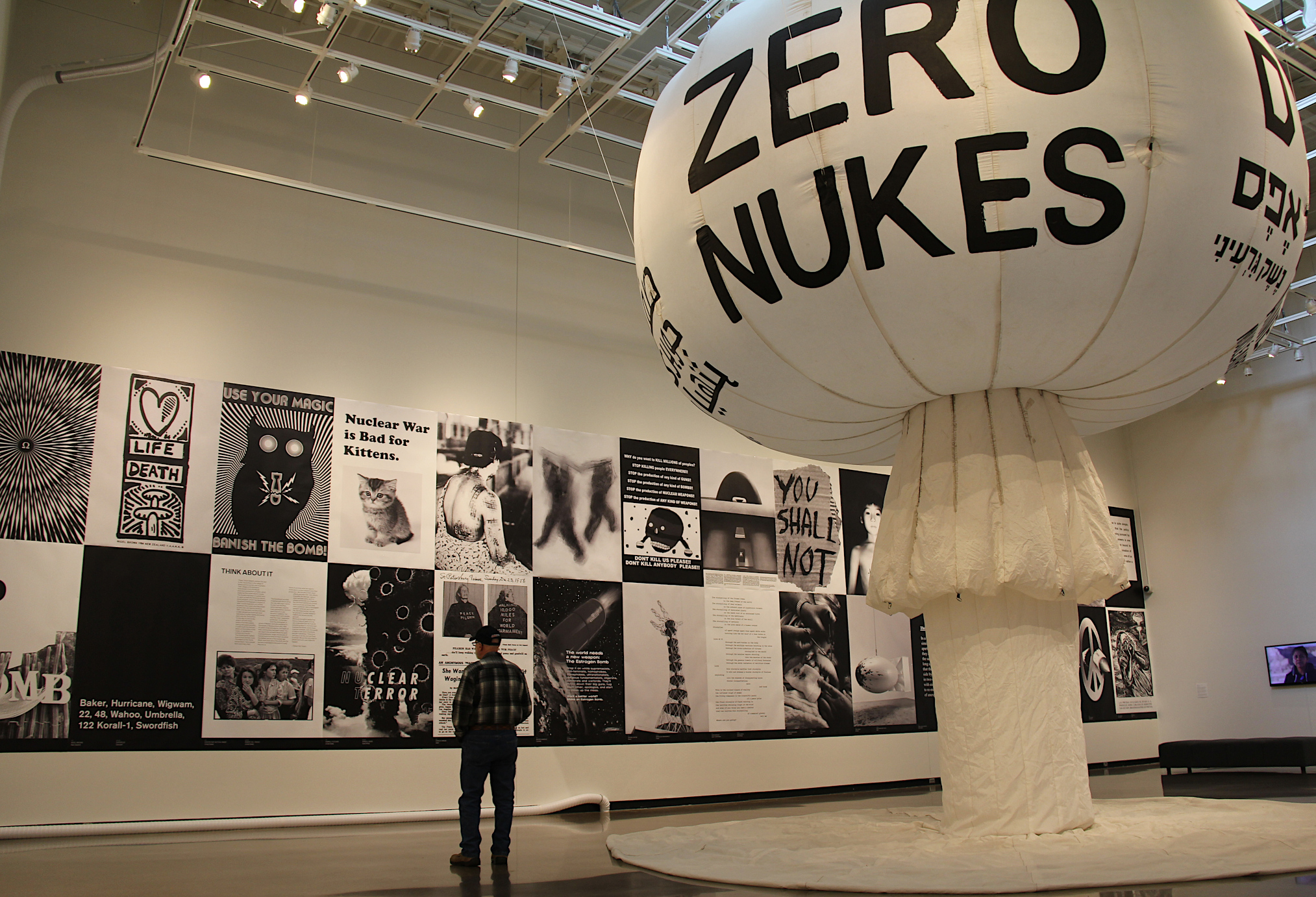
The massive nuclear mushroom cloud centers the nuclear disarmament part of the exhibit. (Minnesota Prairie Roots copyrighted photo October 2025)

I felt minimal, small, dwarfed by the mushroom cloud upon which ZERO NUCLEAR WEAPONS is printed in eight languages.
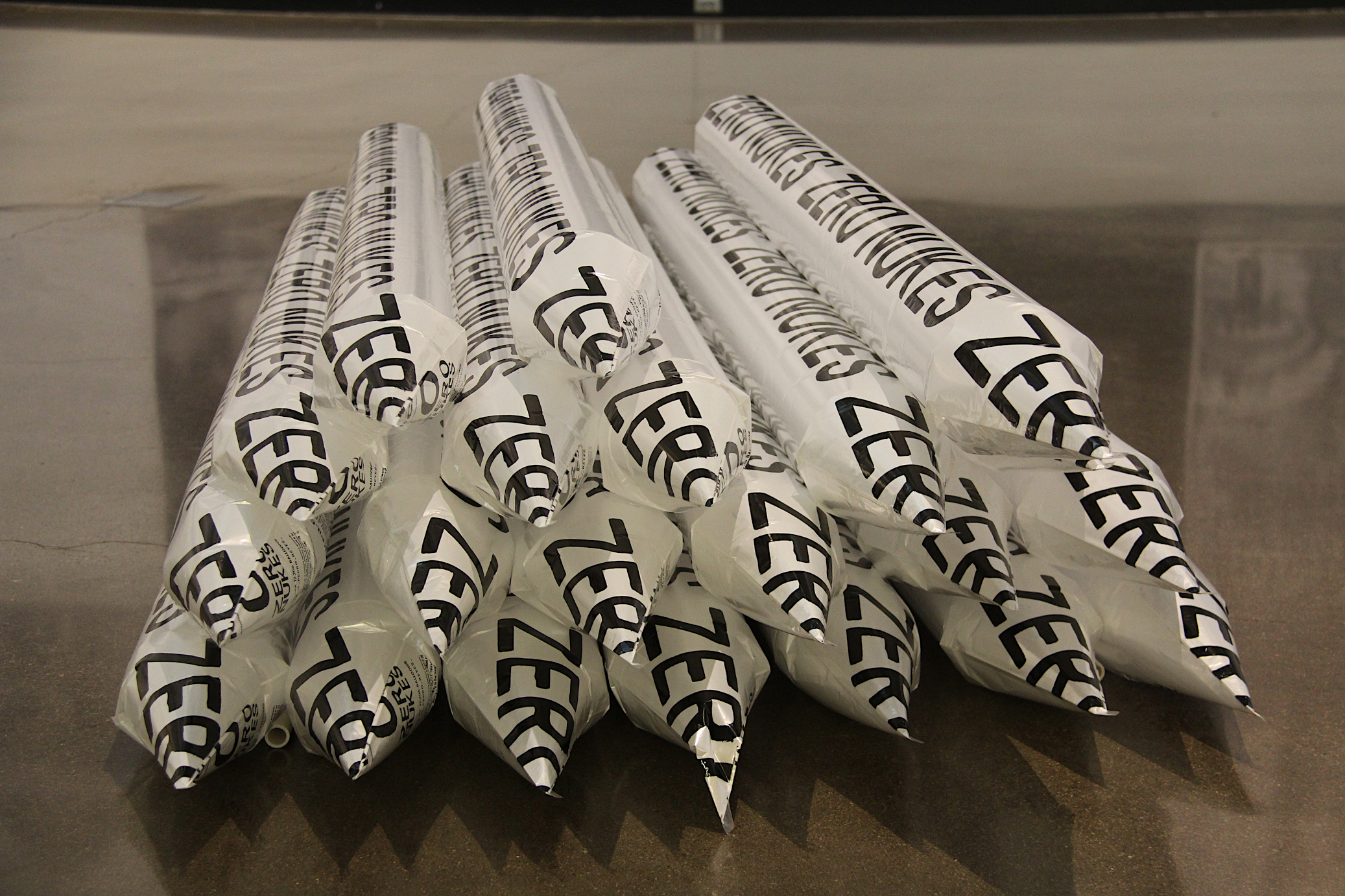
Inflatable warheads are part of the art installation. (Minnesota Prairie Roots copyrighted photo October 2025)
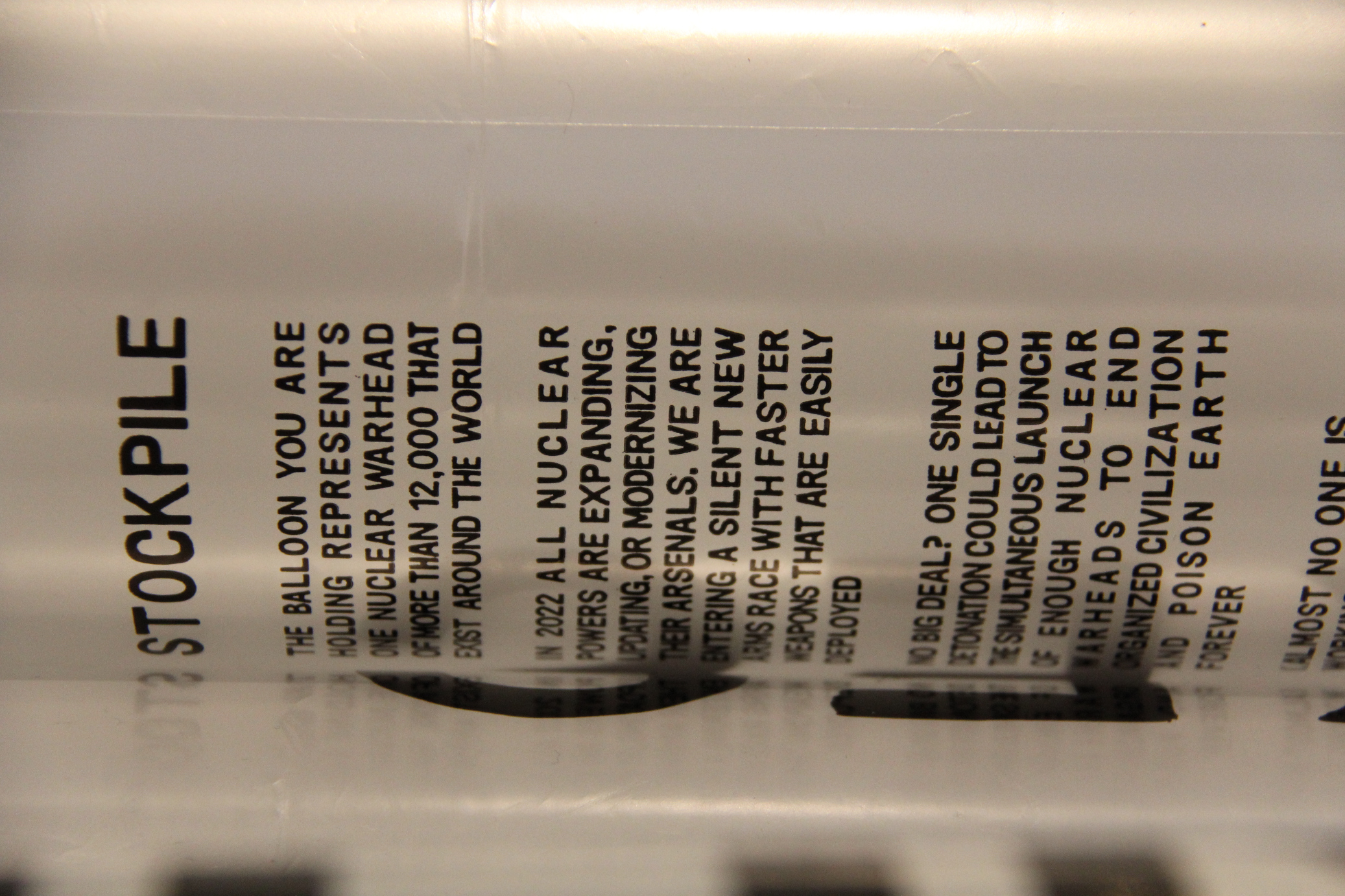
A closeup of the message printed on the inflatable warheads. (Minnesota Prairie Roots copyrighted photo October 2025)
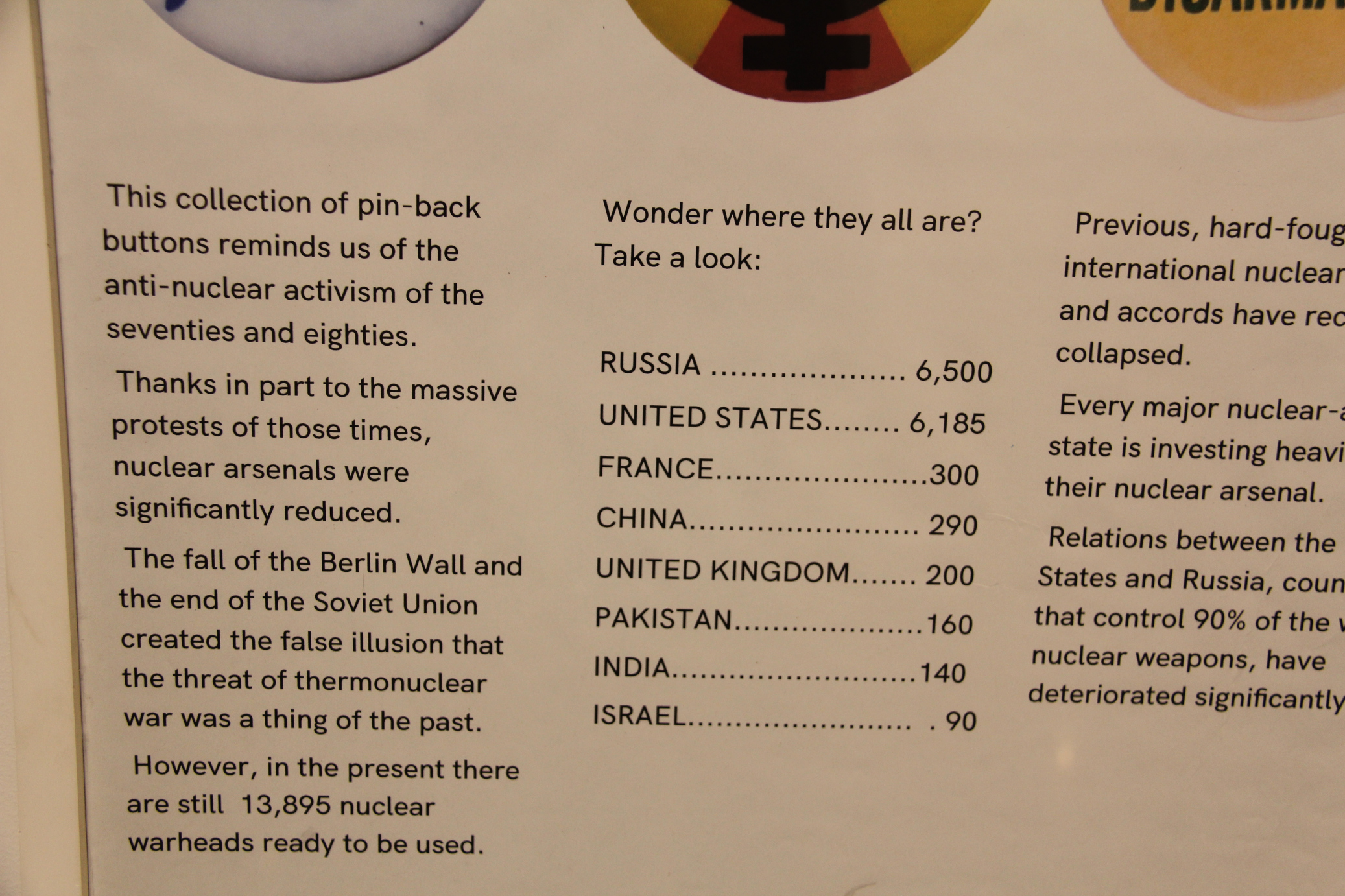
Nuclear warhead info and stats. Surprising. (Minnesota Prairie Roots copyrighted photo October 2025)

Nearby, a stockpile of inflatable nuclear warheads lies, another strong visual representing the nearly 14,000 nuclear warheads at the ready around the world. The statistics, cited as part of this display, are sobering, surprising (to me) and revealing.
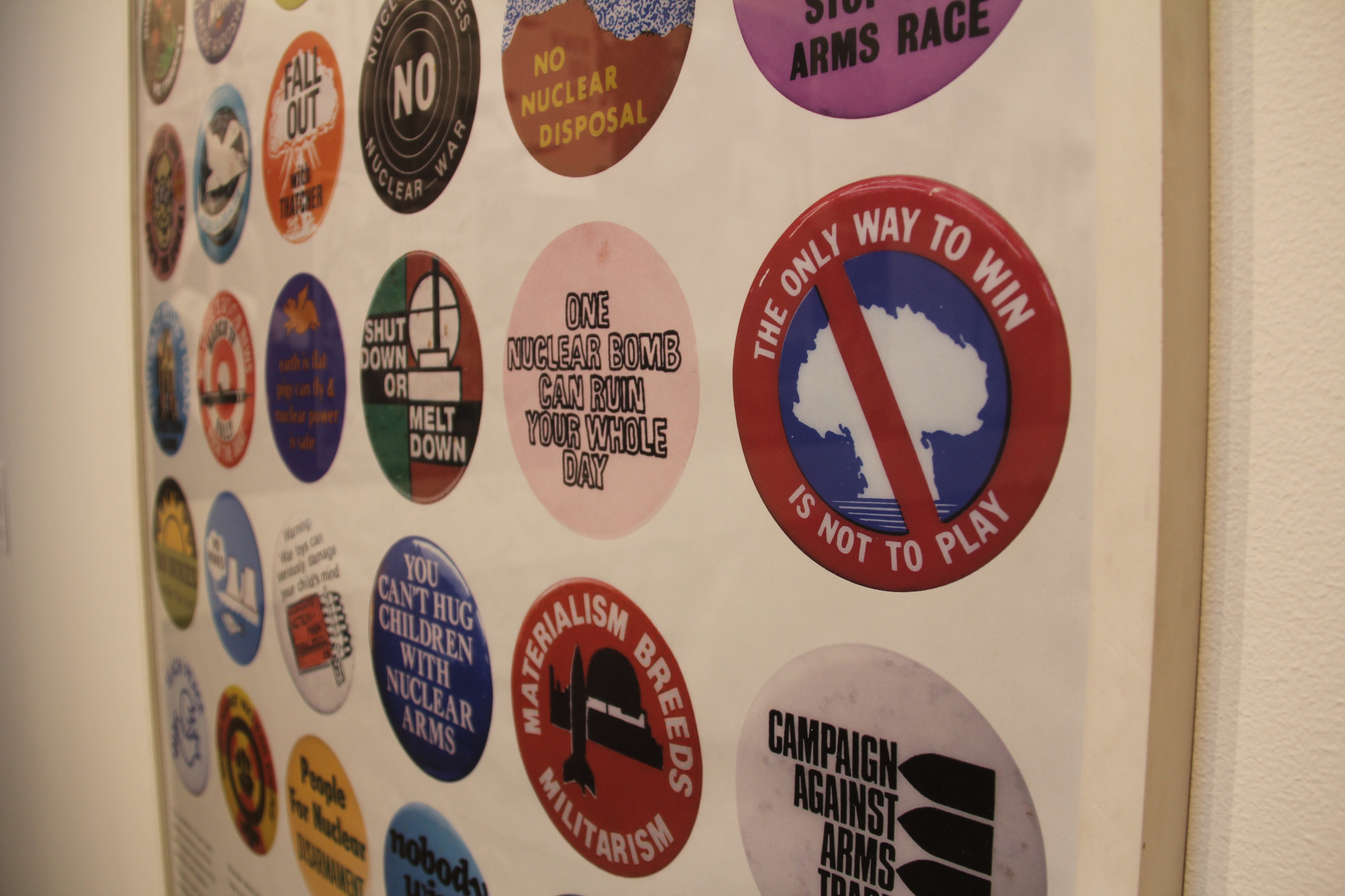
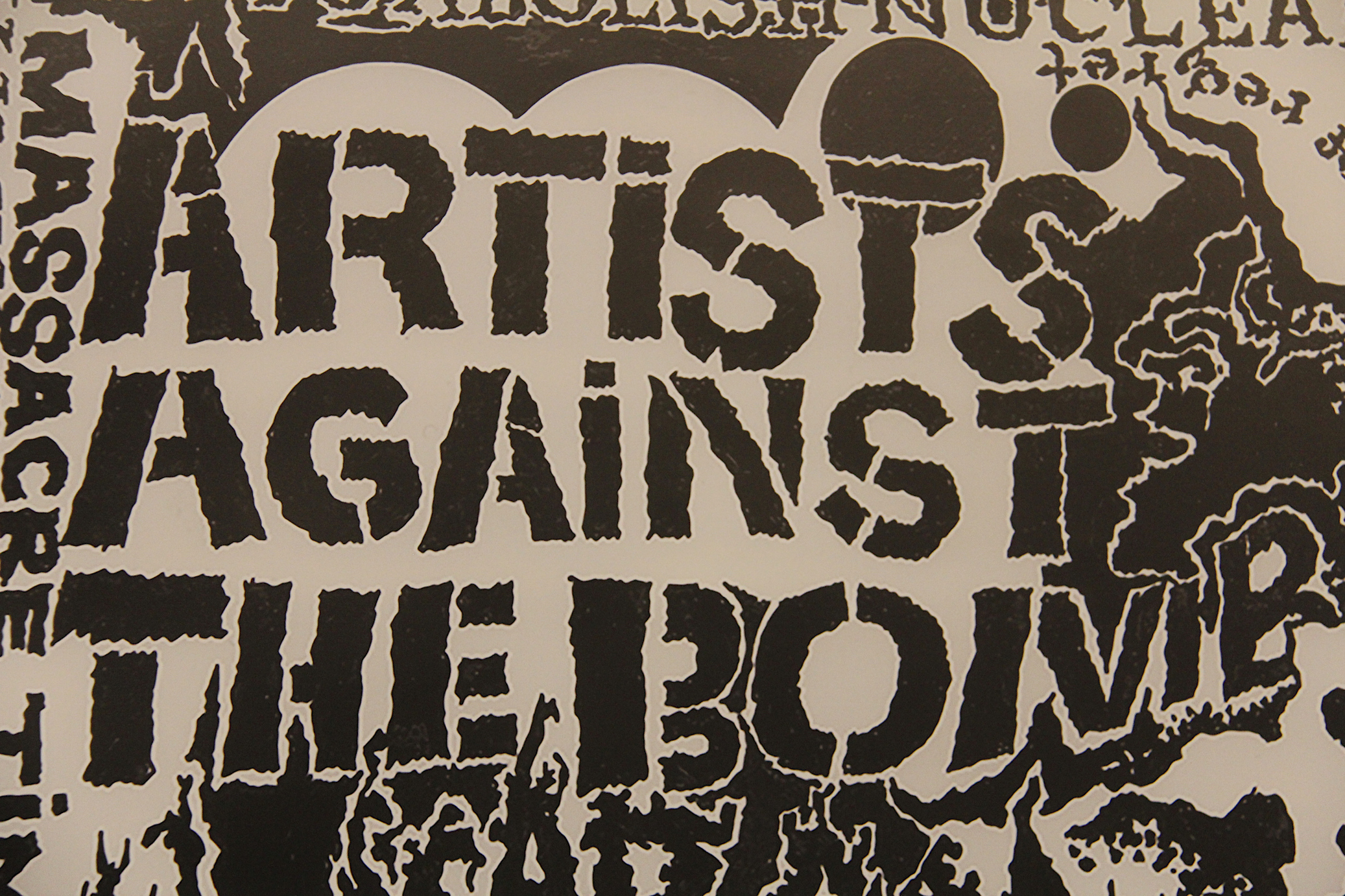
One section of the exhibit features images of buttons protesting nuclear weapons. (Minnesota Prairie Roots copyrighted photo October 2025)
One entire wall showcases the works of “Artists Against the Bomb. (Minnesota Prairie Roots copyrighted photo October 2025)
An overview of the campaign for nuclear disarmament shows the inflatable mushroom cloud, “Zero Nuclear Weapons” protest banners and a wall of protest posters, far right. (Minnesota Prairie Roots copyrighted photo October 2025)

Reyes, in his exhibit, shows us how art can be used to inform, educate, raise awareness, spark community conversation and action. He shows us via posters, buttons, sculptures, videos, inflatables and words how we can rise in protest against gun violence and nuclear weapons.
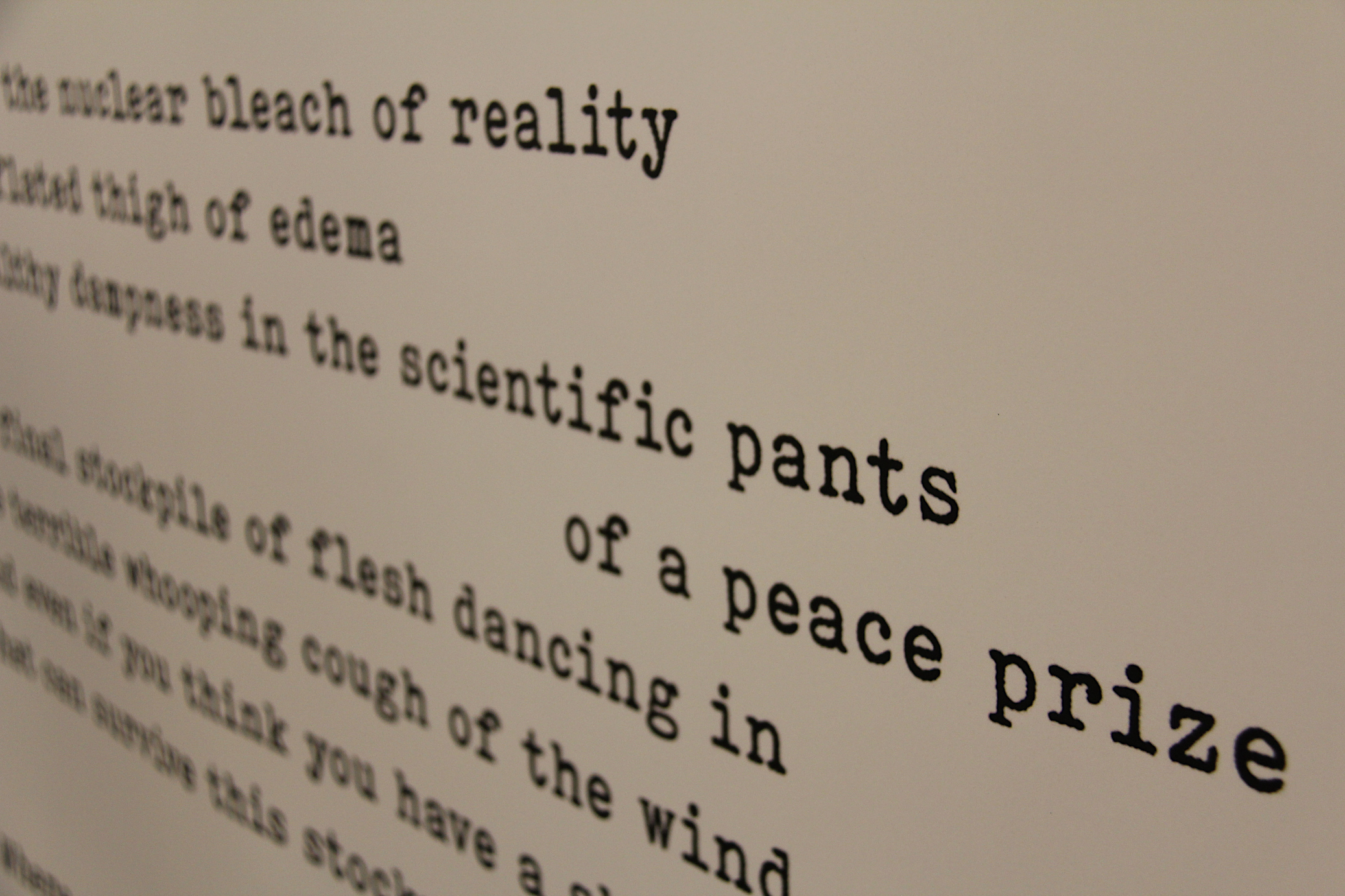
At its end, the poet asks, “Where are you going?” (Minnesota Prairie Roots copyrighted photo October 2025)

In the end we must ask ourselves the singular question posed in a poem on the protest poster wall: Where are you going? That’s in the event of nuclear war or similarly in the case of a mass shooting. I long ago stopped believing that the 1960s advice to duck and cover beneath a school desk would save me.
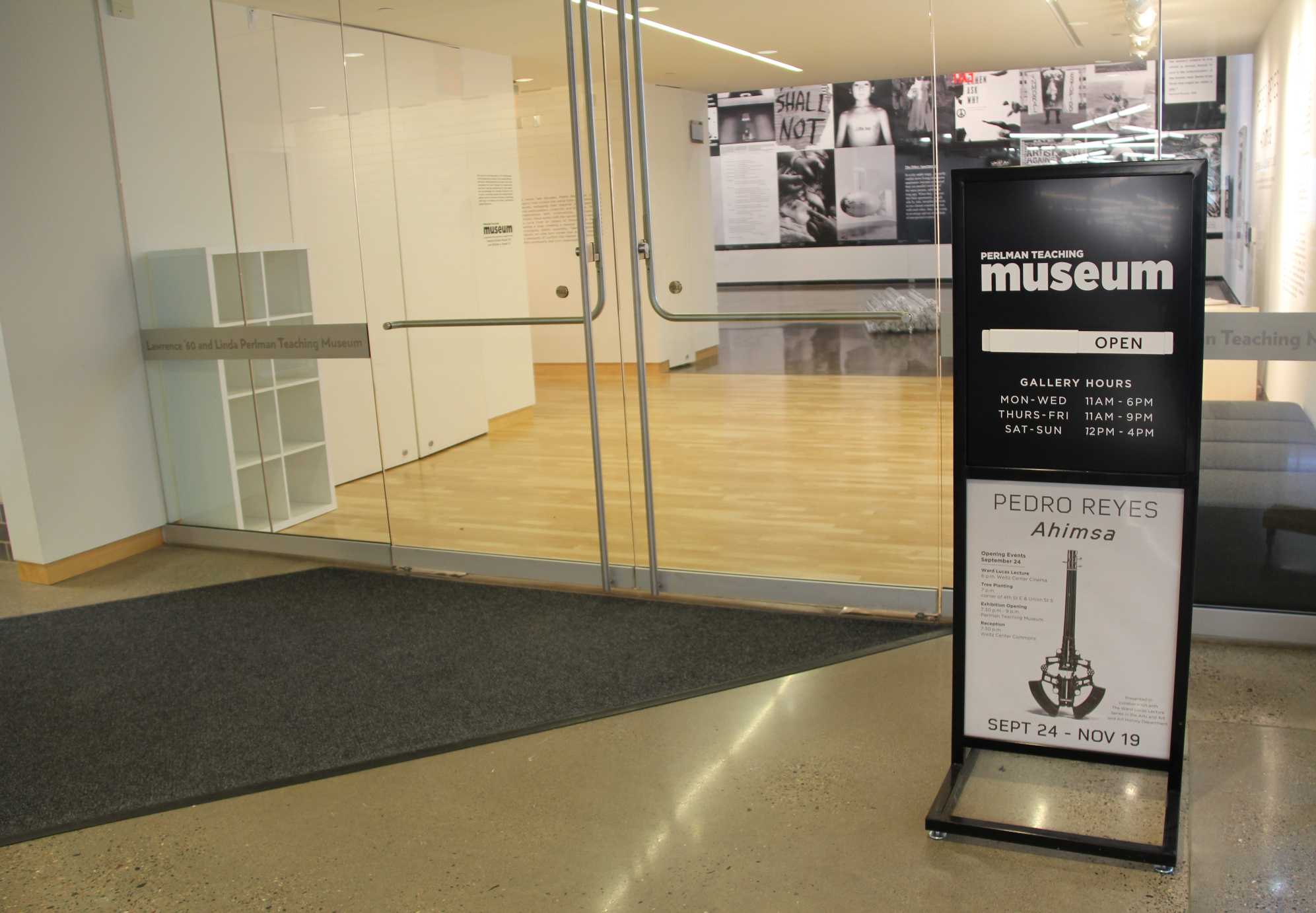
Open these glass doors and walk into the gallery showing Pedro Reyes’ “Ahimsa.” (Minnesota Prairie Roots copyrighted photo October 2025)

FYI: “Ahimsa” by Pedro Reyes is free and open to the public daily inside the Weitz Center for Creativity, 320 Third Street East, Northfield, until November 19. Hours vary. Click here for more information.

This exhibit was photographed with permission.

© Copyright 2025 Audrey Kletscher Helbling


Exploring art inside the Weitz Center for Creativity at Carleton College December 5, 2013

MY EXPOSURE TO PROFESSIONAL ART as a youth could be categorized as minimal. There were no visits to art galleries, no attending theatrical performances, no concerts outside of school walls.

Yet, I did not feel deprived, for art surrounded me in blazing prairie sunsets, an inky sky dotted with an infinity of stars, road ditches graced with wild roses, tall grass bending in the wind, the symphony of a howling blizzard, the crunch of boots on hard-packed snow, the orchestra of pulsating milking machines and munching cows and the radio voices of ‘CCO.

To this day, I credit my rural southwestern Minnesota upbringing for shaping me as a writer and photographer. There, on the stark prairie, within the confines of a close and loving family living off the land, I learned to appreciate the details in the landscape and life itself.

Today, I no longer live on my beloved prairie. And I have immediate access to the arts within my own community of Faribault and nearby. You won’t find me, except on rare occasions, aiming for the Twin Cities to view art. I am not a city girl.

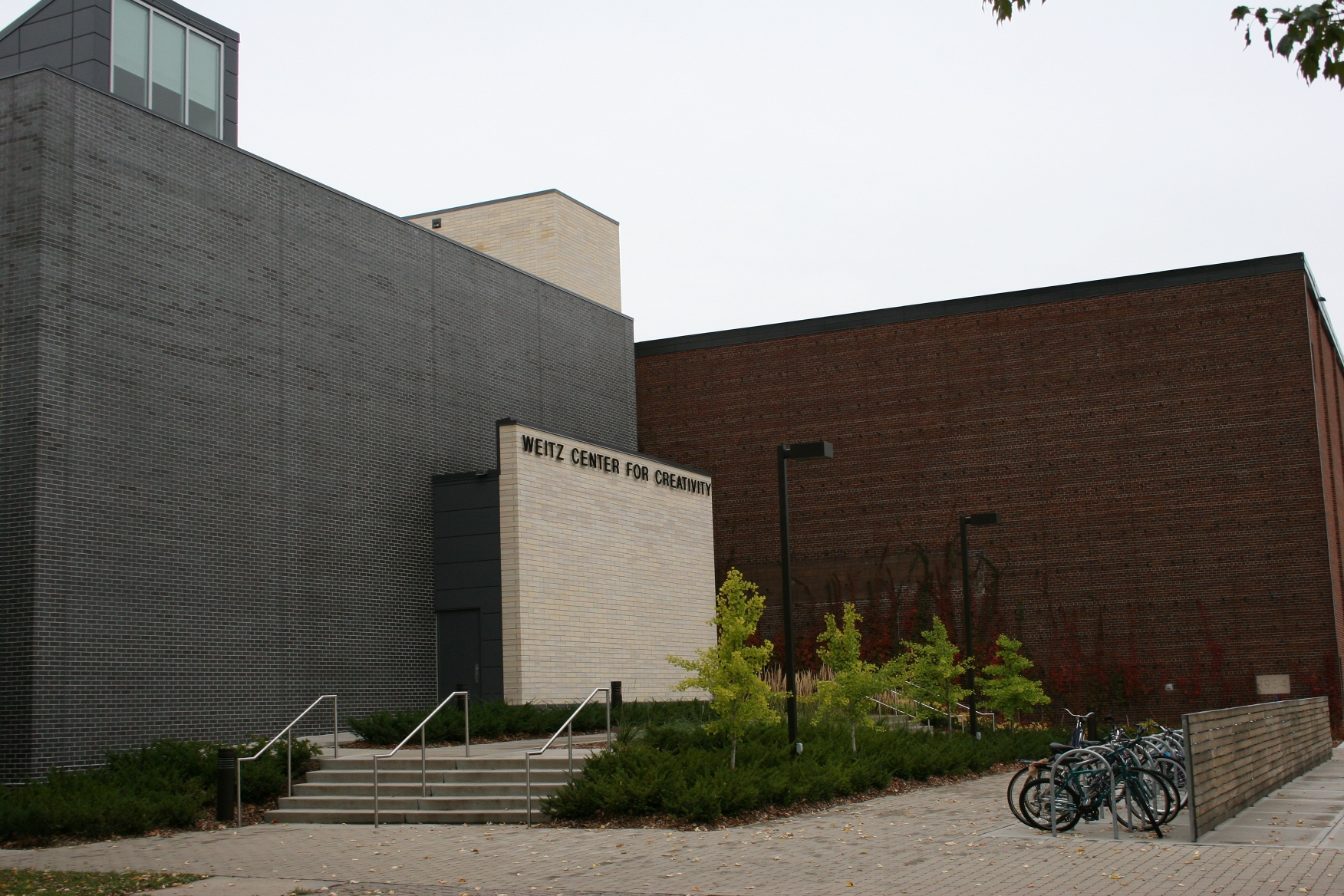
The Weitz Center for Creativity at Third and College Streets in Northfield, Minnesota.

The Weitz Center for Creativity at Third and College Streets in Northfield, Minnesota.

In late October, I discovered Weitz Center for Creativity, “a center for creativity and collaboration in the liberal arts,” on the campus of Carleton College in neighboring Northfield. The center is housed in the historic former and repurposed Northfield high school and middle school and in 30,000 additional square feet of new construction.

Near the entrance to the Weitz Center Commons area.

Near the entrance to the Weitz Center Commons area. (Photographed in October.)

The complex offers such creative spaces as a theater, dance studios, a technology resource center (the Gage/Bauer IdeaLab), a teaching museum, galleries and more.

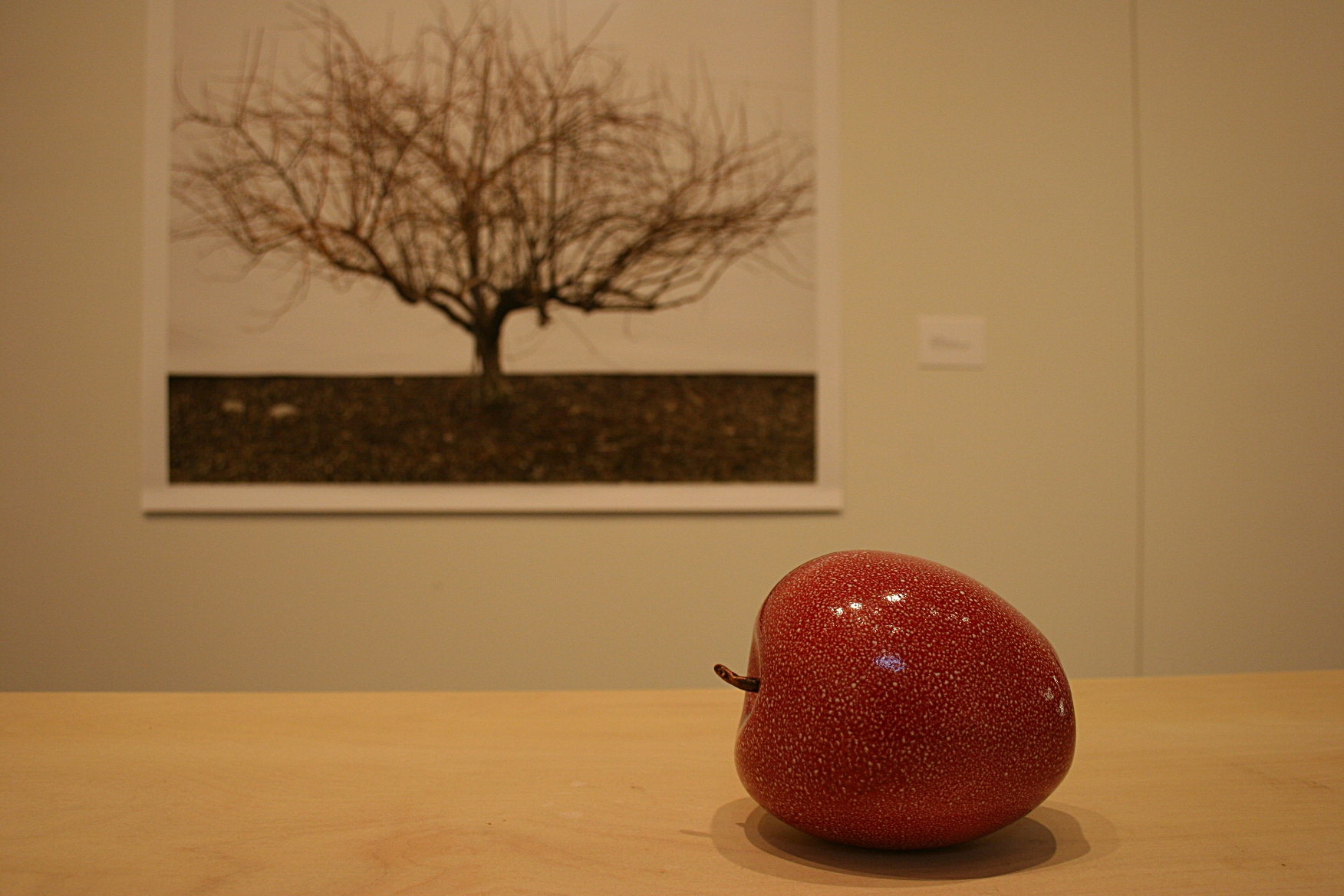
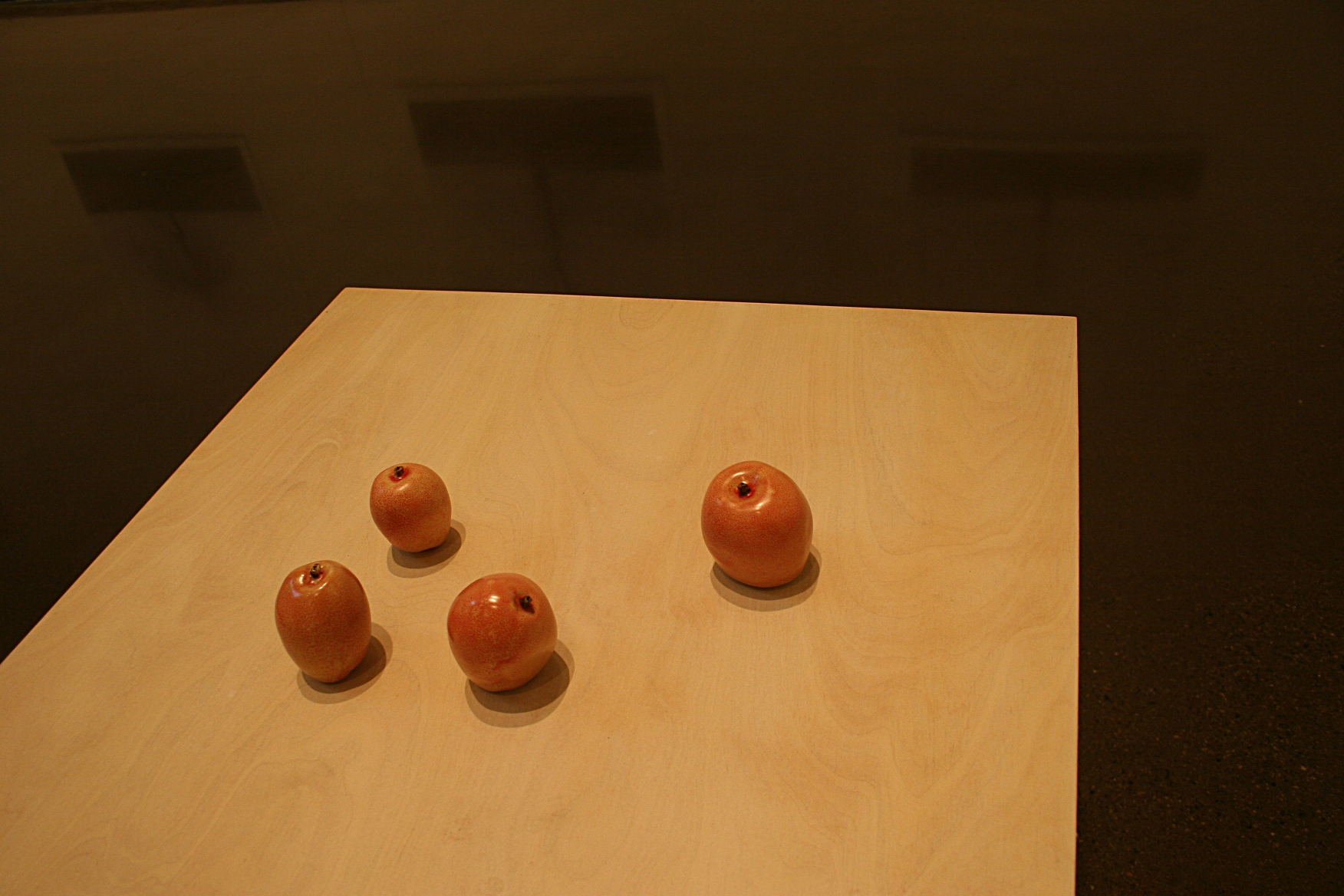
From Jessica Rath's "take me to the apple breeder" exhibit, a porcelain apple and an apple tree photograph.

From Jessica Rath’s “take me to the apple breeder” exhibit, a porcelain apple and an apple tree photograph.

The Perlman Teaching Museum and galleries there drew me to view “Single Species Translations,” which included Jessica Rath’s “take me to the apple breeder” and Laura Cooper’s “Opuntia,” and “The Intersection Between Book, Film, and Visual Narrative.” The exhibits have since closed. But “Lifeloggers: Chronicling the Everyday,” opens January 17 and runs through March 12, 2014. The exhibit will feature the works of a dozen artists.

And here’s the really sweet deal. Admission to the Perlman Teaching Museum (and galleries) is free. Hours are 11 a.m. – 6 p.m. Monday – Wednesday, 11 a.m. – 9 p.m. Thursday and Friday, and noon to 4 p.m. Saturday and Sunday. Note that the museum is open only during Carleton’s academic term, although closed during breaks and during the summer.

Connecting indoors and out in a section of the Commons.

Connecting indoors and out in a section of the Commons.

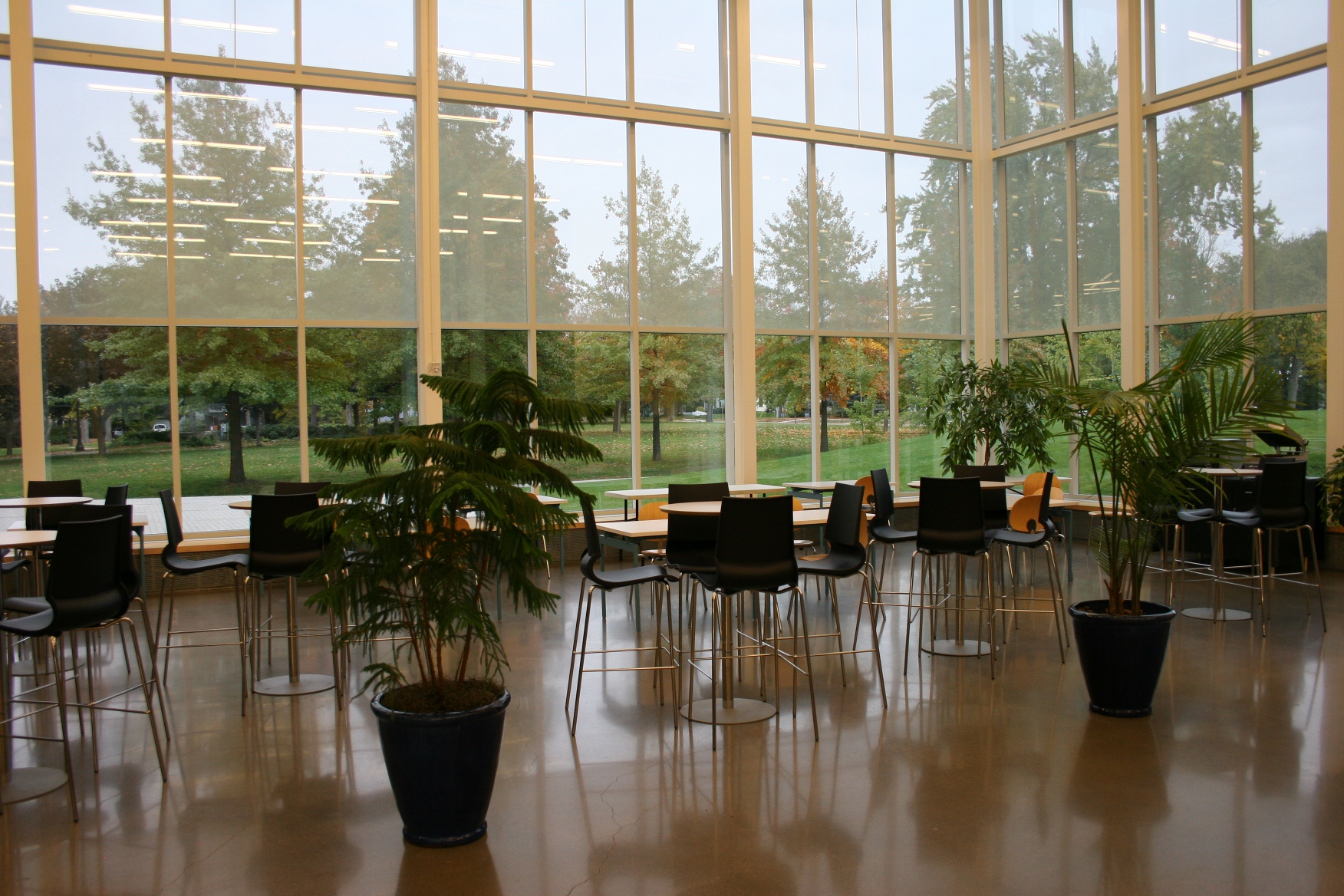
My first impression of the Weitz Center for Creativity was one of visual appreciation for the modern, clean lines and minimalistic setting. I love the walls of windows, the pots of pines and palms and other plants interspersed among clusters of tables and chairs in a space that visually connects to the outdoors.

Cozy spots for conversation in the Commons.

Cozy spots for conversation in the Commons.

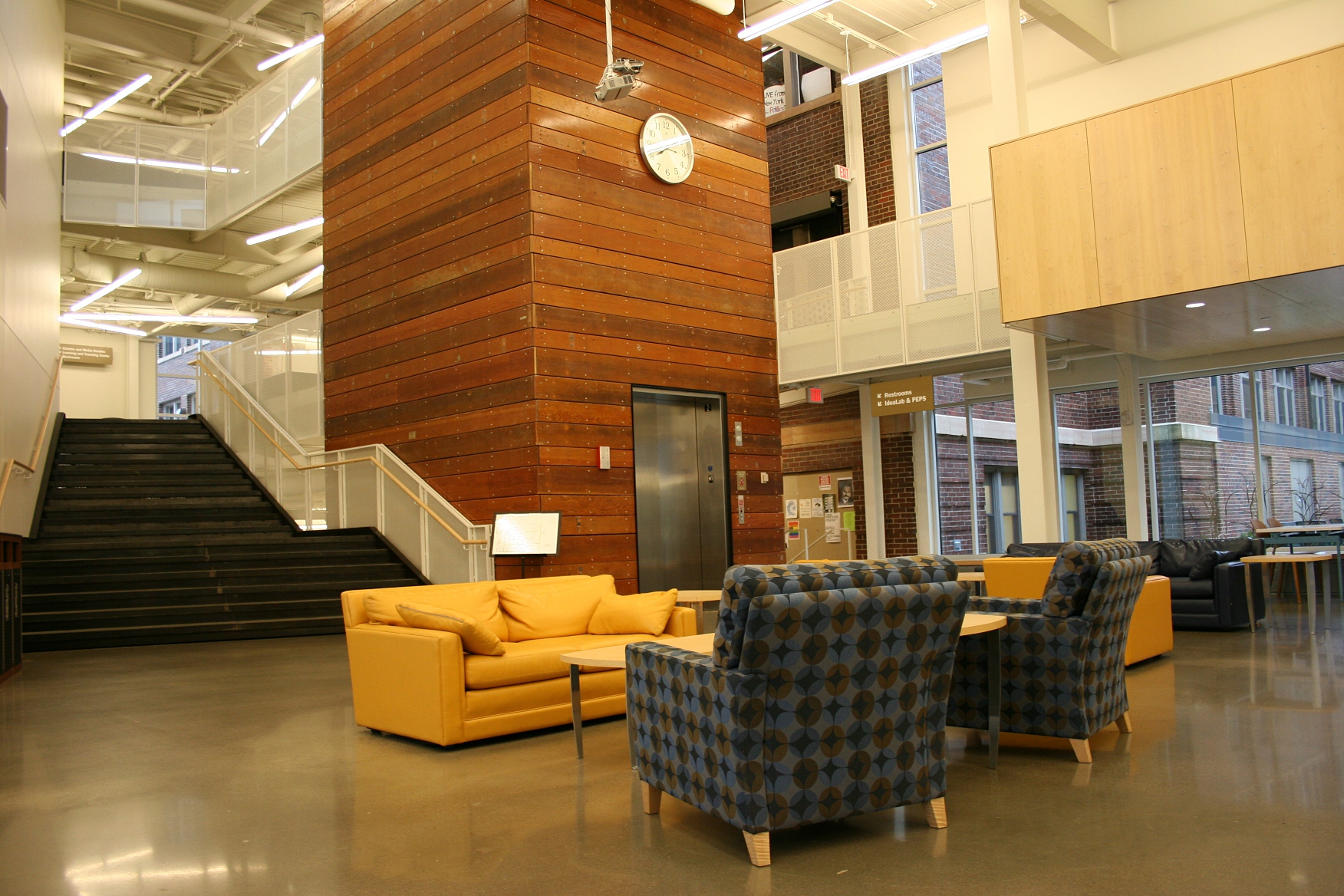
I appreciate, too, the cozy settings of living room furniture that invite conversation and create a sense of intimacy in the spacious, open Commons area.

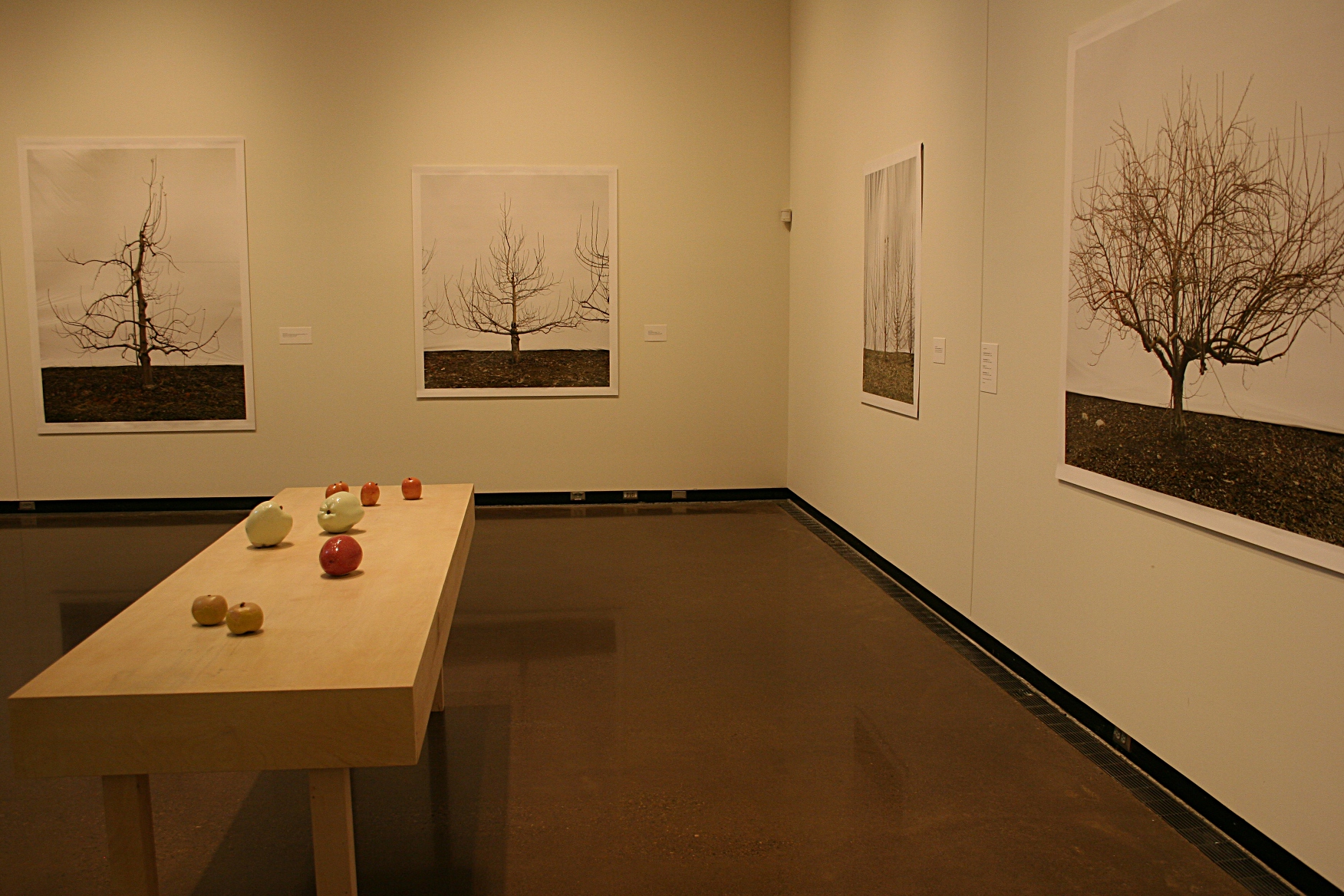
A snippet of Jessica Rath's exhibit shows porcelain apple sculptures and photos of apple trees in the Braucher Gallery.

A snippet of Jessica Rath’s exhibit shows porcelain apple sculptures and photos of apple trees in the Braucher Gallery.

Entering the gallery, I noted the gleaming starkness of the space, an excellent backdrop to showcase exhibits. I know this is the gallery norm. But, since I did not grow up visiting galleries, I am still struck each time by this visual impact of a clean slate. Light and shadows and mood play upon art here.

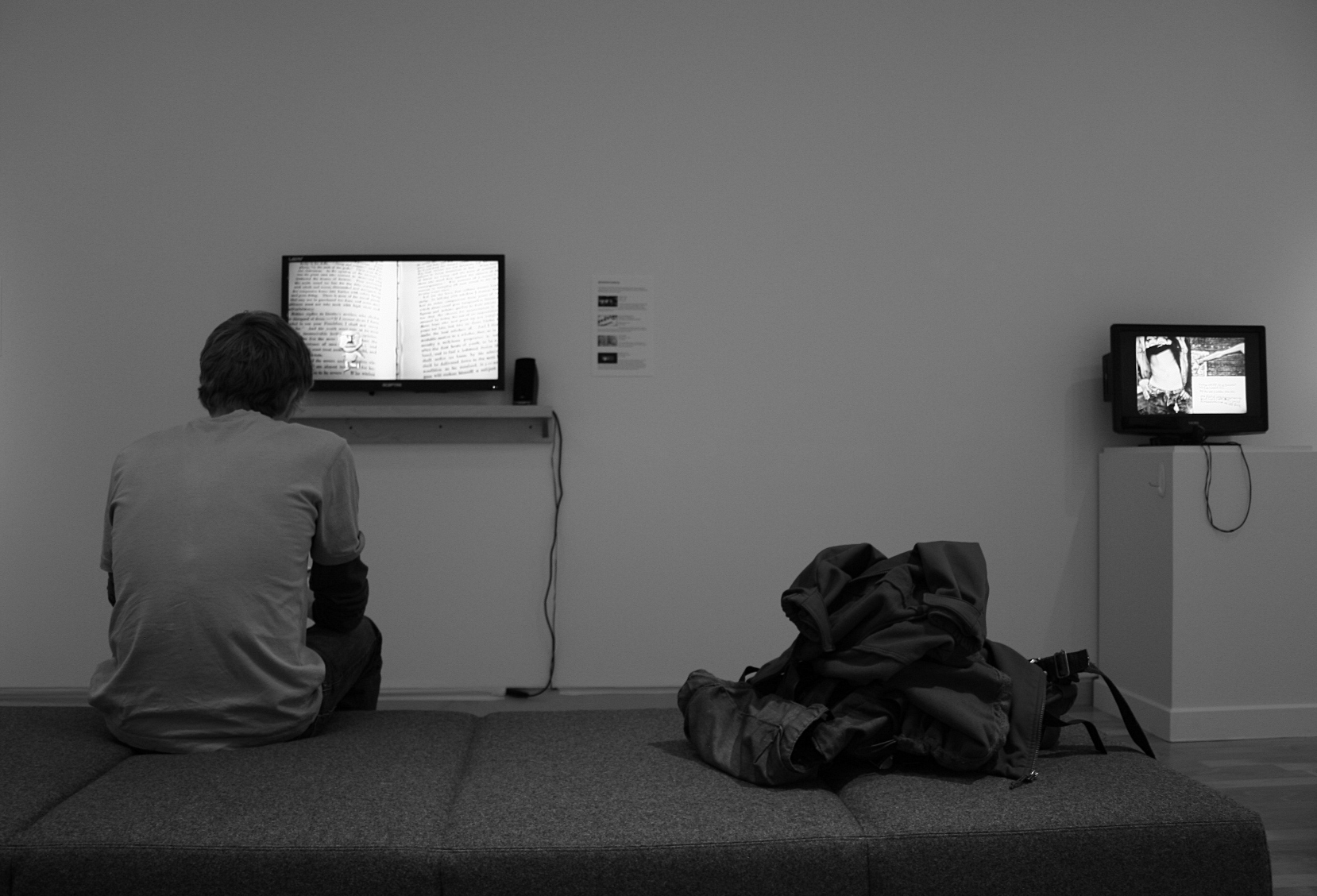
A student studies a portion of "The Intersection Between Book, Film, and Visual Narrative" in the Kaemmer Family Gallery.

A student studies a portion of “The Intersection Between Book, Film, and Visual Narrative” in the Kaemmer Family Gallery.

I won’t pretend to understand and enjoy every exhibit I view. We each bring our personalities and experiences and tastes to a gallery and those influence our reactions.

I love the simplicity of the apples positioned on the table in Rath's exhibit and how the shadows angle onto the tabletop.

I love the simplicity of the apples positioned on the table in Rath’s exhibit and how the shadows play upon the tabletop.

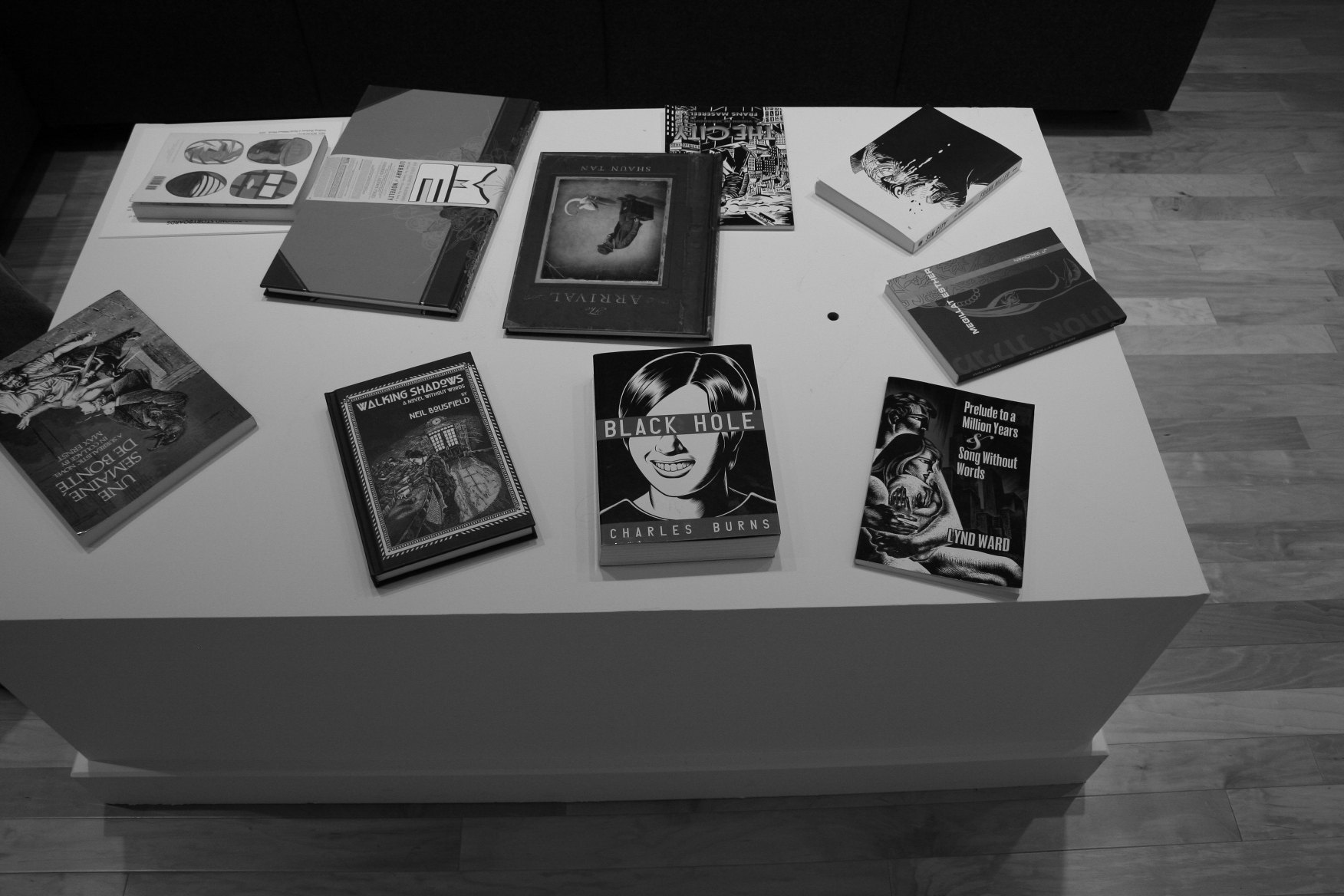
More tabletop art, to be picked up and paged through by gallery visitors.

More tabletop art, to be picked up and paged through by gallery visitors.

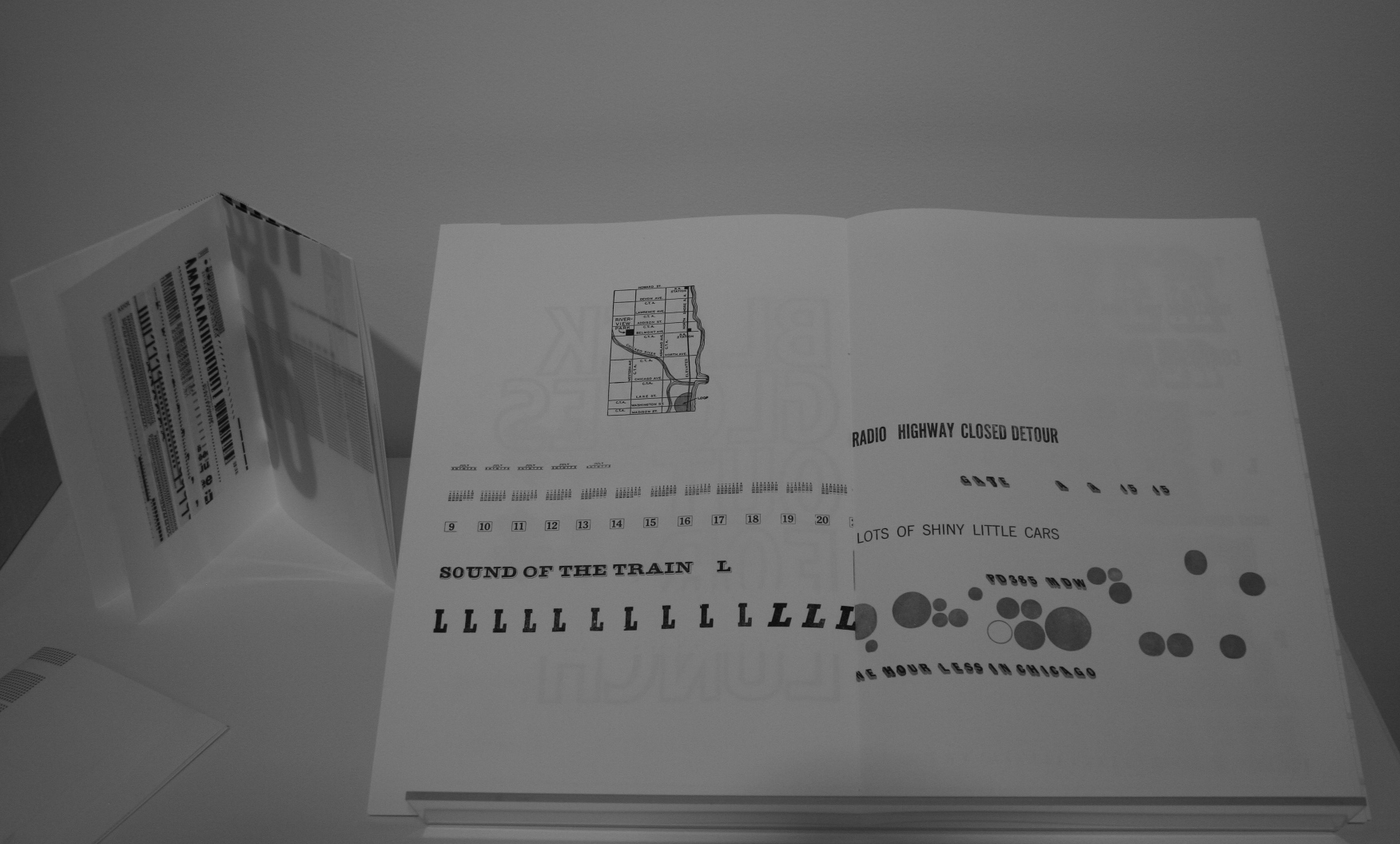
More print to appreciate.

Additional print and creativity to appreciate.

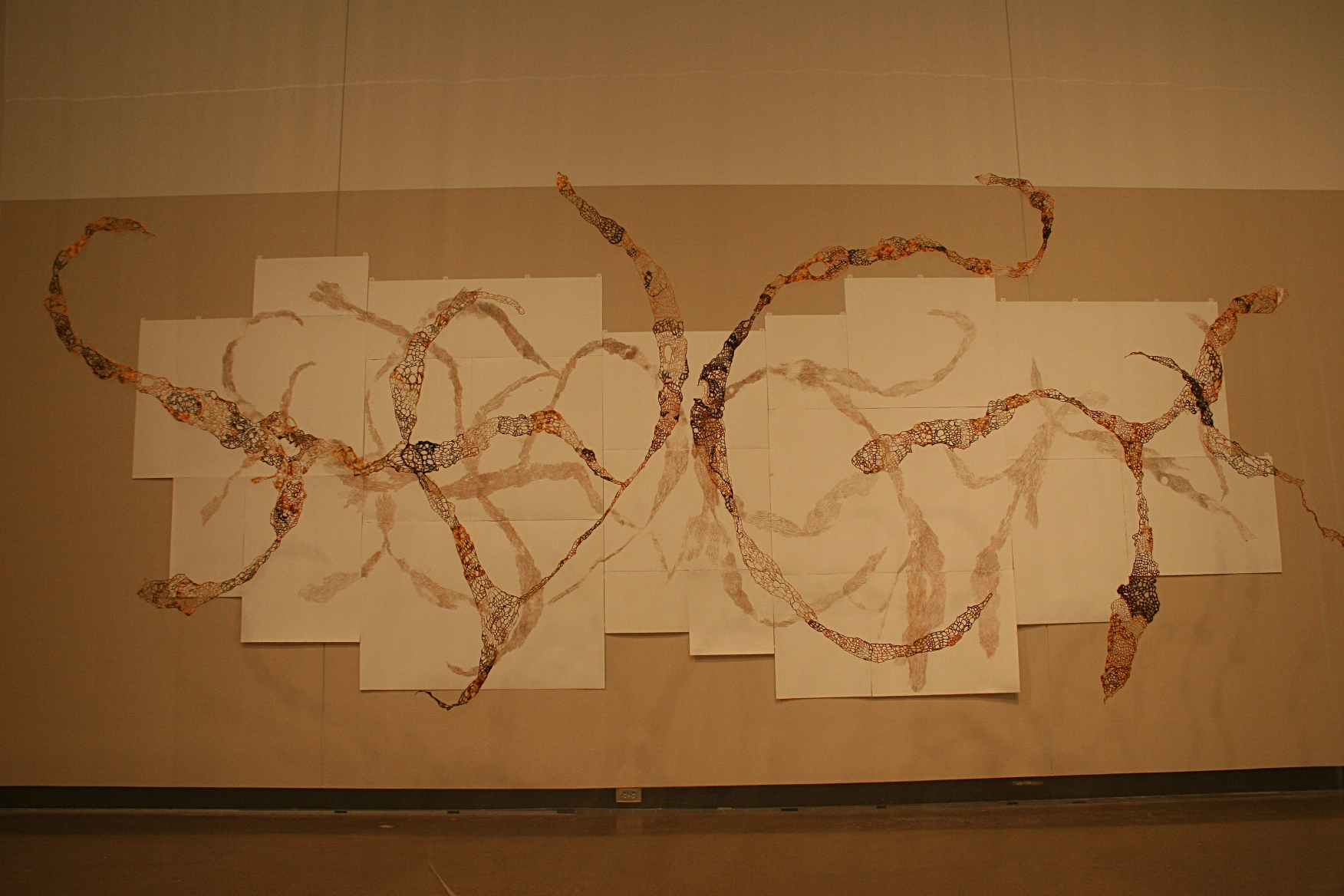
A wall-size artistic interpretation of Opuntia by Laura Cooper.

A wall-size artistic interpretation of Opuntia by Laura Cooper.

While I could relate to apples and books, I couldn’t connect to the exhibit on Opuntia, a type of cactus. Cacti, except for a few grown as houseplants, are mostly foreign to me.

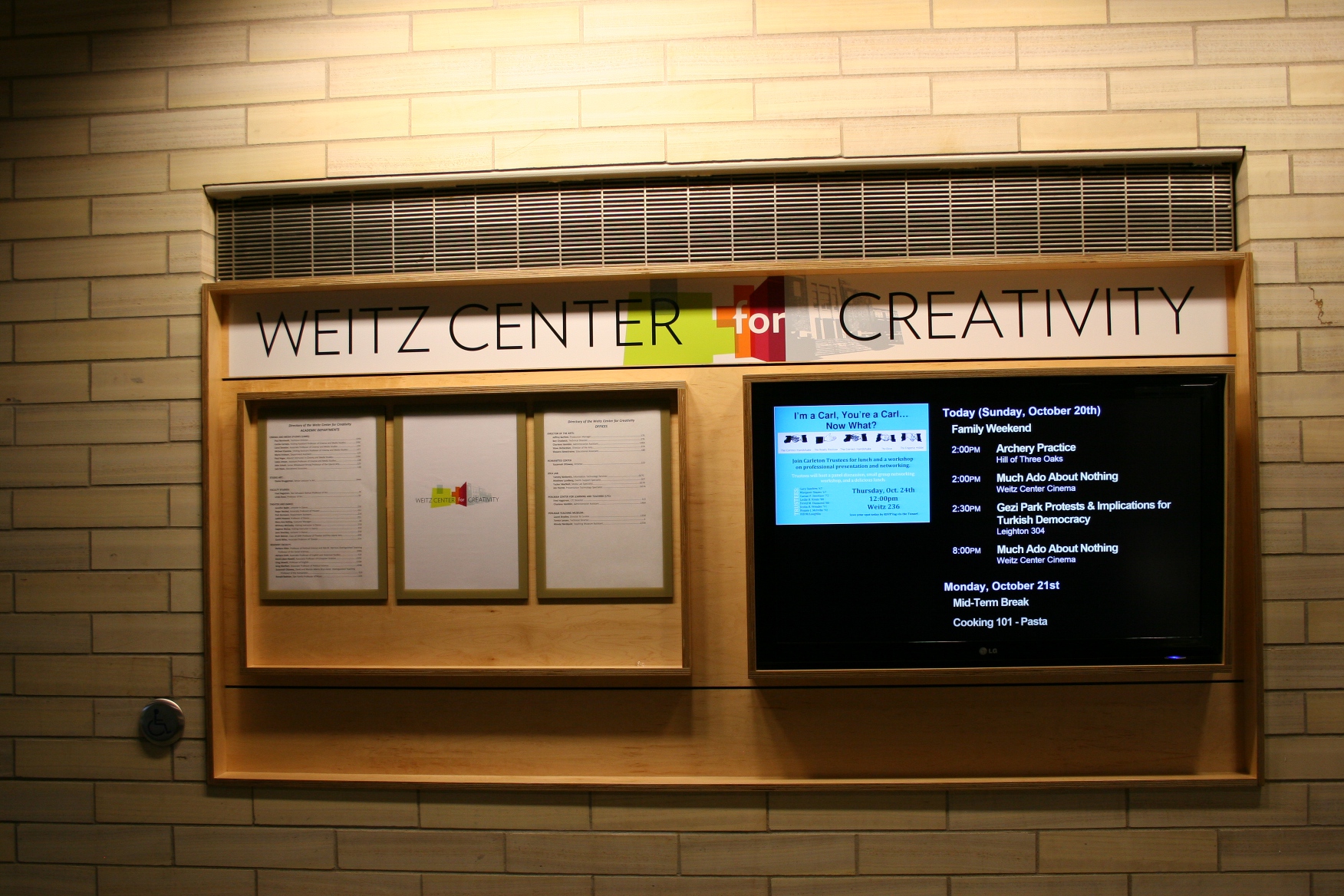
This signage greets visitors upon entering the Weitz Center for Creativity.

Just inside the doors of the Weitz Center for Creativity.

Yet, I learned. And that, too, is part of the arts experience.

© Copyright 2013 Audrey Kletscher Helbling