Minnesota Prairie Roots

Writing and photography by Audrey Kletscher Helbling

Understanding poetry & connecting it to art in one Minnesota community April 23, 2012

Filed under: Uncategorized — Audrey Kletscher Helbling @ 7:01 AM
Tags: , , , , , , , ,

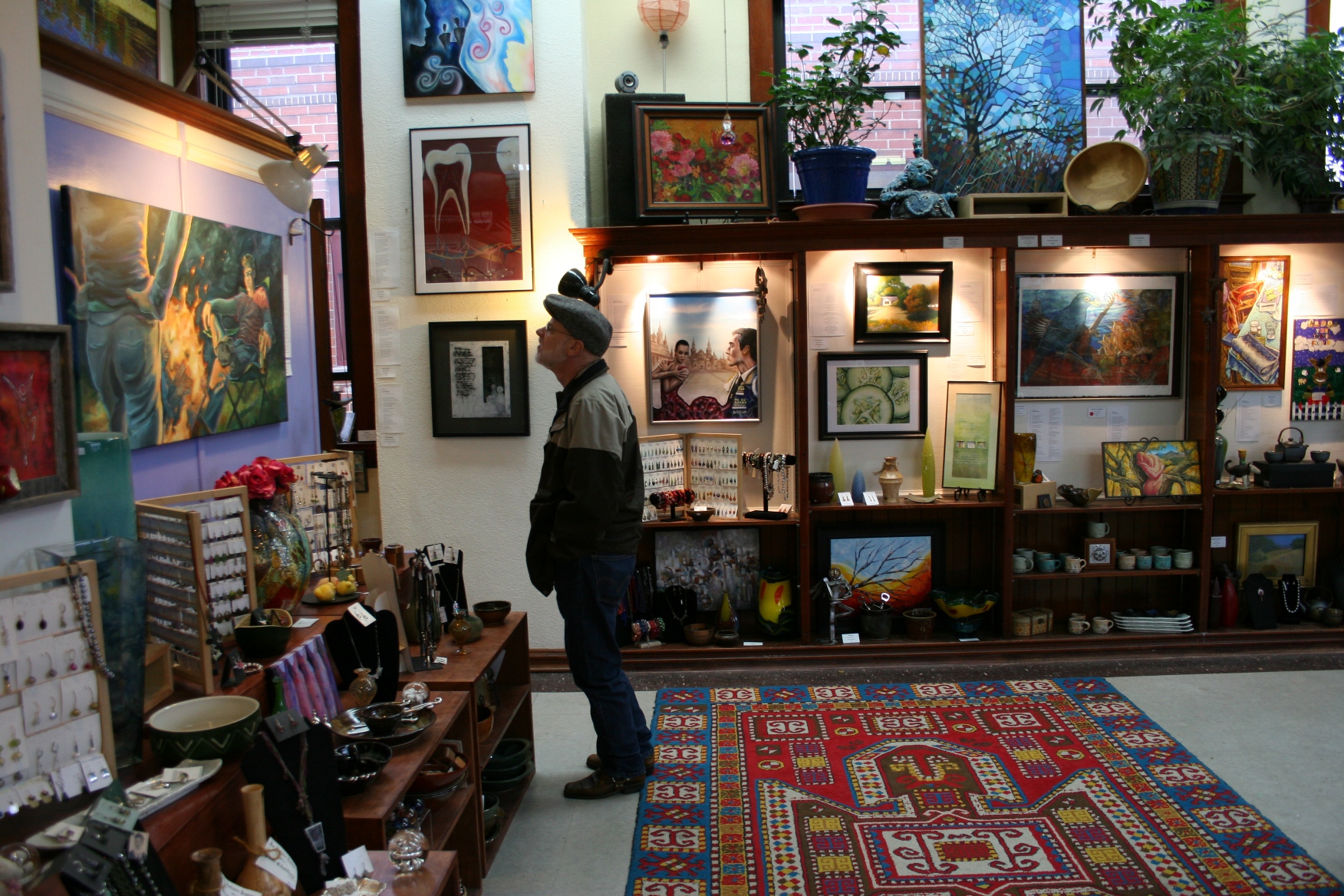
Viewing art paired with poetry at Poet Artist Collaboration XI at Crossings at Carnegie in Zumbrota.

“POETRY KIND OF SCARES ME….I’m kind of rough around the edges…I don’t always get poetry.”

If anything, I appreciate the honesty of Dale Lewis, a Hastings artist who Saturday evening spoke about the table-size chess board he created in response to 12-year-old Fiona Kiger’s poem, “Chess.”

Dale was among 52 artists and poets participating in Poet Artist Collaboration XI, a poetry-inspired art celebration organized by Crossings at Carnegie in Zumbrota.
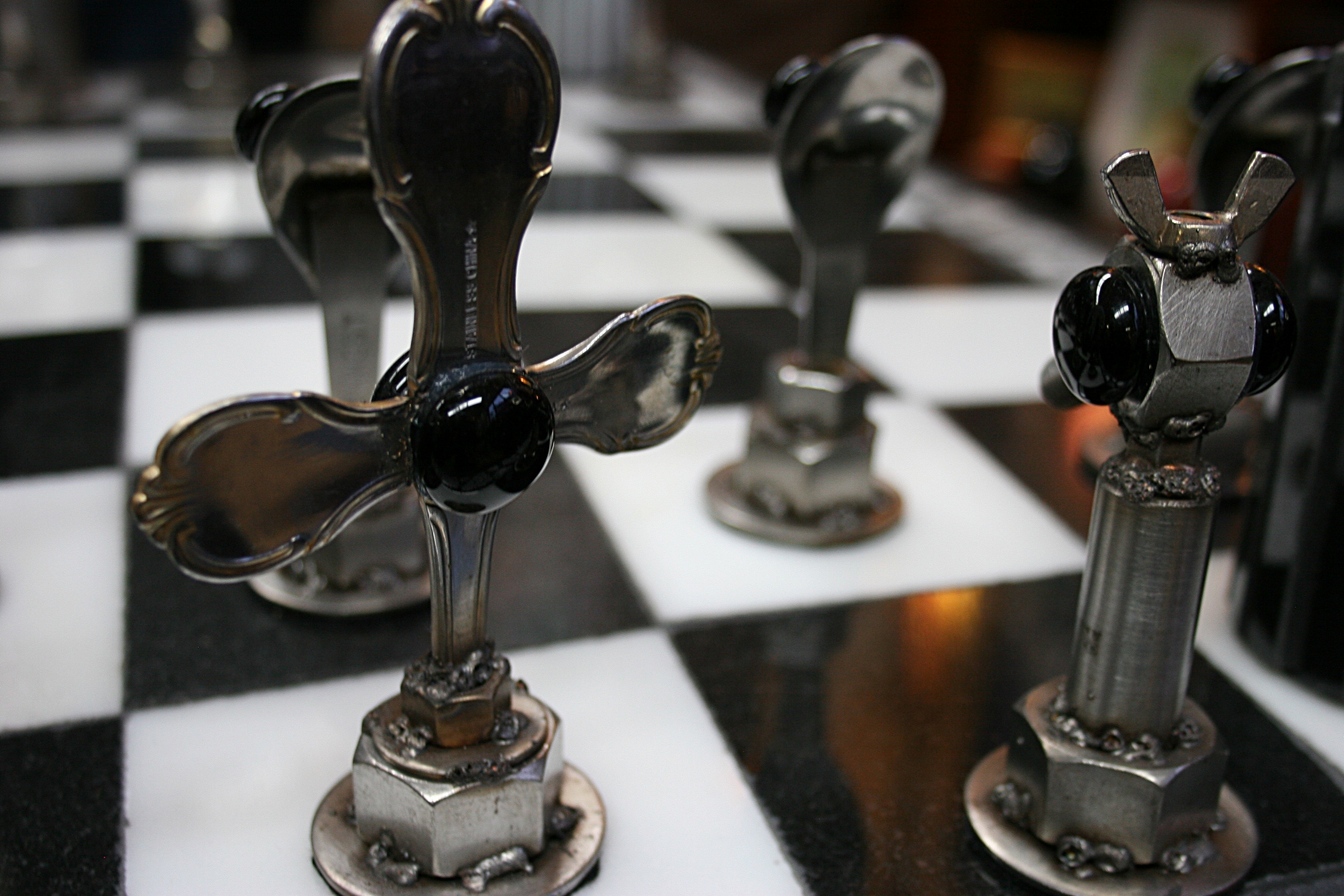
Pieces in the chess set, comprised of wood, marble, granite, stainless steel and glass, created by sculptor Dale Lewis. He titled his art "This is your chess set on poetry" in response to the poetry of Fiona Kiger, a homeschooled student from Rochester who already has completed several chapters in a fantasy book.
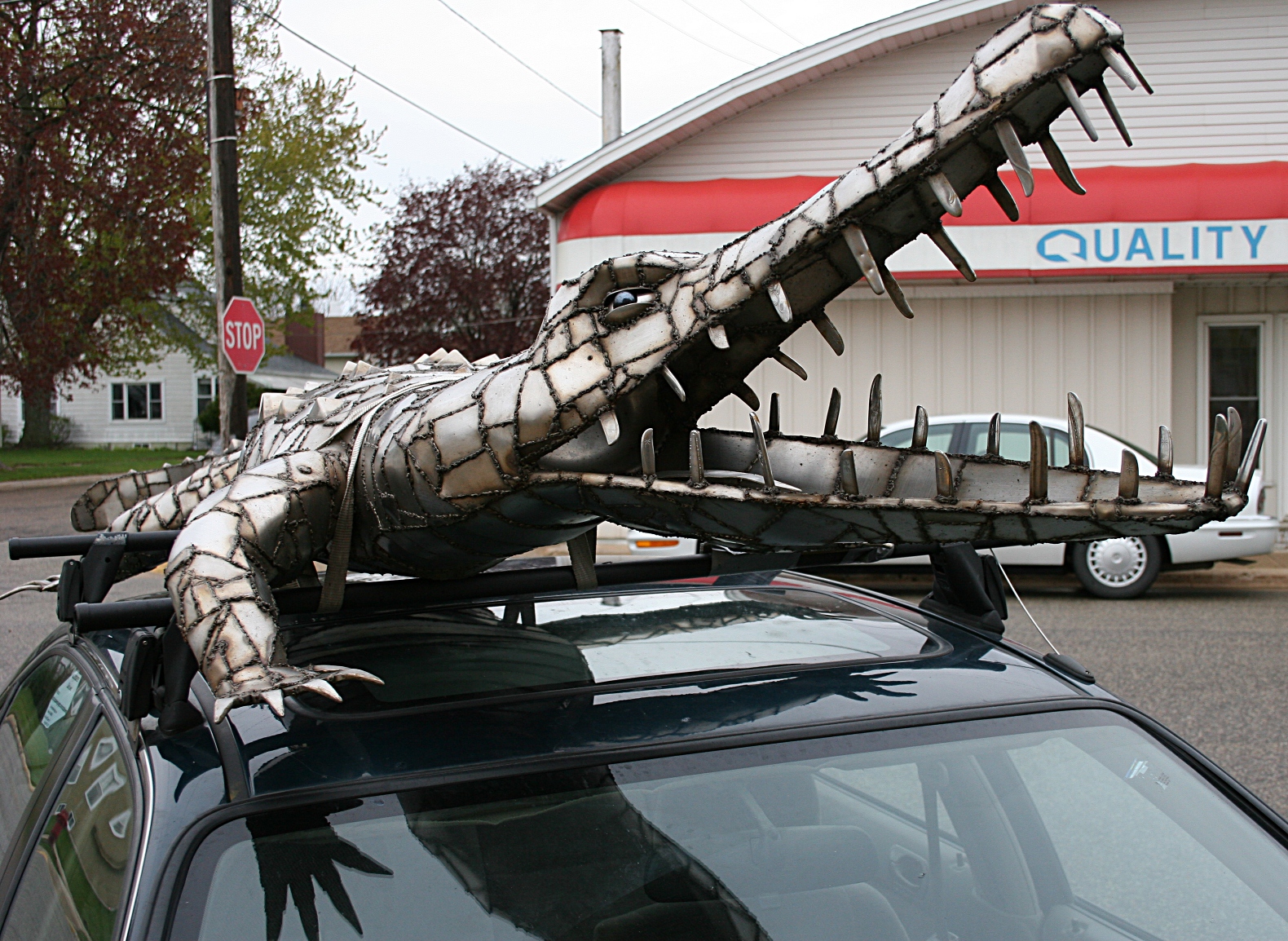
Dale Lewis arrived at Crossings at Carnegie with a crocodile sculpture strapped to the top of his car.

The juried competition and Saturday gala reception and poetry reading/art talk drew a broad spectrum of artists and writers and guests that, I’m certain, included more than a few individuals who feel exactly as Dale does, sometimes somewhat intimidated by poetry. Count me, a poet, among them. I don’t always “get” poetry either.

But events such as the Zumbrota collaboration are helpful in understanding writing that can sometimes, perhaps even oftentimes, cause many to bypass poetry books and avoid poetry readings like the plague.

Listen to Dale: “I’m not as afraid of poets as I was a few weeks ago.”

Neither am I.

It did my writer’s persona good to mingle with other poets and with artists Saturday evening, to hear that no matter where we are in the stages of writing or in creating art, we are in this for the love of our respected crafts. That, I sensed, more than anything.
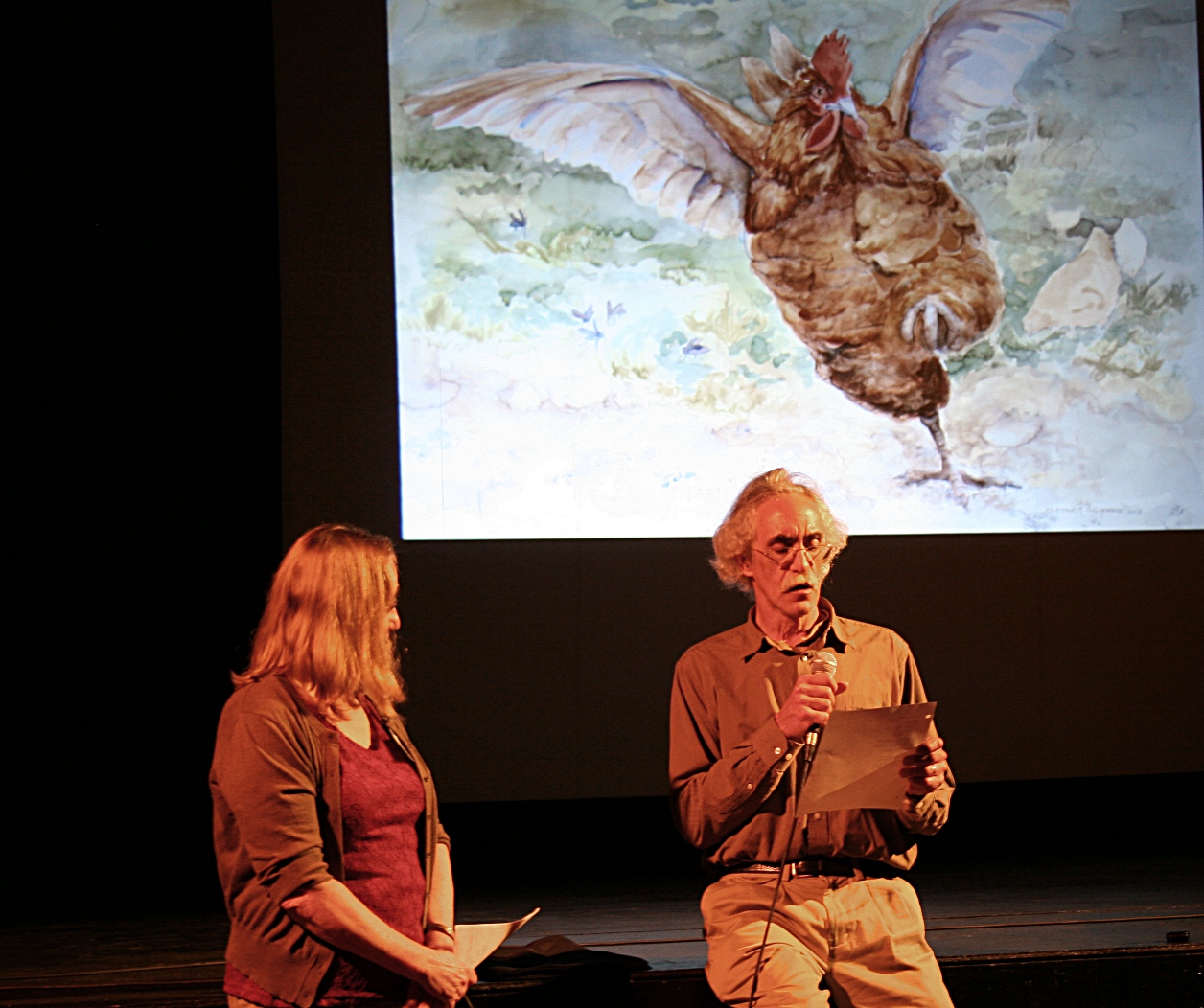
Peter C. Allen reads his poem while Sarah K. Nygaard of Zumbrota, who created the corresponding art, "Long Live the King," looks on. Artwork was projected onto a screen in the reading/ artist talks at the 90-year-old historic State Theatre just down the block from Crossings at Carnegie.

I met poet Peter C. Allen from Kenyon, who lives on a hobby farm and read his “Chicken Crossing,” slinging out a line (which I can’t repeat here) that caused the audience to erupt into raucous laughter.
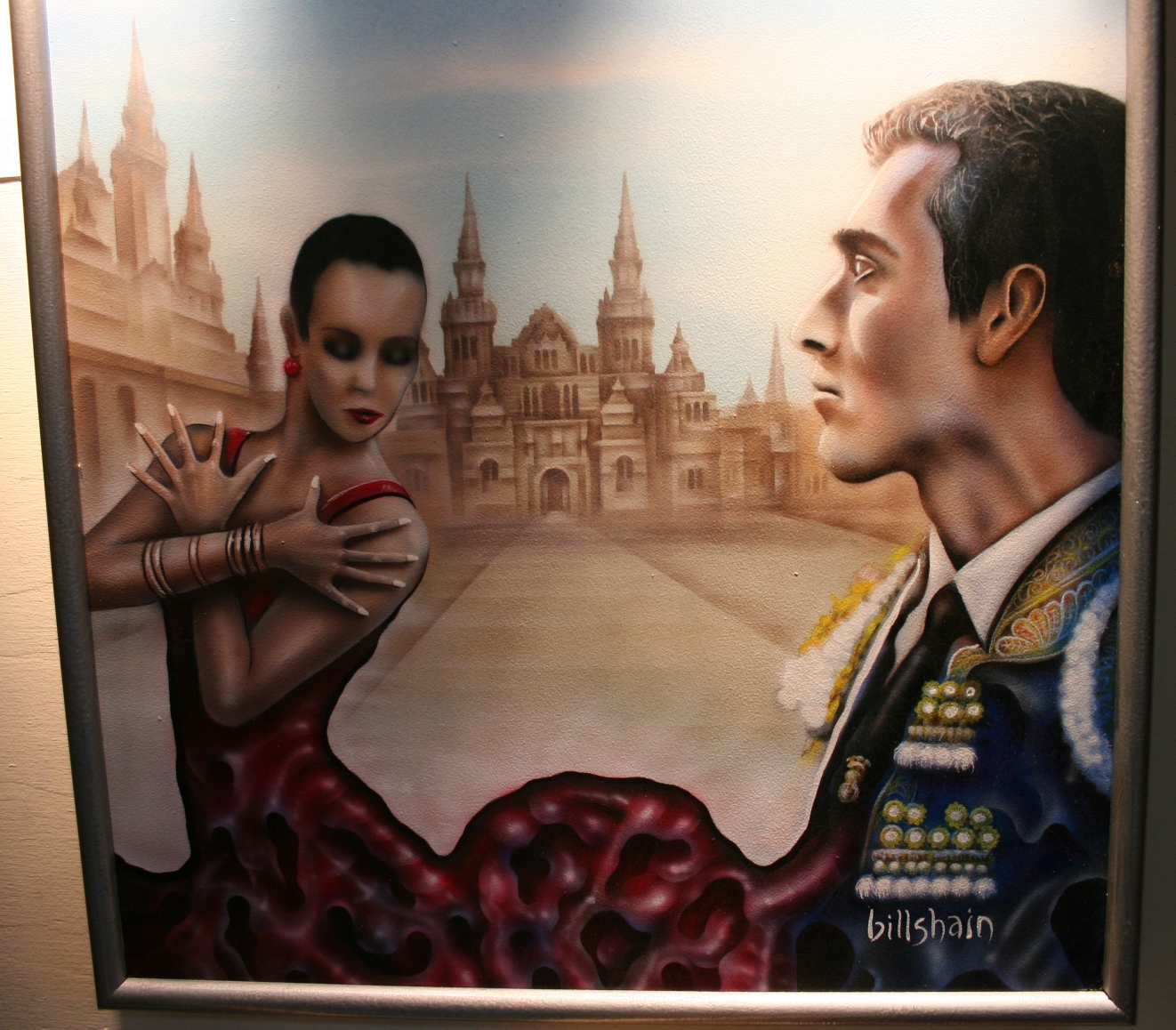
Pine Island artist Bill Shain's airbrushed composition was inspired by Patrick L. Coleman's poem. Patrick's poem, Bill says, seems like a page out of a romance novel. He went out of his comfort zone, Bill says, to create "Power and Surrender." In his painting the woman has power over the man, her red dress like the cape of a matador and also resembling bowels.

I met Patrick L. Coleman of Minneapolis, who, during his introduction to “Frederica Reminisces” caused me to feel a bit inadequate when he mentioned that his poem initiated as an assignment in a Loft poetry class. But later, when I met Patrick and his wife, Donna, we instantly connected. He’s a retiree who decades ago turned down a journalism scholarship to the University of Minnesota to pursue a career as a bio chemist. Today he is working on a mystery novel and sometimes writing poetry.
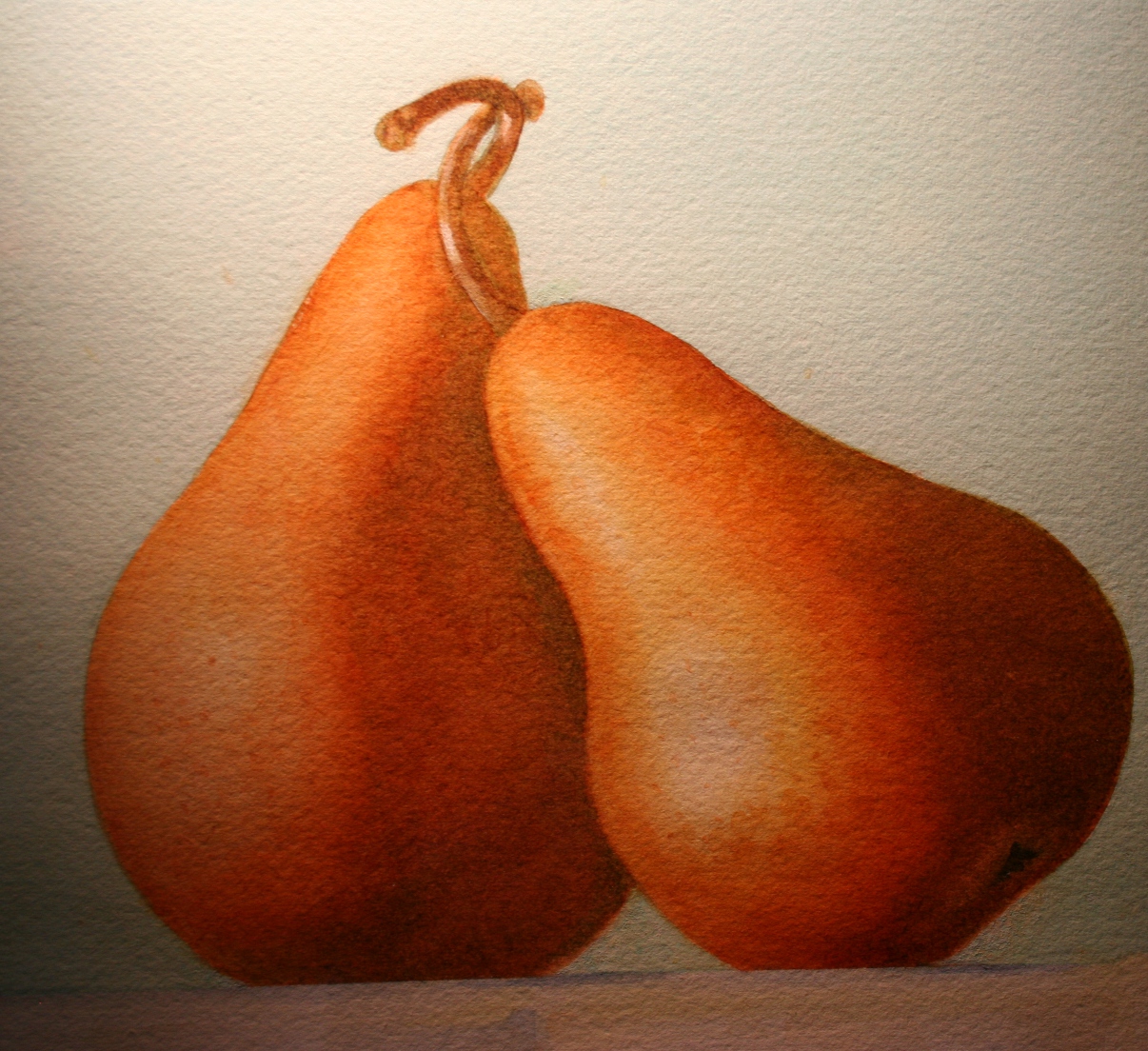
Toni Stevens of Rochester painted "A Loving Pear," a watercolor inspired by the poem, "Traveler," by Elise Gregory of Ellsworth, Wisconsin. This is a close-up of that painting.

I listened to Betty J. Benner of Austin spin her story-poem of rhubarb and cucumbers left on her front steps during a reading of “This is just to say.” Betty acknowledged to me earlier that she had deviated from her usual serious poetry to pen a humorous piece. The audience responded with laughter.

Likewise, a St. Louis Park poet drew chuckles when she introduced herself as Sandy Beach followed by “Yes, that’s my real name.”

While many of the poems were infused with humor, several were immersed deep in emotions, reflecting on life and death. Others recalled memories. And others held a strong sense of place.

Janelle Hawkridge of Winnebago and her paired artist, Katherine E. Smither of Rochester, honored women in their collaboration on, the most unlikeliest of subjects, a 70-year-old’s spider/varicose-veined legs. Janelle’s poem, “A Work of Art,” particularly, resonates with me. She views those imperfect, aging legs as history, a life story, a work of art.

The poets read with passion. The artists spoke with passion. They connected. You could hear it in their words, see it in the locking of their eyes, a touch on the shoulder, a nod of the head.

In the end, poet Ronald J. Palmer of Bloomington, who wrote about the stages of life in “The Significance of Traffic Lights,” perhaps best summarizes the feelings of many attending the poetry reading/art talk in Zumbrota: “I think poetry and art should be together more often.”

That recommendation, Ronald, gets a green light from me.
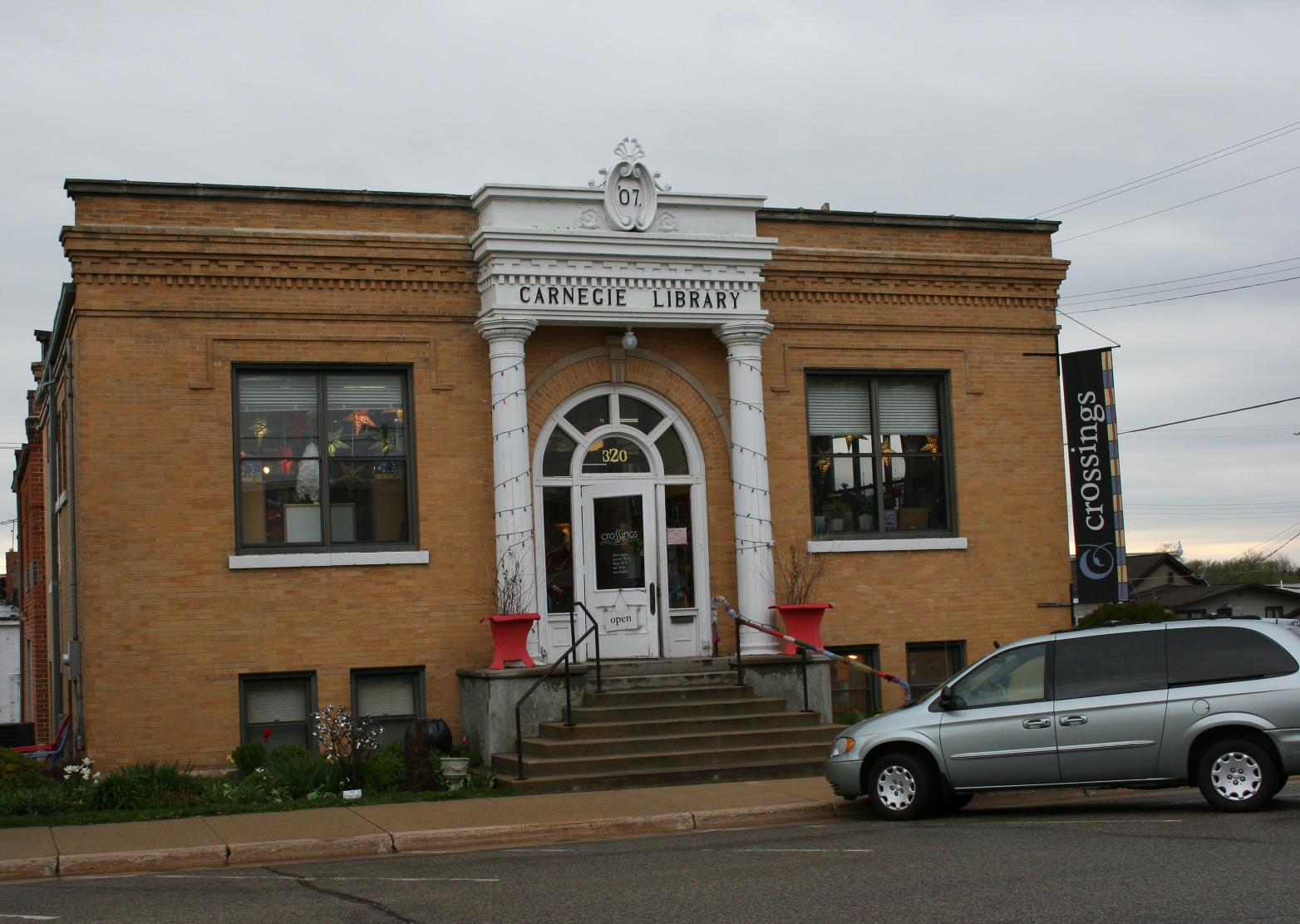
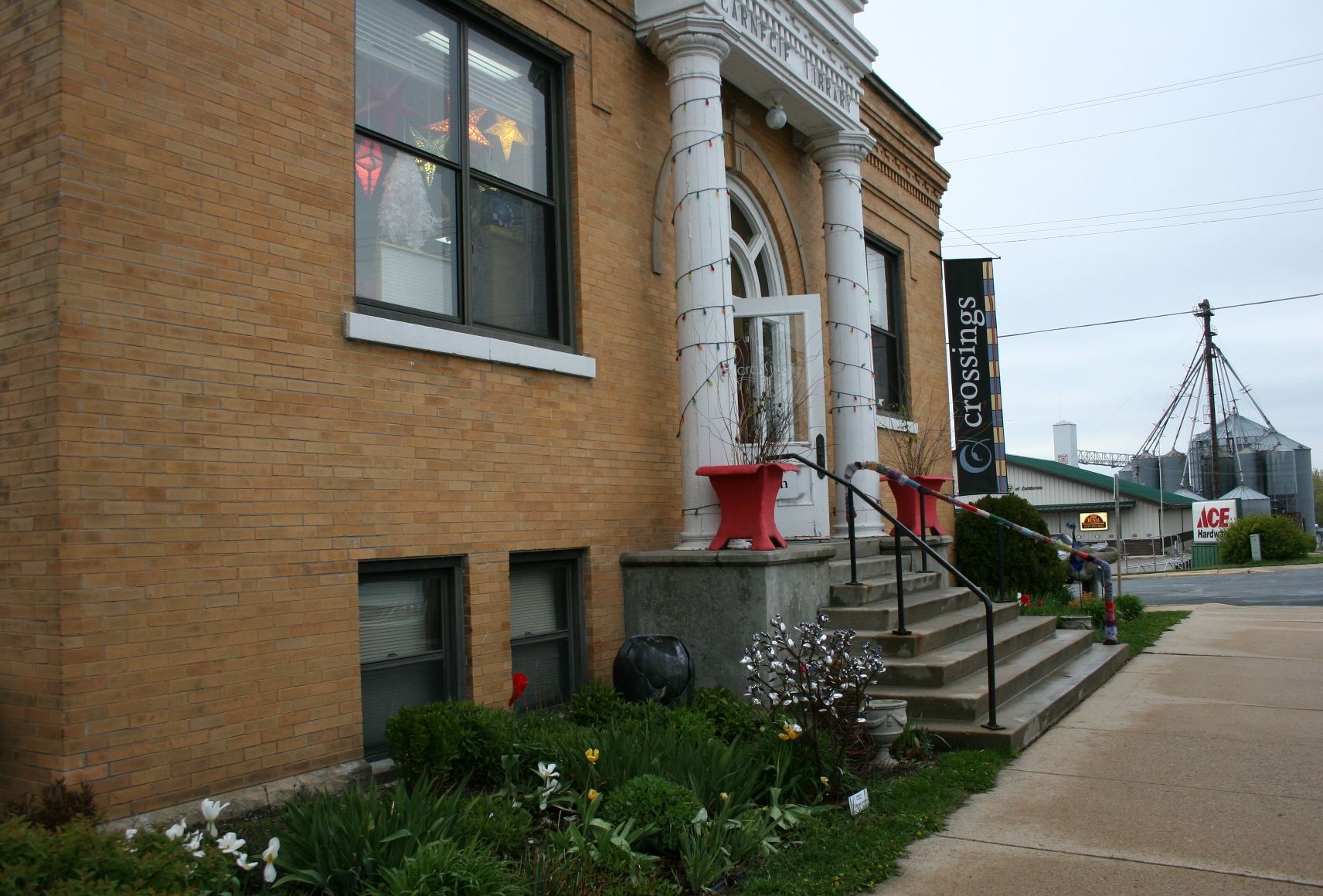
Crossings at Carnegie, a privately-owned art center, is housed in a former Andrew Carnegie library built for $6,500 in 1908 in the Classical Revival style.

CLICK HERE to learn more about Poet Artist Collaboration XI, which closes April 26 at Crossings at Carnegie in Zumbrota.
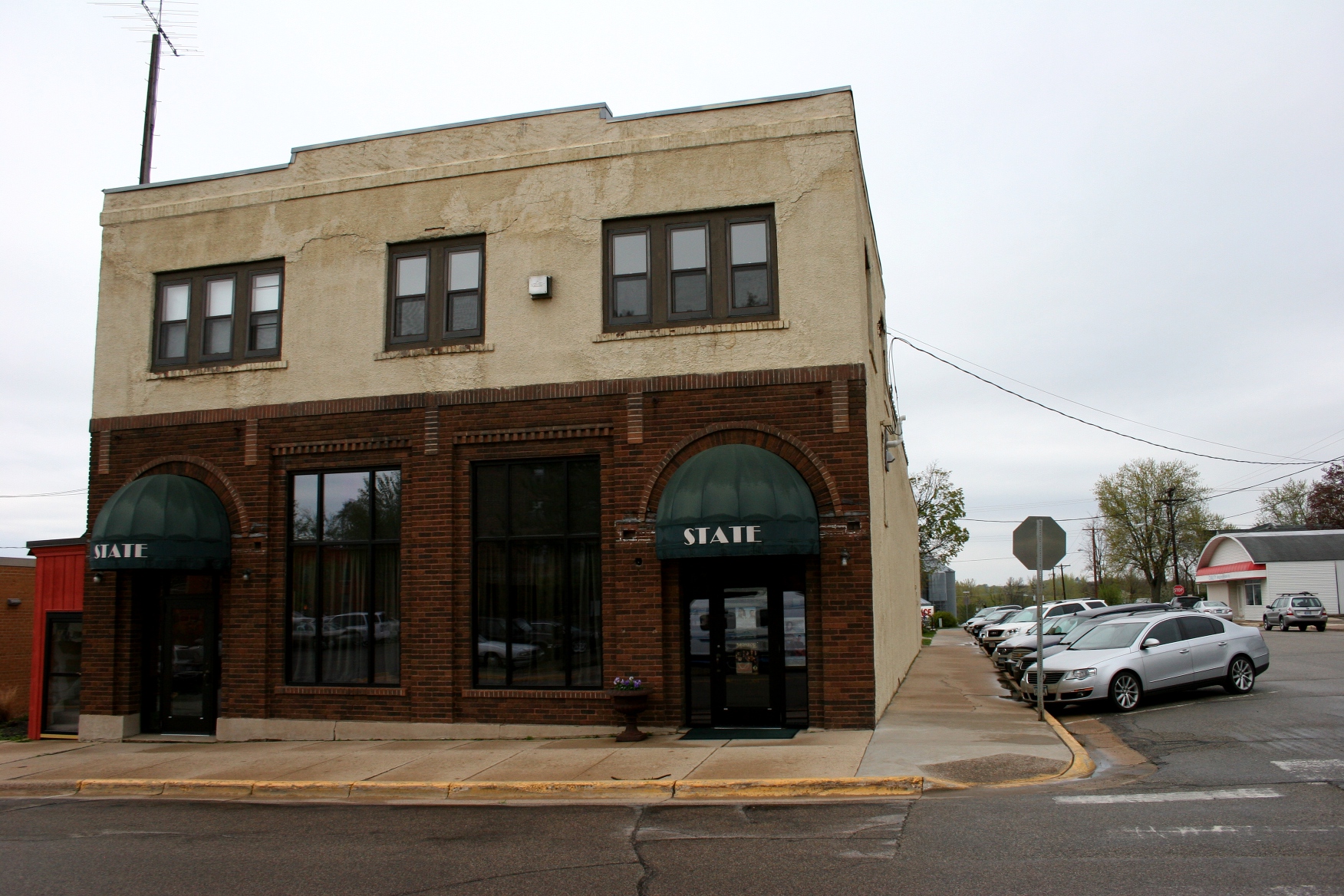
The poetry reading/artist talks were held in the State Theatre, built in 1921 for $38,000. Up until recently, movies were still shown in the theatre. In December 2011, the Zumbrota Area Arts Council purchased the theatre and is currently raising monies to renovate the building.

CLICK HERE to learn more about the historic State Theatre.

CLICK HERE to read an earlier blog post about my poem, “Her Treasure,” and artist Connie Ludwig who created “Pantry Jewels,” inspired by my writing.

FYI: Close-up photos of the two art pieces were taken with permission of the artists. Permission was not sought to reproduce the copyrighted poetry. Therefore it is not featured here.

© Copyright 2012 Audrey Kletscher Helbling


Celebrating poetry and art in Zumbrota on a Saturday evening April 22, 2012

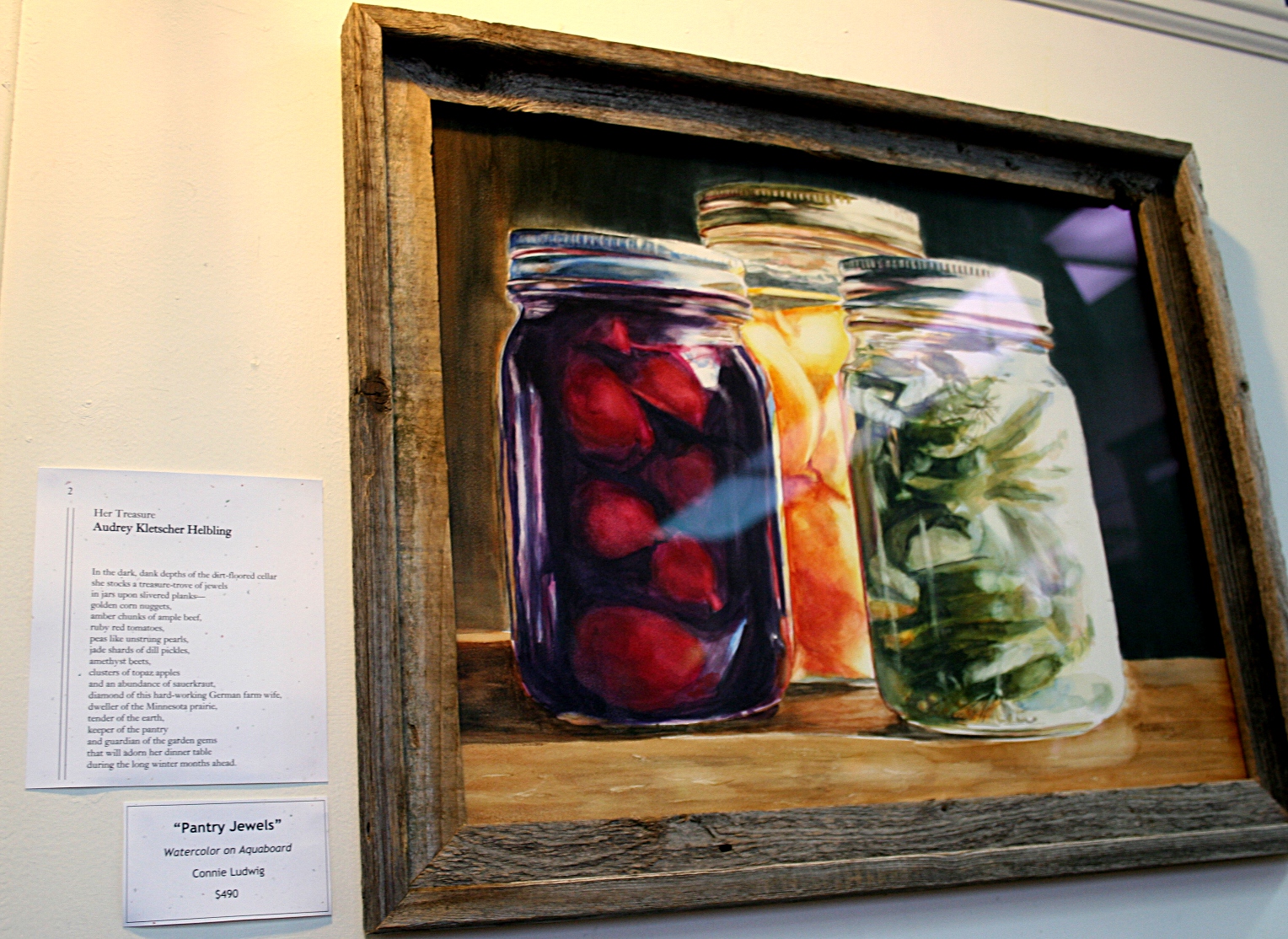
Artist Connie Ludwig's "Pantry Jewels," inspired by my poem, "Her Treasure." (Please excuse the glare on the glass; there was no way to avoid it while photographing the painting.)

Her Treasure

In the dark, dank depths of the dirt-floored cellar
she stocks a treasure-trove of jewels
in jars upon slivered planks—
golden corn nuggets,
amber chunks of ample beef,
ruby red tomatoes,
peas like unstrung pearls,
jade shards of dill pickles,
amethyst beets,
clusters of topaz apples
and an abundance of sauerkraut,
diamond of this hard-working German farm wife,
dweller of the Minnesota prairie,
tender of the earth,
keeper of the pantry
and guardian of the garden gems
that will adorn her dinner table
during the long winter months ahead.

#

I MET “MY ARTIST” Saturday evening and saw the art she created, inspired by my poem (above).

And I use those words, “my artist,” because I feel connected to Connie Ludwig of Goodhue. She, like 25 other artists participating in Poet Artist Collaboration XI at Crossings at Carnegie in Zumbrota, took words of poetry and shaped them into art.

“Her Treasure,” under Connie’s paintbrush, became “Pantry Jewels.” The earthy watercolor painting of canned beets, pickles and peaches glows with the perfect balance of light and darkness, with sunlight filtering through glass and glinting off the golden rings that lock in garden goodness.

Connie understands my poem—the memories of my mother canning fruits and vegetables in her southwestern Minnesota farmhouse kitchen. She understands the dark dirt-floored cellar in which these preserves were stored upon rough boards. She understands the importance of honoring the women who honored the land by feeding their families with the fruits of their labors.

In the chapbook published for Crossings’ Poet Artist Collaboration XI, Connie writes:

My mother and aunts loved gardening and canning. They considered those “squirreling skills an essential part of themselves. I have wonderful memories of the ladies showing off, trading and sharing their canned jewels. And, of course, feeding them to us. The models for this painting came from the pantry of my husband’s cousin.

Connie, right, and I pose for a photo after a 90-minute presentation in which 26 poets read their poems and 26 artists talked about how the poems inspired their art. Note Connie's "Pantry Jewels" painting just above my head to the left. If I could buy this $490 watercolor on aqua board, I would in a snap. I love it that much and how it honors my rural roots. But I can't... If you're interested, contact Crossings.

Connie, thank you for transforming my poem into such down-to-earth, beautiful art that touches my soul. Your painting was all I hoped for in this process of poetry inspiring art.

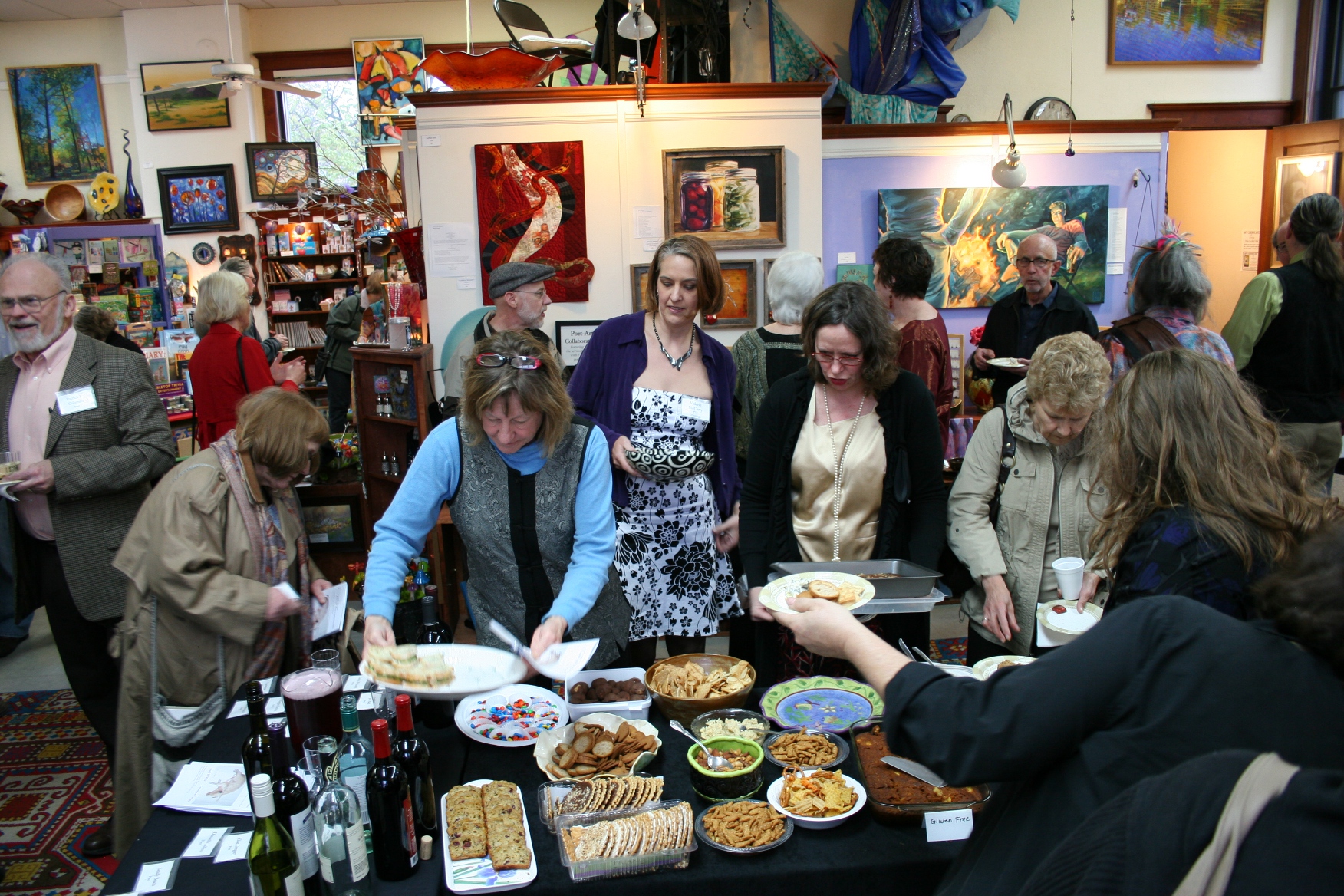
A snippet shot of the crowd at Crossings at Carnegie, including Marie Marvin, center in blue. This place was elbow-to-elbow people during the hour-long gala reception before and after the poetry readings and artist talks held at the next door historic State Theatre. There were 26 poems selected from around 180 submissions for this juried Poet Artist Collaboration, now in its 11th year.

Thank you also to the artists and poets and guests who took the time to thank me for writing “Her Treasure.”

Thank you to my husband, Randy, for always supporting me in my writing.

To Crossings at Carnegie, and specifically Marie Marvin who opened the art center in 2001, thank you for acting as the driving force behind this collaboration. The phenomenal (or as I would say, overwhelming) turn-out is a tribute to the hard work of your team. I’d like to see more events like this through-out Minnesota that pair words and art.

To be one of the 26 poets selected for inclusion truly brought me joy. To mingle with so many poets and artists for an evening inspired and validated for me the importance of the arts in our lives.

Crossings at Carnegie, housed in a former Carnegie library, is a privately-owned cultural, visual and performing arts center in Zumbrota. I love the rural atmosphere with the hardware store and grain elevator just down the street. I need to return to Crossings as I was overwhelmed (crowd-wise and visually) on this busy evening.

I’d encourage you, if you have not seen this exhibit at Crossings, 320 East Avenue, to take it in before the April 26 closing date. Click here for more information.

Also check back here for an additional post from Poet Artist Collaboration XI.

© Copyright 2012 Audrey Kletscher Helbling
 

Pairing poetry and art in Zumbrota April 19, 2012

Filed under: Uncategorized — Audrey Kletscher Helbling @ 7:08 AM
Tags: , , , , , , , ,

Lois' jellies and pickled beans photographed in July 2009 at the Faribault Farmers' Market.

In the dark, dank depths of the dirt-floored cellar

she stocks a treasure-trove of jewels

in jars upon slivered planks—

Thus begins my poem, “Her Treasure,” which I will read this Saturday, April 21, at the Poet-Artist Collaboration XI Gala Reception at Crossings at Carnegie in Zumbrota. The reception begins at 6:30 p.m. at Crossings with guests treated to refreshments and to music by pianist Matthew Rivera. The event then moves next door to the State Theatre for poetry readings with on-screen art at 7:30 p.m.

Yes, art. And poetry. Together. One inspired by the other.

I’ll meet “my artist,” Connie Ludwig of Goodhue who created a watercolor, “Pantry Jewels,” inspired by my poem about canned fruits and vegetables stocked in a farmhouse cellar.

The works of 25 other poets and of 25 other artists are also included in this juried exhibit.

Once I learned Connie’s identity, I contacted her, asking her to share some information about herself and about the process of creating her poetry prompted piece. Unlike me, Connie is not a novice at this poet-artist collaboration. This marks her tenth time participating in the Crossings event.

Recently retired from the Zumbrota library, Connie is an established artist who typically works in pastels from her home studio. In the summer she does pastels outdoors and on her front porch.

But this time, for this show, Connie opted to work in watercolor, which, she says, “more often than not has control over me.”

Drawing on childhood memories of the huge garden her family planted every year at their home in St. Croix State Park along the Minnesota-Wisconsin border east of Hinckley, this artist understands the content of my poem.

My aunts and my mother were survivors of the Great Depression and gardens and canning were very, very important to them. So you can probably deduce that your poem about the dark basement, dirt floor and canned jewels reminded me of them.

When I read it (your poem), I could picture the light on the jars when I used to go down and get them. And I knew both the physical resemblance to jewels and the equivalent worth of jewels was how they felt about their canning endeavors. You wrote a poem that reflected an important part of their lives.

Fortunately my husband has cousins that enjoy canning. The models for the three jars that I used to illustrate your poem are Mary’s peaches and Greg’s pickles. I took a picture of them and painted both from that and the actual jars. Jim (my husband) could hardly wait for me to finish so he could “open and eat.”

Well, Connie, I can hardly wait to see your art, “Pantry Jewels,” paired with my poem.

FYI: Click here to read more about Poet-Artist Collaboration XI, including a list of the participating poets and artists. The exhibit will be on display through April 26. Please join Connie and me at the Gala Reception and at the poetry reading.  I’m second on the list to read my poem and Connie to talk about her art. We’d love to meet you.

Copyright 2012 Audrey Kletscher Helbling


Poets & artists collaborate in Zumbrota and I’m in March 13, 2012

Filed under: Uncategorized — Audrey Kletscher Helbling @ 7:52 AM
Tags: , , , , , , ,

I SET A GOAL for 2012 to write more poetry. I’ve posted a contest list on my office desk and filed information in a three-ring binder. But all the best-laid plans and organizing are meaningless unless I follow through with my intentions.

Thus far, I’m doing OK, although not penning poetry probably as frequently as I should be.

Yet, I’ve already seen my initial efforts, including poetry revision, rewarded with the acceptance of a poem into Crossings Poet-Artist Collaboration XI in Zumbrota.

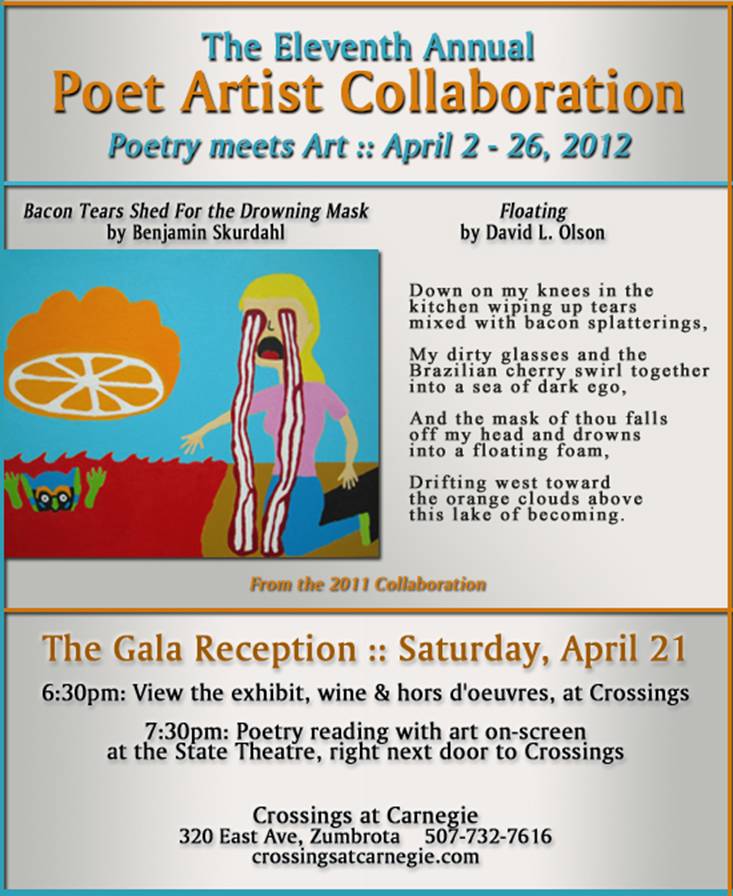
The exhibit, which will be installed on April 2 at Crossings at Carnegie, pairs poetry with art.

Poets were invited to submit up to three poems for consideration. Then four professional writers/poets juried the poetry—this year more than 180 poems—and selected 26 for inclusion.

I’m honored and thrilled to have my writing in this exhibit.

Marie Marvin writes in an e-mail to the selected poets: “It was exciting to receive such a fine outpouring of exceptional work from so many talented poets for this collaboration. Jurists told us they were a pleasure to read, and selecting those to be included was a difficult task.”

Additionally, Laura McDonough of Crossings tells me jurists were given complete license and no specific guidance during the selection process and did not know the identity of the poets.

But, she surmises, “They look for excellence and magic.”

Now artists, who also were juried for the collaboration, are working their magic creating  pieces of art inspired by the poetry.

Paired poets and artists will not know each others’ identities until the show is installed. Nor will the names of participating poets and artists be revealed to the public until April 2. I asked.

I’m not disclosing the content of my poem which I unsuccessfully submitted to previous contests and then reworked for this competition to make it a stronger, better poem. Yes, time allowed me to view my writing with fresh eyes and see areas where I could improve.

Naturally, I’m wondering how “my artist” will interpret my quite visual poem.

I’ll find out on Saturday, April 21, when I attend a reception beginning at 7 p.m. at Crossings at Carnegie, 320 East Avenue, in Zumbrota. Poets and artists will discuss their works. Please join me and the 25 other poets and 26 artists at this celebration during April, National Poetry Month.

FYI: MARIE MARVIN, who opened Crossings in 2001 to create an oasis for artists, writers and musicians, is the driving force behind the Crossings Poet-Artist Collaboration. She discussed her love for “mixing up the arts” with poet Beverly Voldseth and, between the two of them, the first collaboration took shape in April 2002.

The collaboration also includes publication of an exhibit book offered at a nominal cost to participating poets and artists and their families.

Crossings is housed in a former Andrew Carnegie Library built in 1908 in the Classical Revival style. I can’t wait to see the building as I appreciate libraries, history and architecture.

Zumbrota, a community of around 3,000, is located along U.S. Highway 52 about 25 miles north of Rochester.

Click here for more information about the art center.

IF YOU’D LIKE to share information about a similar poet-artist collaboration in Minnesota, please submit a comment with details.

© Copyright 2012 Audrey Kletscher Helbling
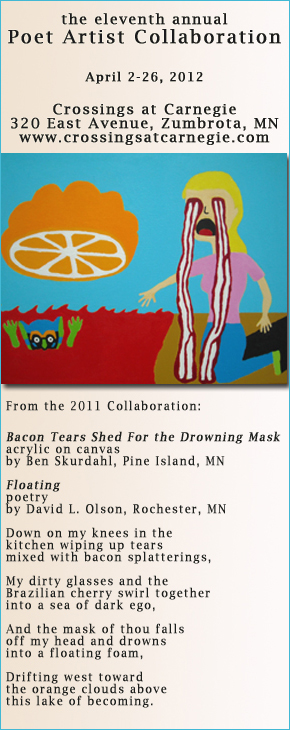
Graphic courtesy of Crossings at Carnegie


A trip to view the fall colors detours in Zumbro Falls October 11, 2010

DEAR READERS:

On Sunday afternoon my husband and I headed east on Minnesota Highway 60 to enjoy the fall colors. We intended to drive to Wabasha, then aim north toward Lake City and maybe Red Wing before returning home to Faribault.

Along the way, we stopped at Holden Lutheran Church near Kenyon so I could snap a few photos. We both appreciate old churches and would have lingered longer except the pastor was in the middle of his sermon and we didn’t want to enter the sanctuary and interrupt.


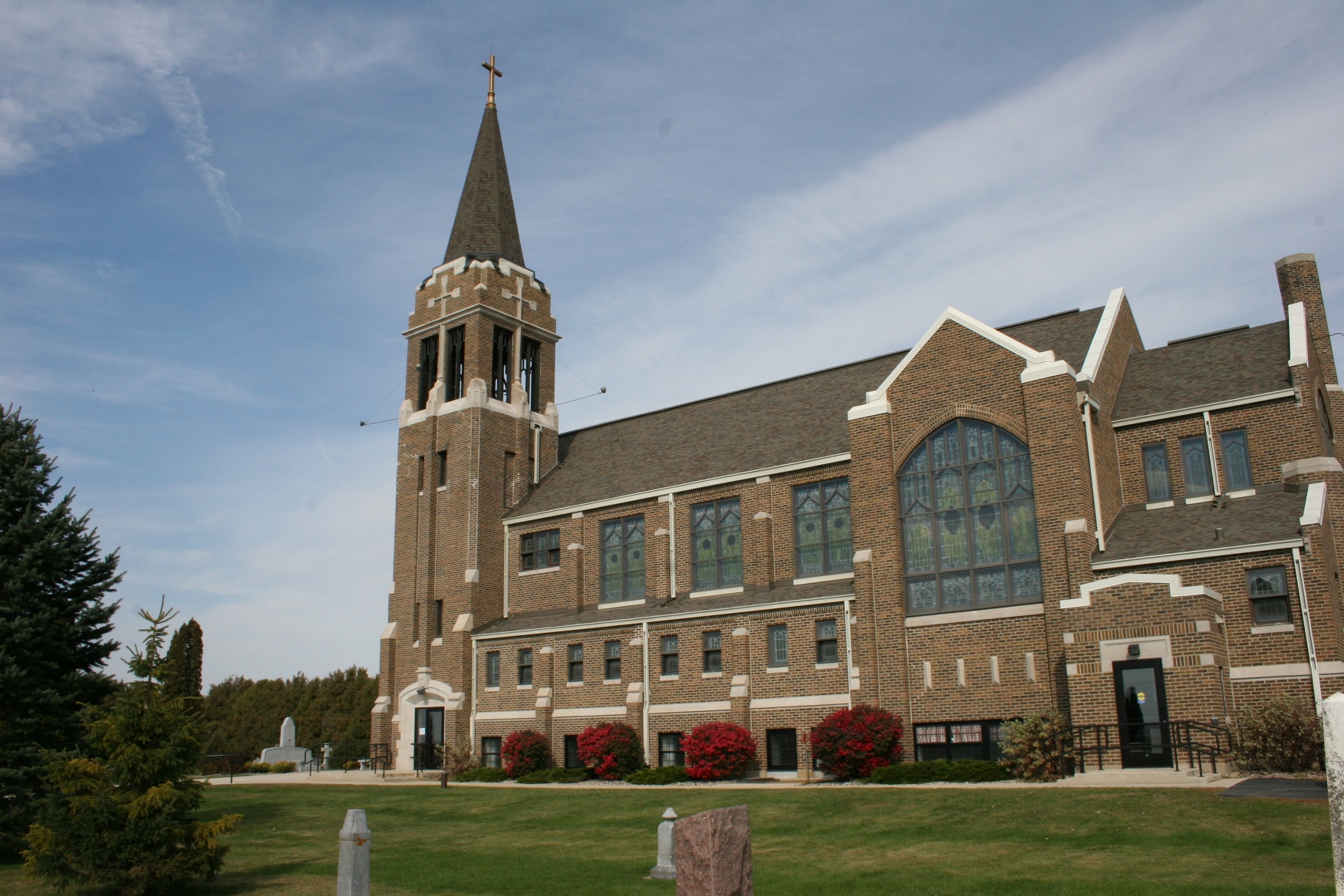
The Rev. Bernt Julius Muus, the founder of St. Olaf College in Northfield, was a pastor at Holden Lutheran Church near Kenyon. The congregation was organized in 1856 and this church was built in 1924.


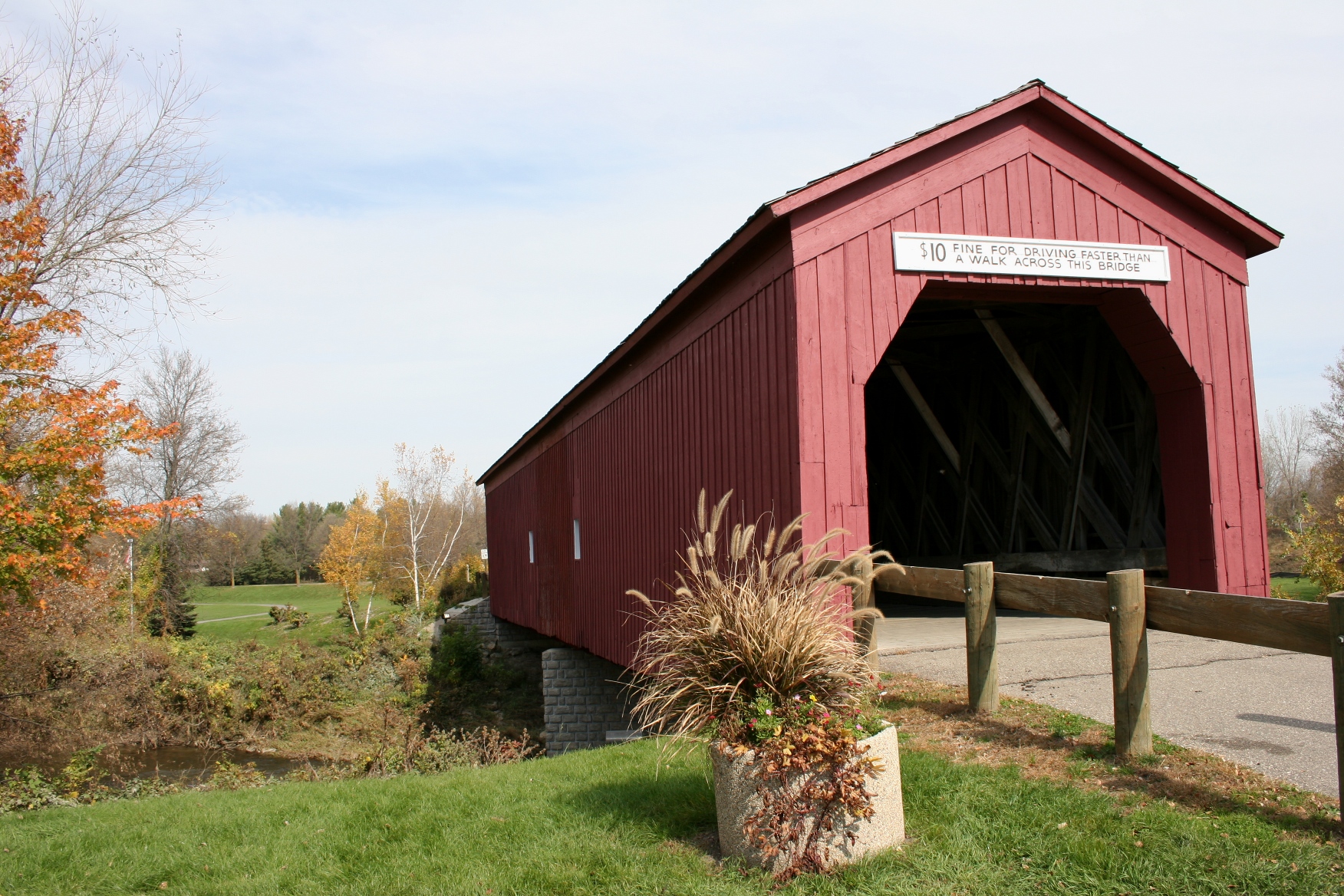
From there, we drove to Zumbrota for a picnic lunch at the historic covered bridge.


The covered bridge in Zumbrota dates to 1869 and is promoted in Zumbrota as the only covered bridge in Minnesota. However, I am aware of another covered bridge, that one in Mantorville.


Then we resumed our Sunday afternoon drive, traveling briefly on U.S. Highway 52 before exiting onto Highway 60.

After passing through the town of Mazeppa, we reached Zumbro Falls, a community of less than 200 that was, just 2 ½ weeks ago, ravaged by the floodwaters of the Zumbro River.

We pulled our car a block off main street and parked. I grabbed my camera and notebook. And that was the beginning of the end of our planned afternoon to view the fall colors. Instead, we viewed homes and businesses extensively damaged by the flood. And we spoke to some of the people of Zumbro Falls before driving about five miles further to Hammond.

I am sharing their stories in a series of posts that I hope will help you better understand the devastation from a personal perspective. I could have spent many more hours talking to flood victims. I could have dug deeper. I could have taken more photos.

But I think my stories are emotional enough, deep enough, to convey the frustration, the anger, the resilience, the gratefulness of a community that is suffering.

Typically, I would publish these posts over a several-day span. However, these stories need to be told now. Not tomorrow. Not the day after. But today.

So, please, take time to walk with me through portions of Zumbro Falls and Hammond, where you’ll meet Tracy and Jackie and Susie and Katie. They are strong, opinionated women. I have no doubt they will overcome this present obstacle in their lives.

Yet, even though they are tough as nails, they still need our help, our prayers, our support.

Of all the questions I asked of them, I failed to ask the most important: “Is there anything I can do for you?”

#

PLEASE WATCH FOR these posts as I begin publishing them this afternoon. If you have thoughts to share, share them.

Although my Sunday afternoon did not go as I envisioned, I am thankful for the detour from the planned route. My eyes and heart were opened. I saw destruction and beauty—that beauty being the irrepressible strength of the human spirit.


Beautiful fall colors provided the backdrop for this pile of destroyed appliances and other debris in Hammond.


© Copyright 2010 Audrey Kletscher Helbling