Minnesota Prairie Roots

Writing and photography by Audrey Kletscher Helbling

Doing my part to raise awareness about mental health August 3, 2022

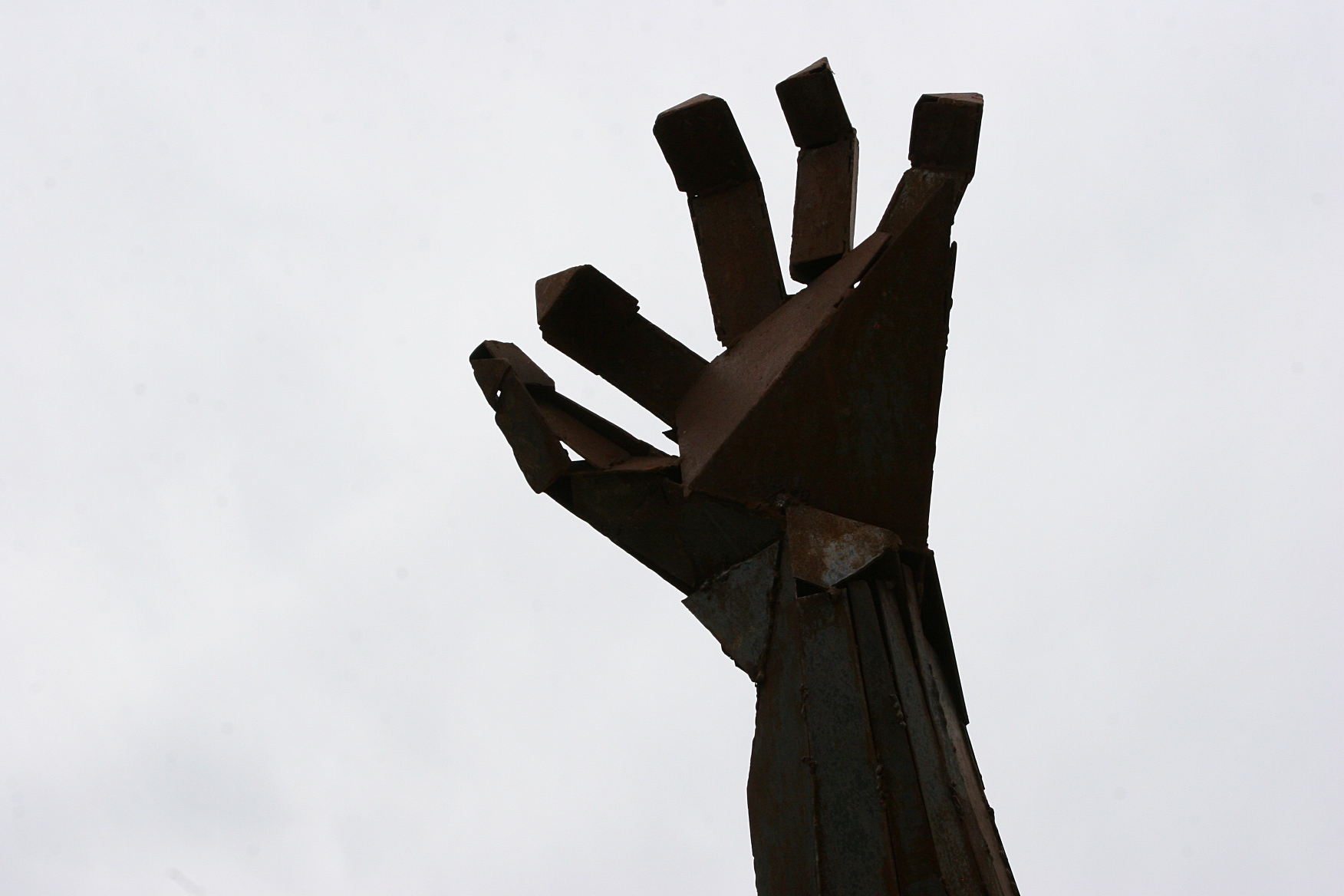
A hand reaches skyward in a mental health themed sculpture that once graced a street corner outside the Northfield, Minnesota, Public Library. (Minnesota Prairie Roots copyrighted file photo 2019)

WHEN HE HEARD ME rant for the umpteenth time about “people just don’t get it, they don’t understand,” he advised, “Then you need to educate them.”

He, my husband of 40 years, is right. Venting to Randy about offensive terminology and uninformed/misinformed comments and attitudes about mental illness does nothing other than temporarily ease my frustrations. Speaking out, writing, based on my observations and experiences, can make a difference. So write about my concerns I will, with the disclaimer that I am not a medical professional.

I photographed this shirt at an event at the Northfield Public Library. This message refers to the struggles with mental illness. (Minnesota Prairie Roots copyrighted file photo September 2019)

WORDS MATTER

Today—on the heels of recent offensive lyrics by Beyonce’—seems the right time to share what’s bothered me for way too long. The pop singer used the derogatory term, “spaz/spazzin,” in her new release, “Heated.” Although she was referencing spastic diplegia, a form of cerebral palsy causing motor impairments in limbs, and not mental health, the analogy fits. Her word choice proved offensive to people who are disabled. And rightly so. To her credit, Beyonce’ acknowledged her unintentional slur and is changing the lyrics. Just like Lizzo, who used the same wordage not all that long ago.

For the millions who each day bravely face mental health challenges and for those who love them, everyday careless language can hurt. Words like crazy, insane, nuts, it’s all in their head, off their rocker, out of his/her mind…are hurtful. As hurtful as the lyrics sung by Beyonce’ and Lizzo.

Recently, while reading a Good Morning America Book Club selection published in 2021, I came across this phrase: “the usual terrible but addictive schizophrenic medley.” In the context of this fictional story, the character was not talking about anything mental health related, but rather about what she was seeing on Instagram. I stopped reading and considered how insulting those words, especially to someone diagnosed with schizophrenia. I doubt the author intended to offend. But she did.

Buttons previously available for the taking at the Northfield library. (Minnesota Prairie Roots copyrighted file photo)

IF YOU HAD…

Now you might say I’m being overly-sensitive. But consider if you, or someone you loved, was diagnosed with cancer, diabetes, whatever, and uncaring words (which I can’t even think of) were tossed out there. It’s no different for those diagnosed with bi-polar, schizophrenia, depression, anxiety, post traumatic stress disorder…

I’m thankful individuals undergoing cancer treatment and/or who have survived cancer, for example, are not subjected to negative/offending words and behavior, but rather are supported with encouragement, fundraisers, even hot dishes delivered to their homes. That type of care and attitude should be a model for how all of us treat individuals dealing with a mental health crisis and their families. We should respond with equal love, compassion, care and understanding. And tangible support.
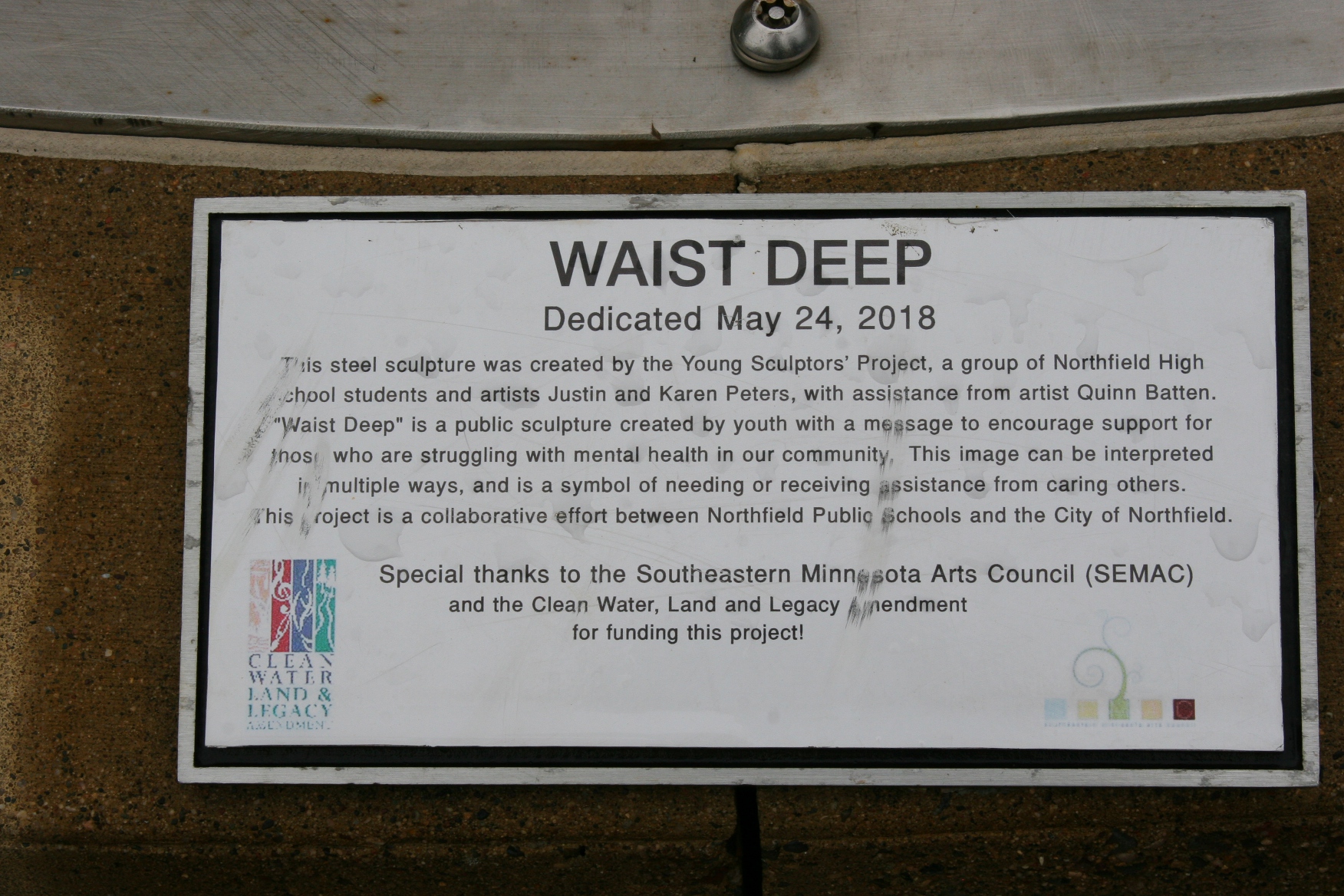
A sign explains the story behind the “Waist Deep” sculpture in Northfield. (Minnesota Prairie Roots file photo September 2019)

CHANGING ATTITUDES, BUT MORE IS NEEDED

I recognize attitudes toward mental health are changing, that, as a whole, we are growing more informed, finally beginning to reduce the stigma of brain disorders. But much work remains. Individuals in a mental health crisis should have immediate access to care. Busy, understaffed emergency rooms are often the first-line treatment option. I don’t know of a single doctor who would send a person experiencing a heart attack home. Individuals in a mental health crisis, the equivalent of a heart attack, deserve the same immediate life-saving care. Yet the wait to see a psychiatrist often exceeds six weeks, at least here in greater Minnesota. That’s unacceptable.

There’s a need for more mental healthcare professionals and in-patient treatment and recovery centers. There’s a need for more funding, more research. Insurance companies should not determine care/medications or refuse to fully cover mental healthcare expenses.
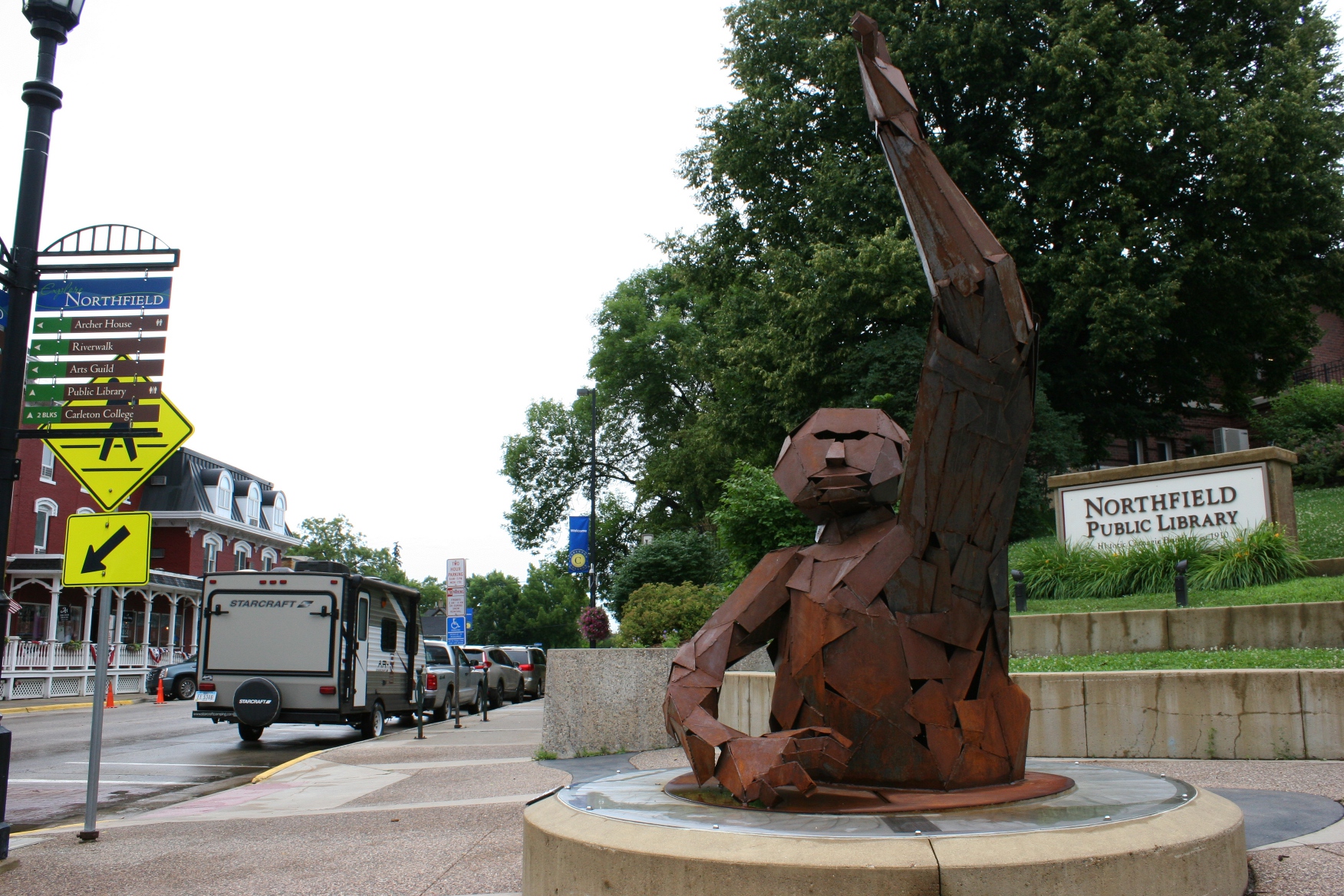
This sculpture, once located outside the Northfield library, is called “Waist Deep” and addresses mental illness. (Minnesota Prairie Roots copyrighted file photo 2019)

IT STARTS WITH EACH OF US

At a grassroots level—that’s each of us individually—more compassion, support, understanding are needed. A few years ago I walked into a southwestern Minnesota brewery and spotted a man sporting a jacket advertising a neighboring brewery. Imprinted on the back was an image of a straitjacket. I could not believe what I was seeing, especially after also reading the offensive name of the brewery. Later I looked online to read the brewery’s list of “Crazy Good Beer” with words like manic, catatonic, lobotomy, kookaloo… in the craft beer names. Simply writing this makes my blood pressure rise. I wanted to rip that jacket right off that beer drinker, so strong was my anger in that moment. Imagine the uproar, for example, if a brewery used words like chemo or radiation in its beer names or used an IV drip as its logo. Somehow a straitjacket is OK? Not from my perspective.

Imagine, too, if you have gone through cancer treatment and someone said you will be fine now that you’ve completed treatment. In the back of your mind, you recognize that the cancer could return despite the treatment. It’s no different for someone with a serious mental illness. Drugs work for awhile and then they don’t. Medications and therapy help manage symptoms, but there is no cure. Symptoms can return. Relapses, crises, happen.
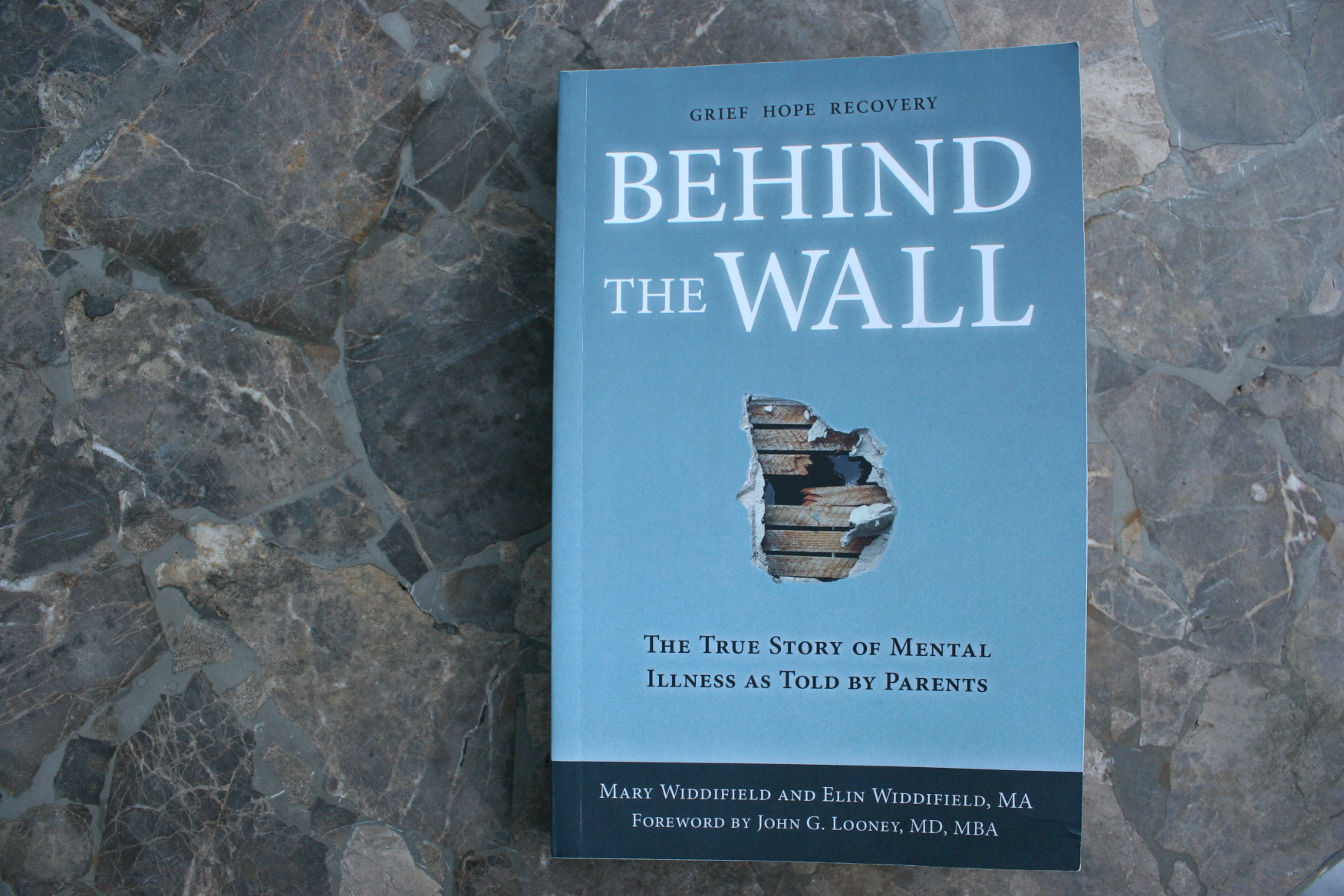
I highly recommend this book, among many I’ve read on the topic of mental illness. (Minnesota Prairie Roots copyrighted file photo)

GRATITUDE & RESOURCES

I appreciate every single person who has made a concerted effort to understand mental health, mental illness specifically. I appreciate organizations like the National Alliance on Mental Illness, which works tirelessly to support individuals and their families who face mental health challenges. I appreciate NAMI’s advocacy work and education. I appreciate mental healthcare professionals. And, most of all, I admire those individuals who deal with mental illness—whether depression, anxiety, post traumatic stress disorder, schizophrenia, bi-polar… They are among the strongest people I know and they deserve, yes, deserve, our love, compassion, understanding, support and respect.

THOUGHTS?

RESOURCES: If you or a loved one are experiencing a mental health crisis, seek immediate help. Call 911. Call 988, the National Suicide and Crisis Lifeline. Connect with NAMI. You are not alone.

Click here to read previous posts I’ve penned on mental health.

© Copyright 2022 Audrey Kletscher Helbling


Dedicated to Randy, a southern Minnesota automotive machinist for 43 years August 2, 2022

Randy at work in the automotive machine shop where he was employed for nearly 39 years until last Friday. (Minnesota Prairie Roots copyrighted file photo)

HE REBUILT HIS FIRST ENGINE, acquired for $25 from a classmate, nearly 50 years ago while a senior at Healy High School in Pierz. He recalls the deconstructed engine as a bit of a mess. But Randy was up to the challenge and successfully rebuilt the engine for his first car, a 1964 Chevy.

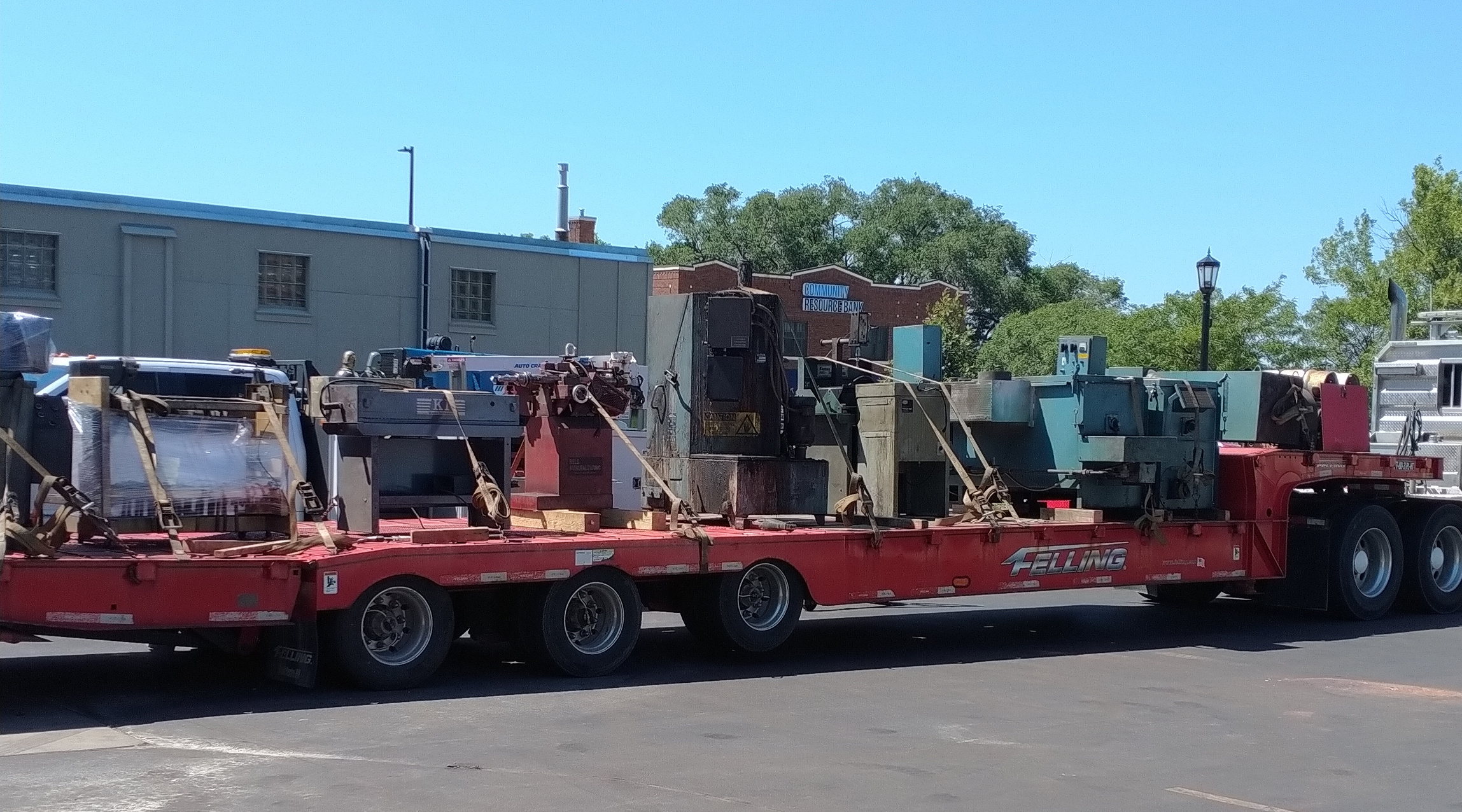
One load of machine shop equipment ready to transport from Northfield to the new owner’s garage Monday afternoon. (Copyrighted August 1, 2022, photo by Randy Helbling)

Fast forward to July 29, 2022. This past Friday, Randy clocked out of the job he’s held for the past 38 years and 10 months as an automotive machinist at a southern Minnesota auto parts store. A corporation purchased the business in early May and immediately announced plans to close the profitable and successful machine shop by the end of August. Closure came a month earlier with sale of the machine shop equipment.

Friday evening part of our family gathered at 10,000 Drops Distillery in Faribault to honor Randy for a life-long career with roots in that central Minnesota high school small engines shop class. He was, Randy notes, the only student to use the valve and seat grinder in one entire school year.

Today he’s an expert in his trade with a technical school education in auto mechanics and auto parts management but, more importantly, with a brief mentorship followed by decades of experience as an automotive machinist. Much sought after. And, always, always booked months out with work.

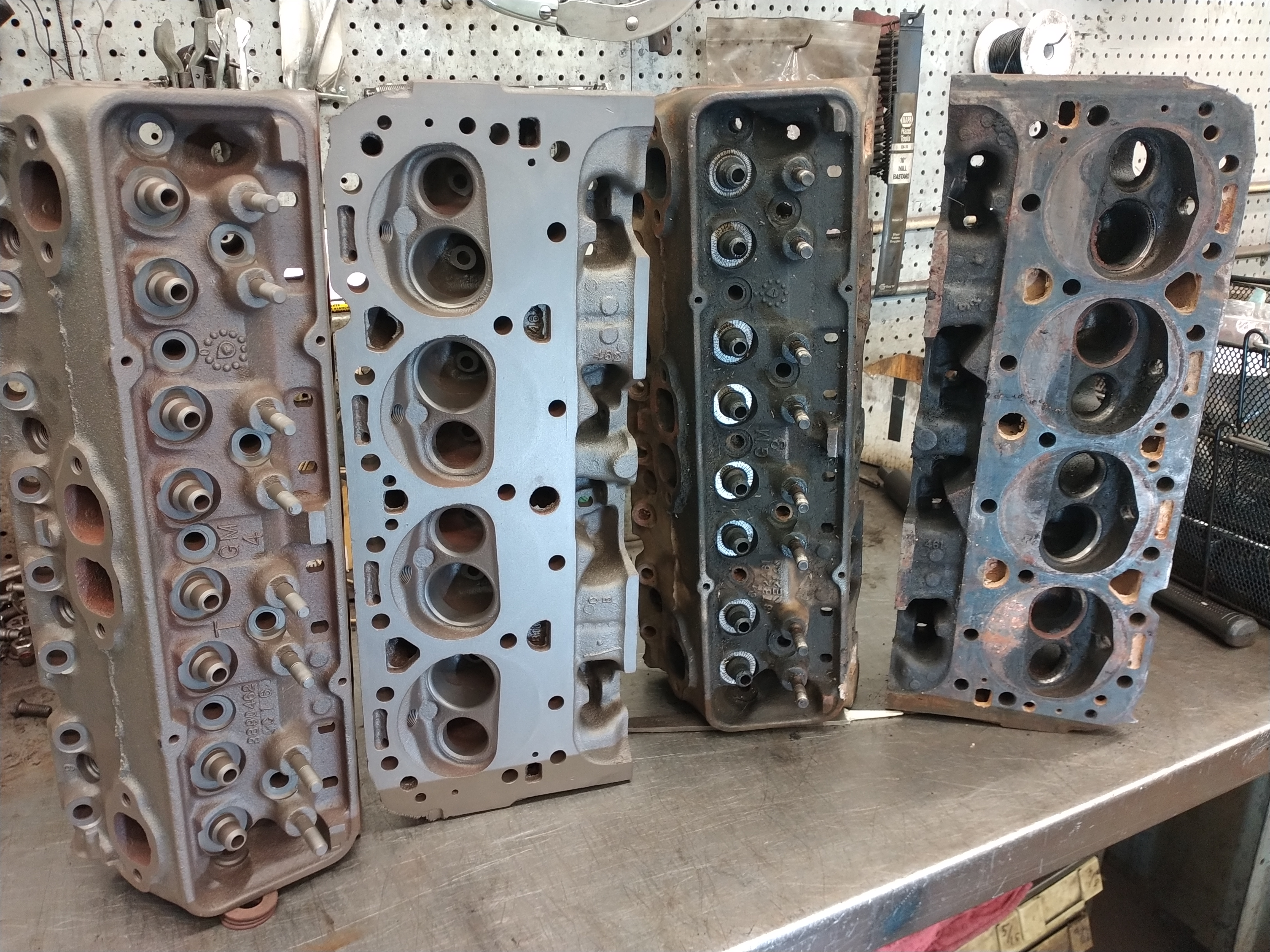
Before and after cylinder head cleaning process. (Photo by Randy Helbling)

I asked Randy to make a list of all the machine shop work he’s done since entering that field in 1979 after several years working as an auto parts counter person. I handed him a legal-sized envelope, recycled as notepaper. He sat on the end of the couch writing for the longest time in block print that is almost too small for me to read. He filled both sides of that envelope.

Here’s his list:

  • Resurface brake drums, rotors, flywheels, cylinder heads, manifolds, engine blocks and pressure plates.
  • Complete valve jobs: includes replacing valve guides, valve seats, valves and springs.
  • Repair cracked heads and blocks.
  • Cylinder reboring, honing and resleeving.
  • Pressure testing heads or magnetic crack inspection.
  • Removing broken bolts, E-Z outs, taps and drill bits.
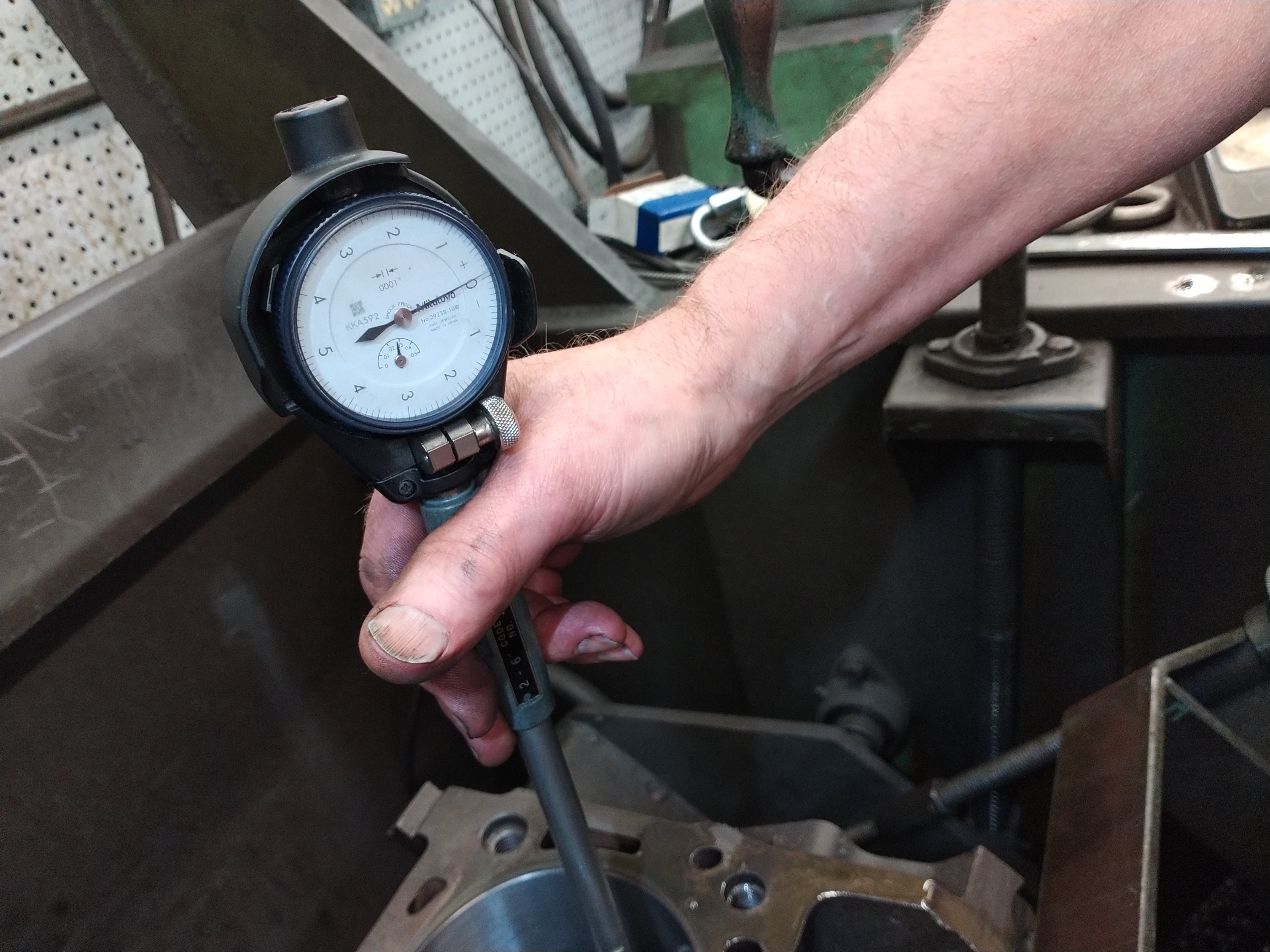
  • Resizing connecting rods and fitting piston pin bushings to within .0001 of an inch.
  • Cleaning, degreasing cylinder heads, blocks and various engine parts and other parts for industry.
  • Press work with a 50-ton press: pressing U-joints, wheel bearings, front wheel drive and rear wheel drive axle shafts, ring and pinion bearings, forklift wheels and other items needing to be pressed apart or together.
  • Rebuild drive shafts with constant velocity U-joints.
  • Polish crankshafts.
  • Repair radiators.
  • Reline brake shoes.

Impressed yet? I am and so are the thousands of customers who came to Randy for their automotive machining needs. Some stopped by on Friday to thank him, to express their dismay at his unexpected job loss. Randy was reliable, incredibly skilled, excelling in his craft. Customers included car and farm implement dealerships, farmers, garages, marinas, golf courses, the Harley dealer, grain elevators, construction companies, local canning and food companies and other industries, classic car and vintage tractor collectors, do-it-yourselfers and city, county and school maintenance departments, and probably some I missed in this list.

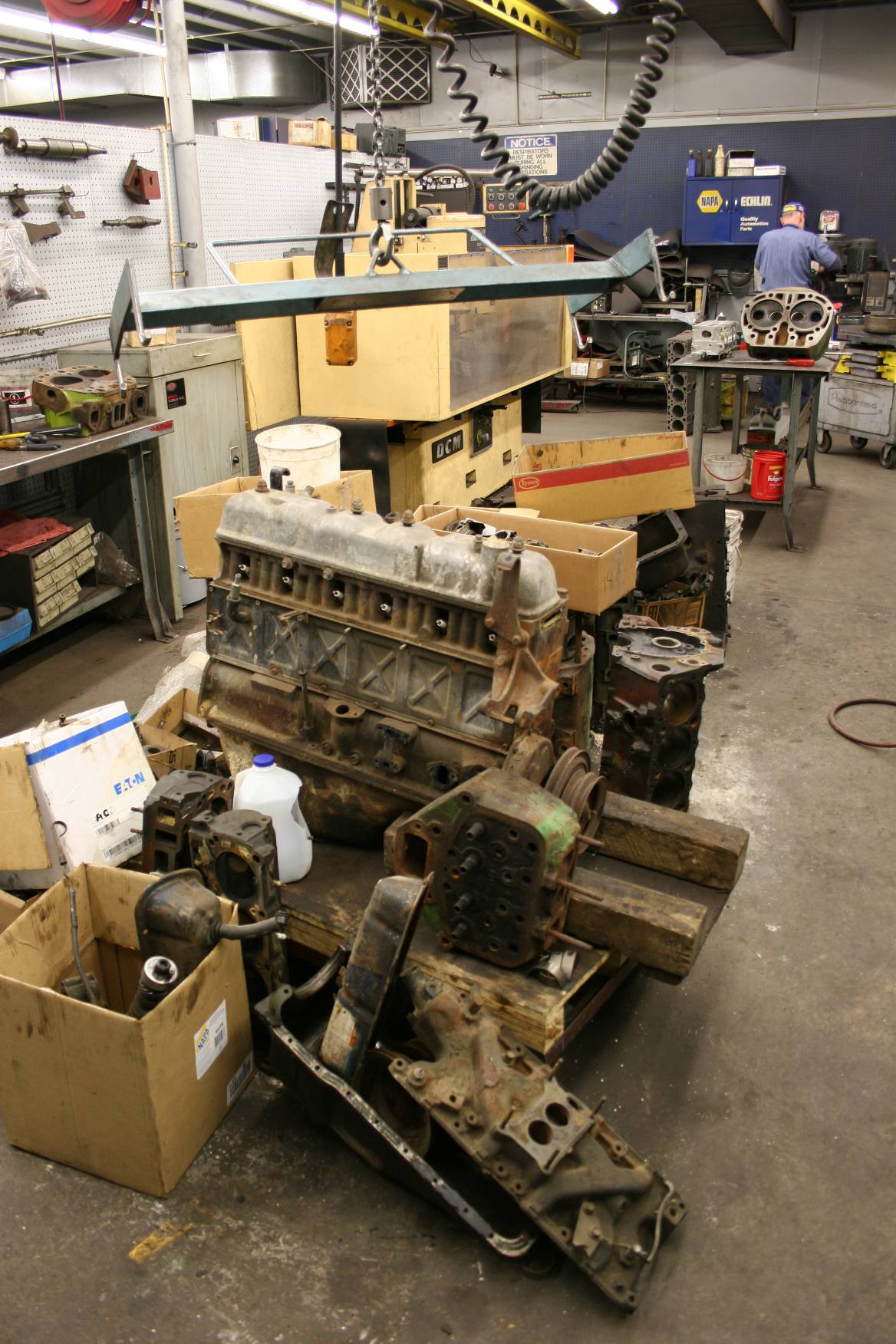
Work piles up in the automotive machine shop. (Minnesota Prairie Roots copyrighted file photo)

He’s repaired almost everything except airplanes and locomotives. Buses? Check. Boats? Check. Semis? Check. Tractors? Check. Motorcycles? Check. Trucks? Check. Cars? Check. Vans? Check. Lawnmowers? Check. Snowmobiles? Check. Skid loaders? Check. Forklifts? Check. Snowblowers? Check. Vintage tractors? Check. Classic cars? Check.

It all started back in high school with that rebuilt engine for a 1964 Chevy, today a classic car Randy wishes he still owned. Today he owns a history as a hardworking and dedicated automotive machinist who truly was among the best, and remaining few, in his field here in southern Minnesota.

Measuring a cylinder bore. (Photo by Randy Helbling)

I asked Randy what skills he needed to be a successful automotive machinist. He thought for a moment and then said, “knowing how an engine might perform when the work is completed.” I will attest to his knowledge. He can listen to an engine and often immediately diagnose a problem. Yes, he’s that good. An aptitude for math and being detail-oriented are also necessities.

I’m proud of my husband, for how he’s served southern Minnesota and beyond (he had a repeat customer from Sioux Falls, SD). He’s been a real asset to the area considering all of the automotive machining he’s done since 1979. His last day on the job came with mixed emotions. It’s not easy losing your job unexpectedly after 39 years. Randy teared up when talking about the customers who popped in on Friday to thank him. And when our son called from Indiana while we were at the distillery, I know that touched him, too.

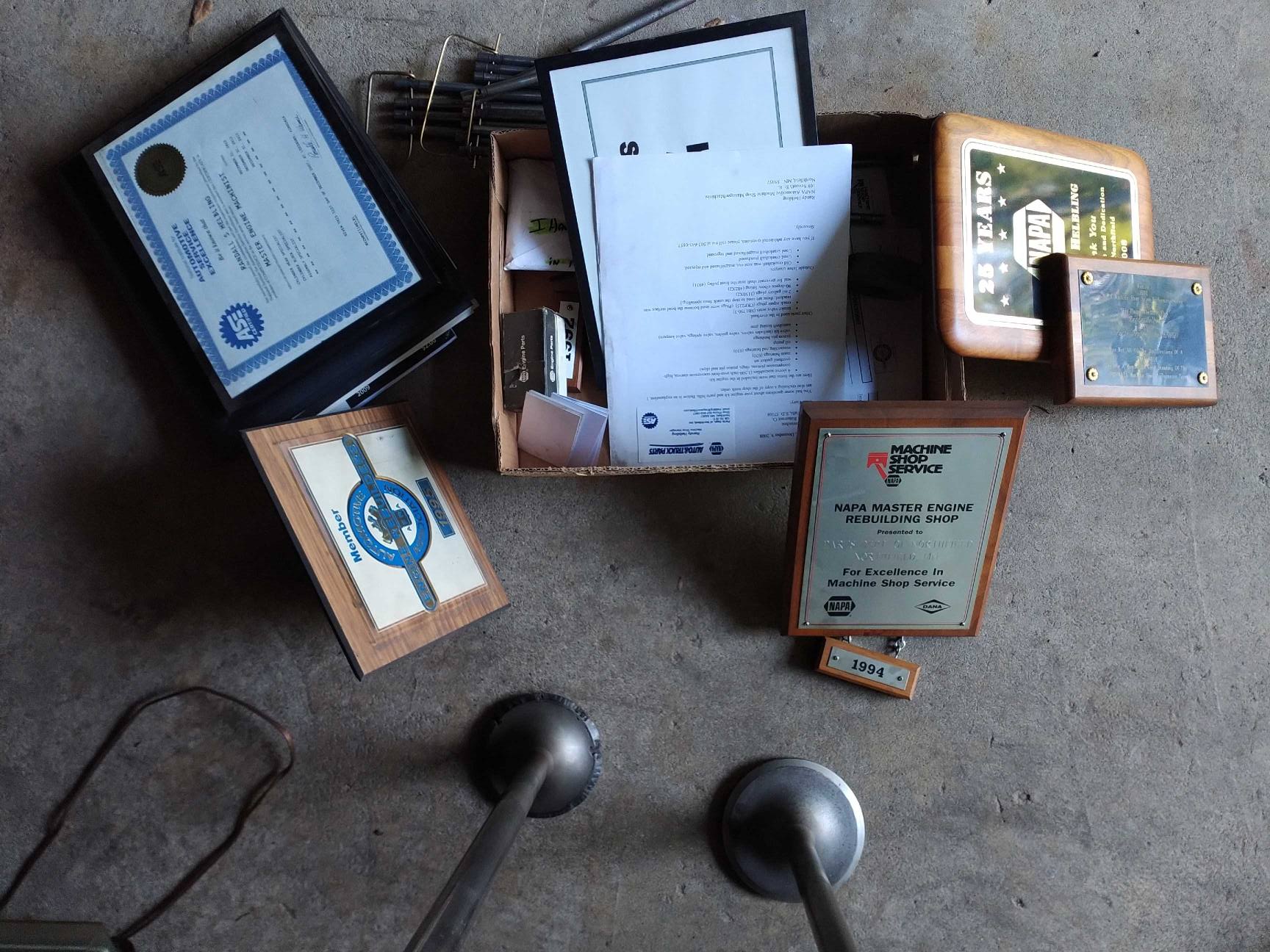
From Randy’s office/shop. (Minnesota Prairie Roots copyrighted photo July 2022)

In the end, he carried his “office” home in a small cardboard box filled with professional plaques, business cards, a job quote…and a sheaf of carbon paper. Randy carries with him, too, the memory of 43 years of working in the automotive field, of interacting with customers, of knowing he has always, always, done his best.

© Copyright 2022 Audrey Kletscher Helbling

Photos courtesy of Randy Helbling


Remembering the 35W bridge collapse 15 years later August 1, 2022

This photo shows the opening spread of the feature article published in the November/December 2007 issue of Minnesota Moments. Casey McGovern of Minneapolis shot the bridge collapse scene. To the far left is Garrett before the collapse, to the right, his rescuer. The next photo shows his Ford Focus which plummeted into the Mississippi River. And to the right are newly-engaged Garrett and Sonja, before the collapse.

FIFTEEN YEARS AGO THIS EVENING, 13 people died and 145 were injured when the 35W bridge collapsed during rush hour in downtown Minneapolis. Vehicles plunged into the Mississippi River. Others clung to the tilted, broken span of roadway. Lives were forever changed at 6:05 pm on August 1, 2007, when faulty gusset plates gave way and the bridge broke.

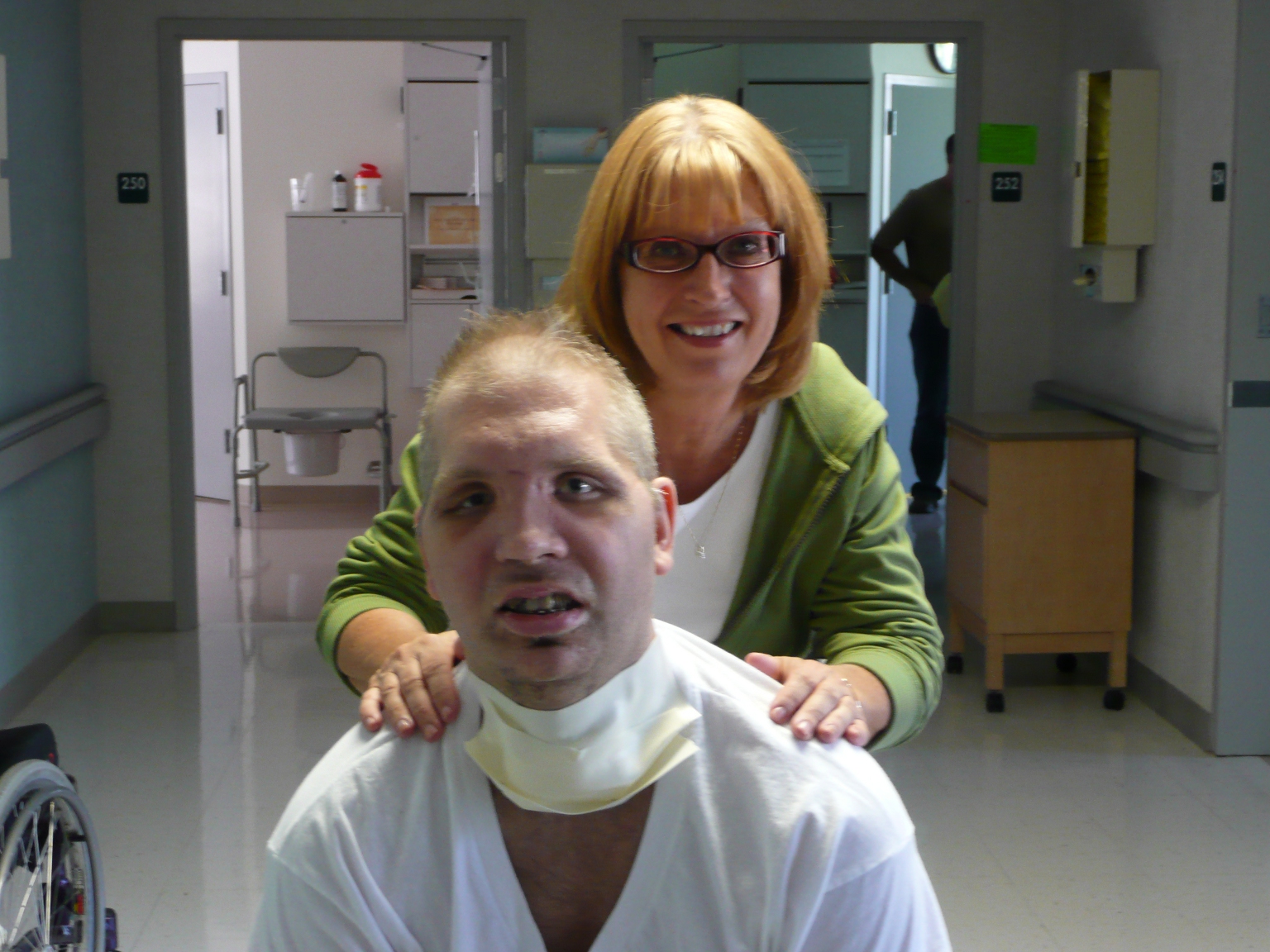
Garrett with his mom, Joyce Resoft, about a month after the bridge collapse. (Minnesota Prairie Roots file photo 2007. Photo courtesy of Garrett’s family)

Among those most seriously injured was then 32-year-old Garrett Ebling, former managing editor of The Faribault Daily News. He suffered a traumatic brain injury, severed colon, broken left arm and ankles, a spinal injury and more after his Ford Focus nosedived 110 feet, the equivalent of an 11-story building, into the river. That he survived seems miraculous. He spent weeks in the hospital, where he underwent multiple surgeries. A lengthy rehab followed. His life, physically, mentally and emotionally, was forever changed.

Within months of the collapse, I penned a feature story about Garrett for Minnesota Moments, a now-defunct magazine. Mine was one of the few initial interviews Garrett granted and I was both humbled and honored to share his story as a freelance writer. Prior to his departure from the editorial job in Faribault, we had connected. I remember Garrett’s kindness and compassion toward me after my son was struck by a hit-and-run driver in May 2006. I took great care in writing his story, recognizing that another journalist was trusting me to get it right.

Garrett Ebling’s book.

In 2012, Garrett wrote about his experiences and life thereafter in a book, Collapsed—A Survivor’s Climb From the Wreckage of the 35W Bridge. I reviewed that revealing and emotional book in which this survivor held nothing back.

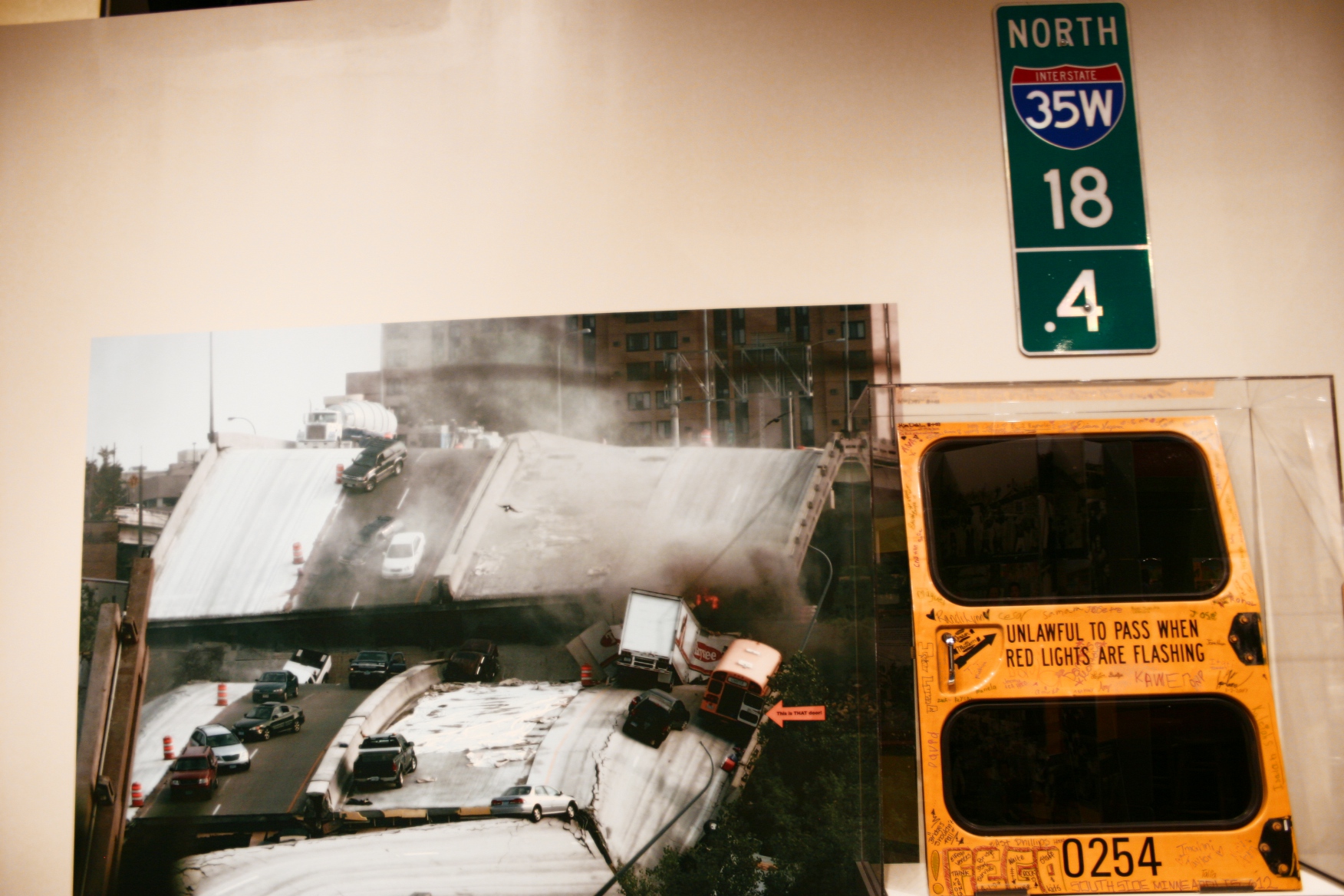
A section of the then now wow exhibit at the Minnesota History Center in St. Paul features the 35W bridge collapse. This image shows the collapsed bridge and the emergency exit door from a school bus that was on the bridge when it collapsed. All made it safely off the bus (Minnesota Prairie Roots file photo)

Since then, I’ve lost track of the “author, father and 35W bridge collapse survivor,” as Garrett labels himself on his Twitter account. But I expect today, the anniversary of the bridge collapse, is difficult for him as it is every survivor and every single person who lost a loved one 15 years ago in downtown Minneapolis when the unthinkable happened. When a bridge fell.

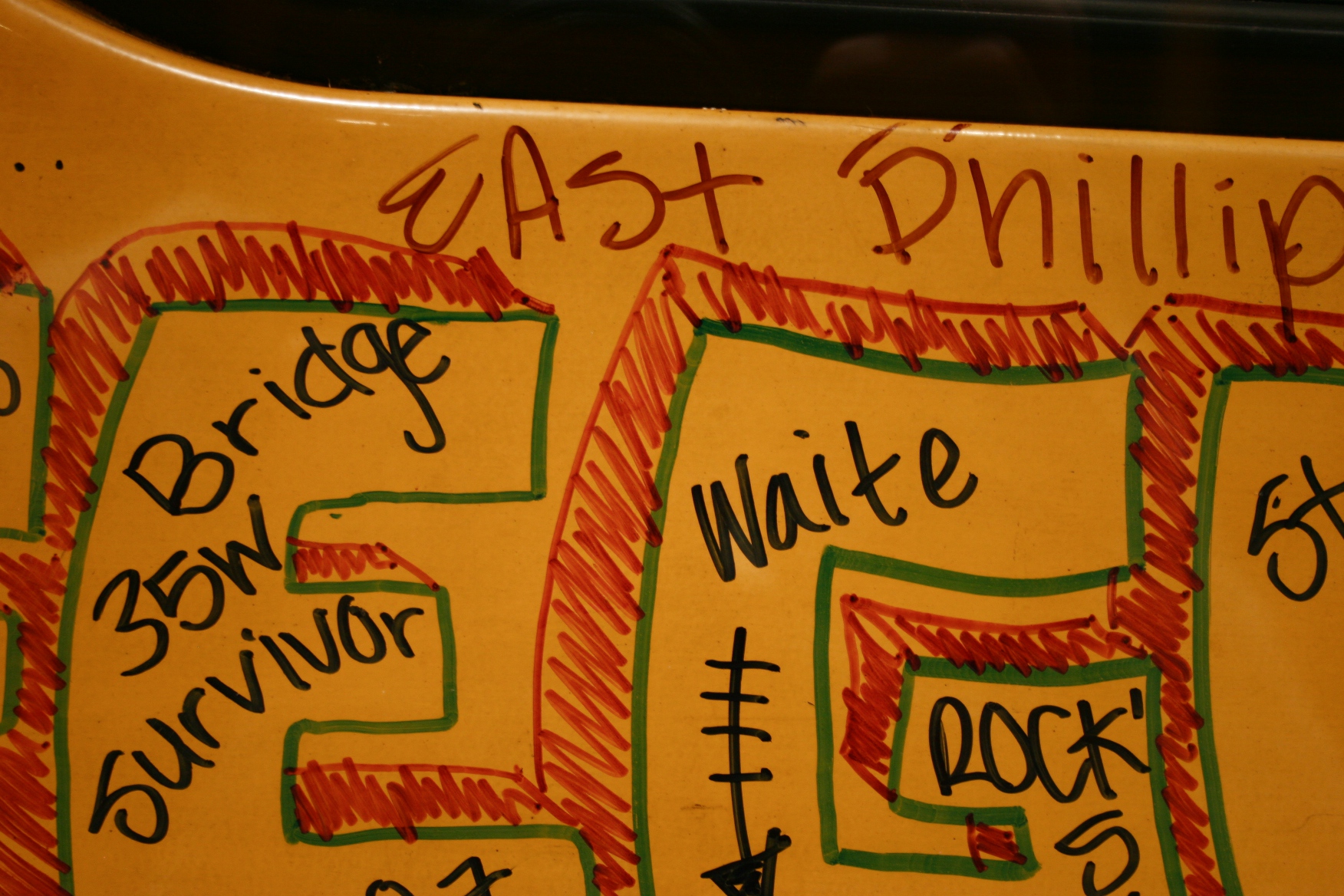
All the children and adults on the bus signed the door on display at the Minnesota History Center. (Minnesota Prairie Roots copyrighted file photo)

There are moments in history that we never forget and, for me a Minnesotan, August 1, 2007, is one of those dates. When I heard the breaking news of the bridge collapse, I worried first about extended family who live in the metro. They were not on the bridge. While that diminished my personal angst, it does not diminish the tragedy of that day for those who were on that bridge. Like Garrett Ebling, the 144 others injured and the 13 who died. It is a tragedy, too, for those who loved them and for us, collectively, as Minnesotans.

© Copyright 2022 Audrey Kletscher Helbling