

SOME OF THE MOST MEANINGFUL, enlightening and powerful books I’ve read, I’ve found in the children’s picture book section of my local public library. That includes My Powerful Hair written by Carole Lindstrom and illustrated by Steph Littlebird.
I happened upon this book while searching for recently-published astronaut and geography books for my 4-year-old grandson. I never did find those sought-after titles. Not that it mattered. What I discovered instead were three must-read books: My Powerful Hair, Boycott Blues—How Rosa Parks Inspired a Nation and We Are Better Together.
Parks is certainly familiar to me as the Black seamstress who in 1955 refused to give up her seat to a white man on a city bus in Montgomery, Alabama. That sparked a bus boycott and the Civil Rights Movement. Likewise, working together to effect change, to improve our world, to help one another is a familiar theme.

THE IMPORTANCE OF HAIR REVEALED
It is the story on hair, though, which proved a particularly teachable read. My Powerful Hair focuses on Native Peoples’ hair and its importance in their culture, their history, their lives. Through the writing of New York Times bestselling and award-winning author Lindstrom, who is Anishinaabe/Metis (and an enrolled citizen of the Turtle Mountain Band of Ojibwe), and Indigenous artist Littlebird of Oregon’s Confederated Tribes of Grand Ronde, I learned the symbolism and power of hair in Native American culture. Admittedly, this is something I should have known, having grown up on the southwestern Minnesota prairie between the Upper Sioux and Lower Sioux Indian Reservations (today termed “communities”). I thought I was informed. But I wasn’t, not about hair.
Told from the perspective of a young Native girl, My Powerful Hair explains the reasons Native Peoples grow their hair long. And keep it long. Hair holds stories, memories, strength, sorrow, connections to each other and to Mother Earth. And more. Page after page, the narrator shares events in her life that weave into her hair. When Nimishoomis (her grandfather) taught her to fish, her hair reached her ears. When her cousins taught her to make moccasins, her hair flowed past her shoulders. In the sharing of these moments, I began to understand the power of hair in Native American culture.
FORCED HAIRCUTS
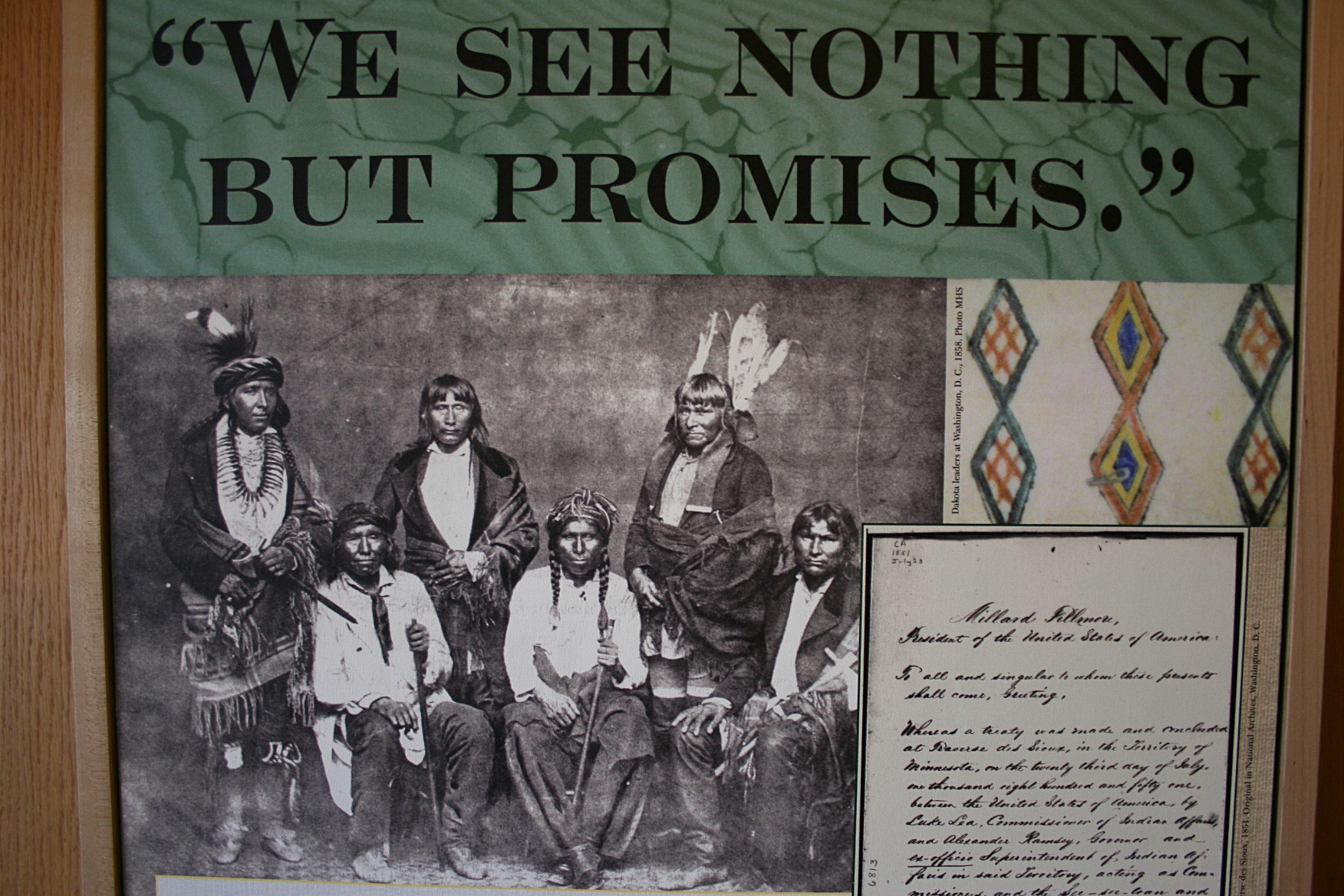
I also understood fully, for the first time, the trauma inflicted upon Indigenous individuals forced long ago by white people to cut their hair. The writer and illustrator don’t hold back. In the first few pages, a young Nokomis (grandmother) is in tears as the hands of a Catholic nun grasp, then cut, her braids. It’s an emotionally impactful visual.
But this was reality at Indian boarding schools, within faith communities and elsewhere back in the day, in a time period when efforts focused on erasing Indigenous culture, on conforming Native Peoples to European ways. It was wrong.

“A TERRIBLE INJUSTICE”
A blogger friend from the central Minnesota lakes region recently shared a bit of her family’s experience per my request. Of unverified (records were often destroyed) Cherokee ancestry, Rose speaks of her mother’s trauma after being sent to a Catholic girls’ school in Crookston. “Mom didn’t tell us much about her experience there,” Rose says, “only that they made her cut her long black hair. My mom never cut her hair again for the rest of her life. She saw the forced haircut as a terrible injustice.” Injustice seems a fitting word.
In an author’s note, Carole Lindstrom shares the same trauma, documented, she writes, in a photo of her grandmother and two great aunts with their black hair shorn above their ears. They were forced into an Indian boarding school in the early 1900s.
POWER IN STORIES, IN HERITAGE, IN RESPECT
Rose is thankful for books like My Powerful Hair. “I am glad that stories like this are being told,” she says. “Much First Nations history nearly disappeared. And many First Nations keep their ceremonies and other information ‘secret’ so it won’t be distorted or misused by people who don’t understand, or who seek to harm them.” Based on history, that seems warranted.
This Minnesota woman has one more reason to feel grateful for children’s picture books by Indigenous Peoples. Her grandchildren are of Ojibwe heritage; their other grandmother lives on the White Earth Nation in northwestern Minnesota. “My hopes for my grandchildren are that they learn all they can about their Ojibwe ancestors and customs and values,” Rose says. “I hope they can choose what lessons they want to carry forward in their own life. I hope they are fantastic examples of how people from different backgrounds can get along and respect and love one another.”
And so I learned, not only from Rose, but from reading My Powerful Hair. Stories woven into our hair matter. For they are powerful.
© Copyright 2023 Audrey Kletscher Helbling


 Minnesota Prairie Roots
I have read all of Louise Erdrich books so I truly understand your post. Thank you for your post.
Thank you for reading her powerful writing. And you’re welcome re this post.
Loved this post, Audrey. I’m so glad people are sharing their stories of history, culture, and identity. If I may add, here are 2 books to share more wisdom of Native cultures. “The Cultural Toolbox: Traditional Ojibwe living in the Modern World” by Anton Treuer. He writes a lot about Ojibwe culture. Another book I love is, “Braiding Sweetgrass: Indigenous Wisdom, Scientific Knowledge, and the Teachings of Plants” by Robin Wall Kimmerer.
Rose, thank YOU for sharing your story, which really personalized today’s blog post. I am grateful for the insights, the history and the messages you shared with me. Thank you for those additional book recommendations.
Beautiful stories; well told. Thank you for the lessons.
Thank you, Ken. We are all learning, right?
Powerful post today – thanks so very much for sharing! I have learned and I am still learning about cultures, especially hair and dress. There is a movement (at least where I work) to be more open to learning about diversity (as well as tattoos). You have women who have been trafficked that have been tattooed (just an example). I love when someone wants to share their story with me and let me in to learn more about their life. Happy Day – Enjoy 🙂
Stories, we all have them. I love the movement in your work place to be more open to learning about diversity. I’d never considered that aspect of tattoos. So you taught me something today.
Very interesting!
I learned a lot from The Power of Hair and Rose’s family story.
this was both a powerful and educational post. I learned a lot from you here, and I’m going to seek out that book. thank you –
Oh, good. I’m glad this post inspired you to seek out this children’s picture book.
A very informative and enlightening post with a focus on Native American hair something I had never thought about. Thank you for your documentation.
I’m happy to share what I learned from this book.
This is a book I would like to read as well. I know a little about the culture but this would be a great way to learn more and respect the Native American population who continue to struggle daily to keep their heritage alive. Thanks for highlighting this one.
So many people are telling me they had no idea about the significance of hair among Native Peoples. We’re all learning.