Minnesota Prairie Roots

Writing and photography by Audrey Kletscher Helbling

In communion at Valley Grove doughnut hole roasting February 16, 2026

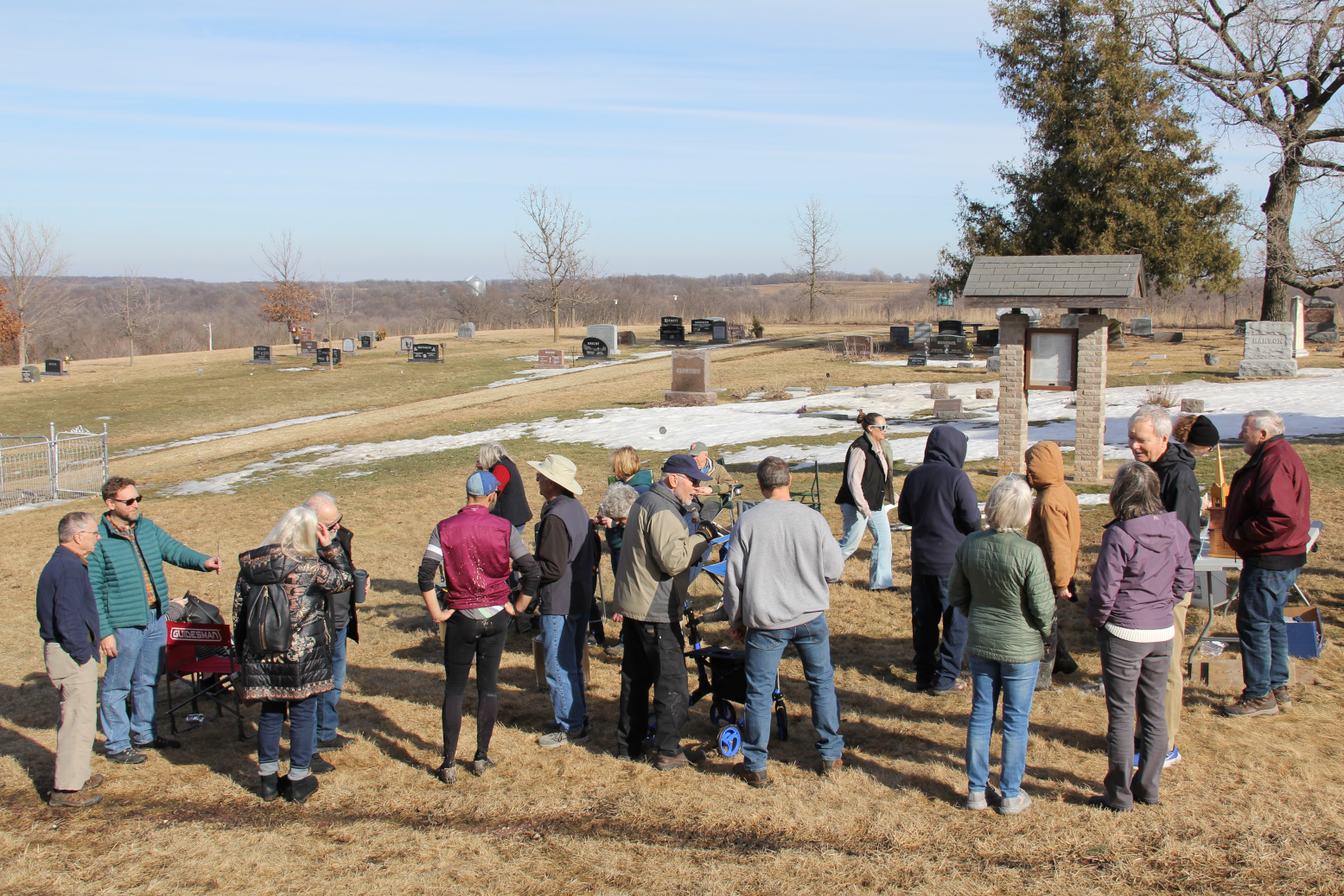
People gather on February 15 for a Doughnut Hole Roasting Party at Valley Grove. (Minnesota Prairie Roots copyrighted photo February 2026)

UNDER A SUNNY February sky, they gathered in communion around fire pits outside two historic Norwegian immigrant churches high atop a hill in eastern Rice County. Food, fellowship and a fondness for this place drew people here, to the fourth annual Doughnut Hole Roasting Party.
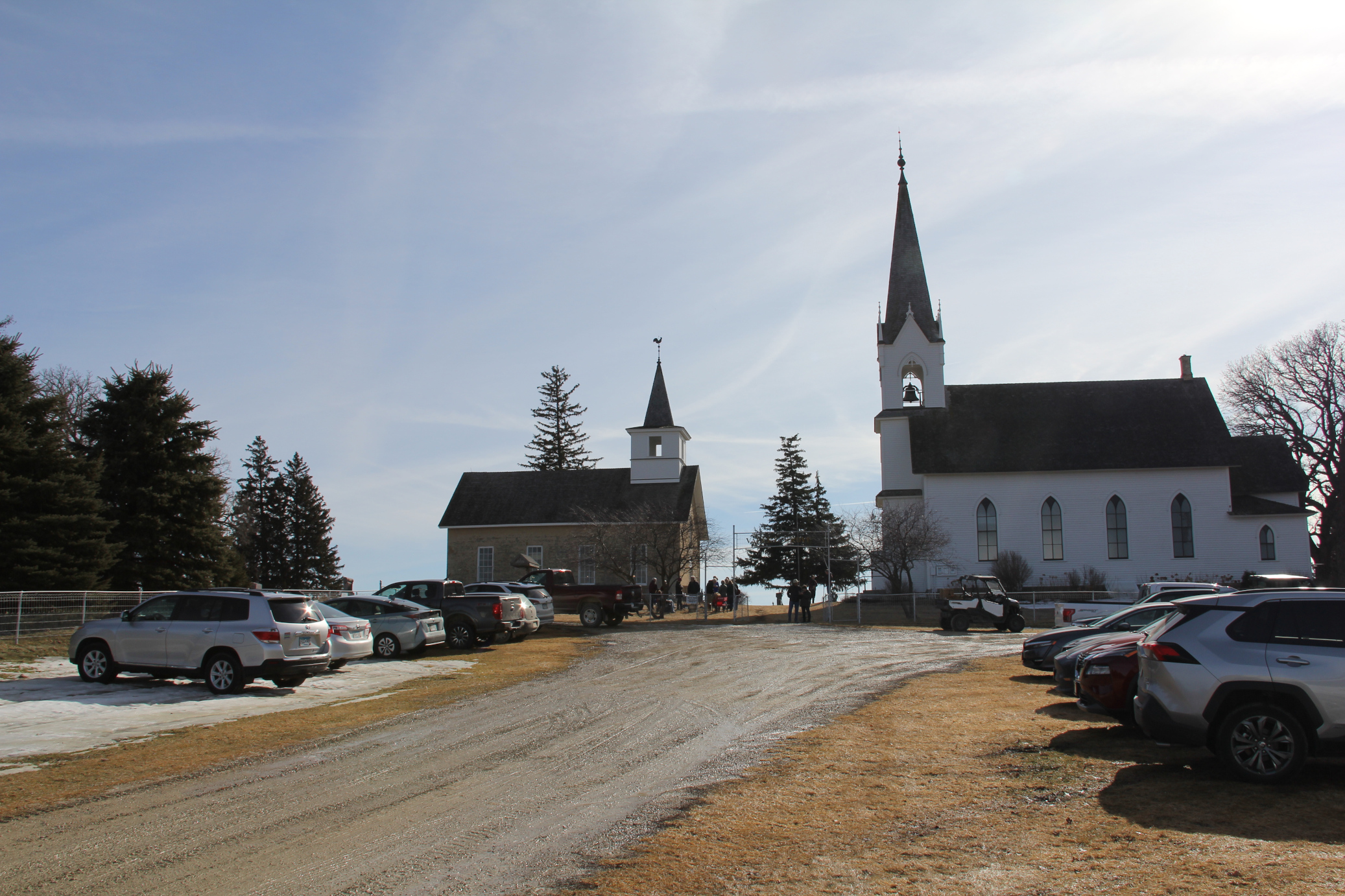
Walking up the muddy gravel driveway to the hilltop Valley Grove churches. (Minnesota Prairie Roots copyrighted photo February 2026)

For the first time, I attended this event, although I’ve been to the Valley Grove churches and the adjacent cemetery many times. I love this secluded spot near Nerstrand, where historic wood-frame and limestone churches rise above the surrounding countryside in an especially picturesque setting. There are prairie trails to hike here and an oak savanna. It’s peaceful here.
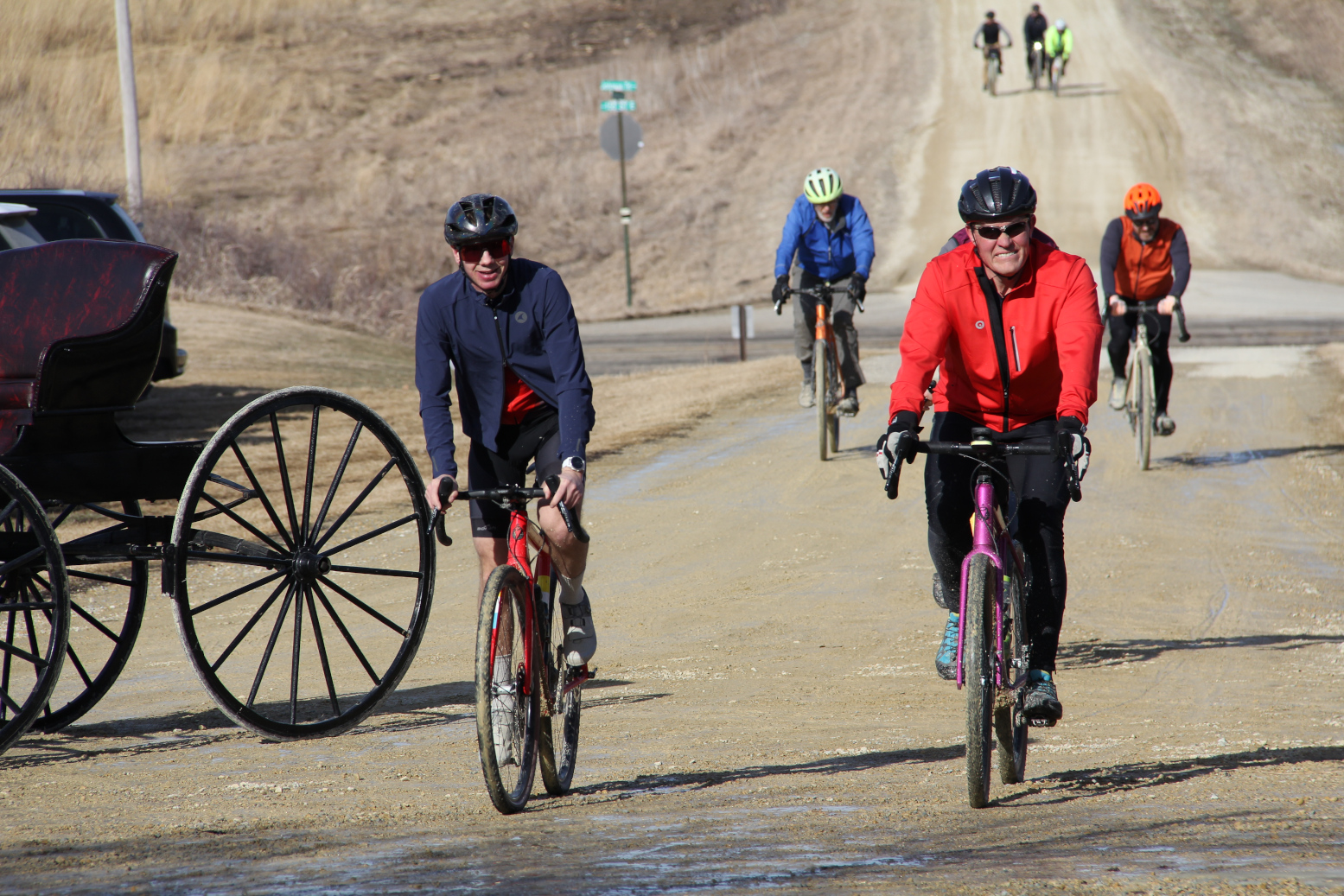
A group of bikers wheel up the hill to Valley Grove for the Doughnut Hole Roasting Party. (Minnesota Prairie Roots copyrighted photo February 2026)

On this balmy Sunday afternoon of unseasonably warm temps in the mid-fifties, sweatshirt or light jacket weather, conversations broke the quiet. The mood felt engaging, connective, of communion in community.
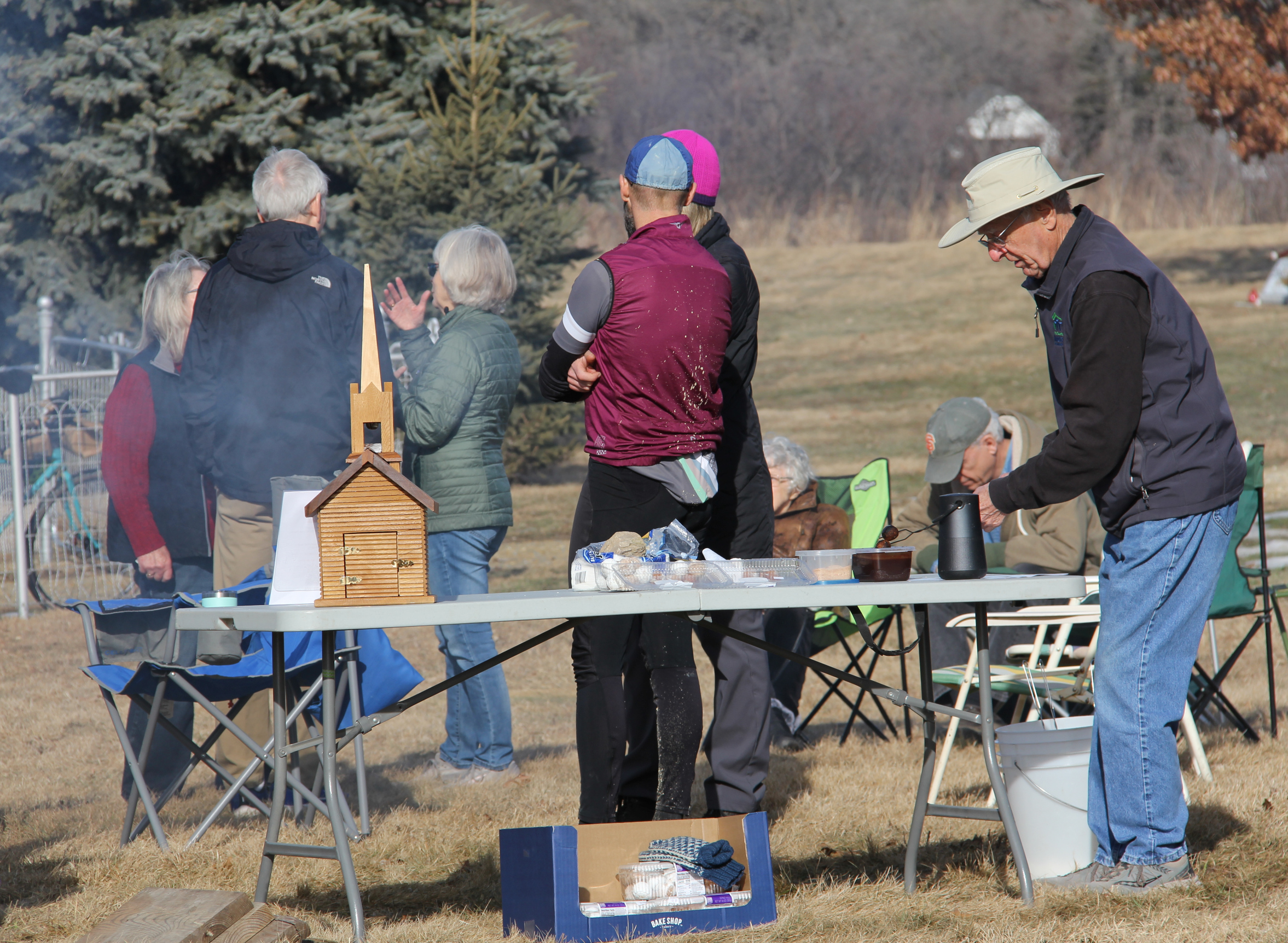
At the doughnut station, people could spear doughnuts, dip them in chocolate or cinnamon and sugar and/or drop a donation inside a replica church. (Minnesota Prairie Roots copyrighted photo February 2026)

Hosted by the Valley Grove Preservation Society Board, the roasting of doughnut holes was also an event to raise monies for ongoing preservation and restoration projects at the 1862 stone and 1894 wooden churches. Both churches are on the National Register of Historic Places.
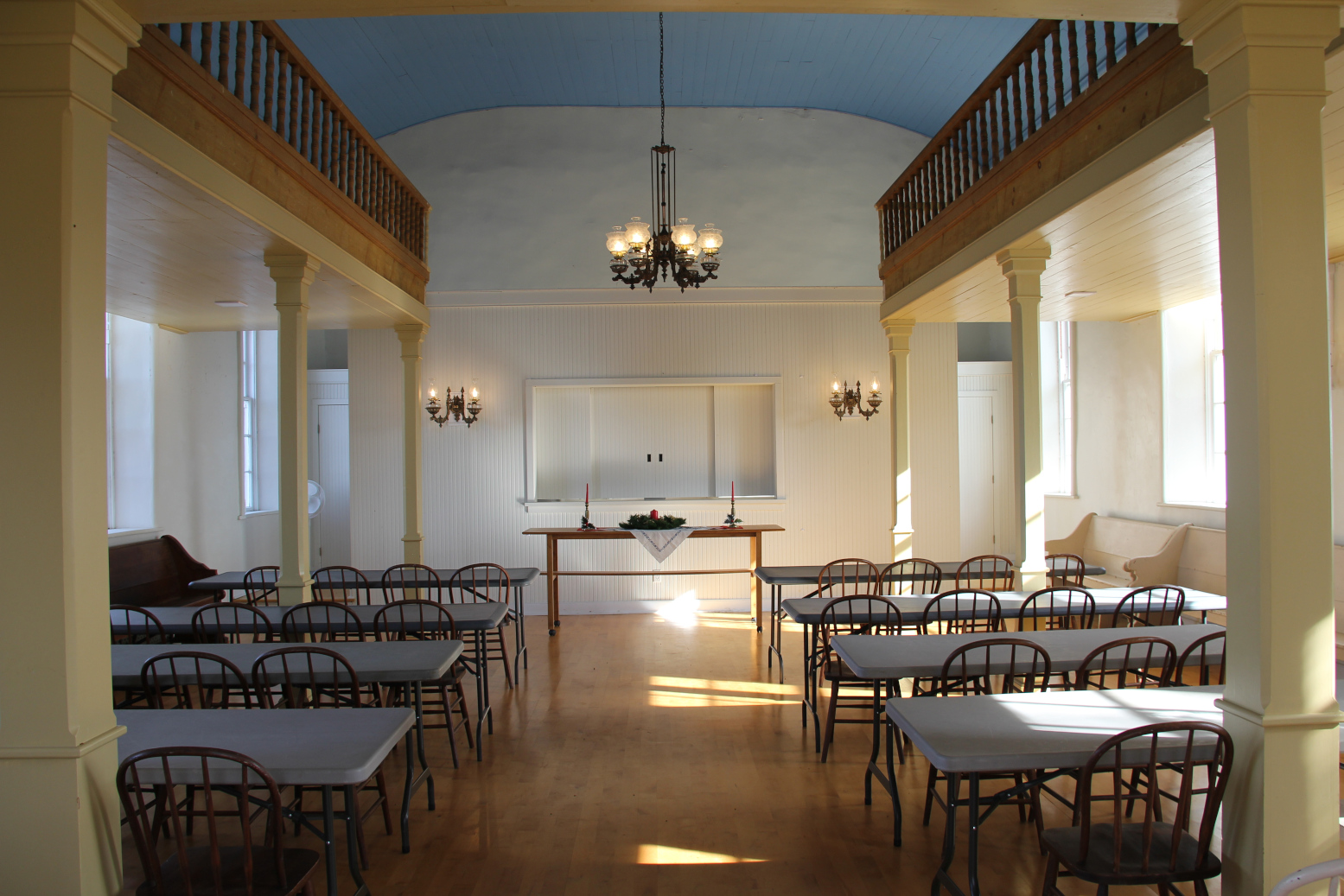
Inside the stone church, once used for worship and today for gathering. (Minnesota Prairie Roots copyrighted photo February 2026)
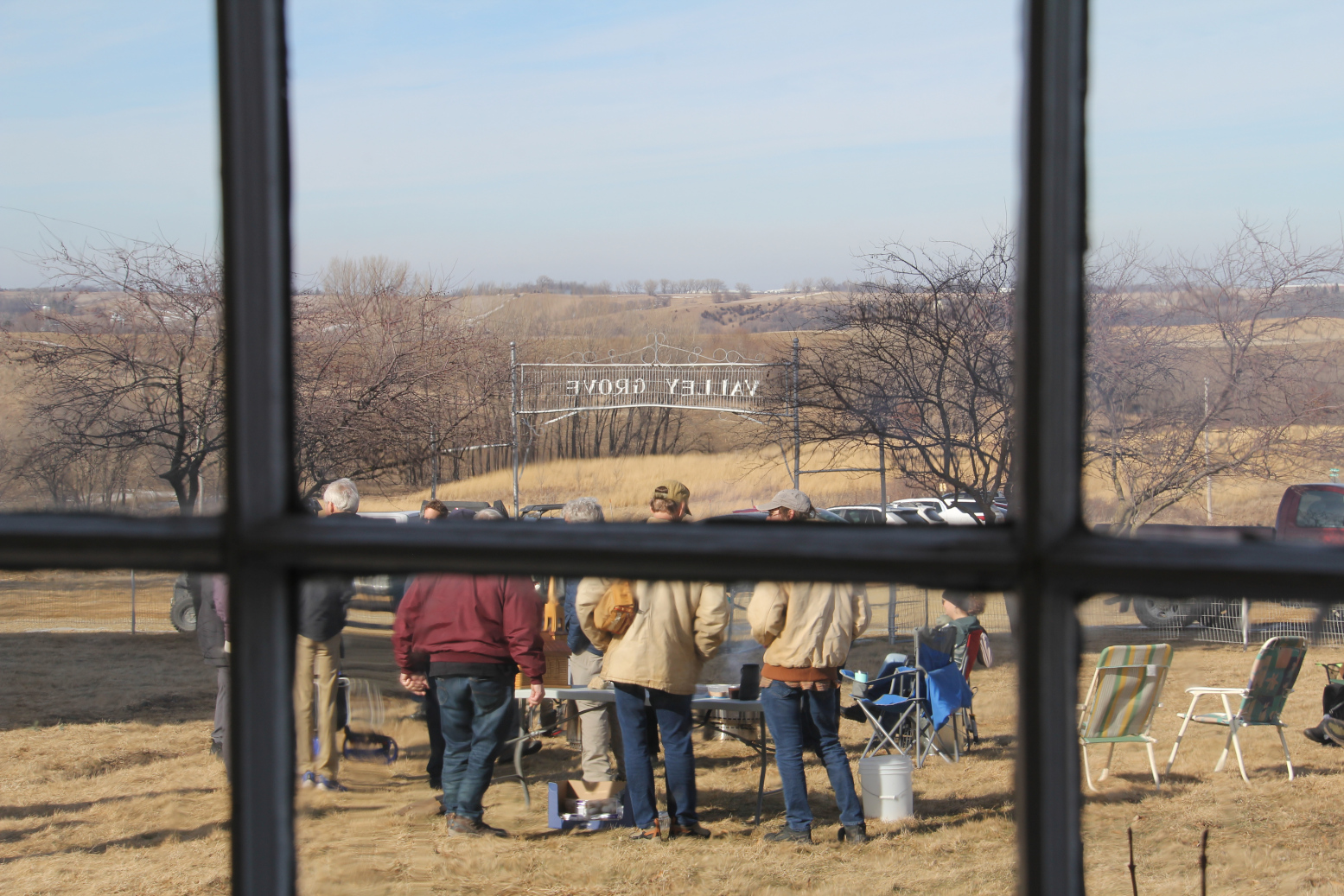
Looking through a window of the stone church, I photographed people gathering on the lawn for the Doughnut Hole Roasting Party. (Minnesota Prairie Roots copyrighted photo February 2026)

Even with no personal connection to these churches or the Norwegian heritage, I understand the historical importance of these immigrant churches. Step inside either church and you can almost feel the strength of those early Norwegians who crossed the ocean, started a new life in Minnesota, built first the now 164-year-old stone church and then the 132-year-old wood-frame church.
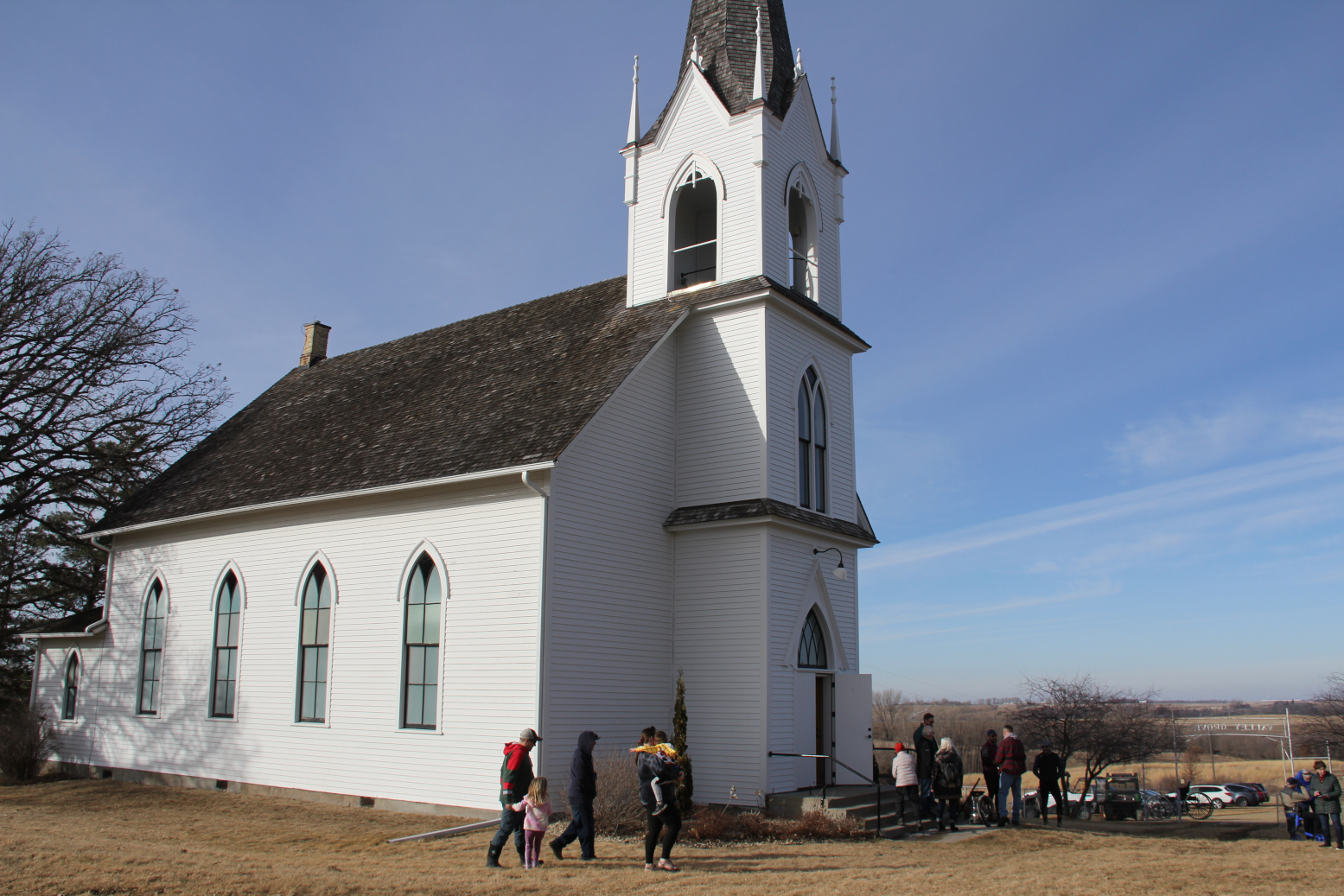
The beautiful wooden church, where the steeple was recently-restored and the bell was rung at the Doughnut Hole Roasting Party. (Minnesota Prairie Roots copyrighted photo February 2026)

The stone church serves today primarily as a social gathering spot. The wooden church still hosts the occasional service—a wedding, a funeral and the annual Christmas Eve worship. Other celebrations like Syttende Mai, a wedding anniversary reunion and a country social are also held annually at Valley Grove.
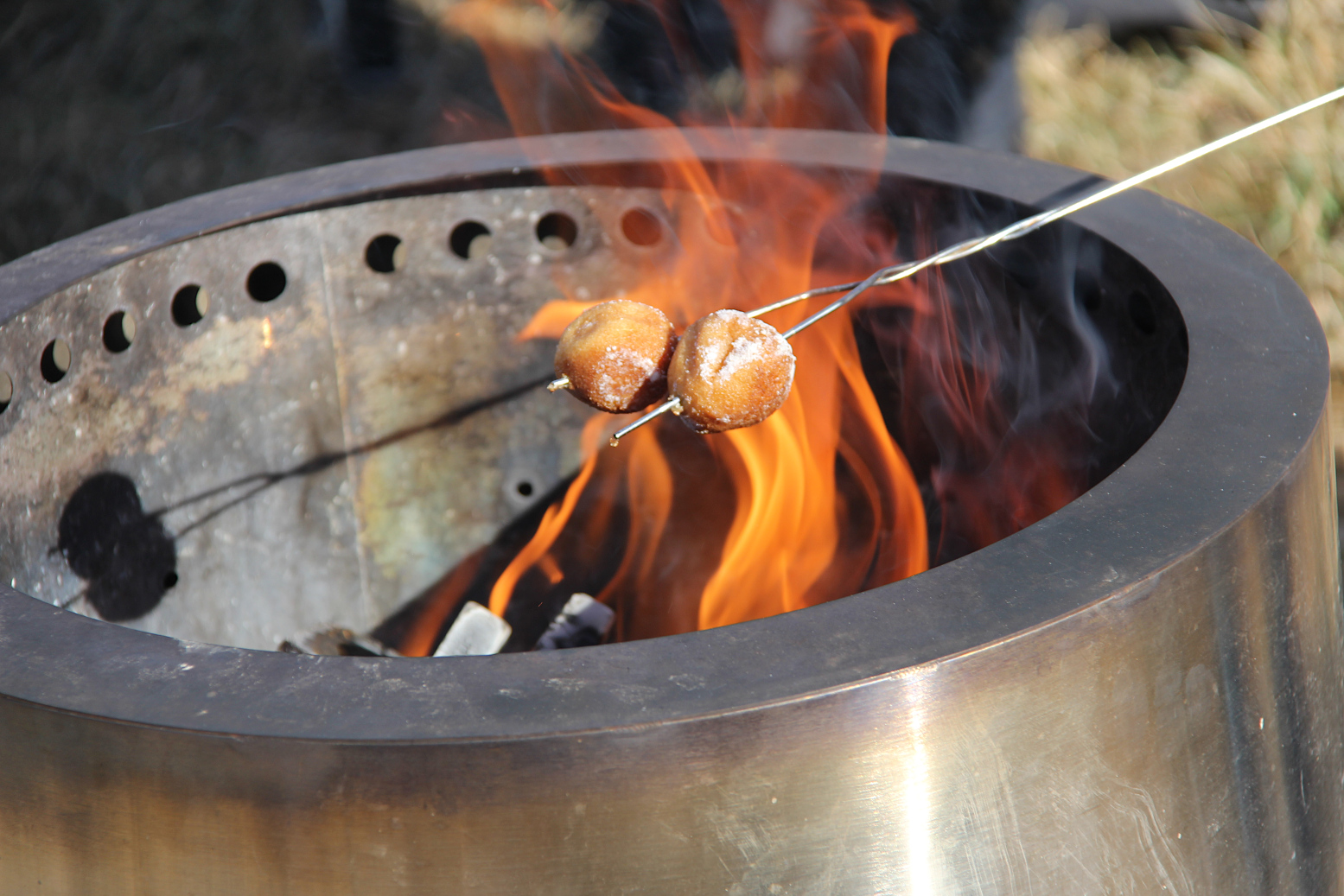
Roasting doughnut holes. (Minnesota Prairie Roots copyrighted photo February 2026)
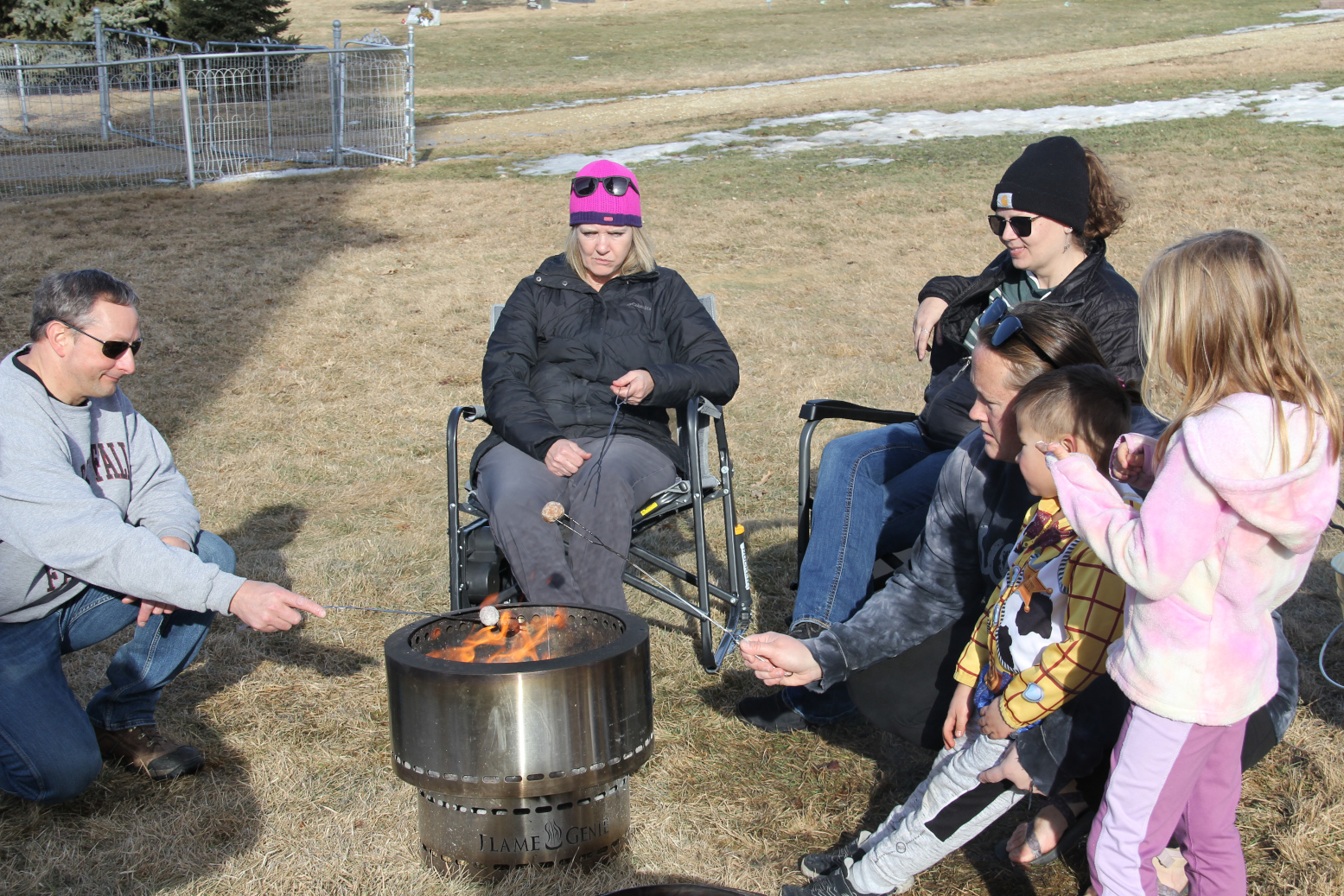
A group roasts doughnut holes. (Minnesota Prairie Roots copyrighted photo February 2026)
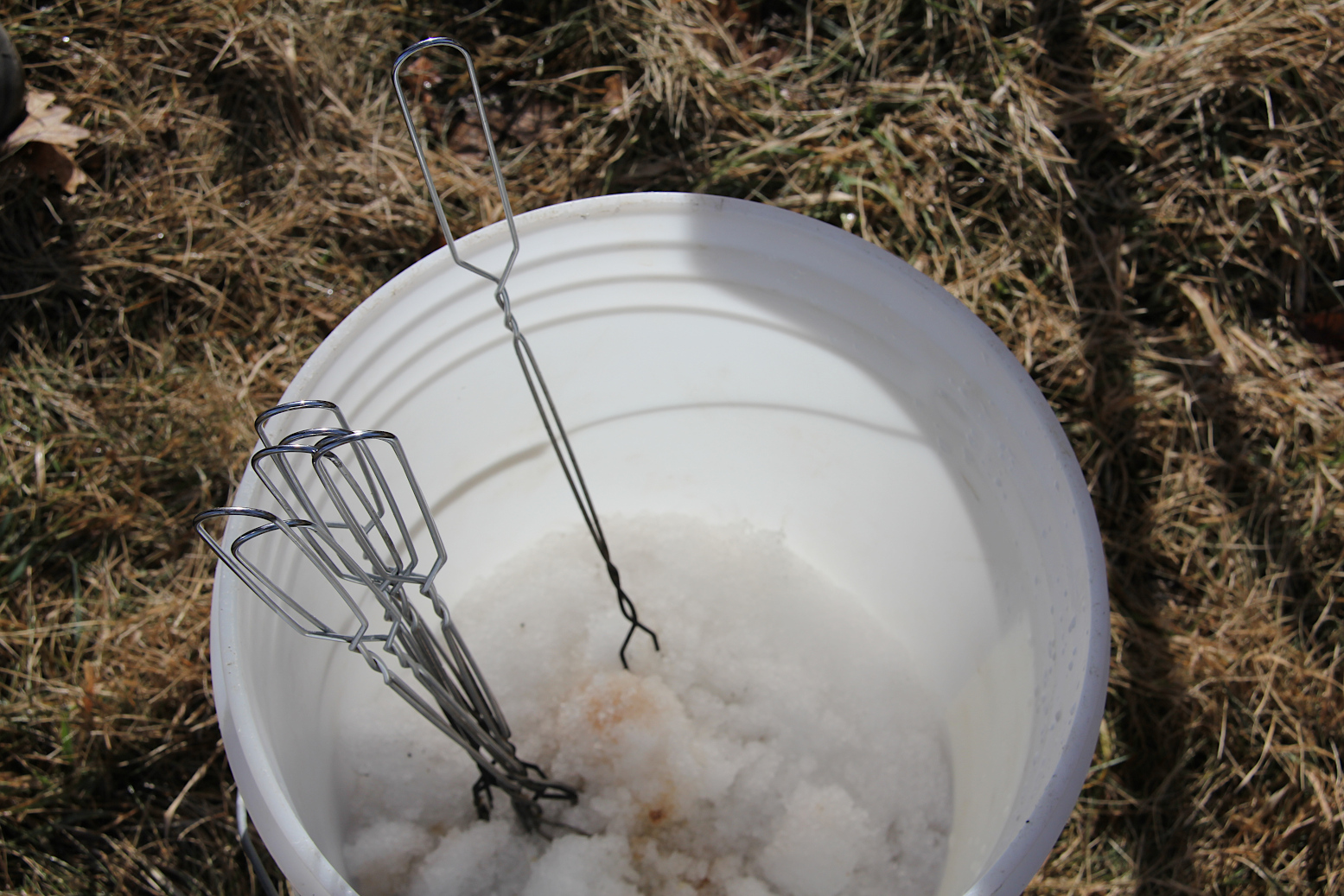
People stuck the metal roasting sticks in a bucket of snow when they were done roasting their doughnut holes. (Minnesota Prairie Roots copyrighted photo February 2026)

But on this day, we focused on doughnut holes forked onto metal roasting sticks and held over an open flame. Some roasted their treats to coal black, to caramelize the doughnuts I was told. Not fond of charred anything, I preferred mine heated then dipped in chocolate. They were sweet and tasty and messy. I found a shadowed patch of remnant snow to “wash” my sticky fingers.
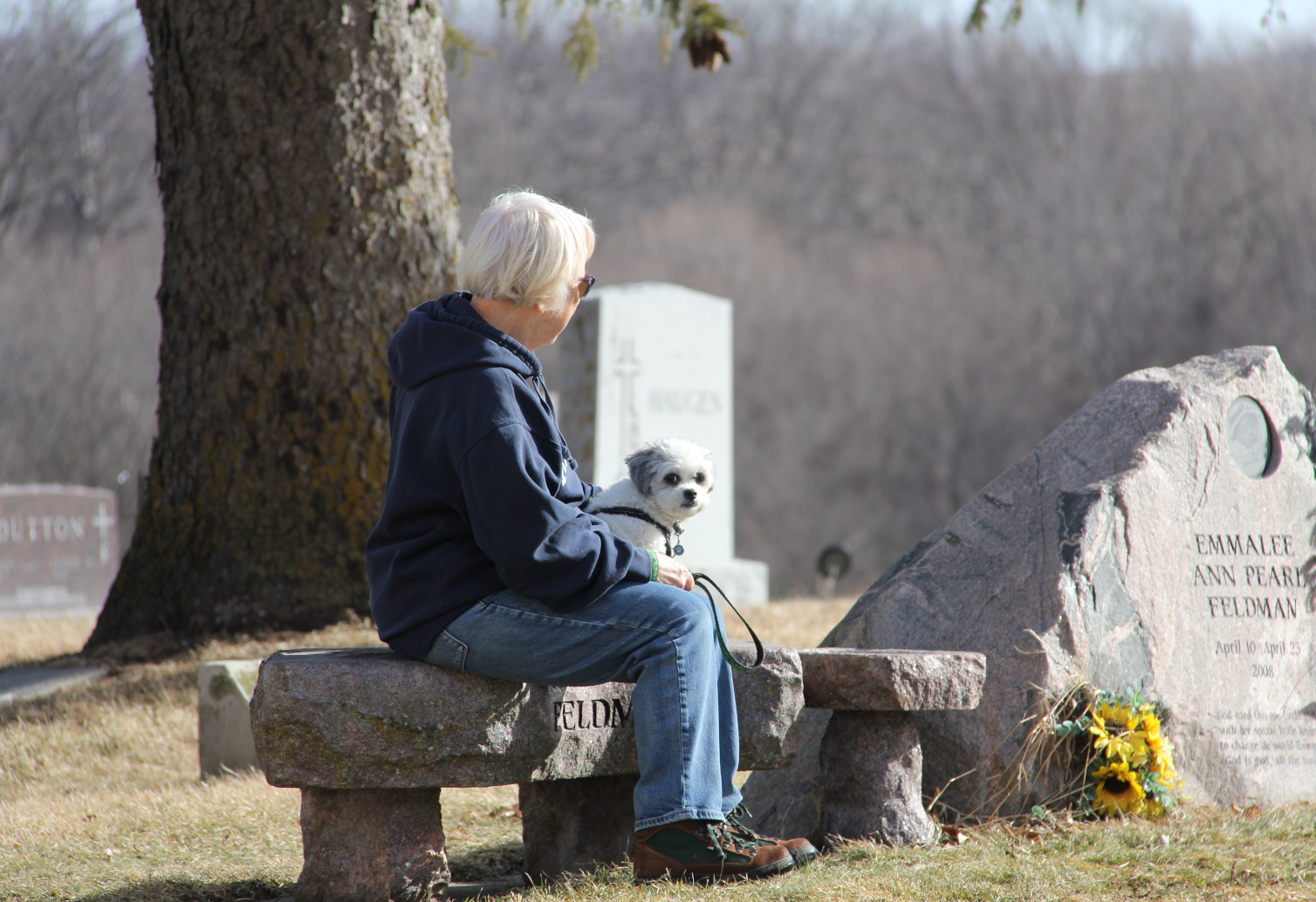
Mary and her dog in the Valley Grove Cemetery. (Minnesota Prairie Roots copyrighted photo February 2026)

Although I knew only one person here, I made a new friend, Mary, who sat with her dog on a stone memorial bench in the cemetery, sunshine beaming warmth upon them. Others meandered through the graveyard where early Norwegian immigrants, their descendants and others lie buried beneath the cold earth.
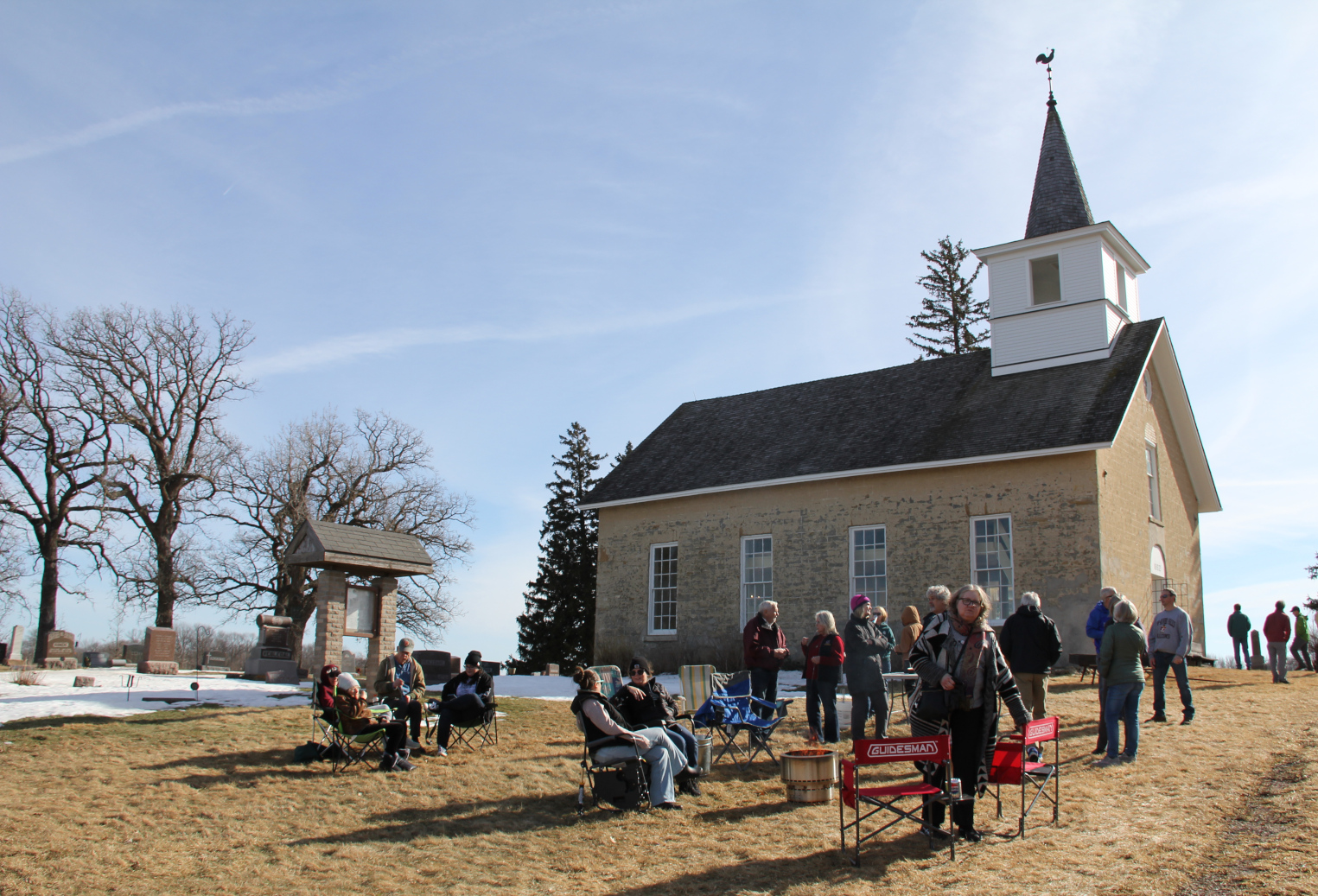
With the historic limestone church as a backdrop, people visit and roast doughnut holes. (Minnesota Prairie Roots copyrighted photo February 2026)

On the dormant lawn between the two churches, people clustered—standing, sitting in lawn chairs, bending, reaching over flames to roast doughnut holes on a Sunday afternoon in mid-February in southern Minnesota.

© Copyright 2026 Audrey Kletscher Helbling


From proverbs to culture, native Tanzanian shares his insights & stories

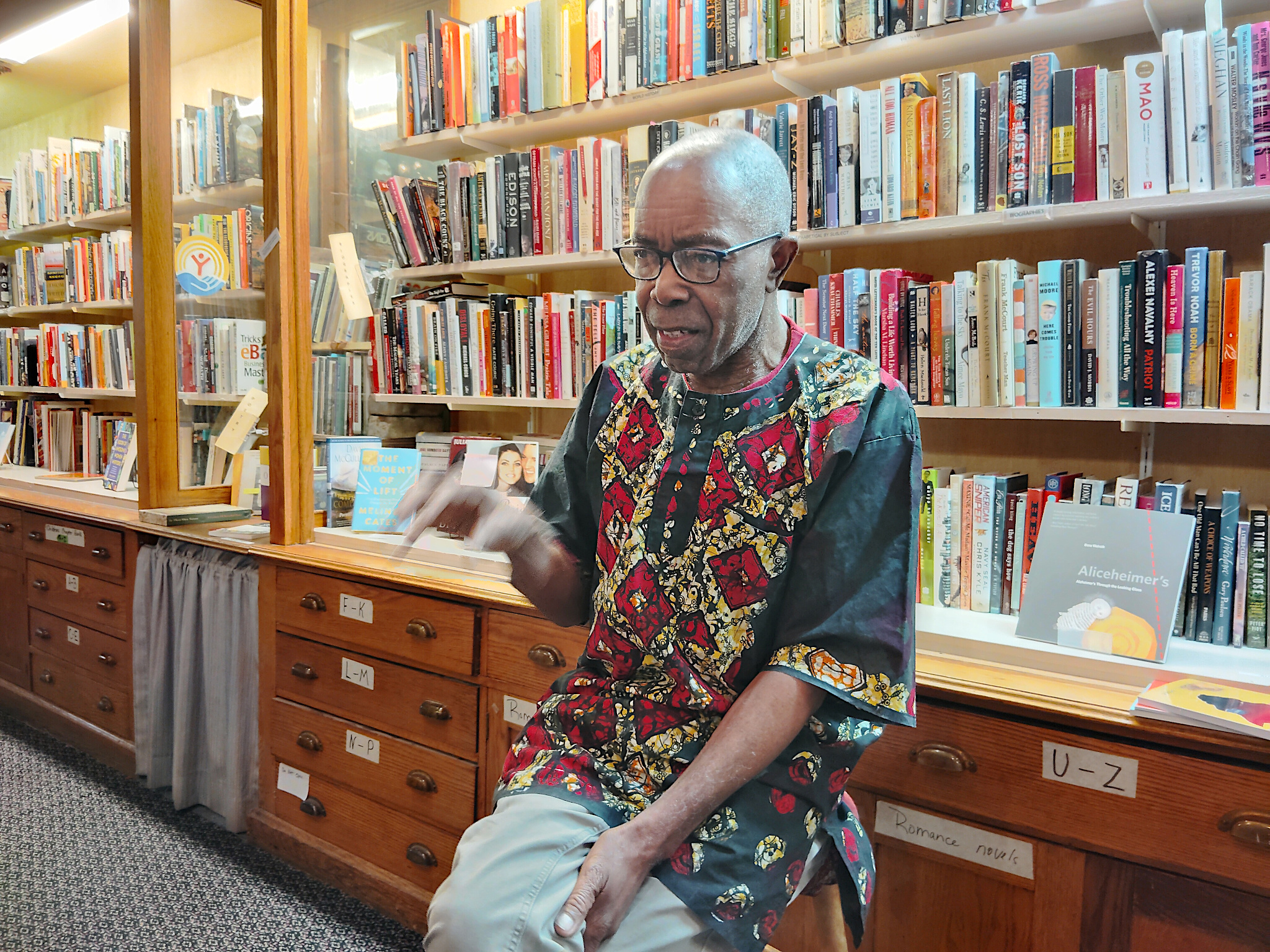
Joseph Mbele shares stories, proverbs and culture on February 11 at Books on Central, Faribault. (Minnesota Prairie Roots copyrighted photo February 2026)

FABLES TEACH LESSONS. Fairy tales offer happy endings. And African proverbs impart wisdom.

Last Wednesday evening, Joseph Mbele, retired St. Olaf College professor of post-colonial literature, cultural consultant, author and storyteller, shared three African proverbs during a literary event at Books on Central. This man, who calls himself an African and a Tanzanian, held the rapt attention of attendees gathered in the used bookshop in the heart of downtown Faribault, home to many Somalis.

THE CROCODILE

While I enjoyed the two African folktales Mbele told, I really appreciated the proverbs. They are, by nature of a proverb, succinct. A few words carry a whole lot of punch. First up, this proverb: “Before you cross the river, don’t insult the crocodile’s mouth.”

Immediately the image of a crocodile’s sharp teeth popped into my mind. As it should have. This proverb, Mbele explained, is about being respectful to people in our relationships and in life in general. Be anything but respectful and we risk negative consequences. Snap.

THE BLACKSMITH

Second up this African proverb: “It’s because of man that the blacksmith makes weapons.” Thinking in African terms, the weapons would be knives and spears. I thought of guns. Mbele repeated the proverb, letting it sink into our brains. “It’s because of man that the blacksmith makes weapons.” The lesson here, Mbele said, is that we can be better than this—be kind, helpful and supportive—so we don’t need to bear arms/weapons. That’s an oversimplification, of course. But proverbs are not meant to be complex.

THE VISUALLY-IMPAIRED

Third, Mbele recited this proverb: “The one-eyed person only thanked God after he saw a blind person.” As someone with vision issues, that hit home. The proverb is a way of teaching gratitude, Mbele said. The contrast between seeing with only one eye and total blindness put the situation in perspective. The thought that there’s always someone who has it worse probably flitted through the minds of everyone in the bookshop.

THE STORYTELLERS

Mbele talked about the tradition of Africans sitting around telling stories to entertain and teach. Languages like his native Matengo, an indigenous language in Tanzania, are oral, not written. As he spoke, I began to understand the importance of folktales in African life. Stories connect people and, like proverbs, teach lessons.

Applied to my own community, Mbele explained that Somali men gathering on downtown Faribault street corners are simply socializing and sharing stories and are not to be feared. “It’s un-African to be by yourself,” he said of a culture that focuses on family and togetherness.

He even went so far as to say an African could be considered evil or a witch if living alone. That surprised me, but drove home the cultural importance of community and family. Now if only everyone in Faribault could hear these proverbs and insights from this native Tanzanian. Then perhaps they would not fear that which they don’t understand, like the Somali elders gathered on street corners downtown telling stories, sharing news or simply sitting in each other’s presence.

© Copyright 2026 Audrey Kletscher Helbling