A young woman pulled chalk from this tub to create sidewalk art several years ago in a residential neighborhood of Faribault. (Minnesota Prairie Roots copyrighted file photo)
WHENEVER I HAPPEN upon chalk art, I feel a child-like giddiness. Chalk is often a first art medium for children. Easy to use. Forgiving. And just plain fun.
Chalk art photographed several summers ago on a residential sidewalk in Faribault. (Minnesota Prairie Roots copyrighted file photo)
But creating with chalk isn’t only for kids. It’s an art form that all ages can embrace, no matter one’s artistic skills.
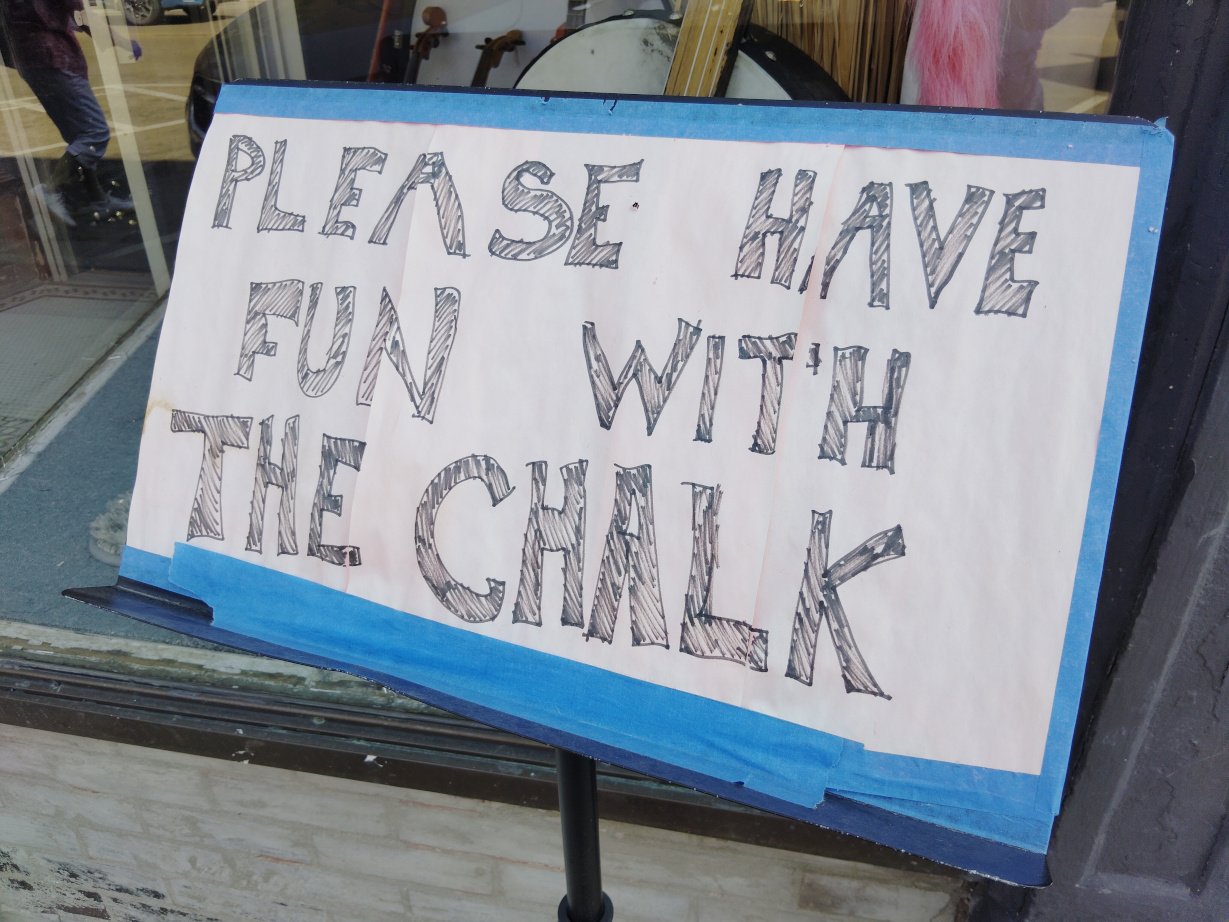
Matt Ristrom posted this sign on a music stand outside his music store inviting people to create chalk art. (Minnesota Prairie Roots copyrighted photo August 2026)
In downtown Faribault, I recently happened upon an invitation to create chalk art outside Ristrom Amplifiers, owned by Matt Ristrom. Having met Matt earlier this year and knowing him to be a kind and compassionate person and a gifted creative—he’s a musician, custom builds amplifiers and more—I was not surprised to see a sign and box of chalk outside his music shop.
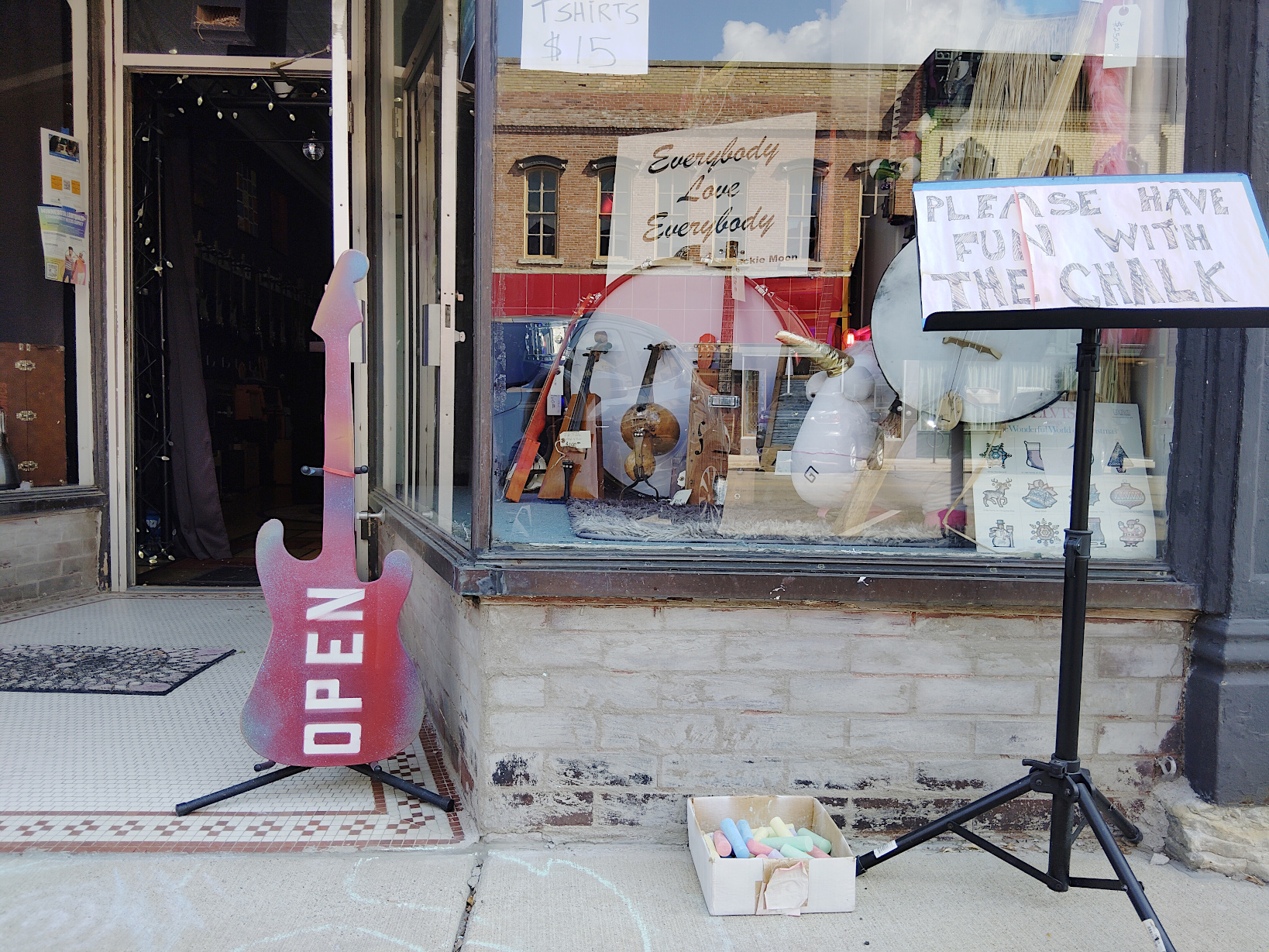
“Everybody Love Everybody” reads a sign at Ristrom Amplifiers. (Minnesota Prairie Roots copyrighted photo August 2026)
If you stand and study the eclectic mix of items showcased in the storefront display windows, your eyes will surely land on the sign, “Everybody Love Everybody.” That’s so Matt. Offering the public an opportunity to create with chalk fits right in with his loving and inclusive perspective.
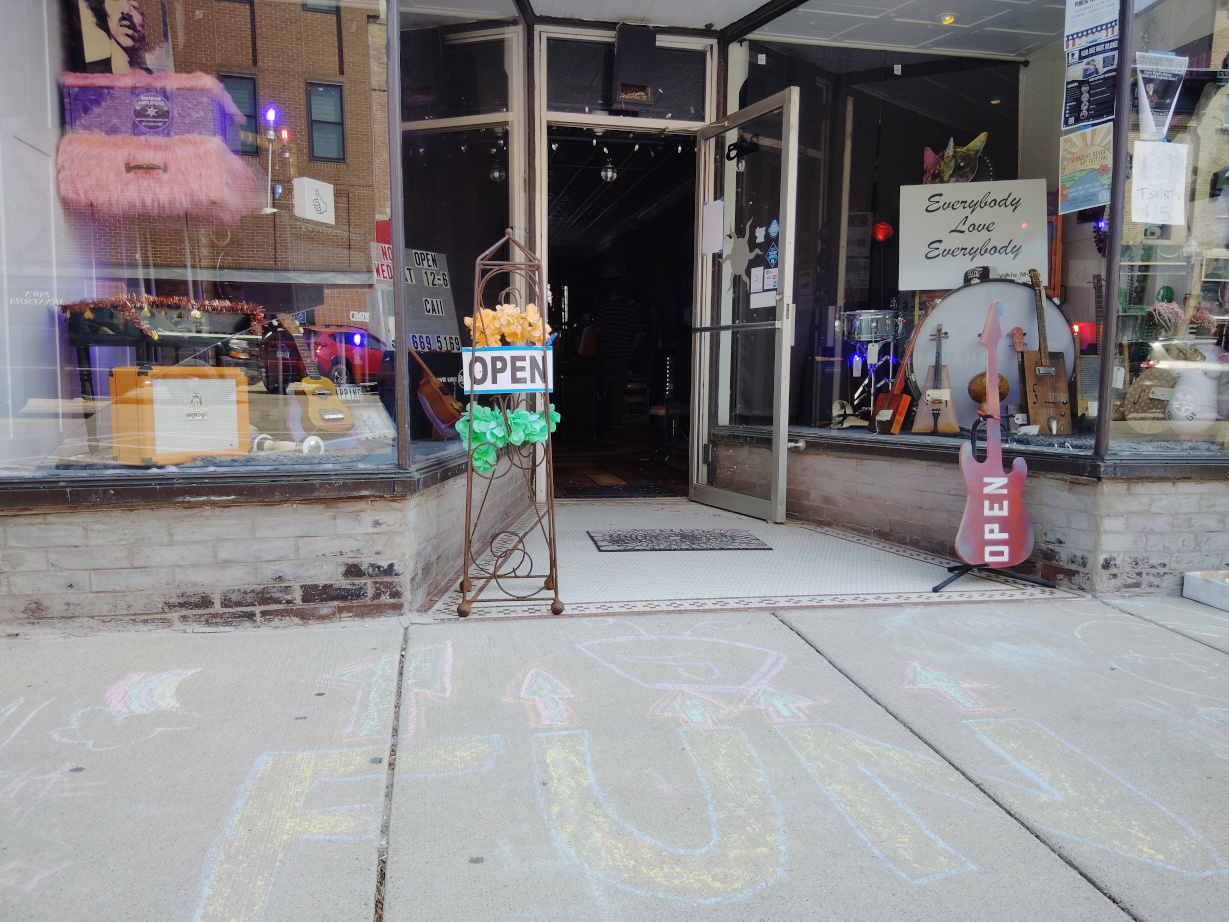
Follow the FUN into Ristrom Amplifiers. (Minnesota Prairie Roots copyrighted photo August 2026)
The singular sidewalk-chalked word “FUN” with oversized arrows pointing to the entrance and open front door of Ristrom Amplifiers surely held dual purposes—to welcome customers inside and to encourage chalk art fun.
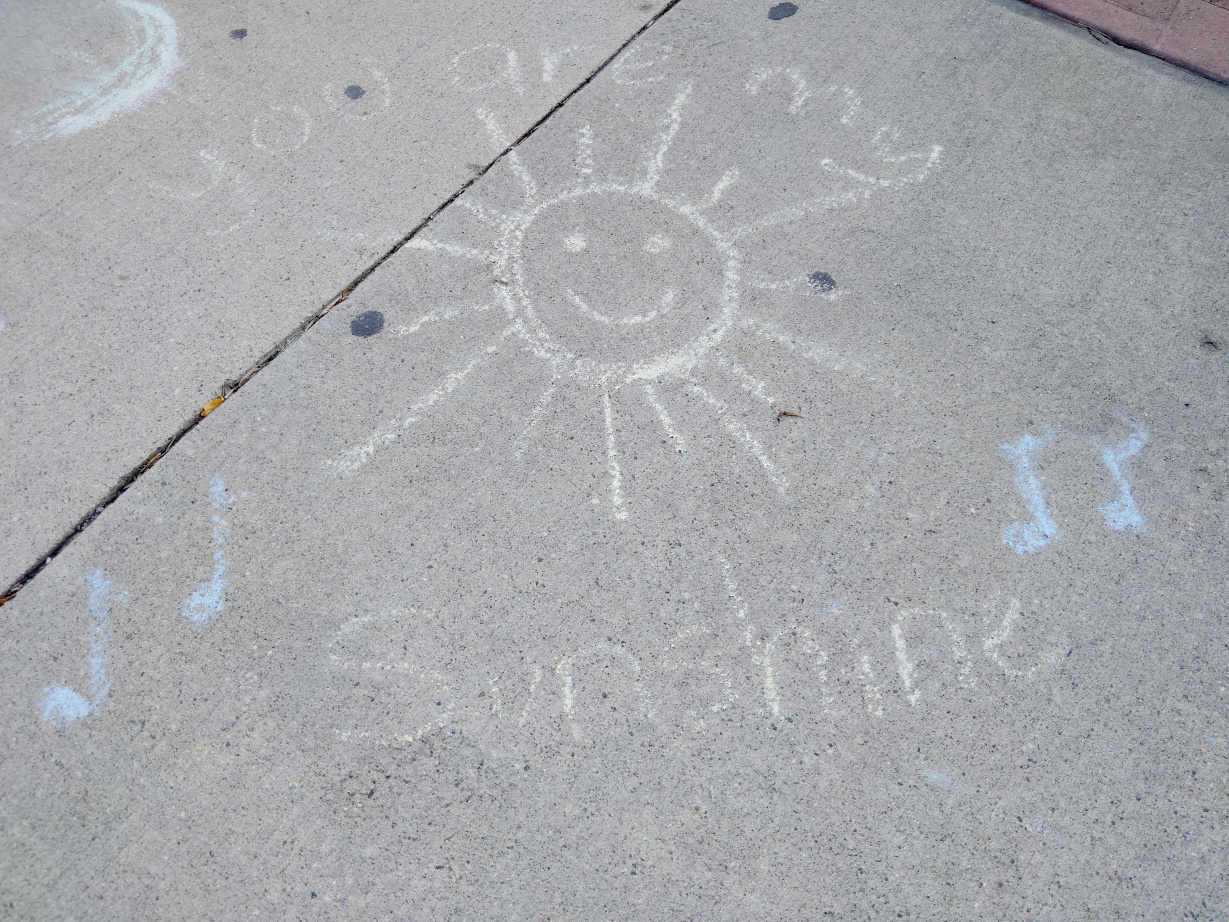
Happiness in chalk outside Ristrom Amplifliers. (Minnesota Prairie Roots copyrighted photo August 2026)
“You are my Sunshine” circling a smiling sun with added musical notes instantly caused me to smile at the chalk art. Lyrics cycled through my brain. “You are my sunshine, my only sunshine. You make me happy when skies are gray.” Already I felt happy. Chalk art can do that to a person.
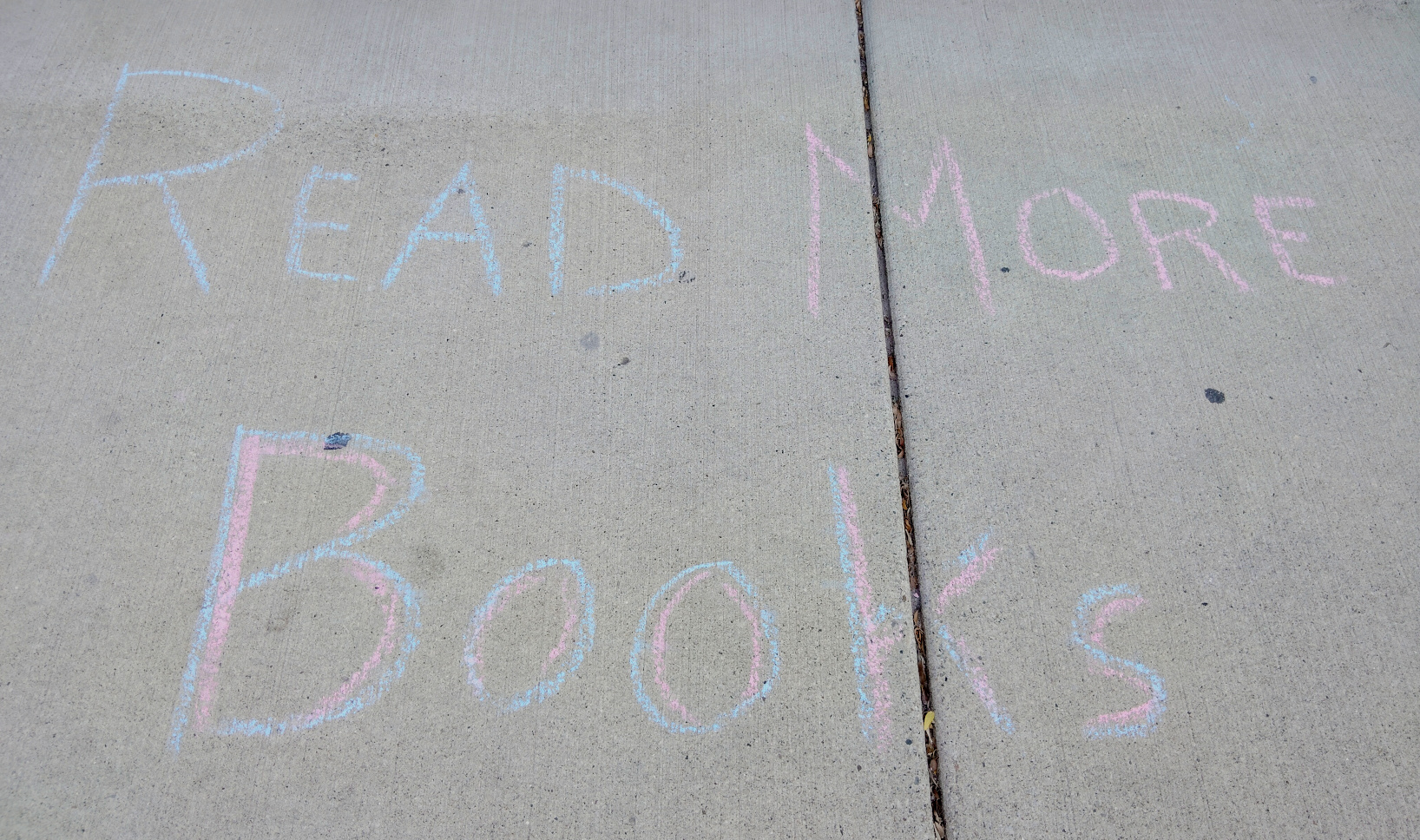
Chalked outside Books on Central. (Minnesota Prairie Roots copyrighted photo August 2026)
Next door outside Books on Central, my original destination, someone had chalked “Read More Books.” I stepped inside to the Rice County Area United Way bookshop teeming with customers. Exactly what I like to see—people perusing the shelves for used books to read or gift to others.
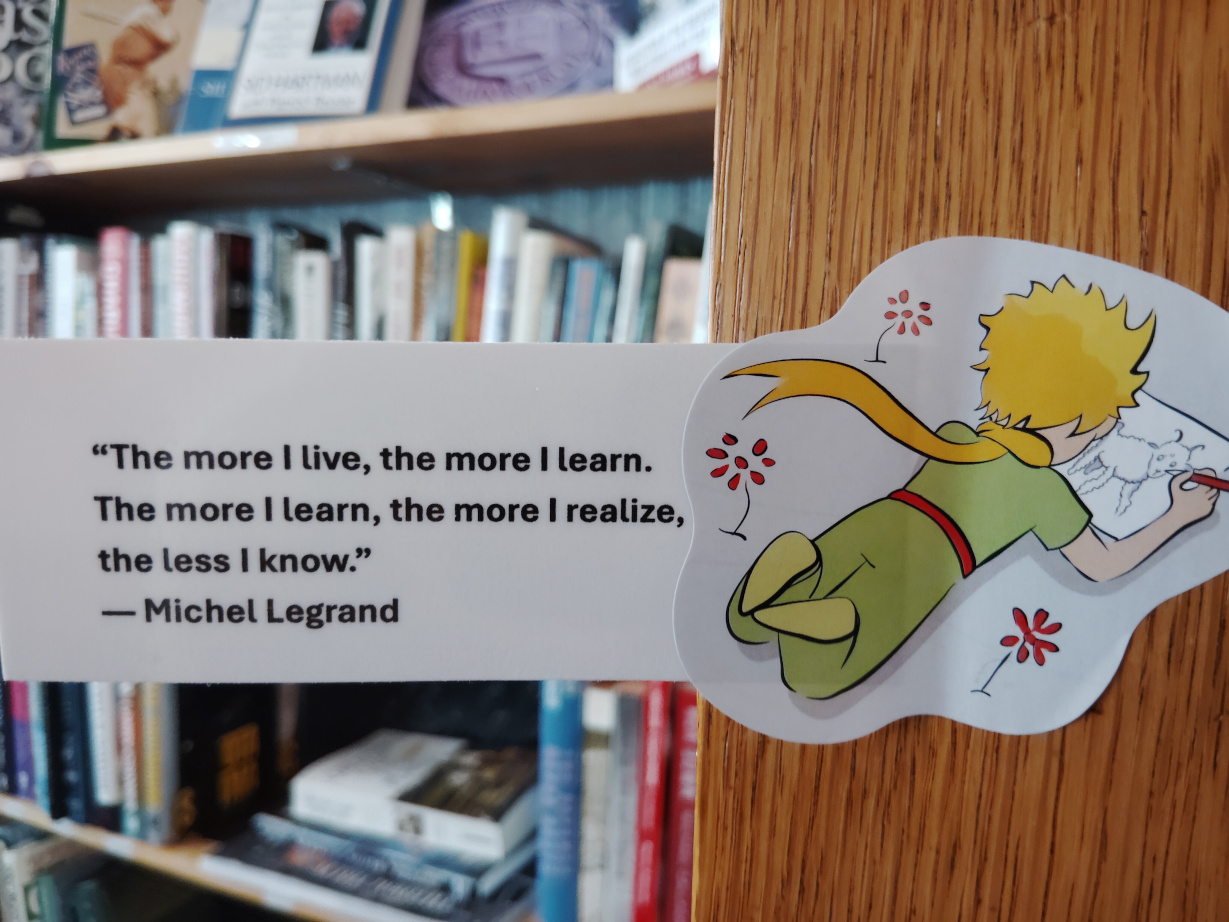
One of many quotes posted at Books on Central. (Minnesota Prairie Roots copyrighted photo August 2026)
But I saw more than customers, bookshop volunteers and books. I also noticed inspirational quotes scattered throughout the bookstore. I always appreciate messages that cause me to pause and think, or that simply uplift me.
Chalking art onto a residential neighborhood sidewalk in Faribault several years ago. (Minnesota Prairie Roots copyrighted file photo)
On this weekday along Central Avenue in Faribault’s core downtown business district, I delighted in the unexpected. Chalk art and quotes. Neither proved particularly profound. Yet each showed creativity and a connection to community that felt meaningful. And that matters to me.
Red, white and blue define this front yard along First Street Southwest in Faribault. (Minnesota Prairie Roots copyrighted photo June 2026)
RED, WHITE AND BLUE banner everyday life annually around this time each year. I’m talking not only U.S. flags flying from poles, but much more. And this July 4, the 250th birthday of our nation, American pride seems especially abundant. Or maybe I’m simply noticing because of the milestone celebration.
Harvest Time Church in Faribault is celebrating the Fourth on July 5. (Minnesota Prairie Roots copyrighted photo June 2026)
Whatever, I challenge you to see how your friends and neighbors, local businesses, churches and other organizations are celebrating and/or running with the July 4 theme.
A patriotic front window display at Keepers Antique Shop. (Minnesota Prairie Roots copyrighted photo June 2026)
Locally, I found plenty of examples in expected, and unexpected, places. At Keepers Antique Shop along Central Avenue in Faribault, I always expect proprietor Nona Boyes to create a window display appropriately themed to a particular event. She didn’t disappoint, staging two mannequins draped in red, white and blue holding an American flag between them. The patriotic theme carries to a corner curio and additional window space. Boyes’ art education and background show in every single window display she creates for her antique shop.
A July 4 tabletop display at Books on Central, owned by the Rice County Area United Way and run by volunteers. (Minnesota Prairie Roots copyrighted photo June 2026)
Across the street at Books on Central, I happened upon another July Fourth display, this one atop a table. Because this is a used bookshop, books center the space created by volunteer Jeanne Campbell with assistance from Mary Campbell.
“The Star Spangled Banner” was among patriotic songs performed at a recent concert by the Mankato Area Community Band in Faribault. Singer Barbara Dunker dressed in patriotic attire for the finale of “The Stars and Stripes Forever.” (Minnesota Prairie Roots copyrighted photo June 2026)
Books about the White House, “The Star Spangled Banner” and Alexander Hamilton are for sale along with other volumes artfully placed among mini American flags, a Betsy Ross statue and touches of red and white ribbon. “We the People—A Pictorial Celebration of America” and “1776” by Pulitzer Prize winning author David McCullough are also among the selections.
A holiday ribbon adds a festive touch to a straw hat worn by a woman attending a recent concert in Faribault’s Central Park. (Minnesota Prairie Roots copyrighted photo June 2026)
If you really want to get to the basics, you’ll find a pocket book of the U.S. Constitution propped in a front window display themed to celebrating the birth of this country.
A special holiday sale at Fashions on Central, selling used clothing for women with proceeds going to the local senior center, Buckham West. (Minnesota Prairie Roots copyrighted photo June 2026)
To the north on Central Avenue, Fashions on Central promoted a RED WHITE BLUE SALE on a sandwich chalkboard.
A State Bank of Faribault flower pot decorated with an American flag for the holiday. (Minnesota Prairie Roots copyrighted photo June 2026)
At the State Bank of Faribault, an American flag graces a lush pot of flowers outside the bank’s front entry.
A floral scene created by Faribault homeowner Kay in celebration of America’s 250th birthday. (Minnesota Prairie Roots copyrighted photo June 2026)
But it was red flowers planted in galvanized tubs and backdropping white hydrangea that drew my admiration for July Fourth floral plantings. I was en route to a garage sale in a south-side Faribault neighborhood when I spotted the work of gardener Kay, who planted red, white and blue flowers throughout her yard. She wasn’t home when I stopped. But her husband, Paul, promised to pass along my praise.
Gerda Dolman pieced together Lady Liberty. (Minnesota Prairie Roots copyrighted photo June 2026)
When I stopped at an estate sale, I purchased an unusual piece of art perfect for the Fourth of July. For $3, I snagged a puzzle of the Statue of Liberty pieced together by Gerda Dolman of Madison, Minnesota, when she was 100 years old. She lived to nearly 102, dying in 2021. Her son mounted the puzzle on wood. Gerda’s Lady Liberty now hangs on my dining room wall, a visual reminder of freedom, liberty and hope for all who came, and continue to come, to America. Like Gerda’s Norwegian ancestors.
I photographed this boy dressed in patriotic clothing and clinging to his mom’s leg at a recent car show in Dundas. (Minnesota Prairie Roots copyrighted photo June 2026)
As we celebrate our nation’s 250th birthday, I focus on those foundational words of liberty and freedom. I hope others do, too, as they don patriotic attire, enjoy parades and BBQs, watch fireworks, and consider all this nation has endured from the Revolutionary War to present.
For sale in the Rice County Historical Society gift shop, 250th anniversary caps. The RCHS is celebrating its 100th birthday this year. (Minnesota Prairie Roots copyrighted photo 2026)
This message lifted from the tabletop display at Books on Central says it all: “For 250 years, we have maintained and loved this country that was created as the great American experiment, an exercise in self-governance and respect and freedom. Long may this great experiment reign, cherished and supported by those it protects and honors. Happy birthday to the United States of America!”
IF YOU WERE TO COLLECTIVELY consider two upcoming events this week and one current art exhibit in Faribault, you would find a common theme. That would be humanity and how we treat one another.
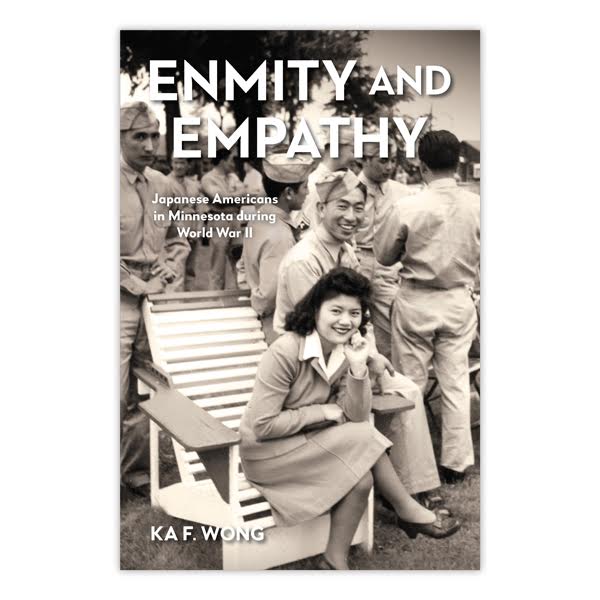
Award nominee or not, this book is assuredly a winner for the depth and volume of information Wong shares about imprisoned Japanese Americans, something unknown to many Americans. My knowledge is limited, so I’m looking forward to this presentation.
In promoting Wong’s talk this Thursday evening, the county historical society shared this in a media release:
Drawing on personal interviews, archival sources, and historical literature, Professor Ka Wongexplores the courageous struggles of trailblazers who left the incarceration camps and rebuilt theirlives in the North Star State. He will share stories of college students pursuing higher education,including the two colleges in Rice County, young men and women training at the MilitaryIntelligence Service Language School at Camp Savage and then Fort Snelling, the US Cadet NurseCorps serving in Rochester hospitals, and entrepreneurial families and individuals in the TwinCities and beyond.
All of this, of course, makes me think of the recent massive federal immigration enforcement in Minnesota. In that operation, many were illegally detained by federal agents, flown out of the state and held without due process in detention camps, where they remain. Others were released, some deported. I expect Wong may address this during his presentation. He can definitely provide historic perspective.
NOTE: Reserve a spot at this talk by calling (507) 332-2121. Space is limited. Admittance is free for RCHS members and $5 for non-members.
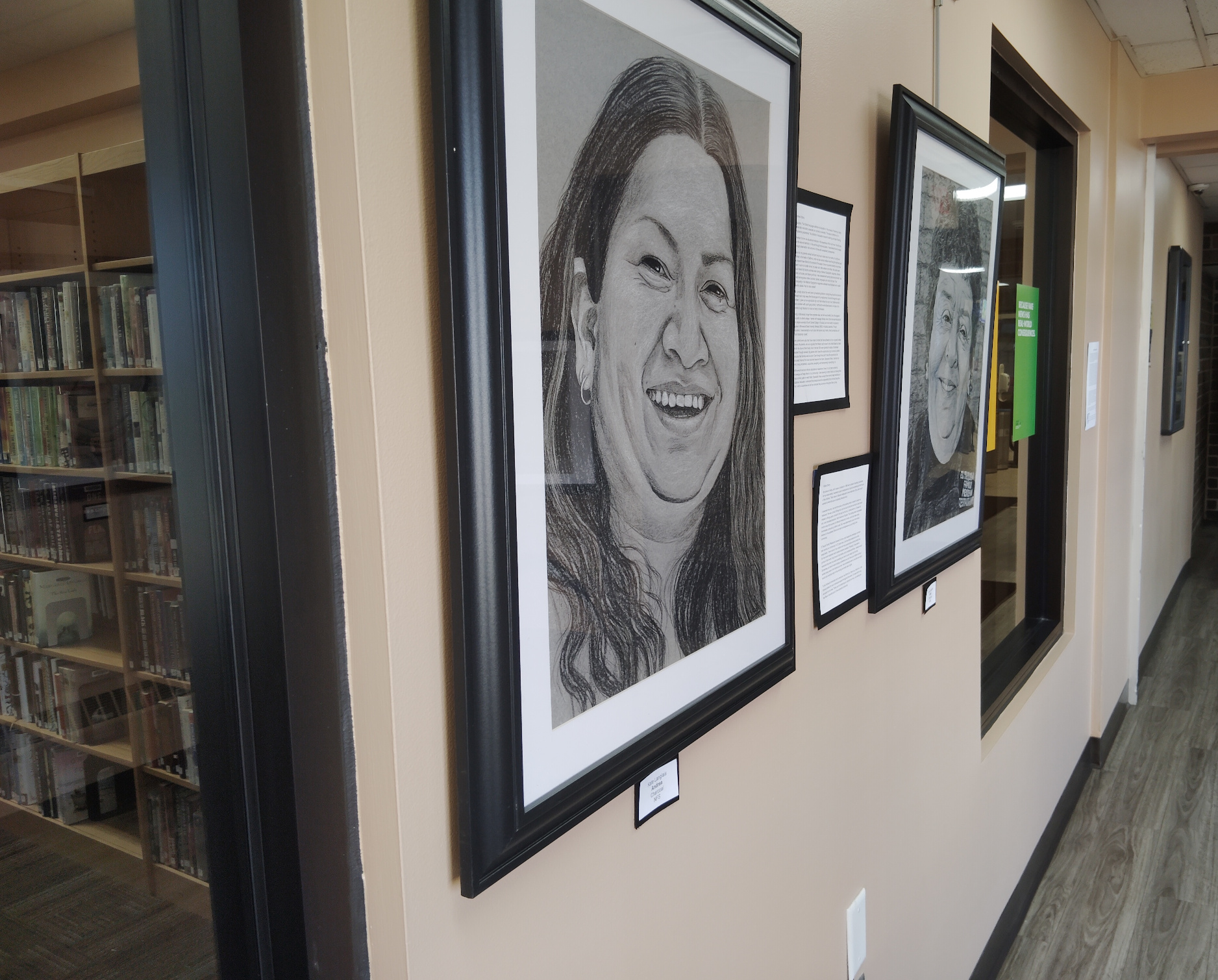
Immigrant portraits line the hall connecting the library, left, to the community center. (Minnesota Prairie Roots copyrighted photo March 2026)
ART EXHIBIT FEATURES IMMIGRANT PORTRAITS
Immigrants are the focus of an exhibit currently showing in the hallway between the Faribault Community Center and Buckham Memorial Library. Faribault artist Kate Langlais shows 13 of her portraits from her “I Am Minnesota” project. These are first and second-generation immigrants.
Four months ago, Langlais’ immigrant portraits filled a spacious gallery at the Paradise Center for the Arts in Faribault. These are selected drawings from that show. She’s also previously shown her artwork in the same space where the 13 portraits now hang.
In my opinion, these portraits should be shared as often as possible in Faribault, which has not always been particularly welcoming to immigrants. I’m certainly not talking everyone, but too many people would rather our newest neighbors from Somalia, Mexico and other countries leave our city. I’ve heard that shouted while protesting ICE operations.
(Promo from the Books on Central Facebook page)
AN AUTHOR TALKS ABOUT THE GOSPEL OF SALOME
Finally, St. Olaf College professor and author Kaethe Schwehn will talk about her newest book, The Gospel of Salome, at 6 p.m. Wednesday, March 18, at Books on Central in Faribault. The historical novel set in Biblical times follows a mother who is navigating a complex world of gender and power imbalances during the First Century. Schwehn will read from her book and talk about some of its themes, examining ideology, motherhood and a poignant argument for love and equality in today’s world, according to pre-event information.
I expect good discussion will follow, as it always does at these free literary events at Books on Central.
There’s a lot to be learned in Faribault this week. I hope locals and others will embrace these three opportunities to grow their knowledge and broaden their perspectives.
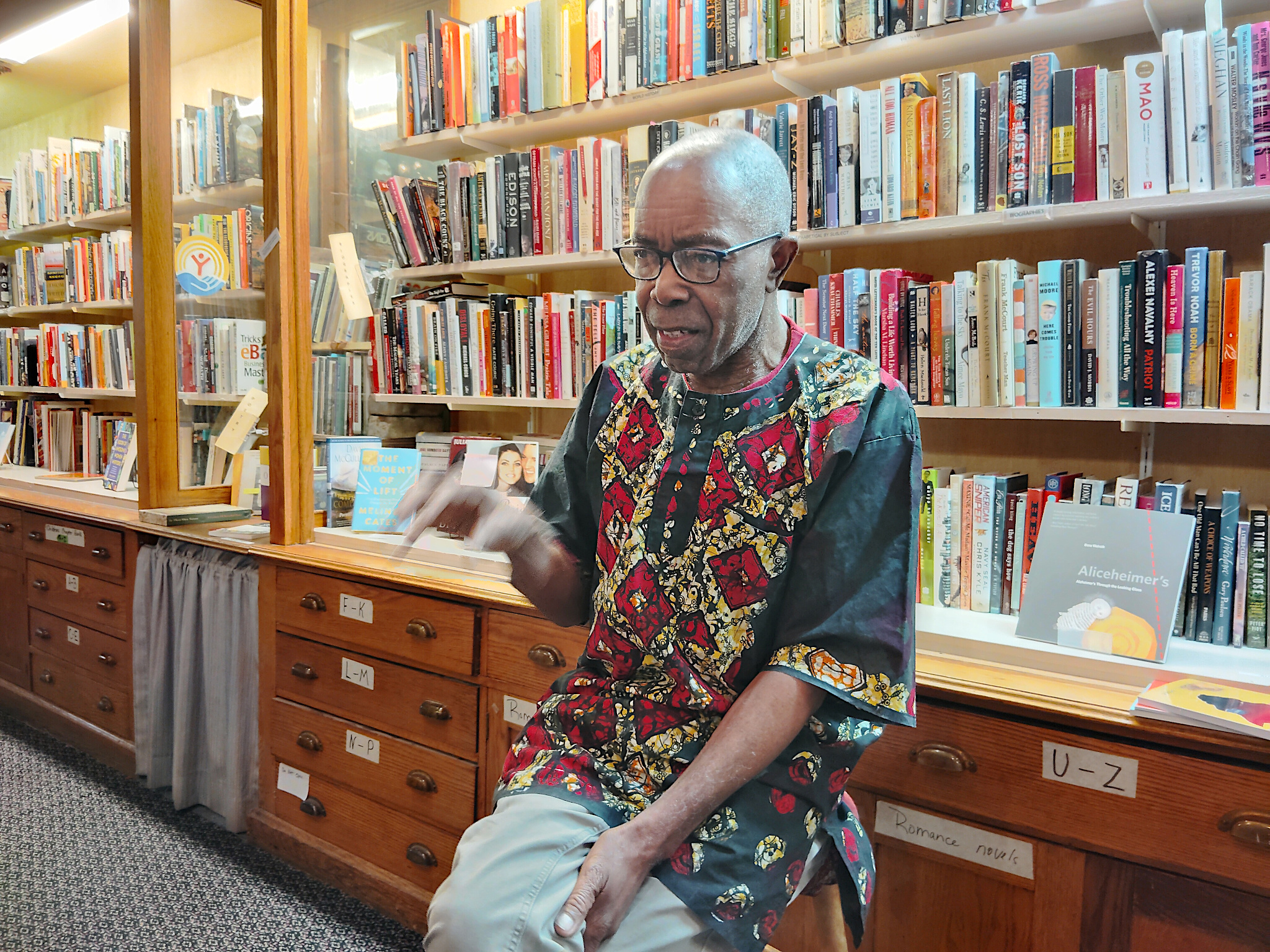
Joseph Mbele shares stories, proverbs and culture on February 11 at Books on Central, Faribault. (Minnesota Prairie Roots copyrighted photo February 2026)
Last Wednesday evening, Joseph Mbele, retired St. Olaf College professor of post-colonial literature, cultural consultant, author and storyteller, shared three African proverbs during a literary event at Books on Central. This man, who calls himself an African and a Tanzanian, held the rapt attention of attendees gathered in the used bookshop in the heart of downtown Faribault, home to many Somalis.
THE CROCODILE
While I enjoyed the two African folktales Mbele told, I really appreciated the proverbs. They are, by nature of a proverb, succinct. A few words carry a whole lot of punch. First up, this proverb: “Before you cross the river, don’t insult the crocodile’s mouth.”
Immediately the image of a crocodile’s sharp teeth popped into my mind. As it should have. This proverb, Mbele explained, is about being respectful to people in our relationships and in life in general. Be anything but respectful and we risk negative consequences. Snap.
THE BLACKSMITH
Second up this African proverb: “It’s because of man that the blacksmith makes weapons.” Thinking in African terms, the weapons would be knives and spears. I thought of guns. Mbele repeated the proverb, letting it sink into our brains. “It’s because of man that the blacksmith makes weapons.” The lesson here, Mbele said, is that we can be better than this—be kind, helpful and supportive—so we don’t need to bear arms/weapons. That’s an oversimplification, of course. But proverbs are not meant to be complex.
THE VISUALLY-IMPAIRED
Third, Mbele recited this proverb: “The one-eyed person only thanked God after he saw a blind person.” As someone with vision issues, that hit home. The proverb is a way of teaching gratitude, Mbele said. The contrast between seeing with only one eye and total blindness put the situation in perspective. The thought that there’s always someone who has it worse probably flitted through the minds of everyone in the bookshop.
THE STORYTELLERS
Mbele talked about the tradition of Africans sitting around telling stories to entertain and teach. Languages like his native Matengo, an indigenous language in Tanzania, are oral, not written. As he spoke, I began to understand the importance of folktales in African life. Stories connect people and, like proverbs, teach lessons.
Applied to my own community, Mbele explained that Somali men gathering on downtown Faribault street corners are simply socializing and sharing stories and are not to be feared. “It’s un-African to be by yourself,” he said of a culture that focuses on family and togetherness.
He even went so far as to say an African could be considered evil or a witch if living alone. That surprised me, but drove home the cultural importance of community and family. Now if only everyone in Faribault could hear these proverbs and insights from this native Tanzanian. Then perhaps they would not fear that which they don’t understand, like the Somali elders gathered on street corners downtown telling stories, sharing news or simply sitting in each other’s presence.
HE’S A MESMERIZING and engaging storyteller. He is Joseph Mbele, retired professor of post-colonial literature at St. Olaf College in Northfield, cultural consultant and author.
And Wednesday, February 11, at 6 p.m., Mbele will be the featured speaker at a free literary event at Books on Central, a volunteer-run used bookshop of the Rice County Area United Way. Located in the heart of historic downtown Faribault, home to many Somali immigrants and refugees, the bookshop seems a fitting place for Mbele to talk about the living tradition of African folktales and the role of the storyteller. Somali men gather on street corners in downtown Faribault to share stories and news.
I’ve heard Mbele speak at this bookshop previously. I absolutely cannot say enough positive things about the warm way he connects with the audience, the way he uses stories to teach, the way he genuinely cares about bridging cultural differences.
Love this book by Joseph Mbele.
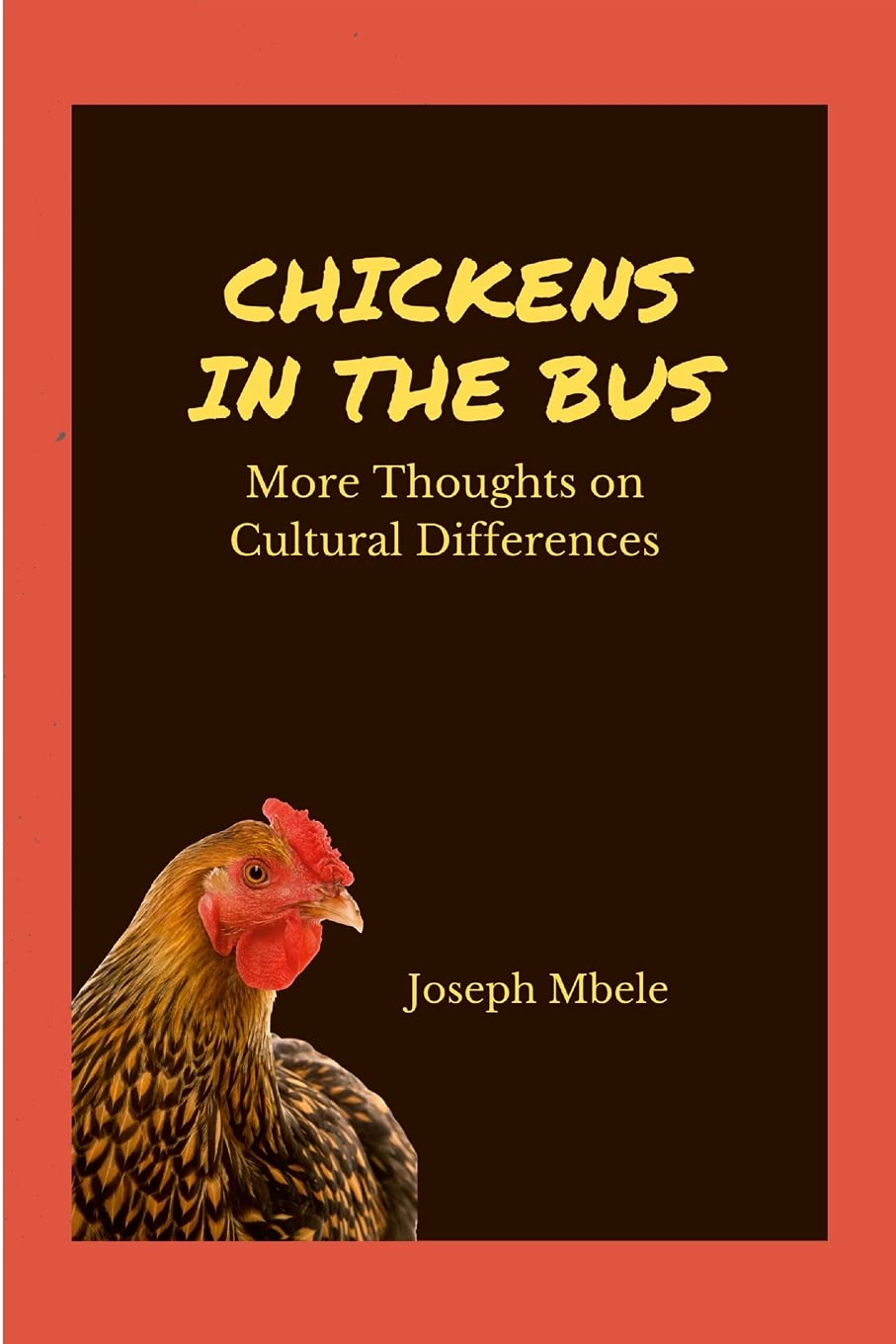
As an author, his writing carries that same compassionate, culturally-connective message. He’s written Africans and Americans: Embracing Cultural Differences, Chickens in the Bus: More Thoughts on Cultural Differences, and Matengo Folktales.
Mbele knows of what he speaks and writes. Born in rural Tanzania, he studied and taught at a public university there; earned a PhD in African Language and Literature from the University of Wisconsin—Madison; and eventually landed in the English department of St. Olaf College in 1991.
His visit to Books on Central on Wednesday evening presents an opportunity to learn from a gifted storyteller about African folktales and culture in a comfortable setting back-dropped by shelves of books.
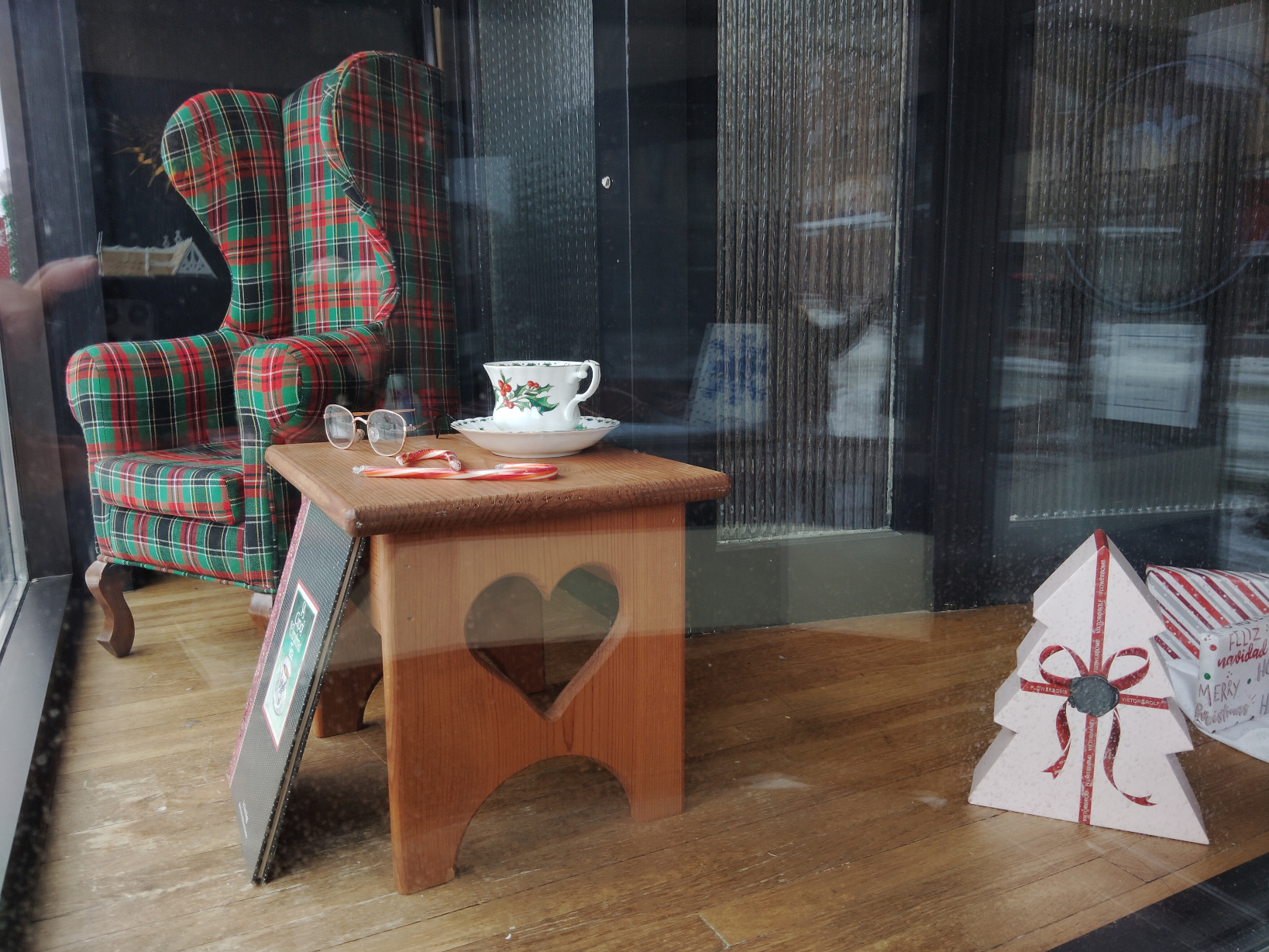
A storefront window display at Books on Central promotes an upcoming holiday reading. (Minnesota Prairie Roots copyrighted photo December 2025)
THE CADENCE AND RHYTHM of a book read aloud or a story told appeals to me. It’s as if the words become living, breathing characters, the setting vivid real-life scenes. Such is the power of the voice in interpreting words.
Wednesday evening, December 17, at 6 pm, two skilled local storytellers, Sam Temple and Tami Resler, will share their talents during a literary event at Books on Central in the heart of downtown Faribault. Holiday stories will focus their storytelling in the cozy bookshop centered by a chandelier inside a former jewelry store.
But the gems for the evening will be the stories that are sure to sparkle with the skills of Temple and Resler. I know both storytellers. They are genuinely kind, caring, joyful individuals who add much to our community.
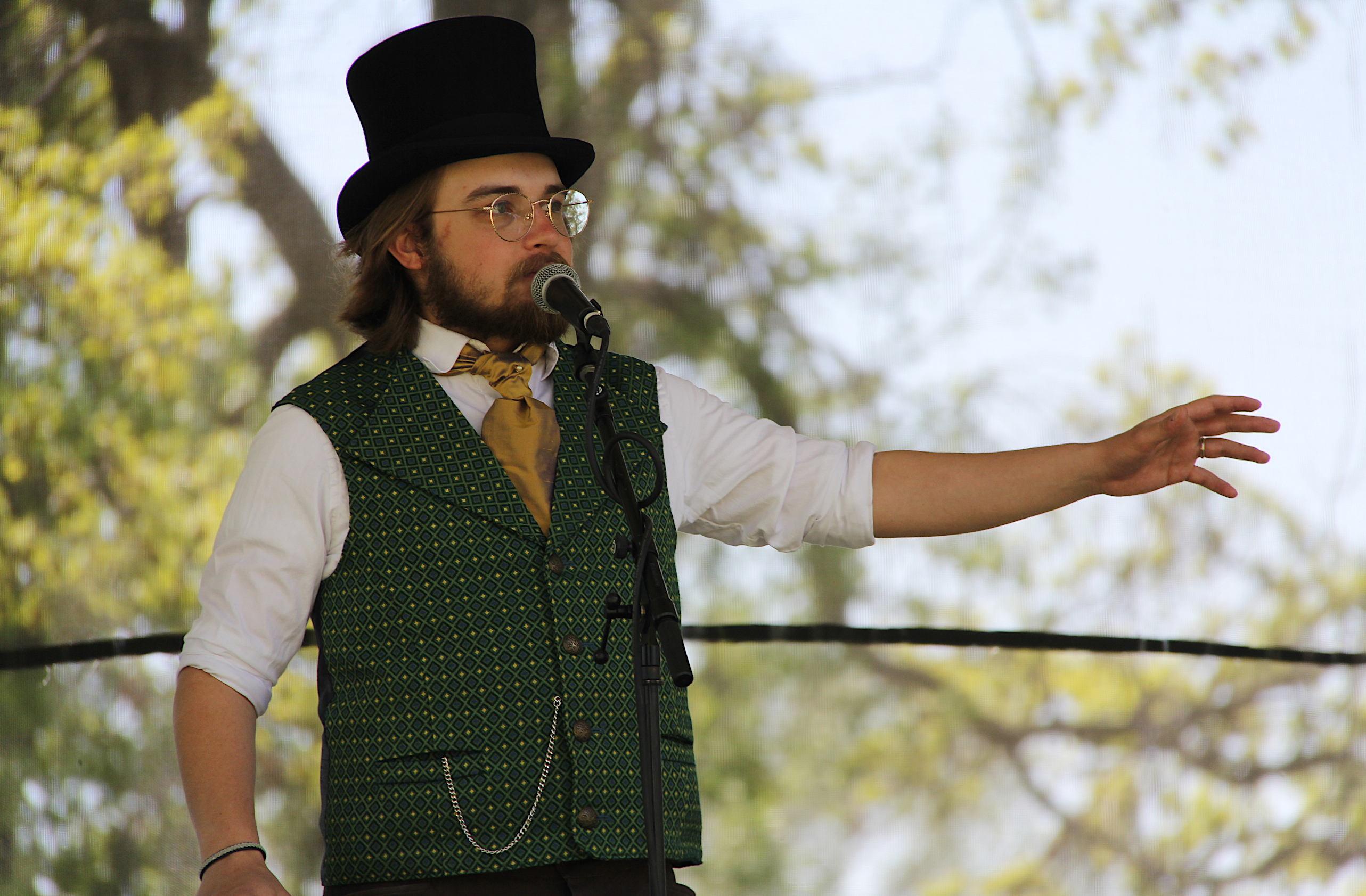
Sam Temple, as Alexander Faribault, shares local and Minnesota history during the Riverside Rendezvous and History Festival in Faribault earlier this year. (Minnesota Prairie Roots copyrighted file photo May 2025)
Temple, who heads Steamboat Media Company and manages Northfield Public Broadcasting, is big into local history. He’s created documentaries about Faribault history with fellow creative Logan Ledman. He’s portrayed town founder, Alexander Faribault, numerous times. He’s also acted and directed and does improv comedy with Little Fish Improv. I’m sure I’ve missed something. But you get the idea. Temple brings tremendous talent and knowledge to anything he does.
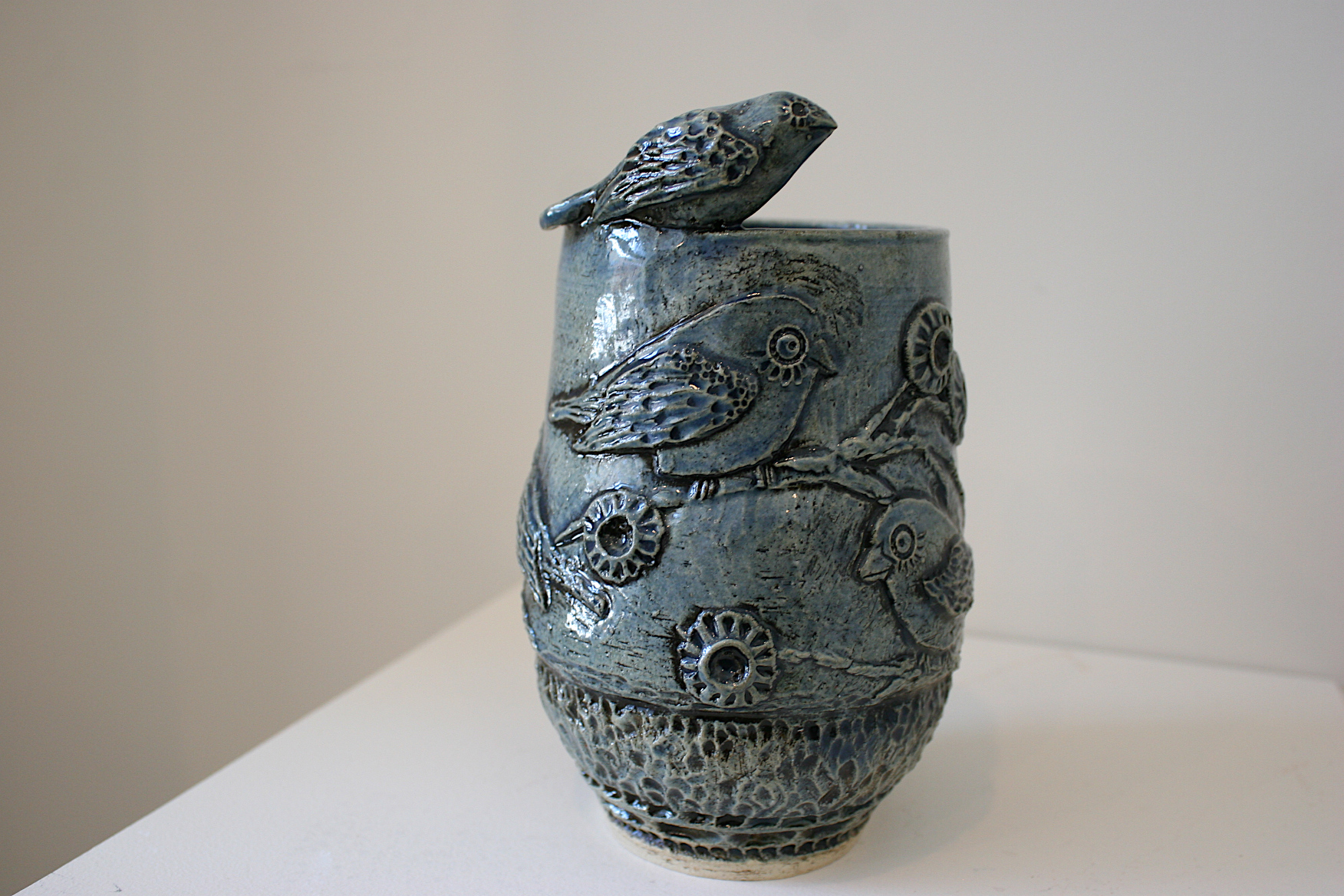
Tami Resler is a multi-talented artist. Here’s some of her pottery showcased in a gallery. (Minnesota Prairie Roots copyrighted file photo March 2021)
Likewise, Resler, a ceramics artist and educator at Shattuck-St. Mary’s School in Faribault, sparkles. I don’t think I’ve ever seen Tami without a smile. Her enthusiasm, I expect, will shine in expressive telling of holiday tales during the reading.
I encourage you, if you live in the area, to take a break from holiday preparations and settle into a chair at Books on Central this Wednesday evening. Relax. Delight in the comforts of a good story. Remember when you were read to as a child or when you read to a child. I hold fond memories of an elementary school teacher reading the “Little House” books by Laura Ingalls Wilder to our class each day after lunch. And I have read countless books to children, still do.
There is joy in books. And there is joy in listening to gifted storytellers who bring words to life with their voices.
FYI: Light refreshments will be served at this event, which is free and open to the public at 227 Central Avenue North, Faribault.
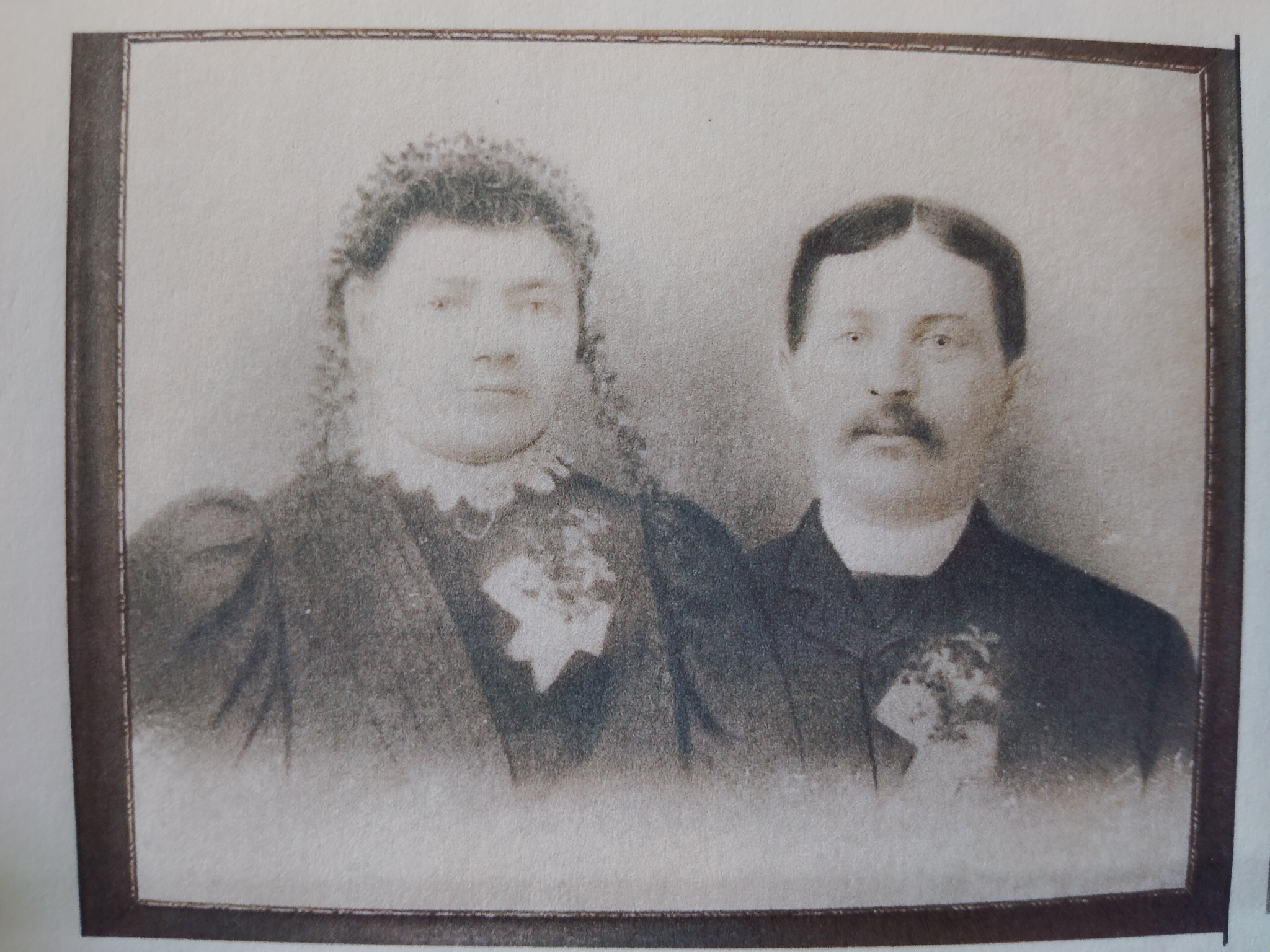
My great grandparents, Rudolph and Mathilda Kletscher, married in 1891. (Photo source: Kletscher Family Tree 2008 produced by Merlin and Iylene Kletscher)
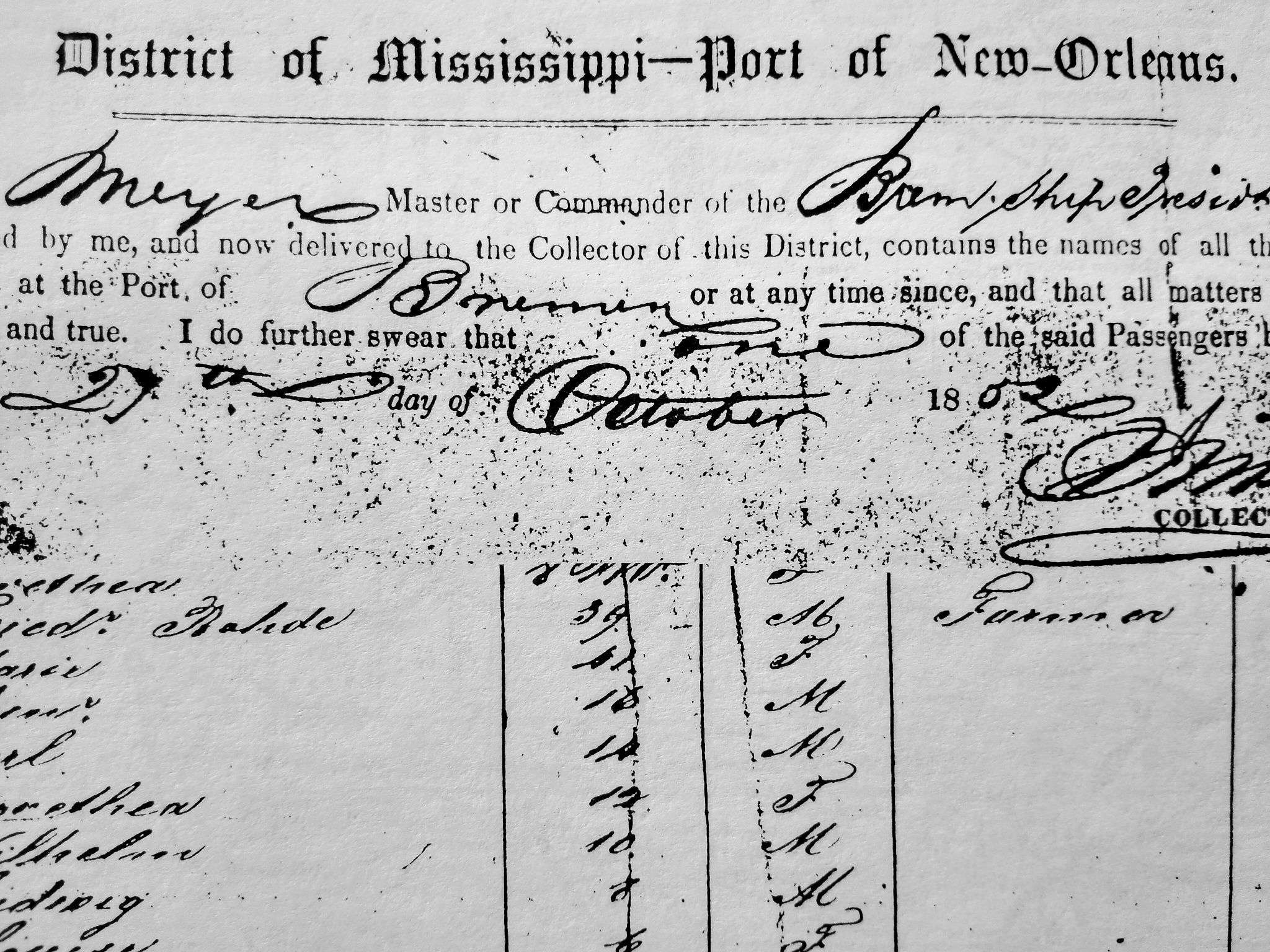
UNLESS WE ARE NATIVE AMERICANS, immigration is part of our family history. On my maternal side, Friedrich and Maria Bode arrived from Germany at the port of New Orleans in October 1852. They would settle in Illinois. Most of the family eventually moved to Minnesota. On my paternal side, my great grandfather, Rudolph Kletscher, landed in Baltimore from Germany in 1886, several years later journeying west to put down roots in southern Minnesota.
I pulled this information from pages of family history uncovered and compiled by family members who have researched our roots in Germany. I am grateful for their work, for the names, dates and places recorded for reference. Sometimes there are stories, or tidbits of stories. But mostly the research reveals documented facts only, not stories.
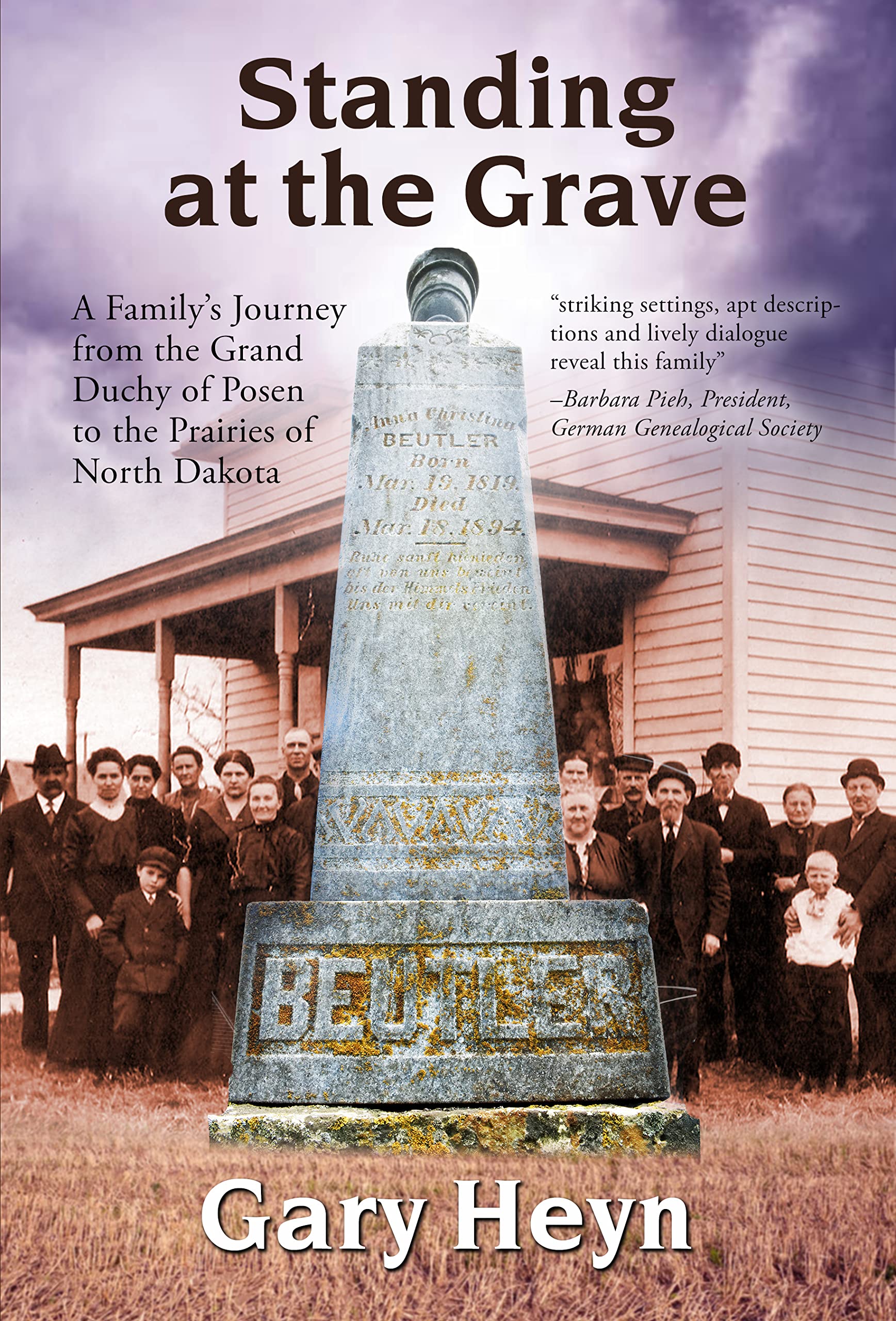
(Book cover sourced online)
It is the stories that interest me most, which explains my interest in reading Standing at the Grave—A Family’s Journey from the Grand Duchy of Posen to the Prairies of North Dakota by Minnesotan Gary Heyn. Books on Central in Faribault hosted Heyn on Thursday evening during a monthly literary event. I was among those in attendance, listening to Heyn read and then answer audience questions. I’d just finished reading his book about his ancestors who immigrated to America from Prussia (now Poland) beginning in 1867 shortly after the Civil War ended.
His ancestors could have been mine. Any of ours. Heyn took basic facts confirmed thorough research at the Minnesota History Center, church records, a Polish history website, old newspapers, even the National Weather Service and gleaned during several trips to Poland to form the foundation for his stories. The dialog and interactions are fictional slices of personal life in Prussia and then in America. Heyn’s characters really come alive when he reveals their fears, their worries, their hardships, griefs, challenges and more in intimate storytelling.
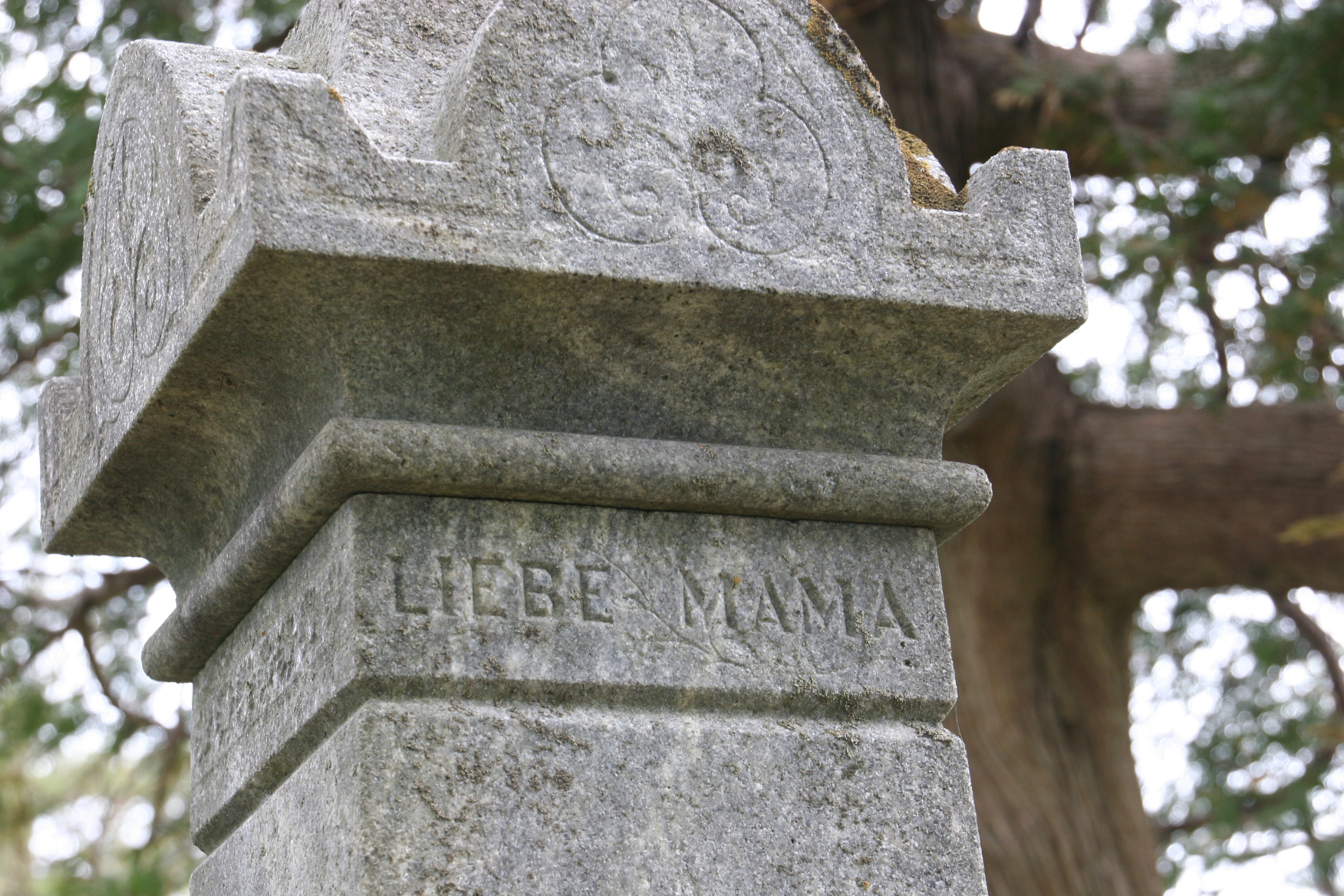
A tombstone in the Immanuel Lutheran Church Cemetery, Potsdam. The German word “LIEBE”means love in English. A Heyn family member is buried in this cemetery. (Minnesota Prairie Roots copyrighted file photo May 2022)
These are, at times, really hard stories. Of death by disease. Of death by accidents. Of death by suicide. Of death by botulism. I appreciate that the author doesn’t avoid tough topics. I understand the worries about weather and crop failure, vicariously stand at the graves of loved ones, recognize the depression a young mother experiences as she looks across the expansive North Dakota prairie, feeling isolated and alone.
But those difficult stories are balanced by the joys of births, of weddings, of the opportunity to claim land through the Homestead Act, to live and love and grow family in a new land rich in opportunity.
Main character, family matriarch Anna, follows her family to America many years after the first, eventually fulfilling her life-long dream of once again owning land, this time 160 acres in North Dakota. Most of the family found land in southern Minnesota, in the Rochester area where the author grew up and first heard the stories of his great grandmother. She lived with his childhood family. That sparked his interest in family history and genealogy, which, after his retirement as an accountant, led to writing Standing at the Grave.
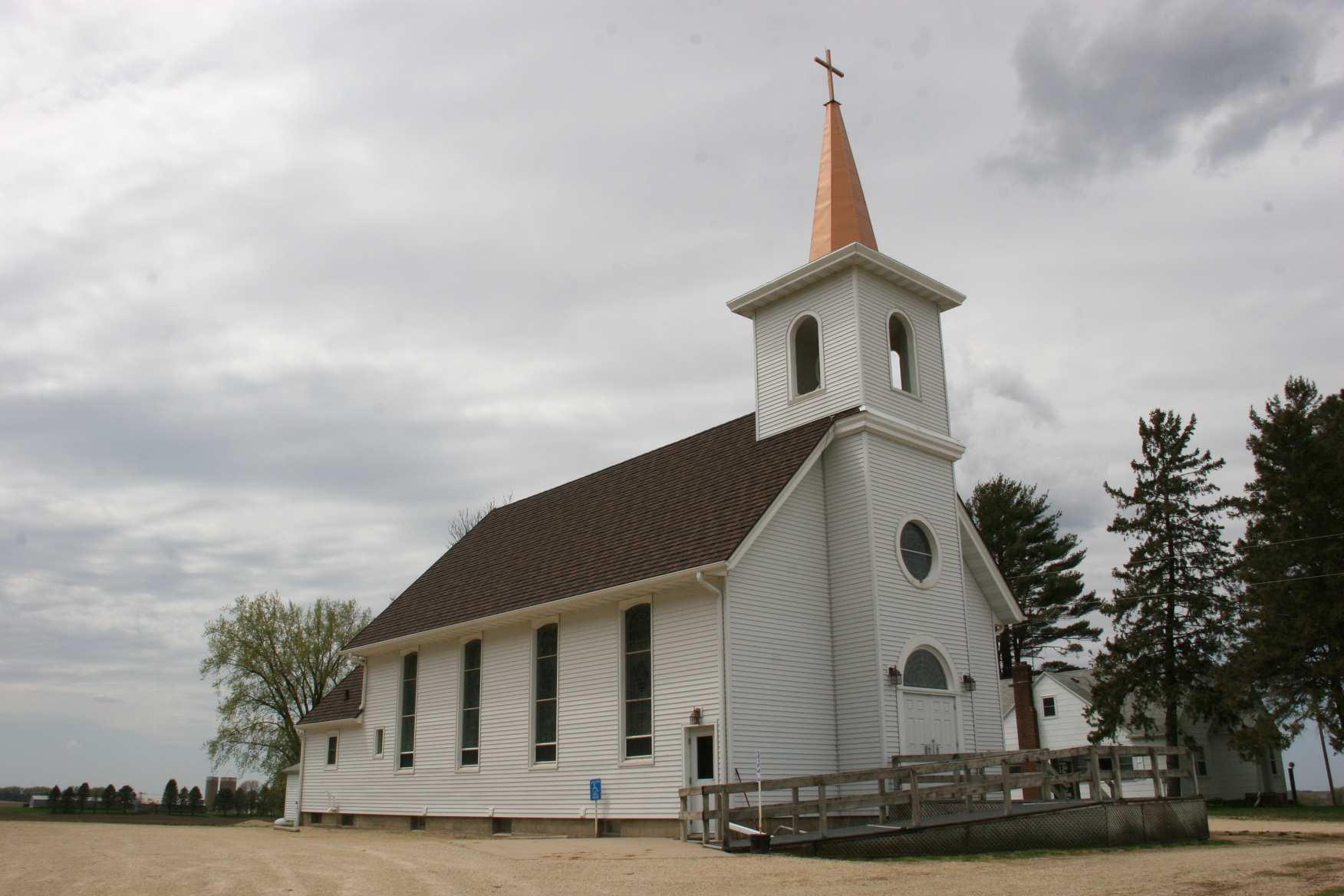
Immanuel Lutheran Church, Potsdam. (Minnesota Prairie Roots copyrighted file photo May 2022)
Southern Minnesotans, especially, will feel at home in places like Elgin, Grand Meadow, Pleasant Valley, Owatonna and more. I’ve even visited and photographed Immanuel Lutheran Church in Potsdam, where Anna stood on the front steps and scanned the countryside below the hilltop church. I’ve walked the cemetery, where Heyn’s ancestor, Willie, lies buried in an unmarked grave.
As much as I appreciate the storytelling in this book, I also appreciate its relevancy to today. Heyn family members new to America in the late 1800s are told to speak English, not German. Sound familiar? (My own mother, who died at age 89 in 2023, spoke German as her first language.) These newcomers to America felt like foreigners, often choosing to live among others from their homeland. Among those who shared their language, culture and customs, who liked bier, sauerkraut, Weihnachtsstollen and Glühwein.
But in times of challenges, Heyn reveals in one story, “…the citizens of this neighborhood, born all across the globe, banded together to help another working man.” That coming together of many nationalities repeats in his book, even as conflicts arise.
A passenger ship list from the port of New Orleans. (Source: The Bode Family book by Melvin & Lois Bode, 1993)
Heyn, in his writing, reveals the challenges, the dreams, the hopes, the resilience and resolve of his immigrant ancestors. These were strong individuals who relied on each other, their faith and their inner strength to cross a vast ocean for a new life in America. This is their story, but also a universal story of immigration, as relatable today as then.
This book helped me better understand those who came before me from Germany to America from a personal perspective. This book also reminds me of the struggles immigrants still face today in America, especially today.
WHENEVER AN AUTHOR appears locally to read from and discuss his/her book, I try to attend. I love reading and learning. I enjoy listening to other writers talk about the craft of writing as I read and write nearly every day.
Osterholm, an internationally-renowned epidemiologist and director of the University of Minnesota Center for Infectious Disease Research and Policy, is a familiar name, especially to Minnesotans. During the COVID-19 pandemic, he was tapped as an expert. I, for one, found him to be an invaluable and trusted source of information during the pandemic. His knowledge and research into infectious diseases stretches well beyond COVID, though.
My history with Osterholm goes back decades to the late 1970s when I was just out of college working at a small town Minnesota weekly newspaper, The Gaylord Hub. Osterholm came to Gaylord during a hepatitis outbreak at the local school. While details of that health issue have long faded, I recall that this highly-contagious disease was connected to a band teacher and musical instruments. I remember photographing Osterholm, also starting his career, and writing a news story about what was unfolding at the school.
The original coronavirus as depicted by the CDC in 2021. (Sourced online)
On November 17, Osterholm will focus on pandemics, sure to be an enlightening talk at this 7-8:30 pm first come first serve seating (doors open at 6 pm.) event at The Grand, 316 Washington Street in Northfield and hosted by local independent bookshop, Content Bookstore.
(Book cover sourced online)
While Osterholm will present in a large venue, author Gary Heyn will appear in a much smaller, intimate setting, the Rice County Area United Way’s Books on Central. The used bookshop is housed in a former jewelry store at 227 Central Avenue North, Faribault. Heyn, a retired corporate executive turned historian, genealogist and writer upon his retirement, will read from and talk aboutStanding at the Grave: A Family’s Journey from the Grand Duchy of Posen to the Prairies of North Dakota. This free literary event is set for 6 pm Thursday, November 20.
I’m about a third of the way through Heyn’s book and I can attest that it is a captivating read, the kind of book I don’t want to put down. It’s relatable when considering my German immigrant ancestors and also in the context of immigration issues today. Once I’m finished with the book, my husband will also be reading it. His ancestors, the Helblings, moved from Germany to then Russia (current day Ukraine) before journeying to America and a new life in North Dakota.
Insights into immigration, tracing family history and stories are always of interest. Heyn will read from the chapters of his book about three mothers from Gembitz Hauland, an historic German-Polish village, who were reunited in Steele County 18 years after sending their children to America. To type those words is enough to break my heart. I cannot imagine how difficult that must have been for those three mothers. But it happened. Over and over and over again.
I encourage you, if you live in my area, to attend these upcoming author talks. These are opportunities to learn via the expertise and creativity of those inspired to write.
THIS WEEK ONE OF MY FAVORITE area writers comes to downtown Faribault. He’s Owatonnan Chris Norbury, award-winning author of three books in the Matt Lanier mystery-thriller series and a stand alone middle school novel, Little Mountain, Big Trouble.
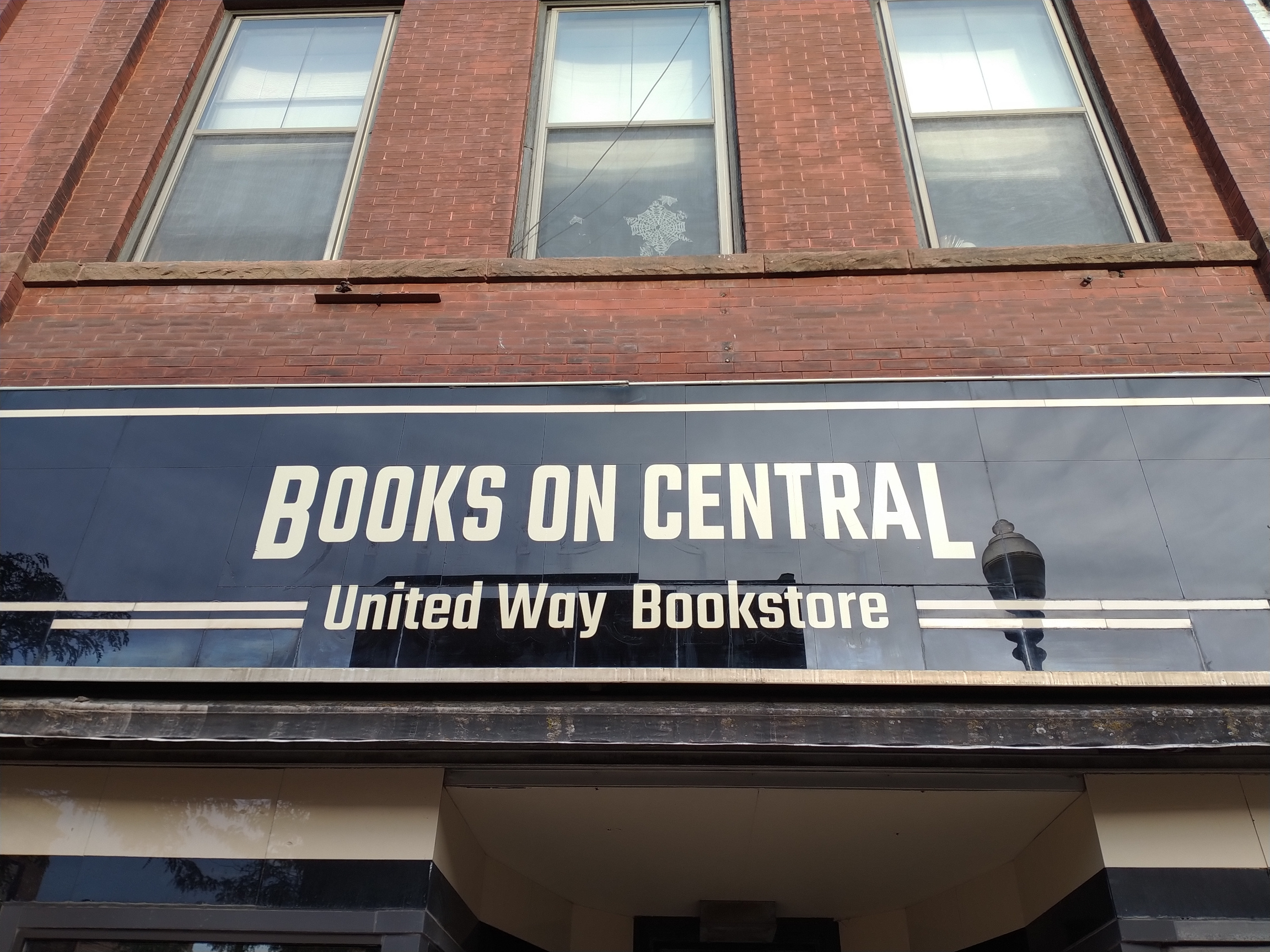
Books on Central, a used bookshop of the Rice County Area United Way, is hosting Norbury beginning at 6 p.m. Thursday, October 23, as part of its author series. Norbury will read and talk about his books and the craft of writing.
I’m excited to see Norbury again. We’ve chatted briefly several times when he was selling his books at events in Faribault. He is a genuinely nice guy whose writing I happen to love. As a writer, I recognize Norbury’s devotion to craft—the time, energy, inspiration and hard work it takes to write a book. I expect to learn more during his upcoming talk and the Q & A that follows.
My first introduction to Norbury came via his mysteries, all set in Minnesota with recognizable place titles like Castle Danger, Straight River and Dangerous Straits. Main character Matt Lanier is a southern Minnesota farm kid turned professional musician. I’m especially drawn to books set in Minnesota and with strong home-grown characters like Lanier.
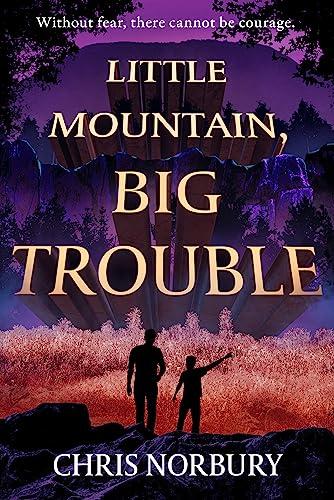
(Book cover sourced online)
But it is Norbury’s novel for middle schoolers (and older, including adults), Little Mountain, Big Trouble, which really resonates with me. I encourage you to read my review of this book (click here) about 12-year-old Eduardo, who is bullied and eventually paired with a Big Brother, Russ. Like Russ, Norbury was a Big Brother for 20 years and today donates a portion of his book sales to Big Brothers Big Sisters of Southern Minnesota. I appreciate Norbury’s generous ongoing support of an organization which helps young people.
(Minnesota Prairie Roots copyrighted file photo)
Books on Central also gives back to community through its umbrella organization Rice County Area United Way. Book sale proceeds go to the United Way which in turn provides financial support to select nonprofits in the county. All book inventory is donated by community members and all staff at the used bookshop are volunteers. There’s so much to love about this Minnesota bookstore and Minnesota writers like Chris Norbury. Kindness, compassion and community center both as they embrace books and the craft of writing.
FYI: Books on Central, 227 Central Avenue North, Faribault, is open from 11 a.m.-5 p.m. Wednesday-Friday and from 10 a.m.-4 p.m. Saturdays and other times for special literary and other events.
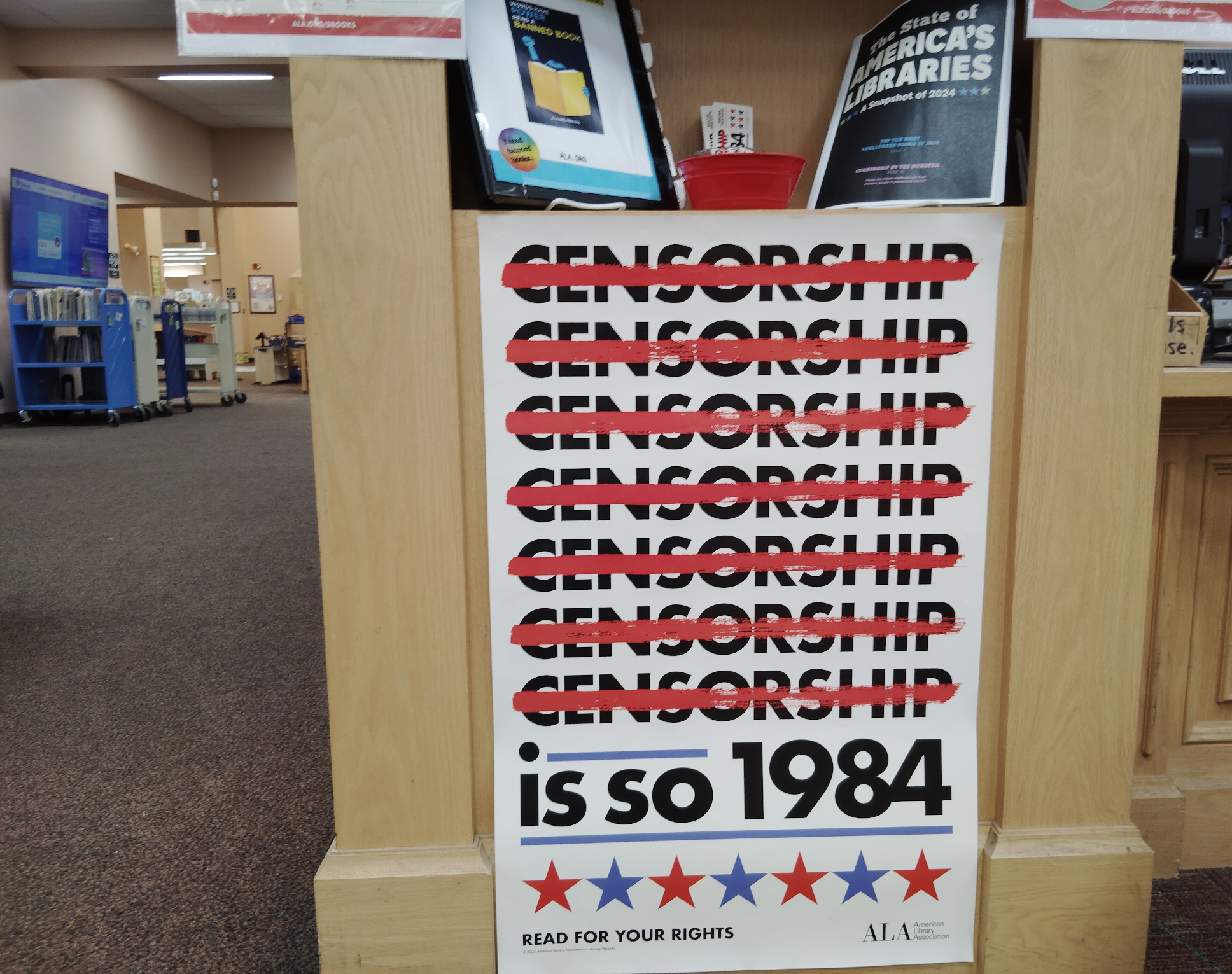
This American Library Association poster anchors the Banned Books Week display at my local library. (Minnesota Prairie Roots copyrighted photo October 2025)
AS A WRITER, journalist and avid reader, I’m a firm believer in free speech. Never have I seen that right more threatened in America than it is today. It’s downright scary—efforts by the federal government to suppress voices (already occurring), promises of retribution (now being carried out), abuse of power (happening on so many levels) and much more that threatens our very freedoms, our democracy. I could go on and on.
But today I want to focus on Banned Books Week, which ends tomorrow. Thursday evening I gathered with a group of volunteers for an appreciation event at Books on Central in Faribault, a used bookshop founded by the Rice County Area United Way. While I don’t volunteer there (yet), I’ve blogged about the bookstore numerous times because I love books and I love that monies from BOC book sales help nonprofits in my area. We weren’t there to discuss banned books, though, but rather to celebrate volunteerism and this small bookshop which has become much-beloved by the Faribault community and beyond.
It was not lost on me as I sat there surrounded by books, listening to volunteers share their passion for this place and for books, that everyone who walks in the door is surrounded by choices. As it should be. Choose what you want to read or want to share with others.
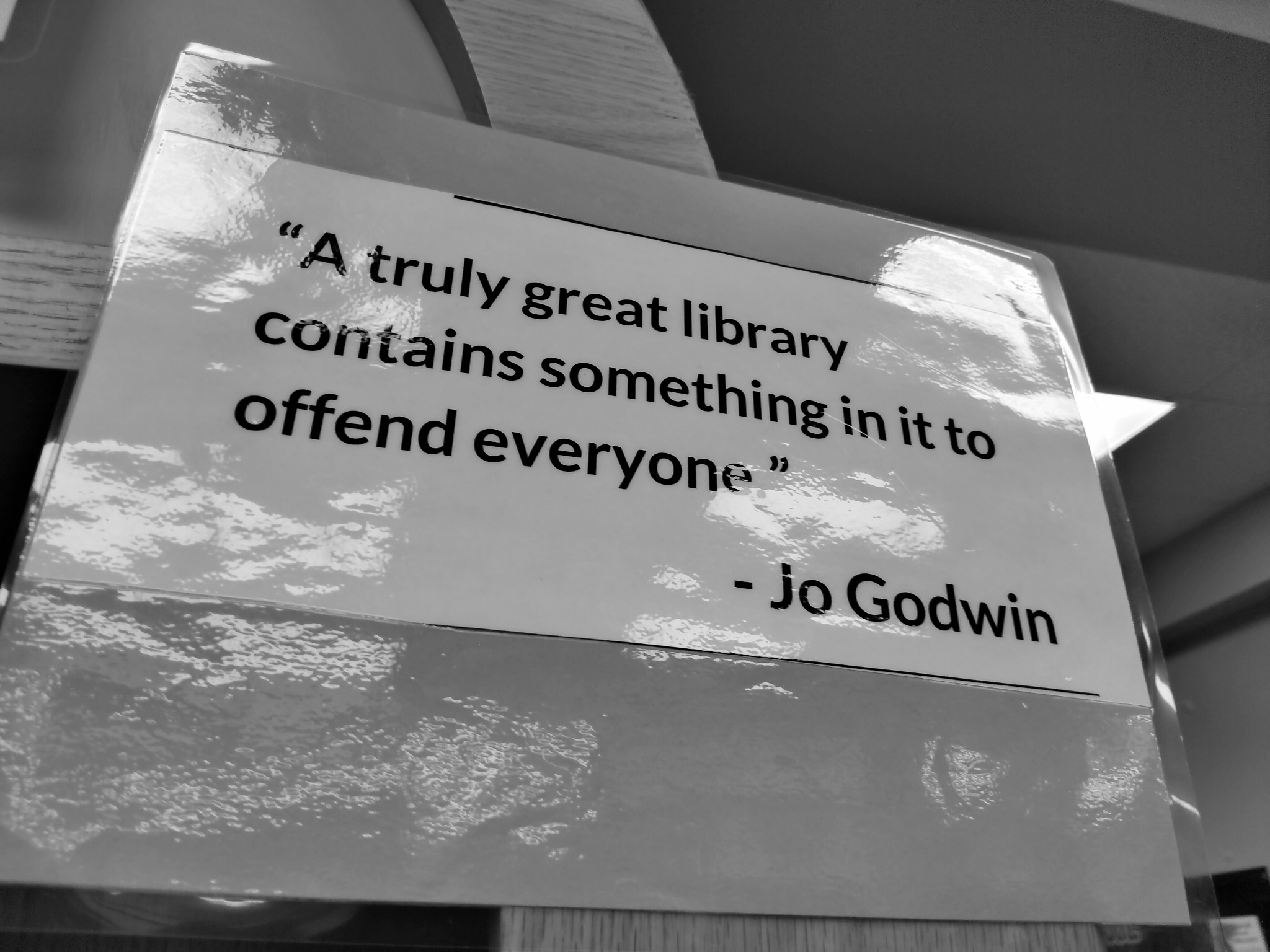
A powerful and fitting quote for Banned Book Week displayed at Buckham Library. (Minnesota Prairie Roots copyrighted photo October 2025)
Yet, there are individuals, organizations, elected government officials and others who want to determine what we can read by banning books from libraries, schools and elsewhere. That, my friends, is censorship. And I’m not OK with that. If I find the content of a book to be offensive, then I can stop reading it or never open it in the first place. Likewise parents can monitor their child’s reading materials just as they would online content.
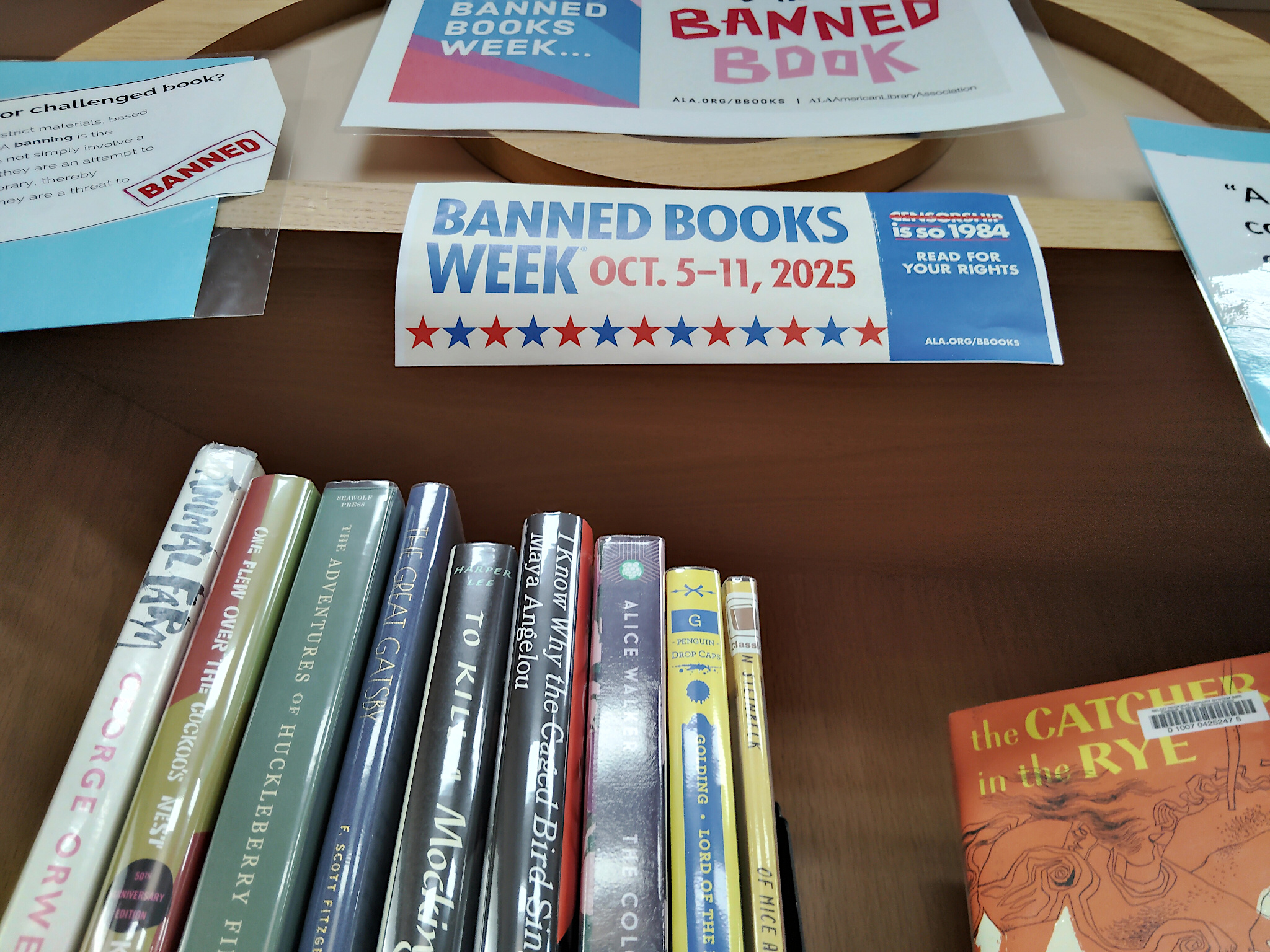
A sampling of books that have been banned in various places in America. These were included in a display at my library. (Minnesota Prairie Roots copyrighted photo October 2025)
In the words of the American Library Association’s 2025 Banned Books Week theme, “CENSORSHIP is so 1984.” That’s a reference to George Orwell’s prophetic 1949 novel, 1984, about a totalitarian government. That’s a simplistic summary. But the book is particularly relevant to today. I intend to check it out from my library to reread.
Bracelets available at Buckham Library support the RIGHT TO READ. (Minnesota Prairie Roots copyrighted photo October 2025)
After the bookshop appreciation event Thursday evening, I stopped at Buckham Memorial Library to see if staff had created a Banned Books display as they have in the past. They did. After I read the information and looked at a sampling of books that have been banned (not from my library), I grabbed a green bracelet imprinted with this message: CENSORSHIP is so 1984. READ FOR YOUR RIGHTS.
I will continue to read. I will continue to write. And I will continue to embrace, support and advocate for free speech. I have a voice. I refuse to be silenced.













Honoring America locally in red, white & blue July 1, 2026
Tags: 250th birthday of America, America, birthday of America, book display, books, Books on Central, commentary, Dundas, Faribault, flowers, Fourth of July, holiday, July 4, July Fourth, Keepers Antique Shop, Minnesota, patriotic clothing, patriotism, red white and blue, Statue of Liberty puzzle, window display
RED, WHITE AND BLUE banner everyday life annually around this time each year. I’m talking not only U.S. flags flying from poles, but much more. And this July 4, the 250th birthday of our nation, American pride seems especially abundant. Or maybe I’m simply noticing because of the milestone celebration.
Whatever, I challenge you to see how your friends and neighbors, local businesses, churches and other organizations are celebrating and/or running with the July 4 theme.
Locally, I found plenty of examples in expected, and unexpected, places. At Keepers Antique Shop along Central Avenue in Faribault, I always expect proprietor Nona Boyes to create a window display appropriately themed to a particular event. She didn’t disappoint, staging two mannequins draped in red, white and blue holding an American flag between them. The patriotic theme carries to a corner curio and additional window space. Boyes’ art education and background show in every single window display she creates for her antique shop.
Across the street at Books on Central, I happened upon another July Fourth display, this one atop a table. Because this is a used bookshop, books center the space created by volunteer Jeanne Campbell with assistance from Mary Campbell.
Books about the White House, “The Star Spangled Banner” and Alexander Hamilton are for sale along with other volumes artfully placed among mini American flags, a Betsy Ross statue and touches of red and white ribbon. “We the People—A Pictorial Celebration of America” and “1776” by Pulitzer Prize winning author David McCullough are also among the selections.
If you really want to get to the basics, you’ll find a pocket book of the U.S. Constitution propped in a front window display themed to celebrating the birth of this country.
To the north on Central Avenue, Fashions on Central promoted a RED WHITE BLUE SALE on a sandwich chalkboard.
At the State Bank of Faribault, an American flag graces a lush pot of flowers outside the bank’s front entry.
But it was red flowers planted in galvanized tubs and backdropping white hydrangea that drew my admiration for July Fourth floral plantings. I was en route to a garage sale in a south-side Faribault neighborhood when I spotted the work of gardener Kay, who planted red, white and blue flowers throughout her yard. She wasn’t home when I stopped. But her husband, Paul, promised to pass along my praise.
When I stopped at an estate sale, I purchased an unusual piece of art perfect for the Fourth of July. For $3, I snagged a puzzle of the Statue of Liberty pieced together by Gerda Dolman of Madison, Minnesota, when she was 100 years old. She lived to nearly 102, dying in 2021. Her son mounted the puzzle on wood. Gerda’s Lady Liberty now hangs on my dining room wall, a visual reminder of freedom, liberty and hope for all who came, and continue to come, to America. Like Gerda’s Norwegian ancestors.
As we celebrate our nation’s 250th birthday, I focus on those foundational words of liberty and freedom. I hope others do, too, as they don patriotic attire, enjoy parades and BBQs, watch fireworks, and consider all this nation has endured from the Revolutionary War to present.
This message lifted from the tabletop display at Books on Central says it all: “For 250 years, we have maintained and loved this country that was created as the great American experiment, an exercise in self-governance and respect and freedom. Long may this great experiment reign, cherished and supported by those it protects and honors. Happy birthday to the United States of America!”
© Copyright 2026 Audrey Kletscher Helbling