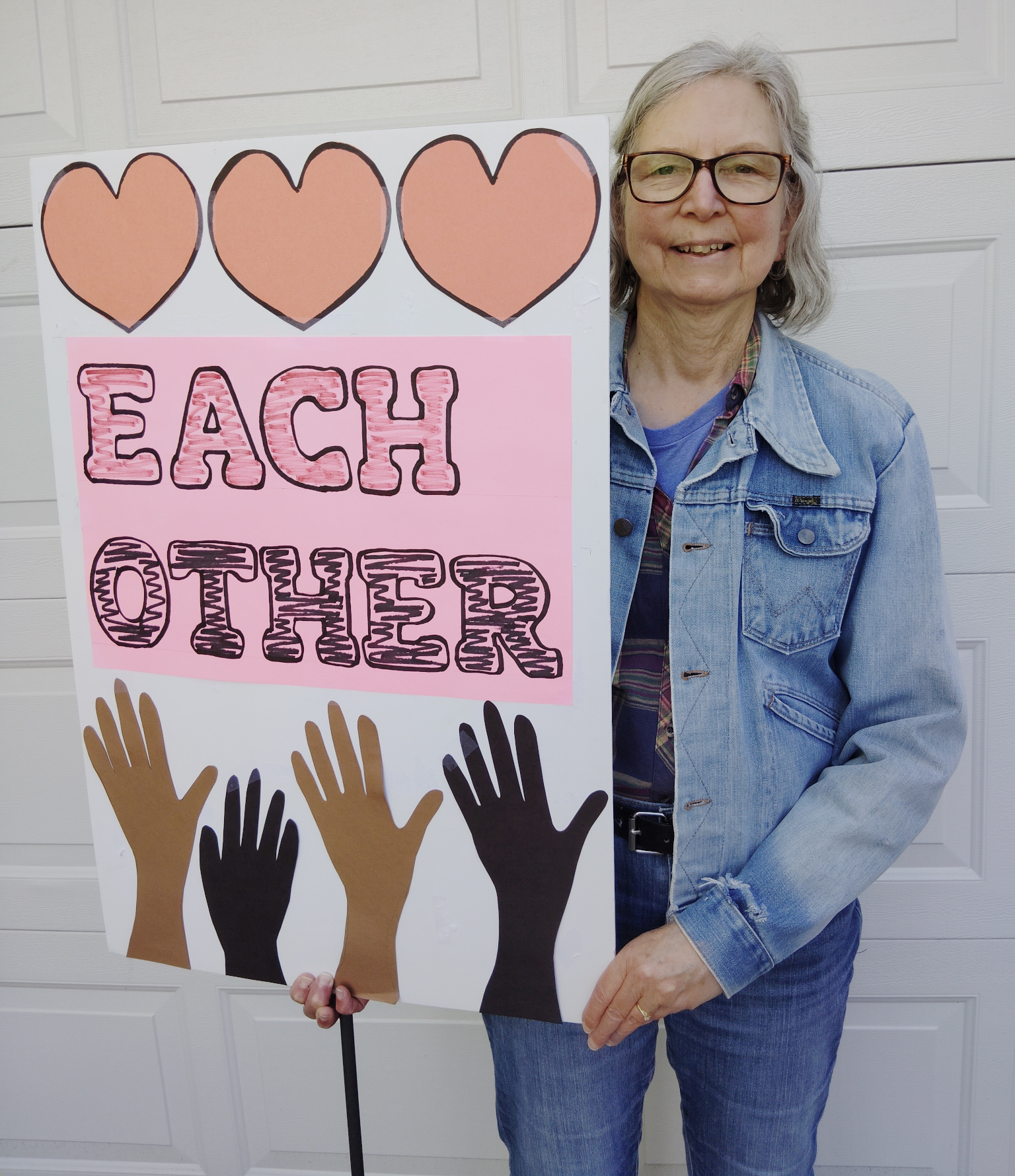
I crafted this sign in February to carry during protests in Faribault. My message remains relevant today in my community. (Minnesota Prairie Roots copyrighted file photo by Randy Helbling)
THIS MORNING, outside a Faribault grocery store, I observed a White man overtly express his disgust for three Somalis. “Jesus Christ!” he exclaimed, looking directly at them.
I knew exactly what he meant. And it made me sick to hear the Lord’s name taken in vain by this man who clearly held nothing but disdain for Somalis. His tone of voice, his word choice, the way he looked at the trio told me precisely how he felt. And it was not loving, accepting or kind.
Here’s the situation leading to the man’s outburst: A Somali man, returning his cart to the grocery store cart corral, offered his cart to a Somali mom and her son heading into the grocery store. The cart rolled a short ways across the pavement. Not toward anyone. Not toward any vehicle. But it was enough to prompt the White guy to emphatically state, “Jesus Christ!”
I was so taken aback by his two words that I turned around and looked at him. He didn’t see me. He was walking away toward his parked vehicle. But I hope he felt the heat of the fire flaming from my eyes. Such intolerance does not sit well with me.
Onward I went with my grocery shopping, crossing paths occasionally with the Somali mom and her son, about 13. I waited in the check out line behind them, observed the son unloading groceries and then packing them to wheel out in his cart.
As I walked toward my vehicle, I saw the boy wheeling his cart back toward the grocery store. I stopped him. “I’m so proud of you for helping your mom,” I said after confirming the woman was his mother. His face lit up into a broad smile. “Thank you,” he said.
Two words. Beautiful. Appreciative. And nothing at all like the words spoken by the man who failed to see what I saw—a mom and her son heading into the grocery store on a Saturday morning. Just like me.
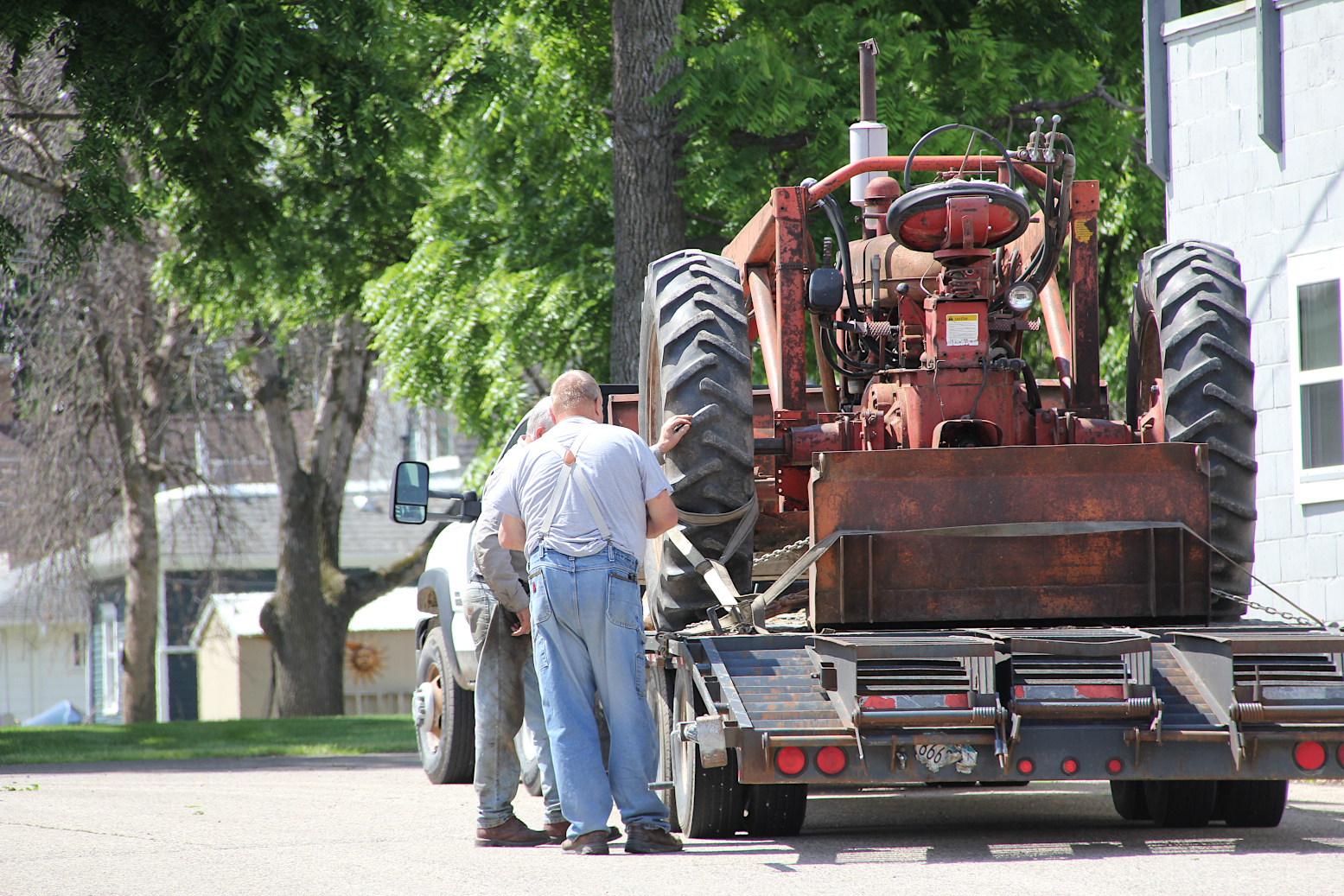
Photographed in Kenyon. Two guys and a tractor. (Minnesota Prairie Roots copyrighted photo June 2026)
EVERYDAY LIFE presents snapshots of ordinary moments worthy of documentation. So, when I’m out and about in public places, I look for those unique storytelling moments. To capture them with my camera gives me a sense of satisfaction. To share those images is to share a slice of life.
Defined, this is candid street photography. People just going about their daily lives when I take a photo unnoticed. I’m always respectful in my photography, often opting for side or back images. Occasionally I ask for a posed portrait. But my preference is always natural, unscripted.
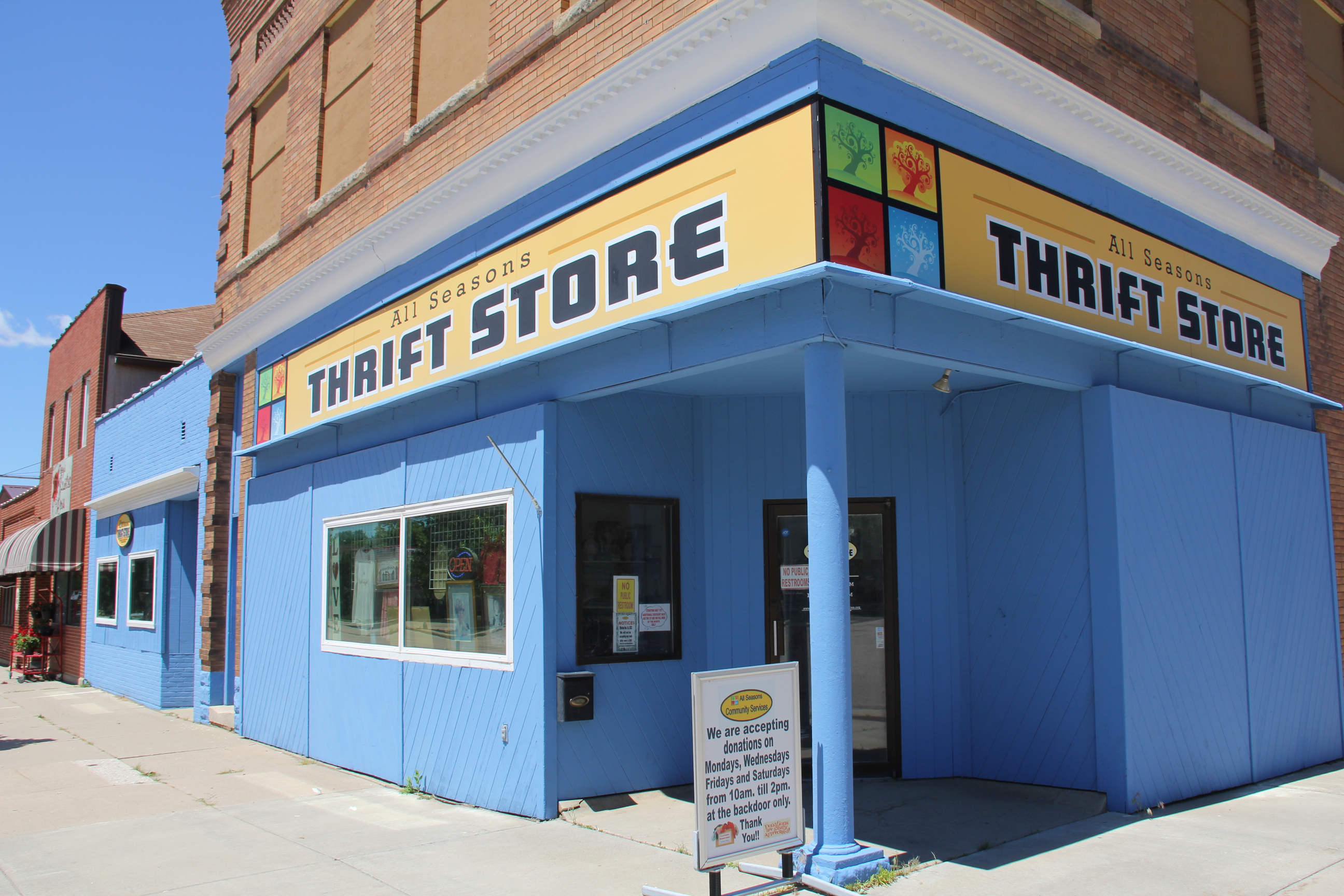
Our destination, All Seasons Thrift Store in Kenyon. (Minnesota Prairie Roots copyrighted file photo 2024)
Recently, upon a return road trip from Rochester, Randy and I stopped in small town Kenyon to shop at a downtown thrift store. But before we could even exit the van, I noticed two guys across the street standing by a mid-1950s International Harvester Farmall tractor chained onto a trailer.
I can only guess at their conversation. Perhaps they were bartering over a price, talking repairs or reminiscing. But the scene was so typical rural Minnesota. Guys dressed in their work-worn jeans (one with suspenders), sturdy work boots and everyday shirts engaged deep in conversation. Only their seed corn caps were missing.
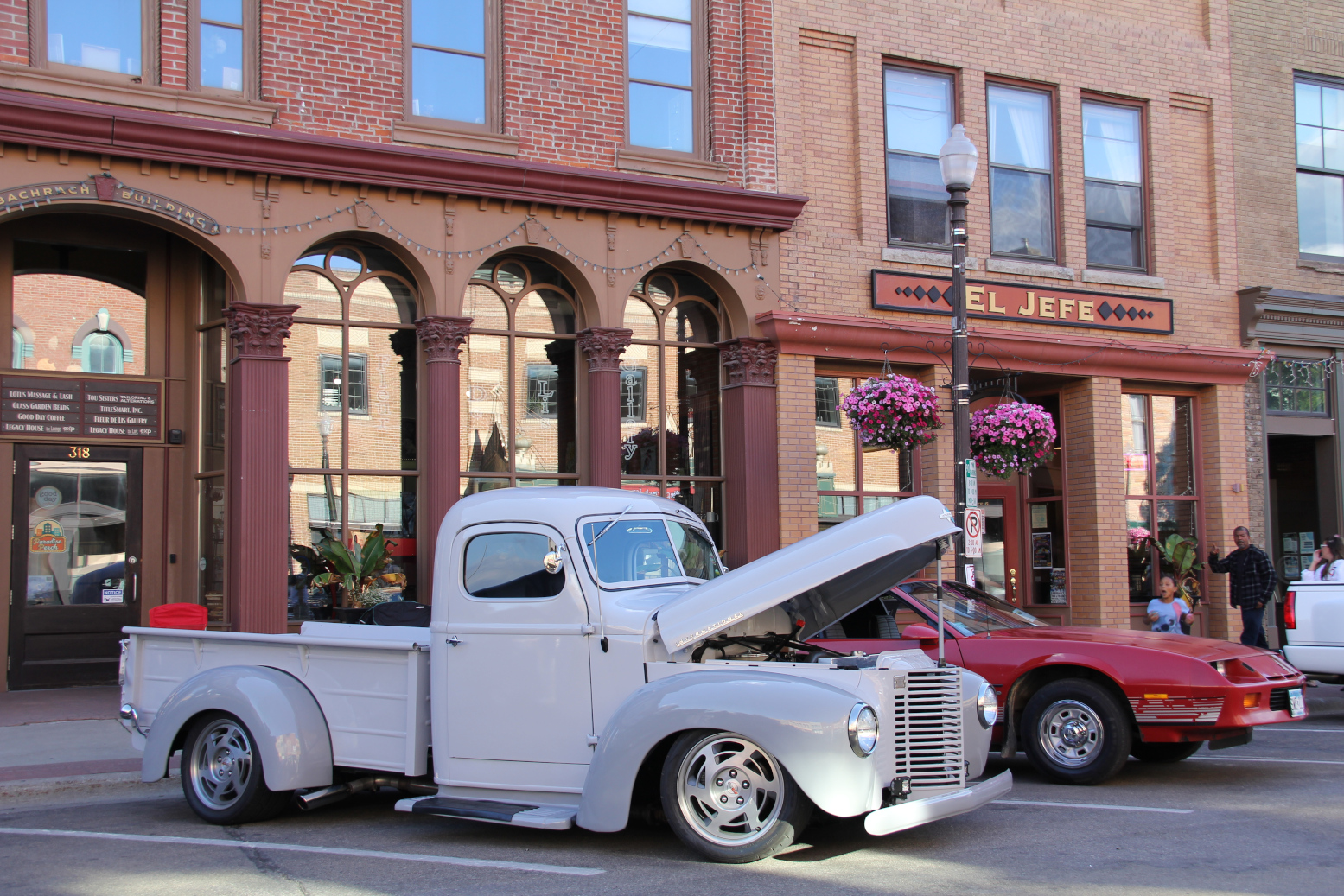
A scene along Central Avenue during the June 19 Car Cruise Night shows a Mexican restaurant in the background (right), one of several in downtown Faribault. (Minnesota Prairie Roots copyrighted photo June 2026)
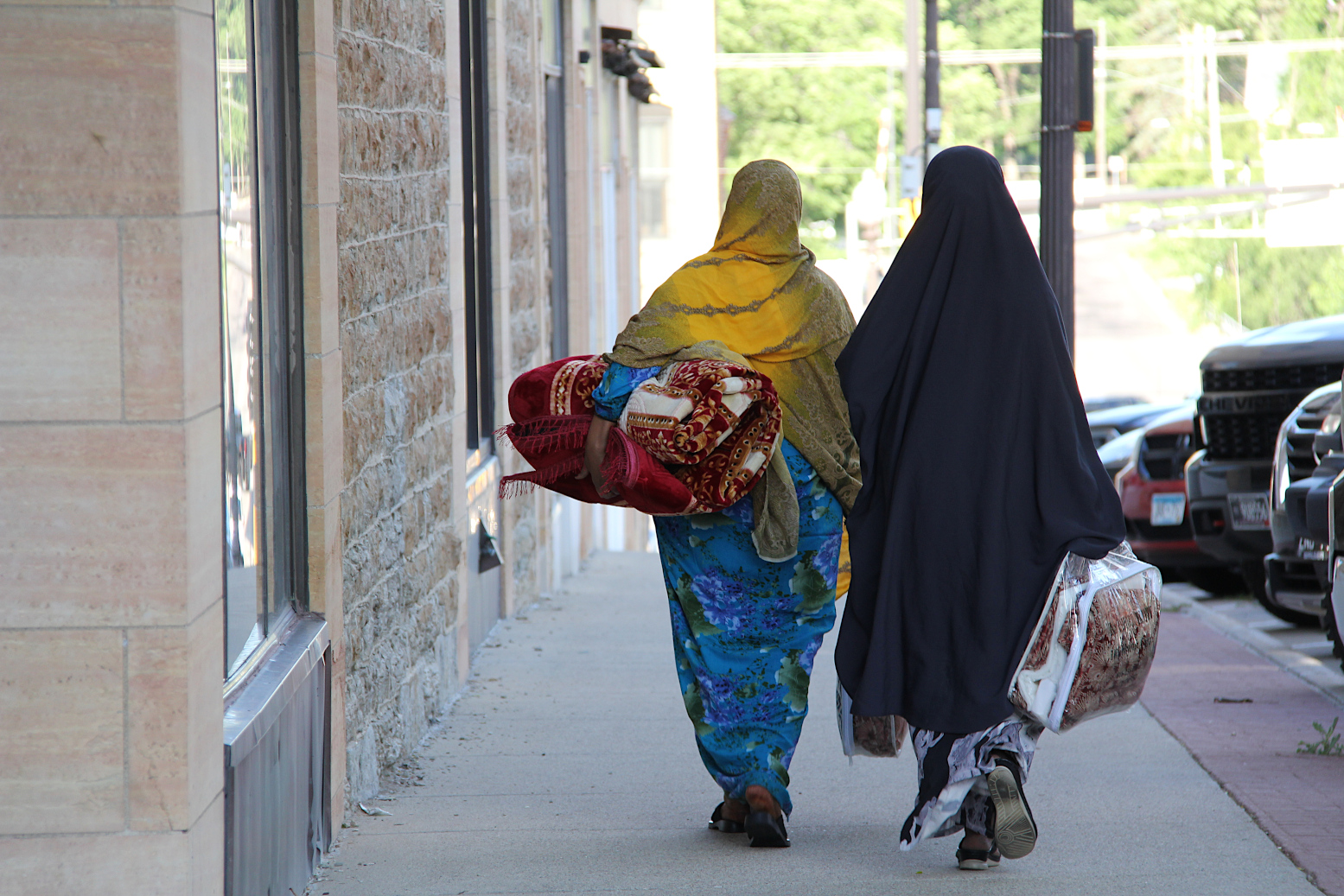
The scene was decidedly different in Faribault the next evening. While attending Car Cruise Night, two Somali women crossed my path on Central Avenue. I smiled and greeted them as they continued down the sidewalk. They carried textiles similar to those I’ve seen in storefront windows of some local Somali-owned businesses.
Downtown Faribault is home to numerous Somali-owned businesses. Many Somalis also live in the downtown area. (Minnesota Prairie Roots copyrighted photo June 2026)
I appreciated the moment because the women reflect the cultural diversity of my community. The demographics of Faribault, of Minnesota, have changed a lot in recent years and I’m happy to showcase that in my work.
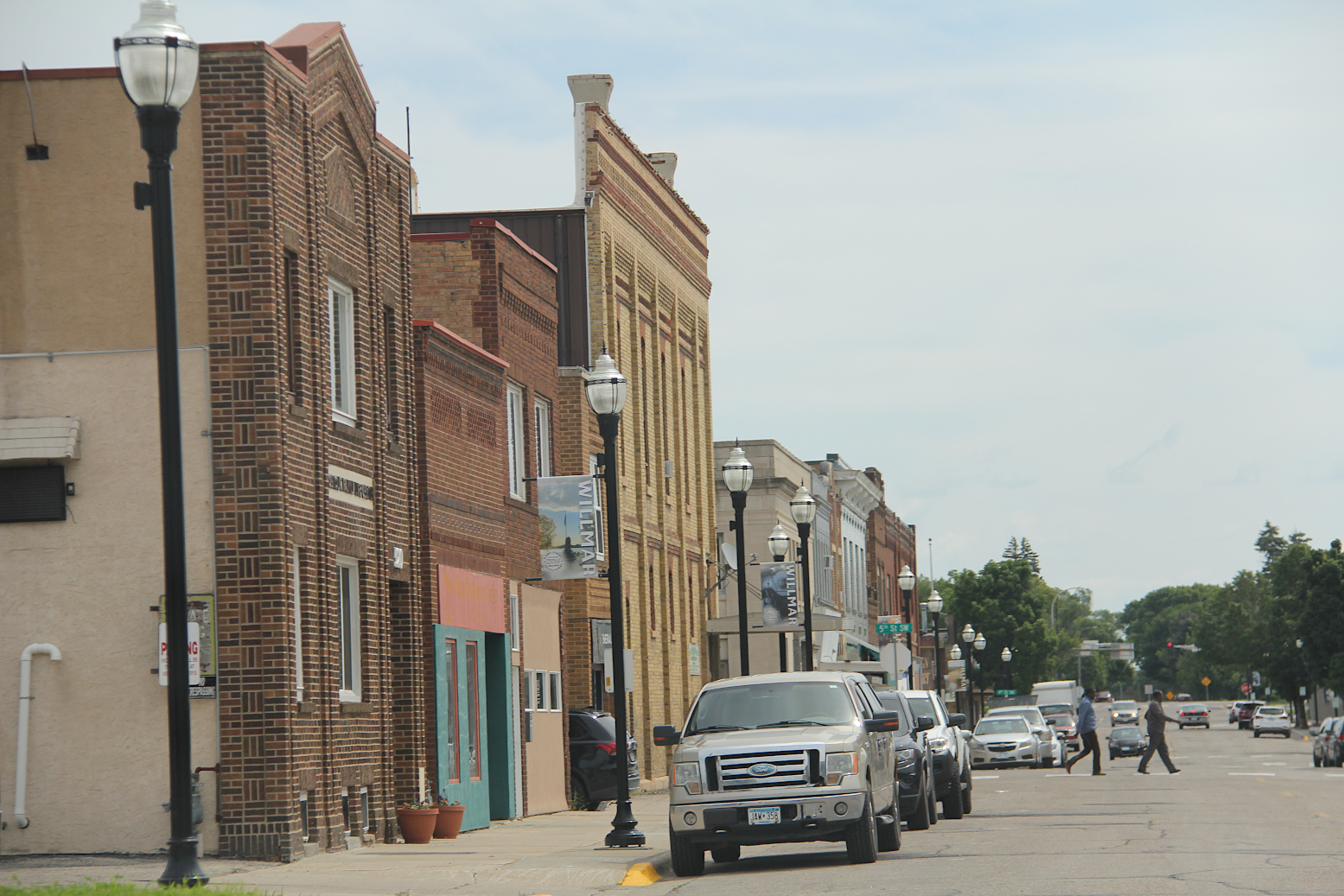
A street scene in downtown Willmar. (Minnesota Prairie Roots copyrighted photo June 2026)
Some 135 miles to the northwest in Willmar, I once again saw the cultural diversity of a city which is home to many Latinos and those with East African roots, especially Somalis. A short walk and drive about the downtown confirmed that.
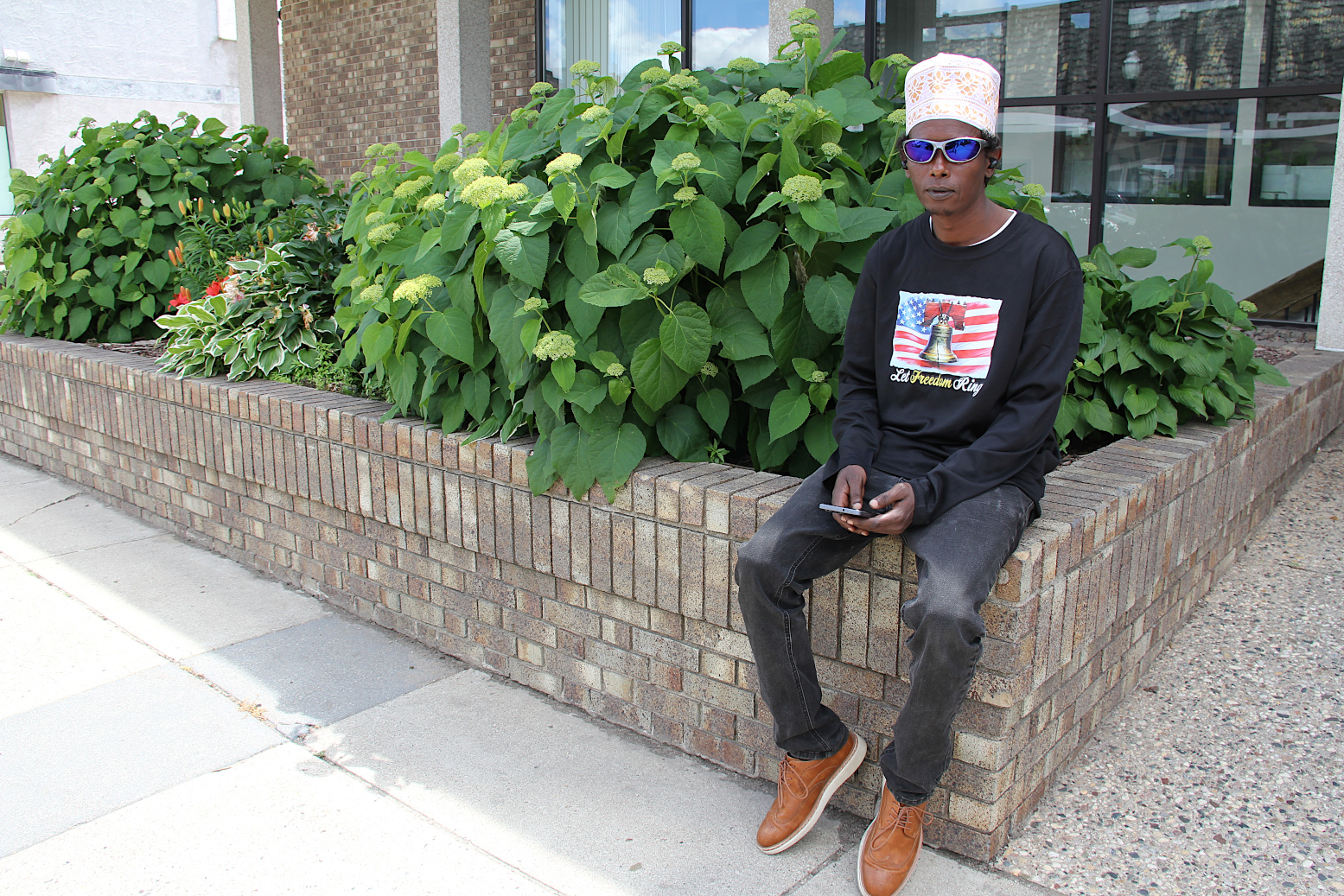
This young man invited me to take his portrait in downtown Willmar. (Minnesota Prairie Roots copyrighted photo June 2026)
While photographing an artsy street bench, I encountered a young man sitting on a large planter box. I noticed his patriotic-themed shirt featuring a liberty bell against a backdrop American flag and the message, Let Freedom Ring. “I like your shirt,” I said, as he pulled out his ear buds and then invited me to take his photo. I jumped at the chance to photograph him, creating a memorable portrait. He reflects the diversity of his community. And his t-shirt made a strong statement about liberty during this, the 250th birthday year of a nation built by immigrants.
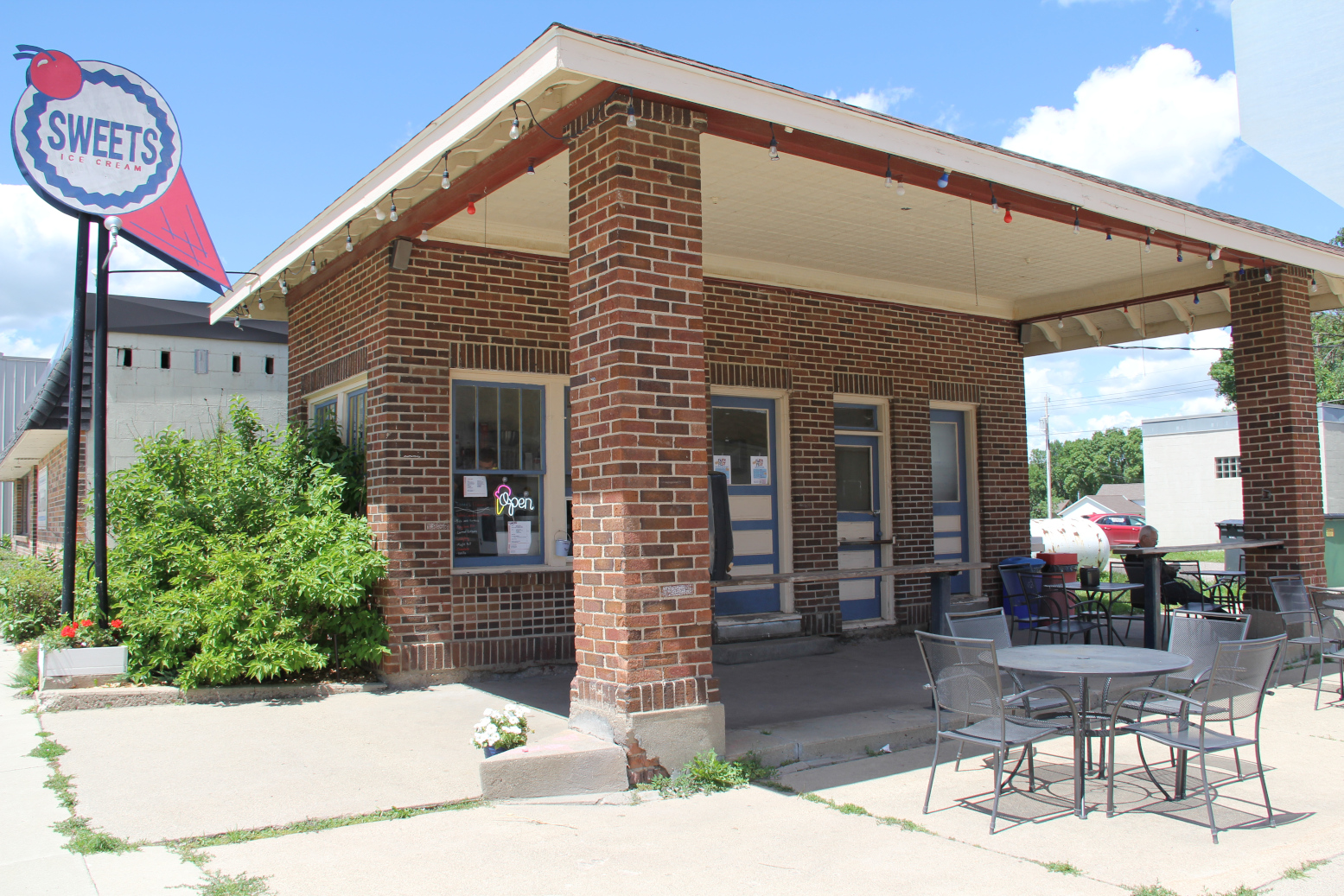
Sweets Ice Cream in Kerkhoven in far western Minnesota. (Minnesota Prairie Roots copyrighted photo June 2026)
Up the road some 20 miles northwest of Willmar, I took a street portrait, literally in the street, outside the Kerkhoven Civic Center. The building houses city hall, the library, a heritage room and a community gathering space. It’s just down the street from an ice cream shop along busy U.S. Highway 12.
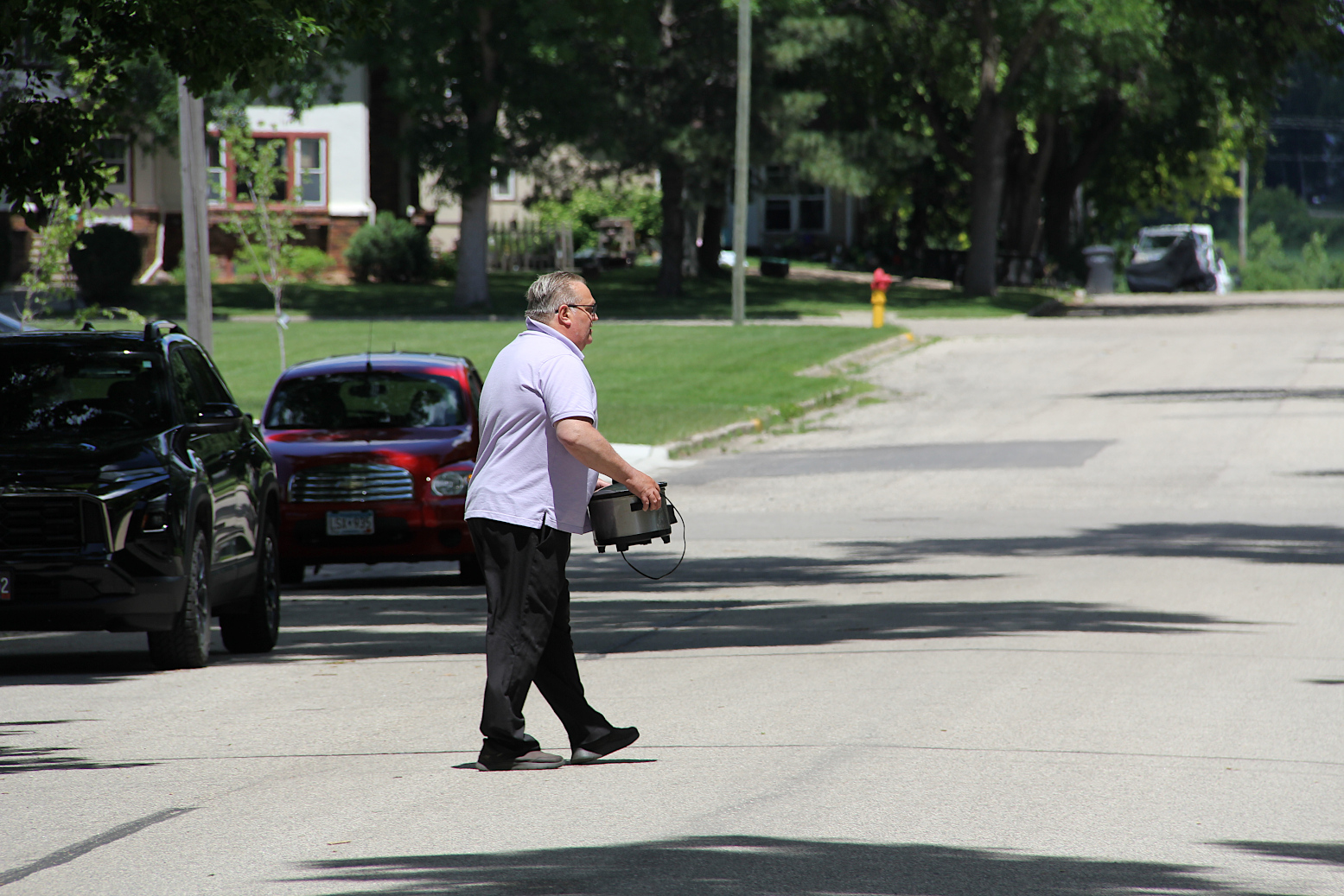
Leaving a potluck on a Saturday afternoon in Kerkhoven. (Minnesota Prairie Roots copyrighted photo June 2026)
After enjoying bowls heaping with scoops of key lime pie ice cream and maple nut ice cream from Sweets Ice Cream, Randy and I headed for the van. That’s when I saw a guy leaving the civic center with a crockpot in hands. I stood in the middle of the street—you can do that in Kerkhoven, population around 800—and took his photograph.
If anything says “Minnesota,” it’s a potluck. I didn’t track the guy down to ask if he had any leftovers. I wasn’t hungry after eating all that ice cream. But I was delighted to photograph him in this signature Minnesota moment.
Candid street photography tells a story within a moment of time. History. A record of everyday life. And when I can snapshot that, I feel a sense of accomplishment because I’ve documented a moment worth honoring, worth sharing, worth much more than a thousand words.
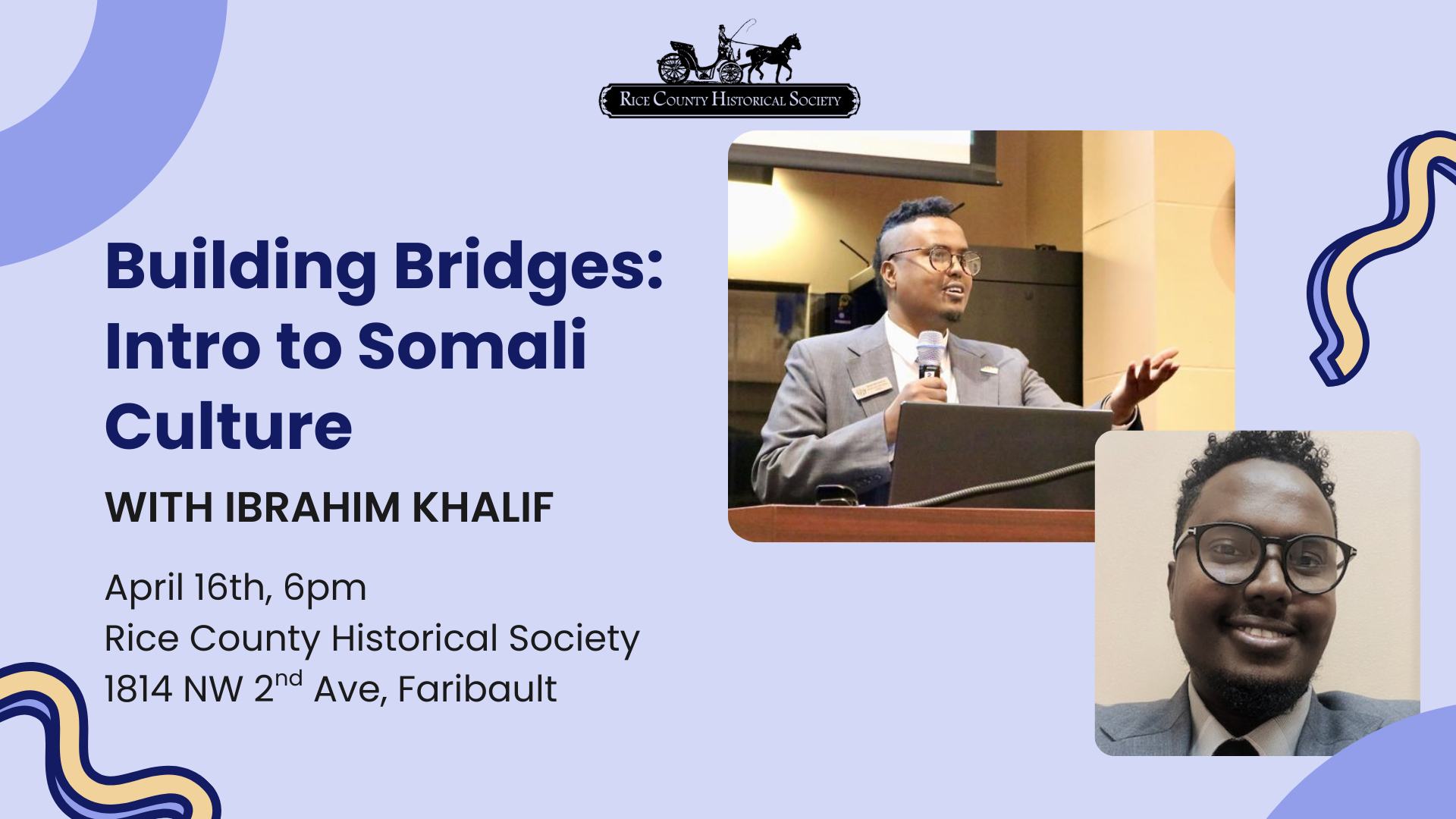
Khalif knows of what he speaks. He arrived in the U.S. as a teenage refugee from Somalia, grew up in Faribault, faced the challenged and embraced the joys of living here.
His January talk proved educational as Khalif shared personal stories, photos and information about the Somali culture. Both helped the sixty of us in attendance to better understand our Somali neighbors and ways we can connect to each other.
Certainly the word “bridges,” titling his talk, fits. Bridges connect. Khalif’s talk focuses on “building bridges in a diverse environment,” according to a media release from the RCHS. The release further states that Khalif “will share information and insights that help us foster mutual respect and understanding.”
I’m all for that and hope Thursday evening’s event is as well attended as his first at the library. I feel like way too many locals remain unwelcoming of the thousands of Somalis who call Faribault home. I’d like to see attitudes change. That starts with listening, learning, connecting on a personal level, bridging that which divides, recognizing that we are all just people.
FYI: To pre-register for “Building Bridges: Intro to Somali Culture” on April 16, call the RCHS at 507-332-2121. Admission is free for RCHS members and $5 for non-members.
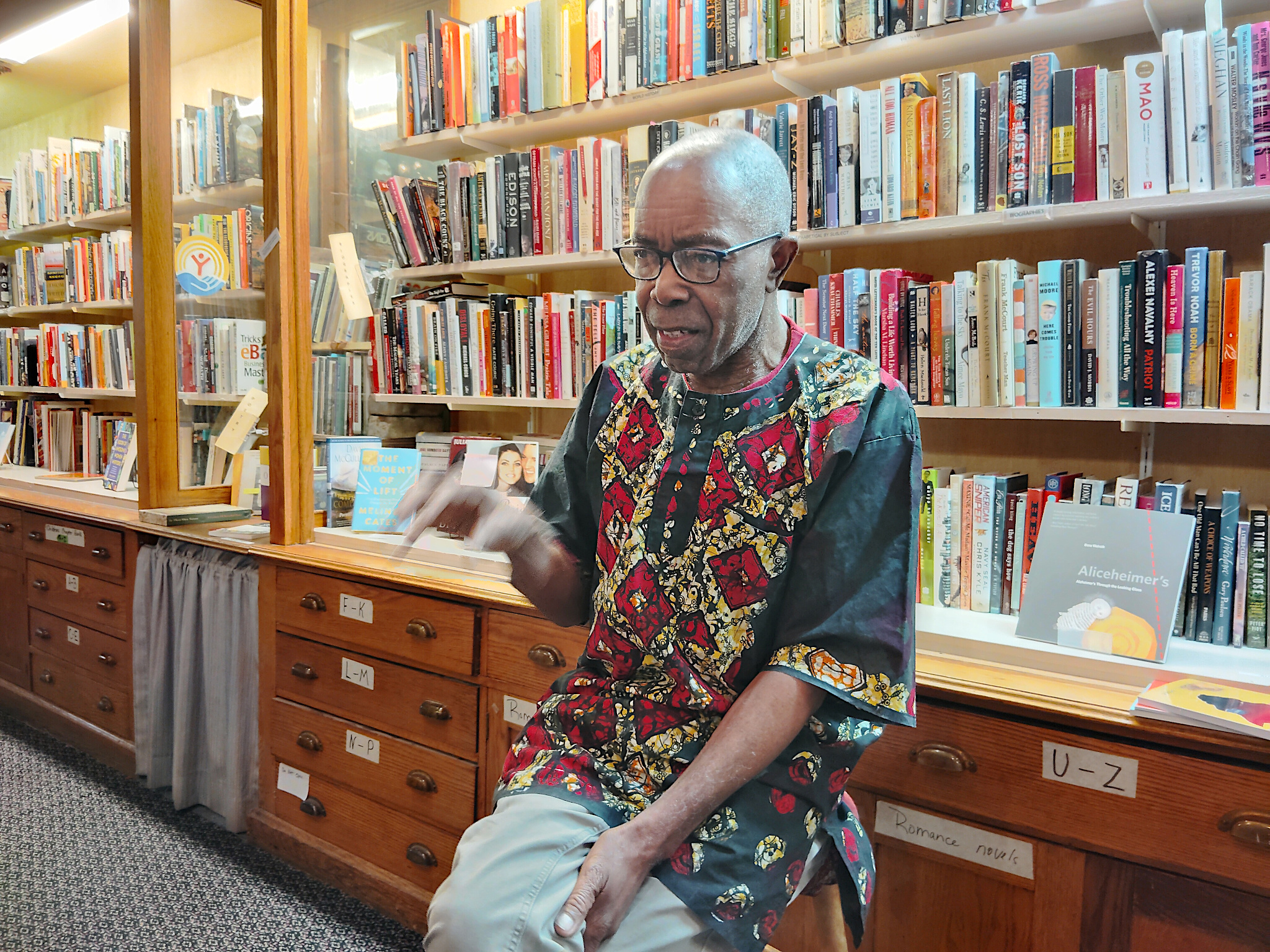
Joseph Mbele shares stories, proverbs and culture on February 11 at Books on Central, Faribault. (Minnesota Prairie Roots copyrighted photo February 2026)
Last Wednesday evening, Joseph Mbele, retired St. Olaf College professor of post-colonial literature, cultural consultant, author and storyteller, shared three African proverbs during a literary event at Books on Central. This man, who calls himself an African and a Tanzanian, held the rapt attention of attendees gathered in the used bookshop in the heart of downtown Faribault, home to many Somalis.
THE CROCODILE
While I enjoyed the two African folktales Mbele told, I really appreciated the proverbs. They are, by nature of a proverb, succinct. A few words carry a whole lot of punch. First up, this proverb: “Before you cross the river, don’t insult the crocodile’s mouth.”
Immediately the image of a crocodile’s sharp teeth popped into my mind. As it should have. This proverb, Mbele explained, is about being respectful to people in our relationships and in life in general. Be anything but respectful and we risk negative consequences. Snap.
THE BLACKSMITH
Second up this African proverb: “It’s because of man that the blacksmith makes weapons.” Thinking in African terms, the weapons would be knives and spears. I thought of guns. Mbele repeated the proverb, letting it sink into our brains. “It’s because of man that the blacksmith makes weapons.” The lesson here, Mbele said, is that we can be better than this—be kind, helpful and supportive—so we don’t need to bear arms/weapons. That’s an oversimplification, of course. But proverbs are not meant to be complex.
THE VISUALLY-IMPAIRED
Third, Mbele recited this proverb: “The one-eyed person only thanked God after he saw a blind person.” As someone with vision issues, that hit home. The proverb is a way of teaching gratitude, Mbele said. The contrast between seeing with only one eye and total blindness put the situation in perspective. The thought that there’s always someone who has it worse probably flitted through the minds of everyone in the bookshop.
THE STORYTELLERS
Mbele talked about the tradition of Africans sitting around telling stories to entertain and teach. Languages like his native Matengo, an indigenous language in Tanzania, are oral, not written. As he spoke, I began to understand the importance of folktales in African life. Stories connect people and, like proverbs, teach lessons.
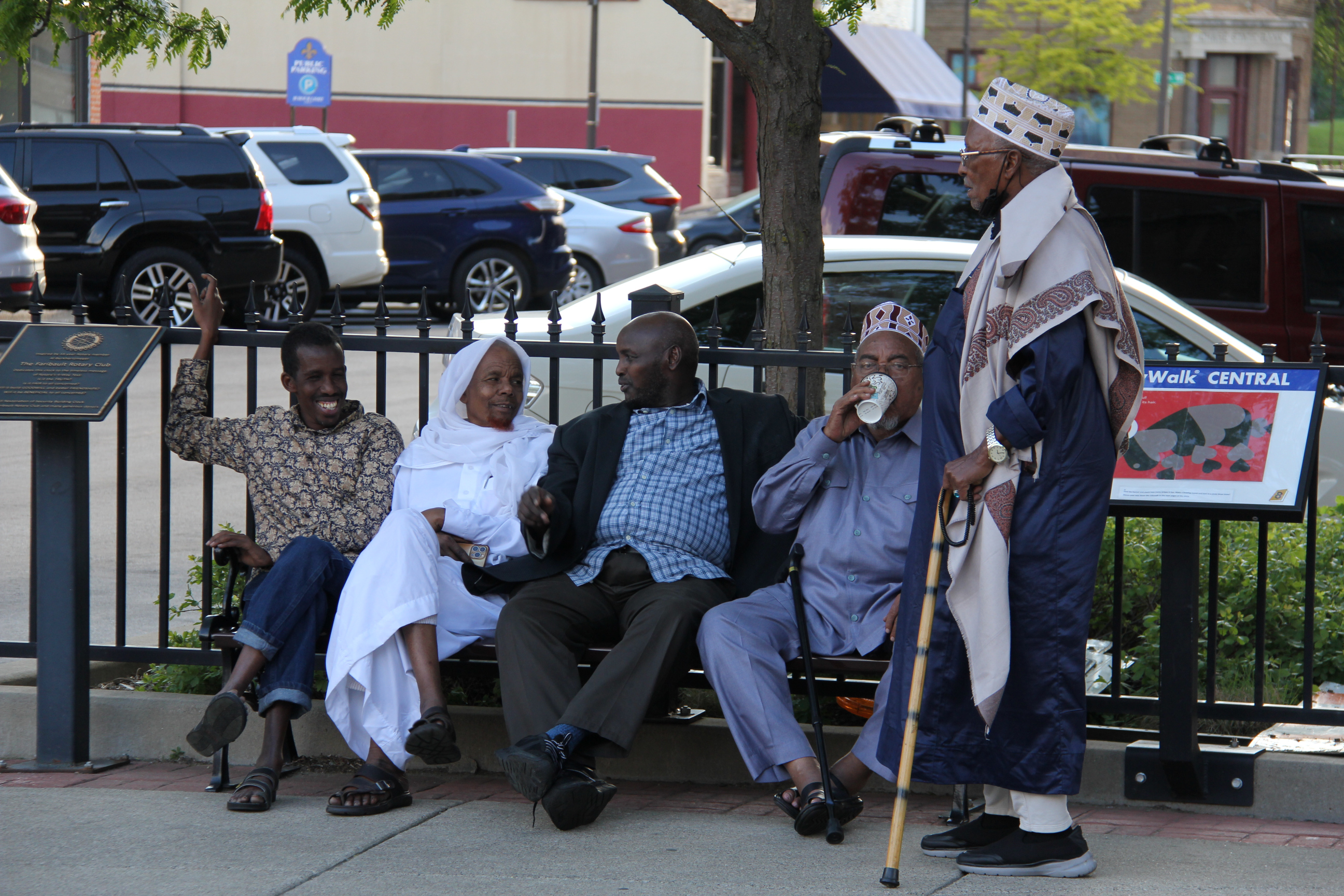
Applied to my own community, Mbele explained that Somali men gathering on downtown Faribault street corners are simply socializing and sharing stories and are not to be feared. “It’s un-African to be by yourself,” he said of a culture that focuses on family and togetherness.
He even went so far as to say an African could be considered evil or a witch if living alone. That surprised me, but drove home the cultural importance of community and family. Now if only everyone in Faribault could hear these proverbs and insights from this native Tanzanian. Then perhaps they would not fear that which they don’t understand, like the Somali elders gathered on street corners downtown telling stories, sharing news or simply sitting in each other’s presence.
Protesting in Northfield at a NO KINGS rally. (Minnesota Prairie Roots copyrighted file photo October 2025)
ICAN’T IGNORE the news. I want to, no, need to, know what’s happening on all levels from local to international. Perhaps it’s my innate curiosity or my journalism background that compels me to read and watch media reports. I feel an obligation, especially in these challenging times, to be as informed as possible.
What I’ve been hearing and reading from the federal government in Washington DC continues to concern me. Deeply. I can hardly believe the rhetoric, the hatred, the awfulness that is flowing like hot lava from fiery mouths upon this land.
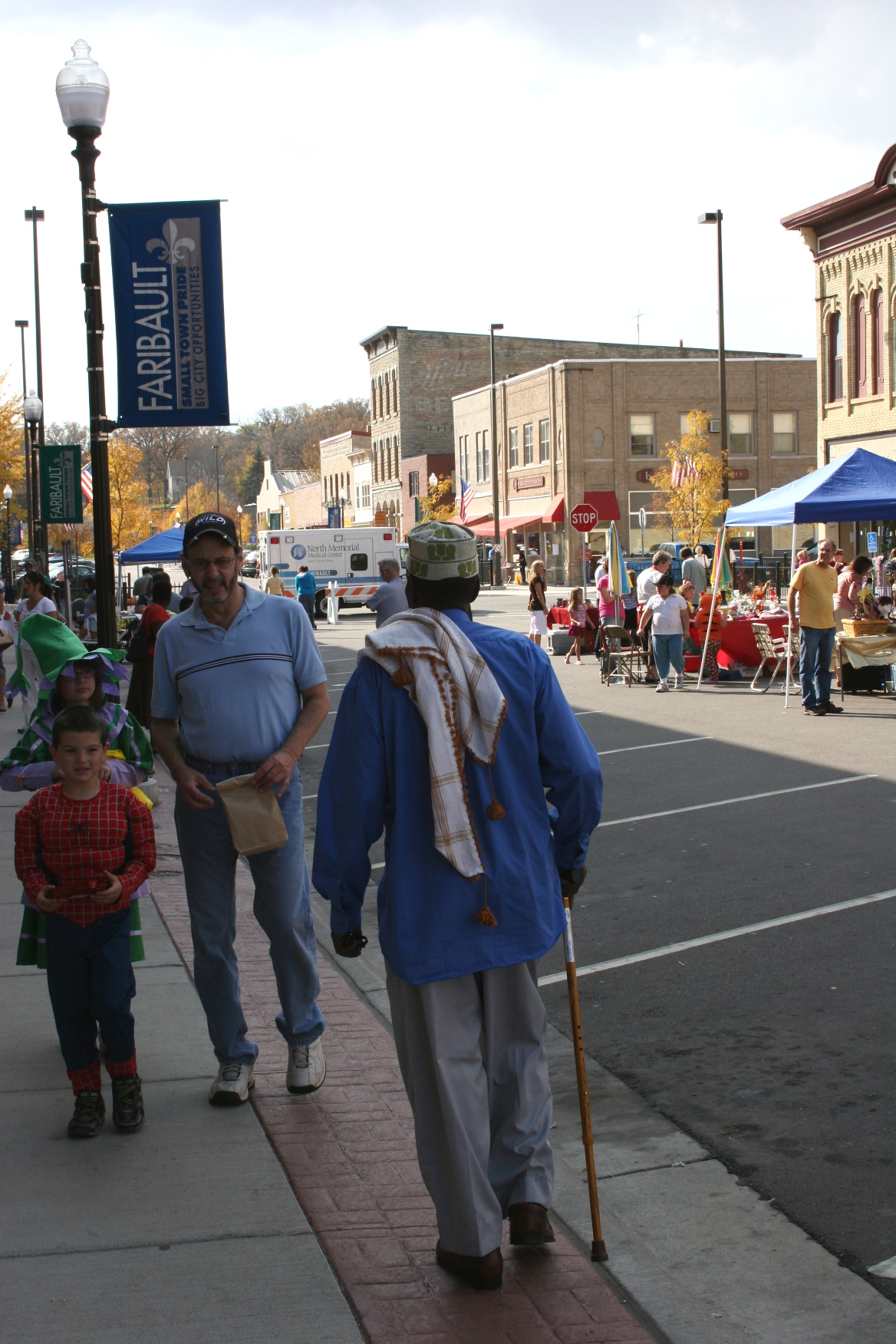
Somali women walk through downtown Faribault during a community event. (Minnesota Prairie Roots copyrighted file photo)
The latest is the hatred directed by our president toward Somalis living in America, including some 80,000 in Minnesota. My community of Faribault is home to many Somali Americans. The president has singled out Somalis in Minnesota with his derogatory words and planned, targeted ICE raids here. I am proud of the mayors of Minneapolis and St. Paul and other leaders, including the Minneapolis police chief, for speaking up and standing strong for the Somali community during a Tuesday afternoon news conference. They recognize the threat to this specific demographic. And they value the Somalis who call Minnesota home.
“Who,” I ask, “will be next? Me, because my eyes are green?” Maybe he doesn’t care for green-eyed people. Or you? Because he doesn’t like something about you.
This is a pig, not a female journalist. (Minnesota Prairie Roots copyrighted file photo)
He certainly doesn’t care for journalists, especially female journalists. I realize a dislike of journalists is nothing new. But this president has gone well beyond “dislike” to outright meanness, bullying and name-calling. I never thought I would see the day when the leader of our country would chastise a reporter with “Quiet, piggy.” I never thought I would hear an American president call a reporter fat or terrible or ugly or any other adjective while hissing “fake news” at the media.
Bracelets against censorship and for rights. (Minnesota Prairie Roots copyrighted file photo 2025)
When the U.S. government launched a Media Bias page on the official White House website just days ago, I felt nothing short of outraged. This is the United States of America, where freedom of the press ought to mean something, where the media is independent of the government, where reporters have a right and a duty to accurately report the truth without fear of intimidation, public shaming, recrimination,… This newest tactic of naming a “Media Offender of the Week” ought to anger every single person in this country. I don’t care what side of the political aisle you sit on. This latest action speaks to censorship, to controlling the press, to propaganda, to anything but democracy.
I value freedom. I hope you do, too, enough to stand up for a free press, individual rights, freedom from fear, intimidation, oppression and all that threatens us. These are unprecedented times (yes, I recognize that may be an overused word, but it fits) in our country. I refuse to remain silent.
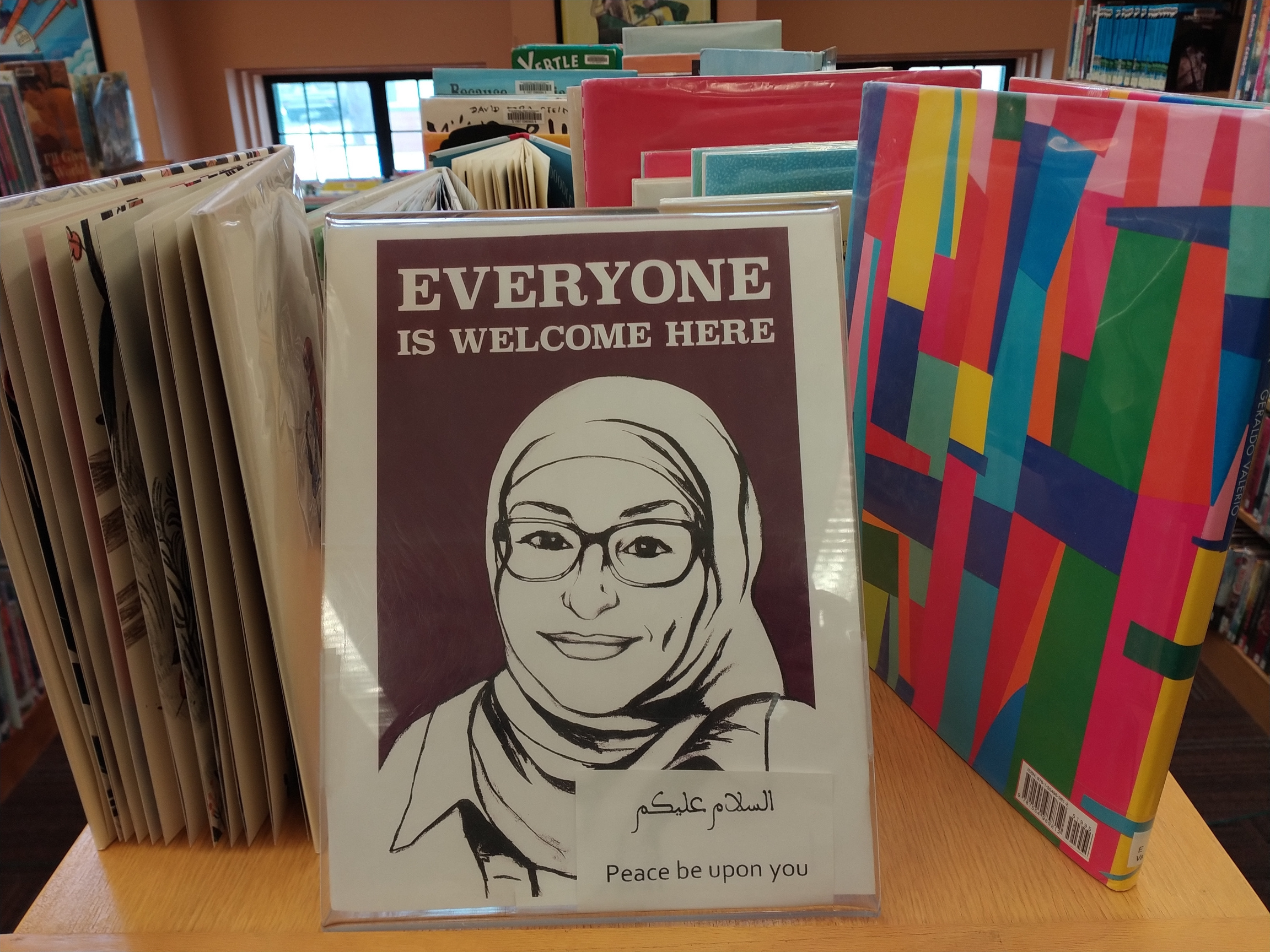
A welcoming sign photographed earlier this year in the children’s section of Buckham Memorial Library, Faribault. (Minnesota Prairie Roots copyrighted photo 2024)
KNOWLEDGE IS POWER. Not in the sense of personal power, but in understanding. And I am always about growing my knowledge and understanding, especially within my community.
Faribault, like many neighboring communities, is culturally-diverse, home to immigrants, refugees and those who have received American citizenship. Somalis. Hispanics. Latinos. And others from countries that fit anything but the mostly White European backgrounds of rural Minnesotans. We are a state evolving in diversity, and I embrace that.
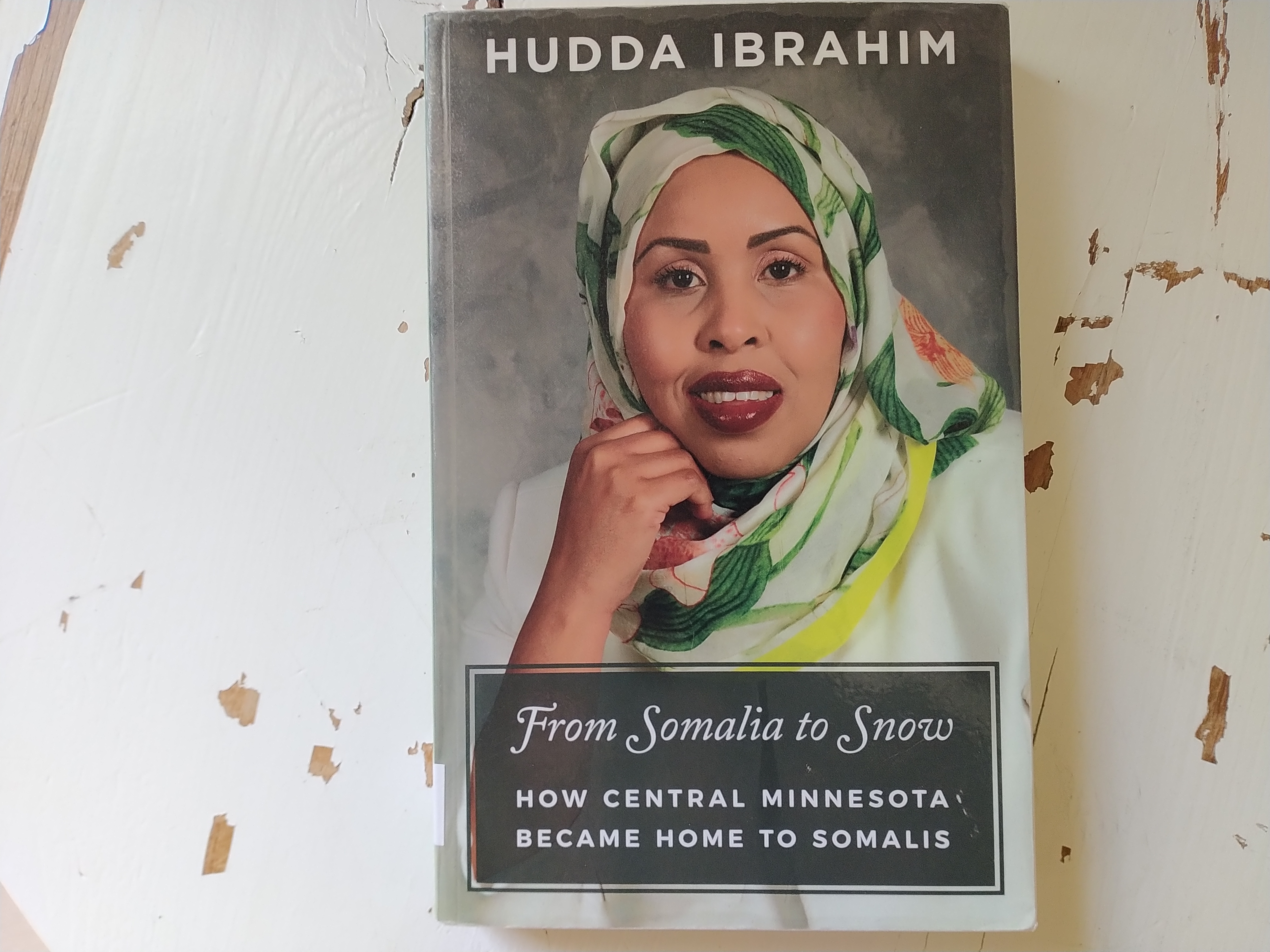
Hudda Ibrahim’s book offers an in-depth look at Somalis living in Minnesota. (Minnesota Prairie Roots copyrighted photo May 2024)
Recently I met a central Minnesota author who was in town as part of an event celebrating Somali culture at the Paradise Center for the Arts. Hudda Ibrahim of St. Cloud, which has a sizable Somali population, was selling her books, including From Somalia to Snow—How Central Minnesota Became Home to Somalis. Although I didn’t purchase her book then, I eventually checked it out through my regional library system. That and her nonfiction children’s picture book, What Color Is My Hijab?
Hudda Ibrahim’s children’s book inspires girls to be whatever they want to bevia Ibrahim’s empowering words and Meenal Patel’s vivid art. (Book cover sourced online)
After reading those two books, I have better insights into the backgrounds, stories, culture and challenges of my new neighbors. Ibrahim writes with authenticity. She was born and raised in Africa (Somalia, Ethiopia and Kenya), came to the U.S. in 2006, teaches diversity and social justice in St. Cloud, and works closely with Somalis there. From Somalia to Snow includes interviews with Somalis in Ibrahim’s community along with her observations, insights and recommendations.
I quickly discovered that I had much to learn, even when it comes to understanding the basics. A person of Somali ethnicity is not a “Somalian,” as I’d incorrectly said, but rather a “Somali.” I appreciate that about Ibrahim’s writing. She doesn’t presume her readers know, making her book a really good source of basic, yet detailed and thorough, information.
I often see Somali men visiting in downtown Faribault, where many live. (Minnesota Prairie Roots copyrighted file photo May 2024)
I especially appreciated her chapter titled “Integration and Assimilation” because I’ve heard the comments from locals about how Somalis need to do this and that because they’re living in America now. Ibrahim states that Somalis prefer to “integrate,” not “assimilate.” That makes sense to me, that our new neighbors want to retain their cultural identity while also adapting to their new home. I think back to my own maternal ancestors who settled together near New Ulm in southern Minnesota and clung to their German identity, speaking in German, following customs and traditions from the Old Country. The same can be said for Scandinavians, who still eat lefse and lutefisk. Cultural identity is important to all of us.
So is family. Like my German ancestors settled together, so do those who come from Africa. They want to be near people who get them, understand them, share a language and faith and customs and culture. Jobs and family (clans) brought Somalis to St. Cloud, Ibrahim writes. Many work in meat-packing plants, just like in my community.
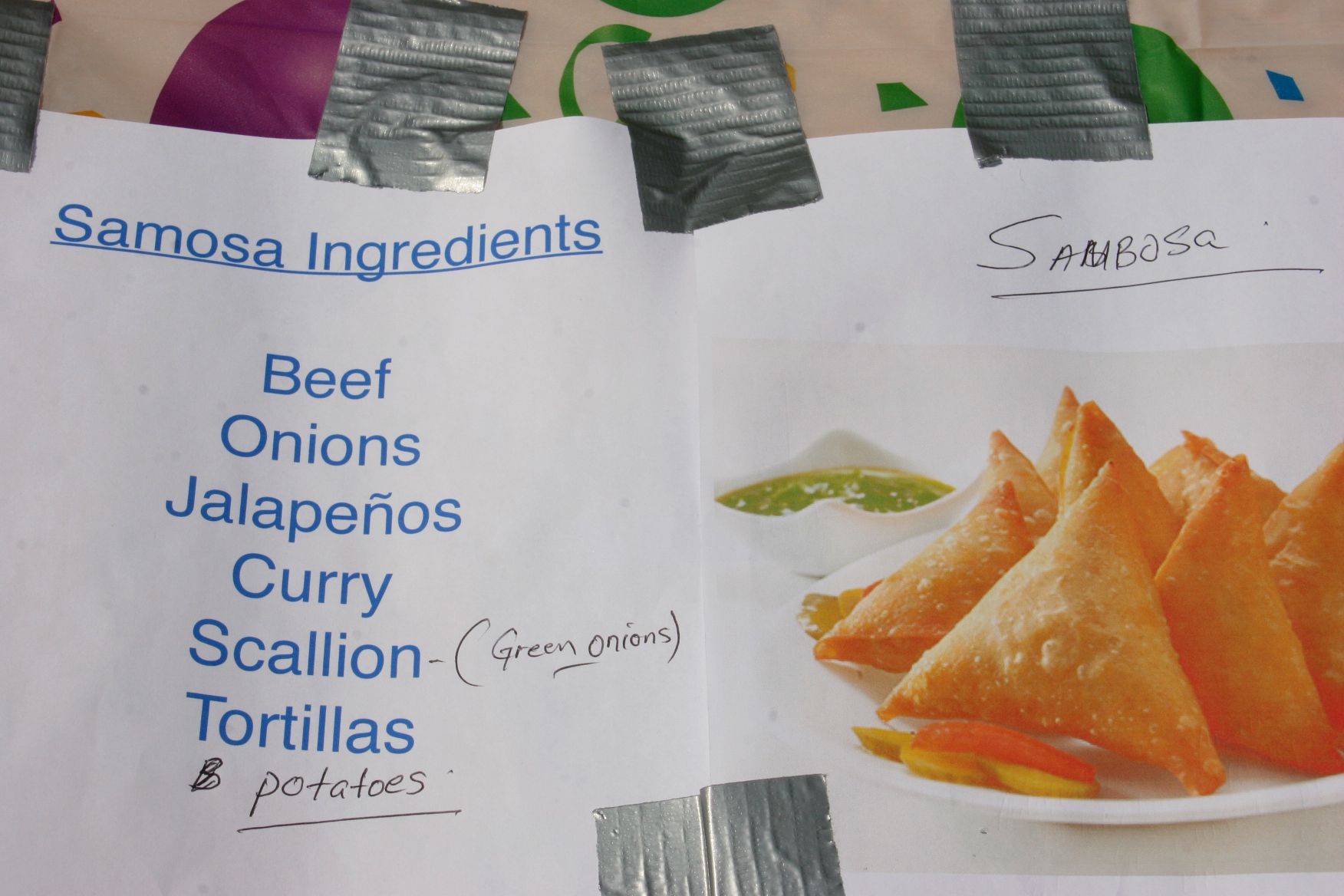
This sign for Somali food was posted at a past International Festival in Faribault. I especially like sambusa, a spicy, meat-filled triangular pastry. It was served at the recent Somali-focused event I attended. (Minnesota Prairie Roots copyrighted file photo)
Others have pursued higher education and entrepreneurship, opening businesses which serve primarily their community. I need only walk Faribault’s downtown business district to see numerous Somali-owned shops and restaurants. I love the color and culture they bring. And I love Somali tea, which I tried at that event where I met Ibrahim. It’s tea mixed with milk and spiced with cinnamon, ginger, cloves, cardamom… The scent is heavenly, the taste divine. And I can buy it locally.
Faribault is a culturally-diverse city, as seen in this image taken during a car show in downtown Faribault in 2015. (Minnesota Prairie Roots copyrighted file photo 2015)
Ibrahim’s book is packed with insights: Somalis value oral communication over written. They are good oral poets. Restaurants often do not have printed menus, primarily because they serve Somalis. Muslims memorize the Quran (with 6,666 verses), a process that can take years. Socializing and community are important. Barriers remain in healthcare. There’s just a whole lot to learn via reading From Somalia to Snow. It starts with an overview of Somali history and then takes readers into the lives, cultures and challenges of Somalis living in Minnesota today. Thanks to Ibrahim’s writing, I now have a better understanding of my new neighbors. And for that I am grateful.
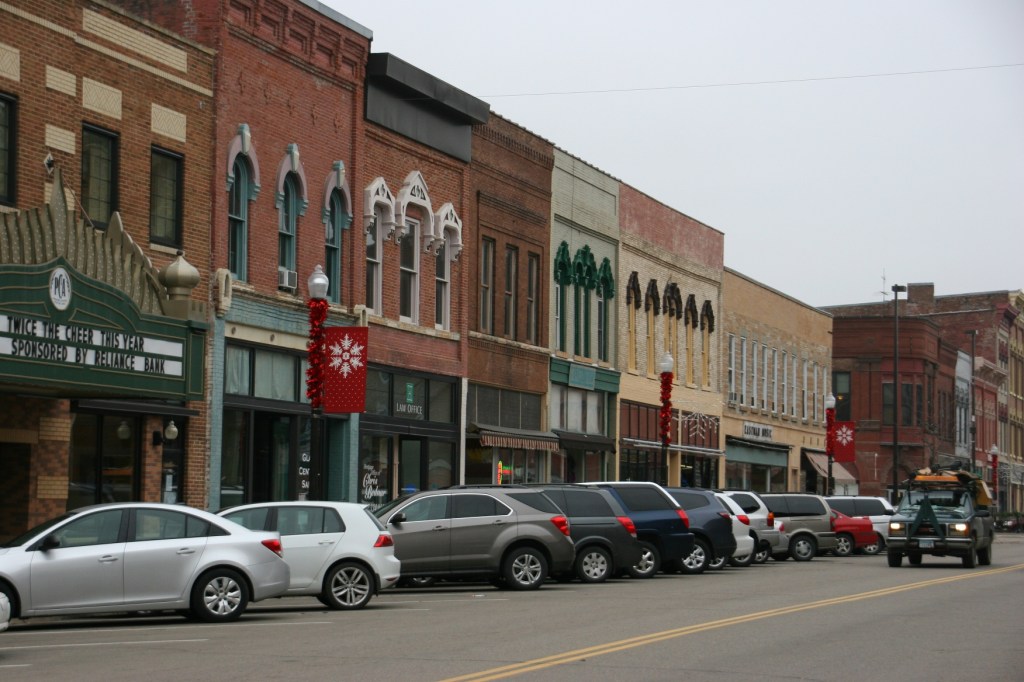
A snippet of businesses along Central Avenue in historic downtown Faribault.
I NEVER EXPECTED the conversation to turn away from college as I chatted with a young man Saturday afternoon on a downtown Faribault street corner. But it did. One minute we were talking about his future and life in southeastern Minnesota. And then he was asking me what I thought of Republican Presidential candidate Donald Trump.
But first, I’ll back up and explain how I even struck up a conversation with this 20-something. He noticed my long-lensed camera as he strode down the sidewalk toward me, hamming it up for the camera. I didn’t click the shutter button. Now I wish I had. Just to show you this millennial with the wide smile and warm, welcoming persona.
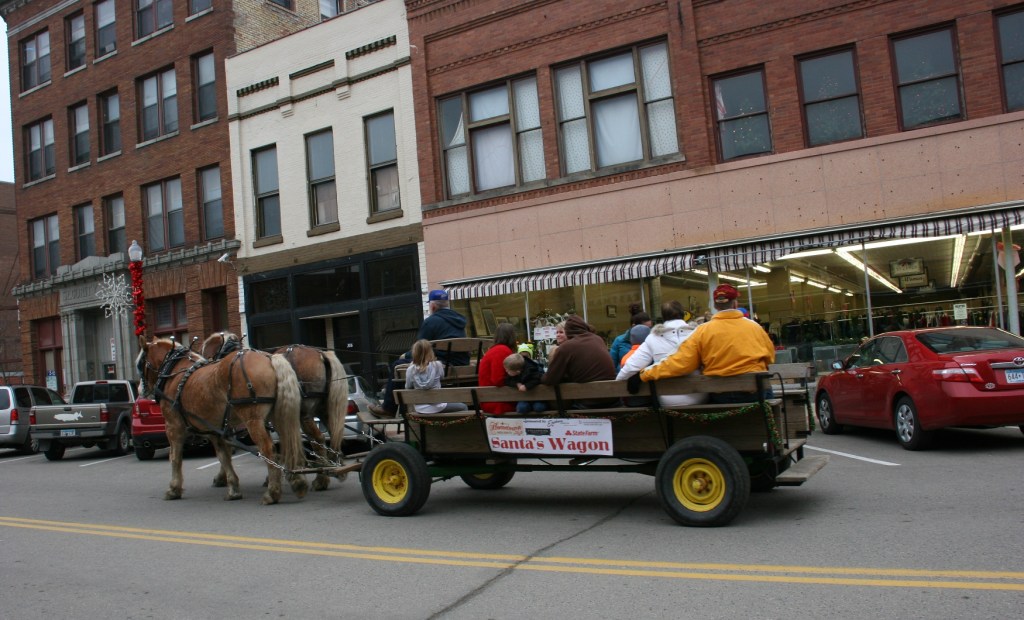
Mike Fuchs guides his horses along Central Avenue on Saturday afternoon for free rides in Santa’s Wagon.
Then I noticed his University of Minnesota sweatshirt and I asked if he is a student. He was, for a semester. He’s lived in Faribault for awhile, found people mostly friendly, but the town too small.
Soon he’s moving to South Dakota’s capitol city with his dad. I inquired about his future; he’s interested in business. “Promise me,” I said, “that you’ll go back to college.” He nodded, then high-fived his youthful brown palm against my aging white hand. It’s one of those spontaneous moments in life that I will always remember. He appears to be the type of person who will accomplish his goals and I told him so. I genuinely meant that and he thanked me.
Then he brought up Donald Trump, expressing his deep concern over Trump’s plan to ban Muslims from coming into the U.S. I told him exactly what I think of this Presidential candidate and how I fear for our country if he is elected President. I should have listened more than I talked. But I sensed that it was important for this young man to know that I, for one, don’t support Trump’s proposal. I don’t want to start a heated political debate here because that’s not the point of this post.
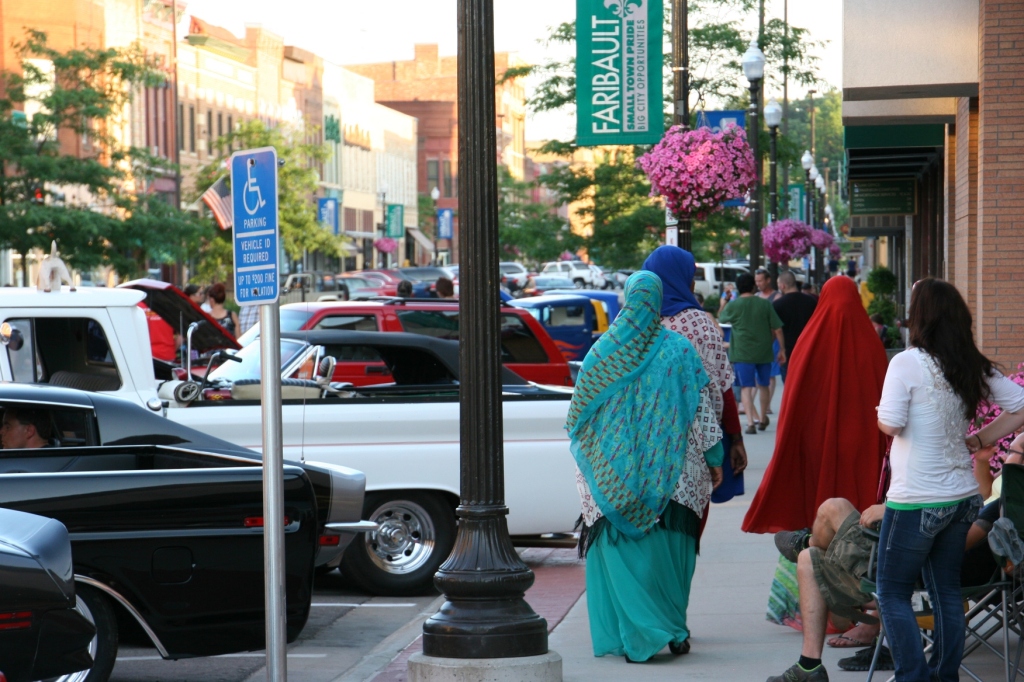
I photographed these Somali women walking through downtown Faribault during a Car Cruise Night in July. Minnesota Prairie Roots file photo 2015.
The point is that I connected with this young man. I’ve heard way too many stories and reports in my community of locals afraid to come downtown Faribault, where many Somali families live. Complaints range from Somalis hangings out on street corners to a lack of respect, unpleasant odors and more. I didn’t feel afraid or uncomfortable. Not on this Saturday. Or any other day. I was treated with respect and always have been.
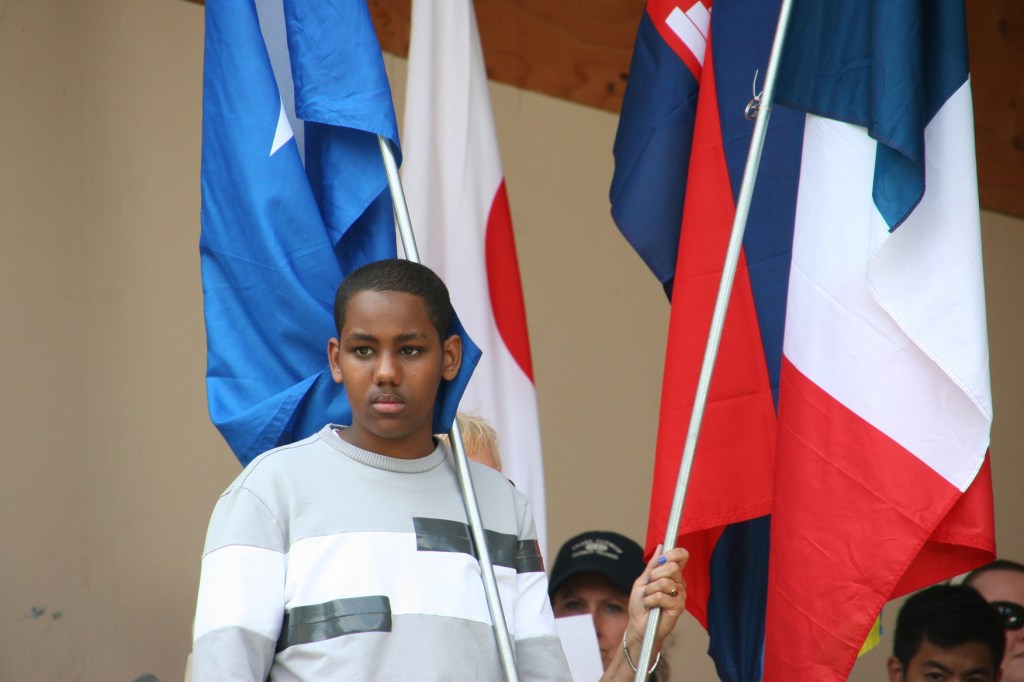
This teen represented Somalia at the August 2015 International Festival Faribault. Minnesota Prairie Roots file photo 2015.
How many people, I wondered, pause to speak one-on-one with our newest immigrants? Sometimes that’s all it takes to begin to break down barriers, to understand one another, to see someone as an individual rather than a person of a different color, faith or ethnicity.
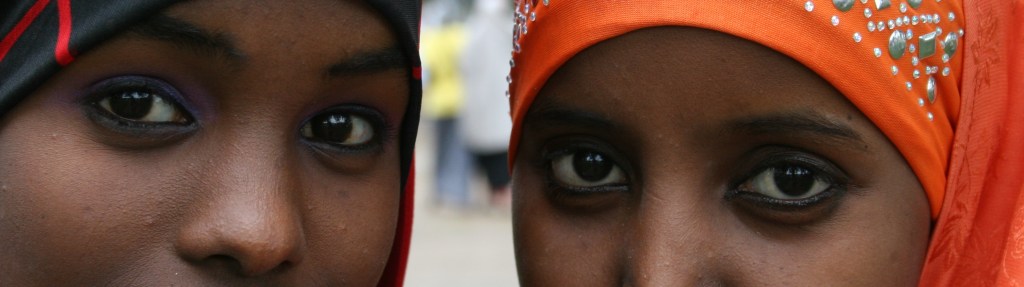
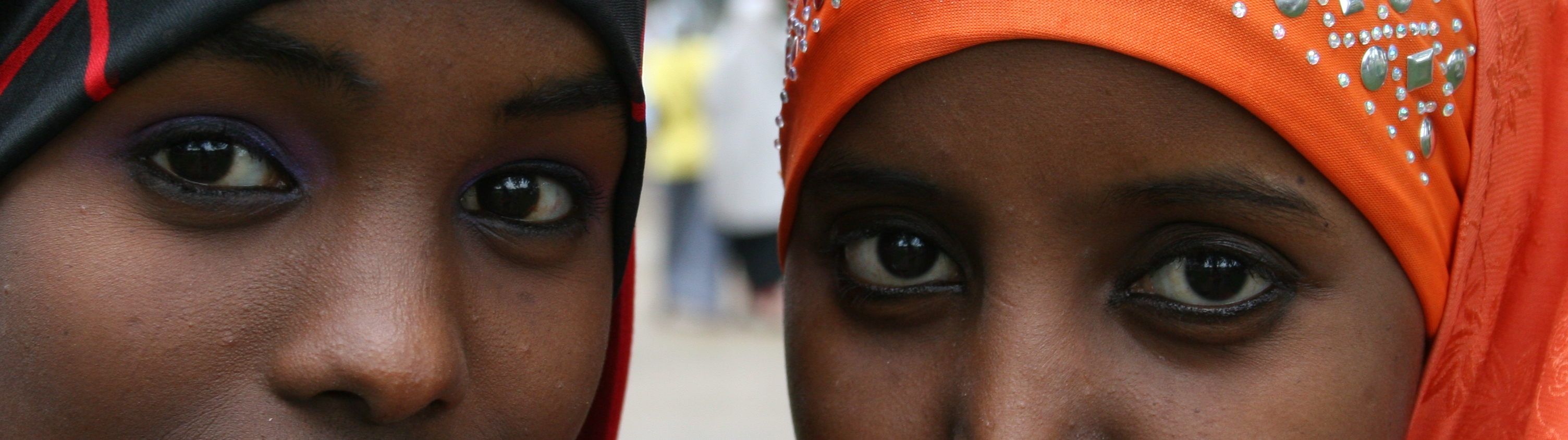
These young Somali women represent the changing face of Faribault. Minnesota Prairie Roots file photo 2012.
Look into eyes. Listen to a voice. Hear hopes and dreams. Connect.
Different cultures mingled during the 2011 Fall Festival in downtown Faribault. Minnesota Prairie Roots file photo.
8:45 a.m. on Saturday:
A Somali man sweeps the sidewalk in the 300 block of Central Avenue in historic downtown Faribault before shops open at 9 a.m.
Late Saturday afternoon:
A woman throws money at a Somali teen working as a check-out clerk at a downtown Faribault grocery store. Throws, not hands.
Why am I writing about these two events observed last Saturday in my southeastern Minnesota community of some 23,000 with a significant Somali population?
These young Somali women represent the changing face of Faribault. Minnesota Prairie Roots file photo.
I am sharing this because an undercurrent, OK it’s not even an undercurrent, of prejudice exists in Faribault. If your skin is any color other than white, you are open to possible disdain and contempt.
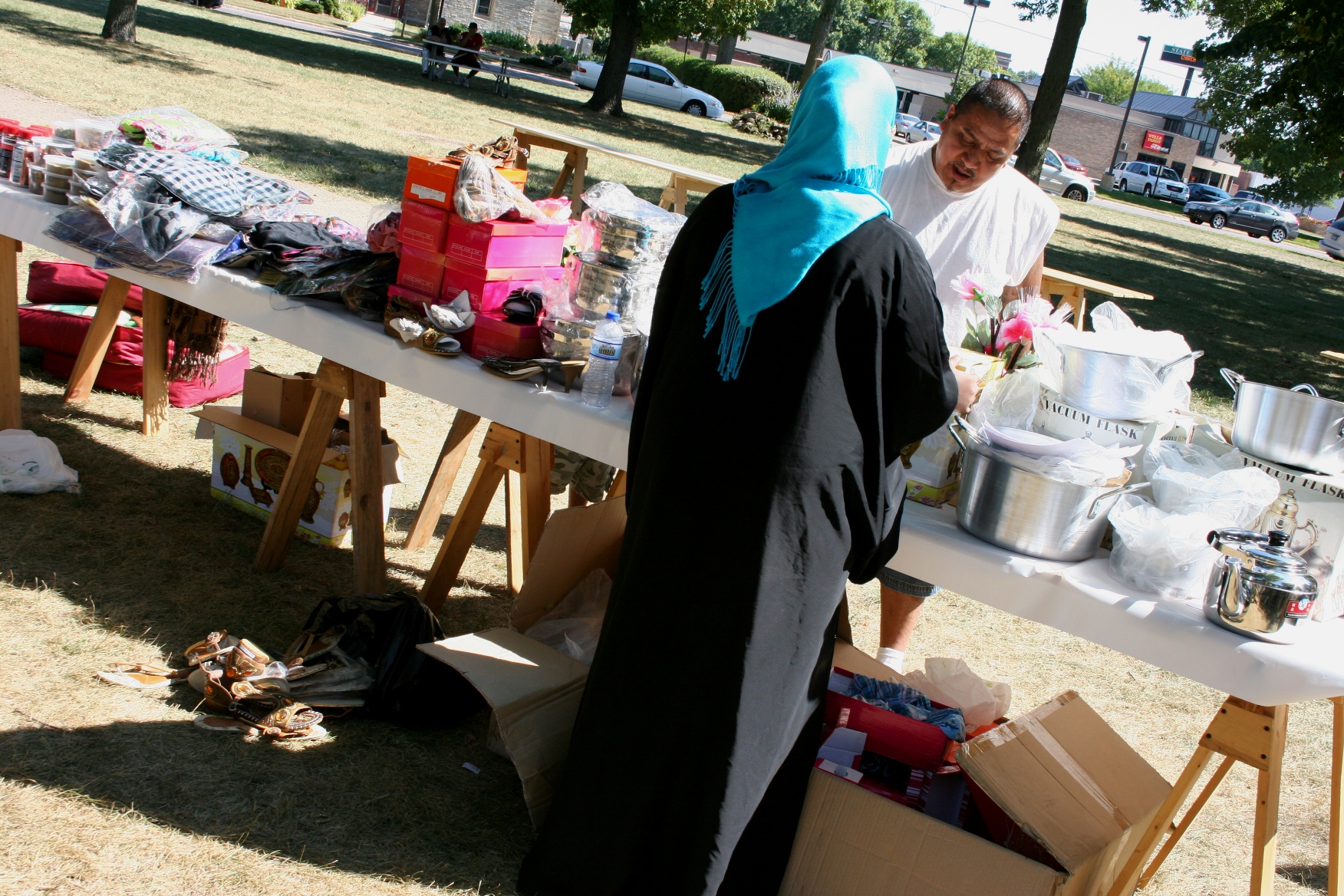
A Somali woman peddles her wares at the 2011 International Festival in Faribault. Minnesota Prairie Roots file photo.
I’ve heard it all:
They are taking our jobs, taking government hand-outs, hanging around where they don’t belong. They smell. They dress weird. They don’t know how to drive.
Two weeks ago a young man left his car running, unattended, while tending to business in a residential area of southwest Faribault. Afterward he commented that he shouldn’t have done that because of “the Somalis.” He’s from Northfield, a neighboring town.
Really?
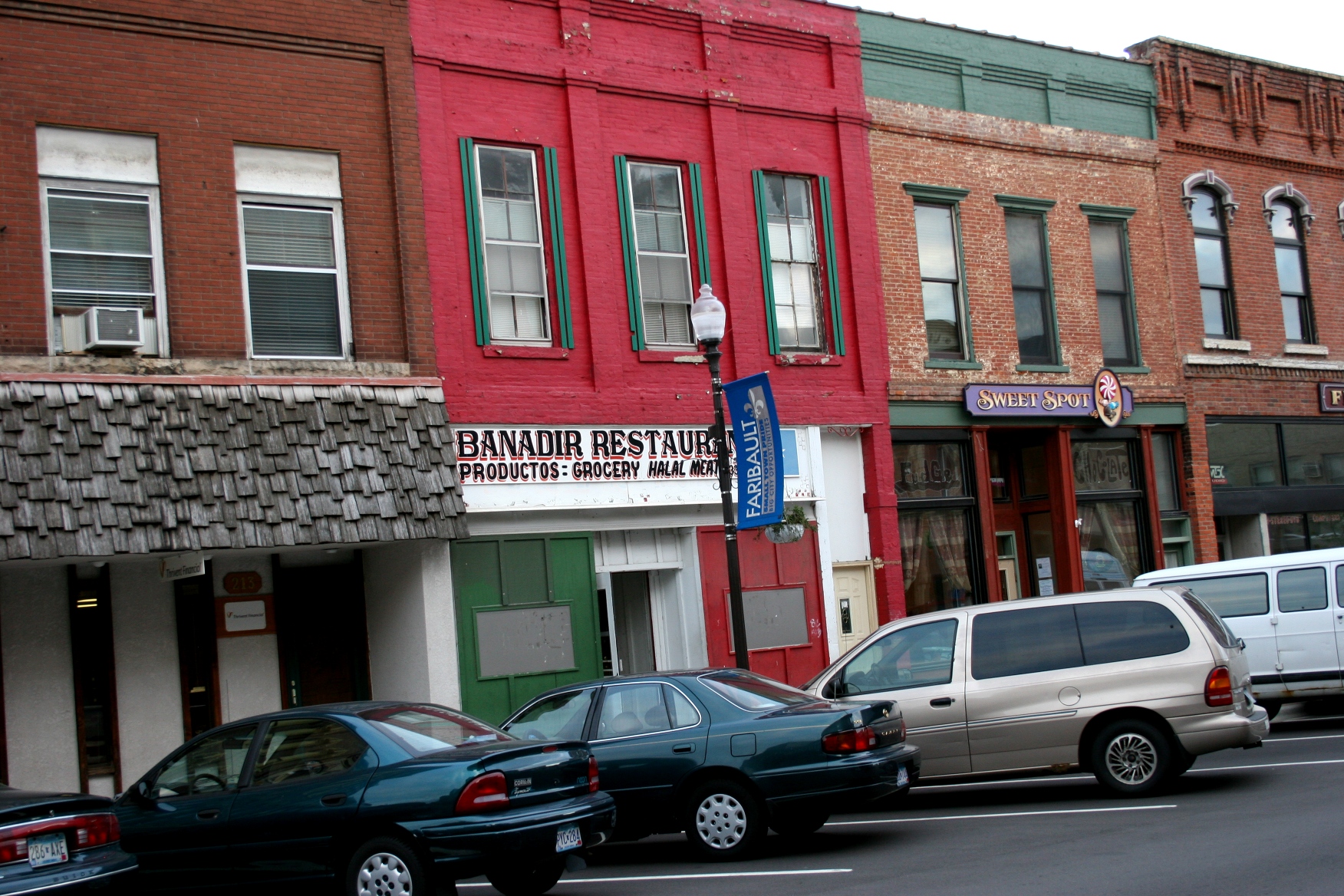
Banadir, a Somali restaurant, is located in historic downtown Faribault. Minnesota Prairie Roots file photo.
For awhile, complaints ran rampant about Somali men hanging out on Central Avenue street corners. People said they were afraid to go downtown. These men live downtown above businesses, some of which are Somali-owned. Sidewalks are their front porches, their place to gather and converse. This is part of their culture, to meet and talk.
I wish those who continually criticize our newest immigrants could have seen the Somali man sweeping a downtown sidewalk. His efforts show respect for and pride in community.
A 60-something white woman throwing money at a Somali teen simply doing her job shows lack of respect.
No matter our ethnicity/skin color, we really need to just respect each other as human beings.
I’ll always remember that statement shared with me 2 ½ years ago by a then high school senior who asked me to photograph her and a friend at the International Festival Faribault.
Nasteho, a native of Kenya, posed with Nimo for this beautiful portrait of the pair. They were among students volunteering at the fest.
What Nasteho told me that August day in 2012 broke my heart. She’d been subjected to ongoing insults from a customer in her workplace, felt stares at the grocery store, been flipped the bird while driving. All because of the way she dressed, her skin color and her ethnicity.
“There is no respect for Somalis,” she concluded.
I couldn’t disagree with her. I’d heard the negative comments, too, about Faribault’s newest immigrants.
Despite the outright prejudice Nasteho had already endured at such a young age, she did not appear bitter or angry, only desiring of respect and understanding. She seemed wise beyond her years. Poised. Thoughtful. Well-spoken.
I recall thinking, if only those who hold disdain for Somalis could meet Nasteho. They would see her as the beautiful, young and spirited woman I photographed.
It is the personal connections that bridge differences. I believed that then. I still believe that now.
#
This is part of a series, Minnesota Faces, featured every Friday on Minnesota Prairie Roots.
IT’S A BIT LIKE THE ELEPHANT in the room. Do I write about it or not? To avoid the topic seems akin to closing my eyes and pretending I don’t see that which exists.
Tucked away in the north land, most Minnesotans likely have felt secure here, far removed from such terrorist threats.
But I’ve always thought this mega shopping center in Bloomington could be a target for attack by terror groups or individual extremists.
Consider the name, Mall of America. “Mall” represents commerce and trade and, probably in the eyes of those who dislike Americans, consumer greed. And the “America” part of the mall’s name, well, that’s a bonus. Precisely the place these terrorists hate.
The Mall of America draws some 40 million visitors annually. With its 520 plus stores, 50 restaurants, LEGO play area, aquarium, theme park, movie theaters and more, the complex is one of the world’s top tourist destinations, according to the MOA website. Perfect target.
I’ve never been to the mall. I simply have no desire to visit. So, for me personally, I don’t need to consider whether I would feel safe going there now.
But for those planning a trip here, this threat certainly must weigh on minds, consciously or subconsciously. Northfield Middle School recently canceled an eighth grade band trip to the mall. The Orono Middle School likewise canceled a physics class visit.
How about you? If you had a daughter or granddaughter who is crazy about the American Girl doll, would you now take her to the MOA American Girl store?
Would you see “American Sniper” in a mall theater?
A friend’s daughter works at MOA. You can bet both mom and daughter now carry a level of concern. Who wouldn’t?
This photo shows the ever-growing diversity in my community as seen in this gathering after Faribault High School’s 2012 commencement. Minnesota Prairie Roots file photo.
And I have to wonder about Minnesota’s Somali population. Do they now feel like they are under scrutiny? My own community of Faribault has a significant Somali population. Even before this threat, tension has existed here between some long-time locals and these newest immigrants. I hope this current situation does not heighten tensions.






Commentary: I care about my neighbors, a free press, freedom & more December 3, 2025
Tags: America, bullying, censorship, commentary, Faribault, free press, government, journalists, media, Minnesota, news, opinion, Somalis
I CAN’T IGNORE the news. I want to, no, need to, know what’s happening on all levels from local to international. Perhaps it’s my innate curiosity or my journalism background that compels me to read and watch media reports. I feel an obligation, especially in these challenging times, to be as informed as possible.
What I’ve been hearing and reading from the federal government in Washington DC continues to concern me. Deeply. I can hardly believe the rhetoric, the hatred, the awfulness that is flowing like hot lava from fiery mouths upon this land.
The latest is the hatred directed by our president toward Somalis living in America, including some 80,000 in Minnesota. My community of Faribault is home to many Somali Americans. The president has singled out Somalis in Minnesota with his derogatory words and planned, targeted ICE raids here. I am proud of the mayors of Minneapolis and St. Paul and other leaders, including the Minneapolis police chief, for speaking up and standing strong for the Somali community during a Tuesday afternoon news conference. They recognize the threat to this specific demographic. And they value the Somalis who call Minnesota home.
“Who,” I ask, “will be next? Me, because my eyes are green?” Maybe he doesn’t care for green-eyed people. Or you? Because he doesn’t like something about you.
He certainly doesn’t care for journalists, especially female journalists. I realize a dislike of journalists is nothing new. But this president has gone well beyond “dislike” to outright meanness, bullying and name-calling. I never thought I would see the day when the leader of our country would chastise a reporter with “Quiet, piggy.” I never thought I would hear an American president call a reporter fat or terrible or ugly or any other adjective while hissing “fake news” at the media.
When the U.S. government launched a Media Bias page on the official White House website just days ago, I felt nothing short of outraged. This is the United States of America, where freedom of the press ought to mean something, where the media is independent of the government, where reporters have a right and a duty to accurately report the truth without fear of intimidation, public shaming, recrimination,… This newest tactic of naming a “Media Offender of the Week” ought to anger every single person in this country. I don’t care what side of the political aisle you sit on. This latest action speaks to censorship, to controlling the press, to propaganda, to anything but democracy.
I value freedom. I hope you do, too, enough to stand up for a free press, individual rights, freedom from fear, intimidation, oppression and all that threatens us. These are unprecedented times (yes, I recognize that may be an overused word, but it fits) in our country. I refuse to remain silent.
THOUGHTS?
© Copyright 2025 Audrey Kletscher Helbling