

Xafsa, age 5
THEY ARE THE FACES, the hands, the feet, the voices of a new Faribault. Not the community of only French or Germans, Scandinavians or whatever ethnic groups shaped and defined this southeastern Minnesota city for so many years.
Today the face of Faribault is changing with one-fifth of the population identifying itself as non-white in the 2010 U.S. Census. Most of those minorities are Latinos and Somalis, “drawn by the opportunity to live in a small town and work in food processing plants, especially meat-packing plants,” according to a recent research report, “After the Welcome Center: Renewing Conversations about Immigration and Diversity in Faribault,” conducted by students and staff with the St. Olaf College Political Science Department. To read that report, follow this link:
http://www.stolaf.edu/services/cel/students/CURI_Immigration.html
I can’t possibly attempt to summarize the contents of that report here. But it is packed with information that should be a must-read for every member of my community. We can all learn a thing or two or ten or 20 from this research project.
But mostly we can learn from meeting our neighbors at events like the International Festival held Saturday in Faribault’s Central Park. I’ve attended this meld of ethnic cultures several times already and each time enjoyed interacting with my neighbors whose skin color differs from my own.
That all sounds nice, politically-correct, and exactly what you’d expect me to write in a public venue like this blog. But I am sincere in my appreciation to the volunteer organizers of the International Festival and to those who participate. We just need more Caucasians to attend.
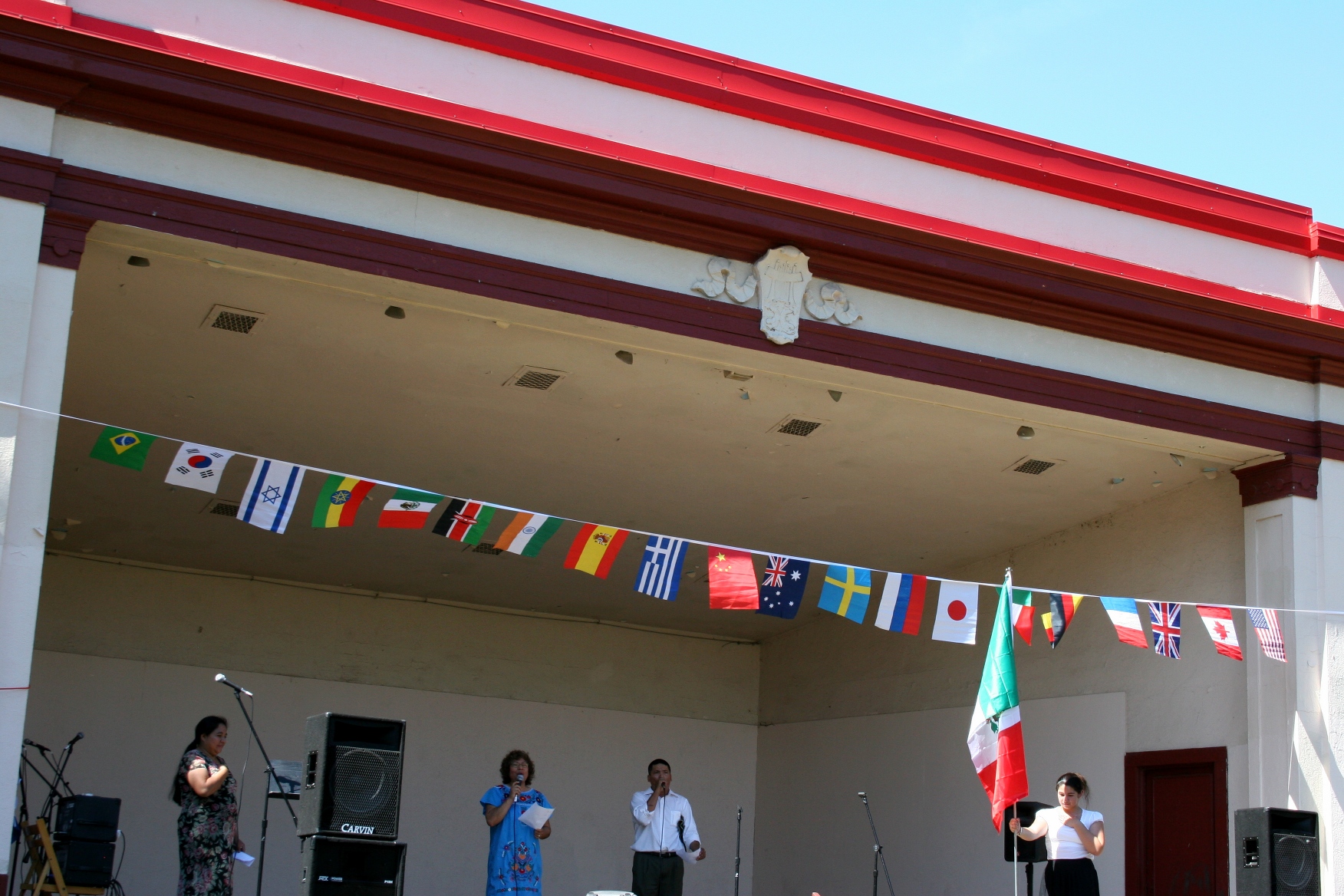
Several Latinos lead in singing of Mexico's national anthem on the band shell stage.
From the food and merchandise vendors to the musicians and everyone in between, I had ample opportunity to educate myself about Mexico, El Salvador, Guatemala, Honduras, Somalia, Holland and Norway. My husband and I sampled ethnic foods from five vendors.
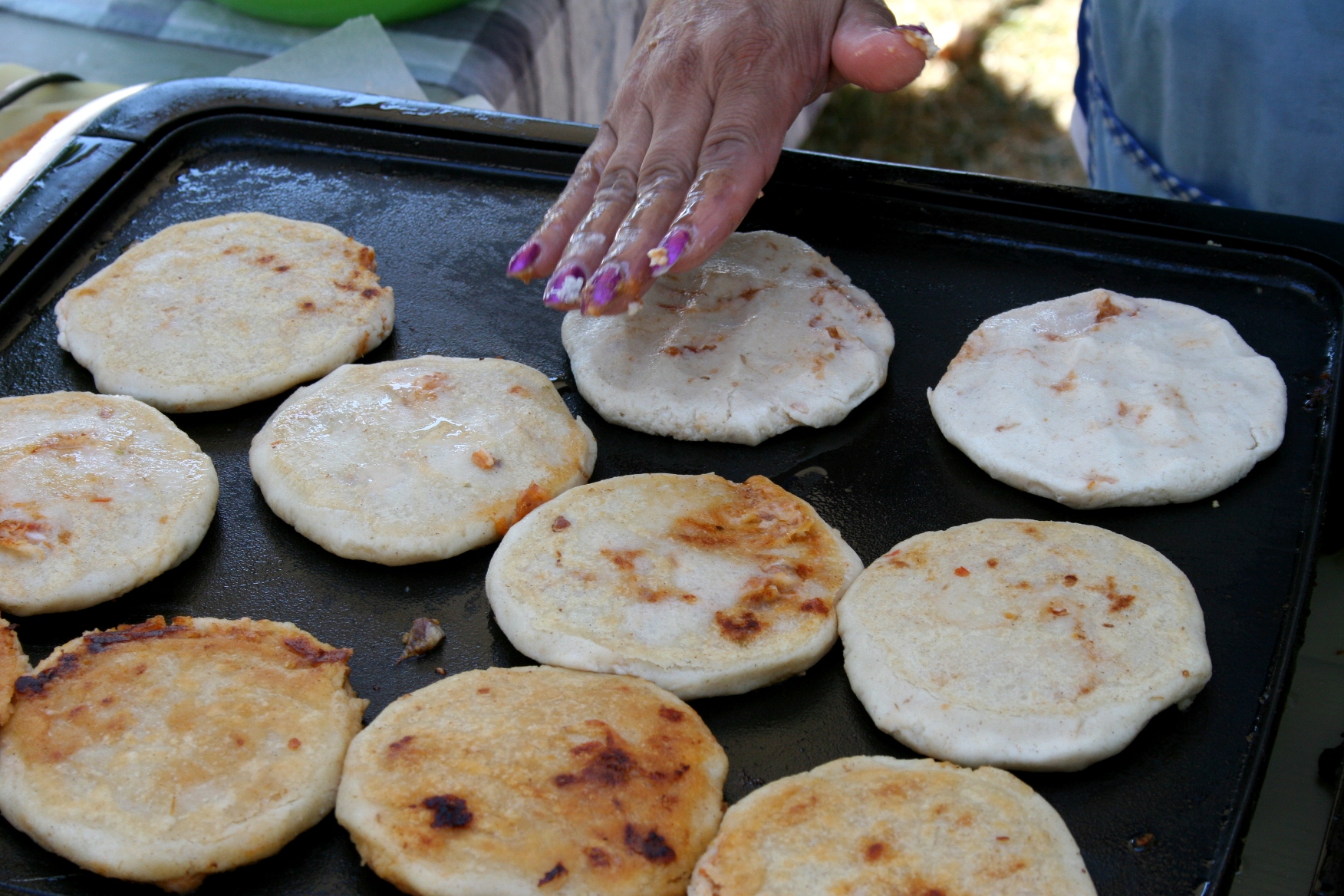
We sampled pupusas right off the griddle.
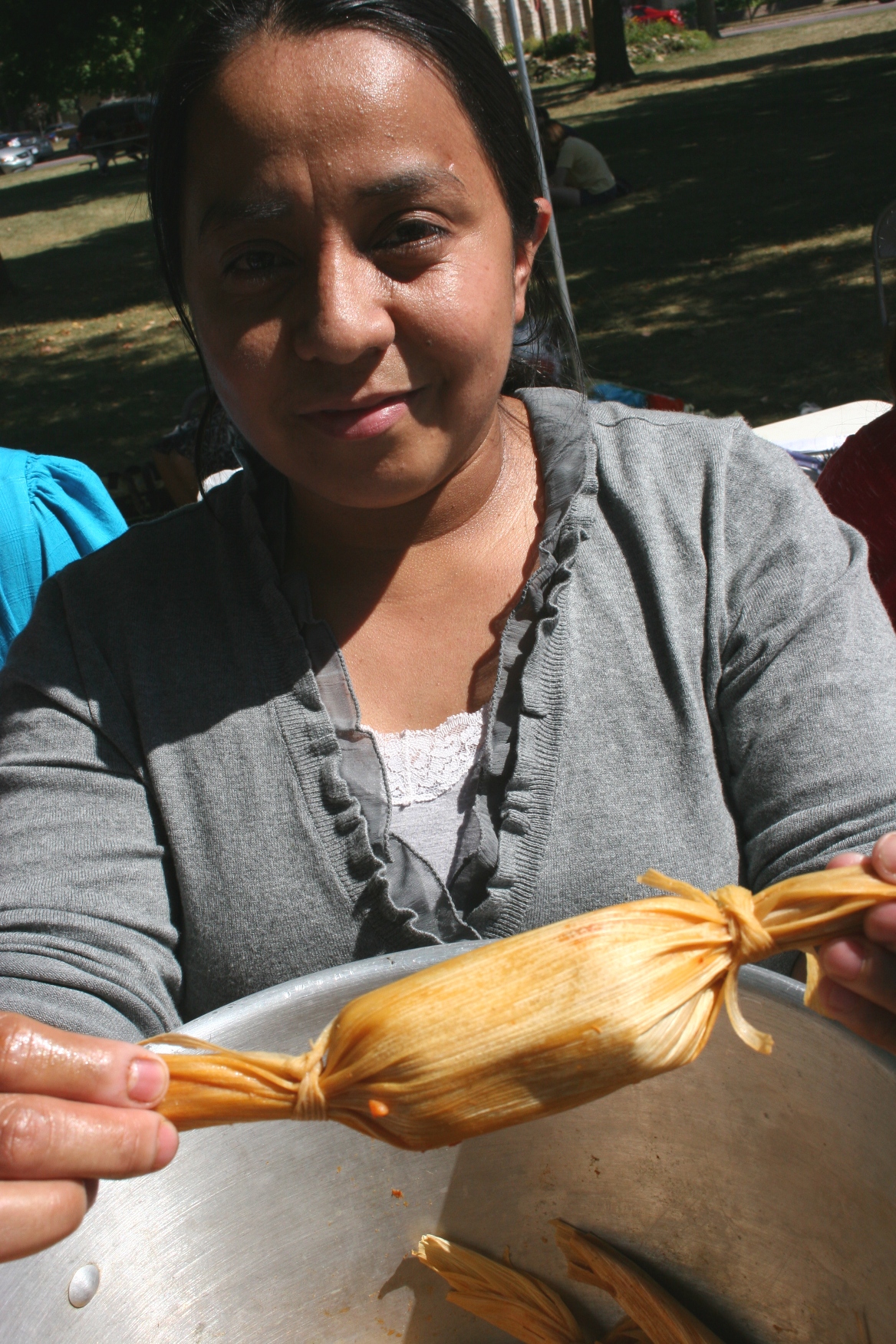
My husband and I tried Guatemalan chuchitos-- chicken, corn and salsa wrapped in a corn husk.
Faribault resident and one of the organizers, Peter van Sluis a Dutch citizen who has lived in the U.S. for 25 years, says the festival offers “a chance to mingle with different cultures.”
For me that mingling was most evident when children gathered under shade trees just south of the Central Park band shell to break piñatas. It didn’t matter if their skin was the beautiful color of sun-baked clay, or a nearly-black deep brown, or pale white. They were all kids, just kids, waiting to whack that swaying treasure-trove apart and then scramble for candy.

After the pinata was broken, the kids shared the candy.
While waiting for the piñata busting, I made a point of scanning the adult faces. I saw smiles—smiles nearly as wide as the brimmed hat worn by the man donning an El Salvador T-shirt. That’s an exaggeration, but you get my point. Viewing kids having fun has no color barriers.
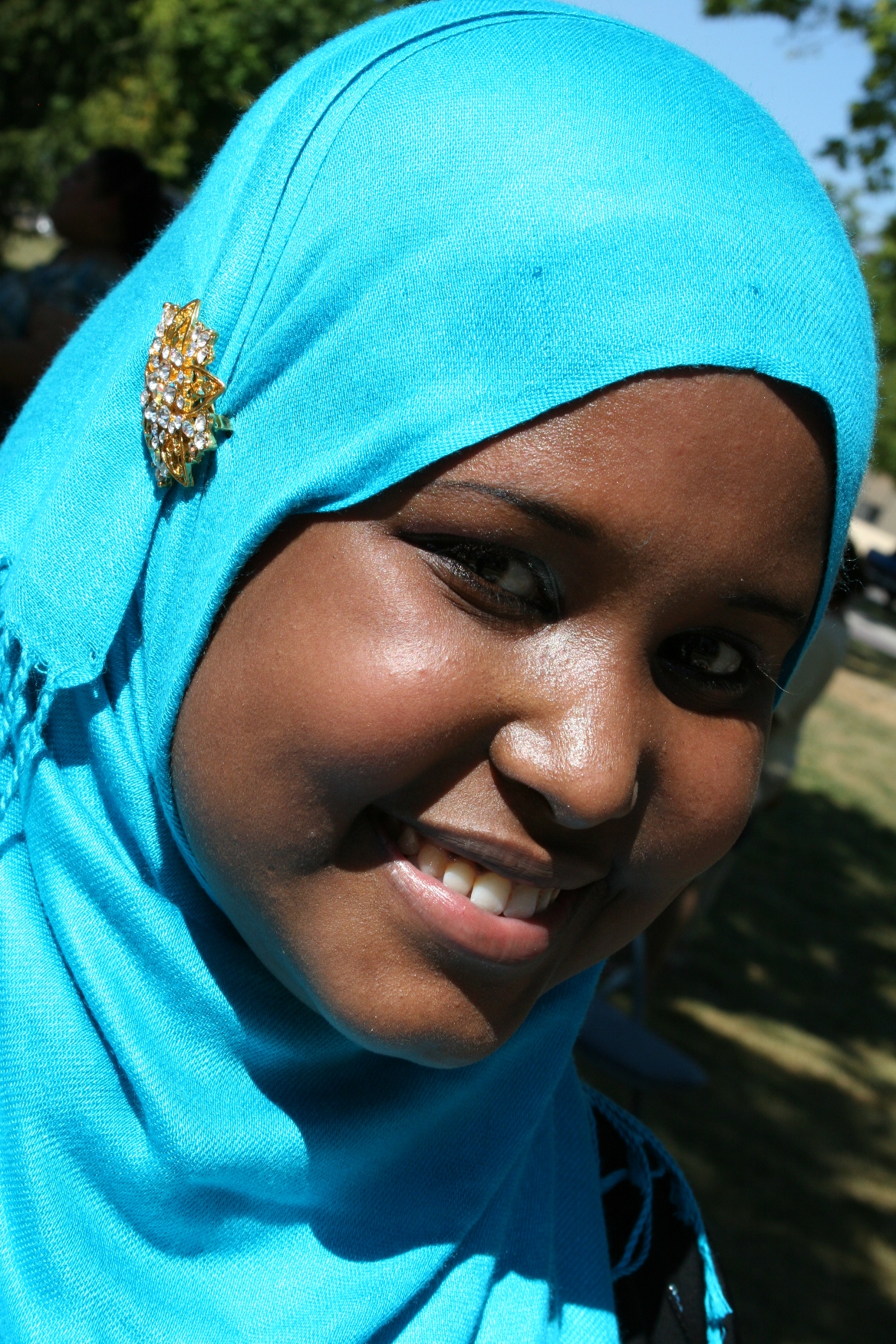
Riyaam, 16
I would be remiss, however, if I didn’t mention my chat with Owatonna High School student Riyaam, a stunning Somali teen who was peddling shoes, skirts and other merchandise at a table. Well-spoken and seemingly mature beyond her 16 years, Riyaam and I talked about clashes between whites and Somalis at OHS which she says has led to a new policy of basically, “you fight, you’re out.”
She told me how the angry voice of a single white student, who declared, “Somalis don’t belong here,” triggered those racial tensions.
As she spoke, her voice became more agitated, edged with emotion. I wanted to reach across the table and hug her and I wish now that I had.
But I didn’t and it is too late for that now, but not too late to encourage Faribault residents to make the effort to meet the Somalis, the Sudanese, the Latinos and other immigrants who now live among us. It is easy to dismiss and stereotype an ethnic group if you’ve never made the effort to personally meet them individually.
A member of the Faribault-based band Circles and Squares, of which two members performed at Saturday’s International Festival, nicely summarized, I thought, the goal of the gathering: “Remember, we’re not hyphenated Americans. We’re friends.”
Well, said.
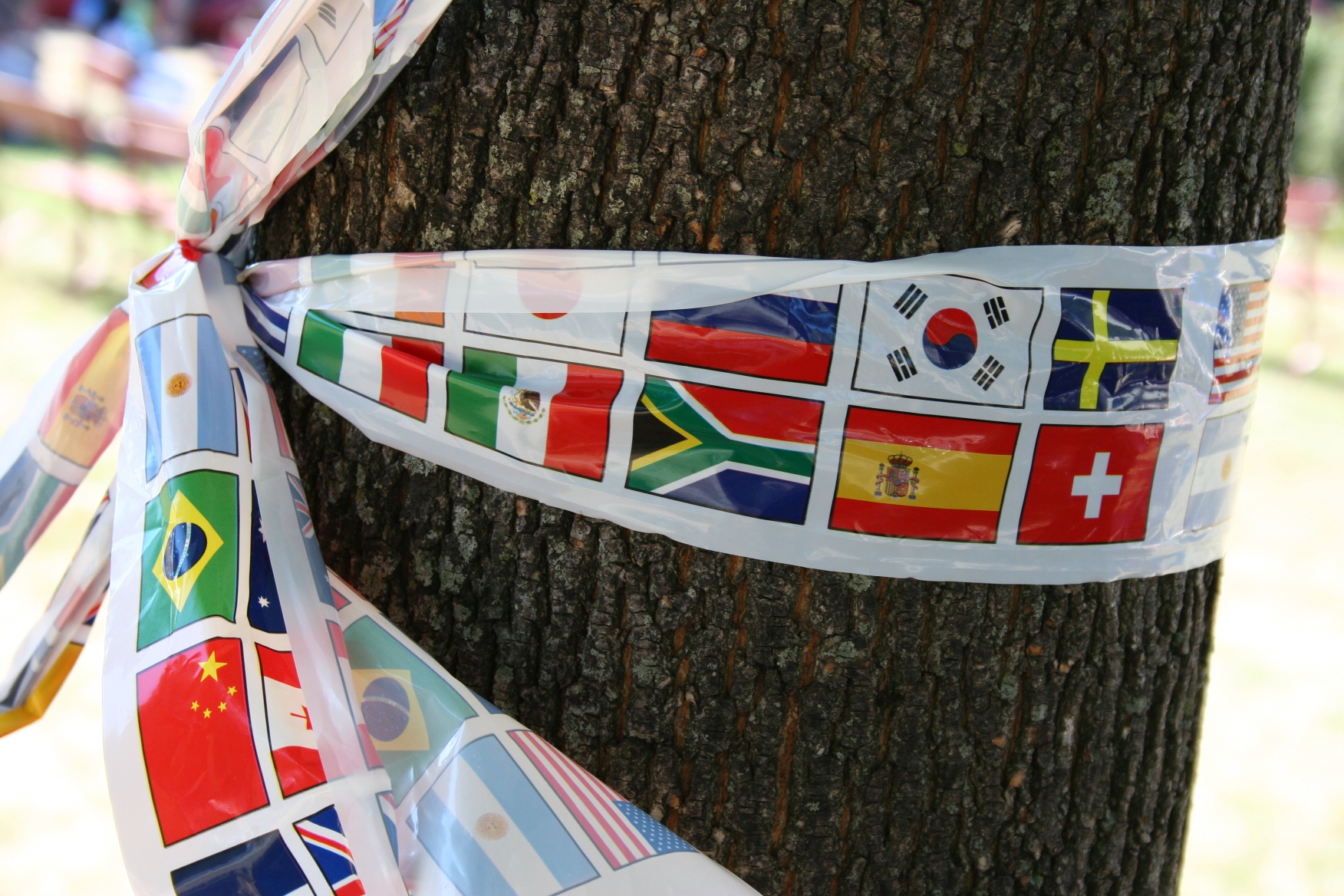
National flag ribbons were tied to trees in Central Park during the celebration.
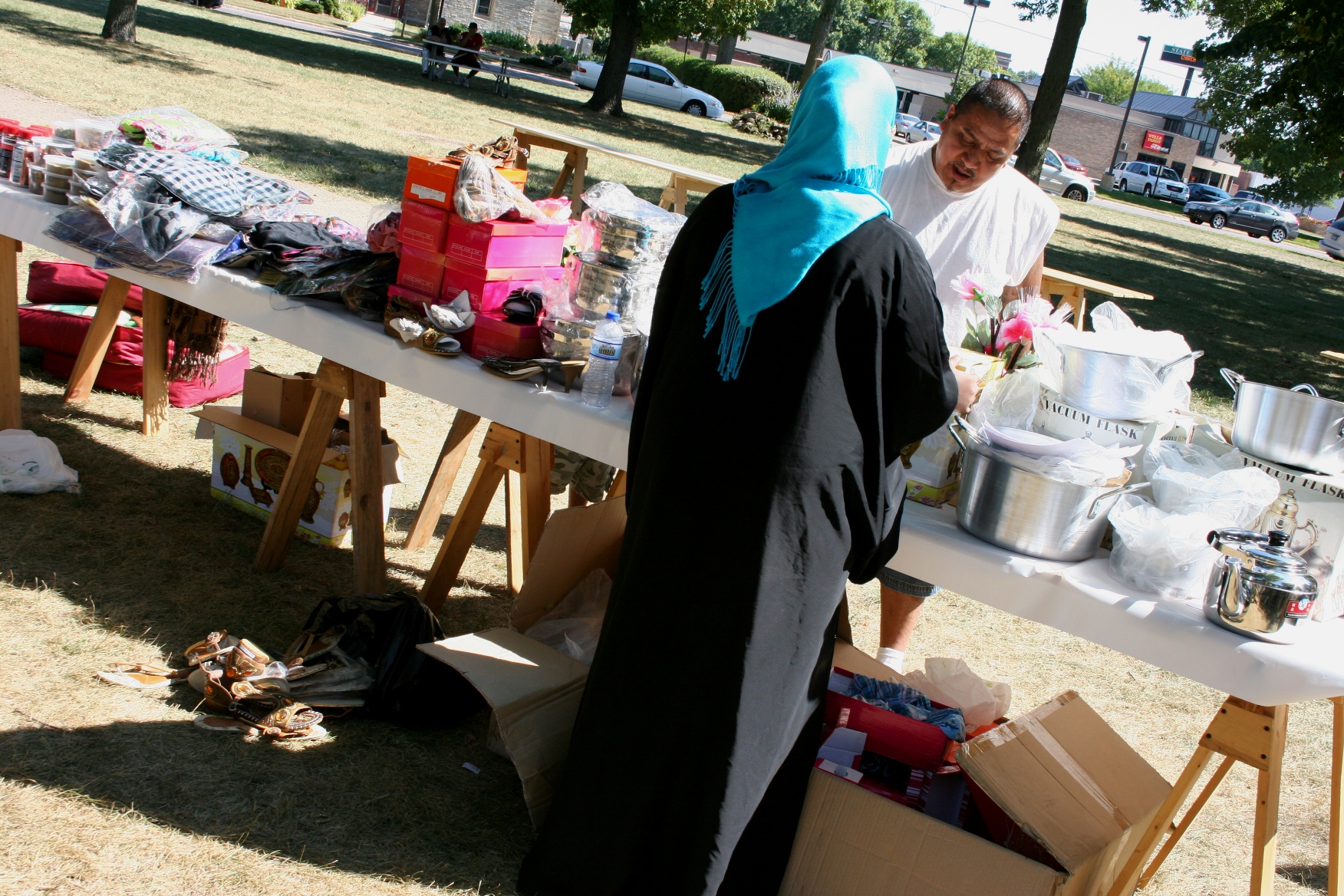
Vendors peddled their wares at the festival.
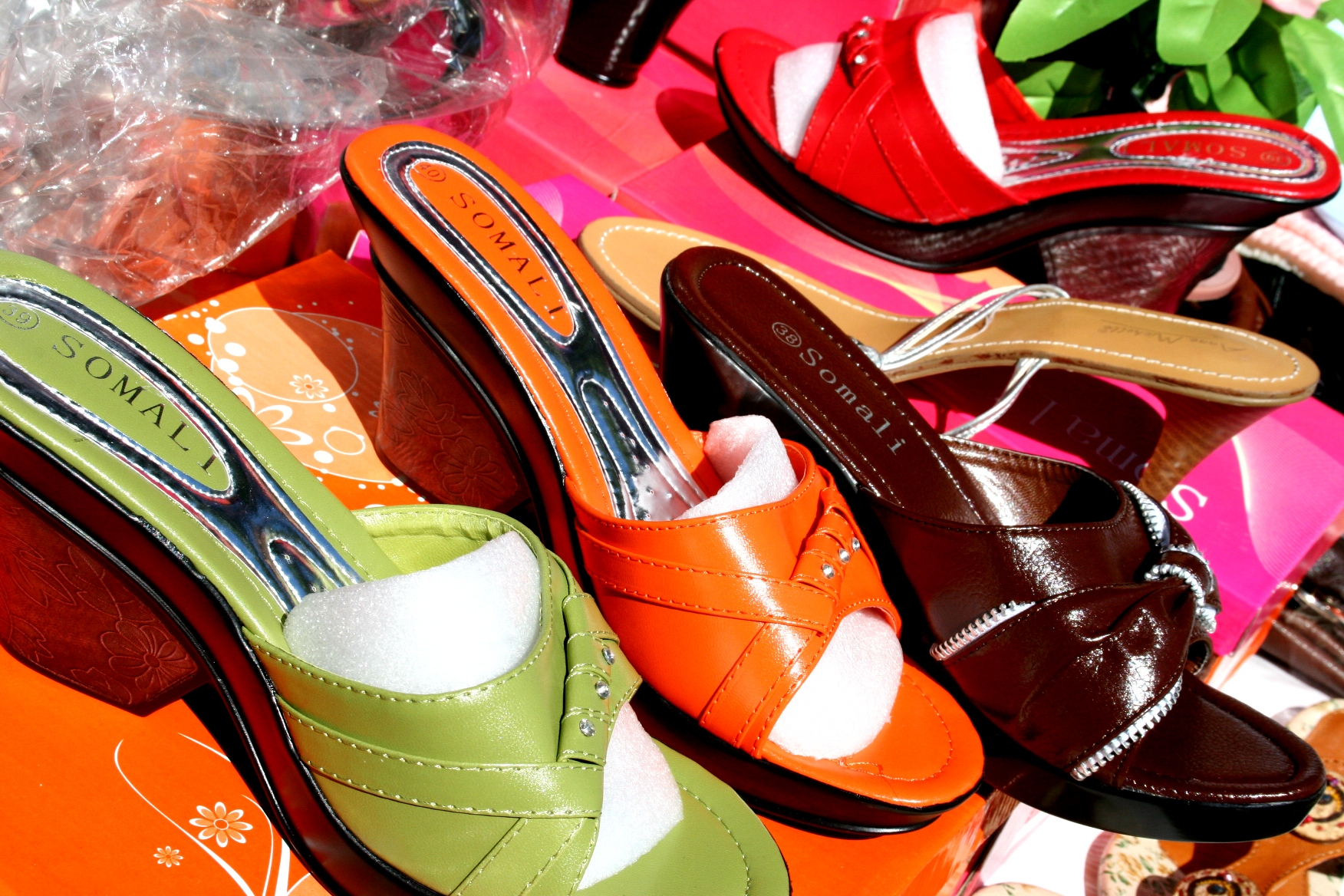
Shoes from Somalia on display at Riyaam's table.

A woman from El Salvador cooked at her food both.
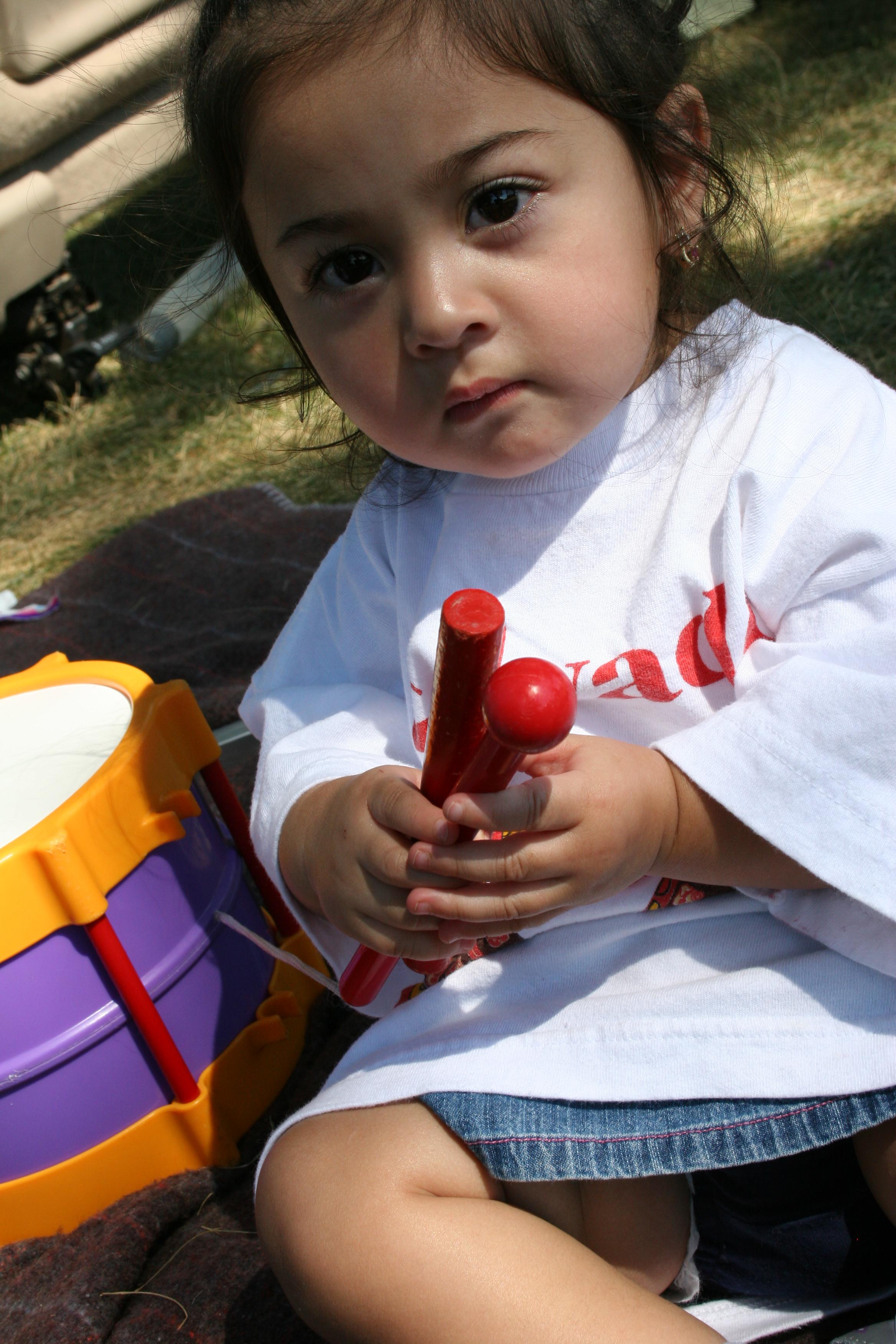
Sanji, 18 months, plays with toys in the kids' activity area of the fest.

Hoop maker, performer and teacher Adrienne Lee teaches a Girl Scout the art of hoop dancing. The Girl Scouts were among the non-profit groups with booths at the festival.
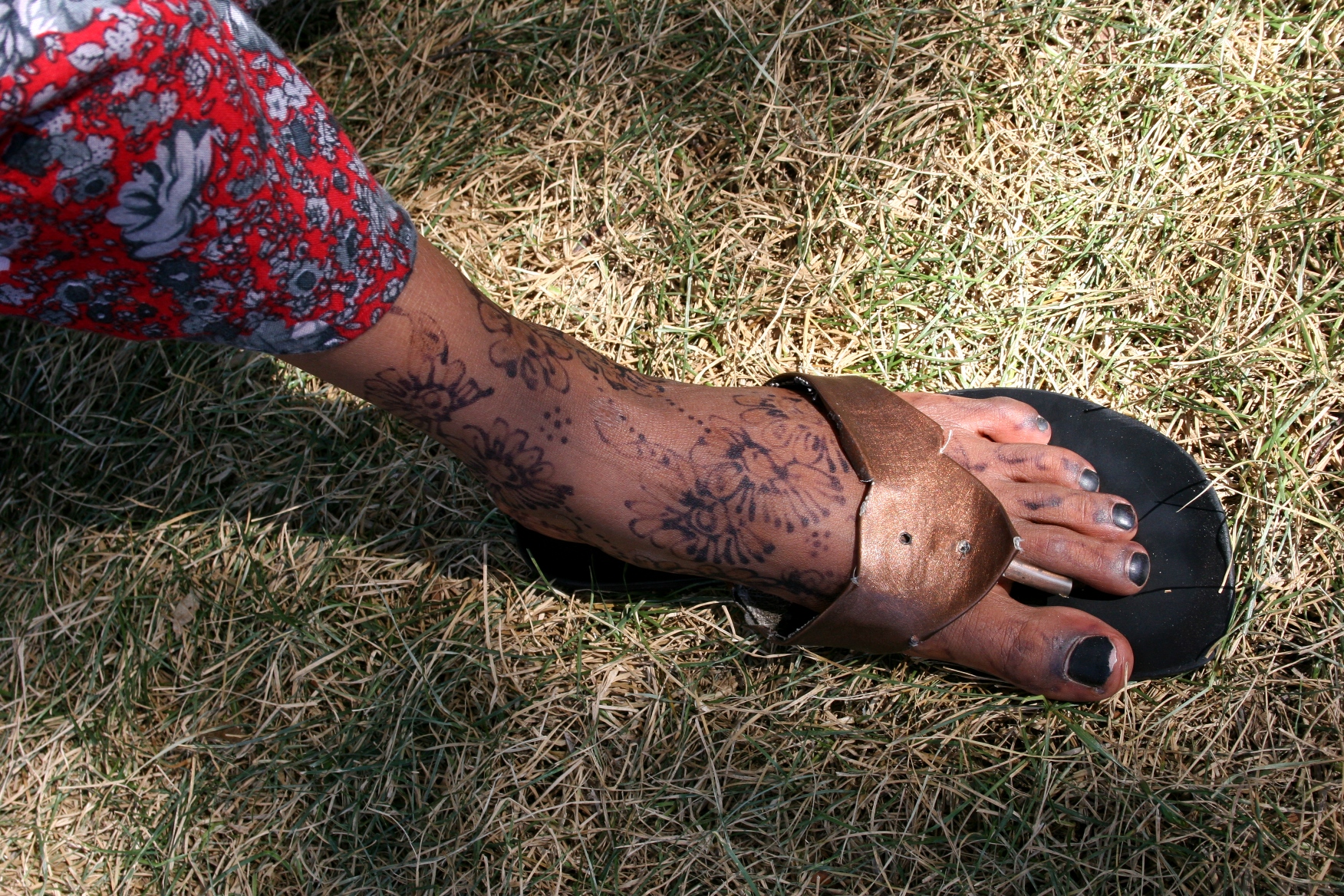
A young girl's henna stained foot.
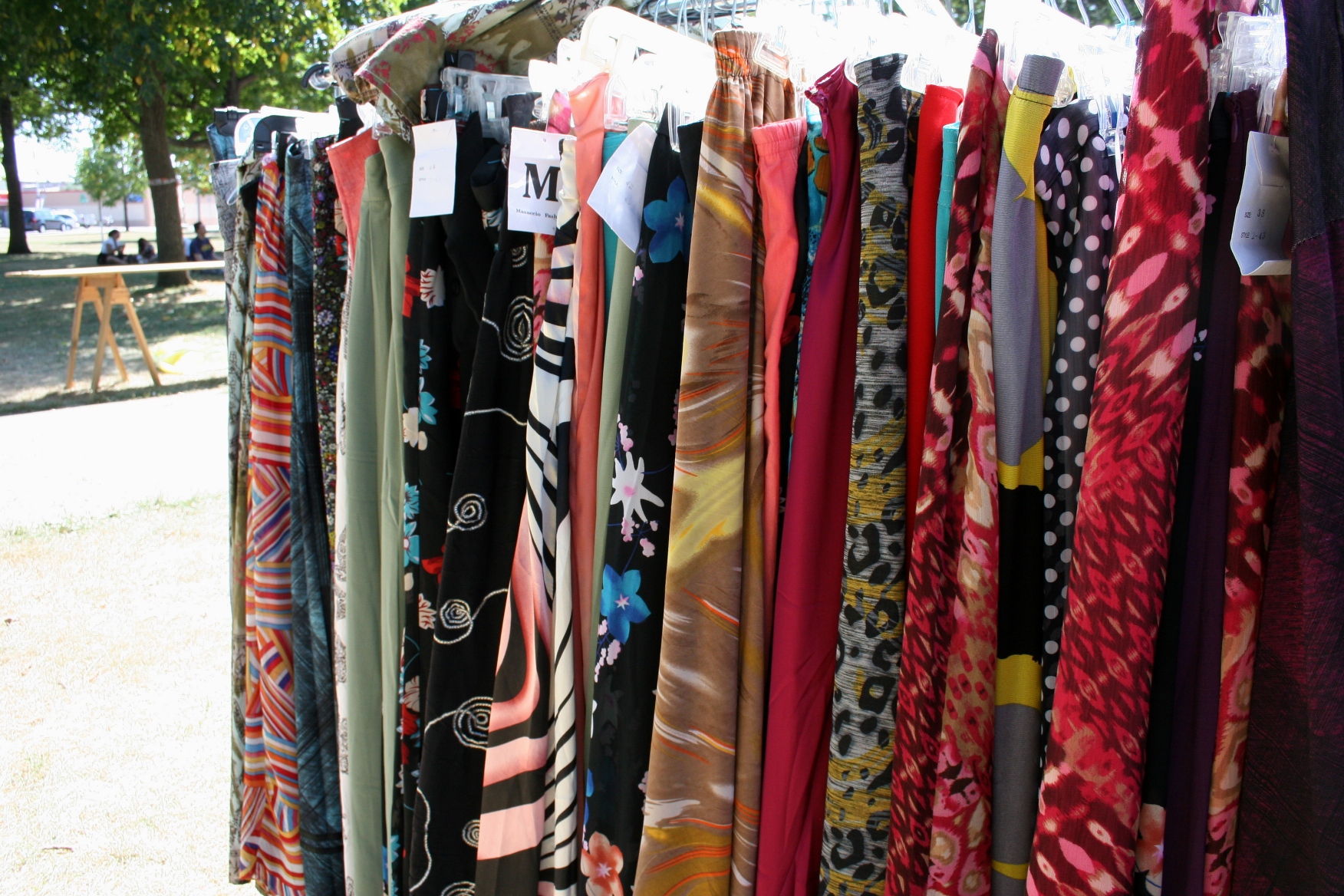
Colorful skirts for sale at Riyaam's booth.
THE ST. OLAF RESEARCH, which included interviews with 39 Faribault community members, states: “Most interviewees agree that Faribault’s immigrant and native-born communities operate alongside each other; coexisting peacefully, but not acting as a single integrated community.”
Exactly.
The report continues: “They do not agree about what should be done to unite these groups.
“We found Faribault leaders thus enmeshed in the long-standing American debate about which people ought to change and how much.”
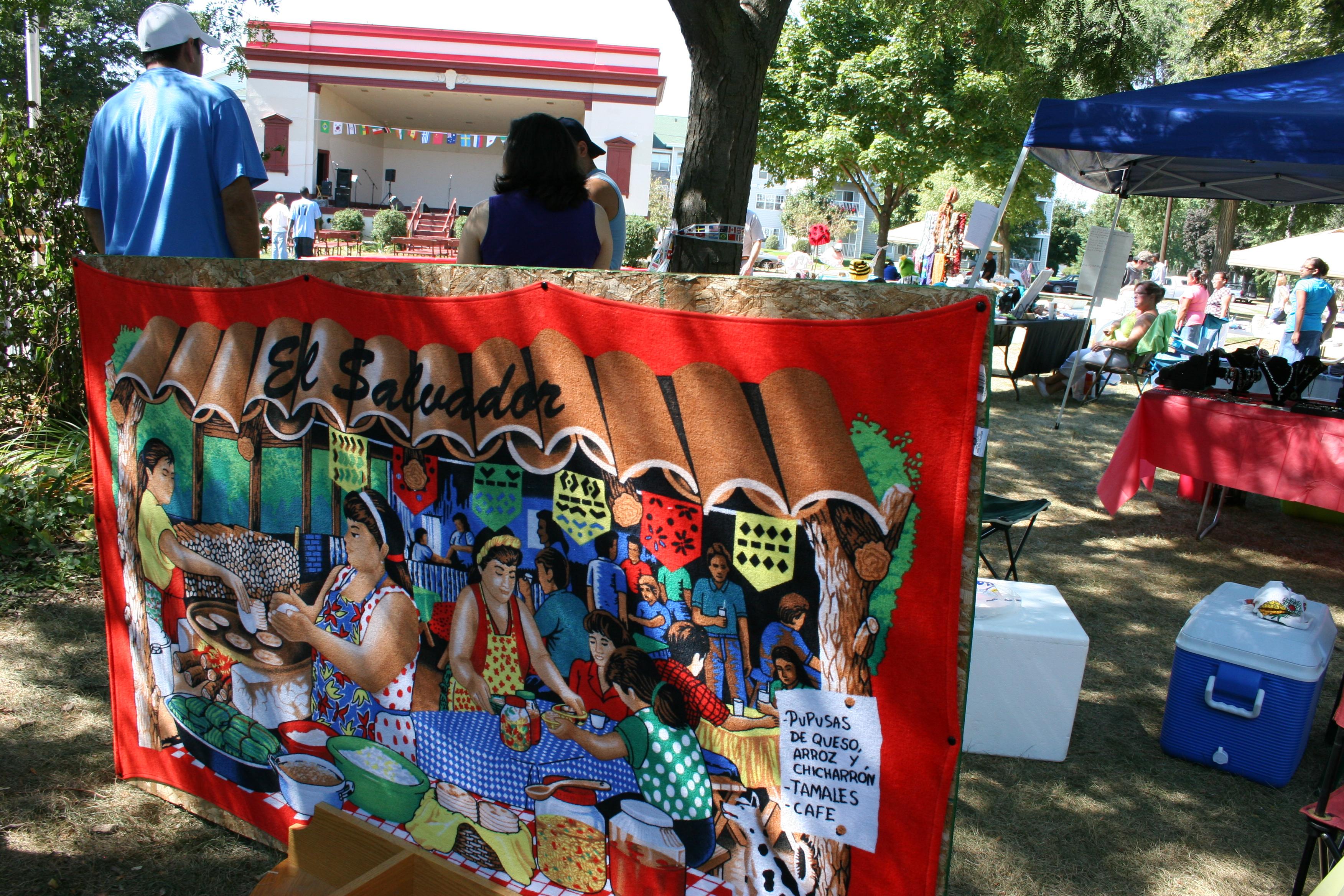
A colorful, detailed wall hanging/blanket represented El Salvador at one booth.
FYI: International Festival, Faribault, a recently-formed non-profit, has set its number one goal “to promote understanding of different cultures by organizing an annual event,” says Peter van Sluis. Secondly, the group wants to raise money and assist other non-profits.
© Copyright 2011 Audrey Kletscher Helbling


 Minnesota Prairie Roots
Town hall talk, a commentary March 20, 2025
Tags: 1st Congressional District, Americans, commentary, concerns, democracy, DFL Senate District 19, education, Faribault, farming, federal government, Minnesota, opinion, Representative Brad Finstad, social issues, town hall meeting, veterans
I DEBATED FOR SEVERAL DAYS whether I should write this post, because it could be misconstrued as purely political. It is not. Rather this is a story about a grassroots gathering of people sharing information, ideas and opinions. Democracy at its core. This story is about us as Americans—listening, learning, agreeing or disagreeing, and letting our voices be heard.
Tuesday evening I attended a town hall meeting in Faribault hosted by DFL Senate District 19. It was open to everyone, regardless of political affiliation. But the crowd was decidedly Democrat, as you would expect given the hosting group. Republican Brad Finstad, who represents the 1st Congressional District in Minnesota, was invited, but did not attend. His district includes parts of Goodhue, Rice (where I live), Steele and Waseca counties in rural southern Minnesota.
Some 300 constituents packed the space, overflowing into adjacent rooms. Yes. Even I was surprised by the turn out. That tells me a whole lot of people have concerns about what is currently happening at the federal level and how government action is, or will, impact them. I expect not a single American will be untouched, whether directly or indirectly, by slashes in government personnel and funding and/or by changes in domestic and foreign policies.
Town hall organizers lined up speakers to address topics covering a broad range of subjects affecting a whole lot of people and programs—farmers, education, healthcare, seniors, veterans, those with disabilities, communication, nonprofits and much more. I was impressed by how well prepared these speakers were with facts and statistics. I learned a lot.
I’m not going to give you a detailed report of what each speaker said. Rather, I want to share several messages or phrases which really resonated with me and which should resonate with every American, no matter who they voted for. The phrase “we the people” was repeated by one speaker and embraced by the crowd. “We the people” means us. Americans, not members of one political party or the other. And, yes, I’m well aware of how those words from the preamble to the Constitution are being used politically as a mantra of sorts. But in this context, “we the people” references our right to speak up, to be heard, to tell our elected officials what we think and what we would like them to do as our representatives in Washington DC. That can be done by attending town halls like this; the meeting was video taped and will be sent to Representative Finstad. We can be heard via phone calls, emails and letters. We the people have power in our voices, in our votes, whether Democrat, Republican or Independent.
Secondly, a local educator asked the crowd and Finstad to ask themselves this question: “How are the children?” So, yes, how are the children, when many live in poverty, when federal funding for education is in imminent danger of being mostly cut, when…fill in the blank here? I think we can all agree that children are our future and we ought to care about their health, happiness, education and much more.
Third, one of the speakers shared that, as someone of the Catholic faith, he is called upon to help others. He called upon Representative Finstad, who is also Catholic, to do the same. That means feeding the hungry (funding USAID, for example), protecting Medicaid and Social Security, etc. all of those ways and places we help one another as human beings in this country and abroad. Now I’m not Catholic; I’m Lutheran. Doesn’t matter. My faith compels me to show love, compassion and care for others, especially those in need. America once did that as a country. Generously. But that is changing. We have bounty and resources we can share to help starving children, to provide medical care, to help others in any way we can. It is the right thing to do as a nation blessed with great bounty.
Fourth, a local farmer spoke about $3.2 million in contracts with farmers in our district which have now been broken by the U.S. government. The consequences will be devastating to those farmers who have already invested those federal monies in their operations. Trust has been broken, she said. I think we can all agree that when a legal contract is broken, it’s a breach of trust.
There’s so much more I could share from that town hall session. But I want to conclude with this. I encourage you, if you have the opportunity to do so, attend a town hall meeting. Listen. Learn. Engage. Let your voice be heard. Remind your elected officials, too, that they need to listen, learn and engage.
FYI: A second Town Hall Meeting hosted by DFL Senate District 19 is set for 6 p.m. Sunday, April 6, at Mineral Springs Brewery, 210 N. Oak Ave., Suite 1, in Owatonna. It will follow the same format as the Faribault Town Hall with a moderator, speakers and an open mic. Representative Brad Finstad has been invited.
© Copyright 2025 Audrey Kletscher Helbling