The Northern Lights, photographed northeast of Faribault near Cannon City (with a treeline in the foreground) around 9 p.m. Tuesday, November 11. (Minnesota Prairie Roots copyrighted file photo November 2025)
IT TOOK A LIFE TIME, but I finally saw the Northern Lights for the first time. Ever. And they were poetic, artistic, inspiring, incredible, wondrous, glorious…all the adjectives you can use to describe a dark night sky colored with streaks of green, red and pink.
Randy and I were sitting comfortably in the warmth of our southern Minnesota home Tuesday evening when our son texted that he could see the Northern Lights even in the city lights of Boston. A photo proved it. Then the daughter who lives 35 minutes to the north of us texted that they, too, could see the lights in Lakeville, south of the Twin Cities. Photos proved it.
We popped up, grabbed our coats and set out to see for ourselves. We didn’t have to drive far into the countryside before we noticed the first streaks of light. Turning onto a gravel road, we parked, stepped outside and turned our eyes heavenward. Then we eventually tried to figure out how to photograph the majestic scene above us on our smartphones, with only minimal success.
While I would have loved some spectacular images, what matters most is that I saw, with my own eyes, that which I’ve wanted to see my entire life. Others were doing the same. We counted about a dozen vehicles parked along rural roads, the occupants gazing skyward.
This imprinted upon me how something like the Northern Lights can bring people outdoors, appreciating this beautiful natural world that surrounds us and, which on this November evening, put on a spectacular light show.
TELL ME: Have you seen the Northern Lights? When and where? How would you describe them?
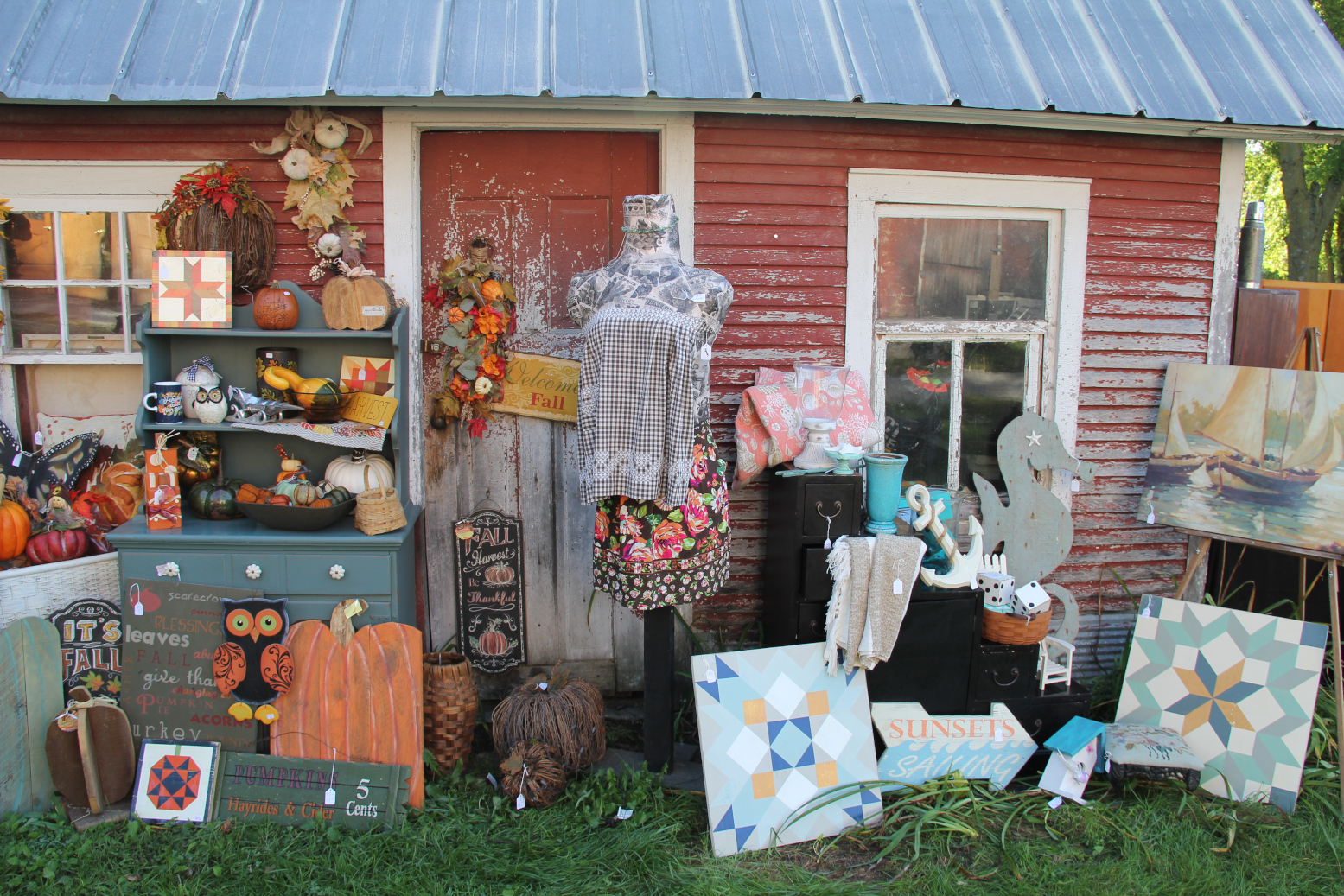
Autumn merch and nautical merch displayed against a small red shed at Nicole Maloney’s fall sale. (Minnesota Prairie Roots copyrighted photo September 2025)
THIS TIME OF YEAR in Minnesota, we not only usher in autumn but also the season of fall craft, collectible, vintage and antique sales. This past weekend, two women in the unincorporated hamlet of Cannon City just east of Faribault hosted two occasional seasonal sales.
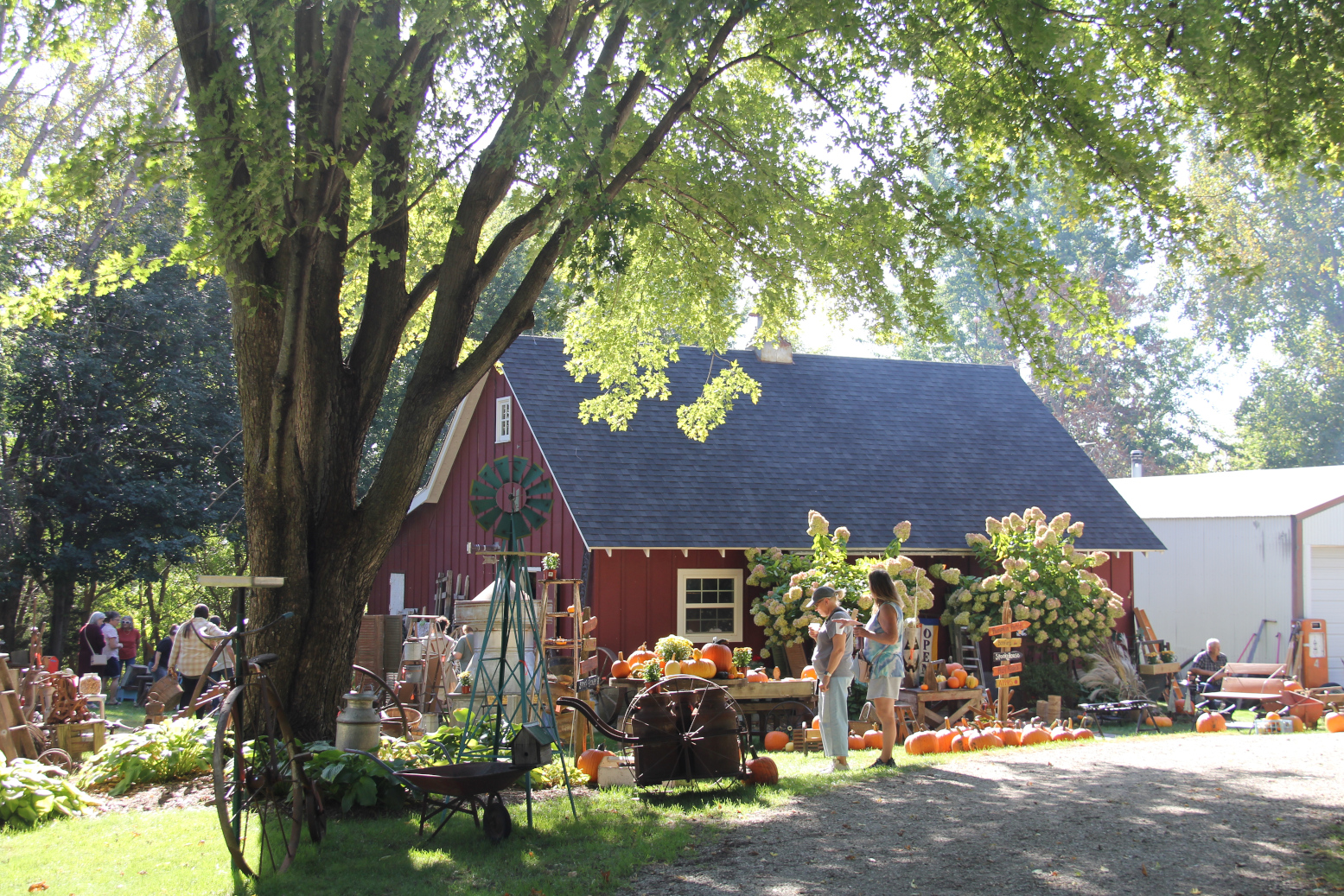
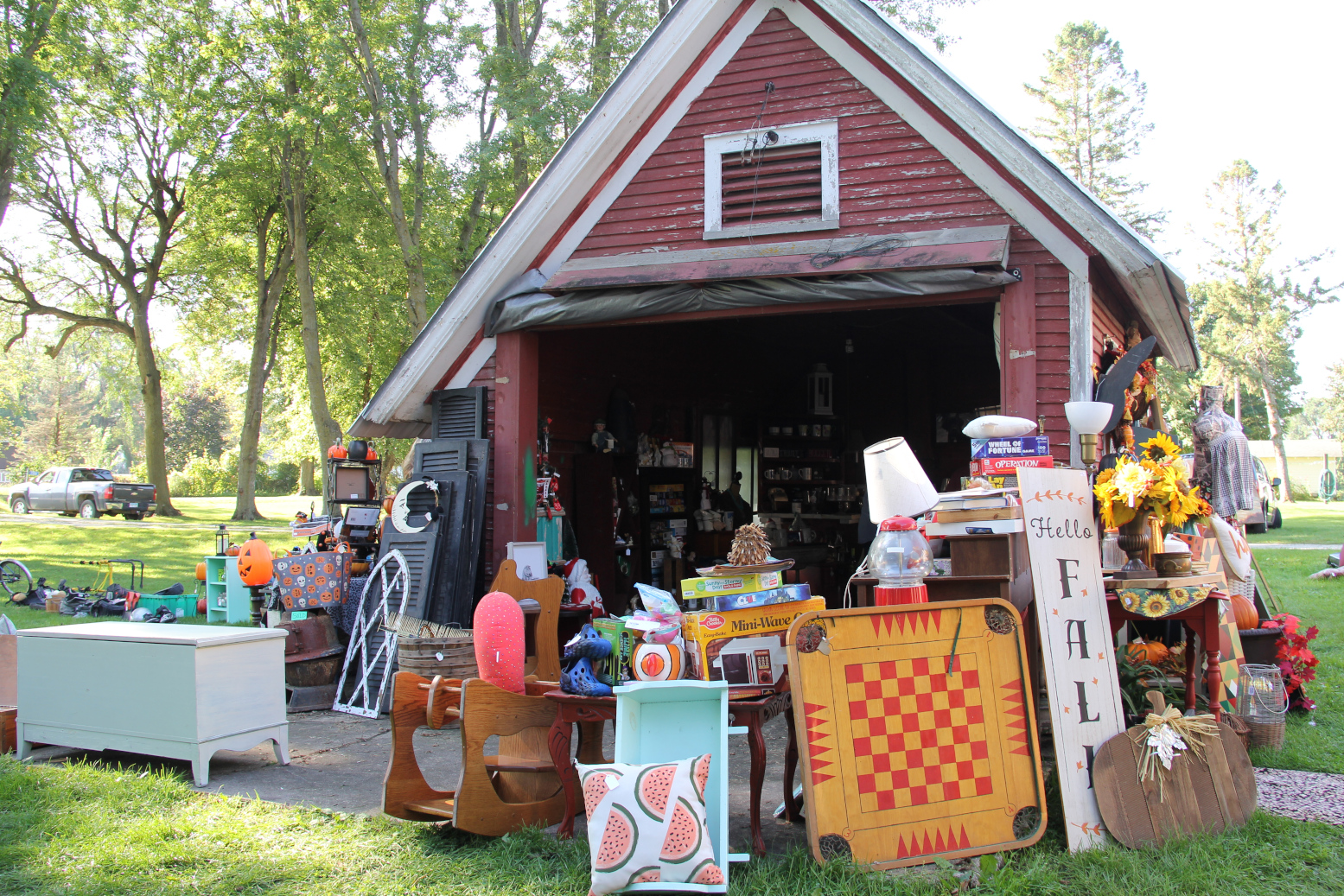
Shoppers peruse goods inside and outside Debbie Glende’s barn as smoke wafts from a campfire. (Minnesota Prairie Roots copyrighted photo September 2025)
Both were marketed as barn sales—Nicole Maloney’s Mini Flea at the Red Barn and Debbie Glende’s The Barn Sale.
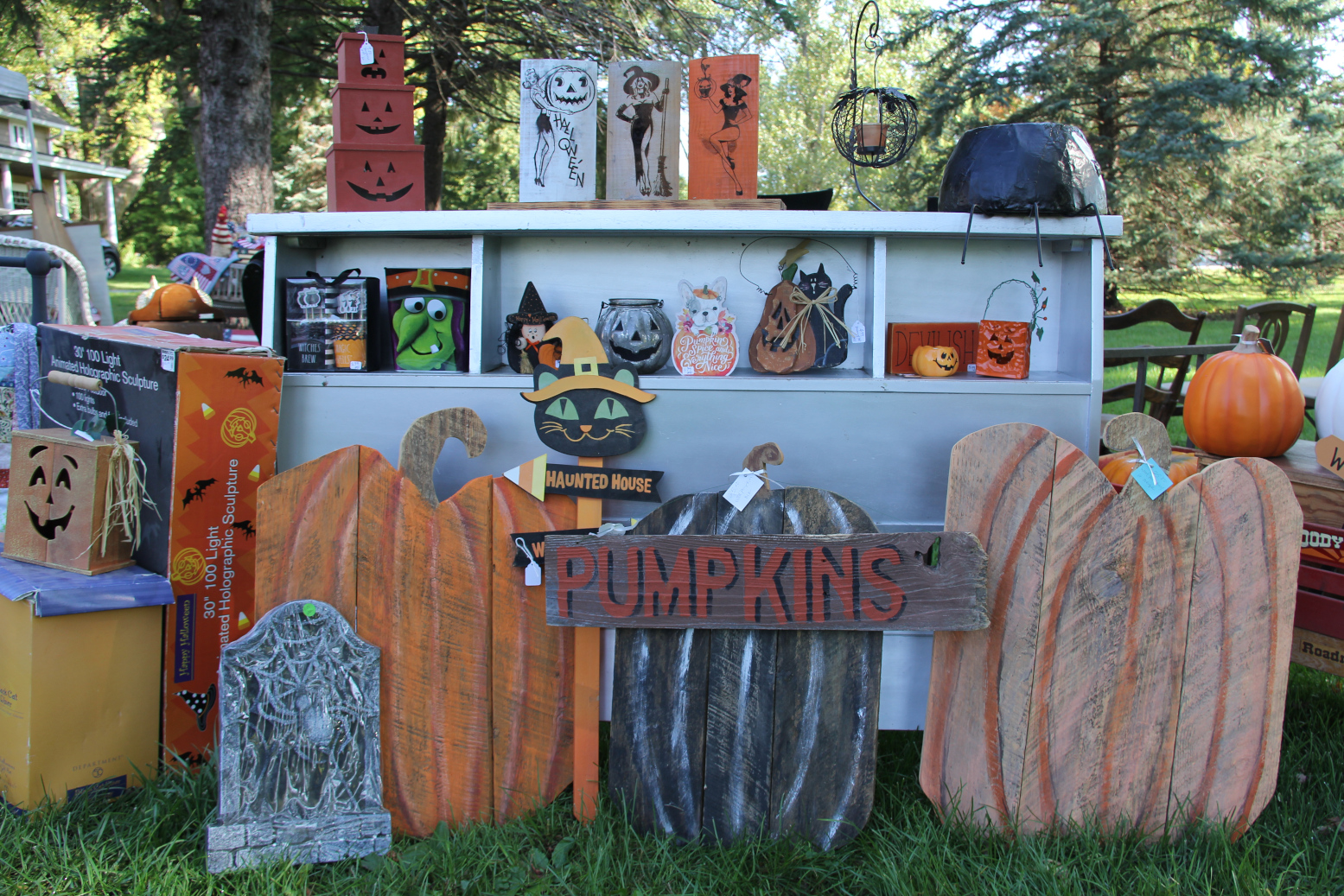
Halloween goods galore at the Mini Flea at the Red Barn. (Minnesota Prairie Roots copyrighted photo September 2025)
I shopped at both, located across the road from one another along Rice County Road 20/Cannon City Boulevard. I’ve been to Glende’s several times, but never Maloney’s although she’s sold goods in her yard and a small shed for some 10 years. Somehow I missed her market.
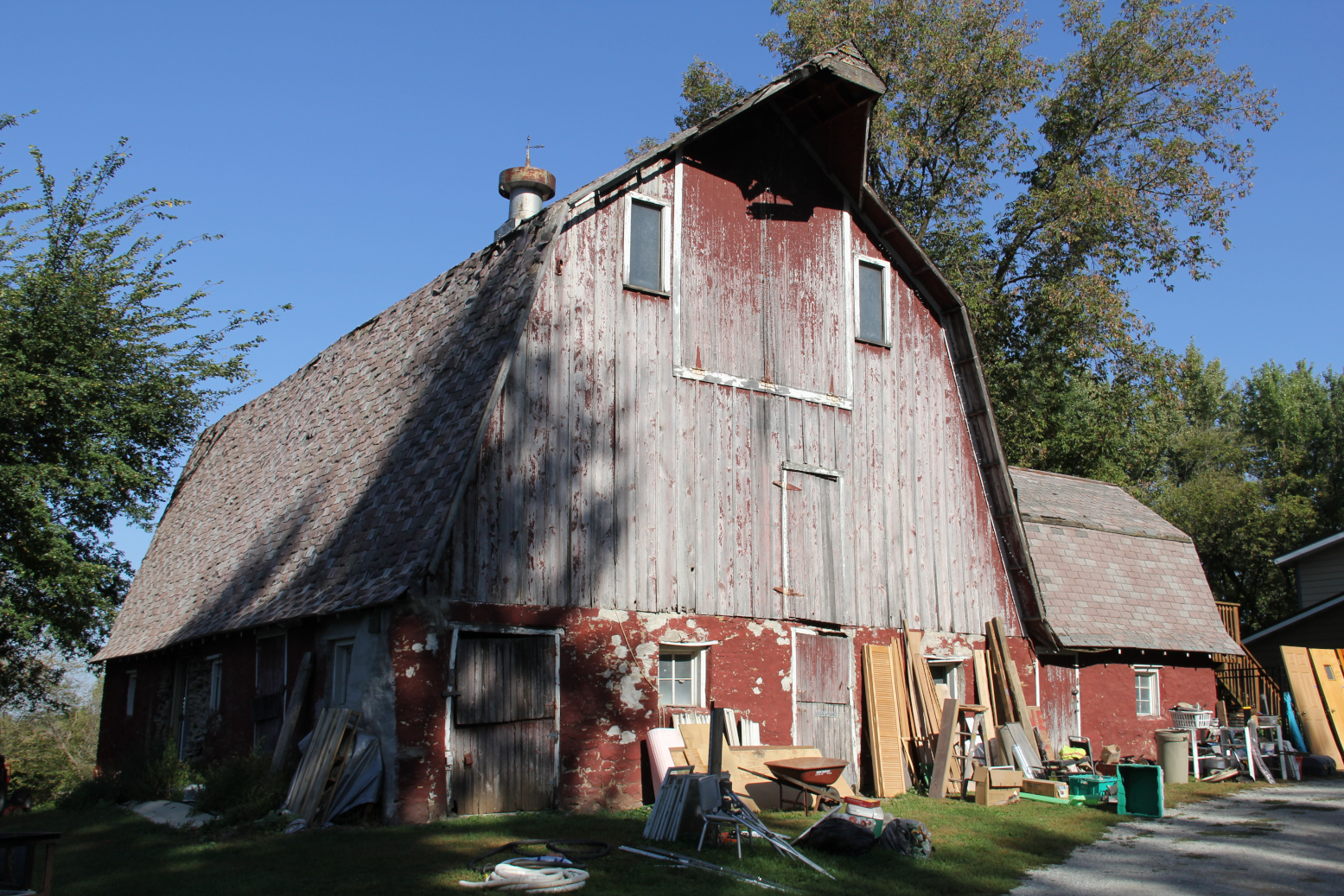
The red barn in need of shingles. (Minnesota Prairie Roots copyrighted photo September 2025)
But you can’t miss the massive weathered red barn which rises above her rural property. It was the first building I noticed upon pulling into the yard. And it is the reason, says Maloney, she opens her place once a year to sell her finds. Monies raised from the sale are going toward reshingling the barn. I expressed my gratitude to her for saving her barn when so many others are falling into heaps of rotting wood.
Inside Maloney’s shed, the display that tipped me off to a design degree. (Minnesota Prairie Roots copyrighted photo September 2025)
I also complimented Maloney on her artful displays of merchandise. I could see she has an eye for design. I was not surprised that she holds an interior design degree, although she doesn’t work in the field. The annual sale allows her to use her design skills to create inviting displays.
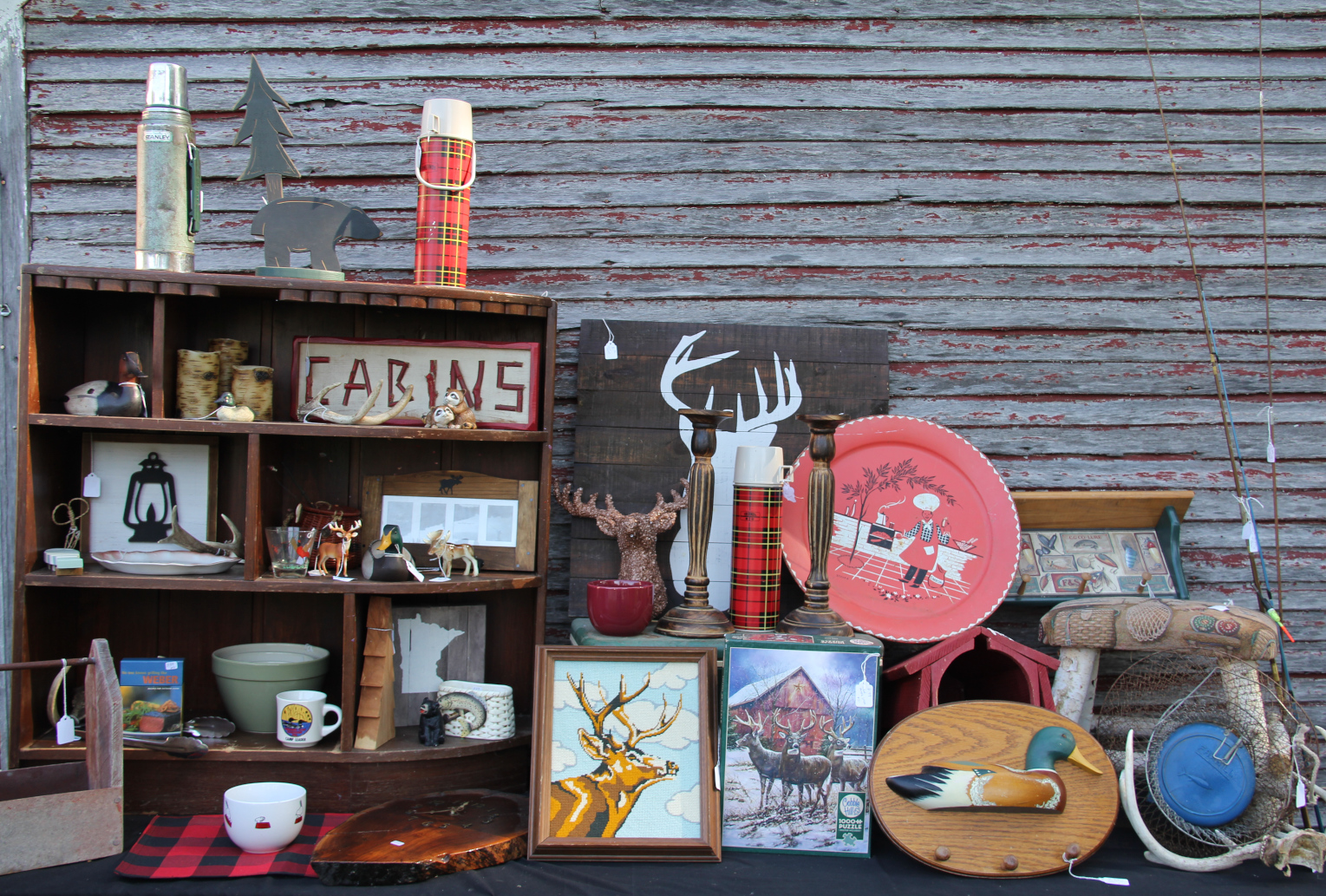
An outdoorsy and cabin themed merchandise display created by Maloney. (Minnesota Prairie Roots copyrighted photo September 2025)
This small shed centered the sale in Maloney’s yard.(Minnesota Prairie Roots copyrighted photo September 2025)
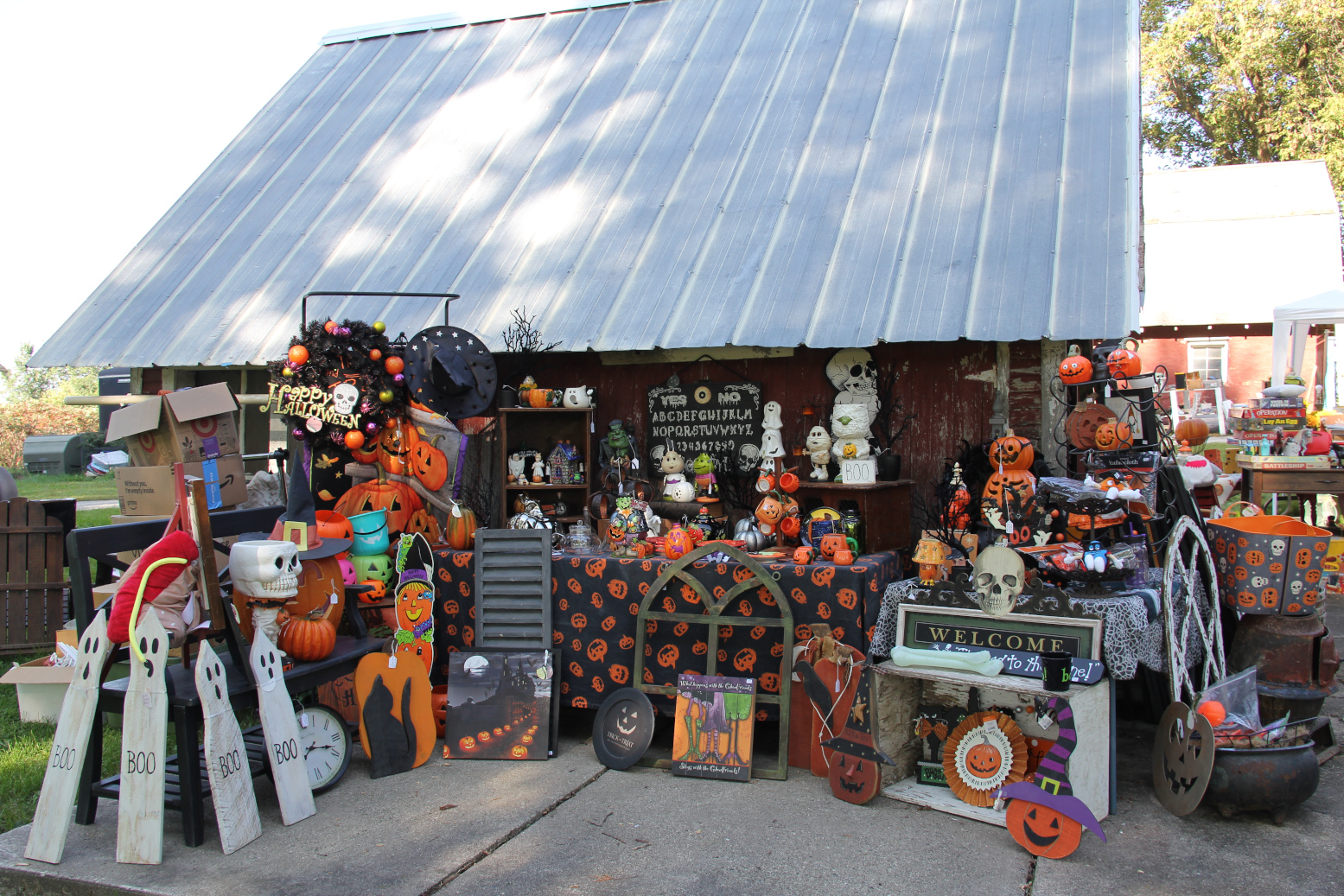
One side of Maloney’s shed featured all Halloween merchandise. (Minnesota Prairie Roots copyrighted photo September 2025)
As I wandered about the yard, I saw separate groupings of items themed to rustic cabin/farmhouse, Halloween, Christmas, nautical and more. And sometimes I observed simply a hodge podge of goods, including furniture. All of it, though, seemed deliberately staged to appeal to shoppers.
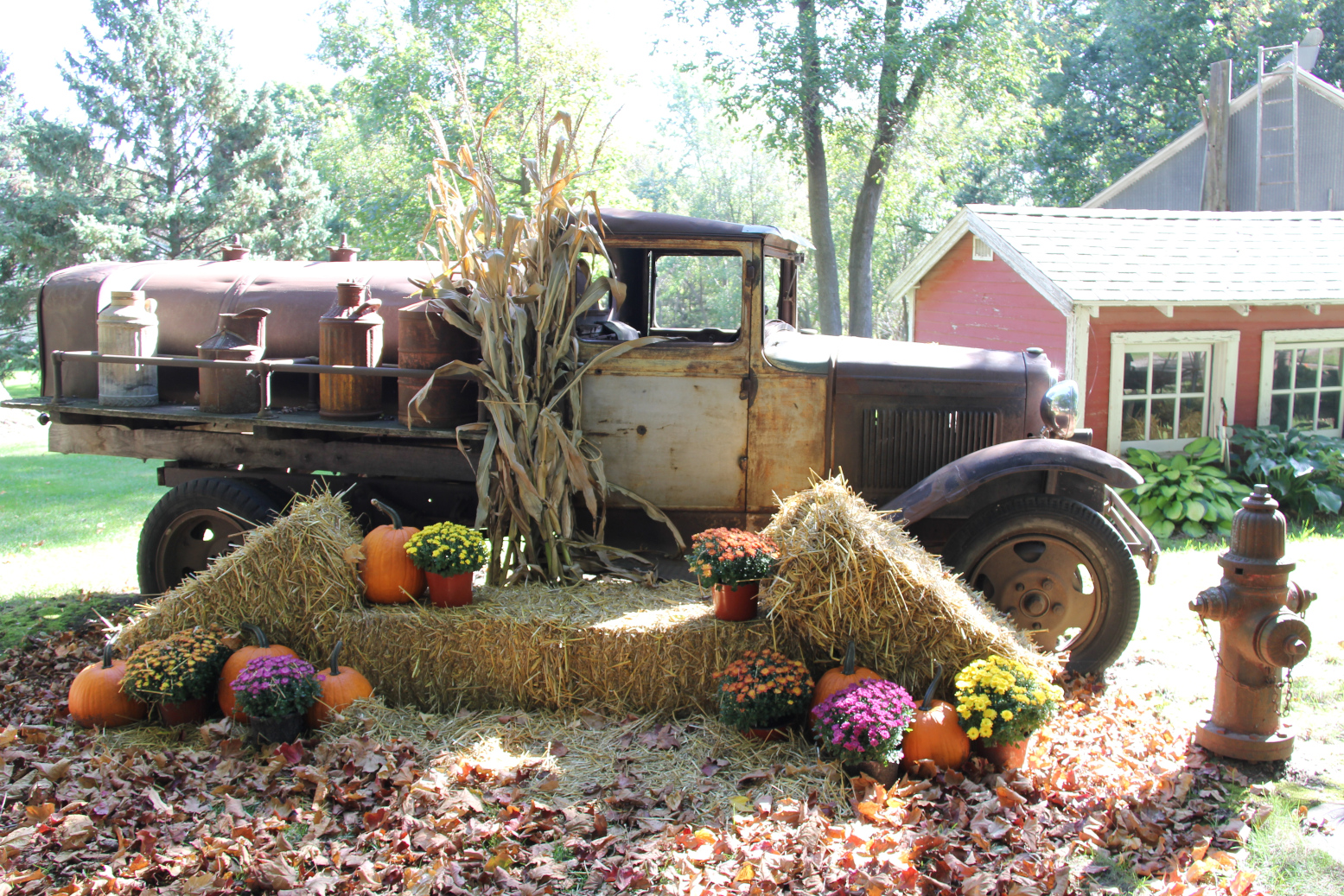
A vintage truck surrounded by fall decorations serves as a photo prop for shoppers at The Barn Sale. (Minnesota Prairie Roots copyrighted photo September 2025)
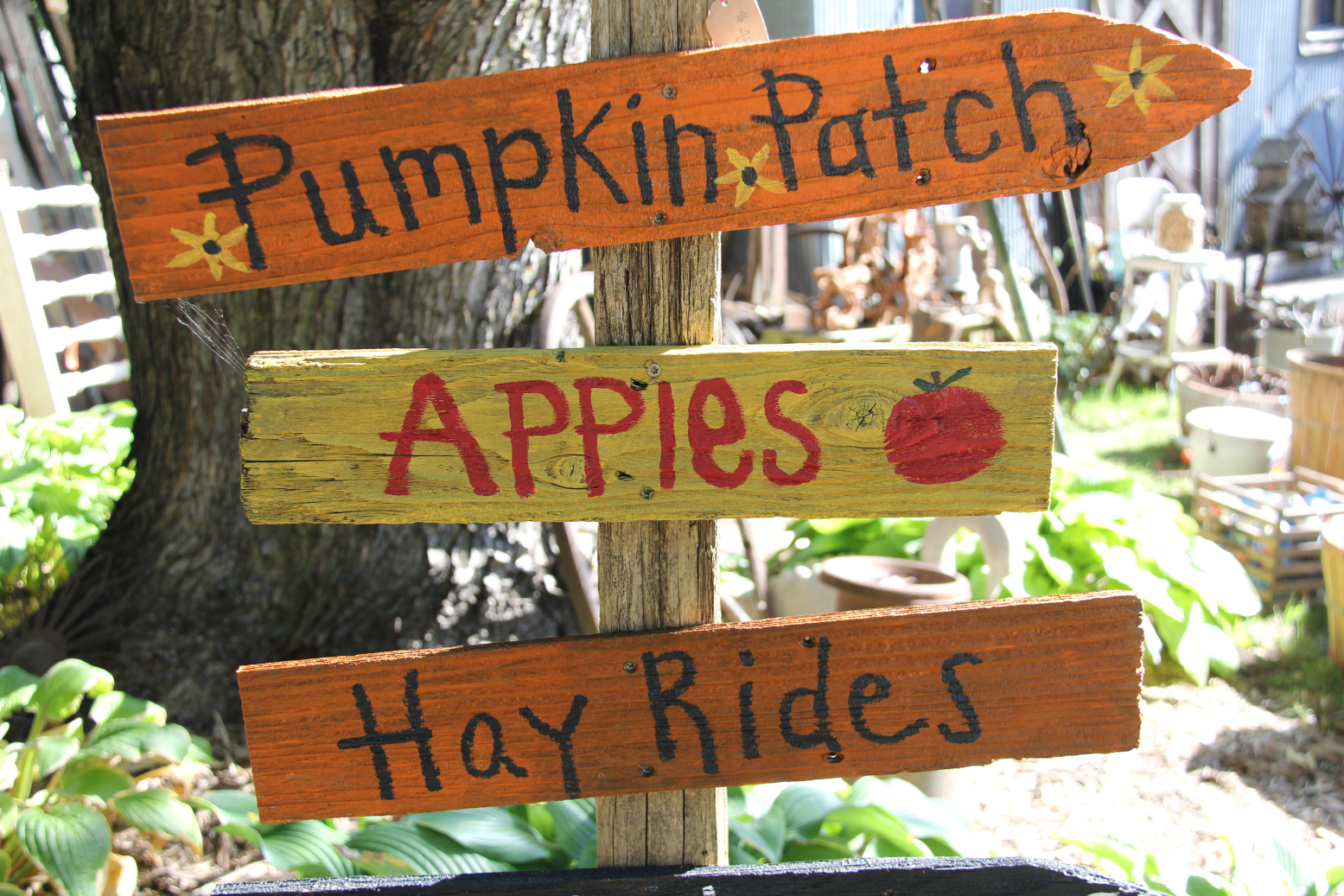
Seasonal appropriate signage for sale at The Barn. (Minnesota Prairie Roots copyrighted photo September 2025)
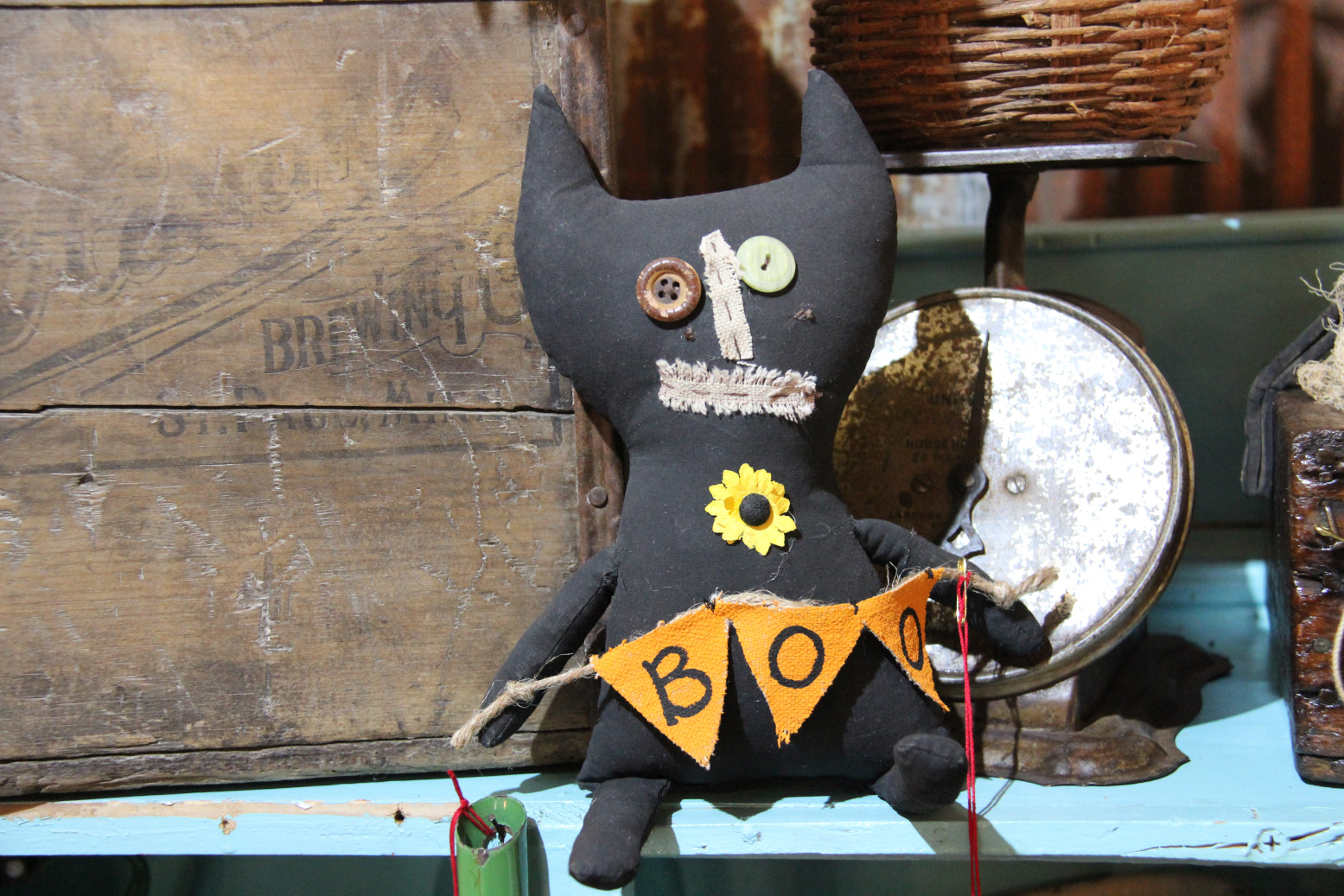
I saw a lot of these cute cats, in assorted Halloween colors, inside Glende’s barn. (Minnesota Prairie Roots copyrighted photo September 2025)
Across the road at Glende’s sale in her small (compared to Maloney’s) red barn, shoppers circled inside the building to view an eclectic array of merchandise cramming shelves and tables, hanging from walls, sitting on the floor. From my non-merchandising perspective, it looks like a lot of work to artfully arrange and showcase all those goods.
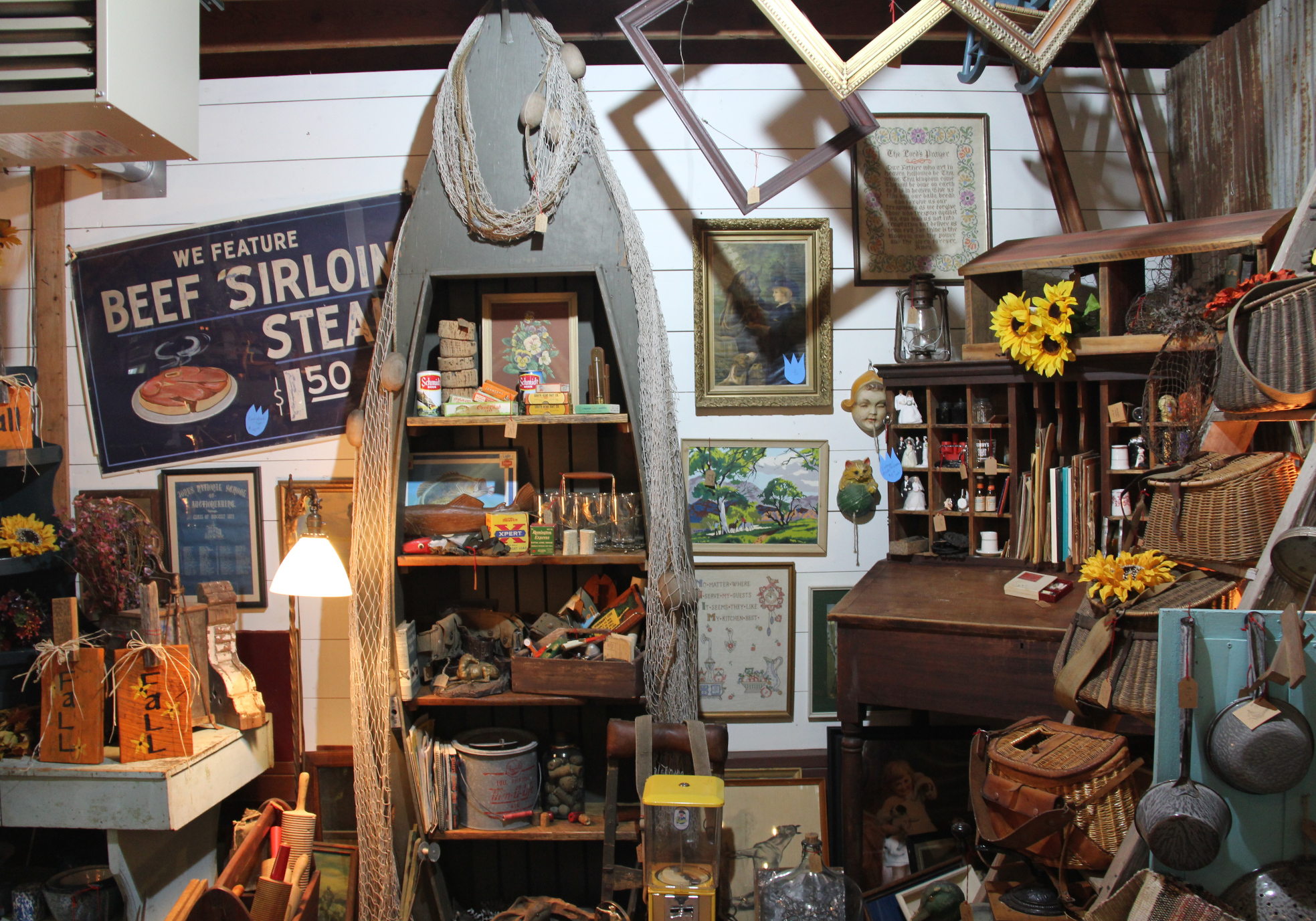
The steak sign, left, caught my eye. (Minnesota Prairie Roots copyrighted photo September 2025)
Like her neighbor, Glende’s merchandise was heavy on Halloween and autumn themes. As it should be for a sale held the last weekend in September. She also holds sales in December and again in the spring. But my eye was drawn to a large vintage sign promoting beef sirloin steak for $1.50. I don’t know if that was per steak or per pound, but a bargain either way.
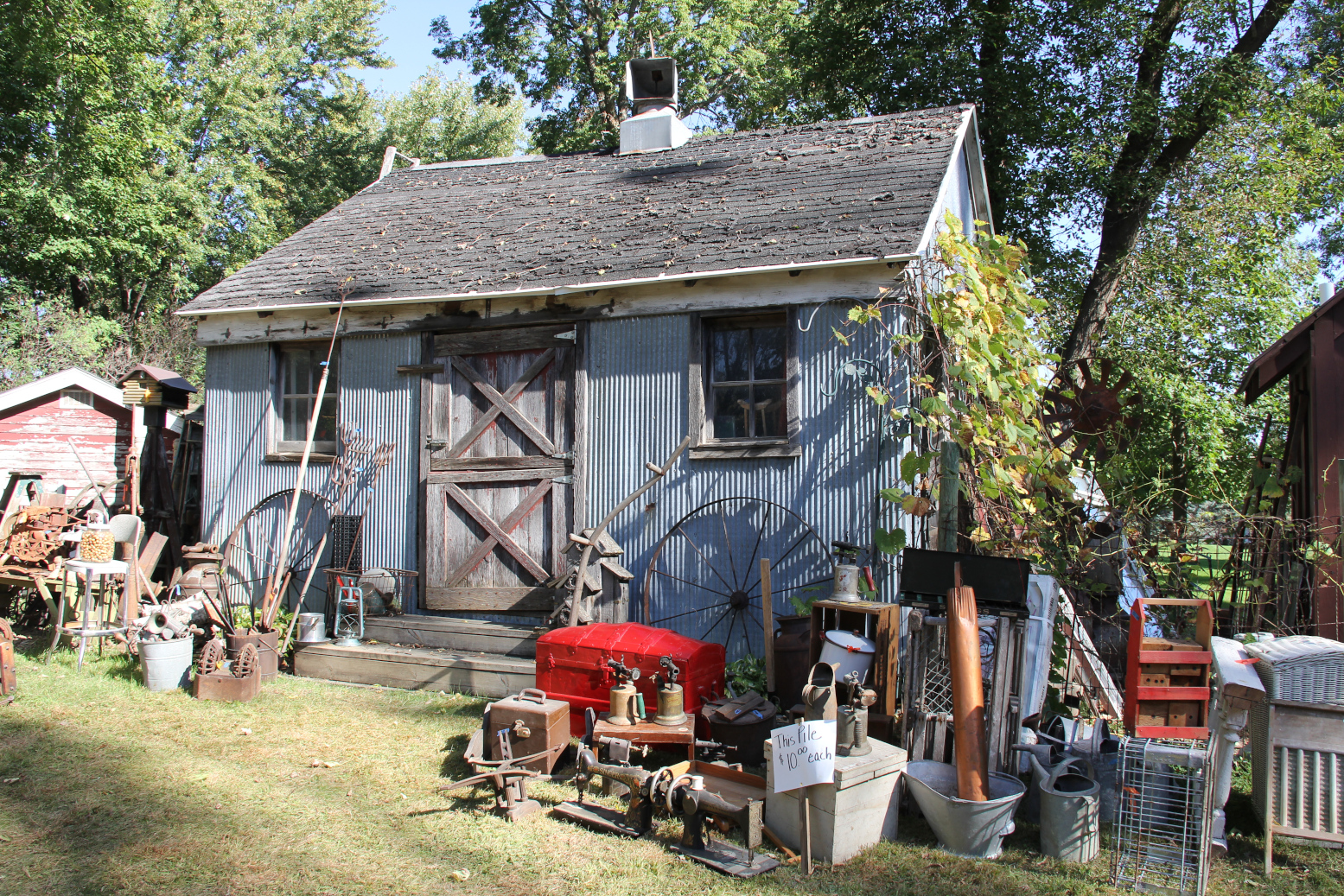
Shoppers could poke through miscellaneous items scattered around Glende’s yard. (Minnesota Prairie Roots copyrighted photo September 2025)
Outside the small red barn, shoppers found plenty of piles of stuff. Junk to some. Treasures to others.
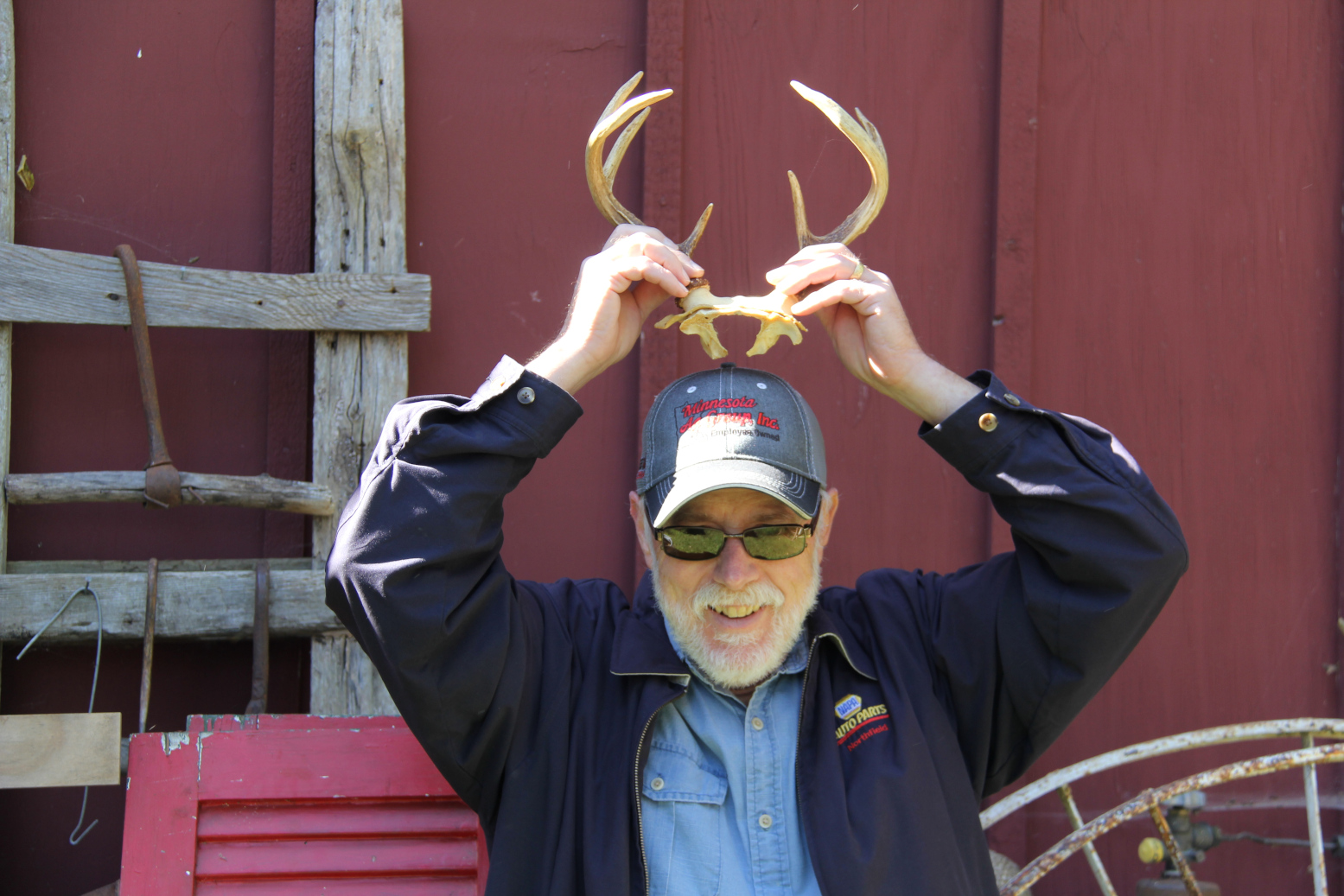
My husband, Randy, has a little fun with antlers he found at Glende’s sale. (Minnesota Prairie Roots copyrighted photo September 2025)
Sales like these appeal to me also because the sellers are attempting to extend the lives of whatever rather than tossing something into the garbage to end up in a landfill. It’s a win-win for everyone.
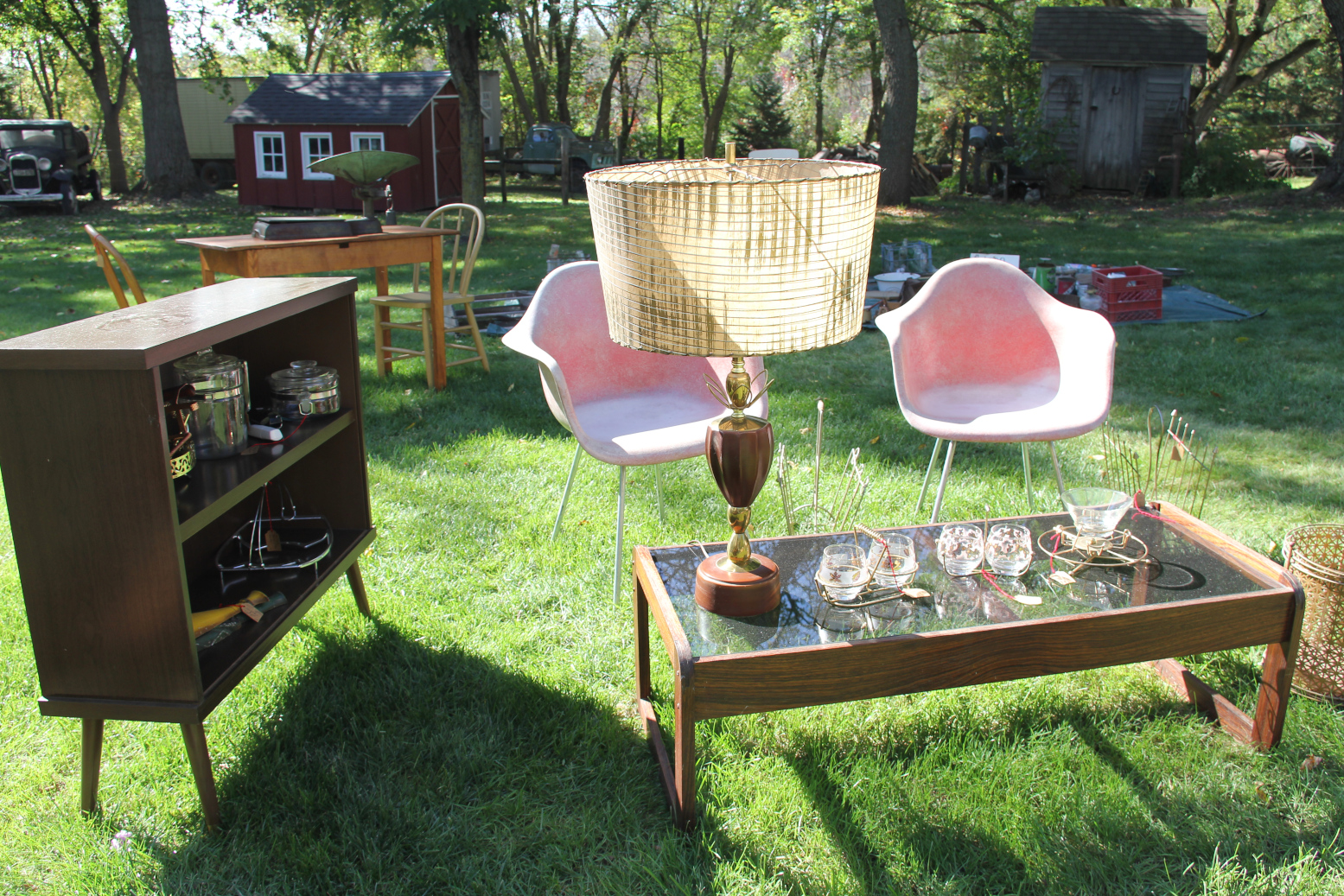
The vintage lamp I really liked, but didn’t buy. (Minnesota Prairie Roots copyrighted photo September 2025)
I seldom buy anything at these sales because, at this age in my life, I don’t need more stuff. Even if I see a lot of items that I would really really like to have. Such as a vintage lamp in Glende’s yard. And a small round side table in Maloney’s.
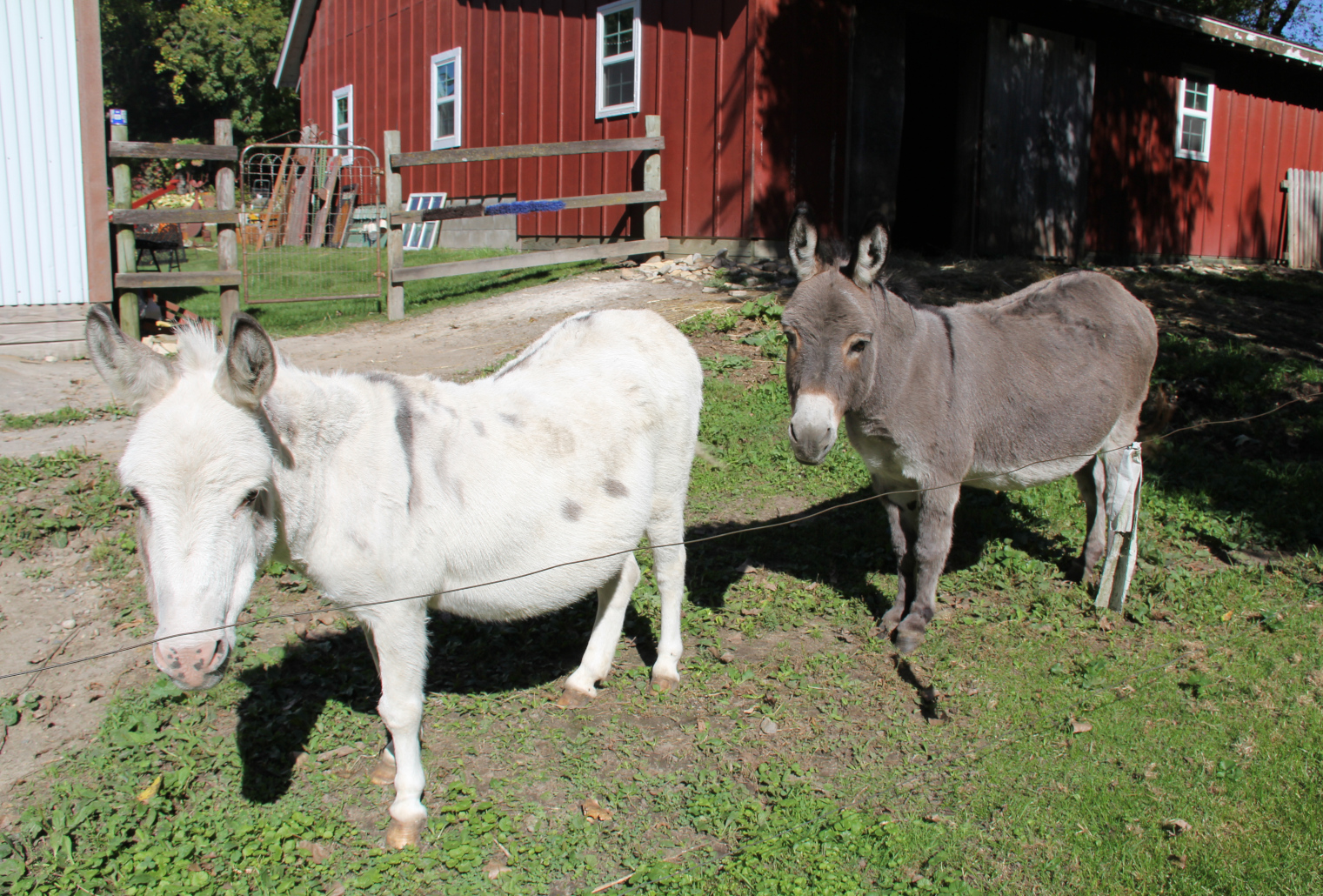
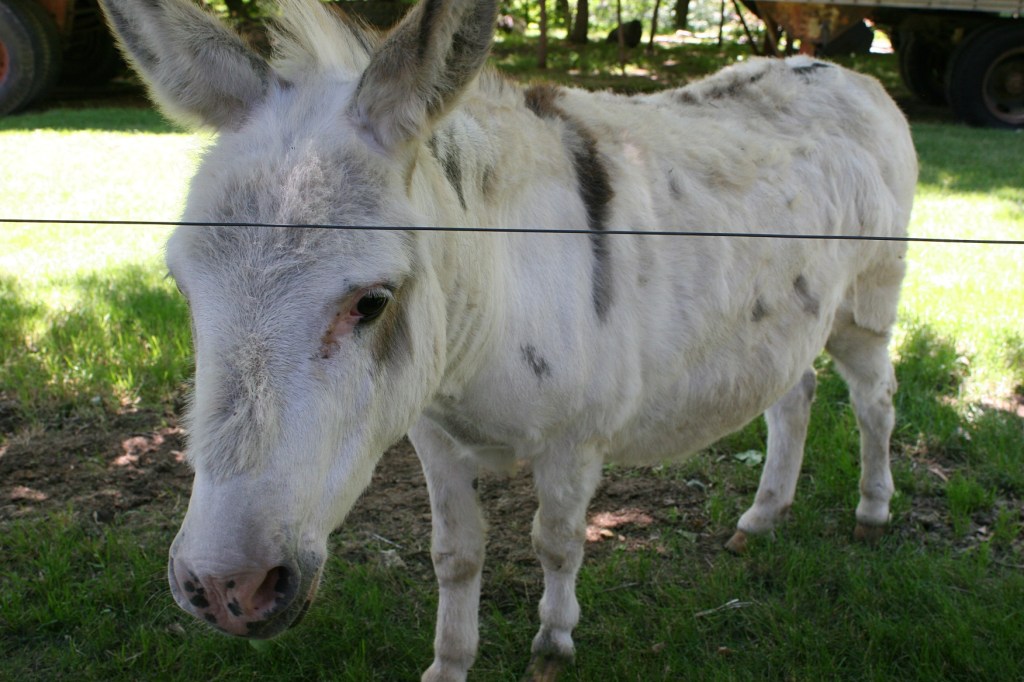
Before leaving Glende’s sale, I photographed these friendly donkeys behind a shed per an invitation to do so. (Minnesota Prairie Roots copyrighted photo September 2025)
Instead, I settled for photographing these two barn sales, which attract many, bring back memories and prove a delightful way to spend a bit of time on a stunning autumn day in southern Minnesota.
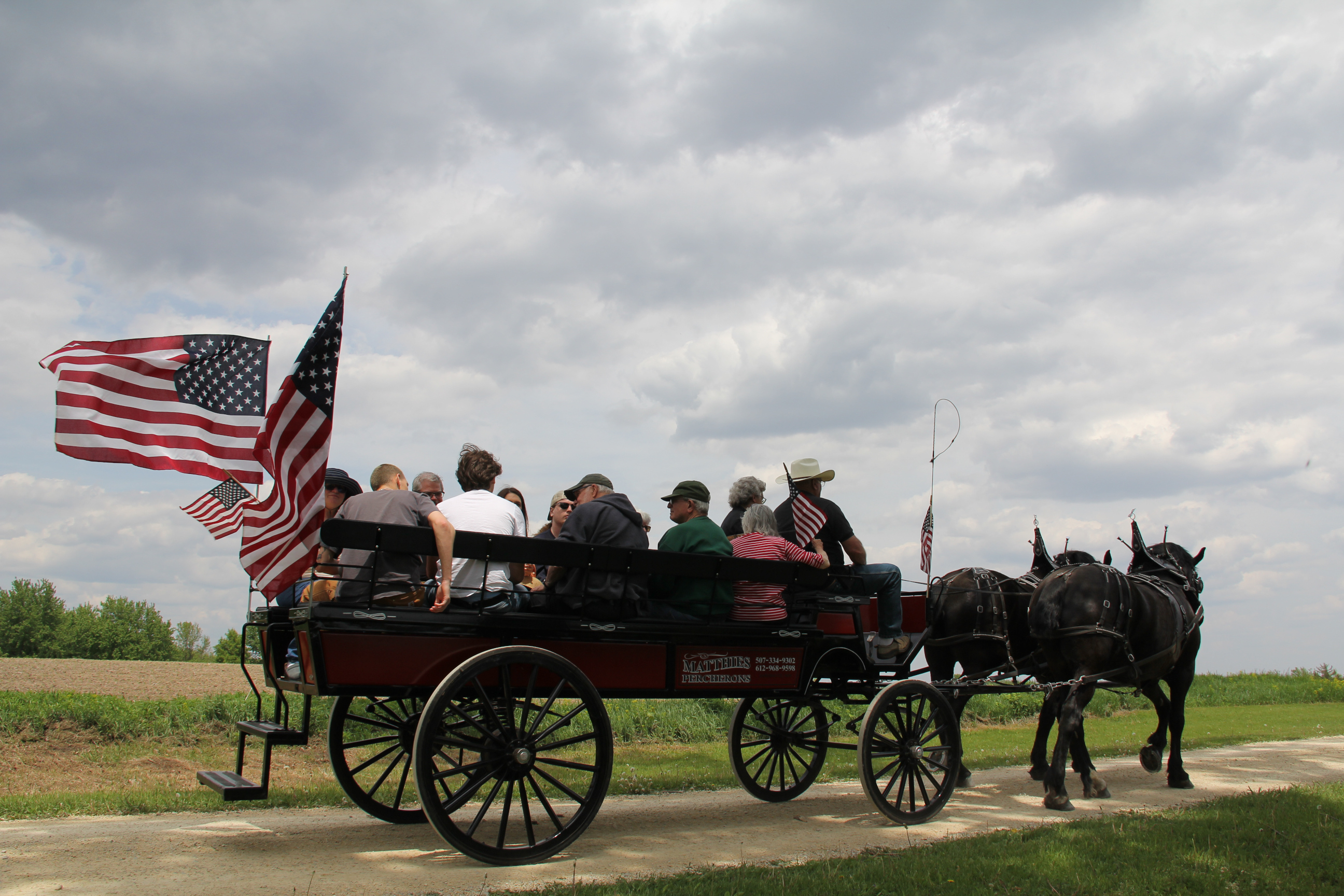
A horse-drawn wagon leads the parade along the gravel road to the Cannon City Cemetery. (Minnesota Prairie Roots copyrighted photo May 2025)
MEMORIAL DAY IN CANNON CITY is decidedly simple and old-fashioned, marking a 100-year-plus tradition of gathering in the 1867 cemetery to remember and honor veterans. This observation also embraces community with a mixture of mostly locals and those born here returning home for the 2 p.m. program followed by visiting, lots of visiting.
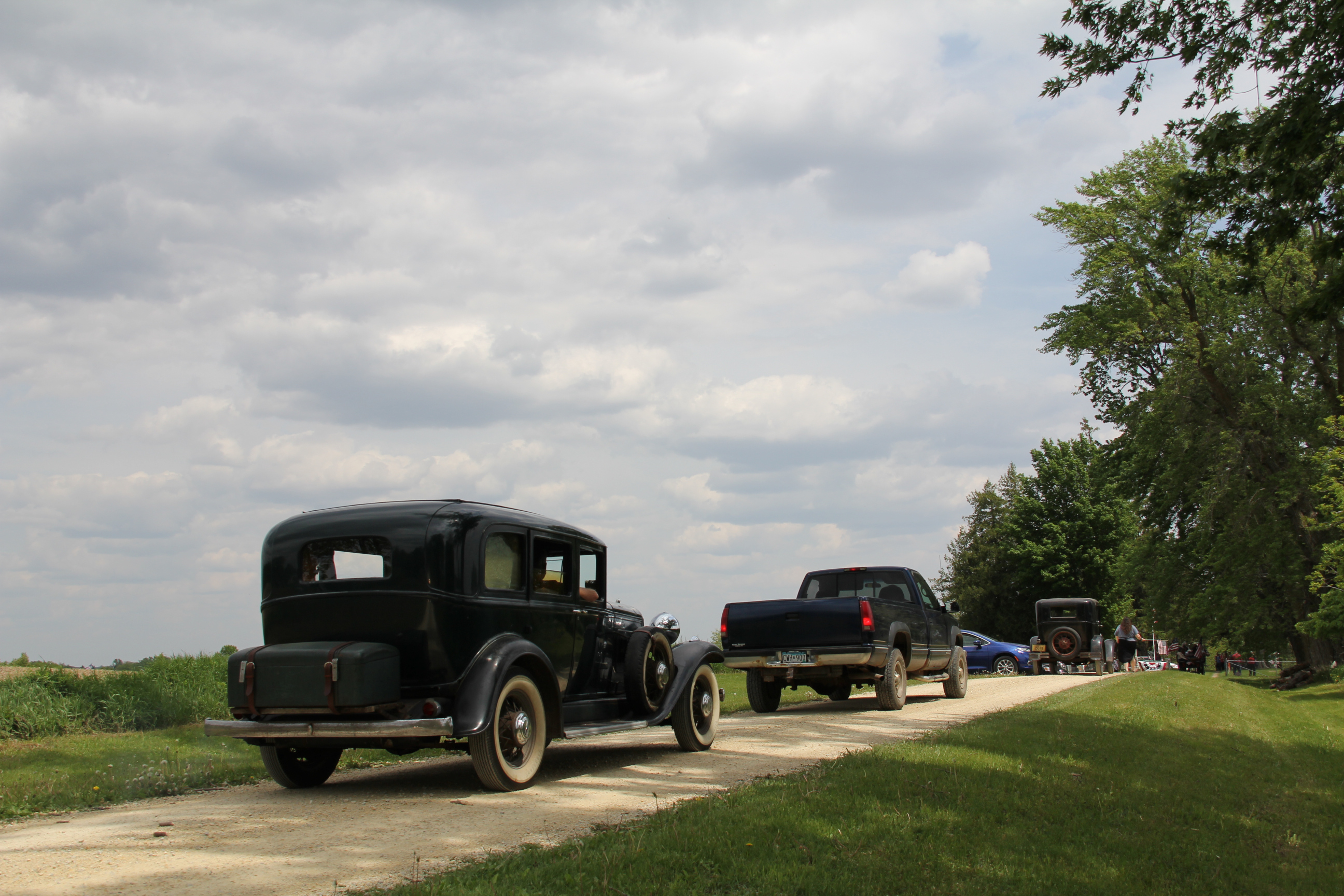
Several vintage vehicles and a pickup follow. (Minnesota Prairie Roots copyrighted photo May 2025)
Although I have no connection to this unincorporated village a few miles northeast of Faribault, I’ve found myself often drawn here on Memorial Day. The countryside setting and the way in which the day is celebrated appeal to my rural roots and upbringing 130 miles away on the southwestern Minnesota prairie.
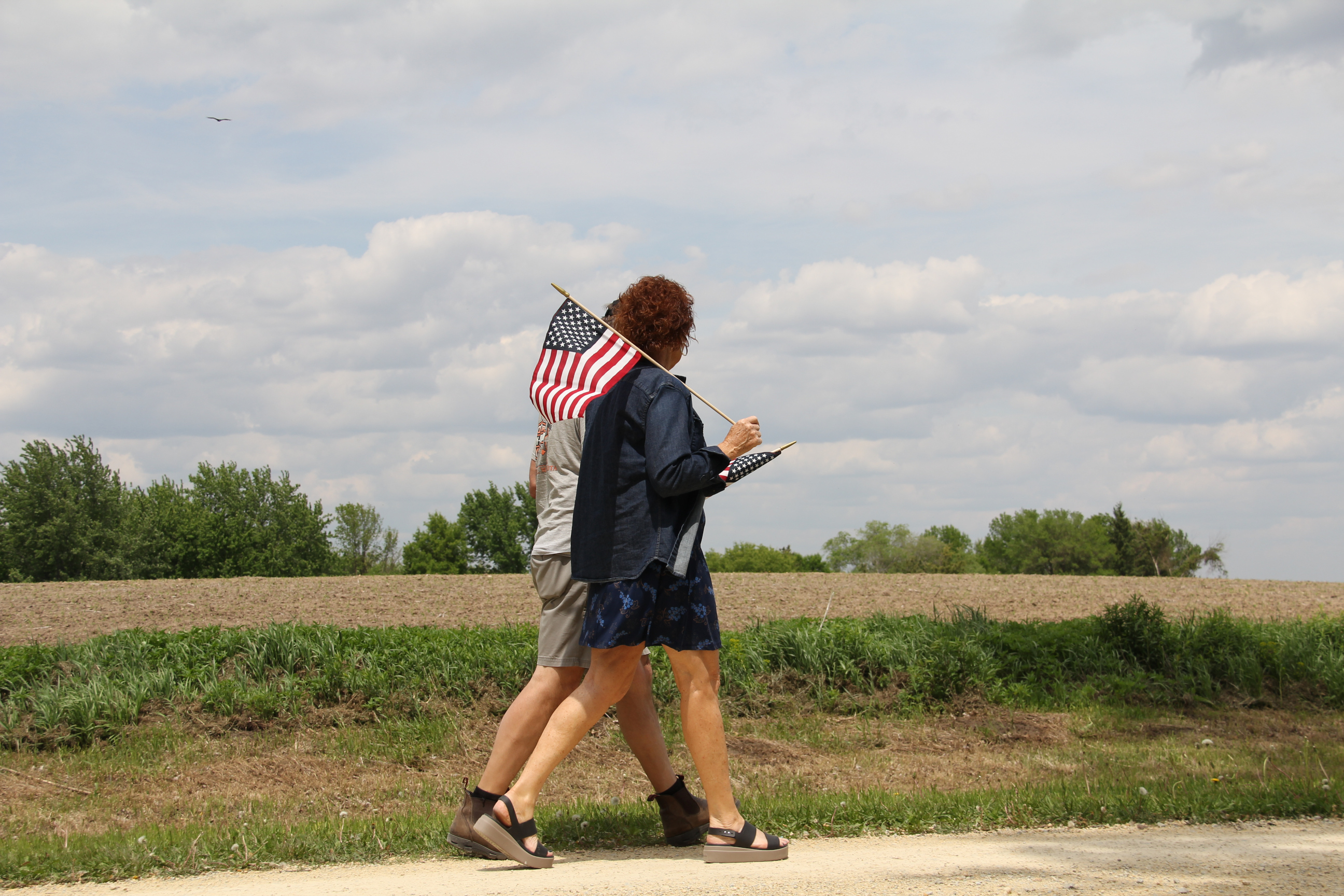
A few people walked the parade route, here past farm land. (Minnesota Prairie Roots copyrighted photo May 2025)
Monday’s event at Cannon City began with a parade from the nearby former country school to the cemetery. A small contingent of horse-drawn wagon, vintage vehicles and several walkers followed the gravel road past homes and farm fields to the fenced cemetery. I walked alongside the group in the road ditch, photographing the scene as they neared the graveyard.
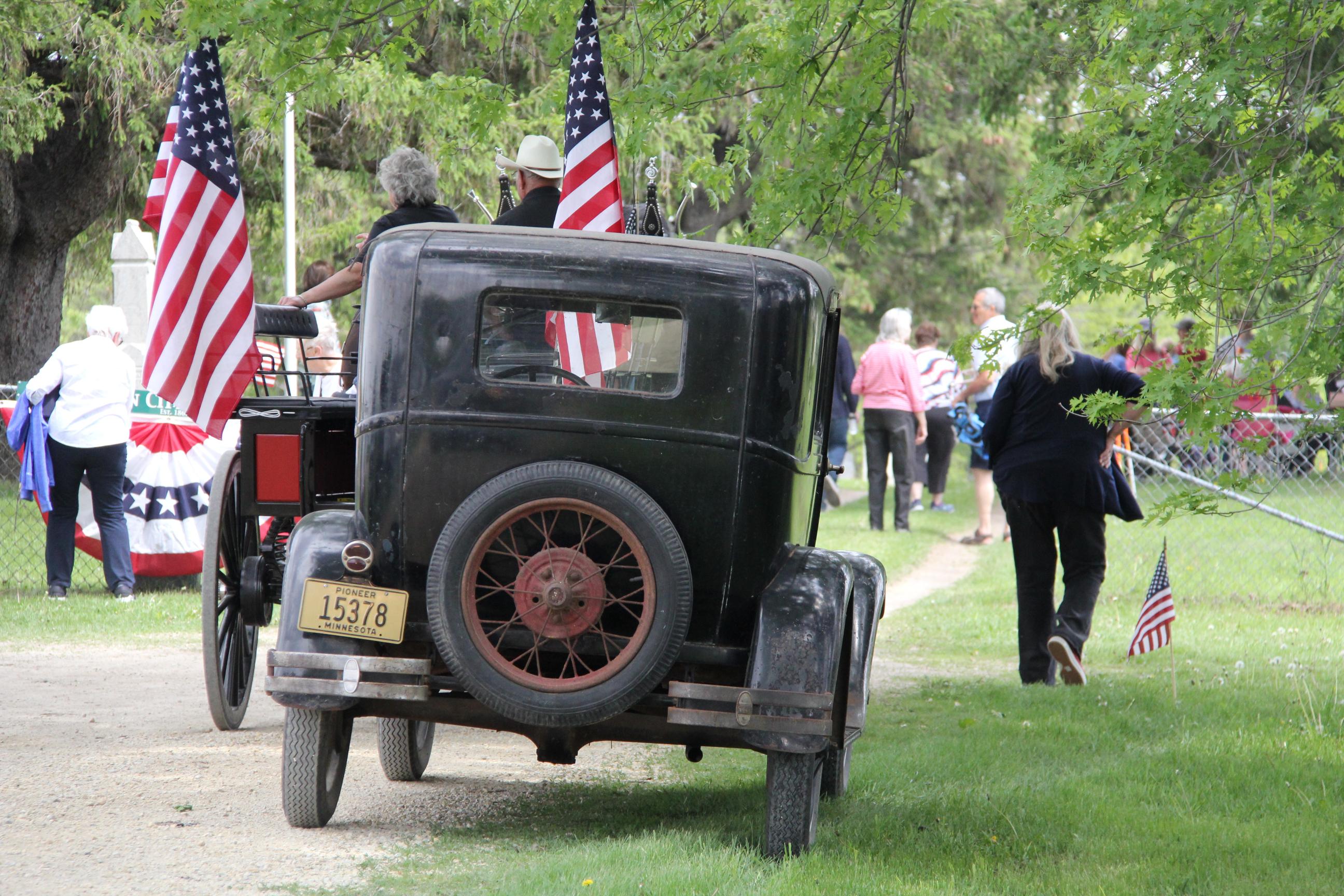
Vintage vehicles set an historic scene outside the cemetery gates. (Minnesota Prairie Roots copyrighted photo May 2025)
It was not difficult in that moment to imagine the long ago school children proceeding to the cemetery, carrying homemade floral wreaths of lilacs and other flowers in bloom. Several years ago that original Decoration Day parade tradition was revived. It’s a lovely nod to history.
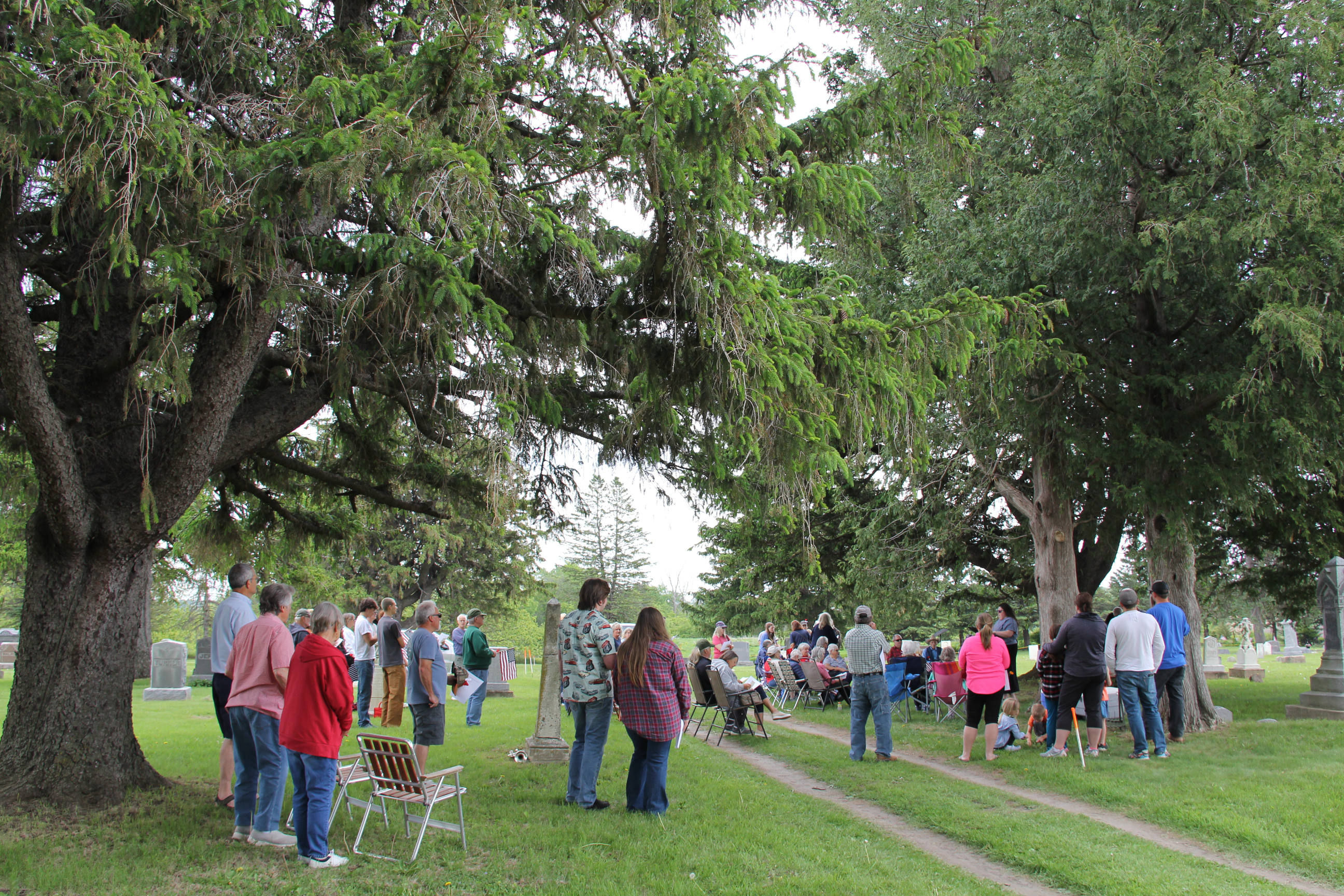
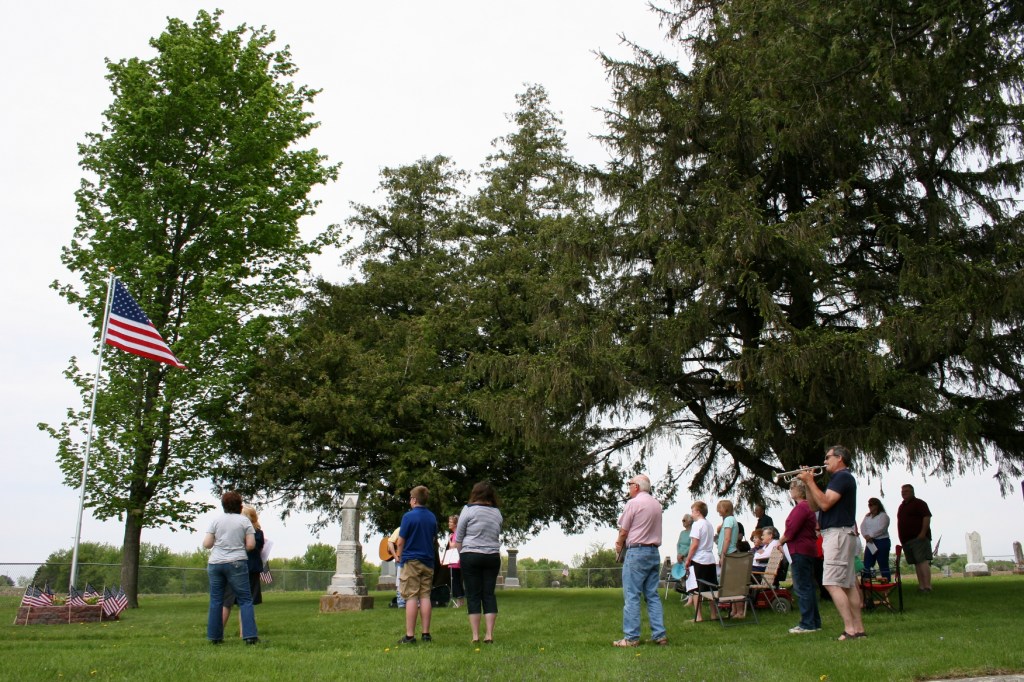
A crowd gathers for the Memorial Day program centered under the trees. (Minnesota Prairie Roots copyrighted photo May 2025)
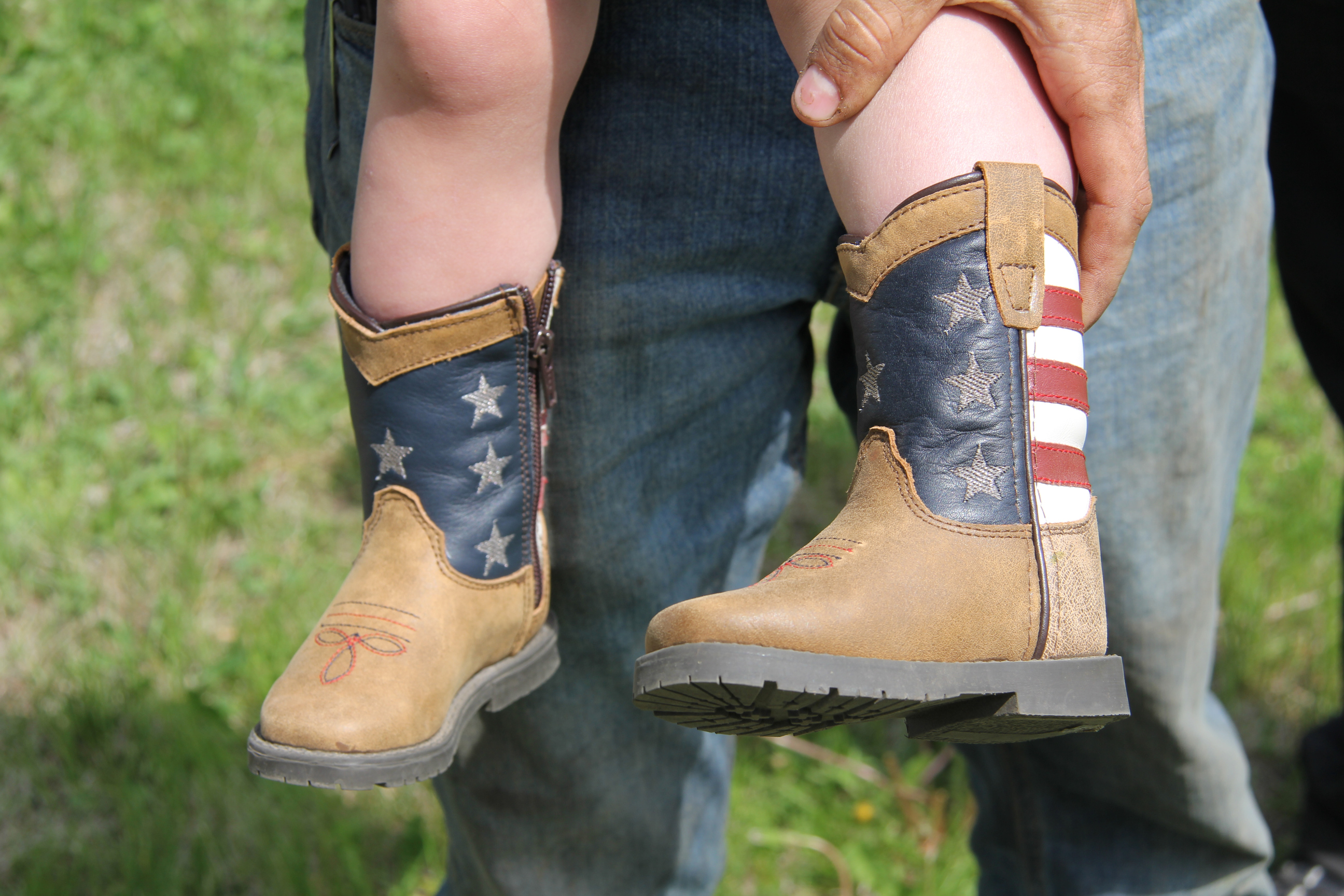
All ages attended, including Levi, almost two, who wore these patriotic boots. His grandpa is the cemetery caretaker. Levi helps him and his dad by picking up sticks before mowing. (Minnesota Prairie Roots copyrighted photo May 2025)
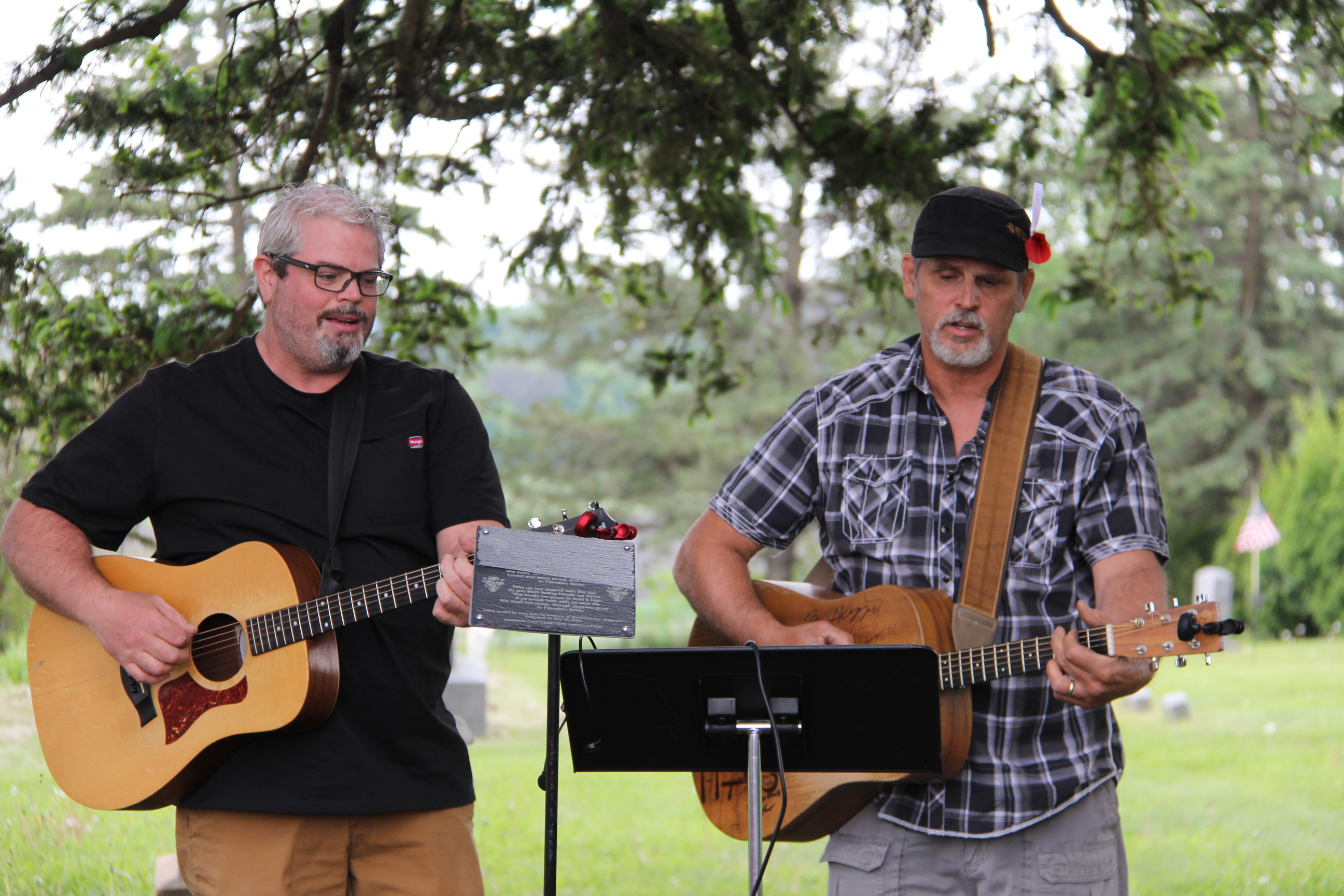
The Sartor Brothers lead musical selections. (Minnesota Prairie Roots copyrighted photo May 2025)
Inside the cemetery gate, folks gathered in the shelter of cedars and pines to listen to inspirational readings and poetry; to sing; to hear the names of 52 veterans buried here read aloud; and more.
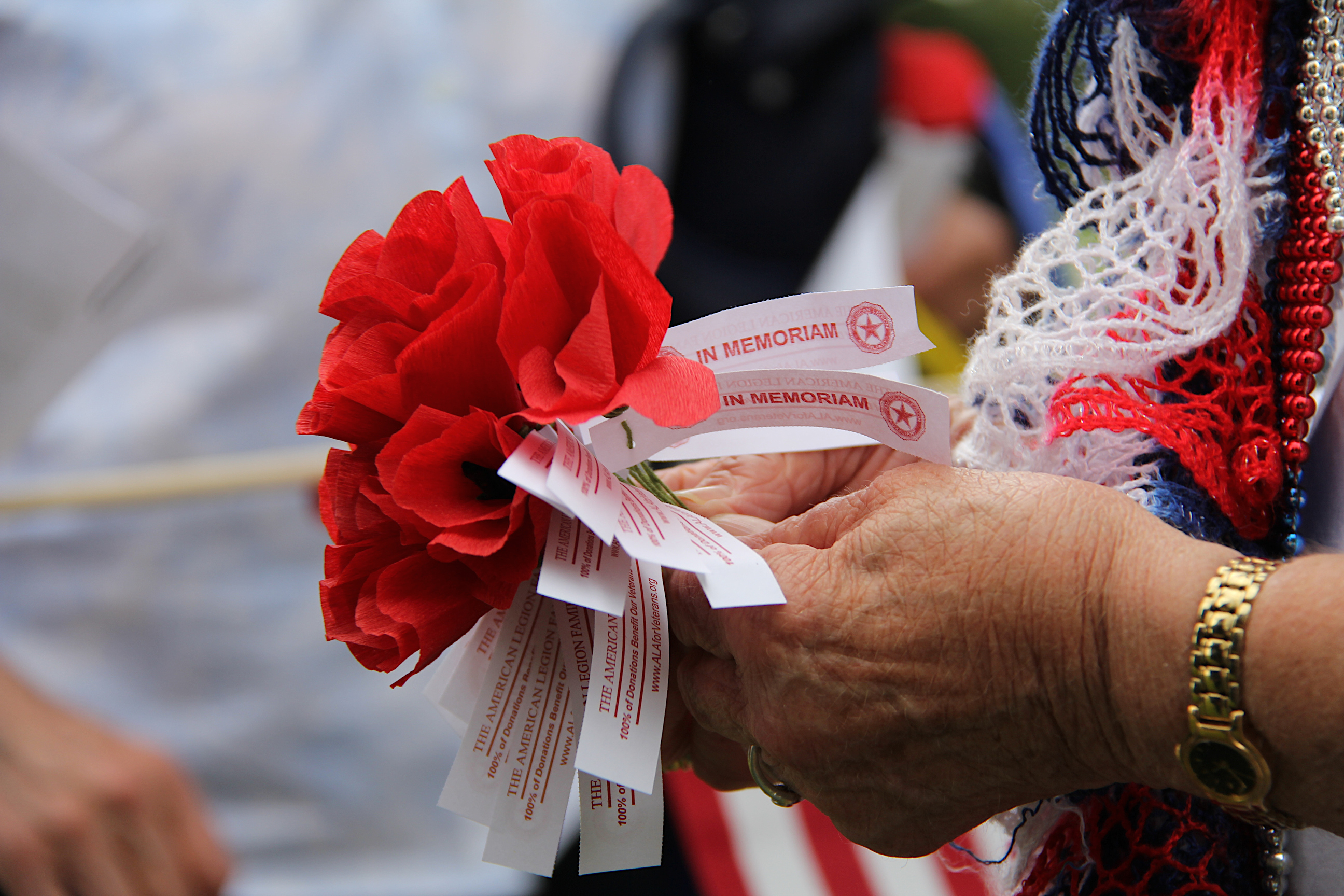
Handing out poppies to attendees. Members of the Faribault American Legion Auxiliary and other volunteers crafted the paper flowers. (Minnesota Prairie Roots copyrighted photo May 2025)
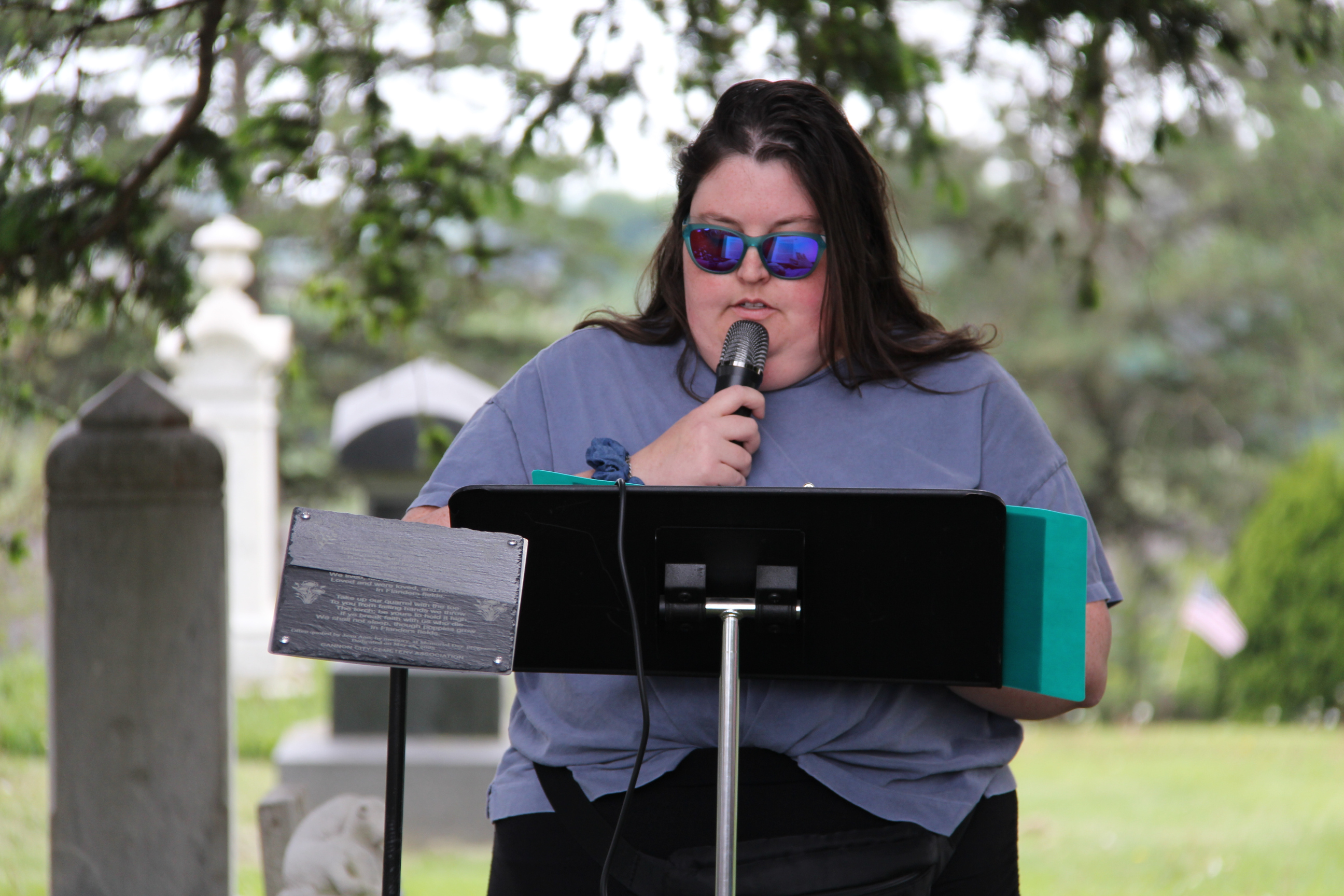
Organizer Kathleen Kanne led the program and talked about Jean Ann Pederson. The plaque in front of Kanne was given in honor of Jean Ann. (Minnesota Prairie Roots copyrighted photo May 2025)
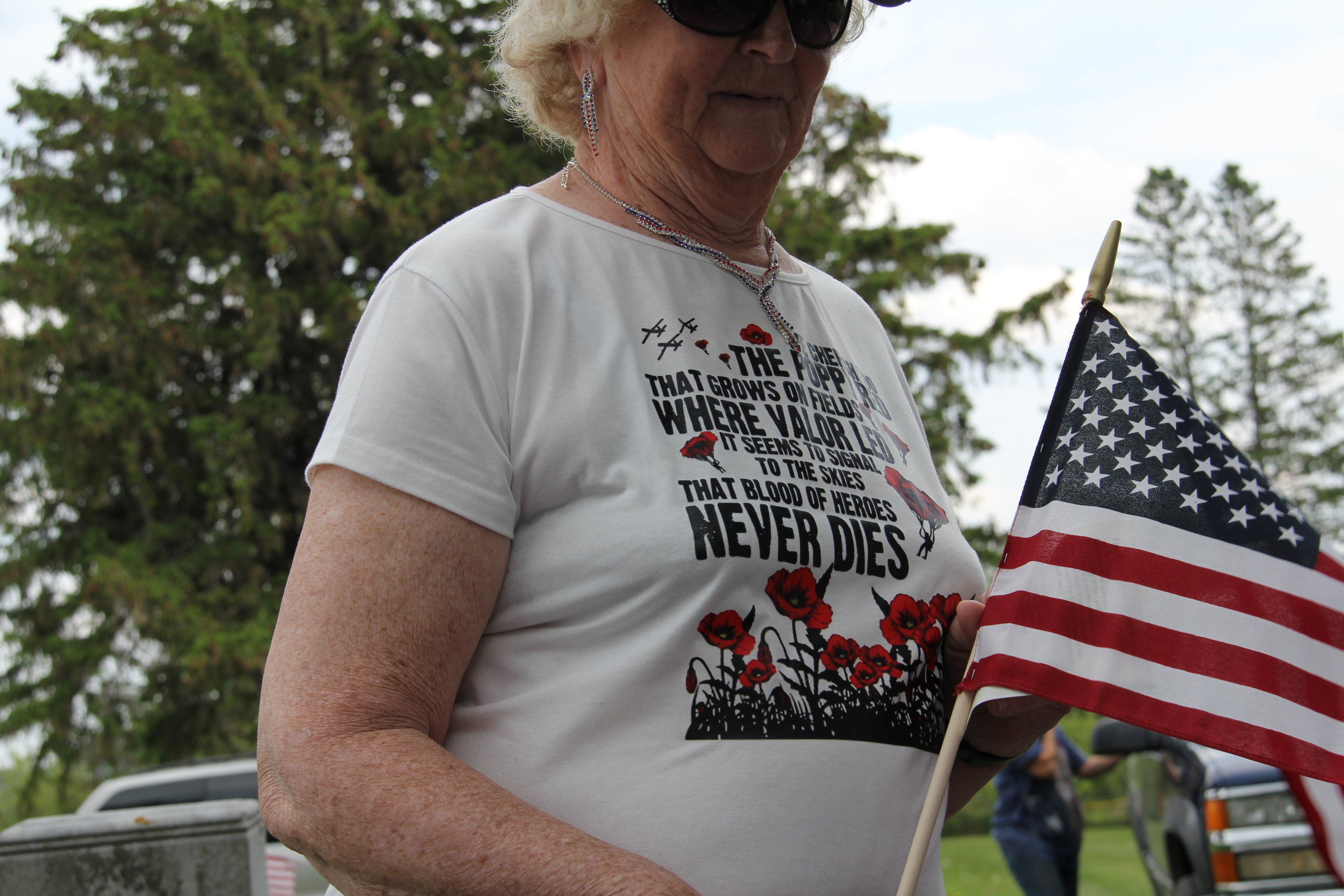
A woman’s t-shirt focuses on poppies, representing the blood of heroes who died in war. (Minnesota Prairie Roots copyrighted photo May 2025)
This year the “more” included excerpts from an interview with Jean Ann Greenville Pederson, a Cannon City native interviewed by Kathleen Kanne and Mel Sanborn. She died in February, shortly after her 93rd birthday. Each May, Jean Ann shared a bit of local Memorial Day history and read “In Flanders Fields” to attendees. Kanne, program organizer, announced the placement of a small “In Flanders Fields” graveside plaque honoring Jean Ann. She then invited us to read the poem together. I recited it, having memorized “In Flanders Fields” as a child tasked with sharing the poem several times during my hometown Memorial Day program. In Flanders fields the poppies blow/Between the crosses, row on row…
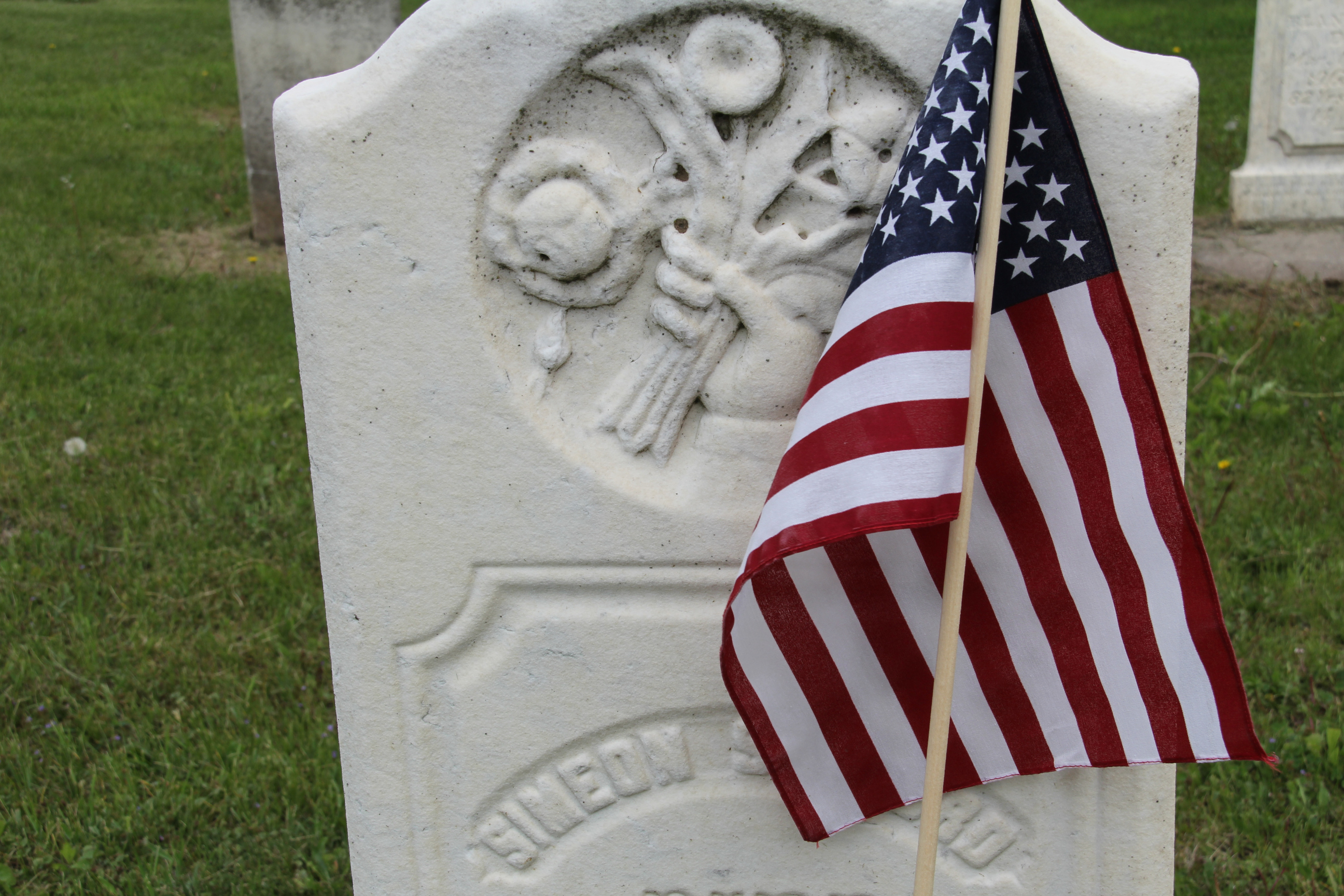
American flags marked the graves of veterans in the Cannon City Cemetery. (Minnesota Prairie Roots copyrighted photo May 2025)
Throughout this commemorative event in the Cannon City Cemetery, I was intimately aware of my surroundings. Under the trees. Next to farm fields. The wind sweeping across the hill. Birds chirping. It felt reverent, almost holy—this place like a sanctuary. For the living and the dead.
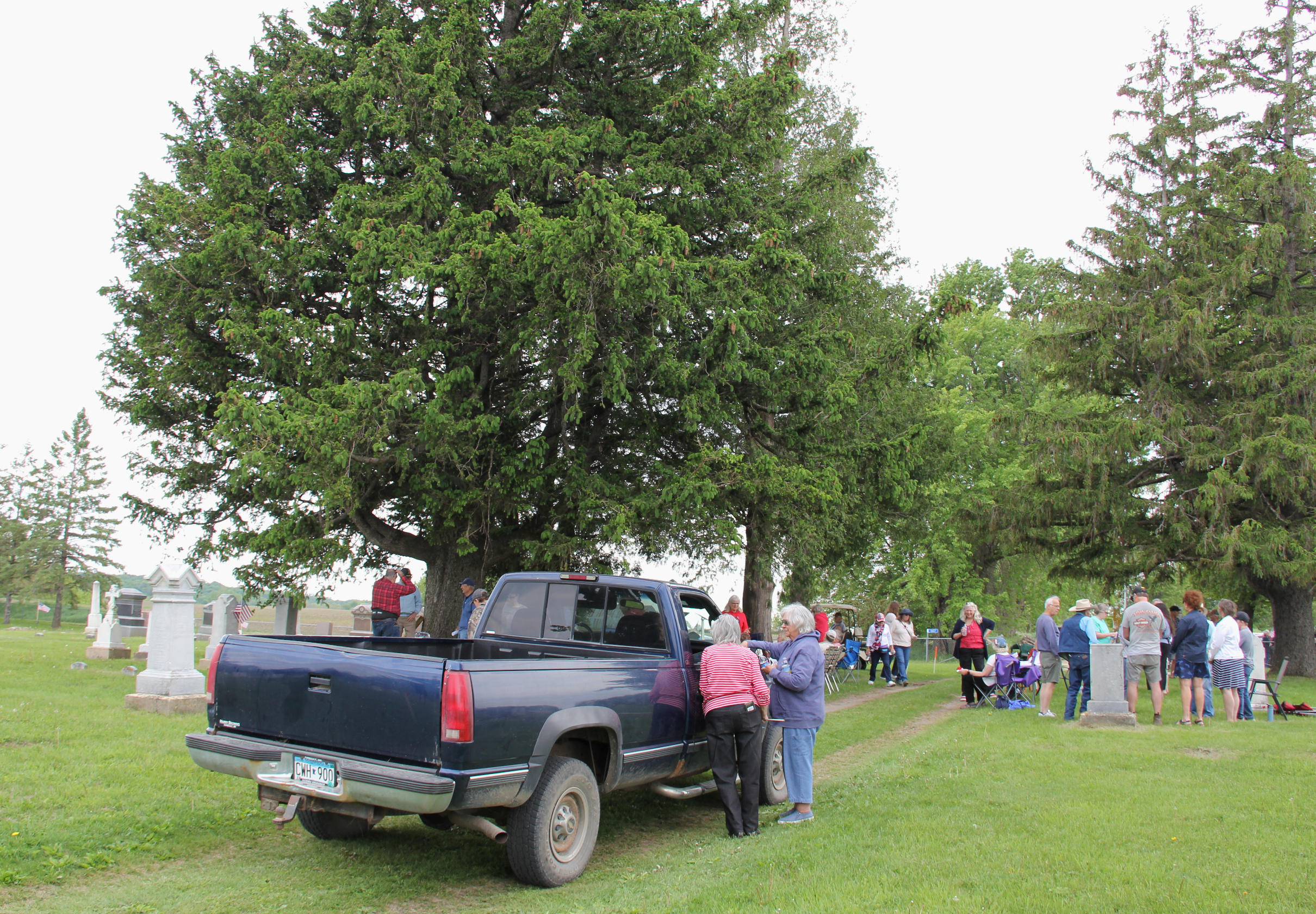
Visiting after the program. (Minnesota Prairie Roots copyrighted photo May 2025)
After the program concluded, families meandered among the gravestones. Stopping. Gathering. Others remained under the cedars and pines, connecting and reconnecting. I grabbed a chocolate chip cookie and went in search of my friend’s, veteran Rhody Yule’s, grave. I found it, flat against the ground, hidden by a bush.
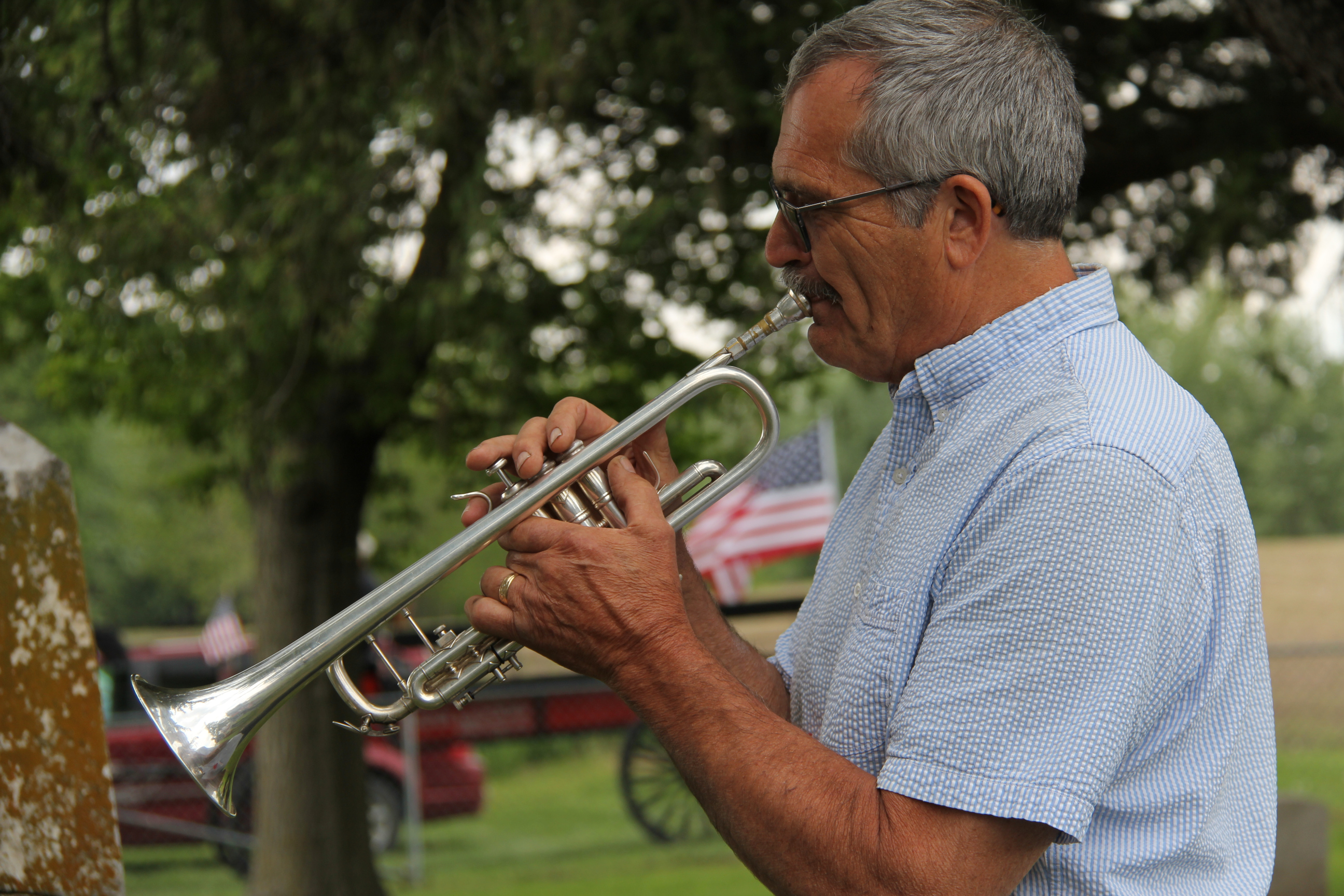
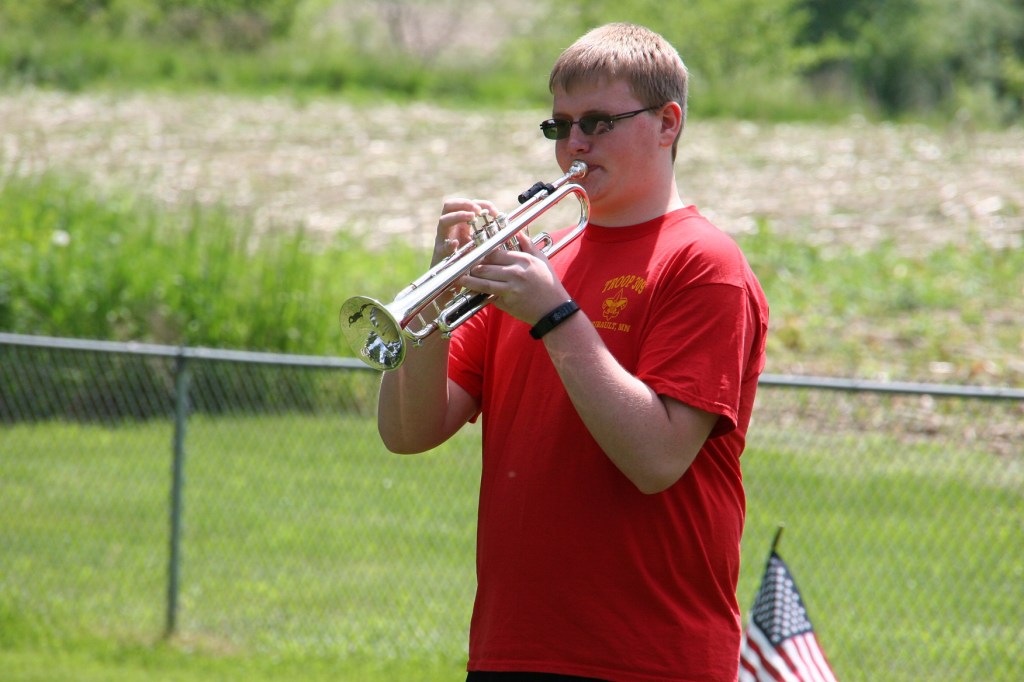
I heard Steve Bonde play taps at the Memorial Day service in Faribault in the morning and then again at Cannon City in the afternoon. (Minnesota Prairie Roots copyrighted photo May 2025)
Later, as I headed toward the van to leave, I heard Steve Bonde, who earlier played patriotic music, playing more tunes. It was the perfect way to end my time here, where respect for veterans, for community and for tradition carries through generations of those rooted in Cannon City.
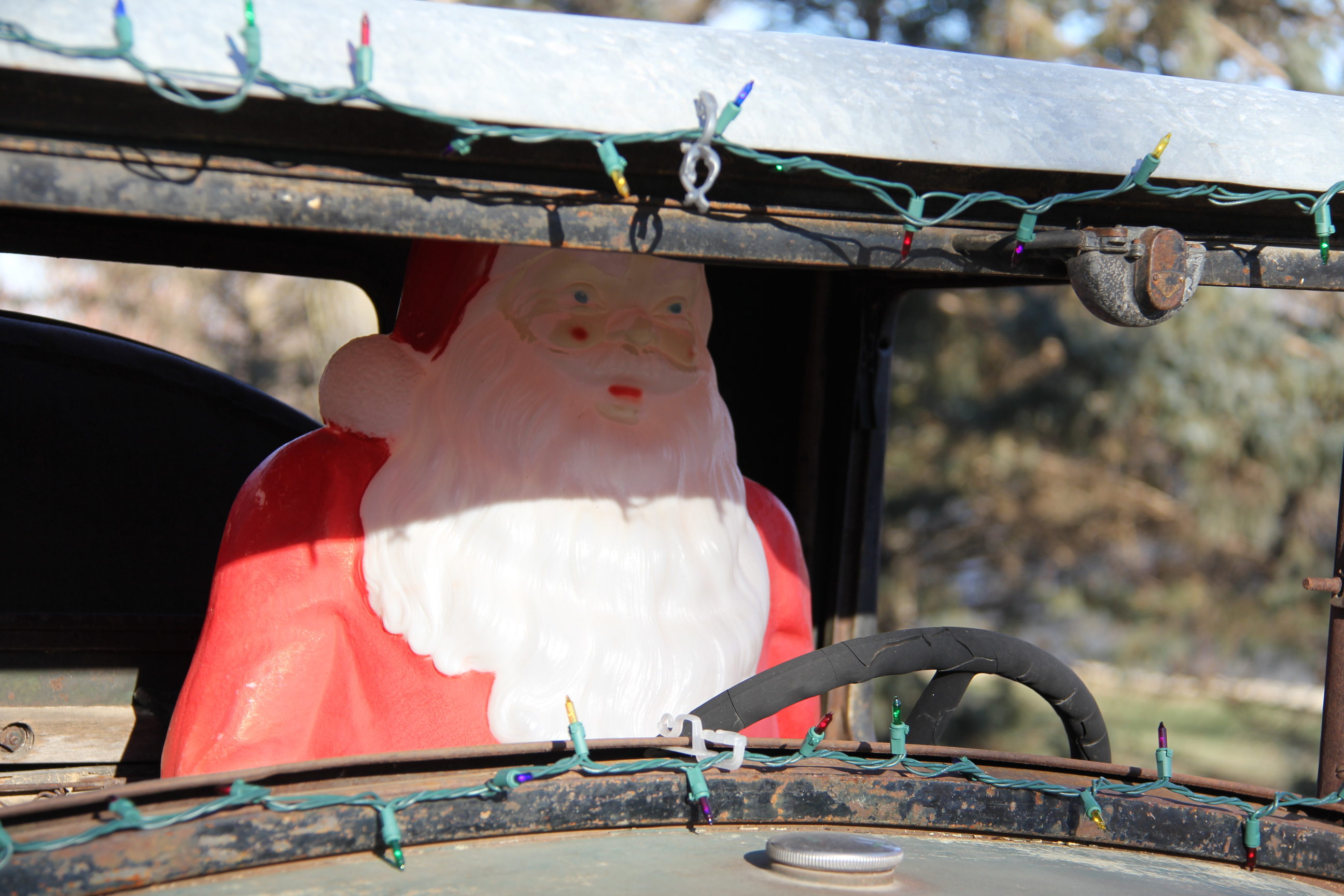
A vintage Santa waits inside a vintage vehicle at the recent “Vintage Christmas in the Barn” holiday market in Cannon City. The holiday sale is over. (Minnesota Prairie Roots copyrighted photo November 2024)
DO MOST KIDS STILL BELIEVE in Santa Claus? Or at least the magic of Santa? I hope so.
There’s something profoundly wonderful about Santa. He represents the best in all of us. He listens. He’s always happy. He loves cookies and milk. And he doesn’t promise us the moon. To do so would not be in our best interests, although a child with a long list of wants may disagree.
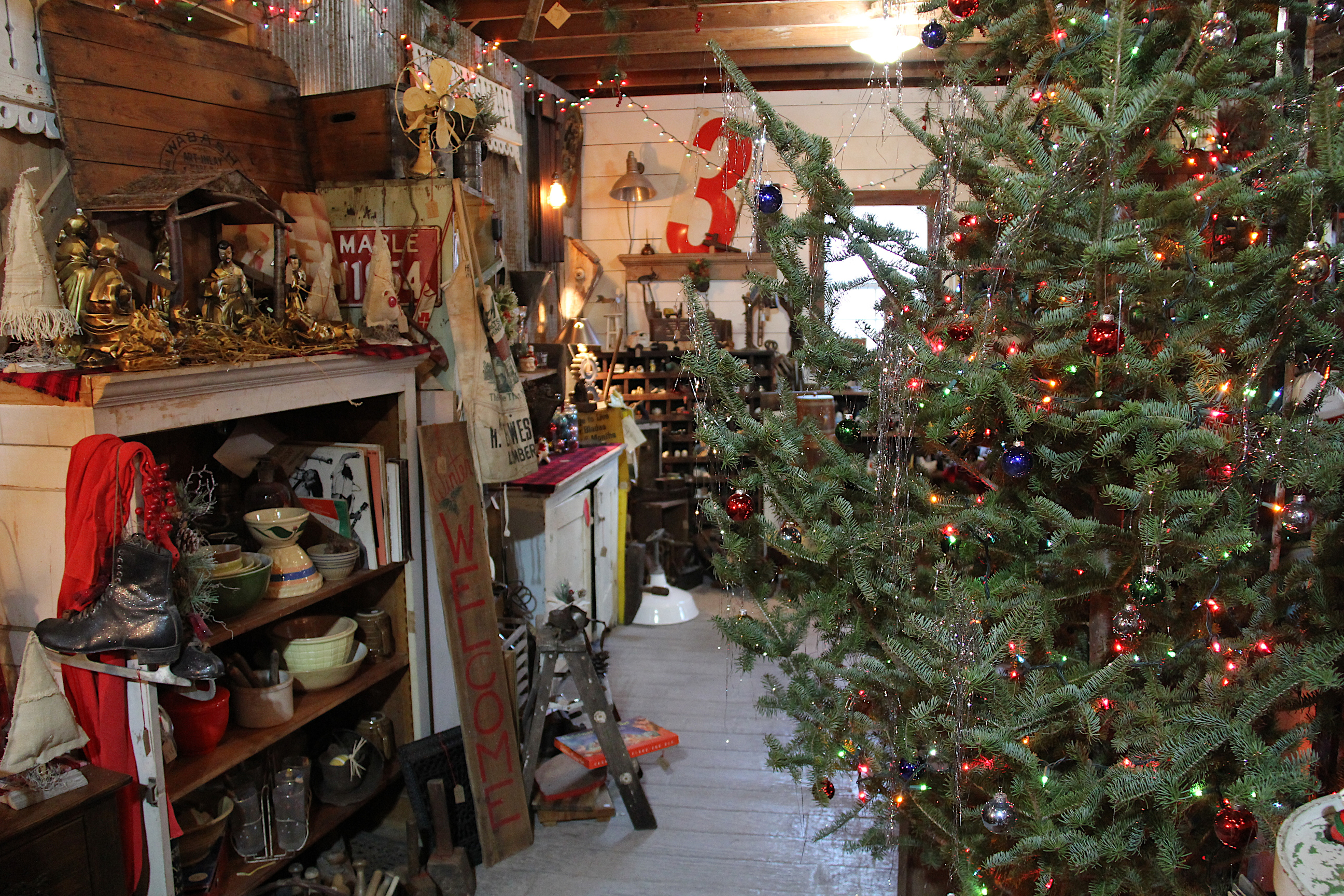
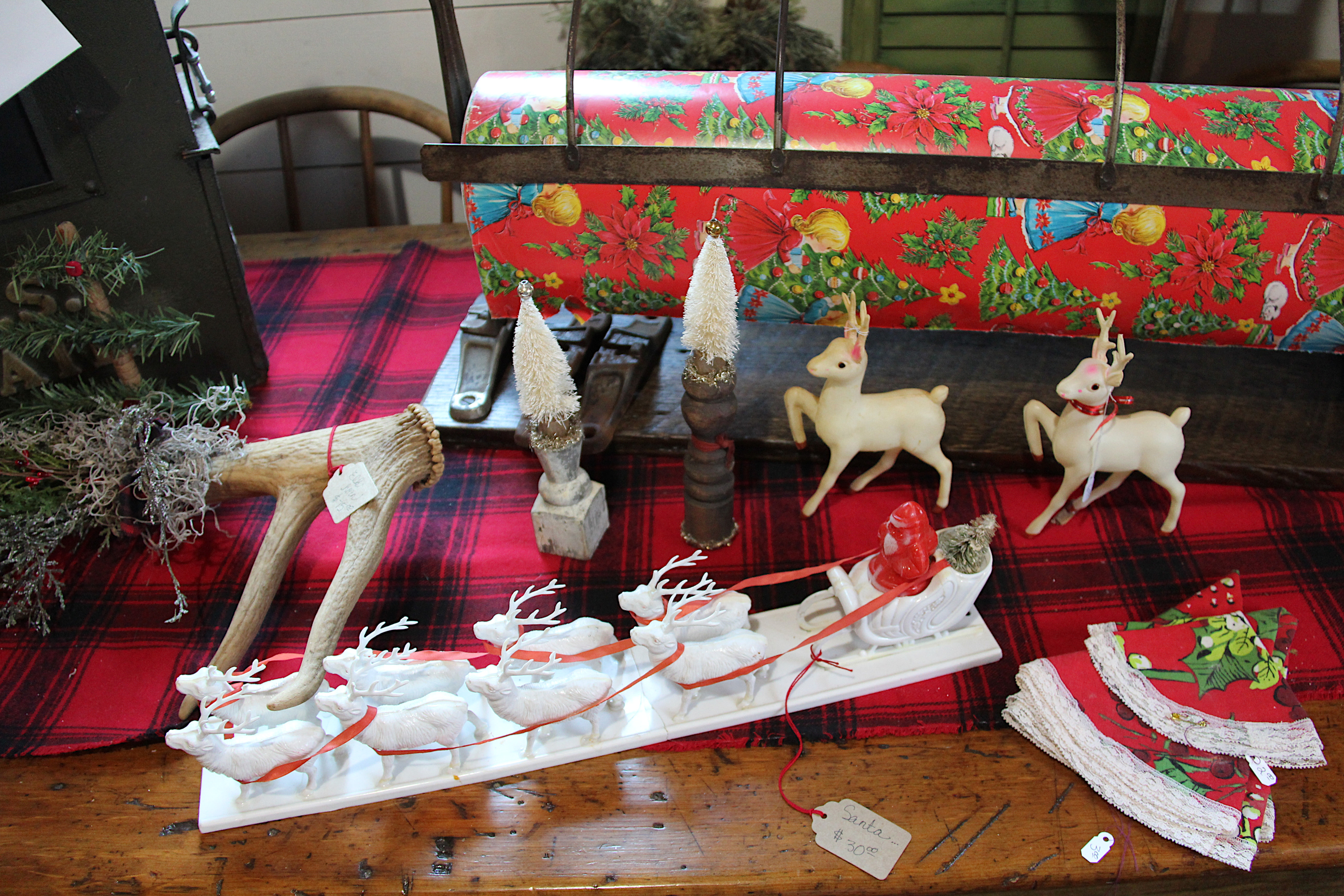
Generations of kids have wondered what they will find under the tree at Christmas. This scene is inside the barn at the recent “Vintage Christmas in the Barn” holiday sale. (Minnesota Prairie Roots copyrighted photo November 2024)
There was a time when I paged through the Sears & Roebuck Christmas catalog looking for toys I thought I needed. It really was a futile effort as I never got them anyway. But I was dreaming as every child is wont to do before Christmas. Except, I think, in 2024 kids are more likely to get what they want.
Outdoor decor for sale at “Vintage Christmas in the Barn” earlier in the holiday season. (Minnesota Prairie Roots copyrighted photo November 2024)
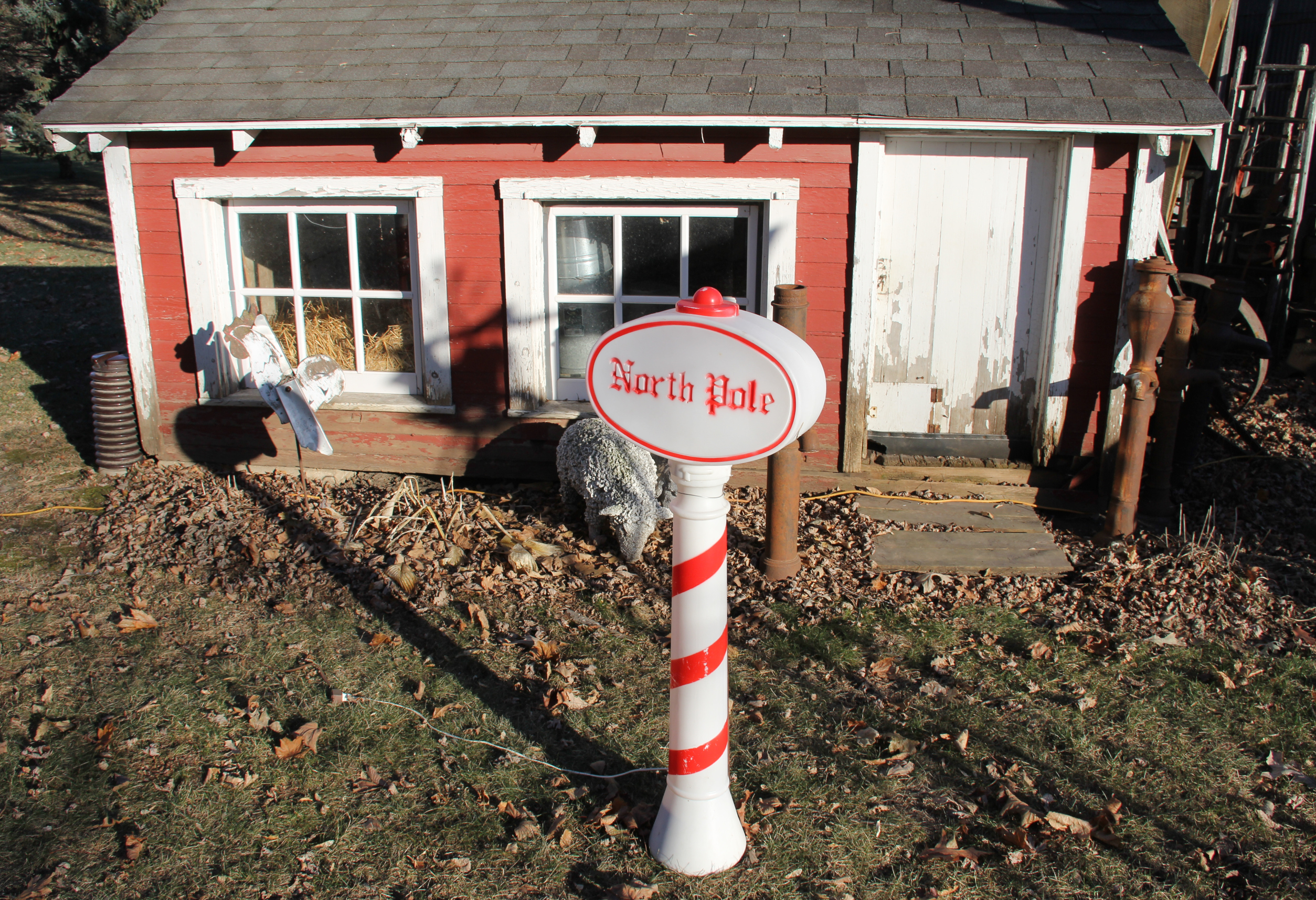
I wonder what Santa thinks of all the requests today. Would he prefer to hire elves who are skilled only in woodworking versus computer programming? Would he prefer simpler toys that engage the imagination and spark creativity to so many electronics? Does his head spin when he inventories the ever-growing number of gadgets and batteries piling up at the North Pole?
Holiday goods for sale at “Vintage Christmas in the Barn.” (Minnesota Prairie Roots copyrighted photo November 2024)
Just thinking about everything Santa needs to keep straight makes my head spin. At least he’s contracted with others to help in gift delivery. I never thought one team of reindeer could possibly handle the job. Santa can’t do everything. There’s a lot of pressure to get gifts delivered on time. (Thank you, postal workers, and others.)
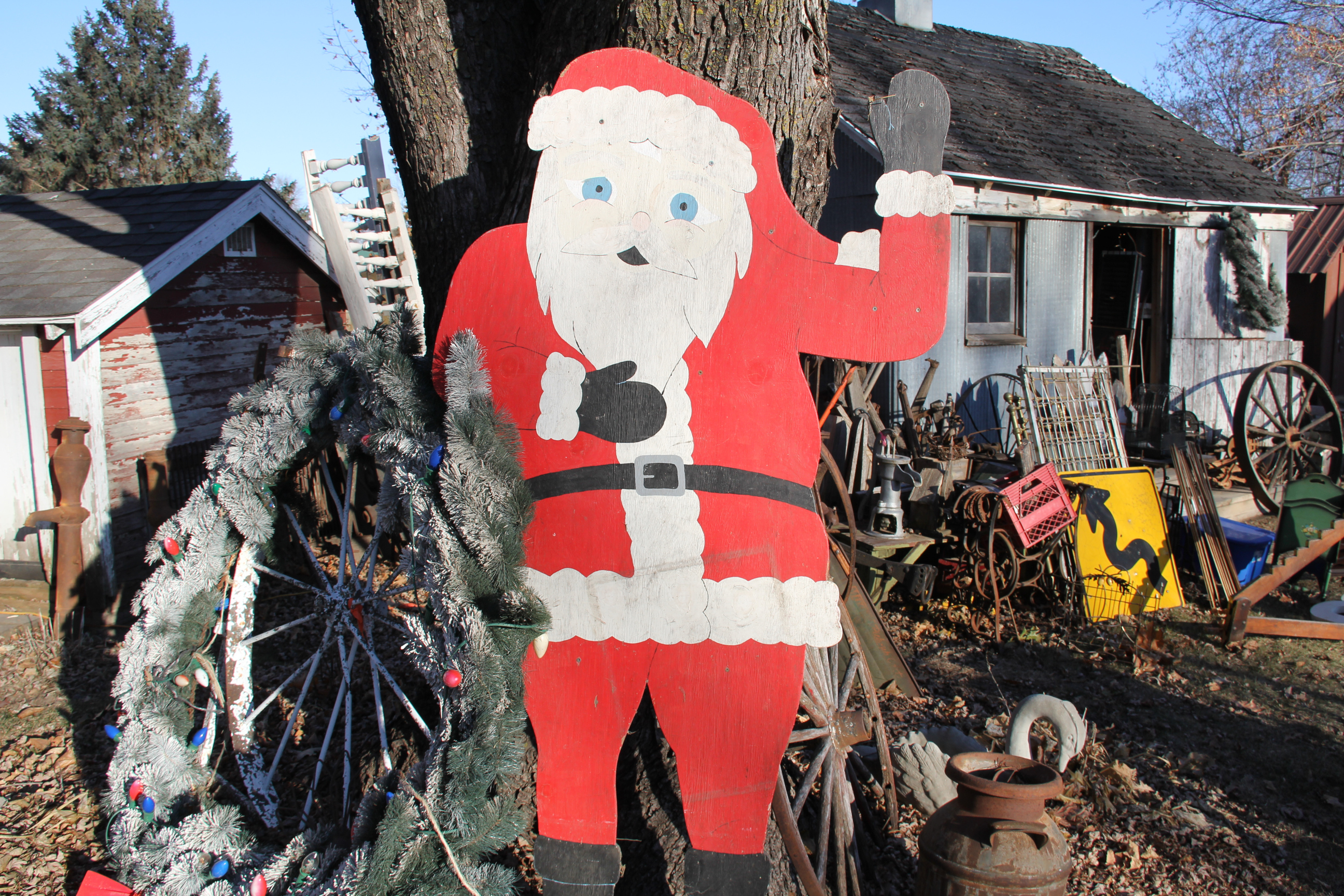
An oversized, handcrafted wooden Santa greets shoppers at “Vintage Christmas in the Barn.” (Minnesota Prairie Roots copyrighted photo November 2024)
Despite all of the changes through the decades, Santa remains as popular as ever, so it seems to me. Parents still plop crying babies on Santa’s lap for photos. Kids approach the Jolly Old Guy with a mix of trepidation and hope. In the end, Santa still holds a sense of wonder that remains timeless through the generations. And therein lies the magic of Santa. Do you believe?
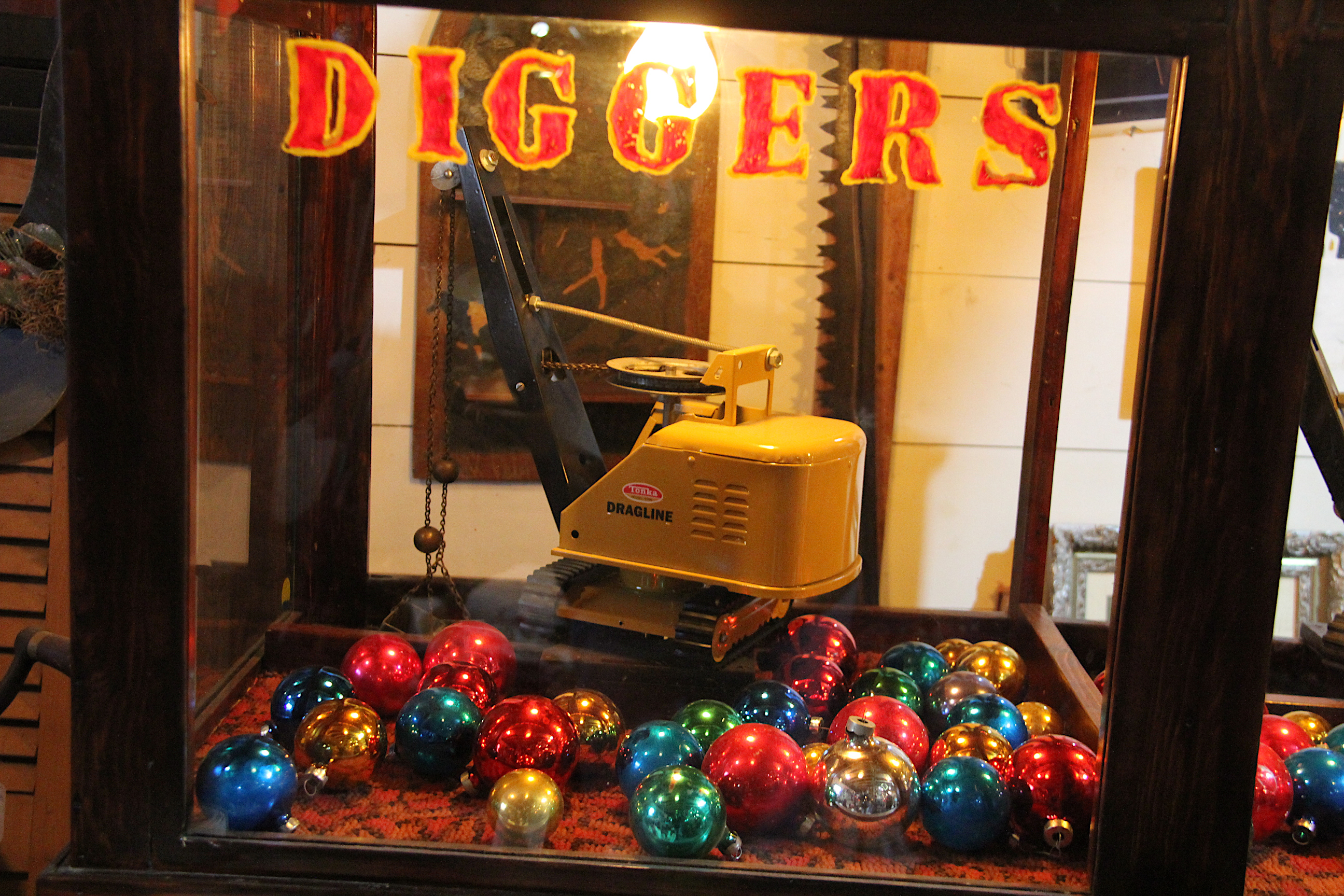
A creative merchandise display inside the barn at “Vintage Christmas in the Barn,” which featured old stuff for sale inside a barn, an outbuilding and outdoors. My older brother had a Tonka digger. (Minnesota Prairie Roots copyrighted photo November 2024)
MENTION THE WORD “vintage” and I’m all in. Perhaps it’s my age. But probably not. I’ve always preferred the stuff of yesteryear to the stuff of today. For that reason, I am drawn to shops, garage sales and other places selling antiques, primitives, collectibles, second hand and vintage.
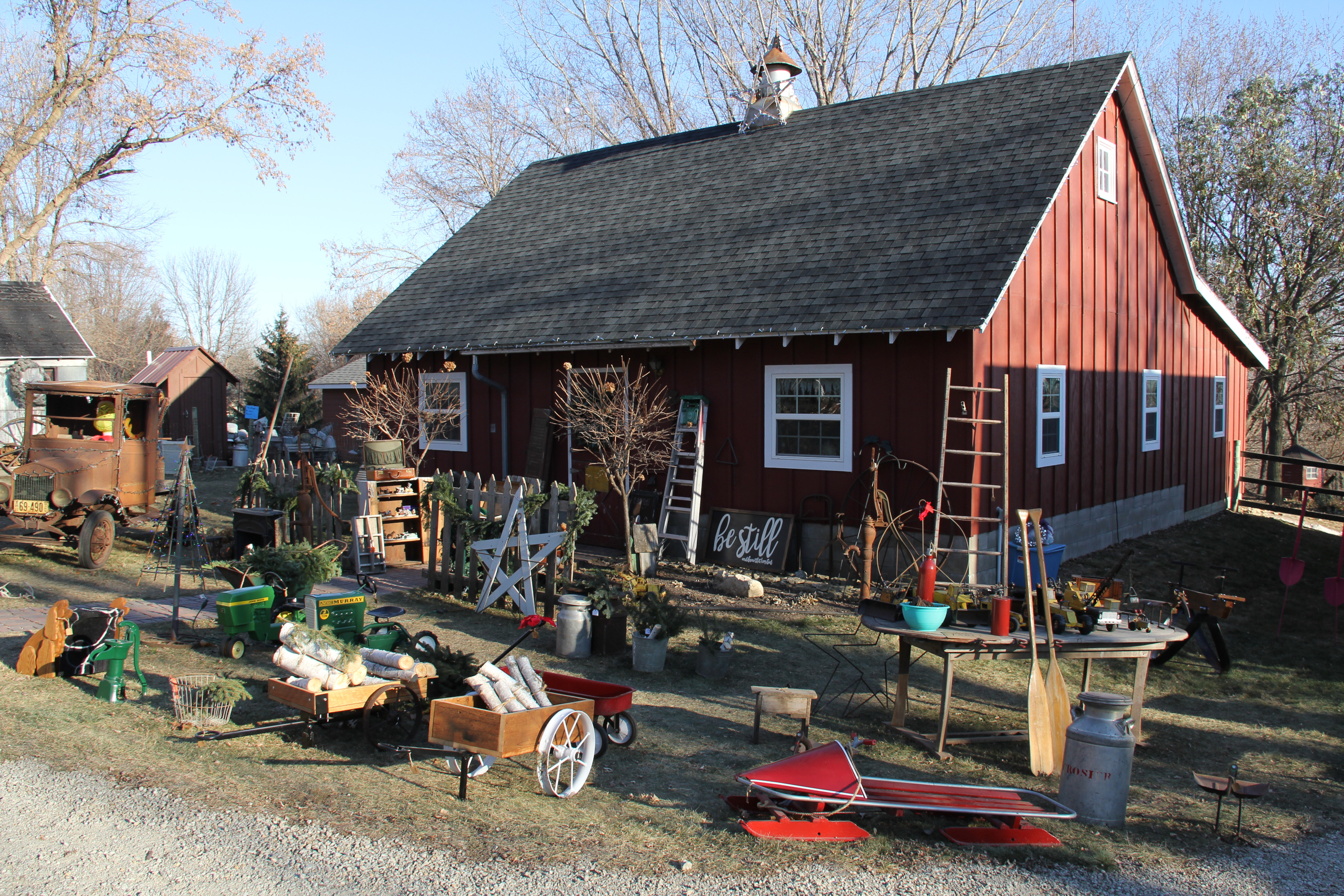
The site of the recent holiday market, “Vintage Christmas in the Barn,” in Cannon City. (Minnesota Prairie Roots copyrighted photo November 2024)
This time of year, especially, “old” is out there, including in Cannon City, where Debbie Glende, aka The Crabby Wren, opens her outbuildings for occasional seasonal sales. Her holiday market, “Vintage Christmas in the Barn,” is no longer open. But it got me thinking about how much I appreciate the goods of yesteryear. And how this old stuff can make an ideal Christmas gift. It’s even a bit trendy now, especially with the younger generation, to shop thrift stores. Repurpose, reuse and keep stuff out of the landfill.
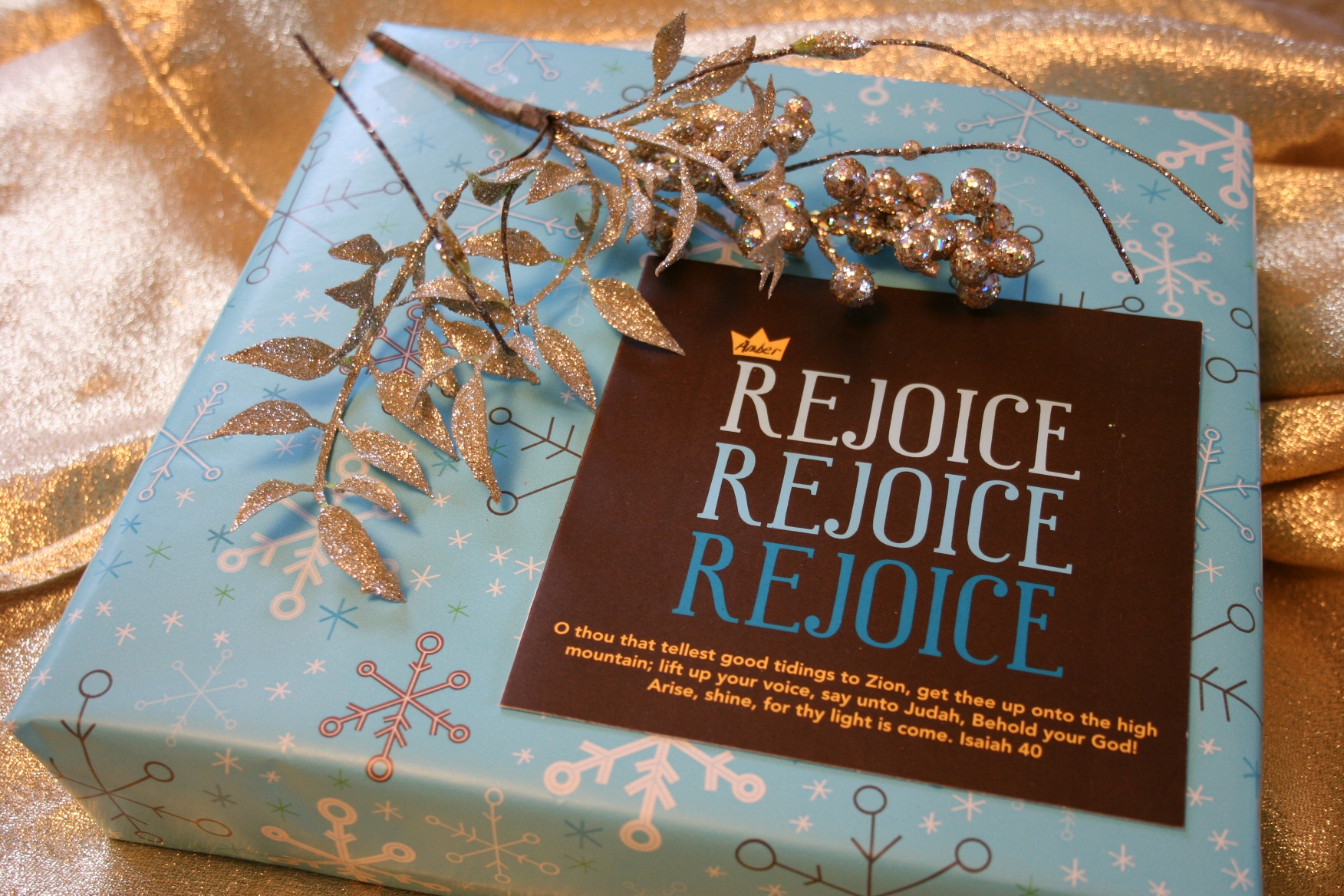
I recycled festive holiday trim and a card from Christmases past to decorate this gift. (Minnesota Prairie Roots copyrighted file photo)
I’ve been doing this for a long time. Buying used, using goods passed down to me from family, even gifting second hand. And, yes, I save and reuse gift bags, tissue paper, ribbons and bows and recycle greeting cards as gift tags, all to the ridicule of my siblings. Let ’em laugh. Mom would be proud that I’m following her thrifty example.
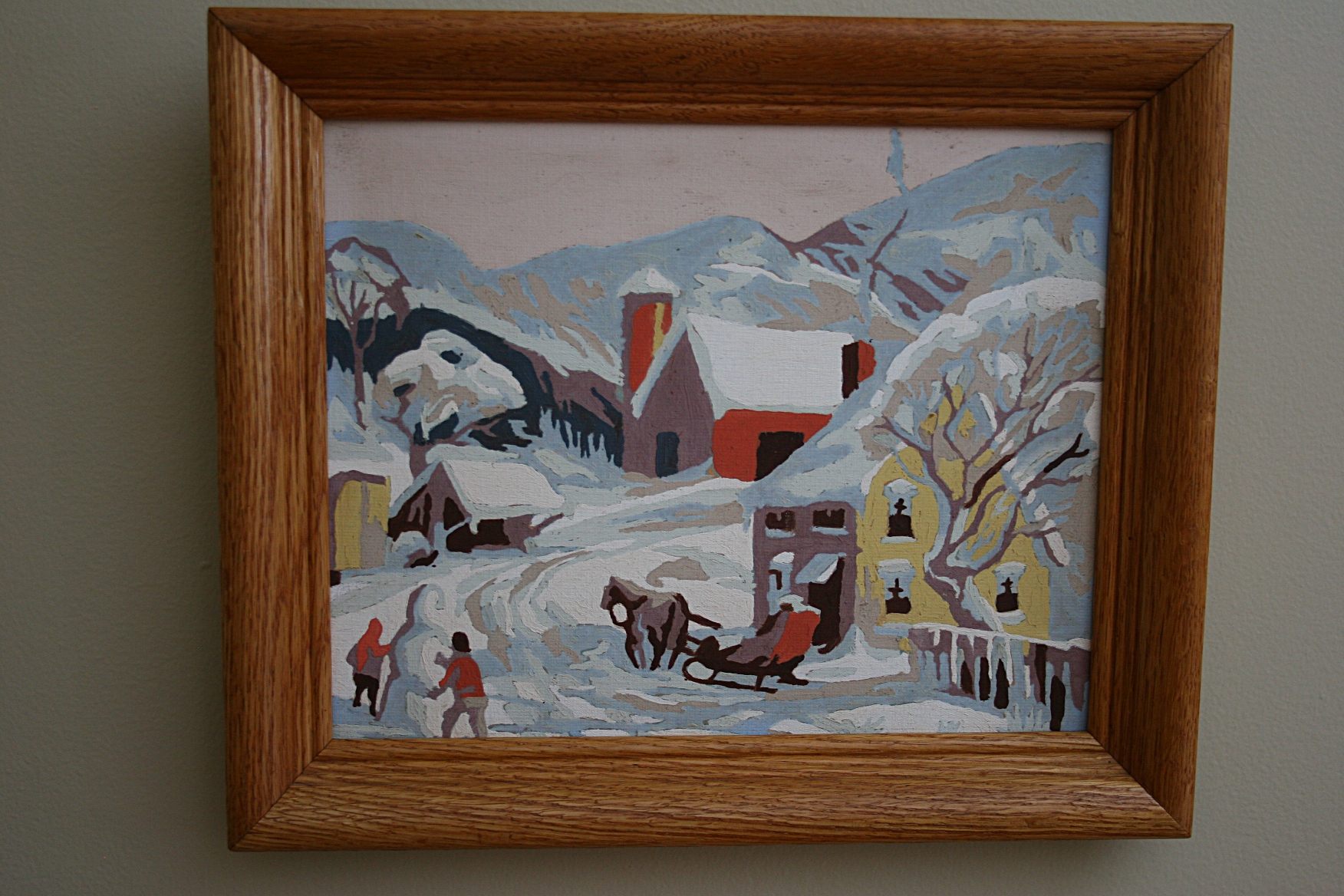
A paint-by-number winter scene painted by my Great Grandma Anna and currently displayed in my home for the holidays. (Minnesota Prairie Roots copyrighted file photo)
If you were to step into my home, you would find lots of vintage. I have collections of vintage glassware, which I use daily; vintage tablecloths, pulled out whenever I have dinner guests; and vintage art (including paint-by-number), displayed throughout my home.
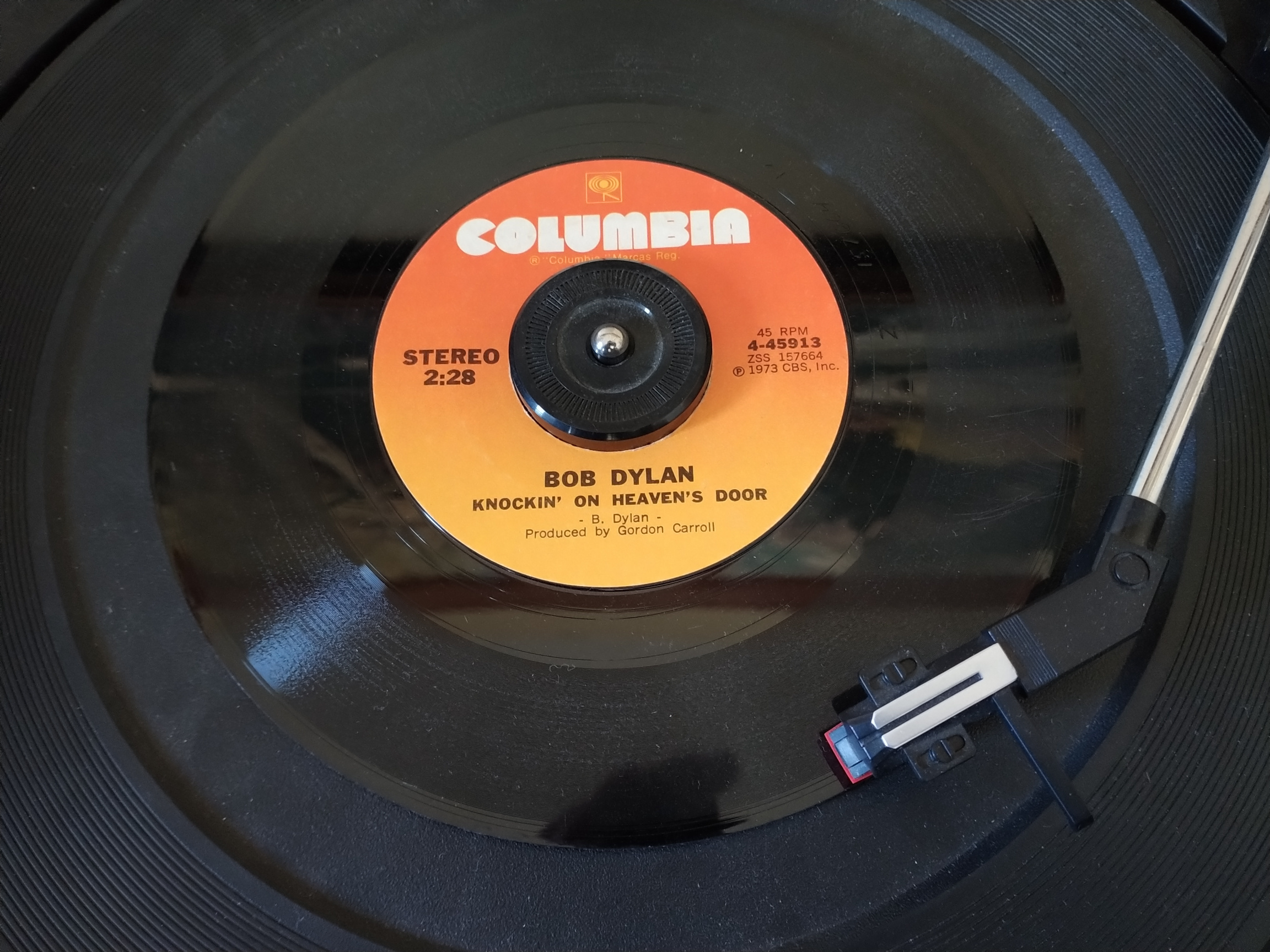
My vintage early 1970s vinyl with two songs by Bob Dylan. (Minnesota Prairie Roots copyrighted photo December 2024)
And then there’s my vinyl collection including a recording of a young Michael Jackson of The Jackson 5 singing “I’ll Be There” in a high-pitched voice. I got that record as a Christmas gift in 1970. Likewise my vinyl of heartthrob David Cassidy making his case in “I Think I Love You” with The Partridge Family. I can still belt out the words as that love song blasts on a garage sale turntable. And not to be forgotten, Minnesota native Bob Dylan with his ballad “Knockin’ on Heaven’s Door.” That’s especially timely with the Christmas release of “A Complete Unknown,” a movie about Dylan. Yes, I like vintage.
Gathering with extended family in my home for a Thanksgiving dinner around George and Clara’s table many years ago. (Minnesota Prairie Roots copyrighted file photo)
My dining room table, of unknown vintage, came from George and Clara’s home, purchased at George’s farm auction after he passed. The couple lived a few sections over from my childhood home near Vesta. For the past four decades plus, my family has gathered around that large oval wooden table with the graceful, curved legs. We’ve shared thousands of meals, talked and laughed and, yes, even cried. Kids did their homework there. Grandkids drew. Tabletop dings mark memories.
The 1960s amber glasses purchased for my mom and which I now have and use daily. (Minnesota Prairie Roots copyrighted file photo)
Perhaps that’s the appeal of vintage. The memories. Vintage connects me to my past or to loved ones. When I drink from textured amber glasses, I think of my mom. The glasses were purchased at Marquardt’s Hardware Store in Vesta as a Mother’s Day gift for her sometime in the 1960s. They are a tactile reminder of Mom, who died in January 2022.
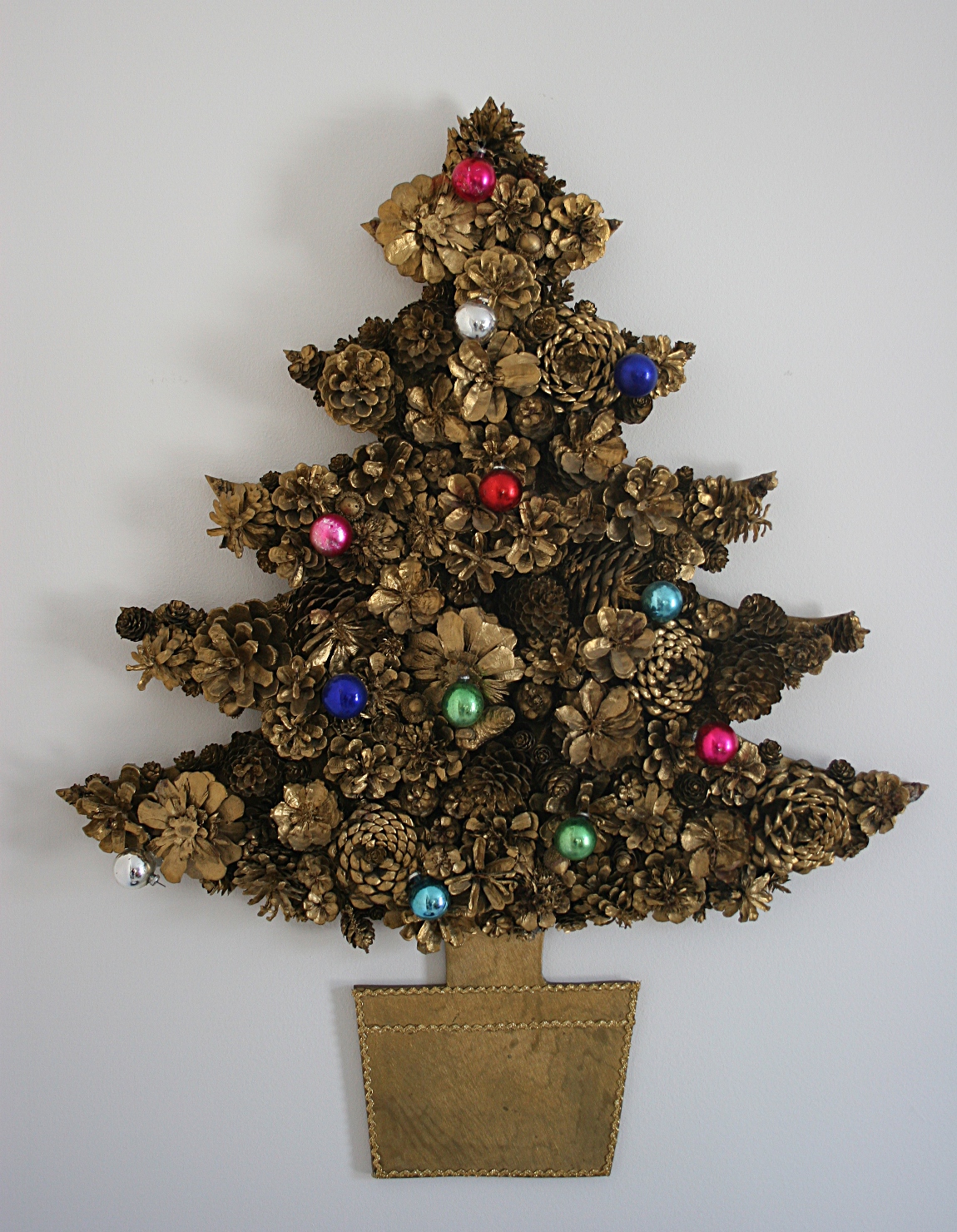
My Aunt Rachel crafted and gifted this to my mom in the 1960s. Now I have the tree and hang it in my home at Christmas. (Minnesota Prairie Roots copyrighted file photo)
The handcrafted pinecone Christmas tree, which my beloved Aunt Rachel made for my mom in the 1960s, now hangs in my home each December. In the dining room, within view when dining at George and Clara’s table.
Atop a vintage chest of drawers (one my dad and his older brother used as children) in my living room, six plastic angels gather as part of the Shiny Brite Christmas Angel Band. My brother Doug and I bought the tiny figurines for Mom at a hardware store in Echo. A Christmas gift sometime in the 1960s.
Vintage outdoor holiday decorations like this were for sale at “Vintage Christmas in the Barn.” (Minnesota Prairie Roots copyrighted photo November 2024)
Vintage. Whether viewed inside or outside a barn in Cannon City, in my home or in a local shop, these goods of bygone days spark memories, ignite joy, remind me of the passage of time. Will my adult children or grandkids care about any of this after I’m gone? Maybe. But I expect they will wonder why Mom/Grandma kept all this old stuff. Perhaps they will choose a piece or two to keep as a memory of me. And then they will box up the rest, wondering who the heck David Cassidy is and why I needed all those vintage tablecloths and drinking glasses and what’s with this pinecone Christmas tree?
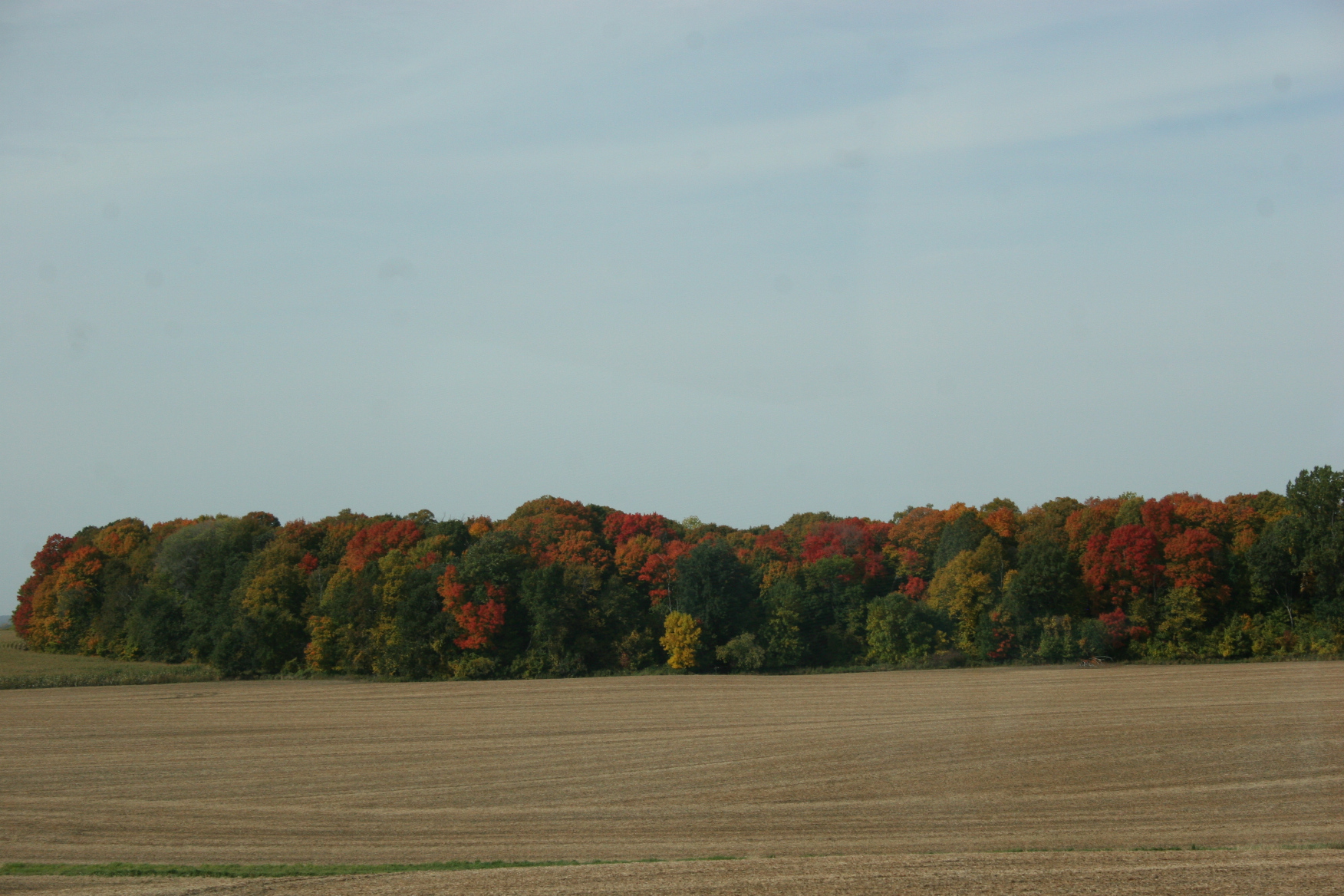
A stunning treeline along Cannon City Boulevard just outside Faribault city limits. (Minnesota Prairie Roots copyrighted photo October 2022)
ANOTHER DAY OF SUNSHINE and unseasonably warm temps here in southern Minnesota prompted Randy and me to once again hit the road in search of fall colors. This time we headed into eastern Rice County, following backroads in the Cannon City and Nerstrand areas with a lengthy stop at Valley Grove Churches.
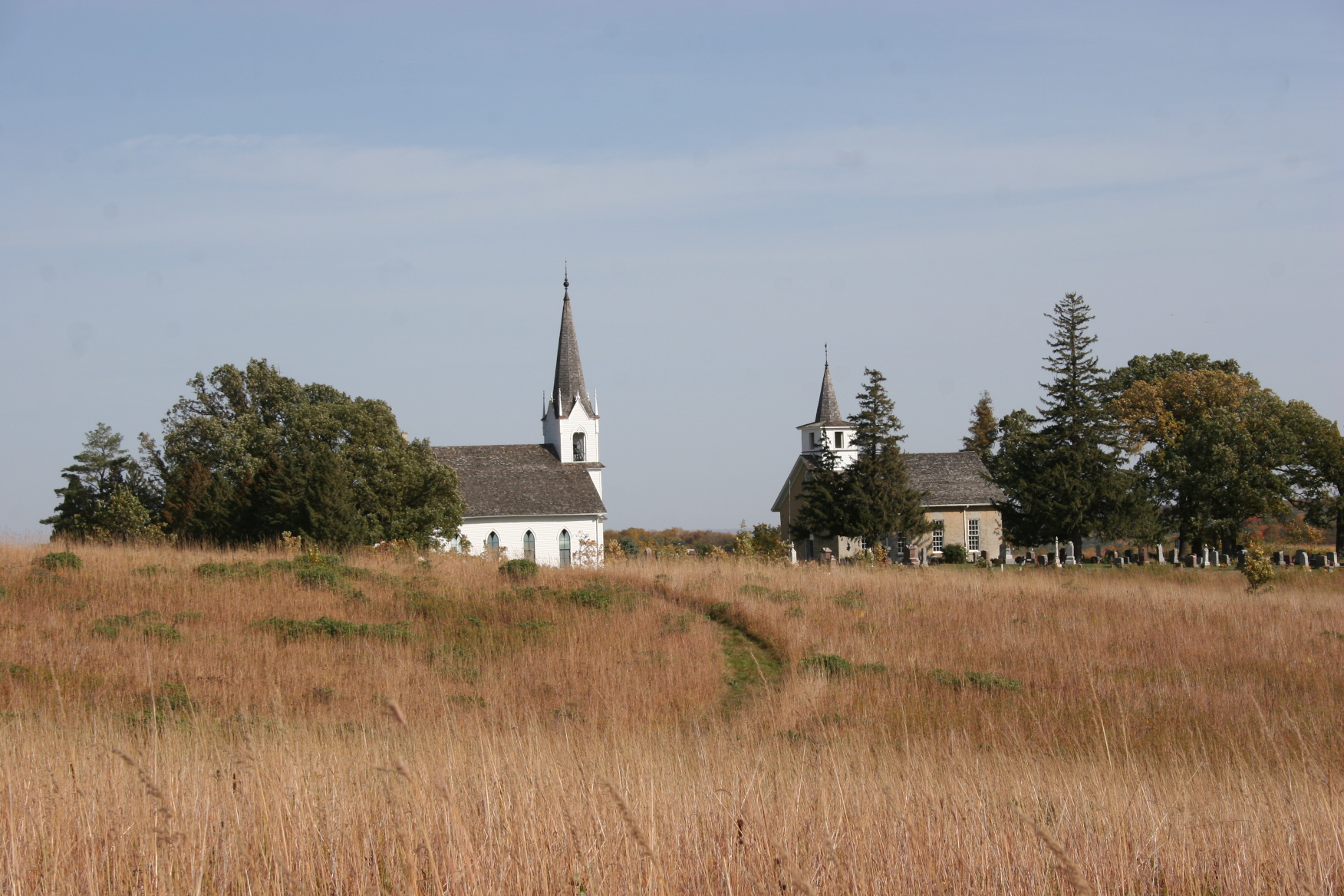
The historic Valley Grove churches,rural Nerstrand, photographed from the prairie. (Minnesota Prairie Roots copyrighted photo October 2022)
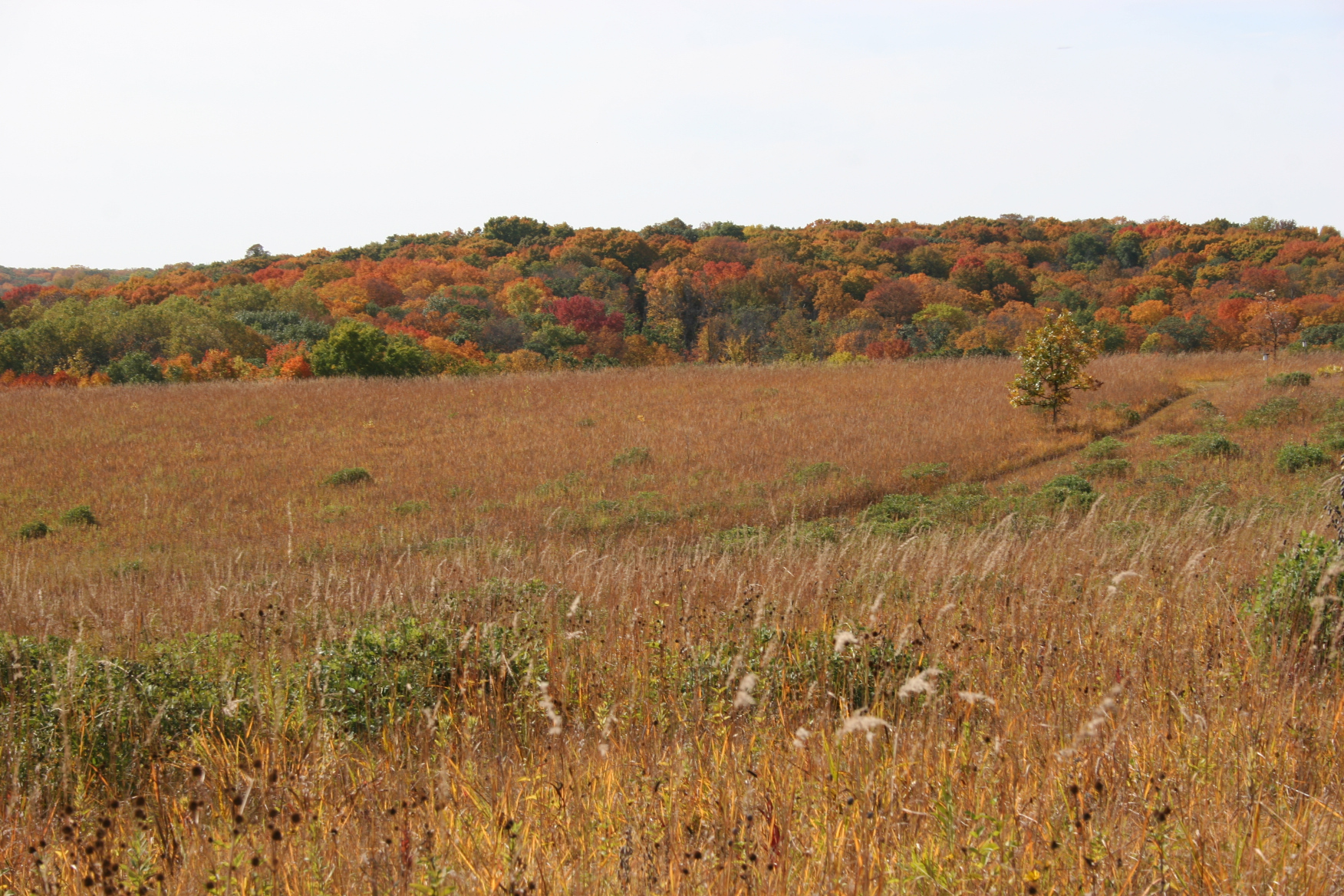
Immersed in the Valley Grove prairie, I viewed the Big Woods. (Minnesota Prairie Roots copyrighted photo October 2022)
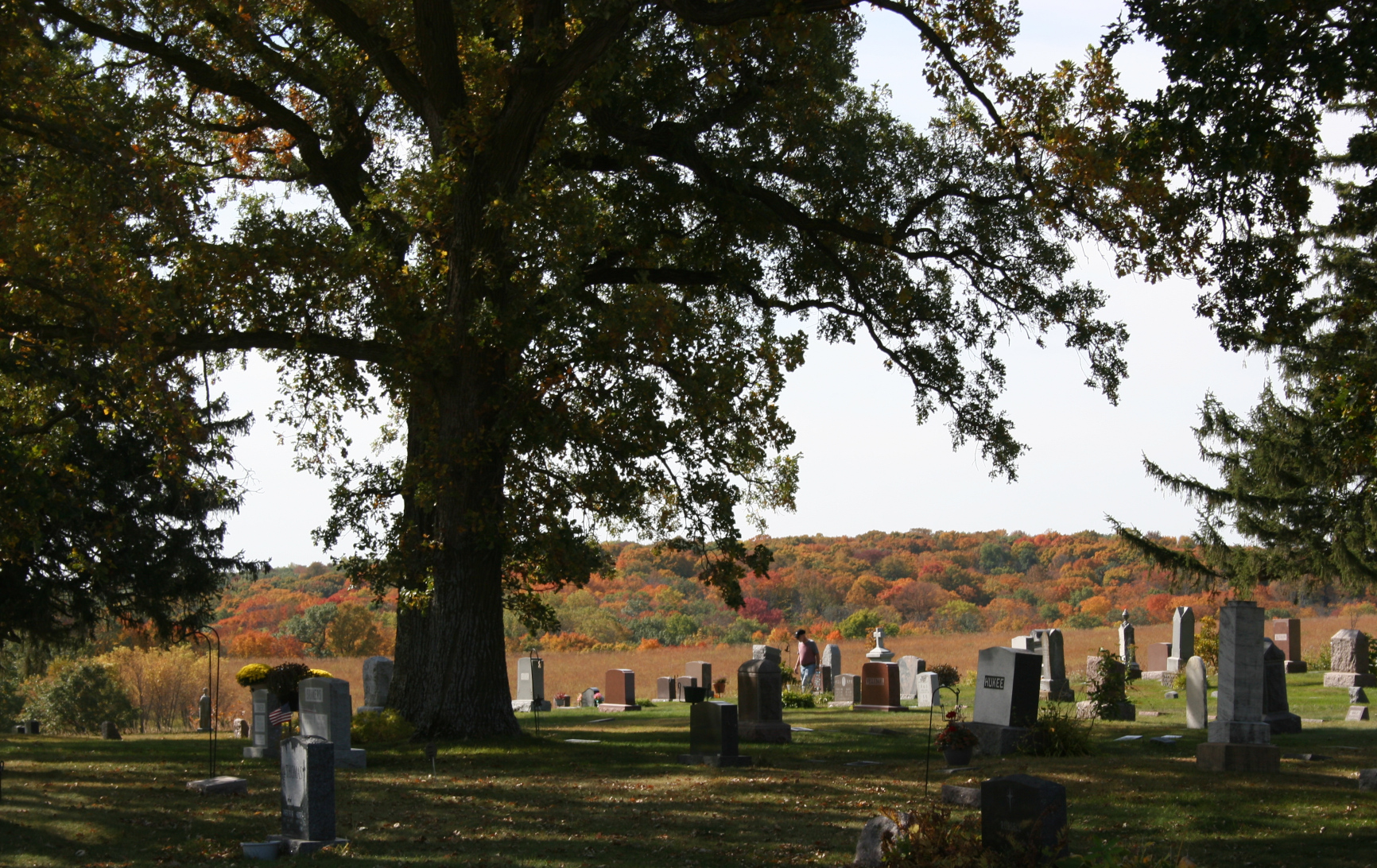
A spectacular view from the Valley Grove Cemetery right next to the churches. (Minnesota Prairie Roots copyrighted photo October 2022)
At those historic hilltop churches, we followed prairie trails until we reached the highest point. There we stood, impressed by the distant Big Woods treeline colored in the hues of autumn. Valley Grove is one of our favorite spots in any season, but especially when the leaves are morphing color.
Driving through Nerstrand Big Woods. (Minnesota Prairie Roots copyrighted photo October 2022)
Our drive also took us on the road slicing through Nerstrand Big Woods State Park. We didn’t stop, simply enjoyed driving under a canopy of trees evolving in color. They have not yet reached their prime.
Driving through the woods on Farmer Trail. (Minnesota Prairie Roots copyrighted photo October 2022)
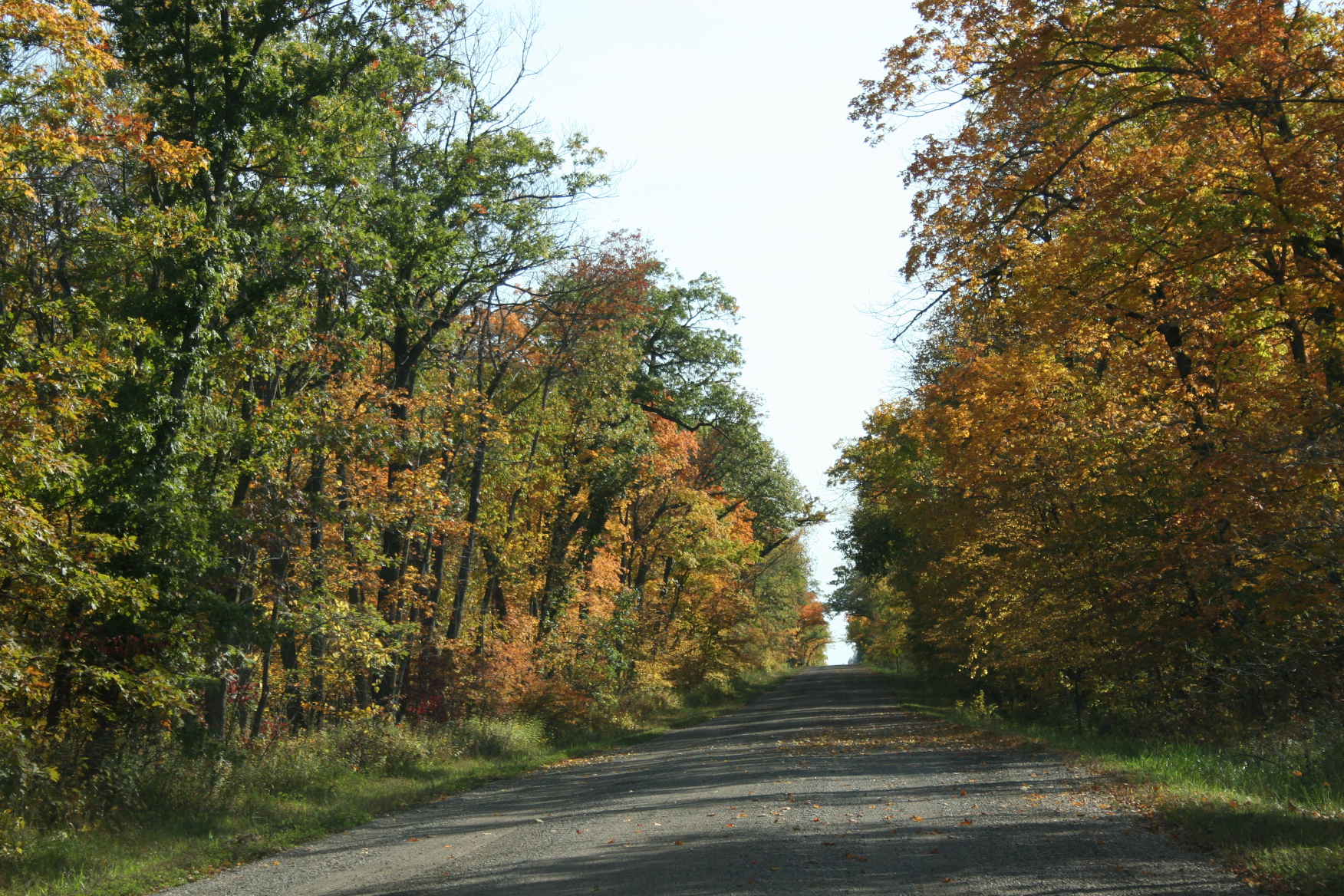
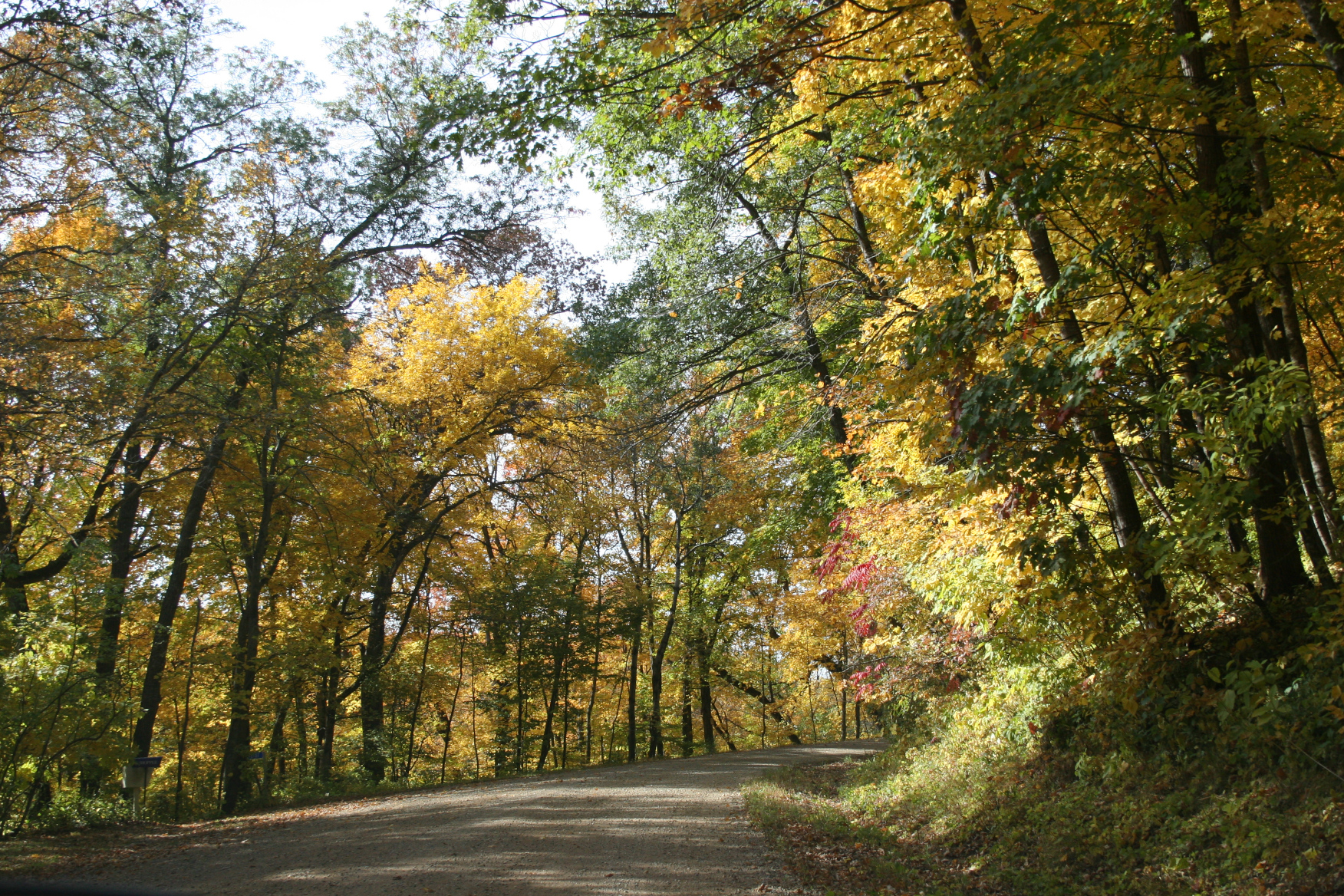
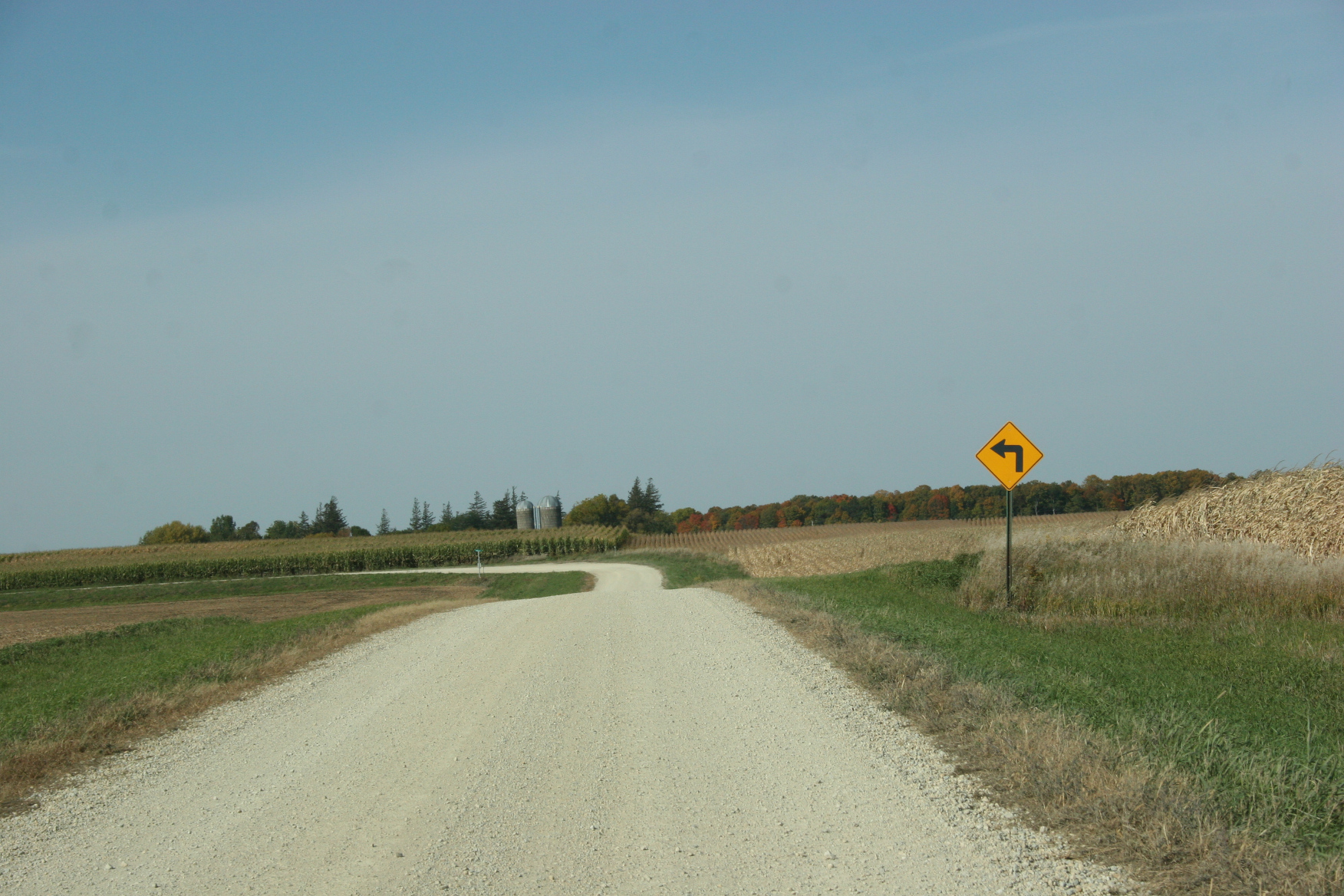
As always, Farmer Trail (off Falk Avenue) drew us in. This secluded road twists and turns among the maples and seems a well-kept secret. Thick woods edge the gravel road on both sides. I feel sheltered here, as if I’ve briefly entered some magical place.
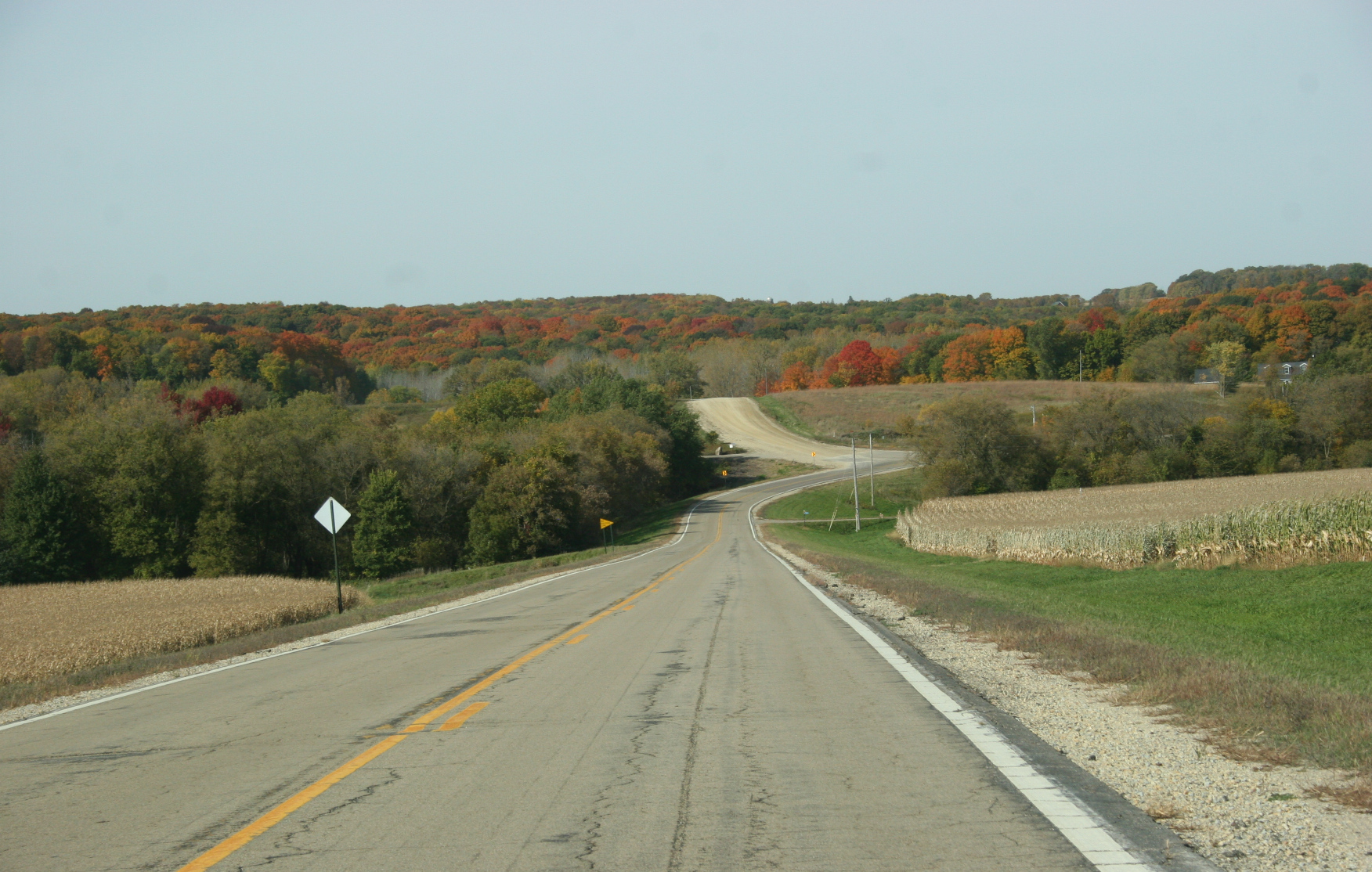
The rolling hills around Valley Grove are especially colorful. (Minnesota Prairie Roots copyrighted photo October 2022)
This time of year in southern Minnesota truly feels magical given the remarkable beauty found in trees shifting from green to yellows, reds, oranges and browns.
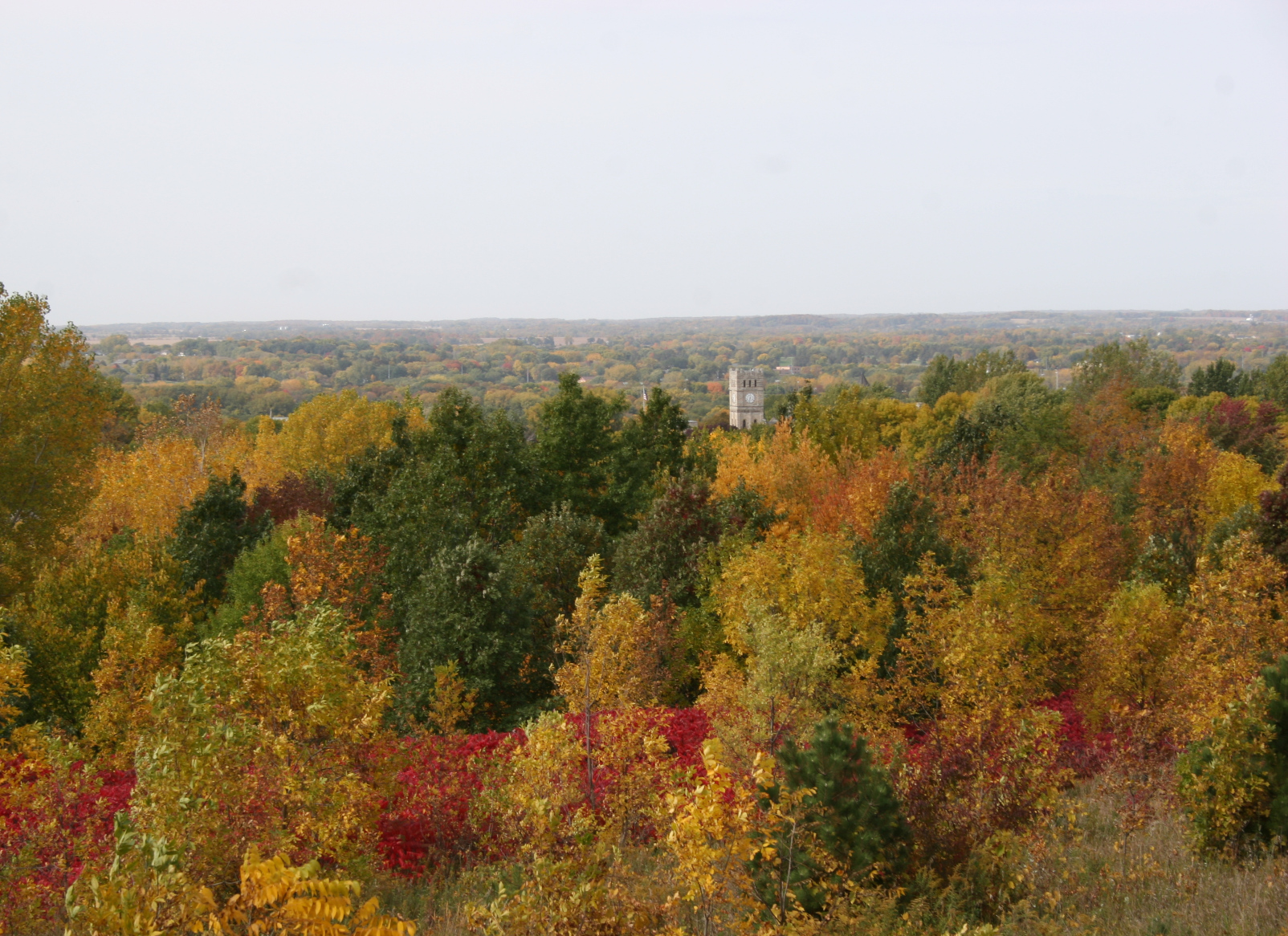
The view from City View Park is breath-taking. (Minnesota Prairie Roots copyrighted photo October 2022)
My community of Faribault is ablaze and still erupting with color. City View Park on the east side overlooks the city, offering a vista view. The Shattuck-St. Mary’s clock tower always focuses my eye when taking in the city below and beyond.
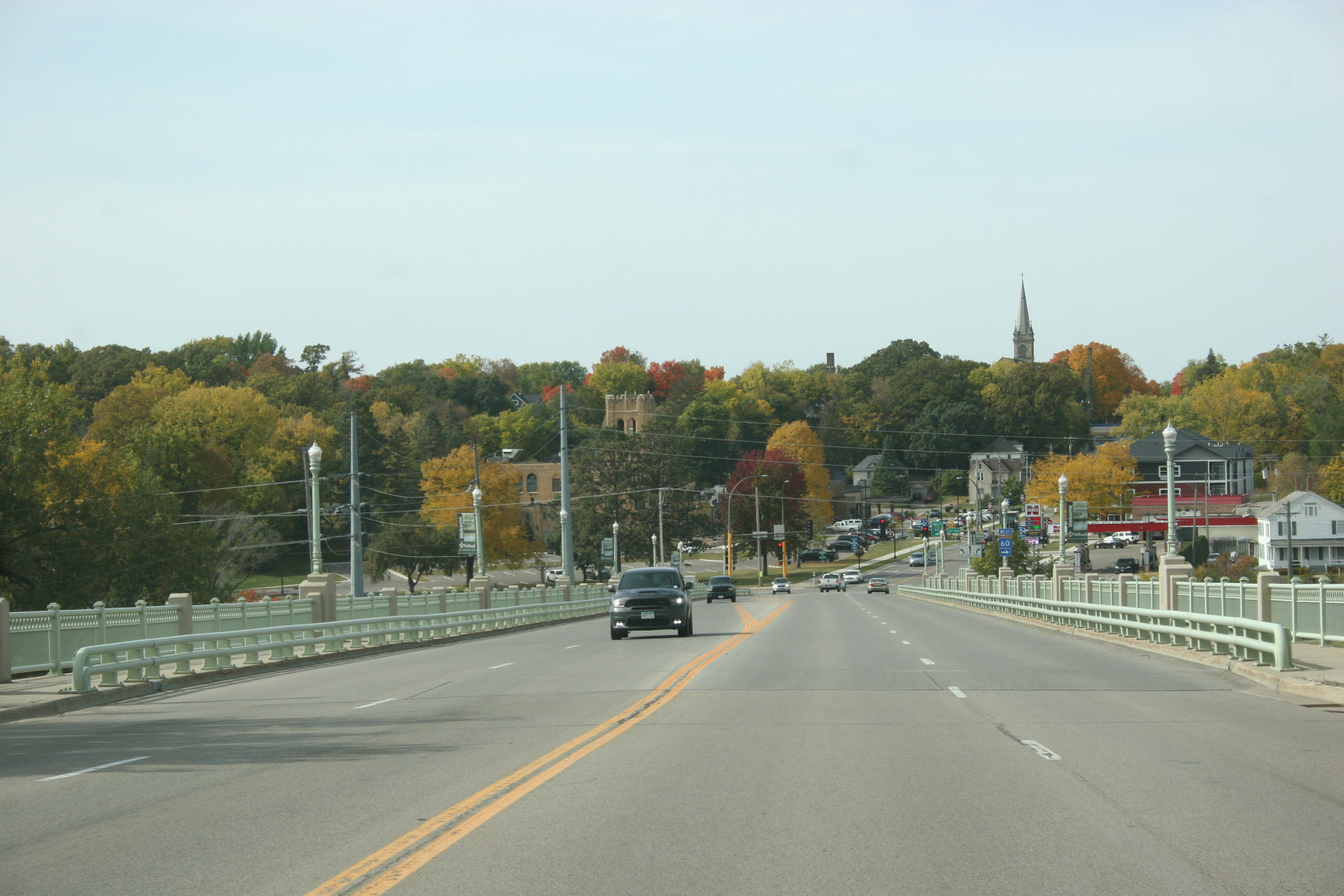
Crossing the viaductfrom Faribault’s east side, fall colors splash into the city landscape. (Minnesota Prairie Roots copyrighted photo October 2022)
Even traveling down the viaduct into downtown impresses in the autumn. There’s so much to see locally in autumn colors whether along a city street, an area lake, a back country road.
If there’s anything I want to impress, it’s that all of this—this autumn color spreading across the landscape—is right here in Faribault, in Rice County, in our backyard. I don’t know if everyone realizes that. I also want to impress that the days of autumn are fleeting. A cold front is moving in along with wind. Now is the time to get out there and view the fall colors, at least locally.
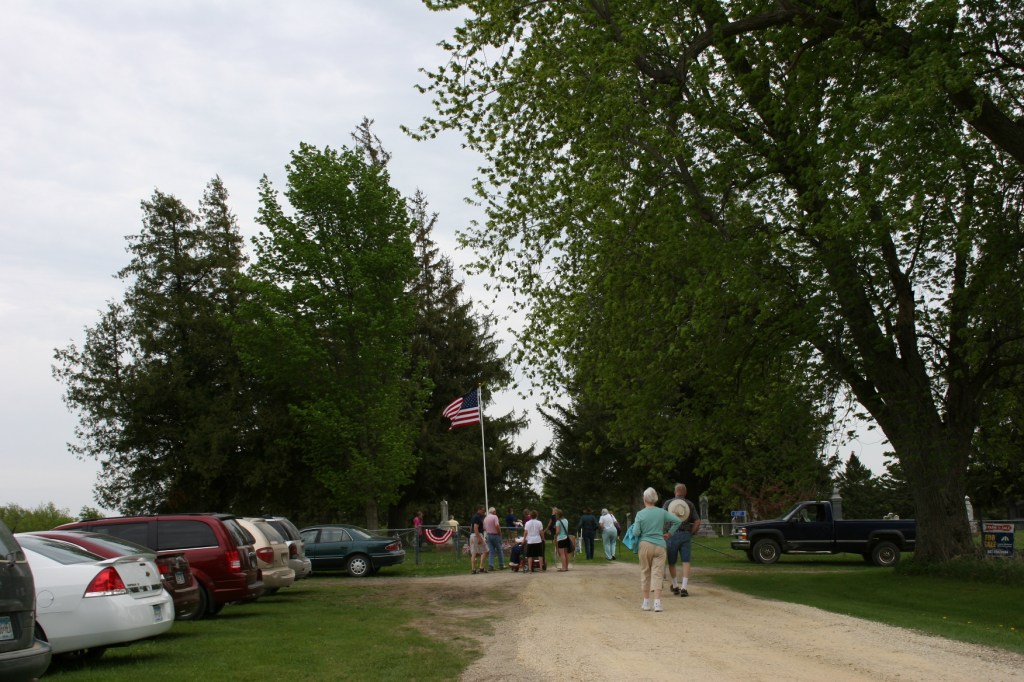
Folks begin arriving for the 2 p.m. Memorial Day program at the Cannon City Cemetery. Minnesota Prairie Roots file photo.
VEHICLES LINED the narrow gravel driveway, angled into the grassy ditch on one side and edging the roadway on the other.
Randy pulled our lawn chairs from the van and I tucked a fleece throw under my left arm, umbrella in hand as we headed toward the crowd gathering at the Cannon City Cemetery gate. Clouds the color of bruises threatened rain on this 60-some-degree Memorial Day afternoon in rural southeastern Minnesota.
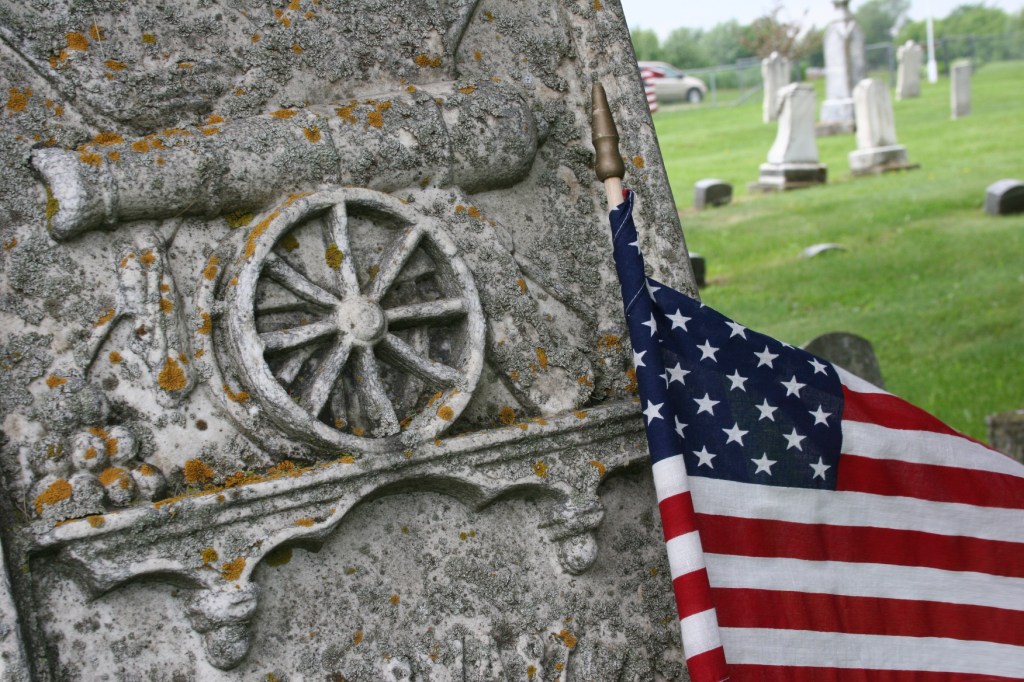
An art appropriate cannon marks a Civil War Veteran’s tombstone in the Cannon City Cemetery. Minnesota Prairie Roots file photo.
But weather would not keep us from this annual commemoration honoring the war dead—a tradition begun some 100 years prior in this wind-swept rural cemetery bordered by fields and pasture. On this Monday, those here would also mark the sesquicentennial of this burial place where a year ago cows moved to the fenceline to watch my friend Lois bury her husband next to his parents and grandparents.
The program opens with singing of “The Star Spangled Banner.” Steve Bonde is on the bugle. Minnesota Prairie Roots file photo.
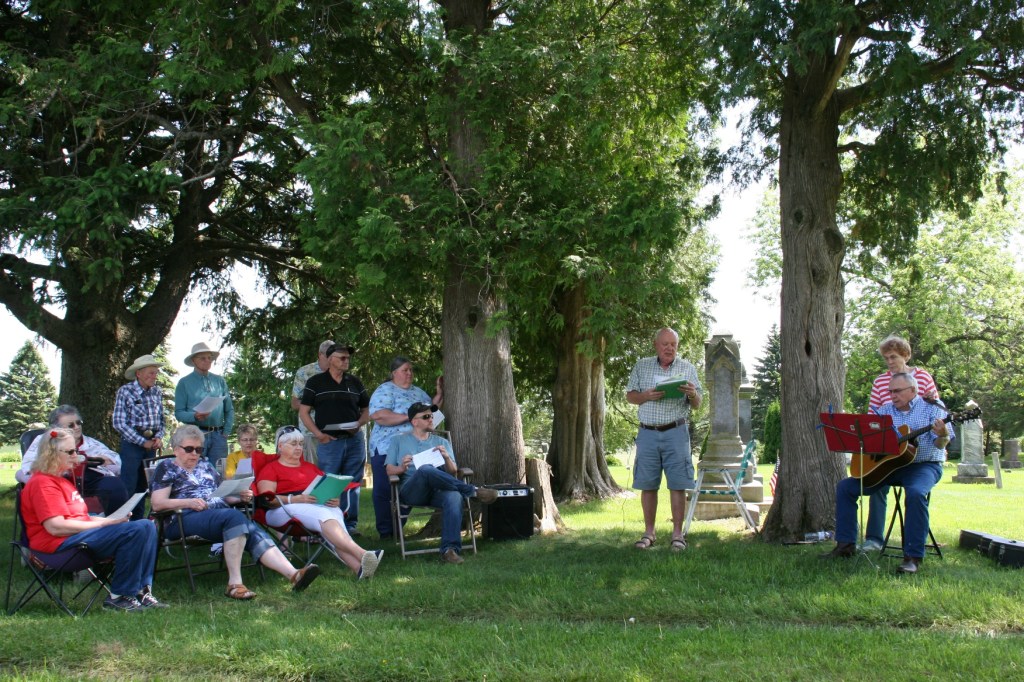
Randy and I have no family connection to this cemetery. But we have come here each Memorial Day for about the past five because we appreciate the grassroots simplicity of this event. Clustered under spruce and cedar among gravestones, attendees circle their lawn chairs to sing and to listen to patriotic and other readings and to the mournful playing of taps.
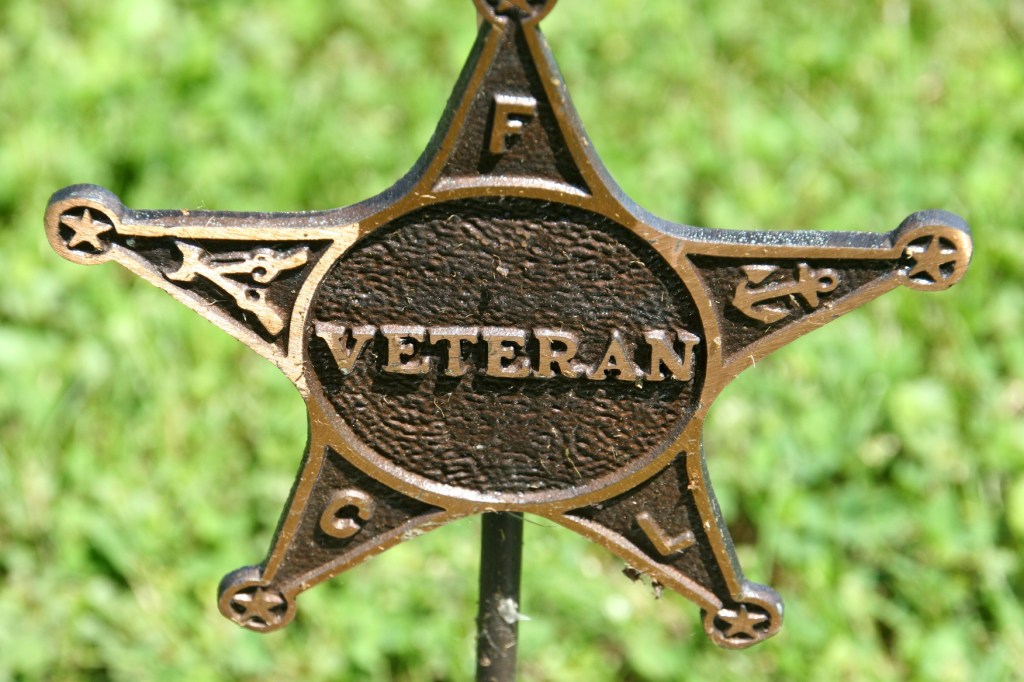
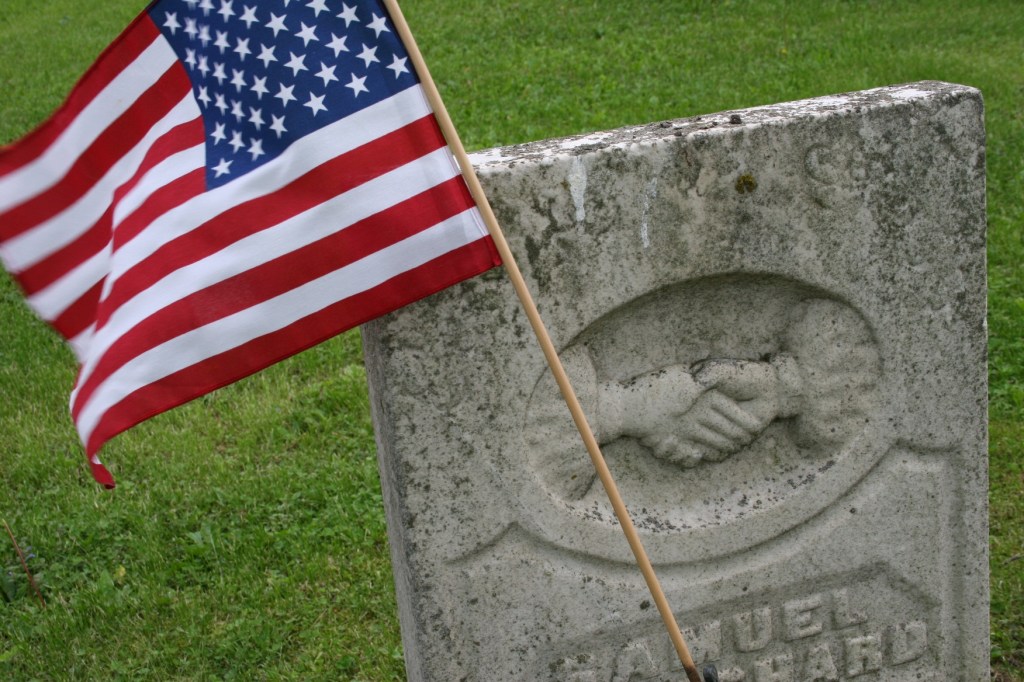
A bronze star marks a veteran’s grave. Minnesota Prairie Roots file photo.
As I sat there, snugged under fleece and wishing I’d worn a stocking cap, I considered that my temporary discomfort was nothing compared to war. I remembered the stories my Korean War veteran father, an infantryman on the frontlines, shared of bone-chilling cold. Yes, my ears hurt. But in a short time, I would be back inside my warm home.
I am an observer. To my right, I watched a teenage boy grip a military star, American flag and white carnation with his left hand, bugle in his other hand, as the fierce wind threatened to yank all three away. Earlier, some attendees distributed flowers, provided by the Cemetery Association, to soldiers’ graves. That flower-laying tradition began 100 years ago with students from the nearby Cannon City School marching with floral wreaths to the cemetery.
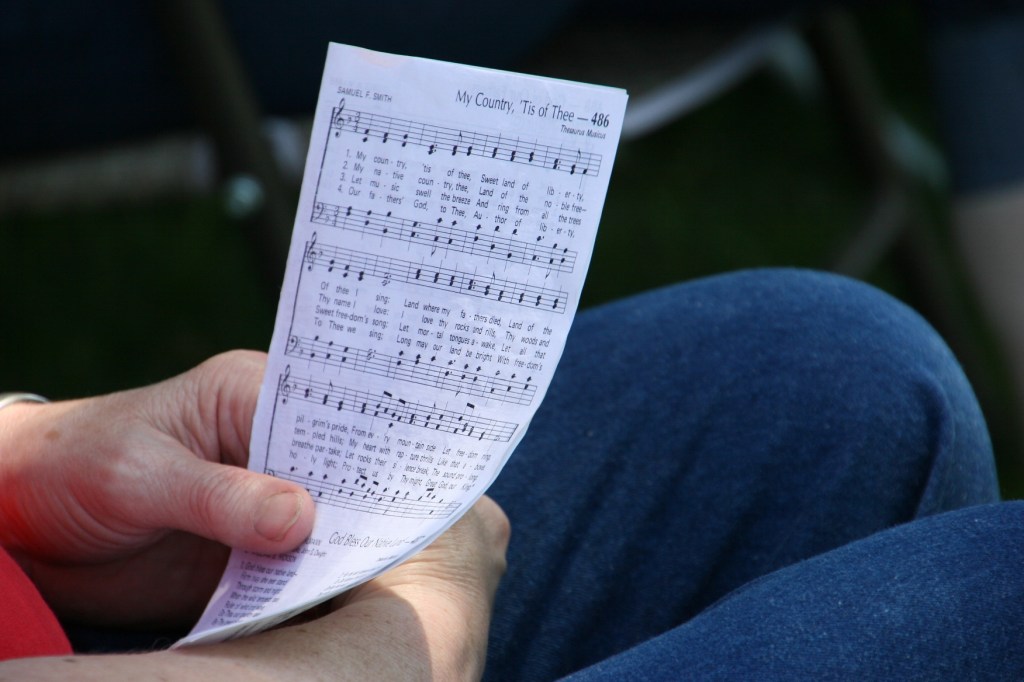
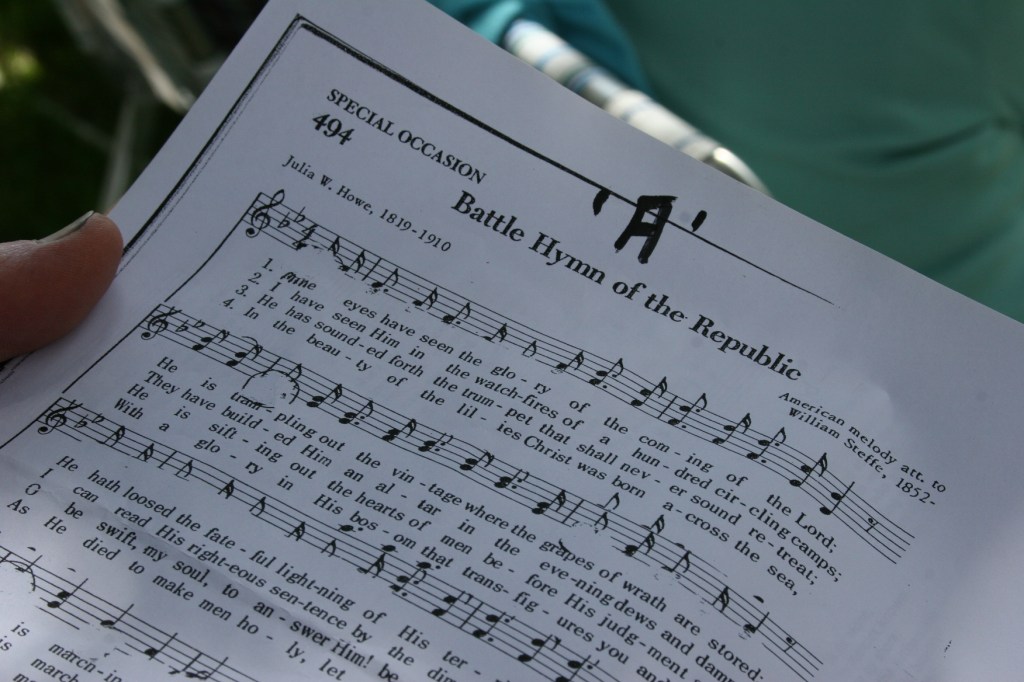
Song sheets are distributed to those in attendance. Minnesota Prairie Roots file photo.
This memorial service is so much about tradition—from recitation of The Pledge of Allegiance to singing of The Battle Hymn of the Republic to reading names of the 52 veterans buried here to recitation of In Flanders Fields.
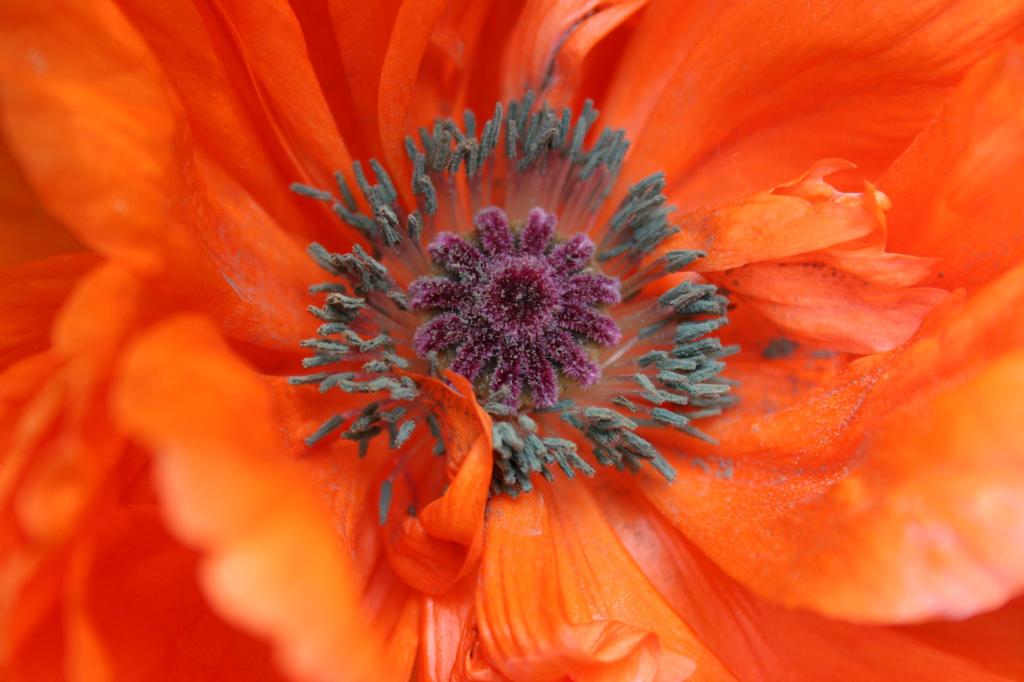
Poppies have long been associated with honoring and remembering veterans. Minnesota Prairie Roots file photo.
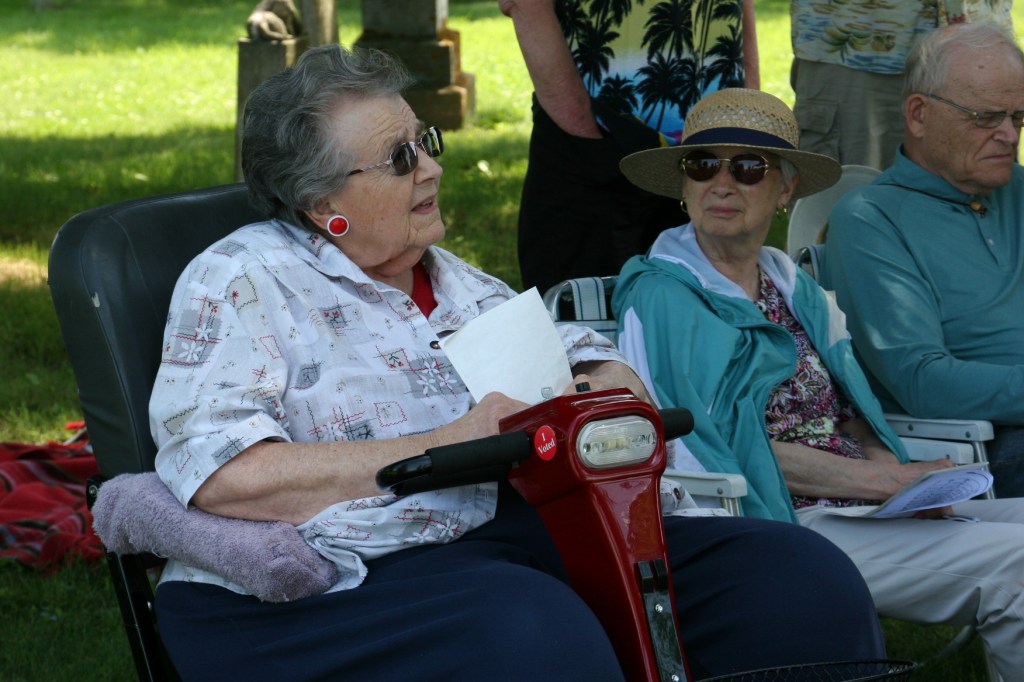
As Jean Pederson recited the haunting poem of poppies blowing between crosses in a field in Belgium, long-time Cannon City resident Bob Lewis slipped a pot of poppies onto the grass next to Jean’s motorized scooter. He’d dug them from a patch in his yard. That symbolic gesture by this veteran nearly moved me to tears as I watched 10 orange poppies wend in the wind to words of war.
Near Jean, I noticed the word LOVE sparkling along the pant leg of a teenage girl. Love and war. War and love. We love our freedom enough to fight for it.
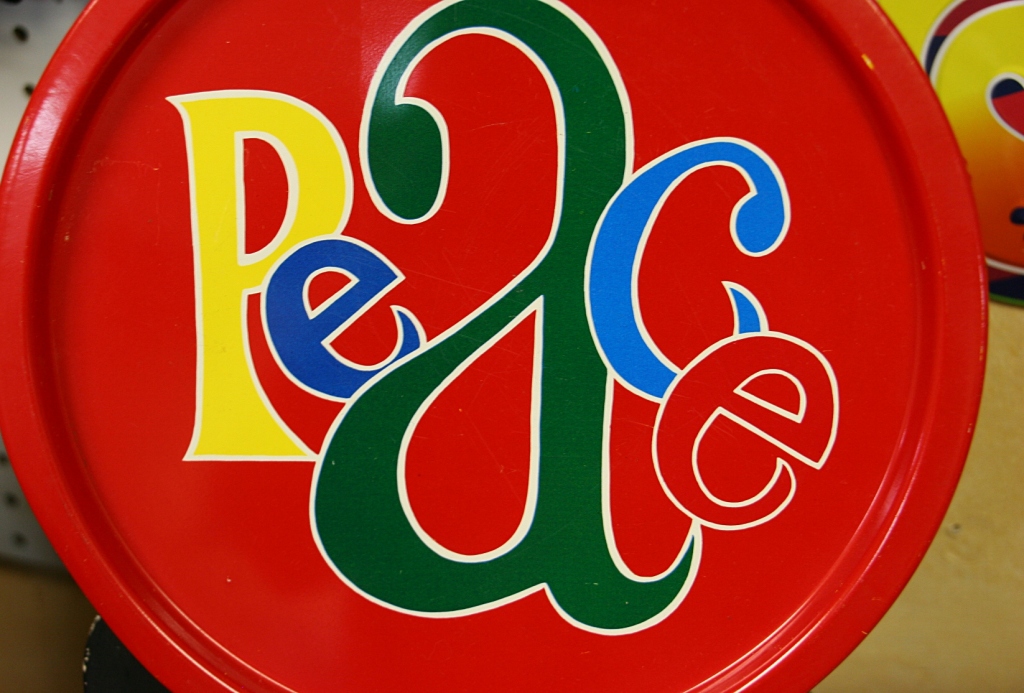
A message on a retro tray I own. Minnesota Prairie Roots file photo.
Yet, we always strive for peace, a message conveyed in a reading by two women: “Let there be peace on earth and let it begin with you.” Their words rose and fell with the wind, carried away—to the fields, the countryside, beyond, under a bruised sky.
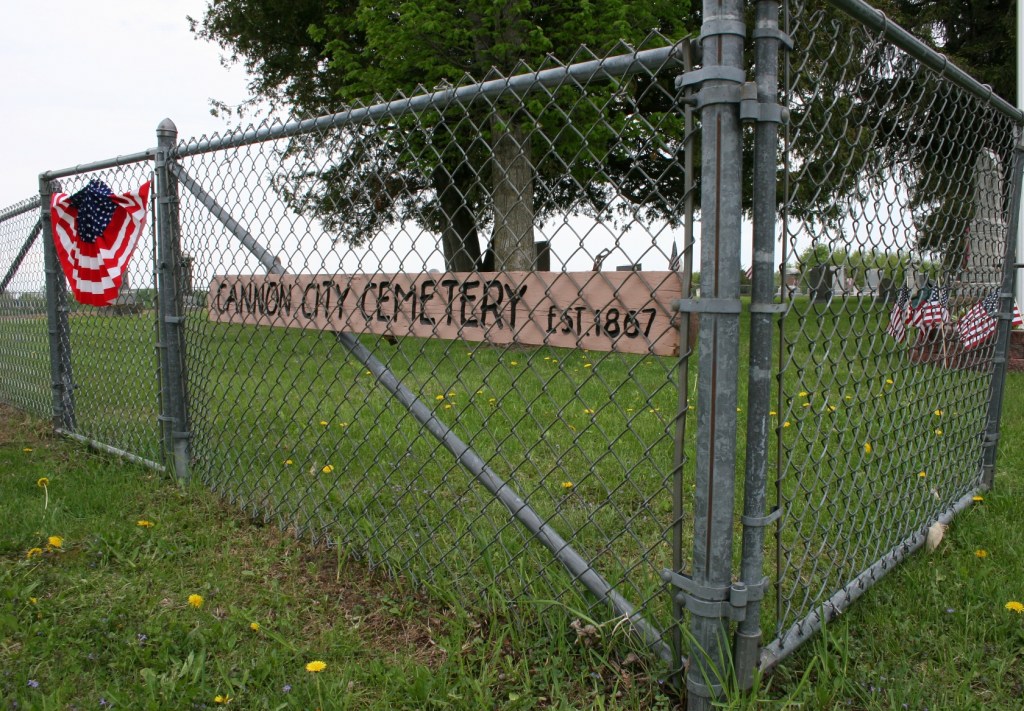
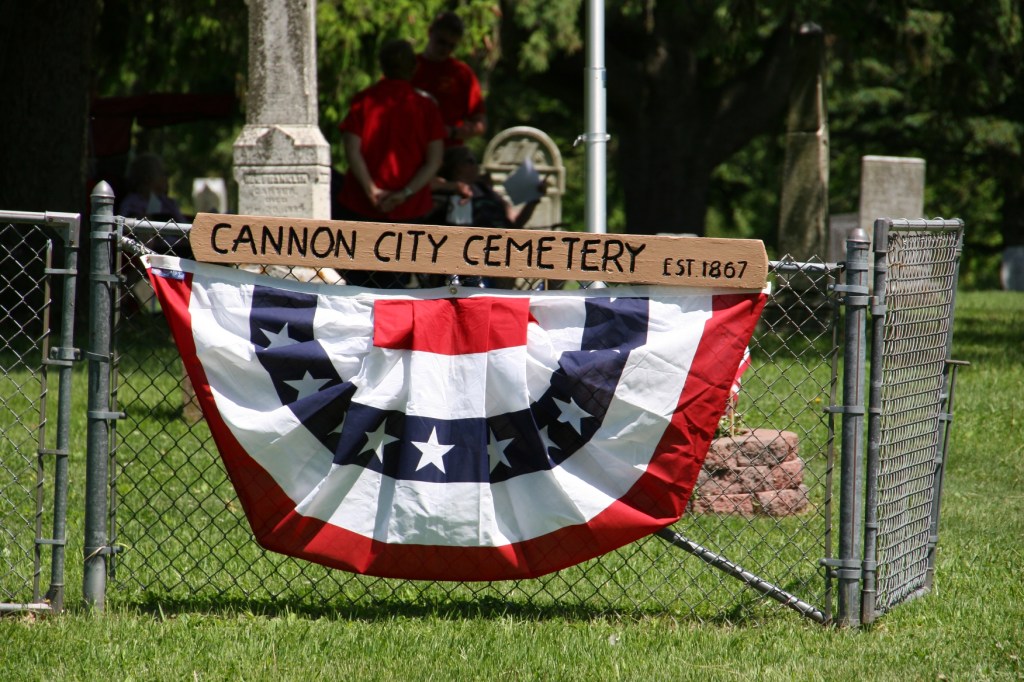
The Cannon City Cemetery fence decorated for Memorial Day. Minnesota Prairie Roots file photo.
IN A RURAL CEMETERY in unincorporated Cannon City some five miles northeast of Faribault, a chain link fence separates gravestones from fields.
A snippet of those gathered for a past Memorial Day program, including Jean Pederson, left, who recited “In Flanders Fields,” and others who led the program. Minnesota Prairie Roots file photo.
Here the wind blows strong among spruce and cedar trees branching over gravestones. For a century and a half now, mourners have come to this place of solitude and grace to bury, grieve and remember loved ones. The cemetery was founded 150 years ago, an occasion which will be noted during the 2 p.m. Memorial Day program here on May 29.
Song sheets are distributed to those in attendance and then collected at the end of the program. Minnesota Prairie Roots file photo.
I first discovered this place and this annual May tribute, in 2011. Nearly every year since, I’ve returned to sing “The Star Spangled Banner,” “America, the Beautiful” and other patriotic songs; to listen to the reading of “In Flanders Fields,” “The Gettysburg Address” and more; to appreciate the mournful playing of taps; to gaze toward the flag whipping atop the flag pole; and to walk among tombstones.
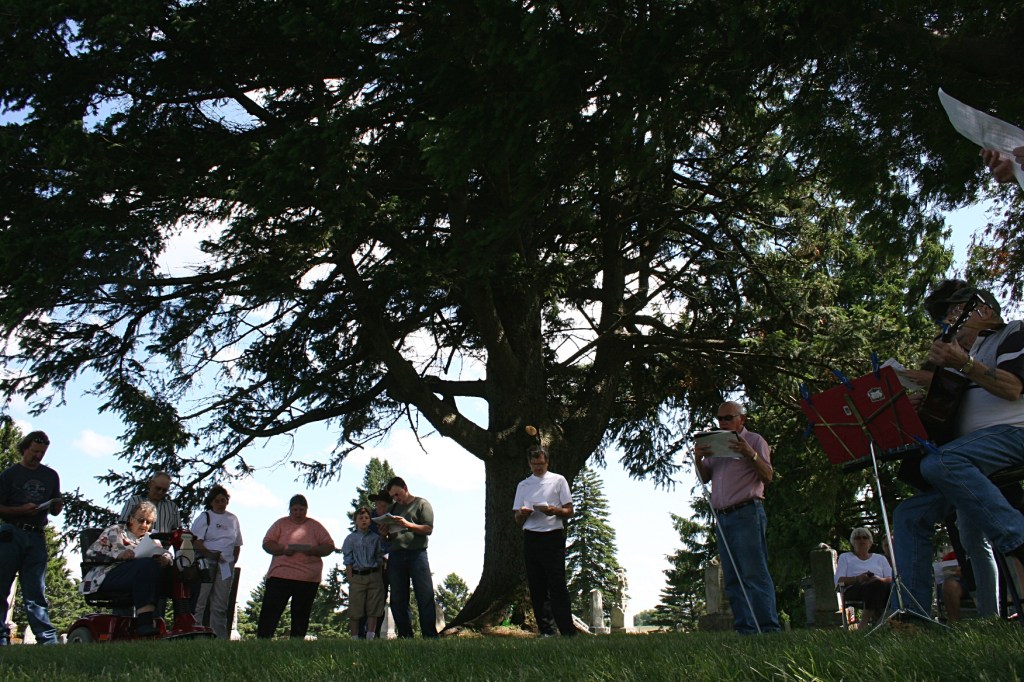
This shows a portion of those gathered during a past Memorial Day program. Minnesota Prairie Roots file photo.
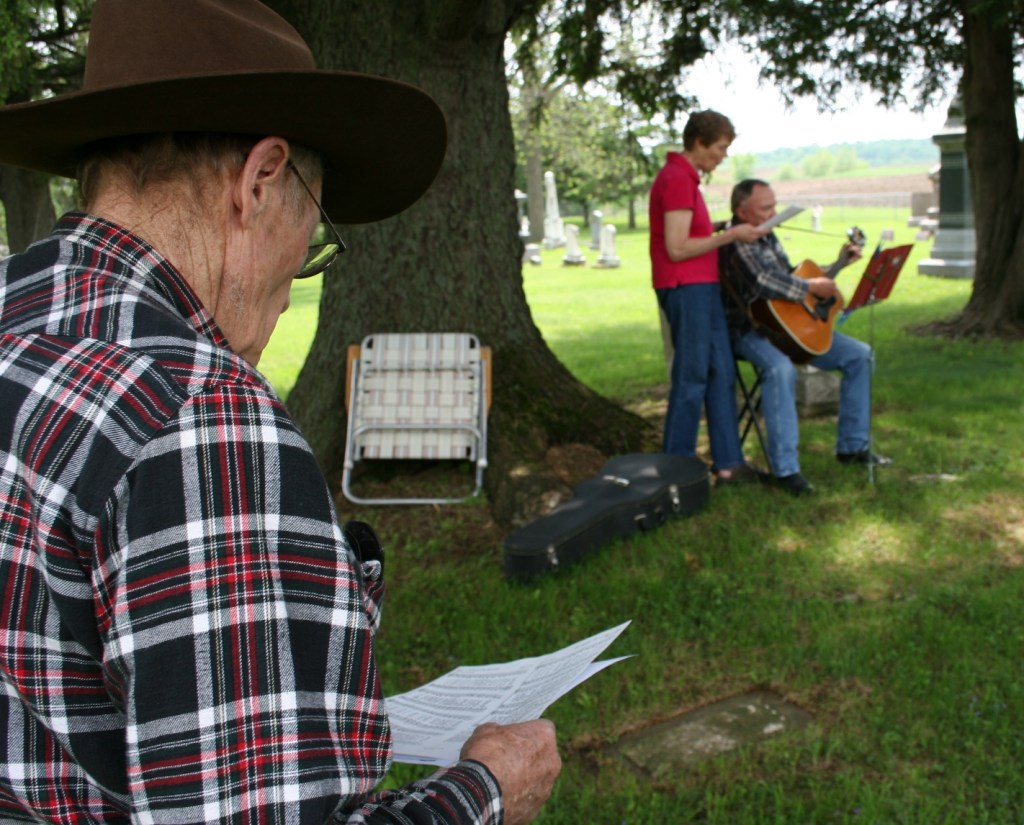
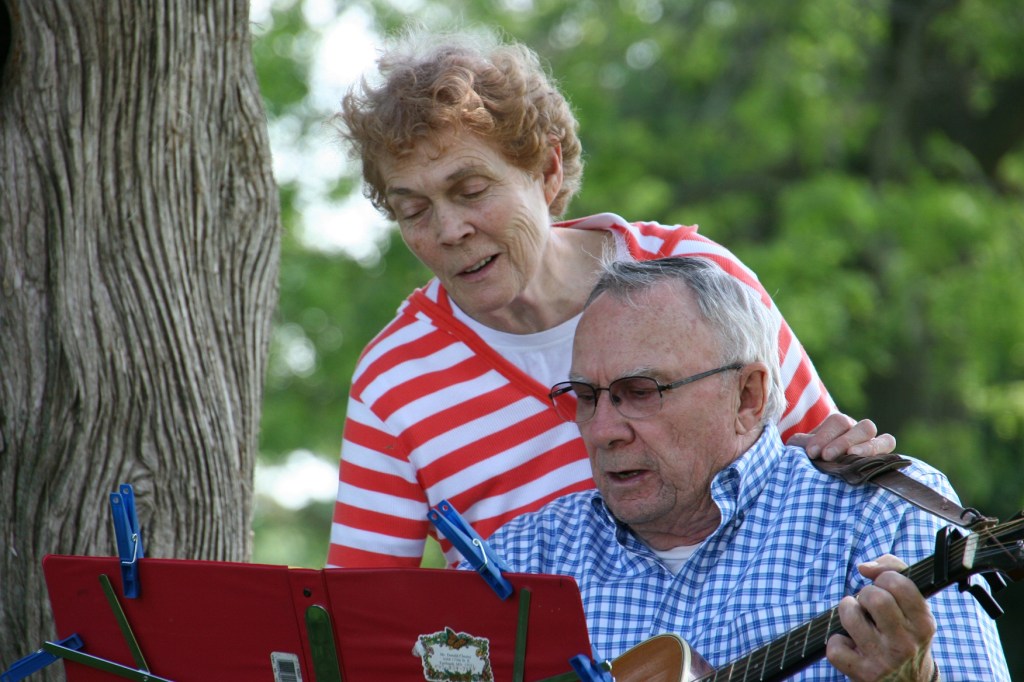
I have no personal connection to this cemetery. But I am drawn here by the rural-ness of this setting, by the simplicity of the ceremony, by a desire to honor the war dead at a truly grassroots Americana Memorial Day observance among people rooted deep into this land. It doesn’t get much more basic than this informal and unpretentious gathering in lawn chairs, song sheets passed around with Don Chester strumming a rhythm on his guitar.
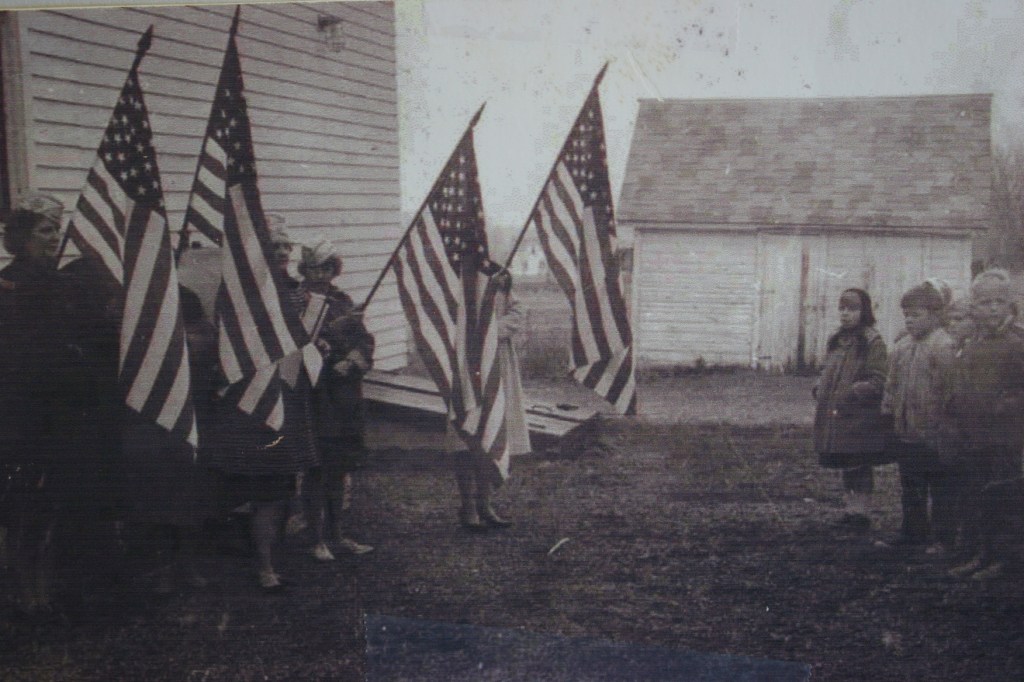
Memorial Day long ago in Cannon City.
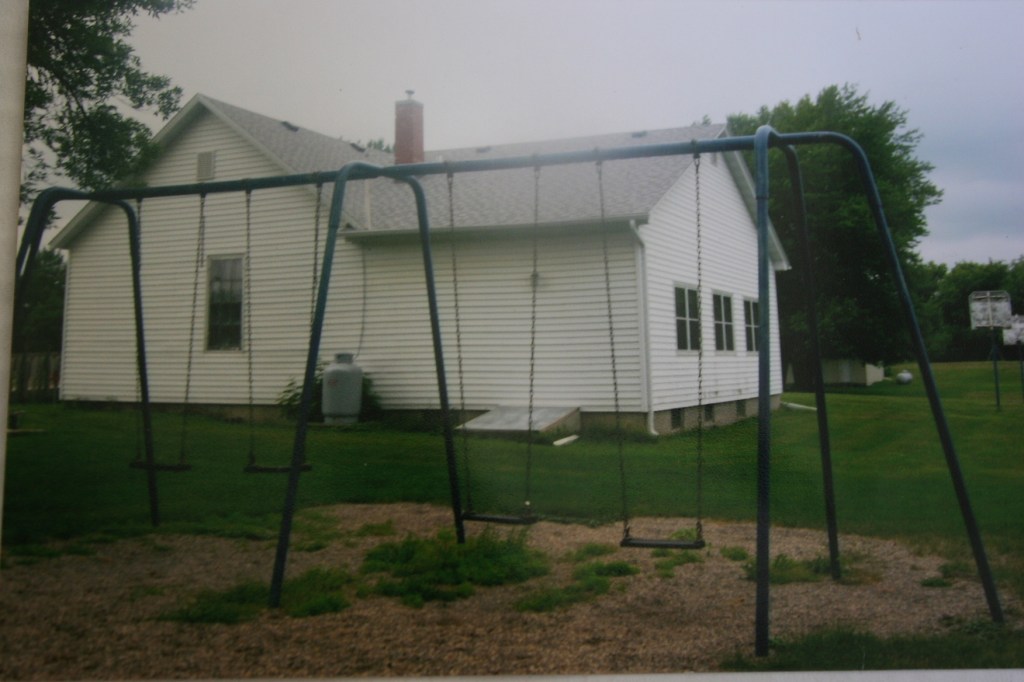
The former Cannon City School, now the town hall.
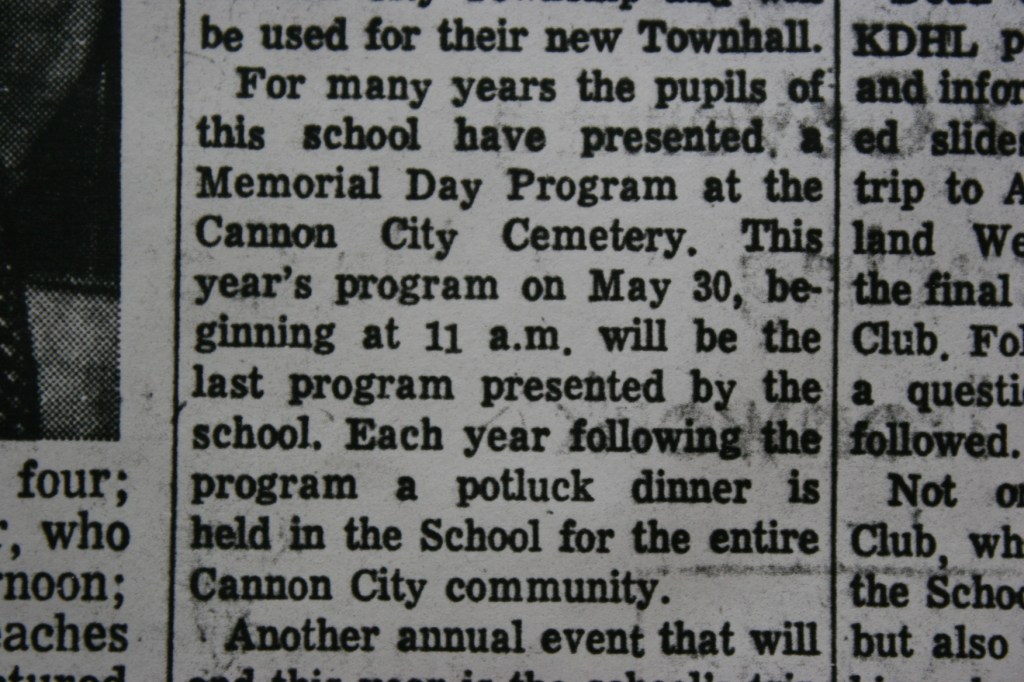
A vintage newspaper clipping about Memorial Day in Cannon City.
Fifty veterans—including one from the War of 1812 and 20 from the Civil War—are buried here. Their names are read each Memorial Day. It was Civil War veteran Elijah Walrod who first suggested a Decoration Day (now Memorial Day) program to Cannon City School teacher Chloe Gagstetter Polson. She honored his request some 100 years ago when school children marched with floral wreaths from the schoolhouse to the nearby cemetery. That tradition, which included a picnic following the ceremony, continued until the school closed in 1970 to become part of the Faribault School District. The Cannon City Cemetery Board carried on thereafter.
Veterans graves are marked with flags on a previous Memorial Day. Minnesota Prairie Roots file photo.
This year the Cannon City Cemetery Friends will note the cemetery’s 150th anniversary by distributing flowers and flags to attendees for placement on veterans’ graves. Typically those American flags are placed in advance of the commemoration. There will be no “Death March” from the old schoolhouse, now the town hall, to the cemetery. Rather, everyone will meet at the cemetery gates. And after the program, organizers will serve ice cream cones.
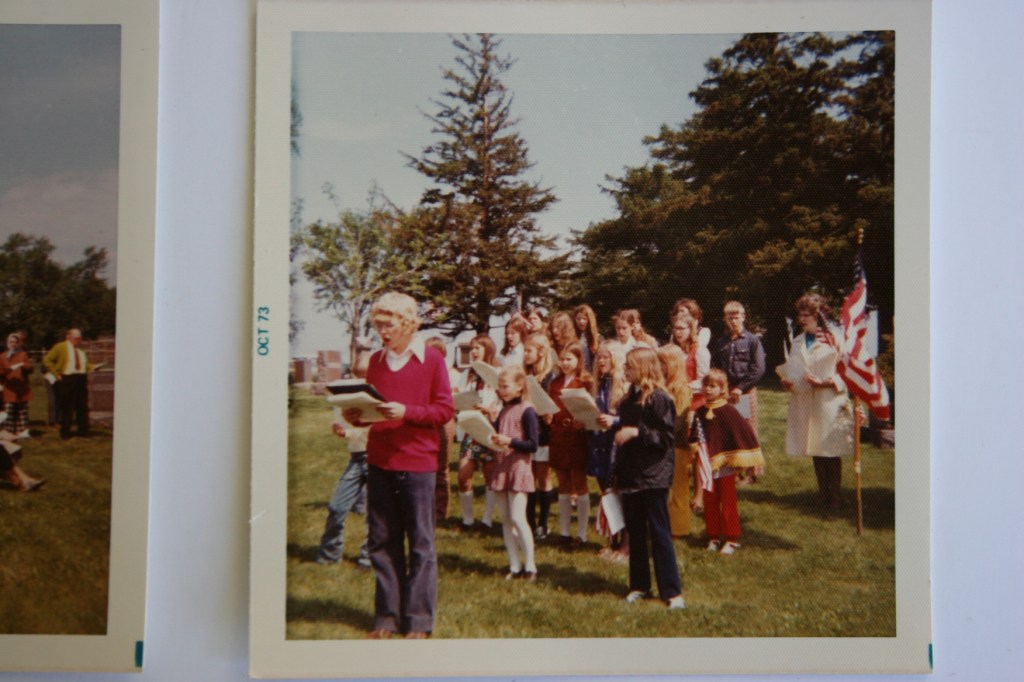
In 1973, the Cannon City Cardinals 4-H Club participated in the program.
The low-key anniversary observance seems fitting in a place where children dart among gravestones, birds trill and folks greet each other with the familiarity of growing up here. They know and value this place.
The program opens with singing of “The Star Spangled Banner.” Steve Bonde is on the bugle. Minnesota Prairie Roots file photo.
Tradition, says Cemetery Board Secretary Mel Sanborn, brings locals and natives back each Memorial Day “to honor veterans and loved ones buried here.” Sanborn has three aunts and uncles buried here and his own plot purchased already.
Bob sings as Don and Judy Chester lead the group in song. Bob attended Cannon City School and participated in Memorial Day programs here as a student. Minnesota Prairie Roots file photo.
Most who come here on Memorial Day share links of blood and/or roots. Not me. But I still feel at home here, comfortable in this rural cemetery where, on this day in late May, I am simply an American remembering those who died in service to our country.
FYI: The Cannon City Memorial Day program begins at 2 p.m. Bring your own lawn chair. The cemetery is located off Rice County Road 20. Look for the cemetery sign and follow the gravel road to the cemetery.
I COULD BE SO HAPPY living on Debbie and Mike Glende’s property in Cannon City. It’s peaceful, lovely and tranquil in a definitive rural sense.
An electric fence keeps the donkeys penned in the pasture.
Not exactly a hobby farm, although there are donkeys, this seems more rural retreat.
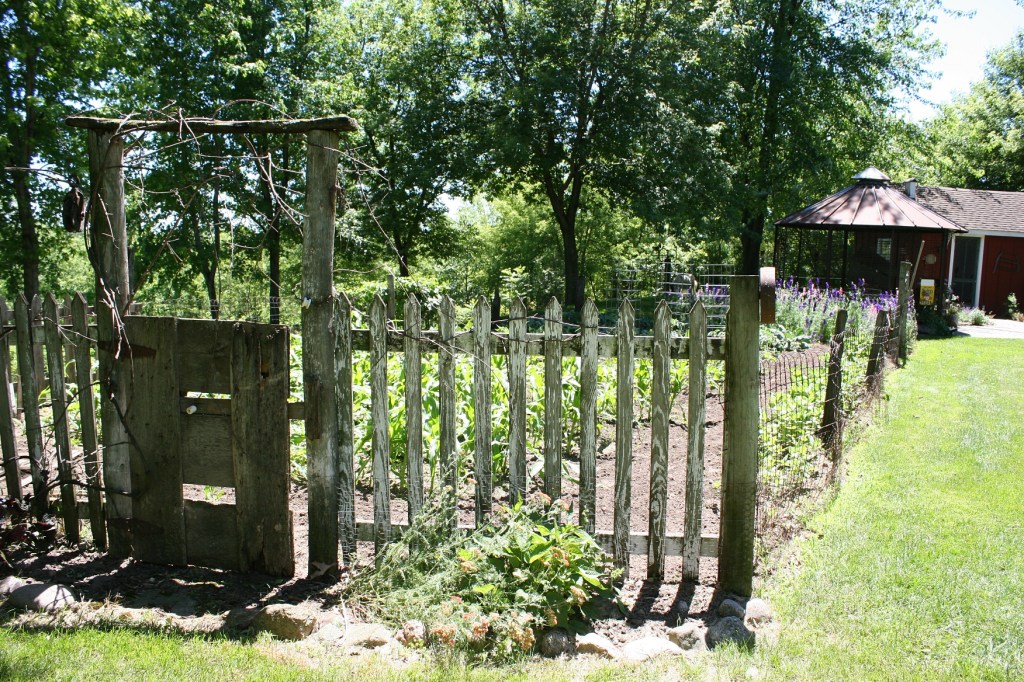
Delphiniums sway in the breeze inside a fenced vegetable garden.
Lush green plants and flowers.
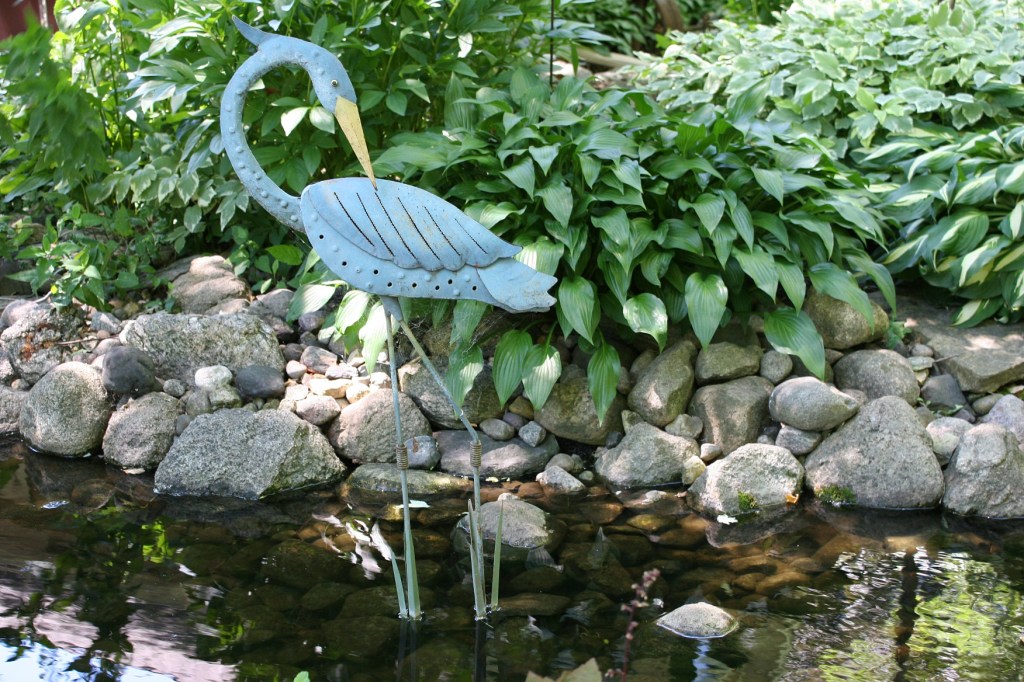
A pond, surrounded by lush plants, is situated under shade trees next to the house.
Pond.
Rustic fencing surrounds the vegetable garden.
Garden surrounded by rustic weathered fencing.
I opened the aged screen door on an outbuilding to discover this 50s style retreat.
An outbuilding styled in 1950s décor.
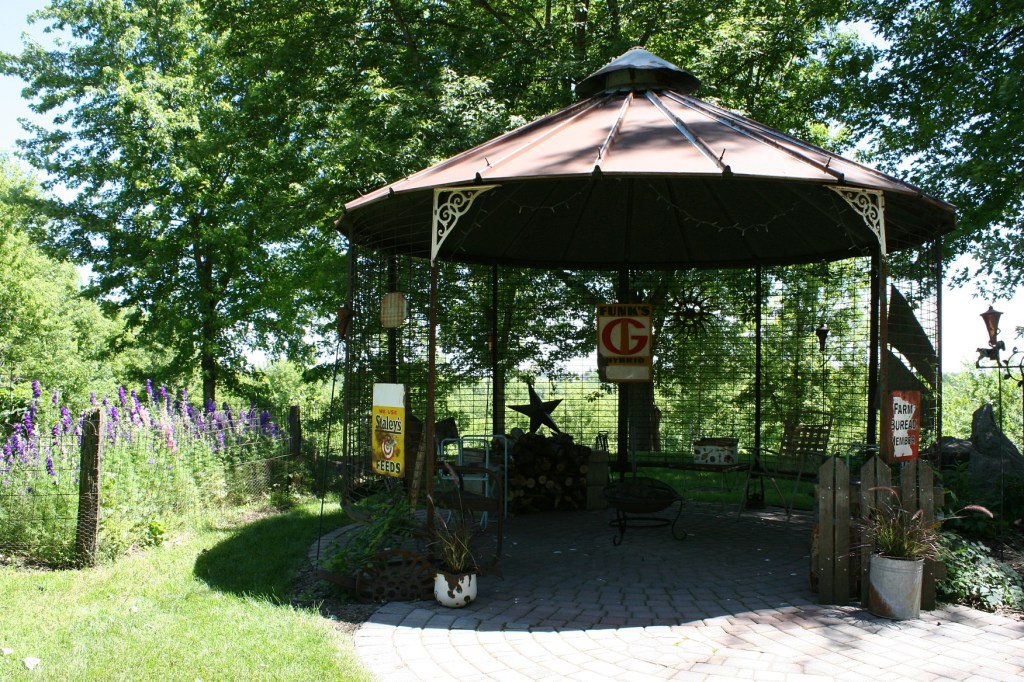
Farm themed decor fits this corn crib turned fire pit gathering area.
A wire grain bin converted into a comfortable gathering spot for an evening campfire.
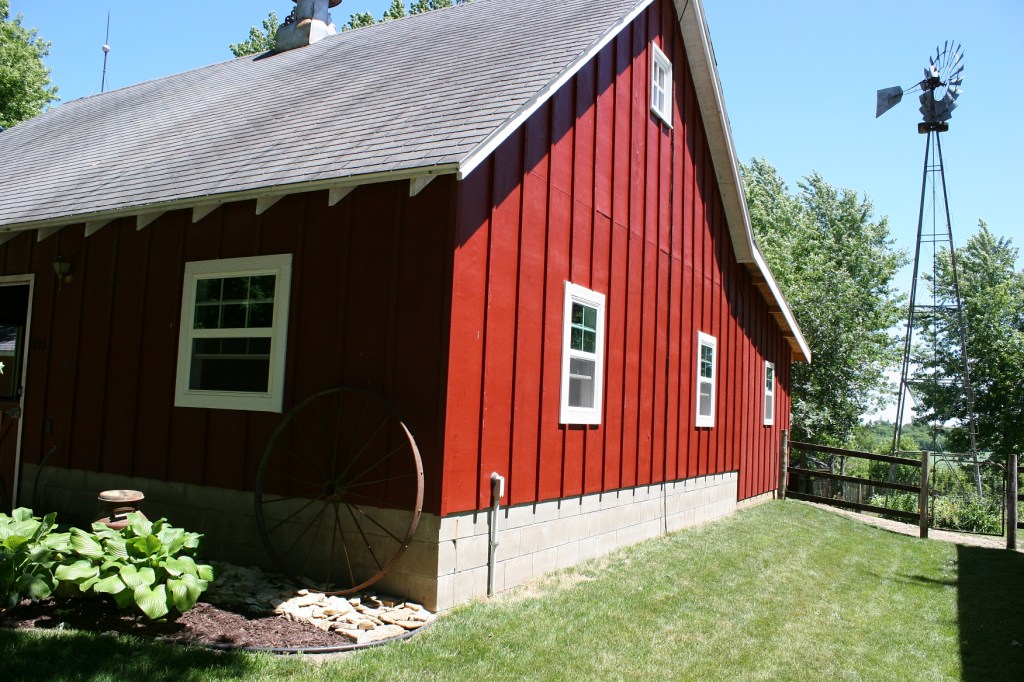
An aged red barn and windmill.
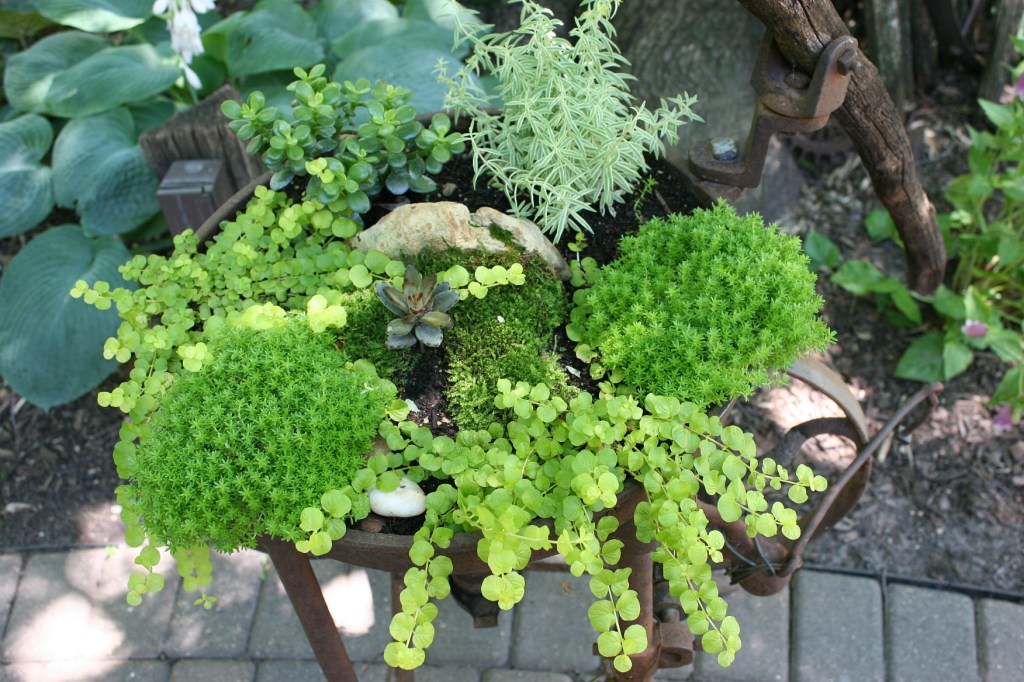
Artfully arranged plants spill from a rustic piece of farm equipment.
I didn’t want to leave the Glendes’ place while on a recent Cathedral of Our Merciful Saviour Garden and Landscape Tour benefiting Fully Bell, a soup kitchen in nearby Faribault. Even the cat, a black stray that followed me, wrapping around my legs, seemed to want me to stay. I wish. Debbie offered the cat.
This building houses the 1950s style retreat.
I could live here. I imagined the 50s retreat as a secluded place to write. My office.
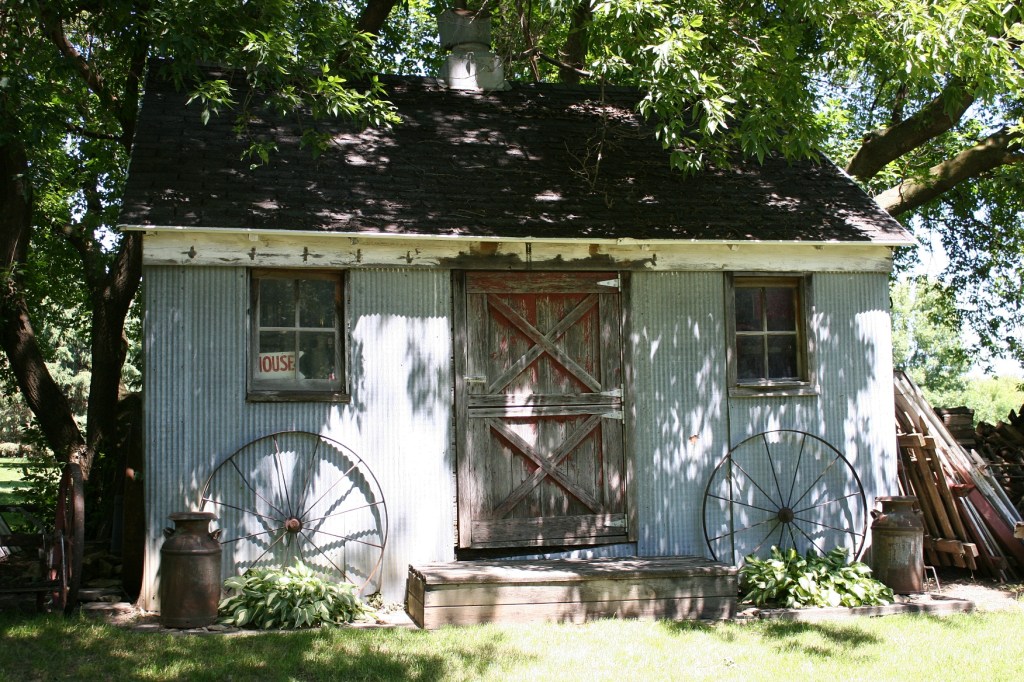
This sweet little building was moved here from the Minnesota State Academy for the Deaf campus in Faribault. For now, it’s a storage space.
Or the lovely columned white building moved here from the Minnesota State Academy for the Deaf in Faribault would work, too, for my writer’s retreat.
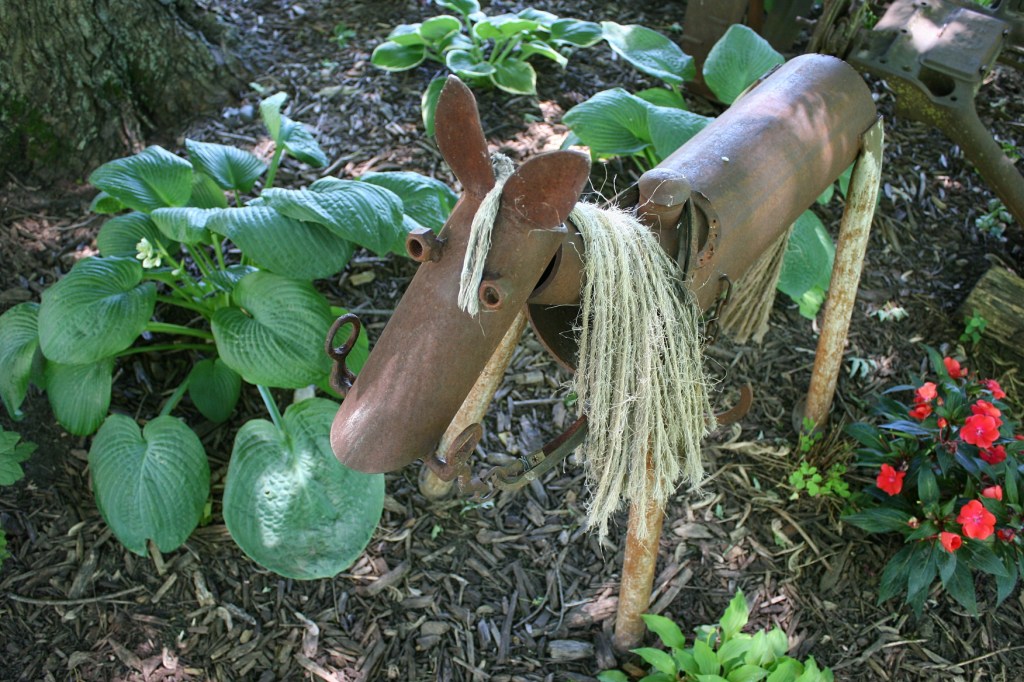
Rustic rural art near the MSAD building.
As I roamed the Glendes’ land, I was reminded of my rural roots. Vintage farm machinery and equipment are planted like works of art among the farm buildings. It takes an artist’s and gardener’s hands to make this all come together—to create this rural retreat that is more than visually appealing, but also everyday practical. This couple succeeded. I wanted to stay until the stars emerged and flames danced in the fire pit.
The entrance to the Cannon City Cemetery is decorated for Memorial Day.
THERE’S A CERTAIN SENSE of comfort in tradition. For nearly 100 years, folks have gathered each Memorial Day at the Cannon City Cemetery to honor our veterans.
This shows a portion of those gathered for Monday’s semi-formal program.
In the shade of spruce and cedar trees and surrounded by gravestones, I listened to natives read The Gettysburg Address, Freedom, What Heroes Gave and more; recite In Flanders Fields; and recall the history of this celebration. A Civil War veteran initially asked students from the village school to put on a Memorial Day program. In those early years, pupils marched from the school to the cemetery bearing floral wreaths. Today the cemetery board organizes this annual observance.
Mel Sanborn, left, emceed the program.
Song sheets were distributed to those in attendance and then collected to save for next year.
Don, on the guitar, and Judy Chester lead the singing.
We sang patriotic songs like The Star Spangled Banner, The Battle Hymn of the Republic, and America the Beautiful, some accompanied by a guitar, some not. Voices rose 40-plus strong above the shrill of a cardinal and the distant muffle of gunfire. Sun shone. Breeze rippled.
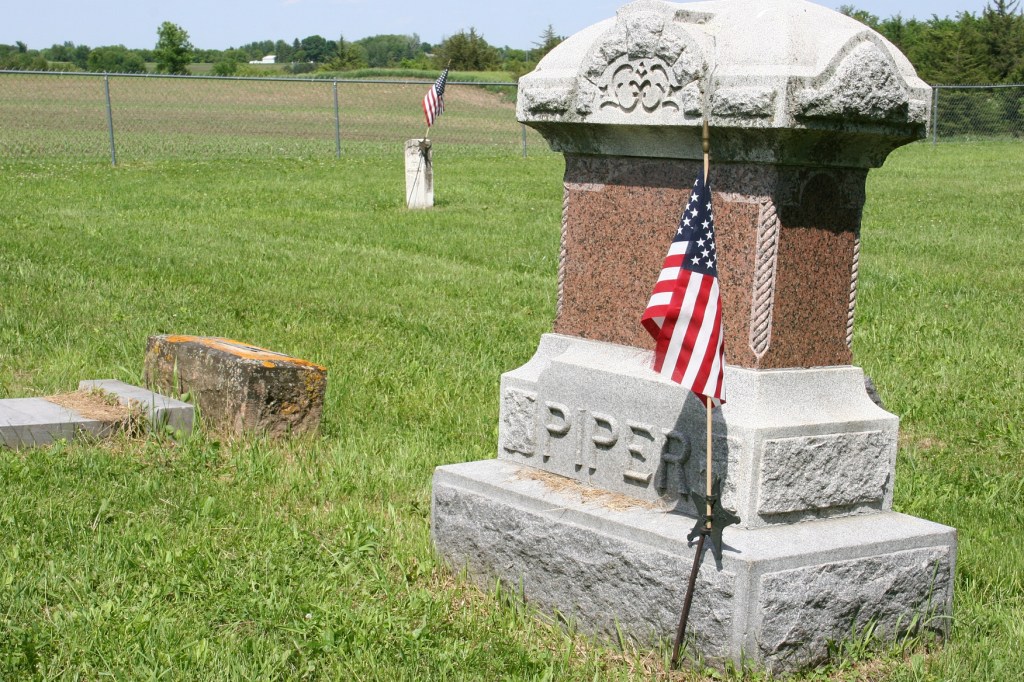
A bronze star marks a veteran’s grave.
The Cannon City Cemetery offers an ideal setting for a grassroots remembrance of those who have served our country. Therein lies its appeal to me.
Giving the history of and then reciting In Flanders Fields.
I have no connection to this place where nearly 50 veterans are buried. But this ceremony reminds me of the Memorial Day programs of my youth. As an aging senior recited In Flanders Fields, I mouthed the words I recited so many years ago on the stage of the Vesta Community Hall.
Fields surround the cemetery where American flags marked veterans’ graves on Memorial Day.
In its peaceful location among farm fields, this cemetery reminds me of home. Of tradition.
Sam Wilson ends the program by playing taps.
And when taps sounded, I was reminded, too, of just how much some sacrificed so that I could stand here, in this cemetery, on Memorial Day, hand across heart reciting The Pledge of Allegiance.
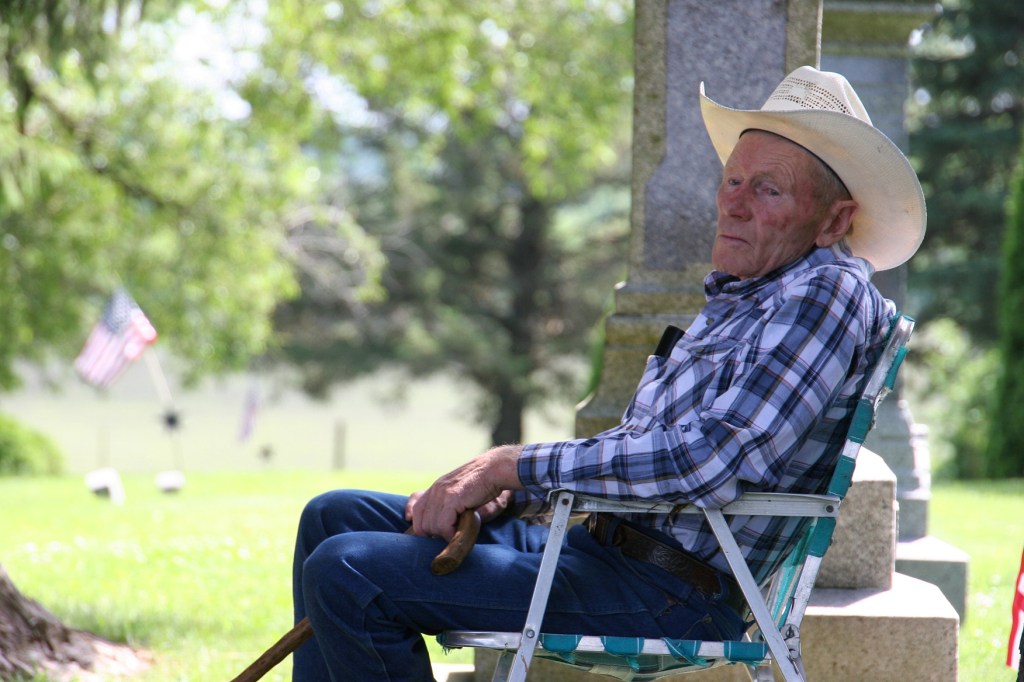
Cannon City native Bob Lewis is a fixture at the annual Memorial Day program. Locals are already tapping his historical knowledge in preparation for the 150th anniversary celebration in 2017.
FYI: Next year the Cannon City Cemetery turns 150 years old. Plans are already underway for a special celebration to mark the occasion. If you want to experience grassroots Americana on Memorial Day, this is the place to be.


















 Minnesota Prairie Roots
Recent Comments