A view from atop the prairie at River Bend Nature Center. (Minnesota Prairie Roots copyrighted photo November 2026)
WITH TREES MOSTLY STRIPPED of leaves, a visible shift in seasons has begun. But look closer, beyond the trees, and even more signs of a transition toward winter appear.
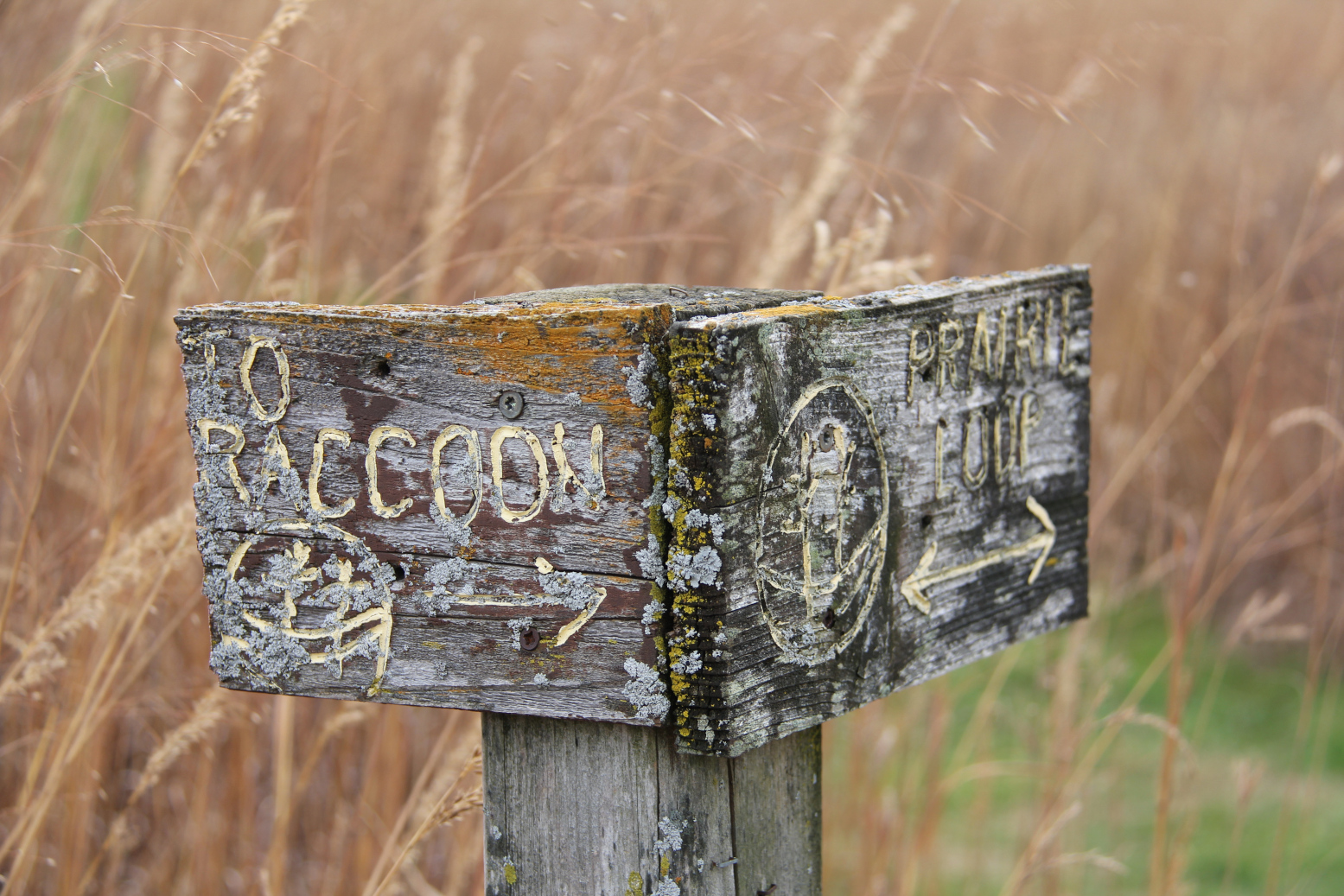
A weathered trail marker. I love these rustic, handcrafted signs placed throughout River Bend. (Minnesota Prairie Roots copyrighted photo November 2026)
I’ve found the much-beloved River Bend Nature Center in Faribault an ideal landscape in which to hike, observe and photograph the nuances of seasons.
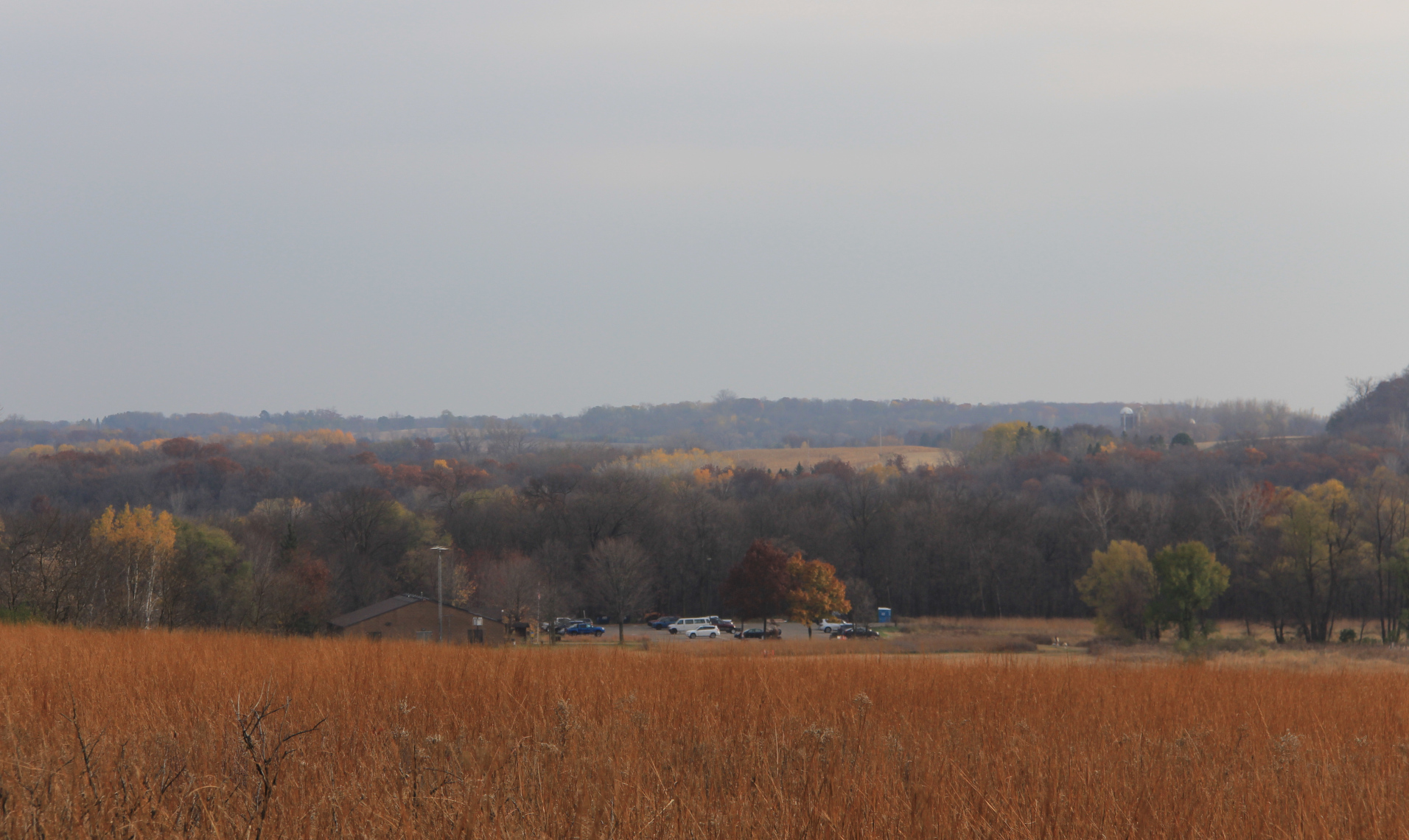
A view of River Bend from the overlook shows the interpretative center and adjoining parking lot plus the surrounding woods. The nature center covers some 823 acres. (Minnesota Prairie Roots copyrighted photo November 2026)
So on a recent unseasonably warm Sunday afternoon, my husband, Randy, and I hiked on the north end of River Bend, first to the overlook providing a sweeping view of the land below. And then we returned to the woods before aiming through swampland toward the prairie.
A splash of color among more muted and golden tones. (Minnesota Prairie Roots copyrighted photo November 2026)
All along our route, I paused, photographed and appreciated.
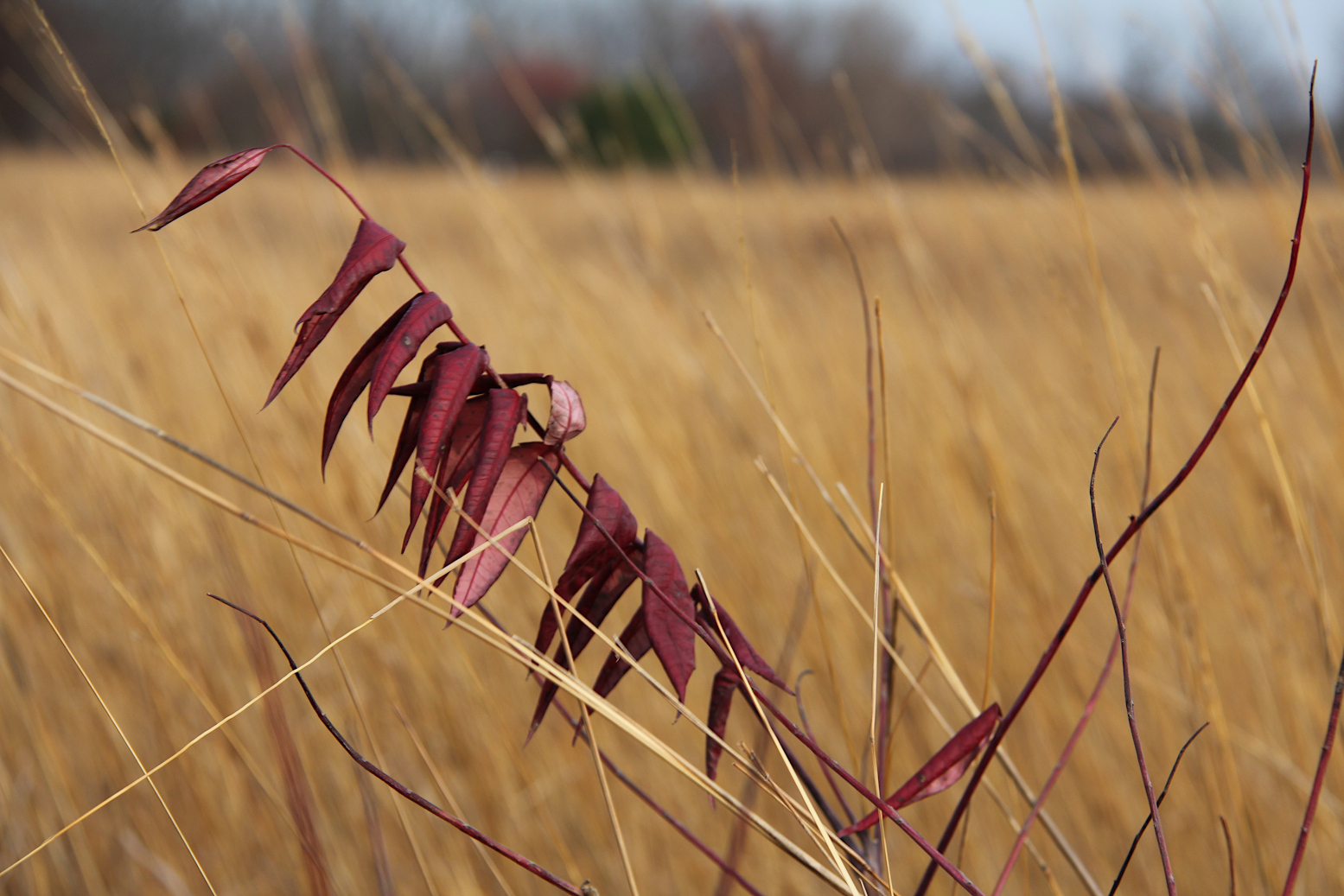
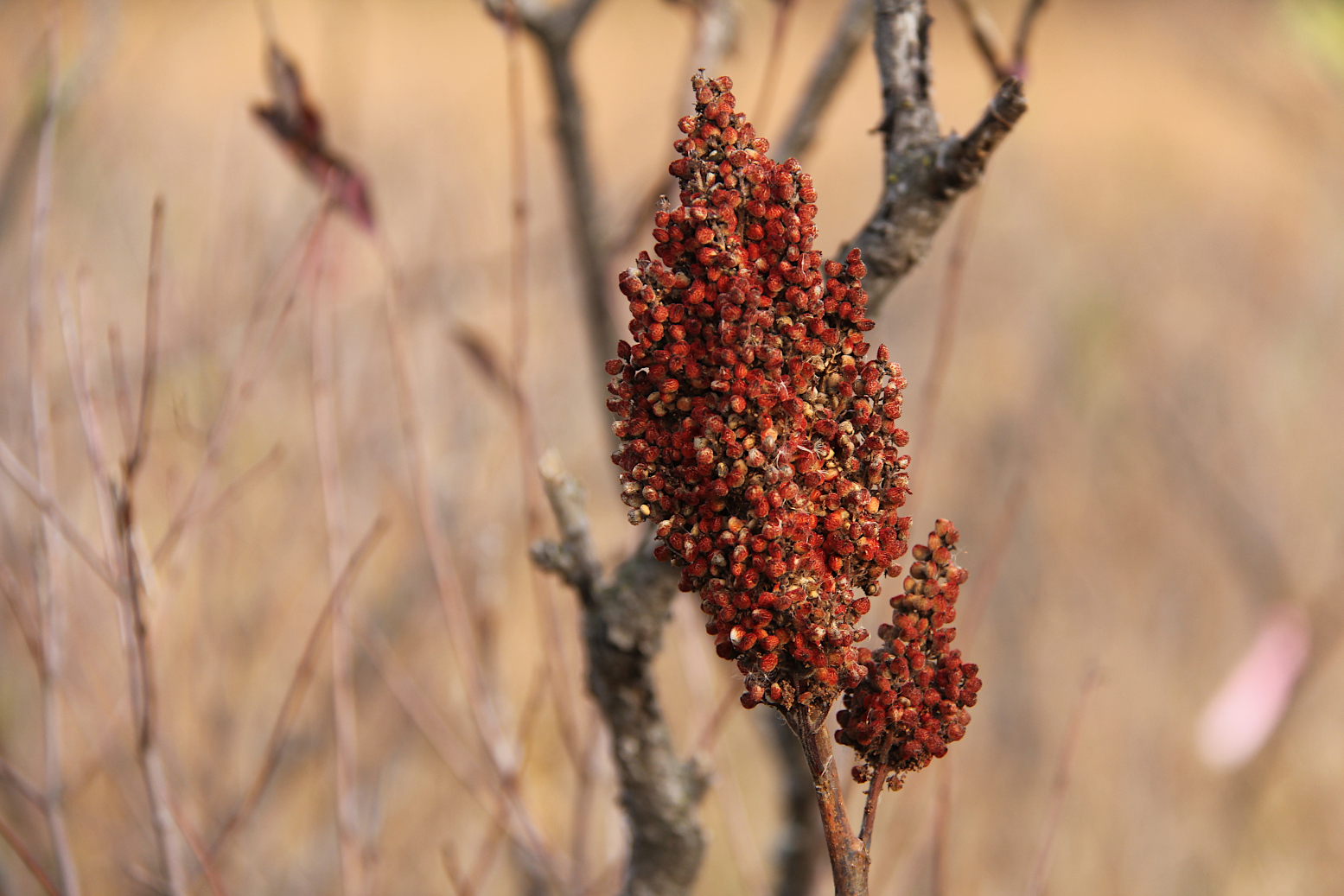
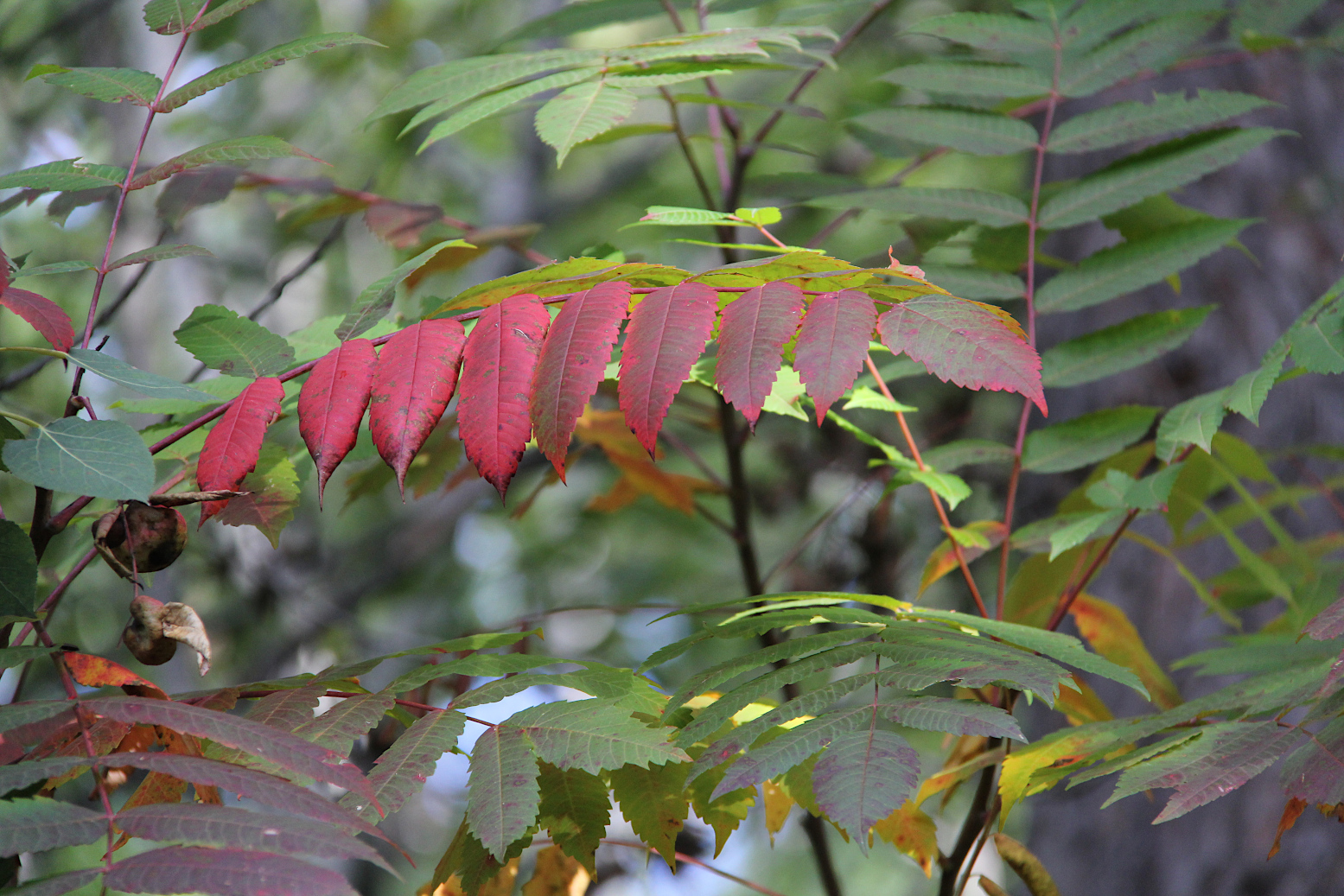
Sumac. (Minnesota Prairie Roots copyrighted photo November 2026)
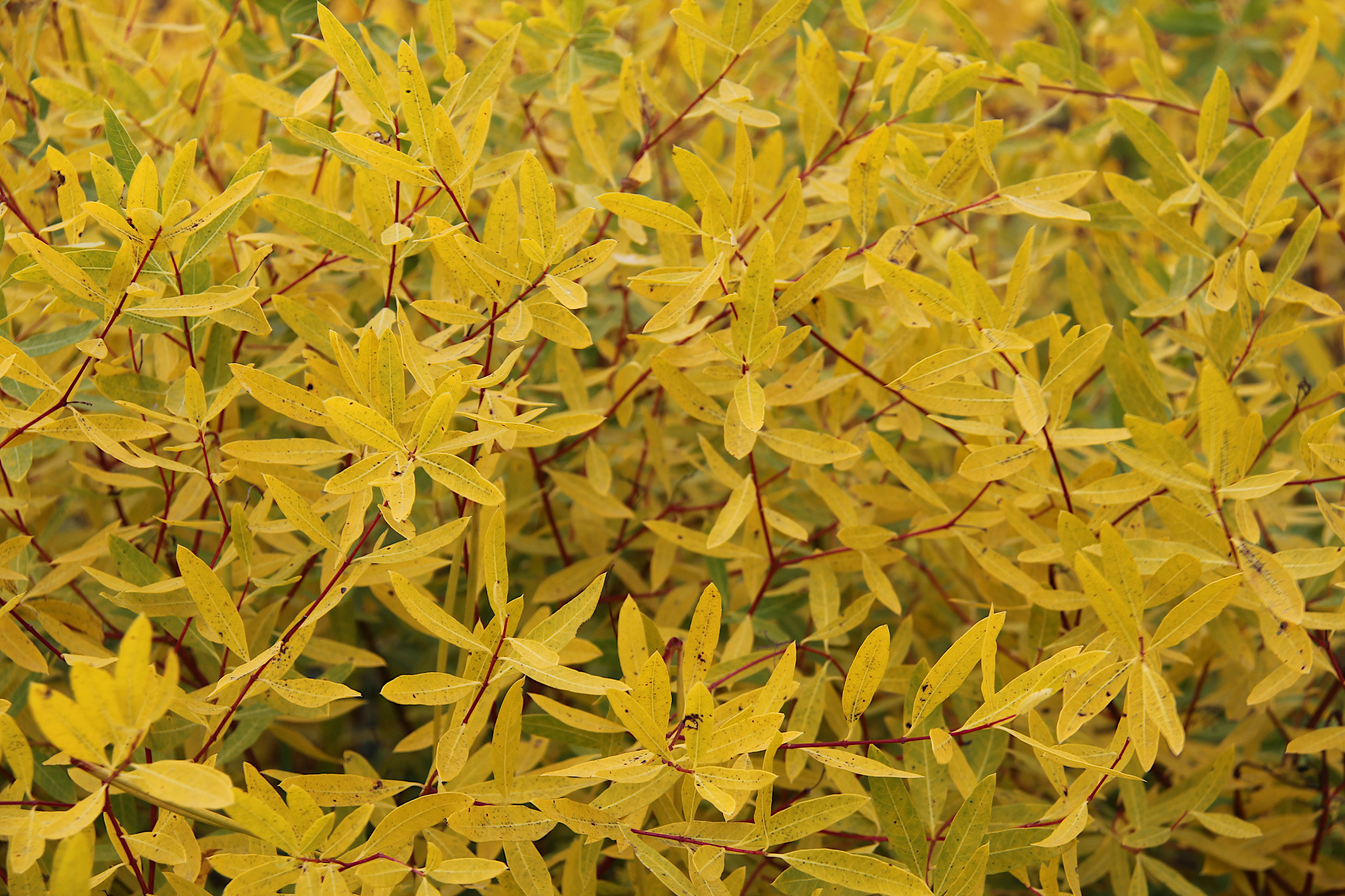
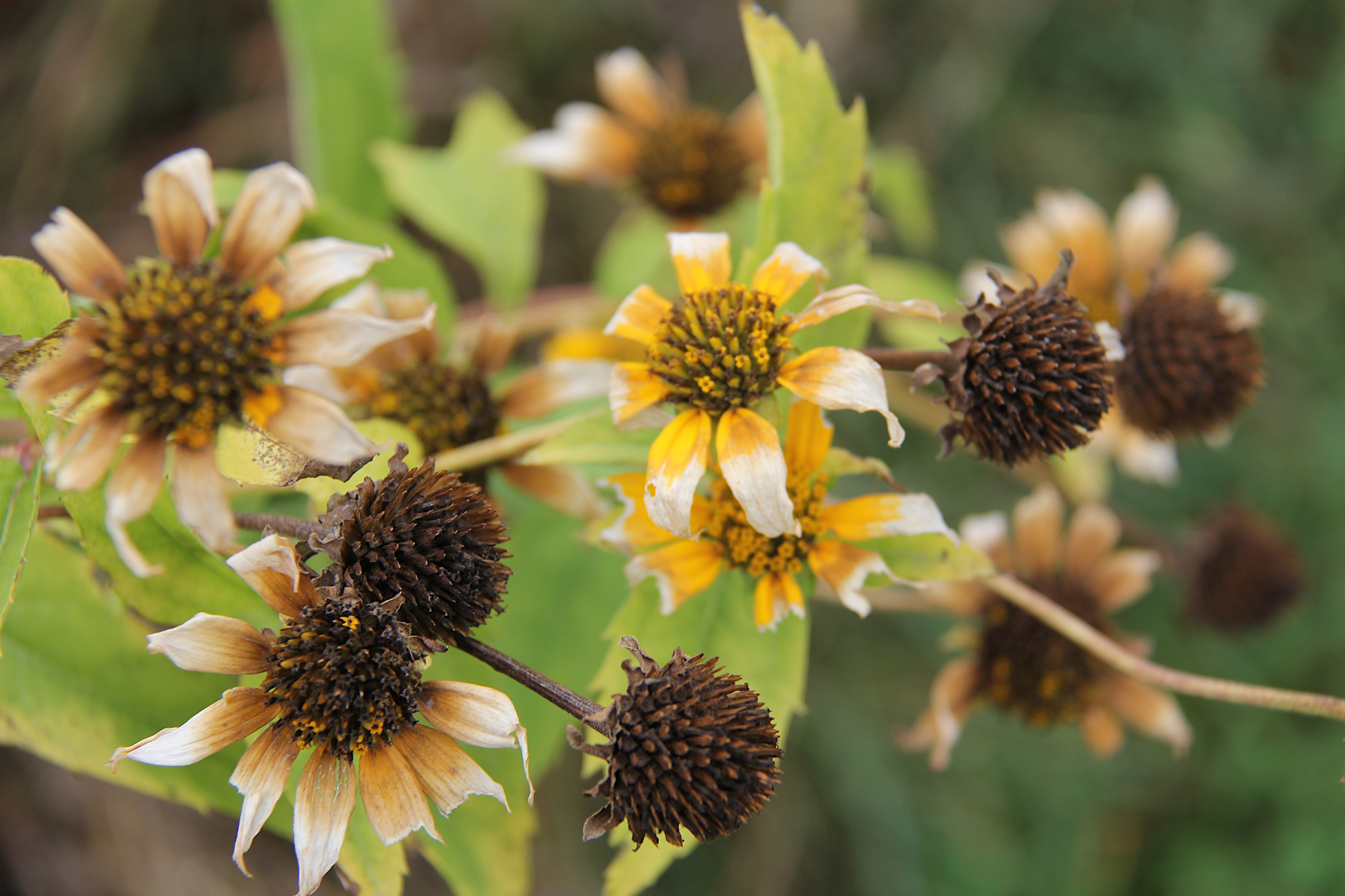
Beauty, for me, is not splashy, but rather subtle. A dried seed pod. The rusty hue of sumac clumps. Red leaves twined to twigs.
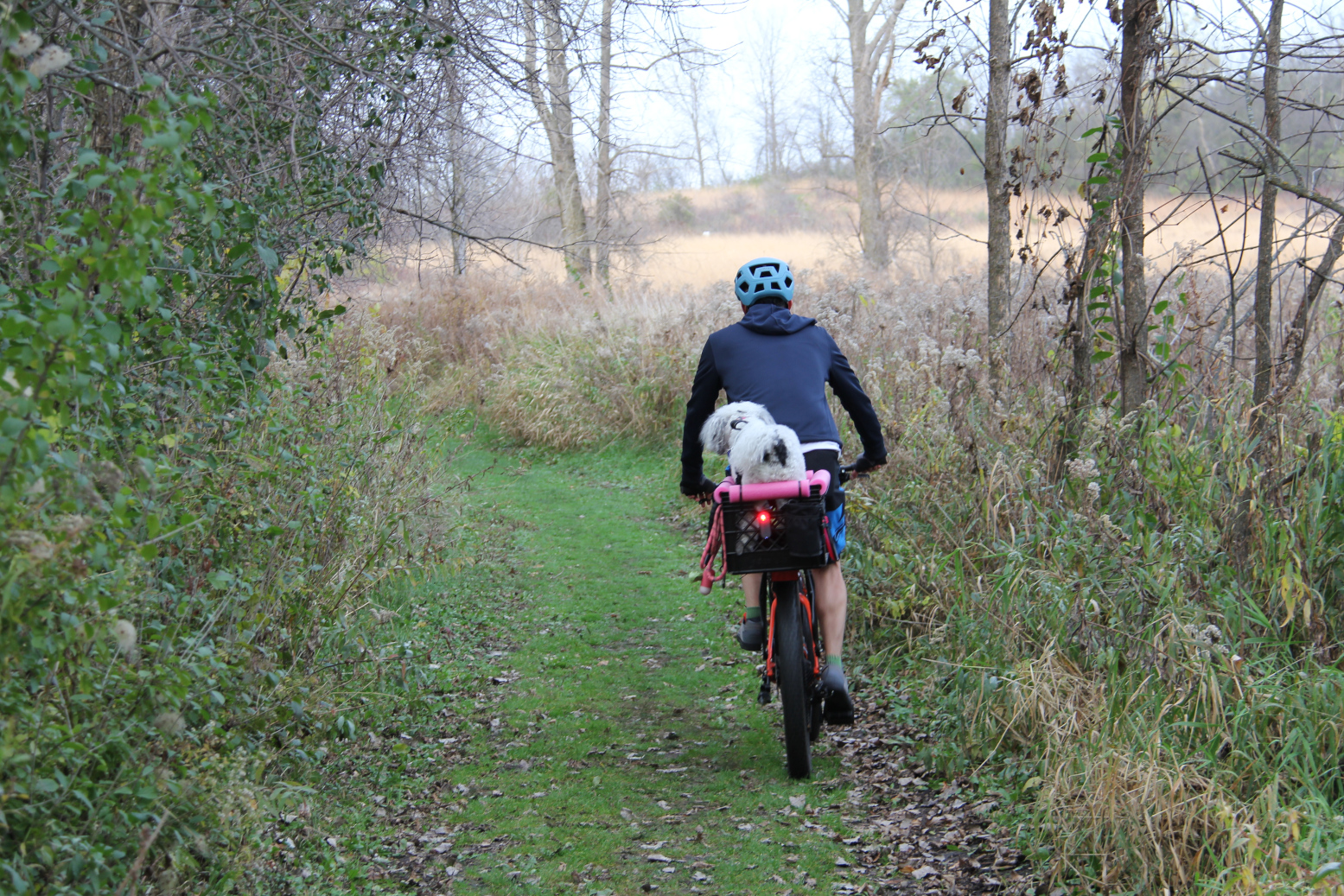
Luna, riding in a bicycle basket, wears goggles to protect her eyes from trailside branches, her owner said. (Minnesota Prairie Roots copyrighted photo November 2026)
In the distance, leaves still clung to a few trees in a stubborn refusal to let go of autumn.
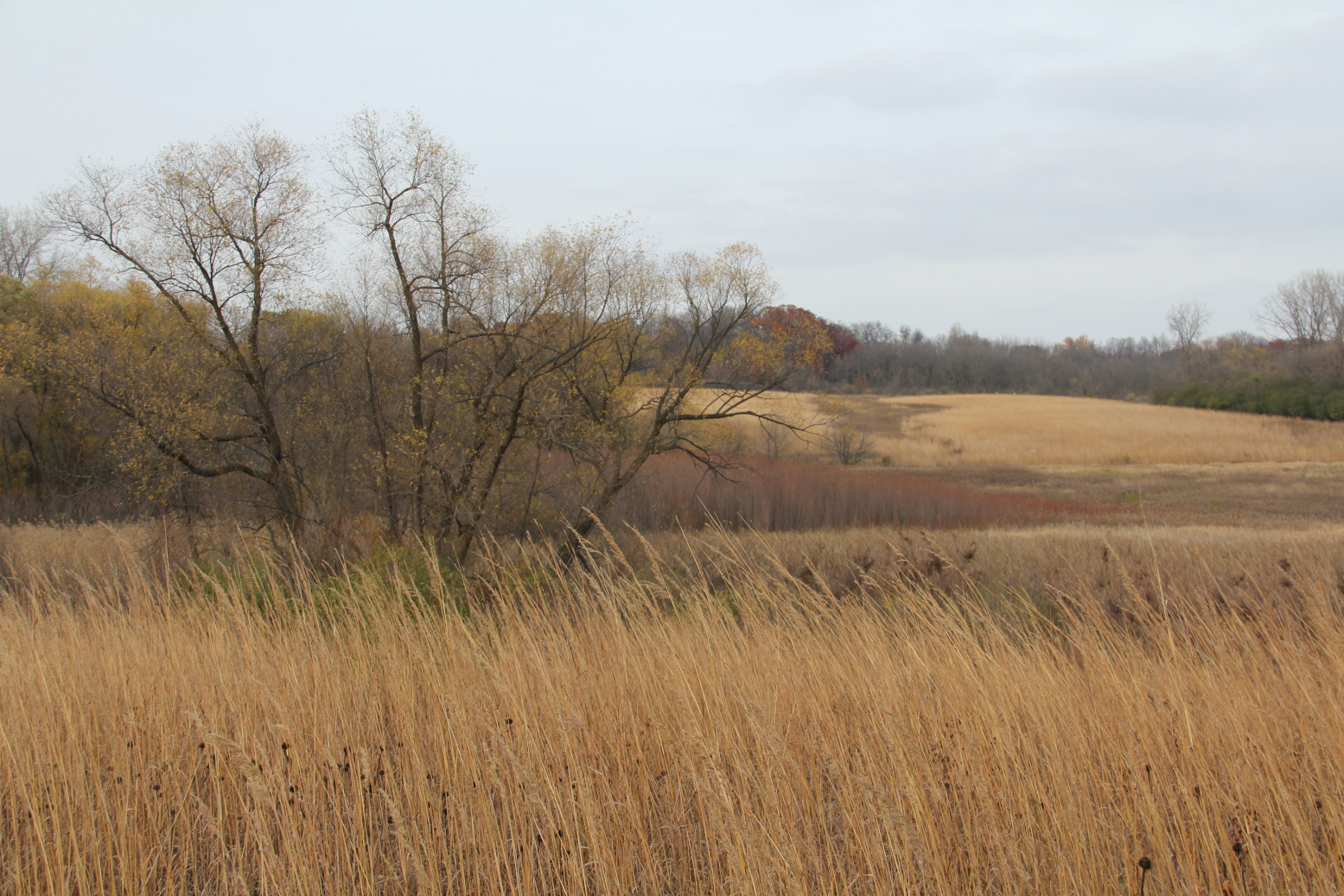
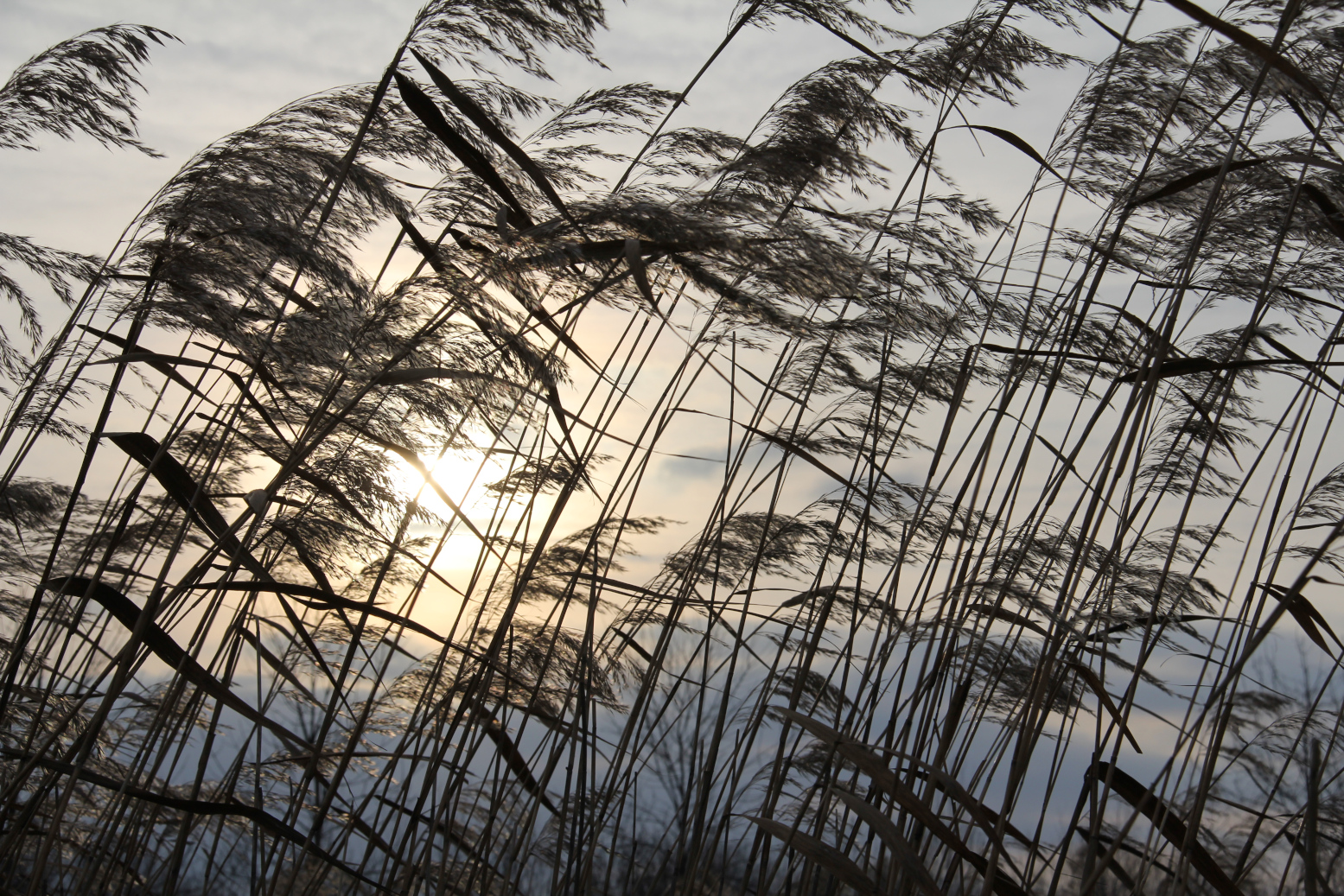
Towering swampland grasses sway in the wind. (Minnesota Prairie Roots copyrighted photo November 2026)
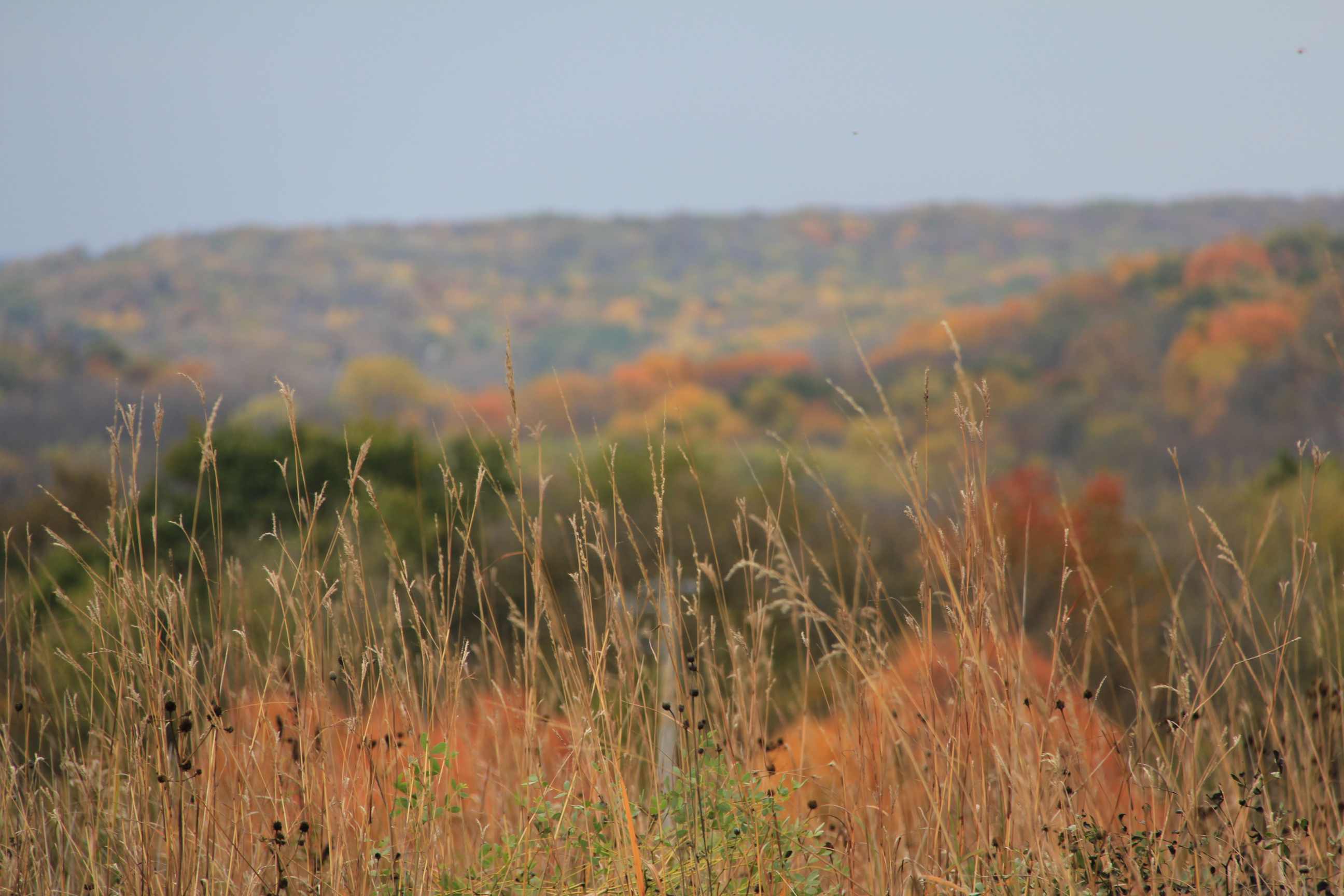
The wind blew fierce on this first day of November, making photography a challenge at times. Yet it was the wind which made for the best part of the hike—the dance of the tall grasses. I’ve always been captivated by the way the wind gracefully bends grass stems. It’s poetic and lovely and mesmerizing.
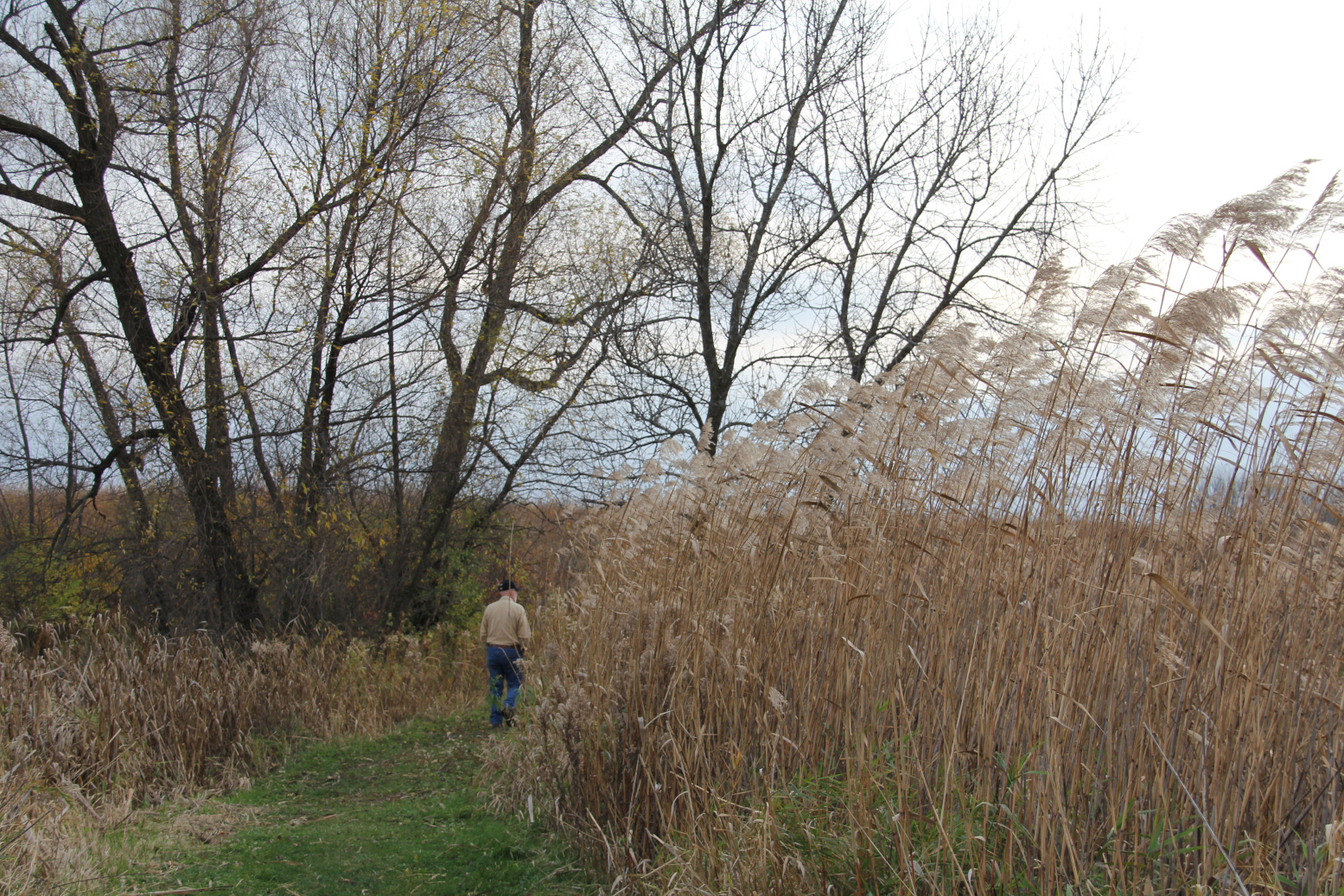
Towering grasses dwarf Randy as he hikes. (Minnesota Prairie Roots copyrighted photo November 2026)
I stood next to the towering swamp grasses—as high as 10 feet—for a while, studying the angle of the sun edging toward sunset, watching the slender, grain-heavy stems bend, bow, lean into one another.
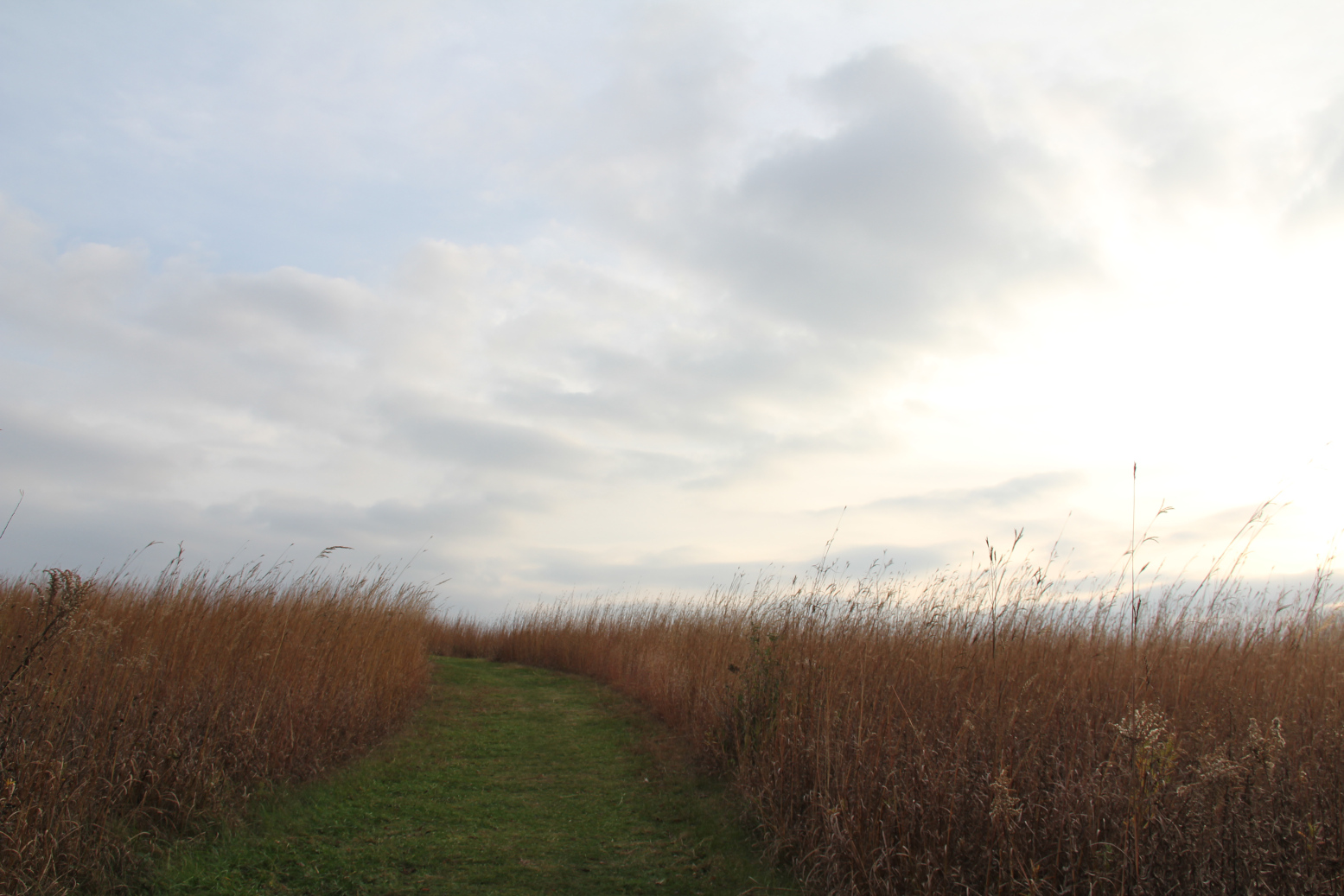
A view on a portion of the Prairie Loop Trail leading to the top of a hill.(Minnesota Prairie Roots copyrighted photo November 2026)
And then I headed up hill to the prairie, low gray clouds sweeping the sky, a hint of blue remaining. I thought of Willa Cather who wrote of the prairie. And Laura Ingalls Wilder who lived on, and also wrote of, the prairie. And my own prairie upbringing which influences my work as a creative.
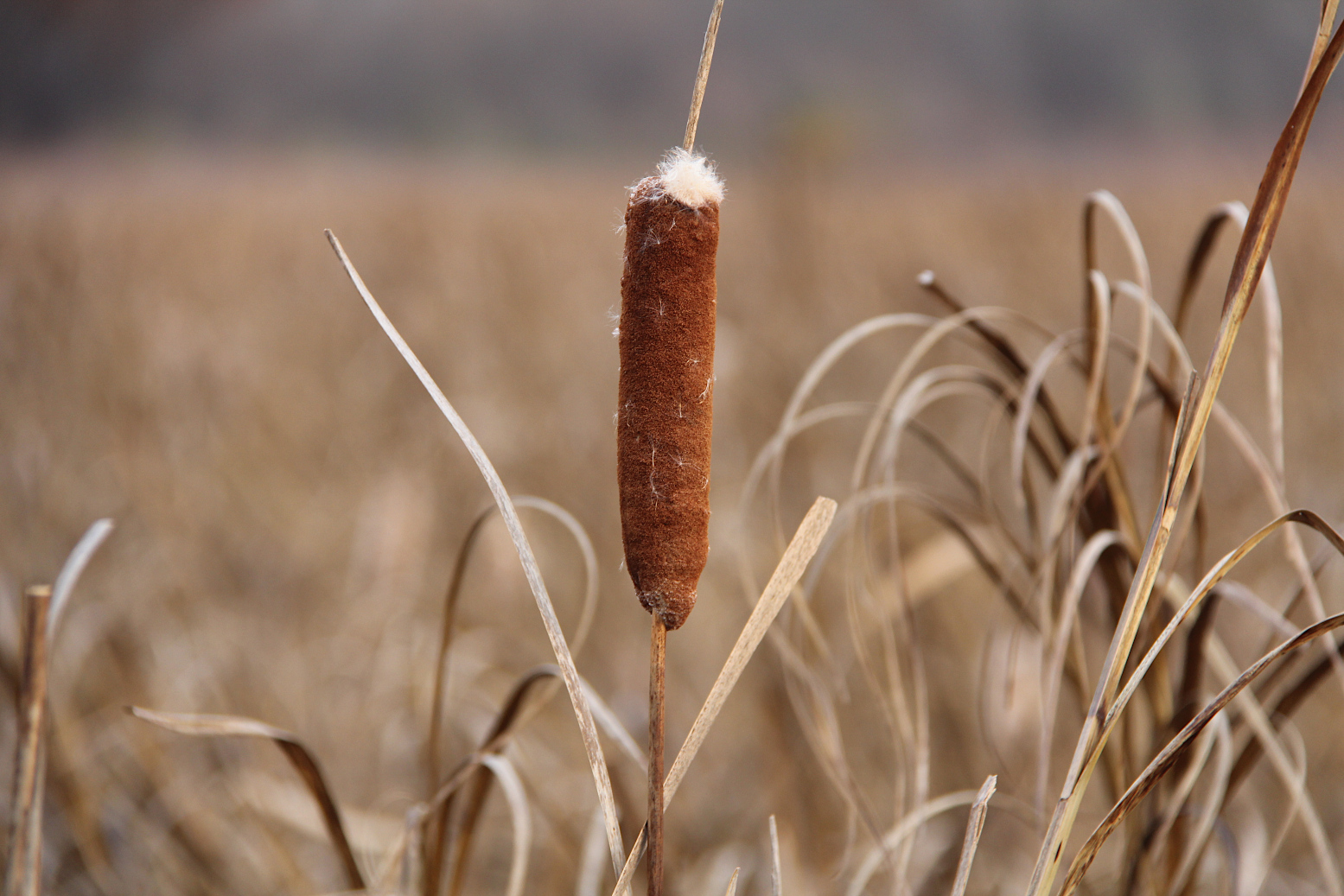
A drying cattail. (Minnesota Prairie Roots copyrighted photo November 2026)
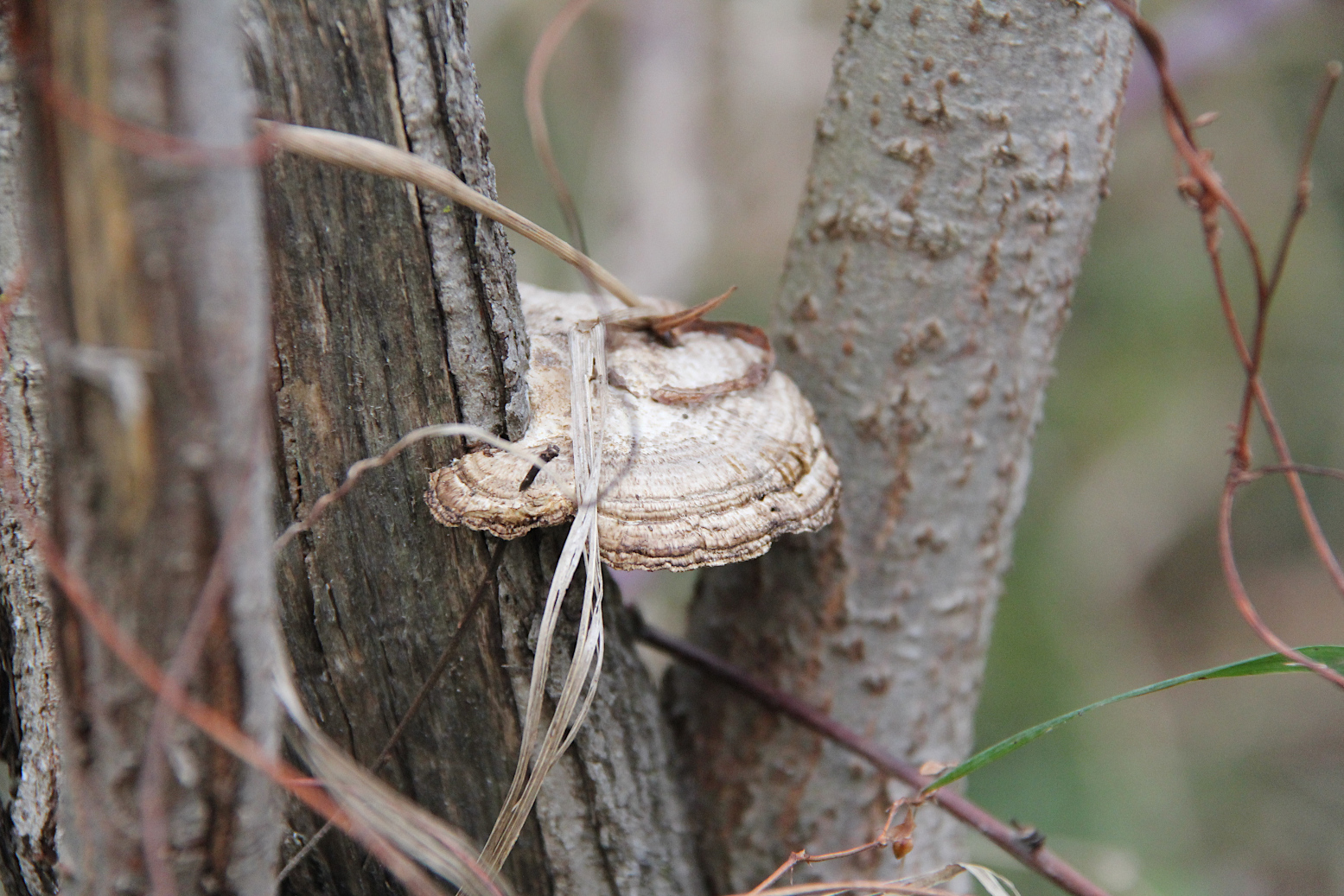
Fungi. (Minnesota Prairie Roots copyrighted photo November 2026)
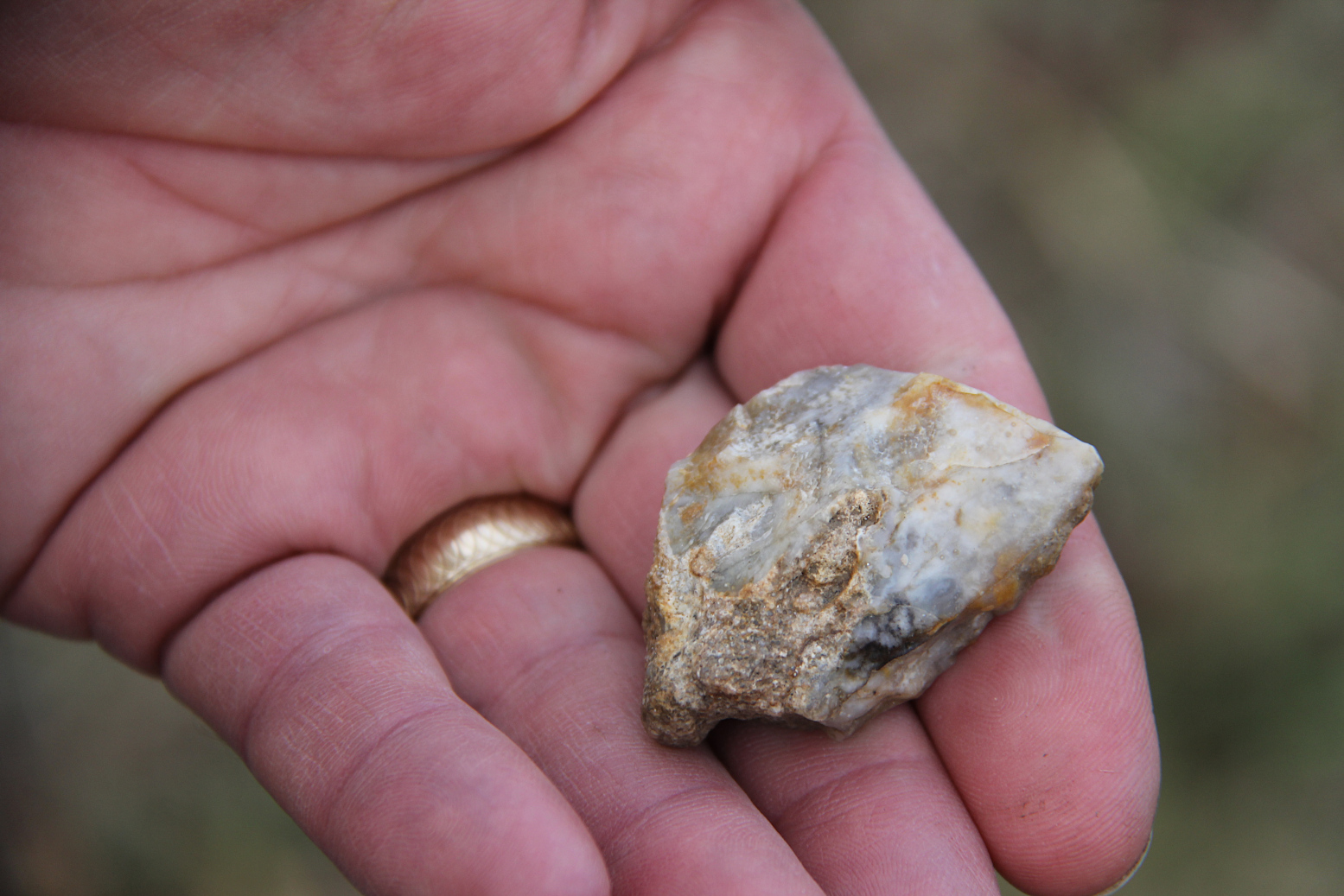
Randy found an interesting stone along a trail. (Minnesota Prairie Roots copyrighted photo November 2026)
Much beauty exists here beyond a first glimpse. A puff-tipped cattail. Fungi laddering a tree trunk. A stone found on a trail.
A biker and his dog head up a trail toward the overlook on the north side of River Bend. (Minnesota Prairie Roots copyrighted photo November 2026)
On this balmy, for November in Minnesota, afternoon, hikers and bikers migrated to River Bend, some alone, others in pairs, some with their dogs. All were enjoying a day that felt like a fond farewell from autumn. The wind and warmth kissed us as we embraced this loveliest of lingering autumnal days.
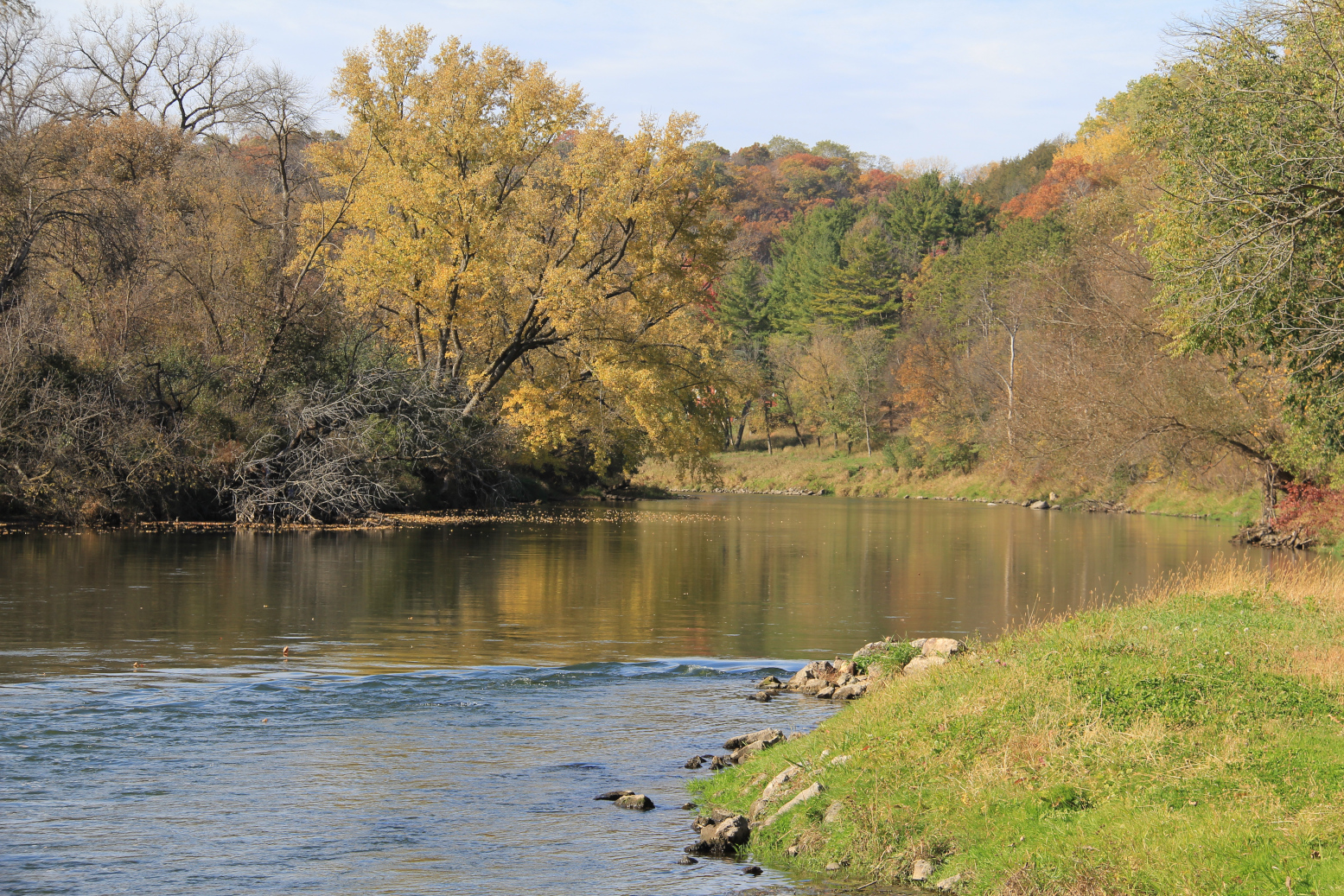
The Cannon River in Welch. (Minnesota Prairie Roots copyrighted photo October 2026)
DESCENDING DEEP into the Cannon River valley, it’s easy to feel transported, disconnected, as if in a place distanced from the realities of everyday life. At least that’s been my reaction when I’ve traveled to Welch, an unincorporated burg nearly 40 miles southeast of St. Paul in Goodhue County.
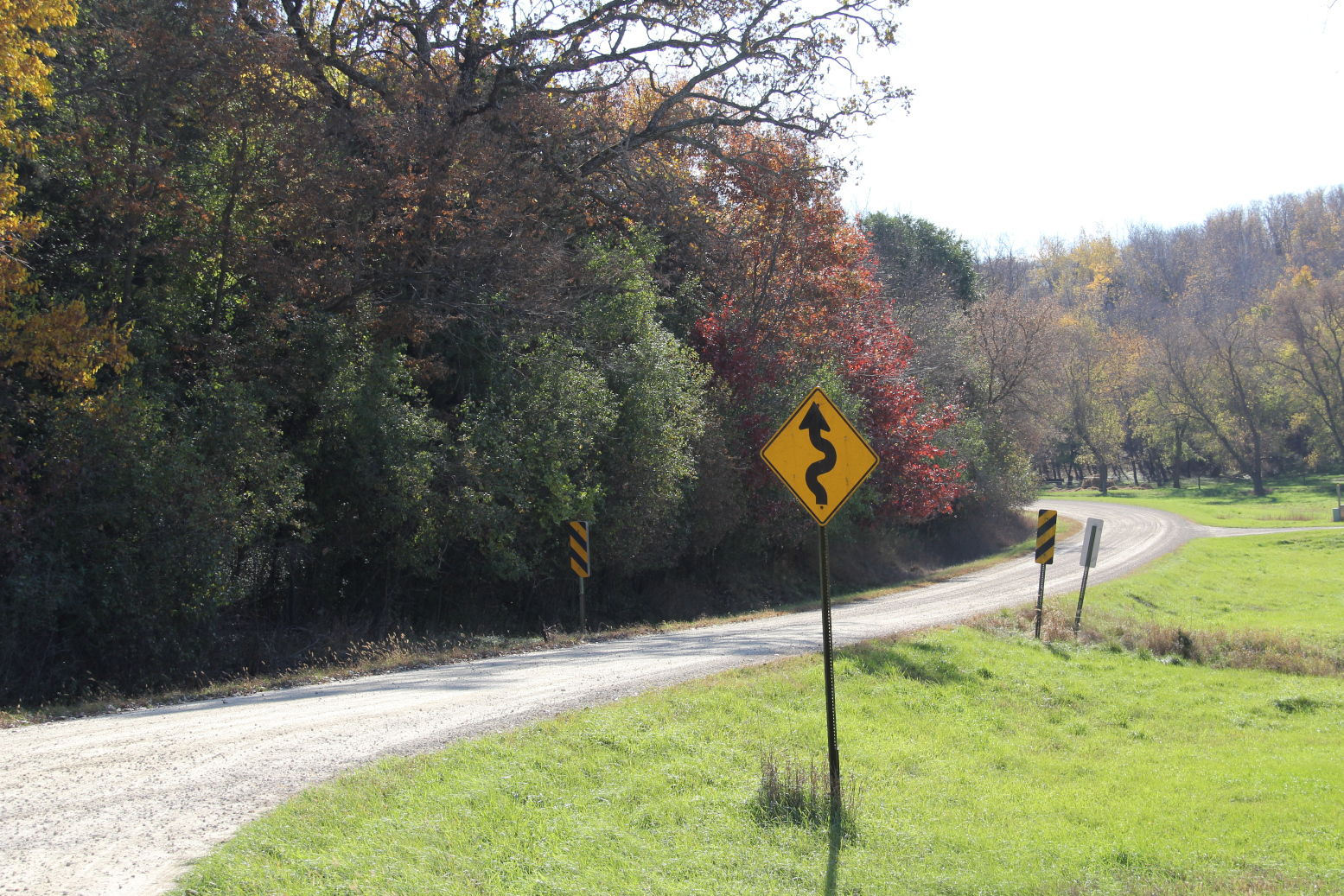
Gravel roads like this twist through the state forest. (Minnesota Prairie Roots copyrighted photo October 2026)
On a recent fall color drive, Randy and I aimed east toward this riverside location as we left Cannon Falls along Minnesota State Highway 19. Not long after, we turned off the paved highway onto gravel, eventually following Wild Turkey Road and other routes that twist through Richard J Dorer Memorial Hardwood State Forest toward Welch. The state forest encompasses 1 million acres in seven southeastern Minnesota counties.
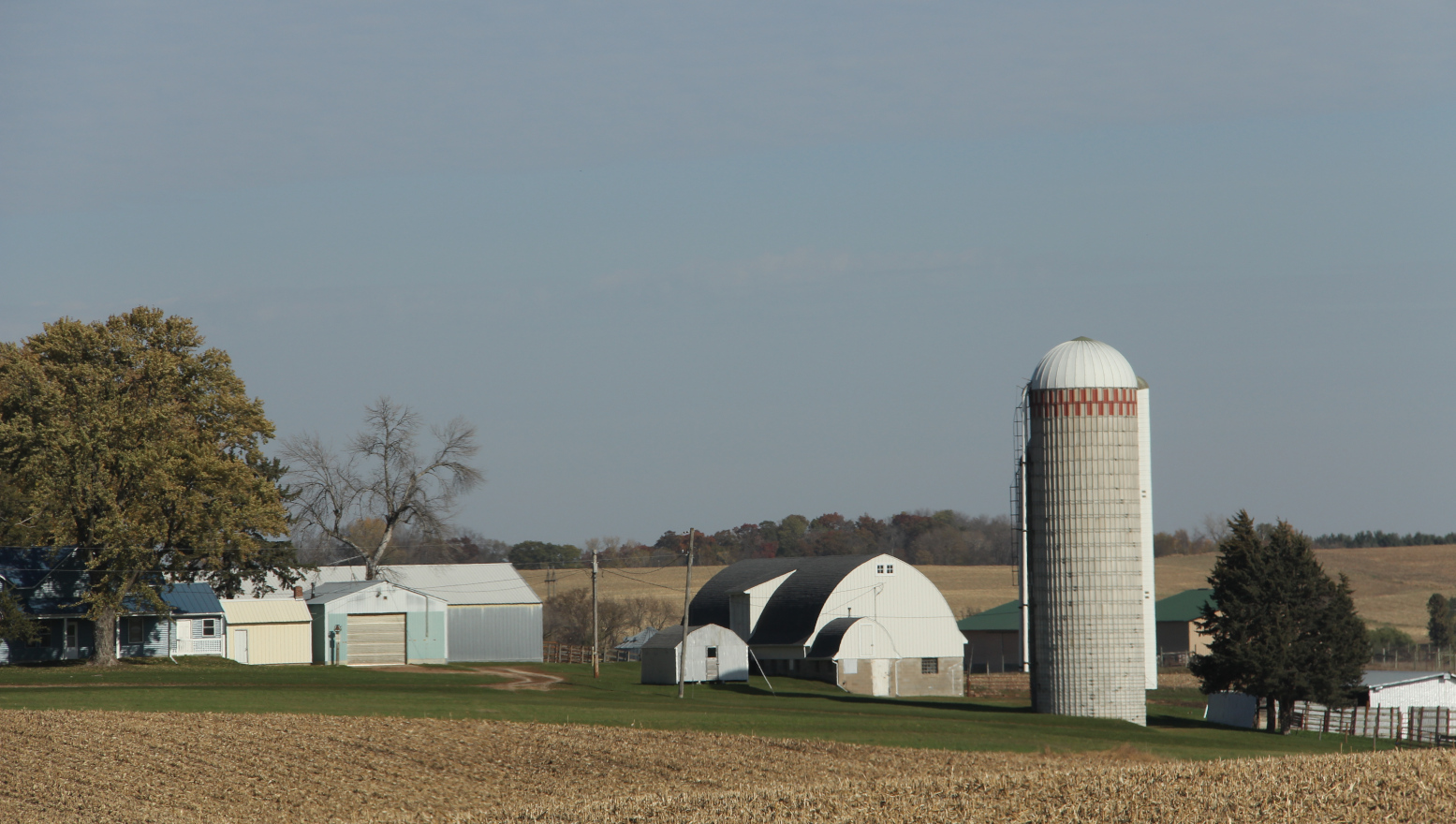
Before driving deep into the woods, we saw farm sites and acres of farmland. (Minnesota Prairie Roots copyrighted photo October 2026)
I felt completely lost as gravel roads rose and fell before us, as farm sites came into view, as an occasional house hugged a forested hillside, as we looped back and forth, seemingly without direction.
Because I grew up on a square prairie grid where roads run straight, I always feel off-balance when I can’t grasp a sense of direction. But I trusted that Randy would get us back on track with the help of a paper atlas. There is no trusting cellphone service in remote areas like this.
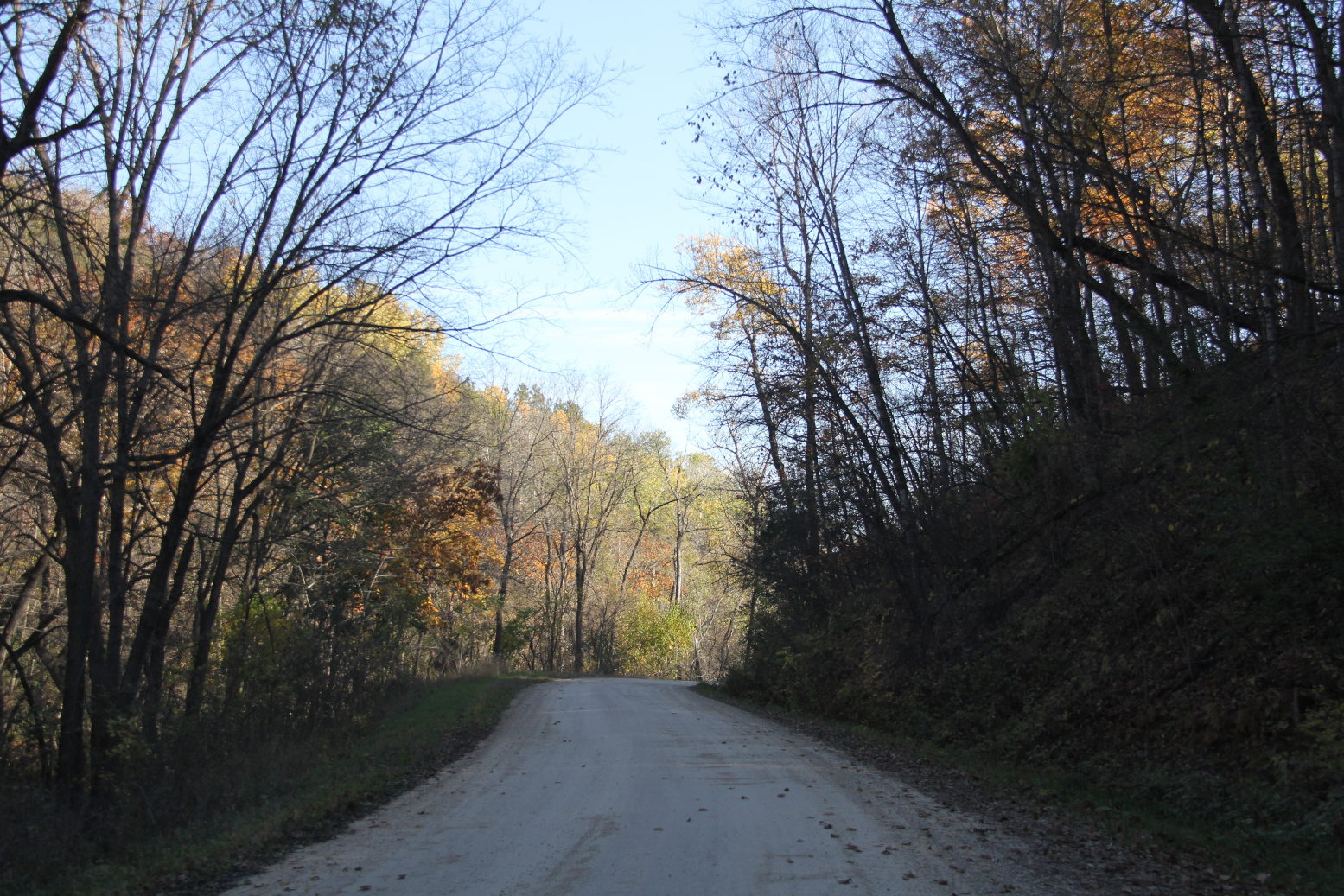
A gravel road takes us deep into the forest. (Minnesota Prairie Roots copyrighted photo October 2026)
As we traveled, I appreciated the natural beauty of the forest. But my imagination sprinted, too, with stories of fictional crimes committed here deep in the woods. I am a fan of mysteries, especially those set in Minnesota.
Heading down winding Goodhue County Road 7to Welch. (Minnesota Prairie Roots copyrighted photo October 2026)
Eventually, we reached a paved roadway that runs between Vasa and Welch. I admittedly felt a sense of relief when I spotted a guy picking up his mail, then saw vehicles packing the parking lot along the Cannon Valley Trail, a popular state recreational trail for bikers. By then we’d met a sprinkling of vehicles also. I felt like we were back in civilization.
If this all sounds a tad dramatic, it’s not meant to be. Rather, I’m simply trying to describe this region. Remote. Rugged. And beautiful.
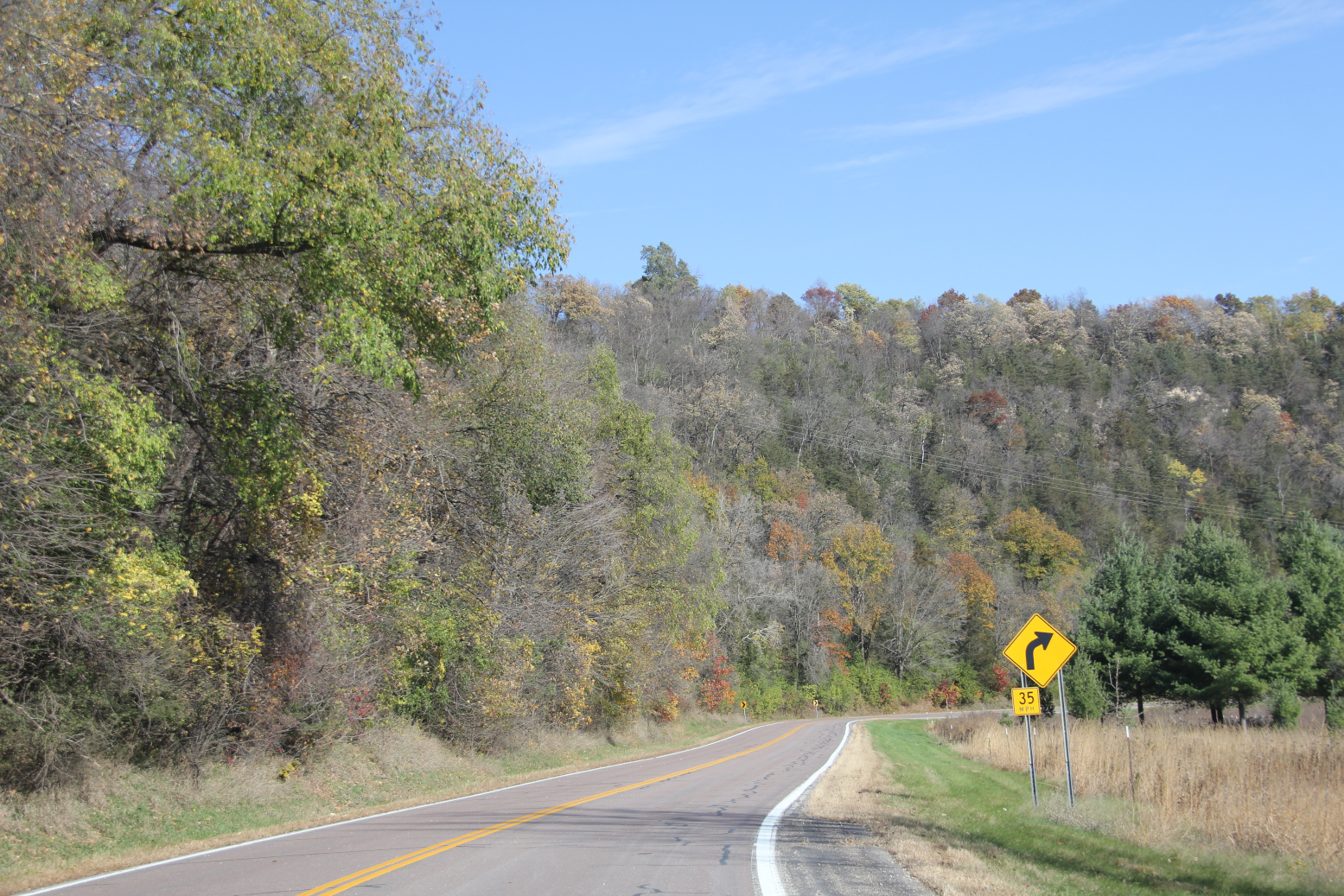
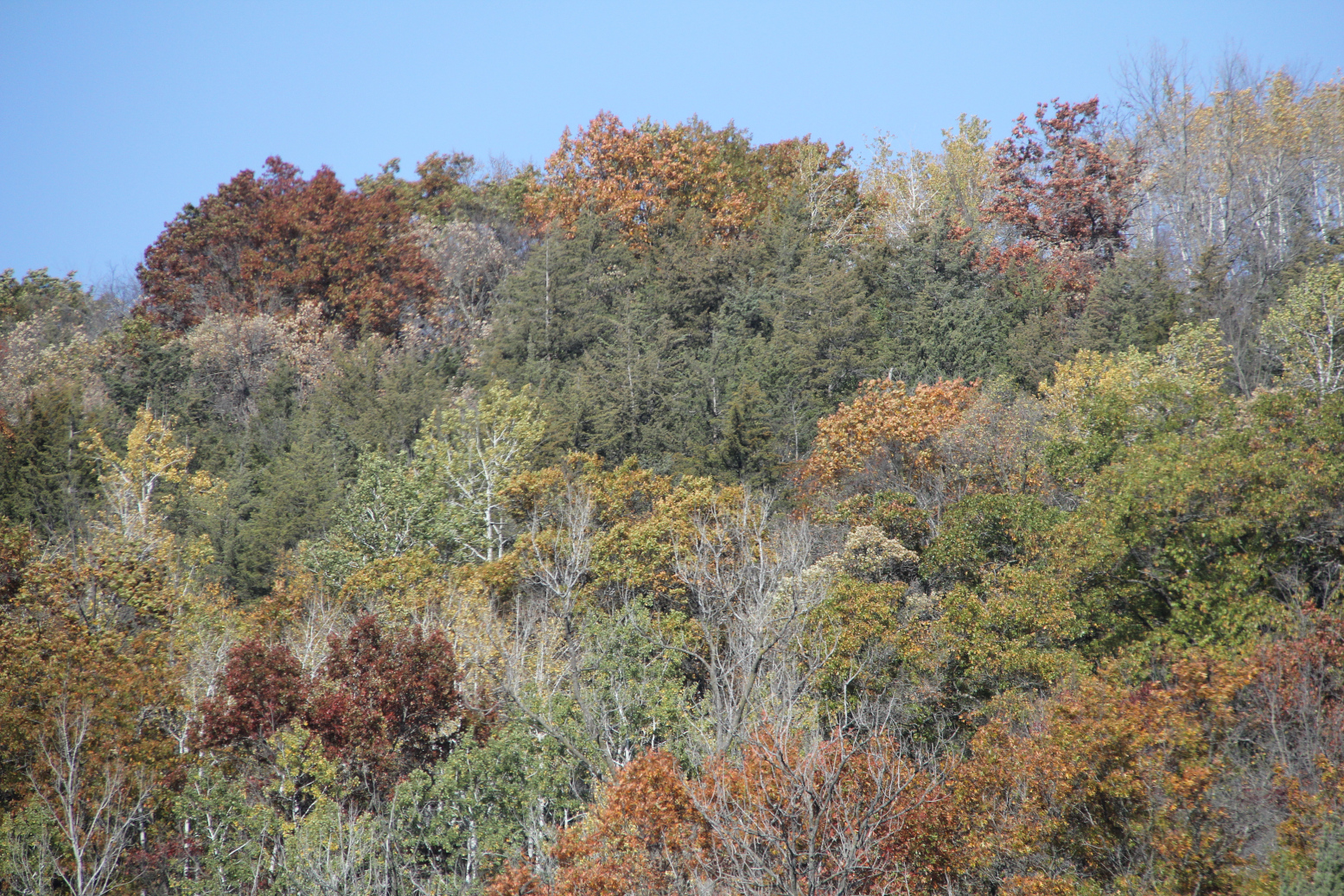
Muted fall colors remained on our October 23 visit to the Welch area. (Minnesota Prairie Roots copyrighted photo October 2026)
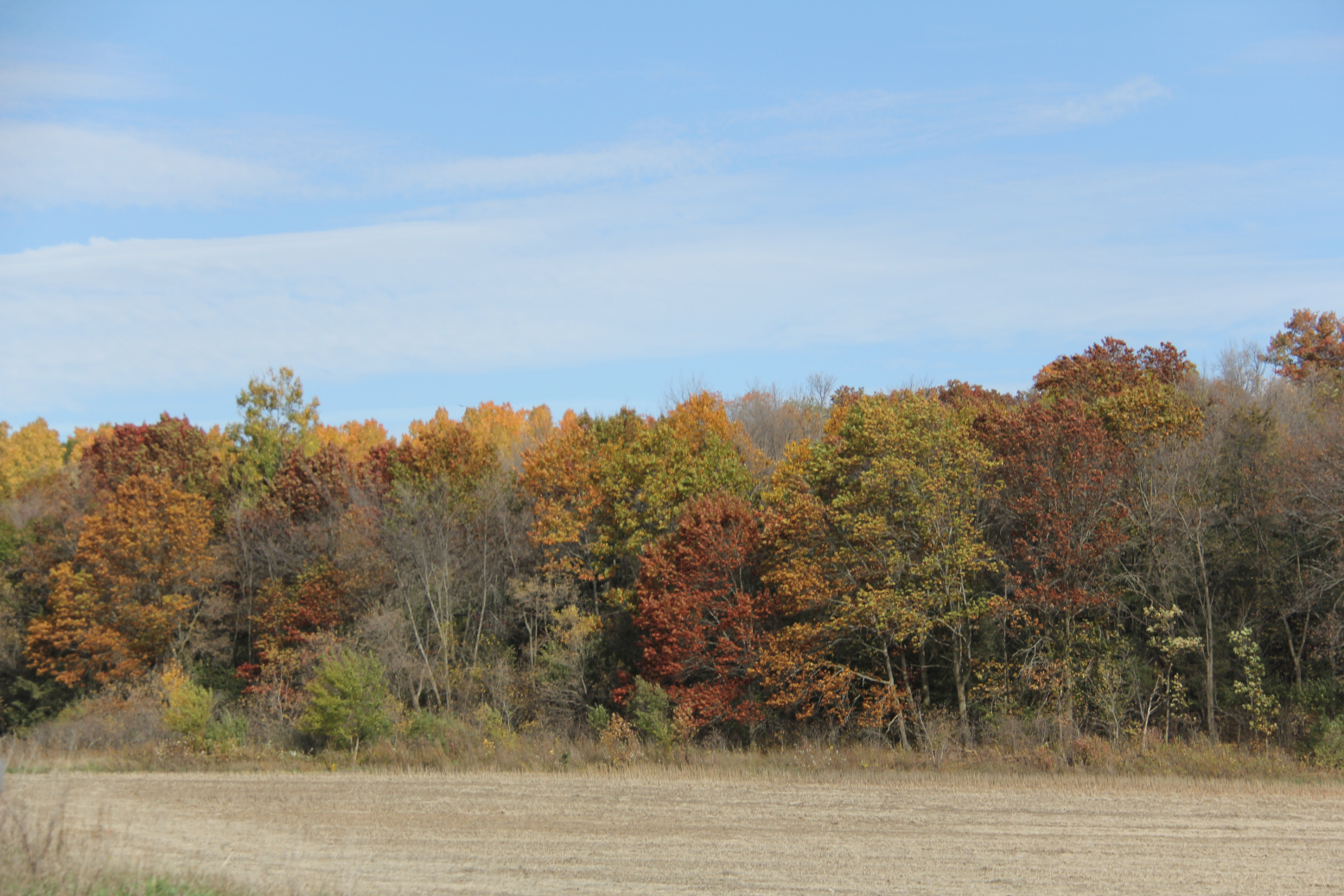
It was here, winding our way through the Cannon River valley, that we saw the fall colors we’d hoped to find. Not as bright or brilliant as anticipated on a windy, hazy day. But beautiful none-the-less.
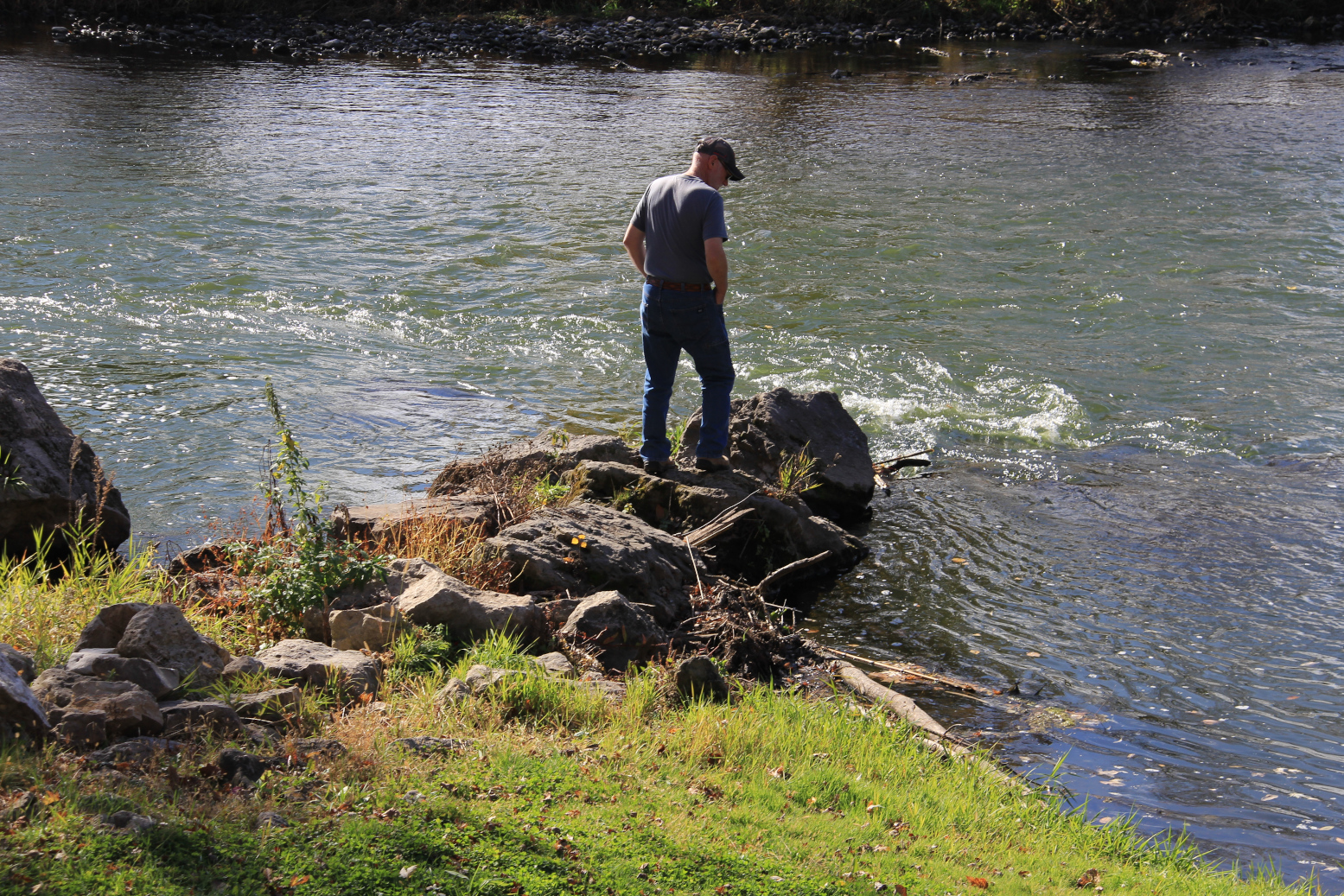
Randy steps on shoreline rocks to view the Cannon River up close in Welch. (Minnesota Prairie Roots copyrighted photo October 2026)
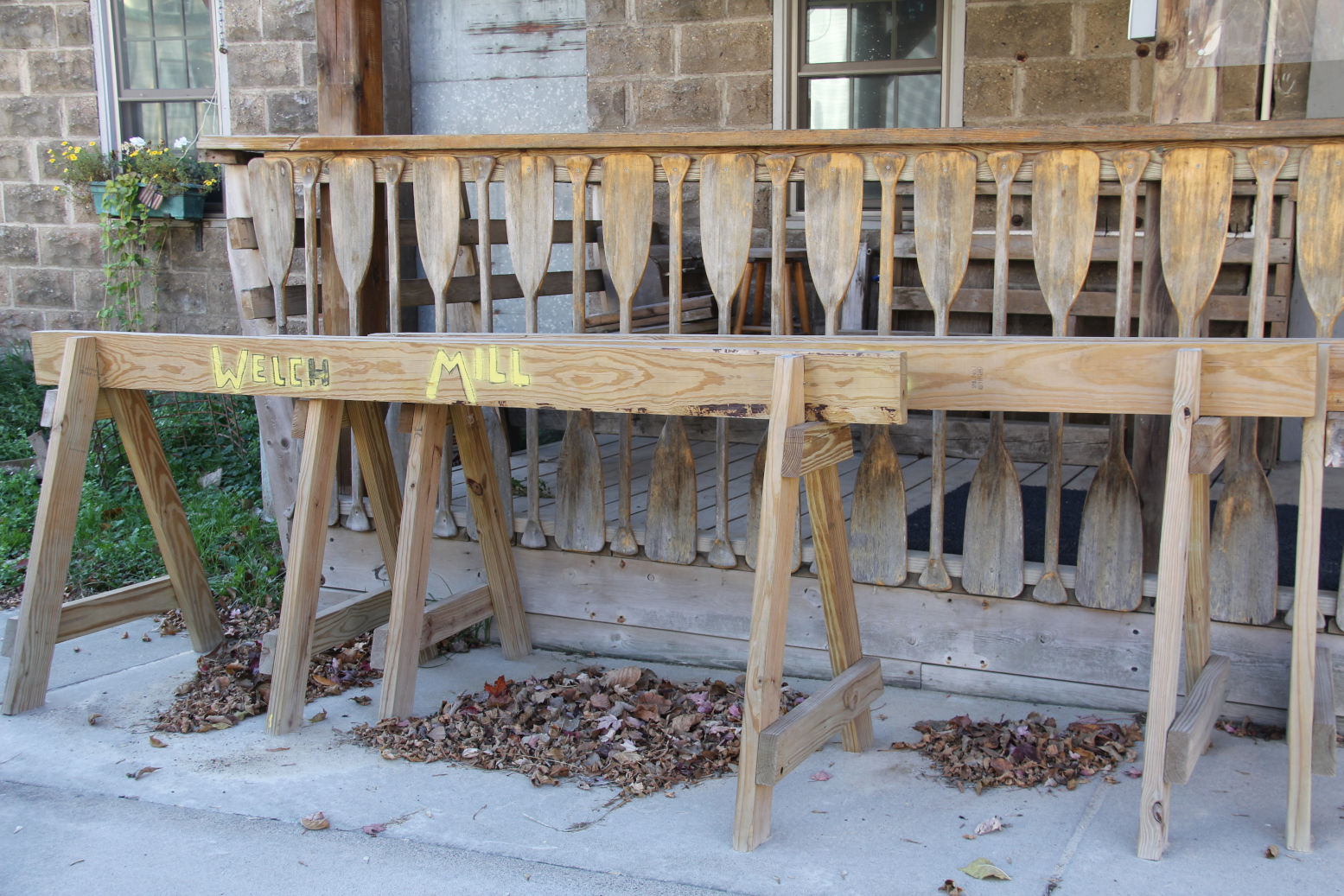
In warmer weather, this area is a recreational destination for those wishing to canoe, kayak or tube on the Cannon River with Welch Mill offering rentals and a launching spot. I walked to the edge of the Cannon, taking in the tranquil scene of water flowing between tree-lined banks. To my right, the river curved out of sight. To my left, water flowed under the county road bridge we’d just crossed.
A unique railing built of paddles subtly markets Welch Mill. (Minnesota Prairie Roots copyrighted photo October 2026)
Other than a pest control truck leaving a public parking space and motorists pulling in to park and dine at The Bleu Dog Cafe, all was quiet in this village. I expect there are times when Welch thrums with activity. But not on this day.
A colorful treeline along Highway 19 between Cannon Falls and Vasa. (Minnesota Prairie Roots copyrighted photo October 2026)
Shortly after taking in the river view, we returned to Goodhue County Road 7, winding our way uphill through hardwood forest toward the unincorporated village of Vasa. On this afternoon, the route proved popular for motorcyclists out for a fall color drive. Just like us.
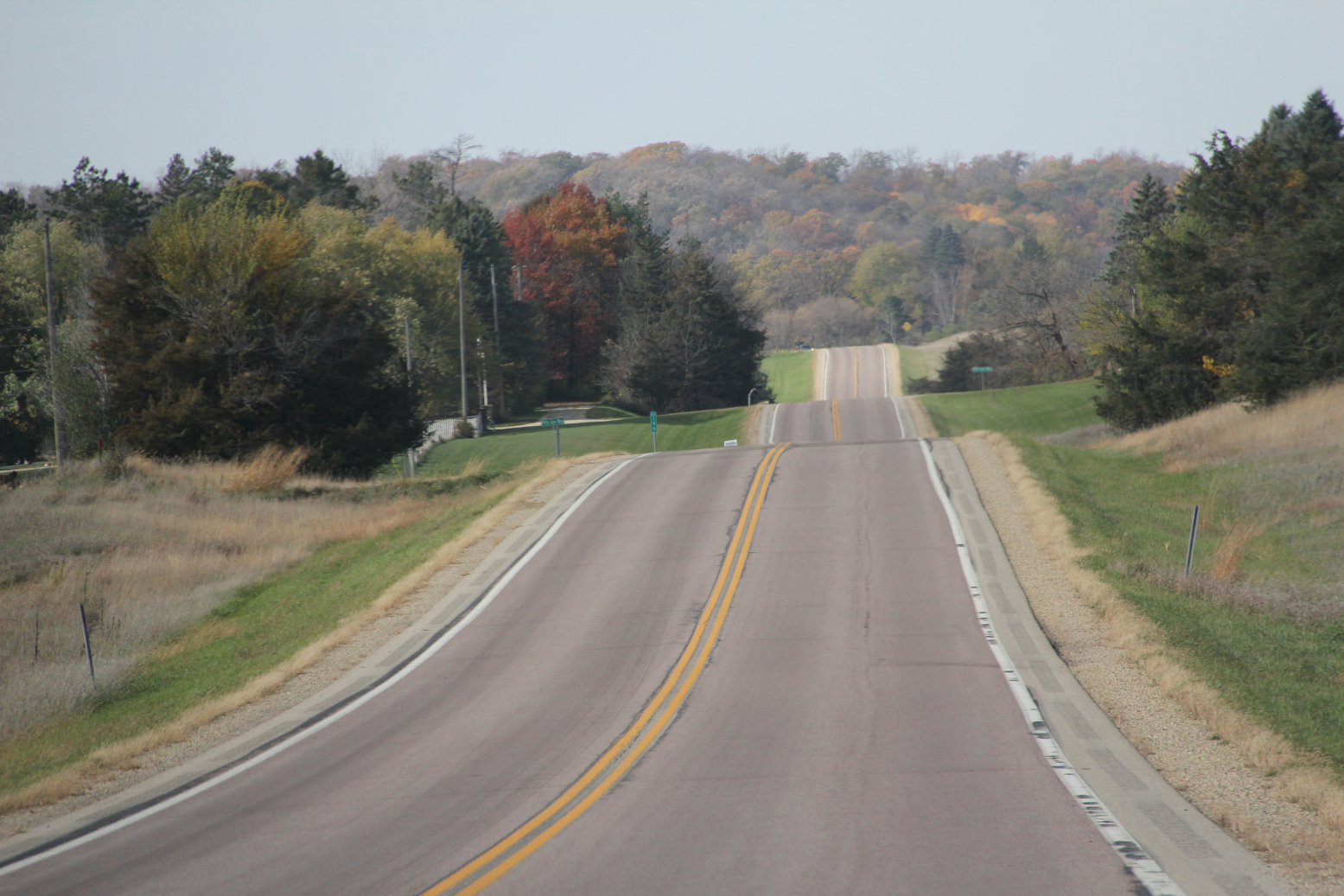
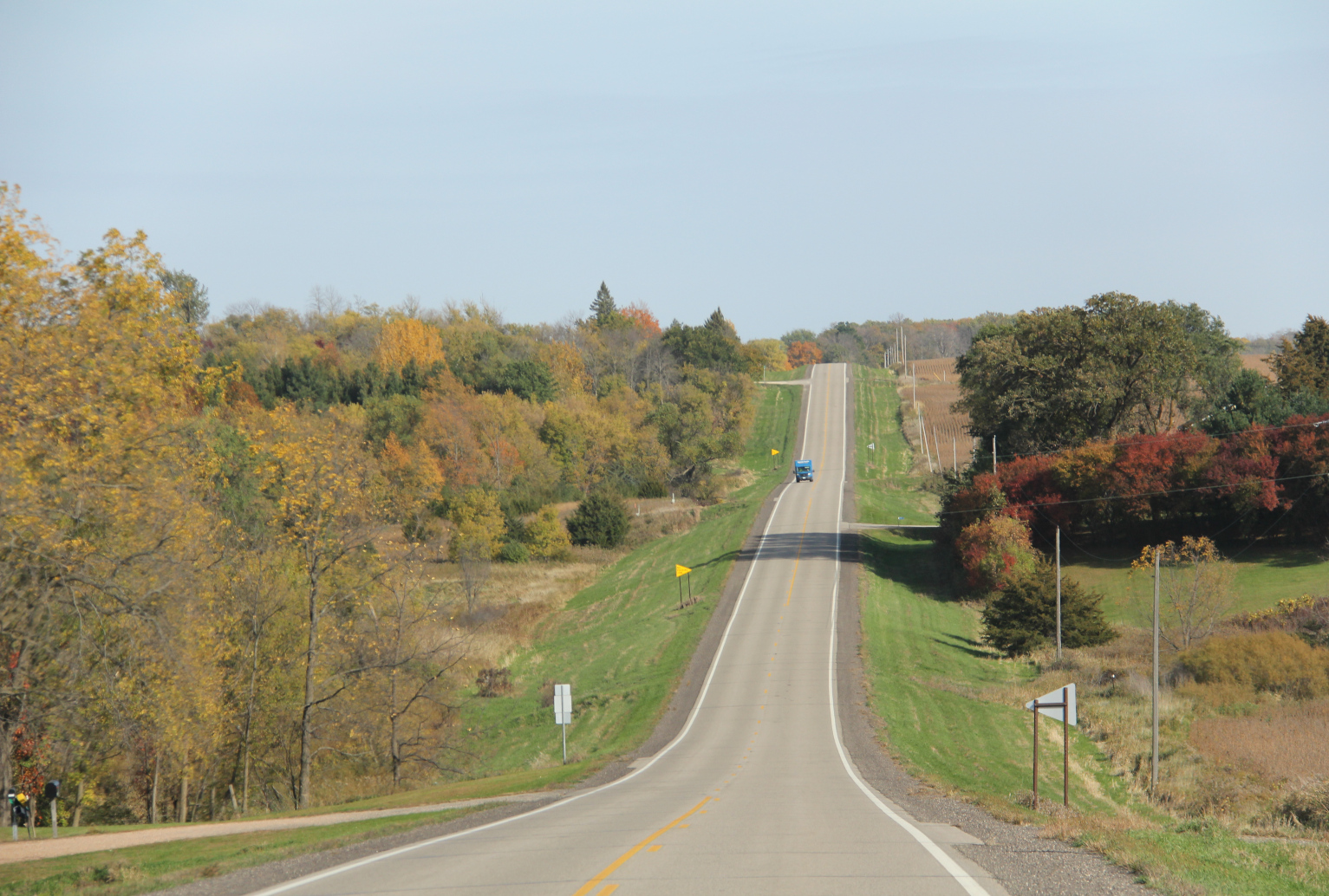
Following hilly Highway 19 back to Cannon Falls. (Minnesota Prairie Roots copyrighted photo October 2026)
Eventually we emerged from the woods, heading back on Minnesota State Highway 19 to Cannon Falls, detouring briefly onto a gravel road flush with color.
FYI:Please check back for more stories from this late October day trip that took us east to places within 40 miles of Faribault.
In late September, minimal fall color showed in Mission Park. (Minnesota Prairie Roots copyrighted photo September 2026)
WEEKS AGO, Autumn whispered in the woods of Mission Park in the Brainerd lakes area. I expect, though, if I traveled Up North today, Autumn will have mostly exited. The same is happening here in southern Minnesota, the voice of this season diminishing, yielding to Winter.
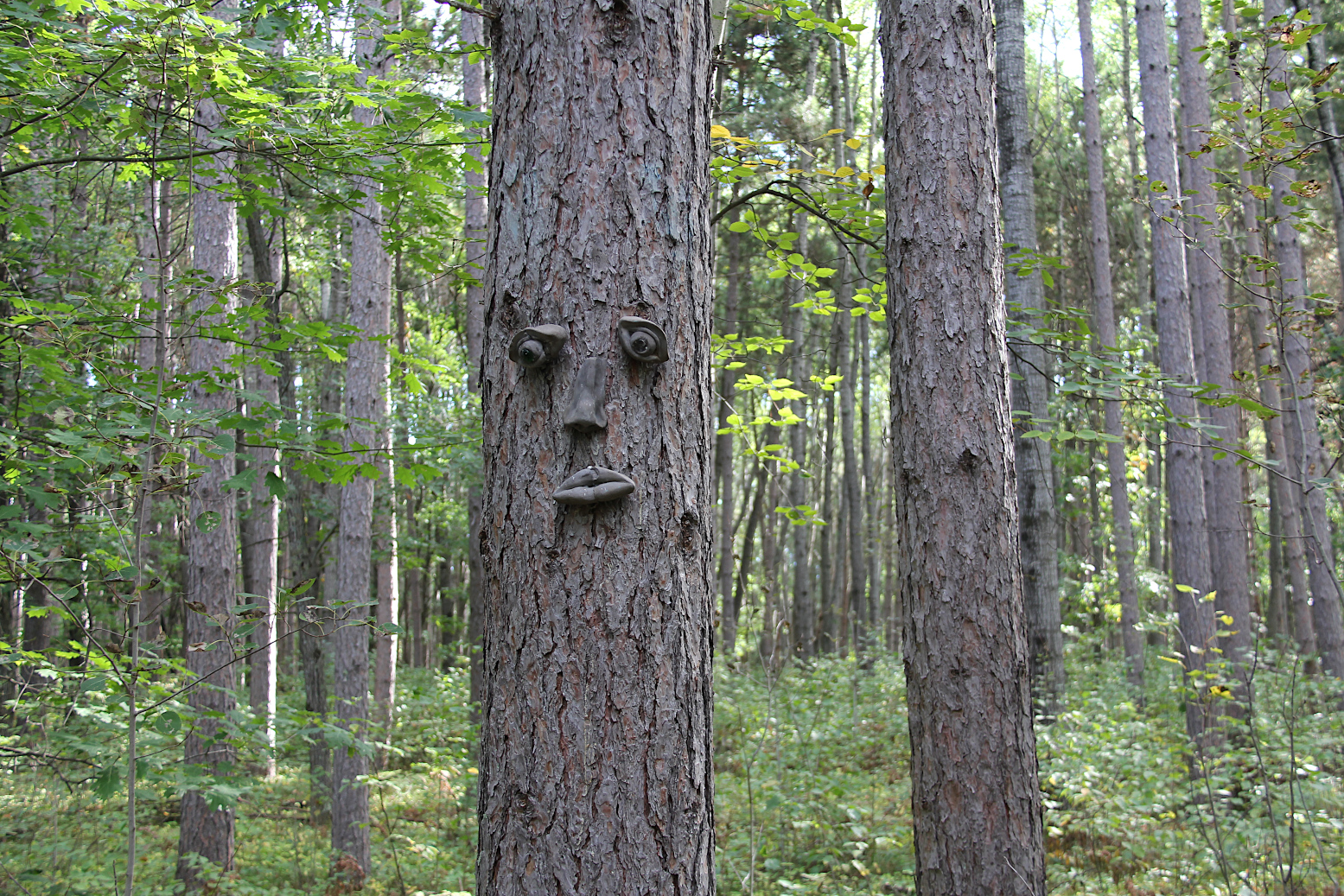
In the woods, a face on a tree. (Minnesota Prairie Roots copyrighted photo July 2026)
But on that late September morning in Mission Township near Merrifield, only a few deciduous trees among the endless conifers were tipped in hues of orange, yellow and red.
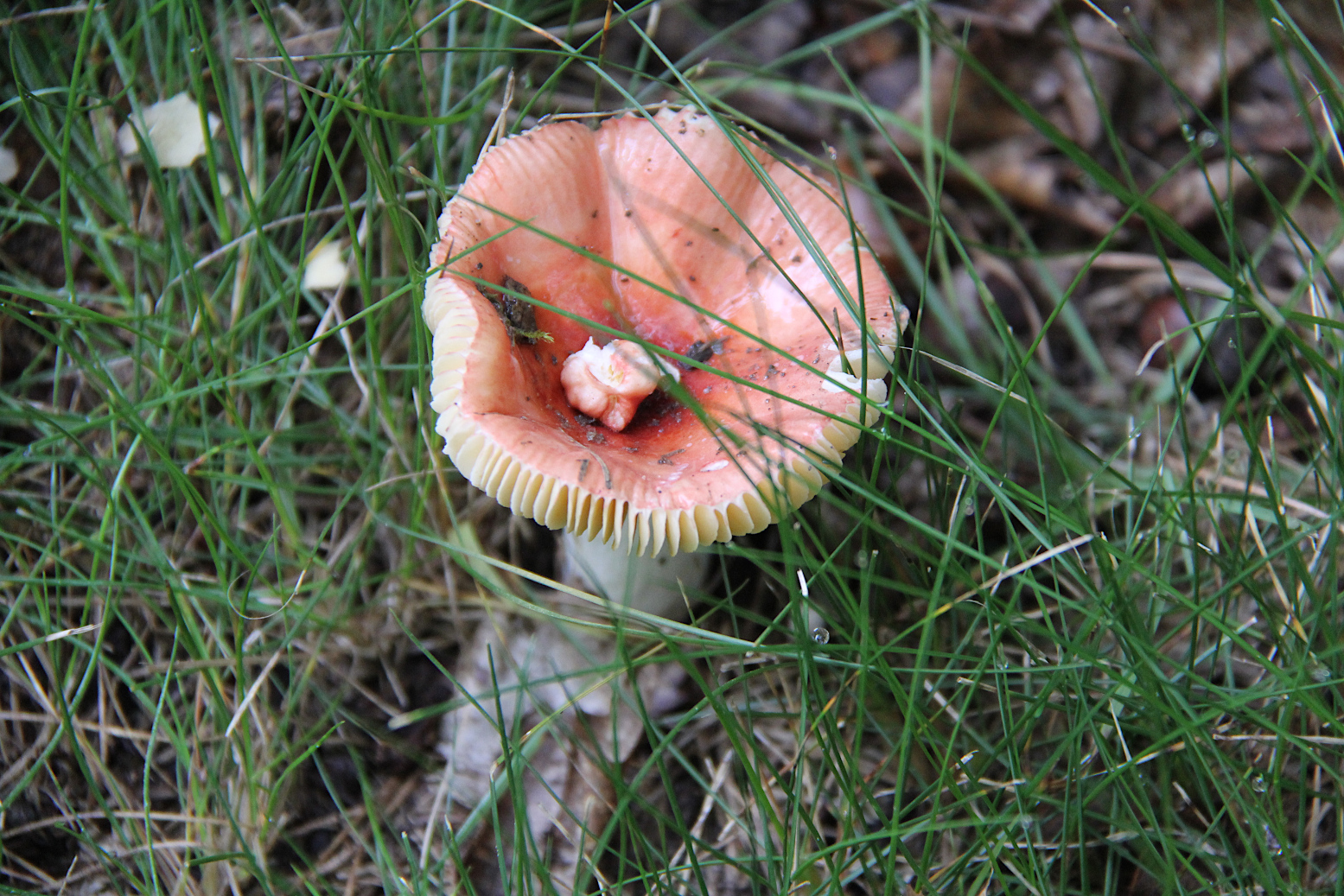
The ridges and orangish hue of this mushroom drew me closer. (Minnesota Prairie Roots copyrighted photo September 2026)
Following paved, dirt and grass trails into the woods, I also noticed an abundance of mushrooms. Fungi fascinate me. Those found here differ from mushrooms I’ve seen in my region of the state.
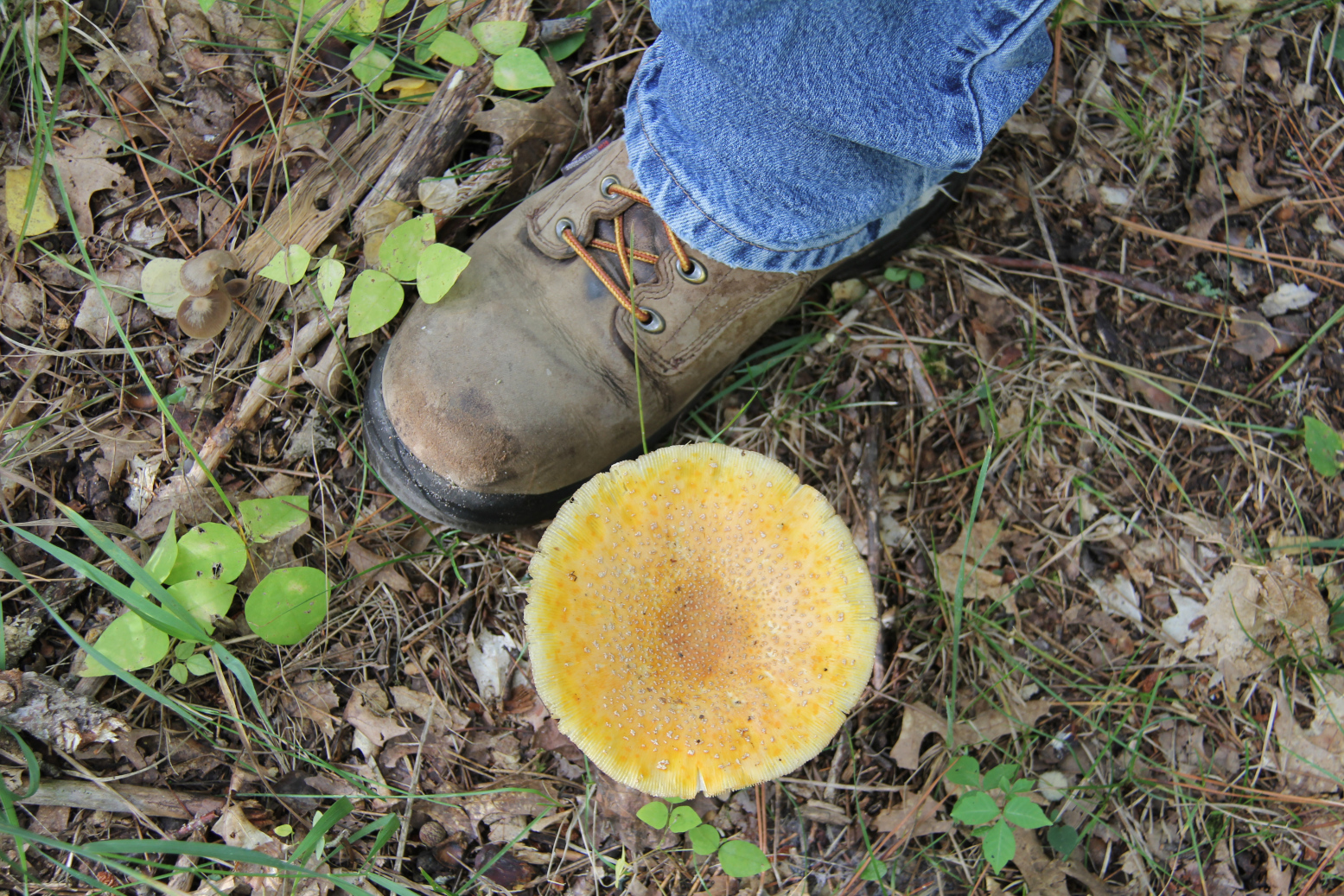
Look at the size of this mushroom compared to Randy’s boot. (Minnesota Prairie Roots copyrighted photo September 2026)
As someone who likes to eat mushrooms, I wish I could identify wild ones as edible or not. Interestingly enough, Faribault-based Forest to Fork grows mushrooms inside a former canning company complex in my community, far from the forests of northern Minnesota. I really need to try these locally-grown mushrooms found in grocery stores, restaurants, co-ops and more in parts of Minnesota, Wisconsin and Iowa.
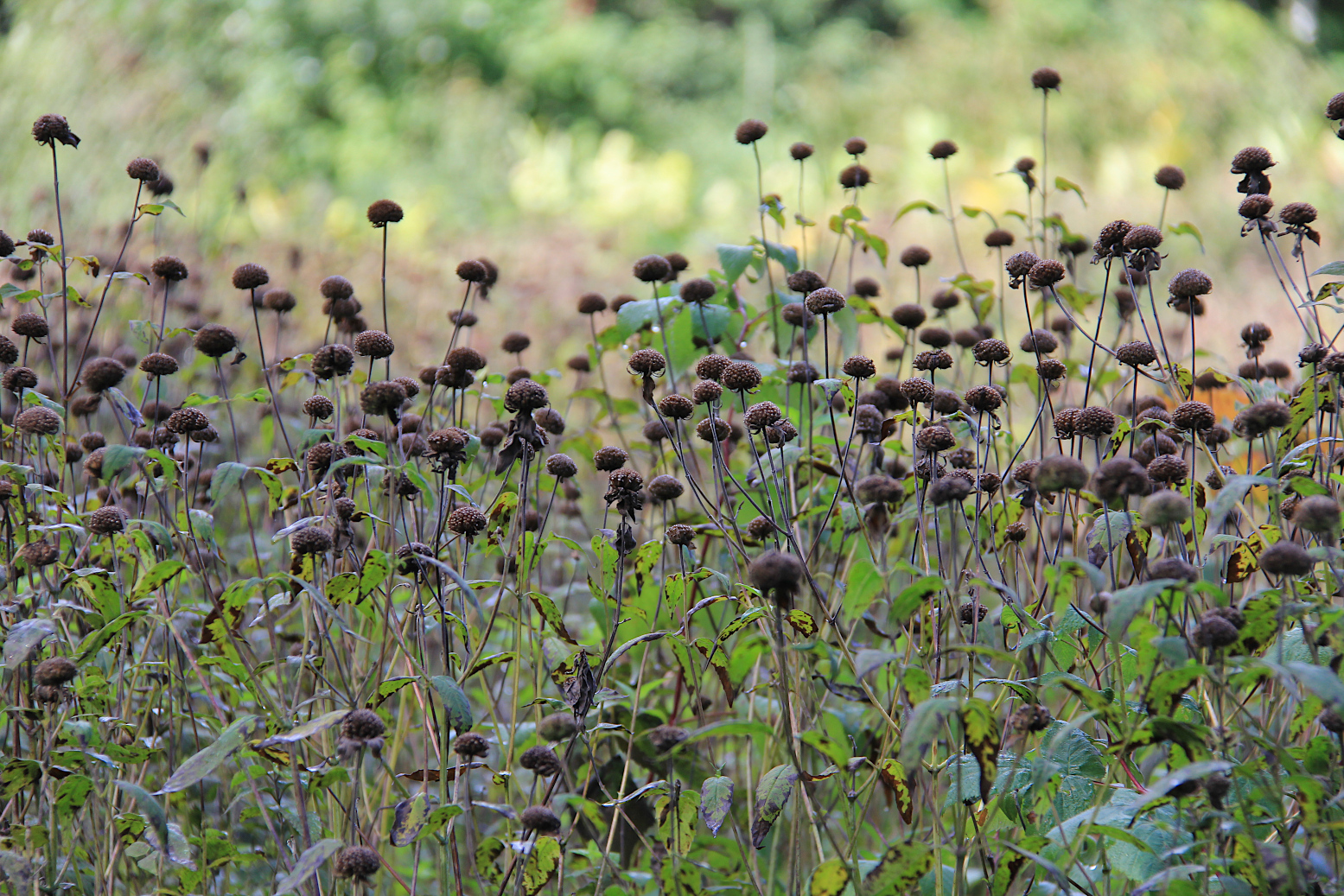
Besides mushrooms, I am also fascinated by dried seedheads such as these in the wildflower patch. (Minnesota Prairie Roots copyrighted photo September 2026)
The mushrooms of Mission Park drew me close to admire their ridged edges, their shapes, sizes and hues. They seem magical without being magical in the psychedelic sense.
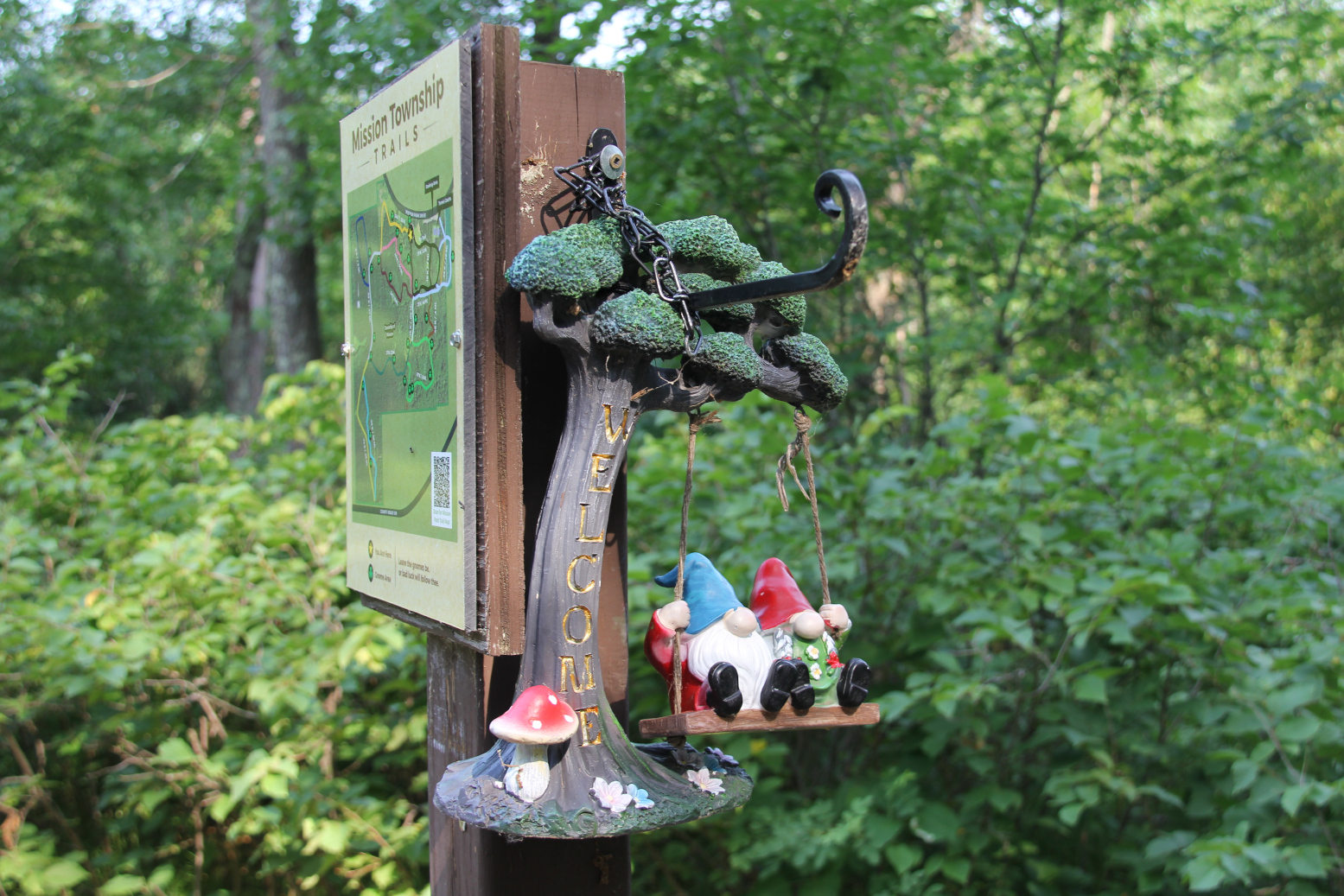
Gnomes welcome hikers to the trail system at Mission Park. (Minnesota Prairie Roots copyrighted photo September 2026)
This park offers its own bit of magic in the form of dozens of gnome statues hidden in the woods. I’ve always liked treasure hunts so searching for the mythical creatures adds an interesting element to hiking and photographing here.
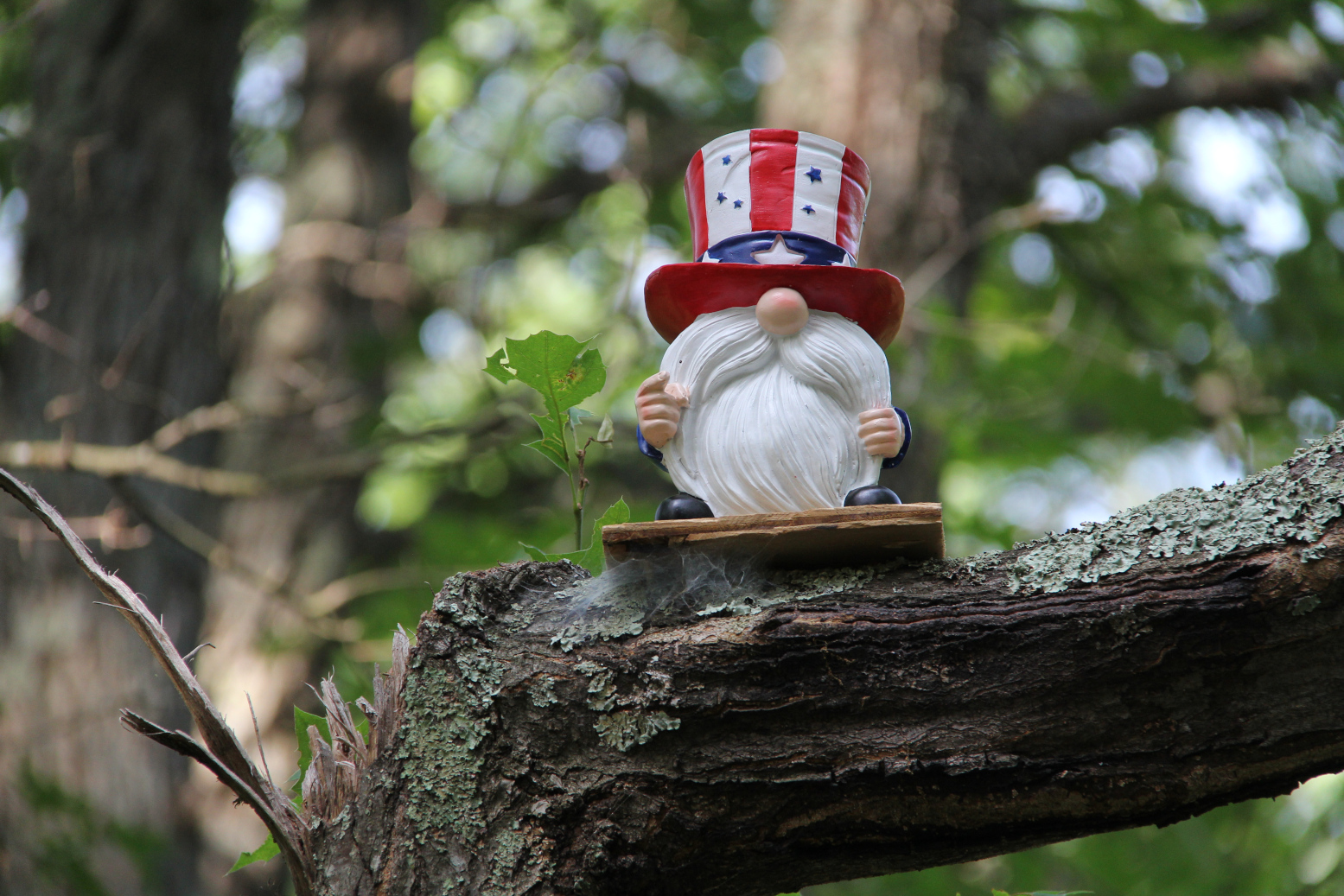
One of numerous patriotic-themed gnomes scattered throughout the park. (Minnesota Prairie Roots copyrighted photo July 2026)
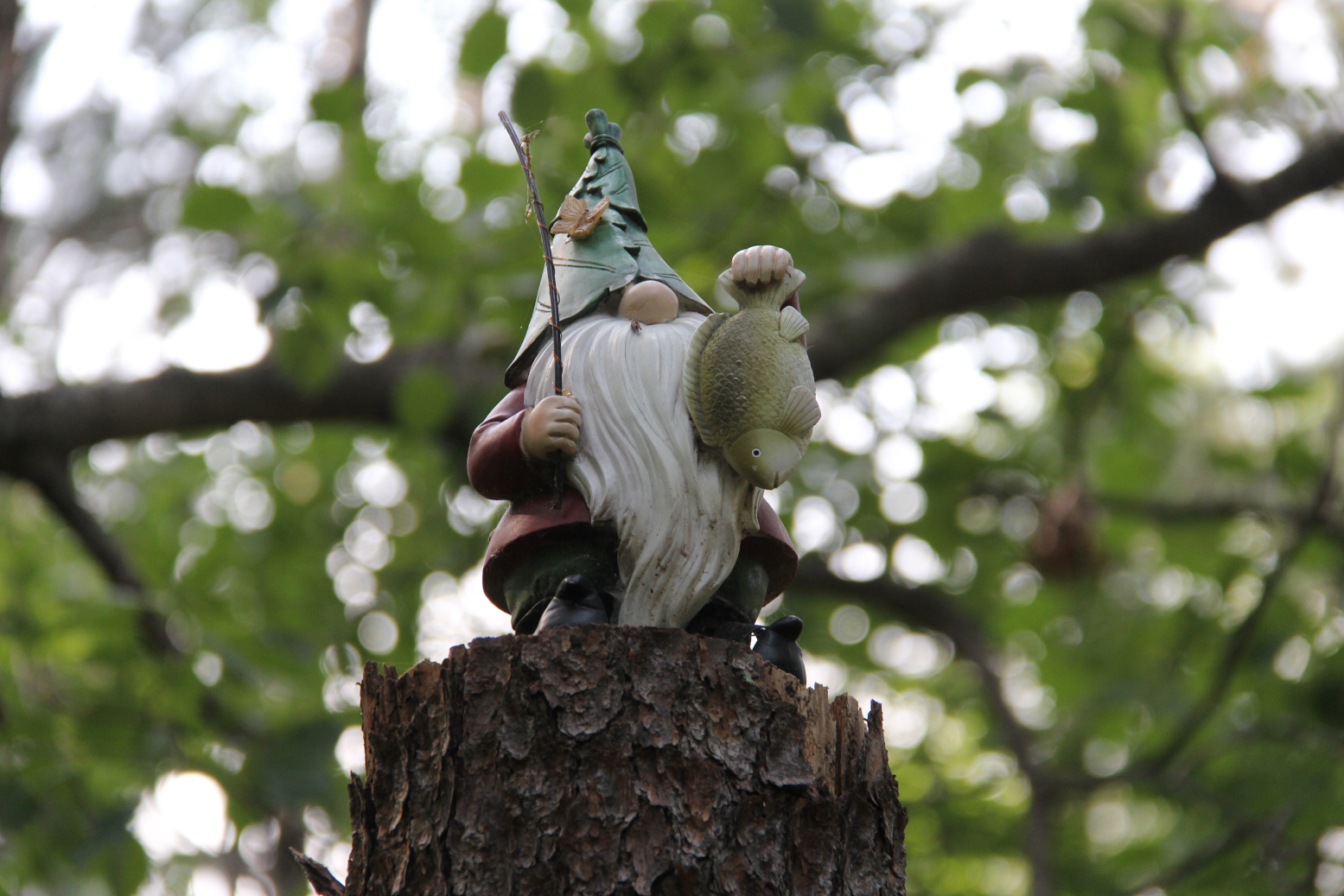
An angler gnome seems appropriate for this area of lakes and woods. (Minnesota Prairie Roots copyrighted photo July 2026)
In honor of America’s 250th birthday, a full-on patriotic gnome. (Minnesota Prairie Roots copyrighted photo July 2026)
The gnomes are usually sitting out of reach in trees, most high enough to protect them from mischievous park visitors who want to have a little fun and move them. That would probably require a ladder or climbing a tree. A few, though, are within easy reach on tree stumps and spots lower.
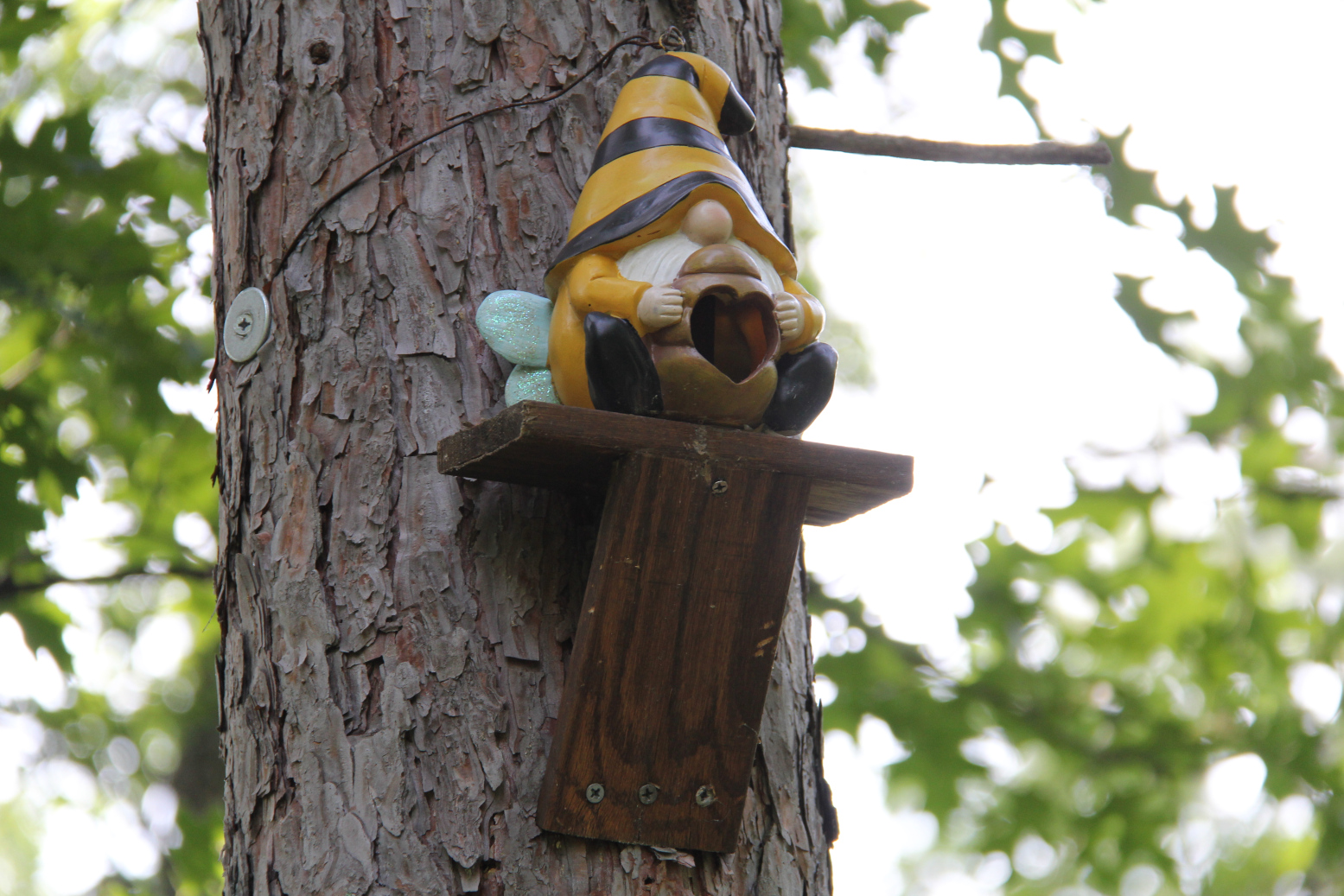
A bee gnome sits high in a tree. (Minnesota Prairie Roots copyrighted photo July 2026)
And, yes, some gnomes have been relocated despite the posted warning: “Leave the gnomes be or bad luck will follow thee.” None of us needs bad luck. I’m not willing to take the risk.
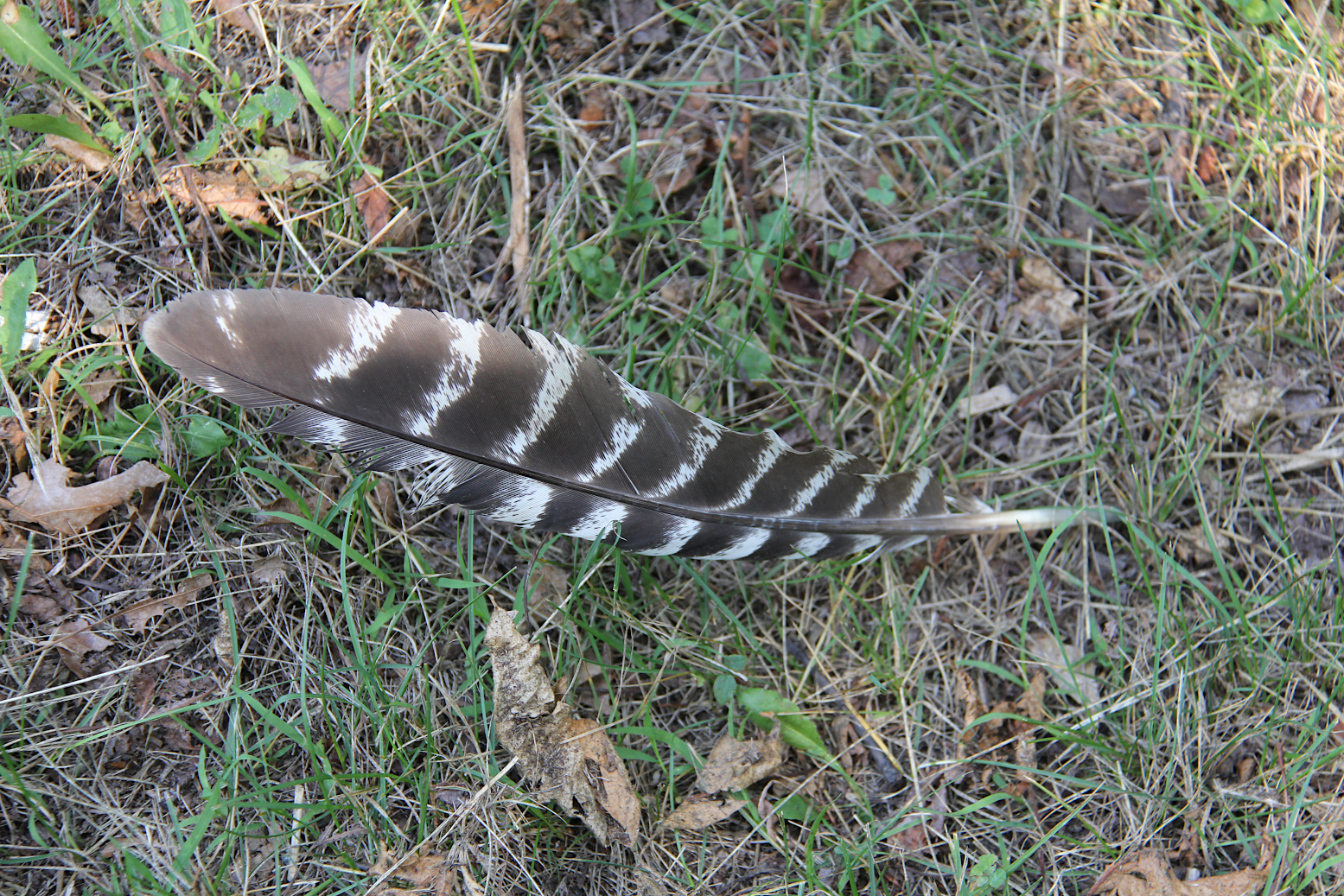
A feather found on a grassy trail in Mission Park. (Minnesota Prairie Roots copyrighted file July 2026)
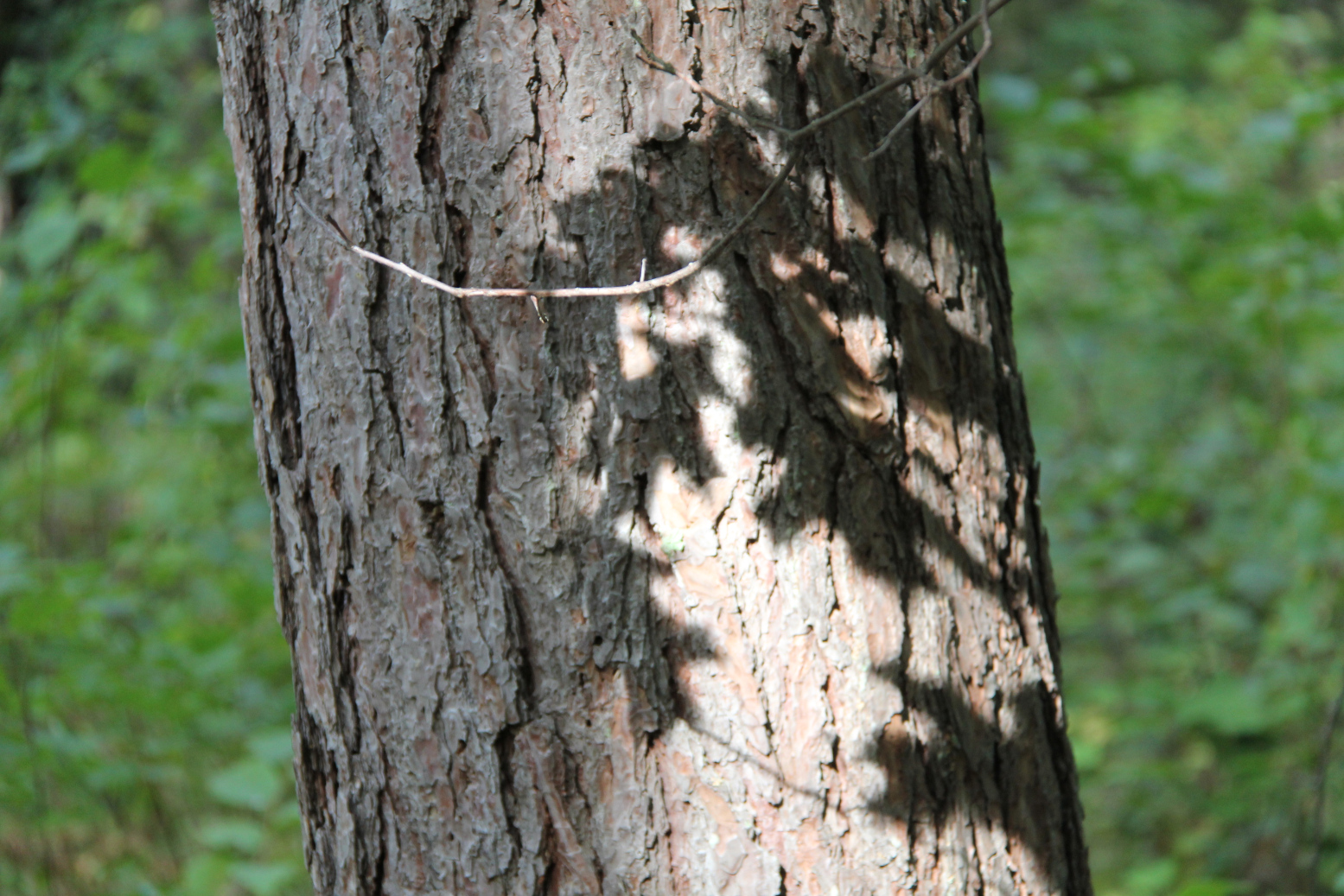
I see details like leaves shadowing on a tree. (Minnesota Prairie Roots copyrighted photo September 2026)
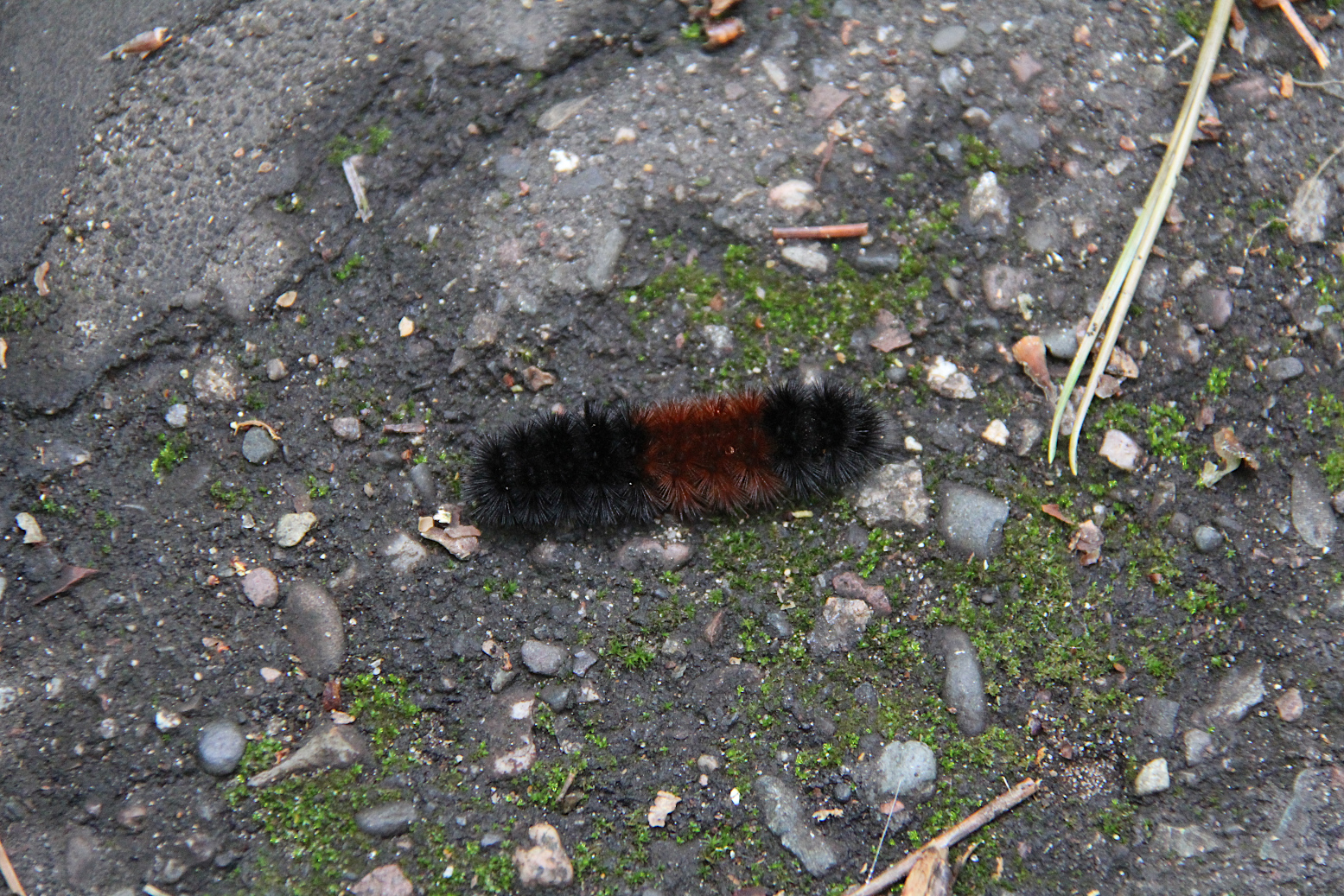
A woolly caterpillar, which I moved off the trail. (Minnesota Prairie Roots copyrighted photo September 2026)
Rather, I enjoy the hunt, the photography, the beautiful natural world that surrounds me whenever or wherever I hike. A feather. A leaf shadowed on a tree trunk. A woolly caterpillar in danger on the paved trail.
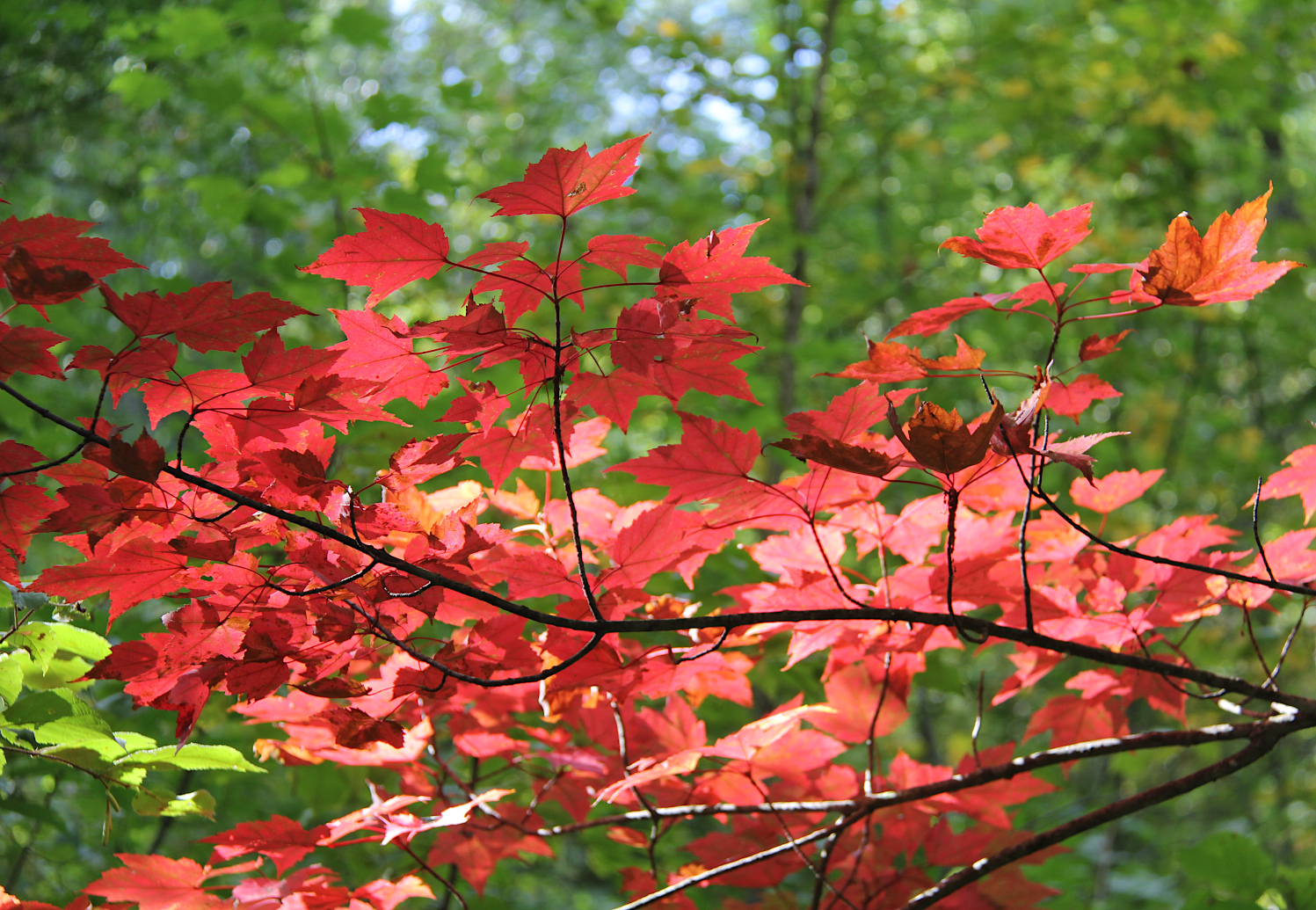
A blaze of color on a maple tree in the park. (Minnesota Prairie Roots copyrighted photo September 2026)
Autumn beckoned, first whispering, then shouting in colorful language that calls all of us to slow down, look around and fully see the beauty before us.
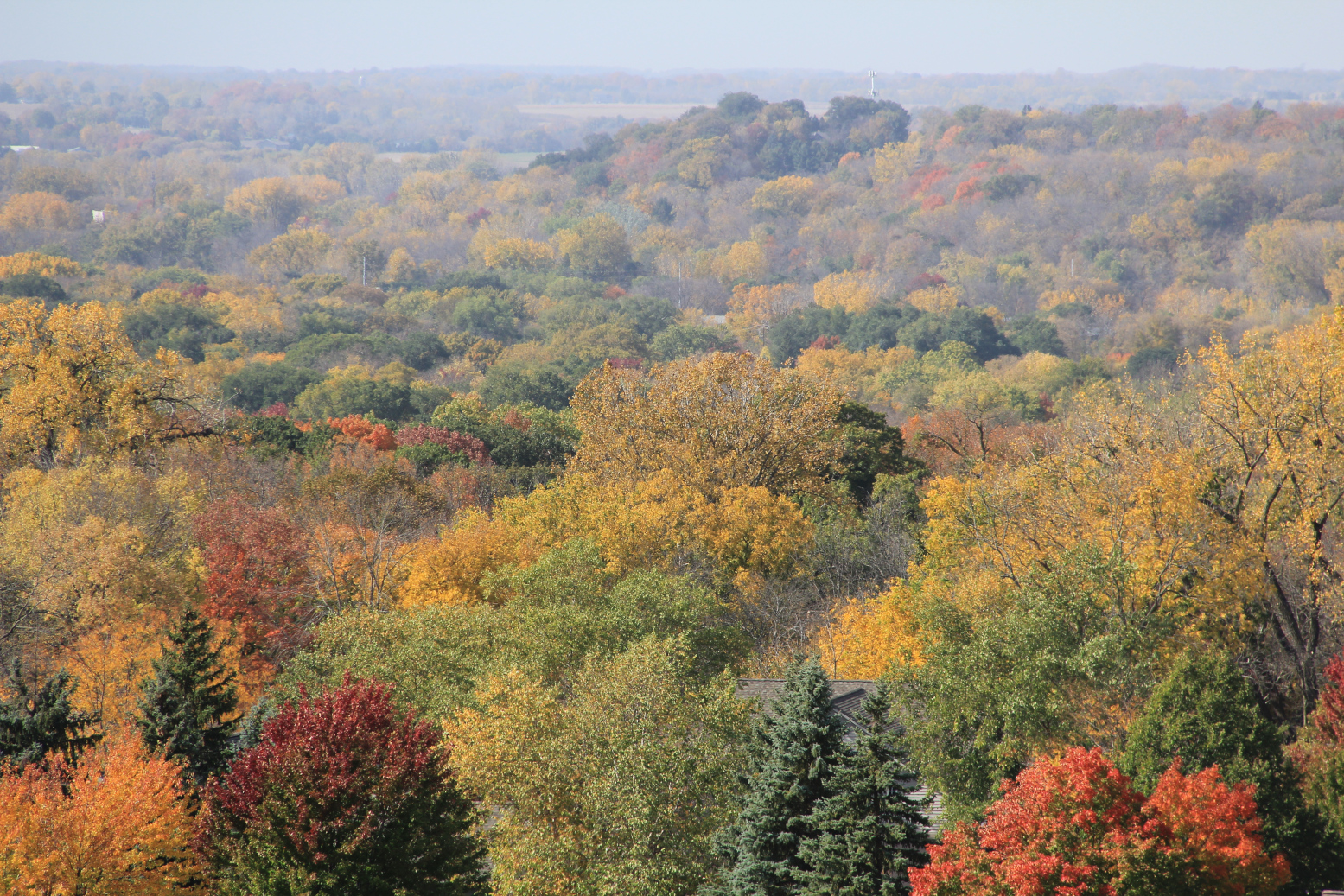
This view from hilltop City View Park in Faribault shows the beauty of the autumn landscape. (Minnesota Prairie Roots copyrighted photo October 2026)
AUTUMN RATES, undeniably, as my favorite season. I love the crisp mornings and evenings, the often sunshine-drenched afternoons. I love wrapping myself in the warmth of flannel or fleece. I love the cinnamon scent of apple crisp baking in the oven, the smell wafting through the house. I love roadside stands packed with plump pumpkins. I love hiking in woods, fallen leaves crunching underfoot.
My husband, Randy, photographs the vibrant trees across Kelly Lake, rural Faribault. (Minnesota Prairie Roots copyrighted photo October 2026)
But, above all, I love the fall colors. In shades of red, orange, yellow and brown, singular trees, pockets of trees and entire hillsides are ablaze. Now is the time to get out and view the colorful landscape before wind, rain and time strip those trees bare.
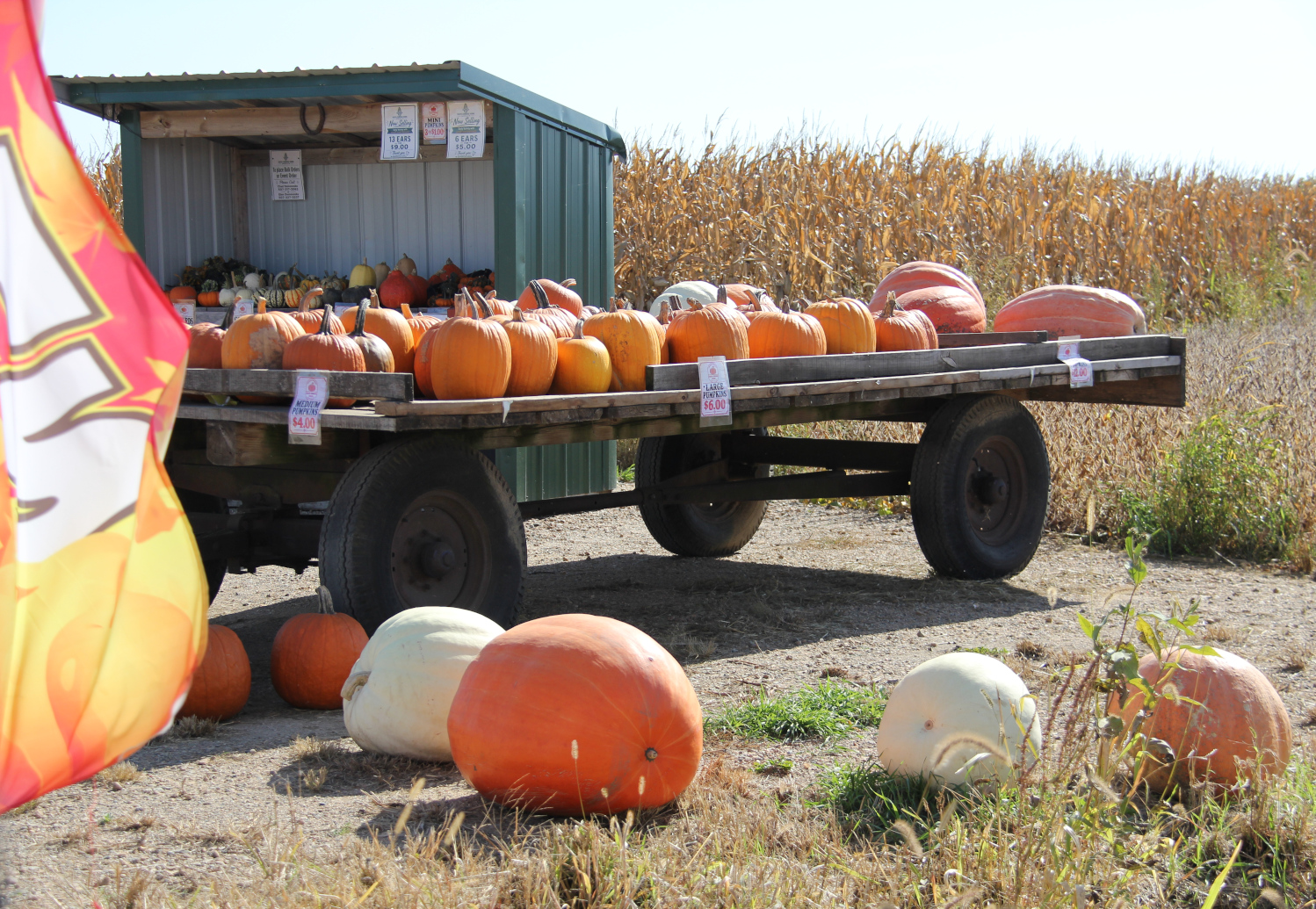
South Cordova Farms, Waterville, set up this roadside pumpkin stand in a rural area near Cordova. (Minnesota Prairie Roots copyrighted photo October 2026)
In the four-plus decades I’ve lived in Faribault, I’ve found this community and the surrounding area to be especially colorful. So there’s no need to leave town or travel far to enjoy the hues of autumn.
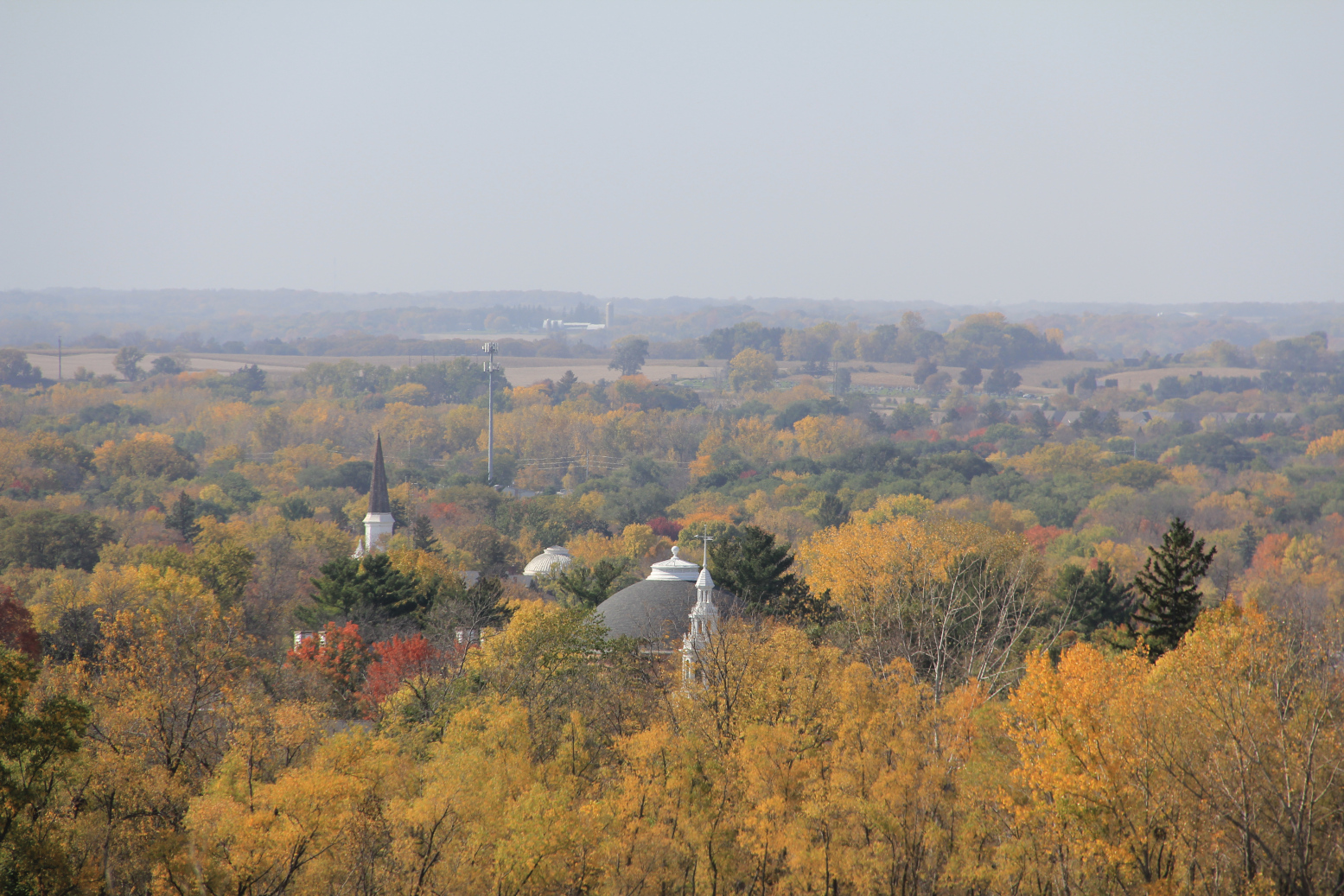
City View Park offers a bird’s eye view of Faribault and beyond. Here buildings at the Minnesota State Academy for the Deaf poke through the treetops. (Minnesota Prairie Roots copyrighted photo October 2026)
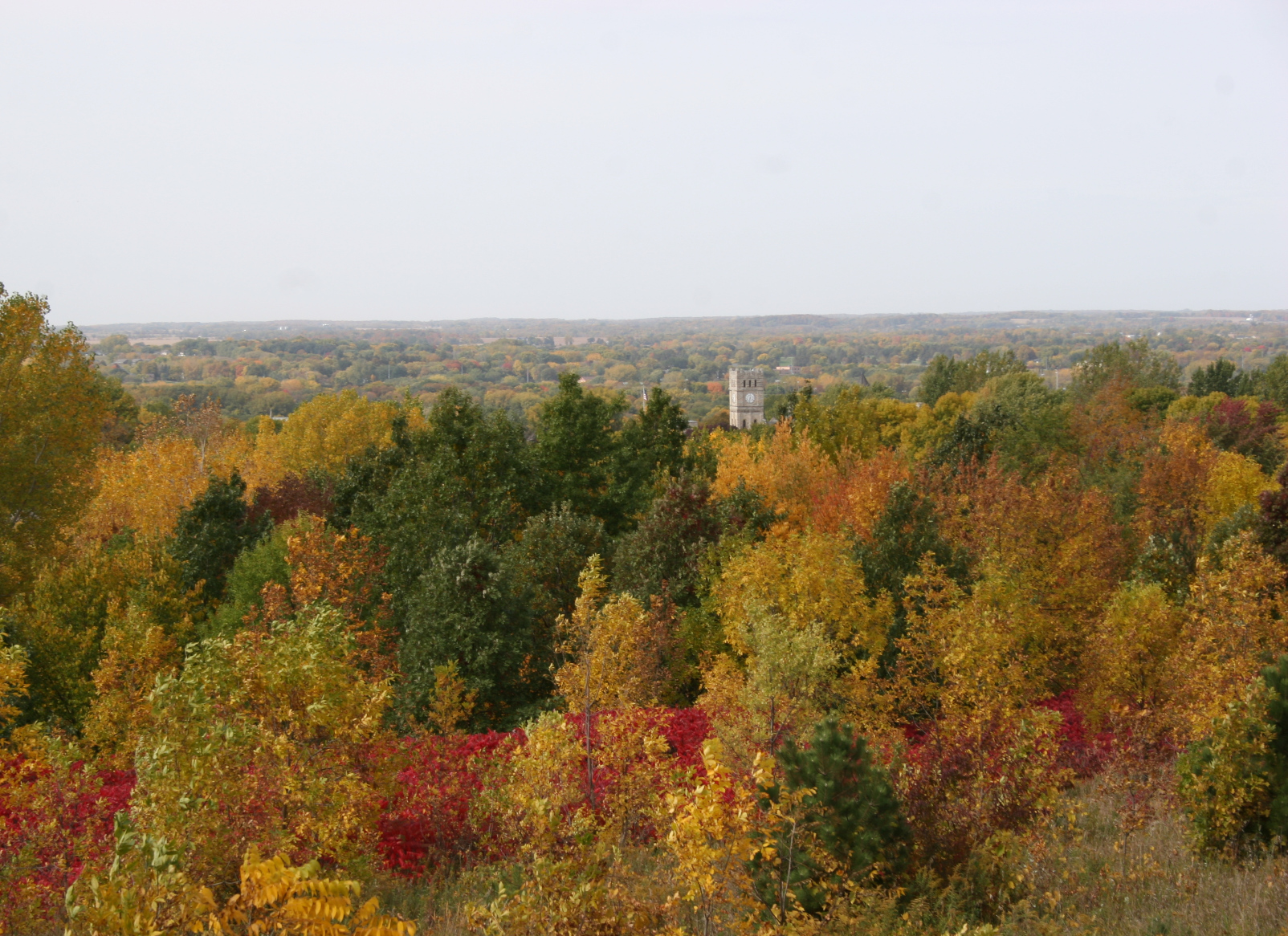
Several local spots draw me back year after year. In town, City View Park by the water tower and just above Roosevelt School on Faribault’s east side, offers a spectacular vista view of the valley below. I picnicked there the other day at high noon, taking in the tree-scaped land for as far as my eyes could see. Even in the haze of the dusty air, colors popped in the mass of dense trees. It’s a spectacular setting any time of year.
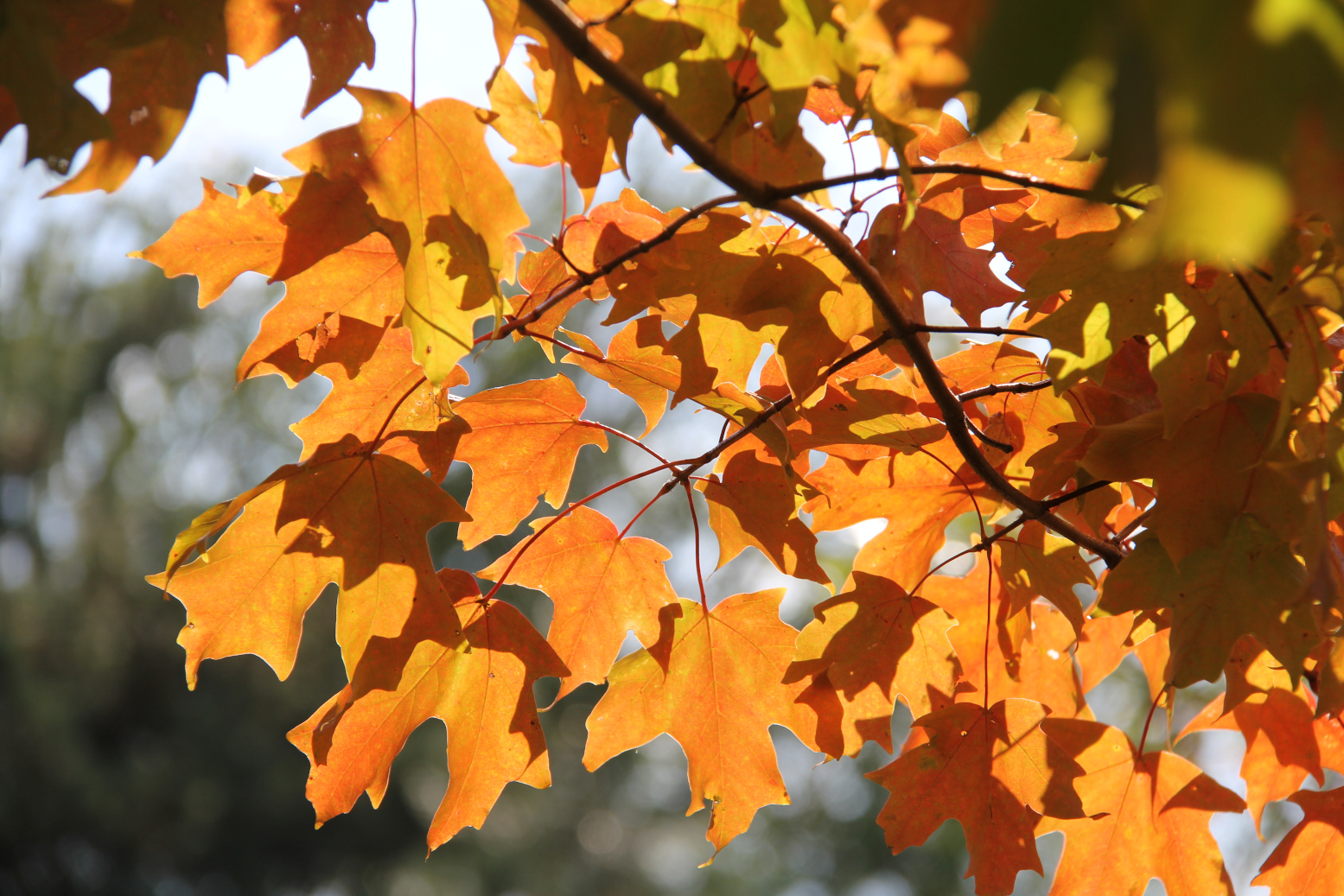
A maple in City View Park. (Minnesota Prairie Roots copyrighted photo October 2026)
Among all those trees, I picked out local landmark steeples, struggling to identify some, sure of others. I also paused to appreciate the colorful maples in the park.
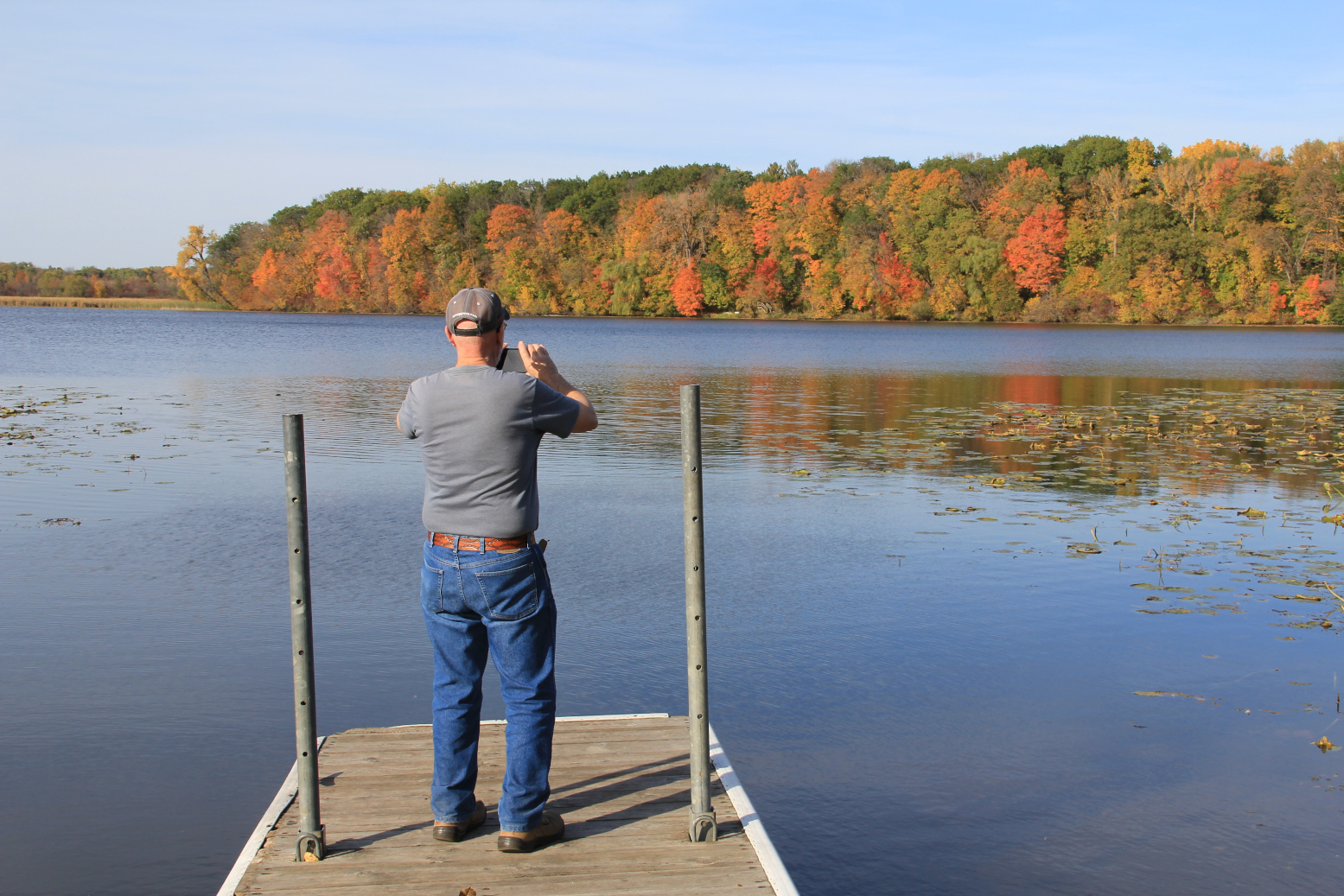
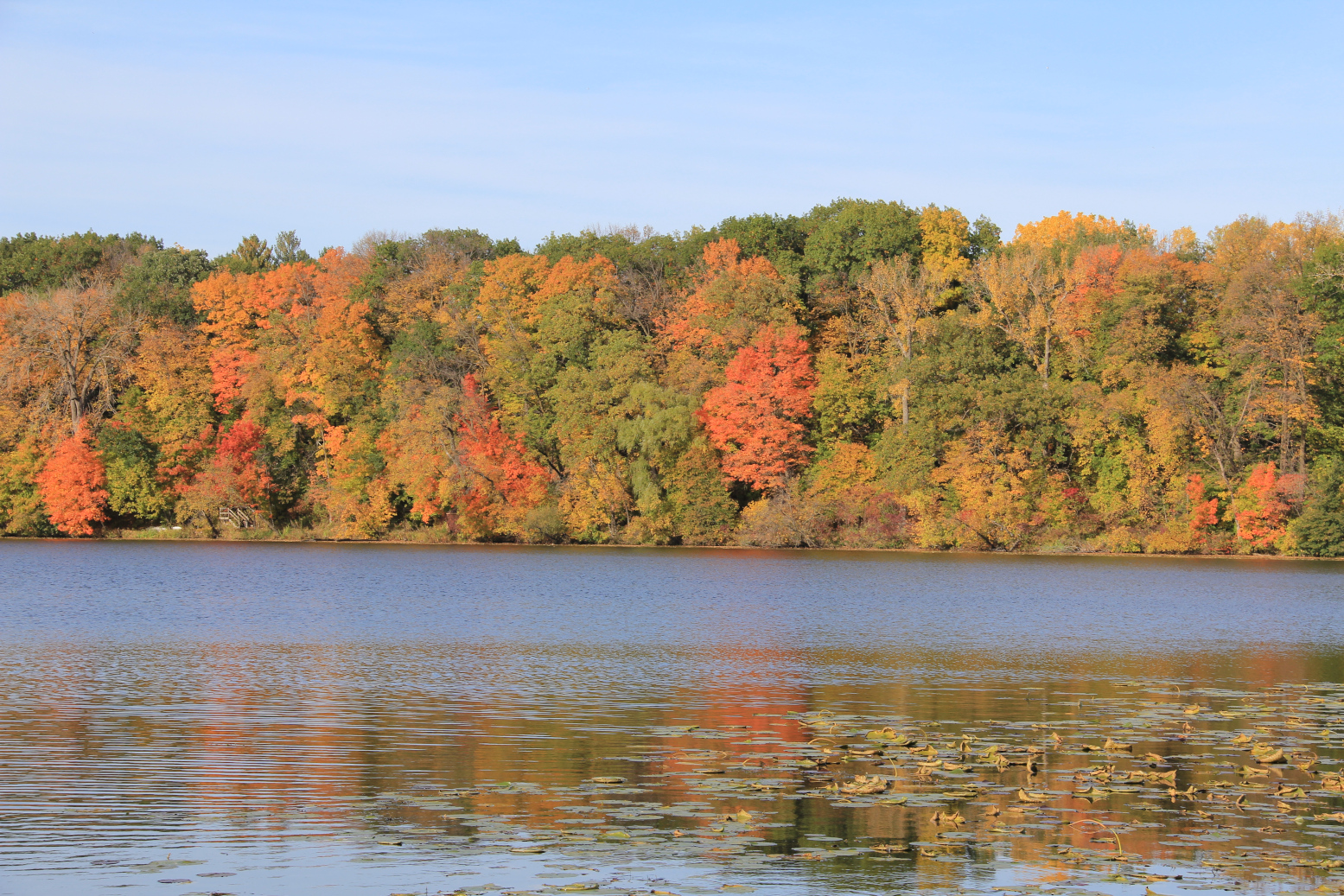
From the public boat landing, I zoomed my camera lens to photograph the distant color-splashed shoreline of Kelly Lake. (Minnesota Prairie Roots copyrighted photo October 2026)
To the west of Faribault, Kelly Lake, as viewed from the public boat landing, rates as another favorite local color spot. Each October I walk out on the short dock and take in the scene across the lake, the orange treeline slicing color between blue water and blue sky.
Whether in town or out, autumn shows her rugged beauty, here along a gravel road buffeted by cornfields. (Minnesota Prairie Roots copyrighted photo October 2026)
Within the Faribault city limits, the Straight River bluff packs a colorful punch as do trees along many streets, like Second Avenue and Seventh Street. The campus of the Minnesota State Academy for the Deaf, a place where I sometimes walk, presents more color.
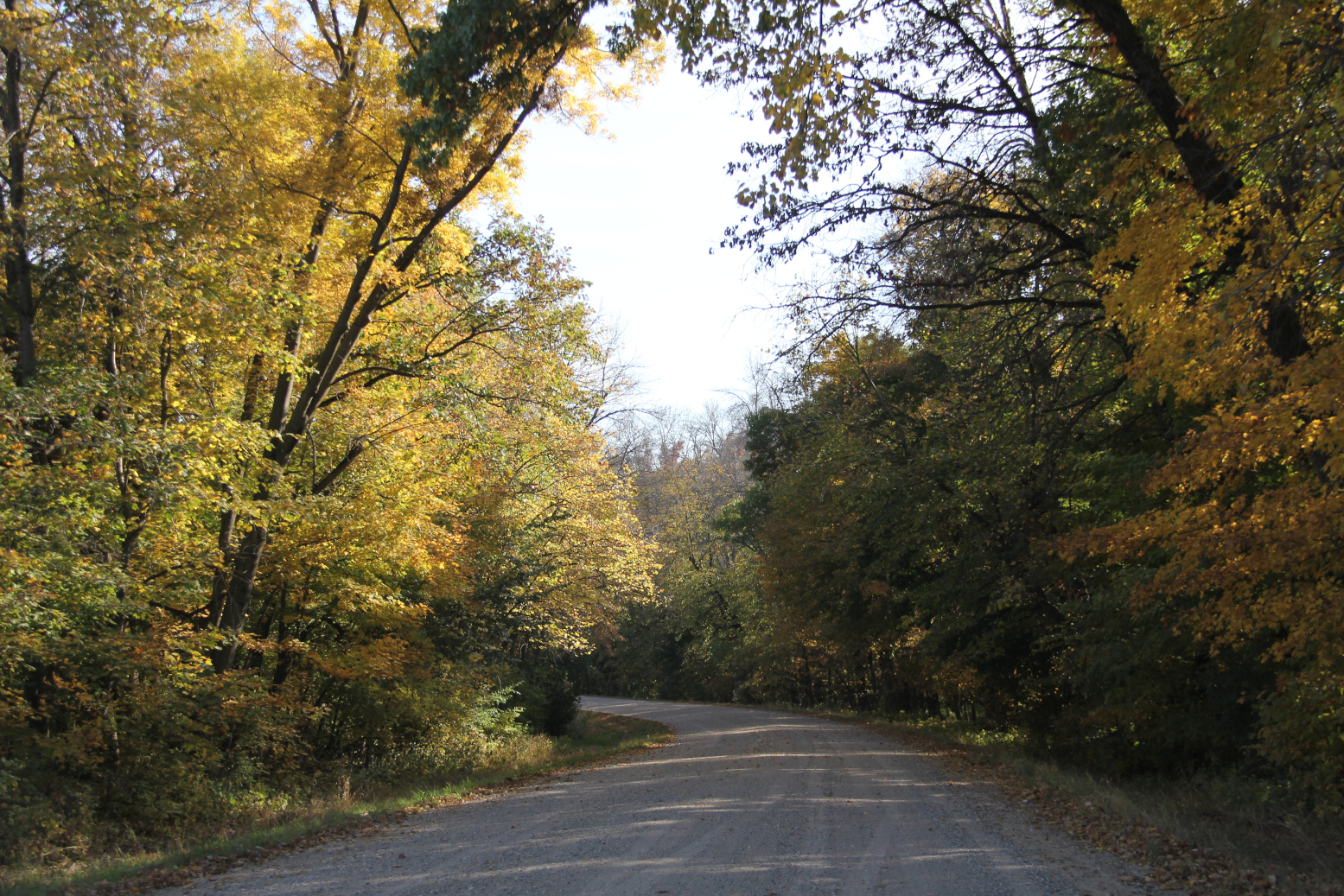
Driving into woods along a back gravel road west of Faribault, exact location unknown. (Minnesota Prairie Roots copyrighted photo October 2026)
As with anything, we often bypass beauty that lies directly before us, blending into the background of daily life. In my own backyard and next door at my neighbor’s, maples fire orange and yellow.
On a fall color drive in the Montgomery area. (Minnesota Prairie Roots copyrighted photo October 2026)
Consistently each autumn, fall color drives take me along roads around area lakes like Roberds, Union and French. I have yet to do the complete lake tour this year. I’ve found fall colors aplenty in the Montgomery and Lonsdale areas, too.
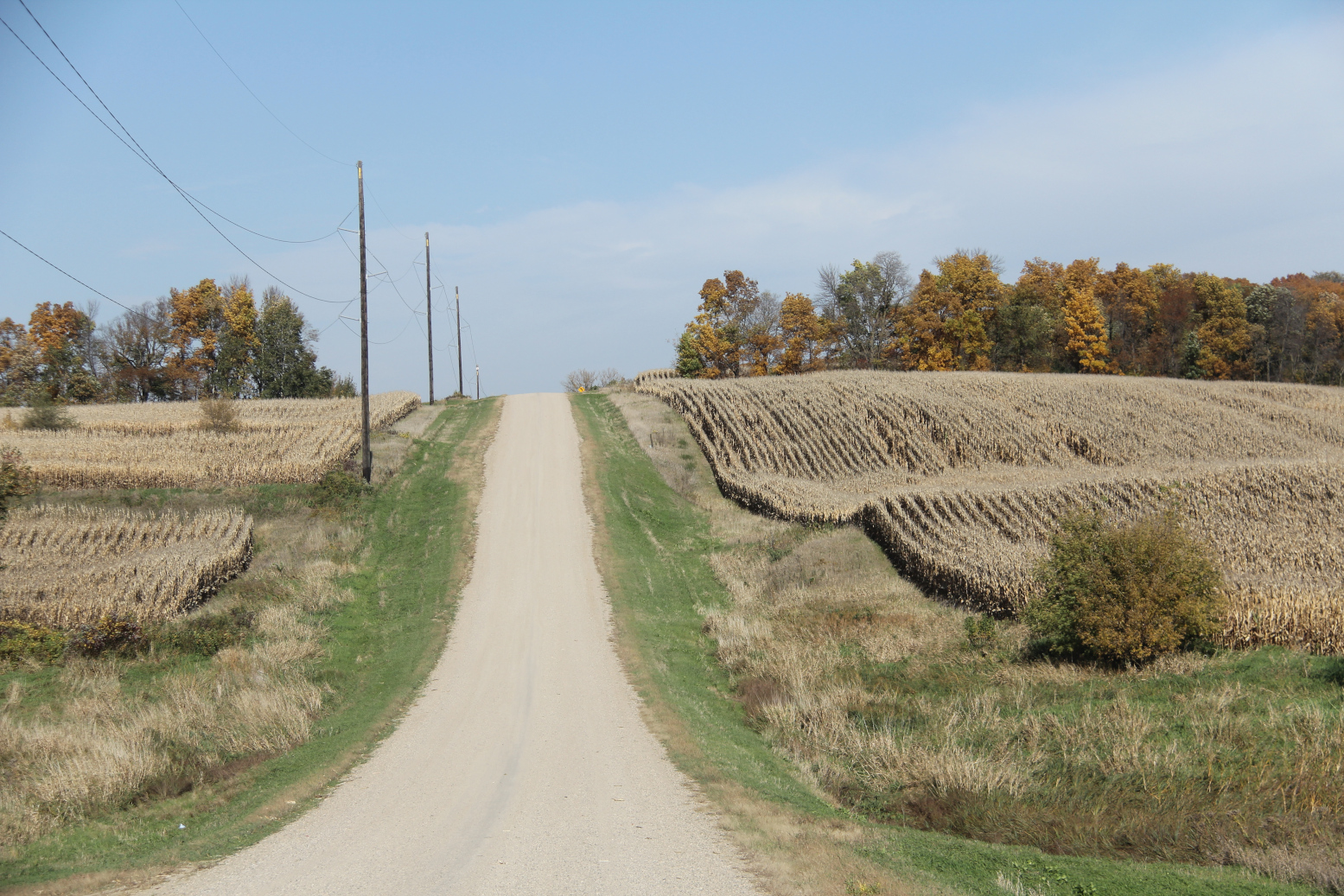
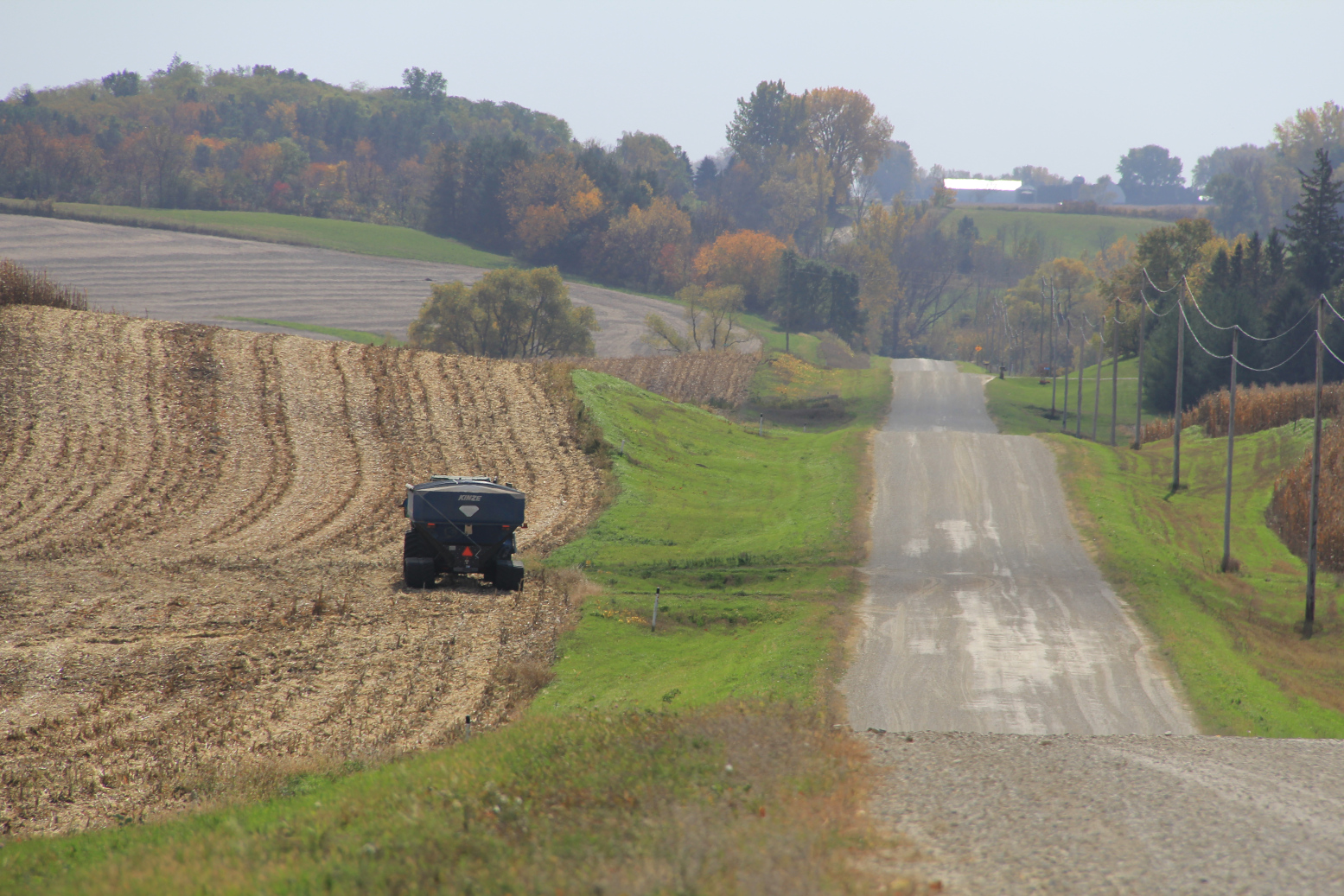
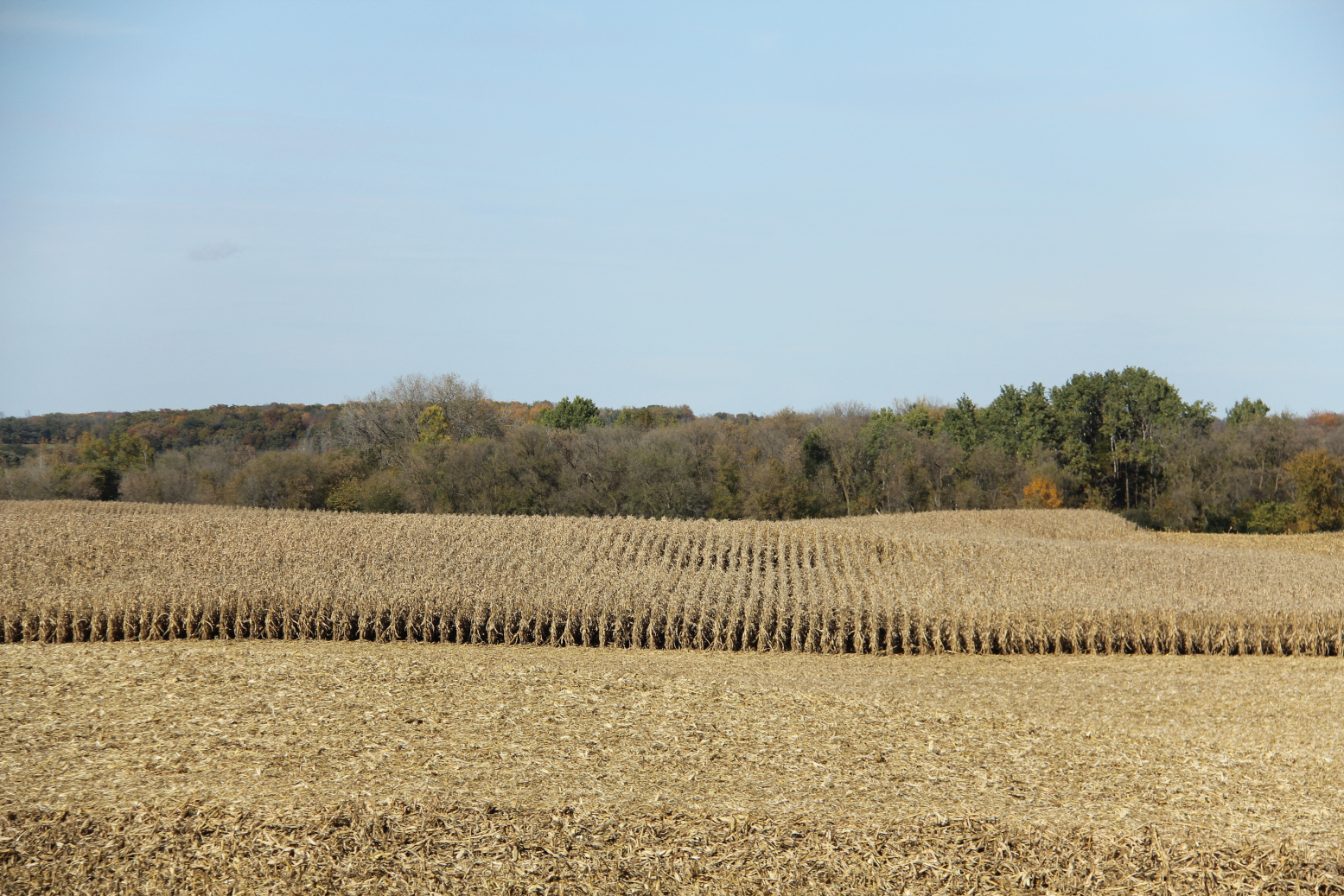
A rural fall scene of harvested corn along a hilly gravel road, Falk Avenue, near Cannon City and Nerstrand. (Minnesota Prairie Roots copyrighted photo October 2026)
I have not yet headed over to the Nerstrand area for a stop at the historic hilltop Valley Grove churches where color splashes a treeline across the prairie. Nearby Nerstrand Big Woods State Park rates as a popular fall color destination, parking lots crowded to overflowing on October weekends. I prefer the quiet of Valley Grove.
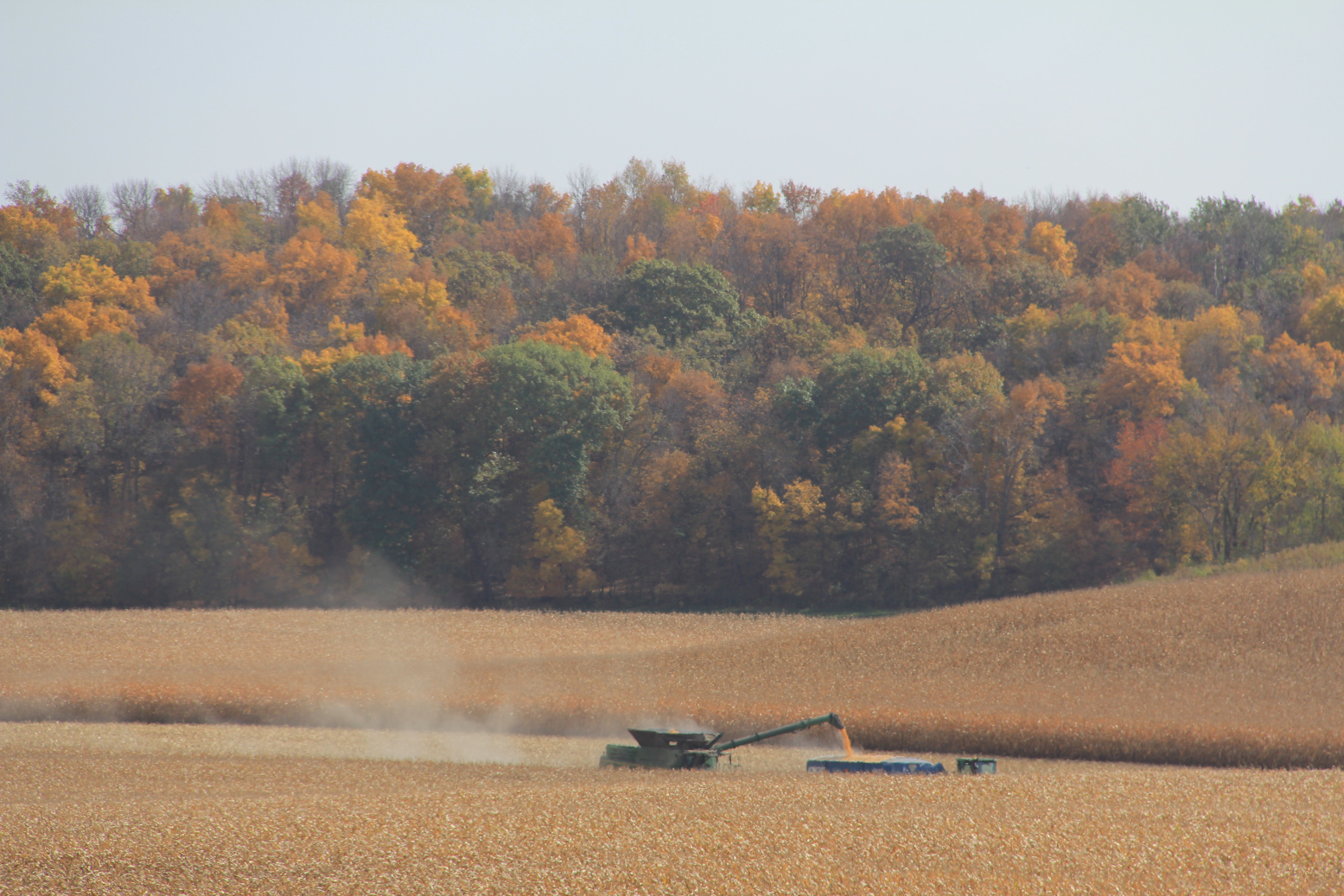
A farmer picks corn along Falk Avenue near Cannon City against a colorful backdrop of trees. (Minnesota Prairie Roots copyrighted photo October 2026)
Mostly, I simply want to immerse myself in autumn. Visually by viewing distant treelines and rolling farm fields along Falk Avenue northeast of Cannon City. Or up close along Farmer Trail, a twisting gravel road snugged by woods.
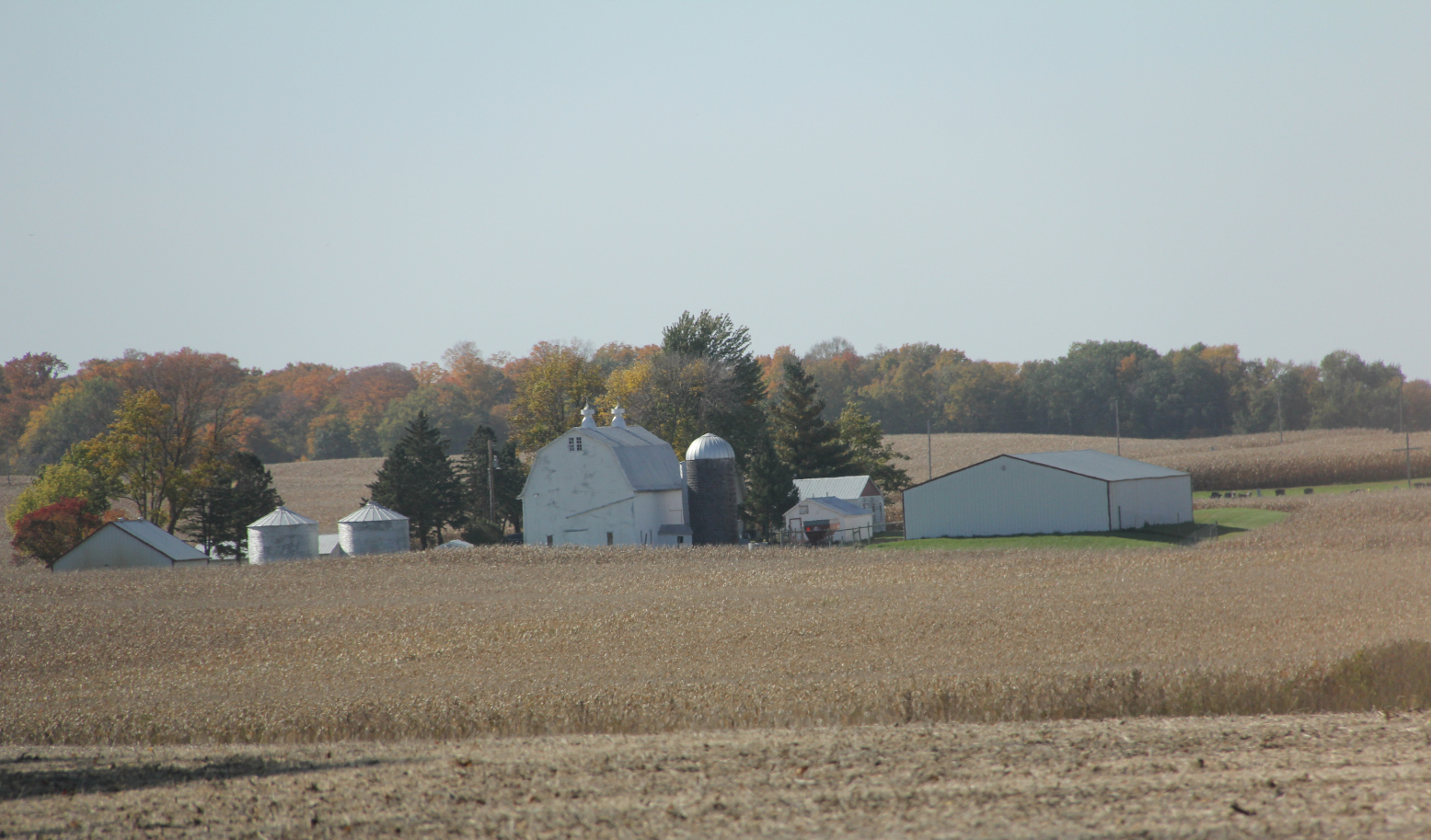
Across fields, I photographed this picturesque farm site near Richter Woods County Park west of Montgomery. (Minnesota Prairie Roots copyrighted photo October 2026)
I love autumn. The woodsy, earthy scent. The feel of soft flannel and cozy fleece. The crunch of biting into a locally-grown apple. The taste of cream cheese frosted pumpkin bars. And, above all, the oranges, reds and yellows of this season blazing color across the southern Minnesota landscape.
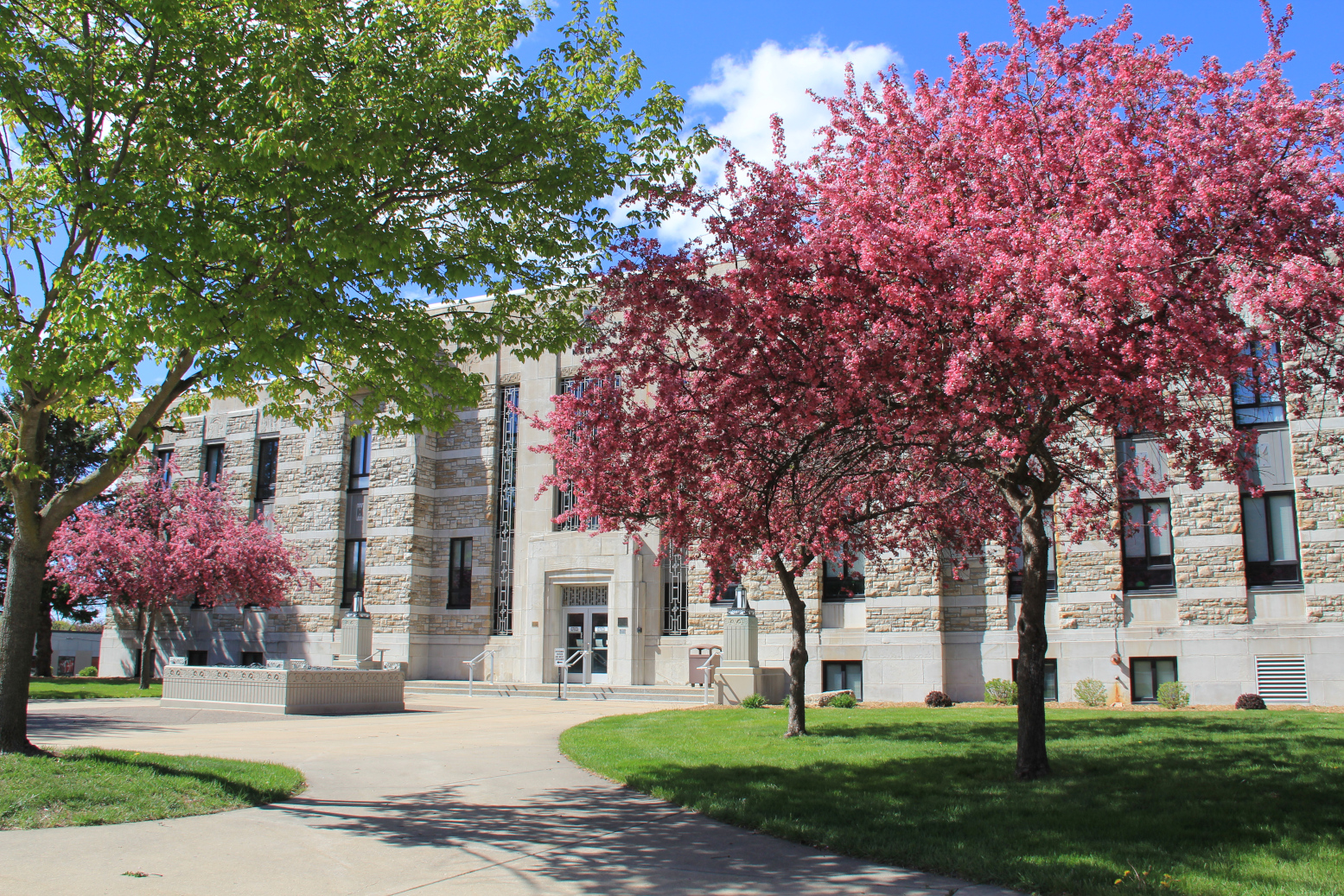
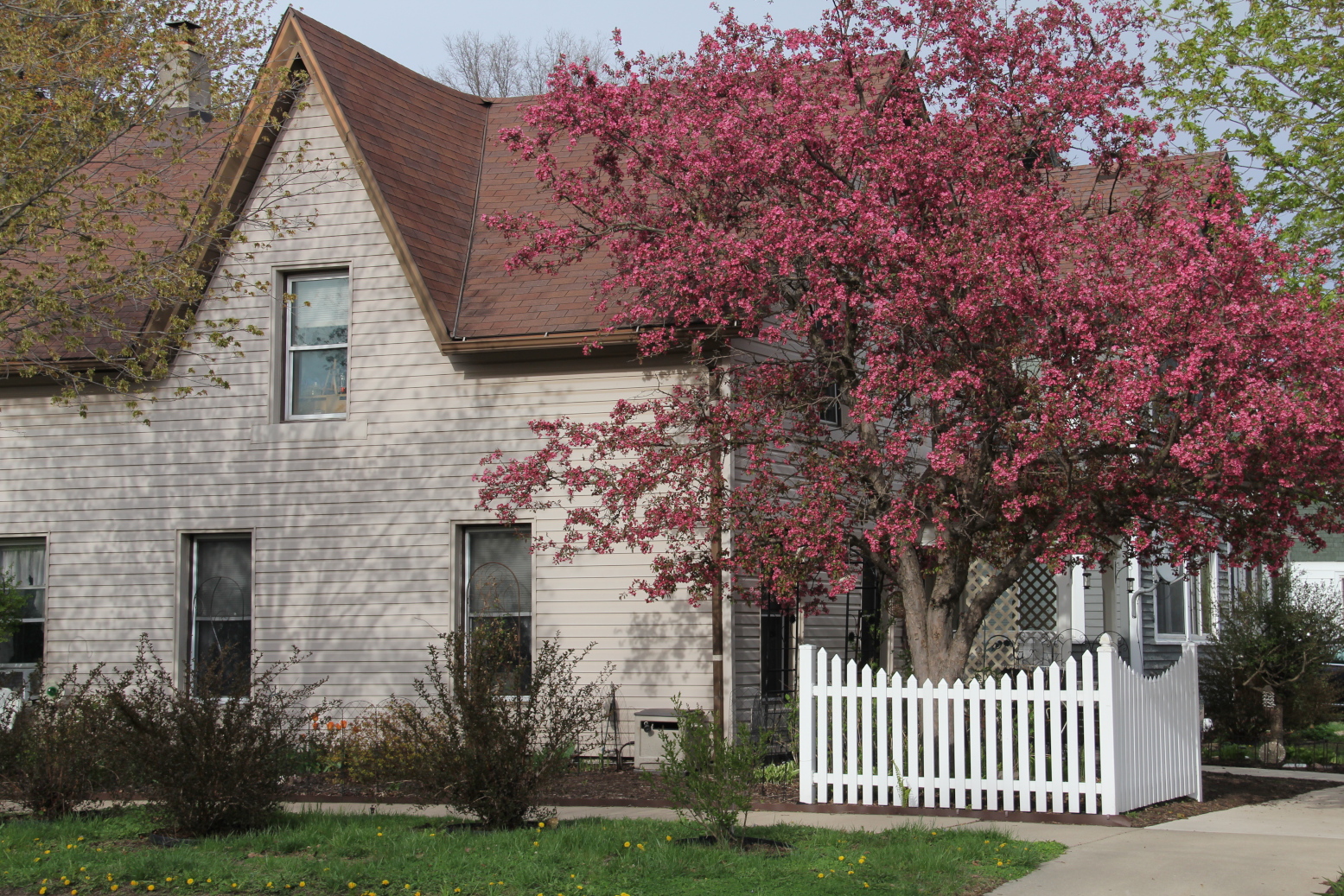
Beautiful flowering trees outside the Rice County courthouse, Faribault. (Minnesota Prairie Roots copyrighted photo May 2026)
I’VE NEVER TRAVELED to Washington, DC, thus never seen the masses of cherry blossoms. I’m quite certain I would love them. Flowering trees began blooming here about two weeks ago and I can’t get enough of their beauty.
A young tree outside the Cathedral of Our Merciful Saviour in Faribault blooms in late April. (Minnesota Prairie Roots copyrighted photo April 2026)
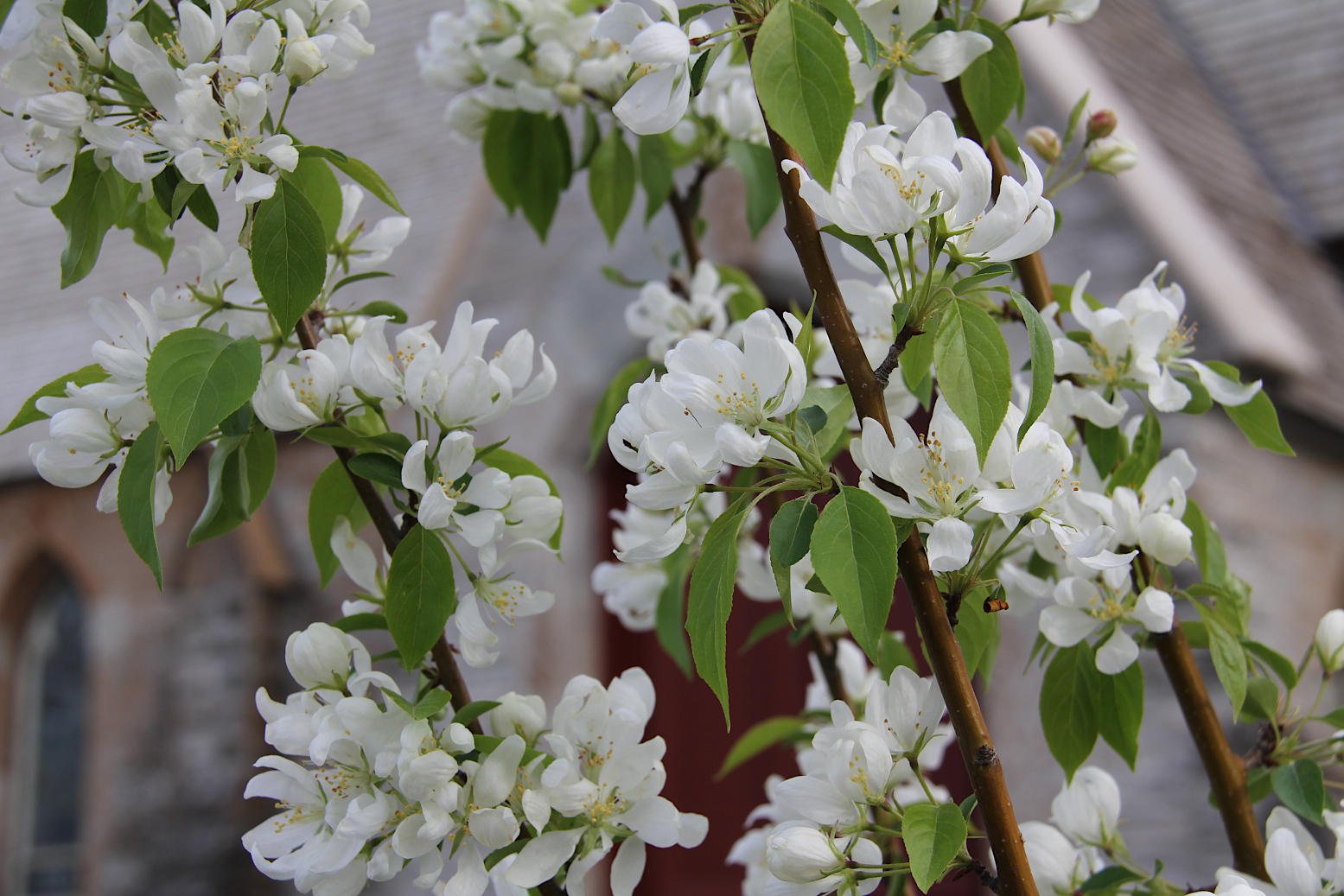
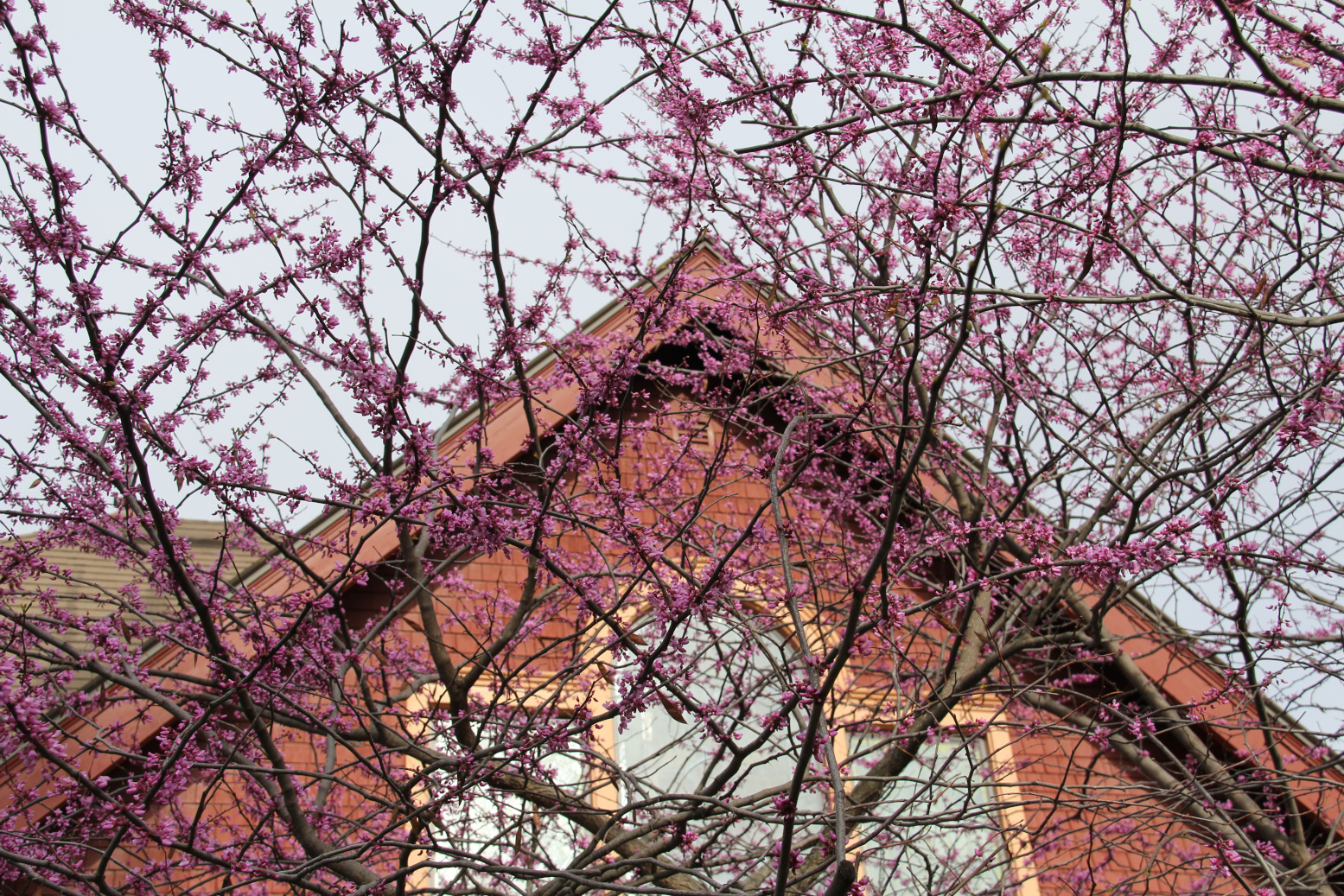
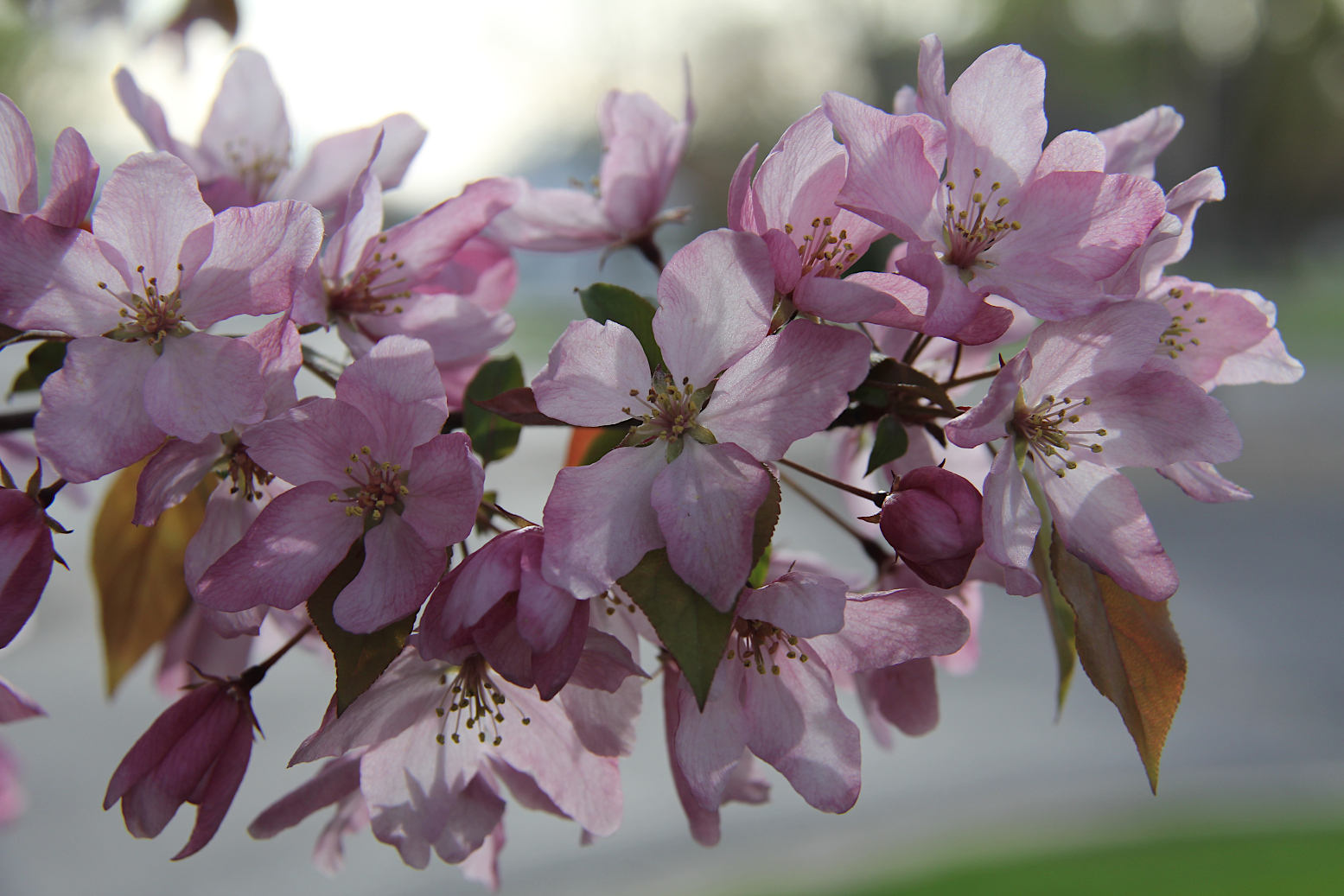
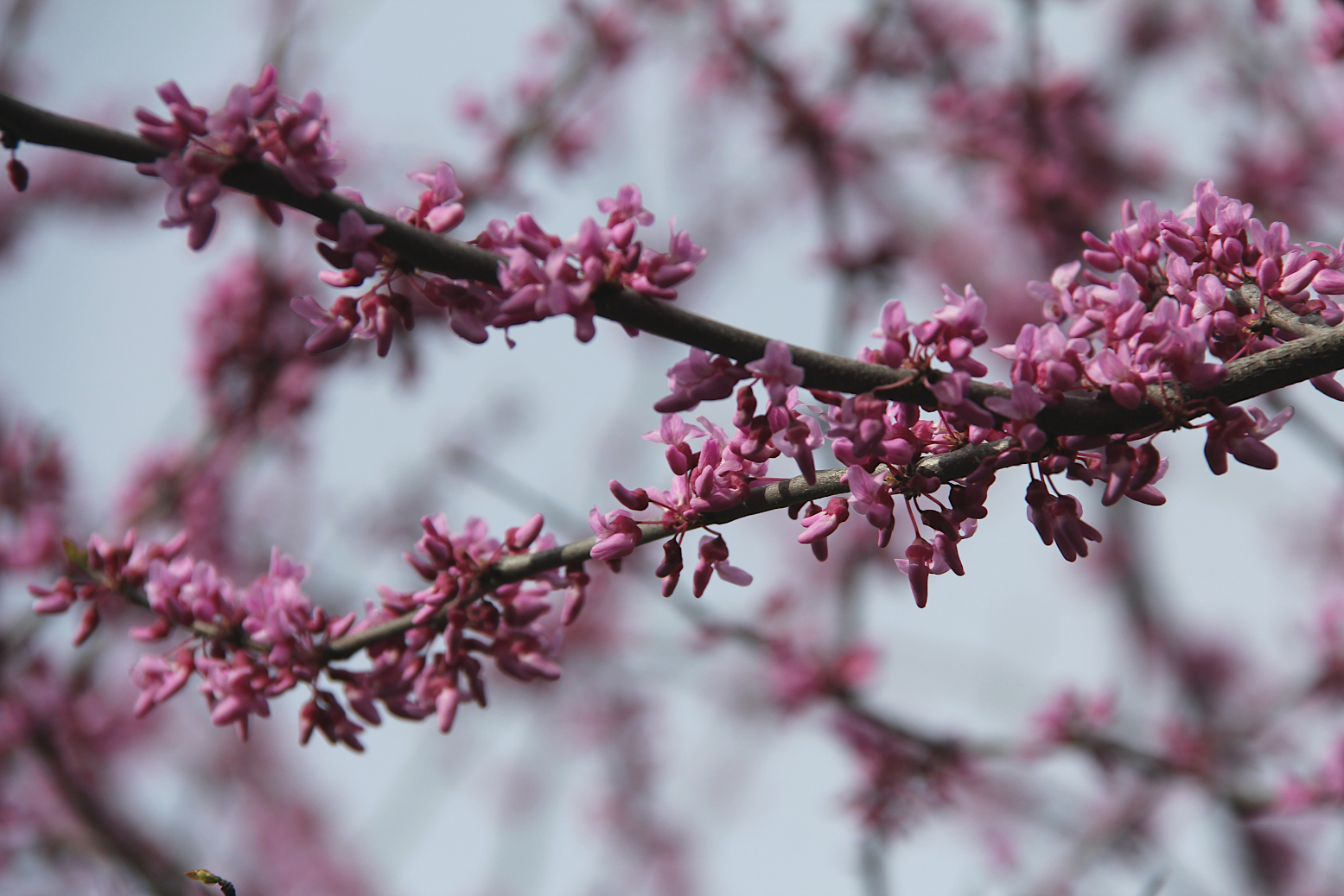
Whether pink or white, the petals add an artistic and poetic touch to the landscape. It’s as if an artist meticulously brushed petals upon a tree. It’s as if a poet wrote lovely words upon apple and ornamental trees, petal by petal.
Against the backdrop of the Guild House at the Cathedral of Our Merciful Saviour, a flowering tree buds and blooms. (Minnesota Prairie Roots copyrighted photo April 2026)
In poetry, every word counts. In art, every brush stroke matters. On a flowering tree, both create a canopy of loveliness.
Masses of flowers on a tree at the intersection of Third Avenue NW and Fifth Street NW, Faribault. (Minnesota Prairie Roots copyrighted photo late April 2026)
I don’t paint. But I create with my camera and with words. I write poetry—poetry which has published on the pages of anthologies and literary journals, inspired artists and a musician, graced signs in public places.
At the intersection of First Avenue NW and Sixth Street NW in Faribault, a flowering tree graces a front yard. (Minnesota Prairie Roots copyrighted photo April 28, 2026)
And so I see poetry where others may not. A flowering tree is not simply a tree with flowers. It is a work of literary and visual art. It is a love letter. It is a painting. It is romance. It is a thousand stories. It is more than a tree blushing beauty into the landscape on a spring day.
Sunshine dapples a tree along Third Avenue NW, Faribault. (Minnesota Prairie Roots copyrighted photo late April 2026)
In residential neighborhoods, in parks and in other spaces, flowering trees bloom poetic verse. Above. And in a carpet of petals upon the ground. I’m inspired to write: Apple blossoms fall/like kisses from their lips/teasing, tempting, tasting/not of promised, forbidden fruit/but of young love blooming.
The Guild House tree in bud and now bloom. (Minnesota Prairie Roots copyrighted photo April 2026)
And so spring seems a time of young love. Of beginnings. Of feeling the heart beat faster.
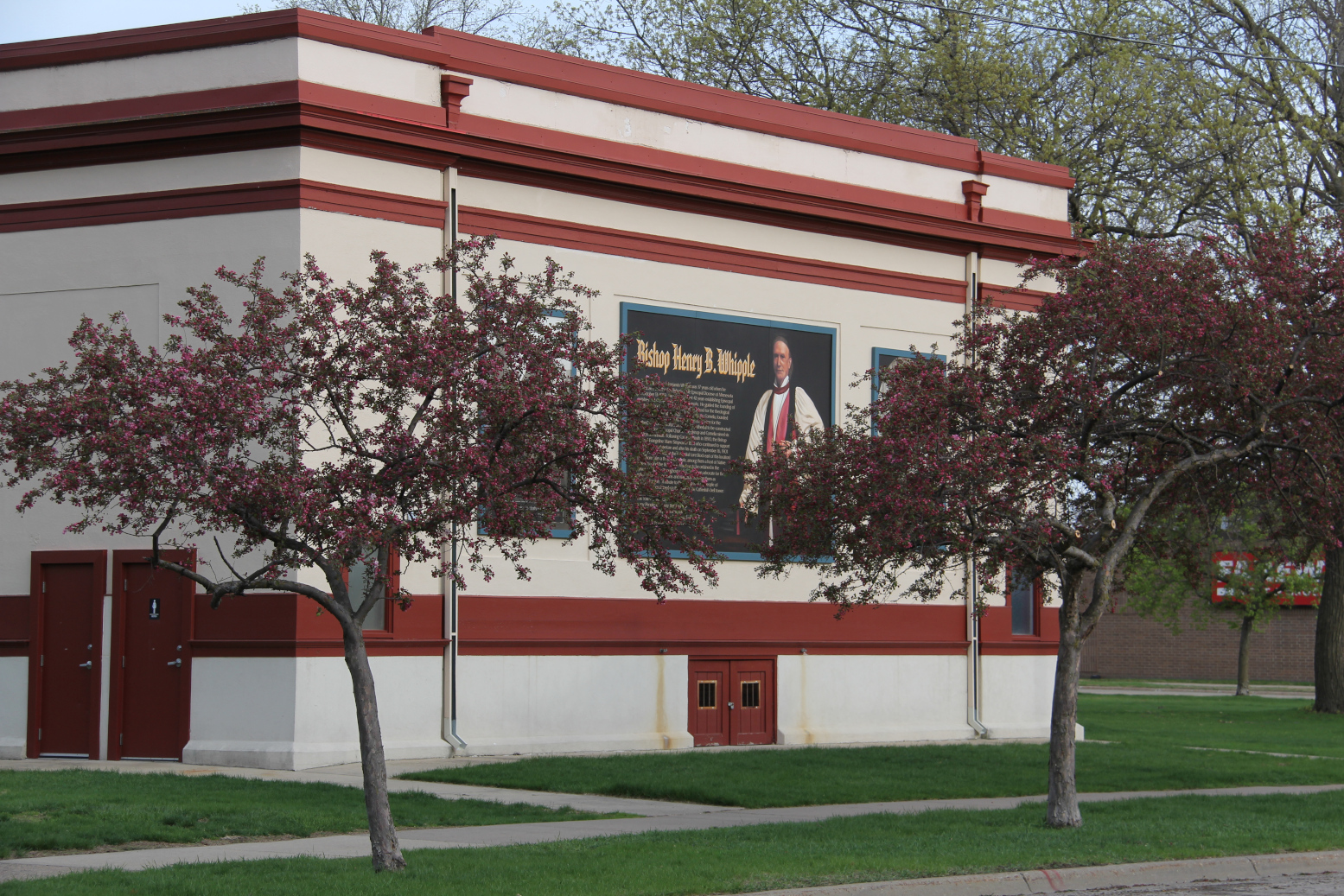
Trees flower on the back side of Faribault’s Central Park bandshell which features murals honoring the life of Bishop Henry Whipple. (Minnesota Prairie Roots copyrighted photo April 2026)
Yet spring also celebrates the seasoned love of many years, even decades, together. Love that has seen countless springs of flowering trees blushing beauty into the landscape. For my husband, Randy, and me, 44 years of married life marked on May 15.
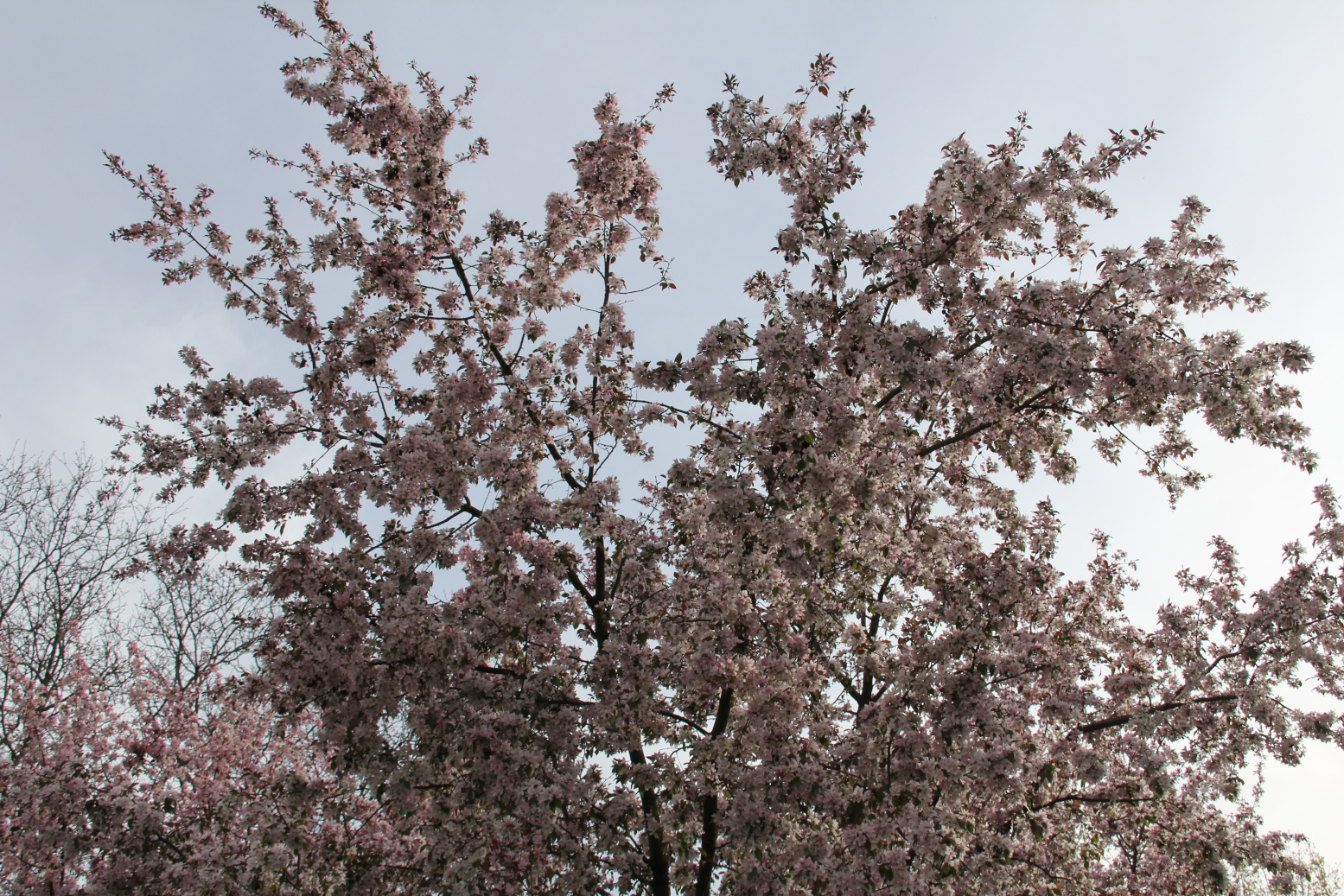
Looking up at flowering treetops outside an office building along Third Avenue NW in Faribault. (Minnesota Prairie Roots copyrighted photo April 2026)
We walk beneath those trees, petals underfoot representing the poetry of days past and those above of poetry yet unwritten.
Petals 2 Metal, a flower shop in Kasson, features a spring message, floral arrangements and salvaged treasures. (Minnesota Prairie Roots copyrighted photo March 2026)
RAIN DRIPS OFF the roof line, big fat drops plopping onto brown stalks of hydrangea emerging from dormancy into a world reawakening.
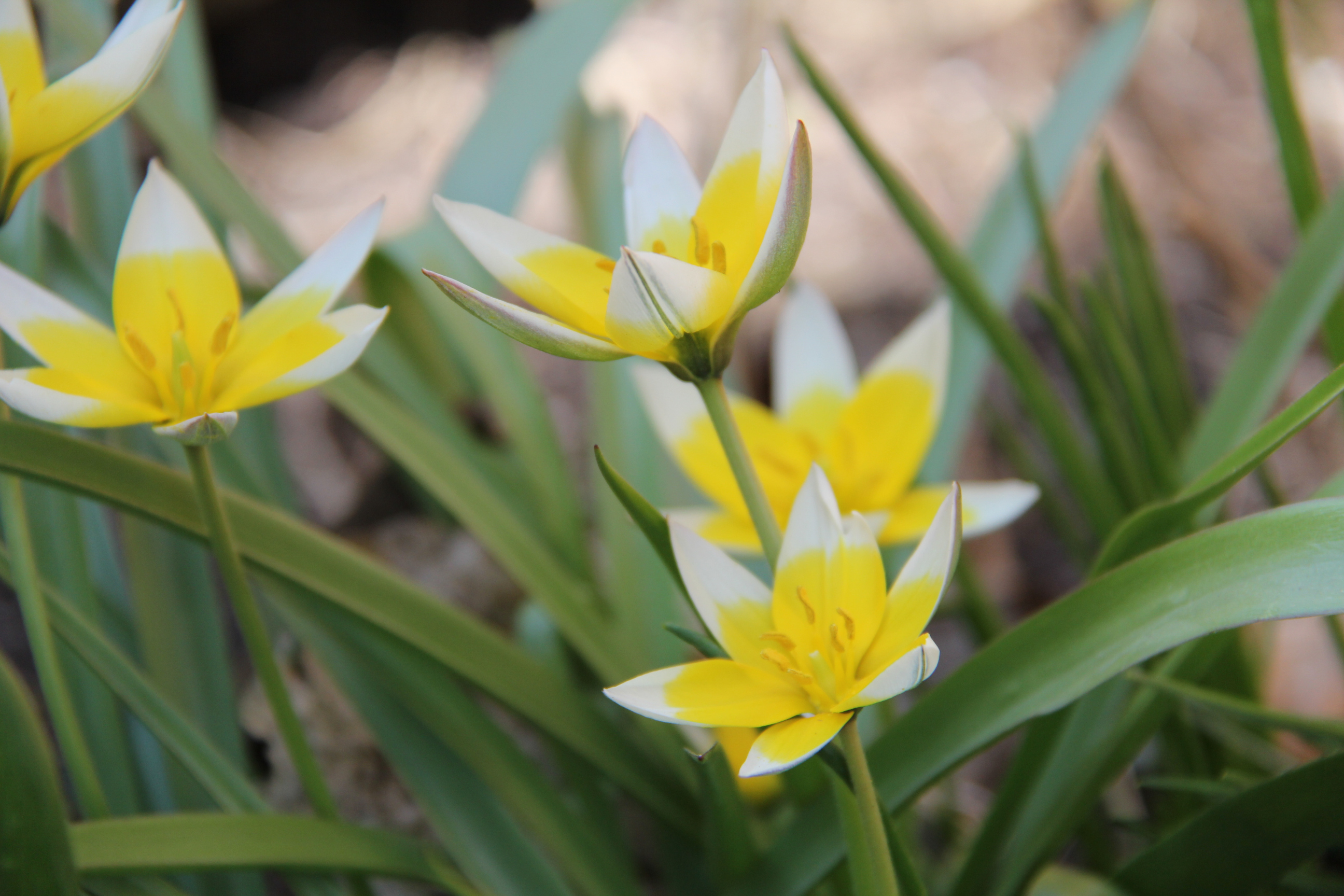
Tulips about to bloom. (Minnesota Prairie Roots copyrighted file photo)
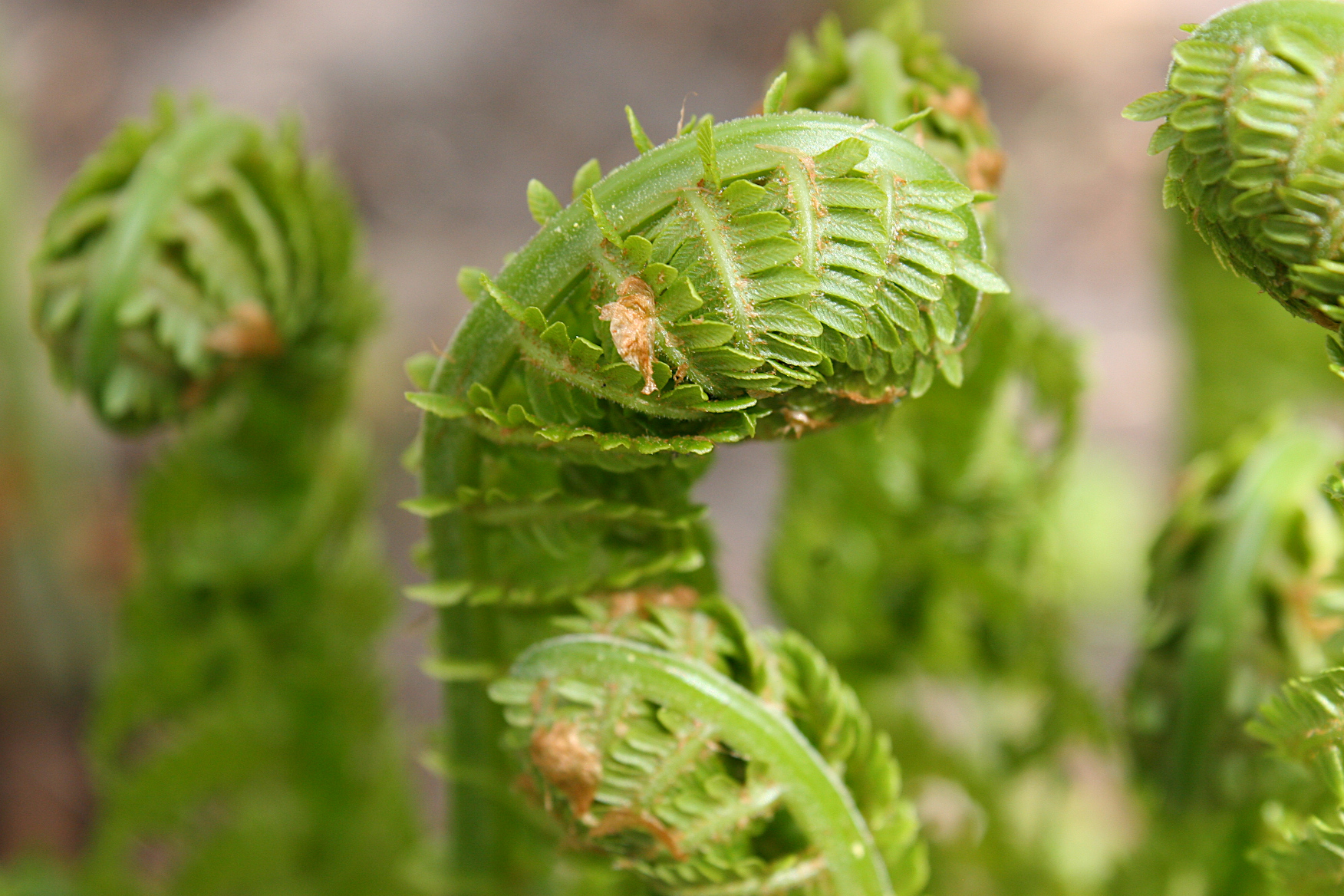
April showers bring May flowers. Tulips bloom, replacing the crocuses and daffodils already finished flowering. Fiddleheads pop through the soil, reaching for the sun, unfurling into leafy ferns that bend in the wind. Peony plants push up. Bleeding hearts dangle from stems, strong, yet vulnerable.
This is spring in southern Minnesota, a time of transition, of new growth, new life. Lush. Vivid. Visually-pleasing after months of drab surroundings.
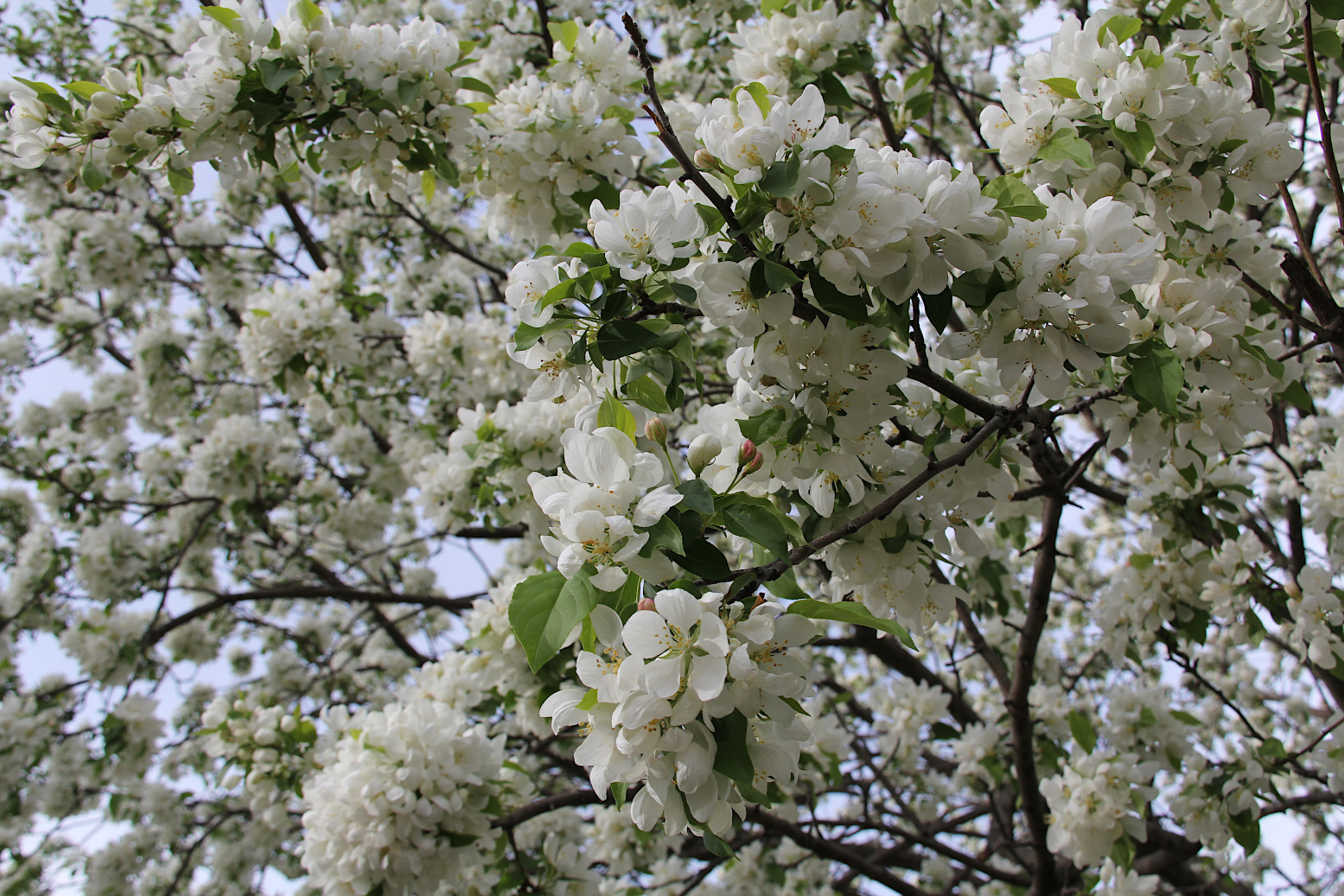
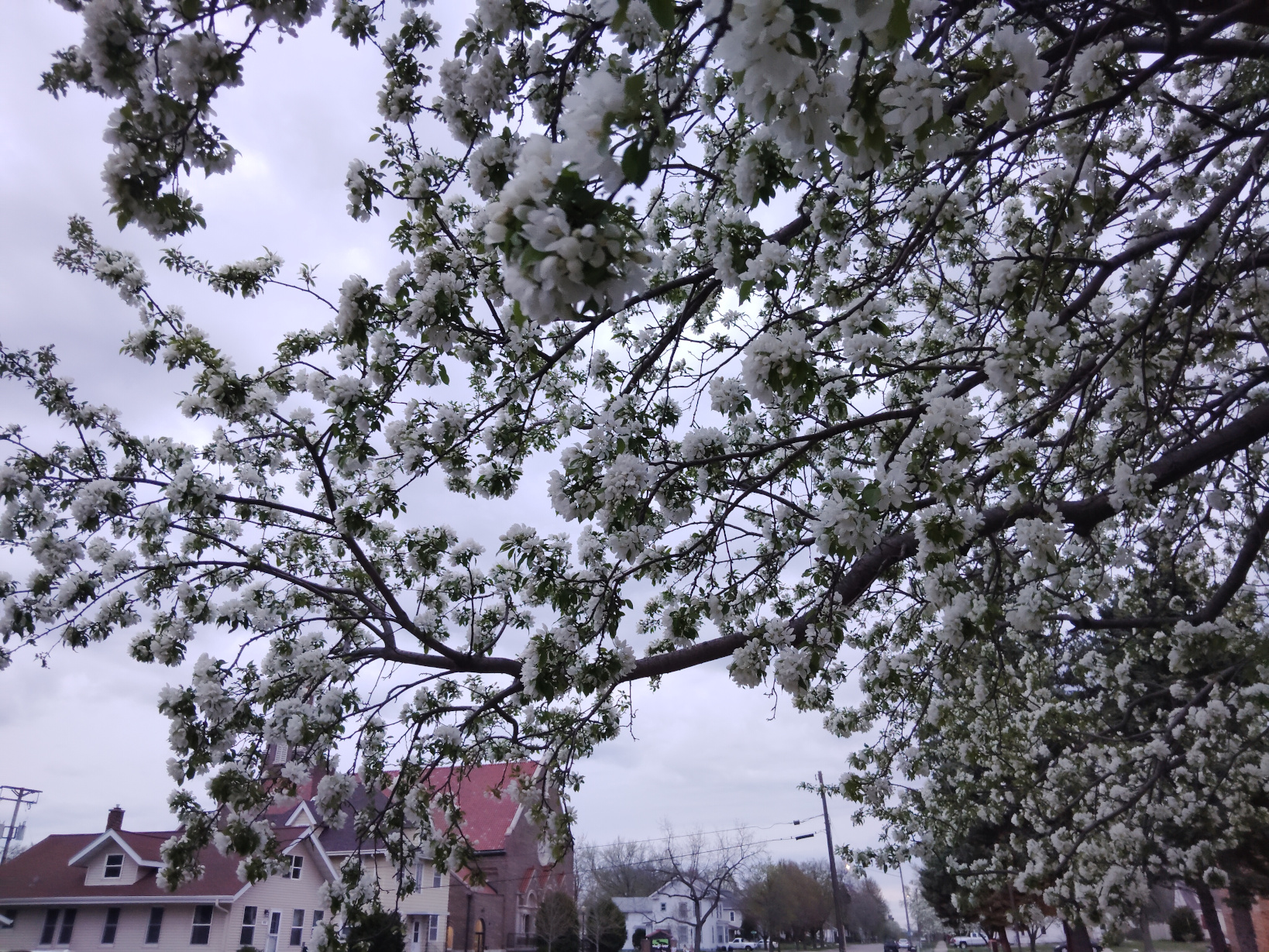
A flowering crabapple tree at the corner of Fifth St. NW and Fourth Avenue NW in a residential neighborhood near the River Community Church in Faribault.(Minnesota Prairie Roots copyrighted photo April 2026)
Leaves, only weeks ago tight buds on branches, now color a canopy of green across the land. Spring Snow ornamental crabapple trees scent the air with perfume in a blizzard of blossoms clinging to branches.
Off the grill, a burger topped with peanut butter, blueberry jam, pepperjack cheese and bacon with a side of charred broccoli. (Minnesota Prairie Roots copyrighted photo April 2026)
There’s so much to take in. So much to experience with all of the senses. The intoxicating scent of apple blossoms, of earth and April rain. The birdsong of early morning. The green, oh, the greenery, everywhere. The furry softness of a fuzzy curled caterpillar found among decaying leaves. The taste of burgers from the grill.
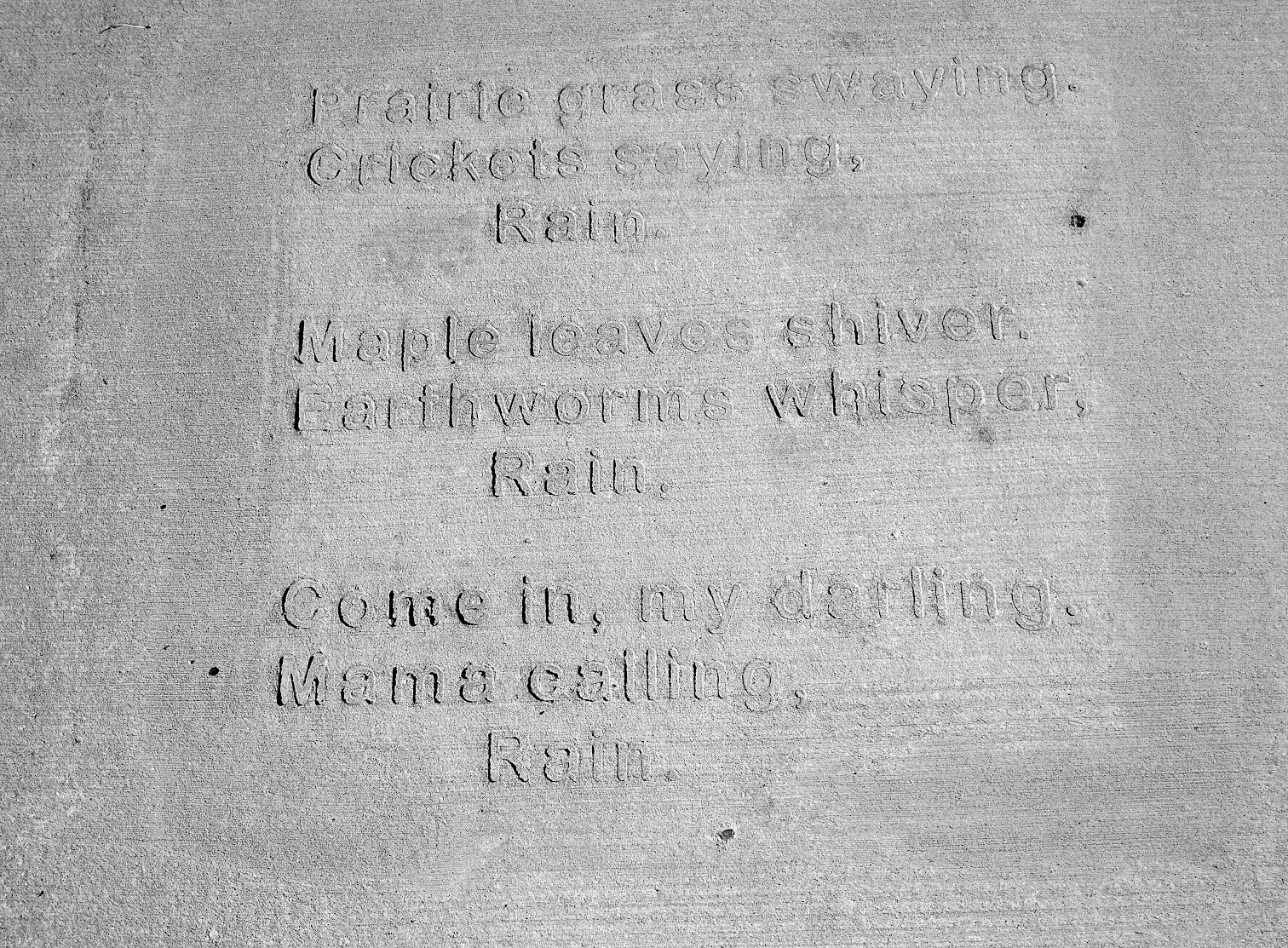
A poem about rain by Aimee Hagerty Johnson outside the Northfield Ice Arena and part of Northfield’s Sidewalk Poetry Project. (Minnesota Prairie Roots copyrighted photo April 2026)
And a poem imprinted in the sidewalk outside an ice arena. Poetry not about icy winter, but about welcoming rain.
April showers bring May flowers. Gardeners tend perennial flowerbeds, plan plantings, shop for annuals, buy flowering baskets. Planters are plumped with fillers, spillers and thrillers.
Low-growing spring flowers. (Minnesota Prairie Roots copyrighted file photo)
We Minnesotans thrill in welcoming spring, when rain replenishes a land awakening from yet another winter.
Garbage I recently picked up from my yard. (Minnesota Prairie Roots copyrighted photo April 2026)
DECADES AGO, when I worked a summer job with the Redwood County Highway Department through a government program for low income families, our crew of several teens was tasked one day with walking the ditches along a county road. That proved an eye-opening experience as we gathered litter. Most memorable among our finds were a dirty disposal diaper and a torn love letter. We spent our lunch break piecing together that heartbreaking love note.
Today I’m still picking up litter, now in my Faribault yard. Living on a corner lot along a high traffic street, my lawn gets plenty of garbage tossed by passing motorists. Every time I grab another beverage container, a fast food bag or box, a whatever that should have gone in the garbage or recycling, I wonder why people are too lazy to properly dispose of waste.
Photographed several years ago on a public recycling dumpster in Northfield. (Minnesota Prairie Roots copyrighted file photo)
EARTH DAY BEGINS IN 1970
With those personal backstories, I’m grateful for ongoing efforts to educate all of us about taking care of our planet during annual Earth Day events. This marks 56 years since that celebration began on April 22, 1970.
I remember the early 1970s, when America was in the thick of an energy crisis. Prices rose at the pump. Fuel was in short supply. In some ways, all of this fueled an awareness that we need to conserve our natural resources, choose alternative energy sources, and respect and care for our planet.
(Black Beach book cover sourced online)
BLACK BEACH
Because I like to learn, I popped into the Faribault library recently with the intention of checking out children’s picture books about Earth Day. Others apparently had the same idea. I found only one book, Black Beach—A Community, an Oil Spill, and the Origin of Earth Day, written by Shaunna and John Stith and illustrated by Maribel Lechuga. But it was the only book I needed to root out the origin of Earth Day.
A large oil spill from drilling off the coast of Santa Barbara, California, on January 28, 1969, prompted outrage, action and the eventual establishment of Earth Day the following year. I high-recommend this book as an invaluable resource with an interesting, factual-based story, a timeline of events, additional information on Earth Day and actions we can take to advocate for and protect our environment.
A banner flies at a past Earth Day Celebration at Bridge Square in Northfield. (Minnesota Prairie Roots copyrighted file photo)
NORTHFIELD EARTH DAY EVENTS
Libraries are always an excellent resource. At the Northfield Public Library, Earth Day Game Day will be held from 10-11 a.m. Saturday, April 25. Led by Science in World and Word class students from St. Olaf College, the event celebrates planet Earth with educational games and activities geared for 6-11-year-olds. Game Day is part of Northfield’s larger Earth Day Celebration.
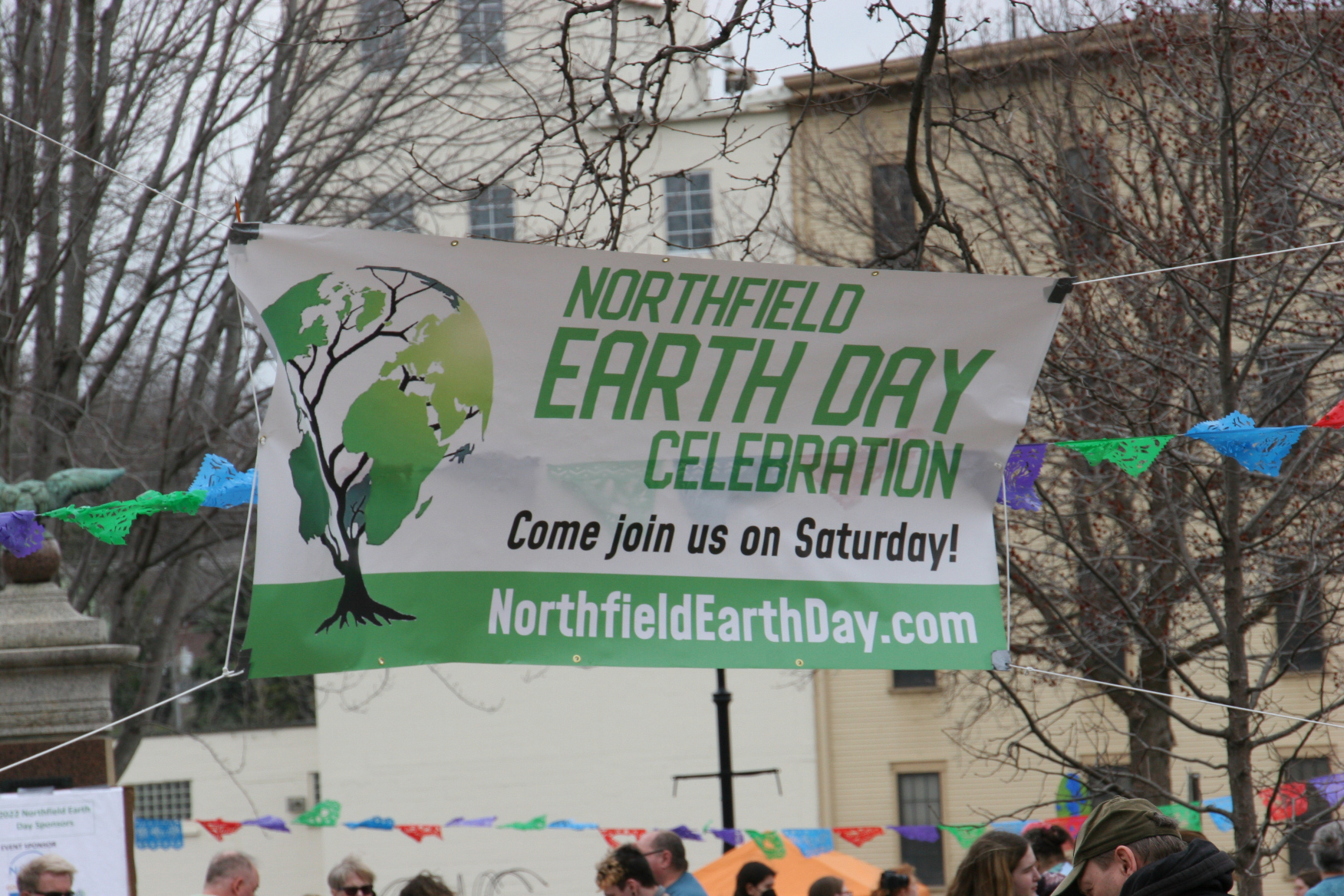
I’ve previously attended the Northfield celebration, now in its 17th year. Activities are centered at Armory Square from 11 a.m.-4 p.m. Saturday, April 25, with workshops, eco exhibitors, crafts, a climate information session, farmers’ market, and more. Visit northfieldearthday.com for a full schedule of activities.
Other Earth Day Celebration weekend events in Northfield include clean-up of Riverside Park, a tour of regenerative Salvatierra Farms (from 1-3 p.m. Sunday), an Earth Day Contra Dance (from 7-10 p.m. Friday) and tree planting at the Carleton College arboretum.
Sky and trees in spring at Falls Creek County Park, rural Faribault. (Minnesota Prairie Roots copyrighted file photo)
TREE PLANTINGS & MORE
Tree plantings are happening in other area communities during Earth Day week and on Arbor Day, April 24. At River Bend Nature Center in Faribault, staff will lead volunteers in planting trees to replace diseased ash. That’s set for 1-3 p.m. Wednesday, April 22, and from 10 a.m.-noon Saturday, April 25. The City of Faribault, a designated Tree City USA, hosts an Arbor Day tree planting ceremony at 9 a.m. at Batchelder Park. The same day, the Rice County Master Gardeners will give away tree seedlings from 3-5 p.m. at the Rice County Fairgrounds.
Additionally in Owatonna, the holistic wellness boutique Daisy Blue Naturals, 121 West Main Street, is hosting an Earth Day Storytime from 3:30-5 p.m. Wednesday, April 22, with Miss Midwest 2026, May Diddy. This includes a puppet show, book reading, activities and snacks.
This banner flew at the 2022 Northfield Earth Day Celebration. (Minnesota Prairie Roots copyrighted file photo)
CARING FOR PLANET EARTH
Fifty-six years ago, Earth Day began in this country. To see how it’s grown and evolved is heartening. It takes each of us, individually and collectively, to do our part for this planet we call home. Whether that’s recycling, repurposing, composting, hanging laundry on the line, thrifting, planting trees and rain gardens, conserving water, and much more, we are responsible for taking care of Earth. That includes disposing of litter properly—not in a road ditch. And not in my yard.
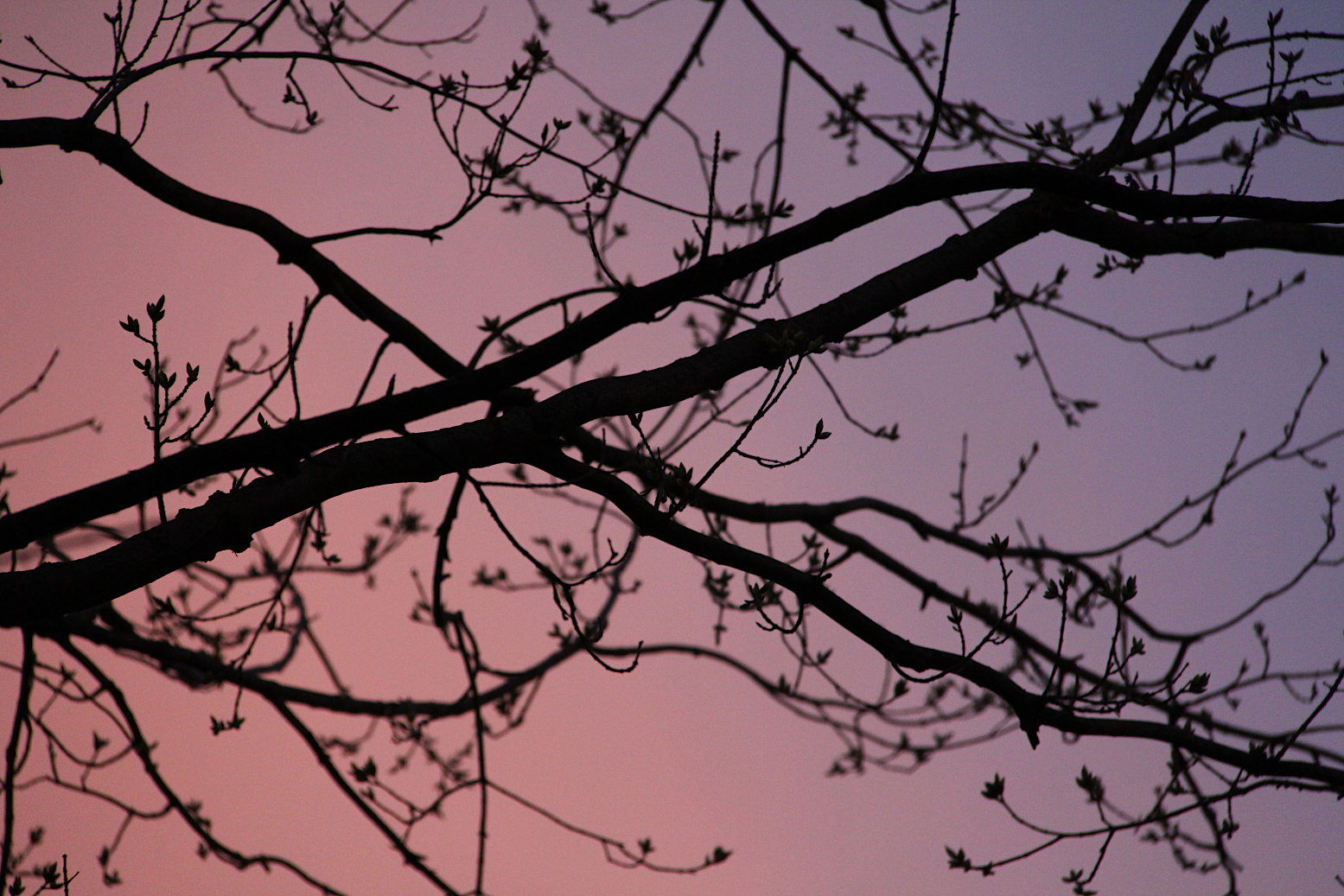
Budding branches on the maple tree in my backyard during a recent sunset of pink sky. (Minnesota Prairie Roots copyrighted photo April 2026)
HERE IN SOUTHERN MINNESOTA, the greening of the land indicates the beginning of spring’s full-on arrival.
April showers, more like recent deluges of rain, and warmer temperatures have reawakened the earth. Once dormant brown grass now colors lawns greens.
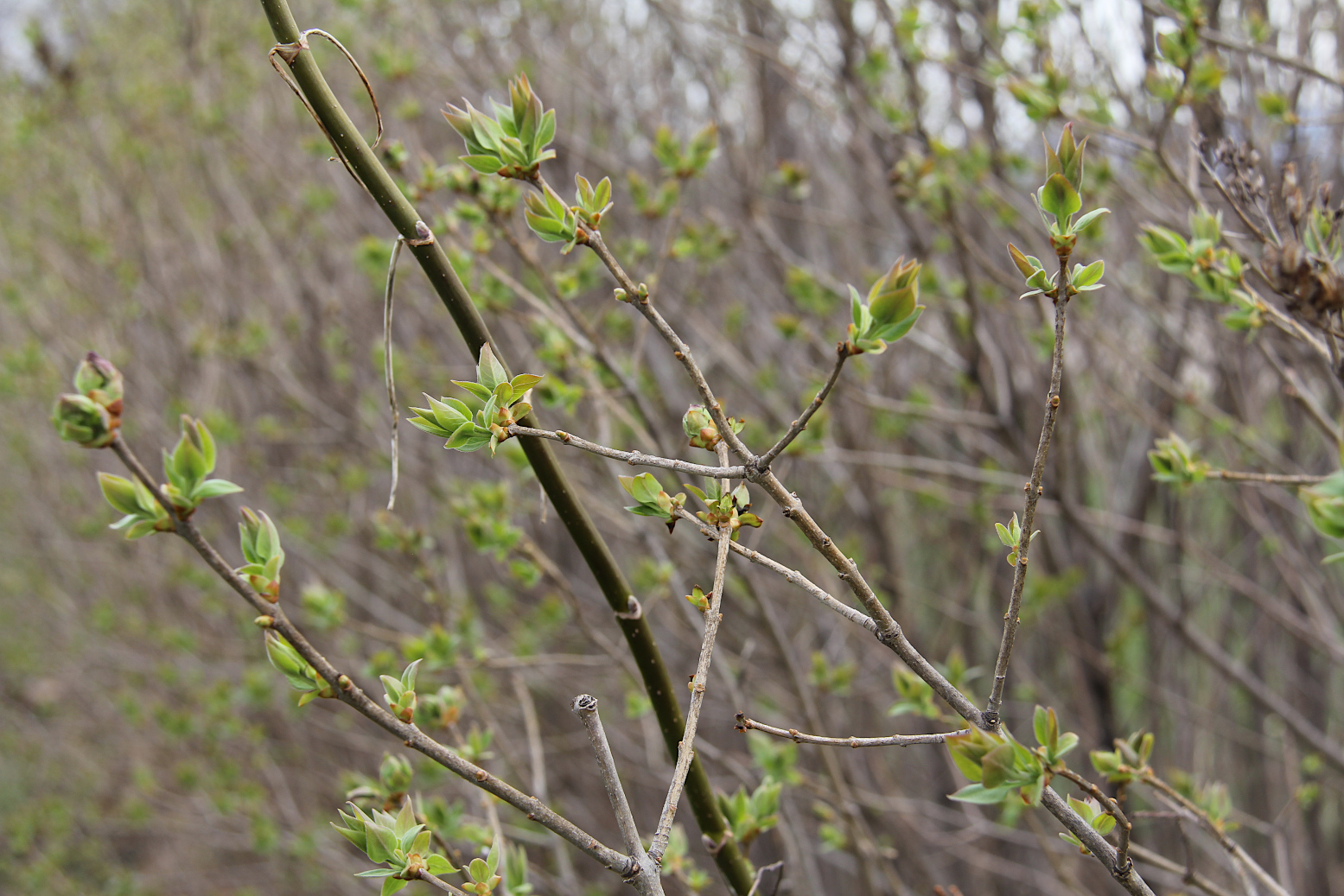
Buds begin to open on lilac bushes at North Alexander Park, Faribault. (Minnesota Prairie Roots copyrighted photo April 2026)
Buds tip tree branches and bushes, promising canopies of leaves and masses of flowers. I’m waiting for the lilacs to bloom in early May, their heady scent a gift to all of us upon winter’s departure.
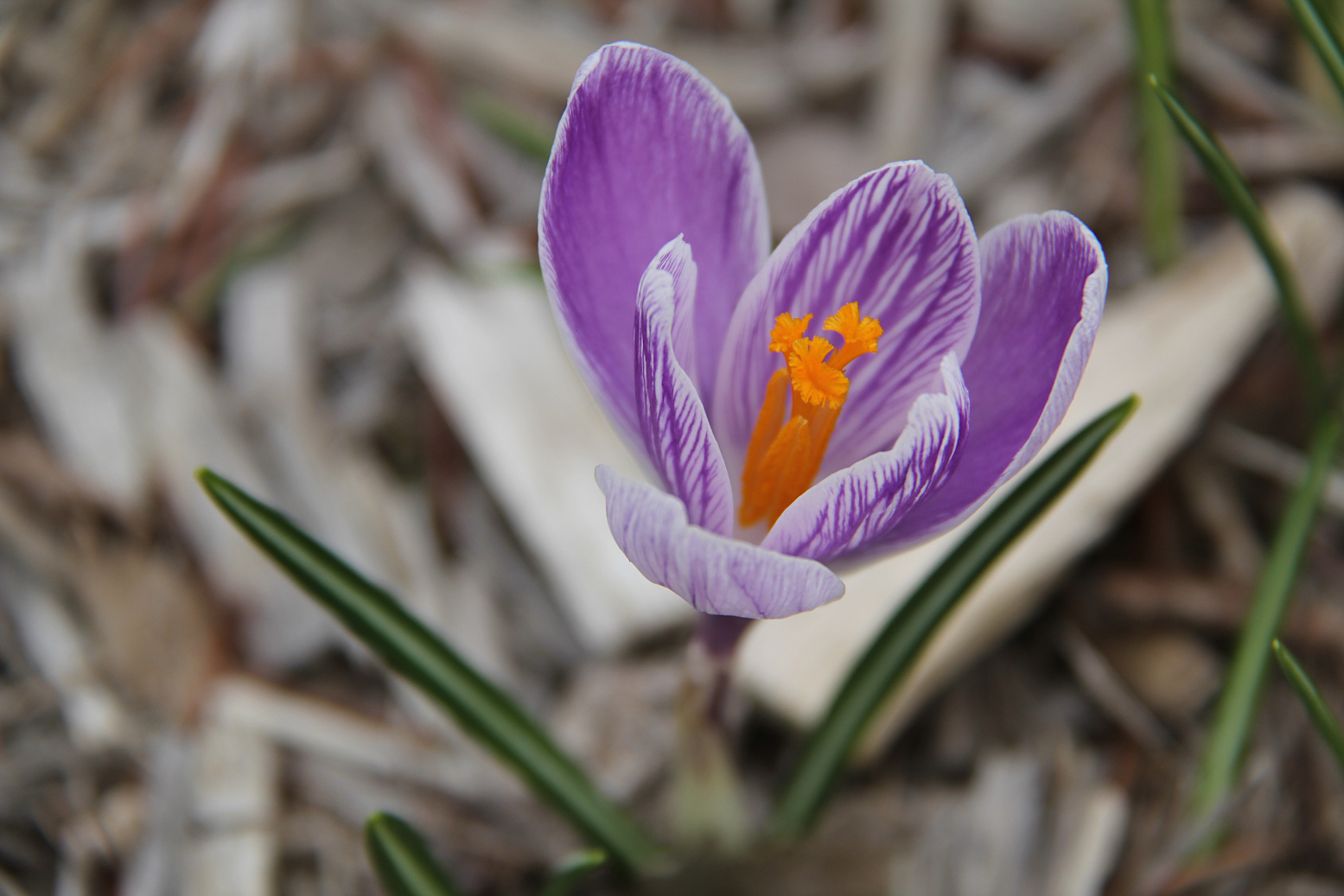
A crocus blooms at the Rice County Master Gardeners’ Teaching Garden on the Rice County Fairgrounds, Faribault. (Minnesota Prairie Roots copyrighted photo April 2026)
Crocuses, daffodils and other spring flowers burst through the soil, opening to the sun in a visual splash of color. A jubilant and celebratory scene that shouts happiness.
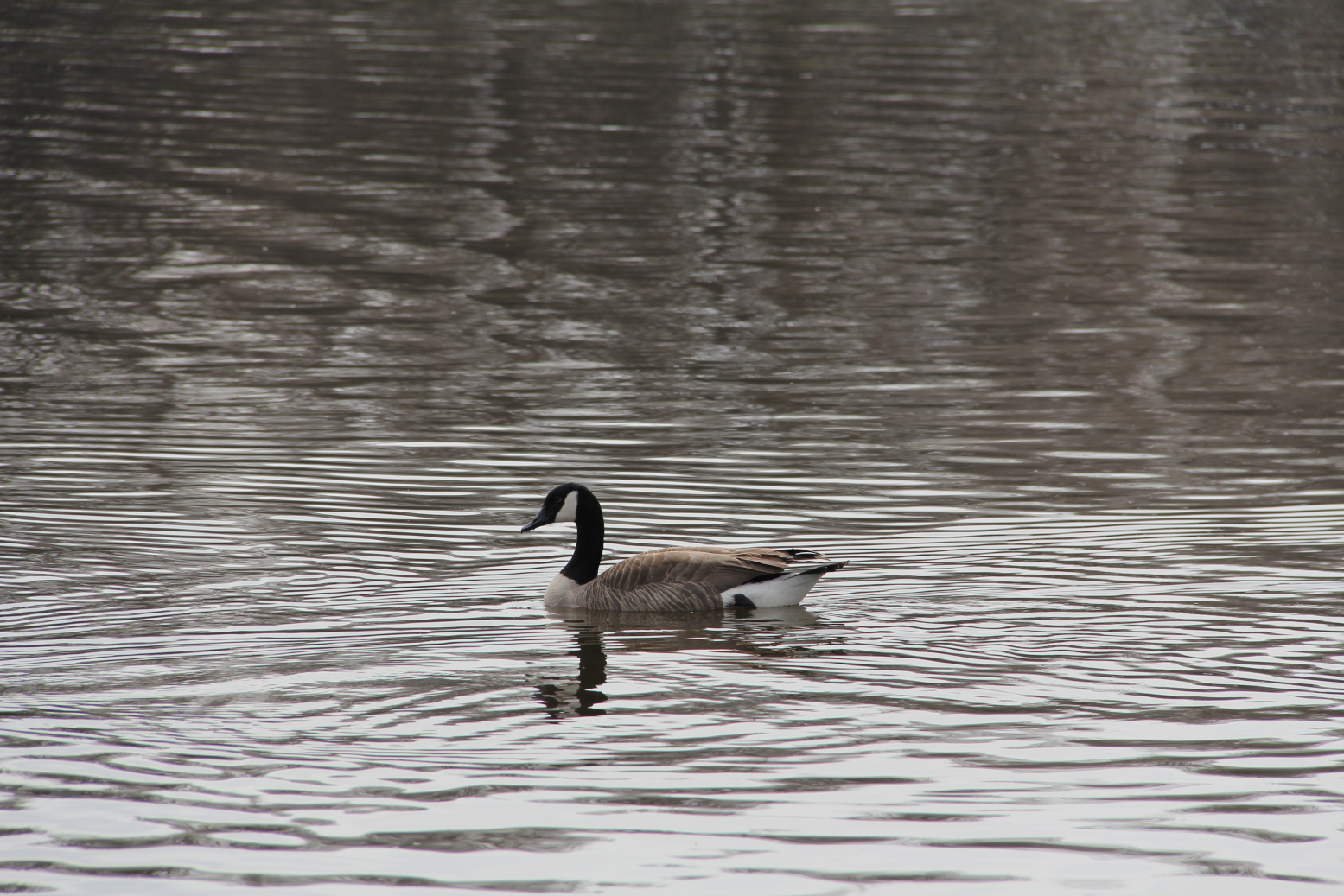
A Canadian goose swims in the Cannon River at North Alexander Park. (Minnesota Prairie Roots copyrighted photo April 2026)
Down by the river, geese and ducks share company, prepare for nesting and the arrival of little ones. I wait each spring for the goslings and ducklings. They fill my spirit with the promise of new beginnings. Hope in a world desperately in need of hope.
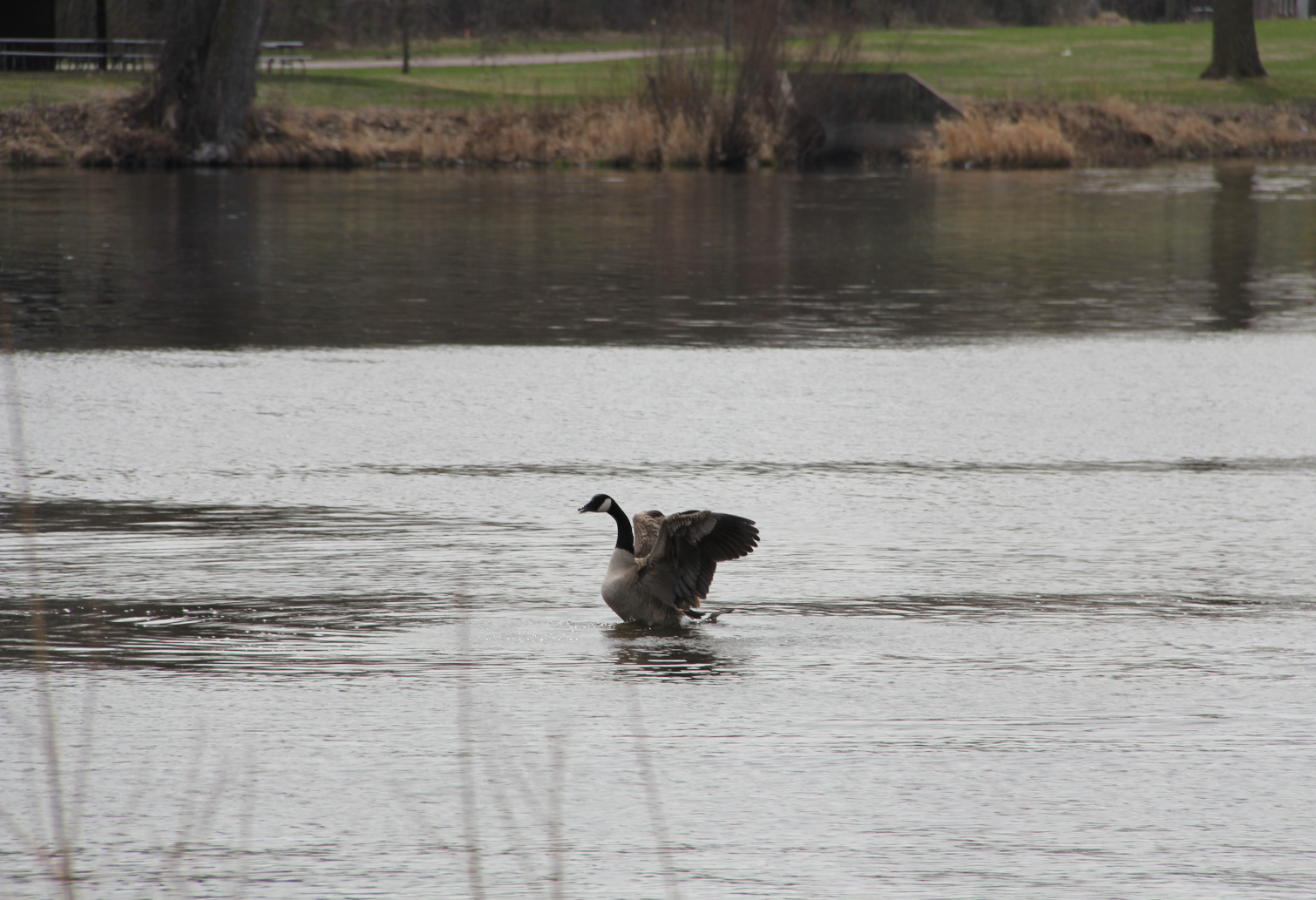
In the Cannon River, a Canadian goose spreads its wings. (Minnesota Prairie Roots copyrighted photo April 2026)
Along water’s edge, I simply stand and observe. Waves rippling, wings rising, water flowing under a gray April sky.
Branches on a riverside tree twist and turn. (Minnesota Prairie Roots copyrighted photo April 2026)
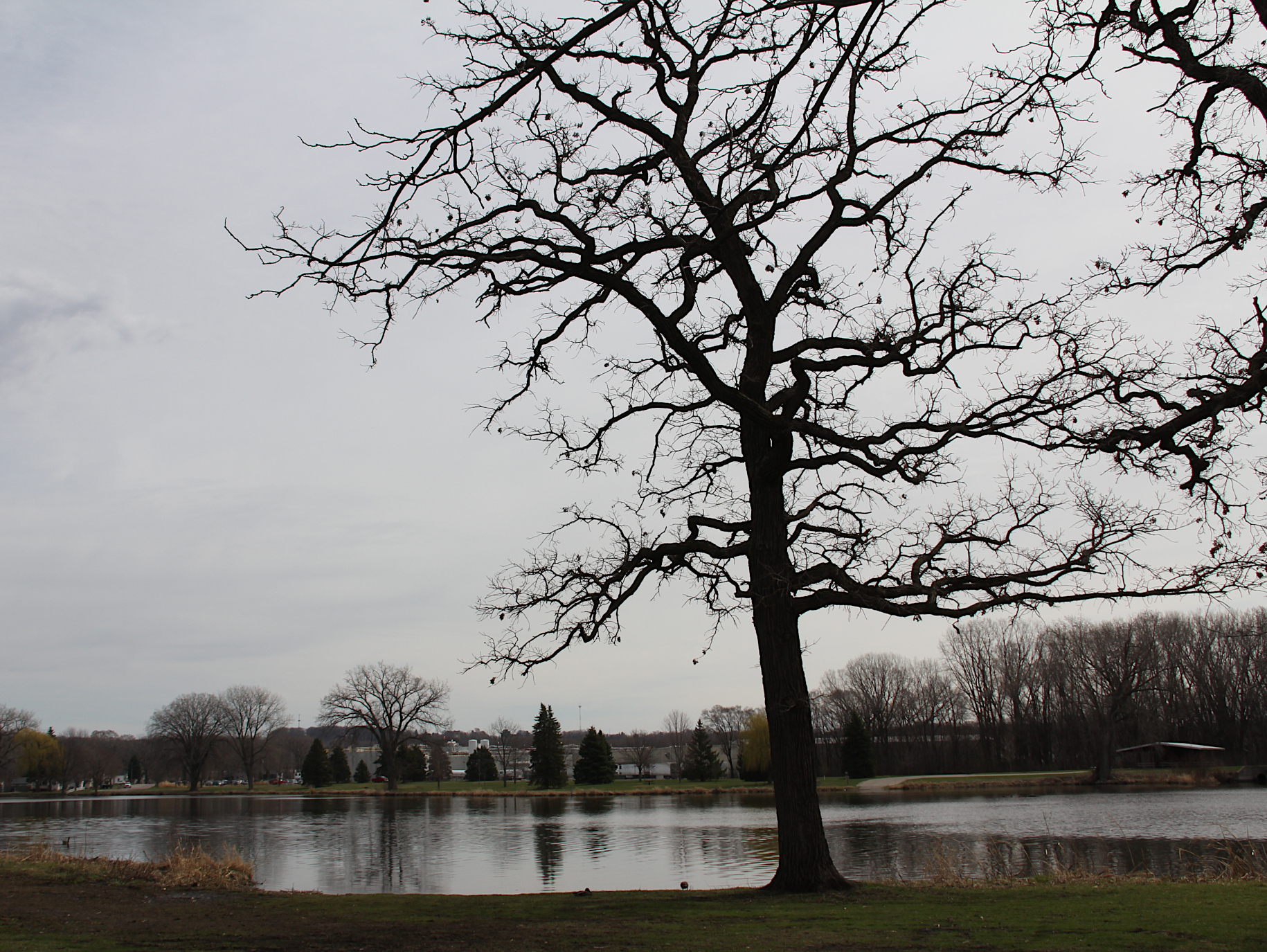
The day feels unsettled in its unseasonable warmth and humidity as I follow a paved path in Faribault’s North Alexander Park. Past the Cannon River, through the trees, then back to the river, I walk with my husband.
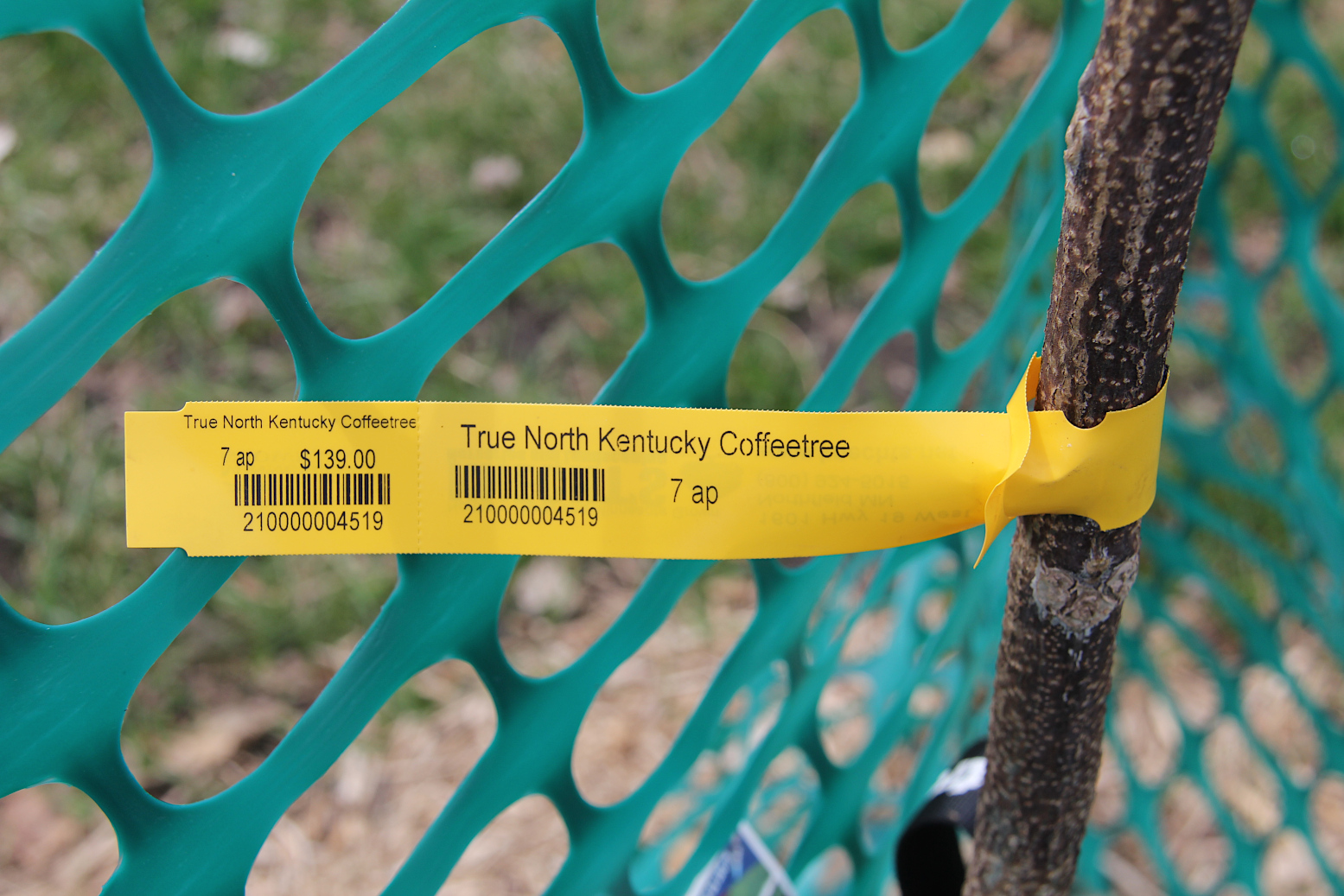
Tagged and planted at North Alexander Park, the True North Kentucky Coffeetree. A flag in the park reads “Tree City USA.” (Minnesota Prairie Roots copyrighted photo April 2026)
We pause to look at several newly-planted trees, including a True North Kentucky Coffeetree, developed, I later learn, through the University of Minnesota woody landscape breeding program. We both wondered about the viability of a coffee tree growing in this northern climate.
Measured and compared to a quarter, some of the larger hail that fell at our home on Monday afternoon. (Minnesota Prairie Roots copyrighted photo April 2026)
Hours later, the rain comes. And then the hail. First small, then some larger hailstones, pelt the lawn, the patio, the driveway, the street, the old rusty van. The house. Stones hit the aluminum awning over the back door with an unnerving shot-like bang. Randy and I stand and watch, moving from window to window, hoping the hail doesn’t damage our roof.
Afterwards I head outside to gather a few hailstones in baggies for freezing and measuring. We have yet to inspect for damage. The day after, out-of-town roofing companies are descending on Faribault like birds returning in the spring. There is no birdsong, though, only a circling around.
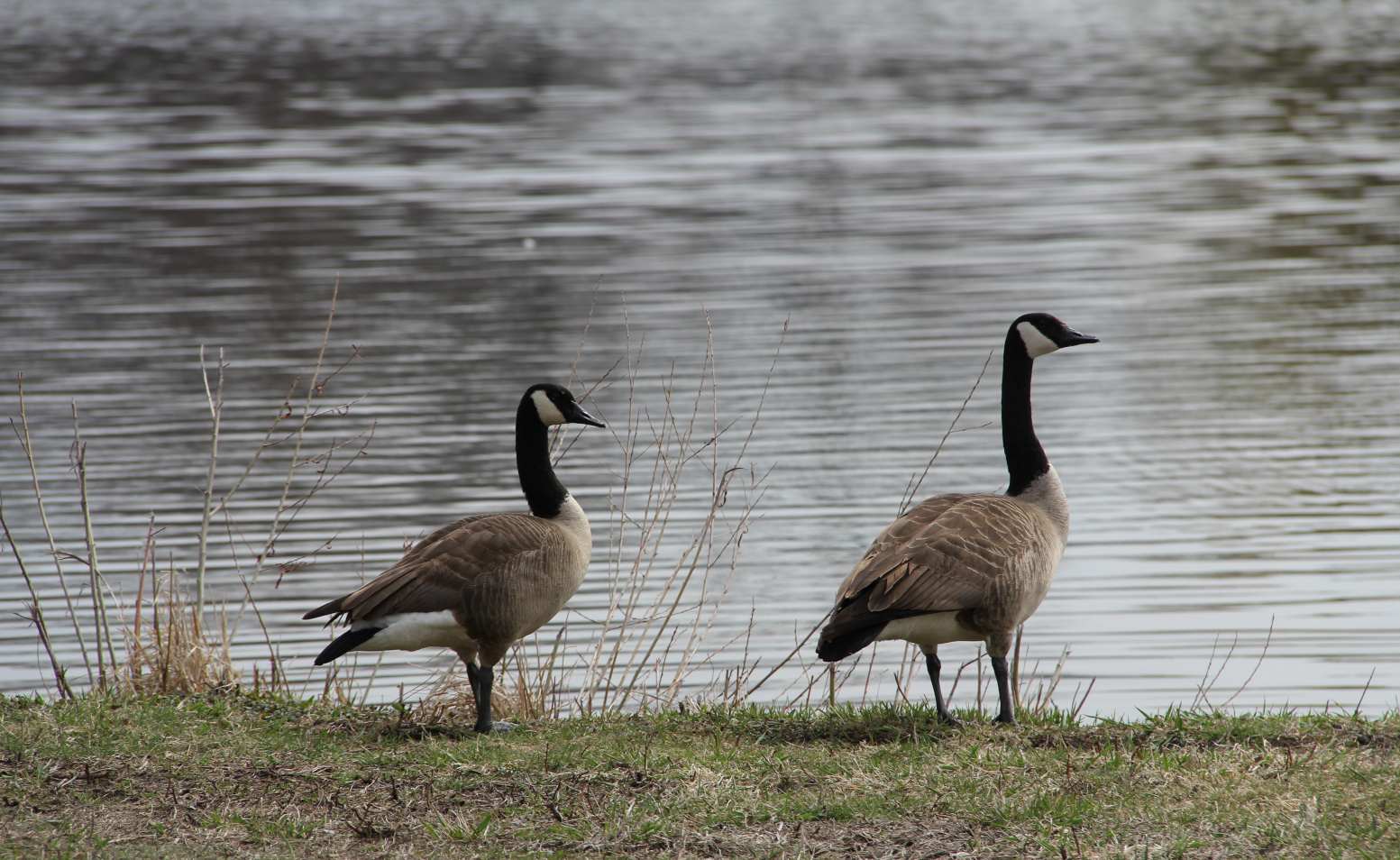
These Canadian geese stand guard on the bank of the Cannon River in North Alexander Park. (Minnesota Prairie Roots copyrighted photo April 2026)
With spring comes the greening of grass, the blooming of flowers, the budding of trees, the gathering of waterfowl and the occasional severe storm that moves across the land. Unwelcome, but not unexpected in this season of change.
City View Park on Faribault’s east side provides a sweeping, colorful view of the city in October. (Minnesota Prairie Roots copyrighted file photo 2022)
IF I WANT TO VIEW fall colors, I needn’t go far. I can step into my backyard to see glorious golden maples. Up the street from my Willow Street home, more trees blaze. If I follow Second Avenue to its intersection with Seventh Street, I’ll find especially vibrant trees on a corner property owned by friends Mark and Laurie. There are more splashy hues along Seventh Street and all about town. Tree-lined bluffs rising above the Straight River burst with color. Faribault is a beautiful, historic riverside city anytime, but especially in autumn.
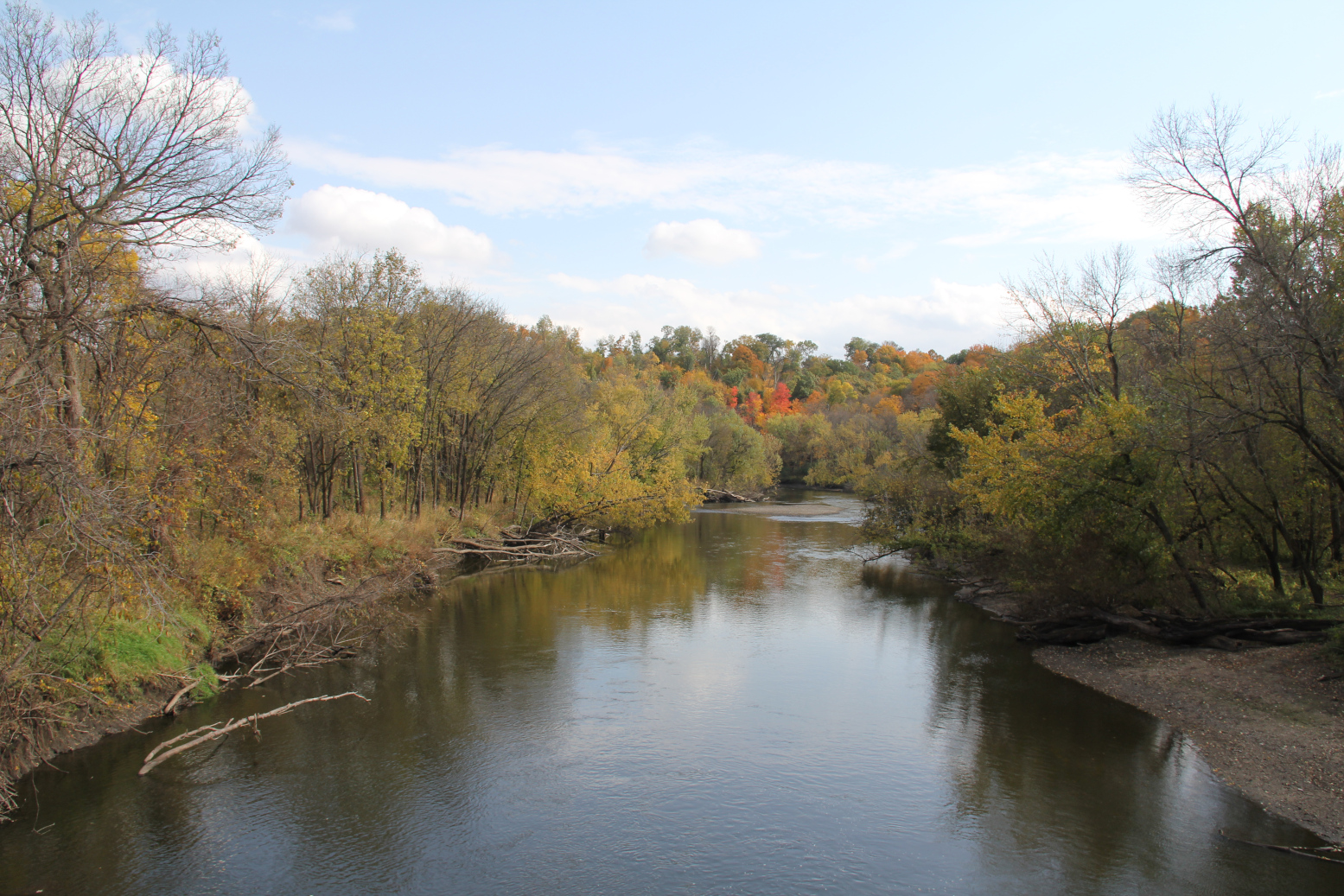
A view of the Cannon River from the pedestrian bridge at the Cannon River Wilderness Area between Faribault and Northfield. (Minnesota Prairie Roots copyrighted photo October 2025)
Yet, even with all the colorful trees in town, I like to go into the countryside to see the colors, too. And it’s not just about the orange, red and yellow leaves. It’s also about sky and water, fields and farms, the “all” which comprises and defines rural Minnesota in September and October.
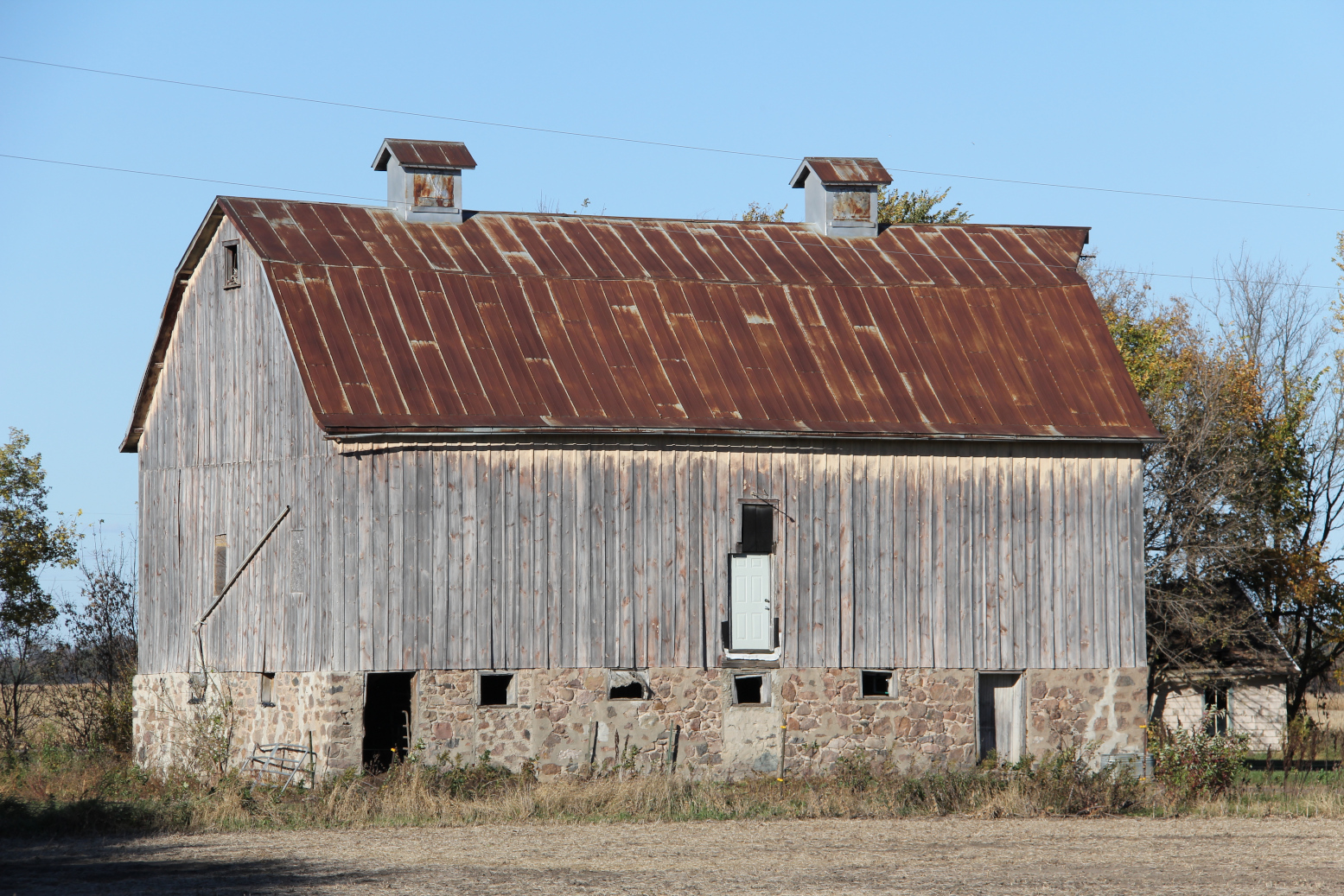
This weathered barn with the fieldstone foundation sits along the gravel road leading to Richter Woods County Park west of Montgomery in Le Sueur County. (Minnesota Prairie Roots copyrighted photo October 2025)
It’s also about following back gravel roads, the vehicle kicking up dust. It’s about meeting massive farm equipment on roadways. It’s about stopping to look at a weathered barn. It’s about traveling at a slower pace.
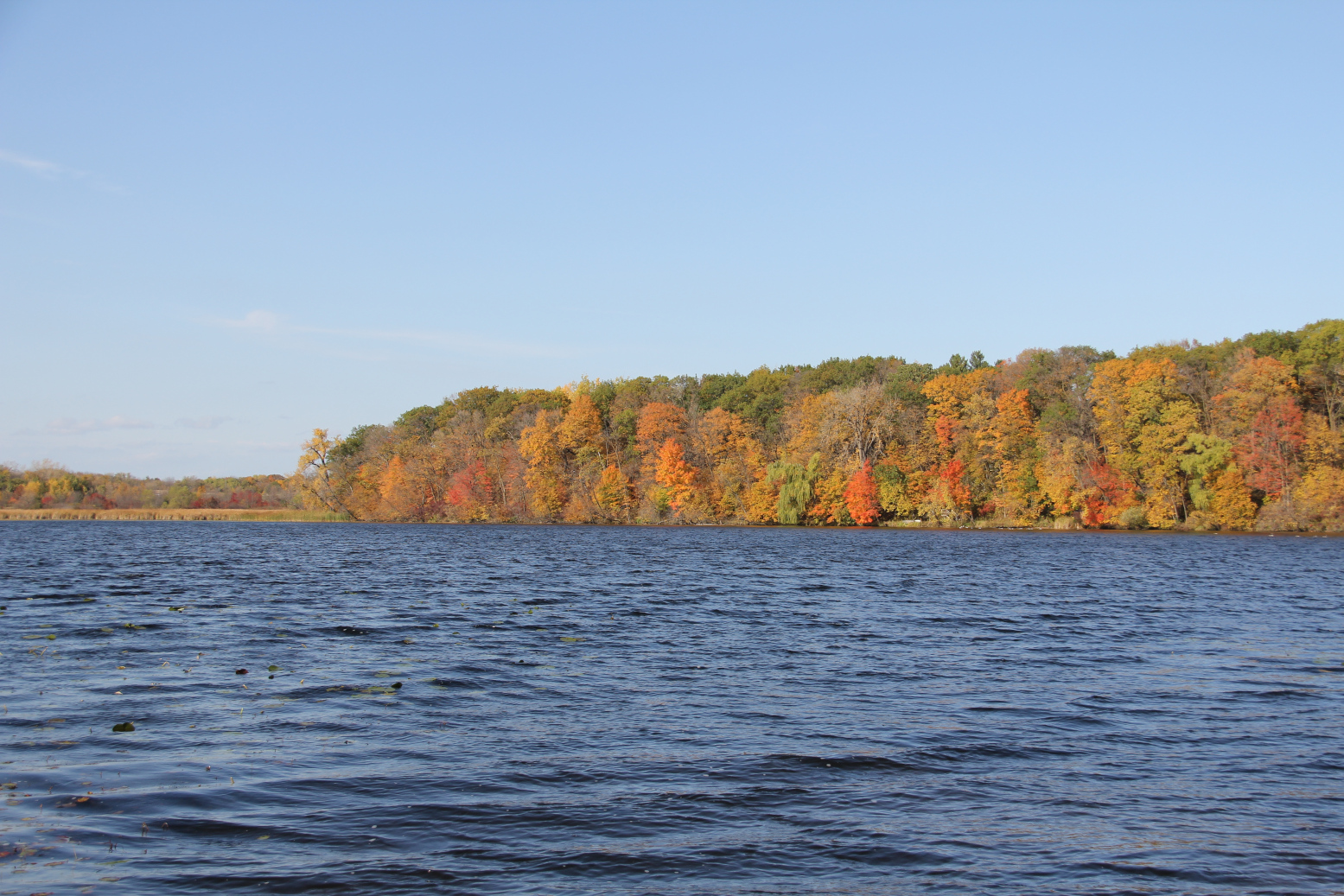
A view of Kelly Lake and a colorful shoreline. (Minnesota Prairie Roots copyrighted photo October 2025)
And it’s about stopping, exiting the van to walk into the woods or stand along the shoreline of an area lake to admire a colorful tree line.
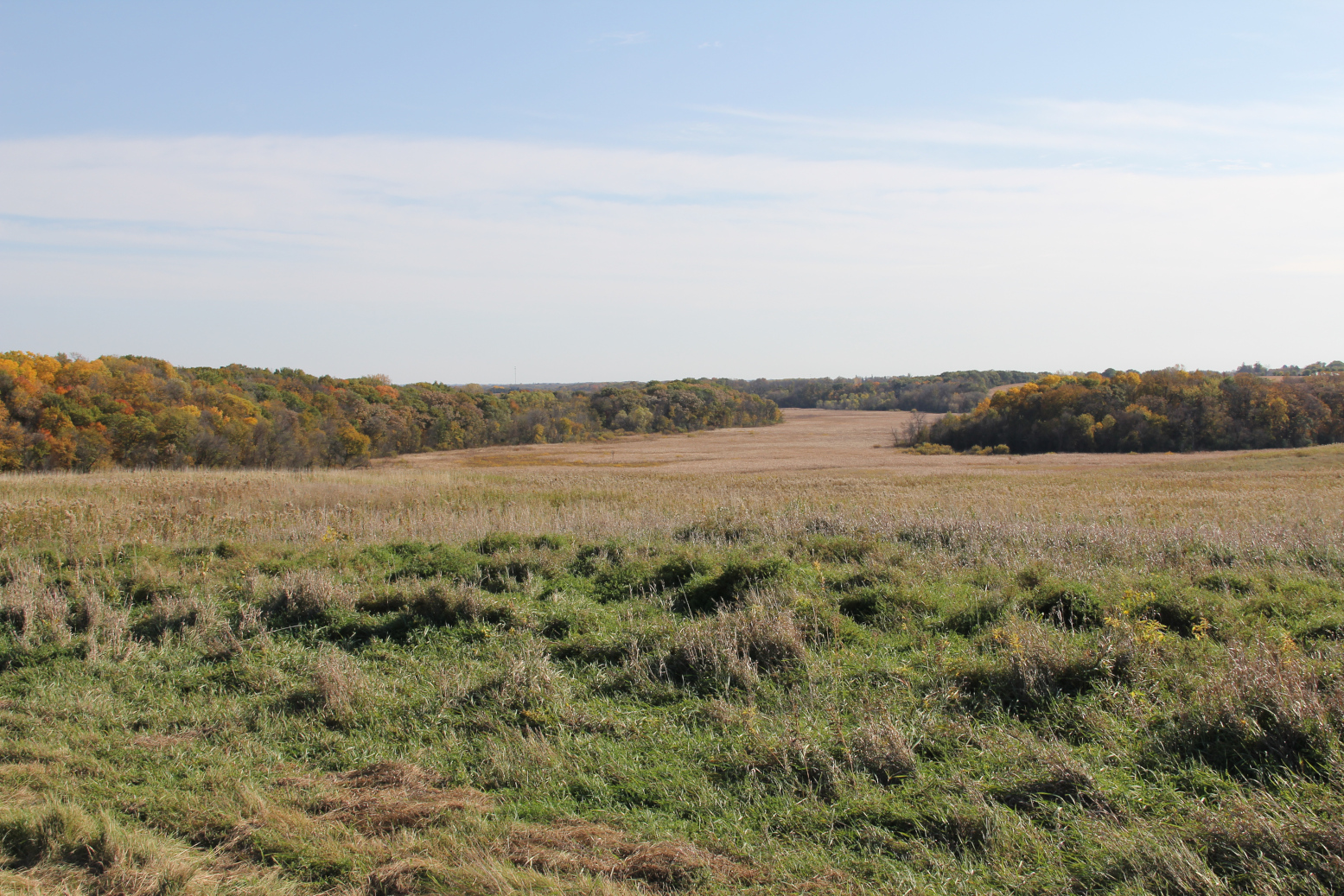
A sweeping view of the countryside in the Union Lake area. (Minnesota Prairie Roots copyrighted photo October 2025)
As a native of the mostly treeless southwestern Minnesota prairie, it was not until I moved to Rice County in 1982 that I fully realized just how overwhelmingly stunning this season is in our state. I didn’t grow up going on vacations with the exception of two—one at age four to Duluth and the second to the Black Hills of South Dakota during my elementary school years. But each autumn, my siblings and I piled into the Chevy with our parents for a Sunday afternoon fall color drive along the Minnesota River Valley from north of Echo to Morton.
A partially-harvested cornfield in the Union Lake area. (Minnesota Prairie Roots copyrighted photo October 2025)
And so my love of Sunday drives (which were frequent during my youth because Dad wanted to look at the crops) evolved. As did my understanding that all we needed to do was travel a short distance to see a different landscape. One with woods, colorful woods, in autumn.
Colorful trees by Union Lake. (Minnesota Prairie Roots copyrighted photo October 2025)
The topography of Rice County is incredibly diverse. From the familiar flat prairie to rolling hills and valleys to lakes and rivers and streams, it’s all right here. Lovely.
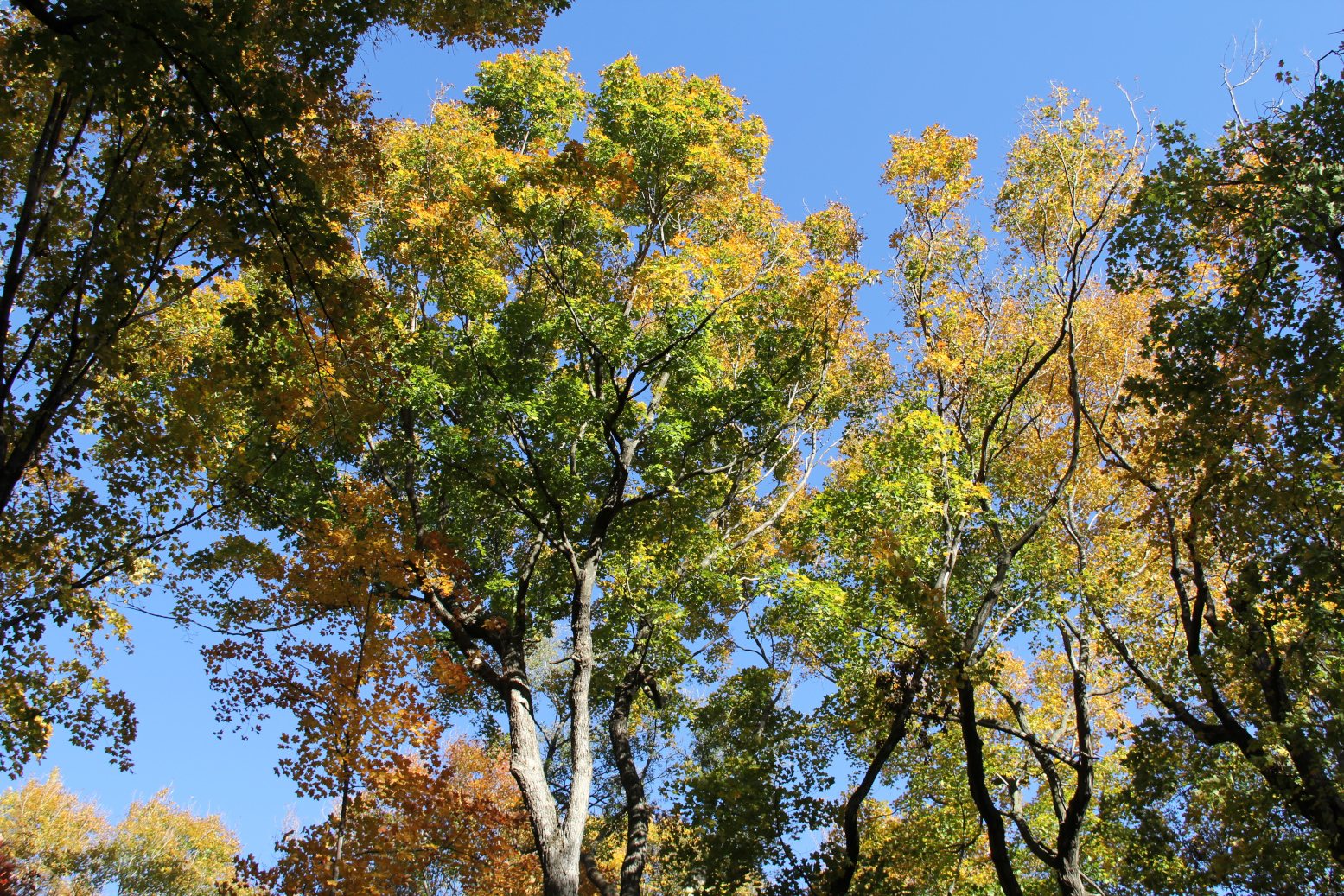
Sometimes you just have to stop and look up, here in Richter Woods. (Minnesota Prairie Roots copyrighted photo October 2025)
I encourage Sunday afternoon drives, or whatever day works for you. Forget about schedules and the work at home. Get in the vehicle and go. Go local. Appreciate what’s right in your backyard.
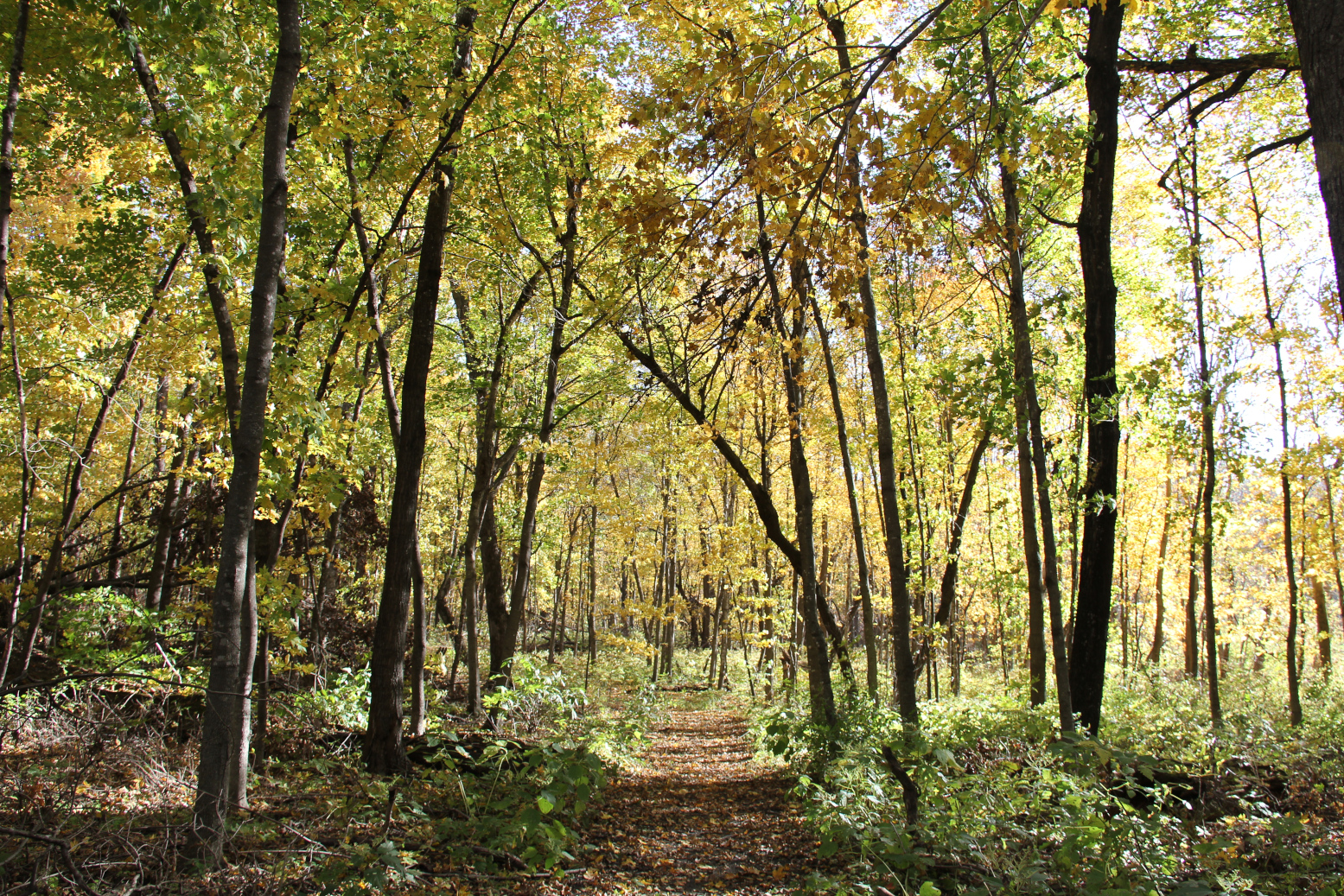
Pull over along a gravel road, if it’s safe to do so, and take in the countryside. Stand along the shore of a lake. Walk into the woods. Hear the crunch of dried leaves beneath your soles. Look up at the colorful leaves. And see, really see, the autumn beauty that surrounds you…before winter strips the land, leaving it naked and exposed.
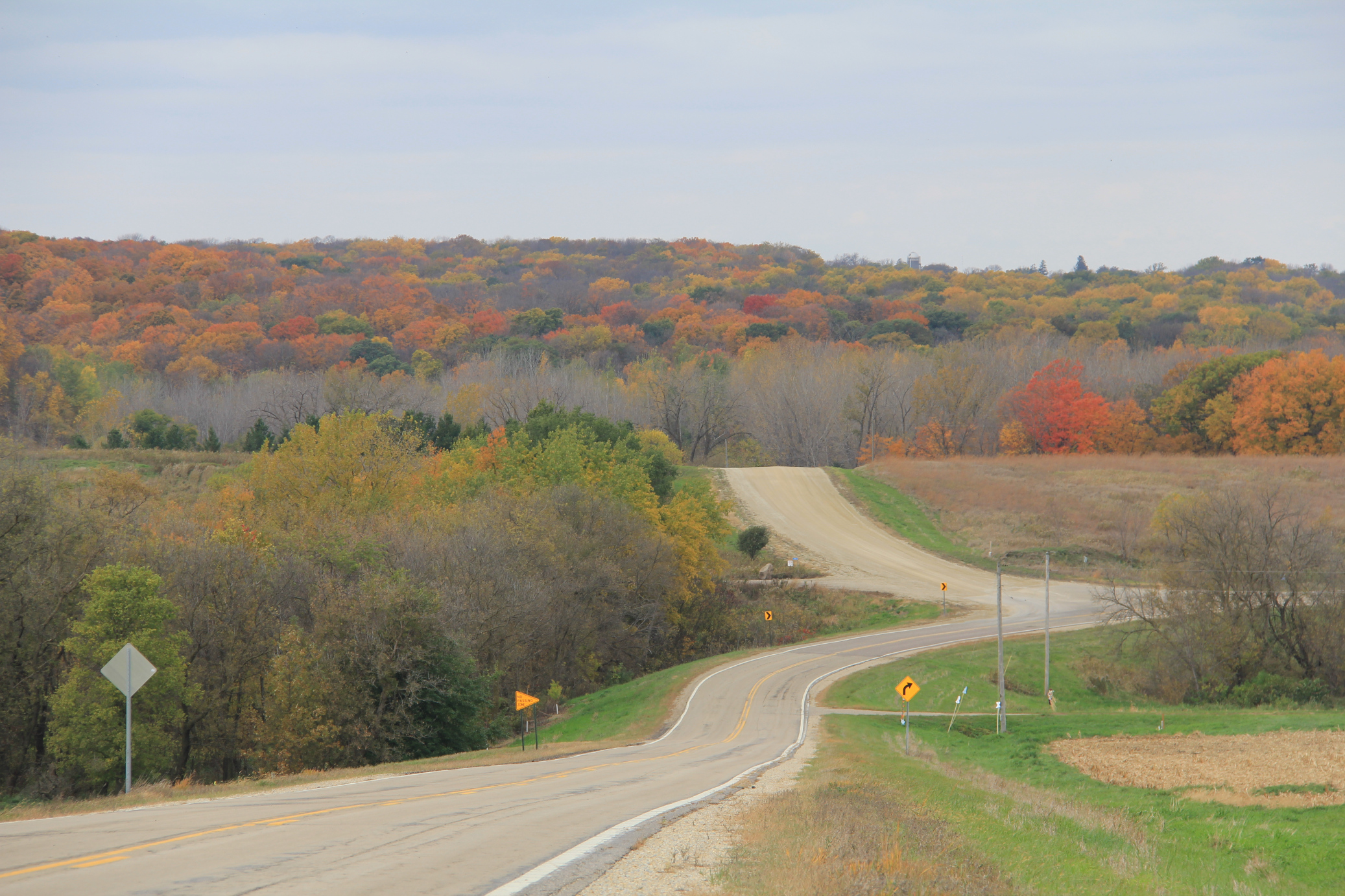
Driving along Rice County Road 30 from Nerstrand toward Valley Grove. (Minnesota Prairie Roots copyrighted photo October 2025)
A HILLSIDE ABLAZE in color appears before us as our van descends Rice County Road 30 northwest of Nerstrand. The road curves, twists into the valley between farmland and farm sites until we reach our destination, Valley Grove churches.
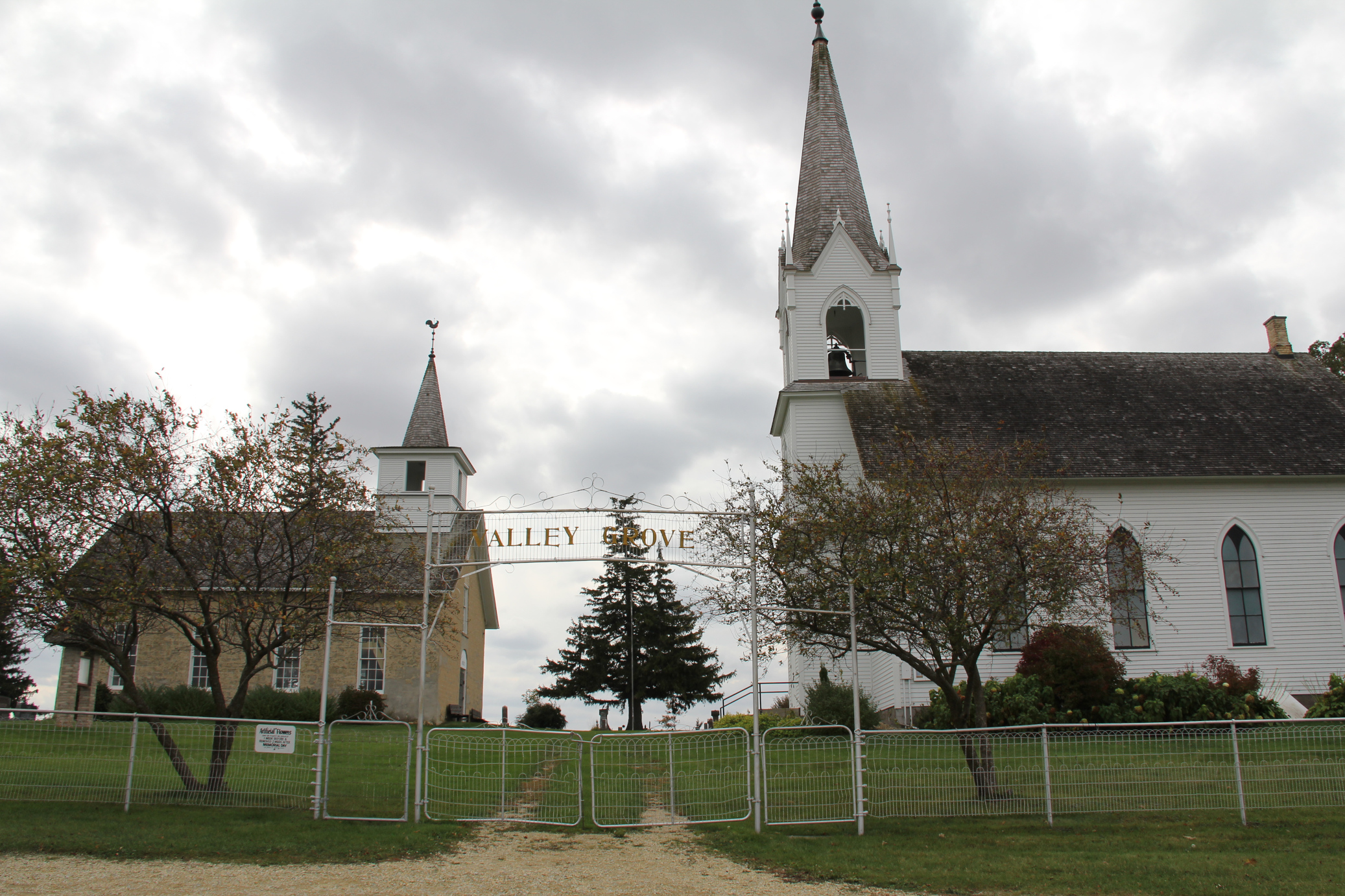
The gated entry to the historic Valley Grove churches near Nerstrand and south of Northfield. (Minnesota Prairie Roots copyrighted photo October 2025)
Randy steers the van off the paved road onto the gravel driveway leading to these two historic Norwegian immigrant churches standing high atop a hill overlooking the rolling countryside. This secluded place rates as a favorite destination of ours any time of year, but especially in autumn.
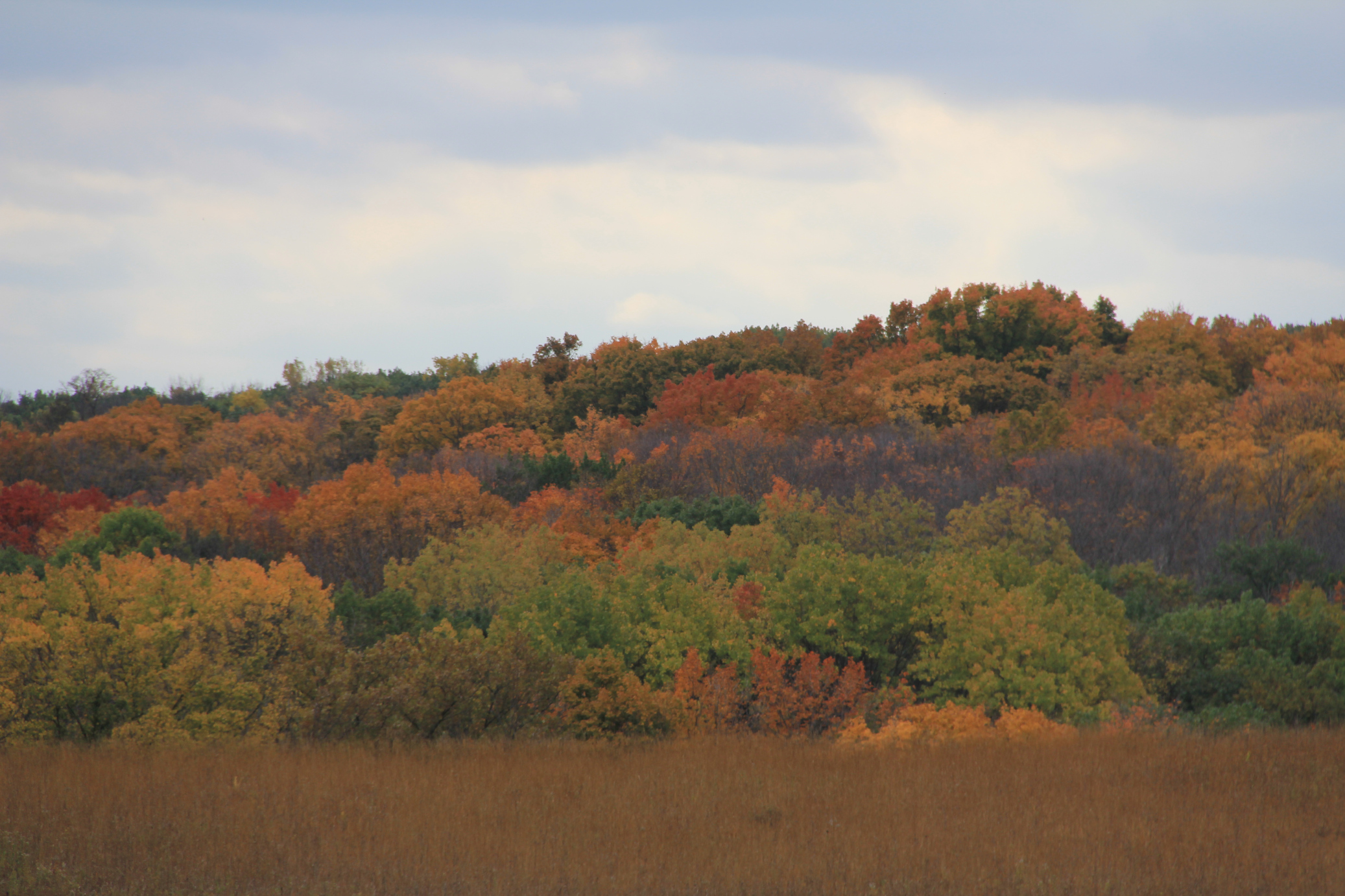
From the churchyard, I focus my telephoto lens across the prairie to the distant woods. (Minnesota Prairie Roots copyrighted photo October 2025)
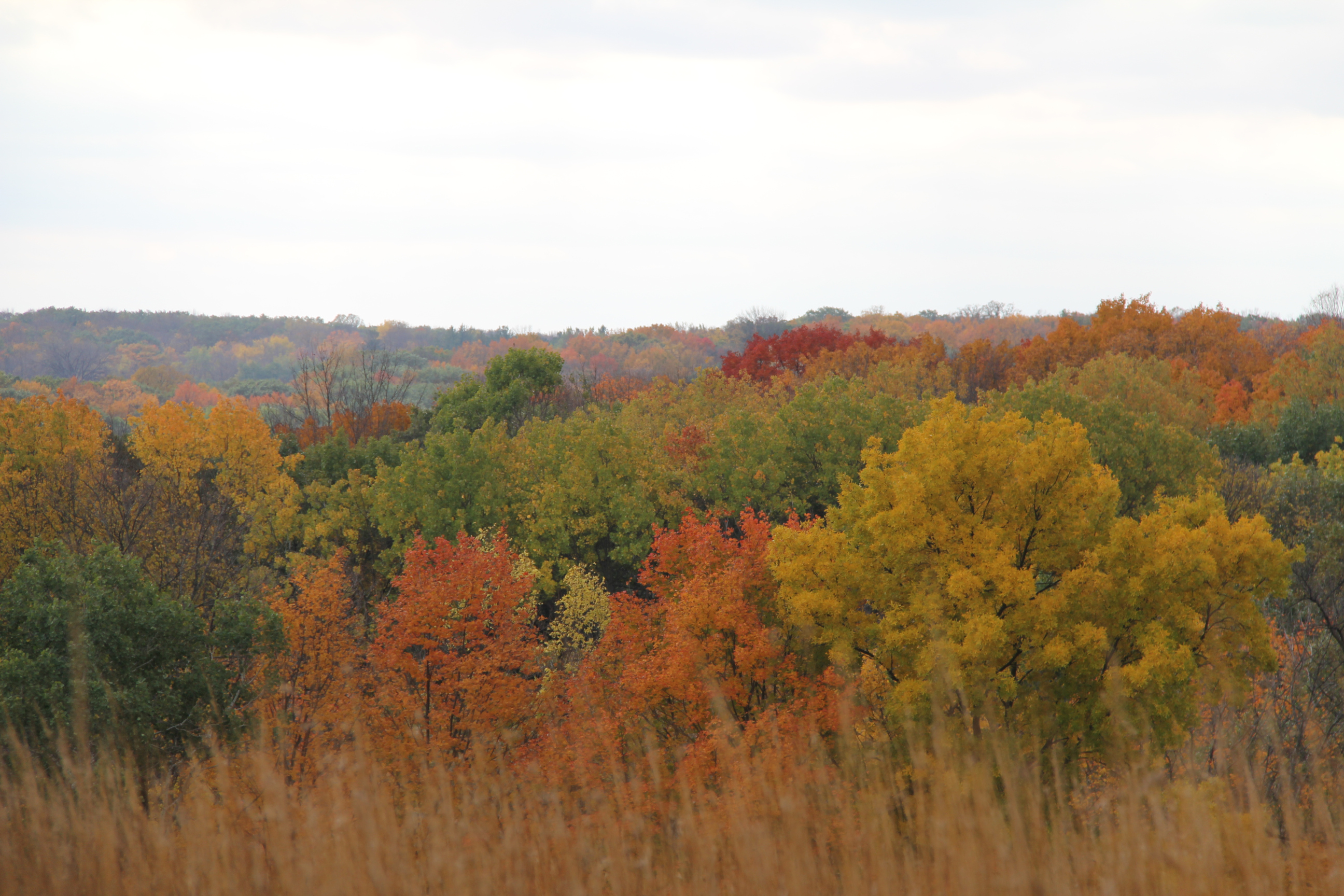
The hilltop location offers a sweeping view of the surrounding land, including the Big Woods, especially colorful now. I simply cannot get enough of the red, orange and yellow tree lines that provide a painterly backdrop to this bucolic setting.
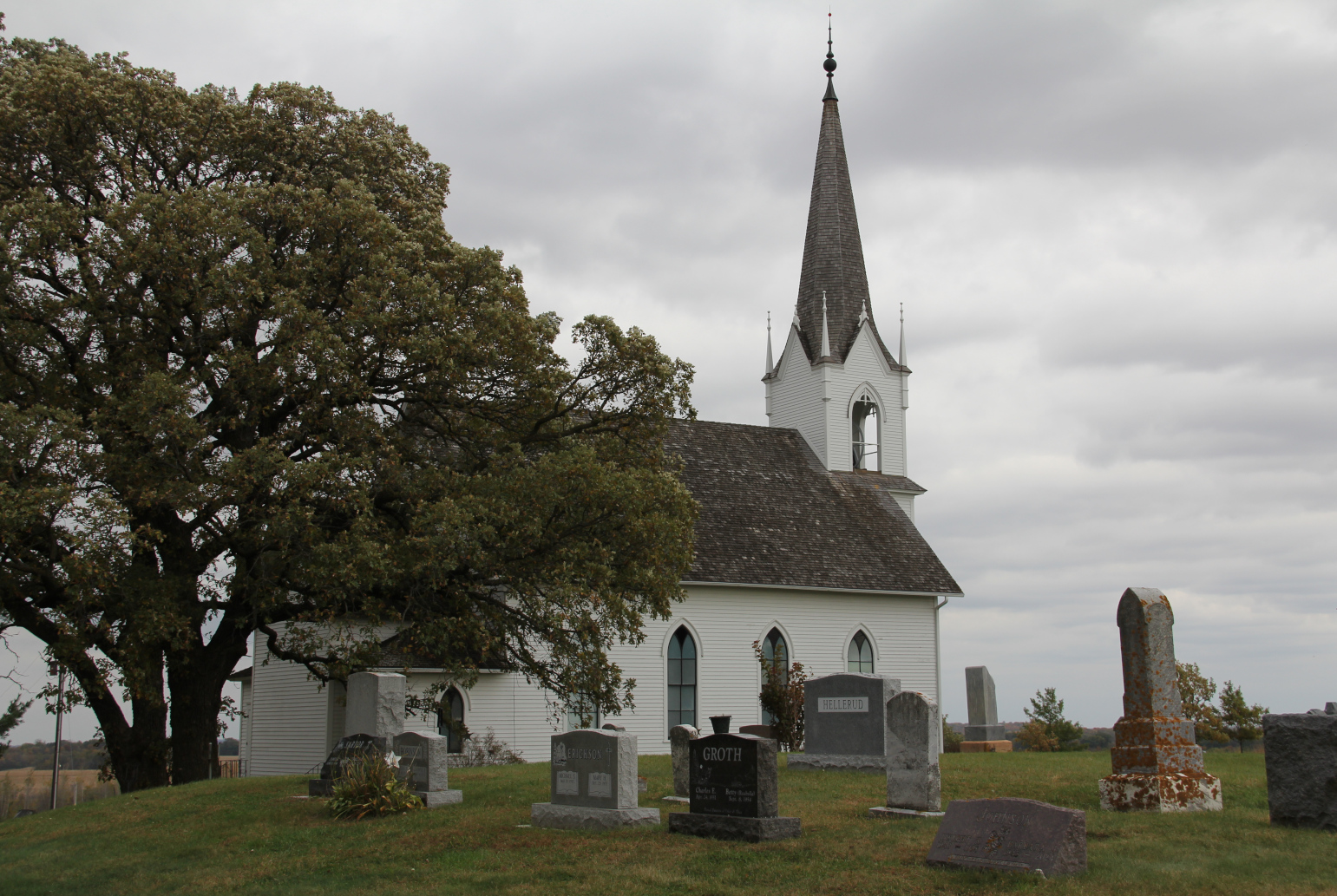
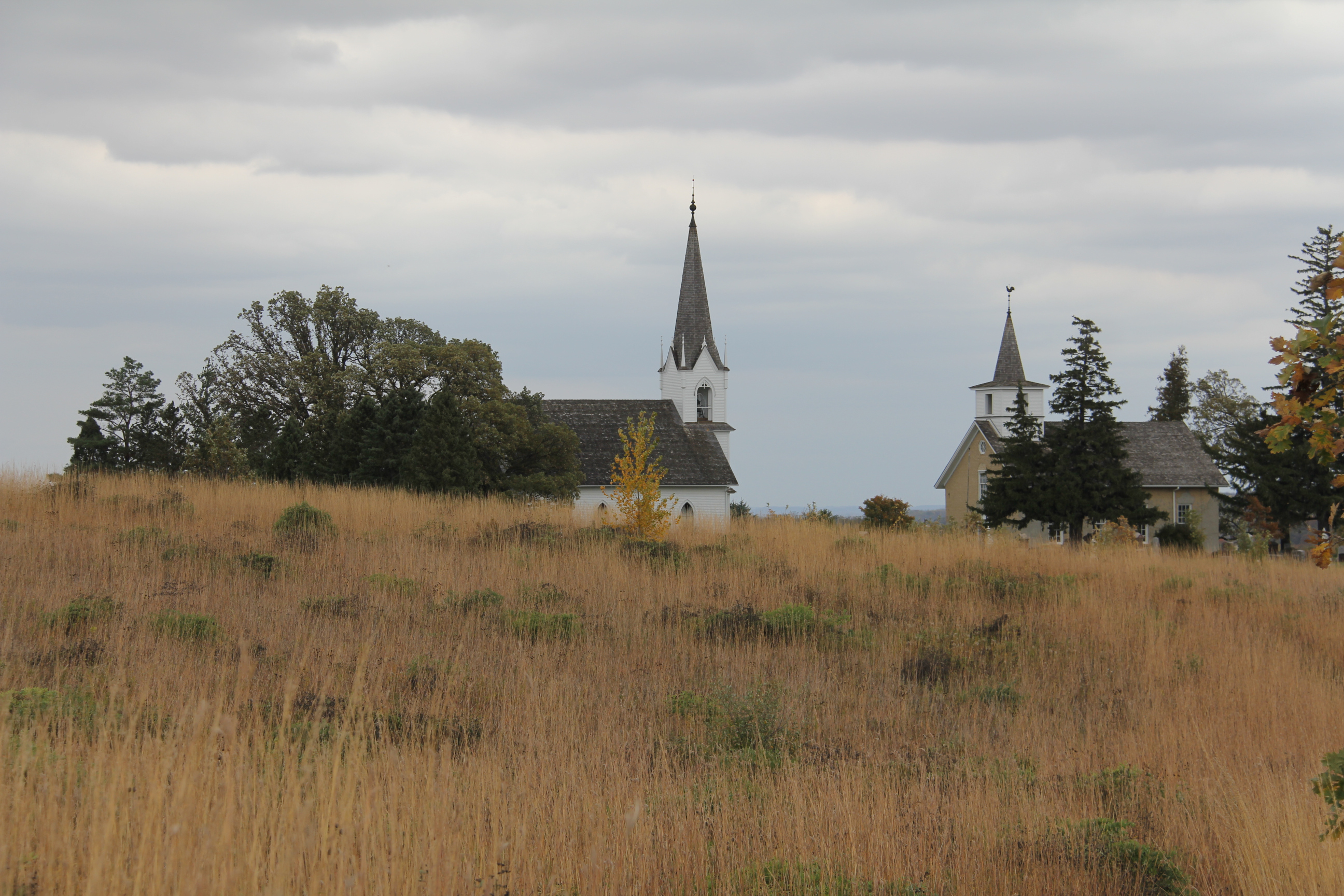
The 1894 wooden church opens today for weddings, a Country Social, a Christmas Eve serviceand other special events. The stone church serves as a fellowship hall/gathering spot. (Minnesota Prairie Roots copyrighted photo October 2025)
Here the 1862 and 1894 churches rise, a testament to the faith and endurance of the Norwegian immigrants who settled this area. The topography likely reminded them of the homeland they left for new opportunities in America.
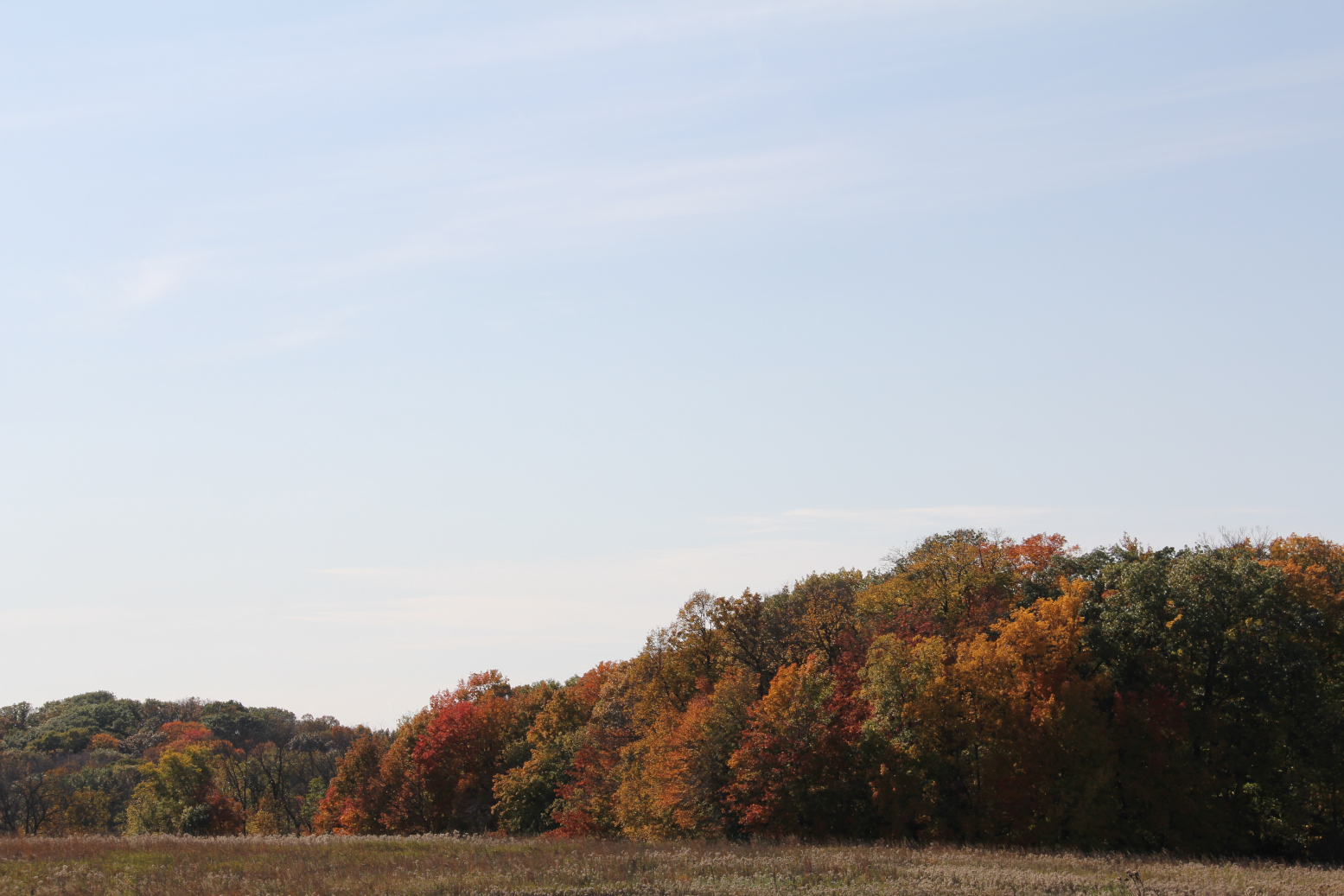
The prairie fronts woods ablaze in color, as viewed from the churchyard. (Minnesota Prairie Roots copyrighted photo October 2025)
On this day, as the wind blows cold and strong across the churchyard—so much so that we eat our picnic lunch inside the van—I ponder how these foreigners felt once winter arrived in all her cold and snowy starkness. Perhaps they wondered why they ever left Norway.
A vibrant bush on prairie’s edge. (Minnesota Prairie Roots copyrighted photo October 2025)
But on this fall day, I recognize also how much they must have appreciated this beautiful hilltop location. The Valley Grove Preservation Society works hard to retain the natural beauty of these 50 acres of land. The trees. The tall prairie grasses. The wildflowers. They also maintain the two aged houses of worship—the old stone church built first and the adjacent wood-frame church constructed 32 years later.
Grassy paths lead into and through the prairie. (Minnesota Prairie Roots copyrighted photo October 2025)
Prairie wildflowers dying and going to seed. (Minnesota Prairie Roots copyrighted photo October 2025)
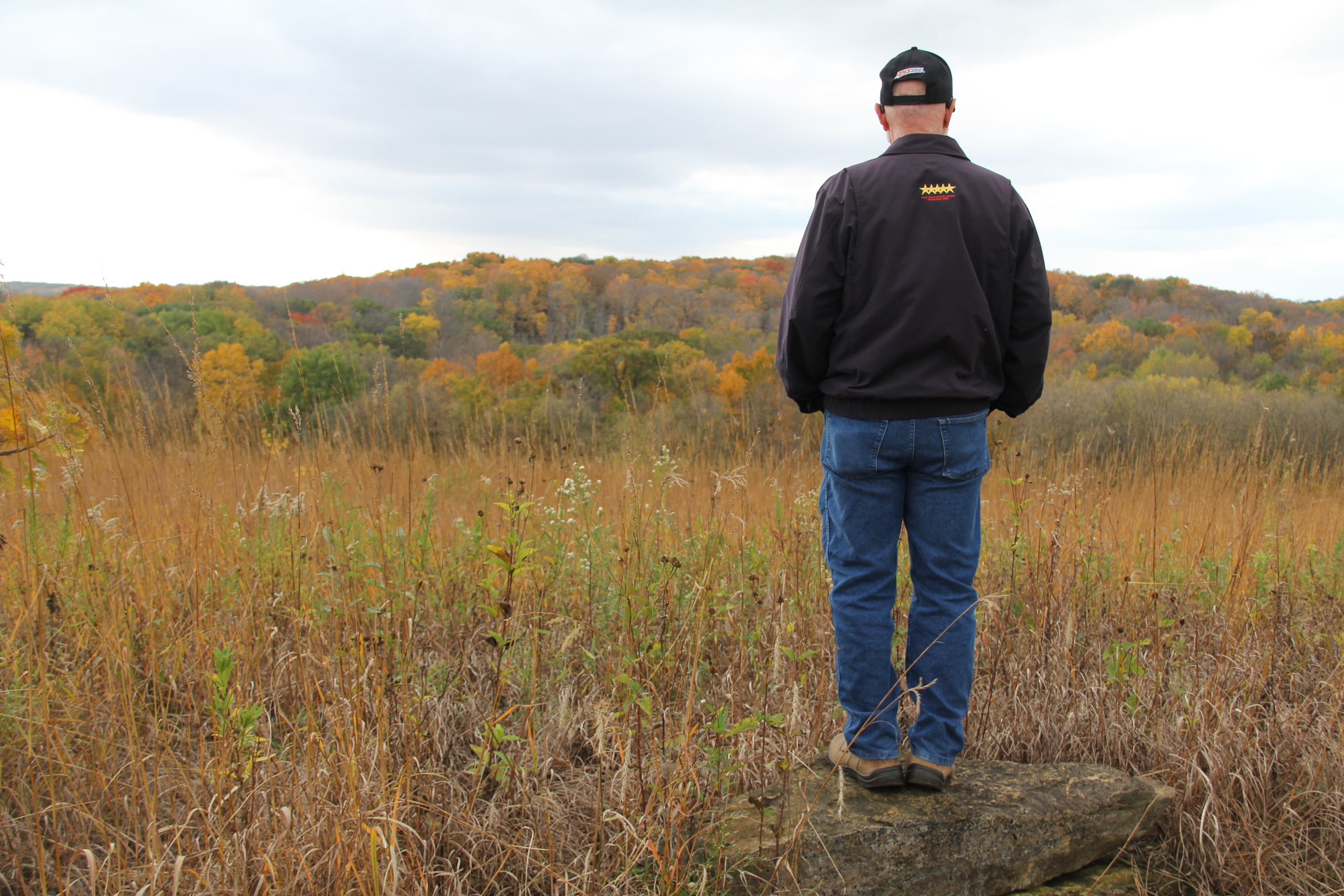
Randy steps up for a better view of the distant Big Woods from the prairie. (Minnesota Prairie Roots copyrighted photo October 2025)
Beyond the churches and surrounding cemetery, we follow an uneven path into the prairie, pausing occasionally to take in the colorful, distant trees. Randy steps atop a limestone slab for a better view. I spot a garter snake a step down from his feet, then edge away, not at all fond of snakes.
On the other side of the rolling prairie, the churches rise. (Minnesota Prairie Roots copyrighted photo October 2025)
Turning back toward the churchyard a bit later, I see the churches rise like ships upon an ocean of prairie grass. It’s not hard to visualize Norwegian immigrants boarding ships, sailing across the massive ocean bound for America.
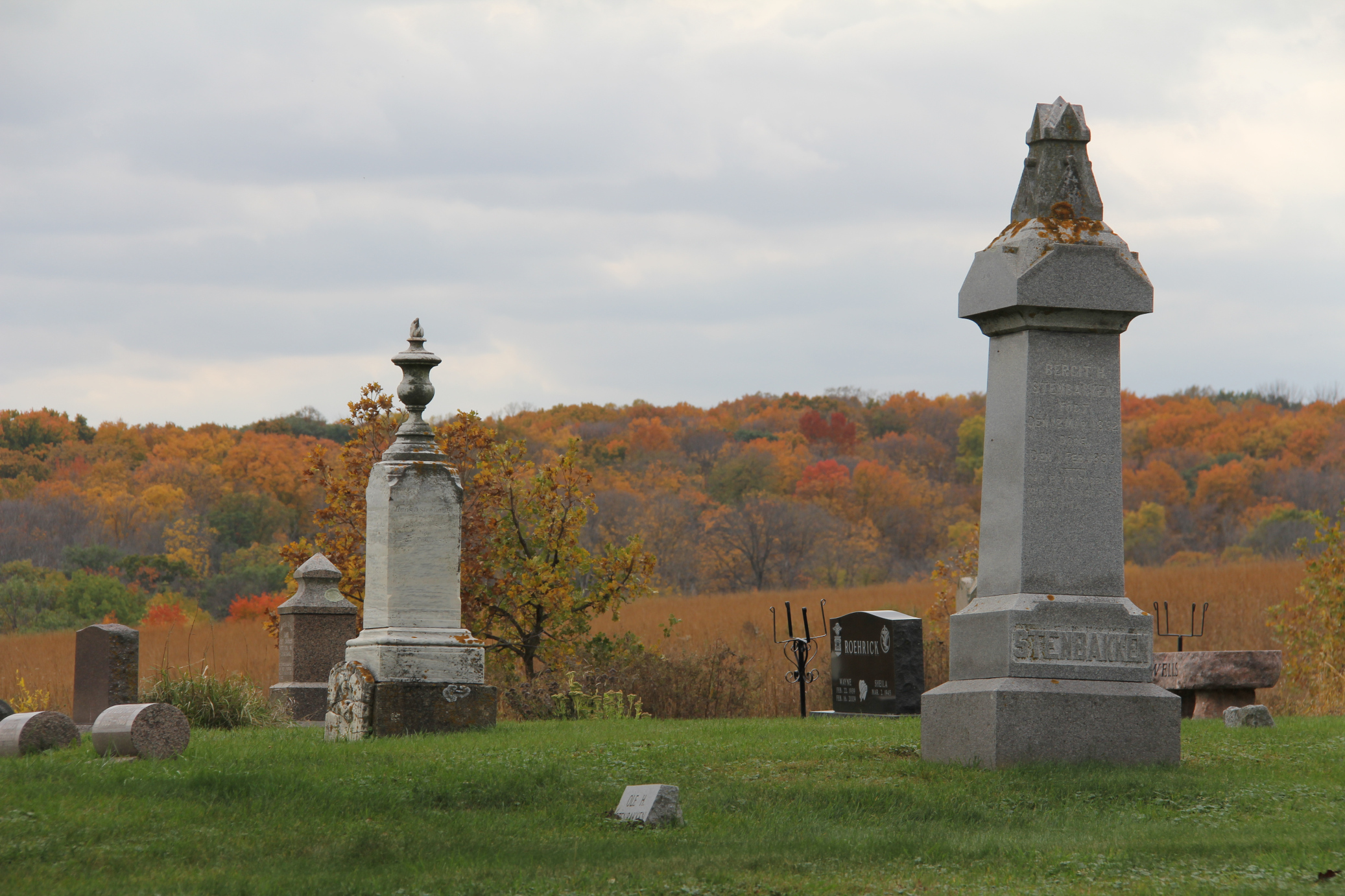
Aged and new tombstones fill the Valley Grove cemetery. (Minnesota Prairie Roots copyrighted photo October 2025)
The hopes and dreams they carried to America and eventually to Minnesota imprint upon tombstones in names and dates and words. Their hopes imprint, too, upon this land.
Zooming in on the colorful trees surrounding Valley Grove. (Minnesota Prairie Roots copyrighted photo October 2025)
When I walk this ground, I feel the imprints of souls beneath my feet. This place seems sacred. Sacred in the voices I hear if I lean into the wind and listen. Sacred in the vistas I view.
Found at a gravesite, a serenity stone. (Minnesota Prairie Roots copyrighted photo October 2025)
Valley Grove is a place of serenity. Of quiet. Of natural beauty unequal in the autumn of the year.
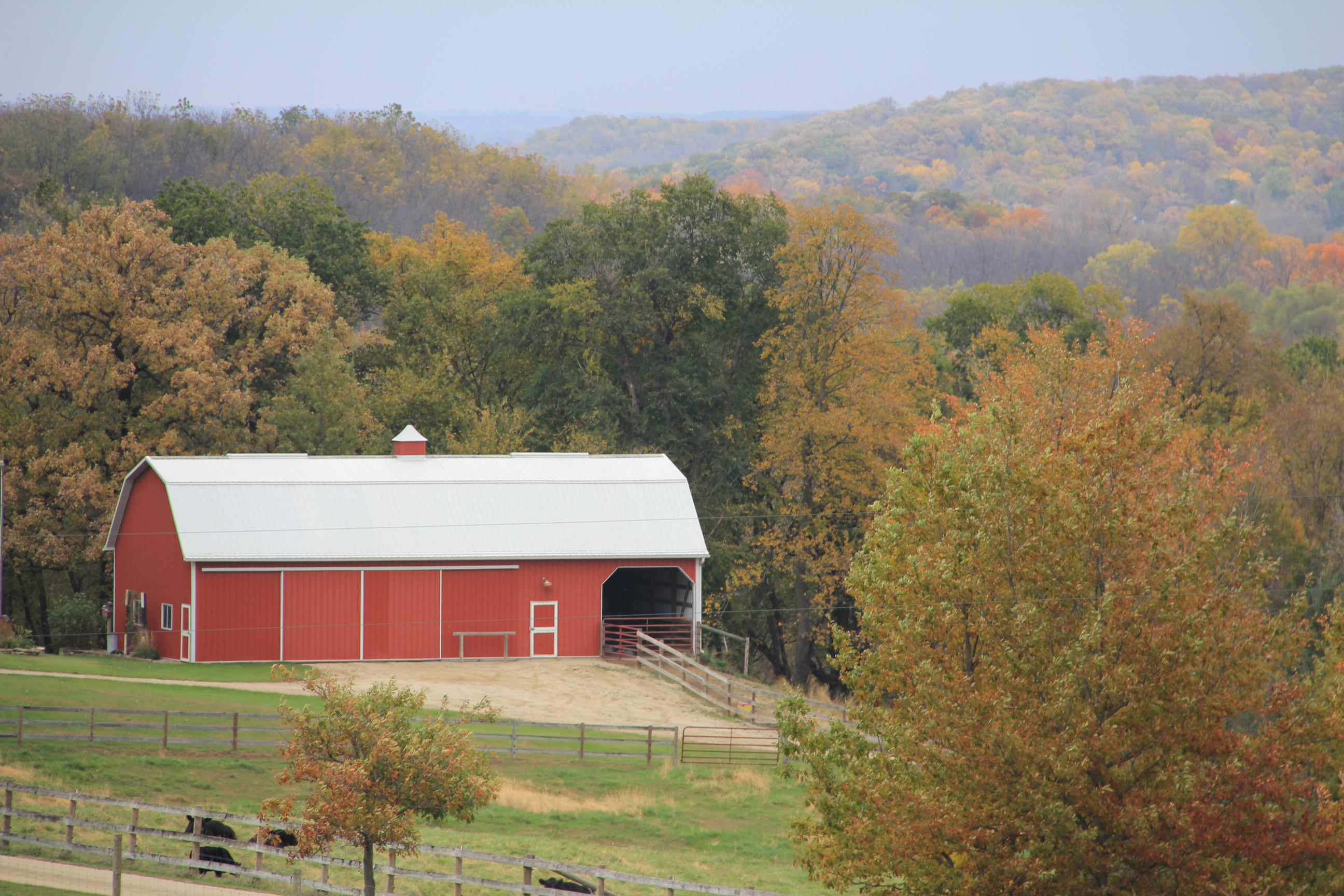
A farm site nestles among the woods below Valley Grove. (Minnesota Prairie Roots copyrighted photo October 2025)
All of this I find, feel, experience, see on an autumn day at Valley Grove, among the rolling hills and valleys of northeastern Rice County.
















Recent Comments