Minnesota Prairie Roots

Writing and photography by Audrey Kletscher Helbling

From Wisconsin: A book about food, friendship, family, love, trauma & place April 2, 2025

(Book cover sourced online)

I FOUND THE BOOK in the new fiction section of my local public library, the place where I discover reading materials that grow me, stretch me, teach me, and, yes, entertain me. The Funeral Ladies of Ellerie County by Claire Swinarski fits all four of those categories. I love this book. Underline love.

I did not expect this reaction when I randomly pulled the novel from the shelf, drawn by its catchy title printed in a colorful font, drawn by the simple cover art of a lakeside Northwoods cabin. I do, indeed, judge a book by its covers, front and then back synopsis. These covers hit all the marks for me, someone who appreciates stories rooted in rural. Stories that are simple, yet complex. Stories that make me think, that tap into my empathy, that move me. Stories that are strong in place.

(Book cover sourced online)

In some ways, this book reminds me of the writing of Minnesotan Lorna Landvik, author of the popular Patty Jane’s House of Curls, The Tall Pine Polka, Once in a Blue Moon Lodge and more, most of which I have read. But the author of The Funeral Ladies of Ellerie County hails from neighboring Wisconsin, which is similar to Minnesota, but different.

These are what we call bars (the kind you eat) in Minnesota and Wisconsin. Maybe elsewhere. (Minnesota Prairie Roots copyrighted file photo)

At the heart of this story are the funeral ladies, a group of long-time friends who prepare meals for mourners at St. Anne’s Catholic Church. Casseroles—not hotdish as we call casseroles in Minnesota—concocted with canned cream soups. Shredded beef. Peanut butter bars. Pies made with Door County cherries. Food for the body and soul. This reminded me of the Reception Committee in my childhood home church on the southwestern Minnesota prairie. That group of Lutheran women prepared funeral hotdishes comprised of hamburger, pasta, a vegetable and assorted canned cream soups with salt and pepper for seasoning. The recipes are published in the 1985 St. John’s Anniversary Cookbook. The covers of that cookbook have fallen off my tattered copy. A cookbook is central to Swinarski’s novel.

The point here is that The Funeral Ladies of Ellerie County is absolutely relatable for me. I felt comfortably at home with the story initially, even when I learned of a heartbreaking scam involving main character Esther Larson. That shapes the story. Then the story-line focus shifts from friendship, faith and family to tough topics after a Food Network star and his children arrive to bury his estranged wife in her hometown.

Mental health gets attention in this book. (Minnesota Prairie Roots copyrighted file photo)

Without revealing too much of the plot, know that family relationships, love and trauma weave into this novel. That trauma is post traumatic stress disorder, experienced by paramedic Cooper Welsh after participating in a holiday parade interrupted by a deadly shooting. In real-life, six people died in November 2021 when a driver plowed his SUV into a Christmas parade in Waukesha, Wisconsin, killing six and injuring many others. I expect Swinarski patterned her fictional tragedy loosely after this event or the many other mass shootings this country experiences.

I appreciate that the author, even in this fictional account of such violence and its personal aftermath, writes with authenticity. As a reader, I felt emotionally invested. I was rooting for Cooper and for those who love him. Swinarski doesn’t just touch on PTSD. She dives into it head on, writing in her acknowledgments that she talked to individuals dealing with PTSD to craft Cooper’s life story. That research shows.

A sign along the interstate advertises Ishnala Supper Club in Lake Delton near the Wisconsin Dells. (Minnesota Prairie Roots copyrighted file photo)

She writes, too, in an authentic Wisconsin voice with a strong sense of place. Noodles in chili (yes, it’s a thing in Wisconsin). Beer not wine. Brandy old-fashioneds, Wisconsin’s signature drink. Supper clubs. And eating at the popular Wisconsin-based fast food chain, Culver’s.

There are so many reasons to love The Funeral Ladies of Ellerie County. Even if you’re a Lutheran from Minnesota who eats hotdishes, not casseroles.

© Copyright 2025 Audrey Kletscher Helbling


I finally learn to cook with Minnesota wild rice January 9, 2013

Filed under: Uncategorized — Audrey Kletscher Helbling @ 8:32 AM
Tags: , , , , , , , ,

TO CONFESS THAT I am a native Minnesotan who’s never cooked with wild rice may equate a sin. I’m not sure. If anything, such a confession is akin to a Norwegian admitting he/she has never tasted lutefisk.

Minnesota blogger Sue Ready, when she learned that I’d never cooked with wild rice, remedied that. She gifted me with a pound of 100 percent wild rice from Quality Rice Products, Inc., Garrison. How kind was that? I’ve never met Sue, who blogs at Ever Ready. But she encompasses what I’ve come to expect in the bloggers I follow—a deep-rooted goodness.

If you check out Sue’s blog (click here), you will soon discover an abundance of recipes woven into her posts. She clearly enjoys time in the kitchen. I do not.

But I was up to the challenge Sue presented in that bag of wild rice. I chose one of her recipes, Artichoke Turkey Casserole, which includes 1 ½ cups of wild rice, for my debut attempt at cooking with northern Minnesota’s beloved grain.

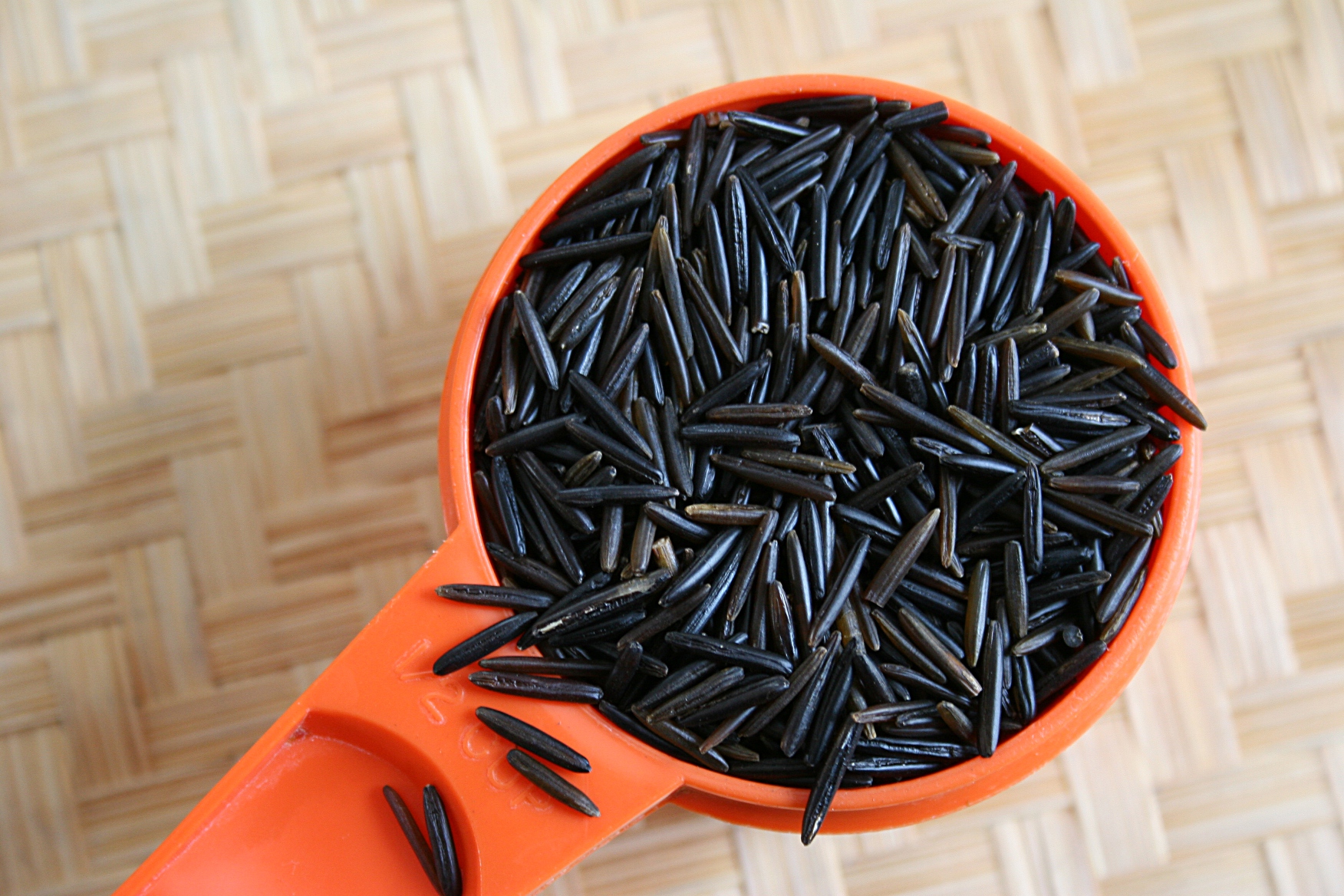
Measuring the uncooked Minnesota wild rice before rinsing.

Measuring the uncooked Minnesota wild rice before rinsing.

The first problem: How do I even make wild rice?

I found instructions tucked inside the bag, but then faced my first obstacle. How do you rinse and drain wild rice without the kernels filtering through the colander? Do not use a colander apparently.

Next, after cooking the rice for the specified 45 minutes, the grain still crunched beneath my teeth. So I added another seven minutes to the simmer time and called it good, not really knowing whether I’d cooked the rice long enough or too long.

I just want to note here that the nutty aroma of the wild rice intrigues me. It smells of earth, although not precisely of earth. Perhaps rather the scent combines earth, water, fire, sky, even the history and traditions of the Ojibwe, early harvesters of this manoomin, the “good berry.”

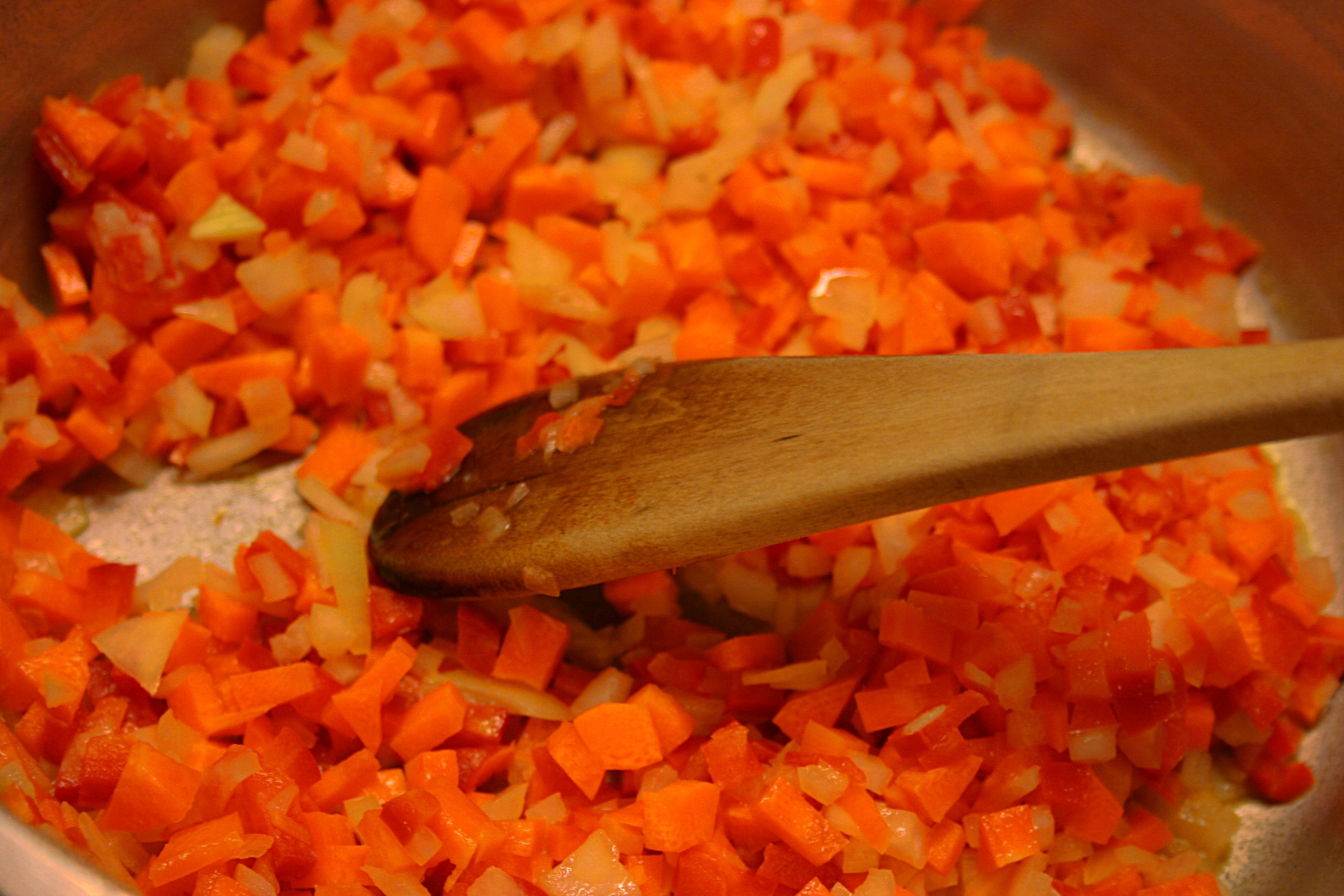
Sauteeing diced carrots, onion and red pepper.

Sauteeing diced carrots, onion and red pepper.

Because I’d cooked the rice earlier in the day, I resumed making the hotdish with the dicing of vegetables—carrots, onion and red pepper—and the boiling of noodles. I already had the two cups of chicken (substituted for the turkey) which my husband grilled the previous evening.

About 45 minutes later, I had the dish pulled together with the assistance of the husband who sliced artichokes, stirred together cream of chicken soup and milk, and measured cheese while I chopped and sauteed the veggies and tended the noodles. Typically I can multi-task in the kitchen, but preparing this hotdish took way more time than I anticipated and I was getting hungry. And, as everyone in my family knows, I get crabby when I can’t eat at my usual time.

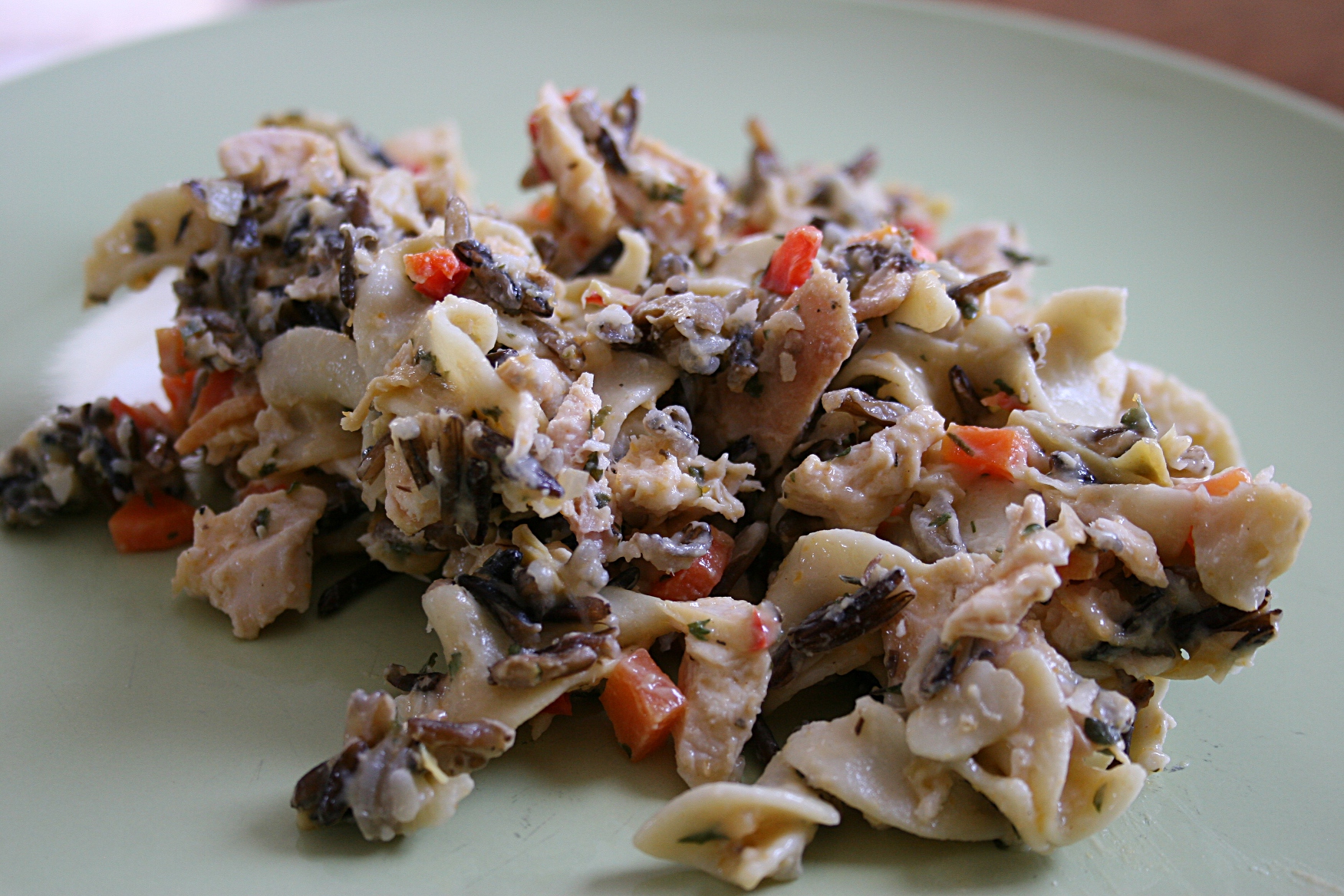
A wonderful blend of textures is presented in this hotdish.

A wonderful blend of textures is presented in this hotdish.

When I eventually pulled the hotdish from the oven, I couldn’t wait to dig my fork into this truly Minnesotan dish. I suppose an explanation is due here to those of you unfamiliar with Minnesota’s version of casseroles, known in our state as hotdish. Most hotdishes include a cream soup and noodles, this one no exception.

I wondered, though, about that combination of noodles and wild rice. But it works. The crunchy texture of the rice kernels pairs well with the creamy consistency of the noodle mixture.

Even though this hotdish includes a teaspoon of dried thyme and a tablespoon of parsley flakes, I found the flavor a bit too bland for my taste.

Yet, with a sprinkling of salt and fresh ground pepper added,  it’s a tasty and filling comfort food for a cold Minnesota winter evening.

Now that I’ve assured myself I can cook with wild rice—a food which always intimidated me—I’m ready to try preparing wild rice soup. After all, a cup of raw rice equals five cups of cooked rice, meaning I have plenty of manoomin for additional dishes.

Thanks, Sue, for expanding my cooking skills via your gift of Minnesota wild rice.

HAVE YOU COOKED with wild rice and, if so, what’s your favorite dish to prepare?

FYI: To try Sue’s Artichoke Turkey Casserole, an adaptation of a Better Homes and Gardens Comfort Foods recipe, click here.

© Copyright 2013 Audrey Kletscher Helbling