Minnesota Prairie Roots

Writing and photography by Audrey Kletscher Helbling

From southern Minnesota: Reflecting on “the people’s pope” April 23, 2025

Faribault artist Kate Langlais painted this acrylic portrait of Pope Francis, displayed at the Paradise Center for the Arts, Faribault, in 2022. (Minnesota Prairie Roots copyrighted file photo March 2022)

HER COMMENT SUMMARIZES what many Catholics and others are likely thinking this week as they mourn the passing of Pope Francis on Easter Monday. Dorothy Storch writes this on the Facebook page of the Church of St. Patrick, Shieldsville. a rural southern Minnesota church near me: “Our Pope of peace and mercy, kindness and love. A man of God.”
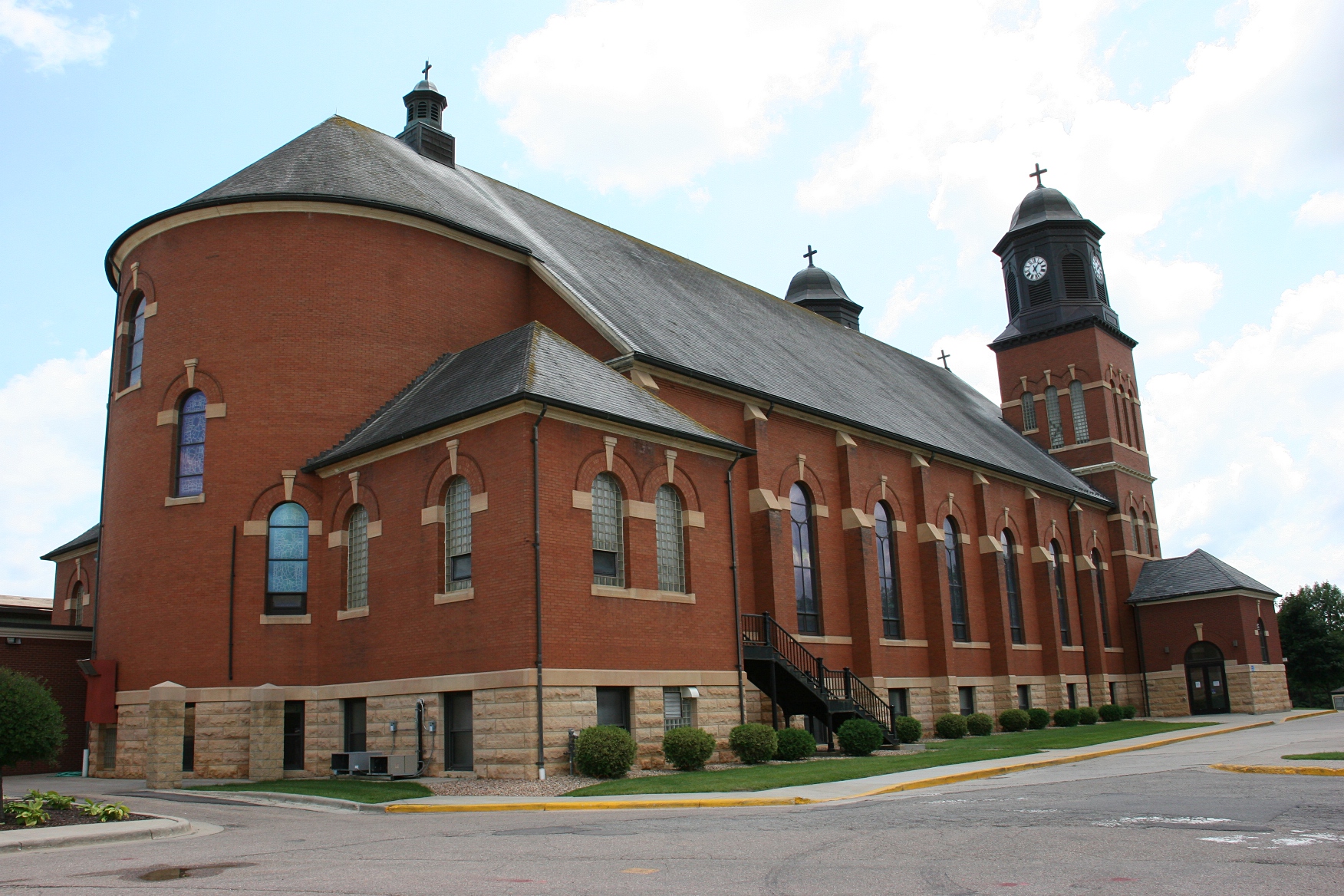
A side and rear view of St. Wenceslaus Catholic Church, New Prague. (Minnesota Prairie Roots copyrighted file photo)

Perhaps that could be written about previous popes and other faith leaders. But not always. And not with the depth of admiration for Pope Francis, often termed “The people’s pope.” He changed things up in the Catholic church, opening minds and hearts and relating to people in a way that made him seem more like one of us.
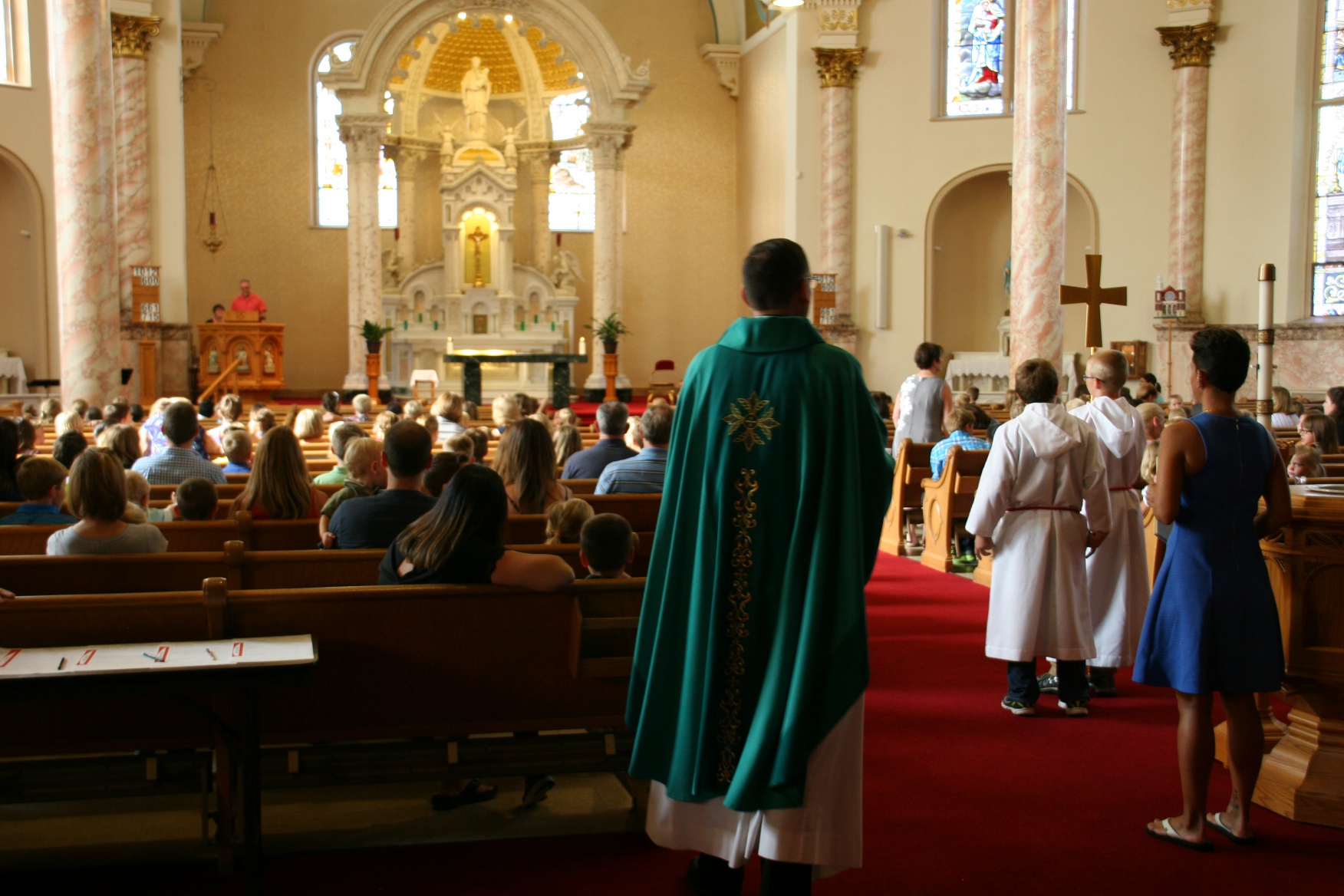
Mass, about to begin at the Basilica of Saint Stanislaus Kostka in Winona. (Minnesota Prairie Roots copyrighted file photo)

A posting on the Facebook page of the Church of St. Dominic, 16 miles to the northeast of Shieldsville in Northfield, explains: “His life was a shining example of humility, compassion, and servant leadership. Pope Francis reminded us through both word and action what it means to care for the poor, to welcome the outcast, and to live simply with a heart open to God. He walked closely with the people, always pointing toward mercy by living our faith with the same grace and humility.”

Loving words from the Bible in the heart of downtown Faribault. (Minnesota Prairie Roots copyrighted file photo)

Even though I am not of the Catholic faith, I’ve heard, read and seen enough media reports about Pope Francis to understand that he was, indeed, a compassionate man of both words and actions. Words, especially when you are a faith leader, require positive action. Pope Francis visited inmates, embraced those with disabilities, met with migrants, washed feet and much more. Washing someone’s feet is truly an act of humility and service.
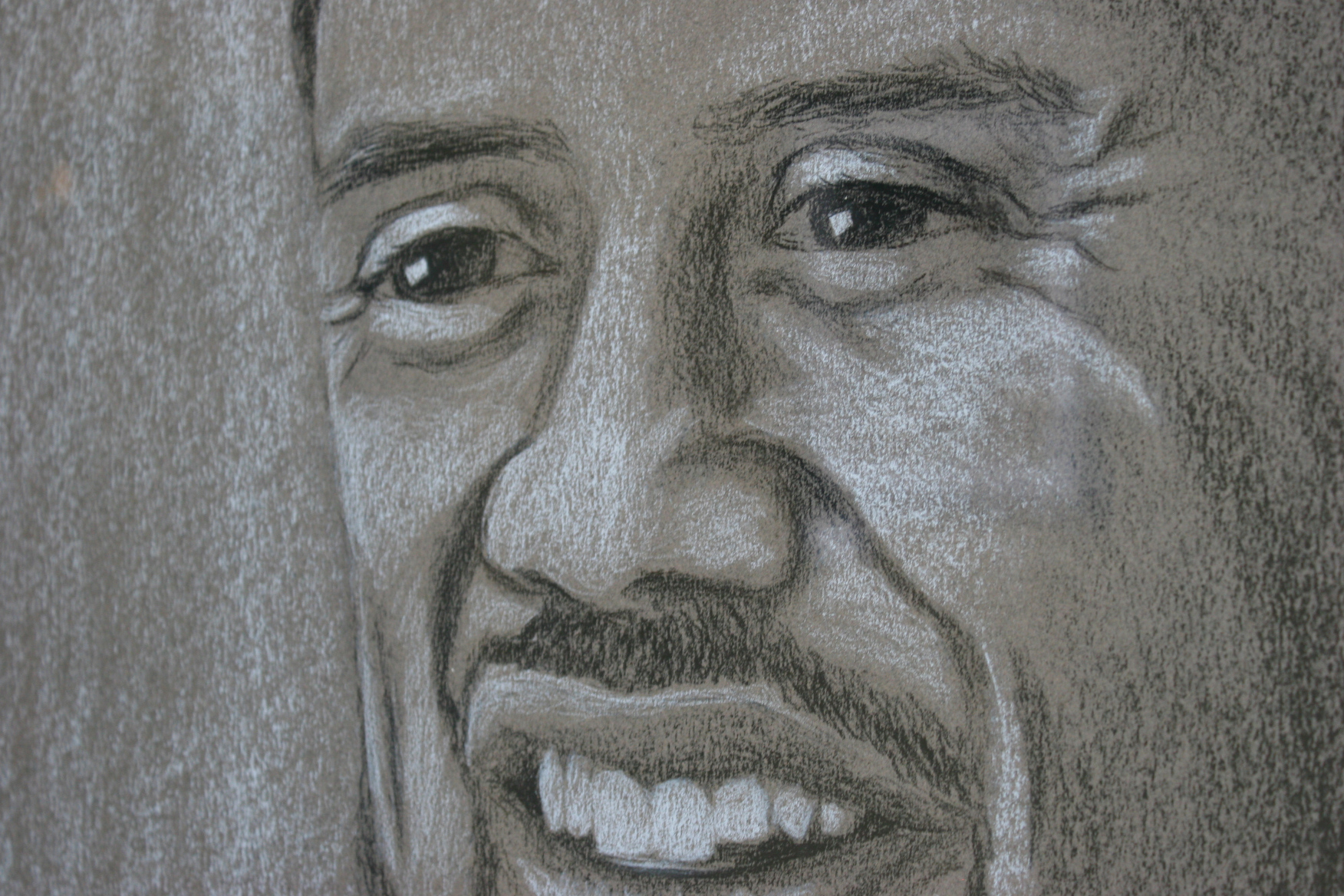
“Faysel,” who fled the war in Somalia. Kate Langlais created this portrait for an “I Am Minnesota” project featuring our state’s newest immigrants. (Minnesota Prairie Roots copyrighted file photo)

Pope Francis advocated for migrants, immigrants, refugees and others, calling for compassion and care. Born Jorge Mario Bergoglio to Italian immigrants in Argentina, this first pope of the Americas understood the plight of immigrants and other marginalized populations. He wasn’t afraid to speak up, to take a stand for what he thought was right, what Jesus would have him, and all of us, say and do. He gave voice to the voiceless, to those silenced by power, policies, politics and life-altering destructive actions. He built bridges, not walls.
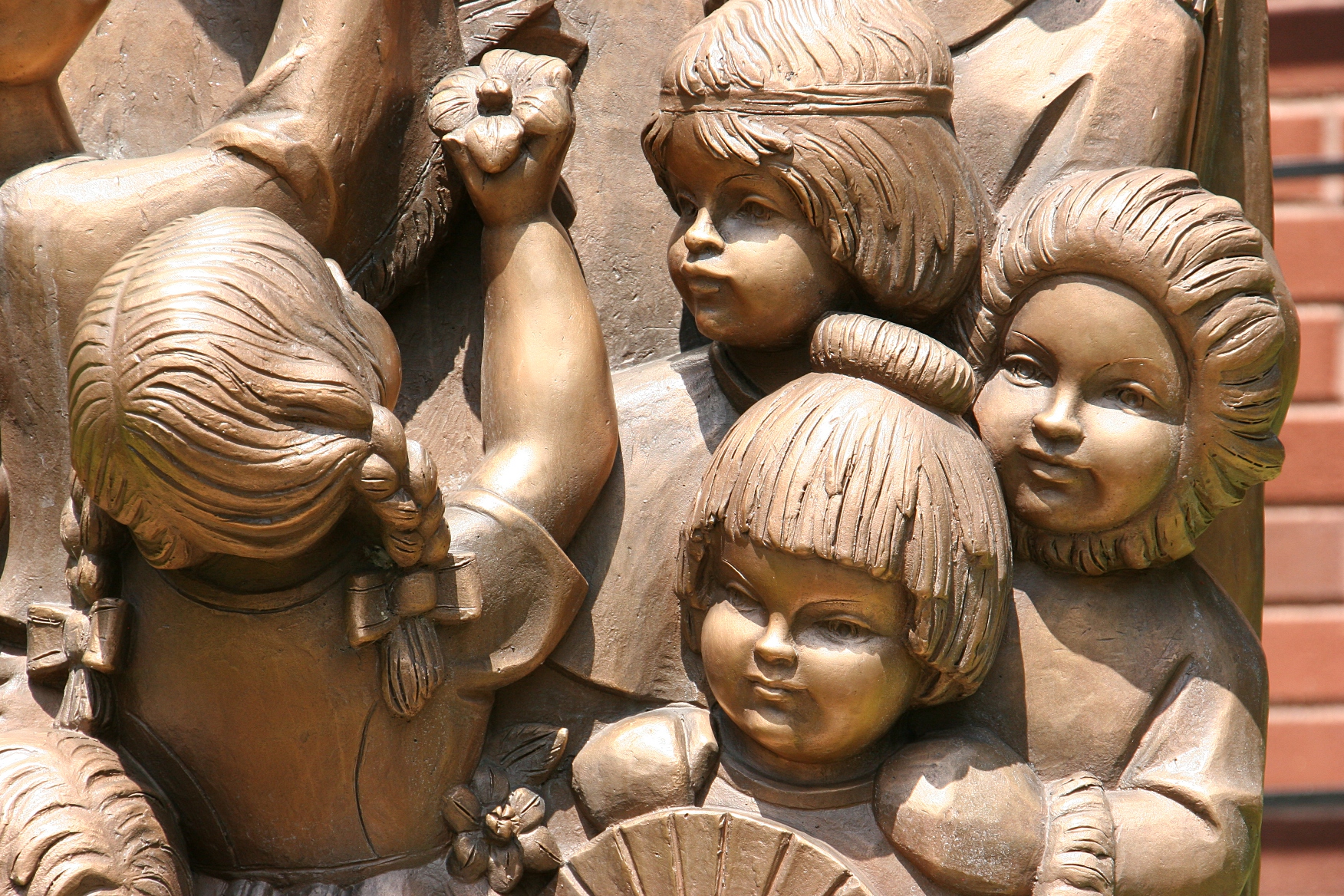
Children of many ethnicities are part of the Mary statue in Mary’s Garden at St. Wenceslaus Catholic Church, New Prague. (Minnesota Prairie Roots copyrighted file photo)

In acknowledging the passing of Pope Francis, a post on the New Prague, Minnesota, Catholic Community Facebook page calls him “a figure who has left an indelible mark on the Catholic Church and the world.” I agree with that assessment of a man who cared deeply about people, and about the environment. We could all learn from this thoughtful pope who intentionally took the papal name of Francis from Saint Francis of Assisi, a man of faith focused on poverty, peace and protecting the earth.
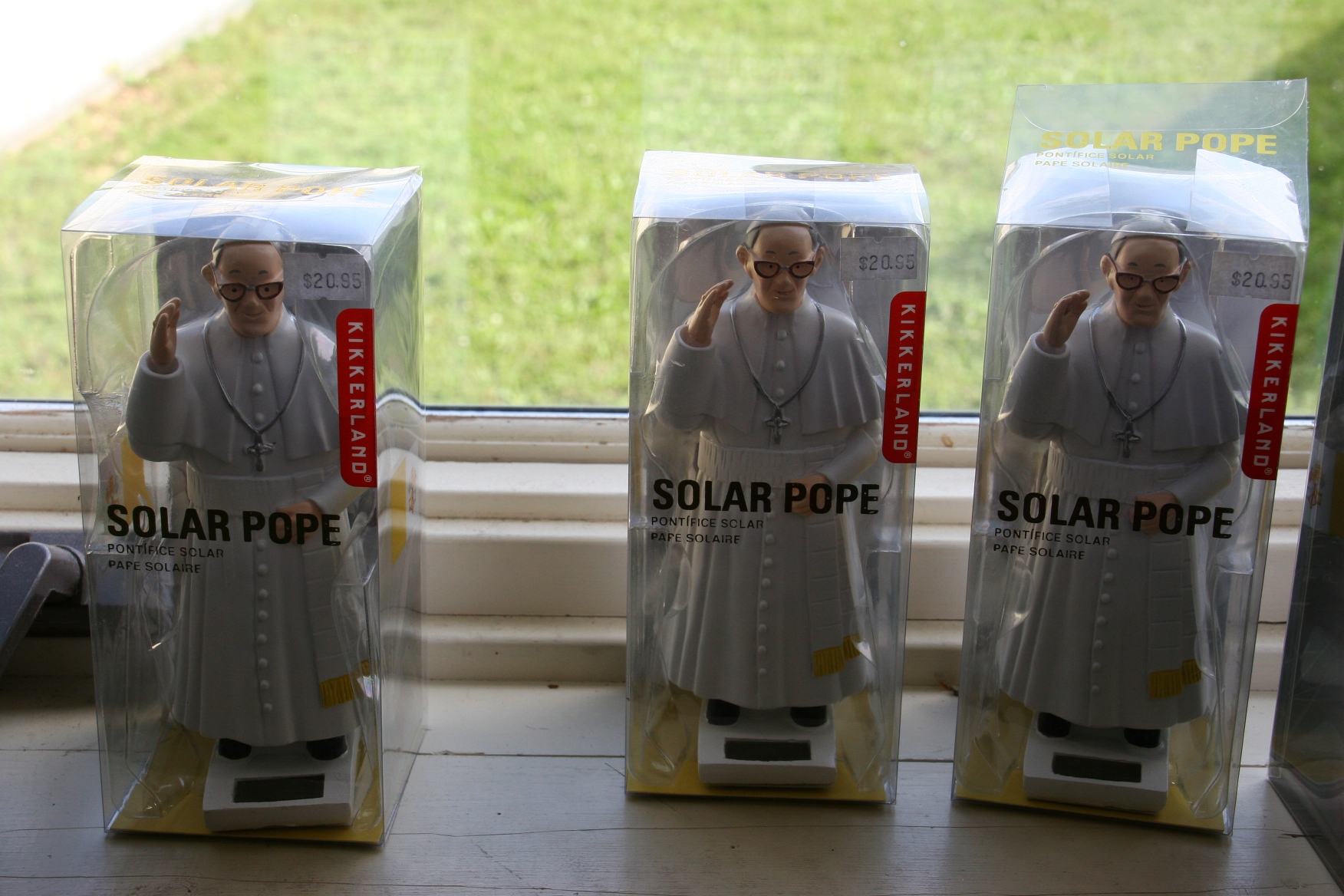
I expect Pope Francis would have laughed at these solar popes (not of him) which I photographed many years ago at LARK Toys in Kellogg, Minnesota. Minnesota Prairie Roots copyrighted file photo)

I love how Pope Francis loved. And I love how he loved to laugh. In 2024, he invited comedians from around the world to the Vatican, underscoring the importance of laughter, recognizing its healing power. I recently watched a video clip of him kissing an infant dressed in papal garb along a parade route. A member of his security team brought the baby girl to the pope riding in his Pope Mobile. His broad smile said it all. Pope Francis didn’t find the costumed infant to be disrespectful of him, but rather a reason to laugh. I need to laugh more. We all need to laugh more.
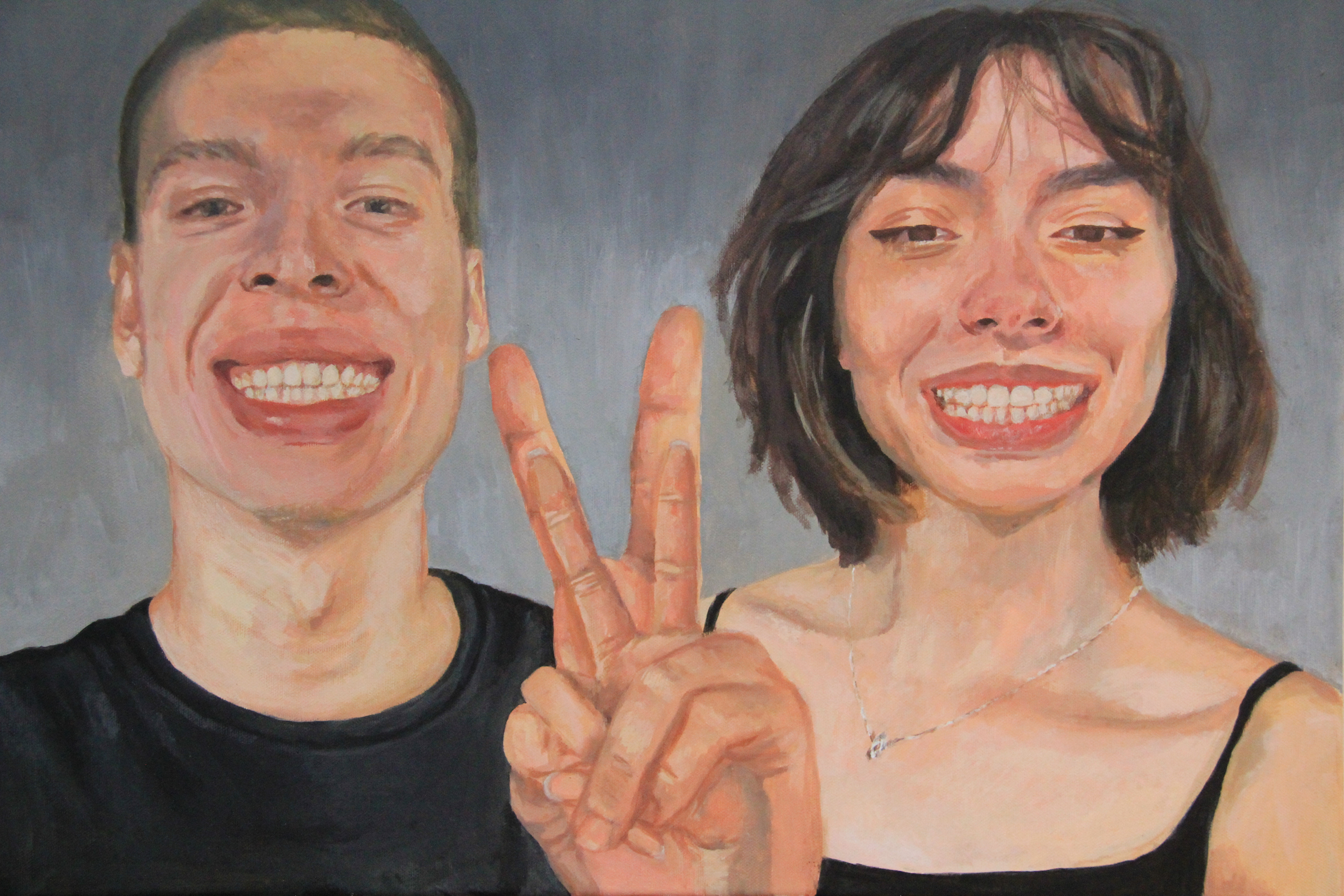
“Peace and Love,” an acrylic portrait by Angelina Dornquast. Photographed in an exhibit at the Paradise Center for the Arts, Faribault. (Minnesota Prairie Roots copyrighted file photo October 2024)

What a legacy Pope Francis leaves. It is my hope that the next pope selected by the conclave of cardinals will continue in the path of humility, compassion and kindness. I want Dorothy Storch from St. Patrick’s in rural southern Minnesota to describe the new pope as “our Pope of peace and mercy, kindness and love,” just as she did Jorge Mario Bergoglio, the son of immigrants. He who humbly served with compassionate words and actions, becoming a much-beloved and respected world faith leader.
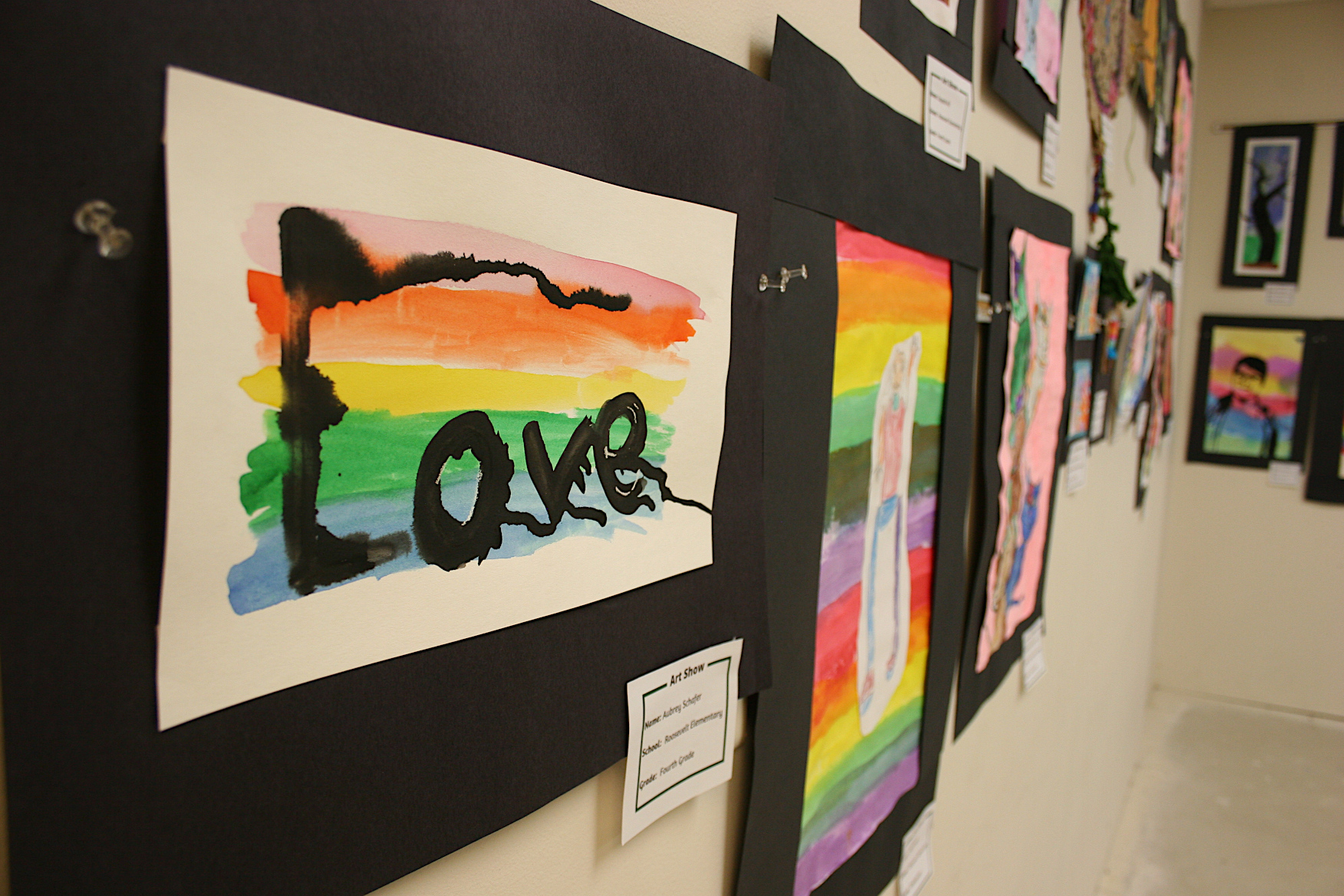
Love at a past student art show at the Paradise Center for the Arts. (Minnesota Prairie Roots copyrighted file photo)

May Pope Francis, now lying inside a simple wooden coffin, rest in peace at the Basilica of Saint Mary Major, which sits in an area of Rome heavily-populated by immigrants. With his coffin and burial choices, “the people’s pope” makes a strong statement even in death about living with grace, humility and compassion, loving all, always.

© Copyright 2025 Audrey Kletscher Helbling


House of Kahmanns: A story of trauma, family love & resilience May 1, 2024

IT WAS A TUESDAY in January 1964. Wash day in the Kahmann household. Outside, a ground blizzard raged, reducing visibility on the southwestern Minnesota prairie. The events of that morning, of that day, would forever change the lives of siblings Karl, Patsy, Eric, Andy, John, Paul, Kevin, Katy, Karen, Phillip, Jim and Beth, and their parents, Jack and Della.

That sets the scene for House of Kahmanns, a memoir by P.G. (Patsy) Kahmann, oldest daughter, second oldest among 12 children. Sixteen months earlier, the family moved from Kansas City, Missouri, to Minnesota when Jack, a traveling salesman in a farm business, was relocated. They settled near their maternal grandparents, into a rental home by Granite Falls.

I expect Jack Kahmann was driving in weather and road conditions similar to this. (Minnesota Prairie Roots copyrighted file photo, January 2020, used for illustration only)

This is familiar land to me in a familiar time. I was not quite eight years old in January 1964, living on a farm some 30 minutes away in neighboring Redwood County. I understand full well the fierce prairie wind that whips snow into white-out conditions. On that blustery morning, as Jack and Della and Della’s parents set out for medical and business appointments in Minneapolis, leaving the oldest, Karl, to care for the youngest children, Patsy and her school-age siblings boarded the school bus.

Rosary beads. (Minnesota Prairie Roots copyrighted file photo used for illustration only)

Patsy was in English class when she got the devastating news. There had been a crash. A bread truck driven by an unlicensed 14-year-old ran a stop sign and then a yield sign before slamming into the 1957 Chevy driven by Jack. Della, mother of a dozen, was the most seriously injured. “How many Hail Marys will it take to save my mother’s life?” Patsy asks herself.

An altar in a southern Minnesota Catholic church. (Minnesota Prairie Roots copyrighted file photo used for illustration only)

Faith, a strong Catholic faith, threads through this story. The Kahmanns were devout, prayerful, always in church. The church, or rather the local parish priest, would play the primary role in turning the initial tragedy into even more intense pain, suffering, separation and trauma for the family. Father Buckley demanded that the 12 children be placed with Catholic families while their parents recovered at a hospital 70 miles away. That, even though a Lutheran couple offered to move into the Kahmanns’ farm home and care for the children. Together.

At this point in the book, I felt my anger flashing. Anger over the inhumanity of a man of the cloth who is supposed to exude compassion, care and love. More atrocities by the priest followed. By the time I read the epilogue, I was irate, forgiveness far from my mind.

Love and forgiveness were taught in the Kahmann home. (Minnesota Prairie Roots copyrighted file photo used for illustration only)

But the Kahmanns were a loving and forgiving family. (Not necessarily of that priest.) One evening after they are all reunited, Jack asks his family to pray blessings upon the driver of the bread truck. Three-year-old Phillip mishears. “God bless the red truck!” he shouts. Laughter erupts. I needed that humor in a story weighing heavy upon my soul.

I wanted to step into the pages of the book and hug those kids and make everything better. Just as Millie Bea did when the Kahmanns lived in Kansas City and Jack was traveling around the country and Della needed extra help with the kids. The book flips back and forth in time and place between Missouri and Minnesota, before and after the crash.

The Kahmanns were not unfamiliar with trauma. In June 1955, Andy’s hand was nearly severed in a hand cement mixer. A Kansas City surgeon successfully reattached his limb, even though a priest told Jack that his son’s hand had been amputated. That was untrue.

Family love is such a strong theme in this book. (Minnesota Prairie Roots copyrighted file photo used for illustration only)

Through all of this, themes of love, strength and resilience thread. The Kahmann siblings clearly looked out for and loved one another and got through some pretty awful stuff. Their motto, Patsy writes, was “No one died. We all survived.” They never talked about the accident. I’m not surprised. Who did back then? Eventually the family would relocate to Bird Island, 32 miles directly east of Granite Falls. It was a new start in a new place following their 75 days apart, “75 days of confusion, anxiety and foreboding.”

And now, with publication of House of Kahmanns—A Memoir, A story about family love and shattered bonds, about finding each other in the aftermath, perhaps these siblings are talking about all they endured. For Patsy, it is also about keeping a promise. In the book dedication she writes: To Mom and Dad/I promised you I would write this story. And she did, with honesty, pain and a great deal of strength.

© Copyright 2024 Audrey Kletscher Helbling