
IN THE DISTANCE, down the gravel road, a helicopter swept across the fields and then disappeared.
“Did it crash?” I asked my husband, worry lacing my words.
“Do you see a fireball?” he responded, answering my question.
I didn’t. And it was obvious to me then that the rise of the land was blocking my view of the helicopter.

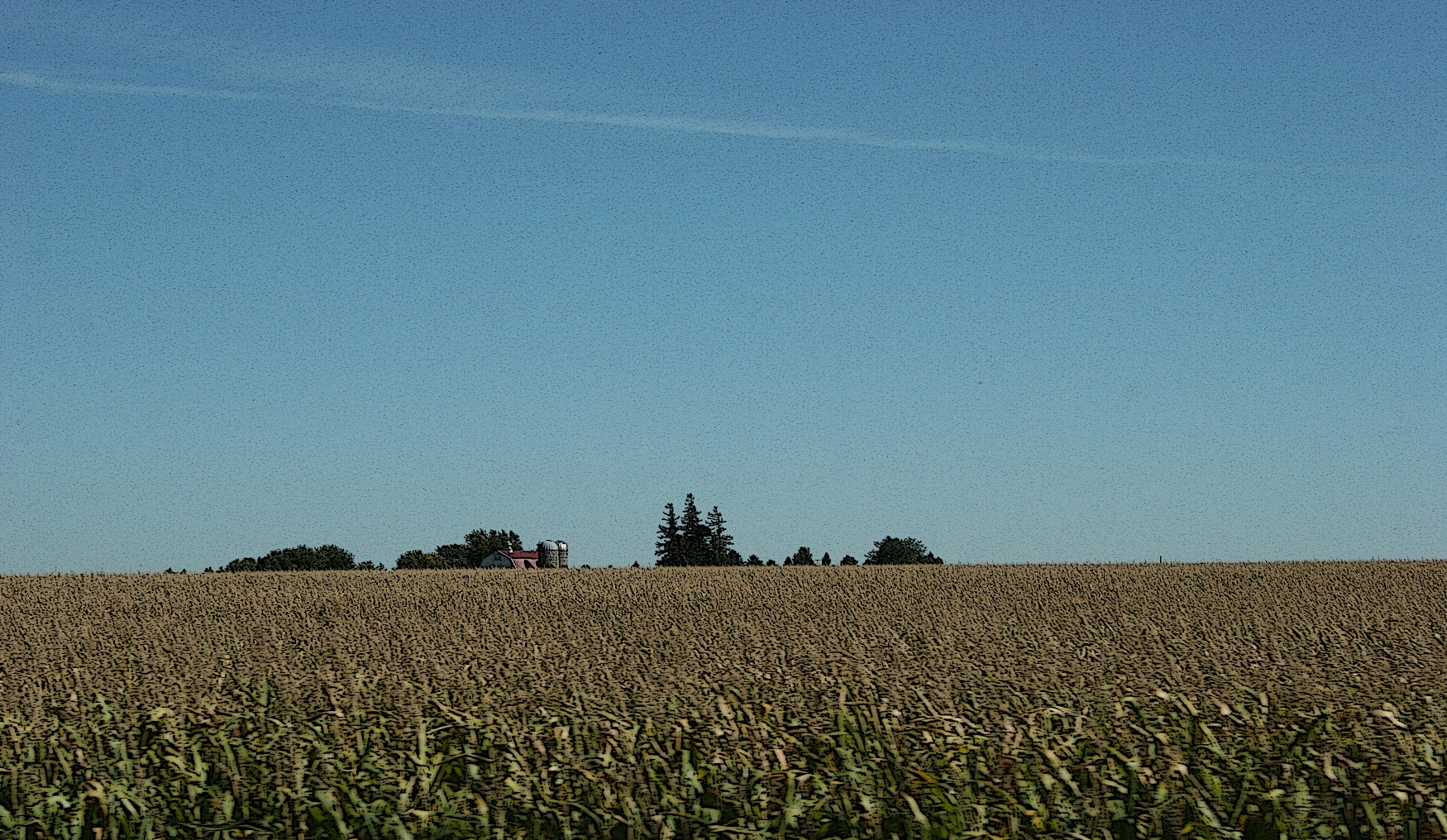
But I needed to visually confirm, to see this flying machine up close. So Randy turned off the asphalt county road onto 230th Street East, aiming toward a hilltop dairy farm marked by five looming silos.
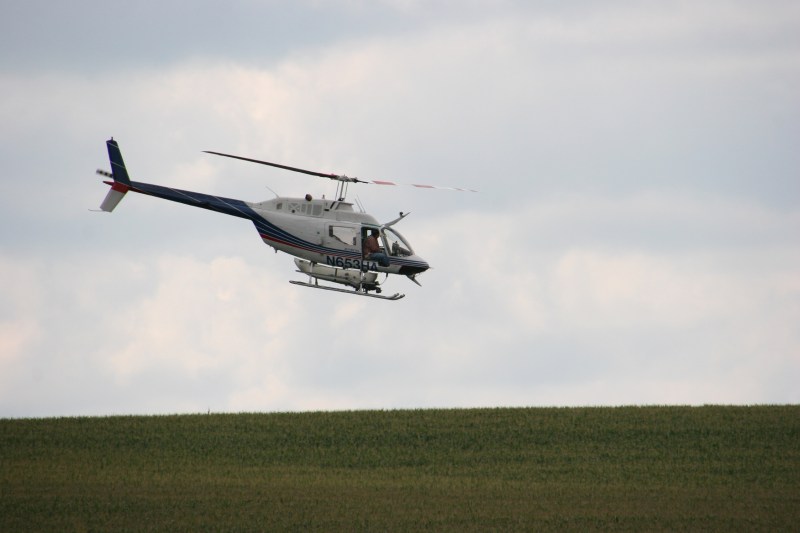
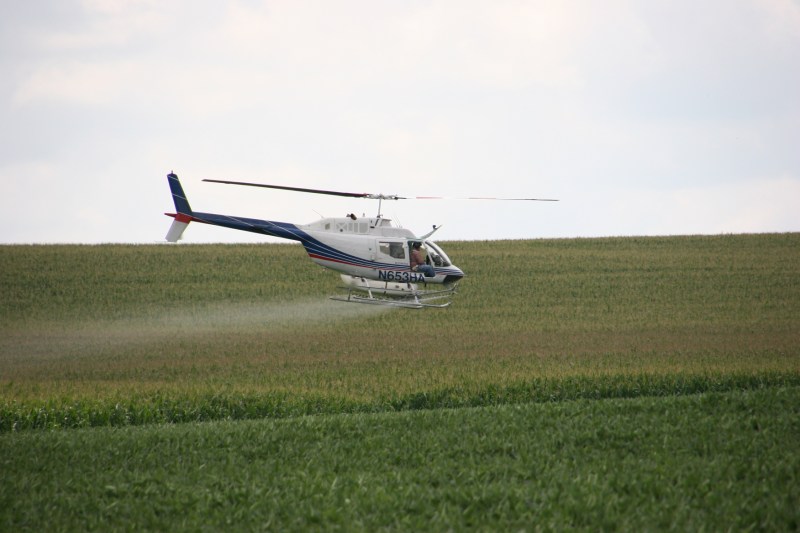
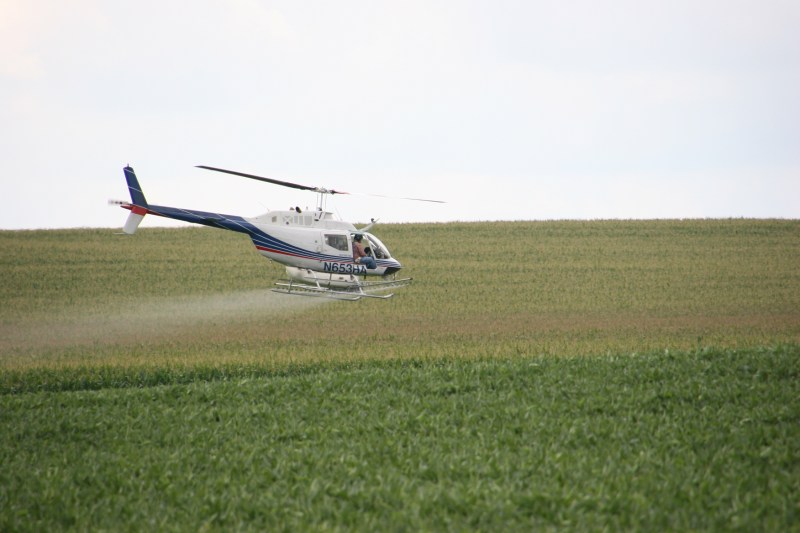
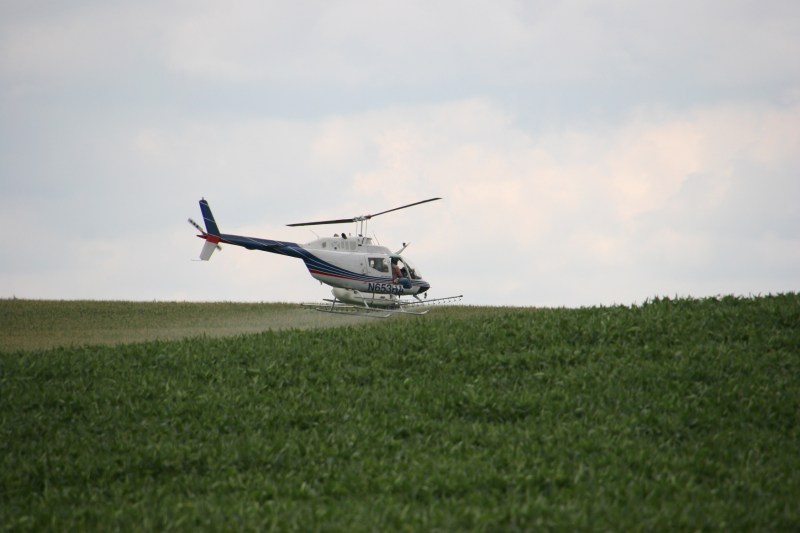
Before we made it to the farm, though, the chopper was back, skimming and spraying chemicals upon acres of corn at this location southeast of Faribault. Randy braked our van to a stop and I was out the passenger side door before the wheels stopped turning, eager to photograph an aerial application up close.
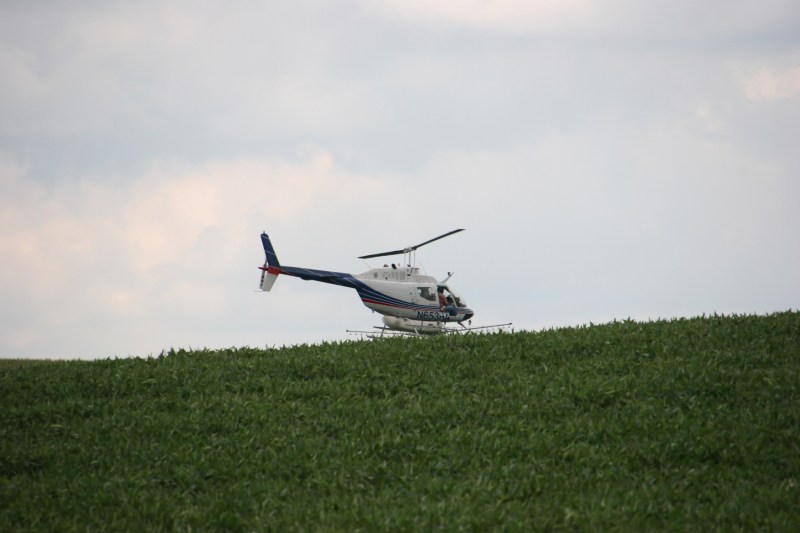
The helicopter files over a hill in the corn field.
Whether you agree or not with the spraying of chemicals upon the land to control weeds, fungus and insects or to fertilize crops, you have to admire the skills of these pilots. This appears a dangerous undertaking as the copter zooms above the fields, the pilot simultaneously spraying, guiding his aircraft and watching the ground for obstacles—like silos, power lines and hills.
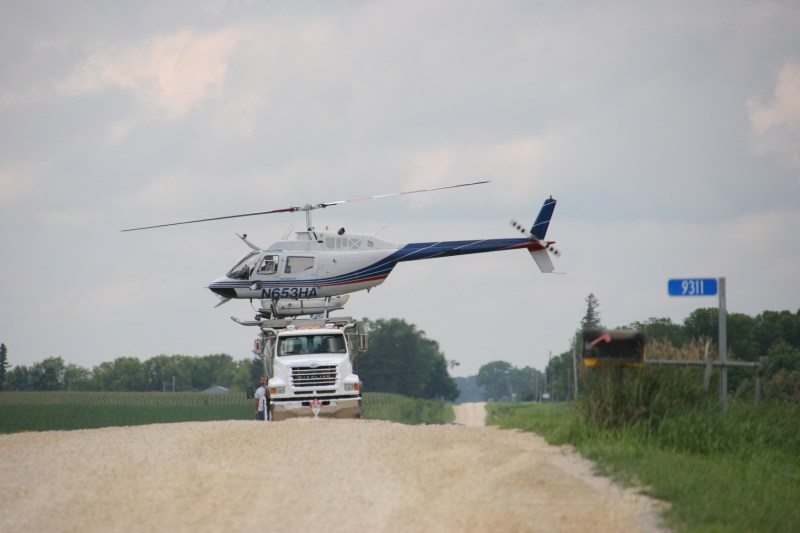
While the pilot’s skills impressed me, I was especially fascinated by what I saw as we crested the hill next to the Tatge dairy farm.
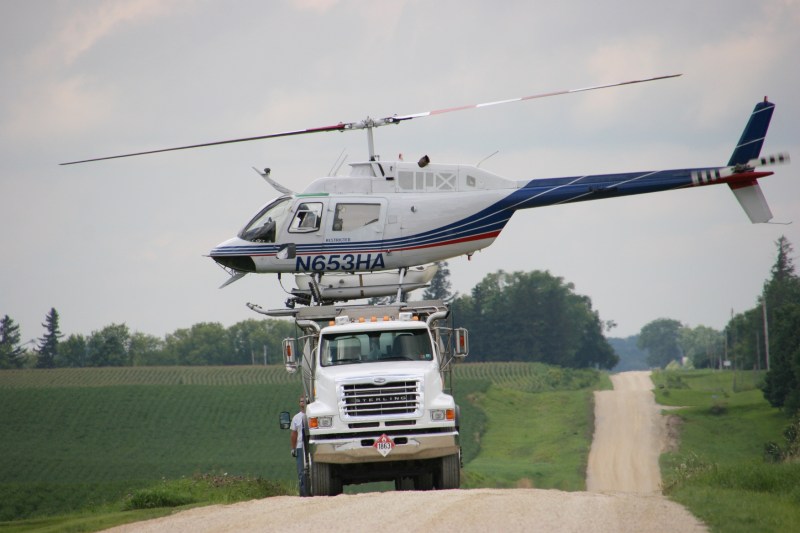
The helicopter had landed atop a truck in the middle of the country gravel road.
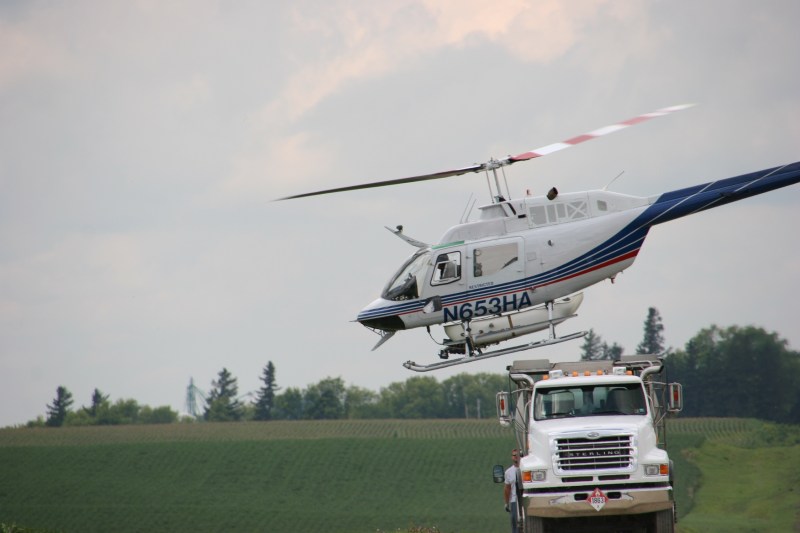
The helicopter lifts off from the mixing truck, ready for another round of spraying.
I’d never thought about this—how an aerial spraying helicopter refills with both chemicals and fuel. We didn’t stop to ask questions. I wasn’t about to distract the team of men focused on their work.
© Copyright 2016 Audrey Kletscher Helbling



 Minnesota Prairie Roots
Recent Comments