HE’S A MESMERIZING and engaging storyteller. He is Joseph Mbele, retired professor of post-colonial literature at St. Olaf College in Northfield, cultural consultant and author.
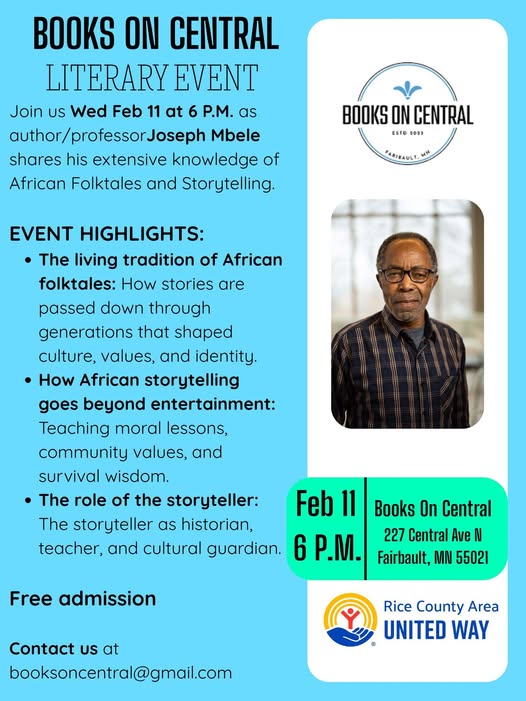
And Wednesday, February 11, at 6 p.m., Mbele will be the featured speaker at a free literary event at Books on Central, a volunteer-run used bookshop of the Rice County Area United Way. Located in the heart of historic downtown Faribault, home to many Somali immigrants and refugees, the bookshop seems a fitting place for Mbele to talk about the living tradition of African folktales and the role of the storyteller. Somali men gather on street corners in downtown Faribault to share stories and news.
I’ve heard Mbele speak at this bookshop previously. I absolutely cannot say enough positive things about the warm way he connects with the audience, the way he uses stories to teach, the way he genuinely cares about bridging cultural differences.
Love this book by Joseph Mbele.
As an author, his writing carries that same compassionate, culturally-connective message. He’s written Africans and Americans: Embracing Cultural Differences, Chickens in the Bus: More Thoughts on Cultural Differences, and Matengo Folktales.
Mbele knows of what he speaks and writes. Born in rural Tanzania, he studied and taught at a public university there; earned a PhD in African Language and Literature from the University of Wisconsin—Madison; and eventually landed in the English department of St. Olaf College in 1991.
His visit to Books on Central on Wednesday evening presents an opportunity to learn from a gifted storyteller about African folktales and culture in a comfortable setting back-dropped by shelves of books.
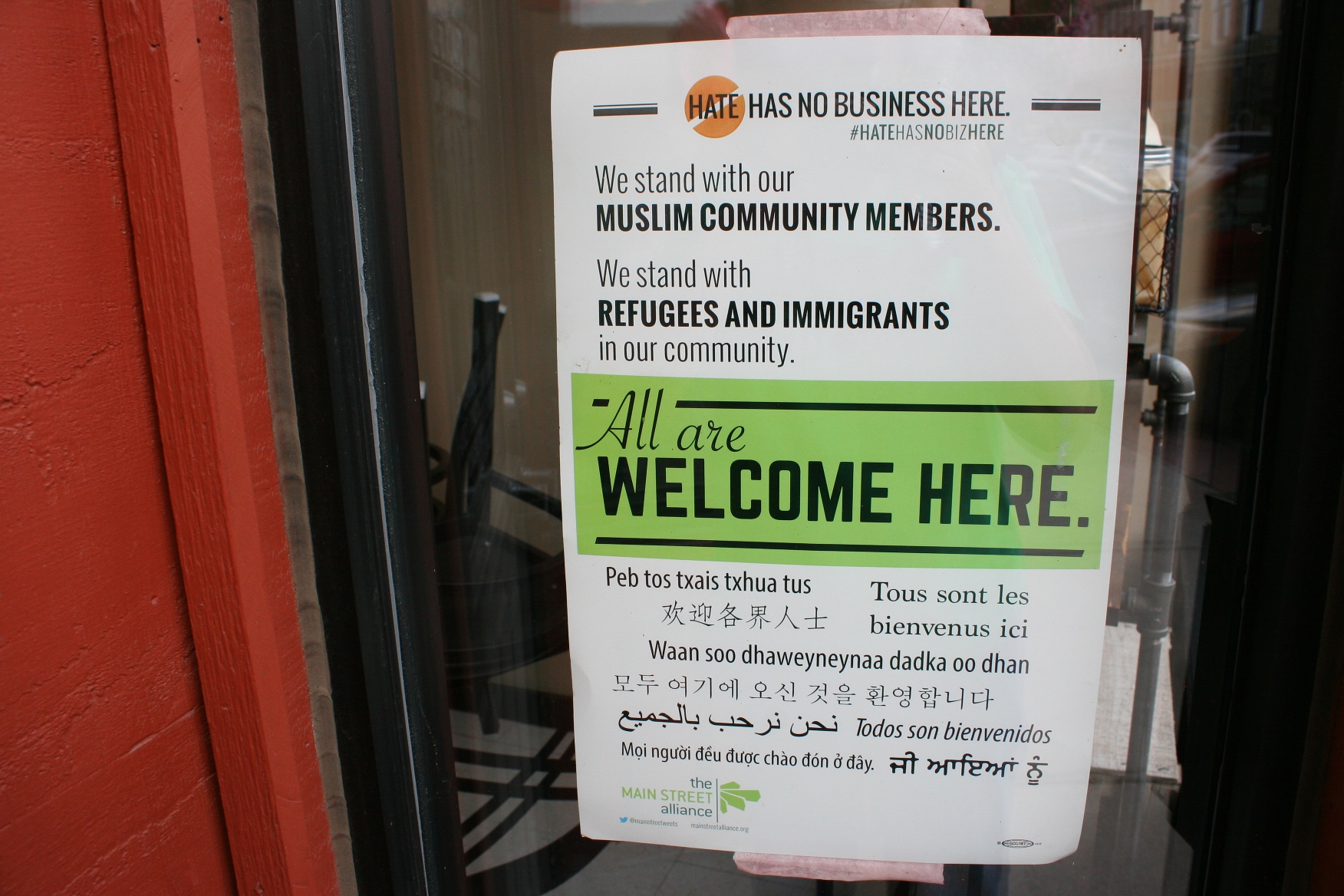
This welcoming sign was posted on the door of a downtown Faribault business in 2018. (Minnesota Prairie Roots copyrighted file photo 2018)
IN A VALENTINE’S DAY post last week, I focused on connecting in everyday life, on hugging all of humanity. Those words proved prophetic for me personally. And I am the better, the richer, for the insights I learned, the connections I made, during a February 15 talk by a Minnesota college professor, cultural consultant and author at Books on Central in Faribault.
Author Joseph L. Mbele, photographed at the International Festival Faribault in 2015. (Minnesota Prairie Roots copyrighted file photo 2015)
Joseph L. Mbele was the featured speaker at this public event highlighting cultural differences. Faribault is a culturally-diverse community, home to many immigrants, including significant Somali and Hispanic populations. And that has all too often created tension between locals and those who now call my southern Minnesota city home. Mbele recognizes that and has worked with community leaders, business owners and others in Faribault and neighboring cities to raise awareness of cultural differences and bridge the gaps which divide us.
Via storytelling, humor and insightful perspectives as someone who grew up in Tanzania and has lived in the U.S. for 32 years, Mbele riveted the attention of the group gathered in the used bookshop run by Rice County Area United Way. Rather than fully recap Mbele’s presentation, I want to focus on the personal interactions I experienced with two young Somali men in attendance.
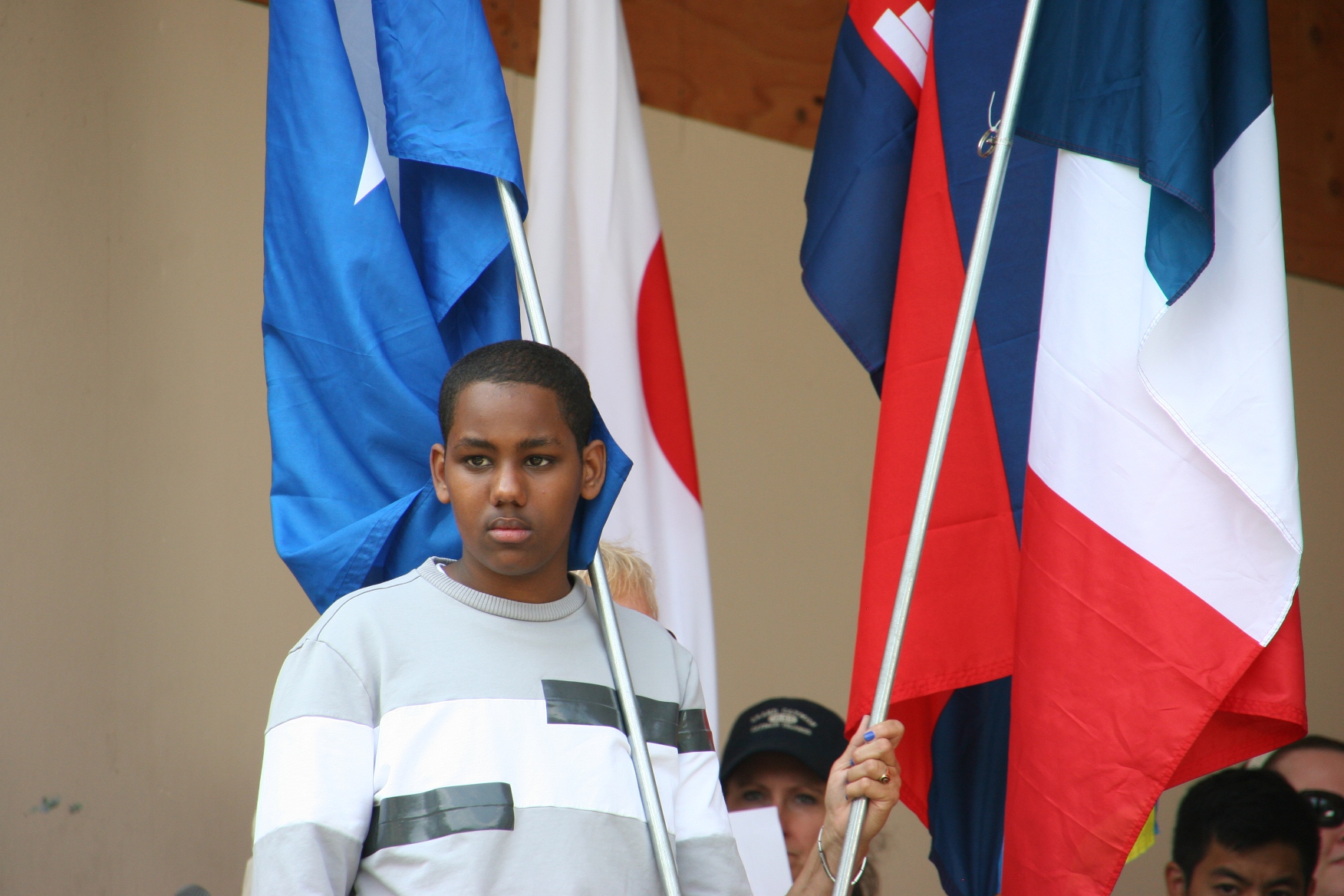
This teen represented Somalia (blue flag with a white star) at the International Festival Faribault in 2015. (Minnesota Prairie Roots copyrighted file photo 2015)
When I arrived at the bookstore, I settled onto a folding chair next to Solomon, as I heard it, (or perhaps correctly Sulaiman/Suleiman; I didn’t ask for the spelling of his name). I can’t sit next to someone and not engage in conversation. I soon learned that Sulaiman, 34, came to the U.S. from Somali at age 14, graduated from Faribault High School, played soccer on the fields by the junior high, has a wife in Somalia (the process is lengthy to bring her to the U.S., he said), works as an over-the-road trucker and has a job interview with a local company this week. Any business would be fortunate to have him on their team. He impressed me with his friendly personality, wide smile and openness. Sulaiman reflected what Joseph Mbele stated earlier about Africans being highly-social, desiring to be around and engage with other people.
I felt thankful to learn from my new friend that he hasn’t faced many challenges as a native Somalian living in Faribault. I didn’t have the heart to share the negative comments I’ve heard about Somalians. I focused instead on getting to know this delightful young man pressed next to me in a row of folding chairs in the cozy bookshop.
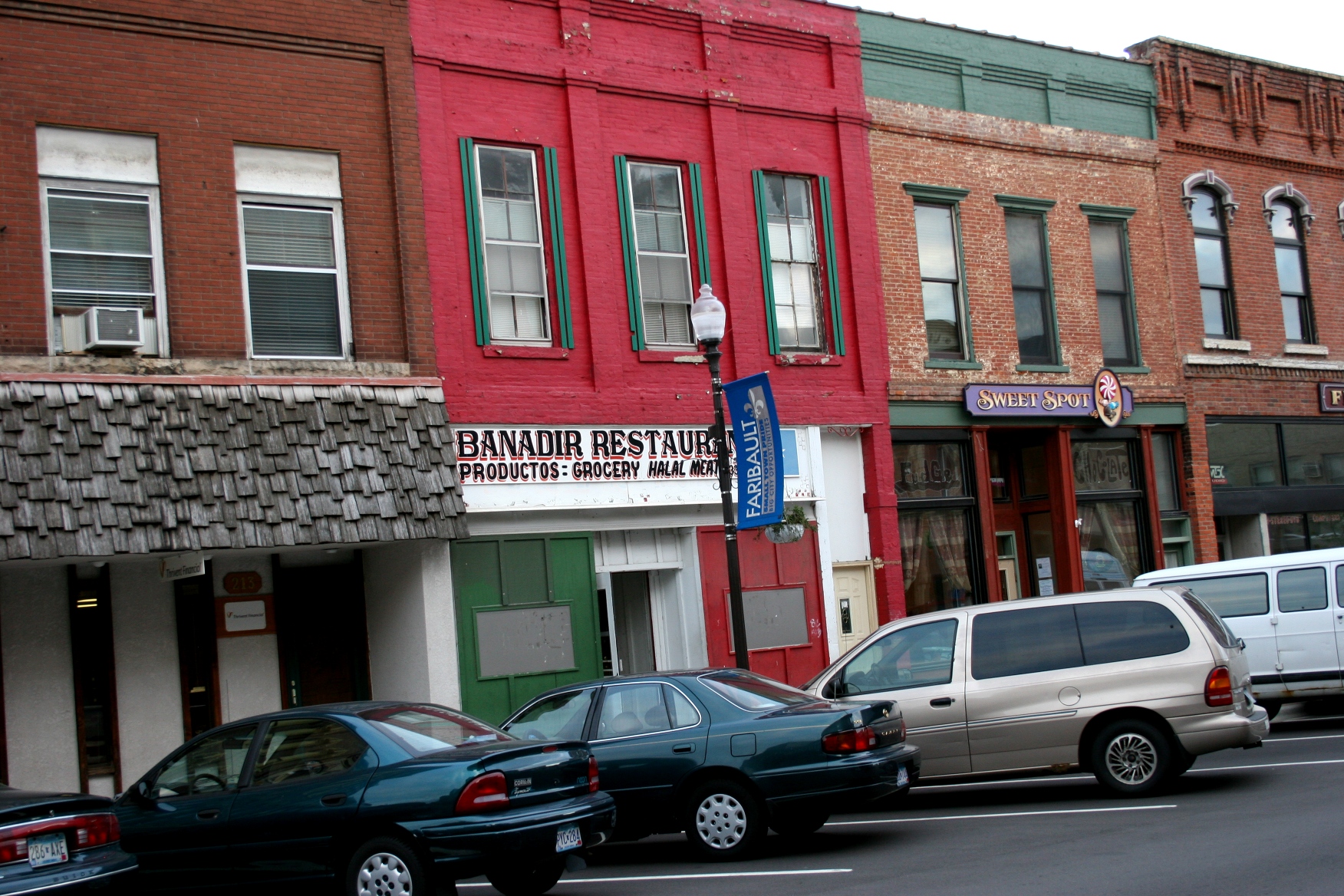
Banadir, a Somali restaurant and grocery, is located in historic downtown Faribault. (Minnesota Prairie Roots copyrighted file photo 2011)
Throughout Mbele’s talk highlighting African culture like African time (versus American time when everyone is on time), sidewalk gatherings to share news and to socialize, the social importance of food and music among Africans, the value of coming together and much more, I felt the sense of understanding unfolding. Laughter erupted often. Heads nodded. Questions surfaced during discussion. It felt good to be part of this gathering, to learn, to connect. I love that Mbele addressed bookstore volunteer Dave Campbell as “brother.” That endearing name shows that Mbele values Campbell and their personal connection. They are friends.
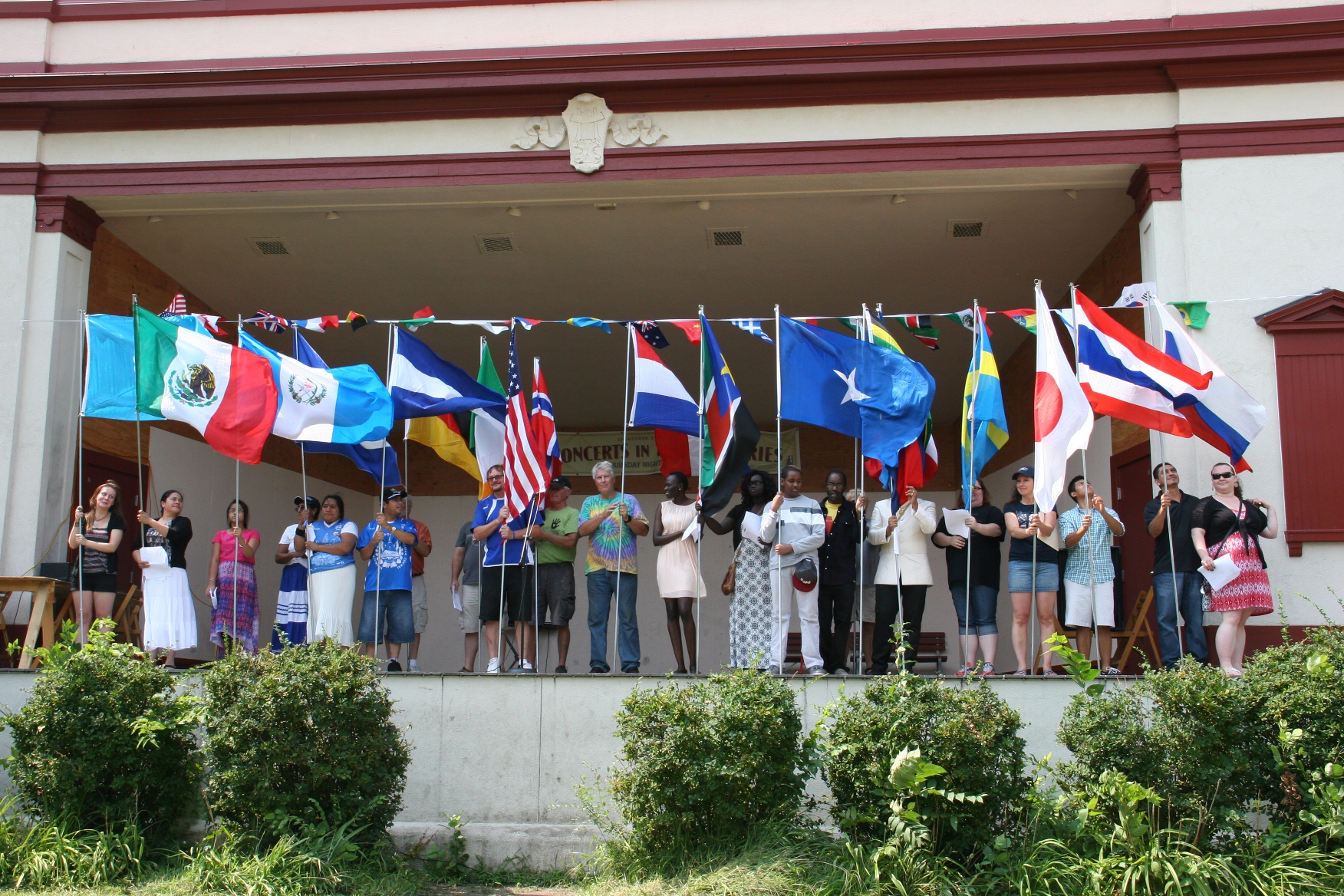
A diverse group attended a past International Festival Faribault, here observing the flag ceremony. (Minnesota Prairie Roots copyrighted file photo 2015)
And I felt, too, that I’d made a new friend in Sulaiman and, afterwards his brother, Ibrahim (again, I’m uncertain on the name spelling), also in attendance. As I retreated to the rear of the bookstore to grab a sweet treat and refill my water glass, Ibrahim approached and we chatted. He extended his hand in a handshake, significant because Muslims typically would not shake a woman’s hand. Mbele explained earlier the separation of men and women is not one of disrespect but faith-based and cultural.
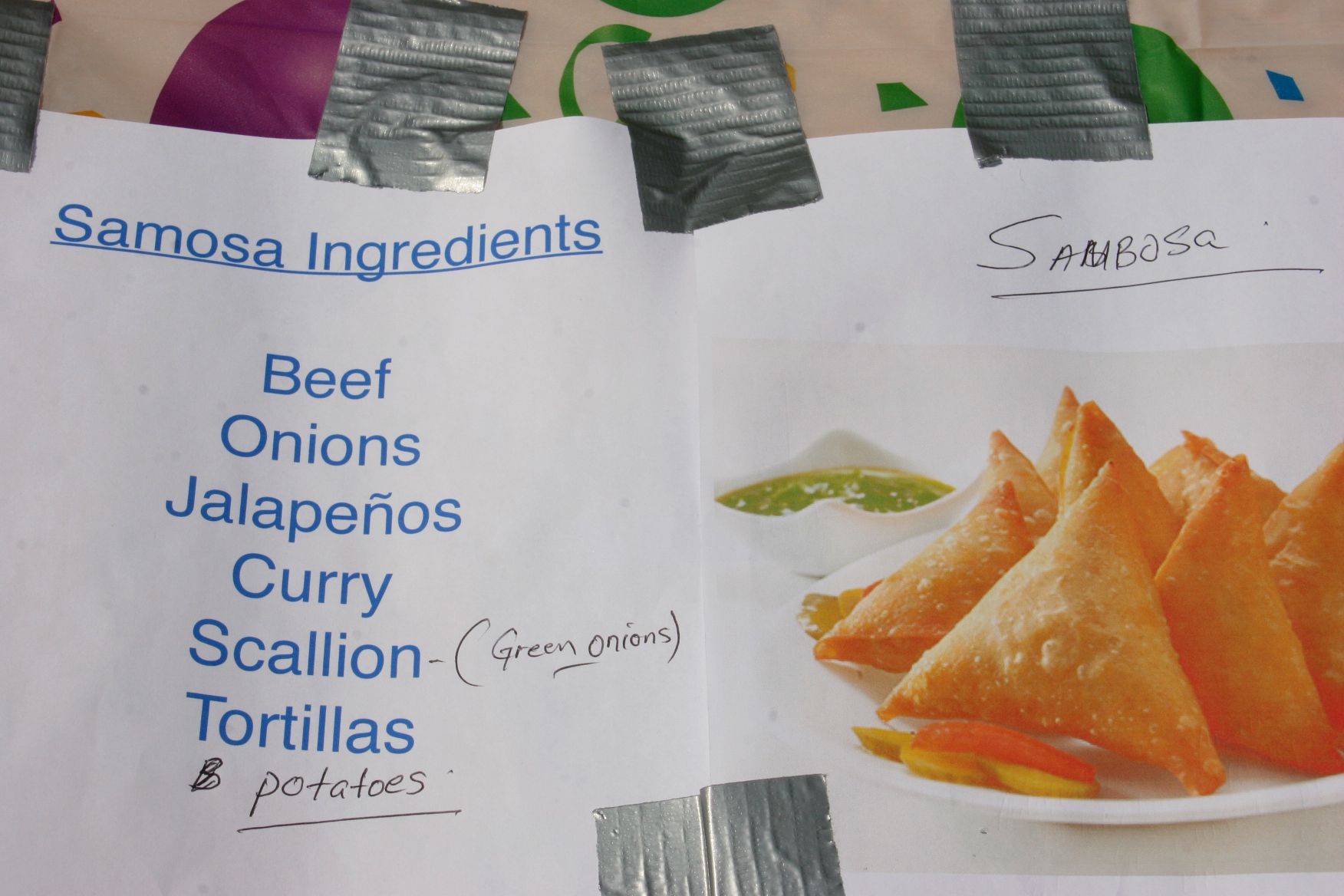
A sign photographed at a past International Festival Faribault, where I first tasted sambusa. (Minnesota Prairie Roots copyrighted file photo)
Ibrahim and I talked only briefly. He was, like his brother, warm, engaging, friendly. I remember him telling me that food brings people together, that he likes pizza. And I replied that I like sambusa, a Somali triangle-shaped pastry stuffed with spicy meat. We laughed. Earlier he invited those attending the bookshop gathering to visit Somali restaurants and shops in downtown Faribault.
And then Ibrahim asked, “Can I hug you?” Of course. We embraced right there in the back of the United Way bookshop. I felt such warmth, such affection, for this young man I’d just met. There were no cultural differences between us. We were simply two individuals who respected and appreciated one another. United by our humanity.
#
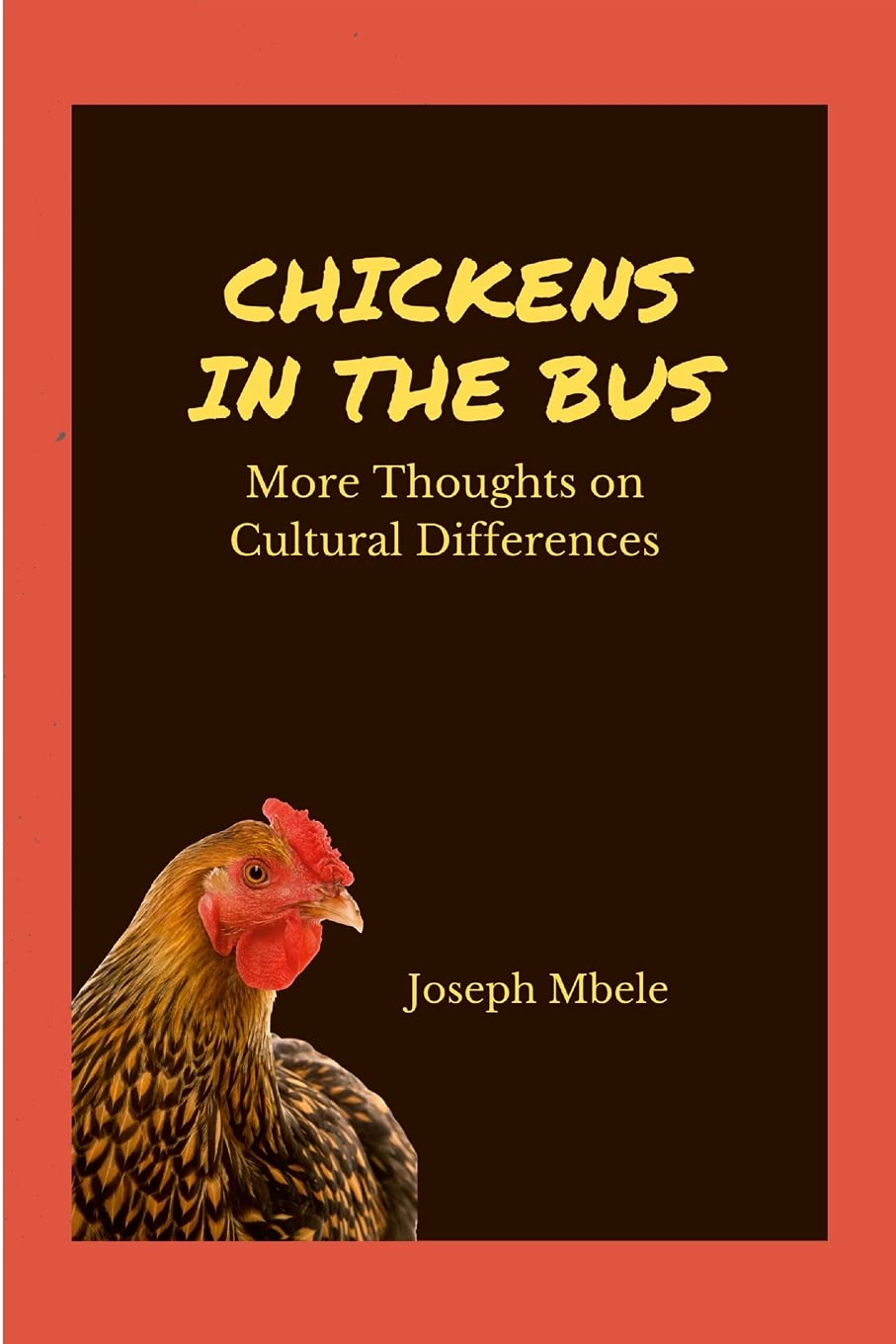
Jospeh Mbele’s latest book, an easy and informative read. (Book cover sourced online)
FYI: I’d encourage you to read any or all of the books written by Joseph L. Mbele: Africans and Americans: Embracing Cultural Differences; Chickens in the Bus: More Thoughts on Cultural Differences; and Matengo Folktales. This professor at St. Olaf College in Northfield is a gifted storyteller and writer. I’d also encourage you, if you live in my area, to shop at Books on Central. All proceeds from book sales go to the Rice County Area United Way and help people and organizations in my area.
A flag ceremony, representing the country of origins of many peoples who call Faribault home, was part of the 2015 International Festival Faribault. Joseph Mbele is shown just to the right of center in this photo, dressed in black with a yellow and red shirt. (Minnesota Prairie Roots copyrighted file photo August 2015)
I FIRST MET JOSEPH L. MBELE in 2015 at the International Festival Faribault. The author, cultural consultant and professor of English at St. Olaf College in Northfield was representing his native Tanzania during this fest celebrating the cultural diversity of my community. Then late last year I talked to Mbele again, when he was selling his latest book, Chickens in the Bus: More Thoughts on Cultural Differences, at a local holiday church bazaar. He is engaging, soft-spoken, knowledgeable and just an overall kind and gentle soul.
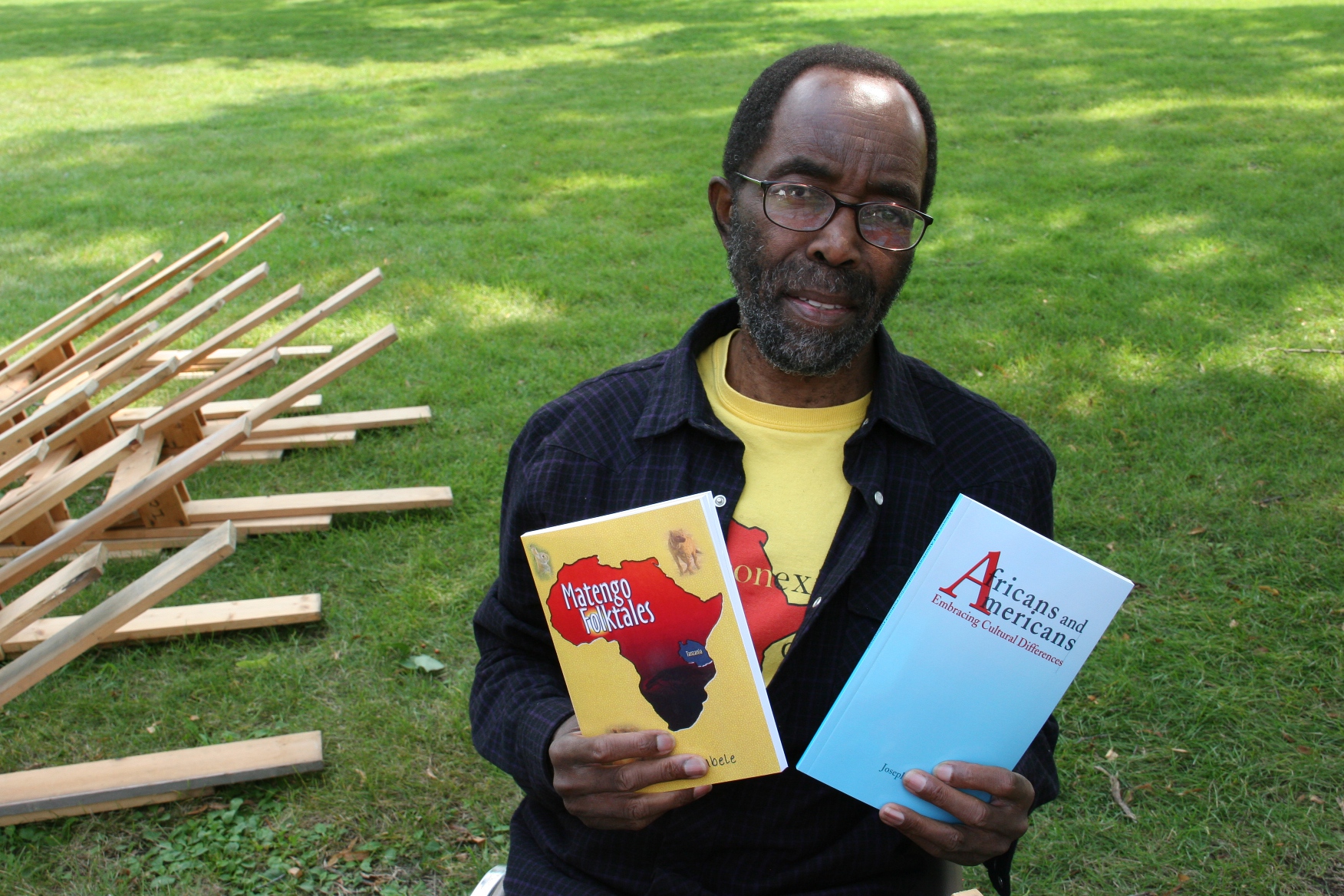
Author Joseph L. Mbele with two of his three books, photographed at the 2015 International Festival Faribault. (Minnesota Prairie Roots copyrighted file photo August 2015)
This image shows the cultural diversity of Faribault. This photo was taken at a downtown car showin 2015. (Minnesota Prairie Roots copyrighted file photo July 2015)
That he is appearing at a business along Faribault’s Central Avenue is meaningful in itself. Many Somali residents live in second floor apartments here in the heart of our downtown business district. Other of our newest immigrants have opened restaurants and shops along the avenue and side streets, making for a diverse downtown. But it was their presence here that stirred up complaints and controversy a few years back, and likely still does, although those are not as loudly vocalized as previously.
Mbele’s latest book, published in 2021. (Cover image sourced online)
In Chickens in the Bus, Mbele terms this “the sidewalk issue.” Business owners expressed concerns about Somali men congregating outside, blocking sidewalks, scaring customers away, Mbele writes. His words are not new to me. I’d heard them, too, from business owners and from local residents. People were, they said, afraid to come downtown. I’ve never feared walking along Central Avenue past groups of Somali men. What people don’t understand, they all too often fear.
To Mbele’s credit, he has worked hard to inform, to enlighten, to listen, to help bridge cultural divides. He spoke to Faribault business owners. He spoke to members of the Somali community. He’s also spoken publicly at libraries and elsewhere. I appreciate his efforts.
At the core of “the sidewalk issue” are cultural differences, according to this native Tanzanian who specializes in teaching folklore at Northfield’s St. Olaf College. Somalians come from an oral culture, one that relies on social gatherings to share news, Mbele writes. “…Somali gatherings in downtown Faribault are the Somali newsstands,” he told local business owners and includes in his book. That’s so down-to-earth understandable.
Mbele’s slim volume, Chickens in the Bus, which I purchased at the November 2023 holiday market, is an excellent primer for anyone desiring to learn more about cultural differences. This author and cultural consultant highlights how those differences can both challenge communities, but also present opportunities in an ever-increasingly connected world that is decidedly global. He writes in a way that is peaceful and soothing and seeks to create harmony.
A rooster, photographed at a rural Faribault farm and used here for illustration only. (Minnesota Prairie Roots copyrighted file photo May 2018)
I learned a lot about “African Time” and “American Time,” about native-born Africans who do not view themselves as black or as “people of colour” (vs African Americans who do), about chickens in the bus, and much more. In Africa, Mbele writes, someone may carry a chicken onto a bus, a gift from a rural villager.
His newest book, a sequel to Africans and Americans: Embracing Cultural Differences, proved an easy and informative read, one that enlightened me about my newest neighbors. They enrich Faribault with their culture, bringing their food, language, dress, customs and more. I will never travel to Africa. So I am the richer for the Africans who now call southern Minnesota home, who bring their culture into my community, to me.
I WANT TO SHARE two items with you today. Both are different, yet alike, because they’re about differences. Differences between cultures and differences between states.
Humbird Cheese, a popular tourist stop at Tomah, Wisconsin.
Let’s start with the humorous of the two, a little story from my second daughter, who lives in eastern Wisconsin.
Along with a photo, she sent this text message: “They teach them early in wi.”
I studied what appeared to be a child’s drawing of a hefty hunk of cheese and a mouse, along with words too miniscule to decipher on my cell phone screen.
M: “It was a drawing with a haiku in a surgery dept waiting rm. Can u read the haiku or is it too small?”
Me: “I can’t read it.”
M: “It says ‘I love to eat cheese. Swiss Colby pepperjack too. I’m almost a mouse.’ By devon age 9.”
Honestly, don’t you just have to laugh at the subject of this haiku. Of all “the things I love,” this 9-year-old Wisconsinite wrote about cheese?
Would a Minnesota child ever choose to write a cheese haiku?
Wisconsin, I love your cheese, really I do. And I love how your kids love your cheese.
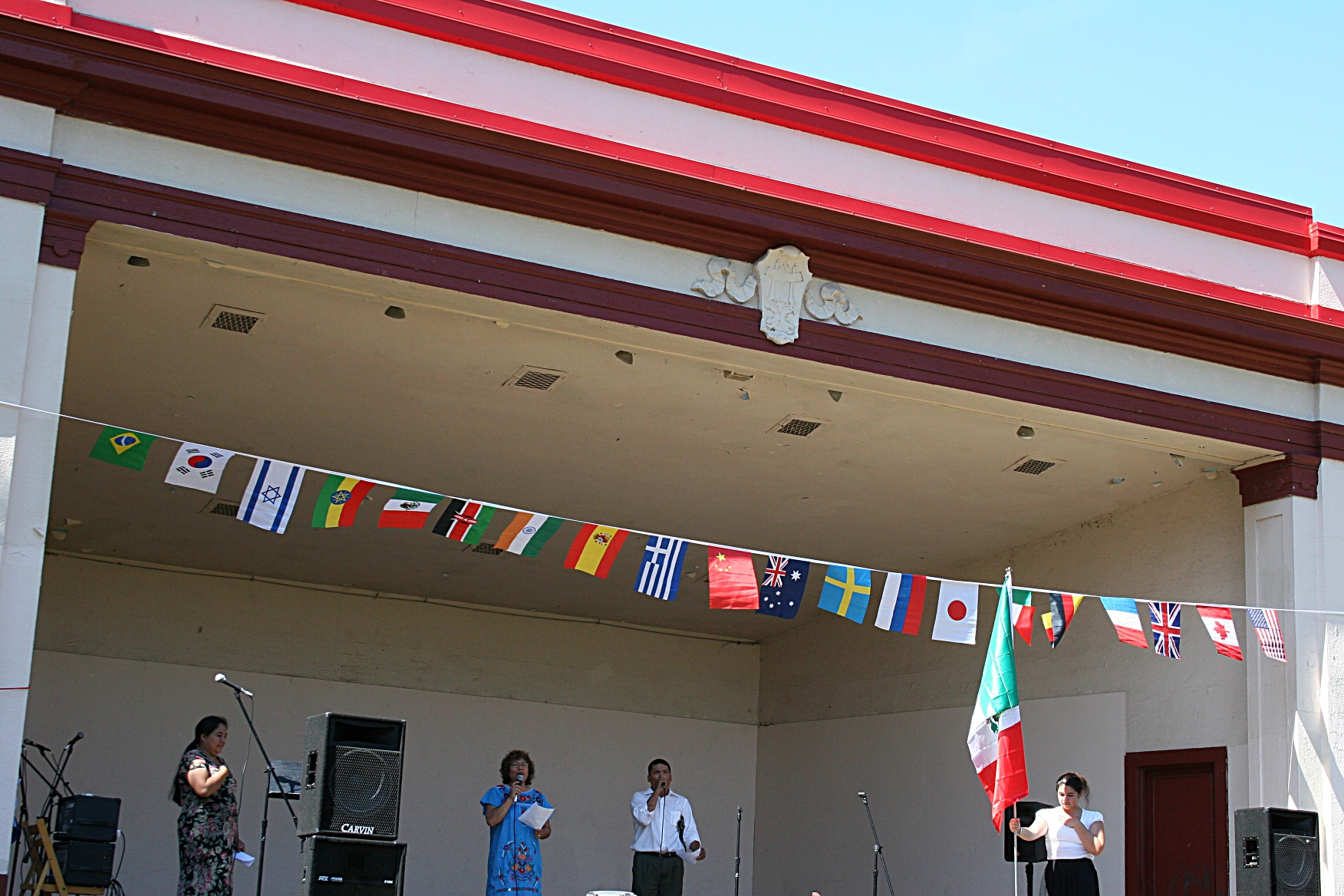
Numerous cultures were represented during the International Festival held in September at Central Park in Faribault. Here singers perform the Mexican national anthem in the band shell.
NOW TO THE OTHER STORY about differences, written by sports reporter Brendan Burnett-Kurie and published Sunday on the front page of The Faribault Daily News. Here’s the headline for that top-notch feature, which should be required reading in every Faribault (maybe even Minnesota) classroom and home:
“The beautiful team…How the Cannon Valley soccer team bridged cultural gaps and came together around the game they love.”
I tipped Brendan off to this story after my good friend Mike Young told me about the soccer team at Cannon Valley Lutheran High School in Morristown. Mike serves as the school’s volunteer development director. Yes, you read that correctly. Volunteer.
But back to Brendan’s story. He wrote about the school’s recently-rejuvenated soccer team which includes a melting pot of students—of different ethnic backgrounds, different sizes, different ages and from different schools. (CVLHS, with less than 20 students, couldn’t field a team solely from within.)
It’s one of those feel-good stories that make you smile. These boys became a team and became friends. Differences didn’t matter to them. Not differences in their skin colors, their heights, their ages, their shoe sizes, their anything.
Brendan writes: “One day during practice they all took off their shoes and flipped over the tongues, comparing the sizes. Little fourth-grader Yianko Borrego had size 4 feet. The largest were size 13.”
These boys can all teach us a thing or a hundred about acceptance.








 Minnesota Prairie Roots
Recent Comments