Minnesota Prairie Roots

Writing and photography by Audrey Kletscher Helbling

The educating & healing continue 150 years after The U.S.-Dakota War December 28, 2012

STUDYING MINNESOTA HISTORY decades ago, I learned about “The Sioux Uprising of 1862” and even wrote a term paper on the topic bearing that title.
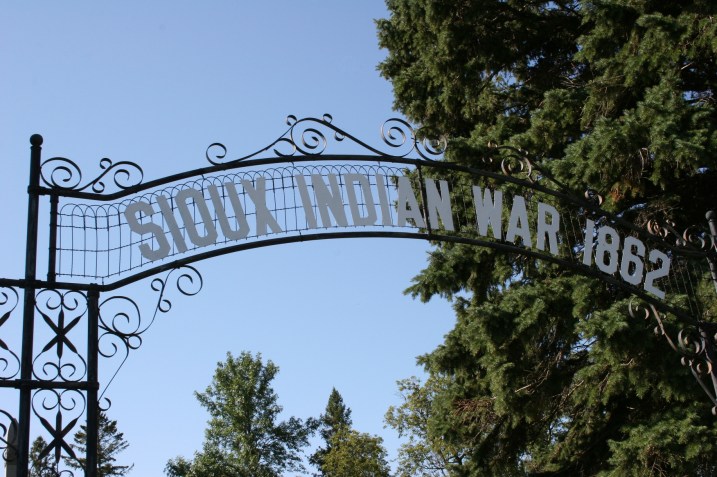
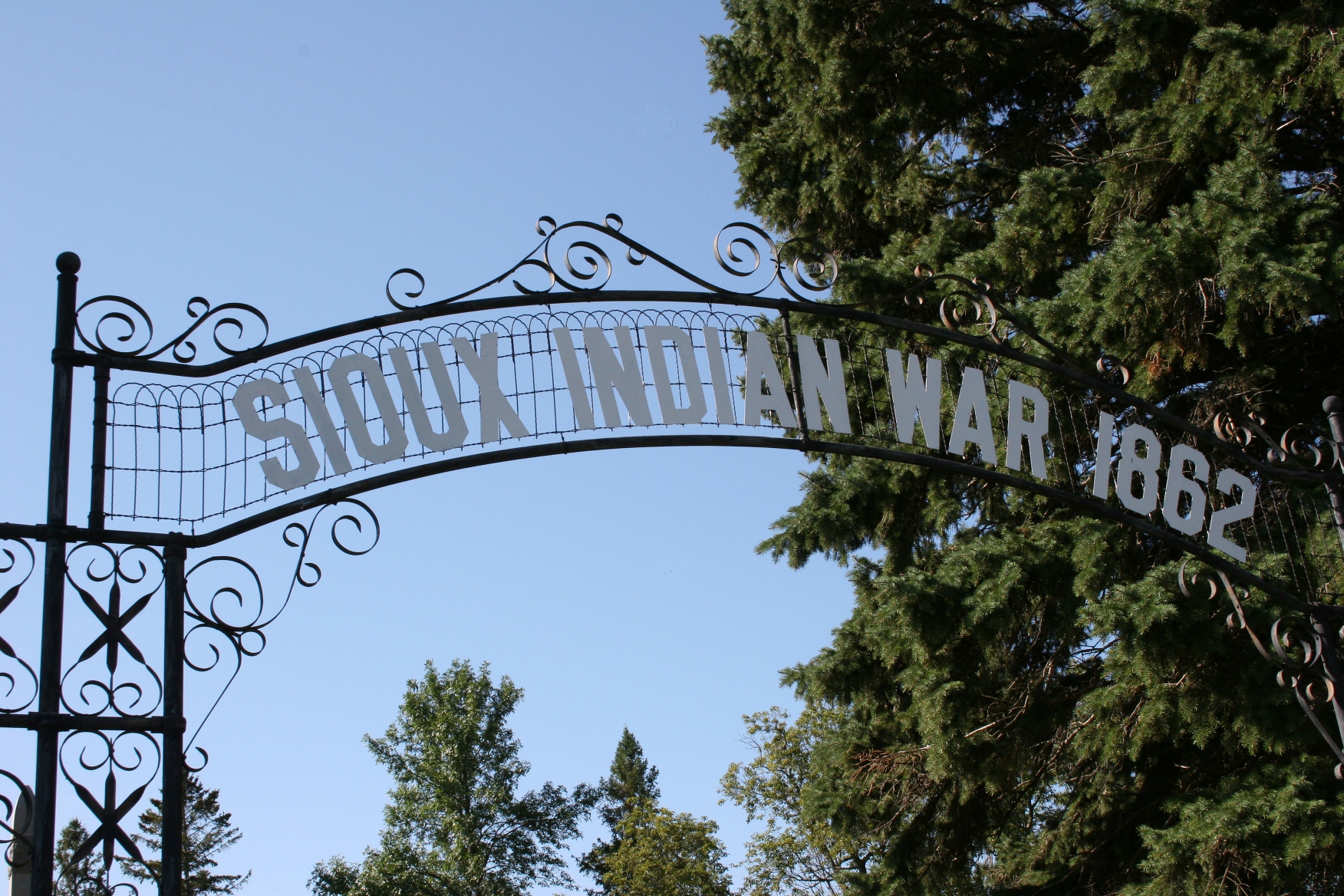
This archway leads to the Wood Lake State Monument, on the site of the battle which ended the U.S.-Dakota Conflict of 1862.

This archway leads to the Wood Lake State Monument, on the site of the battle which ended the U.S.-Dakota Conflict of 1862.

I thought nothing negative of that word, Sioux, which translates to “snake.” The Ojibway, once enemies of the Dakota, gave the tribe that name. I did not know; it was the word I was taught.

That I even studied “The U.S.-Dakota War of 1862,” the proper terminology for the six-week war fought primarily in my native southwestern Minnesota 150 years ago, seems remarkable. So many in Minnesota never knew of this conflict in our state’s history.

I don’t pretend to know every detail of the war between the Dakota and the white settlers and soldiers. But I do remember that I grew up with a fear of “Indians,” reinforced by the television westerns especially popular during my formative years and by the history lessons delivered about The Sioux Uprising of 1862, as it was then called.

Those classroom lessons were decidedly one-sided: The whites were the good guys, the Indians the bad guys. That line of thinking was wrong, oh, so wrong. I realize that now, having reached that conclusion decades ago.

The maltreatment of the Dakota by greedy traders, broken treaty promises, starvation, efforts to convert and transform the Dakota people into Christian farmers, expulsion from their homeland and more contributed to the war.

Yet, even the Dakota disagreed about the need to wage this battle. Some helped settlers escape to safety while others plundered and killed. My own maternal forefathers fled the New Ulm area to St. Peter, making this war a part of my personal family history.
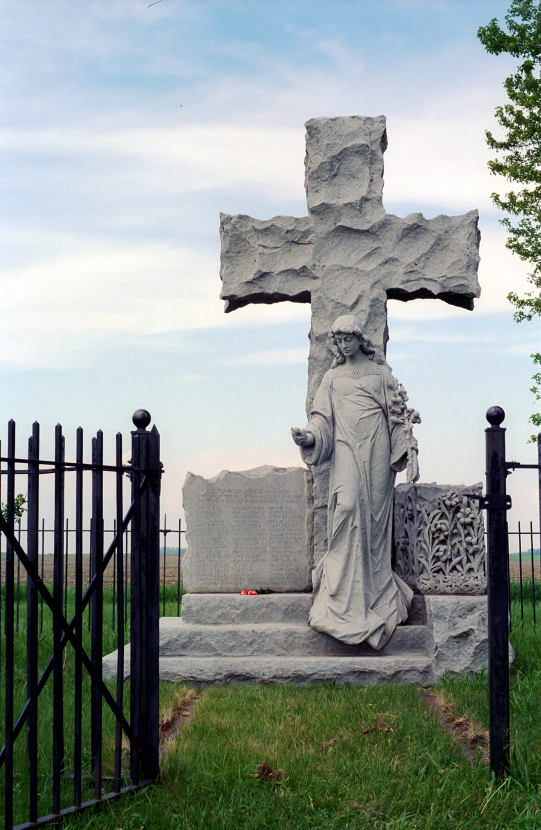
The Milford State Monument along Brown County Road 29 west of New Ulm commemorates the deaths of 52 settlers who were killed in the area. Located along the eastern edge of the Lower Sioux Reservation, Milford had the highest war death rate of any single township.

The Milford State Monument along Brown County Road 29 west of New Ulm commemorates the deaths of 52 settlers who were killed in the area. Located along the eastern edge of the Lower Sioux Reservation, Milford had the highest war death rate of any single township.

While I carry no ill will toward the Dakota, I will tell you, unequivocally, that feelings still run deep in southwestern Minnesota. I am also honest enough to admit that perhaps I would feel differently if my family members had been massacred or if I was of Dakota, instead of German, heritage.

Although time can heal, it doesn’t always. Misconceptions and misguided expectations, even after 150 years, exist on multiple sides of the issue. I won’t delve into that here, but I do think the healing is still ongoing, forgiveness (on both sides) still not attained.
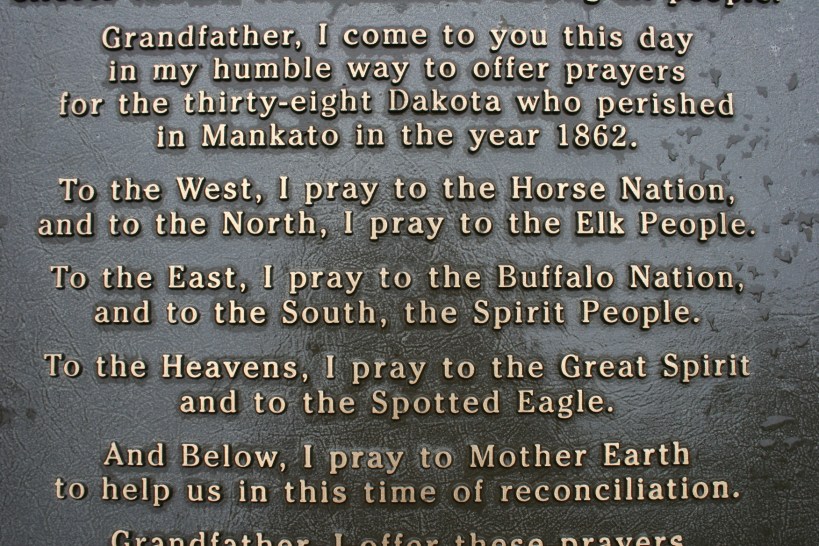
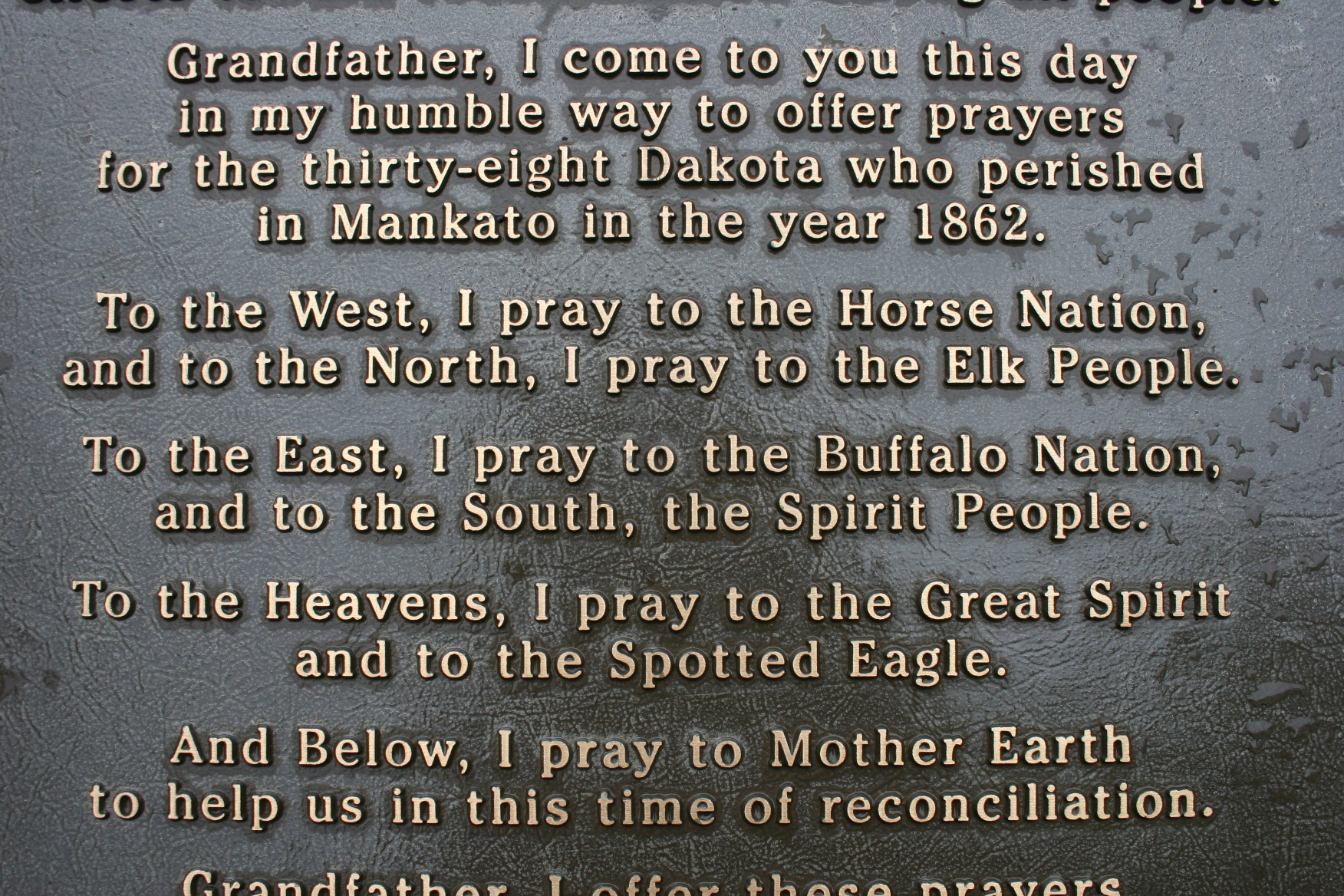
Words on a marker in Reconciliation Park in Mankato where 38 Dakota were hung on Dec. 26, 1862.

Words on a marker in Reconciliation Park in Mankato where 38 Dakota were hung on Dec. 26, 1862. On Wednesday, a new Dakota 38 Memorial was dedicated listing the names of the 38 men who died here. This file photo was taken of an existing plaque in the park.

In a ceremony in Mankato on Wednesday marking the 150th anniversary of the hanging of 38 Dakota, Mayor Eric Anderson proclaimed this the year of “forgiveness and understanding.”

The Dakota also called upon all to “forgive everyone everything.” Those words will be engraved into Kasota stone benches to be installed next summer at the site of the new Dakota 38 Memorial dedicated in Reconciliation Park on Wednesday.

Strides toward understanding and forgiveness, and education, can perhaps finally heal the still festering wounds of this long ago war.

TO VIEW PHOTOS from the event in Mankato on Wednesday, click to link here to Minnesota Public Radio.

TELL ME, ESPECIALLY if you grew up in Minnesota, did you study The U.S.-Dakota War of 1862? Also, are Minnesota students today being taught about this war?

© Copyright 2012 Audrey Kletscher Helbling


Chief Sleepy Eye shouldn’t have a mustache June 6, 2012

Filed under: Uncategorized — Audrey Kletscher Helbling @ 7:19 AM
Tags: , , , , , ,

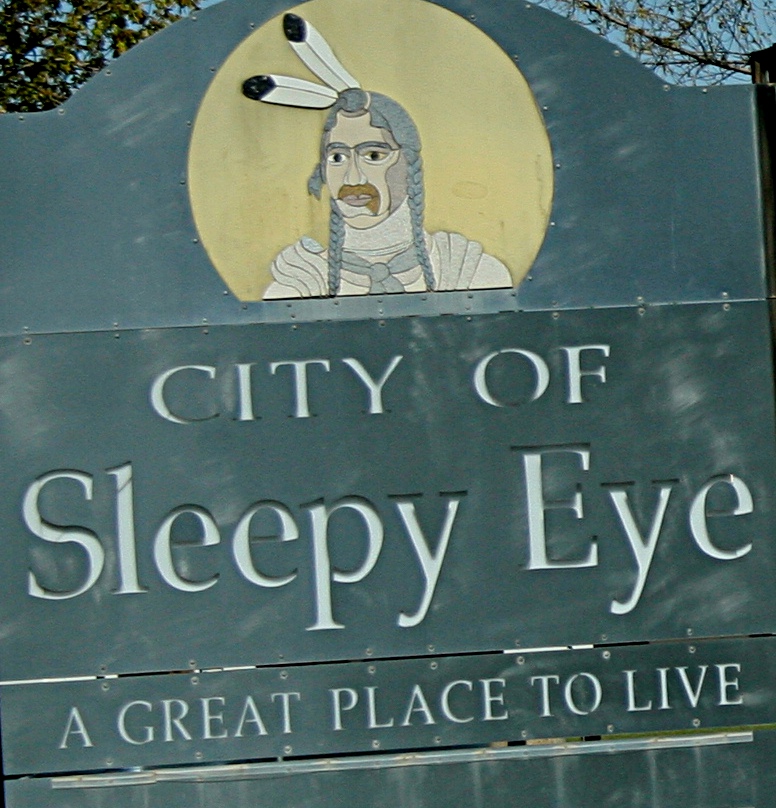
In mid-April I photographed this sign featuring Chief Sleepy Eye on the east end of Sleepy Eye, MN.

HIS EYELIDS MAY HAVE DROOPED, but I’m quite certain Chief Sleepy Eye didn’t sport a mustache.

However, on this sign welcoming visitors to Sleepy Eye, in Brown County, Minnesota, the town’s namesake clearly has facial hair.

I didn’t notice the apparent defacing of Chief Sleepy Eye until now, while sorting through on-the-road photos I shot in April.

I expect that’s exactly the problem. Locals and travelers pass by the welcome sign along U.S. Highway 14 and don’t even notice. We get so accustomed to something that we overlook the details.

Scratching a mustache onto a person’s photo in a newspaper (haven’t we all done that?) is one thing. But marring a Sisseton Dakota chief’s image on a public welcoming sign is quite another.

So who, exactly, was Chief Sleepy Eye?

Born in 1780, this leader of the Swan Lake or Little Rock band of hunters was considered a friend of explorers, traders, settlers, missionaries and others. He was among those signing, albeit reluctantly, the Treaty of Traverse des Sioux in 1851. In that historic treaty, the Dakota ceded land in exchange for promises of cash, goods, education and a reservation.

From 1857-1859, Ishtakhaba’s (Sleepy Eye’s) main village sat along Sleepy Eye Lake. He died in 1860 while hunting in South Dakota. His remains were eventually buried beneath a granite obelisk monument that stands near the historic railroad depot in Sleepy Eye.

Even though I lived and worked in Sleepy Eye briefly in the early 1980s, I don’t recall ever taking time to view this monument or to appreciate the Dakota chief it honors. Perhaps it’s time to detour a block off highway 14 and educate myself.

FYI: To view Chief Sleepy Eye without a mustache, click here to an image on the City of Sleepy Eye website.

© Copyright 2012 Audrey Kletscher Helbling
 

A Minnesota politician & writer shares his insights on “The Dakota War, a clash of cultures” May 18, 2012

Filed under: Uncategorized — Audrey Kletscher Helbling @ 3:15 PM
Tags: , , , , , ,

This archway leads to the Wood Lake State Monument, on the site of the battle ending the U.S.-Dakota Conflict.

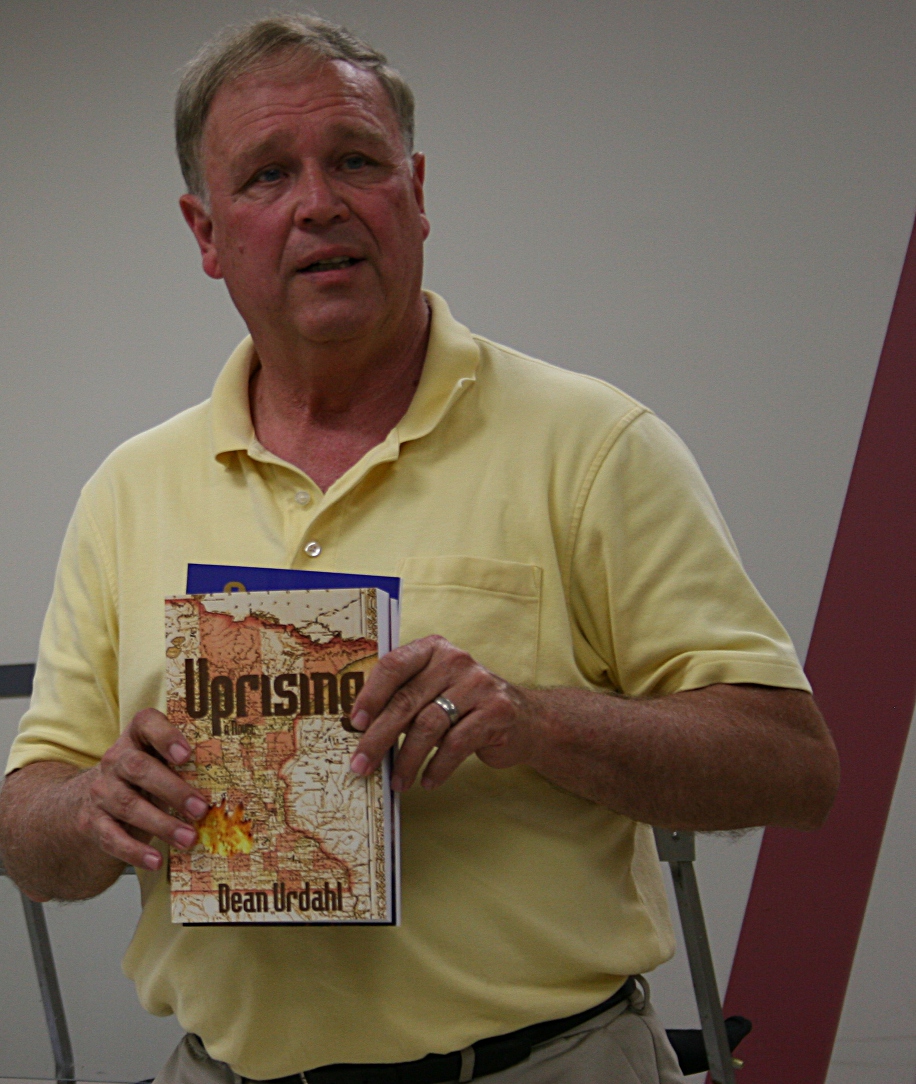
Dean Urdahl has written the trilogy of Uprising, Retribution and Pursuit.

I COULD HAVE LISTENED to Dean Urdahl for hours. Not Urdahl the Minnesota State Representative from District 18B. But Urdahl the historian, the retired American history teacher, the storyteller, the writer.

The southern Minnesota politician, who co-chairs the Minnesota Civil War Commemoration Task Force, was in Faribault Thursday evening to talk about the U.S.-Dakota War of 1862 and to promote his trilogy of historical fiction novels about that conflict.

Urdahl’s interest in the U.S.-Dakota War is rooted deep in family history, in the soil of Meeker County where his Norwegian immigrant ancestors settled in 1856 and where, on August 17, 1862, five settlers were killed by a small group of Dakota. That attack in Acton Township, only 1 ½ miles from Urdahl’s current home, marked the beginning of the war.

Urdahl’s great-great-grandfather helped bury those five victims in the cemetery of Ness Lutheran Church, a country church southwest of Litchfield. A monument there honors the five who were slain. The Representative grew up attending Ness Lutheran, listening to his mother tell stories about his ancestors and the area’s history. That sparked his interest in history and specifically a strong interest in the U.S.-Dakota War of 1862.

“What happened in 1862 (in Minnesota) is largely ignored by historians,” Urdahl said, adding that the U.S.-Dakota War “gets scant attention and deserves more.”

In 1862, a divided nation was more focused on the conflict between North and South than on the clash between cultures in Minnesota, Urdahl explained.

This historian, however, certainly drew attention to the war between the white settlers/soldiers and the Dakota during his presentation, “The Dakota War, a clash of cultures,” at the monthly Cannon Valley Civil War Roundtable meeting in Faribault in this, the 150th anniversary year of the War.

Cultures collided, Urdahl said, as immigrants settled in the native home of the Dakota and the government adopted a policy “to turn them (the Dakota) into farmers.”

Conflict also existed among the Dakota—between “the blankets,” those sticking to traditional ways, and “cut-hairs,” those turning into farmers, he said.

Speaking without notes and with the skill of a master storyteller passionate about his subject, Urdahl mesmerized his audience, sharing information and a story-style time-line of how the U.S.-Dakota War unfolded.

The Milford State Monument along Brown County Road 29 west of New Ulm commemorates the deaths of 52 settlers who were killed in the area. Located along the eastern edge of the Lower Sioux Reservation, Milford had the highest war death rate of any single township.

Urdahl’s talk was a refresher course for me, a native of Redwood County located at the geographical center of the War. I’ve always been interested in the conflict and even penned a term paper on “The Sioux Uprising of 1862,” as it was labeled when I was a high school student. My maternal ancestors lived in the New Ulm area in 1862 and were warned by friendly Indians to leave; the families fled to the safety of nearby St. Peter.

“We find throughout the war, friendly Indians warning people to leave,” Urdahl said.

That, and much of what this historian said, I already knew. You’ll find it written in books. But some of what Urdahl shared I had forgotten or never heard such as…

  • A drought in 1861 left the Dakota near starvation and relying on government food. (I didn’t recall the drought as preemptive to the desperate situation among the Dakota.)
  • In late July 1862, some 5,000 Dakota gathered at the Yellow Medicine Agency ready to storm the warehouses. Agents eventually released the storehouse of grain to the hungry Dakota, thus averting the start of the war for several weeks.
  • The settlers at Acton were challenged to a target shooting contest by the Dakota before they were killed.
  • The Dakota were intent on attacking New Ulm because they thought the town was built on reservation land. The reservation covered a 10-mile by 150-mile area along the Minnesota River.
  • From 500 – 800 Minnesotans were killed/died during the six-week war, only 75 of whom were soldiers. “The rest,” said Urdahl, “were Swedish, German and Norwegian immigrants who didn’t know what was going on.”
  • Although there is not an accurate count on the number of soldiers who died in the Battle of Birch Coulee, the count of dead horses stands at 90. “They could replace men, not horses,” Urdahl said.
  • When Fort Ridgely was under attack, fort leader Lt. Thomas P. Gere was coming down with the mumps.
  • During the final battle at Ft. Ridgely, doors on both ends of the surgeon’s quarters/headquarters were opened and a cannon ball fired down the hallway toward the stables where the Dakota were stationed.
  • A Confederate officer was reportedly spotted in Little Crow’s (Dakota leader) camp. Some speculate that the Confederacy played a role in the U.S.-Dakota War of 1862, thus diverting soldiers from the Confederate front by keeping them in Minnesota to fight the Dakota.
  • Little Crow lived in a brick house at the time of the War.

Trader Andrew Myrick refused to grant the Dakota credit, remarking, “Let them eat grass.” After an attack on the Lower Agency, Myrick was found dead, his mouth stuffed with grass.

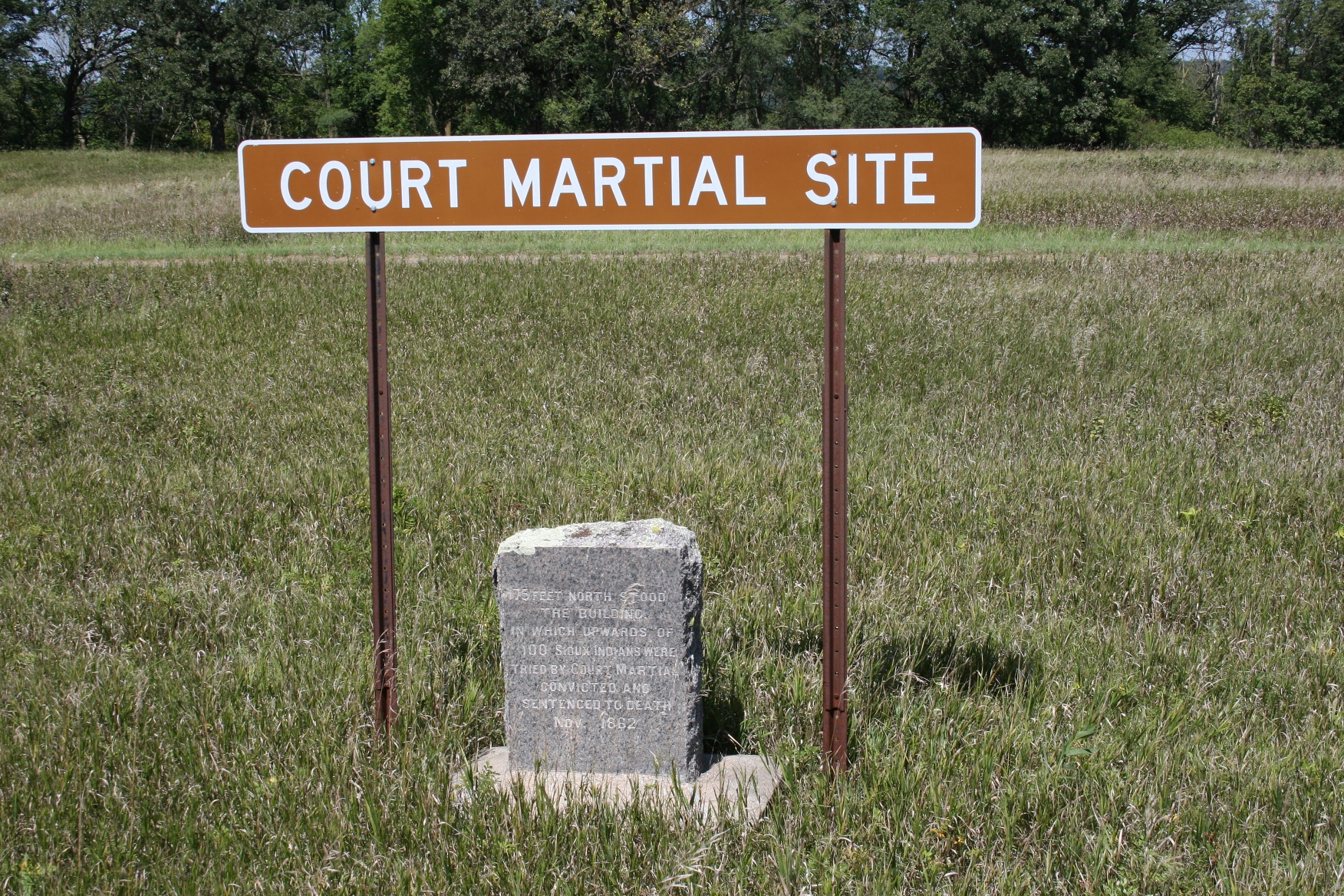
The message on a marker near the Lower Sioux Agency reads: 75 feet north stood the building in which upwards of 100 Sioux Indians were tried by court martial, convicted and sentenced to death Nov. 1862.

As I listened to Urdahl’s presentation, I wondered how Native Americans would react to the information he shared. What perspective would they offer? Would they disagree with him, challenge his facts, voice their opinions? How would they feel?

“There are still very hard feelings on both sides,” this descendant of Norwegian immigrants told his audience. He occasionally gets e-mails from angry descendants of settlers killed during the U.S.-Dakota War.

Growing up in Redwood County decades ago, I was well aware of the animosity between whites and the Dakota passed down through the generations. I know the bad feelings still linger on both sides.

But perhaps in this 150th anniversary year, we can all (white and Dakota) strive to overcome, to understand and to, finally, forgive.

Words on a marker in Reconciliation Park in Mankato where 38 Dakota were hung on December 26, 1862. This stands as the largest mass execution in American history. Initially, 303 were sentenced to death. President Abraham Lincoln approved the deaths of 39 and granted a last-minute reprieve to one other.

FYI: All of the above monument images were photographed within the past several years.

© Copyright 2012 Audrey Kletscher Helbling