Minnesota Prairie Roots

Writing and photography by Audrey Kletscher Helbling

One child dies, another missing & a fireman injured in a farmhouse fire near my hometown December 5, 2013

I AM GRIEVING from a distance for two young children who apparently died in a house fire Wednesday afternoon near Lucan in my native southwestern Minnesota. The body of one child was recovered late Wednesday evening and one child remains missing.

The fire engulfed the home of Bernadette and Matt Thooft who escaped along with several of their children.
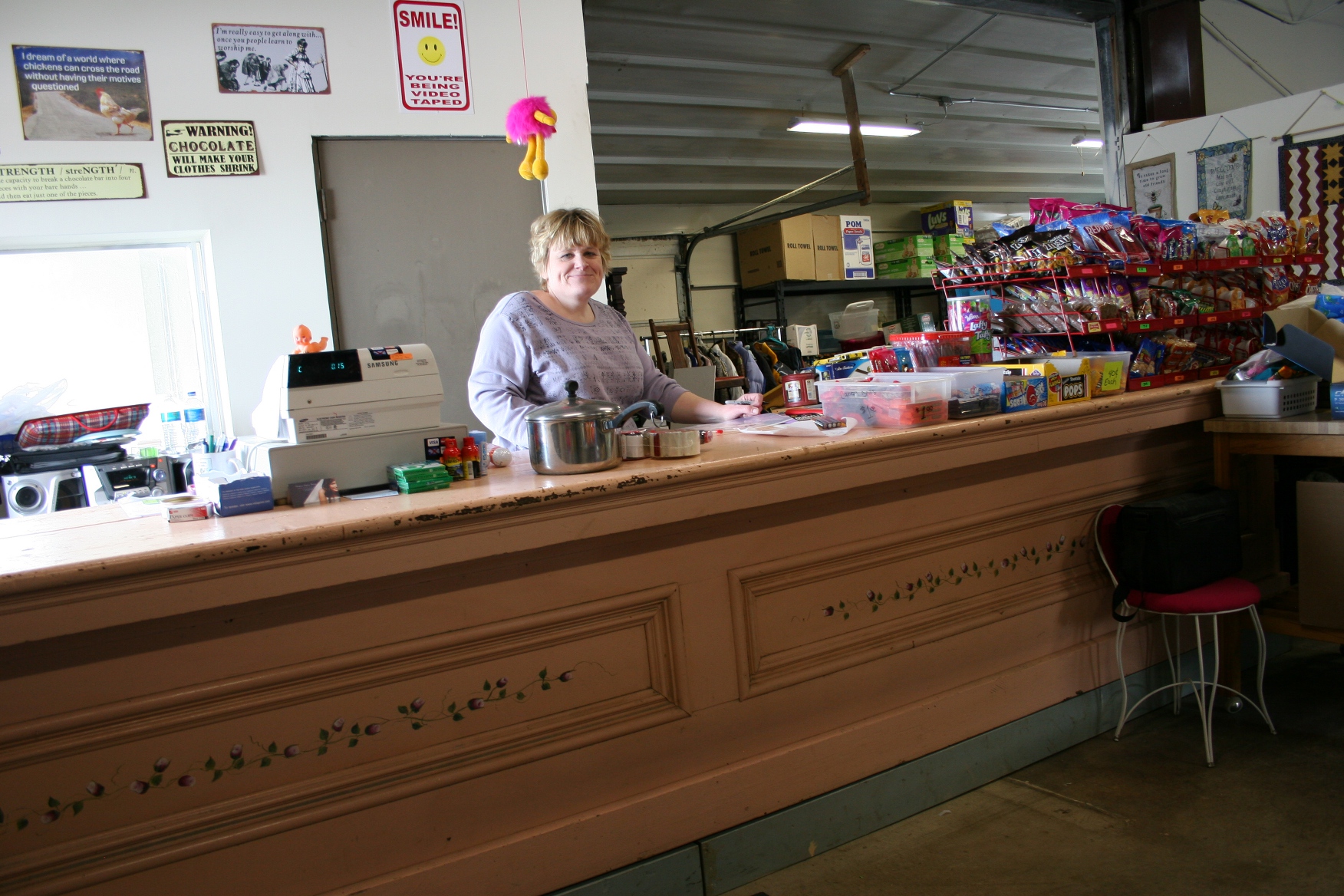
This 1800s general store counter anchors The Store.

Bernadette Thooft poses for a photo in March 2013 in her general store.

I met the Thooft family last March in my hometown of Vesta, where Matt runs Matt’s Frame Repair and Bernadette operates a combination grocery and thrift store next door. I featured Bernadette’s new business, The Store, in a “Little General Store on the Prairie” blog post published March 27. (Click here to read.)
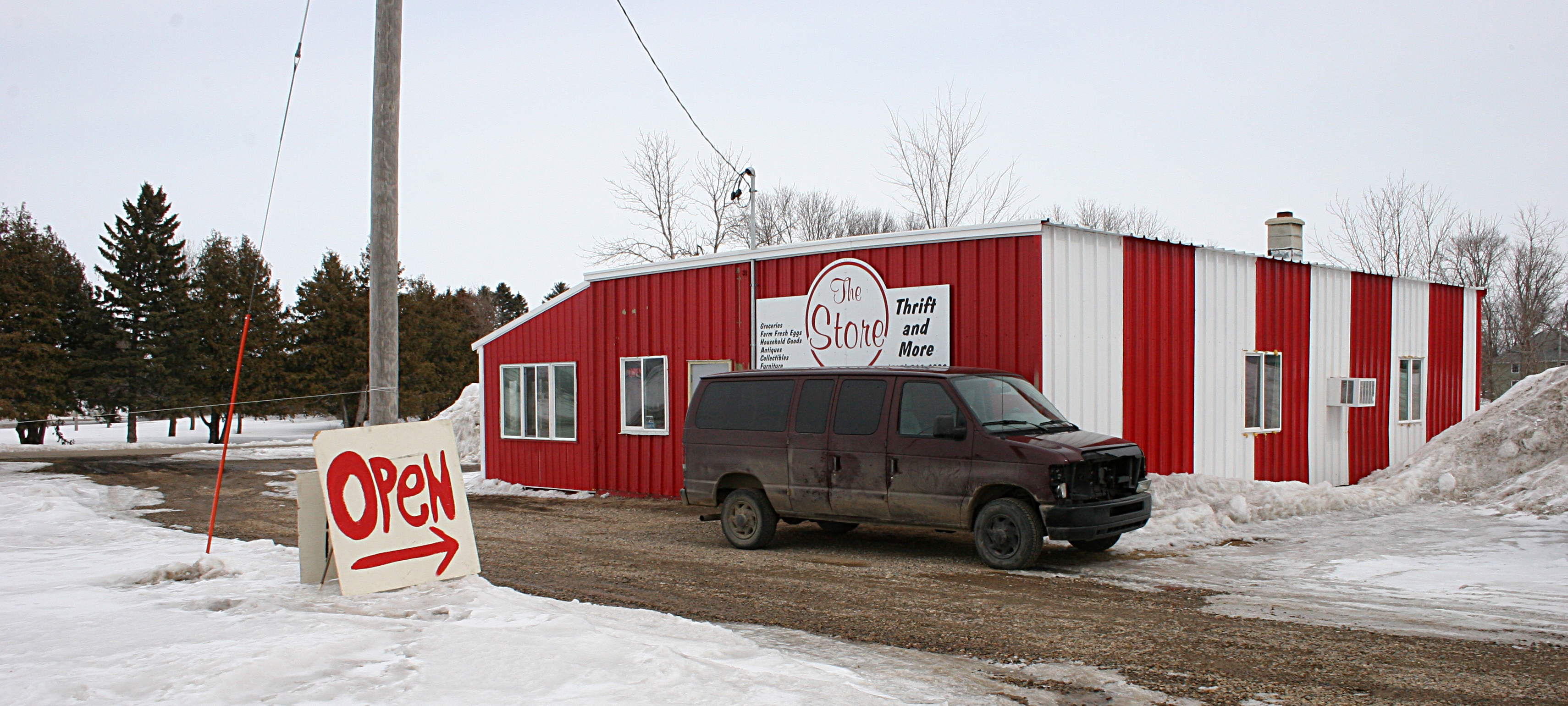
The Store: Thrift and More sits just off Minnesota Highway 19 in Vesta in Redwood County.

The Store: Thrift and More. March 2013 Minnesota Prairie Roots file photo.

It’s not like I really knew the family in any great depth. But in the short time I spent with Bernadette, I learned enough to understand that this former daycare provider possesses a deep love for children. She and Matt had seven, ranging in age (in March) from not quite two to 11. They even built a hang-out space for the kids in a corner of The Store.
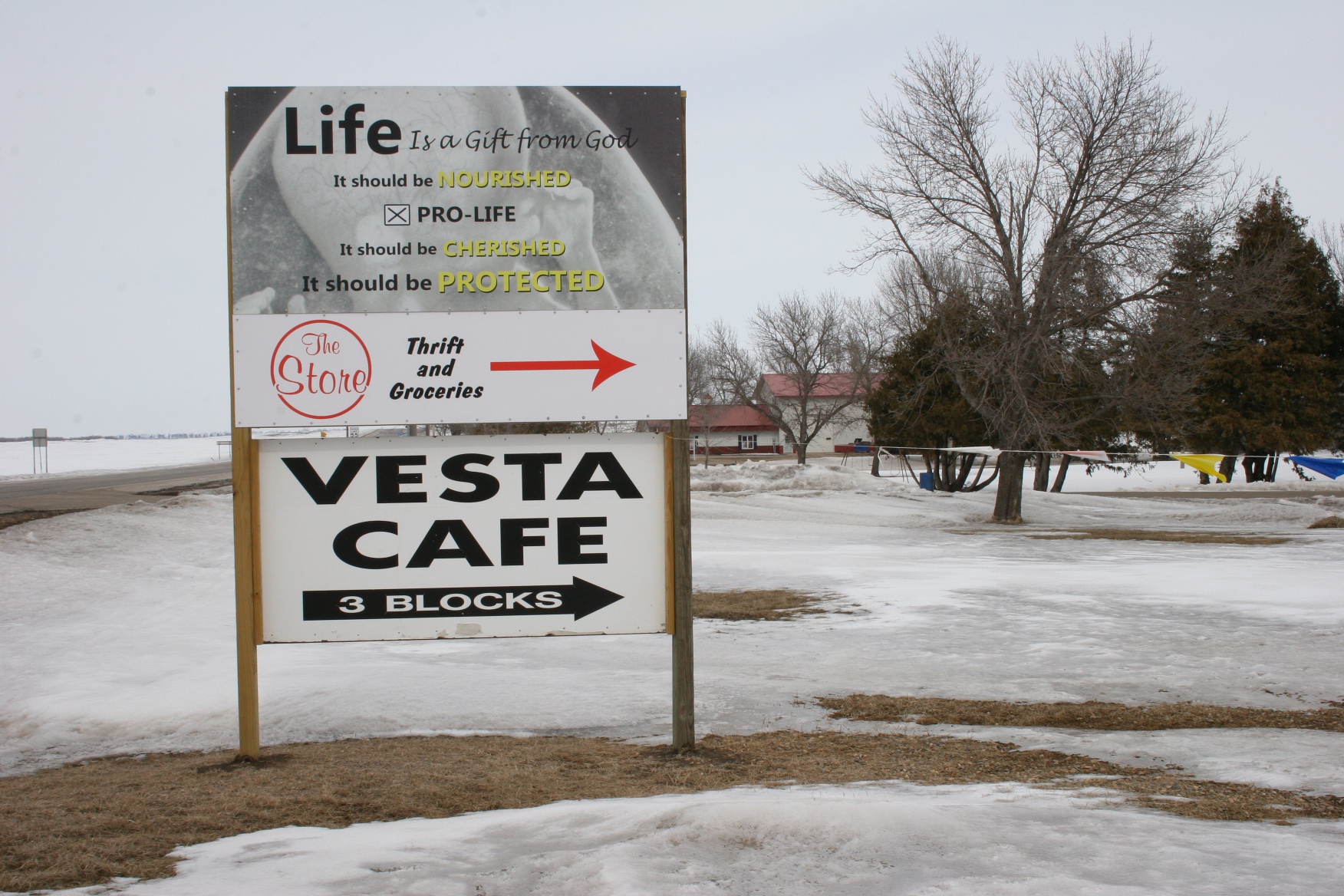
This sign by the thrift store points travelers along Minnesota Highway 19, left, to The Store and the Vesta Cafe.

The Thoofts make a faith statement in this sign which points travelers along Minnesota Highway 19, left, to The Store and the Vesta Cafe.

Bernadette also possesses a deep faith and concern for others. This caring woman donates 10 percent of The Store proceeds to charity and established “Believe in the Backpack,” a backpack program for children in foster care. The Thoofts were former licensed foster care providers.

At the time of our interview, Bernadette fondly tagged her children “the hoodlums” in that kind and loving way that only a mom can.

It breaks my heart that this mother may have lost two of her children. It should be noted that authorities have not yet released information on the ages or identities of the children who did not escape the fire.

The Thoofts lived in a six-bedroom farmhouse on eight acres just 1.5 miles northeast of Lucan. They were in the process of trying to sell their property, according to information on The Store Facebook page. Plans were to relocate to my hometown of Vesta, seven miles to the north.

Vesta firefighters were among volunteers from eight area small town fire departments battling the blaze in harsh winter weather conditions.
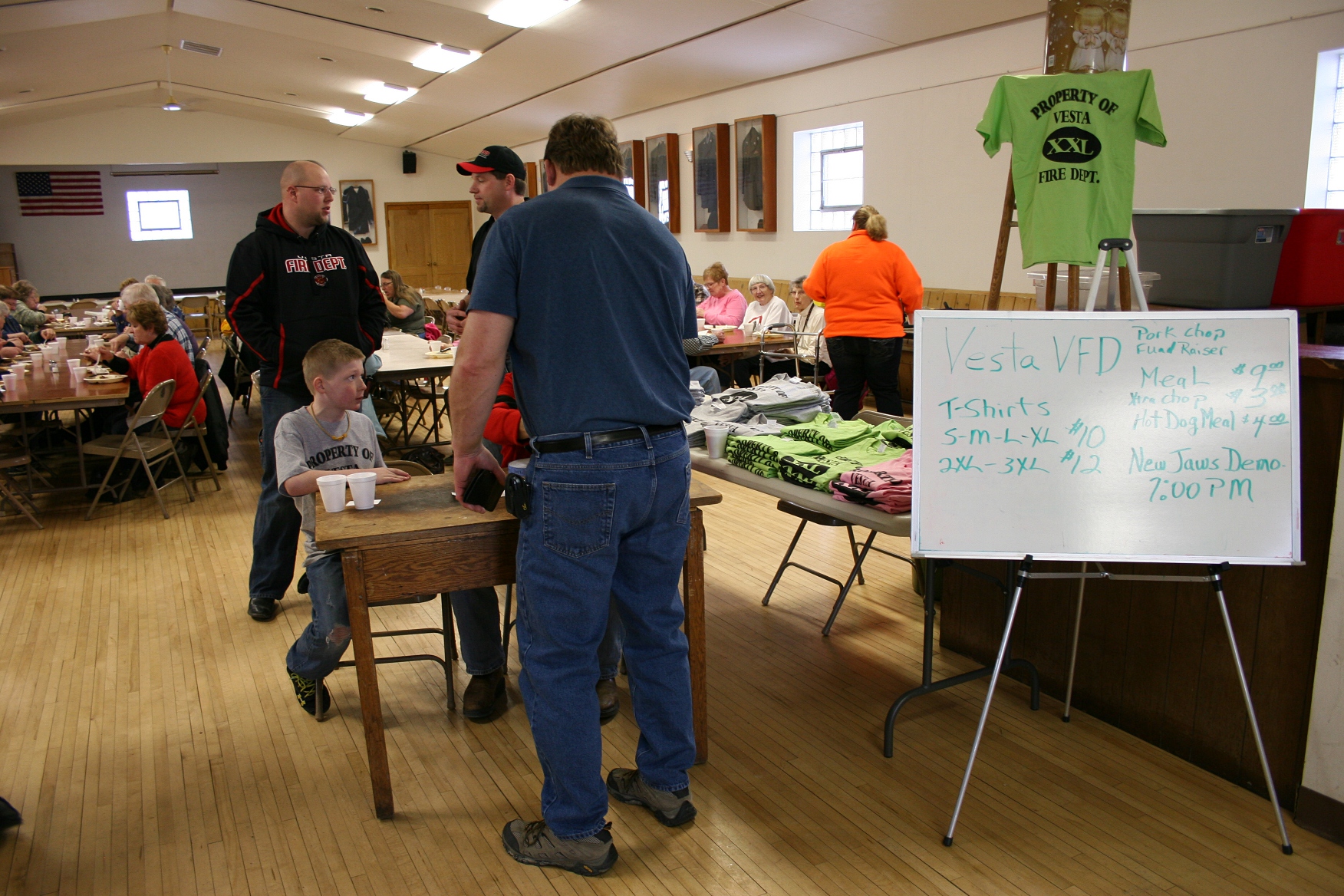
That's Vesta firefighter Neal Hansen to the left behind the table, photographed at the Vesta Fire Department  Pork Chop Feed in March.

That’s Vesta firefighter Neal Hansen standing to the left behind the table, photographed at the Vesta Firemen’s Relief Association Pork Chop Supper in March.

THEREIN LIES THE SECOND PORTION of this tragic story. Vesta firefighter Neal Hansen’s legs were run over by a fire truck after he slipped on ice, according to numerous news sources. He was severely injured and underwent surgery at a Mankato hospital. Initially, he was taken to the Redwood Falls Hospital, but could not be airlifted out because of high winds and snowy conditions at the time, KLGR radio reports.

If you wish to help with expenses for Neal and Tiffany Hansen, both volunteer EMTs for the Vesta First Responders and the parents of a 2-year-old son, please click here and donate through the Hansens’ Giveforward page. By 8 p.m. Thursday, 75 donors had contributed $3,685 to the fund, surpassing the $3,000 goal.

Contributors Ryan and Christie Rudenick commented on the Giveforward page:

Thank you and to all the volunteer firemen, in small, tight knit communities like we have it is even harder to be on call and see horrific things happen to our friends and communities–you and all firemen are heroes!
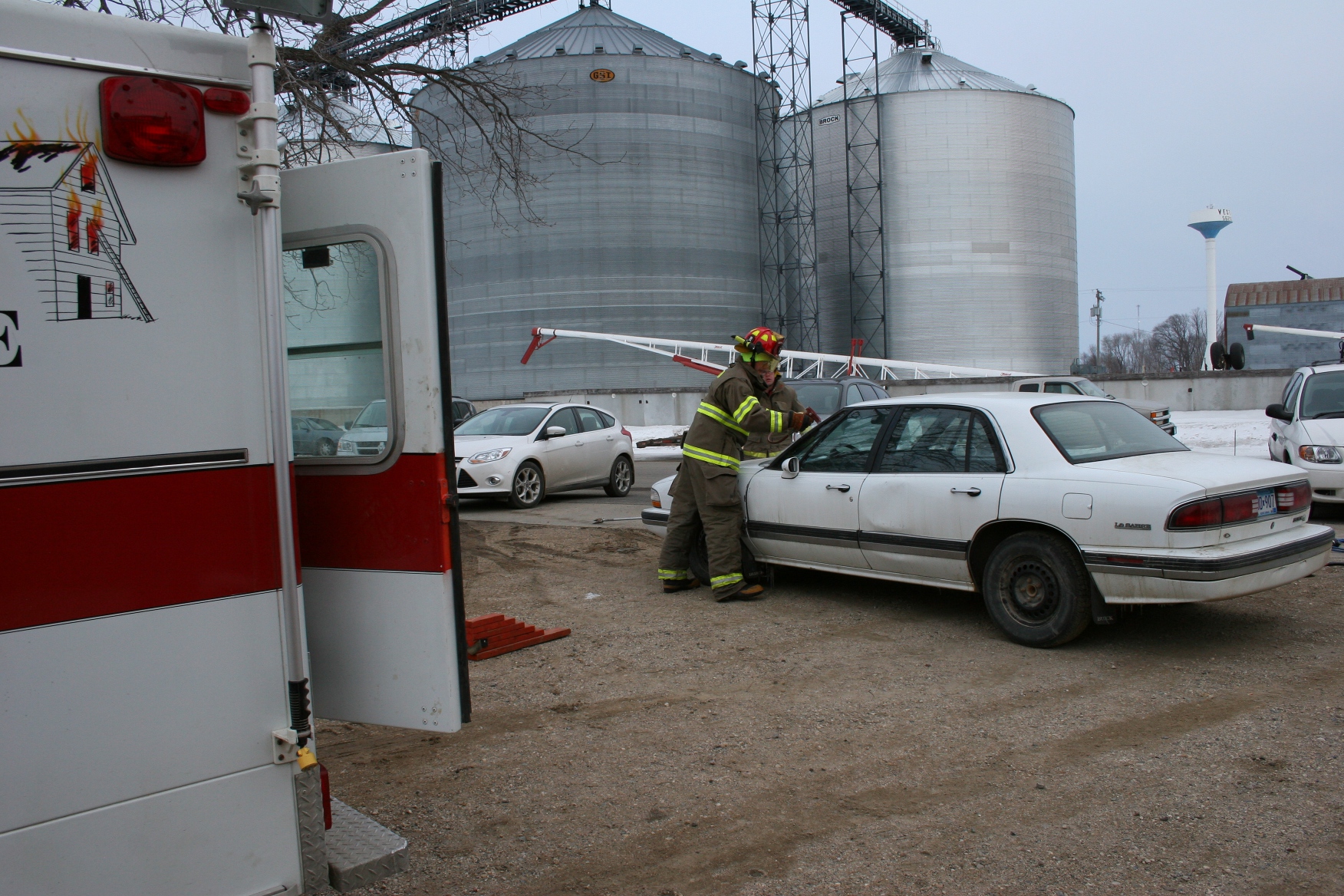
Volunteer firemen remove the windshield from a junk car.

Vesta volunteer firemen remove the windshield from a junk car during a Jaws of Life demonstration in March of 2013 in my hometown of Vesta.

I ditto the Rudenicks’ “thank you.” With extended family members on two of the volunteer fire departments called to the Lucan farmhouse fire, I have a personal connection to these firefighters. My 29-year-old nephew, Adam, a father and elementary school teacher, responded to the fire with the Walnut Grove Fire Department.

Last winter I met several other Vesta firemen while attending a fire department fundraiser. You can click here to read that post.

Imagine the emotional impact this fatal fire is having on these volunteer firefighters from eight communities.

I expect know that the residents of Vesta and Lucan and surrounding areas will rally to assist the Hansen and Thooft families via prayer, emotional support, financial help and community benefit fundraisers. I’ll update you if a benefit is established for the Thoofts. Nothing beats the neighborly care found within small towns like Vesta, population 320, and Lucan, population 190.

This is not the first time the Thooft family has faced difficulties. In April 2008, the Thoofts’ then 6-year-old son, Zachary, was struck by a school bus after being dropped off at his rural home, according to an article in The Marshall Independent. He recovered from those injuries.

And now this, this deadly fire at their home…

© Copyright 2013 Audrey Kletscher Helbling


Near Menahga: “The perfect recipe for a fire” May 16, 2013

It's easy to understand how fire could race through acres of pines under hot, dry and windy conditions. Minnesota Prairie Roots file photo from Itasca State Park.

It’s easy to understand how fire could race through acres of pines under hot, dry and windy conditions. Minnesota Prairie Roots file photo from Itasca State Park, used for illustration purposes only and not within the Green Valley Fire area.

HUNDREDS OF MILES removed from the Green Valley Fire raging in the Park Rapids/Menahga area of northwestern Minnesota, I cannot even fathom the challenges faced by firefighters, the fears experienced by residents.

My connection to the region comes via the co-editor of a literary journal, The Talking Stick, in which I’ve been published several times. Late Wednesday afternoon I emailed Sharon Harris of rural Menahga, concerned about her and extended family who live nearer Park Rapids than Menahga.

The fire came within two miles of Harris’ home and that of her mother, sister and niece. They had to evacuate their pets—cats and dogs—to a local animal clinic. Without a trailer, though, Harris’ niece had to leave her horses behind.

“We were lucky,” says Harris, who was able to return to her home and sleep overnight after evacuating her pets.

Not so fortunate were those who lost their homes—at last count 12 homes, two commercial properties and 43 outbuildings in Hubbard and Wadena counties, according to information posted at 7:30 p.m. Wednesday on the Minnesota Incident Command System website.

Harris, who works in Menahga at the First National Bank of Menahga and Sebeka, says many bank customers lost their homes.

The fire, which has reportedly burned through a pine stand of 7,100 acres, is 25 percent contained, according to the most recent information posted by the MNICS Wednesday evening. Click here to read details.

Harris, off work due to a family medical situation, drove to Menahga late Wednesday evening to catch up on work. She writes:

So much smoke still in the air in the area where the wildfire jumped Highway 71. It is right around Blueberry Golf Course and the Hubbard County/Wadena County line where it crossed. I guess the golf course is okay, amazingly. So it will be Friday before I drive to Menahga in the daytime and will be able to see any damages.

She remembers well the weather conditions on Tuesday, the day the fire began around 3 p.m. and then quickly spread to the area north of Menahga. Harris says:

I have never felt such a wind that day (Tuesday). When I drove from Menahga to Park Rapids around 4 p.m. that day, the wind just buffeted my car all over the road. Crazy. The perfect recipe for a fire: so hot, so dry, and wild wind.

And, as often happens in the early, uncertain stages of a major wildfire, locals are speculating about its cause. “I heard that lightning started it. Before that, I heard that someone was doing a controlled burn and it got away from them…”

No matter the cause, the facts stand: Twelve homes destroyed. Two commercial properties gone. Forty-three outbuildings burned. Already.

© Copyright 2013 Audrey Kletscher Helbling

 

My thoughts after reading a book by 35W Bridge collapse survivor Garrett Ebling February 21, 2013

SOMETIMES, MANY TIMES, life is not as it seems upon the surface.

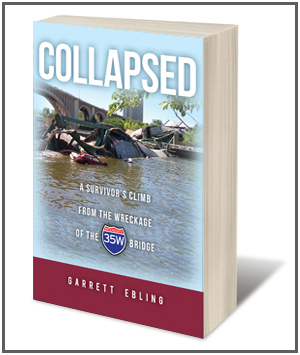
That summarizes my overall reaction to reading Collapsed, A Survivor’s Climb from the Wreckage of the 35W Bridge by Garrett Ebling.

Now, before I explain, you should know that I wrote a feature article, “The 35W bridge collapse: One story of survival, rescue and blessings,” which published in Minnesota Moments magazine in 2007. That story included information and quotes from interviews with Garrett (done via e-mail given his physical condition), his then fiancée, Sonja Birkeland, and his rescuer, Rick Kraft.

This photo shows the opening spread of the feature article published in the November/December 2007 issue of Minnesota Moments. Casey McGovern of Minneapolis shot the bridge collapse scene. To the far left is Garrett before the collapse, to the right, his rescuer. The next photo shows his Ford Focus which plummeted into the Mississippi River. And to the right are Garrett and Sonja, before the collapse.

This photo shows the opening spread of the feature article published in the November/December 2007 issue of Minnesota Moments. Casey McGovern of Minneapolis shot the bridge collapse scene. To the far left is Garrett before the collapse, to the right, his rescuer. The next photo shows his Ford Focus which plummeted into the Mississippi River. And to the right are Garrett and Sonja, before the collapse. Photos on the opposite page show Garrett during his recovery.

Garrett granted a limited number of interviews, mine included, shortly after the August 1, 2007, collapse in Minneapolis, favoring print journalists given his background in newspapers. He had worked as managing editor of the Faribault Daily News. And although I’d never met him, we’d communicated after my son was struck by a hit-and-run driver while crossing a Faribault street the previous year. Garrett showed a great deal of compassion toward my family and that meant a lot to me as a mother.

With that background, you can understand why my approach to Garrett’s memoir is more personal than that of the average reader. And, for that reason, my reaction is more emotional. Reading of his ongoing struggles, I could hardly believe this was the same positive and determined man I’d interviewed shortly after the bridge collapse.

But I expect, at the time of our 2007 interview, Garrett was in pure recovery mode, so focused on his physical recovery that he had no idea of the emotional struggles ahead. And I’ll be honest here, I’d not considered either how plunging from a bridge (in your car) the equivalent of an 11-story building into a river would impact every aspect of your life. Garrett’s injuries, including a traumatic brain injury, were numerous, his survival termed miraculous by many. Every facial bone plate shattered in an impact compared to hitting a brick wall at 100 mph.

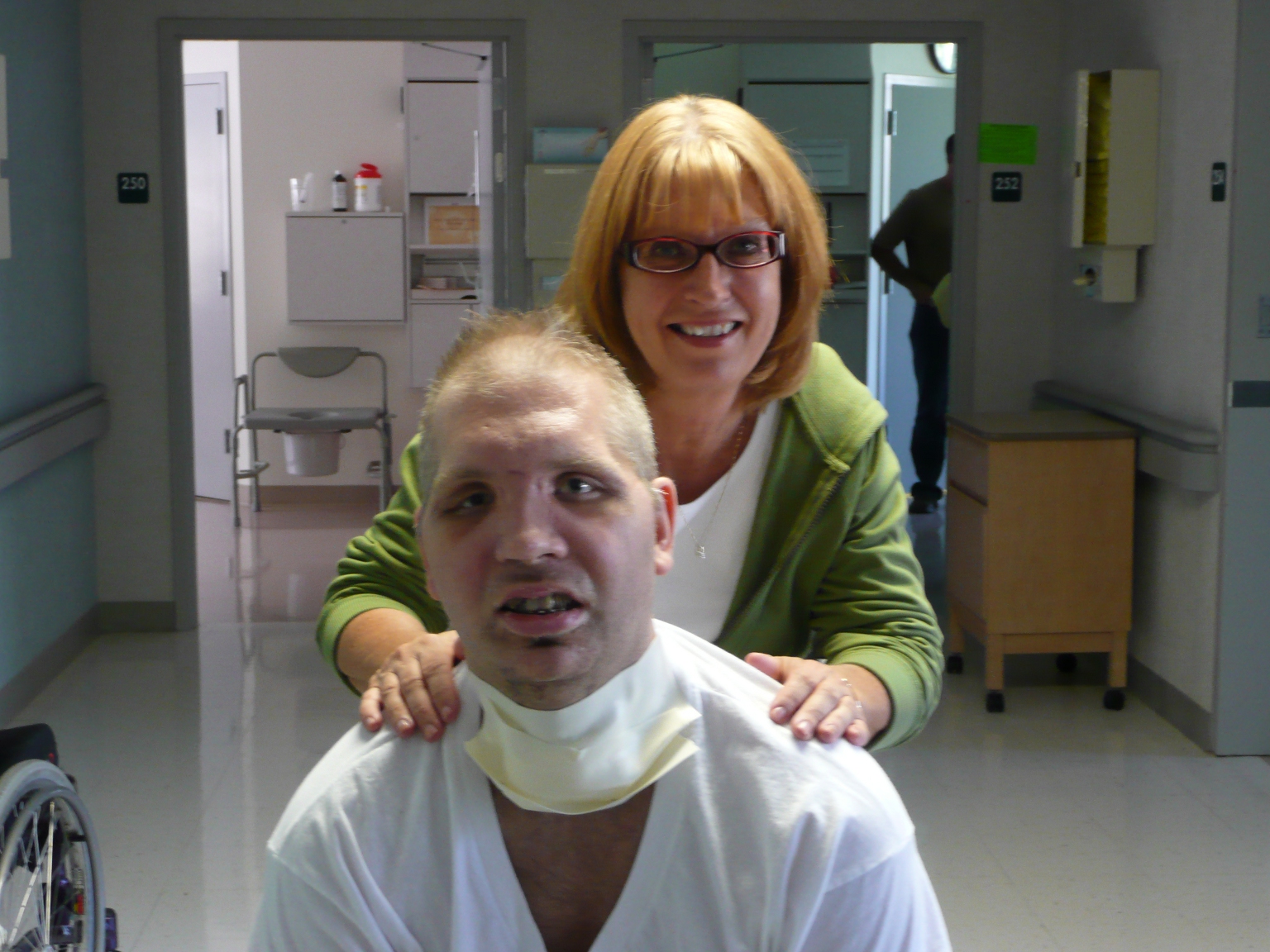
Garrett with his mom, Joyce Resoft, about a month after the bridge collapse.

Garrett with his mom, Joyce Resoft, about a month after the bridge collapse. Photo courtesy of Garrett Ebling.

In his book, which also shares the recovery stories of several other bridge collapse survivors, Garrett holds nothing back. Nothing. Upon seeing himself in a mirror for the first time, he writes:

This man’s face, unlike mine, was swollen and quite asymmetrical. One eyelid drooped far lower than the other. One pupil remained fully dilated. There were gashes and scabs around his brow. His temples were sunken in. His teeth were either missing or horribly out of place. This man should be living up in Notre Dame’s bell tower.

Even prior to viewing himself for the first time after the collapse, the then 32-year-old realized: “I might be fixable, but I wouldn’t ever be the same.” That declaration, in the context of the book, applies as much to his physical appearance as to his personality.

Throughout the book, survivor after survivor reveals issues related to diagnoses of Post Traumatic Stress Disorder such as new fears, anger, loss of control, lack of joy in life, challenges in relationships… Prior to reading Garrett’s book, I’d only considered PTSD an issue of soldiers, like my father, who’d served in war. How ridiculously limited I was in that thinking.

Garrett’s book will catch you like that, revealing the obvious which you may not have considered. Take his story about a Halloween night out in a downtown Minneapolis bar with his buddies. A friend warned him about a young man wearing a 35W bridge collapse costume. Garrett writes of the incident:

I approached him. I acted as though I couldn’t figure out his costume…asked him who he was supposed to be. ‘I’m the 35W Bridge collapse,’ he said in an almost proud way, like he’d just thought of the most clever Halloween costume ever. I pointed to a Matchbox school bus glued to his chest. ‘You know, thirteen people died and dozens more had their lives forever changed on that bridge just two years ago—and you’re looking at one of them.’

That’s one powerful story, not only for exposing the insensitivity of a young man, but also for revealing how we oftentimes fail to understand that even the most ordinary aspects of life—like an evening out—can be impacted by a disaster.

book1

Garrett’s book shows, in very personal ways via the stories of survivors Lindsey, Kim (that bus driver), Paula, Omar, Erica and others, the individuals behind the 35W Bridge collapse. That enables the reader to connect in a world where disasters are often lumped into numbers and places and quickly forgotten when the next disaster occurs.

I have never forgotten the 35W Bridge collapse. I doubt any Minnesotan could. When disaster happens that close, affects people who were simply commuting home from work, as Garrett and Lindsey were; driving a bus load of kids back from a day at the waterpark, as Kim was; or heading out for or a celebratory dinner with family as Paula, her husband and two daughters were, you realize how life can change in an instant, for any of us.

Only four days before the collapse, Garrett proposed marriage to Sonja. These should have been among the happiest days of his life, as should have been his marriage on the one-year anniversary of the bridge collapse. But Garrett reveals, much to my surprise, that he felt no joy on his August 1, 2008, wedding day, simply pasting a smile on his face, his spirit crushed.

That deeply personal revelation—and Garrett shares even more about the difficulties in his relationship—shocked me. What had happened to the couple I’d interviewed in 2007? Sonja, at the time a church youth director, told me then:

This could be the blessing of our life. God has done fantastic things out of bad things. The seeds have been planted. If we can get through this, we can get through anything.

Sonja couldn’t have known. And I never would have predicted that this couple, rock hard in their faith, would struggle to keep their relationship together. This, for me, proved the toughest part of the book to read. Eventually they worked it out and saved their marriage.

Sonja and Garrett, with their son, Cooper.

Sonja and Garrett, with their son, Cooper. Photo courtesy of Garrett Ebling.

For Garrett, the pivotal point in his recovery comes in June 2010 as he prays to God:

…I asked you to take the reins. But what I really should have asked of you was to place your hands over mine and guide me, rather than allow me to walk away and demand you do the work.

What a powerful revelation. I’d encourage you to read Collapsed: A Survivor’s Climb from the Wreckage of the 35W Bridge. You’ll never view a disaster in quite the same way. You’ll appreciate all that survivors of a disaster endure. And you will realize, as did Sonja without knowing, the possibilities: “If we can get through this, we can get through anything.”

FYI: Click here for more information about Garrett Ebling’s book.

Copyright 2013 Audrey Kletscher Helbling

Book excerpts quoted with permission from Garrett Ebling


The names behind the numbers in the Titanic disaster & more April 13, 2012

ALL TOO OFTEN following a major disaster, numbers overwhelm, overtake and distance us from the personal loss. It is easy to overlook the individuals—those who lived and those who died—in the sheer immensity of the situation.

Consider the Titanic, which 100 years ago this Sunday, April 15, 1912, sank into the icy depths of the North Atlantic, claiming the lives of nearly 1,500 people. Around 700 survived.

Who are the individuals behind those numbers?

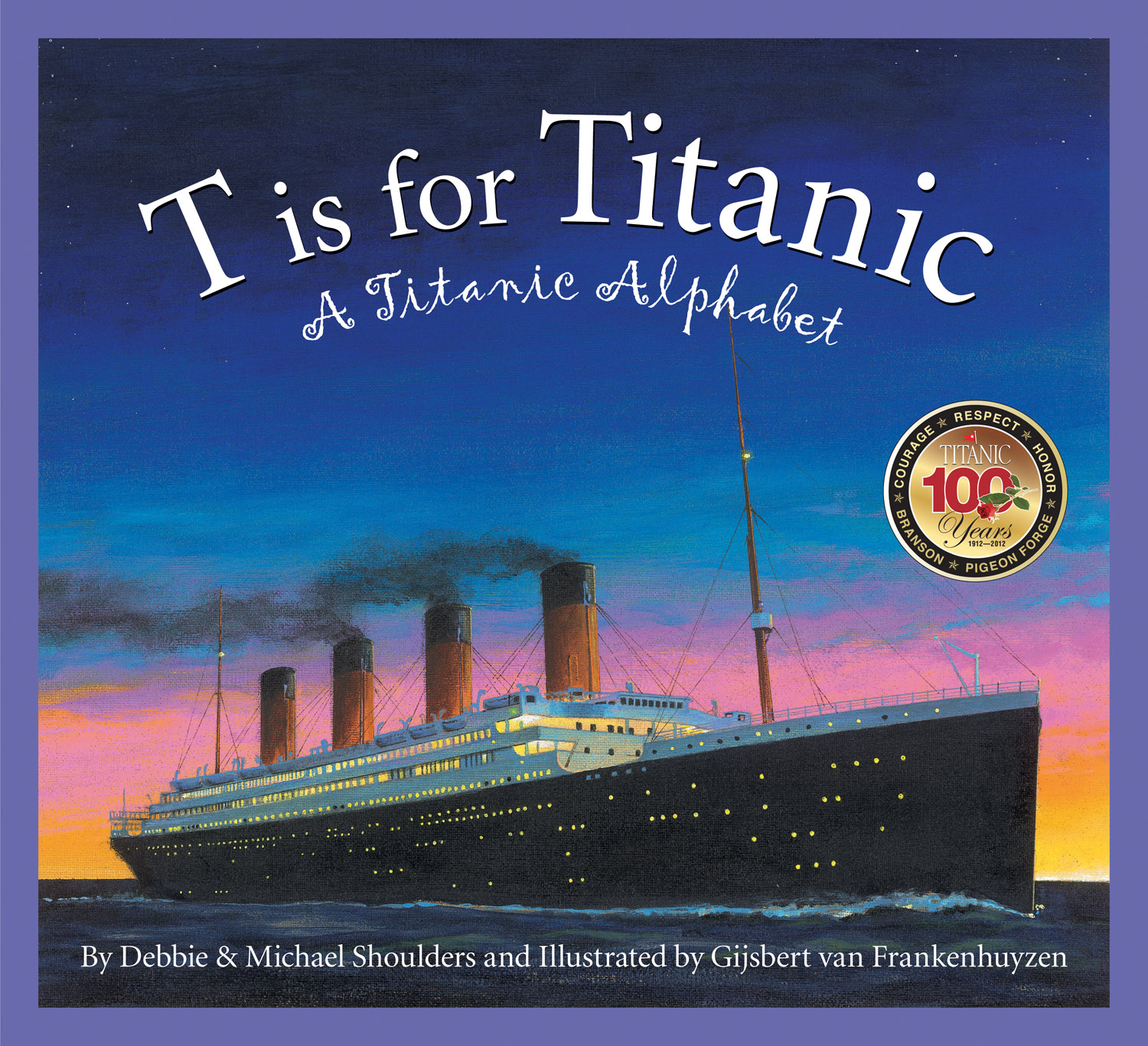
Writers Debbie and Michael Shoulders introduce us to 31 of those Titanic passengers and crew members in their children’s picture book, T is for Titanic: A Titanic Alphabet, illustrated by Gijsbert van Frankenhuyzen and published by Sleeping Bear Press in 2011:

Allen, Frederick
Astor, John Jacob
Astor, Madeleine
Bride, Harold
Brown, Margaret Tobin
Browne, Father Francis
Carney, William
Daniels, Robert W.
Dean, Milvina
Fleet, Frederick
Harper, Henry
Hart, Eva
Hartley, Wallace
Hays, Margaret
Hichens, Robert
Ismay, Joseph Bruce
King, Alfred
Lightoller, Charles Herbert
Loto
Louis
Murdoch, William
Navratil, Michel
Pacey, Reginald
Phillips, Jack
Rothschild, Elizabeth Barrett
Rothschild, Martin
Smith, Captain Edward John
Spedden, Douglas
Straus, Ida
Straus, Isidor
Zimmerman, Leo

It is that personal aspect, the brief telling of individual stories, which humanizes this book targeted for the 6 – 10-year-old age group (although most certainly of interest to any age). That several children are included in the list of 31 is a credit to the authors.

Among the children is 7-year-old Eva Hart, who became fascinated with one of the 10 dogs aboard the Titanic. More than 40 years after the disaster, she found a French bulldog like the one she’d favored on the ship.

The story of Loto and Louis is less joyful. Their father, Michel Navratil, estranged from his wife, boarded the ship with his two young sons. Navratil, who used aliases for himself and his boys, died. His sons survived. Eventually, they were reunited with their mother.

At just nine weeks old, Milvina Dean was the youngest passenger. She died at age 97 as the last Titanic survivor.

Scroll through the list above and you will read the names of the Titanic’s captain, elevator operators, a violinist, a pregnant woman, a publisher, a farmer from Germany and more.

These were real people with hopes and dreams. And it was the dream of one man, Joseph Bruce Ismay, director of White Star Line, the company that owned the Titanic, to sail this large luxury liner. He was aboard the Titanic on the fateful voyage. He climbed into one of the last lifeboats and survived.

The authors pack plenty of factual information about the ship, the disaster, the rescue and the aftermath into their book. But the strength of this book lies in the personal stories.

It is the names that touch the soul, stir the heart and cause one to pause and ponder the grief and pain resulting from this unforgettable tragedy.

DISCLAIMER: I received a free review copy of this book. However, that did not influence my decision to write this review or the content of the review.
Book cover image courtesy of Sleeping Bear Press. Click here to read more about T is for Titanic: A Titanic Alphabet.

#

TWO RESIDENTS of my community, Simon and Karen Zeller of Faribault, are currently aboard the MS Balmoral Titanic Memorial Cruise which left on April 8 from Southhampton, England, with 1,309 passengers. The Balmoral, owned by Fred Olsen Cruise Lines, is following the route of the Titanic and will arrive at the site of the disaster on Sunday. Its final destination is New York. Fred Olsen’s parent company, Harland and Wolff, Ltd., built the Titanic. Click here to read an article about the Zellers published in the Faribault Daily News.

#

JEFF OSBORNE, who works in Faribault and lives in nearby Montgomery, built a radio-controlled model of the Titanic in the late 1990s. The model is made of cardboard but has been waterproofed on the bottom so the replica ship can be placed in water. Read about the Titanic model in the Faribault Daily News by clicking here.