Minnesota Prairie Roots

Writing and photography by Audrey Kletscher Helbling

Strength & hope October 14, 2022

The Straight River roils by at the dam in Owatonna. I see struggles. I see strength. (Minnesota Prairie Roots copyrighted file photo)

WHAT’S YOUR DEFINITION of strength? Whom do you consider strong? Have you faced a challenge, or multiple challenges, in life that required strength? While our answers vary, especially on the third question, I expect threads of commonality in responses.

Strength, from my perspective, is about fortitude and endurance. It’s about somehow finding the ability to face a challenge, to persevere, to come out on the other side with a renewed sense of personal power. Not power in the sense of control, but power that reaffirms one’s ability to deal with whatever life throws at us.

We all have something, right? Financial hardships. Health issues. Loss. Pain. Family members who are struggling. But, admittedly, when we are in the middle of a lot, it can sometimes feel like we are alone, that others live perfect lives unencumbered by issues that drain, stress and, yes, sometimes overwhelm. Nothing could be further from the truth. I repeat: We all have something, whether individually or within our families. We are not alone.
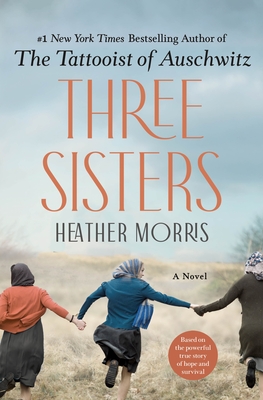
(Cover image from Goodreads)

The novel, Three Sisters by Heather Morris, prompted me to write on the topic of strength. Although fictional, the book is based on a true story about three sisters held in a concentration camp. This is a story of indescribable atrocities witnessed and experienced. This is also a story of irrepressible strength and hope. I encourage you to read this novel and also watch Ken Burns’ newest documentary, “The U.S. and the Holocaust,” which happened to air at the same time I was reading the book. Together, the two were almost too much for me to emotionally take in. It’s a lot to comprehend the inhumanity and cruelty of mankind. Those sent to concentration camps certainly exhibited strength, whether they survived or not.

The iris symbolizes hope. (Minnesota Prairie Roots copyrighted file photo 2021)

In reading Three Sisters, I learned that gladiolus (the flower) signify strength. And the iris, which is part of the glad family, denotes hope. The iris was my mom’s favorite flower. “Hope” is a word I’ve held, and continue to hold, close. “Hope” is not simply a wish. By my definition, it is an active verb that focuses on light shining through darkness. It is a word, too, that envelopes gratitude and believing that things will get better.

I keep this stone on my office desk. (Minnesota Prairie Roots copyrighted file photo)

My name, Audrey, means noble and strong. I wish I’d asked my mom why she chose that name for me, her first-born daughter. I never did, and now she’s gone, but the name fits. I’ve had to be strong many times throughout my life. We all have something, right? Challenges can make us better, more empathetic and compassionate people. That is the good that arises from struggles.

This message refers to struggles with mental illness. (Minnesota Prairie Roots copyrighted file photo)

This week, especially, with World Mental Health Day on October 10, I consider mental health. From anxiety to depression to brain disorders like bi-polar and schizophrenia, these are undeniably hard diagnoses which require incredible strength to face. Simply getting up in the morning, functioning, can prove difficult. There are no cures. No quick fixes. Medication can manage, therapy can help. And even though we are getting better at recognizing and understanding, stigma remains. We can do better at supporting, encouraging, helping. We need more mental health professionals to meet the growing demand for mental health care.

Strength. Hope. Those two words inspire and uplift. Gladiolus and iris. Those two flowers represent the same. From the pages of a novel about three Holocaust survivors to my name to life experiences, I understand what it means to be strong, to feel hope.

TELL ME: I’d like to hear your thoughts on strength and hope.

© Copyright 2022 Audrey Kletscher Helbling


Discovering a Monet painting near St. Charles August 25, 2011

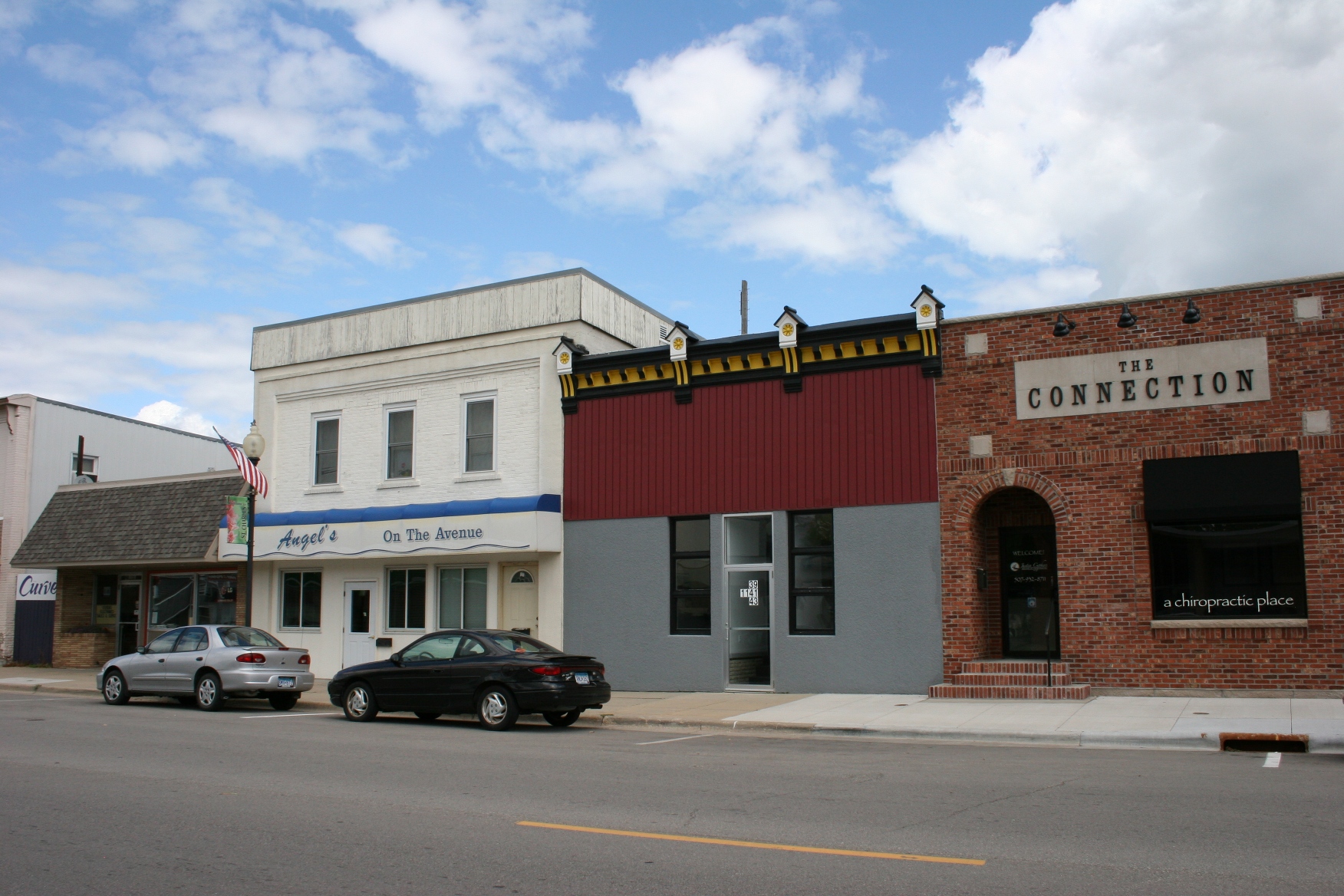
A section of downtown St. Charles, Minnesota, on a recent summer afternoon.

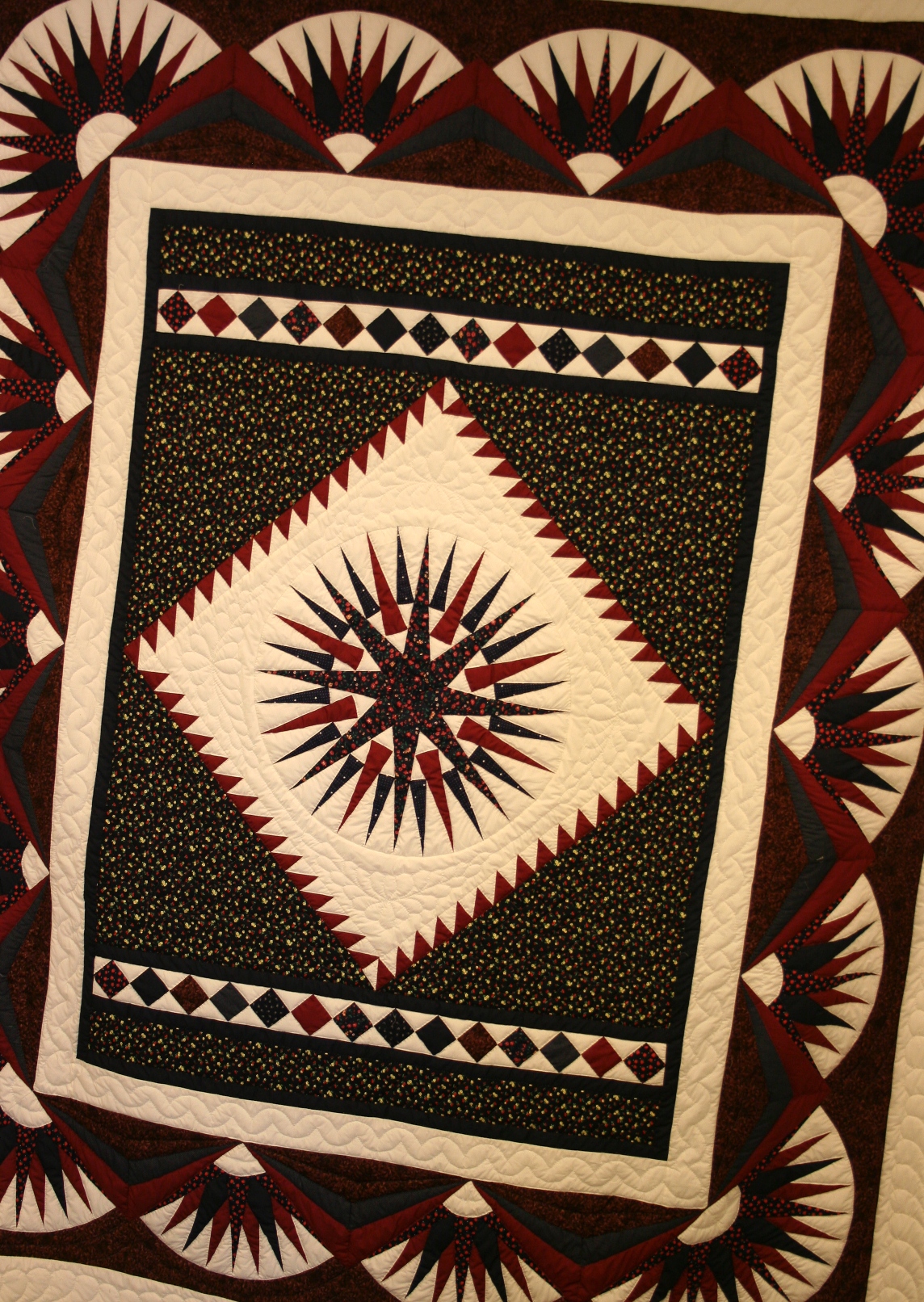
A quilt made by local southeastern Minnesota Amish and sold at the Amish Market Square.

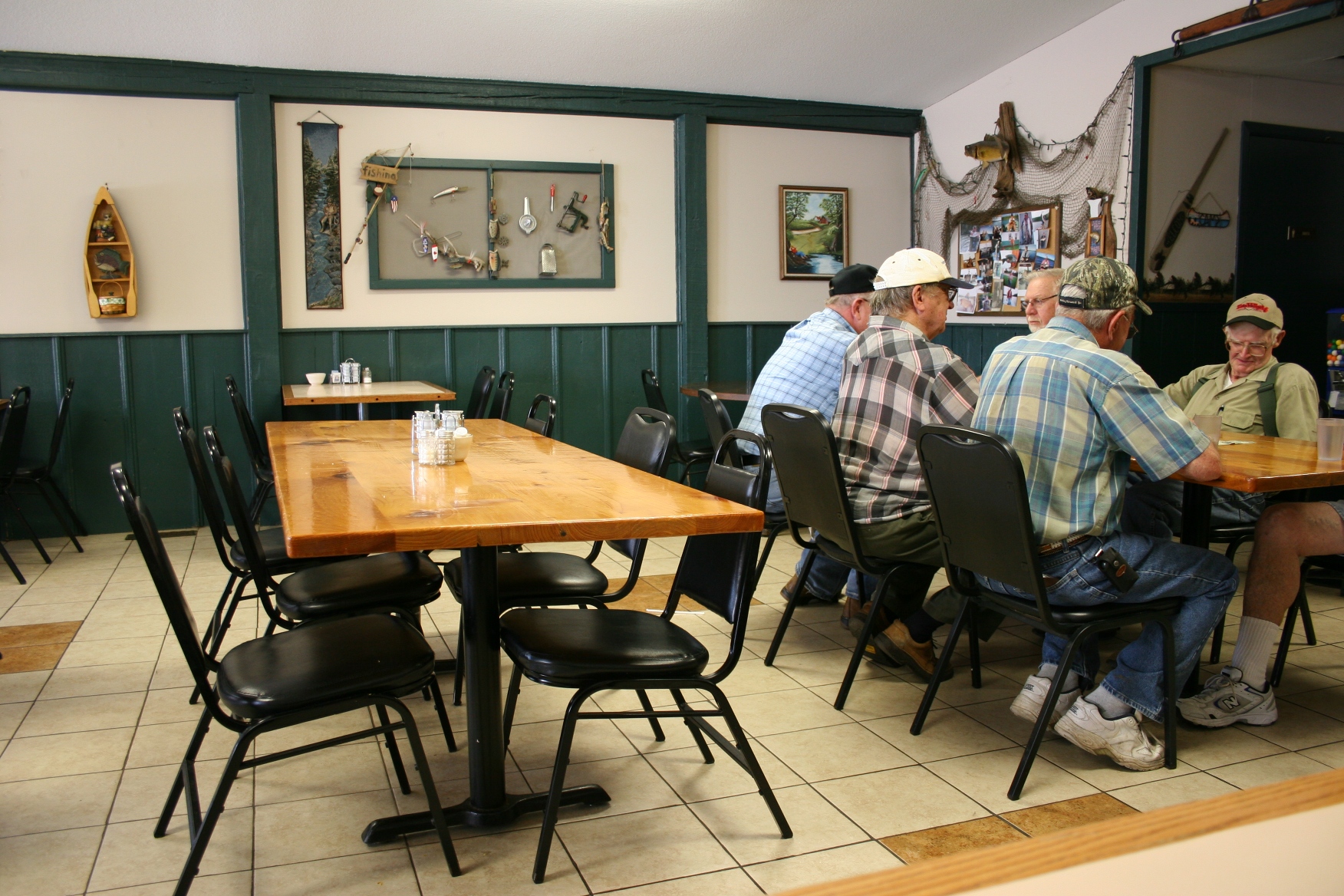
MID-AFTERNOON ON A TUESDAY and we are dining at the Whitewater Café in downtown St. Charles.

We’ve driven to this southeastern Minnesota community of 3,300, sandwiched between Interstate 90 and U.S. Highway 14, because we’re meandering home from a family vacation to Wisconsin.

I’ve specifically placed St. Charles on our route back to Faribault for two reasons: the Amish and the gladiolus.

Before dining at the fishing-themed Whitewater Café in downtown, we stopped at Amish Market Square just off I-90 where you can gas up, eat, buy products handmade by the Amish and pose for a photo in an Amish buggy. While I admired the stunning hand-stitched quilts—priced around $1,500—and the wood cutting boards and more, I didn’t climb into that buggy for a photo. I wanted authentic Amish, not tourist Amish.

That would come later, after lunch downtown, next to “The Table of Knowledge,” aka a group of local guys who gather each morning and afternoon to shoot the breeze, drink coffee and, when asked, give directions to the gladiolus fields and Amish farms.

I didn’t get any of their names, but one of those friendly club members—and I use that term loosely here—found a Winona County map in the restaurant and highlighted a route that would take us southeast of St. Charles past Amish farms and then back north to the glad field just south of Utica. He praised the hardworking Amish, two of whom were working on a fence on his farm at that very moment. He picks them up in the morning, then drives them home at the end of the work day.

These friendly locals at the Whitewater Cafe gave us directions to the glad field and Amish farms.

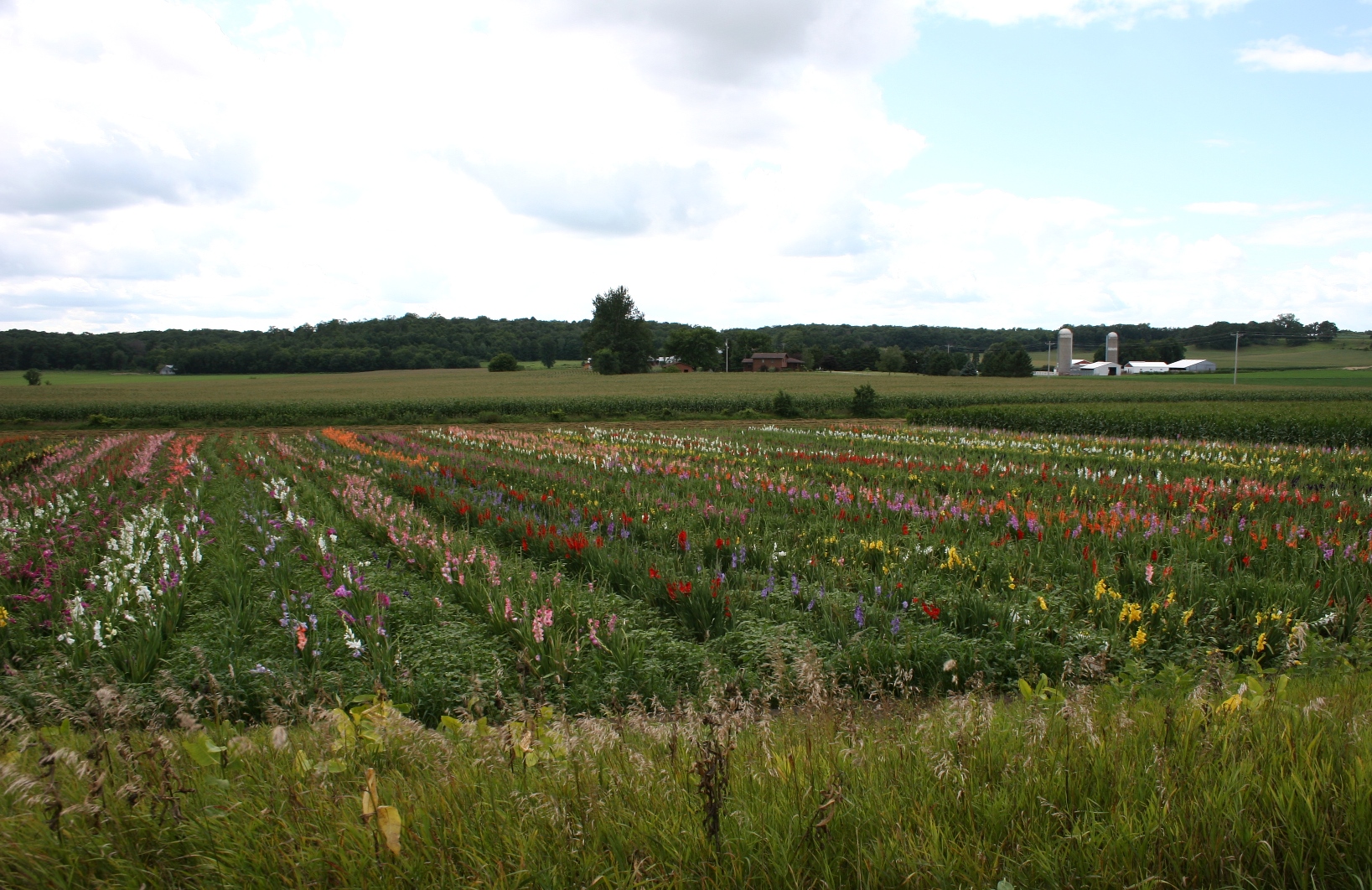
We left the restaurant, opting to view the flower field first by following Highway 14 east of St. Charles, turning south onto Winona County Road 33 into Utica until we found the rows of gladiolus just outside of town. It should be noted that the flower-growing location changes annually to keep the plants disease-free. Last year the glads were grown next to St. Charles, so the knowledgeable locals told us.

Up until that moment, I’d thought mostly of gladiolus as “funeral flowers,” a moniker that has stuck for decades based on my memories of glads at every funeral I ever attended as a child. Interesting how you associate something with an impressionable event, isn’t it?

As we slowed the car to get an overview of the gladiolus in the field below, I felt as if I was viewing a painting by Claude Monet. Soft pinks and purples and blues—punctuated by splashes of brilliant red, and broken by lines of green, tight-clasped buds and foliage—created a surreal scene against the backdrop of corn, farm places, sky and a distant tree line.

A view of the gladiolus field just south of Utica along Winona County Road 33.

This is as close as I got to the glads, standing along the shoulder of the road photographing them.

I hoped for a close-up look, but found no signage indicating we could stop at a next-door building site to view or purchase flowers.

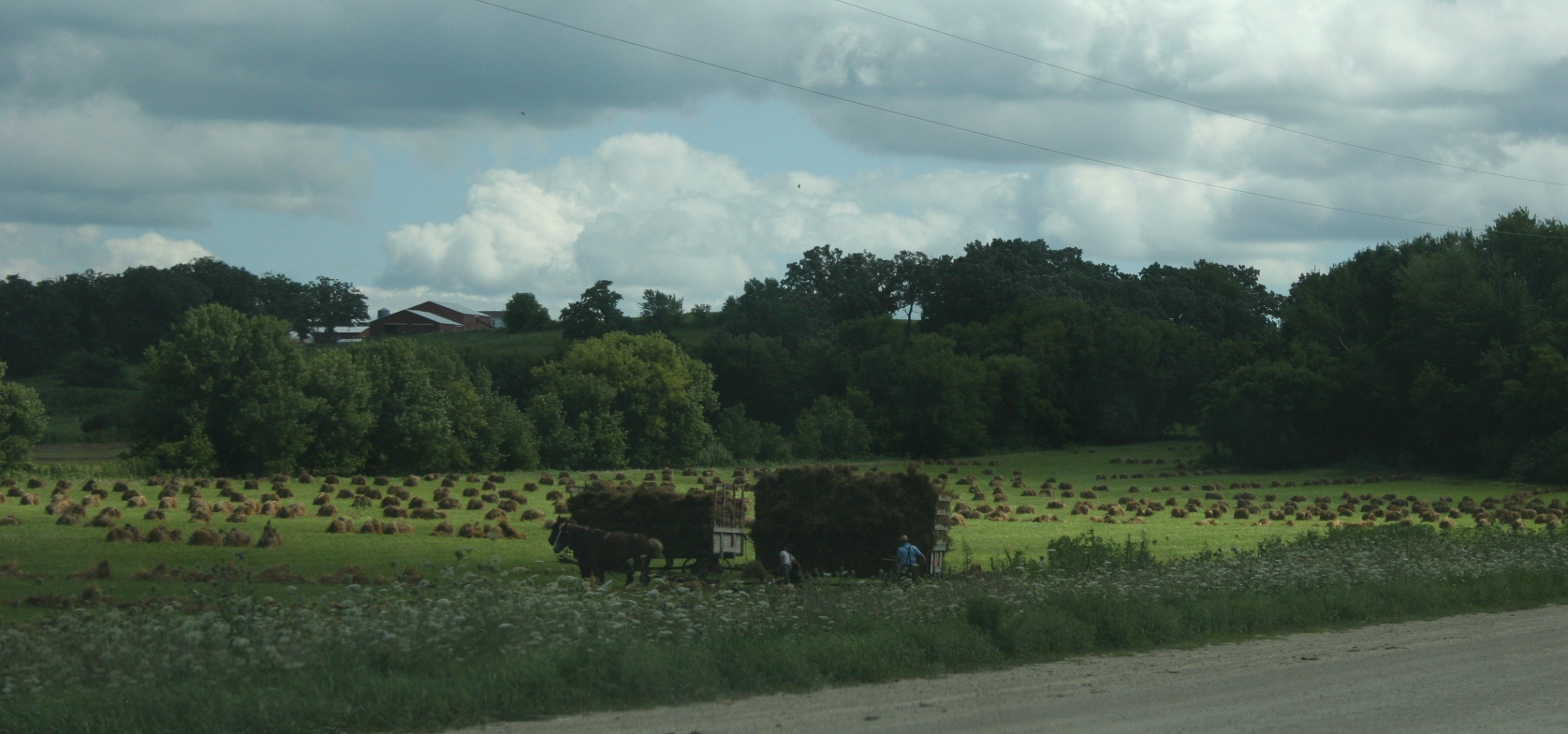
And so we drove on, further south and then west past several Amish farms—past the horses and wagons, the laundry on clotheslines, the shocks in fields and the Amish men throwing bundles high atop a wagon, their arm muscles bulging from seasons of labor.

An Amish farm site southeast of St. Charles.

We came upon this pastoral scene south of St. Charles, where the Amish were pitching bundles onto wagons.

Heading back into St. Charles, I wished I could spend more time here, in this town promoted on its website as “The Gateway to the Whitewater Valley,” and made world-famous by Carl Fischer, now deceased. He was the world’s leading hybridizer of new and distinctive gladiolus and established Noweta Gardens in 1945.

Each August this Minnesota town celebrates Gladiolus Days, which is happening right now and continues through Sunday, August 28. For a schedule of events, click here.

I fully intend to return some day to experience this festival, to this place where, if you look, you will see southeastern Minnesota’s version of a Monet painting.

The gladiolus field before me could have been a Claude Monet painting.

MORE PHOTOS OF ST. CHARLES:

The main road through downtown St. Charles, the "Gateway to the Whitewater Valley."

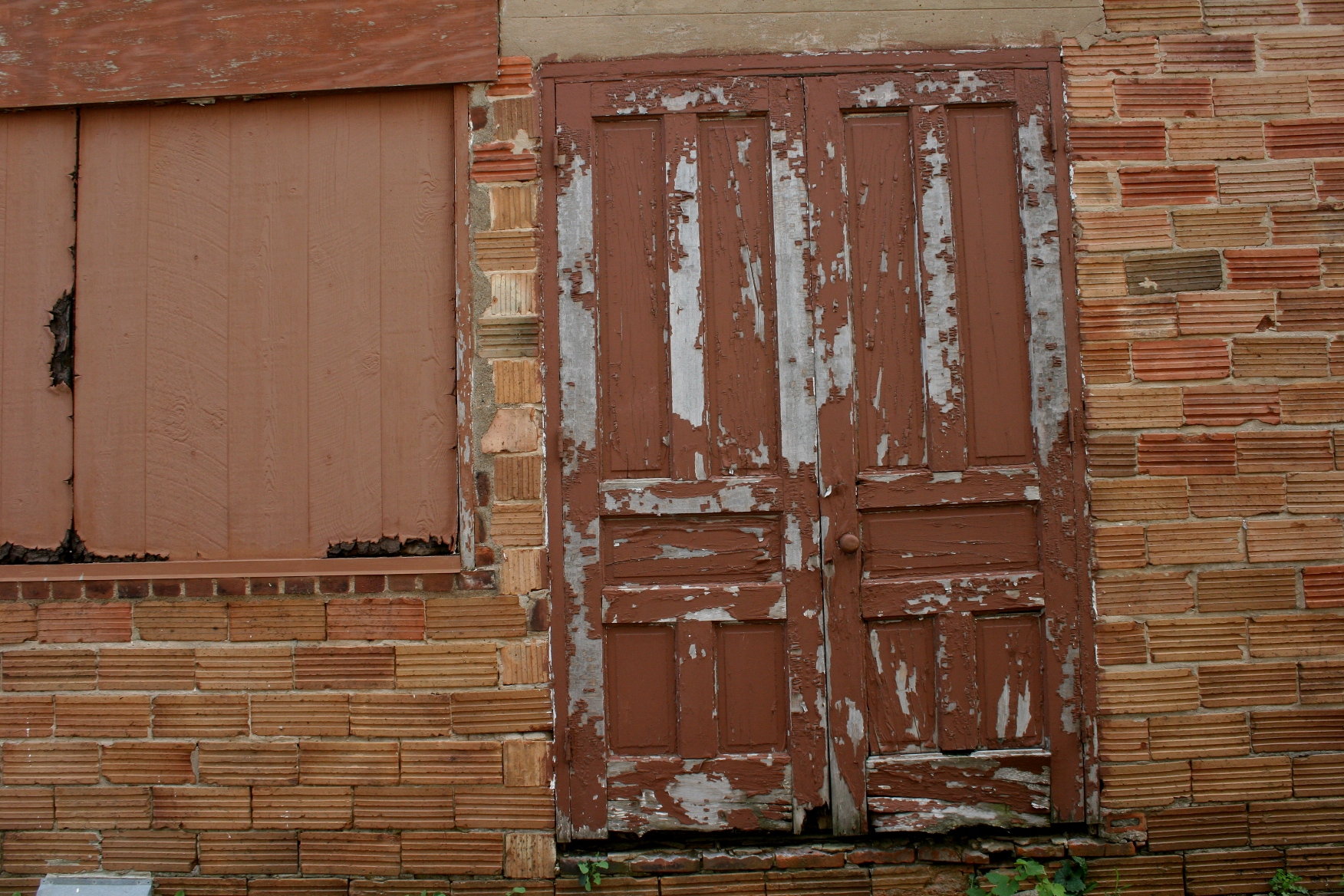
I discovered these weathered doors, found them charming, so photographed them in downtown St. Charles.

More downtown St. Charles businesses.

The post office and a pizza place along St. Charles' main drag.

I refused my husband's offer to photograph me in this Amish buggy at the Amish Market Square just off I-90.

© Copyright 2011 Audrey Kletscher Helbling