Minnesota Prairie Roots

Writing and photography by Audrey Kletscher Helbling

All things Civil War at the Minnesota Capitol May 17, 2011

IN NOVEMBER OF 2009, I met Brandon Peeters. He’s an extraordinary kid. Tomorrow he’ll be at the Minnesota State Capitol, leading the Pledge of Allegiance as our state celebrates Civil War Sesquicentennial Day.

That’s quite an honor for this seventh grader from Owatonna who has a passion for the Civil War. He teaches Owatonna students and others about the war, has visited many Civil War battlefields and belongs to the First Minnesota Volunteer Infantry Regiment re-enactment group and the Cannon Valley Civil War Roundtable.
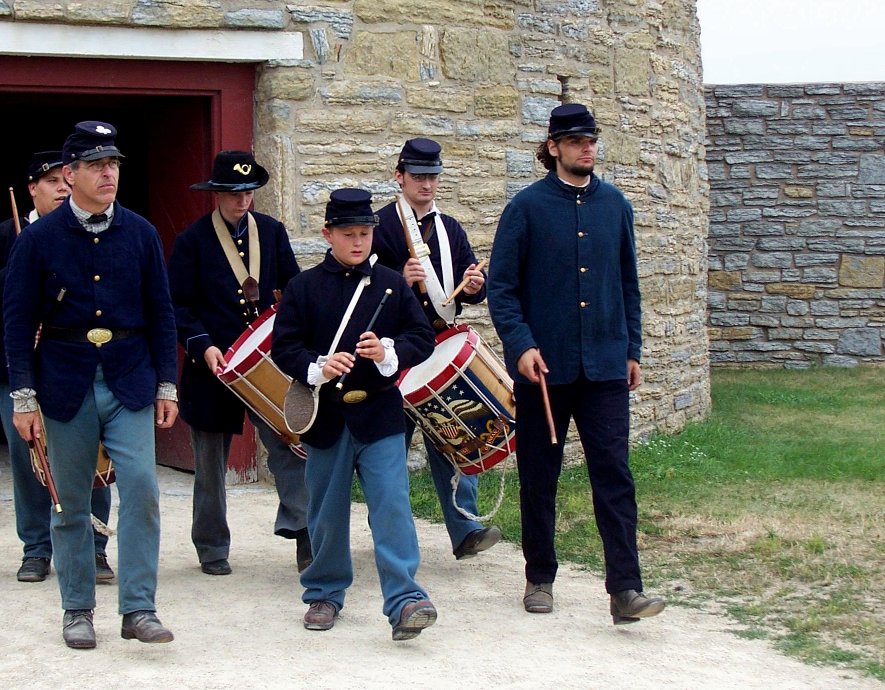
Brandon Peeters, front center, marches with Civil War re-enactors.

When Brandon discovered while working on a third grade family history project that his great-great-great grandfather, Valentine Katzung, served with the First Minnesota Volunteer Infantry Regiment from 1861-1864, fought at Gettysburg and was shot in the left heel, he was hooked on history.

“Brandon is so excited and very honored to be included in the program,” says his mom, Cindy Hokanson. “Needless to say, Brandon’s passion for the Civil War has only gotten stronger. He actually has applied to be one of the nine citizen members of the Governor’s Civil War Commemoration Task Force.” He’ll learn in June whether he has been selected to serve on that board.

Civil War buffs aplenty will gather at the Capitol on Wednesday to commemorate the 150th anniversary of the Civil War. Events begin at 10 a.m. and continue until 2 p.m. with a noon program in the rotunda that will include speakers (Governor Mark Dayton, former Governor Al Quie and others) during dedication of the 2011-2012 Minnesota Legislative Manual, aka the “Blue Book.” This year’s edition is packed with Minnesota-related Civil War history and trivia.

Several members of the Faribault-based Cannon Valley Civil War Roundtable will participate in a Civil War Information Fair in the Capitol basement Great Hall. “We will have Civil War memorabilia, books, brochures and a Civil War band poster,” says CVCWR member Dan Peterson of Faribault. “It should be fun sharing with the public, other roundtables and some re-enactors.”

Several roundtables, authors, historical organizations and others will present educational materials and information to attendees. Some will dress as Civil War re-enactors.

Minnesota Supreme Court Justice Paul H. Anderson will dress in period costume during a presentation in court chambers. Civil War Capitol tours are also available at 10 a.m., 11 a.m. and 1 p.m.

Three Civil War cannons given to the First Minnesota Infantry Regiment in 1862 by Major-General A. H. Sanford, the American Ambassador to Belgium, are sure to be a hit with Capitol visitors on Wednesday.

It is the first time in decades that the trio of cannons—kept at Camp Ripley, the Minnesota Military Museum at Camp Ripley and in Montevideo—will be showcased in one location, according to information from the Minnesota Secretary of State’s Office. Two will be displayed in the rotunda and the third on the upper mall in front of the Capitol.

I’m certain tomorrow’s event will pack the Capitol with Minnesotans interested in the Civil War. Having attended one Cannon Valley Roundtable meeting and a recent Civil War event in Faribault, I know the passion people possess for this time in our nation’s history. I have yet to meet a young person more interested in the Civil War than Brandon Peeters. If anyone deserves to serve on the Governor’s Civil War Commemoration Task Force, it would be this self-proclaimed history freak.

If you’re at the Capitol tomorrow, look for Brandon. I expect he’ll be in his Civil War costume and sporting a smile a mile wide.

© Capitol photo copyright 2009 Audrey Kletscher Helbling

Brandon Peeters photo courtesy of Cindy Hokanson


WARNING: Proposal would erode Minnesota’s Freedom to Breathe Act April 11, 2011

WARNING: Cigarettes are addictive.

WARNING: Tobacco smoke can harm your children.

WARNING: Cigarettes cause fatal lung disease.

WARNING: Cigarettes cause cancer.

WARNING: Cigarettes cause strokes and heart disease.

WARNING: Smoking during pregnancy can harm your baby.

WARNING: Smoking can kill you.

WARNING: Tobacco smoke causes fatal lung disease in nonsmokers.

WARNING: Quitting smoking now greatly reduces serious risks to your health.


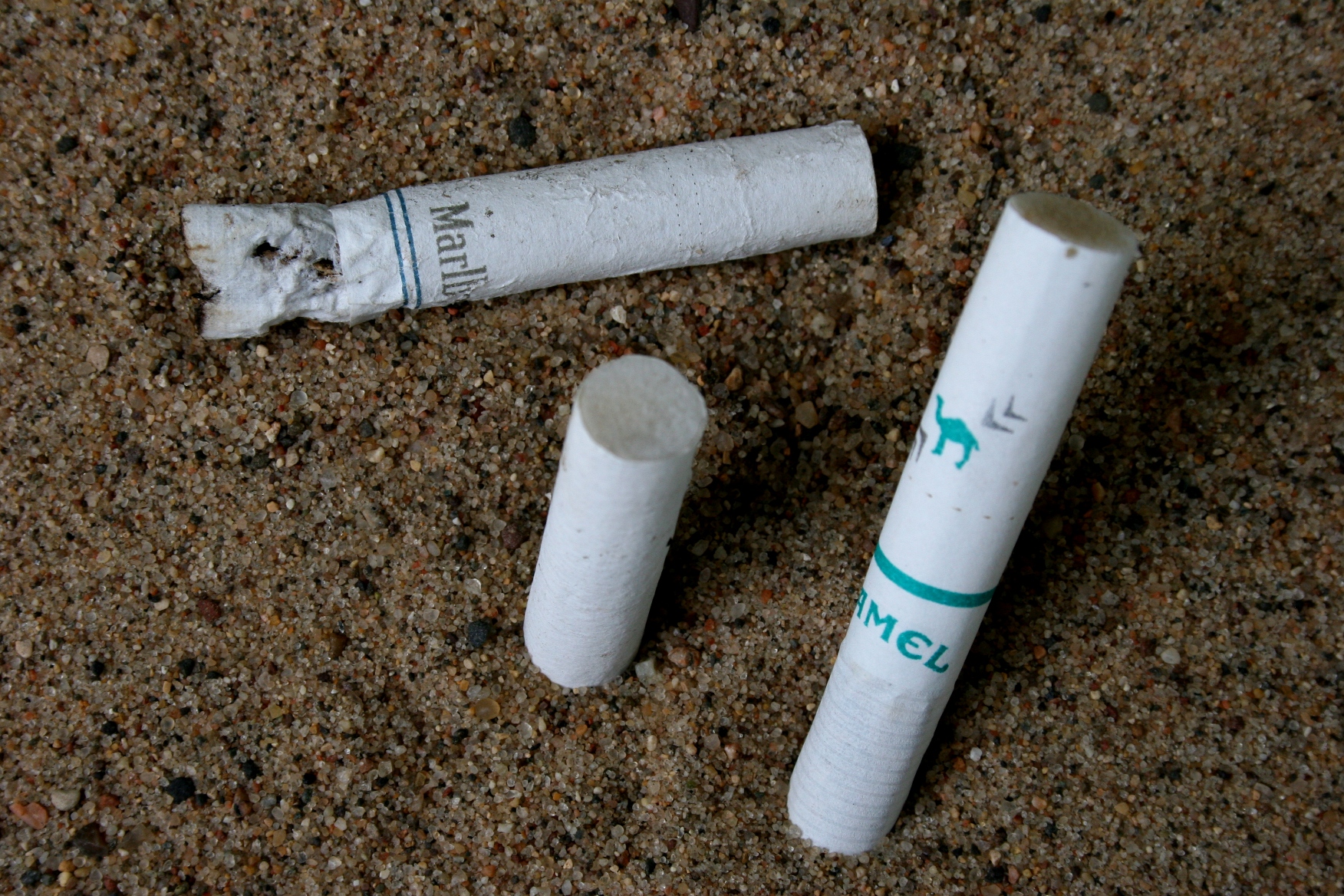
I didn't need to search long or hard to find these cigarette butts. Two were tossed into one of my flowerbeds by a neighbor. I found the third in the street by my house.

Just as Minnesota legislators are considering proposed changes to the state’s Freedom to Breathe law, the U.S. Food and Drug Administration is finalizing plans to modify warnings on cigarette packaging and advertising.

Following requirements of The Family Smoking Prevention and Tobacco Control Act, the FDA has proposed that cigarette packaging and ads bear one of the above nine warnings along with a matching colorful graphic.

The shock value of the proposed graphics—like a toe-tagged corpse and a mother blowing smoke into her baby’s face—are an effort to make a powerful impact on the smoking public. Enough to make a smoker stop smoking.

The final graphics will be selected by June 22 and the warnings must be in place on all cigarette packages sold in the U.S. and in cigarette ads by October 2012.

As a nonsmoker, I’m all for this move to prevent, reduce or stop smoking.

However, I don’t support proposed legislation in Minnesota that would once again allow smoking in bars under specific conditions. Not that I frequent bars, but bars and restaurants are often interconnected, so this matters to me.

The plan basically would allow smoking in bars if a ventilation system is installed to remove the smoke. In bars connected to restaurants, the bar must be walled off with a door separating the bar and restaurant.

Come on. A door will not keep smoke from filtering into a restaurant. And I don’t know about you, but I don’t need smoke served with my meal.

I make no apologies for my strong stand against smoking and my intense dislike of cigarette smoke.

I’m also honest enough to admit that, in my youth, I tried tobacco products on several occasions, enough to realize smoking wasn’t for me.

My dad became addicted to cigarettes when he was in the military, serving on the front lines during the Korean Conflict. He preferred Camel cigarettes. Sometimes he also rolled his own.

My dad, a smoker for many years, first exposed me to cigarettes. Once he even let me puff on his Camel. Now before you start calling him an irresponsible parent, consider this.  He knew I’d cough and sputter and spit and never want to touch a cigarette again. He was right. Eventually he gave up smoking but never quit chewing snuff.

Although I never took up smoking, I was addicted to candy cigarettes as a kid. But candy cigarettes were as popular as Bazooka bubble gum back in the 1960s and no one thought anything of subtly encouraging kids to smoke via those chalky white sticks with the red tips.

As for the few Swisher cigars I smoked in my mid-20s, I offer no excuse except my ignorant, youthful stupidity. I bet many smokers who are now habitual tobacco users wish they’d never started.

If you’re a smoker and want to smoke in the privacy of your home, then go ahead. Just don’t invite me over because, physically, I can’t tolerate cigarette smoke.  I’ve had numerous bad experiences with cigarette smoke.

Back in the early 1980s, I worked for a southern Minnesota daily newspaper that allowed smoking in the office. I came home every night smelling like I’d been in a bar all day. My clothes reeked. My skin reeked. My hair reeked. I remember complaining, with several other nonsmokers in the office, about the smoking. Nothing changed, because the news editor smoked. She didn’t care. So what if the copy editor sat outside the conference room during the weekly staff meeting because he couldn’t tolerate the smoke? I wish I had joined him instead of breathing the toxic air. So what if the news editor should have been more considerate given the Minnesota Clean Indoor Air Act passed in 1975? None of that mattered.

My second worst experience with smoking occurred several years ago at a Winona hotel. The manager tried to pass off a smoking room as a nonsmoking room. The instant I walked into the room, I smelled cigarette smoke. The mobile air purifier that was running on high and the lack of a sign on the door stating that this was a nonsmoking room confirmed my suspicions. When I went to the front desk and demanded a nonsmoking room, the manager denied that he had given me a smoking room. I didn’t believe him. My nose and lungs don’t lie.

My other notable smoke experience also involves a hotel, this one at a southwestern Minnesota casino. I was there attending a cousin’s wedding reception. Although the hotel room my family booked was supposedly smoke-free, the odor of cigarette smoke filtered from the smoke-filled hotel lobby, halls and casino into our room. I barely slept that night because of the tightness in my chest caused by the smoke.

So, Minnesota legislators, listen up. Listen to representatives of The American Cancer Society, the American Heart Association, the American Lung Association and Clearway Minnesota, all of whom have been at the State Capitol opposing the proposed changes to Minnesota’s Freedom to Breathe Act.

Consider the 83.9 percent of adult Minnesotans (according to results of the 2010 Minnesota Adult Tobacco Survey) who do not smoke. Please keep our Freedom to Breathe Act intact and smoke-free.

© Copyright 2011 Audrey Kletscher Helbling


A lesson in Minnesota sales taxes April 4, 2011

Filed under: Uncategorized — Audrey Kletscher Helbling @ 7:09 AM
Tags: , , , , , , , , ,

How much does your community tax purchases?

“ARE YOU A SEVEN?” she asked.

“What?” I asked her to repeat what she’d just told me over the phone.

“Are you a seven?” she repeated.

Still, I didn’t understand. Then she—the saleswoman at J.C. Penney in the Burnsville Shopping Center—explained that sales tax rates vary, depending on where you live in Minnesota. She wondered if I lived in an area with a seven percent rate.

Huh? I had no idea, about the rate or that such differences existed.

I live in Faribault. Is that a “seven,” or some other number?

The helpful saleswoman, who was trying to calculate the cost of pleated shades (which I’m not buying because they are way too costly at nearly $400 for two windows, but which I really, really want), was confusing me. Apparently orders shipped to my home would be taxed based on where I live, or something like that.

Not one to simply let this piece of information slip through the recesses of my brain, I googled “Minnesota sales tax” and ended up on the Minnesota Department of Revenue sales tax rate calculator website. It’s an easy-to-use site where I could type in Minnesota zip codes, a dollar amount and, zip, the sales tax rate appeared. The calculator covers Minnesota and local general sales and use taxes. Any other special taxes, such as those on entertainment, liquor, dining and lodging, are not figured into the totals.

First, I needed the nine-digit zip codes for my sample towns. Once I had those zip codes from a U.S. Postal Service link, I typed the numbers and my sample dollar amount of $10 into the tax calculator website.

I quickly discovered that Faribault is not a seven. Our sales tax rate, like that of my brother who lives in Redwood County in rural southwestern Minnesota, is 6.875 percent. We would each pay 69 cents in sales tax on a qualifying $10 purchase in our parts of Minnesota. We have no extra taxes, just the 6.875 state-wide basic sales tax levied by the state.

My daughter who lives an hour away from me in south Minneapolis, however, will pay more for purchases made in her area. The sales tax rate for her address is 7.775 percent. That breaks down to the standard state sales tax rate, plus an additional 0.15 percent levied by Hennepin County, 0.5 percent by the city of Minneapolis and 0.25 percent for Transit Improvement. She would pay 78 cents in taxes on a $10 purchase.

In Woodbury, where my youngest brother and his family live, a 0.25 percent Transit Improvement levy is also in place. It’s the only extra sales tax in that city, so tax on a $10 purchase there would be 71 cents.

I was surprised to learn that St. Cloud also has an extra tax, of 0.5 percent, pushing the sales tax rate there to 7.375 percent. That helped pay for an airport and other projects. You’d pay 74 cents sales tax on a $10 purchase.

But my biggest surprise came when I typed in a friends’ nine-digit zip code up in Duluth. There the local government has imposed a one percent additional general sales tax, pushing the sales tax in that port city to 7.875 percent. The tax on a $10 purchase is 79 cents. Authorized in 1973, that special tax “may be used for any city purpose, as determined by the city council.” It has no expiration date and is the longest-running local sales tax listed on a September 2010 document from the Minnesota House of Representatives Research Department.

Now, if you’re like me, you’ve just gotten a good basic education on sales tax rates in Minnesota.

Funny, isn’t it, how that J.C. Penney employee’s seemingly simple question—“Are you a seven?”—educated me about sales tax rates in Minnesota.

THE MINNESOTA LEGISLATURE is considering legislation that would loosen current restrictions on local sales taxes. Under the proposal, cities or groups of cities could impose local sales taxes with local voter approval. Twenty-two Minnesota cities currently have a local option sales tax.

© Copyright 2011 Audrey Kletscher Helbling


Part IV: Hanging onto hope after the flood March 17, 2011

EDITOR’S NOTE: What is it like to lose nearly everything you own in a flood? What is it like to have your life disrupted, to be without a home? This post addresses those questions in this fourth in a series of stories about a Hammond, Minnesota, family that survived a September 2010 flash flood.

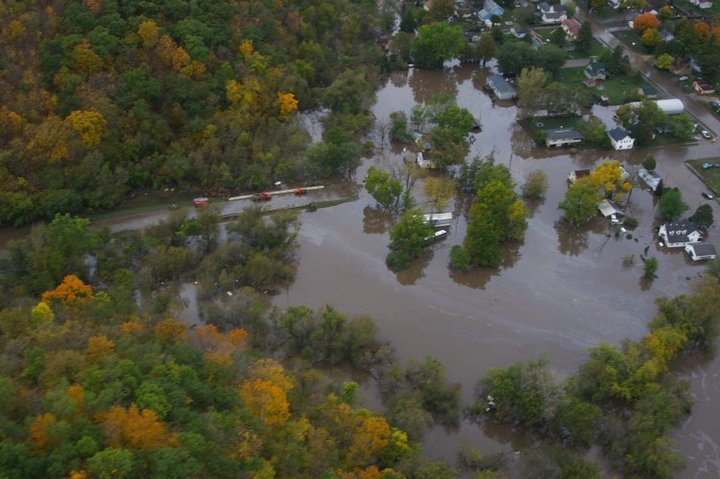
An aerial view of Hammond during the flash flood of September 2010. Photo courtesy of Micheal Mann & Tina Marlowe.

FOR TINA MARLOWE and her family, life abruptly changed after the flooding Zumbro River forced them from their home. Those first few days for Tina, her fiancé, two children and in-laws—all of whom lived together in the same house—were charged with emotion, filled with uncertainty.

“Every member of our family has gone through every emotion you can think of,” Tina says. “Desperation and shock the first few days, looking at the destruction to our home, to our friends’ homes, to our favorite ‘watering hole,’ which is also the community gathering place, to our parks, our river bank, the rubbish and filth.

Wonder and fear as to what will happen to us… Where will we go? Who is going to help us? Where am I going to start? What have I lost? What do I have left? How am I going to pay for it all? Will I be able to financially survive in the meantime? What do I tell the kids?”


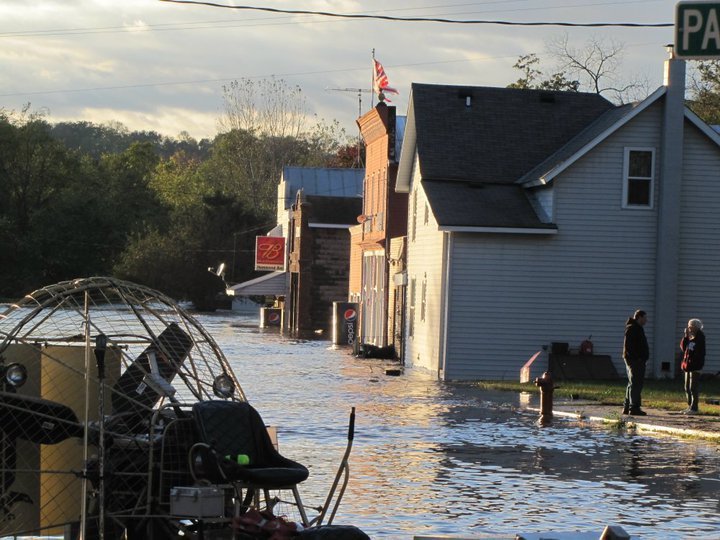
Floodwaters from the Zumbro River reached Hammond's business district. Photo courtesy of Micheal Mann & Tina Marlowe.

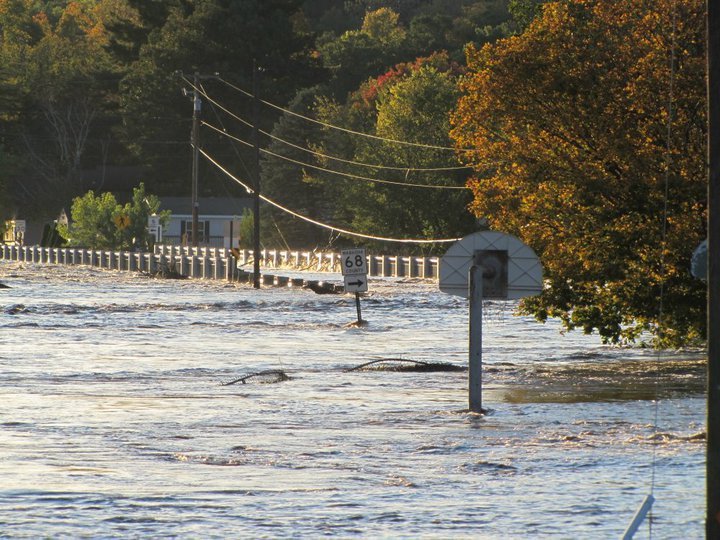
The bridge connecting east and west Hammond is barely visible during the flood, which also overtook the town's park. Photo courtesy of Micheal Mann & Tina Marlowe.

TINA’S KIDS AND THE LESSONS THEY’VE LEARNED

For Tina’s children, 16-year-old Cassie and 7-year-old Christian, the flood took a major emotional toll. Christian started having behavioral and concentration problems on the bus and in school. Cassie’s life as a busy teen, running around, making plans, came to a screeching halt.

“They went through the extremes of being angry, then indifferent,” Tina says of her children.

Now that the family has returned to Hammond—they moved back right after Christmas, three months after the flood—the kids are beginning to settle back into normal routines and a normal life.

“They have seen and learned a lot,” Tina says. “I hope that the greatest lesson that they get from this is that family, community, and love are the most powerful tools and assets they will ever have. This is the ONLY thing that will get you through when all else is lost, and is all and everything that you need in life to be secure.

We are Minnesotans. We take care of each other.”

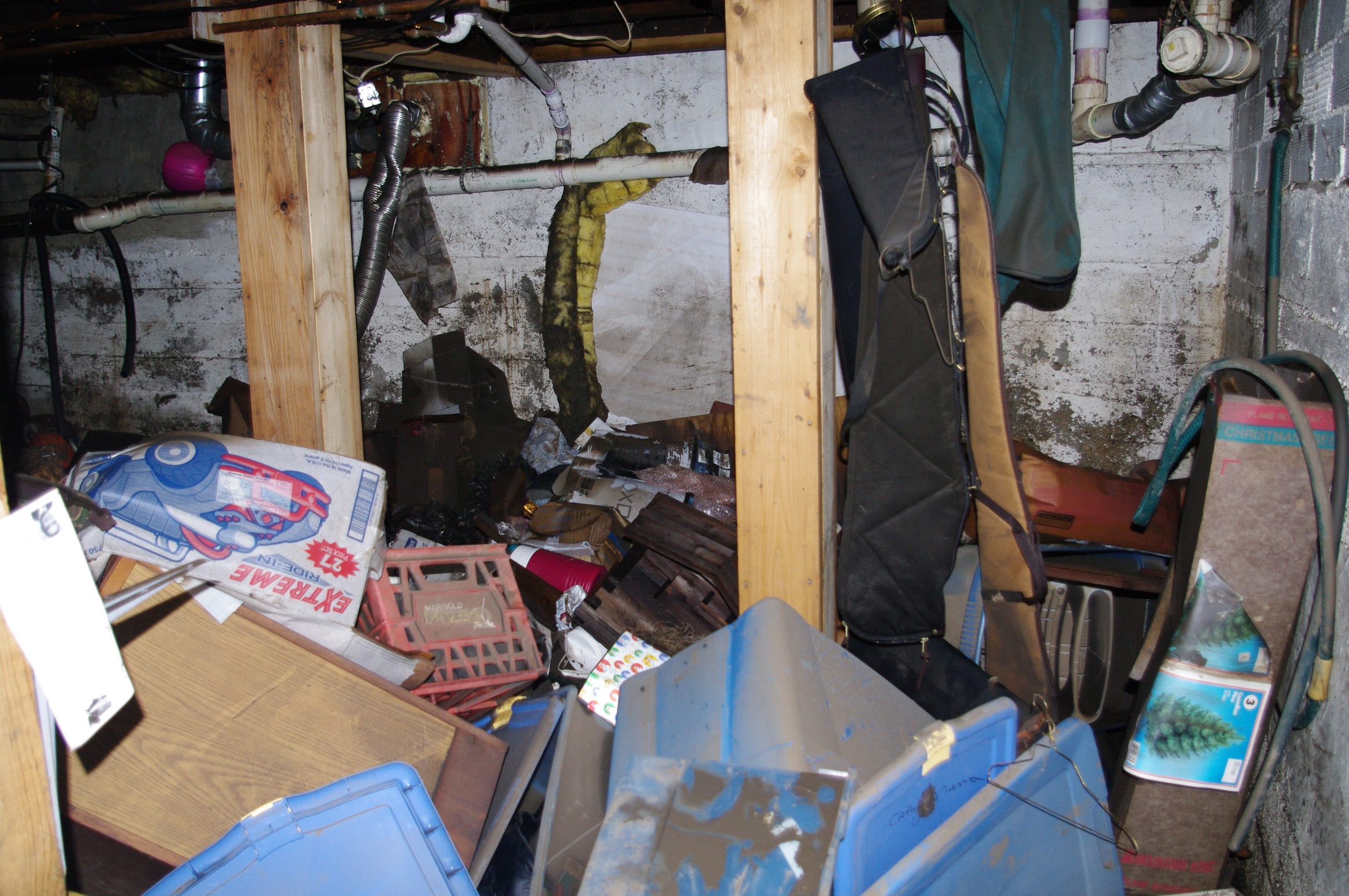
Floodwaters destroyed everything in the basement of the house where Tina, Micheal, Cassie and Christian and Bob and Cathy Mann live. Photo courtesy of Micheal Mann & Tina Marlowe.

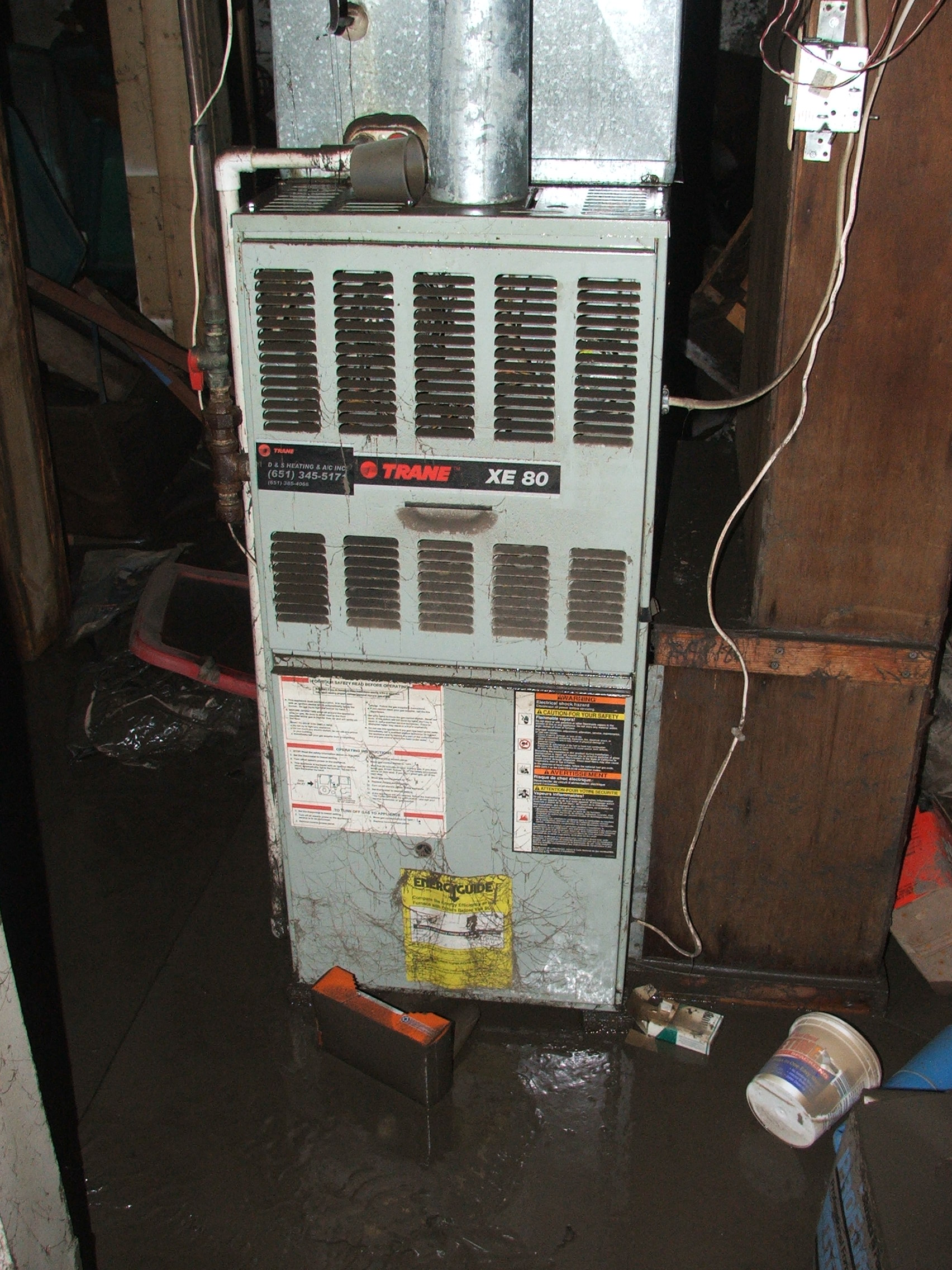
Muck surrounds the furnace in the Mann family's basement. Photo courtesy of Micheal Mann & Tina Marlowe.

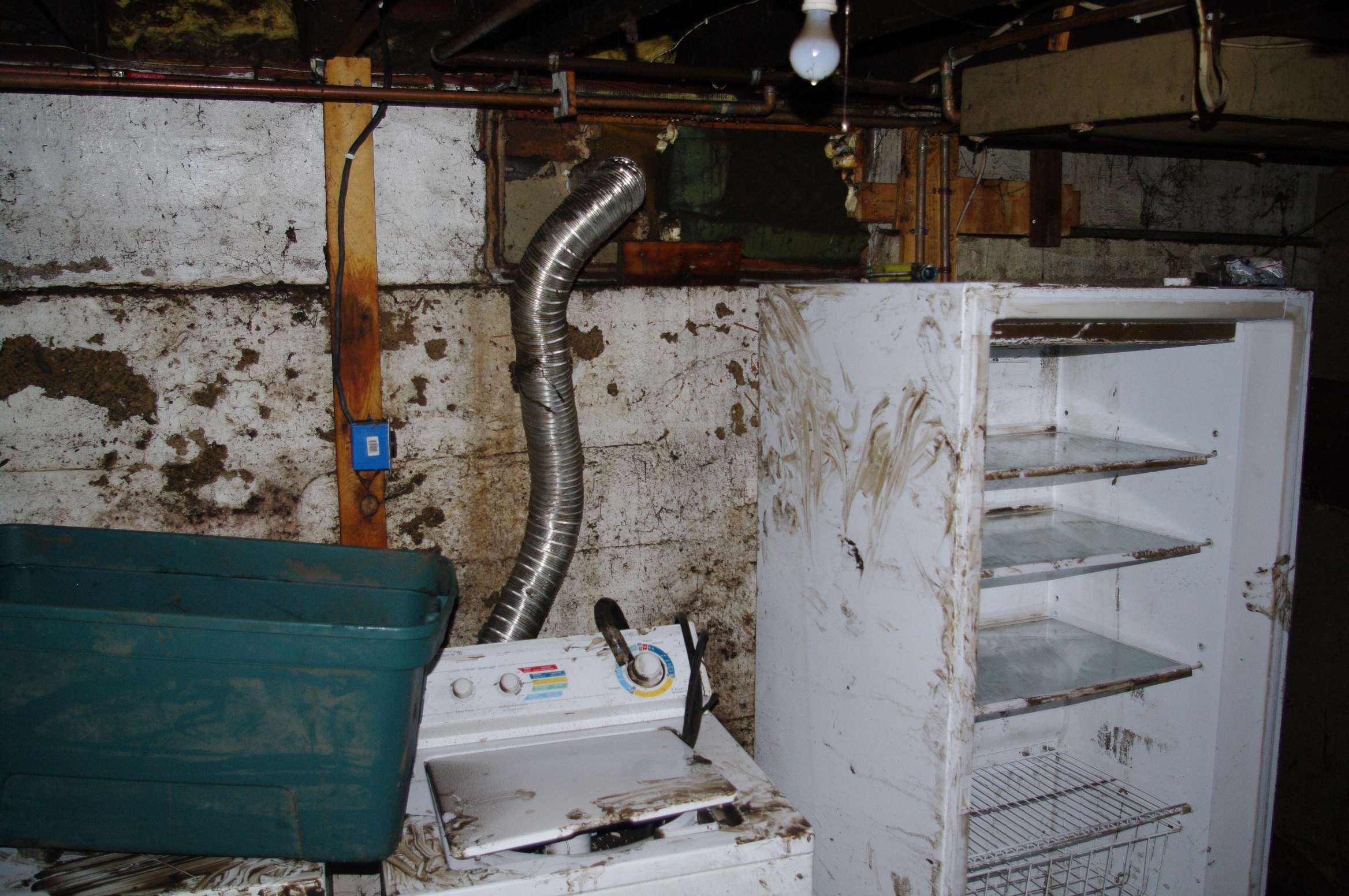
Flooded appliances in the basement. Photo courtesy of Micheal Mann & Tina Marlowe.

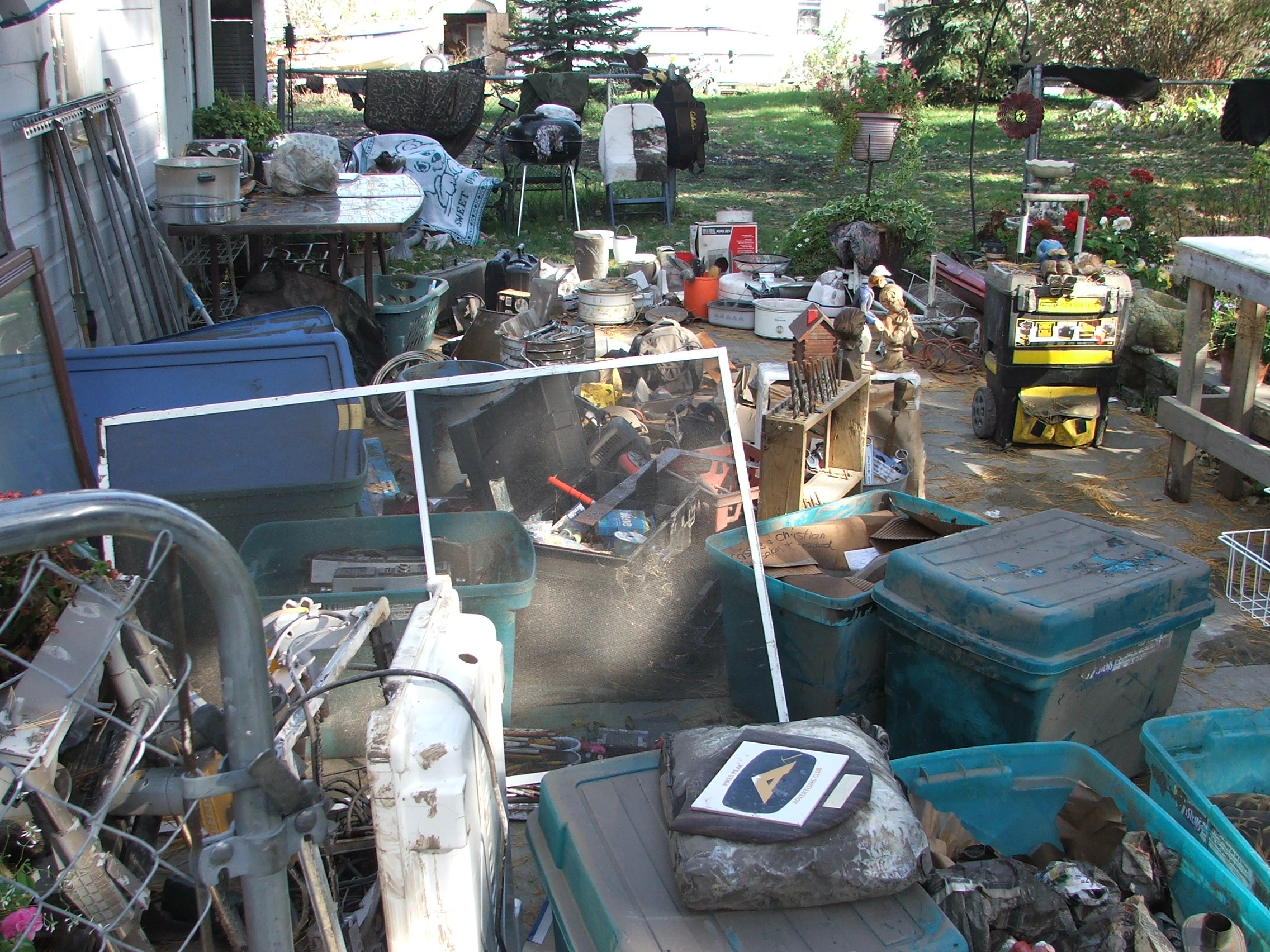
The family's belongings, moved outside to dry after the flood. Photo courtesy of Micheal Mann & Tina Marlowe.

THE ANGER AND QUESTIONS

A devastating natural disaster like this flood raises many questions and elicits mixed emotions, including anger. Tina has felt her share of anger and I’m allowing her to air her concerns here so that perhaps we can all learn from her experience.

Tina says Hammond, population 230, was neglected and forgotten during the “threat” of the rising river. No one came to help on Thursday night until it was too late, she claims. The evacuation in Hammond occurred many hours after the exodus in nearby Zumbro Falls.

While food and shelter were offered in Hammond, Tina says that did not help her family displaced to a hotel in neighboring Rochester.

“There was no immediate help in the aftermath, and a lot of what was being done didn’t make sense to us. We were left to fend for ourselves for nearly two months,” Tina continues.

Her anger focuses on the government “for not having a better plan, and for ultimately abandoning us.” She was angry, too, at President Barack Obama…”when he was doing diplomatic work, when we felt that a simple acknowledgement and signed declaration seemed so simple.”

She felt a loss of hope “when big brother seems to turn his back on you.”

Yet, Tina says she is grateful and humble for the volunteer help, the donations, the support from neighboring communities.

THE WAITING, THE FUTURE, THE HOPE

Anticipation and anxiety marked the family’s days as they awaited word on financing and rebuilding. They were physically, mentally and emotionally exhausted.

When they finally returned home to Hammond, they felt peace, hope and appreciation.

“But it’s not over yet,” Tina says. “There are still feelings of guilt. So many (people) had damages much worse than us. There are those still waiting for answers.

It’s hard to be one of the first ones home. It’s lonely. Our neighbors’ homes are dark and empty. Every day we hear news of another one leaving or another one deciding to stay. The future is still uncertain.

Our quiet, simple life in the valley has been disrupted. This summer we still won’t be able to enjoy all that we enjoy about our valley because of the loss and destruction.

I hang onto hope and realize the meaning of resilience when I watch the bald eagle fly over the river, still making the valley his home too. I feel a lot like that eagle, fighting extinction—refusing to leave the home I love.”

THE NEXT INSTALLMENT in this series looks at how others have helped Tina and her family get back on their feet.

© Copyright 2011 Audrey Kletscher Helbling

Photos courtesy and copyright of Micheal Mann & Tina Marlowe


The President’s speech: salmon, Sputnik and nation-builders January 26, 2011

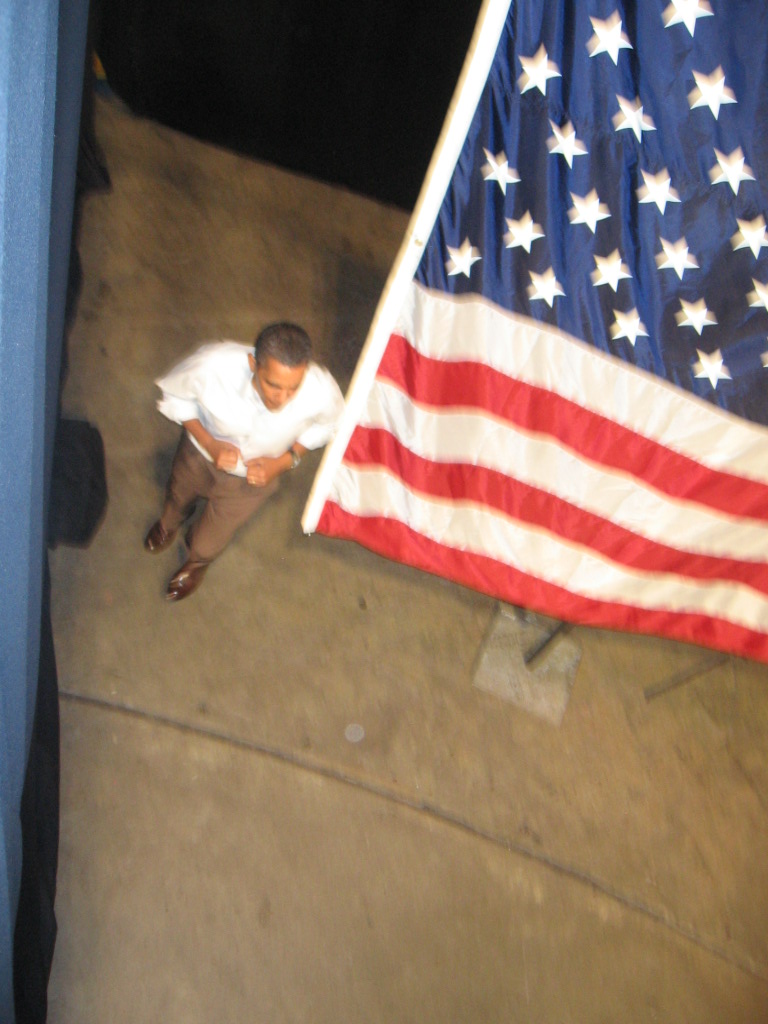
President Barack Obama in Minneapolis in September 2009.

DID YOU LISTEN to President Barack Obama’s State of the Union address? And, if so, what did you think?

I can’t exactly put my finger on it, but the whole speech seemed more lackluster than your typical Presidential annual summary, although Obama certainly tried.

Political commentators attribute the noticeably subdued reaction among attendees to the fact that Republicans and Democrats sat jumbled together rather than each party in its distinct spot. I agree that one would be more hesitant to strongly react to a Presidential statement when seated with members of the opposite party than when sitting with your own crowd.

On to the speech…Obama tried to convince Americans numerous times that our nation is now on the road to economic recovery. “The economy is growing again,” he said at one point.

I see some glimmer of that, but I don’t think the current situation—with the unemployment rate hovering around 9.5 percent—is quite as bright as the President believes.

“America still has the largest most prosperous economy in the world,” Obama told us. Right or not, I don’t know. I hope he’s right, but I’m no economist.

He offered encouraging words: “The future is ours to win…but to get there we can’t just stand still.”

President Obama outlined steps to move our country forward via innovation, investment in education, rebuilding America and controlling spending.

His call for clean energy and improving our infrastructure with a high-speed rail system are nothing new. I’ve heard this all before and, although the ideas are good, I question whether independent “I-love-my-car” Americans will embrace electric cars and high-speed rail. Geographically our country is much larger than nations with successful lightning-speed rail systems. And how, exactly, will this be funded?

“Innovation is how we make our living,” the President said as he defined his first step in building a stronger country.

ONE OF HIS MORE MEMORABLE QUOTES: “This is our generation’s Sputnik moment.” Sputnik, for those of you who haven’t a clue, was the first earth-orbited artificial satellite launched by the Soviet Union in 1957. I thought America had its moment when we landed on the moon.

I liked the President’s statement that “…the winner of the science fair needs to be celebrated,” although I find it odd that he compared such recognition to Super Bowl winners. I’ve long thought those who excel in academics deserve the same recognition as those who excel in sports. But I doubt you’re going to change an entire society’s attitude. I mean, will local newspapers devote a whole section to academic achievers like they do to athletes? I wish they did, but it’s not going to happen.

When addressing the topic of education, Obama called for Americans to treat teachers with the same level of respect as teachers in South Korea, who are called “nation-builders.” Yikes. That word choice really, really bothers me. That, in my mind, produces an image of students in uniforms and teachers drilling science and math into students’ heads. I’m sure the President did not mean it that way, but that was my honest, first gut reaction.

As the President discussed streamlining government and curtailing government spending, he informed us that salmon—yes, the fish—are regulated by two government agencies. That drew audience laughter and certainly made the point that reform is needed within government operations.

He proposed a freeze on annual domestic spending for the next five years.

“Our government spends more than it takes in,” Obama said. “That’s not sustainable.”

You think? And how did we get there?

Numerous times the President called for Americans—and specifically politicians—to work together. “We are part of the American family,” he said. “I believe we can, and must, work together.”

Yet, he recognized that differences will always exist and that such differences are part of the foundation of a democracy. “We will argue about everything,” Obama said. I appreciated that the President emphasized that point, that freedom of speech point.

“I know there isn’t a person here who would trade places with any other nation on earth,” our nation’s leader said toward the end of his speech.

Then he cheered one more time: “We do big things.”

And finally: “The state of our union is strong.”

IF YOU HAVE THOUGHTS on the State of the Union address, I’d like to hear them. What did you like or dislike? What did you believe or disbelieve? And how would you describe the state of our union?

© Copyright 2011 Audrey Kletscher Helbling


Flood of paper work for Zumbro Falls city hall October 14, 2010

Filed under: Uncategorized — Audrey Kletscher Helbling @ 8:39 AM
Tags: , , , , , , ,

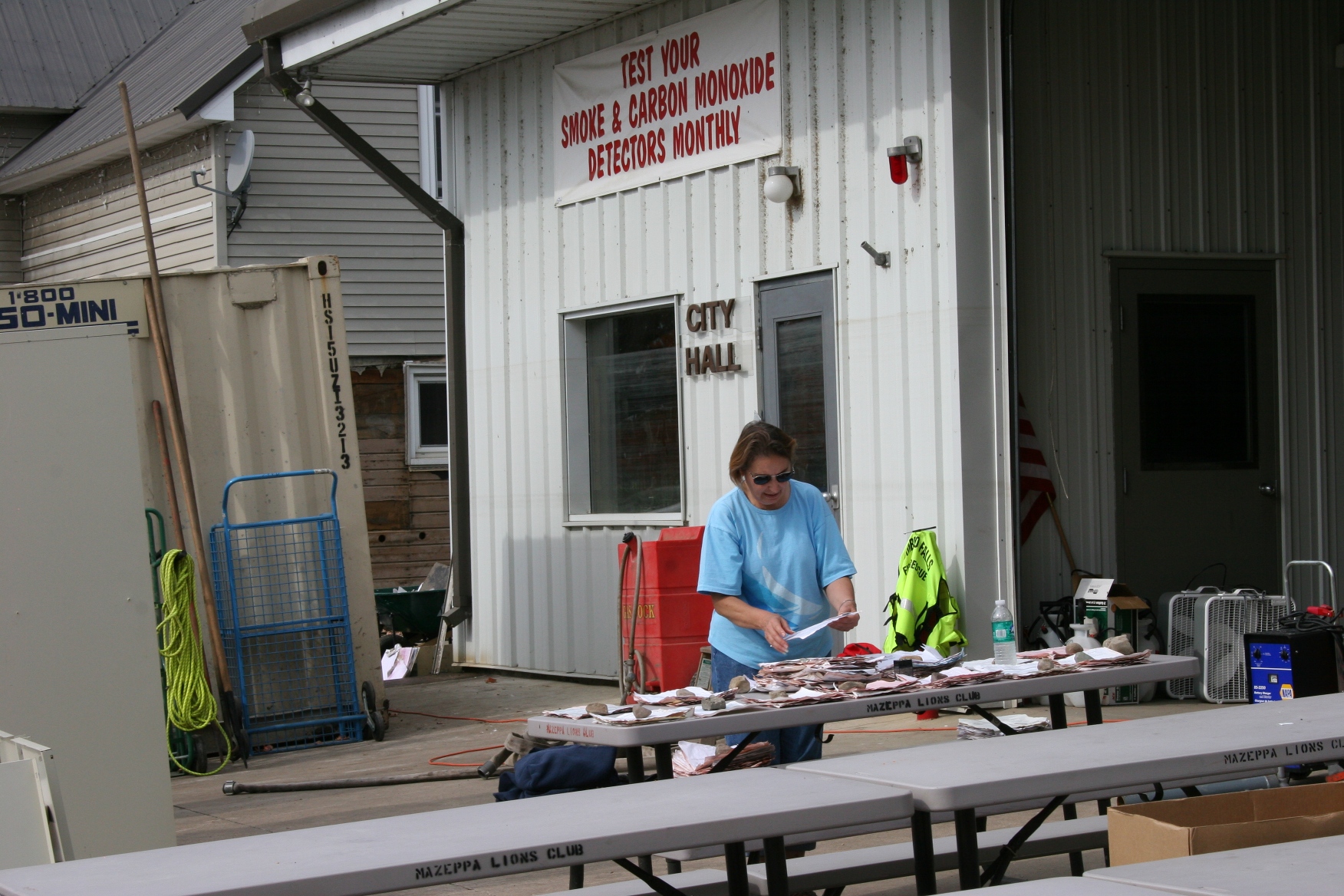
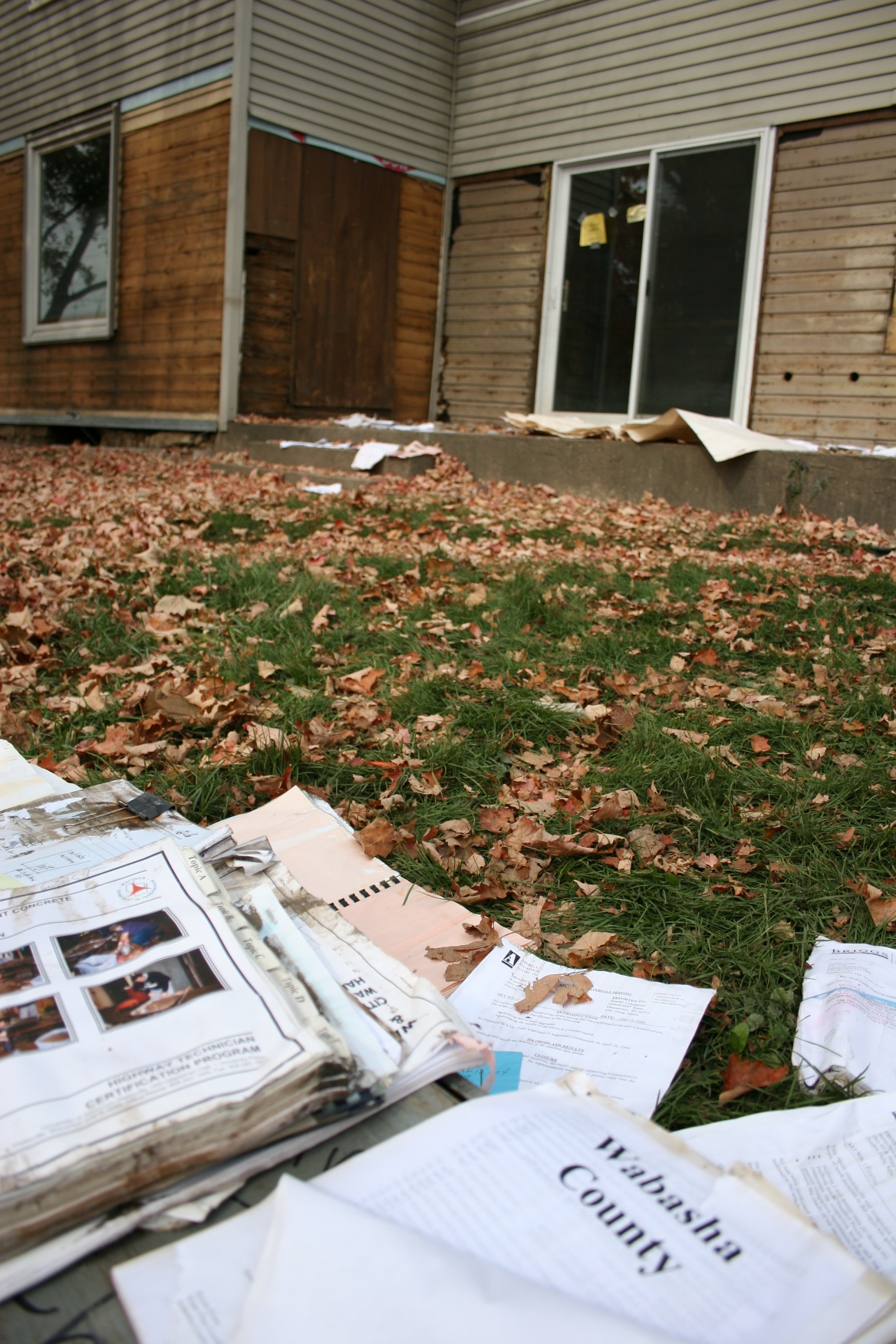
TALK ABOUT GOVERNMENT paperwork… well, you ought to see what I saw in flood-ravaged Zumbro Falls on Sunday afternoon. Scattered across the lawn and the patio of an uninhabitable home next to the combination fire hall and city hall, sheets and sheets and sheets of paper lay, weighted by stones, drying in the open air.

These documents, these papers (I resisted looking too closely), came from the city office.

Just steps away outside of city hall, which is a corner of the fire station, a woman sorted through stacks and stacks of dried city paperwork anchored by stones on a picnic table belonging to the Mazeppa Lions Club.

My first reaction to viewing this trail of paperwork: How trusting, how very trusting, to expose this government paperwork here, in the open, before the public eye. But that’s small-town Minnesota, where, for the most part, you can trust your neighbor and city hall.

DEAR READERS:

This concludes my series of stories on the aftermath of flooding in Zumbro Falls and Hammond, which were especially hard-hit by late September flooding. Interestingly enough, I had written this post earlier yesterday, before President Barack Obama issued a disaster declaration for 21 Minnesota counties, including my home county of Rice and Wabasha, where the featured towns are located.

As I understand the declaration—and I don’t pretend to know the nuances of how this works—funding will now be available to state and local governments and some non-profit groups in the flood-stricken counties.

Aid for individuals and businesses affected by floodwaters is not included in the declaration. That leaves me wondering about the men and women and families in Zumbro Falls and Hammond, and all of the other impacted communities.

To Tracy, Jackie, Susie and Katie, the four women whom I interviewed (see my previous posts), I encourage you to hold on. You’ve already shown incredible strength. Thank you for allowing me to share your stories and your opinions with the readers of Minnesota Prairie Roots. You are, indeed, strong women.

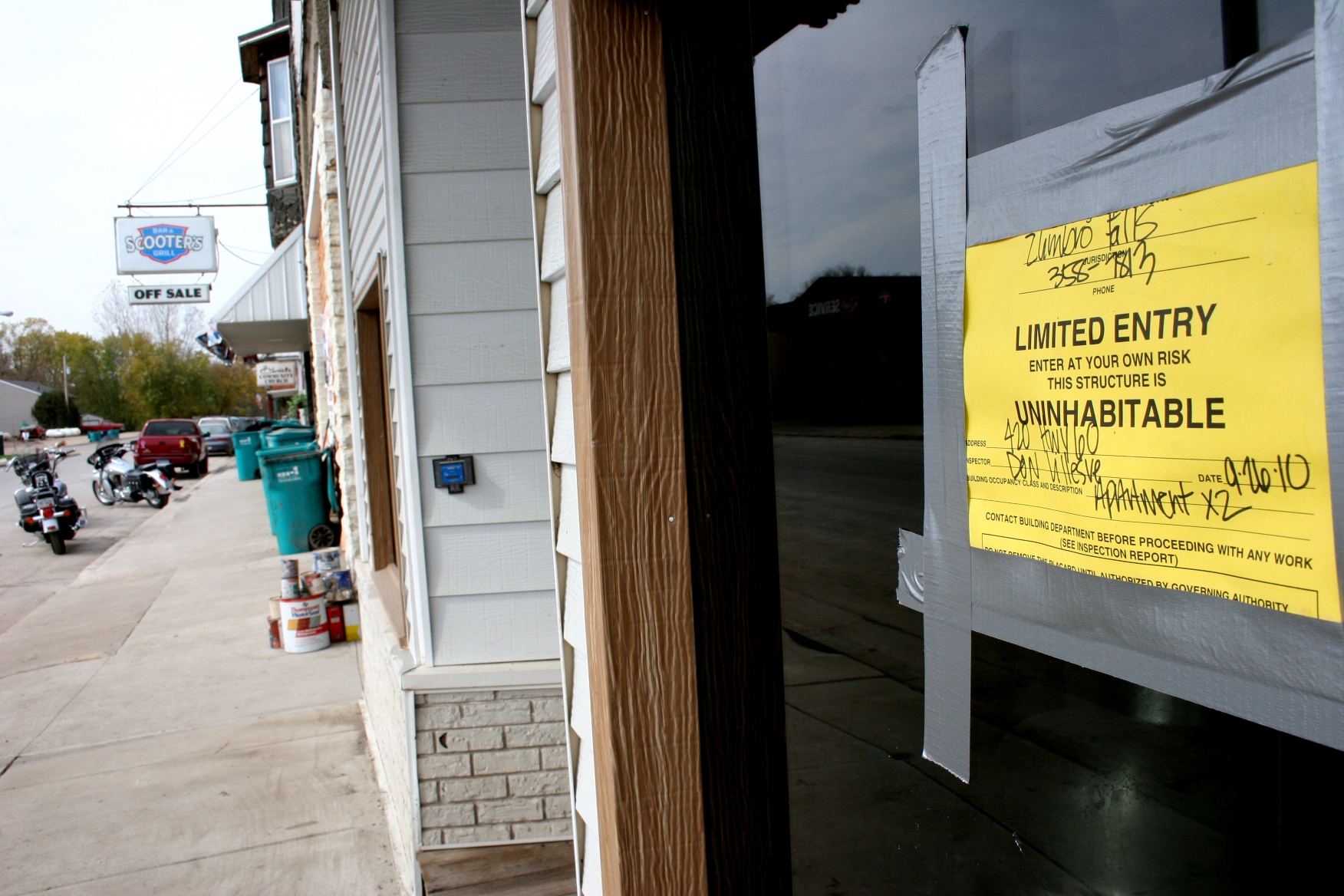
A building marked as uninhabitable in downtown Zumbro Falls, photographed on October 10.

© Copyright 2010 Audrey Kletscher Helbling


A message from an “Angry American Voter” August 23, 2010

Filed under: Uncategorized — Audrey Kletscher Helbling @ 7:37 AM
Tags: , , , , , ,

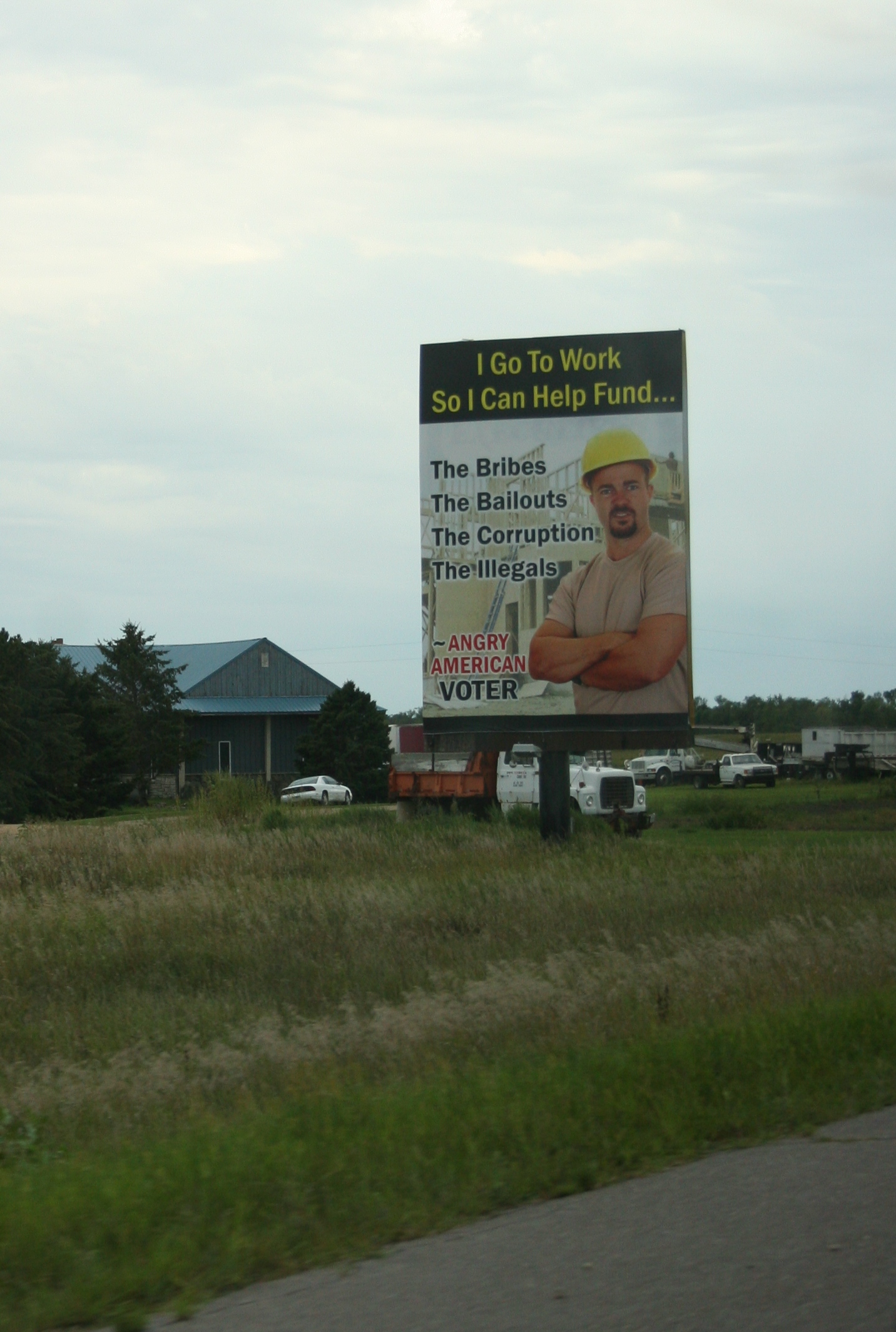
WHAT’S THE STORY behind this billboard along Minnesota Highway 60 just northeast of Lake Crystal? Do you know? I photographed the sign about 10 days ago.

I doubt I’ve ever seen a more strongly-worded billboard.

Who is this “Angry American Voter”?

Is it you? Is it some of us? Most of us?

No matter the identity of the vocal voter, the opinionated message is clearly aimed at government.

And whether you agree or disagree, you have to agree that we are fortunate to live in a country where we can freely vote and freely express our opinions right there, along the busy highway, for all to read.

© Copyright 2010 Audrey Kletscher Helbling