Minnesota Prairie Roots

Writing and photography by Audrey Kletscher Helbling

All things Civil War at the Minnesota Capitol May 17, 2011

IN NOVEMBER OF 2009, I met Brandon Peeters. He’s an extraordinary kid. Tomorrow he’ll be at the Minnesota State Capitol, leading the Pledge of Allegiance as our state celebrates Civil War Sesquicentennial Day.

That’s quite an honor for this seventh grader from Owatonna who has a passion for the Civil War. He teaches Owatonna students and others about the war, has visited many Civil War battlefields and belongs to the First Minnesota Volunteer Infantry Regiment re-enactment group and the Cannon Valley Civil War Roundtable.
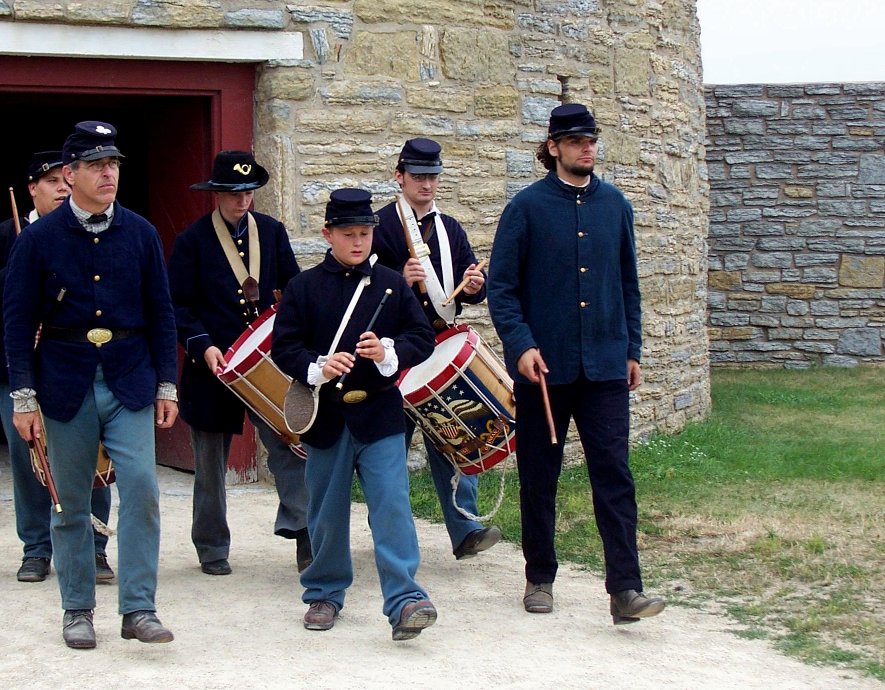
Brandon Peeters, front center, marches with Civil War re-enactors.

When Brandon discovered while working on a third grade family history project that his great-great-great grandfather, Valentine Katzung, served with the First Minnesota Volunteer Infantry Regiment from 1861-1864, fought at Gettysburg and was shot in the left heel, he was hooked on history.

“Brandon is so excited and very honored to be included in the program,” says his mom, Cindy Hokanson. “Needless to say, Brandon’s passion for the Civil War has only gotten stronger. He actually has applied to be one of the nine citizen members of the Governor’s Civil War Commemoration Task Force.” He’ll learn in June whether he has been selected to serve on that board.

Civil War buffs aplenty will gather at the Capitol on Wednesday to commemorate the 150th anniversary of the Civil War. Events begin at 10 a.m. and continue until 2 p.m. with a noon program in the rotunda that will include speakers (Governor Mark Dayton, former Governor Al Quie and others) during dedication of the 2011-2012 Minnesota Legislative Manual, aka the “Blue Book.” This year’s edition is packed with Minnesota-related Civil War history and trivia.

Several members of the Faribault-based Cannon Valley Civil War Roundtable will participate in a Civil War Information Fair in the Capitol basement Great Hall. “We will have Civil War memorabilia, books, brochures and a Civil War band poster,” says CVCWR member Dan Peterson of Faribault. “It should be fun sharing with the public, other roundtables and some re-enactors.”

Several roundtables, authors, historical organizations and others will present educational materials and information to attendees. Some will dress as Civil War re-enactors.

Minnesota Supreme Court Justice Paul H. Anderson will dress in period costume during a presentation in court chambers. Civil War Capitol tours are also available at 10 a.m., 11 a.m. and 1 p.m.

Three Civil War cannons given to the First Minnesota Infantry Regiment in 1862 by Major-General A. H. Sanford, the American Ambassador to Belgium, are sure to be a hit with Capitol visitors on Wednesday.

It is the first time in decades that the trio of cannons—kept at Camp Ripley, the Minnesota Military Museum at Camp Ripley and in Montevideo—will be showcased in one location, according to information from the Minnesota Secretary of State’s Office. Two will be displayed in the rotunda and the third on the upper mall in front of the Capitol.

I’m certain tomorrow’s event will pack the Capitol with Minnesotans interested in the Civil War. Having attended one Cannon Valley Roundtable meeting and a recent Civil War event in Faribault, I know the passion people possess for this time in our nation’s history. I have yet to meet a young person more interested in the Civil War than Brandon Peeters. If anyone deserves to serve on the Governor’s Civil War Commemoration Task Force, it would be this self-proclaimed history freak.

If you’re at the Capitol tomorrow, look for Brandon. I expect he’ll be in his Civil War costume and sporting a smile a mile wide.

© Capitol photo copyright 2009 Audrey Kletscher Helbling

Brandon Peeters photo courtesy of Cindy Hokanson


The Boys of ’61 memorial May 9, 2011

ON AUGUST 21, 1862, he was mustered into the Seventh Regiment Minnesota Volunteer Infantry, Company K. He was 34 years old. He was my great great grandfather, John Dallmann.

More than two years later, he was among seven men from his company wounded in the Battle of Nashville. The battle represented one of the Union Army’s largest victories during the Civil War. Two soldiers from Company K were killed in that December 15-16, 1864, conflict.

Remarks written in the Company K roster, published in Minnesota in the Civil and Indian Wars 1861-1865, under the supervision of The Board of Commissioners appointed by the act of the Minnesota legislature in 1889, state that Dahlman (the roster spelling) was “Wounded at Nashville; discharged in hospital in ’65.”

Other than that basic information, I know nothing of my great great grandfather’s military service.

He was among some 24,000 Minnesotans who marched off to war 150 years (or so) ago. Some came home; many died on battlefields or of disease.

My great great grandfather, John Dallmann (seated in the front row) was wounded on December 16, 1864, at the Battle of Nashville. My great grandmother, Anna Dallmann Bode is standing in the center in the back row, between her siblings, Minna, left to right, Carl, Herman and Hulda.

On this the sesquicentennial of our nation’s bloodiest war, plans are in place to construct a memorial honoring “all Minnesota citizens who served and fought to preserve Minnesota and the Union between 1861 and 1866,” according to the Minnesota Boys of ’61 nonprofit corporation.

A one-acre site south of the State Capitol in Summit Park has been selected for the state-wide memorial, current location of a monument to Josiah King, the first Minnesotan to volunteer for the Union.

Design plans call for granite monuments recognizing each Minnesota regiment, battery, battalion or independent organization encircling a full-scale bronze infantryman, calvaryman and civilian volunteer. Artillery pieces will flank each side of the memorial.

Efforts are currently underway to raise $750,000 for the project, which will be funded entirely by private donations.

For Minnesotans, this monument offers an opportunity to honor a soldier-ancestor on a state-wide level. Contributions made payable to “Minnesota Boys of ’61 Memorial” should be sent to:

Minnesota Boys of ’61 Memorial

1524 East Cliff Road

Burnsville, MN. 55337

A “Wall of Honor” will recognize donors at various levels, beginning with patriot donors who give a minimum $150. Contributors may choose to be recognized by personal or business name or may honor an ancestor.

Those who donate over $1,000 in money or in-kind services will also receive a signed, limited edition print of Minnesota Iron, the official Boys of ’61 print by Minnesota artist David Geister.

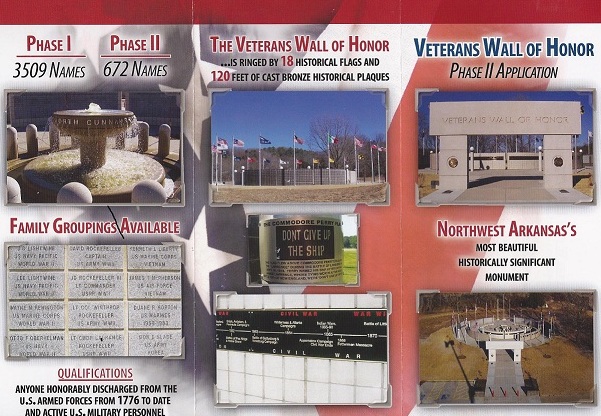
My great great grandfather's name is listed on the Veterans Wall of Honor in Bella Vista, Arkansas, where my two maternal aunts and their husbands live.

FYI: Log on to boysof61.org for more information about the Minnesota memorial and how you can donate.

Click here to read about the Arkansas memorial.

© Copyright 2011 Audrey Kletscher Helbling

Family photo courtesy of Dorothy Bowman


Serving up history and pie in Faribault April 12, 2011


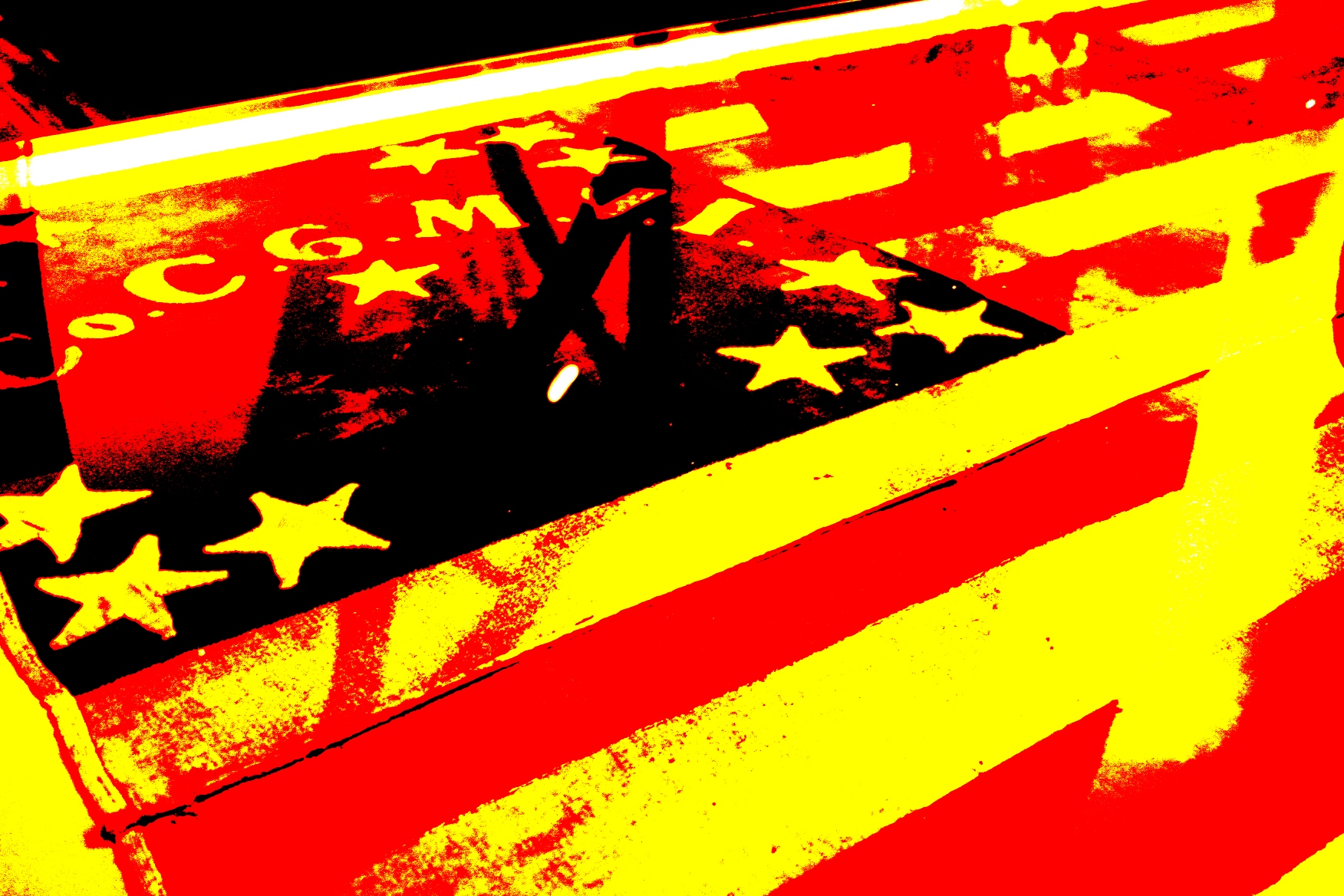
I EXPECT YOU have no clue what you are viewing above. Perhaps you think this is a piece of art in a gallery exhibit.

You would be wrong. Way wrong.

Rather, this shows a portion of a Civil War battle flag that I’ve switched up with some photo editing tools to emphasize the stars and letters and numbers in the upper left corner.

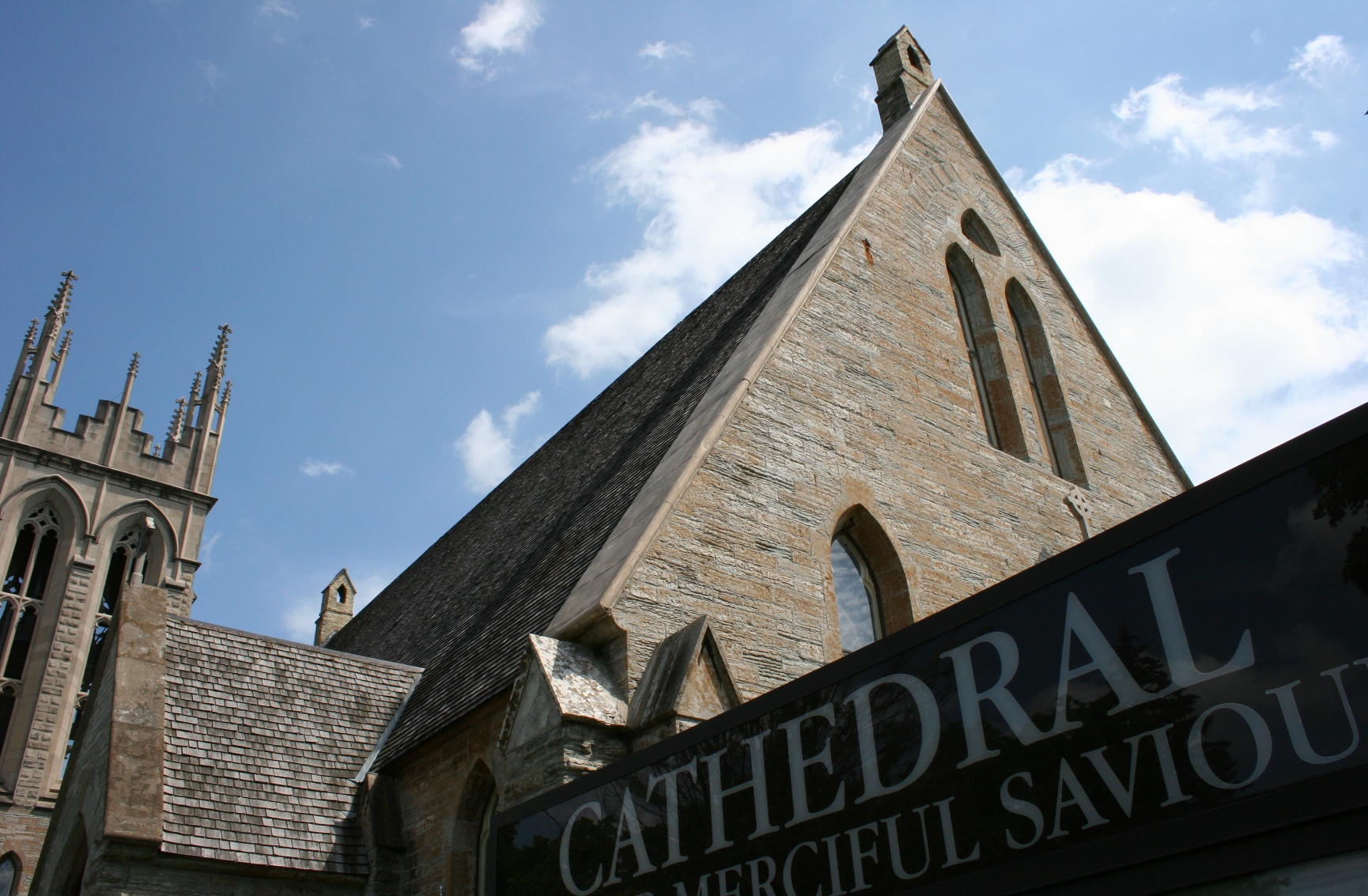
Lighting conditions weren’t ideal for photographing this flag Saturday afternoon in the Guild House at the Cathedral of Our Merciful Saviour in Faribault.

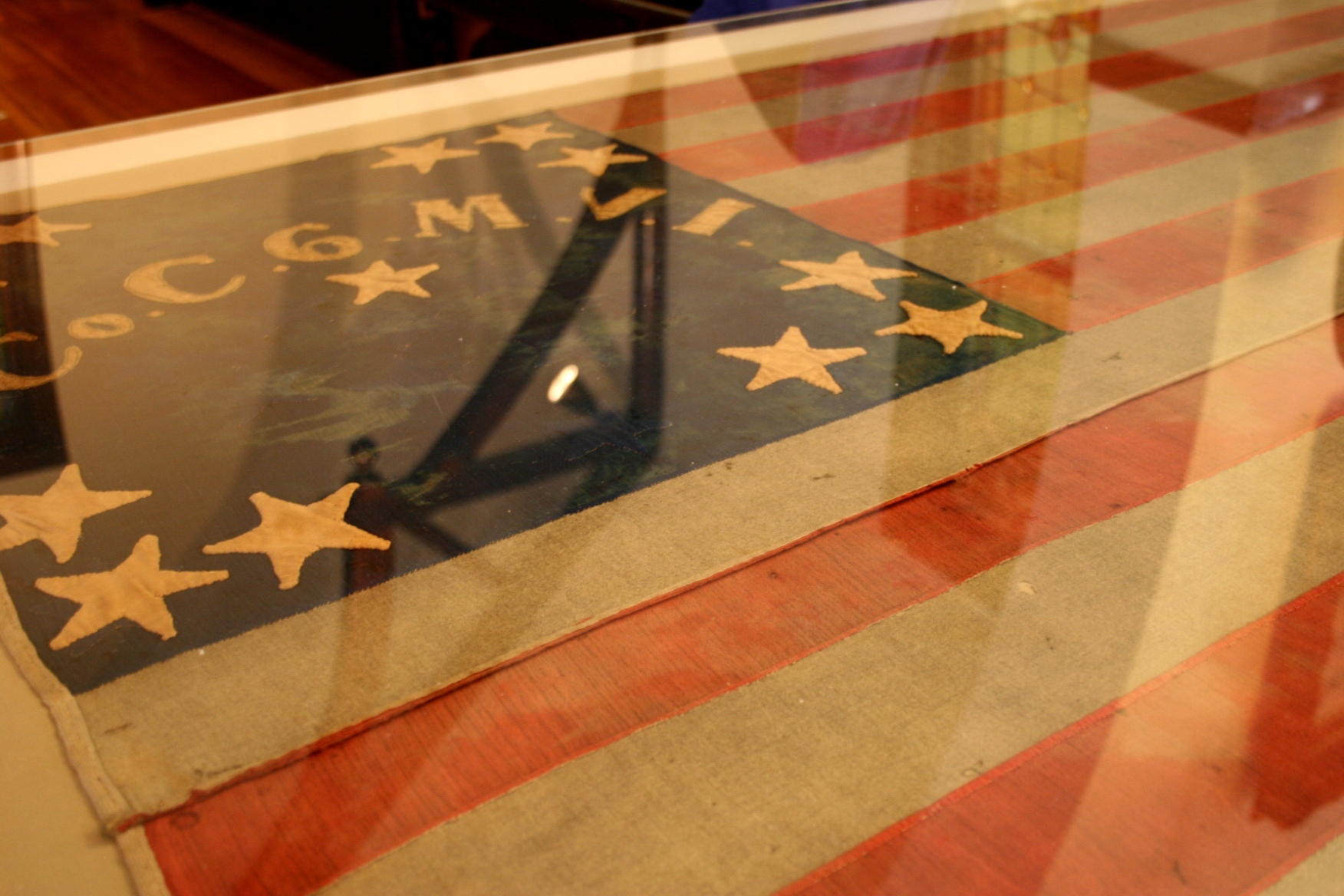
Honestly, I hadn’t even expected to photograph this flag sewn by a group of women in Fairmont and carried by Company C, 6th Minnesota Volunteer Infantry. The last time I asked to photograph the flag at the Rice County Museum of History, my request was denied by director Susan Garwood.

She didn’t know me from Adam, or Eve, although I gave her my business card and explained that I was a writer and blogger. That didn’t matter.

Thankfully, Garwood changed her mind and I got the go-ahead-and-shoot-but-without-flash OK.

Garwood has reason to be cautious. This battle flag is rare, among about a half dozen in Minnesota. Recent restoration cost nearly $7,300.

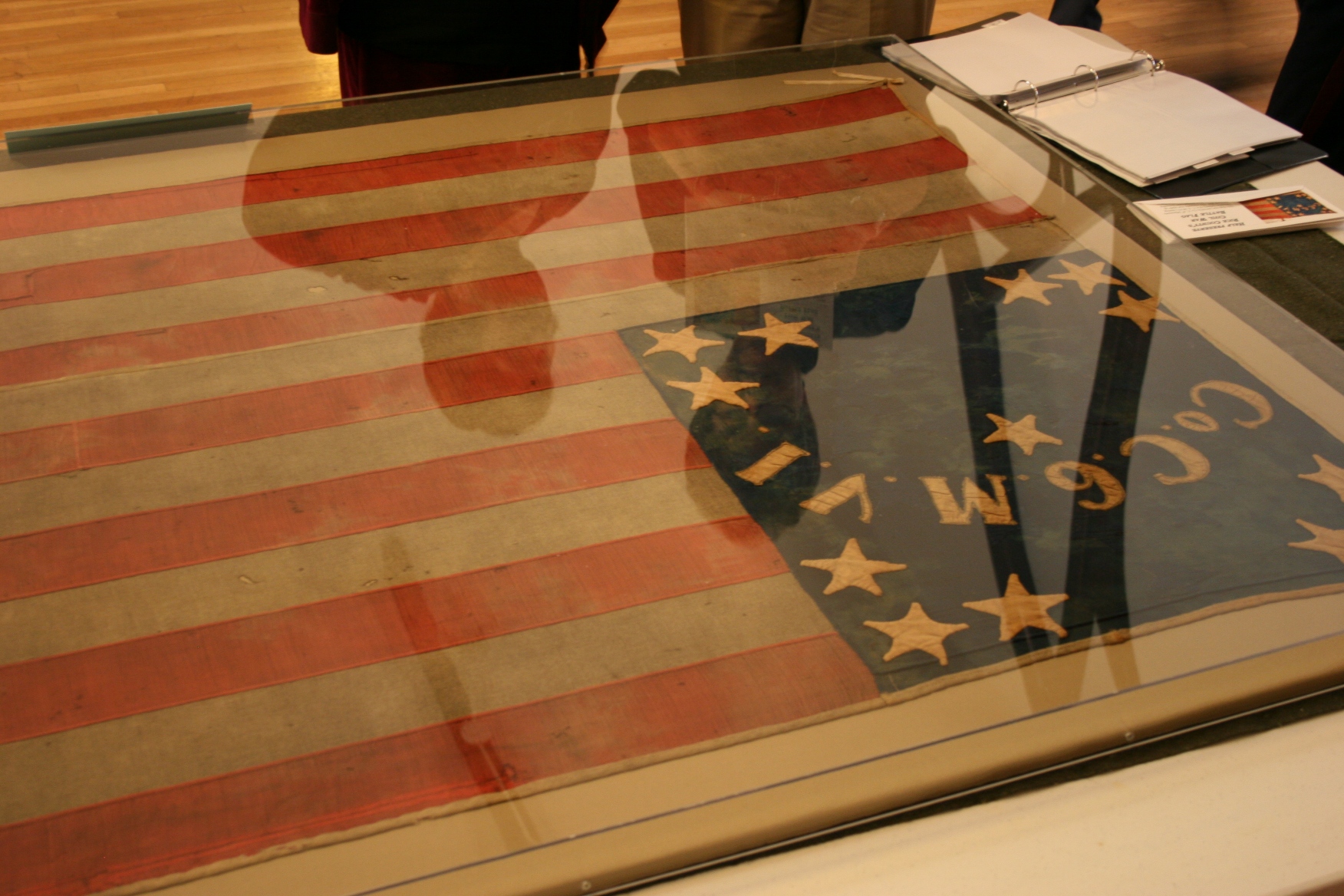
Here's how the flag really looks. Faded. The company which carried this flag was comprised of men primarily from Bridgewater Township in Rice County, Minnesota. On the back side of the flag 34 stars are sewn representing the number of states in 1862. You are seeing reflections here on the glass encasing the flag.
 

Just another, upside down, view of the flag and the reflections of visitors viewing it.

I don’t know the value of the restored flag. But it is valuable enough that a Faribault police officer was guarding the flag Saturday afternoon during “Recognition of the Fall of Fort Sumter–The Beginning of the Civil War” sponsored by the Rice County Historical Society and the Cannon Valley Civil War Roundtable.

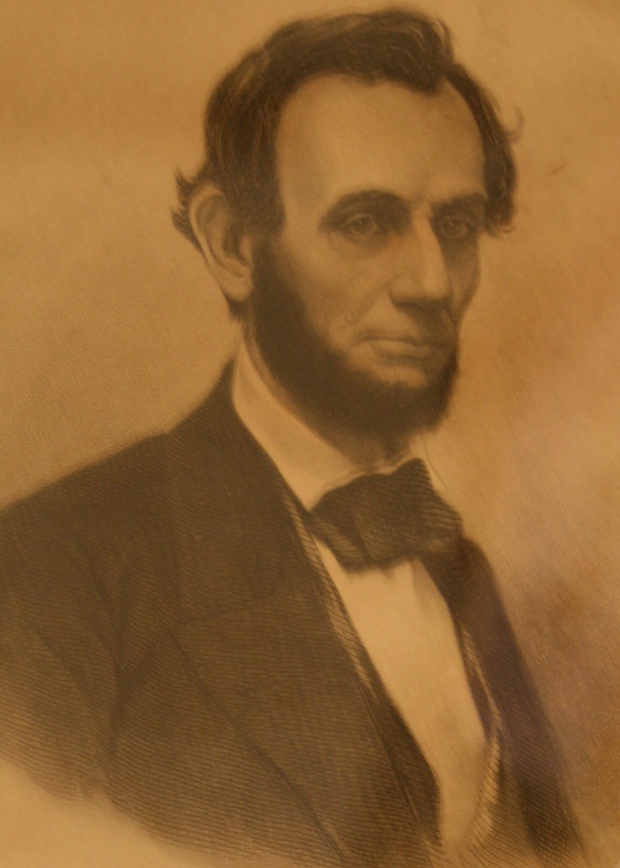
Likewise a collector of Civil War era artifacts was standing guard over his tables full of treasures. He had, among Civil War uniform buttons and other items, an original Lincoln photo engraving (used on the $50 bill) and signature. I didn’t ask the values. Sometimes it’s better not to know these things.


A slightly out of focus photo that I took of an original Lincoln photo engraving for a $50 bill on display Saturday.

The last time I photographed parts of his collection at a 2009 Cannon Valley Civil War Roundtable meeting, he made me promise not to reveal his name. I agreed. I didn’t want to go missing and have my family looking for me under a stadium. That’s an exaggeration, but this collector was serious. My lips are sealed.

I did ask him, though, why he didn’t bring his slave bills, which were advertised as being at the event and one of the key reasons I attended. He simply said he didn’t know he was supposed to bring them. He gave the same answer 1 1/2 years ago at the Roundtable meeting. I had gone to the session then specifically to see the slave documents.

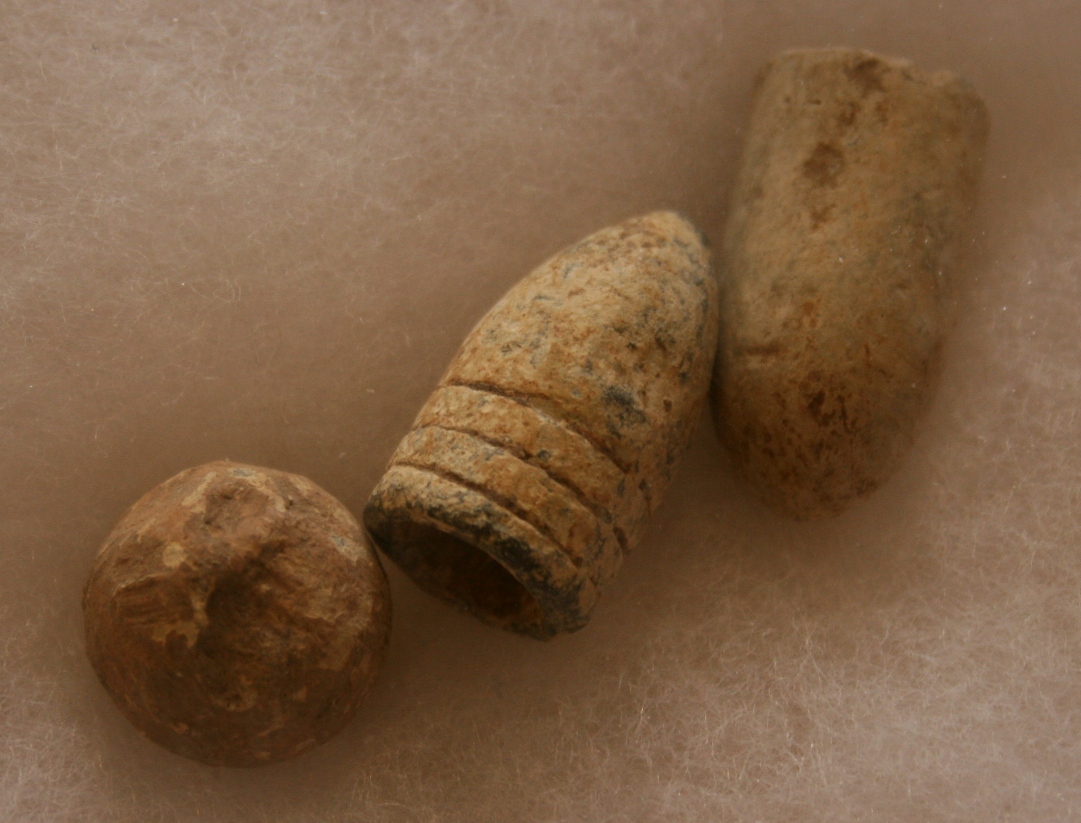
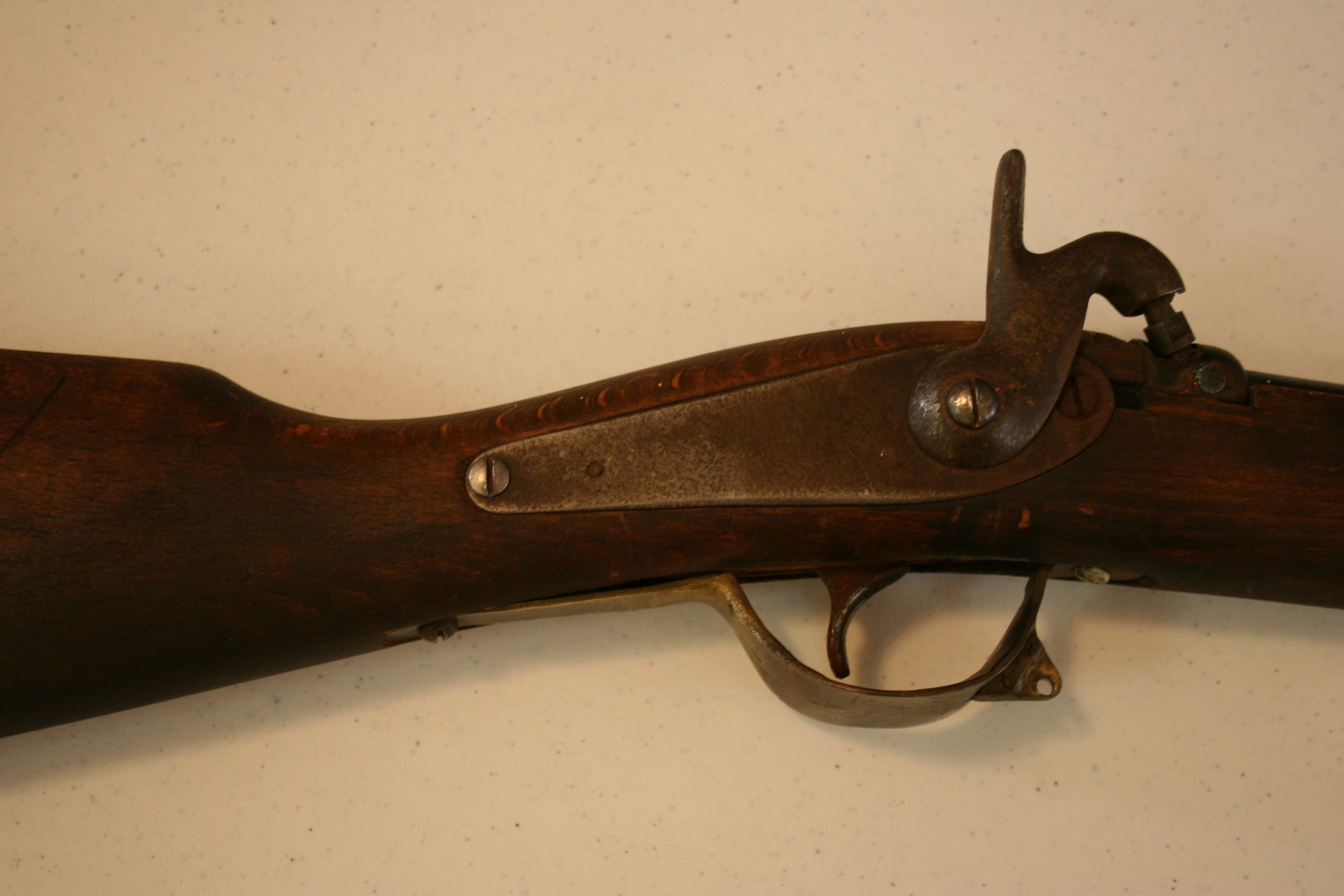
But on Saturday I perused a few other artifacts I hadn’t seen before like…

these old bullets


and two Civil War era muzzleloaders which I was allowed to pick up and which were heavy at 18 and 21 pounds.

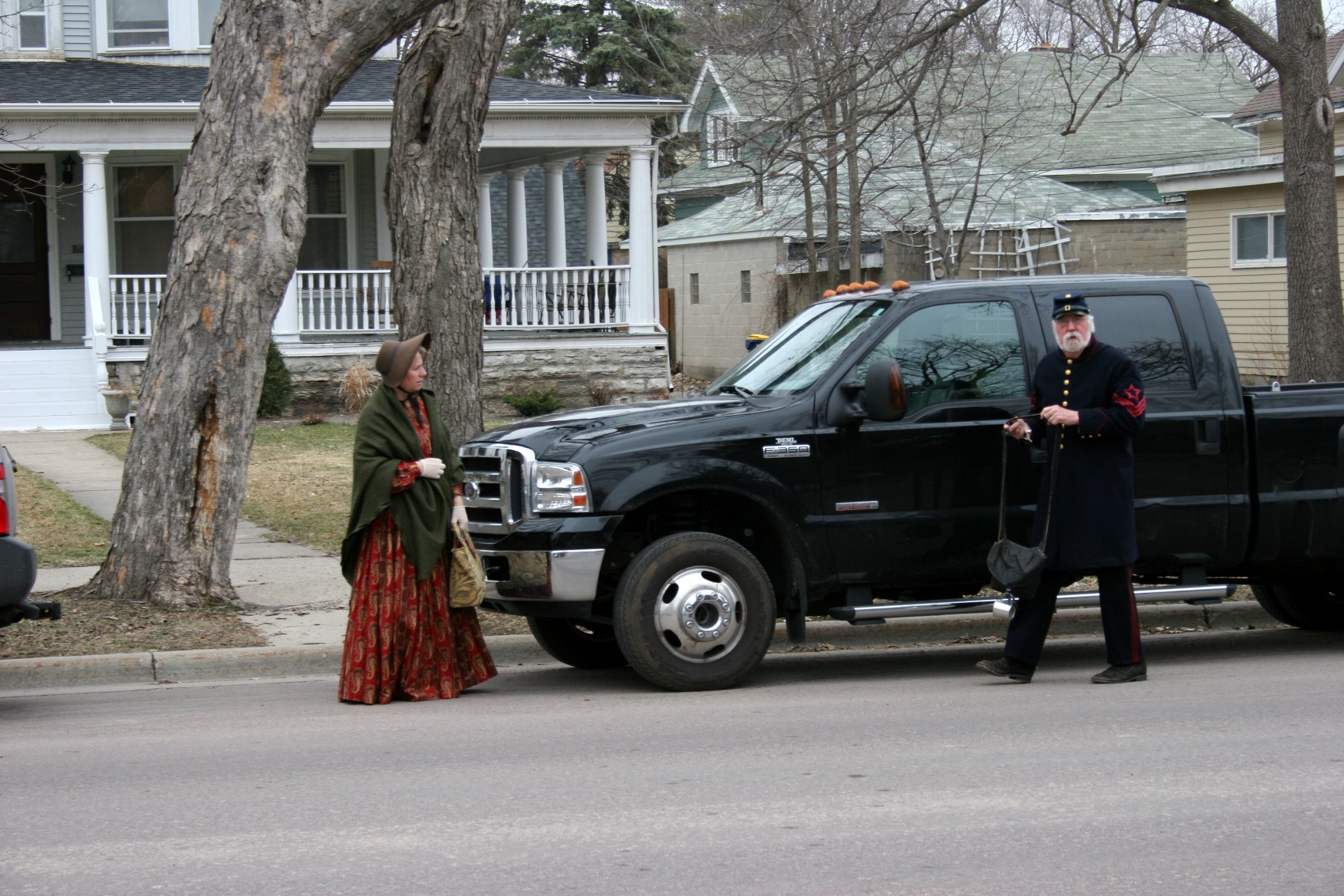
I also saw…

these costumed reenactors pull up in a pick-up truck

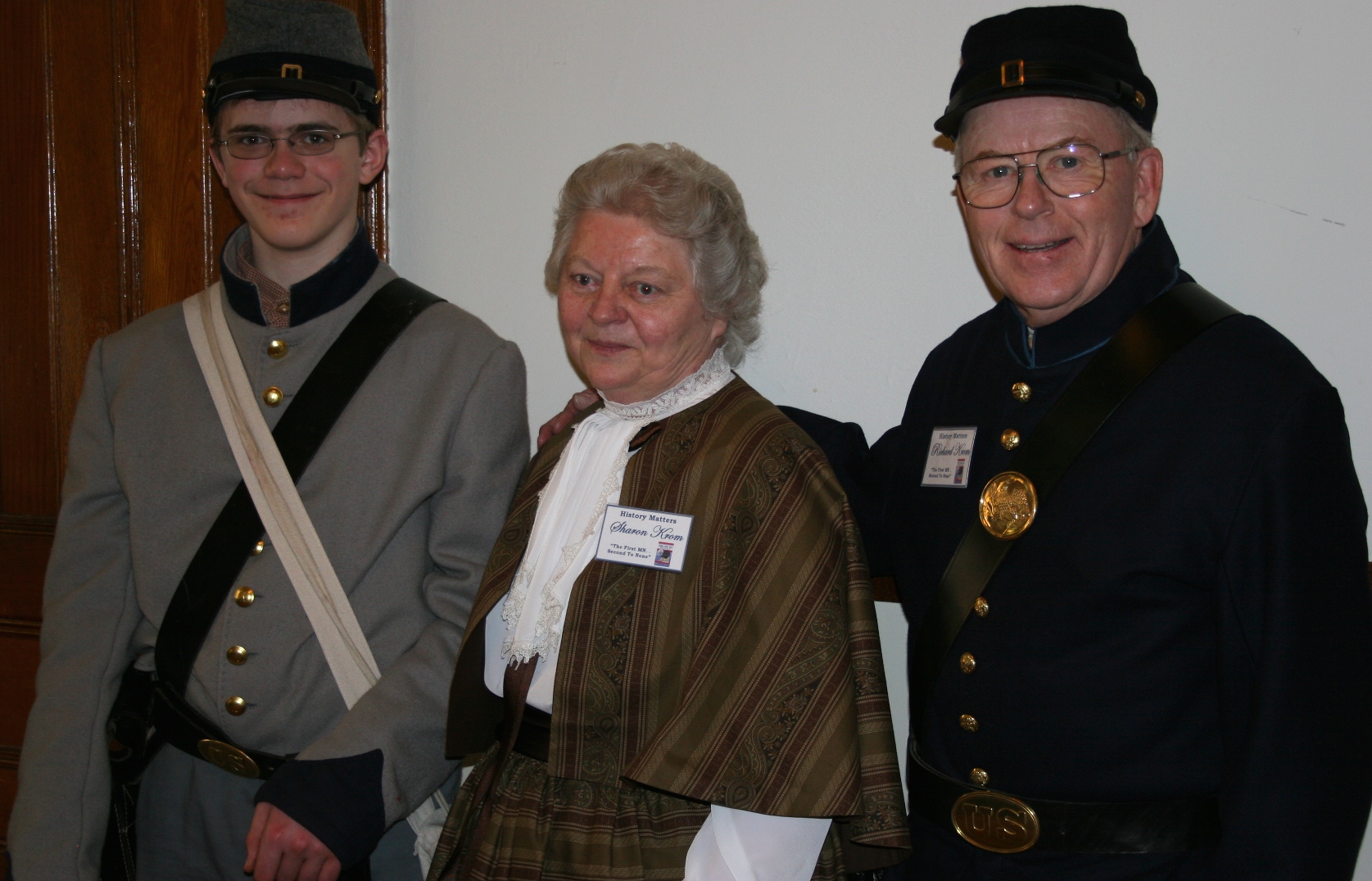
and this unidentified reenactor, left, posing for photos with Sharon and Richard G. Krom of Rochester. Richard is the great grandson of a Civil War soldier and has written a book, The 1st MN Second to None.

Finally, I sat down with friends and family to enjoy…

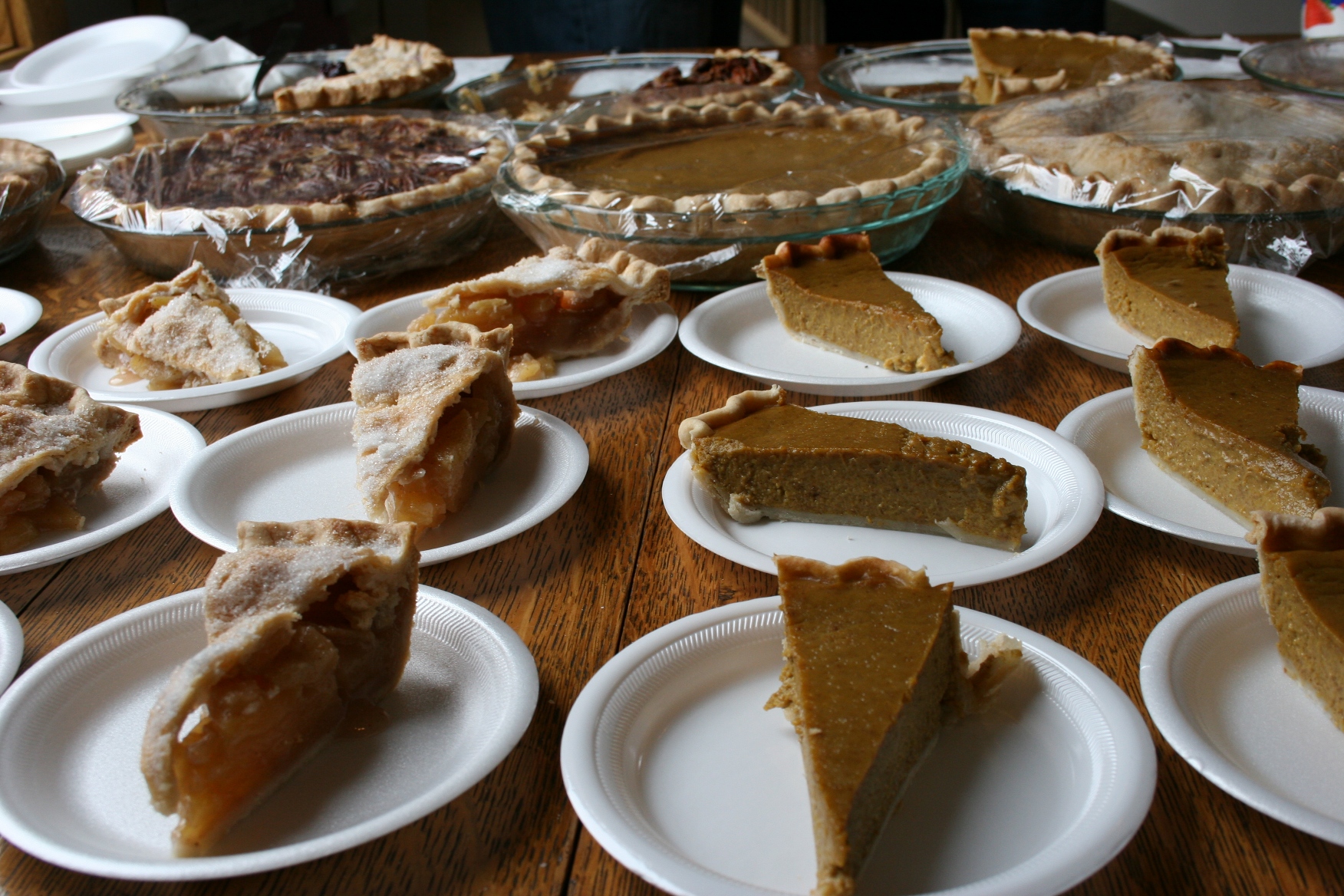
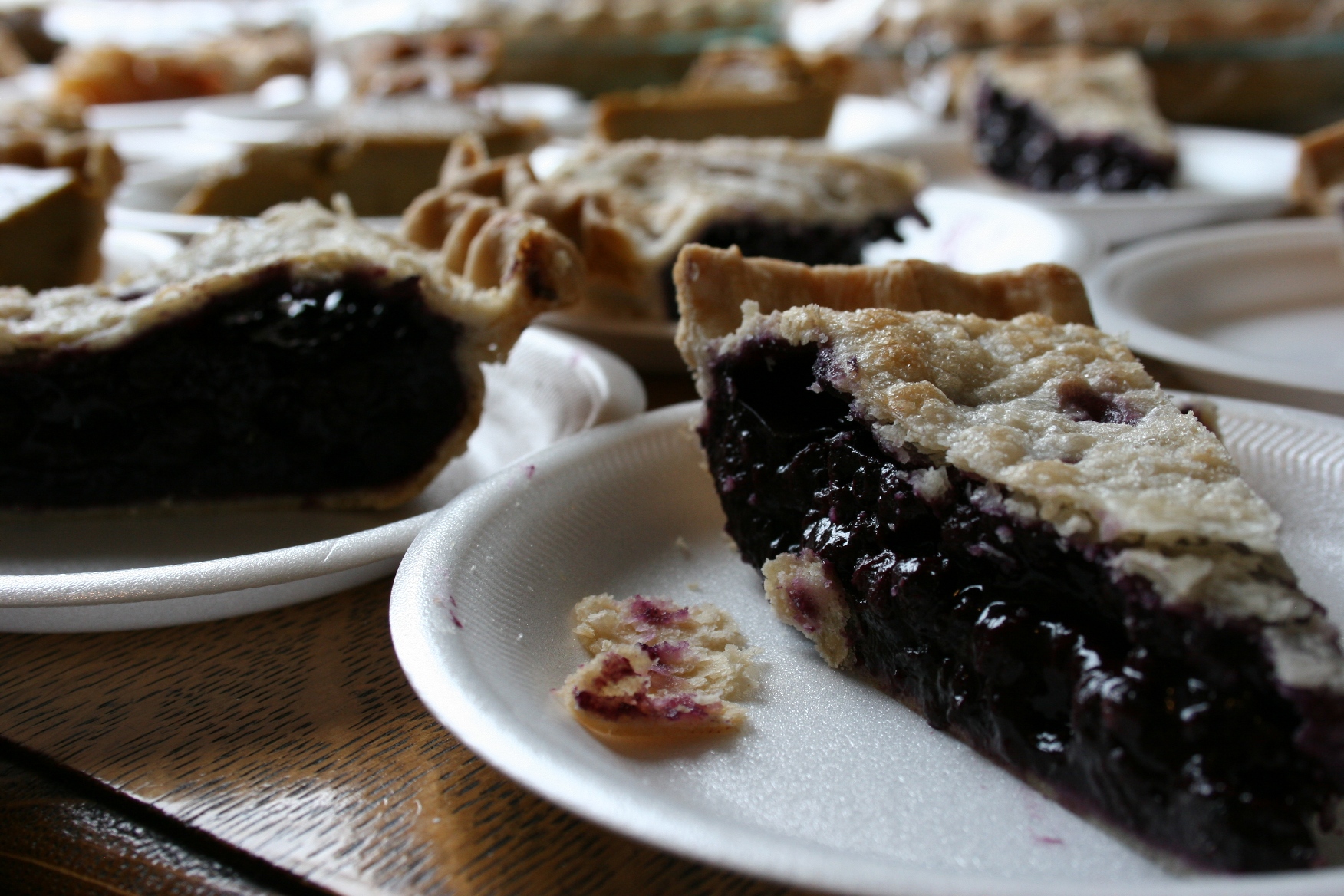
a piece of delicious homemade pie made by Rice County Historical Society President Jason Reher. He baked 16 pies for the event. (Jason could be a professional baker; his pie is that good.)

Fortunately for me, Jason had baked my favorite pie and apparently a favorite of many as everyone sitting at my table chose blueberry pie over apple, pumpkin or pecan. Most of us wondered if the blueberries were wild, yet never bothered to walk over and ask the pie-maker.

Jason wondered why I was photographing his pie. I just handed him a business card and figured he’d figure it out.

Copyright 2011 Audrey Kletscher Helbling


Remembering the start of the Civil War April 8, 2011

THE FIRST AND LAST TIME I attended a Cannon Valley Civil War Roundtable meeting, I was impressed by the collective knowledge this Faribault-based organization possesses of the Civil War. The session opened with each member sharing a historical snippet about the conflict.

Even guests like me were expected to offer something, anything. I was getting nervous as my turn neared and I couldn’t think of anything intellectually impressive to share. I had come solely because I wanted to see the slave documents that a guest speaker was bringing to the gathering. I didn’t expect this.

But then I remembered my tour of the Minnesota State Capitol months earlier. I could tell them, although I’m sure they knew, that a Howard Pyle painting, The Battle of Nashville, hangs in the Governor’s Reception Room. The artwork, according to the Capitol tour guide, is among the most noted of the Civil War and depicts the bloody conflict at Shy’s Hill, often defined as the war’s decisive battle.

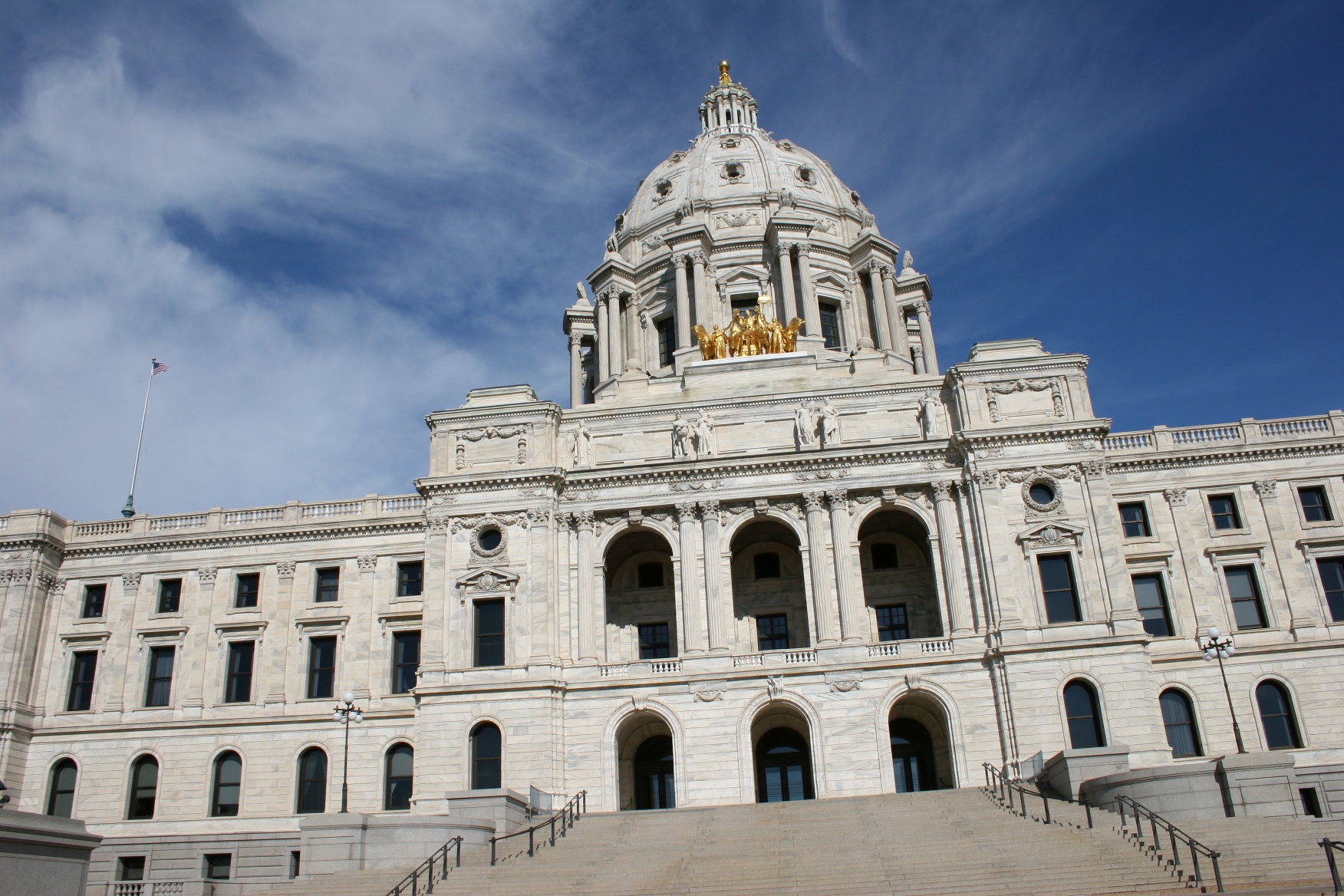
And just to make sure the Roundtable members understood that I wasn’t completely Civil War illiterate, I also told them that the inclusion of white Georgia marble in Capitol construction drew the ire of Civil War veterans. The marble comprises much of the building’s exterior.


Georgia marble graces the exterior of the Minnesota State Capitol.

I doubt my tidbit facts impressed them, but I tried.

If you’re like me, not well-versed on the details of the Civil War, this year—the 150th anniversary of that conflict—offers the perfect opportunity to learn more. The Minnesota Historical Society has a lengthy list of educational activities planned to commemorate the anniversary.

This Saturday, April 9, for example, is “Civil War Flag Day at the Capitol” featuring three recently-conserved Minnesota Civil War flags and one from the Spanish-American War. The 11 a.m. – 4 p.m. event, with a 1 p.m. program, also includes Civil War artifacts, reenactors, children’s activities and more.

I won’t be at the State Capitol on Saturday because I’ll be attending “Recognition of the Fall of Fort Sumter—The Beginning of the Civil War” hosted by the Cannon Valley Civil War Roundtable and the Rice County Historical Society from 1 p.m. – 4 p.m. in Faribault. On April 12, 1861, the Confederates fired on Fort Sumter, starting the Civil War. Saturday’s event will be held at the Guild House of the 1862 historic Cathedral of Our Merciful Saviour, 101 NW Sixth Street.


The Guild House is attached to the historic Cathedral of Our Merciful Saviour across from Central Park in Faribault.

I expect that some of the items on display at the Guild House will be artifacts—Abraham Lincoln photos and postcards, Civil War uniform buttons—I saw at the 2009 Roundtable meeting. Back then the presenter failed to bring his slave documents. Slave bills will be displayed on Saturday. There’ll also be weapons and money, buckles and bonds, and more.


Civil War uniform buttons and insignias displayed at a 2009 Cannon Valley Civil War Roundtable meeting.

This Civil War postcard was among the items a collector brought to a Cannon Valley Civil War Roundtable meeting.

An 1840 Philadelphia Derringer, like the pistol used to assassinate President Abraham Lincoln. A collector brought the pistol to the Roundtable meeting I attended in 2009.

Jan Stevens, an area Civil War enthusiast who creates replica historical clothing will dress in period clothing and greet visitors. Another reenactor will recruit visitors to join the cause.

Civil War music will fill the Guild House. Author Richard G. Krom, great grandson of a Civil War soldier from nearby Morristown, will sign and sell copies of his book, The 1st MN Second to None.

Finally, I’m looking forward to once again examining the recently-restored Rice County Civil War battle flag of Company C, Sixth Minnesota Volunteer Infantry. I’ve seen the flag only once before, viewing it at the county historical society under the watchful eye of Director Susan Garwood.

I was disappointed then that Garwood wouldn’t allow me to photograph the flag, even when I promised to turn off the flash on my camera. She wouldn’t be swayed.

But I’ll have my camera with me on Saturday and I’ll try again.

I expect the Civil War artifact collector whom I first met at the 2009 Roundtable meeting will be there too. He, thankfully, allowed me to photograph his historical pieces. But he wouldn’t allow me to publish his name in a blog post I wrote then. He looked me directly in the eye and demanded anonymity to protect his substantial investment. He wasn’t joking when he told me he knew where he could find me.

FYI: This weekend’s activities at the Capitol and in Faribault are free and open to the public. However, donations to the Rice County Historical Society will be accepted at the Faribault event where homemade pie and coffee will be served.

© Copyright 2011 Audrey Kletscher Helbling


Why some of us appreciate abandoned buildings February 25, 2011


Harriet Traxler photographed this abandoned building along U.S. Highway 14 near Waseca several years ago. She's a hobbyist photographer specializing in nature and rural photography. This photo placed in a photo contest Harriet entered. "It is one of my favorites because of what it doesn't tell you," Harriet says.

SOMETIMES I’M SURPRISED by readers’ reactions to my posts. Usually, the stories and photos I least expect will interest readers, do.

Take my post on abandoned buildings. Last fall, I photographed a dilapidated building in the middle of nowhere along a gravel road near Kasota. I can’t give you the exact location because I don’t know quite where I was on that autumn day.

When I published that photo and wrote about my fascination with abandoned buildings in rural landscapes earlier this week, readers from Oregon, Arkansas and Minnesota responded. Seems I’m not alone in my appreciation of abandoned buildings and the history, memories and stories they hold.

Harriet Traxler, a hobbyist photographer from rural Belle Plaine and the publisher of a book series featuring photos of Sibley County, Minnesota, barns, emailed two photos of abandoned buildings. She is graciously allowing me to share her images and thoughts.

“I, too, am drawn to photographing old, abandoned buildings and then find myself staring at the pictures and trying to imagine who the people were that built and lived in these homes or worked in these barns that now stand empty,” Harriet says. “And the memories of the hard work, the laughter, the troubles; everything that went towards making it a home or farm are now gone forever.

Oftentimes when I would be out photographing the barns in Sibley County or even on a cross country trip, I would see a windmill or a silo or a small grove of trees standing alone in the middle of a field and wonder about the farm that stood there too.

What happened to the family that lived there once not too long ago? Were they happy? Were there children who played and worked alongside their family? Was there a tragedy that occurred that drove the family from the farm?

We often romanticize farm life, but that life was one of the hardest to live. If it was a dairy farm, like most were in rural Minnesota, then it was long days, seven days a week, and children after growing up on this type of farm, learning good work ethics, seldom wanted to spend the rest of their lives doing the work their parents had done for years and years. When they left the farms for those good ‘city jobs,’ that is when farm life began to disappear and those abandoned buildings really began to appear.”

I COULDN’T HAVE said it any better, Harriet. I am one of those kids who left the (dairy) farm.

Harriet, too, grew up on a farm, in Sibley County, on her uncle’s place, that looks nothing like the home of her youth.


The old granary on the farm where Harriet grew up.

“All that remains standing is this old granary that also always smelled of rats and dusty bins of oats,” Harriet says. “It had a lean-to attached to it that was used as a garage for my uncle’s car. I remember every inch of that farm because I loved to explore every inch of it.

I didn’t have to work nearly as hard on that farm as most children had to on the farms they grew up on so maybe that is why I loved it so much.

The freedom to be me was always there and I have often gone back to my ‘roots’ and those memories…the better memories seem to always remain pushing other memories that were not so much fun to the far corners of the mind.”

© Text copyright 2011 by Audrey Kletscher Helbling

© Photo copyright by Harriet Traxler


Harvesting ice in Waseca February 15, 2011

Filed under: Uncategorized — Audrey Kletscher Helbling @ 9:06 AM
Tags: , , , , , , ,

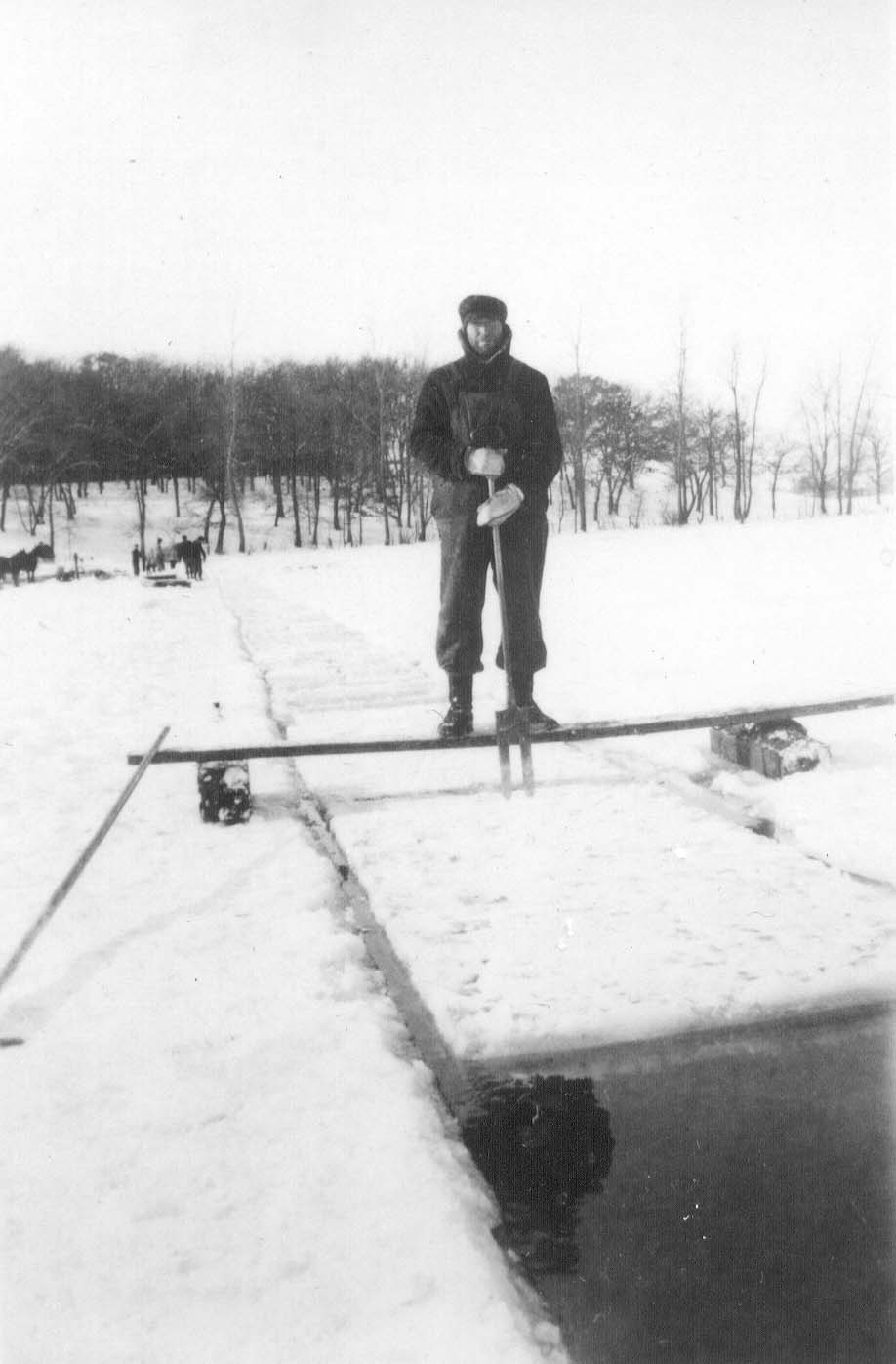
ACCORDING TO KLETSCHER family history, my dad and Uncle Mike harvested ice from the Redwood River in Marshall many, many decades ago.

I learned that historical tidbit last year from my Uncle Merlin, who helped me with questions for a family reunion trivia competition. My dad never spoke of this winter work, once common in Minnesota. He died in 2003, Mike in 2001, so I’ll never know anything more about their ice harvesting experience.


Harvesting ice on Clear Lake.

On Wednesday, February 16, anyone interested in learning about this winter activity should head over to Waseca for the 10th annual Ice Harvest from 9 a.m. – 3 p.m. at Clear Lake Park.

There visitors will participate in the traditions of ice scoring, cutting, and then storing blocks of harvested ice, in sawdust, in an ice house.

Local students will be there, too, joining in sledding, sleigh rides, snowshoeing, wood cutting and more.

The Waseca County Historical Society, FarmAmerica and AKorn Productions are hosting the event. For more information, contact the WCHS at (507) 835-7700 or go to www.historical.waseca.mn.us.

READERS, IF YOU have stories to share about harvesting ice, submit a comment. I’d like to hear more about this winter activity.

Photo courtesy of the Waseca County Historical Society


A country school preserved in Millersburg October 3, 2010

MY HUSBAND THRILLS in talking about the coyotes at Chimney Butte School.

You have to admit that just the name of the rural North Dakota school, which Randy attended for 14 months in the 1960s, draws you in to listen.

His tale is short. One day Randy and his classmates couldn’t go outside for recess because of coyotes in the schoolyard. That’s it. Yet, the story deserves telling. How many men in their early 50s attended a country school? Furthermore, how many of those students encountered coyotes on a school day?

Preserving such memories is important. So is preserving the actual school building. Last Sunday I stepped inside a one-room Minnesota country school that has been restored and transformed into a museum. That’s nothing new, really. Old schoolhouses have also become township halls, private residences and businesses, although some have been abandoned and simply fallen into heaps of rotting wood.

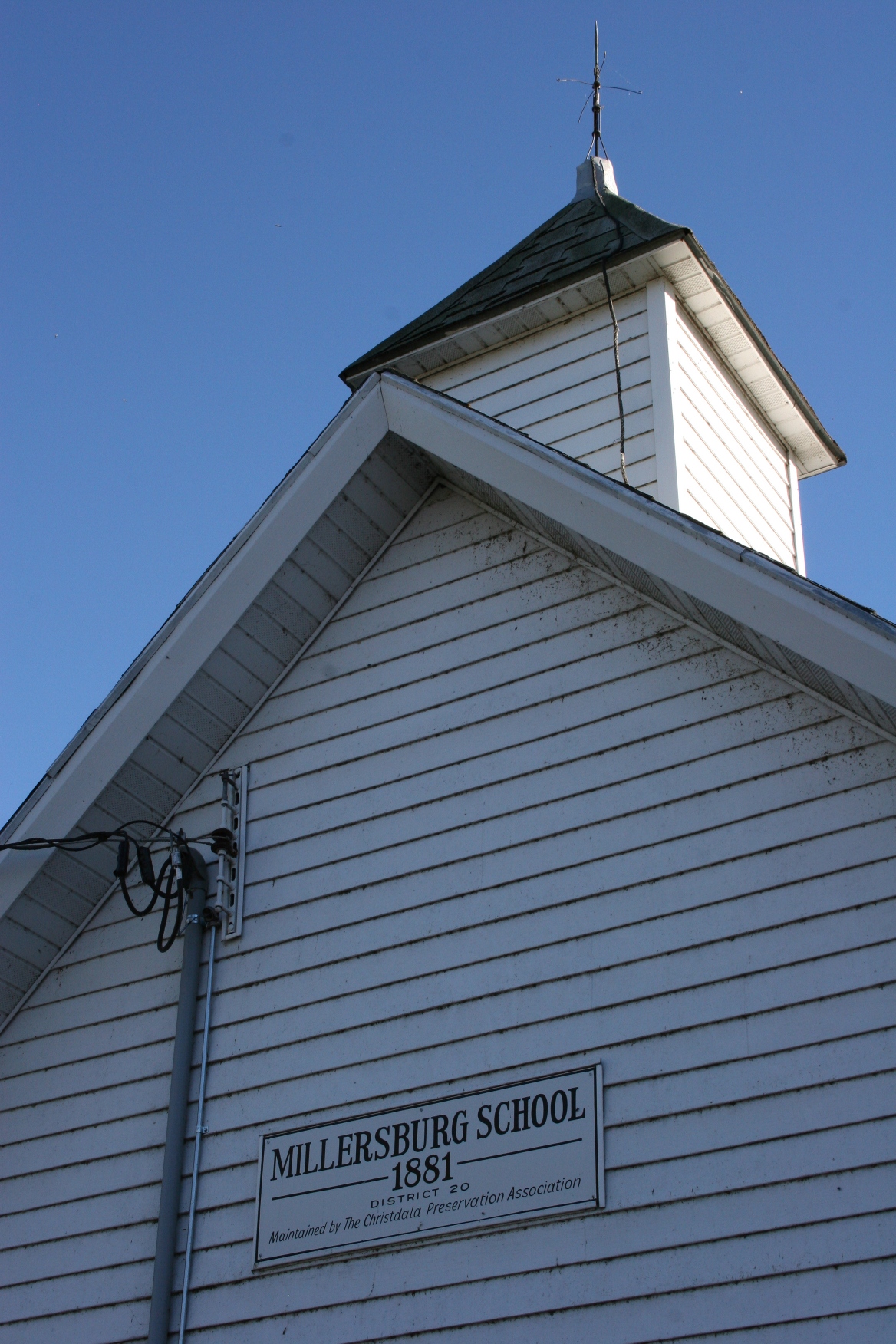
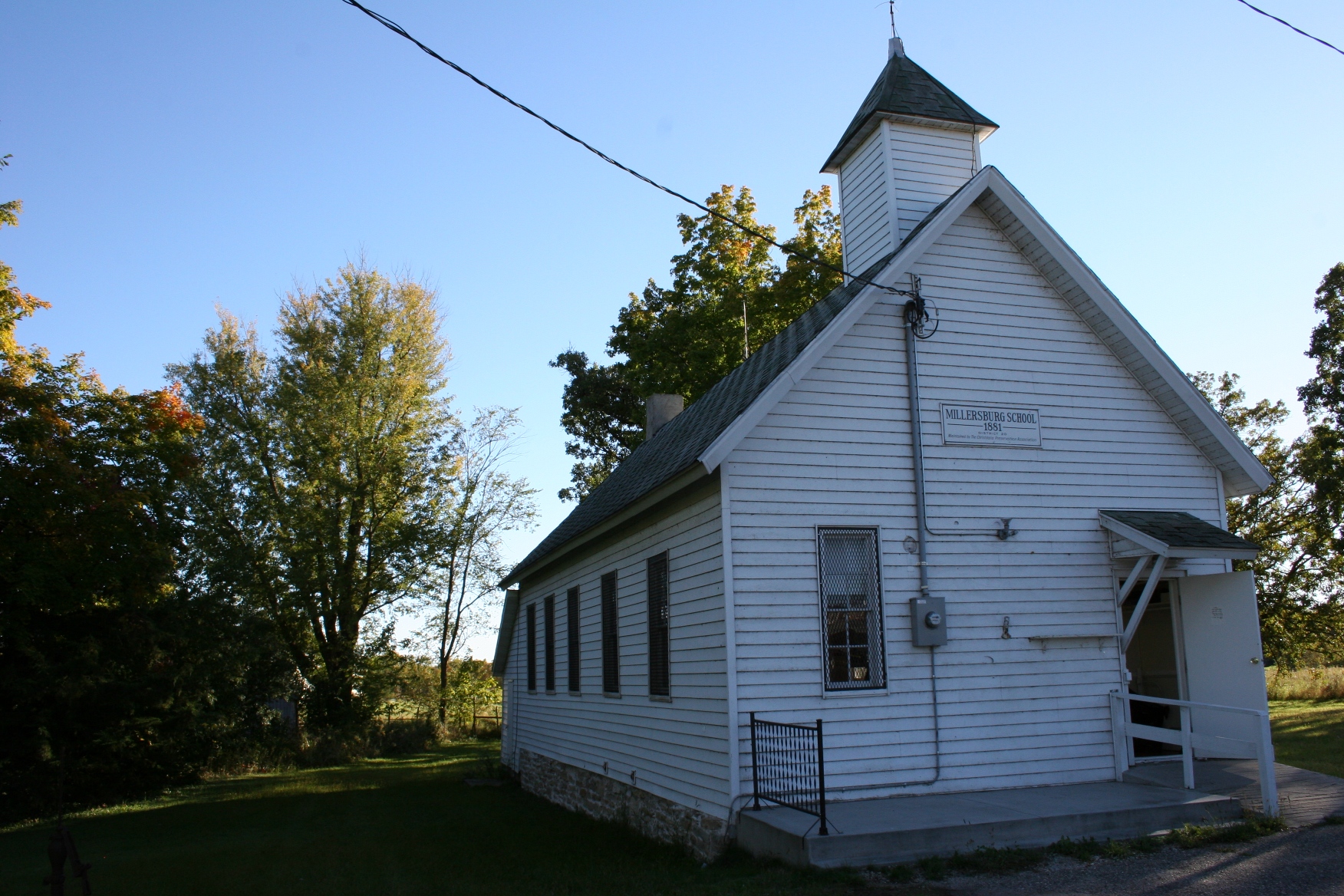
Members of The Christdala Preservation Association are assuring that doesn’t happen to the District 20 Millersburg School in rural Rice County. The association has acquired the former schoolhouse and is transitioning it into a museum for the Millersburg community.

The 1881 Millersburg School is now a museum.

The old country school sits across the road from Boonie's restaurant and bar along Rice County Road 1.

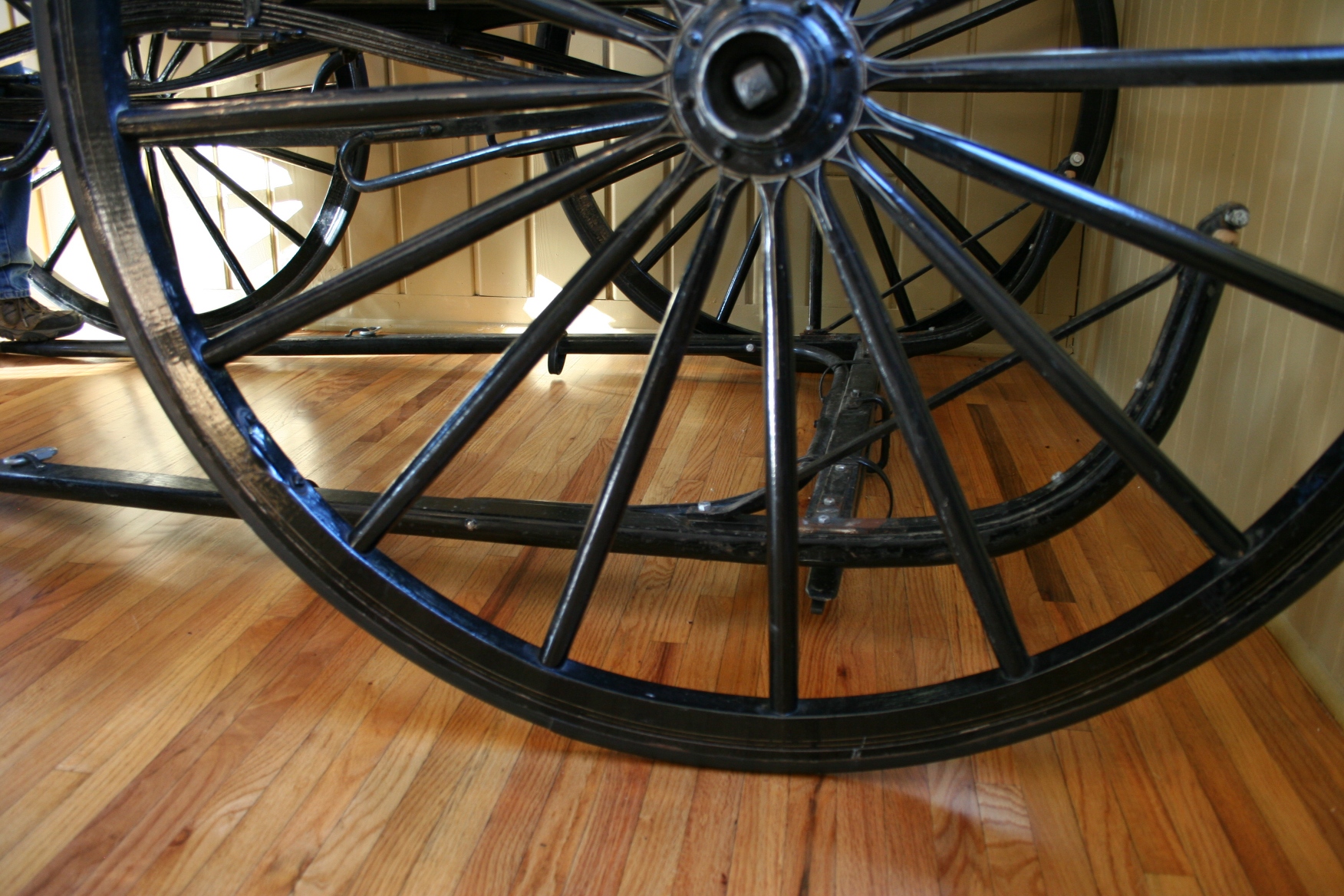
Inside I discovered records and artifacts from the school and nearby Christdala Evangelical Swedish Lutheran Church, historic photos, an old buggy, military memorabilia and more.

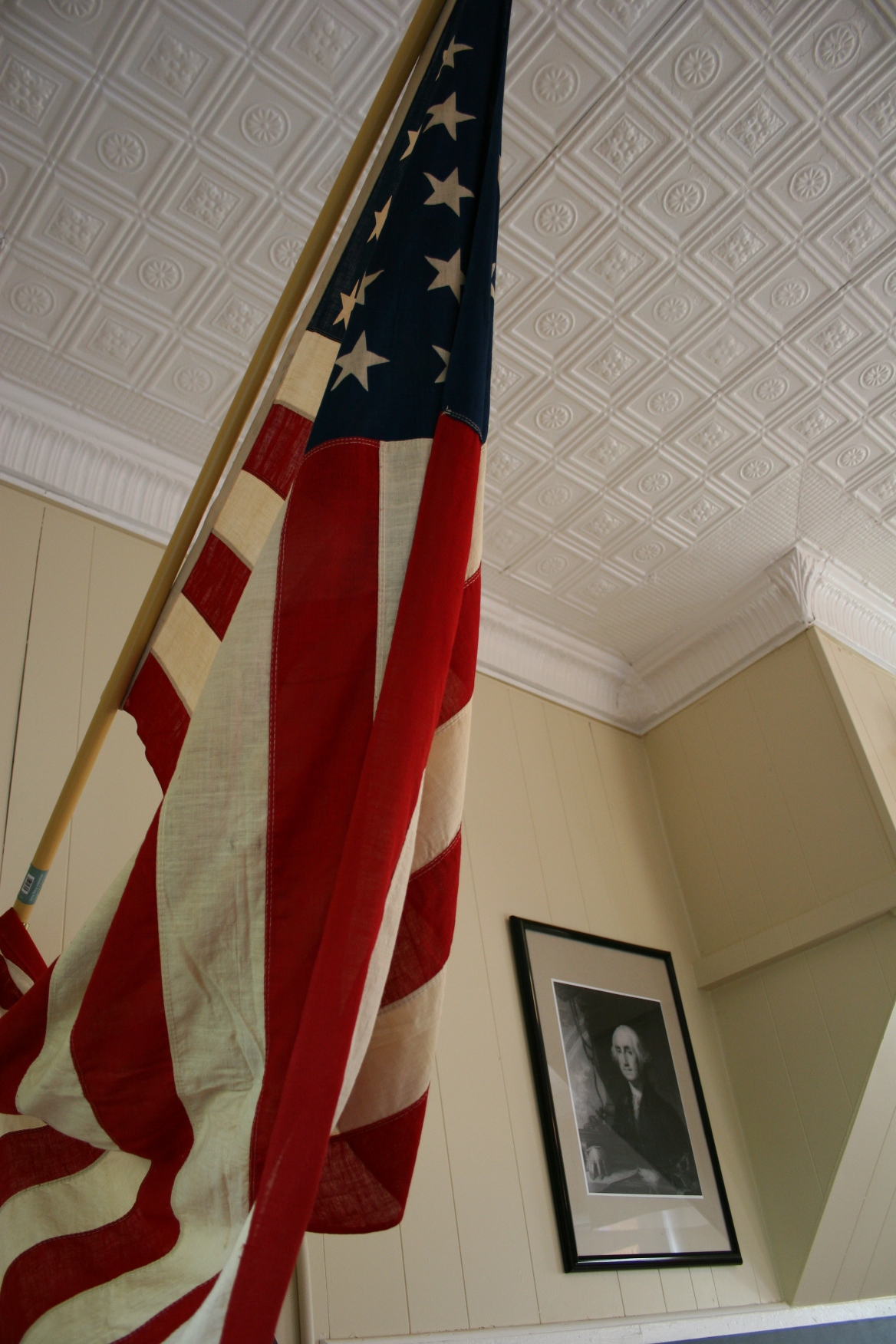
Mostly, though, I appreciated the care taken to restore the building. Gleaming wood floors made me want to push back the tables and chairs and host a square dance. These preservationists paid attention to detail, right down to the American flag and portrait of George Washington.

As this museum evolves, I expect, hope, that the preservation association will open the doors on a regular basis to the public. And I expect, hope, that those who gather there will exchange stories about their days in a country school, coyotes or not.

The refurbished wood floor shines under the wheels of an 1887 Michigan Buggy Company buggy which was taken apart and reassembled inside the schoolhouse museum.

At the front of the schoolroom hangs the American flag and a Presidential portrait below the period ceiling.

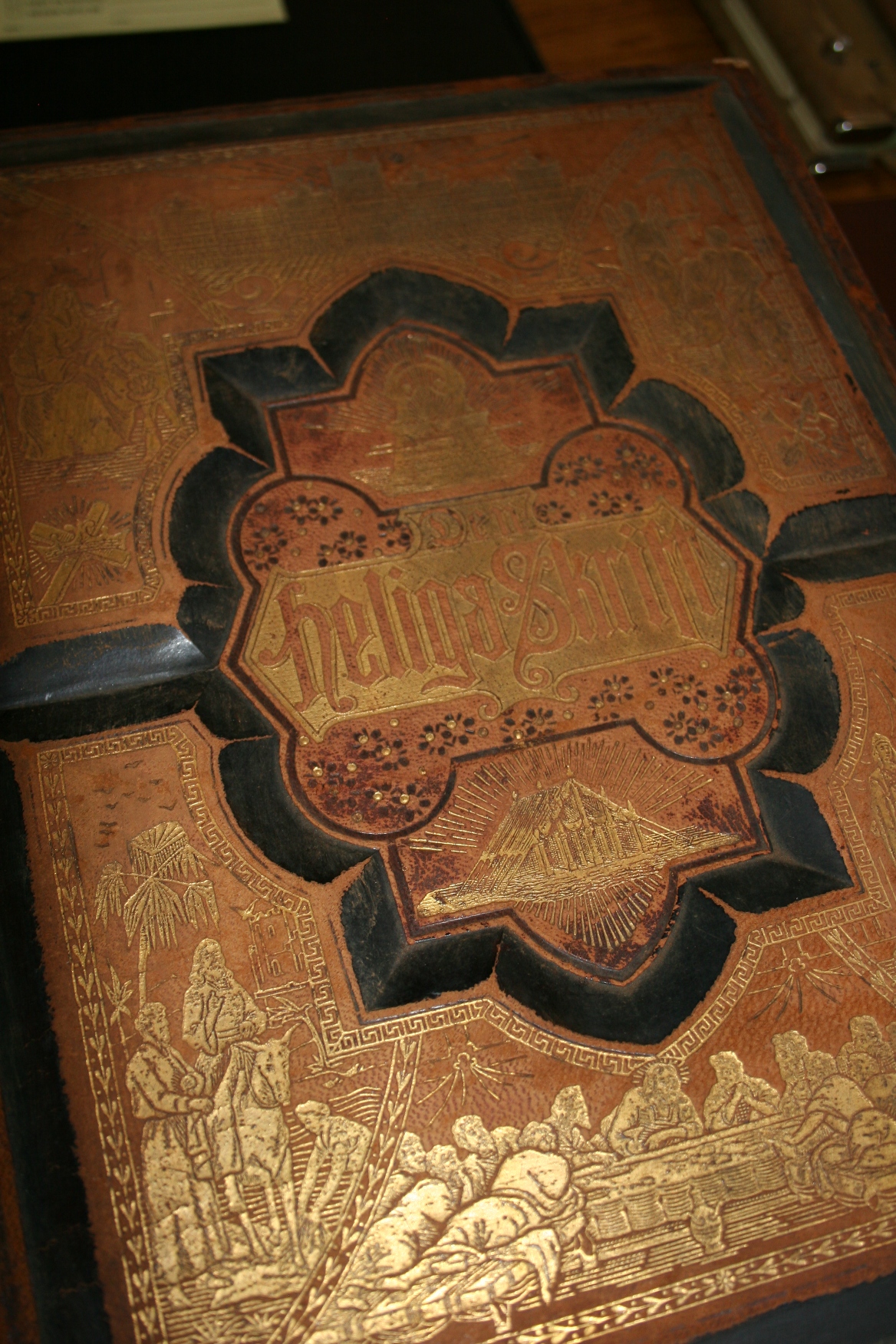
The 1889 Swedish bible used in worship services at Christdala Evangelical Swedish Lutheran Church, located just down the road from the school.

A page from the 1889 Swedish bible.

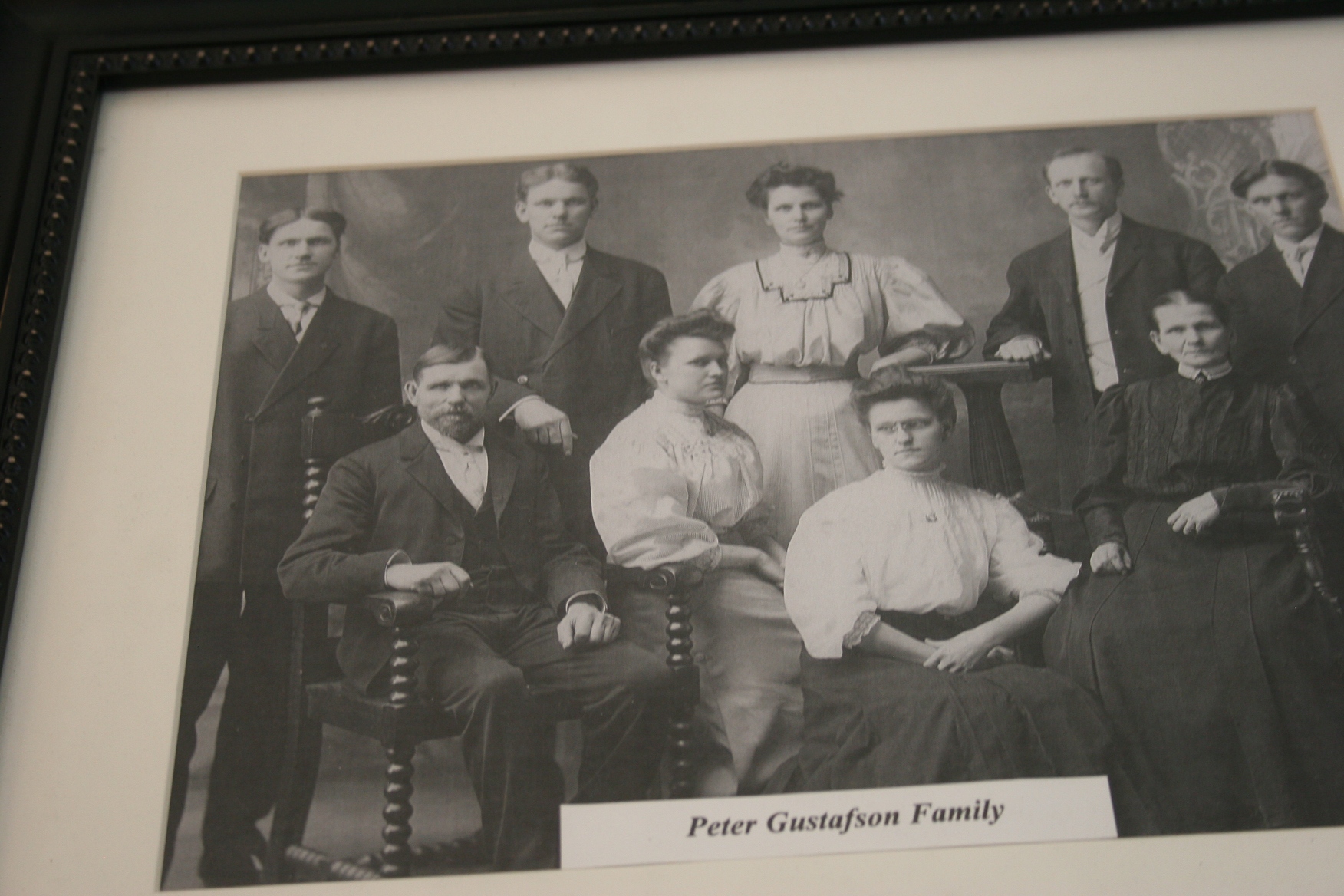
Among the museum photos is this portrait of the Peter Gustafson family. Peter was among the founding members of Christdala. He was also the brother of Nicolaus Gustafson who was murdered by outlaw Cole Younger during an attempted 1876 bank raid in nearby Northfield. At the time of Nicolaus' death, the Millersburg Swedish community had no church or cemetery. Nicolaus' untimely death prompted the Swedes to form Christdala. Peter Gustafson's 18-year-old twin son, Eugene, died tragically in March 1905 when a log rolled forward on a wagon and crushed him. This information is published in The History of the Christdala Evangelical Swedish Lutheran Church of Millersburg, Minnesota, written by B. Wayne Quist.

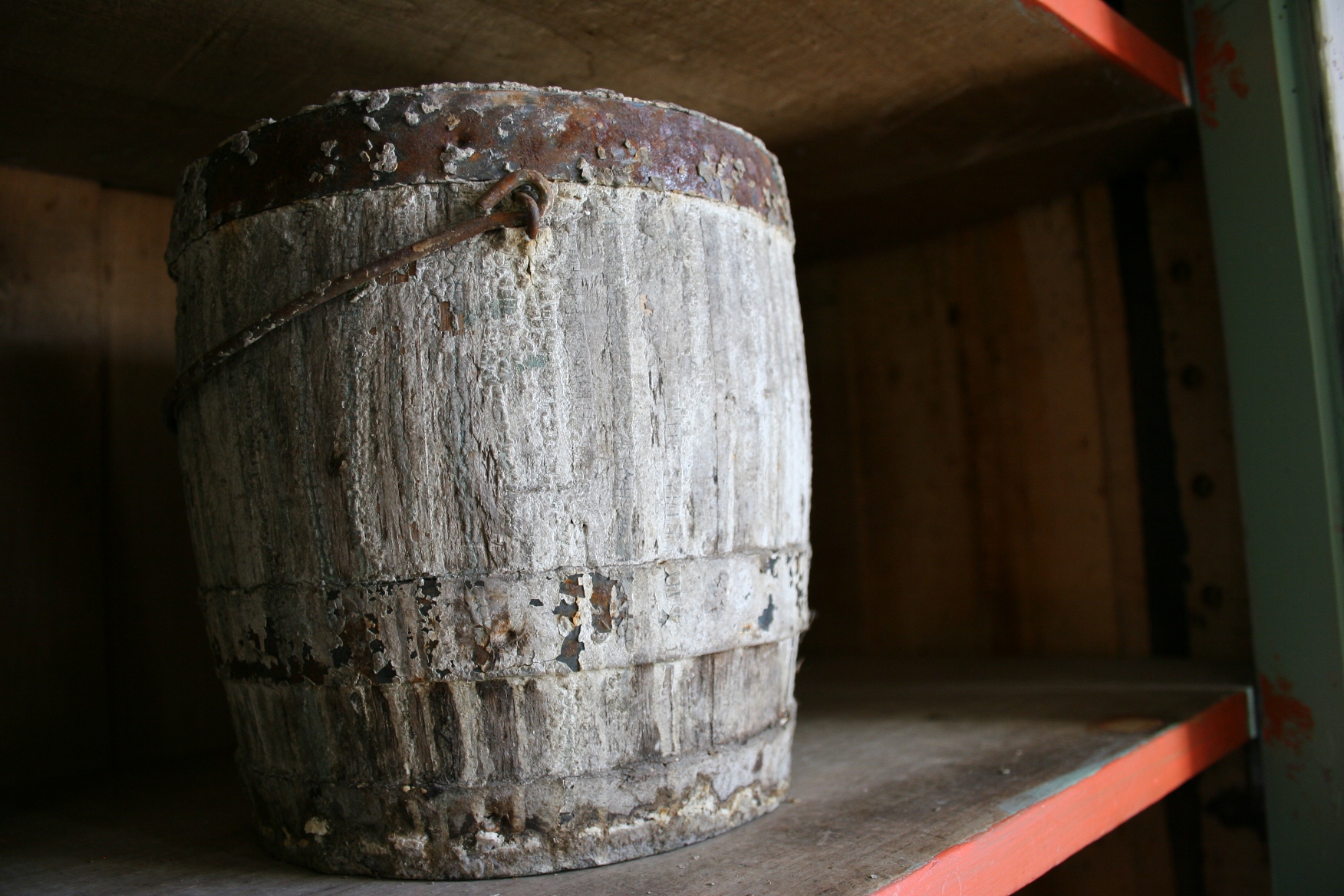
An old wooden pail rests inside a simple cupboard in a corner of the schoolhouse.

I spied this old piano stool tucked under a table. A museum visitor pulled the stool out and suggested perhaps naughty students sat on it in a corner.

Of all the historic photos I viewed in the museum, this one is my favorite. It's clear the boys really don't want to be there, with their mom's arms draped around them. But she appears to be a strong, determined woman.

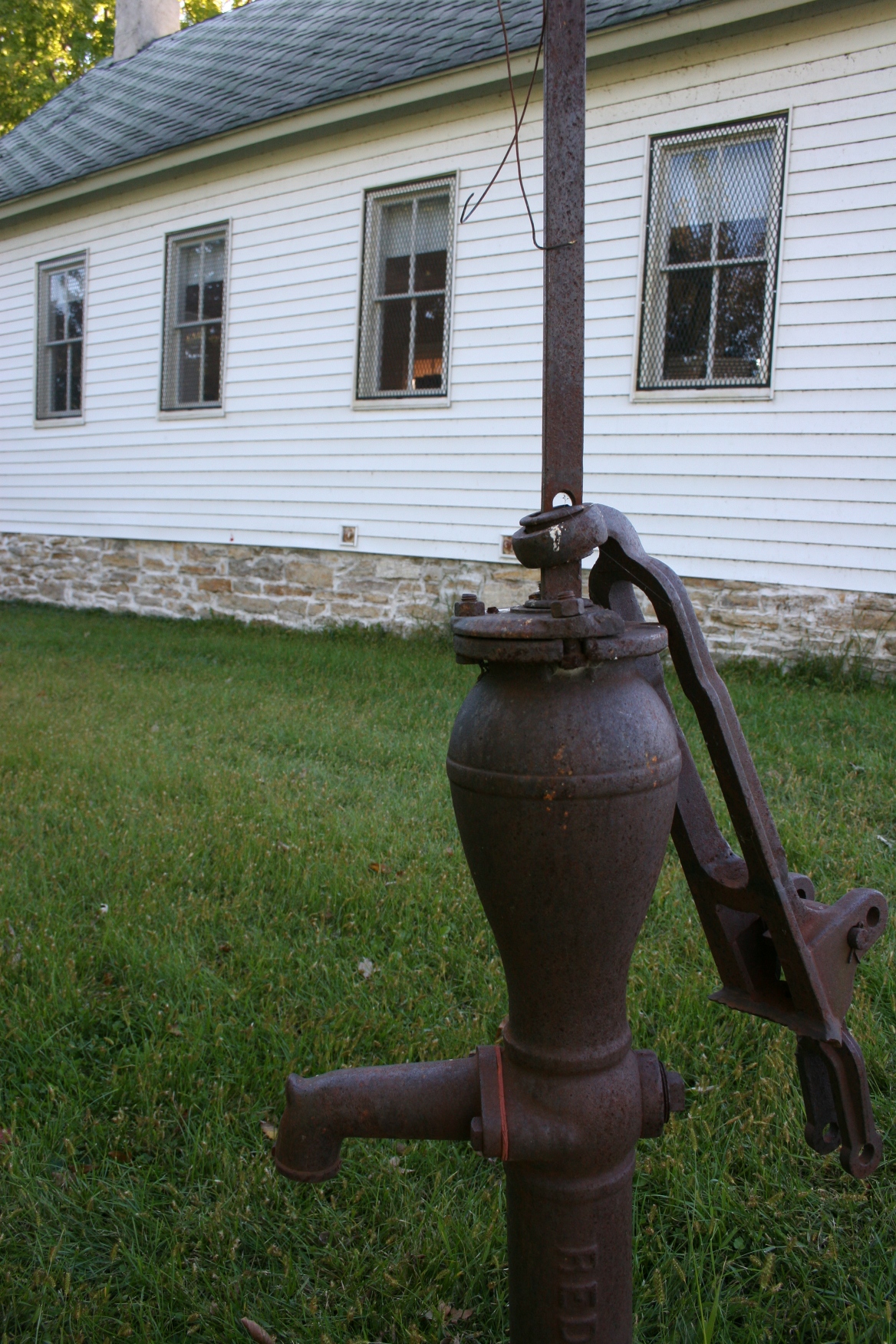
How many stories could this old water pump, next to the school, tell?

© Copyright 2010 Audrey Kletscher Helbling


Step into yesteryear at the stark, yet welcoming, Ottawa Town Hall September 17, 2010

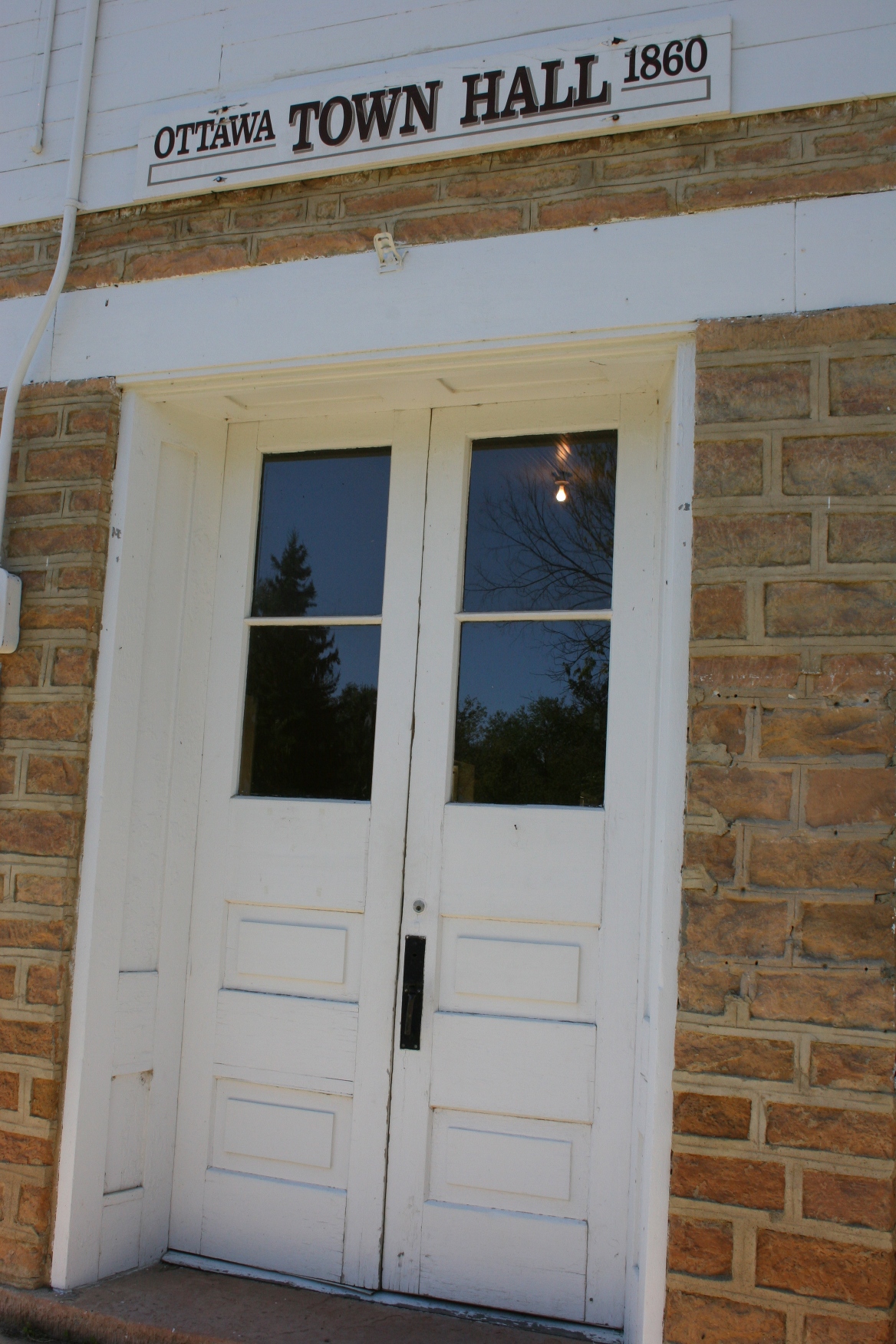
The Ottawa Town Hall was built in 1860 from local limestone.

I ABSOLUTELY COULD NOT believe my good fortune. After peering through a front window into the old town hall and wondering why the lights were on, I pulled (or pushed; I can’t recall which) on the front door. Much to my elation, the door gave way.

Let me preface this by saying that in the past when I have clicked door latches or turned knobs on historic buildings, mostly churches, I’ve met resistance, meaning I was locked out.

I tried the door latch and the door was, to my surprise, unlocked.

But, ah, to feel the door sway, allowing me entrance, gave me that momentary feeling of surprised satisfaction. And look, just look, at what awaited me inside the Ottawa Town Hall.

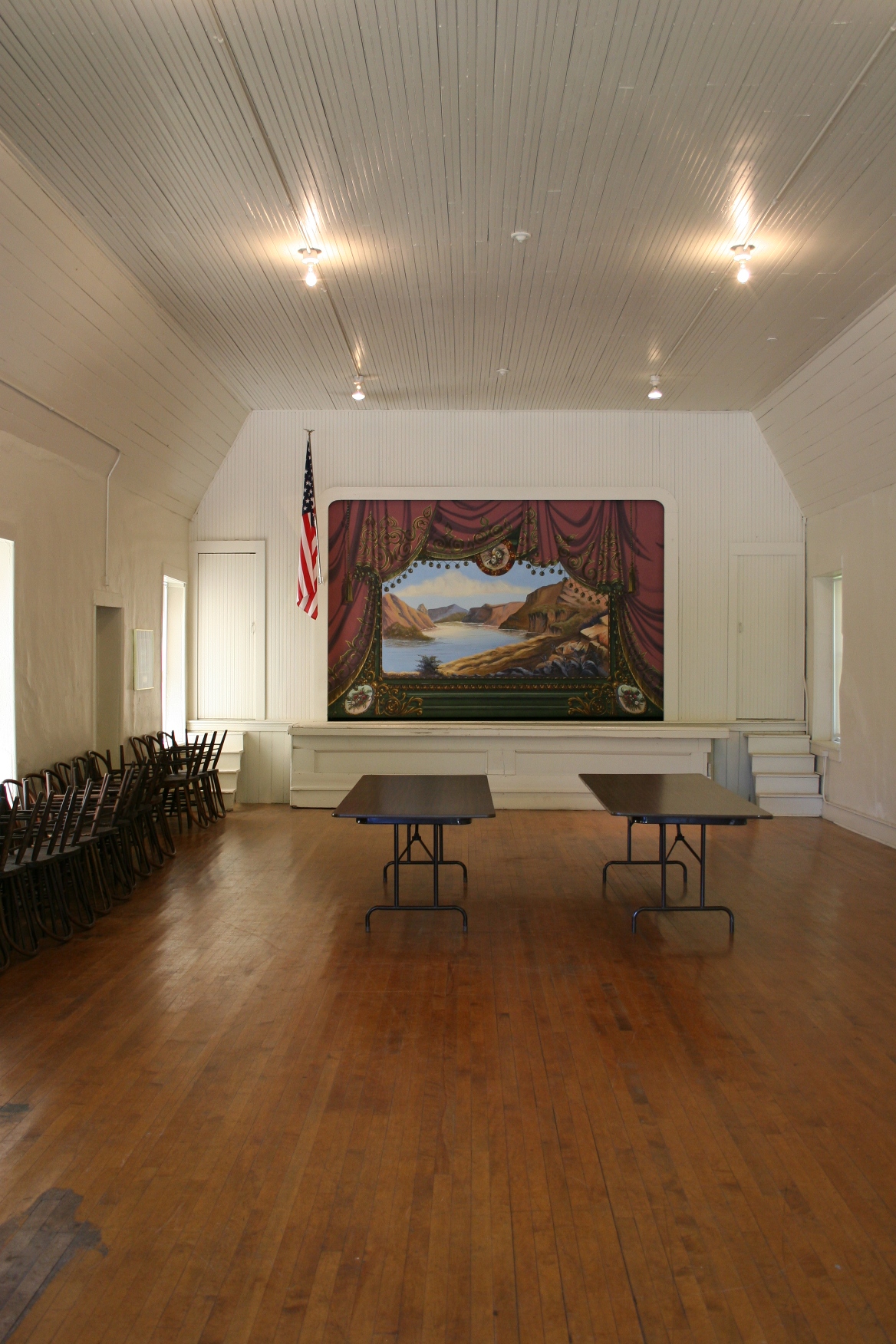
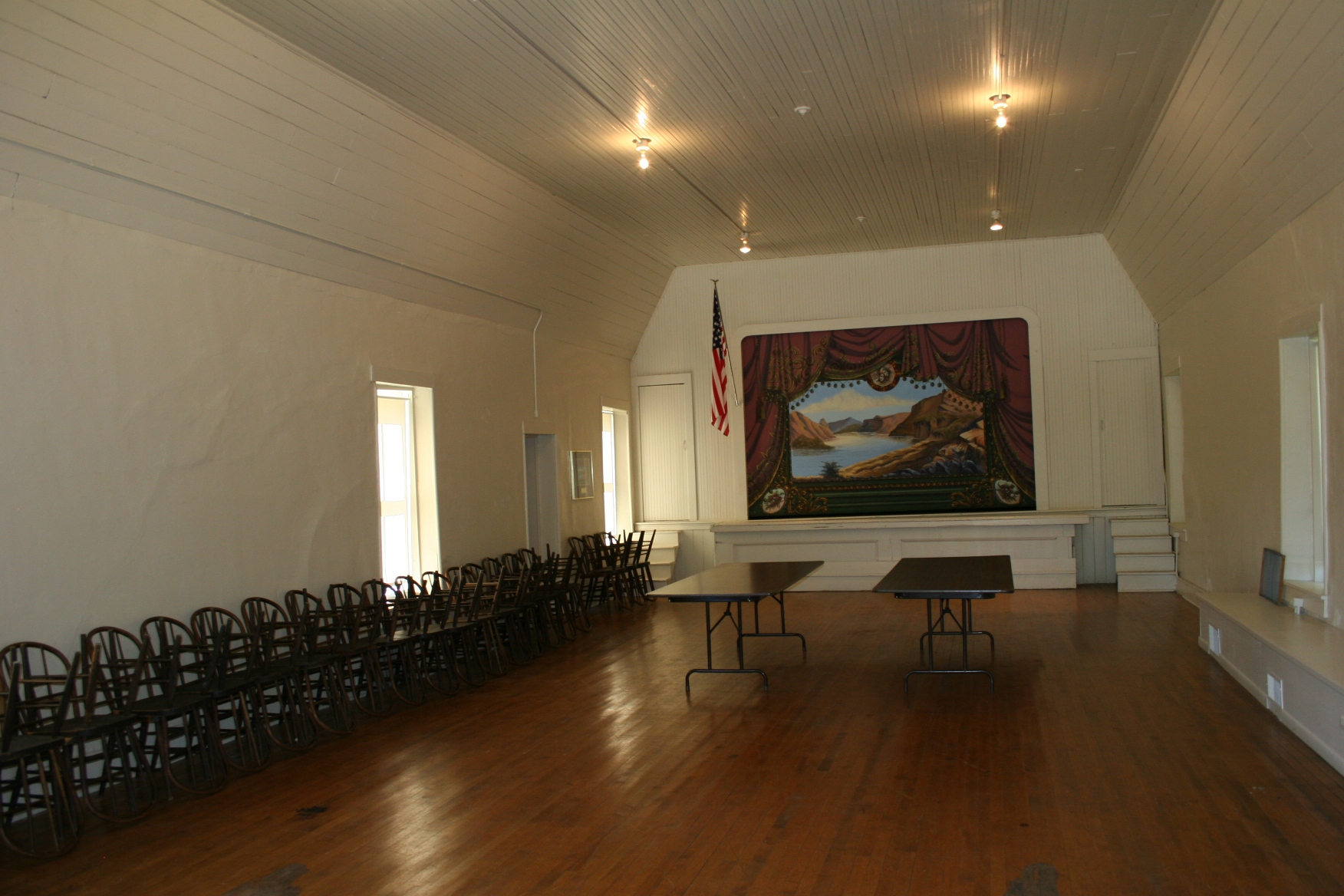
Inside, the stark room stretched out before me.

Simplistic beauty best describes the interior of this former general store constructed in 1860 from local limestone and today among six Ottawa buildings on the National Register of Historic Places.

To find this village platted in 1853 along the Minnesota River, follow winding Le Sueur County Road 23 northeast of St. Peter. And when you get there, after reading the historical marker and picking up a self-guided tour brochure from the town hall kiosk, try the door.

If you’re as fortunate as me, you’ll step into yesteryear, onto scuffed wood-plank floors, into a building that has been the Ottawa Town Hall since 1902.

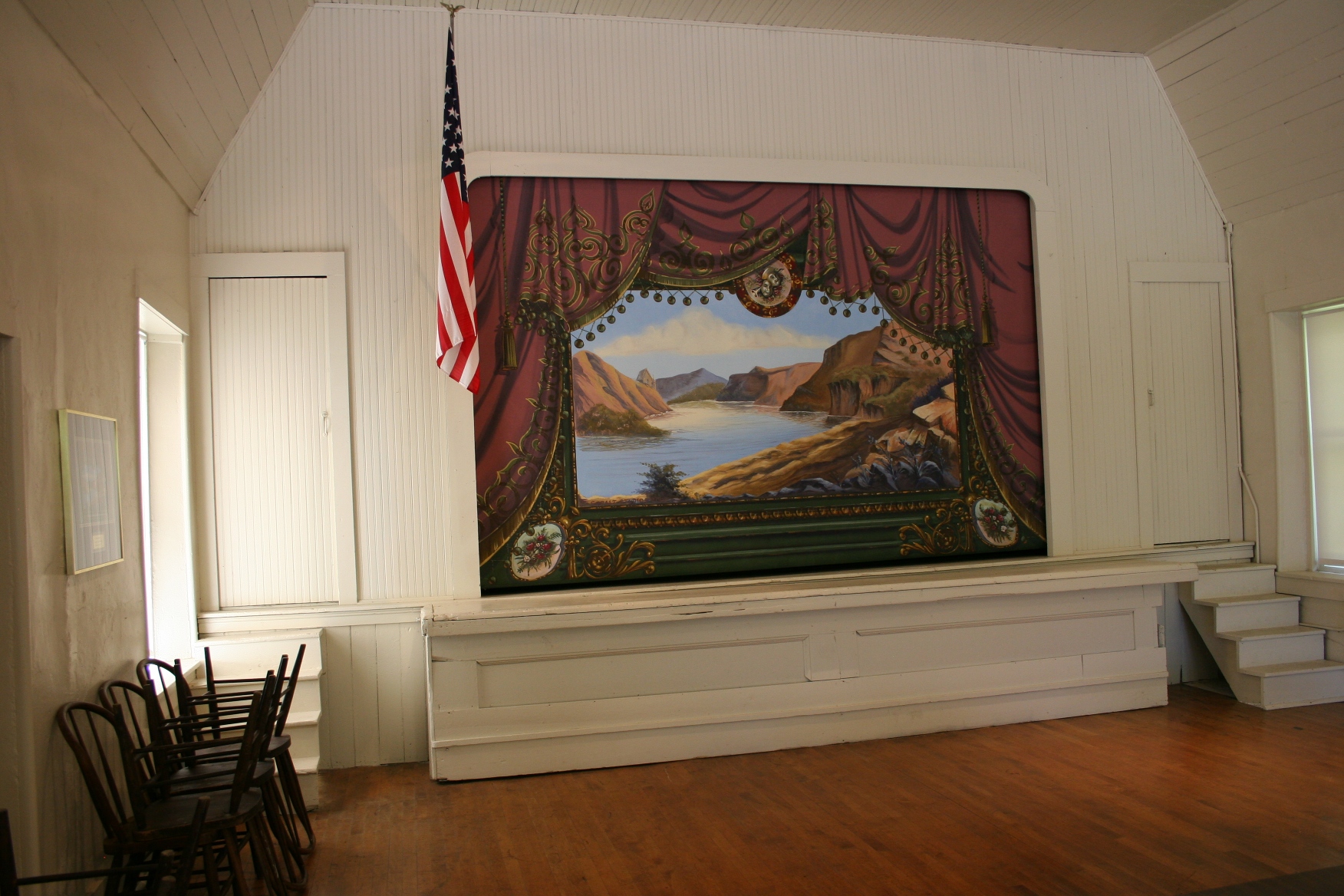
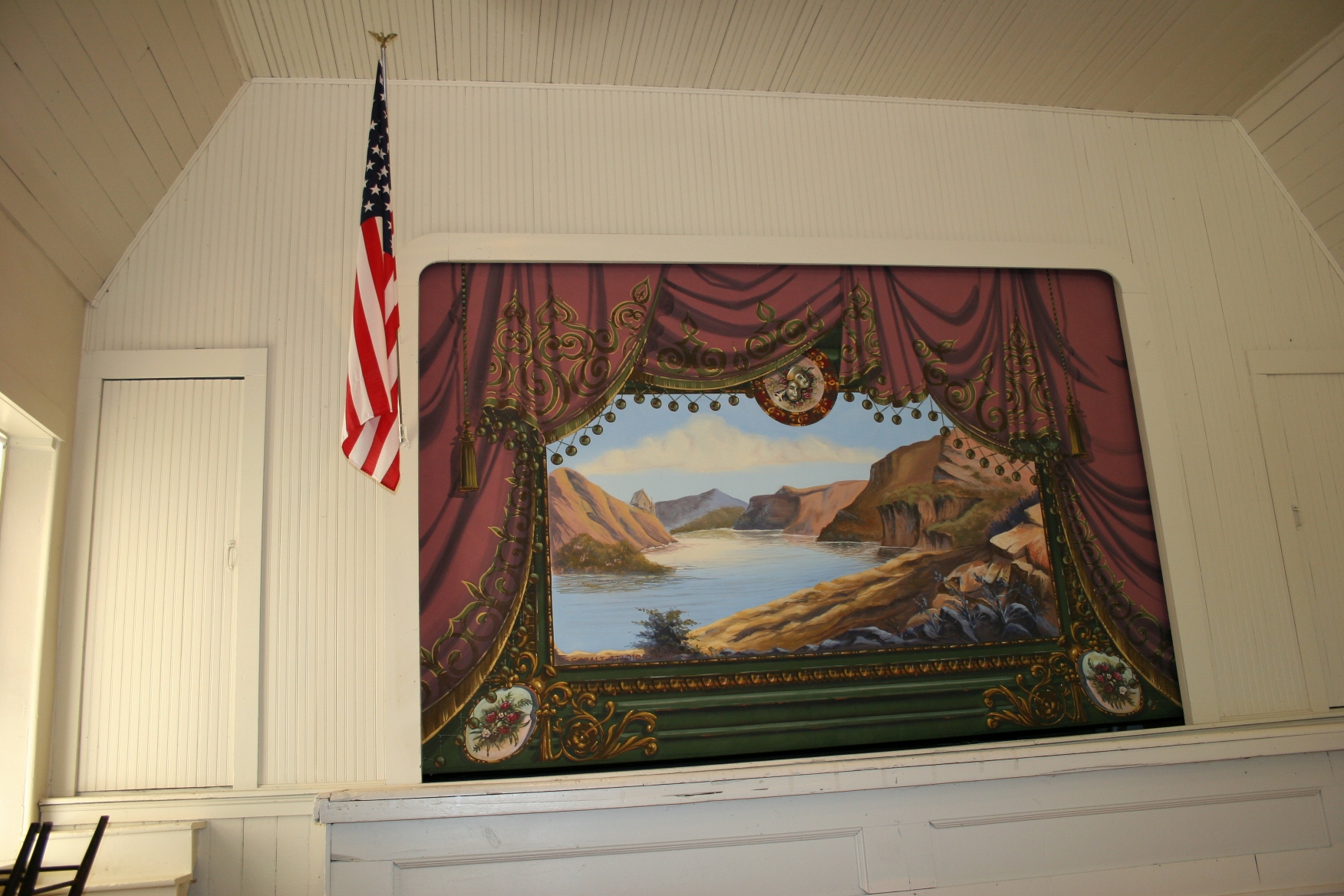
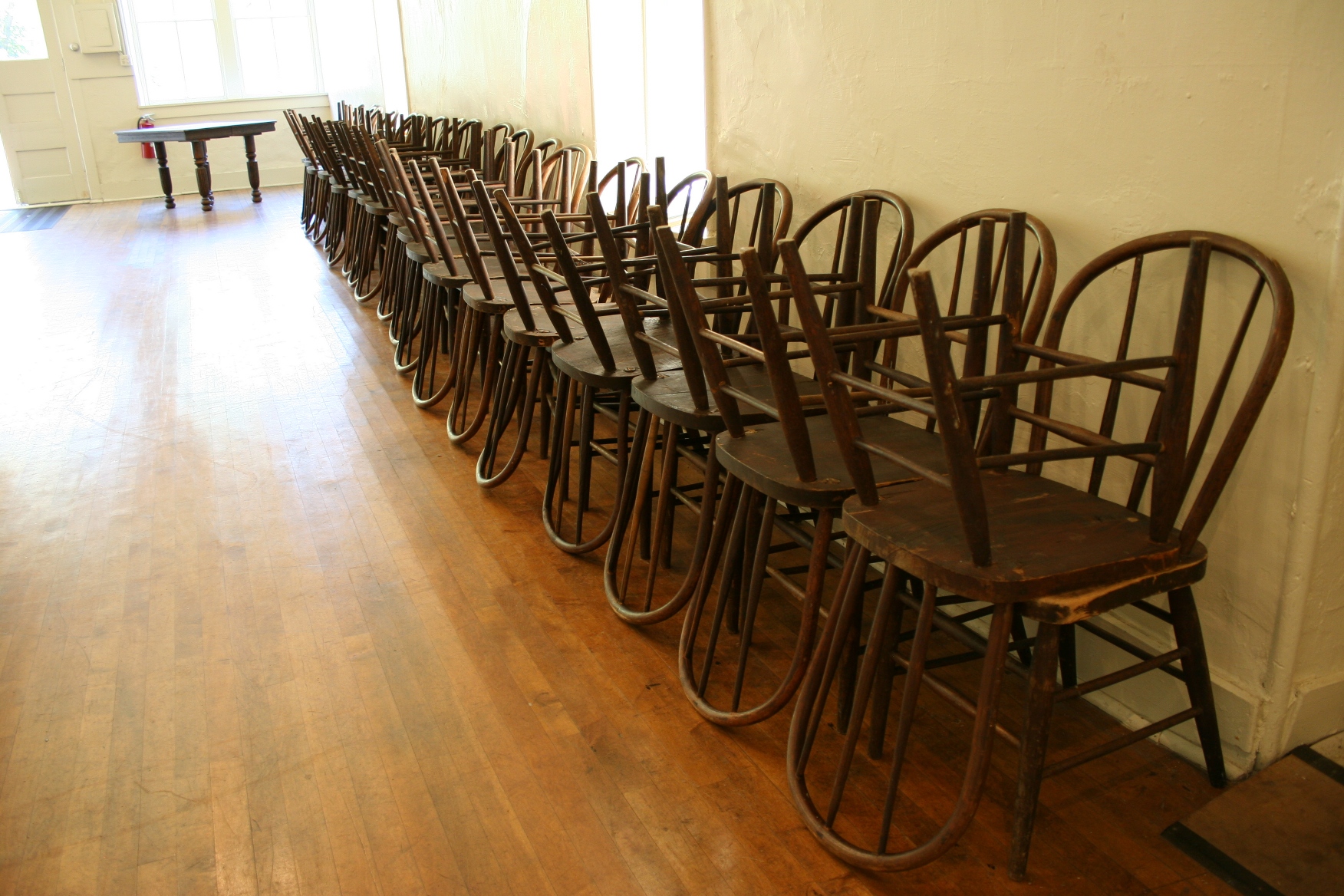
If you’re like me, you’ll stand there for a moment or two or three taking in the atmosphere of this place. You can see history in the beadboard walls and ceiling, in the stage flanked by steps and adorned with a scenic canvas curtain reminiscent of melodrama days, in the lone American flag, in the curved-back wooden chairs stacked precisely along the wall.

The stage intrigues me. Who performed here? Do actors and actresses ever grace this stage today?

I tugged at the two side doors that would have given me access to the stage. But, alas, they were locked.

I stroked the stiff canvas of the stage curtian and admired the painted florals.

Ottawa Town Hall chairs

Even the stacked chairs seemed a sculpture of historic art.

If you like “fancy,” you won’t appreciate the starkness of a room awash in white under the blazing light of bare bulbs.

For me, though, there’s something about this town hall that soothes, comforts, makes me feel right at home, as if the door was meant to be left unlocked, the lights switched on in an inviting welcome.

Though rather plain, the town hall possesses a certain welcoming charm.

© Copyright 2010 Audrey Kletscher Helbling


Designer Max Lohrbach makes a fashion statement in Mantorville September 2, 2010

Filed under: Uncategorized — Audrey Kletscher Helbling @ 7:35 AM
Tags: , , , , , , , ,

I AM NO FASHIONISTA or anything closely resembling a woman who knows, or really cares, about fashion.

So when I stopped at the Mantorville Art Guild last week while visiting this historic southeastern Minnesota river town, I had no idea I had just stepped into the world of fashion.

When you enter the Mantorville Art Guild, turn and pull hard on the door knob. And if a strong wind is blowing, hang onto the screen door.

But I should have figured it out given the fashionably-dressed women consulting with artist Max Lohrbach. They weren’t, like me, dressed in plain denim shorts, a scoop-necked cotton shirt and $3 flip flops from Walmart. Rather, one wore an ankle-length shoulderless dress with a swatch of fabric crossing her back and a band tied at her neck. A big bag was fashionably slung over her shoulder. I can’t recall the other woman’s attire, but neither toted a bulky brown camera bag like me.

I felt a bit under-dressed for the occasion. How was I to know, though, that one of Minnesota’s premier fashion designers would be there? That would be Lohrbach. Not until I returned home did I realize his importance.

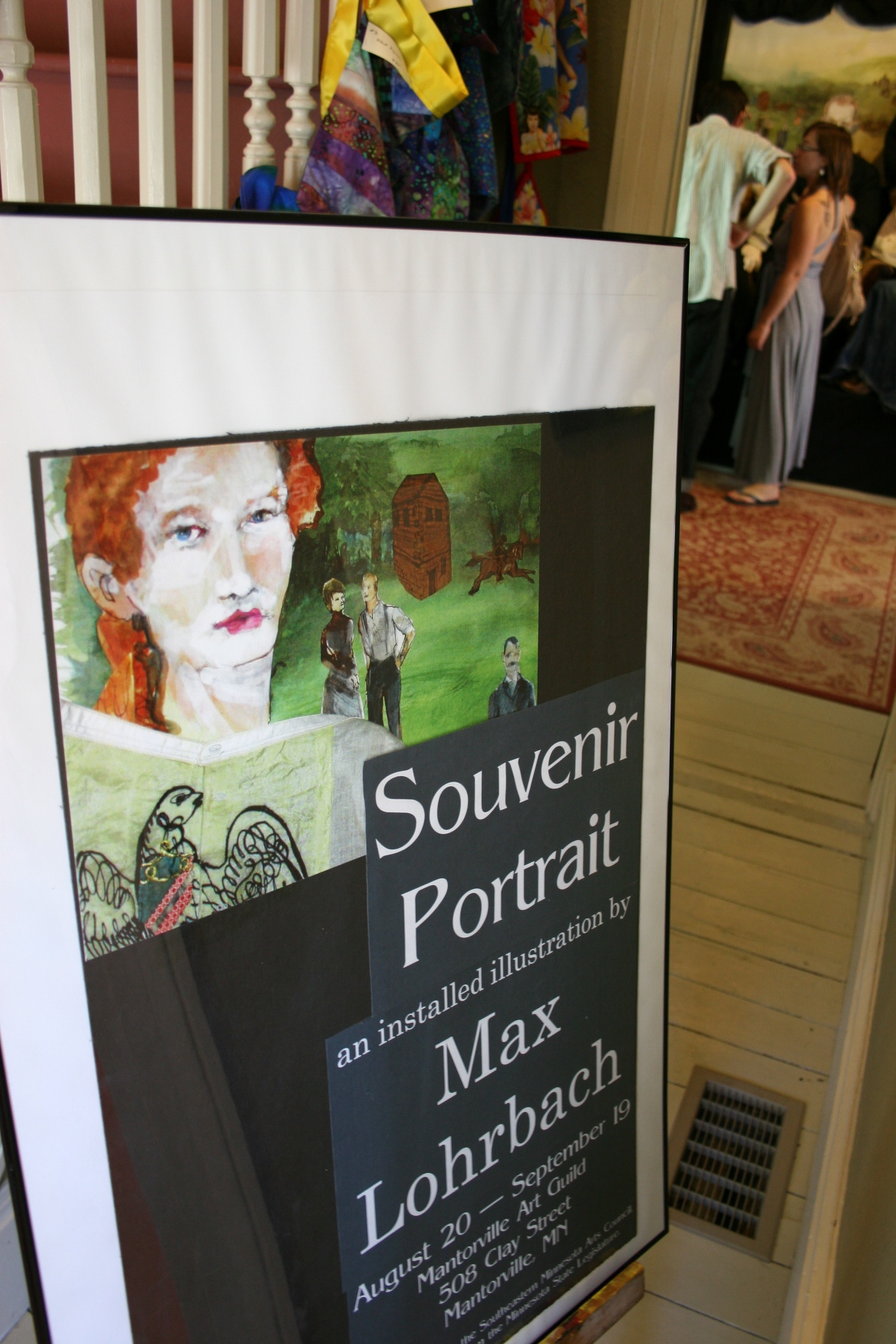
In the background, Max Lohrbach visits with guests at his "Souvenir Portrait" exhibit, which opened August 21 in Mantorville.

My blissful ignorance allowed me to enjoy Lohrbach’s “Souvenir Portrait” without star-struck pretenses. I was simply viewing an artistic piece that, to me, seems a perfect fit for the artist’s hometown of Mantorville, a community with a 12-block downtown on the National Historic Registry.

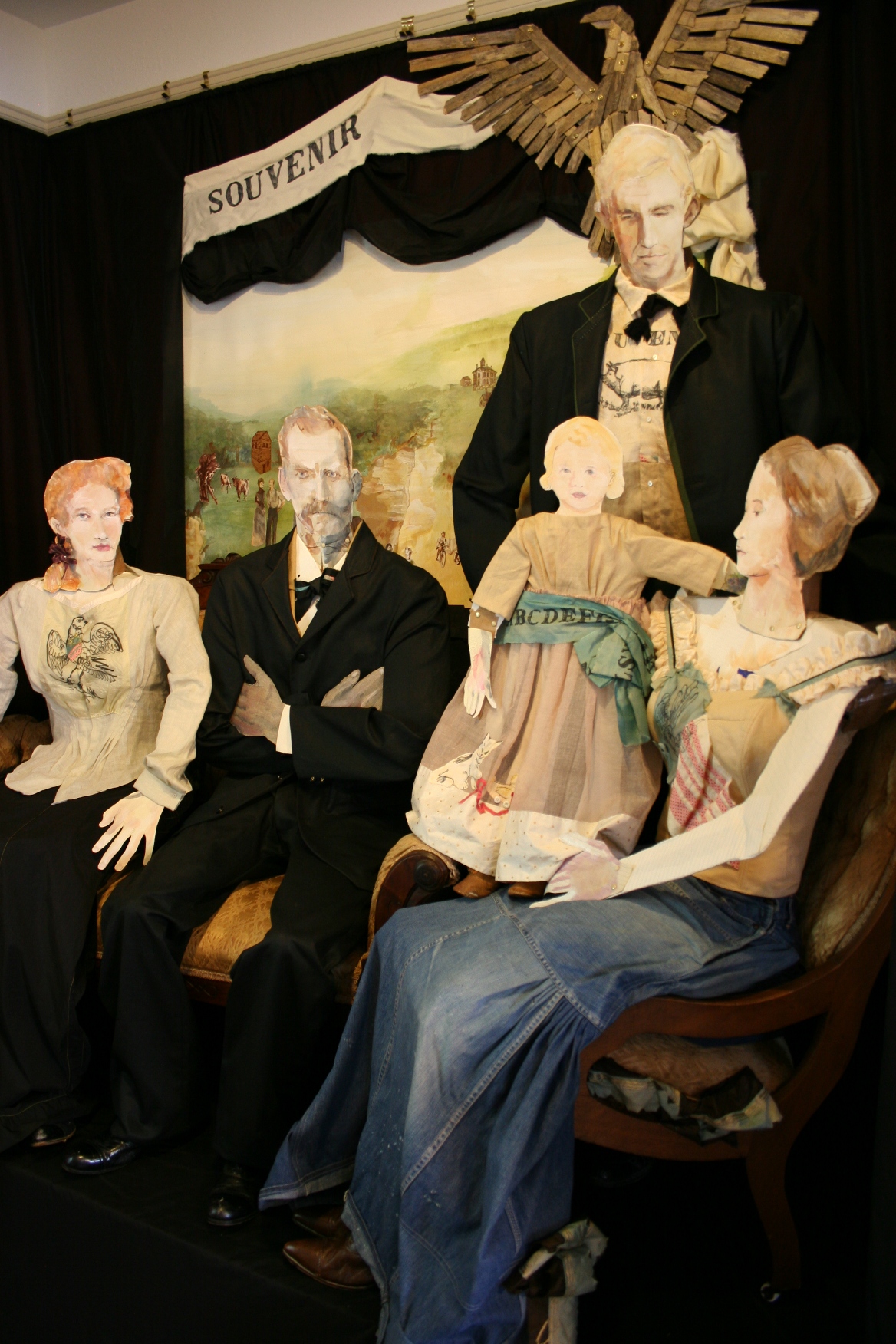
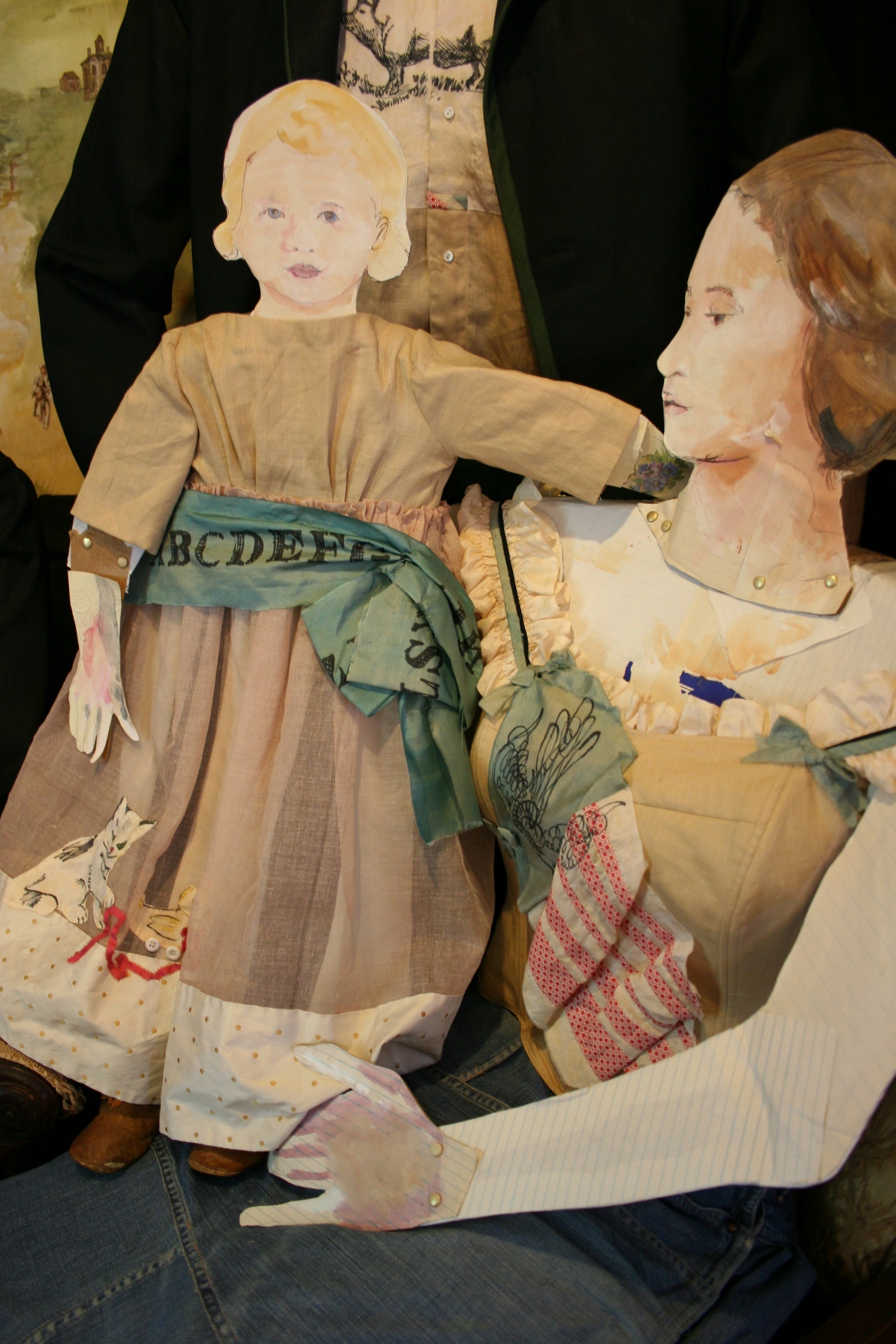
Lohrbach’s 2-3 dimensional “installed illustration” showcases his original garments influenced by, and depicting, the 1876 era, the time of our nation’s Centennial.

If his exhibit had been a photograph, I would have been looking at a family portrait. Promotional information for Lohrbach’s show says, “The somewhat dark scene may serve not only as a fashion installation, but also as a common ancestral portrait.”

Max Lohrbach's "Souvenir Portrait" at the Mantorville Art Guild.

“Souvenir Portrait” calls for a closer look at the details this Minnesota designer has incorporated into his scene—the red, white and blue in the clothing; the alphabet sash upon the child’s skirt; the pig drawing on the father’s shirt; the crossed arms; the hand angled in the pocket; the mother turned protectively toward her child; the rustic eagle fashioned from weathered wood…

Lohrbach's work depicts the love between mother and child.

Playful vintage details incorporated into the child's dress.

There's something almost sad, or perhaps contemplative, in the face of this woman painted by Lohrbach and wearing his original design.

Lohrbach has created a piece worthy of study as much for the personal sense of history he conveys as for the detailed vintage-style garments he’s designed.

“SOUVENIR PORTRAIT” will be on display at the Mantorville Art Guild, 508 Clay Street, until September 19. Gallery hours are from 11 a.m. – 4 p.m. Friday and Saturday and from noon until 4 p.m. on Sunday. Arrangements can be made for special tours. Fashionable attire is optional.

© Copyright 2010 Audrey Kletscher Helbling


The surprising connection between a Minnesota church and the James-Younger Gang July 21, 2010

Filed under: Uncategorized — Audrey Kletscher Helbling @ 10:30 AM
Tags: , , , , ,

WHEN MY HUSBAND AND I EMBARKED on a quest for an old country church Sunday afternoon, we fully expected a challenge. But we didn’t expect to cross paths with a bunch of outlaws.

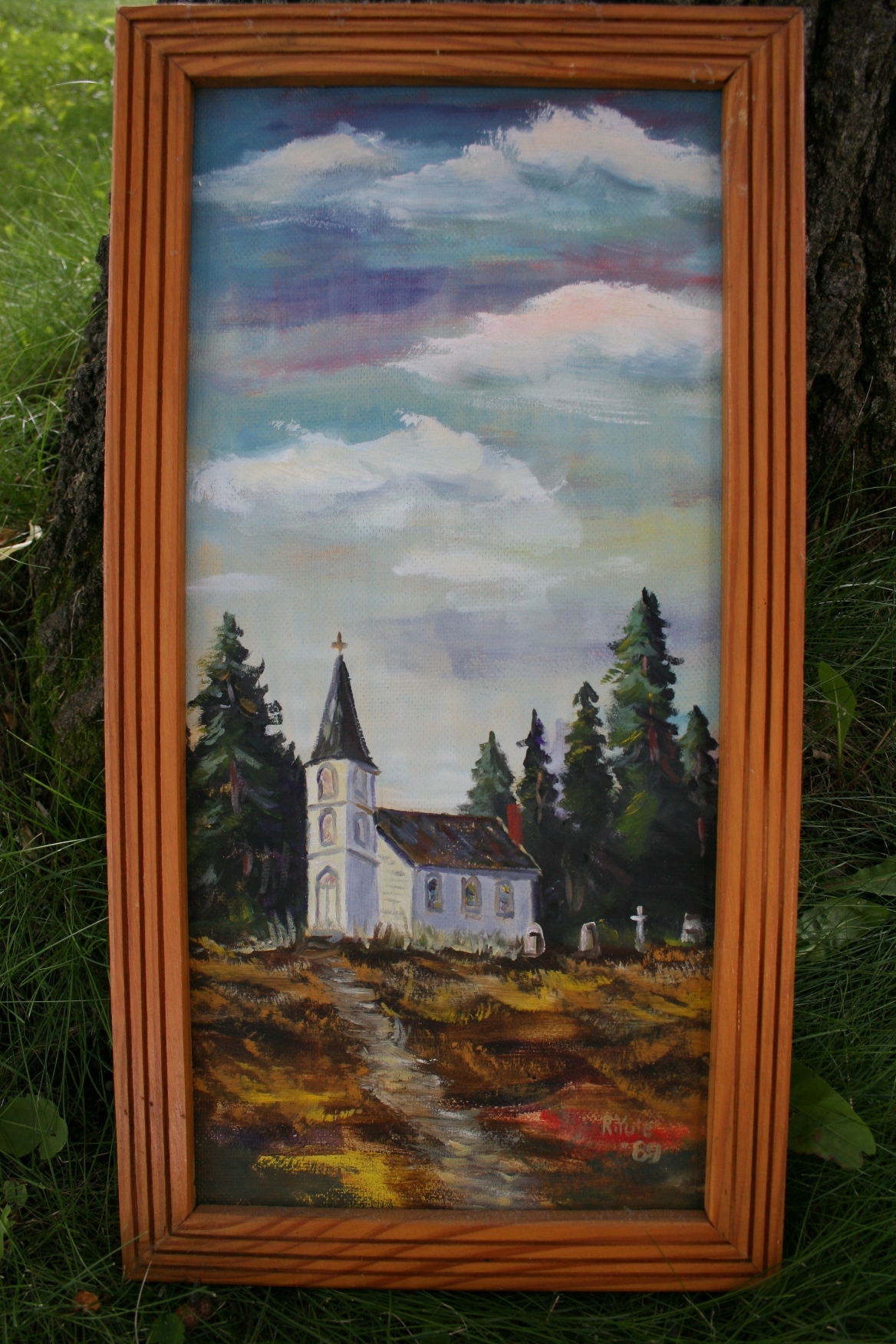
First, a little background: Several days earlier I had photographed a painting of an old Minnesota church done by our 92-year-old artist-friend, Rhody Yule, in 1969. Rhody remembered only that the church was “somewhere near Montgomery” and on the National Register of Historic Places.

I carried a photograph of this 1969 church painting by Faribault artist Rhody Yule as we set out to find the unidentified church.

With those clues, Randy and I set out on our adventure simply because we love the history and beauty of old country churches. We figured if we drove far enough and long enough, we would find this one.

So off we went, following Rice County Road 9 northwest of Faribault, driving around sweeping curves, up and down hills, past farm places, all the while searching for a steeple. I had no clue where we were, which I find unsettling. I like to know where I am and where I am going. But not the husband; he just kept driving.

Soon we approached a lake. Must be Circle Lake, we speculated. We were right. And then, just as we were about to turn onto a gravel road leading to the public access, I saw a white church high on a hill. “There’s a church!” I shouted. “I bet that’s it.”

Right then and there, I wanted to drive up to that church. But first things first. We had to stop at the lake. A quick stop and we were off to the church, which sits two miles west of Millersburg (not Montgomery) along Rice County Road 1 near its intersection with County Road 9.

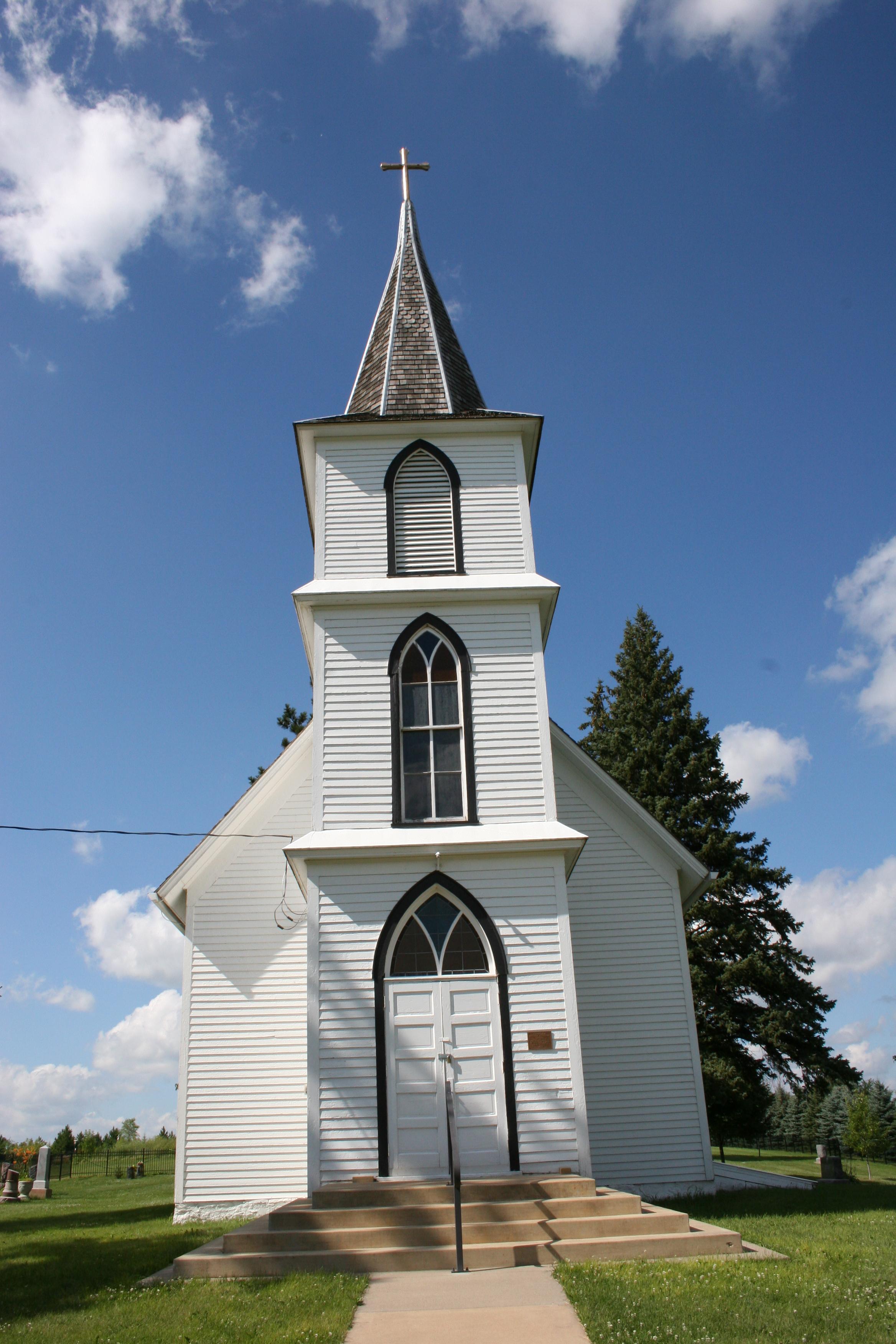
Our excitement was palpable as we pulled off the road and parked below the church. I grabbed the picture and compared the painting to the building before me. It was a match. We had found Christdala Swedish Lutheran Church, built in 1878, placed on the National Register of Historic Places in 1995 and today preserved through the Christdala Church Presevation & Cemetery Association.

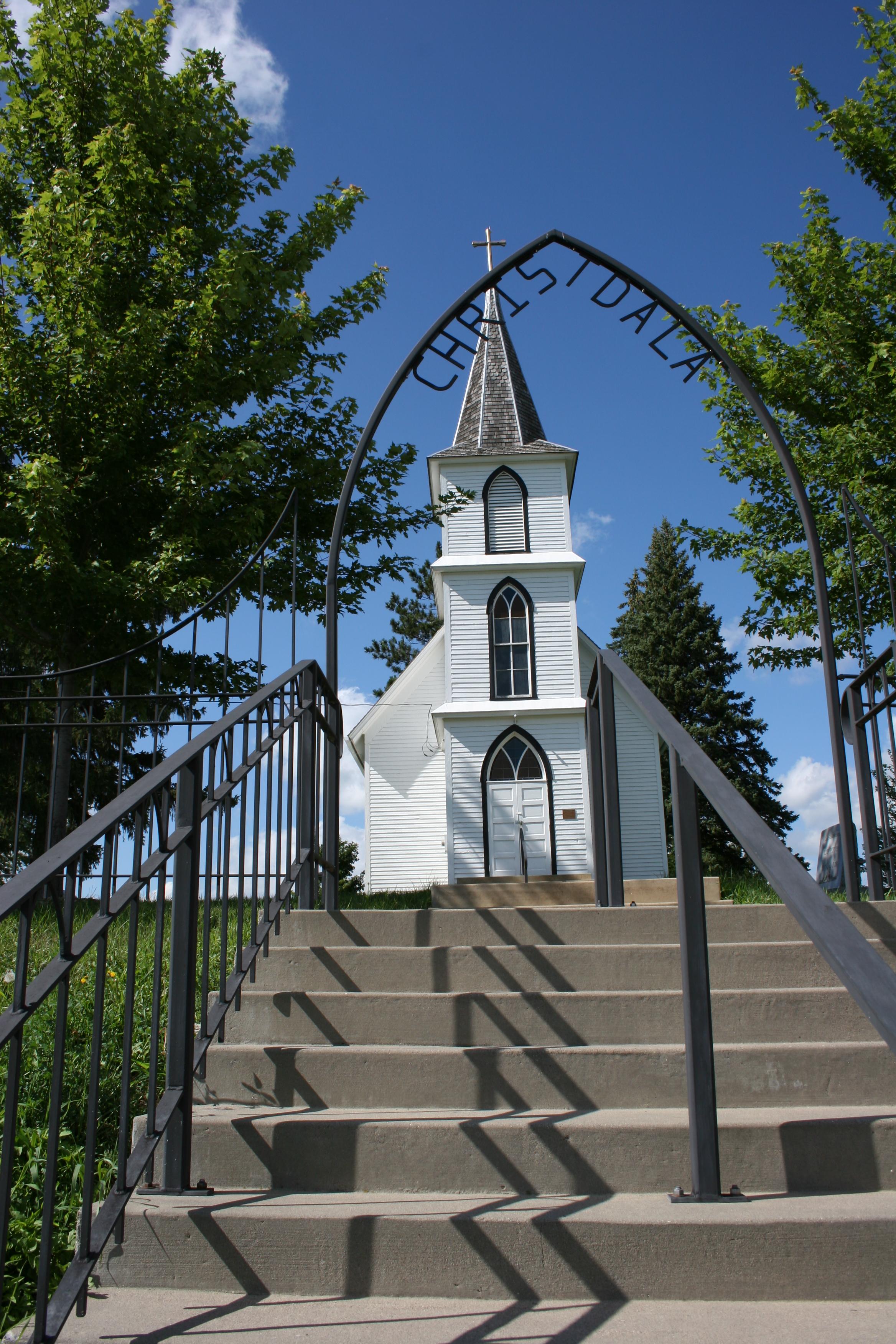
Christdala Swedish Lutheran Church sits atop a hill along Rice County Road 1 just west of Millersburg.

Some 25 steps later and we reached the top of the hill, standing before this simple country church overlooking Circle Lake.

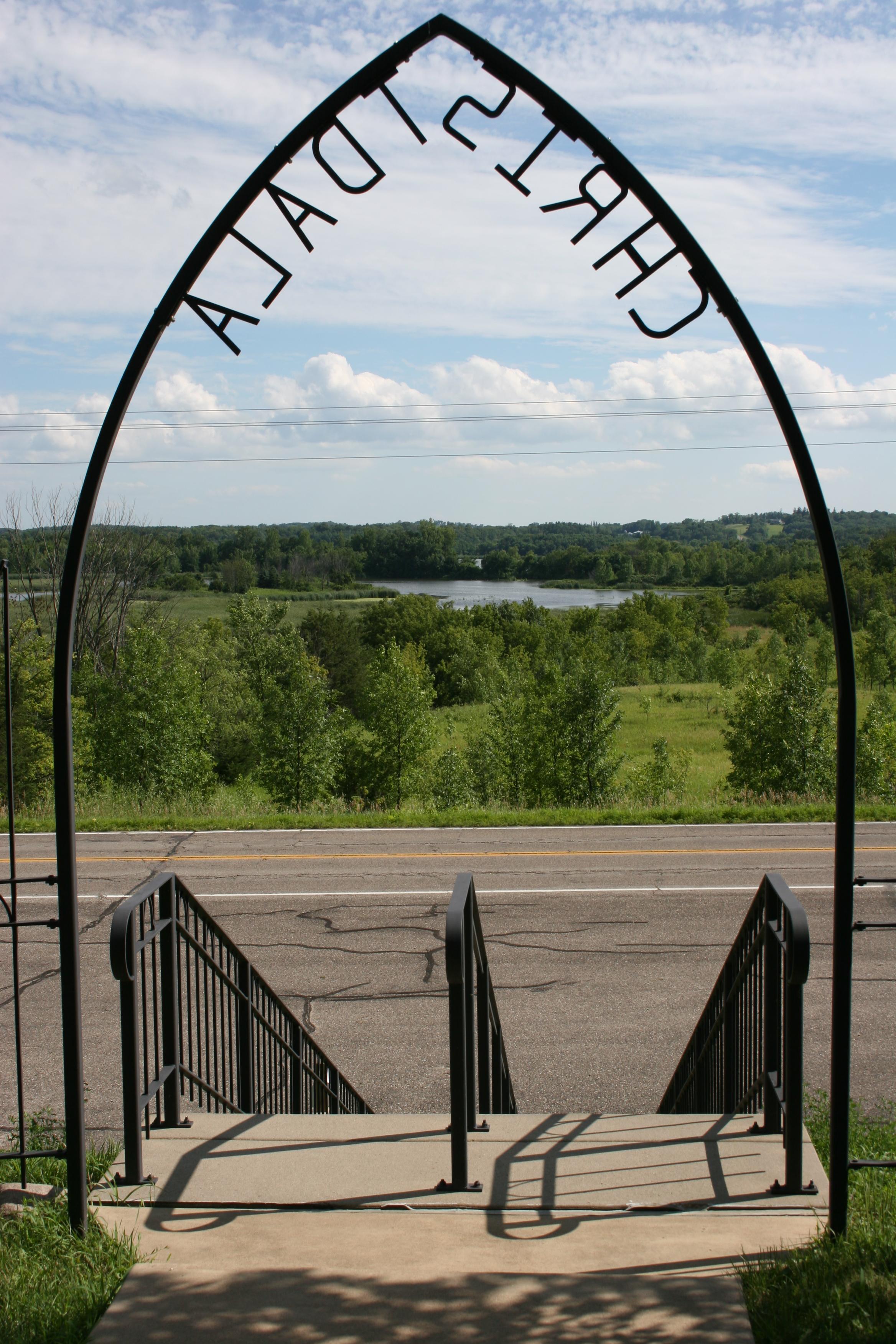
An archway at the top of the church steps frames Circle Lake and the surrounding countryside. Christdala means "Christ's Valley."

Christdala Swedish Lutheran Church, built for $230 in 1878 by John Olson and John Lundberg of Northfield and site of a fall service and open house.

And that’s where we met Phil, who was photographing Christdala and old tombstones. “Can we get inside?” I ask, hopeful that perhaps this stranger has a key. “Are you from around here?”

No and no. Phil is from California, but is president of Le Center-based ShetkaStone, a company that makes tables, countertops, moldings, office furniture and more from recycled paper. When he’s in Minnesota (which is often), this Californian explores old country churches and cemeteries in the home-away-from-home state he has grown to love.  You don’t find this kind of history in California, he says.

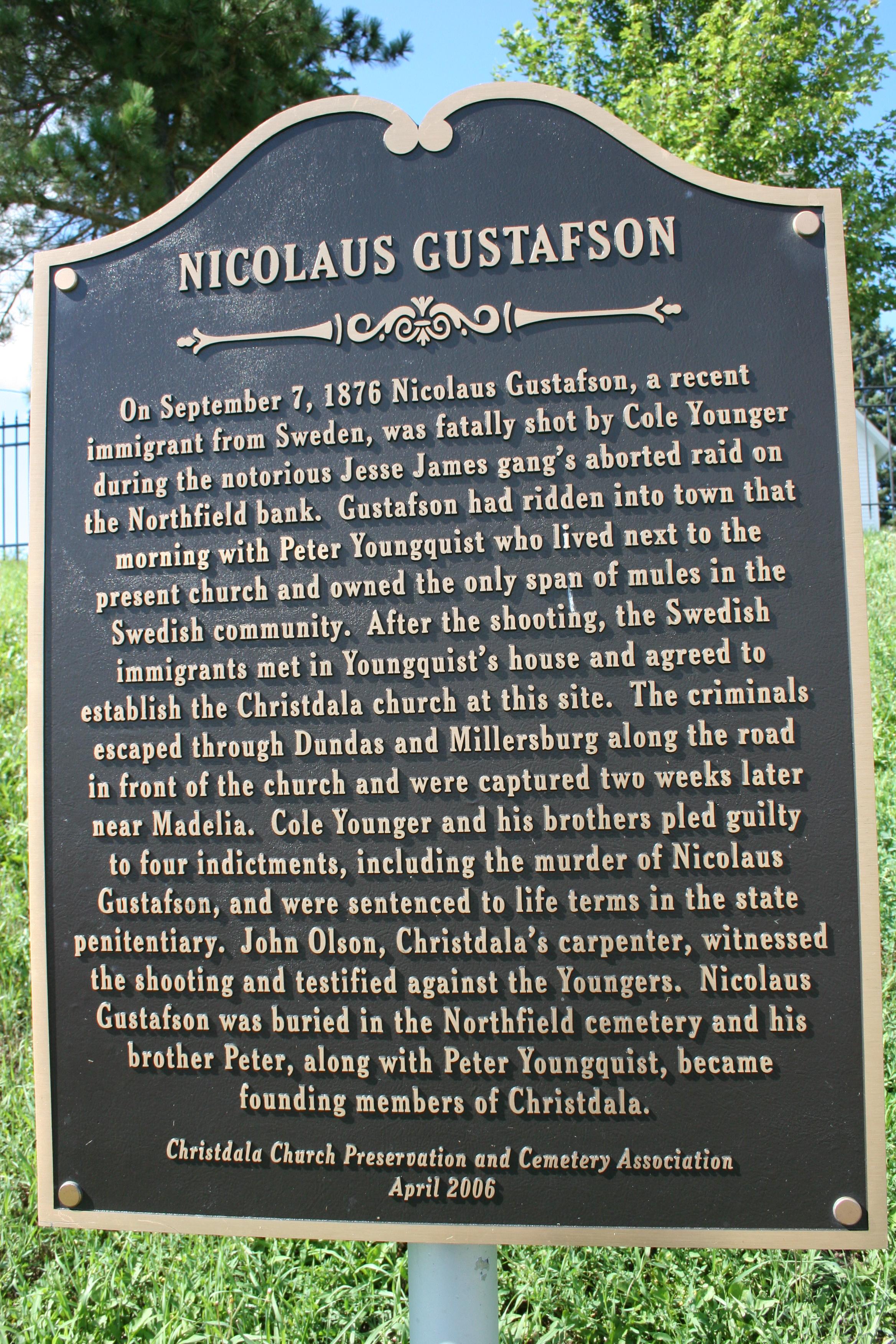
We are kindred spirits—the three of us—standing here on a sunny summer Sunday afternoon admiring this 132-year-old church with an intriguing connection to the Sept. 7, 1876 robbery of the First National Bank of Northfield by the notorious James-Younger Gang.

Swedish immigrants built Christdala after one of their own, Nicolaus Gustafson, who had traveled to Northfield on the morning of the bank robbery, was fatally shot by Cole Younger. Because the Millersburg Swedish community had no church or cemetery, Gustafson was buried in Northfield. After his death, the Swedes immediately began formulating plans for their own church and burial place, forming a congregation in July 1877 and constructing a house of worship in 1878.

Today Christdala, which dissolved as a congregation in 1966 due to declining membership, stands as a strong testament to those determined Swedes. They turned the tragic death of their friend, their neighbor, into something positive. Good triumphs over evil. Perhaps it is no coincidence that this church was built beside, and above, the road used as an escape route by the notorious outlaws.

All of this I consider while walking among the tombstones—of the Youngquists, the Swansons, the Paulsons and, yes, even the Gustafsons.

A sign at the church details the historical connection to the 1876 Northfield bank raid by the James-Younger Gang.

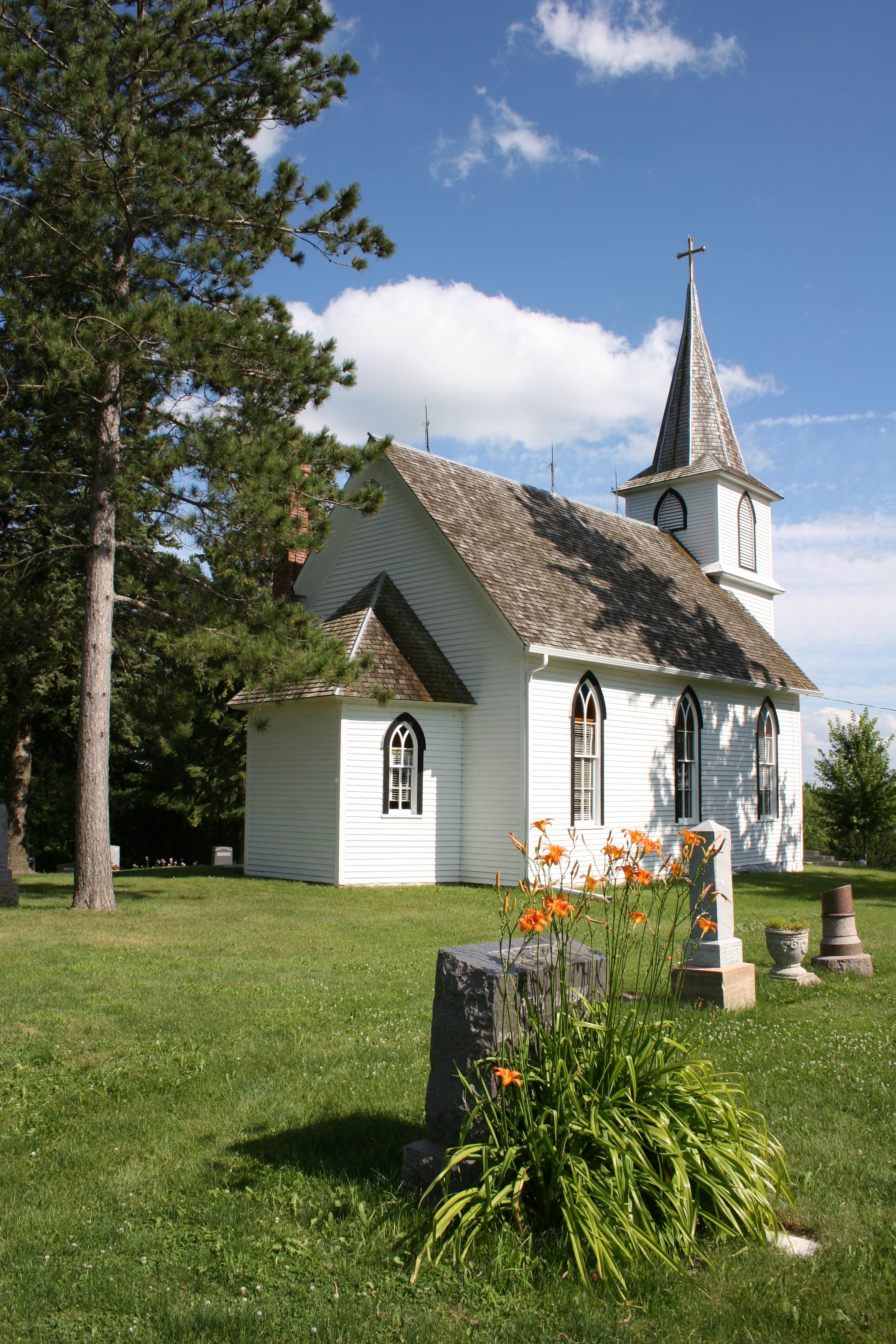
A cemetery surrounds Christdala Swedish Lutheran Church near Millersburg.

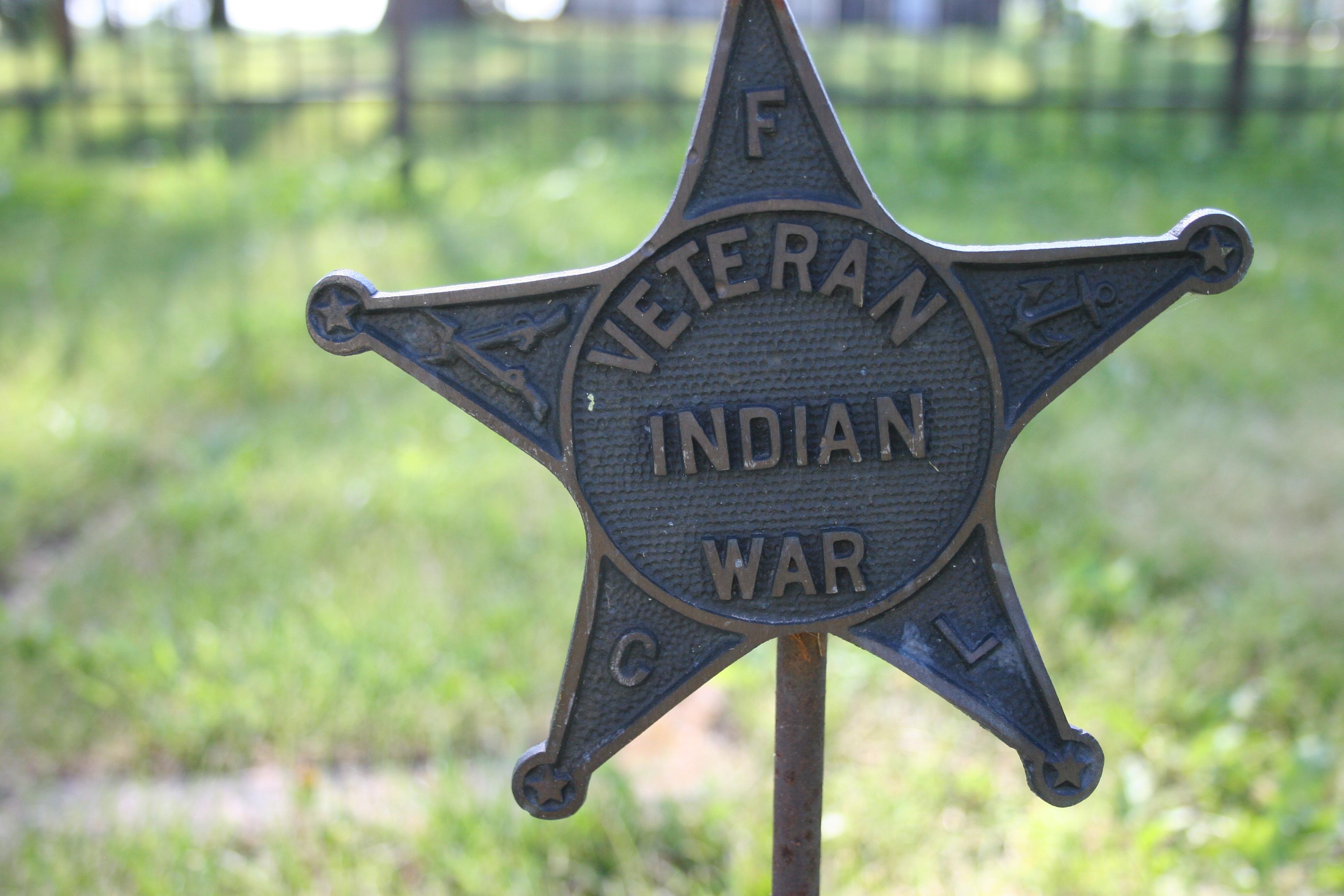
An honorary star in the Christdala cemetery denotes a soldier as a veteran of the Indian War.

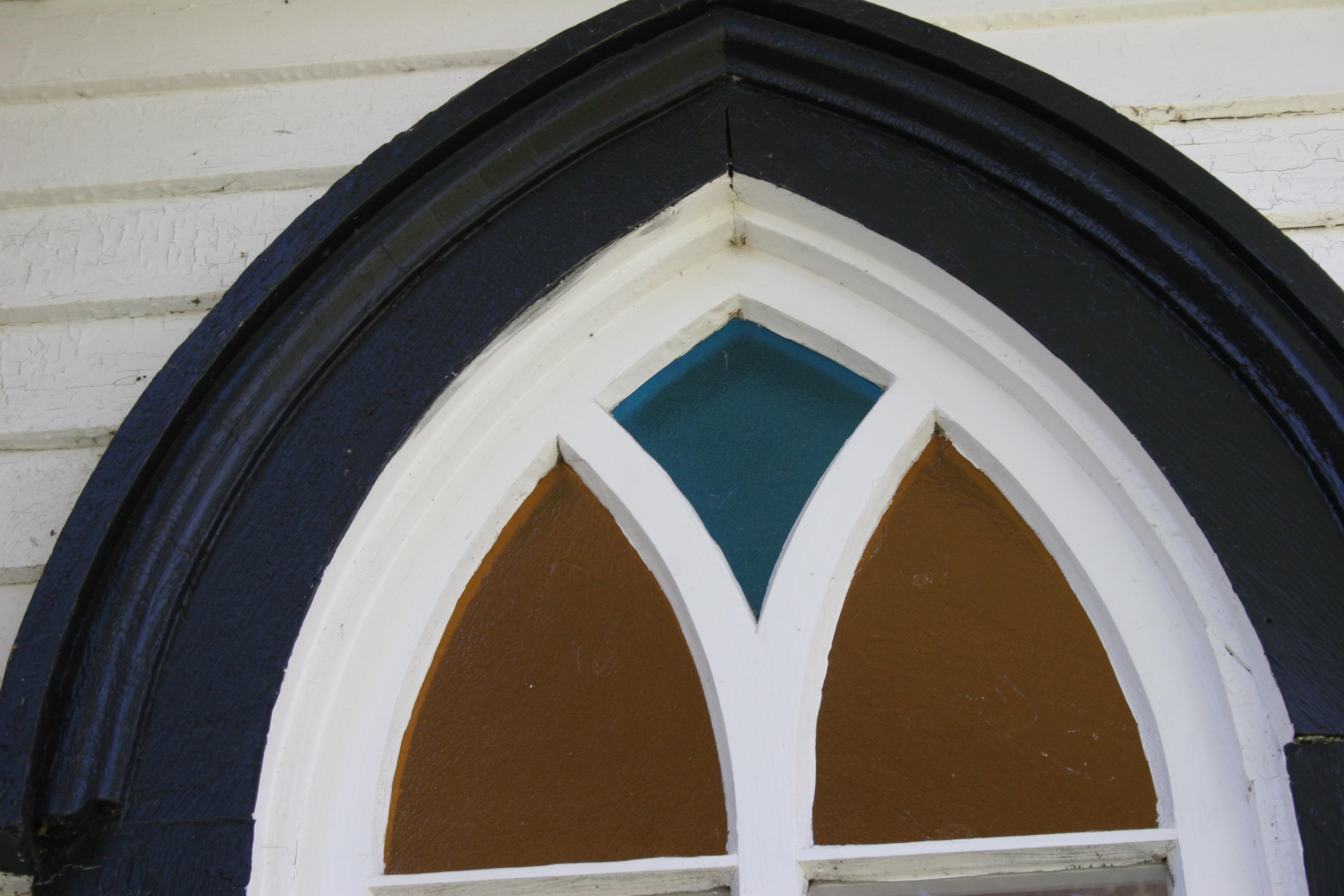
The exterior stained glass top of a Christdala window.

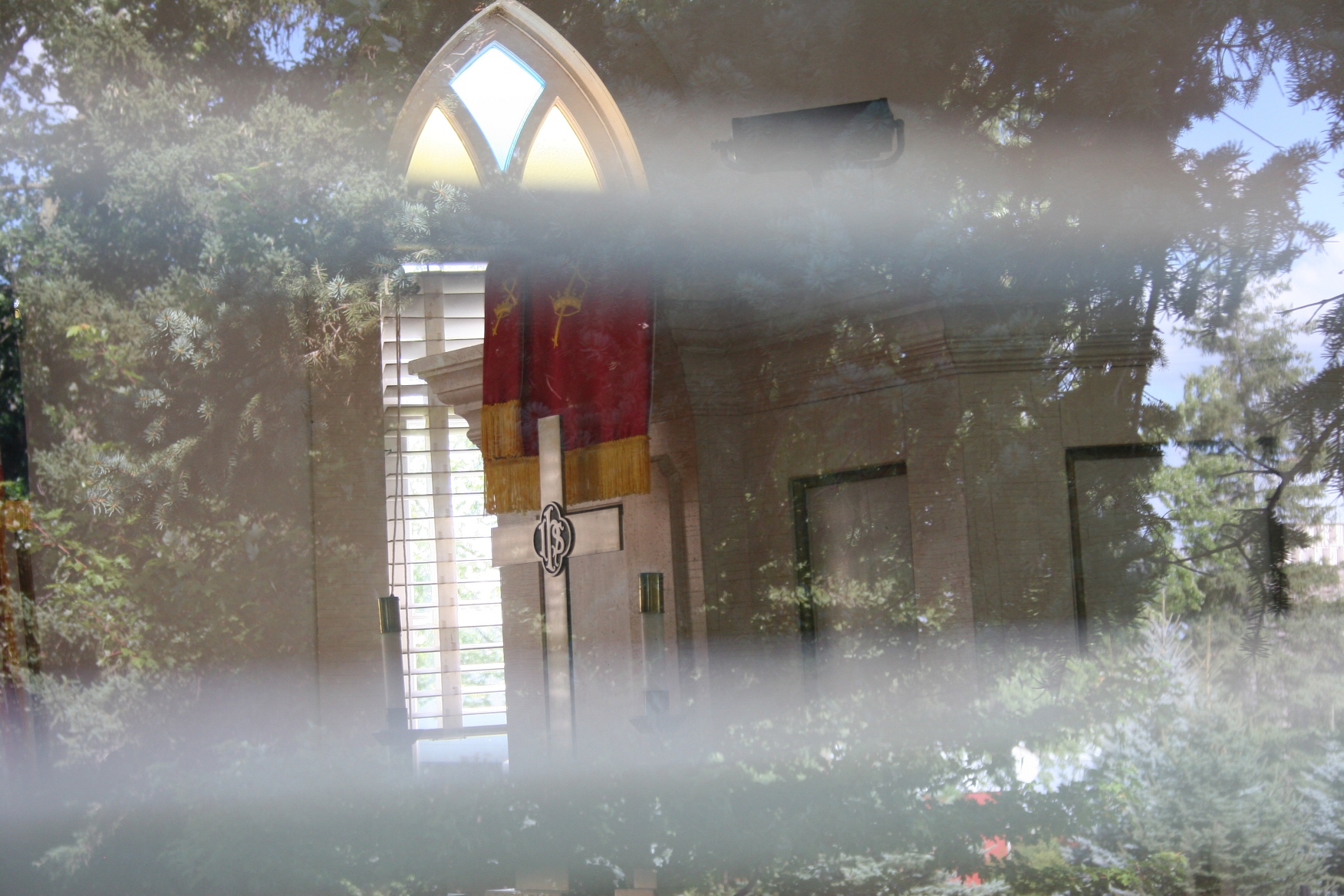
Because the church was locked, I had to settle for peering through the blinds at the altar, which sits in front of the pulpit. The cross rests on the altar. I'll have to return for the annual autumn worship service and open house.

© Copyright 2010 Audrey Kletscher Helbling