Minnesota Prairie Roots

Writing and photography by Audrey Kletscher Helbling

An historic fashion find in Faribault February 3, 2012

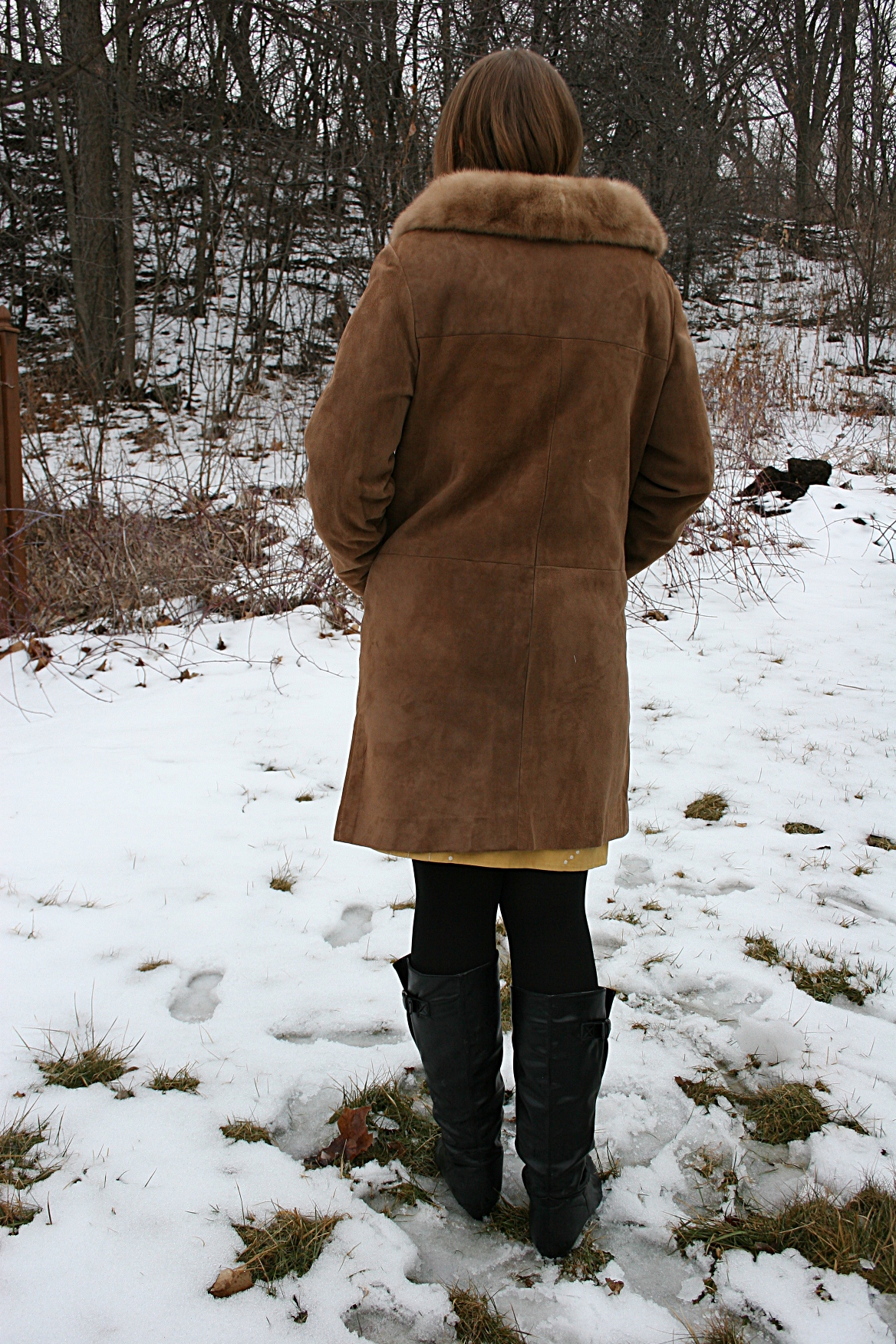
IT WAS AN IMPRESSIVE FIND. There, hanging on a circular clothes rack jammed with winter coats, I discovered the soft suede coat collared in fur.

I beckoned my daughter to come, try it on. Wrap yourself in this finely-crafted coat with covered buttons and deep pockets and hand-stitched lining at the collar. Try on this fawn-colored coat that reminds me of Mary Tyler Moore when I picture you wearing it.

But she hesitated, not certain about wearing a coat trimmed with fur, a fur we couldn’t identify because we’re not accustomed to such luxury.

Eventually I coaxed her into slipping on the tailored garment from Ochs of Faribault, a fine, but now defunct, department store that served communities in southern Minnesota for nearly 100 years with branches in Owatonna, Waseca, Rochester and Austin and, later, a store in New Ulm.

That deep history alone made the coat worth purchasing. Ochs, established in Faribault in 1888 as a seller of dry goods and notions, became “the” place to shop in the heyday of department stores.
I’ve lived in Faribault long enough to remember Ochs. I couldn’t afford to shop at this elite business, although my husband rented our wedding tuxedos there in 1982. Not long after that, Ochs closed, about the time high-end department stores began disappearing from Main Street.

Buying the coat would equal acquiring a piece of history. I impressed that upon my 25-year-old daughter as she pondered purchasing the coat. Soon she pulled $12 and some loose change—I threw in the remaining coins—to total $12.50.

She’d just purchased a finely-made coat from one of Faribault’s finest department stores for half price at the Faribault Senior Center’s Clothes Closet.

I thrilled in the thrift store find and followed with a back yard photo shoot to document our discovery.

And then I suggested to my daughter that she pose for a second photo shoot next to the Mary Tyler Moore statue on the Nicollet Mall in downtown Minneapolis. She, like the actress in the 1970s The Mary Tyler Moore Show sitcom, lives in Minneapolis and is a strong, independent, single working woman.

Such a photo would be a fitting tribute, I think, to the strength and power of women. When Verna Love Ochs became the president of Ochs in 1969 upon the death of her husband, she was one of only five women in the country serving as a department store president. That’s according to a Faribault Heritage Preservation Commission Downtown Walking Tour video clip produced by Daniel J. Hoisington of Edinborough Productions.
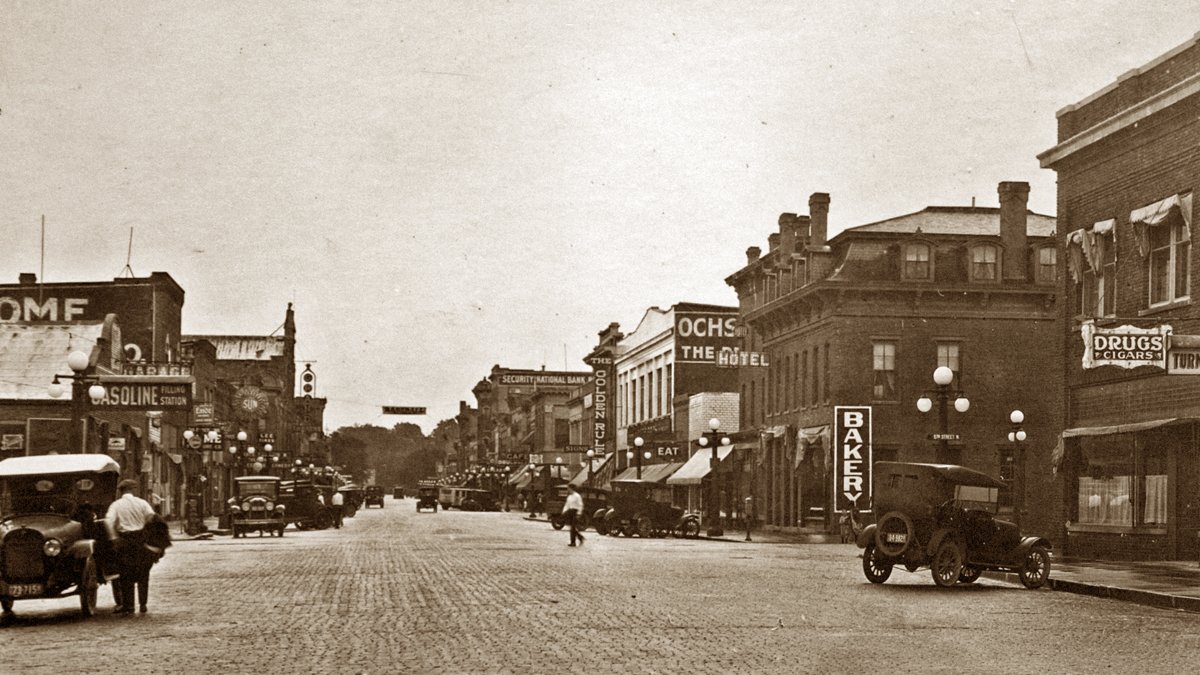
Note the Faribault Ochs store in this mid-1920s photo from the private collection of Daniel J. Hoisington.

Verna Ochs, who died in 1989, was also a member of the Rice County Historical Society and a charter member of the Faribault Heritage Preservation Commission. She’d likely appreciate the restoration of the Ochs Department Store building several years ago by the State Bank of Faribault.

Will my daughter value her new suede coat? I expect, given its history, she will.

CLICK HERE to watch a video clip about Ochs.

© Copyright 2012 Audrey Kletscher Helbling

Vintage photo courtesy of Daniel J. Hoisington


Small-town Minnesota murals: Grassroots art January 30, 2012

Filed under: Uncategorized — Audrey Kletscher Helbling @ 8:20 AM
Tags: , , , , , , , , , , ,

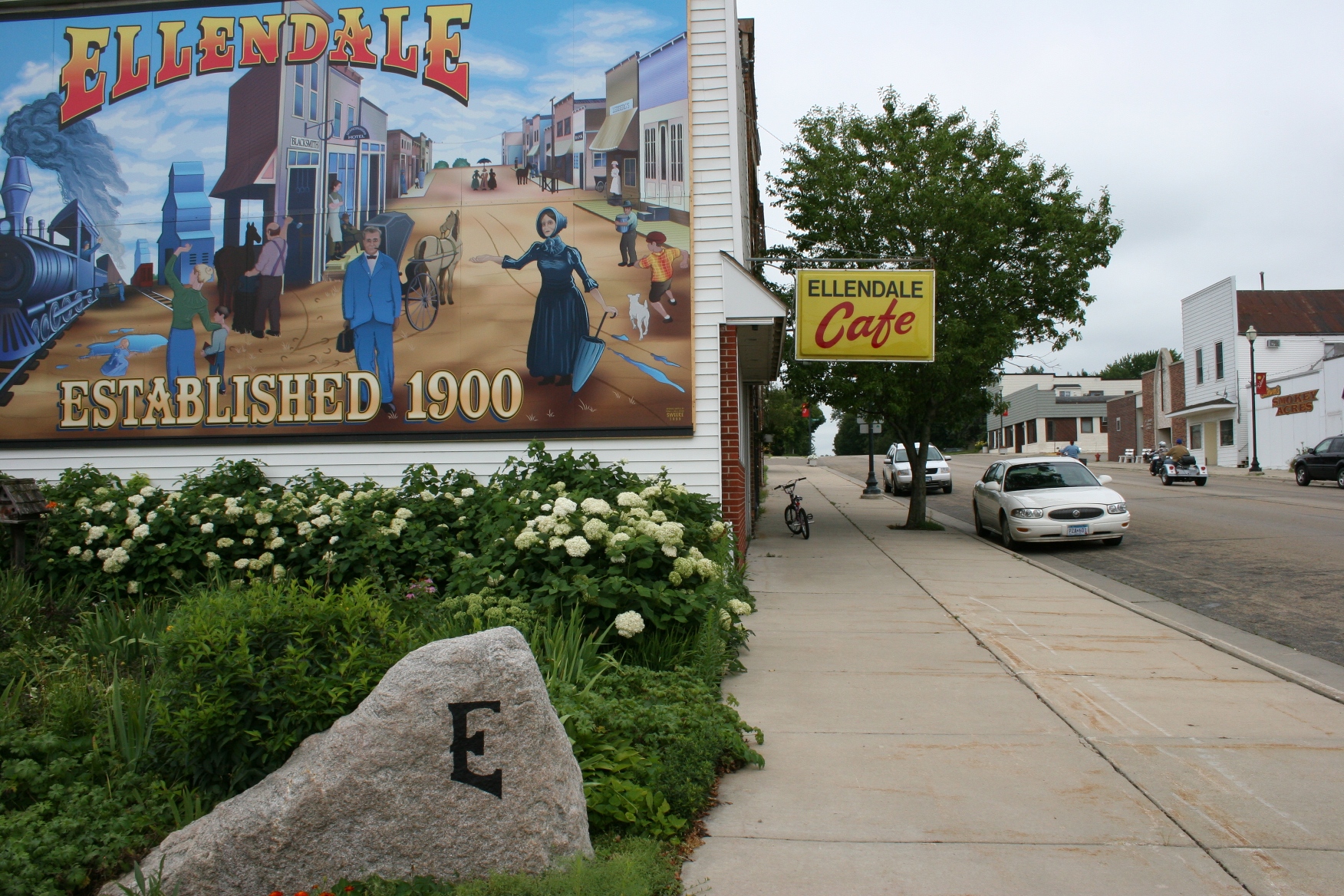
DRIVE INTO MONTGOMERY or New Richland, Ellendale or West Concord, or many small Minnesota towns, and you’ll find grassroots art, my term for Main Street murals.

It’s art that’s out-front and public, depicting the history and feel of a community.

Such murals typically offer a visual snapshot of the past, impressing upon visitors and locals a defined sense of place.

In Ellendale, for example, a locomotive and depot comprise about a third of the 16-foot by 32-foot mural on the side of the Ellendale Café. The train points to the community’s roots as a railroad town, established in 1900 when the Burlington, Cedar Rapids and Northern Railroad passed through on its way to Minneapolis. Ellendale is named after the railroad president’s wife, Ellen Dale Ives, known for her humanitarian works.

The Ellendale Centennial Mural photographed last summer.

The Sweere brothers of the Twin Cities-based National Mural Company and natives of nearby Owatonna painted the 1999 Ellendale Centennial Mural.

The mural, by the way, is just across the street from Lerberg’s Foods, an old-fashioned grocery store established in 1901 and complete with a moosehead on the wall. (Click here to read an earlier post about this must-visit grocery store.)

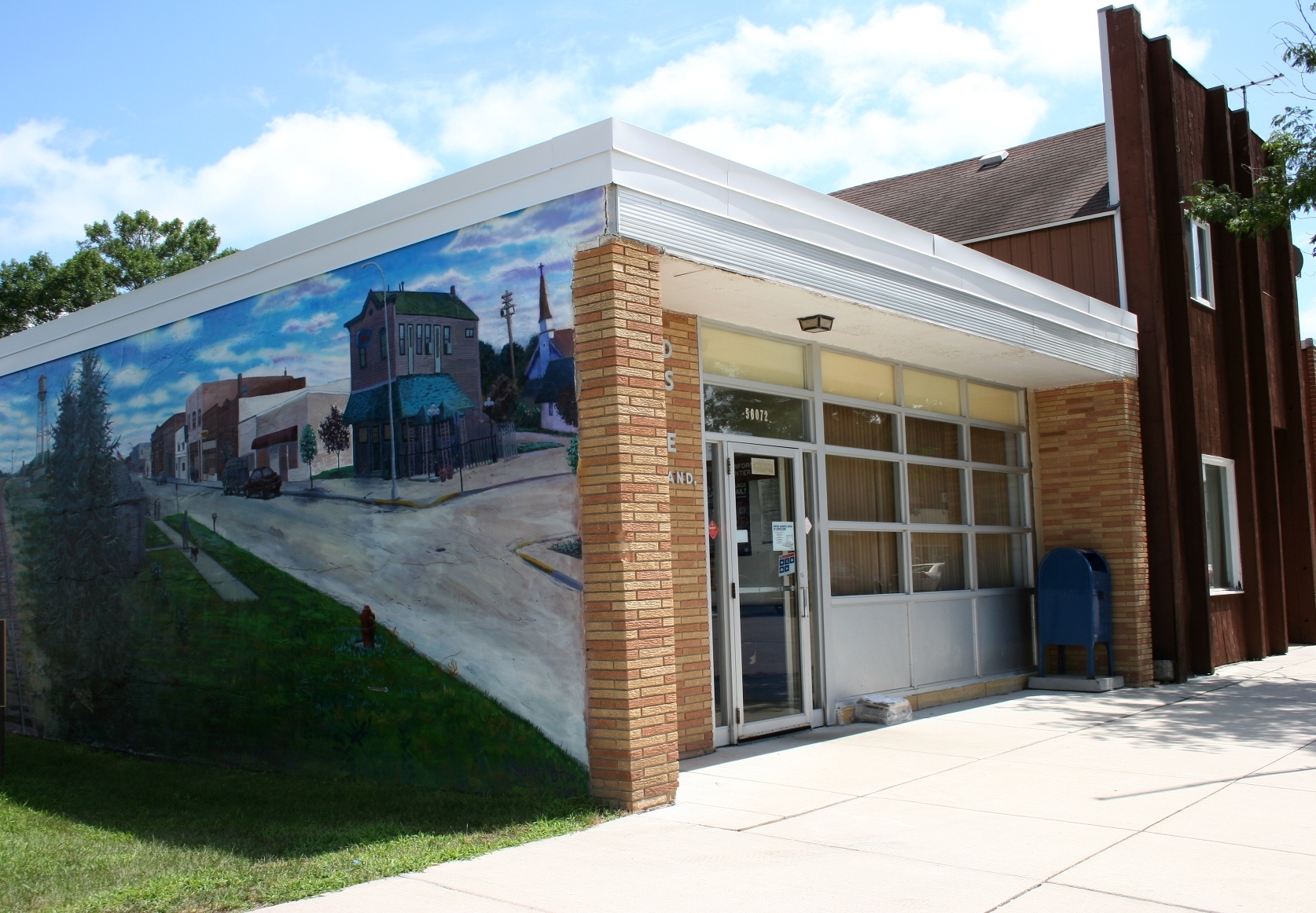
The city section of the mural stretching along the side of the New Richland post office.

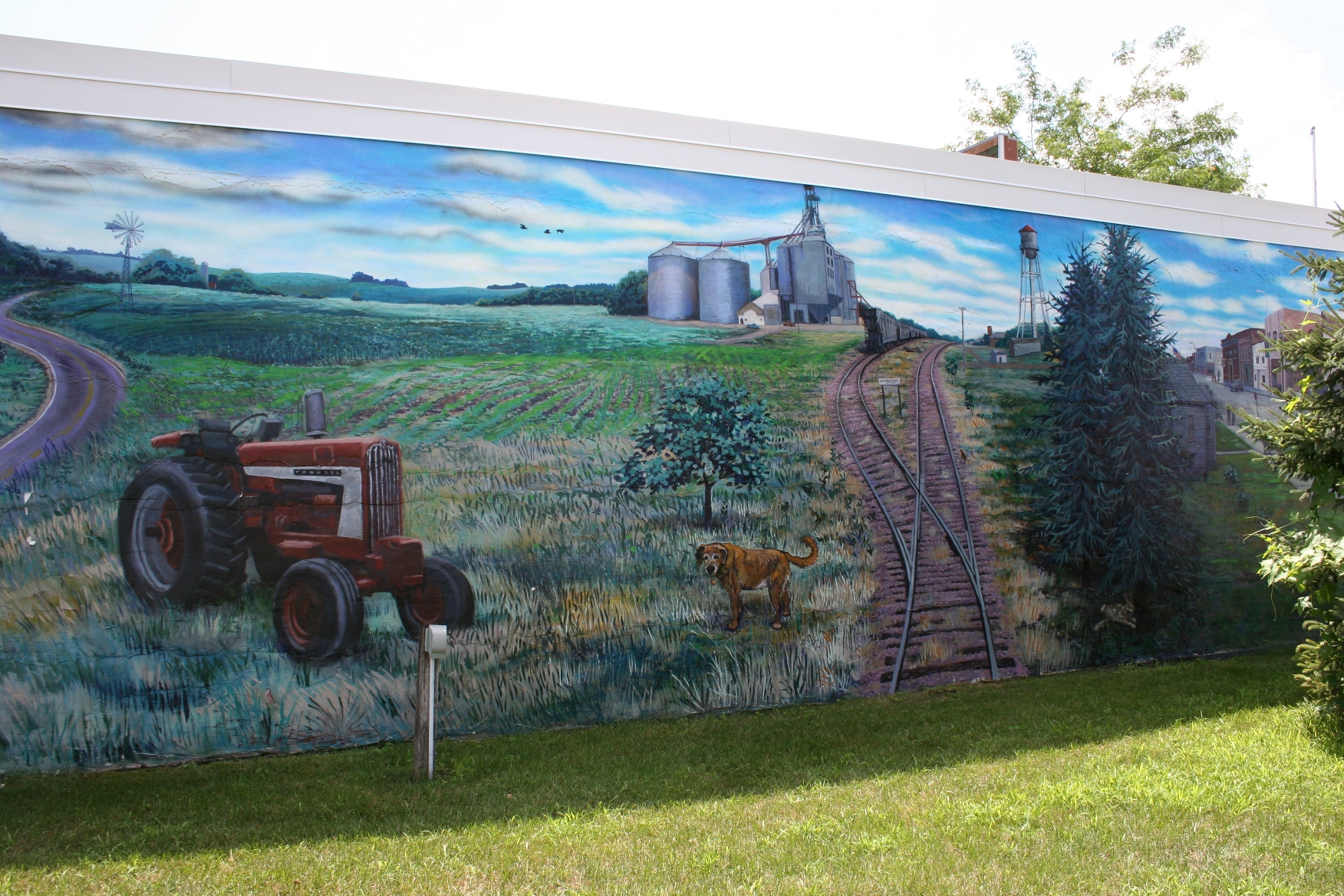
In neighboring New Richland, the Sweere brothers also created the 12.5-foot by 65-foot mural brushed onto an exterior cement block wall of the post office. In this 2003 grassroots art, train tracks visually divide the mural into city and country scenes. It is a point this community emphasizes—not the division of the two, but the link between rural and town. Each July this Waseca County town of 1,200 celebrates Farm and City Days.

The rural portion of the New Richland mural.

Should you be interested in moving to New Richland, you might want to click here and check out this deal: The city is offering free land to individuals looking to build a new home in the Homestake Subdivision on the northwest side of town within a year of acquiring the deed. (Note that you’ll need to pay the special assessments.) Just thought I’d throw that land offer out there.

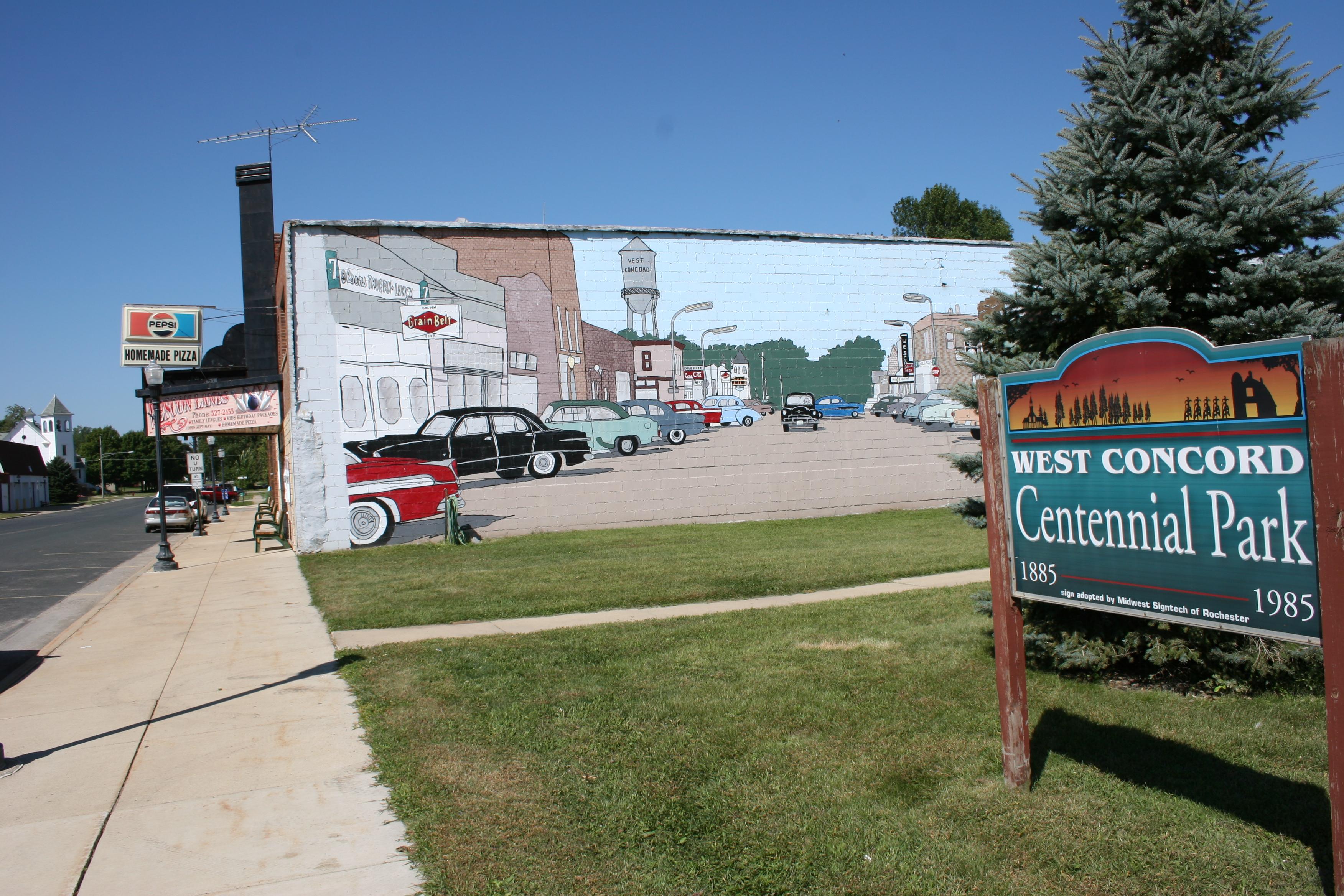
A 1950s version of West Concord is showcased in the mural on the side of a bowling alley.

To the east, over in West Concord, cars, not trains, define that town’s mural on the side of Wescon Lanes next to West Concord Centennial Park. The art depicts a 1950s street-scape, a nod to a community that celebrates summer with weekly car cruises and an annual West Concord Historical Society Car and Truck  Show in July.

Just down the street, you can shop at Woody’s Auto Literature and More.

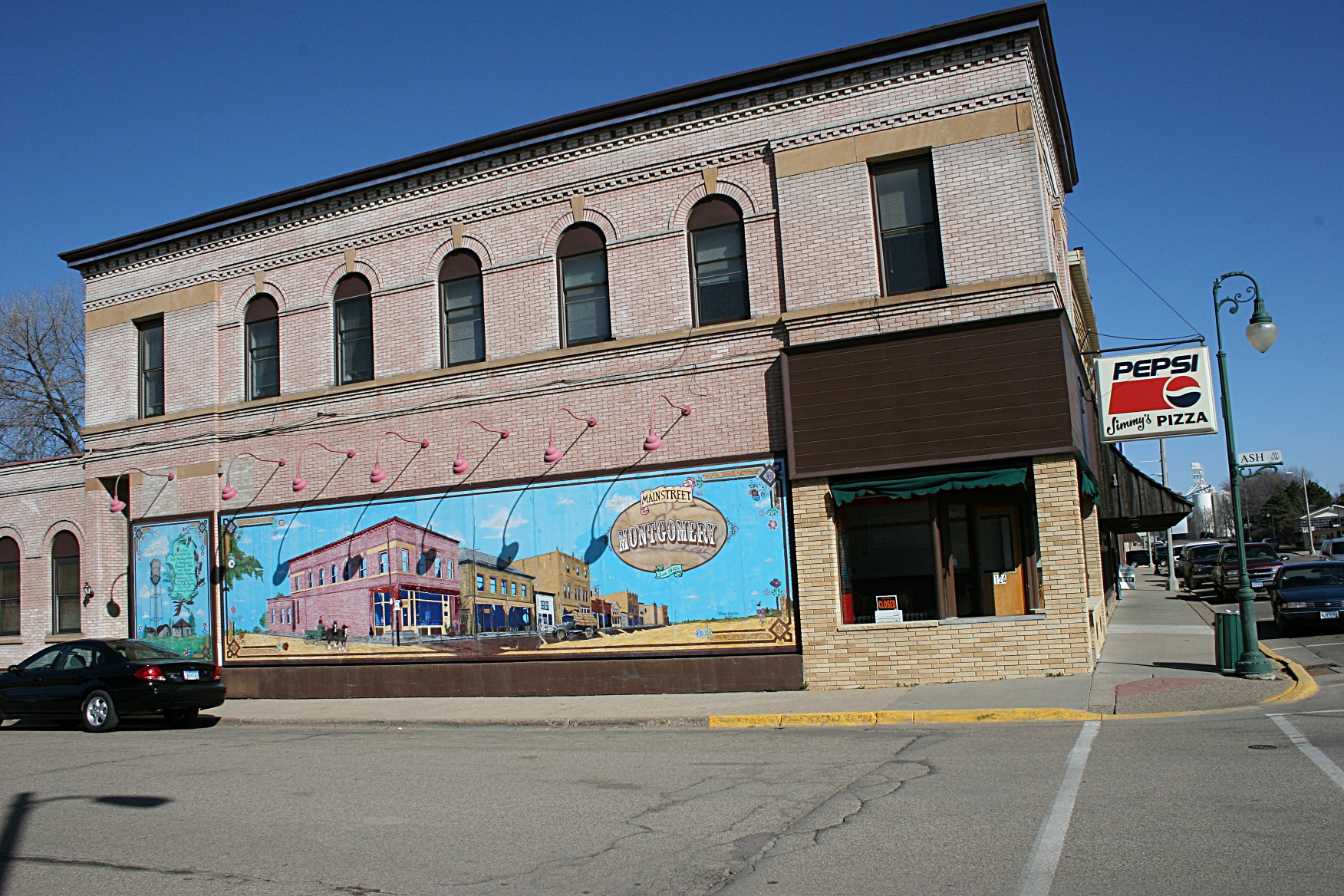
Montgomery, Minnesota's mural

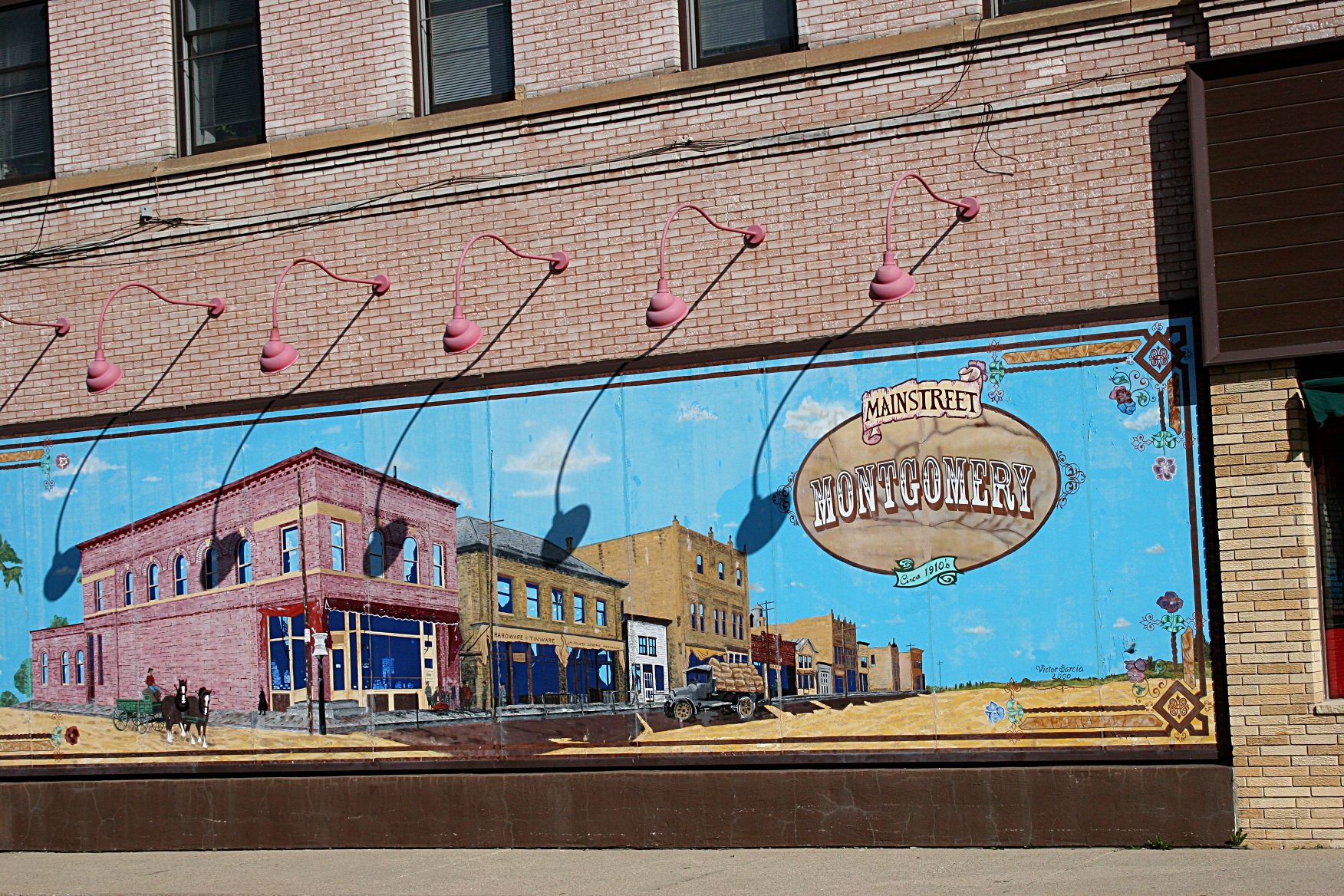
Traveling back west over to Montgomery in Le Sueur County, you’ll spot a mural of Main Street just across from famous Franke’s Bakery, known for its kolacky (Czech pastry). Local sign-painter Victor Garcia painted the scene based on an early 1900s photo of this town founded by Czech immigrants.

A close-up shot of the Montgomery mural

So there you have it—abbreviated visual histories of four small southeastern Minnesota towns showcased in grassroots art. Think about that the next time you see a mural.

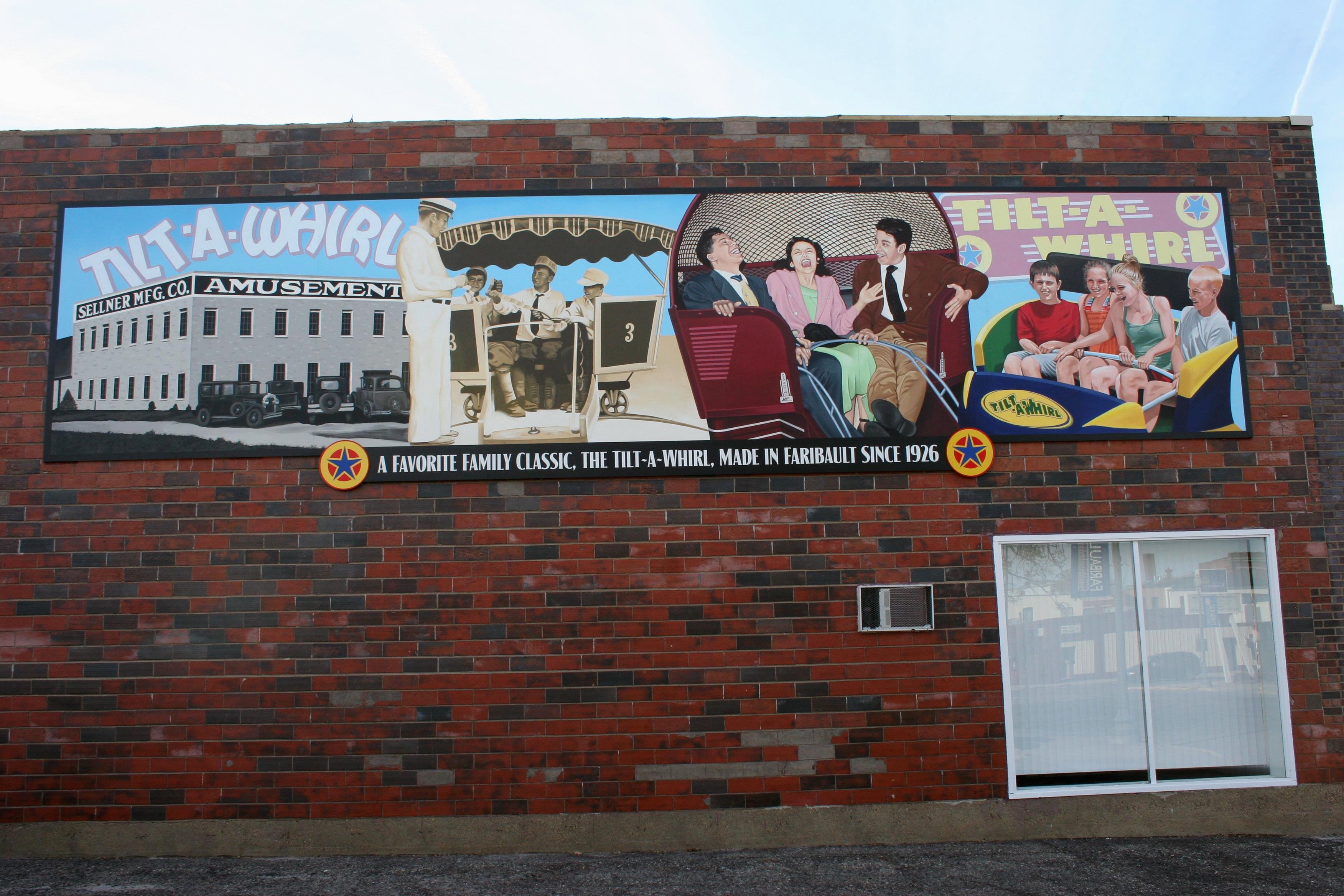
The Mural Society of Faribault created this mural honoring the Tilt-A-Whirl amusement ride, made in Faribault since 1926. Today Gold Star Manufacturing still produces the fiberglass cars for this ride.

DO YOU KNOW of any small towns that tell their stories via murals? In Faribault, where I live, five murals are posted on buildings in the downtown area. With a population of more than 20,000, Faribault isn’t exactly a small town, not from my perspective anyway. If you’re ever in the area, be sure to peruse the murals which depict differing aspects of this city’s history.

© Copyright 2012 Audrey Kletscher Helbling


I may not read music, but… January 29, 2012

GROWING UP, I ALWAYS wanted to play the piano. But I never had the opportunity, although one Christmas I received a toy accordion that temporarily satisfied my yearning to create music.

There was neither money nor space for a piano within the budget constraints of a poor farm family or within the walls of a cramped southwestern Minnesota farmhouse.

And so the years passed without music.

During junior high school I struggled through required music classes, once fake-playing the ukulele at a Christmas concert because the music teacher failed to recognize that I could not read musical notes.

In high school when so many classmates were joining band, I was not among them. Remember that money issue? Still there.

A few years later my younger siblings were allowed to join band—one sister choosing the flute, the other the clarinet. The brothers focused on sports. For awhile I tried to play my sister’s flute, without much success.

During college, a friend allowed me to strum her guitar. The strings bit into my fingertips so I quickly lost interest.

Years later when I had children, I was determined they would have the musical opportunities I never had. I started them on a mini toy organ. Later, the eldest tried playing my sister’s flute for awhile, then quit. The second daughter borrowed my youngest sister’s clarinet, sticking with band lessons for several years. My son had no interest in an instrument until recently, when he inquired about playing the guitar. He’s meeting with a family member soon to try out guitar-playing.

I tell you all of this because of a recent musical opportunity that came my way. It’s ironic really, given my inability to play any type of instrument or, in fact, read a single musical note. If you put a song sheet in front of me right now, I’d stare at it like I was reading Greek.

But composer Curtis Lanoue, also an elementary music teacher and the director of music at Lord of Life Lutheran Church in Miami, found the music in my soul. Seeking a cover photo for his 29-page Four Organ Preludes Based on Common Hymn Tunes book, Lanoue did an online image search and discovered my photo of the old pipe organ at Immanuel Lutheran Church, rural Courtland, Minnesota, the congregational home of my maternal forefathers.

“As you can imagine, there were a ton of (image) results,” Lanoue says. “Most of them were those flowery European organs in the cathedrals. That didn’t go too well with the style of the music. Somehow through the eye strain of looking through hundreds of photos, I found yours. It’s not surprising my eye was drawn to it as I was raised in a Midwest Lutheran church.”
Once I received a copy of this musician’s recently self-published book, I understood why he selected my photo of Immanuel’s organ that was built in 1895 by Vogelpohl and Spaeth Organ Company of New Ulm at a cost of $1,500.

It’s the perfect fit for Lanoue’s preludes based on the definitively Lutheran hymn, “A Mighty Fortress,” and on “Amazing Grace,” “Out of the Depths I Cry to Thee,” and “From Heaven Above to Earth I Come.”
As I flip through these compositions written by a musician with degrees in jazz performance and studio jazz writing and experience as a working organist since age 16, I can only smile at the contrast between his vast musical knowledge and talent and my musical illiteracy.

FYI: You can purchase Four Organ Preludes Based on Common Hymn Tunes for $9.99 by clicking on this link: https://www.createspace.com/3734555

Disclaimer: I am expecting payment for use of my cover image and have received a free copy of Lanoue’s book. This post, however, has been written solely at my discretion.

A rear photo shot of Immanuel Lutheran Church, Courtland, looking up to the balcony (where the 1895 pipe organ is located) and toward the spacious fellowship hall.

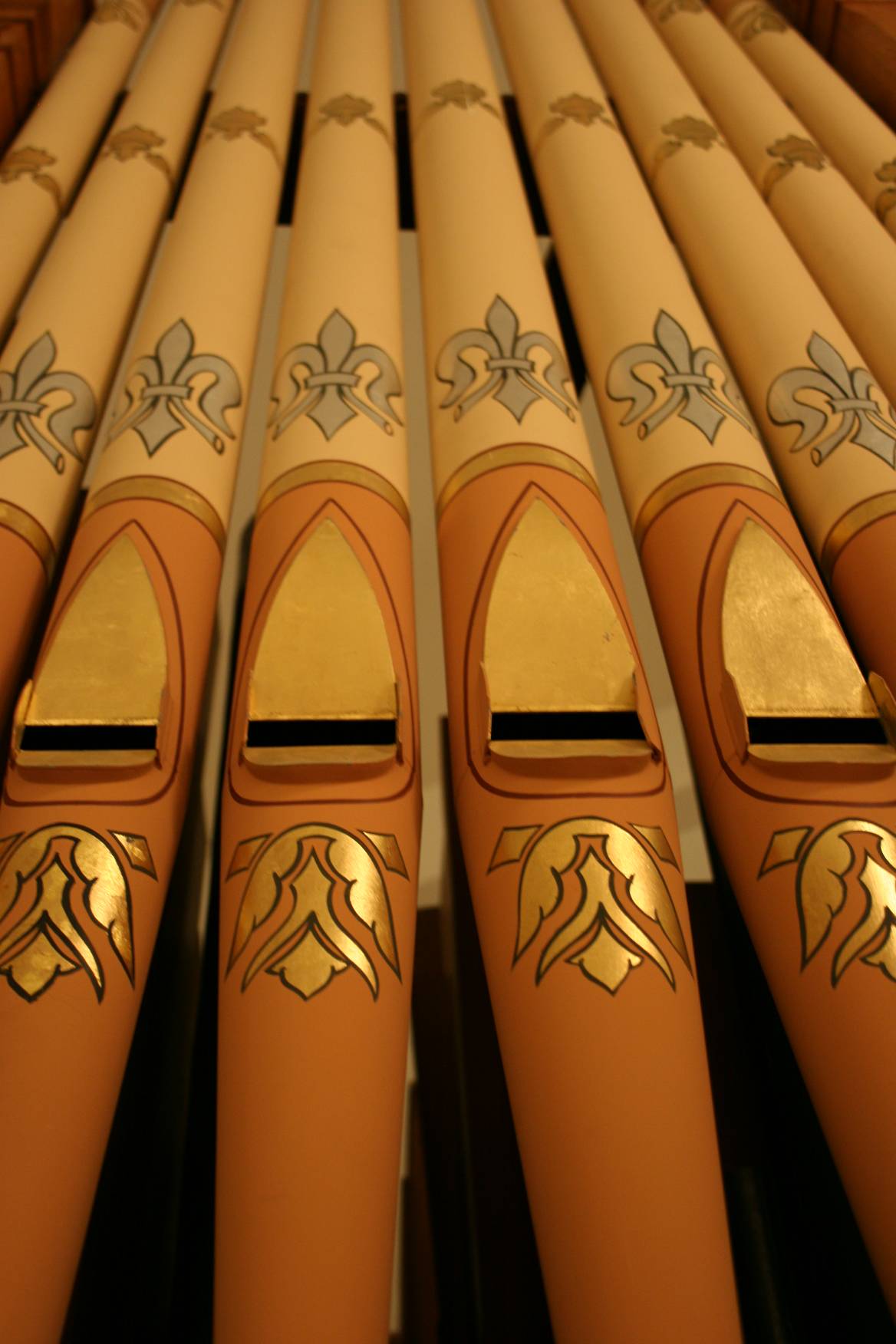
The beautiful pipes on Immanuel's organ.

JUST BECAUSE I THOUGHT it important to include, here’s some additional information about Immanuel’s organ, as shared by Immanuel’s pastor, Wayne Bernau:

The 1895 organ was renovated in 1988 at a cost of $25,000.

When Immanuel built a new church in 2007, Rollie Rutz and crew from Rutz Organ Company in Morristown (about 10 miles from my Faribault home), helped move the organ from the old church into the balcony of the new sanctuary.

A set of chimes was added to the organ in 2007.

Immanuel’s organ is today valued at around $200,000.

Says Pastor Bernau: “With the balcony constructed the way it is and the excellent acoustics for music in our new church, I believe the organ sounds better now, maybe twice as good, as it ever did in our 1881 building.”

I’ve heard the organ played in Immanuel and I agree. The acoustics in the new house of worship truly showcase the sounds of this 117-year-old organ played each Sunday by Lisa (Bode) Fischer, the daughter of my mom’s first cousin and a descendant of the Bode family members who helped found this rural congregation in the Minnesota River Valley more than a century ago.

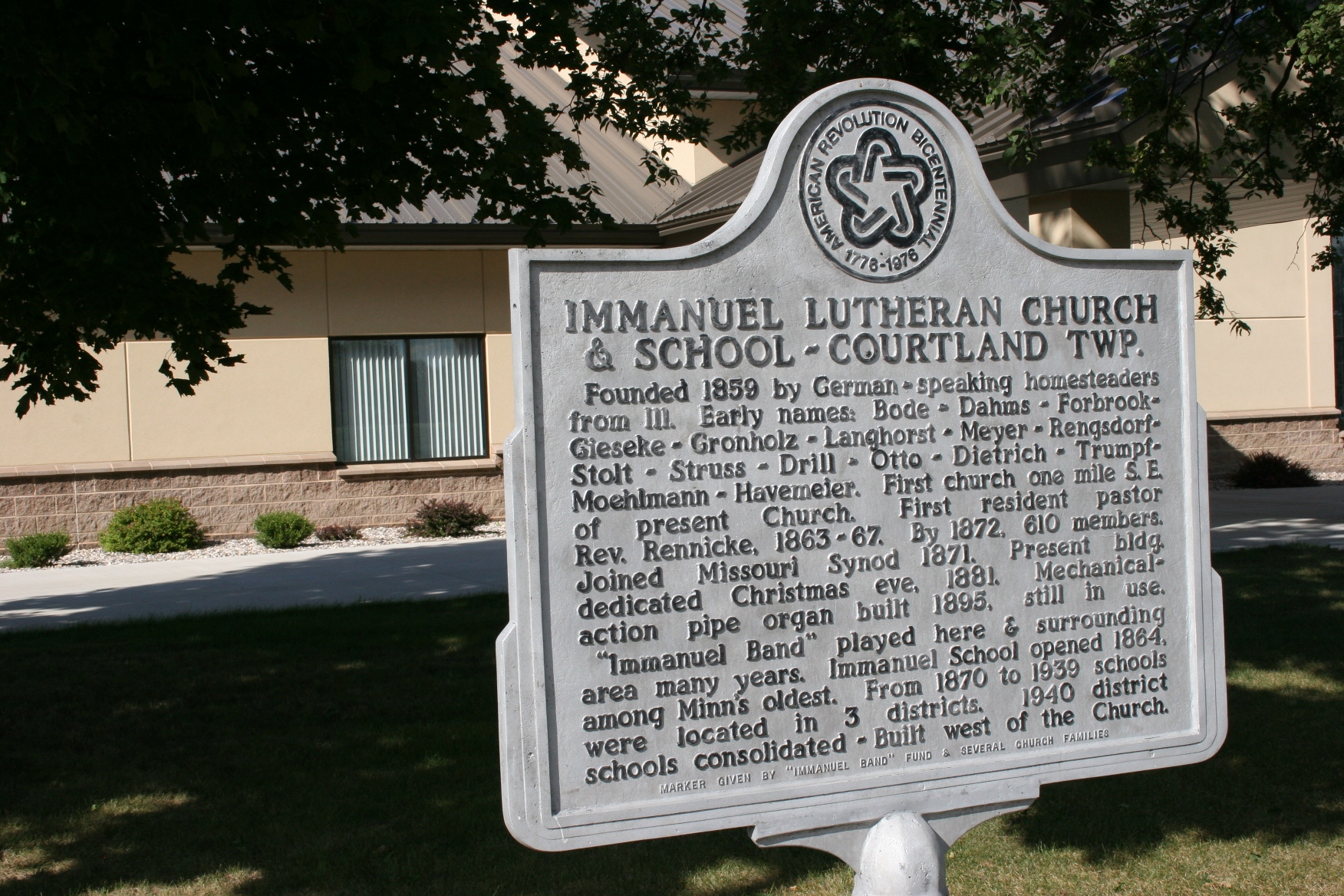
A historical sign outside of Immanuel Lutheran Church, east of Courtland, Minnesota.

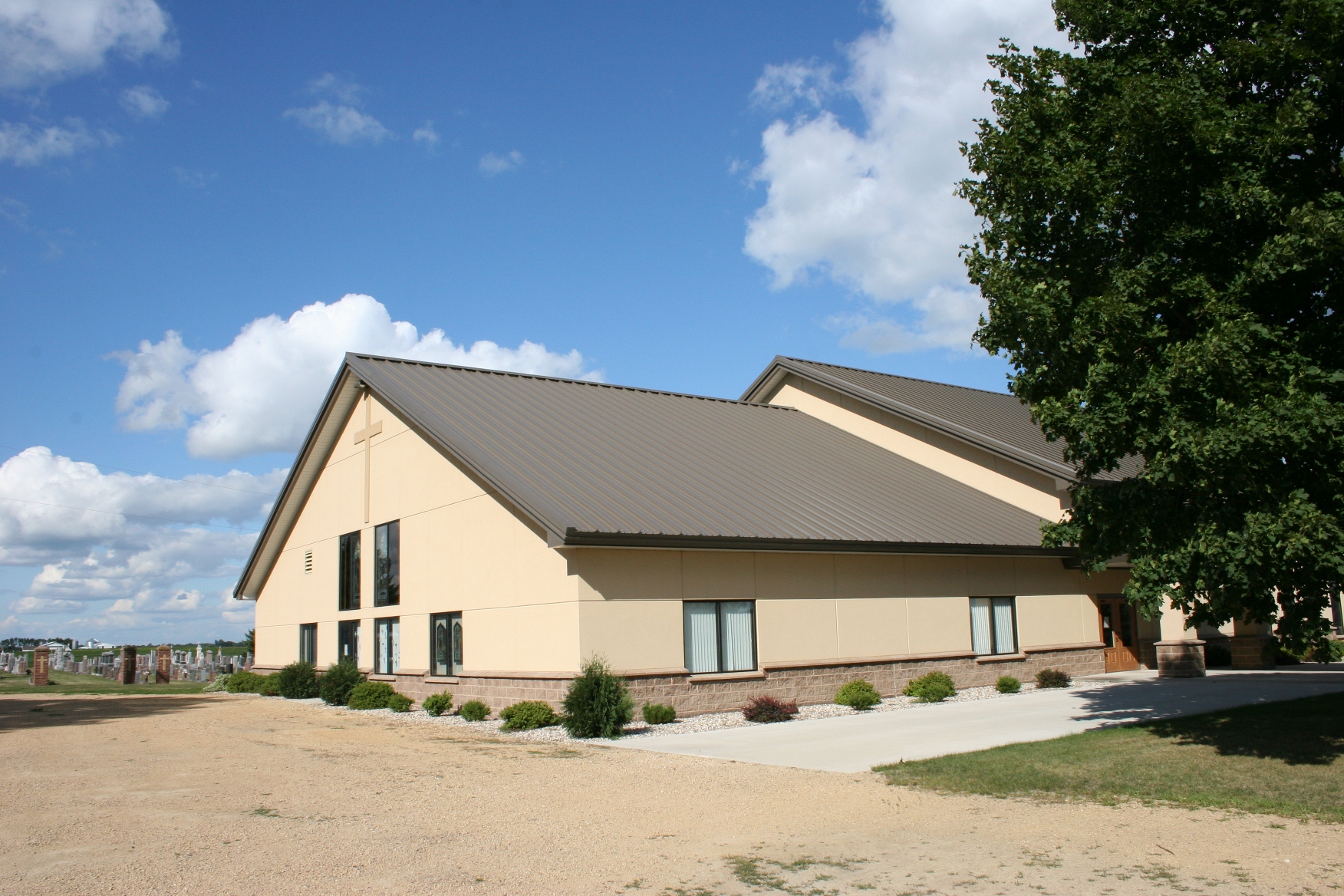
This photo, taken in September, shows primarily Immanuel's social hall and the adjacent cemetery where many of my Bode forefathers are buried.

A view of Immanuel's sanctuary from the balcony. The pews, the chancel furnishings and the stained glass windows from the old church were incorporated into the new church.

© Copyright 2012 Audrey Kletscher Helbling


Doug Ohman preserves Minnesota in photos January 25, 2012

MANY YEARS AGO I heard Minnesota photographer Doug Ohman talk about his Churches of Minnesota book, a project in his “Minnesota Byways” series published by the Minnesota Historical Society Press.

He’s an impressive speaker, sharing his love for photographing those subjects which hold historical, community and personal significance for so many Minnesotans.

Thus far he’s covered Minnesota churches, barns, courthouses, schoolhouses, cabins and libraries in his series. I don’t think I’ve missed any and I’ve read most. His books also include prose by well-known Minnesota writers like Will Weaver, Jon Hassler and Bill Holm.

If you’re at all interested in the places that are so integral to our lives, you’ll want to read Ohman’s books and, if you have the opportunity, hear him speak.

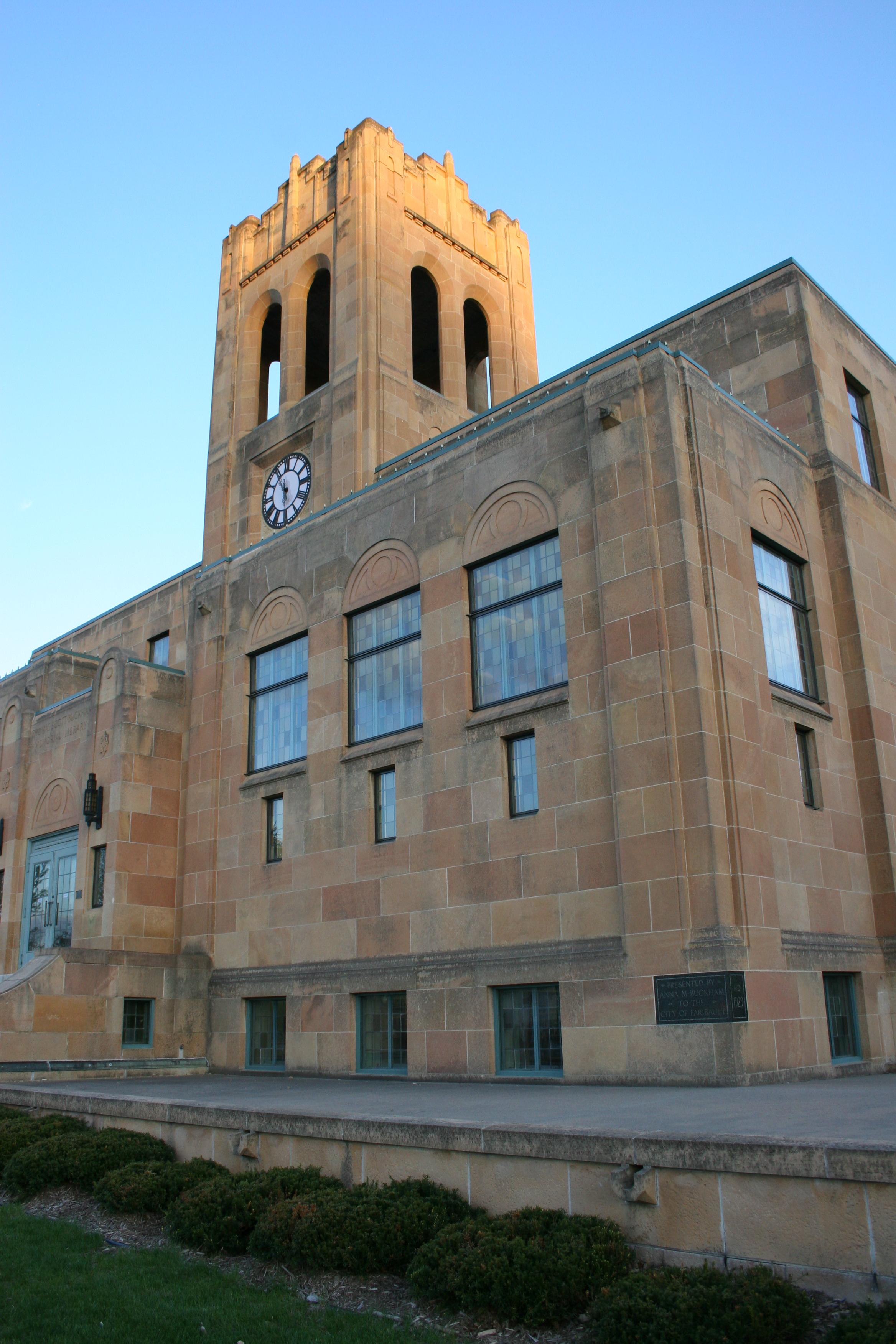
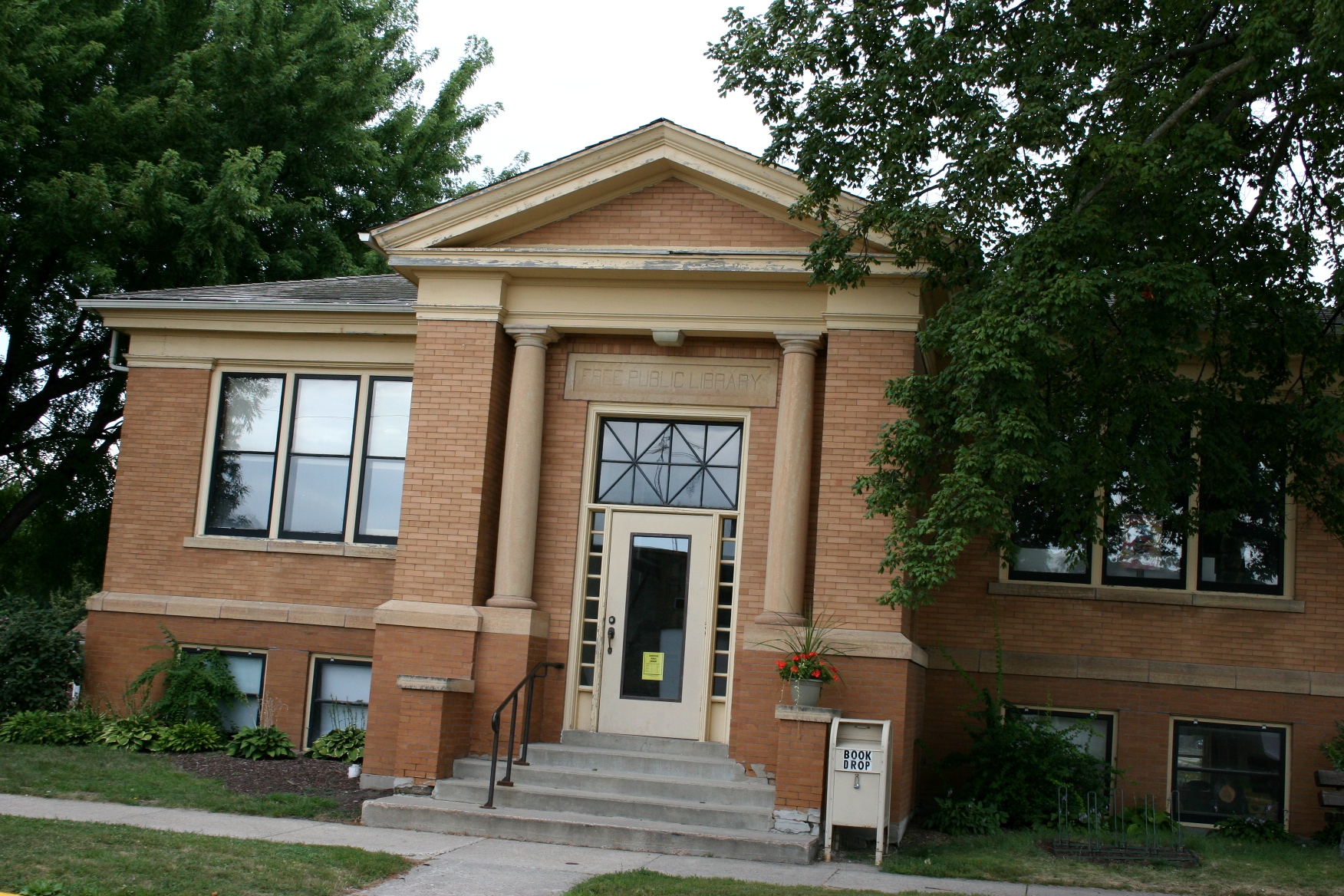
Buckham Memorial Library, built in 1929, features a Charles Connick stained glass window and Greek murals.

Thursday night, January 26, this noted photographer travels to my community of Faribault, to Buckham Memorial Library, to present “Free to All: Libraries of Minnesota” as part of the Minnesota Book Award Author Tour. His book, Prairie, Lake, Forest: Minnesota’s State Parks, was a 2011 MNBA nominee.

I’ll be there for several reasons: I enjoy Ohman’s books. I want to learn more about his approach to photography. I’m interested in learning more about libraries in Minnesota. I appreciate libraries.

He’ll be at the Faribault library at 6 p.m. for this free event. A photo of Buckham, by the way, is included in his Libraries of Minnesota.

Southeastern Minnesota residents will have plenty of other opportunities to hear Ohman speak on his “Minnesota Byways” series as a dozen additional appearances are scheduled through-out the Southeastern Libraries Cooperating regional library system. Click here to view a complete listing of Ohman’s upcoming visits. His presentations will vary—from schoolhouses to churches to farms and more—depending on location.

I’d recommend taking in one of Ohman’s presentations. You’ll gain insights into Minnesota history and photography and more from a photographer who possesses an unbridled enthusiasm for preserving, in images, that which is part of the Minnesota landscape.

The Houston Public Library is on the cover of Ohman's book, Libraries of Minnesota. I shot this photo last summer of the library in the southeastern corner of our state.

Built in 1912, the library in Janesville is an Andrew Carnegie library on the National Register of Historic Places.

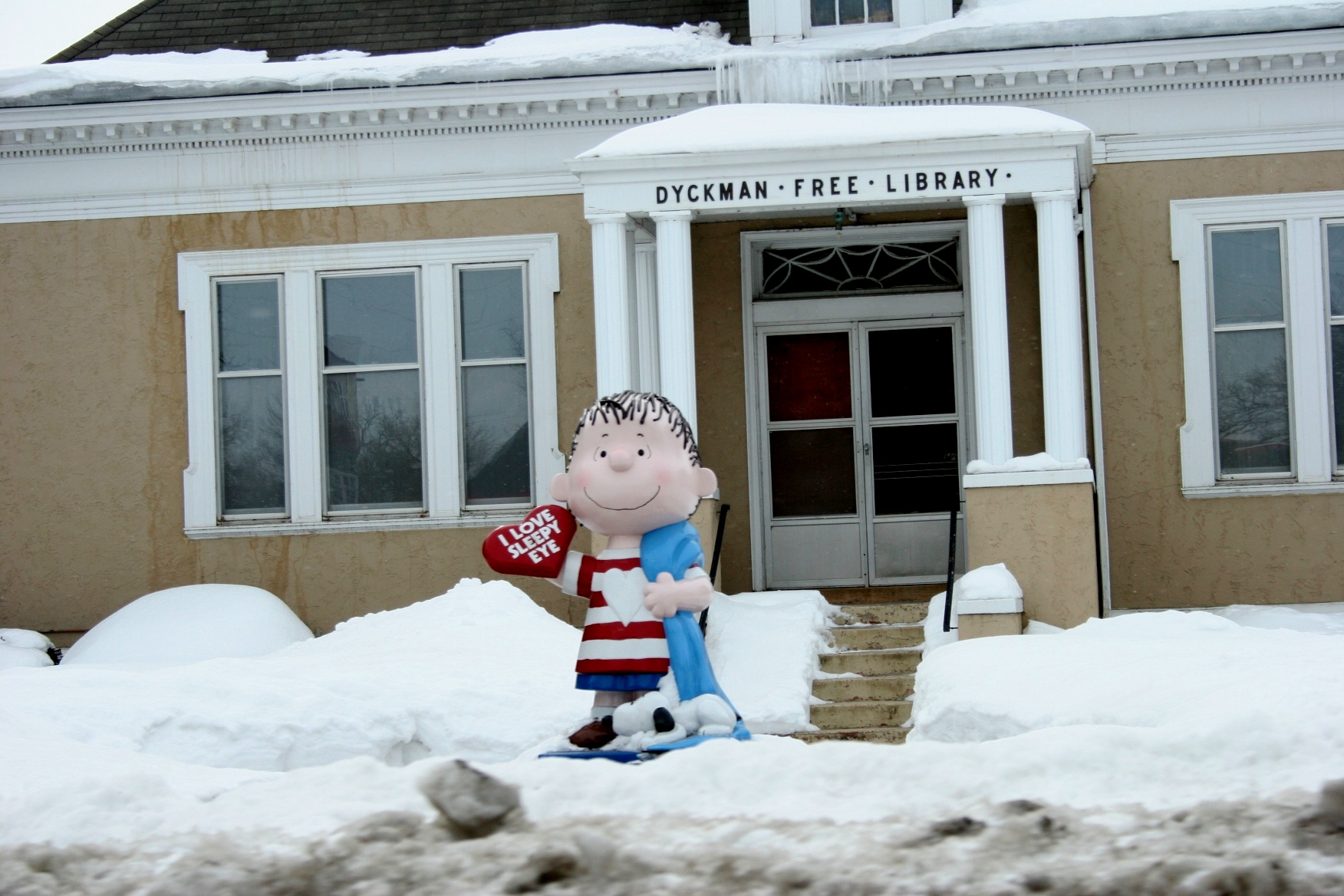
A statue of Linus greets visitors to the Dyckman Free Library in Sleepy Eye. Charles M. Schulz, creator of the Peanuts cartoons, based his character Linus on real-life friend Linus Maurer, a Sleepy Eye native. Maurer, a cartoonist, worked with Schulz. Ohman, who managed the former Camp Snoopy at the Mall of America, includes a photo of Linus at the Sleepy Eye library in his book.

Several summers ago I photographed this 1930s Works Progress Administration log cabin in Hackensack. Sitting on the shore of Birch Lake next to a towering statue of Lucette Diana Kensack (Paul Bunyan's sweetheart), the cabin today houses the Hackensack Lending Library.

IF YOU’RE INTERESTED in reading another book about libraries, check out Carnegie Libraries of Minnesota by Kevin Clemens. The book highlights the history and architecture of Minnesota’s Carnegie libraries, primarily in photos. Click here to learn more about the book.

© Copyright 2012 Audrey Kletscher Helbling


Inside the Owatonna orphanage museum: Heartbreaking stories and photos January 18, 2012

A telegram sent to an Owatonna orphanage in 1892 announcing the arrival of two sisters.

WESTERN UNION TELEGRAM, August 19, 1892:

Please meet Godman and two little waifs afternoon train.

It is an archaic word, that word “waif.” So I must page through my Webster’s New World Dictionary to confirm that I fully understand its meaning.

I read:

2 a person without home or friends; esp. a homeless child   3 a stray animal

The definition is mostly as I expect, except for the “stray animal” part.

It hurts my heart to read the telegram sent in 1892 to the Minnesota State Public School for Neglected and Dependent Children in Owatonna.

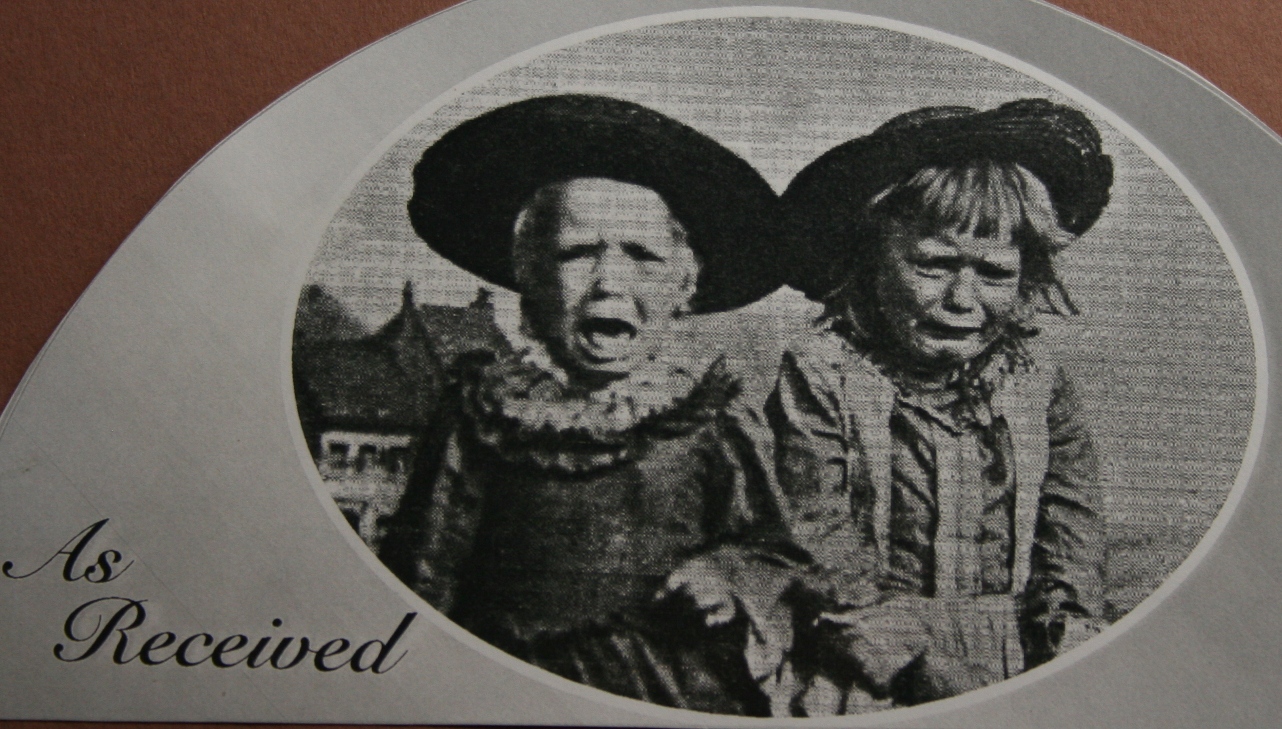
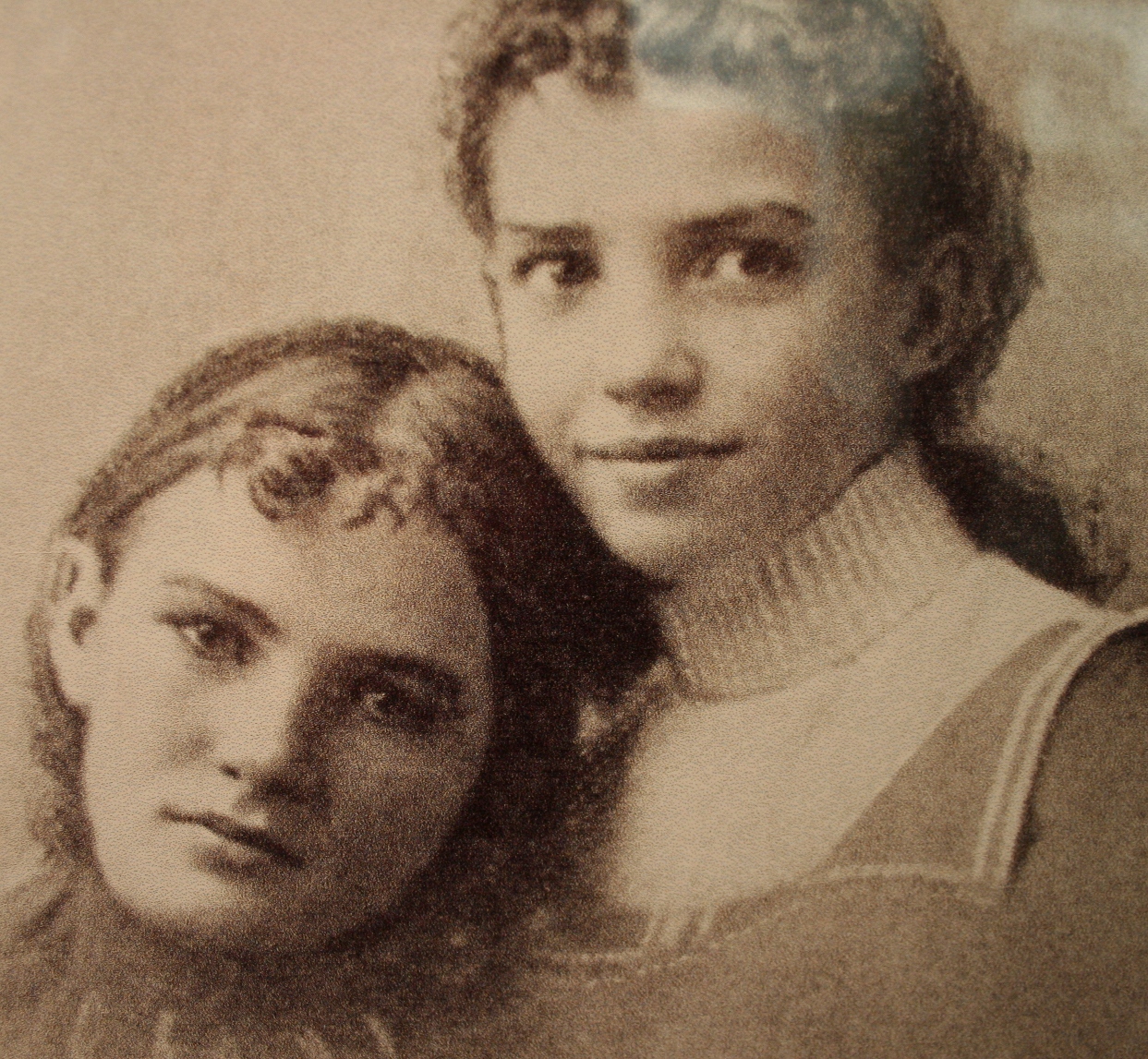
It hurts even more to view the photo of the “waifs,” sisters Mary and Clara, taken on the day they arrived. You can see the despair in their eyes, almost hear their wailing, feel their terror. If I could step back into time, to that day in August 1892, I would wrap those little girls in my arms and hold them and stroke their hair and give them all the love they never knew.

Sisters Mary and Clara, upon their arrival at the Minnesota State School.

Of all the documents and images displayed at the former school, now a museum, this one of the sisters sticks with me for the emotions it captures and evokes. I first saw the photo several years ago during an initial visit to the Minnesota State Public School Orphanage Museum. I have never forgotten it.

This past weekend I was back at the orphanage site to tour a new Owatonna Arts Center exhibit, “Where are the Children,” by Judy Saye-Willis. The Northfield artist taps into the location to pull together an introspective display about children with input from a variety of artists and a writer. I was especially impressed with the graphite drawings of children by Cambridge artist Marilyn M. Cuellar. (Note that Cuellar’s art pieces displayed in Owatonna are copies and not originals.)

The former state school dining area is now a beautiful public venue.

After perusing that exhibit, I walked toward the museum part of the building, through the former school dining room that today serves as a venue for wedding receptions, concerts and more. I hadn’t intended to go to the museum, but my husband had already wandered over there.

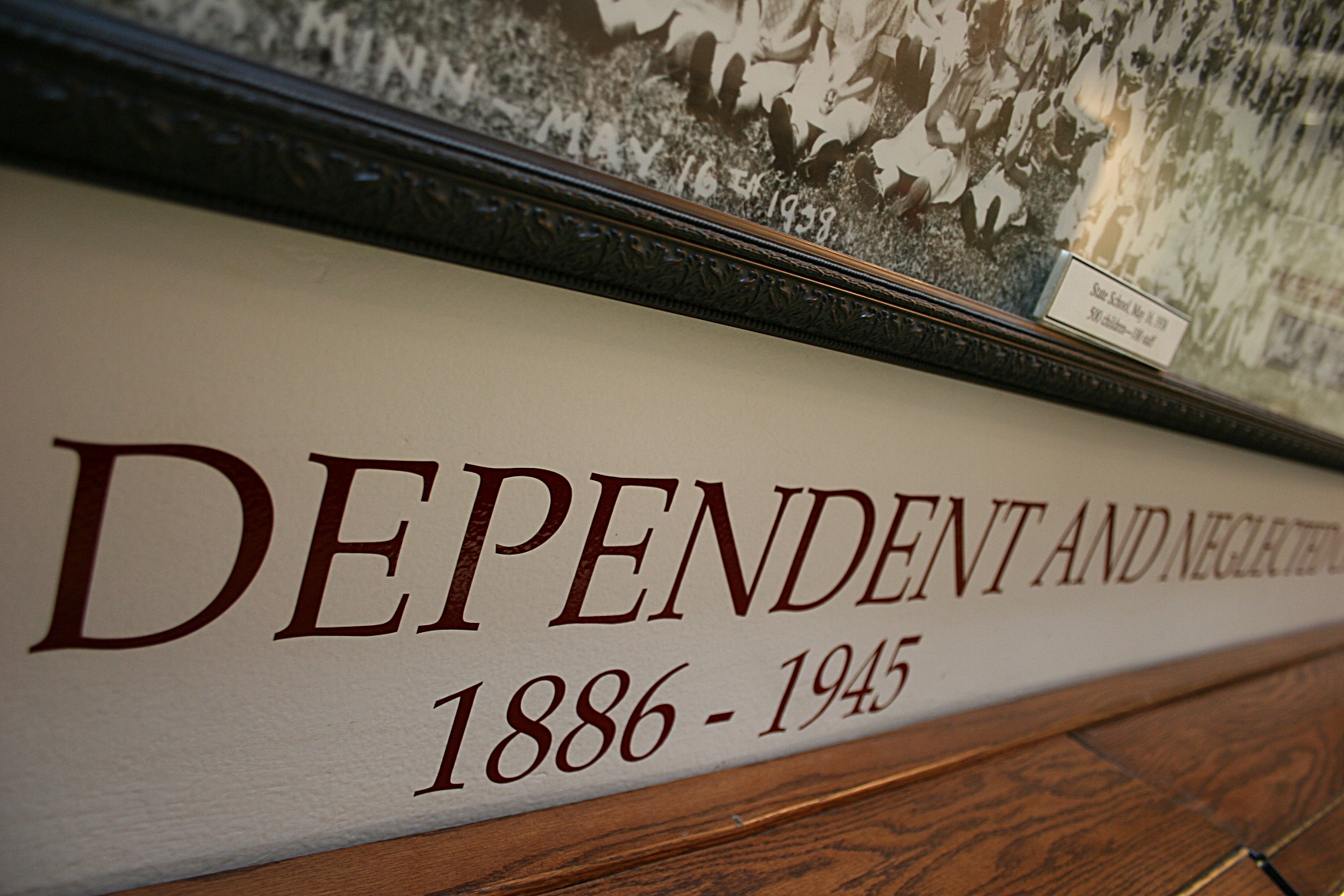
Signage under a state school photo in a section of the museum.

This visit I didn’t study each document and photo in depth. Rather, I swept through the U-shaped exhibit area, focusing on specific segments to photograph like the 1892 telegram and photos of the two sisters, including this one taken at a later date.

Mary and Clara, hardly recognizable as the same sisters who arrived in 1892.

I paused, though, to listen to a visitor talk to me privately about her father and an aunt who lived here. She spoke without a hint of bitterness, which surprised me given the negative experiences of many children who called this school home. Her father eventually was placed with a southern Minnesota farm family. In many instances, these families physically and emotionally abused the state schoolers. Her father, she said, was hit once, but never again.

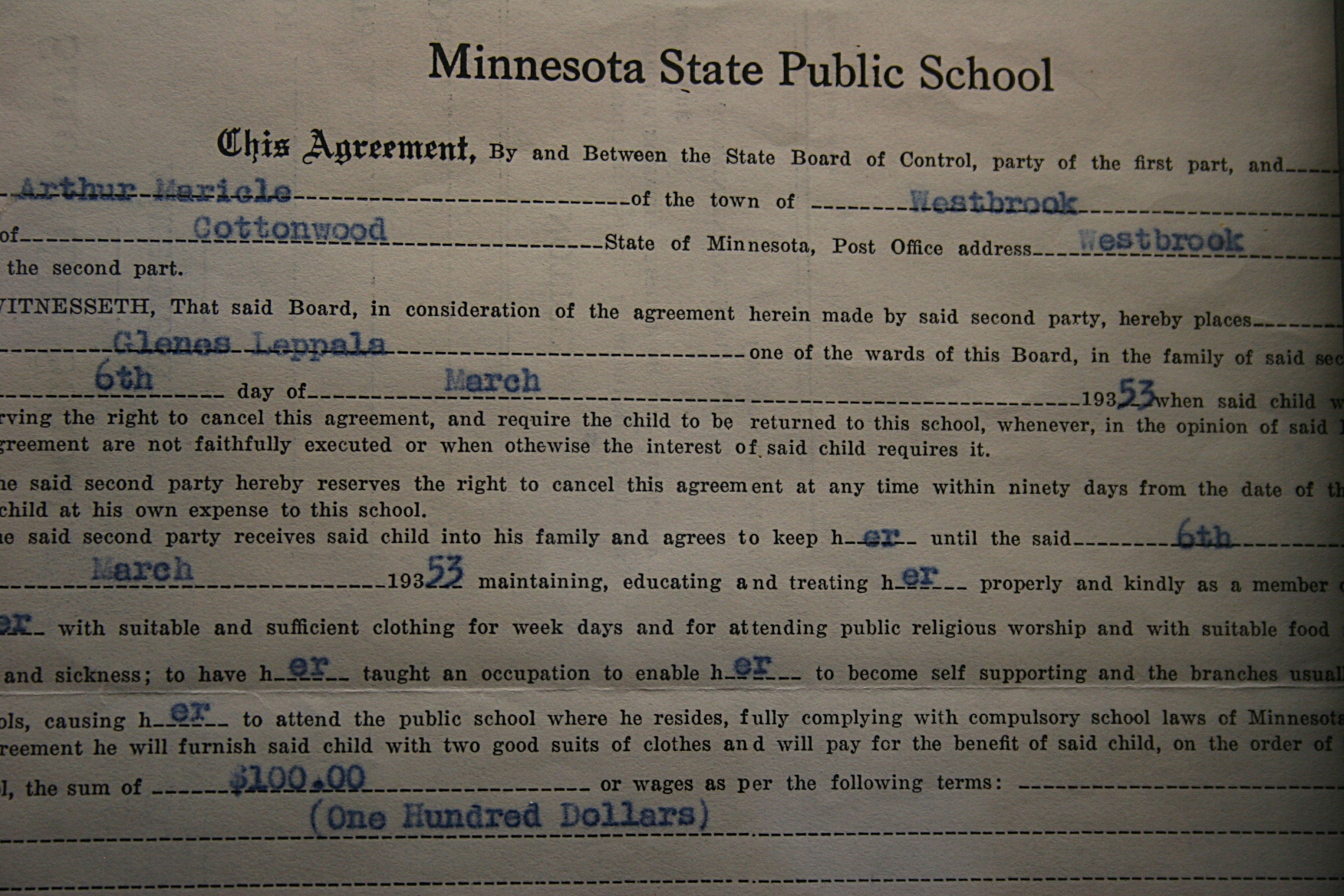
Contracts were signed between the school and families, typically farm families, allowing state schoolers to live with and work for these families. The families were to provide $100 in wages and two suits of clothing.

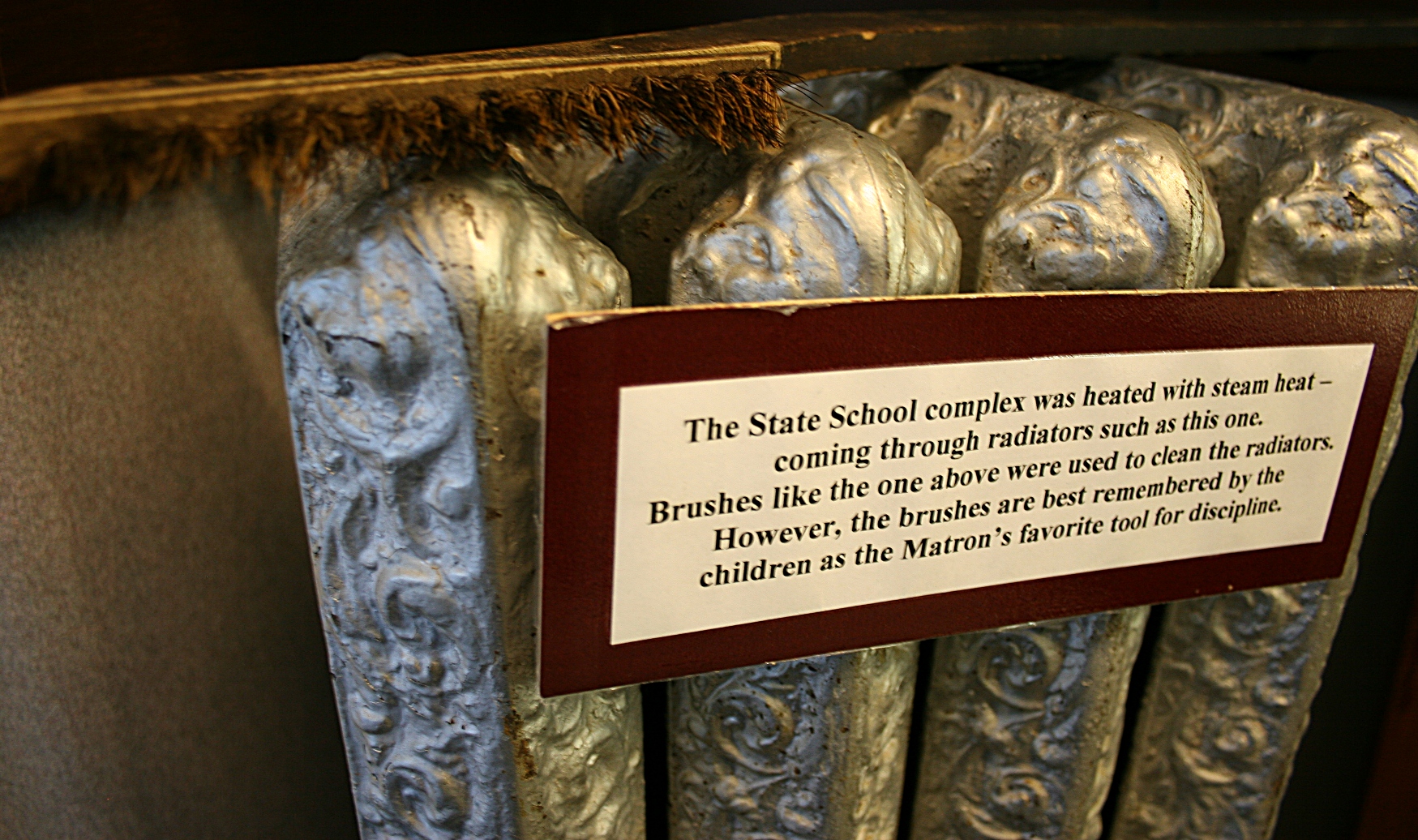
Later, I would photograph a radiator brush, “a Matron’s favorite tool for punishment,” according to the Fall 2010 issue of the museum newsletter, The Radiator Brush.

A dreaded radiator brush rests atop a radiator in the museum.

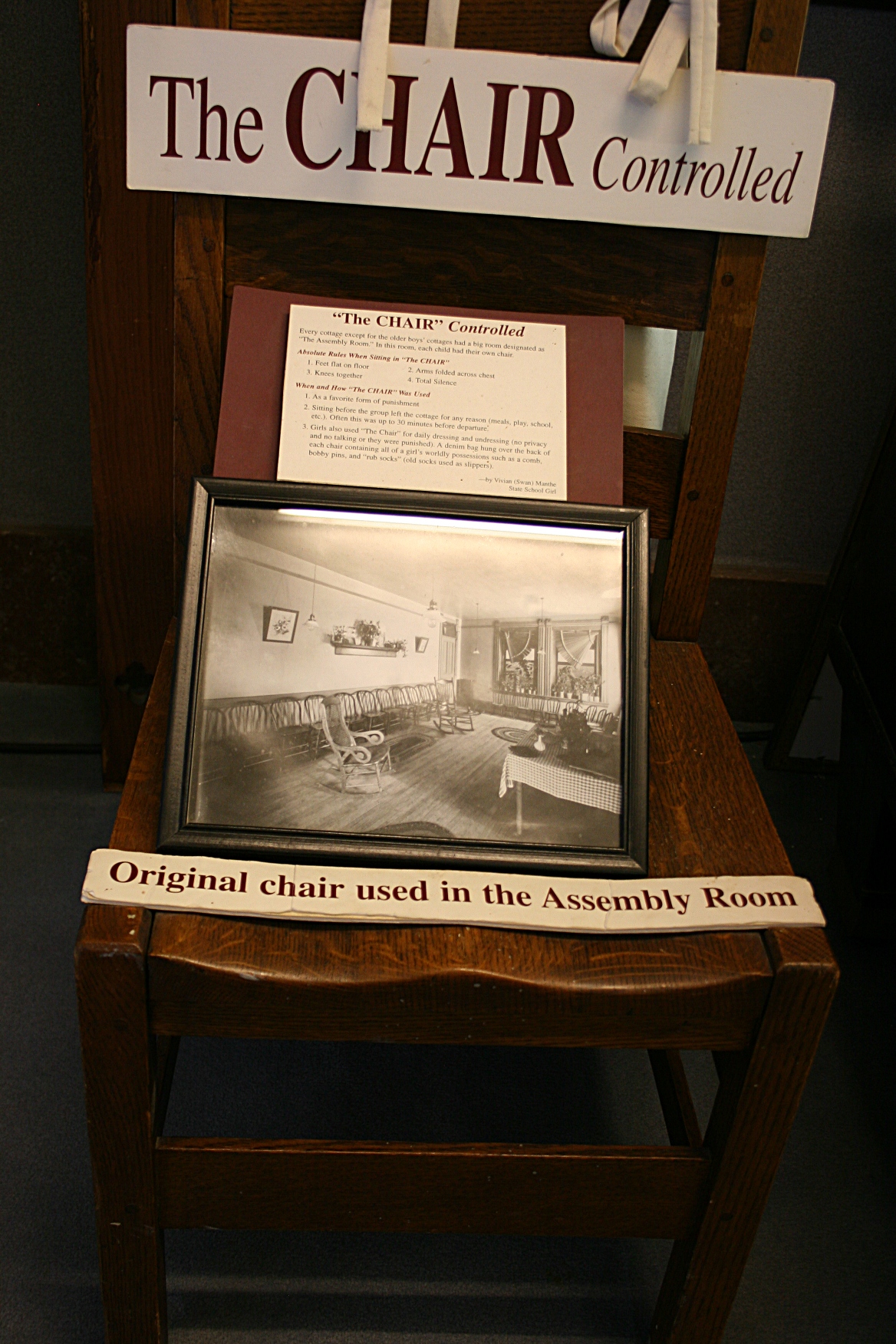
Next, I photographed “the chair,” also used to punish children.

Chairs like this one on display in the museum were used to control and punish children and keep them in their place.

I cannot imagine living here in this institution, separated from family.

Yet the school, despite its failings, offered for many children a better alternative than remaining in abusive and neglectful home settings too tragic to even fathom.

And so that is how sisters Mary and Clara, two little waifs who had been “the victims of extreme cruelty and neglect,” ended up on a train bound for the Minnesota Public School for Neglected and Dependent Children.

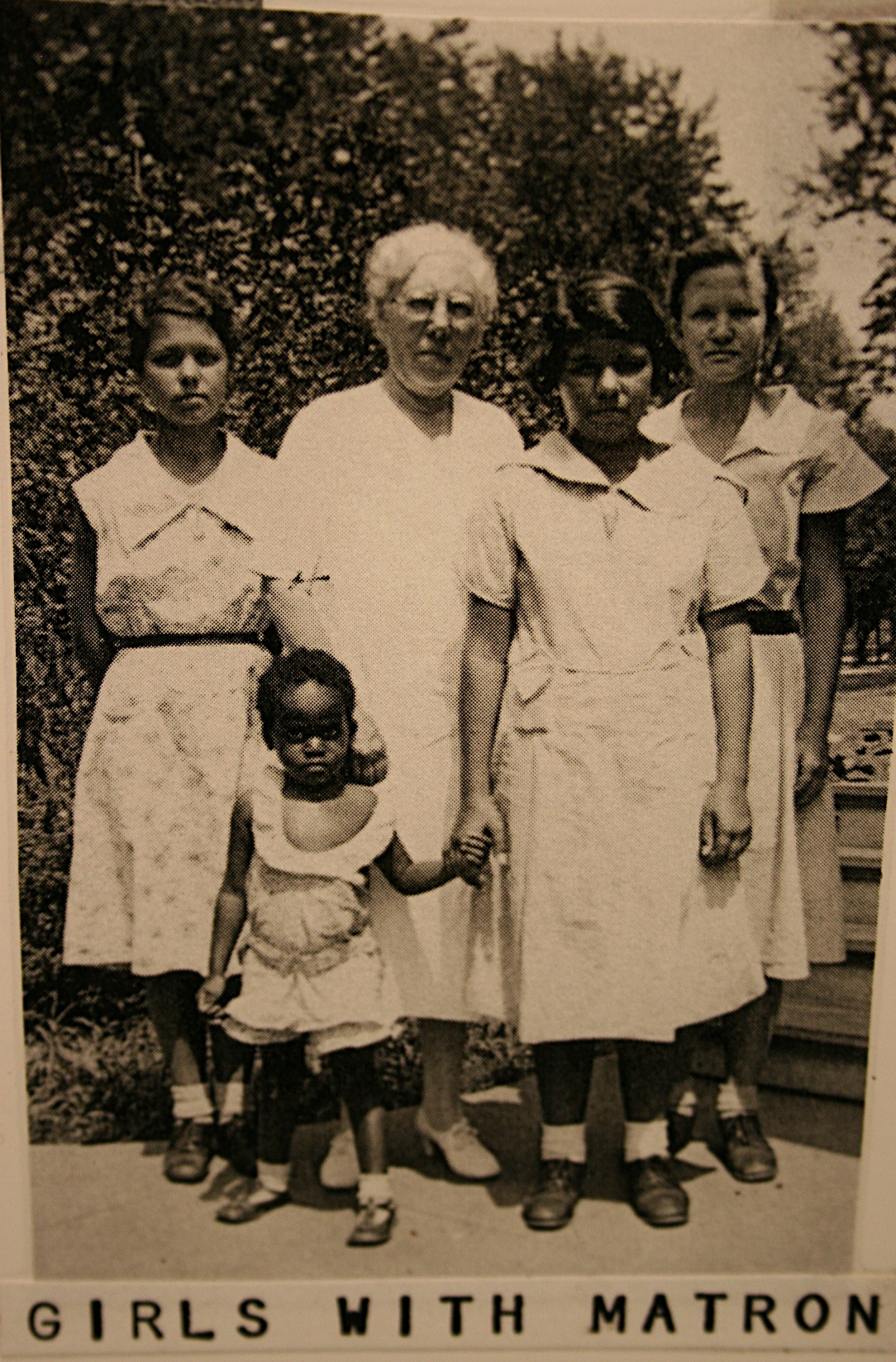
One of the photos on display in the museum of a matron and her girls.

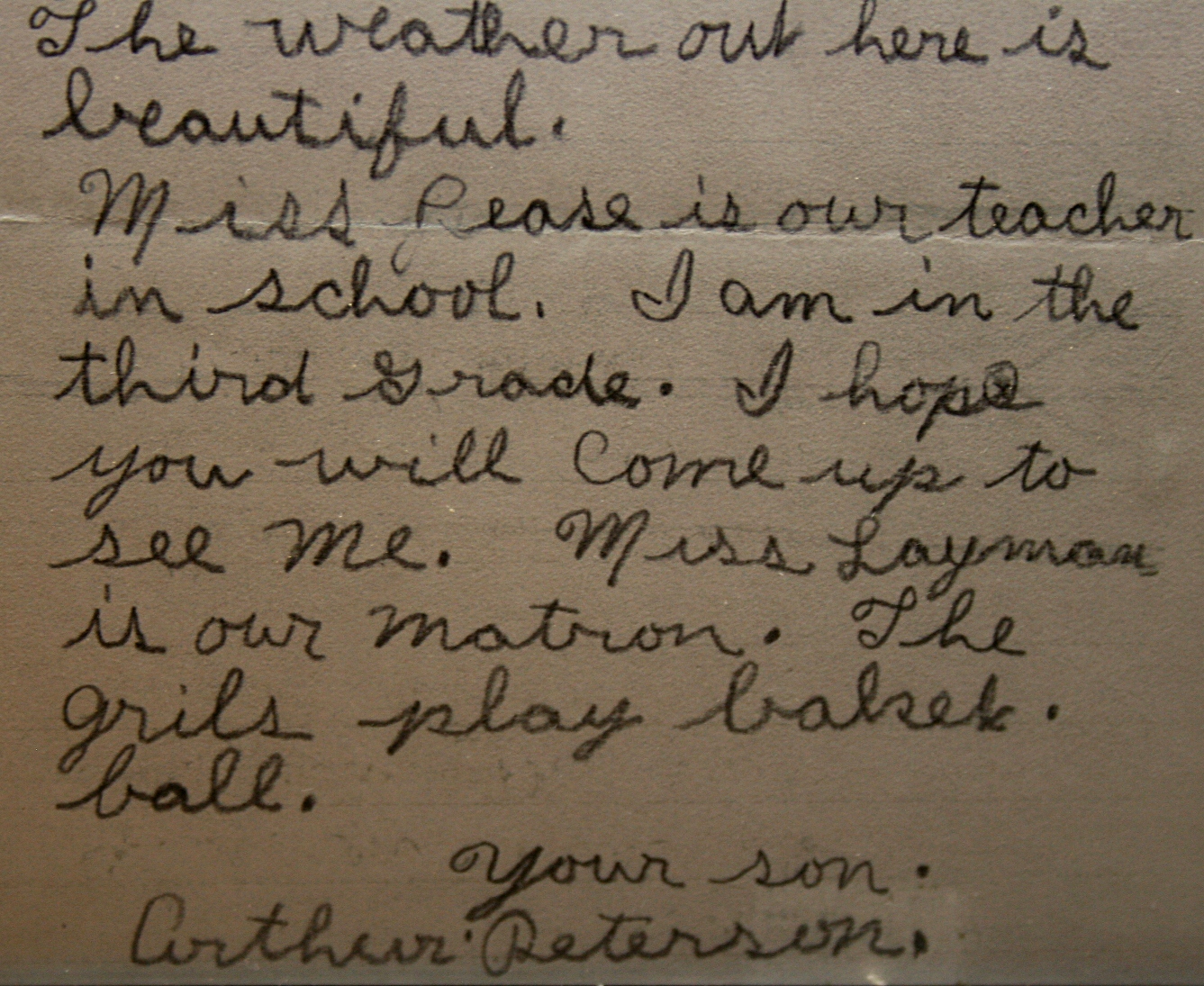
A snippet of a letter from third grader Arthur Peterson to his mother. You can almost hear the desperation in his words: "I hope you will come up to see me."

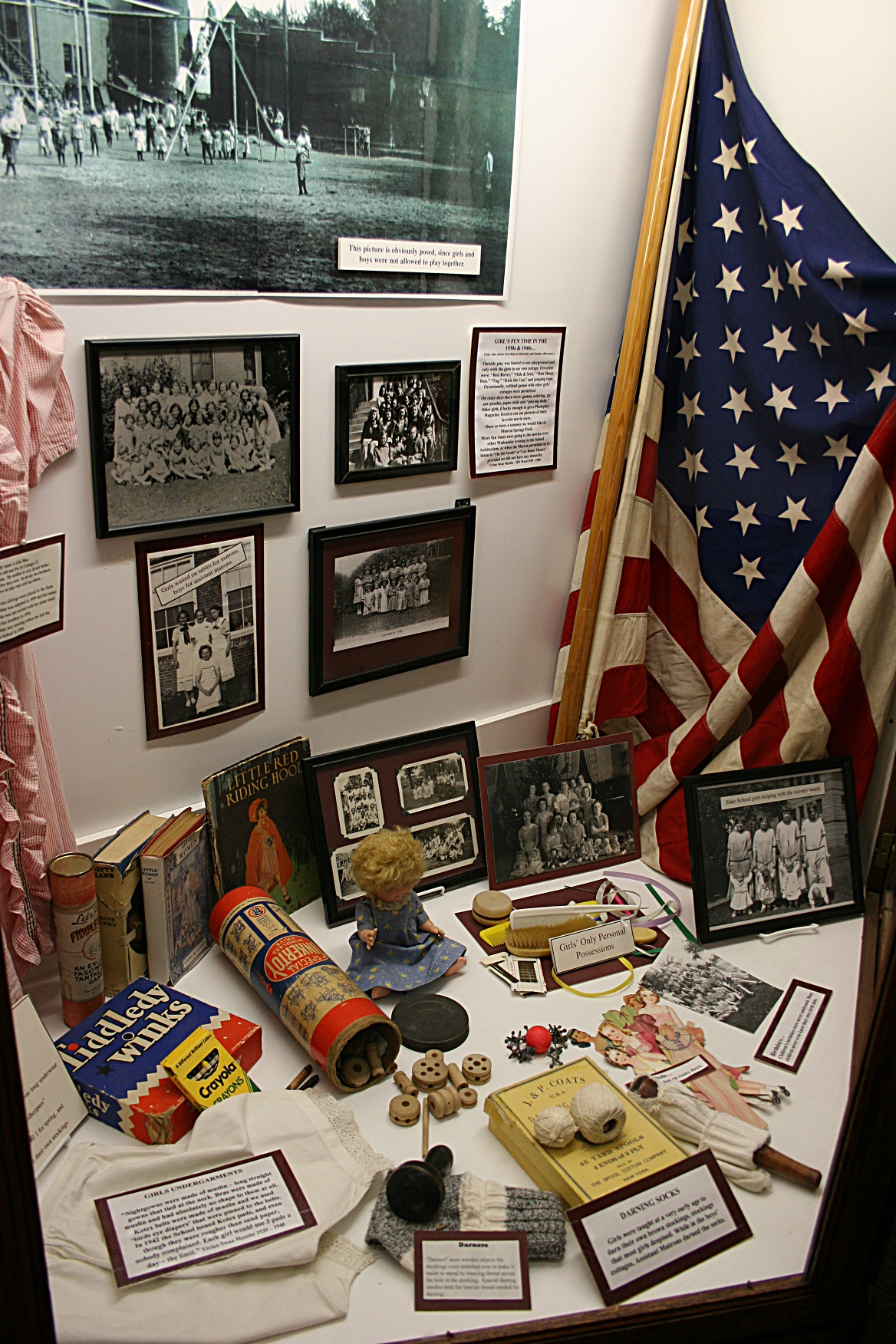
Museum exhibits, mostly in words and photos, but also artifacts, tell visitors about life at the state school.

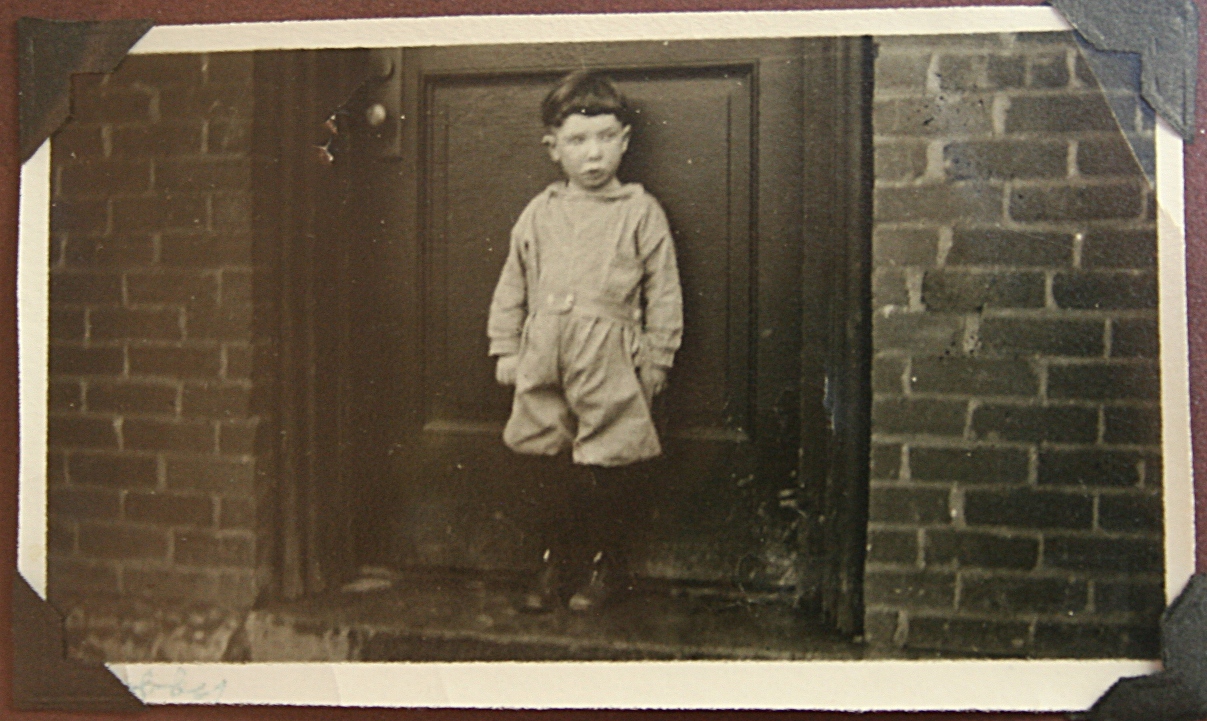
This photo of a little state school boy caught my eye. The museum's collection includes more than 1,100 original photos and an additional 150 reproductions. You can't help but be moved by such soulful images.

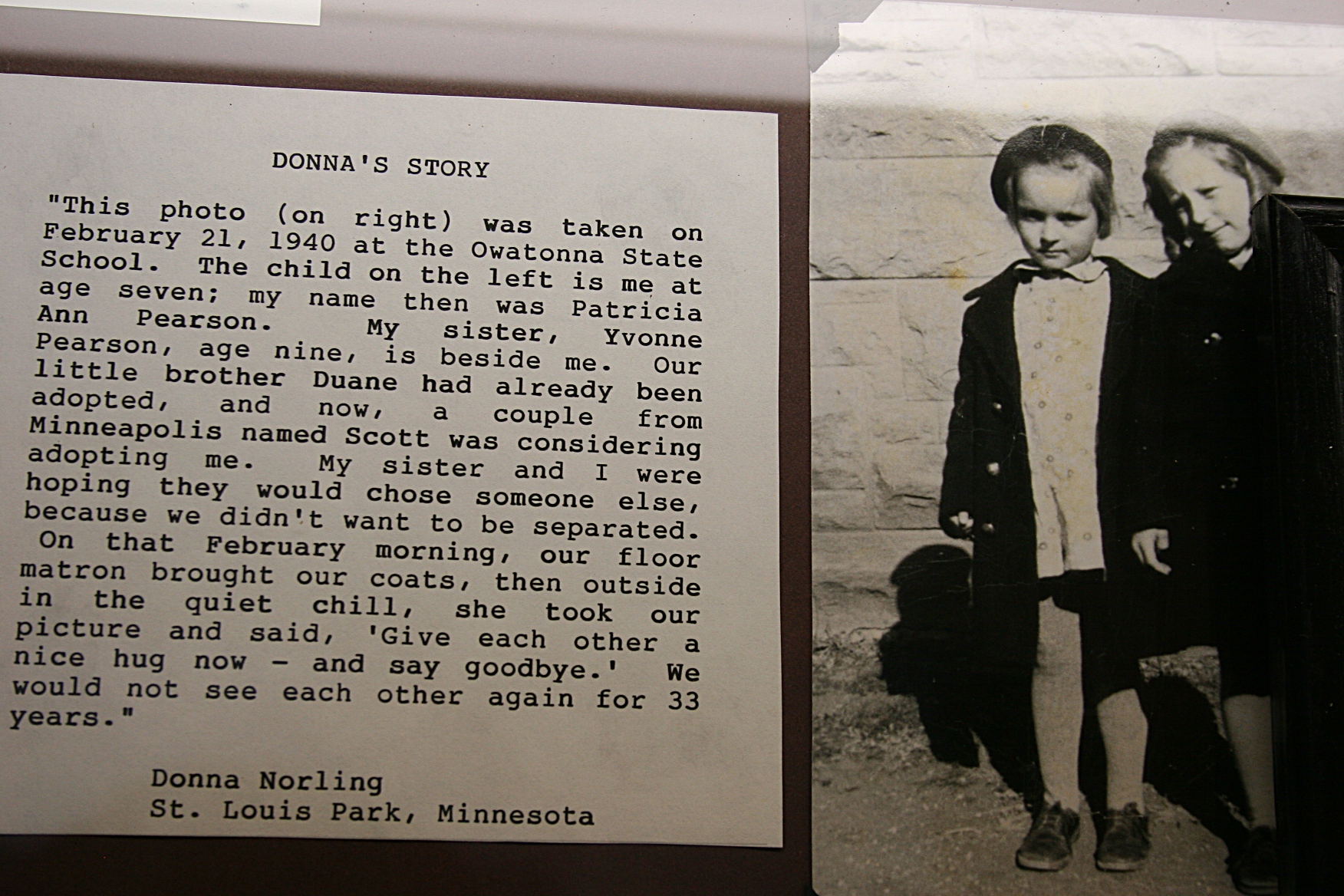
Patricia Ann Pearson, 7, left, and her sister, Yvonne, 9, on the day they were separated. They would not see each other for 33 years. Theirs is only one of thousands of heart-wrenching stories of separation.

FYI: From 1886-1945, nearly 11,000 orphaned, abused and/or abandoned children were sent to the Minnesota State Public School for Neglected and Dependent Children. Today visitors can tour the former school grounds, including a cottage and the cemetery. Click here to learn more about the museum. In 2011, an estimated 7,000 visitors toured the museum and Cottage 11.

Click here and then click here to read two previous blog posts I published about C-11.

© Copyright 2012 Audrey Kletscher Helbling


No cameras allowed on these historic premises January 4, 2012

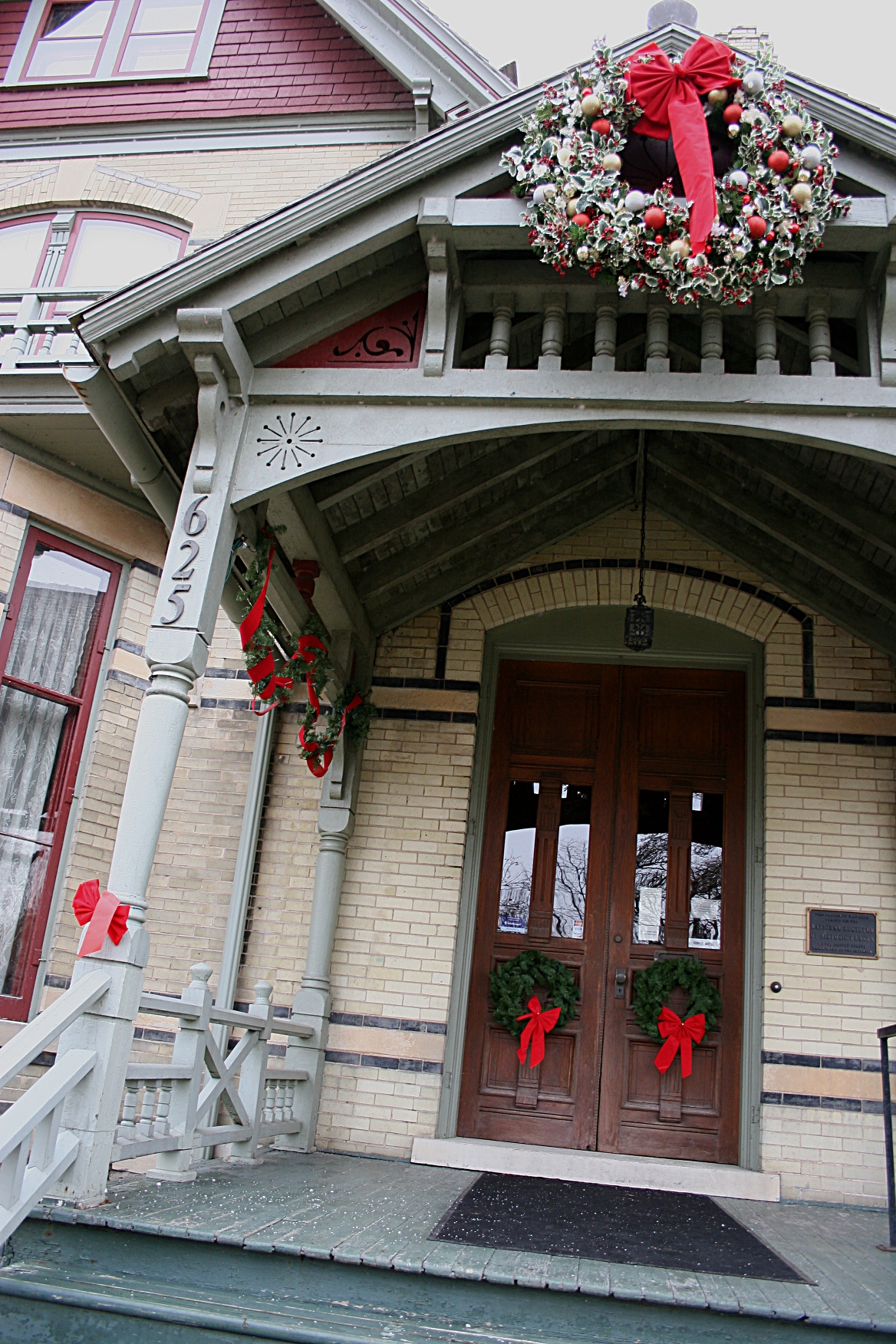
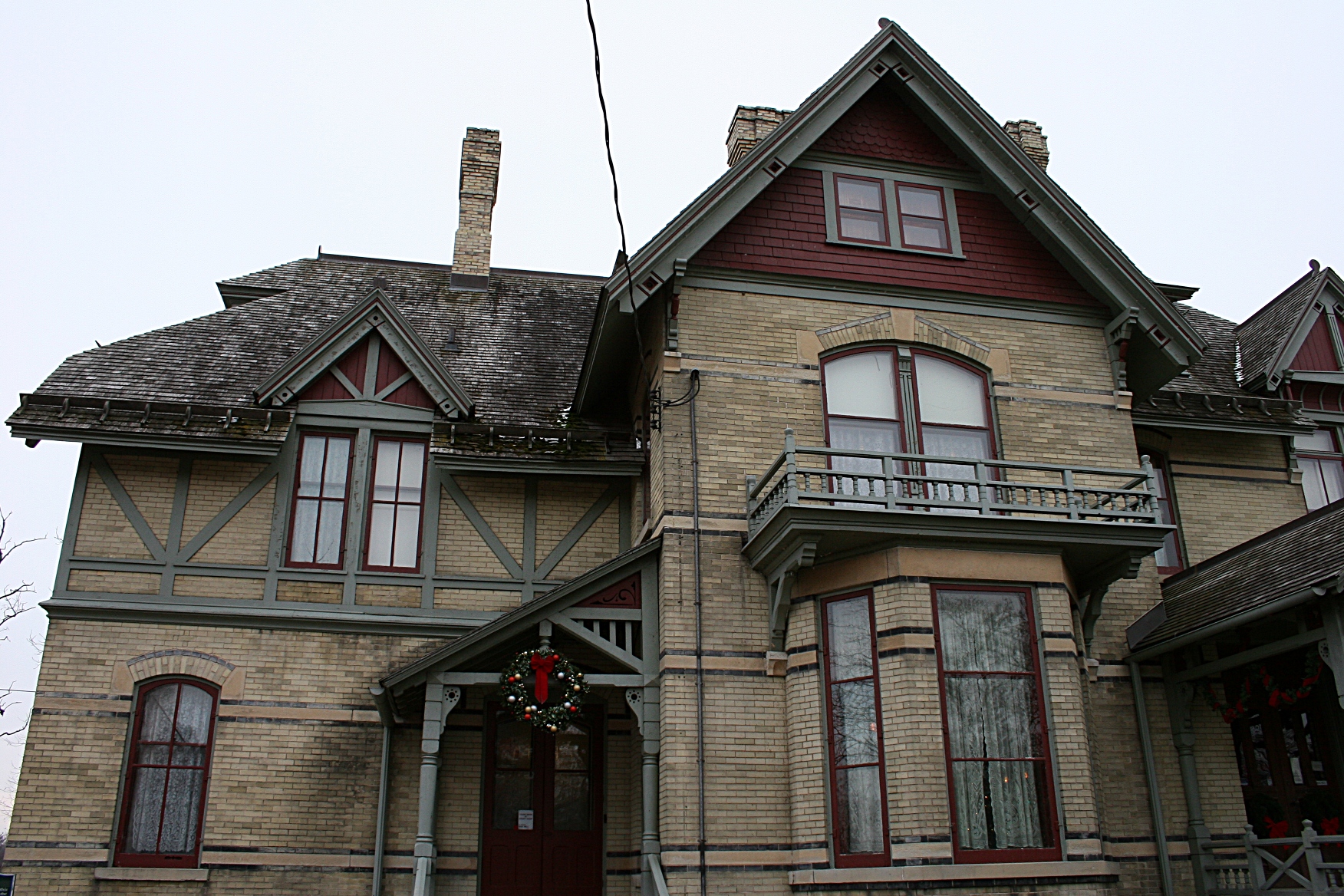
The main entry to the Hearthstone Historic House Museum in Appleton, Wisconsin, located at 625 W. Prospect.

NO PHOTOGRAPHY ALLOWED.

Post a sign with that message or speak those words to me and you’ll find yourself with one unhappy woman. I can’t help it. My camera is a natural extension of me, so when I can’t photograph I’m unsettled and discontented.

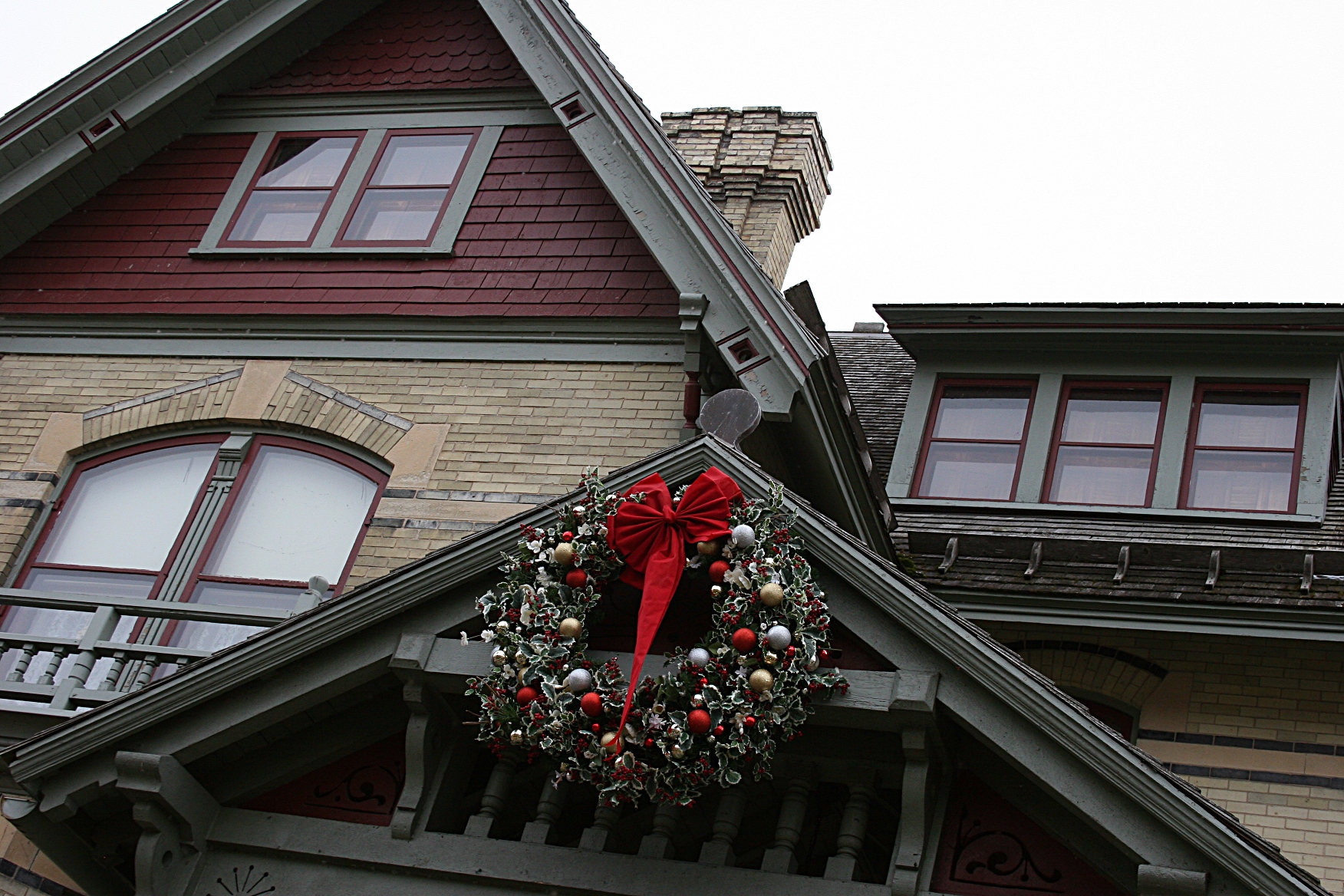
I never expected to encounter a photo ban at an 1882 historic home I toured in Appleton, Wisconsin on Saturday afternoon. But I hadn’t even reached the wreath-adorned double front doors of the Hearthstone Historic House Museum when my daughter pointed to the sign banning photography.

I automatically hugged my Canon EOS 20-D DSLR closer to my right side as we waited for a tour guide to unlock the front door and allow us access into this Victorian home, the first residence—in the world—electrified from a centrally located hydroelectric plant.

If you think I would simply accept the “no photos” rule without question, then you don’t know me. I asked and was told photography would be disruptive to the tour. “Even without flash?” I pursued.

Yes.

I contemplated for some time how I could sneak in a photo or two. But with tight quarters and visitors packed into the home’s rooms, taking covert photos wasn’t even a remote possibility. Besides, the click of the shutter button would surely give me away and I was not about to become the first tourist kicked out of this lovely mansion.

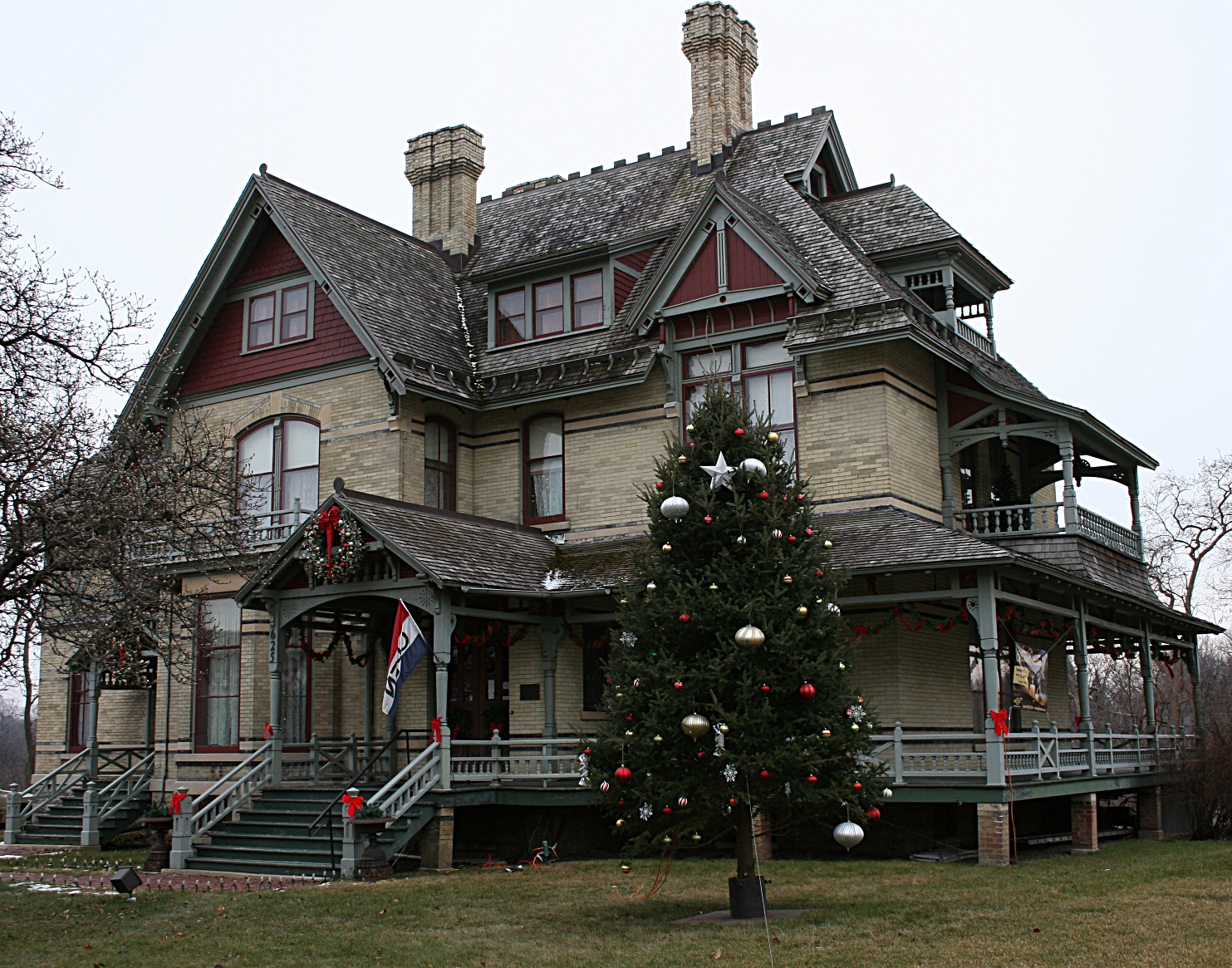
So you will need to settle for exterior images of this house built for Henry J. Rogers, today’s equivalent of the CEO of the Appleton Paper and Pulp Company. He lived here with his wife, Cremora, and their daughter, Kitty, for some 10 years until the nearby paper mill was destroyed by fire.

The original home of Henry J. Rogers and family sits along the Fox River.

From the exterior, this hilltop riverside home, built for $17,000, isn’t nearly as impressive as I’d expected. But inside, ah, inside, the décor is about as opulent and detailed as any historic residence I’ve ever toured.

Nine fireplaces grace rooms defined by wood—inlaid floors, detailed carvings, wood trim and ceilings and, well, wood everywhere. But I suppose when you live in Wisconsin and head up a paper company, finding wood to construct your mansion isn’t a problem.

An Edison phonograph, a stained glass window in the grand hall entry, floor-to-ceiling windows and a hand-painted ceiling in the parlor, the focal point fireplaces, and a dining room table set for Christmas dinner all impressed me.

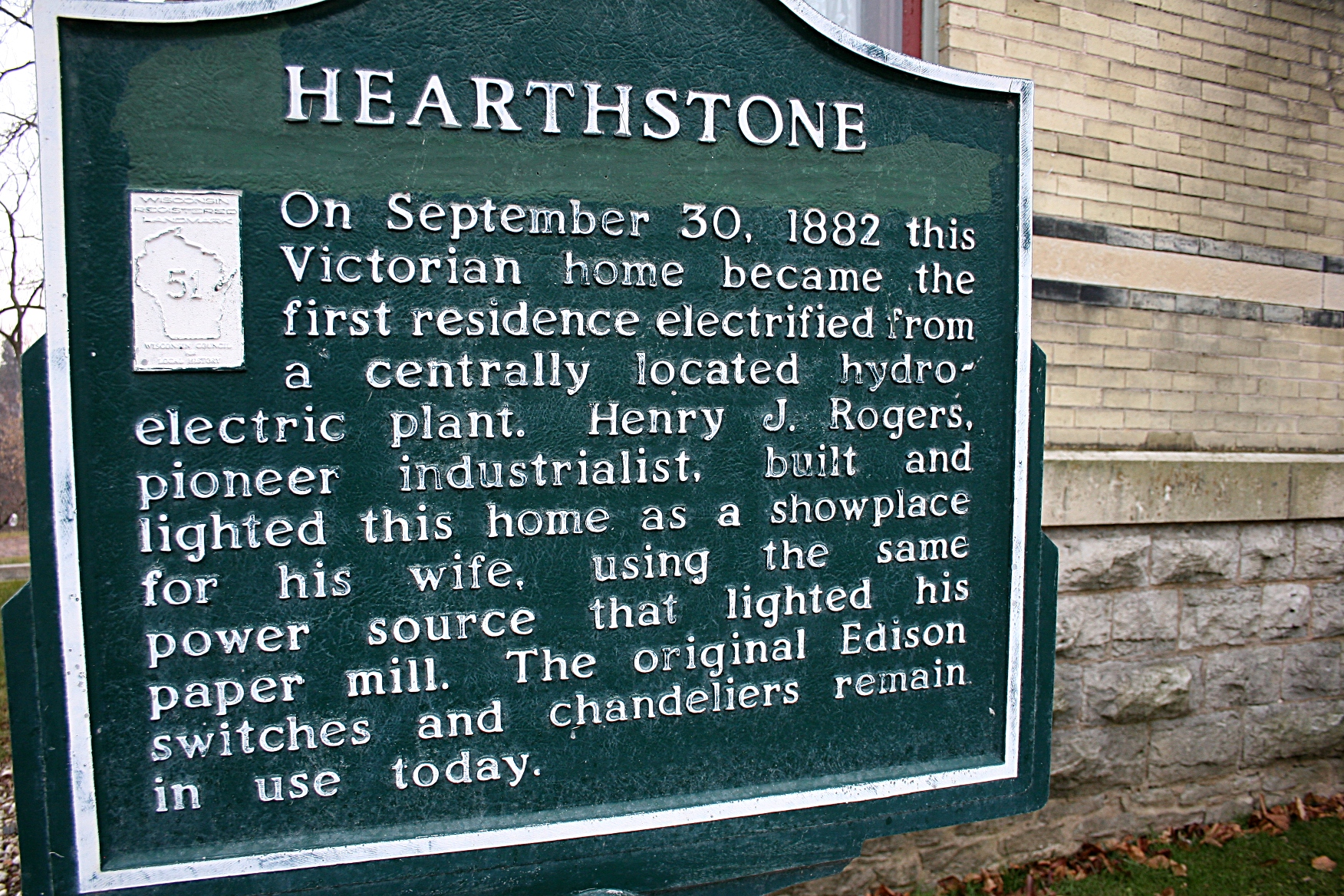
A sign explains the house's historical significance. The house is on the National Register of Historic Places.

In retrospect, I suppose I should have been most impressed by the rare 1882 light switches and electroliers still in operation. After all, the lighting ranks as the reason this home holds such historic value. But, honestly, I’m not all that scientific minded. The décor and personal stories shared by our tour guide interested me far more than the hydro-electric powered lighting system.

Our guide informed us that the Rogers family was charged $1 a month per light bulb for the 50 light bulbs in the house. In the 1880s, $50 was a sizeable chunk of money to pay for monthly electrical usage. That reveals the substantial wealth of this family.

Rogers, however, eventually died with only $12 to his name after moving to Chicago and losing money in a silver market that crashed, a second tour guide later told me.

The story, though, that truly snatched my interest involves Kitty. When she became engaged, the Rogers’ daughter verified the authenticity of her diamond by etching her and her fiancé’s initials into a library window (still there). Not to be judgmental here, but I was not at all surprised when the tour guide revealed that the marriage did not last.

Later, while touring the second floor, we were informed that Henry and Cremora slept in separate bedrooms because the couple thought they would catch tuberculosis from one another by breathing in the same night air. OK, then. But, I suppose I must consider the time period and the lack of knowledge regarding diseases.

Finally, the tidbit I found most personally appropriate involved visitors to the Rogers’ mansion. They would leave their calling cards, the equivalent of today’s business cards, on a table in the great hall. Visitors would bend the corners of their cards in a certain way, depending on the reason for their visits. The family would then decide whether they wanted to see the guest.

At that point in the tour, I considered scribbling “Here to take photos” on my business card and dropping it onto the foyer table.

The Rogers' home, which was home to nine other families and which once housed a restaurant called The Hearthstone in the 1930s, is not yet fully-restored to the 1880-1895 time period.

Inside and outside, Hearthstone is decorated with Christmas trees and other holiday decor for a "Victorian Christmas" special event which continues through January 14.

NOTE: Lest you consider me disrespectful of rules, I am not. I understand, somewhat, the “no photography” rule at the Hearthstone house. And I most certainly understand why flash photography would not be permitted in an historic place.

One other point I want to mention: During my tour of the Hearthstone mansion, a visitor’s cell phone rang and she proceeded to answer it, right in the middle of the tour. Now that I found disruptive.

© Copyright 2012 Audrey Kletscher Helbling


Downtown Faribault in December in black & white December 22, 2011

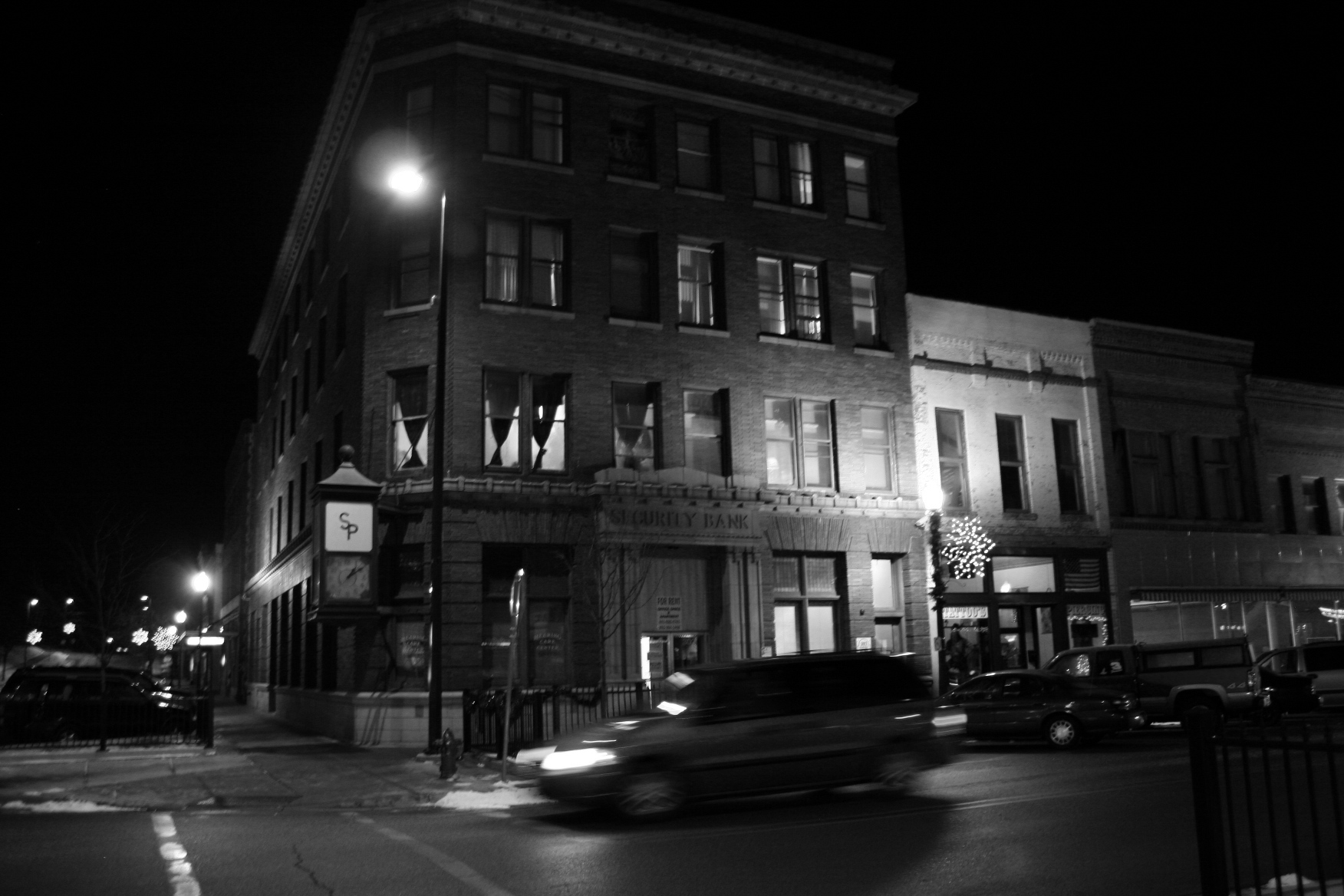
The former Security Bank building anchors a corner of Central Avenue in downtown Faribault.

PHOTOS DEVOID of distracting color possess a certain surreal, dreamy quality and a vintage feel that have always appealed to me.

Some of the best images I’ve seen hearken from years ago which just goes to prove that technology doesn’t always equate better results.

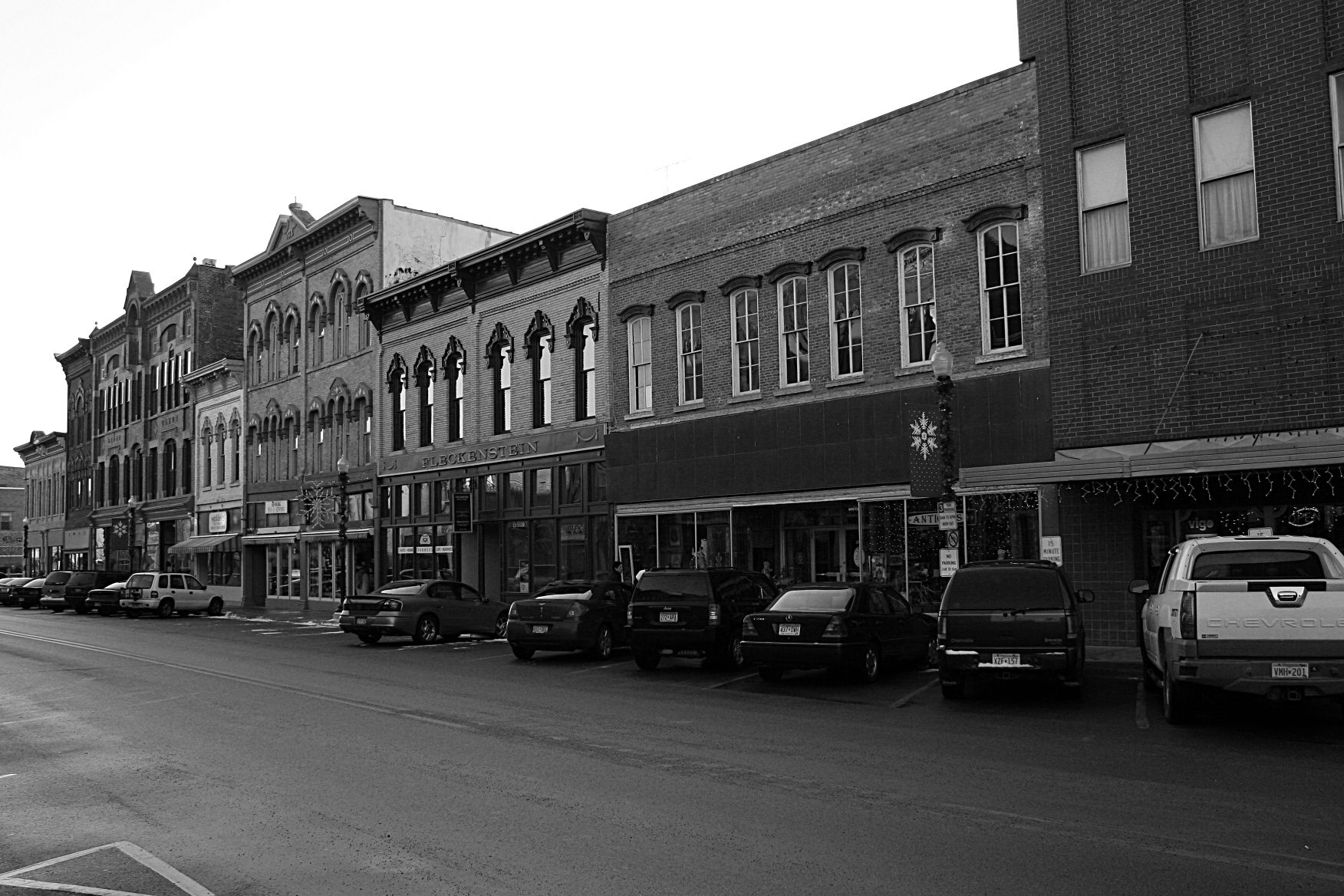
While filing through photos I shot in historic downtown Faribault on Saturday afternoon and evening, I decided to play with my photo editing tools and desaturate several images. I liked the results so much that I stripped every frame of color.

The results, I think, impress even more upon the viewer the history of this early Minnesota community that stretches back to its founding by fur trader Alexander Faribault in 1852.

We’re a city rich in history with 40 properties on the National Register of Historic Places.

With that perspective, please join me on a quick photo tour of the downtown area. Certainly much more comprises our downtown than what you see in the seven images here.

I invite you to explore on your own, to immerse yourself in the history that defines Faribault.

Historic buildings along Central Avenue.

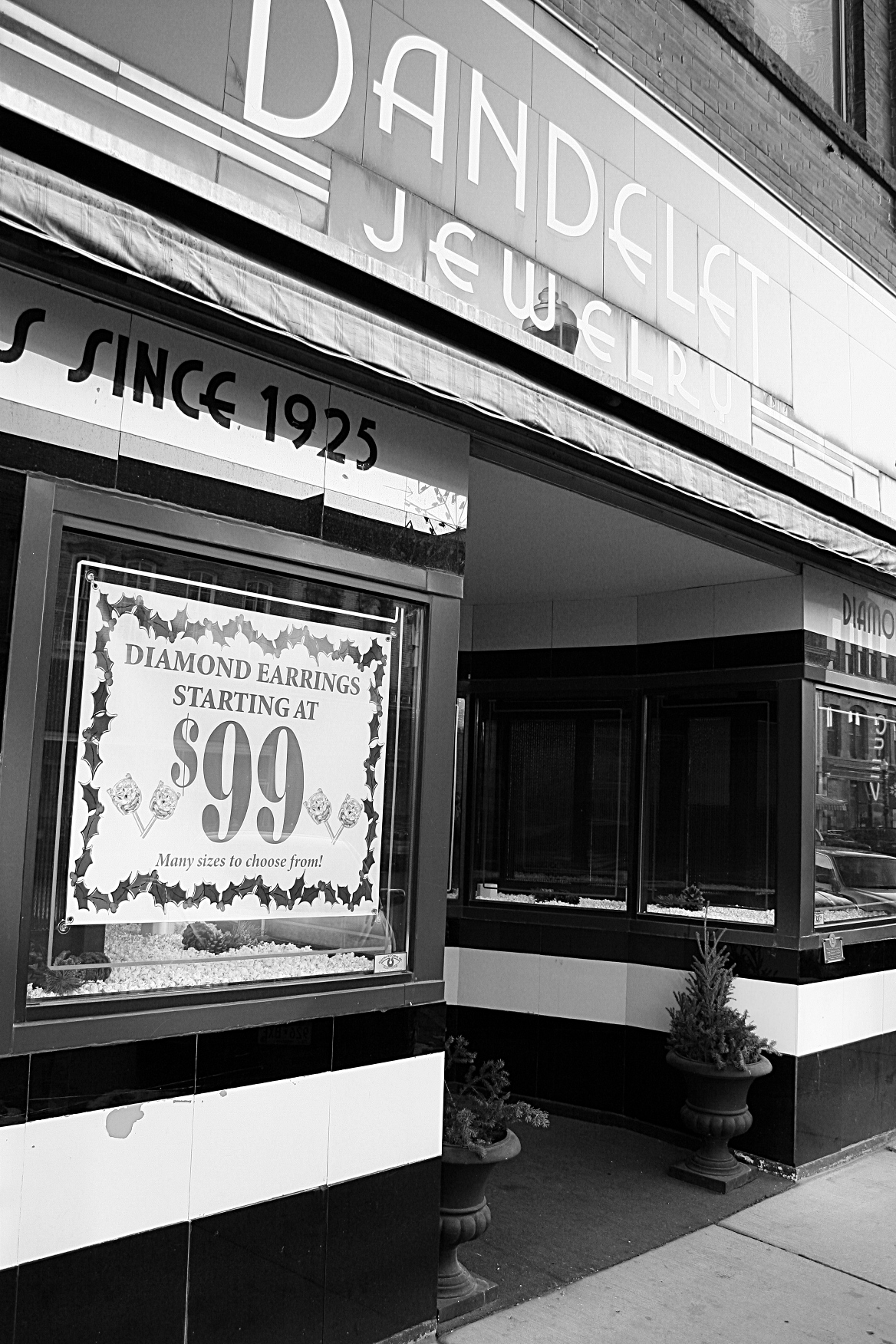
Dandelet Jewelry occupies the former 1882 Dandelet Dry Goods building, which was renovated in 1985.

A scene from the movie, "Grumpy Old Men," was shot in the former drug store to the right in this image. Today the building houses a pawn shop.

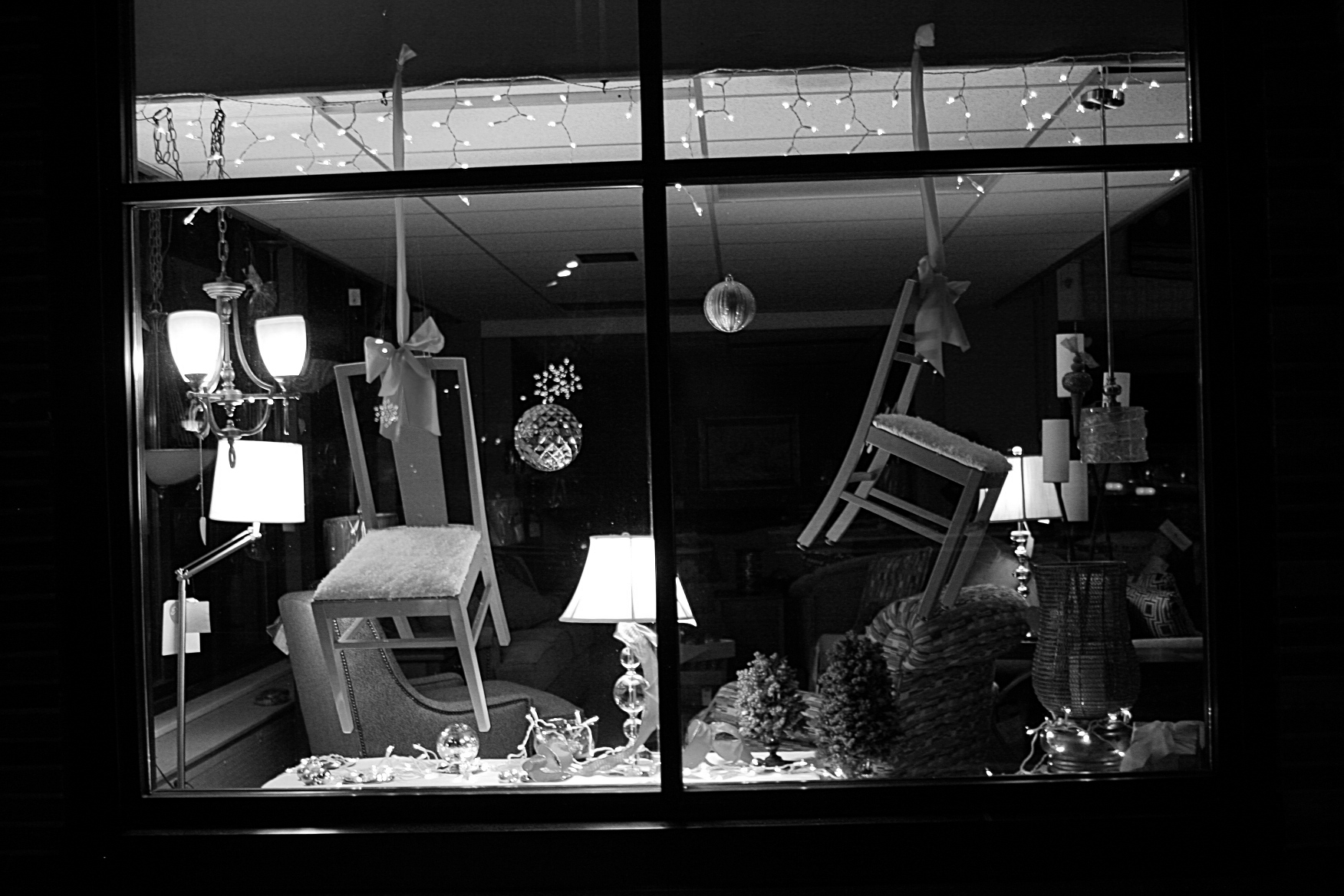
A holiday display window at Erickson Furniture, in business since 1956 and located along Fifth Street Northwest just a block off Central Avenue. Erickson Furniture won first place in the Main Street window decorating contest with its suspended green chairs, holiday ornaments and lights.

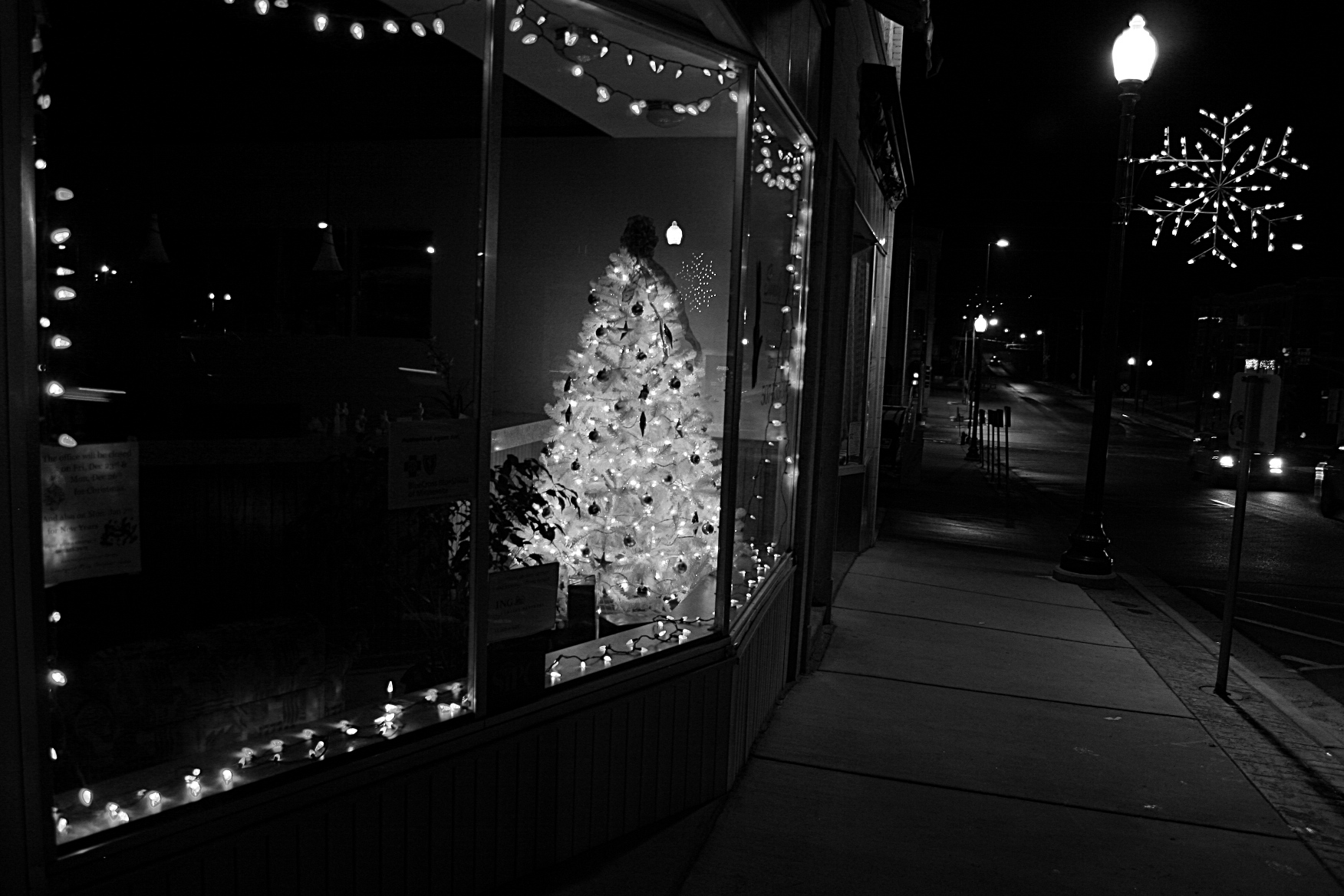
Holiday decorations in a business window along Third Street Northwest just off Central.

A sign in the window of Burkhartzmeyer Shoes, a third-generation family-owned shoe store founded in 1949.

CLICK HERE to read a previous post about Faribault’s historic downtown.

Copyright 2011 Audrey Kletscher Helbling


Part II: Life as an orphan in Owatonna December 20, 2011

The main building at the orphanage, built in 1886, housed offices, a reception room, chapel/auditorium, boys' cottage, living quarters for employees, a sewing room, attic and linen storage. This main portion today serves as the Owatonna city administration building.

THE TOWERING BRICK building with the enchanting turret represents no fairy tale. Not at all.

Within the confines of this place and the outlying cottages, some 12,000 – 15,000 children spent their formative childhood and teenage years institutionalized in the Minnesota State Public School for Dependent and Neglected Children. They were the orphaned, the abused, the abandoned, the unwanted.

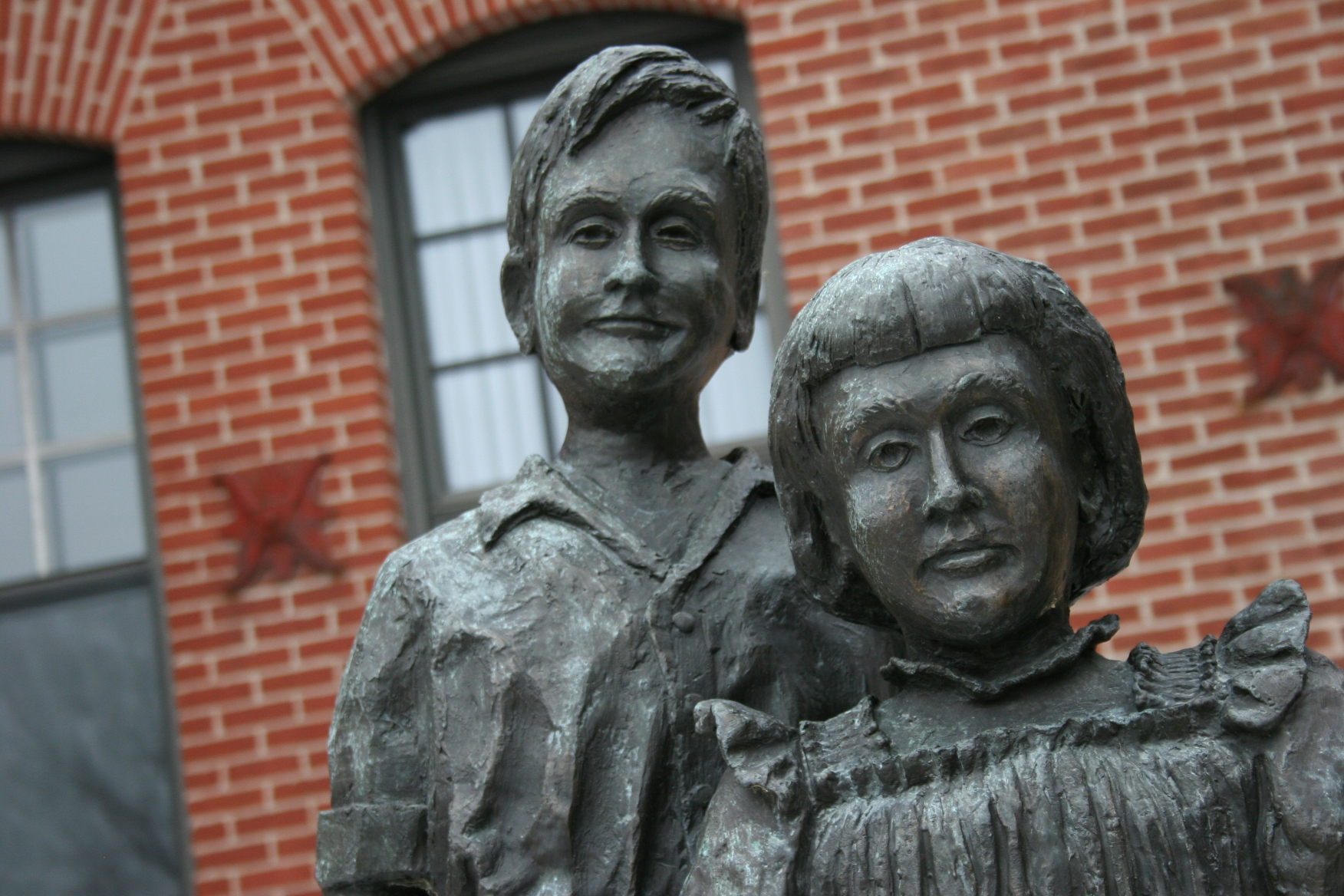
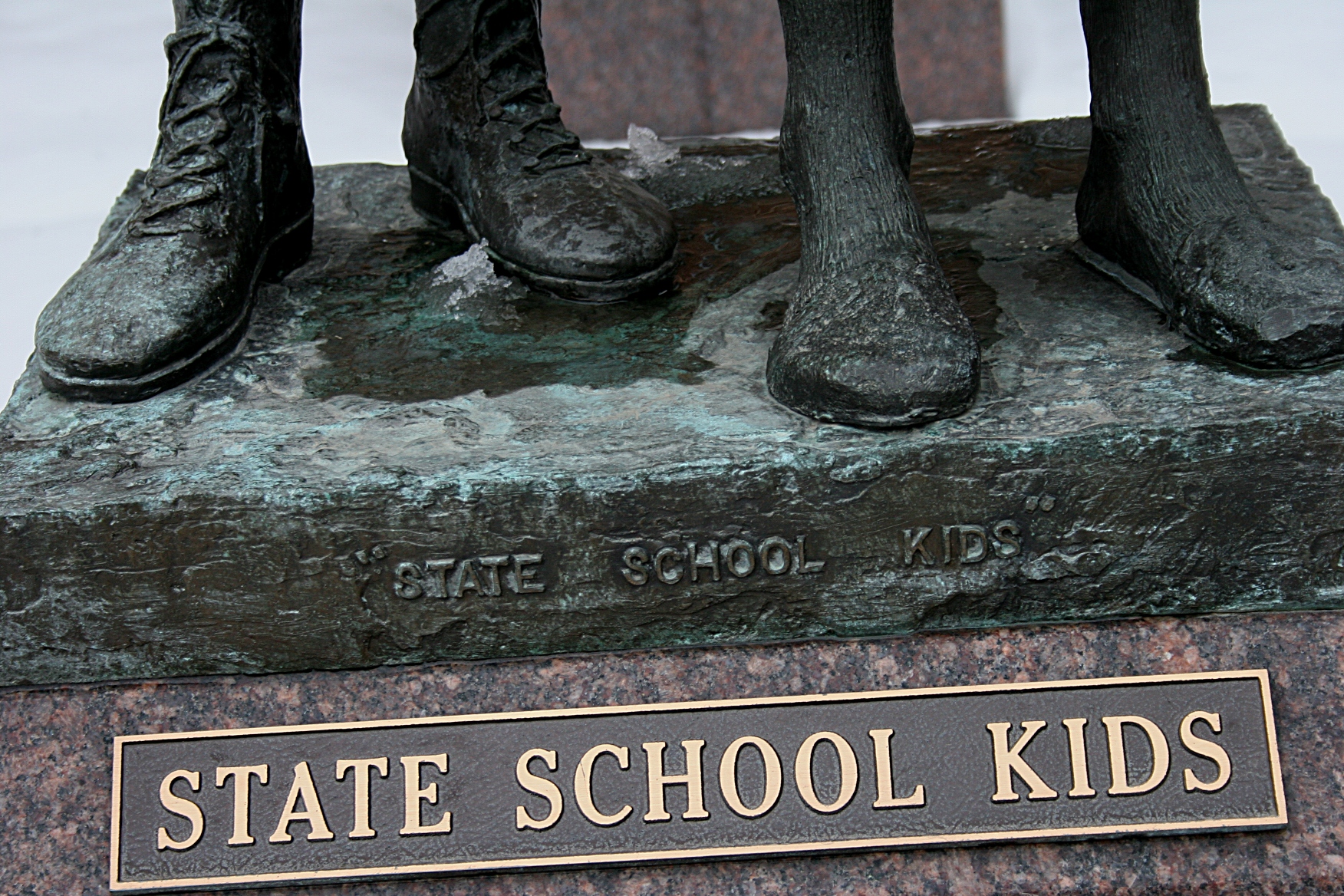
The "State School Kids" memorial stands in front of the main building and was dedicated in 1993.

Information in a brochure I picked up on a recent visit to this 1886- 1945 orphanage in Owatonna reads:

Such children became wards of the state and, in most instances, all parental rights were cancelled. Parents did not always realize they were relinquishing all rights to their children when they signed the State School commitment papers. Some parents returned to try to regain custody of their children and were refused.

Can you imagine?

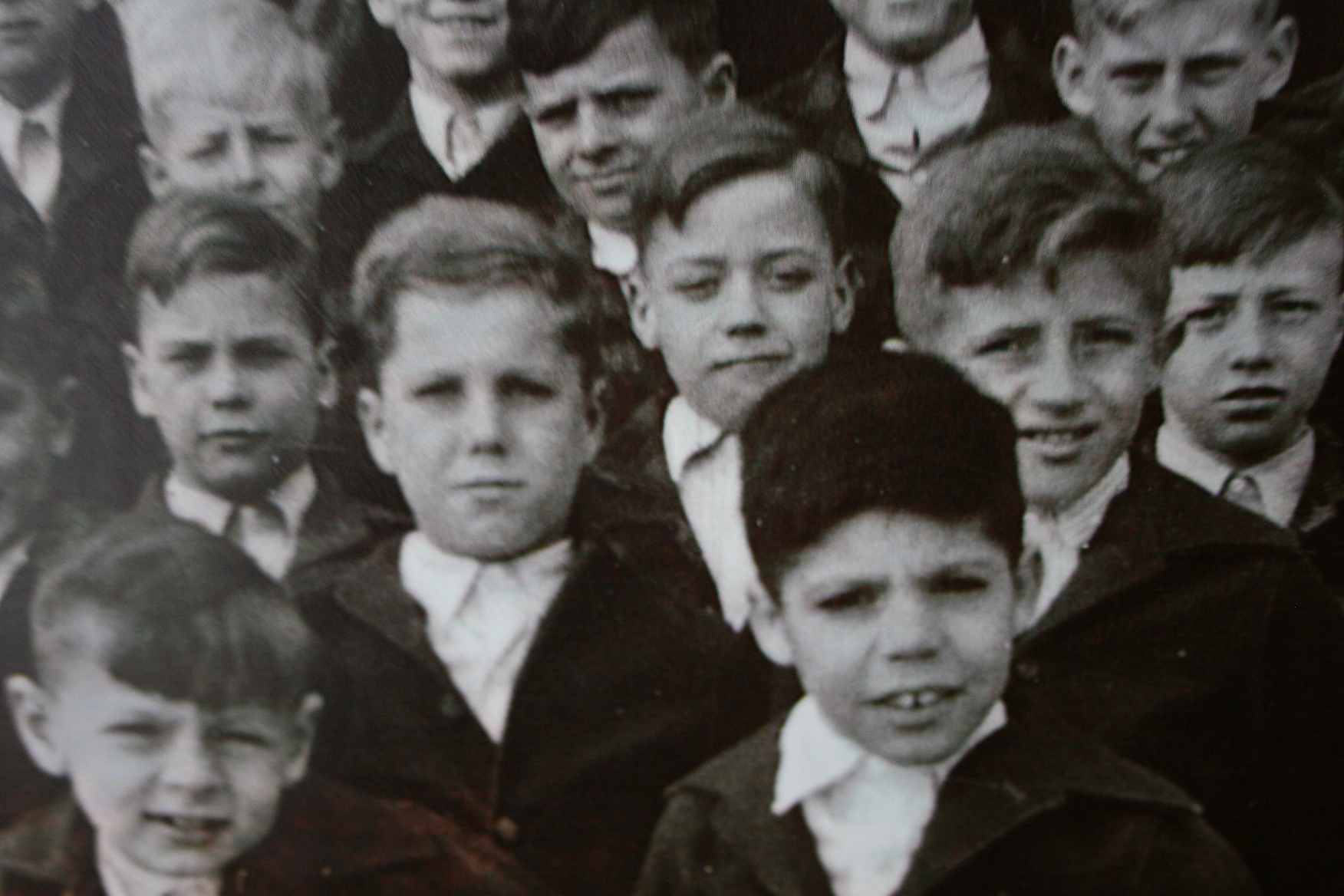
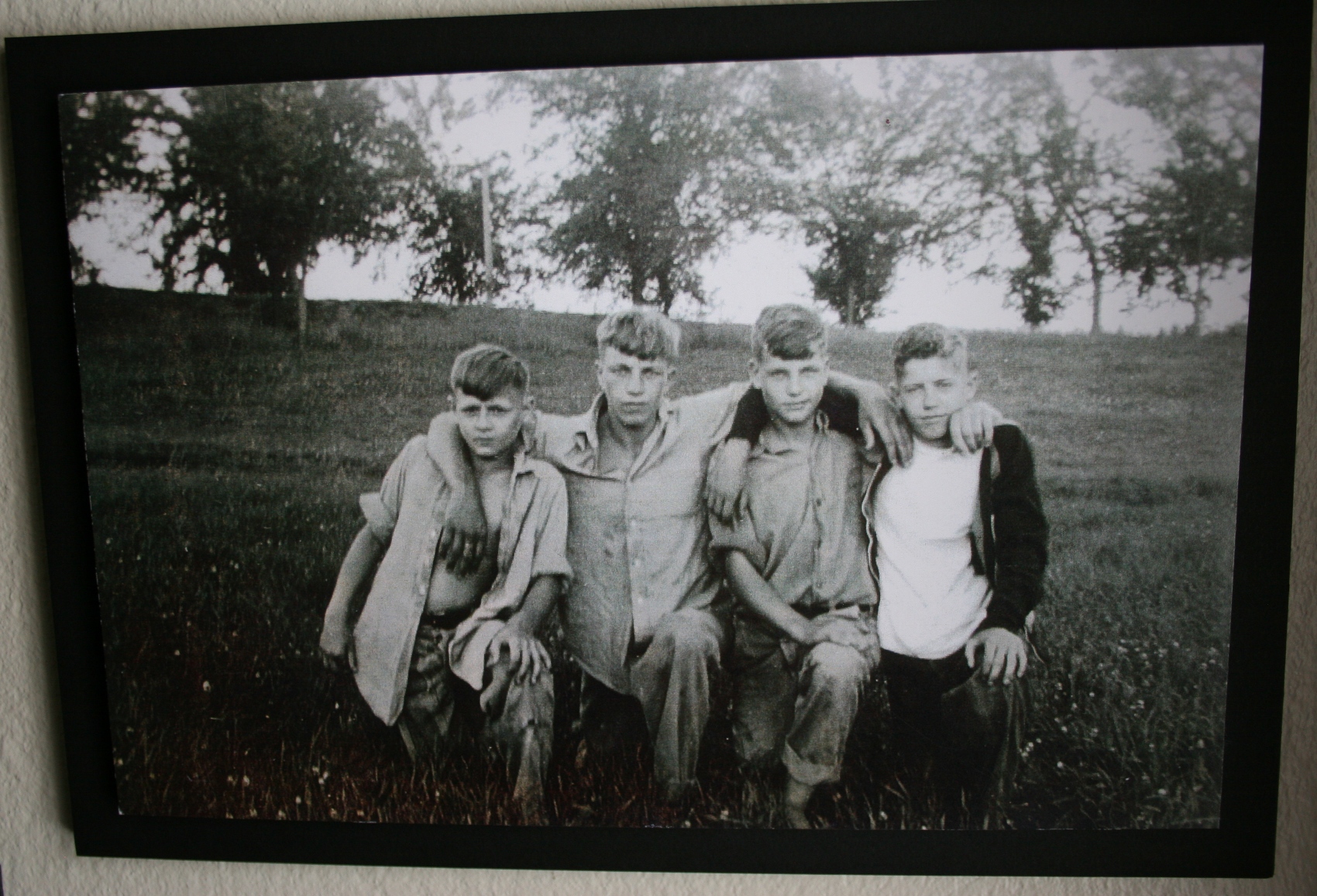
Residents of Cottage 11, which housed boys ages 6 - 13, pose for a photo now on exhibit at the museum.

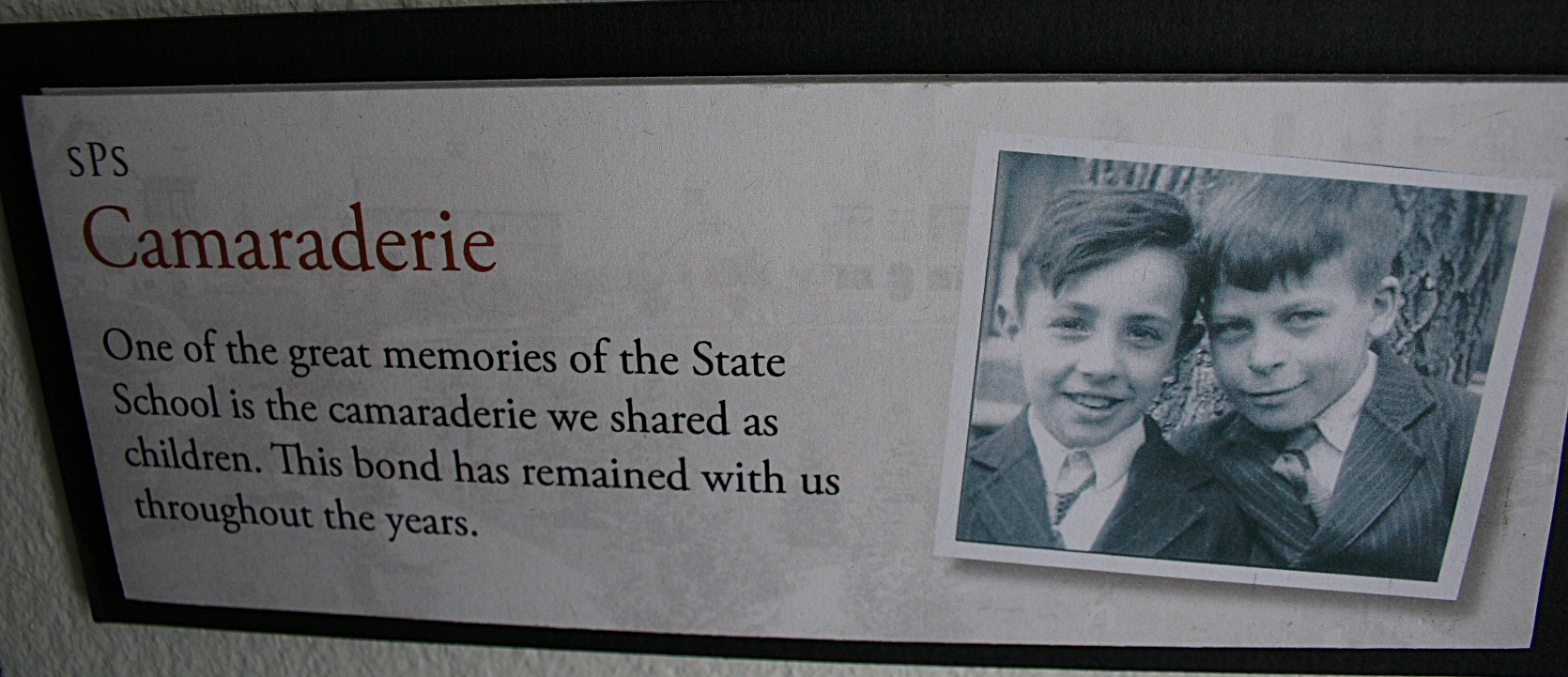
While some children adjusted to living within the strict regiment and rules of the school, many did not. You will hear and read their tragic memories when you visit the orphanage museum. Be forewarned: These stories are difficult to hear.

A room in cottage 11 features the photos and memories of the boys who lived there.

Cottage 11 residents

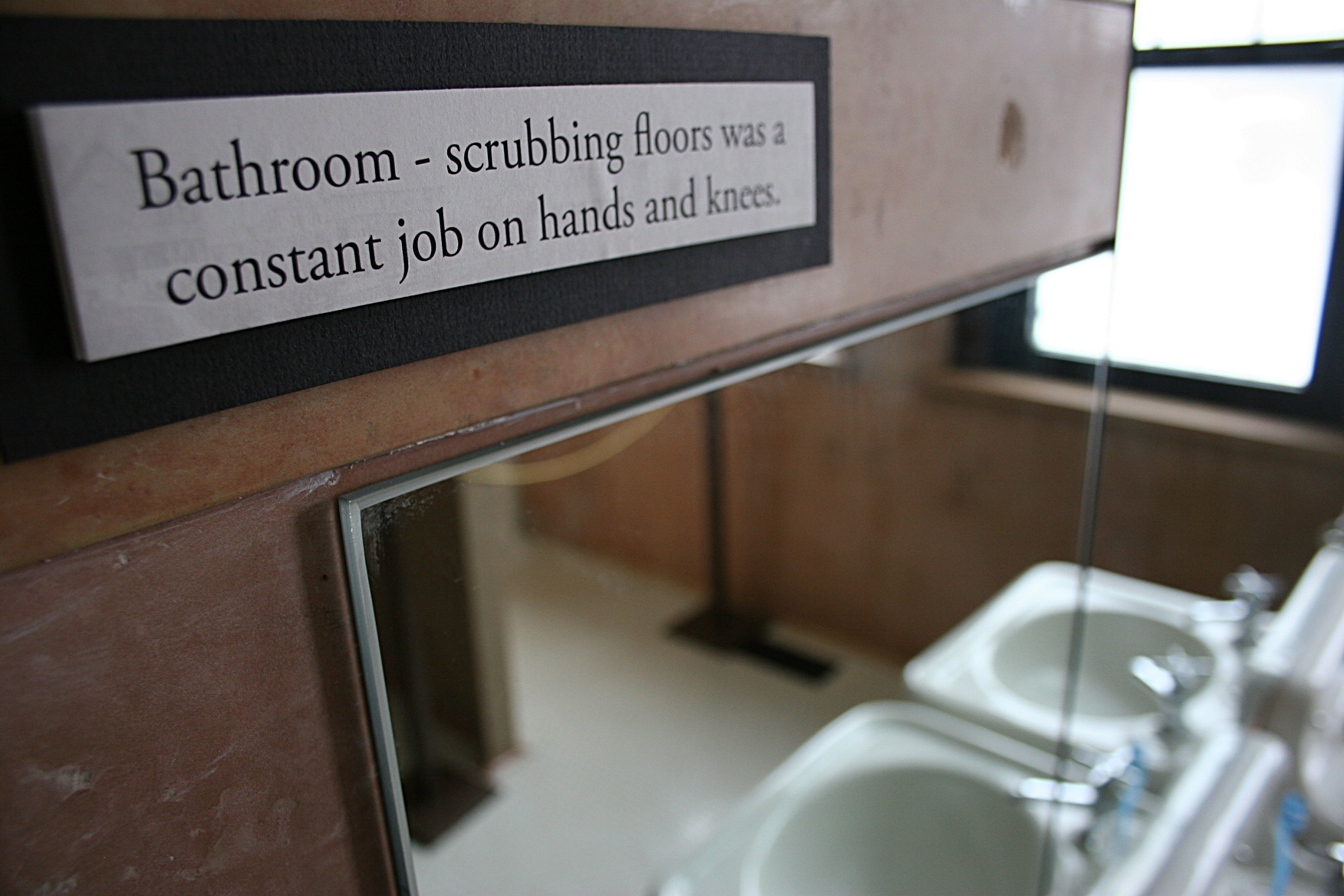
The boys remember scrubbing floors throughout the cottage, including in the bathroom..

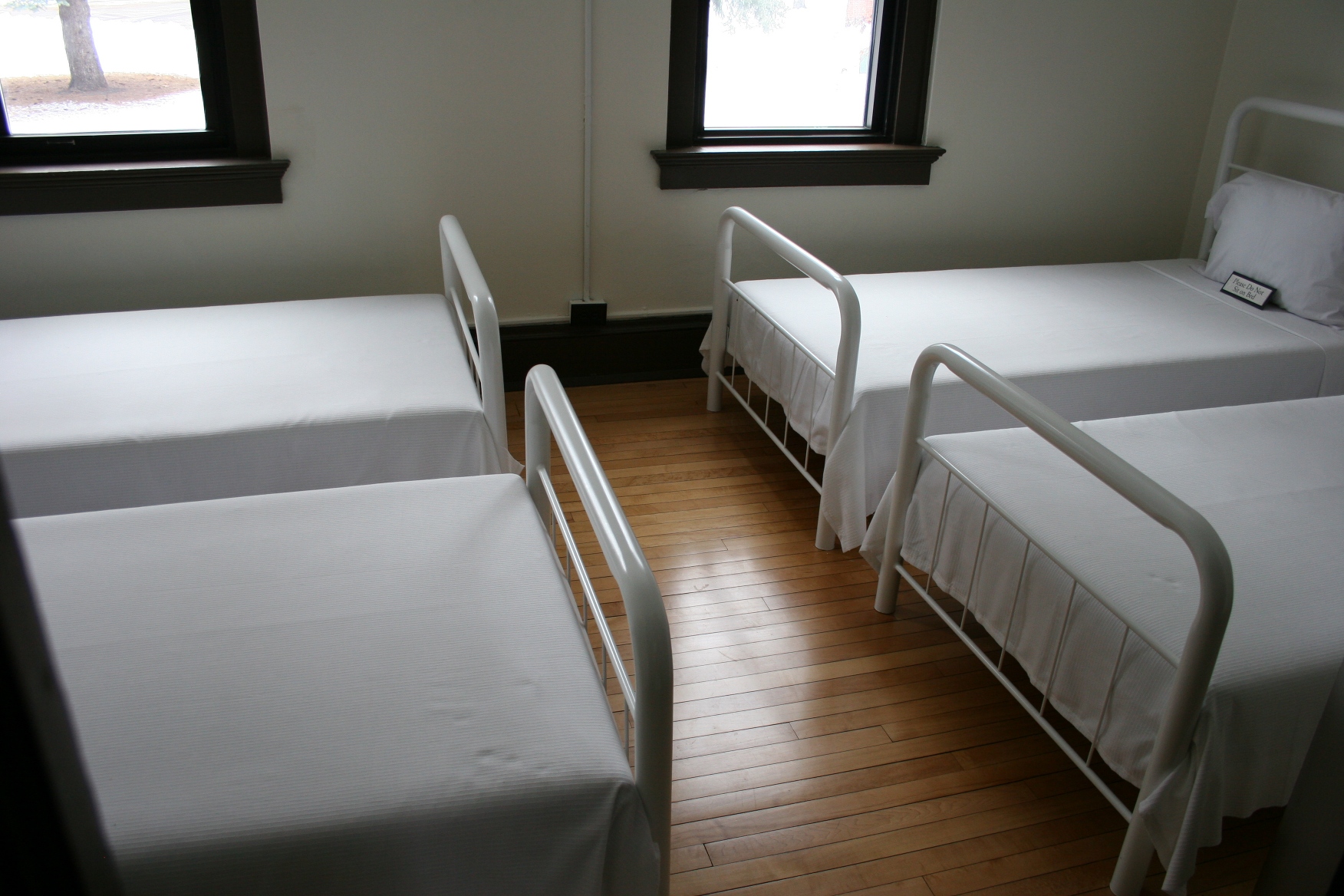
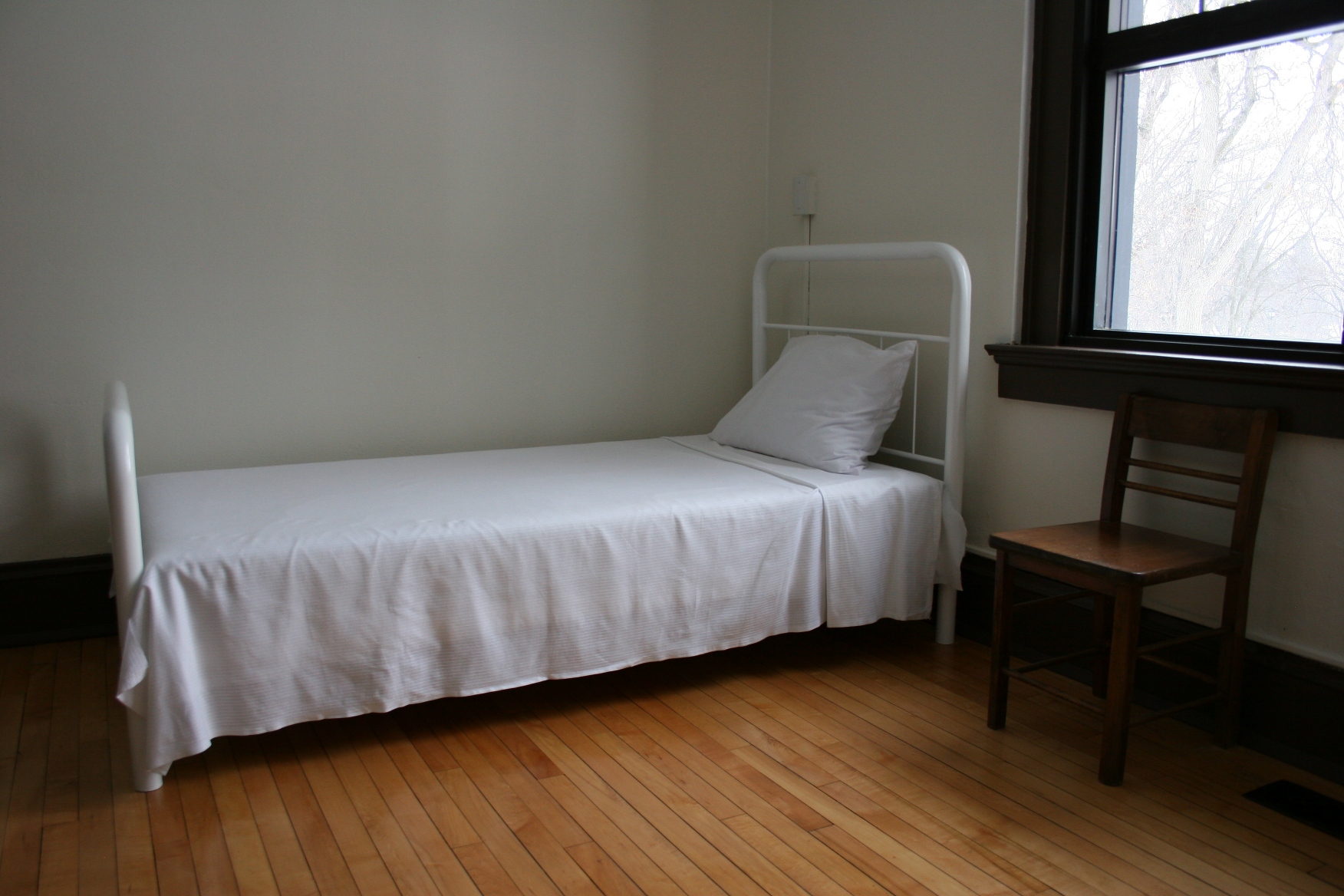
Beds were packed tight into sparse bedrooms in the cottage.

I’ve read several books written by former “state schoolers,” as they were called. Harvey Ronglien, who was the motivator behind the museum and the orphan’s memorial, wrote A Boy from C11, Case #9164, A Memoir. Peter Razor wrote While the Locust Slept, winner of a Minnesota Book Award. I read both books, as well as Crackers & Milk by Arlene Nelson, many years ago and still can’t shake the haunting memories of neglect and abuse and struggle.

Particularly troubling are the reports of abusive, neglectful and unloving matrons. Equally disturbing are the stories of children who were indentured to farm families and then treated like slaves.

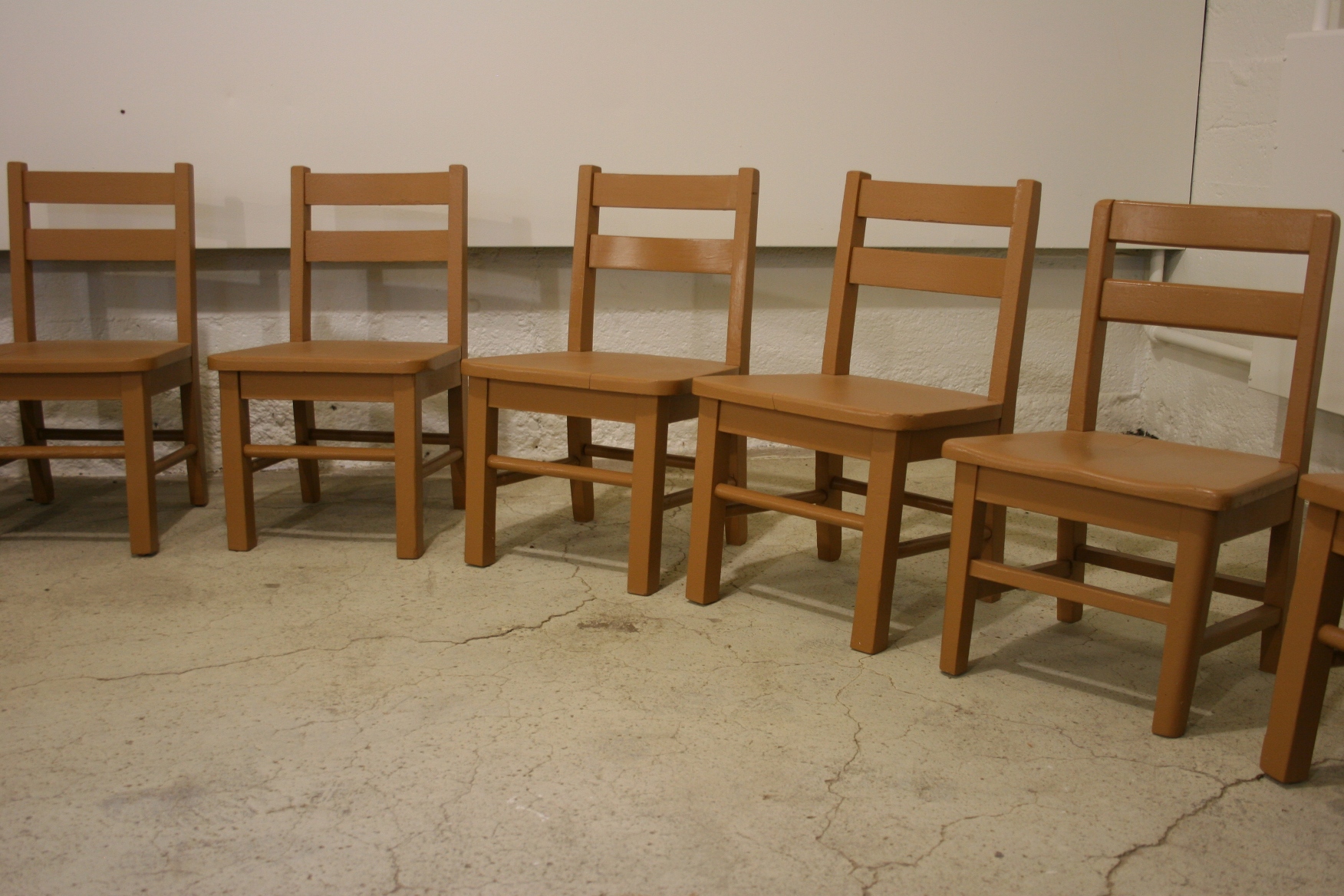
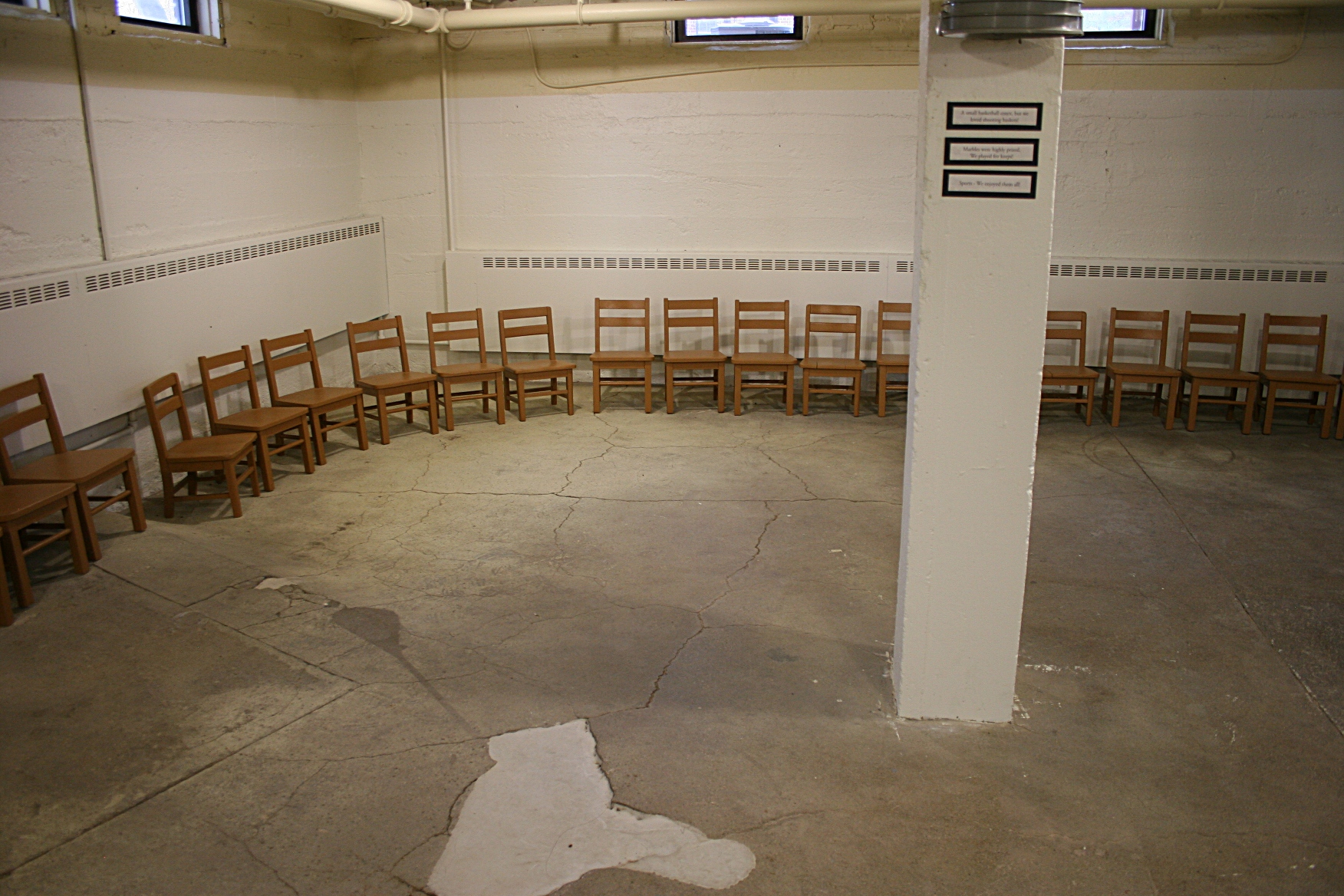
Each boy was assigned to a chair in the basement and could not leave the Cottage 11 basement without permission. This was a method used to keep order and control over the children.

Within the confines of the basement, the boys played with marbles, puzzles, checkers and other toys.

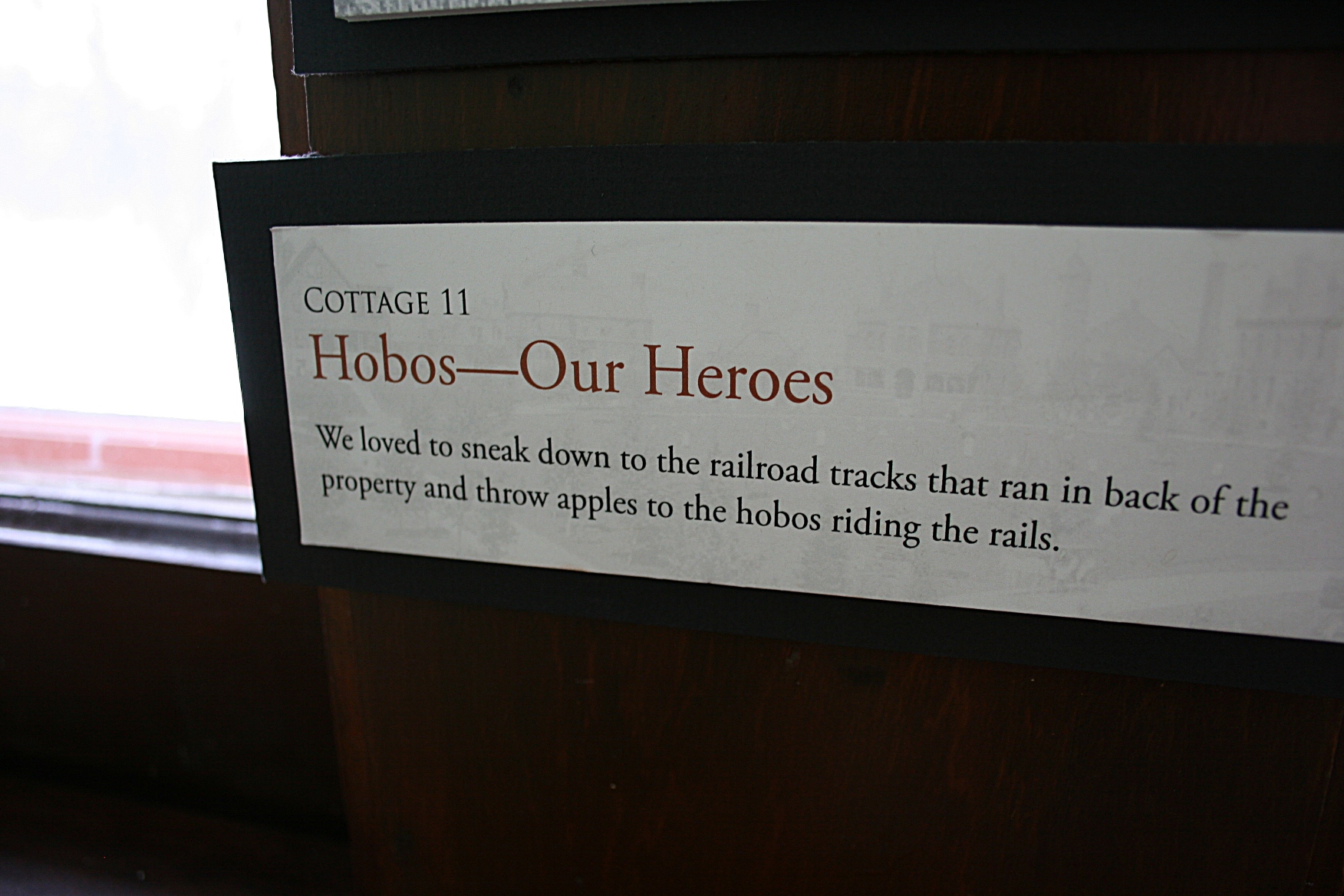
A sign on a stairway landing tells visitors about the boys' dreams of escaping via rail and of their admiration for hobos. Some boys did hop trains and ran away.

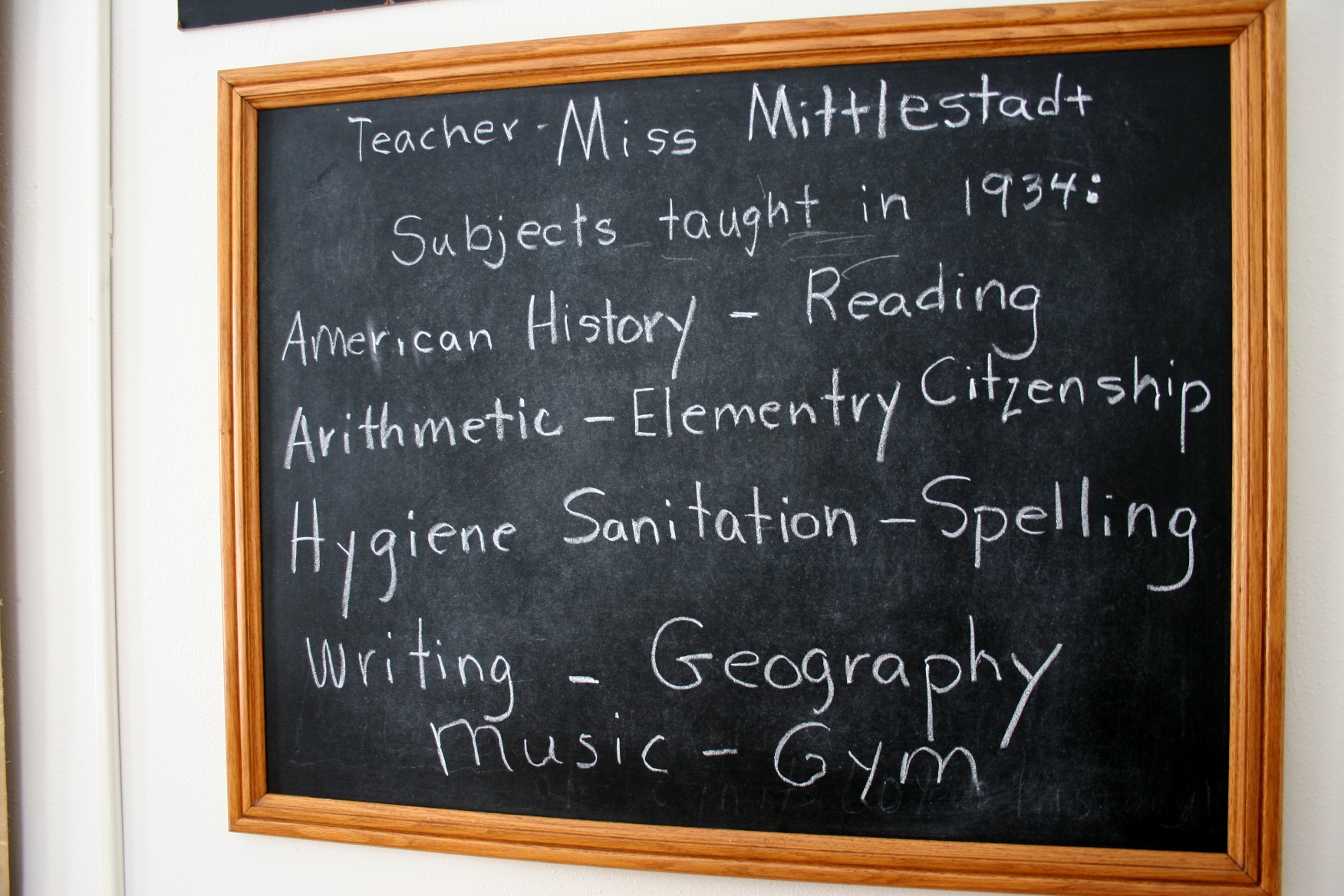
Children were educated through the eighth grade, with some selected during the early years to attend Owatonna High School. In later years, all students were allowed to attend high school.

If you’ve never visited the Minnesota State Public School Orphanage Museum, I’d encourage you to do so.

This exists as part of our state’s history. We need to know and understand life here.

Considering the thousands of children who lived in the orphanage during its 60-year span, I expect many Minnesotans are still carrying the emotional scars whether directly or indirectly passed through the generations.

IF YOU LIVED in the orphanage or have a family member who did, I’d like to hear from you. What’s your story? Good or bad.

The feet of the children in the memorial statue on the orphanage grounds.

CLICK HERE to read a previous blog post I published about Christmas in the orphanage.

© Copyright 2011 Audrey Kletscher Helbling


In Owatonna: Stories of an orphan’s Christmas December 19, 2011

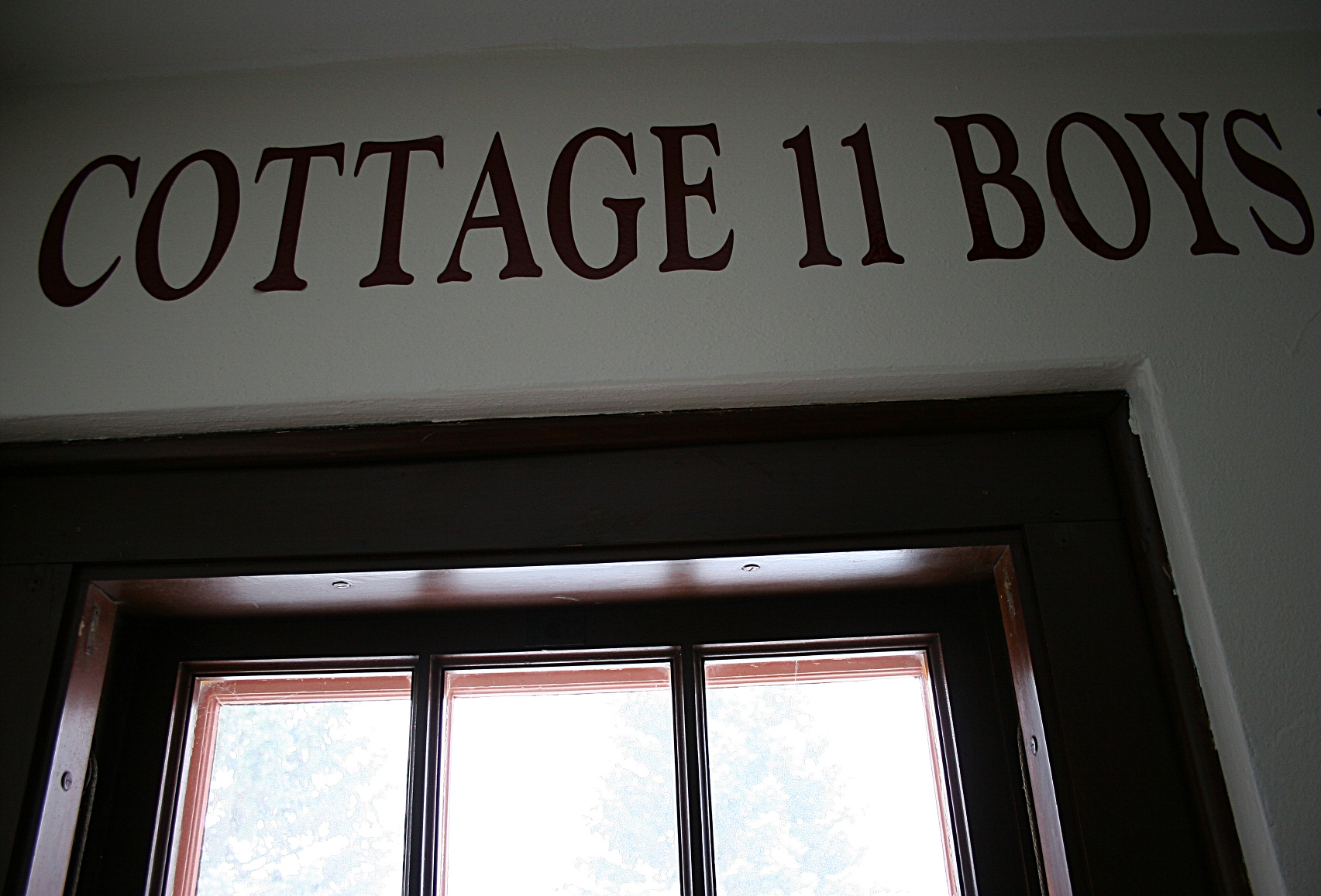
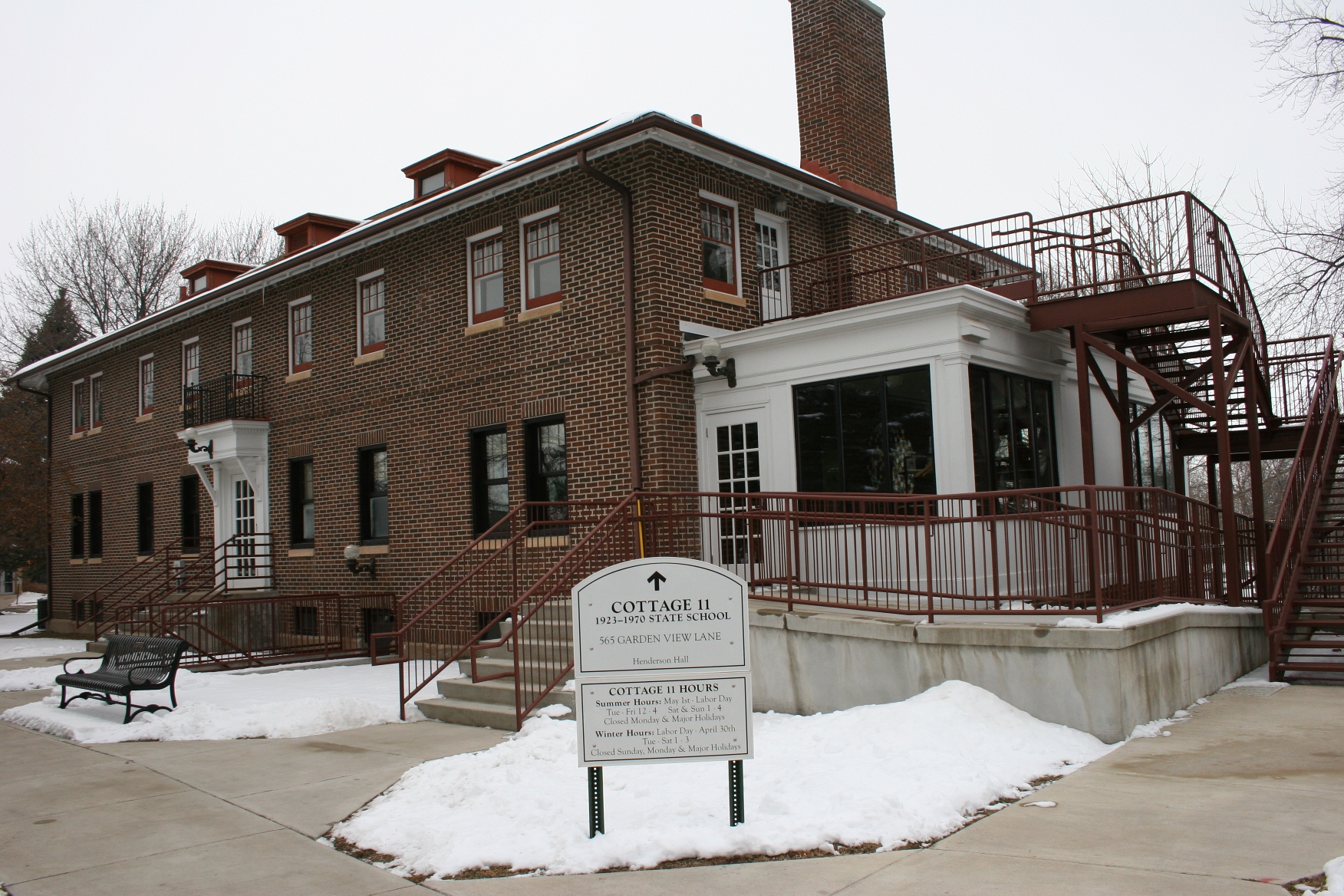
Cottage 11, built in 1923, as one of 16 cottages at the former Minnesota State Public School for Dependent and Neglected Children. Designed to house 25 boys ages 6 - 13, this cottage typically was home to 30 - 35 youth.

AS WE HURRY ACROSS the hilltop campus toward Cottage 11 at the former Minnesota State Public School for Dependent and Neglected Children, the raw wind slapping our cheeks, Silvan Durben advises us to refrain from jumping on the beds.

He’s a character, that Silvan, energetic and flamboyant and passionate. And truthful. This director of art at the Owatonna Arts Center, which is housed in the main building of the former orphanage, shares a tidbit of truth. The children who once lived here weren’t allowed to sleep on their pillows. So if my husband and I slid the for-show-only pillows off the beds and onto the floor, we’d have it right.

The boys' bedrooms are stark, devoid of anything homey. This small room slept three.

With that piece of information imparted, Silvan unlocks the door into Cottage 11, today preserved as part of the Minnesota State Public School Orphanage Museum complex in Owatonna.

Within these walls, which housed boys ages 6 – 13 from 1923 – 1945 in the state school orphanage, we will learn more of the unsettling truths during a self-guided tour. Typically, the cottage is staffed, but on this Sunday afternoon it is not and Silvan has allowed us inside, on our own, to explore. He trusts us, he says, and I am grateful for this opportunity to wander.

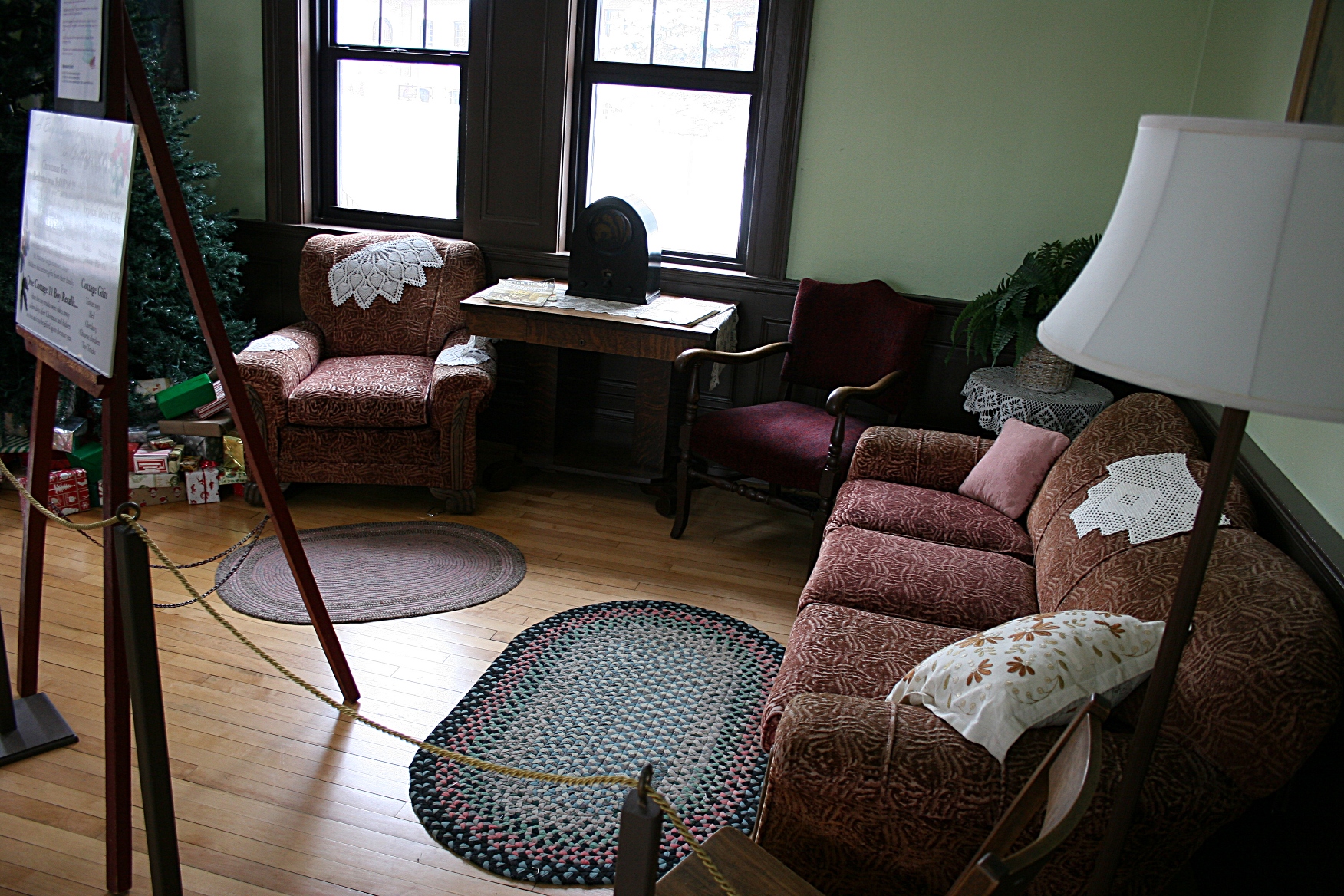
Entering a now-enclosed porch that serves as a gift shop and then stepping into the adjoining living room, I am surprised that I feel, initially, impressed by my surroundings. Visually, I am pleased by the natural light flooding this room through the abundant windows, by the dark woodwork, by the fireplace, by the narrow wood-slat floor, by the cozy cluster of vintage furniture grouped near the Christmas tree surrounded by piles of presents.

But looks, as I immediately learn, can be deceiving.

The living room was off limits to the boys except on special occasions.

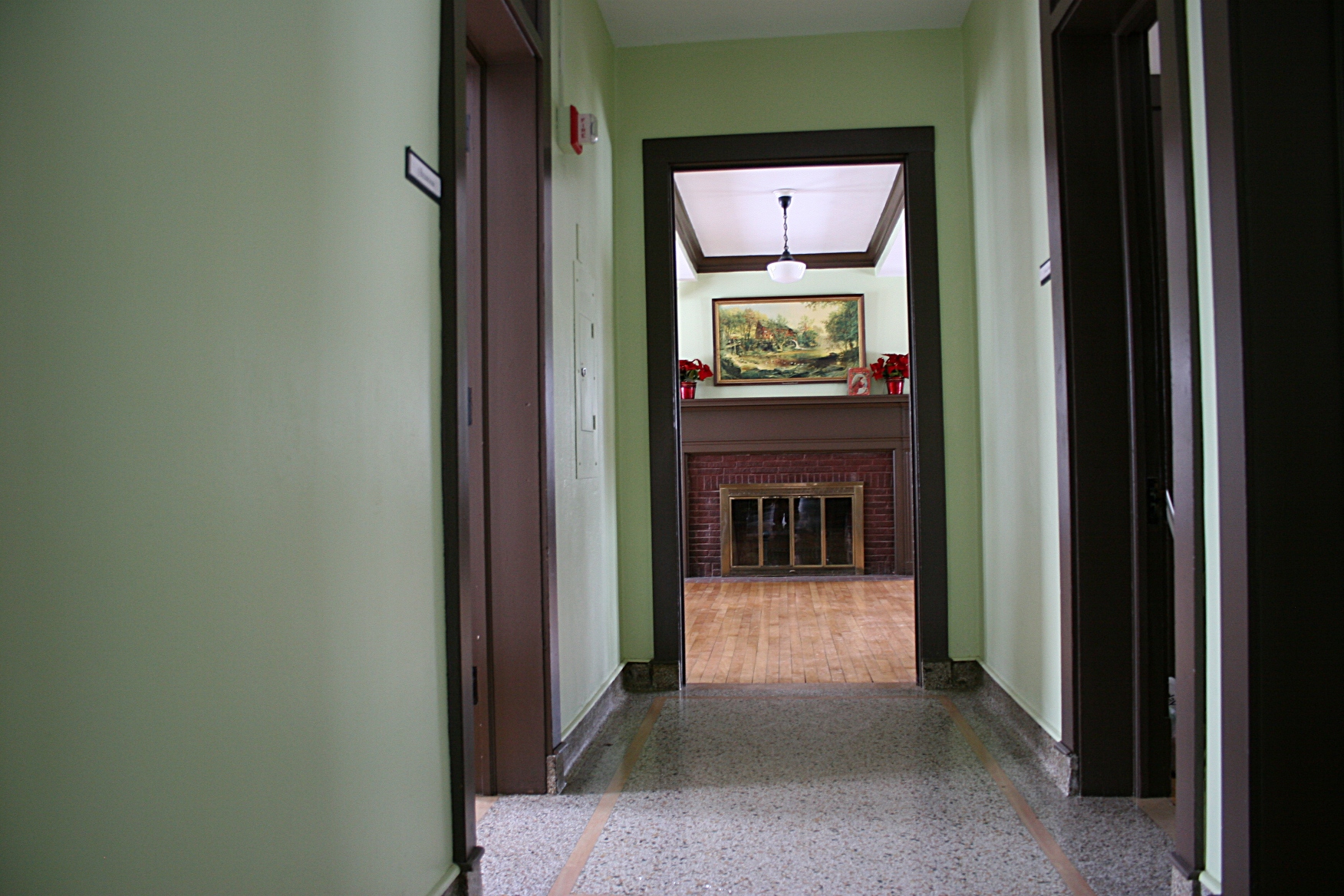
A view from the hallway looking toward the living room fireplace. Each week the boys polished the floor and furniture in this forbidden space. They also scrubbed floors throughout the cottage.

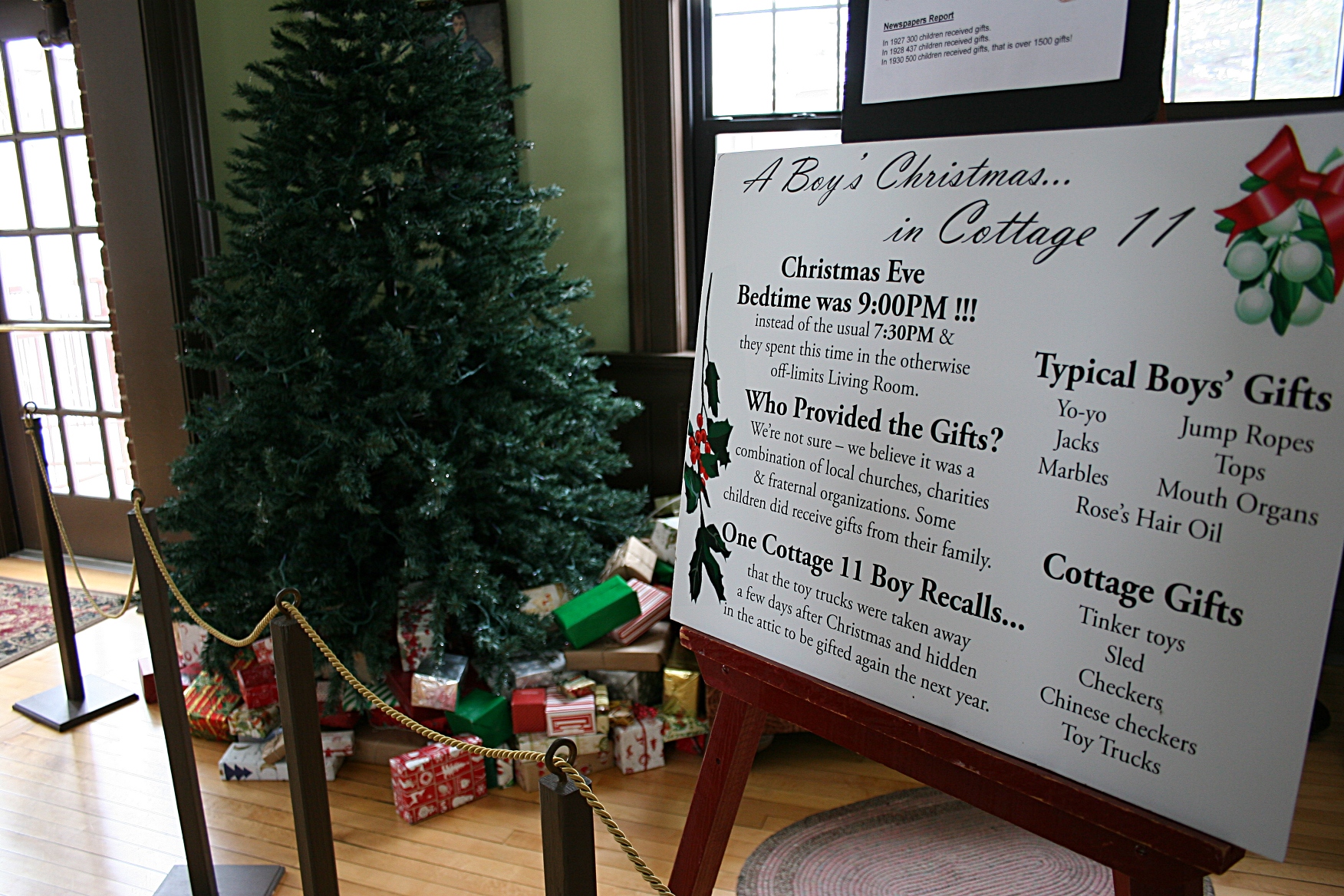
The posted words of the orphan boys reveal the truth:

…the toy trucks were taken away a few days after Christmas and hidden in the attic to be gifted again the next year.—Cottage 11 Boy

The truth revealed about Christmas from the memories of the Cottage 11 boys.

And the lovely living room? Apparently just for show, too, except on special occasions like Christmas Eve when the boys gathered here around the tree and were allowed to stay up past their usual 7:30 p.m. bedtime until 9 p.m.

Christmas brought but a moment of happiness to these children who otherwise lived under rigid rules and the domination of mostly uncaring matrons. (Arguably, some of these children may have lived equally difficult, or worse, lives had they remained in their previous circumstances/environments.)

Some happy Christmas memories from the boys.

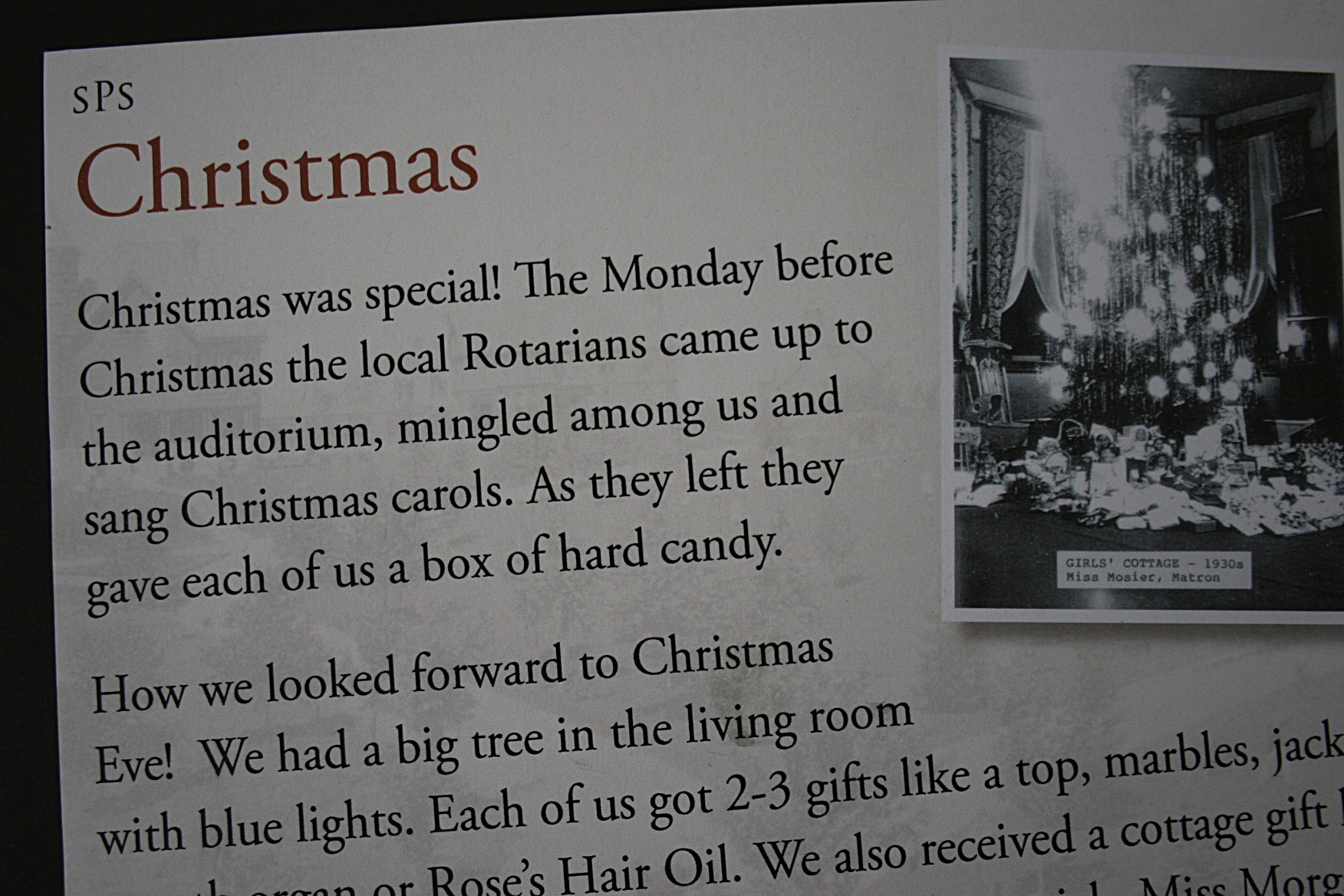
Christmas brought the local Rotarians into the school auditorium to sing carols and pass out boxes of hard candy. Christmas brought several gifts—perhaps Tinker Toys, or marbles or puzzles—for each child.

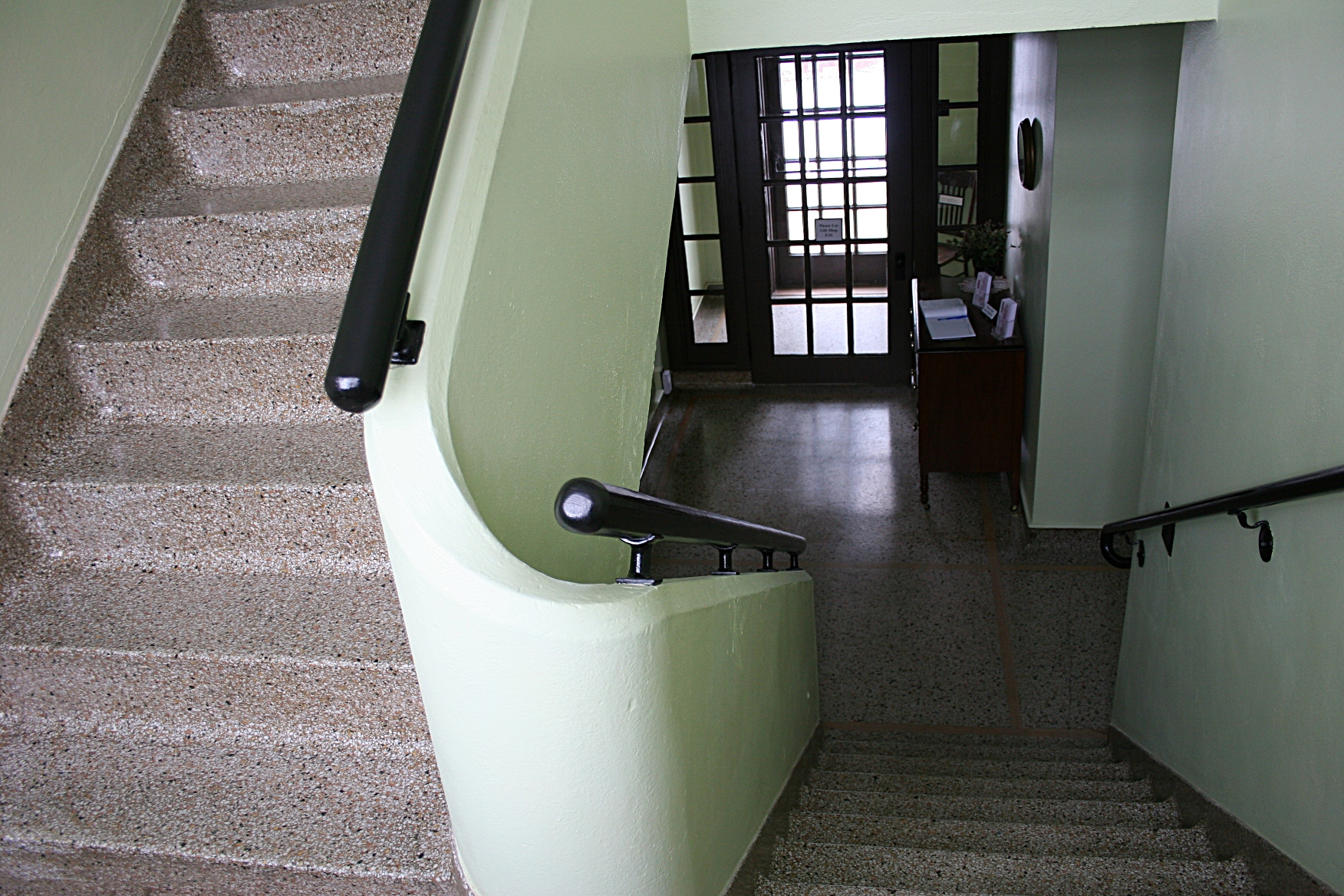
The stairway between the first and second floors and a shot of the cottage's front door at the bottom of the frame. The boys were never allowed to use the front door. They entered and exited through the basement.

I cannot even begin to fathom living here under unforgiving discipline, sleeping in stark bedrooms crammed with kids, missing out on the love of family.

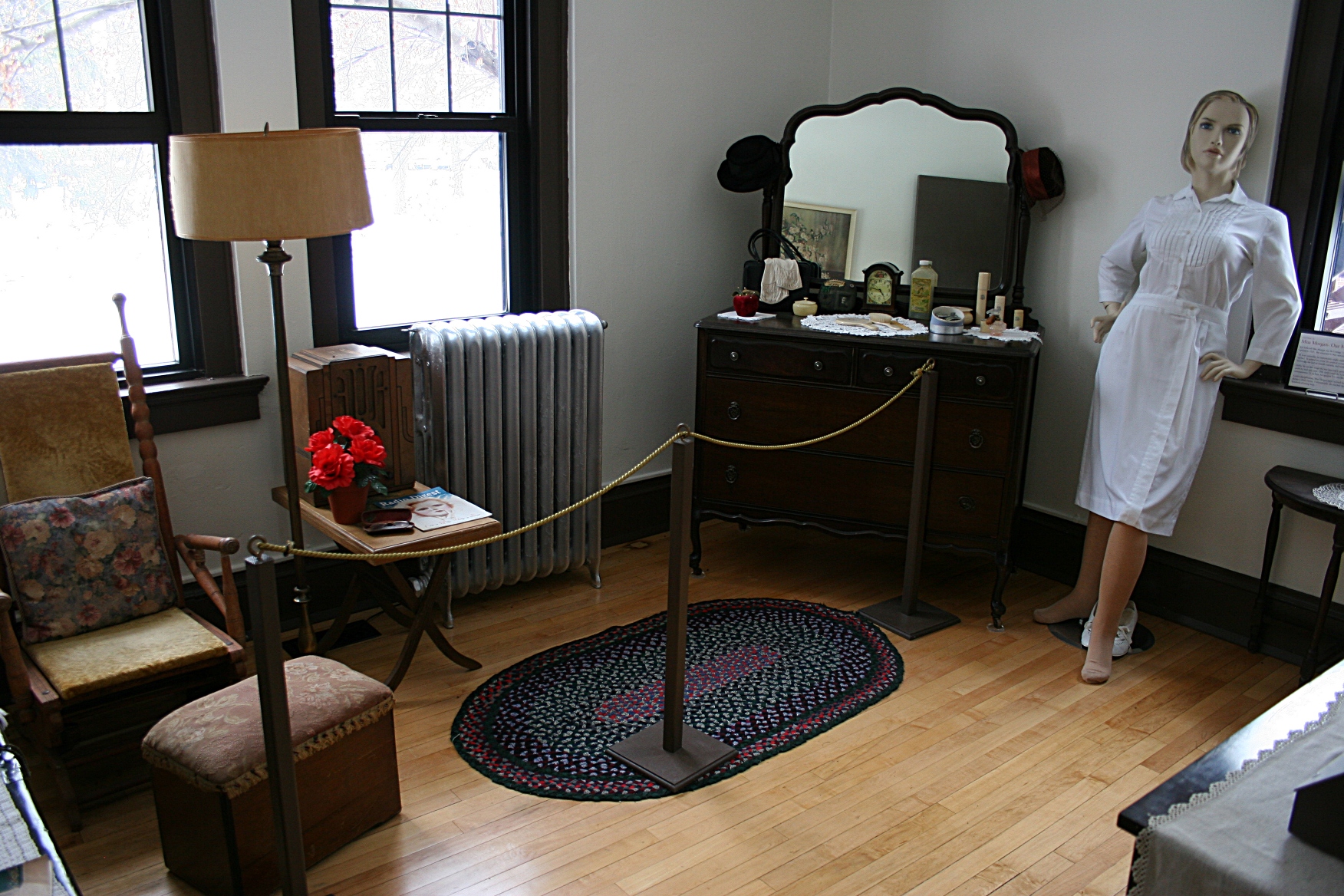
Unlike the mother image she was expected to portray, Miss Morgan (the matron) could be hard and cruel. Only rarely could she be kind and compassionate.

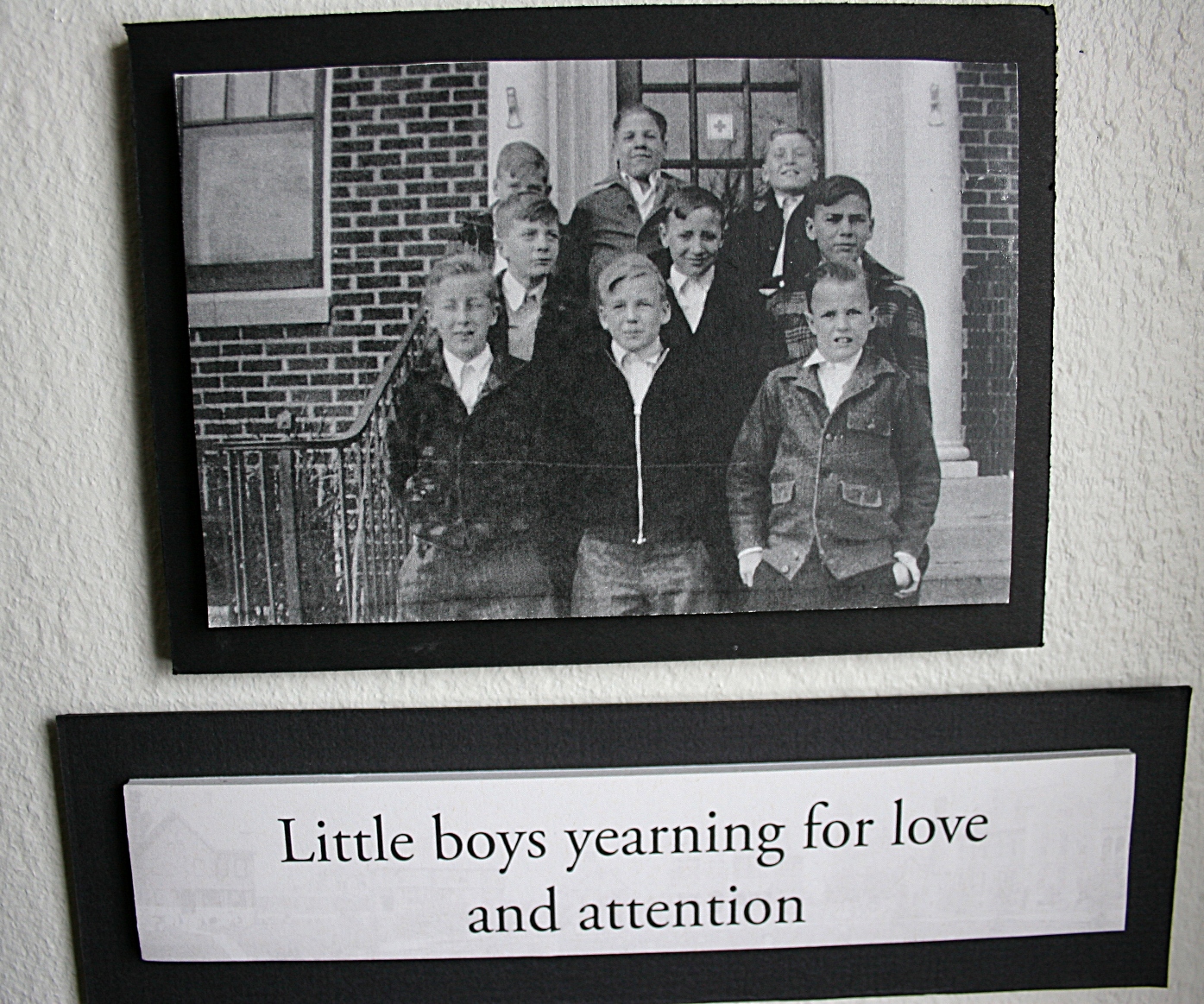
As I meander through the rooms peering at the black-and-white photos of mostly unsmiling boys and reading about their fears of scoldings and spankings and of scrubbing floors on their hands and knees and being confined primarily to the basement, my heart hurts. Truly.

You can see it in the boys' faces, the desperate need to be loved.

On signage titled “The Basement,” I read of  the prevailing authoritarian attitude:

Permission was always required to leave the basement.

Each boy was assigned a chair in the basement. "The chair kept order and accountability" to the matron.

Listening to a recording of a man who as a boy had his head slammed into a wall for prematurely removing a tie and cuffing a matron, I can still hear the hurt in his voice.

I can almost feel the pain experienced by cottage resident Arlend “Buzz” Wilson who slipped and scalded himself with hot water while scrubbing the basement steps. He ended up hospitalized for his burns.

In the first floor matron's quarters, a young boy was placed in the rocking chair to the left and his head slammed into the wall for disobedience. He removed his tie too soon and cuffed the matron.

But for all the awful stories shared here, occasionally glimmers of hope slip through—of boys who admired hobos and hopped the nearby train to escape and of “Wednesday Night at the Movies,” when movies were shown in the school auditorium. Those “brought great joy to us children.”

And then, the single gem I found among all the stones:

FYI: Cottage 11 is open from1 p.m. – 3 p.m. Tuesday – Sunday. However, I advise calling in advance (507-774-7369) as it was not open when we arrived on a Sunday afternoon. Hours at the main museum, 540 West Hills Circle, Owatonna, are from 8 a.m. – 5 p.m. Monday – Friday and from 1 p.m. – 5 p.m. on weekends. I have previously toured the museum, but did not do so again on this most recent visit.

PLEASE CHECK BACK for additional photos of Cottage 11.

© Copyright 2011 Audrey Kletscher Helbling


Visiting down-home Indian Island Winery August 30, 2011

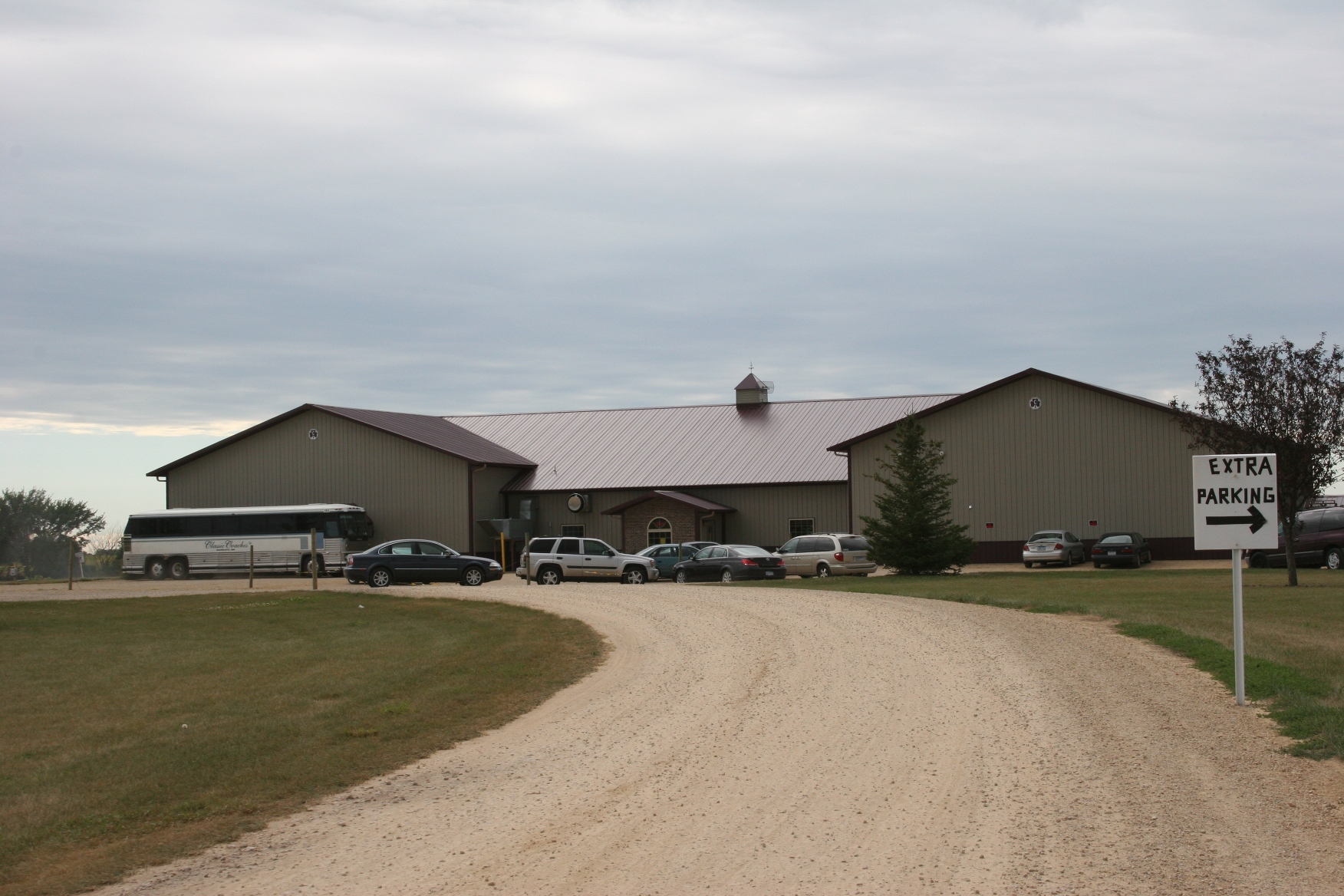
This building complex houses one of southern Minnesota's newest wineries.

IF YOU DIDN’T KNOW, you likely would think, from a distance, that the sprawling pole shed along Waseca/Blue Earth County Road 37 several miles south of Smith Mills is just another farm building planted among acres and acres of soybean and corn fields.

But you would be wrong. This is home to Indian Island Winery, among southern Minnesota’s newest wineries.

Minnesota artist Jim Hansel created the artwork, "Native Lands," for Indian Island Winery. Considered one of America's premier wildlife, nature and landscape artists, Hansel is legally blind.

Sunday afternoon my husband and I drove west from our Faribault home to check out the winery with the intriguing name, drawn from the Native Americans who once used this land—at one time nearly surrounded by water—as their summer hunting camp.

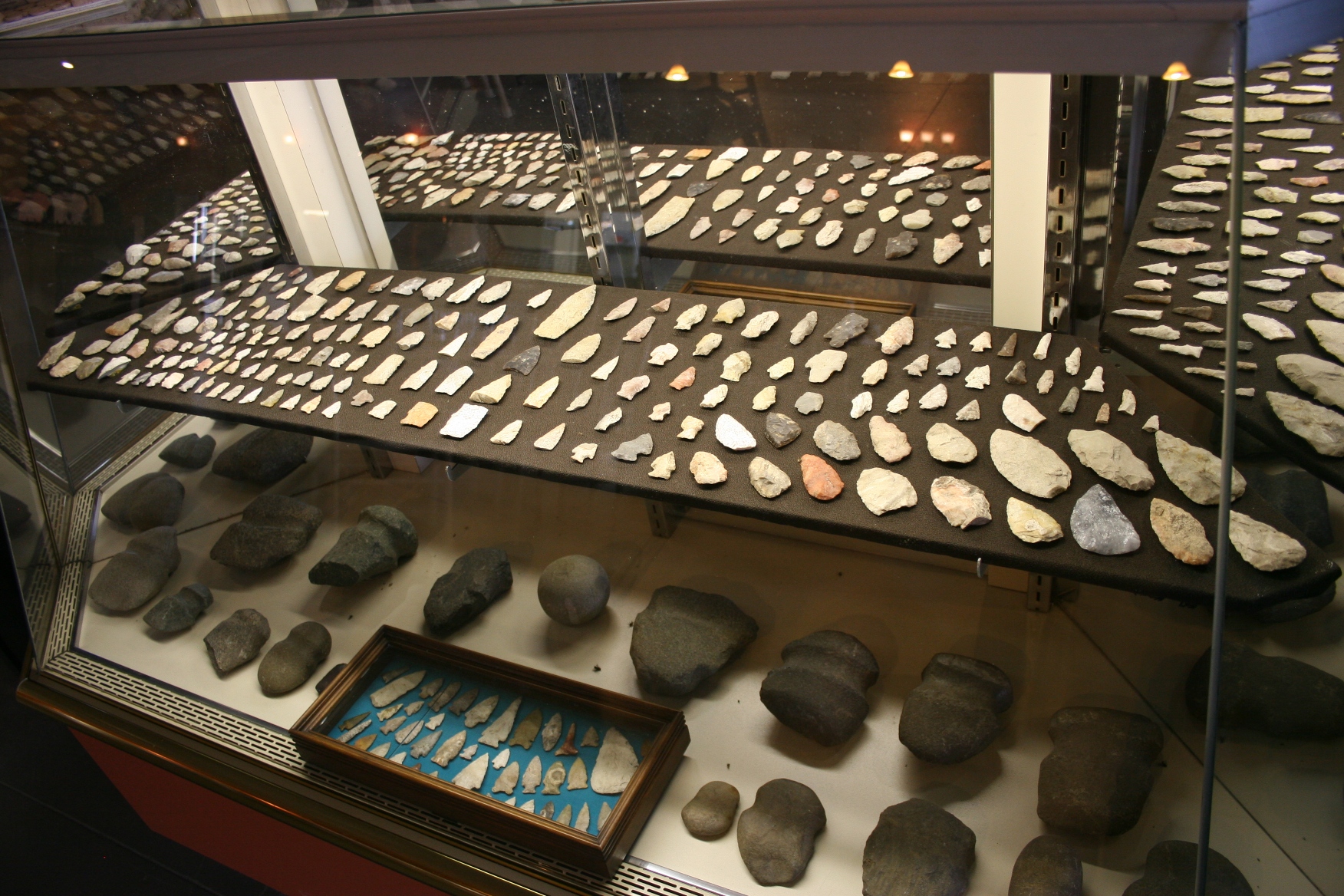
Inside the winery, you’ll see the artifacts, found on this property, to back up the historical context of this place. And, no, this site was not a Native American burial grounds.

Indian artifacts found on-site and displayed inside the winery.

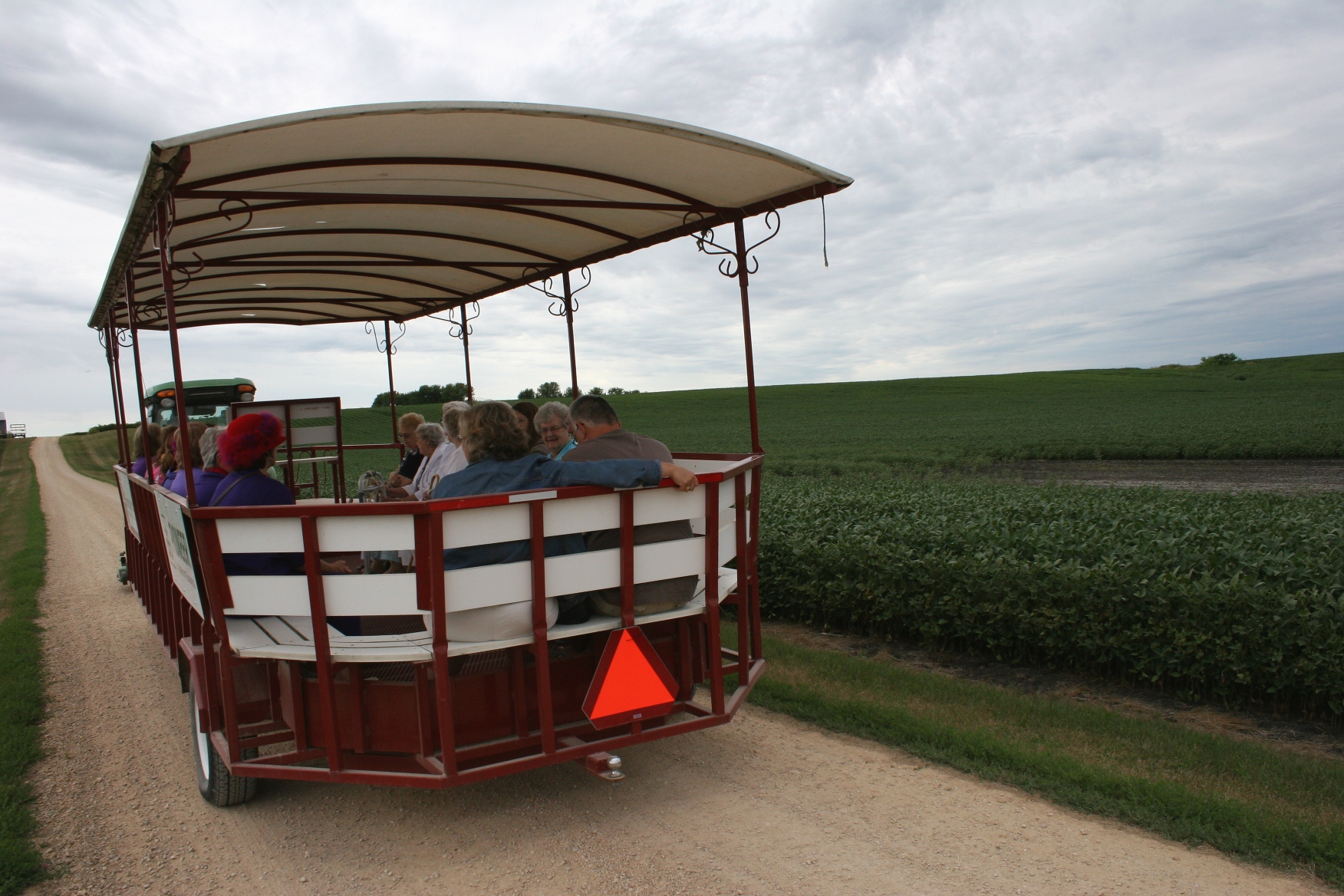
Tour the winery and/or the vineyard and the Winter family will fill you in on the grape-growing and harvesting and wine-making process. We opted in on the winery tour, out on the vineyard tour given I wanted to photograph the vineyard and didn’t want to hold up a whole trolley full of tourists.

Instead, Tom Winter, who is a partner in the business along with his parents, Ray and Lisa, his wife Angela, and his sister Angie, invited us to follow the trolley out to the grape fields and explore on our own.

Visitors experience the country as they ride past soybean fields on the way to the vineyard.

That no qualms invitation warmed me up to the Winter family right then and there. And, if I was to choose a phrase defining our visit to Indian Island, that would be “down-home, country friendly.”

From Tom’s broad smile, to his and Angela’s adorable 7-month-old son to the charming college student tending the wine-tasting bar to the bucolic setting, everything about Indian Island speaks  “Welcome, we’re happy to have you here in this place we love.”

And clearly the Winters love this land, and each other, as they reside on various building sites within view of the winery and vineyards. “Close, but not too close,” Tom laughs, adding that a cousin also lives nearby.

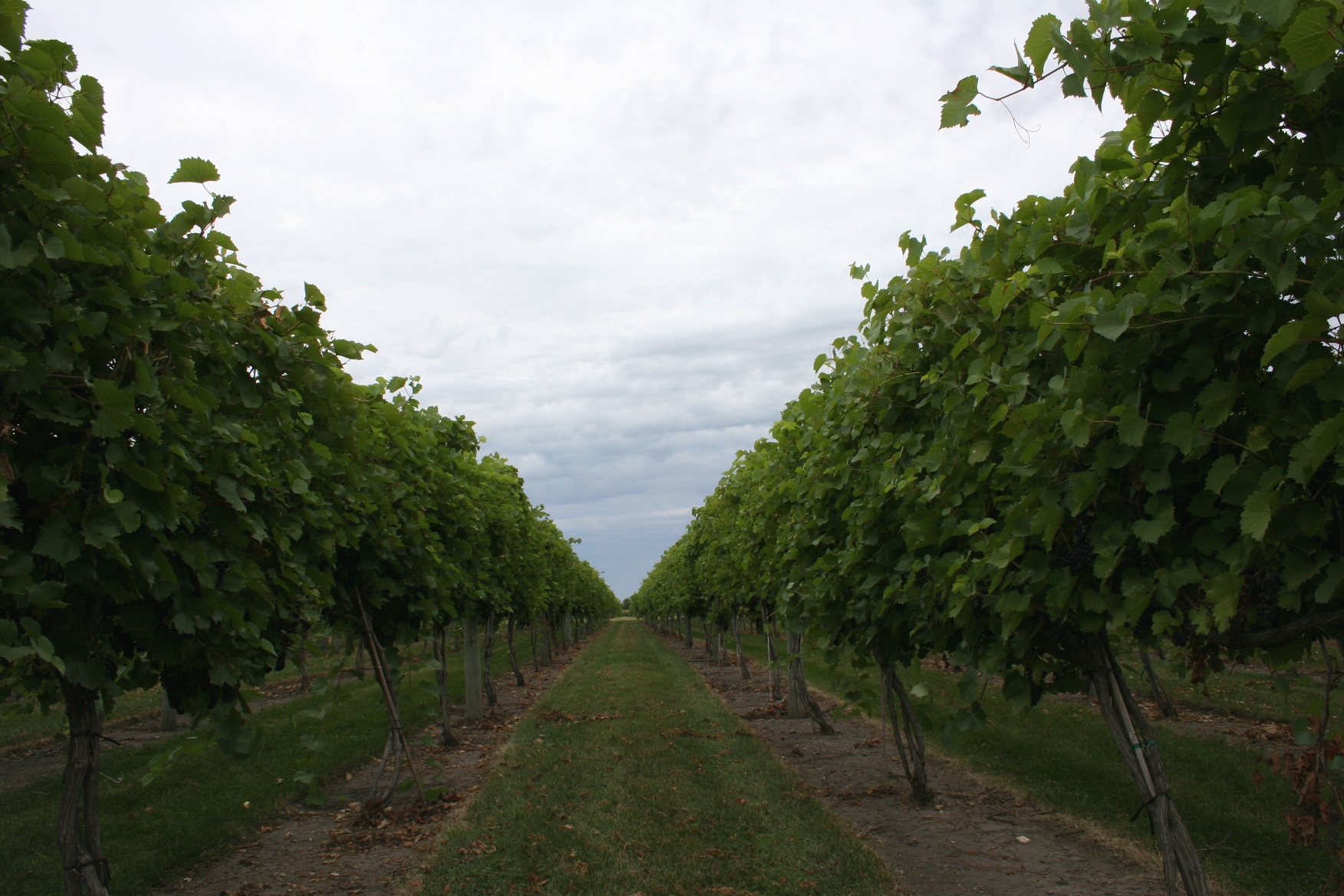
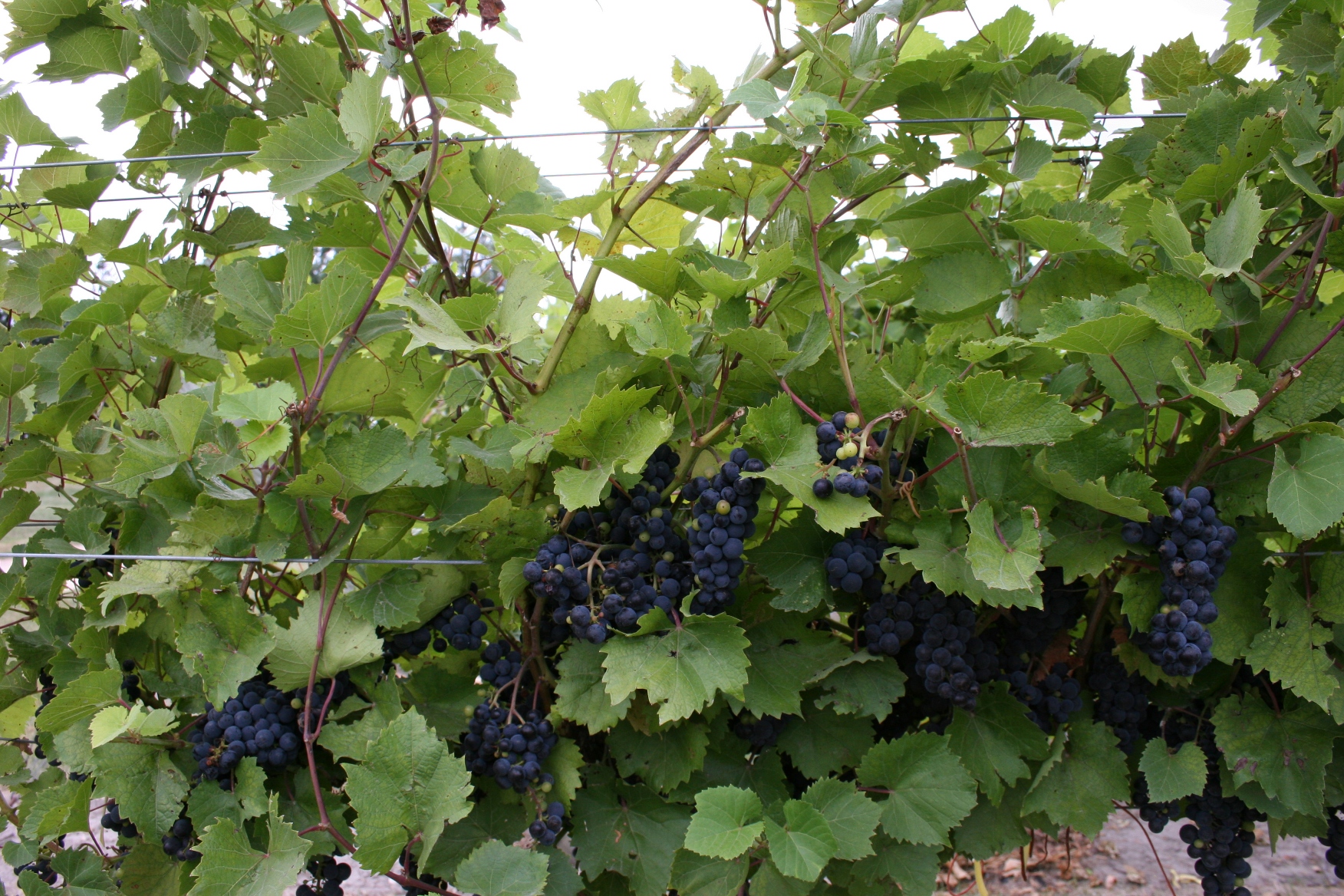
Indian Island's vineyard covers 13 acres. Here's a view between rows of plants.

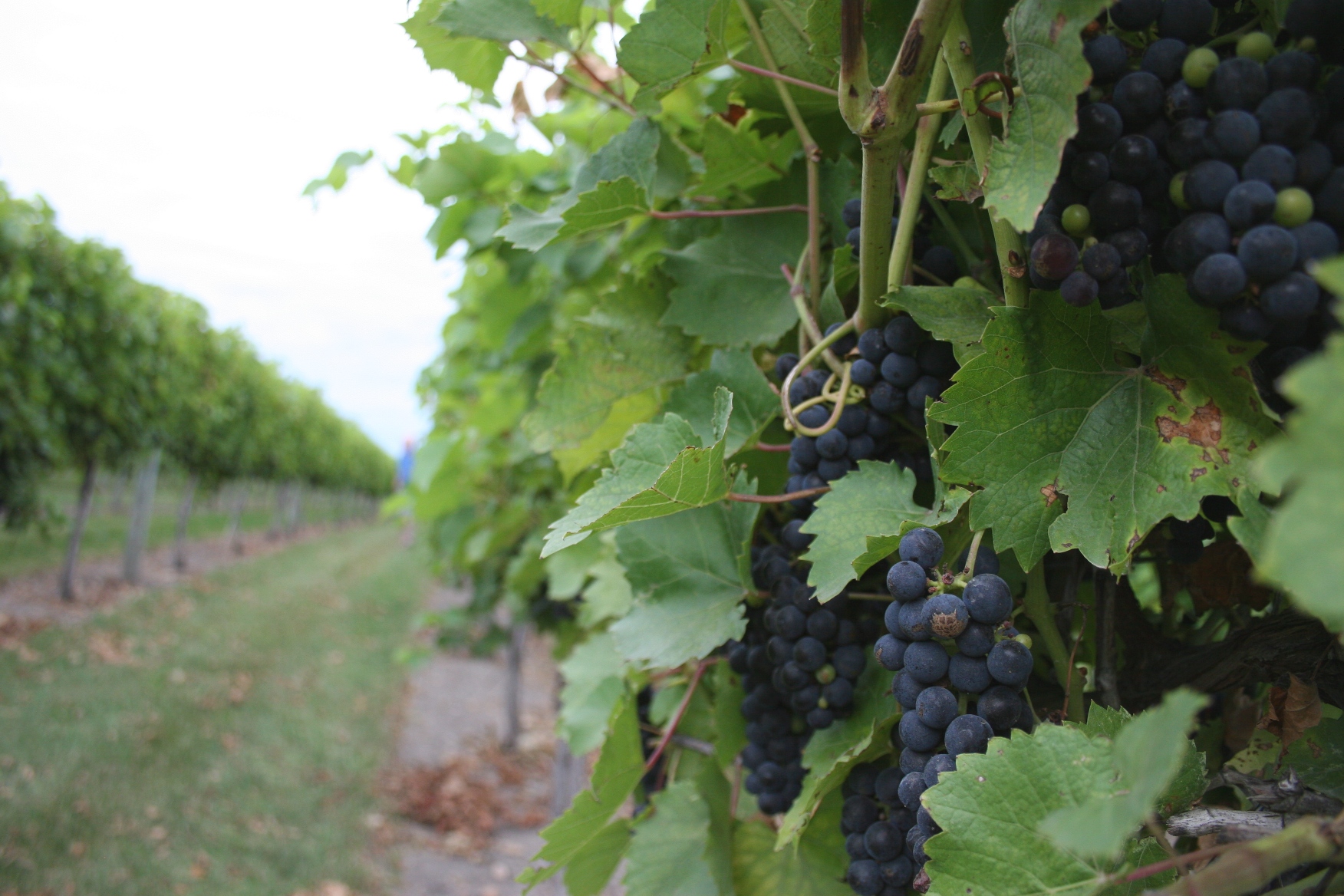
Clusters of grapes hang heavy on vines awaiting the harvest.

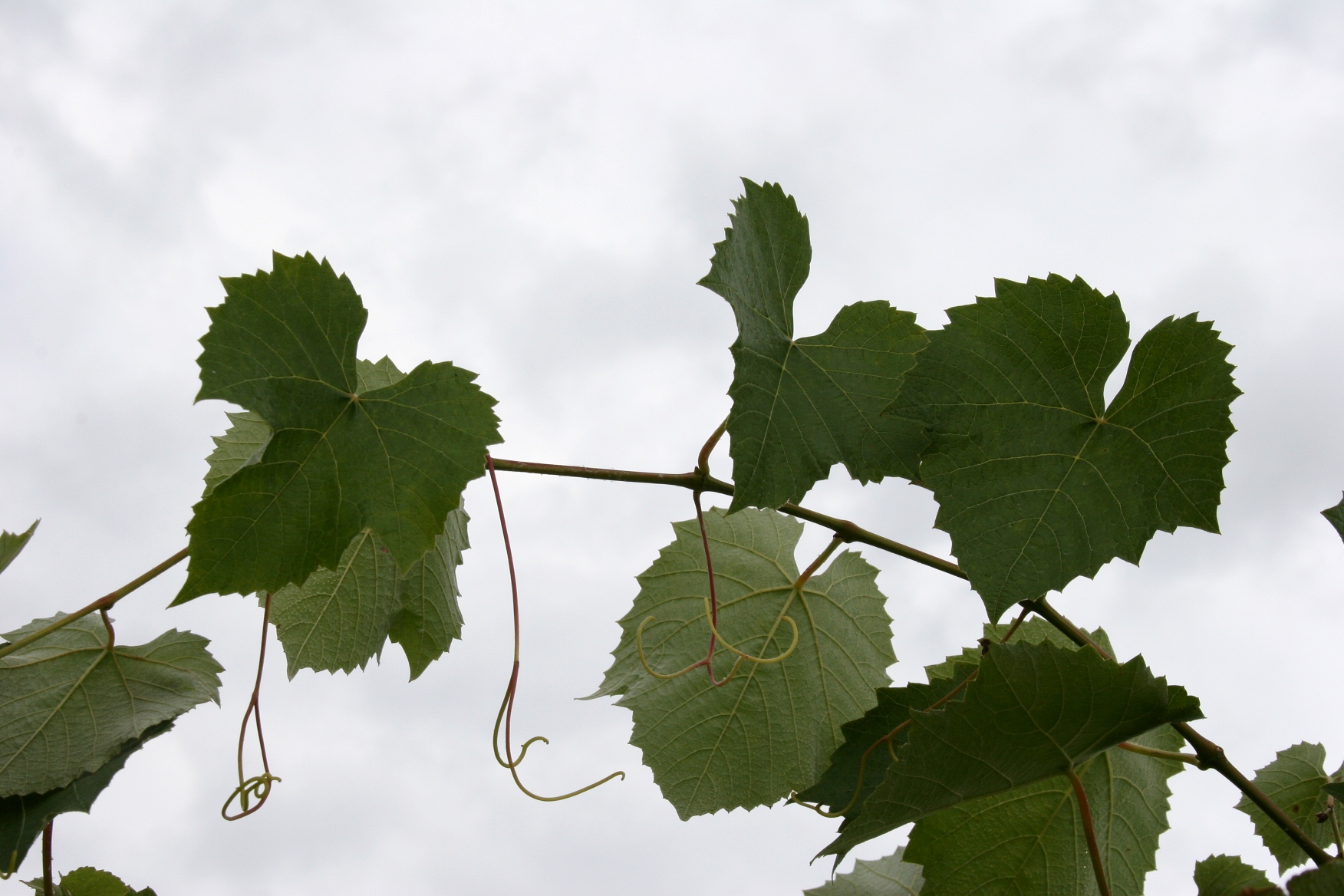
Grape leaves arc above the rows.

I don't know grape types, but my husband and I found many varieties in the vineyard.

Masses of grapes and individual grapes made for some lovely photos.

The thing we noticed about the vineyard grapes is that they don't look at all like the types of larger grapes sold in grocery store produce departments.

Tom Winter warned us about the LP-fueled cannon before we headed for the vineyard. The cannon "fires" periodically to scare away the birds. Likewise, a loudspeaker system intertwined among the grapes broadcasts the voices of squawking birds, all to keep real birds away from the fruit.

During the winery tour, Tom says several times, “My sister’s the winemaker.” Even though Angie Winter makes the wine, this family works together, from Angela keeping the books to Tom pinch-hitting as a tour guide when he isn’t working in other facets of the winery to… Earlier this year, the Winters were named Waseca County’s Farm Family of the Year.

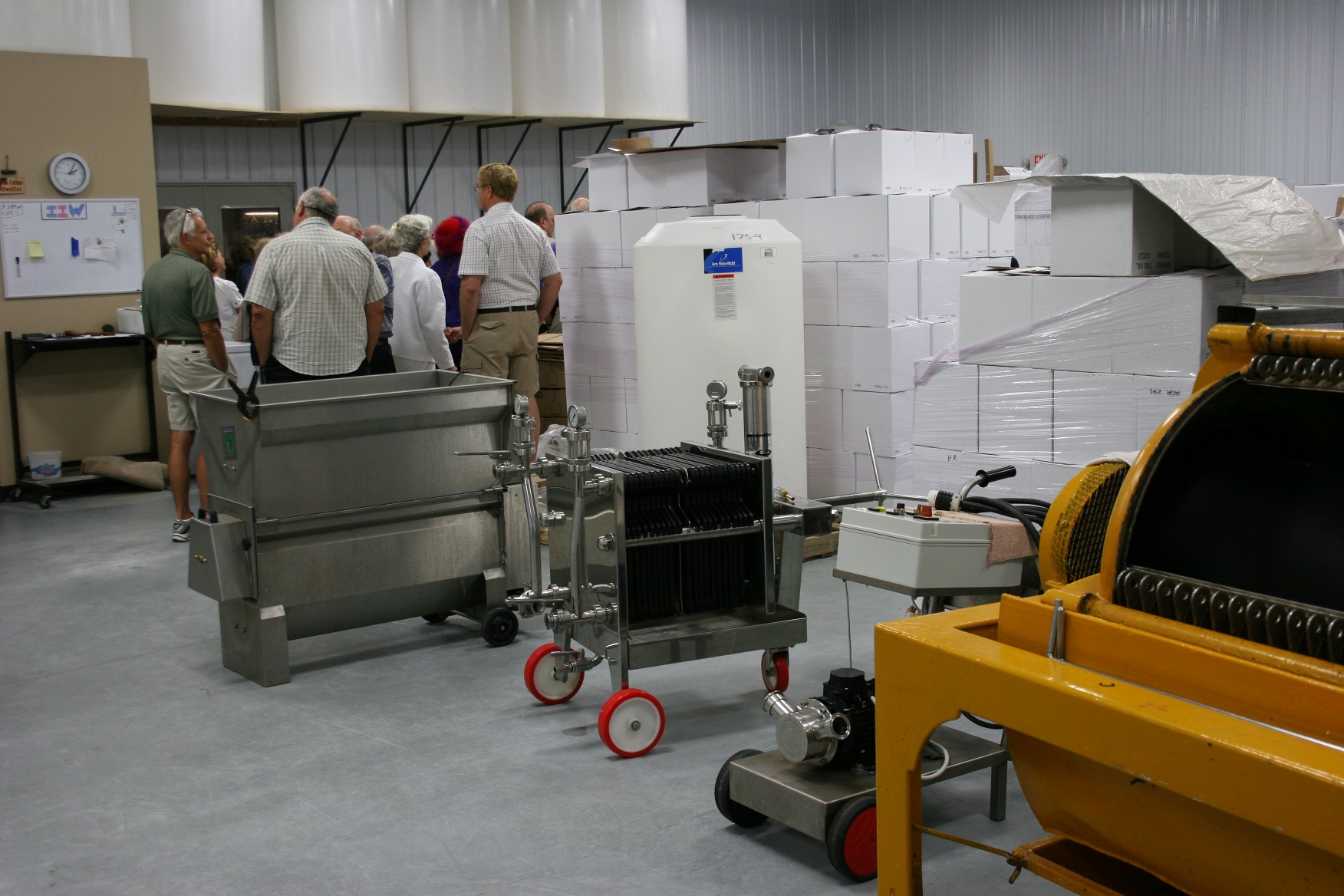
Visitors learn about the press, filter, crusher and other equipment in the wine-making room.

A box full of corks in the wine-making section of the business.

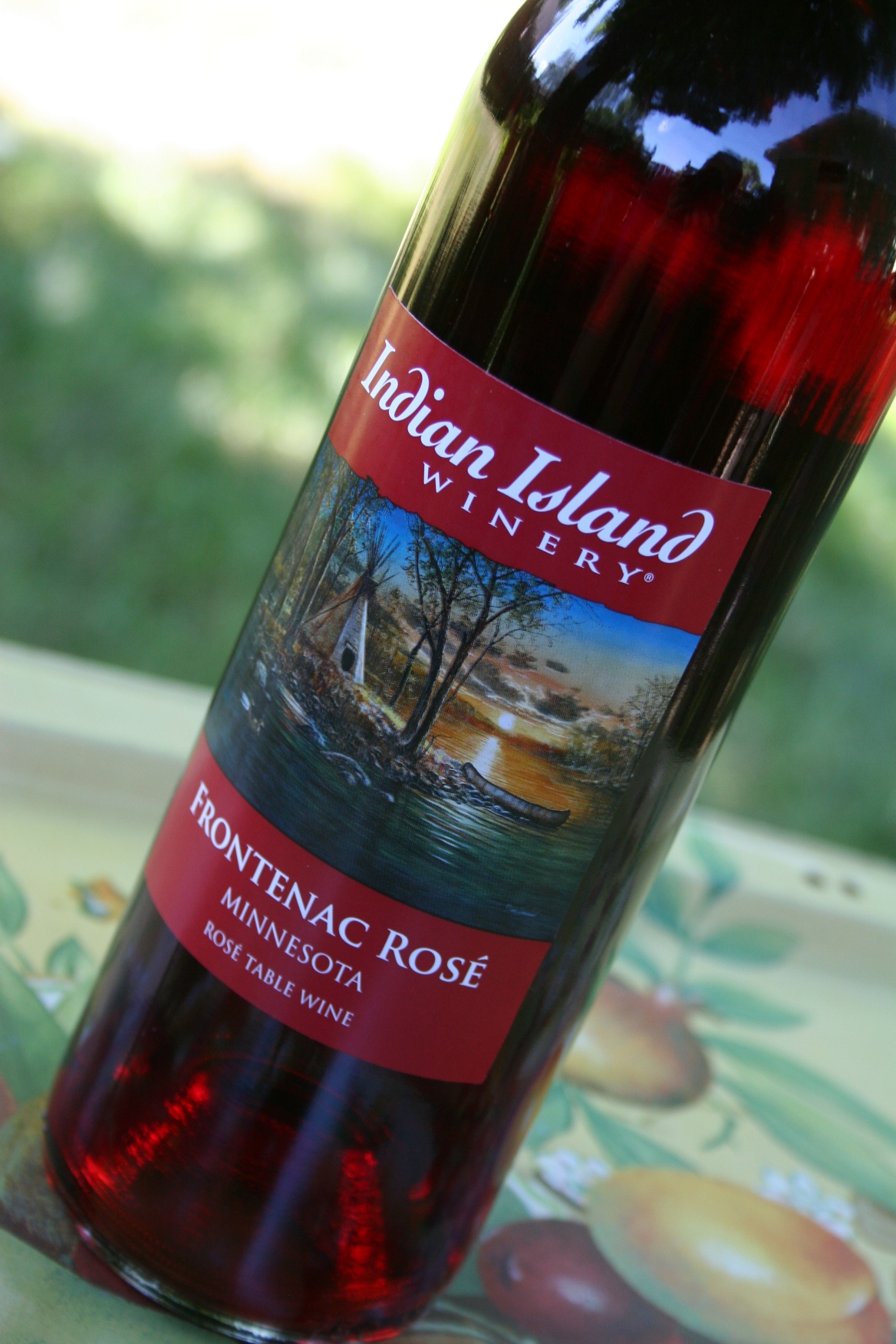
Together, after only a few years in the wine business, the Winters have accumulated a long list of awards—the most recent the coveted Minnesota Governor’s Cup (aka gold medal) in the 2011 International Cold Climate Wine Competition for their Frontenac Rosé.

The Winters’ wine beat out 250 other entries to take the top honors, Ray Winter says.

Winner of the 2011 Governor's Cup, Frontenac Rose.

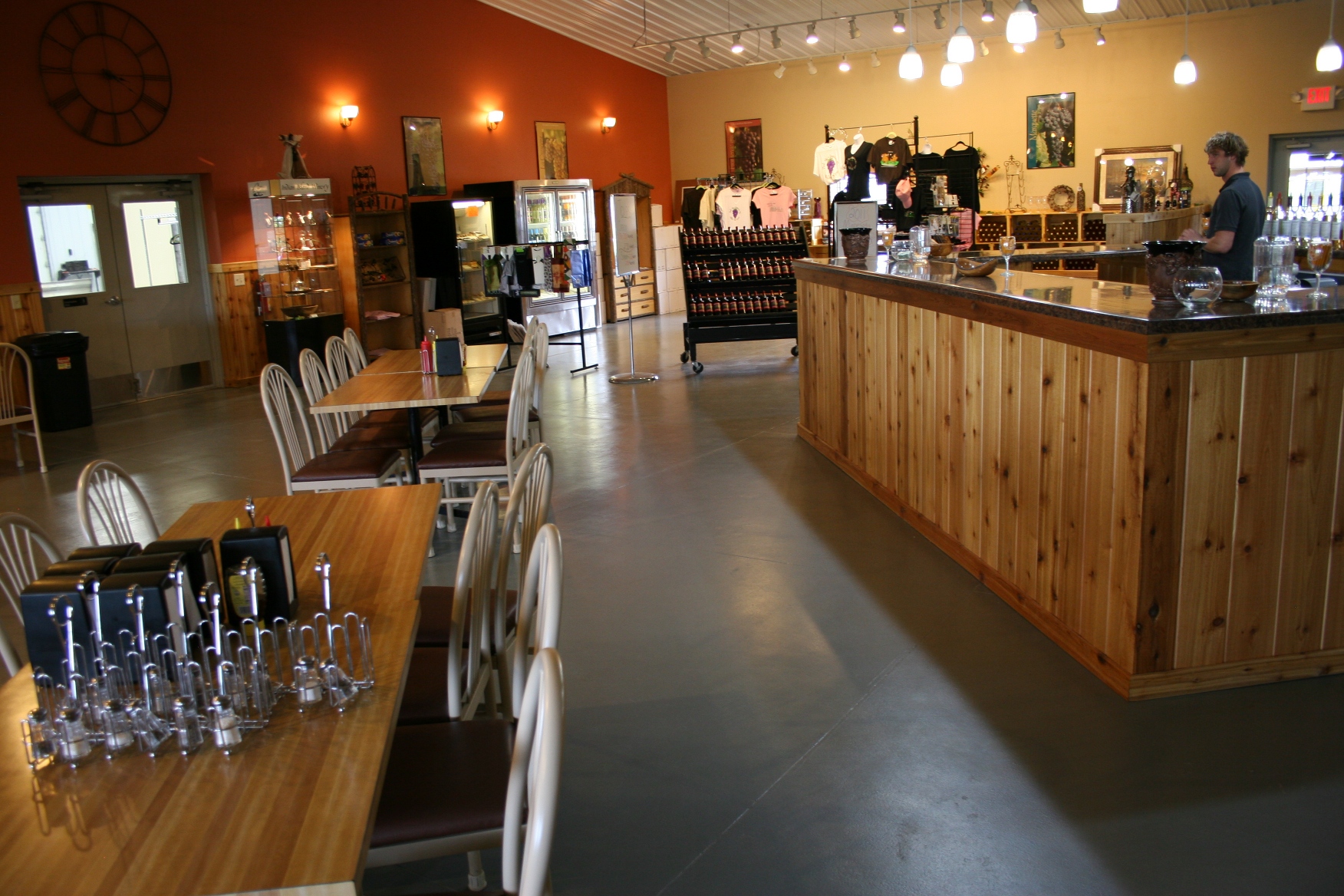
Inside the machine shed style building, which looks nothing like a storage place for farm machinery, you can (for $5 and you get to keep an Indian Island wine glass) sample four pre-selected wines and three others at the wine bar. You’ll find Maiden Blush, this year’s bestseller, and wines with names like Dreamcatcher, Prairie Wind and St. Pepin.

You can sample wines (17 are on the current wine-tasting list) and/or enjoy a meal inside or outside the winery.

One of the many winery offerings: St. Croix, a semi-dry red table wine.

Grab a bottle of wine from the vast selection at Indian Island Winery.

If all goes well with this year’s crop, Indian Island plans to offer wines made from only Minnesota-grown grapes. Most grapes will come from the family’s own vineyards with some also coming from local contractors.

For now, Indian Island makes only grape wine. I have yet to sample any, although my husband and I picked up bottles of Maiden Blush and Frontenac Rosé.

The bartender suggested we return: “Come back in the evening, have a glass of wine and watch the sun set.”

That sounds like a plan to me, to this former southern Minnesota prairie farm girl who appreciates nothing more than the sun slipping below the horizon in a serene setting like that at Indian Island Winery.

I can picture myself sitting on the patio at Indian Island, sipping wine and watching the sun set.

FYI: Indian Island Winery is among places featured in the “Minnesota River Sips of History” wine, beer and history trail tour. Click here for more information on this tour that will take you to places like August Schell Brewing Company in New Ulm, Fieldstone Vineyards in Redwood Falls, the historic R.D. Hubbard House in Mankato, Gilfillan Estates between Morgan and Redwood Falls, and more. The sites are hosting special events the weekend of October 21 – 23.

Indian Island is among about 30 wineries in Minnesota and is located southeast of Mankato. The business aims to use only Minnesota grapes, most grown on-site.

FYI: Click here to learn more about artist Jim Hansel who created the signature artwork that graces Indian Island wine labels.

© Copyright 2011 Audrey Kletscher Helbling