Minnesota Prairie Roots

Writing and photography by Audrey Kletscher Helbling

Connecting to God at country churches August 28, 2011

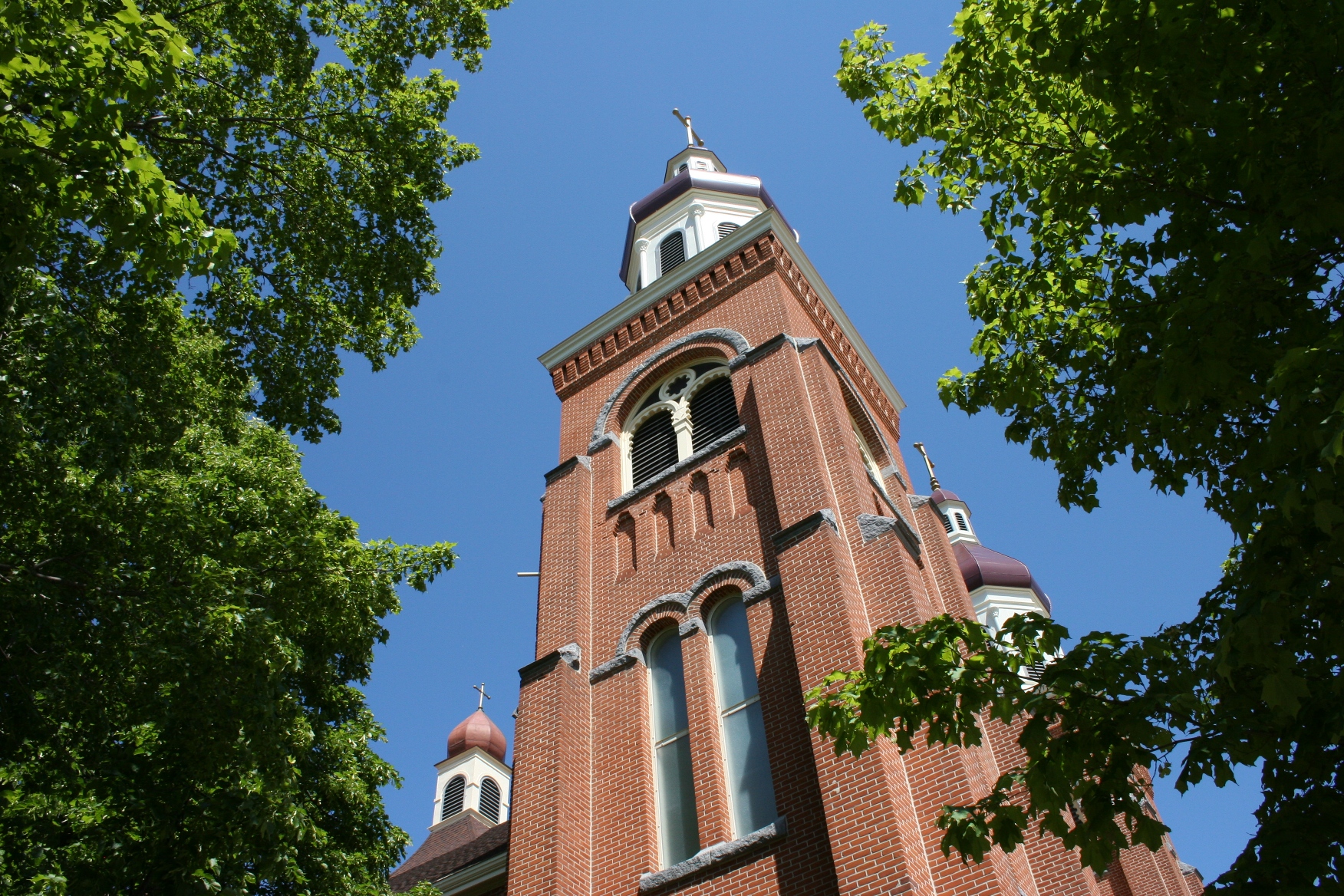
Vista Evangelical Lutheran Church, located at the intersection of Waseca County Roads 20 and 56 northeast of New Richland was built in 1908 and is on the National Register of Historic Places.

DURING THE PAST FEW YEARS, whenever I spot an old country church and have the time to stop and photograph it, I do.

I possess a sincere appreciation for the history, architecture, beauty and art found in these rural houses of worship.

There’s also something about a church in the country that exudes a deep sense of peace not found in a church built in a town and surrounded by homes or businesses, confined by concrete or pavement.

In the country, a church feels more closely connected to God by the sky, the land, the stirring of the wind through the trees, the background buzz of bugs on an end-of-summer day.

Serene. Peaceful. Calm. A certain sense of comfort comes from walking through a country churchyard, through the adjoining cemetery that links to farm fields where congregational forefathers worked the land and, on Sunday mornings, paused to thank God for the blessings bestowed upon them.
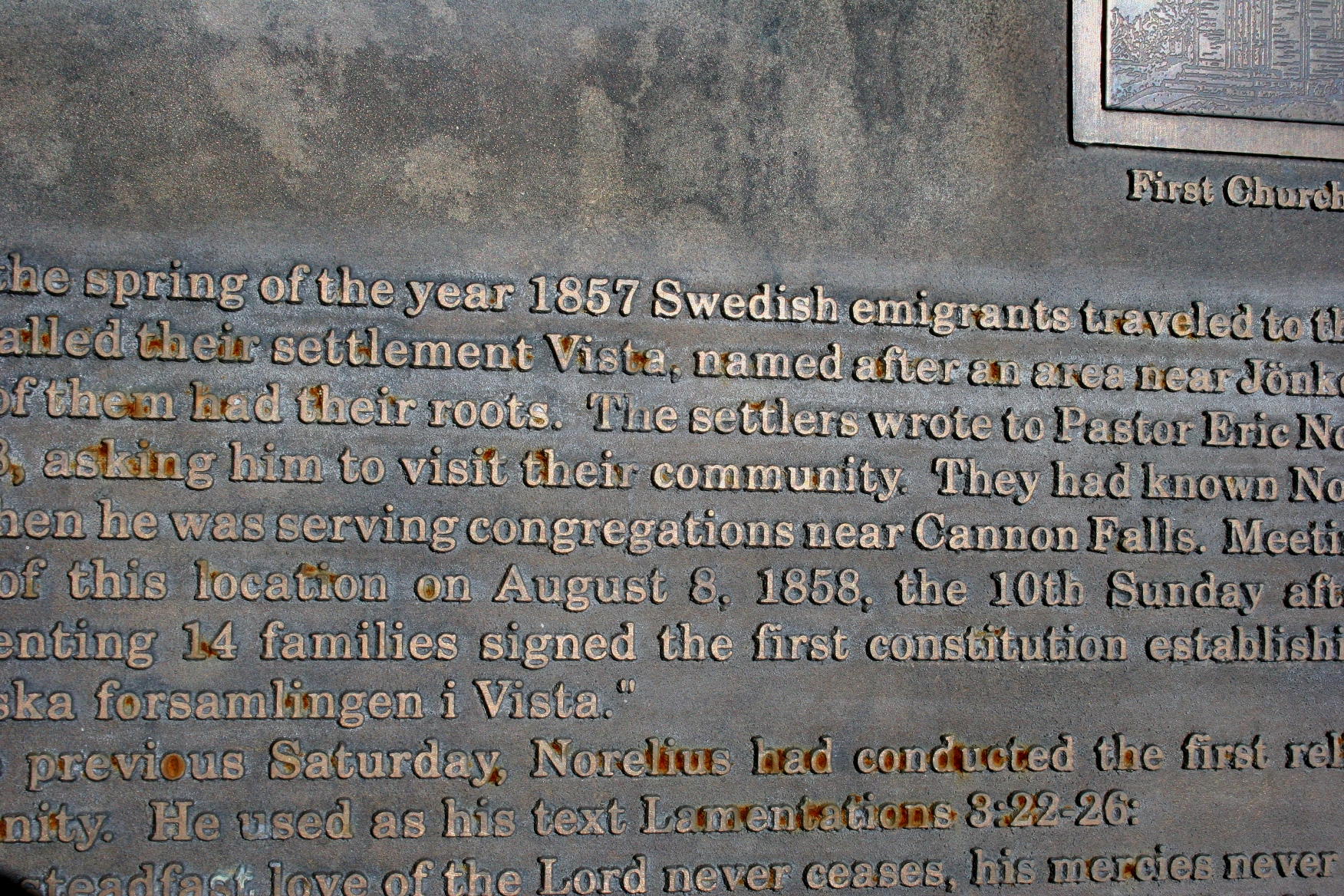
A plaque at Vista details the congregation's Swedish roots and history. Early settlers met on a hill north of the current church on August 8, 1858, and signed a constitution.

Most times on these brief visits to country churches, I find the doors locked. It wasn’t always this way. Perhaps even a decade ago, I could have walked inside. But times are different. Worry about theft requires locked doors.

So I can only imagine the sun streaming through stained glass windows, the worn pews, the ornate altar, the frayed rope of the bell pull.
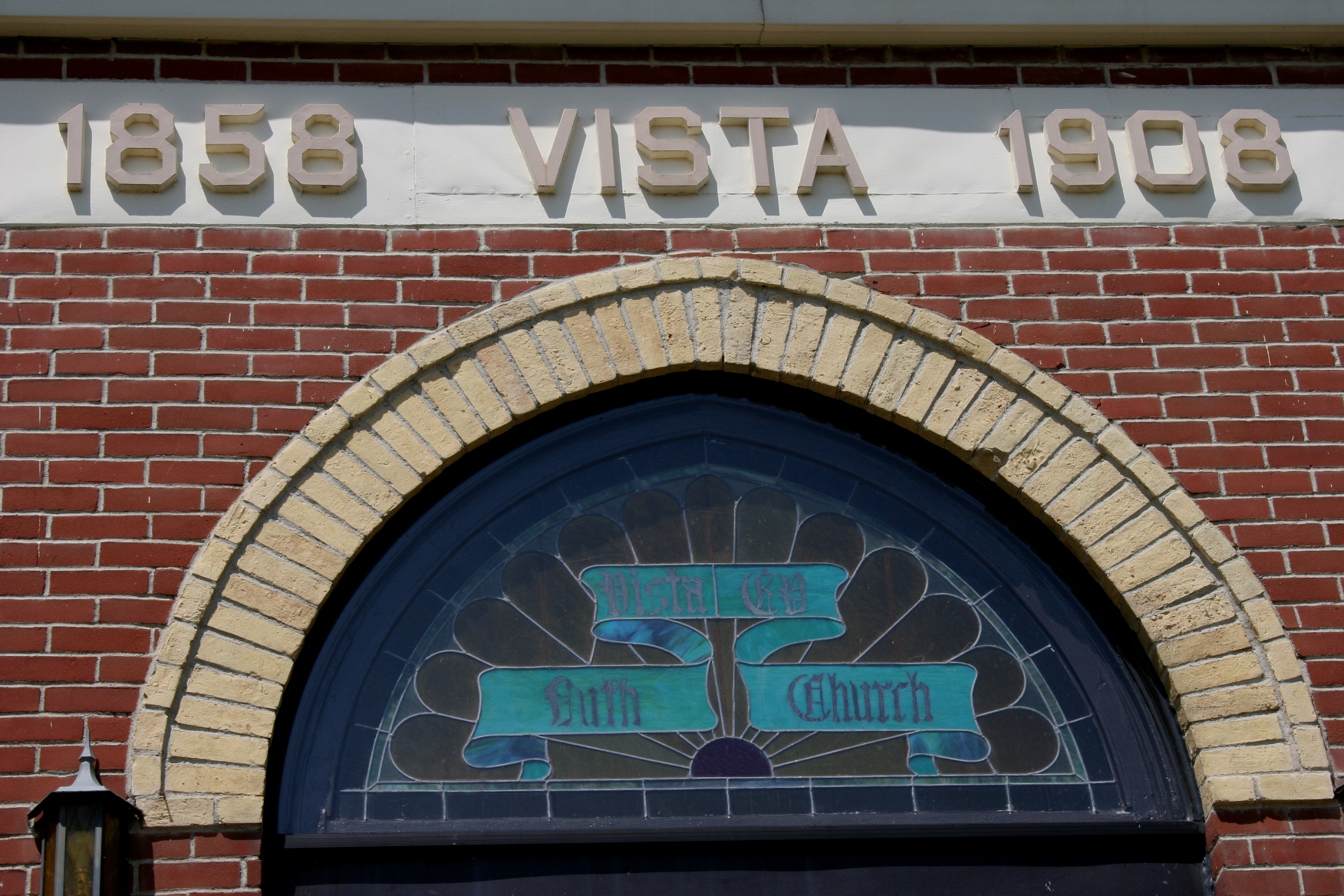
Nearly every old country church features irreplaceable stained glass windows.

As I circle the church exterior, I consider the families that have come together here to celebrate baptisms and marriages and to mourn the loss of loved ones. Ashes to ashes, dust to dust.
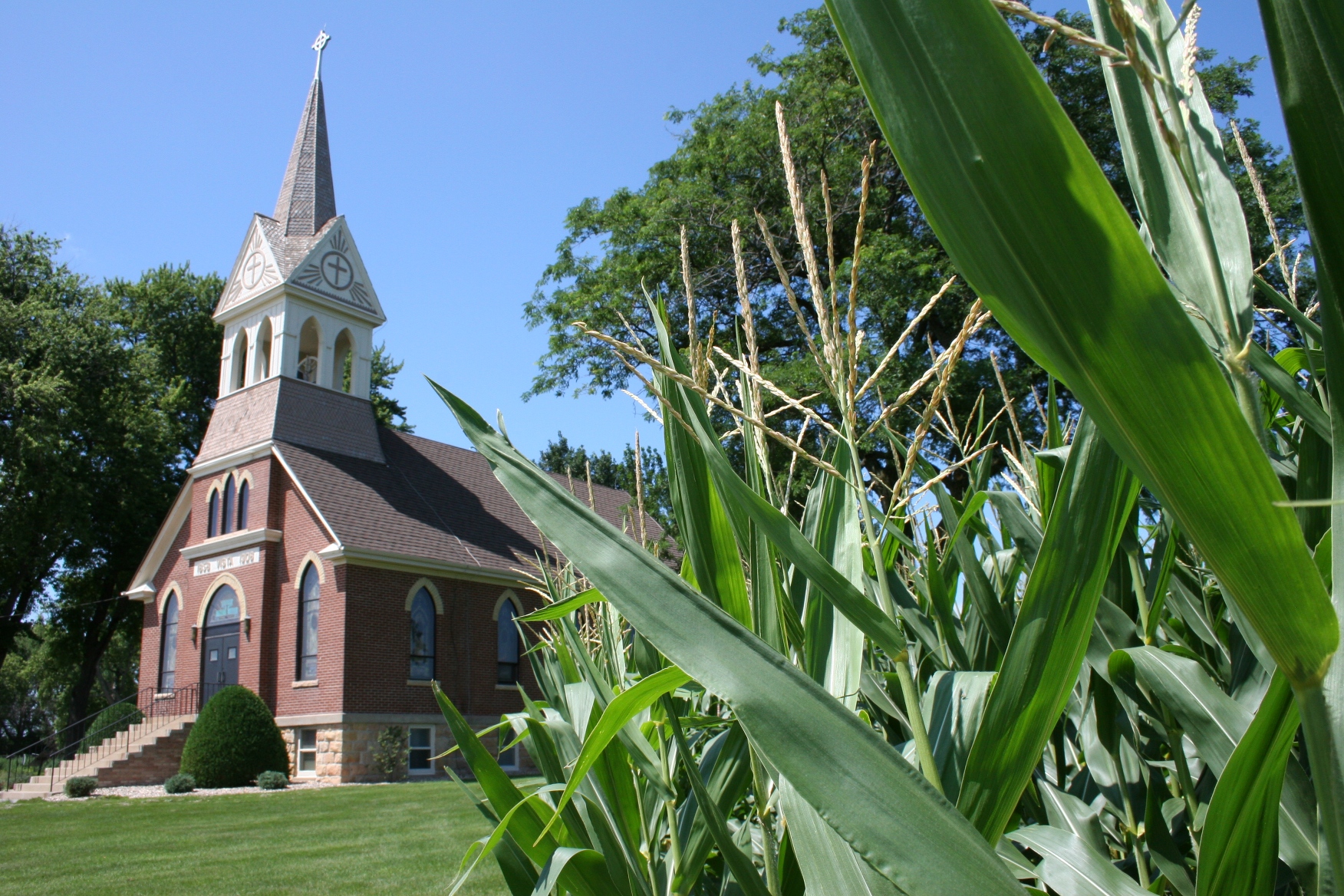
Cornfields snuggle up to Vista's church yard. It's the most beautiful of settings.

Here, standing with my feet planted next to the church next to a corn or soybean field overlooking the picturesque countryside, I can feel the almighty presence of God the Creator as I contemplate words from “Beautiful Savior,” my favorite hymn:

Beautiful Savior, King of creation, Son of God and Son of Man!

Truly I’d love thee, Truly I’d serve thee,

Light of my soul, my joy, my crown.

#

Fair are the meadows, Fair are the woodlands, Robed in flow’rs of blooming spring;

Jesus is fairer, Jesus is purer,

He makes our sorr’wing spirit sing.
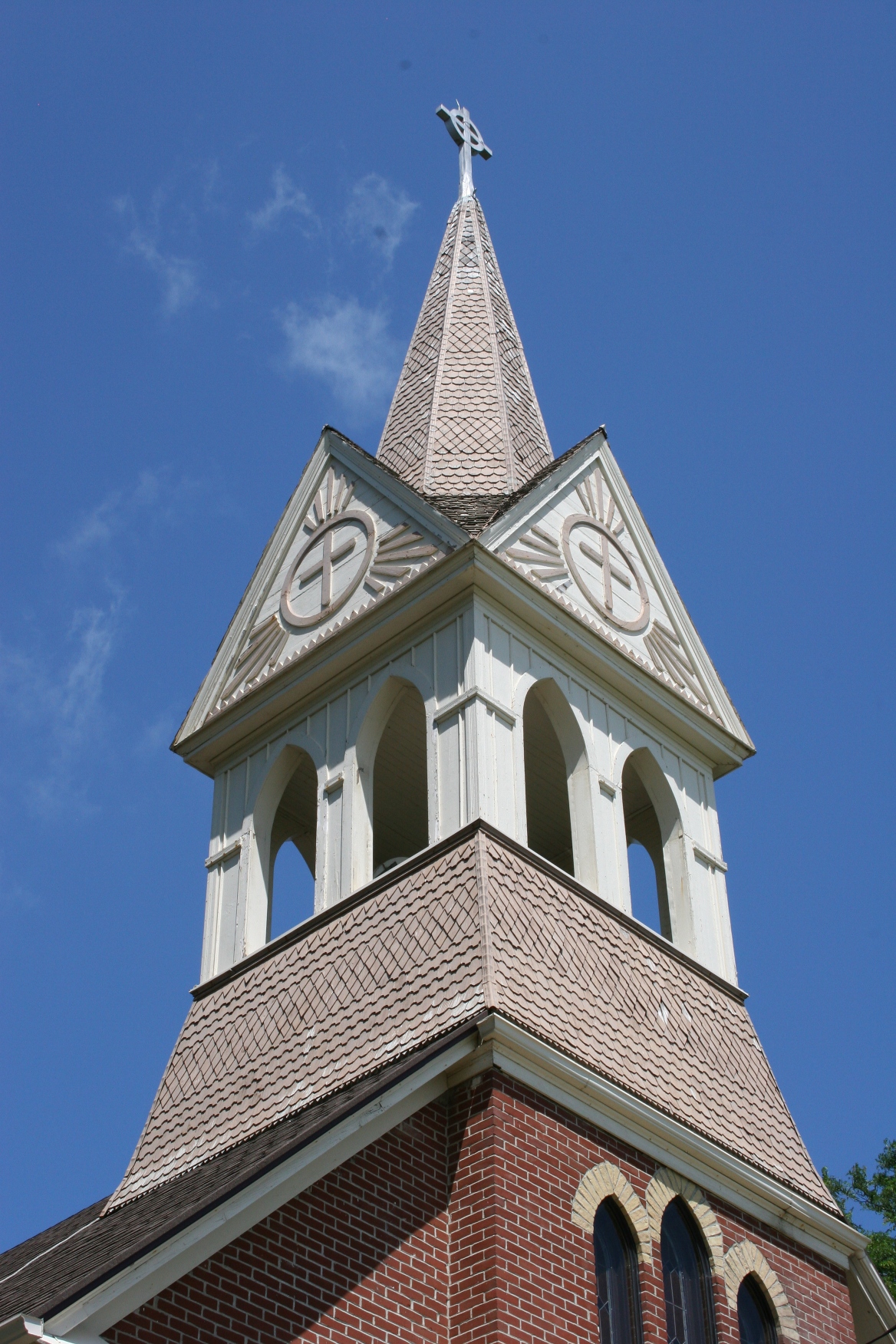
Vista's steeple rises above the countryside as a local landmark.
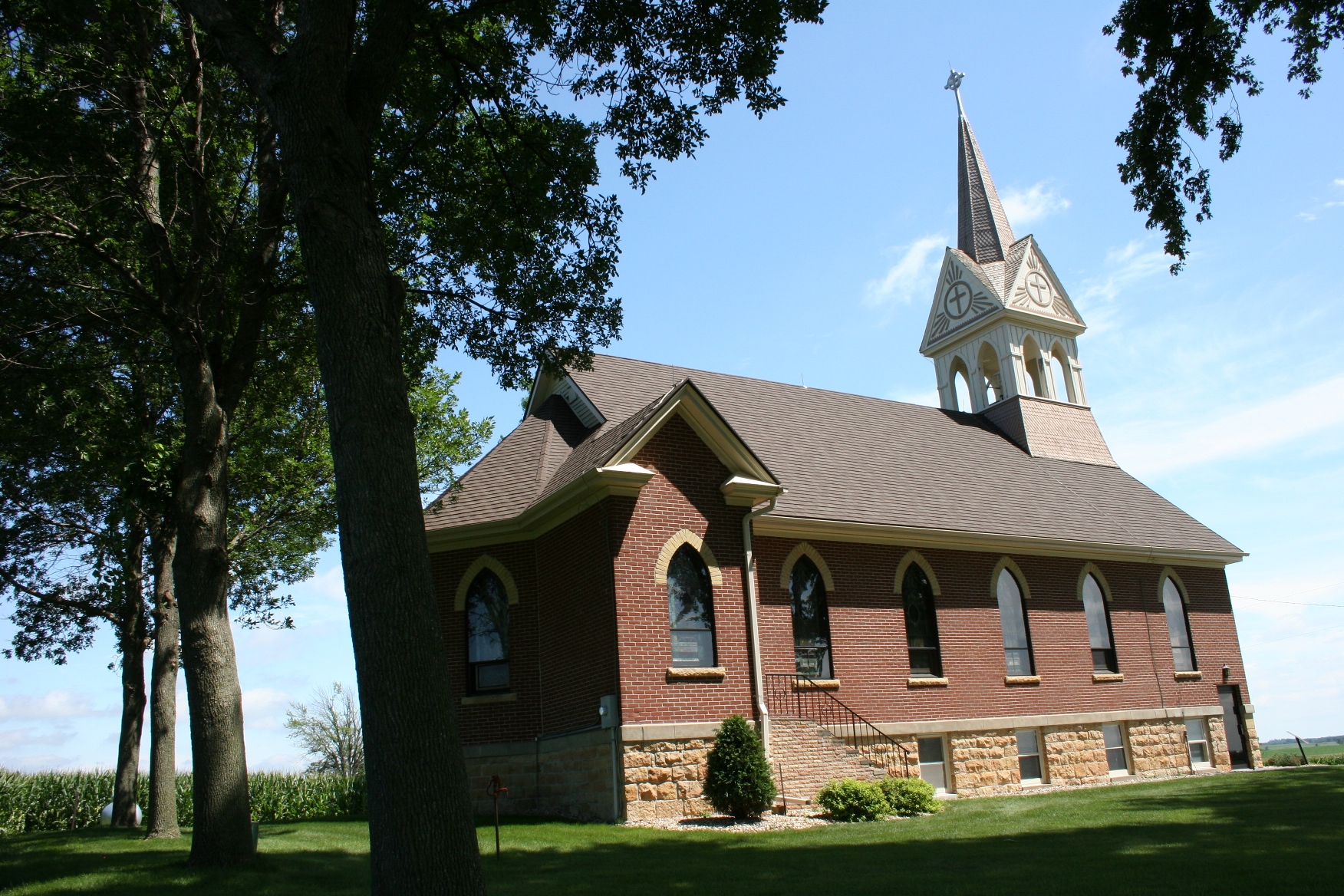
A lovely grassy area of shade trees lies to the north and west of the Vista church.

© Copyright 2011 Audrey Kletscher Helbling

Verses one and two of “Beautiful Savior” are from The Lutheran Worship hymnal.


Hotdish, but not on a stick August 26, 2011

TYPICALLY MY POSTS focus on a single subject. But not today. I’m serving hotdish. And since the Minnesota State Fair opened Thursday, pretend it’s hotdish on a stick, which actually can be purchased, with cream of mushroom dipping sauce, from vendors Ole and Lena’s. Ja, sure, ya betcha.

This year you’ll also find, for the first time at the Great Minnesota Get Together, chocolate covered jalapeno peppers.

Now, you might think Minnesotans would hesitate to try jalapeno anything given our primarily Scandinavian and German taste buds. But I can tell you that two summers ago I found Dennis Gare pushing chocolate covered jalapenos at the Faribault Farmers’ Market and they were selling like lefse at a Norwegian dinner.

Dennis Gare's chocolate covered jalapenos, which I photographed two years ago.

At the time, Dennis told me the jalapenos were creating quite a buzz among customers and vendors. He’s one of those savvy marketing types who create atypical foods—like pickled eggs and horseradish—that will attract customers and increase sales.

I checked in with Dennis last Saturday and jokingly asked if he was the vendor peddling the chocolate covered jalapeno peppers at the State Fair. Nope. That would be Andre’s Watermelon. But he was a little worried about the fieriness of the over-sized jalapenos on a stick.

If you attend the State Fair and try a chocolate covered jalapeno pepper, submit a comment. I’d like to report back to Dennis down at the Faribault Farmers’ Market. Click here to read my July 20, 2009, post about Dennis’ jalapenos.

SINCE I’M ON THE SUBJECT of the State Fair, I need to give a shout-out to the new Princess Kay of the Milky Way, 18-year-old Mary Zahurones from Pierz, a community of about 1,300 north of St. Cloud in Morrison County and along Minnesota Highway 25, a main route to the Brainerd Lakes area.

The new princess had her head carved in a 90-pound block of butter at the fair yesterday.

Anyway, I know a little about the princess’ hometown of Pierz. My husband graduated from Pierz Healy High School in, well, let’s just say a long, long, long time ago. The new princess graduated from my spouse’s alma mater several months ago, and you’ll find her princess photo proudly showcased on the District 484 website home page.

Two other interesting tidbits about Pierz: The town was originally called Rich Prairie, but was renamed after a Catholic priest, Father Francis Xavier Pierz. He is recognized as “The Father of the Roman Catholic Diocese of Saint Cloud,” having settled in central Minnesota in 1852 as a missionary to Native Americans and having attracted many German Catholic immigrants to the area. You’ll find a statue of the good Father in a Pierz park, moved there last year from the St. Cloud Hospital.
Secondly, if you like bologna, and I don’t, but apparently central Minnesotans do, you can check out Bologna Days every Wednesday at the Red Rooster Bar & Grill in Genola (just south of Pierz) or every Thursday at Patrick’s Bar & Grill in Pierz. Really. This information is listed in the F.A.Q.’s section of the city website and, no bologna, I have seen a Bologna Days sign with my very own eyes.

Magnetic Catholic: St. Francis of Assisi

AS LONG AS WE’RE TALKING Catholic here, even though I’m Lutheran, I simply must point you to the “Magnetic Catholic” paper (well, not really paper) dolls which I first learned about from a Michigan writer on her blog, House Unseen. Click here to read that post and then click here to see the Magnetic Catholic Etsy shop.

I swear—oops, probably shouldn’t be swearing—you’ll have your socks charmed right off you by the likes of the Blessed Mother Teresa of Calcutta, St. Francis of Assisi and the Blessed Pope John Paul II.

ONE MORE THING, totally unrelated to Catholics, dairy princesses, or anything on a stick.

But, apparently the latest trend among hip, young Minneapolitans is to carry iced coffee or similar drinks around in a (Mason/Ball/Kerr) pint canning jar.

I learned this from my eldest, who drove down to Faribault Thursday evening so her personal mechanic/Dad could check her car. After we gathered home-grown tomatoes, flowers and a few other niceties for her to take back home to south Minneapolis, she asked if I had any canning jars.

A hip canning jar.

I know my daughter well enough to realize she didn’t need them for canning. Heck, I don’t even can.

So we traipsed down to the basement and poked around until we found two pint jars, rings and lids. She was one happy Uptowner.

SO THERE, I HOPE YOU enjoyed your serving of hotdish. Mighty tasty, huh?

© Copyright 2011 Audrey Kletscher Helbling


Art, history and community meld at Faribault car cruise-in August 22, 2011

I CAN’T DIFFERENTIATE a Ford from a Chevy. But I can distinguish a Mustang from a Cadillac.

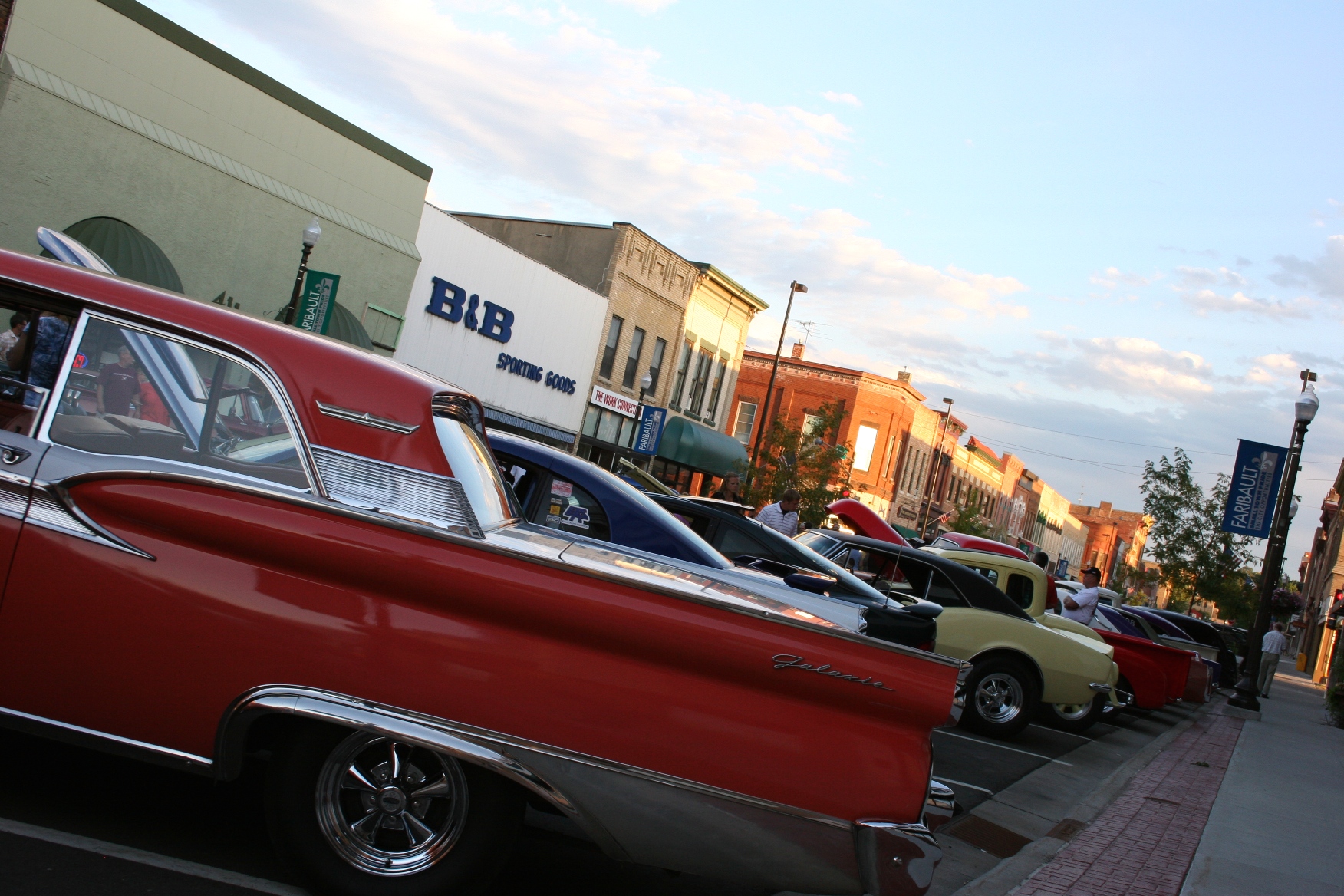
You needn’t know cars, however, to appreciate a car cruise-in like the one I attended Friday evening in the 400 block of Central Avenue in historic downtown Faribault. The monthly cruises are new to my community and, if I’m correct, Friday’s show marked the first this summer that hasn’t been rained out.

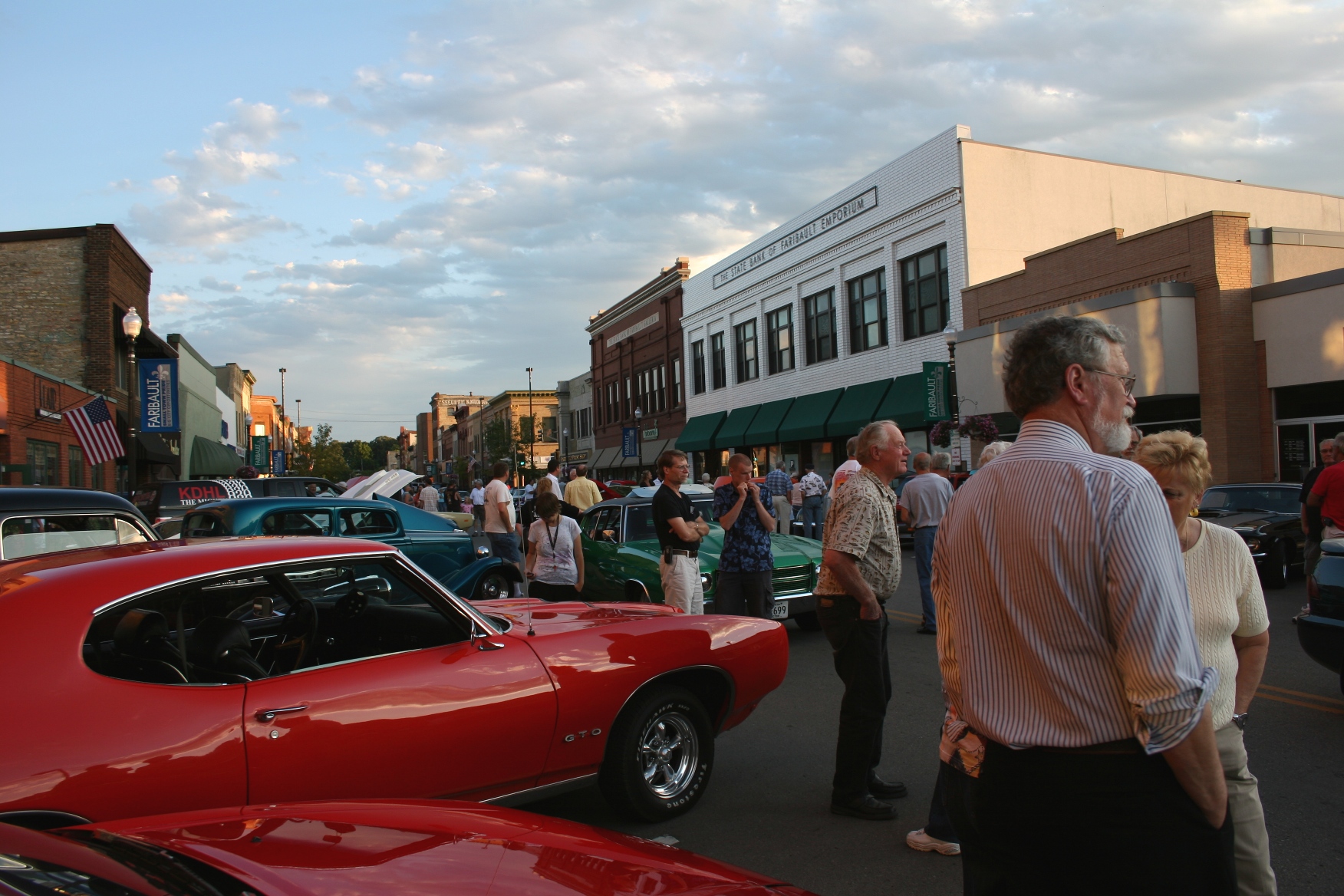
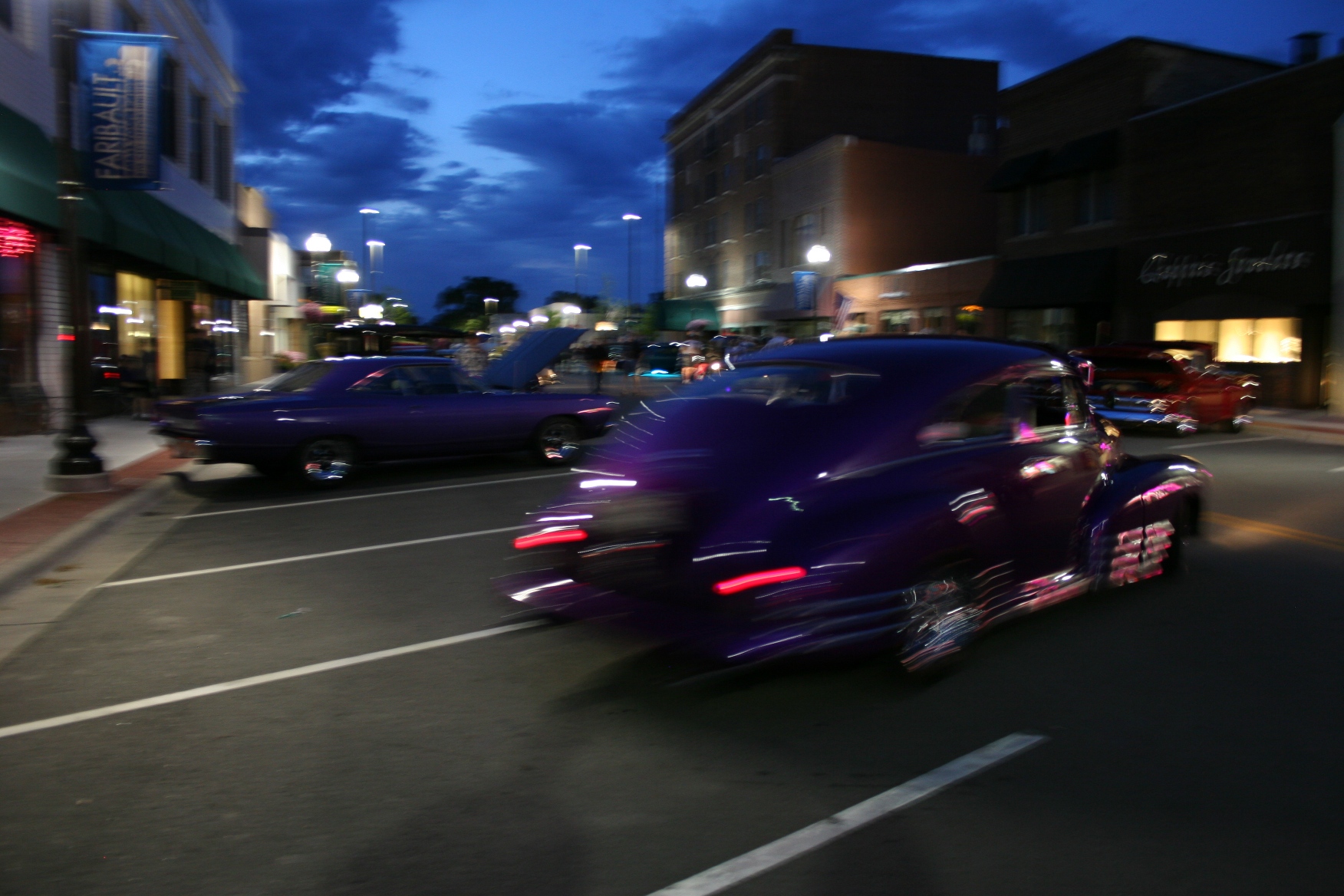
Downtown Faribault Car Cruise Night, looking southeast on Central Avenue.

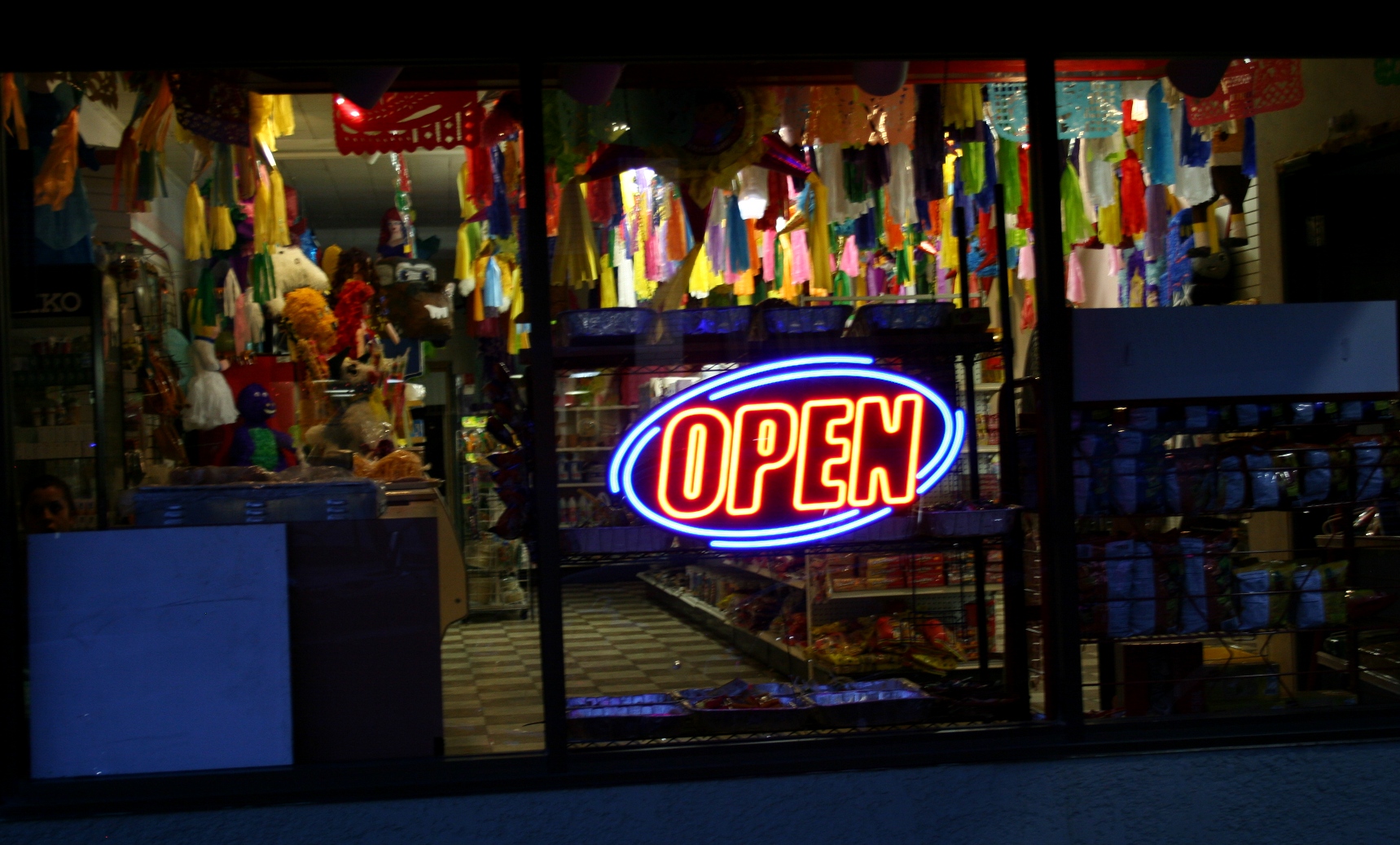
Just several of the many vintage vehicles, these parked by a Mexican store and bakery.

For me, a car cruise-in is all about art, history, community and having a good time. However, for my automotive machinist husband, the one who got me interested in these shows, it would be mostly about the cars or trucks. He’s my go-to guy whenever I question the make, model or year of any vehicle on display, which is often.

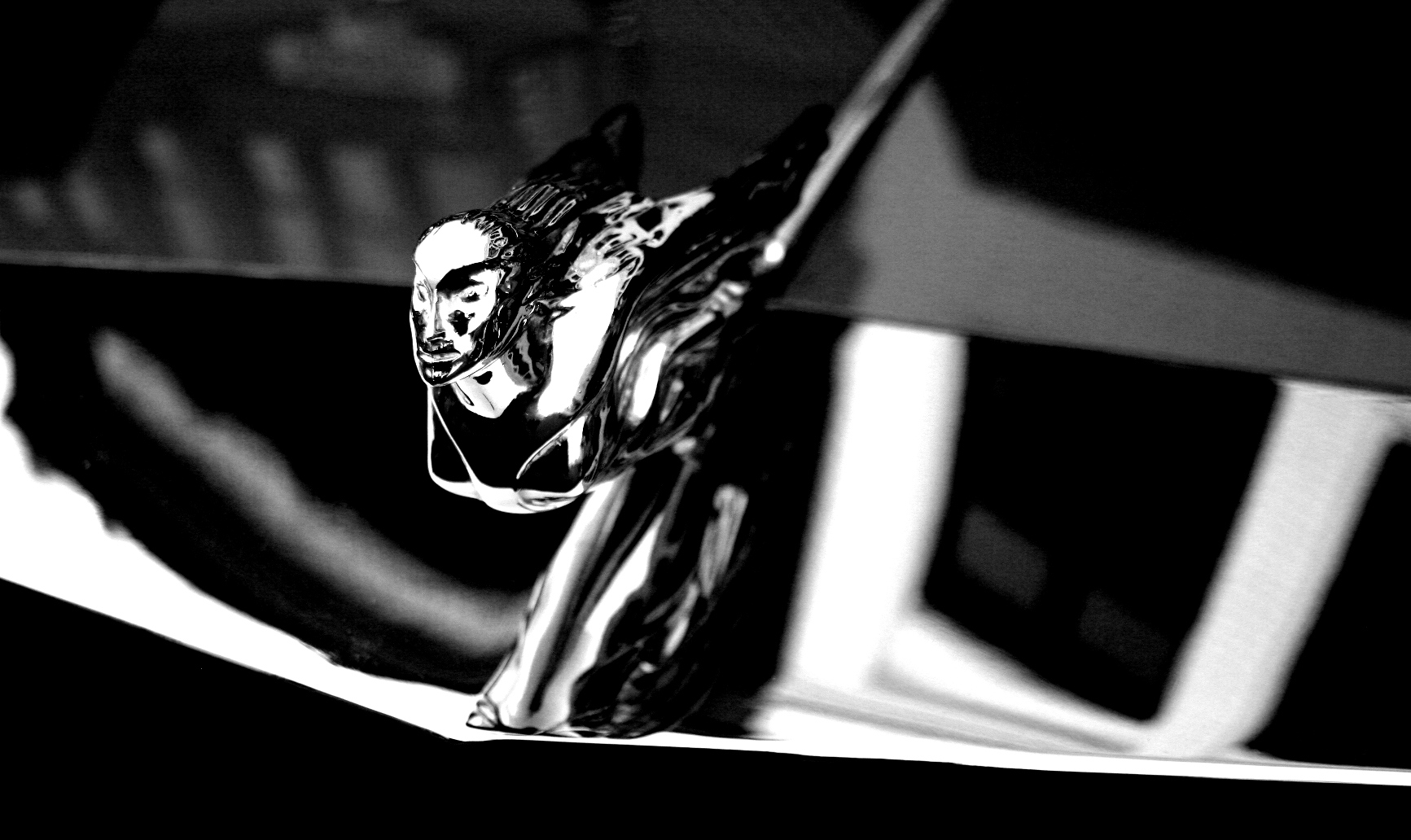
While he’s more interested in what’s under the hood or in the overall design, I appreciate the hood ornaments, wheel covers, taillights, the curve of metal—the details that, to me, represent, mini artscapes.

I switched this photo to black-and-white to show off the hood ornament, a work of art.

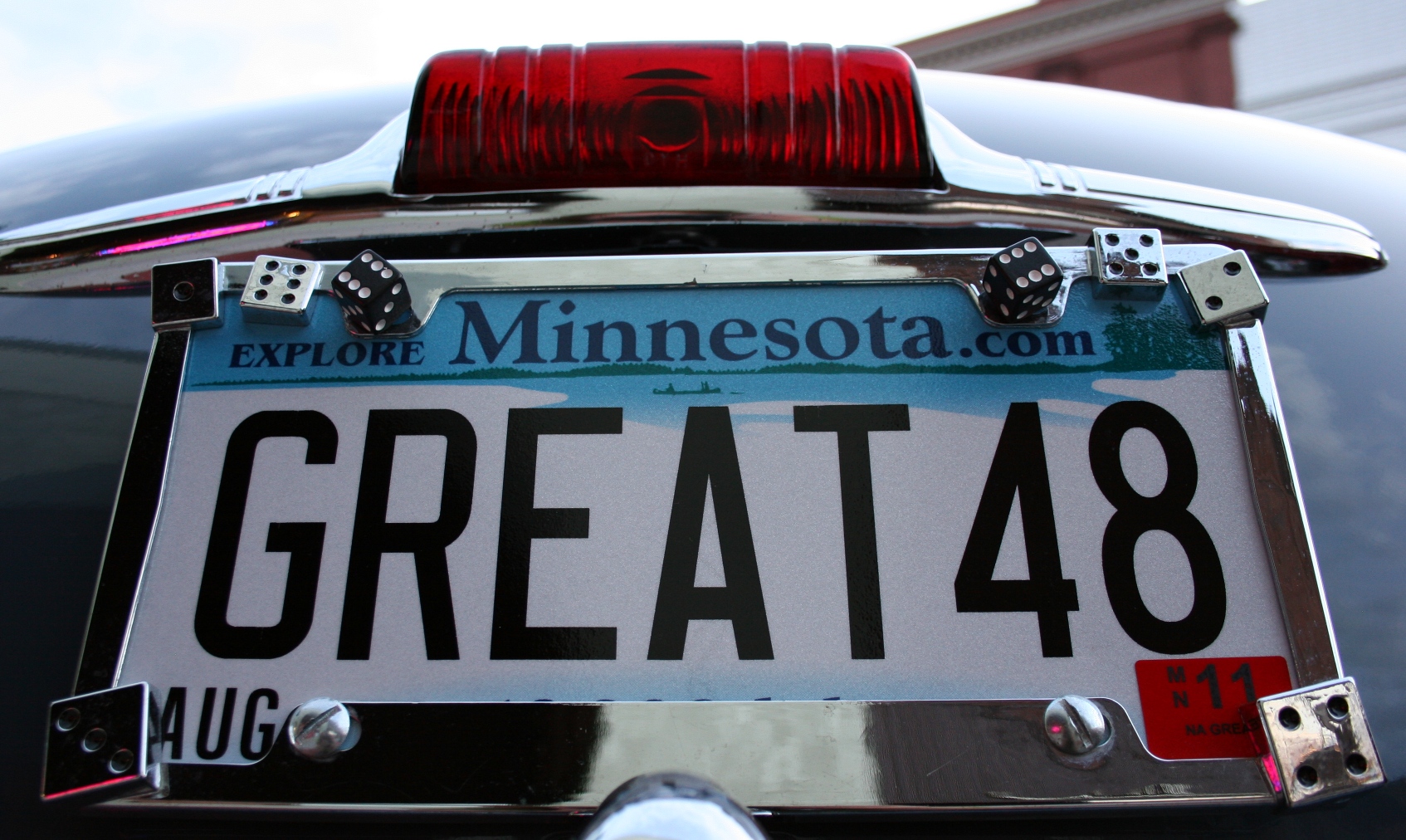
A 1948 Dodge sported this artsy license plate.

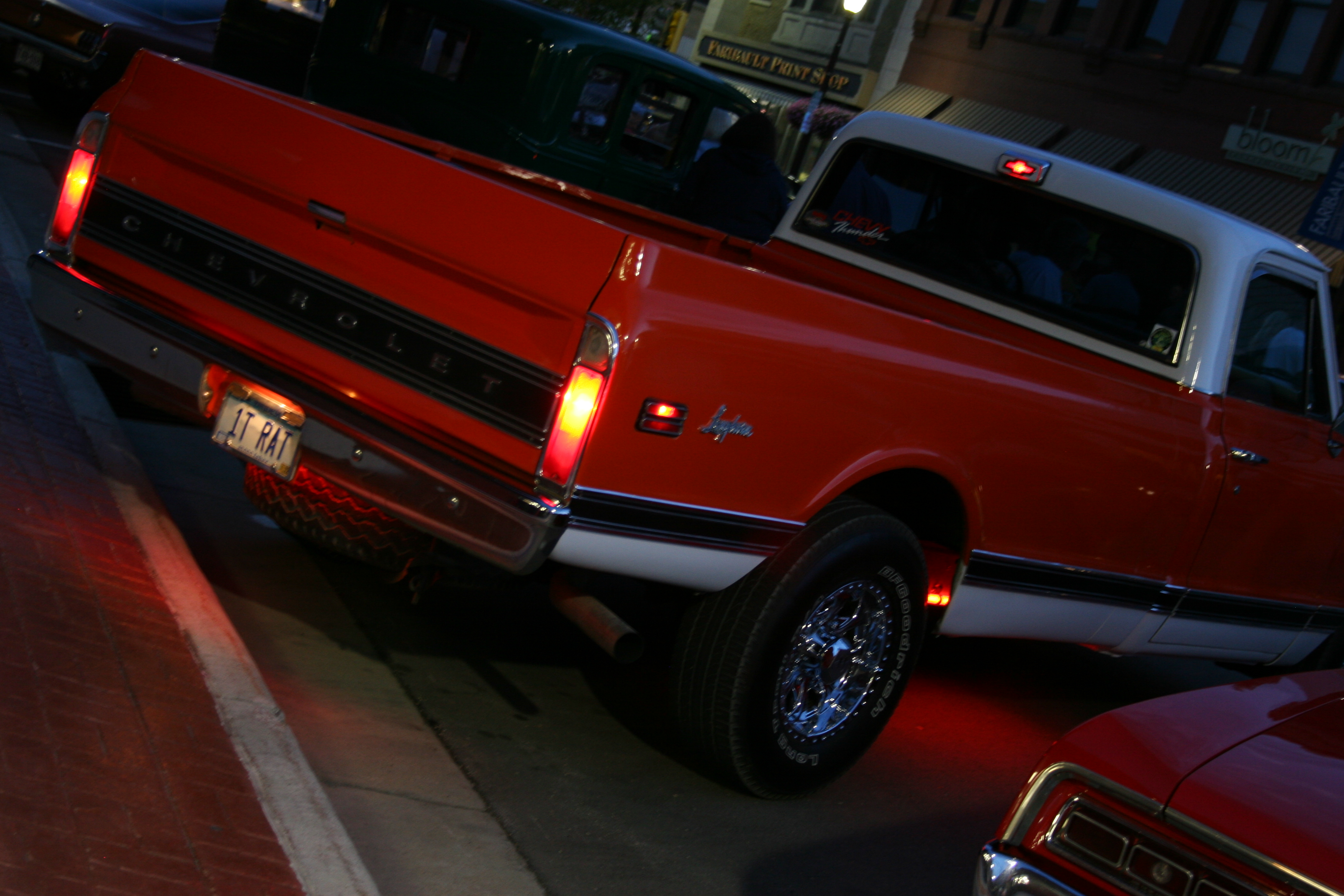
Call this art, or humor, Ron Lehnen posed this "Halloween Rat" under the hood of his 1970 Chevrolet pick-up truck with the "rat motor."

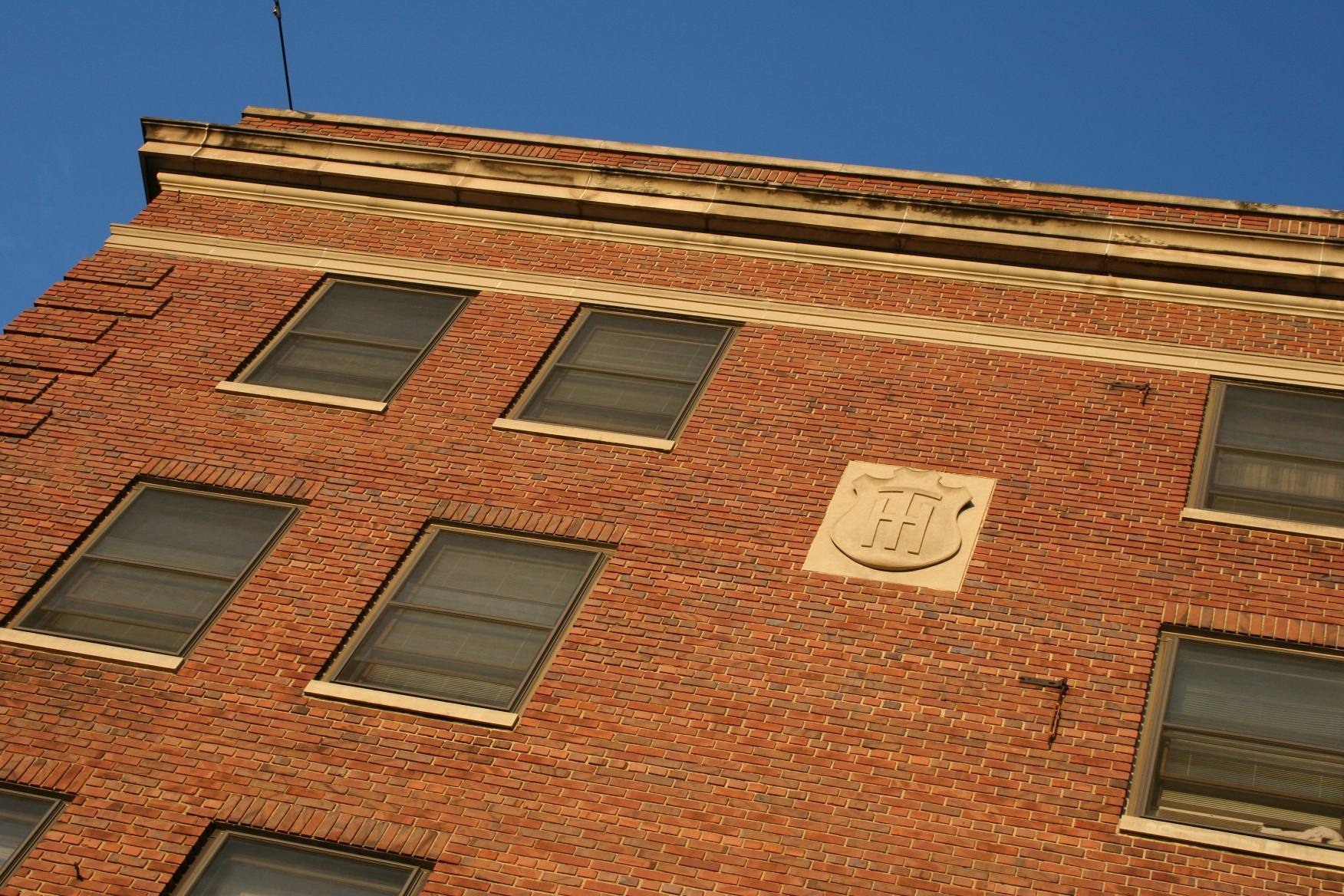
On Friday, in Faribault, I also appreciated the art of neon lights flashing in storefront windows, the slant of sun against brick during that magical hour around sunset, and clouds that painted the sky on a perfect summer evening of temps in the low to mid 70s.

The setting sun cast a lovely light on the historic Hotel Faribault.

Merchandise and flashing neon lights created a colorful visual at a Mexican store in the car cruise block.

Toss in period tunes and music by the likes of Johnny Cash, my favorite country western singer, played on-site by local radio station Power 96, and the mood was set for hanging out and chatting it up with folks I hadn’t seen in awhile.

Car cruise attendees visited with one another, creating a sense of community.

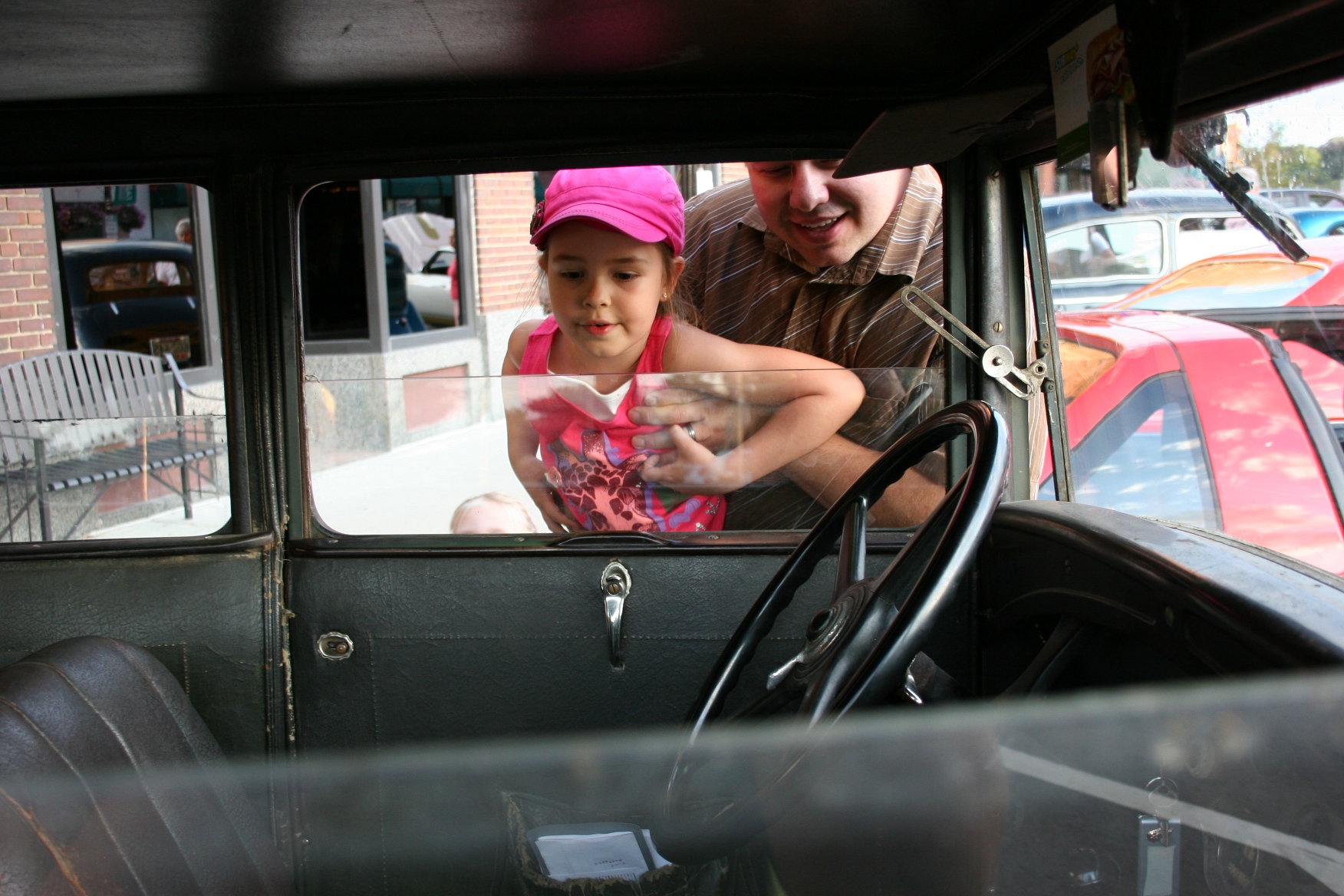
Aaron shows his 6-year-old daughter, Lexi, the interior of a vintage car.

Ted told me about his new grandson, Jaxson. Kathy told me about the need for rain in the Courtland area, where my maternal roots lie and where her husband had traveled that day to farm with his brother. Lowell told me about the $8.99 steak dinner he’d just enjoyed down the street at the Signature Bar and Grill.
Food was the only item missing from cruise night, although I could have stepped into the Mexican bakery or walked to a restaurant along Central Avenue if I had really wanted something to eat. Maybe, eventually, organizers will encourage places like the bakery or nearby restaurants to set up food stands outside their businesses.
The next Downtown Faribault Car Cruise Night is set for 6 p.m. – 10 p.m. Friday, September 16. However, I’d advise coming well before 10 p.m. as the event pretty much ended around 9 p.m.

The 1970 Chevrolet pick-up with the rat motor. My husband owned an orange truck like his, only a year newer or older, I can't recall which. A steer wandered onto a roadway. He hit it and that was the end of his pick-up truck, many years before I met him. So I've only heard the story...never seen the truck.

Lowell and Deb Melchert leave the cruise in their 1947 Chevrolet as the event winds down.

YOU MIGHT ALSO CHECK out Woody’s Hump Day Cruise In on Wednesday evenings in downtown West Concord. Two remain, including one this Wednesday, August 24, and also on September 7. That cruise-in runs from 5:30 p.m. – 9 p.m., or until dark.

Hastings also hosts the Historic Hastings Saturday Night Cruise-in from 5 p.m. – 9 p.m. with the remaining events set for September 3 and 17 and October 1.

© Copyright 2011 Audrey Kletscher Helbling


An old-fashioned grocery store, moosehead and all, thrives in Ellendale August 5, 2011

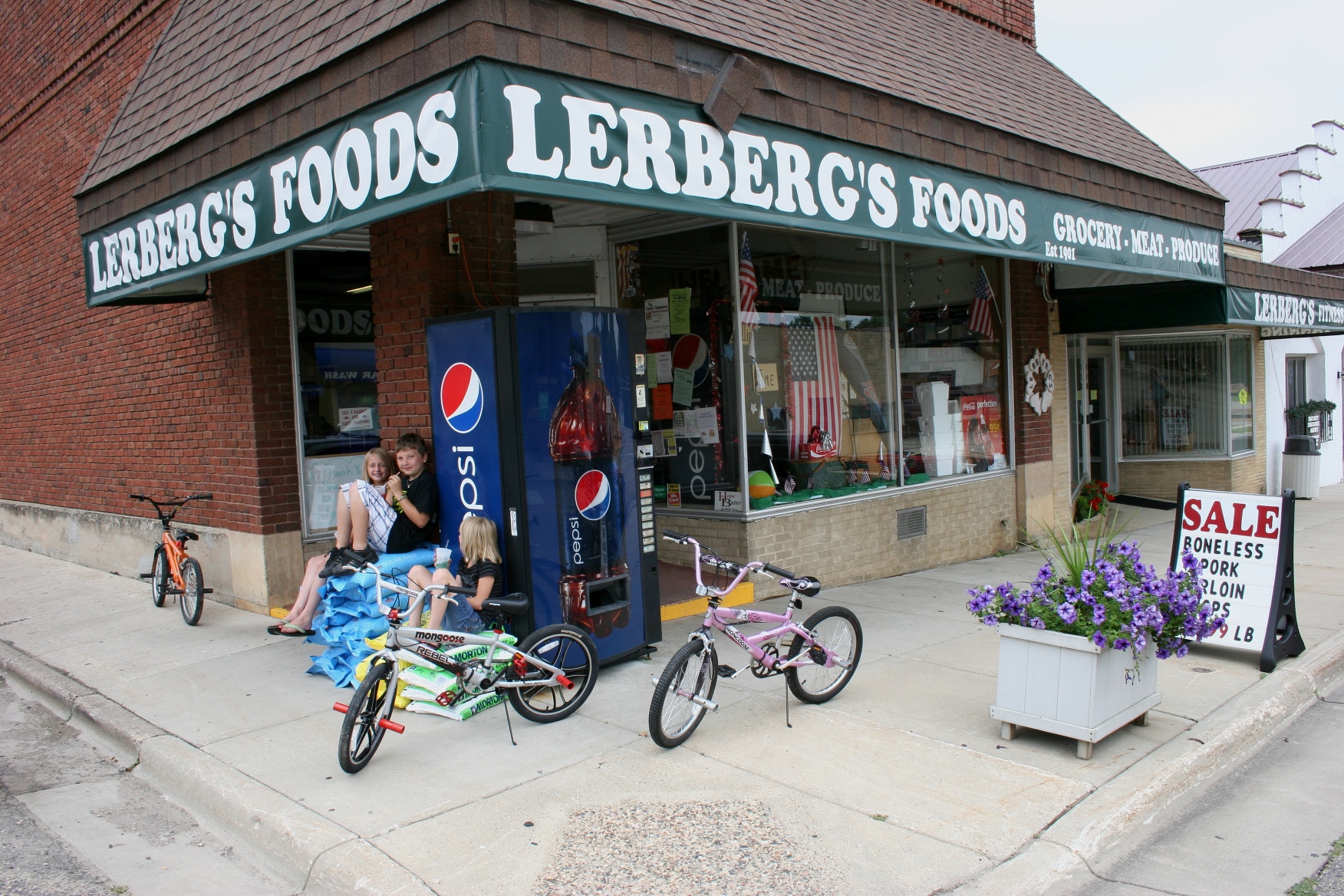
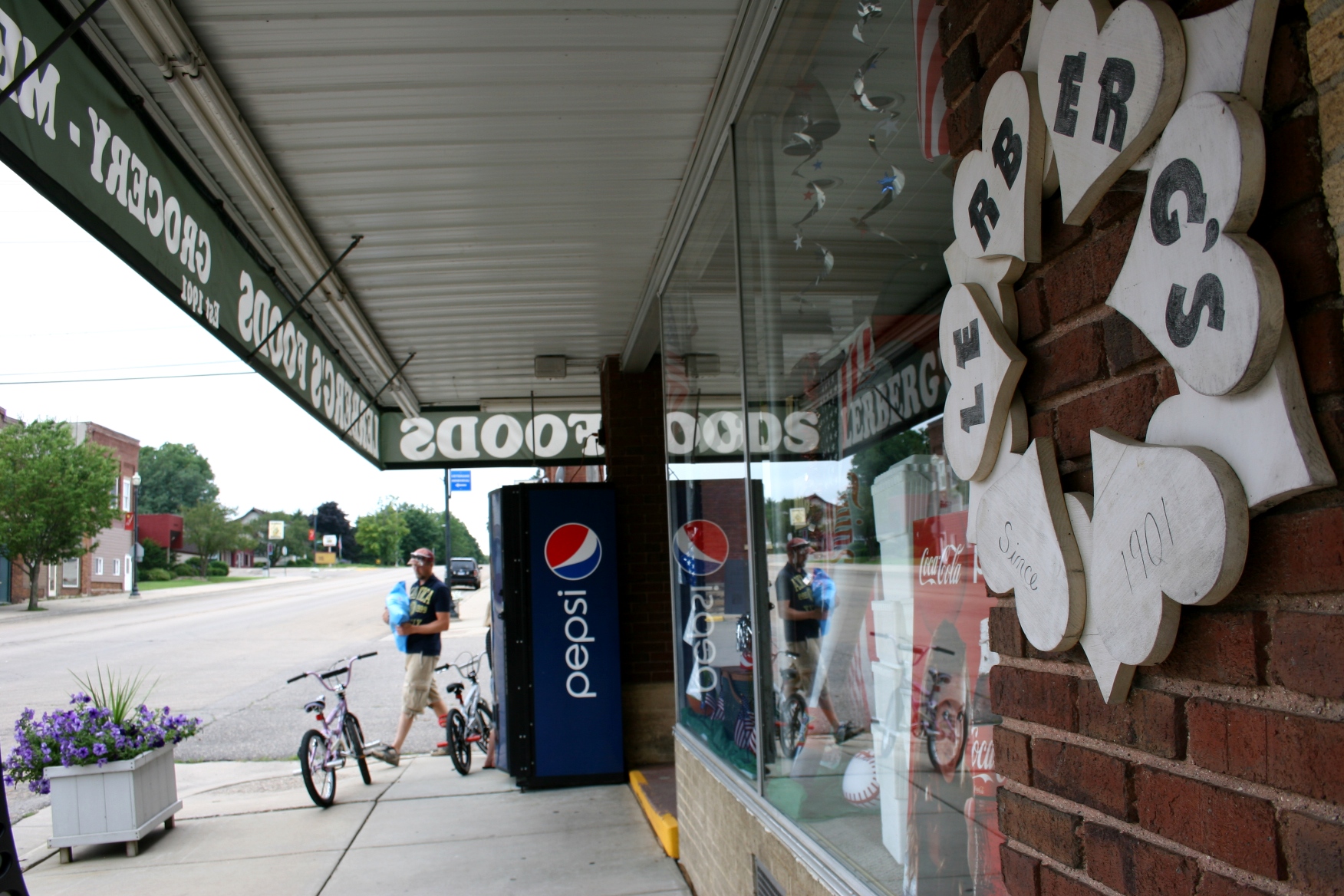
In the small town of Ellendale, kids bike to Lerberg's Foods for groceries and the occasional slushie. Here two sisters and a friend slurp their slushies while sitting on bags of water softener pellets next to the pop machine.

WHEN ANDREW LERBERG bagged a moose in northern Minnesota in 1919, the animal was brought by rail to Ellendale and the moosehead proudly displayed in the family’s grocery store.

Ninety-two years later, that moosehead still hangs at Lerberg’s Foods, above a framed photo of Andrew with his trophy and above processed fruits and vegetables stacked on grocery store shelves.

Look down the grocery aisle to your left and you'll see the moosehead that is part of Lerberg's lore.

Ross Sletten, who purchased the business in 2007 from Andy Lerberg, will tell you the moosehead came with the store and that originally the rifle used to shoot the animal rested in its antlers. Not any more. Times have changed.

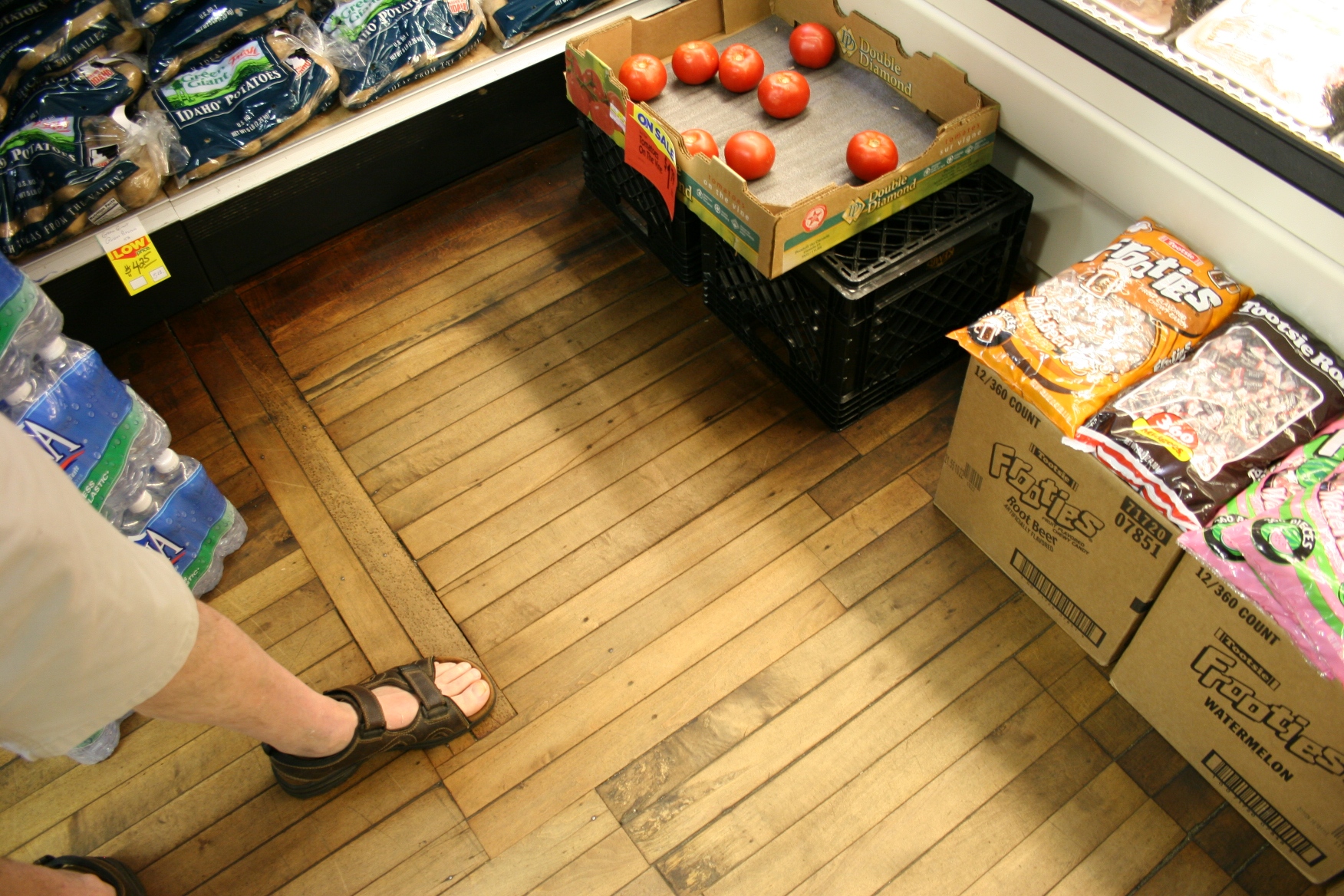
But not everything has changed at Lerberg’s. The original tongue-and-groove maple floor, tin ceiling, small-town-friendly atmosphere and more speak to the history of this 1914 brick building and to the long-standing grocery store owned by three generations of Lerbergs—Andrew, who started the business (in another building) in 1901, Arthur and Andy.

The original tongue-in-groove maple floor in front of the meat counter.

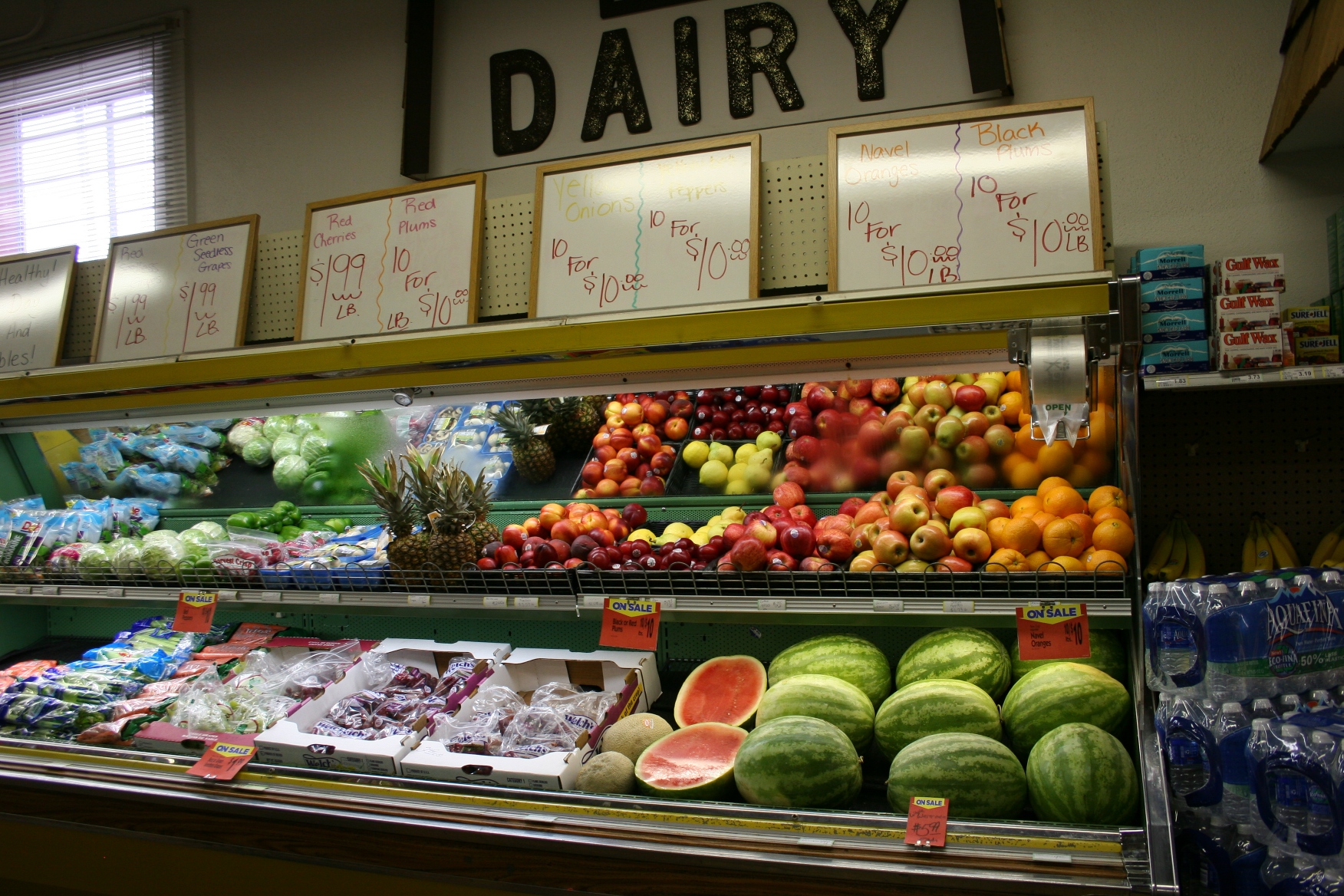
The produce department of Lerberg's Foods.

Ross began working at Lerberg’s in 1976 and, on a recent Sunday, three of his five kids—Brett, 18, Cassidy, 14, and Noah, 12—were all working at the store that anchors a corner of the main street in Ellendale, population around 600.

This long-time employee, now owner/manager, is clearly proud of his grocery store, which he claims is the oldest grocery store in Steele County and the second oldest in Minnesota.

That’s easy to believe when you walk upon the worn tongue-and-groove floor between the narrow aisles—of which there are three—pause to appreciate the tin ceiling, and listen to Ross. He’ll tell you about the tailor who had a shop in the store’s current-day upstairs office or about the eggs, ducks and chickens locals once traded for goods.

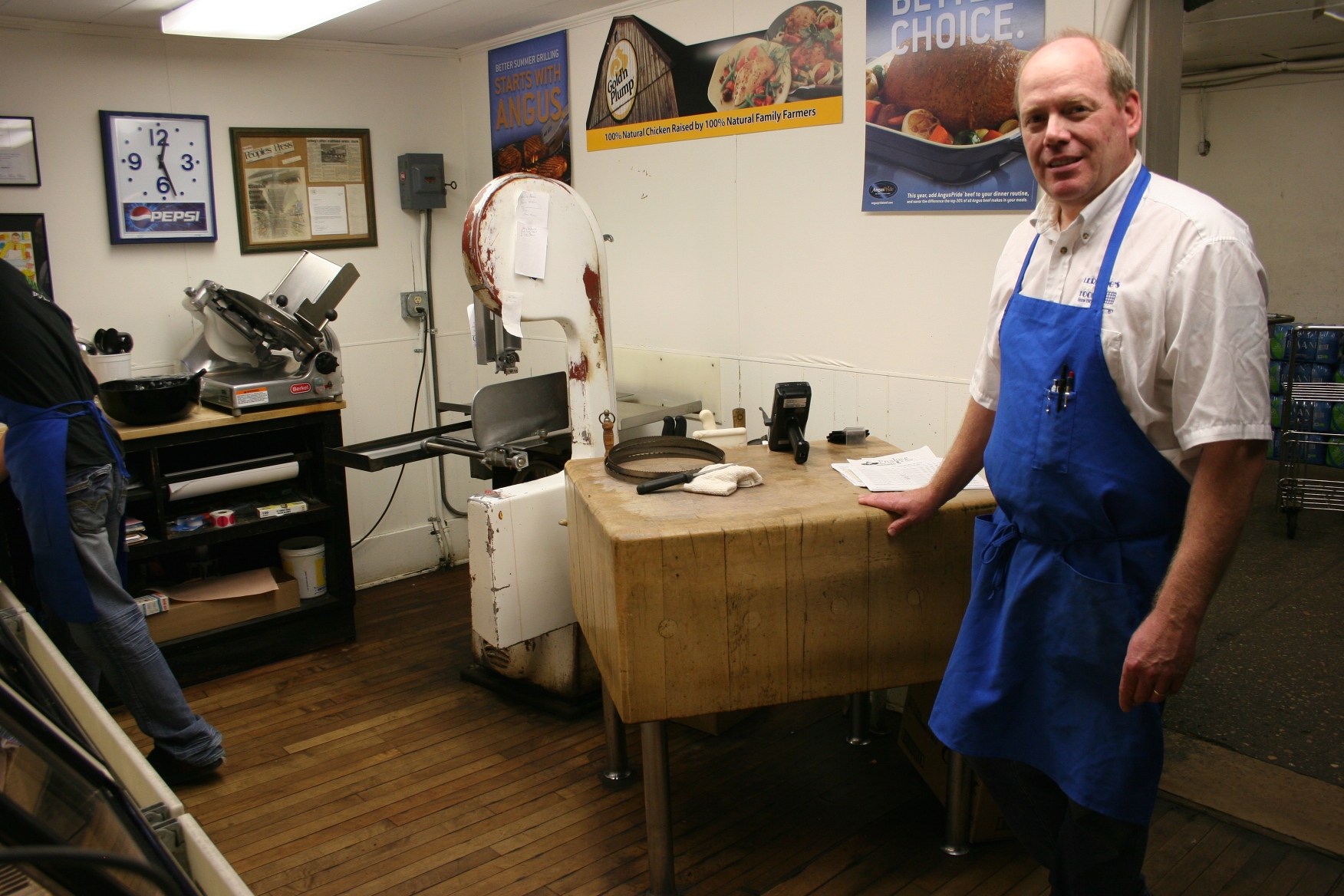
He’ll point out the store’s original coffee grinder resting on a shelf above the dairy section or direct your attention to the original wooden butcher block back in the meat department and still in use today (grandfathered in, he says).

Lerberg's Foods owner/manager Ross Sletten points out the original butcher block, which he still uses.

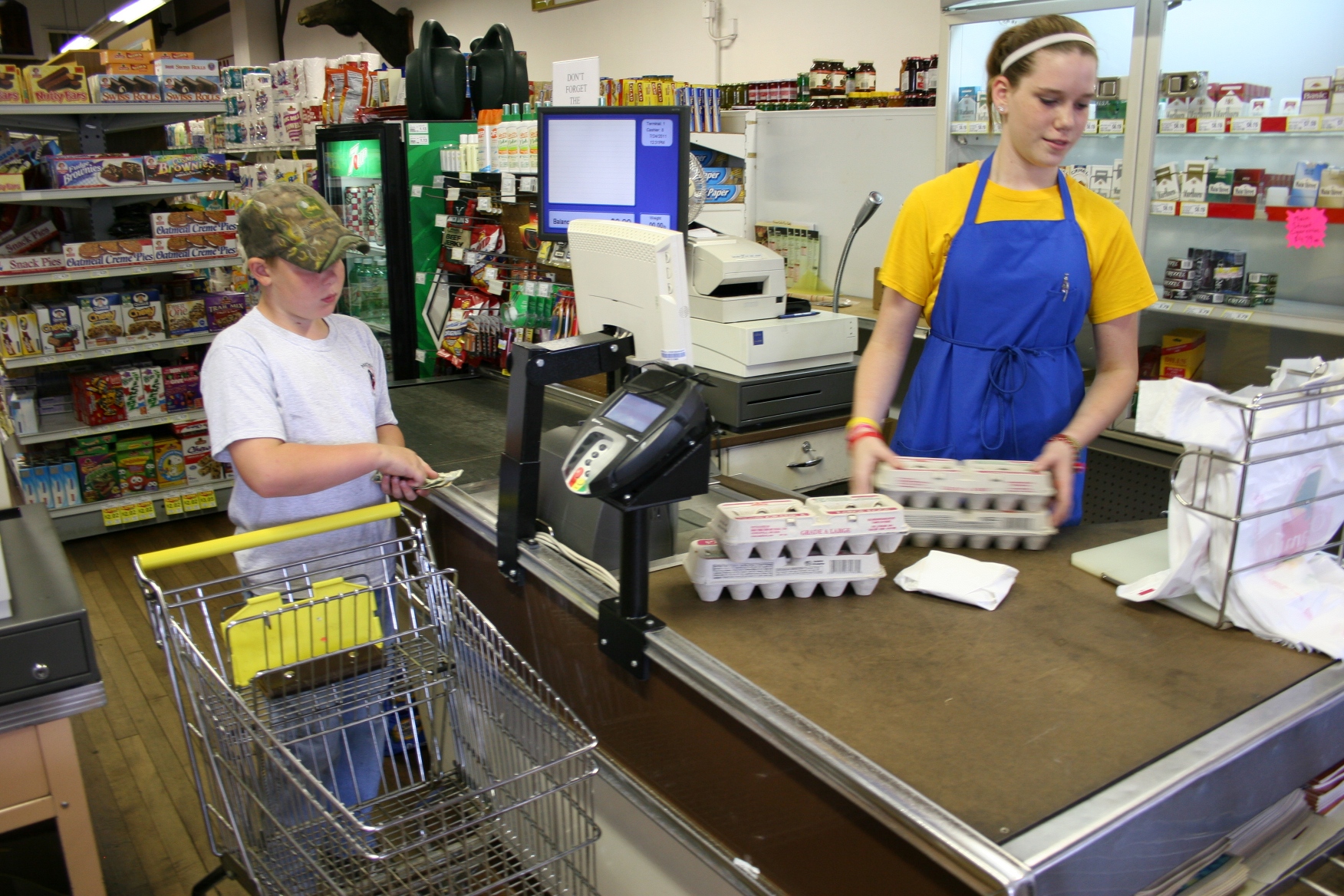
Cassidy Sletten, 14, checks out groceries on a Sunday morning.

He runs a business which, on a Sunday morning, teems with customers—folks picking up a few groceries after church, kids treating themselves to slushies from the machine at the front of the store, a 9-year-old purchasing several cartons of eggs for his mom, a guy buying three bags of water softener salt.

Located just the right distance (meaning too far) from Albert Lea, Austin, Owatonna and Mankato, the store draws customers who will shop locally rather than drive to regional hub cities, Ross says. He can offer competitive prices, he says, through his supplier, Nash Finch.

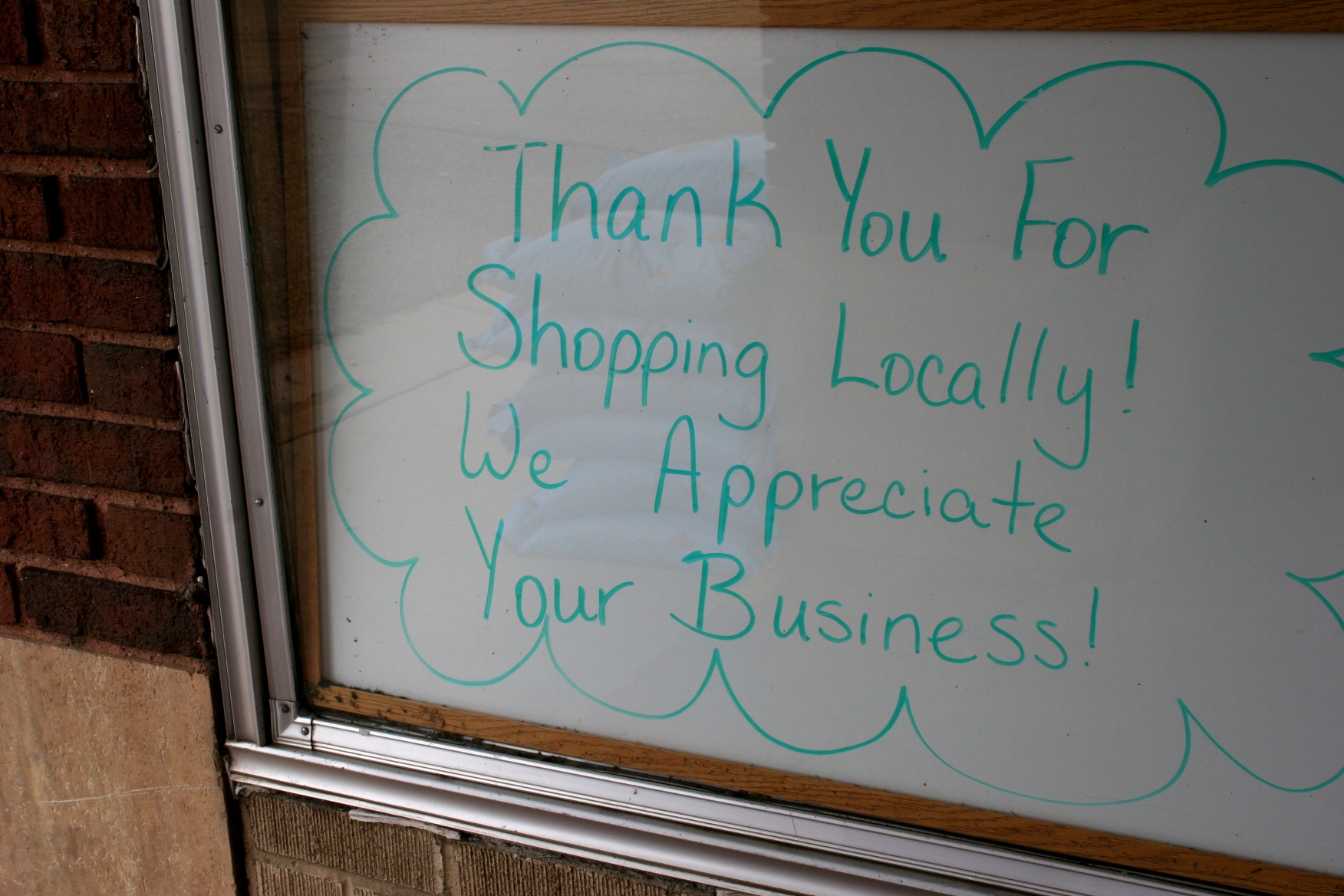
A street-side sign in Lerberg's front window thanks customers for their patronage.

Already, 12-year-old Noah Sletten is thinking about his future and maybe someday taking over the business. “I think it would be kind of fun to own something old,” Noah says, then smiles.

For someone like me, who grew up in rural southwestern Minnesota and frequented a grocery store with tongue-and-groove floors, a tin ceiling, a candy counter (where I bought my favorite Bazooka bubblegum for a penny), a toy rack and groceries lining two aisles, discovering Lerberg’s Foods brought back so many memories. I couldn’t get enough of this old-time style store.

The only thing missing, I told 14-year-old check-out clerk Cassidy Sletten before leaving her family’s store, was the old-style screen door that would bang behind me. She gave me a puzzled look.

“Ask your dad,” I said, smiled, and walked out the door.

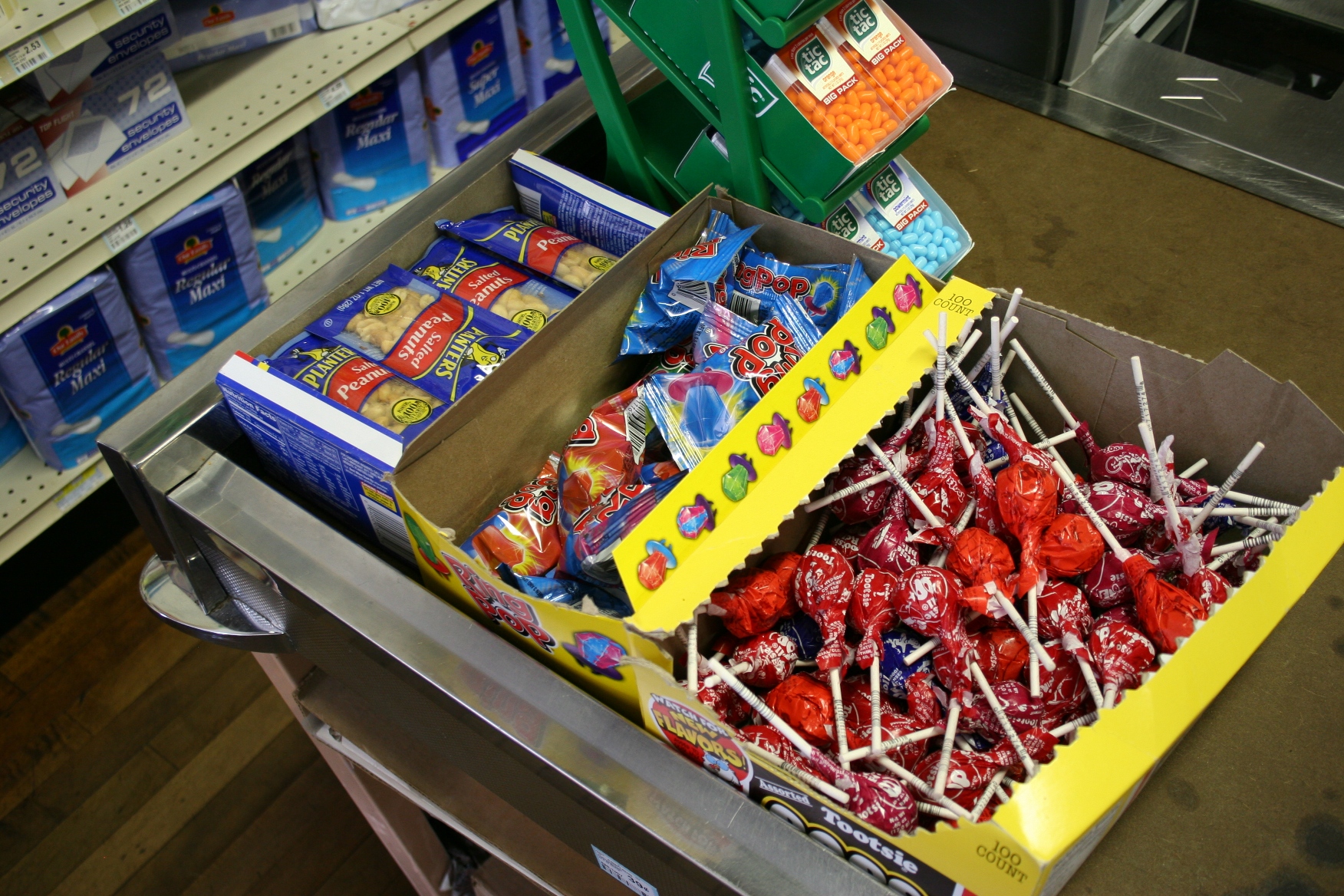
Candy at the end of a check-out counter tempts kids. There are peanuts for the adults.

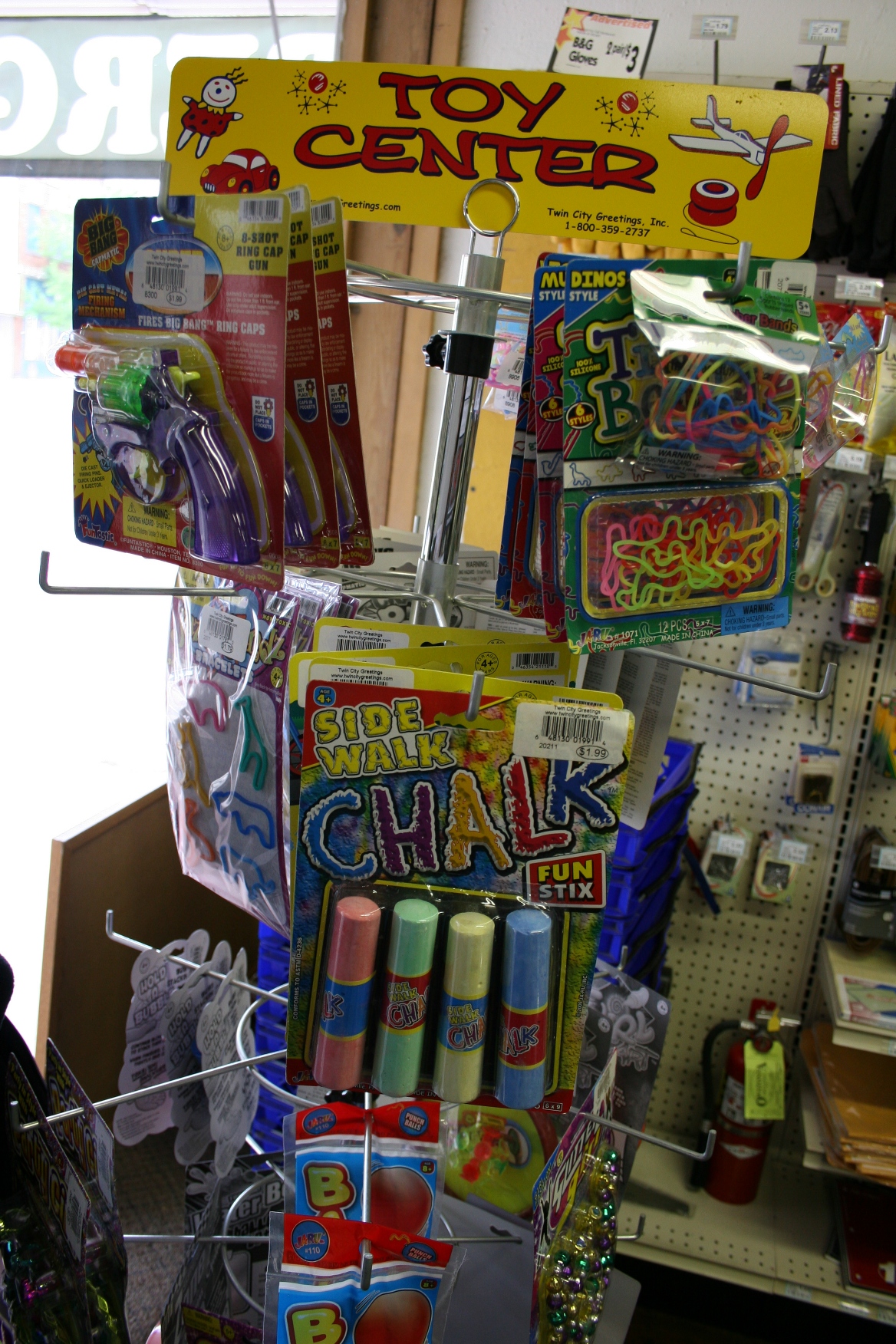
And right before you walk out the door, you'll see this strategically-placed rack of toys.

A side view of the grocery store looking toward the main street through Ellendale. A customer is carrying a bag of water softener pellets, stacked in front of the pop machine. The slushie slurping kids had to temporarily give up their hang-out spot so he could grab three bags of salt.

© Copyright 2011 Audrey Kletscher Helbling


St. Mary’s of Melrose, Part II July 17, 2011

STARK CHURCHES appeal to me. The ones with the simple wooden cross, the white clapboard siding, the time-worn pews settled upon plain plank floors.

But the ornate houses of worship likewise snag my soul with crosses of gold, walls of brick and gleaming, carved pews.

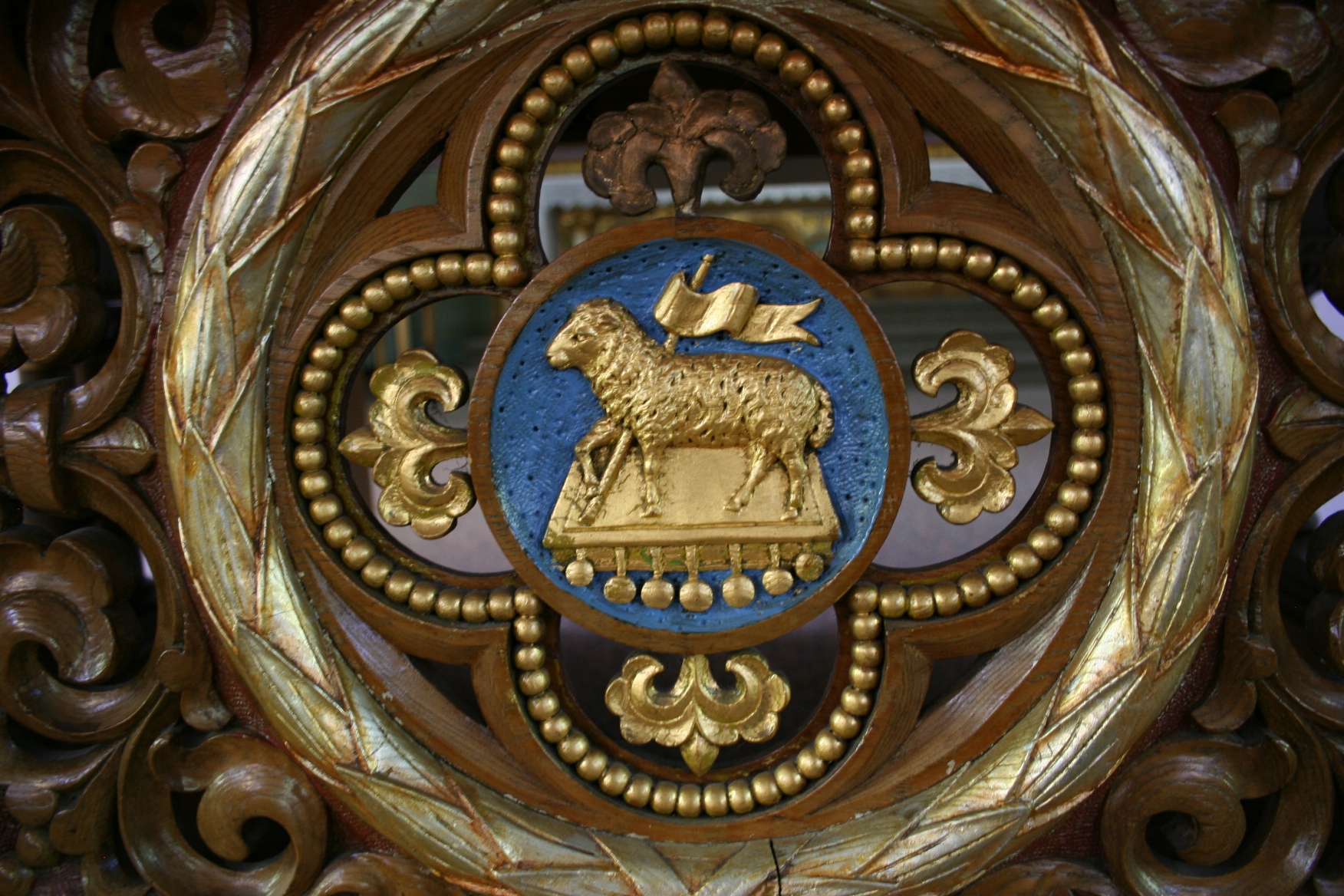
One of the many ornate carvings at St. Mary's Catholic Church in Melrose.

I am most comfortable with, most accustomed to, the unadorned churches of the Lutherans, my religious heritage. We keep things simple. No cluster of burning candles. No wafting incense. No pools of holy water. Minimal, if any, gold.

Perhaps for that reason, when I step into an historic Catholic church, I feel like I’ve entered a foreign land. I am often awed by the opulence, by the details that visually overwhelm me.

The side aisle on the left leads to an ornate altar in St. Mary's which is on the National Register of Historic Places.

That’s exactly how I felt upon entering St. Mary’s Catholic Church of Melrose, featured here in an earlier post. Overwhelmed. But good overwhelmed. Because I could not possibly present all of the images I wanted to share with you in a single post, here are the remainder.

No matter your religious affiliation, you simply have to appreciate a place like St. Mary’s. What beauty. What art. What history. What heavenly splendor.

This was the top or bottom of something. Can't recall what. But it sure is stunning.

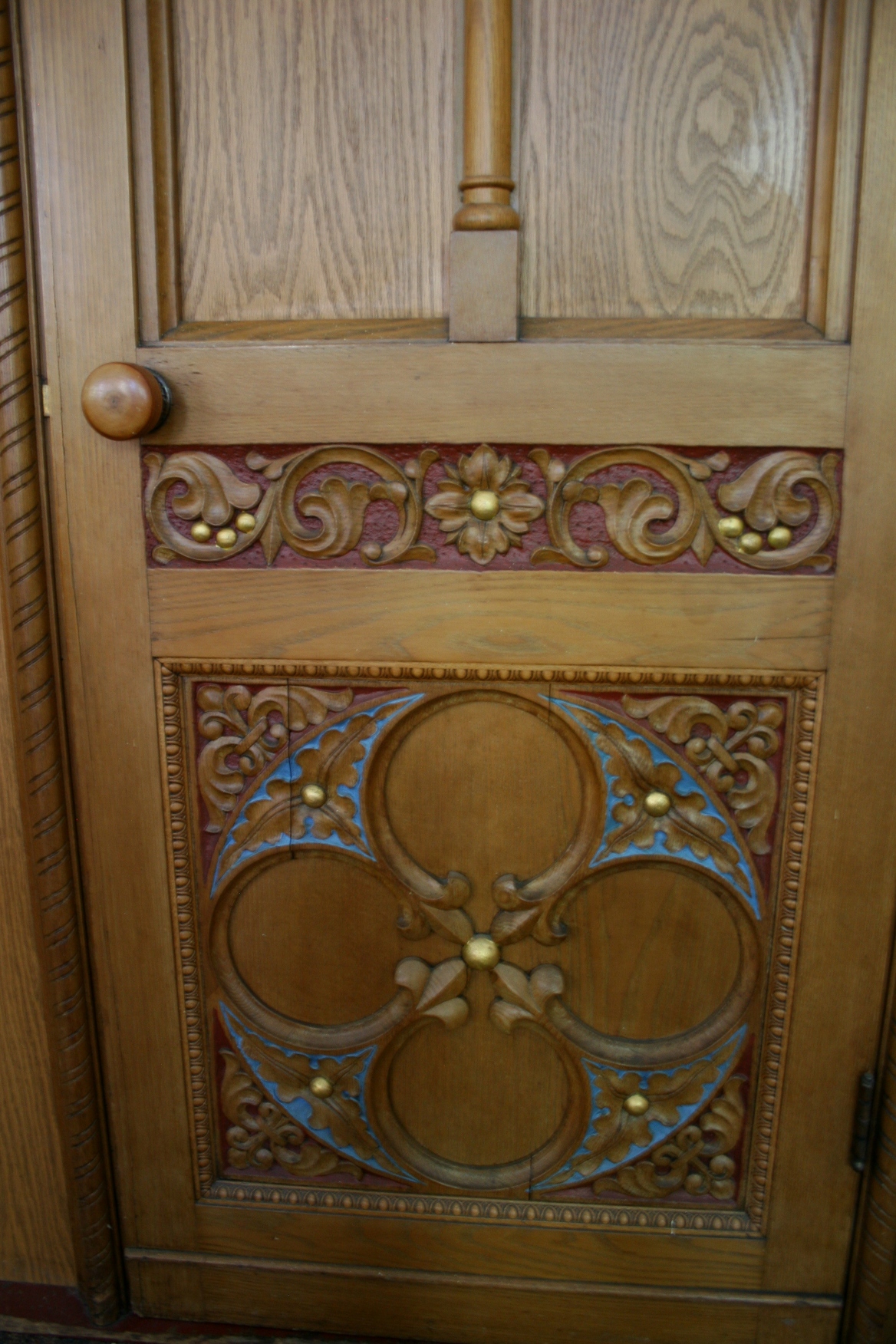
Look at this gorgeous, carved door, will you?

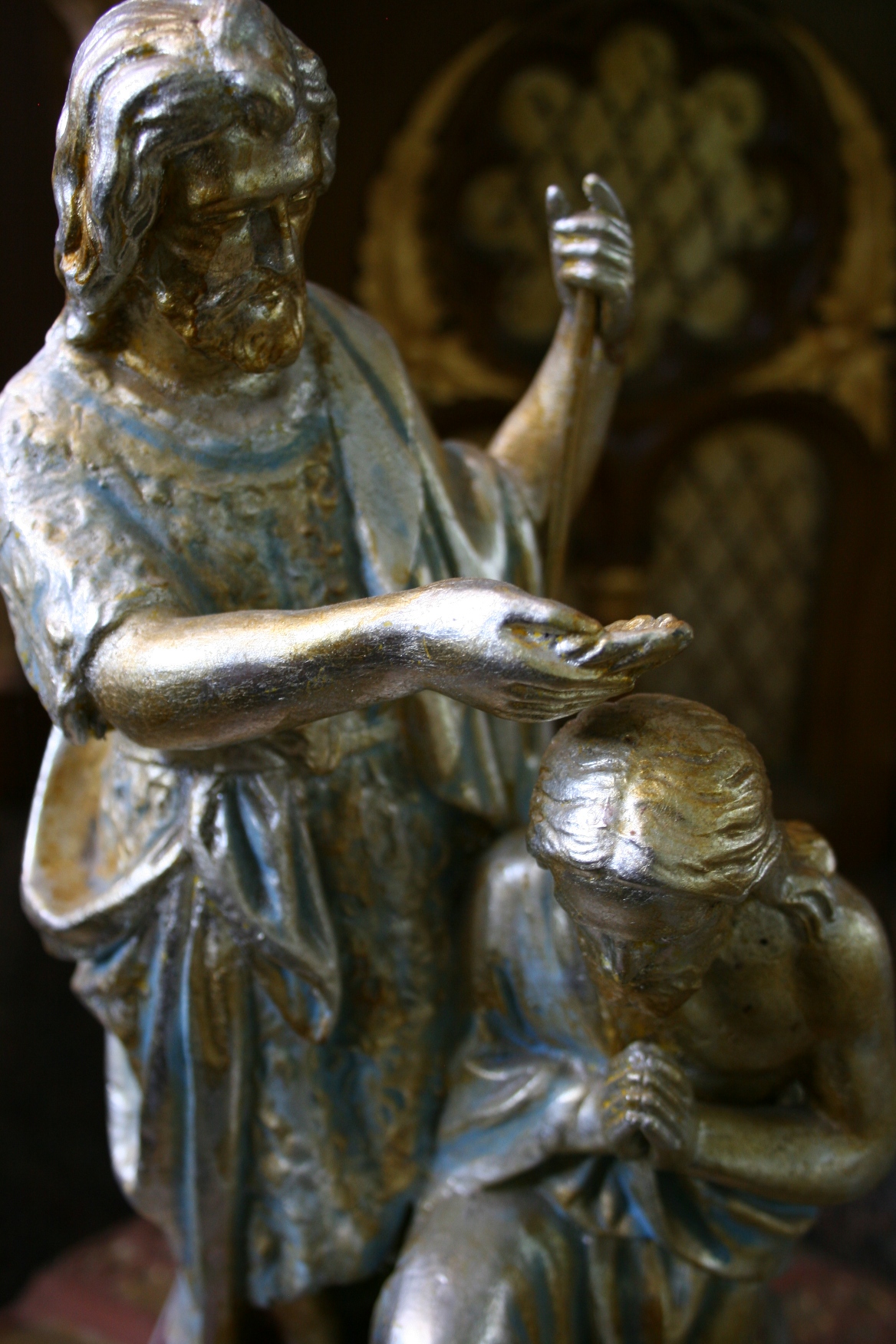
Golden statues. Beautiful.

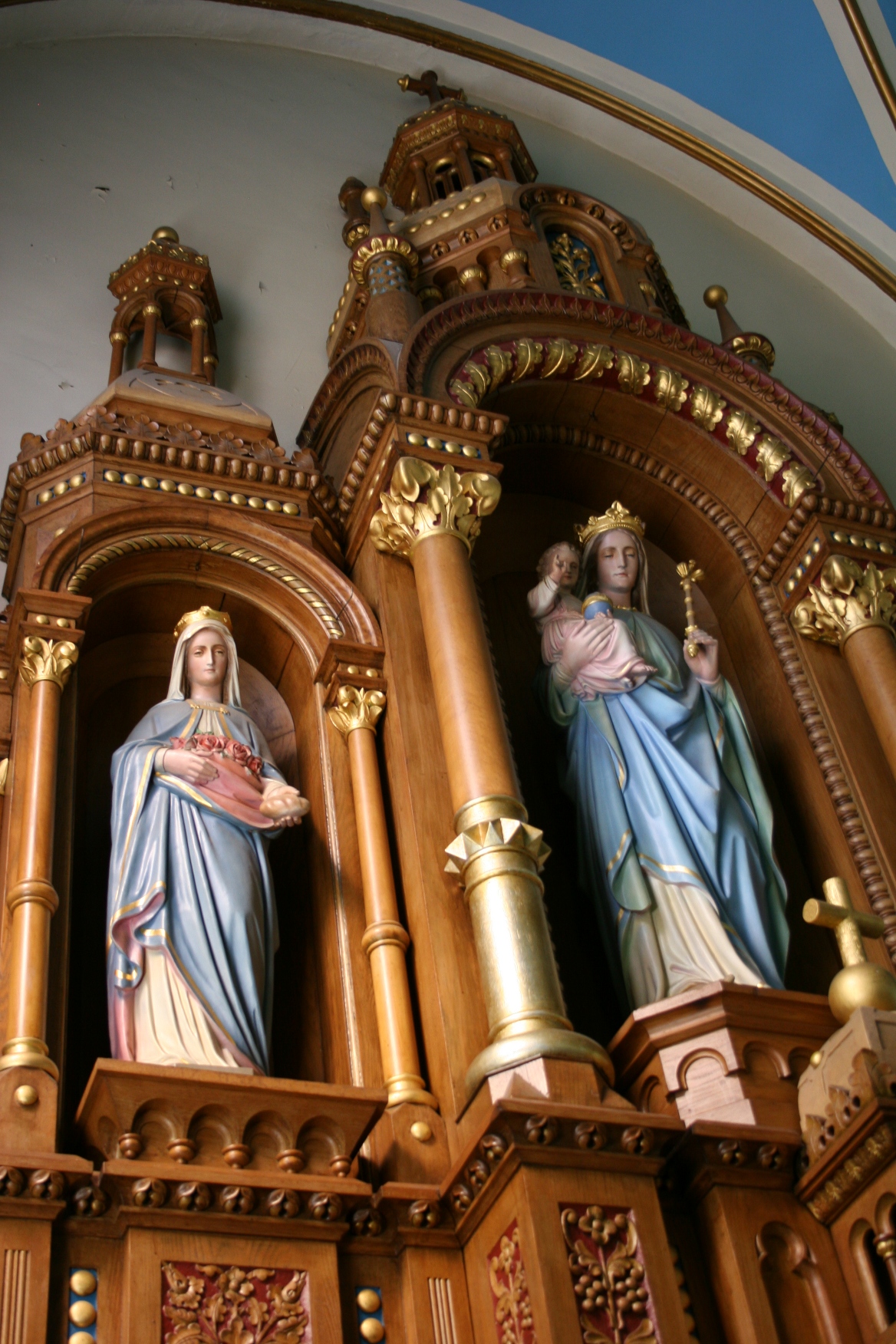
Just look at this detailed side altar. I could have spent hours in St. Mary's.

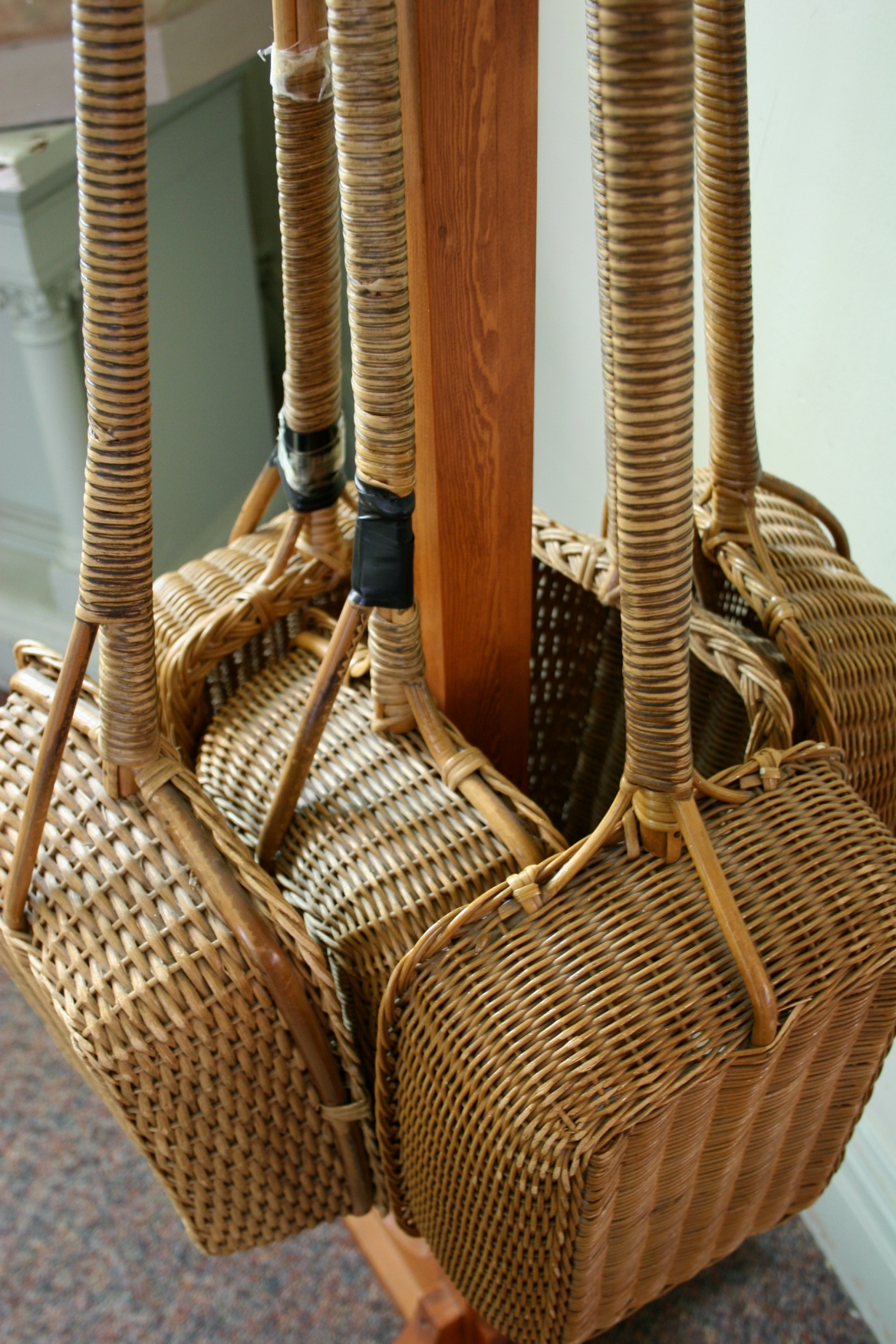
And then I discovered these collection baskets hanging from a rack. We Lutherans don't have wicker baskets with long handles. These contrast so sharply with the the ornateness in the church and that is why I so appreciated this grouping.

St. Mary's Catholic Church stands strong as a fortress in Melrose, next to the turkey plant, its towering steeples visible from nearby Interstate 94 in west central Minnesota.

© Copyright 2011 Audrey Kletscher Helbling


A virtual tour of Mankato’s sculpture walk July 9, 2011

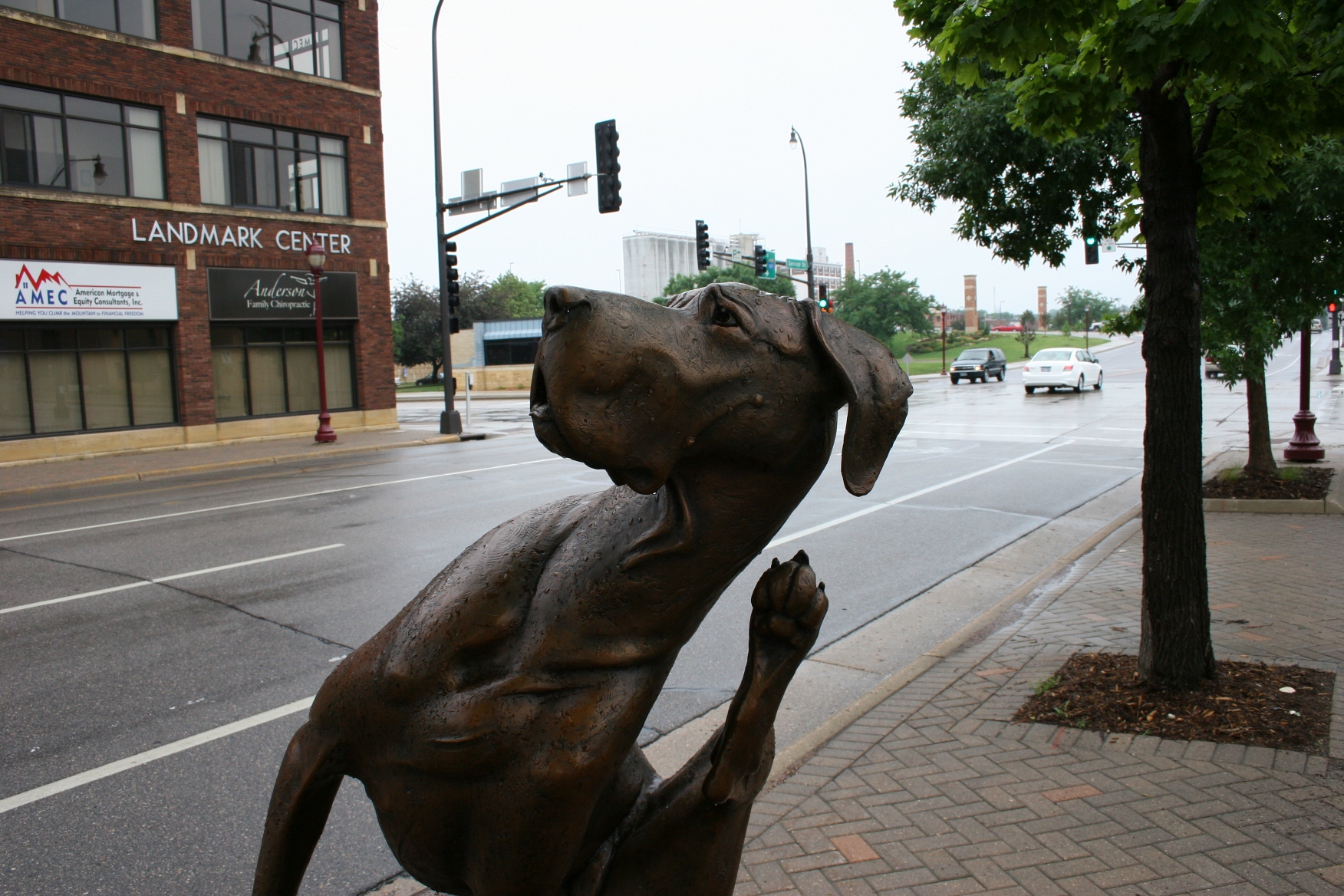
Louise Peterson of Guffey, CO. created this $20,000 bronze sculpture of a playful Great Dane titled "Tickled."

DEAR READERS,

I realize that some, maybe even many, of you, do not live anywhere near Mankato, the southeastern Minnesota community where I recently viewed sidewalk sculptures.

Heck, some of you don’t even live in states bordering Minnesota. Your chances of ever seeing these 25 pieces of art in person are about zilch.

So, for those of you who will view the City Art Walking Sculpture Tour only via Minnesota Prairie Roots, I’ve pulled together one last blog post. Please read my previous two posts for more details and photos of this community art project by first clicking here and then here.

This whole concept of bringing art to the streets through a rotating sculpture tour pleases me immensely. What a grand idea. Such art adds to the vibe of a downtown, to its art, history and culture.

Thank you, Mankato, and everyone who supported this cause financially, for bringing these sculptures to southeastern Minnesota, within quick driving distance of my Faribault home.

Yours gratefully,

Audrey Kletscher Helbling at Minnesota Prairie Roots

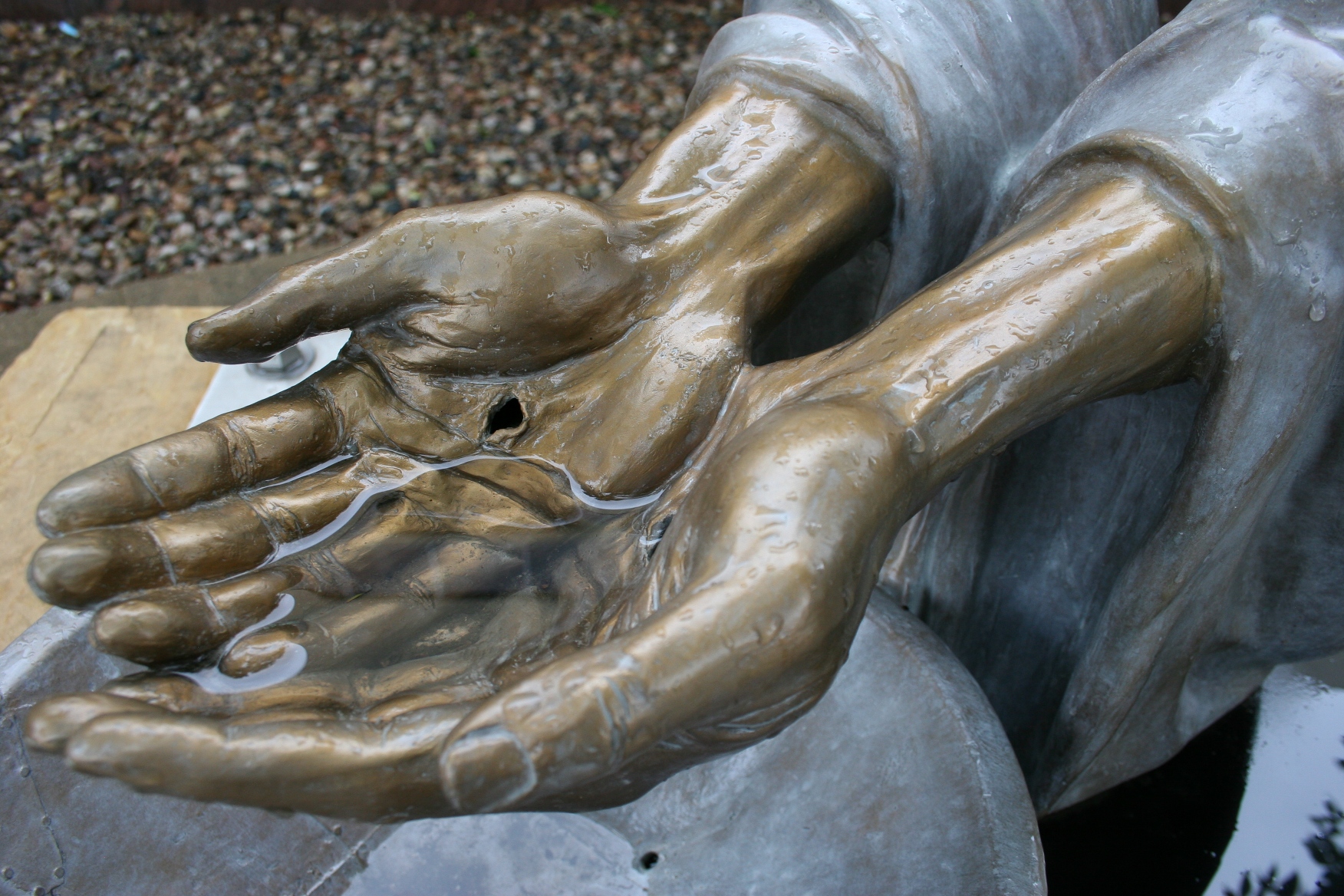
Sioux Falls artist Darwin Wolf's $13,500 sculpture, "The Fountain of Life," references Jesus washing Peter's feet at the Passover. It emphasizes the healing, life-giving qualities of water.

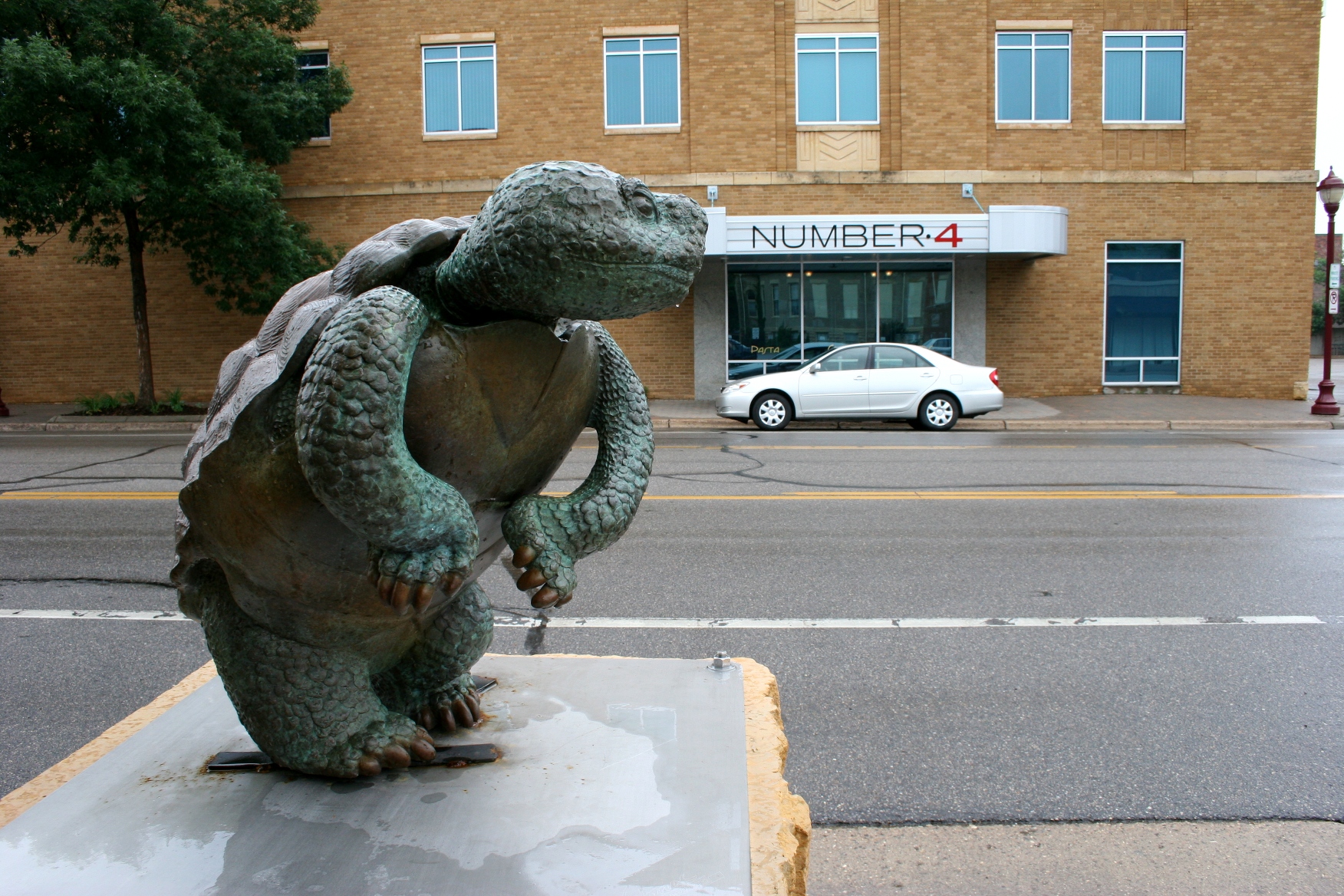
"Poco a Poco" a $12,000 bronze sculpture by Pokey Park of Tucson, Arizona, highlights the tortoise, representative of wisdom in American Indian culture. The building in the background houses Number 4 American Bar & Kitchen.

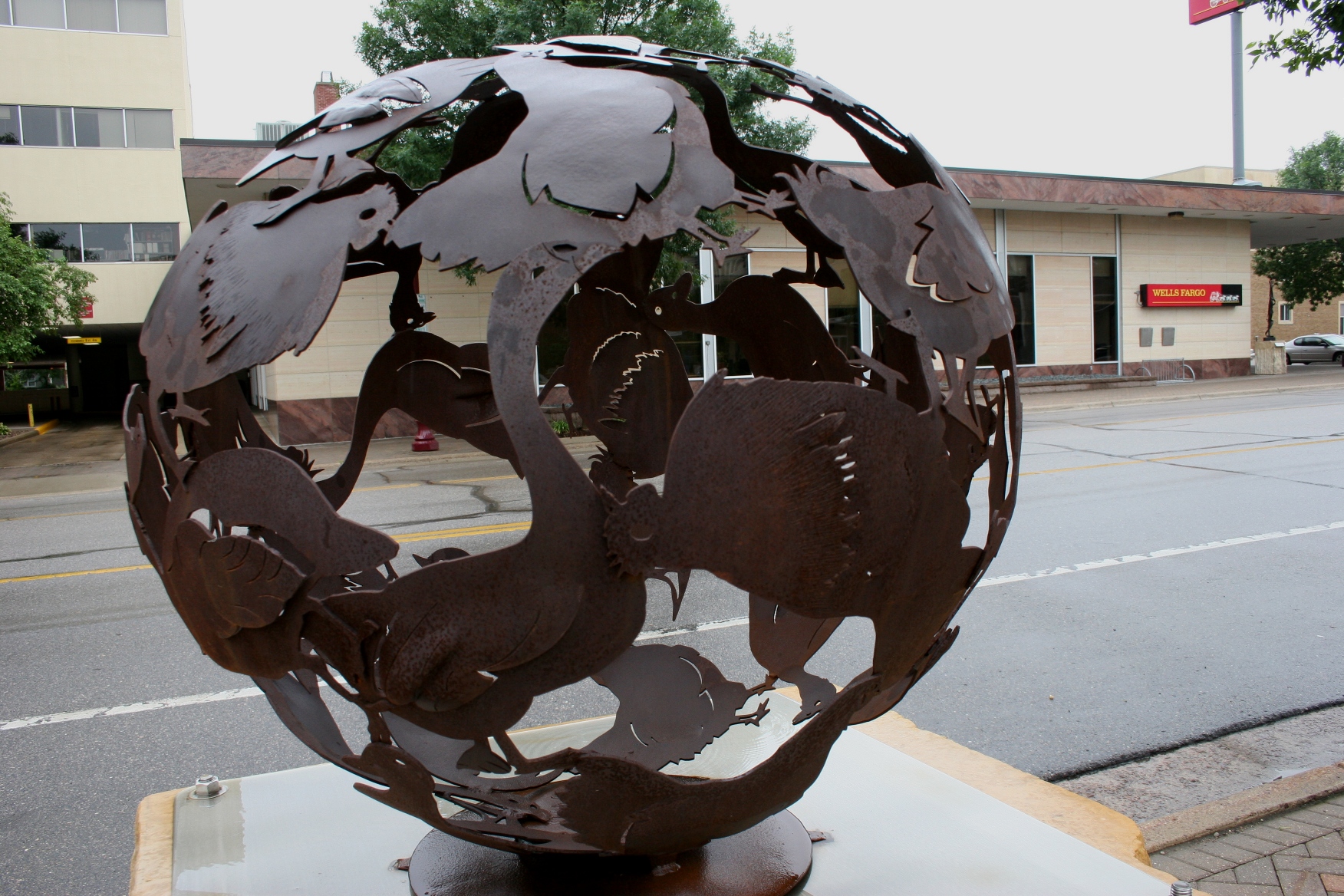
"Fowl Ball" celebrates geese, ducks, turkeys and chickens in this $7,600 forged and welded weathered steel sculpture by Lee W. Badger of Hedgesville, West Virginia.

All of the sculptures are marked with informational signage.

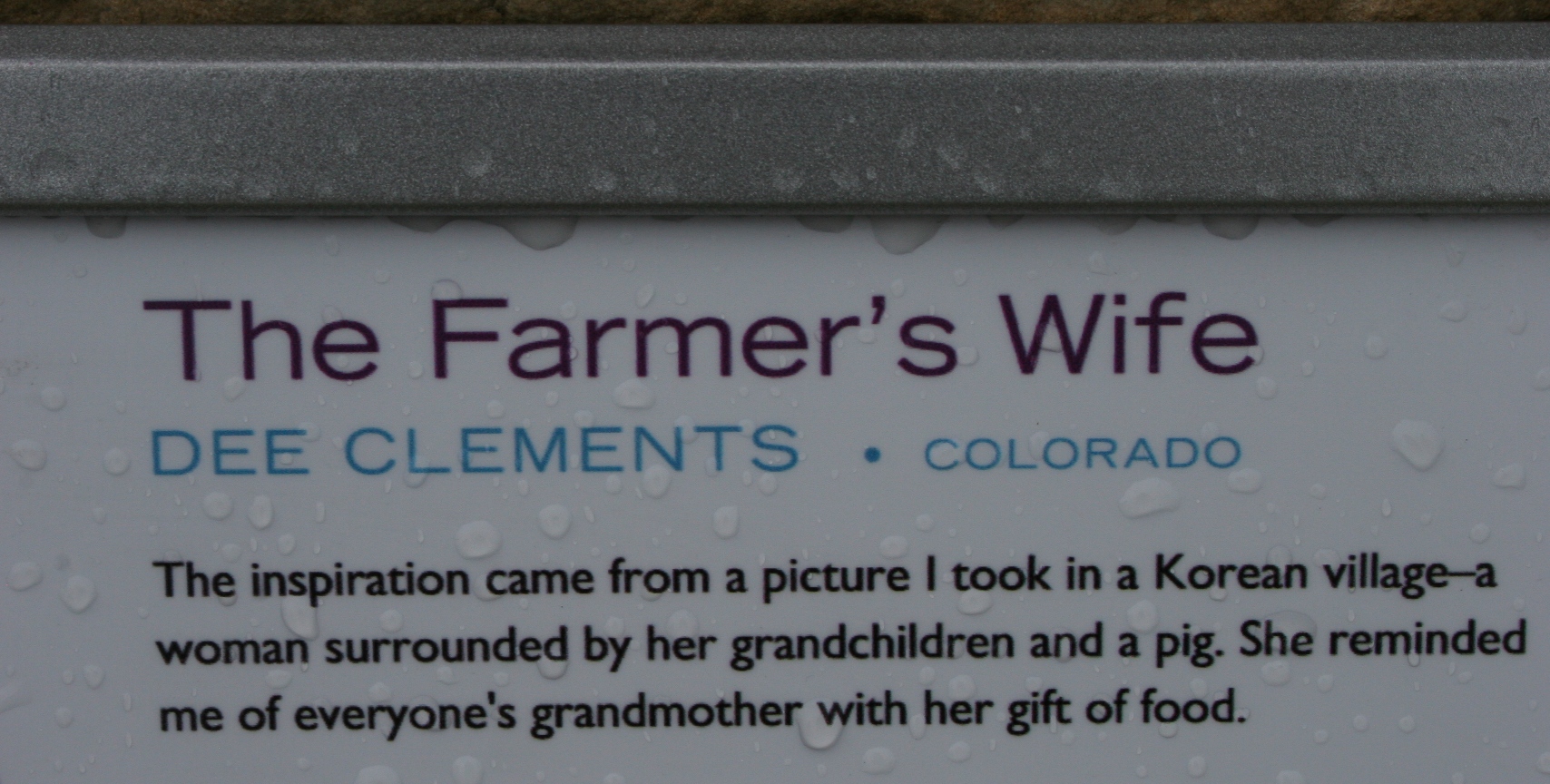
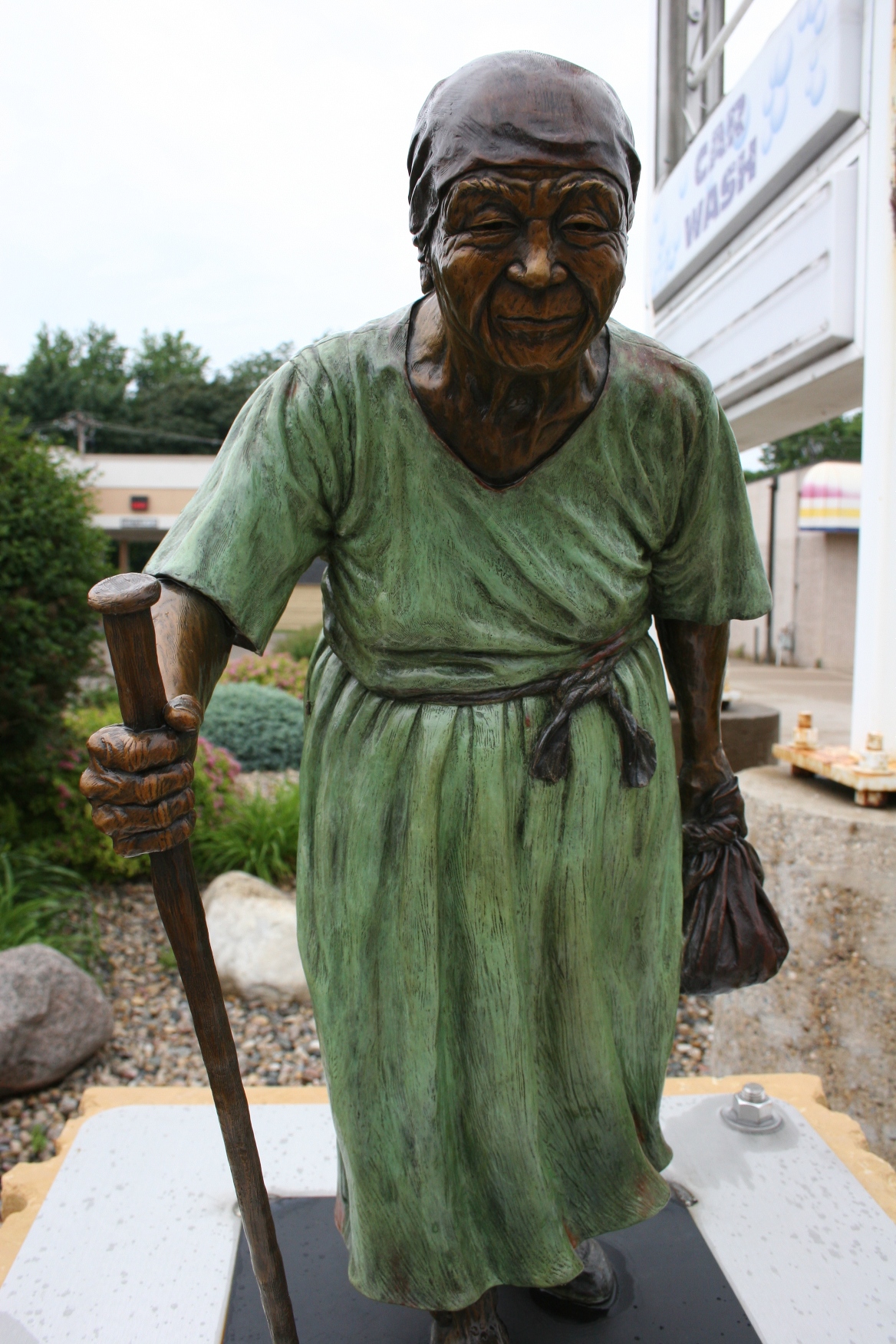
Dee Clements of Loveland, Colorado, created the $6,000 bronze "The Farmer's Wife," one of my favorite exhibit pieces.

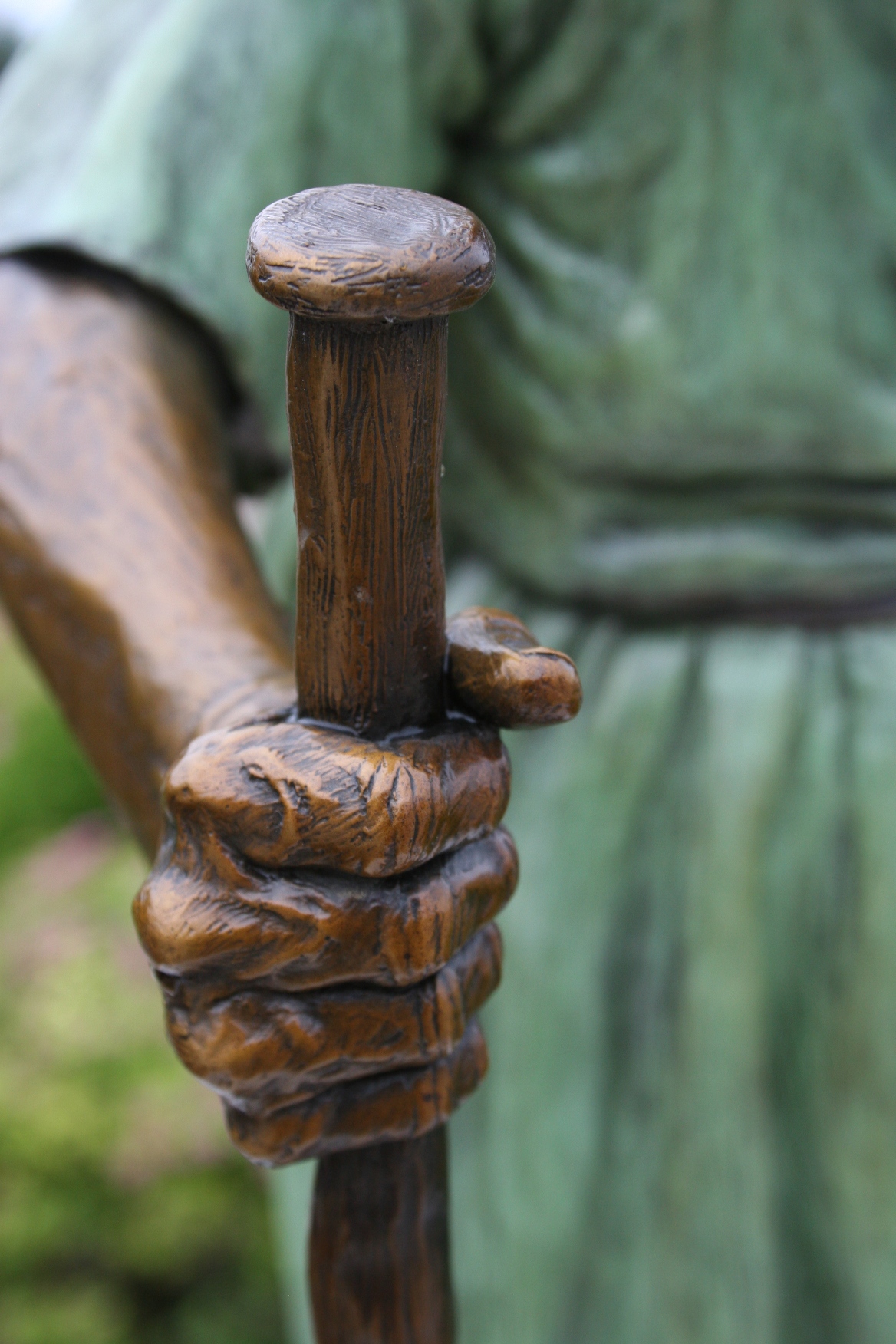
To fully appreciate these sculptures, you must notice the details, including the Korean woman clenching her walking stick in "The Farmer's Wife."

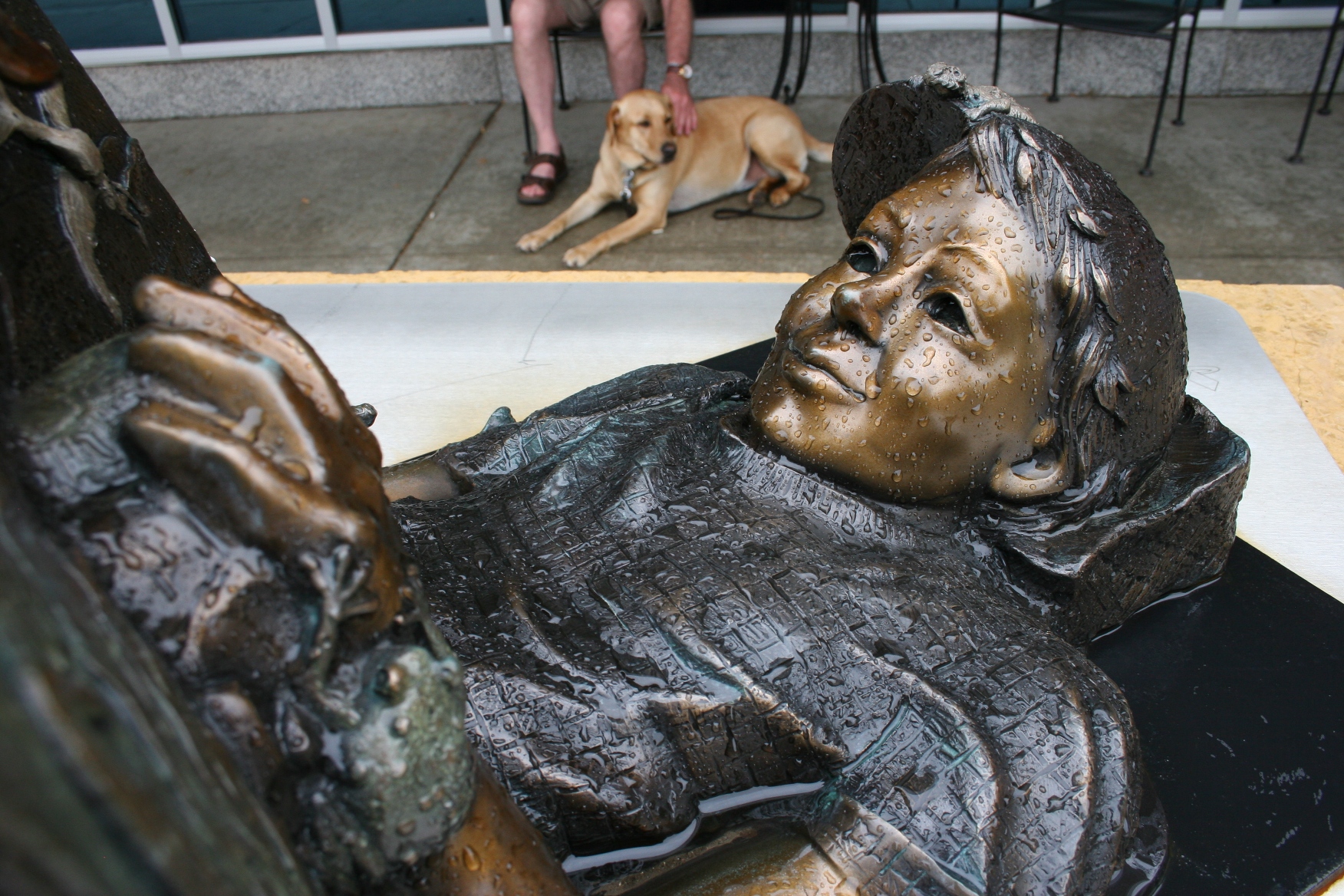
Details define "Reading Magic," a $8,500 bronze sculpture by Julie Jones of Fort Collins, Colorado.

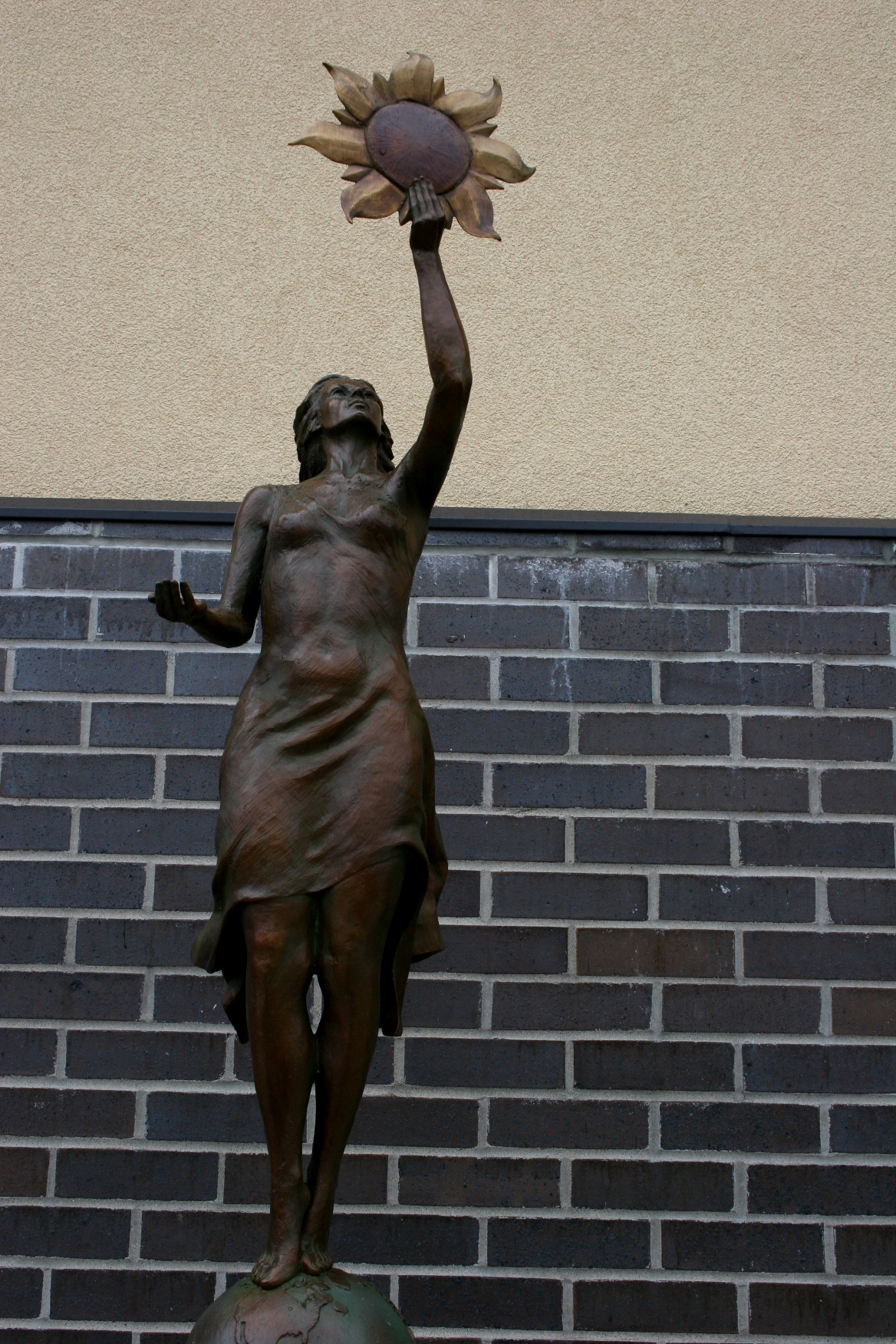
"Spirit of Energy," a $8,400 bronze by Karen Crain of LIttleton, Colorado, represents three renewable energy resources: sun, wind and water.

© Copyright 2011 Audrey Kletscher Helbling


Reflections on Independence Day July 4, 2011

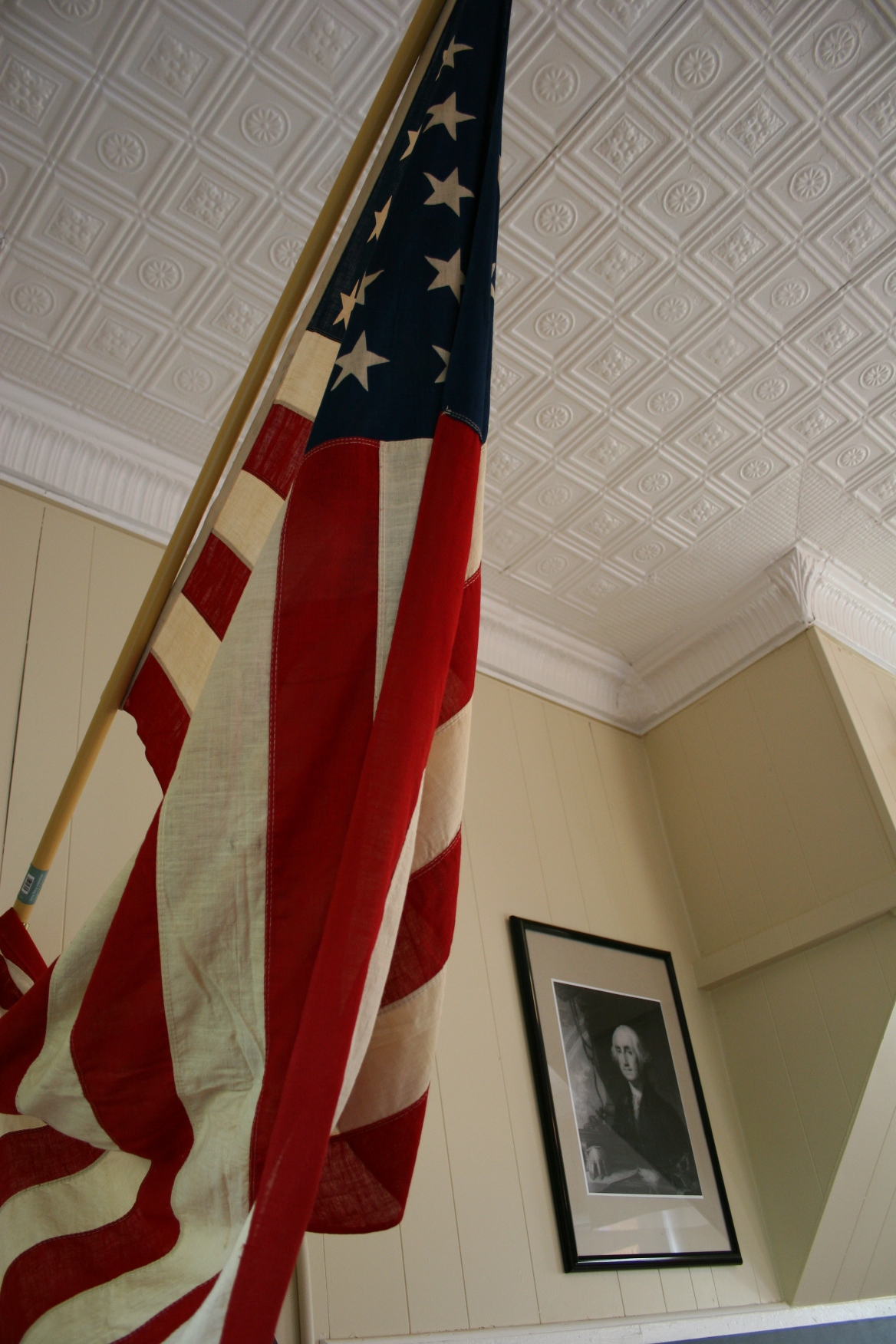
A flag and portrait of George Washington at the former District 20 Millersburg School, now a museum.

“I PLEDGE ALLEGIANCE to the flag of the United States of America and to the Republic, for which it stands, one nation under God, indivisible, with liberty and justice for all.”

As a child, my school days began with that pledge. My classmates and I arose from our desks at Vesta Elementary School, turned toward the American flag in the corner, placed our hands across our hearts, fixed our eyes upon the stars and stripes, and recited the pledge in unison.

I doubt we ever thought too much about the rote words we spoke. They were simply part of our routine, something we did, although I do recall feeling a sense of pride in speaking those words daily.

So much has changed in the decades since then. The Pledge of Allegiance, in most cases, has been banned from public schools in the name of political correctness. We are no longer one nation under God. While the U.S. remains one country, we as individuals are certainly divided in our views of anything and everything. That’s as it should be in a democracy. Liberty and justice have managed to prevail.

As we celebrate our nation’s Independence Day, it would be wise for all Americans to reflect on the Pledge and the words of other documents and songs that focus on the flag and freedom.

We hold these truths to be self-evident, that all men are created equal, that they are endowed by their Creator with certain unalienable Rights, that among these are Life, Liberty and the pursuit of Happiness.—The Declaration of Independence, signed on July 4, 1776

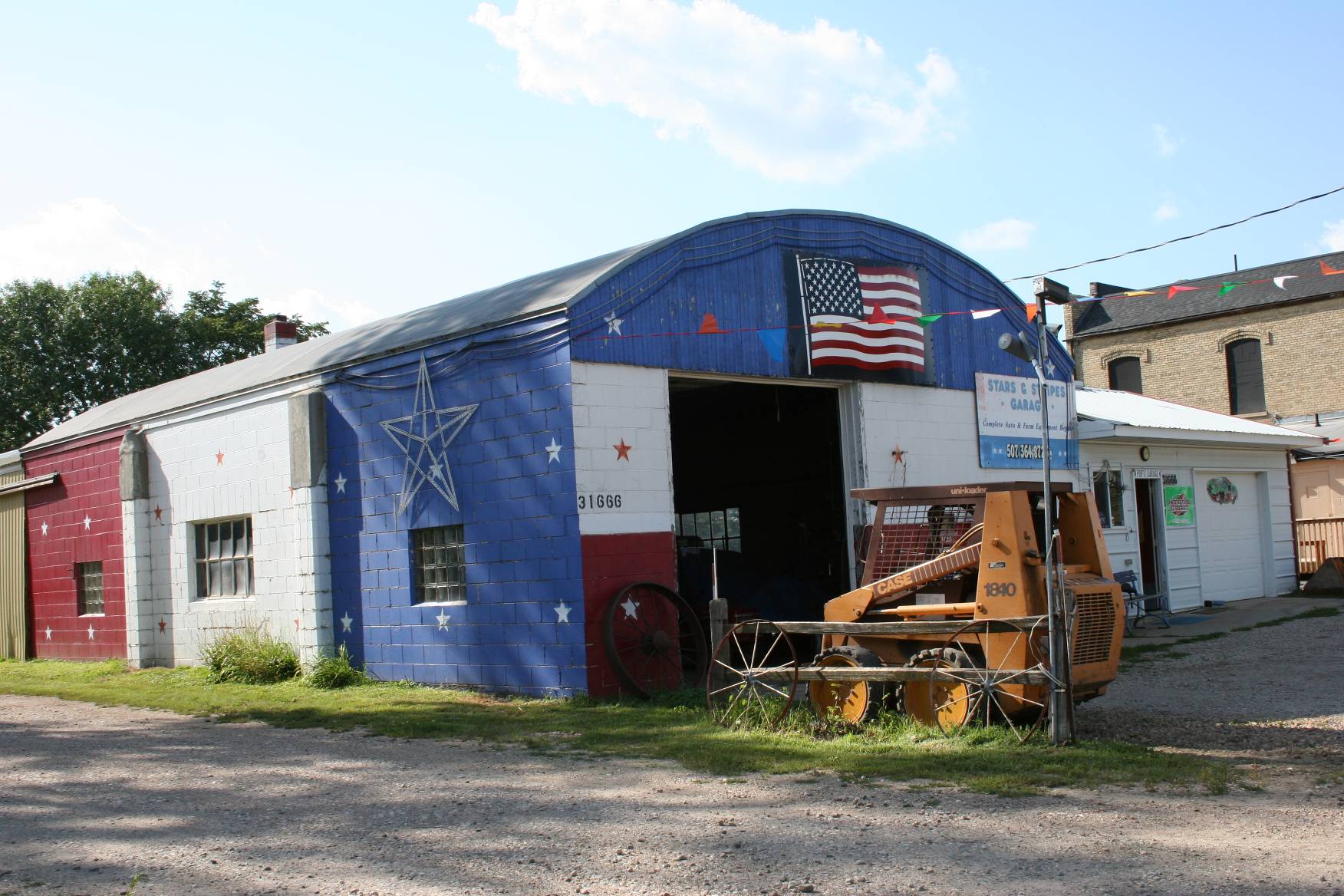
Vietnam veteran Joel Kukacka's patriotic garage in the hamlet of Heidelberg, Minnesota.

Oh, say does that star-spangled banner yet wave
O’er the land of the free and the home of the brave?
—The Star Spangled Banner

An American flag painted on a shed in Dundas in southeastern Minnesota.

Congress shall make no law respecting an establishment of religion, or prohibiting the free exercise thereof; or abridging the freedom of speech, or of the press; or the right of the people peaceably to assemble, and to petition the Government for a redress of grievances.—The Bill of Rights, Amendment I

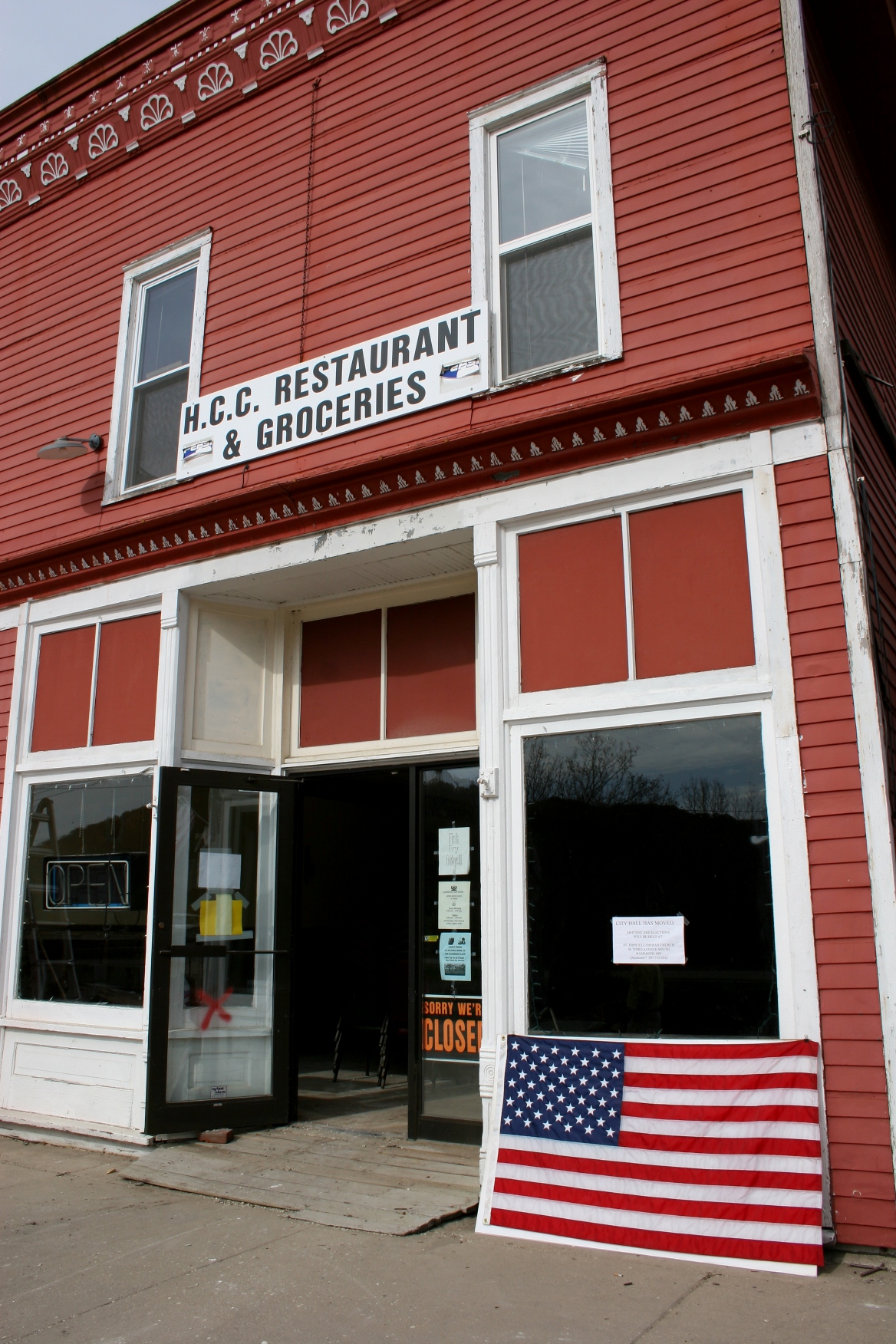
Weeks after a devastating Sept. 2010 flash flood in Hammond, in southeastern Minnesota, an American flag marked a ravaged business.

God bless America,
Land that I love,
Stand beside her and guide her
Thru the night with a light from above;

From the mountains, to the prairies,
To the oceans white with foam,
God bless America,
My home, sweet home.
God bless America,
My home, sweet home.

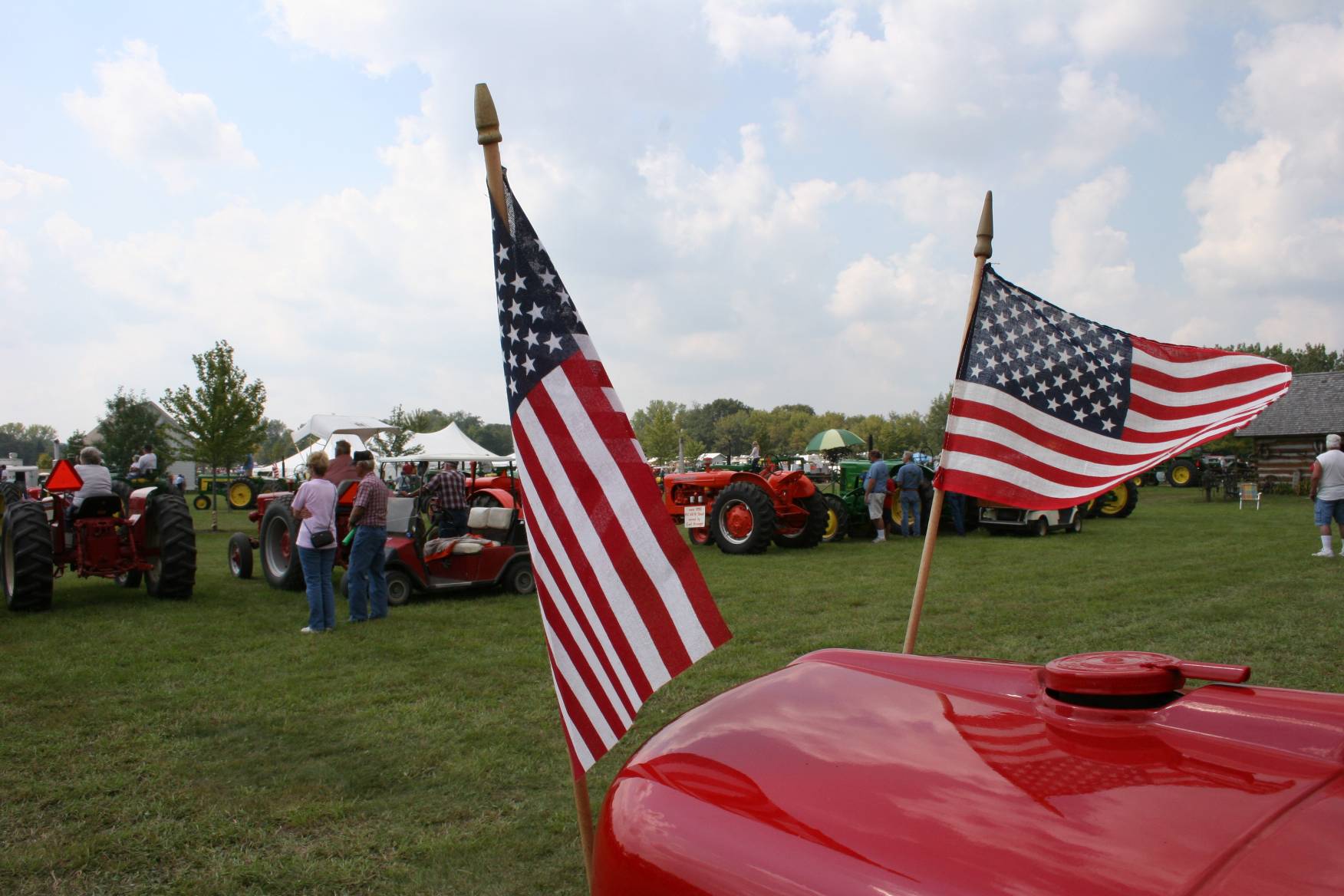
Flags decorate a vintage tractor at the Rice County Steam & Gas Engines Show near Dundas.

© Copyright 2011 Audrey Kletscher Helbling


A misplaced torch at a veterans’ memorial July 1, 2011

TYPICALLY, I WOULD NOT criticize a veterans’ memorial project. I respect those who have served our country and those who lead efforts to honor them via public memorials.

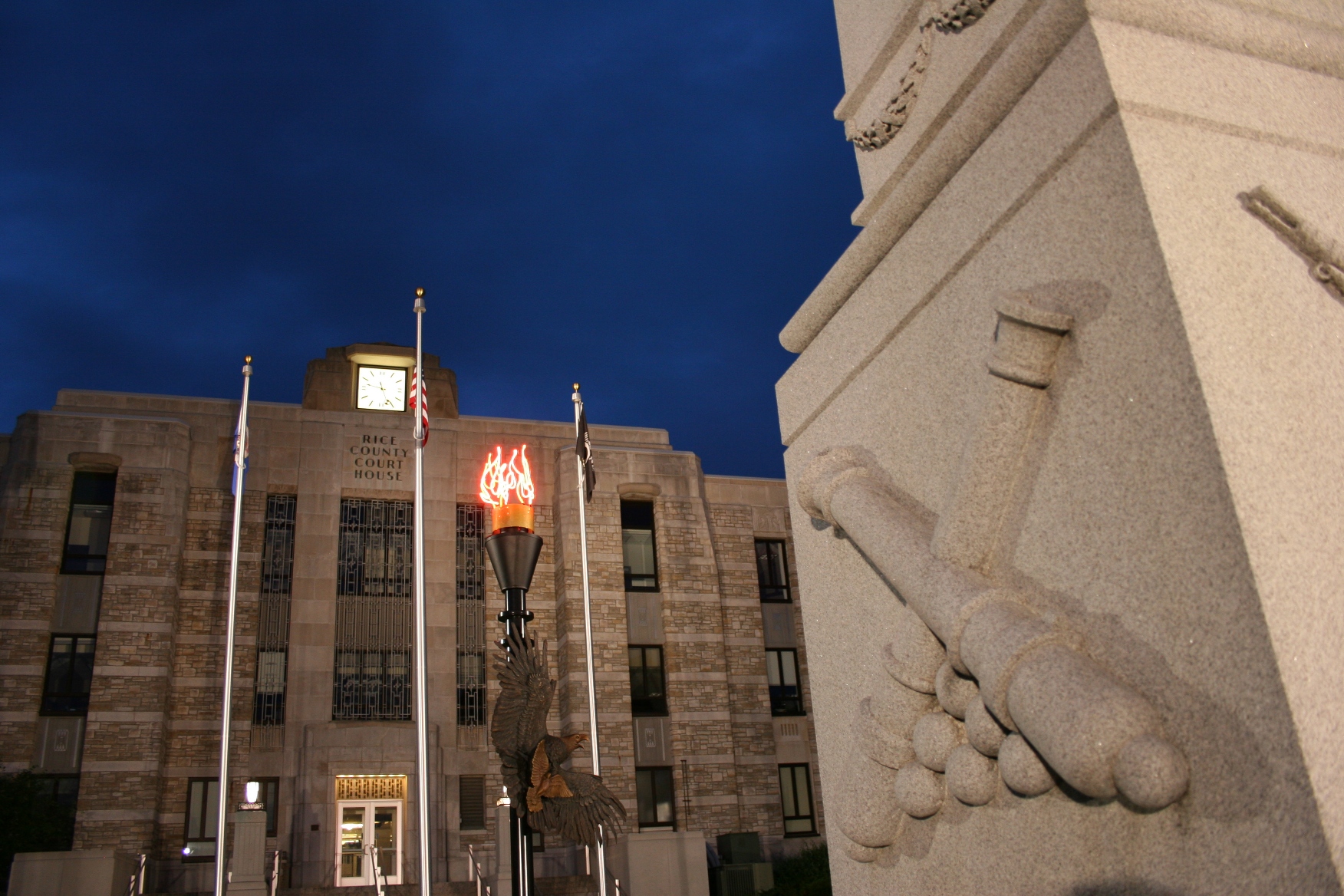
However, last week when I saw the latest addition to the in-progress Rice County Veterans Memorial Expansion Project at the county courthouse in Faribault, I could not believe what I was seeing.

There, guiding my eyes toward a center bronzed eagle and dove, was a flashing neon flame depicting “our never ending vigilance.”

The new, fake torch at the Rice County Veterans Memorial at the courthouse in Faribault. Here you see the wing tip of the bronzed eagle below the torch. I have not edited this image taken one evening last week.

My initial reaction has not changed since I stopped that night to closer inspect and photograph this neon torch better suited for a casino—anything but a veterans’ memorial.

As we all know, first impressions count. In this case, the neon flame certainly does not fit. This is supposed to be a place of reverence, of quiet meditation, of respectful honor for those who have served the United States of America. A fake, flickering fire does not portray that message of honor.

I am disappointed.

Prior to installation of this imitation torch, a fuel-fed torch burned near the historical Civil War statue which has long graced the courthouse lawn. Apparently that flame went out all too often, leading to its removal and installation of the Vegas style torch.

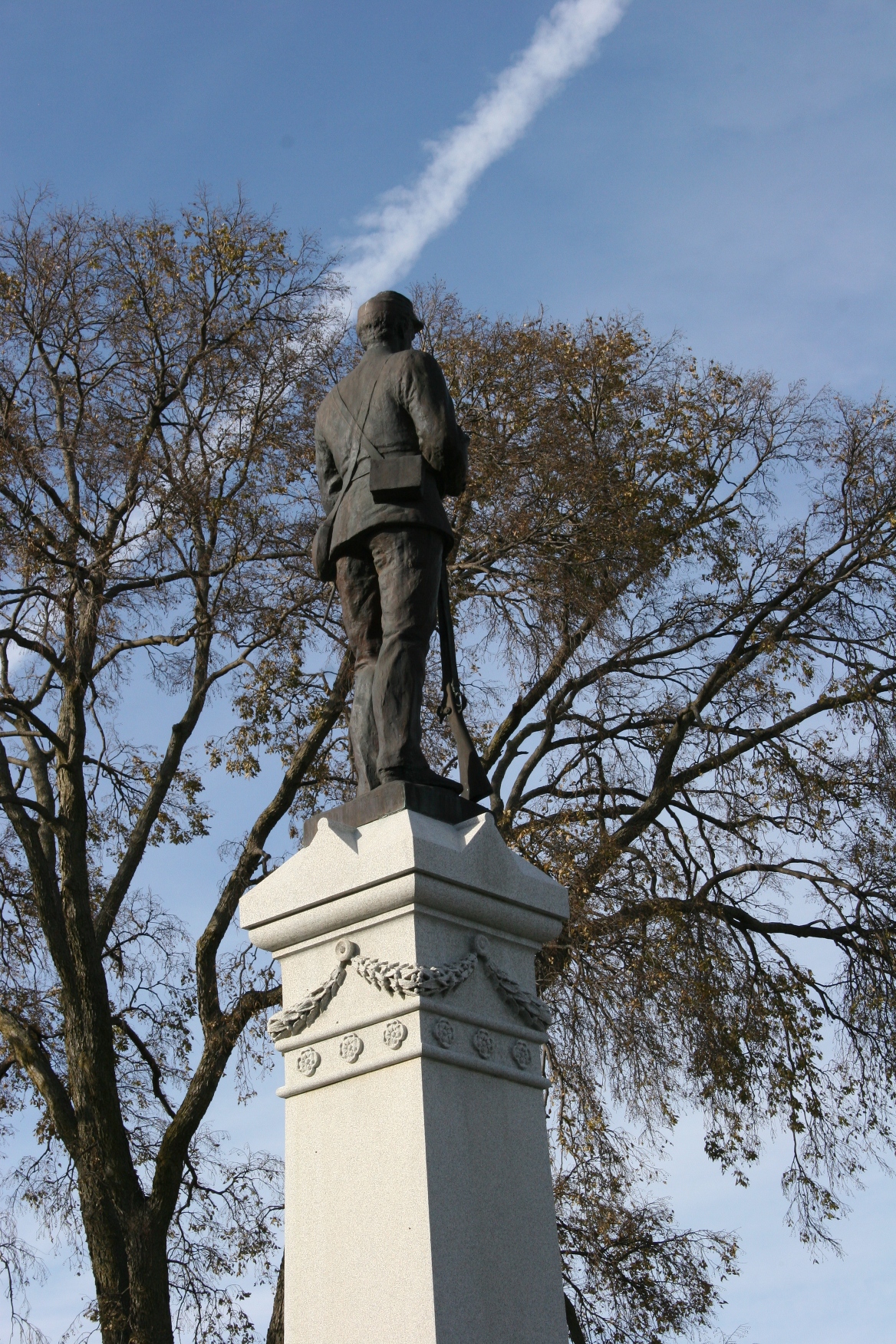
The long-standing Civil War statue sets a historical mood for the Rice County Veterans Memorial. I shot this image last fall.

To the right, in this unedited photo, you'll see a side view of the historical Civil War marker. In the center is the torch and the bronzed eagle and dove with flags and the courthouse in the background.

I could go on and on about how much I dislike this cheapening alternative, how it fails to fit the historical context of this place, the courthouse architecture or the long-standing Civil War marker. I won’t because I’ve said enough.

View my photos and tell me what you think. I’d like your opinion.

But even more, if you agree that this style of torch does not belong at a veterans’ memorial, offer a solution. I have none. Except to pull the plug.

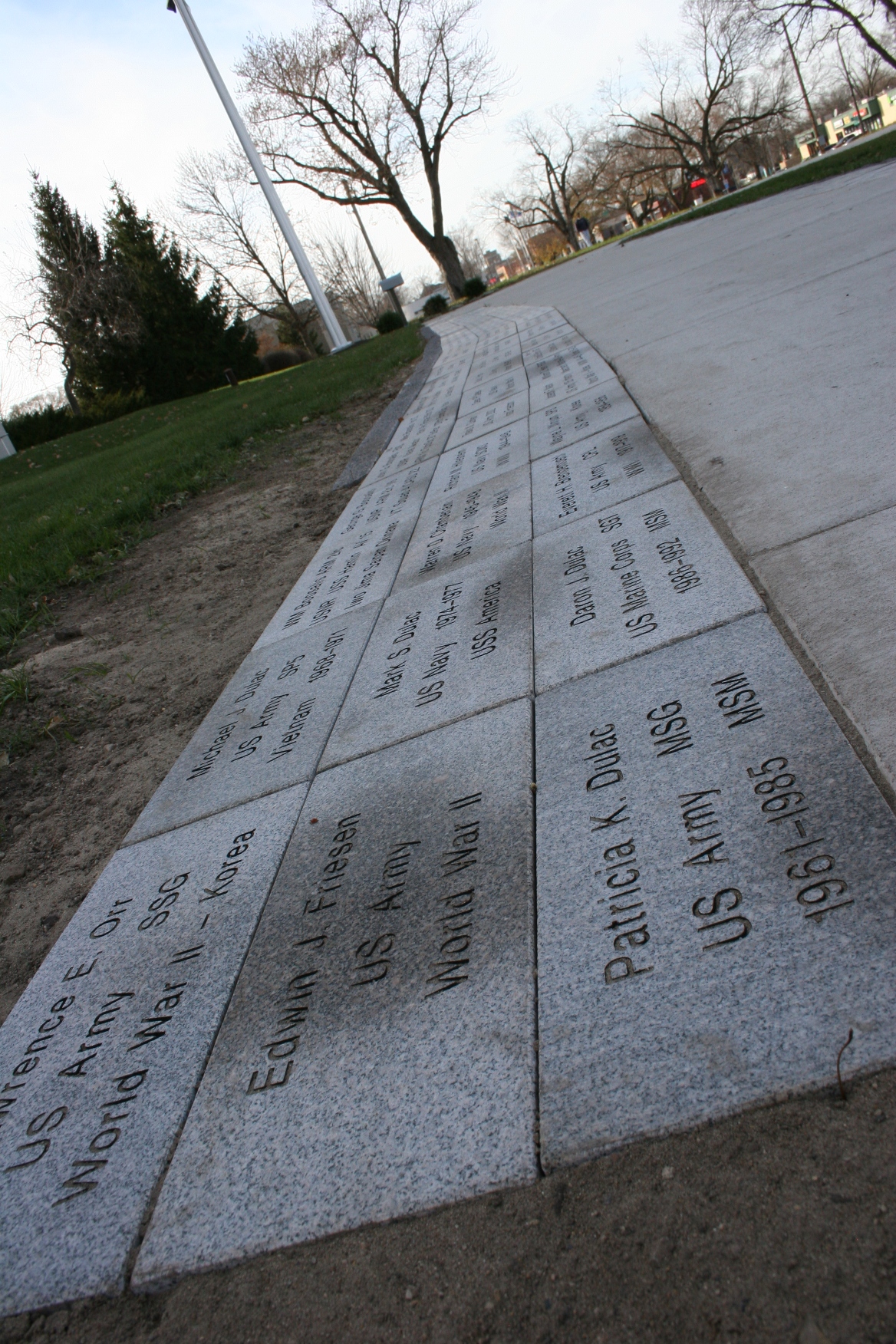
Honorary pavers line sidewalks leading to the center of the Rice County Veterans Memorial in this image taken last fall.

© Copyright 2011 Audrey Kletscher Helbling


Hail St. Mary’s of Melrose June 26, 2011

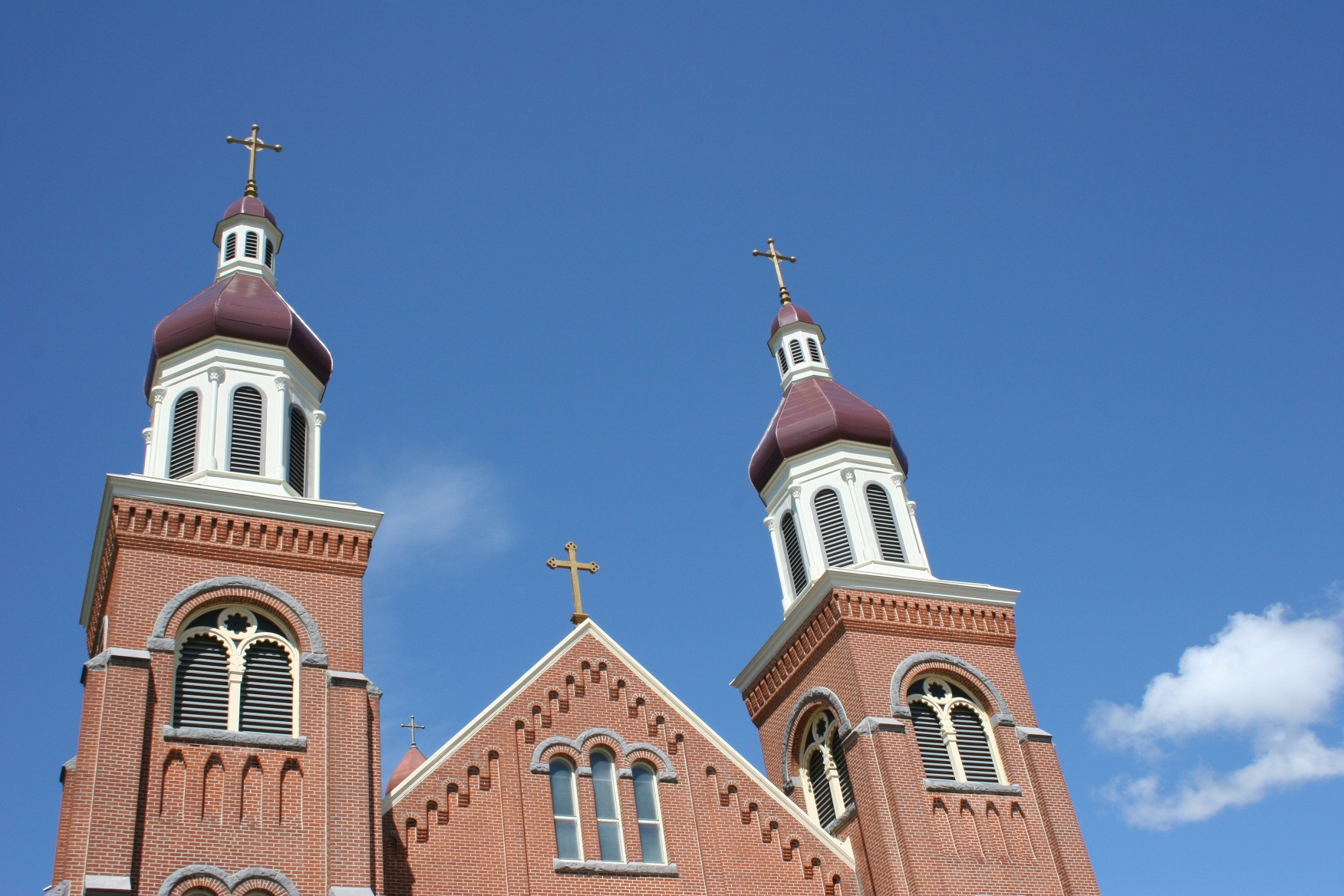
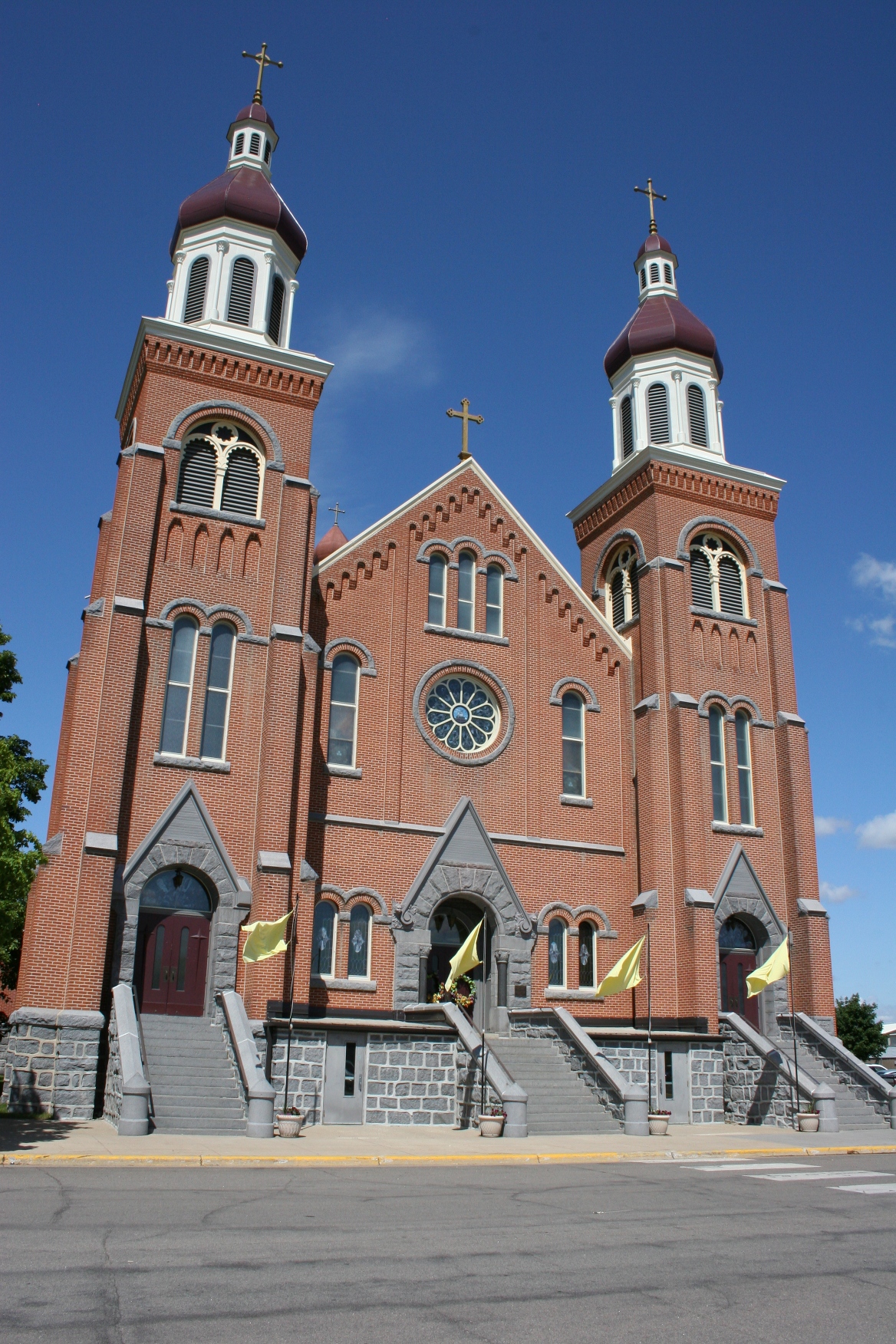
The steeples of St. Mary's Catholic Church of Melrose.

I STOOD THERE. Just stood there. For minutes, taking in the glorious splendor before me.

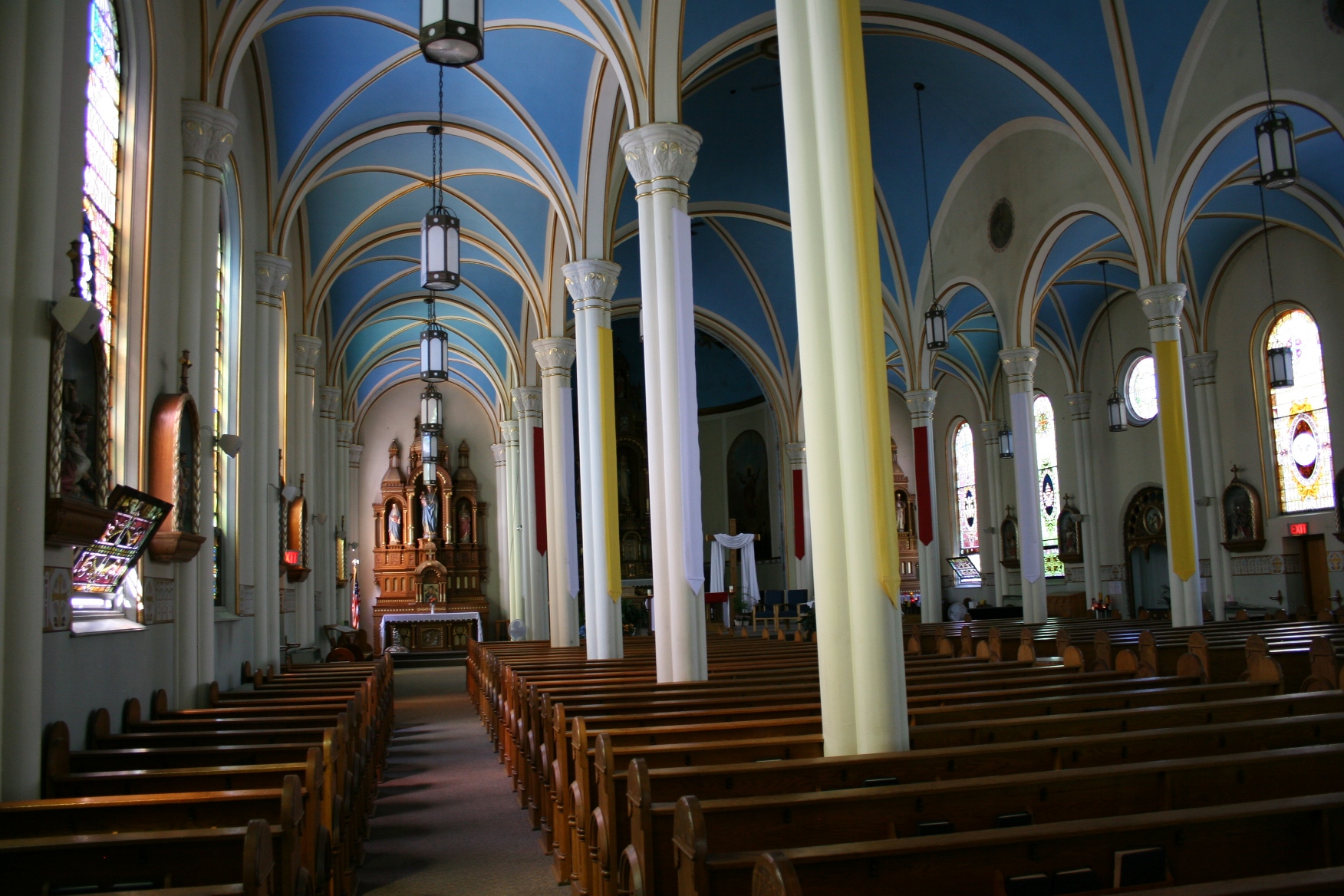
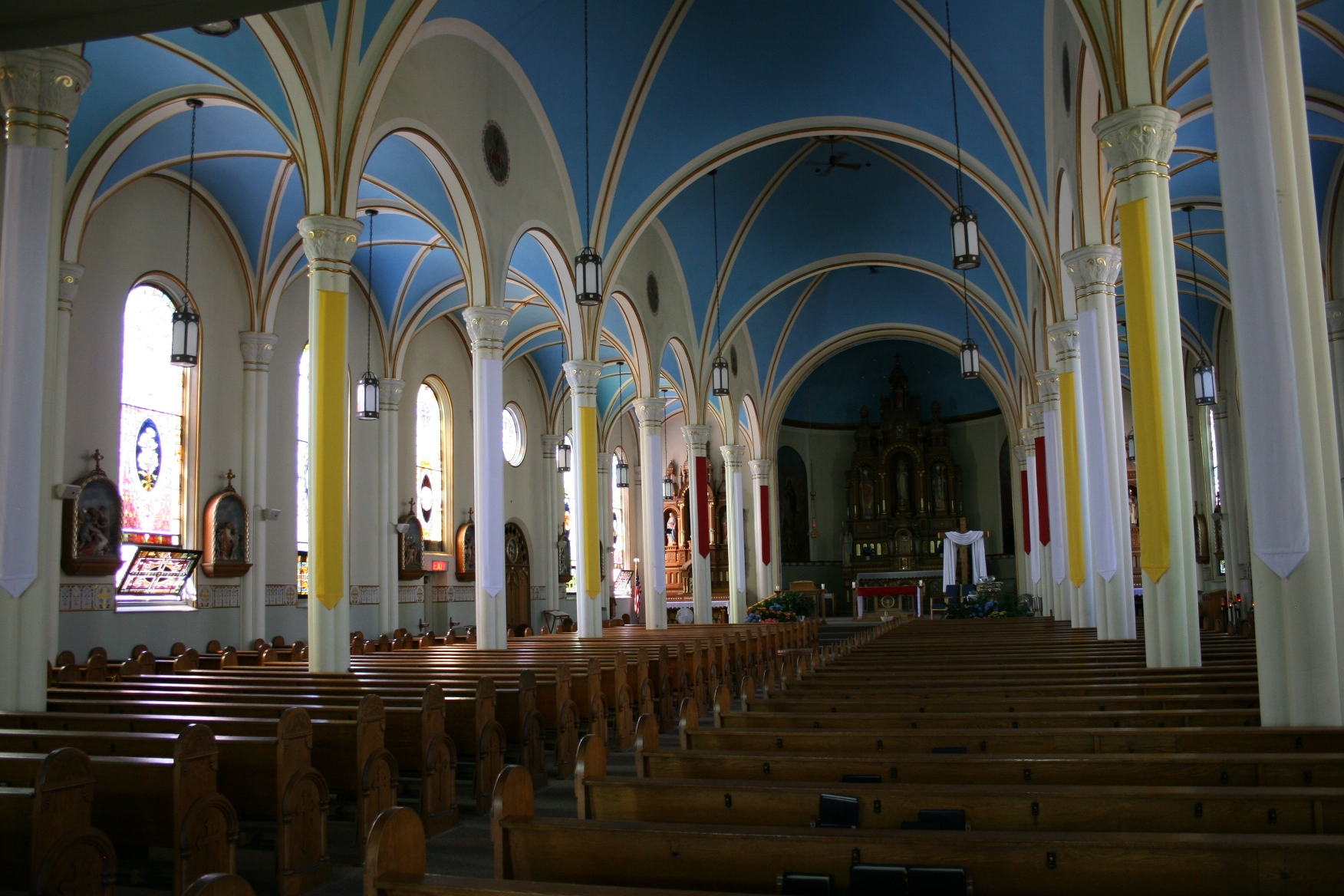
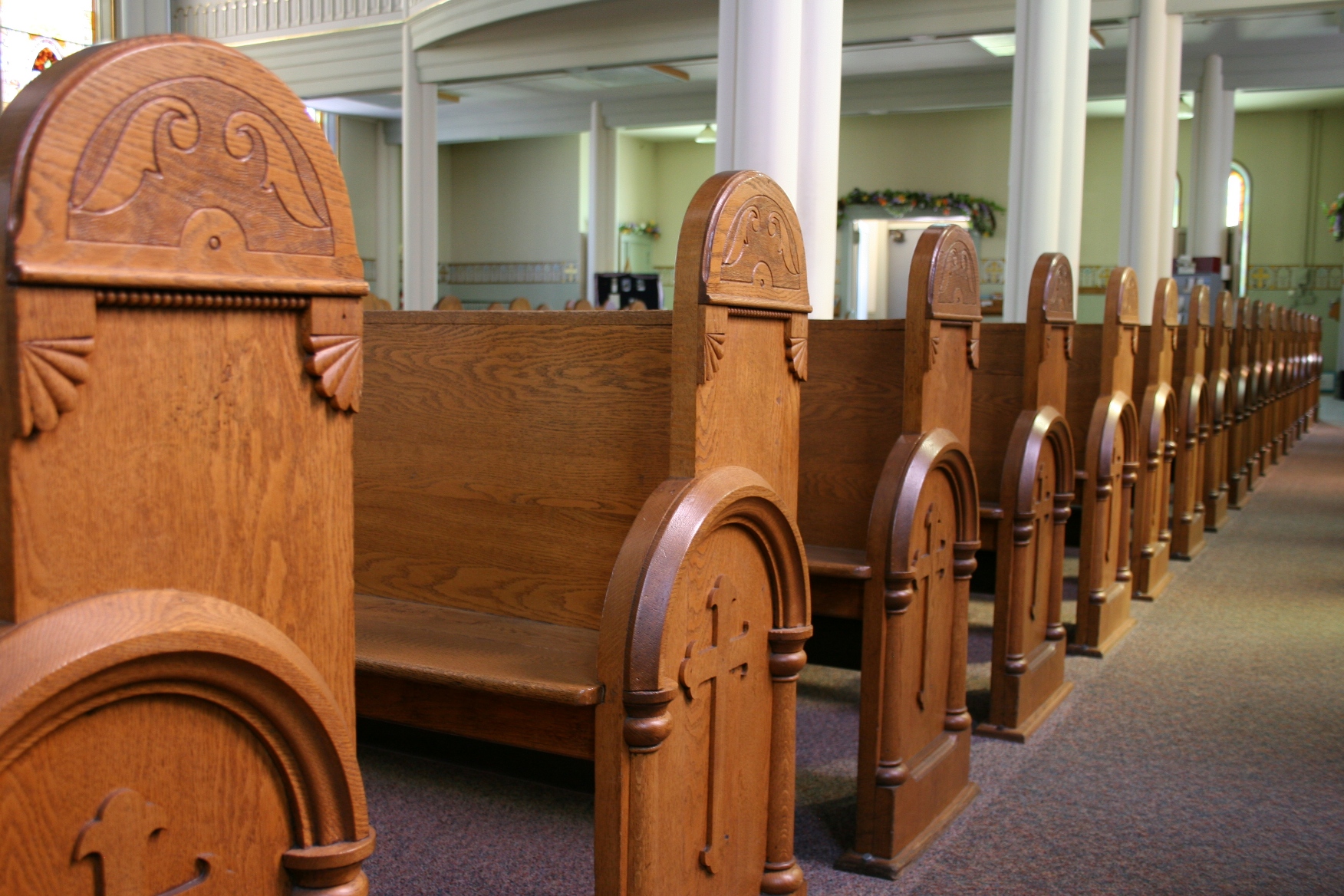
The cornflower blue of the arched ceiling. The pillars. Pews—endless carved pews stretching from the fonts of holy water to the steps leading to the altar.

A view from the back of St. Mary's Catholic Church looking toward the main altar.

I didn't even try to count the hand-carved pews that grace this church. But they are many.

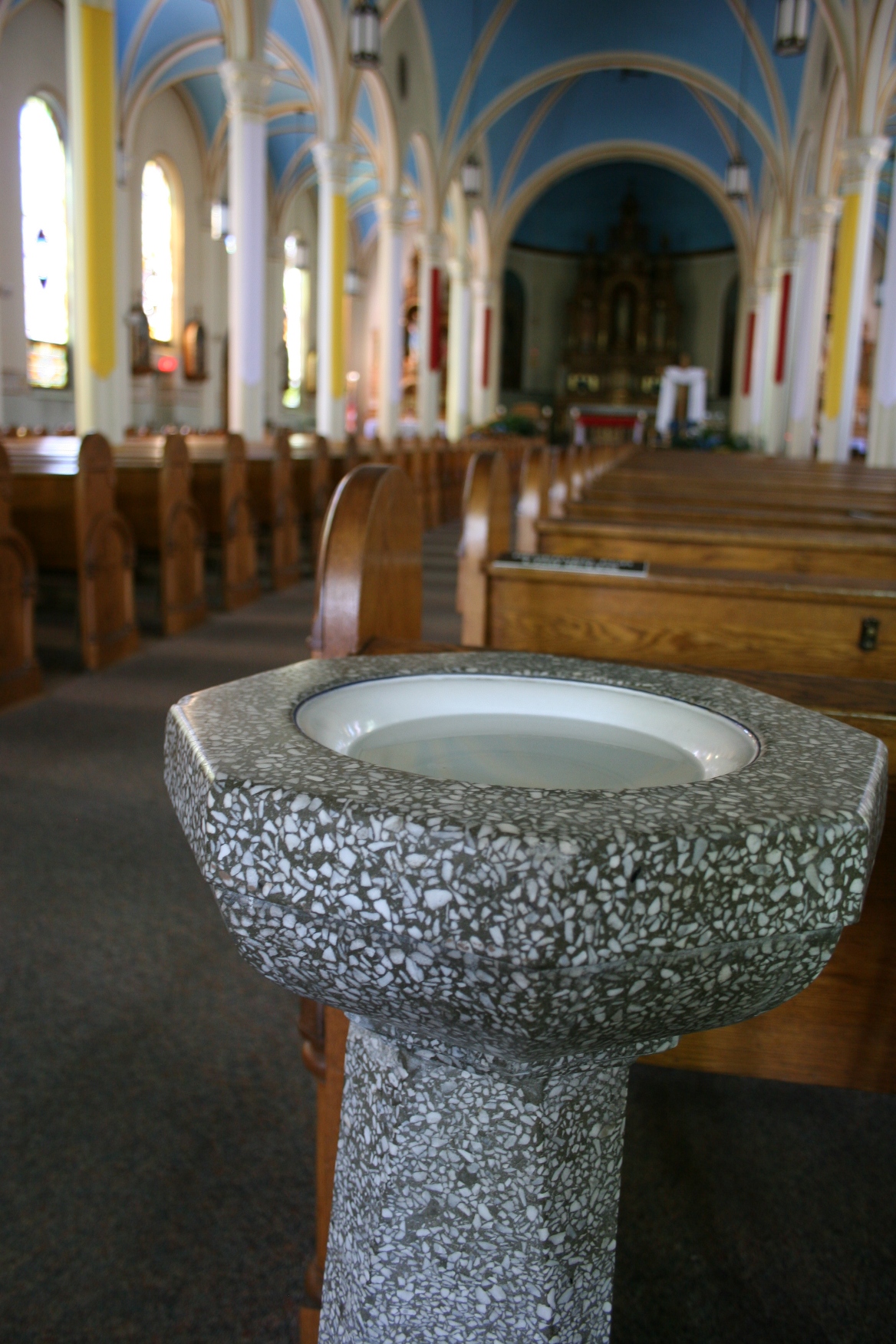
A stone font holding holy water at the back of the church.

Such beauty. Such holiness. Such wonderment.

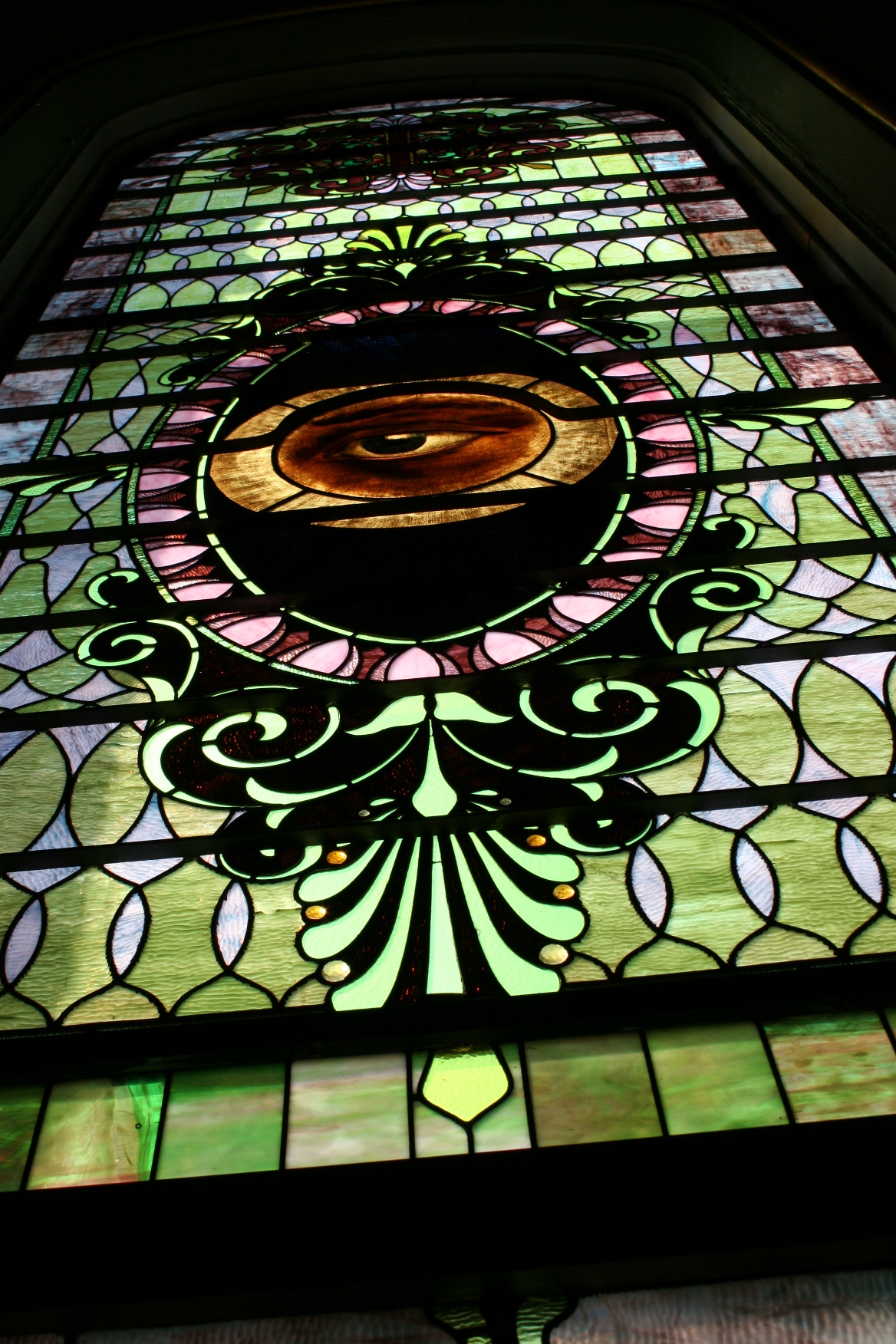
Opulent, stained glass windows bedecking the sanctuary like jewels on a crown.

One of too many stained glass windows to count.

Statues fit for the finest of museums.

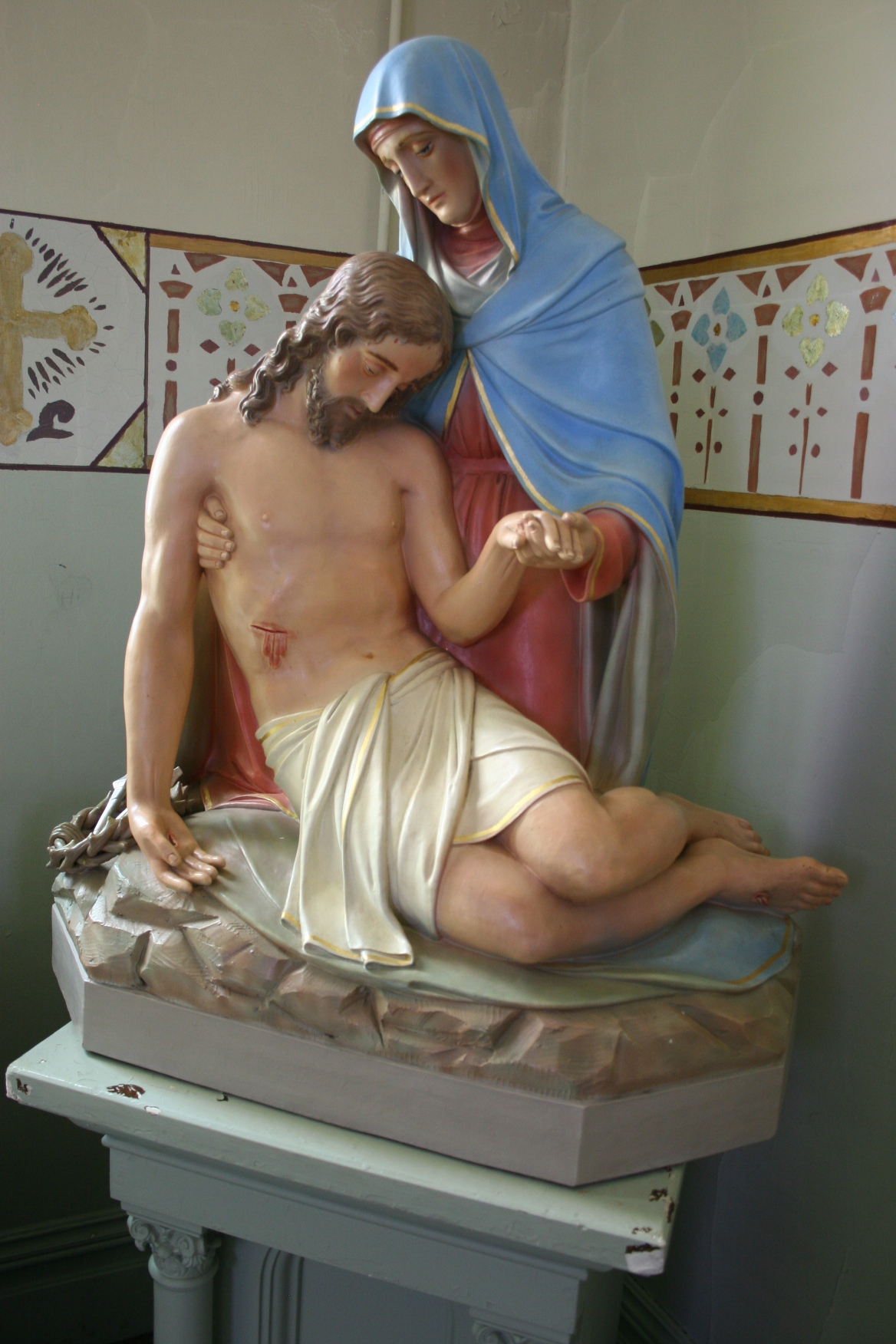
This statue of Jesus and Mary sits at the back of the church.

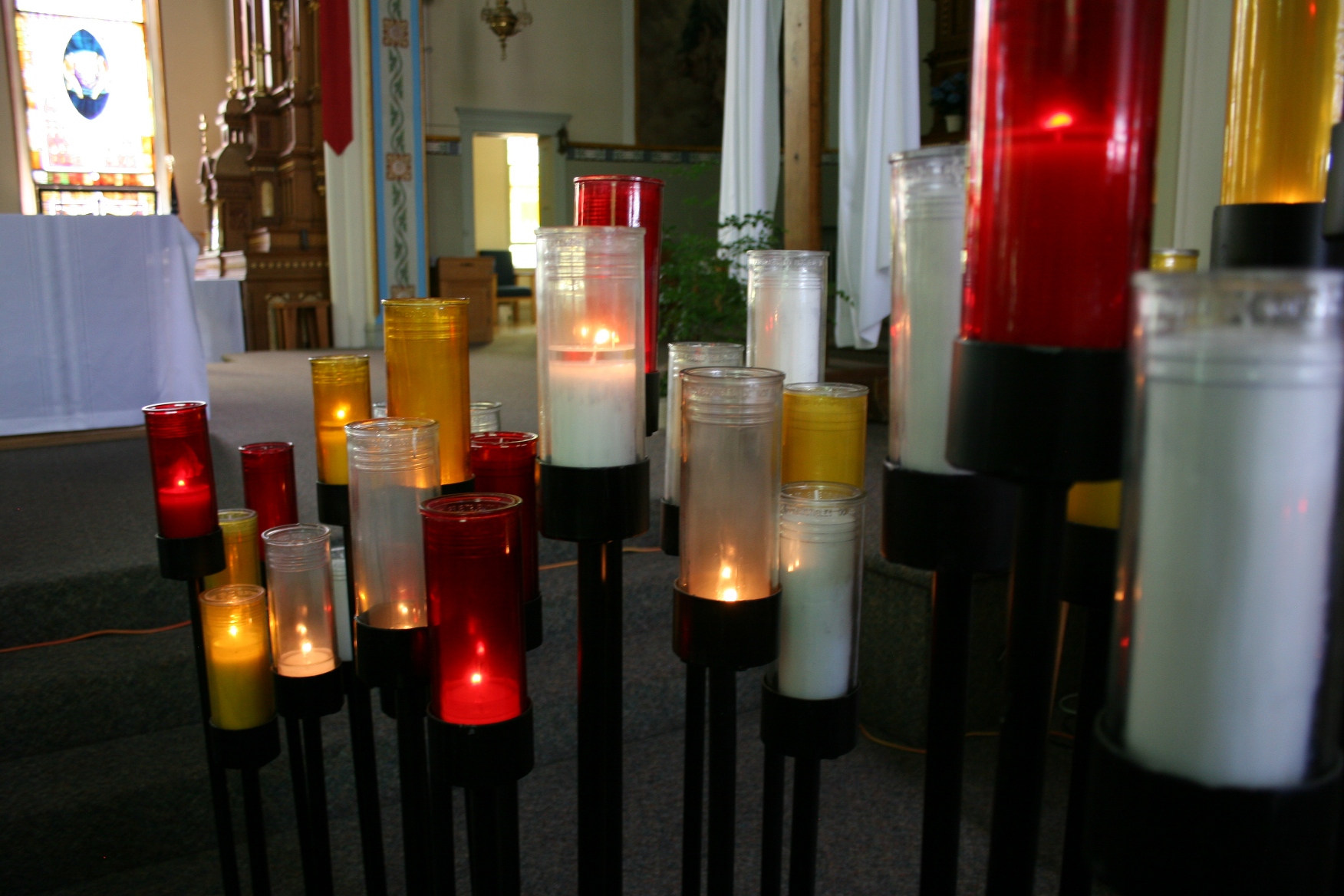
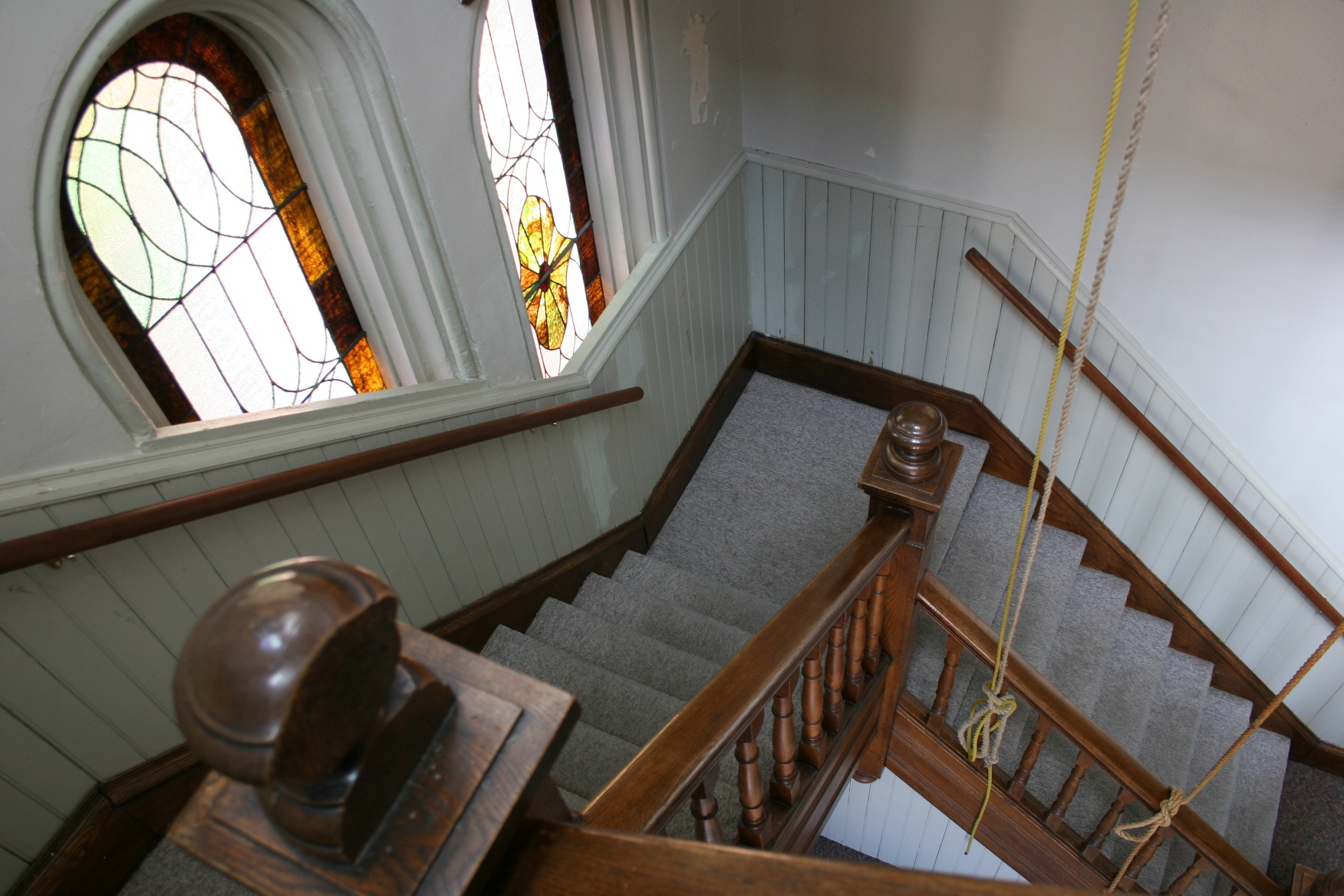
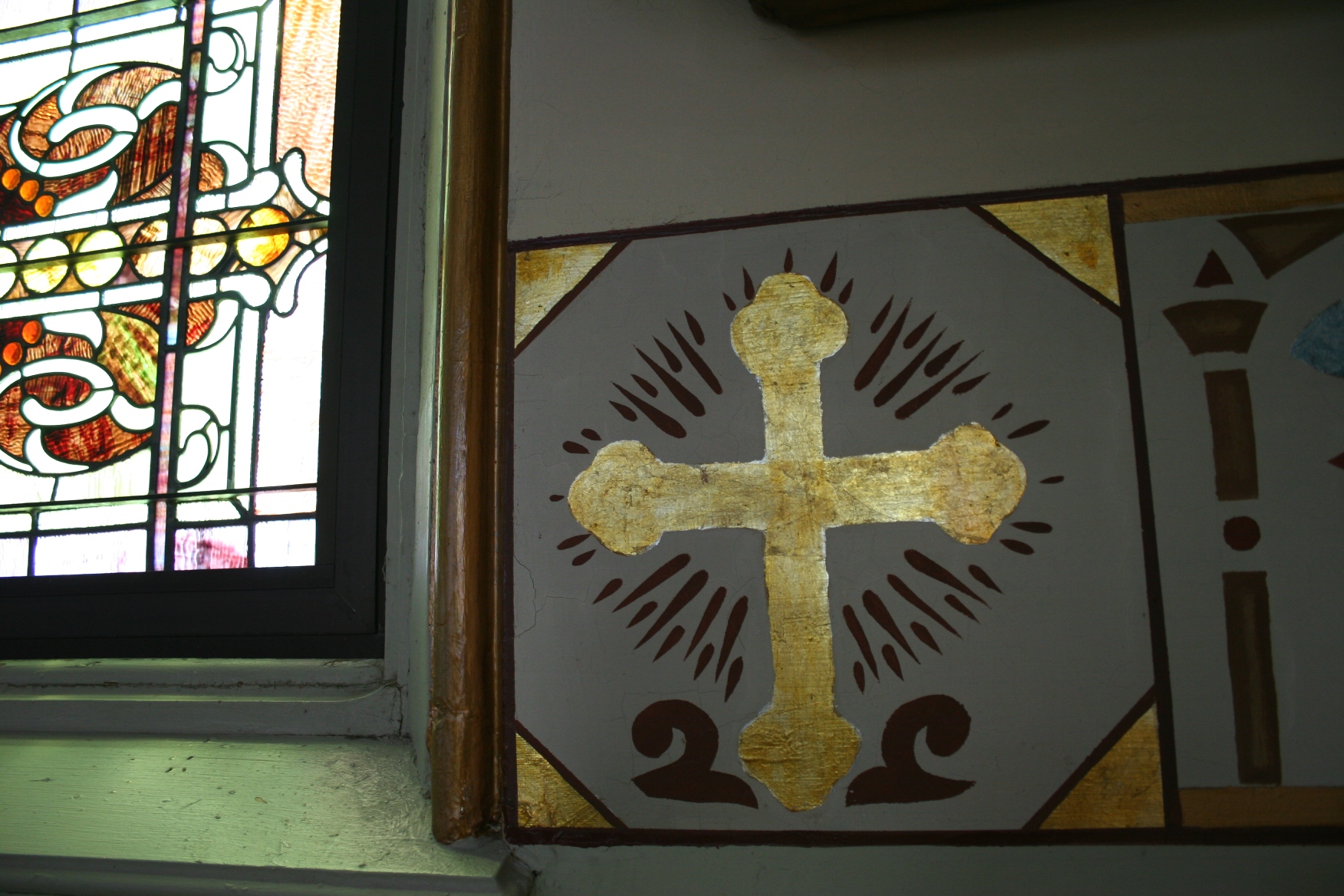
And then I moved, not sure which direction to go, wondering how I could possibly see every detail. Prayerful hands. Flickering candles. The frayed ends of the bell pull. Gold-leaf stenciled crosses. Worn wood. Angels in flight above the altar.

Clustered candles of prayer at St. Mary's.

Bell ropes dangle by the balcony stairway. Two stairways lead to the balcony.

A gold-leafed stenciled cross borders a side wall of the sanctuary.

My eyes swept across the Church of St. Mary’s, or St. Mary’s Catholic Church of Melrose. Choose the moniker you prefer.

The name and the denomination of this 1898 church mattered not to me. I cared only for the heavenly feel of this holy place.

How could I not be impressed by this multi-steepled house of worship next to the turkey plant and soaring above the landscape 100 miles northwest of the Twin Cities?

How many times, if you travel Interstate 94 in central Minnesota, have you noticed those steeples while zipping by Melrose, but never taken the time to drive into town? Placed on the National Register of Historic Places in 1993, this Catholic church is worth a stop if you appreciate craftsmanship, art, history and reverent beauty beyond belief.

The church rises above the land, defining Melrose.

The 113-year-old building was constructed by the parishioners of St. Boniface and renamed St. Mary’s when St. Boniface and St. Patrick’s parishes merged in 1958.

History runs deep here. You will see it in the hitching post out front, smell it in the incense, hear it in the creak of steps leading to the locked balcony.

And if you listen closely, you can almost hear the whispered prayers of those who have come here on bended knees to lift up their sorrows to the Lord.

#

I COULD NOT POSSIBLY share my many photos of St. Mary’s with you in one blog post. Please check back for more images in a future post.

© Copyright 2011 Audrey Kletscher Helbling


A historic bank and White Buffalo Calf Woman June 23, 2011

SET ME IN FRONT of an architecturally-stunning historic building and I’m in history heaven.

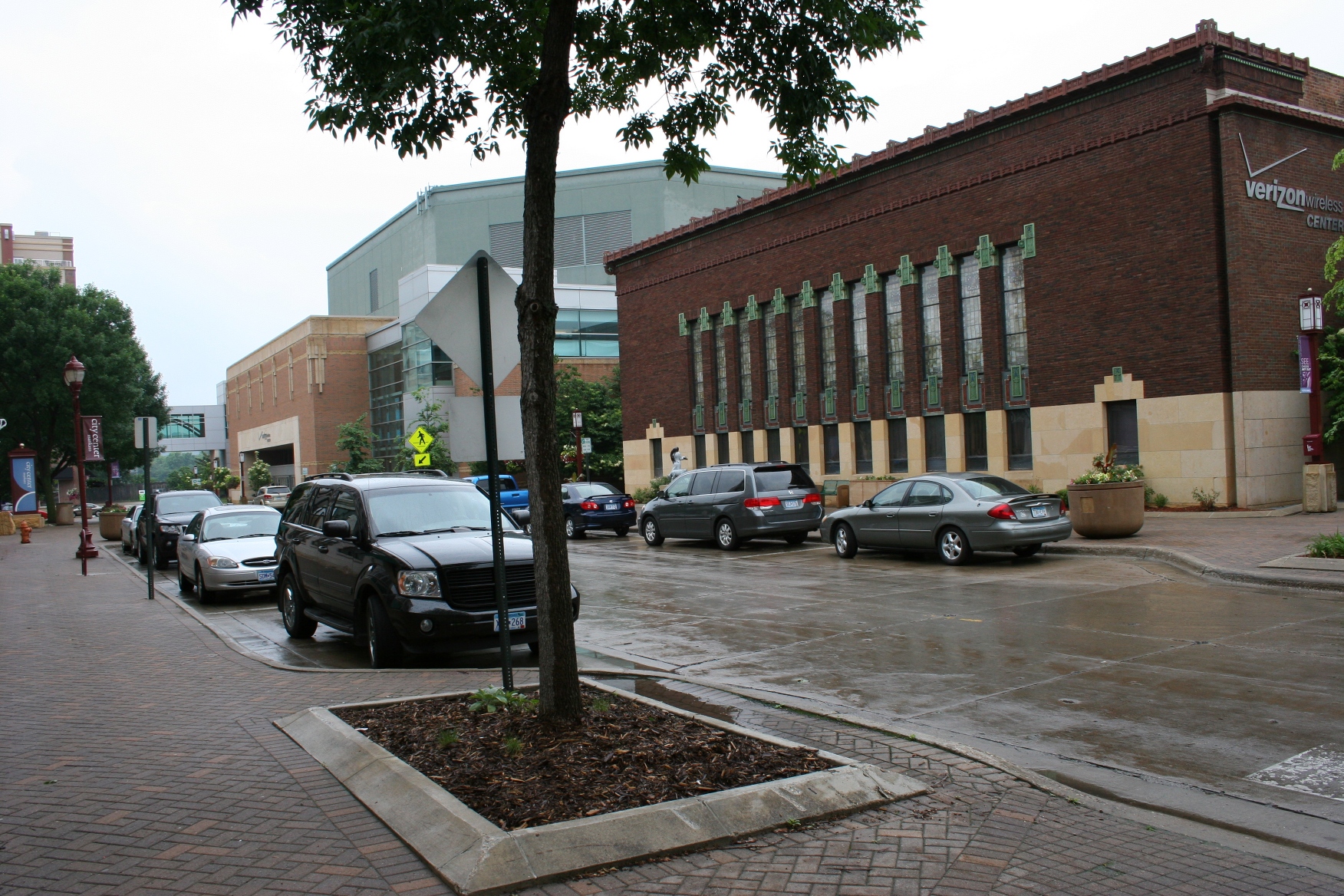
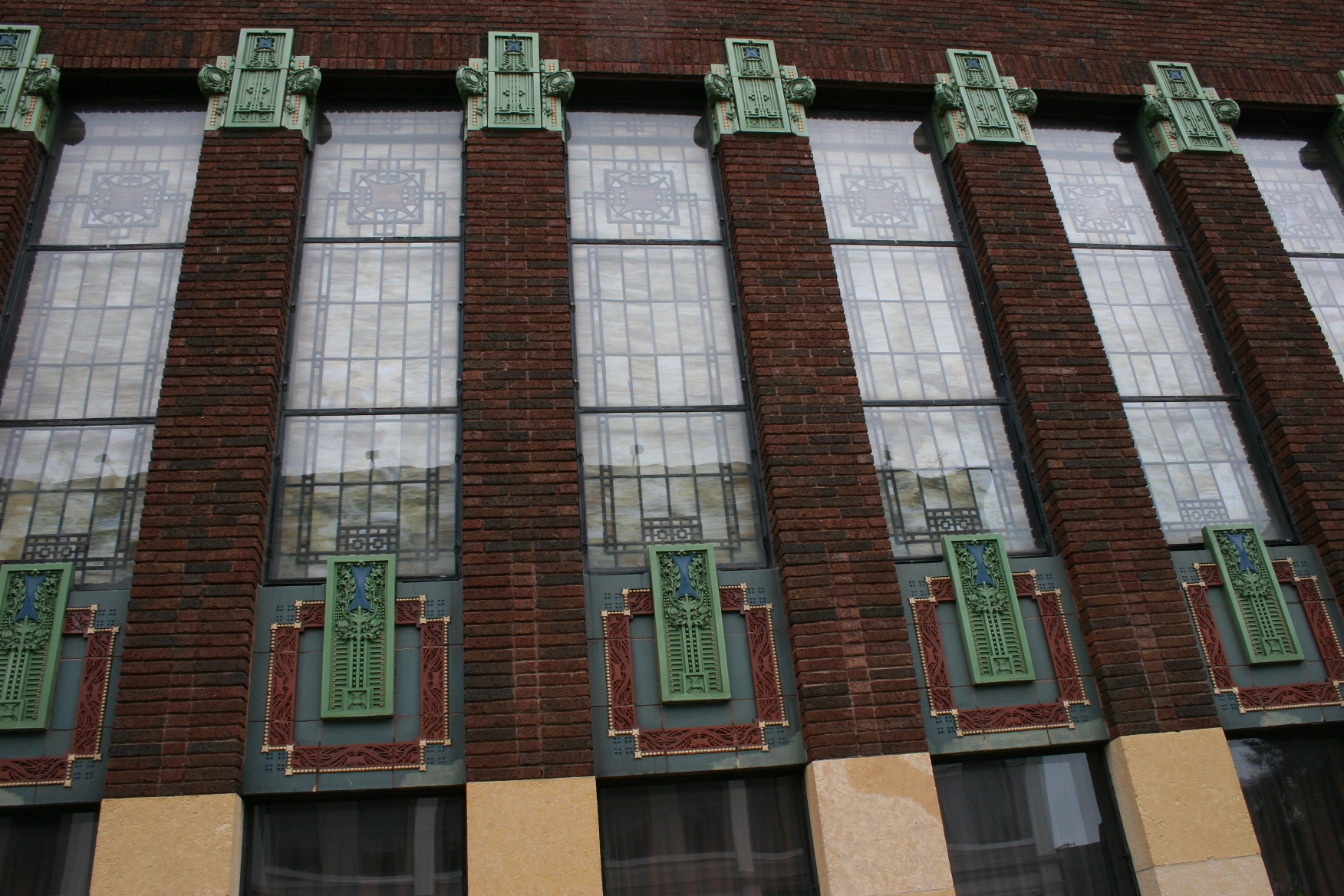
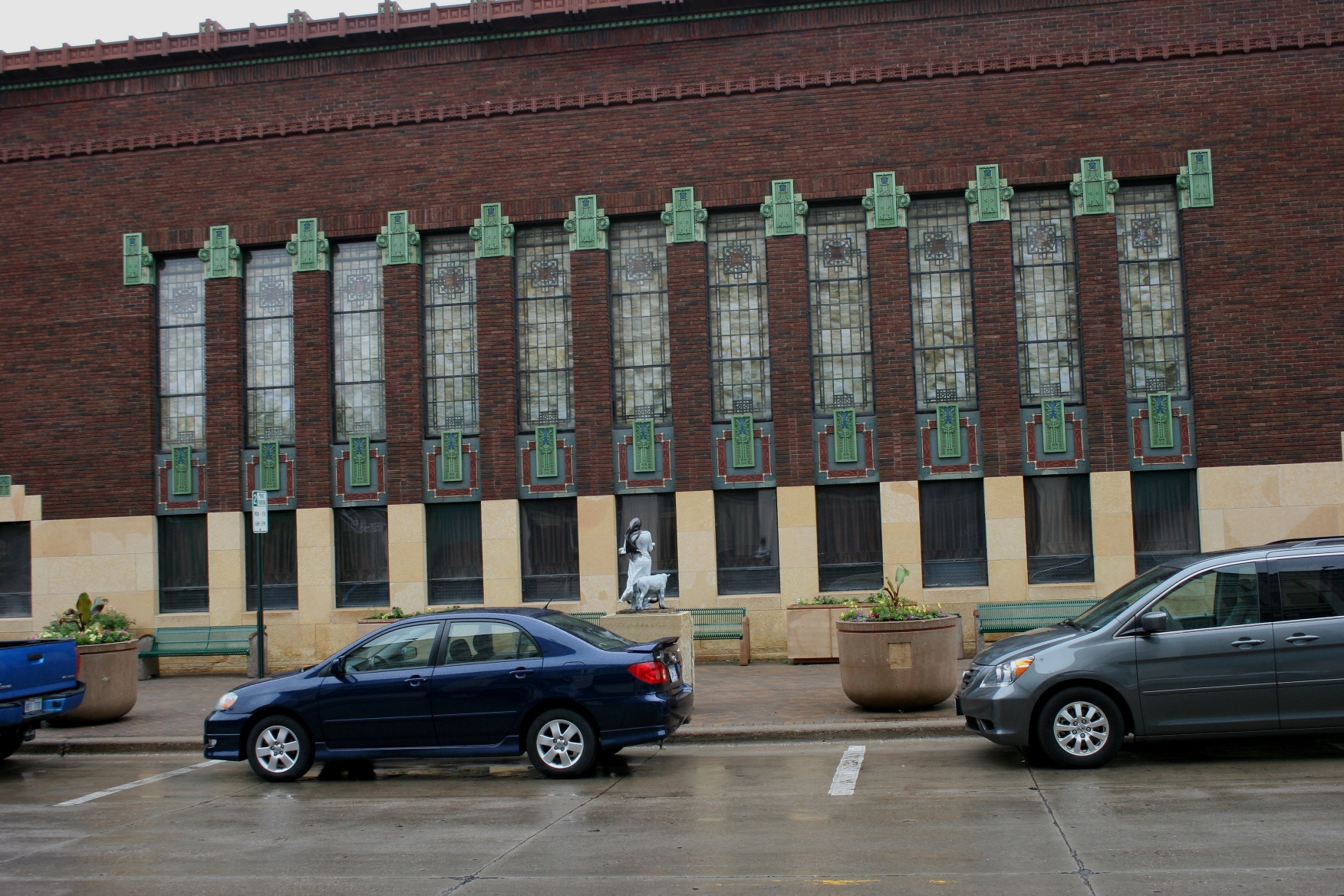
Just look at the lines, the colors, the window leading, the carvings…of the Old First National Bank of Mankato building, now a Verizon Wireless Center reception hall.

I didn’t step inside the former bank, didn’t even try a door. I was content last Saturday afternoon to view the exterior with its Prairie School style architecture.

“It’s like that bank in Owatonna,” my husband said as we gawked at the building built of brick, Mankato limestone and terra cotta along Civic Center Plaza in downtown Mankato.

He was, of course, referring to Chicago architect Louis Sullivan’s “jewel box,” National Farmer’s Bank in Owatonna, a brick building with terra cotta accents, splendid for its stained glass windows, arches and other architectural details.

The Mankato building features Frank Lloyd Wright-inspired stained glass and detailed ornamentation along the roof line.

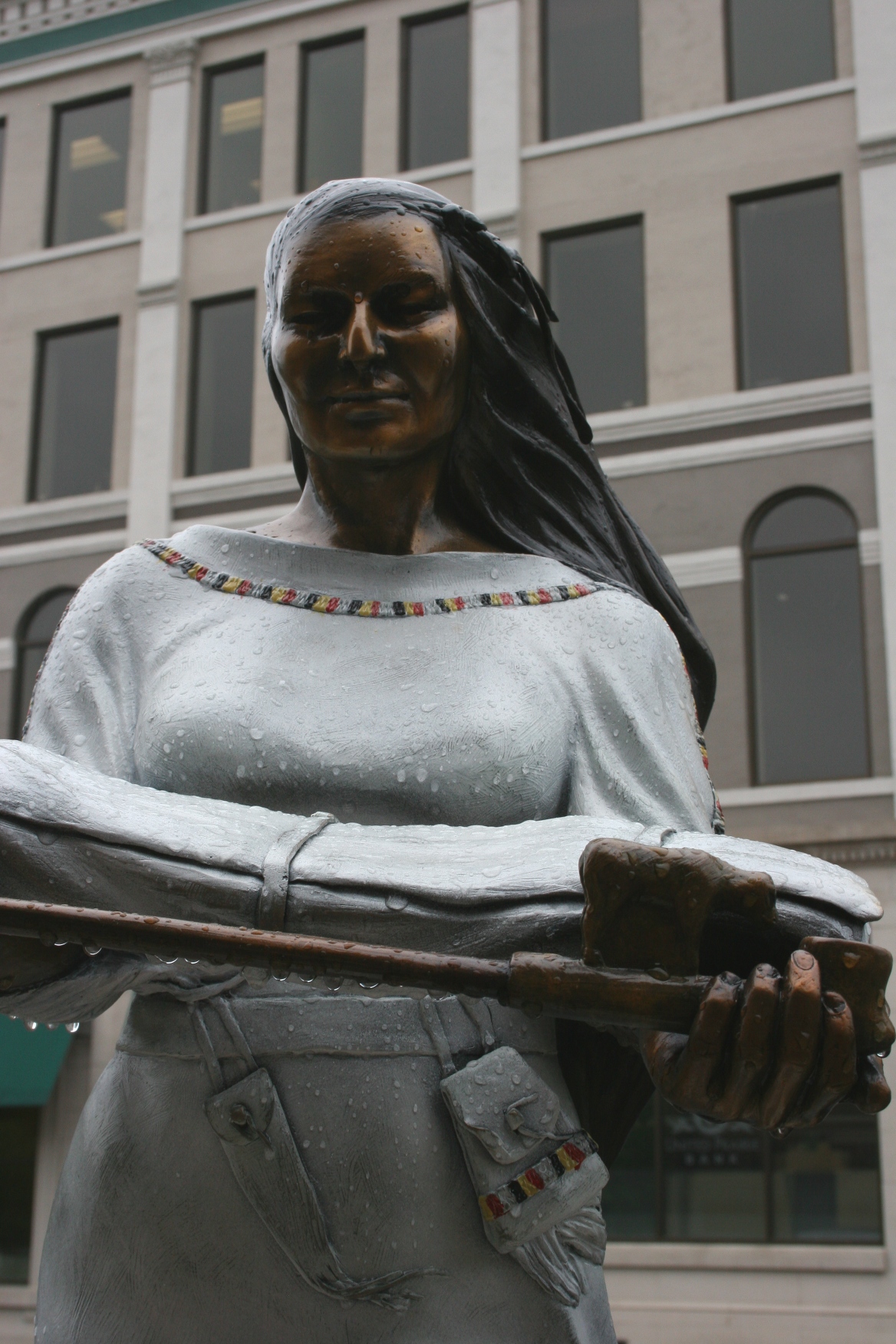
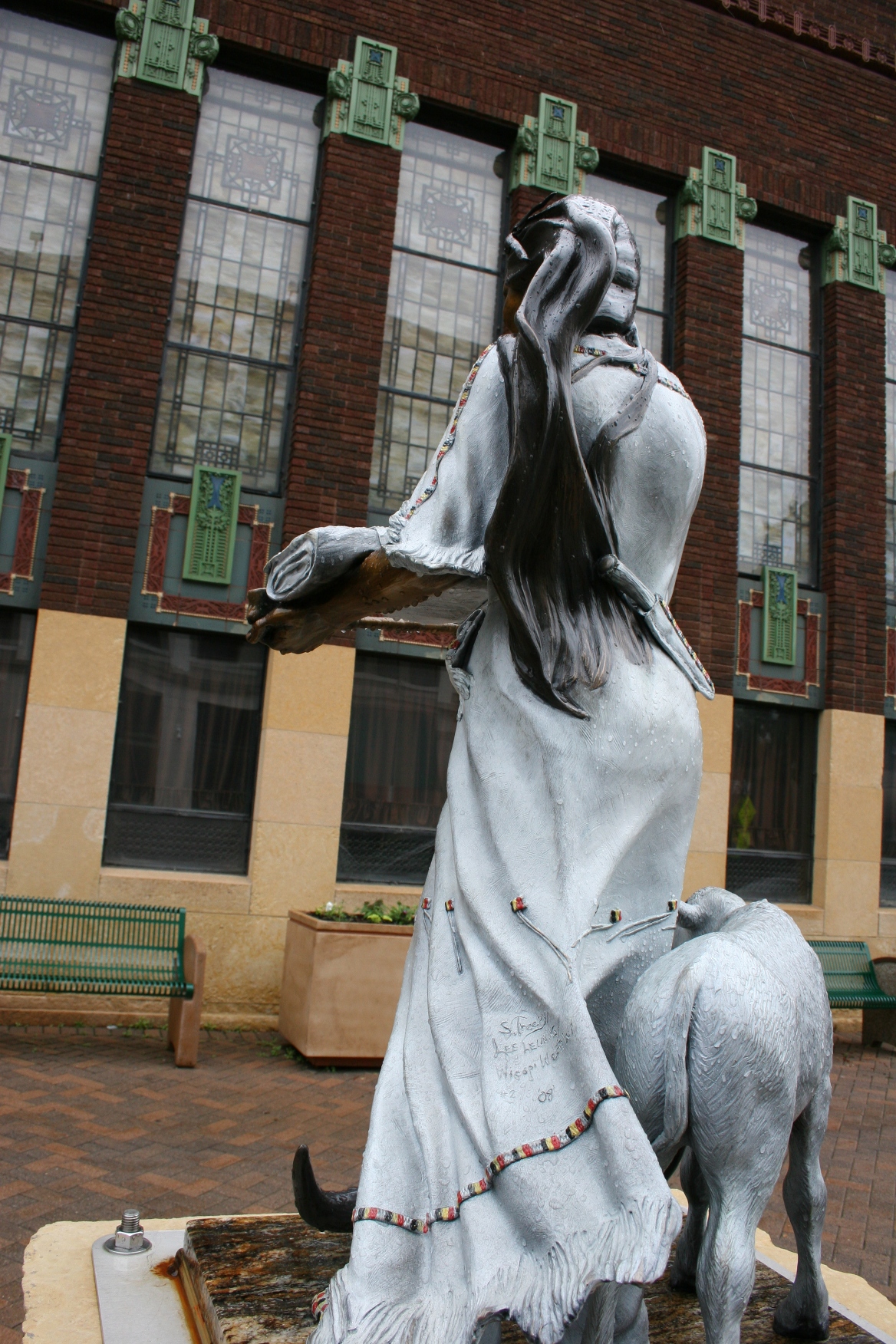
And now it also showcases a bronze sculpture of White Buffalo Calf Woman by South Dakota artists Lee Leuning and Sherri Treeby as part of Mankato’s City Art Walking Sculpture Tour.


If you peer at the woman’s face, examine her beaded moccasins and the trim on her buckskin dress and pouch, you’ll notice how the colors mimic those of the historic bank building. Whether this Native American sculpture’s placement was planned or accidental, I don’t know, but it fits seamlessly with the historical vibe of the locale, enhancing the whole art viewing experience.

The city of Mankato, apparently named after a varied translation of the Dakota word Mahkato, meaning “blue earth,” owns a place in Minnesota and national history for the mass hanging of 38 Dakota here on December 26, 1862. Three hundred warriors were accused of killing civilians and soldiers and of other crimes during the U.S.-Dakota Conflict. After a public outcry, President Abraham Lincoln commuted the sentences of all but 38. Certainly, Mankato is not proud of this moment in history. But efforts have been made to honor the Dakota at monuments in the city.

And now sculptures like White Buffalo Calf Woman also help heal and educate the public about the Native American culture. According to information on the sculpture placard, this prophetess is the only religious icon accepted by all Native American tribes. She “brings a message of healing, hope and peace among the races to all the people.”

More than just art, I also got a history lesson along a Mankato city street on a Saturday afternoon in June.

PLEASE VIEW MY JUNE 20 post for more photos and information about the Walking Sculpture Tour. Additional images will be forthcoming.

© Copyright 2011 Audrey Kletscher Helbling