Minnesota Prairie Roots

Writing and photography by Audrey Kletscher Helbling

Fall harvest observations in southern Minnesota October 14, 2026

A recent fall drive took us deep into the southern Minnesota countryside, where harvest is underway. (Minnesota Prairie Roots copyrighted photo October 2026)

A PLANNED FALL COLOR DRIVE evolved into more like a harvest drive as Randy and I traveled recently through parts of Rice, Steele, Waseca and LeSueur counties. While we saw some color in the trees, fall field work centered our observations.
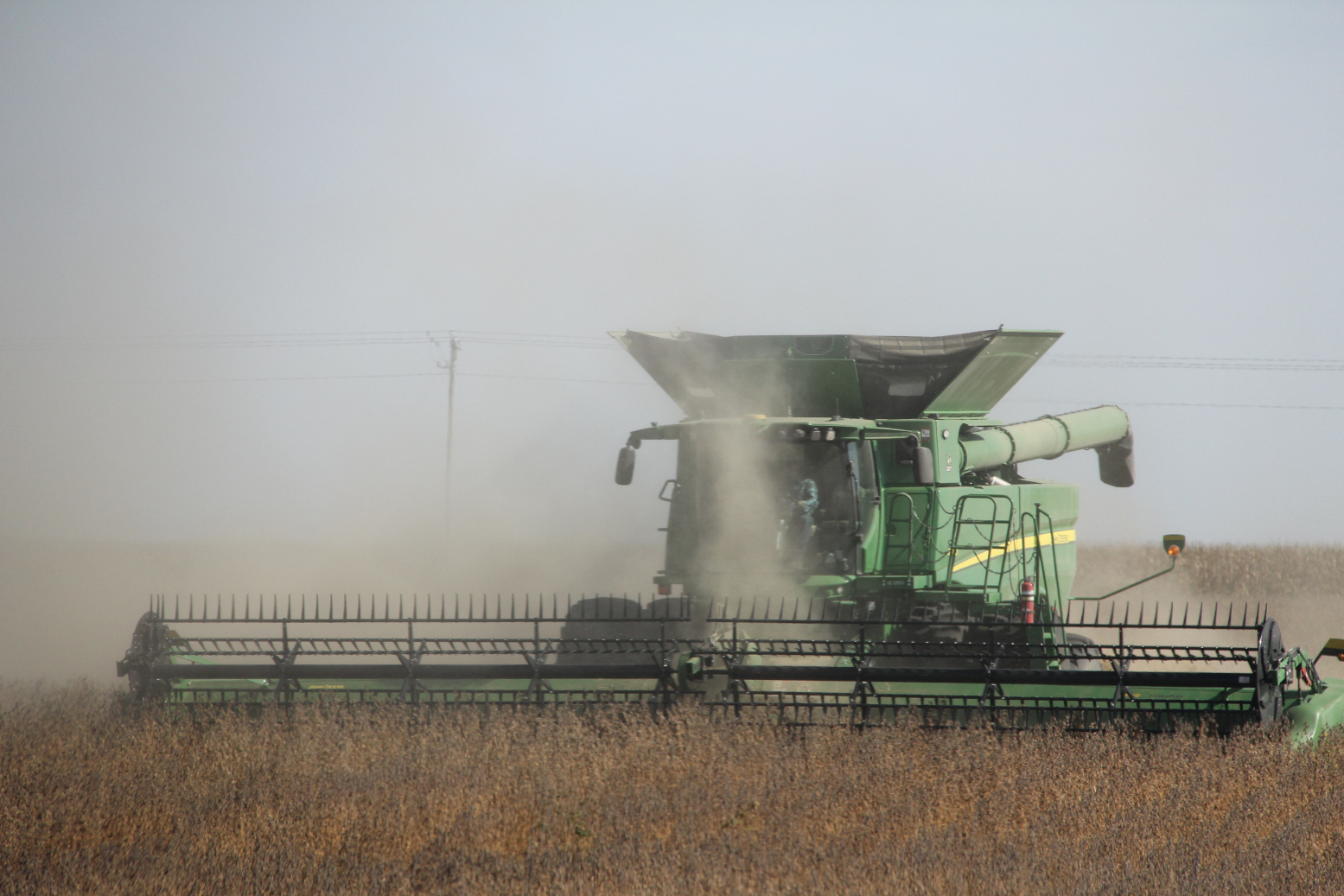
Combining beans, a dusty, dirty job in dry conditions. (Minnesota Prairie Roots copyrighted photo October 2026)

Area farmers were busy harvesting soybeans on the day we meandered through the countryside to the west of Faribault with no set destination.
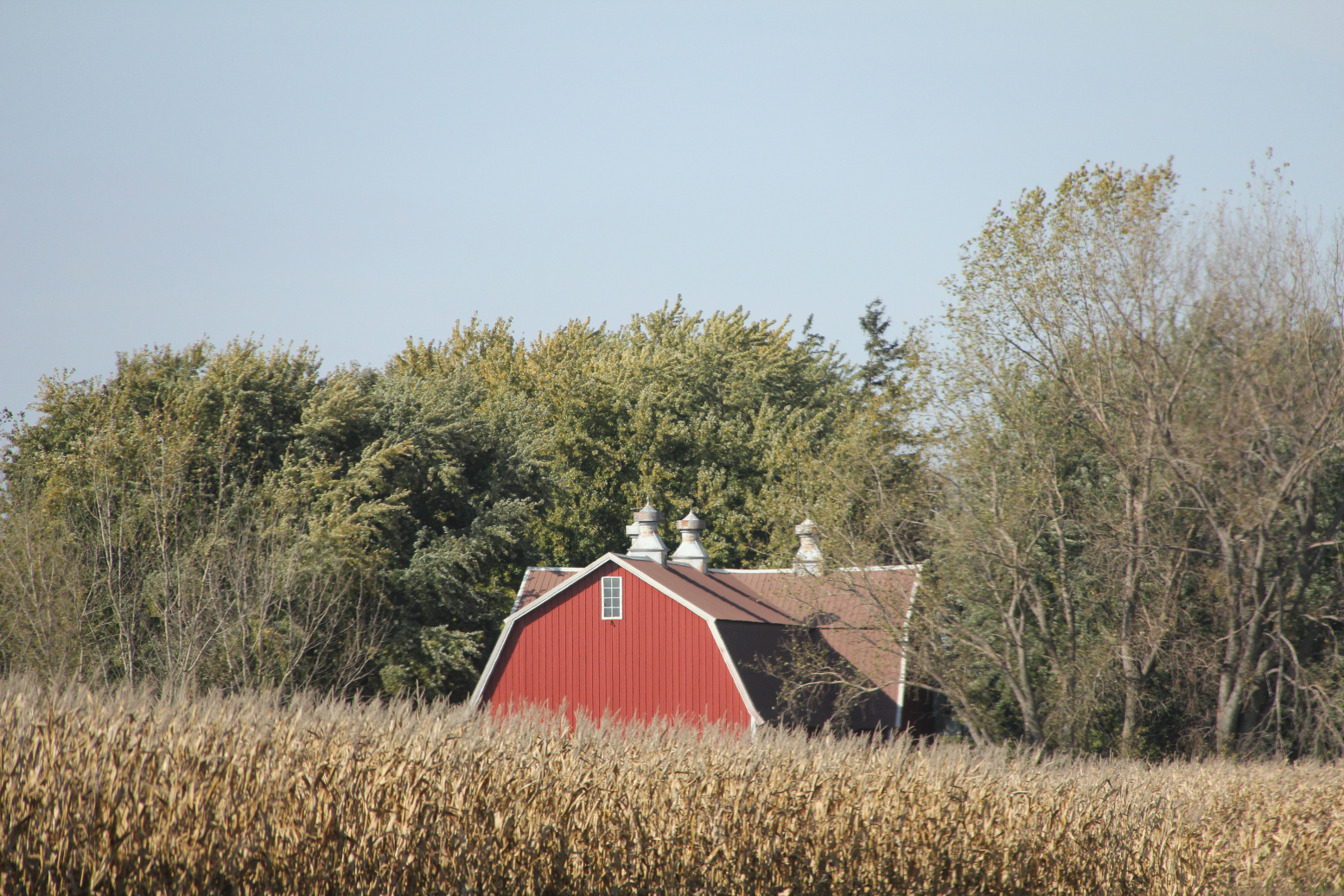
A beautiful barn, fronted by a cornfield, somewhere west of Owatonna. (Minnesota Prairie Roots copyrighted photo October 2026)

Given our farm backgrounds—Randy rooted in Morrison County in central Minnesota and me in Redwood County in southwestern Minnesota—we remain interested in farming, particularly in spring planting and fall harvest.
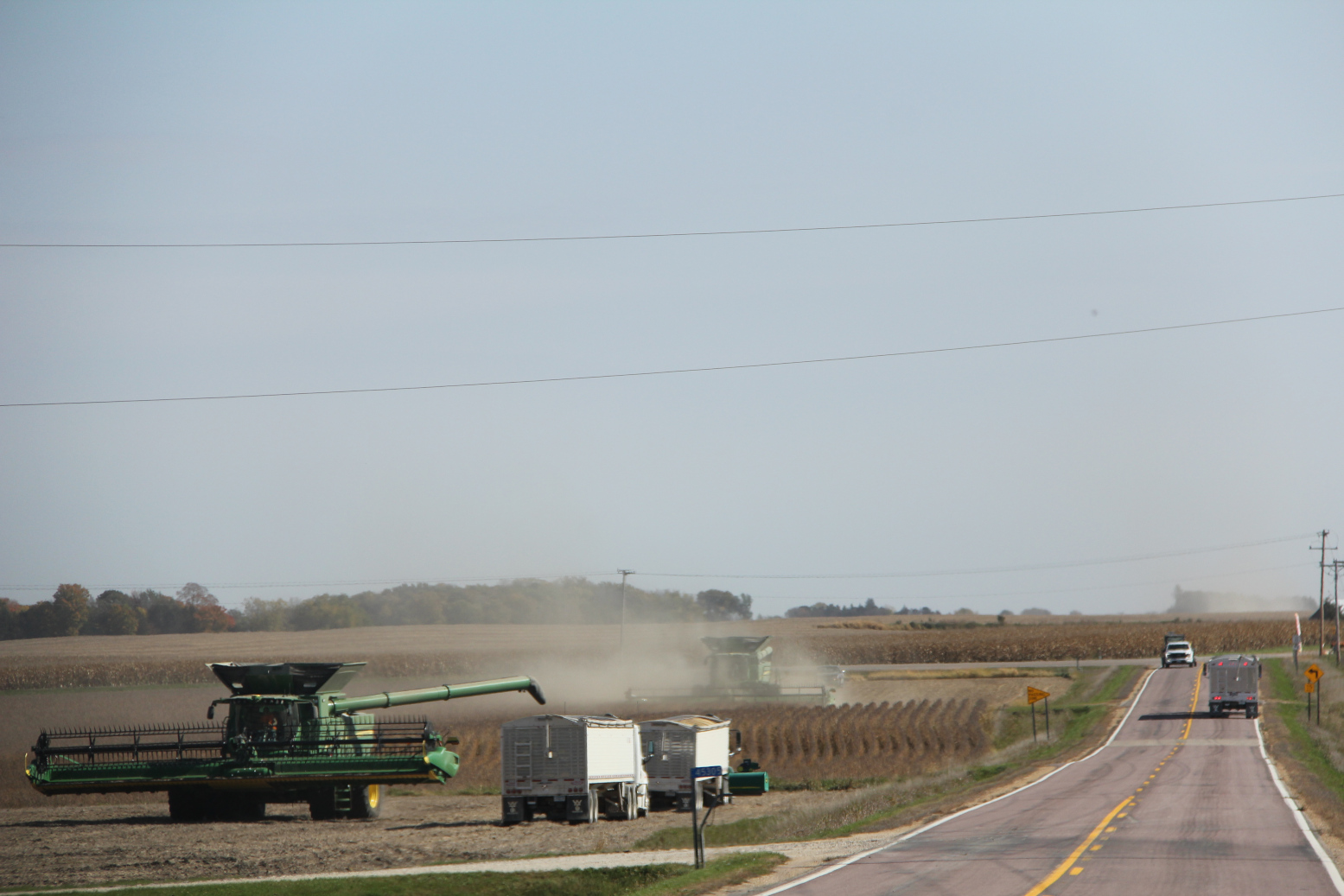
An overview of soybean harvesting with multiple combines and trucks in the field and on the road. (Minnesota Prairie Roots copyrighted photo October 2026)

On this unseasonably warm autumn day, farmers hustled to get the beans out, their mammoth combines enveloped in dust as the machines raked across the acres. A stretch of hot, dry days made for ideal harvest weather.
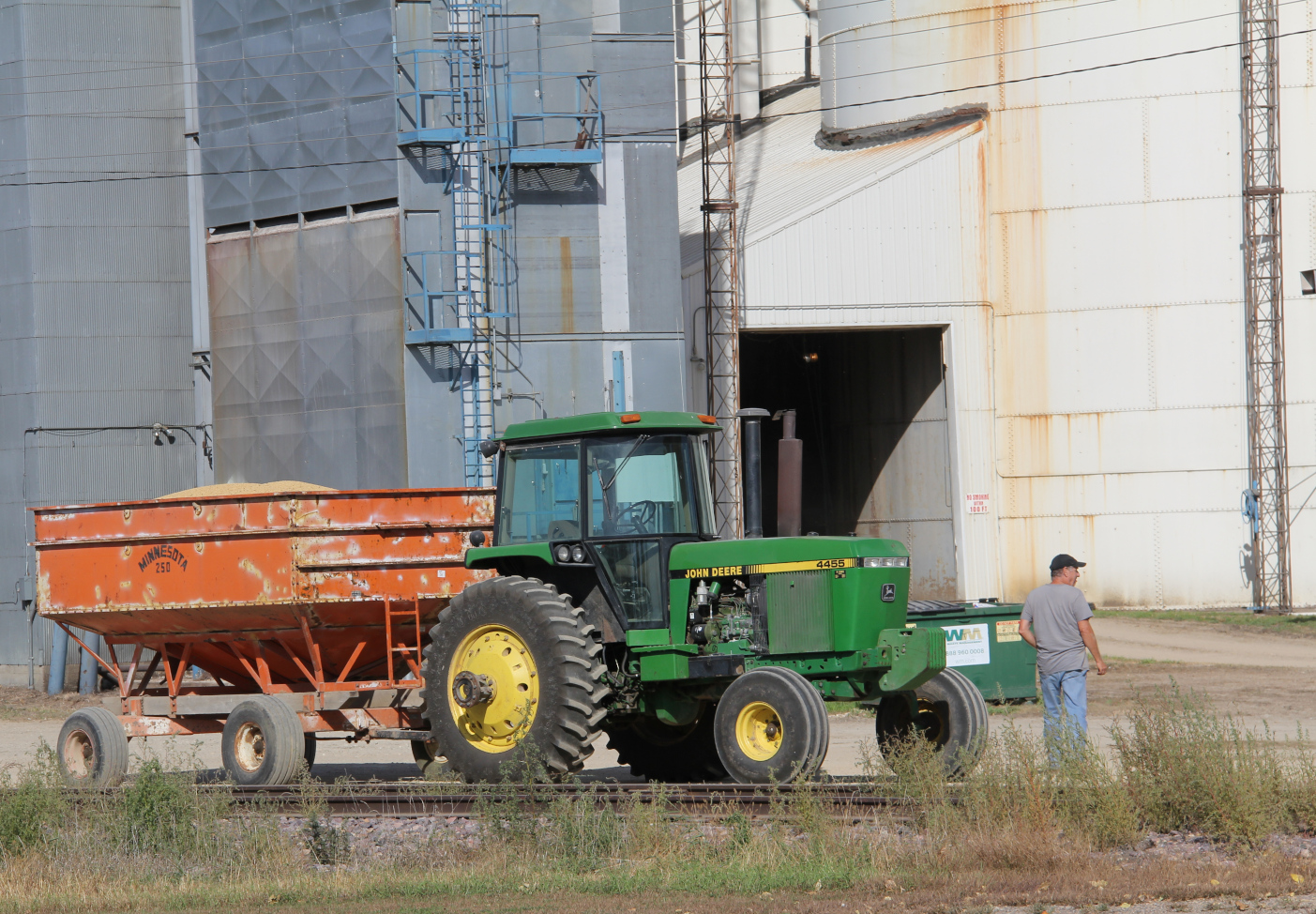
A farmer waits outside the grain elevator in Montgomery. (Minnesota Prairie Roots copyrighted photo October 2026)

Grain trucks idled, awaiting loads of beans. Others brimmed with golden orbs. Gravity flow wagons pulled by tractors or pickup trucks also held the bounty of crops.
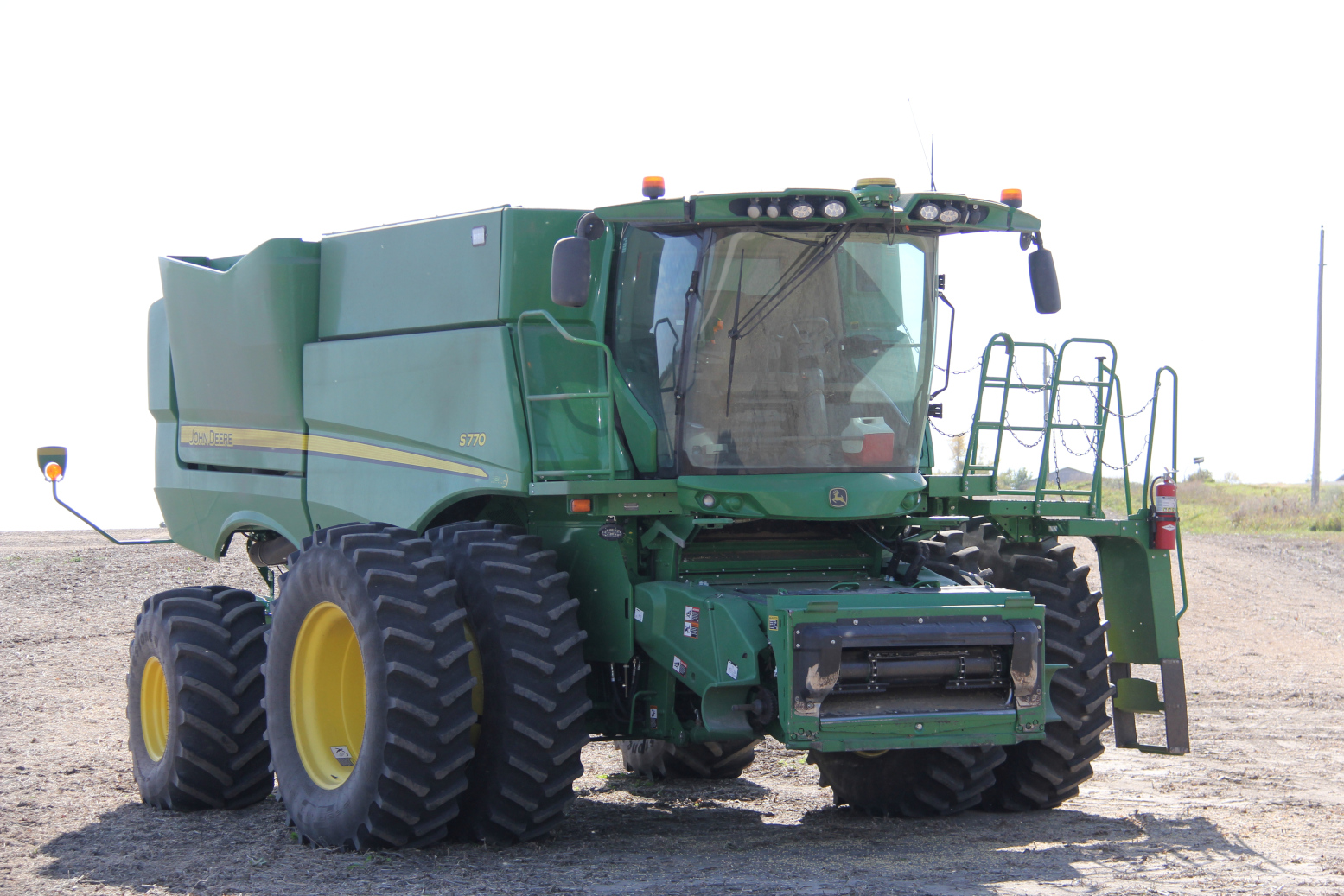
A red and white cooler sits inside the cab of this combine. (Minnesota Prairie Roots copyrighted photo October 2026)

I noticed the details, too, like a small cooler inside a combine cab, probably packed with lunch. My friend Virginia shared recently that she delivered lunch to her son harvesting in the Millersburg area. It’s likely not all that uncommon for family members to take meals to farmers in the field. Going up to the farmhouse for lunch takes too much time.
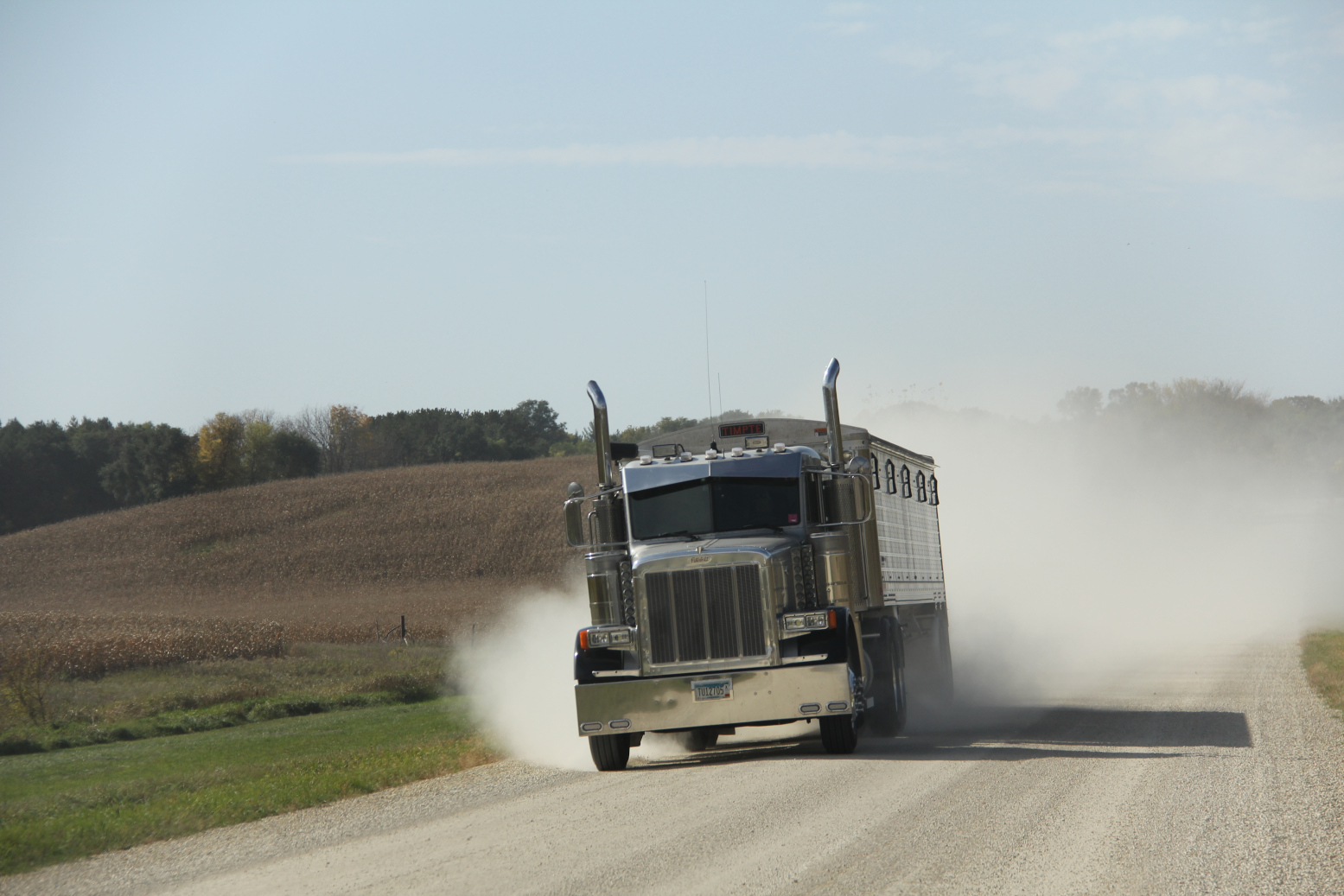
A grain truck barrels down a gravel road in a cloud of dust near Cannon City. (Minnesota Prairie Roots copyrighted photo October 2026)

Time is the farmer’s constant companion during this season of harvest. As the days tick closer to winter, pressure mounts to get first the soybeans, then the corn, out.
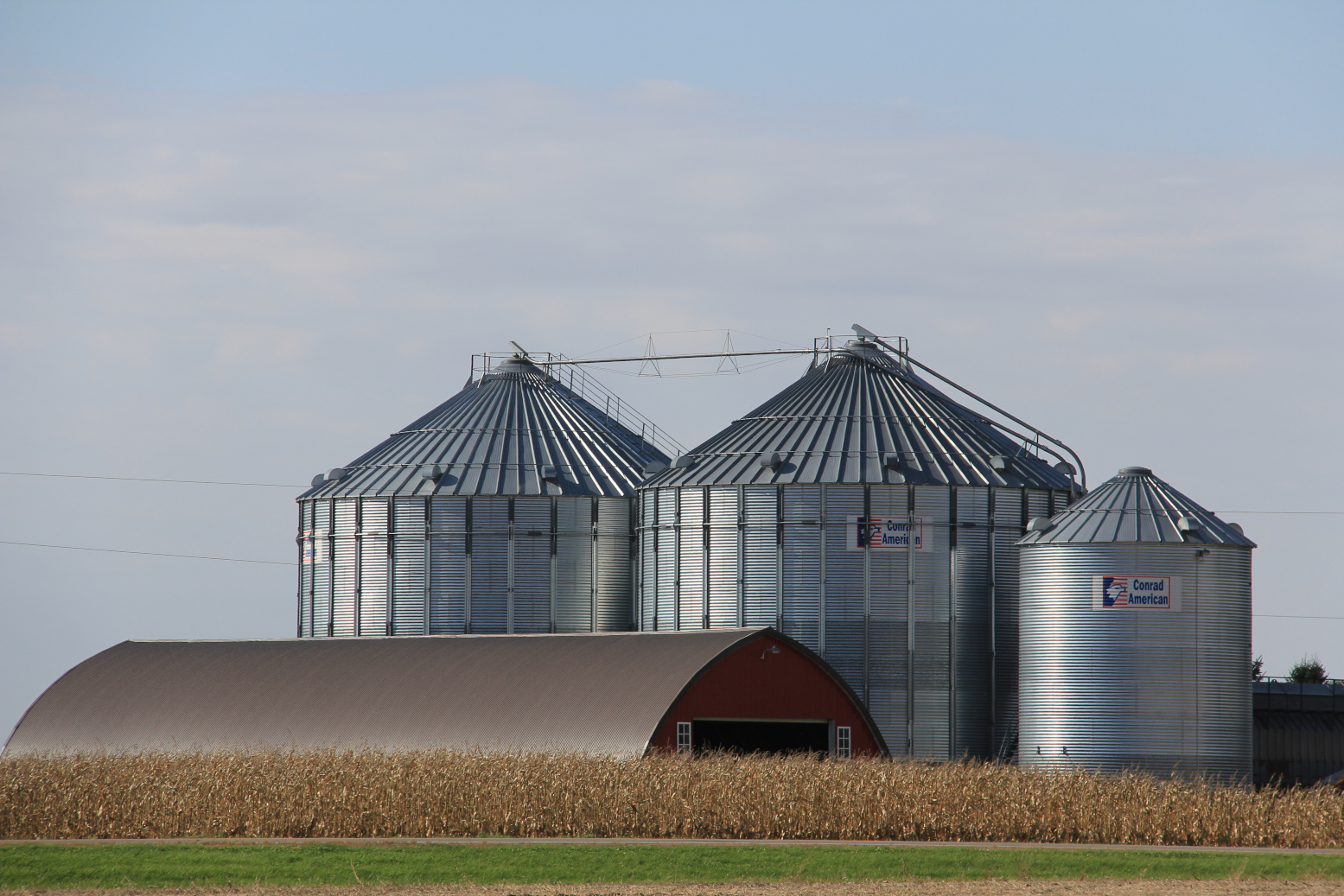
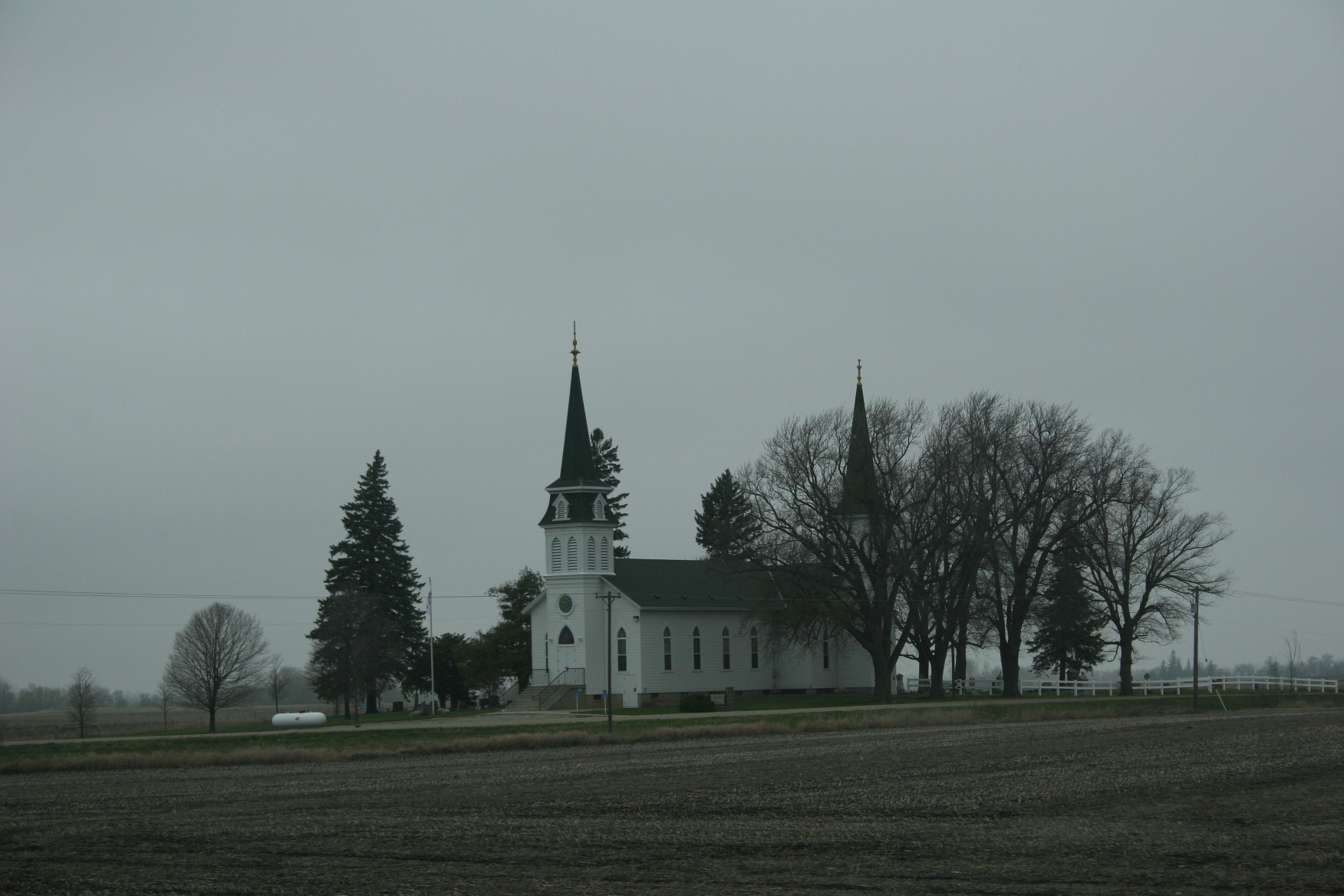
Grain bins dominate a farm site near Blooming Grove United Methodist Church, rural Morristown. (Minnesota Prairie Roots copyrighted photo October 2026)

And then there’s the weather, always the weather. Unwanted rain can delay harvest, adding to an already stressful situation.
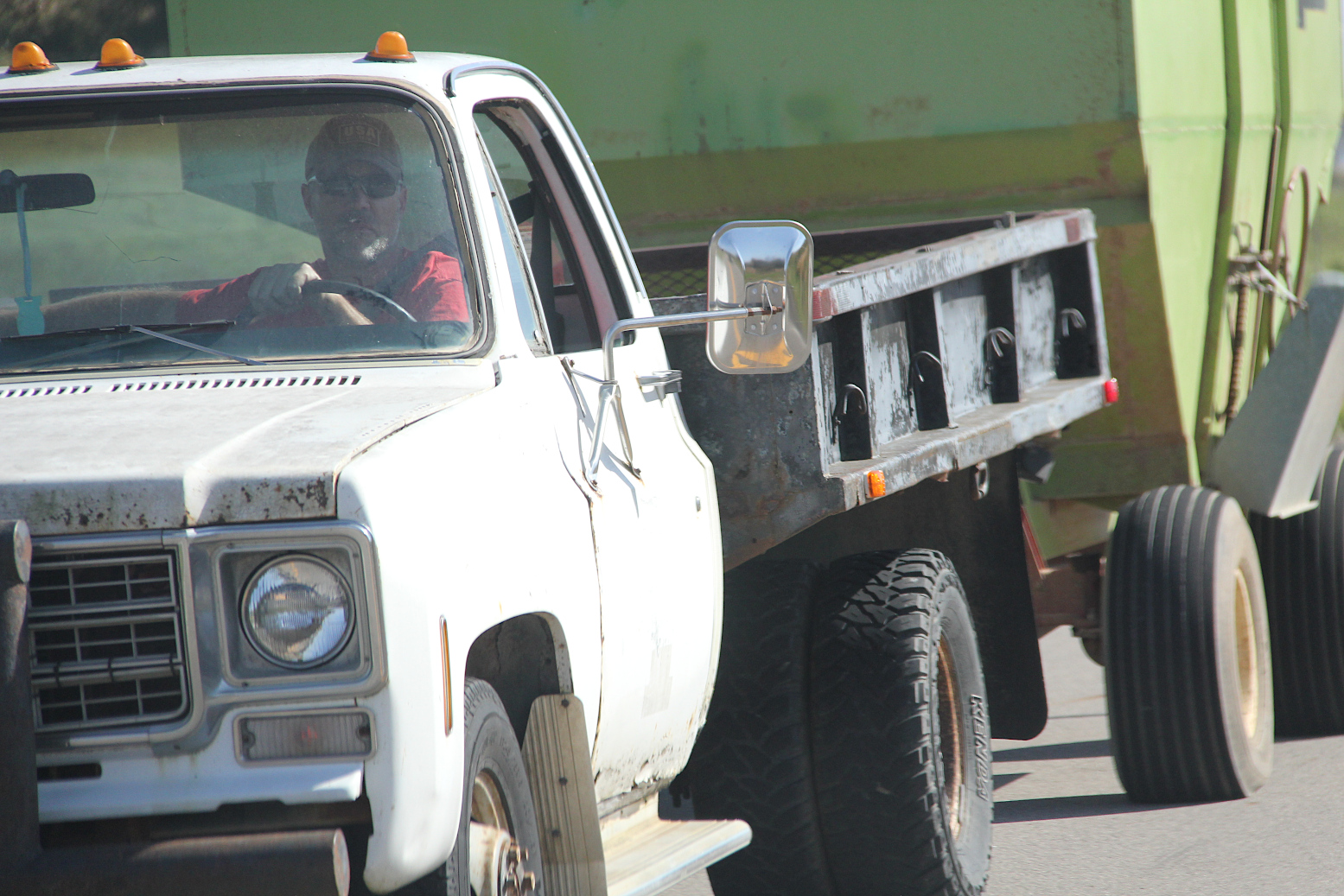
Farmers, whether in the field or on the road, are in a time crunch to finish the harvest. (Minnesota Prairie Roots copyrighted photo October 2026)

It takes a lot of mental fortitude to crop farm—to handle the stressors of time, weather, fluctuating prices and increasing operational expenses. But help is available 24/7 through a free and confidential state-funded Minnesota Farm & Rural Helpline at 833-600-2670. Trained counselors will listen, help and connect as needed. Other resources such as NAMI Minnesota and the Suicide Lifeline (call, text or chat to 988) are also available to assist.
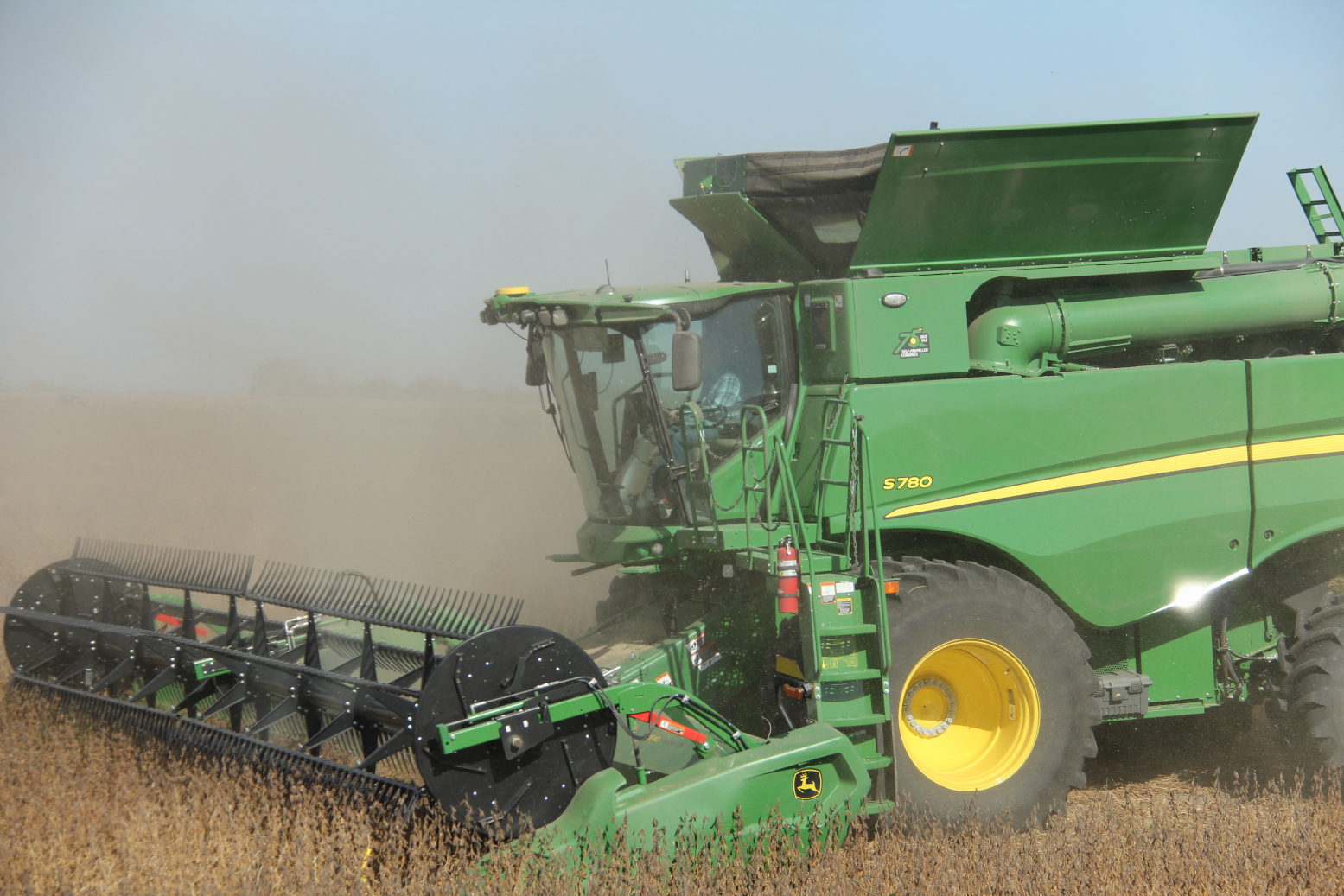
A fire extinguisher hangs on the combine exterior as a farmer harvests soybeans. (Minnesota Prairie Roots copyrighted photo October 2026)

Along with mental health are physical safety concerns. I was reminded of that when I noticed a fire extinguisher attached to the side of laddered steps leading into a combine. Occasionally fire erupts when crop debris meets hot machinery or parts get overheated or for other reasons.
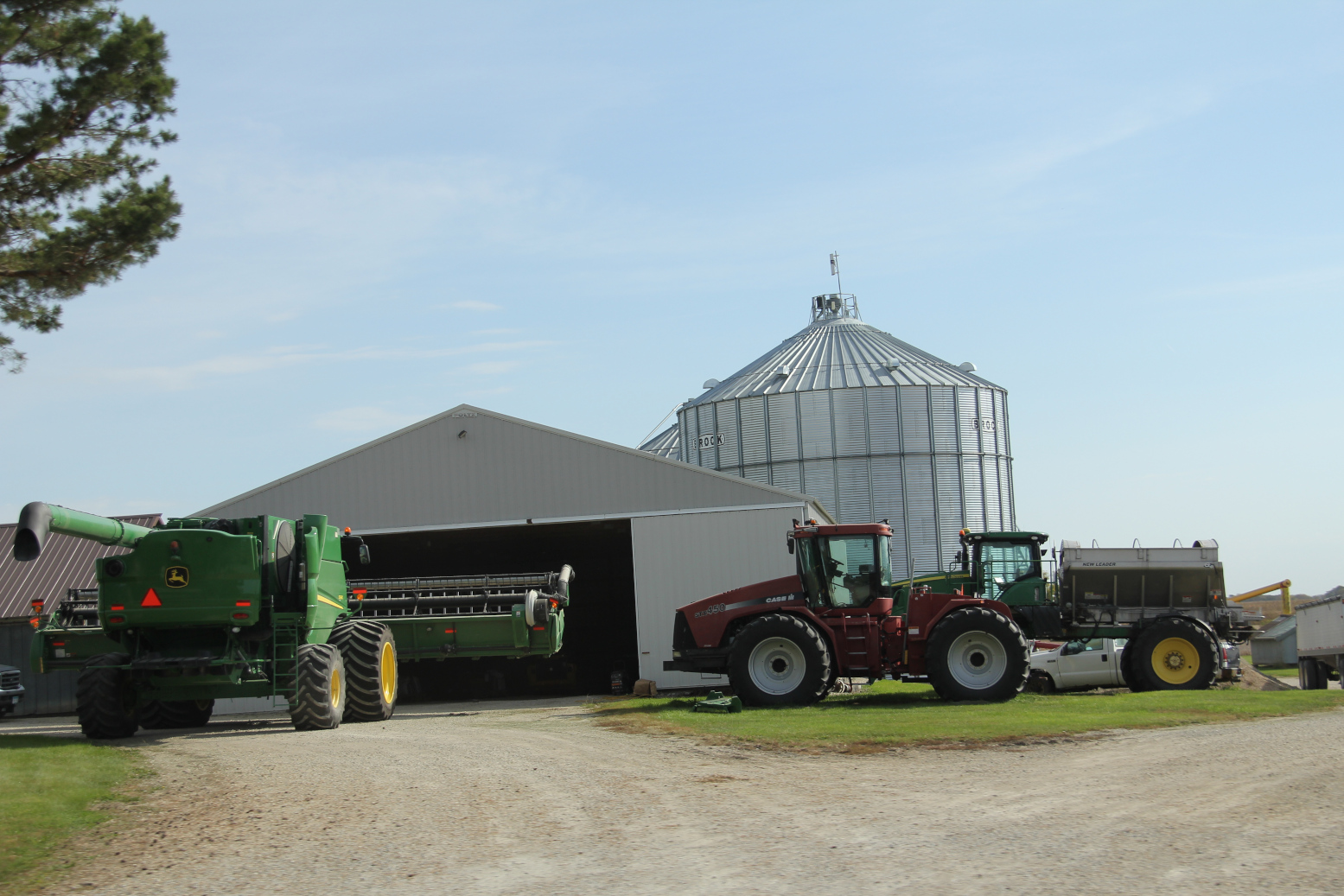
Machinery parked in a farmyard, at the ready for harvest. (Minnesota Prairie Roots copyrighted photo October 2026)

I expect most farmers take safety seriously. Yet it’s easy, when you’re working long, exhausting days and late into the night on minimal sleep, for accidents to happen. Every harvest season across Minnesota there are stories of grain bin rescues, sometimes successful, sometimes not.

An Allis Chalmers corn chopper, like this one exhibited at the 2010 Rice County Steam & Gas Engines Show, claimed my father-in-law’s left hand and part of his forearm. Randy is standing next to the machine. (Minnesota Prairie Roots copyrighted file photo)

Thankfully safety shields on modern day machinery mostly protect from serious injuries, unlike when my father-in-law’s left hand was pulled into a corn chopper in 1967. The accident happened as he hand-fed corn into the chopper. The blades chopped off his fingers with a surgeon later amputating part of his forearm. Eleven-year-old Randy, in the field with his dad when the accident happened, turned off the power take-off and then ran to a neighbor’s farm for help.
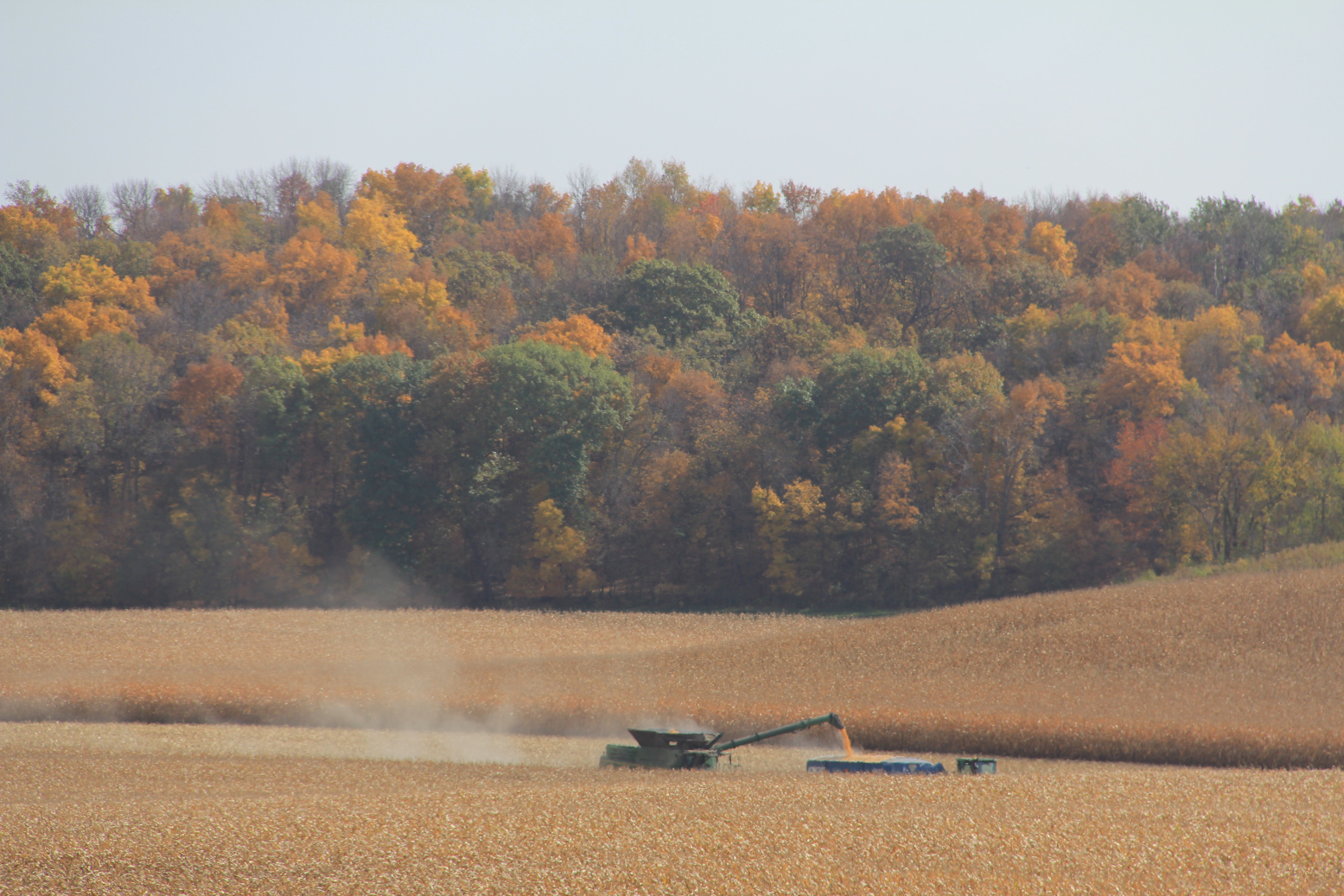
With much of the soybean harvest now done, corn harvest is underway, here near Cannon City. (Minnesota Prairie Roots copyrighted photo October 2026)

As we drove through the southern Minnesota countryside, deep into harvest, I thought of that long ago farm accident involving the man who would become my father-in-law. And I considered all the farmers today who love the land and farming, but who work in one of the top 10 most dangerous occupations in the U.S.
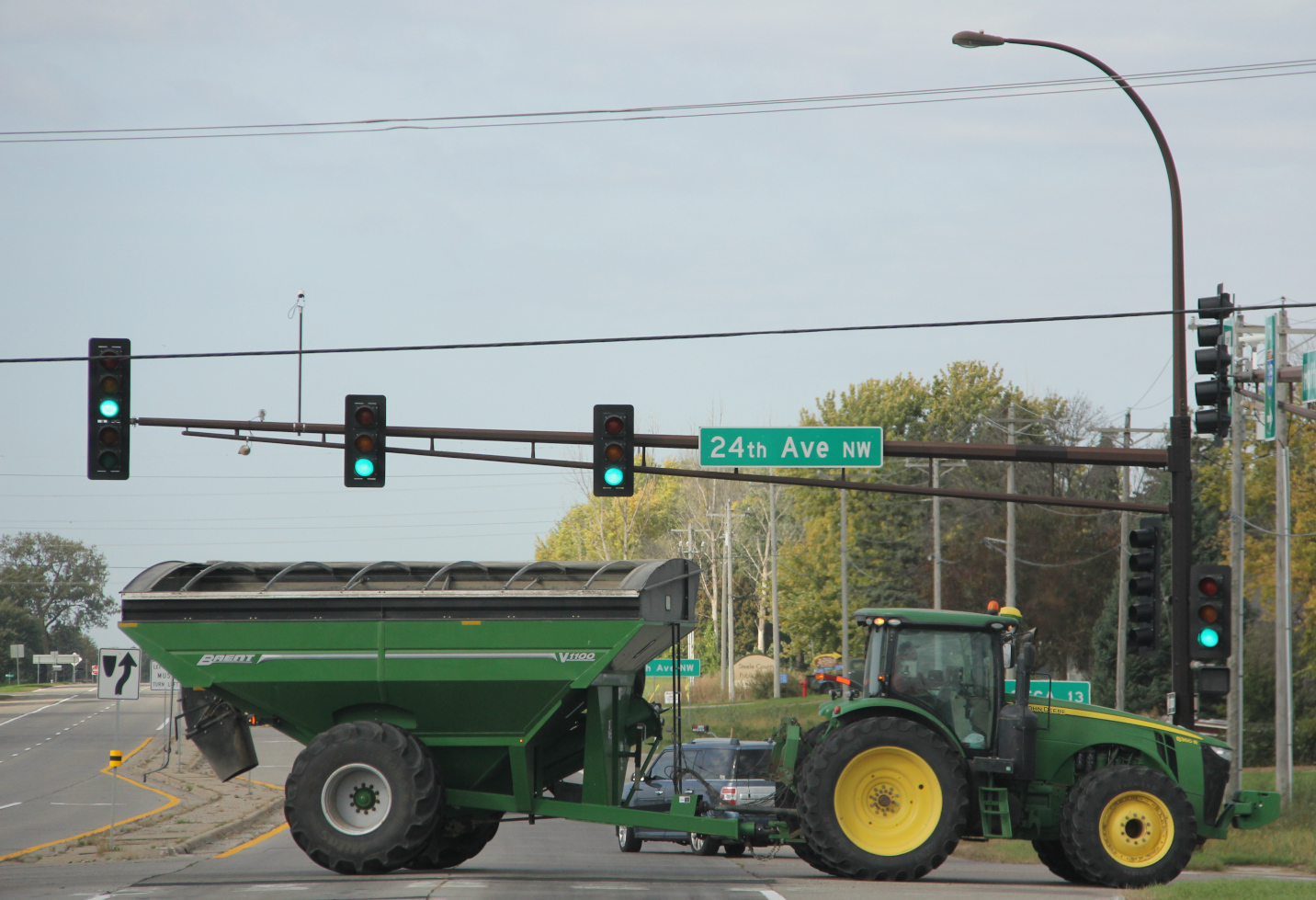
A tractor pulling a gravity flow wagon, turns off old U.S. Highway 14 in Owatonna. (Minnesota Prairie Roots copyrighted photo October 2026)

Farm life may, on the surface, appear a bucolic, simple life. But in reality, it isn’t. It’s hard work. I’m reminded of that as I travel through the countryside, documenting field work. This chosen life comes with rewards and risks, from planting to harvest.

© Copyright 2026 Audrey Kletscher Helbling


In Janesville: The death of Frankenstein June 18, 2021

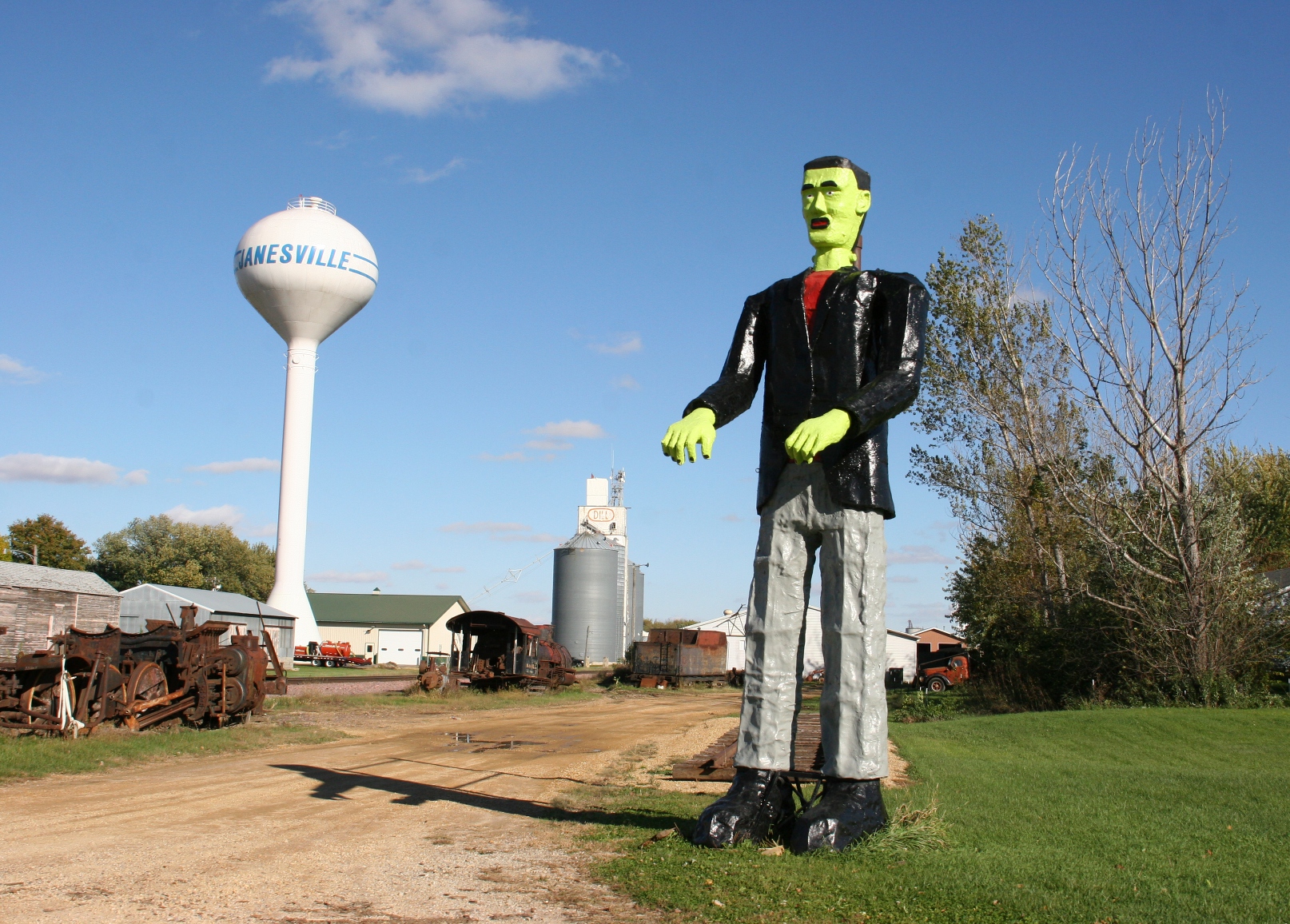
Frankenstein in Janesville, MN. Minnesota Prairie Roots file photo 2016.

FOR THE GOOD FOLKS of Janesville, the fiery “death” of Frankenstein last Saturday morning equates the loss of a community icon.

The 20-foot tall fiberglass and steel interpretation of Mary Shelley’s monster loomed on a downtown street corner in this southern Minnesota town of some 2,500. Until the early morning hours of June 12, when a 35-year-old man who lives nearby allegedly torched Frankenstein. He’s been charged with felony arson and damage to property. Only the skeleton remains of the sculpture valued at an estimated $14,000.

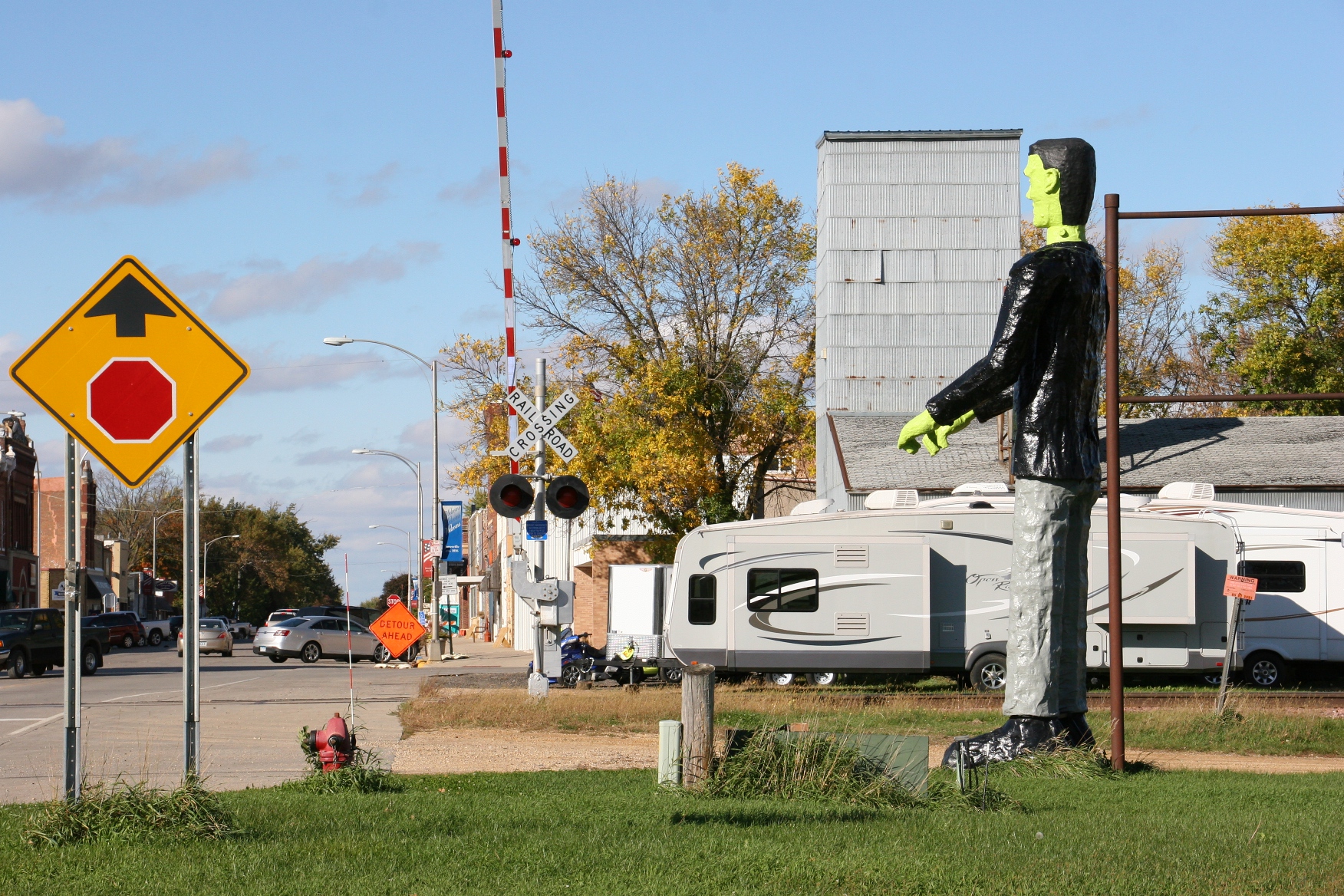
A side view of Frankenstein photographed in 2016. Minnesota Prairie Roots copyrighted file photo.

Janesville’s Frankenstein, originally a Vulcan displayed at the 1988 St. Paul Winter Carnival, was reinvented as a Halloween attraction in the metro before a local businessman purchased him from an auction in 2012. I photographed Frankenstein in 2016, finding him an oddity in this small Waseca County town.

But “odd” isn’t new to Janesville. For decades, “The Doll in the Window” was Janesville’s noted attraction. The mannequin, positioned inside an attic window and visible from well-traveled U.S. Highway 14 (which now bypasses the town), was the stuff of creepy legends. The man who displayed the doll died long ago and, from what I found online, a lot of unknowns remain.

Whether Frankenstein is resurrected remains to be seen. For now, folks are honoring him with flowers and other mementos placed at the base of his skeleton, drawing attention once again to this rural Minnesota community.

© Copyright 2021 Audrey Kletscher Helbling


A drive in the Minnesota countryside takes me to St. Jarlath November 7, 2017


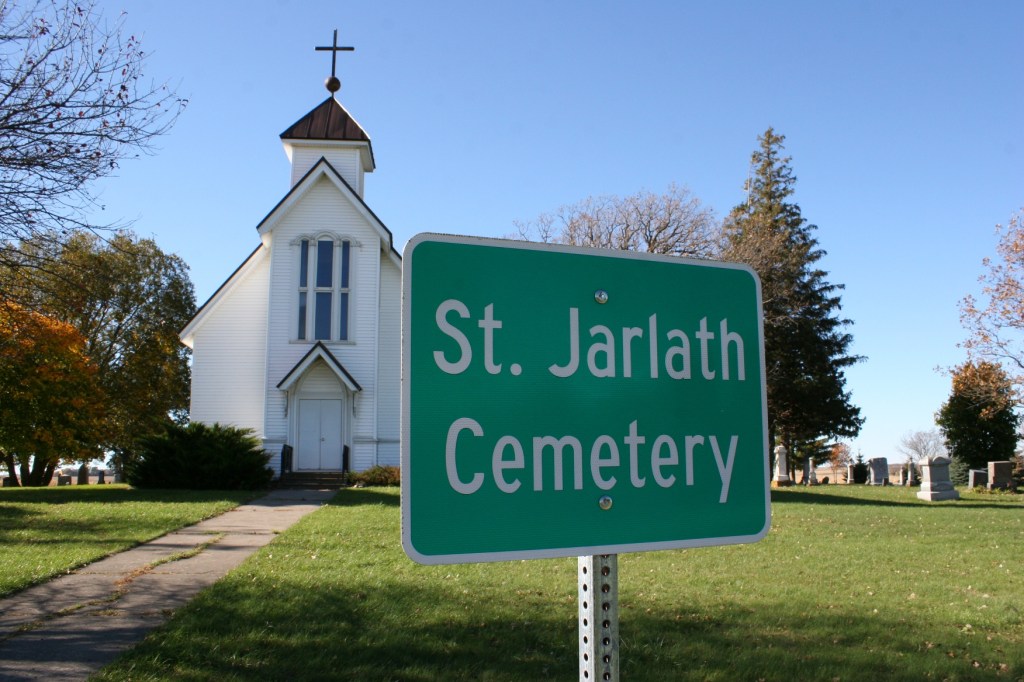
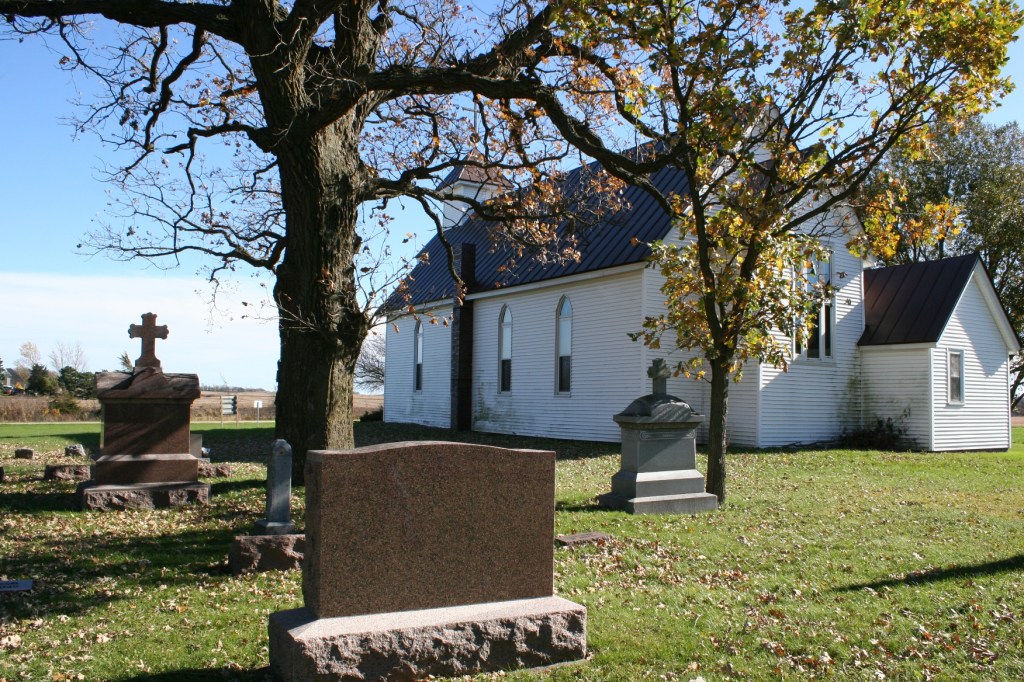
“SAINT JARLATH. Who’s that?” I asked my Catholic-raised and educated husband as we pulled up to a rural Minnesota cemetery during a recent Sunday afternoon drive.


He offered no information, as puzzled as me by the saint behind the name of St. Jarlath’s Catholic Cemetery located just off Waseca County Road 22 in Iosco Township. My later online research revealed Bishop Jarlath as the founder and principle patron of the Archdiocese of Tuam in Galway, Ireland. Irish names in the cemetery should have tipped us off.


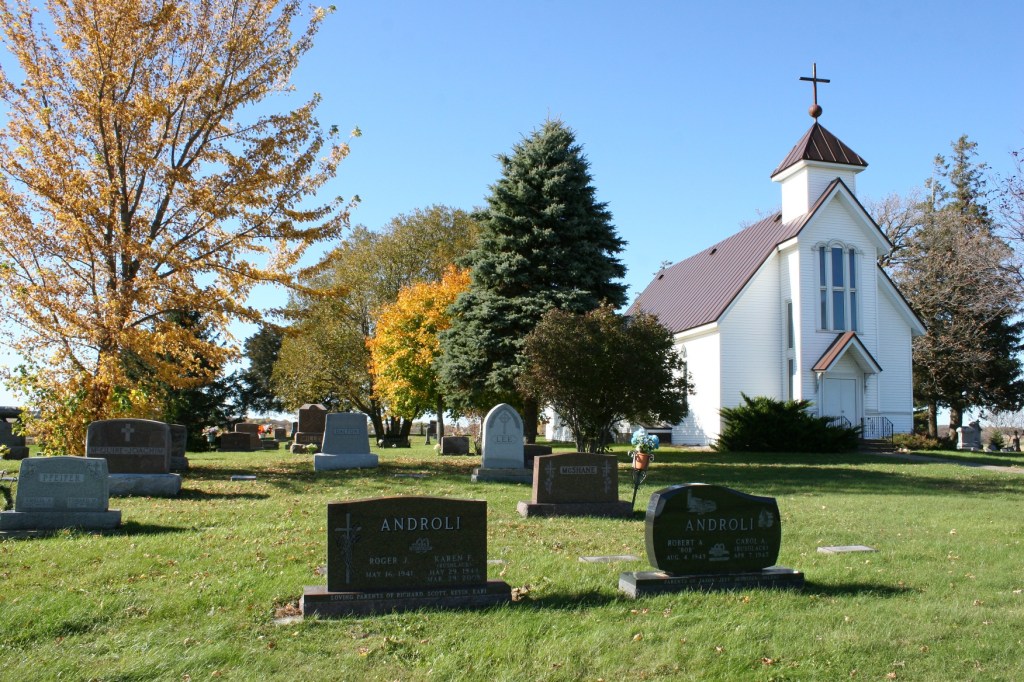
I delight in discovering such well-kept rural cemeteries edged next to equally well-maintained churches. Clearly, people care deeply about this place. That pleases me although the closure of rural parishes like this one does not.


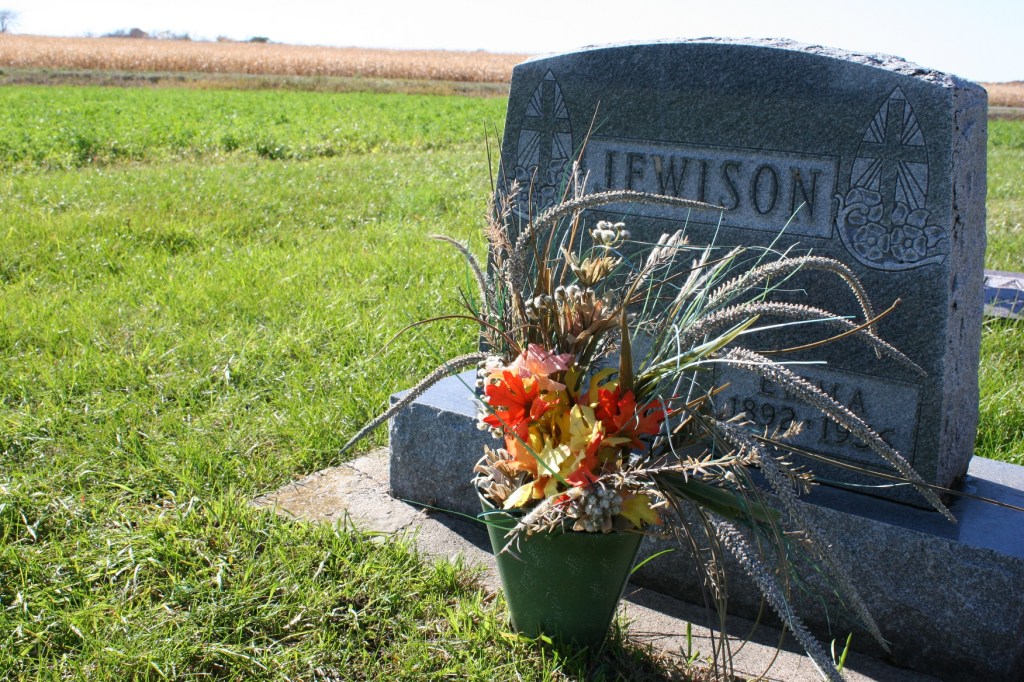
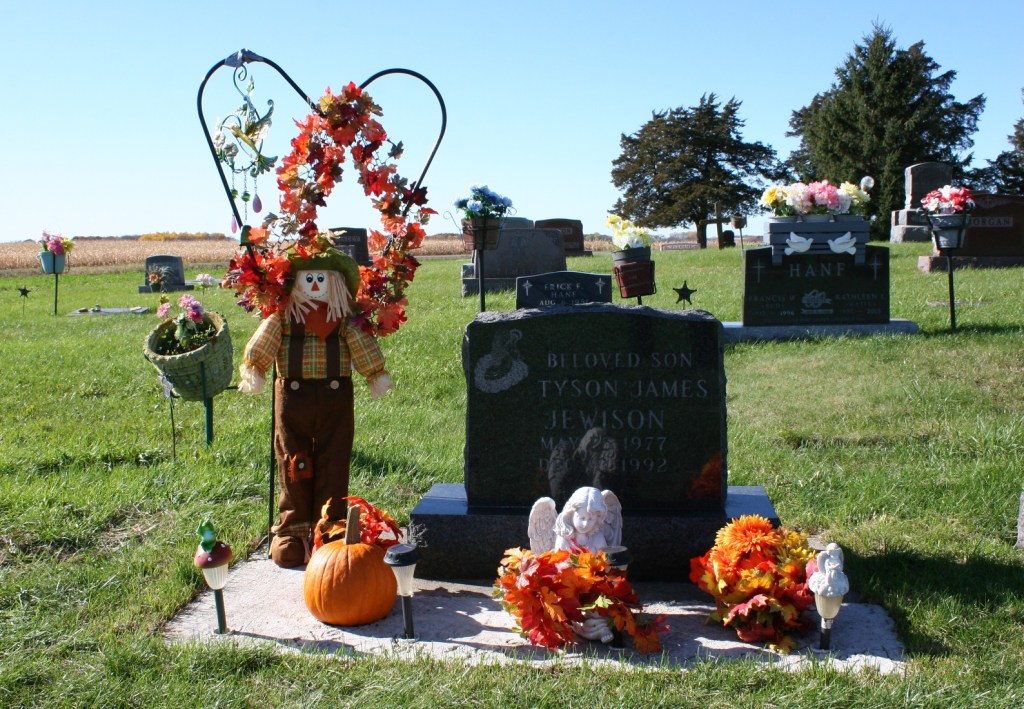
As we wandered the grounds, I spotted autumn décor adorning some gravesites. Seeing scarecrows on a tombstone marked a first for me.


I noticed, too, the trees,


the aged, and not so aged, stones,


the loving words


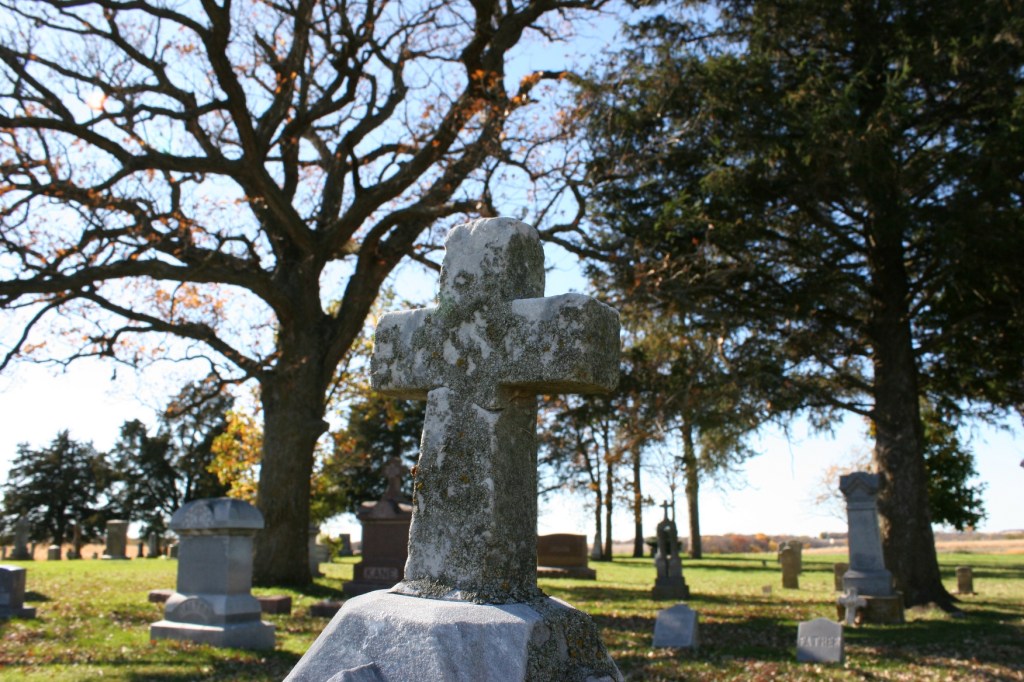
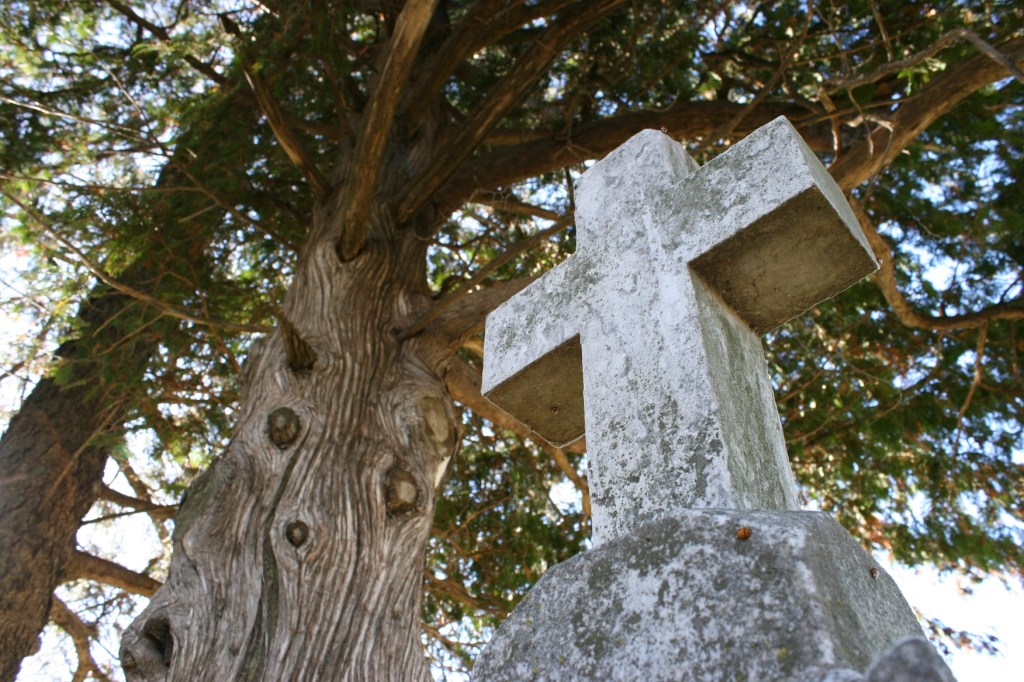
and clear markers of faith in crosses high and low.


I tugged at the church door, hoping to get inside. I never expect access. But that doesn’t stop me from trying. Gone are the days of unattended, open churches. I can only imagine the beauty, the history within this country church.


The ability to freely wander this cemetery on a stunning autumn afternoon tempered my disappointment. To see folks honor their ancestors and Saint Jarlath through a well-kept church and grounds encourages me. This place remains important—at least for now to those still living.

#

AS I SCHEDULED this post, written days before the deadly mass shooting at First Baptist Church in Sutherland Springs, Texas, I feel compelled to add this postscript expressing my sorrow and thoughts. I cannot fathom the loss to these families, to this community, about the same size as my Minnesota hometown. My heart breaks. A church, of all places, should be a sanctuary from violence. No place seems safe any more.

Initial media reports reveal the perpetrator had a history of domestic violence and that he sent threatening text messages to his mother-in-law shortly before killing 26 people and wounding another 20 at the church. This troubles me. Domestic violence continues to root deep into our society. I read or hear media reports daily about murder-suicides, violations of restraining orders, calls to domestic disturbances, stalking, assaults…and more. For every case reported to law enforcement, many many more are not reported. Because of fear. Because of intimidation. Because of control and manipulation.

The invasive crime of domestic abuse and violence is affecting too many of our families, our neighborhoods, our communities and, yes, even our churches, directly and indirectly.


© Copyright 2017 Audrey Kletscher Helbling


The season of autumn in rural Minnesota, a photo essay October 24, 2017


IN THE SEASON of autumn, farm memories draw me back to the land.


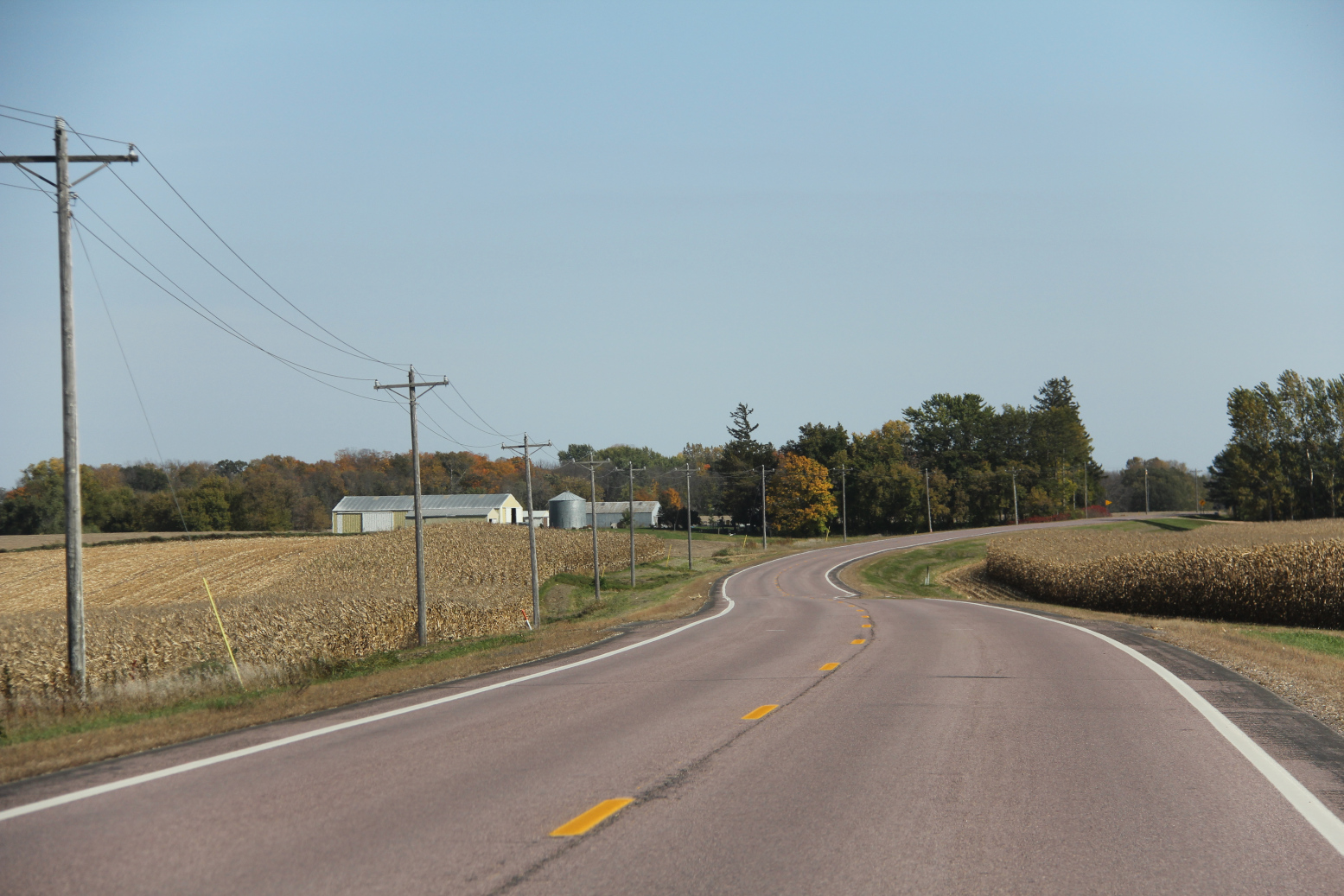
To follow country gravel roads


and county highways


past sweeping fields of corn


harvested,


A vintage Gleaner combine harvests a cornfield along LeSueur County Road 13 near Lake Jefferson.

under harvest


Partially harvested…


and unharvested.


Roads lead me by farm sites,


aged stately barns


Near historic Marysburg in LeSueur County.


and mammoth bins awaiting the yield.


Following a tractor pulling a 1970s era gravity box along LeSueur County Road 13.


I observe, too, farmers creeping tractors trailing wagons,


zipping along rural roadways


Visiting at the intersection of LeSueur County roads 13 and 16.


and stalled in conversation at a rural intersection.


Cattle graze along 241st Avenue, just off LeSueur County Road 13.


I scan the landscape with the eyes of someone who misses the farm,


A harvested field glistens with puddled rainwater and mud. Too much rain has slowed the harvest for farmers in southern Minnesota. They will be working long days and nights to catch up and get the crop in before the snow flies.


who remembers the hurry of her farmer father,


Enjoying a beautiful autumn Sunday afternoon along Waseca County Road 22.


who follows country roads in the season of autumn.


FYI: I shot these images in Rice, LeSueur and Waseca counties during a Sunday afternoon, October 22, drive with my husband.

Check back for more photos from that drive.

© Copyright 2017 Audrey Kletscher Helbling


A tree January 19, 2017

Filed under: Uncategorized — Audrey Kletscher Helbling @ 5:00 AM
Tags: , , , , , ,

a-tree-in-a-corn-field


WHENEVER I SEE a lone tree in a field, I am grateful.

Grateful to the farmer who chose to leave it there rather than cut it down for a few more crop rows.

I am grateful for the farmer who sees beyond his pocketbook and respects the value of a tree.

Thoughts?

© Copyright 2016 Audrey Kletscher Helbling
Tree photographed on October 7, 2016, western Waseca County, Minnesota


Abandoned in rural Minnesota January 12, 2017

Filed under: Uncategorized — Audrey Kletscher Helbling @ 5:00 AM
Tags: , , , , , ,

abandoned-house-truck-in-alma-city


SCENES LIKE THIS sadden me.

Why was this house abandoned? Did the owner fall ill or die? Or simply move to a better and more spacious home? Or did lack of finances factor into this abandonment? Or a personal crisis?

I wonder.

This scene in unincorporated Alma City in western Waseca County, rural Minnesota, is all too familiar. Houses that once sheltered families stand deserted, paint peeling, wood softening to a weathered grey.

What stories does this house hold? What memories were made here? Does anyone care that this house is no longer a home?

And what about that rusting truck? What routes did it travel? Back county roads, gravel roads, field drives? Perhaps to the hardware store, the grain elevator, a local cafe.

Who steered the wheel of this GMC? Perhaps a farmer or a retired farmer.

All these things I ask because my mind works that way. Inquisitive, ranging around thoughts, always wondering.

TELL ME: What short story would you write about this scene?

Note: This image was taken in October, well before winter arrived in Minnesota.

© Copyright 2017 Audrey Kletscher Helbling
 

A sweet surprise: An old sorghum mill on a southern Minnesota elk farm & more August 10, 2012

HOW MANY TIMES HAS MY FAMILY driven Minnesota Highway 60 east of Elysian, unaware of Okaman Elk Farm to the south not far from the highway? Too many.

My husband Randy and I almost missed Okaman’s again last Sunday as we traveled along Waseca County Roads 3 and 5. If not for the colorful miniature train transporting kids and adults along the shoulder of the road, we likely would have passed right by.

Passing by the Okaman Elk Express in our car on a Sunday afternoon.

But that train stopped us in our tracks and caused us to turn around and drive back to the farm.

There we discovered much more than a plain old elk farm. We also found family-friendly activities, a farmers’ market, art, animals and history.

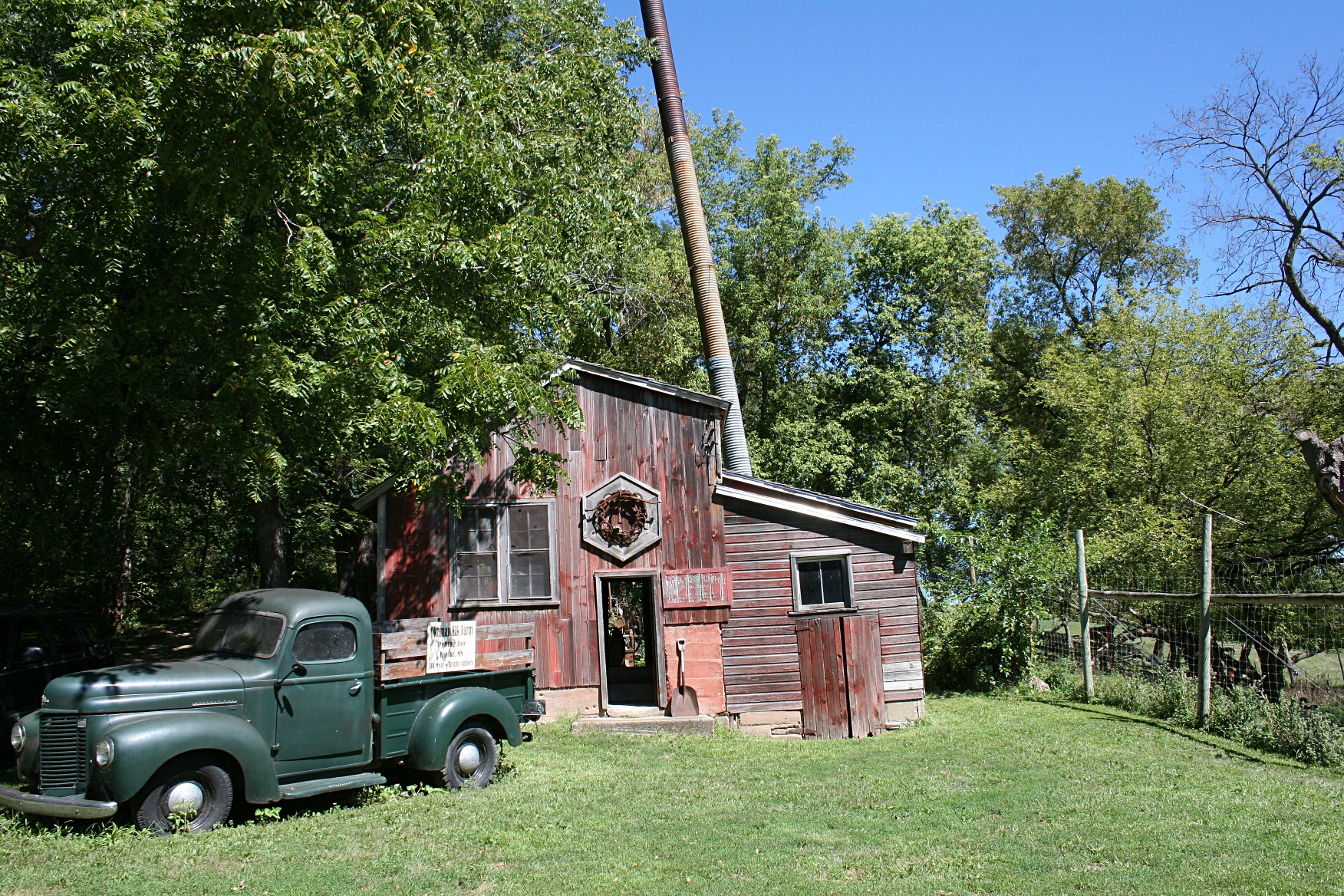
The historic Seha Sorghum Mill.

In 1991, Don and Joyce Kaplan bought this historic place to raise elk and then sell the meat. Their business sits on the site of Okaman, a town established in 1855 between Lake Elysian and Lily Lake. Here, according to a posted sign, several hotels, a theater, the Buckout Flour Mill, the Okaman School and the Seha Sorghum Mill were located.

Inside the sorghum mill.

It is that 1895 sorghum mill, which produced and sold sorghum syrup until 1953, that most interested me. Randy and I poked our way through and around the old mill trying to determine how the whole operation worked. I think he understood the process much better than me.

Apparently wagons of sorghum were unloaded atop the hill behind the mill where the canes were crushed and the juice then flowed into steam-heated cookers, or something like that.

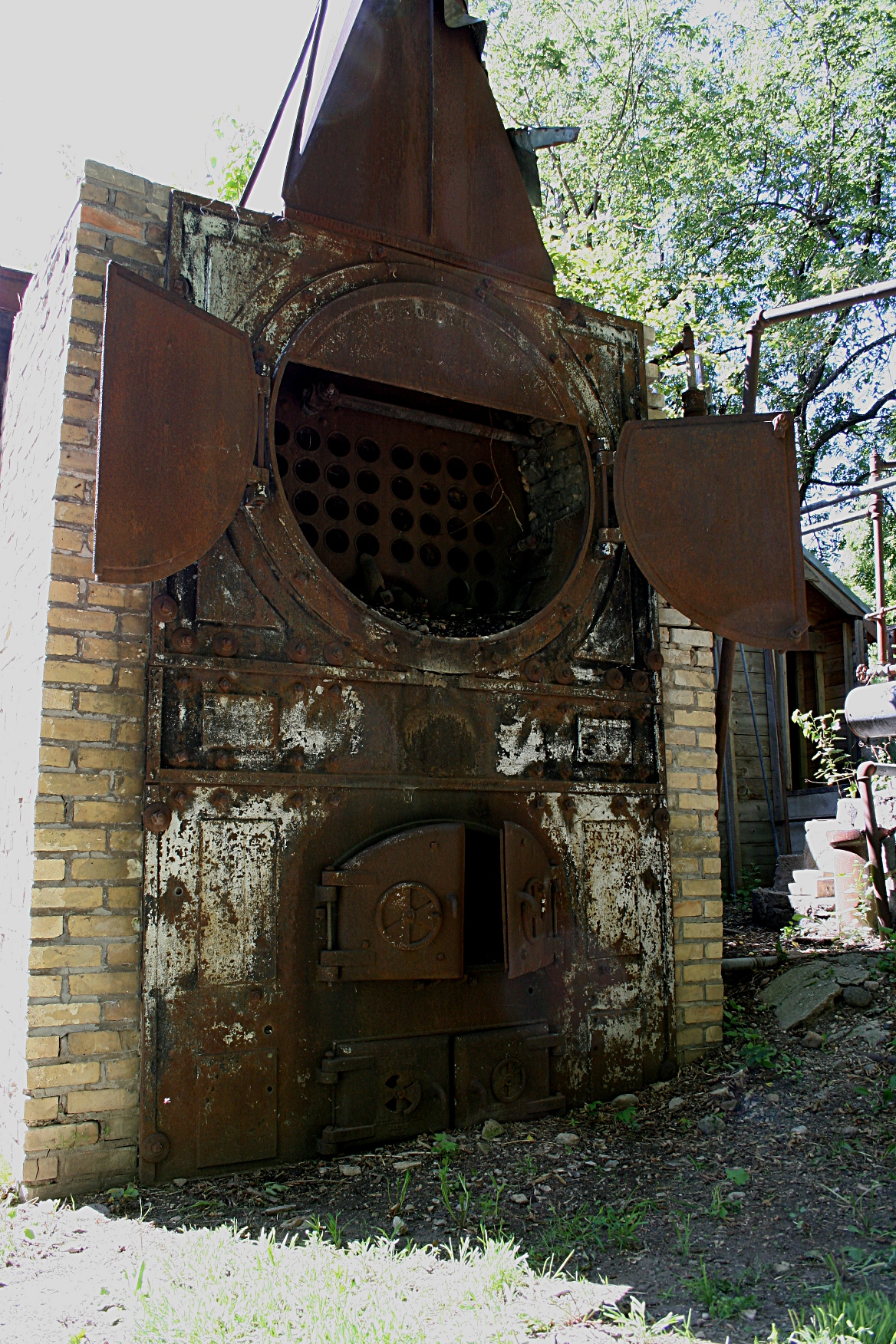
The original steam boiler stands behind the sorghum mill.

According to the Waseca County Historical Society website, Cornelius L. Seha built the mill, today the only known historical sorghum mill remaining in Minnesota and added to the National Register of Historic Places in 1979.

Because the mill today is basically an old building and steam boiler with weeds and brush growing around the holding tanks, equipment and structures, everything is left open to self-interpretation. Perhaps someday this historic site can be restored and specific educational information posted.

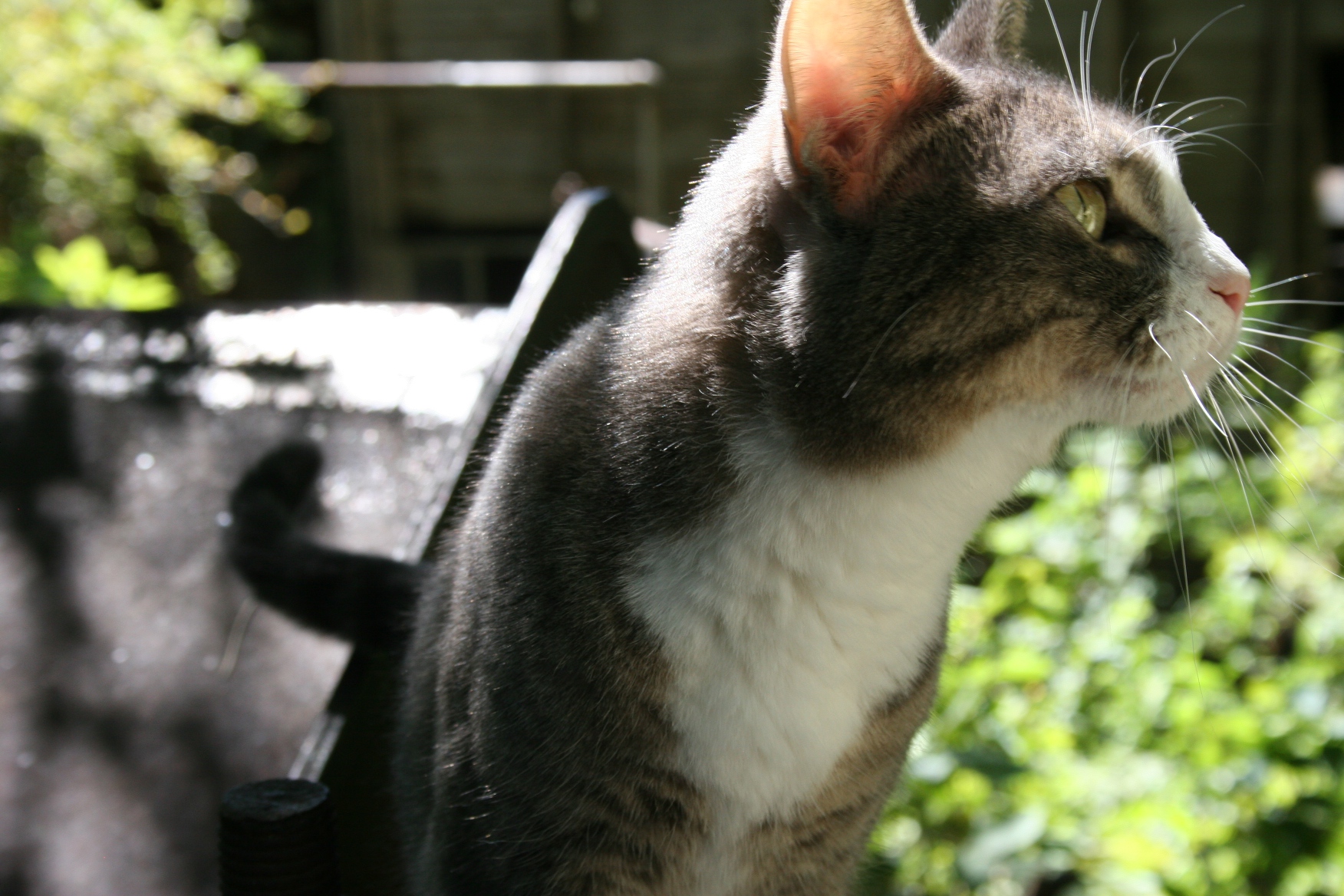
Cats roam the farm.

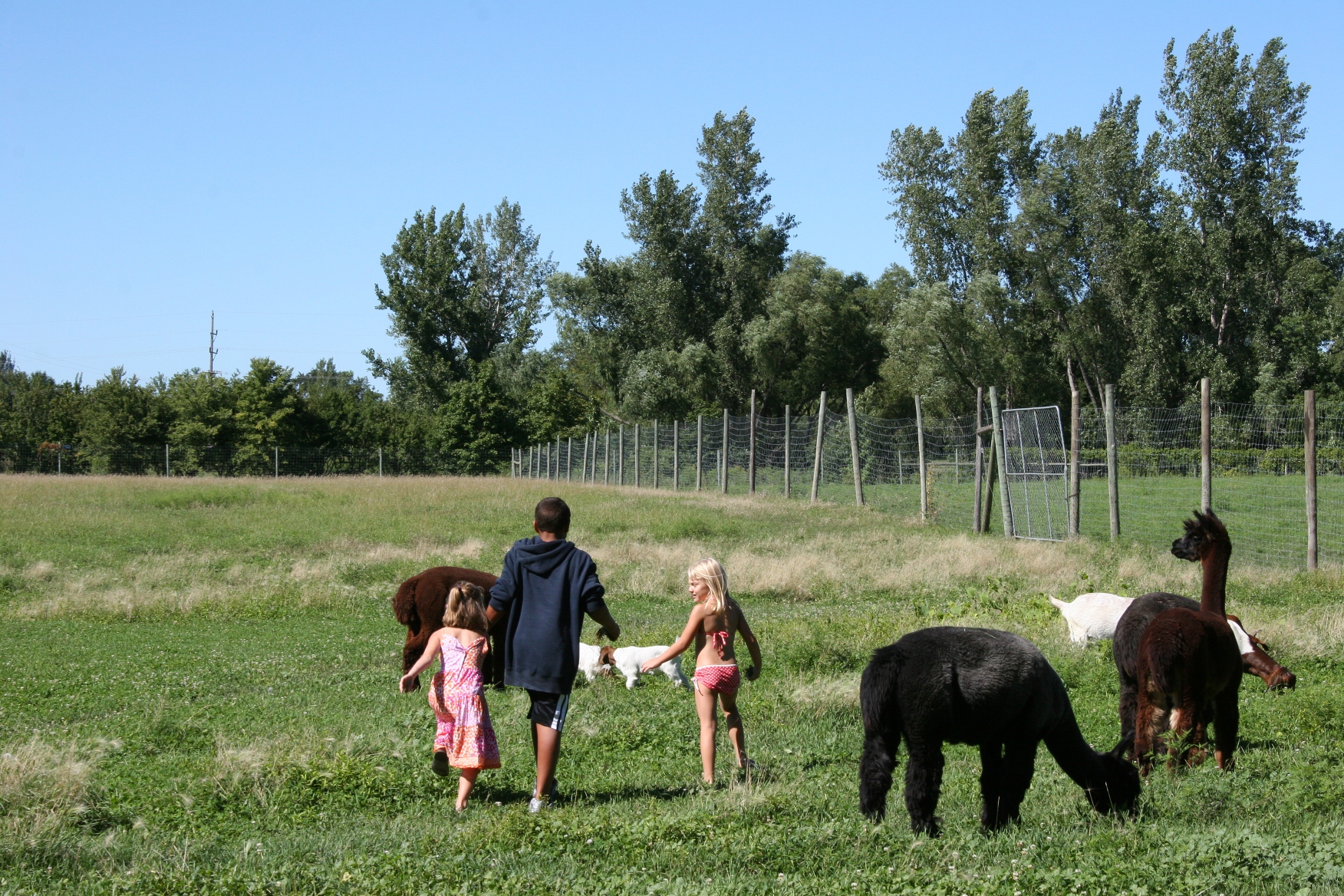
Then, perhaps, the younger farm visitors will be more interested in the historic buildings. They are, for now, focused on  the donkeys and alpacas, the goats and elk and dog, and especially, the cats and kittens. Or perhaps the playground equipment.

Visitors are free to wander the pasture with the alpacas, donkeys and goats.

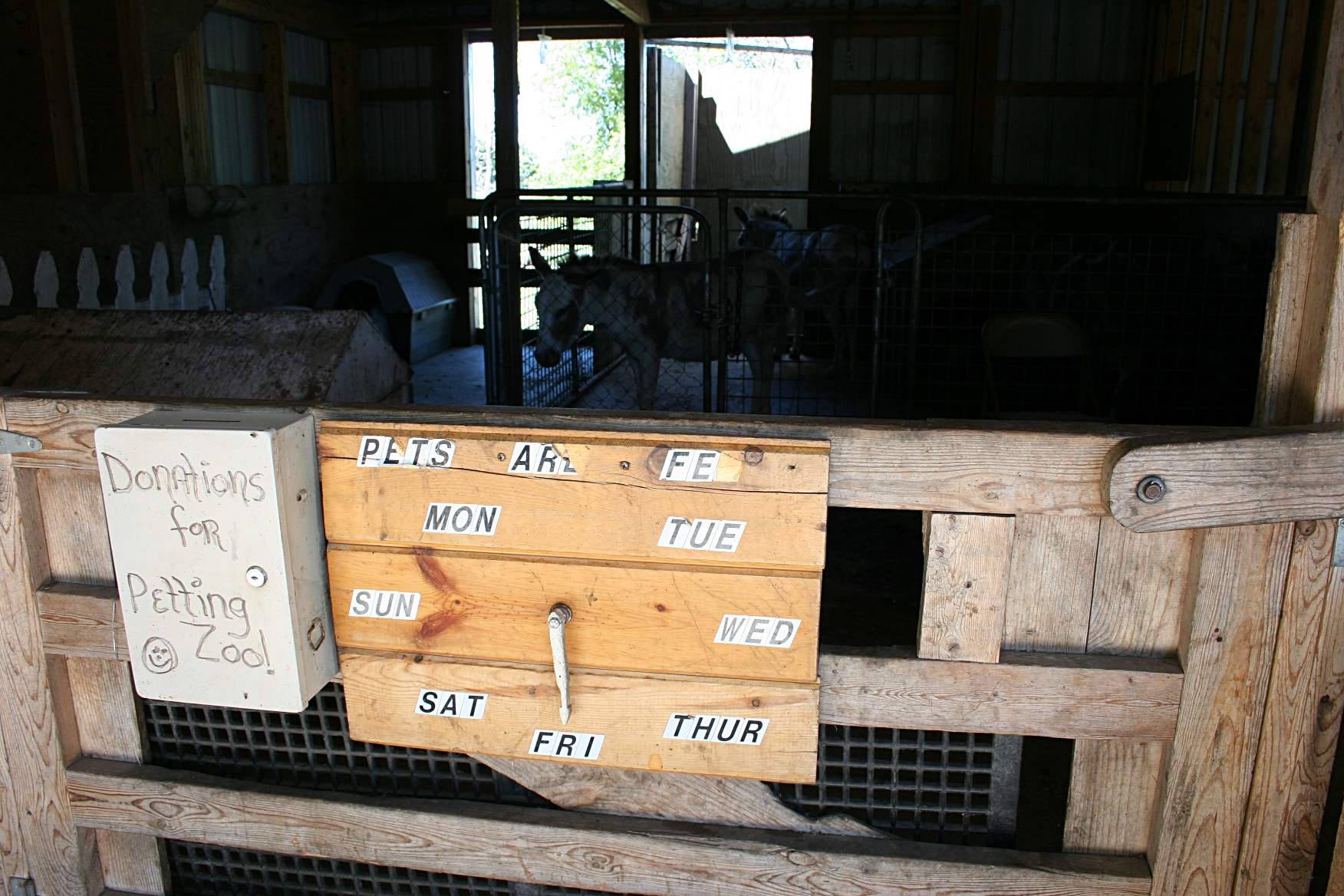
Loved this sign at the petting zoo telling visitors that the animals are fed daily.

The farm is open seven days a week to the 3,000 – 4,000 visitors who stop by annually, says Joyce Kaplan. The Kaplans may not always be around, but guests are invited to peruse the place on their own. Just follow a few rules like:

You can enter the petting zoo pens or pastures at your own risk. Please don’t allow children to chase the animals and no dogs allowed. Close gates behind you.

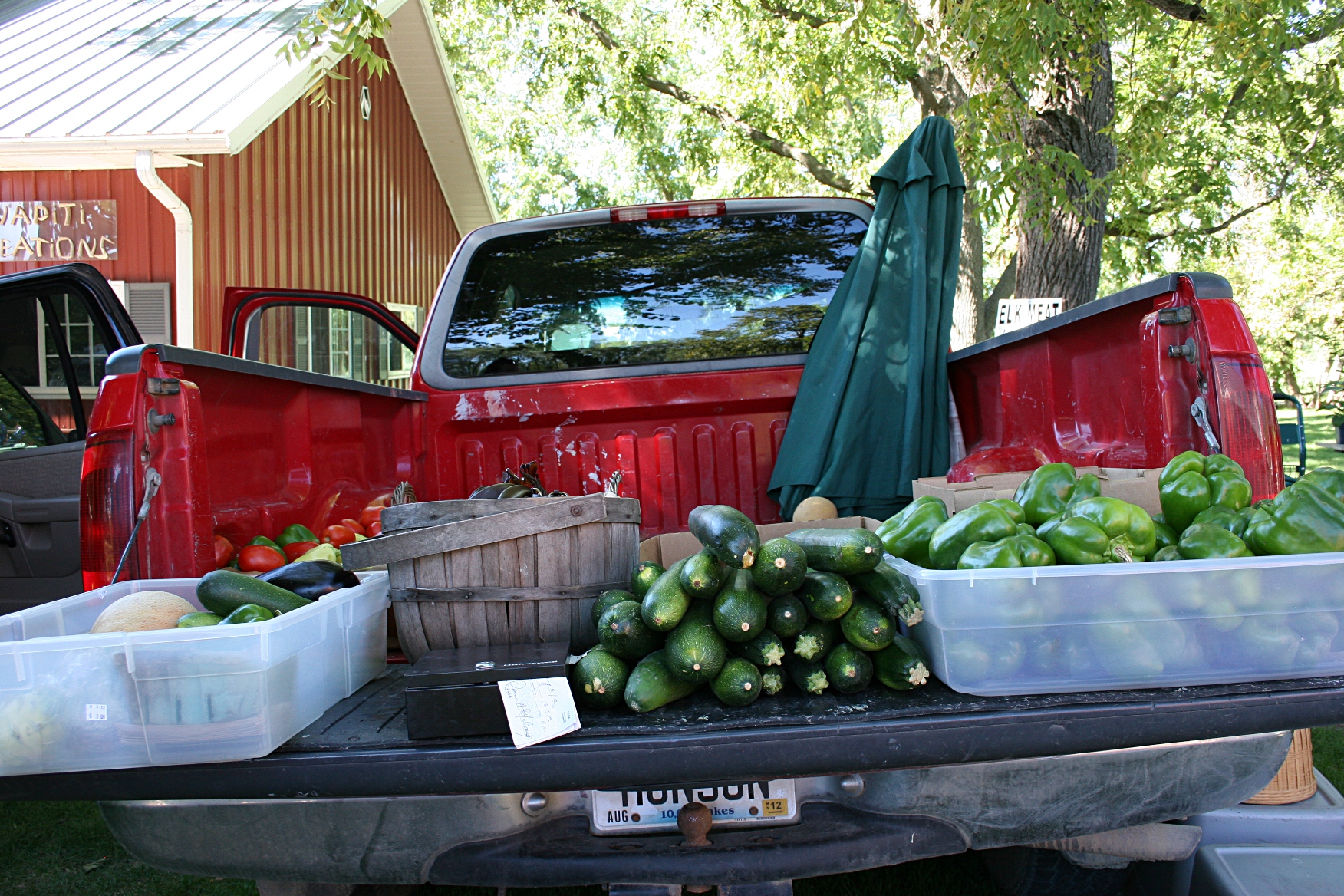
Veggies from R & C Produce of Otisco.

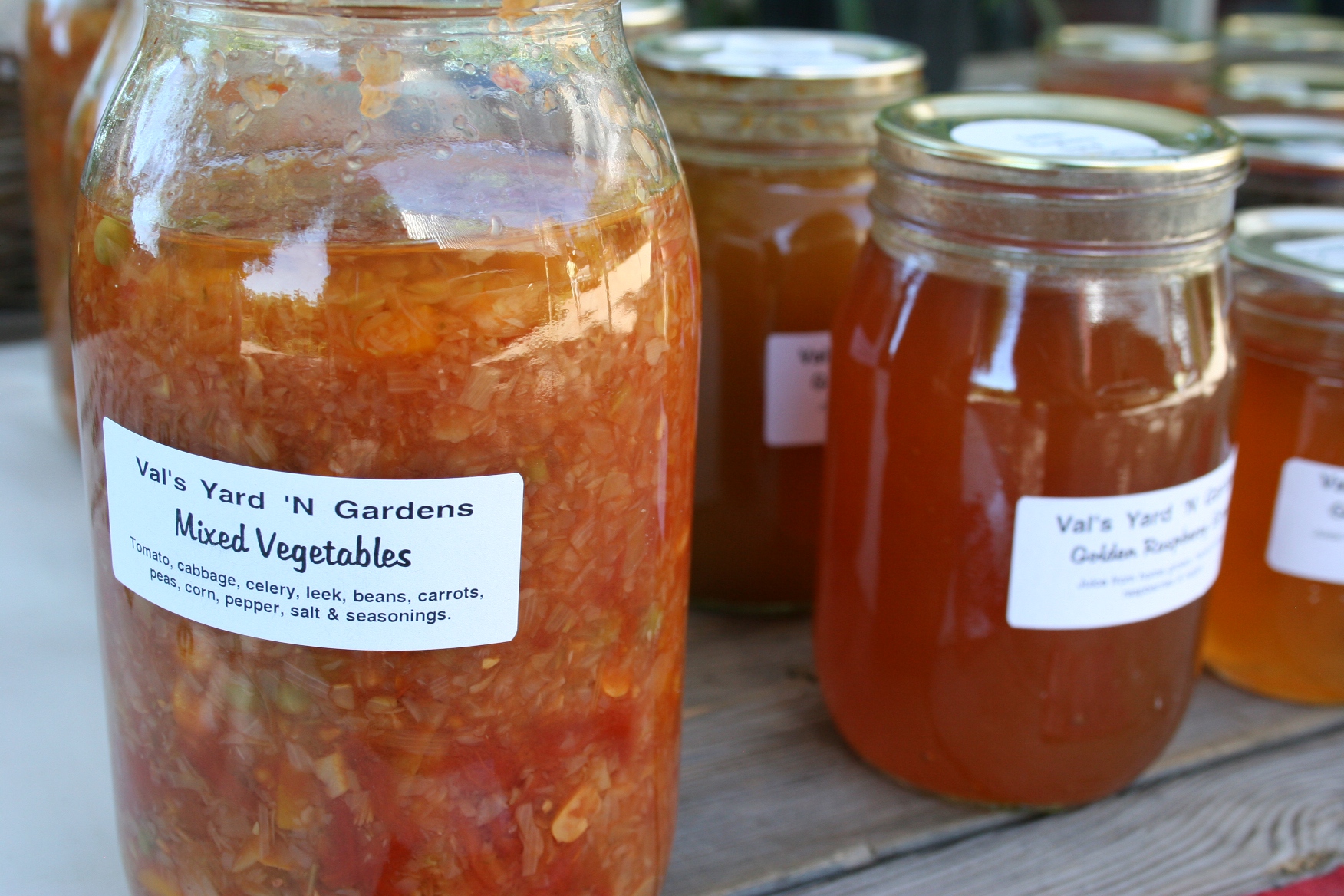
Canned mixed veggies from Val’s Yard ‘N Gardens (Joe & Val Zimprich of Le Center).

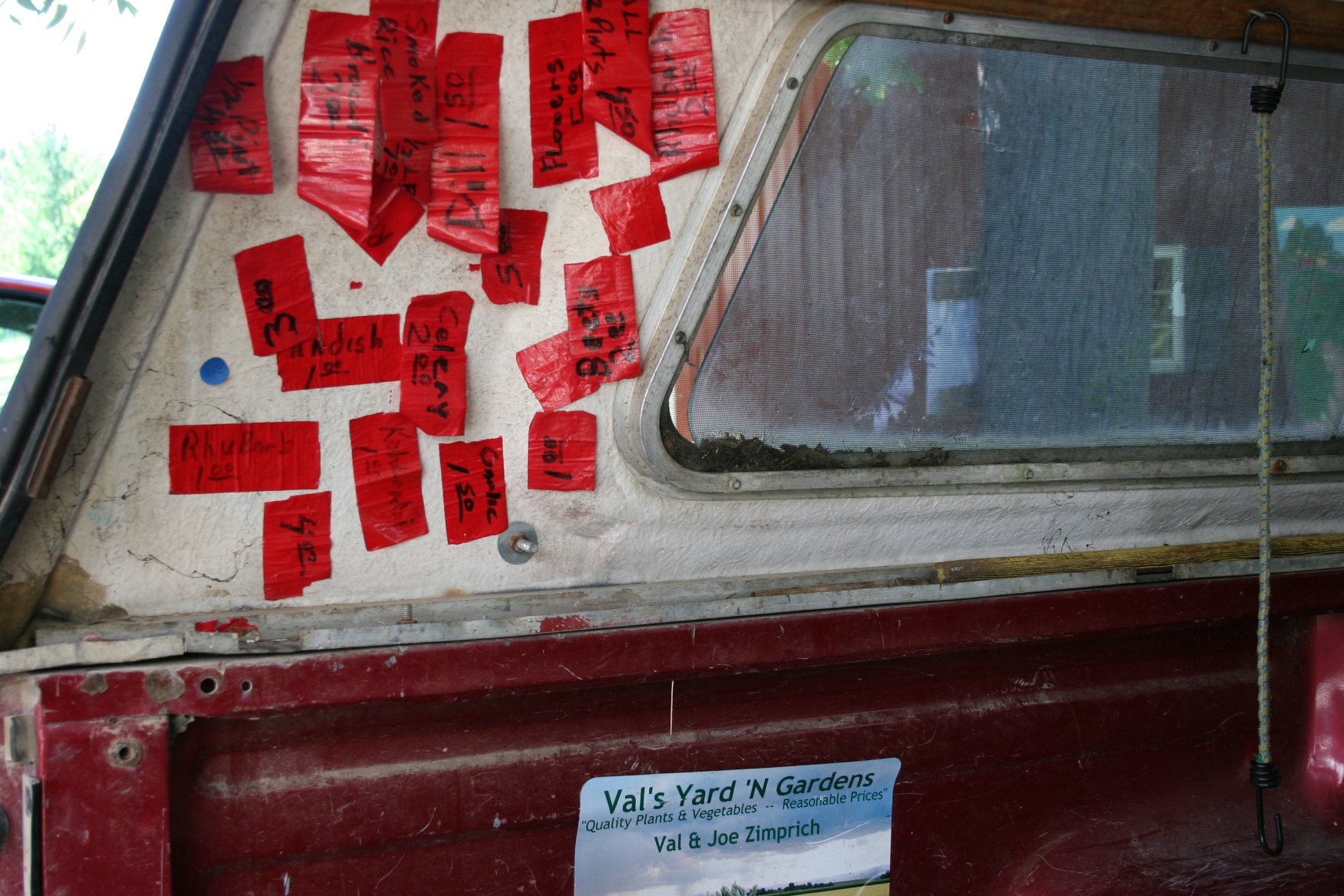
Reusable price stickers in the back of the Zimprichs’ truck.

While the farm is always open, on Sundays from 1 p.m. – 4 p.m. during the summertime harvest and into October, farmers’ market vendors set up in the farmyard peddling their garden fresh produce and other products.

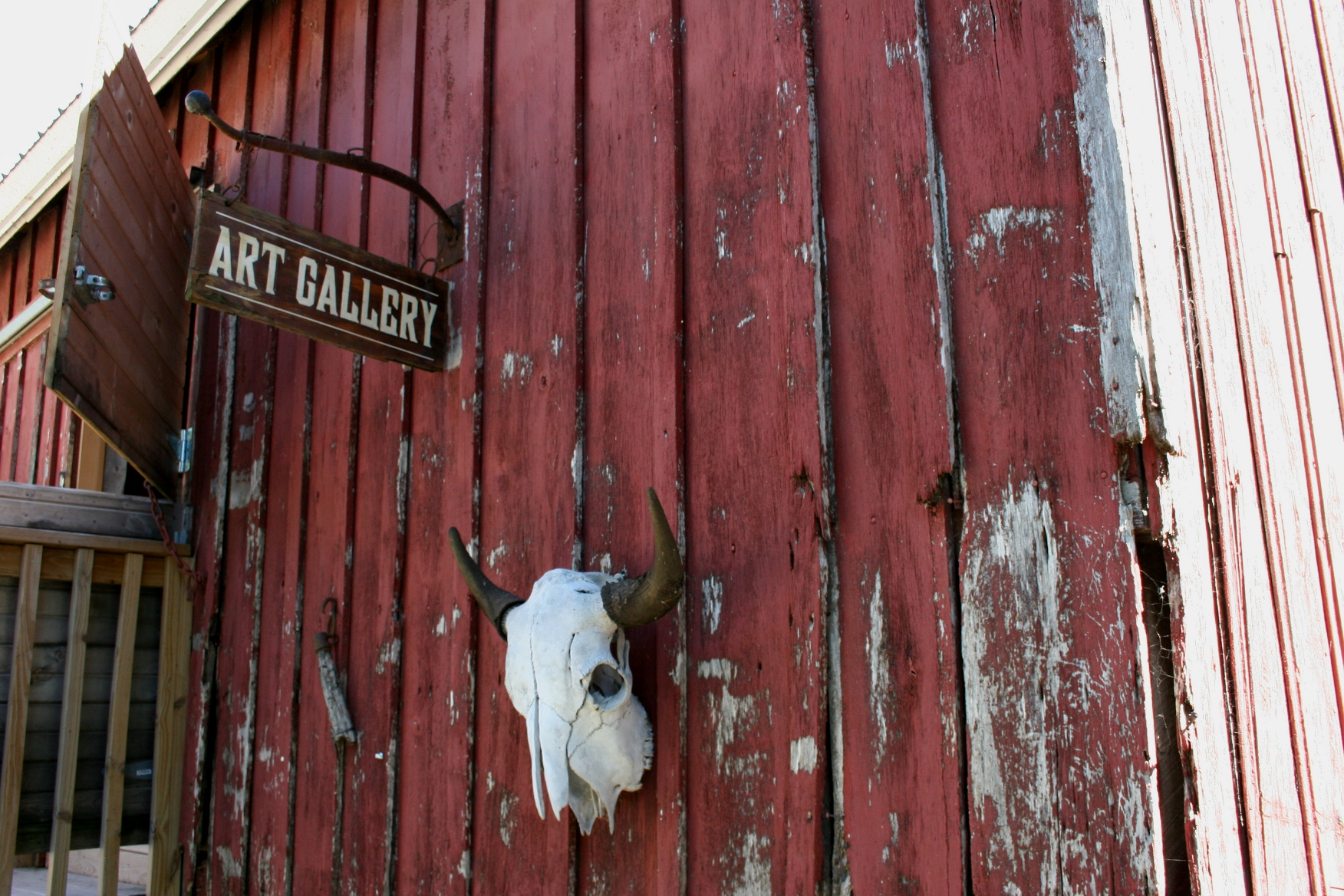
An art gallery is housed in an old barn.

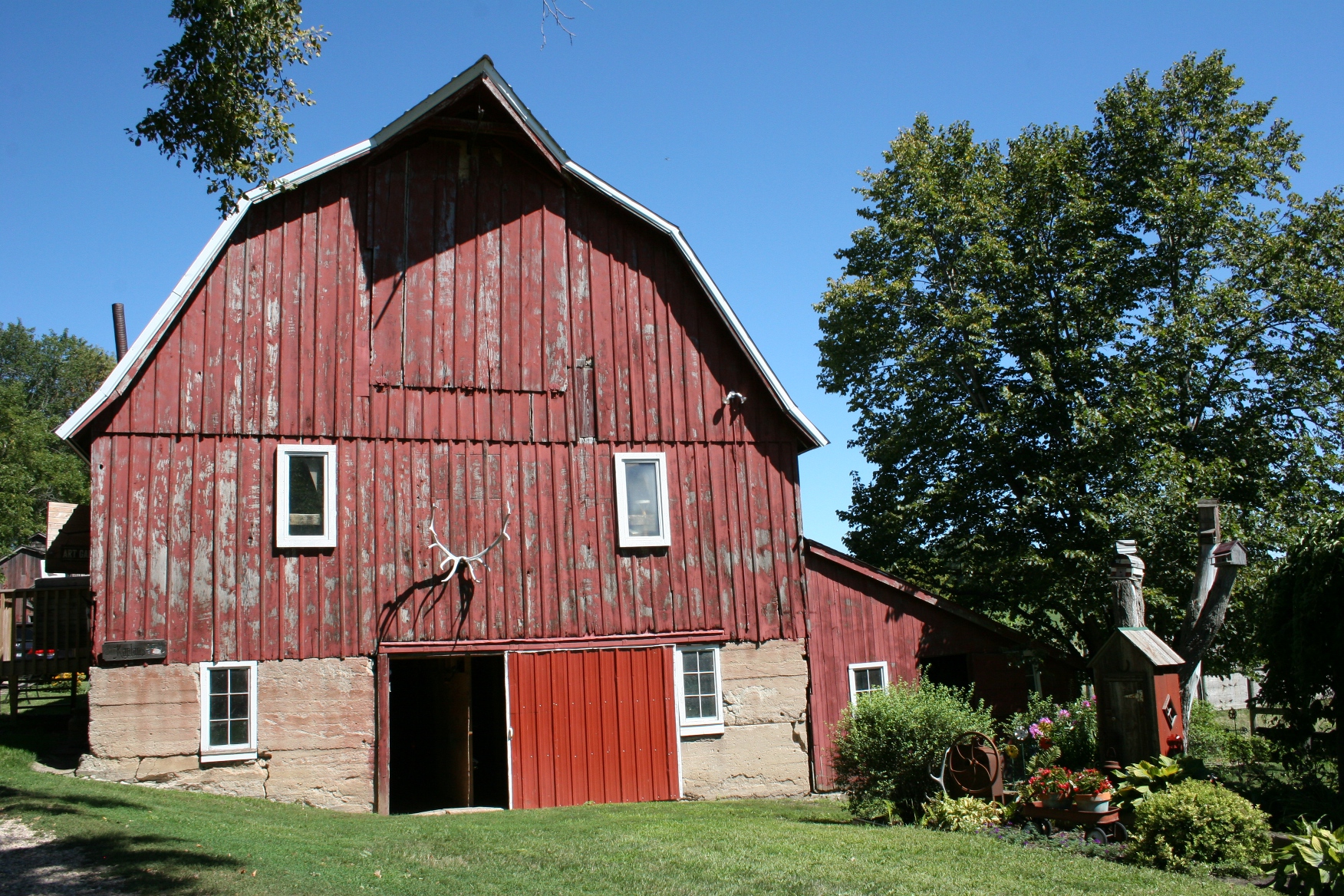
That beautiful old barn, with an art gallery and studio in the haymow.

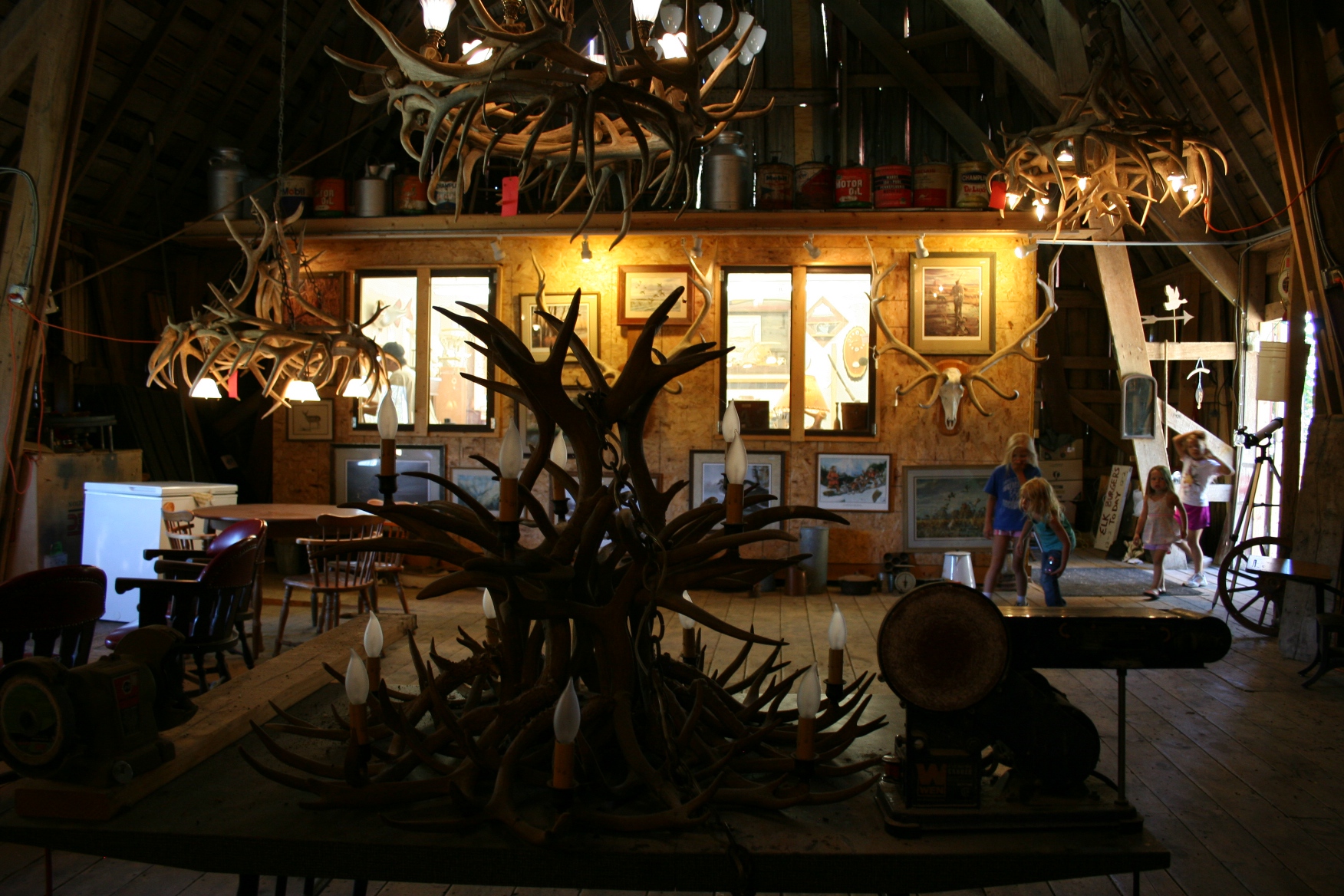
Antler art, including chandeliers, inside the art gallery with Paul Ristau’s art studio behind the windows pictured here.

Inside the gift shop and adjacent art gallery, you’ll find gifts anytime and the creations of artist and craftsman Paul Ristau, who renovates homes and businesses and is a mason specializing in stone fireplaces. He was doing some tile work for the Kaplans and ended up as their in-house artist focusing on the creation of antler art. He has a workshop in the haymow-turned-art-gallery where his elk antler chandeliers are a focal point.

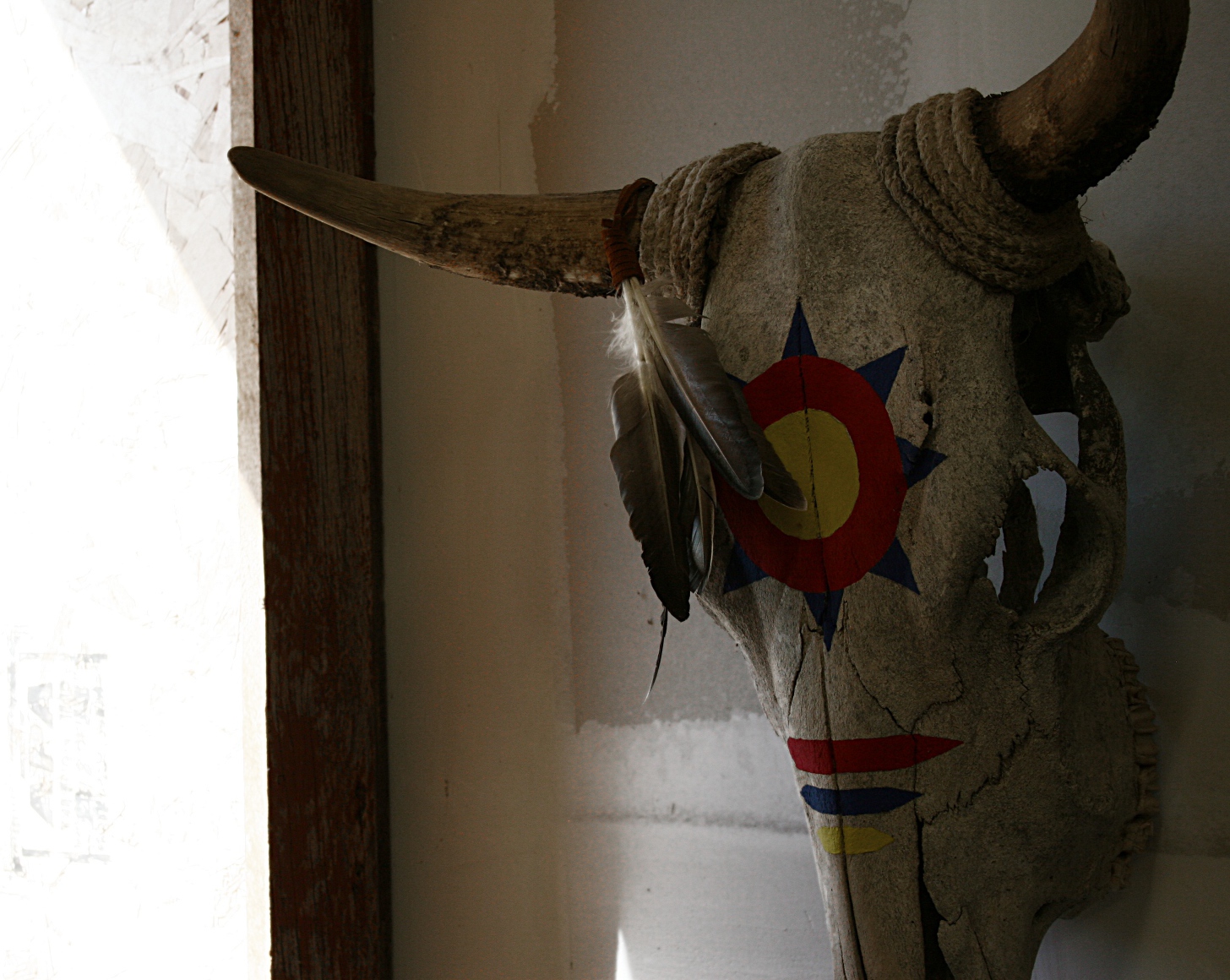
A Native American influence on art hung in Paul Ristau’s studio.

A Native American influence is visible in Ristau’s art given his interaction with those living on the White Earth Indian Reservation where he once drove bus.

Of course, the farm also sells elk meat, inside the original 1893 homestead. The farm is now down to 23 elk, according to Joyce Kaplan who says she grew up on a farm and has been cleaning barns all her life and maybe it’s time soon to stop cleaning barns.

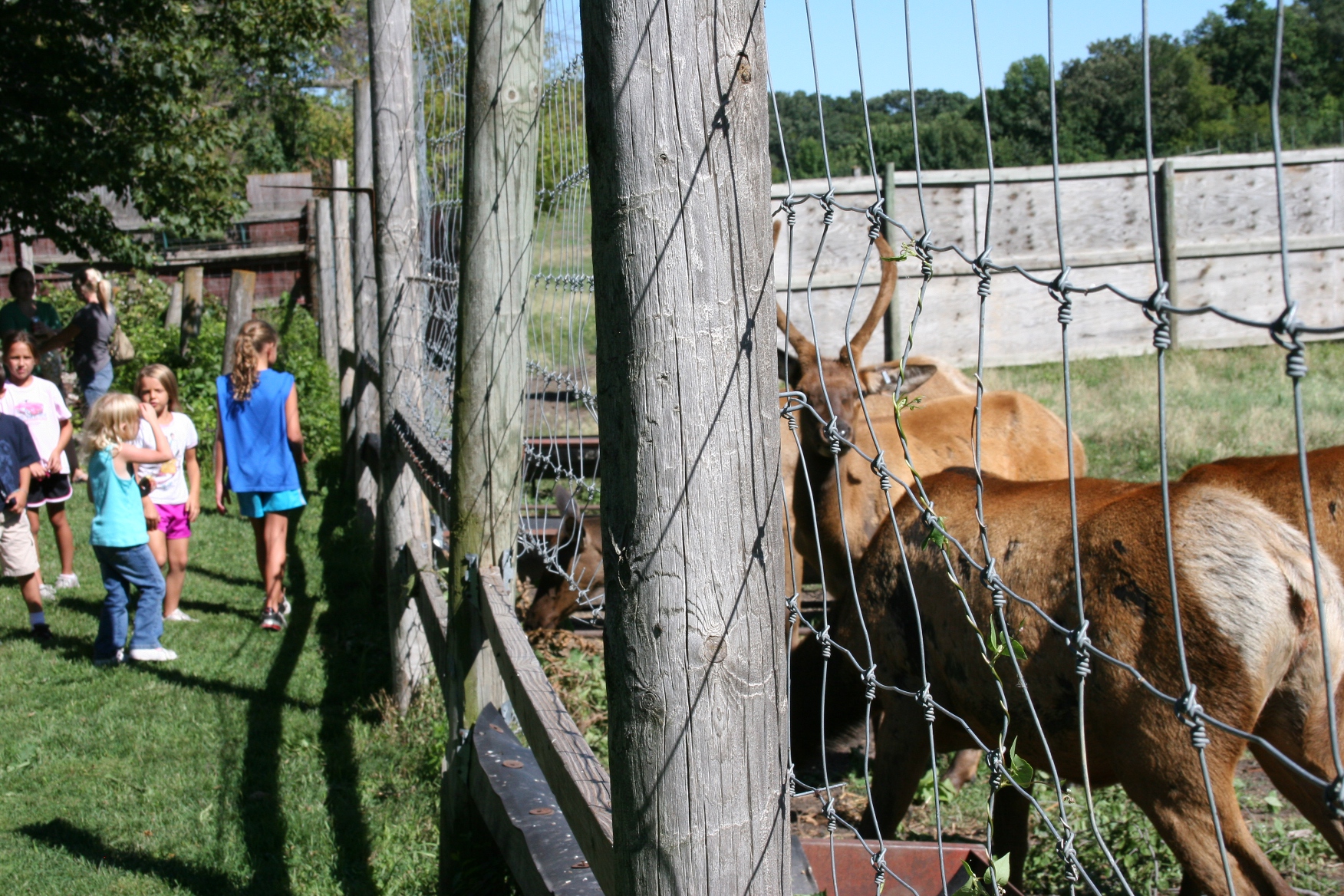
The final activity of the day, feeding apples to the elk.

On the Sunday I visited, her husband was handing out apples so the kids could feed the elk.

And the Okaman Elk Express was chugging along the shoulder of the roadway, thrilling the kids and, bonus, drawing in visitors like my husband and me.

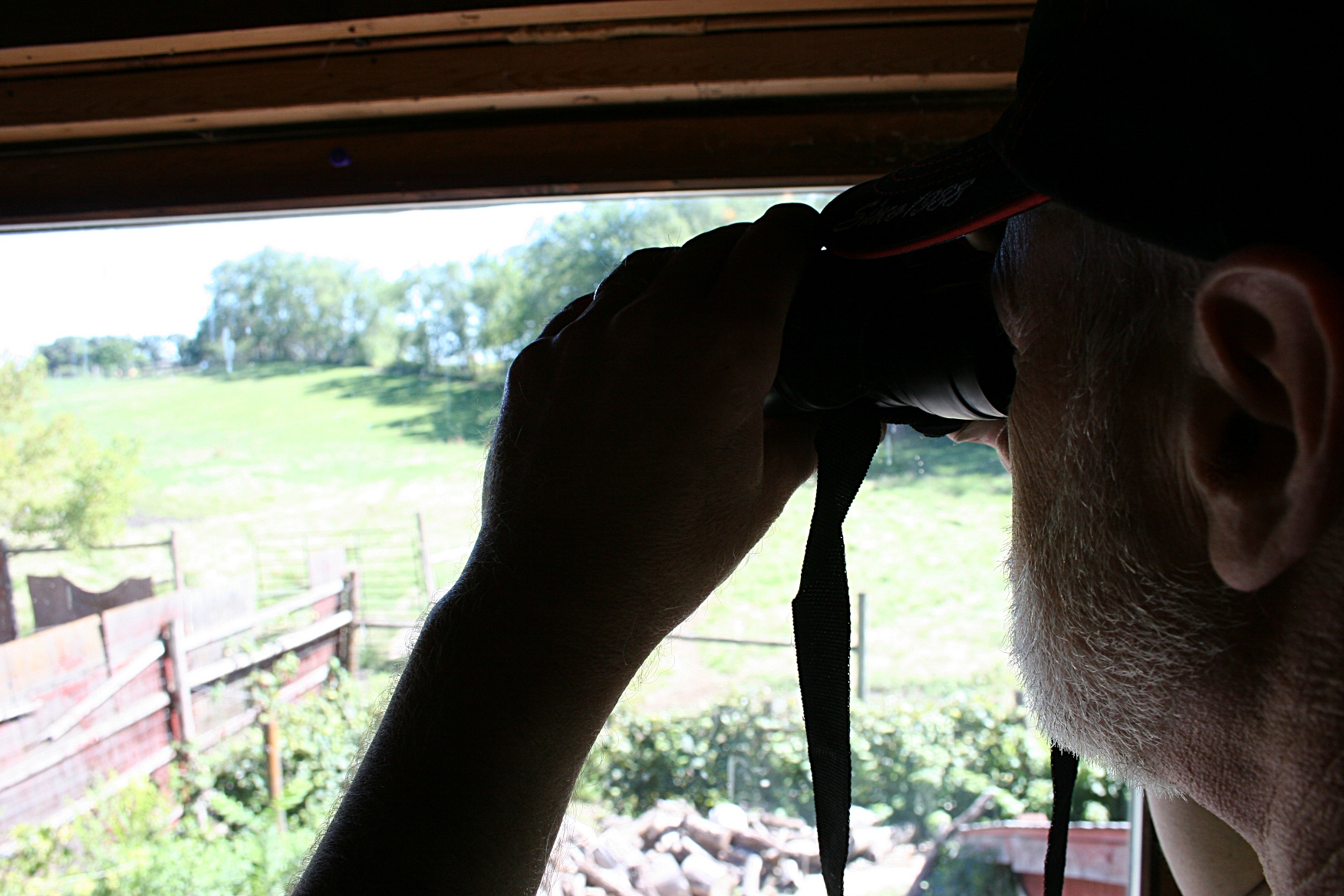
You’ll find binoculars in the barn to view the elk in the pasture.

FYI: To find Okaman Elk Farm, take Minnesota Highway 60 east of Elysian 1 ½ miles and then turn south to the intersections of Waseca County roads 3 and 5. The farm is open year-round. Click here to reach the farm’s website.

© Copyright 2012 Audrey Kletscher Helbling


Blooming on the prairie March 25, 2012

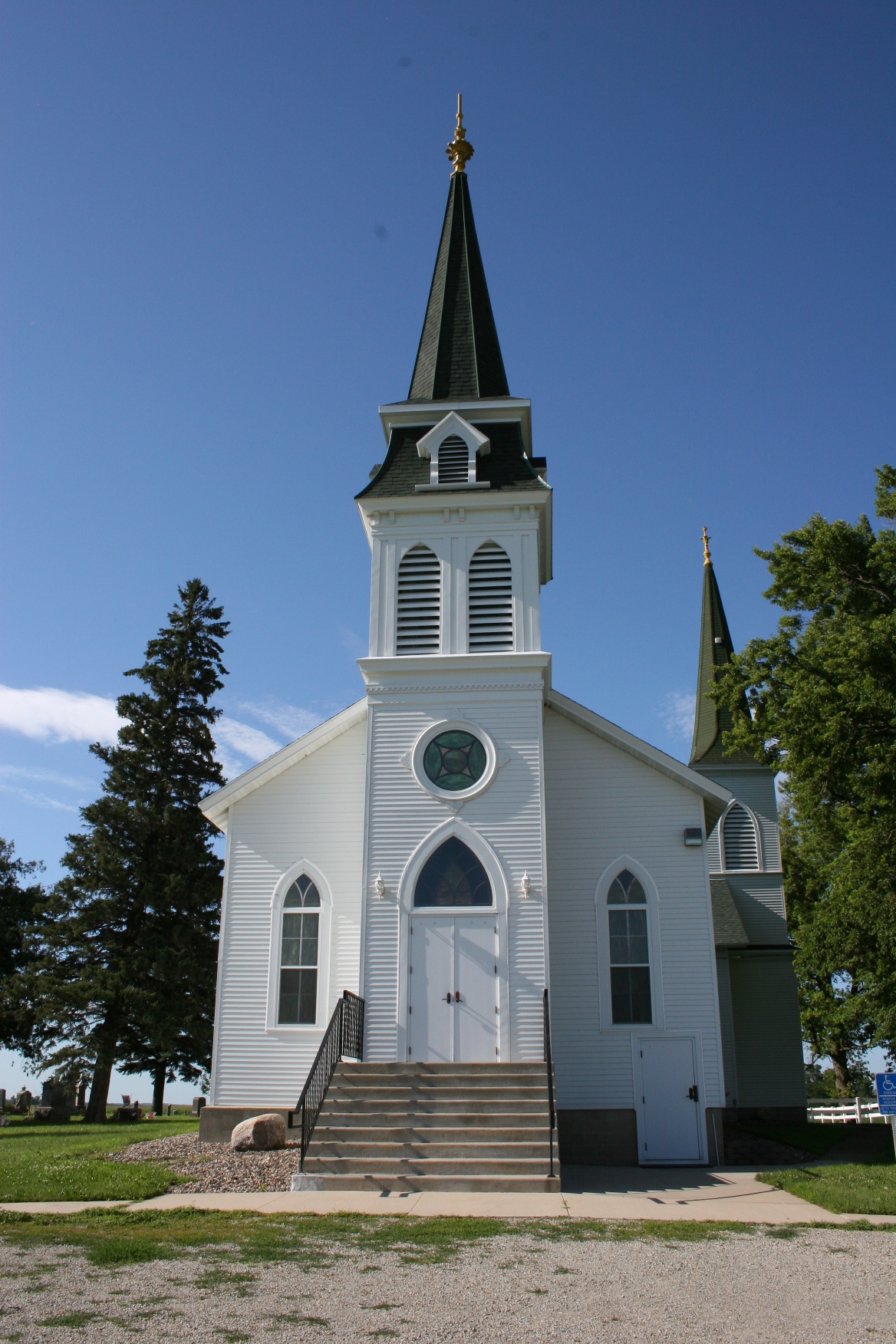
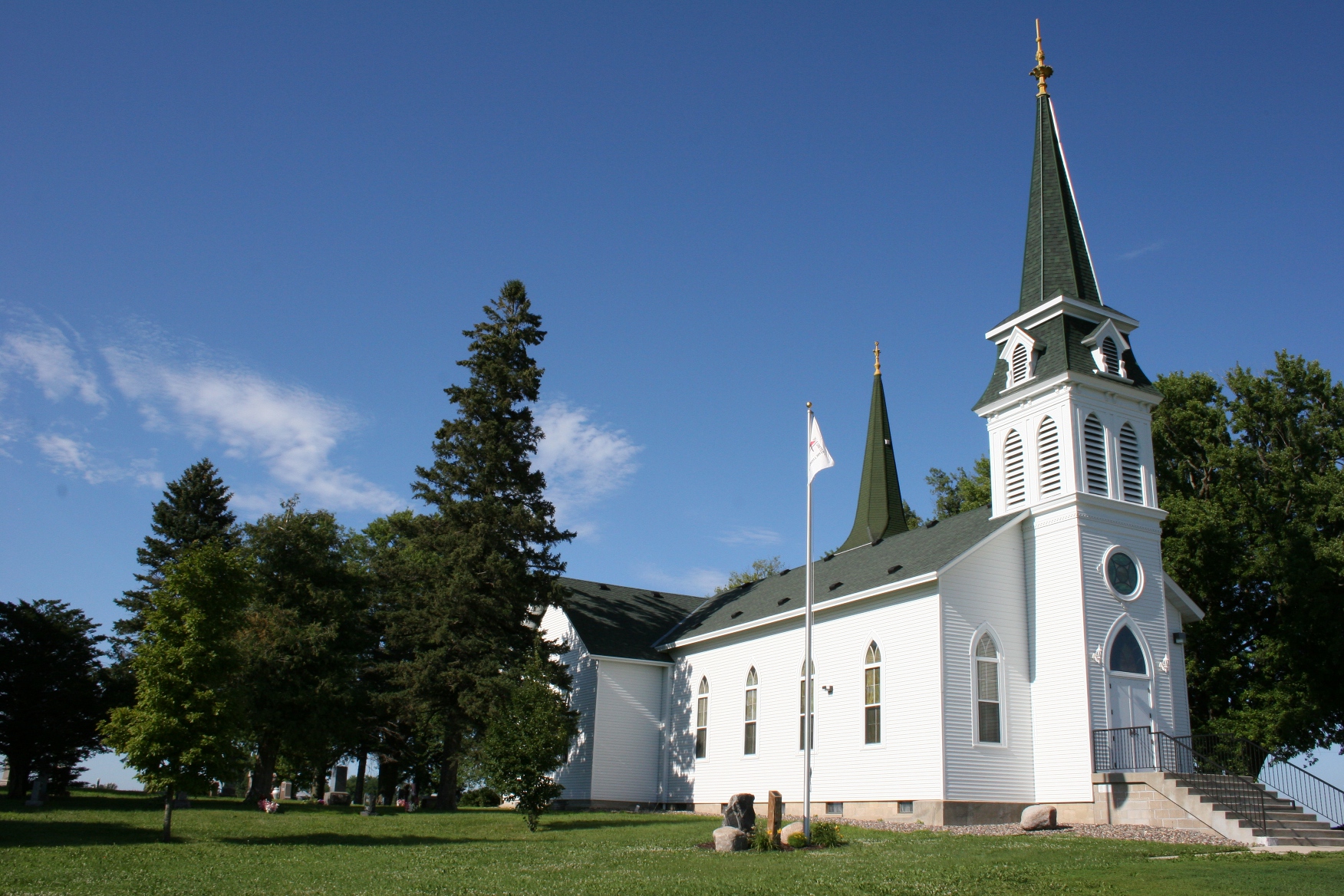
The former Immanuel church, front, was moved and connected to the Bethel church, back in 1951. The original parish was established in 1857. This photo was taken in the summer of 2011.

WHEN I FIRST SAW this country church last summer south of Morristown, I did a double take. It’s not often you spot two churches merged as one. At least not in the way Bethel and Immanuel became Blooming Grove United Methodist Church in 1951.

Rather than close one church and worship in a single facility, the Methodists opted to actually move one building, Immanuel, nearly four miles east to the Bethel site.

That was quite an event and quite a feat. Maurice Becht remembers in the parish newspaper, The Blooming Grove Methodist Visitor:

I had been helping off and on to get the church ready to move. When it was ready, I was standing off to the side looking when, all of a sudden, the front end of the church went down and the bell tower began to swing like a pendulum. Luckily, they had put a cable from the tower to the other end of the church so it didn’t break off. The front wheels had pulled out from under the church when the bolster slipped. We put it back on wheels and were going around the west side of Wilbert Remund’s buildings when we ran into a soft spot that had to be planked…

Wilbert and Marcella Remund recall:

Lloyd Zerck said that when he got the church moving, it had to be kept going, so Willie put his tractor on. That was just enough to keep it moving…

Eventually Immanuel reached its destination and work then continued to physically join the two buildings. Total project cost was around $16,000 with more than 7,000 hours in donated labor.

Blooming Grove United Methodist Church is located in northeastern Waseca County just off county road 10.

In a poem, “Historic Church in Action,” published in the March 1954 parish newspaper, Albert C. Reineke writes in the fourth verse:

In this alluring and peaceful countryside

Stands “God’s Temple” with towers high,

Two houses of worship now unified.

Sweet memories linger of years gone by.

I have no connection to Blooming Grove United Methodist Church. But I certainly do appreciate country churches and their rich and interesting histories.

"This church with its two steeples is a physical symbol of cooperation, compromise and trust," according to the church website. I photographed the church Saturday afternoon. Even on a hazy March day, Blooming Grove blooms on the prairie. My goal now is to get inside and photograph this church.

© Copyright 2012 Audrey Kletscher Helbling


Three bald eagles on a Sunday February 19, 2012

Filed under: Uncategorized — Audrey Kletscher Helbling @ 4:12 PM
Tags: , , , , , , ,

AS OBSERVANT AS I AM, and I’m quite detail-oriented, I don’t profess to have an eagle eye. That would be my husband. Randy possesses an uncanny ability to notice birds of prey in the wild.

A few weeks ago he pointed out an owl perched on a fence post as we traveled along a state highway around dusk. He’s always spotting hawks circling overhead, riding the wind.

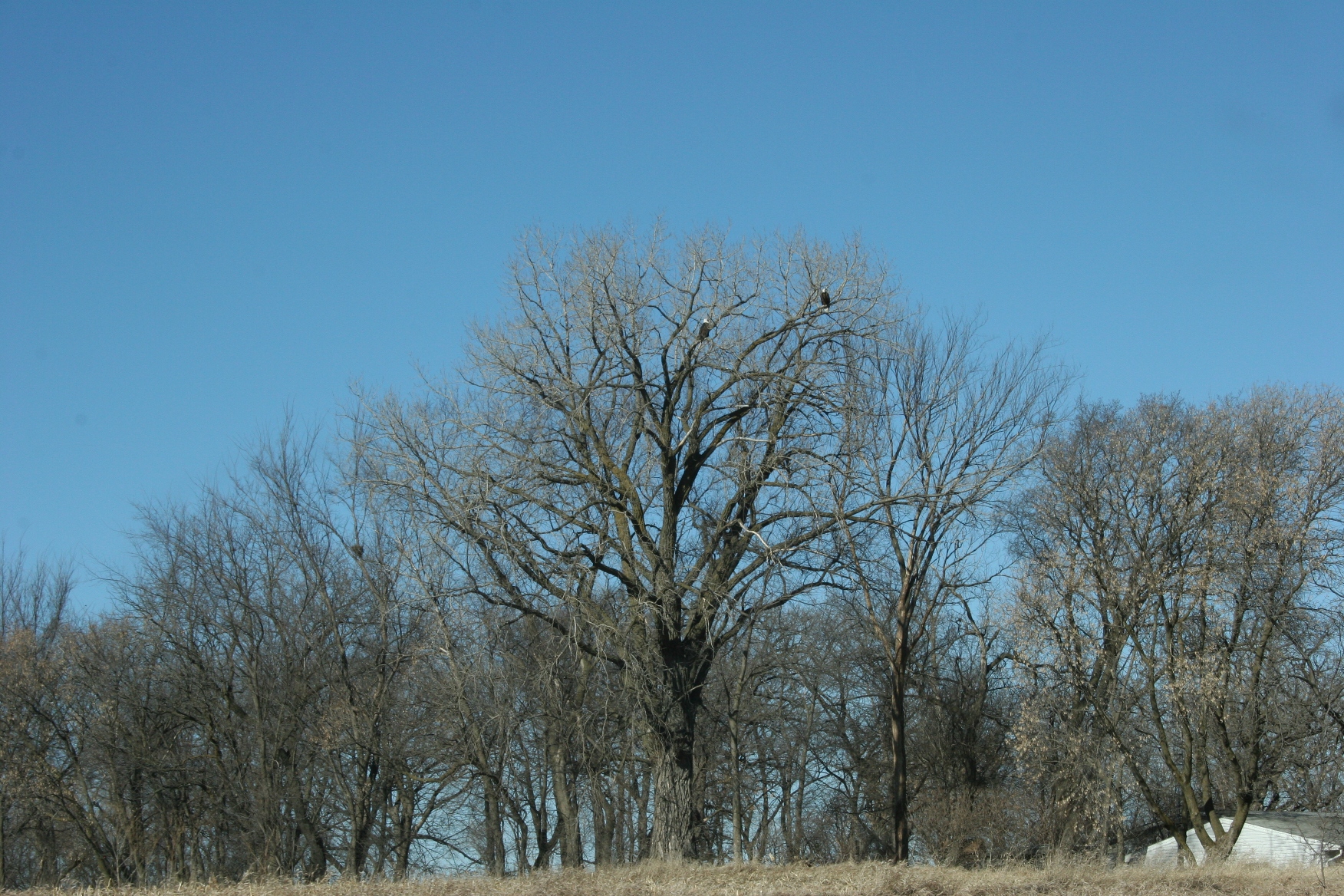
See the two eagles in the distant trees here on the west side of State Highway 13 near Waseca?

But this time, this past Sunday afternoon, he saw two bald eagles in a stand of trees several miles north of Waseca along Minnesota State Highway 13. Now typically nothing much raises Randy’s demeanor to a level of excitement. However, he was excited enough to swing our van into a U-turn, backtrack to the grove of trees and pause so he could gawk.

Although we’d seen eagles in the wild before, we’d never seen them this close—about 60 feet away horizontally and another 30 feet away vertically.

Parked along the wide shoulder of the highway, I shot this image of the eagles.

Stopping within feet of a deer carcass, the road kill that we figure drew the eagles to this grove of trees, Randy watched the birds while I photographed, wishing all the time for a telephoto lens.

After our brief eagle-watching, we continued on to Morristown, missed our turn and spotted another bald eagle. This time I requested we backtrack because I was, by then, already formulating this blog post in my mind.

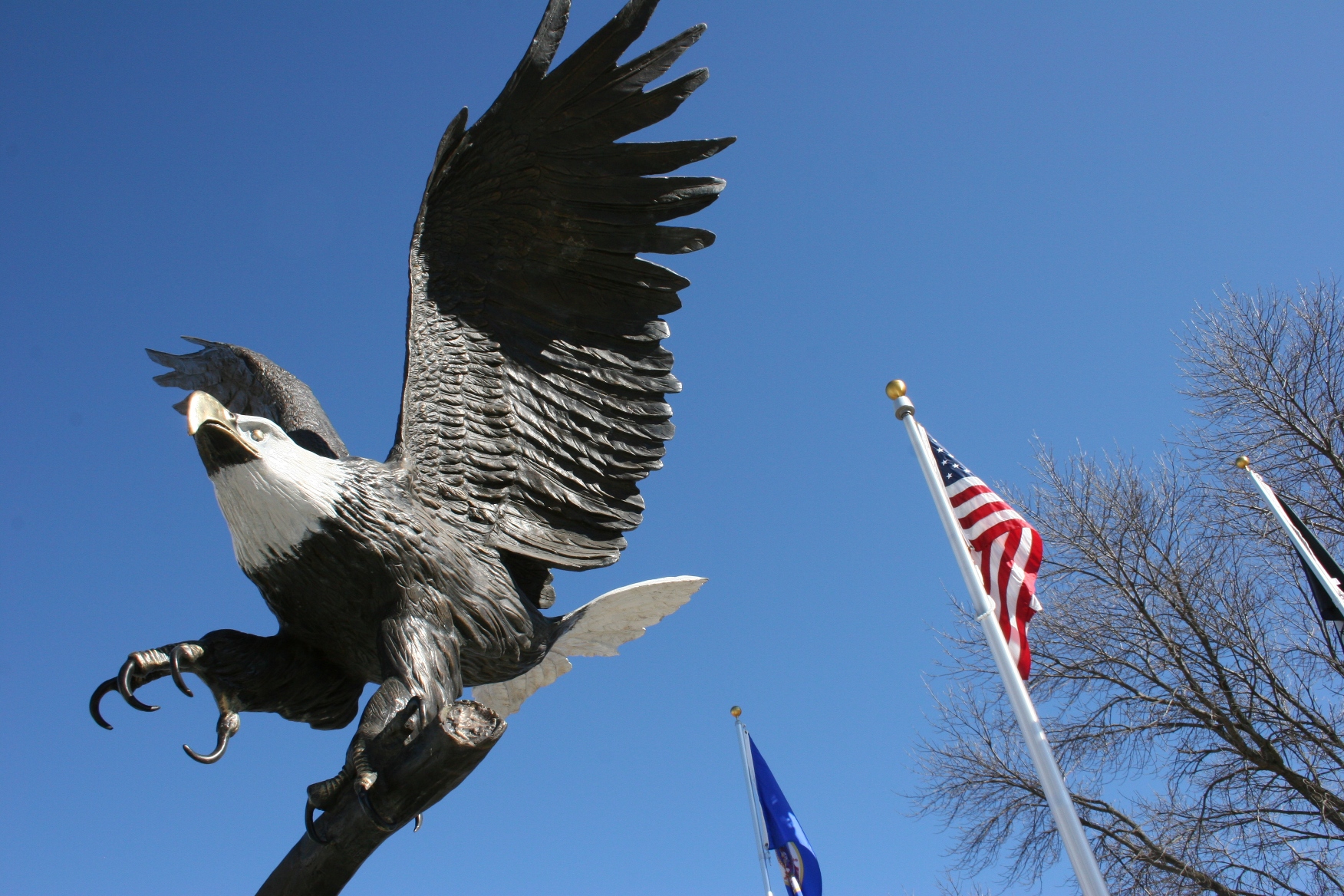
We had just passed Veterans Memorial Park, a new memorial to veterans in this Rice County town of 1,000 residents. It features a bald eagle as the focal point.

This time, without highway traffic passing dangerously close, I exited the van and captured close up our nation’s majestic symbol of freedom.

The bald eagle, flanked by flags, at the vets park in Morristown.

A broad view of the new memorial, which includes pavers honoring veterans.

Shooting into the sun, I took this shot of the memorial eagle.

HAVE YOU EVER seen a bald eagle in the wild? Tell me about your experience.

© Copyright 2012 Audrey Kletscher Helbling


Connecting to God at country churches August 28, 2011

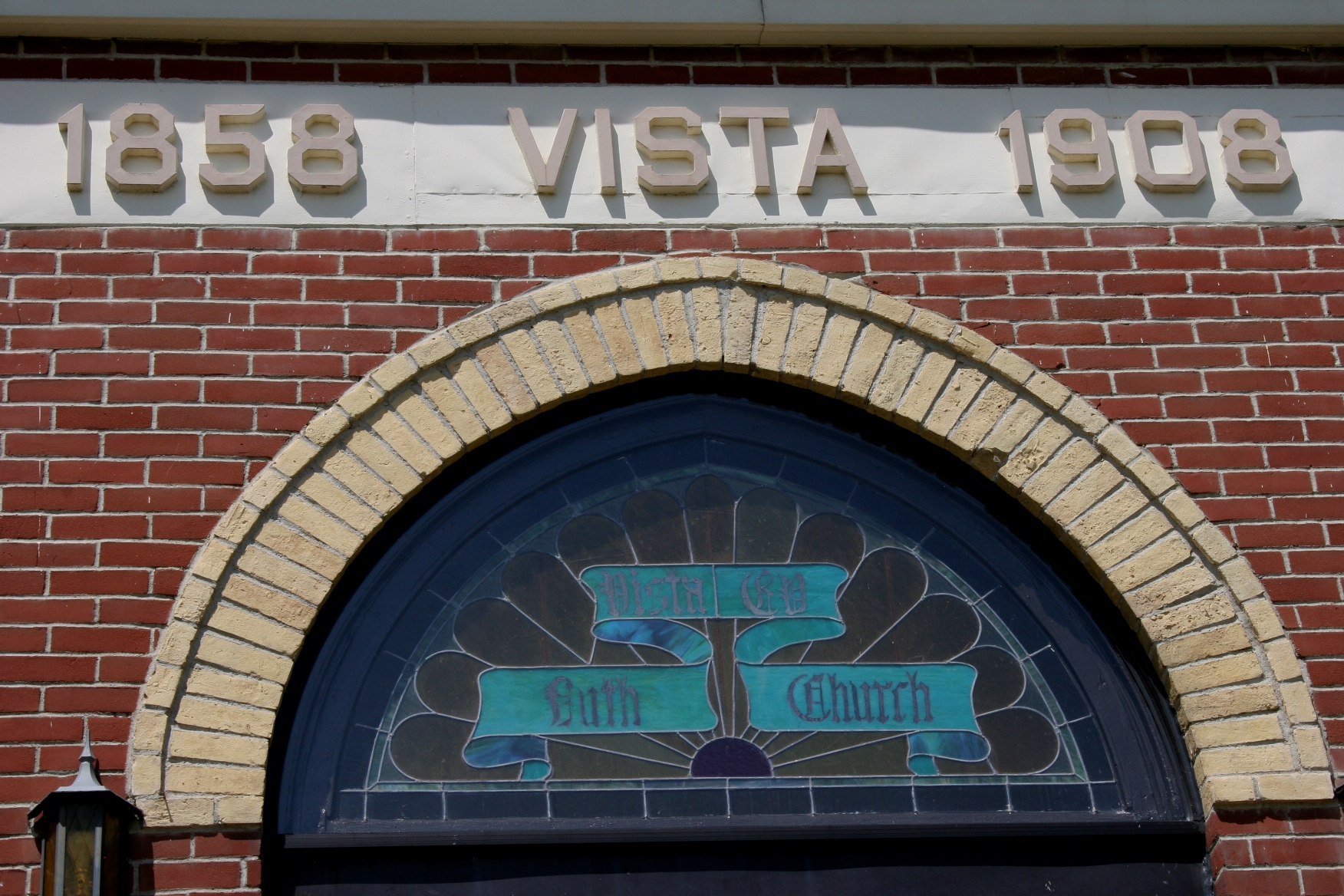
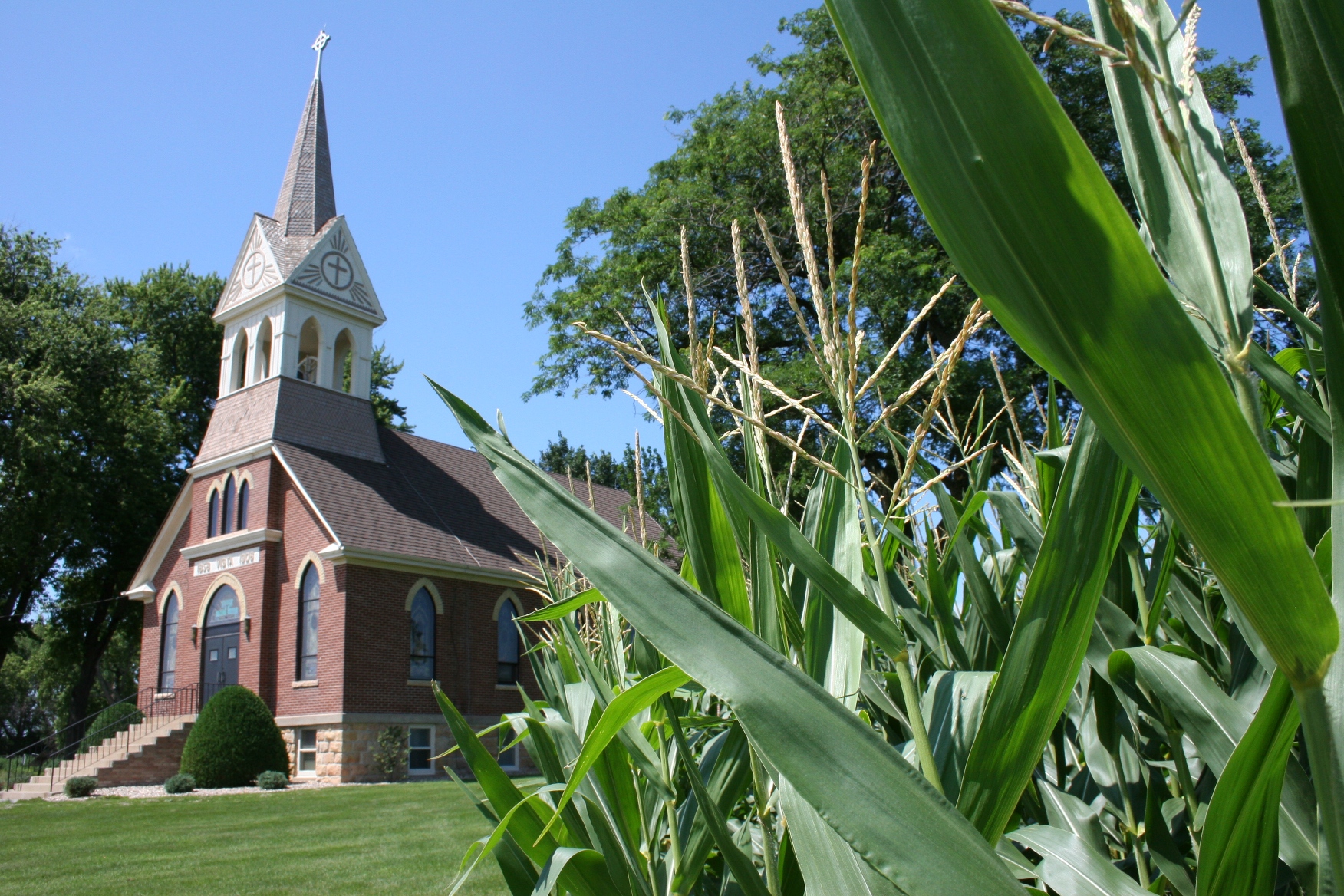
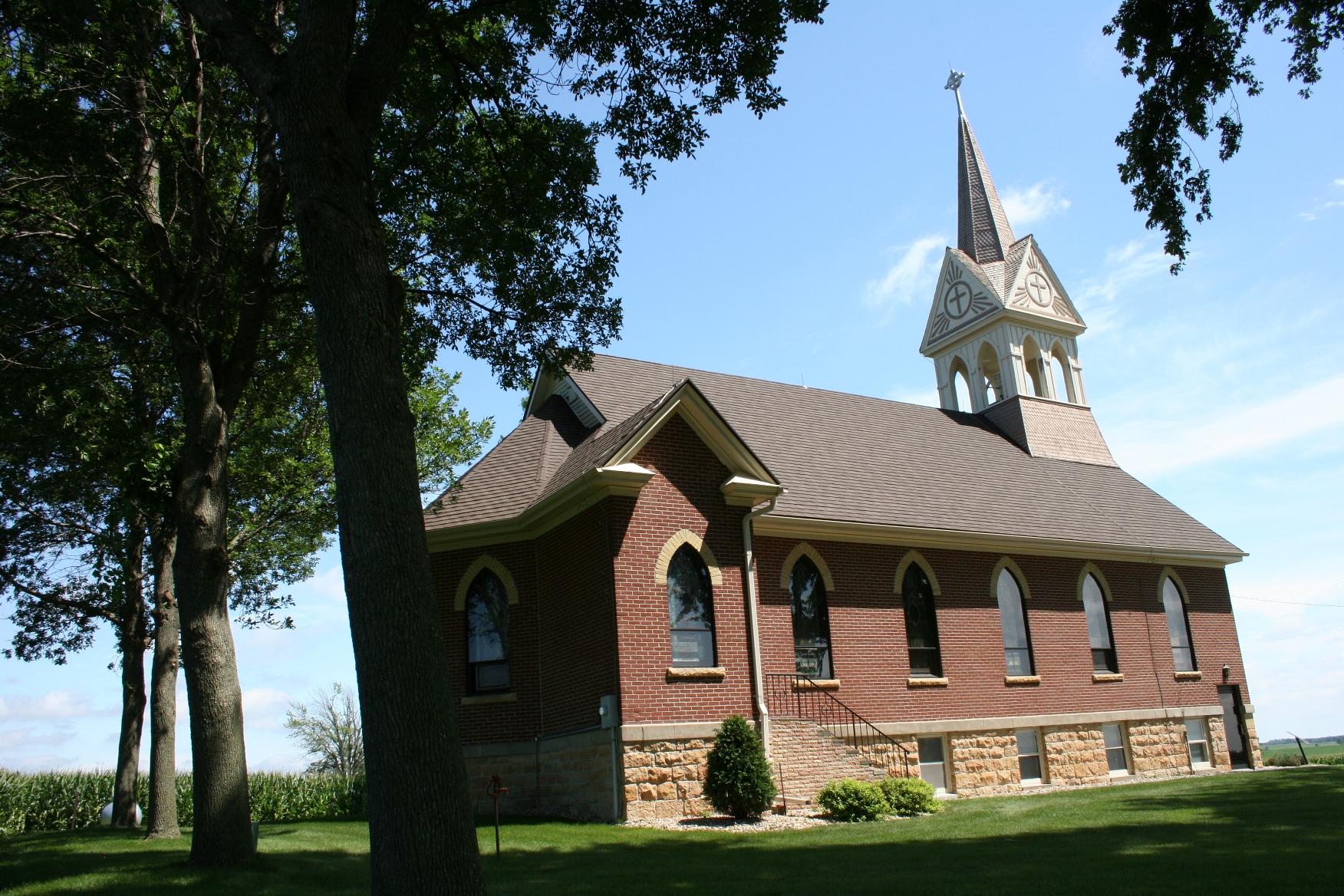
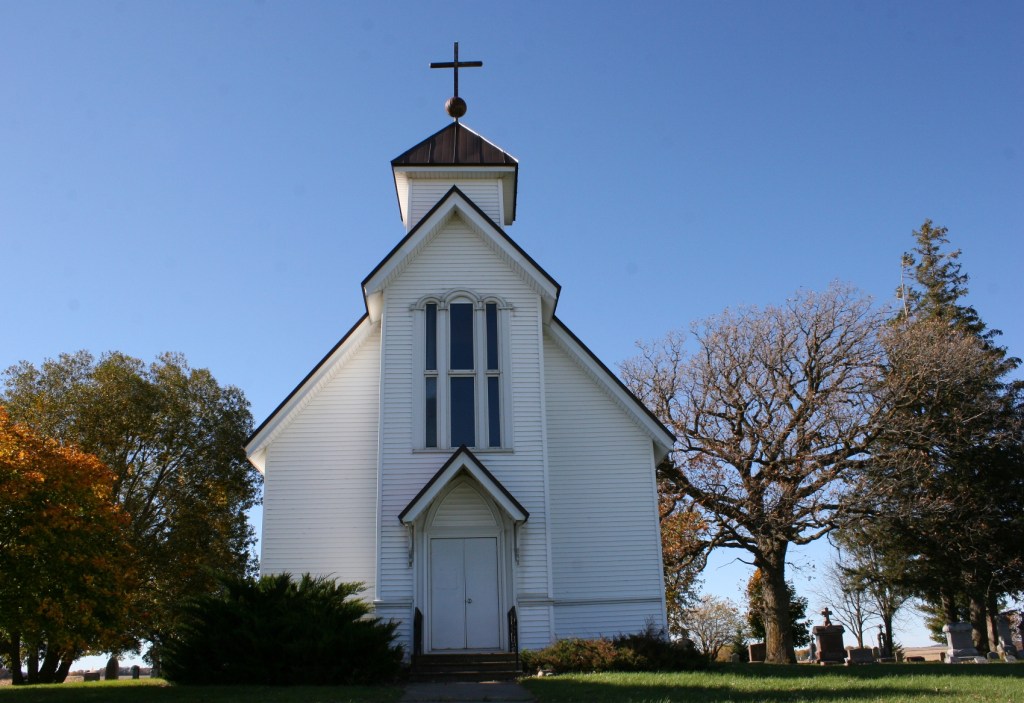
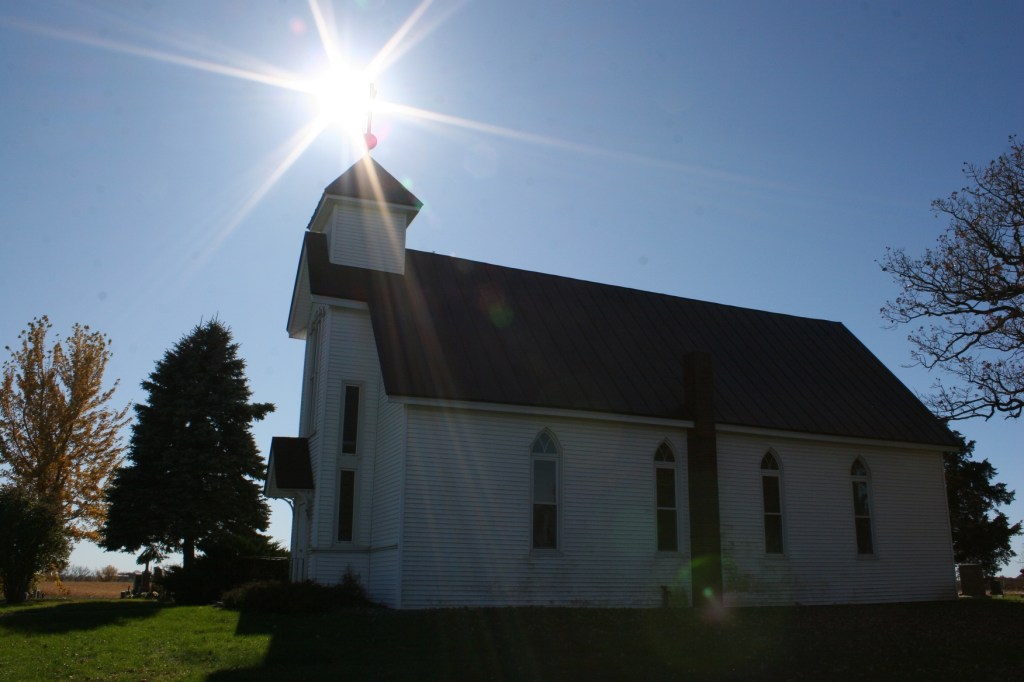
Vista Evangelical Lutheran Church, located at the intersection of Waseca County Roads 20 and 56 northeast of New Richland was built in 1908 and is on the National Register of Historic Places.

DURING THE PAST FEW YEARS, whenever I spot an old country church and have the time to stop and photograph it, I do.

I possess a sincere appreciation for the history, architecture, beauty and art found in these rural houses of worship.

There’s also something about a church in the country that exudes a deep sense of peace not found in a church built in a town and surrounded by homes or businesses, confined by concrete or pavement.

In the country, a church feels more closely connected to God by the sky, the land, the stirring of the wind through the trees, the background buzz of bugs on an end-of-summer day.

Serene. Peaceful. Calm. A certain sense of comfort comes from walking through a country churchyard, through the adjoining cemetery that links to farm fields where congregational forefathers worked the land and, on Sunday mornings, paused to thank God for the blessings bestowed upon them.

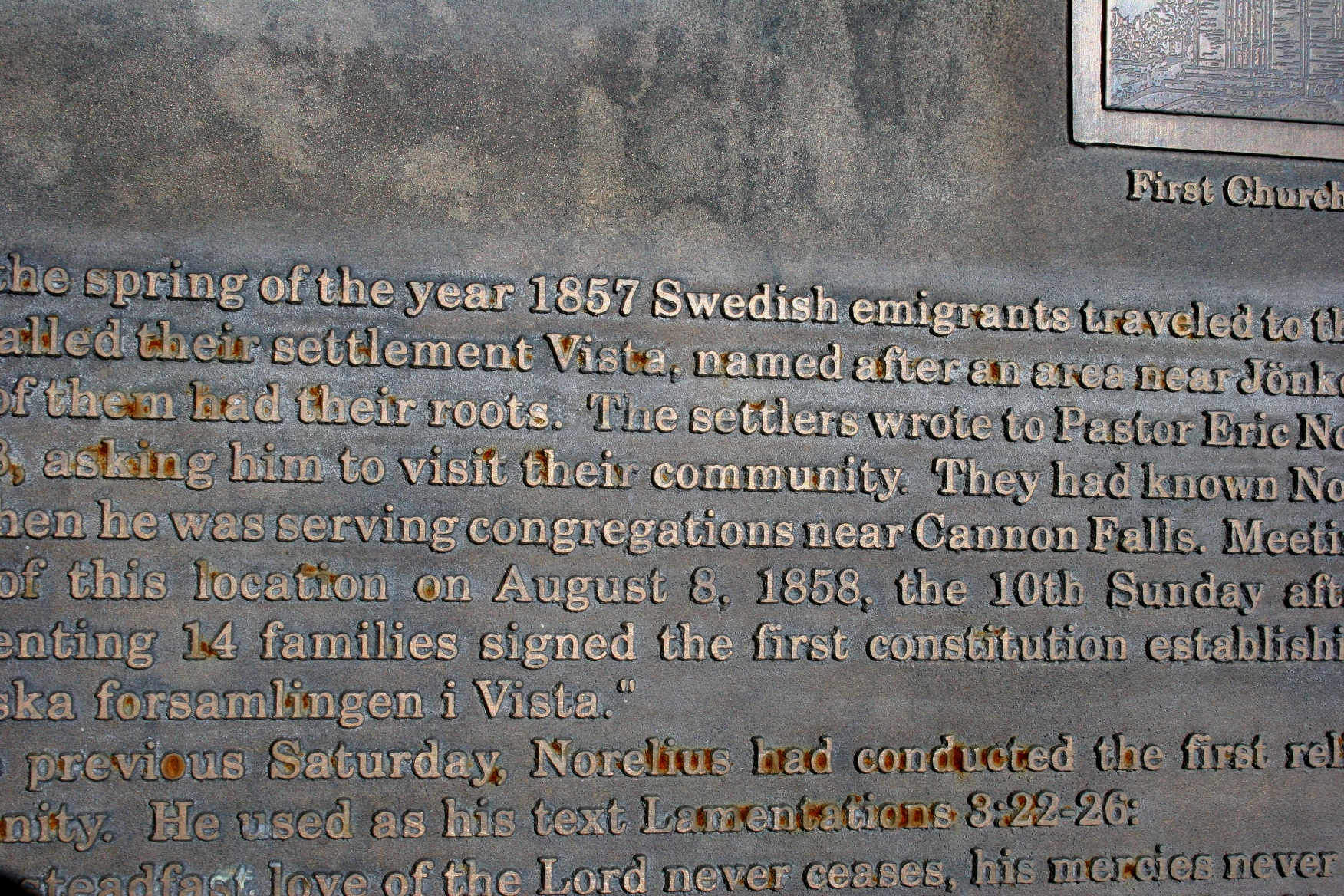
A plaque at Vista details the congregation's Swedish roots and history. Early settlers met on a hill north of the current church on August 8, 1858, and signed a constitution.

Most times on these brief visits to country churches, I find the doors locked. It wasn’t always this way. Perhaps even a decade ago, I could have walked inside. But times are different. Worry about theft requires locked doors.

So I can only imagine the sun streaming through stained glass windows, the worn pews, the ornate altar, the frayed rope of the bell pull.

Nearly every old country church features irreplaceable stained glass windows.

As I circle the church exterior, I consider the families that have come together here to celebrate baptisms and marriages and to mourn the loss of loved ones. Ashes to ashes, dust to dust.

Cornfields snuggle up to Vista's church yard. It's the most beautiful of settings.

Here, standing with my feet planted next to the church next to a corn or soybean field overlooking the picturesque countryside, I can feel the almighty presence of God the Creator as I contemplate words from “Beautiful Savior,” my favorite hymn:

Beautiful Savior, King of creation, Son of God and Son of Man!

Truly I’d love thee, Truly I’d serve thee,

Light of my soul, my joy, my crown.

#

Fair are the meadows, Fair are the woodlands, Robed in flow’rs of blooming spring;

Jesus is fairer, Jesus is purer,

He makes our sorr’wing spirit sing.

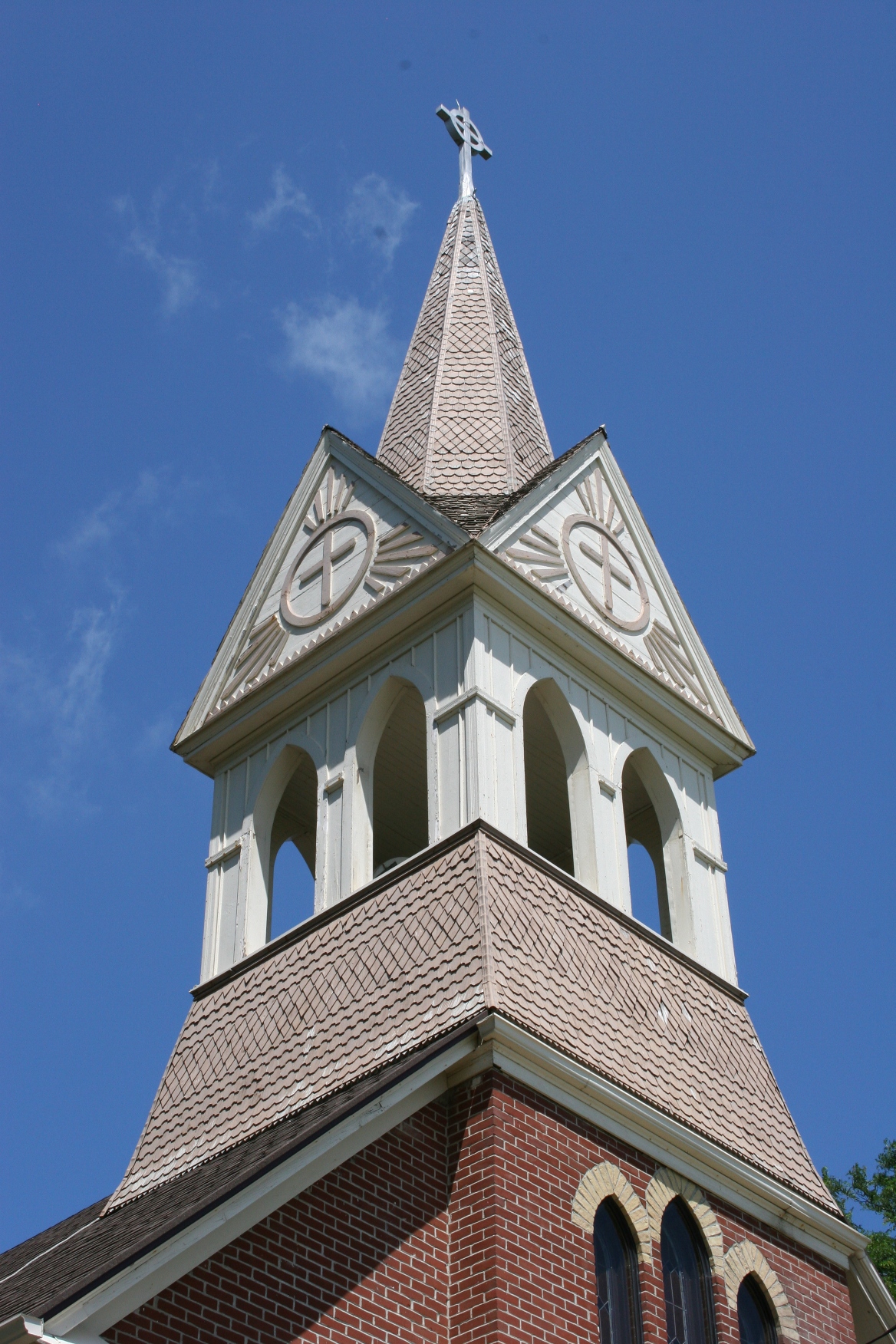
Vista's steeple rises above the countryside as a local landmark.

A lovely grassy area of shade trees lies to the north and west of the Vista church.

© Copyright 2011 Audrey Kletscher Helbling

Verses one and two of “Beautiful Savior” are from The Lutheran Worship hymnal.