Minnesota Prairie Roots

Writing and photography by Audrey Kletscher Helbling

Why some of us appreciate abandoned buildings February 25, 2011


Harriet Traxler photographed this abandoned building along U.S. Highway 14 near Waseca several years ago. She's a hobbyist photographer specializing in nature and rural photography. This photo placed in a photo contest Harriet entered. "It is one of my favorites because of what it doesn't tell you," Harriet says.

SOMETIMES I’M SURPRISED by readers’ reactions to my posts. Usually, the stories and photos I least expect will interest readers, do.

Take my post on abandoned buildings. Last fall, I photographed a dilapidated building in the middle of nowhere along a gravel road near Kasota. I can’t give you the exact location because I don’t know quite where I was on that autumn day.

When I published that photo and wrote about my fascination with abandoned buildings in rural landscapes earlier this week, readers from Oregon, Arkansas and Minnesota responded. Seems I’m not alone in my appreciation of abandoned buildings and the history, memories and stories they hold.

Harriet Traxler, a hobbyist photographer from rural Belle Plaine and the publisher of a book series featuring photos of Sibley County, Minnesota, barns, emailed two photos of abandoned buildings. She is graciously allowing me to share her images and thoughts.

“I, too, am drawn to photographing old, abandoned buildings and then find myself staring at the pictures and trying to imagine who the people were that built and lived in these homes or worked in these barns that now stand empty,” Harriet says. “And the memories of the hard work, the laughter, the troubles; everything that went towards making it a home or farm are now gone forever.

Oftentimes when I would be out photographing the barns in Sibley County or even on a cross country trip, I would see a windmill or a silo or a small grove of trees standing alone in the middle of a field and wonder about the farm that stood there too.

What happened to the family that lived there once not too long ago? Were they happy? Were there children who played and worked alongside their family? Was there a tragedy that occurred that drove the family from the farm?

We often romanticize farm life, but that life was one of the hardest to live. If it was a dairy farm, like most were in rural Minnesota, then it was long days, seven days a week, and children after growing up on this type of farm, learning good work ethics, seldom wanted to spend the rest of their lives doing the work their parents had done for years and years. When they left the farms for those good ‘city jobs,’ that is when farm life began to disappear and those abandoned buildings really began to appear.”

I COULDN’T HAVE said it any better, Harriet. I am one of those kids who left the (dairy) farm.

Harriet, too, grew up on a farm, in Sibley County, on her uncle’s place, that looks nothing like the home of her youth.


The old granary on the farm where Harriet grew up.

“All that remains standing is this old granary that also always smelled of rats and dusty bins of oats,” Harriet says. “It had a lean-to attached to it that was used as a garage for my uncle’s car. I remember every inch of that farm because I loved to explore every inch of it.

I didn’t have to work nearly as hard on that farm as most children had to on the farms they grew up on so maybe that is why I loved it so much.

The freedom to be me was always there and I have often gone back to my ‘roots’ and those memories…the better memories seem to always remain pushing other memories that were not so much fun to the far corners of the mind.”

© Text copyright 2011 by Audrey Kletscher Helbling

© Photo copyright by Harriet Traxler


Harvesting ice in Waseca February 15, 2011

Filed under: Uncategorized — Audrey Kletscher Helbling @ 9:06 AM
Tags: , , , , , , ,

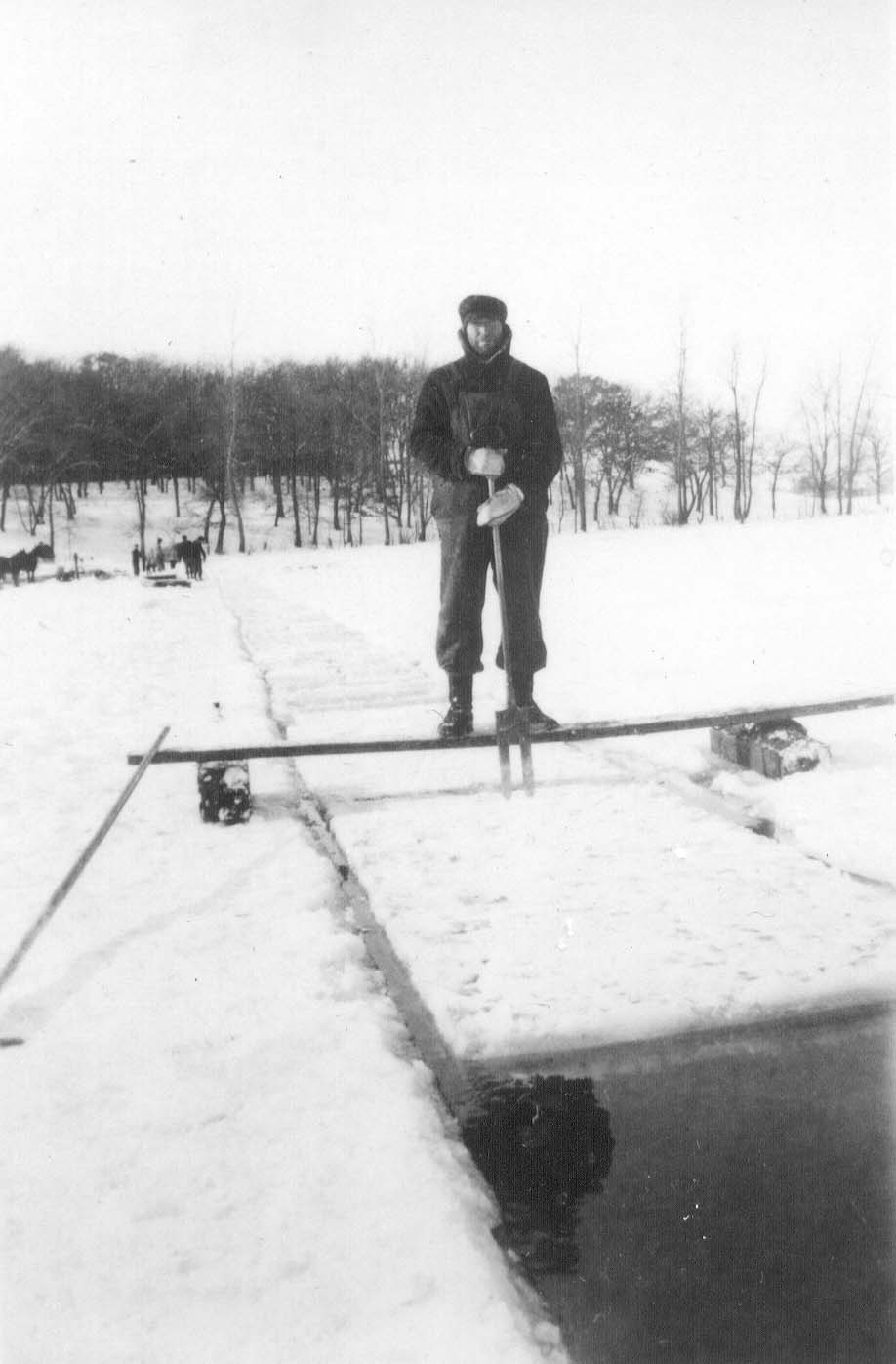
ACCORDING TO KLETSCHER family history, my dad and Uncle Mike harvested ice from the Redwood River in Marshall many, many decades ago.

I learned that historical tidbit last year from my Uncle Merlin, who helped me with questions for a family reunion trivia competition. My dad never spoke of this winter work, once common in Minnesota. He died in 2003, Mike in 2001, so I’ll never know anything more about their ice harvesting experience.


Harvesting ice on Clear Lake.

On Wednesday, February 16, anyone interested in learning about this winter activity should head over to Waseca for the 10th annual Ice Harvest from 9 a.m. – 3 p.m. at Clear Lake Park.

There visitors will participate in the traditions of ice scoring, cutting, and then storing blocks of harvested ice, in sawdust, in an ice house.

Local students will be there, too, joining in sledding, sleigh rides, snowshoeing, wood cutting and more.

The Waseca County Historical Society, FarmAmerica and AKorn Productions are hosting the event. For more information, contact the WCHS at (507) 835-7700 or go to www.historical.waseca.mn.us.

READERS, IF YOU have stories to share about harvesting ice, submit a comment. I’d like to hear more about this winter activity.

Photo courtesy of the Waseca County Historical Society


A country school preserved in Millersburg October 3, 2010

MY HUSBAND THRILLS in talking about the coyotes at Chimney Butte School.

You have to admit that just the name of the rural North Dakota school, which Randy attended for 14 months in the 1960s, draws you in to listen.

His tale is short. One day Randy and his classmates couldn’t go outside for recess because of coyotes in the schoolyard. That’s it. Yet, the story deserves telling. How many men in their early 50s attended a country school? Furthermore, how many of those students encountered coyotes on a school day?

Preserving such memories is important. So is preserving the actual school building. Last Sunday I stepped inside a one-room Minnesota country school that has been restored and transformed into a museum. That’s nothing new, really. Old schoolhouses have also become township halls, private residences and businesses, although some have been abandoned and simply fallen into heaps of rotting wood.

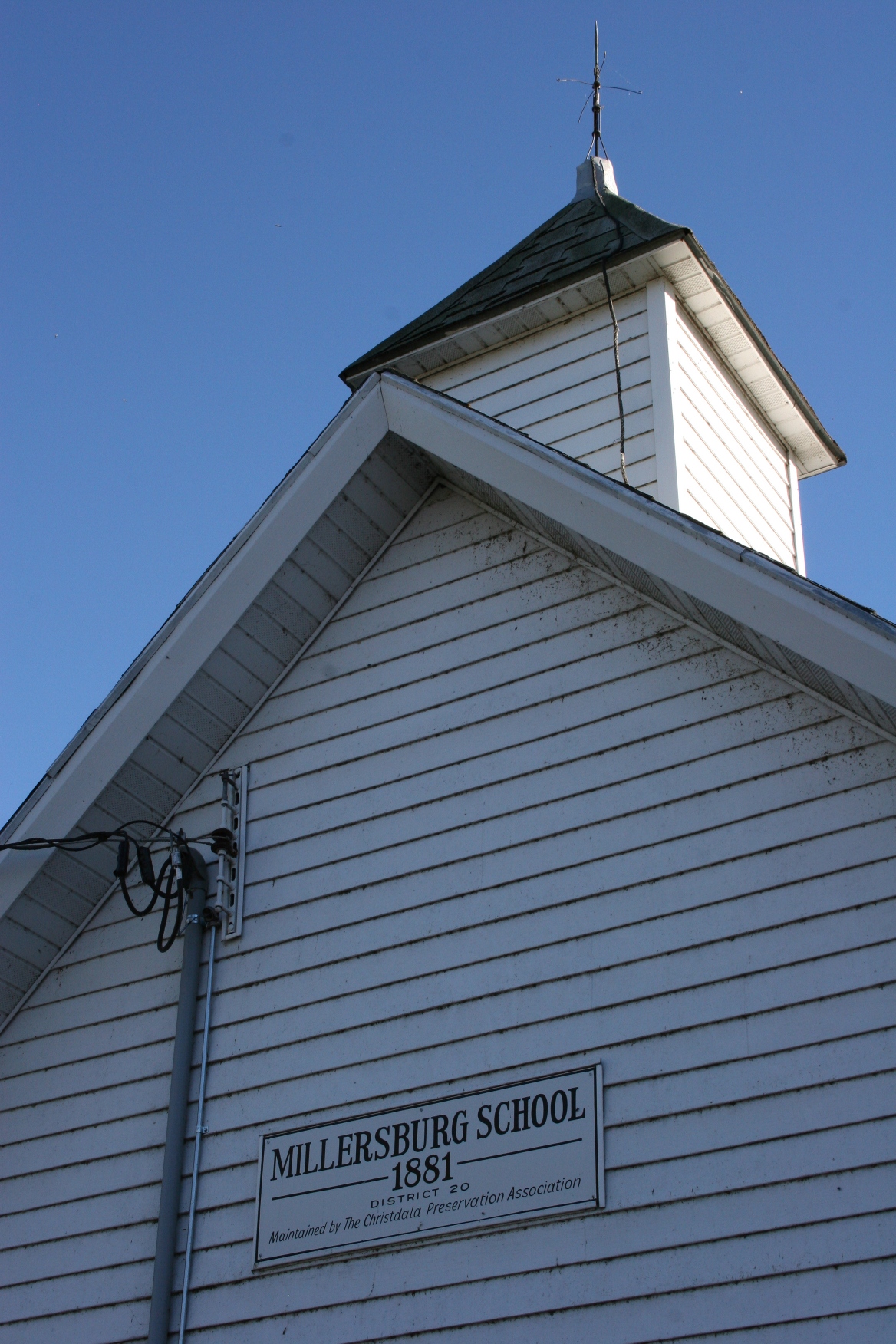
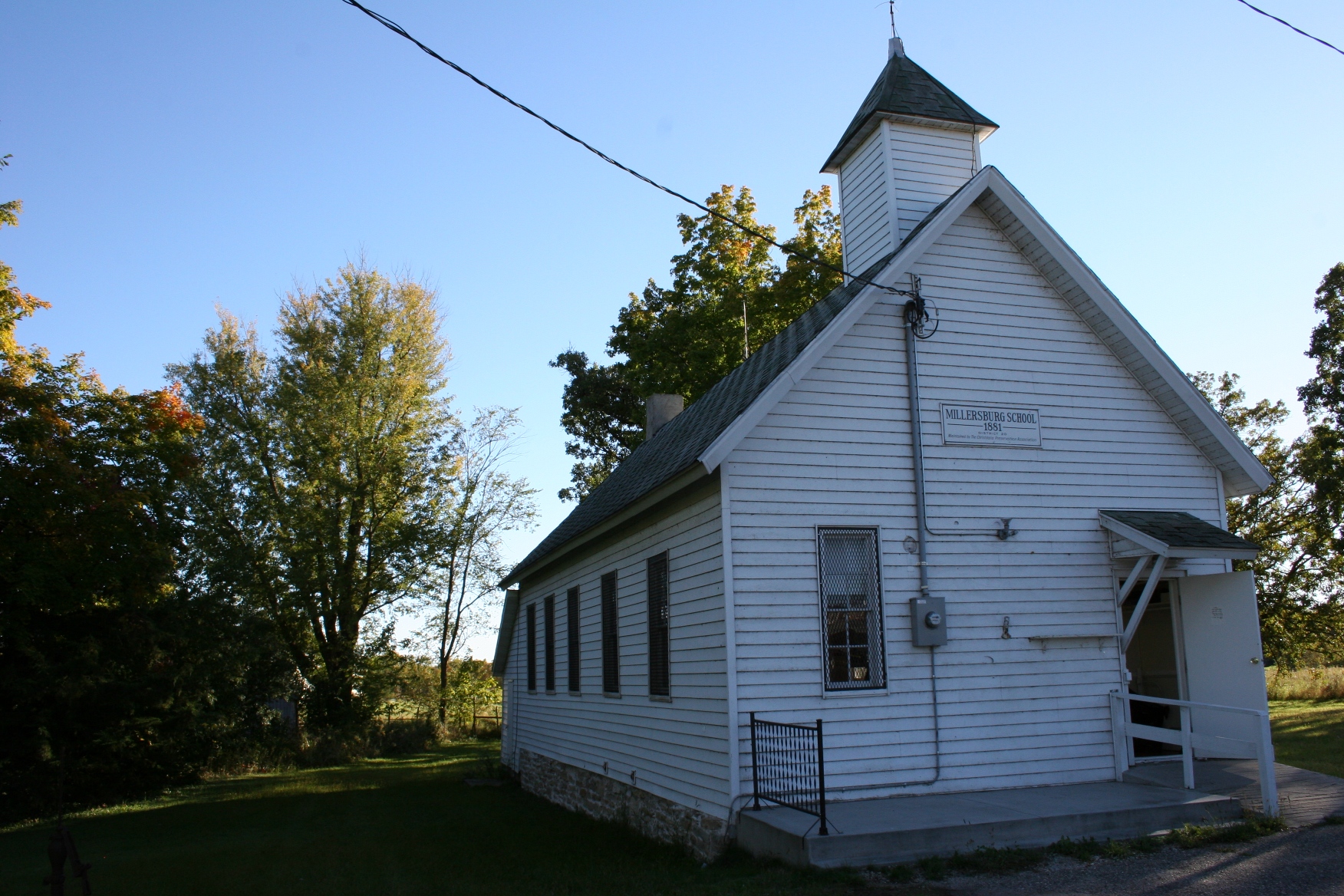
Members of The Christdala Preservation Association are assuring that doesn’t happen to the District 20 Millersburg School in rural Rice County. The association has acquired the former schoolhouse and is transitioning it into a museum for the Millersburg community.

The 1881 Millersburg School is now a museum.

The old country school sits across the road from Boonie's restaurant and bar along Rice County Road 1.

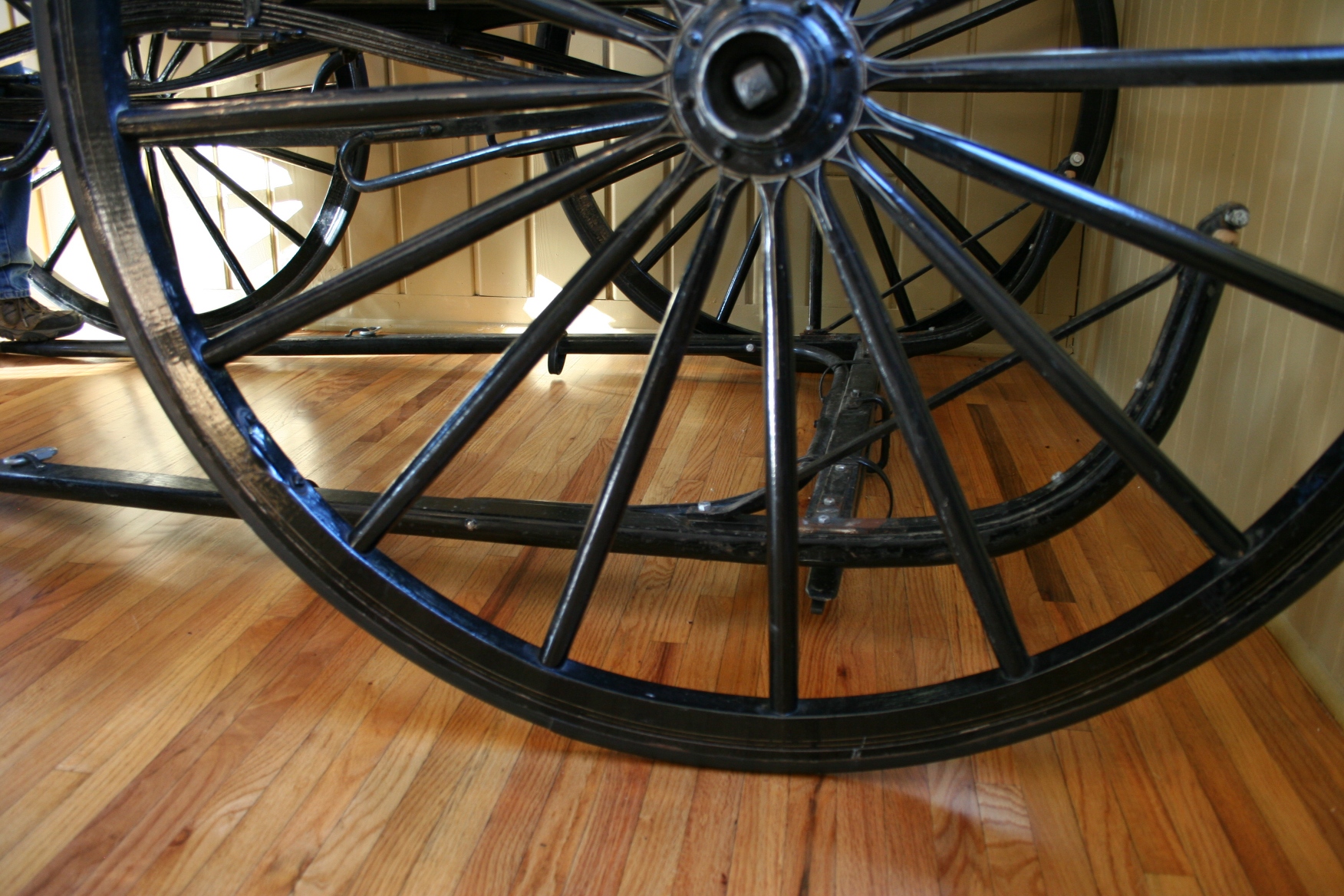
Inside I discovered records and artifacts from the school and nearby Christdala Evangelical Swedish Lutheran Church, historic photos, an old buggy, military memorabilia and more.

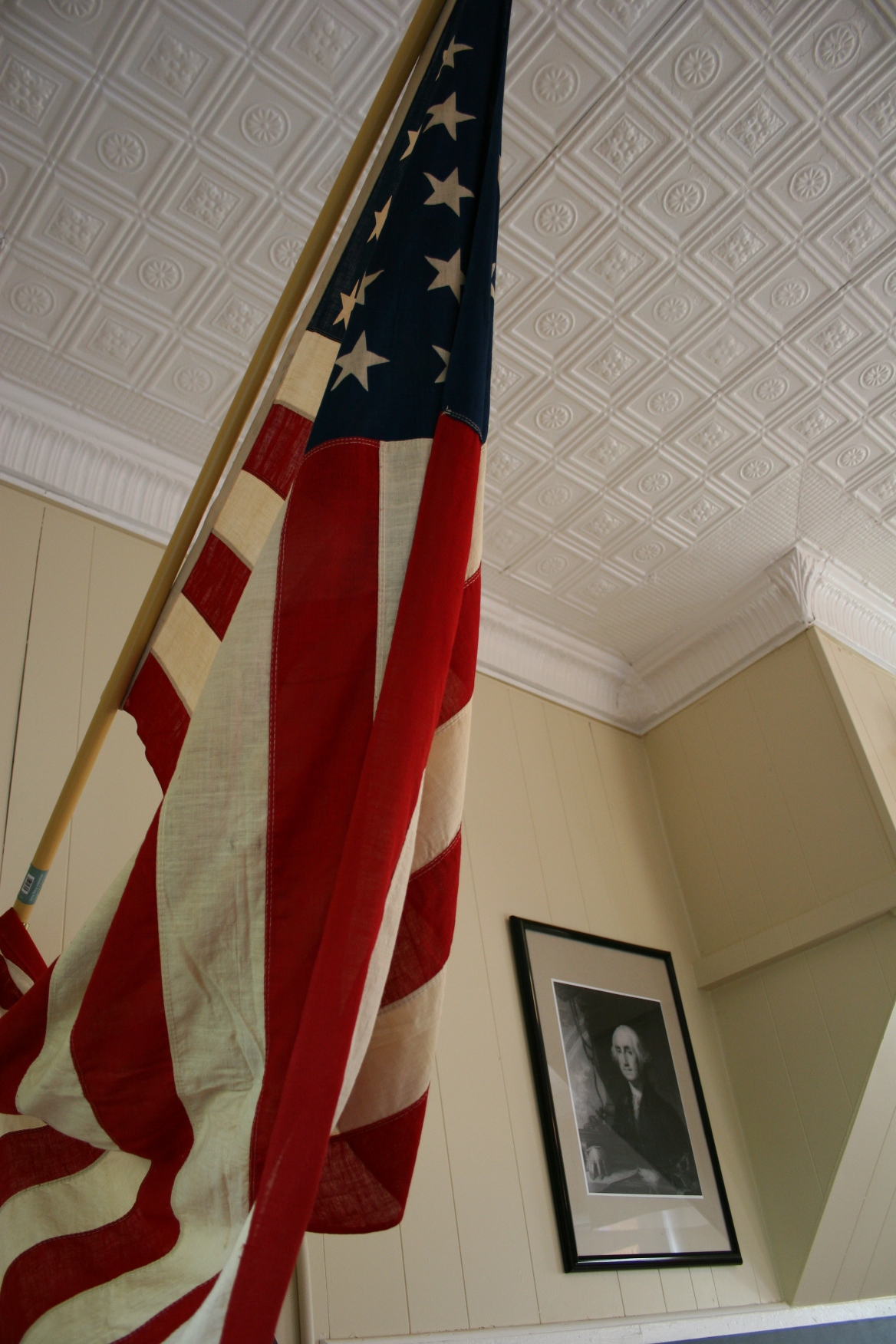
Mostly, though, I appreciated the care taken to restore the building. Gleaming wood floors made me want to push back the tables and chairs and host a square dance. These preservationists paid attention to detail, right down to the American flag and portrait of George Washington.

As this museum evolves, I expect, hope, that the preservation association will open the doors on a regular basis to the public. And I expect, hope, that those who gather there will exchange stories about their days in a country school, coyotes or not.

The refurbished wood floor shines under the wheels of an 1887 Michigan Buggy Company buggy which was taken apart and reassembled inside the schoolhouse museum.

At the front of the schoolroom hangs the American flag and a Presidential portrait below the period ceiling.

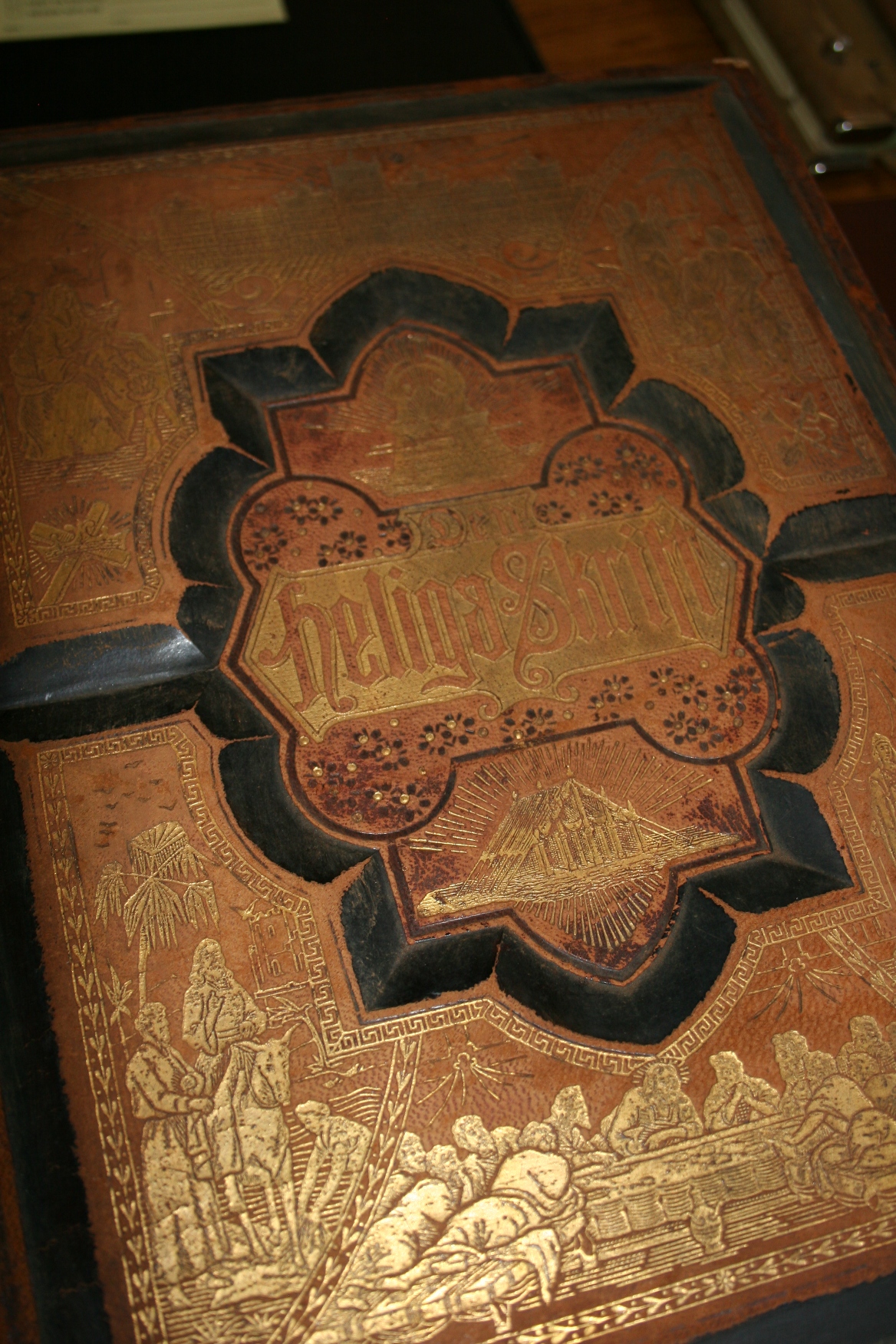
The 1889 Swedish bible used in worship services at Christdala Evangelical Swedish Lutheran Church, located just down the road from the school.

A page from the 1889 Swedish bible.

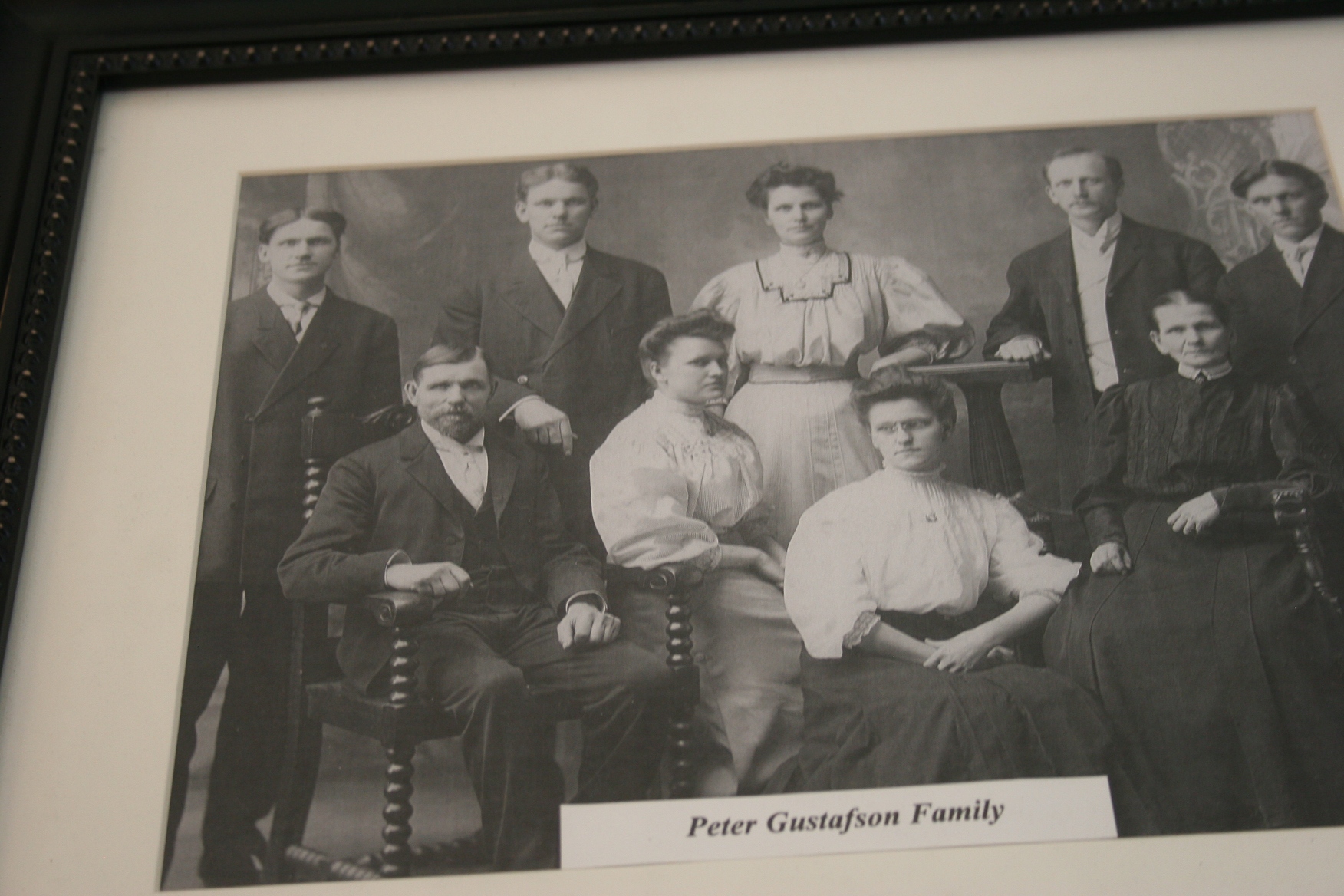
Among the museum photos is this portrait of the Peter Gustafson family. Peter was among the founding members of Christdala. He was also the brother of Nicolaus Gustafson who was murdered by outlaw Cole Younger during an attempted 1876 bank raid in nearby Northfield. At the time of Nicolaus' death, the Millersburg Swedish community had no church or cemetery. Nicolaus' untimely death prompted the Swedes to form Christdala. Peter Gustafson's 18-year-old twin son, Eugene, died tragically in March 1905 when a log rolled forward on a wagon and crushed him. This information is published in The History of the Christdala Evangelical Swedish Lutheran Church of Millersburg, Minnesota, written by B. Wayne Quist.

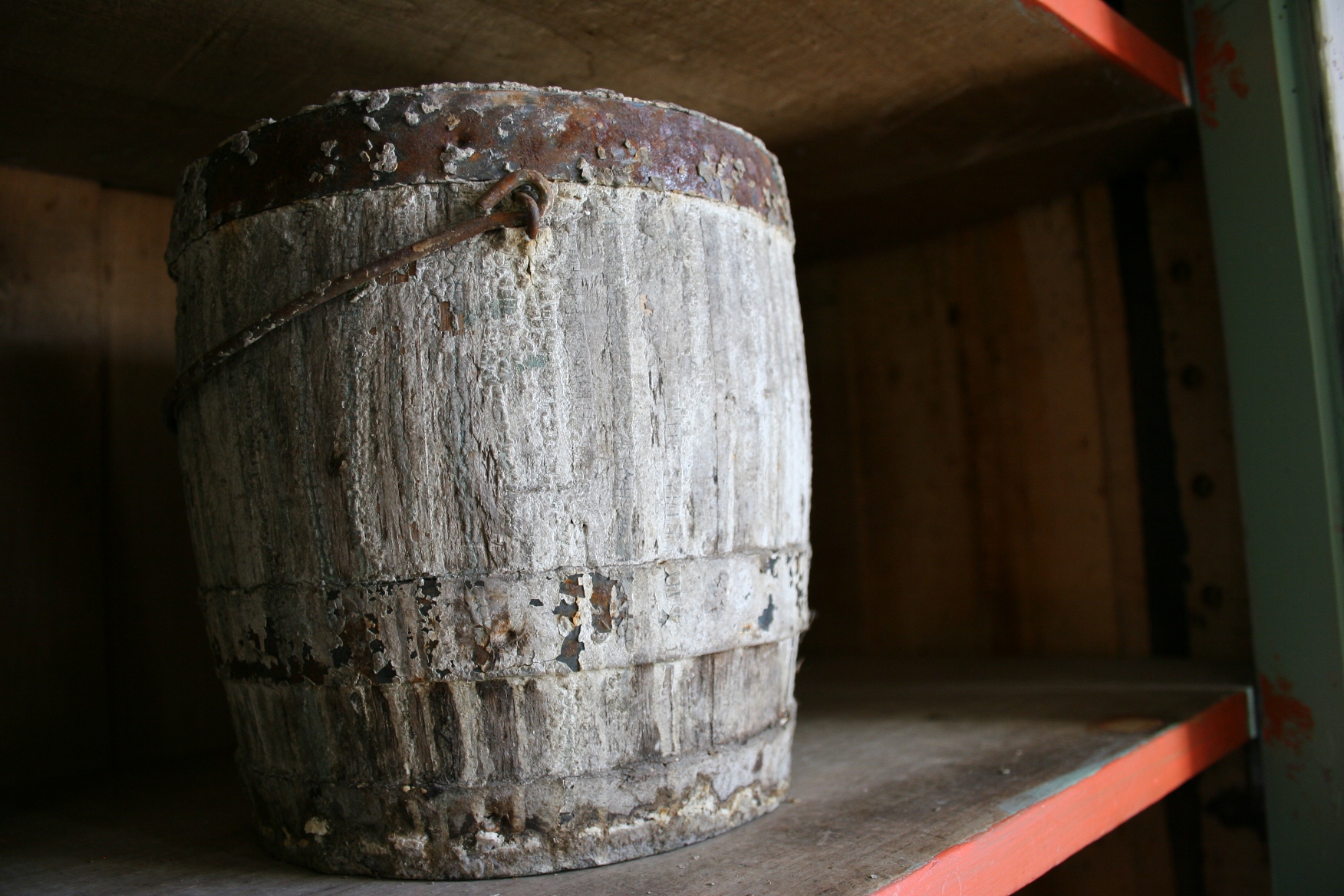
An old wooden pail rests inside a simple cupboard in a corner of the schoolhouse.

I spied this old piano stool tucked under a table. A museum visitor pulled the stool out and suggested perhaps naughty students sat on it in a corner.

Of all the historic photos I viewed in the museum, this one is my favorite. It's clear the boys really don't want to be there, with their mom's arms draped around them. But she appears to be a strong, determined woman.

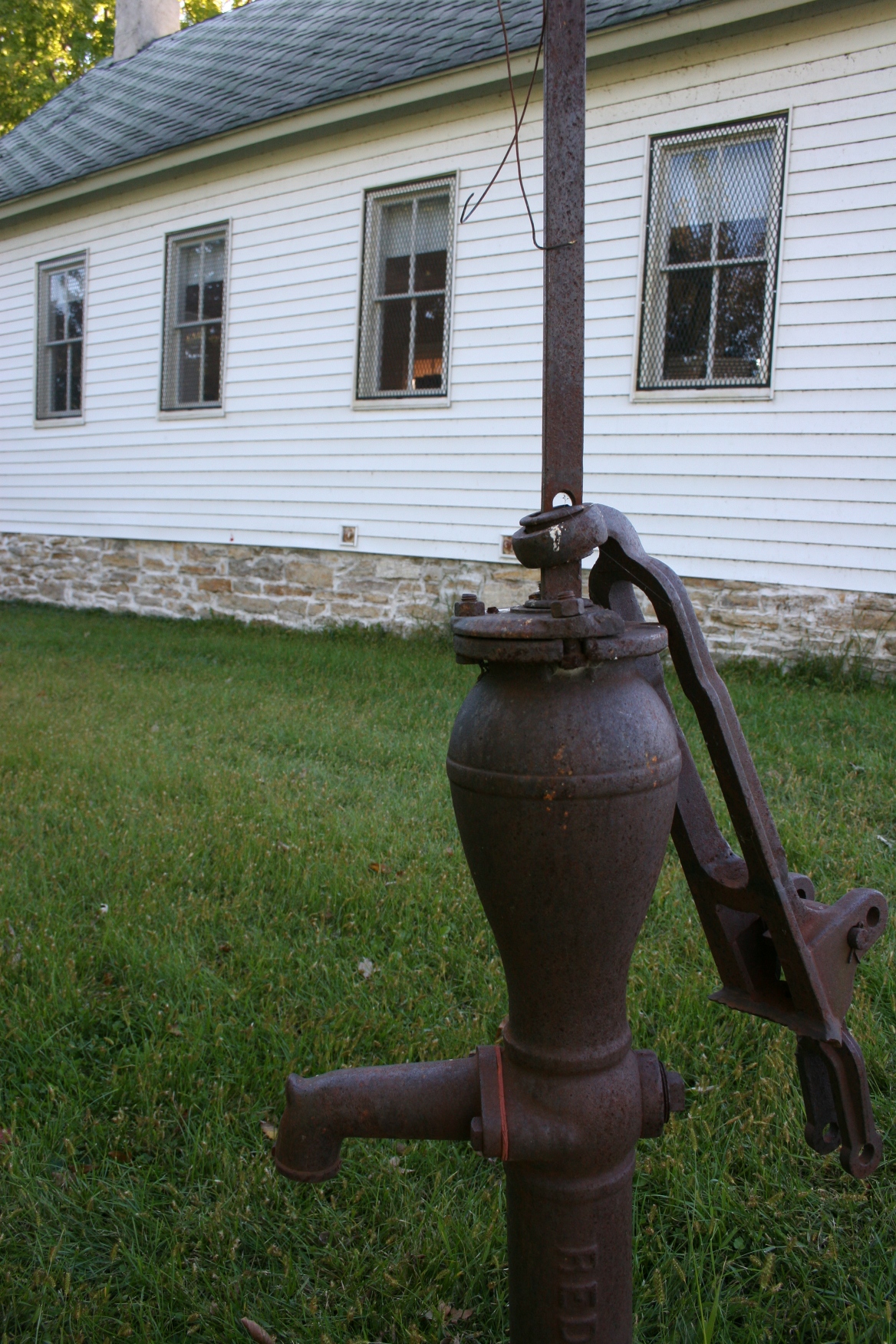
How many stories could this old water pump, next to the school, tell?

© Copyright 2010 Audrey Kletscher Helbling


Step into yesteryear at the stark, yet welcoming, Ottawa Town Hall September 17, 2010

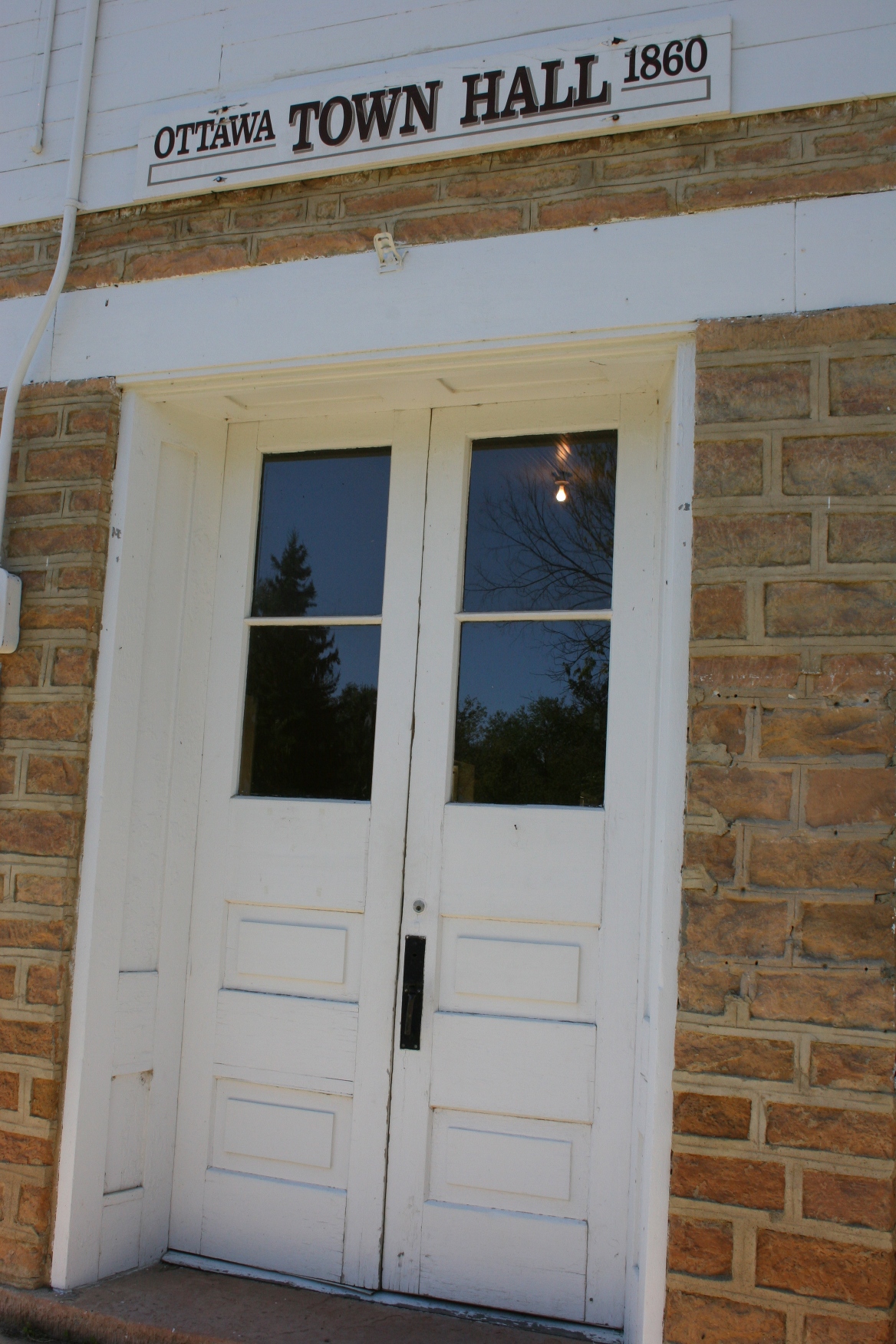
The Ottawa Town Hall was built in 1860 from local limestone.

I ABSOLUTELY COULD NOT believe my good fortune. After peering through a front window into the old town hall and wondering why the lights were on, I pulled (or pushed; I can’t recall which) on the front door. Much to my elation, the door gave way.

Let me preface this by saying that in the past when I have clicked door latches or turned knobs on historic buildings, mostly churches, I’ve met resistance, meaning I was locked out.

I tried the door latch and the door was, to my surprise, unlocked.

But, ah, to feel the door sway, allowing me entrance, gave me that momentary feeling of surprised satisfaction. And look, just look, at what awaited me inside the Ottawa Town Hall.

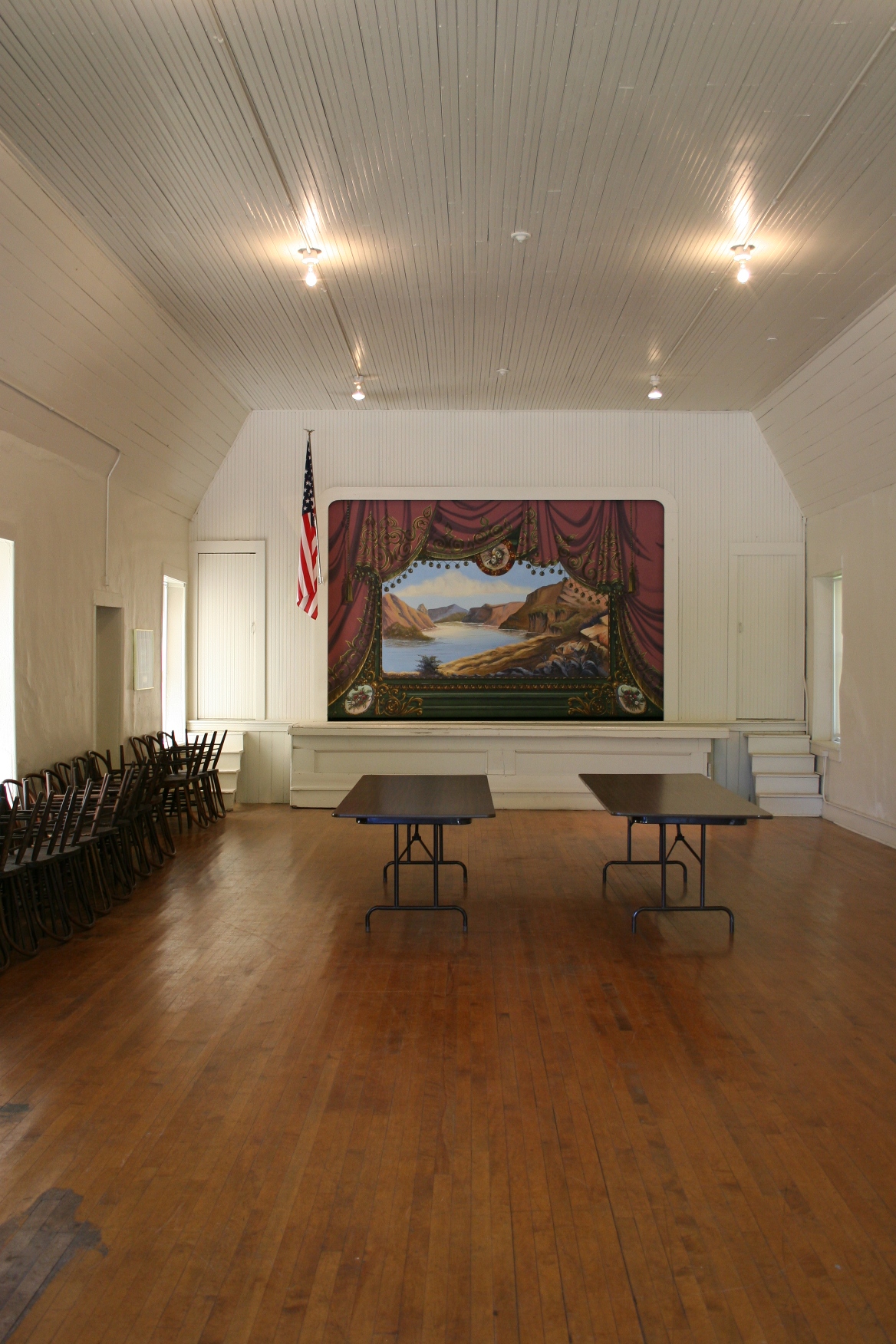
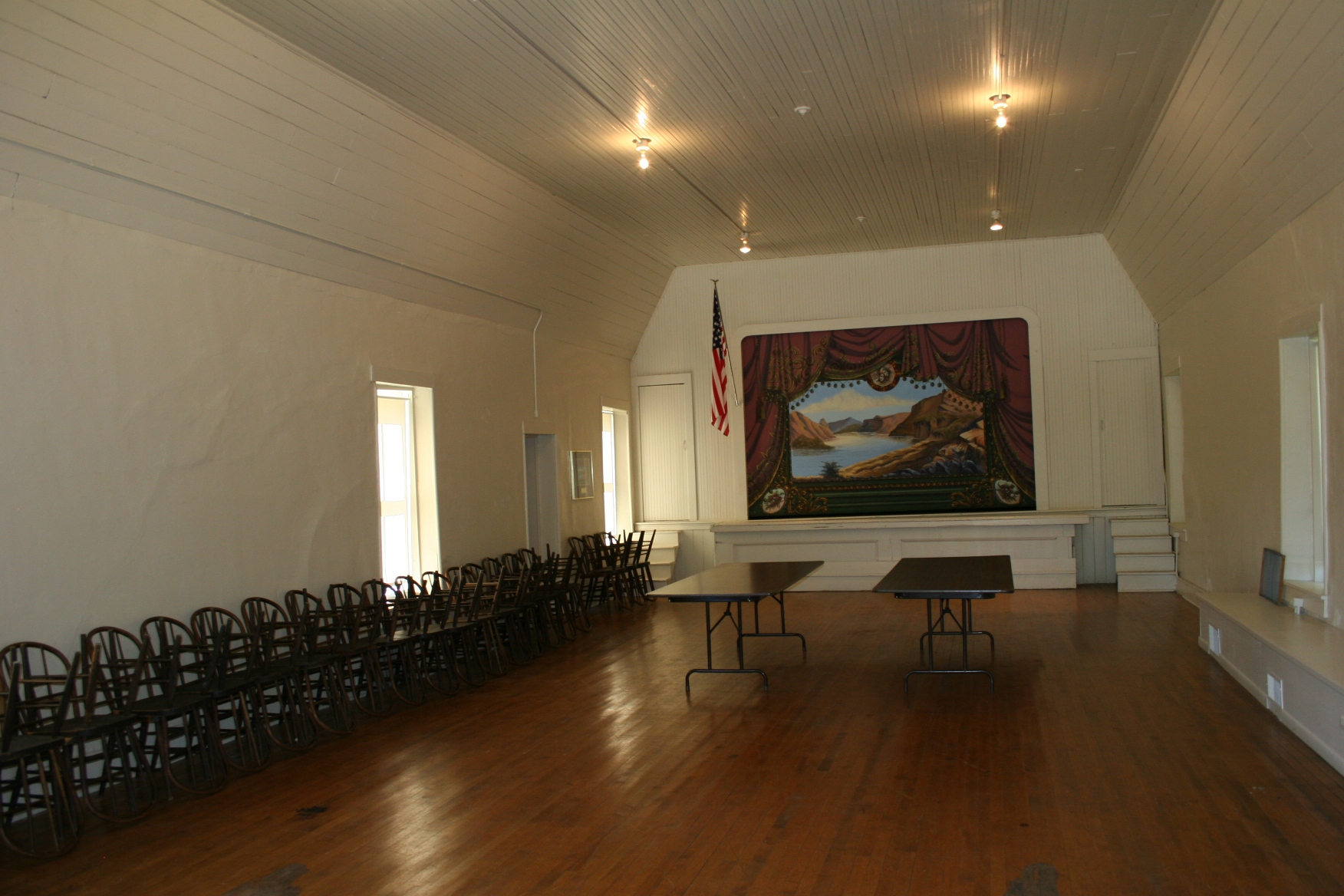
Inside, the stark room stretched out before me.

Simplistic beauty best describes the interior of this former general store constructed in 1860 from local limestone and today among six Ottawa buildings on the National Register of Historic Places.

To find this village platted in 1853 along the Minnesota River, follow winding Le Sueur County Road 23 northeast of St. Peter. And when you get there, after reading the historical marker and picking up a self-guided tour brochure from the town hall kiosk, try the door.

If you’re as fortunate as me, you’ll step into yesteryear, onto scuffed wood-plank floors, into a building that has been the Ottawa Town Hall since 1902.

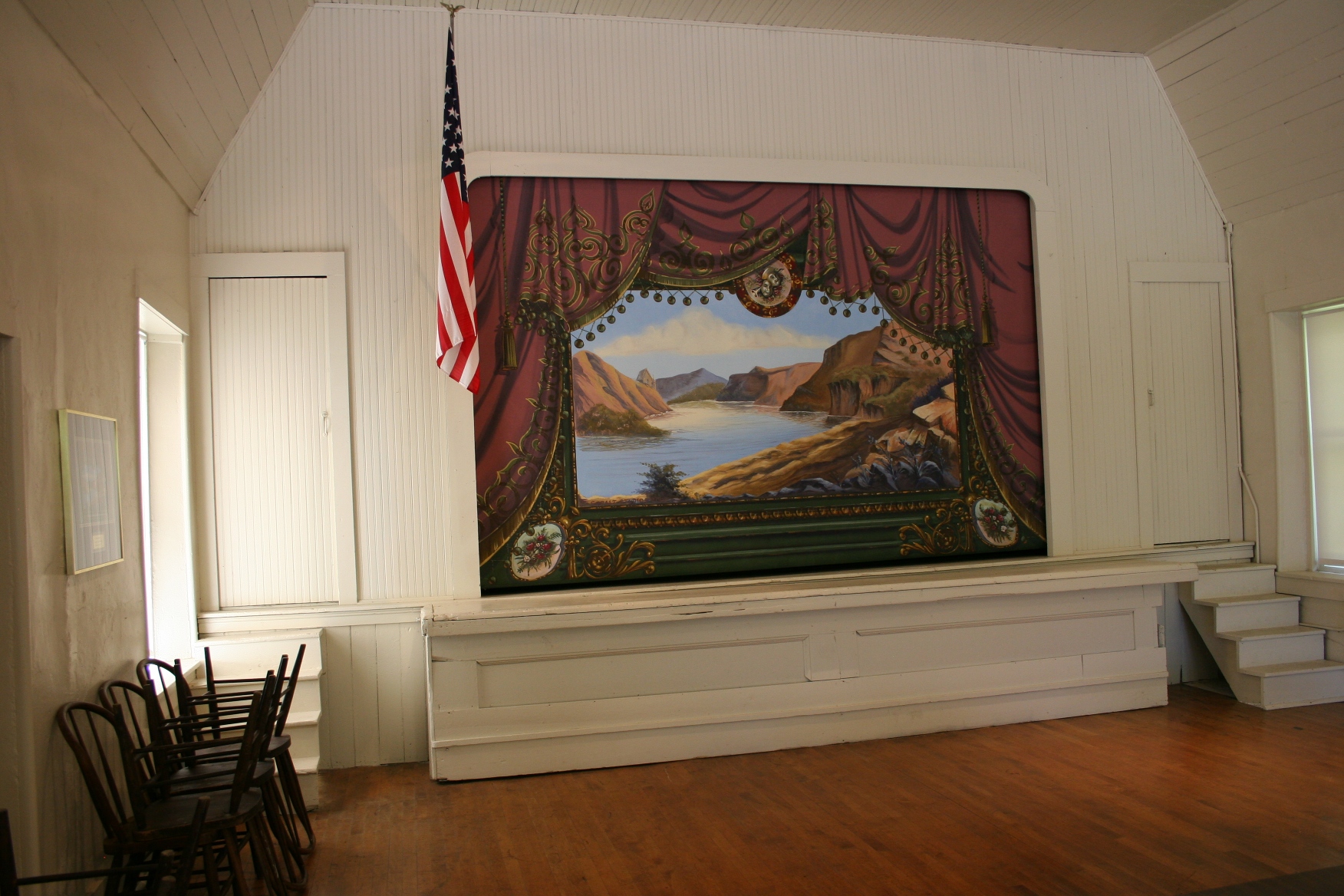
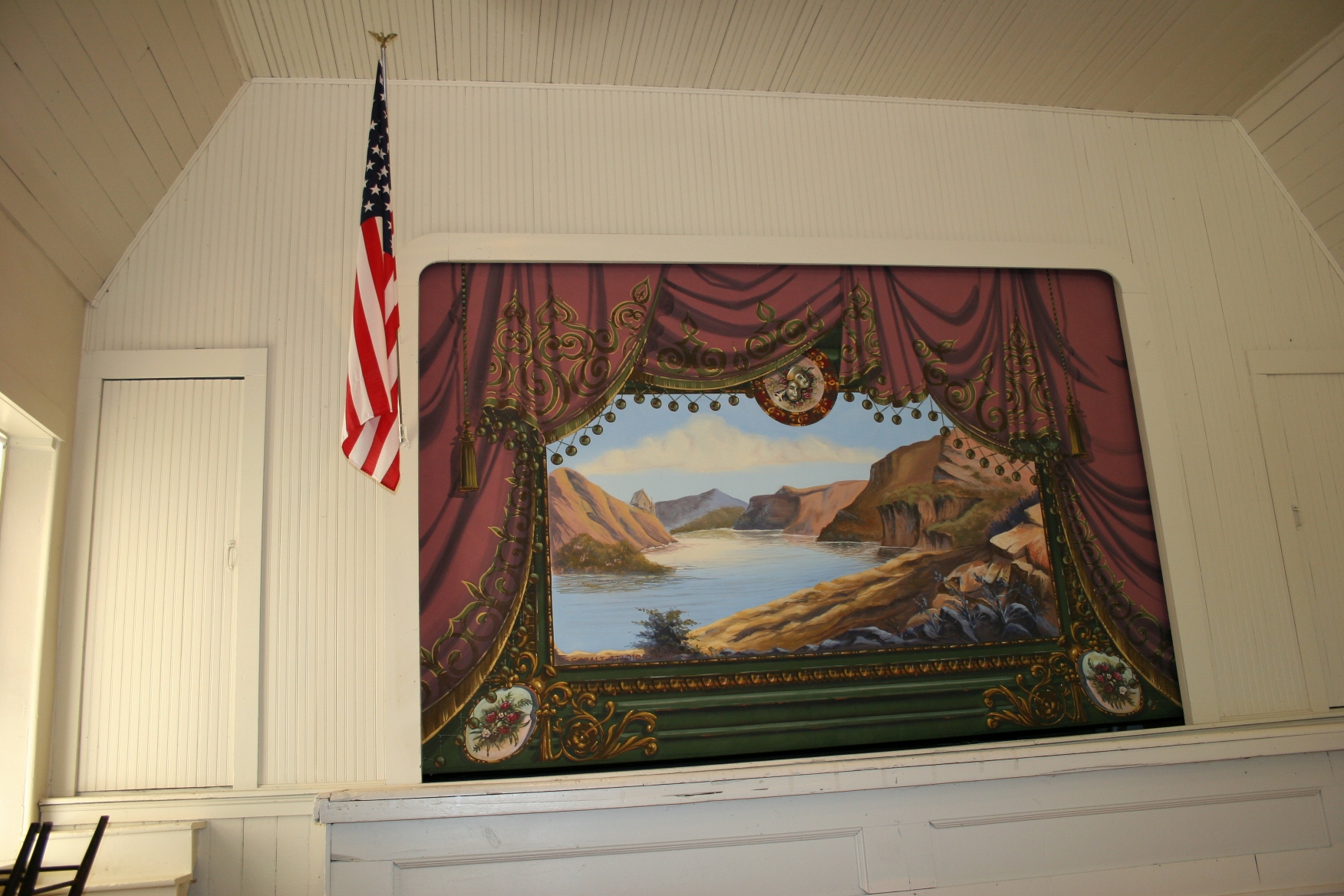
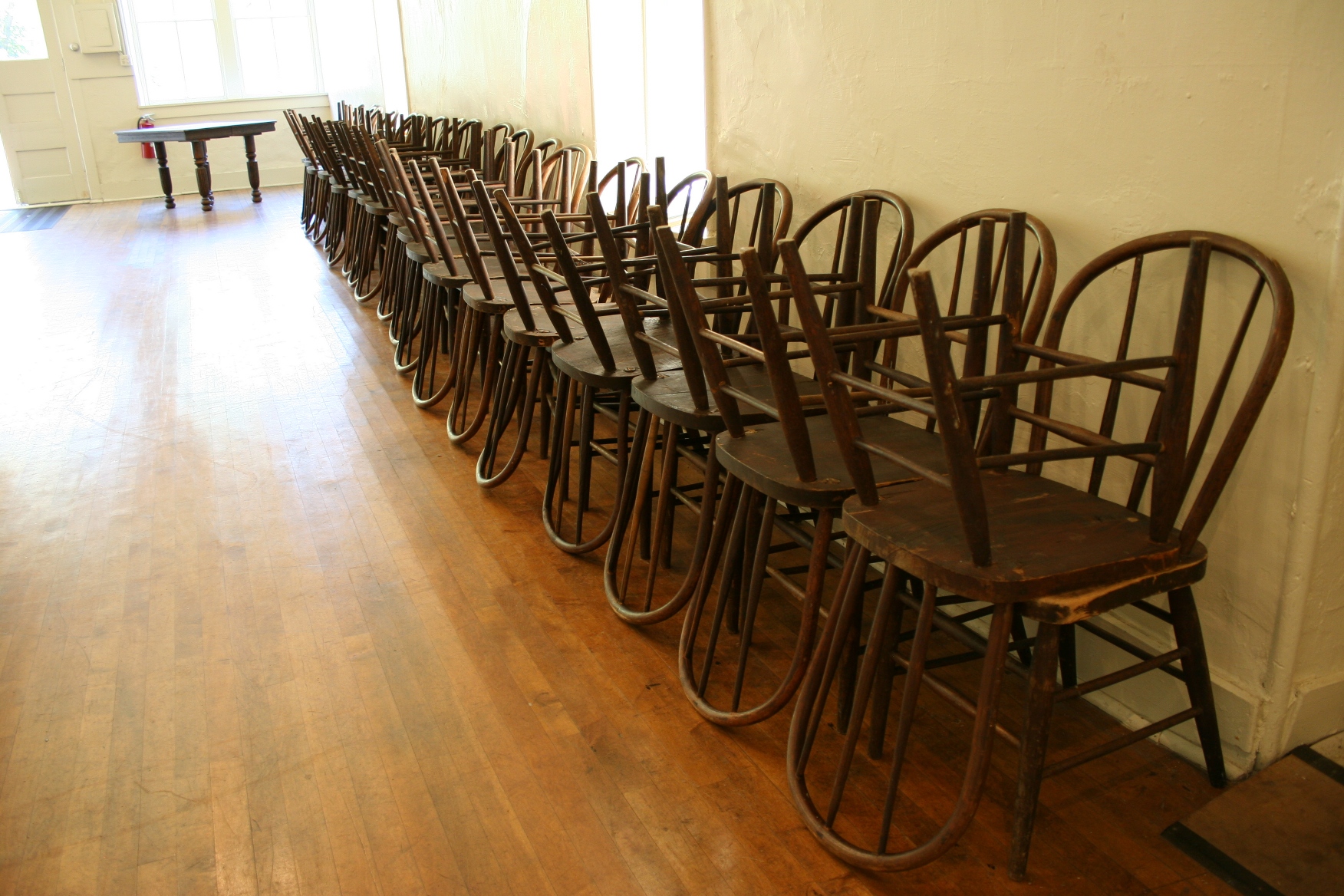
If you’re like me, you’ll stand there for a moment or two or three taking in the atmosphere of this place. You can see history in the beadboard walls and ceiling, in the stage flanked by steps and adorned with a scenic canvas curtain reminiscent of melodrama days, in the lone American flag, in the curved-back wooden chairs stacked precisely along the wall.

The stage intrigues me. Who performed here? Do actors and actresses ever grace this stage today?

I tugged at the two side doors that would have given me access to the stage. But, alas, they were locked.

I stroked the stiff canvas of the stage curtian and admired the painted florals.

Ottawa Town Hall chairs

Even the stacked chairs seemed a sculpture of historic art.

If you like “fancy,” you won’t appreciate the starkness of a room awash in white under the blazing light of bare bulbs.

For me, though, there’s something about this town hall that soothes, comforts, makes me feel right at home, as if the door was meant to be left unlocked, the lights switched on in an inviting welcome.

Though rather plain, the town hall possesses a certain welcoming charm.

© Copyright 2010 Audrey Kletscher Helbling


Designer Max Lohrbach makes a fashion statement in Mantorville September 2, 2010

Filed under: Uncategorized — Audrey Kletscher Helbling @ 7:35 AM
Tags: , , , , , , , ,

I AM NO FASHIONISTA or anything closely resembling a woman who knows, or really cares, about fashion.

So when I stopped at the Mantorville Art Guild last week while visiting this historic southeastern Minnesota river town, I had no idea I had just stepped into the world of fashion.

When you enter the Mantorville Art Guild, turn and pull hard on the door knob. And if a strong wind is blowing, hang onto the screen door.

But I should have figured it out given the fashionably-dressed women consulting with artist Max Lohrbach. They weren’t, like me, dressed in plain denim shorts, a scoop-necked cotton shirt and $3 flip flops from Walmart. Rather, one wore an ankle-length shoulderless dress with a swatch of fabric crossing her back and a band tied at her neck. A big bag was fashionably slung over her shoulder. I can’t recall the other woman’s attire, but neither toted a bulky brown camera bag like me.

I felt a bit under-dressed for the occasion. How was I to know, though, that one of Minnesota’s premier fashion designers would be there? That would be Lohrbach. Not until I returned home did I realize his importance.

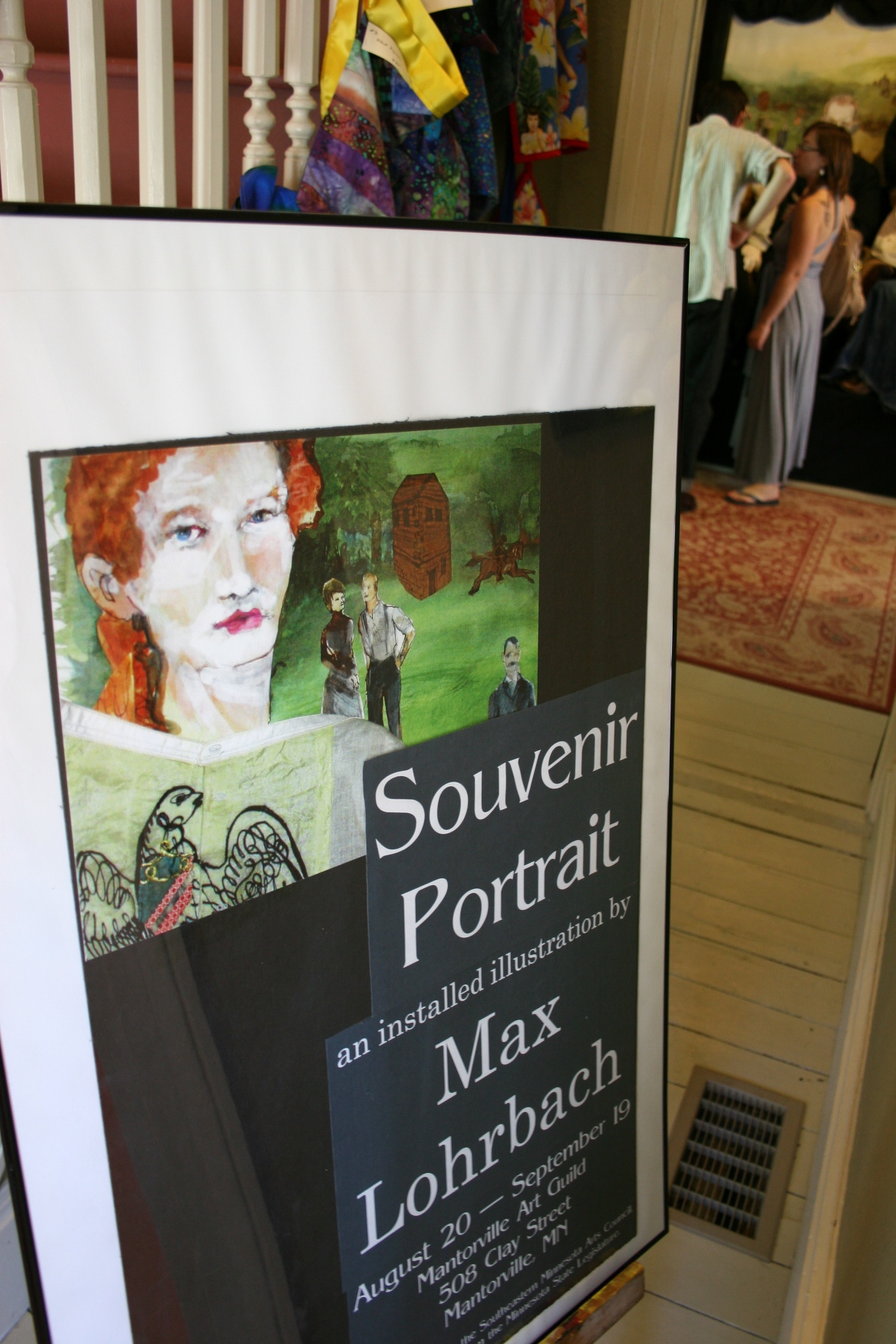
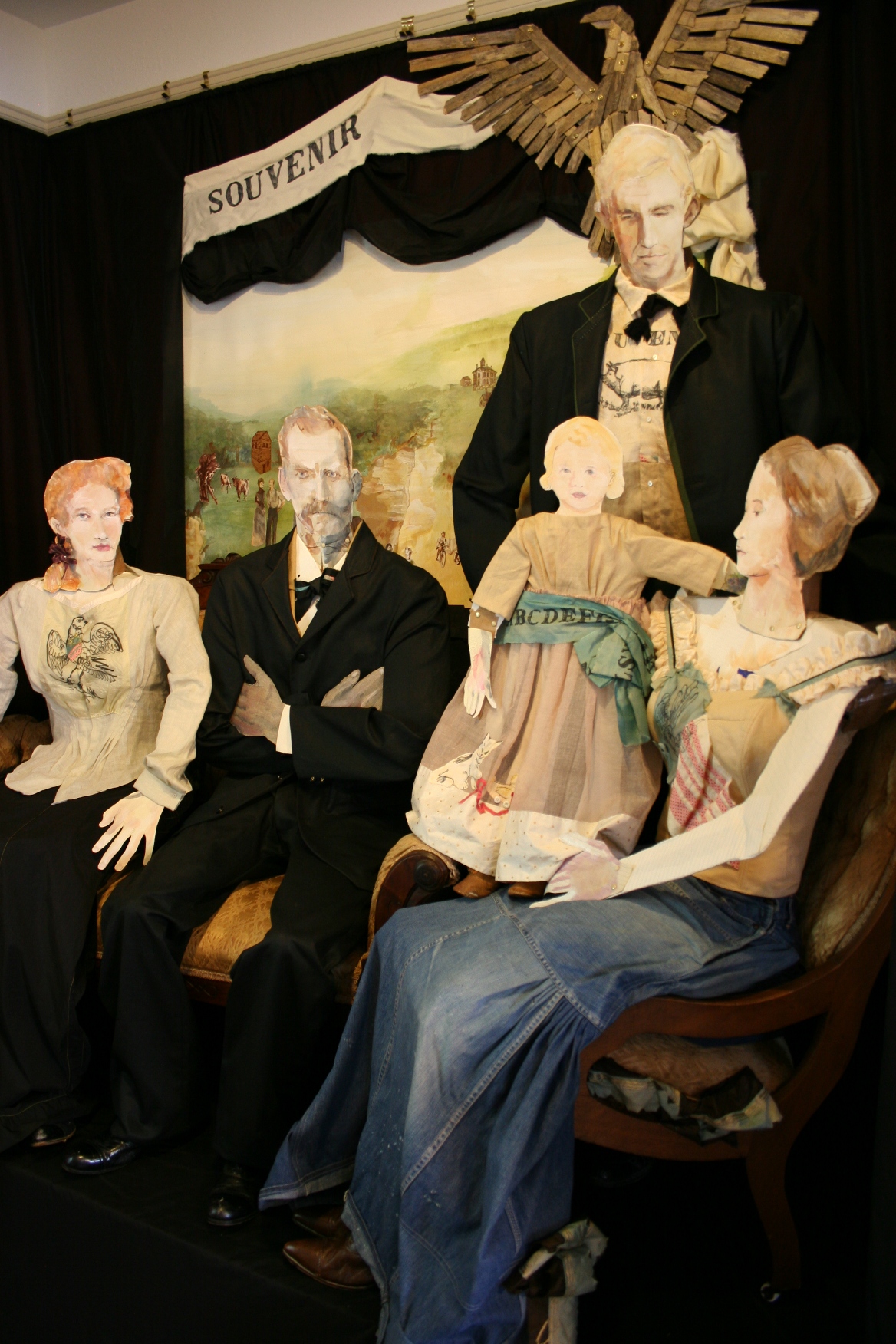
In the background, Max Lohrbach visits with guests at his "Souvenir Portrait" exhibit, which opened August 21 in Mantorville.

My blissful ignorance allowed me to enjoy Lohrbach’s “Souvenir Portrait” without star-struck pretenses. I was simply viewing an artistic piece that, to me, seems a perfect fit for the artist’s hometown of Mantorville, a community with a 12-block downtown on the National Historic Registry.

Lohrbach’s 2-3 dimensional “installed illustration” showcases his original garments influenced by, and depicting, the 1876 era, the time of our nation’s Centennial.

If his exhibit had been a photograph, I would have been looking at a family portrait. Promotional information for Lohrbach’s show says, “The somewhat dark scene may serve not only as a fashion installation, but also as a common ancestral portrait.”

Max Lohrbach's "Souvenir Portrait" at the Mantorville Art Guild.

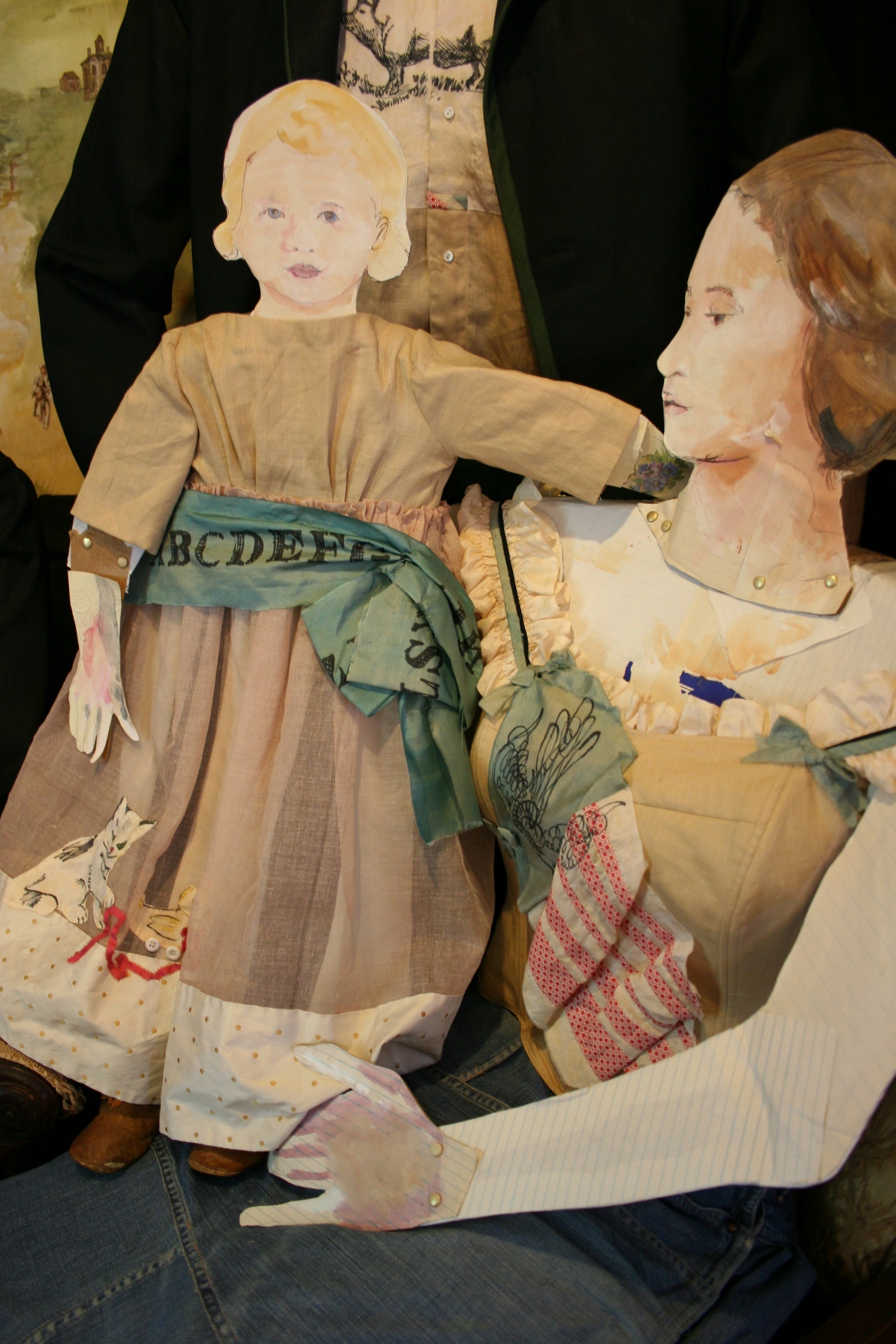
“Souvenir Portrait” calls for a closer look at the details this Minnesota designer has incorporated into his scene—the red, white and blue in the clothing; the alphabet sash upon the child’s skirt; the pig drawing on the father’s shirt; the crossed arms; the hand angled in the pocket; the mother turned protectively toward her child; the rustic eagle fashioned from weathered wood…

Lohrbach's work depicts the love between mother and child.

Playful vintage details incorporated into the child's dress.

There's something almost sad, or perhaps contemplative, in the face of this woman painted by Lohrbach and wearing his original design.

Lohrbach has created a piece worthy of study as much for the personal sense of history he conveys as for the detailed vintage-style garments he’s designed.

“SOUVENIR PORTRAIT” will be on display at the Mantorville Art Guild, 508 Clay Street, until September 19. Gallery hours are from 11 a.m. – 4 p.m. Friday and Saturday and from noon until 4 p.m. on Sunday. Arrangements can be made for special tours. Fashionable attire is optional.

© Copyright 2010 Audrey Kletscher Helbling


The surprising connection between a Minnesota church and the James-Younger Gang July 21, 2010

Filed under: Uncategorized — Audrey Kletscher Helbling @ 10:30 AM
Tags: , , , , ,

WHEN MY HUSBAND AND I EMBARKED on a quest for an old country church Sunday afternoon, we fully expected a challenge. But we didn’t expect to cross paths with a bunch of outlaws.

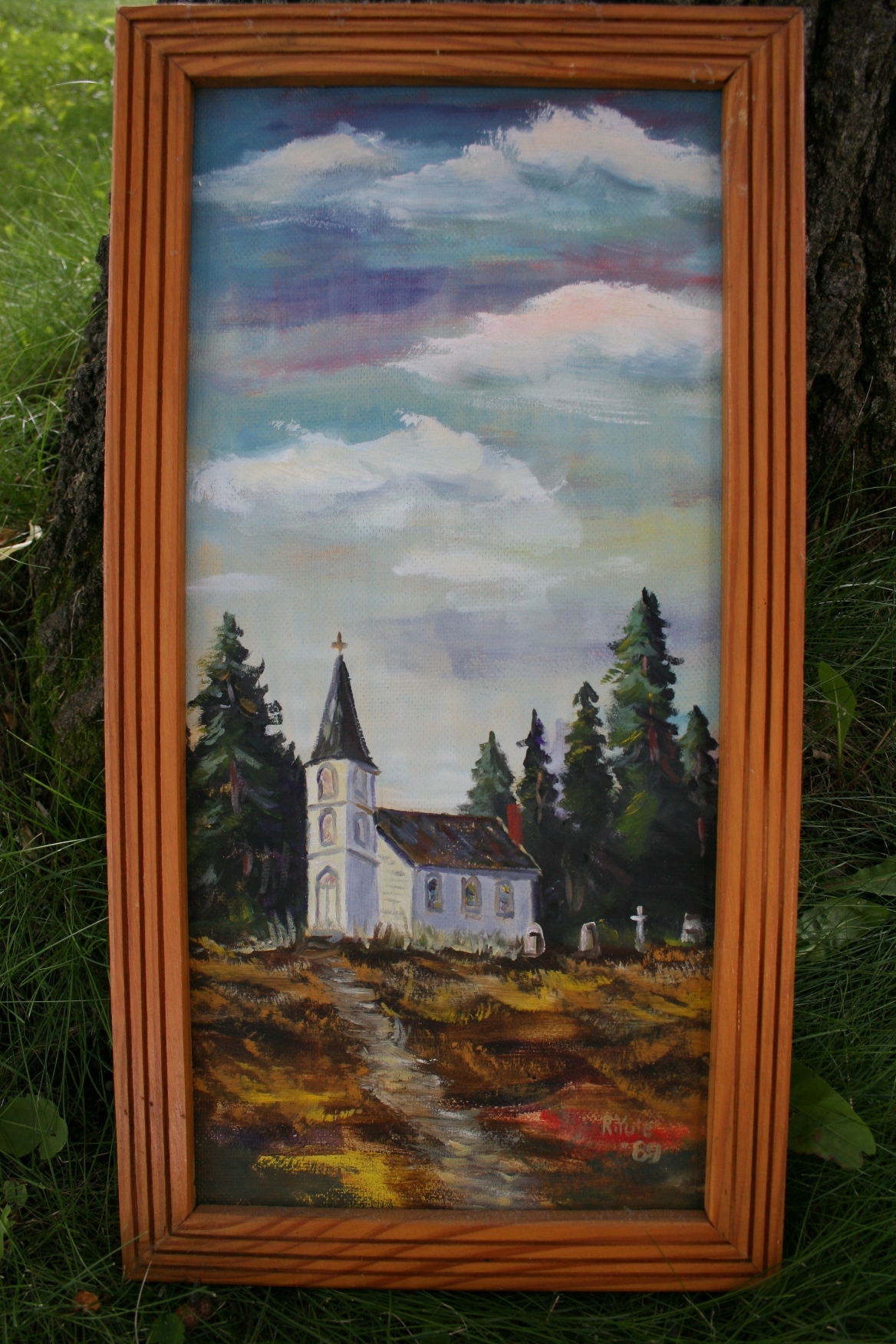
First, a little background: Several days earlier I had photographed a painting of an old Minnesota church done by our 92-year-old artist-friend, Rhody Yule, in 1969. Rhody remembered only that the church was “somewhere near Montgomery” and on the National Register of Historic Places.

I carried a photograph of this 1969 church painting by Faribault artist Rhody Yule as we set out to find the unidentified church.

With those clues, Randy and I set out on our adventure simply because we love the history and beauty of old country churches. We figured if we drove far enough and long enough, we would find this one.

So off we went, following Rice County Road 9 northwest of Faribault, driving around sweeping curves, up and down hills, past farm places, all the while searching for a steeple. I had no clue where we were, which I find unsettling. I like to know where I am and where I am going. But not the husband; he just kept driving.

Soon we approached a lake. Must be Circle Lake, we speculated. We were right. And then, just as we were about to turn onto a gravel road leading to the public access, I saw a white church high on a hill. “There’s a church!” I shouted. “I bet that’s it.”

Right then and there, I wanted to drive up to that church. But first things first. We had to stop at the lake. A quick stop and we were off to the church, which sits two miles west of Millersburg (not Montgomery) along Rice County Road 1 near its intersection with County Road 9.

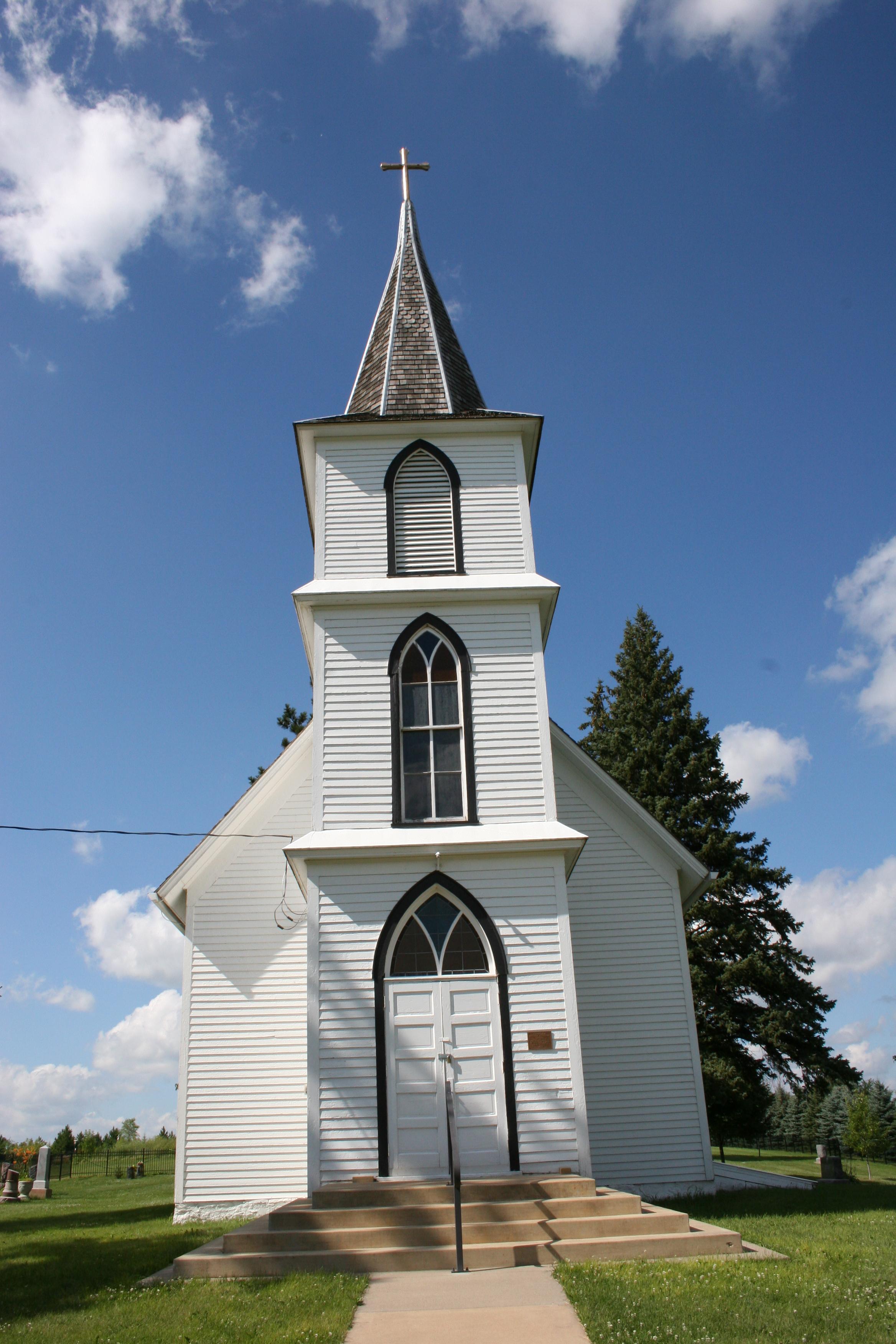
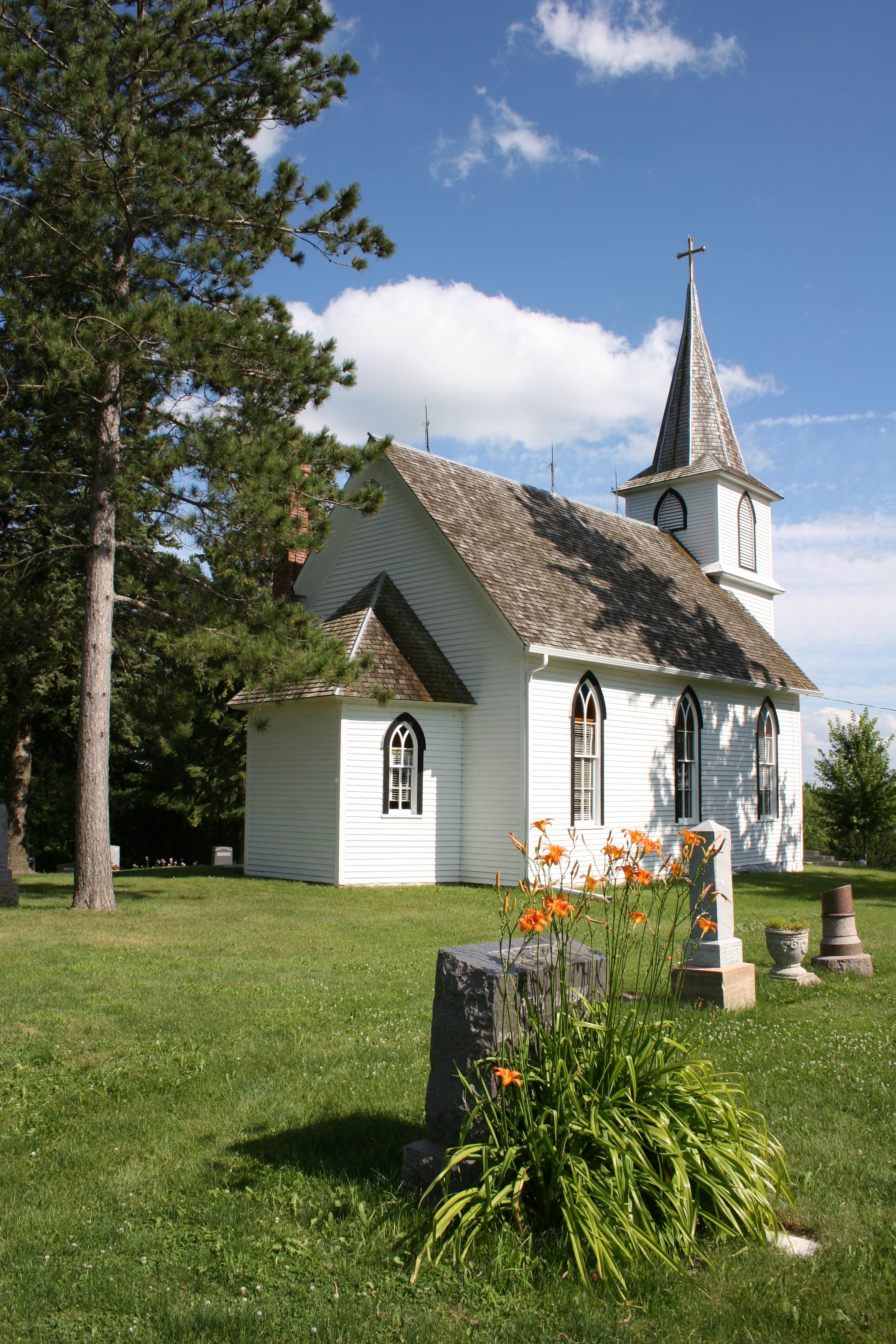
Our excitement was palpable as we pulled off the road and parked below the church. I grabbed the picture and compared the painting to the building before me. It was a match. We had found Christdala Swedish Lutheran Church, built in 1878, placed on the National Register of Historic Places in 1995 and today preserved through the Christdala Church Presevation & Cemetery Association.

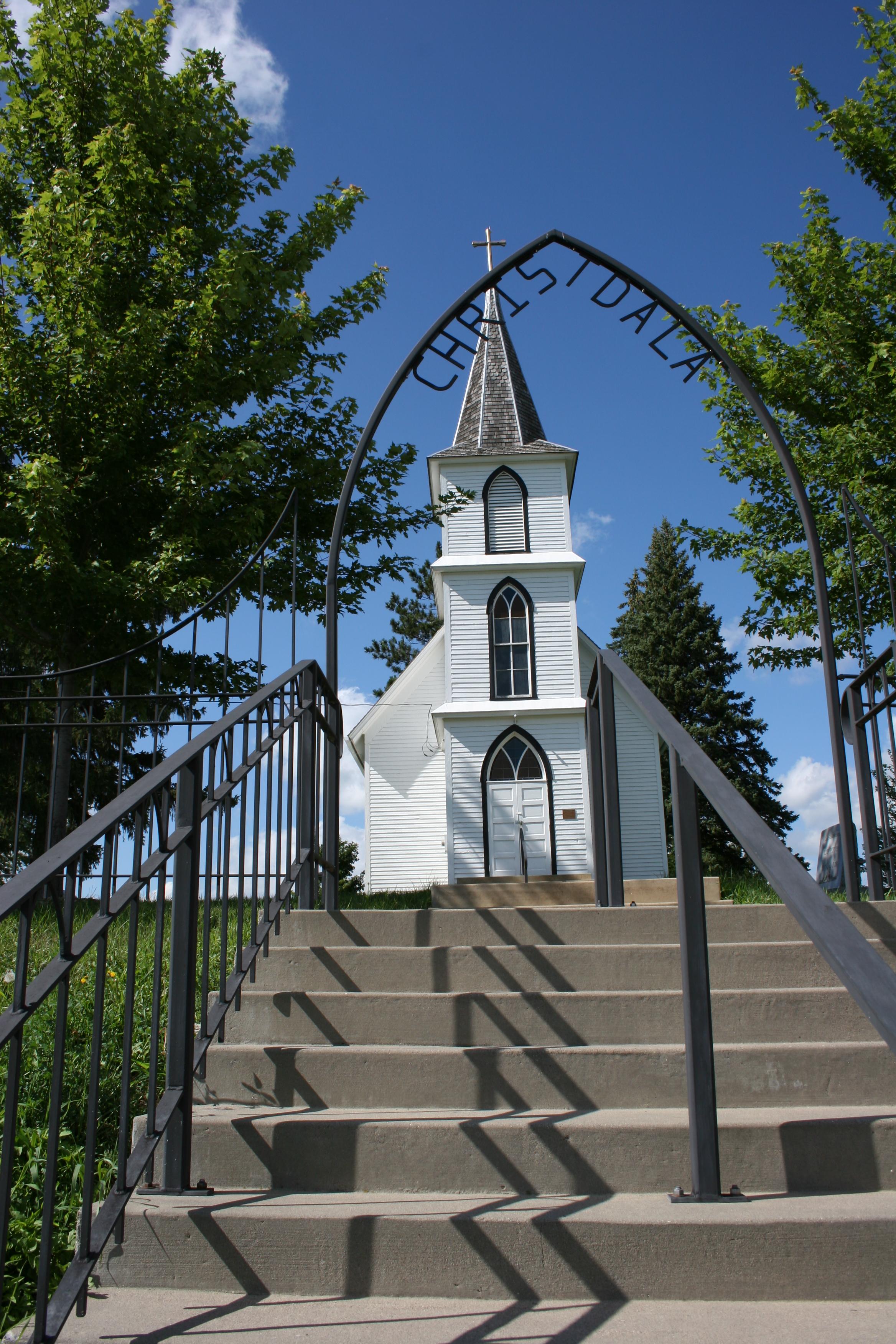
Christdala Swedish Lutheran Church sits atop a hill along Rice County Road 1 just west of Millersburg.

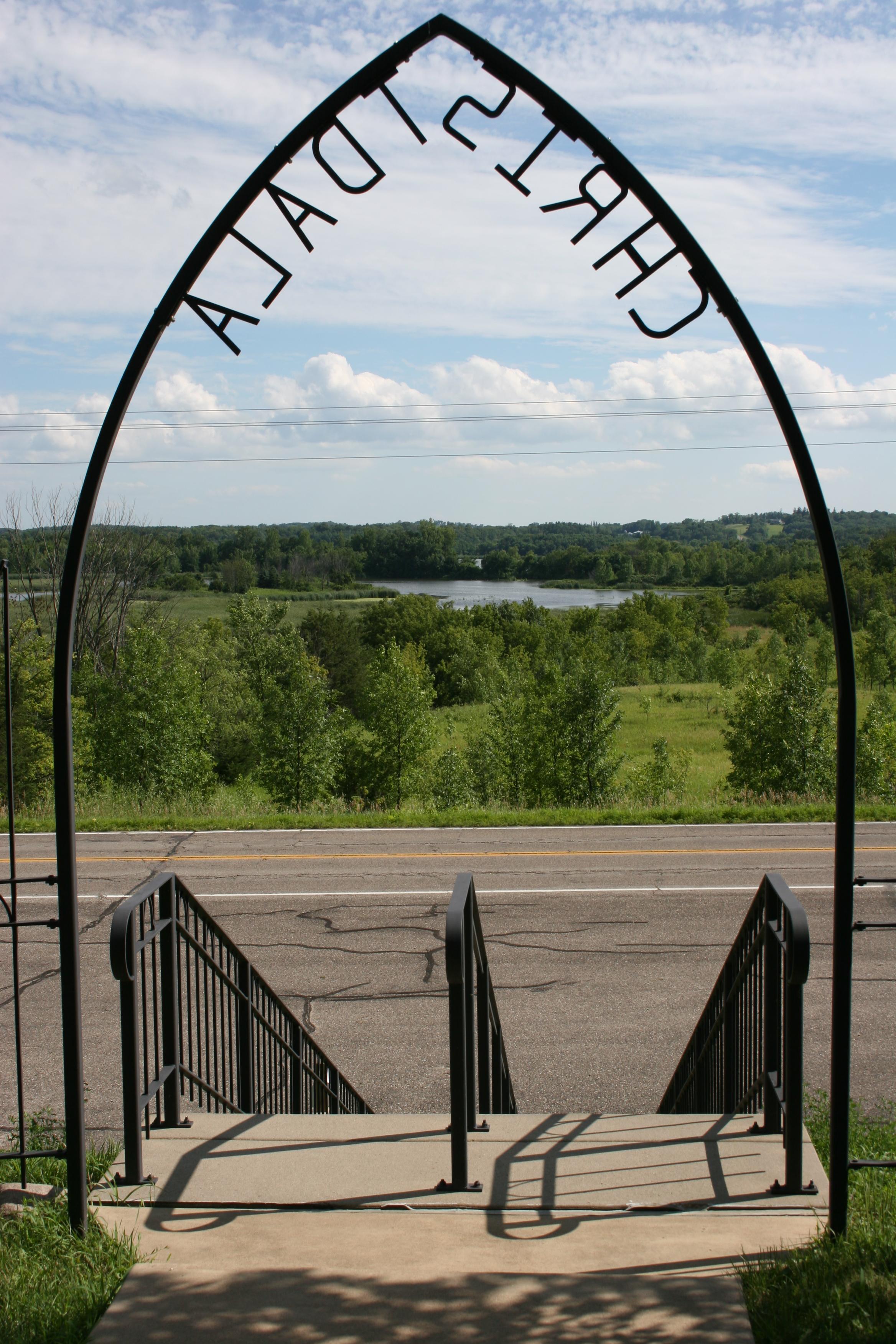
Some 25 steps later and we reached the top of the hill, standing before this simple country church overlooking Circle Lake.

An archway at the top of the church steps frames Circle Lake and the surrounding countryside. Christdala means "Christ's Valley."

Christdala Swedish Lutheran Church, built for $230 in 1878 by John Olson and John Lundberg of Northfield and site of a fall service and open house.

And that’s where we met Phil, who was photographing Christdala and old tombstones. “Can we get inside?” I ask, hopeful that perhaps this stranger has a key. “Are you from around here?”

No and no. Phil is from California, but is president of Le Center-based ShetkaStone, a company that makes tables, countertops, moldings, office furniture and more from recycled paper. When he’s in Minnesota (which is often), this Californian explores old country churches and cemeteries in the home-away-from-home state he has grown to love.  You don’t find this kind of history in California, he says.

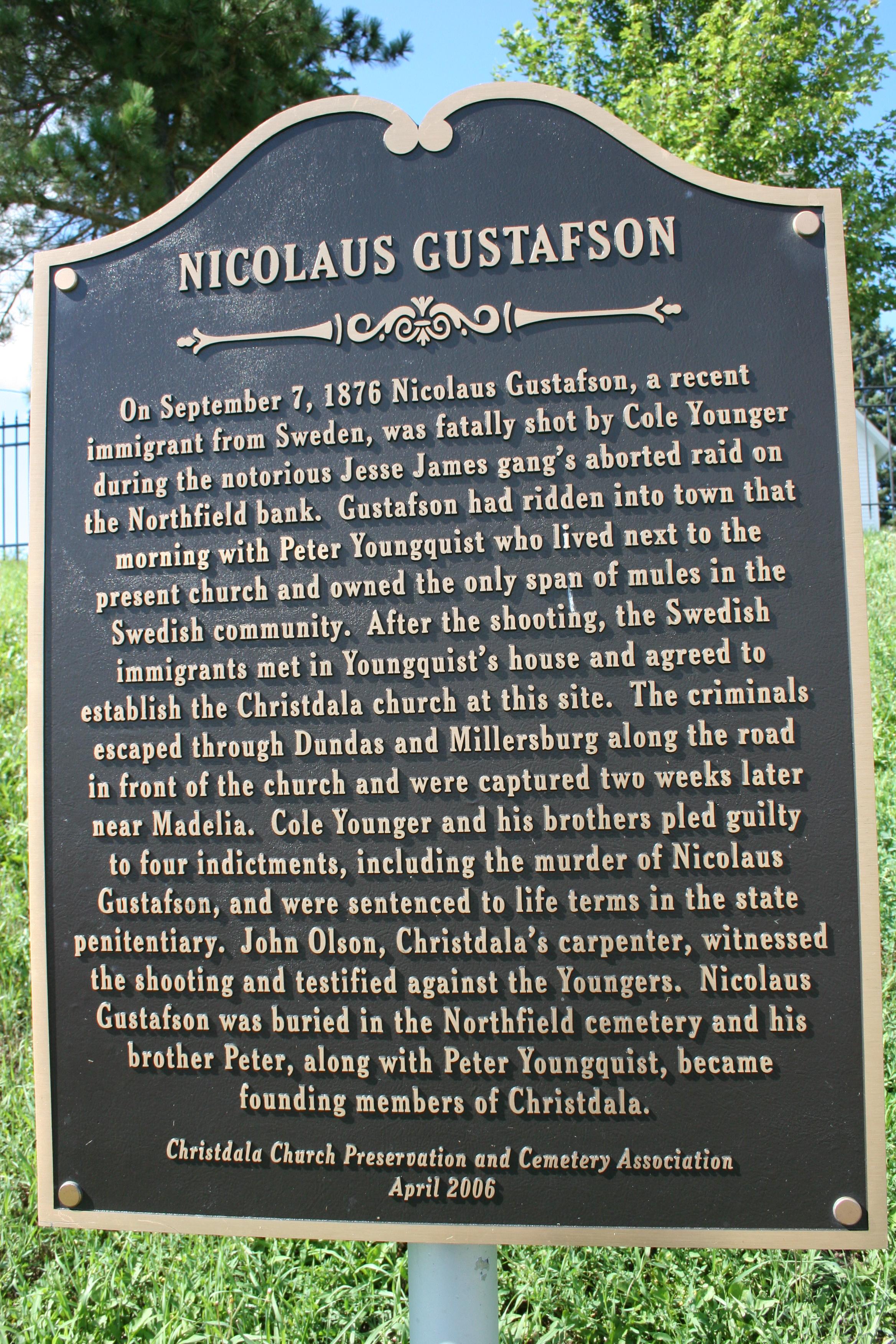
We are kindred spirits—the three of us—standing here on a sunny summer Sunday afternoon admiring this 132-year-old church with an intriguing connection to the Sept. 7, 1876 robbery of the First National Bank of Northfield by the notorious James-Younger Gang.

Swedish immigrants built Christdala after one of their own, Nicolaus Gustafson, who had traveled to Northfield on the morning of the bank robbery, was fatally shot by Cole Younger. Because the Millersburg Swedish community had no church or cemetery, Gustafson was buried in Northfield. After his death, the Swedes immediately began formulating plans for their own church and burial place, forming a congregation in July 1877 and constructing a house of worship in 1878.

Today Christdala, which dissolved as a congregation in 1966 due to declining membership, stands as a strong testament to those determined Swedes. They turned the tragic death of their friend, their neighbor, into something positive. Good triumphs over evil. Perhaps it is no coincidence that this church was built beside, and above, the road used as an escape route by the notorious outlaws.

All of this I consider while walking among the tombstones—of the Youngquists, the Swansons, the Paulsons and, yes, even the Gustafsons.

A sign at the church details the historical connection to the 1876 Northfield bank raid by the James-Younger Gang.

A cemetery surrounds Christdala Swedish Lutheran Church near Millersburg.

An honorary star in the Christdala cemetery denotes a soldier as a veteran of the Indian War.

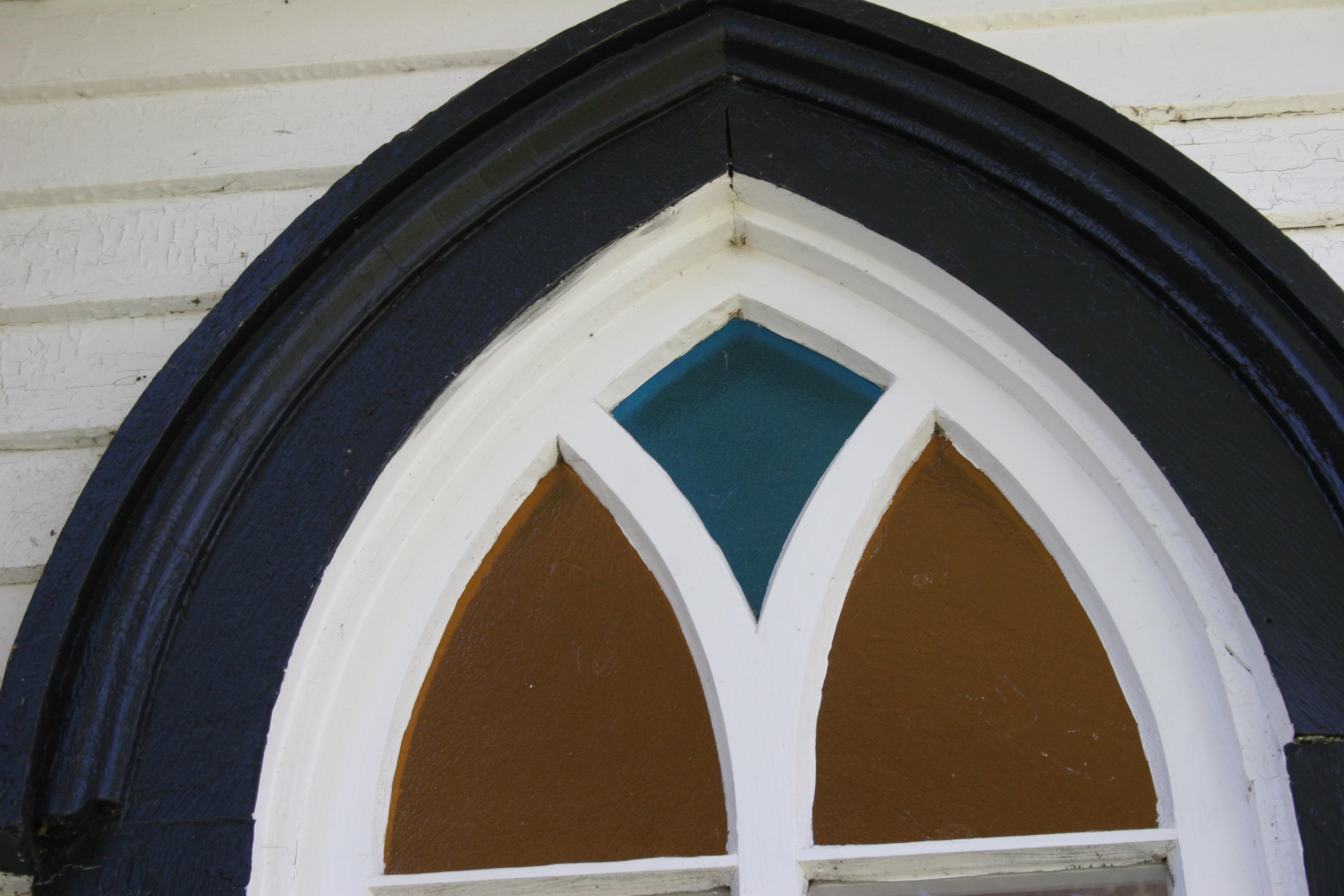
The exterior stained glass top of a Christdala window.

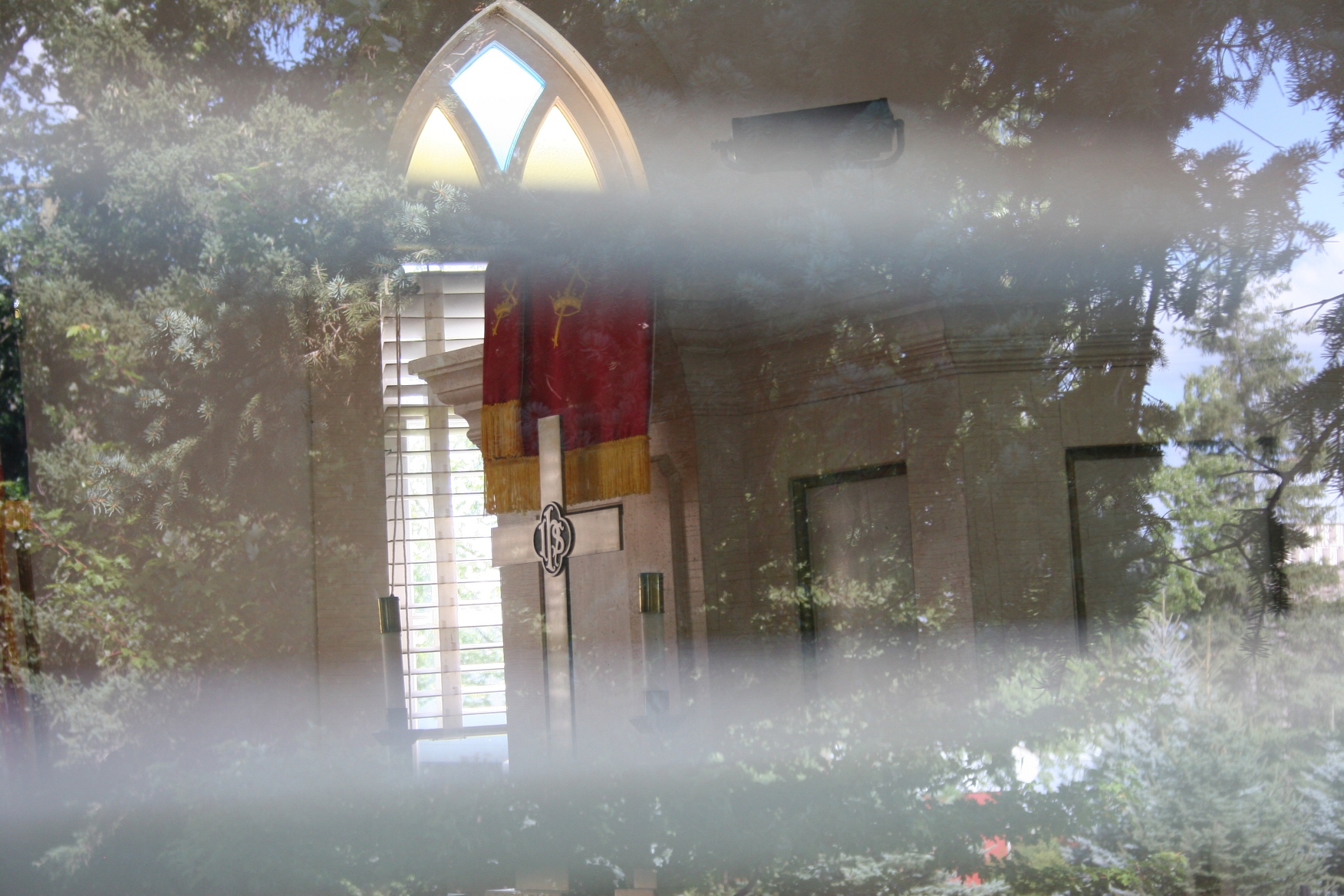
Because the church was locked, I had to settle for peering through the blinds at the altar, which sits in front of the pulpit. The cross rests on the altar. I'll have to return for the annual autumn worship service and open house.

© Copyright 2010 Audrey Kletscher Helbling


Preserving the past at the Old Stone Church, Kenyon, Minnesota June 29, 2010

Filed under: Uncategorized — Audrey Kletscher Helbling @ 7:41 AM
Tags: , , , ,

As part of the restoration process, the limestone at the Old Stone Church was tuck-pointed. This shows the east side of the 1870s church located along Monkey Valley Road southwest of Kenyon, Minnesota.

I CAN’T PINPOINT specifically when old country churches became a passion for me. But sometime in recent years, I realized that these rural houses of worship and their often adjoining cemeteries reflect a history and art worth appreciating and preserving.

Such is the Old Stone Church built by Norwegian immigrants near Kenyon in the late 1870s and closed in 1902. A committee of four, whom I met at a Sunday morning worship service, is working tirelessly to preserve this historic church and cemetery for future generations. Already, some $100,000 has been invested in tuck-pointing the native limestone, replastering the interior and more.

These people genuinely care about the original gathering place for members of Hauge Free Lutheran Church, which celebrated its 150th anniversary in 2009. The congregation’s current center of worship stands in Kenyon.

“I wanted to see the old Hauge church come back to life,” says Glen Rud, whose Norwegian grandfather walked several miles from town to attend services here. He appreciates the peacefulness of this secluded location in Monkey Valley, where deer and turkeys range. Here, in this place of peace, lies Rud’s burial plot.

Likewise, preservationist Bob Dyrdahl possesses strong ties to this land. He was born in a nearby log cabin. He’s planted trees around the cemetery and with his sisters donated a historical marker. His daughter was married here two years ago.

Such devotion, respect and care for the Old Stone Church impress me.

Sunday morning as I join the descendants of Norwegian immigrants (and others) in prayer and song, I feel the kinship of faithful fellowship. I feel the very presence of those early settlers who sat upon these pews and raised their voices in their mother tongue. Today, more than a century later, this congregation still sings Ja, vi elsker, the Norwegian national anthem, with the conviction of a generation determined to remember their heritage.

A view from the balcony shows the choir seated next to the beautiful altar. The choir director speaks in Norwegian, then translates, "Stand up, that means." And all rise for the Norwegian national anthem.

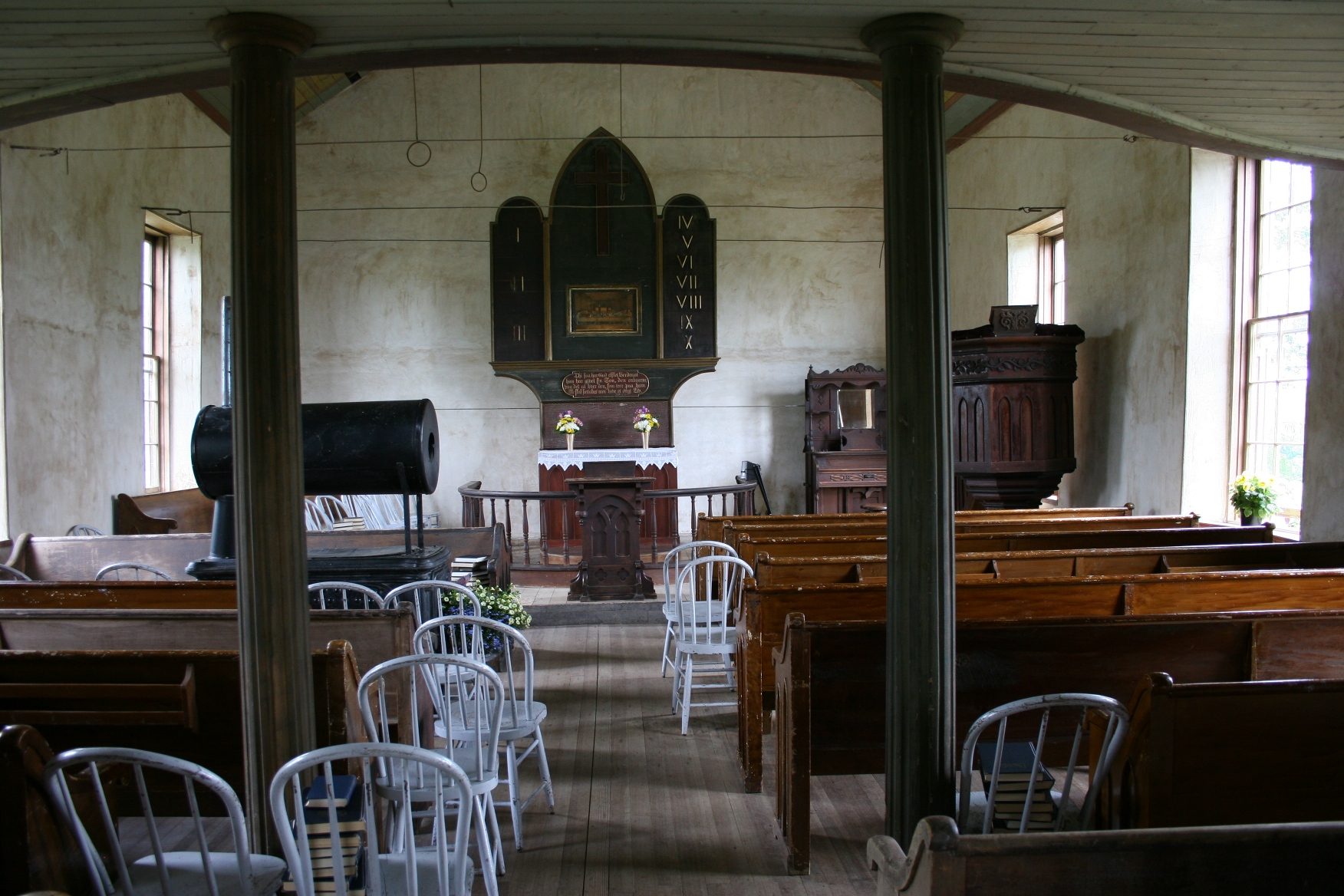
This Old Stone Church altar intrigues me because I've never seen one similar. I wonder whether The Last Supper painting at the center of the altar is a cherished possession transported by ship from the homeland. I wonder why replica tablets of the 10 Commandments were chosen for the altar. And, finally, I appreciate the inscription of John 3:16 in Norwegian.

This photo gives a broad view of the sanctuary. I was seated in the chair to the right side of the balcony support post during worship services. As I take in my surroundings, I notice the knots in the back of the pew before me and the floor patched with a section of wood underneath the sandal of the woman seated next to me. And as my left shoulder brushes against the wooden column, I admire the workmanship and craftsmanship that surrounds me.

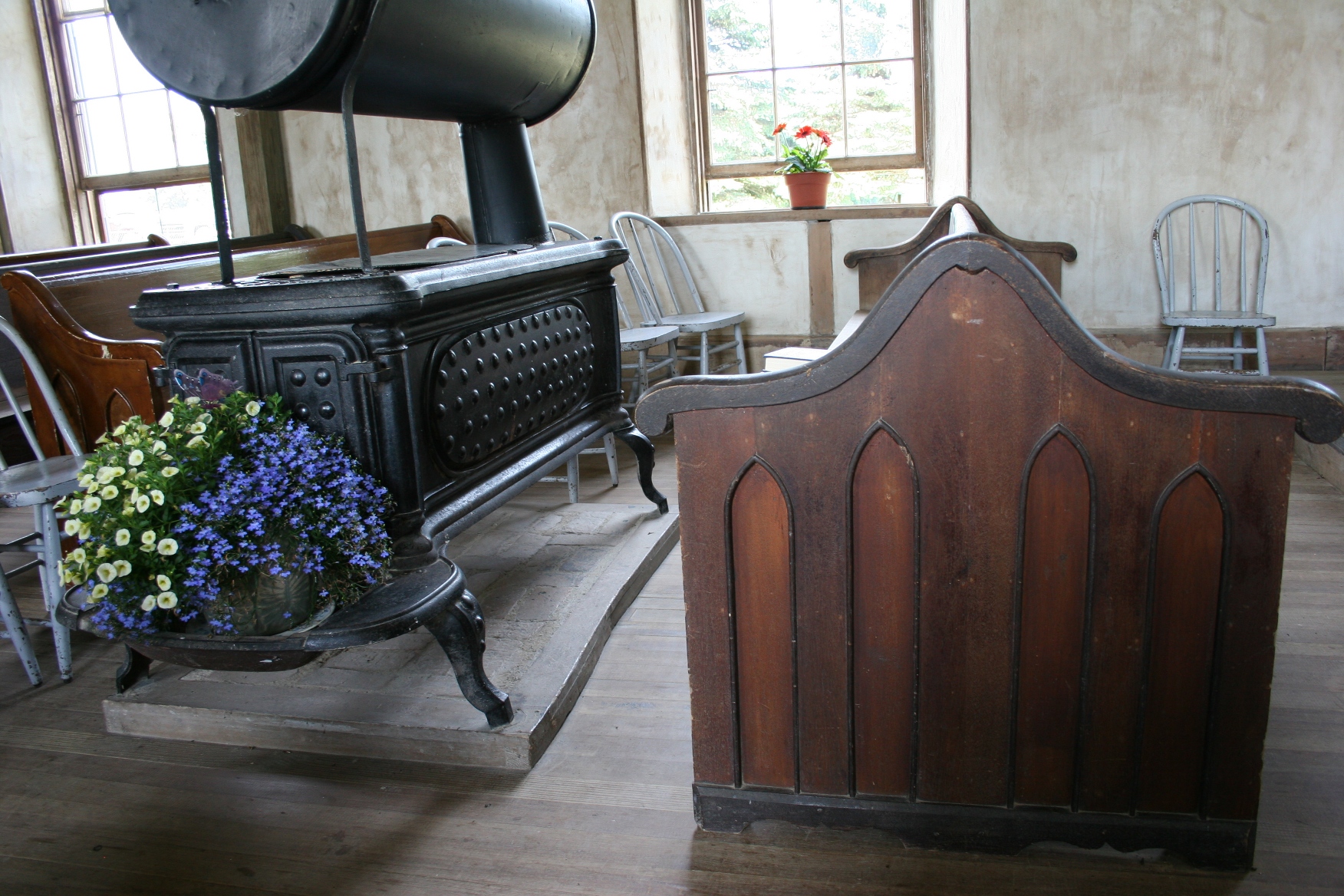
Bob Dyrdahl explains that the double-sided pew provided a place for mothers to sit with their babies next to the warmth of the wood-burning stove. Such concern, such love, for those early pioneer mothers touches me.

A steep narrow stairway, just inside the church's interior double doors, winds to the balcony. Even here, in this plainness, I can appreciate history and craftsmanship. At the bend in the stairway, is a band of stenciled wood.

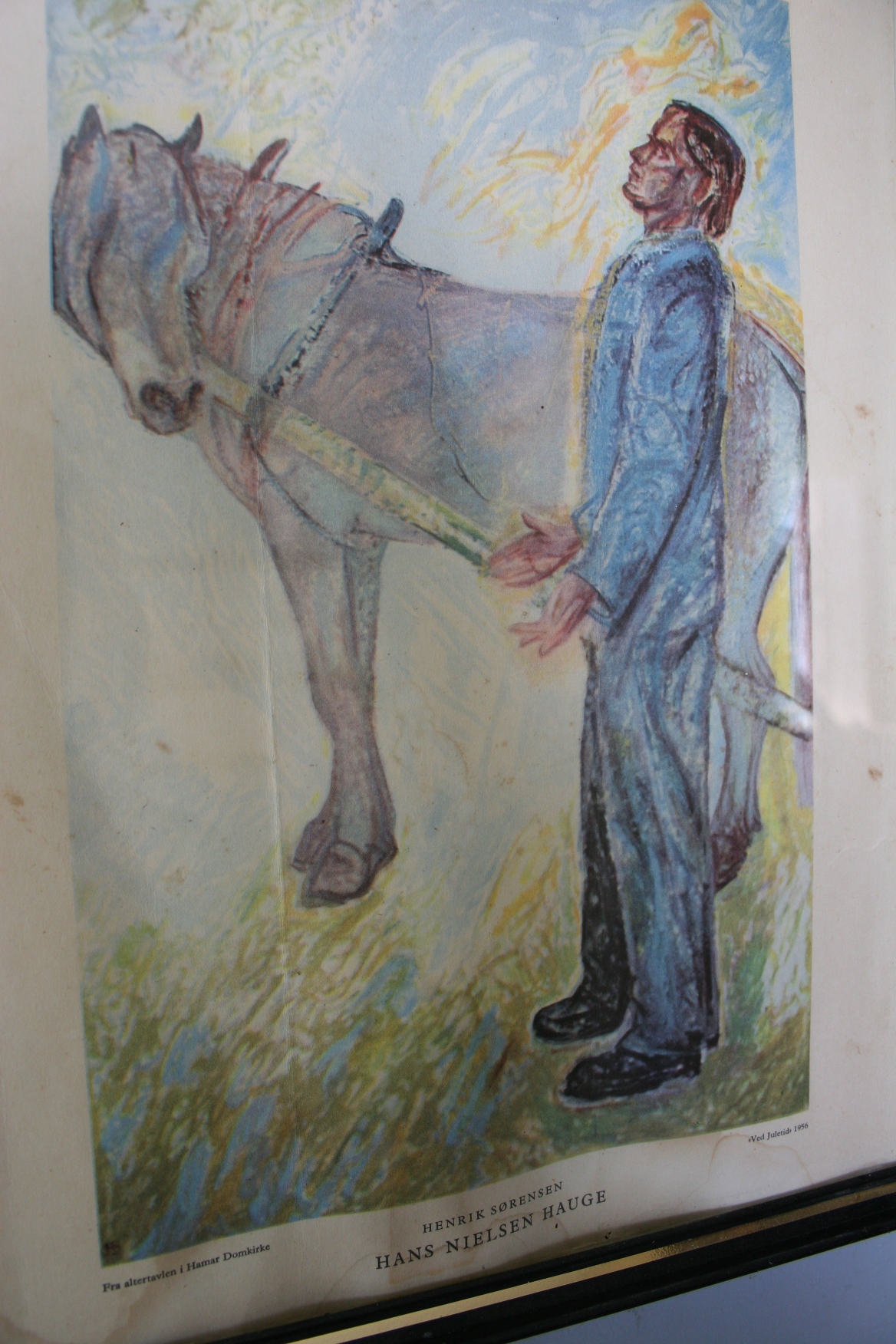
A print of Hans Nielsen Hauge, a 1700s lay leader and reformist in the Lutheran Church of Norway, hangs in the entry of the Old Stone Church. Immigrants honored this lay preacher by naming their church after him. Calling the baptized in the congregation, who have wandered away from the Lord, back to repentance is a common preaching theme among "the Haugeans," current Pastor Martin Horn says.

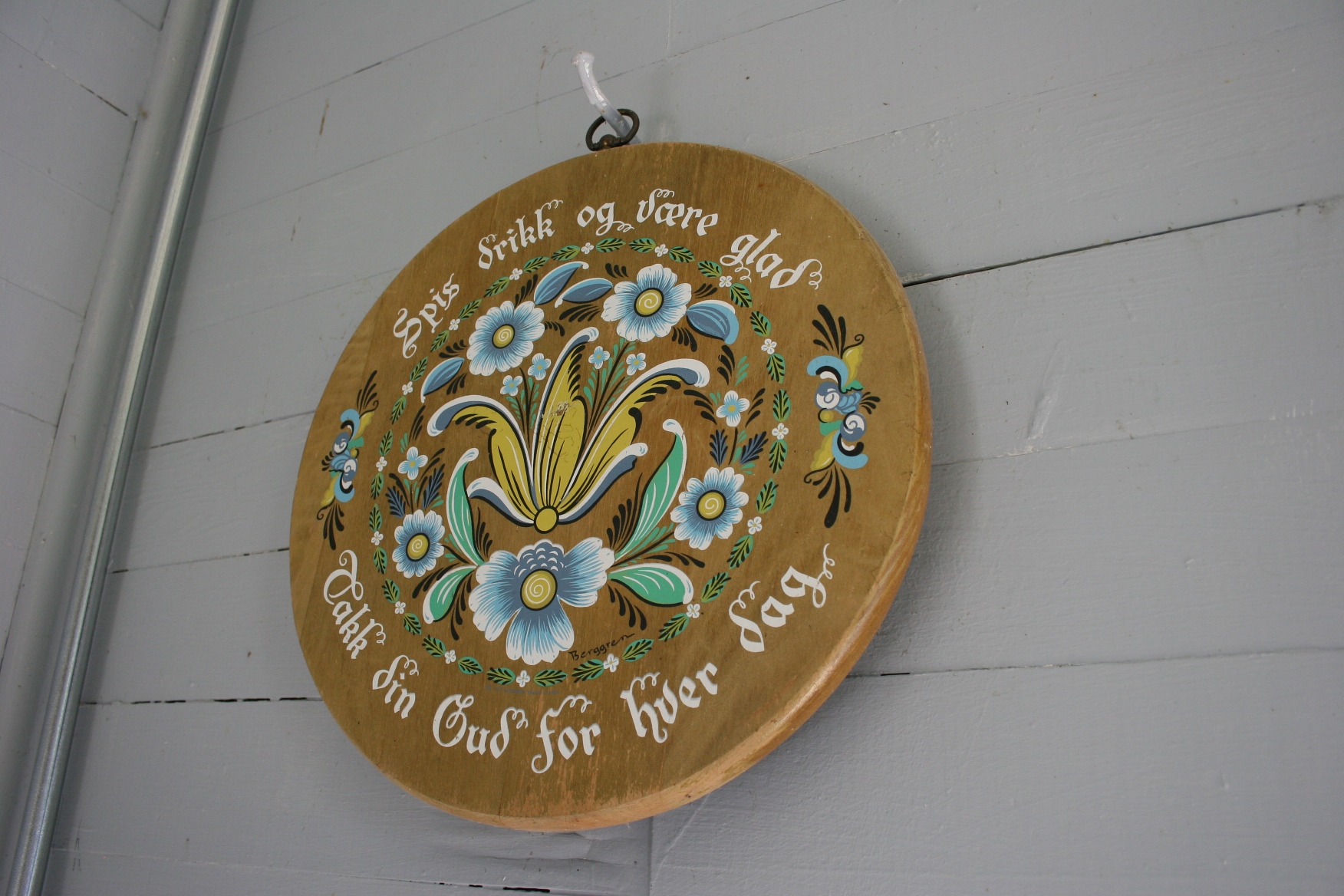
This Norwegian plaque hangs in the Old Stone Church entry. Since I'm German and not Norwegian, I rely on Google translate to tell me this sign basically thanks God for food and drink.

Six shuttered windows span two sides of the limestone church. The shutters are thrown open for the once-a-year church service and then battened shut.

The Old Stone Church cemetery, a final resting place for generations past and for those yet to be buried upon this land in peaceful Monkey Valley near Kenyon, Minnesota.

FOR MORE INFORMATION and additional photos of the Old Stone Church, see my June 27 Minnesota Prairie Roots blog post.

© Copyright 2010 Audrey Kletscher Helbling


Inside the Old Stone Church, rural Kenyon, Minnesota June 27, 2010

Filed under: Uncategorized — Audrey Kletscher Helbling @ 7:35 PM
Tags: , , ,

“DIRECTIONS: At the west end of the Boulevard of Roses, take Goodhue County 12 south for 1.3 miles and go west on Monkey Valley road for one mile.”

“Let’s go,” I tell my husband Saturday evening after reading an open invitation in the local newspaper to attend worship services at the Old Stone Church. Pair the adjectives “old” and “stone” with church and I already have one foot in the door. Add “Monkey Valley Road,” and you’ve really piqued my interest.

So Sunday morning Randy and I are on our way to Kenyon, where we turn right at the west end of the narrow boulevard lined with roses. We follow the published directions, turning right onto Monkey Valley Road, a gravel road that soon leads us to the Old Stone Church.

Once a year a worship service is held at the Old Stone Church, built by Norwegian immigrants near Kenyon.

I am expecting a church defined, as most country churches are, by a steeple. But, instead, I see before me a simple limestone building that could pass for a schoolhouse. Yet, the plain exterior, minus a steeple, seems perfect for this spot embraced by trees and rolling valleys on two sides and by flat open farm fields on the opposite sides.

Welcome to Monkey Valley.

“How did this place get its name?” I ask a group of men clustered outside the Old Stone Church.

They offer two theories. The first story goes that monkeys escaped from a traveling circus and fled into the wooded valley. The second story goes that a threshing crew arrived here and pronounced: “We’re just going to the valley and monkey around.”

Randy and I buy the monkey story, which seems probable given traveling circuses once roamed the countryside.

“I have to go,” I say, abruptly ending this monkey business. I hear the strains of my favorite hymn, Beautiful Savior, drifting through the open doors and windows. I don’t want to miss this and I am anxious to get inside the small country church.

I’ll later learn that Norwegian immigrants built this structure, beginning in 1872, with limestone cut from a nearby quarry. A historical marker dates the building, which is on the National Register of Historic Places, as 1875. And that steeple I wondered about—apparently the church founders discussed a steeple, but never had the money to erect one.

Eventually, those early members moved out of Monkey Valley and, in 1902, Hauge Lutheran congregation built a new church in Kenyon. For years the Old Stone Church stood abandoned. In 1947 restoration began, a process that continues today.

All of this written and memorized history interests me, but only to a point. I prefer, instead, to wander, to notice the details, to take in my surroundings, to appreciate for myself the beauty that this church holds.

During a service filled with music, the choir and congregation sing in Norwegian, "Ja, vi elsker." The wire rods you see anchored to the walls (running horizontally across the top of the photo) provide structural stability.

Rugged pews and rustic wood floors remind worshipers of bygone years. Copies of The Concordia Hymnal, piled on a pew, date to 1967. The hymn books are stashed in covered plastic containers after the service.

I lean forward and photograph the hands of an elderly woman in quiet meditation. This image, more than any photo I take, captures the essence of the Old Stone Church. For in these folded hands and in the back of the roughly-hewn pew, history and faithfulness meld, encompassing the importance of preserving historic churches.

Sitting near the back of the church, I study these words, thinking in German until I remember I am inside a Norwegian church. After the service, I talk with historian and preservationist Bob Dyrdahl. The scriptural quote comes from John 3:16, he tells me. "For God so loved the world that He gave His only begotten Son..." Sure enough, upon closer examination I determine that Bob knows his Norwegian.

I run my fingers across the flowers on the pulpit and imagine the rough hands of a Norwegian immigrant shaping this wood into a beautiful work of art. In the background is the top of the altar, defined by tablets, signifying the 10 Commandments and centered by a cross and a painting of The Last Supper.

In the balcony, historian Bob Dyrdahl shows me this treasure, the dated (October 30, 1894) signature of A. P. Lindgren who painted stars upon the ceiling and edged it with this stenciled border. His work also graces other sections of the sanctuary, along the stairway, for example.

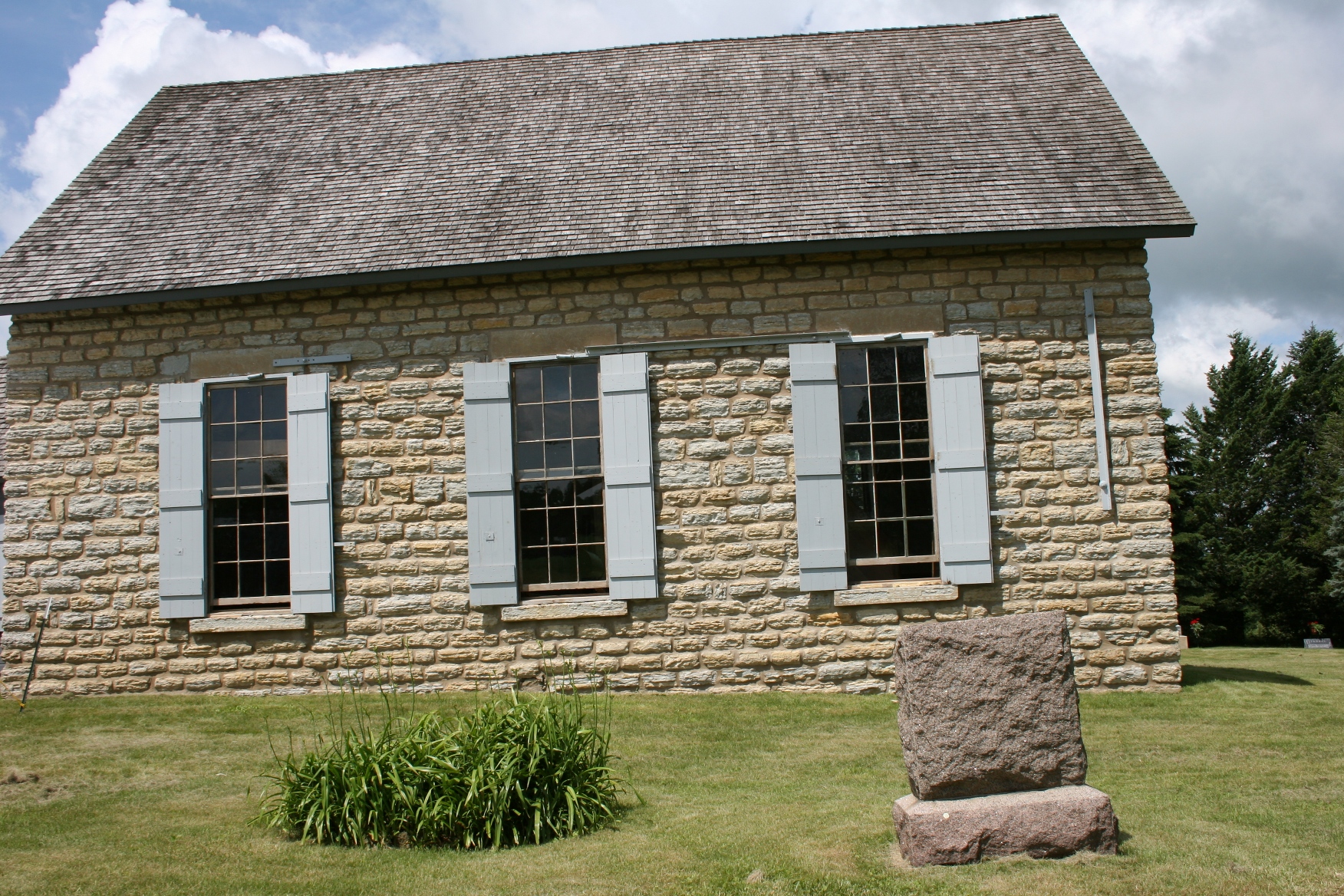
A rear view of the Old Stone Church, a simple structure with three shuttered windows on each side of the building.

A stone's throw from the Old Stone Church, a view of Monkey Valley.

#

THIS IS JUST A SAMPLING of the photos I shot at the Old Stone Church. Please check back for additional images to be posted this week on Minnesota Prairie Roots.

Copyright 2010 Audrey Kletscher Helbling


A must-read: Hidden History of the Minnesota River Valley June 3, 2010

Filed under: Uncategorized — Audrey Kletscher Helbling @ 9:51 AM
Tags: , ,

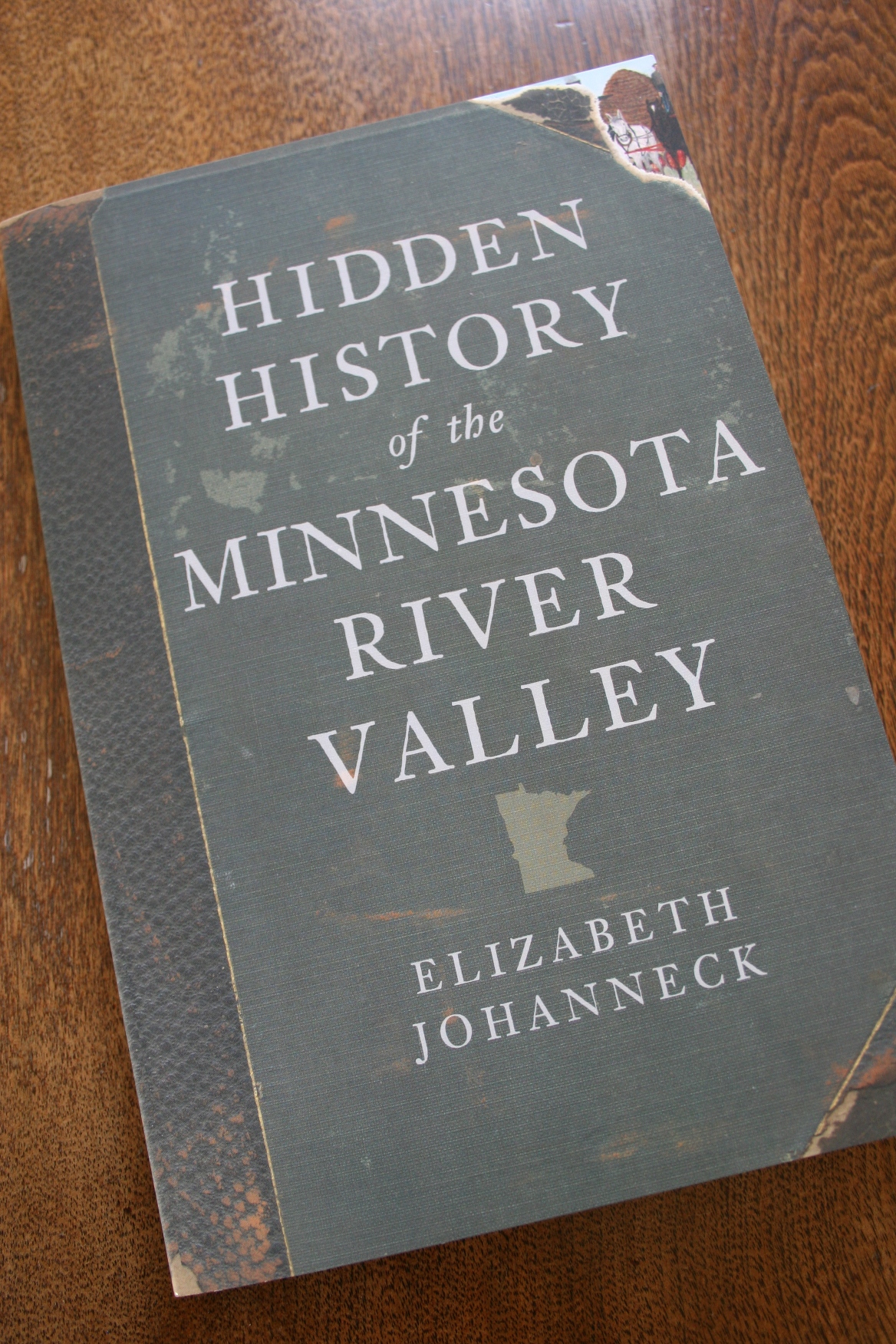
Elizabeth Johanneck, a rural Wabasso, Minnesota, native has just published this history book on the Minnesota River Valley.

I’VE NEVER BEEN THANKED in the introduction to a book…until now.

Minnesota author Elizabeth Johanneck publicly thanked me for guiding and mentoring her while writing Hidden History of the Minnesota River Valley. Her just-published, autographed book arrived Tuesday at my home.

The 156-page soft-cover title from The History Press also includes my essay, “Strong Words on Strong Stone at Birch Coulee.”

Beth’s book, as the title suggests, focuses on stories rooted in the Minnesota River Valley. You’ll read about everything from the founding of the Sears, Roebuck and Company to Alexander Ramsey Park to “The Myth about Scalping.”

Yes, some of the topics covered in this history book are unsettling. But through interviews and research, Beth presents the facts as honestly as possible, even if the truth disturbs or challenges what many of us have been taught.

My friend possesses strong storytelling skills that make her book more than a compilation of historical facts. Beth weaves personal experiences into her writing that connect with the history she shares. That personal perspective engages the reader.

Beth, like me, grew up on a Redwood County farm—she near Wabasso, me a bit further to the west just outside of Vesta. We attended Wabasso High School together where we shared a locker. Her down-to-earth personality and appreciation for the Minnesota River Valley area influence writing that is warm and folksy.

Check out Beth’s Minnesota Country Mouse blog, where she says “the ‘hayseed’ in her writing betrays her ‘city-slicker’ aspirations.”

Whether you’re from the Minnesota River Valley area or not, you’ll find stories in this book that are entertaining, poignant, shocking, revealing and, often, thought-provoking.

If you like ghost stories, you’ll appreciate “The Terrible Story of Little Annie Mary,” which tells of a 6-year-old girl supposedly buried alive in 1886.

Black-and-white photos, both current and historic, are generously dispersed through-out this book, adding to its appeal.

For anyone who enjoys Minnesota history, Beth’s book is a must-read. (And I’m not saying that simply because I’m a friend of the author and have a story in this book.)

Beth will be at the Barnes & Noble bookstore at the River Hills Mall in Mankato from 1 p.m. – 3 p.m. this Saturday, June 5, signing copies of Hidden History of the Minnesota River Valley. The book retails for $19.99.

She also has a signing set for 2 p.m. – 4 p.m. July 17 at the Bavarian Blast in New Ulm. You may also purchase her book online from major retailers.

© Copyright 2010 Audrey Kletscher Helbling


Hey, Ole, can you tell me about Eidsvold, Minnesota? April 7, 2010

Filed under: Uncategorized — Audrey Kletscher Helbling @ 7:54 AM
Tags: , ,

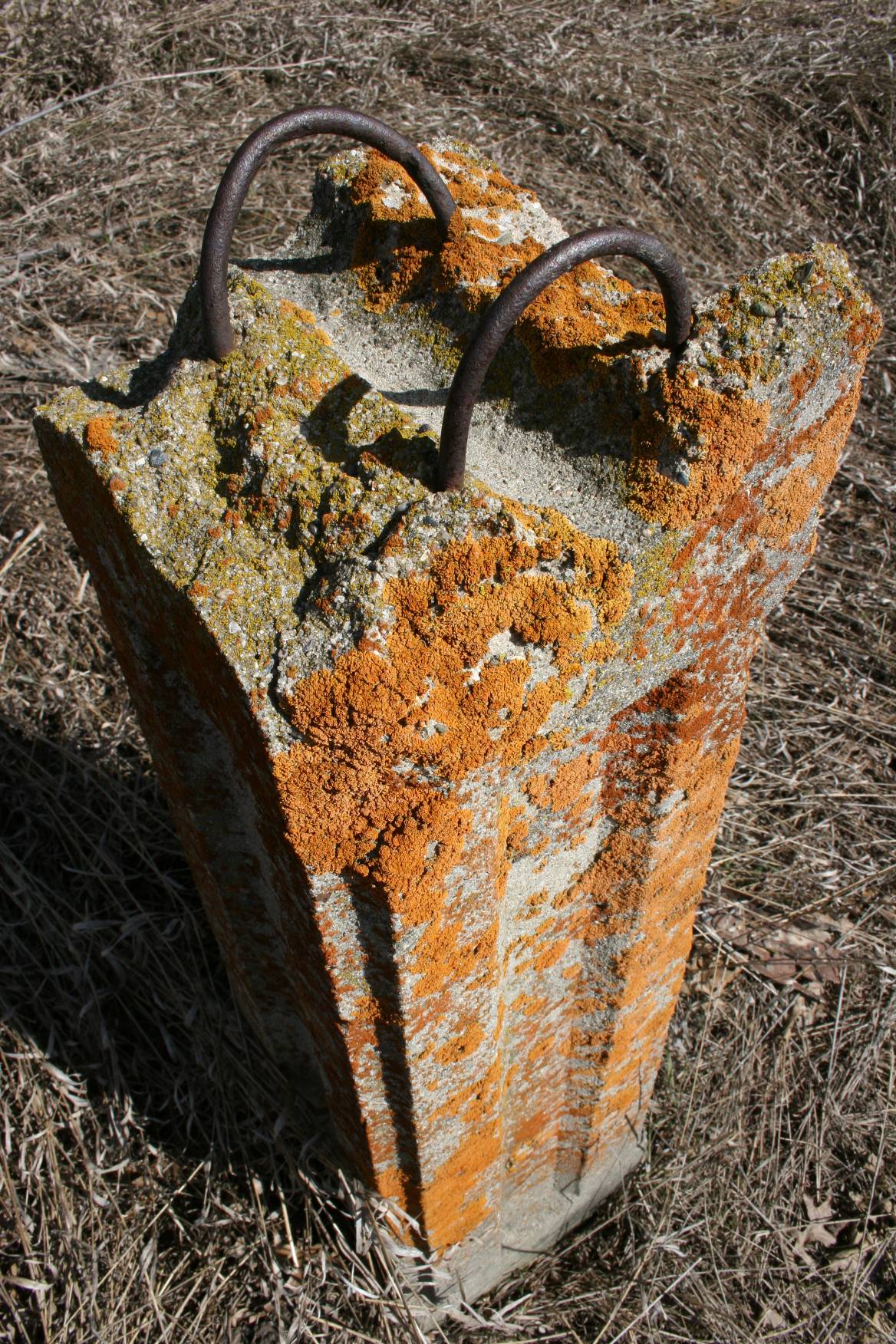
Is this a hitching post at historic Eidsvold, in southeastern MN.? This ghost town's one remaining building stands in the background.

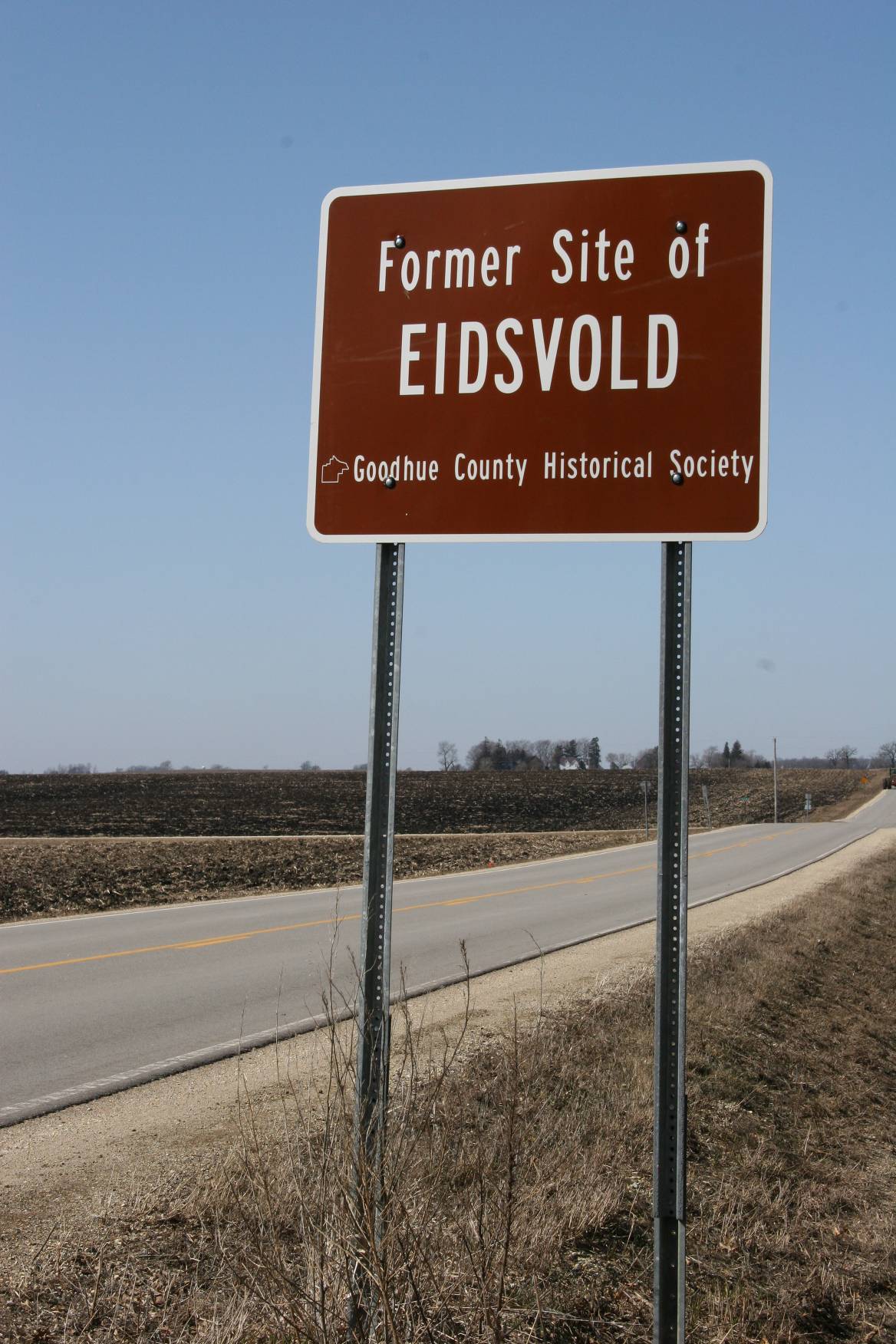
FROM OUR ROADSIDE perspective, the cement post near the ditch along Goodhue County Road 30 appears to be a historical marker. After all, a road sign posted by the county historical society denotes this as the former site of Eidsvold.

But when I walk up to the marker, I find no words, only a plain column topped by two iron semi-circles embedded in the cement.

My husband and I, who are on a Sunday afternoon drive into the historical Sogn Valley area of Minnesota, conclude this is a hitching post. Are we right?

We wonder too about the dilapidated building a stone’s throw away. Ignoring signs to keep out, we move in closer. I step over fallen branches to peer inside the structure, where oats spill from an open doorway.

Wood, muted gray by exposure to the elements, and rugged limestone, stacked irregularly to form an interior wall, invite me to wonder about this building’s history.

Who built this structure? When? And was it always used for grain storage?

I wonder, because I am always and forever wondering.

Who lived in this ghost town presumably named after Eidsvoll, Norway?

Up close, this sure looks like a hitching post to me. Am I right?

The Goodhue County Historical Society placed this historical interest sign at the ghost town of Eidsvold. The sign was erected to preserve the history of this former post office site and to recognize its historical contribution to the area.

A peek inside the interior of Eidsvold's single remaining structure reveals oats strewn on the floor.

© Copyright 2010 Audrey Kletscher Helbling