
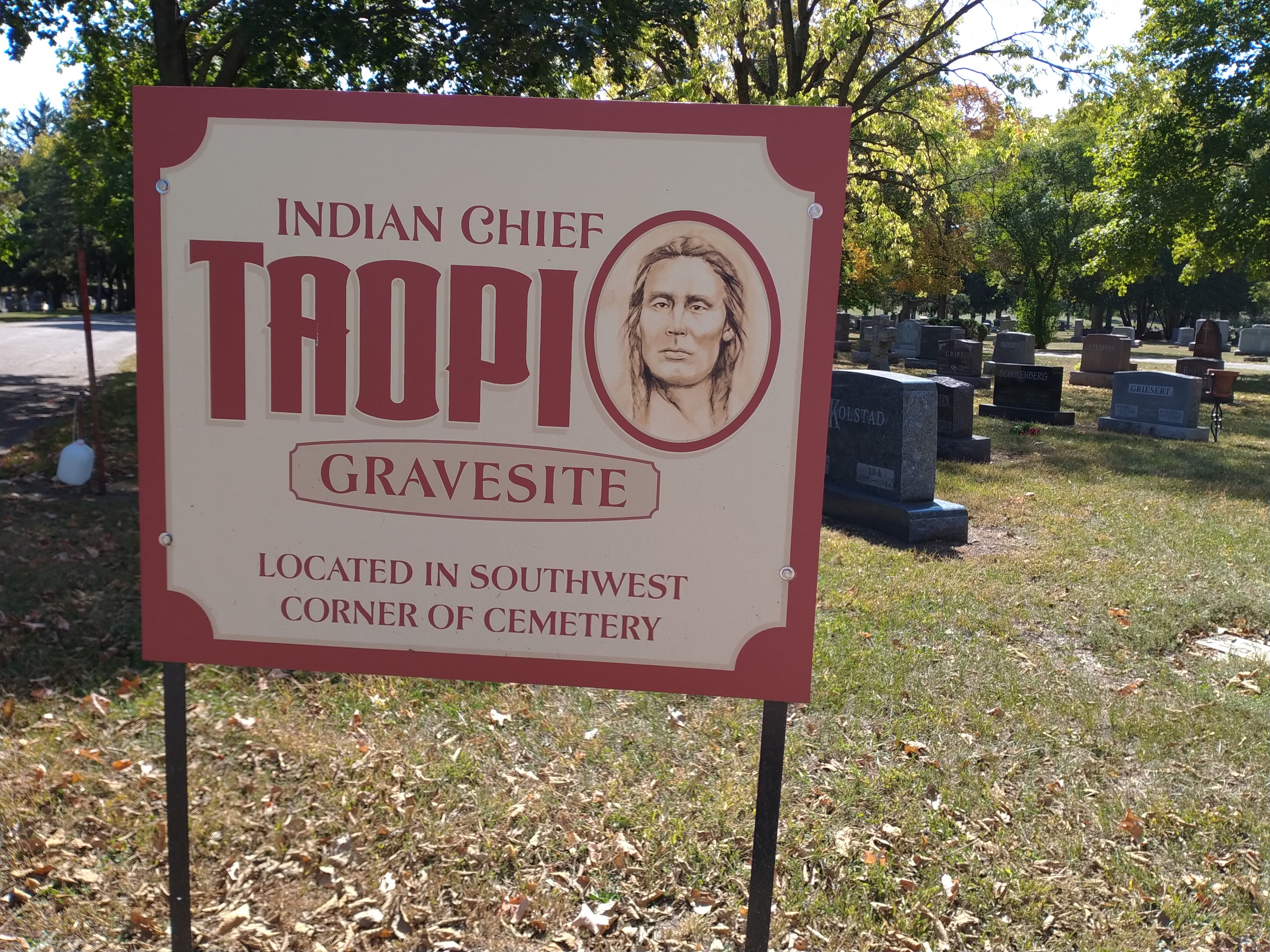
MY GOAL WAS SIMPLE—to write a piece honoring Indigenous Peoples’ Day. My focus, I initially decided, would be on Taopi, a member of the Little Crow Band of the Mdewakanton Dakota Tribe. Taopi is perhaps best known in Faribault, where he lived for a while and is buried. A small Mower County town near the Iowa border also honors him in name. But my writing expanded beyond Taopi.
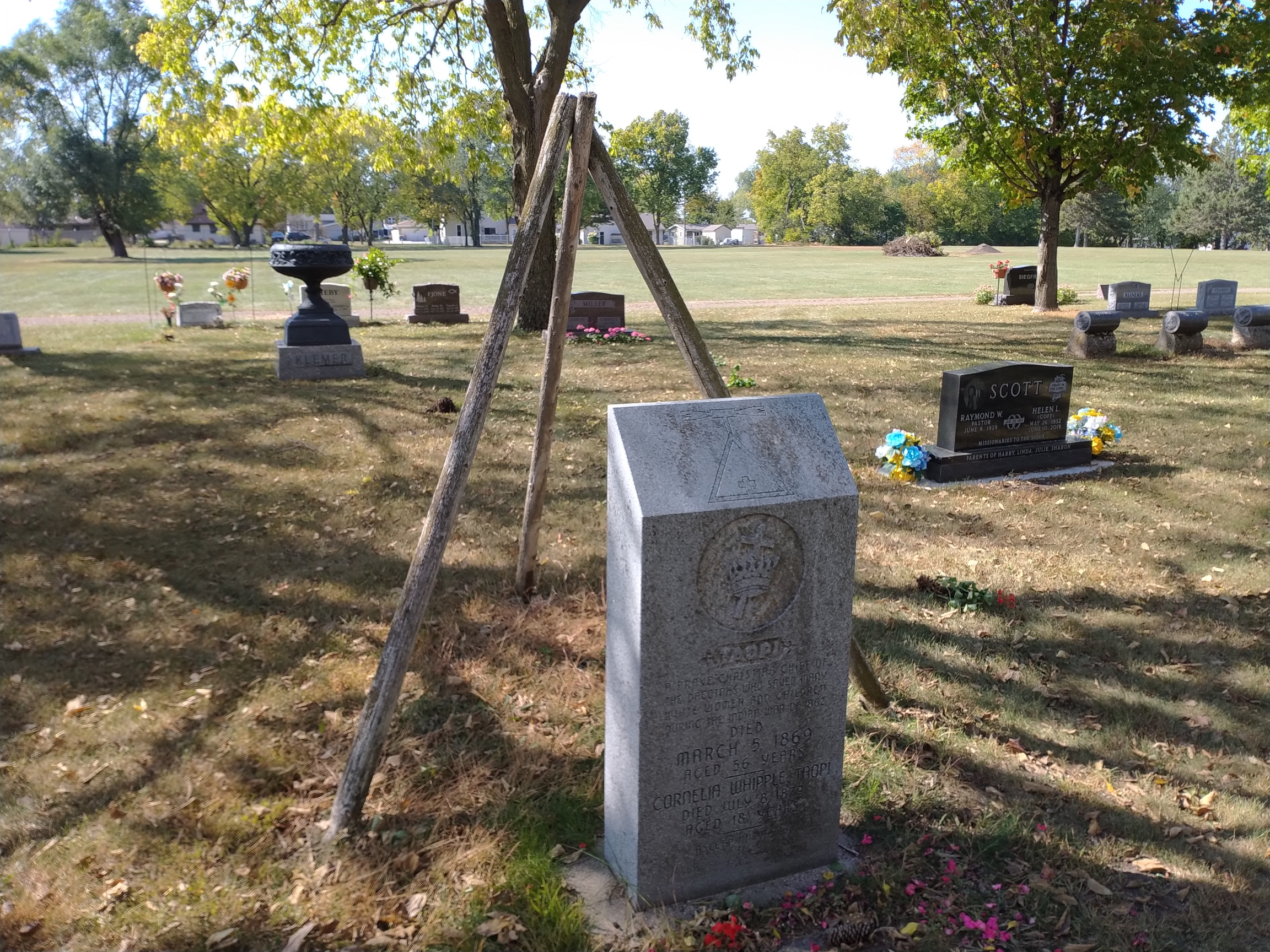
Recently I visited Taopi’s gravesite at Maple Lawn Cemetery. My interest piqued. I wanted to learn more about this Dakota leader and his importance in my community and in Minnesota history. His place in history connects to the US-Dakota War of 1862, a war all too familiar to me. My native Redwood County, where the Lower Sioux Agency was located, centered that deadly, short-lived conflict between white people and Native Peoples.
Now, viewing this war through a lens not tinted primarily by a white perspective, I understand the injustices. Decades ago, when I wrote a high school term paper on the war, I admittedly wrote a biased, unbalanced report based on biased, unbalanced research sources.
With time and maturity came the realization of the great injustices done, first when the US government acquired Indigenous Peoples’ land at a seemingly low cost and then failed to honor those treaties. The treaties opened nearly 24 million acres to white settlers. It was the Natives, the original inhabitants of this land, who found themselves cheated of government annuities, starving, pushed off their land and confined to strips of land along the Minnesota River. That includes the Wahpekute, a small band of the Dakota who lived in south central Minnesota, including the Faribault area. I live just below a Faribault city park called Wapacuta.
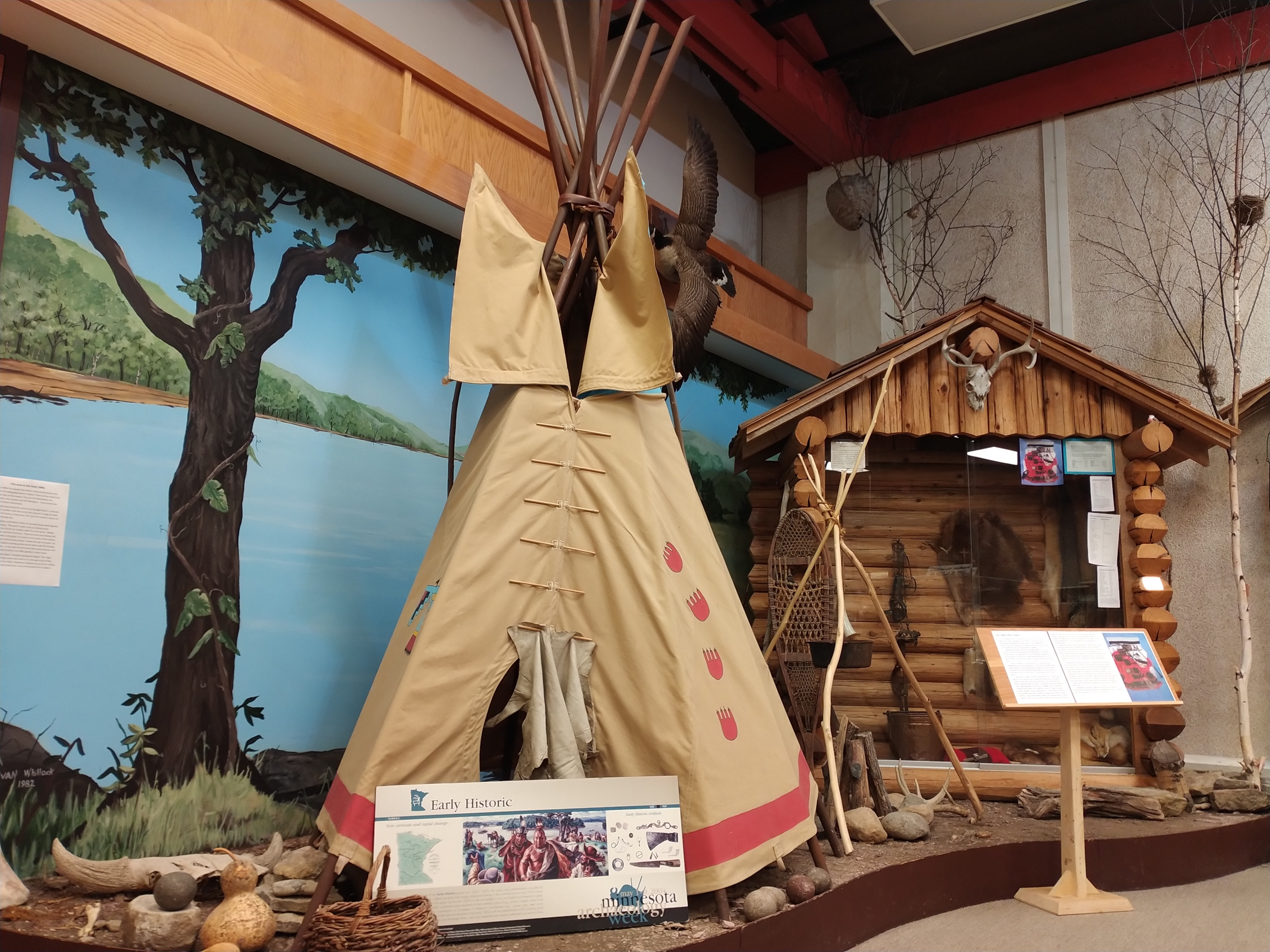
At the time of the US-Dakota War of 1862, Taopi was in the thick of all of it as a “farmer Indian,” the name tagged to Native Peoples who opted to farm, adapting the ways of the white man in occupation, dress and sometimes religion. He lived near the Lower Sioux Agency, relocated to a reservation there following the Treaty of Mendota in 1851. Those who continued with their hunting and fishing culture were known as “blanket Indians.” Taopi assuredly felt the animosity of his own people for the lifestyle and other choices he made.
I can only imagine the pressure Indigenous Peoples experienced as white settlers moved into the area. The change, at times, had to feel overwhelming. Life would never be the same. Long-time homelands were lost, tradition and culture endangered. And so Taopi and others adapted, likely accepting that change was inevitable.
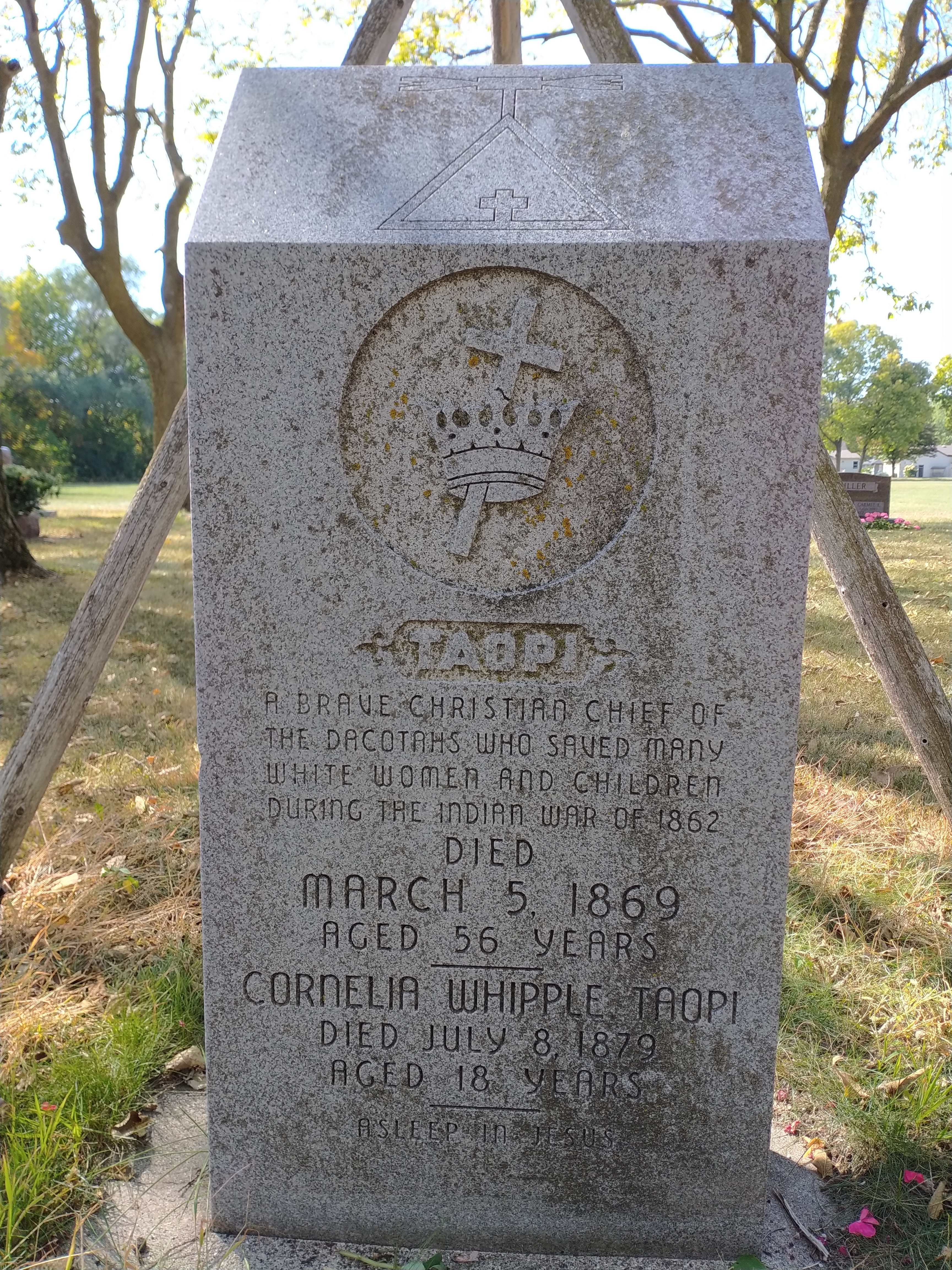
But one thing that remained constant with Taopi was his focus on peace. He opposed the war and was a leader in the Dakota Peace Party. He is credited with saving the lives of many.
Yet, at war’s end, Taopi found himself caught—disliked by his peoples, who considered him a traitor, and disliked by whites holding a deep animosity toward any Native person. In Faribault, though, he had a friend in Bishop Henry Whipple, a strong advocate for First Peoples, and in town founder Alexander Faribault. Eventually, Taopi and other Natives moved onto land owned by Alexander Faribault, living under his protection on a bluff overlooking the Straight River. Taopi died in 1869. In 1895, the Indigenous Peoples of Faribault were displaced once again, moved to the Lower Sioux Reservation. They had always existed on the fringes in Faribault, never fully-accepted by most residents while under the protection of the bishop and town founder.
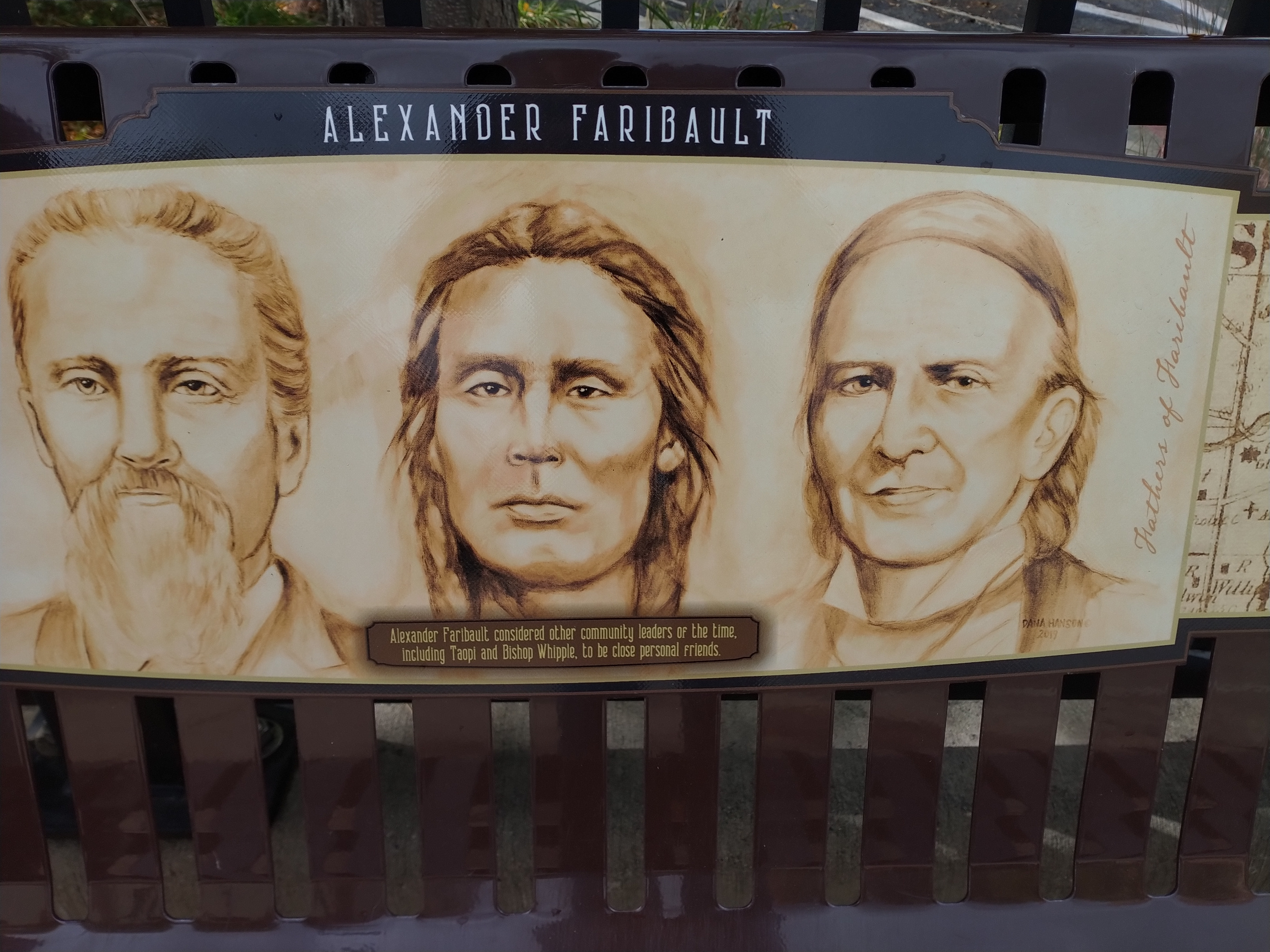
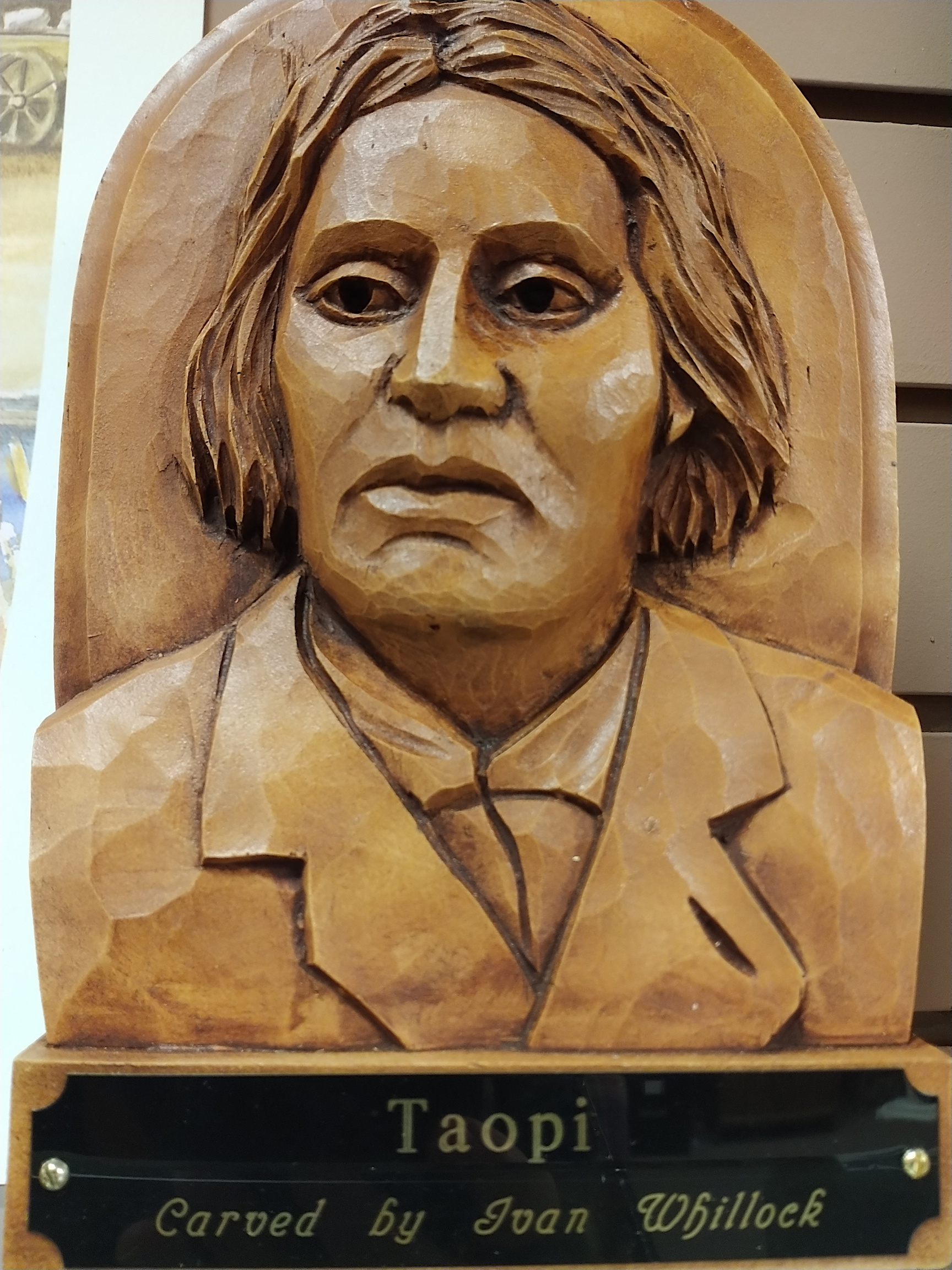
And so that is a brief look at Taopi, whose gravesite I visited. His presence remains visible elsewhere in Faribault. He’s featured in an exhibit at the Rice County Historical Society Museum. A “Fathers of Faribault” portrait of Taopi, Bishop Whipple and Alexander Faribault by Dana Hanson hangs at Buckham Memorial Library. Just a block to the north, that same artwork graces an historic-themed bench. Taopi was, most assuredly, a man of importance in local and state history. I will remember him primarily as a man of peace in a time when peace was decidedly elusive.
#
© Copyright 2023 Audrey Kletscher Helbling
Sources: The First Cathedral, an Episcopal Community for Mission by Benjamin Ives Scott and Robert Neslund; the Minnesota Historical Society website; and the Rice County Historical Society Museum’s Taopi display.



 Minnesota Prairie Roots
Thoughts on Indigenous Peoples Day from Minnesota October 13, 2025
Tags: "Native American Ten Commandments", commentary, Indigenous Peoples' Day, Minnesota, Native Americans, opinion, Waterville
POKING AROUND IN SMALL TOWN Waterville on Saturday, I happened upon an unusual piece of wall art, “Native American Ten Commandments,” in a shop run by Ron, former hardware store owner and an interesting man with lots of stories to tell. I left feeling like he would be my go-to source for anything I ever wanted to know about Waterville.
But I didn’t ask Ron about the Native American wall art hanging so high on the wall I struggled to read and photograph it. Rather, I thought about this art and the title of the piece in the context of today, October 13, Indigenous Peoples Day in Minnesota, as proclaimed by Governor Tim Walz.
I considered how the words “Ten Commandments” seem more European than Native. Perhaps a different title would be more fitting for this summary of cultural and spiritual values. Despite that heading, I found the content of these “commandments” to be positive and reflective of Native beliefs and culture as I understand them to be.
These words popped out at me: earth, nature, respect, care, protect, honor, traditions, family and community.
We would all do well to read, then reread, those words and contemplate their importance. Today, more than ever, I feel like we need to reconnect with the land, to build community, to recognize the importance of respect.
Today I pause to remember and celebrate Native Americans, who lived here first, who have long held a spiritual closeness to the earth, who deserve this special day of honor, Indigenous Peoples Day.
© Copyright 2025 Audrey Kletscher Helbling