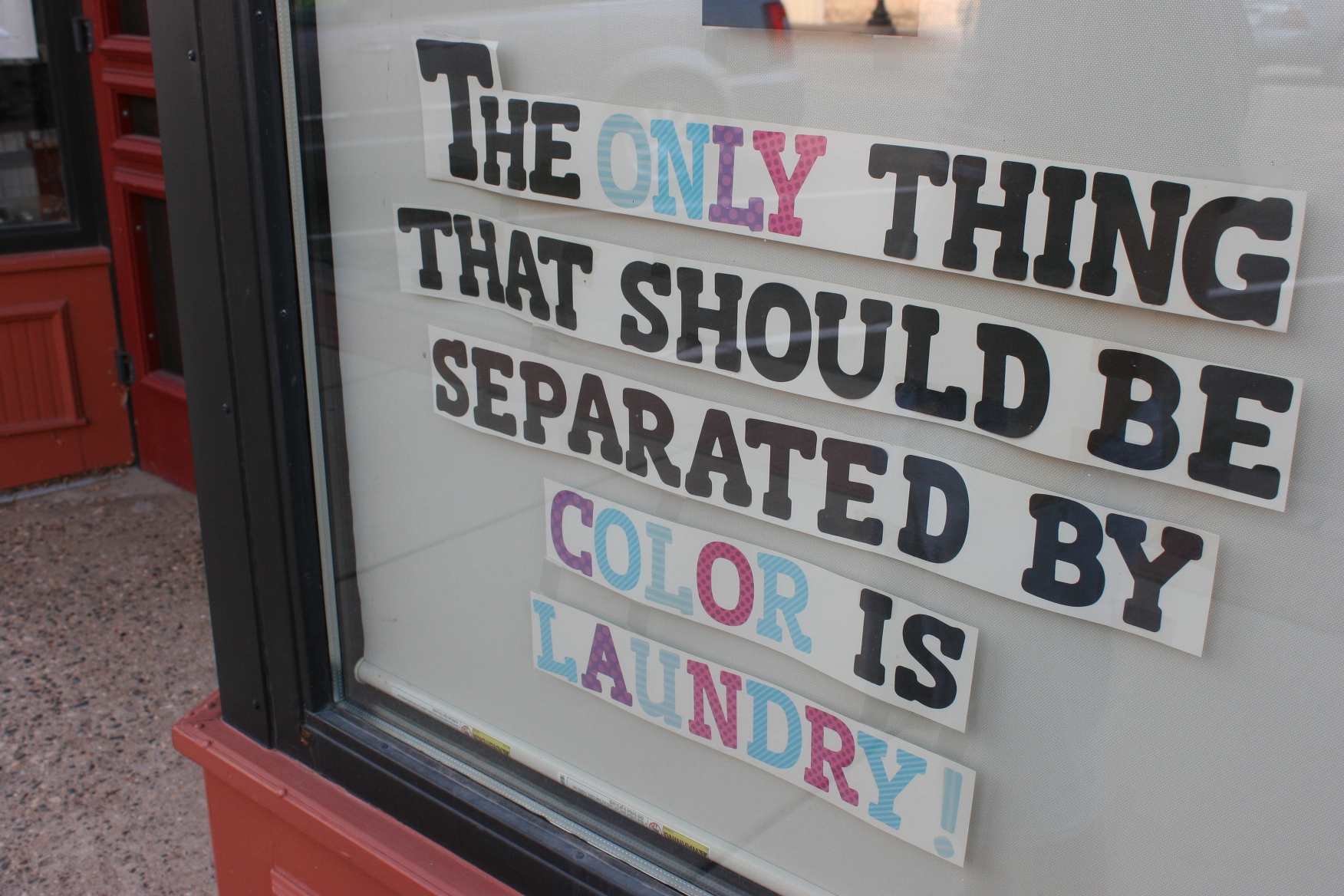
Photographed in August 2018 in a storefront window of a business in downtown Faribault. (Minnesota Prairie Roots copyrighted file photo 2018)
ON THIS DAY OF CELEBRATION,Juneteenth, I reflect on our nation’s past, on how far we’ve come and how far we have yet to go.
June 19, 1865, marks the day when enslaved people in Texas learned of the Emancipation Proclamation issued by President Abraham Lincoln 2 ½ years earlier. That proclamation freed slaves in Confederate states. It wasn’t until the 13th Amendment to the Constitution was passed in December 1865 that slavery was fully abolished in the entire United States.
Thinking about slavery is difficult. It’s emotionally challenging to consider that some 4 million men, women and children were “owned,” treated like property rather than human beings. Forced to work, forced to live under abusive and oppressive conditions. Without freedom to come and go.
Today the focus is not on the awfulness of slavery, but rather on the move from enslavement to freedom. Thus the celebrations on Juneteenth.
Moving onward as a people and a nation, we need to work harder on respecting one another, no matter our skin color, our social status, our differences. We’ve certainly made strides. But the reality is that we can do better.
Photographed in August 2018 in a storefront window of a business in downtown Faribault, Minnesota. (Minnesota Prairie Roots file photo 2018)
AS A WHITE WOMAN and writer living in rural Minnesota, writing on the topic of Juneteenth isn’t easy or comfortable. Yet, it’s important for me to do so, to publicly recognize the federal holiday commemorating the emancipation of enslaved African Americans.
Why? Simply put, I care. I care that African Americans were treated with such disrespect, that they were “owned,” for no one should “own” anyone. Yet, these men, women and children were owned, used and abused by White slave owners who worked them, controlled them, imprisoned them, built our country’s early economy on their hardworking backs.
Artist Susan Griebel crafted this quilted art from fabric her mother-in-law, Margaret Griebel, acquired in Africa. Margaret’s husband served as a missionary in Nigeria. (Minnesota Prairie Roots copyrighted file photo)
I don’t pretend to be any sort of expert on slavery. But the very thought of it shakes me to the core. I can only imagine the emotions felt by those whose ancestors worked in servitude—in cotton and tobacco fields, in homes, in barns, on vast plantations…
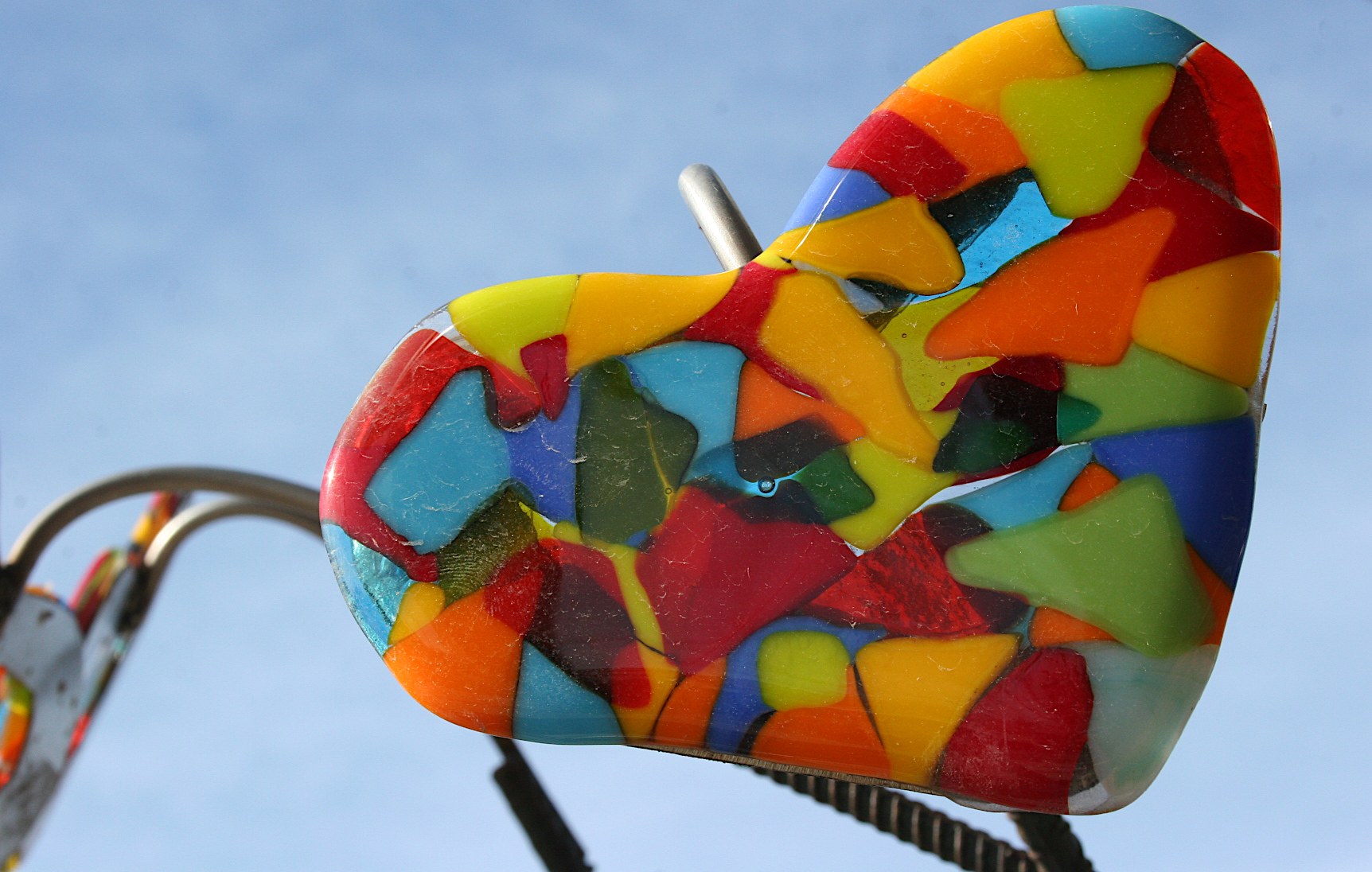
One of many hearts incorporated into a sculpture, “Spreading the Love” by Geralyn Thelen and Dale Lewis, located in downtown Northfield, Minnesota. (Minnesota Prairie Roots copyrighted file photo 2022)
Beyond reflecting on this date in history, I’ve tried to educate myself by reading, a skill most slaves were denied. Reading, whether stories written by reliable media, nonfiction or even fiction rooted in history, opens my mind to understanding. And with understanding comes compassion and an unwillingness to remain silent.
Too many times during my 60-plus years of life I’ve seen (think Confederate flags) and heard the animosities expressed toward people of color. And while this doesn’t apply specifically to Black people and slavery, I will speak up if someone starts bashing our local immigrant population with false claims and other unkind words. I fully recognize that, because my skin is colorless, my life is likely easier without preconceived ideas/prejudices/denied opportunities.
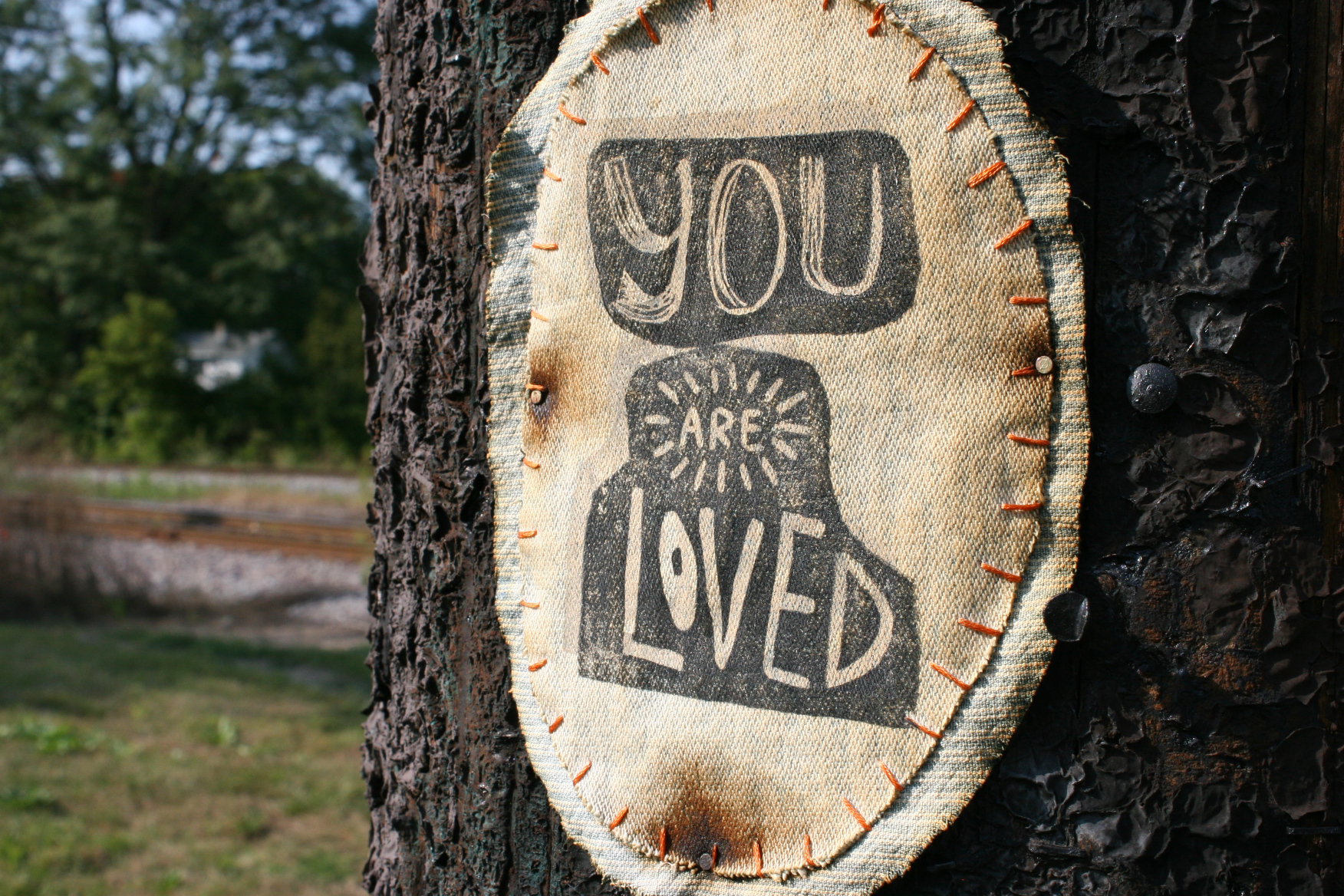
Love this uplifting message posted along a recreational trail in the Atwood Neighborhood of Madison, Wisconsin. (Minnesota Prairie Roots copyrighted file photo)
I appreciate that thoughts in this country are shifting, that we as a people are acknowledging past wrongs, that we’re trying. On the flip side, I see, too, hatred rising in ways I would never have imagined possible.
I admit that I grew up in a household where my father occasionally used the “n” word. It hurts to write that. The “n” word was part of his rural vocabulary, of the time, of growing up among others just like him. White. I grew up similarly, totally surrounded by those of Scandinavian, German, Polish, Irish and other descent, none with roots in Africa.
But I moved away, grew my knowledge and experiences, grew my exposure to new ideas and people and places. I’ve also gained insights into the challenges Blacks face from a biracial son-in-law. Today I live in a diverse neighborhood of Americans who are White, Latino, African…and I’m thankful for that. They carry, in their family histories, struggles and joys, the imprints of those who came before them. Today I honor those African Americans in Texas who 156 years ago first celebrated their freedom from slavery with “Jubilee Day” on June 19, 1866. And I honor all those slaves forced into lives not of their choosing, without freedom, but determined to be free.
That strong visual of the empty chair before that Somerstein photo sparks within me the desire, the need, to look deep within myself, and then beyond myself. To learn. To begin to understand in some small way what it means to be Black in America. To read the history. To recognize how slavery affected generations of families. How the hurts and wrongs of yesterday remain.
The official declaration of Juneteenth as a federal holiday certainly prompts me to research, reflect and contemplate. But I hope this new national observance initiates community conversations that bring change in a nation reeling from racial issues and injustices. It truly takes each of us at a grassroots personal level to effect change.
Recently, I listened as an elderly white woman spouted angry words about George Floyd, murdered by a Minneapolis police officer in May 2020. She claimed that Floyd was being portrayed as a “saint” when he was “nothing but a criminal.” I felt my blood pressure rising as she continued her rant about all the shootings in Minneapolis and how thankful she was that she didn’t live in the Cities. She missed the point of the protests—over police brutality, over racial injustices, over the needless death of a Black man (yes, one with a criminal record) while in police custody. I walked away. And maybe I shouldn’t have. Maybe I should have stayed and tried to discuss this with her. But I knew my efforts would prove futile. She saw this all as a metro, not a rural, “problem.”
I disagree. We are all human. No matter where we live, we ought to care about how others are treated, whatever their skin tone. Perhaps today, Juneteenth, we can sit quietly for a bit, contemplate and reflect on life in America today. How can we improve this country, starting right in our own neighborhoods and communities? Within ourselves.





 Minnesota Prairie Roots
Recent Comments