A slavery bill included in the exhibit “Testify: Americana Slavery to Today” from the Diane and Alan Page collection and exhibited previously in Faribault. (Minnesota Prairie Roots copyrighted file photo)
CONSIDER FOR A MOMENT the significance of Juneteenth. On this date in 1865, news of the Emancipation Proclamation finally reached enslaved African Americans in Galveston, Texas.
Imagine the jubilation of learning that you might really and truly be free. I expect that may have been difficult for many to believe. But two years earlier, President Abraham Lincoln signed the document ending slavery in states that had seceded from the Union. Not all states. Only those that had been part of the Confederacy.
The proclamation reads in part: I do order and declare that all persons held as slaves within said designated States, and parts of States, are, and henceforward shall be free… What powerful words—shall be free.
A portion of a photo by Steve Somerstein included in the exhibit “Selma to Montgomery, Marching Along the Voting Rights Trail.” (Minnesota Prairie Roots copyrighted file photo)
While slavery ended long ago, the struggle continues for anyone whose skin is other than white. Injustices and racial discrimination remain. To think otherwise is to be in denial. Look what’s happening with gerrymandering and voting rights. Consider cases of police brutality and incarcerated Black men who were later cleared of crimes they did not commit. Consider poverty.
And remember the Civil Rights movement, the fight for equality that happened long after slaves were declared free. But not equal.
Juneteenth marks a day to reflect on how far we have come and how far we have yet to go. I care about this personally. My 18-month-old grandson is bi-racial. And although he looks decidedly White with light skin and a head of blonde curls, the blood of slavery runs through his ancestral veins. Some day he will learn about the Emancipation Proclamation and the struggles that preceded and followed.
Joyful Nigerian-themed art created by a friend. (Minnesota Prairie Roots copyrighted file photo)
And I hope that when he understands, he will celebrate Juneteenth in a big way. He already loves music, bopping his head and swaying his body to the beat of songs thrumming from his toys.
Juneteenth holds the same joyfulness. The spirit of freedom and celebration encompassed in the words of the Emancipation Proclamation. You shall be free.
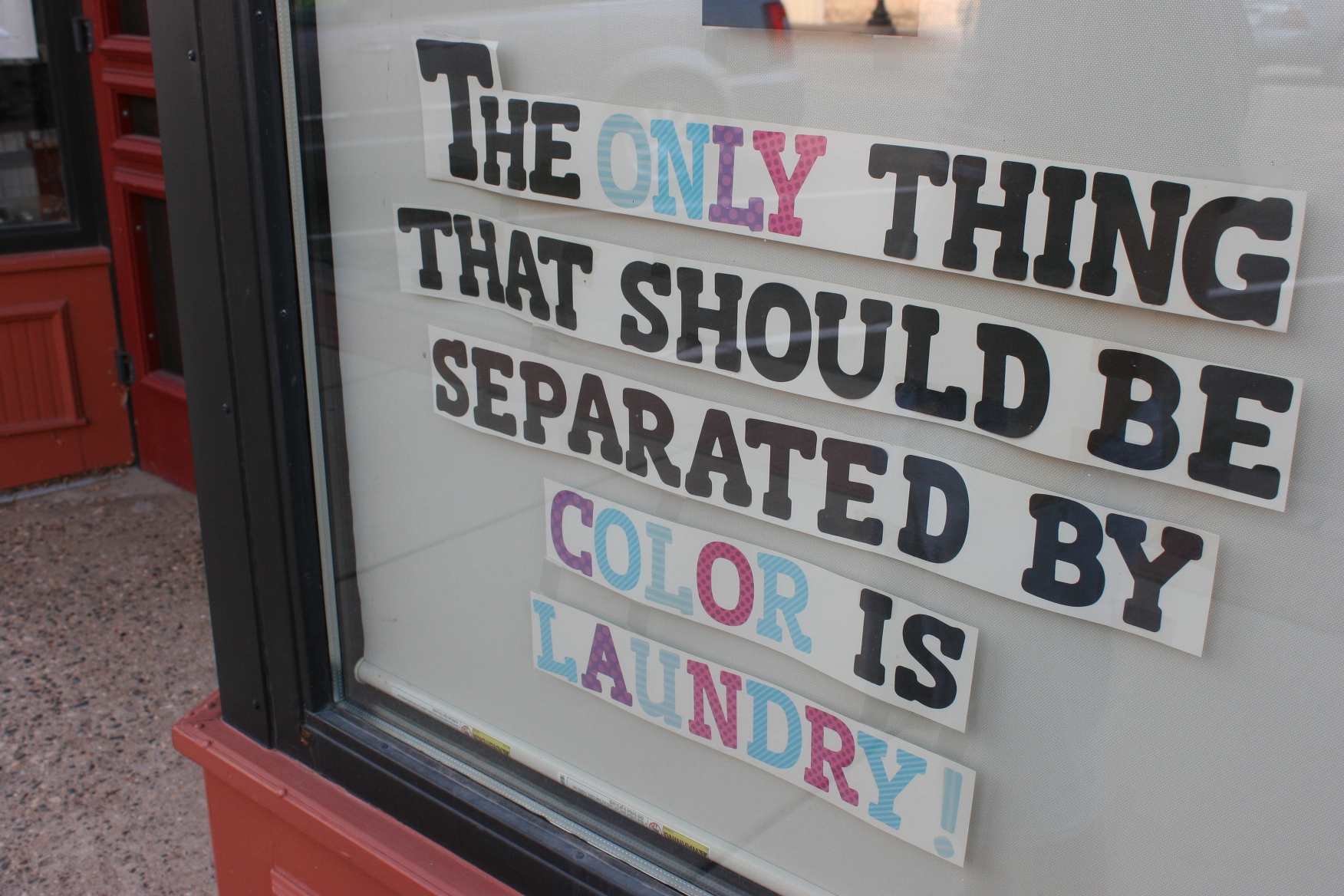
Photographed in August 2018 in a storefront window of a business in downtown Faribault. (Minnesota Prairie Roots copyrighted file photo 2018)
ON THIS DAY OF CELEBRATION,Juneteenth, I reflect on our nation’s past, on how far we’ve come and how far we have yet to go.
June 19, 1865, marks the day when enslaved people in Texas learned of the Emancipation Proclamation issued by President Abraham Lincoln 2 ½ years earlier. That proclamation freed slaves in Confederate states. It wasn’t until the 13th Amendment to the Constitution was passed in December 1865 that slavery was fully abolished in the entire United States.
Thinking about slavery is difficult. It’s emotionally challenging to consider that some 4 million men, women and children were “owned,” treated like property rather than human beings. Forced to work, forced to live under abusive and oppressive conditions. Without freedom to come and go.
Today the focus is not on the awfulness of slavery, but rather on the move from enslavement to freedom. Thus the celebrations on Juneteenth.
Moving onward as a people and a nation, we need to work harder on respecting one another, no matter our skin color, our social status, our differences. We’ve certainly made strides. But the reality is that we can do better.
That strong visual of the empty chair before that Somerstein photo sparks within me the desire, the need, to look deep within myself, and then beyond myself. To learn. To begin to understand in some small way what it means to be Black in America. To read the history. To recognize how slavery affected generations of families. How the hurts and wrongs of yesterday remain.
The official declaration of Juneteenth as a federal holiday certainly prompts me to research, reflect and contemplate. But I hope this new national observance initiates community conversations that bring change in a nation reeling from racial issues and injustices. It truly takes each of us at a grassroots personal level to effect change.
Recently, I listened as an elderly white woman spouted angry words about George Floyd, murdered by a Minneapolis police officer in May 2020. She claimed that Floyd was being portrayed as a “saint” when he was “nothing but a criminal.” I felt my blood pressure rising as she continued her rant about all the shootings in Minneapolis and how thankful she was that she didn’t live in the Cities. She missed the point of the protests—over police brutality, over racial injustices, over the needless death of a Black man (yes, one with a criminal record) while in police custody. I walked away. And maybe I shouldn’t have. Maybe I should have stayed and tried to discuss this with her. But I knew my efforts would prove futile. She saw this all as a metro, not a rural, “problem.”
I disagree. We are all human. No matter where we live, we ought to care about how others are treated, whatever their skin tone. Perhaps today, Juneteenth, we can sit quietly for a bit, contemplate and reflect on life in America today. How can we improve this country, starting right in our own neighborhoods and communities? Within ourselves.



Juneteenth: You “shall be free” June 19, 2026
Tags: Abraham Lincoln, African Americans, Blacks, celebration, commentary, Emancipation Proclamation, freedom, history, holiday, June 19, Juneteenth, slavery
CONSIDER FOR A MOMENT the significance of Juneteenth. On this date in 1865, news of the Emancipation Proclamation finally reached enslaved African Americans in Galveston, Texas.
Imagine the jubilation of learning that you might really and truly be free. I expect that may have been difficult for many to believe. But two years earlier, President Abraham Lincoln signed the document ending slavery in states that had seceded from the Union. Not all states. Only those that had been part of the Confederacy.
The proclamation reads in part: I do order and declare that all persons held as slaves within said designated States, and parts of States, are, and henceforward shall be free… What powerful words—shall be free.
While slavery ended long ago, the struggle continues for anyone whose skin is other than white. Injustices and racial discrimination remain. To think otherwise is to be in denial. Look what’s happening with gerrymandering and voting rights. Consider cases of police brutality and incarcerated Black men who were later cleared of crimes they did not commit. Consider poverty.
And remember the Civil Rights movement, the fight for equality that happened long after slaves were declared free. But not equal.
Juneteenth marks a day to reflect on how far we have come and how far we have yet to go. I care about this personally. My 18-month-old grandson is bi-racial. And although he looks decidedly White with light skin and a head of blonde curls, the blood of slavery runs through his ancestral veins. Some day he will learn about the Emancipation Proclamation and the struggles that preceded and followed.
And I hope that when he understands, he will celebrate Juneteenth in a big way. He already loves music, bopping his head and swaying his body to the beat of songs thrumming from his toys.
Juneteenth holds the same joyfulness. The spirit of freedom and celebration encompassed in the words of the Emancipation Proclamation. You shall be free.
© Copyright 2026 Audrey Kletscher Helbling