Minnesota Prairie Roots

Writing and photography by Audrey Kletscher Helbling

Prairie prose & photos during the season of harvest October 29, 2012

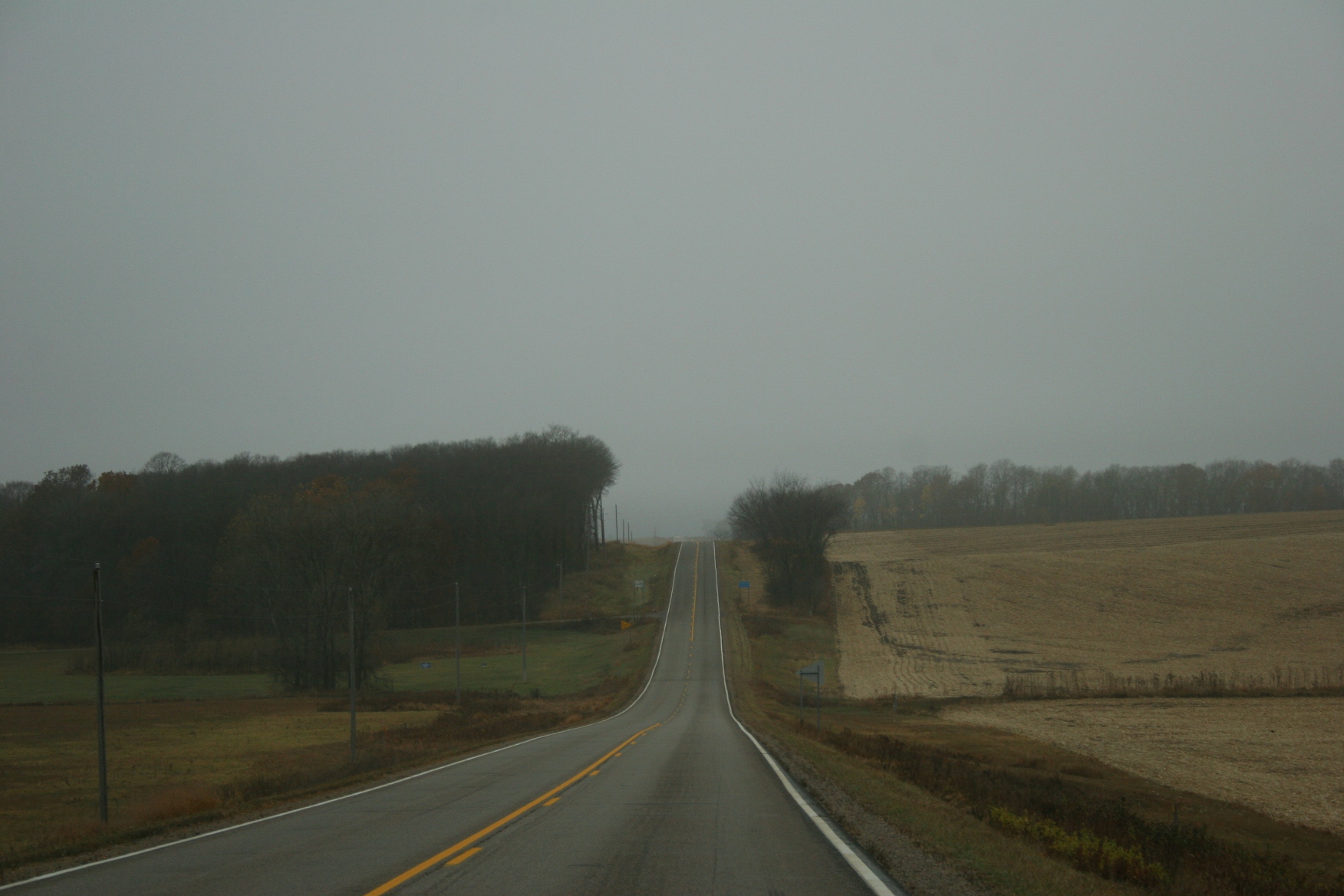
Just west of Shieldsville, not far from our Faribault home in southeastern Minnesota, my husband and I began our 120-mile journey to southwestern Minnesota on a foggy Saturday morning.

I NEVER TIRE of the big sky and infinite land that stretch far before me as I travel back to my native southwestern Minnesota. I wonder sometimes how I ever could have left this place that brings such solace to my soul, such respite to my heart, such peace to my mind.
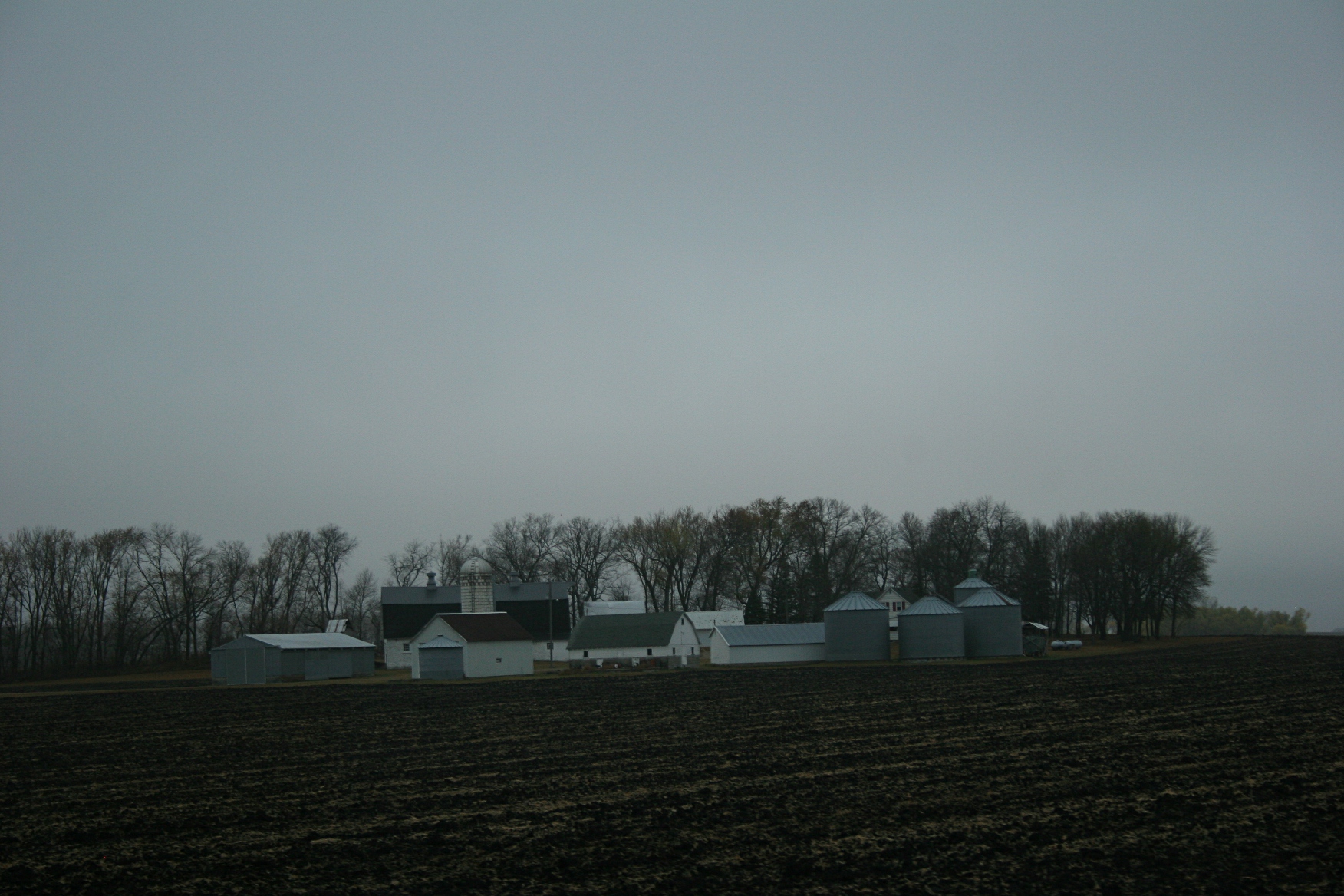
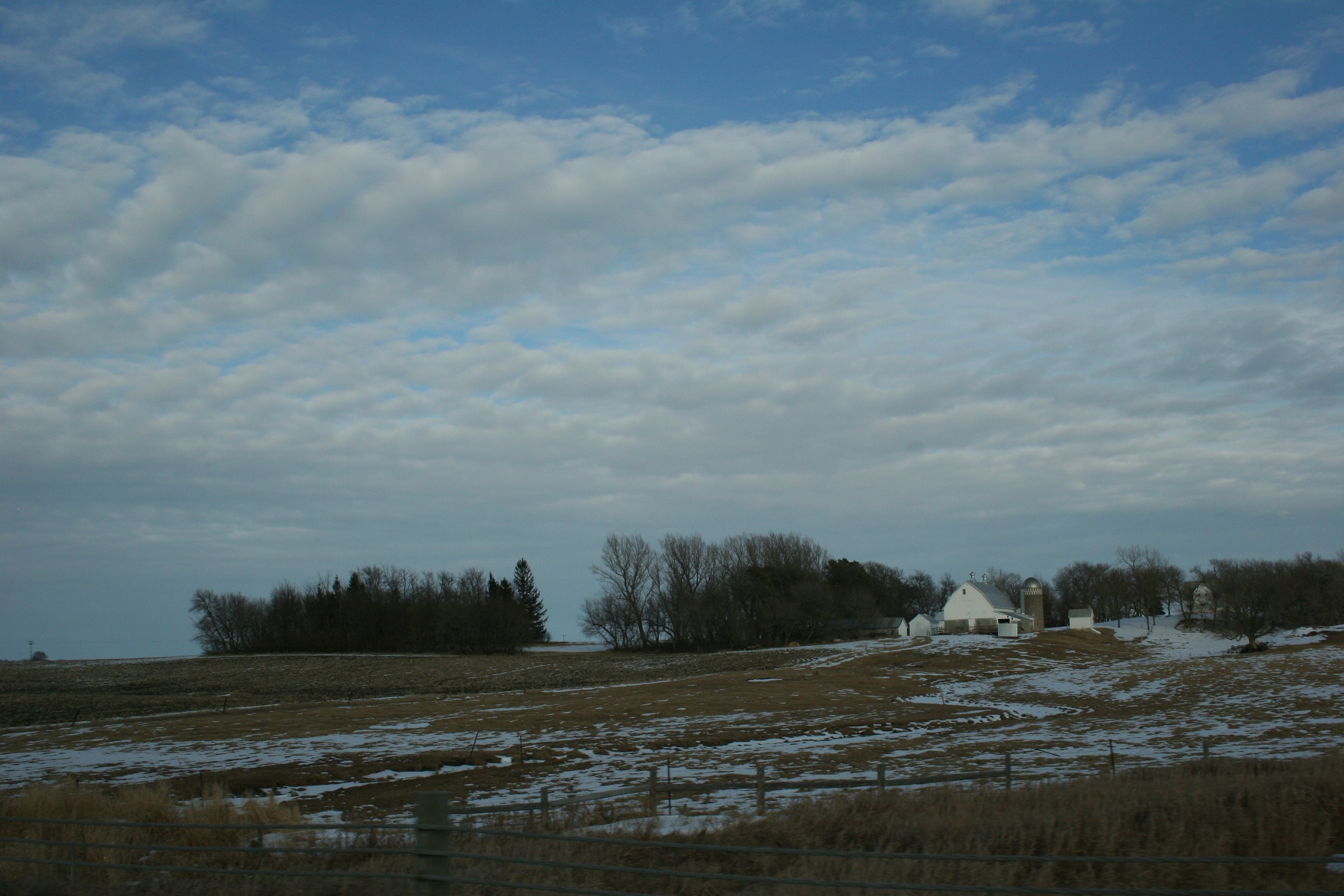
A farm site somewhere along the route which took us through or past Shieldsville, LeCenter, Cleveland, St. Peter, Nicollet, Courtland, New Ulm, Essig, Sleepy Eye, Cobden, Springfield and Sanborn corners, ending in rural Lamberton.

When I see this land, walk this land, the longing to be back here, permanently rooted again, tugs at my very core. I miss the prairie that much and the older I get, the more I appreciate this rural place from whence I came.
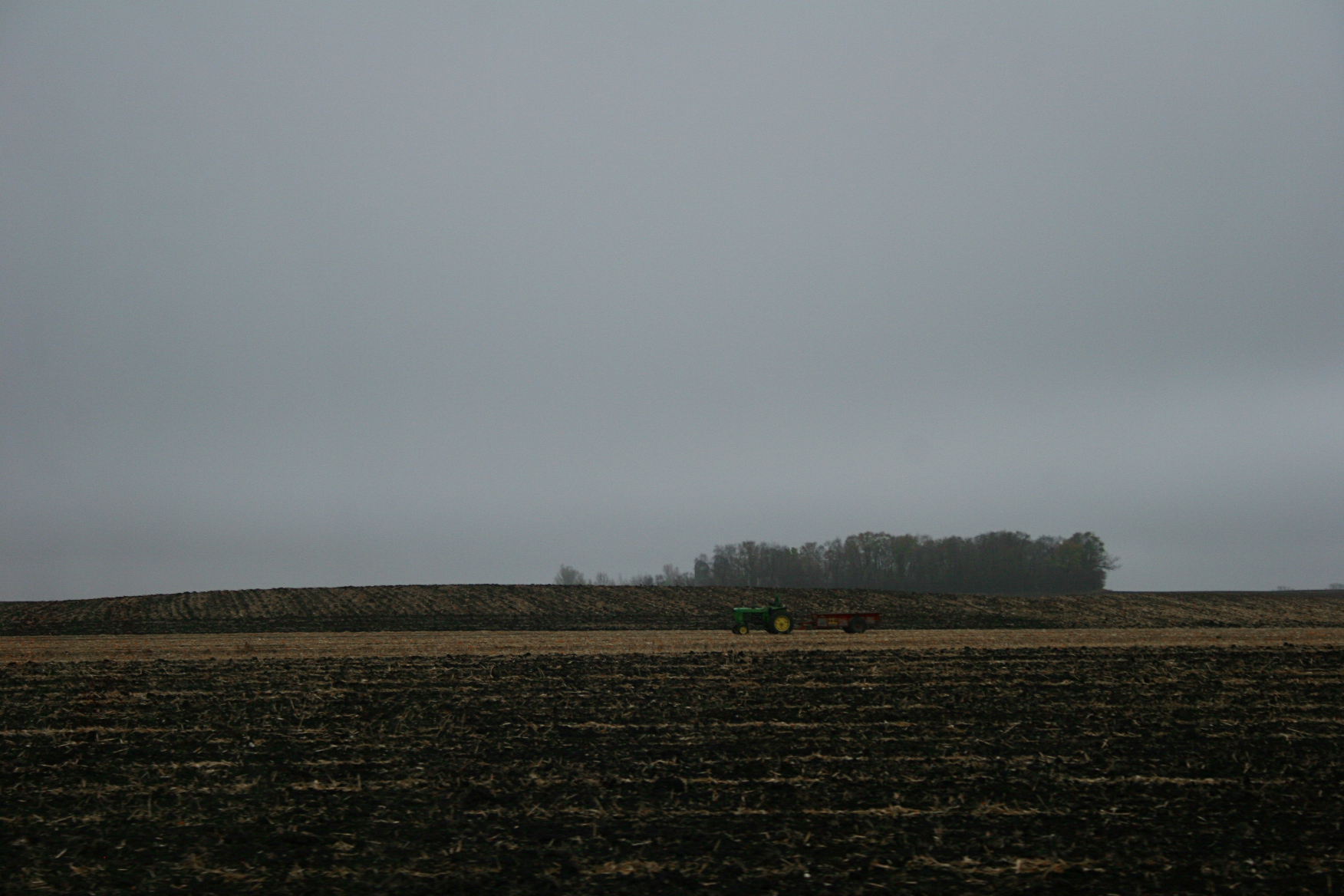
This image, among all those I took, emphasizes the expanse of sky and land which define the prairie.

It is that early-life connection, that growing up as a child of the prairie, that intimate familiarity with the land and the seasons and life cycles, the dirt under fingernails, the rocks lifted from fields, the cockleburs yanked from bean rows, the roar of the combine and the distinct putt-putt of the John Deere tractor, the calf shit clinging to buckle overshoes, the fireball of a sunset, the sights and sounds and smell and feel of this prairie place that shaped who I became as a person, a writer, a photographer.
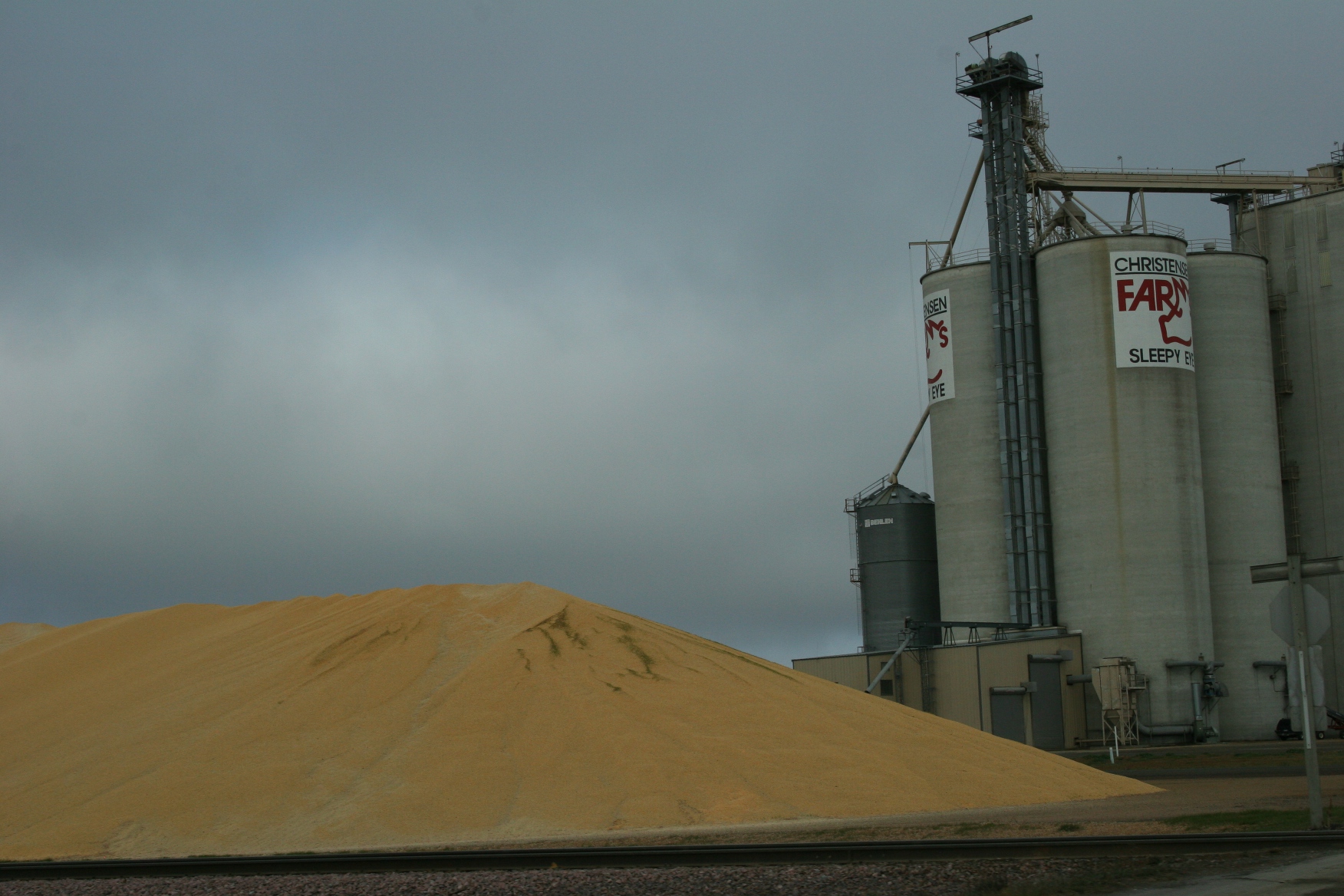
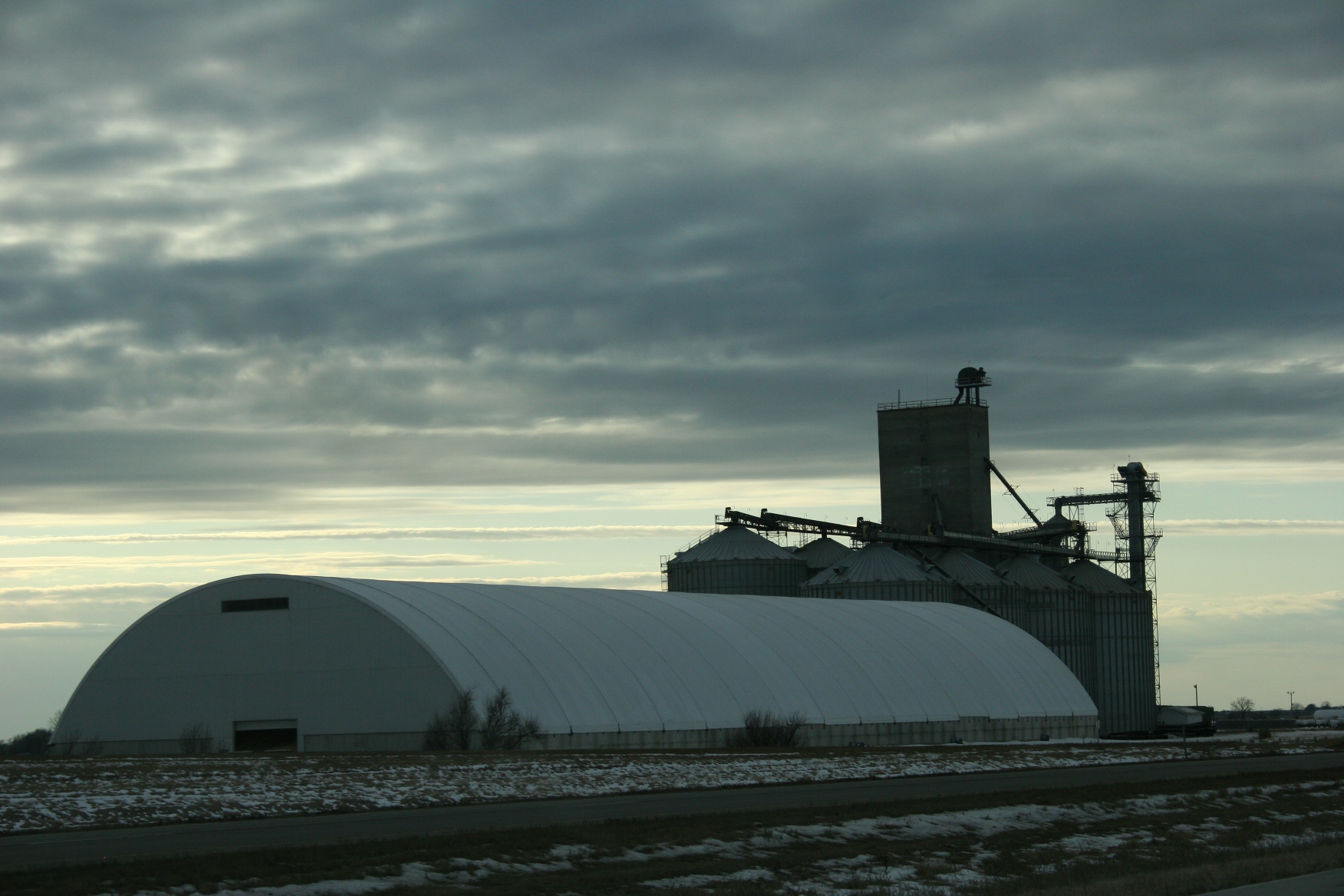
These towering elevators and corn pile at Christensen Farms near Sleepy Eye break up the flat landscape.

In this season, as the earth shifts from growth to harvest to dormancy, I notice even more the details etched into the prairie. The sky seems bigger, the land wider and all of us, in comparison, but mere specks upon the earth.

MORE PHOTOS from that road trip to the prairie:
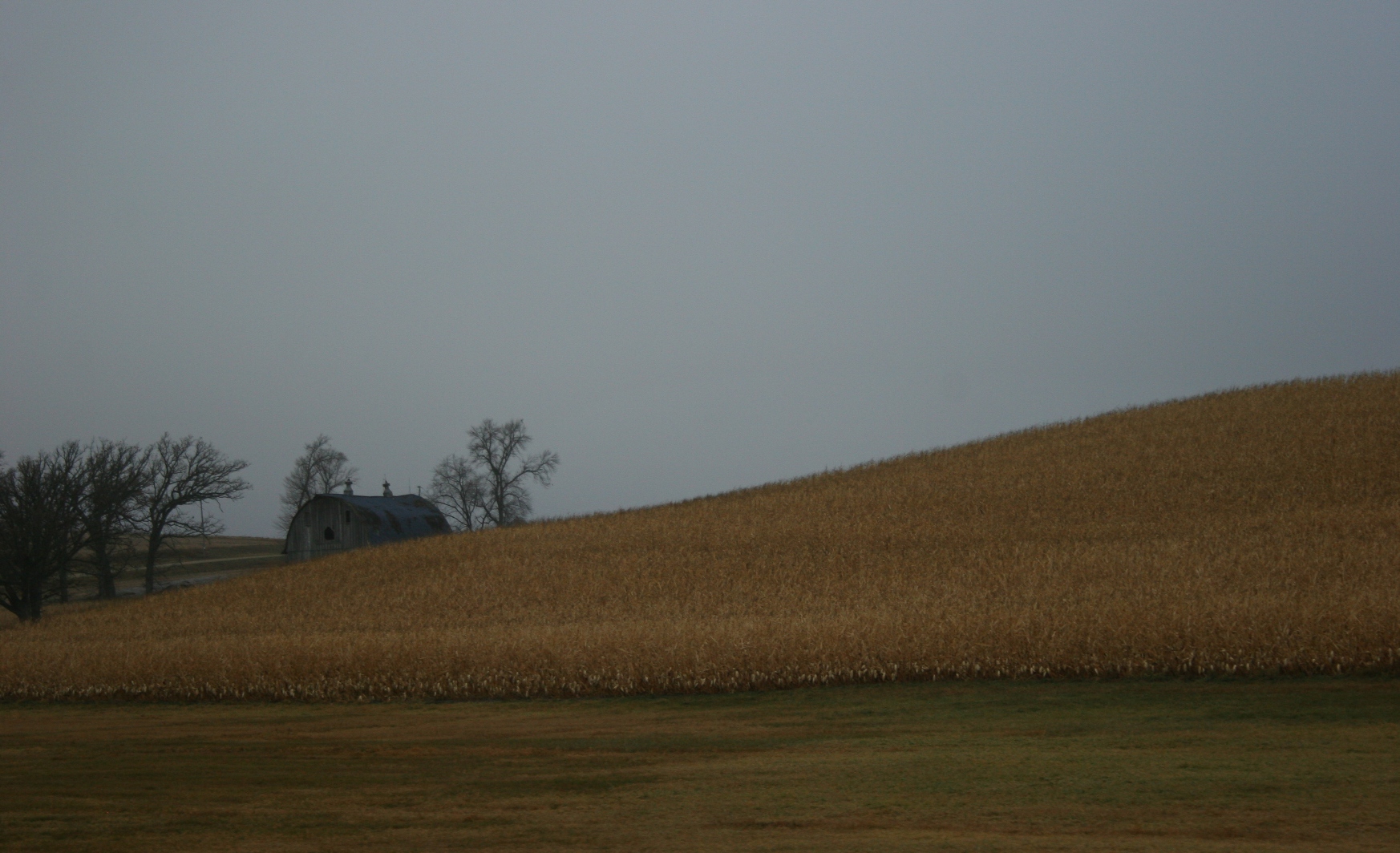
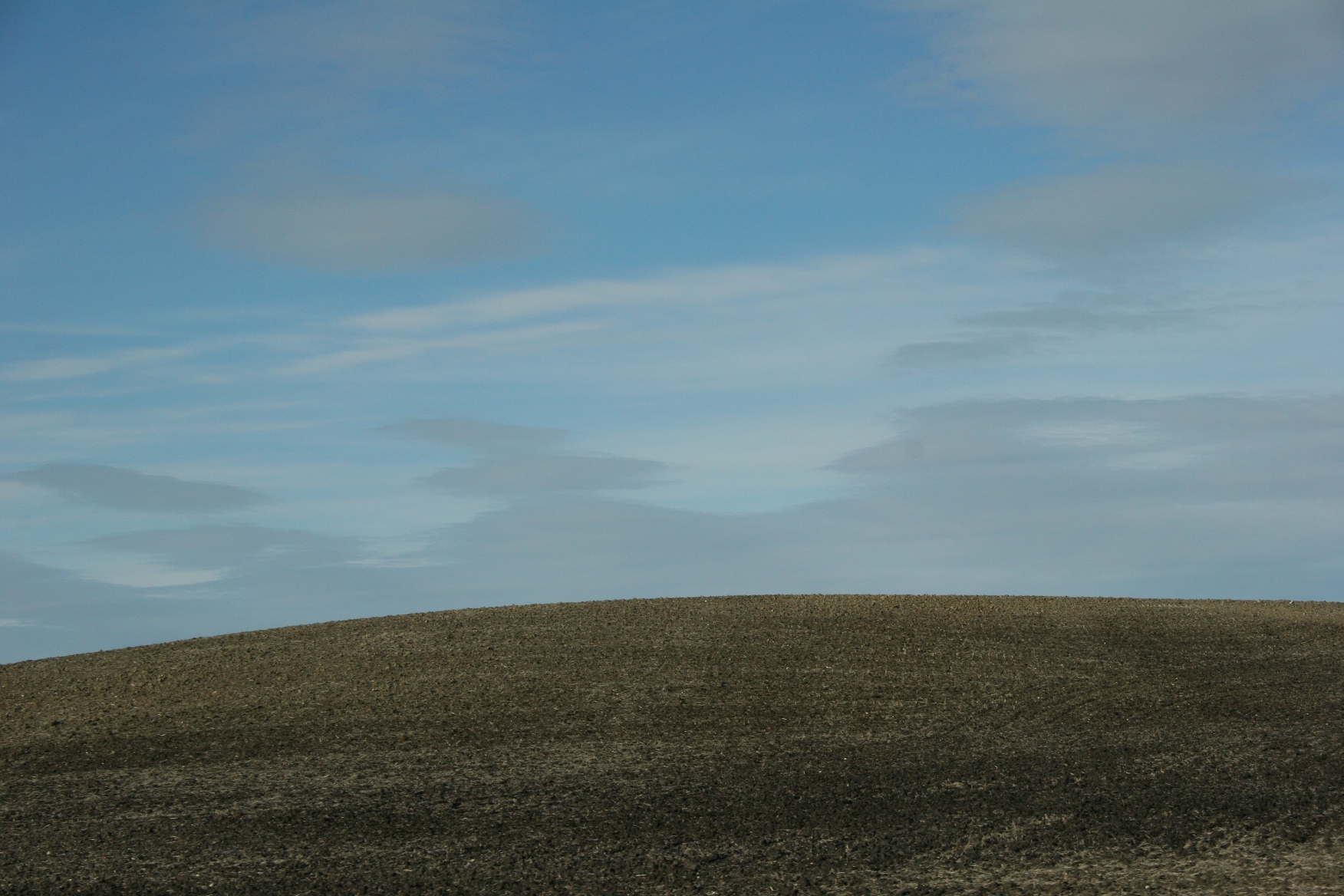
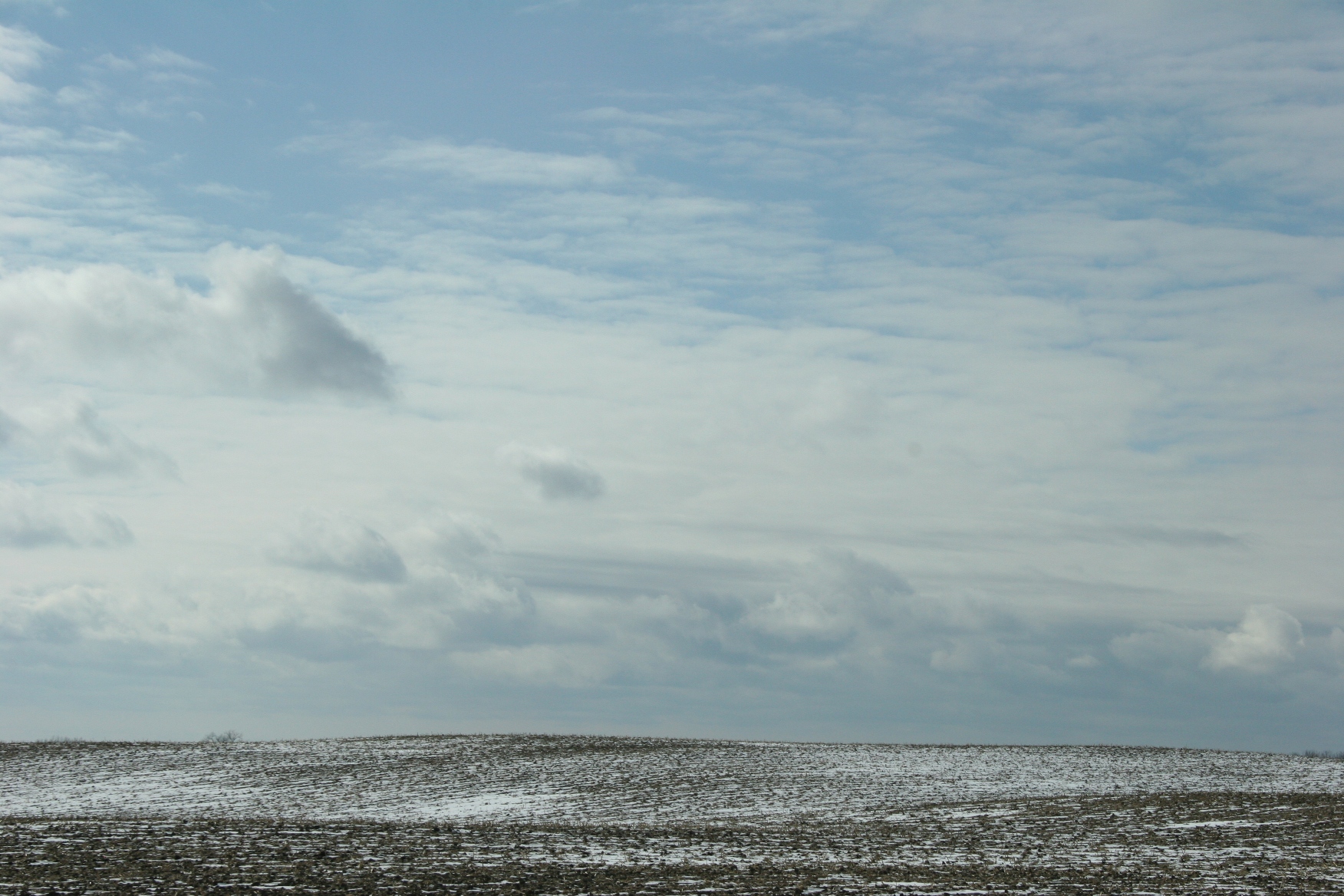
This is not a prairie scene because the prairie has no hills. Rather, I shot this near the beginning of our journey, west of Shieldsville.
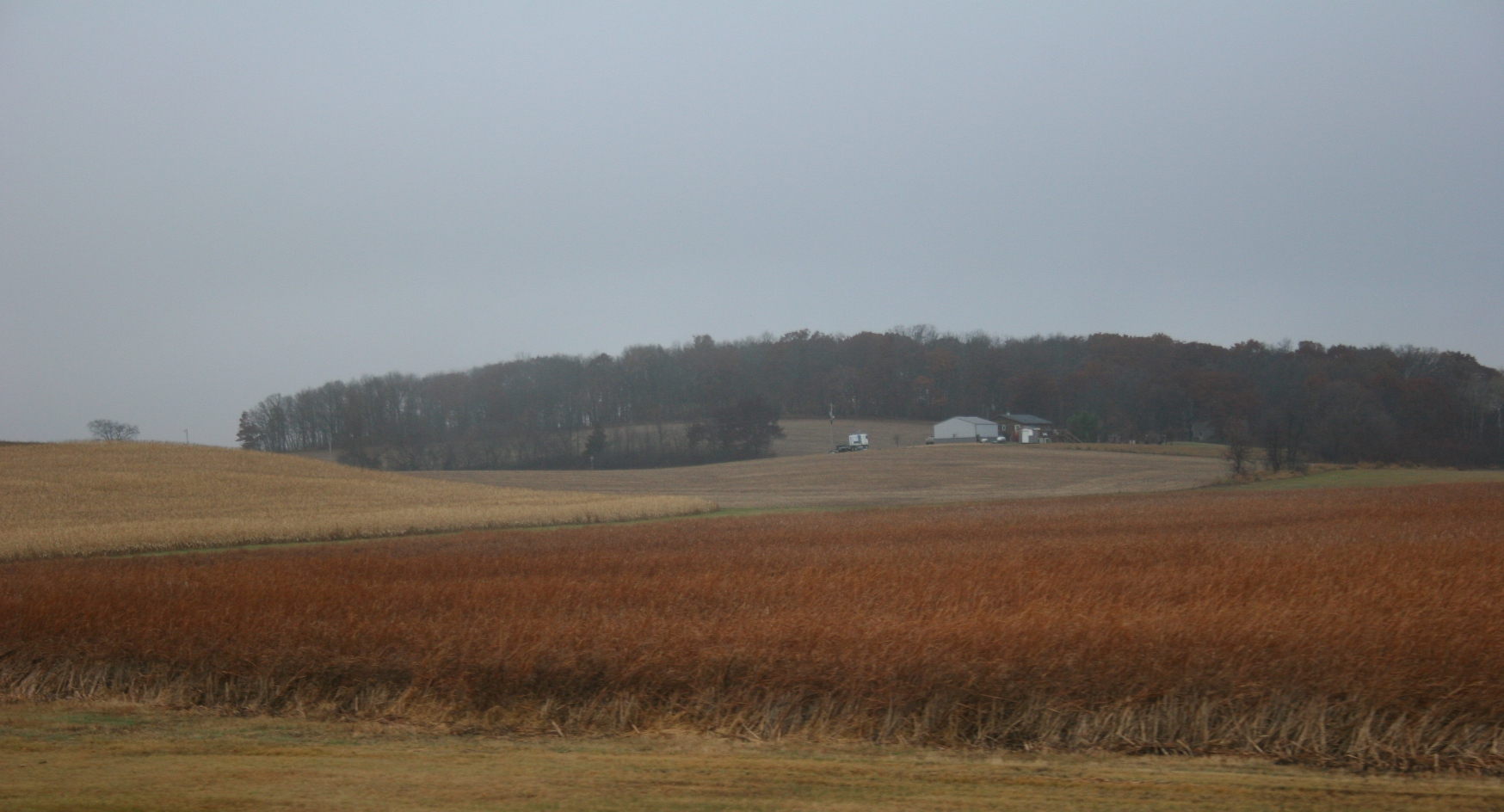
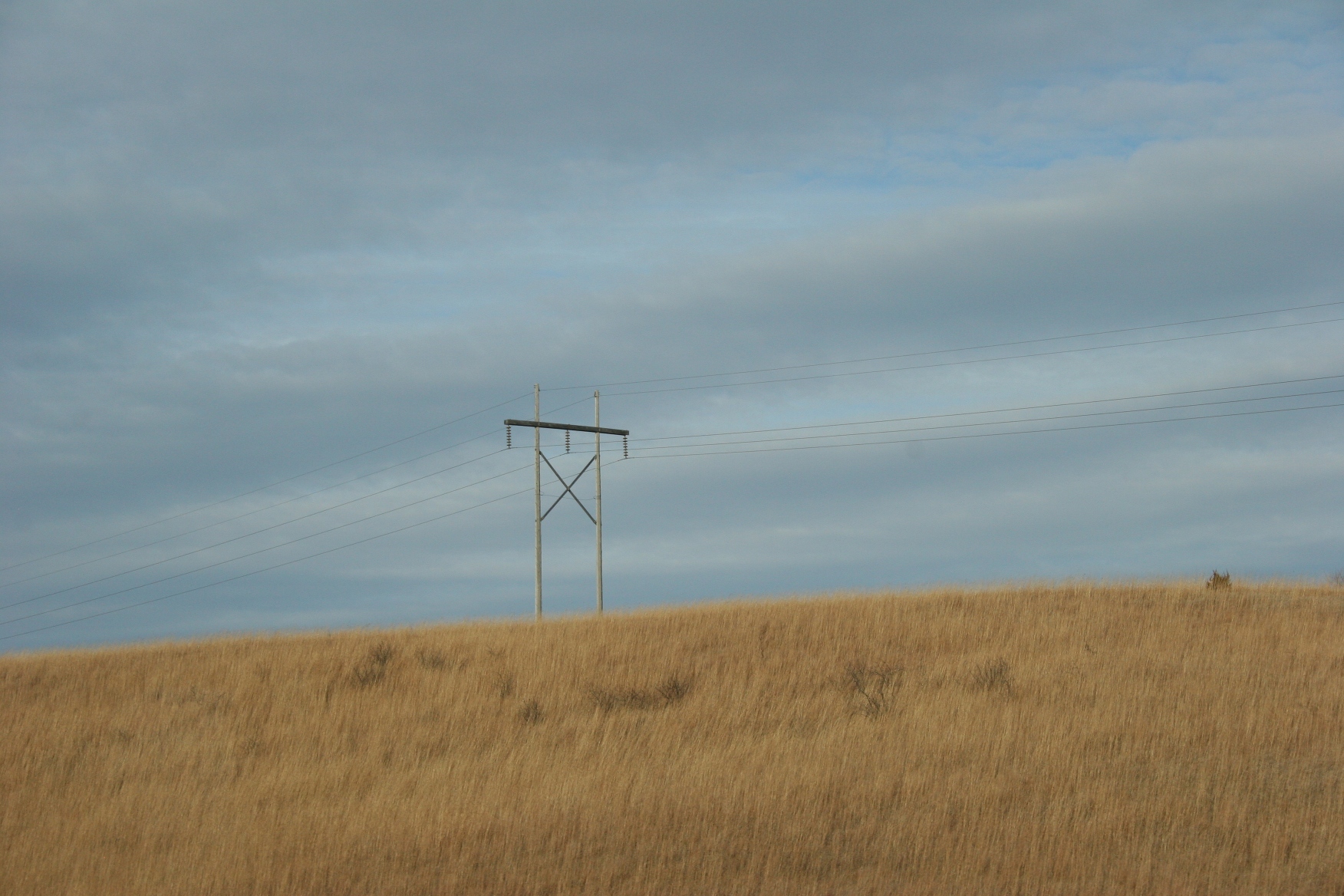
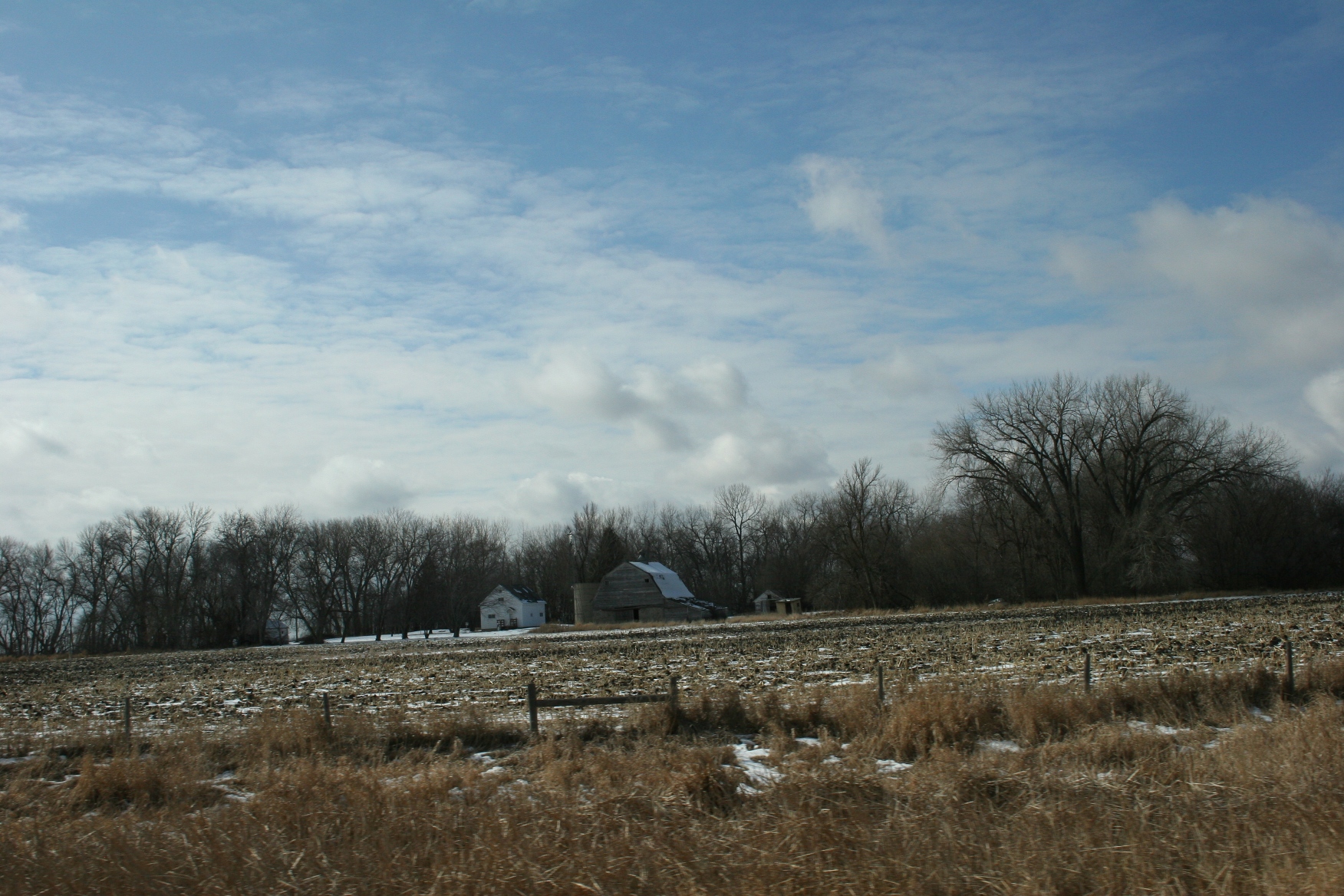
Another scene from just west of Shieldsville. It is the muted colors of the landscape that I so appreciate in this photo.
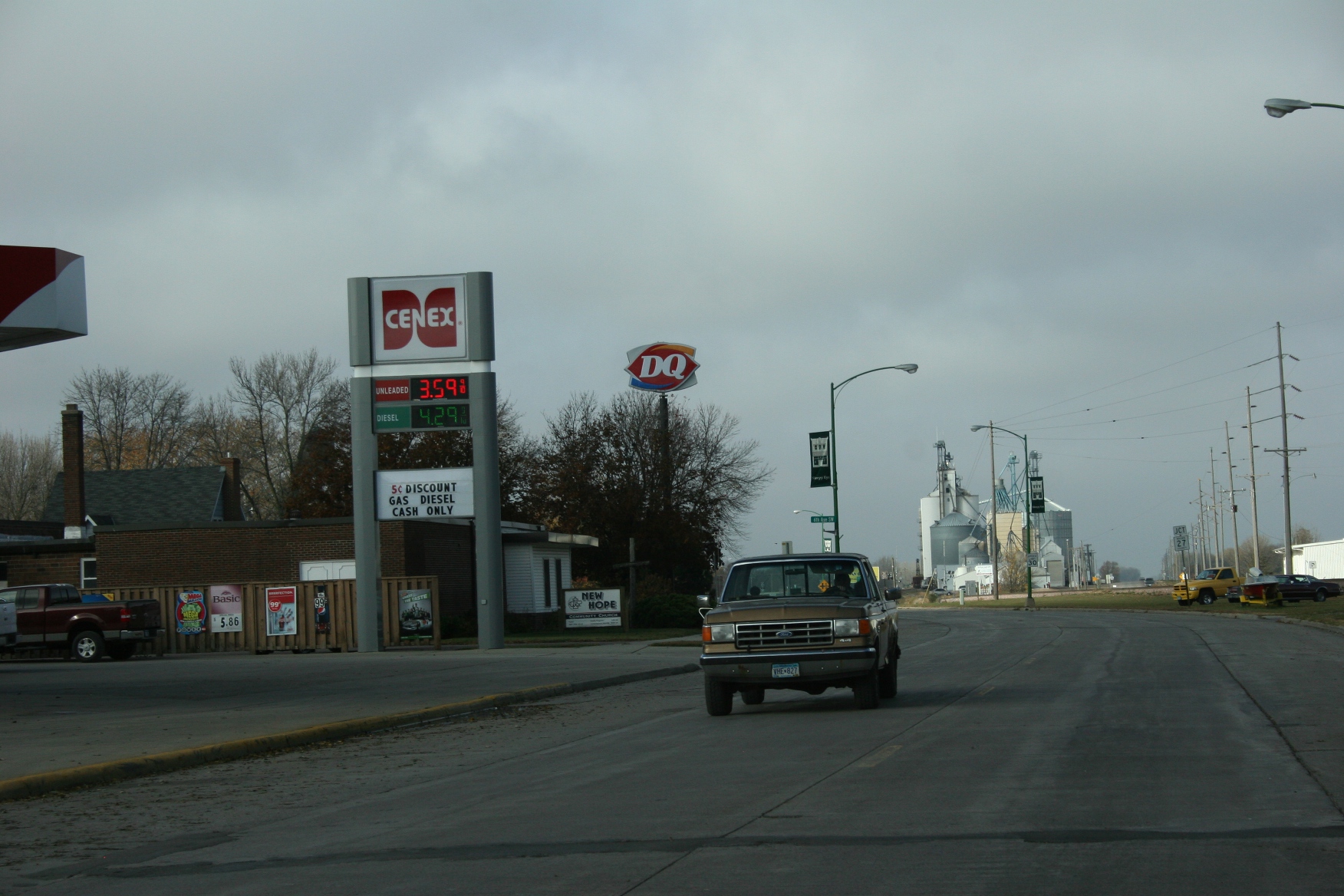
Driving through Sleepy Eye, a strong agricultural community where I lived and worked briefly, decades ago, as a reporter and photographer for The Sleepy Eye Herald-Dispatch. Sleepy Eye is most definitely on the prairie.
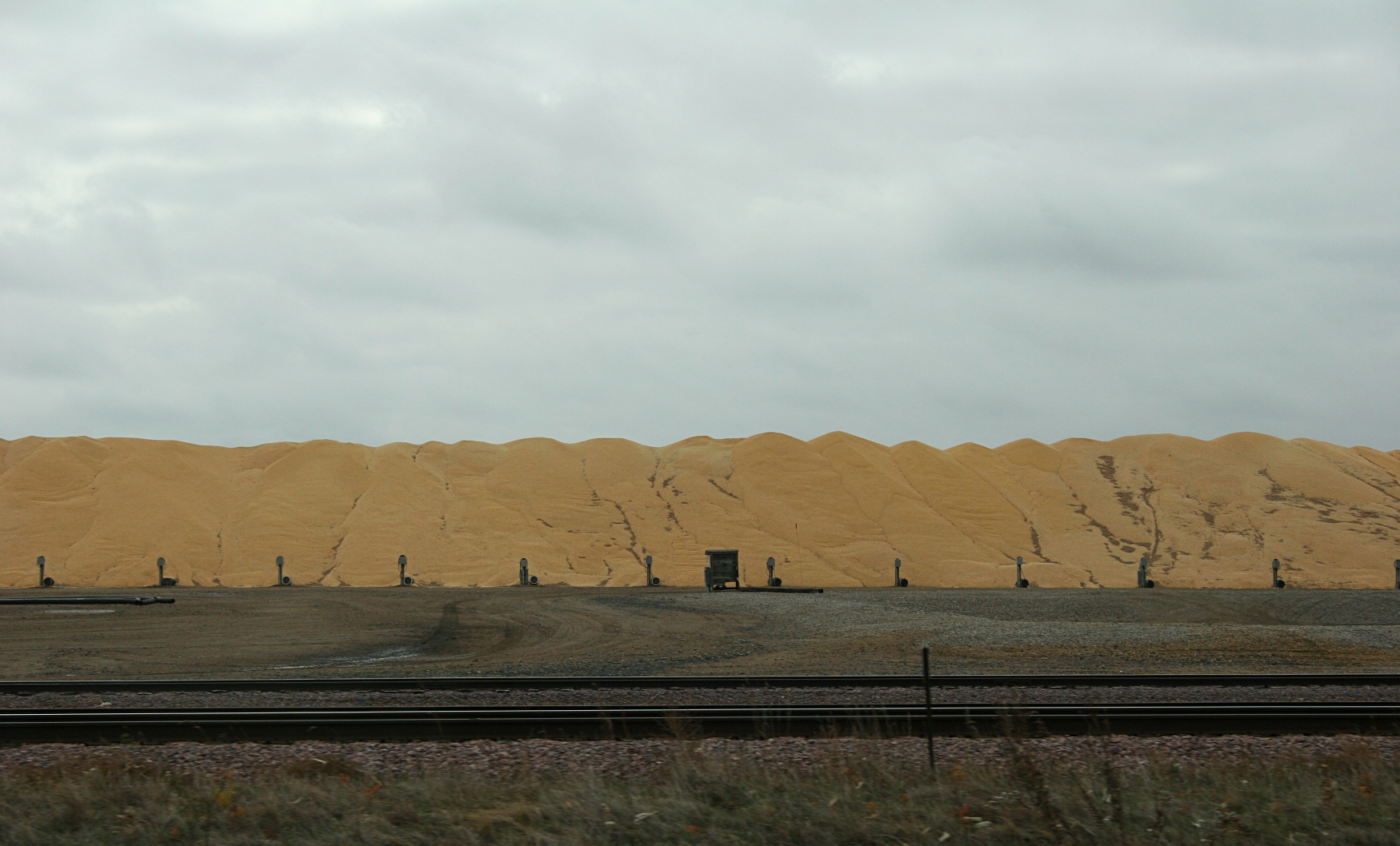
Hills of corn at a grain complex east of Lamberton.
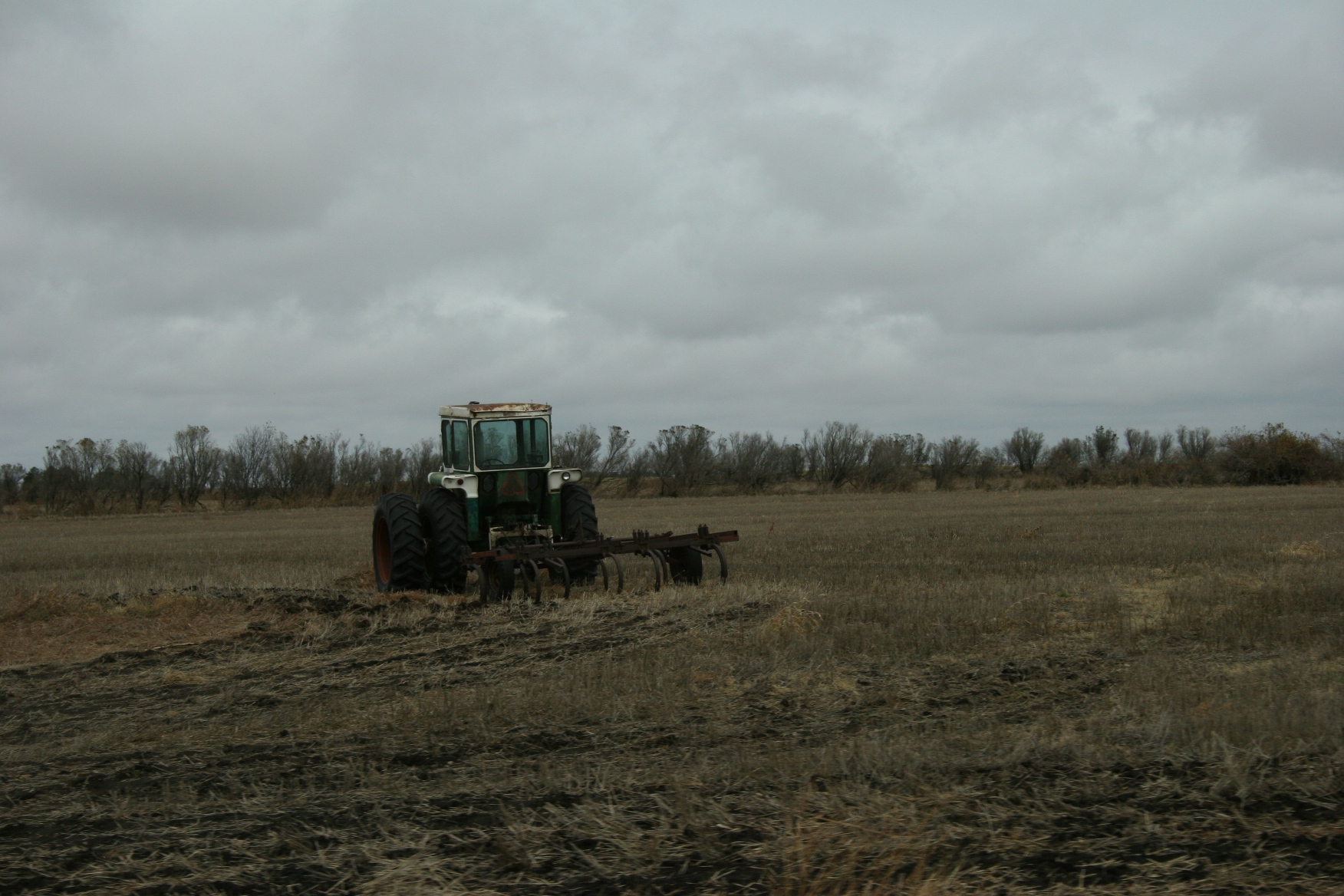
Fields are in all stages of harvest and tillage on the southwestern Minnesota prairie.
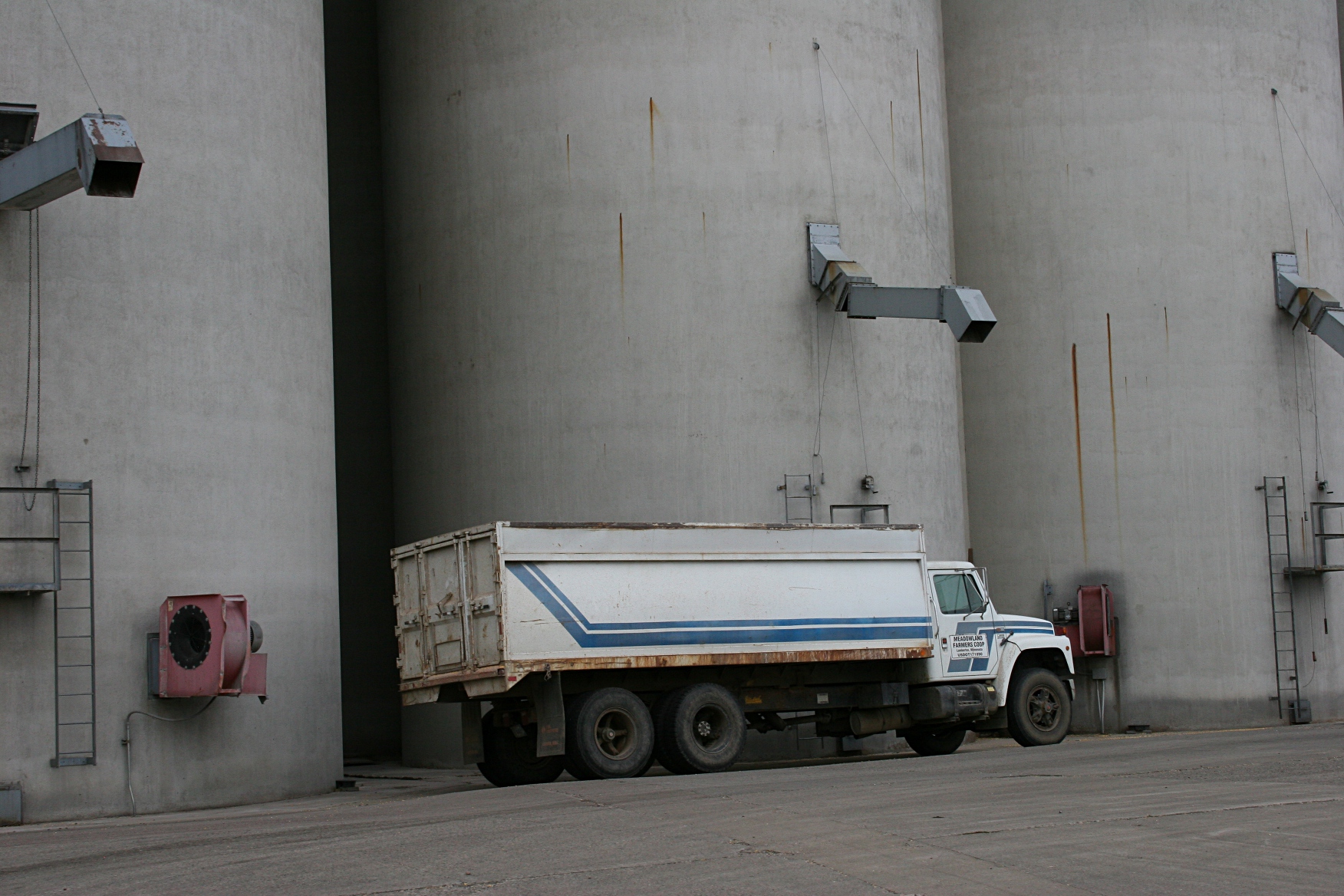
A grain truck parked at an elevator in Lamberton.
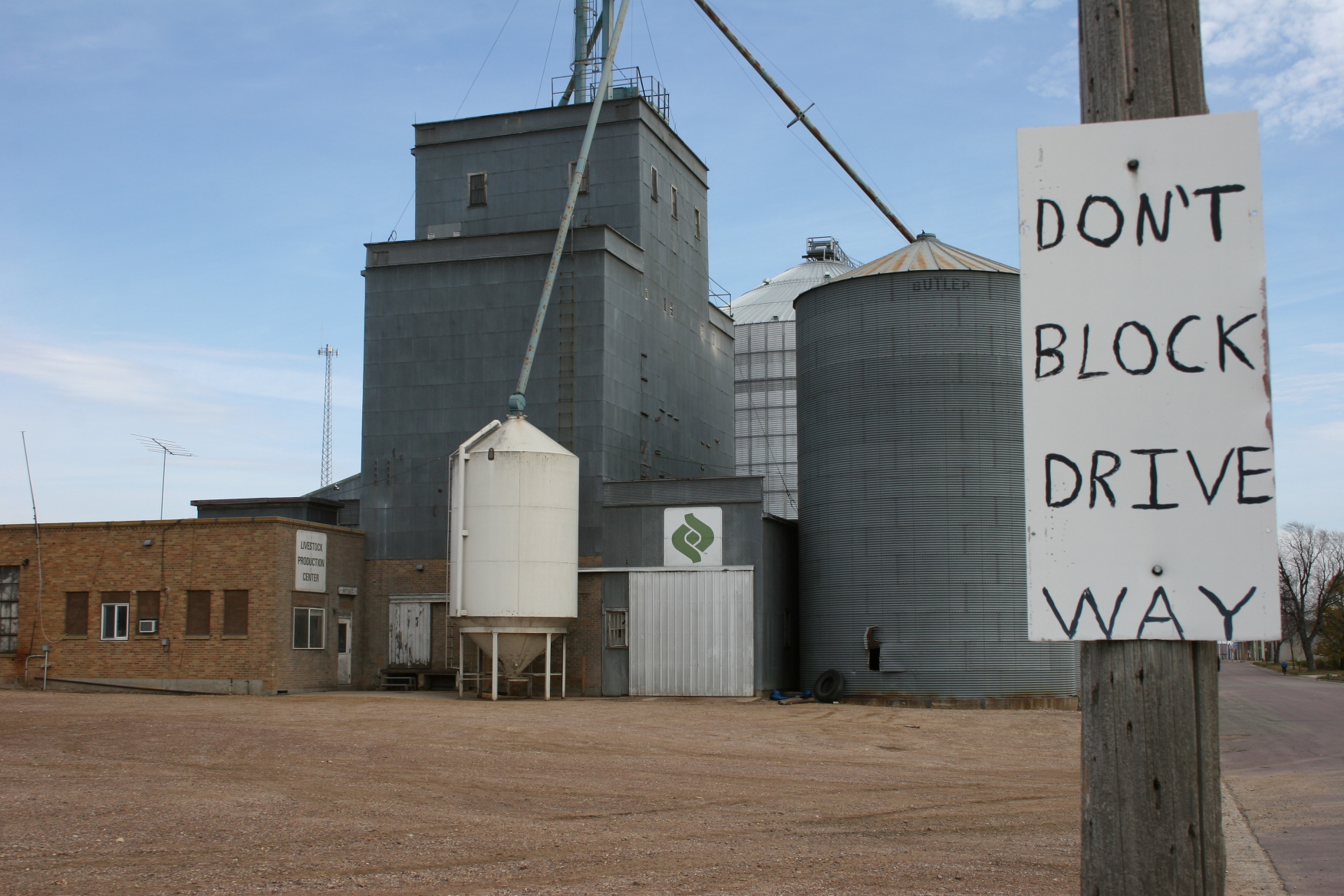
An important sign when trucks and tractors are lined up at the elevator in Lamberton.
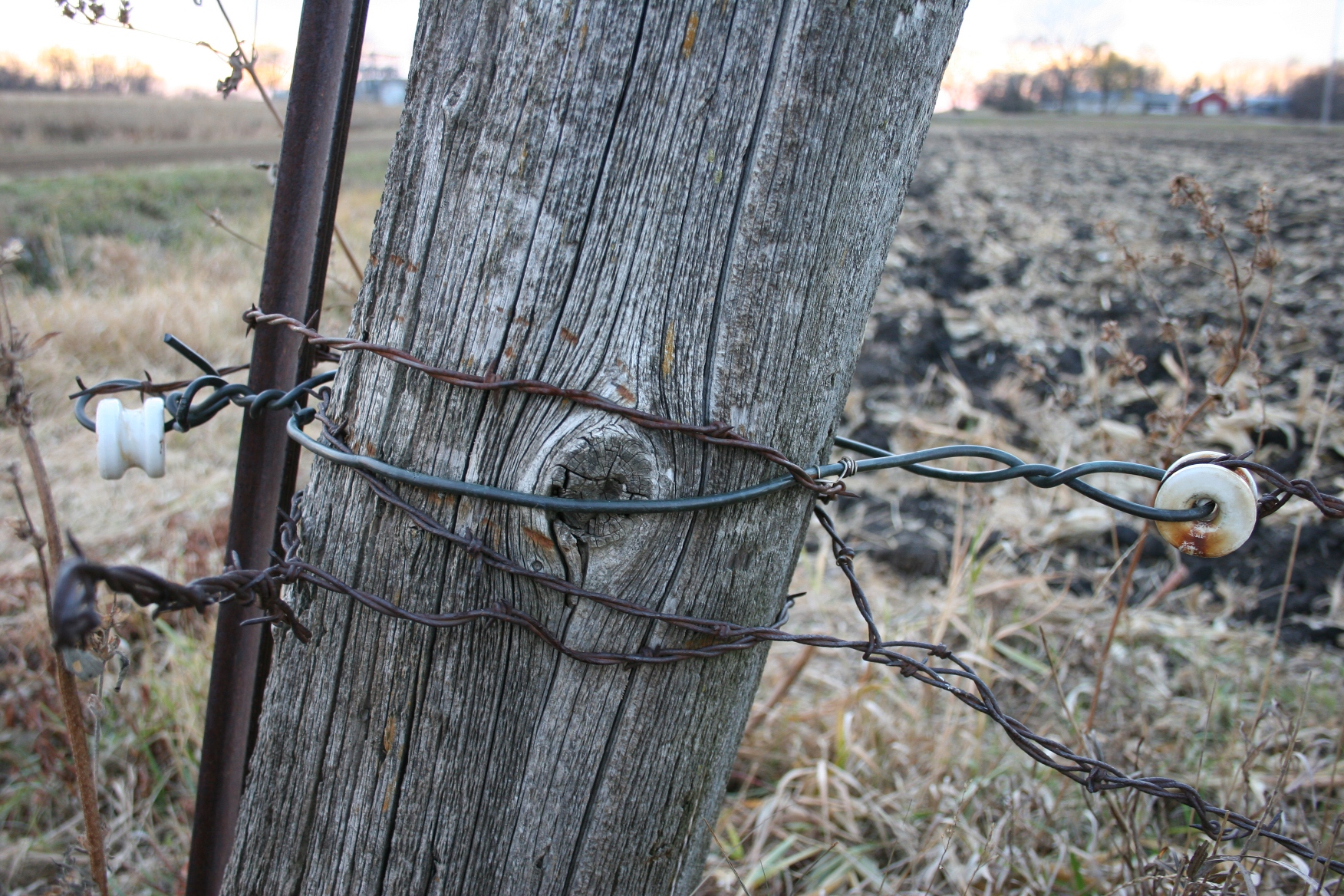
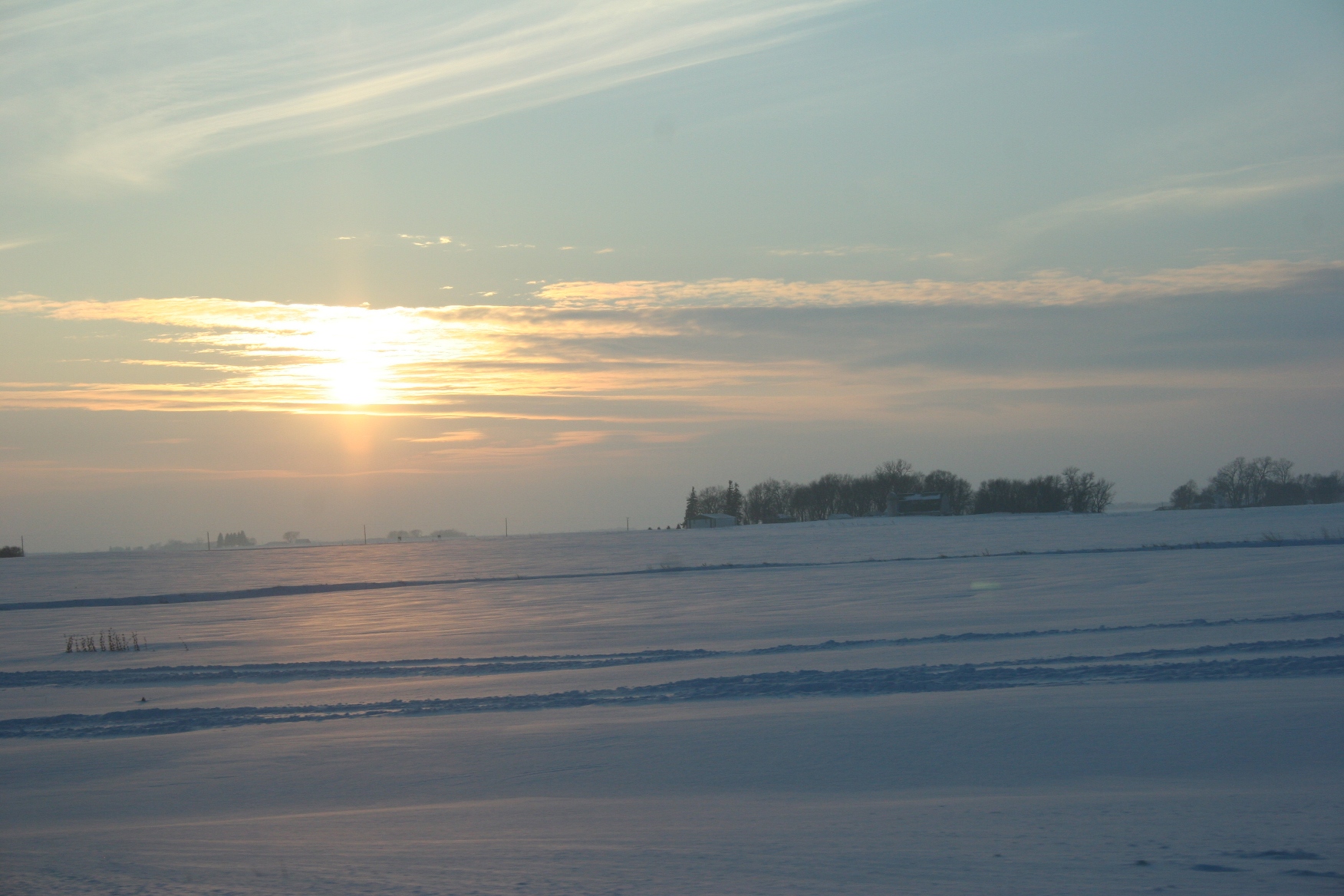
I ended my Saturday by walking my middle brother’s acreage north of Lamberton as the sun set, my favorite time of day on my native southwestern Minnesota prairie. I grew up about 25 miles northwest of here near Vesta.

© Copyright 2012 Audrey Kletscher Helbling


Flat Fargo August 24, 2012

Filed under: Uncategorized — Audrey Kletscher Helbling @ 6:47 AM
Tags: , , , , , , , ,

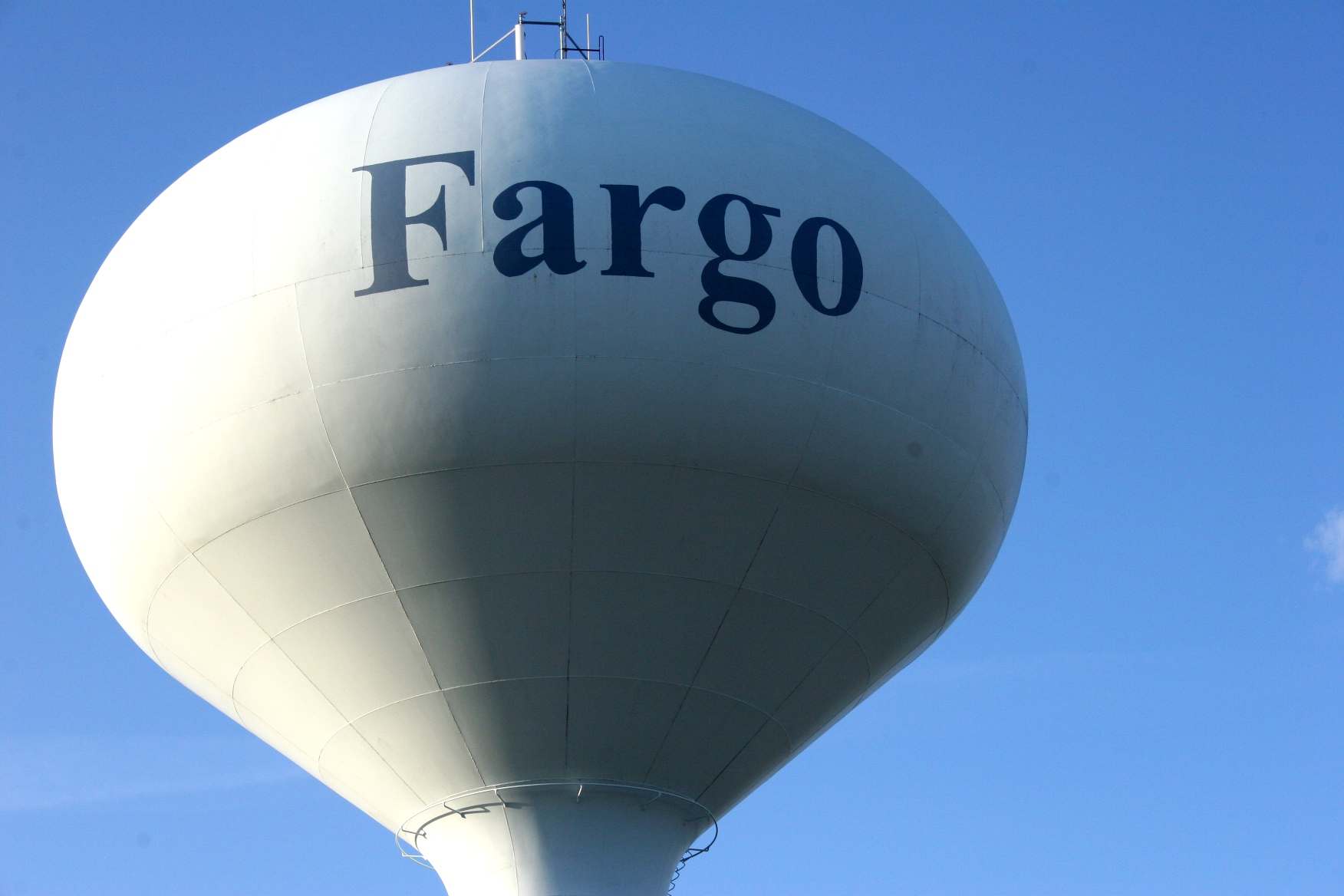
This water tower is located in West Fargo, an area of shopping malls, restaurants, Big Box stores, hotels, etc. The tower is a rare vertical structure, breaking the flat, horizontal landscape of the Fargo area.

I THOUGHT I KNEW FLAT having grown up on the southwestern Minnesota prairie where the land seems to stretch far and unbroken into flat infinity.

But not until this year, when my family traveled thrice nearly 300 miles north and west to Fargo, North Dakota, and back did I truly understand the definition of flat.

A train rumbles through the northwest side of Fargo near the airport and the campus of North Dakota State University. No, this is not a hill. I simply did not have my horizon straight as I photographed this train while traveling along a city street.

I doubt I have ever seen a city as flat as Fargo. You know, when you spill a glass of milk on the table how the liquid flows fast and free over the edge of the table. Well, that table would be Fargo. The milk would be the Red River of the North. I totally understand now why this city is so prone to flooding each spring.

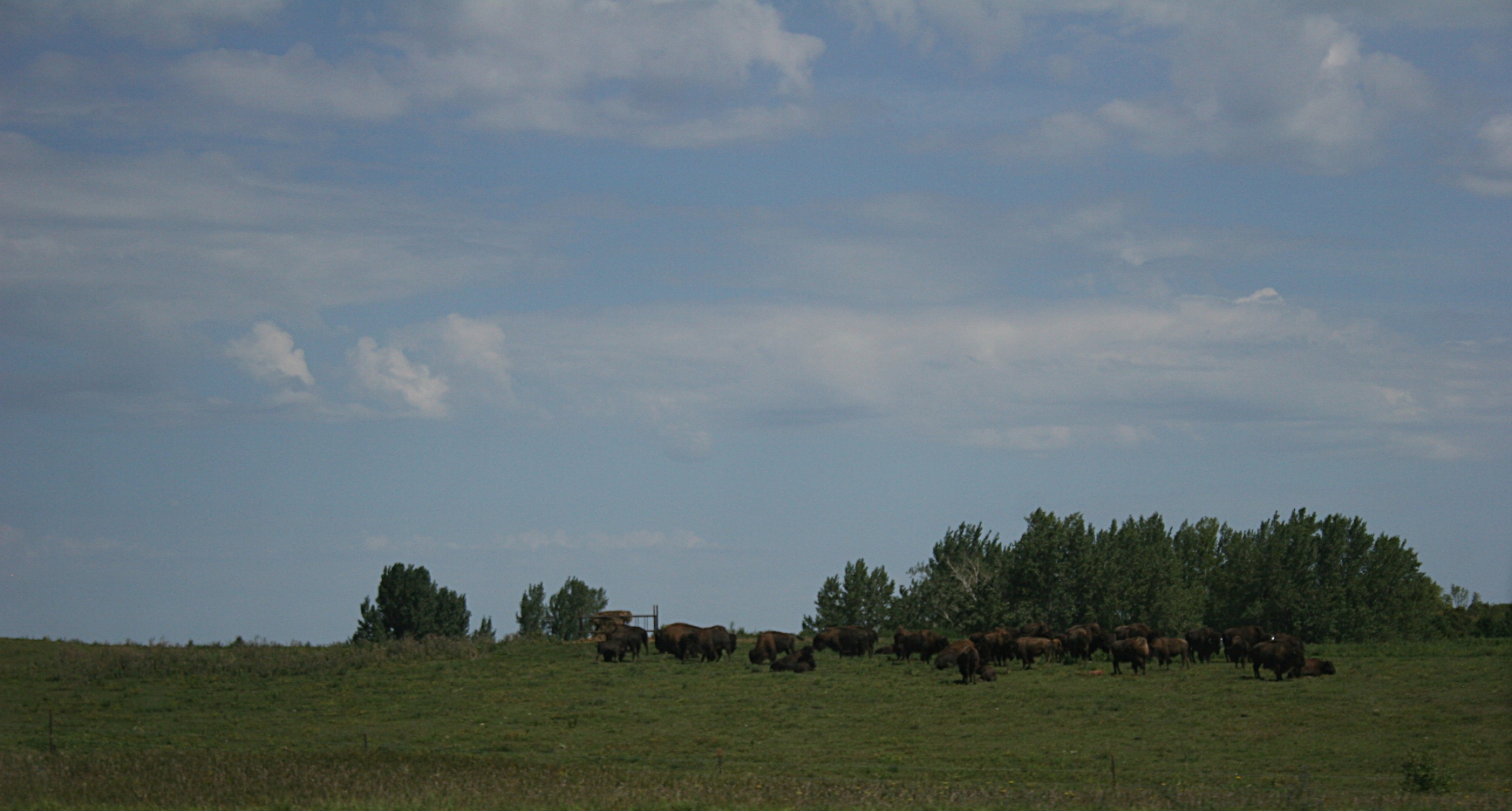
A herd of buffalo photographed along Interstate 94 east of Fargo, which places them in Minnesota.

I swear, if I had driven to the western edge of Fargo, I would see the world’s largest buffalo—26-foot tall, 60-ton concrete Dakota Thunder sculpted in 1959 by Elmer Petersen—90 miles away atop a hill in Jamestown’s Frontier Village. I saw the buffalo about 20 years ago while en route to a Helbling family reunion in Mandan/Bismarck, cities which actually do have hills. I think.

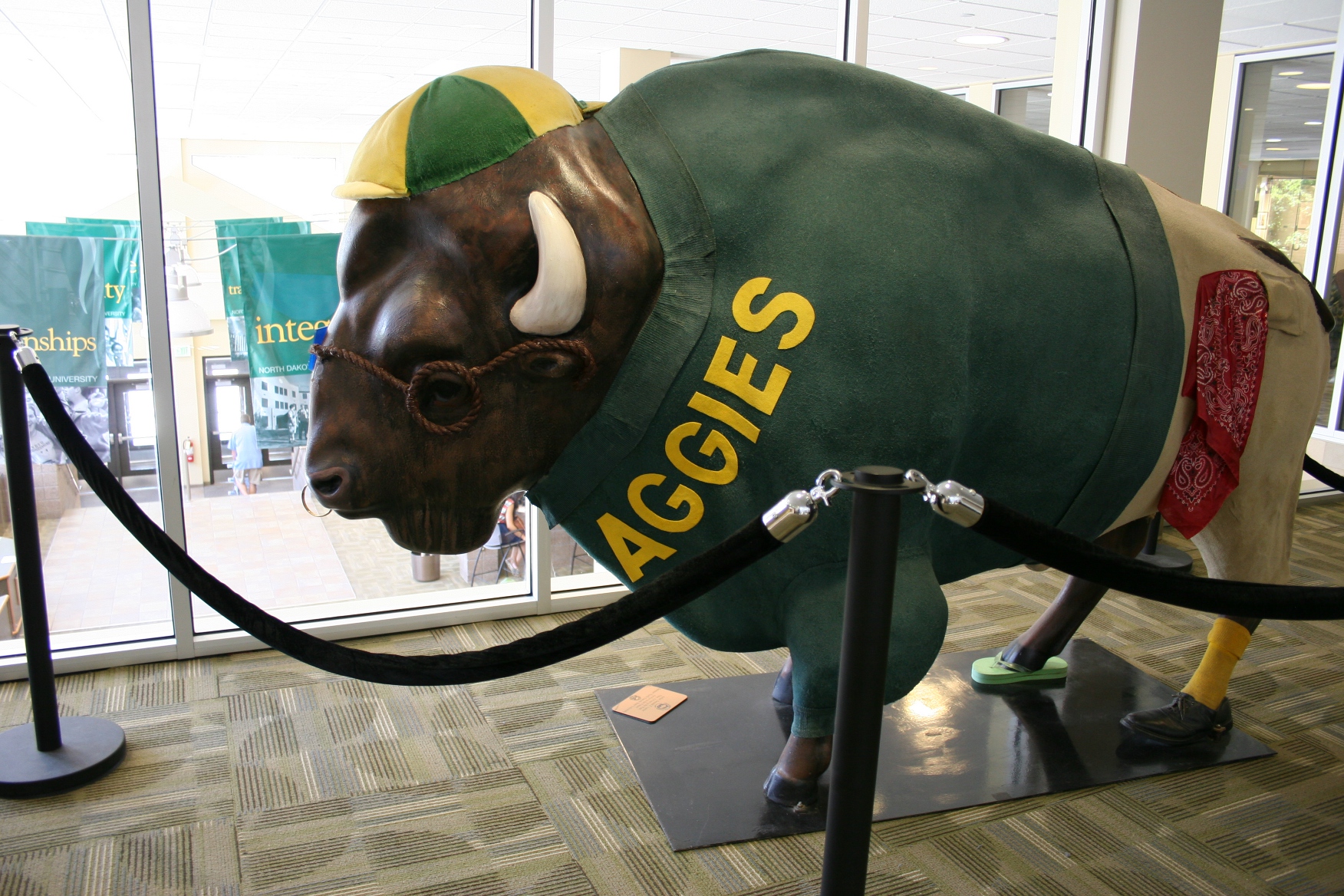
Inside the NDSU Memorial Union, I photographed this sculpture of a bison, the university’s mascot, in June.

About those buffalo… The flat and forever Dakota plains provide ideal grazing grounds for these massive creatures, or at least once did. Dakotans are proud of their native bison as evidenced in business names; art like “Herd About the Prairie” in Fargo; and even a bison mascot for North Dakota State University where my son is now a student.

A bus bench and sidewalk in West Fargo draw the eye west toward the horizon and the setting sun.

My apologies for momentarily edging away from that flat land issue. Even I, a girl of the prairie, find the Fargo flatness somewhat unsettling. I’d like a few more mature trees, especially on the sprawling growth west side of the city, upon which to rest my eyes. I’d like a few rises in the land, other than the rare man-made ones, to break the monotony of a straight horizontal line.

I expect that if I lived in Fargo, I’d adjust and think nothing of the flat landscape. But when you’re a visitor, you notice things like the lay of the land and the wind, oh, the winds of Fargo.

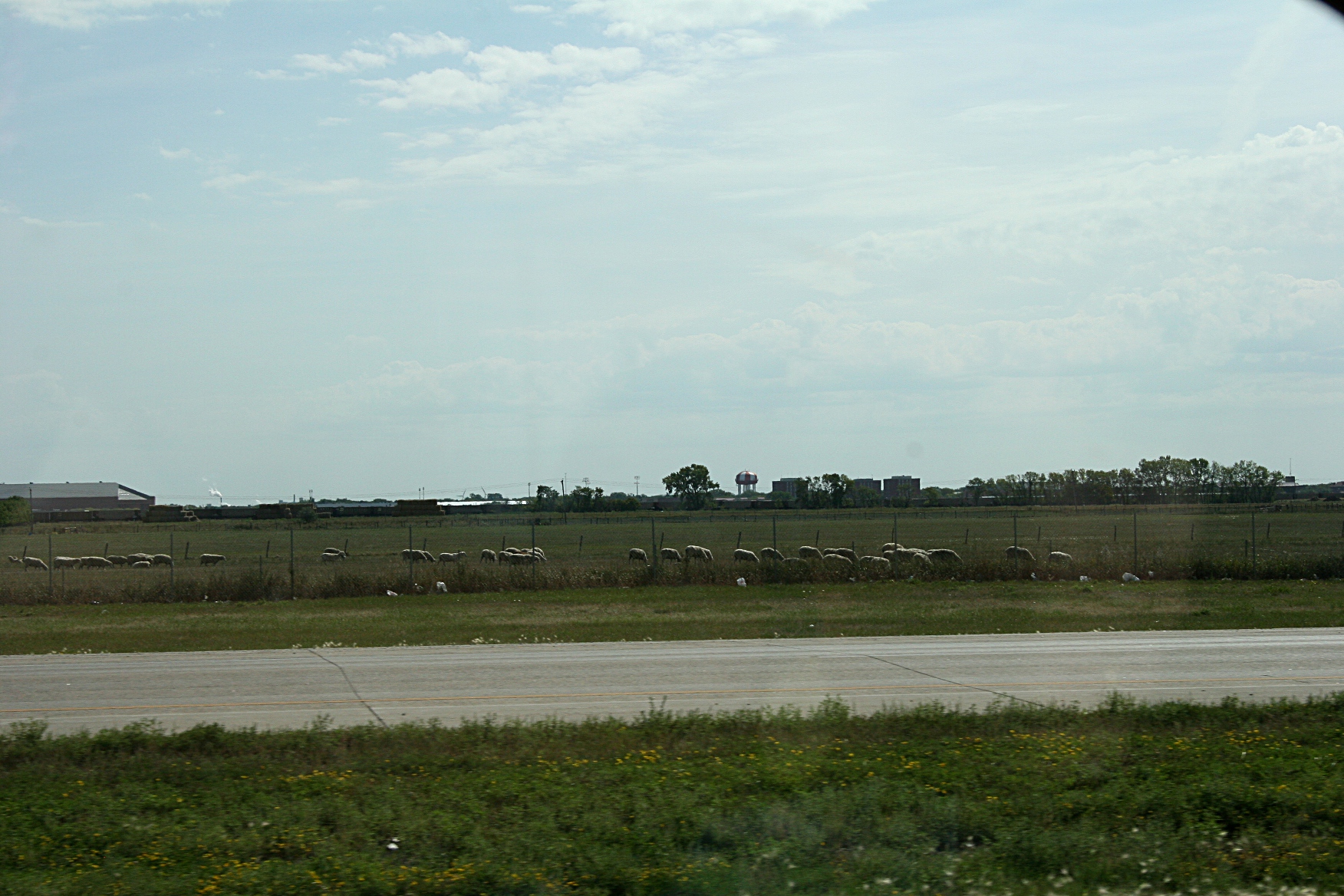
Just off Interstate 29 a flock of sheep graze pastureland as part of North Dakota State University’s Sheep Experiment Station.

Throughout West Fargo you’ll see open patches of land like this clover field next to the Fairfield Inn, where we’ve stayed twice. The hotel has strong horizontal lines like most structures in Fargo.

A fenceline and cornfield in Fargo, near (or part of, I’m not sure) the NDSU campus. More horizontal lines…

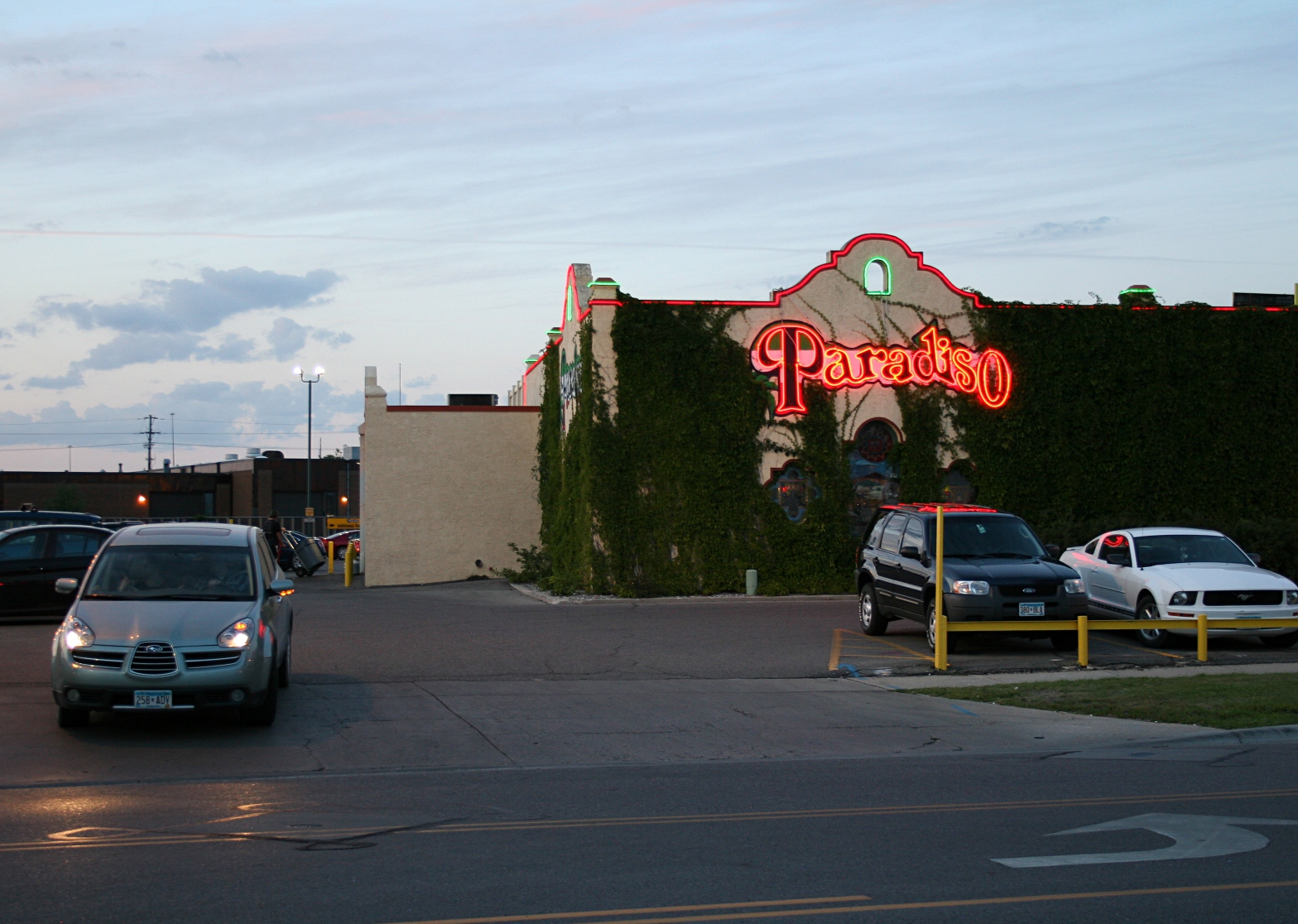
Paradise in Fargo, the Paradiso Mexican Restaurant, that is.

© Copyright 2012 Audrey Kletscher Helbling
 

On the road to Fargo, where sky meets land February 20, 2012

Filed under: Uncategorized — Audrey Kletscher Helbling @ 8:07 AM
Tags: , , , , , , , , , ,

Only 192 miles to Fargo, North Dakota. We've already driven 93.

SKY. That single word defines a road trip from Faribault to Fargo.

Don’t talk miles and time to me. Talk sky.

Once past the St. Cloud exit along Interstate 94, you start noticing the sky, how, the farther west you travel, the larger it becomes until the sheer immensity of that above overwhelms that below.

Sky meets land somewhere westbound along Interstate 94 toward Fargo.

For those who live in the confines of the city, where buildings and masses of streets and highways pull the sky downward and ground it, the vastness of the skies can unsettle the spirit and create a sense of vulnerability. You can’t help but feel exposed under brooding clouds and a sky that stretches into a distance without end.

Interstate 94 sometimes seems to run right into the sky as you drive west.

Yet, for me, a prairie native, there’s a certain sense of calm that comes from traveling into the sky. Because that is what you do when driving west from Minnesota toward the Dakotas. You drive into the sky.

After an initial awareness that you really are incredibly small compared to that above, you begin to notice the details. Or at least I begin to appreciate the details—like the hard edge where sky meets land, the ever-changing skyscape as clouds shift and the day wanes, the nuances in colors and texture that define firmament and field.

Power lines set against the backdrop of the sky provide a visual vertical respite for the eyes.

It is as if you’ve brushed yourself right into a landscape painting.

And I can’t get enough of it, of the strong horizontal lines that sweep across my vision, reconnecting me to my prairie past.

The landscape: flat and into forever near Fargo/Moorhead.

The ever-changing clouds blend with the rural landscape.

As the sun sets, the sky broods.

The sharp contrast of black and white against blue pleases my eyes.

Fence lines and farms slice through the land.

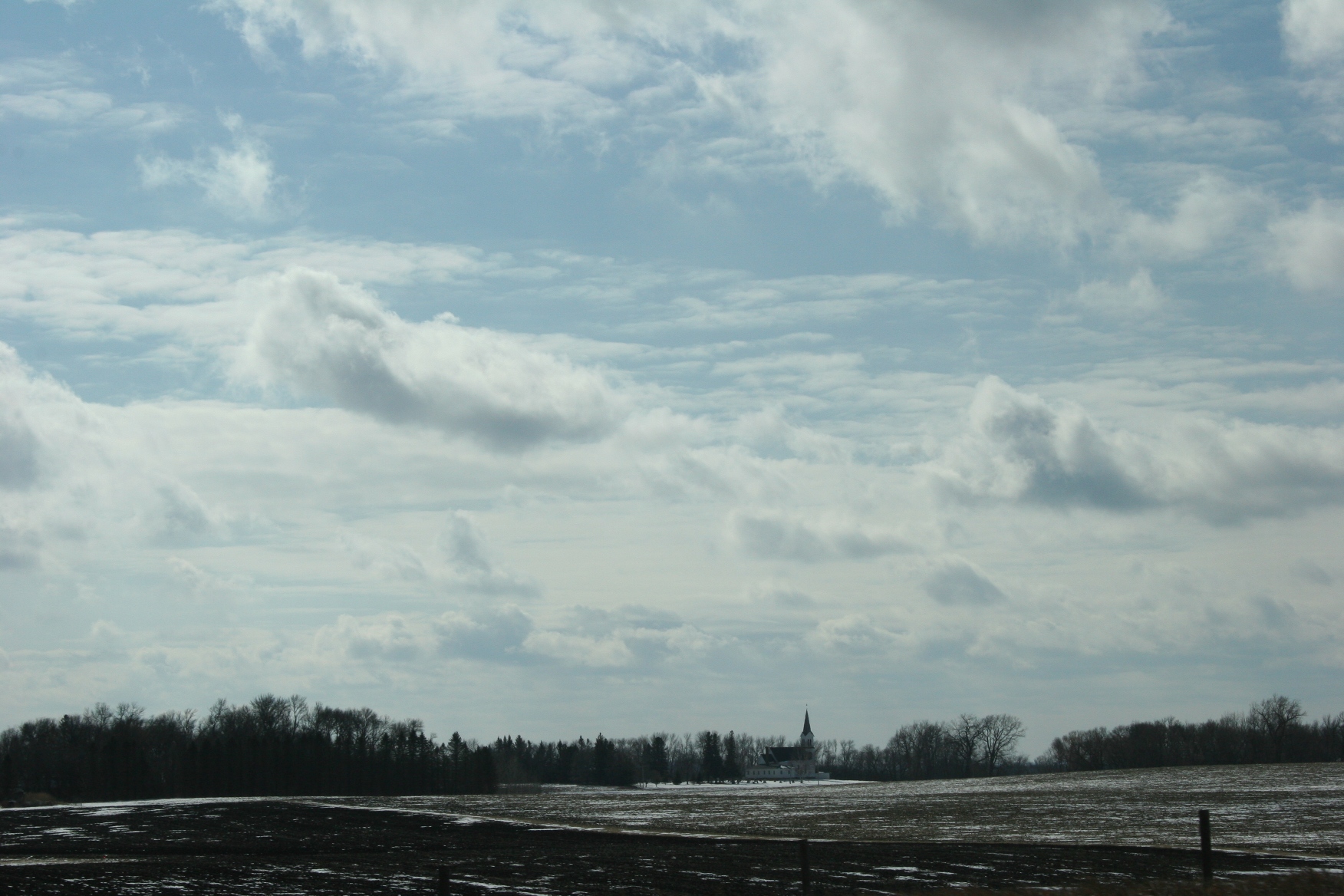
A church spire in the distance draws my eye in this place where my soul reconnects to the prairie.

ALL OF THESE IMAGES were taken with my DSLR camera, set at a fast shutter speed, while traveling along Interstate 94. Check back for more posts from this trip to Fargo.

© Copyright 2012 Audrey Kletscher Helbling
 

What’s your line? January 31, 2012

WHAT LINES DEFINE your world? Horizontal or vertical?

Perhaps you’ve never considered that question. But ponder that for a minute.

Where do you live? Where do you work? What lines define your environment?

Do you live in the city, the country or a small town? Do you live on the prairie, in the mountains or somewhere in between?

My world has always been horizontal. I prefer it that way—flat and unbroken by vertical obstacles. Towering buildings overwhelm me; make me feel small, visually overpowered and uncomfortable.

Can you understand that? Perhaps if you grew up or live in a rural area, you do.

The sun sets on my native southwestern Minnesota prairie in this December 2010 image.

I traveled to Chicago once during college, and to New York. While touring the garment district in the Big Apple, I was nearly flattened by a vendor pushing a rack of clothing as I paused on the sidewalk to gawk at the skyscrapers. In Chicago, I struggled with sleeping in a hotel that stretched too far into the sky.

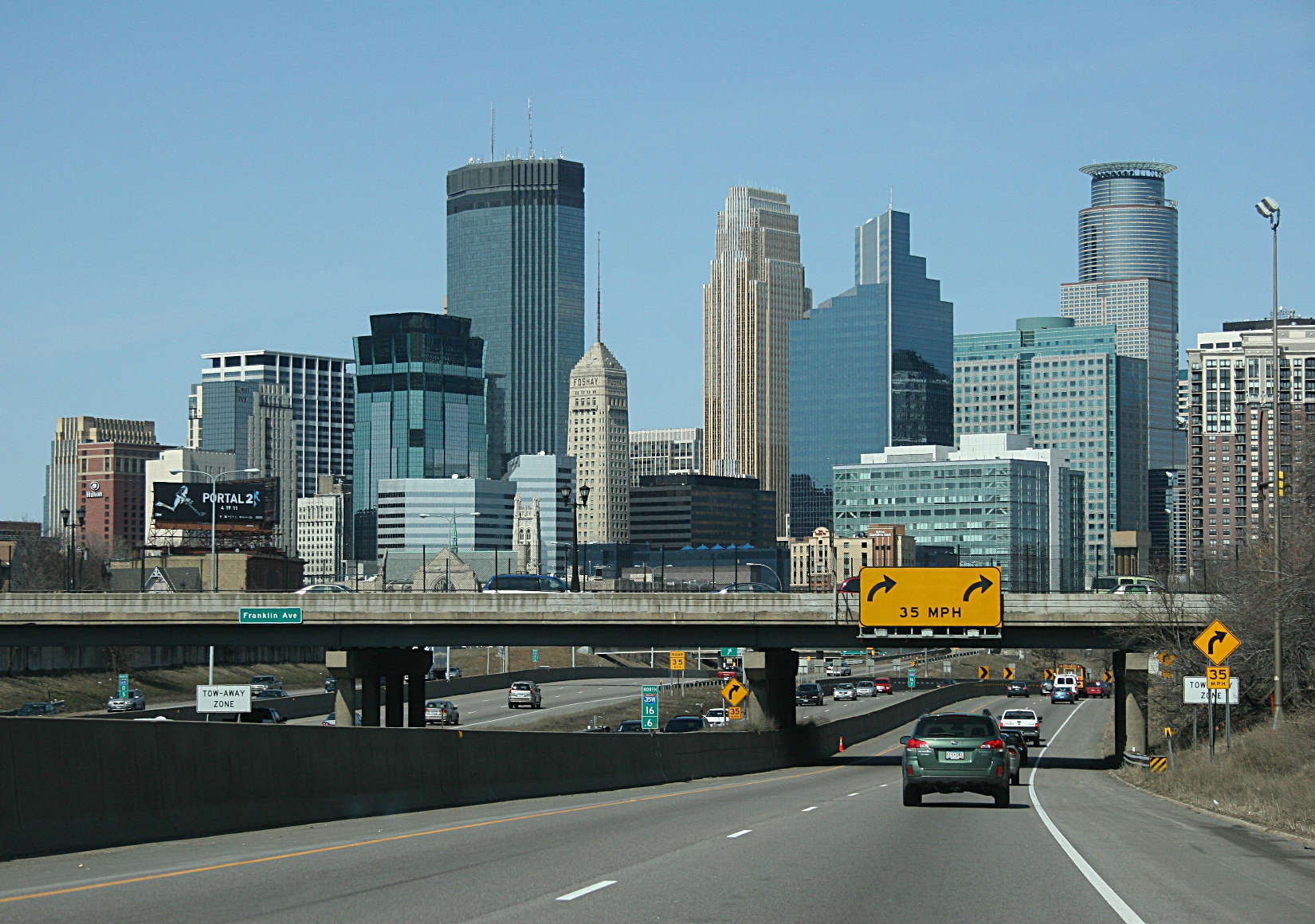
A view of the Minneapolis skyline from Interstate 35.

I can’t recall the last time I visited downtown Minneapolis, but I’m certain it’s been decades. I’ve never been to any other big cities and I have no desire to travel to them.

Some of you will say I am missing out on culture and shopping and so much more by staying out of the city. You would be right.

But to counter that, I will tell you many a big city resident fails to leave the confines of the city to explore the small towns and rural areas that offer grassroots culture and shopping and much, much more.

I am not trying to pit city against country, horizontal against vertical, here. Rather, I’d simply like you to think about your world from a visual perspective. Then, tell me, what lines define your landscape? Vertical or horizontal, or a mixture of both?

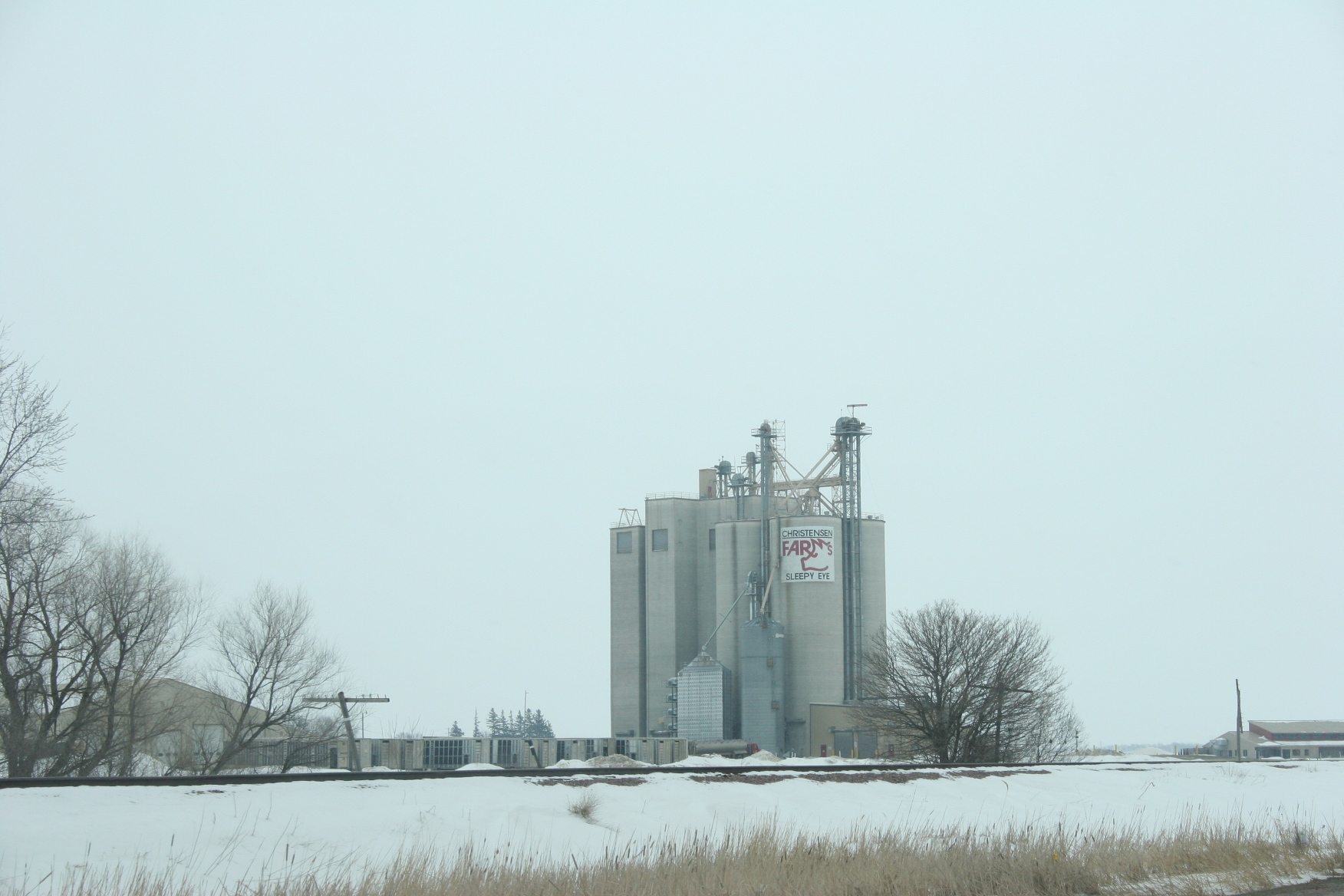
Even in rural Minnesota, vertical lines occasionally break the horizon, like this scene at Christensen Farms along U.S. Highway 14 east of Sleepy Eye in southwestern Minnesota.

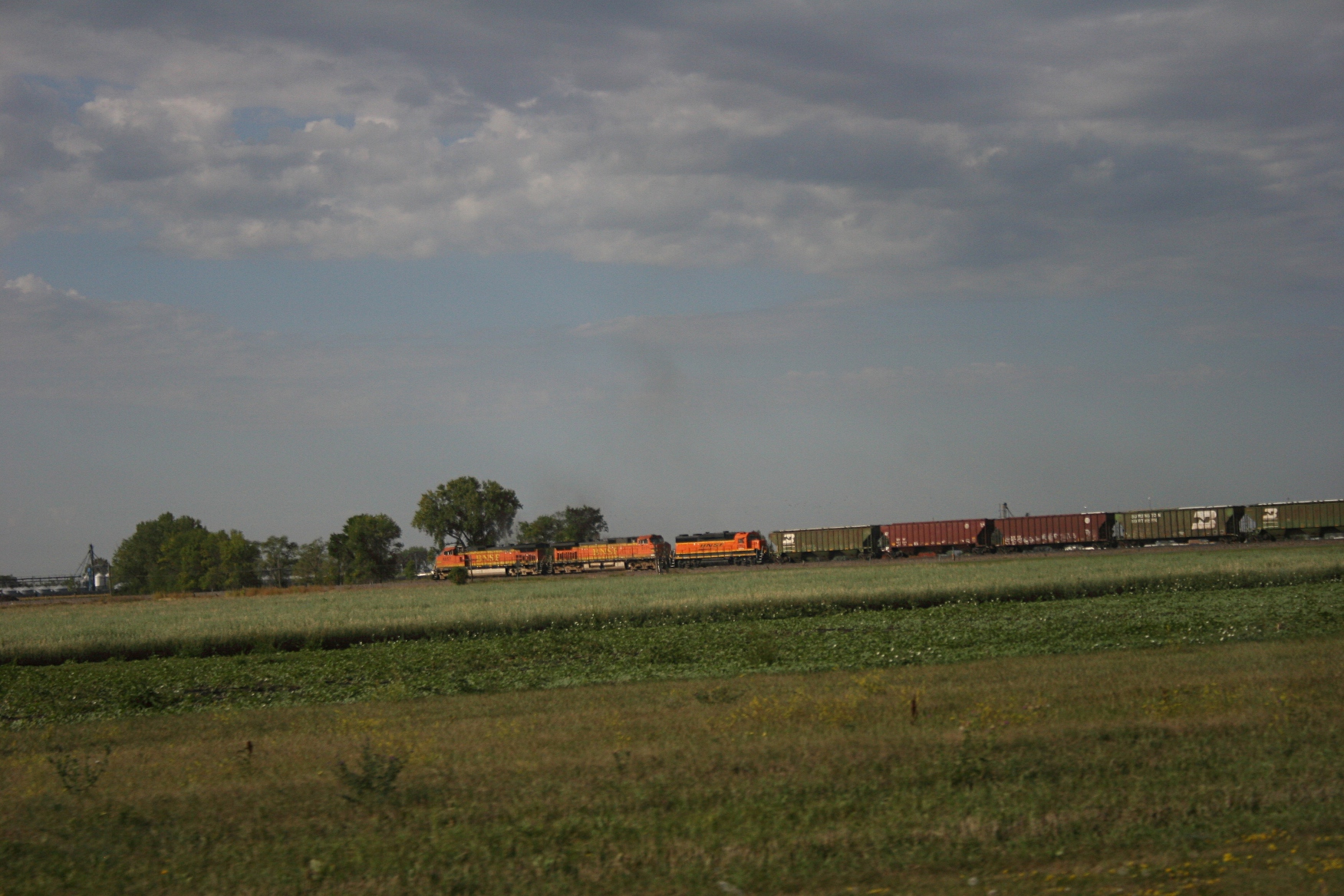
The strong horizontal lines of railroad tracks and trains cross the flat prairie landscape of southwestern Minnesota. I shot this along U.S. Highway 14 between Springfield and Sleepy Eye as snow fell late on a March morning in 2011.

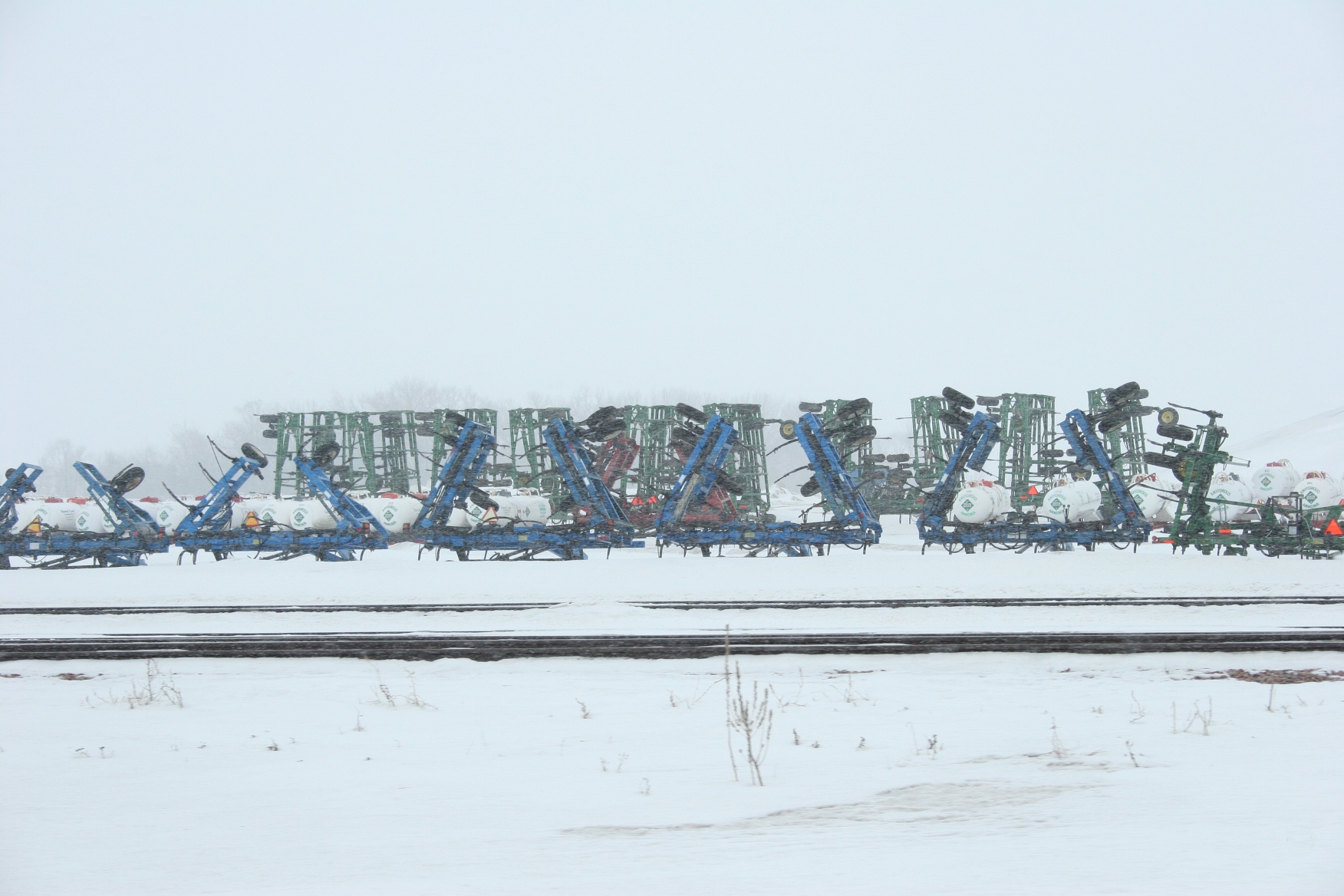
Railroad tracks and diggers slice precise horizontal lines across the landscape in this March 2011 image shot while traveling U.S. Highway 14 between Springfield and Sleepy Eye, in my native southwestern Minnesota.

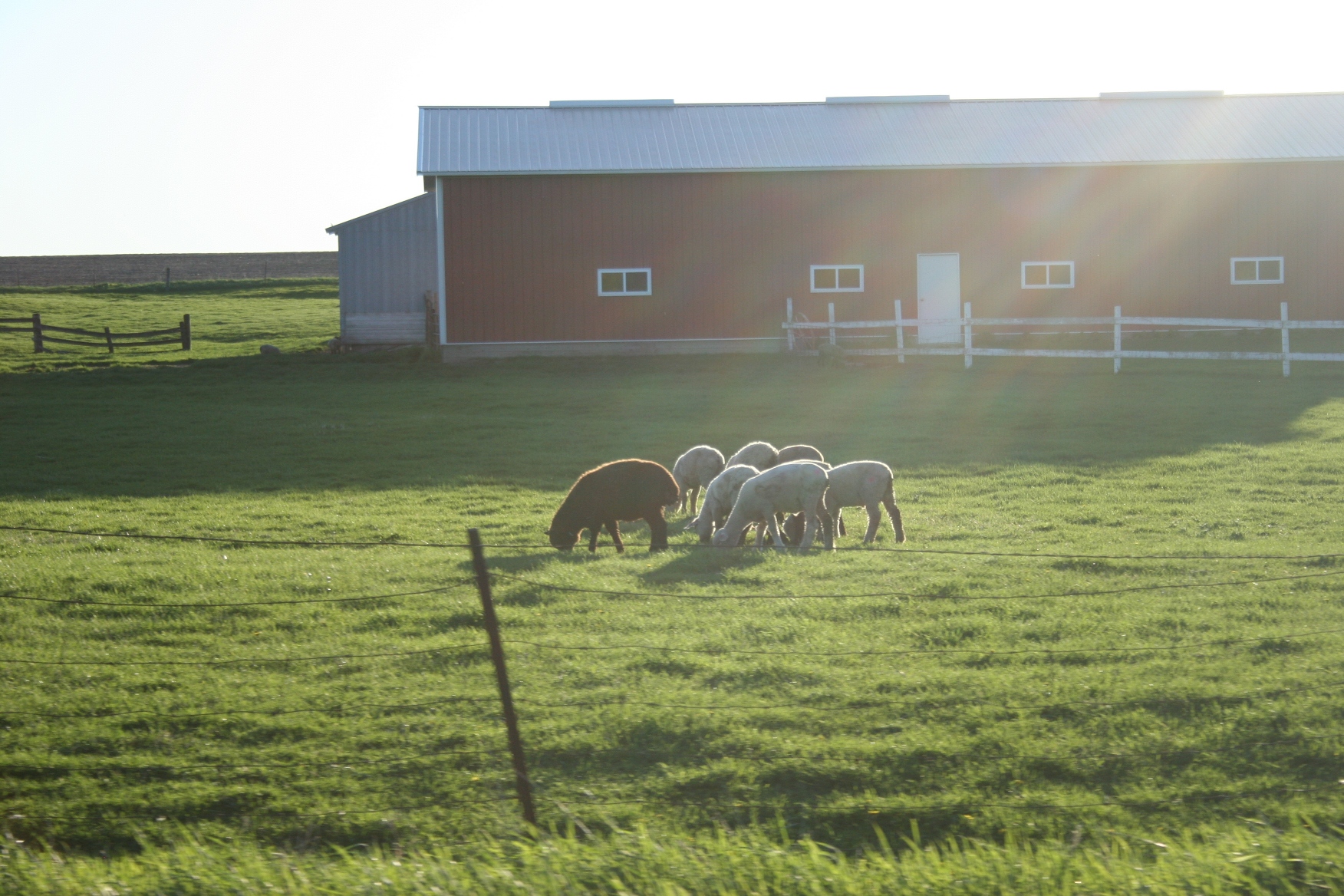
I live in Faribault, an hour's drive south of Minneapolis along Interstate 35. While I certainly don't consider Faribault, with a population of around 22,000 to be a small town, it's definitely not urban. I shot this pastoral scene last spring several miles west of town near Roberds Lake.

© Copyright 2012 Audrey Kletscher Helbling