Minnesota Prairie Roots

Writing and photography by Audrey Kletscher Helbling

Raising awareness about long COVID March 15, 2025

(Initial COVID-19; image from the CDC)

UNTIL MY ELDEST ALERTED me around noon today, I was unaware that March 15 marks a notable day. At least for me and the millions of others worldwide who suffer from long COVID. Today is International Long COVID Awareness Day.

I’ve been living with long COVID for more than two years now. And in that time-frame, I’ve attempted to raise awareness about this debilitating chronic condition. I will continue to do so, because it’s important for others to understand. With understanding comes compassion and support.

My lengthy list of symptoms began after I contracted COVID in January 2023. I never self-tested positive for the virus. But that is not necessary to get a long COVID diagnosis. My primary care doctor and specialists ruled out any other medical reason for my varied symptoms. The connection to COVID was clear even to me, someone not particularly medically-inclined.

Today I am mostly fine, although I still struggle with residual issues, especially in the sensory area. It took six months of vestibular rehab therapy and lots of hard work to get me to a better place. During much of 2023, I thought I would never reclaim my life. I have.

IT TOOK A TEAM

But I didn’t do it alone. First, I credit Dr. Todd Sykora at Allina Health, Faribault, for not giving up on me, for showing great compassion and care, admitting that he didn’t have the answers. His concern for my health ran, still runs, deep. His decision to refer me to physical therapy saved my life.

At Courage Kenny Rehabilitation Institute in Faribault, I met physical therapist Ryan Iverson who, among other areas, specializes in vestibular issues. He was the perfect fit for me and the symptoms I was experiencing. To hear him say that my symptoms were like those of someone suffering a traumatic brain injury was validating. And then the hard work began, week after week for six months. Like my primary care doctor, Ryan showed great compassion and care.

SHOW COMPASSION & CARE BECAUSE LONG COVID IS REAL

If I want to make any point here, it’s that individuals living with long COVID need the compassion, care and understanding of family and friends. What we face is real. Difficult and debilitating. Without the support of my husband and eldest daughter, I could not have managed those first nine months of living with long COVID. They did a lot for me and always supported and encouraged. If my other two adult children lived in Minnesota, I know they would have offered the same.

Today I use my experiences to encourage a young man in my community who has been dealing with long COVID for 1.5 years. He’s had to drop out of college. He’s had to, on occasion, use a wheelchair. He struggles with fatigue and brain fog and much more. I referred him to my therapist, Ryan, and he’s making progress. I also stay connected with this young man’s mom. I recognize that she needs support, too.

Thank you for reading this post. That shows you care and want to learn more about long COVID. Please support those who suffer from this chronic condition by, first, acknowledging their challenges and then encouraging them.

#

IF YOU DEAL with long COVID (what are your symptoms?) or know someone who has this chronic condition, please share your thoughts. How are you managing or supporting? What do you want people to know? Let’s, together, raise awareness.

© Copyright 2025 Audrey Kletscher Helbling


Long haul COVID officially recognized by MDH January 23, 2025

Filed under: Uncategorized — Audrey Kletscher Helbling @ 12:33 PM
Tags: , , , , , ,
A graphic of the original coronavirus. (Source: CDC 2021)

I FEEL VALIDATED. The Minnesota Department of Health now recognizes long haul COVID as an official, diagnosable illness (even with its own insurance code), according to media reports citing the MDH. I am thankful. This has been a long time coming for someone like me who lives with this illness.

I have often felt that people don’t necessarily understand the severity of long COVID, how it impacts the lives of those of us affected. It’s real. Not in our heads. Debilitating. Long-lasting. Results of a survey by MDH confirm that.

Thankfully, my primary care doctor listened to me, showing great care and compassion when we were trying to figure out what was going on with my body in early 2023. My many symptoms followed an illness that was assuredly COVID, even though I never tested positive for the illness. COVID tests, if not done at the right time or done incorrectly, can give inaccurate results.

When I look at the MDH’s long COVID check list, I see many of the long-lasting symptoms I experienced: fatigue, brain fog, trouble sleeping, headaches, heart palpitations, tightness in chest, dizziness (balance issues) upon standing, skin issues, hair loss, mood changes, and changes in taste and smell (for me intensified). And in the “other” category, I experienced sensory overload, which continues to plague me.

After many tests to rule out a tumor or other health issues, my doctor settled on long haul COVID as my diagnosis, although that’s not in my official health records. I need to get that changed with this new MDH determination.

Some of the initial exercises I did in vestibular rehab therapy to regain my sense of balance. (Minnesota Prairie Roots copyrighted file photo 2023)

I will feel forever grateful to Dr. Todd Sykora of Allina Health for listening to me, for his persistence, for prescribing a medication that eased some symptoms and for his suggestion that I try physical therapy.

I’ve written numerous times about my long COVID experience and treatment in an effort to raise awareness, educate and offer hope to those dealing with the illness. For me, the “help” was six months of vestibular rehab therapy to retrain my brain. My therapist treated me like I’d experienced a traumatic brain injury. He was spot on with that approach. I will feel forever grateful to Ryan Iverson at Courage Kenny Rehabilitation Institute in Faribault for getting me through some really challenging months and helping me reach my goal of “getting my life back.” That also came with lots of hard work on my part and the incredible support of my loving husband.

This hope stone, painted by a great niece, sits on my office desk. (Minnesota Prairie Roots copyrighted file photo)

Today I am using my experience to spread the message about long haul COVID and to also personally support a young man in my community dealing with its devastating affects. J, as I will call him, has been struggling for much longer than me and with much more severe symptoms. I’ve encouraged J (and his mom), offered hope and referred J to my physical therapist. He is making progress.

As for me, I’ve learned to mostly manage the few long haul COVID symptoms that persist, albeit less severe than in 2023. When I got sick with COVID again in December 2024 and then rebound COVID, some symptoms flared. But, for the most part, I’m OK. Like any health issue, you learn to live with it and manage. And when a state agency recognizes your illness as real, it feels validating and empowering.

© Copyright 2025 Audrey Kletscher Helbling
 

Feeling especially grateful this Thanksgiving November 27, 2024

I created this Thanksgiving display in a stoneware bowl. (Minnesota Prairie Roots copyrighted file photo)

GRATITUDE. It’s a word that gets tossed around a lot this week as we observe Thanksgiving. And that’s good as we all need to pause, reflect and focus on reasons to feel thankful.

Health and family often top that list. And I’m staying in that lane of feeling especially grateful this year for restoration of my health and for my dear family—my husband, three adult children, two grandchildren and sons-in-law. And the soon-to-be-born second grandson.

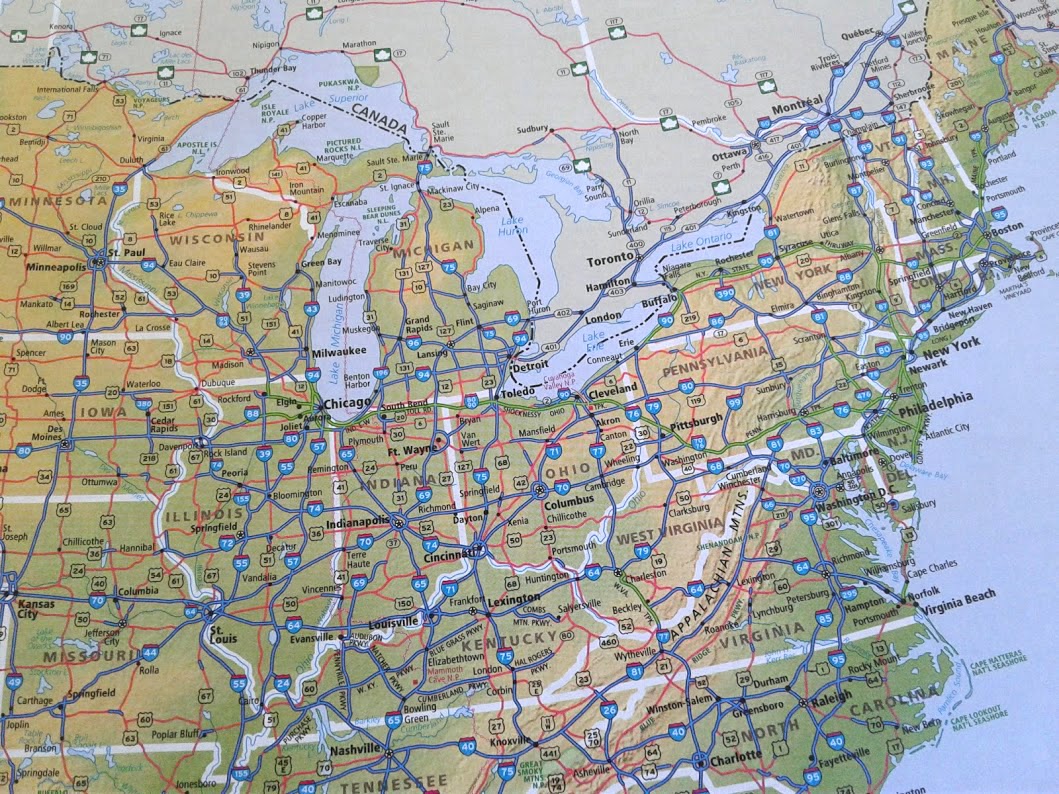
This map shows the geographical distance separating my family. (Minnesota Prairie Roots copyrighted file photo)

While my core family is scattered from Boston to eastern Wisconsin to Minnesota, we are never far apart, thanks to smartphones. So, yes, this mom and grandma, who once lived in the days of no phone service (not even a landline) and of typewriters, is especially grateful for technology that allows us to stay easily connected.

Still, that does not make up for in-person time together as a family. It doesn’t happen often that we are together. But in August, we were. All of us. For the annual Helbling family reunion. If ever my mama’s heart was full and happy, it was then. The son actually spent several weeks in Minnesota after flying in from Boston for the international unicycling convention in Bemidji and then staying until the reunion. To have that lengthy time with him, whom I typically only see at Christmas, was beyond wonderful. Technology allowed this extended stay as he could work remotely, although he did complain about my slow internet speed.

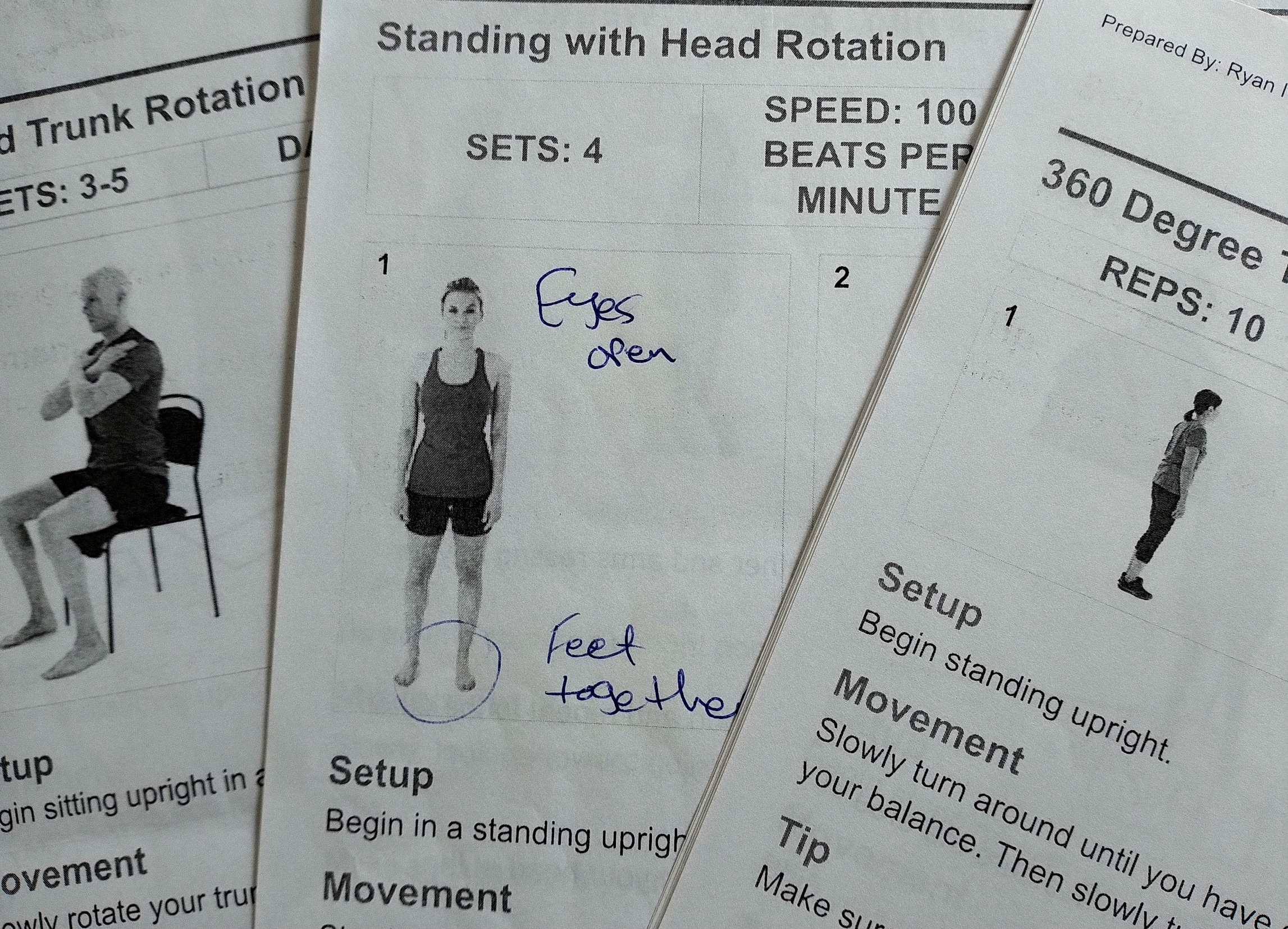
A sampling of some of the exercises I did while in vestibular rehab therapy at Courage Kenny, Faribault, from April to September 2023. (Minnesota Prairie Roots copyrighted file photo 2023)

And then there’s my health. This past year marked the year I reclaimed my life after spending 2023 dealing with issues caused by long haul COVID. I spent six months in vestibular rehab therapy to retrain my brain. I learned to feel comfortable walking without feeling unbalanced. I learned to manage sensory overload (which remains a residual problem). And much more. I shall be forever grateful to my healthcare team, specifically my physical therapist Ryan, and my family for getting me through an incredibly difficult health challenge. My symptoms were debilitating. Few understood then and few understand now what I experienced.

But because of that experience, I’ve been able to encourage and support others who are in the throes of debilitating long haul COVID. I understand. I empathize. And my compassion for them runs deep. This is real and life-changing.

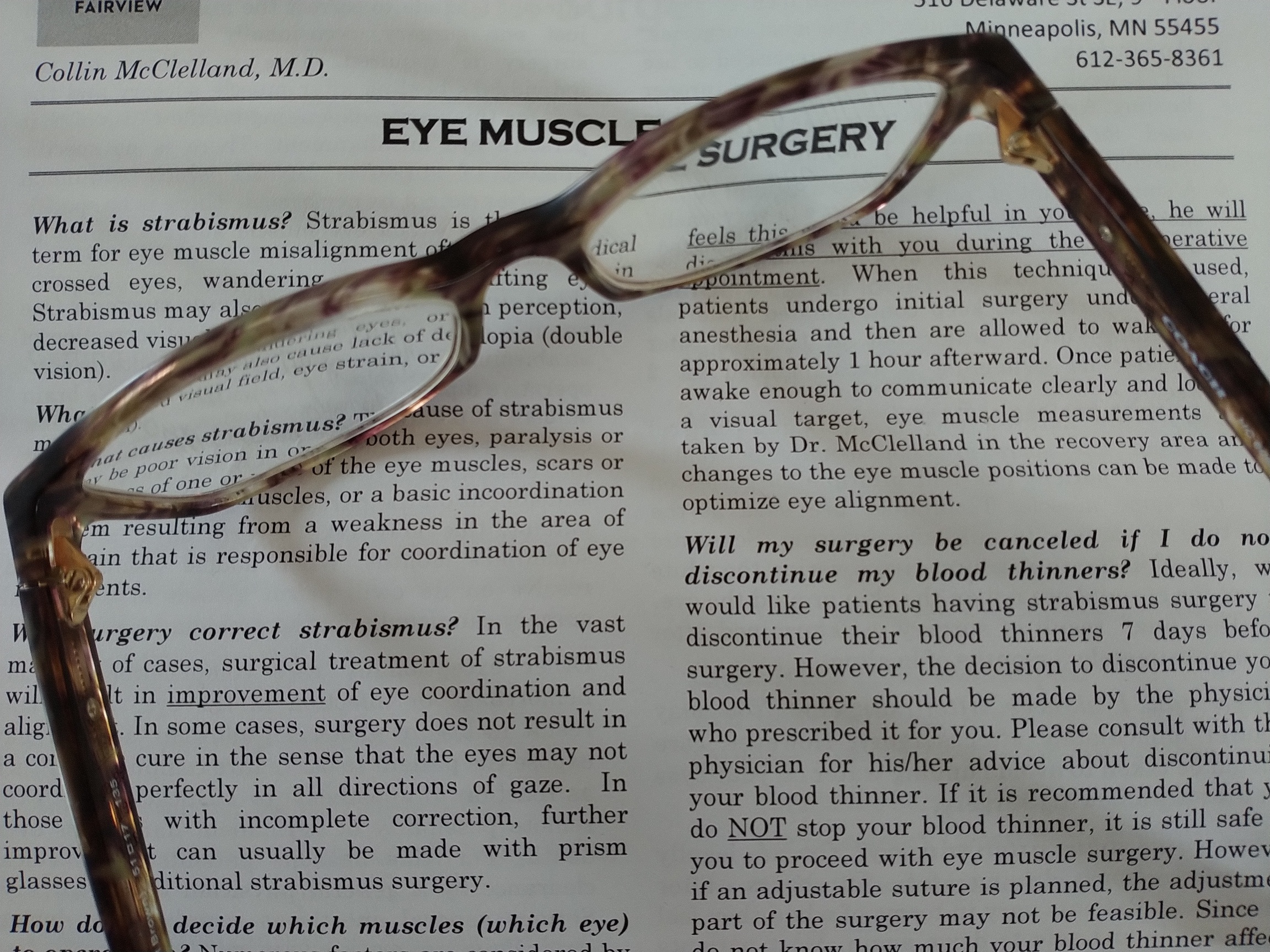
Information about the eye muscle surgery I underwent in Minneapolis under the care of a neuro ophthalmologist. I had this same surgery performed at age four. These are my pre-surgery eyeglasses, without mega prisms. (Minnesota Prairie Roots copyrighted file photo 2023)

In January, I underwent bilateral strabismus surgery to realign my eyes. Although that surgery failed (as it does up to 20 percent of the time), I remain grateful for one thing—my vision. It’s certainly far from perfect. I still see double if I’m not wearing my prism-heavy prescription eyeglasses. I struggle to tell if photos I am taking or processing are clear. But the bottom line is that I can see. And that is reason to feel grateful. I. Can. See.

This tag of reasons to feel grateful hung on a Gratitude Tree outside the Northfield Public Library in 2019. (Minnesota Prairie Roots copyrighted file photo)

In all of the challenges of life, reasons exist to feel thankful. It’s easy enough to fall into complacency and take good health, family, friends and life in general for granted. Don’t. None of those are a given. No matter what, we can choose to feel grateful, even in the midst of struggles. Something positive can come from negative. Life brims with reasons to feel grateful. I am.

Happy Thanksgiving, dear readers! I am grateful for all of you, for your support, for your friendship, for the light you shine in my life.

© Copyright 2024 Audrey Kletscher Helbling


Onward with hope post-COVID November 30, 2023

Filed under: Uncategorized — Audrey Kletscher Helbling @ 5:00 AM
Tags: , , , , , ,
My great niece Keira painted this HOPE stone, which sits on my office desk. (Minnesota Prairie Roots copyrighted file photo)

I HADN’T PLANNED on writing a third post related to my health issues following a case of suspected COVID in early January. But then blog readers shared their experiences with the virus and I felt compelled to write more, to offer insights and, most importantly, hope.

In this sharing of stories in the circle of my blog, I’ve learned that some of you have endured symptoms similar to mine. Keith in New York City. Diane in Iowa. And then Beth in Michigan with an altered sense of smell.

In the aftermath of COVID infections, there’s still much to learn. I quickly recognized that during my struggles and also via your stories. Answers don’t come easily. Help can be elusive. Frustration and despair set in and it’s a challenge to be heard, to remain hopeful. Telling our stories is important, necessary.

I received this book in the mail, sent anonymously by a reader. The book and note made me laugh and uplifted me when I really needed uplifting. (Minnesota Prairie Roots copyrighted file photo)

THE NEED FOR VALIDATION, FOR SUPPORT

I remember telling my physical therapist, Ryan, early on that I felt unseen because I was dealing with unseen neurological issues few seemed to understand. But when he compared my symptoms to those of someone with a traumatic brain injury, I felt validated. That’s all I needed, an affirmation that this was real, not just in my head. But it literally was in my head, in my brain.

My sister-in-law Rosie, who endured two concussions following falls, was (and is) among my biggest encouragers. She understands my symptoms, especially my inability to tolerate sensory overload. Having a key empathetic person is, in my opinion, vital. Likewise core family support is essential.

This quarter-sized token, gifted to me by my friend Beth Ann many years ago, lies on my computer desk. (Minnesota Prairie Roots copyrighted file photo)

GETTING HELP & SETTING GOALS

But personal support only goes so far. I am fortunate to have a primary care doctor who listens, shows great compassion, admits when he can’t help me, and referred me to specialists. My many office visits extended well beyond the allotted 20 minutes. Vestibular rehab therapy set me on a course to better health. I started therapy in mid-April. That continued weekly until mid-September. Therapy worked in retraining my brain, in helping me manage my symptoms.

On my final day of therapy in September, I told my therapist that I had three immediate goals: to get my hair cut, to return to worship services at church and to dine in a restaurant. Within two months, I accomplished all three with varying degrees of success. I share this to offer hope.

Here’s how I managed: I alerted my hair stylist to my sensory issues pre-appointment. Donita turned off the salon music and took care overall to minimize sensory input. Worship has proven a bit harder, especially managing the organ music, which often assaults me like a tsunami. Even with an ear plug, I struggle. I’ve learned that my brain struggles most in the early mornings and evenings and in busy environments. Restaurant dining remains challenging, although I managed in a quiet chain restaurant. I have yet to try a homegrown, noisy restaurant.

Inspirational and honoring words are embedded in mosaic tile at a memorial in Faribault. (Minnesota Prairie Roots copyrighted file photo)

HOLDING HOPE

There is hope. Always hope. It is, and has been, my go-to word through many struggles in life. For any of you struggling with post-COVID health issues, I hope I have offered you hope, or at least validated what you are experiencing.

These mini cards were a gift from Roxy, a blog reader from Owatonna who has been one of my strongest encouragers. I have sent these cards to others in need of support, passing along the gift of encouragement. (Minnesota Prairie Roots copyrighted file photo)

WAYS TO ENCOURAGE

For those of you who know someone dealing with long haul COVID, please support your family member or friend. Listen. Mail a greeting card. Text or call with encouraging words. (All helped me mentally; thank you, readers.) What we are going through may not be seen. But it is real, all too real.

#

FYI: To read my first post, “How COVID changed my life,” click here. To read my second post, “Retraining my brain post-COVID,” click here.

© Copyright 2023 Audrey Kletscher Helbling


Retraining my brain post-COVID November 29, 2023

This art by Faribault middle schooler Mohamed depicts how my brain felt post-COVID. (Minnesota Prairie Roots copyrighted file photo)

IT’S BEEN A JOURNEY. That best summarizes the path I’ve been on since January to reclaim my health. It’s been difficult, stressful, taxing, challenging, emotional and often overwhelming. But I was determined to do what I could to reach a better place health-wise in the aftermath of unconfirmed, but suspected, COVID.

This was a virus which messed with my brain, my neurological system, leaving me with a long list of debilitating symptoms. Prior to COVID, I was healthy, medication-free, living a normal life. And then…everything changed. (Click here to read my initial post about how COVID affected me.)

My route to managing long haul COVID began with my medical team, including my compassionate primary care doctor who listened, who admitted when he couldn’t help me, who referred me to specialists, who handed me tissues when I cried in the exam room. He never gave up on me. Nor did my vestibular rehab therapist.

Some of the exercises I did in vestibular rehab therapy. (Minnesota Prairie Roots copyrighted photo November 2023)

VESTIBULAR REHAB THERAPY, MY ROAD TO RECOVERY

I credit my physical therapist, Ryan at Courage Kenny Rehabilitation Institute in Faribault, for leading the way in my recovery. He has extra training in vestibular issues. From the get-go, Ryan encouraged me, worked with me, supported me, showed deep care and compassion. Those went a long way in empowering me to work hard. And that I did.

During those initial once-a-week visits with Ryan, I barely managed conversation with him. I would mostly close my eyes and listen as he told me how we would work first on overcoming my balance problems. And then I would do as he instructed. Simple things like turning my head while seated. Then trunk rotations. Then turning my head while walking. Soon rotating while walking. Moving my hands back and forth aside my head while listening to white noise. I was building my tolerance for sensory input one exercise at a time. Retraining my brain. It took many months to progress through these seemingly basic exercises. But they were helping.

Each session Ryan gave me homework, which I faithfully did. I understood that no amount of therapy would work if I wasn’t willing to work hard at home. Soon he was encouraging me to get out, to try socializing. He even convinced me I could manage a mid-summer stay at a lake cabin, giving me coping tools to handle the long drive (close my eyes and wear ear plugs and sunglasses), to handle sensory overload (take breaks) and more. I managed that vacation get-away, but not easily. I remember the evening I snuggled next to my eldest daughter, put my head on her shoulder and sobbed, “I can’t do this any more.”

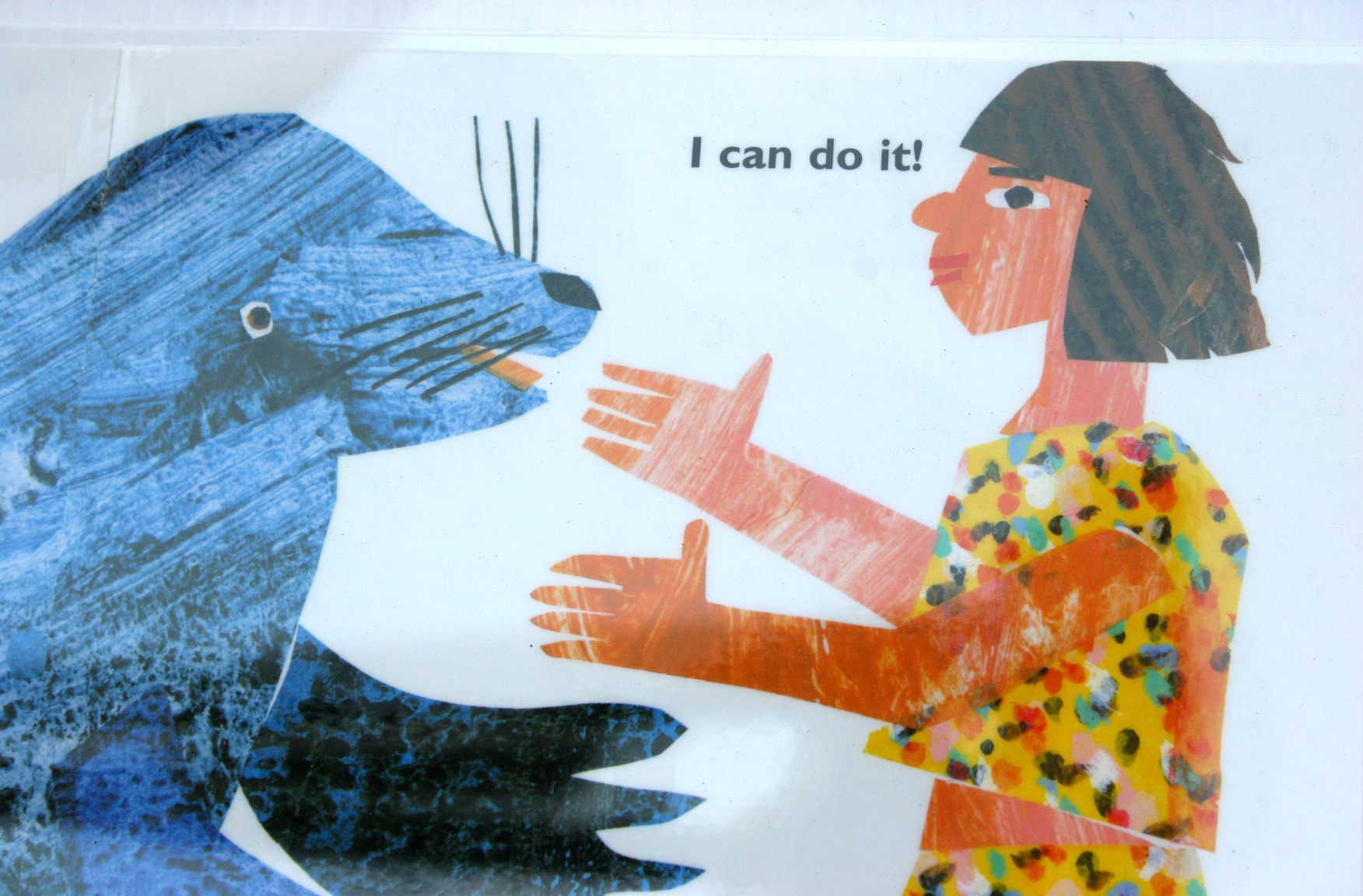
A page from Eric Carle’s book, “From Head to Toe” inspires me. (Minnesota Prairie Roots copyrighted file photo)

ENCOURAGEMENT IN THE MIDST OF DESPAIR

Many times I felt despair, as if I wasn’t making progress. Ryan assured me I was improving, even if I couldn’t always see it. I often felt, too, like no one understood what I was going through (although I’m sure that’s not true). But what I had was unseen, literally in my head. And when people can’t see, or make no effort to understand neurological issues, support lacks. That said, I had a core support group of friends and several sisters-in-law who gave me ongoing encouragement.

And so the months passed. Randy and our eldest daughter, especially, offered unconditional love and support that carried me through some of my darkest days. I wanted desperately to feel better, to have my old life back, pre-virus. By mid-September when I’d advanced to virtual reality roller coaster rides, my physical therapist deemed me ready to graduate. I was ready, yet I wasn’t. I would miss Ryan’s weekly encouragement.

Here I am today, two months out from therapy’s end. I am in a much better place than when I began vestibular rehab therapy in mid-April. I am out and about. Grocery shopping, attending church, speed walking a half hour daily, going to concerts, socializing… I still struggle if I overdo it, if I have too much sensory input. I rely on ear plugs to handle loud music. I close my eyes. Sometimes I have to leave a place or event. I am not the same as I was pre-COVID.

Up next, eye muscle surgery. (Minnesota Prairie Roots copyrighted photo November 2023)

UP NEXT, EYE SURGERY

In January, I will undergo bilateral strabismus surgery at the University of Minnesota to realign my eyes. It is a re-do of a 1960 surgery. As my neuro ophthalmologist explained, the eye muscles that were surgically tightened decades ago have loosened through the decades. Up until my neurological system was affected by COVID, my brain compensated. No more. I am seeing double, and not just when I read. Trying to focus my vision to see only one exhausts me.

But in the all of everything I’ve endured since January, I’ve made significant progress. I’m doing much better. Mostly managing. And that is reason to feel thankful.

© Copyright 2023 Audrey Kletscher Helbling


How COVID changed my life November 28, 2023

Filed under: Uncategorized — Audrey Kletscher Helbling @ 5:00 AM
Tags: , , , , , ,
Image of first coronavirus. Source: CDC.

IT’S BEEN A YEAR. No other words exist to define 2023, a year in which I’ve been overwhelmed by fall-out from a virus in early January. Although I self-tested negative twice for COVID, my primary care doctor suspects I did, indeed, have COVID given the neurological and other issues I’ve experienced since then. I fully agree.

This is my story, one that needs to be shared so that others understand just how viruses affect some of us. This story needs to be shared also to offer hope to others. This story needs to be shared, too, so that anyone who is ill thinks twice about going to work, the grocery store, church, concerts, family gatherings or elsewhere, thus exposing others to infectious diseases.

To tell my story, it’s necessary to give some background. In 2005, at the age of 48, I caught whooping cough. I was sick, really sick, for three months. Gasping for air sick. Coughing until my stomach hurt sick. Exhausted, unable to sleep. In 2011, I lost the hearing in my right ear due to a virus. My body, for whatever reason, does not handle bacterial and viral infections well.

And then came January 2023, and the virus that would change my life.

This artwork by Bill Nagel fits how my neurological system felt, still feels sometimes when I experience sensory overload. (Minnesota Prairie Roots copyrighted photo November 2023)

IN THE BEGINNING

Symptoms started with feeling off-balance, off-kilter, as if I was fighting the world just to be upright. I waited to see my doctor, thinking (like most of us do) that I would get better. I didn’t. I, in fact, got worse. I experienced a bout of vertigo, a rapid heart rate, high blood pressure, all new and troubling symptoms. I felt like I’d been slapped on the right side of my head, a feeling that persisted for many months. And when I tried to sleep, my legs practically ran a marathon in bed.

My primary care physician acknowledged early on that his ability to help me was limited. But he listened, tried…and sent me to an ear/nose/throat doctor for an evaluation. To even get through these medical appointments was a struggle. I had to close my eyes to converse. I felt overly-anxious and agitated, also new symptoms. I was, by then, feeling ear pain, fullness, pressure and tinnitus. I couldn’t sleep. My head hurt. My fingertips hurt. I couldn’t handle screen time. Eventually I would see a neurologist, undergo a CT scan, then an MRI of my brain to rule out a tumor or anything else. It was as if my body was being assaulted.

I felt overwhelmed. I struggled sometimes to find the right words. “Why can’t I talk?” I asked Randy. My brain seemed to be malfunctioning, misfiring, miscommunicating. My neurological system was under siege. My memory, which has always been stellar, was (and remains) affected.

This cool mint toothpaste set my mouth afire. For a while I brushed my teeth with baking soda, then switched to kids’ bubblegum flavored toothpaste. I only recently returned to using mint toothpaste. (Minnesota Prairie Roots copyrighted photo November 2023)

MAJOR SENSORY OVERLOAD

But the symptom which proved particularly debilitating was sensory overload. I couldn’t tolerate light or noise. I sat in the recliner, living room curtains drawn, body folded into the fetal position. No sound except the ringing in my own ears. I rocked 100 miles an hour, occasionally arose to pace the floor, stretched putty left from previous occupational therapy. Nothing calmed my body or mind. All I wanted was darkness, quiet, nothing stimulating entering my brain.

I struggled to get through Easter dinner at our house, missed my grandchildren’s birthday parties and a niece’s baby shower. Most heartbreaking of all was missing my son’s graduation with his master’s degree. I couldn’t handle the long road trip to Indiana, sit through the ceremony at Purdue. I couldn’t even manage grocery shopping; too much white noise from coolers and too much visual stimulation. Phone calls proved taxing, any conversation difficult. I was primarily housebound except for trips to the clinic and one to the ER following an allergic reaction to an unknown something. By then I’d been diagnosed with Meniere’s Disease and vestibular neuritis.

And then came the morning I brushed my teeth, the mint taste so overwhelming that I spit out the toothpaste. Rather than losing my sense of taste, mine intensified. For a week, until I saw my doctor (who added peripheral sensory neuropathy to my diagnoses) and got a prescription to settle my nervous system, I could eat only the blandest of foods. Oatmeal. Soda crackers. Graham crackers. I lost nine pounds in five days. Overall, I’ve lost 25 pounds this year. I’m OK with losing that weight, but don’t recommend this weight loss method. I went through a lengthy period of eating only a few bites of food at a meal.

All of this I experienced following COVID. Plus a rash and hair loss, either from the virus or from anti-anxiety meds. Nearly a year out from the virus, I am in a much better place. It took five months of vestibular rehab therapy, time and a lot of hard work to get here. Next up, I will write about retraining my brain, learning to manage my symptoms and how I found my way back to semi “normal.”

#

NOTE: I’ve been asked by several people whether the COVID vaccine caused my neurological and other issues since I am fully-boosted and vaccinated. No. My health problems began when I had that January virus, thought to be COVID. Had I not been vaccinated and boosted, I firmly believe I would have ended up in the hospital, perhaps even died. Negative comments about the vaccine and boosters will not be posted on this, my personal blog.

© Copyright 2023 Audrey Kletscher Helbling