Minnesota Prairie Roots

Writing and photography by Audrey Kletscher Helbling

A few book suggestions related to yesterday’s post January 8, 2025

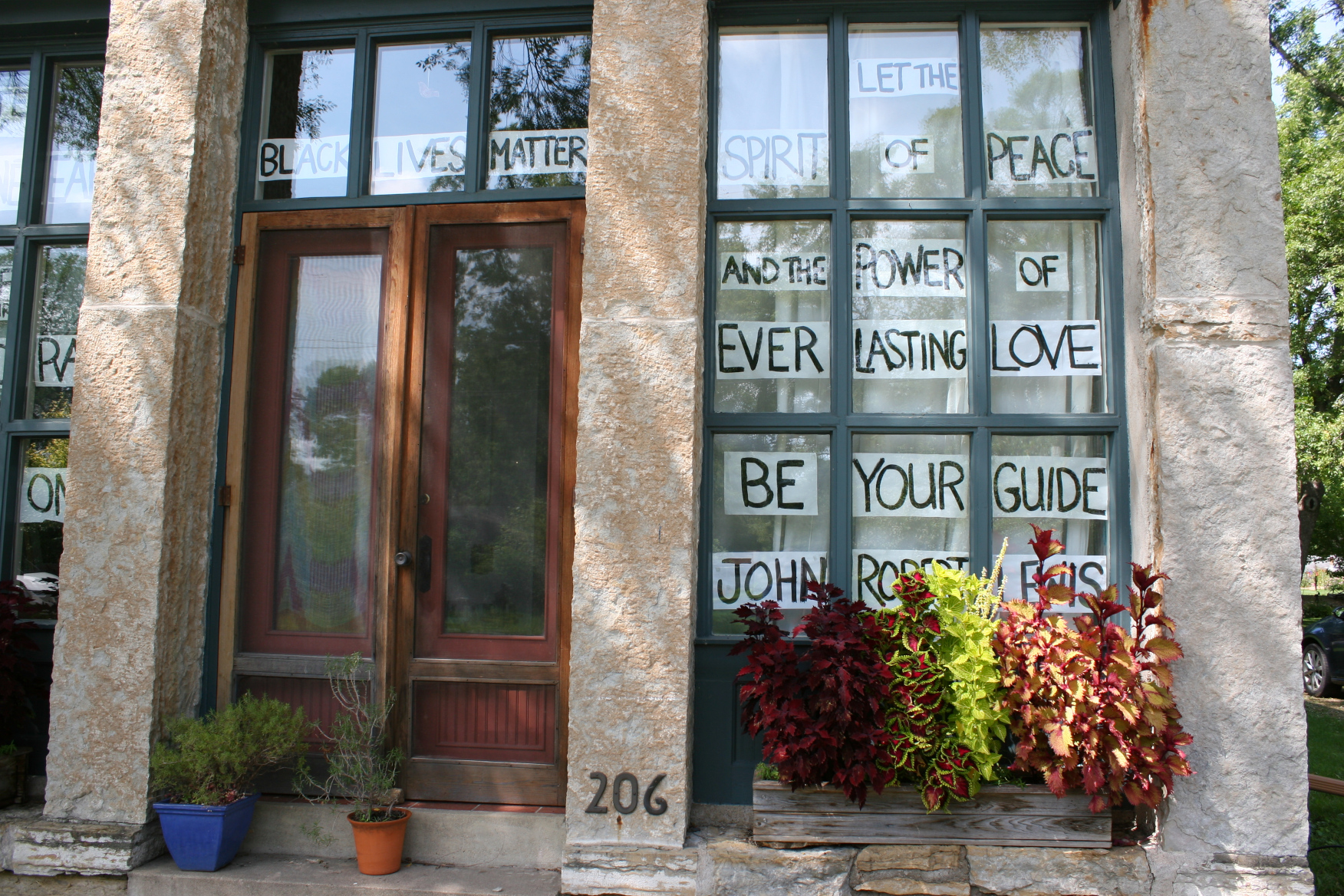
Inspiring messages on a house in small town Dundas, Minnesota. (Minnesota Prairie Roots copyrighted file photo August 2020)

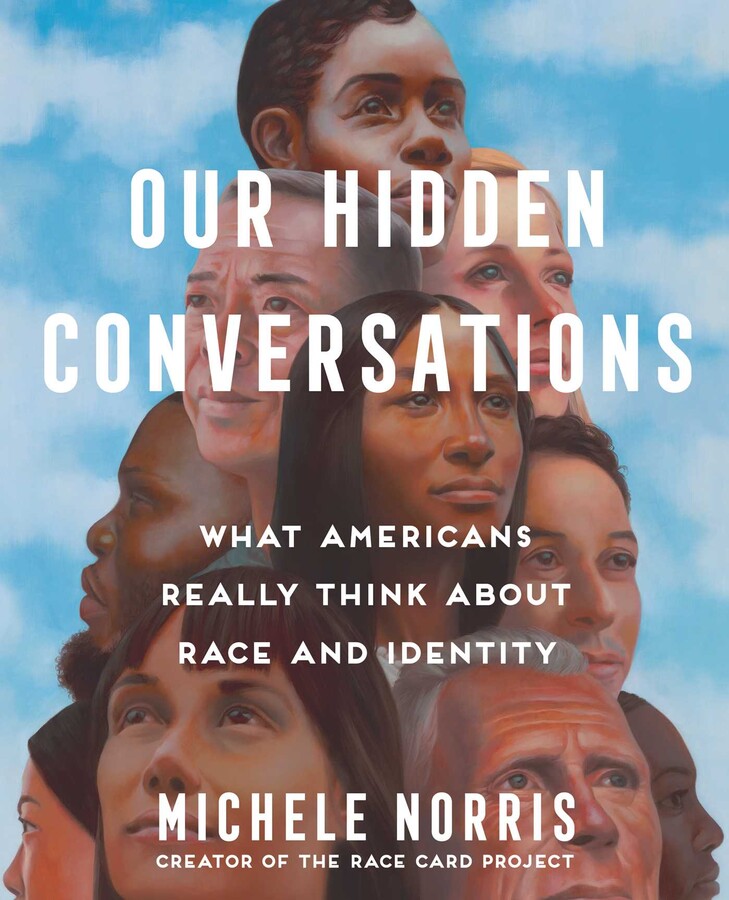
I’M FOLLOWING UP on yesterday’s post focusing on the book Our Hidden Conversations—What Americans Really Think About Race and Identity by Michele Norris to recommend four related books. But before I get to those books, I must share that Norris will be in Minnesota on Monday, January 20, as the keynote speaker for the Martin Luther King Jr. Holiday Breakfast at the Minneapolis Convention Center (Exhibit Hall A). The event begins with networking and mingling from 7-7:30 a.m., breakfast from 7:30-8 a.m. and a program from 8-9:30 a.m. The celebration also includes music by Grammy award-winning Sounds of Blackness and a special collaborative performance by Threads Dance Project and Vocalessence. For more information about this 35th annual MLK breakfast, click here.

Now the books:
Book cover sourced online.

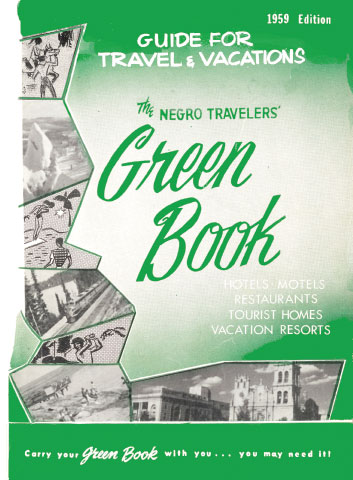
1959 (reprinted) Edition of The Negro Travelers’ Green Book—Guide for Travel and Vacations

I checked this facsimile of The Negro Travelers’ Green Book out from my local library. This guidebook lists, state by state (and in Canada), the hotels, motels, restaurants, tourist homes and vacation resorts where Blacks were welcome in 1959. This list is revealing and sometimes surprising. And clearly, it’s unsettling to read, understanding the discrimination against Blacks that existed not all that long ago.
Book cover sourced online.

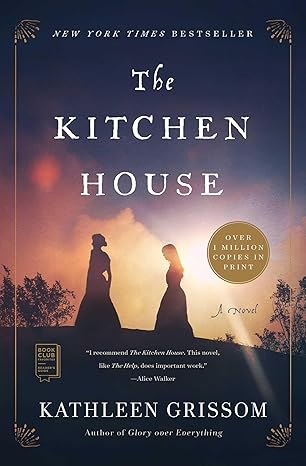
The Kitchen House by Kathleen Grissom

This New York Times bestseller published in 2010 tells the fictional story of life on a tobacco plantation beginning in the late 1700s from the perspectives of a slave (the daughter of a White master and his slave) and an indentured servant (an orphan from Ireland). Although a work of fiction, The Kitchen House is historical fiction, thus rooted in truth. This is a difficult read. But it’s also an inspiring book that speaks to the strength of the human spirit, the love of family and resilience.
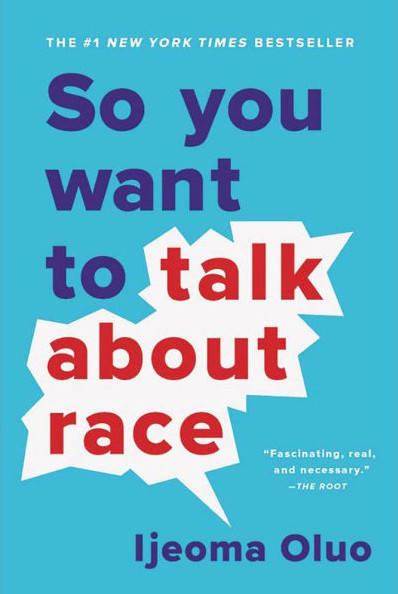
Book cover sourced online.

So you want to talk about race by Ijeoma Oluo

Another New York Times bestseller, this one published in 2019, is in my reading stack. The title, So you want to talk about race, pretty much explains the content. The book was gifted to me by someone who left it in my church mailbox. I am grateful. I expect I will gain new insights from reading this book about race.
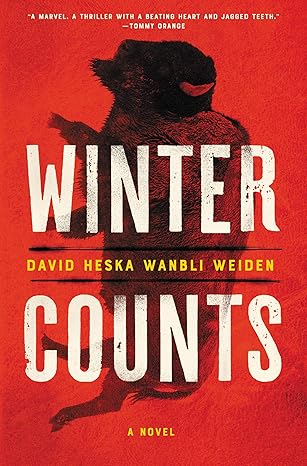
Book cover sourced online

Winter counts by David Heska Wanbli Weiden

This award-winning book published in 2020 has been in my reading stack for some time. I am half way through reading Winter Counts and already know I need to recommend this fictional book. Why? The storyline takes the reader onto the Indian Reservations of South Dakota. But what stands out for me is the authenticity of the writing. Author David Heska Wanbli Weiden, an enrolled citizen of the Sicangu Lakota Nation, knows of what he writes.

I am not only reading an intriguing novel about a vigilante set on justice for the Lakota community in dealing with illegal drugs and other issues. But I am learning about Lakota culture, beliefs, language and challenges, and a reclaiming of Native identity. This book has proven both educational and eye-opening.

TELL ME: Have you read similar books that you recommend I read? Please feel free to share with a brief summary of the book (s). I’m interested in any genre and in books for children to middle and high schoolers to adults.

© Copyright 2025 Audrey Kletscher Helbling


A traffic stop & conversations about race & identity January 7, 2025

Book cover sourced online

EARLY ON A RECENT WEEKDAY MORNING, my husband was pulled over by a deputy sheriff while driving to work. Randy had no idea why he was being stopped on the edge of Faribault. The officer who approached the passenger side of our rusty 2005 white van and rapped on the window did not immediately tell Randy why he pulled him over.

But the questions and actions that followed left me unsettled and thinking about what could have unfolded. You see, I was in the middle of reading Our Hidden Conversations—What Americans Really Think About Race and Identity by Michele Norris, creator of The Race Card Project. That partially prompted my adverse reaction.

As I listened to Randy’s retelling of the traffic stop, I felt thankful that he is a past-middle-aged White guy. I felt a bit guilty for thinking that. But…

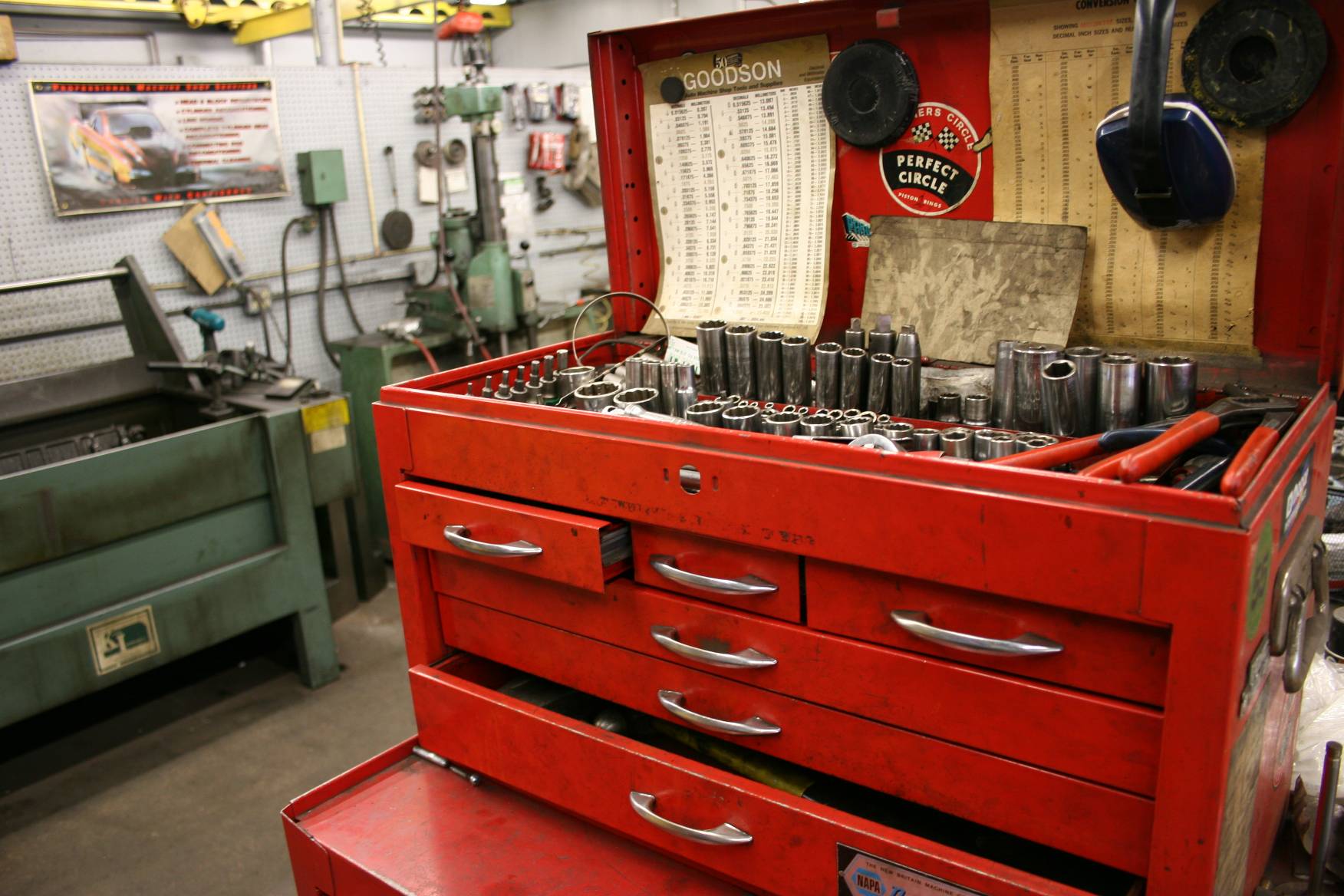
Randy, in his work jacket and uniform, was just driving to work at his job as an automotive machinist when he was pulled over and questioned. (Minnesota Prairie Roots copyrighted file photo)

DO YOU HAVE A WEAPON?”

After requesting the usual identifying documents, the officer asked Randy where he was going, where he worked, whether his address was current and how long he’s lived there. All seemed odd questions. But the next question proved even more unusual. The officer, peering into the van, asked Randy if he had a weapon. Thinking he was referring to an item on the floor between the seats, Randy leaned down and said, “No, it’s a snow brush.”

My immediate reaction to this part of the story was this: “You did what? You could have been shot!”

The deputy wasn’t referencing the brush on the floor, but what he thought was a weapon lying on the passenger seat. He reached inside the van and moved a pair of gloves aside to reveal the case for Randy’s glasses. The supposed gun.

I wasn’t there. I don’t know what was going through the deputy’s mind before and during the traffic stop. But I do recognize what could have happened had the cop felt threatened.

Only after all of this and after the deputy ran a license check did he tell Randy why he’d been stopped—because the brake light in the middle of the tailgate door was not working. Randy has since replaced the bulb.

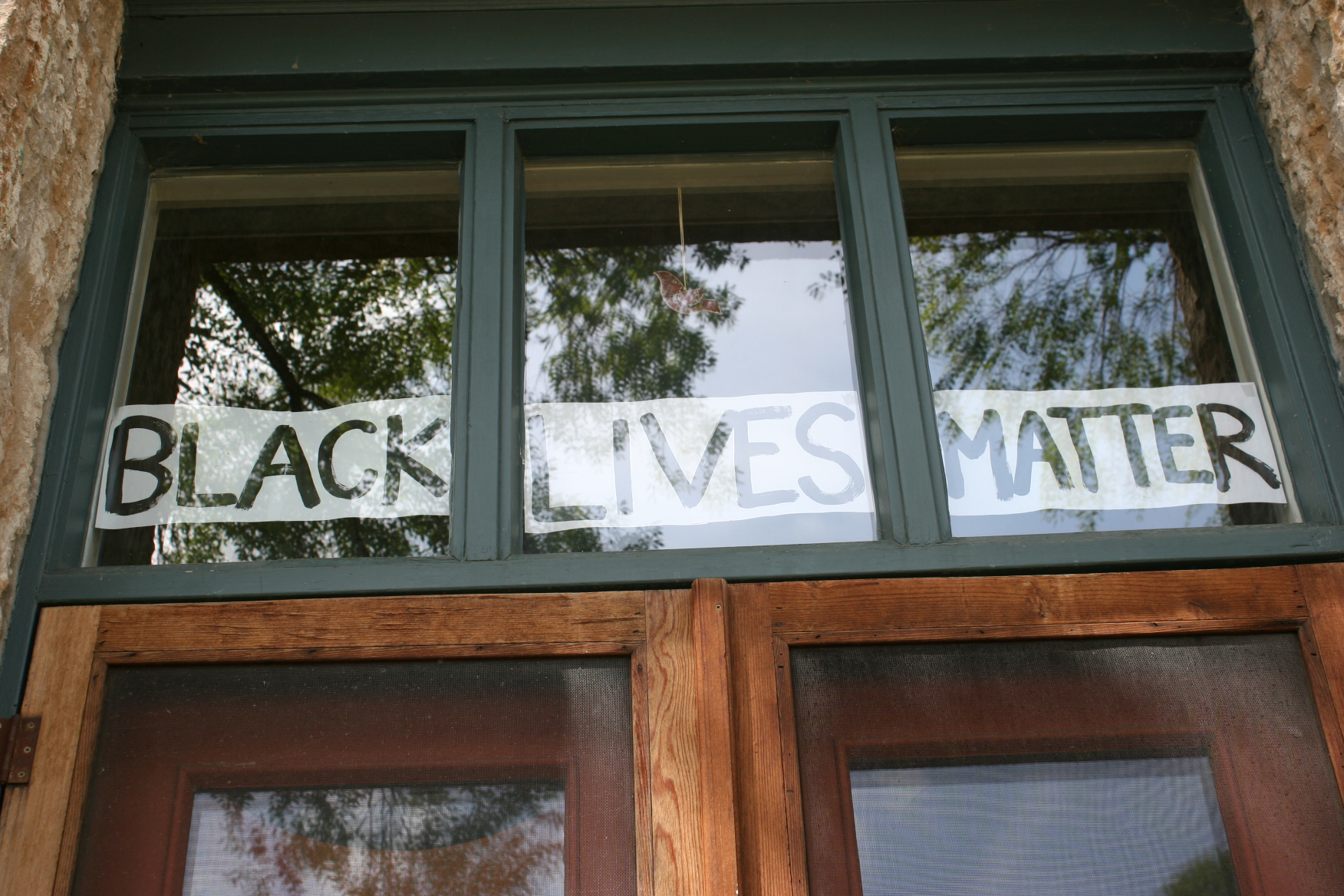
Posted on a house in small town Dundas. (Minnesota Prairie Roots copyrighted file photo 2020)

THE “WHAT IFS?”

Why am I sharing this story? It’s not because I’m anti-law enforcement. I appreciate and respect our police and the important work they do in serving our communities and keeping us safe. Yet, had Randy been a person of color in the wrong place on the wrong day with an officer who perceived his actions as a threat, this traffic stop may have ended differently. Again, I’m not criticizing this specific cop or law enforcement in general.

Admittedly, Randy should not have reached toward that snow brush. But it is not ingrained in his mind to limit his movements, to think about how his actions may be perceived. Black men, especially, cannot risk such behavior. That I understand based on conversations with my son-in-law, who is biracial; on traffic stop shootings of Black men; and on the stories shared in Our Hidden Conversations—What Americans Really Think About Race and Identity.

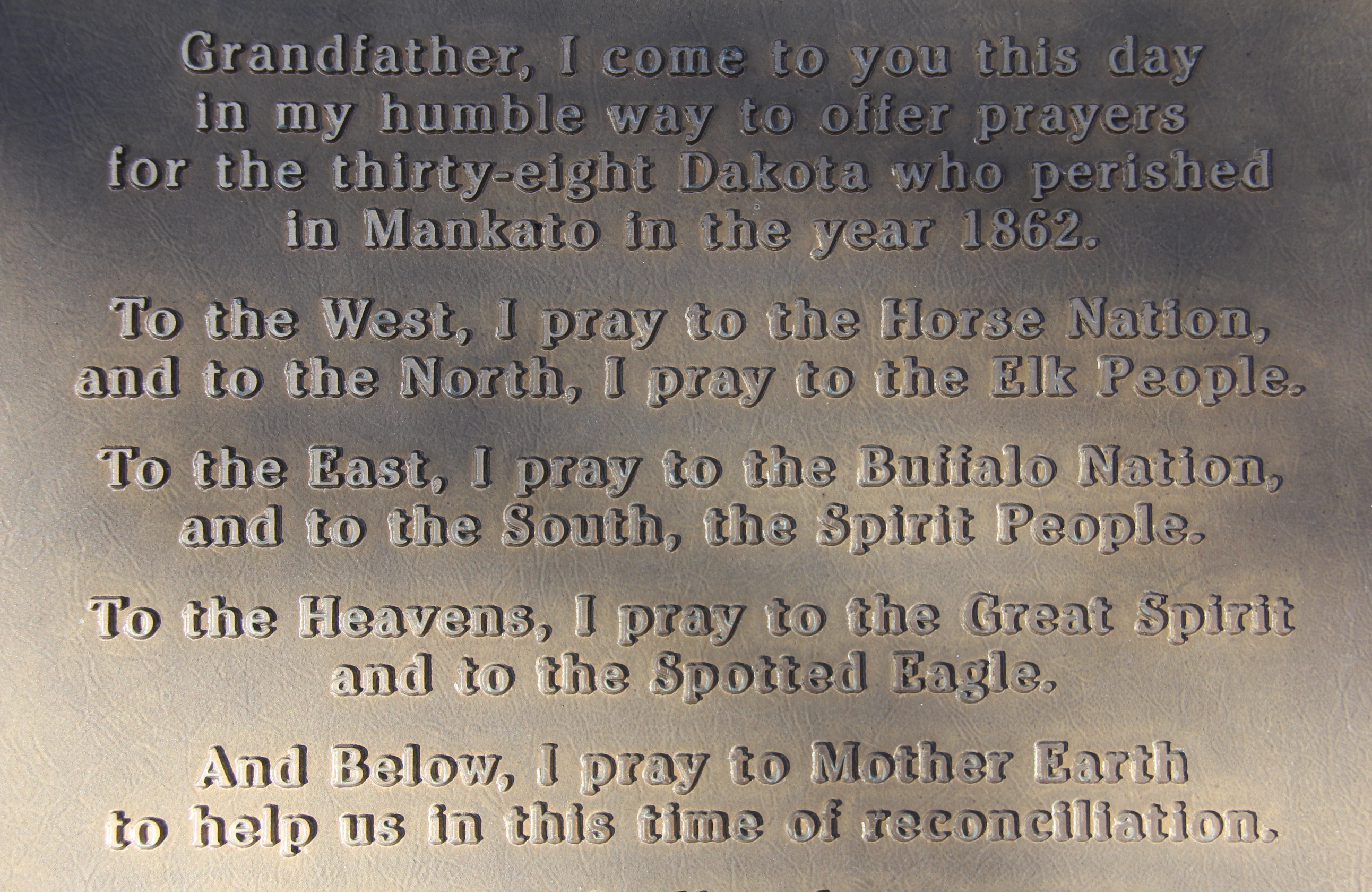
A Dakota prayer focuses on reconciliation at the Dakota 38 Memorial in Reconciliation Park, Mankato. (Minnesota Prairie Roots copyrighted file photo November 2023)

READ OUR HIDDEN CONVERSATIONS

If you read one book in 2025, I encourage you to read this one. The author, who grew up in Minneapolis, is a well-respected, award-winning journalist and former host on National Public Radio. For 14 years, Michele Norris has collected responses to this prompt: Race. Your story. 6 words. Please send. Those responses, submitted on specially-printed postcards and online, shape Our Hidden Conversations. This ranks as one of the most powerful books I’ve ever read on race and identity and should be required reading for every American.

Norris does not focus solely on Blacks in her collection of stories shared by thousands. She also writes about the discrimination, the prejudices, the challenges faced by many others. One entire section, for example, is devoted to Indigenous Peoples. That includes information about long ago Indian boarding schools (specifically the one in Morris, Minnesota) and about the 38 Dakota men who were hung in Mankato, Minnesota following the U.S.-Dakota War of 1862. She writes about Japanese internment camps in America during WWII. She writes about challenges faced by people with disabilities. This is hard stuff. But so necessary to read, to understand the backstory, the history and how things have, and have not, changed. The author writes about lynching, about adopting Black babies, about Blackness perceived as a threat…

The lengthier sections penned by Norris are interspersed with shorter stories from those responding to The Race Card Project prompt. The six word responses are scattered throughout the pages, printed exactly as submitted. One mother wishes her Black son was a girl.

An especially bright spot with an uplifting message in a downtown Faribault pocket park. (Minnesota Prairie Roots copyrighted file photo 2019)

PAINFUL & REVEALING

I cannot even begin to tell you how painful it was at times to read the heartbreaking words printed in this book. It seems unfathomable that we as human beings can treat others with such inhumanity simply because of skin color or other differences. Yet, I saw myself in some of those words, specifically in the subtle (and sometimes not so subtle) racially-charged words that I heard and repeated as a child. I didn’t understand then that the rhyme I was reciting or the term my dad used for Brazil nuts were offensive. I recognize that now.

Like many others quoted in this book, I am determined to grow my knowledge, listen, treat others with respect and compassion, recognizing that we can all do better. I want that for my soon-to-be-born grandson, whose father is biracial, whose mother is White. I want him to grow up in a world where color matters not, where he is appreciated and valued for who he is (and not judged by his skin color), where he doesn’t have to think about what could happen if he is someday pulled over during a traffic stop.

© Copyrighted 2025 Audrey Kletscher Helbling