Minnesota Prairie Roots

Writing and photography by Audrey Kletscher Helbling

Up close on the Straight River during a drought September 13, 2023

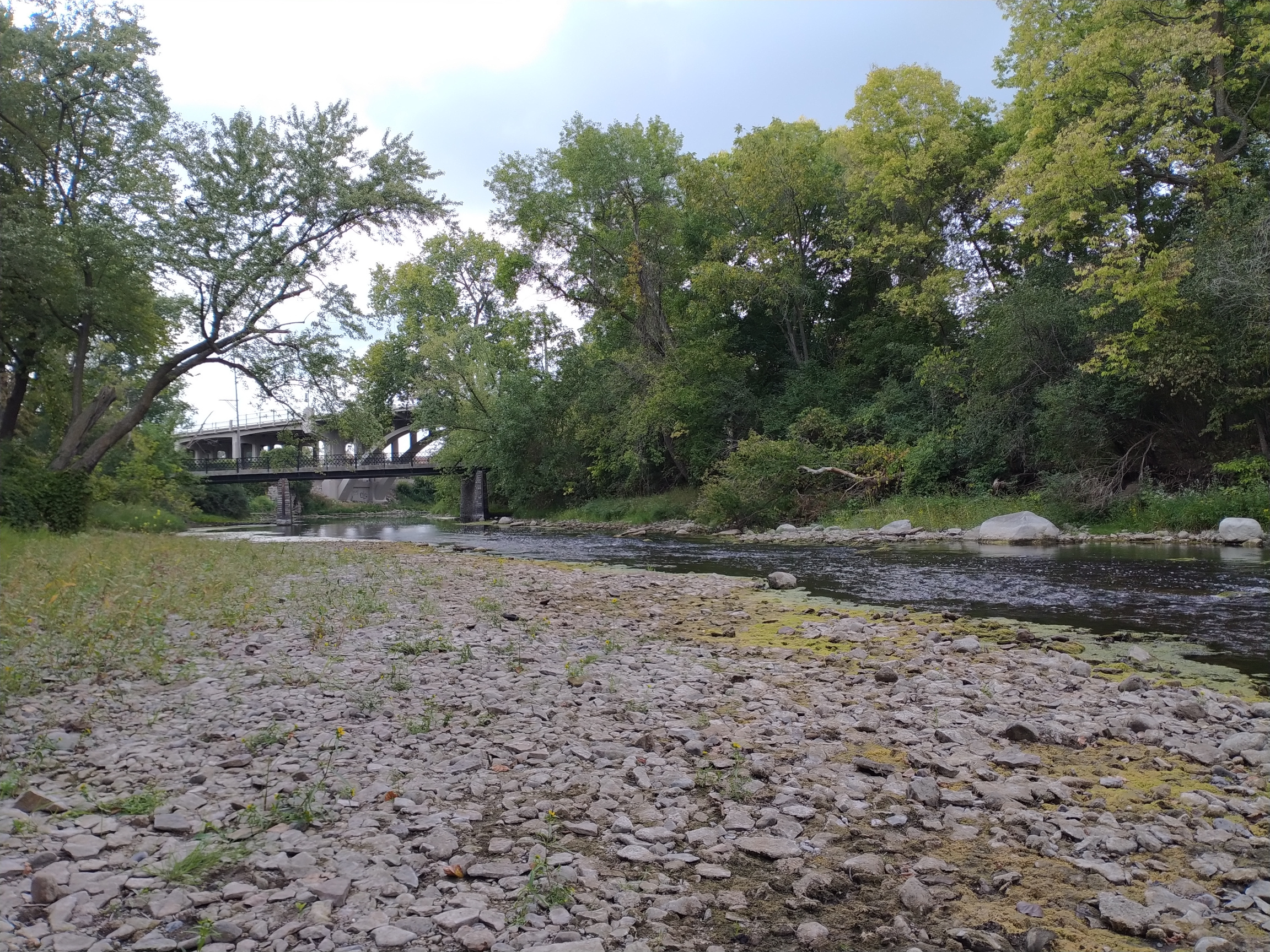
The river bottom revealed, weeds and flowers growing where once water flowed in the Straight River at Faribault’s Teepee Tonka Park. (Minnesota Prairie Roots copyrighted photo September 2023)

CAUTIOUSLY I SIDLED down the silty river bank, hand clasping Randy’s to steady myself. “This isn’t one of the smartest things we’ve done recently,” I said. I held no desire to slip on the unstable ground, to tumble and break a bone. I’ve twice done that. The doctor who recently diagnosed me with osteopenia likely would remind me of my bone density scan results and of my age, which is much closer to 70 than sixty.

But risk outweighed fear. I wanted to reach the dry river bottom, to stand upon the rocky bed, soles touching a place where water once flowed strong and steady.

In this summer of abnormally high temps and little rainfall, the water level in the Straight River, like so many other waterways in Minnesota, is low. The Minnesota Department of Natural Resources, which monitors river depths, terms the level of the Straight near Faribault as “scrapable.” Defined, that’s “so low that paddlers may have to get out of their watercraft to avoid rocks.” At the Straight River West Bridge Street location in Owatonna, the river level measures only slightly better at “low.” The Cannon River, into which the Straight flows, rates as “scrapable” in Morristown, near Faribault, in Northfield and in Welch.

The effects of the ongoing statewide drought are evident. My county of Rice, like 39 percent of Minnesota, is in a severe drought. And much of southeastern Minnesota, including more than half of Steele County to the south through which the Straight River twists and turns, is in an extreme drought.
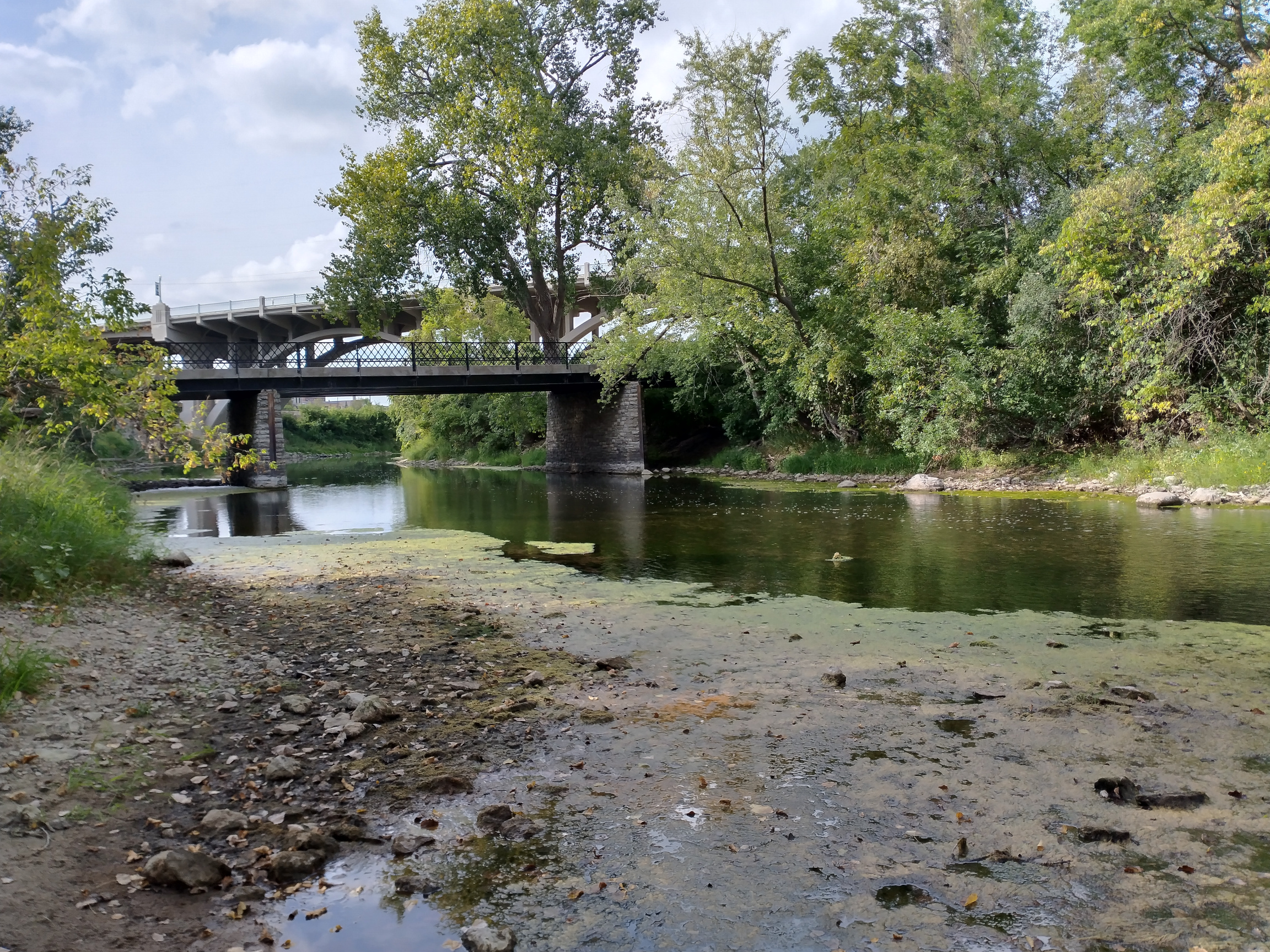
Stagnant water ponds near the bridge leading into Teepee Tonka Park with the viaduct in the distance. (Minnesota Prairie Roots copyrighted photo September 2023)

It’s no wonder that on this afternoon in mid-September, I can walk upon a rocky river bottom where water once flowed, even flooded this spring into Teepee Tonka Park near Faribault’s historic viaduct. Earlier this summer, a Faribault teen discovered a cephalopod fossil in an area of a local river typically under water. He refused to identify the specific waterway, but I guessed, perhaps incorrectly, that it was the Straight.
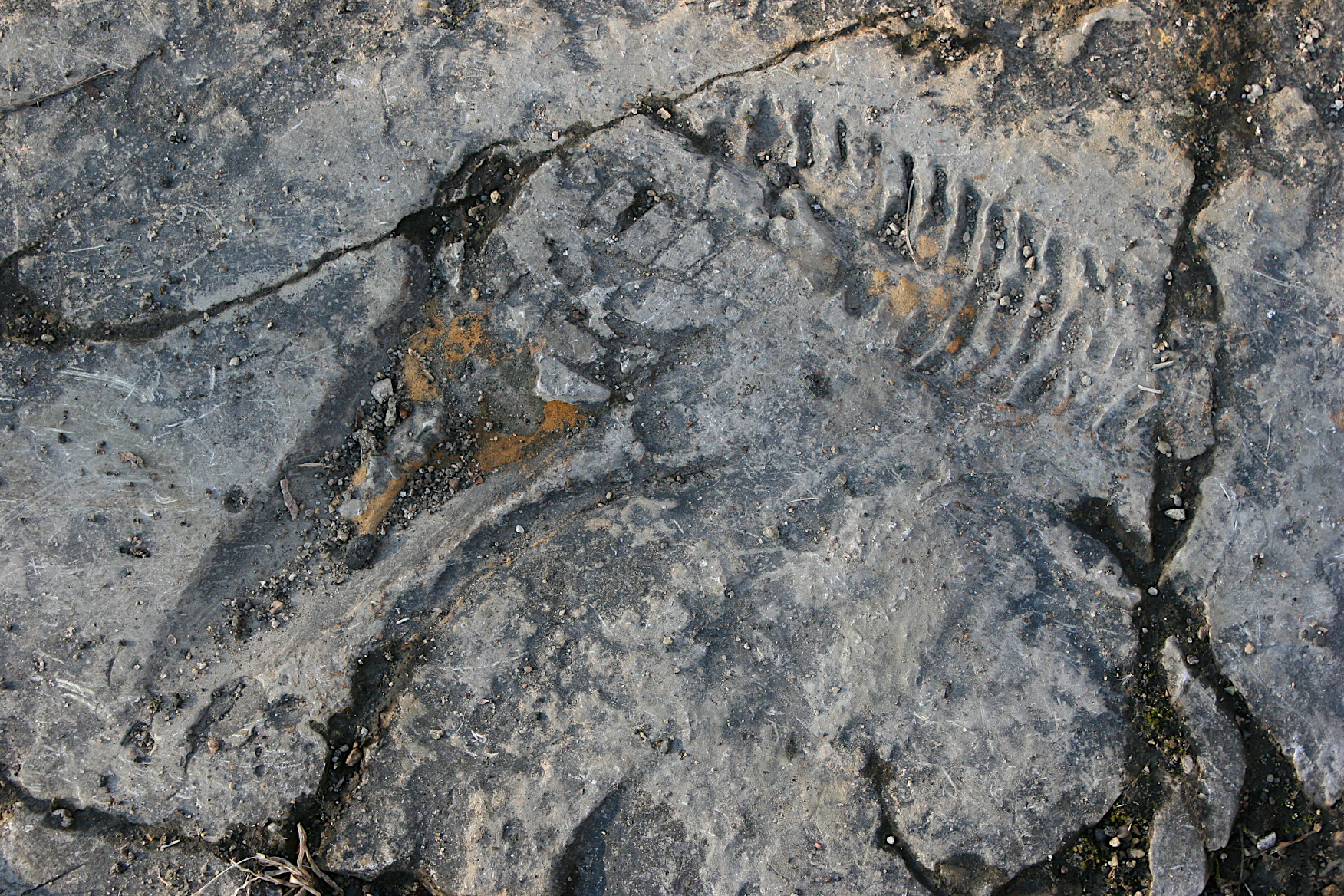
A fossil along a trail near the Straight River overlook in Faribault’s River Bend Nature Center, which connects to Teepee Tonka Park. (Minnesota Prairie Roots copyrighted file photo)

That fossil discovery was also part of my reason for descending the river bank near the east-side Faribault park entrance. I had great uncles who were rock hounds, inspiring in me a childhood fascination with agates and shells and interesting finds revealed only at ground level. That’s carried through into adulthood.
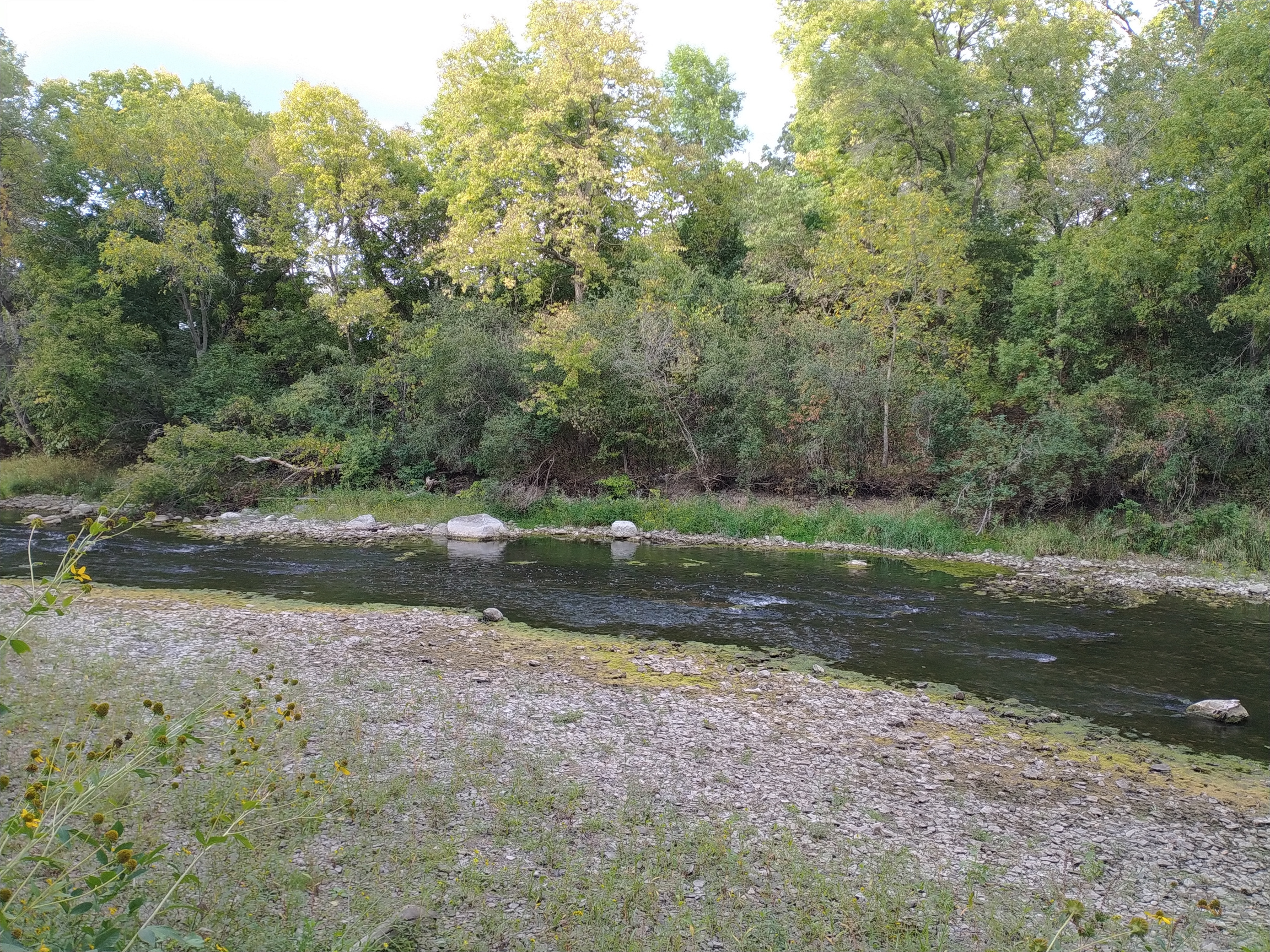
Wildflowers bend toward the narrowed river of exposed river bottom and rocks. (Minnesota Prairie Roots copyrighted photo September 2023)

But on this day I found nothing of interest, only weeds and wildflowers sprouting between stones aside the drought-narrowed river. Correction: I spotted a bra atop a rock, just out of reach in the river, and wondered about the story behind that.

Outdoor enthusiasts intending to paddle the Straight or Cannon rivers now would assuredly have their own disappointing stories to tell about abandoned plans. I observed ankle deep water in parts of the Straight, making water recreation impossible, any recreational outings scrapable.
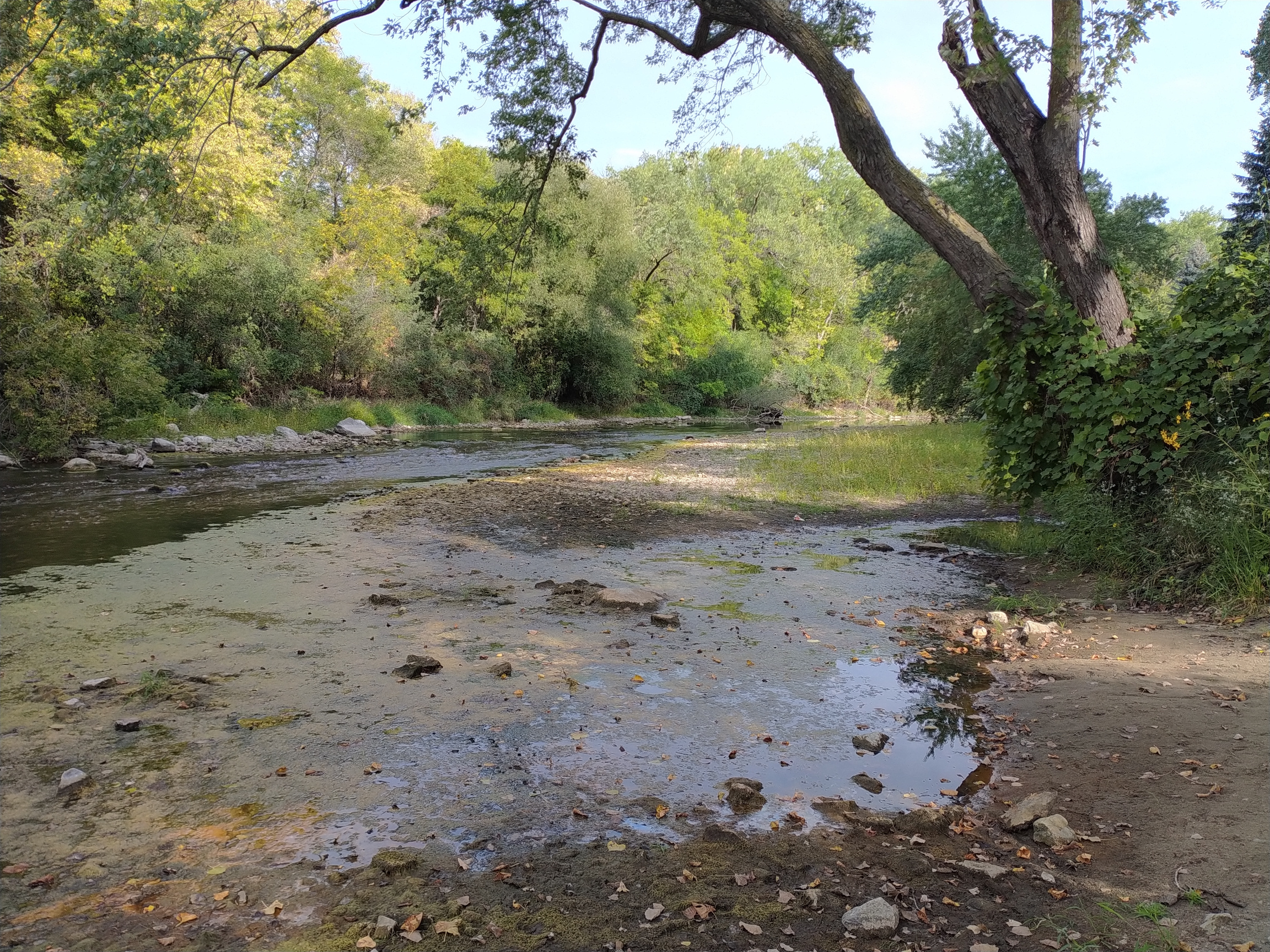
Around this bend in the river, to the right, the water deepens a bit and flows freely. (Minnesota Prairie Roots copyrighted photo September 2023)

Only a pair of hunting dogs let loose by their owner in Teepee Tonka Park enjoyed the low river level on the day I eased down the river bank. They scrambled down the bank, surefooted, racing along river’s edge, shallow water splashing. Then back up they dashed, sprinting along the grassy bank before returning to the river. I delighted in their antics while simultaneously concerned they might come near me. I never quite trust strange dogs not under the control of their owner. A large muddy-pawed dog once jumped on me while I walked at a city park.

Mud. We’ve seen little of that in most parts of Minnesota this summer. There are exceptions, of course, including flash floods in Duluth on Monday, not something any of us want. Light rain fell in Faribault early on this week, enough to dampen the pavement. But I yearn to hear the steady thrum of rain upon the earth. Rain that will ease this drought, replenish our rivers, revive our waterways, restore the land.

© Copyright 2023 Audrey Kletscher Helbling

NOTE: DNR info referenced in this story is from September 5 on drought conditions and September 12 on river levels.

 

No lions or tigers, but bears, oh, my May 26, 2023

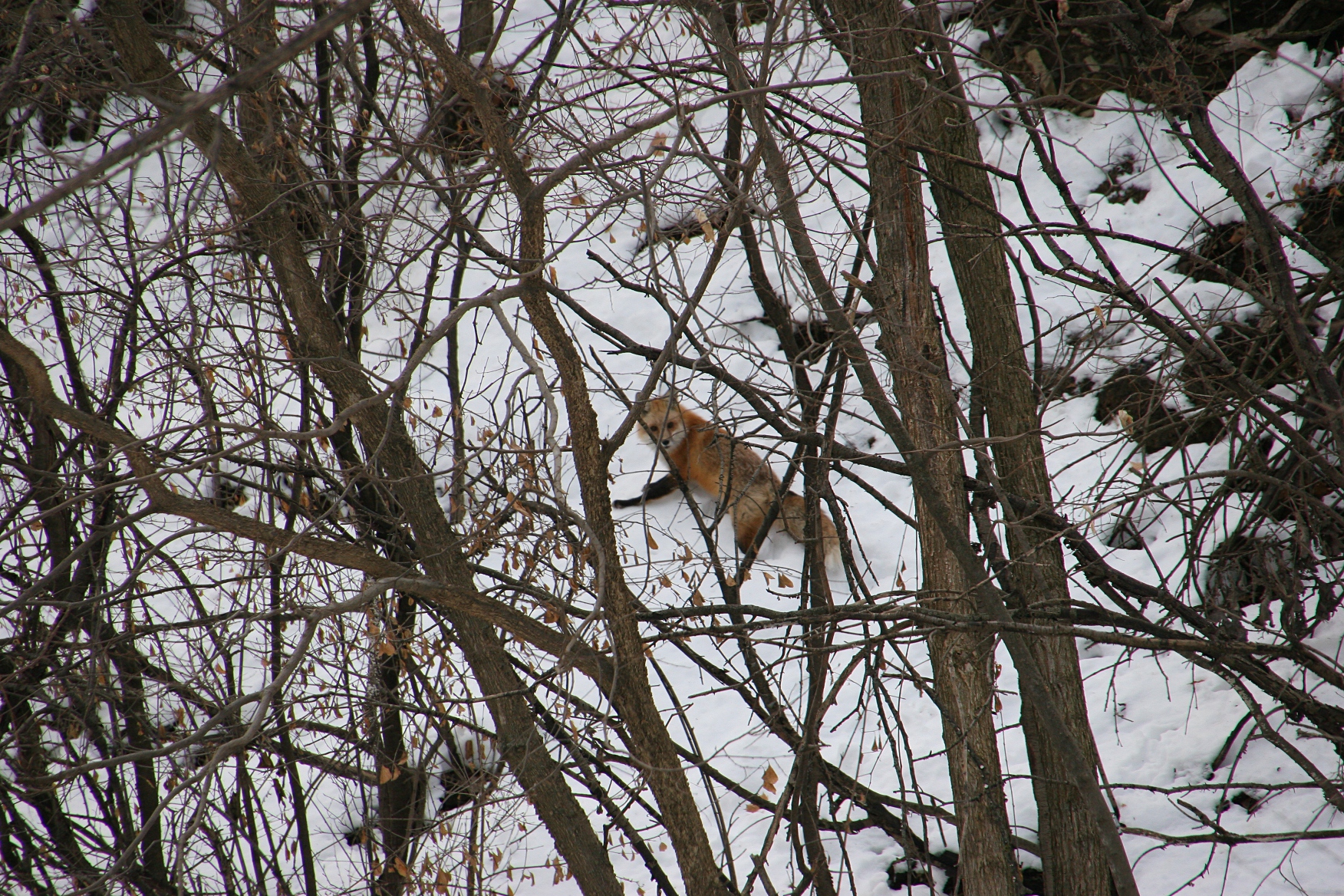
A fox climbs the wooded hillside behind our garage in January 2018. (Minnesota Prairie Roots copyrighted file photo January 2018)

YEARS AGO, A VARIETY OF WILDLIFE frequented the wooded hillside behind our garage and spilled over into our and our next-door neighbors’ yards. Raccoons, woodchucks, opossums, skunks, even a fox once, and evidence of deer in tracks left behind. Such sightings were not unusual, even though we live in the heart of Faribault along an arterial street. But the Straight River runs only a few blocks away and our property edges Wapacuta Park atop the hill. Both make for inviting wildlife habitat. That doesn’t explain, though, why we no longer see an assortment of animals.

Deer in their natural habitat at River Bend Nature Center in Faribault. (Minnesota Prairie Roots copyrighted file photo 2022)

Now only squirrels and rabbits scamper through the woods and yard, along with voles and the mice I never see but which occasionally find a route into the basement of our aged house. (Within the past week, though, I’ve found two dead mice in our backyard. What’s with that?) Feral cats sometimes wander our corner lot, too. I expect other animals may roam my neighborhood in the cover of dark. I’ve heard coyotes howling while attending an evening concert at River Bend Nature Center in Faribault and while visiting friends just outside of town.

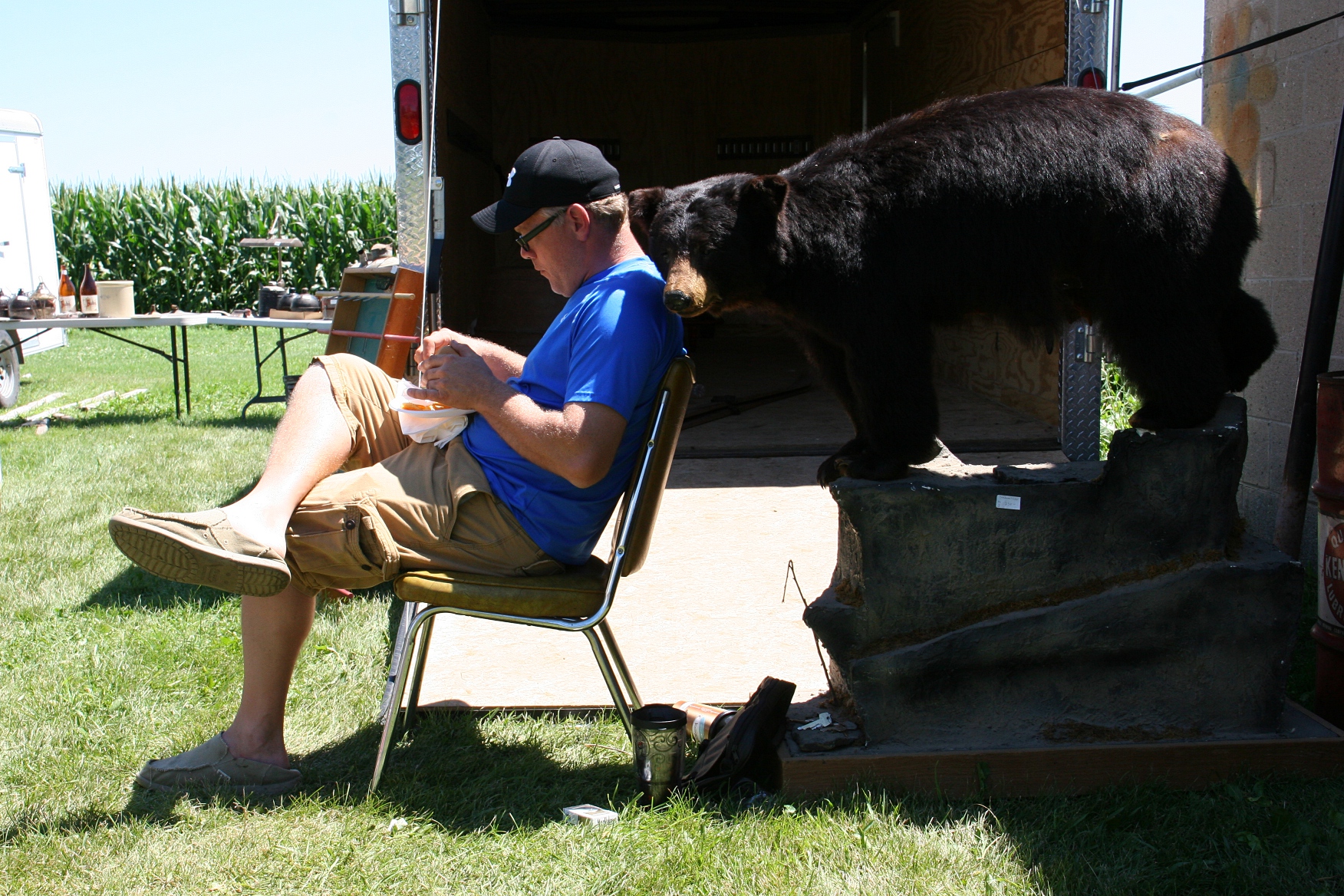
The only bears I’ve seen in southern Minnesota are dead ones, including this one for sale at a seasonal sale in rural Medford several years back. (Minnesota Prairie Roots copyrighted file photo)

One wild animal I haven’t seen yet is a black bear. Typically, they don’t venture this far south from their northern Minnesota habitat. But that has changed in recent years. In late April, bear sightings were reported twice in my county of Rice. The first report came at 2:30 pm on April 26 and the second on April 28 at 9:33 pm, according to a bear sighting map published by the Minnesota Department of Natural Resources. Around that time Northfield police issued an alert about a bear and warned residents to keep their trash and bird feeders inside. I haven’t heard anything official about that bear since then.

Earlier, a bear and three cubs were spotted in Steele County, the county just to the south of Rice. That was at 2:12 am on March 7. A solo bear doesn’t seem nearly as frightening as a mama with babies. Just like human moms, the instinct is strong to protect one’s young.

As I studied the DNR bear reporting map, I was surprised to see so many sightings in the Twin Cities area, primarily in the north metro. Admittedly a higher density population may lead to more reports. Still. Olmsted, Mower and Winona counties to the southeast of Rice County also had numerous bear sightings. Winona County, especially, with many wooded areas and along the Mississippi River, seems a place where bears would feel right at home.

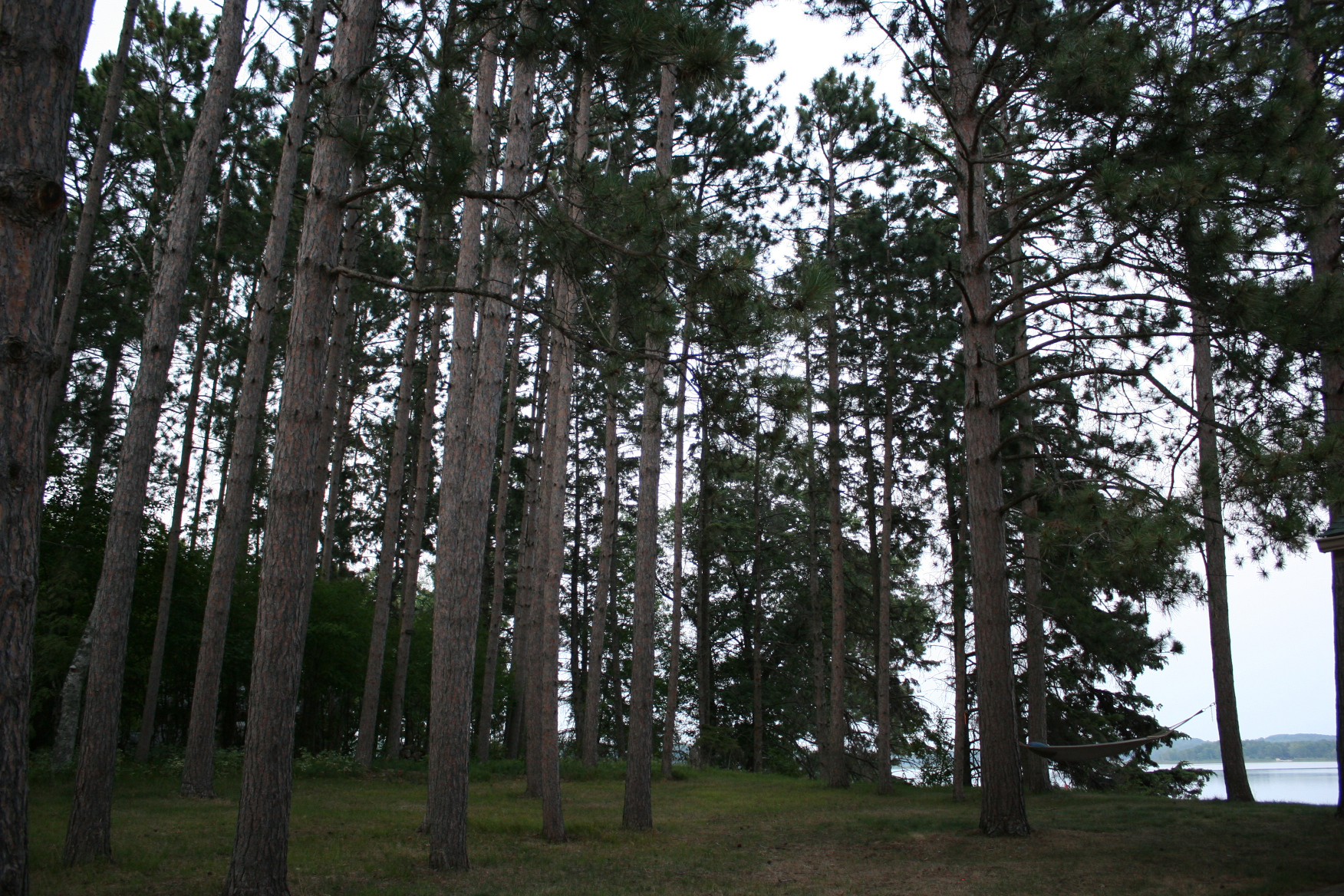
Up North at the cabin, surrounded by woods and water, a natural environment for bears. (Minnesota Prairie Roots copyrighted file photo July 2021)

When we stay at an extended family member’s lake cabin in the Brainerd lakes area of central Minnesota during the summer, we are bear aware. No leaving garbage outside, no doing anything that will draw bears in from the surrounding woods. We understand we are in their habitat.

But here in southern Minnesota, primarily among corn and soybean fields, I don’t expect bears. Yet, I suppose they didn’t expect humans to wander into their homeland either, among the lakes and forests of central and northern Minnesota.

TELL ME: What wild animals have you spotted in and around your home? I’d like to hear, whether you live in Rice County or elsewhere.

CLICK HERE to see photos of a bear that wandered onto an Up North Minnesota blogger’s porch recently.

© Copyright 2023 Audrey Kletscher Helbling


Free state park passes available at Minnesota libraries June 8, 2022

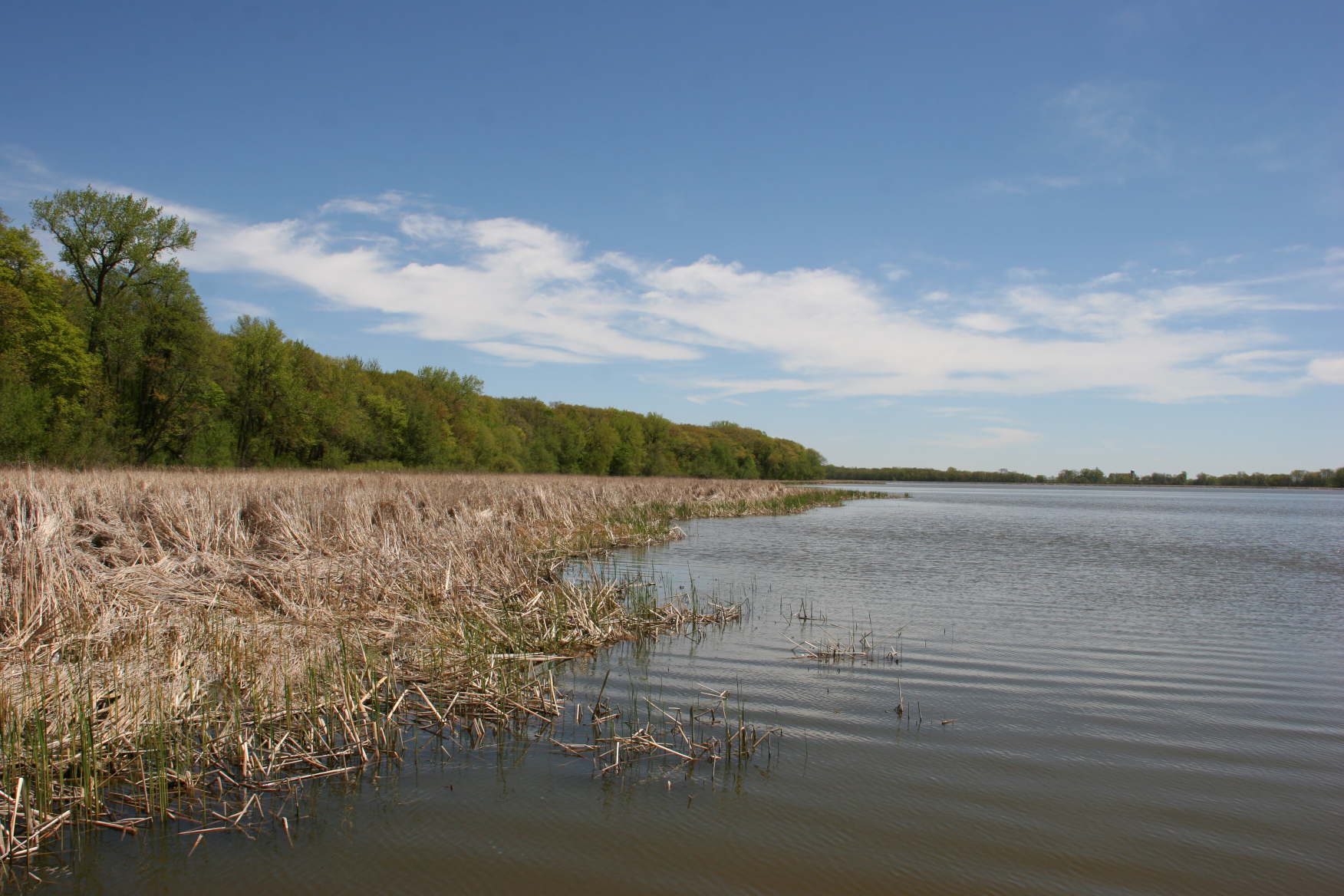
Photographed from the public dock at Rice Lake State Park, rural Owatonna. (Minnesota Prairie Roots copyrighted file photo May 2020)

IT PAYS TO CHECK OUT community bulletin boards, like the one at my local library. While perusing the paper postings at Buckham Memorial Library on Saturday, I discovered information about free passes to Minnesota state parks. Anything free piques my interest, especially as inflation rises and most of us are trying to save money, me included.

Buckham Memorial Library, Faribault, Minnesota. (Minnesota Prairie Roots copyrighted file photo 2017)

The Minnesota Department of Natural Resources is collaborating with regional public library systems (and two affiliated libraries) across the state to offer free 7-day park passes. Simply go to a participating library (check the DNR website), check out a pass and you can visit a state park for free. Without the pass, entry to a Minnesota state park costs $7 daily or $35 for a year.

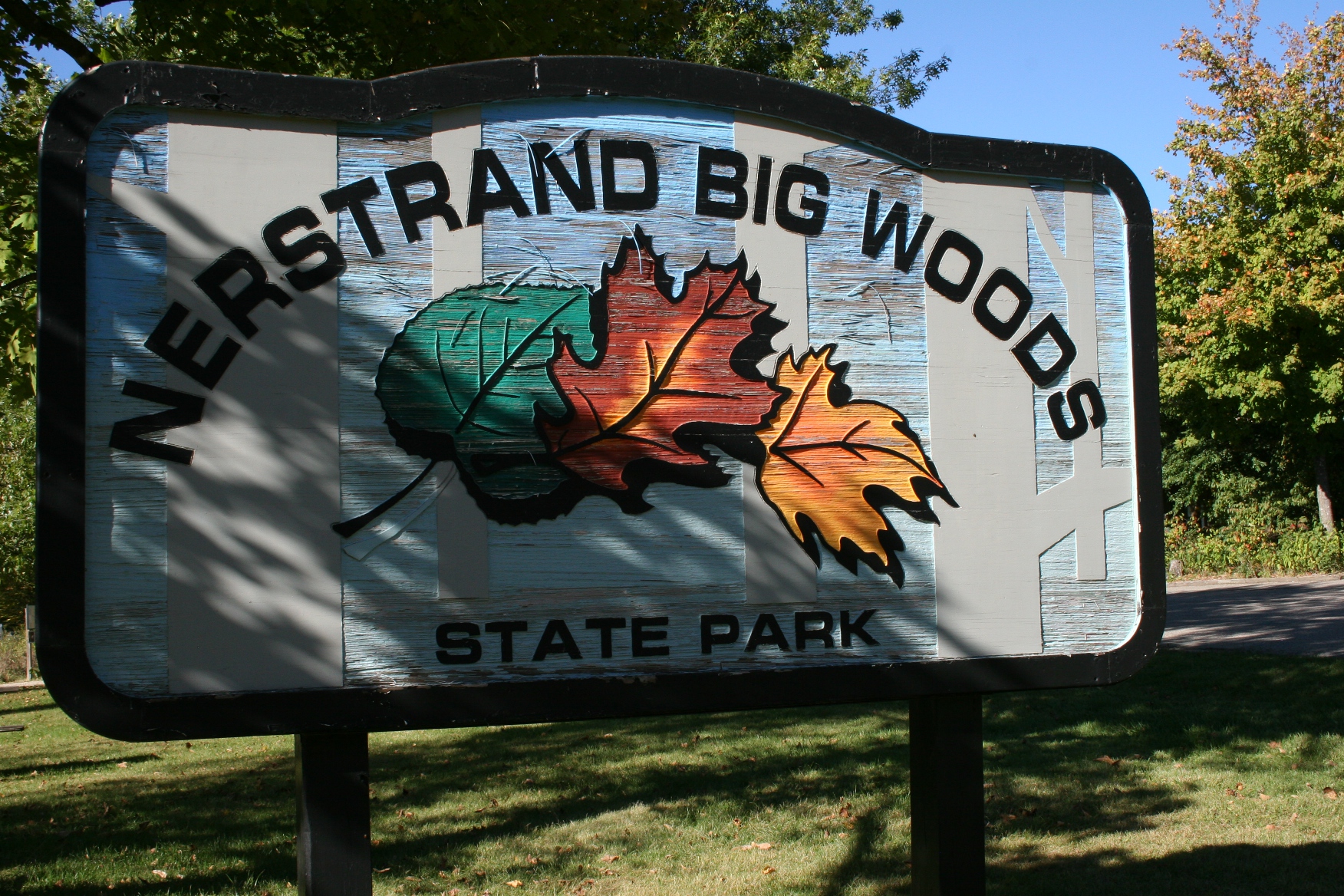
The sign welcoming visitors to Nerstrand Big Woods State Park, known for its beautiful fall colors. (Minnesota Prairie Roots copyrighted file photo September 2013)

My library in Faribault has three park passes, first-come, first-served. The number of passes available at a library ranges from one to four, depending on community size. After seven days the checked out pass expires and cannot be renewed.

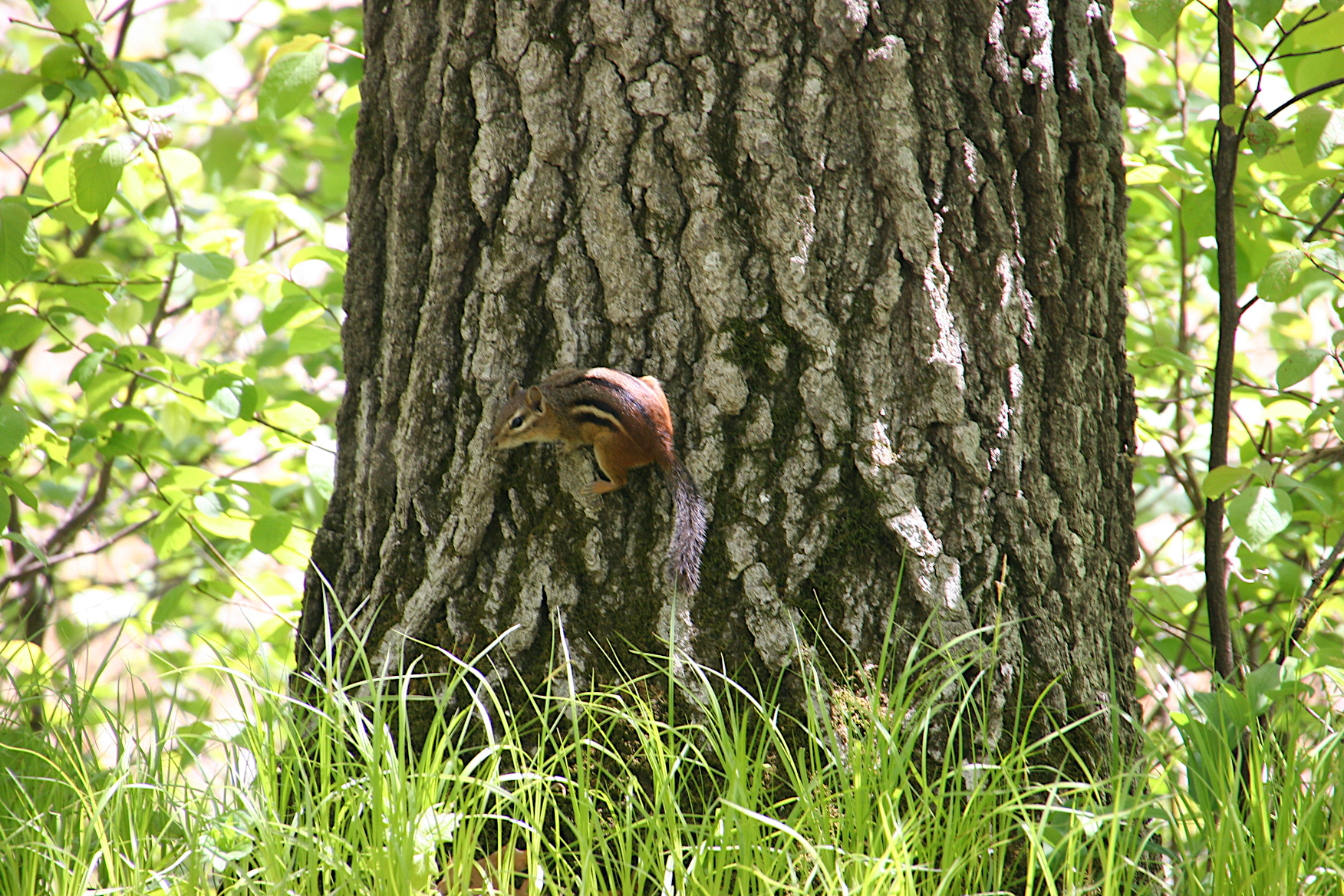
A chipmunk spotted at Rice Lake State Park. (Minnesota Prairie Roots copyrighted file photo May 2020)

So why offer these free passes? According to the DNR website, the goal is “to provide a way for Minnesotans living in low-income communities across the state to visit state parks without the financial burden of an entry fee.” Low income is defined as “where the median annual household income is $58,000 and/or schools nearby the library have more than 40% of students enrolled in the federal free and reduced lunch program.” That definitely fits Faribault. No proof of income is required for anyone checking out a pass.

Maplewood State Park east of Pelican Rapids in northwestern Minnesota is a remarkably beautiful park in the autumn. (Minnesota Prairie Roots copyrighted file photo October 2019)

I am thrilled that the DNR and libraries in qualifying communities are teaming up to offer these free passes. Any program that gets individuals and families exploring the outdoors is a good thing. And to visit a state park at no cost, especially if you are on a tight budget, can make all the difference on whether such an outing is possible.

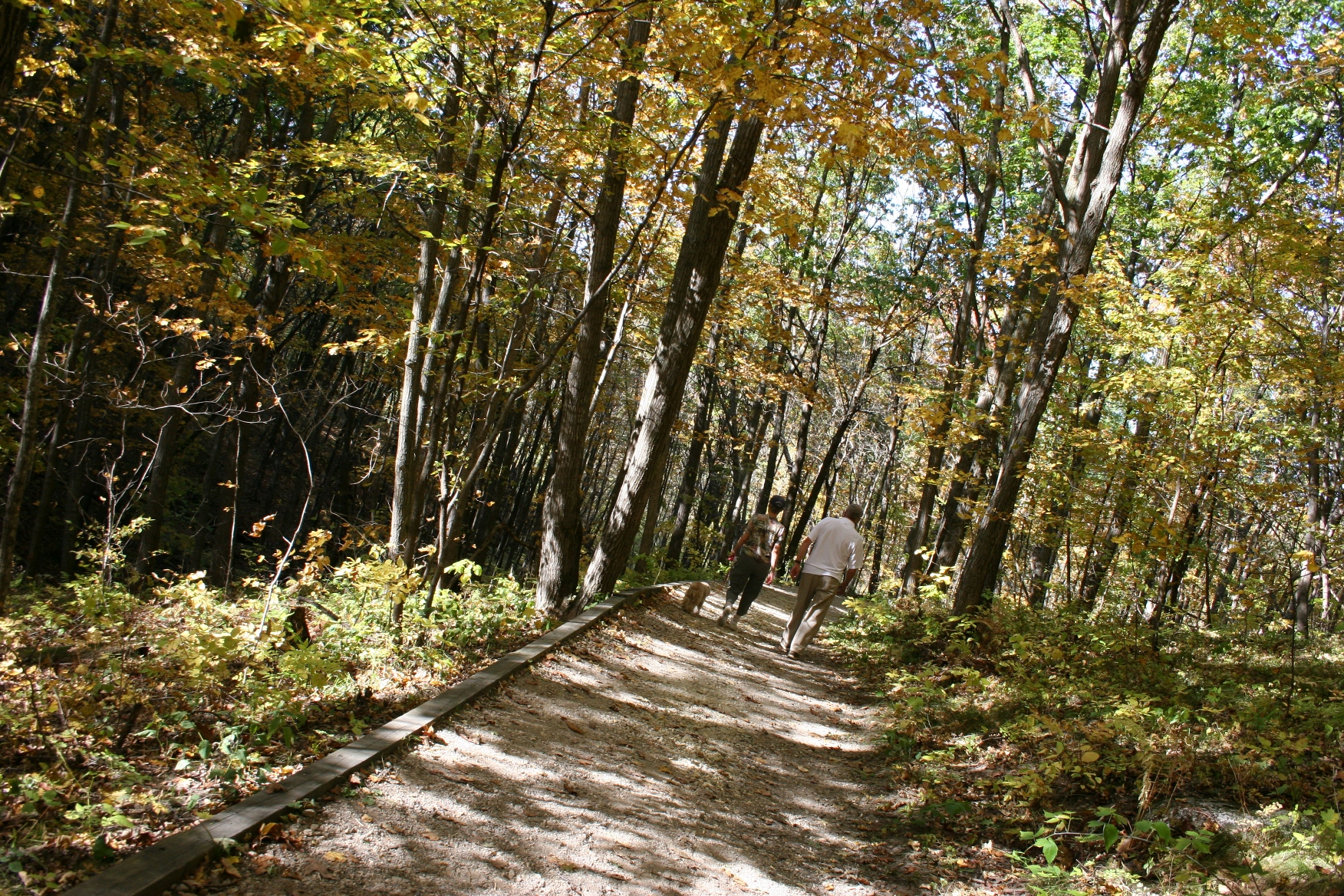
Well-kept and well-traveled paths take hikers deep into Nerstrand Big Woods, a must-see park, especially in autumn. (Minnesota Prairie Roots copyrighted file photo October 2011)

Other participating libraries in my immediate area include those in Owatonna, Waseca and Blooming Prairie. We have several state parks nearby: Nerstrand Big Woods, Sakatah Lake and Rice Lake.

This free park pass program, which just began in June and will continue through June 2025, reminds me of a similar program available to library patrons in the metro. Through Metropolitan Library Service Agency, an alliance of 101 public libraries in the 7-county Twin Cities metro, residents can access free or discounted admission to arts experiences via a smARTpass. The list of participating arts groups is extensive, but includes the Minneapolis Institute of Art, The Saint Paul Chamber Orchestra, the American Swedish Institute and many more, for example.

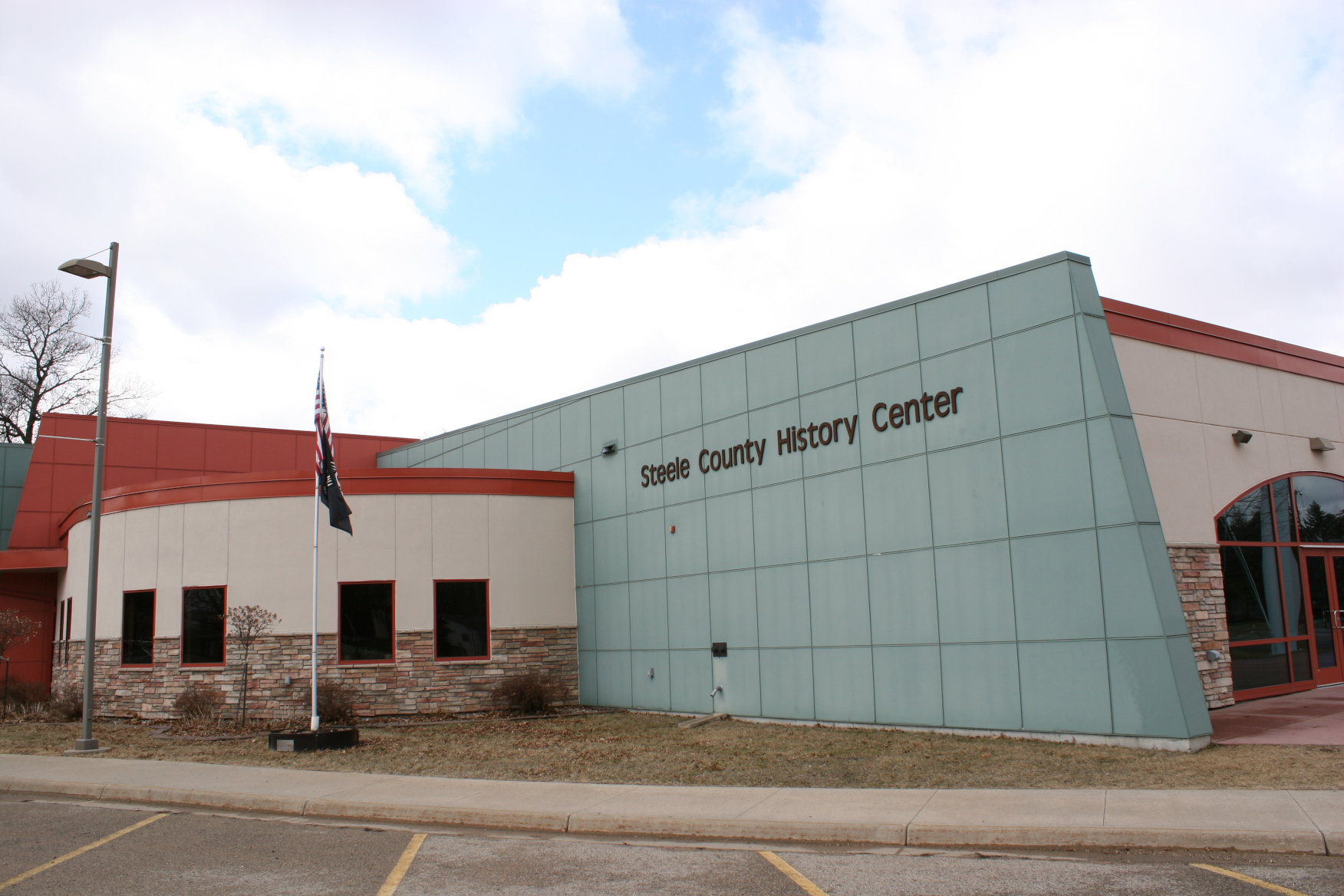
The Steele County History Center in Owatonna, one of my favorite area history centers. (Minnesota Prairie Roots copyrighted file photo 2022)

I’d love to see something like this in rural Minnesota. We have many wonderful museums/history centers, theaters and arts centers that are not necessarily accessible to all because of cost. (Note that most area arts centers offer free admission to their galleries.) Just as getting individuals and families outdoors and into our state parks is important, so is experiencing the arts and learning about area history. Perhaps some day we’ll get there. We’re off to a good start now with the free state park pass program.

FYI: For more information about the Minnesota State Parks Library Program, click here.

© Copyright 2022 Audrey Kletscher Helbling


Call us crazy, but we really do drive vehicles onto lakes in Minnesota February 4, 2013

HOW WOULD YOU REACT if you read this warning on a website:

Winsted Lake closed to motor vehicle traffic

Now, if you are a native of say California or Texas, Hawaii or Florida, you might react with an incredulous expression and/or a follow-up question:

What do you mean, motor vehicle traffic on a lake?

But, if you reside say in Wisconsin, the Dakotas or Minnesota, you’d understand motor vehicles on a lake and the ban issued by the Minnesota Department of Natural Resources on January 25:

Winsted Lake in McLeod County has been temporarily closed to motor vehicle traffic due to deteriorating ice conditions…

The DNR urges the public to exercise extreme caution if using the lake, especially in the area near the aeration system. Ice thicknesses in that area may be less predictable than in other parts of the lake.

This is expected to be a temporary closure. Once ice thicknesses have stabilized, the lake will be reopened to motor vehicle traffic.

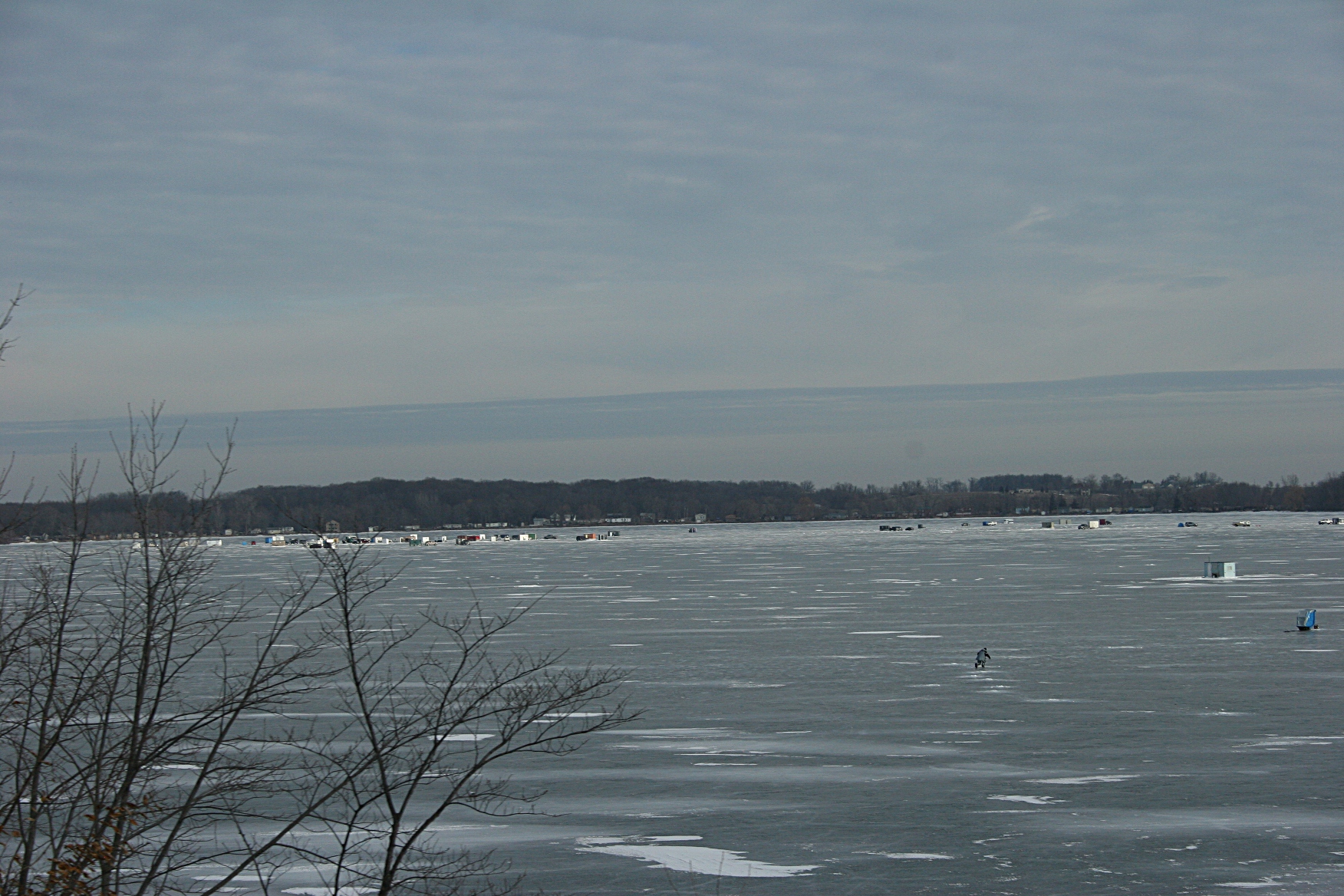
A recent ice fishing scene from Lake Mazaska west of Faribault in Shieldsville.

A recent ice fishing scene from Lake Mazaska west of Faribault in Shieldsville shows a cluster of fish houses and vehicles on the lake.

Yes, in Minnesota we drive cars, trucks and other vehicles onto frozen lakes to access ice fishing houses or open-air fishing spots. Sounds crazy, I know. But ice fishing, in which a hole is drilled into the ice to fish, is a big sport here. For example, some 5,500 fish houses are set up each winter on Mille Lacs Lake, probably our state’s most popular winter fishing destination. Roads are even plowed, bridges placed, across Mille Lacs to allow easier access to houses outfitted with kitchens, beds and other comfy accommodations.

Decades have passed since I ice fished on Roberds and Cannon lakes near Faribault with my husband, in the days before children. We’d fish, drink a little beer, play cards and, maybe, catch a few fish. That was all good and fun, until the first time I heard the ice crack. Let me tell you, that sharp crack and the sudden realization that ice can give way (duh) unsettled me. Not that I stopped ice fishing. But I thought more about the vast cold lake beneath me and how I couldn’t swim, as if swimming would be of any value anyway in icy water.

Those long forgotten worries crossed my mind the other day when my husband and I drove through Shieldsville, past Mazaska Lake where nomad fishermen (and perhaps some women, too) have set up a temporary village on the ice. Randy asked if I wanted to go onto the lake, as in our car. My answer was an emphatic no.

Simply put, I put faith in the DNR’s warning:

There is no such thing as 100 percent safe ice.

A slightly different version of the scene above. "What's that, a penguin walking across the lake?" my husband laughed.

A slightly different version of the scene above. “What’s that, a penguin waddling across the lake?” my husband laughed.

HAVE YOU EVER GONE ice fishing? What are your thoughts on the sport and/or driving onto a frozen lake?

FOR ANOTHER TAKE on ice fishing, check out Gretchen O’Donnell’s blog post, “Ice Fishing is for Real,” at A fine day for an epiphany by clicking here.

Or visit Gary Sankary’s humorous Old and in the Way blog to read about ice fishing in Wisconsin in “Blake Lake Report where I ask–What the hell?’ by clicking here. And then follow-up by clicking here to read his second post, “Ice Fishing–Answering the question “why?”, a persuasive “speech” on the merits of fishing on a frozen lake.

Did you know a production crew was in the Mille Lacs Lake area recently filming for a possible truTV show on ice fishing, according to the St. Cloud Times?

© Copyright 2013 Audrey Kletscher Helbling