Minnesota Prairie Roots

Writing and photography by Audrey Kletscher Helbling

After a natural disaster…the fear, the loss and reaching out to help April 29, 2011

I COULD WHINE, moan and grumble all day about the recent weather here in Minnesota. Rain. Cold. Snow showers. More rain and more cold. The cycle never ends.

But then I pick up today’s newspaper, turn on the television, switch on the radio or go online and my mouth clams. I have nothing, nothing, about which to complain.

I have not lost my home, my possessions, my business, my community, family or friends to killer tornadoes like those in Alabama, Mississippi or Georgia. Wednesday’s storms have been termed “the deadliest outbreak of tornadoes in nearly 40 years.”

To view the devastation, to hear the survivors, to even think about the utter destruction brings me to tears. I cannot fathom, do not want to fathom, such total devastation, loss of life and injury.

Tornadoes scare the h double hockey sticks out of me. I can trace that fear back to the June 13, 1968, tornado in Tracy, about 25 miles from my childhood home. I was an impressionable 11 ½-year-old when the tornado raced through this southwestern Minnesota farming community, killing nine. My family drove to Tracy, saw the flattened homes, the pick-up stix jumbled trees, the boxcars tossed aside like dropped toys. You don’t forget memorable images like that.

Decades later a tornado struck my childhood farm, damaging a silo and silo room, tossing farm wagons effortlessly about in the field. Those images, too, remain forever imprinted upon my memory.

Last week I saw snapped trees and minor damage to buildings along Wisconsin Highway 21 near Arkdale, which was struck by an April 10 tornado.
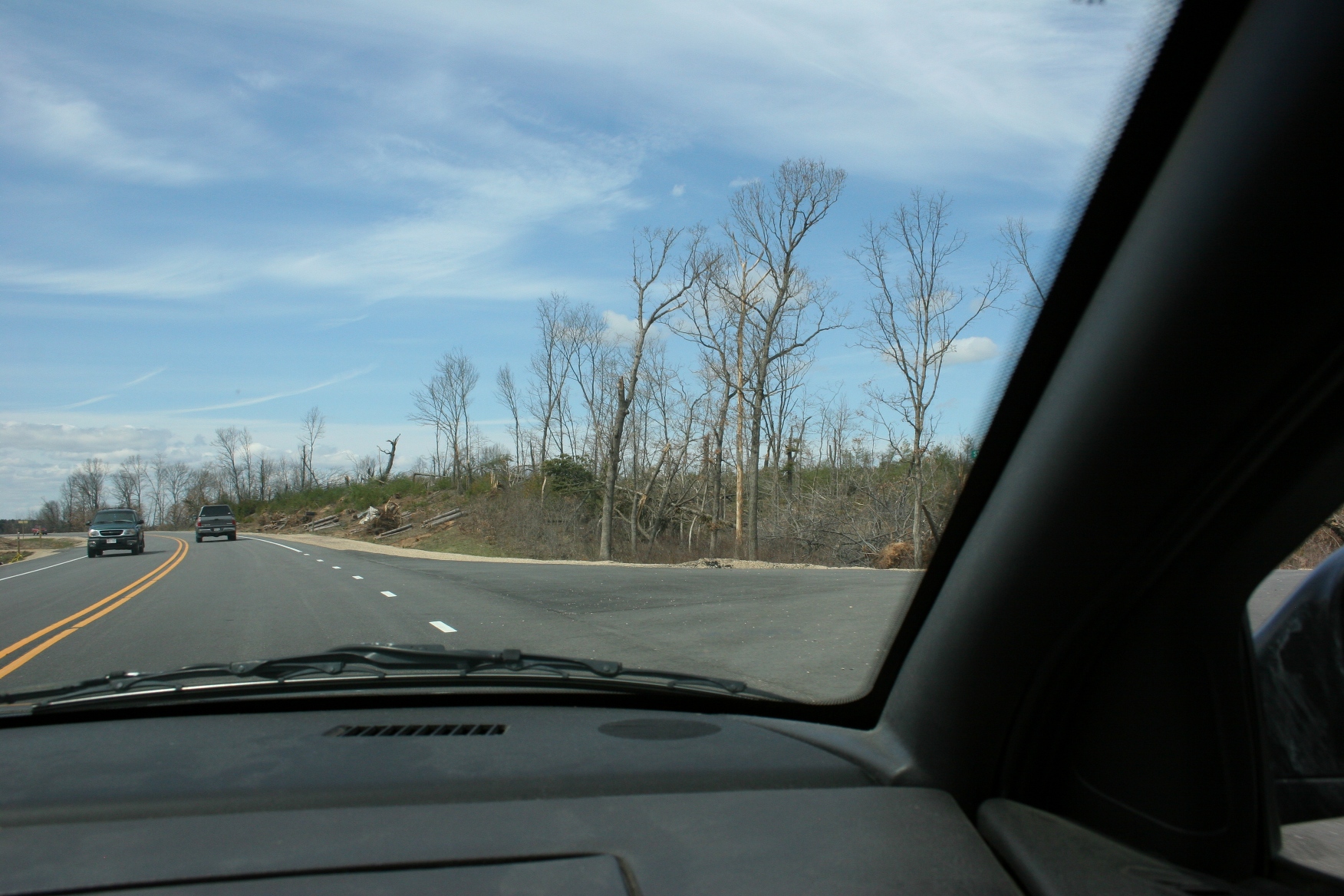
A view of storm damage to trees while traveling along Wisconsin Highway 21 west of Arkdale.
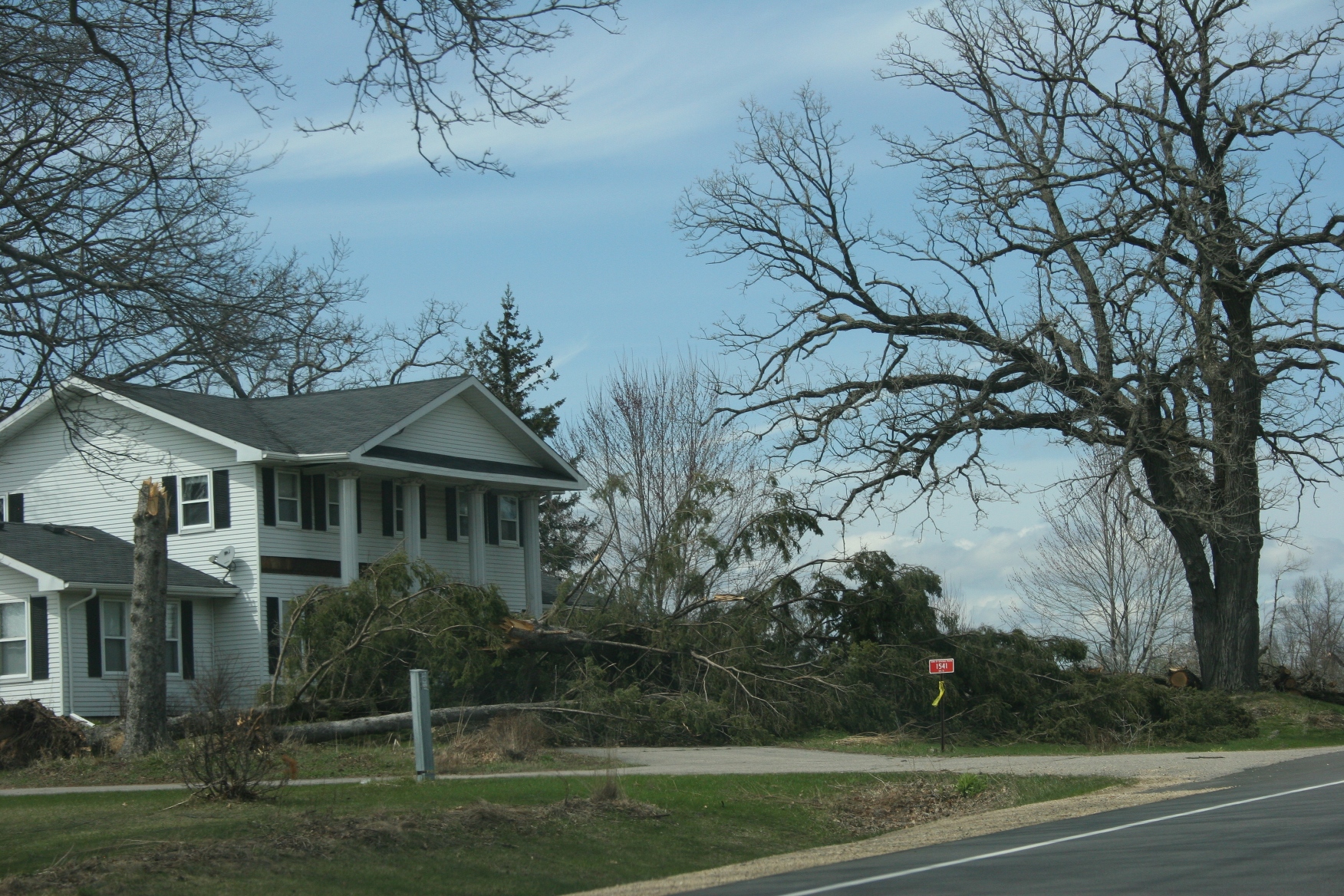
A felled tree by an apparently untouched home in Arkdale, Wisconsin.
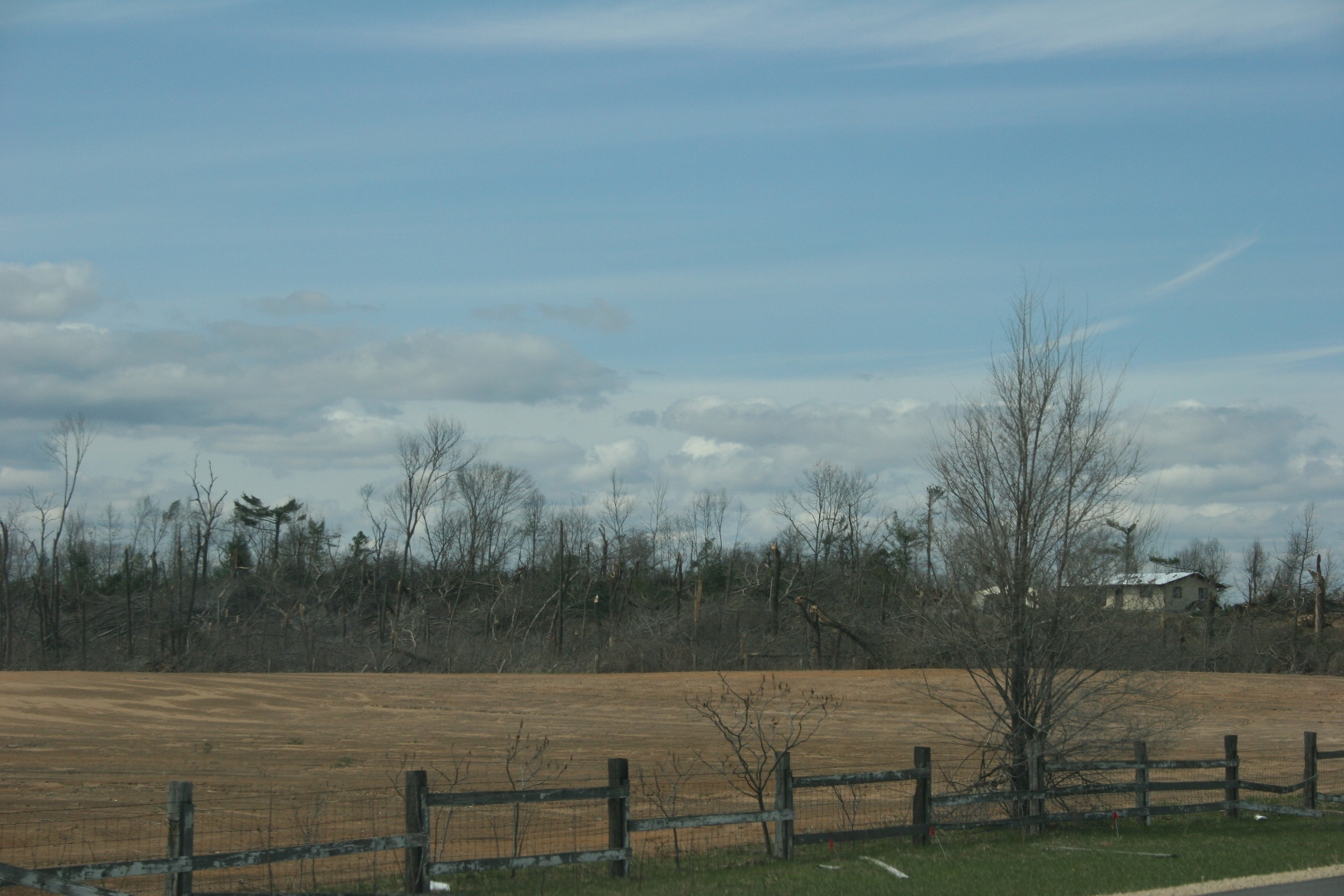
In the distance, trees were damaged by a tornado that cut a 17-mile path from Arkdale to near Coleman in Wisconsin on April 10.

Less than a year ago, on June 17, 2010, a tornado outbreak swept through Minnesota, killing one person in Mentor in Polk County, another in Almora in Otter Tail County and the third near Albert Lea in Freeborn County.

How many of us have already forgotten about those tornadoes as we move on to the next natural disaster news story?

Yet, for those personally affected, the story never really ends. The chapters continue with the rebuilding of homes and lives, the haunting nightmares, the emotional aftershocks. Lives have been forever rewritten.

Tornadoes. Hurricanes. Tsunamis. Earthquakes. Fires. Floods.

Survivors manage to pull their lives back together with the help of family, friends, neighbors and even strangers.

After a flash flood devastated Hammond in southeastern Minnesota last September, a group of Dakota County Technical College architectural technology students reached out.  They’ve worked with Hammond resident Judy Johnson in drafting remodeling plan options for her damaged home. You can read their story by clicking here. These students represent the good that emerges from the bad, the spirit of giving that makes me proud to be a Minnesotan.

I’ve followed the situation in Hammond since visiting that community shortly after the flood. I haven’t lifted a hammer to assist with recovery there. Rather, I’ve used the one tool that I possess—my words. I’ve crafted words into stories that I hope are making a difference. After reading my blog posts, two groups of volunteers have gone to help in Hammond.

That’s what it takes, each of us using our resources—whether that be words or money or skills or whatever—to help our neighbors in need.

© Copyright 2011 Audrey Kletscher Helbling


Waiting for the royal wedding April 28, 2011

Filed under: Uncategorized — Audrey Kletscher Helbling @ 7:57 PM
Tags: , , , , , , , ,

Kate can.

Will will.

Vow vows.

We watch.

Camera coverage.

Media mania.

Her hair.

He’s heir.

Princely pair.

Bridal bouquet.

Guarded gown.

Secrets secured.

Time ticking.

Guests gathering.

World waiting.

Copyright 2011 Audrey Kletscher Helbling
 

Defining Easter eggs in Seattle April 21, 2011

Filed under: Uncategorized — Audrey Kletscher Helbling @ 7:39 AM
Tags: , , , , , , , , ,

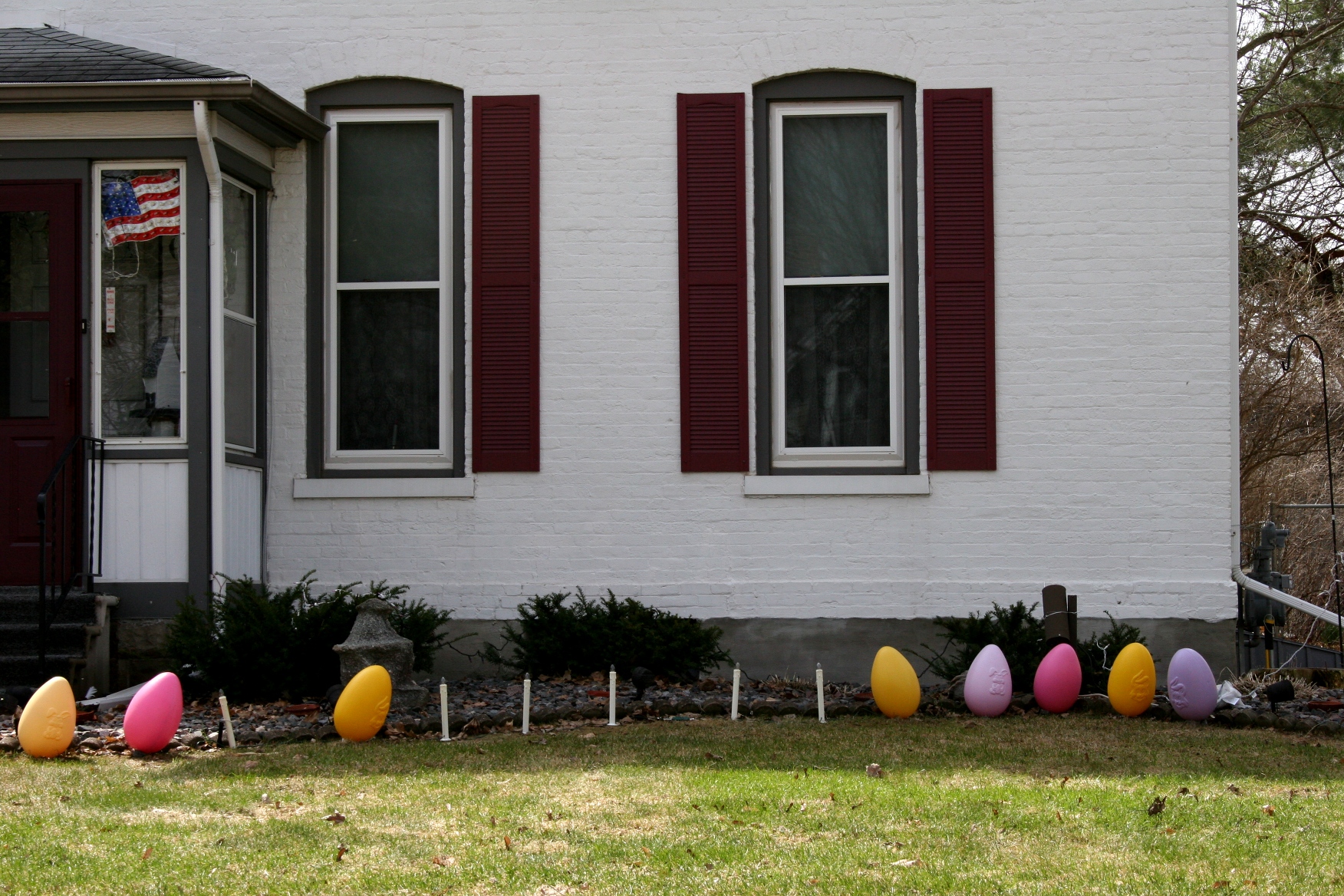
I spotted these over-sized Easter eggs in the front yard of a home along Second Street Northwest in Faribault.

HAVE YOU HEARD about “spring spheres,” the latest politically-correct terminology—at least on the West Coast—for Easter eggs?

Apparently a Seattle teacher would allow a high school volunteer to bring candy-filled plastic eggs into her classroom only if she called them “spring spheres.”

Now, how ridiculous is that?

As soon as the volunteer pulled the eggs out of a bag and after the teacher pronounced them “spring spheres,” the third graders promptly called them “Easter eggs.”

You can’t fool kids into believing an oval is a sphere and Easter isn’t Easter. These Seattle students clearly know their shapes, and their holidays.

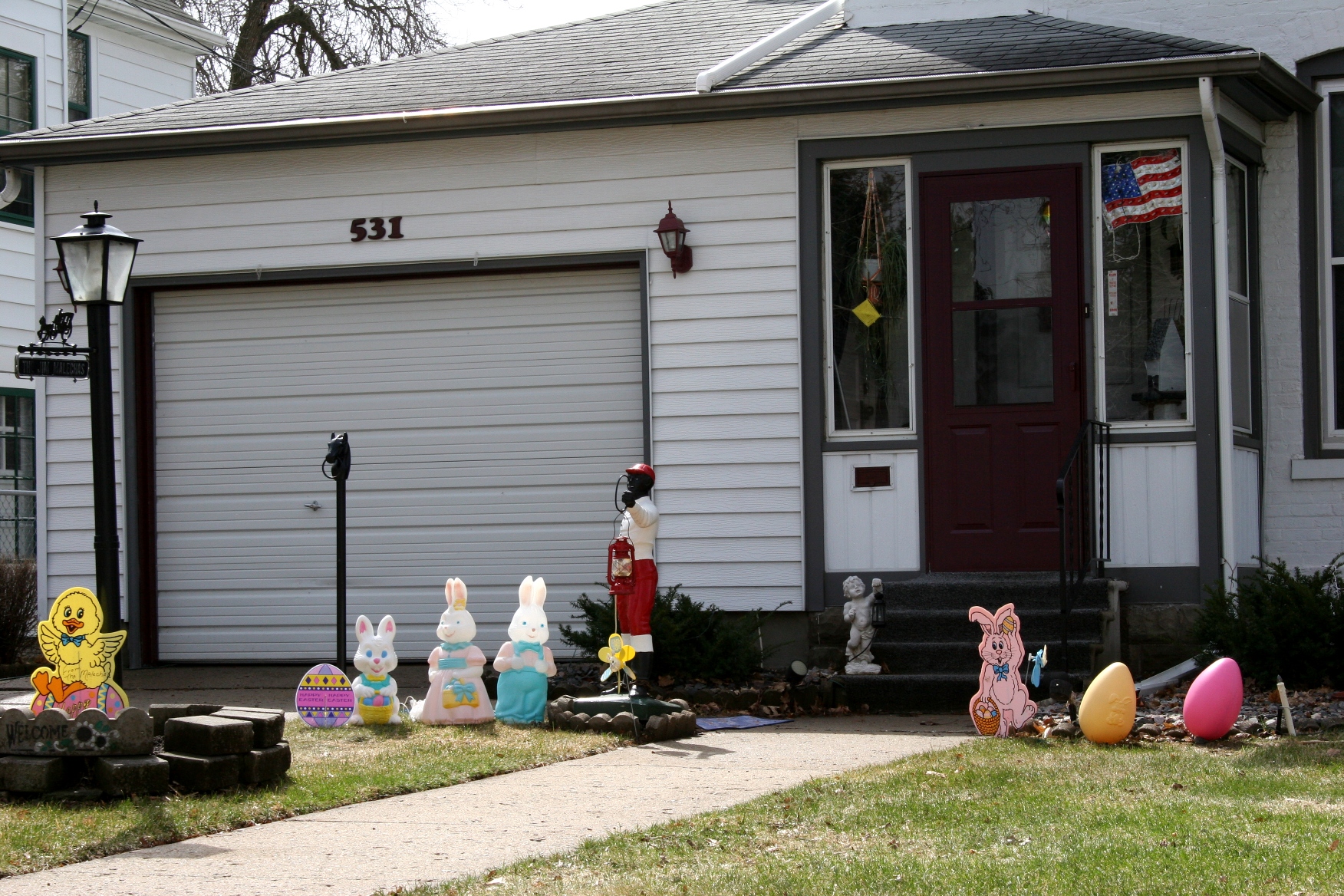
More Easter decorations in that Faribault front yard.

© Copyright 2011 Audrey Kletscher Helbling
 

Remembering my soldier-father and Elizabeth Taylor March 24, 2011

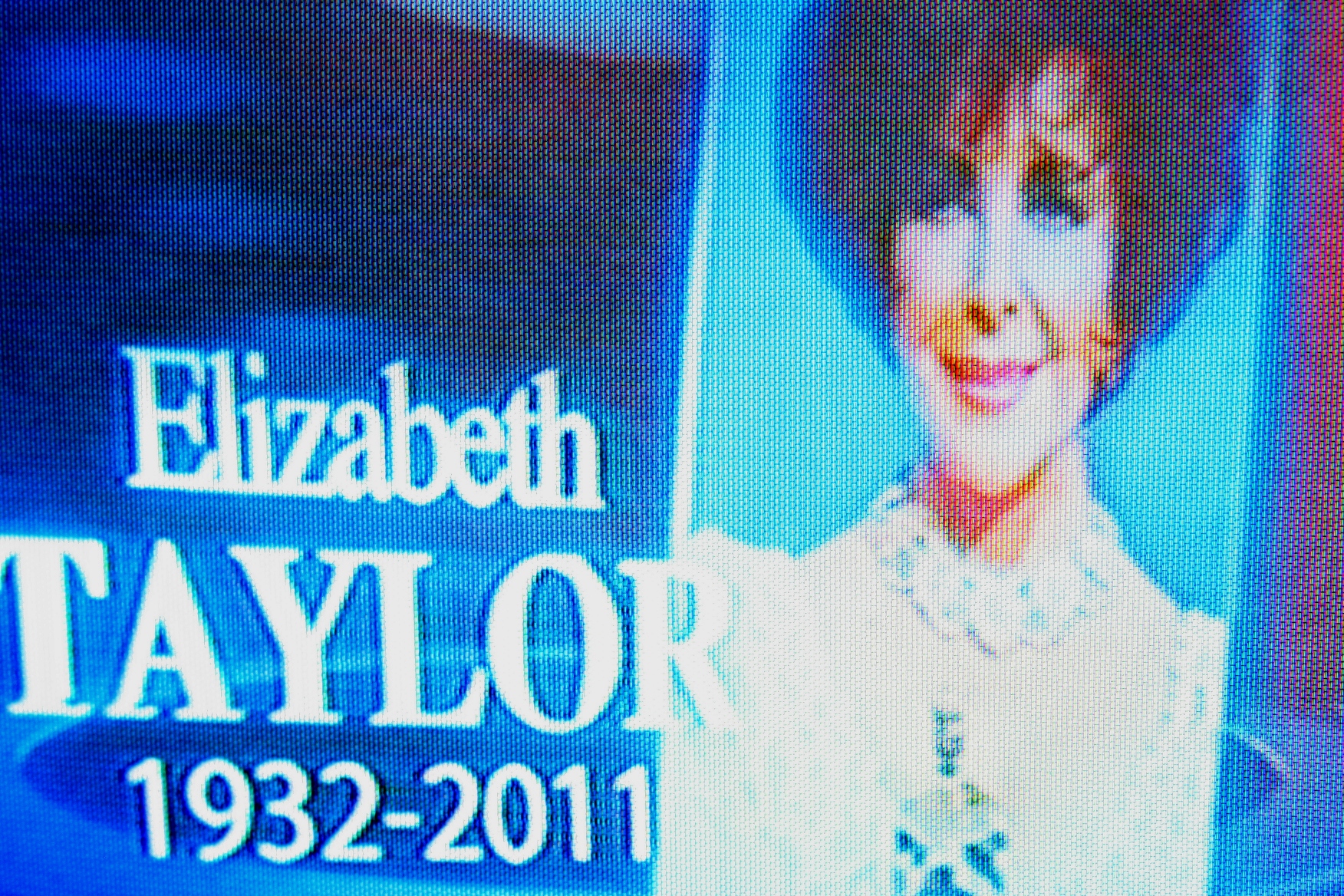
WHEN I HEARD the news on Wednesday of Elizabeth Taylor’s death, I didn’t think of the Hollywood star or the two-time Oscar winner, the stunning beauty with the violet eyes or the woman who married eight times, or even the starlet who struggled with addiction and was a crusader in the fight against AIDS.

Rather, I thought of my dad.

He was smitten with Liz.

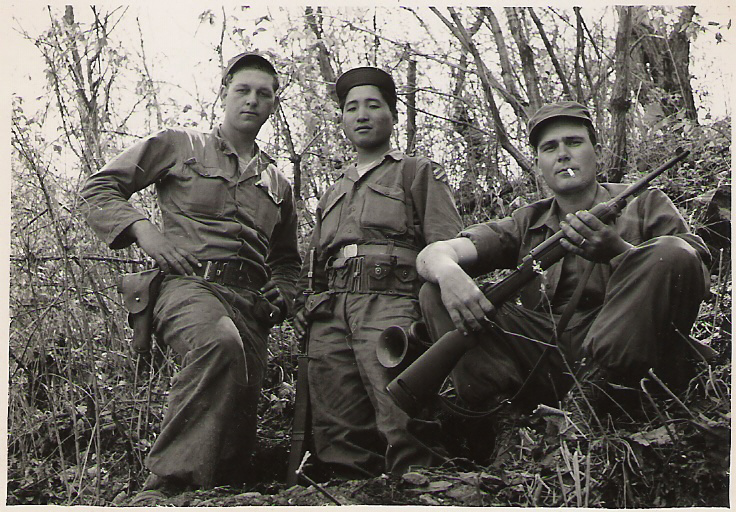
He never met the Hollywood actress. But he had seen her on a United Service Organizations stage while serving during the Korean Conflict. That was enough for my Minnesota farmer turned-soldier dad to fall for her. Hard. I don’t recall him ever, in his life-time, talking about another actress. He had eyes only for Elizabeth.

His wasn’t an obsession. Nothing like that. It’s just that he seldom talked about his time on the front lines as a foot solider during the Korean War. He told us about the orphans begging for food across barbed wire fences, the sniper (he eventually killed) picking off members of his platoon, watching his buddy blown up the day before he was to return home to the States, the cold and lack of food, the digging into foxholes for protection…and then Elizabeth Taylor, dear, dear Liz.

I expect that the movie star offered a welcome and pleasant diversion for soldiers who faced death on a daily basis.

My father, Elvern Kletscher, on the left with two of his soldier buddies in Korea.

If my dad was still alive—he died eight years ago at the age of 72—I would ask him about the woman who enamored him with her beauty when she stepped onto Korean soil to entertain the troops. I don’t know details about her USO appearance. I wish I had cared enough to ask him.

I tried to find more information online, but Taylor’s USO tours don’t exactly pop up all over the Internet. She once received the USO Woman of the Year Award and won a USO Merit Award. Otherwise I didn’t find much out there.

And that is dismaying to me. Her time entertaining our servicemen, soldiers like my dad, seems as notable as her roles in Cleopatra or Who’s Afraid of Virginia Woolf.

For me, Elizabeth Taylor will always be more than just another actress. She will be a reminder of my father, of the young Minnesota soldier who was struck by shrapnel at Heartbreak Ridge in Korea and was awarded the Purple Heart 47 years later. It is his memories of Liz that define her to me, not her beauty, not her accolades, not her anything except the temporary escape she gave my soldier-father nearly 60 years ago from the battlefields of Korea, from the horrors of war.

© Copyright 2011 Audrey Kletscher Helbling

 

Flood updates from southern Minnesota March 23, 2011

AS YOU WOULD EXPECT, Minnesotans are keeping a close watch on rising rivers, creeks and streams as rain and snow continue to fall across much of our state.

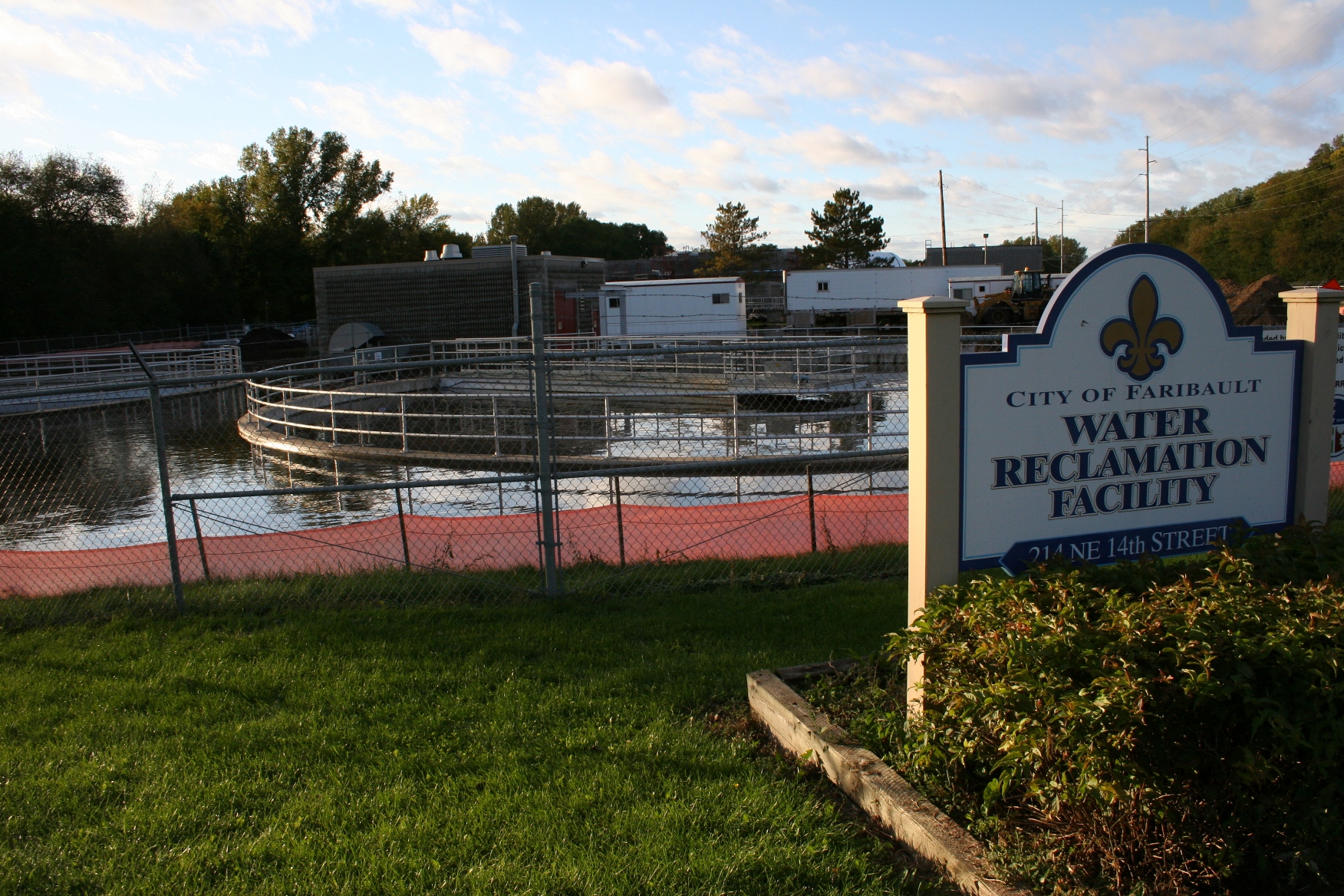
Here in Faribault, sandbagging has begun at the wastewater treatment plant, which flooded during last September’s flash flood. Sandbags have been filled and are available to property owners. The city has an emergency plan in place to deal with any flooding.

Faribault officials are working to protect the city's water reclamation plant which sits along the Straight River and which was flooded in a September 2010 flood. This photo is from September 2010.

Thankfully, the precipitation—rain, sleet and then snow overnight—have stopped in Faribault.

Further to the south, I’ve heard from Katie Shones of Hammond, a Wabasha County village nestled along the Zumbro River. Last September Hammond and nearby Zumbro Falls were devastated by the same flash flood that occurred in Faribault.

Katie updated me just this afternoon on the situation in Hammond. “So far, no sandbagging in the area,” Katie writes. “We are under a flood warning in Wabasha County, just as much of southern Minnesota. The Zumbro is high, but it is still contained in its banks. People are watching the river closely as you can well imagine.”

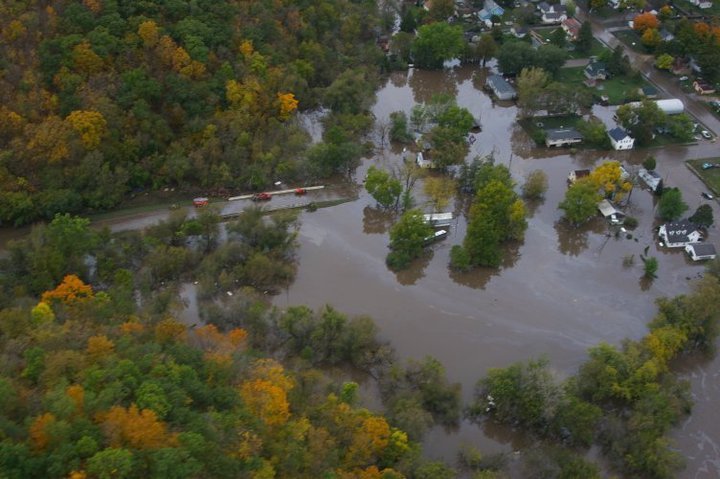
Looking down on Hammond during the September 2010 flash flood. Photo courtesy of Hammond residents Micheal Mann and Tina Marlowe.

Sadly, yesterday the spring floods claimed the life of a Minnesota Department of Transportation worker who was swept away by floodwaters after his backhoe tipped into Seven Mile Creek, which feeds into the Minnesota River. The accident happened between Mankato and St. Peter along U.S. Highway 169 when Michael Struck 39, of Cleveland, was attempting to clean out flood debris, according to an article in The Free Press, Mankato. His body was found today in Seven Mile Creek County Park.

Please be careful out there, and if you have any reports you would like to share about flood preparedness, flooding or other weather in your area of Minnesota, please submit a comment.

© Copyright 2011 Audrey Kletscher Helbling
 

Back in Faribault, Minnesota, from Japan

FIVE DAYS HAD PASSED since a young Faribault woman posted on her blog from earthquake and tsunami stricken Japan.

And now I know why. She was on her way back from Fukushima to Minnesota for her brother’s wedding.

Haidee, a Christian outreach worker and English teacher, has been safely reunited with her family at their rural Faribault home.

But her decision to leave Japan did not come without struggle. Read Haidee’s insightful post by clicking here. She reveals, in a March 22 post, the emotional turmoil she experienced, being torn between wanting to stay in Japan and returning to the United States.

Her words are honest, poignant and touching. They also point to an unshakable faith and an undisputed belief that God directed her onto the path that would take her to the airport and then back to Minnesota.

God, clearly, was watching over and guiding her on this journey.

A snippet of Jesus' face in a stained glass window at Trinity Lutheran Church in Faribault, where Haidee's father serves as the pastor. I'm certain that many times since the disaster in the Pacific, Haidee has been especially cognizant of God watching over her.

SHOULD I HAVE the opportunity to speak with Haidee, I’ll share that information with you. Click here to read my first post about Haidee, shortly after the disaster devastated Japan.


© Copyright 2011 Audrey Kletscher Helbling
 

Remembering the children as Minnesota prepares for spring floods February 23, 2011

SOMETIMES WE FORGET, in the jumble of quotes and information, to see a certain human, deeply personal, side of a news story.

Today, thanks to Katie Shones of Hammond, I’m bringing you a child’s perspective on the devastating flood that engulfed her southeastern Minnesota community of 230 during a September 2010 flash flood. I met Katie shortly after the flood.

The disaster was a terrifying ordeal for Hammond residents, who are still reeling in the aftermath. Many have not yet returned to their homes. Some won’t.

Now, as the focus in Minnesota shifts to predicted record spring flooding, as officials prepare for the highest river levels since the 1960s, as crews begin filling sandbags in areas along the Red River, this seems the right moment to let Katie speak—about her children.

But first a little background. Katie and her husband, Scott, live on the east side of Hammond, which is divided by the Zumbro River. The river flows just across Main Street, the highway and the park from the Shones’ home. Floodwaters came within feet—feet—of their house, lapping at their front door.

The home of Katie and Scott Shones and their children, photographed by Hammond resident Gene Reckmann during the September 2010 flood. Their house was spared, by mere feet.

Katie isn’t too worried about flooding this spring. Yet, she’s concerned enough to have a plan. If the Zumbro River rises like it did last fall, she and Scott will haul sand and gravel from a local quarry and build a bank to protect their home. They also have a relocation plan in place.

Their 11-year-old daughter, Rebekah, is ready too. “Ever the resourceful and prepared child she is, she has two bags jam-packed with stuff underneath her bed just in case we have to leave on a moment’s notice due to floodwaters,” Katie says.

This mother’s words break my heart. No child should have to worry about a flood.

But the depth to which the Hammond flood has impacted Rebekah and her 9-year-old brother Jerome reaches beyond concerns about a future flood. “The September flood has affected them more deeply than I had ever imagined,” Katie tells me. “Bekah still occasionally cries out in her sleep, ‘Daddy, Daddy, help me.’ When I ask her what is wrong, she mumbles things about the flood. She never fully wakes up, but I do believe she is having nightmares about that day.”

As a mother, simply reading this brings me to tears. I can only imagine how Katie and Scott feel when they hear their daughter cry out for help in her sleep.

“Jerome has seen the flooding in Australia on the news and is very worried that it will spread to Hammond,” Katie continues. “I have tried to reassure my kids that if it ever gets as bad as it did last fall, we will leave long before it reaches our place and go to Grandma Merle’s (my mother’s farm). The farm is located just two miles from our home, but is on the limestone bluffs above the Zumbro River.”

With so many Hammond residents forced from town and many still not back in their homes, Katie says her children are also without many playmates. “…there never were many children in the area their ages to play with, but now there are only four kids in Hammond left for them to play with.”

That said, the absence of their playmates serves as a daily reminder to Rebekah and Jerome of the floodwaters which ravaged their town and came terrifyingly close to flooding their home.

As Minnesotans physically prepare for the floodwaters that are certain to inundate communities and homes, I hope river town residents are also preparing psychologically, specifically remembering the children like Rebekah and Jerome.

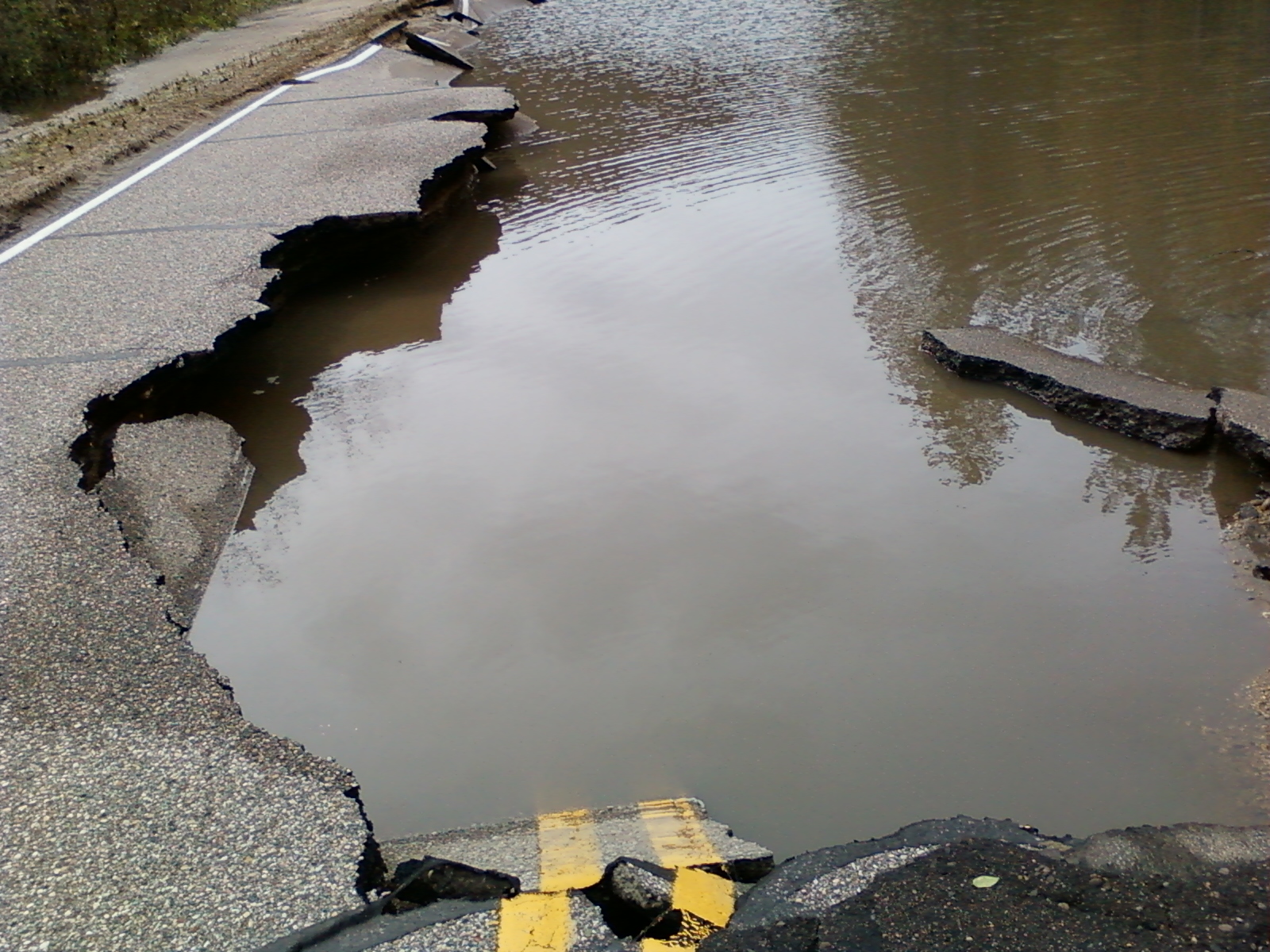
Floodwaters destroyed this portion of Wabasha County Road 11, the river road which runs from Hammond to Jarrett. Gene Reckmann photographed this section of the roadway just outside of Hammond.

THANK YOU, Katie, for allowing me to share your deeply personal story. Thank you also to Gene Reckmann of Hammond for the photos posted here.

READERS, IF YOU have not read my series of posts and photos about the September flood in Hammond and neighboring Zumbro Falls, check my Minnesota Prairie Roots archives for stories published during the week of October 11, 2010.

Copyright 2011 Audrey Kletscher Helbling
 

Why Anthony Hauser’s leukemia diagnosis rates as news May 20, 2010

Filed under: Uncategorized — Audrey Kletscher Helbling @ 9:16 AM
Tags: , ,

“WHY ARE THEY DOING A STORY on him?” my husband asks. “Lots of people have cancer.”

I look over at him as we are watching the 10 p.m. news, astonished really that he would say this. He is, after all, married to a former newspaper reporter and a current freelance writer. If anyone should understand why the media is reporting on Anthony Hauser’s leukemia diagnosis, it should be my husband.

“Why are they doing a story on him?” I repeat. “Yeah, lots of people have cancer, but he’s not just anybody.”

Anthony Hauser is the father of Daniel Hauser, the 14-year-old Sleepy Eye boy who a year ago fled with his mother to avoid court-ordered chemotherapy treatment for his Hodgkin’s lymphoma. That, I not so gently explain to my spouse, is why this is news. The elder Hauser reportedly is not undergoing recommended chemotherapy, adding another twist to this ongoing saga that initially captivated a nation.

This conversation with my husband gets me thinking about how those outside the profession view the media and the stories they report. Generally speaking, people tend to blame the messenger—whether it be a newspaper, television, radio or other media source—for all the “bad stuff” happening in the world.

I’ve heard many times the criticism from family and friends wondering why the media reports a particular story. “Because it’s news,” I typically respond although often I want to scream, “Because it’s news!”

And then I want to add, and sometimes do, “Please don’t kill the messenger.” In other words, do not target your anger at the media. Direct your discontent, your anger, at the criminal, the politician, the oil company, the disease, whoever/whatever caused the news that is upsetting you.

I recall several years ago a front page article in The Faribault Daily News about a brown bear at the local library. Had this been a real bear stalking patrons or holed up in a tree near the library, this would have been front page news. But rather, this story told of a brown bear puppet incorporated into children’s story time programming.

In this instance, dear husband, dear reader, you would be right in asking, “Why are they doing a story on this?” A piece like this belongs inside the newspaper, perhaps as a feature, if even that.

From a journalist’s perspective, such stories are “fluff,” at best. It’s not that reporters don’t like writing about subjects that make readers feel all warm and fuzzy, but their primary job is to bring you the news, even the bad news like Anthony Hauser’s leukemia diagnosis.

© Copyright 2010 Audrey Kletscher Helbling