Minnesota Prairie Roots

Writing and photography by Audrey Kletscher Helbling

A tale of two girls and a goat-napping August 30, 2011

Filed under: Uncategorized — Audrey Kletscher Helbling @ 3:03 PM
Tags: , , , , , , , , ,

This goat is not to be confused with the heisted goat. Rather this goat was photographed at the Kasota Zoo and is used for illustration purposes only with this blog post.

IF YOU HAVE NOT yet heard the tale out of Mankato about the young stepsisters—we’re talking under age 10—who stole a goat from a zoo in the middle of the night and were caught walking down a street in their pajamas with the goat, then click here.

While this story could have ended not-so-happily, it did. The girls and the goat are fine, although the stepsisters could be in trouble with their parents, or the law.

After lying to the police about how they got the goat, the 6 and 7-year-olds eventually fessed-up and the truth was uncovered. They’d been to a birthday party at Sibley Park Zoo earlier in the day and apparently decided they just had to have a goat.

I heard this story on the 10 p.m. news Monday and laughed and laughed and then laughed some more.

I know, maybe I shouldn’t be laughing. Stealing is wrong. Lying is wrong. But in these days of news stories about natural disasters, war, murders, unemployment, a depressed economy, scandalous politics and more, you have to appreciate an imaginative caper like two kids stealing a goat from a zoo, in their p.j.s, in the middle of the night.

And sometimes you just have to view life with a Betsy-Tacy-Tib perspective.

Betsy, Tacy and Tib, for those of you unfamiliar with that trio, are characters in a series of children’s books written by Mankato author Maud Hart Lovelace and published between 1940–1955. The three, based on real-life friends growing up in Mankato (Deep Valley in the books), get into all sorts of mischief.

The fictional trio made quite a mess in the kitchen when they mixed up “Everything Pudding” combining ingredients like bacon grease, vinegar, onions, sugar, red pepper and more.

Another time they cut each other’s hair.

Betsy cuts Tacy's hair in this snippet from a mural by artist Marian Anderson in the Maud Hart Lovelace Children's Wing at the Blue Earth County Library in Mankato.

And once the three ventured into Little Syria for a picnic lunch. There they encountered a goat. They didn’t steal the goat. He stole from them, grabbing their picnic basket and scattering sandwiches, cookies and hard-boiled eggs in all directions.

Yup, sometimes you have to laugh, whether it’s at the antics of a goat in a book of fiction or the antics of real-life goat thieves who seem like they could have stepped right off the pages of a Betsy-Tacy book.

FYI: The girls with the Betsy-Tacy-Tib mischievous streak and the goat were apprehended along Carney Avenue. Coincidence or not, one of the books in Lovelace’s series is titled Carney’s House Party. And Carney’s surname is Sibley.

WHAT’S YOUR TAKE on this story about the stepsisters who stole the goat from Sibley Park Zoo in Mankato? Share your thoughts by submitting a comment.

© Copyright 2011 Audrey Kletscher Helbling


You call the $50,000 shot August 19, 2011

IF YOU ARE BITTEN by a bat that flies away, you should expect to undergo a series of rabies shots.

If you win $50,000 while assuming the identity of someone else, you should expect fall-out from your actions.

Right about now you’re likely wondering why I’m writing about bats and bills all in the same post. Well, both made the news in my community of Faribault this week. One has garnered national attention, the other not.

First, the bat bite, not because it’s less important than the $50,000, but because it’s easier to write about and no gray area exists. You get bitten by a bat that can’t be caught, like a 9-year-old Nerstrand boy did in his family’s barn recently, and you get rabies shots. Simple. Black-and-white.

But, if you potentially win $50,000 like 11-year-old Nick Nate Smith of Owatonna did last week by shooting a hockey puck from 89 feet into a 1.5-inch by 3.5 inch hole at a Faribault Hockey Association fundraiser, you’re talking an entirely different story.

On the surface, this would seem black-and-white. Accomplish the amazing feat, win the prize.

However, Nate isn’t Nick. And it was Nick, Nate’s identical twin, whose name was pulled for the chance to score the $50,000 by sinking the puck into that incredibly small space.

The problem, however, is that Nick wasn’t in the hockey arena when his name was drawn, so Nate stepped in for his brother, made the shot and supposedly won the $50,000.

That is until the Smith family admitted to event organizers that Nate had subbed for Nick.

Now a Reno, Nevada, insurance company for the puck-shot event is investigating, the $50,000 payment remains in limbo and the story of the amazing shot and the follow-up controversy has gone national.

In our house, we’ve discussed this whole $50,000 hockey puck debacle numerous times already. Opinions have varied from:

  • Just give the kid the $50,000.
  • Why did the Smiths tell them it was Nate?
  • He doesn’t deserve the $50,000. Nate isn’t Nick and the family wasn’t intially honest.
  • What if a friend had stepped in and taken the shot? Would they give him the money?

Can you guess which comment is mine?

You better believe that the second response, “Why did the Smiths tell them it was Nate?”, is not my statement and resulted in a lecture from me about honesty and how the family eventually would have gotten “caught.”

I don’t pretend to know every detail related to the hockey puck shot event. But I do know this much: Nate isn’t Nick.

NOW IT’S YOUR TURN to offer your opinion. Would you award the $50,000 to Nate Smith? Why or why not? Vote by submitting a comment.

IN A 24-HOUR unscientific online poll conducted by The Faribault Daily News, 63 percent of the 245 respondents said Nate Smith should get the $50,000. Thirty-two percent said he shouldn’t. And five percent checked “I don’t know.”

MEDIA FOCUS on the Smith story has been substantial. Click on the sources below to read some of the coverage.

CBS The Early Show

The Faribault Daily News:  the initial story published on August 12 and a follow-up story published on August 14

ABC News

National Public Radio

BY THE WAY, my comment is the third one: He doesn’t deserve the $50,000. Nate isn’t Nick and the family wasn’t intially honest. Choose to agree or disagree. It’s your shot.

© Copyright 2011 Audrey Kletscher Helbling
 

Cannon Falls pulls out the flags for President’s visit August 15, 2011

Amy Savvy cleans the windows at Amy's Savvy Seconds, next to the Cannon Falls Chamber of Commerce, on Sunday afternoon in preparation for President Barack Obama's visit.

IN A FEW HOURS, President Barack Obama arrives in small-town Minnesota for the first stop on a Midwest bus tour that will also take him into rural parts of Iowa and Illinois.

The folks in Cannon Falls, a town of some 3,795 in southeastern Minnesota, have rolled out the flags in a patriotic welcome to our nation’s leader.

Throughout the downtown Sunday afternoon, most businesses were displaying American flags in storefront windows. Flags were also posted along the downtown streets. Some homeowners displayed flags in their yards and mini-flags lined at least a block of the roadway leading to Hannah’s Bend Park, site of the President’s visit.

Along the road to Hannah's Bend Park, at least one homeowner had decorated with mini American flags.

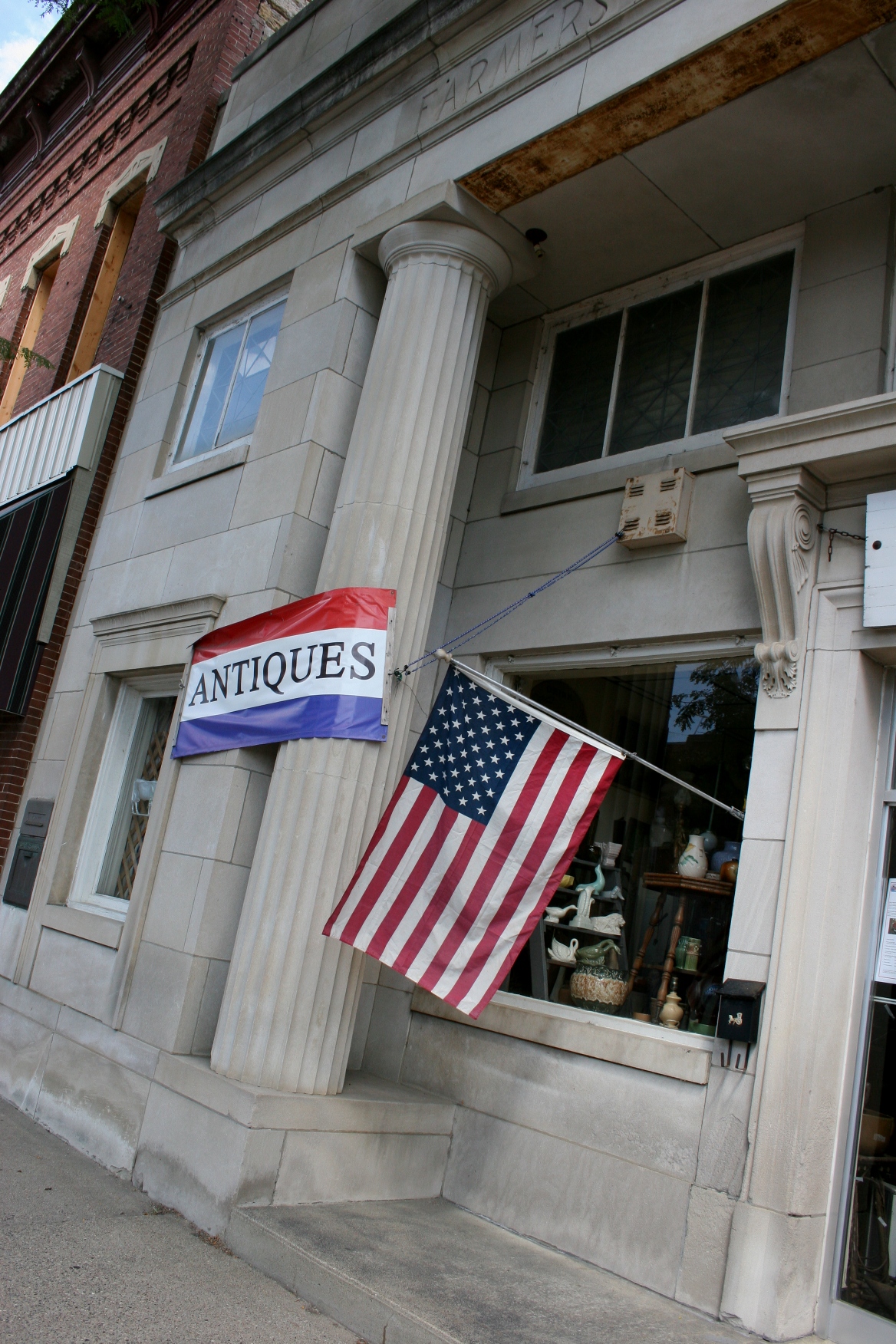
An American flag hangs outside Schaffer's Antiques.

A street-side flag in downtown Cannon Falls.

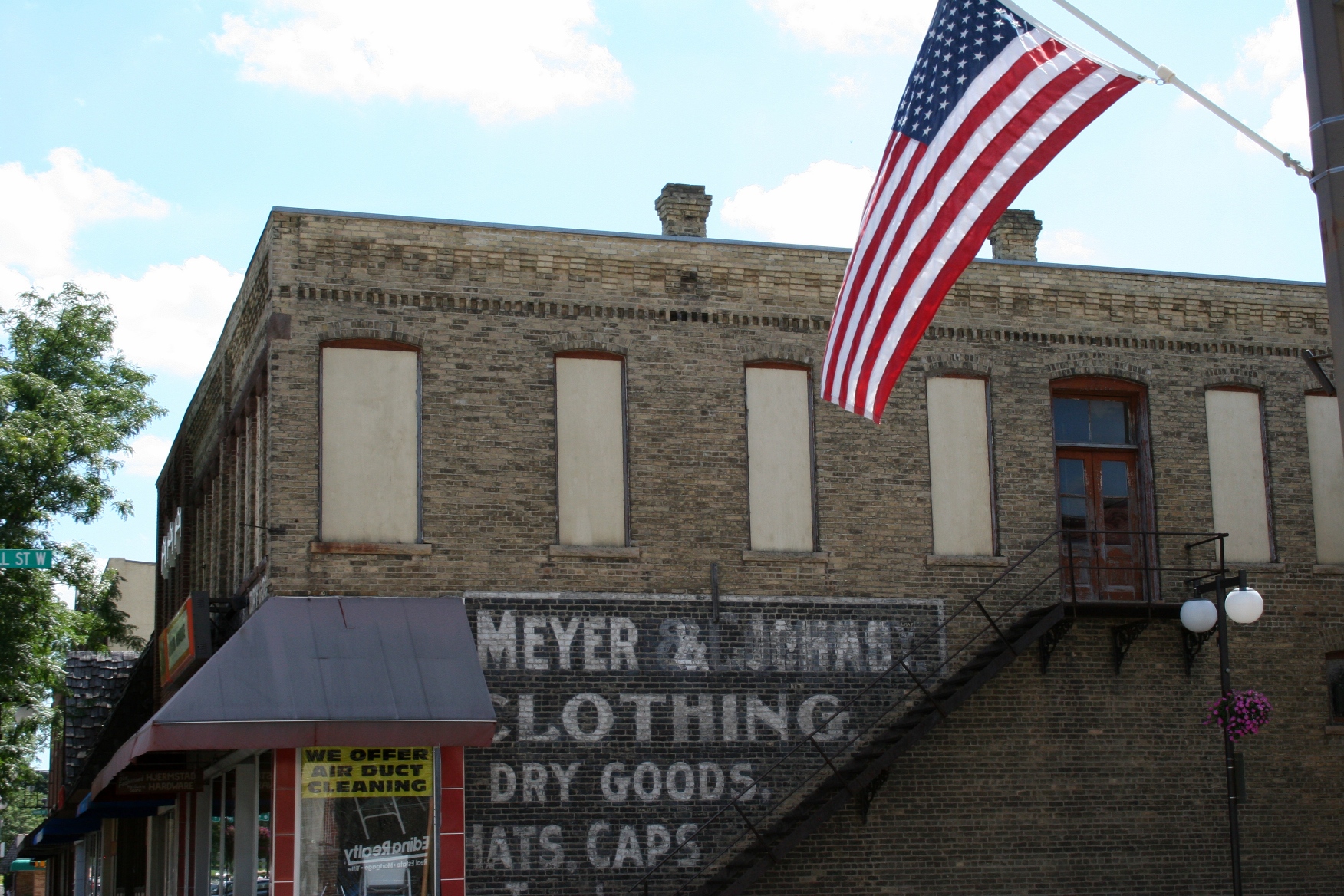
Vintage building signage provides the backdrop for an American flag in this historic river town.

Whether Obama will ever see the many flags in the downtown remains unknown as his route into and out of Cannon Falls remained unofficially unknown to the locals I visited with on Sunday. At least one business owner speculated he would travel U.S. Highway 52 into town, which seems the most likely route.

Warren Schaffer of Schaffer’s Antiques recalled a shutdown along that highway when President Ronald Reagan passed by Cannon Falls.

The last visit by a U.S. President to this Goodhue County town occurred in 1928, when Calvin Coolidge attended the dedication of a statue honoring Col. William Colvill, a Civil War veteran who led the First Minnesota Volunteer Regiment during the battle at Gettysburg.

Most Cannon Falls residents likely feel as antique shop owner Schaffer does about Obama’s visit. “He’s the President. This is a little town. This is a big deal.”

A Spanish American flag hangs on a wall inside Schaffer's Antiques. The flag, which shop owner Warren Schaffer thinks likely was a coffin flag, is not for sale. It makes a nice wall decoration, Schaffer says.

A flag in the window of the Cannon River Winery, a busy place on a Sunday.

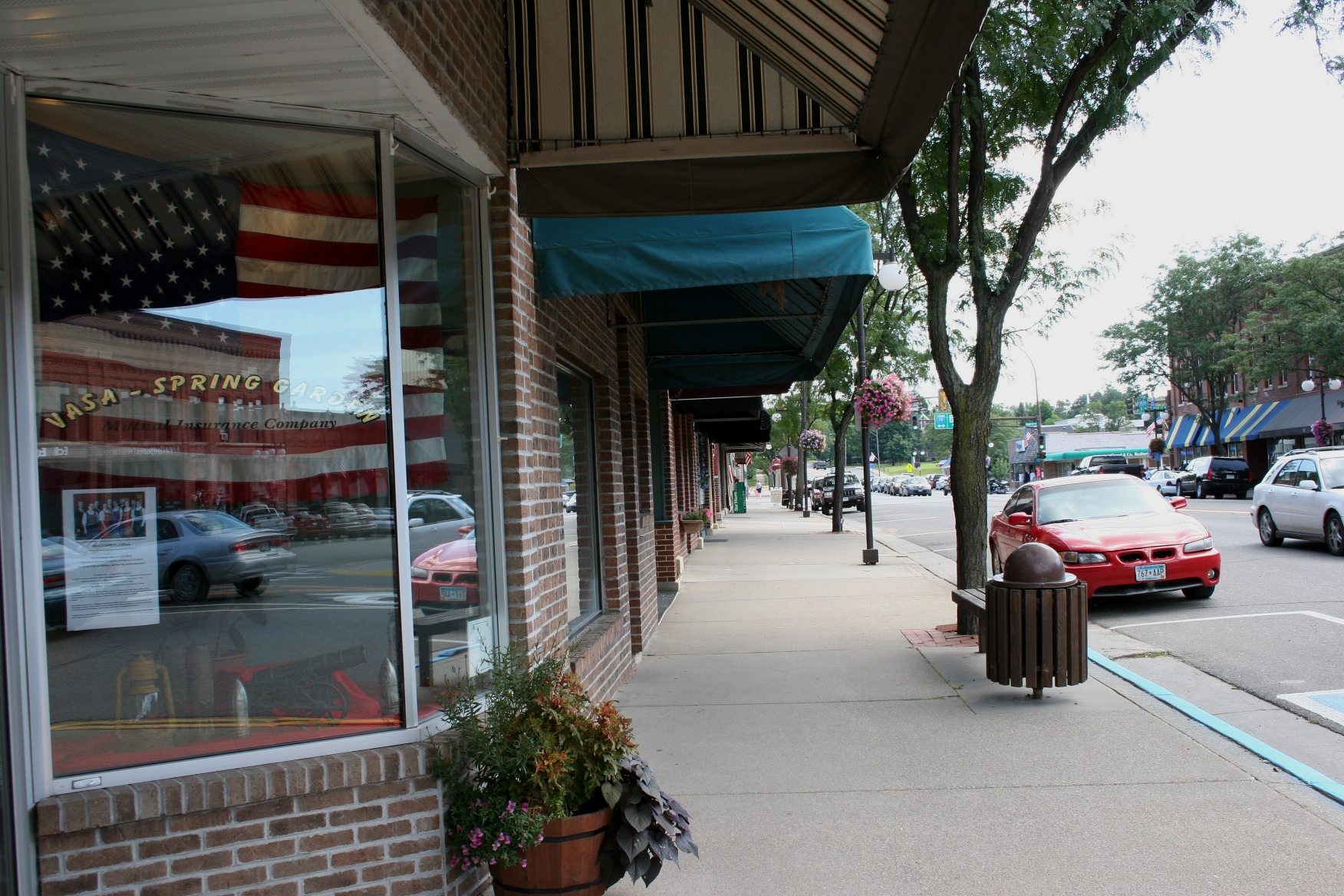
A shot of Cannon Falls' main drag and a flag in the window of an insurance company.

© Copyright 2011 Audrey Kletscher Helbling
 

Cannon Falls prepares for President Obama’s town hall meeting August 14, 2011

Two tents were set up at the entry to Hannah's Bend Park early Sunday afternoon.

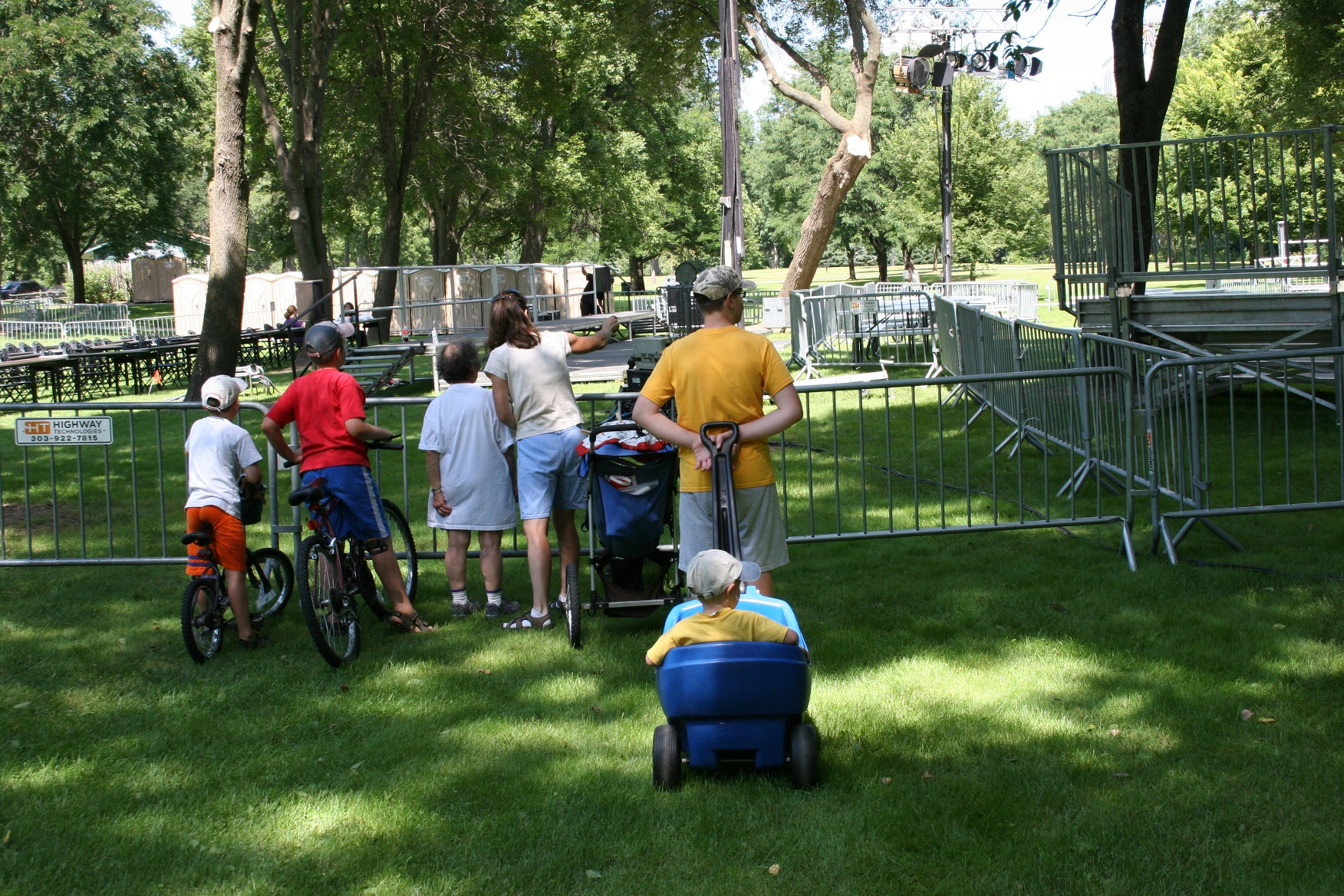
I DIDN’T EXPECT TO GET SO CLOSE, to park in the parking lot next to the Cannon Falls Community Pool, stroll across the street and walk down the hill into Hannah’s Bend Park where President Barack Obama will participate Monday morning in a town hall meeting.

But my husband and I walked right into the thick of preparations Sunday afternoon with no questions asked, just like the locals and others who’d arrived by foot, vehicles and on bike to check out the hubbub.

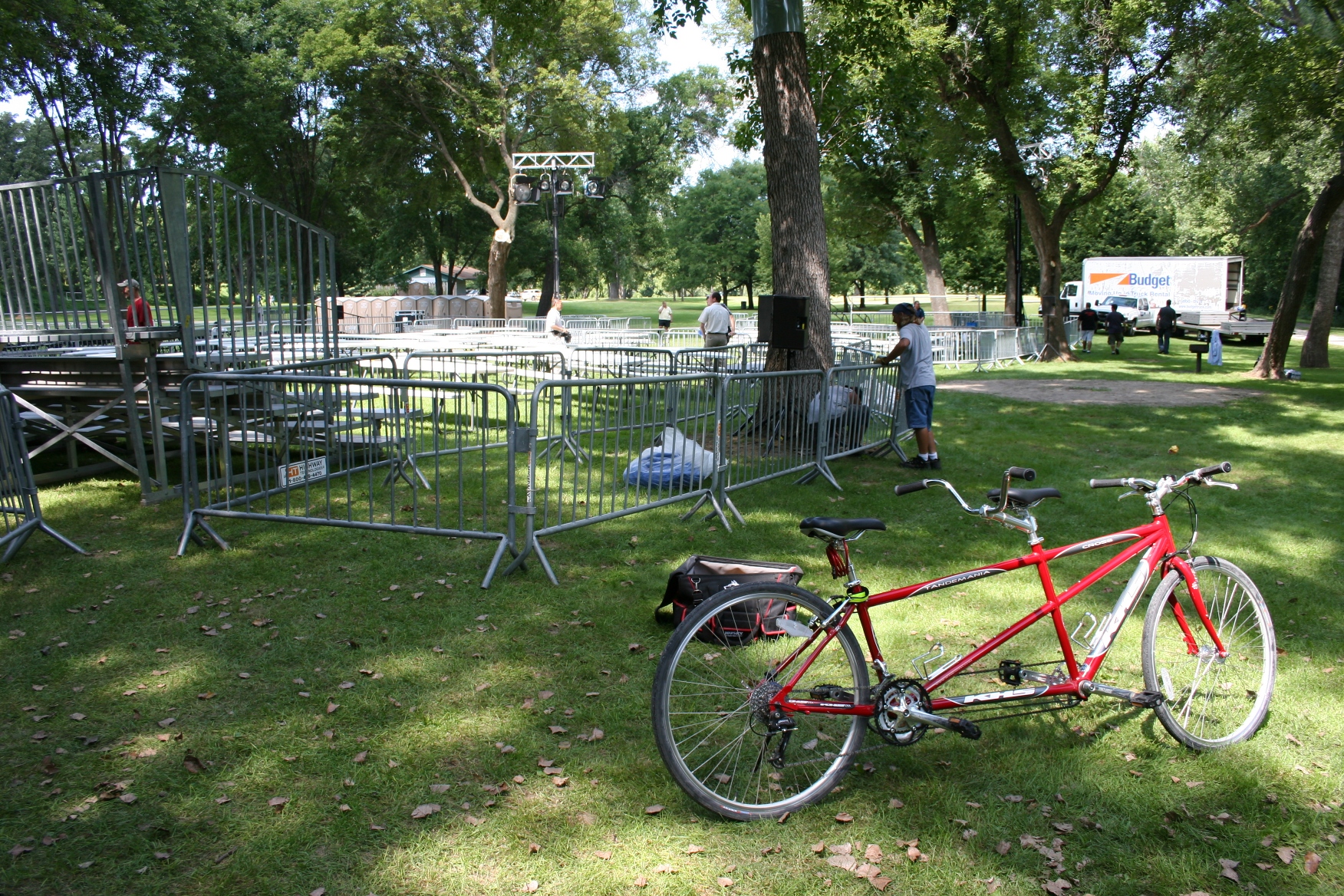
An overview of the south end of Hannah's Bend Park, where President Barack Obama will appear.

One of the many families visiting the park to view the pre-Presidential preparations.

Bikers came to the park to check out the town hall meeting site.

Workers had already set up, or were setting up, picnic tables, tables and chairs, bleachers, fencing, amplifiers, tents and more. They were simply doing what they were told, they said, while pointing out the Secret Service guys in khakis and shades standing along the bank of the Cannon River. Nice guys, they said.

Among the workers were Tom Leonard and his sons, 14-year-old Isaac and 13-year-old Caleb, from Festival Production Services of Lonsdale. As subcontractors for the event, they had erected the press risers and were, when I approached them, finishing up the 8 x 12-foot Presidential stage.

Tom and Isaac Leonard work on the Presidential stage.

Tom Leonard was matter-of-fact about his efforts. “For me, it’s just another gig,” he said. “It’s like anything. It’s work.”

Caleb, however, seemed a bit more impressed with putting together a stage for the President. “It makes me feel kind of important,” he said as he swung a hammer.

Perhaps Tom Leonard’s laid-back attitude comes from having done many Presidential gigs, including an inaugural ball for George W. Bush. Sunday marked just another day on a job that includes rigging up staging for rock-n-roll bands and other customers.

Marilyn and Jeryld Carstensen were in town from St. James and scored two tickets to Monday’s Presidential appearance after getting in line at 4 a.m. Sunday. Their 22-year-old daughter, Regan Carstensen, has been reporting on the Presidential visit for The Red Wing Republican Eagle, so the couple has gotten caught up in the excitement.

Media, including Twin Cities-based Eyewitness News, were in town on Sunday.

Media were already converging on Cannon Falls Sunday afternoon. At Amy’s Savvy Seconds in the downtown business district, Amy Savvy had already done several television interviews and was preparing for another when I came across her cleaning her shop windows.

Amy Savvy cleans the windows at her secondhand shop. She planned to write a message welcoming Obama.

When I returned later, a television crew was inside Amy's Savvy Seconds.

“It’s a historic thing,” Amy said of the President’s Cannon Falls stop. She appreciated the extra business in town and had opened her second-hand store Sunday, and planned to be open again on Monday, days she’s typically closed. She was also working around her grandma’s funeral set for Monday, but figured her grandma would want her to take advantage of the extra traffic downtown.

A few doors down, Warren Schaffer was tending Schaffer’s Antiques, wishing the President would stop in and buy something. I looked around, spotted an eagle and suggested it as a possible Presidential purchase. Warren promptly informed me I was looking at a whiskey bottle.

Calling himself a “middle-of-the-road” guy when it comes to politics, Warren none-the-less shares in the community’s excitement over the Presidential visit. “He’s the President. This is a little town. This is a big deal.”

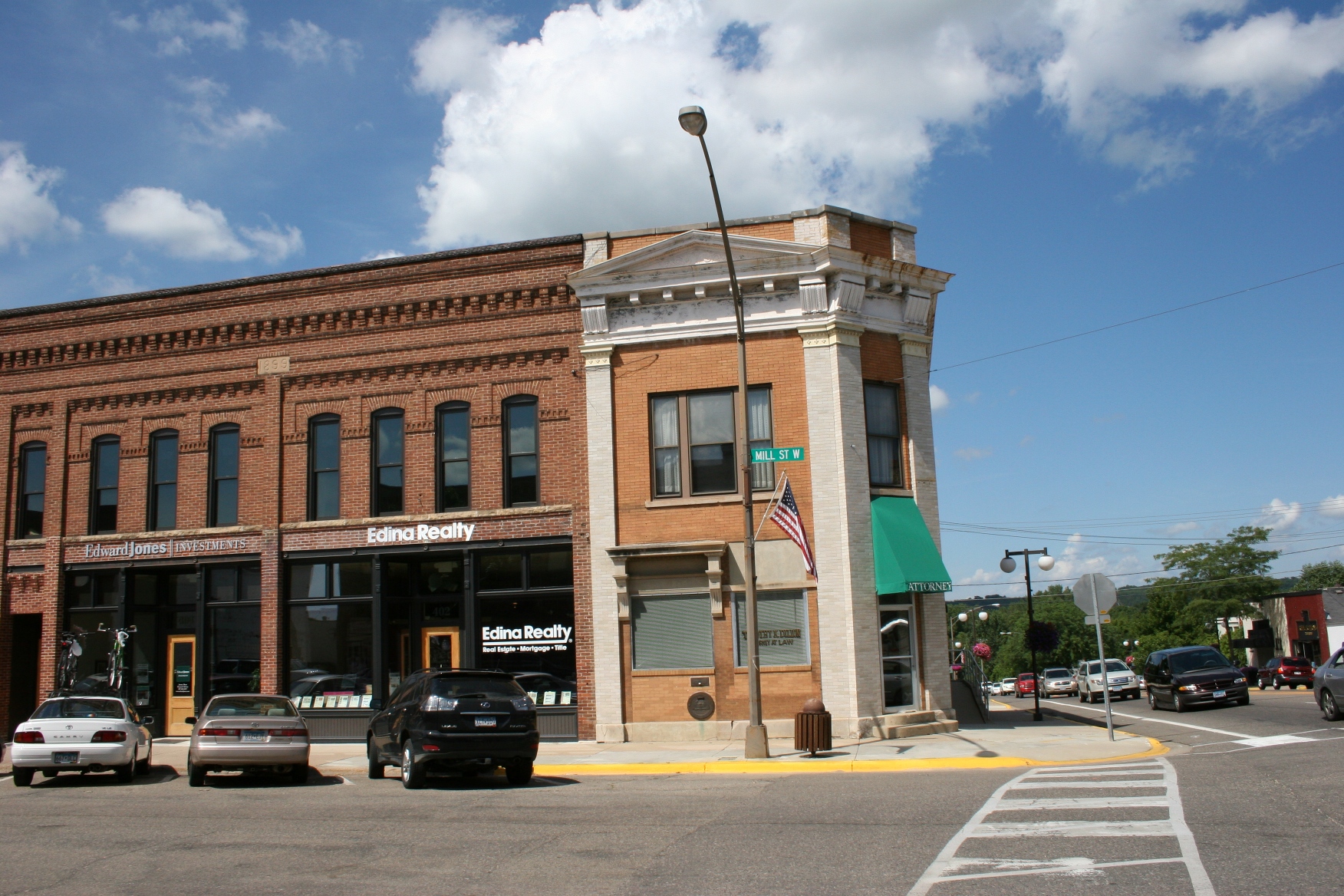
A street corner in the heart of downtown Cannon Falls.

Downtown Cannon Falls, population, 3,795, had seen a lot of traffic for a Sunday, Warren observed. He expects even more on Monday; his shop will be open on a day when it’s usually shuttered.

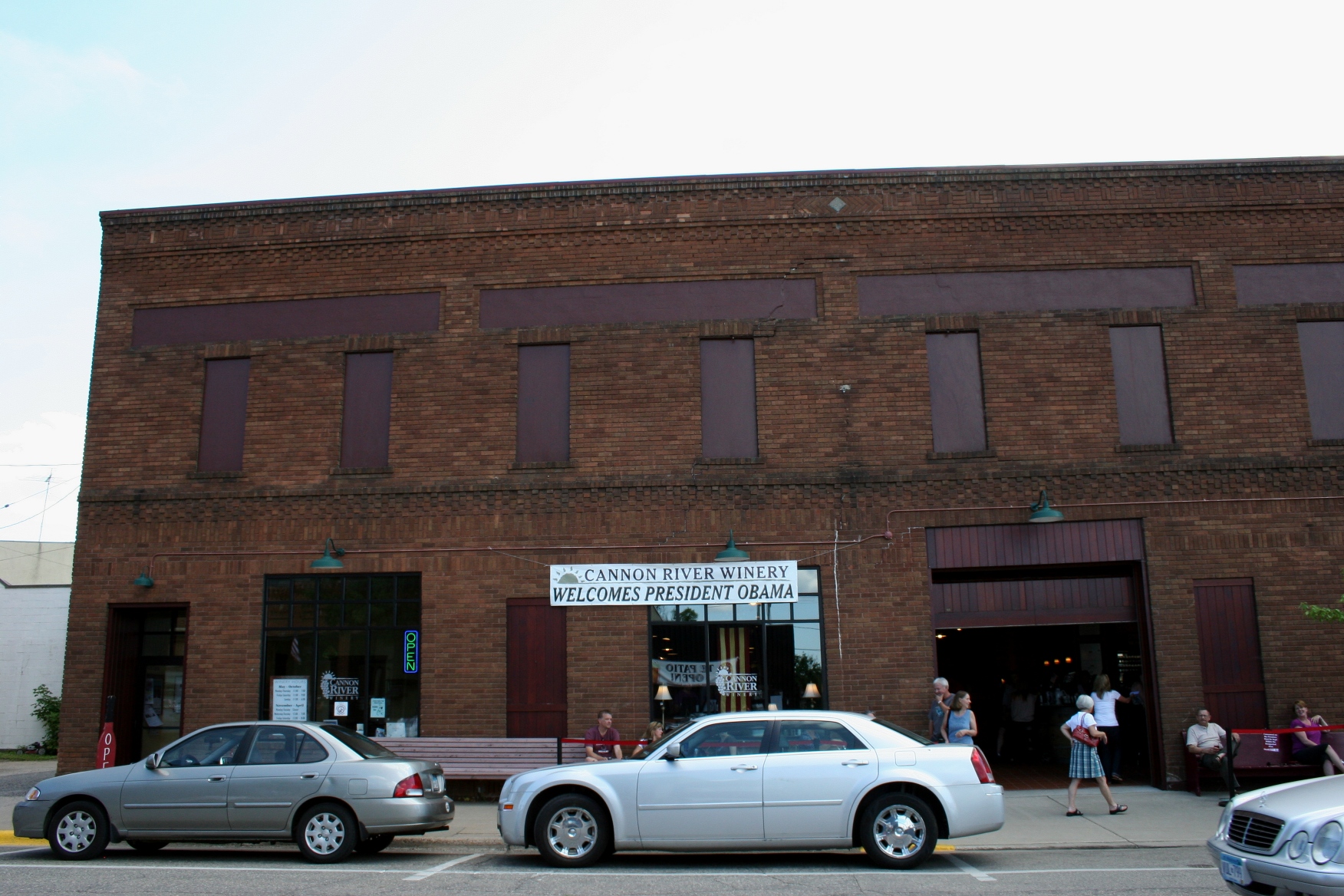
Through-out the downtown, most businesses have displayed American flags in storefront windows or outside. At the Cannon River Winery, a sign hangs out front welcoming the President.

A sign welcoming the President hangs on the front of the Cannon River Winery.

American flags, large and small, hang in most storefront windows.

The excitement in Cannon Falls Sunday afternoon was palpable. At Hannah’s Bend Park, my first stop in town, clusters of folks gathered, pointing out the brush that had been cut days earlier from the hillside, pointing toward the area where workers labored to get everything in place for the town hall meeting…

Tom Leonard was still hard at work, jumping up and down on the bleachers, apparently testing their stability. He’ll be back on Monday, taking everything down, moving on to another day, another gig.

Tom Leonard, along with sons Isaac and Caleb, checks the stability of the bleachers.

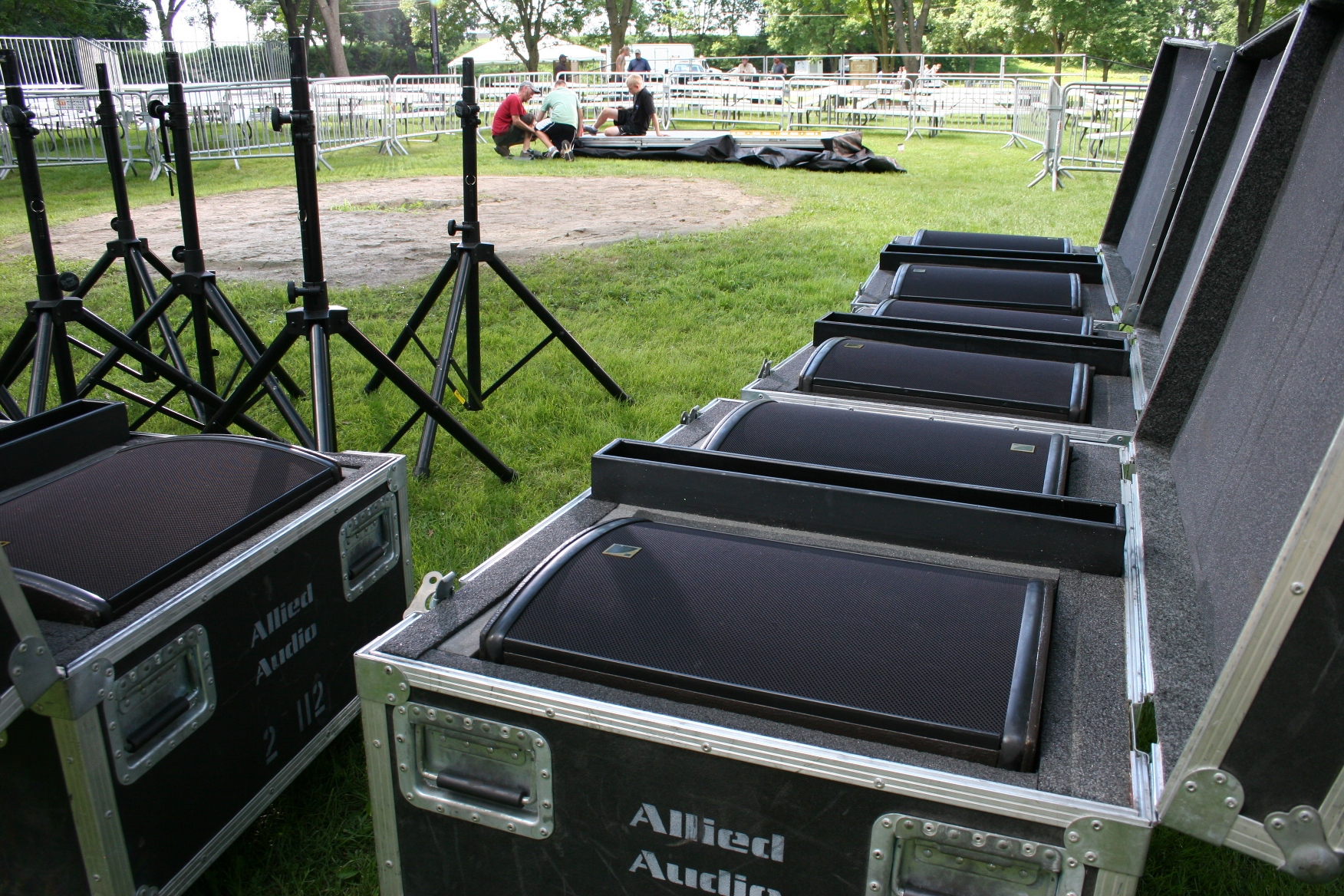
Speakers awaiting installation at the town hall meeting site.

CHECK BACK for a second blog post featuring photos of American flags displayed in Cannon Falls for the President’s visit.

© Copyright 2011 Audrey Kletscher Helbling


Why the discrepancies in AP class offerings? July 12, 2011

STATISTICS CERTAINLY DON’T tell the whole story when you’re reading a compilation of numbers. But neither do they lie.

That said, I’d like to direct you to a report by ProPublica, “an independent, non-profit newsroom that produces investigative journalism in the public interest.”

The topic of ProPublica’s investigation (click here to read), advanced placement class offerings in public schools, certainly interests me. I’ve often wondered why Faribault Senior High School, the school my children attended (and one still does) offers so few advanced placement classes. These college-level classes give students an opportunity to test for college credit upon course completion. That, in my parental opinion, equals academic challenges for students and money saved for those who pass the AP exams and continue on to college.

Faribault High offers four AP classes in physics, English literature and composition, calculus and psychology.

Now, compare that to neighboring Northfield and Owatonna, each about a 15-mile drive away. Northfield Senior High School students can choose from 14 AP classes. In Owatonna, the number is even higher at 20 courses.

The three high schools are similar in size: Faribault, 1,230 students; Owatonna, 1,595; and Northfield, 1,300. They are also located in similar-sized communities. However, anyone who lives in the area knows that Faribault is clearly a blue collar town and Northfield is white collar. I’m not sure about Owatonna, but I would peg it as more blue than white collar.

WHY IS THAT IMPORTANT?

A link may exist between educational opportunities at a school and local poverty levels, some conclude. I don’t necessarily buy into the whole “we have X number of students getting free and reduced government lunches therefore we are offering fewer AP classes because students won’t take the courses anyway” philosophy. That’s an all-too-easy excuse to explain away the lack of AP classes and/or low student enrollment or interest in those classes.

Rather, I think the number of AP classes has more to do with funding, priorities and how much a school pushes, or doesn’t push, these advanced courses.

So let’s take a look at some of those statistics. ProPublica lets you type in your school and even compare it with neighboring districts. (Note: The database only includes public schools with a student population of more than 3,000 in the 2009 – 2010 school year.)

At Faribault High, 28 percent of students get free/reduced price lunches, compared to only 13 percent in Northfield. In Owatonna, 21 percent of students get those lunches that are targeted for low income households.

The statistics show high school minority populations of 21 percent in Faribault, 15 percent in Owatonna and only 11 percent in Northfield.

So you get the picture: Mostly wealthier white kids attend high school in Northfield. Not so much in Faribault and Owatonna.

Therefore you would conclude, if you adhere to the whole poverty-educational opportunities theory, that Northfield should outshine Faribault and Owatonna in the area of Advanced Placement classes and enrollment.

You would be wrong.

Owatonna shines with 20 AP classes and 29 percent of their students taking at least one AP course.

Northfield isn’t far behind with 26 percent of  students taking at least one of the school’s 14 AP classes.

Faribault doesn’t even come close with just five percent of students enrolled in at least one of the only four Advanced Placement courses offered.

WHAT’S GOING ON HERE?

I’ve discussed AP and Post Secondary Enrollment Option classes with several FHS teachers at various times and received answers ranging from an administration that doesn’t make AP or PSEO a priority to staff that prefer not to have class content dictated by AP guidelines. Whether those conclusions are accurate, I don’t know.

But as a parent, I am frustrated. Why shouldn’t any child attending Faribault High have the same educational opportunities afforded students in nearby Owatonna or Northfield?

Faribault also falls below the state-wide average of nine AP classes per high school and 23 percent of Minnesota high school students taking an AP course.

I repeat: Only five percent of FHS students take at least one AP class, of which only four are offered in Faribault.

What’s going on here?

NOTE: Statistics listed on ProPublica come from a nation-wide survey by the U.S. Department of Education’s Office for Civil Rights.

THANKS TO Minnesota Public Radio’s Bob Collins for directing readers to ProPublica’s report in his Friday, July 1, News Cut column.

© Copyright 2011 Audrey Kletscher Helbling


Storm rips through my hometown of Vesta July 2, 2011

WHENEVER ONE of my siblings calls saying, “I just want you to know Mom is OK, but…,” I prepare myself mentally for her latest health crises.

But Friday evening when my sister Lanae reached me via cell phone while my husband and I were en route to a party near Nerstrand Big Woods State Park, the news was totally unexpected.

My hometown of Vesta in Redwood County in southwestern Minnesota had been struck by straight-line winds.

While my mom’s house—once the retirement home of my paternal grandparents—had gone apparently unscathed, other structures in town were damaged. But at least my mother and aunts and uncles and a niece were safe.

In my sister’s early report, which came second-hand via relatives in the area, she shared that half the roof was ripped off our home church, St. John’s Lutheran. Hours later, after arriving home from the party, I found photos in my email in-box of the storm’s destruction. I nearly broke down and cried when I saw my home church with the partially missing roof.

St. John's Evangelical Lutheran Church in Vesta with the roof half ripped off during the Friday evening storm.

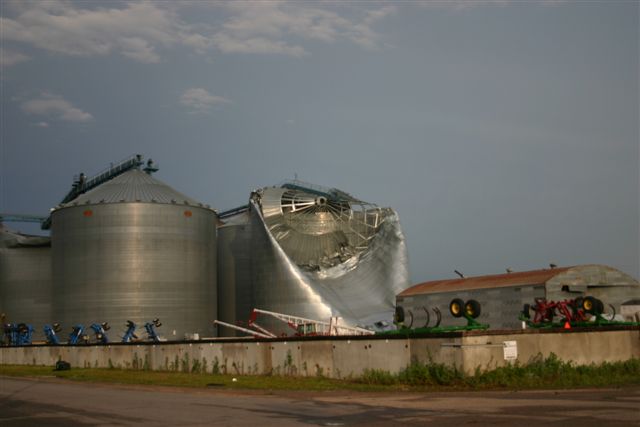
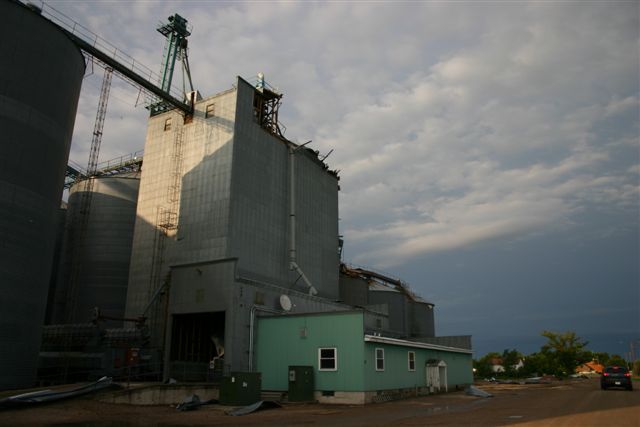
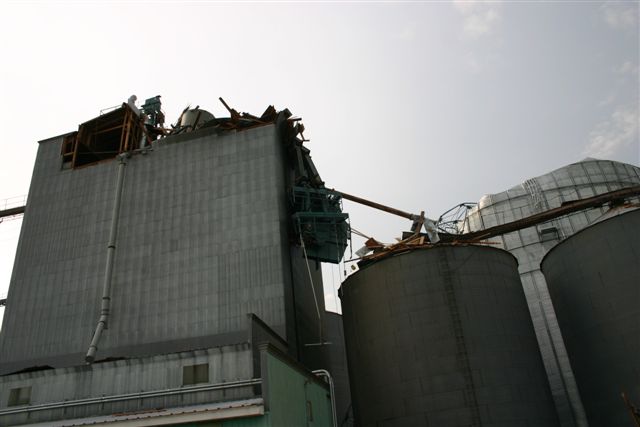
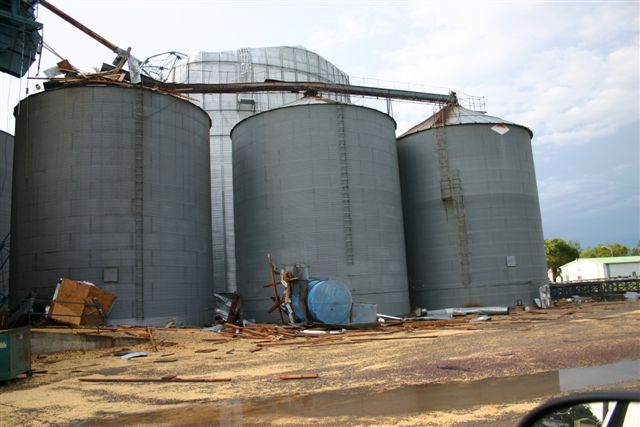
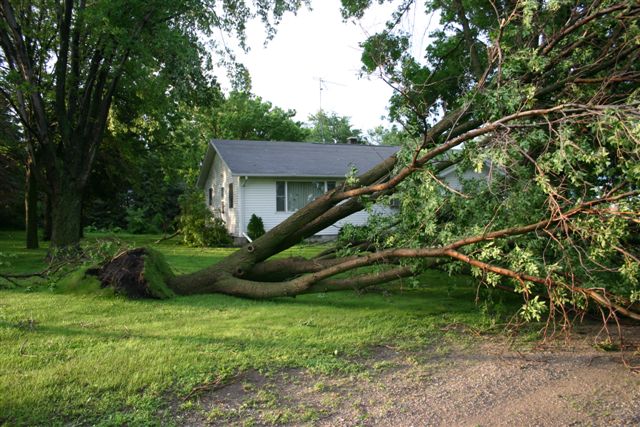
The images also showed damage to the grain elevator and bins in Vesta and trees down on the home place half a mile from town.

Damage to one of the grain bins at the local elevator.

The grain elevator complex, the visual defining landmark in the farming community of Vesta, was ravaged by winds. You'll see the damage near the top of the old grain elevator.

A close-up of the damage wrought upon the old elevator.

Another shot showing some of the debris and damage at the elevator complex.

The wind toppled trees on the farm where I grew up a half mile south of Vesta.

During that phone conversation with my sister, as my husband and I drove along the gravel road toward the gathering with friends, I wanted nothing more than to turn around, pack our suitcase and drive to Vesta 2 ½ hours away.

That’s exactly how I felt more than three decades ago when I lived in Gaylord and the farm where I grew up was hit by a tornado, taking down a silo and tossing grain wagons around the field.

But on this Friday evening, with storms rolling in from the west, I knew this was not practical. I would need to rely on my siblings to keep me informed. My middle brother, who lives in Lamberton some 25 miles away, was on his way to Vesta. I called my two daughters to tell them about the storm.

I wanted so much, though, to also speak with my mom. I needed the comfort of hearing her voice. I wanted to learn about her storm experience. But the phone lines were down in Vesta. Even though Mom owns a cell phone, I doubt she remembers how to use it. She’s never quite adjusted to technology.

And so now it’s Saturday morning and I am exhausted after a night of tossing and turning. Storms do that to me.

Thoughts of my home church—where I was married and attended the funerals of my father, Grandma Kletscher, Grandpa Bode and Uncle Mike—churned through my mind. I worried about where congregants will worship, whether the interior of the church was damaged, if the church, my home church, can be repaired.

I hope today to get some answers and, if I do, I’ll pass that information along to you.

I’ll also share images I shot last night of the storm clouds hanging dark and ominous over the farm site where we gathered with friends for an early Fourth of July celebration.

Nature provided the fireworks—lightning bolt after lightning bolt zig-zagging horizontally across the forbidding sky for hours. Except for some wind and rain, our area escaped the storm that ravaged Vesta and Marshall and other communities to the west.

IF YOU HAVE STORM stories to share from last evening, please submit a comment. KLGR Radio in Redwood Falls is this morning reporting winds of up to 100 mph in Redwood County and the sightings of possible funnel clouds. Click here to read that news report.

FOR THOSE OF YOU UNFAMILIAR with southwestern Minnesota, Vesta sits along State Highway 19 half way between Redwood Falls and Marshall.

Photos courtesy of Brian and Vicki.

©  Copyright 2011 Audrey Kletscher Helbling

 

A native Minnesotan reports from flooded Minot June 23, 2011

MY BROTHER-IN-LAW, Neil, lives in Minot.

But he ranks as one of the lucky residents of this North Dakota city. His house lies outside—albeit less than a mile away—and several hundred feet above the flood zone.

Yet, this Air Force man and Minnesota native isn’t sitting idly by because his home has not been threatened. He’s pitching in to help those who face the reality of losing their houses in the worst flooding since 1969.

In an e-mail I received from Neil early this morning, he shares information, insights and, yes, even advice about the current situation—which he terms “exhausting and discouraging”—in his adopted hometown. The overwhelmed Souris River in Minot is expected to crest on Sunday, some five feet higher than any previous flood stage in recorded history for the area, Neil says. The old record was set in 1881, before Minot was founded.

So that’s the situation facing this city, where some 12,000 residents, more than a quarter of the population, have been evacuated and where, says Neil, dikes in several neighborhoods were breached on Wednesday.

Neil has assisted two families in exiting the city.

He writes: “I helped a lady from our church on Monday night as she moved everything either to the second floor or attic. What didn’t go upstairs went into a horse trailer that her brother brought in from out of town late that night. She seemed to take things in stride. Her house was also flooded in ’69 (before it was her house), but came through it okay. It’s extremely well built, nearly 100 years old. This lady trusts that God will provide for her needs, even if her house washes down the river.”

Neil next joined efforts to help his boss’s family. His boss is deployed to Afghanistan.

“I lost track of how many people were there to help them,” Neil writes. “We also helped them three weeks ago, when we moved everything out of their sopping wet basement to the upper floor and garage. Because of the shortage of time allowed to evacuate, we left almost everything there that time. Because of the expected height of the floodwaters and the advance preparation time, we decided to clear everything out of their house this time.”

Yet, Neil continues, “There were easily several pickup loads of stuff that we left behind simply because there wasn’t enough time/energy/resources to move it all.”

At this point my brother-in-law pauses and suggests that we all re-evaluate our possessions, deciding what we really need and what we don’t. “Go through your house and garage and get rid of anything that you haven’t laid eyes on or used in the past three years.” He intends to do exactly that at his Minot home, which is currently on the market; he’s been reassigned to an Air Force base in Missouri.

When Neil and his wife, who is already in Missouri, purchased their house several years ago, they purposely stayed away from the flood zone. “A contractor that we spoke to before buying a house told us the down sides of several locations in this town. One specific neighborhood that he told us to steer clear of is the exact one that we helped my boss’s family move out of; he told us that he wouldn’t even consider building a house down there because the whole area was under water in the flood of ’69,” Neil says.

And then my brother-in-law adds this final statement: “Dikes give people a false sense of security.  No one presently living in this town will ever doubt that again!”

© Copyright 2011 Audrey Kletscher Helbling


My need to know about the Minneapolis tornado May 22, 2011

A shot of my television screen, showing KSTP coverage of the May 22 Minneapolis tornado.

YOU’RE A NEWS JUNKIE,” he says.

I don’t deny it, especially on this stormy Sunday when a tornado has swept through north Minneapolis, killing one and injuring around 20 others, according to the latest news reports.

Much of the afternoon, after hearing of the storms, I parked on the sofa, eyes fixed on the television screen. I also texted my oldest daughter, who lives in south Minneapolis.

When she finally replied to my “Are you in a safe place?” text, she asked, “No, why?”

So I clued her in that a tornado was moving through north Minneapolis. She was at a friend’s house after attending a concert and apparently not near the storm’s path.

But how was I, the concerned mother, to know? To me, Minneapolis is Minneapolis and my daughter could be anywhere.

My husband, the one who called me the news junkie, claims south Minneapolis lies 10 miles from north. I have no idea.

Once I knew that my oldest daughter was OK, my thoughts shifted east to Wisconsin, where the second daughter lives. I really wasn’t too worried, until 4:49 p.m. when she sent a text: “Sirens just went off.”

At that time my husband and I were wrapping up a shopping trip to pick up hardware and gardening supplies and a few groceries before filling up with gas and heading home.

The daughter who lives in Appleton on Wisconsin’s eastern side said the area was under a severe thunderstorm warning and flood watch and that she was at her apartment, but not in the basement.

Uh, huh. “Did I not teach you to go to the basement when the sirens sound?” I thought, but did not text.

Her follow-up message mentioned an unconfirmed funnel cloud in a nearby town.

That text reminded me that I really wanted to watch the 5 p.m. news. And that is when my spouse called me a news junkie.

What does he expect from someone who watched the CBS evening news with Walter Cronkite as a child and wanted to emulate the television news anchor? What does he expect from someone with a mass communications degree, emphasis in news editorial? What does he expect from a former newspaper reporter and now freelance writer and blogger? What does he expect from someone who is nosy and curious by nature?

Yes, I am a news junkie.

But I’m also a mom and a Minnesotan—two equally good reasons for staying informed.

© Copyright 2011 Audrey Kletscher Helbling
 

My Minnesota childhood memories of Harmon Killebrew May 18, 2011

“BATTER UP!”

His voice cracked like the whack of wood against leather as I stepped up to the plate, bat handle vise-gripped in my hands, feet planted in packed gravel next to the rusted, cast-off disk from the disk harrow.

As my oldest brother lobbed the ball toward me, I swung, and as was typical of me, missed. I was aiming to hit the ball toward the barn and milkhouse at the edge of the farm yard, our ball field.

Almost every evening, as the sun inched lower in the prairie sky toward the greening fields of early spring and then into the hot, humid days of tasseling corn, my siblings and I traded chore gloves for softball gloves. “Let’s play ball,” we’d yell in unison.

And then the arguing would begin. “I’m Harmon Killebrew,” my oldest brother hollered, the name flying off his tongue with the speed of a fast pitch.

No matter how loudly the rest of us protested his call, we struck out. He was the eldest. If he wanted to be Killebrew, then he would be Killebrew.

We assumed the roles of other 1960s Twins greats like Tony Oliva and Rod Carew.

But we all wanted to emulate Killebrew, to swing the bat, to watch the ball powerhouse toward the barn roof, maybe even sail as far as the silo room or the cow yard beyond, well out of reach of our siblings’ outstretched hands.

Such are my memories of the Twins’ home run slugger.

I’ve never been to a Twins game, never met Killebrew, don’t watch or listen to baseball.

Yet, upon learning of Killebrew’s death, a twinge of melancholy swept across me as I thought of those pick-up farm yard softball games, the baseball cards my brothers collected and the static of my eldest brother’s transistor radio broadcasting a Twins game in the 1960s.

For all the sibling bickering over who would pretend to be Killebrew or Carew or Oliva, those post chores games score among the home runs of my rural Minnesota childhood.

Copyright 2011 Audrey Kletscher Helbling


Thoughts upon the death of Osama bin Laden May 2, 2011

AS I CLIPPED freshly-washed laundry onto the clothesline with 35-degree temperatures nipping my fingers under a heavy sky this morning, I contemplated what I would write here about Osama bin Laden. I could not not write something.

But what could I, an average American in a mid-sized Minnesota community, write about the death of this al-Qaida leader, this terrorist, this murderer, this most-wanted fugitive, one of the most-hated men in the world?

What profound words could I pull together that would express my gratitude to the U.S. intelligence community and military?

What could I say to those who lost loved ones in the bombings of two U.S. embassies in Africa in 1998, in the attack on the USS Cole in 2000, during the September 11, 2001, terrorist attacks?

I could write nothing that hasn’t been spoken, written or thought.

And then I remembered a photo I took about a week ago of a billboard while traveling along Interstate 90 east of La Crosse, Wisconsin. I have no idea who posted the patriotic message.

But today, for me, this image summarizes how I feel as an American, as my country, the United States of America, stands, united and free.

© Copyright 2011 Audrey Kletscher Helbling