
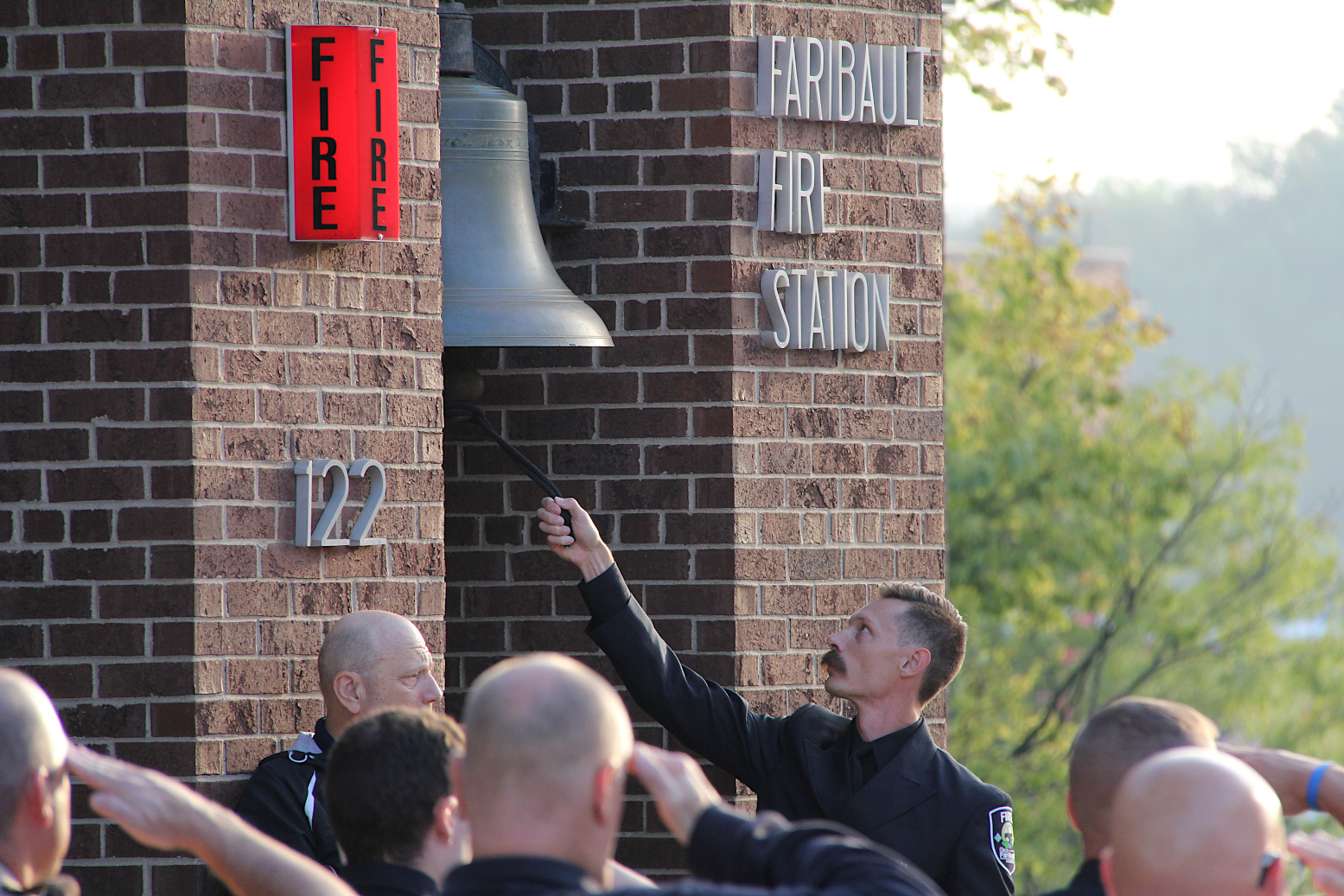
TWENTY-FIVE YEARS AFTER the September 11, 2001, terrorist attacks on America, that event remains, for me, as close as my memory, writing and photos. As close as the stories retold annually. As close as the local commemoration held each September to mark this American tragedy.
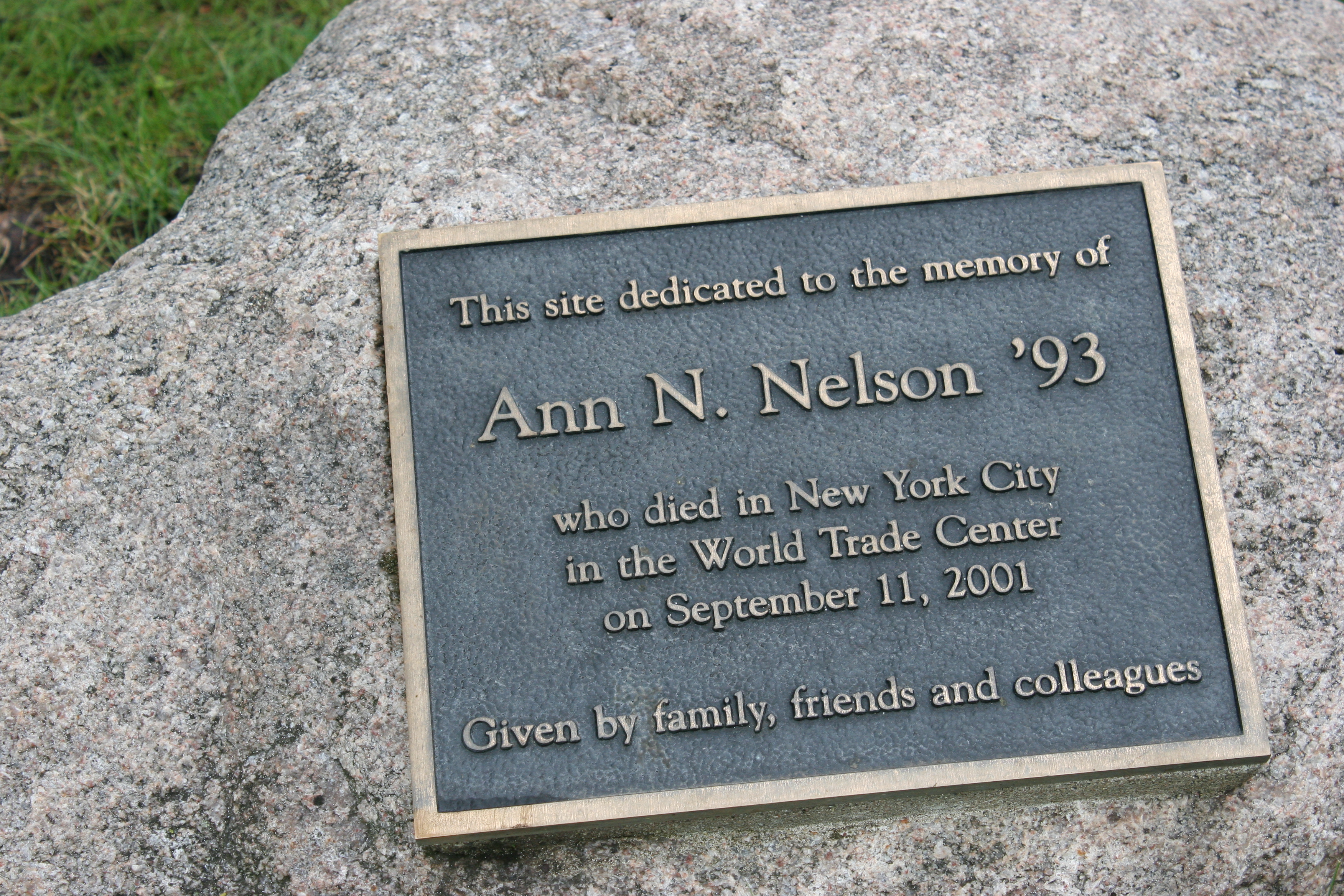
September 11, was, indeed, tragic. In the thousands of lives lost. In the sense of security shattered. In the trauma inflicted on all of us old enough to remember.
Some were not yet born. Some were too young to remember. But for others like my mom, 9/11 marked a second monumental moment in American history. Shortly after the 2001 attacks, she compared September 11 to the 1945 attack on Pearl Harbor 60 years earlier. Mom was only nine then, an impressionable kid with no understanding that Hawaii was an ocean away from Minnesota and not, as she thought, several towns distant from her home. I could still hear the lingering fear in her voice even six decades later.

I often wonder if my young son, just seven at the time of 9/11, understood the distance separating us from death and destruction in New York City, Washington DC and Shanksville, Pennsylvania. He was home sick from school that morning when my husband, Randy, called to tell me about the first plane slamming into the World Trade Center. I turned on my television to witness the second plane hitting the second tower.
I recall thinking how surreal this all seemed. How was this possible? What was happening? My eyes remained riveted to the TV screen.
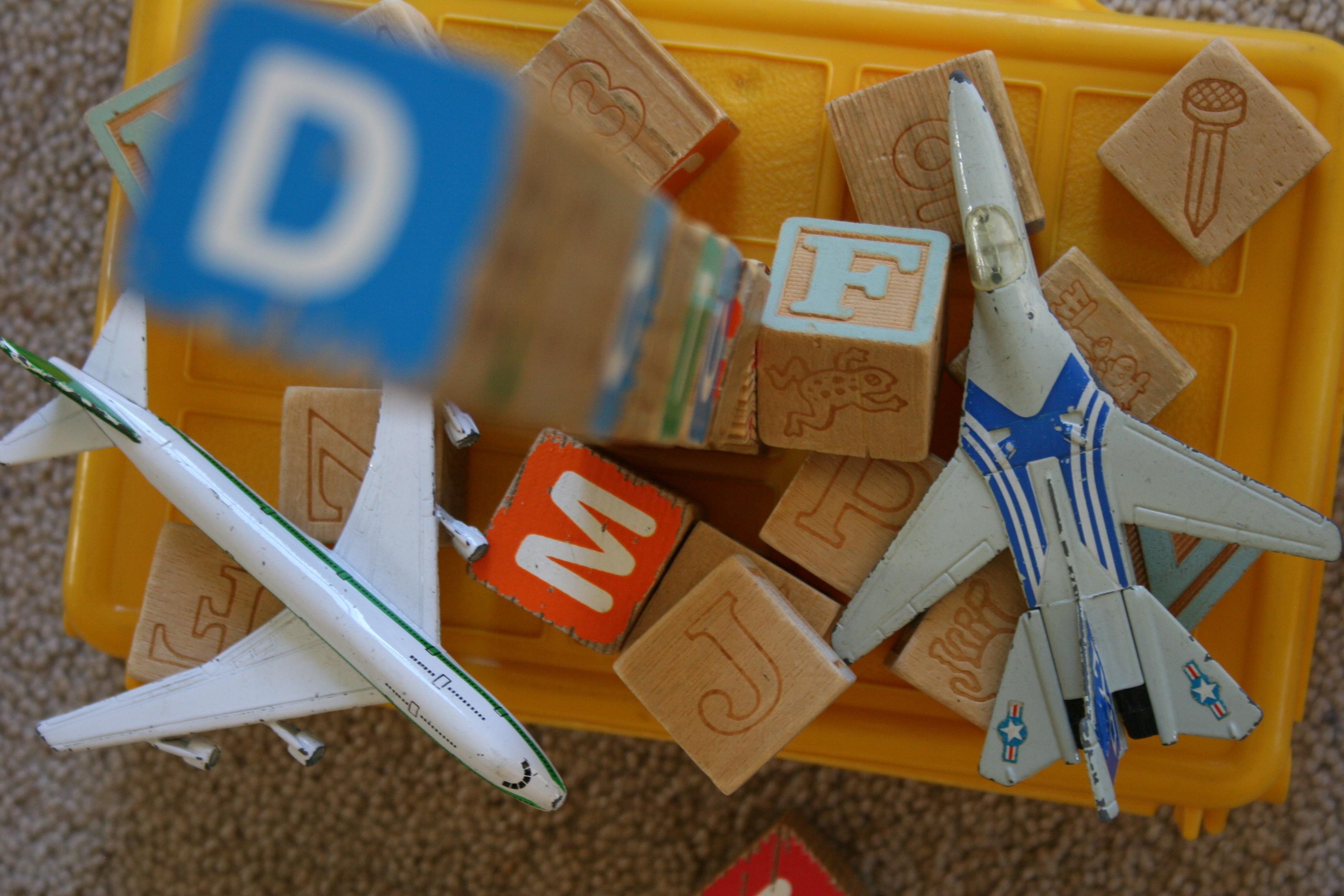
On the living room floor, my son and his friend, whom I was caring for that day, played. Soon they were stacking wooden blocks, blasting toy metal airplanes into the tall towers. Blocks scattered across the carpet.
I should have been the responsible mom and caregiver and switched off the TV. But I couldn’t. So I tried to explain to the boys the reality of what we were all seeing without scaring them. Was that even possible when I, as an adult, could not fathom the seemingly impossible?
The passage of 25 years dims the sharpness of those early impressions. But I remember feeling deeply unsettled. Scared. Could the Mall of America, a symbol of American capitalism an hour from my southern Minnesota home, be the next target? Anything seemed possible.
In the early evening of that fateful day, I recall looking skyward, searching for planes. There were none. They’d all been grounded.
I remember listening to President George W. Bush address the nation, reassuring all of us. In part, he said, “Terrorist attacks can shake the foundations of our biggest buildings, but they cannot touch the foundation of America. These acts shattered steel, but they cannot dent the steel of American resolve.”
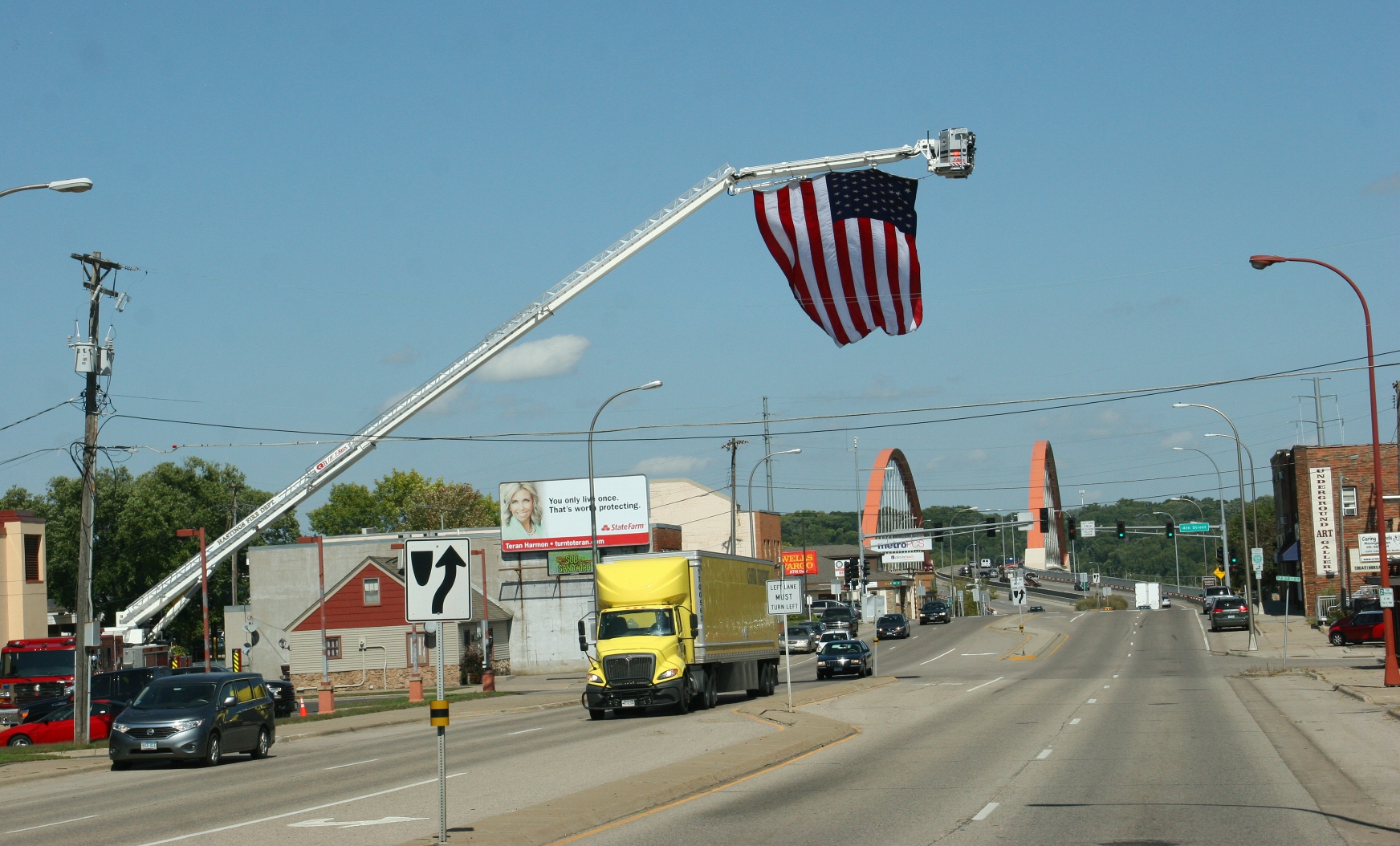
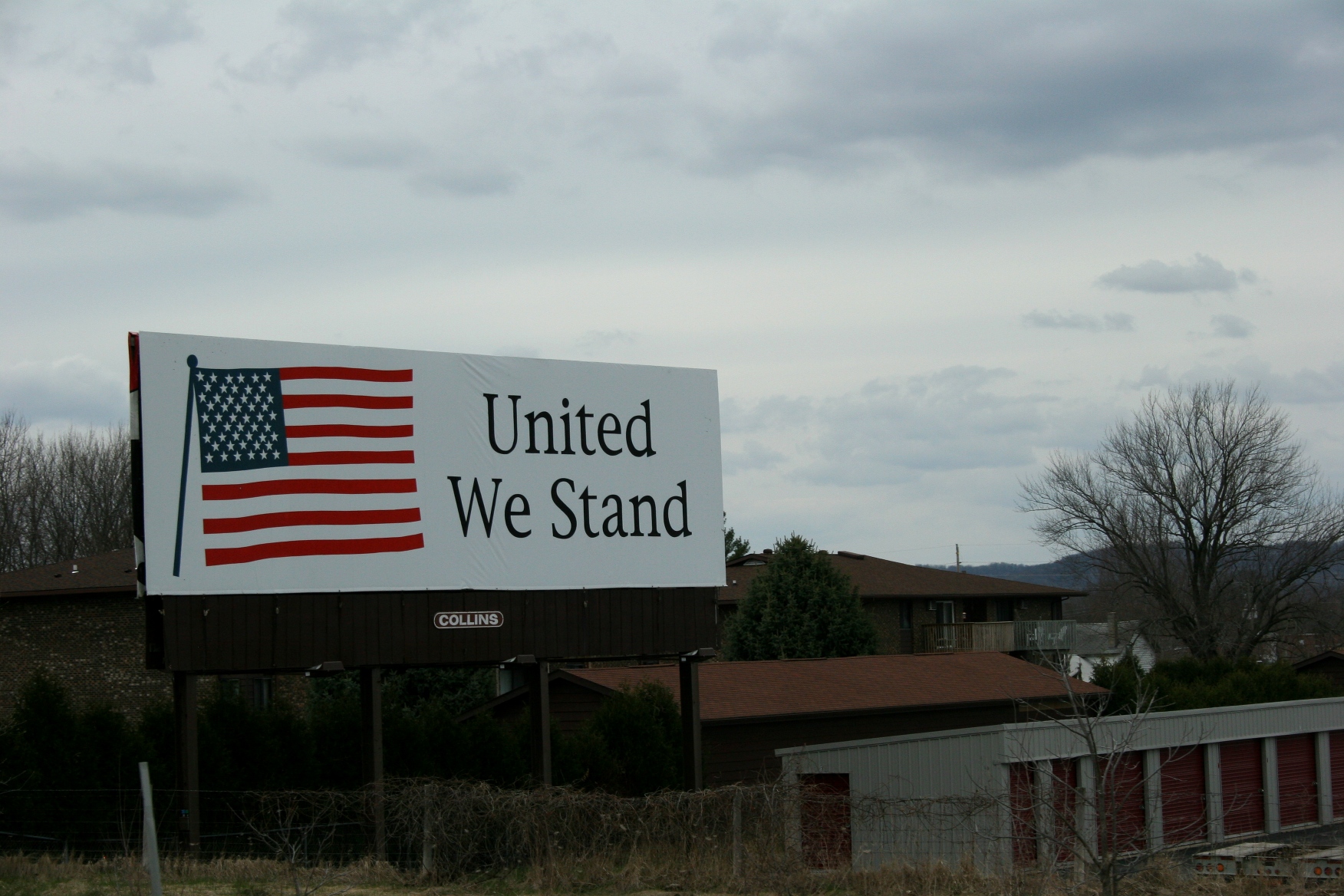
On that day and subsequent days, I felt a strong sense of unity among Americans. We were united in shock, in grief, in determination, in resolve to stand strong as a country. It was remarkable really, the way we stood together in singular purpose of defending democracy.
I wish now, 25 years later, that we could reclaim that sense of unity. Not through another tragedy, but rather through an understanding that we are all human, that life is precious, that we are all interconnected no matter who we are or where we live in the United States of America.
#
TELL ME: What are your memories of 9/11? I’d like to hear your stories from that day.
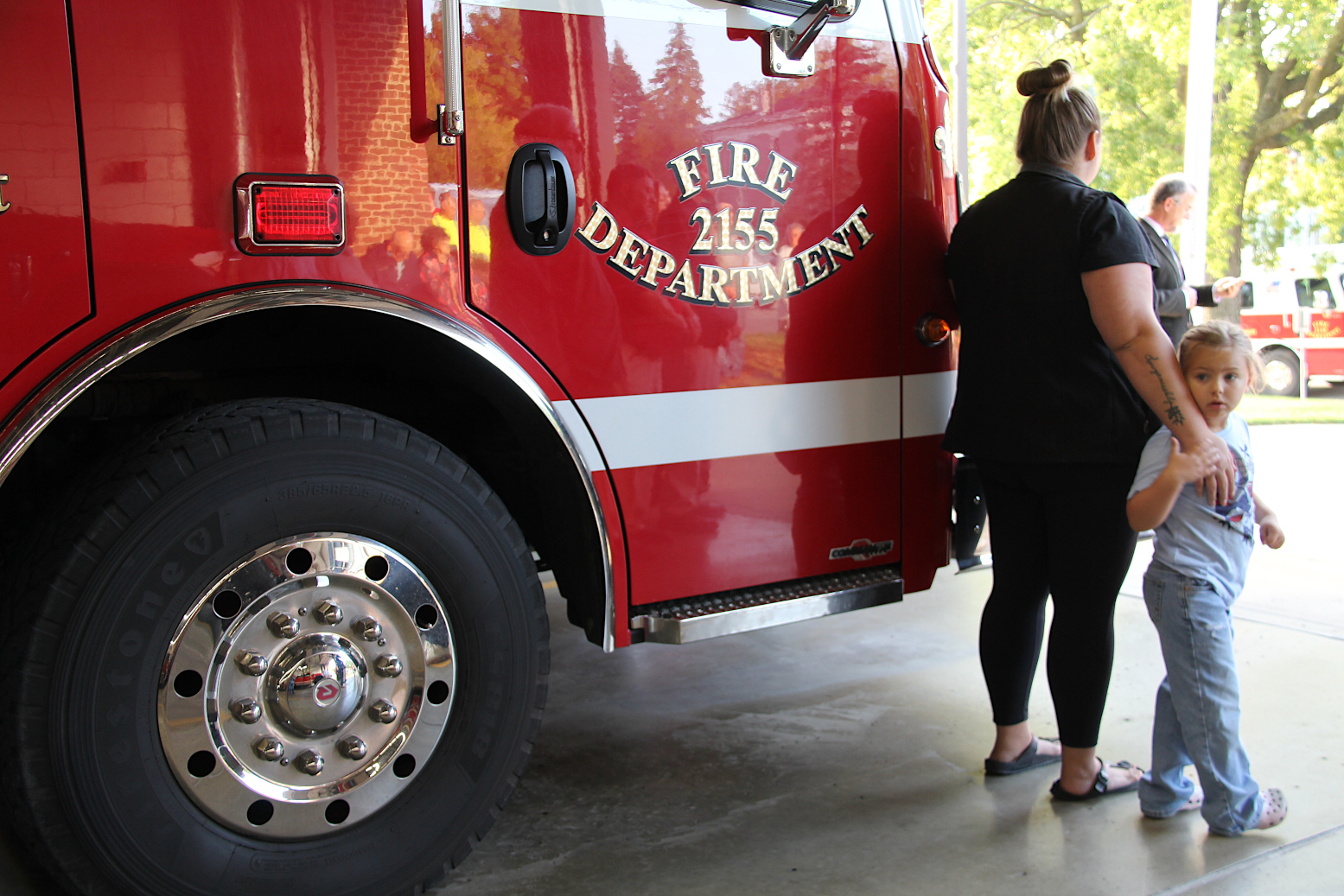
FYI: The Faribault Fire Department will hold its annual 9/11 commemoration at the fire station on September 11. Attendees should arrive around 7:30 a.m. for the 7:46 a.m. ceremony.
© Copyright 2026 Audrey Kletscher Helbling








Destructive ice, the help of community & more August 27, 2026
Tags: commentary, community, construction, Faribault, hail, hail damage, hailstorm, Hispanics, immigration, Immigration and Customs Enforcement, Minnesota, Operation Metro Surge, opinion, storm, United States of America
IN THE FOUR-PLUS MONTHS since destructive hailstones pummeled Faribault and the surrounding area, my community has been the site of ongoing exterior construction. Drive nearly anywhere in town and you will see roofing and siding crews or newly-repaired houses.
Seven hail-damaged houses within sight of mine, including ours, have been repaired, or have yet to be fixed. That’s a lot in a single neighborhood.
Business is booming for local and out-of-town roofers and other construction companies. Local contractors can’t possibly meet the immediate demand for work.
EMPATHETIC OBSERVATIONS
But blocks from my house, an underway construction project seems a community undertaking. I know because I talked with the owner. He bought the house with the intention of fixing and flipping it. Good for him if he can improve a dilapidated house and make money by selling it.
This particular renovation caught my eye because, when I passed by, I saw a house with rafters totally exposed, loose insulation inside and workers busy sheeting. Similar work was done on our house with new sheeting laid over the existing, mostly-solid roof boards. Rafters were not exposed. I appreciate that we now have a sturdier, straighter roof.
When I saw the condition of the flip house, my first thought was “that looks worse than ours (looked).” At least on the roof. I felt instant empathy for the homeowner. So, although I don’t usually stop at construction sites, I did at this one. I felt bad for the owner.
He just happens to be Hispanic. I learned from him that the Hispanic community is deeply connected. He tapped into the strength and skills of community for his house renovation. This did not totally surprise me. I’ve seen how Hispanic/Latino communities care for one another, how they work together, how they value family, culture and community.
If not for Hispanic roofing crews, hail-damaged houses in Faribault would go mostly unrepaired. These crews work hard and fast, putting in long days, often finishing roofs in a single day.
THE VALUE OF COMMUNITY
My conversation with the flip house owner got me thinking about other communities which come together to help one another on construction endeavors. In the past, and maybe even still today, the Amish raise barns in a day. Habitat for Humanity brings volunteers together to build homes alongside professionals. Decades ago, friends came over to help shingle our roof. During this past year, volunteers rehabbed a rental house owned by my church.
And in 1967, extended family arrived at my childhood family farm to help my dad and a local carpenter build our new home with a walk-out basement. If not for helpful family, I don’t think my parents could have built new. The cost would have been out of reach. We needed a new house to replace the cramped, drafty 1 1/2-story aged farmhouse with a partial dirt cellar, no bathroom, three small bedrooms, and an oil-burning stove centered in the living room.
WORSE THAN A HAILSTORM
All of this came to mind when talking with my new Hispanic acquaintance. I praised him for improving the neighborhood by buying and fixing up a run-down home. I also told him I’m sorry for the aggressive and often illegal detainment of Hispanics, Latinos and others by Immigration and Customs Enforcement (ICE) during Operation Metro Surge (and beyond) in Minnesota. That includes right here in my city.
A recent media report states that the 5,000th immigrant detainee (since November 2025) was recently flown out of the Minneapolis-St. Paul International Airport. That’s documented by a Minnesotan with boots on the ground at the airport video-taping departures of shackled detainees.
ICE has targeted Hispanic roofers. In December 2025, ICE arrived at a construction site in Chanhassen, southwest of Minneapolis, stranding two workers on a roof for hours during sub-zero temperatures resulting in hypothermia. In Bemidji in far northern Minnesota, roofing companies lost nearly all of their crews during ICE raids this summer. Many other such detainments have happened across the state and country and are ongoing.
Soon a new ICE detention center will open in a former abandoned private prison in Appleton in far western Minnesota. CoreCivic, a name familiar to anyone who has followed ICE actions, sold the prison to the federal government and is now contracted to run the detention center.
Suddenly that April hailstorm in Faribault doesn’t seem all that bad in comparison with what’s unfolding in this country. And I’m not talking only immigration. I’m also talking about government surveillance, an unnecessary war, tariffs, efforts to suppress voting rights (especially those of Black voters and of women), high gas and food prices, a failing economy and on and on. So much damage has been done to our country that will take years, if not decades, to recover, to repair the destruction hailed upon this nation.
© Copyright 2026 Audrey Kletscher Helbling